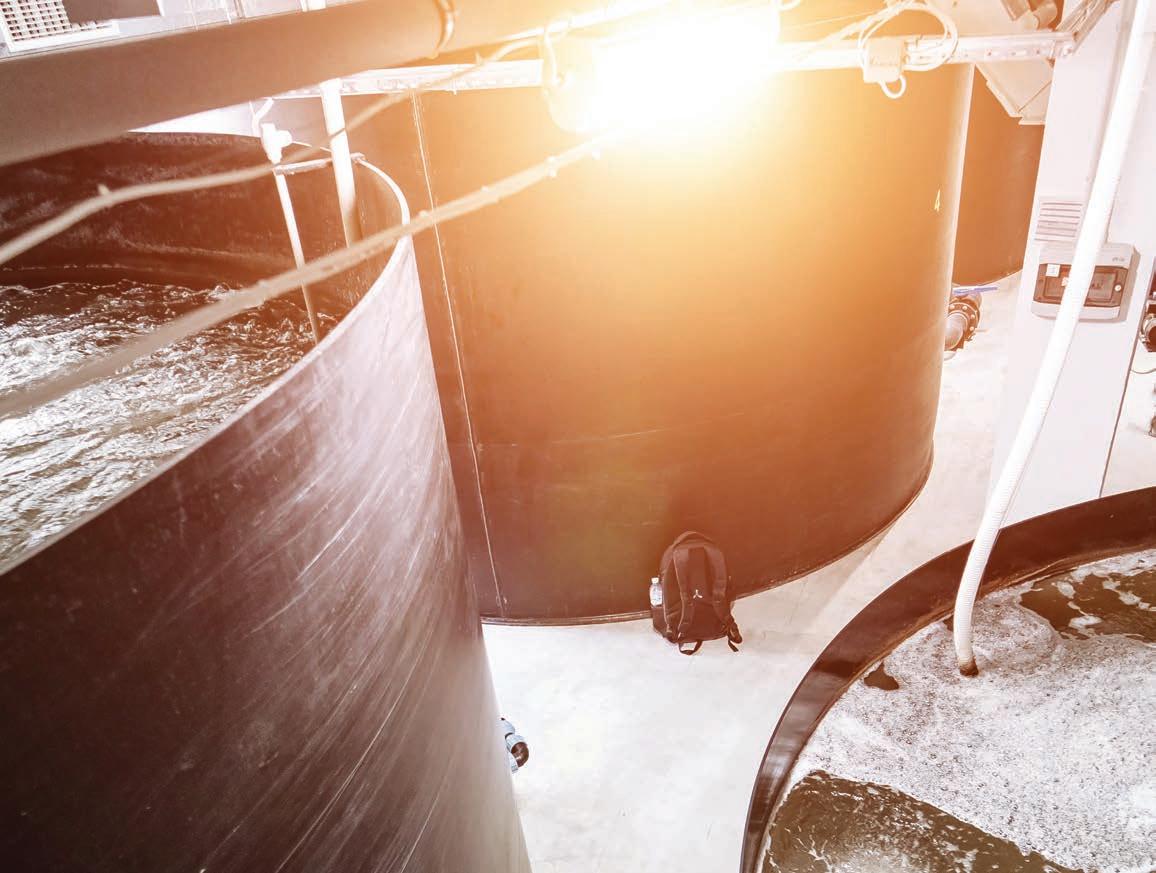
Recirc in Action: Evaluation of aeration basins for CO₂ control in RAS p. 10
Feature: AI-powered fish rearing and handling p. 16
Hatchery Hack: The best breeding programs start with partnership p. 22

Recirc in Action: Evaluation of aeration basins for CO₂ control in RAS p. 10
Feature: AI-powered fish rearing and handling p. 16
Hatchery Hack: The best breeding programs start with partnership p. 22
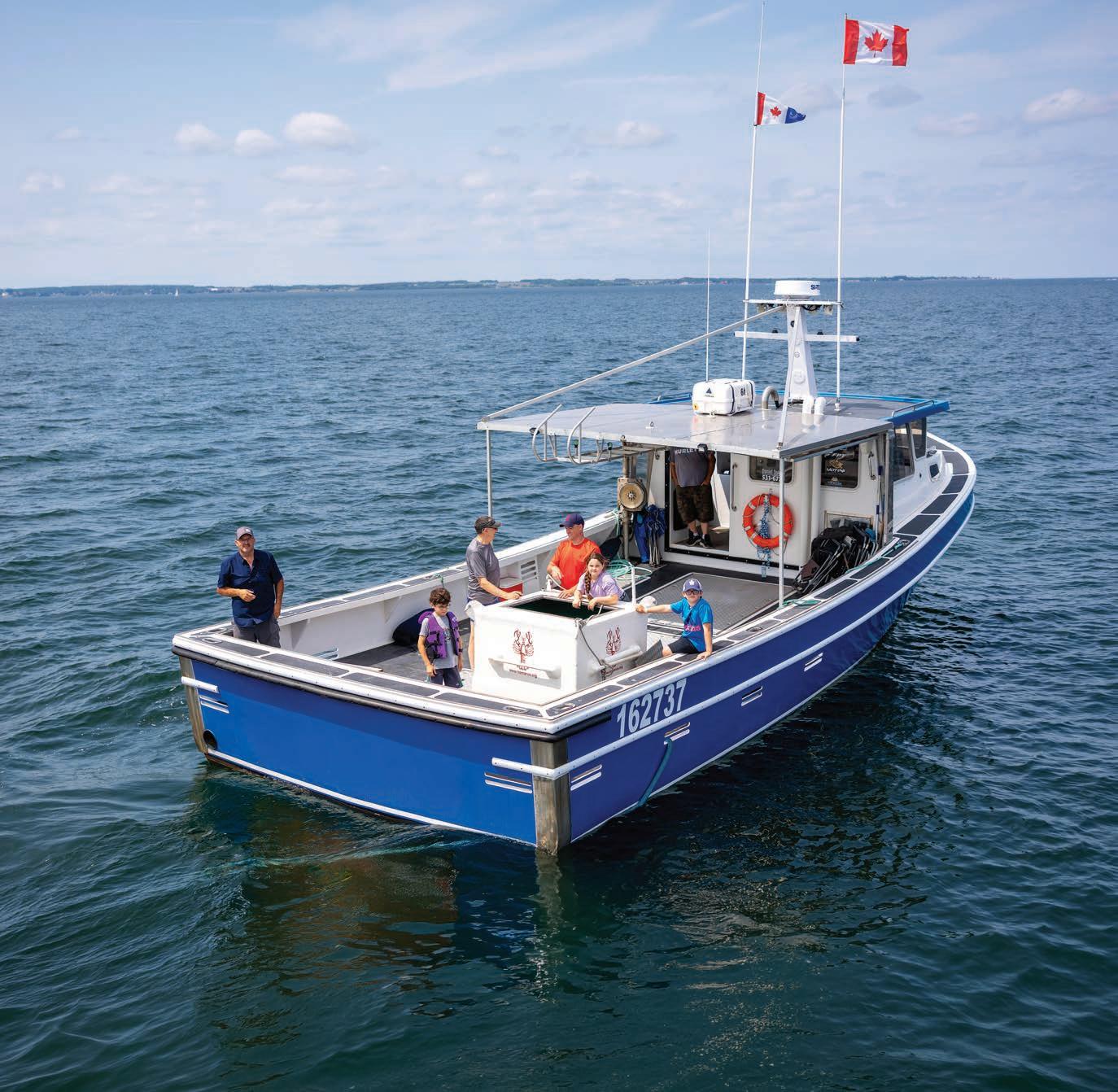
An annual festival in New Brunswick draws crowds for its lobster fisheries p. 12
Magida Tabbara-Corby

Matt Jones





BY JEAN KO DIN
This issue’s cover story has truly reminded me of the important role that local hatcheries play in bringing more awareness to the work that aquaculturists and fish culturists do.
The Shediac Lobster Festival, which incorporates an annual lobster larvae release as part of its festivities, is just a fun example of how public engagement can really bring a community closer to its natural food systems.
to those who might not even know the word “aquaculture.”
Preaching to the choir can only sustain your business for so long. At some point, this industry of introverted scientists have to decide to make friends with the internet.
There are many publically-run hatcheries in North America that host school group tours, volunteer workshops, mobile lab tours, fishing derbies, live tank web cams, summer seafood boils and barbecues, and so many other ideas that bring the community in. It may seem like unnecessary cost for an already understaffed and underbudgeted operation; not to mention the biosecurity risks involved in bringing extra people onto the property.
outreach initiatives are small deposits to the bank of public trust that the industry often has to withdraw from.
I’m mostly teasing about the “introverted scientists” part. I should say that most of the people I meet in the hatchery industry are very open and are glad to share about their work to anyone who will listen. But maybe one of the problems with it is that they’re always waiting to be asked.
More of the industry should face the community with open doors and open arms. How many people in your town even know that there is a hatchery nearby? Unless they grew up with a fishing hobby, it’s not something that a typical urban family would run into.
VOLUME 27, ISSUE 4 | JULY/AUGUST 2026
Reader Service
Print and digital subscription inquiries or changes, please contact customer service
Angelita Potal
Tel: (416) 510-5113
Fax: (416) 510-6875
Email: apotal@annexbusinessmedia.com
Mail: 111 Gordon Baker Rd., Suite 400, Toronto, ON M2H 3R1
Editor Jean Ko Din jkodin@annexbusinessmedia.com
Associate Editor Seyitan Moritiwon smoritiwon@annexbusinessmedia.com
Contributors Laura Bailey, Ruby Gonzalez, Matt Jones, Nicole Kirchhoff, Ben Normand, Magida Tabarra-Corby, Brian Vinci
Associate Publisher Jeremy Thain jthain@annexbusinessmedia.com +1-250-474-3982
Sales Manager Patrick Villanueva pvillanueva@annexbusinessmedia.com +1-416-606-6964
Account Coordinator Barb Vowles bvowles@annexbusinessmedia.com
Media Designer Graham Jeffrey gjeffrey@annexbusinessmedia.com
Audience Development Manager Urszula Grzyb ugrzyb@annexbusinessmedia.com +1-416-510-5180
Group Publisher Anne Beswick abeswick@annexbusinessmedia.com +1-416-410-5248
CEO Scott Jamieson sjamieson@annexbusinessmedia.com
But when these outreach initiatives are done with intention and enthusiasm, I believe it really moves the needle on public opinion. These are small deposits to the bank of public trust that the industry often has to withdraw from.
Especially for the commercial food production side, many in the industry talk about their struggles in explaining to the public where their seafood comes from. And so, when the public hears about the “Big Bad Wolf” tales that anti-aquaculture groups sometimes spew to justify their donation quotas, no one sounds the alarm.
I shouldn’t really say no one because we have industry advocates and thought leaders that try to call out these myths all the time. But unfortunately, these messages don’t leave our aquaculture industry bubble often enough. We feel more than open about bringing our complaints to our colleagues but then do nothing to share more of ourselves
And, it doesn’t have to be an annual lobster festival to be successful, either. Sometimes, it is just a matter of putting up community signs around the property that share a little about the history of the hatchery. It’s a live web cam that shows happy fish swimming through the fish ladder or the broodstock tank. It doesn’t have to be complicated or flashy. Sometimes, it’s just a window that lets people know that there are hardworking professionals who love and care about the animals and the environment that they are working in.
Or better yet, it can even be as simple as hitting repost on a piece of content that other organisations have invested their time and energy in. We should all try a little harder at moving the message to the wider audience because as much as it pains me to say it, aquaculture and fish culture is losing the battle in the eyes of public opinion. And we must ask ourselves, what are we doing to secure the future of this work?
I’d love to hear your thoughts and share ideas about community outreach at jkodin@ annexbusinessmedia.com. | HI
Hatchery International’s Editorial Advisory Board: Laura Bailey | Ryan Couture | Maria Smedley
PUBLISHED BY ANNEX BUSINESS MEDIA 105 Donly Drive South, Simcoe, ON N3Y 4N5
responsibility of the contributors. Reference to named products or technologies does not imply endorsement by the publisher.
Subscription rates (five issues)
Canada: 1 year $39.25+Tax; 2 years $67.36+Tax
US: $50.92 CAD
Foreign: $65.77 CAD
To subscribe visit our website at hatcheryinternational.com
Printed in Canada ISSN 1922-4117
Publications Mail Agreement #PM40065710
RETURN UNDELIVERABLE CANADIAN ADDRESSES TO 111 Gordon Baker Rd., Suite 400, Toronto, ON M2H 3R1
Annex Privacy Officer
Privacy@annexbusinessmedia.com Tel: 1-800-668-2374
The contents of Hatchery International are copyright ©2026 by Annex Business Media and may not be reproduced in whole or part without written consent. Annex Business Media disclaims any warranty as to the accuracy, completeness, or currency of the contents of this publication and disclaims all liability in respect of the results of any action taken or not taken in reliance upon information in this publication.
Next Ad Deadline
The advertising deadline for the September/October issue is July 9. Don’t miss the opportunity to be part of this exciting aquaculture publication. For more information, or to reserve space in the next issue, call our advertising department at +1.250.474.3982 jthain@annexbusinessmedia.com.
Next Editorial Deadline
The editorial deadline for the September/October issue is June 26. Contact Jean Ko Din at jkodin@annexbusinessmedia.com for details. Material should be submitted electronically with prior arrangement with the editor.


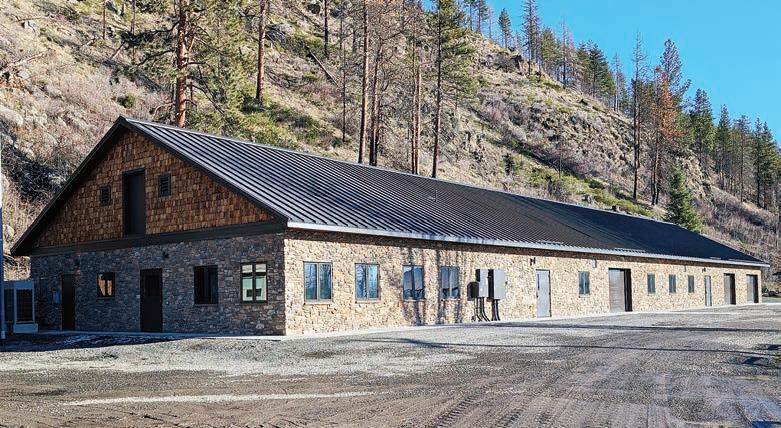
Klamath Hatchery reopens to the public after 2020 fire
Oregon’s Klamath Hatchery reopened to the public June 1 after a nearly five-year rebuild effort following the 2020 Two Four Two Fire that destroyed the building.
The hatchery will resume producing trout for waters in the region, raising about three million fish yearly.
On Sept. 8, 2020, the fire destroyed the main hatchery building and killed about 50,000 triploid brown trout, including 20,000 that were to go to Diamond Lake. The fire prompted what the Oregon Department of Fish & Wildlife (ODFW) describes as a “long and complicated rebuild.”
The rebuild was done in two phases, with the first one focusing on demolition, site work, installation of steel piles, partial foundation construction, and retaining wall installation.
The second phase included completing the foundation, performing civil site work, and constructing the new hatchery building.
“Rebuilding the Klamath Hatchery required us to confront challenges we couldn’t have antic-
ipated,” said Ryan McCormick, ODFW chief engineer. “Installing more than 130 steel piles was a major undertaking, but it ensured this facility will stand for generations. The new hatchery is safer, more resilient, and built to support the basin’s future fish production needs.”
The new hatchery building is slightly larger than the original and has fish-viewing areas, restrooms, picnic spots and opportunities to observe ODFW’s fish-rearing operations.
The Federation of European Aquaculture Producers (FEAP) released a statement in response to the European Commission’s newly published fish welfare report.
The Commission’s overview report, “Farmed fish welfare,” was published in April this year. Authors of the report found that “fish welfare in the European Union (EU) remains uneven and less developed than for other farmed animals.”
The report highlighted that while good practices, research and technologies are emerg-
ing, key challenges like lack of clear welfare indicators, limited expertise, and difficulties in inspecting remote farms, still remain.
FEAP published a statement on June 8 criticizing the major conclusions of the report, explaining that it “overlooks fundamental scientific and operational challenges facing the sector.”
“FEAP fully supports science-based welfare improvements, but they must be practical, achievable, and proportionate,” Javier Ojeda, FEAP secretary general, said in a press statement.
“The Commission’s report risks setting unrealistic expectations that fail to account for the diversity of our sector, from small family-owned lagoon farms to larger marine operations. Legislation that ignores farm-level realities will not improve fish welfare; it will simply drive production outside the EU, where standards may be lower. We need to focus on developing reliable documentation measures before imposing unworkable legal demands.”
The FEAP statement listed specific criticisms in the overview report, emphasizing that welfare needs are not homogenous across species, production systems, or life stages.
FEAP also asserted that the report fails to understand the nuances and unique challenges of aquaculture that is different from terrestrial livestock production.
“Regarding public concerns, the Commission references NGO studies almost exclusively, whereas other widely recognised sources such as Eurobarometer surveys could offer a more comprehensive understanding. FEAP urges the Commission to include such data to avoid reinforcing a partial narrative,” the FEAP explained.
FEAP added that the organization remains committed to working with EU institutions and Member States to develop workable welfare standards that protect both fish and the future of European aquaculture.
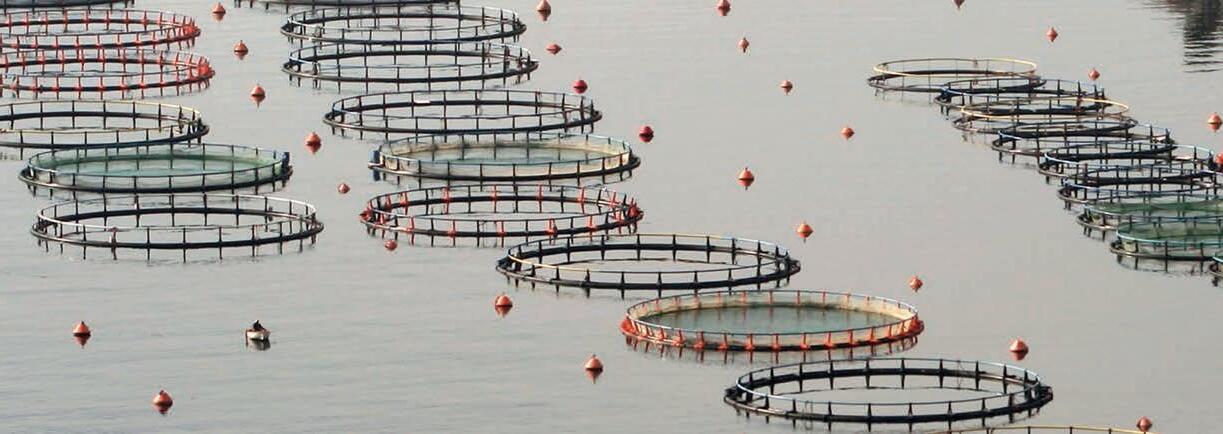
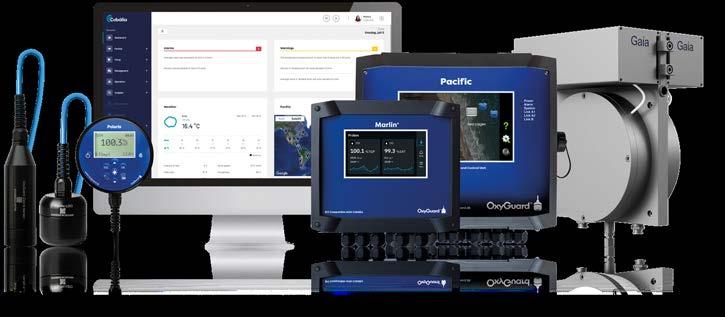
Connecting sensors, systems and software for better decisions
Nofima study says imaging shows promise for identifying sex in Atlantic cod
Determining sex at early and intermediate growth stages is important for selective breeding.
Researchers investigated whether Maritech Eye’s technology could determine the sex of Atlantic cod in an industrial setting without harming the fish.
The study found that hyperspectral images
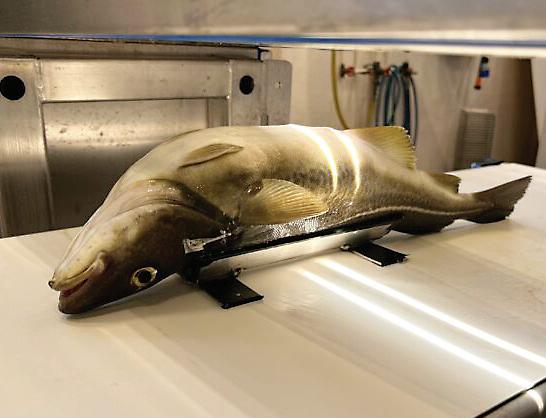
are promising for identifying the sex of cod, but only once the fish have well-developed gonads. The method is not suitable for sorting juvenile fish in an industrial setting.
“Earlier and more accurate sex identification can provide better broodstock management, more efficient breeding and improved production planning, thereby reduce resource use and contribute to increased sustainability in cod farming,” said Samuel Ortega, a Nofima scientist.
Typically, methods such as dissection and ultrasound are used to examine fish gonads, but these are difficult to apply in young fish that have not yet reached sexual maturity, which limits their use in commercial settings.
Other imaging technologies were also assessed, including fluorescence-based hyperspectral imaging and standard colour images. The scientists said none of the methods tested are fully developed yet.
“Although fluorescence imaging and conventional imaging did not produce reliable results in this study, these approaches may still hold greater potential for future improvements in image-based sex identification,” added Ortega.
Abhilaksh Likhi, secretary for the India’s Department of Fisheries paid a visit to one of the country’s regional aquaculture research centres on June 4.
Likhi and his staff took a tour around a regional research centre run by the Indian Council of Agricultural Research-Central Marine Fisheries Research Institute (ICAR-CMFRI) in Visakhapatnam. He toured the marine fin fish hatchery, nursery, broodstock rearing systems, re System (RAS) and other research and demonstration facilities.
The Dept. of Fisheries said the purpose of the visit was to understand field-level experiences and discuss challenges and opportunities in the sector. The secretary met with various stakeholders, including seaweed fishermen, marine cage farmers and others from different districts of Andhra Pradesh.
Regional Centre of ICAR-CMFRI is contributing to the development of marine finfish aquaculture through broodstock management, seed production and technology dissemination for commercially important marine fish species.





Singapore to establish feed technology centre for tropical marine species
Singapore is developing a feed technology centre to strengthen innovations in aquaculture nutrition and enhance the productivity of local farms.
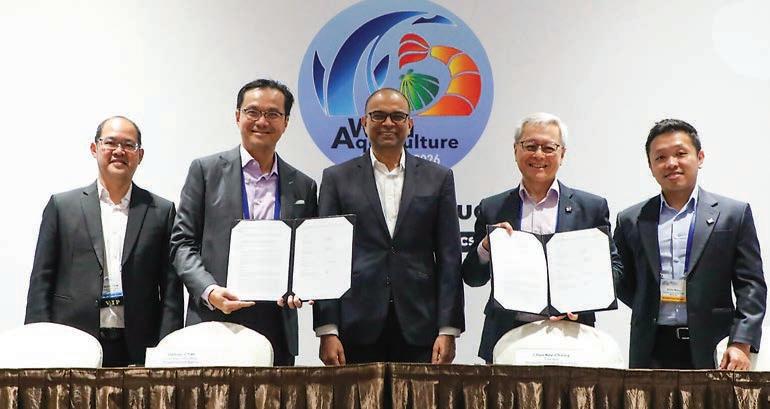
The Feed and Feed Ingredient Technology Centre (F2TC), announced at the World Aquaculture Singapore (WAS) 2026, will focus on research and development for tropical marine species. It is expected to address the structural challenges facing Asia’s aquaculture sector, which accounts for 90 per cent of global production.
Singapore’s senior minister of state for sustainability and the environment, Dr. Janil Puthucheary, said the centre is a collaboration between the Singapore Food Agency (SFA) and the Singapore Institute of Technology (SIT).
F2TC will start by collaborating with Clextral and INVE to bridge research and industry application of innovations that can be adopted by the aquaculture industry locally and regionally.
“Singapore’s food resilience efforts will require strong academia and industry partnerships to enable translational innovation,” said Chua Kee Chaing, SIT president. “By bringing together expertise in feed engineering, digital technologies and aquaculture nutrition, F2TC will strengthen Singapore’s capabilities in sustainable aquaculture and support the development of climate-resilient food systems for the region.”
Aquaculture Stewardship Council (ASC) has certified Agropecuaria Nivar, making it Venezuela’s first ASC-certified feed mill, followed shortly by Proporca, another shrimp feed producer.
ASC Feed Standard requires that all feed ingredients be sourced from responsibly managed fisheries or sustainable agricultural sources. More than 130 feed mills are now in the ASC Feed Programme worldwide.
“We congratulate both Agropecuaria Nivar and Proporca for achieving ASC Feed Certification. By choosing the most robust
and transparent certification in aquafeed manufacturing, they demonstrate their commitment to environmental and social responsibility,” said Marcos Moya, outreach lead at ASC.
“For Grupo Nivar, ASC Feed Mill certification represents validation of our commitment to responsible feed production, product traceability, and aquaculture sustainability. This achievement reinforces our vision of adding value to our customers and to the development of the aquaculture sector in Venezuela,” a representative from Agropecuaria Nivar said.
Two additional feed mills in Venezuela are already under audit for ASC Feed Certification.


BY MAGIDA TABBARA-CORBY
Magida Tabbara-Corby is a PhD in Aquaculture at Auburn University with an emphasis on aquatic animal nutrition. She has over five years of experience in aquatic nutrition, feed formulations, and feed manufacture, in addition to experience in scientific writing, technical writing, and journalism. (magidaht@ gmail.com)
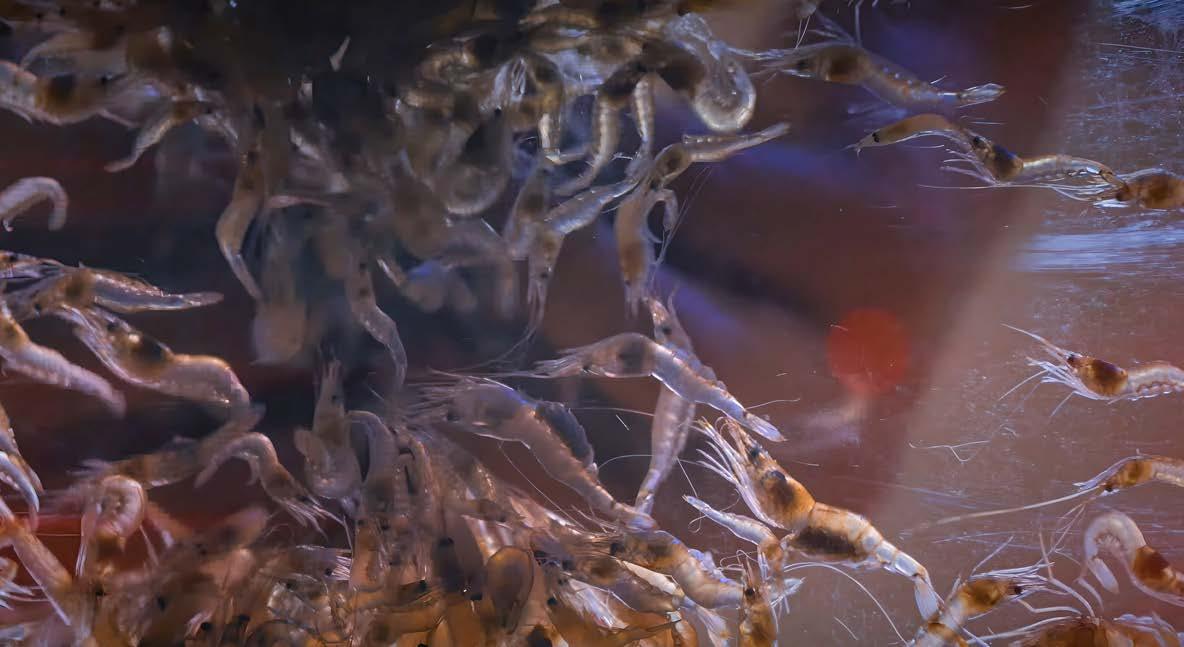
Alot of physiological traits helped favour the culture of Pacific white shrimp around the world, making it the top-most cultured species in the past several years. While genetics play a big role in fast growth and high yields, the euryhaline nature of the animals makes it easier to culture them in areas with less access to the ocean.
Studies have shown that Pacific white shrimp ( Litopenaeus vannamei or Penaeus vannamei ) has the ability of tolerating a wide range of salinities. The animals’ growth and physiological response tends to be the same when the animals are exposed to salinities ranging from 5 to 50 g/L. At salinities below 5 g/L, the animals start showing signs of distress, ranging from lethargy, spinning behavior, all the way to decreased growth, low stress tolerance, and decreased survival. Regardless from the challenges observed at salinities below 5 g/L, the potential is great to raise shrimp in low salinity waters inland.
A pinch of salt goes a long way
The discovery of low salinity tolerance in shrimp opened the doors to a new aspect of culture.
In in-land areas, well water is a highly prevalent source of drinking water. In some areas, however, well water can be at low salinities rather than pure freshwater. A number of countries are producing Pacific white shrimp in low-salinity well waters, including but not limited to Ecuador – which is the top shrimp exporter worldwide – and Thailand. As a matter of fact, statistics have shown that over 30 per cent of Thai shrimp culture takes places in low-salinity water derived from wells.
While the salinity may not be problem for shrimp growth and survival, we must always bear in mind that the ionic composition of the water is what permits the shrimp to maintain normal physiological behaviour. Balancing important minerals such as sodium, potassium, calcium, and magnesium is crucial for the success of shrimp culture
in low salinity waters. After all, the well water may not contain all the necessary ions needed for normal shrimp physiology.
The ions regulate essential physiological functions in shrimp, including but not limited to osmoregulation and the critical molting process where shrimp shed their old exoskeletons to grow. But in order for that pinch of salt to go a long way, we need to tweak shrimp’s diets to maximize their potential in low salinity waters.
The adjustment of shrimp to low salinity environments challenges their metabolism and changes the way they use nutrients, energy, and feed ingredients. Accordingly, research efforts are working on improving nutrition to better help the shrimp adapt to this environment.
Flexible feed formulations that account for the physiological needs of the animals depending on where they’re living and
“Low-salinity farming is no longer simply about culturing shrimp and keeping them alive inland; it is about designing feeds that actively help shrimp adapt.”
growing is the key for the success of low-salinity shrimp culture.
Protein is the fundamental macronutrient in all animal feed. In the particular case of shrimp culture in low salinity waters, studies show contradicting results, with some indicating better performance with low protein levels, whilst others reported improved growth and immune response with higher protein levels. Regardless, there is one aspect one must not forget: protein quality is far more important than quantity.
But another cornerstone in proper shrimp growth and physiology is the presence of essential amino acids. Those building blocks help shrimp not just grow, but also osmoregulate. Studies have shown that amino acids can play the role of cellular stabilizers, helping shrimp maintain proper water and ion balance within their bodies. That makes amino acids functional ingredients, in addition to their role as building blocks.
At the same time, we must not forget that lipids (or dietary fats) also play an important role in shrimp diets. In this particular case of culture, the types of dietary lipids play a crucial role in osmoregulation, by influencing cell membrane structures. Studies suggest that increasing dietary lipid levels could
improve the immune response of the shrimp as well as their growth in low-salinity systems.
We must also not forget that cholesterol and Omega-3 fatty acids remain essential for shrimp growth and survival regardless in what medium they’re cultured.
Moving towards micronutrients, vitamins become increasingly important when shrimp are raised in low salinities. Low salinity, particularly in the case of fluctuations, can trigger oxidative stress, leading to cellular damage caused by free radicals.
Antioxidant vitamins, such as Vitamin C and Vitamin E, help shrimp defend themselves against that damage. Several studies showed shrimp receiving higher levels of Vitamin C or Vitamin E had better survival after sudden salinity drops. These vitamins appear to strengthen antioxidant defenses and improve the shrimp’s ability to tolerate stressful environmental changes.
In the same context of micronutrients, mineral nutrition is one of the biggest challenges in inland shrimp farming.
Unlike ocean water, many inland water sources are naturally deficient in key ions such as potassium and magnesium. Because shrimp can absorb minerals both from the water and from feed, dietary supplementation
becomes a practical strategy in mineral-poor environments.
Potassium supplementation, in particular, has shown promising results in improving growth and helping shrimp adapt to low-salinity conditions.
We must bear in mind that there is no universal mineral formula for all inland farms. The effectiveness of supplementation depends heavily on the specific ionic composition of the culture water. In other words, successful mineral management starts with understanding the chemistry of culture medium itself.
Aquaculture in general and aquatic animal nutrition specifically are in constant evolution, and we’re observing a major shift in how the industry views shrimp nutrition.
Low-salinity farming is no longer simply about culturing shrimp and keeping them alive inland; it is about designing feeds that actively help shrimp adapt, regulate stress, and perform efficiently in challenging environments. As inland aquaculture continues expanding globally, nutrition will likely become one of the defining factors separating average production from highly efficient, resilient shrimp farming systems.
Li, E., Wang, X., Chen, K., Xu, C., Qin, J. G., & Chen, L. (2017). Physiological change and nutritional requirement of Pacific white shrimp Litopenaeus vannamei at low salinity. Reviews in Aquaculture, 9(1), 57-75.
Saoud, I. P., Davis, D. A., & Rouse, D. B. (2003). Suitability studies of inland well waters for Litopenaeus vannamei culture. Aquaculture, 217(1-4), 373-383.





BY LAURA BAILEY, MCMILLEN & BRIAN VINCI, FRESHWATER INSTITUTE
Laura Bailey is a project manager for McMillen’s Aquaculture division. Before joining McMillen, she served as a project engineer at The Conservation Fund’s Freshwater Institute, where she concentrated on the design and research of partial and fully recirculating aquaculture systems. (lbailey@mcmillen.com)
Brian Vinci is the director of The Conservation Fund’s Freshwater Institute. He is responsible for management and administration of the Institute’s day-to-day operations, as well as program delivery, communications, fundraising and development. (bvinci@conservationfund.org)
As recirculating aquaculture systems (RAS) become more advanced, controlling carbon dioxide (CO2) levels is necessary for both fish health and system stability. Dissolved oxygen and ammonia control have always been important in RAS; however, high CO2 levels are increasingly recognized as a limiting factor in intensive production environments.
Fish produce CO2 as a normal part of aerobic metabolism and excrete it through their gills into the surrounding water. When dissolved CO2 accumulates in water, the concentration gradient across the gills decreases, which can lead to respiratory acidosis and reduced oxygen transport efficiency. Acceptable CO2 levels in a RAS depend on the fish species, life stage, and water chemistry.
For example, rainbow trout often perform best at less than 20-25 mg/L CO2 in hard water (Danley et al., 2007; Good et al., 2010), while Atlantic salmon smolt may require concentrations below 10 mg/L in soft water for optimal growth (Fivelstad, 2013; Good et al., 2018). In RAS with high stocking densities, CO2 levels can reach potentially harmful levels unless a carbon dioxide control process is implemented.
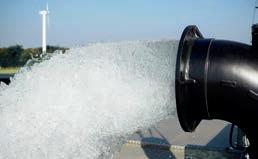
A common CO2 removal process used in RAS is forced-ventilated packed columns. These units can remove 40-60% of dissolved CO2 from RAS water (Summerfelt et al., 2000) but require pumping water to the top of the column, which can increase both capital and operational energy costs. For facilities constrained by hydraulic grade, ceiling height, or energy budgets, low-head alternatives, such as an aeration basin, are viable options.
A recent study at the Freshwater Institute evaluated the performance of a shallow diffused aeration basin as a low-head CO2 removal process for RAS. The objective was to quantify removal efficiency at typical loading rates and to provide practical design guidance for commercial applications.
A pilot-scale diffused aeration basin was constructed to evaluate key design parameters. The experimental setup included an influent tank, a diffused aeration basin (628 gallons), an aeration grid, a regenerative blower, a return pump, and a low-head oxygenator (LHO) for CO2 injection.
The study evaluated four primary design variables:
• Hydraulic loading rate: 204, 306, 407, 611, 815, and 1182 L min-1 m-2 (5, 7.5, 10, 15, 20, and 29 gal min-1 ft-2)
• Inlet CO2 concentration: 10, 15, and 25 mg/L
• Gas-to -liquid (G:L) ratio: 2 and 5
• Water depth: 0.48 m and 0.97 m (19 in. and 38 in.)
Hydraulic retention times ranged from approximately 35-142 seconds, depending on flow rate and basin depth. Each condition was tested in duplicate under steady state operation.
Results from this research demonstrate that diffused aeration basins can achieve relatively efficient CO2 removal at hydraulic loading rates and CO2 concentrations relevant to commercial RAS operations.
The hydraulic loading rate had a clear effect on CO2 removal efficiency. As the loading rate increased, removal efficiency declined.
This result aligns with mass transfer theory, which predicts that higher water flow rates reduce hydraulic retention time and limit gas–liquid contact, thereby decreasing the opportunity for CO 2 to transfer out of water to air.
At moderate hydraulic loading rates of 407-815 L/min·m² (10-20 gpm/ft²), CO2 removal efficiencies ranged from 50-60% at a G:L ratio of 5 and from 40-50% at a G:L ratio of 2. However, at the highest loading rate tested (1,182 L/min·m² or 29 gpm/ft²), removal efficiency dropped significantly to 30-35% at G:L=5 and to 20-30% at G:L=2.
Performance declined sharply when hydraulic retention time fell below approximately 60 seconds, indicating a practical lower limit for basin sizing and flow.
Airflow rate, expressed as the volumetric G:L ratio, also had a clear impact on CO2 removal. Higher airflow increases turbulence and the interfacial area between air bubbles and water, improving gas transfer. However, increased airflow requires more blower energy, so the optimal G:L ratio depends on the facility’s CO2 control requirements and energy considerations. In systems operating at moderate inlet CO2 concentrations (e.g., 15 mg/L), a G:L ratio of 2 may provide adequate removal while minimizing energy use. When higher CO2 removal efficiency is required, a G:L ratio of 5 may be needed.
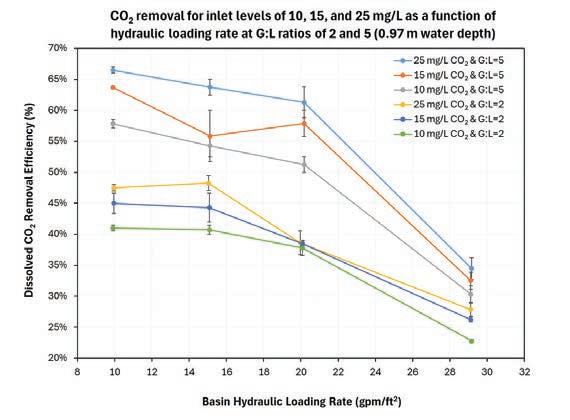
Basin water depth also influenced removal performance. Operating the basin at a water depth of 0.97 m (38 in.) consistently achieved 10-15% greater removal efficiency than the shallower basin (0.48 m; 19 in), particularly at longer retention times. Increased water depth extends the bubble rise and gas-liquid contact time, improving stripping effectiveness. Nevertheless, the shallower basin still achieved 40-50% removal at a G:L ratio of 5 and a hydraulic loading rate of 407 L/min·m² (10 gpm/ft²), demonstrating that shallow configurations can perform effectively under appropriate conditions. Shallower basins may also reduce blower energy requirements and accommodate facilities with
vertical space limitations.
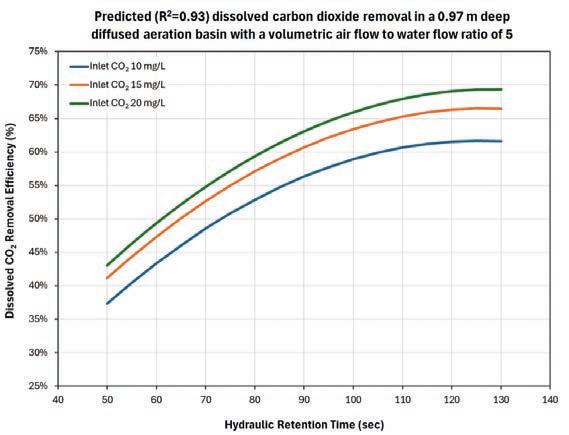
The study’s results were used to generate predictive design curves for basins with a water depth of 0.97 m (38 in.) and a G:L of 5. These curves can be used for RAS design. For example, to target a 50% removal efficiency, follow the 50% grid line on the y-axis to the regression curves and select the required target tank CO2. From there, read down to obtain the required basin HRT on the x-axis. The basin volume and plan area can be calculated from the HRT, water depth, and the required mass-balance flow rate.
These findings support the use of diffused aeration basins as a practical, scalable solution for CO2 control in RAS. At moderate hydraulic loading and airflow, the diffused aeration basin achieved CO2 removal efficiencies comparable to those of forced-ventilated packed columns (40-60%). | HI
Danley, M.L., Kenney, P.B., Mazik, P.M., Kiser, R., Hankins, J.A. (2007). Effects of carbon dioxide exposure on intensively cultured rainbow trout Oncorhynchus mykiss: Physiological responses and Fillet attributes. Journal of the World Aquaculture Society, 36(3), 249-261.
Good, C., Davidson, J., Welsh, C., Snekvik, K., Summerfelt, S. (2010). The effects of carbon dioxide on performance and histopathology of Rainbow Trout Oncorhynchus mykiss in water recirculation aquaculture systems. Aquacultural Engineering, 42(2), 51-56.
Good, C., Davidson, J., Terjesen, B.F., Takle, H., Kolarevic, J., Bæverfjord, G., Summerfelt, S. (2018). The effects of long-term 20 mg/L carbon dioxide exposure on the health and performance of Atlantic salmon, Salmo salar, post-smolts in water recirculation aquaculture systems. Aquacultural Engineering 81, 1-9.
Fivelstad, S. (2013). Long-term carbon dioxide experiments with salmonids. Aquacultural Engineering, 53, 40-48.
Summerfelt, S.T., Vinci, B.J., Piedrahita, R.H. (2000). Oxygenation and carbon dioxide control in water reuse systems. Aquacultural Engineering, 22(1–2), 87-108.
For more information, please see the peer-reviewed publication by scanning here
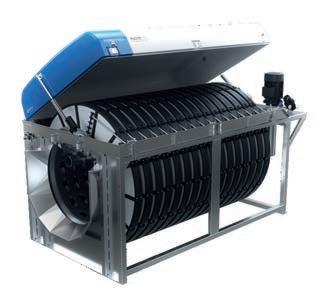
Hydrotech Disc Filter - Hybrid series
Veolia’s Hydrotech Hybrid Filter helps aquaculture safely maintain consistent water treatment.
� Smarter: combination of two proven technologies: high hydraulic flow capacity (HDF) and large filtration area (HSF)
� Lighter: individual panel removal using only two bolts (Alphadisc™ patent)
� Cleaner: particle filtration sizes down to 10 μm and patented high-pressure cleaner
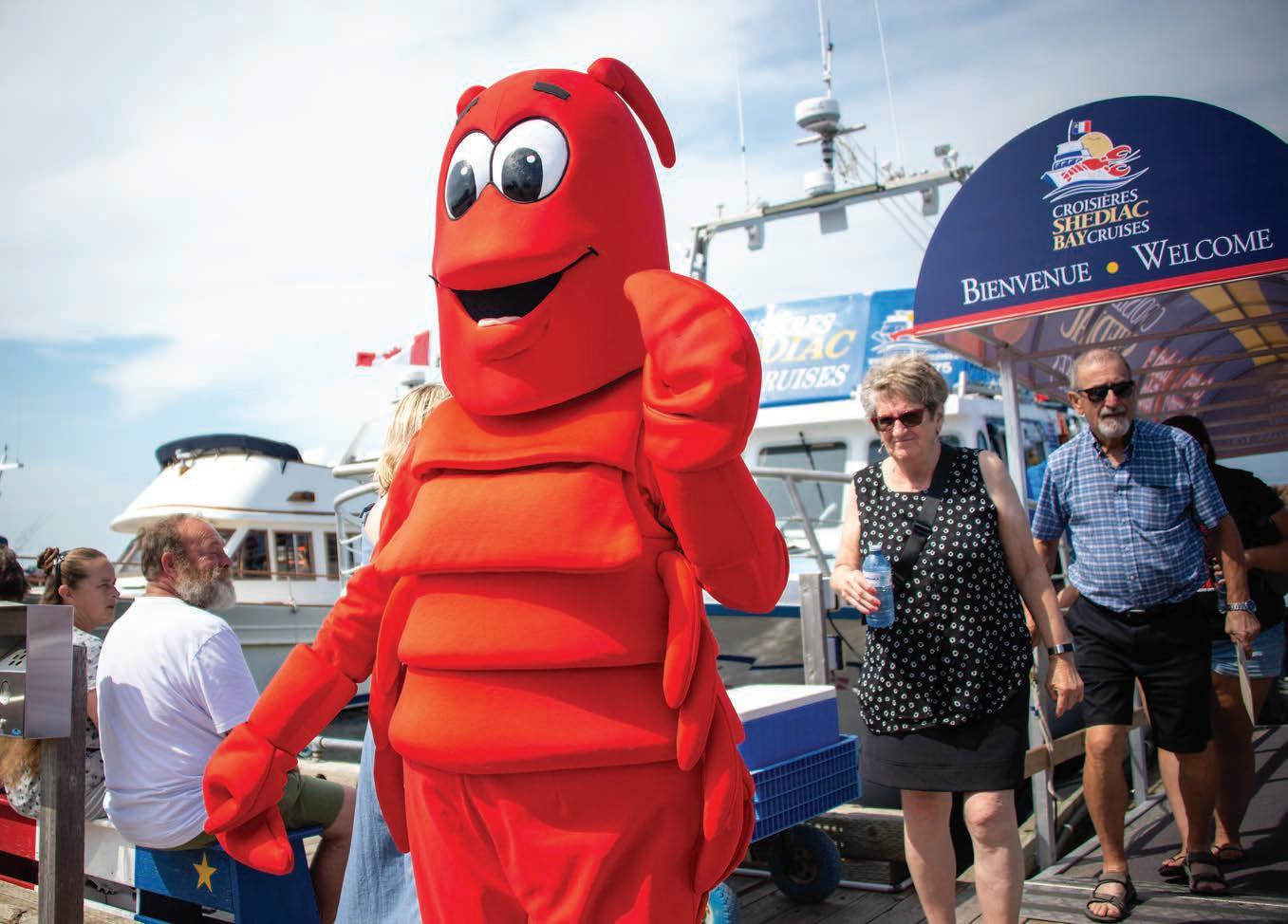
An annual festival in New Brunswick draws crowds for its lobster fisheries
By Ben Normand
As one ambles into Shediac, New Brunswick by way of Highway 15, they are greeted with the iconically unique town sign, sporting a lobster claw, and which reads, “Feels like Shediac.” This slogan very simply delivers the tourism pitch of the town – this is a place where memories are made and recalled through the sights, sounds and smells which, when experienced, harken back to days filled with the simpler joys of life. From Parlee Beach, to seaside restaurants,
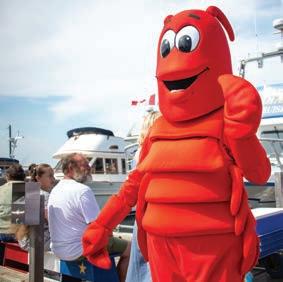
Shediac, New Brunswick is celebrating its 76th year of the Shediac Lobster Festival and larvae release. This year, they are expecting 40,000 people to come to celebrate on July 4-12.
to an exceptionally vibrant yacht club, Shediac has something for everyone to enjoy.
But if one had to choose what makes Shediac truly stand out among the plethora of tourism-centered, beautiful seaside towns in the Maritimes, it would have to be the lobster.
On their website, Shediac claims to be, “The Lobster Capital of the World.”
The most obvious manifestation of this lobster supremacy? The Shediac Lobster Festival/Festival du Homard de Shediac.
Now in it’s 77th year, the festival
“Lobster is in our identity and it’s something that we want for years to come.”
is taking place July 4-12. It truly has something to delight everyone. There are concerts, carnival rides, community game events, active events and so much more. And, of course, there is lobster.
Like so many enduring traditions, the Festival has simple roots. In the summer of 1949, volunteers gathered to serve lobster dinners to raise funds to build a local Royal Canadian Legion centre after the end of World War Two. There were no grand stages, no sprawling tents and no social media campaigns. Just lobster, community, and a shared sense that something worth preserving had been born. That first year was a two-day affair that included kiosks, yacht racing in the Bay and a baseball game that attracted thousands of spectators. Seventy-five years later, in 2024, the Festival broke it’s own record for
attendance: 40,000 people. The town of Shediac has just under 10,000 residents, and so having four times the town’s population arrive, ready to spend what is needed for the iconic “feed of lobster,” means the Festival is one of the economic anchors of this town. These guests were supported over 10 days of celebration by 325 volunteers giving 2,500 volunteer-hours. And the lobster? Over 2,000 lbs of lobster were served that year.
“Our 75th anniversary edition has not only put our passion for all things lobster at the forefront, but it also showcased our community’s vibrant and welcoming spirit,” said Festival President Pascal Hache.
These numbers are surely impressive, and the economic and cultural impacts are evident. But what of its impacts on the wild lobster populations on which it relies? Thankfully, the festival is doing something truly remarkable to ensure its own sustainability.
Long before the festival begins, work is underway at New Brunswick Aquarium and Marine Centre in Shippagan, New Brunswick where an innovative lobster hatchery facility, operated by Homarus Inc. which is owned by the Maritime Fishermen’s Union (MFU), is running fullsteam, efficiently ensuring the indefinite health of the fishery.
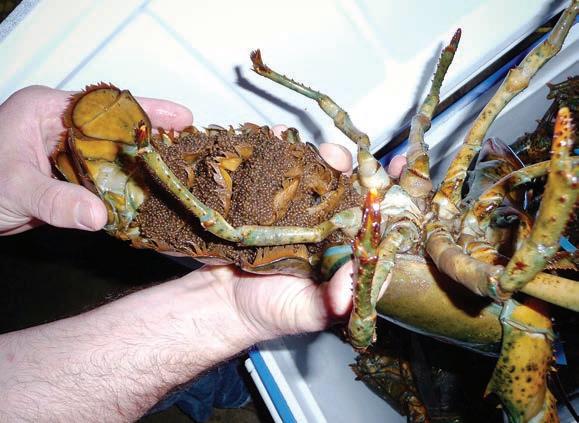
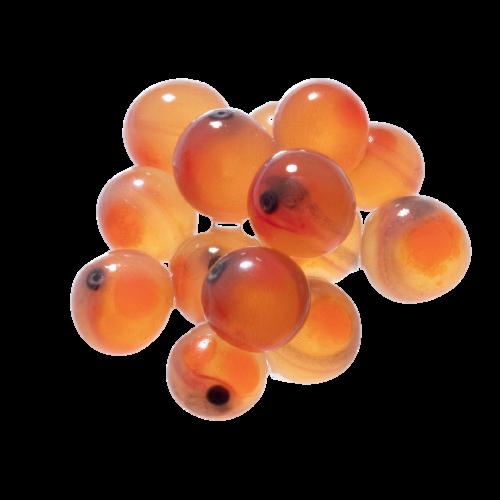
In the wild, survival rates are extremely low for lobsters through their most vulnerable, planktonic larval phases (Stages 1-3). While they develop through Stages 1-3, floating near the surface without an adequate means reliable and rapid motility, predation, environmental variability, and cannibalization mean that less than one per cent of larvae reach maturity. Like most shellfish, species success is not achieved through care of young but through sheer volume of them. Each female lobster can hatch between 5,000 and 100,000 eggs. This might sound impressive and plentiful, but when over 16,000 metric tonnes of lobster are landed annually in New Brunswick alone, it’s not hard to see how our appetite for them could have an impact.
Each year, dozens of female lobsters are collected in local fishing grounds by local fishers. Normally, these lobsters are off-limits for fishers, but these fishers are operating with a special scientific permit and are collecting them for a very special purpose. They are carefully brought to the hatchery and introduced into tanks.
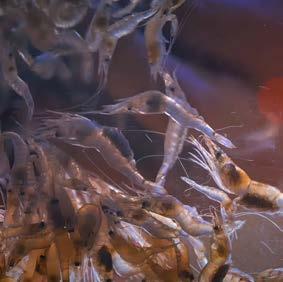
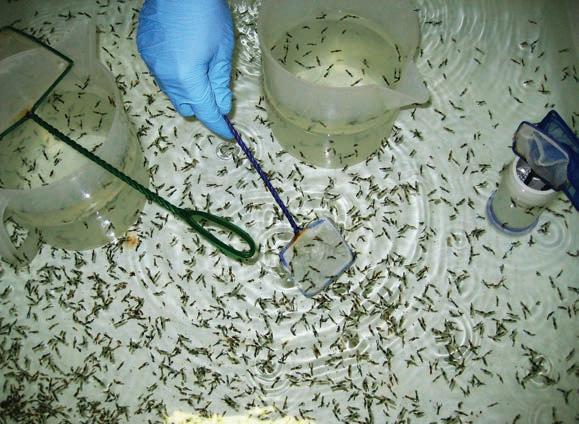
Inside the hatchery, water temperature, salinity, and oxygen are carefully controlled to replicate ideal natural conditions while minimizing stress. Feeding is managed through the dispersal of frozen artemia evenly throughout the tank, supporting larval lobster
development through the three stages of energy intensive molting. The goal is not to rear fully grown lobsters. Instead, hatchery intervention focuses on the earliest life stages – the period where natural mortality is highest. By helping larvae survive this bottleneck, the program effectively increases the number entering the marine ecosystem at a viable stage.

like you for over 40 years


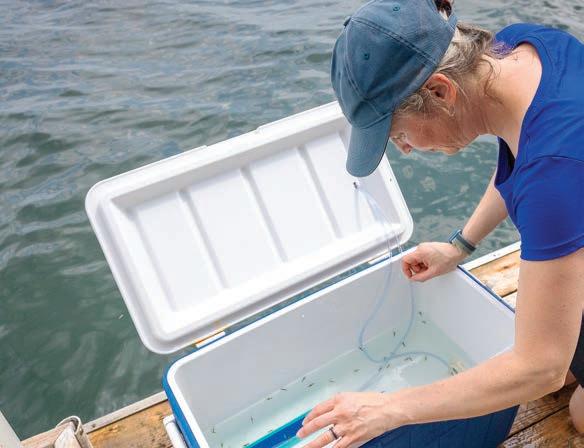
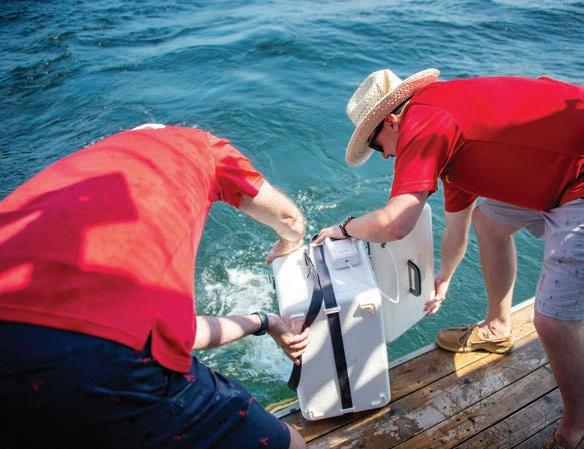
In terms of the hatchery setup and gear, Pierre Dupuis, director of Homarus Inc. said, “you must know your species, and its challenges, and then implement solutions to meet those challenges. Beyond that, hatcheries are all essentially the same.” Indeed, an initial scan of the facility shows a space filled with the plastic pipes, fiberglass circular tanks and compressed air lines familiar to many hatchery operators, but there is a key difference here. Without intervention, the lobster larvae will cannibalize each other freely. To prevent this, the bottom of each tank has a patented porous false bottom and streams of bubbles are constantly spread throughout the tank. This makes it difficult for the larvae to
see and grab a hold of one another, reducing cannibalization. With these measures and control, survival of larvae from Stage 1 to 4 in the hatchery is a very impressive 40 per cent.
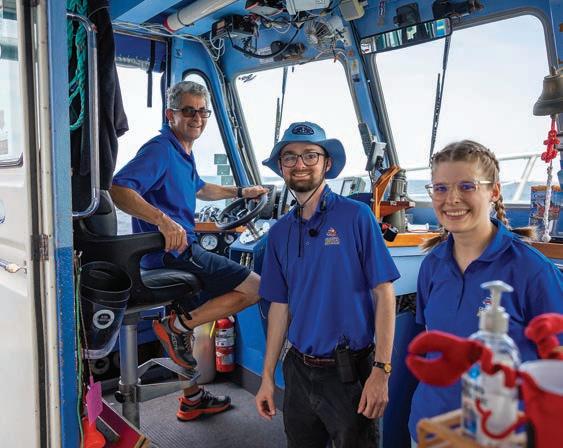
Once larvae reach Stage 4, the mothers and larvae are returned to sea. Fishing boats will load them into large tanks and head out in search of suitable habitat. Stage 4 larvae require rocky bottoms, where there are a plethora of hiding spots which they use for protection. Once suitable habitat is found, the boat will anchor, return the mothers and then drop a hose overboard, which is weighted at its outlet. This means the hose outlet sinks to the seafloor, allowing the Stage 4 larvae to be introduced immediately into
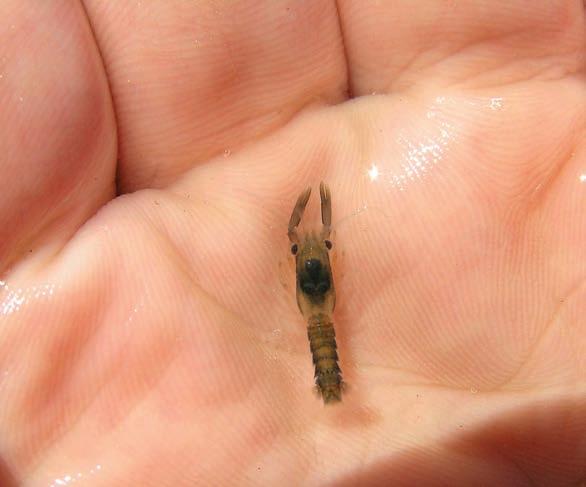
suitable habitat, instead of drifting through a water column full of would-be predators.
This program represents collaboration between competing fishers in the region unlike any we see in the Maritimes. The MFU hold snow crab quota which is fished each year, and funds are used by the MFU to carry out this program, and others. This means all MFU members technically contribute to the program and reap the rewards equally. This program has been in operation since 2002, annually releasing 500,000 larvae, and with a goal to release one million larvae annually.
The program is built on the right logic, and the enhanced larval survival and shortened development window is proof of this.
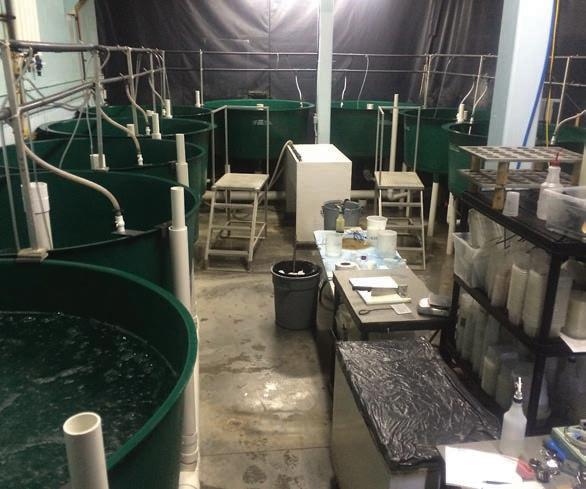
However, the ocean remains the ultimate variable. Once released, larvae are subject to currents, temperature gradients, predators, and food availability. These larvae are not tagged, and they disperse widely and face high mortality. Program scientists acknowledge that outcomes cannot be guaranteed. The release is not a precise tool, but is, instead, an enhancement measure, designed to tip the balance in favour of survival. While there are no official survey results quantifying the population impact, Maryse Cousineau, assistant director at Homarus Centre, is optimistic about the positive impact, saying, “anecdotal data from DFO dive surveys show there are unquestionably more one-year-old lobsters after the program than before it.” This uncertainty is not a limitation – it is a reality of working within dynamic marine systems. The goal is not precision, but influence; increasing the probability that more individuals reach maturity.
While most of the larvae are released against orders placed by communities, First Nations and other fisher organizations, one of the most prominent customers is the festival. In 2025, the Festival released 10,000 Stage 4 larvae. The intention of doing so is to replace what the Festival consumed. Of the endeavour, Shediac Mayor Roger Caissie said, “The idea was let’s release back into the wild, back into the waters, the same amount of lobster that actually gets consumed during the lobster festival. We ate about…[5,000]… lobsters over the course of the week and a half, so we released about 10,000 back into the water.” On why the festival has chosen to do this for the last seven years, Francois Poirier was quoted during the 2025 Festival release as saying, “We want to ensure there’s a future for this festival and there’s a future for our resource… lobster is in our identity and it’s something that we want for years to come and we want to make sure it grows for generations and generations. We’re at the 76th edition of the lobster festival and we want to be sure that we’ll have 76 more.”
The next time that you find yourself in Shediac in July, join in the festivities and enjoy the lobster, knowing that not only are your supporting the culture and economy of the town and the livelihoods of the fishers, but the sustainable health of the lobster population itself. So let the lobster nourish you, this knowledge fulfill you, and the melted butter cast a haze of joie du vivre over your entire experience. | HI

How artificial intelligence could enhance fish handling
By Matt Jones
Artificial intelligence (AI) is a hot-button issue these days.
For every big business pushing AI there are thousands of concerned voices raising alarms over applications such as image generation and AI-powered surveillance tech, or the inability of school children to complete their work without ChatGPT. But, there are many non-controversial and ethical AI applications which have served to open new opportunities for businesses, including in the fish farming sector. Perhaps if these applications received more attention, AI’s reputation would improve.
Hatchery International spoke with a variety of businesses and researchers who offer AI-solutions for early fish rearing to find out more.
One of the most common AI applications for fish farms and hatcheries is in fish counting. Innovasea offer HydroAI, which they say replaces ‘the labour-intensive, error-prone process of manual counting with automated real-time fish counts.’ Vice-President of Research and Development Jean Quirion says that the impetus for the product came from a customer who wanted to track fish around
hydropower facilities.
“We thought we could solve this problem differently than our traditional fish tracking methodologies by using a camera that can see fish and an AI and computer vision to automatically detect these fish and monitor them,” says Quirion. “So we explored this idea with this customer as a partnership and we realized that it is a market trend that’s bigger than this one customer, so we set out to develop HydroAI as a solution for tracking fish around hydro.”
While HydroAI was developed with tracking fish around hydropower facilities in mind, it is appropriate for tracking fish in any sort of narrow passages – those just happen to be plentiful around hydropower facilities. The system requires a camera to be positioned in such a way that it can see the fish that are moving by and a narrow enough passage that no fish are missed by the camera – Innovasea will provide a service to ensure that the camera is installed properly and offer a custom insert that can attach to the passage for easier
mounting logistics.
The AI models have been trained to detect when a fish is in the camera view and also to track fish individually that move through the camera frame. Generally, in these applications, fish are only moving in one direction so there’s no concerns about accidentally counting fish more than once. If a fish enters the camera frame, changes its mind and turns around that counts as a ‘zero.’
“In other words, we can tell if the fish is moving upstream or downstream and we can account for the net number of fish that the system has seen,” says Quirion. “Even though there might be 10s of fish in the camera frame, the model can tell them apart as individuals and not double count from frame to frame.”
Quirion says that the next phrase they are working on is species classification. They have developed the basic capability and expect to have it ready to roll out publicly in 2027.
Aquaticode offer phenotyping as their key business – identifying traits and characteristics (and the relationships between factors such as genetics and the environment) in live fish at an early stage when the fish is still young, typically in a hatchery setting.
“It could be gender, so essentially sex separating the fish,” explains CEO Stian Rognlid. “It could be also recognizing fish at an early stage that shouldn’t be in production based on disease markers or organ health or production damages or deformities.”
Rognlid describes Aquaticode as an ‘AI-first’ company, and their AI system and ultrasound imaging visually identifies traits and conditions in observed fish. If the AI can be described as the brain of the system, Aquaticode’s SORTpro device is the muscle around that brain. SORTpro can automatically sort 10,000 juvenile salmon per hour by factors such as gender, maturation, robustness and health traits.
“We’ve entered into the early stages of aquaculture typically, when the fish is between 20 to 100 grams, and that was a deliberate choice for us,” notes Rognlid. “The better intervention you can do earlier, the better the effects of that, whether that’s cost savings in terms of not feeding a fish that you shouldn’t be feeding or its benefits from gender sorting.”
Fish in the SORTpro are alive but sedated. Aquaticode also offer the SORTvax, which is a similar device that vaccine machine manufacturers such as Lumic or Pharmaq can tap into their processes.
“The product is actually the sorted fish if you really want to dumb
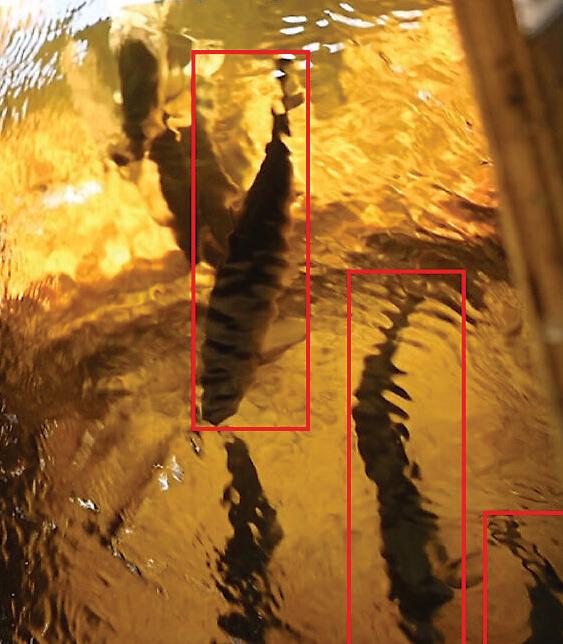
it down and strip away all the technological layers,” says Rognlid. “We consider ourselves to be a deep tech company. We do a combination of robotics and AI and deep learning and getting different information from sensors and we tie it all together using software.”

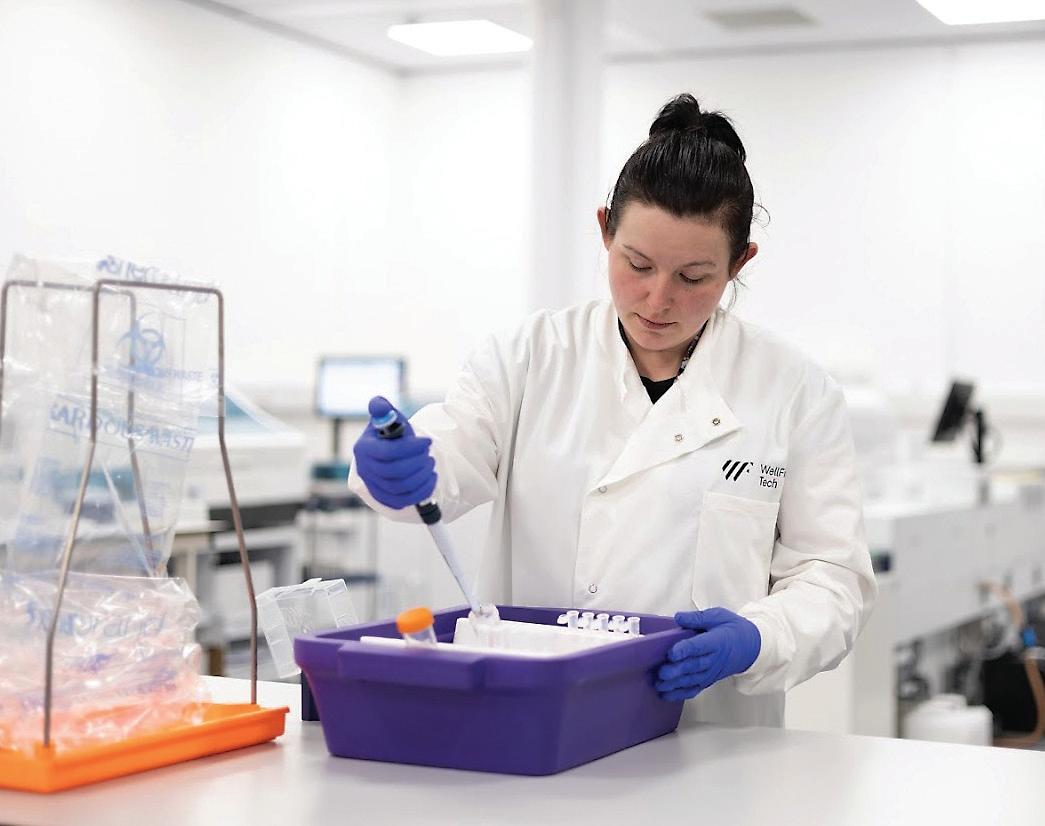
Wellfish Tech’s business is in blood analysis. Fish farmers will typically send them blood samples and the company analyzes them. And in order to give their customers better access to that data, they have developed an AI agent
that they call Stevie that their customers can interact with.
“What we are doing with AI is that our agents are used to comb through farm data that comes from the blood analysis, but also any data that the farmers would share with
us,” says Wellfish Tech Business Development and Nutrition Specialist Ivan Tankovski. “This could be environmental, this could be feeding, this could be genetic lines. There are many layers of data that can be analysed and then the agents go through this data and, just like any other AI agent, you ask questions and then they can answer because they have all this data at their disposal.”
Tankovski gives ‘why did my fish in Q1 underperform compared to Q1 in 2025 and 2024’ as a typical question that a user could ask of Stevie. The AI agent will analyze a variety of data to determine likely causes for that result.
“We say farmers farm two things – they farm fish and they farm data,” says Tankovski. “They sit on so many different sensors and they get water chemistry, feeding, fish population moved from one fish to another with salmon coming from different origins and different lines. All this data which they have but very often we do nothing with this data. And nowadays, if you have data, you’re sitting on a gold mine, you just have to figure out what to do with it and then you can actually utilize it and improve on so many levels.”
The AI system will compare the farm’s own data as well as data from a variety of relevant and peer-reviewed literature about fish health – ensuring that all that information is presented in a uniform way is one of the significant challenges for Wellfish Tech. Stevie can also be incorporated into Copilot or other AI systems. The company offers training to customers to ensure that they can utilize the AI agent effectively.
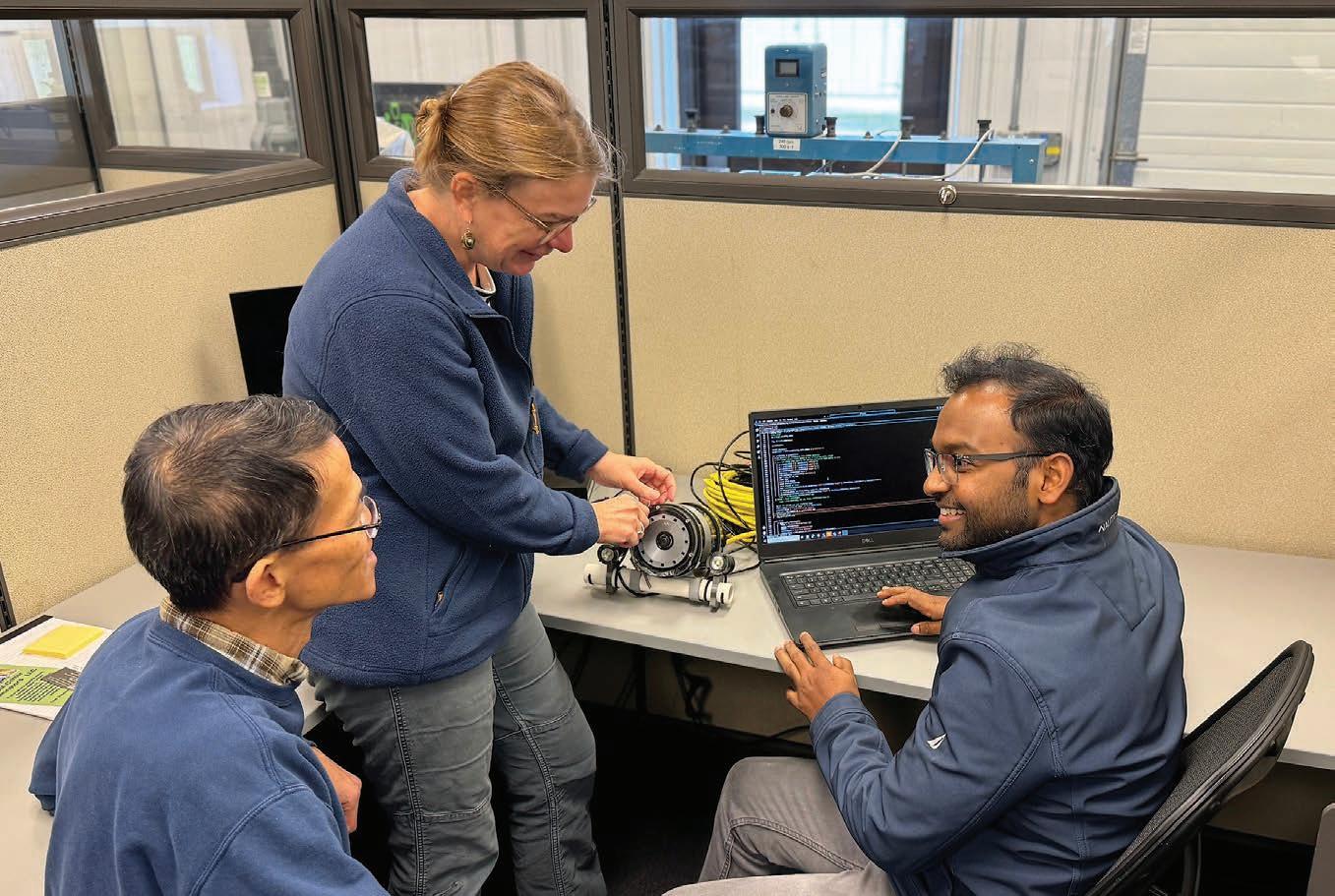
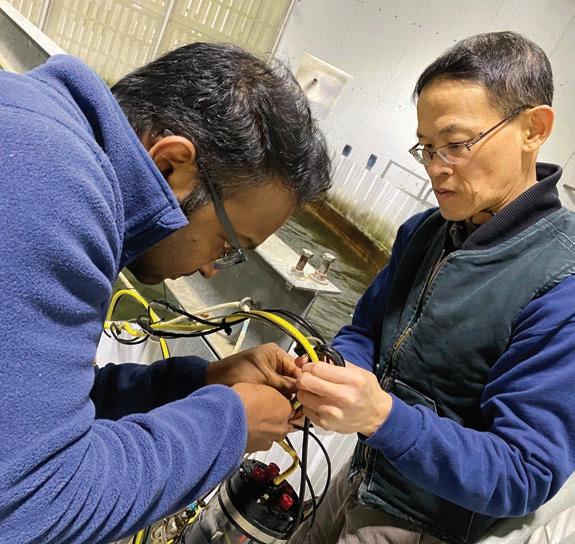
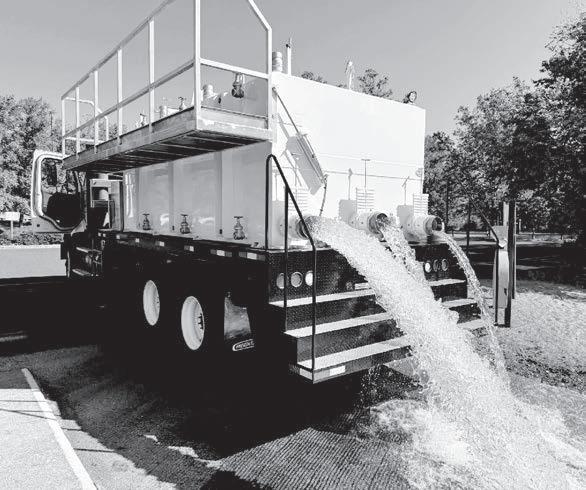
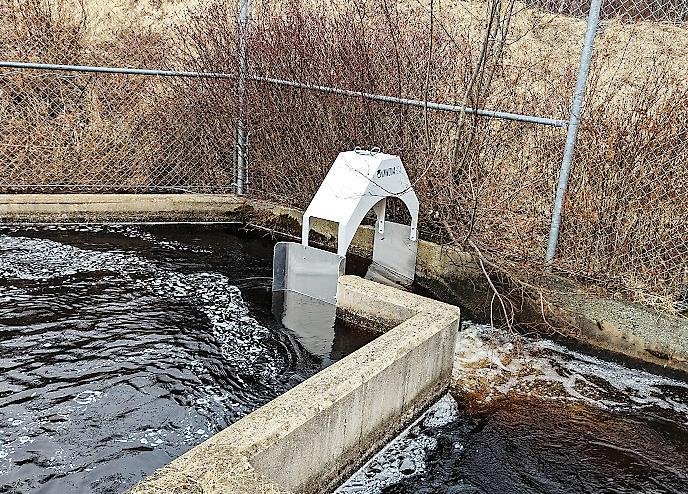
While some companies already have AI-related tech employed, researchers are hard at work developing the next generation of AI tools for fish rearing. Rakesh Ranjan of The Conservation Fund’s Freshwater Institute, for example, is one researcher who is developing new concepts for the application of AI. In 2023, he co-authored a paper on MortCam, an AI mortality detection and alert system.
“Traditional aquaculture mortality monitoring primarily relies on periodic human obser vation and manual recordkeeping at fixed intervals,” notes Ranjan. “However, this approach carries a significant risk of delayed detection, as high-mortality events occurring between observation periods may go unnoticed. In cases such as equipment malfunction or sudden environmental failure, delayed intervention can rapidly escalate into a mass mortality event. To address this challenge, MortCam AI integrates artificial
“Adoption is not always that fast but technology development is fast, so there’s a lot of things happening now that I think you will see the fruits of at some point in the future.” - Stian Rognlid, Aquaticode
intelligence and Internet of Things (IoT) technologies to enable continuous, real-time mortality monitoring and develop a mortality database.”
The MortCam AI system consists of an underwater imaging sensor coupled with an edge computing device specifically designed for aquaculture environments. The images captured by the system are used to
train a ‘convolutional neural network’ (a deep-leaning system) capable of detecting mortalities accumulated near the tank drain plate. When mortality levels exceed a predefined threshold the system automatically generates email and text alerts.
MortCam AI remains a ‘proposed tool.’ Though it has been validated in semi-commercial-scale growout systems at the Freshwater Institute, they continue

to search for an industry partner to commercialize the technology. Ranjan has also co-authored a paper on the effects of image data quality on AI intank detection models. One of the key takeaways from that research is that the quality, variability and representativeness of the training dataset determines how robust and generalized a model will be in real-world operating conditions. The images used in the dataset should also be specifically relevant to the applications.
“If a mortality detection model is trained only on images containing a few dead fish, its performance will likely degrade under high-mortality conditions because it has not learned to recognize dense patterns of mortality accumulation,” says Ranjan. “Similarly, if the training data are collected only under optimal water quality conditions with low turbidity, model accuracy may decline significantly when water clarity deteriorates due to environmental or operational factors.” | HI









Sgorran partners with PP Control & Automation on vaccination machines
Fish vaccination company, Sgorran, is partnering with PP Control & Automation to scale the production of its Inoca vaccination machines.
The deal will see the full build carried out at PP’s facility in the West Midlands, allowing Sgorran to spend more time on R&D for future models. Sgorran’s Inoca machines can vaccinate 2500 fish per channel with up to eight channels. The technology delivers up to three intraperitoneal (IP) vaccines and a single intramuscular (IM) vaccine.
“Our strengths rest in the design and innovation of the aquaculture technology, and this is what we want to focus on. We started to look for an outsourcing partner and was blown away by the capabilities of PP Control & Automation,” said Kristian Clezy, co-founder Sgorran.
According to a press release from Sgorran, the two companies have created a dedicated NPI cell, which will soon progress into a full build line.
“Our engineers have started the first build, with the brief to identify production improvements and potential supply chain rationalization, as we work through the first iterations,” said Mark Johnson, engineering manager at PP Control & Automation.
The Center for Aquaculture Technologies (CAT) has appointed Iulia Blaj as a quantitative geneticist.
In her new role, Blaj will help design genomic models that translate complex data into practical breeding decisions. She has expertise in quantitative genetics and
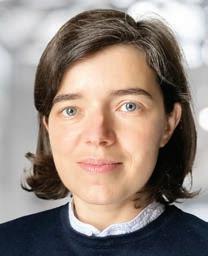
statistical genomics, including experience in both academia and industry across livestock and plant breeding sectors.
“Genomics is one of the most powerful tools the aquaculture industry has to shape its future. By integrating the right methods with meaningful and rigorous data interpretation, we can help producers make better decisions and enable the development of healthier, more resilient stock,” Blaj commented.
“We are very pleased to welcome Iulia to CAT. Her appointment adds valuable quantitative genetics expertise to our growing global team and strengthens the support we provide to breeding programs around the world,” said John Buchanan, CEO of CAT.
Phibro launches platform to reduce feed-related carbon emissions
Phibro Animal Health Corporation has launched a new Sustainable Solutions Platform (SSP) to address greenhouse gas emissions.
Phibro said its products, Verratain Spirulina and Verratain Omega Oil, are microalgaebased feed ingredients that enable producers to reduce the carbon intensity of feed while maintaining performance and operational simplicity.
The initial Verratain product line is being launched through a partnership with VAXA Technologies.
“Our Verratain Verified Sustainability Solutions represent a natural evolution of
Phibro’s portfolio as our customers increasingly seek credible, scalable sustainability solutions,” said Dani Bendheim, CEO of Phibro Animal Health.
To lead the Verratain portfolio, Phibro appointed Peter Bunce as head of sustainable solutions. Bunce has more than two decades of experience in agricultural sustainability and voluntary carbon markets, including building large-scale programs that connect farmers with downstream consumer packaged goods companies and retailers.
“I joined Phibro because of its deep integration across global protein and dairy supply chains, where scalable solutions can deliver
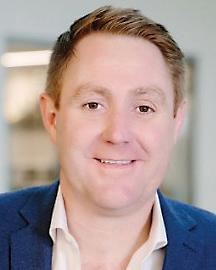
meaningful emissions reductions,” said Bunce. “After many years working in agricultural voluntary emissions markets, I have rarely seen innovations that combine impact and practicality like Verratain.”
ADM, a human and animal nutrition producer, has opened a new premix and feed additives production facility in Apucarana, Paraná, Brazil.
The 7,500-square-metre facility has the capacity to produce about 40,000 tons of premix and feed additives annually and up to 10 tons per hour.
“Our innovation process is focused on improving our customers’ production performance by reducing losses through higher bioavailability and feed conversion and unlocking
more value for our customers through higher productivity, improved yield and cost efficiency,” said Raphael Bozola, ADM’s vice-president of Animal Nutrition for South America.
ADM says the plant has individualized silos and a dedicated mixing system, adding that it can produce customized formulations for different producers, with no risk of cross-contamination.
“The automation and systems implemented at the new unit are not an end in themselves; they are tools to sustain efficient growth, raise the technical standard of our operations, and prepare the business for the future of animal nutrition: more demanding, more regulated and increasingly data-driven,” Bozola said.
Innovafeed secures €51 million for next growth phase
Innovafeed, an insect-based ingredients company, has completed its industrialization phase at its Nesle site in France and has received a new €51 million (US$58 million) funding to support this new phase.
The financing will be used for the commercial development of the Hilucia ranges, to invest in industrial equipment and processes and to improve the capacities of production lines.
Innovafeed said the financing was backed by its existing shareholders, including Creadev, QIA, Temasek, FFC, ABC Impact, and ADM, as well as its banking partners.
Following the last funding round in 2022, the company said it has achieved three major milestones, including being operational, an increase in revenue, and a reduction in carbon emissions.
“After many years of studying the benefits of this raw material in the nutrition of sea bass, sea bream, and trout, we have made the decision to use these new ingredients on a very broad scale. This scale-up is made possible today by Innovafeed’s technological breakthrough,” said Fabio Brambilla, nutritionist at NaturAlleva.
Innovafeed also said it is reducing zootechnical R&D activities and their integration from its Gouzeaucourt site into the Nesle facility. This includes reducing 60 positions, two-thirds of which affect the Gouzeaucourt site.
“While we must take demanding measures to adjust our organization to this new phase, we are deeply committed to recognizing the dedication of our teams over the past years and to implementing this transformation plan responsibly,” said Clément Ray, Innovafeed CEO and co-founder.
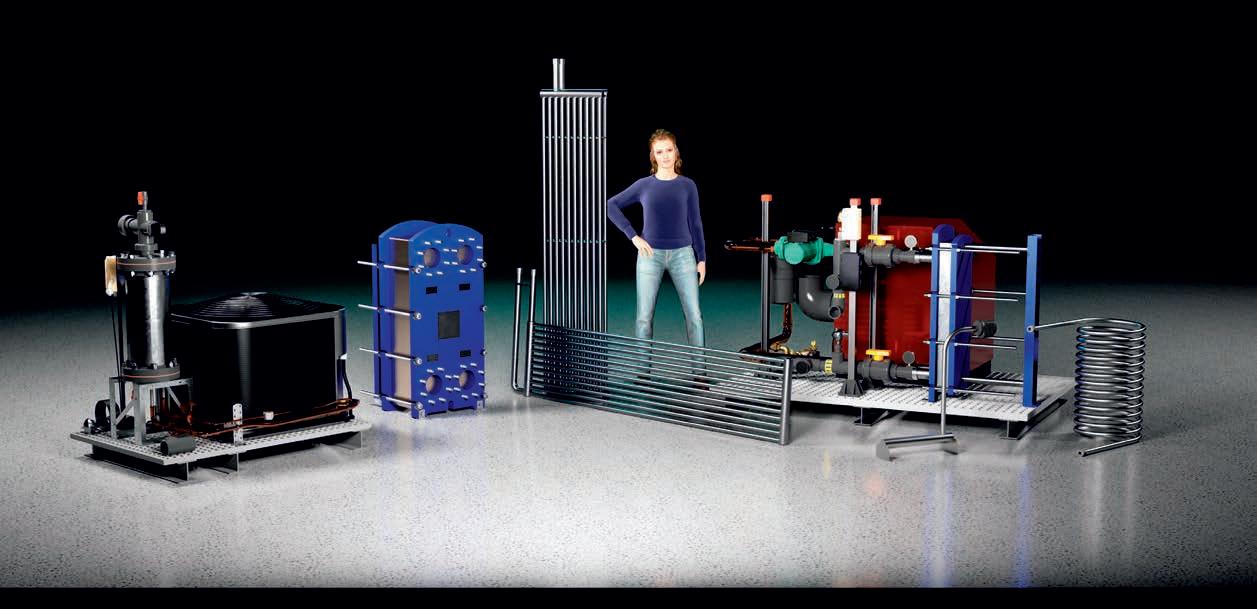
> Premium quality, disease-free eyed eggs available all year round
> Rainbow trout all female (diploid or triploid) and other salmonids

We help you to grow great fish

Customized for your fish farm, hatchery or
Customized
Customized
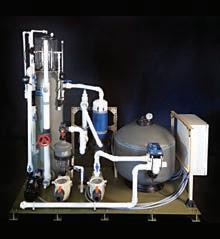
Our Commercial LSS Packages are custom engineered to meet your specific needs.
Our Commercial LSS Packages are custom engineered to meet your specific needs.
Customized for your fish farm, hatchery or research operation! Our Commercial LSS Packages are custom engineered to meet your specific needs.
• Marine and Freshwater
• Marine and Freshwater
• Marine and Freshwater
• Mechanical filtration
Freshwater
• Mechanical filtration
• Mechanical filtration
• Chemical filtration
• Chemical filtration
• De-gassing towers
• De-gassing towers
• De-gassing towers
• Wide variety of flow rates
• Wide variety of flow rates
• De-gassing towers
• Flow control valves
• Flow control valves
• Mechanical filtration
• Chemical filtration
• Ultraviolet disinfection
• Ultraviolet disinfection
• Protein skimmers
• Wide variety of flow rates
• Protein skimmers
• Chemical filtration
• Ultraviolet disinfection
• NEMA enclosed controls
• NEMA enclosed controls
• Wide variety of flow rates • Flow control valves • Protein skimmers
• Flow control valves
• Variable frequency-drive pumps
• Variable frequency-drive pumps
• Ultraviolet disinfection
• NEMA enclosed controls
• Bio-filter towers
• Bio-filter towers
•
• NEMA enclosed controls
• Bio-filter towers
• Bio-filter towers

• Variable frequency-drive pumps • Temperature management
• Protein skimmers • Variable frequency-drive pumps • Temperature management


BY NICOLE KIRCHHOFF
Selective breeding programs transformed terrestrial agriculture long before modern aquaculture existed. Today’s poultry, cattle, swine, and crop industries rely on decades of coordinated genetic improvement that increased growth, efficiency, survivability, and production consistency. Aquaculture is now following the same path. But successful breeding programs are rarely built by a single entity alone.
Over the past several weeks, I spoke with several experts about the evolving relationship between public and private breeding programs in aquaculture. A consistent theme emerged from all four conversations: public and private hatcheries are not supposed to compete. They are supposed to perform different roles that together strengthen the industry.
Todd Sink, aquaculture extension specialist at Texas A&M AgriLife Extension Aquaculture Program, described public breeding programs as uniquely positioned to perform the large-scale family management and long-term selection work that would be difficult for most private hatcheries to support independently. Programs such as the USDA-ARS Catfish Genetics Program, StriperHub, and Texas A&M’s Red Drum Genetics Improvement Program maintain hundreds of family lines simultaneously while selecting for traits such as growth, temperature tolerance, maturation timing, and disease resistance.
Maintaining that level of breeding infrastructure requires advanced science, extensive facilities, long timelines, and significant expense with little immediate financial return. Ben Reading, program director of StriperHub through the North Carolina Sea Grant, noted that most aquaculture species are still only a few generations removed from the wild, if domesticated at all, and that the generation times of many finfish species make breeding programs inherently slow and expensive. That is where public programs can play a critical role. Breeding programs require continuity beyond traditional grant cycles because genetic progress
is cumulative and populations cannot simply be restarted when funding ends.
Nick King, general manager of SalmoGen, described a similar reality within salmon genetics, explaining that many successful terrestrial-style breeding programs operate with a government-supported breeding nucleus because the cost and scale of maintaining hundreds of family groups annually would be difficult for commercial hatcheries alone to absorb. King described a similar relationship through the evolution of the USDA Atlantic salmon program that ultimately supported the formation of SalmoGen. The original USDA program was developed over roughly 20 years to preserve and improve native U.S. Atlantic salmon genetics after concerns emerged regarding dependence on imported European strains. Today, SalmoGen produces millions of eggs annually for commercial sale, while USDA continues focusing on long-term breeding improvement rather than becoming a commercial supplier itself. Commercial companies are the multipliers that ultimately scale these genetics into industry production.
Brian Peterson, research leader at the USDA-ARS National Cold Water Marine Aquaculture Center, similarly emphasized that breeding programs become stronger and more relevant when multiple commercial partners participate and provide real-world production feedback. Commercial hatcheries and growout farms help ensure breeding goals remain aligned with industry needs rather than becoming isolated within research systems alone. For hatchery owners, this may be the most important Hatchery Hack of all.
Commercial partners often provide the clearest feedback on traits such as coloration, temperature tolerance, disease resistance, feed efficiency, handling tolerance, or regional environmental adaptability. They also help identify unintended secondary characteristics that may emerge during selection programs, such as aggression or poor adaptation to specific production systems. This commercial feedback loop is essential because the best-performing fish
under controlled research conditions are not always the best-performing fish in commercial production environments.
Reading repeatedly emphasized the importance of transparency, cooperative structures, and “staying in your lane” between public and private sectors. Tension emerges when public programs begin selling or giving away eggs, fry, or fingerlings directly into commercial markets in ways that may be perceived as competing with private hatcheries. Both Reading and Peterson emphasized that the goal of public breeding programs is not to replace private hatcheries or become long-term commercial suppliers. Instead, these programs are intended to subsidize the improvement of a relatively young agricultural industry so it can mature more efficiently, much like terrestrial agriculture did decades ago.
The interviews also highlighted opportunities beyond traditional selective breeding. Public institutions can serve as secure germplasm repositories, maintaining backup populations or cryopreserved sperm as insurance against disease outbreaks, facility failures, or environmental disasters.
Reading pointed to examples such as Spring Genetics, whose tilapia program now contains more than twenty generations of genetic improvement – germplasm so valuable that true replacement value would likely be impossible to insure commercially. In these cases, geographically separated public repositories may become one of the most important forms of genetic risk management available to the aquaculture industry.
Public institutions can also provide neutral third-party testing for commercial genetic lines, evaluating claims related to disease resistance, growth, survivability, or feed performance under standardized conditions.
The long-term success of breeding programs may depend less on whether they are public or private, and more on whether they create healthy collaboration, clear commercial pathways, and enough long-term incentive for both sides to continue investing in the future of the species. | HI
Digitization cuts diagnostic wait times and expands access to global expertise.
Dead men tell no tales” may be the stuff of 19th-century pirate legend, but in modern aquaculture science, the opposite is true. Post-mortem fish tissue can reveal critical insights into fish health, and histopathology – the microscopic examination of that tissue – has long been a cornerstone of disease diagnosis and health assessment in fish farming.
Today, histopathology is being redefined through digitization. Advances in digital imaging and communications are enabling faster diagnoses, eliminating geographic barriers and allowing near-instant consultation with global experts – an evolution that has become increasingly important for Canada’s aquaculture sector.
Histopathology has historically been widely used in Canada, but recent years have exposed vulnerabilities in service availability, including long processing times and disruptions caused by laboratory shutdowns and flooding. These challenges created an opportunity for change across the country, as a new partnership has modernized how histopathology services are delivered.
A collaboration between Pharmaq and the Campbell River-based BC Centre for Aquatic Health Sciences (BC CAHS) has introduced digital histopathology services for Canada’s aquaculture industry. In 2024, Pharmaq procured a digital slide scanner for the BC CAHS lab, allowing tissue samples mounted on glass slides to be scanned into high-resolution digital images. These images can then be shared with Pharmaq Analytiq’s histopathology specialists globally within hours, rather than days.
“This collaboration came at the request of B.C. salmon farmers,” says Michael Ness, Business Manager – Aquaculture for Pharmaq Canada, referencing disruptions caused by the 2021 Abbotsford flooding and the subsequent closure of the Animal Health Center. By eliminating shipment delays, digital histopathology has reduced turnaround times significantly, with reports typically delivered within five to seven days after samples are dropped off.
Pharmaq is headquartered in Norway and operates globally, offering vaccines, therapeutics, diagnostic services and research support. Its global histopathology team includes 14 veterinary pathologists with diverse regional experience and advanced credentials. While individual pathologists may work directly with Canadian clients, they are supported by the full global team through digitized workflows.
“This gives customers the benefit of a collective second opinion without delays,” says James Hoare, head of pathology at Pharmaq Analytiq in the U.K. He notes that diseases or pathologies emerging in Canada may already be well documented in other regions or species, allowing insights to be applied quickly and effectively.
This blend of local processing and global expertise has proven valuable for fish health management. At Mowi Canada West, the digital histopathology service has expanded diagnostic options, according to fish health manager and veterinarian Terra MacDonald. While local B.C.-based pathologists remain essential, access to broader perspectives adds depth and confidence to decision-making.
Histopathology plays a central role in Mowi’s “whole fish approach,” helping identify health issues that may not be detected by tools such as qPCR or bacteriology alone. While environmental sensors track external threats like plankton blooms, histopathology reveals the physical impact on fish, distinguishing between acute events and chronic, systemic conditions. Routine screening also
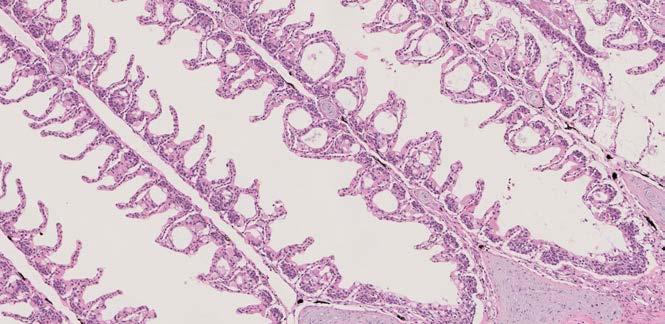
ABOVE
Adjacent gill lamellae are sticking together, forming adhesions. Such changes are often seen after recent irritation or injury to the gill tissue (Haematoxylin and eosin-stained section).
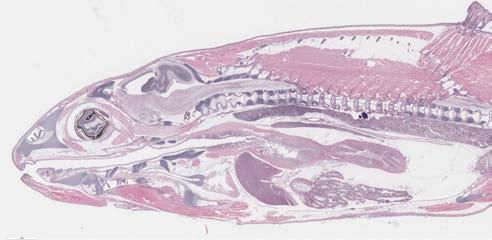
RIGHT
Longitudinal section through a healthy Atlantic salmon fry (Haematoxylin and eosin-stained section).
provides reassurance of overall fish condition, from gill health to nutritional status.
Digitization has shifted histopathology from a retrospective tool to one that supports real-time decision-making. Rapid access to results allows farmers to respond proactively, particularly around fish handling and treatment. Mortality events often occur when fish with underlying subclinical issues are handled, and histopathology can identify risks before stressful procedures take place. This enables immediate decisions, such as delaying treatments or modifying handling practices to protect fish welfare. The digital workflow also complements provincial laboratories, which may experience diagnostic bottlenecks during peak demand.
Looking ahead, Pharmaq is integrating machine learning and artificial intelligence into its pathology services. While human expertise remains central to diagnosis, AI tools are being developed to improve the precision of quantitative tissue assessments. These technologies are already supporting research and development activities and are expected to move into routine diagnostics. Future integration with Pharmaq’s iWISE digital platform will allow customers to analyze pathology trends and cross-reference data across disease categories, further enhancing fish health management.
For the full story, visit HatcheryInternational.com, or visit pharmaq.com/en/analytiq for more information.
Created by Amplify Content Studio, in partnership with