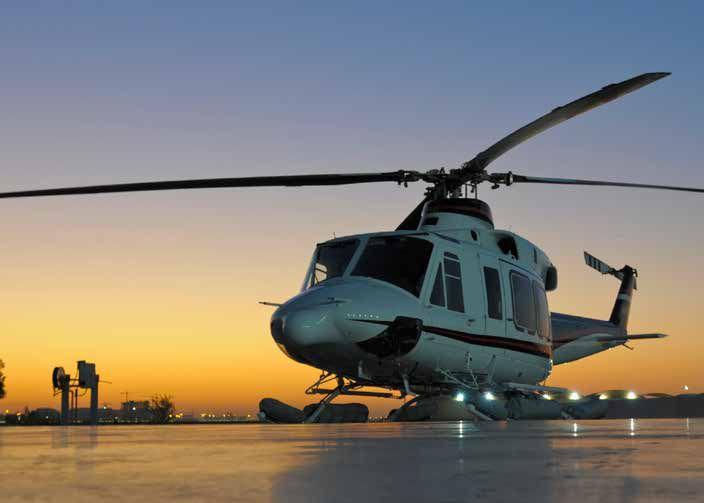
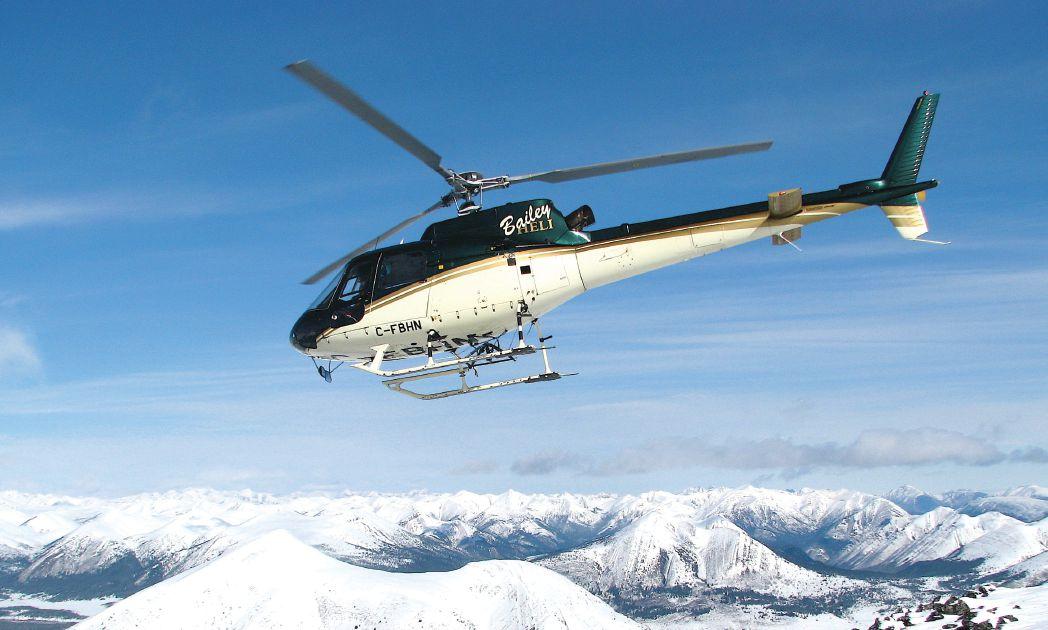
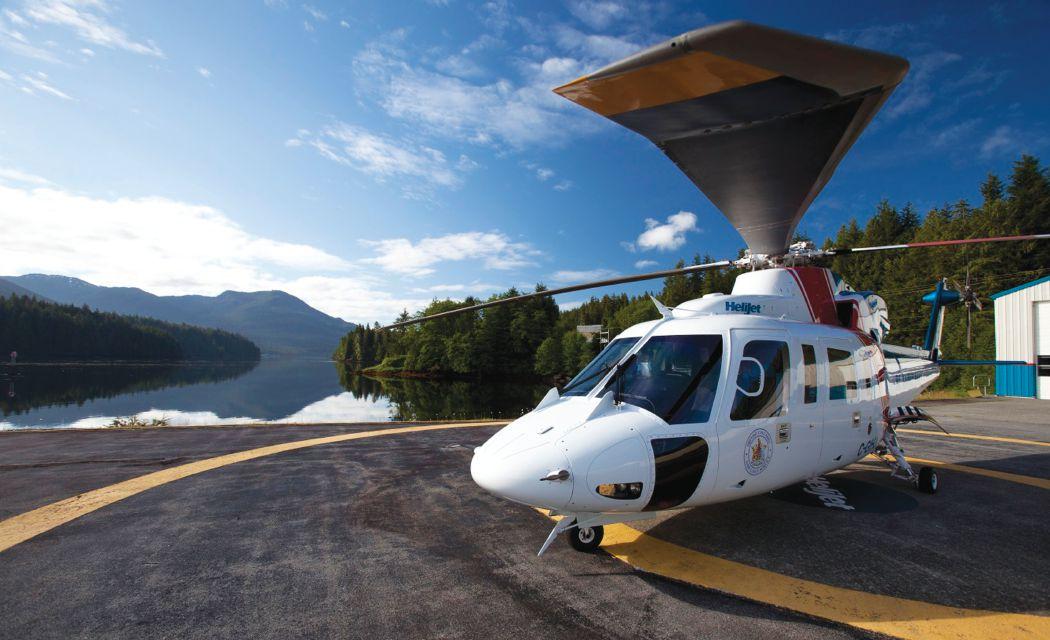
You wouldn’t expect reliable service from a facility like this…would you?
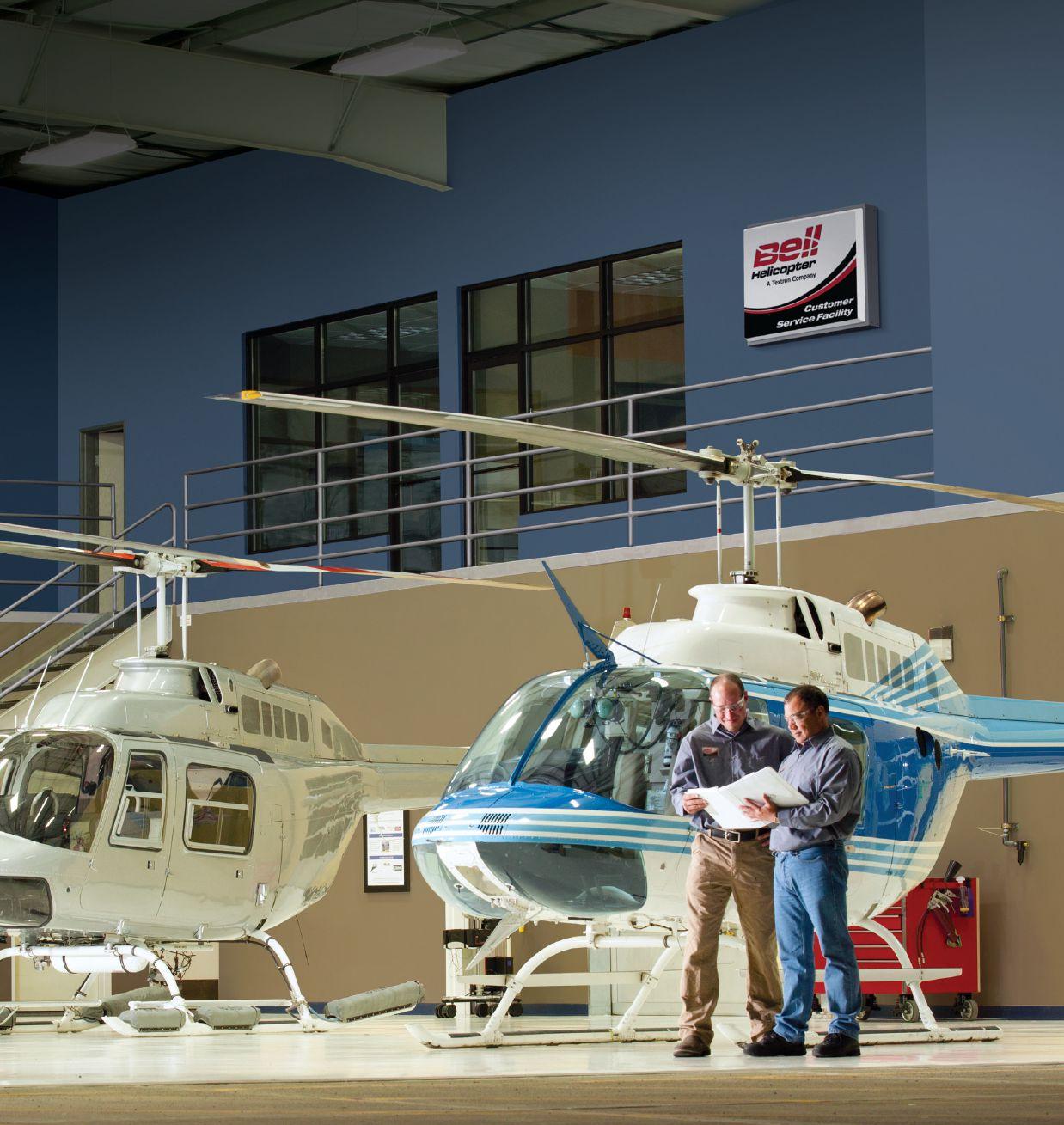
For superior service and support, the Bell Helicopter worldwide network of more than 100 authorized Customer Service Facilities (CSFs) offers some of the most modern, state-of-the-art facilities throughout the world. Staffed with Bell Helicopter-trained maintenance technicians and equipped to keep your helicopter in top operating condition, our CSFs will assure your helicopter is properly handled when service is required.
aMatt Ni eD
s a young man fortunate enough to grow up in Bay, ont., i had the opportunity to immerse myself in the great outdoors, becoming more than a little proficient at navigating various fishing and pleasure craft on the waterways that dot the pristine northwestern landscape.
it’s a pastime i still love today and having lived near and travelled on a variety of impressive Canadian waterways and shore lines, i’m quite familiar with the important role the Canadian Coast (CCg) plays on a daily basis with its team on the water and by helicopter. it’s precisely why i was pleased to hear of Prime minister plan to get the ball rolling on a fleet upgrade for the CC the landmark decision in late August to replace the CC with new, technologically advanced aircraft couldn’t have come at a better time and it reflects a concerted effort on behalf of the federal the bar when it comes to the country’s key aviation assets.
this decision follows closely on the heels of another significant pro curement announcement made earlier this year in the fixed-wing realm – the replacement of the aging 45-year-old CC-115 Buffalos and enhance ments to the search and rescue (sAR) fleet. the on-again, off-again pro curement process with fixed-wing sAR needs to happen and the decision to replace the Buffalos and enhance sAR reflects a renewed commitment by the federal government to key aviation resources (for more information see, “searching for an answer,” pg. 36, Wings magazine,
helicopter air support is a crucial component to the delivery of coast guard services. ‘‘ ’’
the CCg refurbishment is a bold yet wise move and has been hinted at for some time, first being chronicled in the march/April 2010 issue of Helicopters magazine. the CCg fleet currently consists of 23 helicopters and is broken down into 17 light lift helicopters – 14 Eurocopter Bo-105s and three Bell 296l longrangers – and five medium Bell 212s. it also includes a sikorsky heavy lift s-61n the refurbishment plan calls for 24 aircraft of both light and medium configurations with the precise mix yet to be confirmed.
With some 243,792 kilometres of coastline and a land mass that includes more than 755,000 square kilometres of water, Canada’s CCg
Westland’s popular AW139, and sikorsky’s versatile s-76D. sikorsky’s s-92 and Eurocopter’s EC-225 are ideal candidates for an Arctic sovereignty role as deployment on the CCgs John g. Diefenbaker.
As Fisheries minister Keith Ashfield aptly points out, “helicopter air support is a crucial component to the delivery of coast guard services and the maintenance of public safety.” the commitment to refurbishing the CCg is a positive move that will not only help stimulate growth in the Canadian helicopter industry, but also ensure the protection and ongoing support of those who are employed in key maritime industries.
For those of us who enjoy – or work – on the waterways and coastal areas of this great country, it means peace of mind and safer days ahead.
"When you hold the breath-hold freediving World record, far ahead of all your competitors, you appreciate the exceptional performances of the breitling superocean."
Airline pilot and extreme recordman Herbert Nitsch earned his place in the history books as the only breath-hold diver to smash the 200-meter mark, a truly incredible feat. Nicknamed "The Flying Fish", this exceptional athlete with nerves of steel is now aiming for the legendary 1,000-foot barrier (–305 m). On his wrist is the Breitling Superocean, a concentrated blend of performance, reliability and style. Water-resistant to the fabulous depth of 2,000 m (6,600 ft), this ultra-sturdy and ultra-functional watch is equipped with an officially chronometer-certified movement – as indeed are all Breitling models. For Herbert Nitsch, the Superocean is the perfect companion for all manners of feats.
CAD 3,565 Recommended retail price
Bristow Acquires Part of Cougar
the Bristow group inc. has acquired a minority interest in Cougar helicopters inc. and certain aircraft and facilities used by Cougar in its operations.
Focusing primarily on the offshore oil and gas industry off Canada’s Atlantic coast and Arctic, Cougar is privately owned by vihAg of British Columbia, the Canadian Press reports. Bristow’s investment will be $250 million with a three-year earn-out of up to an additional $40 million based upon Cougar achieving agreed performance targets. the transaction is expected to be completed in the fourth quarter of calendar year 2012, subject to the approval by the Canadian transportation Agency and the completion of an interim $250 million, 364-day term loan facility.
Cougar's deal with Bristow will allow it to tap into resources that will enhance the
the operating assets being purchased include eight sikorsky s-92 helicopters and state-of-the-art helicopter passenger, maintenance and sAR facilities located in st. John’s, n l. and halifax, n s the purchased aircraft and facilities will be leased by Bristow to Cougar on a long-term basis.
“We are very pleased to
have Bristow as a significant investor in Cougar, as we have similar corporate cultures and core values, especially our commitment to safety,” said Ken norie, owner of vihAg who will continue to serve as chairman/CEo of Cougar. “i believe this relationship will enhance the services Cougar provides to our customers and
BROliN HONOuReD BY RCMp
The RCMP has added a fallen helicopter pilot to its honour roll, cenotaph and memorial wall following a national memorial service in Regina in early September.
David John Brolin, who Public Safety Minister Vic Toews said is the first civilian member of the RCMP to be added to the memorial wall, died in January after a helicopter accident that took place while he was training with an RCMP emergency response team near Chilliwack, B.C.
“Most of us leave for work in the morning with the full expectation that we will return home safe at the end of our day. Police officers begin their shifts with the knowledge that they are facing the unknown and that they could very well be risking their lives while on the job,” Toews said in a statement from Ottawa. “As a result, a deep level of trust develops among RCMP members, making it all the more painful when one of their own loses their life in the line of duty.”
positions Cougar for the next phase of its growth.”
the deal allows Cougar to tap into Bristow’s resources and global network of customers and suppliers, while providing Bristow the opportunity to invest in an operator with an outstanding reputation for safety and service in a new growth market.
Brolin, 46, was the pilot of an AS 350B3 helicopter that was returning to base after concluding a series of emergency response drills.
The helicopter went down around Cultus Lake in an area with scattered trees bordering Department of National Defence land. He was the only person aboard. The RCMP said that he had worked several years with the Mounties. He left behind two children.
Despite being a civilian member, a full regimental funeral was held for Brolin after his death. “Bestowing this honour on a civilian member speaks to the fact that all members of the RCMP are equally dedicated to serving Canadians,” Toews said of the tribute to Brolin.
RCMP Commissioner Bob Paulson also presented silver memorial medallions to Brolin’s family during a private ceremony earlier in the week. One side of the medallion has the RCMP crest on a police badge with the fallen member’s regimental number. The other side has the member’s rank, name and service dates.
operation. (Photo courtesy of Cougar Helicopters)
DND Works Out settlement
The Department of Defence (DND) and the Northwest Territories Power Corporation (NTPC) have worked out a deal following an incident where a power line was accidently cut last February.
The DND and the NTPC have agreed on compensation following a power line accident in February.
The DND is set to pay $1.83 million to the NTCP for damages caused when a Canadian Forces helicopter cut a power line near Yellowknife. The incident occurred during Exercise Arctic Ram, when a Griffon helicopter practising low flying surveillance, struck a transmission line from the Snare hydroelectric system. The helicopter landed safely, but the damage cut power to the Yellowknife area.
The claim submitted by the power corporation covered the costs of repairing three transmission lines and of providing the communities with backup diesel-generated electricity for 10 days after the incident.
“This is good news for NTPC and its customers, our objective was to recover the full costs,” Bob Kelly, a representative for the corporation, told CBC news. “DND was very helpful and co-operative throughout. They showed us the process that needed to be followed to submit the claim and assured us that it would be forwarded through the proper channels at DND. And three months later, less than three months actually, we have a settlement.”
In April, the power corporation said it was submitting a claim for $2.4 million. But Kelly said they did an internal review and lowered the claim. He said the military is paying the full amount.
CAE Joins Forces With Russian Heli
CAE and Russian helicopter have signed a memorandum of understanding to evaluate the economic feasibility of working together in a number of highpotential areas.
the deal, signed at the ilA Berlin Air show 2012, means CAE and Russian helicopters will examine the possibility of jointly developing helicopter flight simulators and pilot training programs for students
of the helicopter Academy established in spring 2012 at the national helicopter Building Centre in tomilino, moscow Region.
Also under consideration is the use of CAE’s simulators and training facilities to train pilots and mechanics for Russian helicopter operators. CAE and Russian helicopters will also discuss the joint creation of training centres in Russia and other countries.
300th EC145 Cowling for Eurocopter Canada
eurocopter Canada limited (ECl) completed its 300th cowling on Aug. 30 for the EC-145 at its composite manufacturing facility in Fort Erie, ont., a significant milestone for the team.
“We are very proud of the hard work and dedication displayed by our composites team,” said guy Joannes, president/CEo, ECl. “Composite manufacturing at ECl has earned its reputation for producing a high-quality part on time and on cost, which couldn’t be achieved without our group of highly skilled engineers and composite technicians.”
ECl is the single source for the EC-145 (luh) cowlings. Eurocopter Canada manufactures and supplies composite parts to six product lines for the Eurocopter group and is positioned to offer customized solutions to its customers as an As9100 registered organization. in may 2011, ECl celebrated the completion and delivery of the 200th EC-145 cowling ship set. As a result of the quality circle implementation and emphasis on the Eurocopter Production system (EPs), significant productivity
HELICOPTERS MAGAZINE P.O. Box 530 105 Donly Drive South Simcoe ON N3Y 4N5
Tel.: 519-428-3471 Fax: 519-429-3094
Toll Free: 1-888-599-2228
Website: www.helicoptersmagazine.com
EDITOR MATT NICHOLLS e-mail: mnicholls@annexweb.com 416-725-5637
MEDIA DESIGNER BROOKE SHAW
CONTRIBUTING WRITERS
MICHAEL BELLAMY, DAVID CARR, BRIAN DuNN PAuL DIxON, DAN GIBSON WALTER HENEGHAN FRED JONES NEIL MACDONALD, JAMES MARASA, ROB SEAMAN
ASSOCIATE PUBLISHER ALISON DE GROOT e-mail: adegroot@annexweb.com 519-429-5191 • 1-888-599-2228 ext. 246
ADVERTISING SALES ADAM SZPAKOWSKI e-mail: aszpakowski@annexweb.com 1-888-599-2228 ext. 273
GROUP PUBLISHER/EDITORIAL DIRECTOR SCOTT JAMIESON e-mail: sjamieson@annexweb.com
the scope of the agreement offers numerous potential benefits for both sides. Russian helicopters may gain access to a range of CAE’s technologies, and the opportunity to make use of the Canadian company’s extensive network of training centres to train operators of Russian helicopters around the world. CAE will in turn have the opportunity to promote its products on the global market for Russian-built helicopters.
PRESIDENT MIKE FREDERICKS e-mail: mfredericks@annexweb.com
RETuRN uNDELIVERABLE CANADIAN ADDRESSES TO ANNEx PuBLISHING & PRINTING INC., P.O. BOx 530, SIMCOE, ON N3Y 4N5 CANADA. e-mail: subscribe@helicoptersmagazine.com
Published five times a year by Annex Publishing & Printing Inc.
SUBSCRIPTION RATES Canada – 1 Year - $25.00 (all taxes included) uSA – 1 Year $35.00 Foreign – 1 Year $45.00
gains have been made on the EC-145 program, which has contributed to the success of the composite team.
ECl first delivered the cowling ship sets in 2008 and is slated to deliver the cowlings for the new EC-145 t2 version as well. ECl is a valued supplier to Eurocopter’s global supply chain, operating within a lean manufacturing environment, and produces components for a large number of Eurocopter Canada designed and manufactured options to satisfy worldwide Eurocopter operator’s requirements.
Helicopters Magazine is an associate member of the following Canadian aviation associations:
terminating the Deal
Understanding Your Rights When Signing on the Dotted Line
n a previous issue of Helicopters, i wrote about contract formation, so i thought it might be interesting to discuss some ways contracts may be terminated – whether the contract is for an aircraft, aircraft parts, or even a training bond.
You may think that once a contract is formed, you must ensure you complete your full obligations under the terms of that contract, but this is not always the case. For example, some contracts are legally flawed from the outset, may be voidable – ab initio – and can be treated as though they did not exist. others, because of certain internal flaws, may fail by operation of law, and may be rescinded or voided, after formation.
Finally, it is important to understand that a party to a contract may simply not perform their primary obligations under the contract. this breach usually results in that party paying damages (secondary obligations) to the non-breaching party.
When a contract is legally (and fatally) flawed ab initio it may have failed because of a missing ingredient of contract formation, such as lack of consideration, or improper offer and acceptance. it could also mean that there was not a complete consensus of the parties during the formation stage. this could be through the fault of one or both contracting parties, or simply be due to forces outside the knowledge of the parties.
A voided contract usually returns parties to the starting point. You are free to renegotiate terms, or walk away – usually without penalty on either side. Partial performance may change that result, and will
have been made innocently or deliberately, and matters only if it was in regard to a material component of the contract. the innocent party may then elect to continue, or may set aside the contract – to undo it – once again returning parties to their original, pre-contract state.
What can you do if the above scenario does apply, and you do not want to continue with a contract? Again, regardless of whether it is a contract for an aircraft, aircraft parts, or a training bond, breaking a contract is fairly straightforward.
You may decide not to perform your obligations under the contract when they are due, or you may decide to inform the other party ahead of time that you do not intend to perform them. Also, you have to ask yourself whether it will be more cost effective to continue with a (bad) contract, or to terminate it and pay damages.
this termination – or repudiation – of the contract may or may not be accepted. if accepted, the contract terminates, and all obligations under the contract end. if the innocent party refuses to accept repudiation, the contract remains in force. the primary obligations will cease, and the secondary obligations (damages) will arise.
Damage awards usually involve some sort of a mathematical analysis. this can be done after the fact, through negotiation by the parties, or by the courts. Damages may also have been contemplated within the contract, with an amount agreed to beforehand under a “liquidated Damages” heading.
When a contract is legally flawed ab initio it may have failed because of a missing essential ingredient. ‘‘ ’’
likely cause an accounting for the time or use of the subject of the contract.
Contracts that are voidable, or that can be rescinded after formation, fall into another category. You will often see other (possibly negative) forces at play with these voidable contacts. the parties may not be in equal bargaining positions for example. that imbalance may be the root cause of a claim for duress or unconscionability.
it may also occur because of a situation of operative misrepresentation. one party may have made a statement that fully or partially induced the other party to enter into the contract. the statement may
Contract formation and termination rules are applied in the same manner for most private and commercial operations in Canada – both in and out of the aviation industry. the rules have evolved in the courts and many have been codified into the laws of the provinces. several statutes you will see in most provinces will apply, such as the sale of goods Act and the Frustrated Contract Act, which outlines your obligations and your rights regarding contract formation and termination. While they are good places to start when analyzing contract status, i would recommend you consult with a lawyer if you, or your party, are contemplating repudiation – or you are the party on the receiving end of a contract termination.
Neil J. MacDonald is a lawyer practising in B.C. He holds an ATPL-H, flew as an IFR offshore aircraft commander internationally and on the B.C. Air Ambulance. He has consulted on quality and safety issues in the Middle East. njm@neiljmacdonald.com This is not a legal opinion. Readers should not act on the basis of this article without first consulting a lawyer for analysis and advice on a specific matter.
Neil J. MaCDONalD
paul DixON
Vancouver is currently ground zero in a battle being waged that will determine what form search and rescue (sAR) will take in this country for many years to come. one of the fortune cookies in this year’s federal budget was the announced closing of the Kitsilano Coast guard base, located at the mouth of False Creek in the heart of the region’s urban core. since 1962, the former RCAF station has been a 24/7 coast guard response centre.
in vancouver, response to the news was swift, extremely vocal and came from across the political spectrum. the mayor of vancouver and the provincial minister of public safety, political polar opposites, were very much in tune in condemning the closure. they have been joined by groups representing every conceivable stakeholder – and the outcry shows no signs of abating six months later.
two months after the budget was tabled, federal Fisheries minister Keith Ashfield told the globe and mail he wouldn’t be backing down from the decision, adding “as far as i’m concerned, that station is closing,” followed by, “nobody particularly cares for change, but we are responsible for taxpayers’ dollars and people want us to spend [them] effectively and efficiently.”
the government’s position is that the hovercraft stationed on sea island at YvR can handle the calls currently being handled by the Kitsilano base. the Kits base has one of the highest call volumes in Canada in a relatively small area that comprises vancouver’s inner and
Searching For An Answer
Dealing With the Loss of the Kitsilano Coast Guard Base
rebranding is a revitalization of the volunteer side of marine sAR and a much higher visibility. But what many may not realize is there is no longer a direct link with the Canadian Coast guard. the federal government provides some funding for fuel and insurance, but the volunteers are responsible for all fundraising as a charity.
it’s simply a feat of fiscal conjuring – waving a wand that magically removes the financial burden from the federal house and leaves the responsibility of sAR on the doorstep of the local communities. But is this truly “effective and efficient?” it costs what it costs to provide a minimal level of service, whether the money comes from the government through taxation, charitable donation or the fundraising efforts of the volunteers. it’s not oK for the government to provide funding through taxation, but it is oK for that money to be raised through taxdeductible donations or the direct fundraising efforts of volunteer organizations. that’s the new world order.
the reality is that the sAR community across this country already runs largely on the backs of volunteers. get away from the high-profile maritime and aviation responsibilities of the military and coast guard and you will quickly realize that sAR in Canada is driven by community-based resources; it’s done by those in the fixed-wing and rotary realms who give willingly of their time and expertise to serve their communities. how can we possibly quantify the true cost of volunteering in this context? how can you justify and measure the time of the many commercial helicopter operators who are there to provide their services and do it with no expectation of receiving any payment beyond a thank you for a job well done?
the reality is the sAR community across the country already runs largely on the backs of volunteers.
outer harbour. the belief is that a 40-foot fast response boat capable of 26 knots and a rigid-hulled inflatable boat capable of 50-plus knots is ideal for the job. While the hovercraft have a top speed of 50 knots, they already have full dispatched events that see them cover a vast area taking in the salish sea (formerly the georgia strait) between vancouver island and the mainland, as well as 40 kilometres up the Fraser River.
At the same time, another change in the coast guard universe saw the Coast guard Auxiliary in B.C. replaced by the Royal Canadian marine search And Rescue (RCmsAR). the positive thing about the
there is nothing wrong with providing community-level services from within the community when it comes to sAR. it gives a huge sense of accomplishment and ownership to those who are responsible. unfortunately, not all communities have the resources or capabilities to meet the challenges they must confront and these are the realities that all governments must acknowledge. it’s a great thing to be able to volunteer, but it’s a terrible thing when it’s taken for granted.
shirley Bond, B.C.’s former minister of public safety, had responded to minister Ashfield’s remarks by stating, “i understand the need to make prudent financial decisions during challenging economic times, but it is essential that public safety be the primary consideration.” Closing the Kitsilano Coast guard base does not adhere to this premise.
Paul Dixon is freelance writer and photojournalist living in Vancouver.
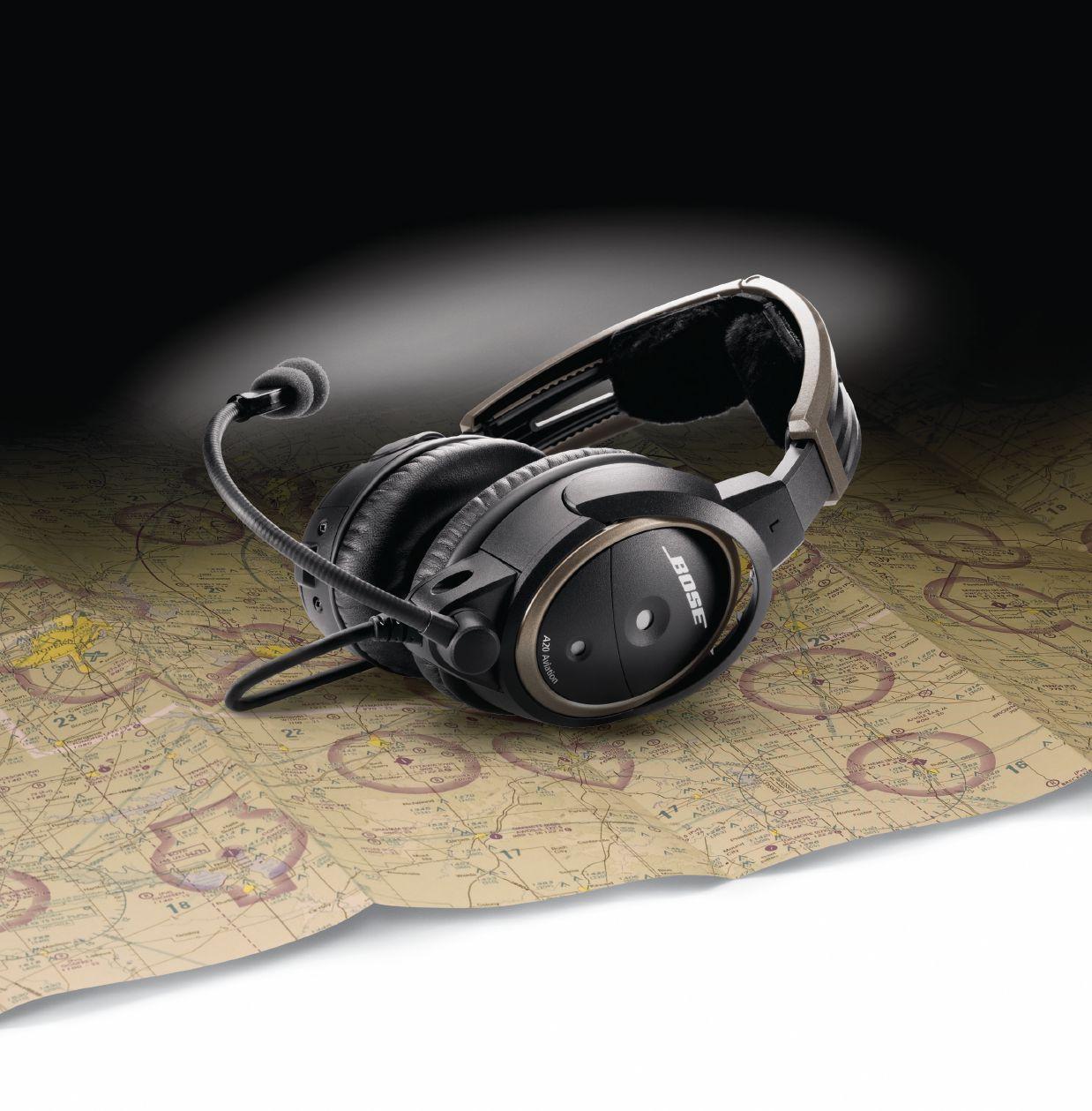
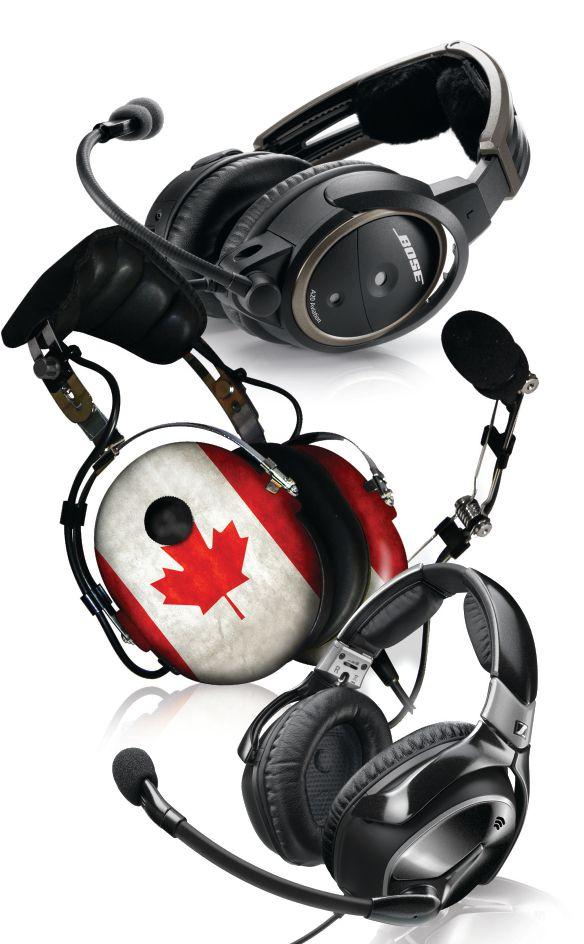
When you fl y helicopters, you know being focused is critical. To help you concentrate on fl ying, the A20 Aviation Headset is engineered to be more comfortable, deliver clear audio and provide more noise reduction than any headset we’ve ever made – an average of 30% greater noise reduction than conventional noise reducing aviation headsets. In fact, it’s engineered for the high noise levels that are found in helicopter cockpits. Certified Helicopter Flight Instructor Stephen Boatwright summed it up this way, “…if you want to be able to hear everything, if you don’t want fatigue, if you don’t want to miss those radio calls… then go with the A20.”
In addition, it has an auxiliary audio input, available Bluetooth® communications interface, is C-139 TSO certified and is made in the U.S.A. Plus, its optional flexible power circuitry allows for a connection from a 6 pin to U174, letting you take the headset from one helicopter to another. No other headset offers this advanced combination of features and benefits. Prove it to yourself. Try the A20 Aviation Headset for 30 days, satisfaction guaranteed. And ask about our easy payment plan with no interest charges from Bose.
COluMN
Herbert Keleher, founder and retired CEo of the very successful southwest Airlines, once attributed profitability to a simple doctrine: “i treat my employees like customers.” in doing so, Keleher maintained, he induced his employees to work harder, be more cost conscious, and with their high degree of morale, influence customers to show the same loyalty.
Being a line pilot, i seldom deal directly with the president or CEo, especially when working for a large corporation, so from my perspective, Keleher’s influence must have been substantial – instilling that doctrine to every manager down the line.
Aviation, and especially the helicopter industry, is very cliquey. the word-of-mouth network established over the years has proven to be constructive, however, as helicopter professionals share advice on safety, piloting techniques, procedures and service difficulties. over the years, pilots and engineers – especially with the help of the internet – have developed a substantial knowledge of most operators’ practices. inevitably, the lines of communication also contain what can only be construed as gossip – examples of the lack of public rectitude of their authors.
it’s not uncommon now for pilots and engineers seeking employment to go online looking for first-hand accounts of what a prospective company is like to work for. soliciting advice in this manner is perhaps prudent in gathering as much information as possible, but
A Professional Attitude
Employees Should Be Treated Like Customers
practices and even pay scales are often discussed in public realms. social media sites such as Facebook, together with various chat lines, can play host to some contributors’ vindictive tirades for the entire world to see. And yes, chatlines, Facebook, twitter and ever-increasing social media sites catering to common interests are indeed entertaining. there is a wealth of information to be found there – for example, adventures of those overseas or venturing into new territory are enjoyable narrations of just how diverse our industry has become.
But what devalues these contributions are those who hide behind the anonymity of a user name and debase companies, with or without justification, or deride the competency of others in the industry. i have witnessed chat rooms that have banned such contributors and i applaud their efforts. our industry should be defined as one that ascribes to professionalism and dignity, not innuendos and shallow gossip.
i believe it’s prudent for companies to remind supervisory staff of Keleher’s doctrine: ‘treat your employees like customers.” managers who identify and defuse altercations before they can escalate, not only maintain constructive dialogue, but also assure employees that their concerns are taken seriously
i have witnessed companies who brag to potential customers about the competency and experience levels of their employees and then at the first sign of discord side with the customer. that only demonstrates that they really didn’t believe in what they previously told their customers. in this case, the managers’ lack of professional diplomacy may satisfy the customer, but leave the employee with the knowledge that his or her supervisor will not support them. of course there are times when the customers’ concerns are valid; in this situation, management has the task of maintaining the loyalty of both parties.
our industry should be defined as one that ascribes to professionalism and dignity.
bear in mind that the internet is often misleading; knowledge of the source is vital.
many of us have had disagreements with employers over issues such as customer relations, payroll, or a mix-up in crew rotation. occasionally this escalates to a situation where some may look online for moral support. But pilots or engineers who take this experience online are not only showing a lack of judgment but also demonstrating how ephemeral their loyalty is to the company name listed on their paycheque.
helicopter companies allocate substantial funding in marketing their services and possible employee discord – for example, poor customer relations –should never be overlooked. to wit, who doesn’t remember an airline employee who offers little sympathy when your luggage goes missing? Doesn’t this simply nullify the marketing strategy of that airline?
Keleher’s doctrine sounds like an elementary ideology but as valuable as it is to a company’s success, it’s not as simple as it sounds.
A native of Spruce Grove, Alta., Michael Bellamy has been flying fixed- and rotary-wing aircraft in a variety of capacities since 1971, and is an accomplished author of several books, including Crosswinds.
MiCHael BellaMY
COluMN
texas City refinery (1947), Flixborough (1974), ocean Ranger (1982), Piper Alpha (1988), Deep Water horizon (2010).
these major accidents in the petrochemical industry cost several hundred lives and laid the foundation for the creation of safety management systems (sms) and greater attention to processes, standard operating procedures and the development of “standards.”
the international Association of oil and gas Producers, the “ogP,” is probably the most well known among aviation operators for setting exacting standards. helicopter operators who wish to conduct business with ogP members must meet these standards, which are verified via audit.
the ogP is immersed with assuring safety within its operations and demand that compliant safety and management systems be established by air carriers working for it. While most companies engage in some form of audit and due diligence reviews, the ogP companies are driving forces. Perhaps the best known is houston-based, isnetworld. this database management firm requires air carriers to register with them and upload company policies so that they can be verified against the standards set forth by potential end-users. other industries elsewhere in Canada use other databases: CogniBox, Browz, ComplyWorks, PiCs, CanQual are some of the others.
these online ohs compliance portals require that operators register their programs so that they can be evaluated and graded. this process
Getting It right
Creating Oil and Gas Standards That Make Sense
evaluated? All too often auditors “advise” operators that they would like to see a certain standard being met by using a specific process or even specific language in the company operations manual. Amending ops manuals can be a tedious process in itself; trying to set out language to appease a specific customer requirement is a slippery slope. this may work for a single client but what about the next audit? or the one after that? it is possible to be asked to insert language to appease one client that is questioned by another, all while striving to comply with the same general safety standard. in my view, this process does not enhance safety and only serves to frustrate operators who really are engaged in active safety management. Audits promote safety awareness but there is no universal standard to meet. Depending on the industry, operators are faced with an ogP audit, or a BARs (Basic Aviation Risk standard) audit, even is-BAo (international standard for Business Aviation operations).
the hAi has recently adopted a new program, “hAi Accreditation,” based on the is-BAo audit. this would involve a substantial and expensive audit process but would not eliminate the need for other major companies to audit the air carrier. so, an operator would prepare and pay for the audit, receive the certification and then need to be audited by the customer anyway in order for that client to meet its own legal, due diligence requirements!
Furthermore, there have been occasions when the client has a need for some helicopter work but its adherence to the ogP or its own standards is “inconvenient” or expensive. When these companies waive the requirements of their standards to allow the use of a non-compliant carrier or an operator who has not been audited, it undermines the commitment compliant carriers have made to their safety management systems.
trying to set out language to appease a specific customer requirement is a slippery slope.
’’
theoretically allows for customers to go to one reliable portal to adequately “assess” an air carrier’s safety system. the fly in the ointment though is that these compliance farms do not really fit the aviation model. they are largely based on plant type processes, with reference to provincial or state or even u s.-based legislative requirements or self-developed best practices, and they require a lot of resources to maintain. standards are tricky things. We all would like to work with those companies who share the same values, maintain the same standards and approach the job with the proper amount of seriousness and gravitas. the ogP is no different. the big issue though is how are these standards
this seems crazy to me. the ogP member companies need to set a standard, ensure that the member companies abide by the standard, and accept that the standard can still be met in a number of different ways. Asking operators to amend ops manuals to appease meeting a standard is not the answer. it does not enhance safety. At the end of the day, as one colleague has put it, “our industry needs to put forth the best practices that will ensure the safety of our people and our clients . . . not the other way around.” Amen to that!
Walter Heneghan is the VP of Safety and Quality at Canadian Helicopters. A passionate advocate for aviation safety and sound risk management, the veteran pilot presents his regular column for Helicopters magazine.
WalteR HeNeGHaN
COVeR stORY
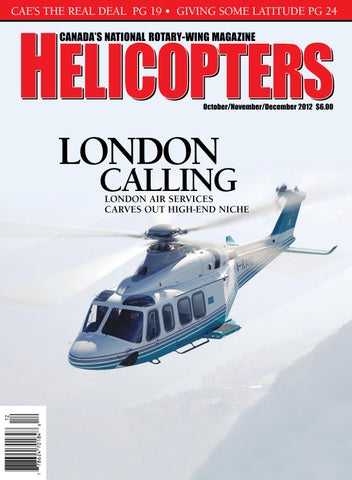
london Calling
Vancouver’s London Air Services Carves Out High-End Niche
BY paul DixON
Capitalizing on opportunities and having the foresight to create your own is how many successful Canadian firms stay profitable in tough times and this is precisely the path the owners of london Air services have taken over the past several years.
london Air services was initially created to be a time machine within B.C.’s h.Y. louie Company, a $4-billion empire that includes the igA food chain and london Drugs. in an interview with Helicopters magazine this past summer at london’s home base at vancouver international import, Wynne Powell, CEo of london Drugs and london Air, explained how he became charged with the responsibility of building that time machine.
“Back in 1998, our chairman was stuck in Chicago for what ended up being an 11-hour layover,” Powell described. “it was happening too frequently and this was the last straw. he came to me and said, ‘i can’t put up with this on an ongoing basis . . . we have to get our own plane.’
initially, deterred by what he saw as the high cost of ownership, Powell chartered aircraft as required. however, this approach quickly proved unsatisfactory. “We found that the planes weren’t to the quality that we were necessarily comfortable with,” Powell recalled. “We were always safety conscious, whether or not they had safety problems you couldn’t say, but they were older aircraft which always raises the safety concern over new aircraft. Also, you couldn’t get them on short notice.”
Powell realized that more than simply buying an aircraft to solve his dilemma, it made financial sense to turn the endeavor into a business. given a green light by his chairman, london Air services was born. starting with one lear 45, it quickly became apparent that one jet was not enough. “We’re all about customer service, it’s all about the customer,” Powell said. “this business is totally customer driven and
anyone who doesn’t get that doesn’t stay in this business. throughout all of our companies, being customer focused is one of our core competencies. so, we applied this service to our airline, our one plane. it soon became abundantly clear that our business was growing and one plane was not enough, so we bought a second. then it became clear to us that we needed equipment that went beyond the range of a lear 45, so that led to the acquisition of a Challenger 604, which put london into the international market.” Within a couple of years, london Air service had grown to a fleet of five lears and three Challengers – and then it moved into the rotary world.
tHe HiGH-eND set
the catalyst for the acquisition of helicopters was sonora Resort, acquired by h.Y. louie in 2001. nestled on the coast of sonora
island, north of Campbell River on the inside Passage, the lodge had existed for years as one of the scores of fishing lodges that dot the coast of British Columbia, where men were men and fish were nervous.
the new owners took their enterprise in a totally different direction. Rebuilt, expanded and rebranded, sonora Resort today is an 83-room complex that wouldn’t look out of place beside the chateaux and estates that line the shores of italy’s lake Como or switzerland’s lake lucerne. the target audience has broadened to include families and couples along with corporate groups from around the world by offering eco-tour excursions, ocean kayaking, grizzly bear watching, aboriginal journeys, whitewater rafting, glacial helicopter tours, fishing and a full-blown spa.
having made a substantial investment in a property that operates for only six months of the year, it is imperative that guests arrive and depart as scheduled, with a minimum of disruption in a wide variety of B.C. weather conditions. historically, guests had been transported by water taxi from Campbell River by floatplane from vancouver. But as Powell notes, reliable transportation to and from a resort is of critical importance – the experience starts with an impeccable flight.
“seaplanes are great, but they can’t fly at night, they can’t fly in windy conditions and for the amount of money that we were investing in this resort, we needed to be sure that clients could get in and out,” Powell said. “seaplanes also have to run too early in the day for people to have their schedules accommodated. We realized that while you could buy five or six seaplanes for the price of one new helicopter we were looking at that the best business decision for us
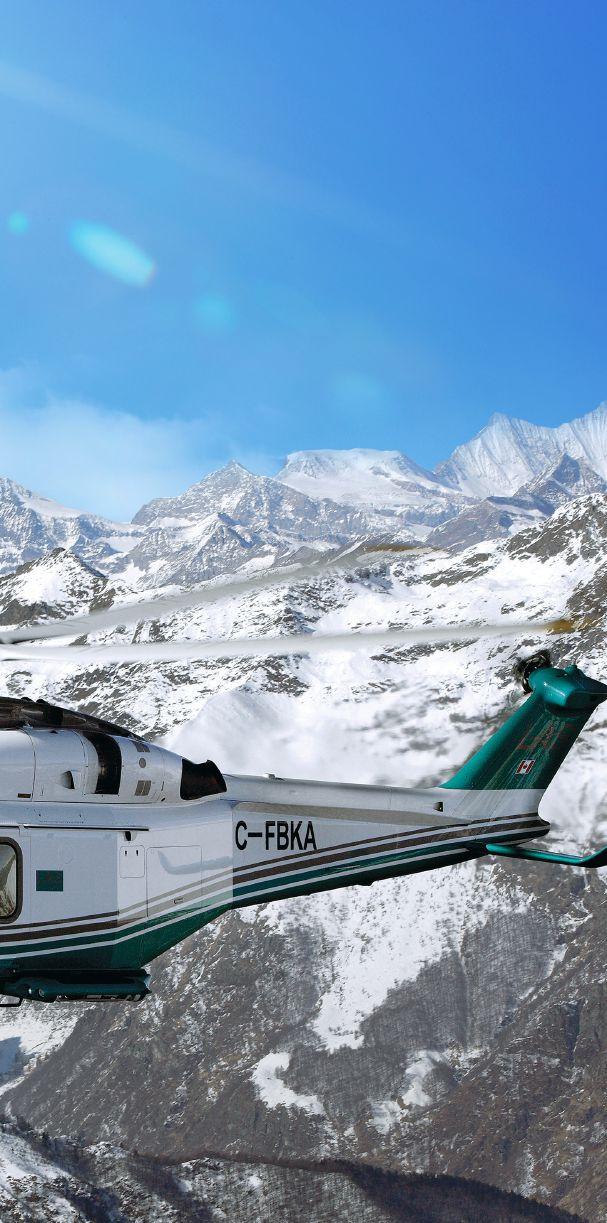
LEFT: While Sonora is a large part of LAS rotary operations over the summer months, Whistler provides a year-round market, as it’s less than 30 minutes from YVR or downtown Vancouver by air.
(Photo courtesy of London Air Services)
BELOW: London Air Services CEO Wynne Powell says the AW139 has met or exceeded every performance indicator AgustaWestland has given it.
(Photo courtesy of London Air Services)
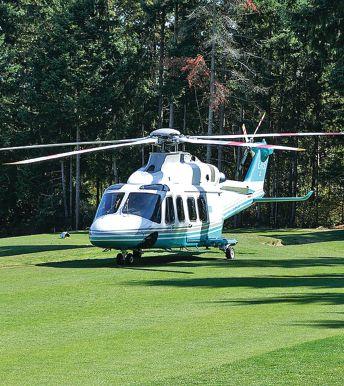
BOTTOM LEFT: London Air Services currently has three AW139s, though the business plan is for two aircraft.
(Photo courtesy of London AIr Services)
COVeR stORY
was to buy a state-of-the-art helicopter.” For a business that would be open six months out of the year, using helicopters ensures flights in and out from may through october would be critical to the success of the lodge.
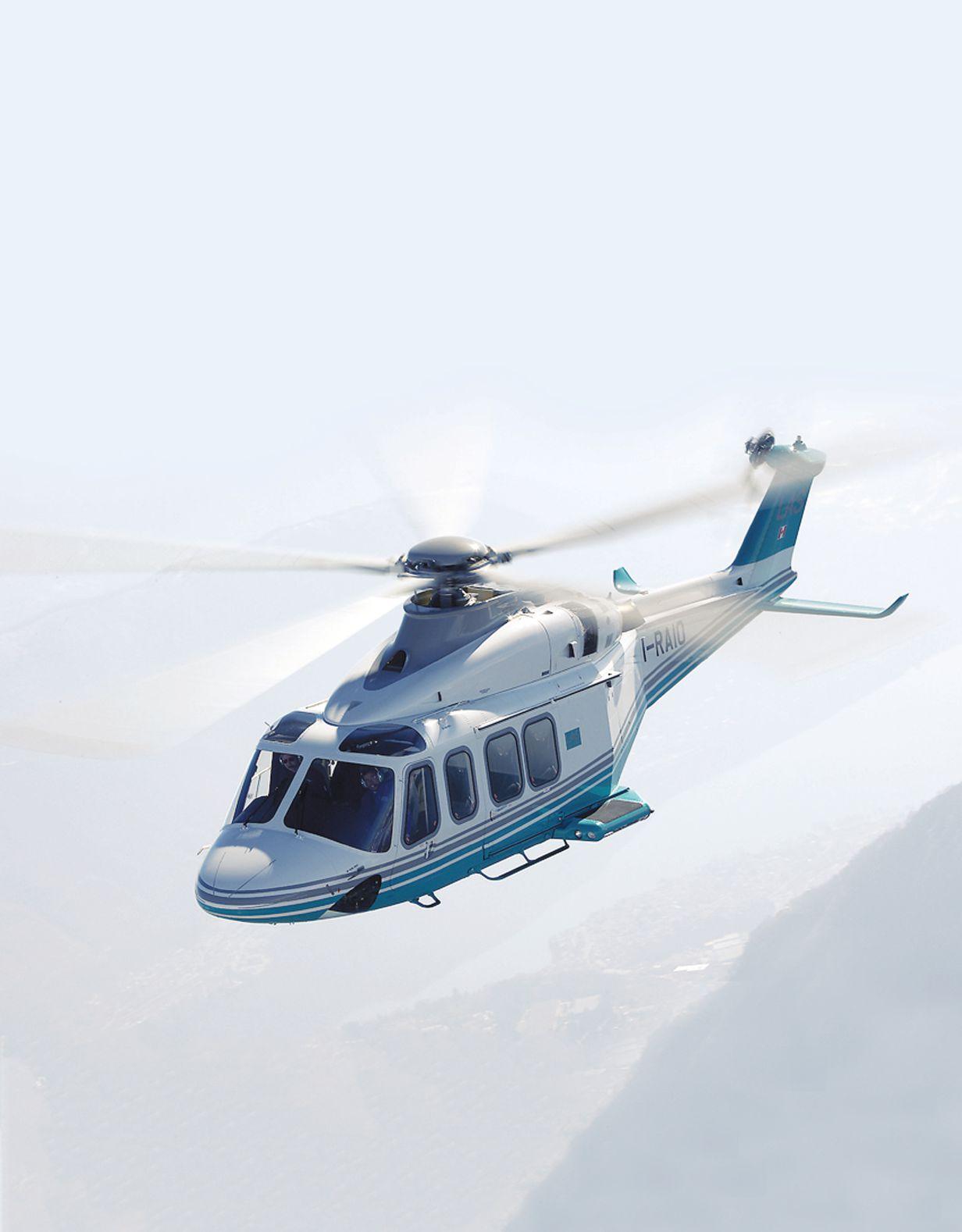
having made the decision to move into the rotary realm, Powell set out to find the right machine. Comfortable in the fixed-wing world, but knowing little about helicopters, he made the rounds of all the major manufacturers. Describing himself as having a “great interest” in technology to go with his accounting background, he was attracted to the AgustaWestland AW139. the 15-seat medium twin helicopter is growing in popularity worldwide for a variety of applications from everything from law enforcement, offshore oil and gas operations and medevac to corporate transport – london Air’s primary use.
“once i started looking at the specs, how it’s built and the performance numbers, it was really impressive,” Powell said. “they were using standardized parts and we were familiar with the Pratt & Whitney engine (the AW139 is powered by two Pt6C turboshaft engines).”
ironically, what sealed the deal for Powell was some negative feedback from another manufacturer about some of the AW139’s features – features Powell felt were very appealing. “the more he spoke against it, the more i realized it was one awesome helicopter. [his comments] had the reverse effect on me; it built my resolve that this was going to set the helicopter world on edge. so, i went back and ordered the helicopter. our particular helicopters were manufac-
tured and assembled in italy, which was our choice. the helicopters have met or exceeded every performance indicator that Agusta gave to us; it’s a phenomenal machine, with about a 99 per cent dispatch efficiency on it which is phenomenal.”
london Air services currently has three AW139s, though the business plan is for two aircraft. As Powell learned with the purchase of the company’s first lear jet, “in the aircraft business you can’t operate with one of anything, you may have an aircraft on the ground, you may have capacity issues, you have to have two, no matter what volume of business you think you might be doing.”
Facing a wait time for the first FiPs-equipped AW139, london Air services purchased a second regular AW139 to fill the gap. With the FiPs equipped aircraft now fully in service, the original AW139 is now for sale.
Keeping the aircraft in immaculate condition to properly serve top clientele is an ongoing challenge but it’s made easier with the company’s excellent team, notes Powell. he is quick to expound on the value the organization places on its employees – without them, the commitment to focusing on customers’ ultimate needs would be impossible.
“We’re a great employer and we have great staff,” Powell said. “gord Dale heads up our mechanical division for the rotary side and Dylan thomas is a great chief pilot. now, he’s also assistant director of operations. We’re very careful when we hire because we want to get good people. We give them full-time work, they have good benefits and we try to build a strong team spirit. While we’re a large
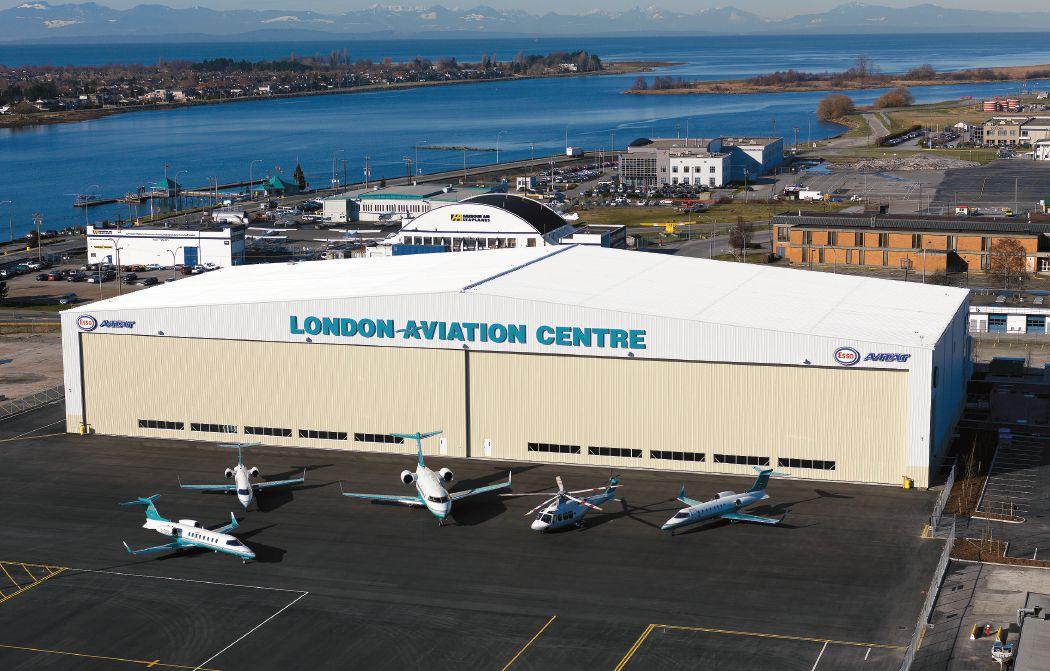
Behind Avitat at Vancouver International Airport is a new 60,000-square-foot hangar that serves as London’s headquarters. (Photo courtesy of London Air Services)
17th Annual HAC Convention & Trade Show
November 2-5, 2012 CALGARY, ALBERTA
Don’t miss Canada’s largest gathering of helicopter operators, manufacturers and industry suppliers November 2-5, 2012 in the heart of the nation’s resource sector, booming Calgary, Alberta.
HAC is your opportunity to network with the operators of more than 1,500 helicopters, take advantage of special training and education sessions, contribute to the direction of the industry by participating in HAC committee meetings, and much more.
To register as an attendee or book your exhibit space, go to www.h-a-c.ca.
PRE-EVENT COURSES,
NOVEMBER 2-3, INCLUDE:
Flying in the Wire & Obstruction Environment
Managing Your Costs and Profitability
Person Responsible for Maintenance Control Workshop
Helicopter Long Line and Cargo Net Maintenance & Inspection
Managing Employee Risk and Cost for the Helicopter Operator
Audit Preparation Workshop
Technical Briefings
COVeR stORY
‘‘
Wynne Powell says the advantage of working for a privately held company like London Air Services is you have more control over the outcome of operations. (Photo by Paul Dixon)
raised its game. it took five years for sonora to earn the certification, and its one of only 14 properties (resorts, hotels and restaurants) in Canada to have achieved this distinction. Powell takes obvious pride in saying, “you cannot buy Relais & Chateaux certification, it’s impossible to buy. it took us five years to earn it and our standards were already high, but their standards are incredible. they run secret reports on you all the time, and your standards are among the top in the world. it’s the platinum standard.”
the achievement has not gone unnoticed as evidenced by glowing testimonials from the world’s top media outlets, including Forbes, the globe and mail, huffington Post, national geographic traveler and the michelin guide, to name but a few. tripAdvisor, the world’s largest online travel advisory site, has ranked sonora as the top Canadian destination resort. Flying guests to and from the resort in the most immaculate conditions possible is a key aspect of the experience.
’’ this business is totally customer driven and anyone who doesn’t get that doesn’t stay in this business
company, we’re privately held – we’re a family company and we try to have those family values still show within the environment.”
Powell notes that the advantage of working for a privately held company is you have more control over the ultimate outcome in key decisions. “You can always do what you believe is right to do; it makes a world of difference. We truly care about our staff; they know that. For the airline business we’ve had a relatively low turnover. A lot of the pilots that we hired 10 years ago are still with us and that’s unusual. We are very fortunate, because we buy the newest and best equipment and our policy is to keep with the newest and best equipment, so we attract pilots who want to fly the newest and the best. they love the equipment and they love the safety standards.”
leading by example is an important element of establishing just the right corporate culture, and Powell takes careful note of this principle every day. A commitment to all aspects of safety is also paramount. “safety starts at the top and i can tell you that the ‘tone at the top’ from myself is extremely safety conscious. We started our sms before it was required and there are no shortcuts on safety or repairs. Everything is done to factory specifications. We do everything the factory way, the best way. the mechanics understand there’s no cutting of corners, we always want it done to the very best of specifications. We want the people flying our aircraft to know that everything is done to the highest standards.”
A high commitment to safety and developing just the right corporate culture aren’t the only areas in which london Air services is reaching the pinnacle. Achieving Relais & Chateaux certification for sonora lodge in 2009 also reflects how london Air services has
An attention to detail also extends to every facet of the operation. london Air is a minority owner of Avitat, the Esso FBo at YvR, which is london Air services’ passenger hub. “We bought in as part owner because we wanted to be sure that that business provided the standards that we needed,” Powell said. “it worked out very well for us and our partner, Derrick Watts, does a great job for us.” Behind Avitat is the new 60,000 square-foot hangar that serves as london’s headquarters.
Flying in to sonora by helicopter is expensive, but when put into the perspective of time as money and meeting or surpassing customer’s needs and expectations, it makes a lot of sense. there is daily service to sonora during the summer months, while a recent visit to Avitat saw five fully booked flights on a Friday, with clients arriving from all over the world. it underscores the importance of getting people into and out of the resort on time.
While s onora is a large part of l A s rotary operations over the summer months, Whistler provides a year-round market, as it’s less than 30 minutes from Y v R or downtown vancouver by air. t he summer sees charters that include a round of golf on one of Whistler’s P g A championship courses followed by dinner in one of the renowned restaurants and return to vancouver before dusk. i n the winter months, the attraction for customers is Whistler’s challenging o lympic slopes. i n 2010, l ondon Air s ervices bought the first AW139 with Full i ce Protection s ystem (F i P s ) specifically for the Whistler market. i t’s truly a “phenomenal” machine, Powell notes, and ideal for the Canadian market.
Establishing key relationships with customers and suppliers is essential to any operator’s success, and Powell is very pleased with the relationship l ondon Air s ervices has with AgustaWestland. “ i t’s about helping a great company make sure everyone knows their product is good and they are a reliable company to deal with,” he said. “With our customers it’s all about relationships and with our vendors, it’s been about relationships. t he relationships we have formed in the aircraft business are very strong, very supportive.”
Delivering the Real Deal
Montreal’s CAE Is Setting Its Sights on Safety
BY BRiaN DuNN
iA commitment to safety is critical at CAE. Helicopters have an accident rate of 8.5 per 100,000 hours flown versus 0.15 for fixed-wing aircraft. Fifty-seven per cent of helicopter accidents are due to pilot error and 23 per cent occur during training.
(Photo courtesy of CAE)
n a business where simulating reality as accurately as possible is the name of the game, montreal-based CAE is proving to be the real deal.
With more than 124 helicopter full-flight simulators (FFs) delivered to 10 oEms as of mid-July, CAE is the clear leader in this category according to the firm with an estimated 36 per cent market share, followed by l3-link with 16 per cent and thales with 14 per cent.
it has the broadest range of helicopter training devices and simulators with seven models, from the basic CAE simfinity e-learning desktop device up to the CAE 7000 series full-flight simulators.
“We work with practically all of the major oEms such as Eurocopter, Ehi, AgustaWestland, Bell, sikorsky, Boeing and Kaman,” said Philippe Perey, CAE’s senior director, global military business development and sales, rotary wing. “CAE also trains all the pilots and maintenance crew at ChC and we’re trying to break into the Russian market.”
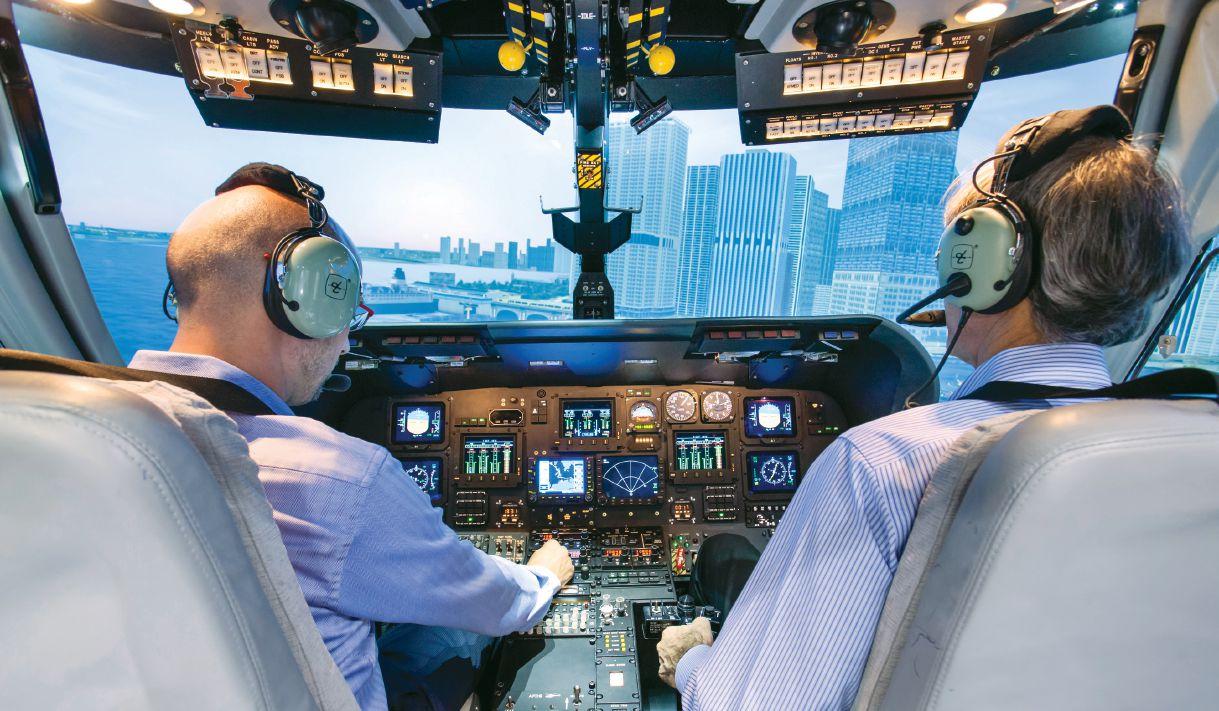
CAE’s new low-cost 3000 series FFs was designed specifically for the helicopter market at a lower price point than the series 5000 or 7000. “the concept was to design a cockpit tailored more for the civil market compared to the series 7000, which is more suited for big military helicopters,” explained marc st-hilaire, vice-president, technology and innovation.
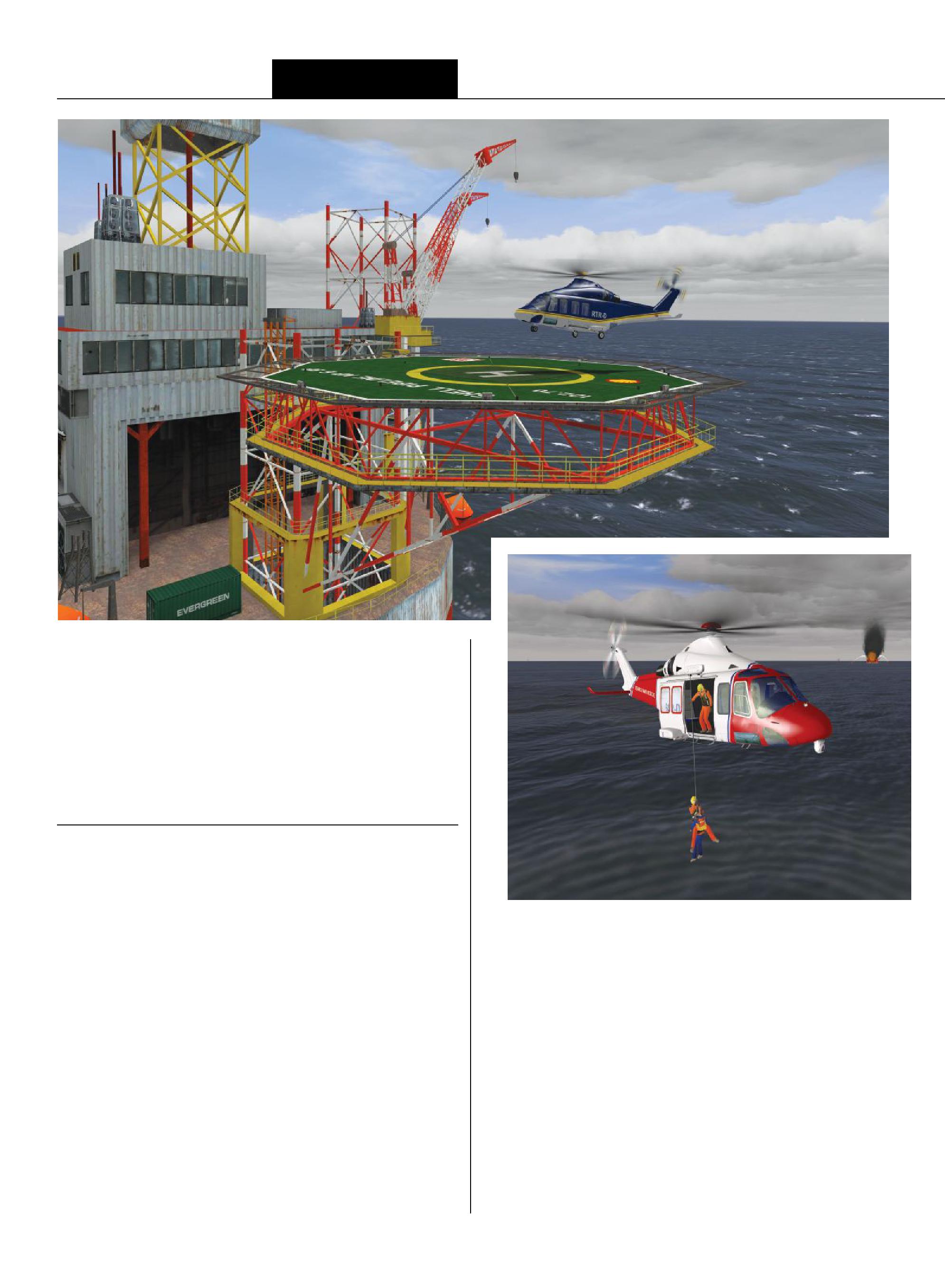
ABOVE: With the Tropos-6000 visual system in the 3000 all scenarios are lifelike and feature dynamic movement of personnel and equipment. In the oil and gas platform, wind and wave strength can be adjusted in addition to landing in a rain or fog environment.
(Photo courtesy of CAE)
The Tropos-6000 visual system in the 3000 is bright and very realistic with accompanying engine noise adjustable for loudness.
it is aimed at the mission training market and is supported by several scenarios, including offshore oil and gas operations, emergency medical services operations, police crime scene pursuit and long-line search and rescue missions at sea among others. Depending on the level of experience and training requirements, pilots can face different levels of difficulty, including variations in weather, lighting and landing areas.
“You can build up to three levels of difficulty depending on a pilot’s skill,” explained Perey. “Each level builds confidence and expertise. the highest level 3 would be an event such as a crane moving while trying to land on an oil rig.”
the tropos-6000 visual system in the 3000 is bright and very realistic with accompanying engine noise adjustable for loudness. And all scenarios are lifelike with dynamic movement of personnel and equipment. in the oil and gas platform for example, wind and wave strength can be adjusted in addition to landing in a rain or fog environment. And the cranes on the platform can move to pose an even bigger challenge for pilots attempting to land.
in the emergency medical evacuation scenario, people on the ground can be seen running away as the helicopter attempts to land and then rushing forward once it has landed, posing threats to their safety.
the is also an extended military offering with a larger dome for medium to heavy helicopters, additional field of view for military needs of up to 220 x 95 degrees, the same roll-on roll-off cockpit capability for mixed fleets, enhanced tactical environment for military needs and additional weapons and sensors simulation for combatoriented platforms.
the military platforms offer virtual cockpit models, helicopter blade element models, air turbulence models around ships and wind models over mountain peaks, among other features. many of the models also represent the environment around the aircraft, including the maritime 3D ocean models where the ocean and ships move realistically, radar models and complex weather models that change progressively.
CReatiNG tHe RiGHt MODel
there is pressure on the helicopter industry to improve its safety record, Perey explained during an industry trends presentation at
RIGHT:
(Photo courtesy of CAE)
— Ron Cline, owner and operator
CAE’s montreal headquarters this summer. helicopters have an accident rate of 8.5 per 100,000 hours flown versus 0.15 for fixedwing aircraft, he said. Fifty-seven per cent of helicopter accidents are due to pilot error and 23 per cent occur during training.
to reduce those numbers, several initiatives have been launched, including the international helicopters safety team that wants to reduce accidents by 80 per cent by
2016. there’s also iCAo’s h-international Working group to redefine standards for helicopter synthetic training and insurance underwriters that have a rebate program applied towards approved recurrent training. And there are industry groups where users are required to go through synthetic type training and recurrent training for contracted helicopter operators. CAE currently has two employees participating in the interna-
tional working group, namely stephane Clement, director of safety and regulatory affairs, civil simulation products and Barry silver, helicopter pilot and FstD tester. the industry favours more simulation training than is currently being done, according to a CAE survey, with affordability being one of the biggest barriers to more training. hence the introduction of the CAE 3000 series with their detailed and dynamic scenes and advanced training capabilities. there are even special situation training capabilities such as obscured visibility and brownouts from sandstorms.
in addition, CAE has 17 existing or planned civil and military helicopter training centres around the world. Existing ones include vancouver, Phoenix, morristown, n.J., mexico City, Dubai and six in Europe. Planned centres include sao Paolo, Kuala lumpur, Brunei and Zhuhai, China. An industry consortium consisting of CAE, Eurocopter, Rheinmetall Defence Electronics and thales offers nh90 helicopter training in three centres in germany.
the company is deploying its first CAE 3000 series helicopter simulators with full motion capability to sao Paolo to service its joint venture with lider, the largest helicopter operator in Brazil. this new simulator is revolutionizing helicopter training by introducing the highest level of realism in this market, according to CAE.
“this product innovation resulted in sales of 37 civil full-flight simulators during fiscal 2012, up from 29 the previous year. Year-to-date, we already announced 10 simulator sales,” said CAE president and CEo marc Parent.
“in the defence market, we provide innovative solutions to the forces of more than 50 nations in order for troops to be ready for their missions. this year, we delivered the first simulator for the Alenia Aermacchi m-346 advanced lead-in-fighter trainer and for the Boeing P-8 Poseidon maritime patrol aircraft. We are also developing the first 3000 series simulator for AgustaWestland’s new AW189 helicopter.” the defence market remains challenging, mainly because it’s difficult to predict the timing of orders, added Parent.
“We still have a strong pipeline of opportunities. For example, the u s. military expects two of the biggest export platforms over the next decade to be the mh -60R s eahawk helicopter and the C-130J super hercules,” Parent said. “CAE leads in terms of simulation-based training on both these platforms. And just last
month, the u s navy ordered more than 250 additional seahawks, which, again, bodes well for CAE.”
the company continues to lead through innovative partnerships and relationships with its customers. in Defence, it created a venture with the government of Brunei to develop a multi-Purpose training Centre where it will train helicopter operators as well as other personnel.
in addition to simulators, CAE currently offers training services at 42 locations worldwide for operators of commercial air craft, business aircraft and civil helicopters. the latest is a new training centre in Republic of Korea, to train pilots for the Boeing 737- 800 aircraft. the CAE centre will be located near international Airport and was scheduled to be ready for training by fall 2012.
BuilDiNG a sOliD BRaND
the company has come a long way since it was founded on st. Patrick’s Day in 1947 as Canadian Aviation Electronics by Ken Patrick, an ex-Royal Canadian Air Force officer. his goal was to “create something Canadian and take advantage of a wartrained team that was extremely innovative and very technology-intensive.”
the montreal-based company was origi nally housed in a vacant aircraft hangar at saint-hubert Airport, before moving to its current location near Pierre Elliot t international Airport in Dorval. With an original workforce of 18, CAE started to repair and overhaul ground communica tions equipment and install Antenna Farms in the Arctic for the RCAF. Within two years, CAE was firmly established in the Canadian radio industry.
in 1952, the company entered the simu lator business with a contract from the RCAF to develop a CF 100 flight simulator. having no prior experience in this highly specialized field, it signed a seven-year licensing agreement with Curtiss-Wright Corporation of the united states to provide technological support. By late 1957, 10 additional units had been delivered, includ ing the company’s first export order to the Belgian air force.
since those pioneer days, it has diversi fied from its original aviation roots into the medical and mining sectors – although they represent less than five per cent in annual sales – but continue to grow. Along the way, CAE has passed, acquired or sold competi tors such as singer, l-3 link and thales to become the largest flight simulator manu-
facturer in the world. Annual revenue almost equally split between civil and military, was more than $1.8 billion in fiscal 2012, while its order backlog stood at more than $3.7 billion during the same period. the company has approximately 8,000 employees, including 3,900 in Canada at more than 100 sites and training locations in over 30 countries with the largest installed base of flight simulators and training devices
Introducing the
globally with 1,300 which train an impressive 100,000 pilots and crew annually on more than 130 different types of aircraft. in addition, CAE is one of the top Canadian companies investing in R&D, accounting for 10 per cent of annual revenues.
the size of CAE’s growing global footprint further illustrates just how this dynamic Canadian firm is proving to be the real deal.
providing plenty of latitude
Tiny Victoria, B.C., Satcom Firm
Making Big Impact
BY paul DixON
anondescript building on a side street in victoria, B.C., is the head office for a small company that is having a huge impact on the aviation world.
latitude technologies was founded in 2001 by mark insley to develop and market tCP/iP-based telematics equipment and services, specifically for location determination and remote management of critical assets. since its inception, as president and chief engineer, insley and his company have concentrated on research and development of new satcom-supported data gathering and reporting systems under the skynode and Websentinel product lines. the products provide operators with the ability to access all elements of latitude flight tracking, two-way communications and flight data management.
When satellite communication systems came into being in the late 1990s, companies such as iridium and globalstar offered service at $10 a minute. it seemed like the next best thing until simultaneous rapid expansion of cellular networks provided service for pennies rather than dollars and the satcom companies were grounded. As insley saw it at the time, the satcom companies had missed the boat by concentrating on voice telephony service and overlooking commercial data.
in 2001, latitude developed a universal controller box that insley felt was cutting edge. “We could program it to capture discrete analogue data, even serial data in, have gPs in there – form a message and we could send it based on an event, or more typically, based on a timed schedule. We could then transmit that data out and exploit any wireless network that we wanted to.”
A business was born, and today latitude provides satellite airtime service packages from iridium and inmarsat; data only service, voice only service, or a combination of voice and data service. it’s a boon for operators seeking the utmost in safe communications.
insley describes latitude as being “network agnostic,” that is, working with as many satellite and wireless service providers as possible instead of being married to one specific network. the early success of latitude came from being able to utilize any available wireless network, so if there was a
problem – business, political or technical – with any network for any reason, the data could still be moved and the customers wouldn’t suffer.
At about the same time insley developed his universal controller box, Automatic Flight Following (AFF) was evolving as a concept. AFF is a system that automatically tracks the location and velocity of specially equipped aircraft and other mobile assets, providing this information in near real time to dispatchers, aviation managers and other authorized users. the equipment includes geolocation and data communications devices that use satellite-based technology.
As the first standards were initially developed by the u s. Forest service (usFs), latitude was the only vendor capable of meeting those standards. this led the usFs to rewrite the specifications to allow more vendors to compete and as such, the first-generation AFF, simply following a dot on a map, was born.
Aerial firefighting has been a key driver in the development of latitude products. At the time, Canadian operators looking to operate in the u s raised the question of displaying telemetry for tank data. As a result, out came the latitude Air tanker information system. insley notes that, “with the satcom system and tracking system on board an aircraft, we could measure the tanks, measure volume and measure it as it changed. We could tell if it was retardant, foam or gel – what was being dropped, where it was being dropped and how it was being dropped.” it started as a one-off product for one operator, but has evolved across the large fleet air tankers, he says.
in 2010, latitude was recognized by the Province of ontario for its contribution to the ontario ministry of natural Resources’ (omnR) Firehawk program during the 2009 and 2010 fire seasons. using latitude’s messenger and skynode satcom system, aerial fire officers were able to create and send detailed reports directly from their aircraft during missions, bypassing any potential radio congestion on existing groundbased systems. installed on tablets, laptops or PDAs, the messenger interface permits two-way text messaging and data file transfers.
For omnR Firehawk, this enabled the aerial fire officers to transmit digital file information that could be incorporated directly into the
LEFT: Latitude’s devices now have accelerometers built into each box, so if an aircraft suddenly has a rapid descent or has a hard landing, tilts, or goes over and something is wrong in that altitude, it can now transmit a duress type of message. Highland Helicopters is another faithful customer. (Photo courtesy of Highland Helicopters)
provincial gis database to build maps and reports that could provide managers with the absolute best information to make strategic decisions. historically, a spotter in a tower or an aircraft would relay information via radio to a local fire centre. the report would then be created and forwarded to the provincial centre, a process that could take a couple of hours at best and often much longer. today, that information is being received by the decision makers in real time. Another benefit to the real-time transmission of data is that by removing the human element from the relay of information, errors of omission and transposition of numbers have been eliminated.
a WORtHWHile paRtNeRsHip in 2010, latitude entered into an agreement with sEi industries to provide real-time sensor gathering, satellite relay and information display technologies for the entire Bambi Bucket product line. of critical importance for sEi was the need to carefully monitor all data relating to the process of “drop tracking” –the elements involved in fighting fires from the sky. insley notes that there is a lot of misunderstanding about what drop tracking actually means.
“A lot of people think it is just a matter of noting when the drop started and when the drop ended and that’s drop tracking,” he says. “in reality, there are a lot of things that can be considered and the amount of fuel is critical. As fuel goes down, payload goes up. other things to consider are whether it’s long line or short line, stationary – there are lots and lots of variables.”
shawn Bethel, sEi’s firefighting manager, says that the collaboration with latitude over the past two years has developed an increased understanding within the industry – as well as by agency fire managers – about the benefits of using enabling technologies. the information generating from these technologies to validate or modify existing methods of fire fighting is now more readily available and is proving to be invaluable.
A serendipitous moment for insley with the air tanker program was the realization that the basic system he created was capable of capturing much more information than was actually being used. it was like having the answer to a problem before the problem had actually been defined. that came out of a series of conversations and discussions across the industry, especially the rotary-wing community.
one particular question that cropped up often within the industry was when is a safe landing really a safe landing? it sounds like a contradiction in terms, but it is a valid proposition. At the time, latitude was recording information about little more than takeoffs and landings. there is a “mayday” button on the console, but as one operator pointed out, if there truly is an emergency, the pilot will be too busy flying the aircraft to be thinking about pushing that button. insley says that simply measuring takeoffs and landings involves using different heuristics, speed-based attributes, collective and other control surfaces just to understand if an aircraft is lifting off or has landed.
RIGHT: Latitude systems can be found on Griffon helicopters. (Photo Courtesy of DND) BELOW: Talon's Peter Murray has installed Latitude systems on all of his aircraft.
(Photo by Matt Nicholls)
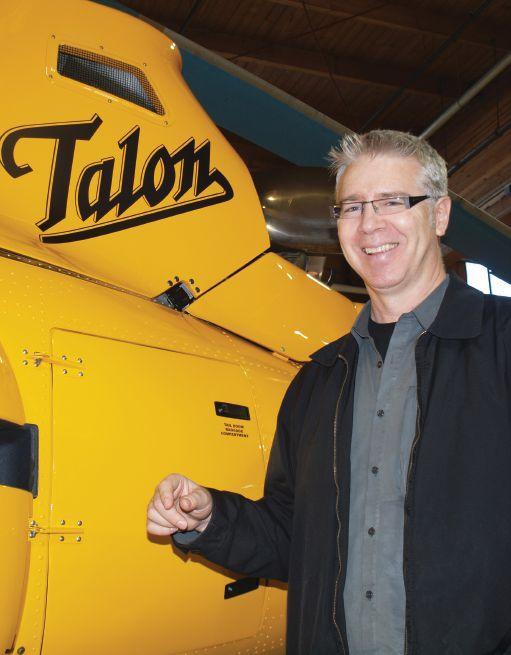
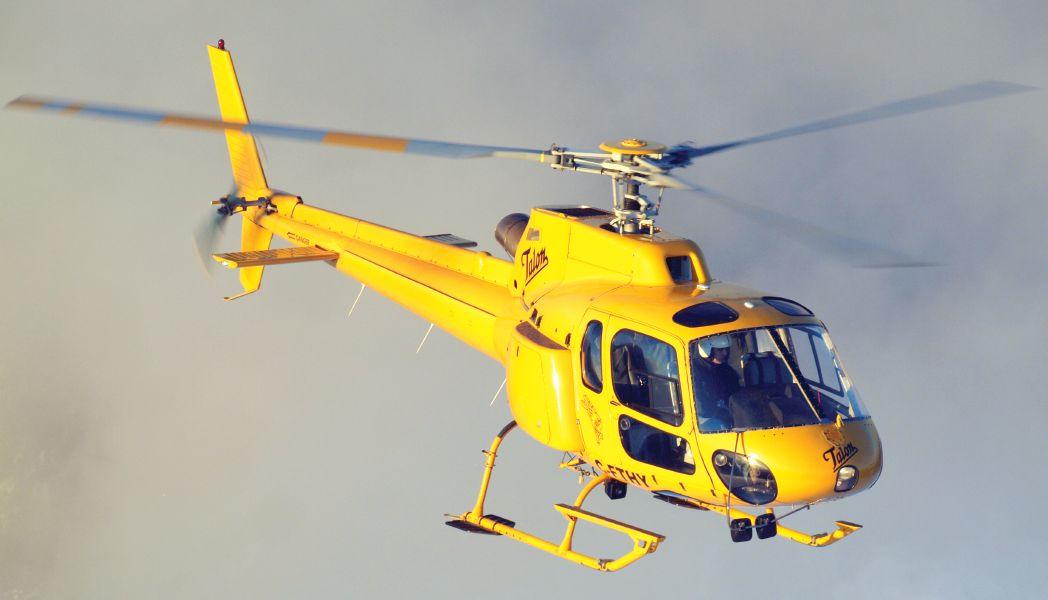
Latitude has worked with Vancouver’s Talon Helicopters for some time. Other clients include SEI Industries, Ornge and Highland Helicopters.
now, to answering the question of whether or not a landing was actually a crash involves more complex algorithms, which have to be tuned for the specific aircraft and that aircraft’s operating environment. latitude’s devices now have accelerometers built into each box, so if an aircraft suddenly has a rapid descent or has a hard landing, tilts, or goes over and something is wrong in that altitude, it can now transmit a duress type of message. it’s not yet a mayday, but an event that has been triggered by a predetermined value. the event is sent back to a dispatcher in an office or even to a mobile phone. the response or lack of response to that event determines whether or not it is a mayday situation.
But there’s more. insley soon realized they could also measure strain gauges and engine parameters, things that would be of interest to maintenance personnel. then, there was the ability to measure flight surfaces and flight characteristics for exceedences such as bank, angle and overspeed. these variables tie in directly with what the international helicopter safety team (ihst) has developed by defining as thresholds. now, when thresholds are reached, event notifications can be sent to maintenance.
DeVelOpiNG NeW teCHNOlOGies
Creating better products is an important goal at latitude and insley points to how ionode, the company’s new on board flight data and operational loads management device, can help in that regard. initially developed for air tanker operations, it now has two models that are almost exclusively aimed at Flight operational Quality Assurance applications (FoQA) and/or maintenance-related operations.
“the next-generation usFs air tanker standards are asking for the same attributes, measuring the strain on the aircraft and providing realtime feedback,” he says. “the point is, and what i think that all the industry has discovered, and it doesn’t matter who leads it, whether it’s forestry or oil and gas, it’s the push for safety. that and the need for daily reporting.”
insley sees latitude as a technology partner with its customers.
“they need information that is relevant and timely to allow them to make the best decisions,” he says. “in firefighting we can distribute information simultaneously to a number of people who have different responsibilities – forestry, the fire science guys, aerial dispatch, the fire boss on the ground and even to the bean counters – so they can see that assets are being used efficiently. safety does not have to cost extra.”
For smaller operators, the amount of information that can be downloaded from even a straightforward flight can be overwhelming, like trying to drink from a fire hose. instead of trying to wade through thousands of lines of information, the ability to deliver relevant information to the people who actually need that information in a timely manner is a powerful tool. insight comes from working with a fixedwing fleet operator that flies scheduled and charter service across Western Canada.
insley describes the amount of information collected on the ionode as “massive.” Beyond the data used for dispatch and scheduling purposes, the ionode takes all the information off the Flight Data Acquisition unit, all the control surfaces and cockpit instrumentation, as well as all the acceleration vectors, heading aspects, tilt, bank and roll, as well as gPs. “so then, this box communicates with our satcom box so if we ever see an exceedence or a threshold that is defined by our customer based on the variables they determine, we can relay that in real time,” he says. “Five to 20 seconds later, a stakeholder can know that something, some attribute they are interested in has happened. most of that data is more practically relayed and put into their flight analysis system. You take the human out of the equation: the aircraft is doing what it is doing and only when there is some triggering event do you notify someone.”
suppORtiNG tHe HOMe teaM
latitude’s products are manufactured and assembled in their own facility in victoria, B.C., though insley notes that at busy times, he will subcontract work out. it’s a source of pride that latitude’s products are
(Photo by Matt Nicholls)
the most reasonably priced in the industry. “You can buy one of our full-featured satcom tracking boxes for less than $5,000,” insley says. “it’s probably the lightest and least expensive aeronautical approved product in the world. the most expensive we have is still under $10,000, so compare that to the competition. if you start with that $5,000 box, you can upgrade it anytime in its lifetime. You can turn it into a top-of-the-line box and all we charge is whatever the list price difference is. so, a company can start small and grow the technology. in this economy, there are operators out there that do multiple missions, and having a flexible unit technology that allows them to do multiple missions is important. it may be seasonable, they could be doing agriculture, fighting fires: this is so functional it allows them to specify the mission requirements.”
the basic skynode s-100 product has been latitude’s mainstay. the u s. Drug Enforcement Agency has bought roughly 130 of them over the years for their fleet of aircraft that operate in some of the most hostile environments in the world. When the DEA loses an aircraft, they tell insley the one thing they try to salvage and recycle from the wreck is the s-100. he says they tell him, “We’d buy more, but they don’t break.” Currently, there are more than 2,000 s-100 and s-200 skynode units in service, including 90 s-200s on the Canadian Forces’ fleet of 90 Ch-146 griffon helicopters. From the jungles of south America to the high Arctic, skynode has passed the test. other key Canadian clients include highland helicopters, ornge and north Cariboo Air.
in 2008, when scott Kasprowicz and steve sheik flew their
AgustaWestland 109 around the world in record time, they did so with a skynode s-200 that tracked their every moment. insley says it was the first time the national Aeronautical Association had ever utilized a satcom flight following system. Previously, it would have been timed from tower to tower with certified people. this time, they taped up the box and this was the basis for verifying the record. At times, they had concerns with icing and fuel concerns with long flights over water into headwinds. But they had flight following, voice communications and data, so there was peace of mind.
Peter murray, president and operations manager of vancouverbased talon helicopters is a big fan of latitude technology and uses their products on all of his aircraft. “i’ve been in the helicopter business for more than 30 years, and in the early days there was no way of knowing where anyone was if they didn’t show up where they were expected to be,” murray says. “We were looking at systems for a long time and even tried one system that had been designed for trucking companies. We’ve always had a great relationship with mark and latitude. they are responsive to any problems and they just keep improving their products. We don’t fly without them.”
murray says the worst part of having an aircraft that is overdue or unaccounted for is the not knowing, but with the latitude system, “i can follow everything from my iPhone and i can text message in real time from my iPhone to any of our aircraft.”
insley is guided by the principle that “we’re here for the people who are going out and flying every day. it’s routine until something doesn’t go right. that’s the important part of what we do.”
Can You Hear Me Now?
The Skinny on Selecting Headsets and Helmets
BY ROB seaMaN
My first helicopter flight experience was a ride in a Bell 47 that, upon reflection, hadn’t seen much improvement or updating since its days flying for the military. no headset was offered or available, and while it was a thrill, i still recall the ringing in my ears i had for quite a while afterwards.
Years later, i had another opportunity to fly from the cockpit of a harvard. the owner handed me an old leather flight helmet with antiquated, ill-fitting earpieces and a microphone that worked occasionally. As anyone who has done this knows, hours after you land, you can still hear the engine noise in the back of your head. that led to the purchase of my first headset – a top-of-the-line David Clark model with noise-cancelling microphone. A while later, after watching a colleague flip on his back while landing but walk away unscathed because of his helmet, a war surplus “bone dome” was in the offing.
Custom fit helmets were not in the budget for most of us at that time and not many original equipment manufacturers (oEms) were making equipment for the civilian market yet. older helmets tended not to fit properly and they always left you with a sore neck. nonetheless, it made passengers and pilots safe and communication in the cabin was adequate.
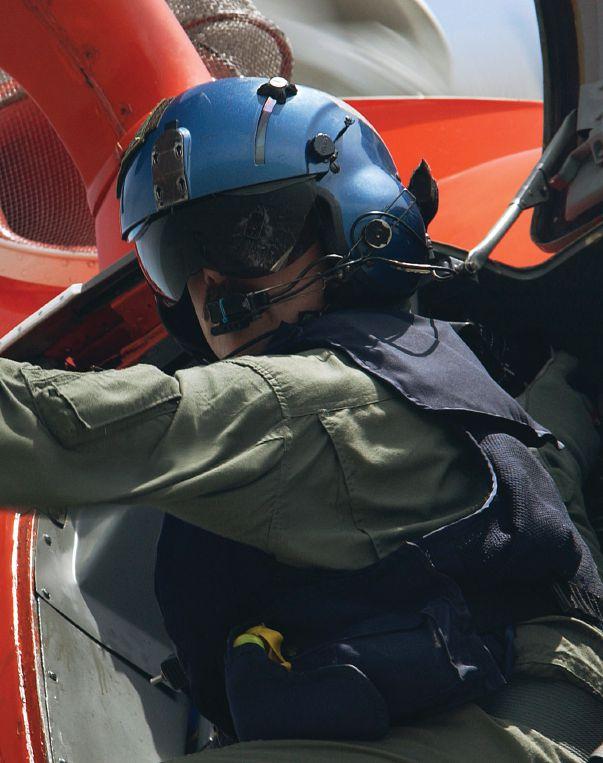
Fortunately, technology and design acumen have rendered a totally different story today. Buying a headset or helmet involves consideration of uses, flexibility for varied aircraft and avionics systems, fit and comfort along with other factors. options abound with easy access through oEms and dealer networks.
stalwarts in the headset market include Bose, David Clark, lightspeed and sennheiser. there is also an exciting newcomer – the squawk shoppe. For helmets, oEms of choice include gentex, msA gallet and Alpha Eagle. in most cases, choosing a helmet is step 1 in the process and a headset of choice is incorporated into the package. some headset oEms have preferred relationships with helmet manufacturers, but an avionics dealer can help figure out the combination of equipment and fit. this does make shopping online more difficult,
but think of it as a made-to measure suit – a little tailoring always gets a better look and feel in the end.
in terms of cost, a top-of-the-line helmet will run in the $1,500 to $2,000 range but with this comes quality, reliability and top service for many years to come. headsets alone start a little north of $125 for a very basic model and run upwards of above $1,100 for top-notch equipment. As with anything, you can set purchase requirements to just get by, or take the matter of safety and hearing protection seriously and invest wisely.
WHat CONstitutes a GReat HeaDset?
mitchell (mitch) Bouton iii is vice-president and general manager of headset newcomer, the squawk shoppe llC. When asked to describe top features in a great headset, Bouton quickly points out that it has to be lightweight and offer 25 decibels of sound reduction or better (25 decibels is the military benchmark for sound reduction). “this is where you want the most bang for your buck,” he says. “typically, the higher the weight, the better the sound reduction. however, you must consider anything over 16 ounces to be of concern since you might be wearing this device for several hours.”
next is good sound attenuation, notes Bouton. “After protecting your hearing, the greatest value of a headset is in allowing you to communicate more clearly and easily both inside the cockpit (through the use of an intercom) and outside the cockpit when talking to air traffic control, flight service or other aircraft.”
After this come comfort levels. “this is of considerable importance when wearing anything, especially on your head. Just keep in mind, that most headsets sacrifice sound reduction in order to achieve comfort. others will simply add a thicker or more robust head-pad to offer more comfort in order to offer better sound reduction. this delicate balance should weigh heavily in your decision for a quality product that won’t be a burden to your comfort. nothing is more distracting than a pounding headache from a headset that clamps too tightly.”
David Dunlap, director of sennheiser Aviation, advises that in order to
LEFT: Buying a headset or helmet involves consideration of uses, flexibility for varied aircraft and avionics systems, fit and comfort, along with other factors. (Photo courtesy of Gentex)
HEADPHONES TOP: Bose continues to be a stalwart in the headset market. (Photo courtesy of Bose)
MIDDLE: An exciting addition to the helmet manufacturing scene is Squawk Shoppe's custom gear. (Photo courtesy of Squawk Shoppe)
BOTTOM: The S1 Digital headset includes a headband tension adjustment that allows a pilot to make the headset tighter or looser by up to 30 per cent. (Photo courtesy of Sennheiser)
make its headsets flexible in fit and comfort, the company has incorporated a variety of user-adjustable features. For example, the s1 Digital headset includes:
• headband tension adjustment: this allows the pilot to make the headset tighter or looser up to 30 per cent.
• Eyeglass comfort zones: the ear pads of the s1 family of headsets include softer (less dense) foam in the region of the ear pad where eyeglasses pass through; this reduces the “squeeze” on the glasses, and provides a better acoustic seal around the temples of the glasses.
• headband padding: the centre-offset padding of the s1 family of headsets prevents “hot spots” from forming on the most sensitive centre-line of the skull. these pads are also easily replaced with thicker padding or sheep-skin padding as desired.
the weight of a headset will dramatically affect comfort level, especially over long flights. As both Bouton and Dunlap suggest, heavier headsets can strain your neck and shoulders while the lightweight ones may sacrifice sound attenuation and reduction. Bouton maintains that most headset manufacturers offer single or double cotton head-pads. “Either version is going to give you what you need for comfort. it really depends on your preference. Finding the right balance between weight, clamping power, adjustability, padding comfort and db reduction is very important.”
the rest of Bouton’s list includes boom selection, added features such as mP3, radio, iPod, iPad and Blue-tooth, warranties and safety factors. the last thing is a specialty of the squawk shoppe – customization such as colour choice, graphics and logos.
so how much noise cancellation can you expect through a headset? the noise-cancellation value or an active noise reduction (AnR) can be established in a number of different ways. Dunlap advises that for passive attenuation, the industry standard is the noise Reduction Rating (nRR). his firm’s s1 family of headsets achieves an nRR of approximately 23 decibels, a very respectable passive noise-reduction level for a passive headset, let alone an active noise reduction headset.
“to establish the performance of the s1 Digital AnR, sennheiser used the psycho-acoustic standard measure of loudness,” says Dunlap. “loudness is more complex to calculate: a method is provided by the standard Din 45631/iso 532. loudness is expressed in “sone.” measuring loudness accounts for the appropriate noise (aircraft cockpit noise) and measures the perceived loudness received by the pilot/wearer of the hearing protection. in comparative measurements, the s1 Digital performed the best against its rivals due to the digital adaptive nature of the AnR algorithm.
MesHiNG tOp HeaDsets WitH HelMets
As John A. Winship, Canadian marketing manager for the gentex Corporation points out, an aircrew helmet provides some level of
protection to the wearer while serving as a mounting platform for ancillary devices such as communications components and hearing protection. it also provides facial protection, solar glare and laser light protection for the eyes, and mission enhancement devices such as night vision goggles (nvgs) and electronic displays.
there are fundamentally two types of helmets – fixed-wing and helicopter. helicopters typically being noisier and having longer mission duration, demand higher levels of noise protection. observations and statistics from many military accidents have been amassed to support the current design attributes of aircrew helmets.
“it usually takes an interactive process between the individual aircrew and the helmet provider to determine what combination of factors will make the best solution for a helmet in any given case,” says Winship. “As a result, there are very many possible helmet configurations that might be offered.”
When a customer first goes out looking for a headset or helmet – or a combination of the two – there are some basic screening or determining questions that need to be asked to determine the right product. According to Dunlap, “We ask first what aircraft the individual flies. this gives us the information of approximate noise level and probable interface. then, we proceed to ask about how many hours they fly, and verify the interface to the aircraft by asking which headset they currently use. in talking with individual pilots, we can also learn about their comfort issues with their current headset, if any, and recommend the right headset for them.”
the process is similar at gentex – determining aircraft type is the
first priority. “this will drive what their requirements are for protection, communication, and so forth,” notes Winship. “the requirements for a helicopter helmet are very different from [those of] fixed-wing aircraft: level of hearing protection, protection from multiple impacts and such are all issues differentiating helicopter from fixed wing. helmets are specifically designed and tested to function in these different flight environments. Civilian aircrew are the beneficiaries of extensive military research and development efforts where life support equipment items involved in accidents and serious incidents are studied to better understand how they functioned during the accident sequence and what needs to be improved. the results of such studies are enshrined in military specifications and standards that are used to design and test helmets.”
HelMet WeiGHt aND COMfORt
Winship advises that considerable effort and resources have been invested in the study of weight and comfort. Back and neck injuries are common in helicopter aircrew. some researchers maintain that exercises to strengthen neck muscles can help prevent injuries, while other experts say stronger neck muscles can contribute to underlying bone injuries due to added stress on the spine from tighter muscles. “suffice it to say, from a helmet perspective, the lighter the helmet, the better it would seem to be,” he says.
helmets today are designed so that the helmeted head has the same centre of gravity as the bare head. there are questions about devices mounted on helmets. For example, an nvg mounted on the front of
the helmet switches the centre of gravity forward. some aircrews elect to use counterweights attached to the rear of the helmet to correct this. While this technique works in the vertically erect position, what occurs when the aircrew leans forward? in this case, there is even more strain on the neck. some aircrews simply choose not to wear counter-weights, thereby reducing the overall head-borne weight although changing the centre of gravity. As Winship notes, there is no simple answer and room for more research to find appropriate solutions to these issues. the bottom line is, careful fitting and maintenance is necessary to ensure a proper fit as keeping the helmet properly situated on the head will minimize injuries from constant shifts in one’s centre of gravity.
A correctly fitted helmet not only provides a comfortable and stable fit, but it also protects a pilot during a mishap. According to Winship, insurance companies are recognizing this and may offer discounted rates for operators; it also reduces liability risks.
gentex reports that for its rotary-wing product line, the hgu-56/P weighs less than 1.4 kilograms with a dual visor kit attached. the midrange sPh-5 weighs in at less than 1.48 kg.
MakiNG tHe puRCHase
While easy and convenient, online shopping for helmets does present challenges for getting the right equipment. As one can see from the helmet considerations noted, buying online is possible but not the best idea given all the variables. the best plan is to find a dealer and work through them.
Purchasing headsets is a different story, however. As Dunlap points
out, online buyers (who come to them primarily through their dealer network), try to provide sufficient descriptive information and photographs of their needs to allow them to make the right choice. to ensure the right choice is made, every sennheiser headset sold in north America comes with a 30-day money-back guarantee. Before you make a purchase, it’s critical that there’s favourable return or exchange policy if the fit just isn’t right.
BuY OR BORROW?
some operators may maintain that a headset or helmet should stay with the aircraft, but a growing number of pilots consider helmets and headsets standard parts of their personal flight kit. While a pooling of helmets does occur in some organizations, it’s not recommended. helmet stability may be an issue and most pilots will take better care of a helmet that they are assigned to (or own) as opposed to one they are sharing with others. “its somewhat akin to organizations providing safety footwear to their workers – they don’t ask that the footwear be shared from one worker to another,” notes Winship. “the same principle should apply with any item worn ‘next-to-skin’.”
When selecting a helmet the costs are significant and the process involved, but once this valuable safety and communications tool is in hand, it will be yours to keep and manage for some time. As a pilot, you will always be assured of a quality, safety fit and have the tools of your trade in good repair. Plus, it beats the heck out of constantly saying “eh?” as you try to understand others after having your hearing irreparably damaged.
At GE Capital, we’re not just bankers, we’re builders. So not only can we give you smart financing, we can also bring you expertise from across GE.
Stop just banking. And start building. GECapital.ca
Key Personnel: Steve Rogers, Ops Manager; Paul Tosczak, Chief Pilot; Dan McLean, Director of Maintenance Fleet: B206 (1); B206LR (1); B206L-III (1); AS 350BA (1); AS 350B2 (1); B212 (1); B205A1++ (1)
alpiNe HeliCOpteRs ltD.
1295 Industrial Rd., West Kelowna, BC V1Z 1G4
Airport Name: Kelowna
Tel: 250-769-4111
Fax: 250-769-2040
Website: www.alpinehelicopters.com
Key Personnel: Daviol Gubbels, VP; Sam Chivers, Director of Operations; Jim Barker, Chief Pilot; Barry Newman, Director of Maintenance
RR#7 Site 7, Compartment 19, Fort St. John, BC V1J 4M6
Tel: 250-785-2518
Fax: 250-785-7065
Toll Free: 877-822-2245
Key Personnel: Randy Gee, President; Eric Mora, Operations Manager; Tom Halbert, Chief Pilot Fleet: R4411 (7), AS 350BA+ (3), AS 350B (2), AS 350B2 (2), B206 (15), B206LR+ (2)
Ba JO Reef HeliCOpteRs 8173 211B St., Langley, BC, V2Y 0B6
Tel: 604-644-2047
Key Personnel: Michel Lamarche, President Fleet: MD 500C (1)
BC HeliCOpteRs ltD. 1404 Townline Rd., Abbotsford, BC, V2T 6E1
Tel: 604-639-9090
Fax: 604-639-9091
Website: www.bchelicopters.com
Key Personnel: Mischa Gelb, Chief Pilot; Sancho Gelb, Director of Maintenance Fleet: 300CBi (1), R44-11 (1)
2012 OpeRatORs DiReCtORY
BiGHORN HeliCOpteRs iNC.
P.O. Box 220, Cranbrook, BC V1C 4H7
Tel: 250-489-2517
Fax: 250-489-6139
Website: www.bighorn.ca
Key Personnel: Clay Wilson, Janice Wilson, Terry Lotoski, Carson Damon, Jim Drozellk.
Fleet: B206B, AS 350B2, AS 350SD2, AS 350B3, H500D
BlaCk HaWk HeliCOpteRs iNC.
4375 Willow St., Vancouver, BC V5Z 3R7
Tel: 604-240-1580
Website: www.blackhawkhelicopters.ca
Key Personnel: Brian Bartel, Operations Manager; Mike Tams, Chief Pilot; Bob Hamilton, Pilot Fleet: Robinson R44 Raven II (3)
BlaCk tusk HeliCOpteRs
46041 Government Rd., Squamish, BC, V8B 0B1
Tel: 604-898-4800
Fax: 604-898-9688
Website: www.blacktuskhelicopter.com
Key Personnel: Derek Saindon, Operations Manager
Fleet: B206B (1), B214 (1), AS 350B2 (1), B206B-111 (1)
BlaCkCOMB aViatiON lp
4360 Agar Dr., Richmond, BC V7B 1A3
Airport Name: CYVR
Tel: 604-273-5311
Fax: 604-273-8991
Toll free: 1-877-273-5311
Website: www.blackcombaviation.com
Key Personnel: John Morris, President; Steve Wright, Vice President; Andrew Bradley, Operations Manager
Fleet: B206-11 (3), B206-111 (2), B205A1++ (1), B407 (3), B212 (3), AS 350B2 (1), AS 350B3 (1), AS 350B3e (1), AS 355F2 (1), AS 355F2/FX2 (1), AS 355N (2), AW109E (1), EC 130B4 (1)
HelifOR iNDustRies liMiteD 828-1200 West 73rd Ave., Vancouver, BC V6P 6G5
Tel: 250-269-2000
Website: www.helifor.com
Key Personnel: Wade Waters, Director of Flight Operations; Cam Wallace, Director of Maintenance Fleet: HU500D (5), Boeing/Vertol 107 (4) II, Chinook 234 (1)
2012 OpeRatORs DiReCtORY
HeliJet iNteRNatiONal iNC.
5911 Airport Road South, Richmond, BC V7B 1B5
Airport Name: Vancouver International Airport
Tel: 604-273-4688
Fax: 604-273-5301
Website: www.helijet.com
Key Personnel: Daniel Sitnam, President/CEO; Rick Hill, Vice President Operations/Commercial Programs; Ken Glaze, Vice President, Business Development; Fran Inouye, CFO.
HiGH teRRaiN HeliCOpteRs ltD. 407-622 Front St., Nelson, BC V1L 4B7
Airport Name: Nelson, British Columbia - CZNL and Cranbrook International Airport - CYXC
Tel: 250-354-8445
Fax: 250-354-1226
Website: www.highterrainhelicopters.com
Key Personnel: Steve Benwell, President; Tyhlor Kahret, Chief Pilot Fleet: B206B (1), 206BC (1); B205A1++ (1), AS 350B2 (1), AS 350 B2 (1)
HiGHlaND HeliCOpteRs ltD.
4240 Agar Dr., Richmond, BC V7B 1A3
Airport Name: CYVR (Vancouver International Airport)
Tel: 604-273-6161
Fax: 604-273-6088
Website: www.highland.ca
Key Personnel: Terry Jones, Operations Manager; Dan Kolshuk, Director of Maintenance; Ken Birss, Chief Pilot Fleet: AS 350B2 (15), AS 350BA, (2) B206L3 (2), B206BII and III (23)
HYDRa HeliCOpteRs iNC.
37084 Whelan Rd., Abbotsford, BC V3G 2L2
Airport Name: Sumas Mtn Heliport
Tel: 604-309-8393
Fax: 604-854-5014
Website: www.hydrahelicopters.com
Key Personnel: Dale Carter, Ops Mgr.; Colin Jokuthy, PRM
Fleet: B212 single (1), B205A1++ (1)
iNteRiOR HeliCOpteRs ltD.
6322 Airport Rd., Fort St. James, BC
P.O. Box 1478, V0J 1P0
Airport Name: Fort St. James Airport
Tel: 250-996-8644
Fax: 250-996-8655
Website: www.interiorhelicopters.com
Key Personnel: Tom Schaff, AME, Director; Steve Goodife, Ops Manager Fleet: B206B-111 (6), B206L-3 (2), MD-600N (1)
kestRel HeliCOpteRs ltD. 851 Fairdowne Rd., Parksville, BC V9P 2B9
Tel: 250-248-2565
Fax: 250-586-2565
Website: www.kestrelhelicopters.com
Key Personnel: Mike Gillen, President/ Operations Fleet: MD500D (1), AS 350BA (1)
lakelse aiR ltD. 3752 Highway 16 E, Terrace, BC V8G 5J3
Tel: 250-635-3245
Fax: 250-635-3246
Website: www.lakelseair.bc.ca
Key Personnel: Ian Munson, President; James Carr, Ops Manager; Jeff Patmore, Chief Pilot Fleet: R4411 (1), B206B-111 (2), B206LR+ (1), AS 350B2 (3), AS 350FX2 (1), K-Max K1200 (1)
lONDON aiR seRViCes liMiteD 4580 Cowley Cres., Richmond, BC V7B 1B8
Airport Name: Vancouver International Tel: 604-272-8123
Fax: 604-233-0202
Toll free: 1-877-399-8123
Website: www.londonair.ca
Key Personnel: Chris Simpson, Ops Manaager; Gary Farn, Chief Pilot - Fixed Wing; Dylan Thomas, Chief Pilot - Rotary; Chris Lacroix, Director of Maintenance Fleet: Lear 45XR (5), Challenger (1), Challenger 604 (1), AW139 (2)
NORtHeRN aiR suppORt ltD. 6285 Airport Way, Kelowna, BC, V1V 1S1
Tel: 250-765-0100
Fax: 250-765-0077
Airport Name: Kelowna International Airport
Website: www.northernairsupport.com
Key Personnel: Mark McGowan, CEO Rob Askin, Ops Manager/Chief Pilot Fleet: B407 (3), AS 350B2 (5), B206B111 (1)
NORtHeRN liGHts COlleGe – aViatiON pROGRaMs 11401 - 8th St., Dawson Creek, BC V1G 4G2
Airport Name: YDQ
Tel: 250-784-7503
Fax: 250-784-7549
Toll Free: 1-866-463-6652
Website: www.nlc.bc.ca
Key Personnel: Jeff Lekstrom, Dean; Jean Valgardson, President; John Morrison, Aviation Program Chair Fleet: EC-350D (1), MD500D (1), B206 (1), B205 (1), R44 91), King Air B90 (1), Twin Commander 690 (1), Piper Aztec (1), Cessna 150 (1), Cessna 180 (1), Cessna 310 (1)
OCeaNVieW HeliCOpteRs ltD.
7490 Duncan St., Powell River, BC V8A 1W7
Tel: 604-485-7135
Fax: 604-485-7460
Website: www.oceanviewhelicopters.ca
Key Personnel: Marv Deans, President, Bill Chernoff, DOM, James Mode, OPS Manager, Matt Larocquo, Chief Pilot Fleet: B206L-1 (1), MD500D (4), MD520N (1)
OkaNaGaN MOuNtaiN HeliCOpteRs
P.O. Box 30012, RPO Glenmore, Kelowna, BC V1V 2M4
Airport Name: Kelowna International Airport CYLW
Tel: 250-491-9359
Fax: 250-491-9310
Website: www.okhelicopters.com
Key Personnel: Johannes Vates, Ops Manager, CP, CFI; Chris Randolph, Senior Flight Instructor; Fleet: R22 Beta II (3), R44 Raven II (2)
paCifiC WesteRN HeliCOpteRs ltD. 4214 Cowart Rd., Prince George, BC V2N 6H9
Tel: 250-562-7911
Fax: 250-561-2697
Website: www.pwh.ca
Key Personnel: Ray Curry, President; Erwin Karrer, Chief Pilot Fleet: B206 B (5), AS 350 B2 (4), AS 350 BA (1), B205A 17++ (1), B212 (1)
Key Personnel: Ken Norie, President; Charlie Mooney, General Manager Fleet: B206B-III (4), B206LR (1),B205A1-17 (6), B407 (7), AS 350 (1), AS 350BA (1), AS 350B2s (11), AS 350FX2 (1), AS 355FX2 (1), S-61N (2), KA32 (3)
WestCOast HeliCOpteRs ltD. 1985 Boxwood Rd., Nanaimo, BC V9S 5X9
Airport Name: CNH9
Tel: 250-754-5448
Fax: 250-754-6954
Website: www.westcoasthelicopters.com
Key Personnel: Peter Barratt, Ops Manager; Terry Eissfeldt, Director of Maintenance Fleet: AS 350B (3), AS 350BA (2), AS 350B2 (4), Bell 206 (1), MD36 (1)
WesteRN aeRial appliCatiONs
8450 Broadway St., Chilliwack, BC, V2P 5V5
Tel: 604-792-3354
Toll Free: 800-969-2991
Fax: 604-792-3358
Website: www.western-aerial.com
Key Personnel: Craig Murray, President; Josh Jonker, Ops Manager; Bruce Murray, Director of Maintenance Fleet: UH-12ET (5), UH-12E (3), B206B11 (2), SA- 315B (3)
WHite RiVeR HeliCOpteRs iNC.
P.O. Box 700, Terrace, BC V8G 4B8
Tel: 250-638-1414
Fax: 250-638-0888
Website: www.whiteriverhelicopters.ca
Key Personnel: Sid Peltier; Andy Ramsay Fleet: B206B (1), B206L-III (1), AS 350 BA (1)
WHite saDDle aiR seRViCes ltD.
P.O. Box 44, Tatla Lake, BC V0L 1V0
Airport Name: White Saddle Ranch
Tel: 250-476-1182
Website: www.whitesaddleair.com
Key Personnel: Mike King, Ops Manager/ Chief Pilot; Audrey King, General Manager
Fleet: B206L-4 (2), B407 (1) (on order), Cessna 185 (1)
WilDCat HeliCOpteRs iNC. 2431 Dominion Rd., Kelowna, BC V1Z 2Y4
Airport Name: Kelowna
Tel: 250-769-9093
Fax: 250-769-9053
Website: www.wildcatheli.com
Key Personnel: Ian Wilson, VP Operations; Patrick Renaud, VP Maintenance Fleet: B212E (6), B412SP (4)
YellOWHeaD HeliCOpteRs ltD. P.O. Box 190, Valemount, BC V0E 2Z0
aBitiBi HeliCOpteRs ltD. 143-B-MacLaurin Dr., Calgary, AB T3Z 3S4
Tel: 403-247-9591
Fax: 403-247-0738
Toll free: 800-247-9591
Website: www.abitibihelicopters.com
Key Personnel: Bertrand Perron, President; Robert Fauteux, Ops Manager; Todd Reicher, Director of Maintenance Fleet: AS 350BA+ (1), AS 350FX2 (10), AS 350B2 (3), B205A-1 (1)
aeRial ReCON ltD.
Site #1 Comp 19 RR 9, Calgary, AB T2J 5G5
Tel: 403-508-1700
Fax: 403-508-1708
Website: www.R44.ca
Tel: 780-778-3080
Fax: 888-496-3222
Toll free 888-496-3222
Website: www.airbornesolutions.com
Key Personnel: Rob Wharf, President/ CEO; Allan Tomke, Ops Manager Fleet: R4411 (7)
aiRBORNe eNeRGY sOlutiONs P.O. Box 1229, Hangar 1, Whitecourt Municipal Airport, Whitecourt, AB T7S 1P1
Tel: 780-778-3080
Fax: 888-496-3222
Toll free 888-496-3222
Website: www.airbornesolutions.com
Key Personnel: Rob Wharf, President/ CEO; Allan Tomke, Ops Manager Fleet: R441 (6), R4411 (16), AS 350BA (2), AS 350B2 (2), B206L-1 (1), B206B (7)
aVialta HeliCOpteR
MaiNteNaNCe ltD.
1A 27018 SH 633, Sturgeon County, AB T8T 0E3 Airport Name: Villeneuve
Tel: 888-743-0187
Fax: 780-460-1802
Website: www.aviABcom
Key Personnel: Rod Wood, President; Paul Horvatis, General Manager; Doug McClelland, DOM Fleet: B212 (1), B205 (1), B407 (1), B206L3 (1), B206B3 (1), AS 350B3 (1), AS 350B2 (1)
BlaCk sWaN HeliCOpteRs ltD. P.O. Box 263, 4602 - 50 Ave., Berwyn, AB T0H 0E0
Tel: 780-338-2964
Fax: 780-338-3054
Toll free: 877-475-4774
Website: www.blackswanhelicopters.com
Key Personnel: Wayne Johnson, Ops Manager; Darvin Mossing, Chief Pilot Fleet: B204C (1), 350FX2 (1), B206B (1)
CalGaRY pOliCe
aiR seRViCes uNit
1902 McCall Landing N.E., Calgary, AB T2E 9B5 Tel: 403-567-4150
Fax: 403-567-4199
Website: www.calgarypolice.ca Fleet: EC-120 (2)
Delta HeliCOpteRs ltD. 13, 26004 Twp. Rd. 544, Sturgeon County, AB T8T 0B6
Tel: 780-458-3564
Fax: 780-458-3591
Toll Free: 800-665-3564
Website: www.deltahelicopters.com
Key Personnel: Paul Stubbs, Ops Manager; Elton Ceh, Chief Pilot Fleet: B204 (4), B206B-111 (3), B206B (5), AS 350B2 (4), AS 350BA (3)
Key Personnel: Graydon Kowal, President Fleet: B206L-3 (1), B206 (3), B205A-1 (2), AS 350BA (4), AS 350B3 (2), MD 530FF (1)
HeliOps alBeRta ltD.
496-52477 Highway 21 Sherwood Park, AB T8A 6K2
Airport Name: Edmonton/Josephburg Airport
Tel: 780-914-1338
Fax: 780-998-4238
Website: www.heliops.ca
Key Personnel: Frank Peters, President Fleet: B206B-111 (1), AS 350BA (1), AS 350B2 (1)
HeliQWest aViatiON iNC. Villenueve Airport #37, 27018 SH 633 Sturgeon County, AB T8T 0E3
Airport Name: Villeneuve Airport
Tel: 780-458-3005
Fax: 780-458-3336
Toll free 888-451-4621
Website: www.heliqwest.com
Key Personnel: Bob Chalifoux, President, Chris Bernard, Director of Ops Fleet: B212 (1), B205A++ (5), AS 350B2 (2), B206B-11 (1), K1200 (2)
HiGH COuNtRY HeliCOpteRs
P.O. Box 2048, Jasper, AB T0E 1E0
Airport Name: Jasper/Hinton Airport
Tel: 780-852-0125
Toll free: 877-777-4354
Website: www.hcheli.com
Key Personnel: Hjalmar Tiesenhausen Fleet: B206B3 (2), B206L (1)
Hi-WOOD HeliCOpteRs ltD.
Site 8, P.O. Box 84, R.R.#1 Okotoks, AB T1S 1A1
Tel: 403-995-4124
Fax: 403-995-4162
Website: www.hiwood.ca
Key Personnel: Paul Kendall; Diane Kendall Fleet: AS 350B2 (1), SA 315B (1)
iCe-fielD HeliCOpteR tOuRs
P.O. Box 146, Lake Louise, AB T0L 1E0
Tel: 888-884-3514
Fax: 403-721-3779
Website: www.icefieldheli.com
Key Personnel: Joseph MacDonald, Sr., Vice President; Ralph Slinger, Founder/ President Fleet: B206L-3 (1), B206B-11 (5), B206LR (1), AS 350SD2 (1), AS 350BA (2)
kaNaNaskis MOuNtaiN
HeliCOpteRs ltD.
P.O. Box 8115, Canmore, AB T1W 2T8
Airport Name: Nakoda CNK7
Tel: 403-881-3728
Fax: 403-881-3748
Toll free: 888-844-3514
Website: www.kmheli.com
Key Personnel: Ralph Sliger, President/ CEO; Rejean Lavoie, VP/Ops Manager Fleet: B206B (4), B206L (2), AS 350FX2 (2), AS 350D (1)
2012 OpeRatORs DiReCtORY
l&R HeliCOpteRs
135 MacLaurin Dr., Springbank Airport, Calgary, AB T3Z 3S4
Airport Name: Springbank Airport
Tel: 403-286-4601
Fax: 403-286-4602
Toll free: 877-286-4601
Website: www.lrhelicopters.ca
Key Personnel: Luca Ribetti, Ops Manager; David Harris, Assistant Chief Pilot Fleet: AS 350FX2 (1), BH06 L3 (1), BH06 B (1), R44 (8)
MaRliN HeliCOpteRs
P.O. Box 5, Clairmont, AB T0H-0W0
Tel: 780-532-8233
Fax: 780-532-2516
Fleet: B206B (1), AS 350B2 (2)
MOuNtaiN VieW HeliCOpteRs
402 A Otter Bay, Calgary, AB T3Z 3S6 Airport Name: Springbank Airport
Key Personnel: Jeff Lukan, President; Brian Rosche, Ops Manager; Kevin Hickling, Chief Pilot Fleet: B212 92), B204C (1), AS 350B2 (1), AS 350D2 (3), B206B-111 (2)
RiDGe ROtORs iNC.
P.O. Box 86, Blue Ridge, AB T0E 0B0
Tel: 780-648-2063
Fax: 780648-2065
Toll free: 877-242-4211
Website: http://ridgerotors.com
Key Personnel: Hans Nogel, Ops Manager; Jens Laschinsky, Chief Pilot Fleet: R4411 (2), B206B-11 (2), AS 350SD2 (1)
ROtOWORks iNC.
P.O. Box 86, Whitecourt, AB T7S 1N3
Airport Name: Whitecourt
Tel: 780-778-6600
Fax: 780-648-2029
Website: www.rotoworks.com
Key Personnel: Jim Hofland, CFI/President; Ryan Cluff, Flight Instructor Fleet: R22 (2), R44-I (3)
sHuNDa HeliCOpteR seRViCe ltD.
P.O. Box 463, Rocky Mountain House, AB T4T 1A4
Airport Name: Rocky Mountain House Tel: 403-845-2534
Fax: 403-845-3133
Key Personnel: Jochen Rubeling, President
Sharon Rubeling, Office Manager Fleet: R44-11 (2), AS 3350B (1)
slaVe lake HeliCOpteRs ltD.
P.O. Box 1160, Slave Lake, AB T0G 2A0
Airport Name: Slave Lake
Tel: 780-849-6666
Website: www.slheli.com
Key Personnel: George Kelham, CP; Debbie Kelham, Owner Fleet: AS 350B2 (3), EC-120B (1), B206B-111 (1)
Key Personnel: Kelly Skorlatowski Fleet: AS 350BA (1), B206 B3 (2), B206 B2 (1)
taiGa HeliCOpteRs 1993 ltD.
P.O. Box 1919, Whitecourt, AB T7S 1P6
Airport Name: Whitecourt
Tel: 780-778-3674
Fax: 780-778-3854
Toll free: 800-651-6323
Website: www.taigahelicopters.com
Key Personnel: Fred Prufer, President; Paul Law, DOM Fleet: B206B-111 (2), AS 350D (2)
tHeBaCHa HeliCOpteRs ltD.
P.O. Box 7866, Edson, AB T7E 1V9
Airport Name: Edson Municipal Airport
Tel: 780-723-4180
Fax: 780-723-4187
Website: www.thebachahelicopters.ca
Key Personnel: Kim Hornsby, President, DOM Fleet: AS 350BA (1), AS 350B2 (1), B206B (1)
tRaNsCaNaDa pipeliNes ltD. aViatiON Dept.
P.O. Box 1000, Stn., Calgary, AB T2P 4K5
Tel: 403-216-7990
Fax: 403-250-7877
Website: www.transcanada.com
Key Personnel: Steve Munroe, Manager, CP Fleet: B206B (4)
VORtex HeliCOpteRs iNC.
P.O. Box 15, Site 2, R.R. 1, Fort McMurray, AB T9H 5B5
Tel: 780-713-2477
Fax: 780-715-2470
Website: http://vortexheli.com
Key Personnel: Ryan McAssey, Owner/ Chief Pilot Fleet: As 350BA (1), AS 350B2 (2)
WOOD BuffalO HeliCOpteRs
P.O. Box 3, Comp. 11, R.R. 1, Fort McMurray, AB T9H 5B4
Airport Name: Fort McMurray, Lac La Biche
Tel: 780-743-5588
Fax: 780-743-5585
Toll free: 866-743-5588
Website: www.woodbuffalohelicopters.ca
Key Personnel: Michael Morin, President; Jeff Nagy, Director of Maintenance; Mark Rayner, Chief Pilot Fleet: AS 350-B3e (1), AS 350-SD2 (3), AS 350-B2 (2), EC-120 (2), B206B (3) saskatCHeWaN
Heli-lift iNteRNatiONal iNC.
P.O. Box 1971, Yorkton, SK S3N 3X3 Tel: 306-783-5438
Key Personnel: Michael Persoage, Ops Manager; Derek Longley, Director of Maintenance; Robert Longley, Chief Pilot Fleet: B206 B (1), B407 (1), (1) B206L-111 (1), B206B (2), B206L-3+ (2), B407 (1)
pROViNCial HeliCOpteRs ltD.
P.O. Box 579, Lac du Bonnet, MB R0E 1A0
Airport Name: Lac du Bonnet Airport
Tel: 204-345-8332
Fax: 204-345-8679
Key Personnel: John Gibson, President; Paul Gibson, Director of Maintenance Fleet: B206B (2), B206L3 (2), B205A1 (1)
ONtaRiO
BRuCe peNiNsula HeliCOpteRs ltD.
4 Pierce St. S., RR3, Wiarton, ON N0H 2T0
Tel: 519-270-2252
Website:
www.brucepeninsulahelicopters.com
Key Personnel: George Burnside, Chief Pilot Fleet: Schweizer 300C (1)
CaleDON HeliCOpteRs
633018, Grey Rd. 9, Dundalk, ON N0C 1B0
Tel: 519-923-3563
Fax: 519-923-0468
Website: www.helicopterscanada.com
Key Personnel: Andrew Dobb, President Fleet: B47G-4 (1), B47G-3B2 (1)
2012 OpeRatORs DiReCtORY
CeNtRal HeliCOpteR tRaiNiNG aCaDeMY
44989 Talbot Line, St. Thomas, ON N5P 3S7
Airport Name: St. Thomas Municipal Airport
Tel: 519-637-0711
Fax: 519-637-1056
Toll free: 800-665-5485
Website: www.centralhelicoptertraining.com
Key Personnel: Paul Zimmer, Campus Manager; Harald Sydness, CFI; Kevin Woytaz, Instructor Fleet: R441 (1), R4411 (1), R44 Beta (1), B206B-11 (1), AS 350BA (1)
CeNtRal HeliCOpteRs iNC. 58 Emily St., Parry Sound, ON P2A 2P5
Tel: 705-774-9228
Fax: 705-774-9099
Toll free: 866-501-8150
Website www.centralhelicopters.ca
Key Personnel: Michael Feldman Fleet: BH06B (1), BH06L-1 (1)
CHaRtRiGHt exeCutiVe HeliCOpteRs iNC.
2450 Derry Road East, Mississauga, ON L5S 1B2
Airport Name: CYYZ
Tel: 905-671-4674
Fax: 905-671-3962
Toll free: 800-595-9395
Website www.chartrighthelicopters.com
Fleet: AW109 Grand (2), AW119Ke Koala (1)
DeVCO aViatiON ltD.
P.O. Box 113, 256 Canboro Rd., Ridgeville, ON L0S 1M0
Tel: 905-892-1838
Fax: 905-892-2565
Key Personnel: Gabor B. Devenyi, President; Darlene F. Devenyi, Secretary Fleet: AS 350BA (1), AS 350B2 (1), 350FX2 (3), AS 350SD2 (2), AS 350B3 (1)
DuRHaM ReGiONal pOliCe seRViCe uNit
605 Rossland Rd. E., P.O. Box 911, Whitby, ON L1N 0B8
Airport Name: Oshawa Municipal Airport Tel: 905-579-1520
Website: www.drps.ca Fleet: B206B (1)
2012 OpeRatORs DiReCtORY
eNBRiDGe pipeliNes
P.O. Box 8, 1550 Airport Rd., Sarnia ON N7W 1B6
Airport Name: Sarnia Chris Hadfield Airport
Tel: 519-542-1283
Fax: 519-542-2879
Website www.enbridge.com
Key Personnel: Bill Chambers, Aviation Manager; Ken Demskoff, Maintenance Manager Fleet: EC-120 (1)
Key Personnel: Herb Black, President Fleet: AS 350BA (1)
CaNaDiaN HeliCOpteRs liMiteD (CORpORate HeaD OffiCe)
1215 Montée Pilon, Les Cèdres, QC J7T 1G1
Airport Name: Montreal/Les Cèdres Airport
Tel: 450-452-3000
Fax: 450-452-2472
Website www.canadianhelicopters.com
Key Personnel: Don Wall, President/CEO; Robert Lafleur,Vice President/CFO; Ed Bergnach, Director of Maintenance; Sylvain Seguin, VP/Director of Marketing Eastern Claude
Fleet: AS 350B (6), AS 350B2 (12), AS 350BA (24), AS 355F2 (1), B206B (18), B206B-111 (13), B206LR (13), B206L-1 (1), B212 (13), EC-120B (2), R22 (5), R44-1 (1), R44-11 (4), S-61N (1), S-76-A (12), S-76A++ (1)
Capitale HéliCOptèRe
230-D, 2e Avenue de l’Aeroport, Quebec City, QC
Airport Name: Quebec Jean Lesage International Airport
Tel: 418-871-4466
Fax: 418-871-7170
Website: www.capitalehelicoptere.com
Key Personnel: Danny Ricard, President/Ops Manager; Olivier Moyat, Chief Pilot Fleet: R4411 (3), R66 (1), AS 350B2 (5), AS 350B3 (2), EC-130B4 (3), EC-120B (1)
Key Personnel: Carol Soucy, President/ Ops Manager; Michel Seguin, Chief Pilot Fleet: AS 350B3 (1), AS 350B2 (3), AS 350D2 (1), AS 350BA (2), EC-120B (1)
2012 OpeRatORs DiReCtORY
Heli exCel iNC.
P.O. Box 188, 1970 rue Decoste, Sept-Iles, QC G4R 4K5
Tel: 418-962-7126
Fax: 418-962-9809
Toll free: 877-962-7126
Website: www.helixcel.com
Key Personnel: Benoit Allard Fleet: AS 350BA (4), AS 350B2 (8), AS 350 BA+ (3), B205 A1 (3), AS 350B (1), AS 355FX (1), B214B-1 91)
Heli explORe iNC.
30 Banville,
P.O. Box 218, La Sarre, QC J9Z 2X5
Tel: 819-333-4354
Fax: 819-333-4800
Website www.heliexplore.ca
Key Personnel: Stephane Noel, President; David Lauzon, Vice President; Eric Desilets, AME Fleet: AS 350BA+ (2), AS 350B2 (1)
Heli expRess iNC.
708 - 7th Ave., Quebec City, QC G2G 2T6 Airport Name: Quebec Jean Lesage
International Airport
Tel: 418-877-5890
Fax: 418-877-5891
Website www.heliexpress.com
Key Personnel: Mathieu Gingras, President; Jean-Pierre Cote, Ops Manager; Henri Droog, Director of Maintenance Fleet: AS 350BA (4), AS 350B2 (3), AS 350D (1), B205 (1)
Heli uNGaVa
3650 boul de l’Aeroport
Trois Rivieres, QC G9A-5E1
Tel: 613-295-2897
Fax: 877-770-8117
Website www.heliexpress.com
Key Personnel: Micheal Lavoy, Director of Marketing
Key Personnel: Roxanne Allard, Director of Ops; Pierre Demont, Chief Pilot Fleet: AS 350B3 (3), AS 350SD (2), AS 350B2 (5), AS 350BA+ (6), AS 350BA (4), AS 350D (1), AS 355 FX2 (2), B206LR+ (3), B205A++ (4), 300CBi (3), R4411 (2), R441 (1), R22 Beta (4)
Heli-tRaNspORt iNC.
3650 boul de l’Aeroport, Trois Rivieres, QC G9A 5E1
Key Personnel: Bertrand Perron, President; Pierre Michaud, Eastern Manager; Robert Fauteux, Western Manager; Hoss Golanbari, Director of Maintenance Fleet: AS 350B2 (6), AS 350FX/2 (8), AS 350 BA+ (1), AS 350BA (1), B205A-1 (1)
paNORaMa HeliCOpteRs ltD.
360 Airport Rd., Alma, QC G8V 5V2
Tel: 418-668-3046
Fax: 418-668-0654
Toll free: 866-425-3046
Website: www.helicopterespanorama.com
Key Personnel Regis Villeneuve, President; Jimmy Emond, Director of Operations; Louis Bellemand, Chief Pilot Fleet: B206B (1), B206L-3 (1), AS 350BA (1), AS 350B2 (5), B205A-1 (1), AS 350BA+ (2), UIAS 350G (2), AS 350D (1)
passpORt HéliCO/ QueBeC HeliCOpteRs iNC. 3320, Avenue de la Gare, Ste. 10, Mascouche, QC J7K 3C1
Airport Name: Mascouche
Tel: 450-474-4888
Fax: 450-474-6323
Toll free: 888-810-5290
Website: www.passport-helico.com
Key Personnel: Yves Le Roux, President/ Ops Manager Fleet: AS 350B2 (1), AS 350BA (2), EC-120B (1), R66 (1), R4411 (3), R441 (4), R22 Beta 2 (1), R22 Beta (4)
QueBeC GOVeRNMeNt aiR seRViCes
Tel: 418-528-8686
Key Personnel: Ronald Robert, Chief Pilot, Benoit Carrier, Ops Director Fleet: B412EP (1), B206B-111 (1), B206LT (1)
NOVa sCOtia
CleaRWateR fiNe fOODs 541 Barnes Rd., Enfield, NS B2T 1K3
Tel: 902-873-3274
Fax: 902-873-2451
Website: www.clearwater.ca
Key Personnel: Phil Sampson, Aviation Manager Fleet: B427 (1)
Major transformational shifts are occurring in the global aerospace industry. Technologies are fast evolving, markets are emerging and new players are becoming a force to contend with.
Learn about emerging trends and challenges and how industry players can work together toward GLOBAL VISION. ENHANCED COLLABORATION. SMART TRANSFORMATION.
• Attend the “Bold Steps” Conference: Hear from renowned Canadian and international speakers on how shifting aerospace trends will impact your business. Discover how you can join the ranks of early adopters of transformational manufacturing and production process technologies and gain a serious edge over global competitors.
• Do business and make connections: Use our Business-to-Business (B2B) matchmaking program to meet with leading Canadian and international contractors and suppliers.
• Participate in the Trade Show and see the future of aerospace through the capabilities of domestic and international OEMs and suppliers of all sizes.
• Network with industry leaders and decision makers from across Canada and around the world.
Campbell River Base e-mail: info@ebhelicopters.com www.ebhelicopters.com
Gold River Base
Tel: 250-283-7616
Fax: 250-283-7555
Port Alberni
Tel: 250-720-8915
Fax: 250-720-3641
Photo by Bill Campbell MAINTENANCE
MARKETPLACE
COluMN
fReD JONes
the life of a helicopter pilot can be interesting to say the least and what follows is but a small example of the kind of experiences I, and many of my colleagues, have experienced on a daily basis.
it was a day like most other days, except busier. An electrical storm off lake Winnipeg early in the day had started a couple of new fires, so it meant a flurry of activity inserting some iA crews and some bucketing. it was a pretty full day and i had just about reached my eight-hour manitoba Conservation daily flight time limit.
the machine was fuelled and put to bed by 16:00 hours, and i was walking from the Berens River fire base to the local hotel at about 16:30 local time, when i ran into the local RCmP Detachment Commander. he wanted to know how he could go about hiring the tAigA Air services long Ranger i was operating. Apparently, a canoeist had been hit by lightning about 60 nautical miles southeast on the Bloodvein River. Fortunately, a group of nine female canoeists had alerted the RCmP on a satellite phone and provided gPs coordinates. the weather was sound and manitoba Conservation was good enough to release the machine for the operation. other dedicated Ems and sAR resources were a little too far away to arrive before darkness to an unprepared landing area in the bush, so i said i would be happy to fly out there. naturally, however, i could make “no promises” about landing at the scene, particularly if it was going to be time-consuming
A Day in the Life
Unpredictable: Par for the Course for Heli Pilots
it took only a few minutes for the officers to help the injured canoeist to the helicopter and i departed with one of the RCmP officers for the 12-minute flight back to the Bloodvein nursing station. the injured canoeist received first aid and was later transferred using a seized-wing aircraft to Winnipeg. i returned to the scene for a second time, picked up the other RCmP officer and flew him back to Bloodvein, where i landed just before darkness on a cloudless evening and spent the night in RCmP-supplied accommodation – without bars for a change. i returned to the Berens River firebase the next morning. the entire operation took roughly four hours and in almost every way, it was like every other helicopter operation – unpredictable loads in an unprepared landing area. the confined area where the canoeist was picked-up was better than most landing areas we land in every day on fires. in short, the operation was completely uneventful.
it has occurred to me more than once that in our industry, we’re used to dealing with such versatile machines in such completely unpredictable scenarios that we don’t recognize it ourselves when that special combination produces an extraordinary outcome. At the very least, the injured canoeist would have spent a very unpleasant night in the bush if there hadn’t been a helicopter nearby to take her out – and it could easily have been worse.
in the mainstream media we get plenty of press when something goes wrong or there’s an accident or an incident, or when there’s a complaint because of helicopter noise – but we don’t often take credit as an industry for the good work we do every day. i know events like this one occur every day in our industry – for operators everywhere.
“ no one really knew what to expect either in terms of the patient’s condition or the landing area. ‘‘ ’’
to find a suitable location in deteriorating daylight. i was asked to pick up a couple of RCmP officers in nearby Bloodvein, and take them with me to the scene. i flew down to the airport there and within a few minutes, the RCmP officers arrived with the gPs coordinates. Following a short safety briefing, we departed for the location of the canoeists. no one really knew what to expect either in terms of the patient’s condition or the landing area. the gPs coordinates, fortunately, were very accurate and when we arrived there were nine ladies on top of a monstrous rock outcrop. much to my relief, they had had the presence of mind to locate a perfect landing area.
i’d like to encourage all Canadian operators to share positive news stories with the media –both mainstream and editor matt nicholls at Helicopters magazine. if you’re uncomfortable writing a piece yourself, don’t worry – matt or i will write the article for you. sharing positive information about your organization is not simply “blowing your own horn” – it’s a positive depiction of a critical industry and savvy marketing strategy to boot. And let’s face it: you know the media are going to come looking for you when something goes bump. if it does, you’d better hope that you can rely on some of the goodwill you’ve built up in the community when it does.
Fred Jones is the president/CEO of the Helicopter Association of Canada and a regular contributor to helicopters magazine.
( THINK VERSATILITY )
Eurocopter is committed to protecting Canada’s coast… At present, and in the future. The longest coastline in the world deserves the world’s most capable helicopters. Eurocopter offers safe, reliable, and innovative solutions to customers around the world.