Simply the Best Search and Rescue Helicopter “Cormorant”
And Getting Better!

The Royal Canadian Air Force will soon be flying the AW101 Cormorant farther, longer, carry more, with higher availability and lower maintenance, adding even more capability to succeed with “no fail” search and rescue missions anywhere across Canada. AgustaWestland – always working to make your mission a success.
LEADING THE FUTURE
agustawestland.ca
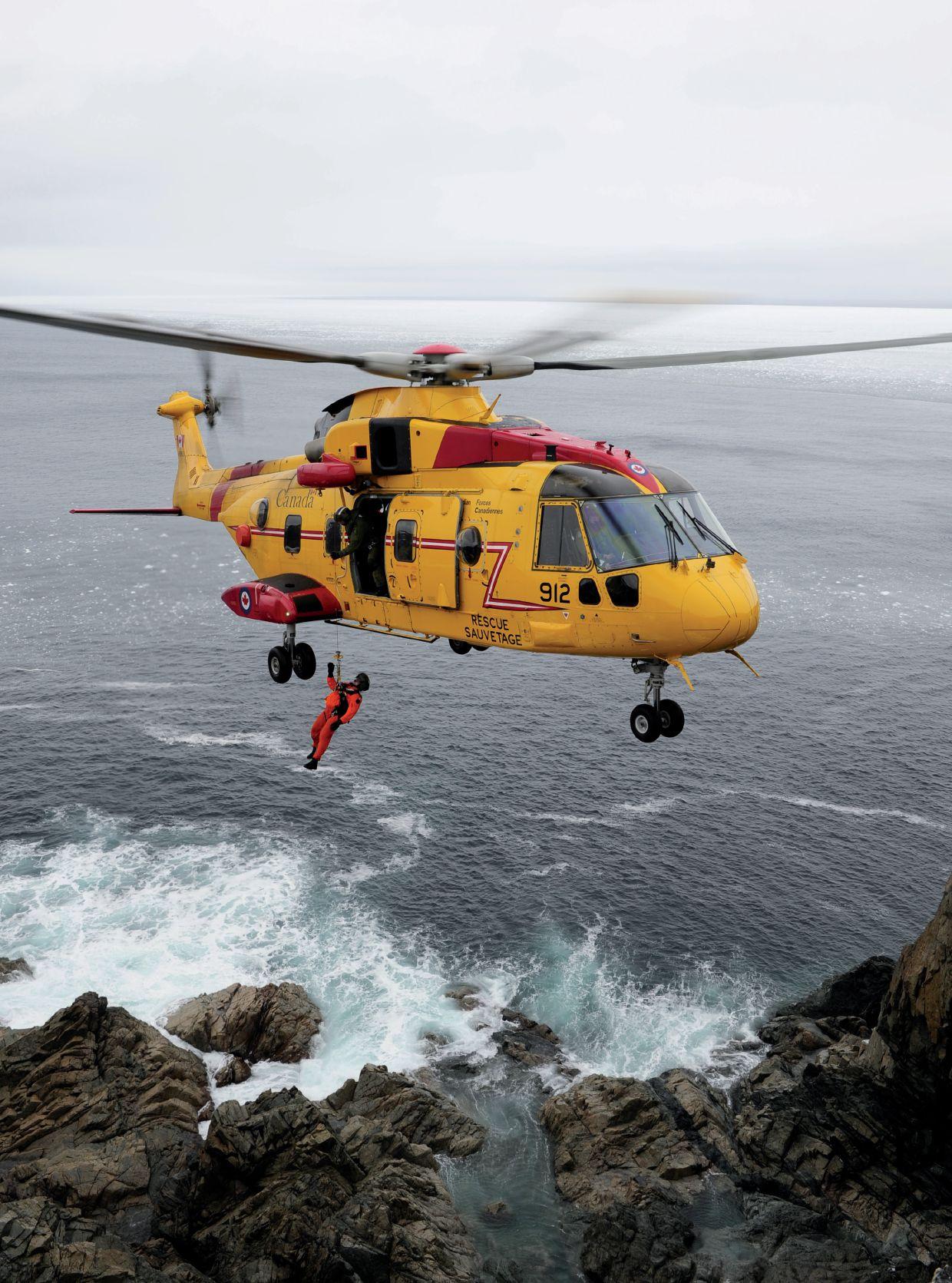
Photo Courtesy: Mike Reyno
Matt niCHolls is editor of Helicopters
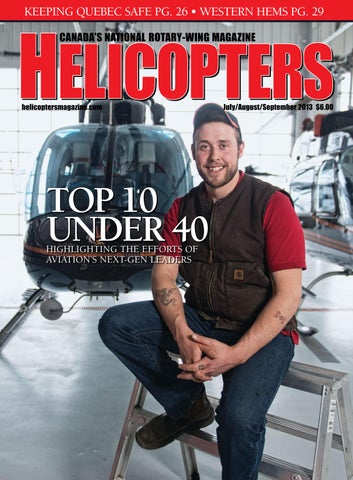
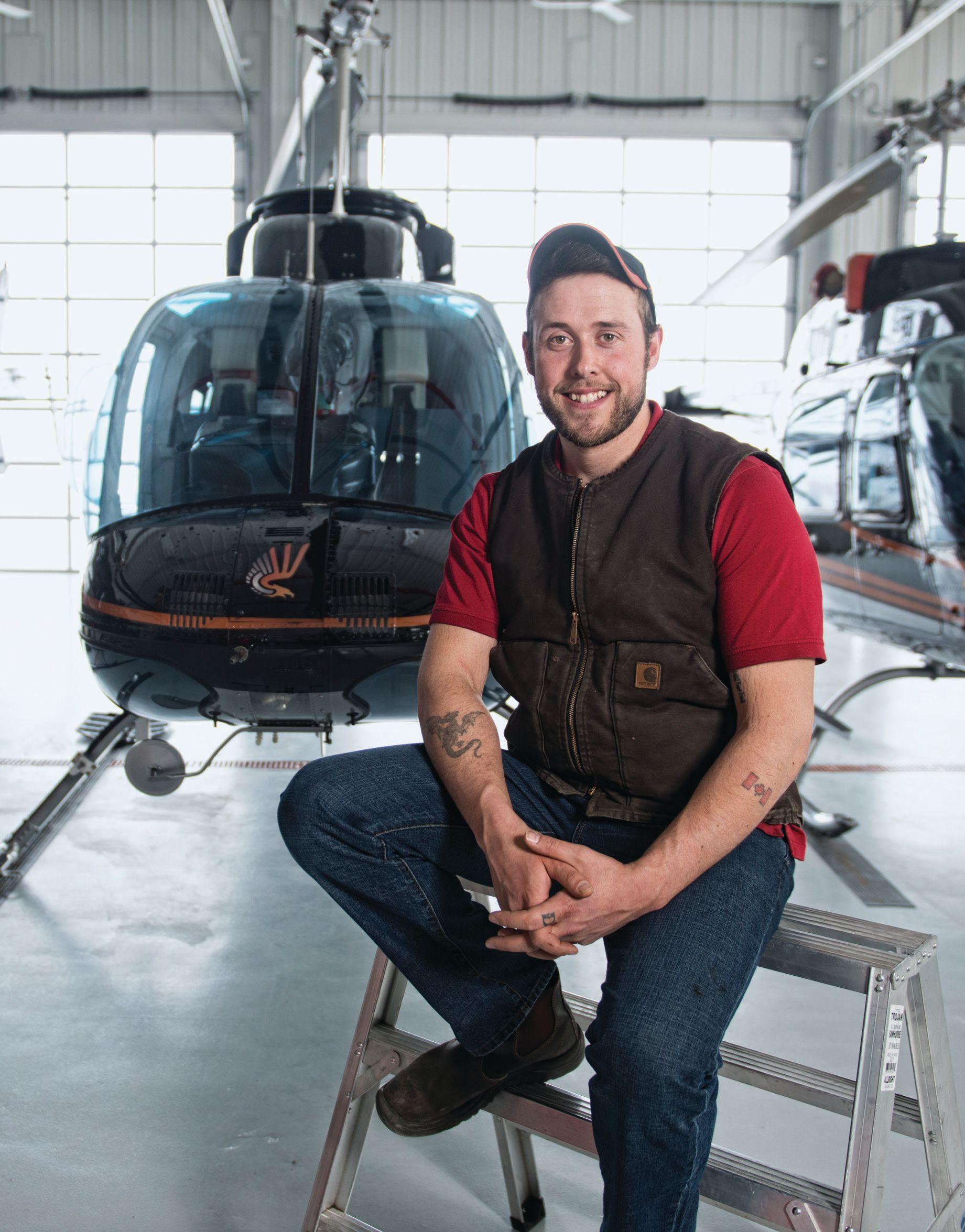
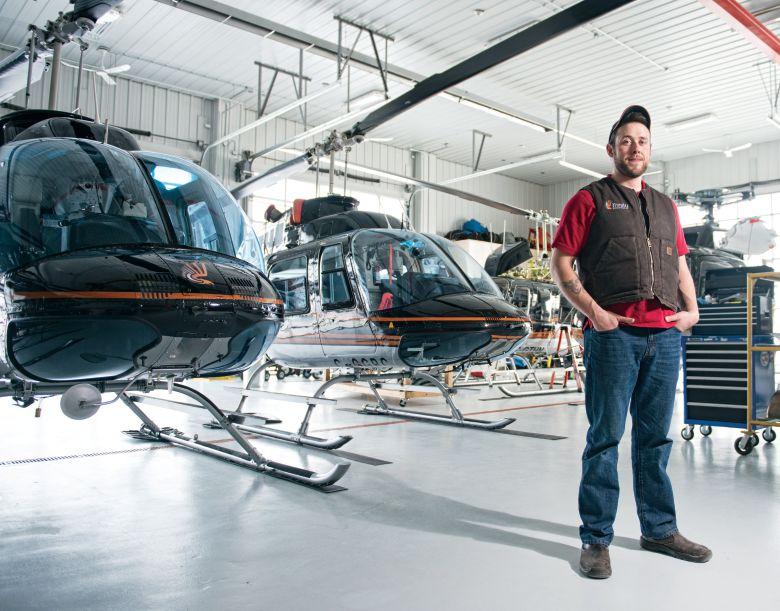
t’s one thing to take responsibility for your own career path and the role you play in an organization, but it takes a special person to lead others and change the corporate culture for the better – so much so in fact that it adds tremendous value in a variety of areas. but that’s precisely what 31-year-old peter rice has managed to do at summit Helicopters in Yellowknife. formerly trinity Helicopters, summit is now operated by the ledcor group of companies, which purchased trinity this past spring. With one of the most diverse fleets in the far north, keeping the birds flying in the various operations it is involved in is no small task, but it’s one rice, the base’s production/quality assurance manager, fully embraces.
rice’s ability to provide the appropriate level of guidance and technical direction on all projects is truly special, and he’s a real inspiration to his peers, says rob carroll, vice-president of business development for summit Helicopters. rice is professional, resourceful and understands the context of his position, his organization and everything it entails – and he does it all with great humility and respect for his peers. it’s highly apparent to his colleagues that professionalism is a key personal attribute, and personal and professional achievement is high on his priority list.
They’ve Got It Going!
Top 10 Under 40 Salutes Leaders of Tomorrow
collaborative effort by the editorial and marketing departments at Wings and Helicopters to uncover and honour the achievements of the next generation of aviation superstars. in an industry clamouring to fill a growing void of retiring pilots, maintenance workers, business administration professionals and more, our goal was to identify young professionals making a difference in a variety of realms, within their organizations and the industry. it was our goal to feature new leaders ready to carry the torch.
the response to the initiative was strong, with plenty of nominations in both the rotary- and fixed-wing realms. the unique thing about this contest is that it’s not all about pilots: it’s about professionals flying high in a variety of disciplines from maintenance and engineering to business operations.
it was also refreshing to see a number of nominations from women excelling in various aviation disciplines. the aviation world is a male-dominated industry, but there are countless women making inroads in it. Young achievers such as trisha lakatos, business development director at AcAss in Montreal, and Jen norie, general manager of viH Helicopters in victoria, b c., perfectly illustrate this point. both have reached high levels of achievement within their organizations and within the industry itself, a testament to their internal drive and commitment for the greater good.
it’s a testament to their internal drive and commitment. it’s also about something more – a true passion for aviation.
Yes, rice is indeed a man with a plan, and with a pedigree that includes a high respect for developing a safer work environment and a commitment to giving back to the industry he is passionate about, he shows precisely the kind of leadership and commitment to aviation excellence that made him a deserving recipient of one of Wings and Helicopters magazines’ inaugural top 10 under 40 awards (see, “finding next-gen Achievers,” pg. 12). And the good news? He’s just one of 10 (actually 11) who received an award in 2013 for precisely this type of personal drive. the top 10 under 40 awards were developed this spring in a
it’s also about something more, a motivation all winners show – a true passion for aviation that drives them to reach new heights, and challenge themselves to reach higher still.
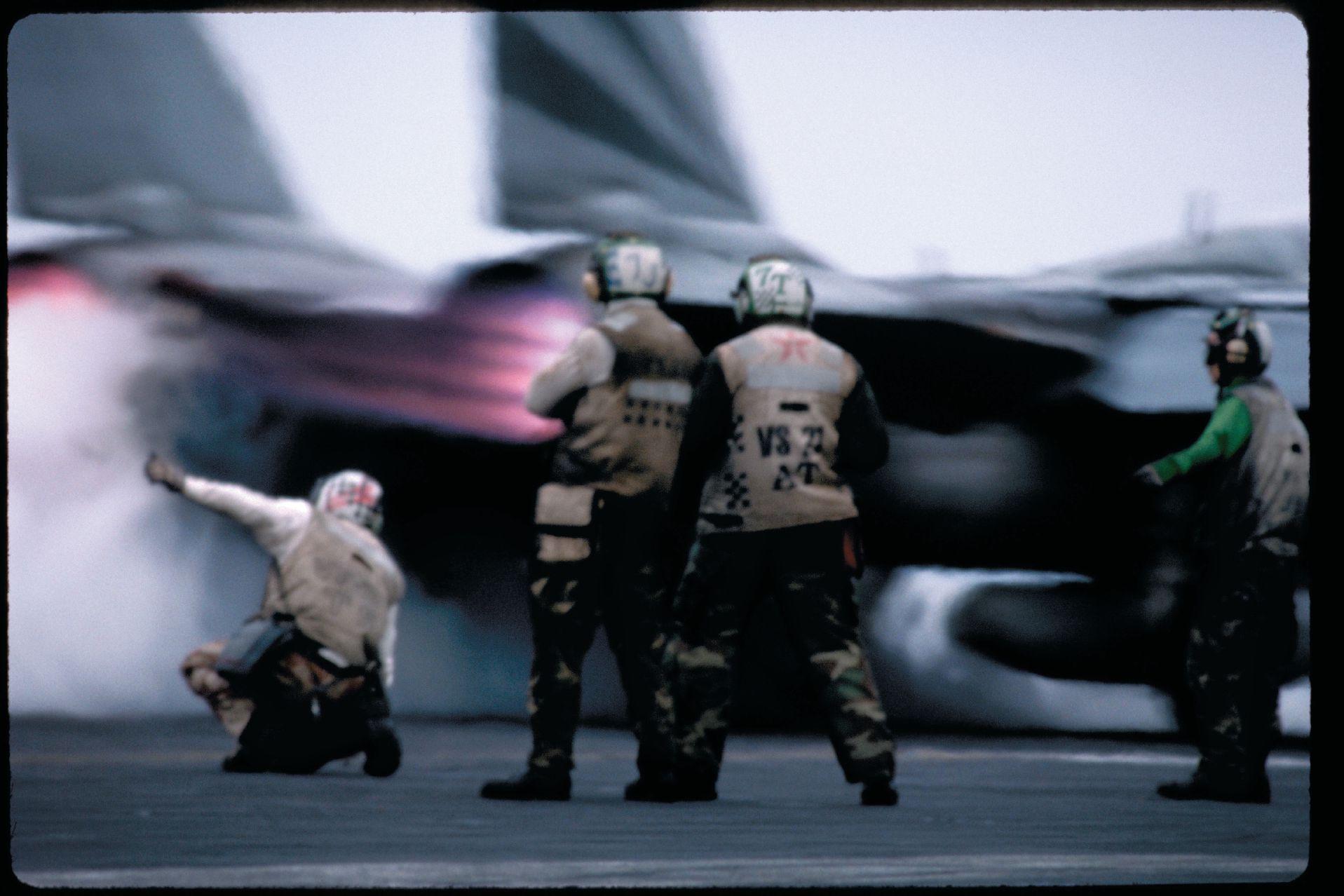
on many occasions in the past few years, the question of how prepared the aviation industry is for the future has been addressed in the many interviews i have had with top industry executives. Key corporate leaders often pause, and say “finding top talent” is their organization’s greatest challenge – those with the right mix of savvy and smarts, confidence and know-how to redefine corporate realities and lead future generations of employees. As our award winners illustrate, there are reasons for considerable optimism: the aviation landscape is obviously rich with these kinds of individuals.
Wings and Helicopters congratulates all of the top 10 under 40 winners. May you continue to strive to reach new heights and foster change in the months and years ahead. it’s precisely what this industry needs.

“WELCOME TO OUR WORLD”
At the heart of the most extreme missions are the exceptional pilots who experience daring feats on a daily basis and are prepared to entrust their security only to the most high-performing instruments. At the heart of the most extreme missions is the Breitling Avenger. A concentrated blend of power, precision and functionality, Avenger models boast an ultra-sturdy construction and water resistance ranging from 300 to 3,000 meters. These authentic instruments for professionals are equipped with selfwinding movements chronometercertified by the COSC – the highest official benchmark in terms of reliability and precision. Welcome to the sphere of extremes. Welcome to the Breitling world.


AVENGER II SEAWOLF
CH-148 Program Blowing Hot Air
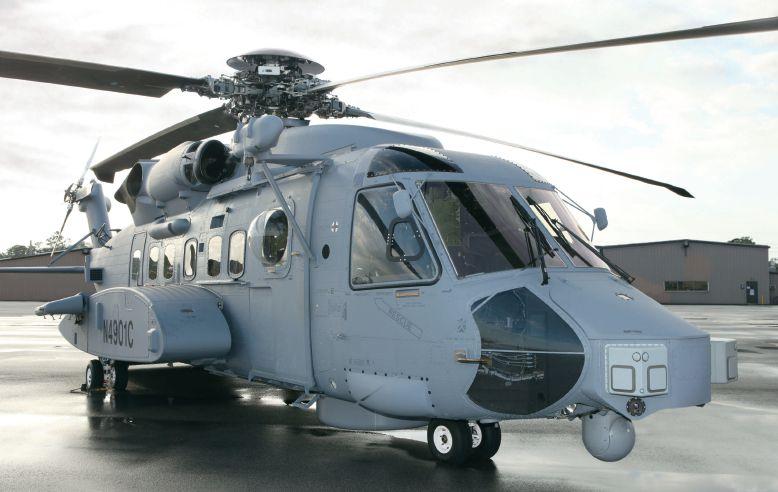
the royal canadian Air force (rcAf) is still waiting on sikorsky for word on the much-maligned cH-148 cyclone program. sikorsky, a division of united technologies, has incurred close to $86 million in penalties for failing to deliver the helicopters to canada’s military and has yet to pay the bill. the program is more than four years late and there is no word as to when the aircraft will be delivered according to the ottawa citizen.
but public works did confirm in an email to the newspaper that, “as of June 14 the total amount of liquidated damages accrued for late delivery is $85.7 million.” the maximum amount of damages that sikorsky could be hit with is $88.6 million, the e-mail added. sikorsky spokesman paul Jackson said the company is in
discussions with public Works and the defence department about “contractual disputes.” the original contract called for the first sikorsky cyclone to be delivered in november 2008, with deliveries of all 28 helicopters completed by early 2011. but sikorsky has yet to turn over a single helicopter to canada under
the $5.7-billion program. the cyclone is supposed to replace the military’s aging sea King helicopters.
three helicopters are in shearwater, n s., but have not been turned over to the military because more testing is needed.
Jackson said that as many as 565 sikorsky employees and contrac-
seaRCHinG foR safet Y innoVatoRs
Eurocopter Canada is once again looking to recognize outstanding achievement in the rotary-wing industry with its annual Innovation in Safety Award. It will celebrate outstanding achievement at the Helicopter Association of Canada annual conference Nov. 8-10 in Vancouver. The winner(s) of the award will be chosen by a committee selection process, which includes Helicopters editor Matt Nicholls. Winners also receive a cash prize of $5,000.
The Innovation in Safety Award was established as a point of reference to measure the advanced accomplishments of organizations or individuals in sustaining Canadian helicopter safe flying practices, while employing an exceptional or groundbreaking approach. It will be presented to the nominee whose exceptional or groundbreaking approach has demonstrated an impact on the overall goal of safe flying procedures, as recognized through the analysis of skill development,
tors are devoting significant amounts of time to the design, testing, production and certification required to deliver the helicopters. “We will continue to work with public Works and the department of national defence to move the program forward and hope to begin pilot training very soon,” he said.
training and any additional resources, while sustaining Canadian helicopter safe flying practices.
To be eligible, nominees must:
• be a Canadian-owned organization, group, company, or agency, or a resident of Canada
• demonstrate a commitment and exceptional dedication to Canadian rotor-wing operational safety over an extended period of time (three years or longer)
• successfully complete a program or research project that has had a significant impact on safety in the Canadian rotor-wing industry
• demonstrate an outstanding act, effort, contribution or service to safety in the Canadian rotor-wing industry
The application deadline is Sept. 6. Information: www.eurocopter.ca/ safetyaward/.
The RCAF is still waiting on the stalled CH-148 Cyclone project. (Photo courtesy of RCAF)
The R66 Turbine Makes Safe Landing
aerial recon took delivery of the first canadianregistered r66 turbine helicopters June 12 at robinson’s factory in torrance, calif. four aircraft were then flown to Aerial recon’s home base in calgary, Alta. the helicopters will be used for private and commercial operations.
transport canada civil Aviation issued a type certificate for the r66 May 31 after a lengthy process. certification, which had reached a standstill, gained momentum when the u s federal Aviation Administration issued an elos (equivalent level of safety) finding in february for the r66 hydraulic control system that effectively removed an exemption in the r66’s original type certificate.
“the five-place r66 turbine
New Leader at Eurocopter Canada
eurocopter canada has a new leader ready to guide the organization into the future.
the company’s board of directors in late June appointed romain trapp president and chief executive officer. trapp joins the fort erie, ont.-based firm following a five-year stint in grand prairie, tex. as executive vicepresident and chief financial officer of American eurocopter. trapp replaces guy Joannes, who had been at the helm of the canadian subsidiary for nearly four years. Joannes is leaving to take on a new opportunity for the eurocopter group in france.
“i am pleased to join eurocopter canada and to begin
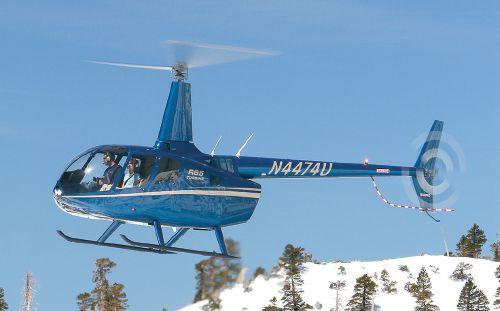
Robinson’s R66 turbine helicopter is used for both private and commercial applications in Canada. (Photo courtesy of Robinson Helicopters)
is an efficient and reliable light helicopter with low annual operating costs and will give commercial operators a boost to their bottom line,” says eric gould, owner of Aerial recon. some 13 u s.-registered r66
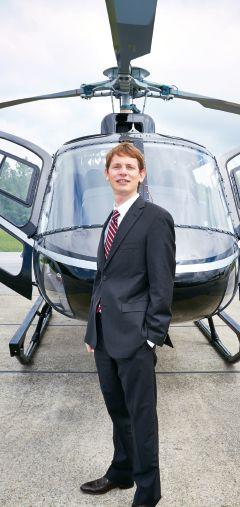
Eurocopter Canada has made a change atop the organization with the appointment of Romain Trapp. (Photo by Vitek Zawada, Eurocopter Canada)
helicopters are operating in canada and robinson will deliver another 13 by the end of this year. twenty countries have certified the r66 including canada the u s., Australia, brazil, Japan and south Africa.
working diligently with and in support of the canadian operators,” said trapp. ”the helicopter industry is continually evolving and i look forward to leading eurocopter canada and developing all aspects of the business to meet the needs of our customers.”
trapp has had a strong career within the eAds group where he has gained industry knowledge across all sectors of the aviation business, most recently at American eurocopter with commercial and governmental operators as an executive vice-president.
His career in aviation began at Airbus in toulouse, france, where he held several positions for the division, including business systems controller for the A380 program. His next promotion was as corporate controller of the Airbus division at eAds headquarters in Munich. in 2005, he joined eAds international in the corporate marketing organization as the head of administration and controlling in paris.
HELICOPTERS MAGAZINE P.O. Box 530 105 Donly Drive South Simcoe ON N3Y 4N5 Tel.: 519-428-3471 Fax: 519-429-3094
Toll Free: 1-888-599-2228 Website: www.helicoptersmagazine.com
EDITOR MATT NICHOLLS e-mail: mnicholls@annexweb.com 416-725-5637
MEDIA DESIGNER GERRY WIEBE
CONTRIBUTING WRITERS
MICHAEL BELLAMY, DAVID CARR BRIAN DUNN, PAUL DIxON, WALTER HENEGHAN, FRED JONES, NEIL MACDONALD, JAMES MARASA, CARROLL MCCORMICK, ROB SEAMAN
ASSOCIATE PUBLISHER ALISON DE GROOT e-mail: adegroot@annexweb.com 519-429-5191 • 1-888-599-2228 ext. 246
ADVERTISING SALES NASH BARSKY e-mail: nbarsky@annexweb.com 905-431-8892
SALES ASSISTANT STEPHANIE DEFIELDS e-mail: sdefieldsi@annexweb.com 1-888-599-2228 ext. 257
GROUP PUBLISHER/EDITORIAL DIRECTOR SCOTT JAMIESON e-mail: sjamieson@annexweb.com
PRESIDENT MIKE FREDERICKS e-mail: mfredericks@annexweb.com
RETURN UNDELIVERABLE CANADIAN ADDRESSES TO ANNEx PUBLISHING & PRINTING INC., P.O. BOx 530, SIMCOE, ON N3Y 4N5 CANADA. e-mail: subscribe@helicoptersmagazine.com
Published five times a year by Annex Publishing & Printing Inc.
Printed in Canada ISSN 0227-3161
CIRCULATION e-mail: subscribe@helicoptersmagazine.com Tel: 866-790-6070 ext 208 Fax: 877-624-1940 Mail: P.O. Box 530 Simcoe, ON N3Y 4N5
SUBSCRIPTION RATES
Canada – 1 Year - $25.00 (all taxes included) USA – 1 Year $35.00 Foreign – 1 Year $45.00
Occasionally, Helicopters magazine will mail information on behalf of industry-related groups whose products and services we believe may be of interest to you. If you prefer not to receive this information, please contact our circulation department in any of the four ways listed above.
No part of the editorial content of this publication may be reprinted without the publisher’s written permission ©2013 Annex Publishing & Printing Inc. All rights reserved. Opinions expressed in this magazine are not necessarily those of the editor or the publisher. No liability is assumed for errors or omissions. All advertising is subject to the publisher’s approval. Such approval does not imply any endorsement of the products or services advertised. Publisher reserves the right to refuse advertising that does not meet the standards of the publication.
Helicopters Magazine is a corporate member of the

Helicopters Magazine is an associate member of the following Canadian aviation associations:
COLUMN
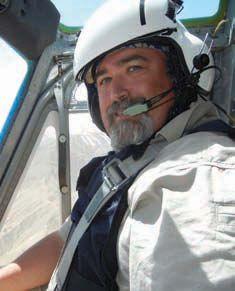
The judicious use of a control hierarchy may be an ideal solution to create a sound hazard and risk management plan at any organization.
Risk management principles talk about a variety of means for addressing hazards in order to minimize the risk to our employees or customers.
The control hierarchy is straightforward; it consists of elimination, substitution, isolation, engineering controls, administrative controls and personal protective equipment (PPE). This list is ordered in terms of effectiveness; the most effective means of controlling the risks associated with any hazard is to eliminate it completely. In the simplest terms, if flying in thunderstorms presents a risk to an aircraft of being subjected to severe turbulence, then avoiding the thunderstorm –elimination – removes the risk from the hazard.
In our business, however, not all risks can be eliminated. While I hear it virtually every day – “…well, we may as well stop flying if we don’t want to be exposed to that hazard . . .” – I suggest that it is still imperative to look at eliminating the hazard if we can. Blade strikes during confined area operations is one such example. Sure, we can eliminate blades strikes easily if we stop landing at unprepared landing sites, but is that a practical solution? I hardly think so. But it doesn’t remove responsibility for considering how to eliminate that hazard. The solution may simply be having the pilot choose a different landing spot.
The next control is substitution. Perhaps landing somewhere else
Establishing More Control
A Control Hierarchy Will Enhance Flight Operations
passengers? Are they in the helicopter, standing nearby or segregated from the refueling operation at a safe distance? These are all things to consider.
Engineered controls are next in line. As you can see as we progress through the hierarchy, each subsequent step is a bit less effective than its predecessor. So what types of engineered controls are available to avoid blade strikes? Back in the “good old days,” when aircraft had HF radios with the long whip antennae, some of these antennae protruded just beyond the rotor disk, so that served as a telltale sign (although that still puts the obstacle pretty darn close to the rotor.) What about adding some type of radar system or back-up type camera? As you can see, developing effective controls becomes tougher and undoubtedly, more expensive.
So, next we move on to what are used by virtually every operator – administrative controls. Company memos, training manuals, standard operating procedures (SOPs), best practices, and tribal knowledge are standard procedures. You name it, and there is a procedure for it, but using these procedures requires discipline on the part of the operator and especially by the pilots. We can stipulate half rotor diameter clearance, but how effective is that? It relies completely on the pilot, his customers, and the circumstances of the flight, and changes every day. Administrative controls have a place but it is important to know that they have limited effectiveness.
I suggest that it is still imperative to look at eliminating the hazard if we can. ‘‘ ’’
puts this control mechanism into play. For example, pick a different spot to land; believe me, the client would rather have to walk an extra 200 metres through the bush than lose the use of the helicopter for the day. Or maybe substitution means using a different helicopter with a smaller rotor disk for the job at hand, although this may not be very effective since there is very little practical difference in rotor diameters among most of the bush aircraft in use today.
Isolation means we separate the hazard from our people by isolating it. Granted, this would be tough to do in this example but not in many others – when refueling in the bush, for example, where are your
The final step in the hierarchy of controls is the PPE – the least effective control. This is often useful in mitigating the consequences of the hazard being released. In our circumstances, the consequences of a blade strike could be a rollover accident. Flight suits and helmets would certainly be useful in minimizing personal injury. Ensuring seatbelts and whether or not harnesses should be used is also important. PPE remains an important control and should not be automatically dismissed.
The hierarchy of controls is an important construct that can help us both in completing pre-job risk assessments and in performing daily risk evaluations while on the job. Try to bring this list into your thought processes, eliminate hazards when you can, and you will continue to have safe, successful and profitable flight operations.
Walter Heneghan is the VP of Safety and Quality at Canadian Helicopters. A passionate advocate for aviation safety and sound risk management, the veteran pilot presents his regular column for Helicopters magazine.
WALTER HENEGHAN
October 16 & 17
Ottawa Convention Centre

This year’s theme:
Engage in Change
Innovate | Transform | Excel
Go to www.aiac.ca/summit for registration information, a full downloadable program, bios of this year’s key speakers and much more!
Do Business. Network. Learn.
With over 600 attendees and 100 exhibitors, the Canadian Aerospace Summit is Canada’s leading national aerospace event.
For more information or to learn about advertising/sponsorship opportunities: cas@aiac.ca
Proudly hosted by

paul dixon
When was the last time you showed up at work drunk? oK, allow me to rephrase the question. When was the last time you showed up at work so tired that your mental and physical abilities were impaired to a level equal to a 0.08 blood alcohol level? research has shown that being awake for 18 hours produces a level of impairment equal to a blood alcohol level of 0.05 and after 24 hours a blood alcohol level equal to 0.10. that’s just from being awake, after a good night’s sleep, without adding in physical exertion or the stresses of your day-to-day existence.
Aviation technology and operational demands have grown exponentially over the past 60 years, yet our human need for sleep remains unchanged as we have evolved from our humble beginnings more than four million years ago. fatigue degrades most aspects of performance, leading to lapsing, cognitive slowing, memory impairment and decreased vigilance. sleep-deprived people are more irritable, forgetful and averse to effort. pilots may lose the ability to perceive and integrate important information due to tunnel vision, a potential effect of sleep deprivation. performance becomes less consistent and the ability to follow procedures diminishes.
Years ago, i taught a course at the rcMp fairmont Academy in vancouver. if we were lucky, there would be a breathalyzer course being run in the building at the same time. part of the breathalyzer course is familiarizing the young police officers with identifying the physical symptoms of alcohol impairment. for class purposes, this
The Fatigue Factor
A Good Night’s Sleep Is Paramount in Preventing Accidents
being taken through that first level of 0.05 and then up through 0.10 and not too far beyond. it was just enough to make them legally impaired, yet it often turned into a gong show. Alcohol does tend to bring out a level of aggression that rarely happens with sleep deprivation, but when it comes to the ability (or willingness) to process information and follow instructions, that’s where we see the strong correlation.
fatigue degrades most aspects of performance, leading to lapsing, cognitive slowing . . . and decreased vigilance.
was achieved by having half the class show up without having eaten any breakfast. An empty stomach, coupled with the carefully controlled ingestion of alcohol, would result in reliable blood alcohol levels for observation, with physical tests being conducted before the next shot was downed. to the casual observer, it was always interesting to see just how a small amount of alcohol could wreak so much havoc on those earnest young police officers. With any luck, there’d be at least one fist fight by 10 a.m. and a whole lot of yelling and arguing for the rest of the day.
such information is food for thought. the young Mounties were
if you’ve been to the cHc safety & Quality summit, you’ve likely heard scott shappell talk about recognizing and managing fatigue in aviation, as well has his very lively “spin and puke” workshop on the effects of alcohol on the mysteries of the inner ear. this year’s summit saw Michael paul, a research scientist with defence research and development canada, talk about his work with rcAf cc-130 crews, as well as rcn submarine crews, in terms of assessing fatigue levels when crews are forced to operate outside their usual environments. cc-130 crews providing airlift support to canadian operations in bosnia and then Afghanistan were forced to fly long hours in transit and then operate in theatre on a clock that was up to nine hours different from their home base. submarine crews at sea work a series of rotating shifts to maintain a 24/7 operational and tactical capacity. for both the aircrews and the submariners, paul’s research demonstrated that the time shifting coupled with the operational tempo of their missions took them through the levels of physical impairment equal to the blood alcohol levels noted previously and often they went further, delving into an area he describes only as “clinical stupidity.” A program was devised that recognized the causal factors, leading to policy changes that both allow for and enable more rest. Historically, fatigue has not been listed a prime causal factor in aviation accident investigations, but in recent years it is now being considered. since retiring, capt. chesley “sully” sullenberger has been a leading advocate for increased awareness of the perils of flying when fatigued. Asked by Abc news if he would have been able to put flight 1549 in the Hudson if he had not been rested on that day, he responded most emphatically, “probably not.” doing the right thing at the right time, all the time, doesn’t just apply to the pilots in your organization – it applies to everyone. it’s taken us a long time to get serious about alcohol and flying and it’s a good thing that we have. now, we need to work on getting a good night’s sleep.
Paul Dixon is freelance writer and photojournalist living in Vancouver.
ColuMn
Years ago when i cross-endorsed into the rotary-wing world, i didn’t think i was leaving a fixed-wing career behind so much as expanding my aviation skills. it was all flying, right? What i didn’t expect and what surprised me, however, was a change in the perception of helicopter pilots – especially by forest protection agencies – as different from their fixed-wing brethren. for example, circa mid-’70s, tanker pilots were often seen lounging by their single-pilot twin-engine aircraft on a little-used airstrip. there were no facilities other than a van to sit in and the aroma of deep Woods off permeated the air to ward off marauding mosquitoes. And the bird dog officer kept the pt 500 radio close at hand waiting for that dispatch. during that same time frame, a helicopter pilot along with an initial attack crew would stand by in an isolated location waving at the bugs through the heat of the day, also waiting for the call to launch. some forest protection agencies even expected the helicopter pilot to sleep in the back of the machine at night when working a fire. i’m sure those of you who go back in the industry that far will attest to this.
let’s move the calendar ahead to the present day. At some locations, tanker pilots get to relax in an air-conditioned lounge, with satellite tv, high-speed internet, kitchen facilities and quiet bunks for napping. Meals are brought in and duty time at the controls is further limited during fire operations. their equipment is constantly being upgraded and there are two pilots per aircraft to share the workload.
Time for Forest Protection Agencies to Protect Helicopter Pilots Constantly Under Fire
the provincial government themselves. Most, if not all, of the justifications for proper amenities are laid on the altar of safety and fatigue prevention.
Having worked in both theatres, i do know that in either occupation, the pilots’ contribution is no less demanding, even though the helicopter pilot is the only one responsible for the carriage of passengers. so, how can access to weather, notams and protection from the elements and fatigue prevention while waiting for that call to launch be less important for one pilot than for the other?
in all instances, “operational capability’ enables the helicopter to access isolated sites, which is understandable, but why does this justify a metal garden shed for the helicopter pilot to sit in while a short walk away is a tanker base facility reserved for tanker pilots only? this ridiculous and demeaning circumstance is all too common in many fire attack bases.
When did charter companies and forest agencies decide that the “initial attack” helicopters needn’t be on par with fixed-wing operations even though they are exposed to a much greater risk? perhaps it’s because there are dozens of charter companies competing for that same lucrative contract – and after all, we’ve been doing it that way for years.
Helicopter operations, it seems, have always had to be dragged reluctantly into the modern age. remember the controversy that occurred in the aviation world when flight duty times were first suggested? i also recall pilots being pressured by their employers, who tried to coax them into writing letters to their respective MlAs denouncing the regulation as too restrictive and unnecessary. but thankfully, charter companies and forest protection agencies all eventually adapted to the changes and survived, and the helicopter industry became a safer one because of it.
this ridiculous and demeaning circumstance is all too common in many fire attack bases.
in the same forest, however, a helicopter pilot along with an initial attack crew, is still isolated, waving at the bugs through the heat of the day, waiting for the call to launch. thankfully, pilots are no longer asked to sleep in the back of their machines and forest agencies have accepted the “duty day” regulations, but other than pt 500s giving way to smaller radios, little else has changed – and in most instances, the helicopter has not changed.
in canada, understandably with just a couple of private companies bidding on the tanker contract, it is easier to negotiate and stipulate on facilities for the crew, even more so when it is operated in house by
of course, not all forestry bases are as unconcerned and oblivious as the ones i have alluded to earlier and i have had the pleasure of working out of bases that provide helicopter aircrews with proper standby facilities. When the radio room calls and firefighters climb into the waiting helicopter, young men and women are going to be transported into a very dangerous environment. Helicopters are tasked with this significant responsibility, yet dropping foam on the fire often warrants more deliberation.
A native of Spruce Grove, Alta., Michael Bellamy has been flying fixed- and rotary-wing aircraft in a variety of capacities since 1971, and is an accomplished author of several books, including Crosswinds.
MiCHael BellaMY
finding finding next-Gen achievers
Wings and Helicopters recognizes some of the industry’s
brightest
young stars in
our
first annual Top 10 Under 40
BY Matt niCHolls
finding dynamic, innovative employees capable of developing new systems, processes and techniques to fuel the success of an operation for years to come is a major challenge facing fixed- and rotary-wing operations of all sizes. And with a looming crisis of retiring pilots, maintenance workers on the horizon and a dearth of highly qualified business operations personnel and aerospace engineers, it’s little wonder management types are nervous about the prospects for the future.
but for those desperately seeking to enhance their talent pool or worried about canada’s ranking on the world aviation/aerospace stage, don’t be too alarmed – there are many talented aviation employees under the age of 40 making a difference at their respective organizations, reaffirming that the future is indeed bright for canadian aviation.
in our inaugural top 10 under 40 special report, Wings and Helicopters proudly highlights 10 of these top achievers – men and women who have helped transform their organizations in maintenance, business operations, flight operations and more.
the 10 individuals featured – oK, we cheated, the laflamme brothers pushed the total to 11, forgive us – were carefully selected by our editorial team following an online contest that ran earlier this spring. candidates were nominated by their colleagues based on their influence to drive change at their respective organizations, their leadership skills and commitment to clients/colleagues, and
their forward thinking towards the industry as a whole. in most cases, nominators selecting our featured “next-gen” leaders had several years’ experience working with the candidates, observing how they cultivated their skills and grew in their respected spheres.
featured alphabetically, our top 10 under 40 achievers represent the resourcefulness, commitment and dedication organizations are craving in today’s marketplace. on behalf of the nominees and potential candidates, we thank you for your support and salute the achievements of all who participated.
naMe: tiM andeRson
title: oWneR, tiM’s teRRY aiR
(soon to Be ReBRanded andeRson aViation)
loCation: HuRon paRk, ont.
to say tim Anderson likes aviation would be a gross understatement. Here’s a guy who lives and breathes it.
the 30-year-old owner of tim’s terry Air inc. in Huron park,
ont., has long been interested in a career in aviation and he was very proactive in getting the ball rolling. shortly after his first airplane ride at the age of 15, Anderson joined the 614 squadron of the royal canadian Air cadets to hone his aviation skills. following cadets, he quickly earned his pilot’s licence at empire Aviation in london, ont.
Anderson began his formal aviation career at the age of 18 with general Airspray, an aerial seeding and spraying service based in lucan, ont. At general, Anderson was entrusted with operating its mix rigs throughout northern ontario, gaining valuable experience.
following his stint at general, Anderson sought a formal degree in an aviation-related discipline and found precisely what he was looking for in the aircraft maintenance program at north bay’s canadore college. Armed with a degree, courage and plenty of ambition, Anderson went looking for adventure – and he found it in the form of buffalo Airways in Yellowknife. After a stint with the famed northern airline, Anderson moved over to Hicks and lawrence, a subsidiary of discovery Air inc., before returning to southern ontario in 2006 to work with supermarine Aircraft based in st. thomas.
While working at supermarine, Anderson garnered several personal achievements among them the completion of his commercial pilot licence and the attainment of his aircraft maintenance engineer licence. that decision led to a new bout of adventure and career development that included valuable experience at sander geophysics in ottawa on international contracts in greenland, denmark, and the high Arctic; a stint at enterprise Airways in oshawa, ont., including the Alfred Wagner institutes’ polar 5 basler dc-3 Aircraft; as base manager in resolute bay; and a period of working for calgary’s Kenn borek Air, that saw him spend two months at the south pole station.
but Anderson craved more and in 2011, joined the ranks of aviation entrepreneurs, purchasing glen’s terry Air and renaming it tim’s terry Air. offering customers a variety of services, including maintenance, aircraft storage, aircraft brokerage, fuel parts, pilot supplies and more, tim’s terry Air aptly reflects the sense of commitment and spirit of its owner – providing the highest levels of
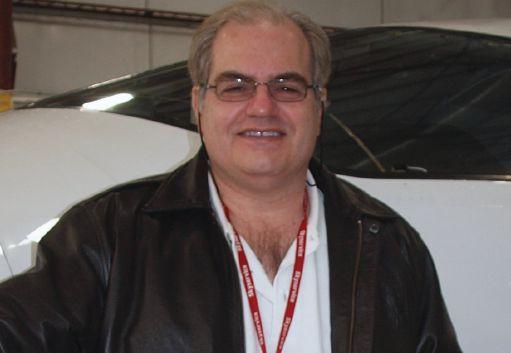
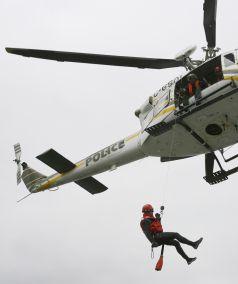
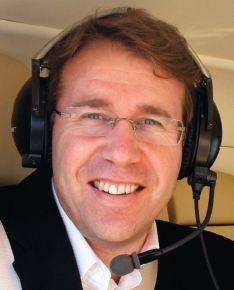
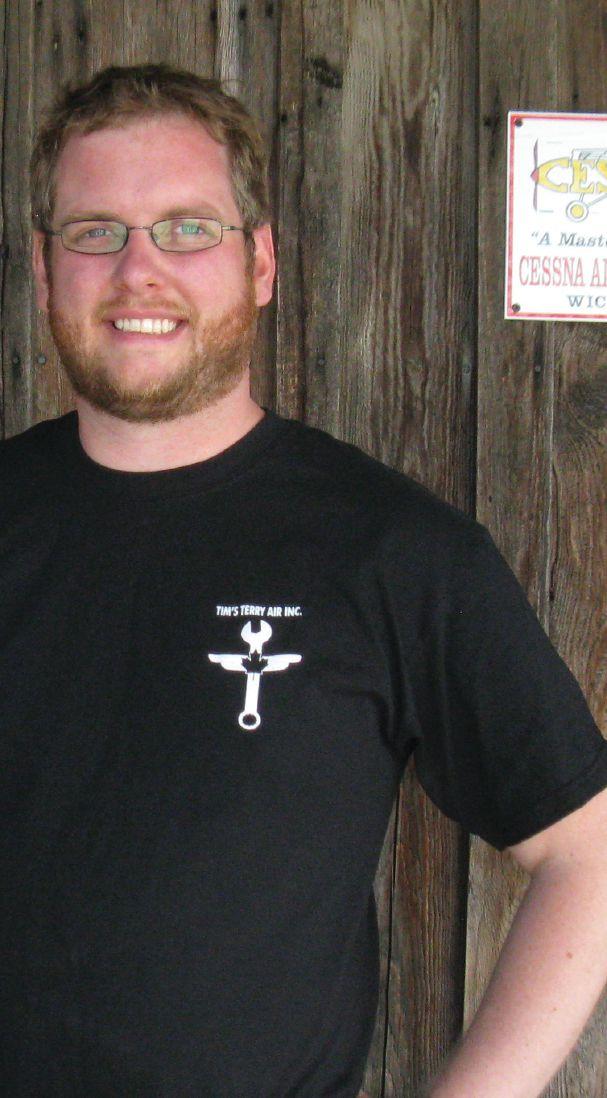
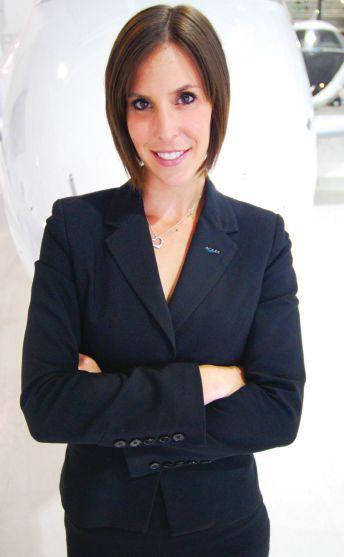
Tim Anderson (above), Trisha Lakatos (below left) and Jen Norie (below right) are some of our Top 10 Under 40 winners.
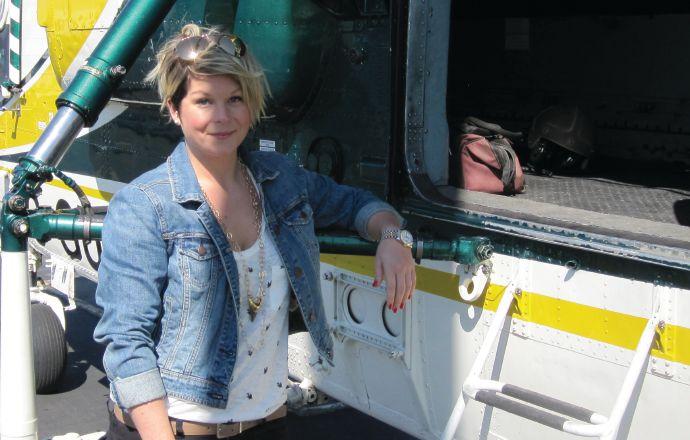
service to its loyal customers.
terry Air was founded in 1982 by terry stuart to provide aviation services to southern, midwestern and central ontario. it was purchased in 1999 by longtime employee and AMe glen latour and renamed glen’s terry Air. Anderson, who is an M1 and M2 AMe as well as a multi-ifr commercial pilot, purchased the business and hasn’t looked back. He is currently in the midst of rebranding the business to Anderson Aviation services. launching in July, Anderson Aviation more aptly reflects the man behind the name – a lifetime aviation enthusiast who has taken his career to the next level and never looked back. Anderson is living the dream, so to speak – as a leader, adventurer and member of several aviation organizations who gives back to his industry in so many ways.
naMe: todd Calaiezzi (left)
title: pResident, expedition HeliCopteRs
loCation: CoCHRane, ont.
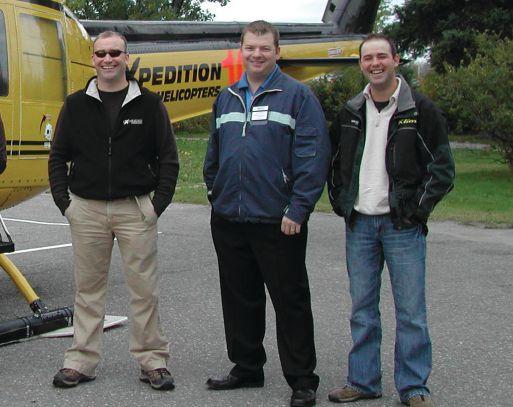
“He’s the hardest working person i know. Many times he calls me at 11 p.m. and he is still at the hangar.”
this is just one sentiment to describe expedition Helicopters’ president todd calaiezzi, left, by one of his loyal customers, a dedicated, hardworking leader who knows what it’s like to build an organization from the ground up. located in cochrane, ont., with satellite offices in Moosonee, ont., and roquemaure, Que., expedition operates a fleet of a dozen bell and eurocopter helicopters and boasts staff with some 40 years experience in the field.
specializing in northern operations specific to the natural resources sector including mining, forestry and hydro support, the 38-year-old’s business acumen and vision has led to the development of specific divisions at the company with high levels of specialization – specifically its “service and logistics” division. the camp section provides turnkey camp set-ups, rentals and logistics to the mining and forestry industries nationwide.
calaiezzi’s concept for the division was born in the late ’90s, when it became apparent the mining/forestry industry was growing. As projects grew and companies struggled with effective camp setup, expedition capitalized and developed a way to provide turnkey solutions for camp setups and more. the firm has also set up a freight division with 13 tractor trailers and a fuel company to capitalize on this category.
the diversified product offering devised by expedition’s competent and hard-working leader, reflects the entrepreneurial spirit
calaiezzi brings to every project. And building from one machine to more than a dozen in such a competitive environment, it’s apparent calaiezzi has expedition headed in the right direction.
naMe: Jason foGG title: pRoGRaM ManaGeR/Base ManaGeR, disCoVeRY fiRe seRViCes inC. loCation: sudBuRY, ont.
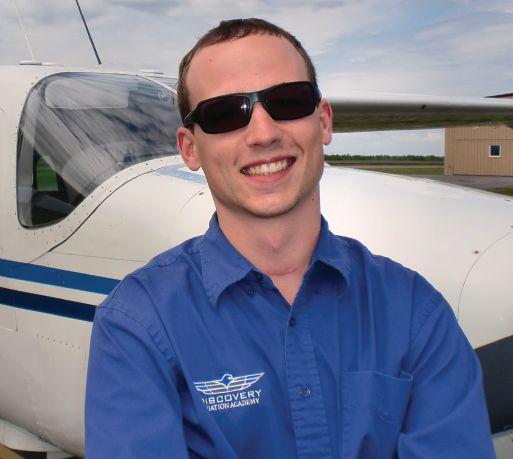
Having the acumen to put out fires on a consistent basis is one of Jason fogg’s specialties. And that’s a good thing, especially when his role is to help monitor more than one million square kilometres of pristine ontario forest.
As program manager/base manager with discovery Air fire services in sudbury, for the past five years, Jason has been co-ordinating the facilitation of putting out real fires across the province. And that has saved not only thousands of acres of prime forests, but property and lives as well.
Just 24, fogg has a host of personal achievements to his credit, including a bachelor’s degree in management and organizational studies with a specialization in commercial aviation management from the university of Western ontario in london. He is a commercially licensed pilot with an Mifr and float plane ratings, and is also a class 3 flight instructor. He is also currently in the process of completing a masters of business administration through laurentian university.
fogg joined the discovery team in 2008 as aerial operations coordinator, running logistics on more than 30 aircraft contracted to the ontario Ministry of natural resources (oMnr) in support of the fire management program. innovative and efficient, fogg has demonstrated a high level of creativity when necessary, and has tried to create new technologies within the fire detection environment.
one such initiative was the “firehawk Airborne Wildfire reporting tool,” in collaboration with the oMnr firehawk allows for more timely and accurate reporting in order to catch wildfires while they are small. this initiative won a provincial diamond Award, given to the top innovative project within ontario’s public sector.
in 2011, fogg continued to demonstrate his industry leadership with the creation of an initiative aimed at establishing a flight training school at the greater sudbury Airport called the discovery Aviation Academy (dAA). fogg’s vision was to create an employment-focused training program that would bridge the gap between a
student’s graduation and employment.
to benefit this endeavour, fogg established a partnership with cambrian college and established co-op positions within the discovery Air network. in its first full year of operations in 2012, dAA flew more than 1,200 hours and had 17 first solos and 11 successful flight tests. under fogg’s leadership, dAA has become a member of the Air transport Association of canada, a key stepping stone to being awarded a contract with the department of national defence to train 10 air cadets in 2013.
it’s not a surprise that’s fogg’s strong business acumen and work ethic has enabled him to be promoted to sudbury base manager while keeping his role as program manager from dAA.
so, is it accurate to say fogg is more than capable of putting out fires? Absolutely. few are as competent in helping douse the flames while keeping so many irons in the fire himself.
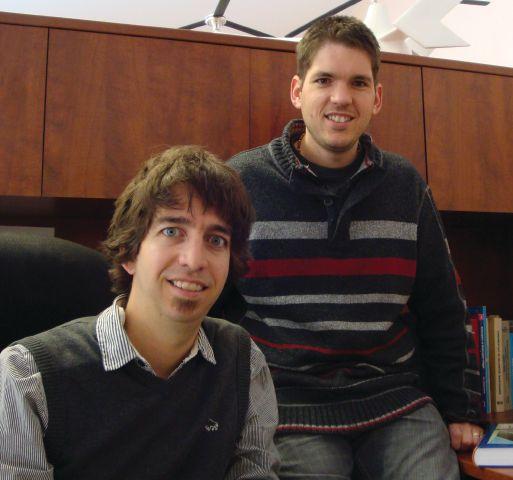
resourcefulness and entrepreneurial spirit are the hallmarks of the top 10 under 40, and david and enrick laflamme of laflamme engineering in st-Joseph-de-coleraine, Que. certainly possess these qualities.
david, 34, and enrick, 33, are professional engineers who have spent their entire lives surrounded by aviation-related projects and pursuits. At a very young age, they were immersed in the world of helicopters, gyrocopters and various helicopter parts – a path that captured their imagination and ignited their passion for everything aviation. their father, rejean, an avid aviation enthusiast and designer, completely rebuilt gyrocopters in the 1980s and soon after, introduced the very first laflamme helicopter – the lAf-01, a machine with tandem rotors designed for the general aviation market under the laflamme Helicopters brand.
david and enrick helped their father on the lAf-01 project after each graduated with an engineering degree from ecole de technologie superieure in Montreal, but in 2004 branched out to form their own engineering firm after the lAf-01 program slowed due to a lack of funding.
laflamme engineering specializes in finite element analysis with AnsYs (Apdl, also called classic version). Mastering this software
allows the design and analysis of complex parts, often using materials such as orthotropic composite materials. the firm provides stateof-the-art engineering services for aerospace and transportation companies such as cAe, bombardier transportation and Messierbugatti-dowty. it also has diversified operations extending beyond its aerospace footprint to include engineering services such as oil tank analysis, the design/certification of industrial machinery and equipment, and the design/certification of mining equipment.
in 2009, the brothers took over the lAf-01 helicopter project with the hopes of raising the quality of the project to a new level. since that time, they have also been working to develop unmanned aircraft vehicles (uAvs) and are planning to certify the enhanced lAf-01 concept as the lx4.
Active participants in the aviation community, the brothers are members of the American Helicopters society and have joined Aéro Montréal and the consortium for research and innovation in Aerospace in Quebec (criAQ), with the goal of developing collaborative research projects with canadian universities.
the laflamme brothers are working hard to apply their shared strategic vision to becoming a canadian leader in vtol uAvs and light helicopters. don’t bet against the dynamic duo doing just that.
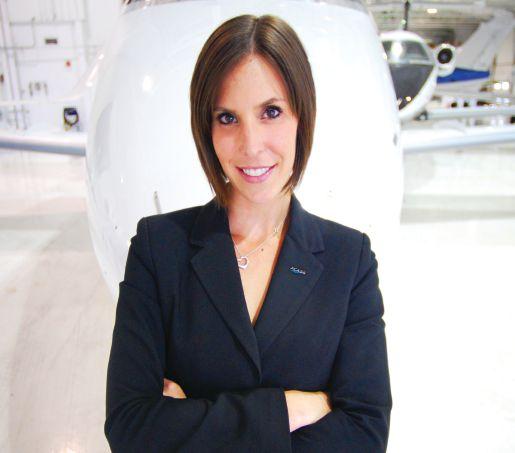
she excels in all aspects of her life and does so with a “can-do,” positive attitude.
that’s how one top client described trisha lakatos, director, business development with AcAss in Montreal. “she has excelled in all aspects of her career personally, professionally and academically. she is reliable, open to ideas, works incredibly well with others and is always looking for ways to improve herself and her business.”
A glowing analysis for sure, and it typifies the work ethic and commitment lakatos brings to all that she embraces. the 30-year-old joined AcAss in June 2007, following a one-year stint as a bilingual recruiter with experiential marketing firm inventa. Her tenacity and drive quickly propelled her into a key leadership role at AcAss, which provides support services for business aviation including entry into service support; pilot and engineer support; aircraft management aircraft sales and acquisitions; sMs compliance support; and interim lift and leasing.
naMe: daVid and enRiCk l aflaMMe title: l aflaMMe enGineeRinG loCation: st-JosepH-de-ColeRaine, Que.
naMe: tRisHa l akatos title: diReCtoR, Business deVelopMent, aCass loCation: MontReal Que.
drive and commitment are not lost on lakatos, as she brings the same mindset to her work and academic pursuits that she did when she was a top-flight national swimmer for the university of illinois (she graduated with a degree in kinesiology in 2006.) Hardly resting on her laurels, she is currently pursuing a master’s of business administration at concordia university.
trisha is a consummate professional who always pushes herself, embodying everything future leaders in aviation demand, which is precisely why she is a deserving of winner of a top 10 under 40 Award.
naMe: Jen noRie title: GeneRal ManaGeR, ViH HeliCopteRs loCation: ViCtoRia, B.C.
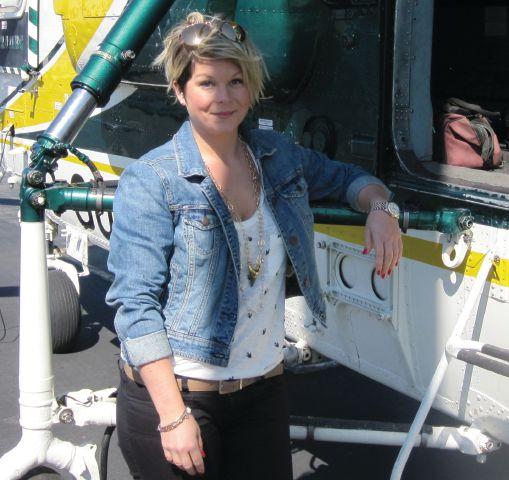
You might say Jen norie has spent her entire life in the helicopter industry. And though it sounds like hyperbole, such an assertion wouldn’t be far from the truth.
born in 1982, norie has some 15 years of aviation experience under her belt. norie is currently the general manager of canada’s oldest privately owned helicopter company, viH Helicopters ltd., operating heavy helicopters that service domestic and international contracts for a global clientele. she is also general manager of YYJ fbo services ltd., a full service shell Aviation fbo at victoria international Airport, as well as marketing and communications manager for viH Aviation group of companies.
in addition to her professional role, norie was elected to the Helicopter Association of canada (HAc) board of directors as secretary in 2012 and has been an active chair of the Air taxi committee since 2009.
norie’s career began in 1998 with viH Helicopters, progressing through a series of increasingly challenging roles such as executive assistant, operations assistant and facilities manager. in 2006, she was appointed base manager in fort nelson, b c. and prior to that was sales/marketing coordinator with Hawkair Aviation ltd.
she studied business management at dalhousie university, and international business and commercial law at the university of victoria. she has completed the canadian Helicopter operator and AMo Management course with conklin and de decker. being a third-generation helicopter manager, norie adheres to her grandfather’s (frank norie) philosophy: “You may have 10 reasons
why something can’t be done, but all i need is one good reason to do it.” norie’s father, Ken, has been guided by this principle and it serves as both inspiration and motivation for her as she leads viH into the future.
viH operates within a tradition of innovation: it was instrumental in obtaining the canadian certification of the Kamov KA32 helicopter. At such a young age one might think that norie’s role could be intimidating; however, she quickly points out that there is a highly experienced team of more than 100 professionals supporting her. And while her youthfulness belies her experience, norie is strategically positioning viH for growth and is forging a path as a future industry leader.
naMe: peteR RiCe
title: pRoduCtion/Qualit Y assuRanCe ManaGeR, suMMit HeliCopteRs (foRMeRlY tRinit Y HeliCopteRs) loCation: YelloWknife, n.W.t.
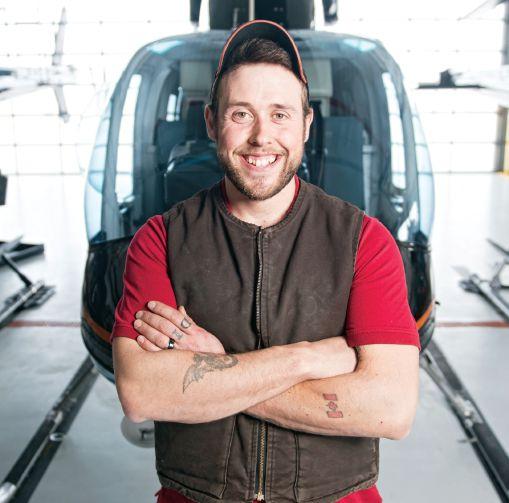
for peter rice, taking on new responsibilities and showing meticulous work ethic in every role he tackles is simply par for the course.
the 31-year-old is the production/quality assurance manager for Yellowknife-based summit Helicopters, operated by the ledcor group of companies, which purchased trinity Helicopters this past spring. sporting one of the largest, most diverse fleets in the north, summit proudly calls the far north home and is keen to provide clients with the most reliable and safest services possible.
enter rice, who was hired as an engineer level 1, with duties on the bell 206 in his initial role with the firm, but quickly ascended the company ranks with endorsements on all four company type aircraft. He then moved on to the role of production manager and most recently has accepted additional duties as our quality assurance manager.
rice’s technical accomplishments and personal skillset not only meet the standard of a true “next gen” leader, but exceed it and set an industry benchmark. He demonstrates a strong work ethic and commitment to the organization, showing an extreme ability to balance operational demands and human resource pressures to ensure company goals are met.
rice’s ability to lead and work with his team are his strongest
assets. it is commonplace for him to be found wrenching on machines or providing guidance and technical direction to others, helping other members of the summit team. “rice’s technical acumen commands respect from his peers and this combined with his personal humility makes him an exceptional leader,” notes rob carroll, vice-president of business development, summit Helicopters.
rice has taken the initiative to complete a course on project management fundamentals and a course on developing manuals that work. “While the company was growing, we found ourselves challenged between initiating an sMs system and following the procedures and processes required for such a system,” carroll says. “Again, peter stepped up and completed courses in corrective action plan management.”
rice quickly pointed out the shortfalls in the process and offered solutions by providing assistance in quality assurance. He again took charge and supported his newly adopted role as quality assurance manager (while still maintaining production manager duties) and took it upon himself to work with technical records overseeing a self-auditing process. carroll says this initiative led the company to obtain operational approvals with several large international oil and gas and base metal exploration and mining clients.
earlier this year, he attended the Western AMe Association AgM and was appointed a board member. He consistently offers feedback as a member and his desire to see the organization mature reflects his drive for day-to-day responsibilities and success.
rice is indeed a true leader and an integral part of the summit Helicopters team.
naMe: keitH saulnieR title: Ceo/Co-oWneR, GeoRGian BaY aiRWaYs loCation: paRRY sound, ont.
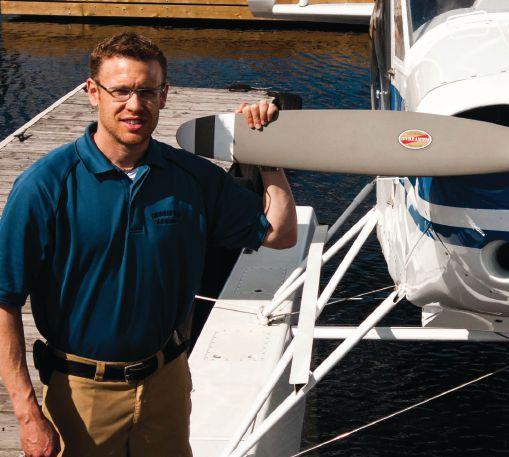
Having the ability to successfully multitask and exceed all expectations in a variety of realms is a special talent – one Keith saulnier is meticulously working on perfecting.
the 38-year-old ceo/co-owner of georgian bay Airways (gbA) – he shares the business with wife nicole saulnier, an accomplished aviator in her own right – has successfully managed a busy seaplane business from parry sound Harbour for more than 10 years. operating May through october, gbA offers express trips to toronto, seaplane charters, float training and various other tourism options from its home base off parry sound harbour. saulnier balances his
“day job” around other key responsibilities, including work with the local business community in joint ventures and establishing a public service track record with which to funnel interest and partnerships.
When he’s not concentrating on the business or other ventures, saulnier, tries hard to inspire new pilots to join the industry, and has worked hard to ensure that his company is “gender neutral.” He offers his time to any potential pilot, answering questions about the industry, and offers advice on career paths and general business dealings. He also regularly speaks at colleges, flying clubs and other venues about the virtues of aviation as a career.
gbA has been recognized by many organizations in the past and Keith is a big reason why. in 2004, gbA received the “entrepreneur of the Year Award” from the parry sound and Area chamber of commerce (and is currently nominated as “business of the Year” for 2012). in 2006, the saulniers received the ontera Youth Achievement business Award in north bay.
saulnier has volunteered on the parry sound Airport board and the West parry sound district Museum, and is currently an elected councillor for the town of parry sound. As a husband and father of three young children, saulnier has had to balance family commitments with business and public service obligations. His skill at meeting these three commitments has gained him respect with his peers, his customers and his competition.
saulnier continues to watch for trends and opportunities to bolster gbA and is always interested in working with partners to shine a light on different perspectives of the working and natural environment in which he operates. His skills and aptitude are definitely driving the aviation and aerospace industries forward.

naMe: CHRis sCHaefeR
title: GeneRal ManaGeR, Bell HeliCopteR loCation: CalGaRY, alta.
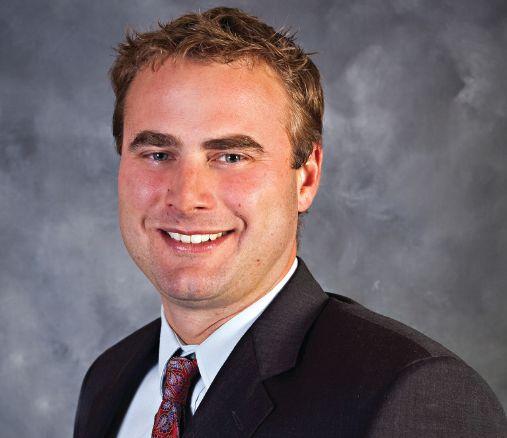
for chris schaefer, spinning a winning solution for a tough challenge is something bell Helicopter management has come to expect.
schaefer, 38, graduated from sAit polytechnic’s Aircraft Maintenance engineering technologist program in 1994 and earned his AMe licence in 1996. following terms of employment at chevron Aviation services, canadian Helicopters Western and Madonna Helicopters ltd., schaefer took on the role of Quality control inspector at bell Helicopter in 2003, inspecting rotables for the rcAf’s cH-146 fleet.
schaefer’s performance has consistently exceeded expectation, leading him to advance first to senior repair and overhaul administrator and then to material program lead. He counts his involvement in negotiating dnd and bell Helicopter’s cH-146 griffon optimized Weapon system support (oWss) contract among his many successes in his last role.
leading the Material support team, he added staff management to his responsibilities, a task that’s expanded since he stepped in to his current role as general manager of bell Helicopter calgary. Along the way, chris earned his bachelor’s degree in business operations and achieved honours standing, no small feat for a man who invariably puts his family and friends ahead of himself.
A novel feature of oWss, performance measures were encouraged by schaefer as a means of accountability and transparency, goals he champions today with both commercial and military customers. While overseeing the Material program for dnd, schaefer earned the six sigma green belt, showing leadership in continuous improvement of company employees, not to mention saving the dnd a significant amount of money.
As general manager, schaefer is keen to build the commercial business and is excited by the diverse and important tasks carried out by rotary-wing aviation in canada. He currently sits on the sAit Art smith Aero center president’s Advisory council and has been a volunteer board member for the Western Aircraft Maintenance engineers Association. He encourages the staff at bell Helicopter calgary to take advantage of employer-paid continuing education, ranging from aircraft type courses to MbAs, and continues to champion the relationship between the bell Helicopter training Academy and sAit polytechnic, a first for rotary-wing oeMs in canada.
there’s little doubt schaefer is committed to providing high performance solutions at bell Helicopter calgary and within the industry as a whole.
naMe: MiCHael sCHusteR
title: pResident, aViation solutions
loCation: GuelpH, ont.
resourceful, determined and ambitious are ideal words to describe Michael schuster, a young aviation leader worthy of recognition on the Wings and Helicopters top 10 under 40 list.
the 33-year-old’s strong work ethic has propelled him to start his own business, Aviation solutions, which offers flight instructor renewal courses. schuster’s program is one of only four transport canada (tc) approved programs in the country and he could not have started the firm without a tremendous amount of knowledge, skill and leadership.
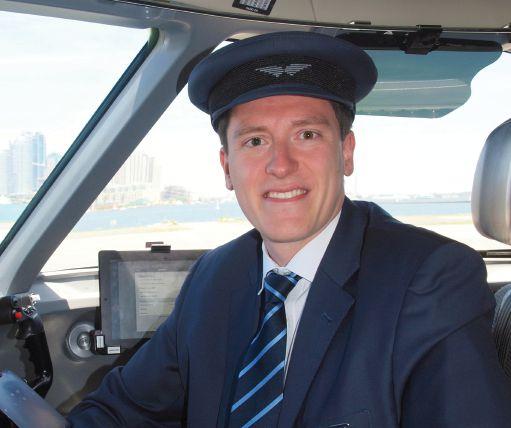
schuster also develops safety management system (sMs) and operations manuals, and has created a collection of original written training material – as well as courses for instructor upgrades, advanced systems and more. At all times, he is driven by his primary goal of improving the safety and quality of flight training nationally – especially through the pursuit of sbt and better development of pdM.
schuster’s experience also includes chief flight instructor for the national flyers Academy (merged with Waterloo-Wellington flight centre), and director of flight operations at Mayan Aviation/empire Aviation. in addition to being a class 1 instructor, he is also a Q400 captain at porter Airlines and an authorized person and english examiner for tc
schuster is dedicated to continuous professional improvement, bringing material from 703 (where he flew the pilatus pc-12) and 705 back into the flight training community. He participated in nAv cAnAdA’s toronto airspace redevelopment project and has taken professional development courses such as sMs and crM to continually improve his abilities. schuster was also published in tc’s aviation safety letter (2011) and founded an annual award to recognize superior flight instructors.
Most recently Mike schuster has redeveloped the instructor refresher course, being the first provider in canada to offer an online/ in-person hybrid to better meet the needs of canada’s flight instructors.
Without a doubt, schuster brings a tireless work ethic in his pursuit of improving canadian aviation. His leadership brings together pilots, controllers and AMes to present at his courses. it’s easy to see that his passion inspires students and clients alike to be the best they can be.
the difference Makers
Montreal’s Aerospace Sector is Blessed with a Bevy of Global Influencers
BY Matt niCHolls
in terms of its influence on canadian aerospace, it’s difficult to match the power of the Montreal aerospace cluster. With more than 215 companies and annual sales revenue of more than $12.1 billion, it’s the nation’s aerospace jewel. Just how influential is it? on a global scale, Montreal’s cluster is the world’s third largest aerospace cluster after those in toulouse, france and seattle and ranks sixth in the world in annual sales.
some of the country’s most influential firms call Montreal home, with national and international powerhouses such as bombardier Aerospace, pratt & Whitney canada, cAe, Hérouxdevtek, and bell Helicopter all making their mark. And while it’s easy to recognize the exploits and international influence of Montreal’s major tier one aerospace leaders, there are countless other companies in this cluster that are making their marks both here and abroad. Helicopters sat down with the leaders of three dynamic firms to get a look at how their aerospace achievements are shaping the industry, and how smaller firms are positioning themselves with their larger brethren.
foRGinG out in a neW MaRket: lateCoeRe seRViCes Canada
You know you qualify as a small canadian aerospace firm when the dry wall guy is one of your “go to” stops on your telephone speed dial.
this is certainly the case for the small but expanding engineering design services firm lAtecoere services canada, a canadian subsidiary of the european aerospace giant, the latecoere group. Moving the walls of its tiny laval office has become a priority as more and more employees join the fold and the firm expands its growing canadian footprint.
founded in 1917 by famed french aviator and aerospace legend pierre-georges latécoère, the latecoere group is a tier one partner to some of the world’s top oeMs. With more than us$843 million in revenues in 2012 – and a u.s. order book of more than $2.8 billion – the latecoere group has 4,288 employees in 11 countries and has firmly established itself as a global leader in aerospace development.
the group is divided into three main businesses: latecoere, which specializes in the development of aerostructures such as fuselages and doors for a variety of key clients including Airbus, boeing, dassault Aviation, embraer and bombardier.
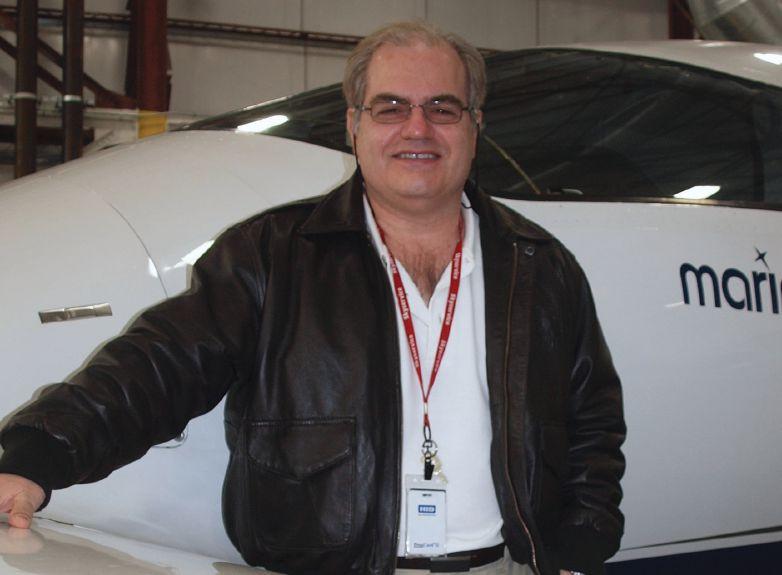
Left: Marinvent president/CEO John Maris shows off his company’s impressive Piaggio Avanti 180.
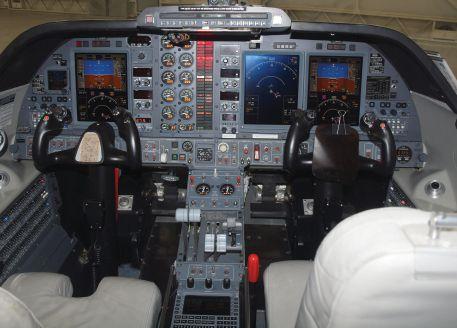
Below: Marinvent’s state-of-the-art Piaggio Avanti 180 cockpit. (Photos by Matt Nicholls)
lAtelec, which has extensive experience in the development of electrical racks and harnesses for both commercial and space clients including eurocopter, Airbus, eAds Astrium and dassault Aviation.
lAtecis offers structural design engineering services. the company provides turnkey solutions that span from design delivery of production tooling, automated lines and specialized equipment.
latecoere is the no. 1 producer of aircraft doors worldwide and is the sixth ranking producer of aircraft fuselages in europe. lAtelec is the leading producer of electrical racks in the world and is second in the development of electrical harnesses. its design and engineering group lAtecis is well respected for its thorough designs, and for efficiently bringing all developmental projects together in one clean package.
With its successful european footprint well established, l Atecoere s ervices canada was born in november 2010 when the fledgling startup was awarded its first major contract – the design project for the forward fuselage section of bombardier’s cs eries aircraft. l Atecoere s ervices canada had a concrete physical presence less than 18 months later, when the tiny
laval office was established to continue the latecoere tradition here in canada. canada represents the 10th country where the latecoere group is present worldwide.
“it was always the company strategy to come and establish themselves in canada,” says Éric giguère, general manager of lAtecoere services canada, a former longtime engineer with bombardier. “We ended 2011 with two employees. in March 2012, we won a contract that consisted of building a tool to install the main landing gear on the cseries. that was our first tool project in north America.
“ b ut the most important thing for l Atecoere s ervices c anada was to become independent in the sense of having a full capacity offering as we have in france. We’re not a front office to try to get contracts. our goal is to create the business here in canada.”
creating business and establishing a firm canadian footprint is precisely what lAtecoere services canada is doing. in addition to the major contracts from bombardier, lAtecoere services canada has a diversified product offering of engineering design services, turnkey tooling systems for manufacturing and assembly lines which allows for the design of prod-
uct and tooling simultaneously. it also has considerable expertise in onboard wiring – the design of wiring systems, electrical racks and harnesses.
the drywall guy has indeed been busy. When Helicopters visited in the spring, giguère pointed out where the wall of the office had ended and where it was moving to . . . quite a few feet farther down the line. the office was alive with activity, as employee count has gone from two in 2011 to 45 by the end of this year, some 60 next. the majority of the lAtecoere services canada team consists of designers, stress engineers and electrical engineers, with the talent pool drawn from across the globe. finding just the right engineers and design team members at the cutting edge of aerospace design, is extremely difficult, notes giguère.
“When we started, some people came to us saying there is a lack of skilled people. We are doing business with our customers – so we won’t get people from them. We went around the world looking for talent. some 95 per cent are coming from outside canada. And yes, we are helping them adapt to the snow. i think those from india have the greatest learning curve.”
in addition to the landing gear tool on
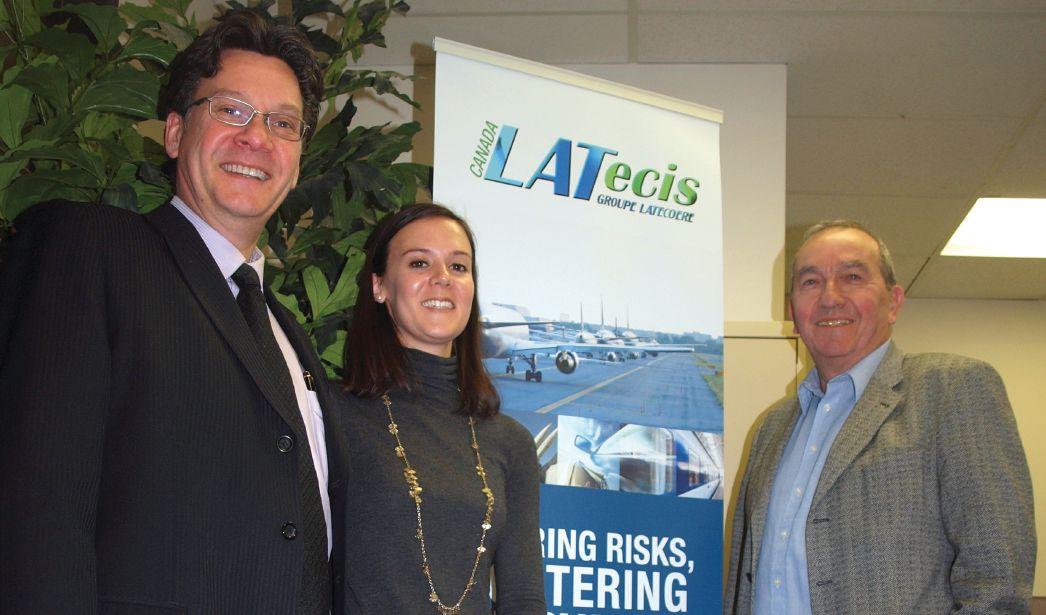
The team at LATECOERE Services Canada. From left: Eric Giguère, general manager; Delphine Ramade, business development manager; Charles Dieudé, vice-president. (Photo by Matt Nicholls)
the cseries, design and stress teams are working on the new local business jet program development. giguère is also keen to expand the firm’s commercial business and sees the military market as definite growth potential.
“When you look at the growth we have had, we are doing very well,” he says. “We are happy with what we have accomplished. And i think what has happened in canada with the new programs and the companies that are coming in, it’s a very positive environment.”
sounds like the drywall guy will be plenty busy at the l aval office of l Atecoere s ervices c anada in the months and years ahead.
ReduCinG tHe Risks:
MaRinVent CoRpoRation
When the president of the united states wants to get in touch with you for a pressing matter, you know that you’ve “arrived” as an entity of influence – even if the “president” in this case is a make-believe one.
t hat’s the situation Marinvent corporation’s John Maris found himself in in mid-March when Helicopters caught up with the enigmatic president/ceo of this small but dynamic Montreal-based aero-
space firm. Maris had just arrived at Mid canada Mod centre in Mississauga in the company’s technologically advanced Avanti piaggio 180 for maintenance and enhancements following meetings with nAsA in the u s
“that was Martin sheen’s production company on the phone,” John Maris says to me casually as we get ready for our interview. “He hosts his own show now on pbs called breakthroughs (sheen’s awardwinning human interest show focusing on education). they evidently got one of our last press releases . . . would be fun to do that.”
the latest in a string of noteworthy press releases Maris is referring to details the company’s selection as the winner of the c2-Mtl prize for Aviation & Aerospace for its adaptive fight test bed project. one of 10 such prizes awarded annually, the c2-Mtl is given to a company in recognition of the highly creative projects that provide solutions to real commercial issues in various sectors.
Marinvent’s adaptive flight test bed project is a boon for the unmanned aviation category – a platform that is ideal for companies and regulators looking to develop, evaluate, test and certify unmanned
Aerial systems (uAs) and integrate them into civil aerospace. using its piaggio Avanti p-180, Marinvent can re-architect the avionics and safety systems on the aircraft and integrate an on-board u A s ground station and satellite link that allows them to control and fly the aircraft as if it were unmanned, even though a safety pilot is on board at all times. As a result, Marinvent can quickly and efficiently fly novel avionics and uAs systems in civil airspace without the need to undertake expensive and time consuming aircraft modifications to do so.
it’s a process that Marinvent can do with virtually any flight deck platform –plug and play avionics testing. What’s more impressive, is that the $10-million piaggio can replicate virtually any avionics architecture, making certification and flight-testing a snap.
the award is the latest in a bevy of accolades Marinvent has garnered in the past number of years for its groundbreaking technologies. other noteworthy accolades include a c anadian American business Achievement Award (2003), cAsi trans canada (McKee) trophy (2005), ecole de technologie supérieure (ets) Award of e xcellence (2005), Aviation
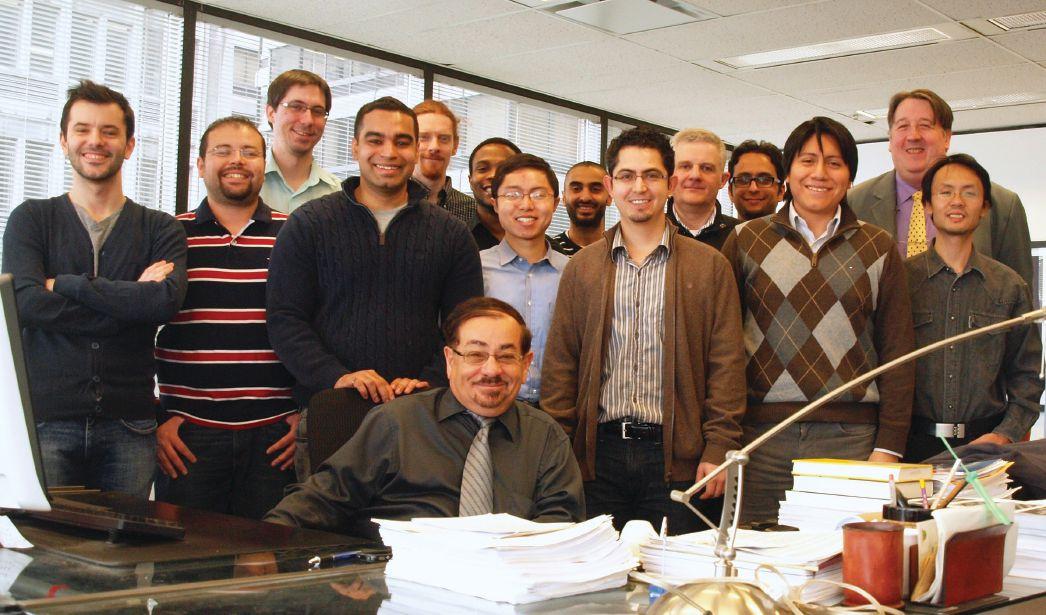
This team really is cool – the engineers at Newmerical Technologies International who melt away the complexities of ice formation on aircraft and other structures. (Photo by Matt Nicholls)
Week and s pace technology l aureate (2006), new Zealand’s Minister’s Award to industry, cbAA Award of Merit (2006), and the AQA prix de l’enterprise 2006 as the Aerospace Association of Quebec’s Aerospace company of the year.
A privately held corporation that Maris proudly says carries no debt, Marinvent –which aptly stands for “Maris inventions” – was founded in 1983 for the purpose of conducting research and aerospace development. the company boasts three key areas of specialization including human factors engineering, systems engineering and flight test and certification services. it also develops advanced navigational systems for several different types of aircraft and helped nAsA with the development of the synthetic vision system, a key component of nextgen cockpits. reducing risks, cutting life cycle costs/time to develop, and reducing time to certify novel aerospace technologies for fixed-wing, rotary-wing and unmanned platforms is the bread and butter behind what Marinvent does.
“it’s impossible to explain in detail, but what Marinvent does is a very simple concept,” Maris says. “We take the risk out of
Making their Mark
complex aerospace programs. How do we reduce risk? one, we have a team that’s been together for quite some time. typically the average tenure with Marinvent is between 10 and 15 years in the same job, working with the same people. We don’t claim to be able to do anything that bombardier or boeing or whatever can’t do. of course they can do anything that we can do. but can they do it practically and with our agility?”
the Marinvent team consists of a dozen capable and highly dedicated employees, including esteemed canadian helicopter test pilot shawn coyle, and Mark Haynes, the company’s program manager in the u s., who has more than 17 space shuttle flights as a nAsA Mission controller on his resumé. it’s an impressive array of talent. And in the course of our lively 75-minute interview, Maris points out Marinvent’s impressive client list, one few companies could achieve at all, let alone in such a short time frame or with such a small team. to wit, as Helicopters went to press, Marinvent had just secured its first canadian deal – providing two courses on standardization training for bombardier’s
We all know about Montreal aerospace stalwarts Bombardier Aerospace, CAE, Bell Helicopter and Héroux Devtek, but what of some of the medium-sized to smaller firms establishing themselves on the global stage? Here are some companies making noise in their own right.
ABB: Located in Quebec City, ABB is considered a key influencer on the province’s aerospace scene. ABB specializes in the development of analytical spectrometres and infrared sensors for industrial processes. The firm is a key player in the defence and space markets.
ADACEL: This 140-employee firm designs simulation and software for the aerospace, maritime and defence markets. Some of its most sought-after products include air traffic control software solutions used for the training of air traffic controllers and products for air traffic management.
AEROSYSTEMS INTERNATIONAL: Specializing in data link support systems, this dynamic firm has developed a product related to sideband radio monitoring (radio spectrum) used mostly for airport security. They also specialize in consultancy and engineering services.
ALTITUDE AEROSPACE: Altitude is a leading engineering design firm that works closely with major OEMS in the development of key structural sub assemblies such as aircraft fuselage sections, wing boxes doors and cockpit structures. The company also prides itself on its R&D investments.
cseries flight test personnel.
“i’m pointing this out to show you the sort of things we do and yet no one has ever heard of Marinvent,” he says, smiling. “for a long time, we didn’t even market ourselves. We do now, but essentially it was word of mouth.”
Maris is a high-energy kind of guy and you get the feeling he’s never at a loss for words. He sets the bar high when it comes to talent, and is clear about what his vision is for certain projects. An outspoken force in the Montreal aerospace community, he speaks at industry events and worked closely with other canadian aerospace leaders in the development of aspects of the emerson report. His resumé includes work as a test pilot in the royal canadian Air force (cp 140 crew commander, project officer and engineering test pilot for the cc -130H tactical transport tanker), international space station Mce manager with the canadian space Agency and more. He is also president/ceo of the Advanced Aerospace solution in north carolina and has a pair of masters degrees in aviation management and air science from embryr iddle Aeronautical u niversity (he is
CIARA: New to the aerospace industry – but big players in the European automotive industry – Ciara is a global provider of products, technologies and software solutions. One of its key products is business management software that works to boost other companies’ productivity.
ESTERLINE CMC ELECTRONICS: A world leader in cockpit integration and avionics solutions, Esterline CHC has locations in Montreal, Ottawa and Chicago. CHC is a wholly owned subsidiary of the Esterline Corp. located in Bellevue, Wash. Esterline has a significant global footprint, employing 10,000 worldwide.
SONACA: This Montreal affiliate, which is headquartered in Belgium, this Montreal affiliate specializes in the development of large aerospace structures. Key partners include business and regional commercial aircraft OEMs, including Bombardier, Embraer, Mitsubishi, Spirit Aerosystems and Héroux-Devtek.
MDA: An intelligence leader in communication technology and surveillance, MDA is best known as its formal incarnation Spar, the leaders in the development of the Canadarm. Today, MDA is actively generating Next Gen technologies in a variety of robotics, communications and satellite-based technologies that benefit both the aviation and space markets.
XIPHOS TECHNOLOGIES: A high-performance avionics firm, xiphos provides processing solutions specially designed for space and unmanned aerial vehicles (UAVs). The company’s processors are designed to function in incredibly harsh environments, such as those susceptible to pressure.
working on a doctorate in aviation human factors).
Maris and his firm achieved commercial success early on with the development of Jeppesen’s JeppView Electronic Charting program. Introduced in 1996, the program now has thousands of customers worldwide using about 40,000 charts updated every two weeks. The program is called TCL/MC3 and it has a special meaning, says Maris, especially for Trekkies.
“TCL stands for ‘The Captain’s Log’ and it’s a double pun; the first part of it refers to Star Trek, and of course thinking of the tablet computers, we can control our plane from an iPad mini just like James T. Kirk. The other half of the captain’s log is more significant. My dad was a sea captain and he’s the one that got me my start in life and in business and everything else. ‘The Captain’s Log’ was actually in deference to my Dad, ‘the Captain’ but with something that other people would understand. The MC3 charting integrity is guaranteed at the same level as the aircraft’s primary navigation systems, which is a unique accomplishment.”
Integrity, experience, energy, creativity, a commitment to reducing risk in aviation and so much more. These are the driving forces behind everything John Maris does and all are key elements of his growing, dynamic Montreal-based aerospace firm.
BREAKING IT DOWN: NEWMERICAL TECHNOLOGIES INTERNATIONAL
Even if you didn’t know in advance that Dr. Wagdi G. Habashi is a highly respected professor and leader of a small but very talented team at Newmerical Technologies International (NTI), you likely would guess he was indeed a professor or teacher upon first meeting him.
Thorough and meticulous in describing his company’s background in the utmost detail, Habashi has the quiet confidence, patience and communication skills to make the most complicated mathematical and software engineering concepts discernable. Taking complex data and breaking it down for multiple applications, melting away the complexity of a seemingly difficult scenario, is the crux of what NTI is all about.
NTI has become the world leader in the development of in-flight icing simulation software and associated design, testing and certification services – an “agile” company at the frontier of research in its field. It offers a one-stop shop for a structured and
systematic methodology to in-flight icing certification of aircraft, rotorcraft and jet engines. With its patented 3-D Computational Fluid Dynamics (CFD) software technology, NTI focuses on niche areas of aerodynamics that are too complex to tackle such as in-flight de-icing, aerodynamic design and computational wind engineering.
And its services don’t stop there – if you’re tired of opening up your ice cream and finding it soft in one place and hard in another, these guys can help save the day. Dreyer’s took them up on the challenge and poof, no more non-uniformity – your next tub of Dreyer’s Ice Cream is good to go. The chiller’s operator does not even know that he is using a sophisticated





aerospace application – but nti can help.
if you are the government of canada adding buildings to tunney’s pasture, or the cirque du soleil adding floors to your headquarters, or the Mcgill university Health center creating the hospital of the future, or the nYc developer of the immense Atlantic Yards, or constructing the new Marriott Hotel-cumcondos around phillips square in Montreal, and you want to ensure that pedestrians will not be inconvenienced by wind effects when coming to your building, nti can help, there, too.
“globally, we are a small company of 18 engineers, most of them with Masters and phds,” says Habashi, who not only heads up nti as president/ceo but is also an award-winning mechanical engineer and professor/director of Mcgill university’s cfd lab among other key leadership roles. His cosy Mcgill office is brimming with academic and industrial awards, including four walls full of decorative “steins” – gifts to commemorate his many speaking engagements worldwide. it’s obvious this is a man in demand and passionate about what he does. no wonder, Quebec knighted him in 2012 as chevalier de l’ordre national du Québec.
“Yes, we are very, very dedicated, passionate people who are not just in it for the commercial success – we truly believe in what we are doing: we want to make flying into the clouds safer, through science. it’s an amazing atmosphere,” he says.
Amazing is an ideal way to describe the software and other tools nti has created, which can, through 3-d simulation, track ice development on aircraft at various stages of flight, enabling major oeMs, pilots and governments to understand the process of ice
CertifiCation tools
Marinvent’s CertPro is a complete test organization and management tool suite developed specifically to simplify, optimize and control aircraft and avionics/aircraft systems test/ certification efforts, leading to substantial project cost savings.
flight test & CertifiCation
Marinvent’s unique combination of skilled engineers, Transport Canada DARs, flying avionics test bed and research simulator make it one of the world’s most flexible, reliable and trusted partners to plan, manage and complete customers’ flight test and certification projects.
aCquisition independenCe
Marinvent’s team of independent experts apply proven methods and tools to assist Government customers to make informed and impartial major capital acquisition decisions based upon objective comparison of candidate platforms against operational requirements.

projeCt risk reduCtion
Marinvent applies successful aerospace project know how and sound project management to every new project, however complex, to reduce project risk.
researCh & development
Marinvent collaborates with customers to help them bring their ideas to market quickly, cost-effectively and safely.
other serviCes
• Certification and flight test training
• Outsourced software development and certification
• IP licensing
ContaCt us
Marinvent Corporation
Tel: +1.450.441.6464
Fax: +1.450.441.2411
50 Rabastalière East, Suite 23 St-Bruno, Québec, Canada J3V 2A5
info@marinvent.com www.marinvent.com
formation and work to alter initial aircraft designs or make key modifications later in the developmental process, before seeking certification. And although the company does not have icing tunnels and does not have aircraft to fly – traditional tools to test and monitor the formation of ice on aircraft for certification or design – it does have associations with companies that do have these assets. nti’s own creation, its special 3-d software, however, can easily shorten all of those traditional processes.
“it’s that which allows us to be, from the beginning, a one-stop shop for anyone who wants to certify an aircraft to safely fly in ice. And when i say an aircraft, i mean a rotary-wing aircraft or a fixedwing aircraft,” Habashi says.
Habashi founded nti in 2000, continuing his long and distinguished career in academia and, as well, as aerodynamics consultant to pratt & Whitney canada for 24 years.
the idea for the company was born after it was repeatedly brought to his attention that there was a glaring need for advanced icing tools and products among pilots complaining that available icing methodologies were woefully inadequate and did not duplicate reality.
nti is currently majority owned by Habashi and his children and went private in 2011, after 10 years on the tsx-venture listed as “cfd.” it has developed an impressive list of clients over the years in 16 countries. firms such as Airbus, bombardier Aerospace, lockheed Martin, bell Helicopter, eurocopter, general electric, Honeywell, to name a few in its three focal areas, have all used the company’s icing tools or engineering services.
It is a list that continues to grow, especially in countries such as China, Korea, Japan, Turkey, Poland where the budding aerospace industry, unimpeded by legacy approaches, has zeroed in on NTI’s technology as being the most modern solution.
The reasons for its success are simple: OEMS developing aircraft, engines or any other structural components are seeking safer, more cost-efficient components that are less susceptible to ice buildup – not to mention the enhanced cost savings, fuel consumption in flight and more advantage that stem from operating “clean” aircraft.
NTI has various competitors in its field including NASA in the U.S., ONERA (Office National d’Études et de Recherches Aérospatiales) in France, and CIRA (Centro Italiano Ricerca Aerospaziali), but despite providing their indigenous companies with free software, none boosts the amount of detail NTI’s 3-D software can provide. Current tools offered by the competition cannot duplicate NTI’s detailed 3-D ice prediction; ice protection equipment design; flight conditions evaluation; engine available heat at different power settings; performance of the anti-icing protection system and more. It’s a package that is setting NTI apart from its competitors.
And after watching a comprehensive video of the technology prepared by NTI’s enthusiastic engineering team when I visited the company headquarters in downtown Montreal, the best thing that can be said is that the buildup behind “the goods” is more than legit.
“It’s a very, very slow-moving process to get new products

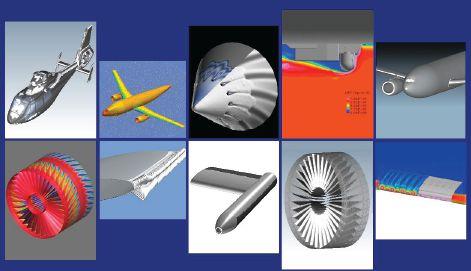
accepted in this field,” says Habashi. “They are quite conservative about accepting new technologies. So, what we do is a creepingly slow but structured and systematic application of science to the certification of aircraft, rotorcraft and jet engines so that they are certified in the shortest time and with the maximum safety possible. . . ours is a very realistic tool that uses very complex mathematical calculations to predict the shape of ice – its depth, shape, volume. We do all of this analytically, even before the airplane is designed: “an ounce of prevention is worth a pound of cure!”
NTI’s biggest success? Well, what company in the world has yet managed to get the FAA, EASA and Transport Canada to grant three Supplemental Type Certifications based on analytical ice shape prediction and only flight-testing, “without ever resorting to an icing tunnel”? NTI has, marking a major milestone towards virtual certification.
An analytical, calculated approach to solving a complex problem that touches so many levels of the aerospace industry is the best way to describe Habashi and his dedicated team of young engineers, a small company finding its niche, creating a cache of state-of-the-art tools and building a name for itself on the global stage. It’s also the best way to describe Montreal’s aerospace brethren, large and small – countless professionals helping Canada solidify its position as a world leader in aerospace.



Quebec’s security Blanket
Sùreté du Québec Helps Keep the Skies – and Streets – Safe
BY CaRRoll MCCoRMiCk
the sùreté du Québec (sQ) bell 412ep lifts and hovers a couple of feet above the apron. in the cabin there’s a chargé de mission (mission coordinator), a german shepherd and its handler, out for their annual refresher training. A moment later, the pilot receives takeoff clearance from the saint-Hubert Airport control tower and the machine clatters off to the north across runway 06/24r
the Helicopter services dates back to 1960. its specialists include explosive experts, rescuers, divers and tactical response units. it added canine teams in 2009 and has some 10 dogs stationed around the province. Missions have included searching for lost woodsmen, evacuating flood victims, conducting aerial surveillance and apprehending suspects. the three Helicopter services aircraft – a bell 412 and two bell 206s – collectively log about 750 hours of flight time a year, 85 per cent of which is dedicated to search-and-rescue missions that take place in a radius of 300 nautical miles, or 556 kilometres, from its saint-Hubert Airport base. the Helicopter services first aircraft was a Hughes 269, purchased in 1960. “it was available, but not used regularly. it was well before my era,” laughs Yves girard, coordinator for the airborne program with the sQ.
photographs from the 1970s show the government of Quebec crest on Helicopter services machines. in the late 1970s, the sQ crest reappears. in the 1970s three bell 206b3 helicopters were available for the sQ: one was stationed in Montreal, another was stationed in Quebec city and the third was shared between rouynnoranda and the eastern townships. later, the two 206s were colocated with the sQ’s emergency service on the south shore of Montreal alongside the A-30 in saint-Hubert. the sQ helicopters belong to the service aérien gouvernemental (sAg), which also manages the forest fire service, medical evacuation and the transport of government personnel. the current Helicopter services fleet consists of a bell 206b, sAg bought in
1979, a bell 206lt sAg bought in 1992 and a bell 412ep it bought in 2001. After sAg acquired the 412ep, the Helicopter services moved to a more spacious home at the saint-Hubert airport – a building that includes offices and an 80-foot by 80-foot hangar.
few people will ever have the opportunity to join the Helicopter services. on the mechanical side are four technicians who take care of most of the maintenance, repairs and hour- and calendar-based inspections. some tasks, like structural, sheet metal and avionics, are outsourced.
there are eight pilots. they are not members of the sQ; rather, they are hired by sAg the entrance requirements for pilots are very high and, girard says, “Many of the pilots are retired members of the canadian forces.” prospective pilots must hold an airline type pilot licence to operate the 412ep, have an ifr rating, have at least 2,500 hours of flying time, including 2,000 turbine hours and 1,000 hours as a crew member of an 412ep or similar type of helicopter.
sùreté du Québec documents state that there are four chargés de mission, who are also sQ police officers. they do the same work onboard as does a flight engineer from the royal canadian Air force, minus the mechanical work. the main task of a chargé de mission are to assist the pilot in manoeuvering the helicopter in confined areas, to conduct hoist operations, to operate the thermal imaging camera and to carry out any other tasks dictated by the mission. finally, there are about 20 trained observers, one of which must be aboard every bell 206 flight.
girard is a chargé de mission, as well as being the coordinator of the airborne program. He is responsible for the training of the other chargés de mission and he coordinates all missions that involve the use of a helicopter. He is also the main link between the sQ and sAg. the national search and rescue secretariat, recognizing girard’s work in developing the canine team, awarded him the Award of excellence for innovation in 2010. in the words of the secretariat, the Award “recognized those who have solved a problem or successfully leveraged an opportunity that has served to enhance

Right: This Hughes 269 was taken in 1960, the organization’s first year of operation. (Photo courtesy of Sùreté du Québec)
Below: Members of the Sùreté du Québec team practise from the top of a wind turbine. (Photo courtesy of Sùreté du Québec)
search-and-rescue.” in the words of the sQ, “gerard was awarded this prize for the development of a procedure involving the transporting and deployment of the canine team using the helicopter hoist.” each bell 412ep crew normally consists of two pilots, a chargé de mission and two rescuers. the primary role of the 412ep is to carry out moderate to high-risk search and rescue missions. As a versatile utility helicopter, it can be configured nine different ways. depending on the type of mission, other specific services may be added. “We can change most of the configurations within 15 minutes. the configurations for heavy loads for a diver or explosives technician are more complicated and require more time to be installed,” girard explains. the 412ep can be used to carry troops, with a practical limit of six officers plus the helicopter crew. it can also be outfitted with a video camera and a thermal imaging camera. the 206b and the 206lt are certified for day- and night-time flying in non-icing conditions. Most of the time, however, they are used for daytime operations that may, for example, have them carrying crime scene technicians who may also shoot videos and take photographs for investigations.
Above: A Bell 412EP is always ready for SAR missions. (Photo courtesy of Sùreté du Québec)
“the 206b is used for low-risk search-and-rescue. it is also used to assist criminal investigators. since it has only one engine, however, it only crosses small watercourses. the 206lt, with its two engines, is used over water or rivers for searches, but near Montreal because of its [additional weight and] limited [fuel] autonomy,” girard notes.
every 206 flight includes a pilot and a trained observer. the requirement that the observers be trained came following a tragedy that took place near Quebec city on oct. 25, 1993. during a mission near the chute-Montmorency (Montmorency falls) an sQ 206 Jetranger 3 flew into a cable and crashed. All four people onboard died.
As is the case today, observers were required on flights back then, but there were no training standards. “the coroner recommended that a qualified observer always be onboard. An observer does the looking, and the pilot does the flying,” girard says.
spring and fall are the busy seasons for rescue training. it is midMay when Helicopters visits and girard is scheduled for recurrent training of his own. “i’ll do cliff training tomorrow night and one of my partners will listen to me, to make sure that i follow procedure, use the right terminology and do everything right. We must do this training a minimum of twice a year, but we do it more often than that. i am very passionate about this work.”
passionate about the work, dedicated to serving and highly versatile – it’s an ideal way to describe exactly what team members of the sùreté du Québec are all about. they are passionate about keeping the citizens of Quebec safe and secure on a daily basis.
A 412EP crew practises a rescue, the bread and butter of the Sùreté du Québec. (Photo courtesy of Sùreté du Québec)
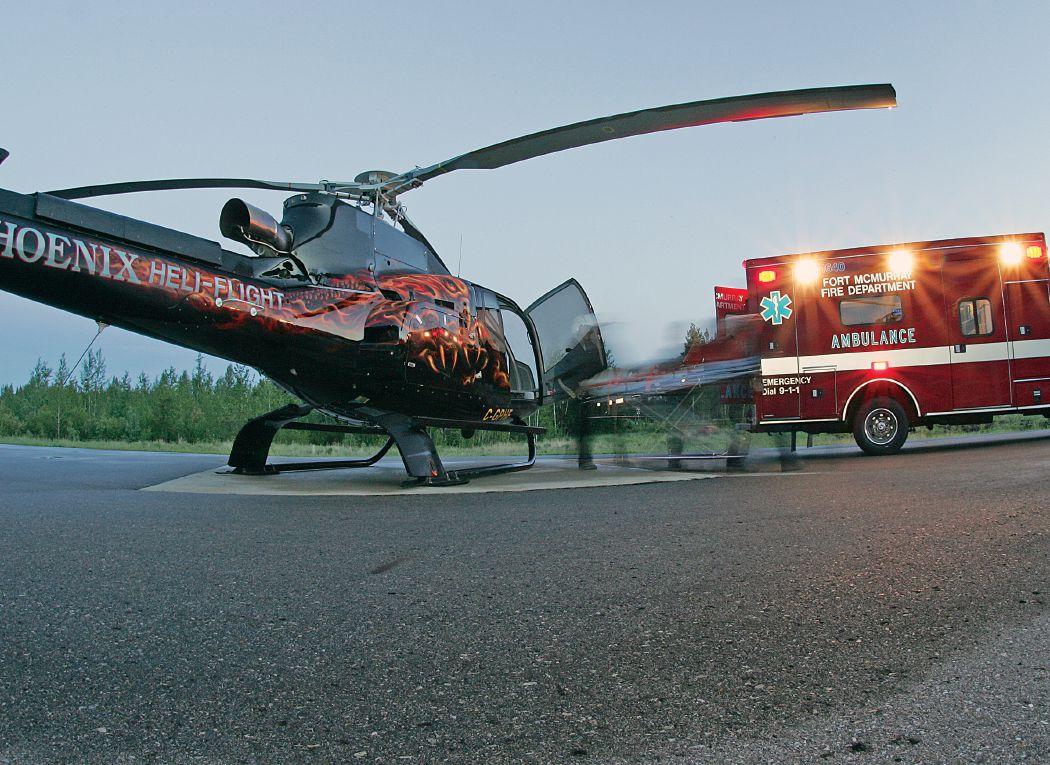
providing More support
Seeking to Redefine the Western Canadian HEMS Landscape
BY paul dixon
e canadians often take our health-care system for granted, especially those of us who live in the densely populated southern regions of the country. last year, Helicopters reported on the dedicated air ambulance services provided by bc Ambulance in british columbia and the shock trauma Air rescue service (stArs) in Alberta, saskatchewan and Manitoba.
Wbut as effective as both services have proven to be over the years, there are large areas of both b c. and Alberta that are outside the response capability of the dedicated helicopters, with the only option being smaller vfr helicopters hired on a per-call basis. the smaller vfr aircraft are less effective than larger, dedicated HeMs aircraft, leaving many feeling there is a need for improved service. in an era when governments are tightening belts and are holding the line on budgets, there are two initiatives underway to bring dedicated air ambulance service to underserviced regions.
fort McMurray is the hub of northeastern Alberta, tar sands country. development in the region has seen population grow from 6,800 in 1971 to more than 80,000 today, with workers streaming in from across canada and around the world. in a region with few roads, as oil
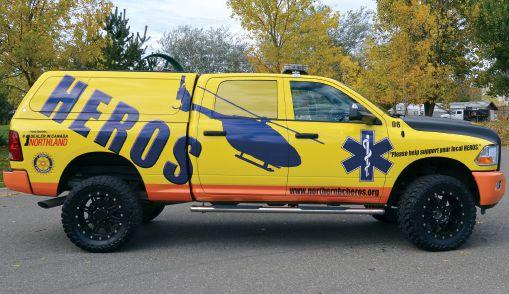
Top: By adding to its fleet and upping its commitment to help those in need, Fort McMurray, Alta.-based Phoenix Heli-Flight is filling a necessary void in Alberta’s medical care. (Photo courtesy of Phoenix Heli-Flight)
Inset: Prince George, B.C.-based HEROS hopes to medical air service to northeastern B.C. (Photo courtesy of HEROS)
and gas exploration pushes further and further out into the wilderness, often the only access to work sites is by helicopter.
paul spring has operated phoenix Heli-flight in fort McMurray since 1982, providing ad hoc air ambulance service to the local regional district for more than 20 years. emergency medical service for fort McMurray and the regional district of Wood buffalo is provided by Wood buffalo regional fire department. over the past decade, spring has toyed with the idea of a dedicated air ambulance. it’s a popular idea with many people, but when the conversation shifts to the costs involved, the momentum stalls. now, spring is ready to take action.
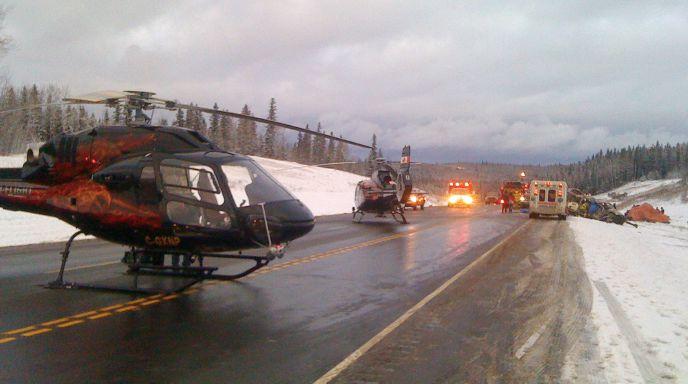
“We’ve operated a very successful vfr medical evacuation program for 20 years jointly with the fire department on an ad hoc basis, averaging around 70 calls a year,” he says. “We just want to expand it
so we can operate around the clock.” spring says most people don’t realize this service is paid for by the local municipality and not by the province. the province is currently working through yet another

feasibility study on the subject.
the event that finally triggered the critical momentum was a multi-vehicle crash on Highway 63 between edmonton and fort McMurray in April 2012 that resulted in seven fatalities. spring committed his own money to purchase a helicopter capable of providing 24/7 ifr air ambulance service, with a philosophy he describes as, “if you build it, they will come.” His determination sparked widespread interest across the region.
“We had a meeting on Jan. 15 with about 27 groups in attendance – Alberta f ire c ommissioner, Alberta Health s ervices, Municipal Affairs, o il s ands developers group, petrocan, Husky, shell, bp, the whole list of big and small oil operators. that one meeting resulted in a commitment for almost $600,000 a year in funding and now we’re getting other offers of funding and even people sending in personal cheques. While the government’s official position is ‘no response’ while it’s latest study is underway, there have been no negative comments.”
Adds a determined spring: “We’re moving ahead and sometimes as the world unfolds things work out.” the initial plan was to purchase a new eurocopter ec-135 for the project, but that would have resulted in taking delivery of the new aircraft at the end of 2013, pushing the operational debut into 2014. fortune smiled on spring when a ec-135 became available for purchase in b c. when realignment of a company left the aircraft as surplus.
“the last thing i wanted to do was bring a helicopter into the fleet in the middle of a canadian winter and run night ops with it,” he says. bringing the new (used) aircraft on line now allows training and familiarization over the summer, though as spring chuckles, “the irony is that we can’t do our nvg training until July when there’s no night here, only about two and a half hours of just twilight. We’ve got our cockpit retrofit, our nvg goggles, our training and our management of change is all contracted now. the first pilots are in training now, getting their 135 type endorsements. We had a really good response to the posting and we didn’t want to lose those people, which is another good reason to pull the trigger now.”
With a cruise speed of 160 miles per hour and range of 635 kilometres, the ec-135 can accommodate two patients in air ambulance configuration. spring describes this as not simply an air ambulance, but a
Paul Spring has operated Phoenix Heli-Flight in Fort McMurray since 1982, providing ad hoc air ambulance service to the local regional district for more than 20 years.
(Photo courtesy of Phoenix Heli-Flight)
24/7 all-weather aircraft that will provide emergency response to the northeast region of Alberta. to support a variety of missions, the aircraft will be equipped with dual pilot ifr, a rescue hoist and lightweight medical interior. the compact footprint of the ec-135 coupled with the high endurance and extended range enables this helicopter to perform a full range of mission requirements.
“We’re calling this an emergency response system,” spring says. “i don’t care if it’s a lost hiker or the rcMp need to move their personnel in an emergency, or if we use it to respond to a pipeline rupture in the middle of the wilderness that cannot be accessed by ground. We will respond to everything, but medical will take priority over all other calls. the oil companies were very interested to know if we could respond to a pipeline incident at night. they’re asking if we have thermal imaging. Yes, we can do that, and now they are really interested.”
s ea RCH in G fo R a H e R o
in prince george, b.c., northern b.c. Helicopter emergency rescue operations society (Heros – www.nbcheros.org) is working to bring a dedicated medical helicopter to prince george and northeastern b c located at the geographical centre of the province, 600 kilometres north of vancouver, prince george is the gateway to northern b c. and the booming oil and gas development in b c.’s peace river country.
steve flynn is currently acting in an advisory capacity helping Heros develop a business plan and financial model, which are now complete and at the board level for final approval. the founder and original owner of blackcomb Helicopters in Whistler, flynn was born and raised in prince george. He sold blackcomb in 2006 and stayed on as general manager through the 2010 olympics. in his time at blackcomb, he served as a director of the Air rescue Association for two years and spent two terms as a director with the Helicopter Association of canada. during the olympics, blackcomb provided helicopter support to all the olympic sites in Whistler and the callaghan valley; and over the years, blackcomb has been largest casual-hire service provider to bc Ambulance.
flynn describes the Heros business model as a non-profit partnership with the provincial and federal governments, which is different than the for-profit partnership model that exists in the province today. He maintains it and gives far greater value to the province in terms cost for service delivery.
“We’re hoping initially for a 50 per cent provincial and federal government funded and 50 per cent donations funded model, and then as the donations program matures, eventually get to 25 per cent government funded and 75 per cent donations funded model similar to where stArs is now,” he says. “We’ve had preliminary discussions with all levels of government – federal, provincial, local governments – and we’ve had a very positive response. We’re in preliminary discussions with bcAs, northern Health and the medical community to integrate this service into the existing systems, again with very positive response. We’ve had very positive response everywhere we’ve gone.”
the economy of northern b c. is a major driver for the province and was the focus of intense scrutiny during the recent provincial election. As flynn says, “the north is busy now and it’s getting busier. Mining, forestry, oil and gas, pipelines are very active in the north. there’s a lot of activity in the north, it’s anticipated that there will be more than $35 billion worth of major projects both planned and underway over the next several years.”
northern b c. is in a good position to lead the province’s economic future. over the next 10 years, the value of northern projects is estimated to increase to $64 billion, which means thousands of additional people working and living in the northern remote areas of b c. that will demand and deserve a dedicated air ambulance service, flynn contends.
Heros hasn’t decided on a particular helicopter yet, as flynn says they want to do that in consultation with bc Ambulance. “the criteria for the platform will be its size, capable of carrying two patients, speed and range,” flynn notes. “because of the vast distances, speed and range will be the critical factors. We’re looking at a number of manufacturers; we just haven’t gotten there yet. single-engine (oei) performance will be a huge factor as well as we want to be able to go into the most demanding heli-pads, and to do that, you’ve got to have good single-engine performance. that will be a big factor in determining which aircraft we choose.”
Heros is simply trying to improve the services that already exist in the region notes flynn. “We’re just trying to enhance the service that exists today; we’re not trying to reinvent the wheel,” he says. “people want to know more and want to know how they can help. some people resist change, but change is the only real constant in life.”
For more features, visit www.helicoptersmagazine.com

Campbell River Base
e-mail: info@ebhelicopters.com www.ebhelicopters.com
Gold River Base
Tel: 250-283-7616
Fax: 250-283-7555
Port Alberni Base
Tel: 250-720-8915
Fax: 250-720-3641
• Astar 350, Bell 407 and Bell 206
• Robinson R22, R44, R66
Approved Robinson Dealer
• New & Used helicopter sales
• Complete overhaul facility R22, R44 and R66 Avionics
• Helicopter and Fixed-wing complete avionic services
Photo by Bill Campbell MAINTENANCE

MARKETPLACE

COMPONENT OVERHAUL SPECIALISTS
Specializing in hydraulic and dynamic component overhaul and part sales for the Bell 204, 205, 206, 206L, 212, 407 and 412.
Head Office:
Terry Fox Dr., PO Box 967 Vankleek Hill, ON, K0B 1R0 T: 613.678.3027 F: 613.678.2776 helitrad@hawk.igs.net Contact: Gerald Tom
Alberta Facility: Site 5, Box 7, RR2, Airdrie, AB, T4B 2A4 T: 403.912.4658 F: 403.948.6475 info@helitradesab.com
Contact: Don Ormson/John E. Sawatske
















Helicopter Flying Handbook
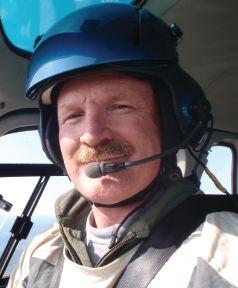
fRed Jones
learned to fly helicopters in 1986. the summer before i made the transition from seized-wing to helicopter, i was working on a gypsy Moth spray program in the bancroft, ont., area where i was flying a cessna 172 as a “pointer pilot.” With the aid of a navigator, we led a small fleet of spray aircraft from one spray block to the next and my navigator instructed them to “spray-on” and “spray-off.”
there were helicopters flying back and forth from one spray block to the next to survey the spray program, and about 15 aircraft stationed at the airport. i had spent most of my time in aviation as an aircraft flight instructor in london, ont., and this was my first exposure to another dimension of commercial aviation. they paid us $1,000/week, room and board included. for me, at 19 years old, i was “rich” and the aviation atmosphere was electric.
We were operating from a 2,500-foot gravel strip near bonecho provincial park, and the spray parameters were pretty specific, so we did most of the spraying in the early morning or evening. We spent a lot of time sitting and waiting for the weather to be just right.
the spray aircraft were M18 “dromeders” – a polish built aircraft purpose-built to carry a big load of “goop” behind a 1,000-horsepower radial engine – with a little tiny place for one pilot to perch. it always impressed me that the cockpit was an afterthought for the polish design engineers. but i digress.
putting It All Together
The Critical Path to Preventing Accidents
nose-down, banked right, and then disappeared behind a line of pine trees about half a mile west of the airport.
Without thinking, i jumped into one of the nearby pickup trucks and drove to where i thought the aircraft had gone down. i was expecting the worst. About five frantic minutes later, i arrived at the scene. it was a postage-stamp, cut hay field, about 800 feet square surrounded by 50-foot pines. When i got there, the pilot was sitting on the leading edge smoking a cigarette. i was apparently way more upset about the whole thing than he was. in the moment, i was tempted to take up smoking just to calm my shattered nerves.
there had been no apparent damage to the aircraft during the landing, and while we waited for others to arrive, i observed, “it is going to be a pain to have to remove the wings and truck this pig back to the field.” He commented, “that won’t be necessary. the engineers will drain the goop, and some fuel, and i will fly it out once they make the repairs.” He said this as if this was a regular occurrence. i wasn’t about to miss that show.
once the engineer showed up and affected the repair, and the goop and some fuel were off-loaded, i witnessed one of the most memorable fixed-wing takeoffs of my life. the pilot taxied the aircraft to the downwind side of the field and wound up that radial engine with the brakes on until it screamed. He rolled about 200 feet and then pitched the nose up to about 45 degrees and easily cleared the trees.
in the moment, i was tempted to take up smoking, just to calm my shattered nerves.
’’
the pilots of the dromeders were ancient – more than 50 years old some of them. “these guys are relics,” i can remember thinking. i also remember being captivated by their stories over a beer or two in the local watering hole in nearby cloyne, ont. At the same time, i respected the years of flying experience they had accumulated and the training that they had received. one late afternoon, i was at the airport and one of the dromeders was lifting off for a spray flight. At about 300 feet Agl, i heard the engine bark then stop – the aircraft pitched



i learned a number of lessons that day. the incident brought home the importance of experience and emergency training. clearly, without either of those, the scene that greeted me in the hay field that day would have been completely different.
i also learned that sometimes we all need a little bit of luck. if the engine failure had occurred at 100 feet rather than 300 feet, a completely successful forced approach would have been even more difficult. in any emergency scenario, effective training and experience are the best defence when things go wrong, and even when our luck is bad. And while i am at it, let’s not be too hard on the old guy . . .
Fred Jones is the president/CEO of the Helicopter Association of Canada and a regular contributor to Helicopters magazine.




I like to stay ahead of my airplane. So if I’m 40 miles out with weather rolling in, I’m listening to what’s happening in front of me. AWOS. Pilot chatter. A quick check with flight service. Sometimes, there’s a lot to decipher. But I need to hear it clearly. Because when I do, I feel confident. Prepared. In the moment. And that allows me to just















MORE NOISE REDUCTION. LESS DISTRACTION.





























Better sound can make all the difference, especially where you go. Which is why, with 30% greater noise reduction than conventional noise reducing aviation headsets, the A20 headset lets you hear more of what you need to hear. While proprietary cushions and minimal clamping force let you fl y comfortably for hours. Meets or exceeds TSO standards.






( THINK VERSATILITY )
Eurocopter is committed to protecting Canada’s coast… At present, and in the future. The longest coastline in the world deserves the world’s most capable helicopters. Eurocopter offers safe, reliable and innovative solutions to customers around the world.
Thinking without limits