

Where you get parts and service matters, so don’t trust your helicopter to just anyone. For genuine parts, component overhaul, field maintenance or rotor blade and airframe repair, you can rely on Bell Helicopter and our worldwide network of authorized Customer Service Facilities (CSFs). Don’t gamble with your aircraft. Depend on factory-trained maintenance technicians to deliver support and service when you need it.


dMAtt niCHollS editoR
on’t rock the boat. don’t blow your own horn. Get ’er done and get on with it.
Yes, humility is an outstanding quality and the above phrases are the perfect way to describe how many canadian companies do business. unlike some of their american counterparts who aggressively drive marketing engines to the max, sending out an endless array of tweets and tomes on every little crumb of corporate crusading, canadian firms often take a more strategic, calculated approach. Generally, it’s a sound strategy and as editors, we appreciate it. We don’t tend to get too excited over a press release explaining in detail how company X is attending a trade show – it’s just not news. do something significant, however, and we’ll definitely listen. Humility is admirable and can contribute to the formation of a strong corporate culture. it can also be argued, however, that there’s a time to stand up and trumpet your successes to the masses, not only as an individual organization but as an industry as well. such positive recognition brings with it influence that can eventually lead to enhanced political awareness – something all aviation organizations and industries strive to attain.
this is certainly true of the canadian helicopter industry, which is often swimming upstream in political battles with its fixed-wing counterparts in discussions involving regulatory issues, flight and duty time debates and more. as Helicopter association of canada
a PR push would also be beneficial for individual operators. the helicopter industry is the economic engine that drives canada’s resource-based economy. Helicopters play an essential role in the activities of resource-driven firms and other important canadian organizations. so, what would happen if a blade didn’t turn in canada for 24 hours? How about 48? a week? How would these organizations survive? How would the companies that rely on these companies survive? What about the sick, those who are lost, those in need? the ramifications would be huge, resulting in significant drops in productivity, economic trauma, and sadly, lives lost.
of course, the helicopter industry is highlighted in the mainstream media – but usually for the wrong reasons. the ongoing ornge investigation in ontario is the perfect example. this is clearly a case of political and organizational mismanagement; it is not an aviation issue per se. but it does cast a pall over the entire industry. this also occurs when a helicopter is involved in a crash – it’s front-page news.
“the problem with the media, for the most part, is it looks for sensationalism,” says Peter barratt, co-owner/operations manager with b c.’s West coast Helicopters. “but what is sensationalism? i find it’s very difficult to get hold of anyone who is real in the media.”
Jones says he hears good news stories, through the association, on a regular basis but it just scratches the surface in terms of the good work that is done. “unfortunately, it’s part of the culture in our industry in some ways. those things like taking someone off the ice when they’ve broken through . . . that’s what helicopters do. it just gets done and the world doesn’t know about the good news stories the way they should.”
it just gets done and the world doesn’t know about the good news stories the way they should. ‘‘ ’’
president/ceo Fred Jones has shared on a number of occasions in his participation at annual roundtables conducted by Helicopters and in his back-page column, the industry faces real challenges in establishing its influence.
it was a point echoed in virtually every committee meeting i attended at the Hac conference this spring as well. there’s definite frustration in getting the association’s message out there and conveying it to those with real influence. a more proactive PR stance to highlight industry concerns would go a long way in gaining traction with those who can bring about change.

the benefits of sharing good news stories are many. it can raise a firm’s profile and show potential clients its skilled execution and capabilities. it can ignite the passion of ambitious young employees to join a progressive company, or attract qualified employees from other firms. Positive stories also create a sense of pride within an operation, enhancing corporate culture. in short, getting the word out is worth the effort.
at Helicopters, we’re always seeking to share the very best of the industry – positive news about operators and individuals nationwide. We understand the “get ’er done” mentality, but there’s nothing wrong with giving credit where credit is due. in the end, it’s more than blowing your own horn a little bit – it’s simply good business.
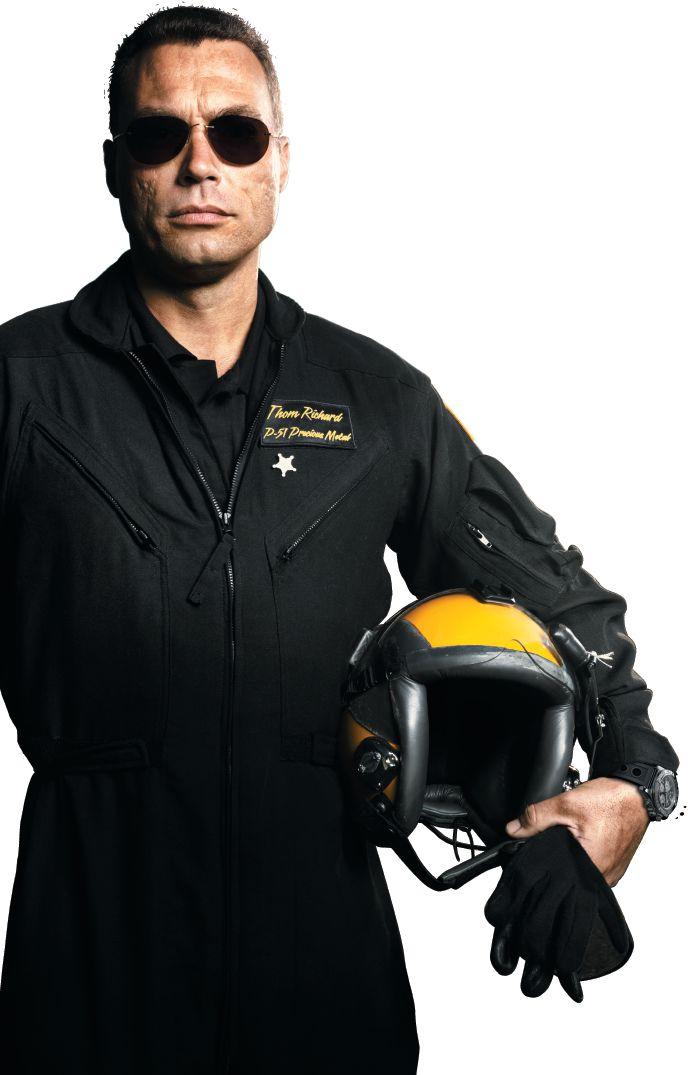
"When you fly a racing plane propelled by a 3200 hp engine, you need the superior performance of the world’s best chronograph. "
Upon arriving as a youngster in the U.S. with just a few dollars in his pocket, Thom Richard had just one dream: to fly aircraft. A seasoned pilot who has clocked up more than 9,000 flight hours, he now lives his passion to the full – in particular by taking part in the famous Reno competitions at the controls of Precious Metal, the most legendary of all race planes. His next challenge is to set the world speed record and to win Reno. On his wrist is the Chronomat, an ultra-sturdy and ultrareliable instrument powered by a high-performance "engine", a 100% Breitling movement. For Thom Richard, it is quite simply the world’s best chronograph.
5-YEAR BREITLING WARRANTY CAD 8,870 Recommended retail price.


CHl will be keeping its western canadian headquarters in edmonton, moving from the city centre airport to edmonton international airport (eia) following the expiry of its current lease in september according to the canadian Press.
the company, which is soon to be known as HnZ Group inc. following recent shareholder approval of the name change, has been based in the albertan capital city for the past 60 years. but it is having to move out of its current home at the city centre airport due to the latter’s phased closure. the airport is to be replaced with a residential development.
the company’s new base will be in offices at eia’s new central tower, to be opened in late fall. “We are pleased to continue contributing to
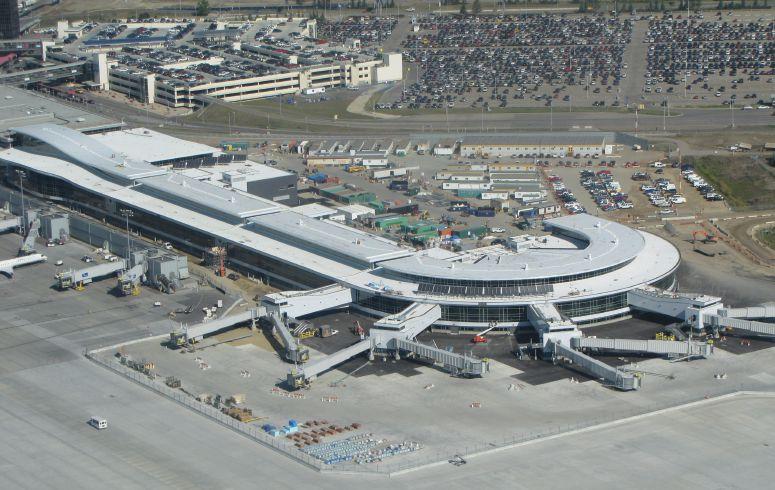
edmonton’s thriving business community and supporting our national and international operations from eia,” said don Wall, canadian Helicopters president/ ceo. “edmonton will serve as an expanded training centre for the company and eia is a con-
venient transportation hub to support this initiative. eia is also well positioned to provide improved logistic support to our fleet and to the movement of our personnel on domestic and international assignments.” eia president/ceo Reg
Milley said: “[canadian Helicopters Group] are an exciting addition to our growing mix of business aviation services at eia and we are equally delighted they are leasing the fourth floor of our beautiful new central tower.”
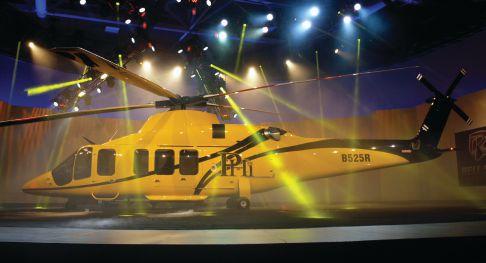
Bell’s new super-medium 525 Relentless made a big splash at Heli Expo earlier this year and now several key suppliers have been named for its project development.
Bell Helicopter has established agreements for equipment, parts and tooling with the following suppliers for the 525 Relentless program:
• GKN Aerospace – Airframe Structure (Complex Machining and Composites)
• Goodrich – Ice Protection System
• Israel Aerospace Industries Ltd. – Passenger Seating
• Mecaer Aviation Group – Wheeled Landing Gear
• Kuka – Major Structure Tooling
• Pacifica Engineering – Rotor and Drive Tooling
• Triumph Group – Airframe Structure (Complex Machining and Composites)
The Bell program team is focused on the detail part design, the design to manufacturing transition, and component and system testing. Suppliers are now collaborating on the design and delivery of their
respective components to support the first prototype build.
Bell describes the 525 Relentless as a new super medium helicopter positioned at the upper end of the medium class. It is designed to offer best-in-class capabilities such as superior payload and range, cabin and cargo volumes and crew visibility.
An Ontario ombudsman suggests the Ontario air ambulance scandal involving Ornge was entirely preventable had he been able to investigate the situation earlier in the process.
According to the Canadian Press, Andre Marin is warning the governing Liberals that he must have greater oversight of public services that are privatized to stop similar abuses of the public trust. He maintains the government must heed the lessons learned from Ornge which is currently under a criminal probe for a variety of financial irregularities.
Marin notes that his office had received some 17 complaints about Ornge since 2005, including the misuse of funds, but he didn’t have the authority to investigate them. In his annual report, he repeated his appeal for oversight of Ontario’s hospitals – a power every other provincial ombudsman has.
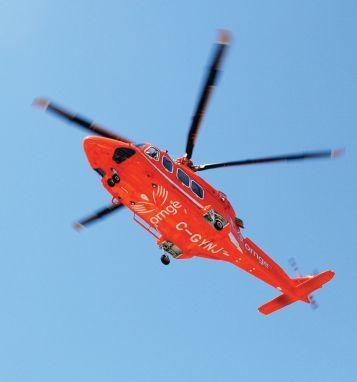
An ongoing investigation is looking into corporate mismanagement at Ornge.
Marin expressed his displeasure over his inability to investigate complaints about air ambulances or hospitals, saying the government must learn from the debacle at Ornge. Said Marin in his report: Ornge “played fast and loose with public funds and trust” and is “crying out for independent oversight. Hospitals remain barred from my oversight (and to anyone seeking independent investigation) like some kind of medieval fortress – as do the Ornge helicopters that land here.”
european-based technology firm active space is studying new green technologies for the helicopter industry.
the company has received a 300,000-euro contract from Joint technology initiatives – clean sky to develop an actuator prototype used to run helicopter
blades. under the terms of the deal, the firm will develop a new concept of an active gurney flap (aGF) together with Green Rotocraft consortium (GRc1) and technical assistance from agustaWestand.
the project involves the designing and manufacturing of
the Royal canadian air Force will have to wait a little longer to get its hands on the first batch of sikorsky cH-148 cyclones. a total of 28 aircraft were supposed to be delivered in June. it marks the latest missed deadline for the aircraft, which are in line to replace the aging sea kings. according to a Globe and Mail report, the Public Works and Government services canada, which is handling the order, confirmed the company did not have the helicopters ready.
HELICOPTERS MAGAZINE P.O. Box 530 105 Donly Drive South Simcoe ON N3Y 4N5 Tel.: 519-428-3471 Fax: 519-429-3094 Toll Free: 1-888-599-2228
Website: www.helicoptersmagazine.com
EDITOR MATT NICHOLLS e-mail: mnicholls@annexweb.com 416-725-5637
MEDIA DESIGNER KELLI KRAMER
CONTRIBUTING WRITERS
MICHAEL BELLAMY, DAVID CARR, BRIAN DuNN, PAuL DIxON, DAN GIBSON, WALTER HENEGHAN, FRED JONES, NEIL MACDONALD, JAMES MARASA
ASSOCIATE PUBLISHER ALISON DE GROOT e-mail: adegroot@annexweb.com 519-429-5191 • 1-888-599-2228 ext. 246
ADVERTISING SALES ADAM SZPAKOWSKI e-mail: aszpakowski@annexweb.com 1-888-599-2228 ext. 273
SALES ASSISTANT STEPHANIE DEFIELDS e-mail: sdefieldsi@annexweb.com 1-888-599-2228 ext. 257
GROUP PUBLISHER/EDITORIAL DIRECTOR SCOTT JAMIESON e-mail: sjamieson@annexweb.com
PRESIDENT MIKE FREDERICKS e-mail: mfredericks@annexweb.com
RETuRN uNDELIVERABLE CANADIAN ADDRESSES TO ANNEx PuBLISHING & PRINTING INC., P.O. BOx 530, SIMCOE, ON N3Y 4N5 CANADA. email: subscribe@helicoptersmagazine.com
Published five times a year by Annex Publishing & Printing Inc.
the controller, actuator and gurney flap mechanism and to assemble them in a set of four scaled model helicopter blades, and perform testing in a wind tunnel.
agustaWestland plans to grow its green programs in the future as rotocraft operations continue to expand.
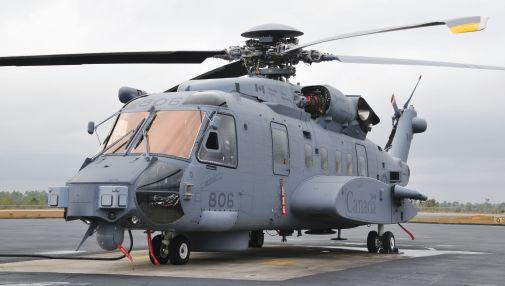
the new helicopters are to replace the nearly half-century old sea kings, which have been prone to technical problems and regular groundings
over the years. sikorsky was supposed to begin delivering the replacement choppers in 2008, but that deadline was extended to last month.
Printed in Canada ISSN 0227-3161
CIRCULATION e-mail: subscribe@helicoptersmagazine.com Tel: 866-790-6070 ext 208 Fax: 877-624-1940 Mail: P.O. Box 530 Simcoe, ON N3Y 4N5
SUBSCRIPTION RATES Canada – 1 Year - $25.00 (all taxes included) uSA – 1 Year $35.00 Foreign – 1 Year $45.00
Occasionally, Helicopters magazine will mail information on behalf of industry-related groups whose products and services we believe may be of interest to you. If you prefer not to receive this information, please contact our circulation department in any of the four ways listed above.
No part of the editorial content of this publication may be reprinted without the publisher’s written permission ©2012 Annex Publishing & Printing Inc. All rights reserved. Opinions expressed in this magazine are not necessarily those of the editor or the publisher. No liability is assumed for errors or omissions. All advertising is subject to the publisher’s approval. Such approval does not imply any endorsement of the products or services advertised. Publisher reserves the right to refuse advertising that does not meet the standards of the publication.
Helicopters Magazine is a corporate member of the

Helicopters Magazine is an associate member of the following Canadian aviation associations:
on March 29, 2012, finance minister Jim Flaherty presented the government’s economic action Plan 2012 – more commonly known as the “federal budget.” Without getting into a debate with anyone over their political views of the budget, the one thing that caught my eye as a pilot, was the planned change to the old age security program (the “oas”).
the first pension plan started in 1927, establishing a “means-test” for benefit entitlement at age 70. a further change in 1965 dropped the eligibility to 65. starting in 2023, the age of eligibility for oas will increase from 65 to 67.
this may not seem like a great big deal considering the current maximum annual oas pension is only $6,481, but more than 98 per cent of canadians over 65 collect some portion of aos although this may not be a big deal for many canadians who want to work past 65, what happens to pilots who may be required to retire as an aircraft commander at 60 – or possibly fully at 65? What happens to the years of lost earnings, before we can start to collect the full oas?
in 2006, the international civil aviation organization (icao) drafted an amendment to annex 1, dealing with age limits for pilots: • 2.1.10.1 a contracting state, having issued pilot licences, shall not permit the holders thereof to act as pilot-in-command of an aircraft engaged in international commercial air
2000, canada’s population sat at around 30.5 million, with 12.5 million 65 or over. in 2011, it was 34 million, with 14.4 million at 65 or older. in 2000, the average life expectancy for canadians was 79, now it is closer to 83. Female pilots should take special notice of this new policy as they should expect to live between 86 and 87 years! if this trend continues – and experts tell us it will – fewer young people will be moving into the workforce to fund more retired people. this is not a sustainable scenario!
Working canadians pay more taxes than retired canadians. More taxes means more economic buoyancy for the economy. i tend to agree with this thought process, but where does the rest of the world stand on aging workers?
according to the organization for economic co-operation and development (oecd), Greece has the longest “pensionable years” statistic at 23.6, allowing workers to retire at 57 (could partially explain recent financial events). estonians can retire at 63, and have the shortest pensionable years, at 14.9. canada falls right into the oecd average at18.3, with australia right alongside at 18.6. one of the main differences between australia and canada, however, is in the public/private pension scheme. australia has focused some attention on its aging population and the public purse’s ability to fund retirement in the future. While canada has a voluntary private pension program, australia has a mandatory one. all australian employers are required to contribute a set percentage of an employee’s earnings into a retirement fund. Why do i think this is important, and how does this tie into our government’s new 67 scheme?
it is clear the government feels canadians should still be working past 65. ‘‘ ’’
transport operations if the licence holders have attained their 60th birthday or, in the case of operations with more than one pilot where the other pilot is younger than 60 years of age, their 65th birthday.
canada is a member state of icao, so limitations and recommendations apply to many of us. How are we going to square the icao formula with the introduction of the new budget formula? it is clear the government feels canadians should still be working past 65. it is not difficult to see why. delaying the payment of benefits allows the government to collect more funds from others. in
of the 34 countries in the oecd poll, 18 set retirement at 65, and only four have retirement after 65. canada will be the fifth. if icao and the other nations on this list do not align their retirement ages, we pilots will need to be looking at financing our own retirements – at least in the short term.
Many schemes our government introduces see several changes before they actually affect canadians. the new oas benefit age is probably no different.
Neil J. MacDonald is a B.C. lawyer. He has flown internationally as an IFR OffShore Aircraft Commander, locally as an Air Ambulance captain, and consulted on aviation issues in the Middle East. njm@neiljmacdonald.com This is not a legal opinion. Readers should not act on the basis of this article without first consulting a lawyer for analysis and advice on a specific matter.


To serve and protect
Cut crime and protect the public with the most advanced platforms available. AgustaWestland’s product range enables you to meet the stringent requirements of twenty-first century policing. Rotorcraft fitted with modern, cutting-edge equipment and flexible interiors, facilitate rapid and responsive role changes to meet Force needs.
LEADING THE FUTURE
agustawestland.com
pAul dixon
the abbotsford international air show celebrates its 50th birthday in august of this year. to put that in perspective, 50 years ago, the Royal canadian navy was still a year away from receiving its first sea king helicopter. at that time, the airport at abbotsford was little more than a relic of the second World War, when it was one of the scores of airfields built across canada under the british commonwealth air training Plan, operating as no. 24 elementary Flying training school.
shut down after the war, by the mid-50s it was being used as a drag strip. in 1960, the tower reopened and YXX and became the official alternate to YvR. about this time, the fledgling abbotsford Flying club decided that an air show would be a great way to have some fun and educate the public, so with a $700 grant from the local Rotary club, the die was cast. some 10,000 people turned out for that first, modest twoday show. in 1967, the show expanded to its current three-day format to mark canada’s centennial celebrations. crowds topped 100,000 for both the saturday and sunday shows that year. Just three years later, Prime Minister Pierre trudeau designated it as canada’s national airshow.
there was an op-ed article that ran in many canadian newspapers this past april, wherein the ceo of a non-partisan, not-for-profit research organization (its words) speaks of this country’s “consistently poor performance at turning ideas into products, services and processes” as an indication that something is “missing.” i look at something such as
something or doing something, but dancing around it. today, we create wealth; if one believes what one sees and reads. it’s all about “wealth,” whatever that may be. the concept is pitched with the same enthusiasm as an old-fashioned carnival barker – step right up and give it a try! everyone’s a winner. on and on it goes, more like spinning a mountain of cotton candy from a cup full of sugar. Might look pretty, but there’s really very little substance to it and let’s not talk about the hideous colours.
so, 50 years ago a few flying enthusiasts had a “what if” moment and it grew from there. in 1962, abbotsford wasn’t even a wide spot in the highway, because the trans-canada Highway into vancouver wasn’t to be completed for another two years. today, abbotsford has a population of 150,000 and is one of the fastest-growing communities in the country. along the way, the city became the owner of the airport in the 1990s and it has been a very good thing. like cinderella, the castoff-training field has bloomed. the runways have been extended and improved, the new terminal serves daily Westjet flights as well as a number of smaller, regional carriers.
today, YXX is an economic generator for the city of abbotsford and the entire Fraser valley. it’s home to major international players conair and cascade aerospace and an expanding stable of aerospace and support service companies. several flight training schools and rotary operators, including sequoia Helicopters, campbell Helicopters and chinook Helicopters, call it home.
success and the means by which we measure and define it today are much of the problem.
the abbotsford international air show as proof positive that there is very much a vehicle for turning ideas into successful reality and it is very much alive today.
success and the means by which we measure and define it today are much of the problem. i may still be naive, but even as a child of the ’60s, i understood that you got out of life what you put into it; nothing came easy because it wasn’t supposed to be easy. if you built a superior product or offered a higher level of service, then, all other things being equal, you would be successful.
today, it seems, it’s all about the art of the deal – not actually making
all of this is happening in 2012 because a group of people had a vision and the gumption to see it through. the abbotsford international air show has grown through the hard work of an exceptional group of people, virtually all of whom are volunteers. it didn’t start as a get rich quick scheme. there have been some lean years, but because of the spirit of people, the show goes on year after year. this is not the only airshow in canada and i’d like to think that the spirit we see at abbotsford is the same bright light that puts the wind under the wings of every other air show, large or small, across this country. it’s the same entrepreneurial spirit that drives most helicopter operators nationwide as well – the ability to “get ’er done” no matter what.
take the opportunity to attend an air show this summer. it’s your chance to relive a small slice of your past and the people who make it happen would really appreciate it.
Paul Dixon is freelance writer and photojournalist living in Vancouver.
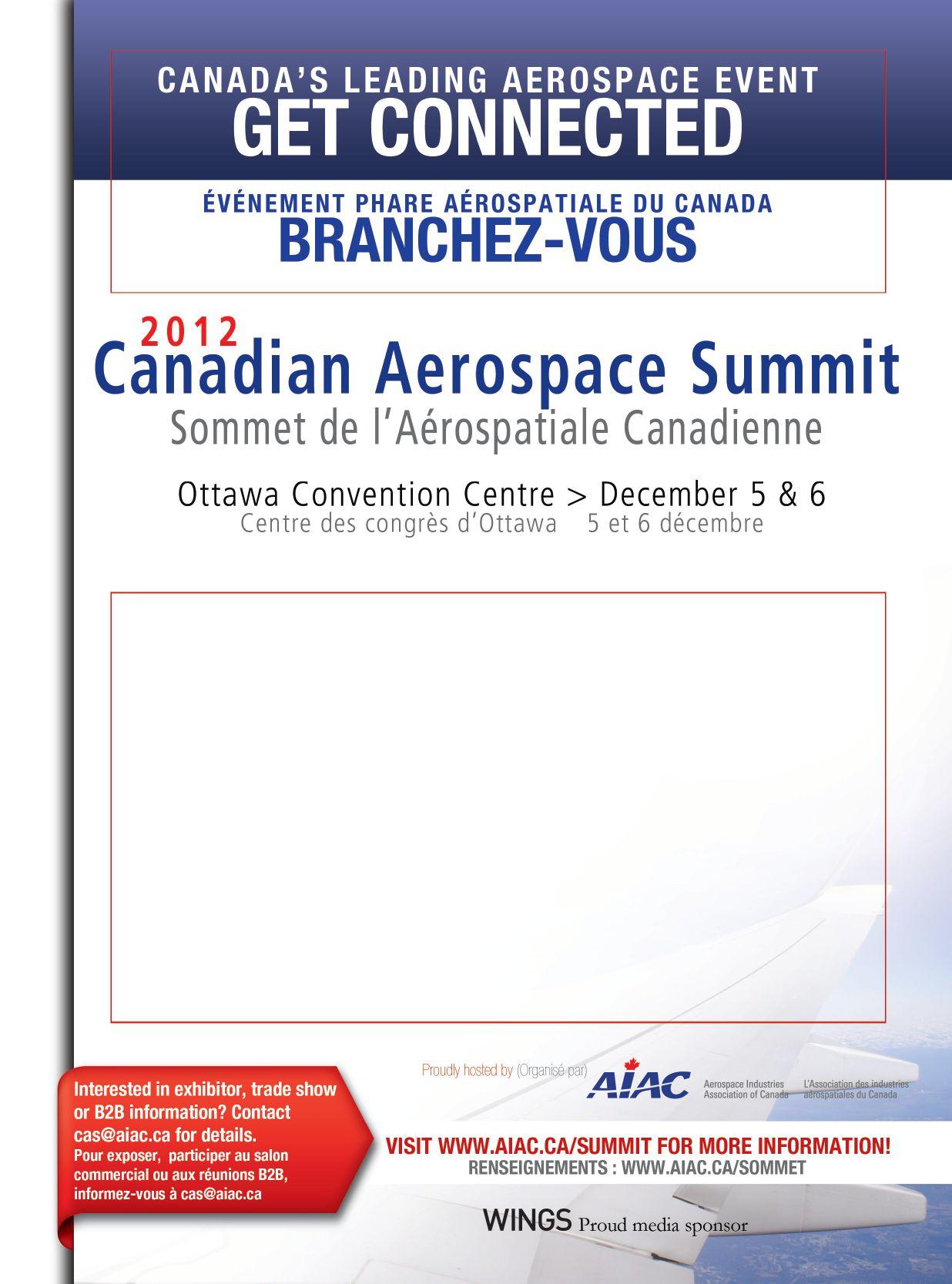
Elite conference program featuring world-class Canadian and international speakers and presenters
Trade Show for domestic and international OEMs and suppliers of all sizes
Business-to-Business (B2B) meetings with leading Canadian and international prime contractors and suppliers
High-level keynote luncheon and receptions
Networking opportunities with industry leaders and decision-makers
Conférences de haut niveau avec orateurs et présentateurs canadiens et étrangers de renom
Salon commercial de fabricants d’équipement d’origine et de fournisseurs canadiens et étrangers de toutes tailles
Réunions interentreprises (B2B) avec d’importants donneurs d’ordres et fournisseurs canadiens et étrangers
Déjeuner et réceptions avec conférenciers prestigieux
Réseautage avec leaders et décideurs de l’industrie
Acknowledging ATC Communication a Key Part of the Job
he canadian owners and Pilots association (coPa) has an interesting section in its monthly newsletter that reports on all caRs violations from flying with a lapsed medical to airspace violations. it should be required reading as a reminder to all pilots that due diligence is always required when transiting through unfamiliar airspace.
airspace violations are not just the work of low-time pilots; commercial pilots with thousands of hours of flying experience commit them as well. examples such as a pilot’s descending or climbing from air traffic control (atc) assigned altitudes or deviating from an instruction to maintain a particular heading are happening across the country.
so, the question is, why does a pilot acknowledge an atc instruction and then ignore it? Whether or not a “read back” response is indicated, i’m beginning to suspect that sometimes pilots acknowledge the instruction without fully understanding what the directive actually is –or they’re sometimes too intimidated to ask for clarification.
High-density radio traffic also often demonstrates the limits of vHF and, as pilots, we have all heard the annoying squeals that occur as users step on one another. What is said during these moments gets lost completely except for those keying the transmit buttons. and these pilots have no way of knowing that all or part of their transmission is unintelligible. controllers, too, in an effort to maintain a smooth communication flow, often deliver clearances with the celerity of an auctioneer.
fuelling times and so on. but a circuitous routing around larger airports shouldn’t be necessary just because the pilot finds it too stressful. We are, after all, professionals and should be up to the task. the pilot who relies on the “Go to” button on the GPs without familiarizing himself with the “Flight supplement” and the “terminal area chart” is on his way to a humiliating tirade from a controller. Refreshing your knowledge of airspace procedures, and entering a few pertinent waypoints in the GPs, will turn the flight into a safe and professional one. traffic control at airports is critical and not understanding a clearance or deviating from the published procedures without authorization can easily have tragic consequences – or at the very least have a pilot slapped with an expensive fine for endangering other aircraft. acknowledging an atc instruction assures the controller that you understand and can comply. do something other than he or she is expecting, or destroy the smooth flow of traffic at the airport, and you will discover that nav canada is not exactly your friend.
i felt the old way connoted mutual respect and concern for one another’s well-being.
those familiar with the airport may easily understand clearances or instructions, but those who are exposed to the process only a few times a year may not.
a helicopter pilot who has spent the winter slinging bags on a seismic job or moving drills come summer, may find transitioning to a busy international airport to be an onerous task. the procedures, while not altogether foreign, are not current either. i know many pilots, both fixed- and rotary-wing, who say they avoid the situation altogether by skirting larger airports and re-fuelling at quieter aerodromes. sometimes a modest detour is a practical solution for expediting
since nav canada evolved from a government agency to a private corporation, a few formalities have been withdrawn from radio transmissions. the polite “sir” or “ma’am” used to be a prevalent salutation when addressing others in conversation. For aircraft with retractable gear, it was common banter for the tower to remind the pilot to “check gear down” when issuing a landing clearance. inbound to an airport that was below vFR, and the tower would advise the pilot, “special vFR is required.” Warning the pilot that he or she must remain clear of the cZ until the request was sanctioned was also standard phraseology. However, these examples, and many more, have all but disappeared over the past number of years. i recognize the demands of increased traffic and safety concerns have dictated this brevity, but i am disappointed by the demise of such interaction. i felt the old way connoted mutual respect and concern for one another’s well-being. the controller’s task at a busy airport is a challenging one and introducing a “loose cannon” into his or her midst must be frustrating to say the least – if not downright dangerous. as pilots, we should be obliged to conduct all facets of our occupation professionally. Pilots who can fly a helicopter with superlative expertise but can’t or won’t trouble themselves to keep abreast of how to transit a busy control zone are only doing half a job.
A native of Spruce Grove, Alta., Michael Bellamy has been flying fixed- and rotary-wing aircraft in a variety of capacities since 1971, and is an accomplished author of several books, including Crosswinds.
he vital few and the useful many.”
tthis is the academic shorthand for a widely known and commonly used distribution known as the Pareto Principle: the 80-20 rule – 80 per cent of our time is taken up doing 20 per cent of our work. that is a simplistic view of this rule, and there are many exceptions, but the principle has been shown to be relatively valid in a wide variety of circumstances: wealth distribution (the richest 20 per cent own 80 per cent of all wealth); some businesses (80 per cent of a company’s revenues comes from 20 per cent of its clients); or the service industries (it may mean that 80 per cent of the work gets done by 20 per cent of the employees).
i don’t wish to delve too deeply into the math of this “rule,” so i will leave that to the “Googlers©” among us. i thought, however, that it might be instructive to see if or how this rule applied to the canadian helicopter industry and its accident dataset. Having been spurred into further analysis through a conversation with several tsb investigators, i completed a brief analysis of the civil aviation daily occurrence Reporting system (cadoRs) database and have come up with some interesting facts. i know that this data does not provide a total picture due to varying reporting requirements – aircraft type, class and weight, etc. However, the database shows that since 2007 there have been 195 reported accidents involving helicopters with an astounding 116 persons injured and 75 fatalities. let that sink in: 75 people have died in helicopter accidents in
The 80-20 Rule Applies to the Helicopter Industry, Too
into terrain (cFit), rotor strike, roll over, and loss of control – in-flight, engine failure, hard landing and loss of power. the top fatality categories are cFit, engine failure, loss of control and loss of Power. so, we now have a very clear risk profile: cFit, engine failure/power loss and loss of control events are the categories that cause the most accidents and the most fatalities. i wrote about cFit and some ideas in managing that risk in an earlier column, so now let’s talk about engine failures and power loss events.
i used to subscribe to the theory that the engines in today’s aircraft are virtually bulletproof – that they are among the most reliable components on the aircraft and that they rarely fail. i was surprised to learn that there have been 29 reported engine failure and power loss events reported since 2007. this means there should be no fewer than six engine failures in the industry each year. this number does not account for chip lights that indicate a forced landing, engines that seize on shutdown or a wide myriad of other potentially catastrophic events.
How do we mitigate this risk? start with pre-flight activity by completing thorough daily inspections and pre-flights. Review maintenance logs for trends and ensure that you complete timely power checks. this is a big one. Power checks are your lifeline and don’t take much time to complete. they enhance your awareness of your engine’s performance and can be useful in a trending capacity to indicate deteriorating power output. complete Fod checks. Foreign object damage (Fod) can rip open your compressor in a heartbeat – tool control and debris sweeps are crucial to stacking the deck in your favour.
Power checks are your lifeline and don’t take much time to complete.
canada since 2007, an average of 15 per year. this number really rattled me as i continued to review the available information to see if i could identify the “vital few” cause factors. i found that the distribution was, in fact, close: 27 per cent of the accident categories accounted for 80 per cent of the total number of accident events and that 80 per cent of the fatalities came from 28 per cent of the events. so, it would stand to reason that if we know what those categories are then we can take the first big step towards creating better risk- and hazard-management strategies to address these areas of concern. the top accident categories, as defined by the tsb are controlled flight
it’s also important, once you are airborne, to ask yourself how high you are flying? it amazes me how often helicopter pilots fly at less than 500 feet above ground when transiting from point a to b
Minimize your time in high, out-of-ground-effect hovers –although when engaged in external load operations this is almost impossible to avoid. the height-velocity curve identifies the risks in this flight envelope – just don’t stay exposed longer than necessary.
these are some of the strategies for managing the very real risk of engine failure. statistically, six of you will experience an engine failure this summer. Fly smart, keep your options open, stay aware of potential emergency landing spots and be safe.
Walter Heneghan is the VP of Safety and Quality at Canadian Helicopters. A passionate advocate for aviation safety and sound risk management, the veteran pilot presents his regular column for Helicopters magazine.
BY BRiAn dunn
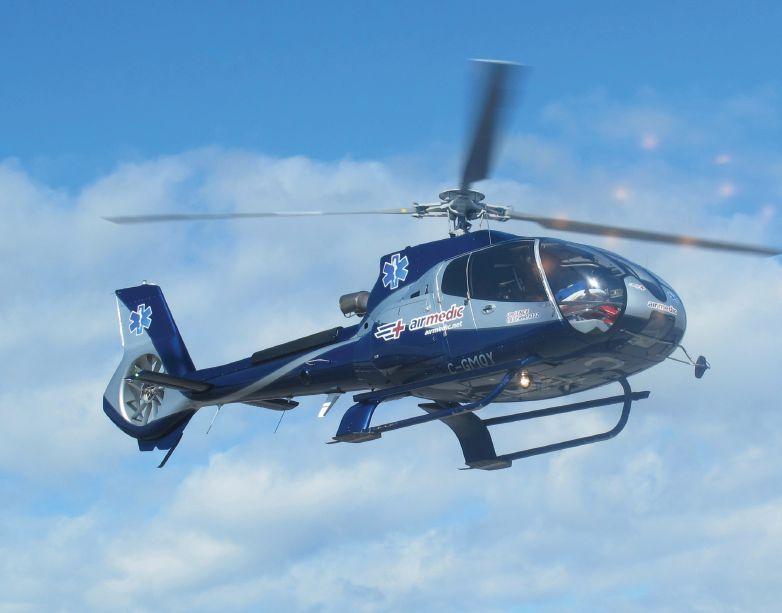
on the day airmedic was inaugurating its new base at Mont tremblant, Que., a 75-year-old patient was being transported from chibougamau to chicoutimi for a medical emergency in the company’s eurocopter as350 b2 leased from capitale Hélicoptère of Quebec city.
“the guy awoke in the helicopter beside a female pilot, female nurse and female medic and thought he had died and gone to heaven,” joked christian trudeau, ceo and partner in airmedic, a new company created from airMédic air ambulance, a 12-year-old company started in 2000 by François Rivard, director of air medical operations at airmedic and another partner.
the third partner and financial backer for the new company is stéphan Huot, a Quebec city real estate magnate and founder of capitale Hélicoptère, one of the largest fleet owners in the provincial capital. a new subsidiary, GoHelico, offers viP transport and helicopter tours of Quebec city and surrounding areas.
“combining my passion for aviation with the mission of saving lives is a huge motivating factor,” said Huot. “When you consider how the availability of such emergency services can mean the difference between life and death, it is imperative that the entire province have access, particularly those regions that are hard to reach by land or sea.”
that point was emphasized by trudeau who noted chibougamau is 110 kilometres from the nearest major town and a four-hour drive from the nearest hospital, compared to about an hour by helicopter, which can make a huge difference in a life or death situation.
the first mission at Mont tremblant took place three days after the base was opened. “a patient in the Mauricie region had a severe allergic reaction to fish and was flown to the Pierre boucher hospital in Montreal,” said Rivard.
airmédic air ambulance was launched by Rivard, a paramedic in the canadian army, after he returned from Yugoslavia to his base in
bagotville, Que. “i decided Quebec needed an air medical service after i realized that military helicopters at bagotville would only transport military personnel,” explained Rivard, who also is a fixed-wing and rotary pilot. “last year, Mr. Huot and i decided to form a new company with a vision of an air medical service to cover the entire province.”
trudeau was brought in to realize that vision and build the company after playing similar roles in other companies, including bce emergis, centria commerce and transcontinental interactive. by the end of June, airmedic’s objective was to have at least six bases of operation, namely the saguenay, Mont tremblant, Quebec city,
schefferville (the caribou hunting capital of northern Quebec), chibougamau and st. Hubert on the south shore of Montreal with a helicopter at each base, plus a Pilatus Pc-12 at st. Hubert to offer 24-hour medical emergency service.
“under transport canada regulations, you can’t offer nighttime medical service using a single-engine helicopter. that’s why we have the Pilatus and we plan to add a twin-engine helicopter,” said trudeau. Most of the bases will operate ec-130 b4s from eurocopter canada of Fort erie, ont., while a twin-engine bell 429 or twin agustaWestland aW169 will be stationed at st. Hubert to complement the Pilatus. about 85 per cent of the work will involve interhospital transport and the remaining 15 per cent will be emergency medical evacuations, according to trudeau.
“a lot of emergency procedures can’t be performed at hospitals in the outlying regions, because they don’t have the resources, so patients would be transported here to Montreal where all the specialists work. Mont tremblant was the only major tourist destination in north america that didn’t have an air ambulance service. if they had, then the actress (natasha Richardson, who died in 2009 following a head injury sustained when she fell during a skiing lesson at tremblant) might still be alive today.”
before airmedic was created, Rivard was doing everything himself at his former company, from running the company to hiring the pilots and medical staff. during his 12 years running airMédic air ambulance, the company responded to 2,600 emergency calls and flew 1,500
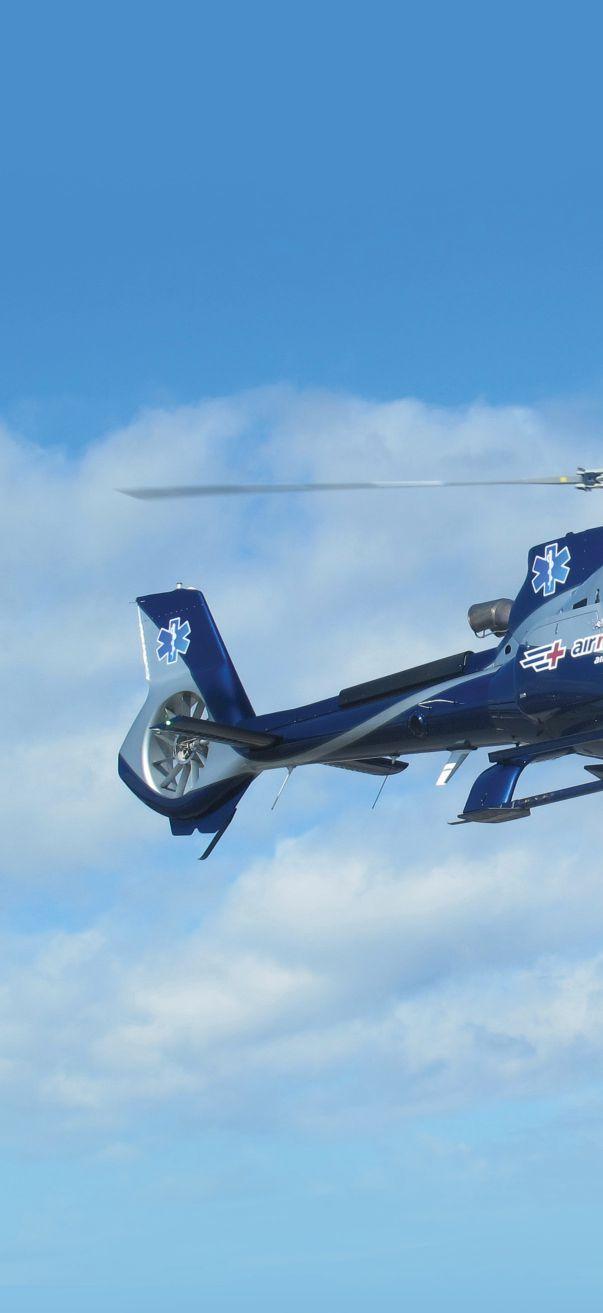
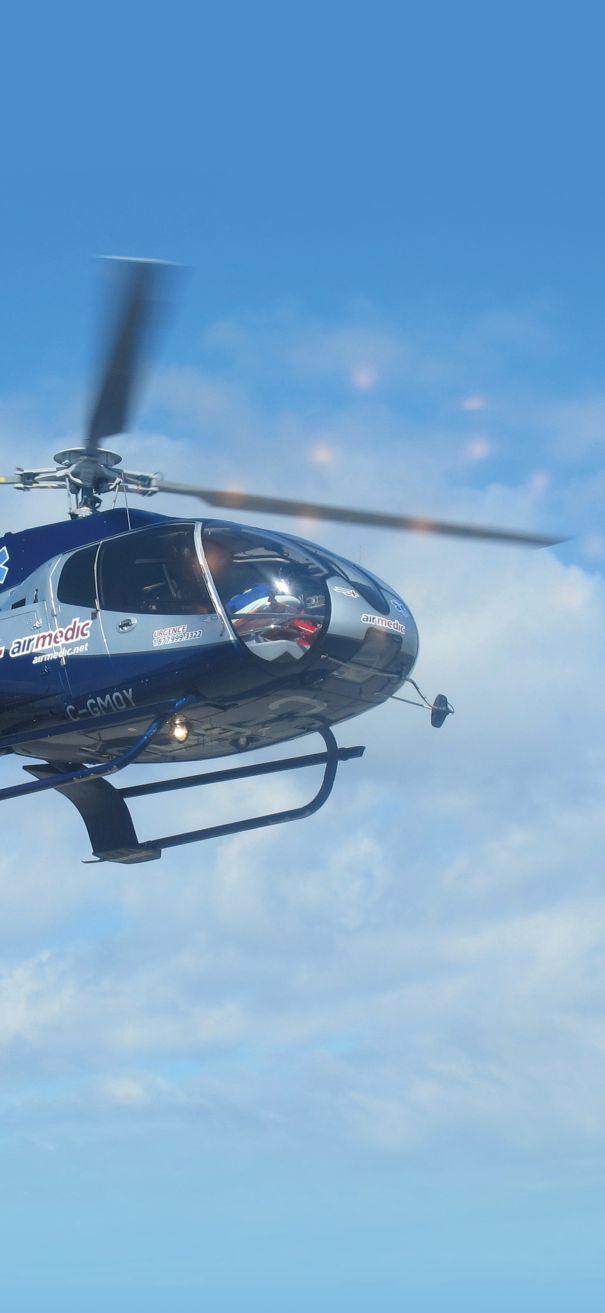
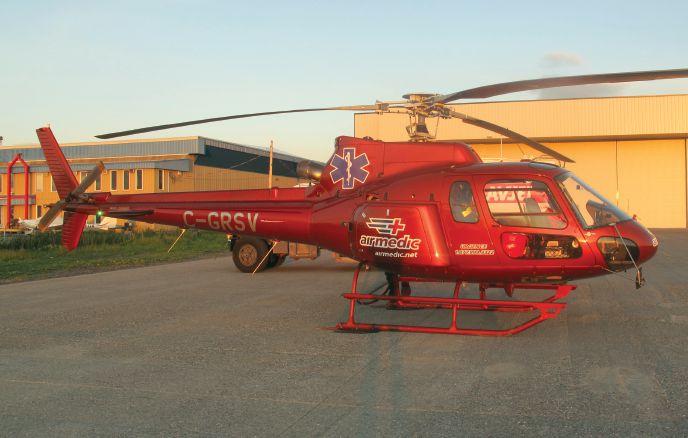
LEFT: Airmedic will offer medical services from at least six bases by the end of June. (Photo courtesy of Airmedic)
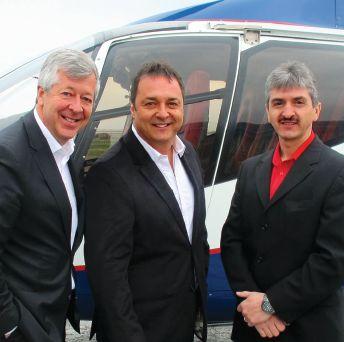
BOTTOM LEFT: Three partners make up the Airmedic front office: Christian Trudeau, president/CEO; Stéphan Huot, a Quebec City real estate magnate and founder of Capitale Hélicoptère; and François Rivard, director of air medical operations.
(Photo courtesy of Airmedic)
BELOW: One of Airmedic’s aircraft is a Eurocopter AS350 B2 leased from Capitale Hélicoptère of Quebec City.
(Photo courtesy of Airmedic)
missions. some emergencies couldn’t be handled due to bad weather or because they required night flying.
the only other air medical service in Quebec is handled by a Quebec government challenger jet and a few smaller regional players, but there’s no guarantee the service will be available when needed, said trudeau. it also requires time to put a medical team together for the flight and the smaller players don’t have the same structure as airmedic.
“over the short term, airmedic will continue to provide an ambulance service to members as well as non-members under current terms and conditions. We have already begun implementing a strategy to improve service and provide first-class aero medical services across the entire province,” said trudeau.
airmedic has about 13,000 members who pay an annual fee of $120 for any air transport they might need during the year. to qualify, they must have a GPs telephone if they’re outside normal cellphone coverage to reach airmedic’s 1-800 number. nonmembers can pay upwards of $10,000 for the same privilege, according to trudeau. However, if it’s an inter-hospital transport, the hospital picks up the tab.
“but say you’re on a fishing trip or canoe trip and you suffer a stroke or heart attack, you’ll pay thousands of dollars to be airlifted to the nearest hospital, although about 80 per cent of the cost should be covered if you have private health insurance,” he said. there’s also a corporate membership whose cost is based on the number of employees signed up and a temporary five-day card for $25 for city dwellers on vacation in the wilds. For those who aren’t covered and can’t afford it, the Fondation airmédic will help defray the cost.
“in a province of eight million people, 13,000 members is not a lot. switzerland has about seven million people and two million are members of Rega (swiss air Rescue),” said trudeau. “We hope to boost membership to 100,000 in the short term and our target is one million members within the next five years.”
to reach that goal, the company was planning to host several media events across Quebec to announce the new expanded service in addition to social media and television campaigns in the fall. the company is also targeting snowmobile clubs and outdoor clubs and is improving its website.
in addition, there will be plenty of other opportunities for
other jurisdictions, including [ornge in], ontario are parapublic.” in addition to offering air medical service, airmedic has the only air paramedical training centre in Quebec that has turned out more than 250 graduates, according to Rivard, including about 55 who worked for his former company.
combining my passion for aviation with the mission of saving lives is a huge motivating factor.
airmedic under Plan nord, Premier Jean charest’s ambitious $80 billion, 25-year program to open Quebec’s north to mining, forestry and eco-tourism. the service would complement Groupetransrapide, a trucking division specializing in northern transport also owned by Huot. “certainly Plan nord will be an excellent opportunity for us as there is no other evacuation program currently in place,” Huot said. trudeau maintains Quebec is one of the few regions in the developed world that doesn’t offer air medical service, because it requires a major investment. “You’re looking at $2 to $3 million for each helicopter plus all the bases. We’re completely private. Most
“one of our biggest challenges is that all the major hospitals in Montreal don’t have helipads, because the service didn’t exist, and within the next 10 years, Montreal highways will be completely jammed, making ambulance drivers’ jobs more difficult,” noted trudeau. “Hopefully, we can convince the two new super hospitals [under construction] to include helipads.” although airmedic was modelled after similar programs around the globe, there will be new features added that Huot wasn’t prepared to discuss for competitive reasons. He also hopes his membership formula will enable him to open other bases if necessary, offer more services and help airmedic become a major player in his growing transportation, real estate and construction empire.
“it has certainly cost me the most money,” Huot said. the lives the new service will save, however, is anything but a laughing matter – and can’t be quantified by dollars and cents.
BY MAtt niCHollS
Keeping canada’s economic engine humming is an important role helicopter operators serving resourcebased sectors play: however, mining an entirely different resource base is proving to be a growing challenge for operators nationwide.
Human resources issues including retention, effective methods of training, delivering the proper experience to low-flying-time pilots and dealing with a looming shortage of skilled employees, was just one of the overriding themes of Helicopters magazine’s second annual industry roundtable.
the invitation-only event held during the Helicopter association of canada’s (Hac) annual general meeting and trade show in the early morning hours of March 17 in ottawa brought together eight industry leaders from a variety of organizational backgrounds for an intriguing 90-minute discussion.
once they got the sleep out of their eyes and the caffeine kicked in, panelists kicked around a variety of subjects including the aforementioned human resources issues, how they’ve diversified operations in challenging economic conditions, their perception of the ornge investigation and more. Here’s a synopsis of what they had to say.
economic realities have forced many canadian operators to diversify businesses and seek new revenue streams and while panelists agreed focusing on your bread and butter is paramount, capitalizing on new markets can make a good product great – and catch the eye of new clients.
Great slave Helicopters chief pilot Gord bean said his firm has benefited immensely from its foray into south america with its Master service agreement in support of ongoing oil and gas seismic exploration activity with south american exploration llc’s Peruvian operations. this high-utilization project keeps five medium and intermediate bell 212 and as350 helicopters active in
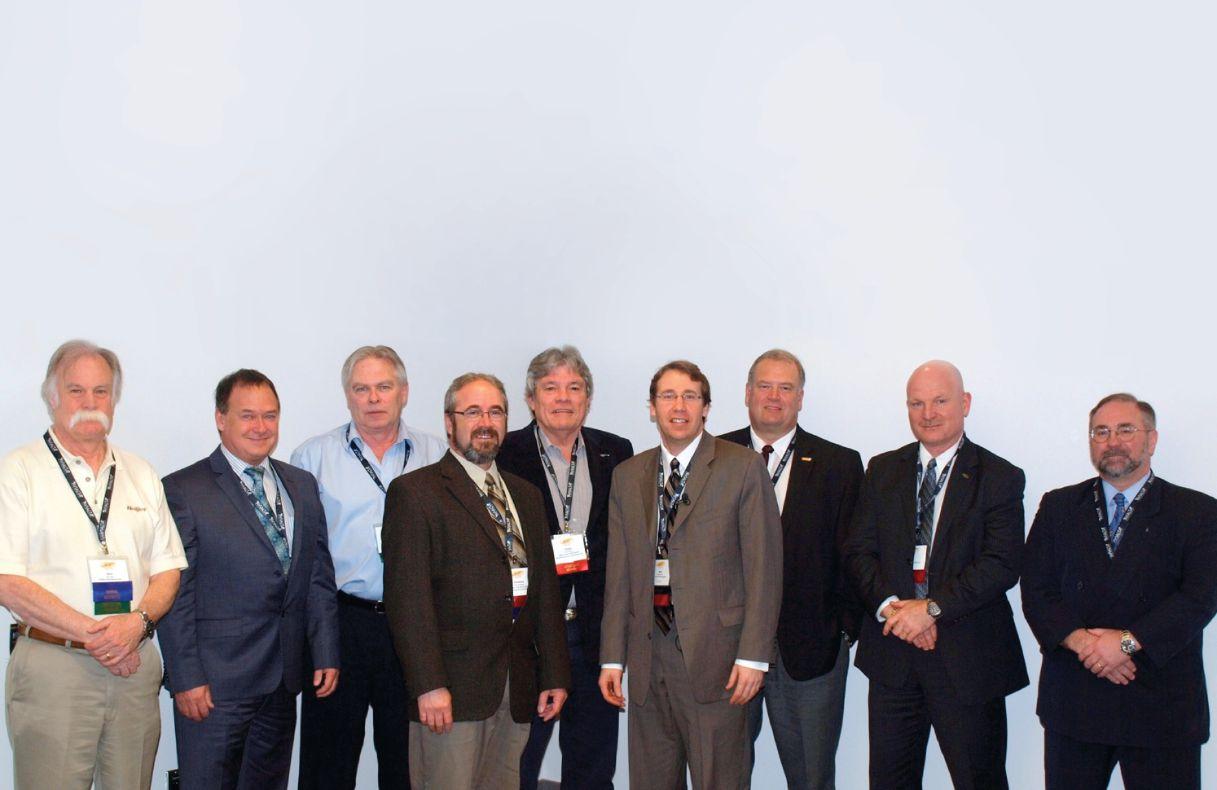
The roster for Helicopters’ second annual roundtable (from left): Ken
Dany Ricard, Capitale
Gord
Terry Eissfeldt, West Coast Helicopters; Peter Barratt, West Coast Helicopters; Matt Nicholls, Helicopters magazine; Keith Westfall, Yellowhead Helicopters; Fred Jones, Helicopter Association of Canada; Geoff Goodyear, Universal Helicopters. (Photo by Alison de Groot)
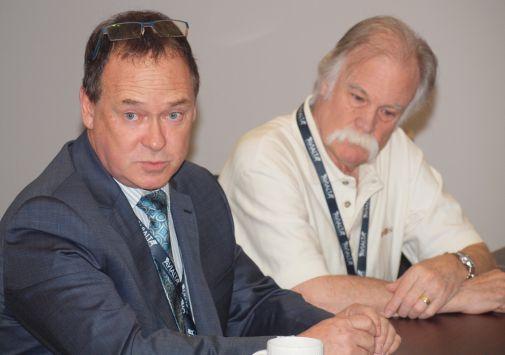
Quebec’s Capitale Hélicoptère will continue to diversify operations in both the medical transport and tourism fields in 2012, says president/CEO Dany Ricard (left). Helijet’s Ken Glaze (right) says both are growing markets for his firm as well.
northeastern Peru for a minimum of six months, with more work expected to immediately follow. the company is also active in chile. and while bean acknowledges Great slave is a much larger operation than most in canada, the philosophy of taking calculated risks goes a long way in finding success in sluggish economic conditions.
it’s a philosophy management follows at HeliJet, the successful commuter and charter firm celebrating 25 years of operations on british columbia’s west coast. ken Glaze, the company’s vP of business development, said his firm’s biggest challenge has been the economic stress that has been felt not only in canada, but around the world. being primarily a commuter service driven by the business and government sectors between victoria and vancouver, “we feel it,” he said.
to offset the downturn, the company is stepping up its charter service and delving into the sportfishing industry, as well as building its air medevac exploits through its contract with the bc ambulance service. “We didn’t really think we’d do very much (charter busi-
Peter Barratt
Role: Co-owner/Operations Manager, West Coast Helicopters
Organization: Safety, service, reliability –it’s the driving force behind everything at this Port McNeill, B.C.-based operator.
The company specializes in forestry work, tourism, fire suppression, hydro and aerial photography/film work.
Location: Four locations in B.C. including Port McNeill, Bella Coola, Campbell River and Nanaimo.
Gord Bean
Role: Chief Pilot, Great Slave Helicopters
ness), but we’ve been very lucky to find some sportfishing lodges to fly to in Haida Gwaii on the north coast, and their busy season meshes perfectly with our downside,” Glaze said. “air ambulance is another area of interest for us. We really enjoy it because it requires the degree of expertise that we’ve taken pride in developing – two pilots, two engines. and you feel pretty good because you are actually doing something for someone. it’s a good reason to go flying.”
delving into new markets is essential for smaller operators, especially in highly competitive markets, stressed Peter barratt, operations manager/co-owner with West coast Helicopters. barratt, a self-confessed fishing nut, said his operation has been in the forestry game for years, but has slowly branched into tourism, heli-fishing and heli-skiing.
“one of the challenges we have on the West coast is competing with the number of companies that we have,” he said “i’ve been flying for about 44 years and after about 34 years, when i moved to the little town of Port Mcneill, we had four or maybe five companies on the coast of b c at last count it was 23 or 24. the number of flying hours has increased a little bit, but if you divide that pie up, it’s getting skinnier and skinnier. so, you really have to pay attention to your market and how you are doing business; it’s a 24/7 job.” opportunities in tourism have enabled newfoundland’s universal Helicopters to improve its bottom line. President/ ceo Geoff Goodyear said his firm takes a slow approach when tapping new markets – preferring an evolution rather than a revolution. “We have not targeted one particular market and said, ‘Well that’s a great idea let’s put another leg on the three-legged stool, let’s make it a fourlegged stool.’ it’s recognizing opportunities when they come by,” he said. “What we’re noticing, particularly in our part of the world, is an increased interest in tourism that would involve helicopters. it’s in its embryonic stage. there are parks in labrador that bring a significant amount of national attention – and with that comes a certain type of tourist that will use aviation to come and go. so, we’re finding that we are evolving into it . . . we’re not trying to, it’s just there. our marketplace has been historically natural resource based: fire suppression, exploration, and i don’t see that changing over the short term or mid-term.”
Quebec city’s capitale Hélicoptère is one of the fastest growing operations in Quebec, offering a variety of services including
Organization: A subsidiary of Discovery Air, Yellowknife, N.W.T.-based, Great Slave Helicopters specializes in mining exploration, oil and gas seismic exploration, fire suppression, and wildlife surveys.
Location: Great Slave Helicopters operates bases across the Canadian north, Ontario and South America.
Terry Eissfeldt
Role: General Manager, Director of Maintenance, West Coast Helicopters
Organization: Safety is a top priority at West Coast. The company has woven into the fabric of its safety policy a proactive
safety management approach, which adds structure to its philosophy of accident and incident prevention, hazard reduction.
Location: Four locations in B.C. including Port McNeill, Bella Coola, Campbell River and Nanaimo.
Ken Glaze
Role: VP Business Development, HeliJet Organization: Since 1986, the company has provided a reliable commuter service between Vancouver Island and Greater Vancouver. Also offers air medical, charter and a growing tourism business.
tourism, training, and air medical transport through its partner airmedic (see, angels from above, pg. 14). according to president/ ceo dany Ricard, operating new aircraft in a tough environment where the cost of the helicopters is high – and the price per hour very low – remains a challenge. but the tourism market in Quebec city has been a Godsend.
“there’s a big market for tourism in Quebec city and it’s been unexploited forever because no one has had any helicopters available for that so we plan on working on this part of our business,” he said. “We’ are also trying to get a new heliport which will be closer to the city centre in Quebec city. that would be something new because Quebec city has never had a heliport really close.”
the company is also working with airmedic and as Ricard notes, “we still have Hydro Quebec. We’re working hard with them to get them to know the new technology. the fleet in Quebec is very old, very old helicopters, so these are the new sectors we are working to bring some change. the mining industry is booming, so we’re profiting from that, too.”
Hac president/ceo Fred Jones said there are many positive signs that operators of all sizes are starting to find their way in the challenging economic landscape. “We see the big picture from operators across the country and i hear on a regular basis that the last couple of years have been pretty challenging for operation across the board. We’re still in a recovering economy but in some ways . . .but we are seeing some pretty promising signs of recovery.”
s taffing challenges, training, mentoring and developing qualified pilots and engineers are realities all operators are dealing with –and an aging workforce will put further strain on c anadian firms. s o how are our panelists dealing with these human resources conundrums?
s taff retention is one of the major challenges for West c oast Helicopters, especially in remote areas such as Port Mc n eill, noted t erry e issfeldt, general manager/director of maintenance. a lso, the a M e trade is not even a trade he pointed out – it is not classified as a red seal trade by the educators in c anada and t ransport c anada ( tc ) doesn’t even acknowledge the fact that an apprentice is a term in the regulations.
Location: Vancouver International Airport, Richmond, B.C. (corporate); Victoria Harbour Heliport; Vancouver Island Heliport; Prince Rupert; Haida Gwaii.
Geoff Goodyear
Role: President/CEO, universal Helicopters
Organization: uHNL began operations in 1963 as universal Helicopters Ltd. and was once a part of the Okanagan Helicopters group. It is now an independent company, offering a variety of services including long line slinging, mineral exploration support, wildlife research and management.
Location: uHNL’s corporate head office, main stores and accounting services are
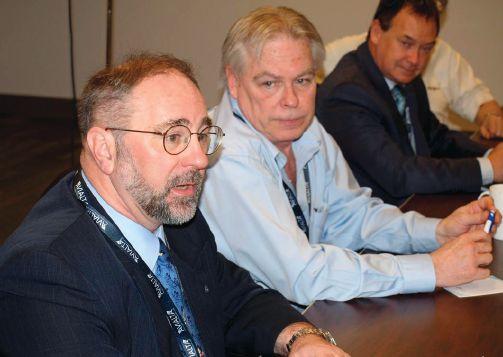
Universal Helicopters president/CEO Geoff Goodyear says there’s often a real disconnect between what clients are demanding and what operators can actually provide. Clients do not fully understand how performance-based operations work, says Goodyear.
“so, we’re up against a formidable challenge today in the fact that along with the X/Y and that generation, young people today come out of their secondary education with a list – when i came out of college all i wanted to do was find a job,” he said. “but they come with a list and expectations today, so the reason a red seal trade is important is because along with that designation comes certain tax exemptions that they are not eligible for without. and so, that’s part of the industry challenge.”
to offset this, eissfeldt has created a maintenance-training program at his firm aimed at younger employees to ensure they get the experience they need. the program does not have a huge volume as of yet, but it has promise – and is one way the company is trying to keep the pipeline of experienced workers full. “We take them in, train them and introduce them into the maintenance program and that’s how we end up pouring into the communities – but retaining them is one of the major challenges we have.”
Goodyear concurs that mentoring and actively creating/building
situated in Goose Bay, Labrador with other bases situated in St. John’s, Pasadena and Gander, Nfld.
Fred Jones
Role: President/CEO, Helicopter Association of Canada (HAC)
Organization: HAC represents 80 per cent of civil helicopters in Canada. The association boasts some 130 operator members and 120 associate members
Location: Ottawa, Ont.
Dany Ricard
Role: President/CEO, Capitale Hélicoptère
Organization: One of the fastest growing operations in Quebec, Capitale Hélicoptère
offers a variety of services including tourism, training, air medical transport (through partner Airmedic
Location: Jean Lesage International Airport, Quebec City, Que.
Keith Westfall
Role: Safety Officer/Line Officer, Yellowhead Helicopters
Organization: Yellowhead Helicopters is a privately held Canadian company that has been providing commercial helicopter solutions to the public, industry and government since 1975.
Location: Yellowhead Helicopters has nine bases in British Columbia and Alberta.

the number of flying hours has increased, but when you divide that pie up, it gets skinnier and skinnier.
– Peter Barratt
a corporate community employees want to embrace goes a long way to ensuring staff will stick around. it’s paramount for the long-term success of any organization.
“ i ’ve got a cadre of experienced people who are going to be retiring in the next five to six years as i ’m sure all of us do,” Goodyear said. “We have a set program that takes three years from the time we hire the guy or the girl which takes them through to the point where they are actually some value to the industry down the line. i t’s a long and painful experience particularly for energetic and ambitious people and we have to be very honest with them up front. b ut, in the long term, it works. With the exception of five of our pilots, everyone in the organization came to u niversal as a 100-hour pilot, so they’re part of the culture of the organization right from the onset. a nd i ’m convinced that despite the cost and time invested in the process to get those people to the point where you can use them on the line, it’s still the only long-term solution to maintain legacy status.”
a nother challenge is working with employees who are only interested in contract work. t his creates real challenges, especially with regards to loyalty issues, noted k eith Westfall, safety officer/line officer with Yellowhead Helicopters. s aid Westfall: “ i ’m not a big proponent of contracted guys because i find sometimes their performance is not great. Gord and i were talking this morning that for companies to survive now you’ve really got to interact with your customer – you’ve got to know customers fully, you need to be a part of their operation. t o a large extent, the employee has to be part of the whole picture. s o, when i come in and collect my big cheque for two weeks and leave, sometimes a lot of that community aspect suffers.”
Ricard concurs and finds many contract workers just aren’t fully committed to the organization. “ t hey don’t want to have a full time job, even if we tell them we will keep them all year long with no layoffs, they would rather stay on contract and come to you for two or three months and say, ‘ i ’ve got enough, i don’t want to work any more this year or i want two months off,’ ” he said. “You can’t rely on those guys so it’s a big problem.”
b arratt maintains having a diverse operation can help in this regard. “When you diversify your operation, you can have a choice of who you keep on permanently, and people that you contract,” he said. “ t he trick is trying to balance it because you’re trying to balance it from the perspective of the company, not necessarily for the individual.”
Jones agreed adding that there’s an intangible but very important element of continuity across seasons. b ecause of the close

there’s a big market for tourism in Quebec city and it’s been unexploited forever.
– Dany Ricard
nature of the relationship of the company with the customer, a clients’ employees get to know a particular pilot, they get to know how they operate, they get to know them personally . . . you know a life in a camp is so close quarters that you really have to get along and the interpersonal skills are very important.
“ a nd people like the comfort of having the same pilots season to season and that usually occurs when you have a full-time person,” he added. “ o ccasionally, there are contractors who will return year after year, but frequently it’s the full-time employees that are in a position to provide the same service in the same location for the same customer for the same company for five to 10 years and sometimes much longer.”
t he o rnge situation in o ntario has garnered headlines in the mainstream media for months focusing on the mismanagement of the province’s H e Ms service by its former management team. t he organization is under a criminal probe for financial irregularities amid allegations of questionable business practices, high executive salaries and whether public money may have been used for private gain. Helicopters asked panelists how they perceive the investigation and whether or not it would have a lasting impact on the c anadian helicopter industry. d oes the investigation and negative media coverage taint the industry in any way?
Goodyear said the issue has become quite poignant in n ewfoundland and l abrador because the provincial government is currently in a debate with regards to the level of air ambulance and helicopter emergency medical services that they want to provide in the province. n ewfoundland and l abrador currently does not have a designated H e M s option.
“ t hey and we are watching it very, very closely,” Goodyear said. “ i t may be a little too early to get lessons learned from it, except that from our perspective, particularly where we don’t operate i FR twin-engine aircraft, maybe it’s a lesson that bigger is not always better. d epending on the geography and the area in which you operate, many of us around the table have aircraft that can provide quite an adequate e M s service. t here are other options.”
Great s lave’s b ean suggested the aviation aspects of the case are not necessarily the crux of the issue but rather the get-richquick philosophy of the former management team. i n short it was all about greed on the part of a select few. “ i don’t think it’s about the flying,” he said. “ i have a couple of friends flying at o rnge, and it speaks to the same old thing – greed with no oversight. You
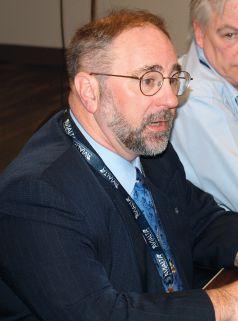
our marketplace has been historically natural resource based –fire suppression, exploration – and i don’t see that changing over the short-term or medium-term.
– Geoff Goodyear
can see where they ran with that. t hey paid themselves well, they set up all those companies inside the company. . .”
Glaze agreed and said the “lack of oversight” angle was spot on.
“this was a group of people who were not necessarily aviation people who formed their own little kingdom . . . it wasn’t the industry that did that. the story there for me is how did someone create a situation and run away not answering to anybody without oversight. if the Ministry of Health in ontario needs some help cleaning up that picture, we can certainly help.”
Jones added that it’s difficult for any industry not to have its reputation affected by events of a particular company, simply because it’s the nature of the public and the media. if there’s an airline accident or a problem with the airline the industry wears it in some way.
“but in fairness,” he said, “i don’t think it’s appropriate to take the activities of any one company whether it’s in an ornge scenario, or any company and judge – and the facts are not in to be clear. and we won’t know until the investigation is complete, but it doesn’t necessarily paint the industry in a bad light. People sometimes perceive it that way, but i think that’s not fair as the way they interpret it . . . i think it’s unfair to paint the industry that way and it’s not clear at this point what all the facts are anyway.”
While time was short for the discussion regarding ongoing challenges with tc , it didn’t mean it didn’t generate some sharp assessment. Many operators are still dealing with issues discussed at last year’s event such as regional disparity and the interpretation of regulations, poor service levels, a declining level of experience inside the department and now a reduction in staff that is seriously going to affect the industry going forward.
tc ’s inability to recognize the specific needs of the helicopter industry is causing grief for operators coast to coast – and it doesn’t look like things will be getting better any time soon. HeliJet’s Glaze was particularly disappointed with the way service levels have diminished over the years and suggested a vast improvement in the future seems unlikely.
“ o ver the years, it’s always been an interesting relationship depending on who you can talk to or who is in the senior bureaucratic seat or even the minister’s seat, but now we’ve got an issue
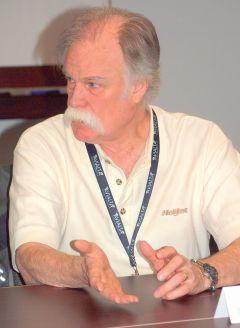
this is not a story about the helicopter industry. the story for me is how did someone create a situation and run away without proper oversight.
– Ken Glaze
where it’s really hard to get something done,” he said. “ t heir resources are being diminished to the point where i know companies that have a simple ops manual amendment in front of t ransport for a year – i mean come on. i t’s getting really hard to get things done – let alone push the envelope and do new things or get our capabilities recognized by the fixed-wing people who seem to be writing the rules.”
Jones concurred, noting that his phone rarely rings in his office with a positive news story regarding tc . “We see a huge backlog in the regulatory system with huge backlogs in amendments that we discussed years ago that are still in the cue for processing and that’s frustrating for all of us, operators and the association that are investing a lot of time in helping to generate those amendments,” he said. “ b ut probably an even bigger issue for the industry is we are not getting the air time that we need from the regulator for issues that are important to industry.
“Yes, they are driven by some of the same safety priorities there’s no question, but there’s also got to be some time left over for industry driven safety priorities and industry-driven efficiency issues and provide us with an opportunity to innovate and make our operations more safe.”
Helicopters’ second annual roundtable was a great way to spend 90 minutes and e issfeldt summed it up best at our booth shortly after the discussion: “ t here was so much more to say. We barely dented your list, Matt.”
Right you are, t erry, there is and true, we barely dented it –and that’s the nature of the beast; helicopter types aren’t exactly ones to shy away from an issue or two. i magine what would have been said had we moved the friendly confines to one of the nation’s capital’s favourite pubs and replaced the coffee with a bevy that offered a little more kick? “ n ow, there’s your plan next year,” joked b ean.
We’ll take that into consideration. Regardless, the discussion was a fruitful one and uncovered intriguing points on industry challenges and possible solutions operators may apply. For more coverage of the 2012 Roundtable, please see our video series at www.helicoptersmagazine.com.
BY JAMeS MARASA
ew images are as iconically canadian as the Mountie on horseback in the red serge. More than a century after the force’s formation as an entity for frontier justice, the tools of the Royal canadian Mounted Police have undergone some upgrades – the red serges have been stored and the horses stabled – but dig past the branding rooted in canadian identity and we have one of the most progressive police forces in the world.
fthe First World War officially came to a close in 1918, solidifying a place for aircraft in combat. at that time, the first fledgling airlines were just getting off the ground, and the public had yet to embrace the airplane as the hallmark of transportation it is today. that being so, commissioner of the RcMP, aylesworth bowen Perry, had seen enough to be convinced that the airplane could be a boon to law enforcement on the home front.
Perry recommended the formation of an air Police service but government support failed to materialize. that vision however, was not in vain. eighteen years later, four de Havilland dragonfly bi-planes with blue fuselages and yellow wings joined the force and along with eight member-pilots, began a canadian aviation legacy. seventy-five years later, RcMP air services operates more than
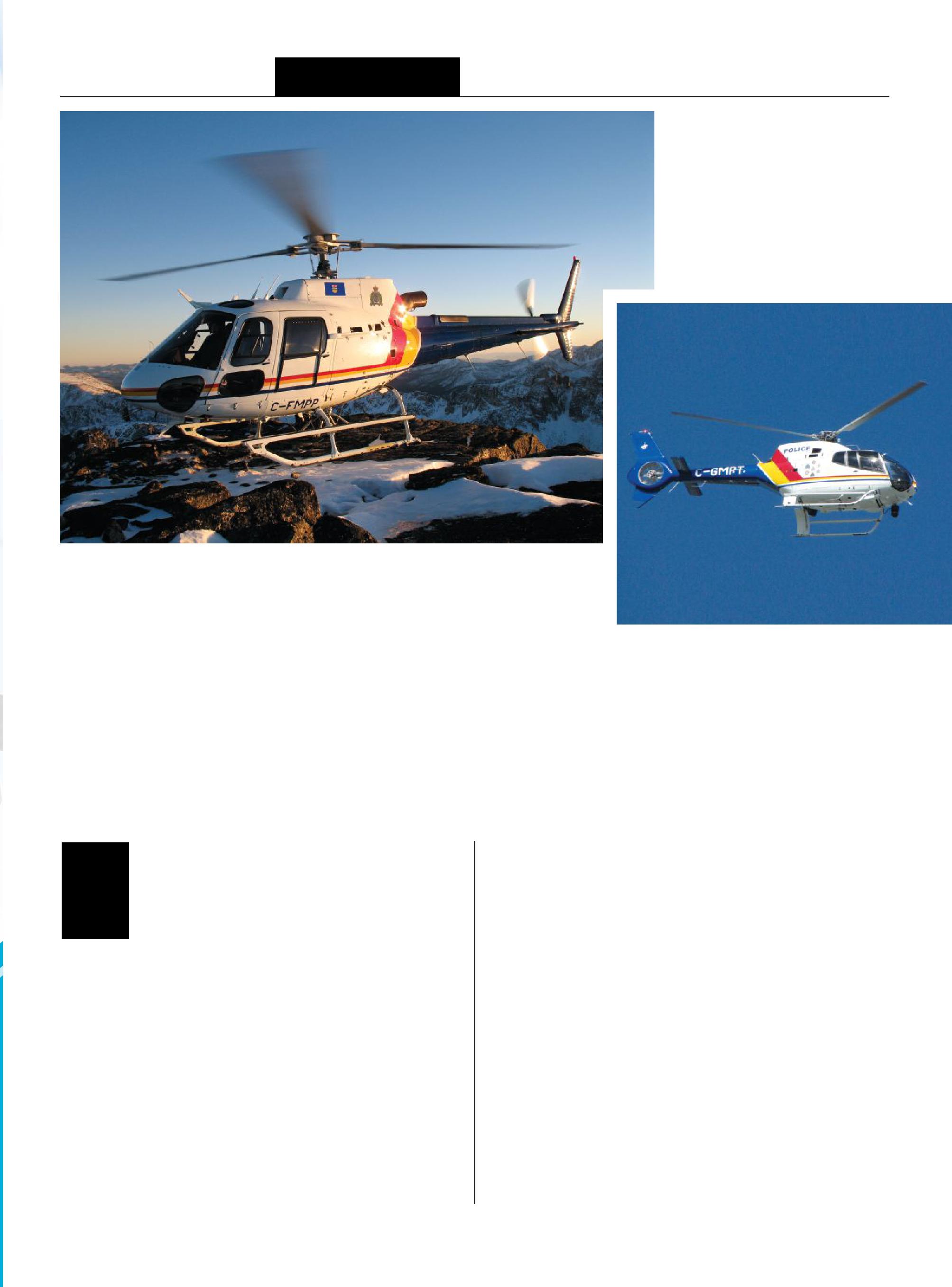
LEFT: In 75 years of aviation, the RCMP has adapted to an evolving scope of responsibility with newer aircraft such as the Eurocopter AS350 B. (Photo courtesy of RCMP)
BELOW: Air 1 and its sister helicopter, Air 2, support a “patchwork” of local police forces in the Lower Mainland of British Columbia.
(Photo courtesy of FlightSource.ca)
30 aircraft, maintains 19 air sections and employs 150 people nationwide. though much has changed, budgetary constraints have not. the national police force is being asked to do more with less. in that vein, a “draganfly” of an outright different kind has taken to the skies.
saskatoon-based draganfly innovations inc. began a pilot program in conjunction with the RcMP in december 2010, supplying small, unmanned aerial vehicles for the purpose of photographing vehicle collision scenes. using helicopters for routine operations such as aerial photography has proven to be expensive and timeconsuming, potentially making the helicopter unavailable for higher-priority duties.
Roger thompson is the pilot supervisor for the lower Mainland traffic safety Helicopter program based in vancouver. thompson has been with the operation, known commonly as “air 1,” since it spooled up in 2006. though he praises the ec-120’s capability in a wide range of missions, thompson does not understate the unique value of the draganflyer X6. “the uav can hover 50 feet above the ground and take high-quality pictures . . . [without it] we would be destroying a scene, blowing stuff all over the place.” Weighing only one kilogram, the X6 can capture and clear a scene in less than 45 minutes.
Michael toscano, president/ceo of the association for unmanned vehicle systems international, has stated that uavs can operate at as little as 1/30th the cost of manned aircraft, citing operating expenses of as little as $50 per hour. at $33,000 per field-ready unit, one can’t really object to the draganflyer’s price-point. Pioneering what some are calling sous-veillance, the RcMP has deployed this type of uav to support not only collision reconstruction, but also search and rescue and crime-scene investigations.
in an attempt to model the success of drones in afghanistan, uavs of a more militaristic nature have been deployed with the united states department of Homeland security since 2005. RcMP officer in charge of air services Marion lamothe explains that the possibility of using such drones for border patrol has been brought to the table.
“We looked into it,” he says, “but for the needs we have currently, we are not considering uavs.” lamothe explains that though smaller uavs do have a niche use within the force, the core of the RcMP’s local helicopter fleets will remain intact to handle the wide range of missions with which air services is tasked.
the RcMP acquired its first helicopter, a bell 212, in 1971. though the department of national defence holds the primary responsibility for search and rescue, lamothe points out that the RcMP usually receives the initial calls of missing persons on a detachment level and is often able to assist right on the spot. it has been said that the Mounties always get their man, but the concept has come to incorporate more than just catching bad guys. “You cannot beat a helicopter for search and rescue,” lamothe says. “a

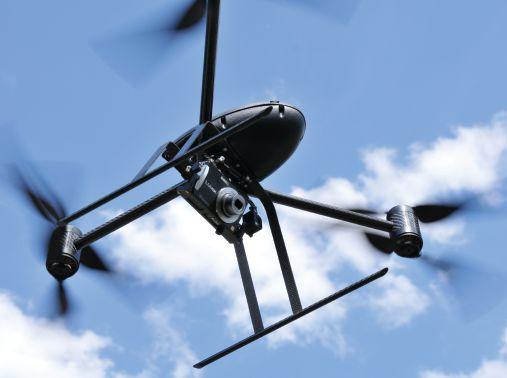
Saskatoon-based Draganfly Innovations Inc. began a pilot program with the RCMP in December 2010, supplying small UAVs to photograph collision scenes. Weighing only one kilogram, the X6 can capture and clear a scene in less than 45 minutes.
(Photo courtesy of Draganfly Innovations Inc.)
helicopter can get as close as possible to the scene.” the RcMP maintains six of its 10 helicopters in british columbia.
curtis brassington is the tactical flight officer (tFo) supervisor with air 1 in vancouver. brassington recounts that in late april, air 1 was called to assist north shore Rescue with locating an overdue hiker in the mountains north of vancouver. With dusk falling and poor weather hovering in the valleys, north shore Rescue was not aware of the status of the hiker, yet it had yet to determine whether or not to dispatch its ground-based search teams in what would be very challenging conditions. air 1, employing night-vision goggles and the helicopter’s infrared sensor, was able to locate the hiker in the dark. “We could tell that the hiker had built a fire and was in no imminent danger,” brassington says. “north shore Rescue was able to send teams in at daylight.” air 1 and its sister helicopter, air 2, are funded by the insurance corporation of british columbia (icbc) as part of the Provincial Police service agreement. though the RcMP operates the helicopters, they function as an integrated unit within the Fraser valley. air 1 routinely liaises with what brassington calls a “patchwork” of police forces in the lower Mainland, which include vancouver,
The RCMP has 19 Air Sections and currently employs 150 people throughout the country, including 78 pilots and 49 aircraft maintenance engineers and avionics technicians. The Air Services fleet includes the following fixed- and rotary-wing aircraft:
• three Cessna Caravans
• two de Havilland Twin Otters
• two Eurocopter EC-120 Bs
• eight Eurocopter AS350 B3s
• 15 Pilatus PC-12s
• one Piaggo Avanti P180
• 10 Cessnas
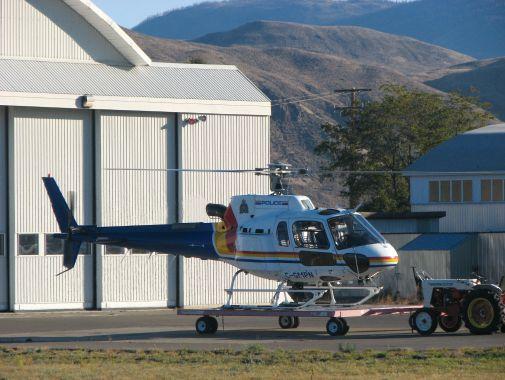
RCMP uses helicopters for a variety of missions including search and rescue. Six of Air Service’s 10 helicopters are based in British Columbia.
delta, new Westminster and abbotsford, as well as the local detachments of the RcMP itself. calls are prioritized by importance and proximity of the helicopter with no particular agency carrying greater weight than any other. “it’s triage,” says thompson. thompson and brassington have refined the way they do business since their start in 2006. “We were pretty much on our own to figure out how to do this,” says thompson, a civilian pilot who came from a commercial helicopter background that began in saskatchewan and took him to vancouver island Helicopters before joining air services.
brassington, who began as a general-duty member with the langley detachment of the RcMP, joined air 1 on the same day as thompson. “on our first call, we were able to help the dog catch the guy,” he says. “We had a report of a stolen vehicle . . . we picked it up and were able follow it discreetly until plain-clothed units moved in.”
since then, air 1 has been assisting units on the ground with the bigger picture. “We can help establish perimeters, especially at night,” says thompson. “during the day, the eyeball and map are our best tools, but with night-vision goggles, we can do a lot at night.”
though operating in the congested airspace of the lower Mainland presents its special challenges, thompson commends the service provided by air traffic controllers in giving air 1 priority to manoeuvre through YvR’s busy approaches, as it is often required to do. “if we can get there soon enough, we can usually catch the guy.”
“cars being driven dangerously are essentially weapons,” adds brassington. He explains that following stolen cars or dangerous drivers is “very easy” using the helicopter. in doing so, they can assist officers with tasks such as setting up spike belts ahead of fleeing vehicles.
a challenge that has been well publicized of late is that of ground-based laser strikes on helicopters. in addition to some significant events in canada (one recent event forced the durham Police Helicopter to land and caused the tFo to receive precautionary medical treatment), the Faa reported 2,800 events of lasers pointed at aircraft in 2010.
“People have no idea of the damage (lasers) can cause,” says thompson. Youth and alcohol are believed to play a significant role, though brassington recalls a particular event where a 50-year-old
man pointed a laser at the police helicopter because he didn’t like the noise of the chopper buzzing around his neighbourhood. though the possibility of shielding the aircraft from laser strikes has been considered, both thompson and brassington advocate that the most effective mitigation is avoidance.
in 75 years of aviation, the RcMP has adapted to an evolving scope of responsibility with newer aircraft. lamothe explains that despite the inherent risks facing the aircraft, pilots and tFos, flying in the RcMP has become much safer in the past 30 years. “the avionics are considerably more advanced,” he says. “We have better means of communication and tracking.”
However, with such advances in technology, lamothe emphasizes that there is a more intense requirement for training. Part of lamothe’s mandate in overseeing the air section is ensuring that each individual in air services is properly trained to do his or her job. it’s a challenge that has existed since the first bi-planes lifted off at downsview and will be ever-present as the demands on law enforcement agencies change. thompson and brassington both see a need for additional aircraft to expand their force’s ability to keep the public safe. and while they may not be as iconic as the red serges, RcMP aircraft and the people who fly them will continue to play a lead role on that front.
On Sept. 13, RCMP Air Services will be hosting an open house for RCMP personnel and partner agencies. Events will include a memorial ceremony for RCMP Air Services members who have lost their lives while on duty since 1937.

Aviation Ground Fueling Technologies Ltd. specializes in the design, fabrication and installation of aviation fueling systems throughout Western Canada.
AGFT’s experTise incLudes:
• Aviation Fuel Approved Double Wall Storage Tanks
• Into Aircraft Fueling Solutions
• API 5th Edition Truck Loading & Offloading System
• Large Inventory of Fueling Components Available 24/7
• Certified Aviation Petroleum Technicians Available 24/7
• Custom Fueling Solutions
• Towable Helicopter Fueling Units Availbale for Rent or Purchase
BY pAul dixon
trauma is a term used to describe severe injuries, including injuries due to motor vehicle accidents, falls from a significant height, blunt force injuries or wounds from violence. trauma is the leading cause of death for canadians under the age of 45 and accounts for the loss of more potential years of life than any illness or disease. More than 200,000 canadians are hospitalized due to trauma each year. there are also significant financial costs – canadians spend nearly $20 billion each year on the direct and indirect costs associated with injury.
there is clear evidence that dedicated trauma services and systems of trauma care save lives. Major advances in trauma treatment and care in the civilian world over the past four decades have come from the lessons learned from the military, especially in vietnam, where survival rates of battlefield casualties increased exponentially with rapid medical intervention.
in canada, there are 32 level 1 and level 2 trauma centres located in major population centres. Hospitals are rated from level 1 down to level 5. level 1 involves specialized trauma centres with a full range of specialists and equipment available 24/7/365 and level 5 is at the other end of the spectrum being small rural clinics with limited staff.
a study released by the american Medical association in april 2012 states that the odds improve even more significantly for those patients transported by helicopter rather than ground ambulance. the study included data on more than 200,000 adults who had suffered major trauma and required transportation to a level 1 or level ii trauma centre.
the authors found that while there was a slightly higher rate of death amongst patients transported by helicopter (12.6 per cent) versus ground transport (11 per cent), patients taken by helicopter were more likely to have more severe injuries. When comparing patients who suffered similar injuries, they discovered that patients delivered to level i trauma centres by helicopter actually had a 16 per cent better chance of survival compared to those transported by ground.
the authors, led by dr. samuel Galvagno of the university of Maryland school of Medicine, said that it isn’t clear exactly what element of helicopter transport is responsible for the increased survival rate – whether it’s the medical teams or facilities available on the aircraft, or speed of transport to the hospital. but they did call for more research to investigate the various components of helicopter eMs the goal of further research is to be able to more quickly and easily identify those injured adults that would be most likely to benefit from helicopter transport.
the use of helicopters as medical transport dates back to the very beginning of their military service, with the u s army utilizing them in burma at the end of the second World War. the helicopter came of age during the korean War, immortalized by the movie MASH and the subsequent tv show, delivering front-line casualties to battlefield medical units and then later transporting patients from the aid stations to hospital ships off-shore. the concept of the Golden Hour in emergency medicine came out of the vietnam War with the realization that the sooner a critically injured soldier was delivered to a medical centre that could deliver the required level of care, the greater the chance he or she had of surviving; and a patient that who was delivered to the trauma surgeons by helicopters within that first “golden” hour had the greatest chance of surviving.
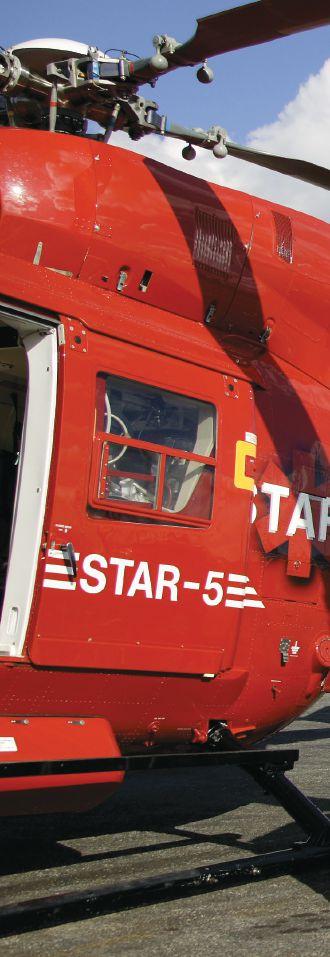
as military doctors, medics and helicopter pilots returned stateside from vietnam, the first dedicated air medical helicopter services were established in the u s. in 1969, in Hattiesburg, Miss. as the concept was proved, services grew across the u s. to where today there are more than 800 helicopters in the air medical classification, with more than 400,000 patients transported in 2010. Randy Mains, a vietnam-veteran pilot, wrote his autobiographical novel The Golden Hour, based on his experiences flying HeMs in california in the early 1970s.
canada took a slightly different route in establishing air-ambulance services, a reflection of the differences in health-care delivery between canada and the united states. the difference is not so much in the actual health-care delivery as in the administrative and financial models of the two countries. ontario established canada’s first medical helicopter service in 1977 with a single aircraft. development of service in canada differs from that in the u s. where air ambulance service is a mix of not-for-profit and for-profit services, often with more than one operator in a market.
in canada, pre-hospital emergency medical care falls under the
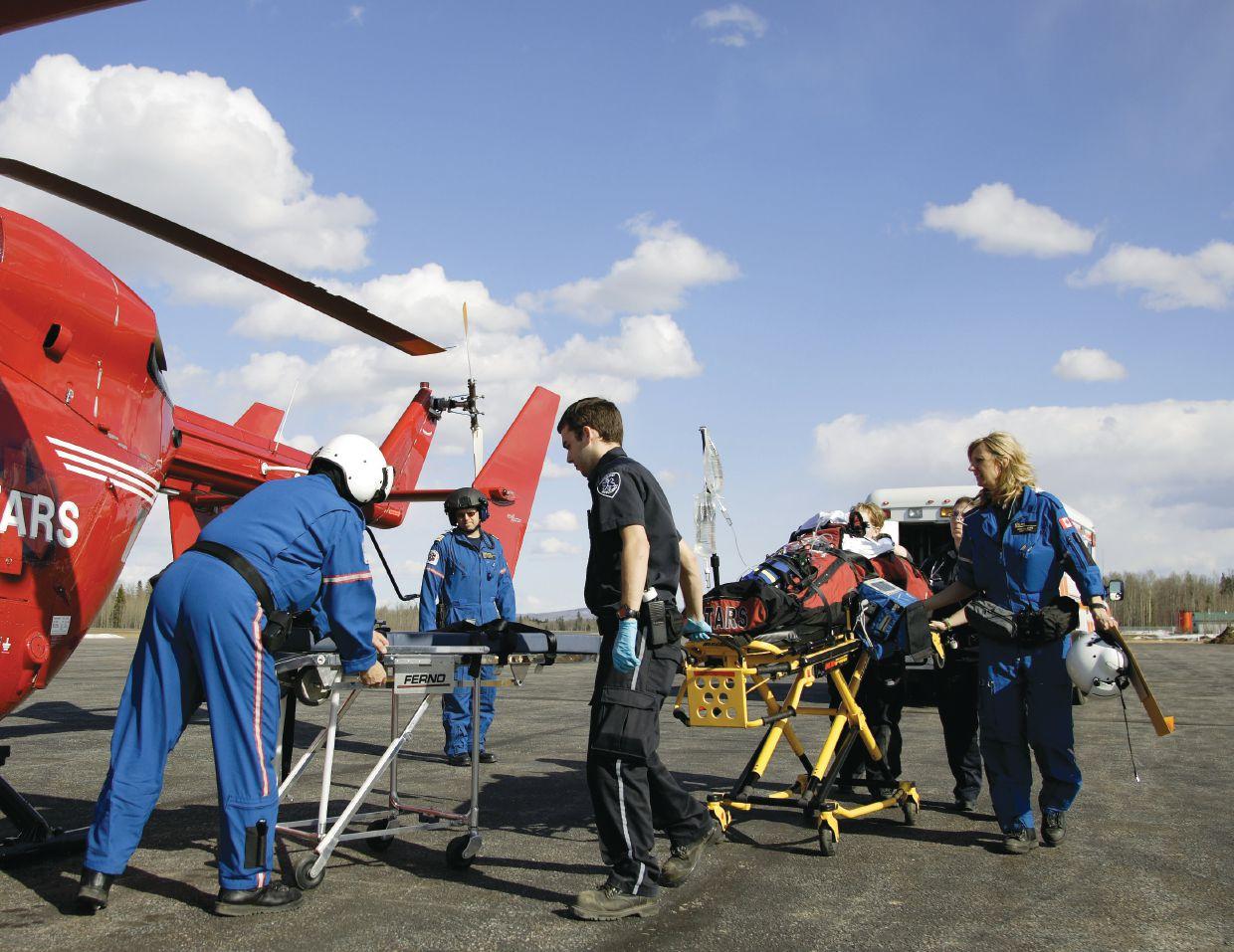
jurisdiction of the provinces, with two basic models for service. in british columbia, air ambulance (fixed-wing and rotary-wing) come under the direction of the bc ambulance service, with contractors operating the aircraft with bcas paramedics. staRs (shock trauma air Rescue service) is a not-for-profit foundation that operates its own medical helicopters, staffed with its own paramedics, under agreements with the governments of alberta, saskatchewan and Manitoba. in ontario, ornge was created in 2005 as a not-for-profit society to take over responsibility for fixed-wing and rotary-wing air-ambulance service from the Ministry of Health. However, the organization is in serious turmoil, as in the past year it has come under extreme scrutiny for mismanagement on several levels. it is currently under a criminal probe for financial irregularities amid allegations of questionable business practices, and excessively high executive salaries, and questions as to whether public money may have been used for private gain. there are also hints that mismanagement of resources and staffing shortages may have led to several deaths.
nova scotia operates a single-helicopter air ambulance from Halifax, operated by canadian Helicopters with paramedics from nova scotia emergency Health services. nova scotia eHs provides service to Prince edward island and new brunswick under mutual-aid agreements. While newfoundland has no dedicated helicopter air-ambulance system, the province operates four helicopters in its own fleet that can be used for air-ambulance service on an ad hoc basis.
the death of actress natasha Richardson in 2009 from injuries
STARS’ prime concern is delivering appropriate medical care to the critically ill or injured patient in the timeliest way possible.
(Photo courtesy of STARS)
sustained in a fall at a ski resort in Quebec highlighted the fact that Quebec has no government-mandated helicopter air-ambulance service. the Quebec government did acknowledge the situation under severe media scrutiny, but after several months deliberation the minister responsible stated that the government would still not be instituting a helicopter air-ambulance service. airmedic, a new company created from airMédic air ambulance, a 12-year-old company started in 2000, operates in Quebec as a subscription based service with clients buying memberships as with an auto club. in april 2012, airMédic announced that it had found a strategic partner in capitale Hélicoptère of Quebec city and would be expanding operations (see angels from above,” page 14).
one major difference between american and canadian helicopter airambulance operations is the safety record. over the past decade, usa today has run a number of investigative features questioning the safety record of helicopter eMs in the u s in its edition of april 2, 2009, the newspaper quotes dr. ira blumen of the university of chicago Medical school, testifying before a special hearing of the ntsb in Washington, dc dr. blume said, “air-ambulance helicopters have the worst fatal
crash record in aviation, and their crews are among the most likely to die on the job, an expert told a panel of federal investigators.
the rate of fatalities per 100,000 air-ambulance employees over the past 10 years exceeds other dangerous professions such as logging or deep-sea fishing. He was further quoted as saying that, “since 1972, 264 people have died in air-ambulance crashes (in the u s.).” this was in stark contrast to testimony later in the proceedings that canada has not had a fatality in air-ambulance operations since operations commenced in 1977.
tom Judge, executive director of lifeFlight of Maine and a past president of the association of air Medical services, spoke with Helicopters from Washington dc this past april where he was observing an extraordinary four-day series of hearings convened by the Faa on the subject of helicopter eMs operations. He offered some comments on the differences between operating philosophies in the u.s. and canada.
“i think it’s attributable to a number of things,” he said. “one, it’s attributable to the way the canadians have chosen to finance the system. take staRs, it’s a private non-profit, but there’s still some fundamental pieces from the provincial governments that are involved. in the united states, unfortunately, and this not true of just air ambulances but for all ambulances, the only way an ambulance is reimbursed in the u s is if you transport somebody. so, the motivation is to put people on stretchers and any kind of vehicle you can and transport them.
Judge also noted that the financial motivation or model is that you have to put people in the vehicles in order to pay the bills. in the canadian system, you have block funding and the expectation is that you are going to take care of patients. “the lights are still going to be on
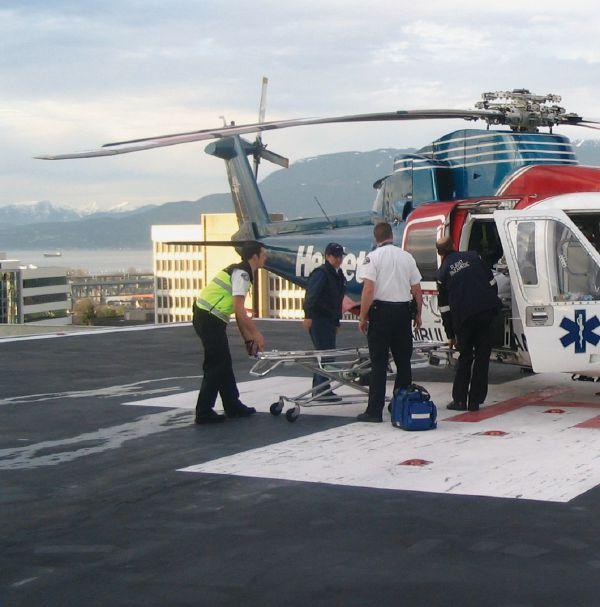
and the salaries are going to be paid regardless of how you choose to transport a patient, so you end up with a better risk-management ratio,” he said.
another critical difference between operations on both sides of the border involves the risk-management issue. canadian air-ambulance operators – HeliJet, staRs, ornge and cHl in nova scotia – fly twinengine medium helicopters with two pilots, iFR and strict regulations regarding adverse weather conditions. Many american operators, especially in the for-profit sector still operate single-engine light helicopters with single pilot under vFR, pushing the safety envelope on virtually every flight.
scott Young, director of aviation operations at staRs, concurs with Judge’s assessment of the situation. “[as a not-for-profit] we have the luxury of being able to put the patient first,” Young said. “everyone in health care does, but there are certain realities and even with us there are economics. We have to be sustainable and by not having to consider shareholders and their interests we truly do put the interest of our patients first. not every organization is able to do that.”
a strong safety focus and commitment to hiring the best pilots is also important, Young notes. “We always fly two pilots, multi-iFR capable pilots and our captains have to have an airline transport license. our co-pilots have to have a commercial rating, an instrument rating and a night rating,” he said. “We don’t have a lot of co-pilots, we don’t seek co-pilots. the demands of our missions require that we have as many highly qualified people as possible so we try to recruit captains, unlike a lot of other organizations and airlines that want to split between captains and co-pilots – it saves money. We don’t do that, we look for operational capabilities, not finances. Quite often we fly with two captains, but only one can be Pic. We have that level of expertise in the cockpit, because we have the luxury of putting people first – our patients. We think that is the best model. it’s different for us, in that it
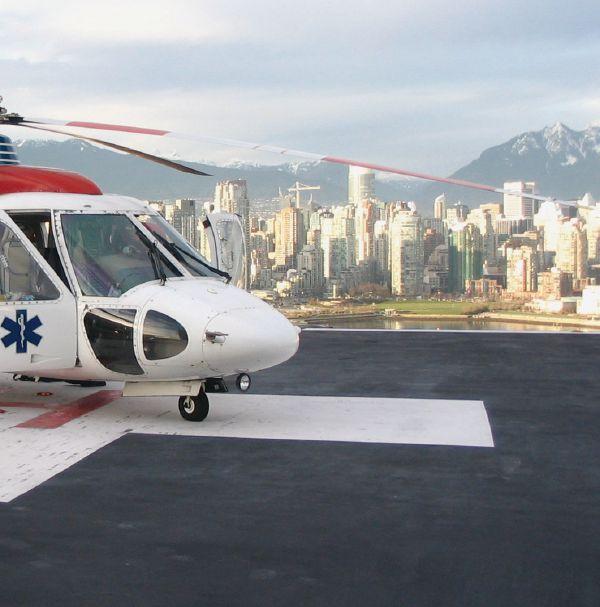
costs us money to go flying. unlike other companies that make money when they fly, it actually costs us money when we fly. it’s not that we don’t want to fly, because that’s what we’re here to do, but if we don’t fly we’re ok.”
in alberta, staRs receives about 25 per cent of its funding from the provincial government, related directly to aircraft operating costs and maintenance. the rest of staRs’ budget is directly funded by a wide variety of fundraising initiatives from province-wide big-ticket lotteries to small town pancake breakfasts. corporate donors are significant source of funding. as staRs moves into saskatchewan and Manitoba, it has taken a large commitment from the provincial governments for the startup costs, but the commitment to the not-for-profit model has been widely accepted by the community at large in both provinces.
staRs flew 1,650 missions from its bases in calgary, edmonton and Grande Prairie in 2011, with many of these flights being inter-facility transfers of critically ill patients. compared to many american operators that may seem low, but as Young said, “our focus is on the most critical injured and sick patients, that’s our only focus. We don’t fly people in for appointments. We don’t fly people in because they have to see a doctor tomorrow. We get called because a patient’s life is in danger noW.”
staRs flies with a paramedic and a flight nurse in the helicopter. doctors are a key part of the program, with referral emergency physicians on staff, doctors who work in the hospital system as well. With requests for an inter-facility transfer, the doctor at the sending hospital initiates the process. the doctor talks to the staRs doctor. they look at the patient’s condition is and what assets are available, whether it requires basic life support or could be advanced life support and then they also look and see if there is an aircraft is available. the decision is based on the condition of the patient and what mode of transportation is most appropriate and available. then they make the call as to whether it’s an ambulance, a helicopter or an airplane.
in b c, the helicopter ambulance service is integrated directly into
the province-wide ambulance system. Helijet operates two s-76c+ aircraft out of vancouver (YvR) and a third s-76c+ from Prince Rupert on the north coast. in 2011, 2,308 patients were transported by helicopter in b c the bc ambulance service (bcas) critical care transport (cct) Program provides specialized, pre-hospital and inter-facility treatment and transport for critically ill or injured patients across british columbia in an integrated model that utilizes rotary-wing, fixed wing and ground ambulances.
additionally, infant transport paramedics are based at bc children’s Hospital in vancouver. they have completed advanced training and provide emergency medical care to paediatric, neo-natal and high-risk obstetric patients. the infant transport team is the only neonatal transport team in canada which operates a dual paramedic team.
teams from both staRs and bc ambulance have garnered top honours at international competitions in the past year, underscoring a comment from cam Heke, media and public relations manager for staRs, “many people see us as a helicopter company, but we’re not. We’re an emergency medical operation.”
the mismanagement of ontario’s ornge notwithstanding, canada’s HeMs is well positioned to effectively serve canadians from coast-tocoast, transporting them in a safe, efficient “flying hospital” at a time when they are at their most vulnerable. Flying via helicopter continues to be a safe, efficient, expedient form of medical transportation – and canadians in need should feel confident they are in good hands when medical teams descend from above.

BY pAul dixon
Just as the iPhone turned the cellular phone world upside down, so the iPad is unleashing (literally and figuratively) a revolution in the cockpit in the form of the electronic Flight bag (eFb).
the eFb is the paperless version of the traditional pilot’s flight bag, which can contain up to 40 pounds of operating manuals, navigational charts, handbooks, checklists, logbooks, weather information, and just about anything a pilot needs to operate an aircraft. by contrast, the iPad-based flight bag weighs under a pound and a half and has all the necessary materials loaded in app form.
the concept of personal computing in the cockpit is not new. Fedex brought computers into the cockpit 20 years ago when it deployed its airport Performance laptop computer to carry out aircraft performance calculations on the aircraft. they followed that in the mid-’90s by installing docking stations for laptops under their Pilot access terminals. What worked in large commercial aircraft was not necessarily suited for helicopters, but with the introduction of the first apple iPad in april 2010, the right platform had arrived.
at this year’s cHc safety & Quality summit in vancouver, bill amelio, cHc’s president/ceo, spoke of trust, technology and transformation with his firm’s electronic Flight bag project as an example of all three. the concept is simple: transforming business and performance by using technology that has gained widespread trust.
implemented across its worldwide operations, the eFb will soon serve as a vehicle for standardizing cHc’s flying operations at bases around the world. this increased efficiency will pay dividends in the form of shortened accounts receivable cycles, more complete information for crew scheduling and maintenance activities, and the elimination of in-flight paperwork duties. the cHc eFb will also provide flight crews with powerful tools for routing, fuel planning and weight and balance calculations.
Jed Hansen, manager of operational support at cHc, who leads the eFb implementation project, spoke with Helicopters about its role in transforming the fleet. “the iPad is a device that most people are familiar with. it’s a stable system, it’s well proven, and it meets the needs for what we hope to accomplish with it,” says Hansen. “the first benefit of the eFb is safety. the goal is to reduce the workload in the cockpit, provide more accurate calculations and ensure that what the pilot has to do in the cockpit while they’re flying is minimal to allow them to concentrate on flying.”
the first phase of the project for cHc will see the iPad used solely as
a document reader. this will allow for all of the documentation carried on board an aircraft to be in electronic format on the iPad. as regulator approval is received in the many countries where cHc operates, the next step will be implementation of the full appareo systems’ developed eFb and the introduction of electronic approach plates. Full implementation is planned by the end of this year.
in terms of meeting all regulatory approvals, Hansen notes that cHc has approval in canada and the cayman islands to remove paper completely from its aircraft. “in norway, australia and several other jurisdictions, cHc has received approval to commence trials – so the iPads are the source of documentation with paper backups,” says Hansen. “We will continue to go through the process in all jurisdictions we operate. once we have completed the trial period we are granted approval to remove the paper documents. over the next six months, all of our documents will be electronic with no requirement for paper backup.”
When asked what would happen in the event of an unforeseen disaster or calamity that could affect communications on a regional or global basis, Hansen said pilots would have to revert back to a paper system. “We are currently using Jeppesen iFR charts in most locations on a 28-day cycle,” he says. “We need to update it on a desktop and print out our approach plates. We would need to revert to the old system or conduct operations under vFR conditions without internet connectivity.
“When we started looking at the appareo application, we started looking at having some failsafe in it. obviously, the first time [the system] is installed you need connectivity. once it’s on the iPad, it can be used as a standalone. We wanted that for power failures, internet failures; also as we’re flying along, changing, or redoing, routing. eventually, there’s the opportunity for connectivity in the cockpit, but we’re not looking at that yet, so we need a standalone capability.”
in addition to the iPad, cHc is developing a desktop planning tool with appareo. this tool will enable a pilot or dispatcher to sit at a
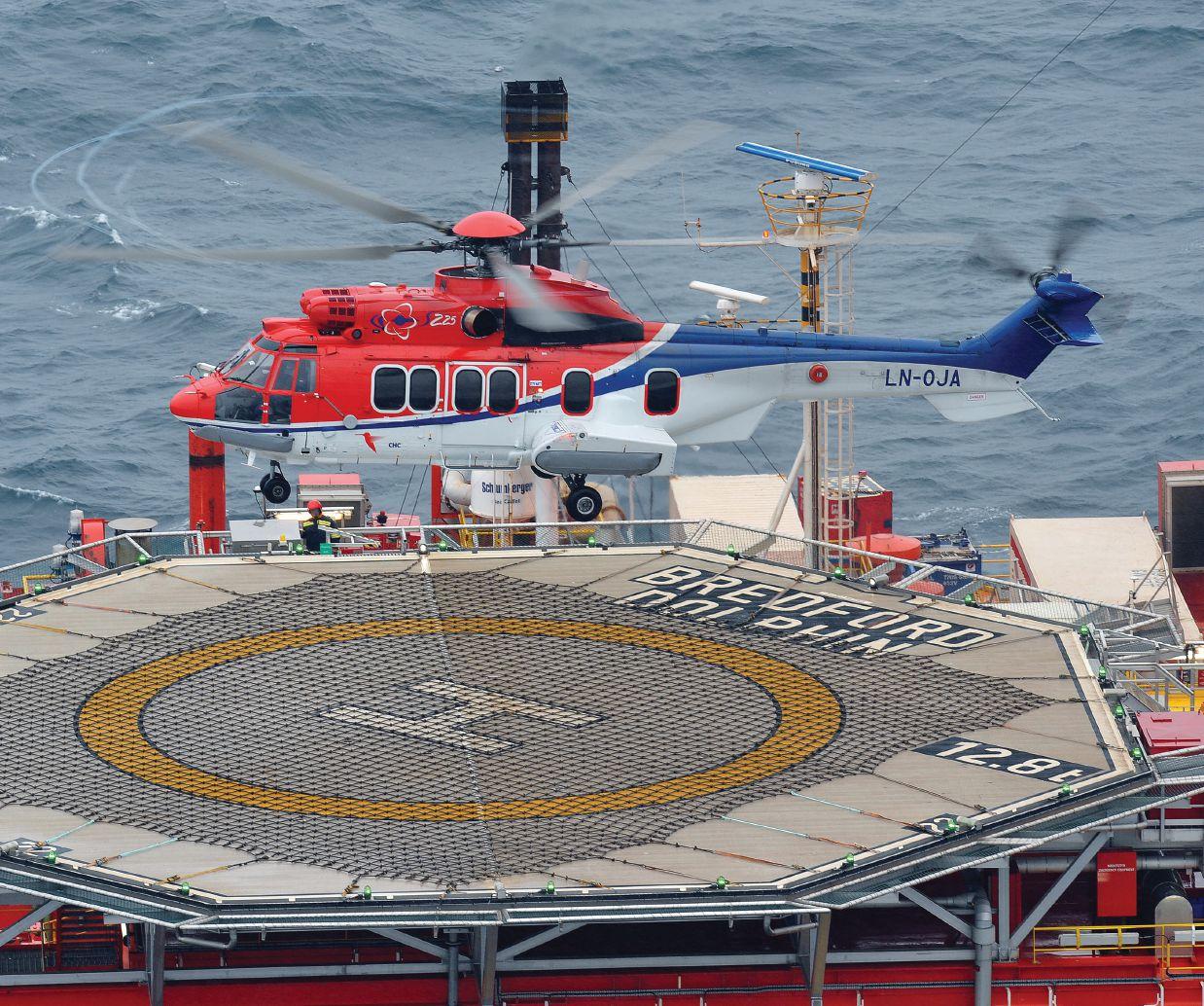

ABOVE: CHC president/CEO Bill Amelio maintains the Electronic Flight Bag will transform business and performance by using technology – which in turn, will help establish trust.
(Photo courtesy of CHC)
LEFT: The first phase of the Electronic Flight Bag project will see the iPad used solely as a document reader. This will enable CHC crews to have documentation carried on board in an electronic format on the iPad.
(Photo courtesy of CHC)
computer, and through servers, uplink it to the iPad. before this can go forward, however, the company needs to ensure that if the servers go down or wireless internet is not available, they can synch it through a local area network or bluetooth.
cHc has also taken steps to make sure its eFb program is even more airtight by having necessary backup procedures in place. For example, there are two iPads per aircraft and backups are carried at all bases. “We’ve tried to cover everything; ensuring that everything is of the safest standard,” says Hansen. “We have a single, controlled, auditable flight planning system that is consistently used around the world by cHc everyone will be using the same manuals and the same flight planning
requirements, which are all determined by a centralized flight standards group; it just gives a little bit more control. From there, there are all sorts of things it can drive – maintenance systems, crew scheduling systems, automatic flight duty tracking and flight qualification requirements. all of the flight data in the eFb can populate other company systems.”
With the eFb in place, cHc can also ensure flight times are accurate and errors aren’t being made. there’s also a weight savings and an extra value to customers. other benefits include document control, greater accuracy, and of course, improved safety. “if we were to produce a new manual, from the time we said, ‘ok, it’s done,’ to the time it ended up at our bases around the world, it would probably be up to 20 days considering shipping, customs and then it actually gets put in the aircraft. With the iPad, you just hit one button and in 20 seconds you have the latest documentation installed everywhere around the world.”
there was a time in the not too distant past when technological changes caused great angst across the workforce, with many people threatened by new and unfamiliar technology. that’s certainly not the case here. Hansen says pilots are eagerly awaiting the eFb to be fully integrated into overall operations. “in our business, most people have an iPad or an iPhone. they’ve already downloaded applications for aviation on their iPads and they’ve played with them. they see how much easier it makes their life.”
cHc has implemented a training program for the first phase of the rollout, the document reader portion. a PowerPoint presentation walks pilots through the introduction to the iPad; another five to 10 minutes of familiarization with an actual device provides a level of comfort. so, how have pilots embraced it so far? those familiar with iPhones and iPads are already offering suggestions on potential improvements.
“cHc is worldwide organization, so a lot of our communication is electronic already,” says Hansen. “sitting at a base anywhere in the world today, pilots can get onto their computer and see the spreadsheet that is designed for flight planning at that base. they already see the eFb as a robust flight planning tool that they can utilize the entire day and realize their life gets easier.”
the issue of privacy and security is a huge concern in today’s business environment and cHc isn’t taking the issue lightly. the u s department of defense, for example, has been looking at a wide range of potential eFb systems across its widely diverse mix of aircraft and mission requirements, and earlier this year, the u s air Force cancelled a project that would have included up to 18,000 iPads used as eFbs. While the usaF has offered no official comment, it has been widely reported that the realization that the iPad incorporates Russian designed software within its document reader and security software was the reason.
on the various security issues involved, Hansen notes, “as far as documents that are available on it, they are available to all of our crew today through our intranet. as part of our document control, they are password protected, there is an iPad login as well as the controlled documents on the FtP site password protected. the eFb application is secure with the data running through secure networks. We have control features on the iPad to provide security, which prevents pilots from downloading anything they want on them. i’m comfortable that what is on the iPad is appropriately secure.”
tHe SKY’S tHe liMit
the future holds even more promise as the eFb program fully gets going, notes Hansen. For example, cHc helicopters are equipped with isat and there is the potential in the future to be able to bluetooth an individual iPad to receive data, so that by clicking the weather app on the
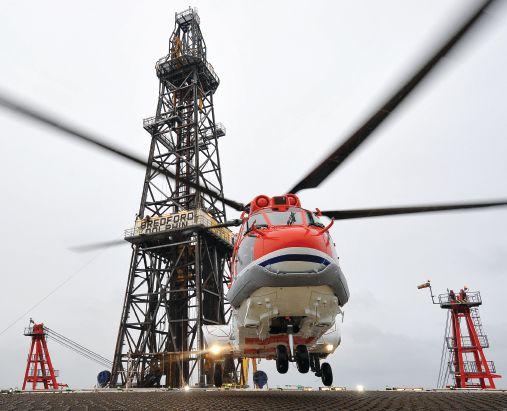
home screen, up-to-date weather and notaMs will be available. dispatch could ping a pilot a new routing just like that, so the pilots don’t have to change it themselves.
“i’m also excited about an application we call a shuttle page,” says Hansen. “Quite often, we’ll go offshore and when we’re offshore we’ll do multiple stops, maybe five or 10 and up to 30 in some locations. You’ve got one person boarding, two disembarking for example at each stop and with paper and a calculator one pilot’s head is down non-stop trying to keep up with this. With the eFb, it will allow us to simply drag and drop on the screen and all your weights are automatically calculated. the amount of workload that is reduced by having this available is phenomenal.”
initially, cHc had considered a Pc-based option that would have linked the company’s internal mainframe Pc system with the iPad eFb but after careful analysis, it was determined that a better solution was to keep the flight planning system on the apple platform. appareo is working out a Mac solution that will see Mac computers for the flight planning side at all operations in addition to the company Pc system.
“this will allow people with the appropriate authority to do different things,” says Hansen. “a lot of our customers like options, because payload is a factor on helicopters, we want to be able to provide different scenarios to determine what will suit the situation best. this setup will allow us to sit at a desktop and try out various options so when a pilot grabs their eFb and selects option 2, there’s option 2 loaded on their iPad.”
Working with appareo on the new system has been a very constructive process, Hansen says. “they did a great job of keeping the desktop appearance and functionality the same as the iPad. there are minimal differences because of the bigger screen, but it’s got the same information, in basically the same presentation. a click of a button and you can scroll through and add your locations.
in the end, the development of the eFb system is all about providing the safest working environment possible. For cHc pilots, technology can indeed produce trust. “now, when a pilot plans a flight they’ve got all the information,” says Hansen. “they don’t have to worry about somebody having played around with the figures. it’s all there and it’s all controlled.”
Commercial Charter Services
• Bell 407, Bell 206 and Bell 206L
• Robinson R22, R44, R66
Approved Robinson Dealer
• New & Used helicopter sales
Campbell River Base e-mail: info@ebhelicopters.com www.ebhelicopters.com
Gold River Base
Tel: 250-283-7616
Fax: 250-283-7555
Port Alberni Base
Tel: 250-720-8915
Fax: 250-720-3641

• Complete overhaul facility R22, R44 and R66 Avionics
• Helicopter and Fixed-wing complete avionic services









Position: M1/M2 Engineer
Aircraft Types: C-172, Piper Arrow, Beech Baron, BAE J31/32, PA31T, Bell 206L
Company Name: Rangeland Helicopters Inc
Location: Medicine Hat, Alberta, Canada
Contact Person: Human Resources
Job Description:
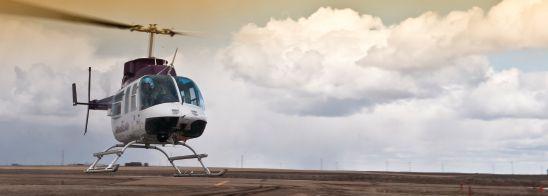













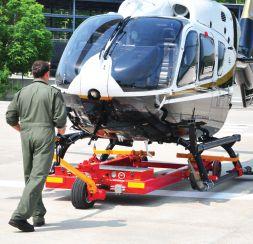


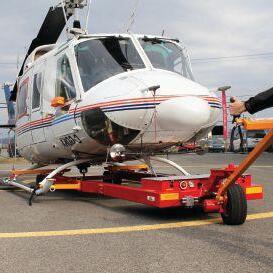
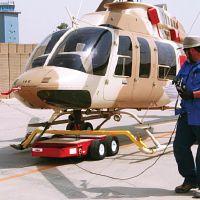






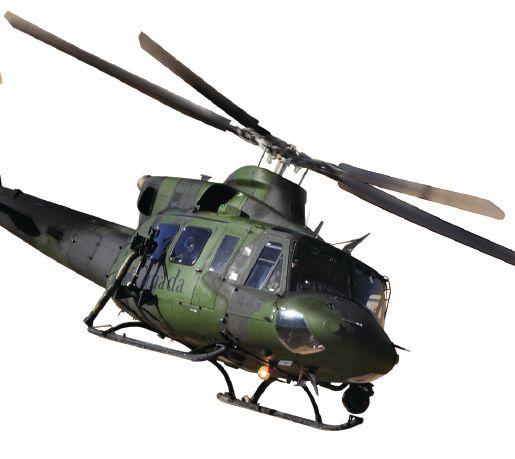





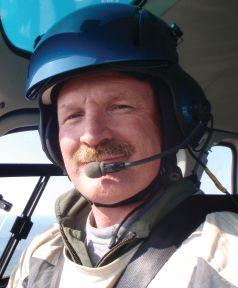
the cornerstone of sMs is recognizing and mitigating your own risks before they become accidents. in short, the operational community takes more responsibility for its own safety.
in the past few years at Hac, i have witnessed a flurry of activity in the operational community as prudent operators erect the pillars of their sMs programs. i have witnessed operators implement HFdM, and HuMs, and satellite tracking systems, and voluntary and non-Punitive Reporting Programs, to name only a few. i have witnessed Hac committees developing industry best Practices, including Pilot competencies for Helicopter Wildfire operations, best Practices for onshore oil & Gas operations, and best Practices for utility Flight operations. our committees are developing best Practices for Heli-skiing and Mountain Flying and types of class d operations.
When the aviation community was introduced to sMs more than 10 years ago, transport canada promised that if operators accepted more responsibility for recognizing and mitigating their own risks, they would receive relief from the prescriptive regulations.
in fact, at the time, tc was actively soliciting the involvement of aviation stakeholders (airports, helicopter operators, business aircraft operators) to accept more responsibility for their own regulatory environment.
the canadian business aviation association (cbaa) was on the leading edge of this initiative with its Poc Program, aptly referred to as
‘‘
Is Transport Canada Living up to Its End of the Bargain?
responsibility for their own safety with sMs, it was refusing to offer them more responsibility or recognize the ones that stepped up to the plate. couple this with declining levels of service from tc, and most recently with the federal budget’s 10 per cent reduction in funding to tc, and the prospect of a more progressive form of regulatory oversight is bleak.
the exodus of experienced inspectors from the department certainly does not inspire confidence. the fact that the phased implementation for sMs in the caR 702 and 703 segments of the industry is a constantly moving target does not bode well for transport’s leadership and its ability to “close the deal.”
and as i noted in the Helicopters roundtable last year, the challenge with sMs is two dimensional. one dimension is that the smaller operators seem to be having the most difficulty implementing it because the system was designed for implementation in a larger operation. the promise of sMs has been its scalability for small operations, but it is more difficult in practice than it was in theory. the other dimension is that implementation date is constantly moving off.
Yes, there are significant issues within tc with culture and getting the culture change with inspectors, but it’s getting to a stage where the credibility of the process is being affected by the constantly moving implementation dates. and like many other things tc does, the systems are built for large operators and the small operators are an afterthought about how it’s actually going to work in a small operation.
the exodus of experienced inspectors from the department certainly does not inspire confidence.
“regulatory stewardship,” but other industry segments and associations flirted with the concept, including this one.
However, the announcement by the minister that the cbaa Poc program would be repatriated to tc, signalled a sea change inside the department. the idea that prudent safety-conscious operators could receive relief from prescriptive rules has simply evaporated. there has been no further discussion with the aviation community about “regulatory stewardship” programs or even about further delegations of authority.
at the same time that tc was encouraging operators to accept more
’’
the issues of poor service levels and a backlog of important issues –including the implementation of sMs – were raised again at this year’s roundtable (see, “Finding the Right Resources,” pg. 17).
My other greatest fear about sMs, raised originally by tc, was that it would simply amount to another layer of regulation on top of the prescriptive caRs and i currently see no reason to believe otherwise.
if sMs is to amount to more than this, then Hac challenges tc to articulate the benefits that will accrue from the regulator to prudent operators that manage and mitigate their own risks – to the operators that exceed the regulatory standards set out in the caRs. if industry develops best practices or its own audit standards, will tc recognize those operators that embrace them?
Fred Jones is the president/CEO of the Helicopter Association of Canada and a regular
contributor to Helicopters magazine.

Some of the many Keynote Speakers:
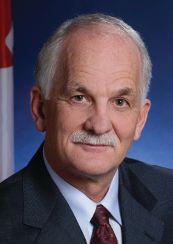



Eurocopter is committed to protecting Canada’s coast… At present, and in the future. The longest coastline in the world deserves the world’s most capable helicopters. Eurocopter offers safe, reliable, and innovative solutions to customers around the world.
Thinking without limits