Cultivation: Taking care of your roots for a high-quality harvest p.10
Post-harvest: Knowing your product for quality results p.20 Research: Focusing on research to pave the industry's path p.24

Cultivation: Taking care of your roots for a high-quality harvest p.10
Post-harvest: Knowing your product for quality results p.20 Research: Focusing on research to pave the industry's path p.24
How the second version of the Cannabis Act can positively impact Indigenous Peoples p. 16






New Brunswick producer, Eco Canadian Organics Inc. (ECO), is participating in new research to help fight the opiate crisis in the province’s First Nations communities.
ECO, along with the University of New Brunswick (UNB), GITPO Spirit Lodge and the Natoaganeg First Nation, will study how medically-prescribed cannabis by ECO could be a viable solution to managing substance, opioid or methadone dependence.
ECO describes the research partnership to be a “synergistic cooperation” that the group hopes promote wellness, help the community and could be a model for other First Nation communities.
“This is just one of the multiple therapeutic applications that our product offers which we plan to expand through other clinical programs like this,” said Denise Hannay, CEO of ECO.
B.C.-based Citizen Stash Cannabis Corp. will soon join The Valens Company Inc. portfolio of cannabis brands.
The acquisition is valued at approximately $54.3 million. Shareholders of Citizen Stash will receive 0.1620 of a Valens common share for each Citizen Stash share held. This marks Valens’ third acquisition this year.
“We are excited to join forces with Citizen Stash’s experienced team and broaden our offerings in the flower and pre-roll verticals with a best-in-class brand,” said Valens CEO, Tyler Robson.
“The premium price tier of the flower and pre-roll segments represents the best expansion opportunity for Valens in the flower category, as premium brands are the hardest to build, while also capturing the highest margins.”

Laura Fuentes, co-founder of The Valens Company's subsidiary Green Roads, was named in Forbe's magazine's inaugural "50 over 50: Vision List."
Green Roads is one of the largest privately-owned CBD companies in the U.S. Valens acquired the company last June.

Atlas Biotechnologies Inc. is looking to combine traditional Indigenous healing medicines through its latest partnership with Pasqua First Nation.
The Edmonton-based cannabis extracts producer announced PFN Group of Companies as a major shareholder and the inspiration for an upcoming launch of its newest wellness brand. “The Pasqua Nation has been a true partner for us over the past three years, and we’re extremely excited to launch a product that incorporates the traditional medicines of Indigenous people, into our scientifically-refined cannabis formulations,” said Sheldon Croome, Atlas President and CEO. “The values of the Pasqua people, along with the healing properties of their traditional medicines and remedies, align with our relentless pursuit of producing consistent and impactful products that transform cannabis from a plant into natural medicine.”
Pasqua First Nation is located about 60 kilometres northeast of


Regina, Sask. PFN first invested in Atlas 2018. Together, the organizations have developed its Indigenous brand, Mino-Ahki (Good Earth), which looks to launch a new topical cream combining traditional medicines and remedies with Atlas’ medicinal cannabis extracts and formulations.
“An integral focus of Indigenous healing and wellness is through the balance and inter-relationships of the physical, mental, emotional and spiritual aspects of a being,” said Richard Missens, CEO of PFN and Atlas board member. “The Mino-Ahki health and wellness line is designed to be part of a balanced approach to health.” Royalties from the new medical topical cream, and other under-development products from this brand, will be paid to the Pasqua First Nation Band and its people.


By Mohyuddin Mirza Cultivation
Mohyuddin
Aplant’s root zone can make or break a business, and is especially important for cannabis plants as each gram of bud matters. Therefore, it's important to have a peek inside the root zone.
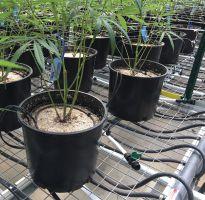
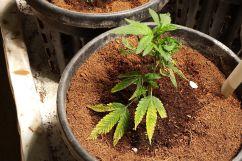
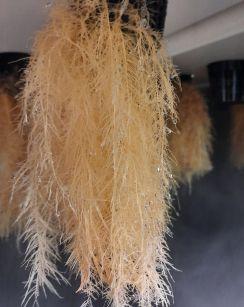
The roots are the foundation of a cannabis plant. When seeds germinate, the plant’s first priority is to produce root, the energy coming from the embryo inside the seed. All the planning for roots and shoots is already done in the seeds. There are various types of root zones and what can be accomplished at the top if the zone stays healthy. In Figure 1, the roots are hidden in a one-gallon plastic container with a soilless growing medium consisting of peat moss, perlite, vermiculite, and additives to adjust the pH. In Figure 2, the roots are in a five-gallon pot with coir as a growing medium, and top of the plant showing some nutrient deficiencies. The plants in Figure 3 are in a five-gallon pot where commercial soilless growing mix was used, and the root zone was well managed. Rockwool blocks were used in Figure 4, for commercial production. Here, the root zone dynamics would be different and therefore, watering and nutrients would have to be well managed. In Figure 5, the roots are in an aeroponic unit. Root zone is determined by the root volume, air around the roots, and nutrients direct-
ly sprayed on the roots.
Root zones will vary depending on the growing medium in which they are growing. Therefore, the physical, chemical, and biological characteristics of growing media will define the root zones. Root zone characteristics will change as plants grow and with all the inputs, like water and fertilizers. It's crucial to keep the root zone healthy and by looking at the top of the plant, one can see what is going on the root zone.
Roots are used as an anchor so that the plant doesn't tip over. In soil-grown crop, it's very evident how cannabis plants withstand wind and other stress factors. In greenhouses and indoor situations, the anchoring function is used less, with the tops supported in a net. There are two major functions of the roots that growers must understand. One is the absorption of nutrients and the other is growth and development. Essential nutrients are absorbed and transported to locations where they are used for growth and other functions. Additionally, food manufactured in the leaves are transported to the roots and put toward energy for growth.
Food transported to the roots can leach out in the surrounding growing medium, which the microbes can utilize. If there are ‘good’ microbes like mycorrhizae, they will use that leaked food and in return, colonize the roots and provide protection from ‘bad’ microbes.



A plant’s growing medium composition establishes the benchmark information for how your crop will grow and flourish. It's crucial to know about different growing media and how root zone health would be impacted during watering and fertilizing.
• Commercial soilless media: is prepared from peat moss, which provides the bulk fiber, water holding capacity, nutrient holding capacity and exchange, and air porosity for roots. To improve air porosity, perlite, and sometimes vermiculite, are added for improved water holding and cation exchange capacity. Then regular lime, calcium carbonate, or dolomite lime, calcium-magnesium carbonate is added to counter the low pH of the peat moss. Remember that it takes a good two to three weeks before lime has fully reacted to water and provides the desired pH in the root zone. Some companies will provide these media amended with mycorrhizae or other beneficial organisms for root zone. Nutrient charges are also added to meet early needs of the cannabis plants. Ensure you have all the information on physical, microbial, and chemical characteristics of the growing medium you plan to use.
• Coir (coco-fiber) or coirbased growing media: can be used as such, or added to a soilless growing medium. Root zone health in pure
coir is determined by the quality of the material as determined by coarse vs fine fiber, amount of coir dust, and buffering treatments. One of the biggest determining factors of root zone health using coir, is ensuring it's prewashed properly to remove the sodium and/ or sodium that has been exchanged with calcium. Cation exchange capacity (CEC) inherent to coir is also beneficial when looking to improve root health.
• Rockwool: is basically an inert material and oxygen dynamics are different than other growing media. The water and nutrient manage -
ment are far more influential in determining the root health in this case.
• Aeroponic systems: no growing medium is involved and root health depends on irrigation and nutrient inputs. With no buffering in the root zone, managing the root zone health is crucial. I've seen critical mistakes with crops grown in an aeroponic system and not enough attention was given to buffering provided by bicarbonates. Results were damaged root zone and poor top growth.
There are two major factors that affect cannabis root zone health. One is the plant itself, which can change the pH of the growing medium. During veg stage, the pH heads in an alkaline direction, while during bud stage and under stress situations, the pH will head in an acidic direction. The second is the oxygen dynamic determined by irrigation protocols. This is a detailed subject on its own and is sometimes handled on its own.
• Learn about your growing medium through its composition, physical, chem -
ical, and biological aspects.
• Know what the roots are telling you. Plenty of root hairs, reasonably white colour, and good branching are positive signs, while brown and slimy roots aren't.
• Control your inputs. Watering frequency and quantities have a major impact on root growth absorption of nutrients. Avoid temperatures that are too cold and too warm in the root zone.
• Plan nutrients based on what you want the plants to do; know your strategies.
• Avoid water logged conditions. That is the number one disease issue due to depletion of oxygen.




Easy to use • Consistent clean quality input
Traceability of all products • Growing support provided

CANNA is an established and serious partner for the Green Market. We provide solutions to growers of all sizes, including Canadian Licensed Producers. CANNA nutrients, additives and growing mediums are manufactured from the high quality source materials. We understand the importance of a clean, consistent and traceable input as well as keeping it simple.
CANNA loves to share its knowledge and experience, our team is there to support you.
How the second version of the Cannabis Act, created three years ago and under impending review, can positively impact Indigenous Peoples
By Treena Hein
Whether a legalized industry is decades old or only three years young, the first review of its governing legislation is critically important. As anyone in the sector knows, Canada’s Cannabis Act is about to undergo its inaugural review, and among the industry stakeholders suggesting changes are Canada’s First Nations.
The review process will start in October. It’s an opportunity to provide feedback on the current laws that no one in the cannabis industry should miss. After the review has ended, the federal government will have heard every voice offered and make changes accordingly to further develop a strong legalized cannabis sector.
Regarding the creation of the Act, many members of Canada’s First Nations do not feel that the government sought enough input from them before its release three years ago. These include Isadore Day, founder and CEO of Red Market Brand. This “Indigenous-owned and operated cannabis-related project” was launched on June 21 and is “founded on a mission of supporting Indigenous communities.” It will bring high-quality Indigenous-owned cannabis brands to the Canadian retail market “to pursue economic reconciliation across Canada, and to enrich First Nations communities from coast to coast to coast.”
Red Market is co-founded and led by Christian Sinclair, Onekanew (Chief) of the Opaskwayak Cree Nation. The first products will debut through a partnership with Royal City Cannabis Co., a craft cannabis producer in Guelph, Ont.
Day explains that “as the former Regional Chief of Ontario from 2015 to 2018, and co-chair of the Assembly of First Nations Task Force on Cannabis, I appeared before several parliamentary and senate committee
hearings before the Cannabis Act became law. My main points were that First Nations had never been properly consulted and that there was no sharing of the excise tax so our peoples could fully benefit from the revenues, which included measures for health and safety funding.”
All licensed producers (LPs) currently pay the excise tax to the Canada Revenue Agency when they package cannabis products shipped to authorized distributors or retailers, and all legally-produced cannabis products must have an excise stamp on the packaging. The majority – 75 per cent – of excise tax revenues go to
provincial-territorial governments, and the rest to the feds.
In Day’s view, “when the Act undergoes review beginning this October, First Nations must be fully included so we get our fair share of the cannabis economy. Canada must recognize First Nation jurisdiction and the right to produce and sell cannabis that meets Health Canada regulations.”
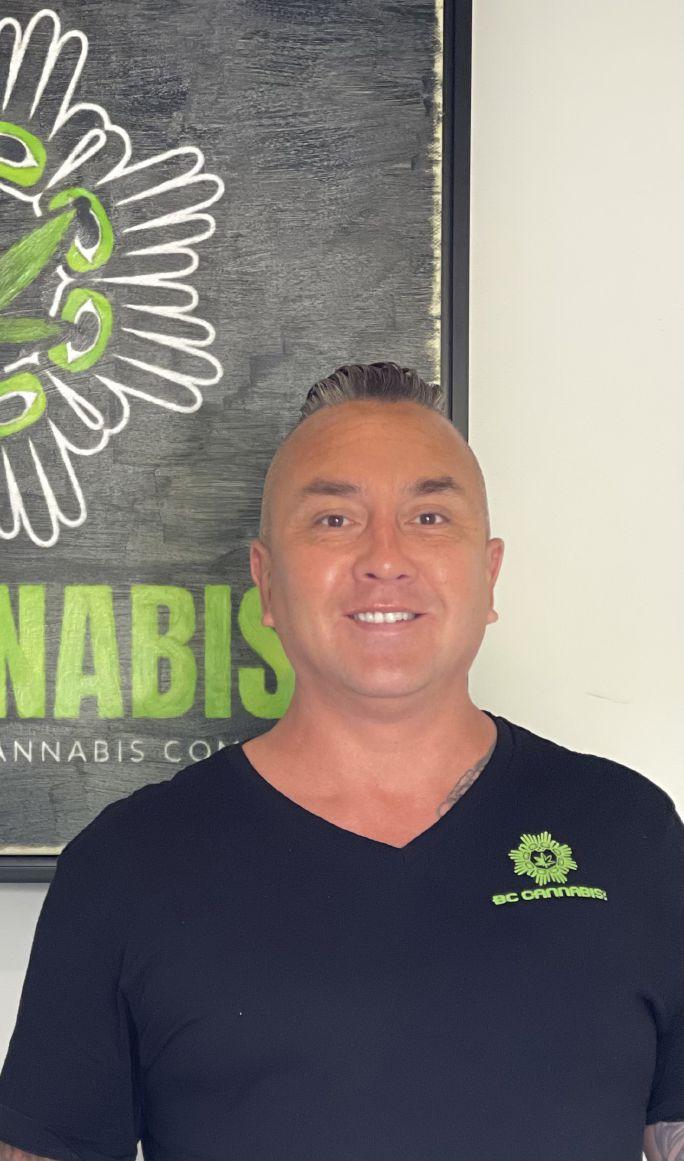
Albert Eppinga, the founder and master grower at BC Cannabis (a majority First Nations-owned and operated LP on Vancouver Island), echoes this sentiment.
He has spoken to many First Nations over the last few years about how Canada’s cannabis industry can be better harnessed to improve conditions for his
"Canada must formally recognize full First Nation participation in the Cannabis Act. This would be true economic reconciliation in action," said Isadore Day, Red Market Brand
people. “We continue to work with the government on how to deliver safe, legal products to First Nations people,” he says. “But changes in the Cannabis Act can take this to the next level. We believe the excise tax on sales of cannabis on First Nations land can and should go towards improving living conditions for First Nations people across the country. We can use that money to fix infrastructure, get running water, create mouldfree buildings, and so on.”
He adds that keeping these dollars would also be an incentive for First Nations to further engage in the cannabis industry and build more facilities. Outside the Cannabis Act, he would also like to see funding available to build more LPs on First Nations land.
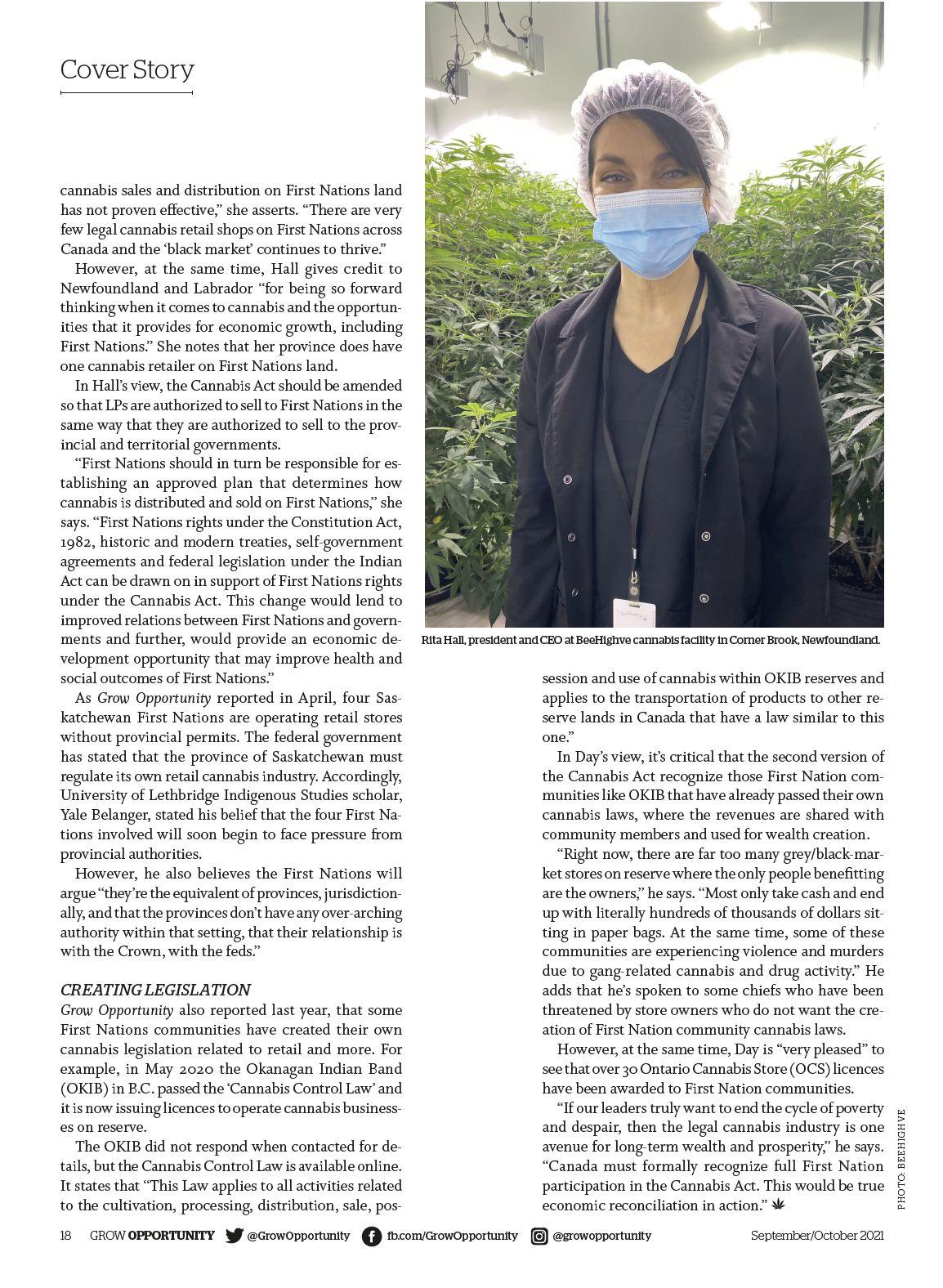
In the view of Rita Hall, president and CEO at BeeHIGHve in Corner Brook, Newfoundland and Labrador (Nfld.), cannabis retail sales represent a very important opportunity for First Nations. BeeHIGHve is a First Nations craft cannabis LP; the first LP in the province. Its product line-up includes CBD oil and CBD-infused honey. Hall opened her first retail store in August in Corner Brook.
Hall says the federal government deprived First Nations of an economic development opportunity when they gave only the provinces and territories authority related to the retail of cannabis products. “To date, giving the provinces and territories control over























Licensed cultivators know that when it comes to controlling and monitoring their growing environment, a simple, flexible, sustainable control system is crucial. This is why proactive cultivators are turning to Reliable Controls. Our nationwide network of factory-certified
Authorized Dealers will design, install, and commission a comprehensive control system paired with an intuitive, custom-tailored graphical interface. Take command of your precisely controlled environment. Generate tracking reports and analytics. Reduce your carbon footprint while improving productivity, quality, and serviceability.
To learn more about this cost-effective, Canadian-made solution, please contact a Reliable Controls
Authorized Dealer near you.
Canada: 403.561.4148
Canada: 647.982.7412
By Andrew Snook
Since the legalization of Canada’s cannabis market, licensed producers (LPs) have certainly put a dent into the illicit marketplace.
By the fourth quarter of 2020, Canada’s biggest market for cannabis products, Ontario, had grown to take 44.1 per cent market share in the province (Statistics Canada; calculated by Ontario Cannabis Store, or OCS). According to recent 2021 reports, Ontario’s sales have jumped again, climbing to take approximately half of all sales. Many provinces are somewhere in this ballpark when it comes to the legal market share of purchased cannabis products.
The LPs and government coffers would certainly love to have the other half of all of those cannabis sales come over to the legal side of the industry. Legal cannabis sales totalled approximately $2.6 billion in 2020.
“Recreational and legal cannabis has just opened the flood gates,” says cannabis grow consultant, David Kjolberg. Based in Sherwood Park, Alta., Kjolberg is one of the first legal master growers in a Canadian LP facility and has decades of experience growing for a variety of legal medical cannabis regimes, including the MMAR, MMPR and ACMPR. “I’ve been smoking cannabis since 1974. I have a passion for this plant. When I look at the different things about cannabis today, recreational and legalization of cannabis is awesome.”
While this is an impressive feat for an industry only made legal three years ago, it’s also a little mind-boggling that half of the consumers haven’t made the jump to legal purchases to date.
LPs are legally bound to follow a strin-
gent set of standards in terms of quality and health and safety for its products. This means the cannabis products need to go to the consumer with no potentially harmful pesticides or other drugs being mixed into the products. This alone should attract people to the legal market (and certainly has), but with half of the market still up for grabs, the big question remains: Why are people still choosing
the illicit market?
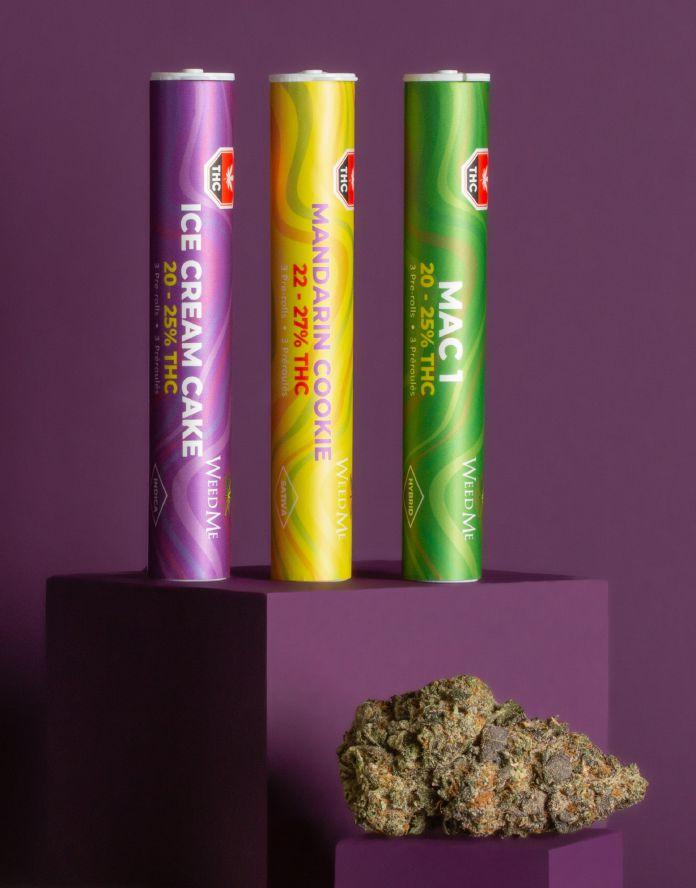
According to Benny Presman, founder and CCO of LP Weed Me Inc. in Pickering, Ont., the biggest issue was a lack of understanding of the final product from many of the LPs when the market first opened up.
“I think the main reason this was an issue was because the big players that came into the legal industry at the beginning
were a lot of bankers, ex-politicians, people who do not understand the product,” he says. “They don’t understand the cultivation of the product. They don’t understand the product itself. Many of them never tried the product. I usually tell people, ‘Can you imagine owning a
craft brewery, and you have never tried your beer, that you’re releasing to the consumers?’”
Another major issue that Presman believes hurt the market was LPs taking advice from the wrong people, in terms of business strategies.
“It was, ‘Hey, let’s listen to the bankers who gave us the money and whatever they want to hear, we’ll do.’ For example: scale. Let’s build millions of square feet of greenhouses because this is how we can get even more money right now.”
Presman explains that many of the first LPs entering the market not only didn’t understand the cannabis industry, but also didn’t understand how the products should be cultivated.
“It’s not new. It’s been cultivated for many, many years now. It didn’t change much since the ’60s or ’70s,” he adds.
This lack of knowledge from some LPs led to some poor-quality products hitting the market at the beginning of legalization, and this





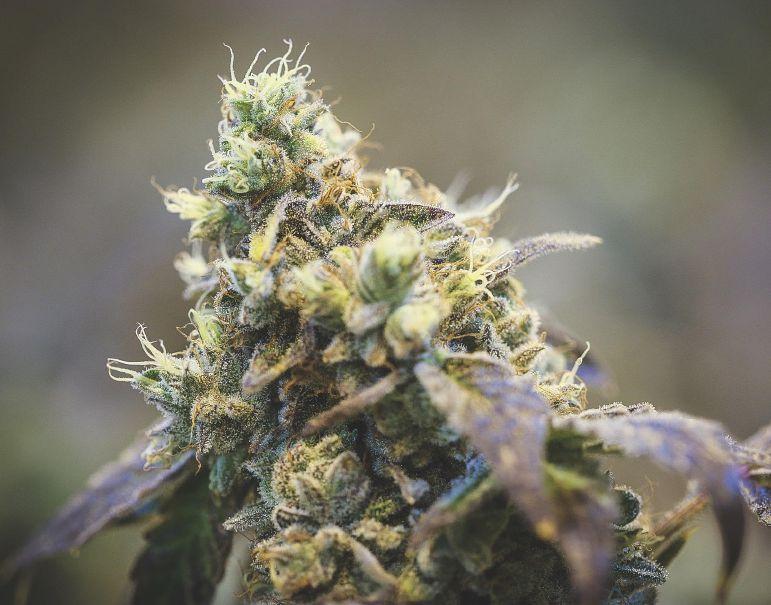
companies, and take advantage of their years of knowledge growing, trimming, curing and drying cannabis.
“So many people in the licensed producer world were so afraid to get MMAR legacy growers, they didn’t want us to take part,” he says. “There are so many skilled growers out there that would help these companies produce some quality product.”
Although consumers have criticized the inconsistent quality of certain products, Kjolberg admits the job of the larger LPs is far from a simple one.
“Licensed producers have a very hard job. They’re over-regulated and overtaxed. In this industry, it’s hard to mass produce cannabis that’s a consistent quality,” Kjolberg says. “The rules and regulations went way out to the other side. It’s like Health Canada set out this program in its infancy to fail.”
All the store closures due to the COVID-19 coronavirus pandemic offered an additional push to online cannabis stores like the OCS.
“I think we saw some movement during COVID. It could be natural movement, but I see more and more trust, because people are trying it for the second time or third time, giving it a chance. They can definitely see there are numerous high-quality producers on the market that care about the product and growing it
properly in small batches, small rooms, taking care of the product and selling the product fresh,” says Presman.
Presman believes enforcement is a key to growing the legal market in the future, closing down illegal facilities and illegal online dispensaries.
“There are a lot of online dispensaries out here,” he admits. “Busts have happened. But enforcement can do much better. We’re paying so much in taxes in this industry.”
Education is always key, especially for new consumers in a newly legalized industry, but LPs are restricted in how much they can promote their products.
“Unfortunately, LPs have some limitations for advertising and education. We also don’t have direct access to consumers. The retail partners, the budtenders, they can educate better – and we can educate them,” Presman adds.
One distinct advantage that LPs need to take better advantage of to win over more of the illicit market is the promotion of its stringent product testing and quality control.
“We have an advantage over the grey market with the testing. As a consumer, I want to know if it’s been sprayed with pesticides or heavy metals. To me, that’s the scariest stuff. I wouldn’t want to put them into my body. I want to know this product is healthy,” Kjolberg says.

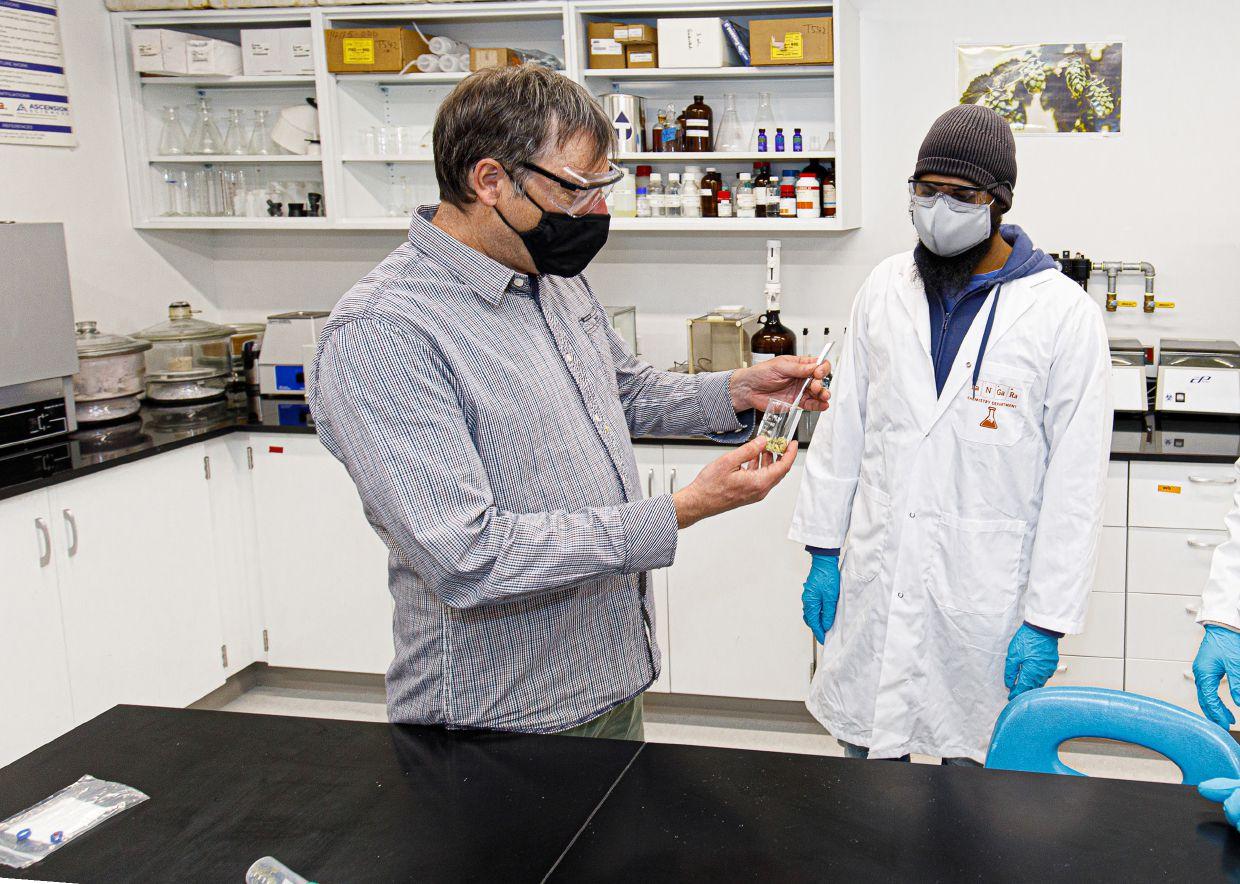
It has been almost three years since the legalisation of cannabis in Canada, and there is still so much to research, discover, and understand in order to push the Canadian cannabis industry forward.
In mid-July, a major step forward was taken in the ability to perform cannabis research in British Columbia, with the announcement of a $3.3-million grant for Langara College’s Applied Science for the Canadian Cannabis Industry program. Two million dollars was given by the Natural Sciences and Engineering Research Council, and $1.3 million from the Canadian Foundation for Innovation.
With this five-year grant, Langara College looks to fund research projects focused on plant genomics and metabolomics, cellular response to cannabinoids, optimization of processing, and the use of
nanoparticles to deliver bioactive compounds.
Curious to know what, in particular, the College is hoping to find in its research, I sat down with Kelly Sveinson, chair of Langara College’s Applied Research Centre, during a recent episode of Grow Opportunity: The Podcast.
As a researcher, Sveinson has studied the production and use of biochar for its potential ecological benefit, including contaminated water remediation. Additionally, he has expertise in the analytical chemistry of natural products.
In 2018, Sveinson, along with fellow researchers and biology instructors at Langara College, Dave Anderson and Ji Yang, were awarded CAD $200,000 from the Natural Sciences and Engineering Research Council for their project focused on applying biochemistry tools to support
the craft brewing industry in B.C. This work culminated in the identification of several feral hops varietal of commercial value that are currently under evaluation in an agricultural trial.
Today, Sveinson is focused on projects investigating technical challenges faced by the cannabis industry. As an instructor in the chemistry and environmental studies departments, he has taught 11 different courses, impacting thousands of students at Langara College. Sveinson holds a Master’s of Science from the University of B.C., and a Bachelor’s of Science from the University of Waterloo.
Catarina Muia: How did Langara’s Applied Science for the Canadian Cannabis Industry program first come about?
Kelly Sveinson: At Langara College, one of our goals is to contribute to the com-
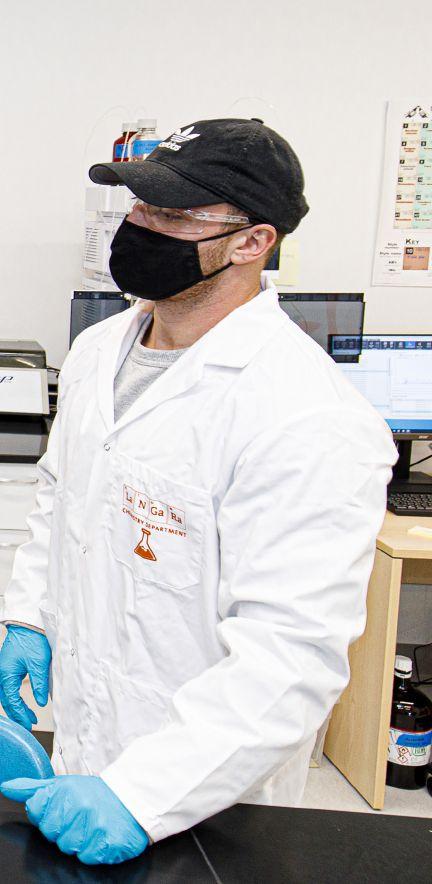

munity here in B.C., as well as Canada in general. We have some really strong faculty, capable students, and excellent facilities, so we thought that focusing a bit of our activity on research would be a logical step. The fact that we have access to federal funding to support applied research on a competitive basis, led us to this path. We identified biochemistry and bioinformatics as areas of strength here at the college; faculty and students are really strong in that area and because of this, we’ve been able to attract some funding.
You mentioned the hops project; as some may know, hops and cannabis are botanical cousins, in a sense. So those skills we developed while investigating hops and its biochemistry translated really nicely into cannabis research, and we received our Health Canada Research Licence in 2019. After doing some preliminary work with cannabis, we realized that there’s so much to discover and so many questions that need answering; it’s an area with a lot of potential for us, which we are still really excited about.
After putting together an ambitious funding proposal, we put together a small coalition of industry partners to put forward the proposal after a federal funding opportunity came up, and we were delighted to find we were funded for that. Now, we are in the very early stages of ramping that up.
CM: Additional to the $3.3-million grant, the College is receiving $400,000 toward research from industry partners Pure SunFarms, Ascension Sciences, and NextLeaf Solutions. How were those partners chosen?
KS: We wanted partners who are first, really solid on a fundamental basis and have long-term visions for the industry, and second are tech-forward, have the vision to see new potential, and look to contribute to innovation. They are also companies that seem to look beyond their own objectives, evaluate the Canadian cannabis industry with a broad lens, and see the value of building the industry by educating young people with the necessary skills and driving science-based knowledge. Over the course of the fiveyear program, we will certainly look to increase the number of partners we have.
CM: So many reports and studies have already been done about cannabis, and from the findings, it often looks like cannabis is a ‘miracle plant’, helping people cope with physical, mental, or emotional pain or trauma. For Langara College, what will be the main focus of the research being done and where, specifically, will the funds be going?




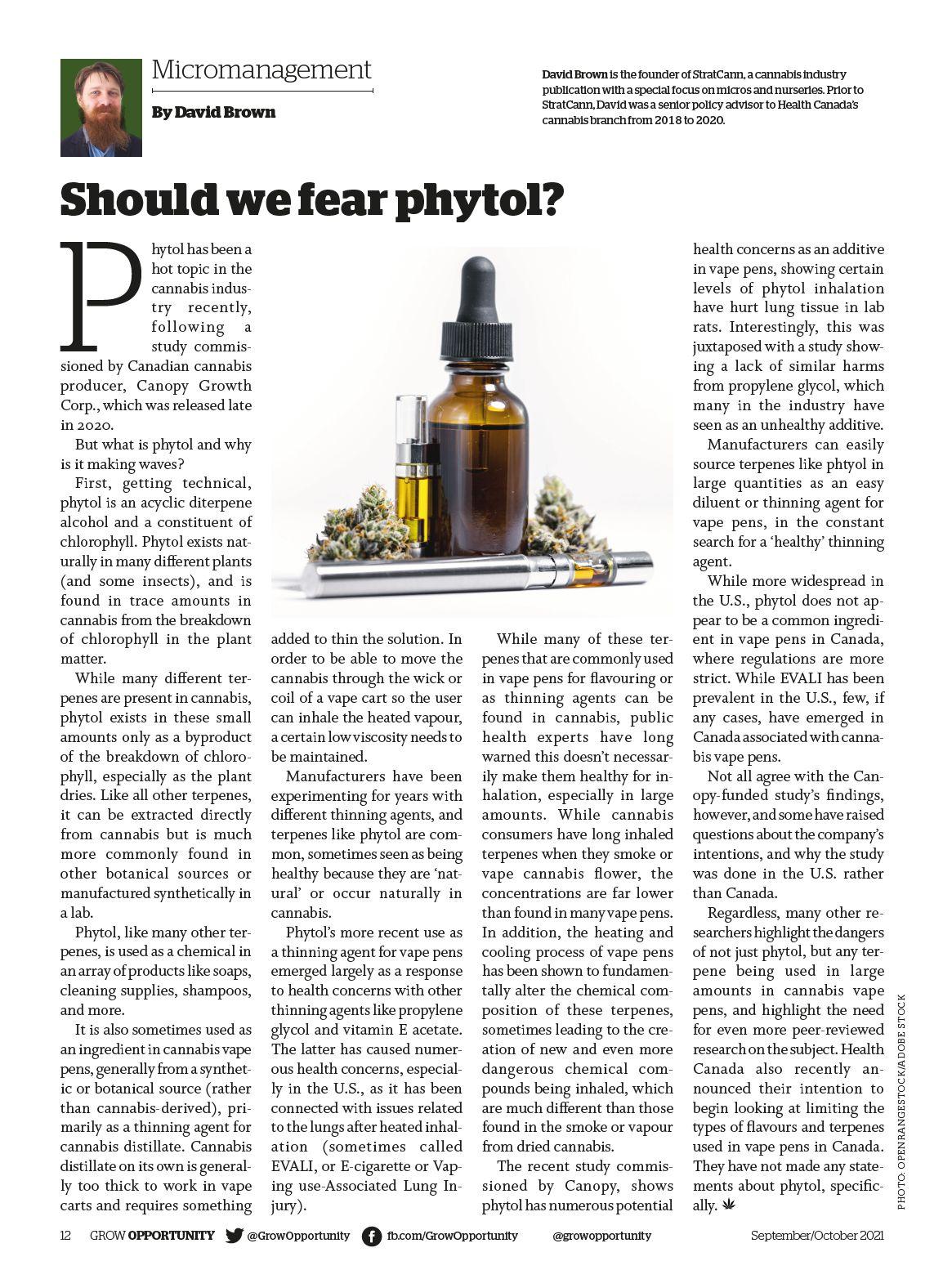
Cannabis plants are classified into two main groups: Indica and Sativa. This book focuses on Cannabis Indica, a bushier and heavier plant that produces a smoke that famously induces (among other highs) a desire to sit quietly on the couch and relax. This is the latest book in the bestselling series focusing on the Cannabis Indica plant, the most popular type of marijuana in the United States due to its growth patterns and intense physical effects.
$29.95 Item #1937866259
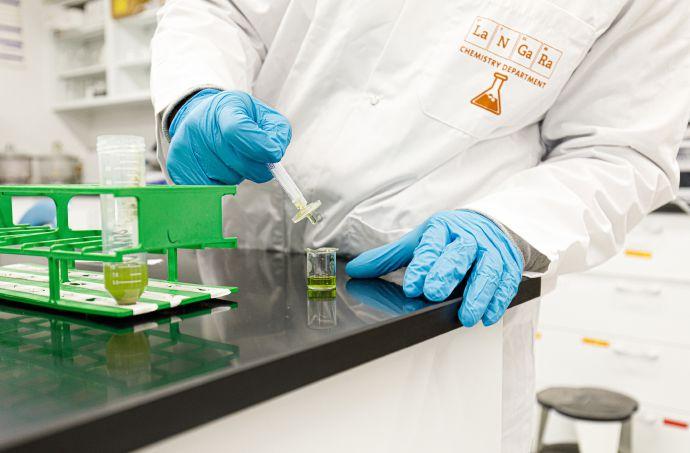
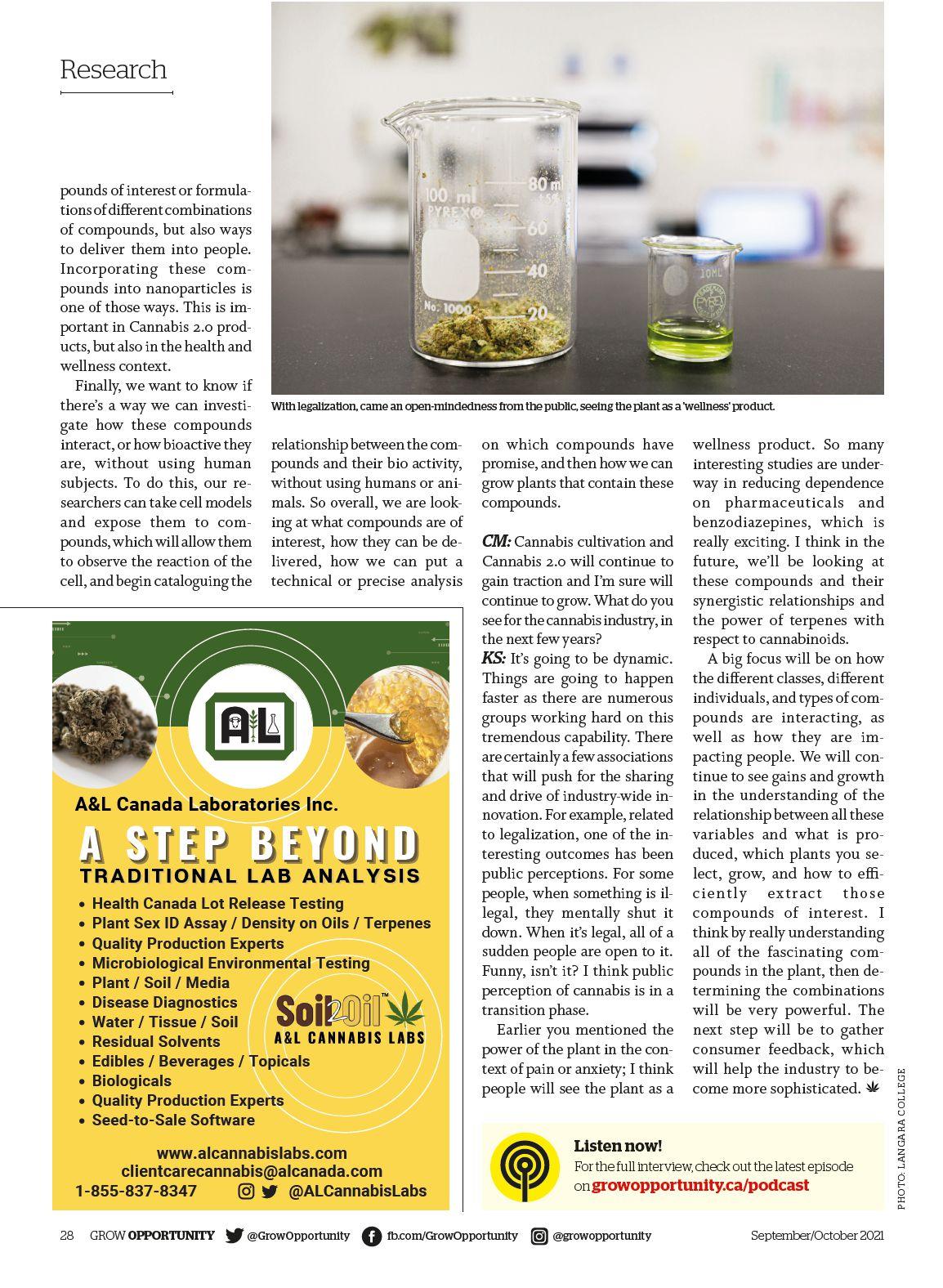
KS: We do have some defined areas we want to explore. I think first, it’s important to note that our work is limited to ‘bench science,’ which is exclusive to animals and humans. We don’t have the capacity to investigate how cannabis or cannabis products impact humans in a direct way, as this is a very complex endeavour. At Langara, we’re interested in the biochemistry of the plant per se, and leveraging that knowledge. In terms of the funds, that will largely go to faculty and student researchers. It will also give us the ability to hire some dedicated technicians and importantly, acquire some advanced instrumentation.
In terms of where we intend to do research, we can group that into three main themes. First, we want to look at what’s in cannabis. That sounds really simple and has been done in all kinds of ways, but we’re interested, in particular, in some of the compounds that haven’t been investigated as thoroughly.
We know THC and CBD and the relationship between the two, as well as the way the plant grows, is pretty well established. But we want to consider the less-studied compounds of the plant, which requires advanced instrumentation to look at. It’s important to establish strong methodologies for looking at these compounds that are present in lesser
quantities in the plants, and relate those to production variables such as greenhouse conditions or processing techniques. We’re also interested in how those compounds can be isolated. Like I mentioned, people are familiar with THC and CBD, but there are other compounds such as Delta 8 THC, CBG, THCB, and of course all the other dozens of terpenes in the plant are really worth investigating.
Second, is then looking at the genetic basis for the production of these compounds. My partner, Dr. Ji Yang has done some interesting work on this, and certainly in the pre-legalization days, the plants were given cool names like ‘White Widow,’ and so on. But he found that specimens with the same labels weren't the same genetically. It would be interesting to sort that out in the context of the legal market. The relationship, then, between the compounds of interest for our industry partners, as well as the compound genetics is something we would like to explore and sort out the business of varietal designation.
Further, this would give us an opportunity to target particular compounds through breeding-type studies. One of our primary investigators in this program will begin looking at incorporating some of these compounds into nanoparticles. We’re not just talking about particle com-



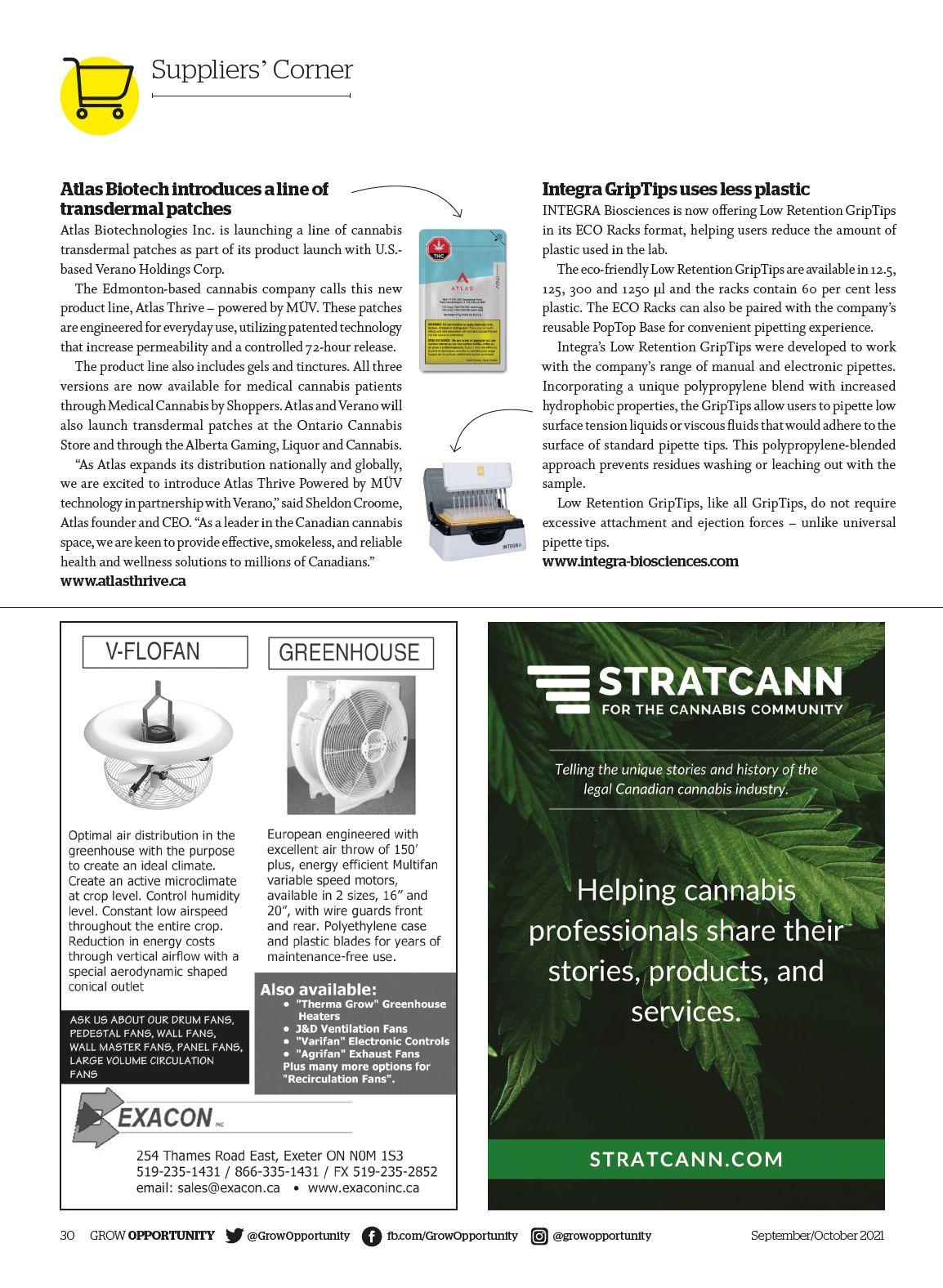




Micellae Delivery Systems Inc. believes it may have invented a gamechanging drug delivery technology.
O2W is the startup’s fastest oral bioavailability-enhancing formulations. O2W is a self-dsipersing and fully water-diltuable Self-Microemulsifying Drug Delivery System (SMEDDS) made with food-grade excipients, designed to enhance potency, bioavailability and shelf-stability of cannabinoids while reaching a speedy onset.
University of Toronto researcher and CEO of Micellae, Dr. Mehdi Nouraei, says existing technologies are less optimal due to “significant compromises,” such as slow onset of action, complex manufacturing, unpleasant taste, and short shelf-life. There have also been safety and environmental concerns with the use of polyethylene glycols.
“We've solved these issues with the unique formulation, O2W, without compromising speed of onset, potency, shelf-life, safety, and environmental sustainability," said Nouraei, the technology's co-inventor.
Micellae recently completed a single-dose animal pharmacokinetic study with orally administered O2W-enhanced CBD. Results showed quick absorption, reaching max serum levels within 20-30 minutes compared to four hours for the control group.
Micellae was founded in 2018 by Nouraei in collaboration with Uof T and Toronto Investment Acceleration Partners. www.micellae.com
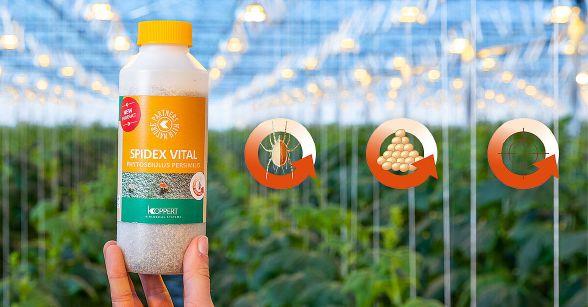
Koppert Biological Systems introduces as new and improved formulation for its top-selling Spidex Vital.
The new formulation and better nutrition is meant to ensure an energetic population of Phytoseiulus persimilis that gives infested plants the best start for fighting hotspots. Spidex Vital includes several phases of mite development including eggs, juveniles, growing nymphs, and adults, for prolonged and continuous activity in the crop.
According to Koppert, trials showed a greater cumulative presence of predatory mites on infested leaves and proof of predation by Spidex Vital mites.
“Predatory mites have an energetic start,” says Koppert Product Manager Tim Bossinga. “The females already have enough energy to develop their eggs and can immediately start laying their eggs on release. Formerly, they first needed to feed in the field in order to develop their eggs. Because they start depositing their eggs directly, they have an improved ability to lay more eggs in the same time frame, hugely enhancing the biocontrol process and efficacy.”
www.koppert.ca


Dramm Corporation introduces a new Dual Start PulsFOG system that allows for versatility when treating greenhouses with plant protection chemicals.
The new K-30/20 BIO DS Dual Start PulsFOG offers two starting mechanisism: a push-button, compressor-driven system for easy starting when connected to a 12-volt battery and a manual priming ball for when no larger battery is available.
This electric start function has been available on larger units and is now available in the smaller, K-30/20 BIO.
The device is said to rapidly treat areas up to 21,000 square feet with its included 55-litre tanks. The BIO feature uses a secondary tank for plain water and a separate injection nozzles. It has a cooling system for the exhaust before the chemical solution is injected, in order to prevent damage to heat sensitive products. www.dramm.com

Tetra Bio-Pharma Inc., a cannabinoid development company in Ontario, is looking to expand its research comparing a cannabinoid-based drug with oral opioids.
According to a company statement, Tetra Bio-Pharma proposes expanding its research to include three immediate-release oral opioids to compare against its QIXLEEF cannabinoid drug. QIXLEEF is a proprietary formulation containing a fixed ratio of THC and CBD. It is inhaled through a Class II medical vaporizer.
The study, which is called the REBORN1 trial, will explore a phase 2 study of Tetra’s drug against an opioid treatment in the management of short and frequent episodes of breakthrough pain in patients living with cancer.
The amended protocols will allow the company to demonstrate potential efficacy of QIXLEAF against a class of immediate relief opiods, and potentially accelerate patient enrollment for the trials.
“There have been numerous news reports recently of drug makers exiting the opioid business. However for patients suffering from uncontrolled pain, this news does not provide them with an alternative to alleviate their pain,” said Dr. Guy Chamberland, CEO and CRO of Tetra Bio-Pharma. “Tetra is in the business of providing the evidence which would see QIXLEEF become an alternative prescription therapy to opioids.” www.tetrabiopharma.com
PAX
CannSell
Ontario’s cannabis retail training platform, CannSell, is collaborating with PAX Labs to provide the latest education in vaporizer technology.

PAX Labs, a San Francisco-based cannabis vaporizer technology company, has launched a PAX Certified education program for budtenders, retailers, clinics, partners and licensed producers in Canada. The program, designed through CannSell's platform, aims to enhance product and vape category knowledge. “Considering the pace of the cannabis industry and the high volume of new products being introduced to the category, education plays a vital role,” said Shawn King, head of marketing at PAX Canada & International. “Partnering with CannSell continues to help us reach the budtenders that inform and connect with our customers each and every day.”
The CannSell program was first developed in partnership with Mothers Agains Drunk Driving (MADD) to educate cannabis retail staff on the responsible sale of cannabis and impaired driving prevention. More than 20,000 individuals have completed the Standard program to become certified to work in licensed stores in Ontario. www.cannsell.ca
Want to be featured in Suppliers’ Corner?
Send your product press releases and company news to: jkodin@annexbusinessmedia.com