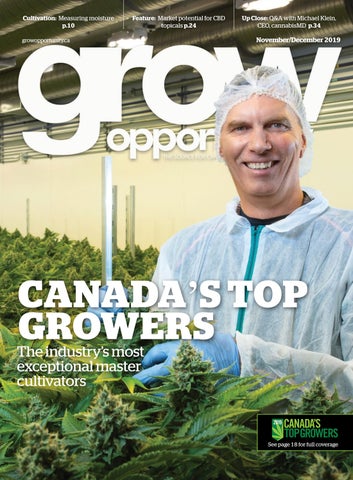
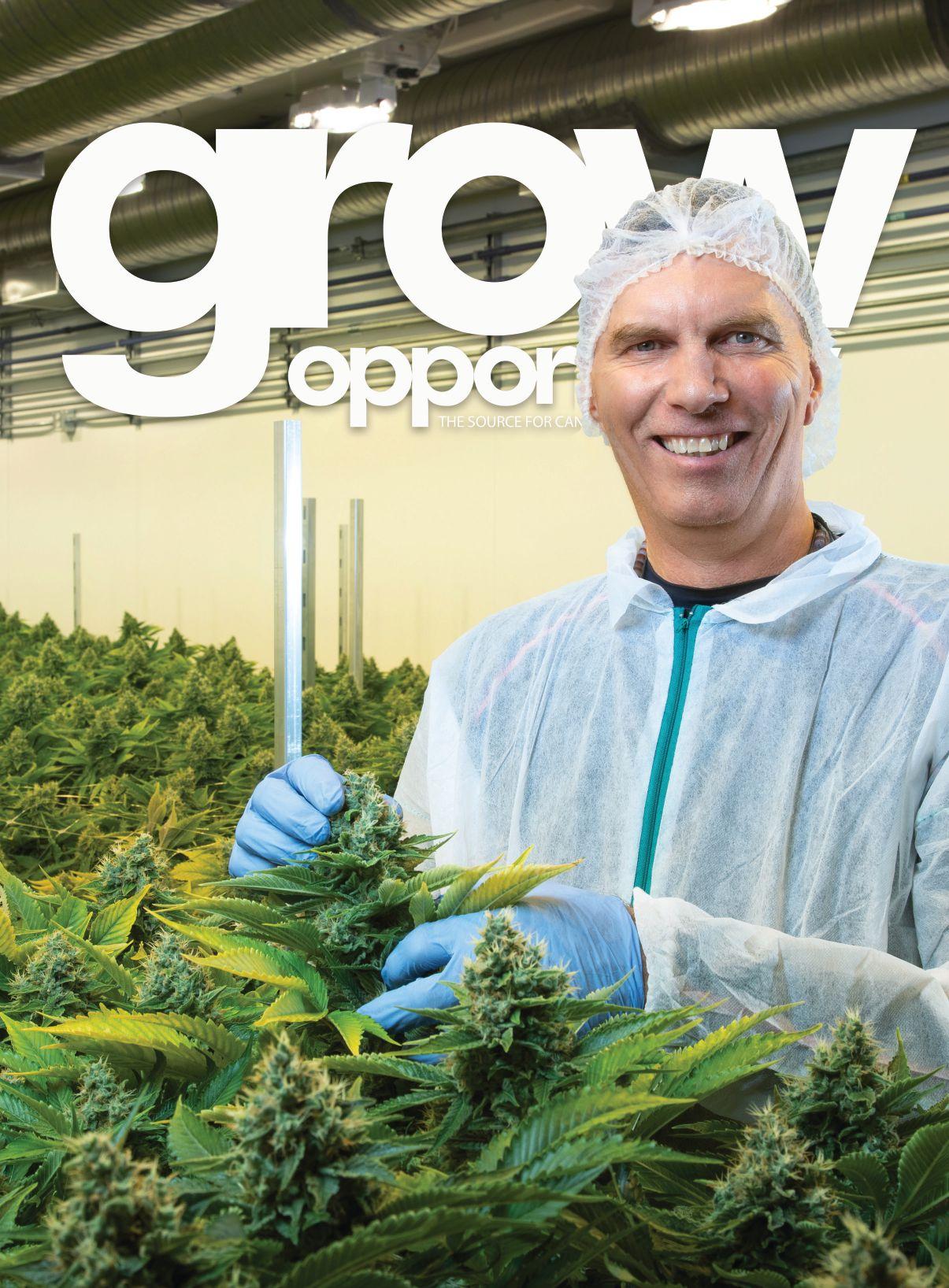
CANADA ’ S TOP GROWERS
The Leading Canadian Wholesaler for Commercial Growers and Retailers

Since 1999, Top Canadian Growers can rely on us because
PLANTS CAN’T WAIT!
One stop source for all your needs
Thousands of products in stock
Top rated brands



Passionate and dedicated team
Wide network of specialists
Custom supply chain program




From the editor
By Mari-Len De Guzman
Masters of resilience
One of the best parts of my job is getting to know some of the most interesting and exceptional people in the industry. My conversations with them offer an insight to their soul – what drives their passion, who or what influences their decision-making processes, where they stand on the issues of the day and why.
Our inaugural Canada’s Top Growers Award was another opportunity for me to get to know two highly-respected leaders and innovators in Canada’s cannabis cultivation scene.
Over the last several months, Grow Opportunity has embarked on a nationwide search for the most exceptional cannabis growers in an effort to shine a spotlight on the work they do. We received a number of nominations from LPs across Canada, all great candidates that exemplify the breadth and diversity of this burgeoning industry.
This year’s top winners (see page 18 and 20) could not have come from more different beginnings, but they share the same passion for the plant that has changed the course of their lives and the lives of many others.
Gregg Wigeland and Chad Morphy were a builder and massage therapist, respectively, in their former lives. Today, they lead teams of young
growers, sharing their knowledge and experiences in the hopes of arming these young lads with the skills needed to carry on what they’ve started and help propel this industry to its fullest potential.
Being a ‘master’ in any industry connotes years of experience perfecting their craft. In the cannabis industry, the title ‘master grower’ exudes an air of resiliency, for these fine folks have evolved and excelled under – and inspite of – a regime of prohibition. In the early days before legalization was even a possibility, these master growers operated as if someday the plant that’s near and dear to their hearts and promises so much potential for so many people will take the spotlight. And it did.
The title ‘master grower’ exudes an air of resiliency, for this fine folks evolved and excelled under – and inspite of – a regime of prohibition.
Now that the cannabis plant is taking centre stage, it’s time for the people that prepared her coming-out party to take a bow.
This is the rationale for our Canada’s Top Growers program. And we are proud to be announcing the winners in this last issue of 2019. This year marks the first full year
of cannabis legalization, and what better time to shine the spotlight on Canada’s most exceptional cannabis growers than now. And we get to do this all over again next year, so get ready to nominate someone who deserves the recognition.
This process would not have been possible without significant help and insight from our outstanding panel of volunteer judges: Moyhuddin Mirza, Alexzander Samuelsson, David Kjolberg, Jayson Goodale and Max White. They have all taken time out of their busy schedules to participate and be involved through all the various stages of developing this award program, including our brainstorming sessions to develop our nomination questionnaire and the judging criteria, as well as the actual candidate evaluations and winner determination.
On behalf of the team at Grow Opportunity, Thank you.
Next year, we hope to grow our roster of growers to be inducted into the Canada’s Top Growers hall of fame. Watch for new announcements for the 2020 competition in succeeding issues of Grow Opportunity or online at growopportunity.ca.
In the meantime, I hope you enjoy reading about our 2019 winners Wigeland and Morphy as much as I’ve enjoyed bringing their stories to you.
November/December 2019 Vol. 3, No. 6 growopportunity.ca
EDITOR Mari-Len De Guzman mdeguzman@annexbusinessmedia.com 289-259-1408
ASSOCIATE EDITOR Jean Ko Din jkodin@annexbusinessmedia.com 437-990-1107
ASSOCIATE PUBLISHER
Adam Szpakowski aszpakowski@annexbusinessmedia.com 289-221-6605
NATIONAL ADVERTISING MANAGER Nashelle Barsky nbarsky@annexbusinessmedia.com 905-431-8892
ACCOUNT COORDINATOR Mary Burnie mburnie@annexbusinessmedia.com 519-429-5175 888-599-2228 ext 234
CIRCULATION MANAGER
Barbara Adelt badelt@annexbusinessmedia.com 416-442-5600 ext.3546
MEDIA DESIGNER
Brooke Shaw
GROUP PUBLISHER/VP SALES
Martin McAnulty mmcanulty@annexbusinessmedia.com
COO Scott Jamieson
MAILING ADDRESS
P.O. Box 530, 105 Donly Dr. S., Simcoe, ON N3Y 4N5
SUBSCRIPTION RATES
1 year subscription (6 issues: Jan/Feb, Mar/Apr, May/Jun, Jul/Aug, Sep/Oct, Nov/Dec):
1 year offers: Canada $25.50 + Tax
USA $36.00 USD FGN $41.00 USD GST # 867172652RT0001
SUBSCRIPTIONS
Roshni Thava rthava@annexbusinessmedia.com Tel: 416-442-5600, ext. 3555 Fax 416-510-6875 or 416.442-2191 111 Gordon Baker Rd., Suite 400, Toronto ON M2H 3R1
ANNEX PRIVACY OFFICE privacy@annexbusinessmedia.com Tel: 800.668.2374
ISSN: 2561-3987 (Print) ISSN: 2561-3995 (Digital) PM 40065710
Occasionally, Grow Opportunity will mail information on behalf of industry-related groups whose products and services we believe may be of interest to you. If you prefer not to receive this information, please contact our circulation department in any of the four ways listed above. We recognize the support of the Government of Ontario


HawthorneGC.com HawthorneGC.ca
Quebec age restriction rule draws criticism
MONTREAL – The Quebec government’s move to raise the age limit to consume cannabis has been criticized by opposition parties, marijuana producers and public health experts in the province.
The Legault government has followed through on an election promise to raise the age of consumption from 18 to 21, passing Bill 2 at the national assembly late October to bring about the strictest rules in the country.
The legal age for consumption is 19 in every other province except Alberta, where it’s 18.
Quebec Junior Health Minister Lionel Carmant said the change is about protecting youth and sending a message that consuming cannabis is not a trivial matter.
But critics have long held that the age restrictions, set to come into effect on Jan. 1, will only drive younger users to the black market.
The Quebec Cannabis Industry Association, which represents more than 25 of the province’s licensed growers, said the move goes against the goals of legalization: improving public safety and getting rid of the black market.
“The government’s motives are surprising in this approach,” Michel Timperio, QCIA president, said in a statement Oct. 29. “We believe that Quebecers should have access to legal products that are controlled, properly labelled, packaged safely, and distributed by professionals who can properly inform consumers, not by the local drug dealer.”
The new legislation forbids public consumption of marijuana across the province. It also allows cities to adopt their own bylaws allowing people to smoke cannabis in specific public areas where no children are present.
- THE CANADIAN PRESS
B.C. solicitor general wants economic diversity in industry
– British Columbia’s solicitor general says the province wants to see as much small-scale production as possible for marijuana edibles to allow for regional economic development.
Marijuana extracts are limited to 1,000 milligrams of THC per container. A bottle could contain 100 THC capsules of an extract that each has 10 milligrams of the psychoactive ingredient of cannabis, for example.
“I don’t want it to be dominated by one or two large-scale variety of producers,” Mike Farnworth said in October. “I think there’s room in this market for a considerable variety or product and a considerable variety of producers.”
Given the size of B.C.’s longtime marijuana industry in many small communities, particularly in the Kootenay area of the Interior, Farnworth said he’d like to see regional issues considered when it comes to licensing of producers.
He said edible products will not be sold in liquor stores, but the province is interested in considering farm-to-gate sales, particularly involving small-scale producers.
While edibles, oils, topicals, hash and other cannabis goods became legal on Oct. 17, Farnworth said they would not be available in retail outlets until January.
The delay is based on 60 days notice that producers must provide to Health Canada of their intention to sell the products.
At least 36 marijuana stores have been closed in the province for illegally selling their products since the legalization of marijuana a year ago, Farnworth said.
He said a 44-member community safety team based in various parts of the province, including Prince George, Surrey and Kelowna, have been cracking down on retailers.
“We were very clear right from the beginning that as more and more legal stores are open, enforcement by the community safety team will clearly be ramping up,” he said. “After all, it’s only fair that those stores that are abiding by the rules, that are paying their fair share of taxes, don’t have their competitive advantage undermined by stores that are operating illegally.”
He said the government has been working hard to transition away from the province’s “well-entrenched” illegal marijuana industry.
He said officers in the Community Safety Unit have helped reduce the availability of illegal marijuana by following up with unlicensed retailers to raise awareness about the regulations, penalties and consequences of breaking the law.
- THE CANADIAN PRESS
VANCOUVER



Expect more cannabis retailers to open in Saskatchewan
Saskatchewan will move forward with a phased-in open market system when allocating cannabis retail permits, beginning in the spring of 2020, according to the province’s cannabis regulator.
The supply of cannabis for permitted retailers will continue to come from permitted wholesalers and federally licensed producers registered in Saskatchewan, the Saskatchewan Liquor and Gaming Authority (SLGA) said.
“A year has passed since legalization and most of the initial retailers are now serving customers in their communities,” Gene Makowsky, minister responsible for SLGA, said. “We’ve also had the opportunity to consider how Saskatchewan should proceed in the future. We believe opening the market to more retailers will help meet customer demand while also helping discourage competition from unlicensed stores.”
Beginning in April 2020, SLGA will accept applications for cannabis retail permits in Saskatchewan communities with populations less than 2,500. In addition, proponents will be able to apply for permits in communities that were previously identified as eligible for permits but did not proceed.
In September 2020, SLGA will begin accepting permit applications for stores in all communities in the province. Communities may opt out of having cannabis retail stores in their community. Interested businesses and individuals will continue to be required to meet SLGA’s permitting requirements including a good character check, inventory tracking and store security, the SLGA said. Applicants will also need to meet local municipal requirements, including zoning.
“The phased-in approach is a balanced approach that will allow existing retailers to continue to operate and grow their customer base while facilitating timely opportunities for store openings in smaller communities,” Makowsky said.
Ontario bans vaping promos in gas stations, stores
Beginning Jan. 1, promotion of vaping products in convenience stores and gas stations will be banned in Ontario.
Health Minister Christine Elliott said she made the decision in response to new research that showed vaping is on the rise among youth in the province.
“That’s a big concern to me,” she said. “I know that is a big concern to parents and families and I’m concerned about the potential health effects the increase in vaping has brought forward so we are starting with this prohibition of advertising.”
Ontario was set to ban the advertising of vaping products in convenience stores under the previous Liberal government but the Progressive Conservatives paused regulations that were to come into effect on July 1, 2018 shortly after they took office.
The province’s change of direction came as health authorities in Canada have begun to closely monitor reports of respiratory illnesses potentially linked to vaping. In the U.S., health authorities have reported 1,604 cases of vaping-related illnesses, including 34 deaths.

No single ingredient, electronic cigarette or vaping device has been linked to all the illnesses in the U.S., but most who got sick said they vaped products containing THC.
Last September, Elliott issued a ministerial order to public hospitals to report vaping-related cases of severe pulmonary disease.
“My responsibility is to ensure the health and safety of our young people and that’s why we’re moving forward now with this ban,” she said.
The province will still allow vaping to be promoted in specialty stores and cannabis shops, which are open to people aged 19 and older.
Ontario now joins seven other Canadian provinces that have introduced similar restrictions on vaping promotion.
A year ago, the Ontario Campaign for Action on Tobacco – which includes the Canadian Cancer Society and the Heart & Stroke Foundation – asked the Ford government to ban display and advertising of vaping products in convenience stores across Ontario. The groups said at the time that it would lead to increased nicotine addiction among teenagers.
NDP health critic Frances Gelinas said the Tories should never have paused the previous government’s bill to prohibit the practice.
“We’ve taken one tiny step,” she said. “But there are so many more steps that need to be taken to make sure that we don’t have this entire generation addicted to nicotine.”
Gelinas said the province should push forward with further reforms, including limiting flavours aimed at attracting children to vaping and limiting sales to specialty stores.
Health Canada has said vaping has risks and the long-term effects remain unknown.
The president of the Vaping Industry Trade Association said the voice of that sector has not been heard by the Ford government. Daniel David said the ban will prevent smokers from becoming aware of an option that is less harmful than tobacco. - THE CANADIAN PRESS
Gene Makowsky, minister for SLGA


Cultivation
By Gagandeep Singh Bhatoa and Mohyuddin Mirza
Gagandeep Singh Bhatoa is a plant health care specialist in Winnipeg. Moyhuddin Mirza, PhD, is chief scientist with the Cannabis Nature Company in Edmonton, and a consultant with the cannabis industry. Email him at drmirza@cannabisnature.ca
Preventing moisture mayhem
Cannabis growers know very well that molds can develop at different stages of the plant’s life cycle. Different molds and mildews can spoil crops at any stage of growth. They include powdery mildew, botrytis and others. The most serious ones are the molds which can attack buds and render them unsellable. Molds can cause product recalls and result in economic losses. It is therefore vital to understand water activity inside the cells.
MEASURING MOISTURE
Growers often do physical examination of harvested flower buds. However, this may not show any sign of microbial infestation. Outdoor grown plants are likely to get mold infection if there is ample exposure to moisture. However, this can be kept under control by natural checks.
When indoor plants are exposed to inappropriate watering, humidity, fertilizers and ventilation, it results in high risk of mold threat. Inadequate curing and leftover water content can also encourage microbial growth later on. When moisture levels are too high after harvesting, mold growth is likely to occur on cannabis flower either during the drying and curing process or during packaging for distribution. Buds are most likely to get attacked a week before or a week after the harvest.

Molds can grow quickly through a plant. In this instance, by the time the buds were checked, they were totally unsellable and had to be destroyed.
HANDLE WITH CARE
Handling during harvesting and trimming creates significant opportunity for pathogens, which can be easily transferred to flowering stage. However, depending on climatic conditions, harvested cannabis can carry a microbial load with diverse, potential spoilage-causing organisms, which include bacteria, yeasts, and filamentous fungi belonging to different genera.
Growers must sufficiently dry the harvested flowers in a cool environment (temperature 180 – 220C with RH 35 per cent) to prepare them for storage and transport.
Storing in a wet and humid environment encourages the growth of microbes and increases volatilization and chemical reactions, including degradation of THC and CBD.
Microbial contamination due to filamentous fungi and bacteria is one of the possible reasons for post-harvest losses in cannabis, with the end-product mycotoxins potentially inducing subsequent consumer health issues.
QUALITY ASSURANCE
Moisture content is the total amount of water contained in the harvested flower or expressed as percentage of the total weight. It can be measured by using moisture analyzer or by weight of water loss before or after drying the cannabis sample.
Measuring moisture content in cannabis determines the effectiveness of drying and curing techniques, which also affect the terpene concentration as well as chemical profile of cannabis. The moisture content of adequately cured cannabis flower should be less than 13 per cent.
Nevertheless, measuring water content in the product does not offer enough information to determine safety and product shelf life. Water activity is the key determinant for microbial spoilage.
Water activity (aW) is the measurement of available free moisture in cannabis or those not chemically bound to the cannabis product. It’s the ratio of vapour pressure (p) in cannabis bud to the vapour pressure of pure water (P0) at
the same temperature. Water activity value ranges from 0.0 aW (absolute dried sample) to 1.0 aW (pure water).
aW= P/P0
If we multiply this ratio by 100, we obtain the Equilibrium relative humdity (ERH) that cannabis would produce if enclosed with air in a sealed container at constant temperature.
ERH=aWx100%
Thus, a stored cannabis sample that has 0.65 aW would have 65 per cent relative humidity. It has been recommended that dried cannabis should be stored in sealed container with water activity below 0.65aW.
Growers often mistakenly assume that a higher moisture content in the product means a higher water activity – but it’s not always correct. It is possible to have low moisture content in the product and have water activity that is more than 0.65 aW.
Previous research have proven that higher water activity in the plant product means availability of unbound water molecules that act as potential source of food for microbial growth, resulting in spoilage.
Measuring water activity in cannabis is key in determining how vulnerable the cannabis product is to microbial contamination. Mitigating water activity reduces the chance of microbial growth and allows the product to be stored for extended periods.

Legal Matters
By Matt Maurer
Market prospects for 2020
2019 saw Canada mark its first anniversary of legalizing recreational use of cannabis. It also saw a lot of other highs and lows along the way. As we turn into the last quarter of 2019, I thought it might be time to look ahead and see what might be in store for the Canadian cannabis industry in 2020.
Hard times for cultivators
In the lead-up to legalization, we saw existing licensees race to expand and increase capacity and the federal government ramping efforts to license new companies. This was all to ensure that Canadians would have a sufficient amount of supply once the clock struck 12 on the first day of legalization on Oct. 17, 2018.
This year, we saw the tide begin to turn.
Some producers, presumably feeling the pressure to perform, cut corners and saw their licences suspended. Others got beat up by under-performing on their anticipated metrics and had to slash their workforce by significant amounts.
If the second half of 2019 saw a small river of problems for cultivators, 2020 could potentially usher in a tsunami. There are currently more than 250 federally licensed producers in this country and the number continues to grow.
With prices of dried flower beginning to soften, competition is heating up and not everyone is going to make it out of the year unscathed. Hexo and CannTrust have demonstrated that no one is immune from significant potential problems. 2020 will be the time for cultivators to deliver – failure to do so may result in them not making it to 2021.
Supply and demand
At the end of 2018, I predicted that supply would catch up with demand in 2019. Although there are still a few months left to go before the calendar flips over, it is only just now that we are starting to see supply catch up with demand.
The price of dried flower is finally starting to fall and moratoriums on provincial retail licensing systems are being lifted, as are caps placed on various product SKUs by provincial wholesalers. As we hit the end of 2019, we should really start to see supply catch up with market demand, and this shift should continue to push right into 2020.
Retail ramps up
Speaking of retail, the sales figures reported in 2019 simply were not at the levels that many anticipated. This is not terribly surprising when you consider that three of the four most populous provinces, which collectively represent nearly 65 per cent of the country’s population, had significant issues with their retail rollout.
Ontario started the year by announcing that just 25 licences would be handed out across the province due to supply shortages. While this number alone is woefully insufficient to service a population that is in excess of 13 million, the majority of the 25 stores were not even able to open until the middle of the spring due to delays in the licensing process.
British Columbia got off to a very lumbering and slow start which did little to help displace what is arguably the largest and most entrenched legacy market in the entire country.
Lastly Alberta, which now boasts more than 250 retail loca -
tions, put itself under a lengthy licensing pause due to concerns over the availability of product for retailers.
However, the gloves are now off, and each of these provinces are steadily adding new stores by the week. We have already seen that an increase in storefront locations correlates to an increase in sales volumes, so expect numbers to grow exponentially in 2020.
Cannabis 2.0 ushers in new wave of consumers

Edibles, topicals and concentrates should also serve to help drive up revenue when these products begin hitting store shelves just before Christmas. Non-combustible products, coupled with a continuing decrease in cannabis stigma will lead non-consumers into the marketplace in 2020. These consumers won’t all just be looking for a good time either. Cannabis health and wellness products will be sought after and will also contribute to rising sales figures, especially if the federal government allows CBD products to be sold outside of cannabis retail locations as it is currently contemplating.
Strong year for non-cultivators
While many cultivators will (in my opinion) have a rough go in 2020, there are many companies who will thrive. Well-run companies focused on extraction or anywhere along the Cannabis 2.0 supply chain ought to be in for a good year.
Additionally, companies that do not touch the plant continue to bring forth valuable new technology and products into this nascent industry. Companies that can fill a need, especially a need that no one knew previously existed, will be in for a strong year.
Matt Maurer is the vice-chair of the Cannabis Law Group at Torkin Manes LLP in Toronto.
Deloitte estimates the Canadian market for edibles, and extracts to be worth $2.7 billion annually.

Tailor-made solutions for cannabis crops
Our best sachets yet!
Control Spider Mites, Russet Mites, Thrips, White y
No carrier material on the crop
Low and high humidity resistant
Quick release and easy to use
Preventive and corrective solutions
Industrial compostable



SHOCK PROOFING
Understanding the cost of clone transplant shock
By James Eaves and Chad Morphy
There is no peer-reviewed research regarding transplant shock for cannabis, but if they behaves similarly to some plants, then the costs are likely substantial.
Research for plants, like tomatoes and melons, shows that transplant shock not only increases a plant’s susceptibility to pests but can also significantly decrease yield and increase the amount of time it takes fruits to reach optimal ripeness.
Researchers generally believe that the severity of transplant shock is directly related to a capacity imbalance between the root and shoot systems that are created during transplanting. For instance, when you move a rooted clone from its rooting substrate to a new one, the root hairs are damaged. These tiny root hairs drive most water and nutrient uptake, as well as protect the plant from harmful bacteria. At the same time, the shoot is typically not damaged and thus continues to demand water from the roots at a rate that exceeds root capacity. Root capacity is further worsened because the remaining roots will have reduced contact with the surrounding substrate until regrowth begins again. It is this imbalance that causes the signs you typically see following transplanting, like wilted, brown, and scorched leaves.
There are several methods to lessen transplant shock, which are all aimed at reducing the root/shoot capacity imbalance by decreasing root loss, improving root contact with the new substrate, reducing transpiration, and “pre-conditioning” the plant by supplementing the
nutrient mix with certain elements before transplant.
REDUCING ROOT HAIR DAMAGE, IMPROVING ROOT CONTACT
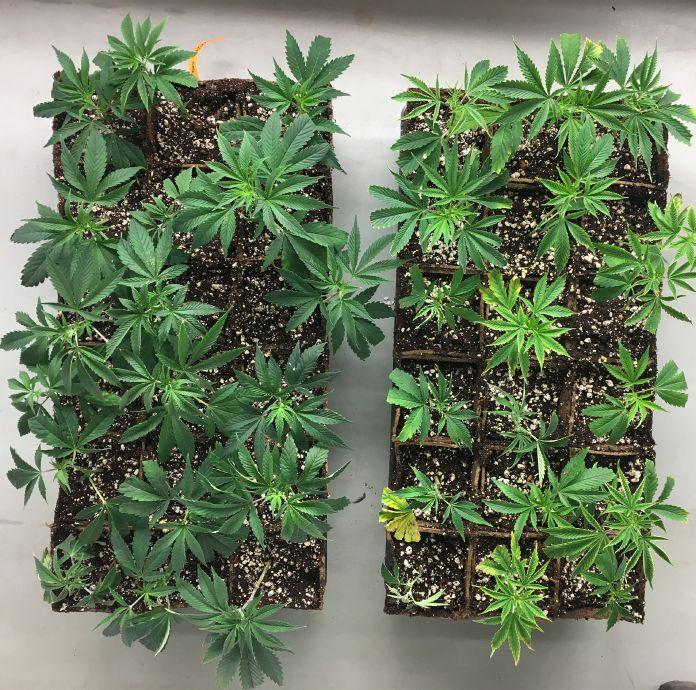
To illustrate these different methods for this article, we conducted a few simple experiments at GreenSeal Cannabis Company. For the first, we pre-moistened the substrate before transplanting rooted clones into it. This is a common method that aims to reduce root hair damage and improve root contact with the new substrate.
We took 108 rooted clones and randomly assigned them to one of two groups: the first group was planted into four-inch pots
filled with a peat mix that was not pre-moistened. The second group was planted into four-inch pots filled with pre-moistened substrate. All the other conditions were the same. After around 15 minutes, all the plants were top watered.
Each day after transplanting, we measured the vertical growth rate for both groups and took photos. The image above was taken about 24 hours after transplanting. You can see that the plants on the right, which were planted into the dry mix, have leaves that are visibly paler, that are often curled, and exhibit scorching at their tips. For both groups, vertical growth stopped for around two days, but over a
In this experiment, the clones were divided into two groups: the first group used pre-moistened substrates (left), and the second group used peat mix that was not pre-moistened (right).
James Eaves is the head of research and development at GreenSeal Cannabis Company in Stratford, Ont. He is also a full professor in the Business School at Laval University in Quebec. Chad Morphy is the head of operations at GreenSeal Cannabis Company.




































four-day period the average growth rate was significantly higher for pre-moistened group.
REDUCING TRANSPIRATION
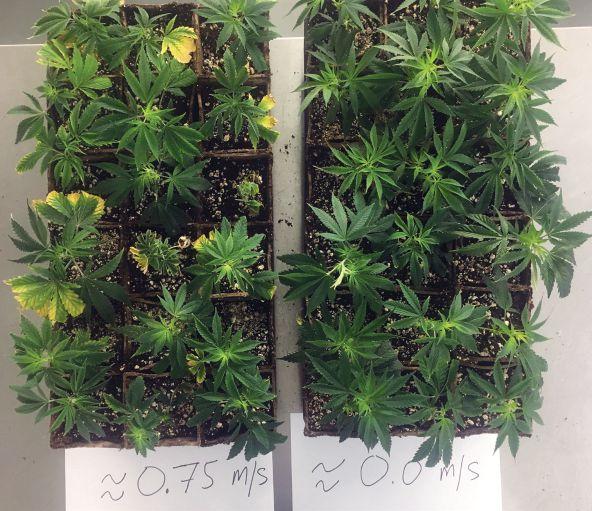
Some ways of decreasing transpiration rates include reducing the leaf surface area (by removing or snipping some leaves), light intensity, air flow, and vapour pressure deficit (VPD). As a demonstration, we again took 108 rooted clones and randomly assigned them to one of two groups. The first group was grown for five days in a space with little airflow. The second was grown in identical conditions but we used a fan to create around 0.75 meters per second of air flow, which is about the level of airflow you’ll find in a typical grow room that has wall mounted fans set on medium.
We measured the change in pot weight each day as an estimate of the transpiration rate. The group grown in the higher airflow environment had an average transpiration rate that was about 28 per cent higher. The image shown here pertains to a sample of plants from each group on day 5. It is clear from the photo that the high airflow group suffered significantly more transplant shock.
After fixing the sources of increased airflow in our vegetation

From R&D, cultivation and disease diagnostics to final Health Canada testing -- we are your Complete Cannabis & Hemp Testing Lab
Plant / Soil / Media Disease Diagnostics
Water / Tissue / Soil Nutrient Analysis
Residual Solvents

Biologicals
Seed to Harvest QC Compliant Cultivation Software
Cannabis 2.0 Edible & Beverage market ready
room and implementing other changes to reduce transpirations rates, we consequently increased success rates and plant quality, which reduced mother care and propagation costs, and saved space.
PRECONDITIONING PLANTS FOR TRANSPLANT
The final strategy we want to demonstrate is called pretransplant nutritional conditioning (PNC), where plants are given specific nutrients to enhance their ability to draw up nutrients and water before the transplanting phase. It predisposes the plants to tolerate transplant shock better or to recover more quickly. Phosphorous and nitrogen are commonly used for PNC. Several studies have shown that preconditioning plants accelerates optimal ripeness for greenhouse container crops, like tomatoes.
To test this on cannabis, we created three experimental groups. The first group (the control) consisted of transplanted clones that were not preconditioned with phosphorous and nitrogen. The second group was preconditioned with a low level of each. The third group was preconditioned with a medium level of each.
Each day, for four days following transplanting, we measured the change in average plant height. We found that the average height of the group that was not preconditioned increased by 41 per cent, while the average height of plants in the groups with low and medium levels of P and N increased by 53 per cent and 61 per cent, respectively. Image 3 shows the control group next to the medium P and N preconditioned group on day 4. Signs of transplant shock are much more visible for the control group.
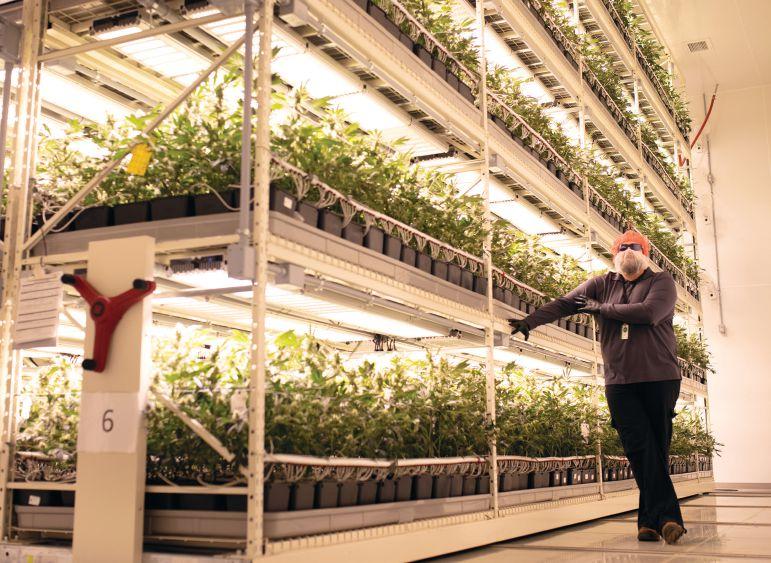
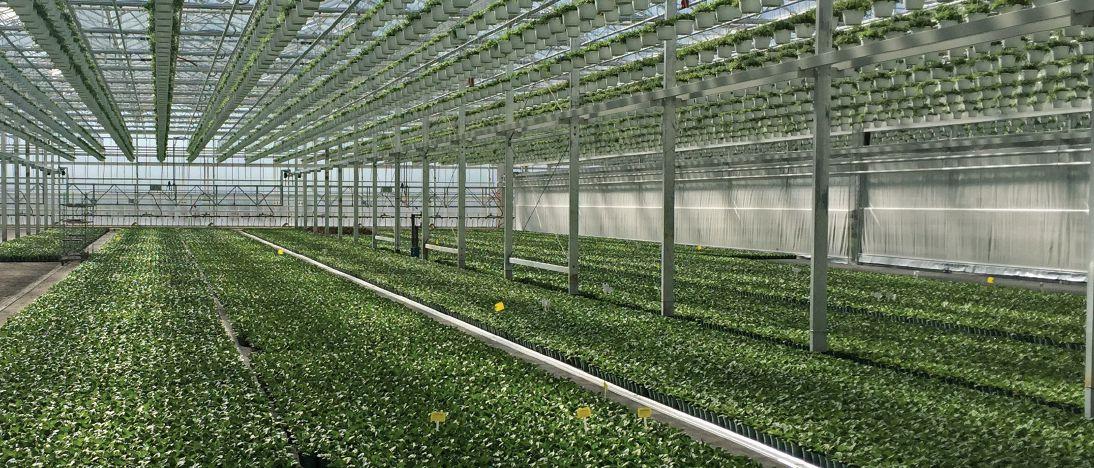
At GreenSeal, we grow using a high-density, vertical farming system (Image 4), so the efficient use of space and resources is a constant focus. Experiments similar to the ones described here have led to process changes that have helped us manage those resources better. How much better is still not clear since we have not yet measured the impact on output. We are currently conducting longer-term experiments so we can look for differences in yield, earliness, and cannabinoid profile. We plan to submit those results to a peer-reviewed journal and also publish them in a future edition of Grow Opportunity
The plants on the left, which had higher airflow, exhibited more transplant shock than the other group.
















Plant artist
Spotlight on Canada’s most exceptional master growers
By Mari-Len De Guzman
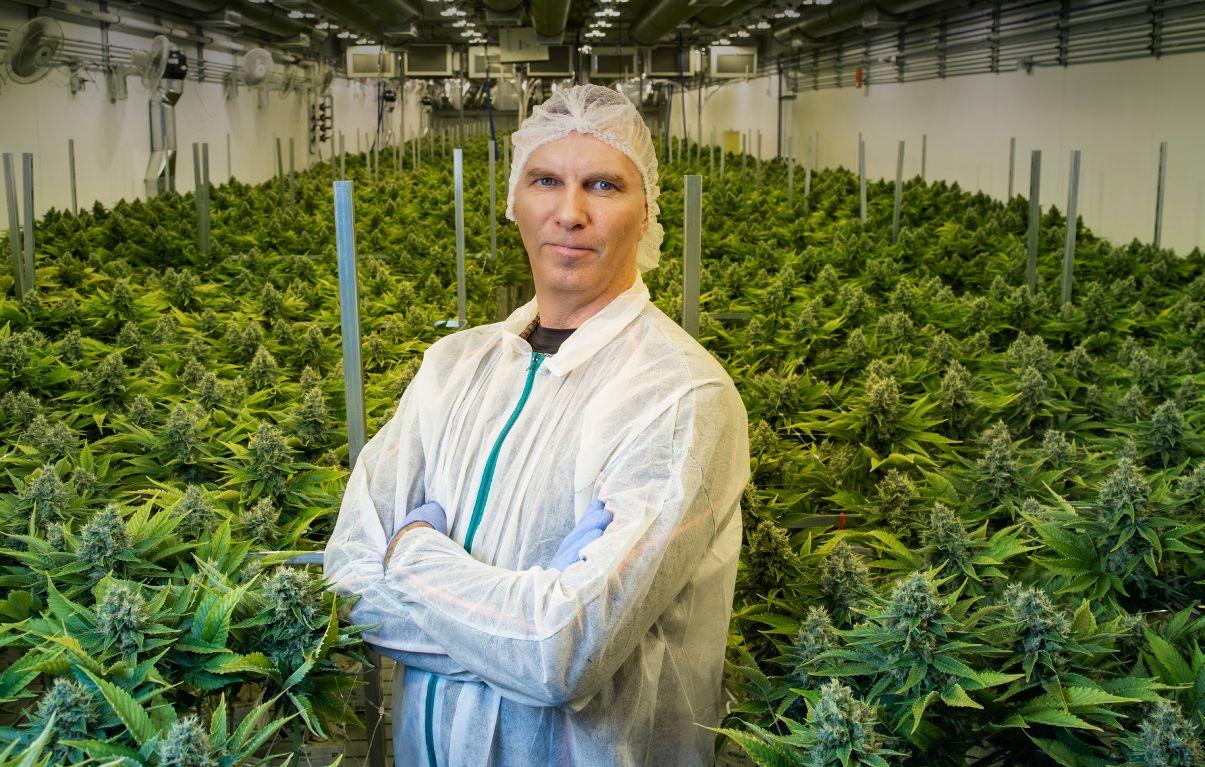
The force is strong with Gregg Wigeland, and this Yoda of cannabis cultivation is one with the plant.
Having lived most of his life around cannabis, he has learned and perfected the art of growing cannabis. His path to becoming a master grower has been paved by numerous trials and errors over “too many years.”
“(Cannabis) has been around me my whole life,” declares Wigeland. It’s that life experience and close affinity to the plant that propels him as one of Canada’s most exceptional growers.
As the master cultivator for Calgary-based Sundial Growers Inc., and incharge of the company’s flagship facility in Olds, Alta., Wigeland does not only tend to the plants; he has also become a mentor to budding growers.
“When Gregg talks cannabis, you can’t help but listen closely,” writes colleague
Laura Doell in her nomination of Wigeland for Canada’s Top Growers. “He is willing to teach anyone who listens. His energy is great and you just have to meet him for 10 minutes to know it.”
Wigeland has been walking amongst the circle of notable cannabis growers, particularly in British Columbia’s cannabis culture, long before Canada legalized medical – then recreational – cannabis.
“We were the ground floor,” Wigeland recalls of the early days when cannabis was an illegal substance everywhere. “It’s been an amazing road to get to where I am. We just feel blessed to be a part of this. None of us could have ever envisioned that this is actually where the girl was going to take us. We all work for the girl, she’s our boss.”
Because of his vast experience, and the bond he has developed with “the girl,” Wigeland was courted by both Canadian and international cannabis companies to join their team. His beliefs about the purpose of the cannabis plant, and where
he believes she would take this industry, guided his decision to ultimately join Sundial in August of 2018.
ROOM FOR GROWTH
Today, Wigeland manages the company’s massive, 500,000-square-foot, production facility in Olds, Alta., comprised of purpose-built modular structures, designed specifically for cannabis growing. When fully completed, the entire facility will involve 140 individually controlled cultivation rooms, with a combined production capacity of 100 million grams annually, according to a company press release.
“Every room is basically 100-light shelf, one after the other after the other. I think we are about two months away from having 115 rooms in flower. It’s 11,500 lights in flower. It’s just such a gigantic facility to really wrap your head around,” Wigeland explains.
He finds this innovative approach to growing ideal as each room is individually set up, independent of each other. It allows
“Cannabis has been around me my whole life.”Gregg Wigeland, master grower at Sundial Growers Inc. and inaugural winner of Grow Opportunity’s Canada’s Top Growers.
for a more controlled growing environment without the complexities and variability of a large-scale, commercial production.
“The beautiful thing is as we dial one room with one strain… the next room is just an emulation of the last room. Right now, we are going into some incredible genetics that are just starting to pop up in the company,” Wigeland says.
Sundial’s master cultivator is also focused on research and development. When he’s not in the grow rooms, one can find him tinkering away at Sundial’s R&D facility in Rocky View, Alta., intent on continually improving cultivation techniques and testing new genetics. His R&D team is given free rein to test and makes mistakes and test again, all in the pursuit of a better performing plant and improved production processes.
Wigeland enjoys every minute he spends in research and development, and so do his colleagues that work in that facility.
“Gregg instructs, teaches and directs at the research and development facility in Rocky View,” writes Doell. “All the innovations and initiatives he’s accumulated through experience over the past 40-plus years have come into play there and are tested.”
From materials used in the growing rooms to lights to “dialed-in-customstrain feeds,” Wigeland is testing them all, and once the efficacy is proven, those innovations are then rolled out to live production in the Olds facility.
“He invents and initiates them all. He is a true artist of cannabis,” Doell says. “Gregg is a brave soul and pushes photosynthesis boundaries – the real deal plant artist, and does it with flare.”
TYPICAL DAY
An early start and a late end to the day is how Wigeland describse a typical work day – getting up before dawn to find several messages on his phone already needing his attention.
“I’m pumped from the minute I get out of bed,” he says, looking forward to morning huddles with the crew and, “dialing in not just the facility but the people.”
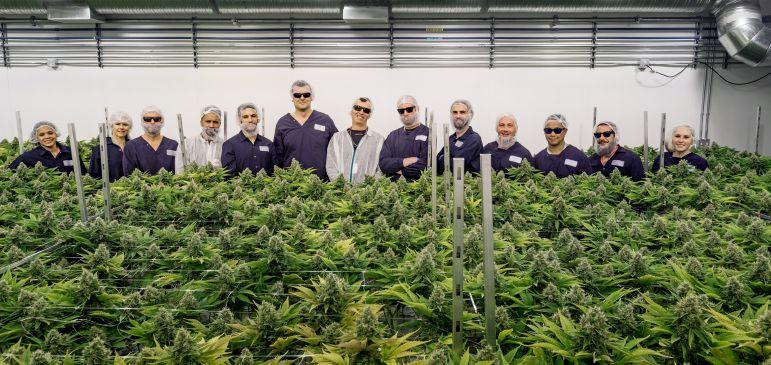
More than a master grower, Wigeland considers himself an instructor and gives kudos to his team who does the work day after day to produce an exceptional product that they all can be proud of.
Earning the trust and respect of his team members is important. And Wigeland finds his experience and expertise – and his willingness to share those knowledge – were instrumental in gaining the trust of his people. That positive energy from the growers, Wigeland believes, translates into energy for the plant.
“I’m 56 years old and I’ve been around this a really long time. To be seeing kids getting out of high school coming into the industry, it’s enlightening for sure. It’s an amazing experience to be a part of,” he says.
QUALITY
Wigeland believes in Sundial’s vision and appreciates the support it gives him to pursue new avenues of innovation to constantly improve growing processes.
Sundial had not been immune to controversies and negative press. It has been the subject of two shareholder class action lawsuits in the U.S. for allegedly failing to disclose product contamination issues that resulted in its customer, Zenabis Global Inc., returning some products to Sundial.
The issue has since been resolved between Sundial and Zenabis, and the Alberta producer has said it will “vigorously defend” against the suits. “The (product) return represented a minimal percentage of our total production to date, had no impact on our second-quarter financial results and is expected to have a negligible impact on our third-quarter earnings,” Sundial said in a statement issued in October.
The incident occurred before Vigeland
joined Sundial. He could not comment on the particulars of the issue.
“One thing for sure is the corporation tightened up the quality control even more,” he says. “I like that, as I’m all about quality. Now that I am in charge of the facility we will see a lot of positive improvements and the actual finished product will certainly make an impact on the current LP market.”
Consistency and clarity are important to ensure the highest quality products come out of every harvest, says Wigeland. Keeping every grower on the same page and using available tools and technology all for the benefit of the plant. “The plant is our boss,” declares Wigeland.
FUTURE GROWERS
Wigeland believes that producing a great product always starts with passionate, happy people – the young and eager learners, some of whom would someday grow up to be master growers, too.
“When I am showing them my knowledge, they are learning off that knowledge,” he explains. Still, he adds, the best way to learn is through trial and error.
“If you didn’t make the mistake, you would never learn the knowledge,” he says, and starting small is always a good place to start.
He encourages those who have an interest in cannabis to try planting them in their own homes. In Canada, it’s now legal to grow up to four plants for personal use. “Everybody should have plants in their house and they should create a bond with the plant.”
For Wigeland, the secret is in the plant. “It all comes back to the plant. She is a wonderful, amazing entity.”
Wigeland sees huge potential in the breed of young growers coming into the industry. His team of cultivators at Sundial benefits from the master grower’s expertise on cannabis growing. Wigeland takes every opportunity to teach and develop his team members to their full potential.
Master of method
Optimizing cultivation with help from science
By Mari-Len De Guzman
When his patients began telling him about the relief they’ve had using medical cannabis, Chad Morphy’s health-care career started taking him to a different path.
He left his 13-year practice as a registered massage therapist and osteopathy practitioner to become a licensed producer under the Marijuana for Medical Purposes Regulations (MMPR). The intention was to grow cannabis on behalf of one of his patients, who had multiple sclerosis, was bound to a wheelchair and could not grow the plant on his own. He then began immersing himself in the science of cannabis cultivation. As he started working with other MMAR patients and seeing the effects cannabis was having on their health and wellness, Morphy knew he found a new calling.
“I saw the opportunity to help them promote health and quality of life within a whole new industry and a whole new area of theory and practice. When the MMPR was introduced in 2013, it was an easy decision to start an LP with my co-founders, who are equally passionate about the difference this plant can make,” he recalls.
The co-founder and head of operations of GreenSeal Cannabis Co, Morphy is spearheading the company’s cultivation facility in Stratford, Ont., a 28,000-squarefoot indoor, multilevel vertical farm. The facility currently produces 2,000 kilograms of flower annually. It just recently completed the construction of four more flower rooms which, pending Health Canada approval, will bring the company’s production capacity to 10,000 kilograms per year.

Since venturing into the cannabis space, Morphy has dedicated his career to understanding every element of the cannabis plant, writes Steve Stacey in his nomination of Morphy for Canada’s Top Growers.
“As evidence of his deep knowledge of cannabis cultivation, Chad has achieved harvests yielding 2.2 lbs. per 1000W of light, and has led or advised multiple operations that have gone on to achieve regular average yields of 1kg/year per square foot of grow space,” Stacey states.
Morphy was personally involved in the design and layout of GreenSeal’s production facility in Stratford. This construction project won the Grand Valley Construction Association Building Excellence Award in 2016/17, according to Stacey.
PLANT SCIENCE
Like every other master grower in this relatively young industry, Morphy gained and accumulated his cannabis cultivation knowledge mostly through experimentation and documentation, guided by a variety, albeit a limited number, of books and publications available at the time. He also benefitted from professional partnerships with colleagues and researchers, inside and outside the cannabis circle. But the science is what he was most interested in.
“I started getting in-depth about researching the science of plants. Obviously, I have a science background, which is the type of subject that always came naturally to me anyways,” Morphy says. “I was especially fascinated with the nutrients of the
Chad Morphy left his career in health care to pursue a different kind of patient care – growing medical cannabis for them.
Shield Your Yield
Sustainable Facility Disinfection for Yield Protection
SHYIELD™ One-Step Disinfectant Cleaners are the 1st disinfectants designed specifically for use in Cannabis Facilities with relevant use directions and efficacy claims. Registered with Health Canada, SHYIELD™ disinfectants can improve your sanitation program by ensuring:
Consistency — Prevent microbial contamination with effective products & protocols
Efficiency — Streamline sanitation processes with one solution
Sustainability — Protect your facility & the environment
Improve your sanitation program today.
SHYIELD.ca



plant at that time. And how little had been done as far as specific research on nutrients for cannabis.”
He is a firm believer of documentation, which he says, allows any grower to quickly learn from their mistakes and make the necessary tweaks that can then be applied to the next crop. Documentation also allows for objectivity, removing the bias and ego that can easily slip into growing practices, which can lead to false assumptions across the industry, Morphy points out.
Data trending is also an important exercise, which can be achieved with proper documentation, providing crucial insights over a longer period of time, he adds.
In cannabis cultivation, the GreenSeal master grower explains how they collect data from the plant: “We measure root zone temperature, leaf surface temperature, soil moisture using both EC-based meters and tensiometers, and scales for measuring changes in pot weight, which we use as an estimate of transpiration rates. We also regularly analyze plant tissue, substrate, irrigation water, and runoff.”
The company also measures the environment, i.e. air velocity, CO2, relative humidity, temperature and light intensity – can be challenging in a vertical farming environment, Morphy says.
Data gathering is one thing; organizing and analyzing them in meaningful ways is a whole different ball game. Morphy suggests growers really think hard about designing a data collection and analysis protocol that will suit their needs – and doing it as early into the process as possible.
GreenSeal’s genetic selection program – which Morphy has initiated – is also a testament to his love for science and the company’s quest to produce consistent, high-quality cannabis. In his nomination, Stacey explains this genetic selection process: “Multiple seeds from the same cultivar are propagated simultaneously, and only those phenotypes displaying the strongest growth characteristics and testing for the highest (or most desirable) levels of cannabinoids are maintained as mothers (or used to produce pollen, in cases of potential fathers), which can then be re-introduced into the company’s proprietary breeding programs or considered
for direct use as a main production strain (cloning the many rows of GreenSeal’s towering flower rooms).”
BALANCING ACT
Morphy essentially wears two grower hats in his organization: the grower of plants and the grower of business. His day is typically spent balancing these two, ensuring that each is given the appropriate attention they equally deserve.
A production meeting with the entire team starts his day at work. Then Morphy proceeds to do the rounds through the facility – checking with the back-end staff, packaging team, quality control person and the head of innovation, breeding and genetics department.
Then he puts on his corporate hat – sitting down at meetings, answering emails. From time to time, he also hosts visitor tours, some of which are with other license holders, exploring potential partnerships.
“I’m also the primary connection between the front-end corporate activities and the back-end production activities. This is a vital link, since big decisions, partnerships, and corporate strategic planning all need to be firmly based on an awareness of our production targets and capacities.”
GROWING TEAM
Morphy says quality control and assurance is an integral part of his company’s production process, and so are the people that
implement and execute these standards.
“We’ve put together a cultivation team with people who are all extremely passionate about cannabis and growing,” he says. Through organized brainstorming sessions, where everyone is encouraged to propose ideas to continually improve processes and environments, Morphy creates an atmosphere of openness and innovation. “Definitely, GreenSeal focuses on being an innovator in the industry.”
Morphy shares his knowledge to GreanSeal’s team of growers, many of whom have not worked at a large-scale cannabis cultivation facility before GreenSeal. His rollout of the company’s ideas-sharing system shows Morphy is not a top-down, ‘-myway-or-the-highway’ type of leader.
“Rather than simply applying his own hard-earned knowledge to the production process in a top-down, prescriptive manner, Chad deliberately creates channels for dialogue, collaboration, innovation, and testing new ideas in ways that make even the most junior members of the team feel like they are important,” Stacey says.
Morphy enjoys mentoring the young growers. “I hope the real legacy that my work will leave behind is with the next generation of growers. The sky’s the limit for these knowledge-hungry people who are just getting their start on what will hopefully become a successful, lifelong career growing cannabis – which has been a dream come true for me and I know it will be for them too.”
As the head of operations and the master grower at GreenSeal Cannabis, Chad Morphy wears multiple hats, ensuring the cannabis plants are growing just as healthily as the business.





Cannabis 2.0
Market opportunities, challenges for the next generation of cannabis products
By Andrew Snook
On October 17, cannabis-infused edibles, topicals and extracts officially became legal in Canada. That said, it doesn’t mean they’re available. With Health Canada imposing a 60-day waiting period on licensed producers (LPs) providing intents to sell on these newly legalized products, consumers will not have the opportunity to purchase THC-infused beverages, edibles, topicals or extracts until at least December.
“We’ve heard of companies getting approvals already on their products, which should be hitting the shelves as soon as late December in much of Canada; and by January, we’ll definitely see product in Ontario as well, which is the slower of the provincial courts to actually bring on any approved products. So, it’s been going pretty well from the regulatory side,” says Nawan Butt, associate portfolio manager for Purpose Investments.
Obtaining the necessary approvals for their products have given license holders the signal to begin building their inventories to go to market. But this doesn’t mean all licensees that now have the opportunity to go to market with their Cannabis 2.0 products will do so. Some have stated that they will not be doing small batch rollouts on their products, and would prefer to wait until they are prepared for a full national rollout.
“Right now, it’s very important to get a national brand built in a very safe manner,” Butt explains. “Everything needs to be done with utmost attention paid to safety.”

Butt says it is unclear whether being first to market is actually going to give an advantage to the license holder racing to get products onto shelves. At the end of the day, he points out, it will all come down to which products offer the best quality.
“(This is) in terms of taste, experience, time to come on and time to get off, because this is a whole new part of the industry that’s never been regulated before and the effects of which are difficult to measure because it hits person to person differently,” he says. “Needless to say, LPs are being very careful about how they roll out these products; and Health Canada and preventional boards are being even more careful as to what they approve because it all falls under their purview and jurisdiction.”
BUILDING PARTNERSHIPS
Licence holders aren’t the only ones proceeding with caution. Some product creators in the health and wellness space are also taking their time to ensure the licensed producers they partner with for their products are the right fit in terms of availability and corporate culture. One example is Earth Kisses Sky (EKS), which sells its own ready-to-mix cannabis topicals (the consumer purchases the cannabis oil separately).
Tijen Yalchin and Ashley Short, two women who have devoted themselves to the health and wellness of others, founded EKS. Yalchin is a registered massage therapist with a diploma in massage and hydrotherapy from the Canadian Therapeutic
Ashley Short and Tijen Yalchin, co-founders of Earth Kisses Sky, want to make sure they partner with cannabis producers who share their values.

growing environment, a simple, flexible, and sustainable control system is crucial. This is why proactive LPs are turning to Reliable Controls. Our nation-wide network of factory-certified
Authorized Dealers will design, install, and commission a comprehensive control system paired with an intuitive, custom-tailored graphical interface. Take command of your precisely-controlled environment. Generate tracking reports and analytics. Reduce your carbon footprint while improving productivity, quality, and serviceability.
To learn more about this cost-effective and Canadian-made solution, please contact a local Reliable Controls
Authorized Dealer near you.

interest in partnering with EKS and have began “courting” the company. But for the founders, finding a company that aligns with their beliefs is vital.
“We offer all-natural wellness products which are cosmetic grade, and food grade. And we want to make sure that we align with a company that shares those same similar beliefs, and that isn’t just about making money,” she says. “We’re here to help people. That’s what we’ve been doing our entire career. We’re definitely not salespeople by any means, but I think just based on our story alone people just trust that we have a high-quality product that we can put out on the market.”
edibles and cannabis-infused beverages, have many market experts been ignoring a potentially larger market in Canada for topicals and wellness products, such as CBD creams, salves and cosmetics?
Under the current regulatory format, Butt doesn’t think so.
“In Canada, it’s very difficult to see if there’s going to be a pick-up on the CBD side of things, because CBD is still a controlled substance in Canada. Whereas in the U.S., we’ve seen a proliferation of CBD and lots of incremental users of CBD, because it can be obtained in any pharmacy,” he explains.
“But in Canada you can only get CBD in dispensaries or online through the dispensary channel as it is a controlled substance. And therefore, we’ve seen less of a pickup even though the product is always sold out; and that’s because there’s just not enough in the market right now.”
College; as well as a diploma in acupuncture from the Institute of Traditional Medicine. Short is a certified holistic nutritionist and clinical herbalist with a diploma from the Institute of Holistic Nutrition.
For the co-founders of the company, EKS is about more than just profits. The company stemmed from the combination of a very personal journey for the two women – who are both business partners and life partners of 15 years – and a desire to improve Canada’s health and wellness space.
“We’ve been doing customized tinctures, teas, pain rubs since the very beginning, but over the past three years have been playing around with cannabis due to Ashley’s illness with Lyme Disease,” Yalchin explains. “She started making her own pain rubs with cannabis for her own joint pain. And with that, we started educating our clientele on how amazing cannabis is, and developed a trust and bond from our patients to now, consulting about it. And that’s how the birth of our products developed. We formulated a pain rub and a skin rub for people to mix in their own legal cannabis oil over the past year.”
Yalchin says LPs have shown significant
Partnering with a licensed producer that will have the necessary products ready to go is just as important, Yalchin says, who adds that she’s seen a lot of empty shelves during some of her recent tours of LPs that appear to be struggling with keeping up with current demands.
Empty shelves aren’t the only concern for companies trying to partner with LPs for cannabis-infused products. Another issue is capacity.
Angela Mustone, a specialist producer of adult cosmetics and founder of HighonLove, a line of high-grade, lubricating oil blends made from hempseed oil for intimate adult experiences, has been meeting with LPs to discuss the potential to partner with her for THC-infused lubricants. Despite some LPs showing significant interest in building a partnership, she was surprised to hear some of them didn’t have the bottling capacity to produce her product. And this is sometimes due to LPs already maxing out their manufacturing footprints to plan for the rollout of edibles and beverages.
THE HYPE AROUND EDIBLES AND BEVERAGES
With much of the hype to date surrounding
Butt says his company is very bullish on topicals and creams, and other health and wellness products that already exist in the market that CBD can be mixed with to enhance their effects. However, he believes CBD-infused products in Canada will have a tough time moving forward.
“We think in Canada it’s going to be a tough road going forward, just because it is a very regulated and controlled channel through which these are being sold; which means that the availability of CBD to the wide consumer is very limited. Whereas, in the States it’s much more open.”
Mustone doesn’t see the new cannabis legalization rules having a huge impact on increasing sales until either the number of government-run stores increases significantly, or privately-owned retail outlets are able to start popping up.
“I don’t see it happening in Canada with the laws the way it is,” she says. “With 2.0, sales aren’t going to be what people think they are… for me to go into a government-run store it takes an hour to get there and I live in Montreal.”
With the legalization of Cannabis 2.0, Butt believes the market is currently most excited about the standardization of edible formats of cannabis than anything else, including beverages.
HighonLove is a line of high-grade, lubricating oil blends made from hempseed oil. Its founder, Angela Mustone, is in talks with licensed producers for a potential parthership on THC-infused lubricants.
“We think that beverages are going to be the one game-changing formulation that actually puts cannabis into the hands of the incremental or marginal consumer,” Butt says. “Because there is a very low limit on the amount of THC that can go into a beverage as well – about 10 milligrams – ingestion is slow because it’s through your digestive tract. And because of that, what we’re going to see is a much more sustained and safer way to consume cannabis for the incremental consumer, so we’ll see the marginal consumer try their hand at their first cannabis experience through beverages.”
The beverage market is considered to be a game-changer for the cannabis industry because it is expected to increase the size of the cannabis consumer market in Canada. The cannabis beverage market is also expected to lure consumers away
from the black market with products that will be more available through legal channels, as well as have a very measured effect on consumers.
The other edible format that Butt sees has a potential to grow the cannabis market is the chocolates market.
Yalchin agrees that much of the focus for many LPs right now is in the beverage and edibles space, despite the popularity of health and wellness products in the U.S. Despite the slow rollout of legislation to bring THC- and CBD-infused health and wellness related products to market, Yalchin remains optimistic about the future.
“It’s not moving as quickly as we anticipated, but I think the cannabis industry is here to stay,” she says. “It’s just going to take a lot of time and patience to get things all set up.”
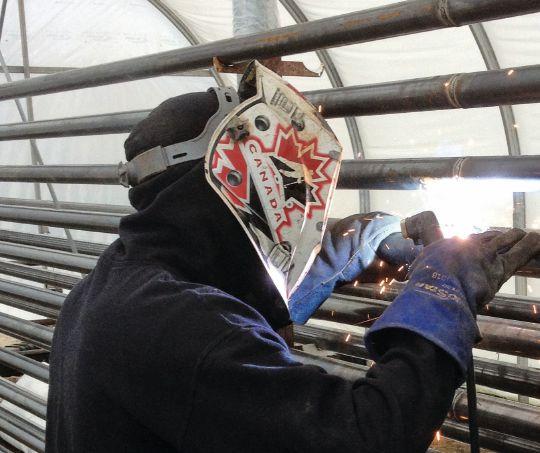
Butt says that it won’t be long until Health Canada rolls out Cannabis 2.5
“Cannabis 2.0 has been a very limited rollout in how tightly Health Canada has controlled the product formulations and what can be done,” he says. “I think as Health Canada gets more comfortable with product sales, as well as product usage, we will see Cannabis 2.5 actually come out, which will be the deregulation of the limitations that go into developing these cannabis products.
“Once the education is out there, once they’re comfortable with that within the next 18 months or so, we’ll see the 10mg limit per edible or per beverage increase. And also, the second part of that will be the deregulation of the CBD channels… we’ll see the CBD channel open up as Canada takes lessons from the States and starts to implement things.”



Pot of wisdom
What Canada can learn from Oregon’s cannabis rollercoaster By Max White
Oregon and Canada have long shared historical roots in our beloved cannabis industry. Generations of farmers have poured their passion, sweat equity, and even risked their freedom to further the development of this plant. The Pacific Northwest spans from California to Canada, and is largely responsible for setting the pace for a booming, newly emerging world market.
Recognition that cannabis is woven into the state’s cultural fabric initially emerged as institutional tolerance when Oregon became the first state in the U.S. to decriminalize marijuana possession in 1973. In January 2014, Measure 91 was passed legalizing recreational use for adults over the age of 21. In late 2016, producer licensees were finally being issued and the growth began. Oregon had no restrictions on applying for a producer license. A non-refundable $250 put an application in queue. Low license cost (maximum of $6,000) and the fact that anyone from anywhere in the world could apply, quickly set the pace for an exhaustive, competitive market.
To put it into perspective, at the time of this article, Canada has a little over 200 licence holders, a population of about 38 million people, and the ability to export product outside the country. Oregon has 1,200 active producer licences with 800 more in the queue slowly coming on line. Oregon has a state population of four million, and cannot distribute outside of the state. Oregon growers have out-produced what the state could consume and, in the Spring of 2019, the state reportedly had a three-year surplus of material. Prices plummeted from an average of $2,000/lb to $750/lb. Sixty per cent of the producers went out of business. Retailers were offering $50-ounces on every block trying to win over consumers. As cannabis is a new industry and each grower is different than the other, cost of goods sold and margins vastly differ. The state was forcing producers to get good at their job, or get out. Coming into 2020, the market has matured and lessons have been learned.
Our company should have gone out of business several times but we found our bottom and survived.
My name is OneEye Max. I have been cultivating cannabis legally in both the state medical and recreational markets for the last 20 years. There is a ton we can both learn from each other during this time in two different markets. I am humbled by the opportunity to share my perspective as well as offer my two-cents on what Canada can learn from my experience navigating Oregon’s rollercoaster “cannabliss” industry. Below I will talk about several topics and then offer a few key points on how we managed to get through each unique tribulation with a better strategic foresight.
EFFICIENCY
When we grew on the ‘free market’ there was never the issue of dissecting our cost. The margins were wonderful and the demand was high. At the end of the day, I knew I was bringing in more than I was spending. Fast forward to a super saturated market where outdoor pounds are being auctioned off at $50 per pound, and sales are through the floor. Instead of running to investors and asking for money, the only way we saw possible to survive was to dissect the budget,
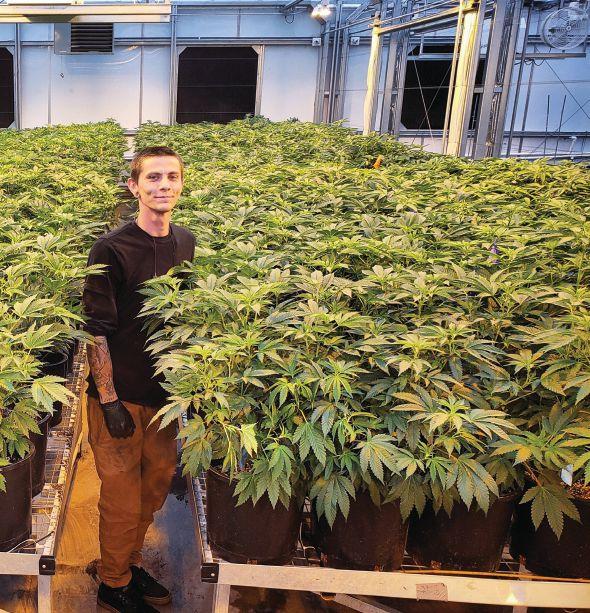
Max White (in photo), director of cultivation at Aroma Cannabis in Canby, Ore.


With its high perlite content, PRO-MIX® HP BIOSTIMULANT + MYCORRHIZAE™ provides a great growing environment to growers looking for a significant drainage capacity, increased air porosity and lower water retention.

PRO-MIX® MYCORRHIZAL INOCULANT • POWDER
Our PRO-MIX® Mycorrhizal Inoculant • Powder is a highly concentrated formulation designed to help professional growers to CONNECT and improve the value of their crops. Based on the growth cycle of plants, it is intended to be applied at key moments to ensure a quick connection in order to establish an extra radicular network. The extended root system resulting from the symbiotic relationship allows to enhance water and nutrient uptake, resulting in stronger, healthier crops. With the PRO-MIX® Mycorrhizal Inoculant • Powder, get outstanding results from a cutting-edge technology.
Vantage Point
look closely at job functions, streamline duties, and focus on garden timelines in order to give us the stay power in navigating the market.
My company, Aroma, went through 30 employees during the first year of operation. The honeymoon phase ends and the glory of working a pot farm fades. We have become 40 per cent more efficient as a company since Year One, mostly through job function data and incentive programs with employees. We get more done with 12 employees than we did with 30 – and in a more timely fashion.
Key points:
When hiring employees, be thorough. Do your research and be as descriptive as possible when explaining the job duties. When hiring for garden labour, I prefer an agriculture or general commercial cultivation background to any “master grower” experience.
Use a probation period. We do monthly evaluations to help steer the employee in the right direction and ask questions of them to better refine our own management programs. If in 90 days we aren’t getting what we need out of the employee, then it’s best to part ways and hire somebody who will grow with us.
Entertain employee incentive programs. It is cheaper for us to reward benchmarks from employees than to hire additional help to complete the task. The employee hits goals and gets rewarded, and payroll still remains cheaper, as well as the overall management overhead.
Keep data for everything, especially job functions. How long does it take to trim this certain strain of product? What are the best strains in the garden from a grower’s perspective? And what are the best strains from a post-harvest perspective? And why?
Develop a business flow that operates inside predetermined timelines.
Relationships
As with any industry, relationships can make or break your business.
We’ve all heard the phrase, “It’s not what you know, it’s who you know.” Your network is your net worth. And that couldn’t be more true for the cannabis industry.
In Oregon, before recreational was legalized, this industry was built on relationships. If you didn’t know someone directly in the game, you weren’t a part of it.
When I first entered the cannabis industry in the late 1990s, the only way to navigate the market then was through relationships and building a network of like-minded individuals. It was in these privileged and, in my opinion, sacred circles of people in which I personally learned my growing techniques and established distribution chains for product – where I acquired the ins and outs of the cannabis hustle.
Now, fast forward 20 years. What an entertaining stew of individuals we have rushing to get a hot seat in the cannabis game. Knowing your partners is key, so is being able to talk plainly. Be vulnerable and have excellent communication with your people. The only way I have been successful is by continuously building on my network support system. If I have, say, a bug problem, I have the whole picture of people to help me through the process. From bug identification, to process of treatment, to product sourcing to follow up protocols. I can now waste little time eradicating a problem, while spending only the necessary money. It is a game changer having good relationships inside an ever-growing network.
Key points:
There is no shortage of information on every topic inside the cannabis industry. Much of it is unproven or biased. Do your research, and as you find people that continuously offers good information, hold on to them. Help them if you can as well.
Develop relationships with your supply chain vendors. For instance, the fertilizer company will have insights and new tips and tricks that you can benefit from – or trial programs that can be nice. Develop relations with other licensed growers. This is huge for us. We are all playing the same game by the same rules in Oregon, and sharing amongst each other has yielded amazing results. We even create buying power for products, share labour, and strategize product value in the market with each other.
Be good to your budtenders. Get samples in their hands. Let them smoke your product. Because when there are 200 different jars of flower on the shelf, you want them to remember you and your farm’s story.
Best practices
Everybody has a different business strategy. Just because you grow organic, no till soil, hand-trimmed, magic, pure, flower from a farm of plant lovers… doesn’t mean you are unique. Sure those are great attributes, but my outlook has changed for my lane in this industry. I have learned to let go of certain things in our production facility process in order to stay competitive in the market. We produce consistent, large batches of cannabis flower monthly. We operate on a monthly timeline. And we know what are target price points should be. Whereas before when I was a smaller size grower I would
Oregon’s saturated cannabis market led Aroma Cannabis to implement operational efficiencies, including some personnel changes, to keep the company competitive. In photo: Randy Green, garden lead

only hand trim product, it only makes sense for our facility to incorporate some machine trimmers. We are running a business after all and where quality will always be number one for me, I have to pay attention to quantity as well. Does it pencil to operate the way we are doing this, or is there a better way? Best practices and efficiency are similar subjects but with best practices you can insure consistency in your product and streamline labour tasks to operate smoothly and effectively.
Key points:
Once again, data is our friend. We are constantly trialing new ideas and methods at a small scale to see if it can be inputed into our processes.
Keep in touch with new technology. We have companies show us new technology every month: maybe it’s a new light, or new media, or a nutrient additive; maybe a camera system that alerts with drought or bug pressure. Automation and new tech pay for themselves very quickly, in our experience.
Know your market. If you are specializing in medical strains, learn it, know your competitors. Stay in your lane. Identify what you are good at and own it.
Growing environment
There are three main environments in the commercial growing world: outdoor, indoor and, more recently, commercial greenhouses. They each have their own pros and cons, in my opinion.
Indoor facilities have the ultimate environmental control and bug outbreak insurances with plant separation in multiple rooms. The downside being the cost to start up, operate, and the effect on price/ gram to produce.
Outdoor is generally the cheapest method. And you can utilize the sun for big fat buds. But on the other side of the coin, the product is subject to poor natural elements as well. Mold and bugs can get out of hand quickly. This product fetches a lower market value as it generally lacks the visual attraction that a nicely pampered indoor flower can achieve.
But as Aroma developed its business strategy, we decided to utilize the sun and build a 12,000-square-foot commercial greenhouse. We have multiple zones in the garden that use automated black out curtains to separate plant growth stages and photoperiods. The decision in using the greenhouse revolved around the benefits of the sun. Our operation costs, and even start-up costs, are less than an indoor facility, while still being able to achieve similar quality to indoor flower. We love our growing facility, but at the end of the day it is a personal preference on the facility type you choose.
Key points:
Develop a preventive integrated pest management program and keep on it like stank on chronic. One of the biggest challenges cultivating inside a greenhouse has, and will continue to be, is controlling pests.
Prepare and understand your region’s outside weather habits. I now have pre-set environmental control set points on thumb drives
for spring, winter, summer, etc.
If it is a rainy condition, plan for extra dehumidification and good drainage. You will want to carefully plan and manage watering methods, too.
Be aware of what your neighbours do on their land. We are located next to a hazelnut tree farm, which sprays by helicopter once a year. We have failed pesticide tests when our trim is processed into oil. Cannabinoids as well as pesticides concentrate so even the smallest amount (Oregon tests some pesticide analytes down to the ppb) can turn into a fail.
Be aware of neighbouring hemp farms. Yep, we have also seeded from hemp farmers not properly culling their fields of male plants. Sharing a common space for all the plants has proven tough for controlling pests, keep this in mind when building or retrofitting an existing greenhouse.
Measure the incoming sunlight so you know how much supplemental light to supply in order to hit target daily light interval levels for explosive growth.
Foresight for the future
In Oregon we had a massive influx of entrepreneurs. Rightfully so. Cannabis is fun, mysterious and mythically profitable. The first year for us was new, hard and full of lessons. The second year was a nightmare – an all-out growers’ hell. Now those of us that are left are licking our wounds optimistically with a hope of market redemption.
Oregon will be the first state to allow national distribution and the country will be making big decisions to further cannabis rescheduling and overall national market trade.
Oregon has been a tough lesson for us, but an absolute crash course in business, networking and cultivation. I hope some of the tidbits I shared above can help anyone reading this. Keep your head emerged in your craft. Ask lots of questions. Be kind. And enjoy the ride. (This article was written with help from Erik VonEggers, general manager at Aroma Cannabis.)
Follow us @AromaCannabis and @Oneeye_max
Max White is the co-owner and director of cultivation at Aroma Cannabis in Canby, Oregon.
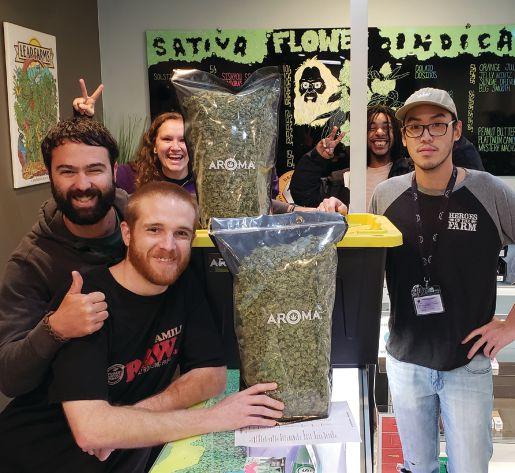
As a cannabis producer, Max White (left) knows the importance of industry relationships. He is seen here with budtenders at local dispensary Happy Leaf.

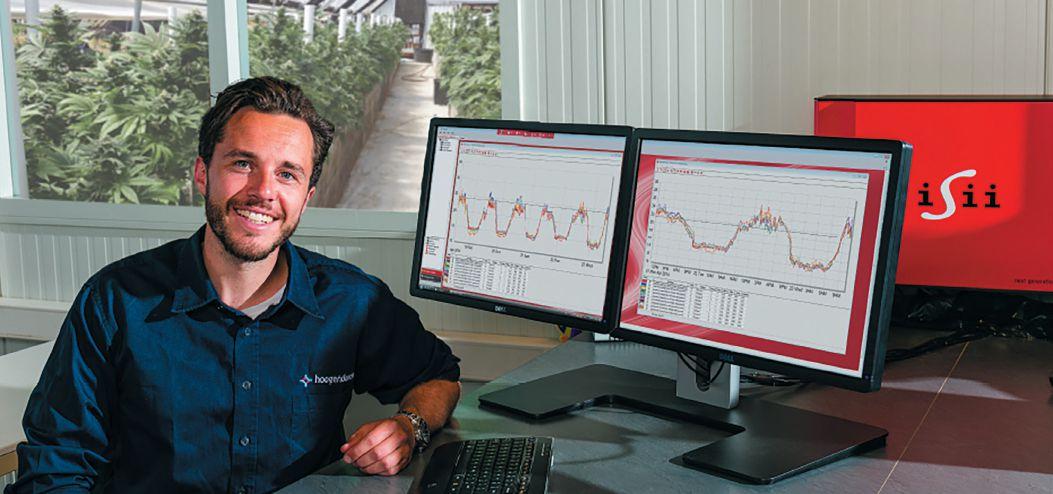
Hoogendoorn’s next generation iSii monitors and controls all climate,irrigation and energy equipment in all types of facilities such as greenhouses and buildings. The iSii is equipped with advanced controls that work according to the principles of Plant Empowerment. This way light, temperature, humidity and CO2 are aligned with each other for a maximum photosynthesis. In addition, to prevent water stress, irrigation is driven by the evaporation energy and water balance of the crop. With the iSii process computer, you set the base for high quality production.
Up Close
TELLING STORIES
Q&A with cannabisMD
CEO
Michael Klein
By Jean Ko Din
It is well-known in the cannabis industry that consumer education is needed in order to advance the market. But what is less clear is who is responsible for providing this education.
For the newly curious cannabis consumer, the experience of seeking the right information can be a daunting experience. Online forums and websites can be a minefield of reliable – and unreliable –information.
CEO Michael Klein said cannabisMD hopes to fill that gap as an authority on wellness and healing through CBD and medical cannabis products. The digital platform is made up of a contributing team of doctors, medical experts and journalists that curate the latest research, debunk common myths and bring personal stories to the consumer audience.
In an interview with Grow Opportunity magazine, Klein shares his insight on how public interest in the fast-growing cannabis industry has outpaced the ability for the market to identify a voice of authority.
Klein remembers doing his own research when his own father mentioned an interest in trying cannabidiol (CBD) for pain management.
“I went online and it was really like Trip Advisor. You have no idea if any of this content has authority, if it’s credible,” he said. “And so, he’s left to go see ‘Jason’ at the dispensary who’s probably a nice 22-yearold, but he’s just been serving other individuals that may not necessarily have ailments. And that’s what you need to rely on, and that really stuck with me.”
Before entering the cannabis space last year, Klein earned more than 20 years of experience as a media executive for companies like Condé Nast Entertainment, Discovery Communications and MTV.

Klein brings with him a unique vision to leverage cannabisMD as a platform that empowers consumers to make educated choices for their therapeutic needs.
Grow Opportunity: For more than 20 years, you have worked as an executive for well-known media organizations. Now entering the new world of the cannabis market, what has it been like?
Michael Klein: Ultimately, when you create a hit show, it’s because you’ve identified an underserved audience and you’ve given them a great content experience, they reward you with viewership, then you scale and build that audience.
And so, when I look at cannabis, again, I felt there are these underserved audiences that we can speak to, individuals who don’t see themselves going into a dispensary be-
cause they’re not ‘that’ person. […] If we can take my toolkit of creating premium content and telling stories, we can serve this audience. And it’s a massive audience.
GO: When you first came into the role as CEO in September 2018, what was your overall impression of how cannabisMD can serve that type of audience?
MK: As I looked across the landscape, I saw that with the cultural conversation, any number of digital properties have emerged but they’re all speaking to an adult consumption audience, or somebody with a predisposition or relationship to cannabis. Nobody was speaking with an authority voice to a cannabis curious consumer and doing it from a non-advocacy point of view. […] That non-advocacy point of view means that we’re showing all the positive
Michael Klein, CEO of cannabisMD, spent the first 20 years of his career as a media executive for Conde Nast, Discovery and MTV. Now he brings his expertise to cannabis education for the curious consumer.
Make the easy switch from HPS to LED
It is now easier than ever before to switch to LEDs. With the new Philips GreenPower LED toplighting compact (TLC), growers can use their existing HPS set-up and trellis construction to make an easy switch to LED lighting. The Philips LED toplighting compact (TLC) delivers light output of up to 1800 μmol/s and offers efficacy of up to 3.0 μmol/J to help effectively optimize crop growth, enhance crop quality, and cut operational costs.
• Easy 1-to-1 HPS to LED replacement
• Plug-and-play design saves time and money on installation
• Consumes 40% less power while producing same light output as 1000 W HPS
• Wide-beam optics for optimal light distribution
The new Philips GreenPower LED toplighting compact will be shown at MJBizCon in Las Vegas, NV, Dec 11–13, 2019. Look for Philips LED lighting in the Signify booth C2246.

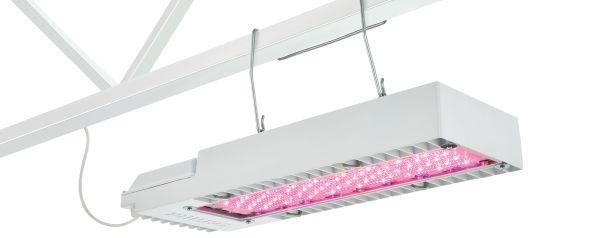
Supercharge your cannabis cultivation at the 2019 ACT Summit
Are you planning to expand your production to large commercial scale? Looking to supercharge your cultivation practices?
If you’re traveling to Las Vegas for MJBizCon, then join us at the 2019 ACT Summit. The ACT Summit (Advancing Cannabis Cultivation Technology) is a full-day educational program focused on using proven commercial-scale technologies to maximize quality and yield while improving operational efficiency and lowering costs.
Speakers include Scott Reach, Rare Dankness; Jody Vukas, Smart Grow Pros; Paul Salinas, Village Farms/PureSun
Tuesday, December 10, 2019
9:30 am to 7:30 pm
Hard Rock Café Las Vegas MJBizCon attendees save $100 off registration fee. Learn more and register today at www.actsummit.com. Space is limited.

“…there are huge benefits out there... [LEDs are] the future, it’s what we’re all going to be doing in a few years.” — Rick Ouding, Kalamazoo Specialty Plants
Signify teams up with LI-COR Biosciences on a MJBizCon sweepstakes
Signify, the world leader in lighting for professionals and consumers that includes the Philips brand of horticulture LED lighting, is teaming up with LI-COR Biosciences, a leading innovator in light measurement sensors, on a giveaway at MJBizCon, Las Vegas Convention Center, December 11–13, 2019.
The sweepstakes package includes the newest generation of Philips brand LED production module. The Philips LED production module is used in sole-source, multi-layer propagation environments. The
package also includes a LI-COR light meter and quantum sensor to enable the measurement of photosynthetic active radiation (PAR) in µmol-m2-s in a greenhouse or growth chamber.
Sweepstakes package includes:
• 10 Philips LED production modules 3.0
• 1 LI-COR LI-250A light meter
• 1 LI-COR LI-190R Quantum Sensor
Visit the Signify booth, C2246, at MJBizCon 2019 to complete a sweepstakes entry form and for contest details.
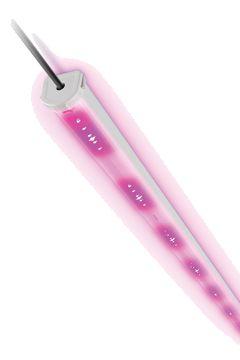
Philips LED toplighting compact
MJBizCon exhibit floor
research and first-person accounts, and the not-so-positive research and first-person accounts. The goal is to empower consumers to make choices that are right for them.
GO: This is a communication gap that many cannabis companies are trying to navigate themselves, but are worried that strict regulations limit how they can talk about their products. In your opinion, what is their biggest challenge to consumer education?
MK: The clutter and confusion, and it’s probably more so in the CBD market, where people are marketing based on process and potency and the consumer is like, ‘I don’t even know what any of this means.’
And every market kind of works the same. Here’s another bottle, another bottle, another bottle. So, we’re trying to break that by creating a lexicon that consumers can actually get their head around and they know that they’re actually making an informed choice when they’re looking for products.
They will see what were the lab tests and what is a lab test. What are they looking for and what do I need to be looking for? You can’t talk about potential benefits, so then you have to look at the research and first-person accounts and then you have to marry the two. So, you always have to go on a bit of a journey to get it right.
GO: A big part of a company’s strategy is understanding that consumer journey and everyone has their own way of gathering that data. How does cannabisMD gather data?
MK: There’s pockets of research out there around the cannabis consumer but I contend that the majority of it is polluted.
And when I say that, because you’re dealing with different regulations – and
this may be more with respect to the U.S. than in Canada to a certain degree – but you have individuals that identify as a medical cannabis consumer when in fact, the medical is for recreational use. Or there’s something in between, like it takes the edge off, which one could argue that is a medicinal need state. So, need states I think are kind of interesting and that’s why I say polluted.
Also, a lot of larger research companies that have done pieces of work end up creating profiles of consumers that are full of stigma. They’re calling them things like, a “marijuana maven,” or something, and they’ll find these terms that are actually counterproductive to what we’re trying to do. So, I think attempts are made to understand all these consumers and this is the tension of the plant.
We have actually built our own data product called Knowledge Navigator that looks at consumer sentiment around cannabis and CBD, emotional sentiment. What’s driving the decision and what’s driving the curiosity?
That’s what’s interesting about a non-advocacy platform because we’re with that consumer from the moment of curiosity. We can see their journey of educational discovery that ultimately leads to a conversion or not a conversion.
GO: Why is your consumer profile data different?
MK: With our data set, the Knowledge Navigator tool that I mentioned, you see profiles emerge of the consumer. And this isn’t scary Facebook data. This is based on their psychographic behavior on our site.
We take that analysis and that profile that’s being built – this 32-year-old woman who is having issues with sleep and headaches – we have AI (artificial intelligence)
We can see their journey of educational discovery that ultimately leads to a conversion or not a conversion.
that actually starts to become predictive of what that consumer is looking for. But we put that against 35 million points of data –that is social listening, it is crawling news sites and other large platforms – our own AI stitches together where that profile sits within the emotional sentiment of the product.
What brands love about that is that one, the cannabis curious journey and seeing that and what the drivee is of that. So, informing how they think about their product. And two, their pipeline of other products. [...]
If we can arm them with that data and that insight, it’s good for consumers because companies are then challenged to create products that are relevant to that audience.
GO: What do you think about Cannabis 2.0? How can companies make this consumer journey easier with more new products in play?
MK: The positive thing about 2.0 is that the government acknowledged this has to come and we’re taking time to make sure that consumer safety is first and paramount. Great. Compare that to the U.S. where the FDA (Food and Drug Administration) just had listening sessions trying to understand. The assumption right now is that each individual state will own it versus going federally because the bus has left the station.
But that tension around marketing, and being able to get in front of consumers, and have a brand emerge that is in the minds of consumers, it’s a tough one because if you start saying that you’ve got to loosen up, is there a concern that consumer safety is at risk in some way? […]
I think more and more consumers are very sharp about their purchasing decisions. Your social currency suddenly becomes when they have a positive experience with something. What we can do with Knowledge Navigator is a perfect example of where social currency from around the world is helping brands emerge as being the leaders because we have these personal accounts of individual experiences tied to lab testing, tied to research around that particular product.




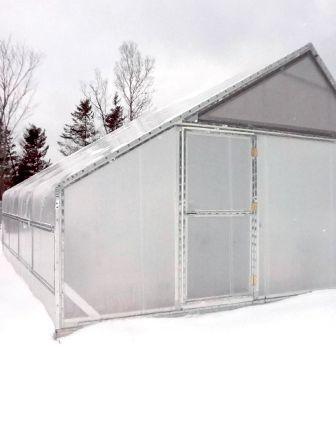

Suppliers
A&L Canada expands testing services with new London facility

A&L Canada Laboratories is increasing its service capacity with the addition of a new 4,000-sqaure-foot facility in London, Ont.
A&L Canada is an analytical testing and technologies company that now has three laboratory facilities where it can conduct agronomic and production research for clients across the country.
Analytical services include plant disease diagnostics, soil health, water analysis, greenhouse media analysis, etc. Past clients include farms, greenhouses, grow operations and universities.
The company has recently invested in hiring 17 new staff including a PhD Plant Pathologist. A&L has installed state-of-theart equipment, including a walk-in Biora Plant Growth Chamber that provides the control to efficiently sustain precise conditions for testing research.
“Research is a priority and this state-of-the-art research Growth Chamber helps us solve production challenges and fine tune recommendations,” said Nevin McDougall, president and chief commercial officer at A&L. “We have earned this leadership position by not only best-in class service, reporting and analysis to our customers but expanding our cannabis analytics and expertise.”
www.alcanada.com
FlexEnergy debuts a mobile hemp drying unit for commercial use

Oregon-based hemp grower TumbleWeed has partnered with FlexEnergy Inc. in New Hampshire to manufacture mobile natural gas-powered hemp drying units to be sold and manufactured on a commercial scale.
The new mobile units will be enclosed in a semi-trailer called the Black Hemp Box. It uses FlexEnergy’s GT333S model gas turbine generator technology and is capable of drying 75,000 lbs. of wet hemp per hour.
The power profile is both electrical and thermal and comes from the GT333S’s electric starter. This dual power system is called “cogeneration” and is said to bring gas turbines to close to 90 per cent efficiency.
The gas turbine generators can generate power “off the grid” but do require a piped (gas) fuel source. Flex Turbines use the widest range of gas tolerance available and the Black Hemp Box contains its own fuel. The turbine is fueled by an onboard liquid propane gas fuel tank housed in an exterior heat recapture shell. Ducting moves hot air and mass flow to the drying unit and super-heated air dries the plant matter.
www.flexenergy.com
Brooklyn Bioscience develops detox solution for pesticides
Brooklyn Bioscience is one step closer to commercializing a new process that detoxifies dangerous pesticides from plants.
The National Science Foundation awarded the startup company, based from the New York University (NYU) School of Engineering, with a two-year grant of US$250,000 to continue their research.

Brooklyn Bioscience is working on protein engineering methods to remediate and detoxify organophosphates (OPs) which cannot easily be removed by conventional means.
OPs represent more than a third of chemical pesticides used globally. While they provide efficient crop production, they also pose public health and environmental risks. The World Health Organization has classified the neurotoxin as one of the most hazardous classes of chemicals being used in the agricultural sector.
The product can be of particular interest to cannabis farmers because when OPs are vaporized and inhaled, the substance is exponentially more toxic when ingested by mouth.
Using protein engineering methods, principal researcher Jim Kim Montclare and her team have altered the enzyme phosphotriesterase (PTE). The engineered PTW provides low-cost, efficient and environmentially-friendly solution for breaking down OPs into benign products that can be removed more easily with water.
“Agricultural analysts have calculated that the pesticide segment of the market represents US$17 billion, with more than a tenth of that corresponding directly to the sales of OPs,” said Montclare, who is a NYU professor of chemical and biomolecular engineering. “Given the importance of sustainability and environmental health, it’s more vital than ever to develop biologically based solutions for crop protection, and with the support available at NYU Tandon, Brooklyn Bioscience is making great strides.” engineering.nyu.edu
Excel Air promises big performance in smaller units

Excel Air Systems has launched a new product line up to provide air conditioning, mass dehumidification and air quality control in one scalable solution.
The Evolution Series claims to be 60 per cent smaller than any of its previous generation gear with word-class components and customization.
The product lineup is offered from two to five tonnes of capacity in vertical and horizontal configurations, along with 230V and 460V options. The systems come with resealable fittings and offer add-on options such as integrative UV air purification, fabric ducting solutions and flexible linesets.
www.excelairsystems.com/cannabis

Don’t choose a vendor; choose a partner. We know just how critical an efficient and precise environment is to maintaining a healthy, consistent crop and a successful business. Surna was founded by cultivators who struggled with the same issues you face. They needed equipment specialized for cannabis cultivation; they needed efficiency and repeatability; they needed a system that would last; they needed controllability.
Our staff of experienced engineers, project managers and technical advisors are here to make your climate a success. With over 800 projects completed, Surna has the experience you need in a controlled environment partner.