


Since 2012, we’ve partnered with world-class companies and groundbreaking research institutions in the pursuit of our mission to improve the interaction between light and life. Along the way we’ve gathered indispensable data, made industry-altering discoveries, and gained a wealth of knowledge that’s just too valuable not to share.
Learn more from the leaders in cannabis lighting technology and science, visit www.fluence.science/case-studies



Merger matters
Denise Faltischek, chief strategy officer of Aphria, talks strategy behind the company’s merger with Tilray BY MARI-LEN DE GUZMAN
‘By us, for us’ Three women leaders of colour share their stories on creating a space of their own within the Canadian cannabis industry
grass
Beyond product packaging, Canadian LPs must innovate to cultivate cannabis more sustainably BY JENNIFER BROWN

By Mari-Len De Guzman
Every year on March 8, we observe International Women’s Day, celebrating the social, economic and political achievements and impact of women across the globe.
This issue of Grow Opportunity is our own recognition of not just women but BIPOC (black, Indigenous and people of colour) women who are blazing trails in the cannabis industry. The three women profiled in our cover story –Ashley Athill, Antuanette Gomez and Vivianne Wilson – are entrepreneurs in their own right. Consciously or subconsciously, they are paving a path for women and women of colour not only to aspire to “move up the corporate ladder” but to build their own empire.
Latest data reveal that women hold 37 per cent of executive and senior level positions in the U.S. cannabis industry. The numbers in Canada are a little wanting. A report in 2020 from the University of Toronto analyzed the race and gender of 700 C-suite executives and directors at 222 Canadian cannabis businesses, and found the make up to be primarily white at 84 per cent, and male at 86 per cent.
The report’s co-author, Akwasi Owusu-Bempah, an assistant professor in U of T Mississauga’s Department of
Sociology, emphasized the barriers to entry are still very high. To become a licensed producer and sell cannabis at a meaningful scale requires a lot of money, resources and connections, Owusu-Bempah said.
It is evident the barriers are high for women; for BIPOC women, it’s even higher. The lack of racial diversity in the upper echelons of the cannabis industry is rooted in history, where people of colour have been disproportionately targeted by law enforcement
Let’s also not stop at gender equality, but strive for a systematic destruction of racial inequity across all sectors and hierarchies within the cannabis space.
for marijuana-related offences during the prohibition era.
But history can also provide a silver lining in the efforts to increase representation of women and women of colour in the cannabis industry. This legal cannabis market was built on the backs of grassroots activism that fought against systemic racism and judicial inequity. This grassroots activism is creating a generation of BIPOC leaders carving their own path in the cannabis industry, outside the realm of the capital-market-driven, multimillion dollar corporate game.
The three women featured in our cover story are just a small representation of the agility, creativity and entrepreneurial spirit that fuel the diversity that defines this industry on the ground level.
The first black-led licensed producer, the first blackowned licensed cannabis retail store and a BIPOC-led company that embraces and responds to the unique health and wellness challenges of women – these are the trails being blazed from the ground up by passionate entreprenuers embracing their unique perspectives, yet defining a legacy that transcends the bounds of gender and colour.
As a young industry, the cannabis sector is in a position to accomplish what other industries, to date, are still trying to achieve. At just over two years old, the cannabis industry seems to be on the right track with 21 per cent of senior leadership roles occupied by women.
Let’s not stop there. Let’s also not stop at gender equality, but strive for a systematic destruction of racial inequity across all sectors within the cannabis space.
That is the only way we can achieve a truly meaningful industry, one that does not just line the pockets of shareholders and retiring CEOs, but an industry that serves and enriches the very community that fought hard to make all this a reality.
March/April 2021
Vol. 5, No. 2 growopportunity.ca
Reader Service
Print and digital subscription inquires or changes, please contact Shawn Arul, Audience Development Manager
Tel: (416) 510-5181
Fax: (416) 510-6875
Email: sarul@annexbusinessmedia.com
Mail: 111 Gordon Baker Rd., Suite 400, Toronto, ON M2H 3R1
EDITOR
Mari-Len De Guzman mdeguzman@annexbusinessmedia.com
289-259-1408
ASSOCIATE EDITOR Jean Ko Din jkodin@annexbusinessmedia.com 437-990-1107
PUBLISHER Adam Szpakowski aszpakowski@annexbusinessmedia.com 289-221-6605
NATIONAL ADVERTISING MANAGER Nashelle Barsky nbarsky@annexbusinessmedia.com 905-431-8892
ACCOUNT COORDINATOR
Mary Burnie mburnie@annexbusinessmedia.com 519-429-5175
MEDIA DESIGNER
Brooke Shaw GROUP PUBLISHER/VP SALES
Martin McAnulty mmcanulty@annexbusinessmedia.com
COO Scott Jamieson sjamieson@annexbusinessmedia.com
MAILING ADDRESS
P.O. Box 530, 105 Donly Dr. S., Simcoe, ON N3Y 4N5
SUBSCRIPTION RATES
1 year subscription (6 issues: Jan/Feb, Mar/Apr, May/Jun, Jul/Aug, Sep/Oct, Nov/Dec): 1 year offers: Canada $25.50 + Tax USA $47.00 CDN FGN $53.50 CDN GST # 867172652RT0001
ANNEX PRIVACY OFFICE
privacy@annexbusinessmedia.com Tel: 800.668.2374
ISSN: 2561-3987 (Print) ISSN: 2561-3995 (Digital) PM 40065710
Occasionally, Grow Opportunity will mail information on behalf of industry-related groups whose products and services we believe may be of interest to you. If you prefer not to receive this information, please contact our circulation department in any of the four ways listed above.

Made possible with the support of
















Wellington North council and neighbours in Arthur, Ont., are unsure about the implications of an indoor cannabis facility, particularly in regards to odour and water use.
CCR Holdings Wells St. Inc. are proposing to retrofit an existing 17,000 sq. ft building in an industrial area of the town to become an indoor cannabis cultivation and processing facility. At a public meeting, Ashley Barter, planner with Malone Given Parsons, said the client intends to have medically licensed tenants growing but is asking for flexibility with a bylaw amendment to allow for commercial operations in the future.
While there is no standard policy used by Wellington North in regards to these applications, Barter said there will be no outdoor cultivation or storage and it is a reasonable distance from any schools or residential areas.
“The proposed operation does fit many of the standards that have been adopted by other municipalities,” Barter said.
John Vanderwoerd, who lives on Duke Street near this proposal, was concerned about the potential for smells in their backyard.
“My wife loves gardening and if it smells like cannabis, she won’t be happy and I won’t be happy,” Vanderwoerd said.
He also figured a 440-plant operation would require a lot of water and questioned if the town could handle that along with new housing developments.
Francois Vallerand, general manager at Golden Valley Farms next to the proposed facility, shared the same concern regarding water.
“Water was always the reason why new construction wasn’t happening and now we are going to be using that water for cannabis ... I’m sorry we’re going in the wrong direction,” Vallerand said.
– KEEGAN KOZOLANKA, GUELPH TODAY (LOCAL JOURNALISM INITIATIVE)

David Lobo has been named interim president and CEO of Ontario Cannabis Store. He replaces Thomas Haig who left his interim position on March 23.
The Association of Municipalities Ontario (AMO) has established a working group to assist municipalities in navigating the uncharted waters of legal cannabis production.
In December, AMO launched a new staff working group on personal and designated medical cannabis grow operations.
Brian Rosborough, AMO’s executive director explained the working group was established to “examine municipal and community experiences with these types of cannabis production operations.”
“The group will also look at the policy and regulations governing them to improve understanding and inform AMO’s policy development and advocacy,” Rosborough said.
Currently, the working group consists of 18 members from municipalities across the province, including Brantford, Leamington, Norfolk County, Ottawa, Sudbury, Tecumseh, Thunder Bay, Caledon, New Tecumseth, and Tweed.
Michael Benner, director of planning and building services for the municipality of Grey Highlands is also a member.
According to Rosborough, the
rules surrounding designated and personal cannabis operations can be complex.
“While these types of growing operations are required to be located in appropriately zoned areas and conform to building and electrical codes, the confidential nature of patient information means that municipalities often have little information to enforce their by-laws,” he explained.
“In extreme cases, law enforcement has found that some producers may use the medical personal and designated growing rules to produce cannabis for sale in illegal markets, causing safety and security concerns,” Rosborough continued.
With the group forming in late 2020, AMO reports the group’s work has not yet begun. However, the organization is hopeful the collaboration of experts from across the province will help to build more resources for local municipalities.
Previous to launching the working group, AMO also contributed FCM’s Guide to Recreational Cannabis Legalization for Municipal Governments.
–
JENNIFER GOLLETZ,


Canadian cannabis companies are cheering the reintroduction of the SAFE Banking Act to the U.S. House of Representatives.
The act, reintroduced on March 18, proposes safe harbour to financial institutions, like banks and insurance companies, that provide services to cannabis businesses and has long been seen as helpful for Canadian cannabis companies looking to expand to the U.S.
The National Cannabis Industry Association says the bill was previously approved by the house in a 321-103 vote in September 2019 and then headed to the senate, but didn’t move forward and had to be tabled again because of the COVID-19 pandemic.
Aurora Cannabis calls the reintroduction a step in the right direction and is optimistic more cannabis-friendly legislation will follow.
Canopy Growth vice-president, David Culver, says the bill is integral to the success of the industry and essential for positively impacting social equity.
– THE CANADIAN PRESS
The New Brunswick government has decided not to privatize recreational cannabis sales.
The province issued a request for proposals in November 2019 looking for private companies interested in taking over Cannabis NB. Eight companies, including Loblaw Companies Ltd. and Canopy Growth, showed interest.
Premier Blaine Higgs says his government concluded it would stick with its current model after discussions with the highest-ranked candidate.
The Crown corporation lost almost $12 million in its first six months, but steadily improving sales showed the state-run model could succeed.
– THE CANADIAN PRESS

“Cannabis NB’s performance over the past few months, as well as careful consideration of the social and economic implications of the retail model, has given us confidence that New Brunswick taxpayers and consumers can be well-served through continued improvements within the current model,” Finance Minister Ernie Steeves said in a statement.
Organigram Holdings Inc. stock soared by more than 40 per cent on March 12 as a subsidiary of one of the world’s biggest tobacco companies purchased a stake in the business.
Organigram’s stock jumped by $1.45 to reach $5.07 on the Toronto Stock Exchange after British American Tobacco (BAT) announced that its subsidiary will buy a 19.9 per cent stake in the Moncton, N.B.-based cannabis company for $221 million.
BAT, whose website advertises a portfolio of brands including Camel and Lucky Strike tobacco and Vype and Vuse vapour products, will buy 58.3 million Organigram shares at a price of $3.792 per share.
Chief executive Greg Engel said Organigram had long been looking for strategic partnerships with consumer packaged goods, beverage and alcohol companies and BAT’s offer came at the right time.
“Now there’s a significant injection of capital so that’s a key for us to expand our own research and development efforts and for potential market expansion as we prepare to look at international markets,” said Engel.
As part of Organigram’s deal with BAT, the pair signed a product development collaboration agreement that will see the creation of a “centre of excellence.”
It will focus on developing the next generation of cannabis products with an initial focus on cannabidiol (CBD), a compound found in cannabis and hemp that doesn’t produce a high but is
Listen now

believed to relax consumers.
Organigram has been delving into producing high quality chocolate and beverage products with CBD, but the centre will speed that up.
It will be located at Organigram’s indoor facility in Moncton and both companies will contribute scientists, researchers and product developers.
Engel expects the centre’s creation will involve some hiring.
Many staff at a townhall meeting on the morning of March 12 were pleased at the announcement and are looking forward to working at the centre, Engel said.
“Any time you can say, ‘Hey, we’re bringing this research hub to our facility, it generates a lot of interest and excitement among employees.’”
BAT will be entitled to add members to Organigram’s board.
The company, which was founded in 1902, has been encouraging people who smoke to switch completely to reduced-risk alternatives.
It has committed to providing adults with a wide range of enjoyable and less risky products.
It wants to increase the number of its non-combustible product consumers to 50 million by 2030.
– THE CANADIAN PRESS
Check out our podcast for an exclusive interview with Organigram CEO Greg Engel. growopportunity.ca/podcast

By Mari-Len De Guzman
One of the biggest news in the Canadian cannabis industry last year came at the last minute, when Leamington, Ont.-based Aphria Inc. and Nanaimo, B.C.-headquartered Tilray announced a merger in mid-December. This strategic union, according to the companies, will create the world’s largest cannabis company based on revenue. The two companies are now working on closing this deal.
Grow Opportunity caught up with Denise Faltischek, Aphria’s chief strategy officer, to talk about what the merger means for the company’s future.
Grow Opportunity: Can you talk about the Aphria-Tilray merger, particularly about both companies’ Cannabis 2.0 strategy in the infused beverage space?
Denise Faltischek: The thing that’s really compelling about the the combination of the two and why it made strategic sense to us was the fact that if you compare the two companies together, they complement each other in so many different ways — in terms of our strength in Canadian cultivation and production, and Tilray’s European production in Portugal with EU GMP facilities, and the fact that it really created in Europe an end-to-end EU GMP supply chain.
The other thing you mentioned on the Cannabis 2.0, Tilray had its own capabilities for both gummy and chocolate. And then, you marry up that beverage production with our beverage production capabilities in the U.S. under the Sweetwater transaction, and you have a very good and strong portfolio under the beverage space.
GO: The industry has gone through significant growing pains over the last two years. What have been the company’s lessons learned?
DF: When I first joined Aphria, one of the first things that I was tasked with was evaluating investments that have been made that perhaps weren’t going to yield the highest ROI and also were very capital intensive. And so, we’ve been very focused on what is our cost structure, what is the right size organization to support the business, and really being very focused on where we invest.
GO: As you streamline your strategies, what are the current strategic investment priorities for Aphria?
DF: First and foremost, we are currently focused on closing and integrating the Tilray transaction. In connection with that trans-

action, we are expecting to achieve about $100 million of cost-cutting initiatives, which will really improve the profitability of the combined company.
We are also focused on looking at those geographies and businesses where they will yield the highest ROI, so Germany being a very large market, the U.S. being a large market. From an international perspective, we’re looking at where can we form strategic partnerships and alliances.
GO: What are the opportunities and challenges for Canadian companies in the global market?
DF: In Canada, we have demonstrated at Aphria that we have strength in cultivation and production... and it’s interesting because the successes that we’ve shown in Canada as one of the leading LPs have really resonated around the world.
I think some of the challenges is that the regulatory framework in every country is so different. What are the requirements in terms of testing, packaging? And so, that creates a bit of a challenge. You need to understand all the various regulations so that you don’t have any sort of missteps when you enter the country. The biggest challenge is making sure that we understand that.


By Gagandeep Singh Bhatoa and Mohyuddin Mirza
Gagandeep Singh Bhatoa is a plant heath care specialist in Lethbridge, Alta. He can be reached at gaganagrico@gmail.com. Mohyuddin Mirza is a greenhouse specialist in Edmonton, Alta. He can be reached at drmirzaconsultants@gmail.com.
It was a shock to receive this picture from an experienced grower.
He thought the distinctive tiny spots or extensive webbing of a spider mite infestation is some sort of nutrient deficiency, not realizing it’s actually something far more sinister.
Cannabis greenhouses and grow rooms are literally a hot bed for pests and pathogens. The warm and humid conditions, plus ample crops for food make perfect homes for pests and pathogens. Pest problems can develop and spread rapidly in a cannabis crop.
In particular, there are two different types of mites species known to feed on cannabis – the two-spotted spider mite (Tetranychus urticae) and the clover mite (Bryobia praetosia) –both of which have evolved more recently with powerful adaptations that make them persistent and resistant pests.
Problem identification in general requires critical thinking, but solving a problem requires creative thinking.
This applies more to spider mites because they can hide, blend easily with the surroundings, and are resistant to most of the products used to kill them. And they can explode into a web. That is why we must understand their life cycle and must get creative.
We mean don’t just focus on killing them. Instead, look at vulnerabilities of these mites. We must eradicate them completely or manage them so that they don’t reach damage threshold.
This is how an adult female, two-spotted spider mite looks like (Figure 1). The two dark spots are their identification mark. The size of an adult is less than one milimetre.

and the first stage is a larva with six legs, followed by stage one nymph, then second stage nymph, and then an adult. The lifecycle depends on temperature and relative humidity. The drier the climate, the quicker the hatching will be. The table below describes the relationship to temperature.
This is the most important information to understand, the effect of temperature and relative humidity in the facility. Many growers have a tendency to use a relative humidity of 40 per cent because of fear of developing grey mold Botrytis.
So if you are growing cannabis crop at 23 C and a relative humidity of 40 per cent, the Vapor Pressure Deficit (VPD) will be 16.86 millibars. VPD above 9.0 mbars is an invitation to spider mites to live happily from laying eggs to adulthood in a short period of time.
Fortunately, you can take steps to take charge. Pest management should start a month before a cannabis crop is brought into any part of an indoor or greenhouse facility. At this stage, the facility should be inspected for maintenance, proper water drainage and evidence of pests.
They can be seen with the naked eye but it is preferred to use a hand lens to spot them.
Mites have a lifecycle that varies directly with the environment. In a very hot, dry climate, they can complete a life cycle in a few weeks. If the environment is cooler, and has more humidity, it can take them over a month to hatch, mature and leave their own offspring for the next wave of attacks on your plants.
A female spider mite can lay anywhere from 100 to 300 eggs in their lifespan of 30 days. The eggs hatch
Previous pest issues and treatments in that area of the facility should be reviewed. Incoming plants must also be inspected before they are placed in the cultivation area. If there is history of spider mites before, then pay particular attention to nooks and corners. We have seen buds going into the lights and if webs have been formed there, then you have a major task to clean them.
Perform daily scouting through the crop, checking leaves, buds and every portion of the plant. The first symptoms of spider mite infestation will appear as “pinhead” type of spots in the lower portion of the leaf (Figure 2).
Check the underside of the leaves with a hand lens and you might see a few eggs, some nymphs and may be
few adults. The symptoms can be confused with magnesium deficiency.
This is the time to release biological control agents and this is also the time to tag these plants so that other staff are alerted to the problem. Cross contamination should be avoided.
Have a list of all registered products handy with rates and availability. We have had situations where the products to control the spider mites were ordered late and infestations had spread.
Have all the knowledge about biological controls agents. They have to be released in every plant if infestations are serious. The suppliers have very good recommendations as to how many predators are needed, when to release them and how to monitor their progress.
Having proper tools are necessary for scouting. Hand lens of at least 10X, an opt-


ivisor which can be mounted on head, stakes and tags, a map of the facility and trained professionals are all essential part of scouting.
One of the biggest challenges is to avoid cross contamination. Spider mites, unlike thrips and whiteflies cannot “fly” from one plant to other. They latch on to your clothes and thus, carry over to young plants.
Establish a traffic path so that infected plants are handled at the end of work schedule. Change gloves and coveralls after handling the infested plants. Pay special attention to clones and mother plants, so that they are not infected.
Once plants are removed, and then thoroughly clean the area with registered disinfectants. Many a times if multiple crops are grown in the same area, then extreme care is needed to avoid cross contamination.






By David Brown
Micro cannabis licence categories opened up in 2018 and have since seen an enormous amount of growth in Canada.
More micro licences have been submitted and approved since legalization than standard licences, and several dozen of these micros have already found a way to reach retail shelves in various provinces, as well as through the medical cannabis framework.
Once approved, however, one of the challenges many new licence holders face is getting their product into consumer supply chains. Because cultivators of any size, micro or standard, are required to have a processing licence, as well as the appropriate sales licensing for those products, this can create a bottleneck in reaching the consumer market. This is especially true for licence holders who may not have been fully aware of all of these steps.
Processors with the appropriate sales licences then have to enter into sales agreements with the provinces and territories to sell into their respective markets – taking on additional product and/or recall insurance, supply agreements, etc. – all while waiting on receiving any payment.
What this means is that for most microcultivators, they will need to build partnerships with other processors and distributors in the cannabis industry. This isn’t necessarily limiting. Vertical integration in any industry can be expensive and onerous, and supply chain partnerships are not uncommon.
For the cannabis microcultivator (or standard), what this means is if they want to just focus on cultivation, they can without having to pay to

build out and manage the processing and/or distribution side of things.
This is similar to those who are only getting a microprocessing licence (or standard). They can focus on the type of processing they are interested in without having to deal with the challenges of growing, if they don’t want to. And of course, for those who want to do both, they can still hold both of these licences at the same time.
This is why building relationships and partnerships is so key to the future of micro cannabis cultivators and processors. The ability to manage cultivation, processing and sales into the provinces can be challenging and costly. The micros who are currently on retail and medical shelves across Canada have done so by developing and maintaining these relationships.
This allows them to focus on what they do well, be it growing, extracting, making small-batch edibles or topicals, etc., while outsourcing other aspects of the supply chain they are not as experienced or interested in.
The process of building these relationships will take time though. Start the process even before you apply for a licence.
Talking to others who have already gone through the process should be
one of the first steps toward understanding your place in the industry. Don’t remake the wheel. Learn from others who have put the blood, sweat and tears into this process and learn from their mistakes and successes.
Once you have begun the licensing process, continue to build these relationships. If you’re a small microcultivator who wants to only sell dried flower into the market, find those processors who are focused on this kind of packaging and reselling and find the right fit(s) for you.
It’s the same if you’re interested in supplying for the extracts market or edibles market. The difference between a mutually beneficial relationship with a partner who shares your values can make it a much easier experience for everyone involved, ensure you can focus on what you love to do, and let others take care of the other steps.
No human is an island and most people aren’t interested in doing everything themselves. Building a network of partnerships to succeed in a business will be vital to the growth and future success of the nearly 200 micros already licensed, and the many, many more to come.
While not all are seeking thirdparty partnerships for sales or distribution, many are. And as this number continues to increase, it will continue to provide more options and more leverage for those seeking to build these kinds of relationships.
Note: At the time of writing this article, there were 363 processing licences in Canada, both micro and standard. There are also 186 dried/ fresh sales licences, 144 extract sales licences, 139 edibles sales licences, and 138 topicals sales licences.
Of these, 150 are microcultivation licences, 42 are microprocessing and two of these micros currently have a product sales licence. Several other micros are currently in the process of getting their own sales licences as well.



Cali Pro 2-Part Nutrient Series is designed for growers who want a premium base nutrient that’s easy to use and guarantees professional results.
Cali Pro supplies all the essential elements in precise concentrations and ratios for vigorous growth and flowering throughout the crop life cycle.
Get everything your crops need to grow, flower and thrive - with Cali Pro.
Emerald Harvest has partnered with growers around the world to help them achieve consistent, profitable crops every harvest.
Our premium base nutrients and supplements are made from the finest ingredients - so they run clean, test clean, and simply grow the highest quality product.
Home growers to commercial cultivators are enjoying incredible results with Emerald Harvest nutrients.




By Matt Maurer and Vlad Mihaescu
While many were excited to see topicals, extracts and (food) edibles enter the legal marketplace, the anticipation of cannabis-infused beverages was perhaps second to none amongst new legal cannabis products.
This was due, in part, to the fact that unlike most other classes of cannabis, the legacy market has suffered from the lack of the technology to produce beverage products on a meaningful scale.
Some tout beverages for the potential health benefits of the delivery system over other formats, such as smoking. Others view these beverages as a potential disruptor for the alcohol industry. There are also those who see beverages as a potential means of introducing cannabis products to non-cannabis consumers.
These reasons, either individually or in combination, have led many to tout cannabis beverages as “the next big thing” and an important category in the cannabis market.
Cannabis-infused beverages are classified as “edible cannabis” pursuant to Schedule 4 of the Federal Cannabis Act. They are, therefore, not only subject to the regulations under the Cannabis Act, but also other legislation such as the Food and Drugs Act. There are a number of Cannabis Act rules and regulations that are unique only to the edible class of cannabis. While too lengthy to discuss in this article, we will look

Cannabis-infused beverages are not only subject to regulations under the Federal Cannabis Act, but also under other rules and regulations, such as the Food and Drugs Act.
at some which, in our view, closely impact the future success or failure of cannabis beverages.
In order to produce cannabis-infused beverages, a producer must obtain a processing or microprocessing licence from Health Canada. This type of licence permits producers to take cannabis in its natural form and process it into various permitted forms such as oils, creams, extracts, concentrates, edibles and beverages.
These licences are site specific and derivative cannabis products can only be created in the producer’s licensed facility. This presents a high barrier of entry for anyone looking to produce beverages, as they must first obtain a licence, which is a long and capital intensive journey.
Moreover, Health Canada requires that cannabis beverages,
and edibles in general, must be produced in separate facilities from ones where non-cannabis beverages are made.
This means that for existing facilities where non-cannabis beverages are produced, like water or soda bottling factories, the need for new facilities creates added capital cost.
The onerous and lengthy process of obtaining a licence prohibits traditional beverage makers from quickly adding cannabis-infused beverages to their existing product line. It also creates additional hurdles for American cannabis beverage companies to enter the Canadian market.
As a result, companies with existing knowledge to execute on cannabis-infused beverages cannot, by and large, enter the market quickly. And those with licences already in hand require time to build up their knowledge base, or
establish appropriate business partnerships. It is not to be totally unexpected then for there to be a longer runway before consumers find cannabis stores stocked with a wide array of high-quality cannabis-infused beverages.
Uniform packaging that is generally unappealing and the inclusion of prominent warning labels make it difficult for cannabis products to attract the same attention as less regulated substances, such as alcohol.
Any kind of traditional promotion is generally prohibited, unless it is done in a forum where youth are not permitted. Even in such instances, the promotion must not “evoke a positive or negative emotion about or image of, a way of life such as one that includes glamour, recreation, excitement, vitality, risk or daring.” As one would expect, it can be quite difficult to advertise to individuals without connecting on some kind of emotional level.
Many see cannabis beverages in direct competition with alcohol, being a disruptor to this industry. However, the alcohol industry is far less regulated from an advertising perspective, and therefore, has an inherent advantage when it comes to marketing.
From a distribution perspective, alcohol is also much more available to consumers than cannabis, being sold in a variety of locations such as grocery stores, restaurants and bars.
By comparison, cannabis products may only be sold in licensed cannabis stores, where no young persons are permitted to enter.
Regulators have been clear to keep the distinction between the two substances. Cannabis products are not permitted to have an alcohol content level of more than 0.5 per cent. It is prohibited to promote cannabis products in any way that would reasonably associate them with an alcoholic beverage. For example, packaging a cannabis beverage in a beer bottle would be prohibited, as would labelling the beverage with words like “beer,” “ale,”
The Cannabis Act imposes a 30-gram purchase or possession limit of cannabis, and equivocates 70mL of non-solids containing cannabis to one gram of actual cannabis, regardless of what the actual THC or CBD concentration in the beverage is.
This means that given the standard 355mL size of beverages typically sold, consumers cannot purchase more than five beverages per visit to their cannabis retail store or online. This can make the purchase of cannabis beverages limiting and tedious if one is intending to purchase medium to larger quantities and makes purchasing cannabis-infused beverages for gatherings or entertaining essentially impossible to do, certainly not with the same ease that can be done with the purchase of alcohol.
Due to decreased investment in the cannabis sector and the restrictions brought upon by the pandemic, many licensed producers have been occupied with downsizing and liquidations, and have not had as much opportunity to innovate new products.
Much like the overall market, cannabis-infused beverages are still in their infancy. With only a year of public availability, we expect this category to grow not only in the number of brands available, but also in the innovation of new products and improved quality and consistency.
Althouh cannabis beverages have some regulatory challenges that are potentially holding them back from taking off, there is some great potential that exists for players with a strong product and creative marketing. Some industry participants have taken a wait-and-see approach, but it is clear that the beverage category brings a diversity of new offerings to a market that some see as being highly commoditized.
Cheers to the exciting opportunities ahead.


‘

Women of colour leading the charge for diversity in the cannabis industry
As Canada’s legal cannabis industry has developed in fits and starts, three sure and steady women leaders have emerged who are contributing notable skills and undeniably different perspectives. They’ve shown they care not only about their customers, but also the industry as a whole.
Grow Opportunity invited them to a virtual roundtable called, “Women Rising,” that marked International Women’s Day (March 8) with a lively discussion
about women and blacks, indigenous and people of colour (BIPOC). Here we probe deeper into their own stories.
Ashley Athill
CEO and co-founder, HRVSTR
Ashley Athill leads the first federally licensed cannabis cultivator that is blackowned. But before she became a cannabis entrepreneur, she successfully climbed the corporate ladder in a decade-long career at Shepell, an employee and family assistance program provider with global reach.
In many ways, it was fertile soil for growing skills that have helped her develop as a cultivator. Starting out at the call centre, for example, she provided information and one-on-one support to
employees coping with everything from thoughts of suicide to daycare needs. As she advanced in the organization, she structured programs for a variety of employers, including the Toronto Police.
When Athill was finally ready to launch a venture of her own, she knew she could “master and thrive in high-pressure situations,” as well as communicate effectively in a variety of settings. These skills were “priceless.”
She stepped out into the cannabis industry and founded Sensii Cannabis. Drawing on her experience in Human Resources, she created an educational curriculum on how to grow cannabis plants. It was extremely satisfying, she says, because the classes brought together such diverse groups – people who would

likely never interact otherwise. Later, she added an arm to help HR departments adapt to the environment after legalization.
“It was very well received,” she adds, “but I really wanted my own farm.” Putting Sensii aside, she founded HRVSTR in October of 2018 in Toronto, her hometown. Working with her brother Michael, she now has one product called Grape Marmalade, with six others pending. All are targeted to the “connoisseur” market, she says.
The company is well-positioned to grow. As this target audience becomes more sophisticated, people are looking more at terpenes which allow the delivery of flavour, she believes. “Terpenes are not as celebrated as they should be, they evoke an emotion.”
For example, one product that HRVSTR has in development is Hardo Bread, which hearkens back to a Jamaican bread similar to a Pullman loaf but sweeter. Athill says this cannabis reminds her of home, and of her grandmother and mother baking. And it beats consuming more carbs!
As the cannabis industry evolves, Athill
salutes the influence of female buying power and adds, “We’re in a special position to create our own products by us, for us. My focus will always be on providing top quality cannabis to the market while advocating for a level playing field for women and the BIPOC community.”
Those are not empty words. After wrapping up her call with Grow Opportunity, she jumped on to another to mentor a young man of Jamaican heritage. For him and others, she serves as an example of what they can become.
Antuanette Gomez CEO and founder, Pleasure Peaks
Some might say that Antuanette Gomez herself is a brand: one that’s sultry and savvy but also sincere and compassionate. Those personality traits come to life in three ventures under her brand umbrella: Pleasure Peaks, a cannabinoid-based sexual health company; the Green Rush program, a business accelerator; and Acapulco Gold Company, jewelry that features the leaves of that iconic plant.
Gomez has been in the industry for more than eight years. The seed for her ventures grew from her studies in holistic


nutrition. “I was learning about different natural alternatives to healing — from food to herbs to cannabis — which were eye-opening. But it wasn’t until I interned at a chronic pain clinic that I realized how many people were suffering.”
In particular, she was shocked by those with sexual health ailments related to multiple sclerosis, back pain, and endometriosis. And so began her foray into medical cannabis treatments.
Working with manufacturers worldwide, Gomez has now developed an array of products including CBD lubricants, bath salts, sublingual tinctures, suppositories, and health supplements — eight different SKUs. Pleasure Peaks has offered them online as a consolidated “Pleasure Pack” but Gomez anticipates individual product availability soon.
What makes her business different? “We are a cannabis company with integrity,” she says. “We come from the legacy market so we understand that cannabis is about a lot more than profits.”
And Pleasure Peaks offers a lot more than products. The Toronto-based company brings together sexual assault survivors with sex educators and therapists in a private Facebook community. There’s also a podcast that “empowers people to share their own cannabis and sexual health stories, because we know it can be life-changing for so many others.”
Gomez believes that many entrepreneurial opportunities exist in cannabis that go beyond cultivation and retailing. She encourages people to think about potential careers in clinical research or cannabis education and media.
The advocacy of this Toronto native comes from a deep and personal place. When she was only six, her grandfather, a Rastafarian, was deported from Canada due to his reli-

Antuanette Gomez, CEO and founder, Pleasure Peaks
“We are a cannabis company with integrity. We come from the legacy market so we understand that cannabis is about a lot more than profits.”
giously-based cannabis use. A couple of years later, her father was jailed for possession of a gram of pot. Yet Gomez was able to channel these traumatic events into something positive. “This conscious black woman,” as she refers to herself, became involved in holistic nutrition to help treat her grandmother, who was suffering with breast cancer. Although her business is grounded in compassion, she admits she’s a fighter. In addition to stigmas associated with cannabis, Gomez is battling censorship of pleasure, intimacy and love. “It’s worth fighting for, a thousand per cent, every single day. Pleasure is your birthright — all races and all genders,” she says.
Vivianne Wilson Founder, GreenPort Global
Wilson is astute and alert: she’s clear on what’s going on before her eyes but also what’s missing. And she calls it out.
As the first woman of colour to run an independent cannabis retail store in Canada, she was shocked to see so few people of colour in the industry. Instead, she witnessed delays and ill-informed personnel during the regulatory process.
Ontario Premier Doug Ford promised that the Alcohol and Gaming Commission would provide fair access, she says. “What does that mean then? If most of the retailers out there are all run by wealthy corporations, all run by people who

look the same, that’s not fair and that does not provide us with enough access.”
Wilson feels a keen responsibility to “carry the torch,” even as she is running her retail operation called GreenPort, which was federally licensed to sell medical cannabis two years ago and now retails cannabis in Toronto. In carving out a niche, she says, “One thing I see missing is education.”
Not at GreenPort. On its website, for example, there is an informative “cheat sheet.” Users can also tap into an interactive recommendation engine that allows them to explore different strains. To bring more science to consumer decision making, Wilson partnered with Lobo Genetics, a Toronto-based health-care technology company.
The same inclusive education takes place at retail. “We’re building a community where people can feel welcome coming into the store, sharing their experiences, and feeling comfortable asking some very personal questions,” Wilson says.
Her heightened awareness of situations and stakeholders likely derives in part from her professional experience in project
management: a talent corporations love. Spanning a decade, her career included stints in health shared services, real estate, and home energy conservation, in addition to her own consulting practice.
And now she is applying this expertise to GreenPort. “One of the main skillsets that I learned as a project manager working with teams was how to make sure people had the tools they needed to get things done,” she says. “That would make it a positive experience for them.”
This awareness of the needs of others –an orientation not all project managers possess – has served her well as she’s worked not only with customers and employees of GreenPort but also government stakeholders, her retail neighbours, and service suppliers, like construction contractors.
And maybe it’s why she is so careful to try to respond to every comment posted on social media. Even that attention to detail tells a lot about the GreenPort brand. “It’s the in-store experience, the conversational exchange, the access to education that really makes a difference for people.”


By Jennifer Brown
If you hear the word “sustainable” in the cannabis industry right now, most will default to concerns about packaging waste. Less top-of-mind for the broader public is how the industry manages issues around waste, energy and water use. But that doesn’t mean it’s being ignored by those in the day-to-day business of running cannabis production facilities.
Taking steps to help manage climate impact is a goal for most corporations these days, and the cannabis sector is no different. Most Canadian licensed producers are looking to leverage the technology they invested in during the early, more buoyant days of the sector to demonstrate sustainability efforts in the coming years. As climate change concerns become more of an issue for consumers and investors and corporate governance mandates, it will become a more significant focus.
“What we see broadly in agricultural markets is that the world is changing very fast, and climate risk, and technology adoption, are becoming central business issues for farmers of all kinds,” says Derek Smith, executive director and co-founder of Resource Innovation Institute (RII) in a recent panel discussion on water use and sustainability in cannabis cultivation.
While water use has often been a community concern when cannabis operations are being constructed, in its report, “Cannabis H2O: Water, Use & Sustainability in Cultivation,” produced with New Frontier and the Berkeley Cannabis Research Cen-

ter, RII noted that water use in cannabis is “nominal” relative to other major agricultural crops such as cotton, grapes and corn.
Canadian LPs are well ahead of the game when it comes to sustainably producing products but know they need to focus on the demands that await them.
“What licensed producers need to be more mindful of now is that as we move into more of a climate accounting world, where we need to be mindful of GHG (greenhouse gas) emissions, it will be part of the competitive advantage,” says Steven Fish, senior manager, corporate social responsibility at Edmonton-based Aurora Cannabis Inc. “There will be a carbon market, and that’s when you will see the licensed producers start to pay much more attention, and it will become a strategic
advantage for companies to take that seriously and become a leader.”
Fish says the Canadian cannabis sector is not seeing the kind of pressure around environmental impact that an industry might typically see from the investment community around resource disclosures.
“Some brands have more pressure from the investment community to make these types of disclosures happen and to be more public, but we’re still a young industry, and it’s not quite there as far as that maturity. I do think that there is significant pressure from consumers more on the packaging file. That’s where we’re hearing it the loudest,” he says.
Having worked with the oil and gas and lumber industries, Fish knows the unique challenges other industries face when it




Easy to use • Consistent clean quality input
Traceability of all products • Growing support provided
CANNA is an established and serious partner for the Green Market. We provide solutions to growers of all sizes, including Canadian Licensed Producers. CANNA nutrients, additives and growing mediums are manufactured from the high quality source materials. We understand the importance of a clean, consistent and traceable input as well as keeping it simple.
CANNA loves to share its knowledge and experience, our team is there to support you.
comes to sustainability. “We’re not at that point where people are focused on the minutiae of the production just yet. It’s coming but we’re some time away from companies understanding the scope of that and being ready to produce disclosures.”
By design, The Green Organic Dutchman (TGOD) was built as a sustainably-focused company, says Karine Cousineau, director of government relations and sustainability at the Mississauga-based company.
“We’re now benefiting from great choices made at the beginning when money was easier to get. But it now becomes a whole question of awareness and pushing the industry forward.”
Cousineau and Fish are among the industry representatives working with associations like the Cannabis Council of Canada and provincial boards to ensure sustainability is front and centre for producers at a time when the industry is struggling to regain momentum.
“If we can work together to make sure companies are profitable but also to be sustainable, that’s awesome. We need to do well to do more. Those two things are not exclusive. You can do better by being more sustainable,” says Cousineau.
TGOD has applied to be part of the UN Global Compact, the world’s largest global sustainability initiative but was rejected because cannabis is still an illicit product in many U.S. states. When they applied, the World Health Organization had not yet voted on its recommendation to remove cannabis and cannabis resin from Schedule IV of the 1961 Single Convention on Narcotic Drugs.
“The big difference will be once the U.S. legalizes across the board – it will be huge,” she says.
The size of Canada’s largest cannabis producers looks more differently today than it did three years ago at the onset of the green rush. Massive facilities once heralded as state-of-the-art greenhouses and indoor grow operations have been shuttered, sold off, or are in the process of being sold. While outdoor growing uses fewer resources than indoor growing, some producers, such as Canopy Growth, have abandoned outdoor cultivation as the market became flooded with product.
With an oversupply of product available, Canadian LPs continued with job cuts and facility reductions to streamline operations. In December, Aurora Cannabis halted operations at its Aurora Sun greenhouse in Medicine Hat, Alta. It is now up for sale. Its flagship operation, Aurora Sky, is reportedly operating at a quarter of the capacity of the 800,000-square-foot greenhouse in Edmonton – touted at the time of its construction as the

largest cannabis production facility in the world.
“Sky was a purpose-built facility from Day One with a focus on efficiencies, and that was a core business decision,” says Fish. “The ability to use the glass roof to shade or open up and have that hybrid technology was a concerted choice. They built in ballasts for both HPS and LED lighting in the early days knowing they would want to evolve and experiment.”
Sky also had water tech built in early on. Condensation is collected off the glass that’s dripping down the walls, and repurposed along with any overflow irrigation water. Rainwater and snowmelt on the roof are also collected.
“We want them unencumbered for light, but we also want to capture as much snow and water on the facility and bring it back into the facility as well,” says Fish.
Aurora’s Whistler facility has been using LED lights since early on and a specific automated irrigation system to water plants on a needs basis. And while the Aurora Mountain facility has closed, a pilot project testing solar at that location provided some valuable learning.
“The solar array we invested in was an early business decision where the power purchase agreement was favourable. The team made the decision to invest in that and saw some savings as a result,” says Fish. “We’re not using wind or solar extensively. We found it was offsetting demand with the Mountain installation but not achieving 100 per cent of demand. We’ll continue to look for opportunities to add that to the mix as we mature and grow. With our portfolio of facilities, we can learn from each one and try to implement best practices wherever possible.”
TGOD is not growing in Quebec right now, but it has a greenhouse that is on hydroelectricity. Cousineau points out the investment made in high-tech production will help with sustainability efforts in the year ahead.
“We built a rainwater recapture system and a large pond that holds up to five million litres of water, and our greenhouse is hybrid – the rooftop is glass so that we still have the natural light, but we can collect snow and rain, filter it and re-use it. The pond is usually enough to feed the plants,” she says.





TGOD also has different strategies to manage energy use. The Ancaster facility operates on a full microgrid – a co-generation plant and a diesel generator complementing the co-generation plant.
“As much as we can, we want to use the sun because that’s what the plants want, and it’s the cheapest option,” she says. “But then, we get onto our microgrid for the rest of it, and we are also using smart tech to make sure it’s always at the perfect climate.”
TGOD uses living soil which can be reused for years, unlike other growing media like Rockwool, which often end up landfills.
“Most people don’t seem to realize that most cannabis don’t grow in soil – our soil is a secret recipe built by David Bernard-Perron, our VP of growing operations, and contains natural ingredients. We put the plant in charge instead of force-feeding the
plant nutrients. If it needs something, the soil is fully nourished for the plant to pick what she wants. It also means landfill avoidance which is also huge,” says Cousineau. Aurora, which uses Rockwool, has found ways of disposing of it, so it doesn’t end up in the landfill, Fish says.
“We’re learning more about how we can dispose of things more responsibly and come up with alternate paths. It should be something that goes back to the earth but because it’s in a form and sometimes plastic wraps around it that need to be removed. There are concerns about proper destruction from Health Canada, so we have to make sure what’s going to the landfill meets Health Canada’s requirements. There has to be some level of breakdown, and that’s what everyone is trying to sort out.”
Overall, the technology in the industry is
improving very quickly, says Madison Walker, a spokesperson for Grodan, a division of Rockwool. The company works with some of the largest cannabis producers in Canada, like Canopy, Aurora and others.
“We’ve done studies in the Netherlands around produce – mainly tomatoes – and found that you can use 93 per cent less water using our growing media compared to traditional outdoor cultivation. If you look at other countries like the U.S., water scarcity is a concern. We want to help growers use less water, less nutrient solution and less greenhouse gas emissions and spend less money to grow their plants,” says Walker.
Walker says an area to watch is recirculating water systems which are becoming possible for many cannabis growers. “Technically, it’s been possible for a while, but now a lot more growers are practicing recirculation.”

























Licensed cultivators know that when it comes to controlling and monitoring their growing environment, a simple, flexible, sustainable control system is crucial. This is why proactive cultivators are turning to Reliable Controls. Our nationwide network of factory-certified
Authorized Dealers will design, install, and commission a comprehensive control system paired with an intuitive, custom-tailored graphical interface. Take command of your precisely controlled environment. Generate tracking reports and analytics. Reduce your carbon footprint while improving productivity, quality, and serviceability.
To learn more about this cost-effective, Canadian-made solution, please contact a Reliable Controls
Authorized Dealer near you.
Canada: 403.561.4148
Canada: 647.982.7412













APRIL 14, 2021 / CANNABIS
Presented by
JUNE 22, 2021 / FLOWERS AND VEGETABLES
Presented by
MEET WITH EXPERTS AND GROWERS FROM ACROSS THE COUNTRY, AND DISCUSS THE LATEST IN RESEARCH, TECHNOLOGY AND PRODUCTION PRACTICES DURING THIS TWO-DAY VIRTUAL EVENT, HOSTED BY GROW OPPORTUNITY AND GREENHOUSE CANADA.
DAY 1
APRIL 14
CANNABIS
SPOTLIGHTS ALL THINGS CANNABIS CULTIVATION, INCLUDING TRENDS AND ISSUES THAT IMPACT CANADA’S LICENSED CANNABIS PRODUCERS.
DAY 2
JUNE 22
FLOWERS AND VEGETABLES
HIGHLIGHTS NEW TRENDS, TACKLES ISSUES FROM A LOCAL PERSPECTIVE AND PROMOTES DISCUSSION AMONG FLOWER AND VEGETABLE GROWERS TO ADVANCE THE INDUSTRY.
FEATURED SPEAKERS AND SESSIONS for Cannabis GROWER DAY, April 14


Trina Fraser Partner, Brazeau Seller Law
Cannabis DNA: The role of genetics in cannabis production
Steven Newmaster Director, NHP Research Alliance


Ashley Athill CEO, HRVSTR Cannabis
Jayson Goodale Senior consultant, CCI-Deloitte

Thomas Stephenson CTO and co-founder, TruTrace Technologies Inc.



CannabCo Pharmaceutical Corp. is looking to apply its patented odourless cannabis technology to the tobacco industry.
In a company press release early March, CannabCo announced it has successfully applied its PureCann technology to tobacco products that eliminate smell when smoked.
“While CannabCo is completely focused on the application of Purecann to the cannabis industry, we could not ignore the tremendous opportunity in the much larger tobacco market,” said president and CEO Mark Pellicane.
Originally developed for the medical cannabis market, the PureCann technology was designed to remove the strong odour of smoking cannabis without losing the product’s potency or properties. No special devices are required for the dry cannabis product or tobacco use.
www.cannabco.ca

An independent committee of doctors called the Reformulary Group have developed an online platform to help Canadians make sense of medical cannabis.
The Cannabis Standard Index is touted as a research-based and evidence-based ecosystem that categorizes medical cannabis products based on objective data. The aim is to allow medical cannabis patients and their doctors to find accurate, detailed information.
“We want to help patients, and their doctors make sense of medical cannabis, so we worked with a group of experts to develop a standardized classification system as is the norm with prescription and over-the-counter drugs, but designed explicitly for cannabinoid-based medicine,” said Helen Stevenson, founder and CEO of Reformulary Group.
“The Cannabis Standard Index makes it possible for patients and health-care professionals to search and compare cannabis products and to determine which are similar or interchangeable.”
The index can assess and compare products made by different licensed producers using objective data such as composition, format and form rather than strain name.
The Cannabis Standard Index is free and open source. Reformulary Group endeavors to include products from as many licensed producers as possible. It does not sell cannabis, receives no commissions and does not benefit from the sale of medical cannabis. www.cannabisstandard.com
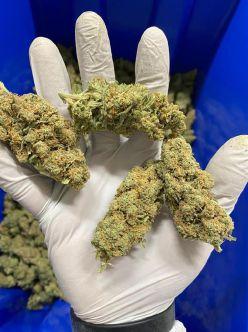
Cannara Biotech Inc. is preparing to deliver its indoor-grown cannabis to the Société québécoise du cannabis (SQDC) after it received approval from Heath Canada to permit the sale of dried cannabis products.
“Within our home province of Quebec, demand for high quality Quebec-grown cannabis is strong and expanding rapidly,” said Zohar Krivorot, president and CEO of Cannara.
“We look forward to getting our brand portfolio into the hands of customers across the province of Quebec over the coming months.”
The company plans to initially launch three product lines: THC-dominant flower in 3.5-gram and pre-roll format, CBD-dominant flower in 3.5-gram and pre-roll formats, and a budget line in a 28-gram bulk format.
Cannara’s 625,000-square-foot facility is located in Farnham, Que. It is considered to be the largest indoor facility in the province, with the potential to produce up to 100,000 kilos annually.
www.cannara.ca
MediPharm launches new CBN formula MediPharm Labs Corp. is expanding its wellness products roster starting with its first cannabinoid cannabinol (CBN) formula.

The Barrie, Ont.-based cannabis extraction company is introducing CBN1:2 Nighttime Formula to its retail consumers. The product contains 10mg/ml of CBN and 20mg/ml of THC using full spectrum cannabis concentrate CBN.
“Our latest release of new cannabinoid based formulas, including our first formulation of minor cannabinoid CBN, enables us to fulfill increasing customer demand for more personalized products while maintaining our commitment to pharma-quality manufacturing,” said Keith Strachan, president and interim CEO.
MediPharm is also launching a CBD100 Ultra Formula oil containing 100mg/ml and THC30 Plus Formula oil, containing 30mg/ml, the most potent format available under Health Canada’s regulations.
Initial quantities will be available for patients through Medical Cannabis by Shoppers and for retailers in Ontario, British Columbia, Alberta, Manitoba and Saskatchewan. www.medipharmlabs.com



Cannabis infusion company, Vertosa, has announced new infusion technology developments that promise faster onset and offset, and uniformed batch distribution of cannabis and hemp-CBD gummies.
“We have performed extensive research for infusion of Vertosa’s emulsion systems into gummies and are very happy to offer a solution for the most persistent challenges facing this sector of the cannabis industry, including reaching target homogeneity, potency and bioavailability,” said Vertosa founder and chief science officer, Dr. Harold Han.
Its patent-pending emulsion system was developed from a study by the company, comparing bioavailability of gummies induced by Vertosa against a generic gummy infused by distillate. Results show the average onset of a Vertosa gummy is about 10 minutes, while the distillate gummy averaged around 40-60 minutes. Third-party testing also shows target dosage of cannabinoids was accurate and consistent. www.vertosa.com
Cannasupplies offers a new packaging solution for pre-roll value packs.
Packs are designed for use in the company’s Crativ Original and Crativ slim cases. They are available in standard height, short or tall, and in three to six flutes per paper base.

It can accommodate pre-roll cones from the mini size (60 mm with 0.25-0.35 grams) all the way up to king size (109 mm with up to one gram).
Plastic drop-in inserts are made of 100 per cent recycled plastic (RPET) and can be recycled after use. Consider one or two layers of inserts for larger value packs.
The product team offers a variety of stock and made-to-order solutions, with internal design capabitilies and low volume commitment requirements. www.cannasupplies.ca






To optimize your growing operation, the sterilization of your cannabis grow room, racking, and other cultivation equipment depends on the ability to eliminate all bacteria and microbial life.


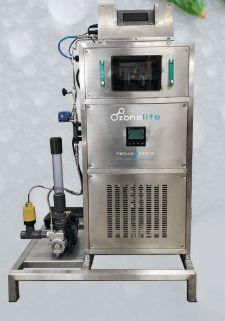
Ozone is a stand-alone sustainable sanitizer, deodorizer, sterilizer, and disinfectant. It is cost effective, safe to use, and conserves water and energy. Infused in water, ozone leaves no chemical by-products or residue and reverts back to oxygen within hours, making it highly environmentally friendly. If you are recycling your leachate or using flood tables, ozone can clean your recycled feed formulas without removing all of your beneficial nutrients.
Our approach is to fully understand the needs of your operation, discuss the challenges that need to be overcome, and tailor our design and solution build to those specific parameters.






By Matthew Buccioni and Troy Henderson
Many people associate disinfection with using harsh chemicals and see it as a necessary evil to kill pathogens that can cause infection in plants and staff. This doesn’t have to be the case. Choosing the right disinfectant and implementing environmentally-sustainable protocols can protect against the spread of infection without compromising safety to the planet.
The disinfectant you choose can go a long way in reducing your environmental impact. Older disinfectant chemistries, such as quaternary ammonium compounds, have earned a reputation for being harmful to the environment, as they leave active residues behind which may be toxic to aquatic life. However, newer technologies have come a long way since, offering efficacy against plant and human pathogens, while remaining biodegradable and non-hazardous to the environment.
Look for products that are unclassified for environmental hazards under Globally Harmonized System (GHS) in-use. This information can be found on Section 2 of the product’s Safety Data Sheet (SDS).
Beyond the chemistry, other less obvious factors can also make a big difference. For instance, choosing a highly-dilutable concentrated product will reduce the amount of packaging
that would need to be disposed of.
This is especially true if the product is available in large formats, such as a drum. Another factor to keep in mind is shelf life – choosing products with a long shelf life can help reduce waste due to expired products, which is a common
may want to choose a disinfectant that does not require the use of gloves and goggles for safe application. While each facility should determine a Standard Operating Procedure that meets their needs, reducing the volume of PPE consumed will allow you to dispose of less waste overall.
Protecting plants and people from infection does not need to be at the expense of environmental sustainability.
problem with unstable solutions that need to be continually refreshed.
In addition to being gentle on the environment, disinfectants used in cannabis facilities should also be non-irritating to the user to promote occupational safety. This means looking for a disinfectant that is not classified for any physical or health hazards. Like environmental hazards, this can also be found on the product’s SDS.
However, choosing a product with an ideal safety profile can have hidden environmental benefits, such as reducing the amount of personal protective equipment (PPE) required in certain areas of the facility.
When disinfecting office spaces or reception areas, you
It’s easy to underestimate the importance of cleaning when using a disinfectant but the process of physically removing soils, resin and other organic debris, is essential for the disinfectant to work properly.
Some products are one-step cleaner-disinfectants formulated with surfactants, meaning that they are effective in the presence of organic soils. While it is still important to dry-clean visible soils from the surface, one-step products can effectively kill pathogens while removing soil residues left behind.
Other commonly-used solutions, such as pure isopropyl alcohol or bleach, lack cleaning properties which means that surfaces may need to be precleaned with a separate deter-
gent for the disinfectant solution to be effective.
Choosing a one-step cleaner-disinfectant will not only save time and effort but it can cut down chemical consumption significantly. This also allows you to reduce the number of other materials used for cleaning, such as microfibre cloths, mop heads and PPE.
A common misconception when it comes to disinfection is that more is better, leading to wasted product and a bigger environmental footprint. If using a concentrated product, automated mixing stations can help ensure correct concentration is being dispensed. Test strips may also be available from the disinfectant manufacturer to verify this. Tools such as these can help ensure that the correct amount of product is being used, avoiding unnecessary waste.
How the disinfectant is applied to surfaces can also make a difference. Using a foaming application, particularly in large areas such as grow rooms, can help achieve superior surface coverage without the need for disposable or laundered cleaning materials. Foaming disinfectant can also help reduce the total volume of liquid used saving product in the long run.

Protecting plants and people from infection within cannabis facilities does not need to be at the expense of environmental sustainability. By implementing the right products and protocols, cleaning and disinfection can be a core part of sustainable cannabis operations.