S ince 2012, we ’ ve partnered wit h world-class companies and groundbreaking re sea rch institutions to pursue our mission of improv ing the interaction between light a nd life. A long the way, we’ve gathered ind ispensable da ta, industry-wi de insights, and a wealth of knowledge that’s so valuable we had to shar e.
Learn more fro m o ur industry-leadin g research. V isit www.f l u ence.science/case-studies
From the editor
By Catarina Muia
Celebrating Canadian growers
Hello all, my name is Catarina Muia and I’m thrilled to introduce myself as the new editor of Grow Opportunity magazine. I’m even more excited to become part of this growing community dedicated to the knowledge transfer of technology, innovation, discoveries, and success of the cannabis production industry and its related sectors.
With that, I am proud to present the July/August 2021 issue of Grow Opportunity magazine, which looks into the challenges experienced by cannabis farmers, gives tips and techniques to growing a successful crop, and sheds a light on new innovative solutions and technologies that are helping to drive the industry forward.
It is common for any plant to experience attacks from pests and diseases, and cannabis is no exception. In order to maintain a healthy crop, be sure to check out this issue’s feature article on pest and disease management on page 16, where Michael Brownbridge looks into the potential pests and diseases that are commonly found in cannabis crop. Brownbridge gives various solutions and suggestions on how to manage and counterattack, to ensure you have a full and healthy harvest.
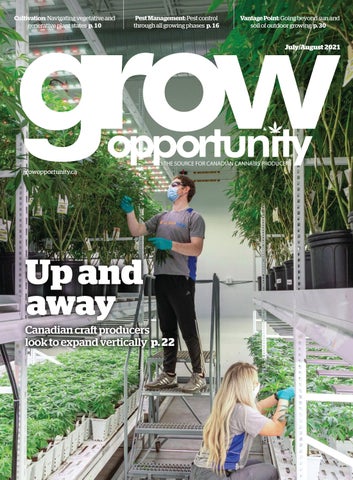
Have you heard of vertical growing? In this issue’s cover story, Treena Hein looks into the farms that have been vertical growing since day one, and
those that have adopted the vertical cultivation strategy. Be sure to check out the benefits of vertical growing, as well as the regulations and strategies to keep in mind when looking to move to vertical cultivation, in Hein’s article found on page 22.
While vertical cultivation is done indoors, there are still plenty of farmers who will continue their growing outdoors, with the benefits of Mother Nature’s touch.
It is important to recognize and celebrate the success of those working hard to drive the cannabis production industry forward.
In this issue’s Vantage Point column, found on page 30, Michael Budinsky takes us through the various considerations to keep in mind when growing outdoors, and the best practices to follow for a successful crop.
It is certainly important for us to keep up with the challenges, new technologies, and solutions circulating our industry, but it is also important to recognize and celebrate the success of those who are working hard to drive the cannabis production industry forward.
Grow Opportunity is excited to receive submissions for our annual Canada’s Top Grower Award, which shines the spotlight on our most outstanding and innovative cannabis growers. Do you know a cannabis
grower who:
• Shows deep understanding and knowledge of quality cannabis cultivation?
• Is committed to the highest standards of cannabis growing practices?
• Demonstrates strong work ethic and has a strong passion for sustainable and responsible production?
• Demonstrates exceptional leadership and innovation?
If so, be sure to recognize their success and celebrate their achievements, by nominating them for the 2021 Canada’s Top Grower Award. Submissions will be accepted until August 31, 2021. As Canada’s Top Grower, the winner will receive:
• The front cover profile feature in the Nov/Dec 2021 issue of Grow Opportunity magazine;
• and a guaranteed spot to participate as a featured panelist at Grower Day 2022, including an official award presentation.
Be sure to visit www.growopportunity.ca to learn more about the 2021 Canada’s Top Grower Award and how to nominate. Is there a topic you would like to learn more about, or would like to teach your community about? Send me an email at cmuia@annexbusinessmedia.com. I would love to hear your feedback and get to know the members of our community. I’m looking forward to meeting and learning from each of you!
July/August 2021
Vol. 5, No. 4 growopportunity.ca
Reader Service
Print and digital subscription inquiries or changes, please contact Shawn Arul, Audience Development Manager
Tel: (416) 510-5181
Fax: (416) 510-6875
Email: sarul@annexbusinessmedia.com
Mail: 111 Gordon Baker Rd., Suite 400, Toronto, ON M2H 3R1
Occasionally, Grow Opportunity will mail information on behalf of industry-related groups whose products and services we believe may be of interest to you. If you prefer not to receive this information, please contact our circulation department in any of the four ways listed above. Made possible with the support of
In
Cannara BioTech buys TGOD’s Valleyfield facility
Montreal-based cannabis producer, Cannara BioTech Inc., is looking to purchase one of the largest indoor cannabis cultivation facilities in Quebec.
Cannara announced on June 10 that it plans to acquire The Green Organic Dutchman’s (TGOD) newly-built, one million square foot facility in Valleyfield, Que. The $27-million deal includes state-of-the-art infrastructure comprised of 24 independent growing zones, 200,000 sq. ft rooftop greenhouse and a 200,000 sq.ft Cannabis 2.0 processing centre. Its annual production capacity can reach up to 125,000 kilograms of cannabis.
“With this acquisition, Cannara continues to increase its footprint and create more jobs in its home province of Quebec,” said Zohar Krivorot, president and chief of Cannara Biotech. “Today’s announcement reinforces our position as one of Canada’s top leading producer of premium-grade cannabis and cannabis derivative products.”
The transaction is expected to close on June 20. BMO Capital Markets acted as exclusive financial advisor to TGOD.
Delta 9 rewards the vaccinated
Delta 9 Cannabis Inc. is rewarding fully-vaccinated Manitobans with the chance to win a one-year supply of cannabis.
Starting June 21, the Winnipeg-based company is running a “Joints for Jabs” rewards program. People who have received two doses of a COVID-19 vaccine are eligible to enter into a monthly raffle.
Three grand prize draws a one-year supply of cannabis that equates to $100 of cannabis products per month (approx. 28 grams) for 12 months. There will also be branded apparel giveaways.
The program will run until Sept. 30.
Former CannTrust CEO and executives face securities charges
The former chief executive and two past board members of CannTrust Holdings Inc. are facing charges roughly three years after the company became embroiled in unlicensed growing allegations.
The Ontario Securities Commission (OSC) and Royal Canadian Mounted Police said June 22 that former chief executive Peter Aceto, former vice-chairman Mark Litwin, and former chairman Eric Paul each face charges of fraud, making false or misleading statements to the OSC and the market, and authorizing, permitting or acquiescing in the commission of an offence.
Litwin and Paul also face insider trading charges. Litwin and Aceto are charged with making a false prospectus and false preliminary prospectus.
The charges under the Securities Act come after CannTrust’s licences were suspended for growing thousands of kilograms of cannabis in unlicensed rooms in 2018 and 2019.
The OSC and RCMP allege the accused did not disclose to investors that about 50 per cent of the growing space at CannTrust’s Pelham, Ont. facility was not licenced by Health Canada and they allegedly used corporate disclosures to assert that they were compliant with regulatory approvals.
They also charge that Litwin and Aceto signed off on prospectuses used to raise money in the U.S., which stated that CannTrust was fully licensed and compliant with regulatory requirements, and Litwin
and Paul traded shares of CannTrust while in possession of material, undisclosed information regarding the unlicensed growing.
The allegations have yet to be proven in court. The accused are all scheduled to appear in court on July 26.
The court can impose a jail term of up to five years, a fine of up to $5 million or both to any defendant convicted of an Ontario Securities Act violation, the OSC said in an email to The Canadian Press CannTrust faced civil litigation in the form of class-action lawsuits from plaintiffs who they lost millions of dollars after CannTrust allegedly made misrepresentations about having necessary licenses for growing.
In January, the company promised to create a $50-million trust meant to settle claims from class action lawsuits and in April, received court approval for a $22.5 debtor-in-possession arrangement under the Companies’ Creditors Arrangement Act.
The charges CannTrust’s former leaders face come after the company started staging a comeback in December 2020 with the reintroduction of its two recreational brands, Liiv and Synr.g, to the Canadian market.
As part of the comeback, CannTrust’s new chief executive Greg Guyatt said that troubles stemming from the unlicensed growing scandal were behind CannTrust and that the company had spent 18 months on a comprehensive remediation program focused on compliance and simplifying the business.
— TARA DESCHAMPS, THE CANADIAN PRESS
Peter Aceto, former CannTrust CEO,
Red Market hopes to enrich First Nations communities
Red Market Brand hopes to represent First Nations communities from coast to coast, starting with the launch of its first products through craft cannabis producer Royal City Cannabis Co. The company launch was marked on June 21, in commemoration of National Indigenous Peoples’ Day.
Red Market was founded by two Indigenous leaders, Isadore Day and Christian Sinclair.
Day is a former regional chief of Ontario, Lake Huron region grand chief and vice chair of the North Shore Tribal Council. Sinclair is Onekanew chief for the Opaskwaya Cree Nation.
“Our long-term goal is to establish a national network of First Nation licenced producers who will supply Red Market and other First Nation cannabis products – all approved by Health Canada,” said Day, chief executive of Red Market Brand, in a press release.
“After initial exclusion from the Cannabis Act, RMB will ensure Indigenous voices are heard and respected as the Canadian cannabis industry, and Canada itself, evolves.”
WeedMD sells Bowmanville facility
WeedMD Inc. is looking to sell its subsidiary’s production facility in Bowmanville, Ont. as part of its “facility optimization strategy.”
WeedMD subsidiary, Starseed Medicinal Inc., is the licence holder for the Bowmanville facility for cultivation, processing, sale of dried cannabis and cannabis extracts, and to conduct research. The company is looking to sell the property for $2.5 million in cash.
“We continue to execute our strategic plans to optimize and solidify the areas of our business... and move us closer to profitability,” said George Scorsis, interim CEO and executive chair of WeedMD.
Red Market Brand intends to pursue “economic reconciliation” through compliant cannabis sales and reform.
Micros share lessons learned at live webinar
Never give up and have fun.
This is the mindset that an expert panel of microcultivators gave to a virtual audience on Grow UP Live’s “What It Takes to Go Micro.”
In place of a live tradeshow and conference this year, the Grow UP Conference & Expo has been hosting a series of live webinars.
On June 3, Stratcann founder David Brown moderated a panel of Licensed Producers to share their knowledge of microcultivation in Western Canada. The panelists included Kieley Beaudry of Parkland Flower, Alberta Eppinga of B.C. Cannabis Inc., Ron Gauthier of UpRyze Cannabis and Logan Dunn of Dunn Cannabis.
WeedMD Inc. is changing its corporate name to Entourage Health Corp. as part of a rebrand taking place over the next few months.
“This is the perfect time to get in the industry,” said Dunn, owner of Dunn Cannabis in Abbotsford, B.C. “We’re making all these stops, we’re tripping all over the place and figuring out the hard way. So, if you’re getting into this industry right now, just ask and we’ll teach you not to trip.”
From zoning challenges, banking and working with regulators, panelists shared their sense of responsibility of sharing their experiences and paying it forward to the larger grower community.
Eppinga, owner of B.C. Cannabis Inc. in Sooke, B.C., shared his experience navigating Health
Canada’s Indigenous Navigator service. As an Indigenous-owned company, it has access to a government program that guides self-identified Indigenous through a two-way licensing process.
“Definitely through construction, the Navigator program is awesome,” said Eppinga, who is a member of the Eagle Clan from the Haida Gwaii community in B.C. “They give you a point of contact and your emails get answered a lot quicker… It’s kind of like a streamlined approach to get your licence quicker.”
Beaudry, co-founder of Parkland Flower and president of the Alberta Cannabis Micro License Association, talked about taking on an “additional layer of work” as a licensed producer. Administrative duties, like record keeping and filing two different mothly reports for Health Canada and the Canadian Revenue Agency, is a full-time job on its own. She also shares her experience in all the hidden costs and challenges of the business.
Gauthier, who is chief executive of UpRyze, said that the building material shortage caused by pandemic lockdowns has doubled his construction costs since 2020.
“Now I wish we would have built more facilities last year, just for the cost savings,” said Gauthier.
— JEAN KO DIN
By Mohyuddin Mirza
Navigating vegetative and generative states
Growers of cannabis are familiar with the terms ‘veg’ and ‘bud’ as the production process has a dedicated period for vegetative growth and bud set, as well as a maturing phase. Most of the time, they have an image in their mind as to how a veg plant should look, as well as how the plant should look at maturity.
Mother or stock plants must stay in the veg state for as long as possible. Once such plants get root bound, a non-veg direction is induced, plants become generative and clone quality may be affected.
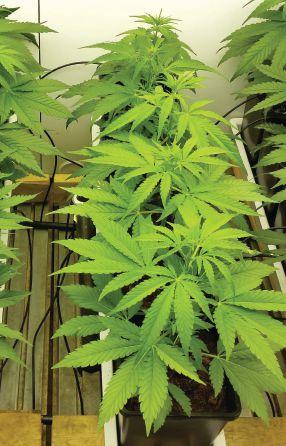
Knowing when plants are vegetative First thing, we will settle with two terms, vegetative (veg) and generative (gen). Figure 1 is a good example of veg plants.
These cannabis plants were grown in a standard, commercial, soilless growing medium and were three weeks old after the rooted clones were transplanted. There were 10 to 12 leaves, fully expanded horizontally, a good dark green colour, vigorous, every node had a branch, and the roots were developing nicely. The plants were regularly fertilized with a complete fertilizer solution with a pH of 5.8 and an electrical conductivity (EC) of 2.0 millisiemens per square centimetre.
The light was at 400 micromoles, per square metre, per second with a daily light integral (DLI) of 25.92 moles per square metre. The lighted period temperature was set at 22 C and was consistently maintained, while the dark period temperature was set at 18 C. Relative humidity was maintained at 65 to 70 per cent, which provided a moisture deficit of 6.0 and 5.2 grams per cubic metre of air and in millibars, between 7.9 and 6.8. These were almost ideal conditions in a growth chamber. The plants were ‘truly’ in a veg state and ready for a gen or bud cycle.
Figure 2 is an example of where things went wrong with the plant’s veg growth. The grower expected to have good veg plants
however, they were under ‘management stress,’ due to several things going wrong.
First, is the choice of rooting containers. One can see the use of drinking cups, which appears to be fairly common with smaller operations to save cost, but most of these cups do not have drainage holes. The lack of drainage holes caused the root zone environment to change to the negative side. For example, water logging that result in reduced oxygen levels.
The growing medium was straight peat moss, although it appears that some soil was also added. That complicated the matters further. Peat moss has higher water holding capacity and with the addition of an acidic pH, as well as no drainage holes, the growth could be further affected.
The plant’s lower leaves were yellowing, which appears to be a deficiency of nitrogen. Proper fertilizers were not added according to the growing medium, drainage, and water holding characteristics.
The point is made that there is a right, scientific way to grow the plant in a veg direction and there are old methods, taught by the hobbyists, which are not suitable for large-scale commercial cultivation.
Plants in the veg state produce leaves with good expansion, branching is strong and not thin and spindly. The green colour is a good dark green, internodes are reasonably stretched, and a there is a strong root system. Vegetative plants are more compact and appear vigorous and fast growing.
What does a generative plant look like?
Growers have different ways of measuring if a veg plant has produced and can move to the gen phase. In our research, we have used three weeks after rooted clones, planted in containers as the benchmark to subject the plant to gen direction.
About 8 to 10 leaves and roots have come out of the root ball, and touching the walls of the container is a good start. If the veg state is prolonged to four to five weeks, the plant will grow tall and result in the top part of the plant shading the lower parts and producing poor quality buds. Our measure-
ments showed that if top part of the plants is getting 400 micromoles of light, the lowest leaves will be getting around 150 micromoles. Levels vary based on the setup.
Strategies for generative direction
Light duration (photoperiod) is the number one input to change from veg to gen direction. Within a week the plant would respond by producing flowers and immature trichomes. It is pointed out that plants will keep growing until buds start maturing. The list of gen inputs can be expanded. The principle is that any stress is a gen signal. Maintaining mild stress is important forgood yields and great quality.
The list can be expanded. It is important to know what veg and gene are. The directions are reversible, where due to inadvertent changes in photoperiod from 12 to 18 hours, can result in a plant changing from the gen to veg direction. We have seen it happen where plants were close to harvest and suddenly big leaves started appearing between the buds. On the other hand, plants can be made gen as early you want.
Cultivation Mohyuddin Mirza, PhD, is an industry consultant in Edmonton, Alta. He can be reached at drmirzaconsultants@gmail.com.
Figure 1: An example of vegetative cannabis plants
Figure 2: Cannabis plants under management stress
One less thing to worry about.
Easy to use • Consistent clean quality input
Traceability of all products • Growing support provided
CANNA is an established and serious partner for the Green Market. We provide solutions to growers of all sizes, including Canadian Licensed Producers. CANNA nutrients, additives and growing mediums are manufactured from the high quality source materials. We understand the importance of a clean, consistent and traceable input as well as keeping it simple.
CANNA loves to share its knowledge and experience, our team is there to support you.
Micromanagement
By David Brown
Banking on your micro’s future
So, you’ve got your federal Health Canada licence, you’ve grown your crops or processed your cannabis products, and now you’re looking to get your unique micro cannabis products on shelves. What happens now?
As most who have arrived at this stage in the industry will tell you, getting the licence and growing good cannabis is the (relatively) easy part. Getting those products into a provincial market and building brand awareness around them is where new businesses often find themselves facing challenges they are unsure of how to tackle.
Planning ahead to know what products are in demand and what products are already over-saturated are steps to take early on, in terms of cultivar selection, for example. Understanding the unique process each province requires to get those products onto shelves is another. Just because you have some great weed at a good price, doesn’t mean provinces will want it.
One of the first steps in taking this on is understanding the procurement and product approval process for most provinces and territories. Most provinces have a procurement process to first approve vendors and then each product SKU that vendor will want to sell into the market. They will require a new producer to first get approved to even sell products in those markets. Once approved, they will then allow those companies to periodical-
ly pitch new products to be sold into their retail systems, public and/or private.
As an example, some provinces, like Ontario, only allow companies to pitch a product every two months or so, while others such as British Columbia, have weekly product calls. Some provinces have caps on how many producers they will even allow to sell into their system, while some have no such limits. Saskatchewan, for example, has no provincial distribution but still requires
A partner who can take on all these tasks will mean a cultivator can focus on what they love, growing cannabis, while leaving many of the logistical challenges to those with experience in managing everything else.
Nonetheless, understanding the steps these processors will take can help in both selecting the right partner who fills the right boxes, but also in understanding the scope of what they provide. A processor isn’t just taking your cannabis
Getting the licence and growing good cannabis is the (relatively) easy part.
producers to be onboarded before they can sell products.
Micro cultivators looking to get products onto retail shelves require a partnership with a sales-licenced processor, and finding one who is already approved to sell into certain provinces can be a big step towards a smoother process.
The right processing partner for a cultivator means not only matching approaches to business, but one who can take on all the steps beyond harvest that a company needs to go through: procurement, product selection, insurance (provinces require any producer to have recall insurance, for example, which can cost tens of thousands of dollars), as well as potentially managing branding and marketing.
products and reselling them, they are handling all of these additional steps as your proxy.
Looking back to those provincial procurement processes, understanding the timelines and logistics required can help growers and processors better plan their product launches to meet provincial timelines. For example, Ontario’s product call is every two months and requires full finished crops, as well as certificates of authenticity before a product can even be pitched to be sold in the Ontario system, both online and through nearly 1,000 private retailers.
Knowing what products consumers are looking for in each market is also an important step in planning out what products to produce, and where to send them. If you
have a great Black Cherry Punch, but so do 10 other producers that month, will the province want yours? If so, what will make yours stand out among the others? High THC and high terpene counts are an important piece of the puzzle, but also having a recognizable brand is important in convincing a provincial buyer that your specific Black Cherry Punch will move off shelves.
This is, in part, because in the early days of legalization, many provinces bought large quantities of cannabis that have not all sold well. In response, some provinces are now requiring products to sell in a certain timeframe, otherwise they are de-listed and sent back. This means no payment for an unsold product, that has now aged several more weeks or months, and has already been packaged, labelled and tax stamped for sale in that specific province.
Understanding current market demands and trends, what consumers are looking for, and what products are already saturated can better ensure that you and your distribution partners can make wise choices beforehand. And baking in the known timelines to have a product approved and then sold into those systems will help keep products as fresh as possible, while setting realistic timelines in terms of revenue streams.
It’s no longer as simple as growing some weed and selling it to a store. Any grower or processor needs to be thinking very long term, months or even years down the road, with every choice they make.
By Matt Maurer Legal Matters
The road to legalizing cannabis lounges
Many say that “anything goes” in Las Vegas, but that has not been true with cannabis. In fact, under existing law, a cannabis establishment is prohibited from allowing a person to consume cannabis on the property or premises of the establishment. Existing law also makes it illegal for someone to consume cannabis in a public place, an adult-use cannabis retail store or in a vehicle. However, that is all about to change.
In early June, the Nevada State Assembly passed Assembly Bill 341 (the ‘Bill’), signed by Gov. Steve Sisolak, which gives the state Cannabis Compliance Board the authority to licence and regulate cannabis consumption lounges. Many in the tourism industry (and tourists themselves) immediately rejoiced at the news, but the shift is also a boon for the local and state cannabis industries, which may now see exponential growth in consumption and a corresponding ‘trickle up’ effect to the top off the supply chain.
Back in Canada, rules pertaining to cannabis consumption are governed by the provinces and territories with most having fairly liberal rules around consumption. That said, many in the industry still feel there is a place for consumption lounges in Canada and it is worth having a look at what the Las Vegas regime looks like and what lessons it may hold for the Canadian cannabis industry in the future.
Two classes of lounges
The bill creates two classes of consumption lounges. The first class are those that will be attached or directly adjacent to an existing adult-use cannabis store. The second class encompasses independent standalone consumption lounges.
Granting consumers the ability to consume essentially at the retail store in Las Vegas gives tourists and non-residents a venue to consume products that did not
previously exist for them. In Ontario, such a venue is not necessary given that by and large, customers could consume their purchases in public shortly after leaving the store. However, allowing customers to consume in-store allows for interesting in-store product sampling possibilities and could dramatically change the dynamic of the farmgate retail experience.
The products that may be sold at consumption lounges that are attached or directly adjacent to an existing cannabis store are restricted to what are classified as single-use or ready-to-consume cannabis products. If similar rules were enacted in Canada in the future, we could expect to see some new product innovation and offerings from producers.
Independent standalone lounges are similarly restricted. The bill requires these lounges to enter into a contract with one or more adult-use cannabis retail stores to sell the lounge single-use cannabis products for the purposes of preparing ready-to-consume cannabis products at the independent lounge.
Quality control on products
The bill explicitly provides for the adaptation of regulations governing the sale and consumption of such products. However, what remains to be seen is if such rules will necessarily entail new packaging and labelling requirements and what the adverse effects will be, if any, of those requirements as they relate to producers at the top of the supply chain.
Quality control on premises
Liability concerns have often been cited as being at the heart of the reason that legal consumption lounges are not permitted in Canada. America is a far more litigious society than Canada by nature, and it will be interesting to see how frequent liability issues arise, how serious they are when they do, and whether they end up being aimed at the producer, the lounge, or both.
Good vibes permitted
Despite the heavy regulation that accompanies the introduction of consumption lounges, the bill explicitly provides that these lounges can sell any other item which does not contain cannabis or cannabis products and is not intended for use with cannabis or cannabis products, including food and beverages.
The bill also expressly permits consumption lounges to offer live entertainment. Concerts, comedy clubs, yoga studios and spa services are just some of the many possibilities.
These types of permitted uses are exactly why cannabis consumption lounges could become a viable business model in Canada.
Respect for roots and diversity
We’d be remiss if we failed to mention that the bill requires the regulator to establish scoring criteria to be used in evaluating applications for consumption lounge licences (which will be capped initially). Importantly, the scoring criteria must include consideration of diversity on the basis of race, ethnicity or gender and whether the applicant qualifies as a “social equity applicant”, which is defined in the bill as someone who has been adversely affected by provisions of previous laws which criminalized activity relating to cannabis.
Good on you, Vegas.
Matt Maurer is a partner and co-chair of the Cannabis Law Group at Torkin Manes LLP in Toronto.
Pest control 101
Taking on pests and diseases through the vegetative phase to flowering and harvest
By Michael Brownbridge
The successful growth of a healthy crop through the vegetative and flowering phases is not easy.
It’s heavily determined by the actions taken in propagation, or ‘prop’. Clean stock plants provide a significantly better starting point for production. However, it doesn’t stop there. Early implementation of preventative measures are key to preventing pests and diseases in cannabis crop.
Vegetative to early flowering
Root
diseases
Managing root diseases is crucial for any greenhouse crop. Cannabis is no exception, as it’s known to host common soil-borne diseases, like pythium and fusarium. These diseases are readily transferred in irrigation water, soil, on people, and can easily come via infected clones. Fusarium is known to readily infect stressed plants. Good sanitation practices to reduce inoculum levels on hard surfaces and in prop media, and regular water irrigation tests help ensure it is disease-free.
Biofungicides, introduced in prop and re-applied on a regular basis through the crop cycle, are integral in an integrated plant health management program. Maintaining high populations of beneficial microbes like trichoderma in the growing medium allows for efficient colonization and growth on developing plant roots, protecting them from soil pathogens.
These biocontrol fungi are known to stimulate root growth and improve bioavailability of nutrients in the soil, there -
by promoting plant growth and health. In trials, trichoderma applied at sticking resulted in improved root development in clones, translating to about a four per cent increase in flower yield at harvest.
Foliar diseases: Powdery mildew
Cultural practices like pruning and good air circulation help keep powdery mildew in check but the disease inevitably shows up. Regular crop scouting allows early signs of infection to be detected and for treatments to be applied to contain the disease.
Potassium bicarbonate products can be used in a preventative or curative manner. K-bicarbonate brings a physical mode of action to bear and will desiccate mildew spores, destroy cell membranes and, by altering the pH at the leaf’s surface, create conditions that impede powdery mildew growth. The adjuvants in the formulation can be harsh on soft-bodied biocontrol agents but will not harm predators in sachets. Furthermore, once spray residues are dry, they are harmless to beneficials.
Bio-friendly agents in the form of liquid concentrates can help induce natural re -
sistance responses in the plants to protect themselves against infection by powdery mildew. An ideal option closer to harvest, these agents also come as spray oils.
Pest management
Pests such as various mites, root aphids, foliar aphids, and thrips, threaten cannabis in all stages of production. A combination of biopesticides and natural enemies will provide control of these pests. Strategies started during prop to treat and/or suppress pest populations should be continued. Certain practices change during a plant’s lifecycle, but if measures are taken in young plants, it’s likely that pest issues will be limited later in the production cycle.
While it may be tempting to reduce inputs when pests seem to be ‘under control,’ crops can experience resurgences in two-spot and broad mites, thrips and foliar aphids when predator releases were reduced in the later growth stages. Major remediation efforts with biopesticide sprays were then required, and significant crop losses incurred.
Two-spotted spider mites
ASPERELLO®
Protects against soilborne and foliar diseases and promotes vigorous root and plant growth.
Pest Management
Mites
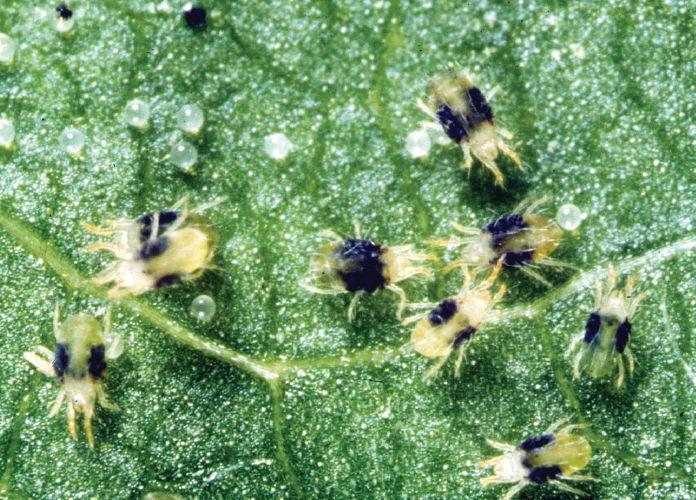
Three species of mites are problematic in cannabis –hemp russet mite, broad mite, and two-spotted spider mite (TSSM). Populations of all three species can rapidly increase because they are hard to detect and the first sign of an infestation may be symptoms of damage. By then, it may be too late to effect control.
Acting early is crucial. Treating clones with biopesticides to provide a relatively quick knock down, followed by early introduction of biological control agents.
Horticultural spray oils will control several problem pests including mites, thrips, aphids and whiteflies. Currently, two oil-based products are approved for cannabis use, but their formulations impart slightly different performance characteristics to each product.
Application rates (one to two per cent) are similar for both products, which should be re-applied every seven to 14 days. Use caution when applying to newly stuck cuttings. At this stage, it is recommended to use the one per cent rate and ideally, wait until plants have developed roots before spraying (approx. seven to 10 days after sticking). Use of spray oils will leave a sheen on the leaves, but does not interfere with transpiration.
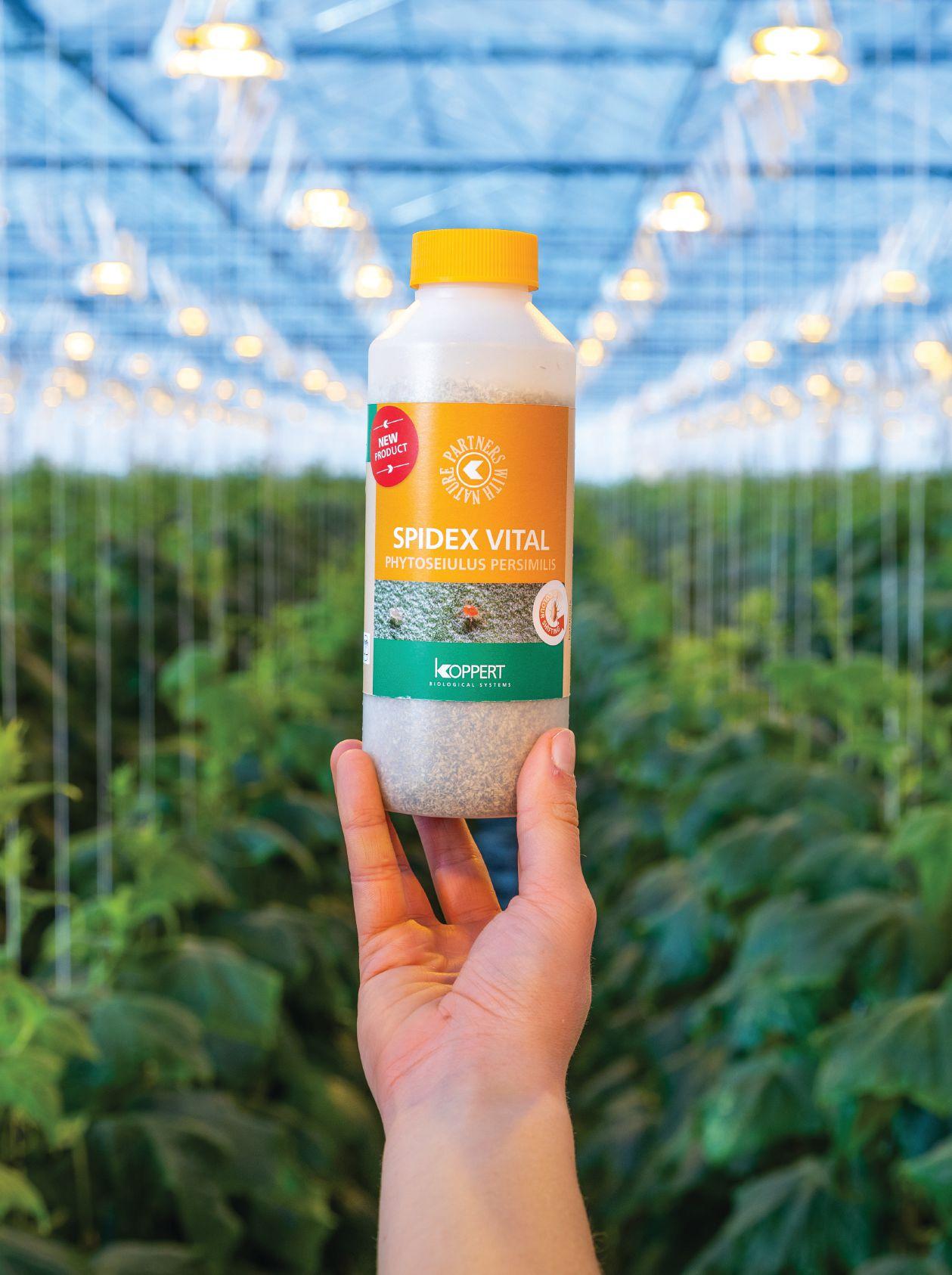
Predatory mites include: Amblyseius andersoni, which is moderately effective against hemp russet mite; Neoseiulus cucumeris (also known as Amblyseius cucumeris), a highly efficacious choice for broad mite; and Amblyseius fallacis (also Neoseiulus fallacis) for TSSM in the early stages of production. Phytoseiulus persimilis is an excellent choice for TSSM as plants get older and is effective when introduced to hot spots.
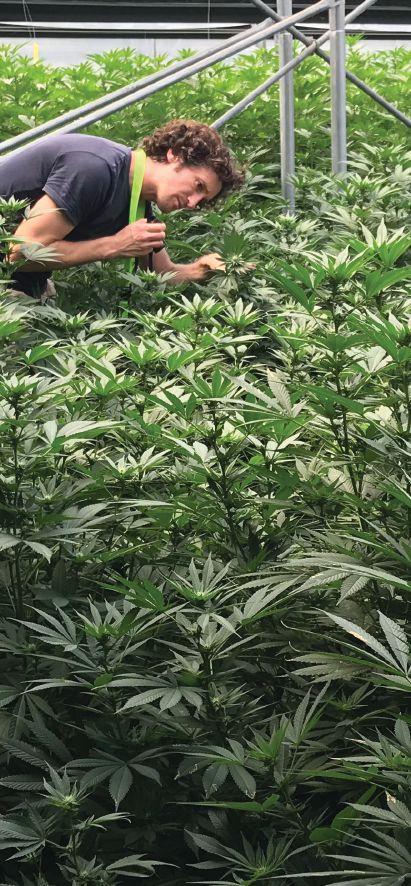
Scouting is an important part of the program to ensure TSSM are detected before the webbing appears. Although oils may kill some predatory mites and other beneficials on contact, they leave no toxic residues when dry and will not harm mites in sachets.
Aphids
Rice root aphid requires immediate attention. Otherwise, it quickly gets out of hand.
Control starts in prop, drenching rooting blocks with an approved Beauveria bassiana formulation, and should continue on a regular basis through production. Cubes and growing media must be thoroughly drenched so that infective Beauveria spores permeate the entire medium and contact aphids on the roots. Later in production, root drenches should be accompanied by foliar sprays to target winged adult aphids. Targeting both life stages typically delivers greater overall efficacy.
Foliar aphids present challenges as plants enter the vegetative phase. Different aphid parasitoids are recommended for different aphid species, and correct aphid identification is necessary to select the best
parasitoid for release. Notable foliar aphid pests include those categorized as ‘small’ species, and ‘large’ aphid species (cannabis aphid).
Aphidius colemani or A. matricariae are the best options for ‘small’ aphids; A. ervi for large aphid species. Predators are less discriminating, and Aphidoletes and Chrysoperla (lacewings) eat everything and as such, they often do an excellent job of cleaning up infestations. However, Aphidoletes will not establish under artificial lights. Orius will feed on aphids as well, and when established will help keep several other pests in check.
Biopesticide options include horticultural oils and insecticidal soaps. All are contact insecticides so achieving good spray coverage is critical to efficacy.
Thrips
RootShield PLUS+ in propagation improves root development in cannabis cuttings, leading to increased yield. Clones on the right were treated with a RootShield PLUS+ drench immediately after sticking into rooting
Western flower thrips can cause a lot of damage in cannabis and often accompany cuttings. Currently, two fungal biopesticides are registered for foliar sprays.
Predator options include N. cucumeris and A. swirskii in sachets on sticks preferred in prop, sachets hung in the canopy as plants get larger. These species primarily feed on first instar thrips on the foliage. Soil-dwelling predators, like Stratiolaelaps scimitus and Dalotia coriaria, feed on pupating thrips. These soil-dwelling predators are first released in prop.
A second release at potting up will ensure they remain for the full crop cycle. These predators can control other pests including broad mites and fungus gnat larvae.
Additional to the natural enemy arsenal in the vegetative stage is the generalist predator Orius insidiosus. If released in hot spots, it can become established for an extended period from the first treatment or release. However, it’s unlikely to persist for several generations in indoor grow facilities under artificial lights and is prone to diapause during the shorter daylight months.
Last, the nematode Steinernema feltiae is a useful addition if needed, applied as a drench to the rooting cubes and then media every two weeks to control fungus gnat larvae and pupating thrips.
Flowering to harvest
The final three weeks of production can be a nail-biting period. Given the sensitivity of the trichomes and the need to consider microbial ‘loadings’ in flowers, few pest and disease management options are available.
To avoid over-loading the flowers with microorganisms, it’s recommended that microbial and potassium bicarbonate sprays shouldn’t be used within three weeks of harvest, to avoid damage to the trichomes.
Oil sprays (at the one per cent rate) can generally be continued up to one week prior to harvest but different
cubes.
A SOLID FOUNDATION FOR GROWTH.
Cali Pro 2-Part Nutrient Series is designed for growers who want a premium base nutrient that’s easy to use and guarantees professional results.
Cali Pro supplies all the essential elements in precise concentrations and ratios for vigorous growth and flowering throughout the crop life cycle.
Get everything your crops need to grow, flower and thrive - with Cali Pro.
Bigger yields. Superior quality. Maximum potential.
Emerald Harvest has partnered with growers around the world to help them achieve consistent, profitable crops every harvest.
Our premium base nutrients and supplements are made from the finest ingredients - so they run clean, test clean, and simply grow the highest quality product.
Home growers to commercial cultivators are enjoying incredible results with Emerald Harvest nutrients.
Pest Management
cannabis varieties show varying sensitivities. Watch for evidence of phytotoxicity and test first on a small batch. Sprays with non-microbial products can be adjusted based on the results. Biological control agents can be used but if earlier measures have been taken and maintained, pest numbers should remain low through the final three weeks.
One of the biggest challenges at flowering, is Botrytis. With the recent Health Canada decision to allow sprayable nutrients to be applied in cannabis, use of such materials can help promote plant health. Use of sprayable nutrients can enhance uptake of key elements like calcium, which is an essential component of plant cell walls.
Currently, there are a few sprayable materials that can help suppress Botrytis. When choosing sprayable options, be aware of which sprays should be applied during specific stages of the crop lifecycle.
All may be rotated within the same program to bring different modes of action to bear. In all cases, try to spray on days when plants will dry within one to two hours, as extra moisture can increase the likelihood of mold development.
Foliar sprays of hydrogen peroxide may be one of the most valuable tools at this time. Peroxide can be integrated into a preventative phytosanitation strategy through the vegetative growth phase and may be continued for the last two weeks through flowering to harvest. The peroxide helps to reduce microbial contamination on the flowers and suppress pathogens. The same precautions apply, in terms of ensuring there are no phytotoxicity risks at the recommended spray rate, and that spray deposits dry within one to two hours.
Some take-homes
No two locations are the same, so it’s im-
possible to provide a single plant management blueprint to be applied everywhere. The information shared in this article has considered many, but not all of the common challenges and some possible solutions to help during the production cycle. These strategies have a long history of successful use in other crop settings, and many show similar efficacy in cannabis. This is an evolving area that will see a range of new products and techniques emerge. Check for new registrations and approvals and do not only think about how to manage pests and diseases, but also why they are there. Good sanitation practices and plant nutrition are fundamental to crop health. Creating a successful program requires planning and good record-keeping. You can learn from previous crop: when pests/ diseases appeared, what worked, what didn’t and why. Knowledge is power and will help grow the best crop possible.
Licensed cultivators know that when it comes to controlling and monitoring their growing environment, a simple, flexible, sustainable control system is crucial. This is why proactive cultivators are turning to Reliable Controls. Our nationwide network of factory-certified
Authorized Dealers will design, install, and commission a comprehensive control system paired with an intuitive, custom-tailored graphical interface. Take command of your precisely controlled environment. Generate tracking reports and analytics. Reduce your carbon footprint while improving productivity, quality, and serviceability.
To learn more about this cost-effective, Canadian-made solution, please contact a Reliable Controls
Authorized Dealer near you.
Up and away
Interest in vertical cultivation grows among Canadian craft producers.
By Treena Hein
It’s no mystery as to what has enabled vertical cannabis cultivation to be successful in Canada and beyond in recent years. It’s a pretty simple matter of new developments in both technology and knowledge.
The main tech development is the availability of LED lights, which of course can be placed very close to plants (within a vertical or conventional growing system) without harming them. In addition, collective understanding of air flow in warehouse growing environments has also grown, says Nico Haché, who has almost two decades of controlled cultivation experience and is now director of cultivation operations at Deloitte.
“Your biggest challenge with vertical growing is climate control,” Haché explains. “Ideally, you want to have identical air flow, light, temperature, humidity and so on, everywhere in the vertical system. But controlling the climate is less about the unit of space, and is much more affected by plant mass. So it must be adjusted through the production cycle.”
Haché adds that although every vertical facility is different, there is more labour involved in managing these facilities (in terms of trimming, etc.) compared to conventional. There also has to definitely be, in his view, “more thinking about the entire production process with vertical growing.”
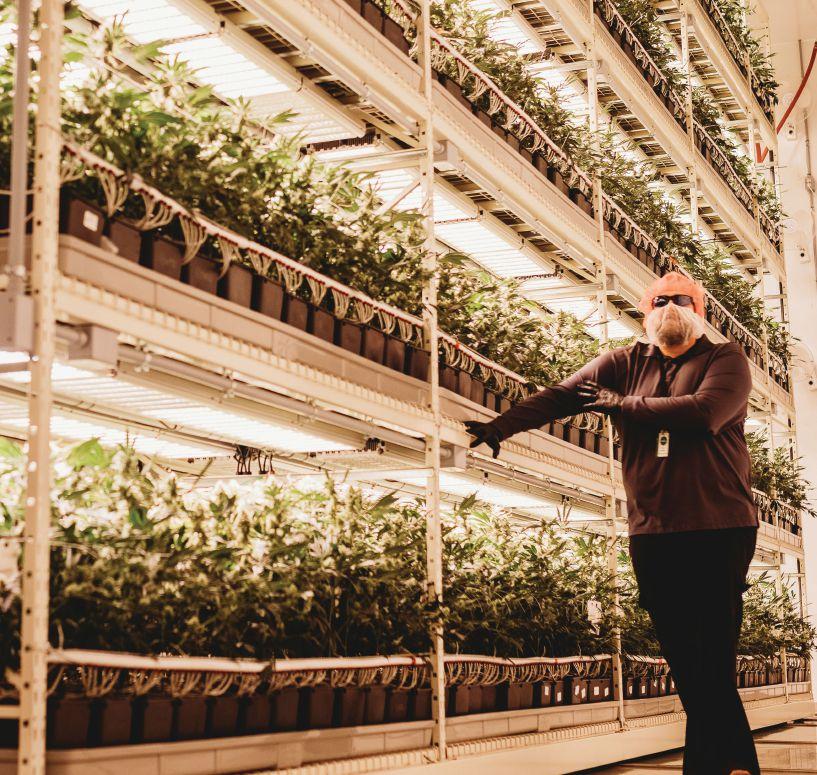
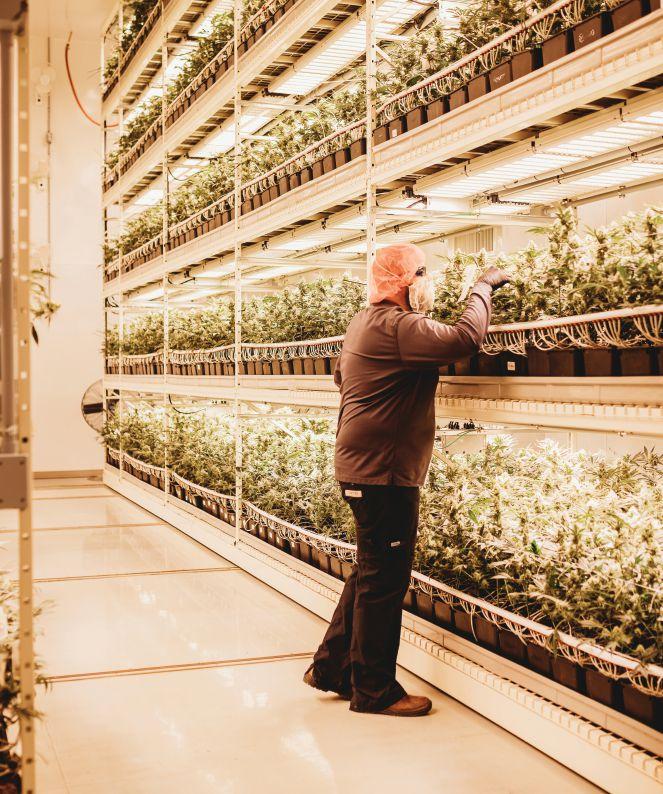
A majority of Canada’s larger vertical producers, such as Ontario’s Vertical Cannabis in Chatham and GreenSeal Cannabis in Stratford, planned for multilevel growing from the get-go.
Vertical from the very start
GreenSeal started with two cultivation levels in its first flower room before going to five levels in the next one, explains Phil Niles, executive vice-president.
“We were able to make this substantial jump because we spent our first few years doing substantial R&D work on every conceivable variable, from lights to
growing medium to pots to nutrients to grow times and more,” he says. “As great as our five-level room was, we still found room for improvement following longer observation and experimentation, which led us to our latest room which is six levels high.” The firm is now planning a new eight-level vegetative growing space.
Vertical growing meant that GreenSeal would save costs related to expensive licensed square footage at the time of construction, which happened around 2015. They had also established methods that would allow higher labour efficiency for multi-level systems. In addition, learning the vertical way would mean that in the future, “GreenSeal could easily deploy its model anywhere in the world,” says Niles.
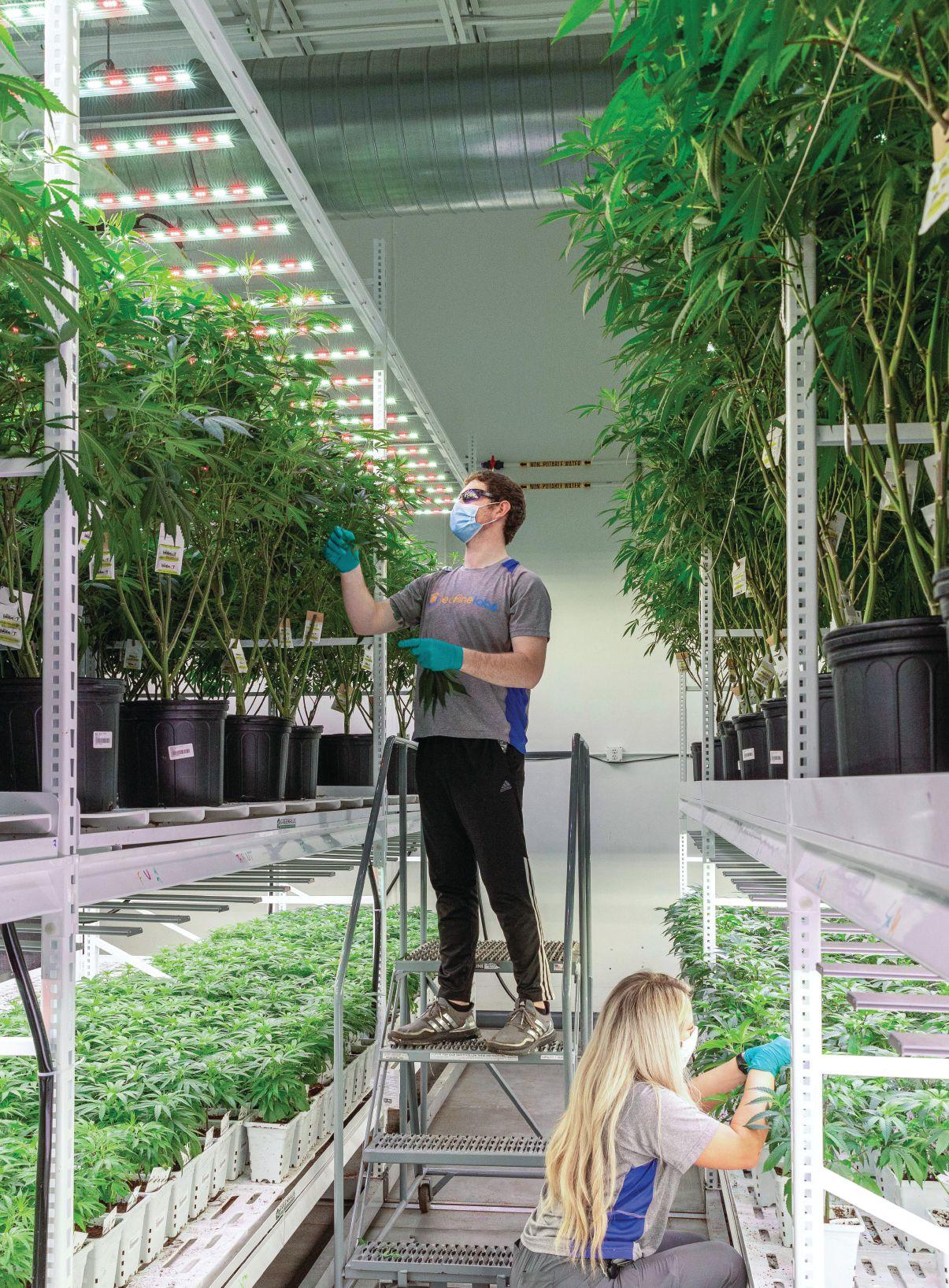
LeafLine Labs, located in Minnesota, began their transition to vertical growing in 2018.
GreenSeal has developed a large amount of proprietary vertical cultivation technology and has worked hard to solve issues that range from building code requirements, environmental control and genetics to cost, production methods and staff training. “For example, electrical safety dictates that you cannot have a water source above electrical outlets, so we had to solve for that, to make it safe,” says Niles. “Second, managing temperature and humidity is very difficult as warm air and moisture rises, so we had to determine how to keep the top levels consistent with the bottom levels. Third, water and nutrient delivery is a challenge, as gravity will
distort the delivery of nutrients and water when comparing the top and bottom levels, so this also needed to be solved. Finally, there is cost. While the variable cost per gram is very competitive, especially for the quality of the product, even a relatively small flower room can cost millions of dollars, so such a system requires a major upfront cost for even a modest footprint.”
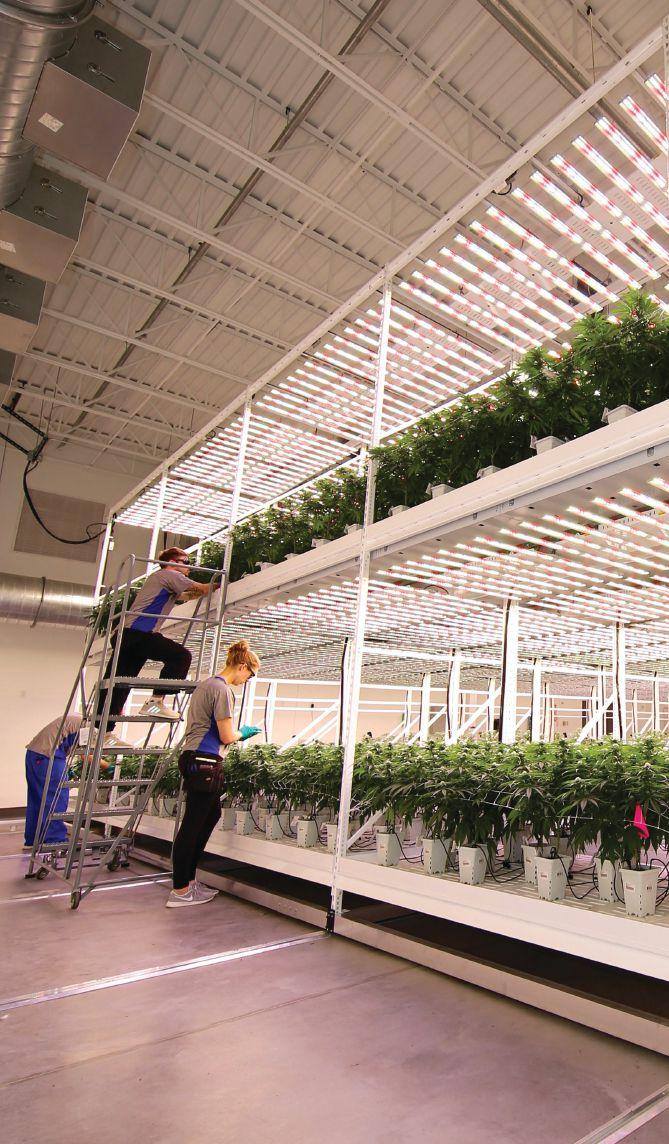
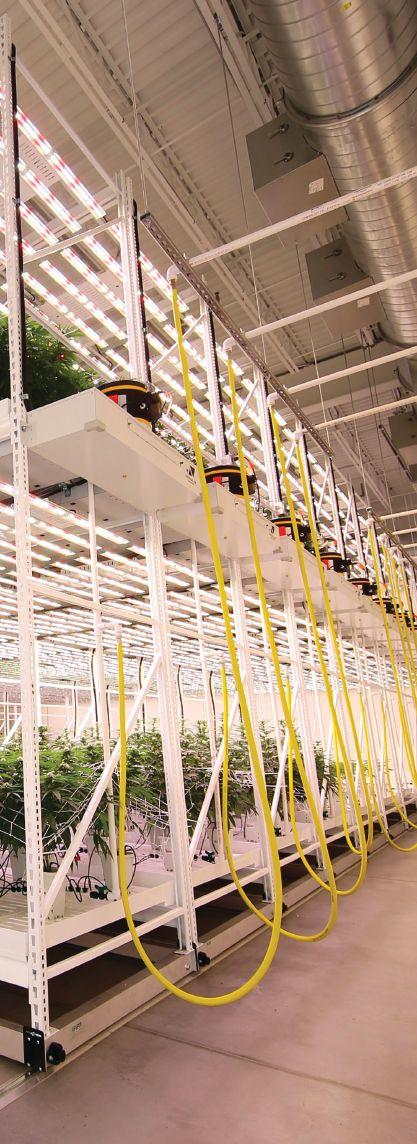
Some vertical growers like GreenSeal have chosen moveable rack systems, which are now offered by major rack manufacturers such as Montel in Quebec and Pipp Horticulture in Michigan. Moveable racks allow vertical growers to use all of their horizontal space, eliminating wasted fixed aisle space. Curtis Dadian, sales rep at Pipp, explains that this provides workers with all the space they need to perform critical plant care and maintenance. Yves Bélanger vice president of sales at Montel, adds that benefits of their systems include complete customization and accessories to adapt to crop requirements.
Another vertical operation in Ontario
As is obvious from its name, Vertical Cannabis had always planned for multiple levels since before cultivation began about three years ago. The operation is housed in what was previously an auto parts plant, with ceilings of about six meters. One section of the facility has three stationary growing levels and another has four. Workers use scissor lifts to reach the second, third and fourth levels.
Master grower, Chad Brian, notes that back when they were in their first production phase, he and his team did need to step up dehumidification, but this was unrelated to vertical cultivation and simply a matter of adjusting to greater plant volume.
However, in terms of vertical growing, Brian reports no challenges managing flowering onset, disease or height of plants. “We observe each new strain in terms of plant habit, but we need to trim the central stalk with all varieties and we also defoliate if there is too much vegetative growth,” he explains. “At this point, we’ve developed about 14 strains,
and we will continue to develop others to provide customers with an ongoing selection of new terpenes and flavours.”
To ensure plant health, Vertical Cannabis employs an integrated pest management program. “We know which pest insects desire our plants and utilize the proper selection of bio-agents to avoid pest populations,” says Brian. “We scout diligently and take action when required.”
Switching to vertical
With all of the hard work GreenSeal has put in to successfully grow vertically, Niles and Chad Morphy, master grower, caution those who are thinking of switching to vertical to think it through carefully. “You cannot simply take what you’re doing today from a cultivation perspective and just put the same methods onto X number of levels,” Niles says. “All facets of your grow, from start to finish, need to be evaluated and potentially, revamped.”
For example, going to six levels from one level requires six times the number of mother plants, six times the vegetative space and clone space, more labour, more post-harvest management space, more capital expense, more ongoing maintenance and repairs, etc. “So, all things put together,” says Niles, “we do not advise considering a vertical grow without first considering these, and countless more, variables.”
Integration of vertical cultivation has reinforced the importance of openness to new ideas, feedback and free-flowing communication between all members of the cultivation team to identify efficiencies.
In an effort to prepare for increasing demand, LeafLine Labs in Minnesota began their transition to vertical in 2018, and has made the switch successfully. They converted one of their cannabis cultivation flower rooms that year from a single-level HPS room to a multilevel room with LEDs and Pipp mobile vertical racks. “With 20-foot tall ceilings in our facility, multi-level vertical cultivation provided an opportunity to increase canopy space within the existing building’s footprint,” says Emily Kowalski, vice president of cultivation. “After the remodel, our canopy within the flower room in-
The successful switch to vertical growing takes much planning, prior to making the actual switch, as pointed out by GreenSeal growers.
Once LeafLine Labs’ remodelling was complete, the company’s canpoy within the flower room increased by 140 per cent.
creased by 140 per cent.” Since then, LeafLine has transitioned its propagation room to multi-level, with the rest of its indoor cultivation space to follow.
“As with any indoor cultivation space, it is important to design for the control of all plant growth variables,” says Kowalski. “Beyond that, my advice to growers transitioning to vertical cultivation is to think beyond the design of the room and be sure to plan the timing of plant maintenance, labour needs and staff workflow, as w ell. Prior to growing the first batch on a vertical system, growers must ensure that their team has all of the tools and supplies they need to successfully execute the work on each level of the vertical cultivation system.”
Kowalski believes the integration of vertical cultivation at LeafLine “has reinforced the importance of openness to new ideas, feedback and free-flowing communication between all members of the cultivation team in order to identify efficiencies. Cultivating cannabis on a vertical system is an adjustment, but the results have been well worth the time and effort.”
Looking forward and up
Currently, the market demand for medi-
cinal and recreational cannabis in Canada isn’t growing substantially, therefore, Haché doesn’t foresee large players doing much expansion into vertical growing.
However, he sees significant interest in overall growth in the small craft, high-quality producers that supply the large Canadian companies – and those small license holders want to expand upwards.
“Many of these operations are housed in smaller industrial buildings with ceilings about 21 feet high,” Haché explains. “It’s been easier for these companies to find and purchase/lease these buildings as opposed to larger, flatter buildings, and so they’re already set up for possible vertical growing. However, some smaller producers are also building brand-new buildings for vertical production.”
These small craft firms, continues Haché, seem interested in investigating vertical cultivation using all kinds of set-ups: conventional, aeroponic and hydroponic. He reports that no matter the set-up chosen, equipment suppliers have already stepped up to meet the needs of vertical growers, and also that a number of integrated provider partnerships have formed among shelving, lighting and ventilation companies, making going vertical, easier than ever.
Vertical Cannabis’ operation is housed in what used to be an auto parts plant, with one section of the facility containing three stationary growing levels, and the other containing four.
Helping producers meet Health Canada compliance since 2014
Suppliers’ Corner
KleenGrow receives Health Canada fungicide approval
KleenGrow announced that it has recently received a fungicide designation from Health Canada.
Manufactured and distributed by Pace Solutions, KleenGrow prides itself of being an environmentally-friendly, fourth generation quatenary ammonium used as an effective method of microbial and pest control.
“Proving KleenGrow’s efficacy against fungi and bacteria started 20 years ago,” said Robert MacMullin, technical plant consultant for Pace Solutions. “In that time, we’ve had several independent studies showing it to be highly effective against common fungi and algae found on plants, in soils and on roots.”
Listed under Pest Control Product (PCP) #13148, the fungicide designation confirms the product’s efficacy against fungi and algae, such as pythium, phytophthora, powdery mildew, penicillium, fusarium, and botrytis, and other similar contaminants.
Once diluted, KleenGrow has a neutral pH of around 6.3, meaning it is noncorrosive to metal tools, racks, and benches. Unlike some similar products, the performance is not impaired by pH changes or exposure to light or temperatures used to maintain plant health.
www.pacesolutions.com
Dramm FertiCarts now offered in larger sizes
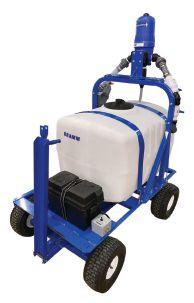
Dramm Corporation now offers 50-gallon and 100-gallon FertiCarts with agitation for larger fertigation needs.
These new sizes come as a welcome addition to the FertiCart Injector Cart lineup of 20-gallon and multi-tank versions. Designed with outdoor fields in mind, the new models offer battery-operated recirculation agitation to keep chemicals and fertilizers in solution.
It can be used with 20 and 40 gpm Dosatron injectors and come complete with plumbing, a 200 mesh filter and a check valve to prevent damage from the water hammer. www.dramm.com
Power Si launches in Canada
& WRAPPING
GrowGeneration Corp. has entered into a distribution agreement with GreenPlanet Wholesale, one of Canada’s oldest hydroponic distributors.
GreenPlanet will now carry GrowGen’s proprietary brand, PowerSi, which is known for its patented mono-silicic acid formula for thicker stalks and stems, increased lateral branching, increased resistance to abiotic and biotic stresses, with fast absorption.
“This is a groundbreaking product with proven success in the garden and a huge following in countries around the world,” said Mark Walman, chief operating officer at GreenPlanet. “This product has been long-awaited in the Canadian marketplace and we could not be prouder. I can’t wait to hear from our growing community.”
www.greenplanetwholesale.ca
Suppliers
Precision crop health monitoring in a compact form
The Firefly is a wireless, self-powered imager as big as a credit card.
Using digital imaging, the Firefly can be installed over greenhouse plants for automated image capture and extraction of plant phenotyping information, including the impacts of abiotic and biotic stresses, and screening herbicide resistance in a variety of weed species. The Firefly is designed to be deployed in high quantities for high-res coverage in 2D or 3D arrays. It’s packed with environmental sensors and twin RGB or narrowband imagers and includes powerful onboard processors, storage and radios for cloud communication.
LEAN Systems and Proxilogica are working in collaboration with Agriculture and Agri-Food Canada at the Lethbridge Research Development Centre (LeDRC) to start pre-production testing.
“Digital imaging solutions in controlled growth environments have supported research programs during the pandemic, giving us a view of the future of distributed team work and data-intensive plant science,” Dr. François Eudes, director of Research and Technology at LeRDC.
www.lean-systems.ca
Side load bagging perfect for pre-rolls
WeighPack Systems has unveiled a new automatic bagging machine for customers that require product orientation within a premade pouch.
The new Swifty Bagger Side Load can used for packaging pre-roll cartons or tubes into pouches. It creates a distinct appearance within the pouch that works well for marketing multiple pre-rolls and can be ordered with a labelling configuration for freshness dates.
The machine can load pillow and gusseted bags ranging from 150 to 350 milimetres in length and 120 to 260 milimetres in width. Additional options are available to provide nitrogen gas flush for customers looking to increase product shelf life.
The Swifty Bagger promises to be economical and easy to clean. Its straight-flow design provides accessibility while allowing the operator to monitor the entire filling process from the front of the machine. www.weighpack.com
MARIJUANA HARVEST
Marijuana Harvest is the first book devoted entirely to cannabis harvesting. In it, Ed Rosenthal and David Downs explain how to ensure the perfect harvest – everything from recognizing when it’s time to pick, to storage techniques to keep your buds fresh.
Ed Rosenthal literally wrote the book on marijuana cultivation with his best-selling Marijuana Grower’s Handbook. Today, more people than ever before have the ability to grow and cultivate marijuana for medical and personal use. Marijuana Harvest teaches cultivators large and small, how to avoid making costly mistakes, identify problems.
$37.50 Item #1936807253
GROW OPPORTUNITY IS SHINING A SPOTLIGHT ON CANADA’S MOST
If someone you know deserves to be recognized for their outstanding leadership in cannabis cultivation, nominate them for the 2021 Canada’s Top Grower Award. The winner will be announced and profiled in the November/December issue of Grow Opportunity magazine.
DO YOU KNOW A CANNABIS GROWER WHO:
• Shows deep understanding and knowledge of quality cannabis cultivation?
• Is committed to the highest standards of cannabis growing practices?
• Demonstrates strong work ethic and has a strong passion for sustainable and responsible production?
• Demonstrates exceptional leadership and innovation?
ELIGIBILITY:
All nominees must be currently employed or operating at a Health Canada-licensed cannabis cultivation facility.
WINNER RECEIVES:
• Front cover profile feature in the Nov/Dec issue of Grow Opportunity
• Guaranteed spot to participate in the Growers’ Roundtable at the CANNAtalk Experience
• Guaranteed spot to participate in the Growers Luncheon panel held at Grow UP conference 2021
• Official award presentation at Grower Day 2022 – Grow Opportunity’s conference and tradeshow for cannabis growers
NOMINATIONS CLOSE: AUGUST 31, 2021
Jake Ward, Head Grower, Aqualitas Canada’s Top Grower 2020 winner
By Michael Budinsky
Beyond sun and soil
To grow outdoors or not to grow outdoors? That is a question that’s frequently asked by licensed producers and consumers, often leading to in-depth discussions amongst industry experts about the perceived pros and cons of each. Outdoor growing presents many different opportunities compared to indoor growing – ones that simply go beyond sun, soil and savings.
Harnessing Mother Nature
Utilizing Mother Nature is a well-known benefit of outdoor growing to produce the best possible harvest. Cannabis loves sunlight, so choosing a location that provides a good amount of natural light from the right direction is critical. Location is often the first decision producers make when choosing the great outdoors as a dependable environment for their crops and the local community.
Sustainable growing
The benefits of sustainable growing practices not only extend to the plants, but to the farm, community and beyond. Growers have quickly realized that it’s not the size of their operation that determines how sustainable or eco-friendly they are, rather it’s their commitment to ensuring the best for the plant and environment.
Licensed producers, like Mariwell in Wheatley, Ont., are making a greater push for sustainability through a considered approach to always grow in natural soil without the use of any synthetic fertil-
izers and pesticides. This approach also looks to introduce ‘companion planting’ as a natural way to protect precious cannabis crops.
Companion plants effective in protecting plants from and build resistance against pest invasions and some diseases, while promoting a natural ecosystem.
“These ally species attract beneficial insects to the garden that can clear up detrimental species, in no time. Companion plants can also provide additional nutrients, increase yield, and enhance the flavour and health of plants,” says Theresa Robert, chair of the board at Mariwell.
Companion planting has also been shown to result in better water penetration, as well as increased water absorption and natural soil nutrients.
Investing in permaculture techniques is an important part of outdoor growing. Experienced growers understand that things take time and are ready to invest the care involved with utilizing and managing biological materials for better results and long-term success.
Going natural
Natural materials, like compost, are a simple, cost-effect-
ive, and nutrient-packed way to fertilize cannabis plants.
For example, Mariwell has built a strong relationship with a nearby vegetable greenhouse, in which we give them a place to bring their organic vegetable waste, adding it to our compost and herb garden. All organic waste is mixed with topsoil for compost to be used the following year.
By providing the sought-after nutrients plants are hungry for, compost is also a cost-effective way to activate the soil. Waste control is made easier with compost as it allows licensed producers to easily add waste efficiency to their operational processes and improve plant growth patterns. To truly reap the benefits of outdoor growing, soil and water quality need to be maintained.
Agricultural water solutions
Water management and conservation are a crucial part of growing outdoors. To reduce potential detrimental effects to the environment, licensed producers have opted for fertigation and irrigation systems to minimize impact often associated with large-scale cultivation operations.
The good news is in the last
few years, innovative agricultural techniques such as automated systems have helped to dramatically reduce usage and increase productivity by effectively measuring water and nutrient content in the soil.
“When possible, we rely on Mother Nature’s watering device,” says Brendon Ditmar, master grower at Mariwell. “At Mariwell, we have an automated system that can target different areas on the field. This allows us to consistently monitor nutrients and moisture levels in the soil that minimize water usage, and provide valuable information to ensure we meet plant needs while minimizing our footprint.”
Improvements with each harvest season
Outdoor cultivation affords farmers the ability to continually improve techniques, practices, strains and yields with each season past. With regulations and the industry evolving, coveted outdoor spaces will continue to be the optimal home for harmonizing the environment with cultivation to grow quality cannabis.
So, when asking whether or not to grow outdoors, the ultimate deciding factor will always be the goal(s). With advantages to both, mimicking the natural elements can still pose a challenge for indoor growers, sometimes one greater than working with prevailing environmental factors.
In the end, high potency, quality cannabis will always be found where efficient agricultural practices find synergy with Mother Nature.
Michael Budinsky is the marketing and security manager at Mariwell. His particular area of focus is training cannabis plants and controlling their structure through different growing techniques.