Summer growin’
Tips for keeping your crops’ cool | 14
The heat is on Greenhouse climate control in a changing climate | 24
Beyond PAR
Why keeping tabs on UV light levels pays off | 40


Summer growin’
Tips for keeping your crops’ cool | 14
The heat is on Greenhouse climate control in a changing climate | 24
Beyond PAR
Why keeping tabs on UV light levels pays off | 40






Experts share how growers can turn lighting decisions into measurable gains in yield, quality and sustainability.
6
4 Under 40 8 Meet this year’s young upand-comers. CAST 2026 28 Part 2 takes a closer look at introductions poised to make an impact at retail and in production.
PAR 40 The importance of monitoring natural UV light levels in greenhouses.
14 24 34
Summer stress
Practical strategies for managing VPD, irrigation and root zone stress.
Bridget Heeman of Heeman’s in Thorndale, ON, is one of this year’s Top 4 Under 40. READ MORE on Page 8.
BY MOHYUDDIN MIRZA AND VIKRANT DHAWAN
High-stakes heat
Adapting to rising temperatures, wildfire impacts and their pressure on environmental control systems.
BY J LYNN FRASER
Tackling ToBRFV Research update on cleaners and disinfectants showing promise in battle against the virus.
BY KYLE HENDRICKS, MSC & ROSE BUITENHUIS, PHD

Every year the Greenhouse Canada team is introduced to a new crop of young, hardworking and impactful individuals who are proving themselves to be a force within the industry. Through the Top 4 Under 40 nomination process, we’re exposed to some incredible stories of creativity, ingenuity, kindness and breathtaking innovation.
It’s increasingly challenging to narrow down the cream of the crop because every story shared with us has the power to inspire. After going through many passionate and well written nominations, we managed to single out this year’s Top 4.
summer months. On Page 24, we dig into the impact of extreme heat and even wildfire events on greenhouse systems and what growers can do to mitigate their effect on crop health.
For many ornamental and floriculture producers, the summer marks an end to the busy spring shipping season but it is also a time to be thinking about Spring 2027. To that end, our correspondent, Rodger Tschanz, offers deeper insight into his experience at the 2026 California Spring Trials to share with growers some of the exciting new genetics that should pique a Canadian grower’s interest on Page 28.
‘This year’s Top 4 drive innovation, strengthening their operations...’
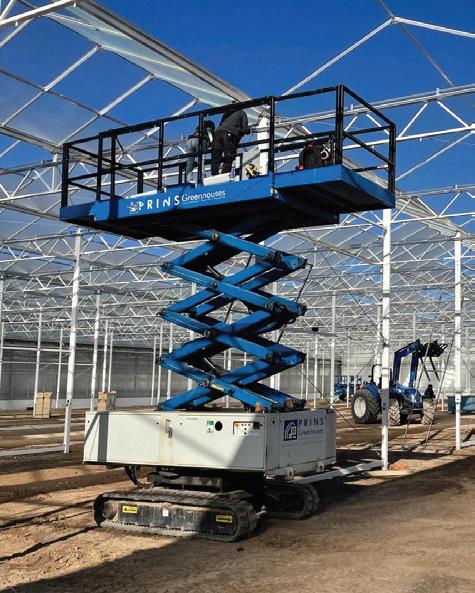
From crop innovation and scientific research, to retail growth and team leadership, this year’s group of honourees are helping shape the future of Canadian greenhouse horticulture. Starting on Page 8, read up on how this year’s Top 4 are driving innovation, strengthening their respective operations, and advancing the industry through research, leadership, and handson expertise. We’re thrilled to be highlighting this group of individuals and would like to thank everyone who took the time to submit a nomination. A very special shoutout goes to Paul Boers Manufacturing and Prins Greenhouses for their ongoing support and sponsorship of the Top 4 Under 40 initiative.
As we move into the longer, hotter days of summer, strategies inside the greenhouse are inevitably changing with the season. On Page 14, we get into strategies for managing climate in smaller greenhouses during the
While supplemental lighting may not be top of mind this time of year, it’s still a key greenhouse input for most of the year which is why we opted to focus on this topic in our 2026 Grower Survey. In this edition, on Page 20 building on insights from the survey, we feature a Q and A with lighting experts on how best to harness the power light. This piece will help guide decision-making for the darker months ahead.
Also in this issue, on Page 34 we get an update from Vineland researchers on disinfecting products showing promise in the battle against Tomato Brown Rugose Fruit Virus (ToBRFV) in greenhouses and our Inside View columnist, Gary Jones, rounds out this issue with his reflections on the recent ACT Summit in BC and what the future of industry recruitment looks like.
As always, reach out with any questions, concerns or news tips at akouniakis@annexbusinessmedia.com.




NEW Dollarita™ Rose Violet Fuchsia blooms 1-2 weeks earlier than other genetics, so you can be first at retail to get those early sales!

Québec greenhouse producer Savoura has announced plans to acquire most of the assets of Productions Horticoles Demers (Demers) through a courtsupervised sale process.
“This agreement aligns with our vision for sustainable growth and food autonomy,” said Savoura president, Luc Prévost, in press release. “We are committed to preserving and growing the expertise developed by the teams at Productions Horticoles Demers, in a spirit of respect, collaboration and excellence.”
In early January, Lévis-headquartered Demers filed a
notice of intention to make a proposal to its creditors under the Bankruptcy and Insolvency Act (BIA), initiating a court-supervised restructuring process.
While the Savoura acquisition remains subject to approvals, Prévost said if green-lit, the company intends to adopt a phased approach to operational integration.
The sale would add to Savoura’s already impressive footprint in Québec, which includes more than 96 acres of greenhouse production across several regions in the province and employs more than 450 people.
(Source: Savoura)

Canada’s Spring Economic Update 2026 is sending a clear signal to commercial greenhouse growers: expand but brace for continued cost pressure.
At the centre of the update, release in late April, is the government’s confirmation of a new measure allowing immediate expensing for greenhouse buildings. The policy holds potential to accelerate investment in domestic food production and is paired with broader
food security initiatives, including funding to help agri-food companies scale capacity and a forthcoming national food strategy.
Together, the measures position greenhouse operations as critical infrastructure in Canada’s push for year-round, local supply. In a statement from Fruit and Vegetable Growers of Canada (FVGC), the update was touted for ‘applying a food lens to federal regulatory decision making.’
The House of Commons Standing Committee on Agriculture and Agri-Food has tabled a report urging the federal government to pause and reverse planned closures of several Agriculture and Agri-Food Canada (AAFC) research centres and experimental farms.
The report follows a four-meeting study examining the impact of the cuts. Witnesses warned the closures could disrupt long-term research tied to soil health, forage crops, seed development, cattle production and climate resilience.
It includes 20 recommendations, calling on Ottawa to review the financial and scientific impacts of the closures, protect regional research programs and preserve scientific expertise.(Source: House of Commons Standing Committee on Agriculture and Agri-Food)
However, the outlook is far from risk-free.
Rising global energy prices, driven by geopolitical instability, are expected to keep heating and electricity costs elevated, a key concern for greenhouse operators.
While the federal government has introduced temporary fuel tax relief, longerterm energy affordability remains uncertain.
Meanwhile, With CUSMA up for renewal this July, 85 per cent of
Canadian exports to the U.S. remain tariff-free. The federal government said it is working to renew the agreement and eliminate outstanding U.S. sectoral tariffs to ensure greater trade certainty with North American partners.
For growers, the message is clear: policy is aligning behind expansion, but profitability will depend on managing volatility in the years ahead. (Source: FVGC, Government of Canada)
Number of employees in the agriculture sector, 2024 (Statistics Canada, May 2026)
There were 280,991 employees in the agriculture sector in 2024.
Almost half of all agricultural workers were employed in horticulture industries in 2024, led by greenhouse, nursery and floriculture production (+1.6% to 64,682).



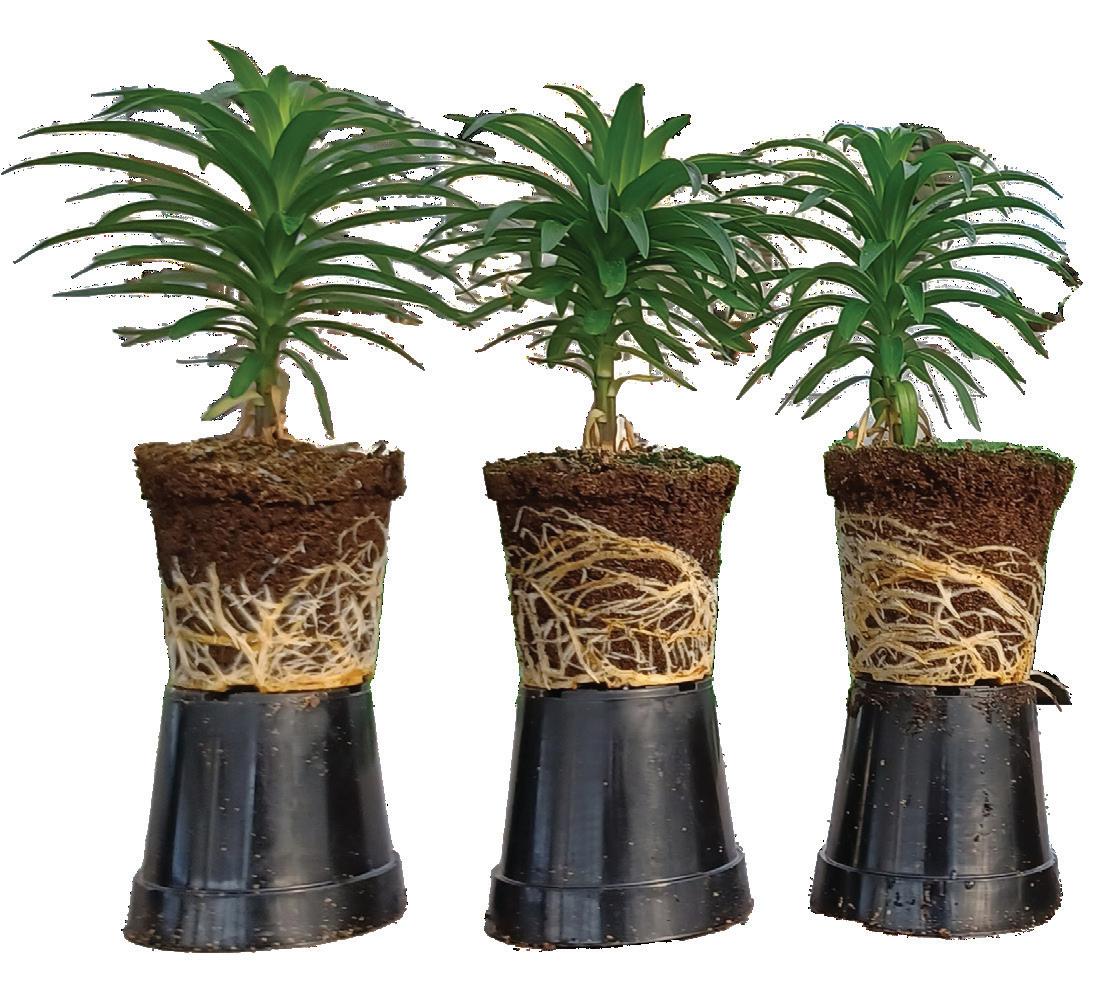
“I’ve
now switched 100% of greenhouse operations to Black Bear®, and it has made a real difference in the uniformity and overall performance of the plants.”
– Jason Powell, Powell Plants


Cultivate ’26?
Meet four young leaders bringing fresh ideas, resilience and innovation to Canada’s greenhouse sector
VIKRANT DHAWAN, 36
Plant Scientist & Master Grower, Green Mountain Health Alliance, Kaleden, BC
Nominated by Salil Dhaumya and Mohyuddin Mirza
What Vikrant’s nominators had to say about him:
”Vikrant Dhawan’s commitment to the greenhouse sector extends far beyond operational excellence: he is equally dedicated to advancing industry knowledge, research, and professional development.
With more than 10 years of experience, Vikrant has authored and contributed to more than 50 research and extension articles, demonstrating his strong engagement with scientific research and knowledge dissemination.
Most recently, Vikrant has contributed technical articles to Greenhouse Canada, sharing practical insights and research-based knowledge with fellow growers and researchers across the industry. His contributions reflect a commitment to not only
ABOVE
improving his own operations but also elevating industry-wide standards.
Within the organization, Vikrant actively mentors team members, translating complex agronomic concepts into practical, actionable guidance. His efforts have significantly enhanced team capability in areas such as environmental control, irrigation management, and crop health monitoring.”
What first drew you to the greenhouse industry, and what continues to motivate you in your career today?
Growing up in Gurdaspur, a small town in Punjab, India, agriculture was not just an industry around me, it was a way of life. From an early age, I developed a deep respect for plants, cultivation, and the hard work behind producing quality crops. That curiosity eventually led me to pursue agricultural studies at Punjab Agricultural University, where I became fascinated by the
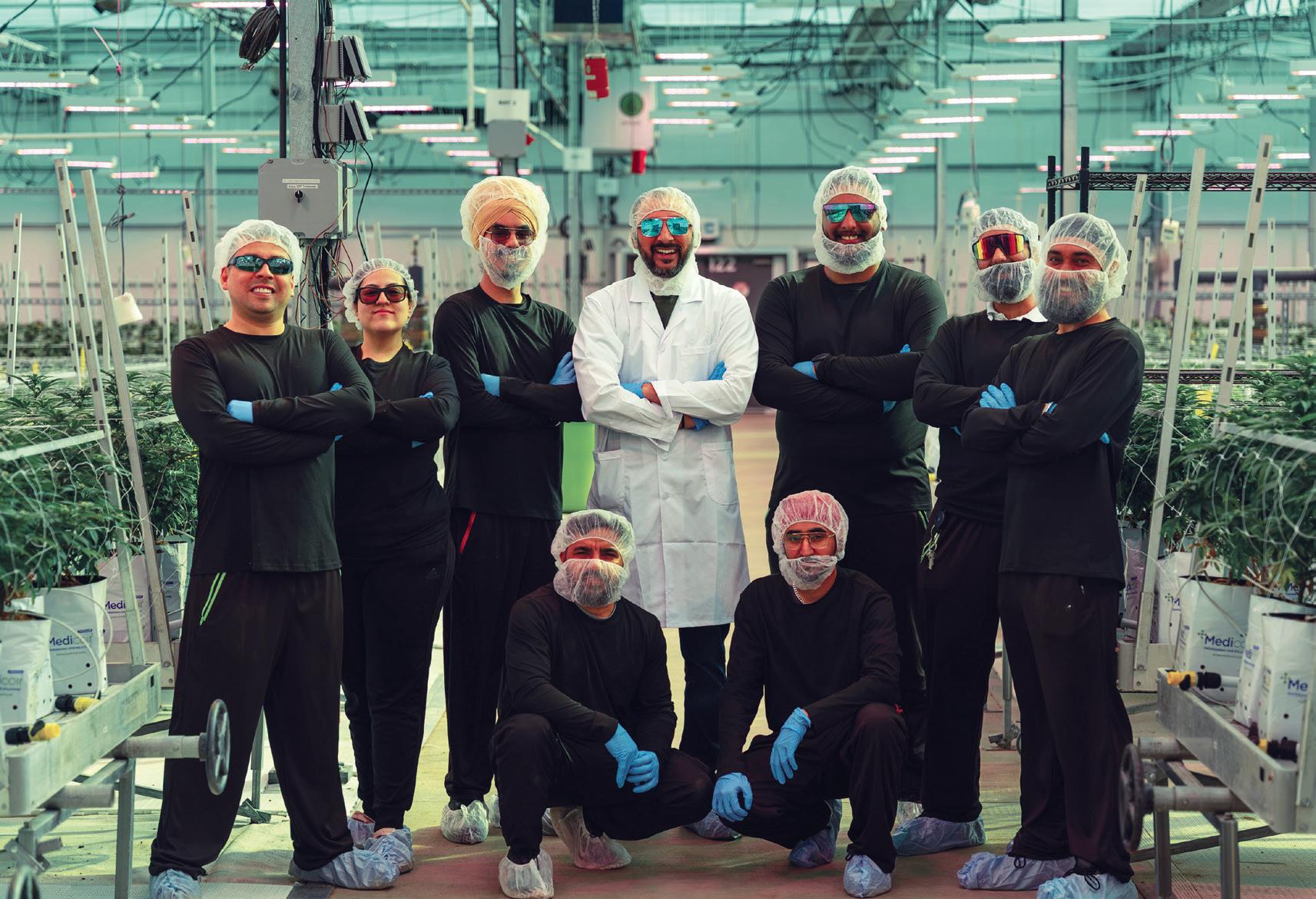
Vikrant Dhawan (Centre, in white) is master grower at Green Mountain Health Alliance in Kaleden, BC.
science behind controlled-environment agriculture and the potential of greenhouse production.
What inspired me most was the idea that by combining plant science, technology, and careful observation, we could create highly efficient and sustainable production systems. Over the last decade, that curiosity has grown into a passion for innovation, crop optimization, and operational leadership. Today, what continues to motivate me is seeing how small scientific improvements can create meaningful impact — whether it is improving plant health, increasing yield consistency, mentoring teams, or contributing knowledge back to the industry through research and collaboration.
Looking back on your career so far, is there a challenge or experience that helped shape your approach to leadership, innovation or teamwork?
One of the experiences that shaped me the most was stepping into highly controlled greenhouse operations where every decision could directly impact crop quality, production efficiency, and team performance. Early on, I realized that greenhouse cultivation is not only about growing plants, it is about continuously adapting, solving problems, and working together under pressure.
At Green Mountain Health Alliance, we faced challenges ranging from improving propagation success and optimizing environmental conditions to managing pest pressures and increasing production consistency. Some of the biggest breakthroughs came through patience, teamwork, and careful observation rather than quick solutions.
Those experiences taught me that leadership is not about having all the answers yourself. It is about listening to your team, encouraging collaboration, staying calm during challenges, and creating an environment where continuous improvement becomes part of the culture. Combining scientific thinking with teamwork has been one of the most valuable lessons of my career.
As someone helping shape the future of Canadian greenhouse production, what opportunities or changes are you most excited about in the years ahead?
What excites me most about the future of Canadian greenhouse production is how quickly the industry is evolving through innovation, technology, and research-driven cultivation. We are moving toward a future where data analytics, automation, precision irrigation, and environmental controls can help growers make smarter and more sustainable decisions in real time.
I am especially excited by the opportunity to combine scientific research with practical greenhouse operations to improve both crop quality and production efficiency. Even small improvements in environmental management or cultivation strategy can create a major impact when applied at scale.
I also believe one of the greatest opportunities ahead is stronger collaboration between growers, researchers, and technology providers. Sharing knowledge and learning from each other will continue to push the industry forward. For me, being part of an industry that constantly challenges you to innovate, adapt, and improve is what makes greenhouse production so rewarding and inspiring every day.
Since 1963 we have been providing high quality insurance protection to our clients from coast to coast. Experienced, local service is available through our national network of offices.
For a quality product, local service and very competitive pricing give us a call today.
HUB International Ontario 24 Seacliff Drive East, Unit 100 Leamington, ON N8HOC2 (800)463-4700
hubinternational.com
HEEMAN, 28
Hardgoods Manager, Heeman’s Thorndale, ON
What Bridget’s nominator had to say about her:
“Bridget Heeman is a standout leader in the Canadian greenhouse and horticulture industry, and she has earned that distinction entirely on merit.
At Heeman’s, the numbers speak for themselves. The categories Bridget buys for have grown significantly since 2019. Bulbs are up 403 per cent. Seeds are up 344 per cent. Pottery is up 117 per cent. Plant Solution is up 128 per cent. Across all her categories combined, annual sales have grown from roughly $1.58 million to over $2.5 million. Hardgoods is now the second largest revenue category at Heeman’s, behind only homegrown annuals, and her buying decisions, sourced from international markets and informed by constant industry research, directly shape what guests find when they walk through the door.
At every level, Bridget’s work makes things better for the people around her, whether that is a guest finding the perfect pot, a member garden centre landing a sharp price, a colleague feeling valued at work, or a small town putting on a great fair.
Beyond Heeman’s, the broader industry has taken notice. The Garden Centre Group Co-operative, a national buying cooperative, has trusted Bridget to serve as Vice Chair of their Pottery Committee, negotiating purchasing programs that benefit member garden centres across Canada.”
In Bridget’s own words:
What first drew you to the greenhouse industry, and what continues to motivate you in your career today?
Some of my earliest memories are from our family greenhouse. Long weekends and school holidays were spent sticking cuttings, collecting shopping carts, and joining coffee breaks with three generations of Heeman’s and a team that felt like family. I loved seeing guests walk into the garden centre each spring, taking in the beauty created through our hard work and choosing the perfect plants for their gardens. Being part of a team that brings that kind of joy and inspiration to people is what first drew me to the greenhouse industry — and what continues to motivate me every day.
Looking back on your career so far, is there a challenge or experience that helped shape your approach to leadership, innovation or teamwork?
Returning to the family business during the first COVID lockdown was an experience that deeply shaped my approach to leadership, innovation, and teamwork. Longstanding layouts, processes, and team structures that had served us well for years suddenly had to be reimagined almost overnight. It taught me the importance of adaptability, collaboration, and being willing to step in wherever needed to keep moving forward.
At the same time, I was introduced to purchasing during a period of unprecedented demand and highly inconsistent supply chains. I had to quickly learn how to anticipate rapidly changing customer buying habits while sourcing fresh and exciting products that could actually make it to our shelves. That challenge pushed me to look beyond our traditional partnerships, think creatively, and build new supplier relationships — all while staying true to our roots of quality and value. It was a demanding time, but it reinforced the importance of staying flexible, proactive, and team-focused in the face of uncertainty

Bridget Heeman is the hardgoods manager at Heeman’s in Thorndale, ON.
As someone helping shape the future of Canadian greenhouse production, what opportunities or changes are you most excited about in the years ahead?
I’m excited by the opportunity to continue evolving the greenhouse industry while staying grounded in the values that have always made it special — quality products, strong relationships, and creating experiences that bring people joy. Over the past several years, consumer interest in gardening and outdoor living has grown significantly, and I think there’s a real opportunity to keep inspiring both new and experienced gardeners in fresh, creative ways.
I’m especially excited by the development of new plant varieties and products that help solve gardeners’ challenges in more sustainable ways, such as improved drought tolerance and disease resistance. Innovations like these not only make gardening more successful and accessible for customers, but also help support a more sustainable future for our industry.
I’m also excited by how innovation continues to shape greenhouse production and retail, from more efficient growing methods to stronger supply chain partnerships and improved customer experiences. At the same time, I think there’s an important opportunity to continue building adaptable, collaborative teams while staying true to the traditions and values that built our industry in the first place.
MANUEL LÓPEZ GARCIA, 38
Head Grower, Great Lakes Greenhouses Inc.Leamington, ON Nominated by Mauricio Ortiz
What Juan’s nominator had to say about him:
”Juan Manuel’s impact can be seen not only in production, but in the people who have grown under his leadership. I am one of those people. He helped me move forward in my career by teaching me, challenging me, and giving me opportunities to learn beyond my original role. Because of his support, I was able to develop new skills, understand the crop at a deeper level, and grow into an Assistant Grower position.
His impact goes beyond one person. He creates an environment where people feel that growth is possible. He helps build confidence,

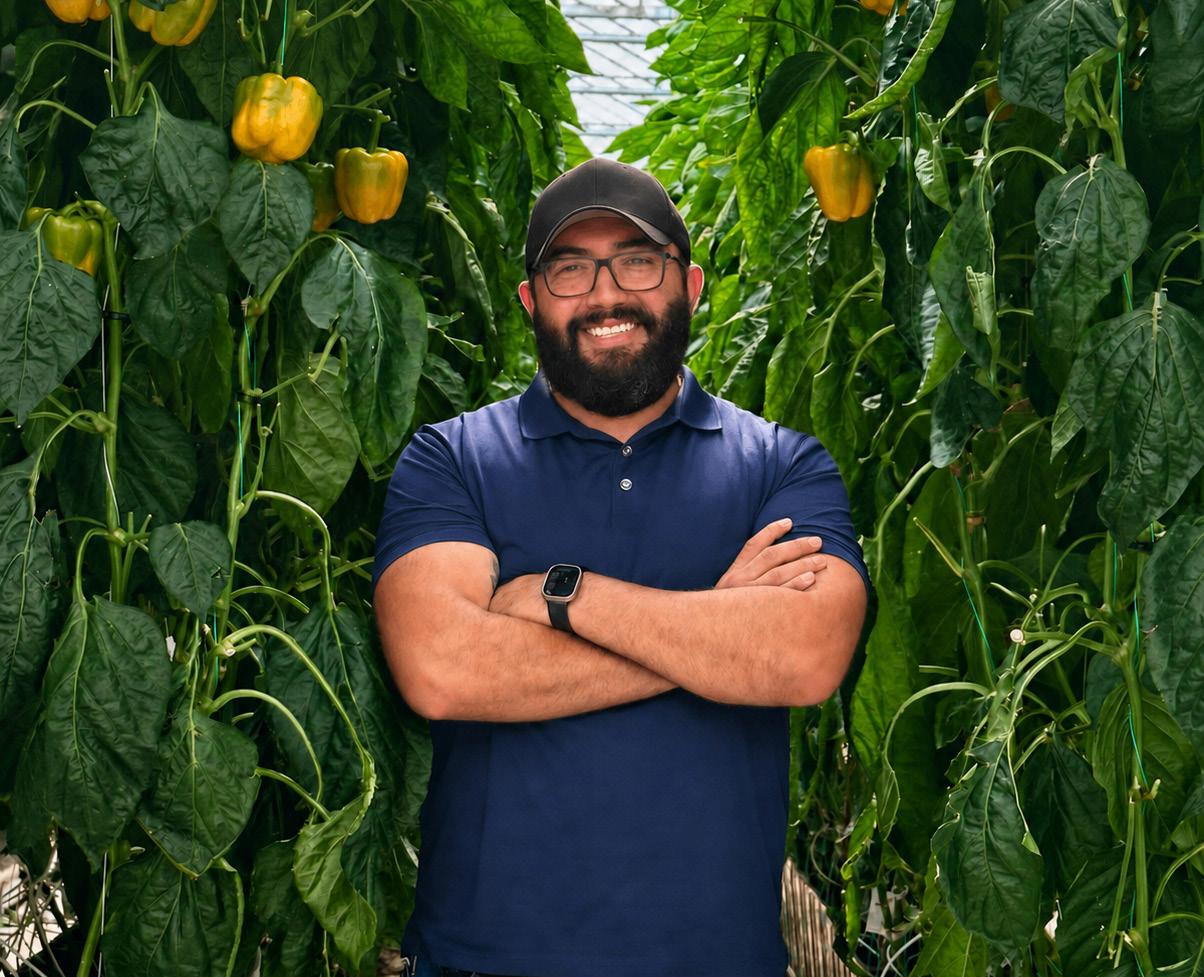
encourages learning, and makes people feel that their development matters. That has a real effect on the team, because when people are supported and taught well, they become more capable, more motivated, and more valuable to the company.
Juan also stands out because he is calm, practical, and respected. He knows how to solve problems, but he also knows how to bring people with him. He leads in a way that makes others want to do better, and that kind of influence is not something every leader has.”
In Juan’s own words:
What first drew you to the greenhouse industry, and what continues to motivate you in your career today?
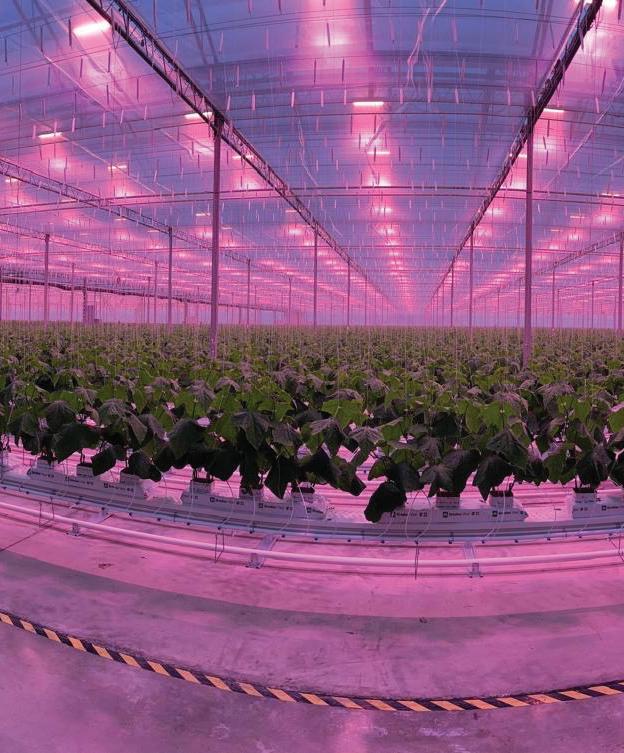
My interest in the greenhouse industry first began during a university visit to a greenhouse company. It felt massive at that time. When I stepped in and saw those big plants, large green leaves, and clusters of shiny tomatoes: that was the moment I knew this was what I wanted to do. Today, what motivates me is seeing how all the technology – LED lights, climate screens, VPD, DLI – boils down to something simple. When I walk into the greenhouse at night, lights on, crops thriving, it fascinates me as much as that first visit 20 years ago. Each evening reminds me why I started. One of the oldest lessons I learned is if the plant looks good, everything is good. That simplicity, in the midst of complexity, still fascinates me.
Looking back on your career so far, is there a challenge or experience that helped shape your approach to leadership, innovation or teamwork?
Before coming to Canada, at my previous job, we faced a major Thrips issue attacking our cucumbers. We lost a great deal of production despite using everything we knew: beneficial insects, sprays, foggers, all recommended products, and even switching all materials, everything new, to keep the environment as clean as possible. Nothing eradicated them. We realized the goal wasn’t to kill Thrips; the goal was to produce cucumbers. By shifting perspective, we saw that protecting the cucumber heads was key. The simple solution was applying garlic extract to the heads long enough to keep Thrips away, letting cucumbers grow unharmed. I learned that sometimes the simplest solution is best, and a new perspective keeps the end goal in focus.
As someone helping shape the future of Canadian greenhouse production, what opportunities or changes are you most excited about in the years ahead?
What excites me most isn’t one single thing, but the direction the greenhouse industry is heading. Since I began my career in Mexico 15 years ago, the changes have been incredible. New technologies, practices, and knowledge gained make me excited for the next 15 years. I’m also inspired by how our industry expands while becoming more connected. People from Mexico, Canada, the U.S., and across Europe, sharing ideas. Each country has its unique way of producing, and bringing these unique approaches together is what makes this industry so exciting. That global exchange makes the future even brighter.
Abbotsford, BC
Nominated by Sandra Ulewicz
What Amit’s nominator had to say about him:
“What sets Amit apart is his rare combination of hands-on expertise, humility, and visionary thinking. He was born into the industry, and that lifelong connection is evident in the way he approaches his work, with instinct, care, and deep understanding. He is present in the greenhouse every day, closely connected to both the plants and the people.
His leadership style is rooted in action rather than authority. He earns trust by working alongside his team, making tough decisions when necessary, and communicating clearly to ensure alignment and buy-in. His ability to balance big-picture strategy with day-to-day execution gives him a unique “end-to-end” perspective that benefits the entire operation, not just his department.
Amit also stands out for his resilience and willingness to take on challenges. As the company expands into new crops and production demands increase, he consistently steps up, embracing complexity rather than avoiding it. His passion remains unchanged after years in the industry, which is perhaps his most defining trait.
Ultimately, Amit is not only a highly skilled grower and leader, but he is also someone who genuinely loves what he does. That enthusiasm is reflected in the quality of his work, the strength of his team, and the respect he has earned across the industry.”
In Amit’s own words:
What first drew you to the greenhouse industry, and what continues to motivate you in your career today?
The first thing that drew me to the greenhouse industry was my father’s success in it. He really paved the road for me, and growing up around the greenhouses made farming feel like it was in my blood. Some of the first steps I took were in our first greenhouse that is 30 years old I guess you could say I never had much of a chance to escape it (and never wanted to). What continues to motivate me today and makes me proud is knowing that we grow nutritious food that people eat every day to support their health and well-being. On top of that, I genuinely enjoy the challenges of growing different crops every season and the new technology that comes out and teaches you something new. The art of greenhouse growing is always changing and never gets boring.
Looking back on your career so far, is there a challenge or experience that helped shape your approach to leadership, innovation or teamwork?

ABOVE
Looking back on my career so far, one experience that really shaped my approach to leadership and teamwork were the challenges our company faced around 2009. At the time, my father was carrying an incredible amount of responsibility, handling accounting, maintenance, growing the crops and acting as CEO. My two brothers and I could see how much pressure he was under, and it became clear that if the company was going to succeed, we all needed to step up and support him. I believe that if our family didn’t unite and come together then, that we would not be here today.
That experience taught me the importance of teamwork and resilience and that no successful operation is built by one person alone. Today, seeing how far the company has come makes those difficult years meaningful because they helped shape the way we work together as a family and as a team.
As someone helping shape the future of Canadian greenhouse production, what opportunities or changes are you most excited about in the years ahead?
One of the things I’m most excited about is the advancement of LED lighting technology and how it is changing the way we grow produce here in British Columbia. LED lighting is helping growers produce high quality vegetables more efficiently and more consistently throughout the year, even during our darker winter months.
I think consumers are becoming more aware of where their food is grown, and there’s something special about being able to grow fresh, local produce close to home instead of relying heavily on imports. Supporting local agriculture means fresher food, stronger communities, and greater food security for Canada. “Buy B.C., baby” might sound funny, but there’s real pride behind it. I’m excited to see Canadian greenhouse growers continue pushing innovation forward while supplying healthy food year-round.
Congratulations to the 2026 crop of Top 4 Under 40 honourees and thank-you for your hard work and dedication to the industry. For to those who took the time to nominate, we are grateful for your participation in this initiative and for shining a light on the sector’s rising stars. To our Top 4 Under 40 sponsors, Paul Boers Manufacturing and Prins Greenhouses, thank-you for your ongoing support.
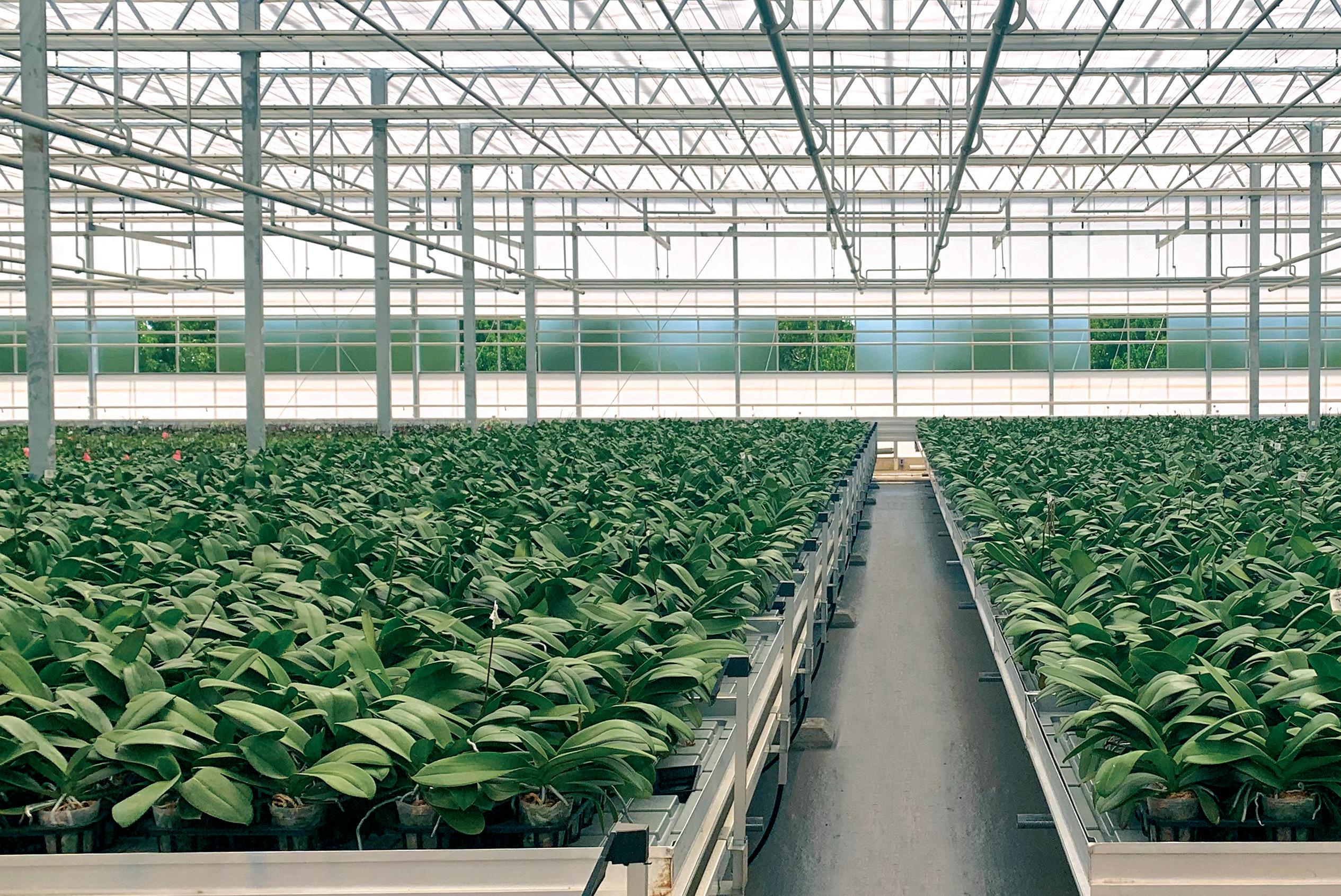
Key to managing summer production is stabilizing VPD, airflow, irrigation timing and root zone conditions
BY VIKRANT DHAWAN AND MOHYUDDIN MIRZA
It is that time of the year where greenhouse temperature can go very high above 30ºC and that can impact plant performance in many ways. If relative humidity is low, then it can scorch young leaves and stress the plants. When leaves get scorched, the plant energy balance changes towards negative side and it affects the fruit sizing, fast ripening and pollination issues.
Small greenhouse operations in Canada carry a very different kind of pressure compared to large commercial facilities. On paper, they look simpler: less area, fewer systems, fewer moving parts. Often, however, they are more difficult to manage during summer because climate control is limited, crop diversity is higher, and environmental swings are sharper.
Whether it’s greenhouse tomato production or cannabis cultivation, summer turns the greenhouse into a fastchanging biological system where plants respond within hours, not days. When temperature, humidity, and irrigation fall slightly out of sync, crops don’t slowly decline, they react immediately in yield, quality, and disease susceptibility.
This is where most production losses begin, not from major failures, but from small climate imbalances repeating over time.
‘FAST
In smaller structures, the air volume is limited. That means any change has a rapid effect on plant physiology.
A common summer pattern looks like this:
• Morning: moderate temperature, high humidity
• Midday: rapid heat rise, sharp drop in relative humidity
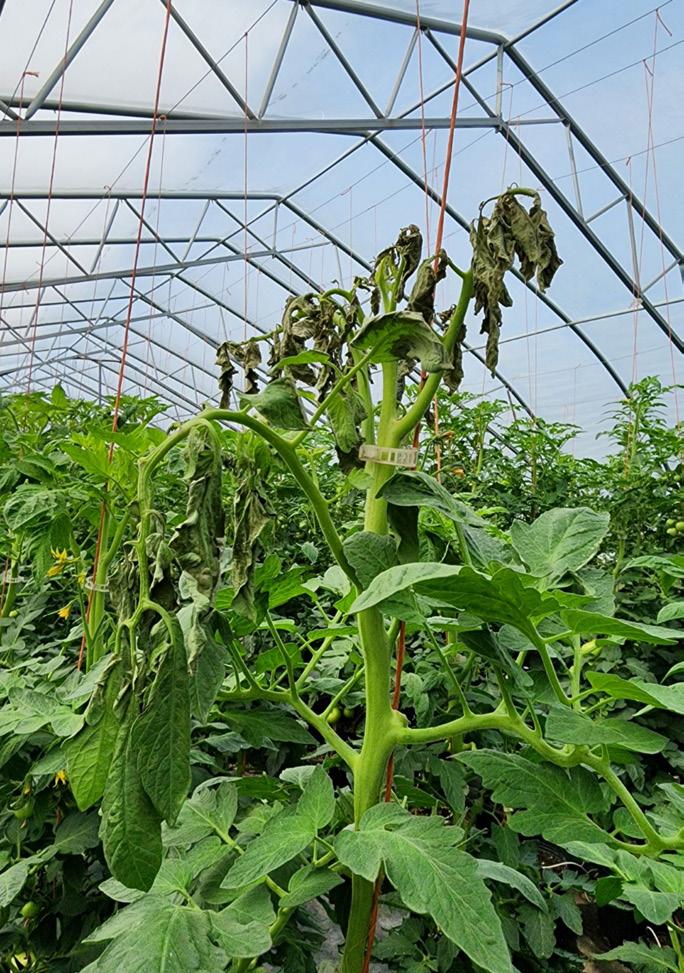
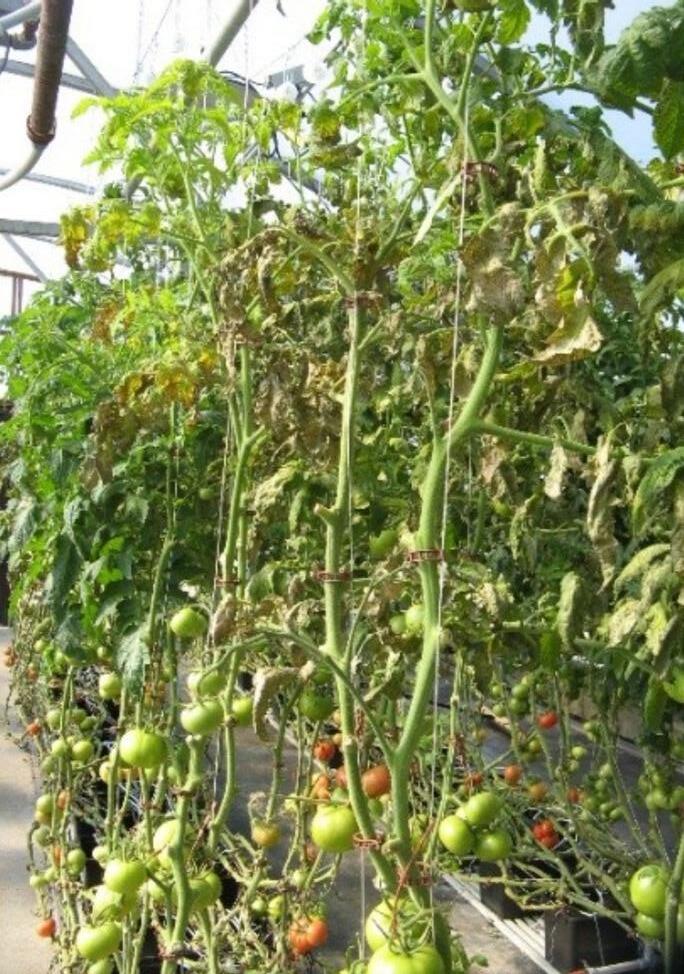
The impact of temperature above 30°C and a RH of 24 per cent, a very high Vapour Pressure Deficit (VPD).
• Afternoon: extreme VPD stress and high transpiration demand
• Evening: sudden cooling, condensation risk begins Tomato and cannabis respond very differently to this cycle, but both suffer when it becomes unstable.
Tomato tends to show reproductive issues (fruit set, blossom disorders), while cannabis expresses stress through canopy irregularity, reduced resin consistency, and root zone sensitivity.
Temperature alone is not the main issue in summer greenhouse production. The real problem is how temperature interacts
with humidity to create fluctuating vapour pressure deficit (VPD).
When VPD rises too high:
• Plants lose water faster than roots can supply
• Stomata close to protect moisture balance
• Photosynthesis slows down
• Calcium movement becomes restricted
When VPD drops too low:
• Air becomes moisture saturated
• Disease pressure increases
• Transpiration slows
• Nutrient movement becomes inconsistent
In small greenhouses, VPD can swing

from optimal to stressful within an hour. That instability is what damages crops over time.
Tomatoes often respond with blossomend rot or uneven fruit development. Cannabis shows reduced uniformity and stress-related growth variation across the canopy.
Tomatoes are highly sensitive to reproductive stress. Even when vegetative growth looks acceptable, summer

conditions often reduce marketable yield. Common summer symptoms include:
• Blossom-end rot due to calcium transport failure under high VPD
• Poor fruit set when daytime temperatures exceed optimal pollen viability
• Uneven ripening caused by inconsistent carbohydrate distribution
• Weak canopy development if night temperatures remain too high
One of the most overlooked issues in small systems is using the same
temperature setting for day and night. Without a cooler night phase, respiration stays elevated, and the plant never fully resets its energy balance.
The result is smaller fruit size and reduced quality consistency over time.
Cannabis reacts differently than tomatoes. The damage is often not visible immediately in vegetative growth but becomes clear during flowering.
In summer greenhouse conditions, cannabis commonly shows:
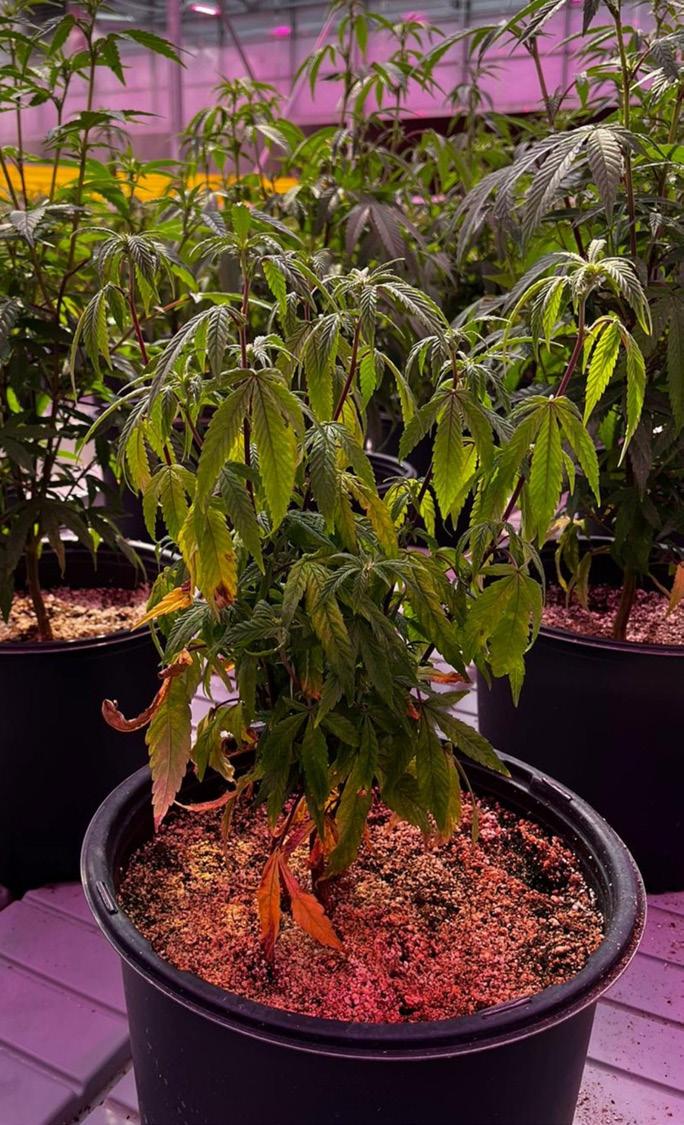
• Wilting, scorching, stunted growth, serrated leaves, leaf edge curling are common systems with tomatoes but one symptom is unique and that is hermaphroditism. In severe cases, heat stress can cause plants to develop both male and female characteristics
• Reduced terpene intensity due to heat volatility
• Inconsistent bud density across canopy zones
• Increased susceptibility to powdery mildew in microclimates
Unlike tomato, cannabis quality is highly dependent on environmental stability during flowering. Even short periods of heat and low humidity can affect aroma, resin profile, and final uniformity.
ROOT ZONE BEHAVIOUR
Above-ground symptoms are usually just the result of what is happening below the surface.
In summer:
• Root zones heat up faster than air temperature
• Oxygen levels drop in warm, saturated media
• Irrigation frequency increases but efficiency often decreases
• Salt accumulation rises due to high transpiration demand

In tomato, this leads to calcium transport issues and fruit disorders. In cannabis, it often shows up as uneven uptake, tip burn, or sudden stress reactions during peak heat.
SHIFT FROM ROUTINE TO RESPONSE-BASED FEEDING
One of the biggest adjustments required in summer is moving away from fixed irrigation schedules.
Instead, irrigation should follow plant demand signals:
ABOVE
Cannabis under extreme heat stress at maturing stage. Notice leaf drooping, reduced photosynthesis and less assimilates (food) available for use.
• High sunlight - increased irrigation frequency
• High VPD - smaller, more frequent pulses
• Peak heat hours - cautious EC management
• Late afternoon - avoid overwatering to reduce night humidity spikes In cannabis, allowing controlled dry back improves root oxygenation and encourages stronger root activity. In tomato, stable moisture prevents fruit disorders but still requires careful avoidance of saturation under heat. The key is consistency without overcorrection.
Small greenhouses rely heavily on natural ventilation. While this is necessary during summer, it often leads to CO2 dropping below ambient levels during peak venting periods.
This creates a hidden limitation:
• Plants have light and temperature, but limited carbon supply
• Photosynthesis becomes inefficient
• Growth slows even when conditions appear “optimal”




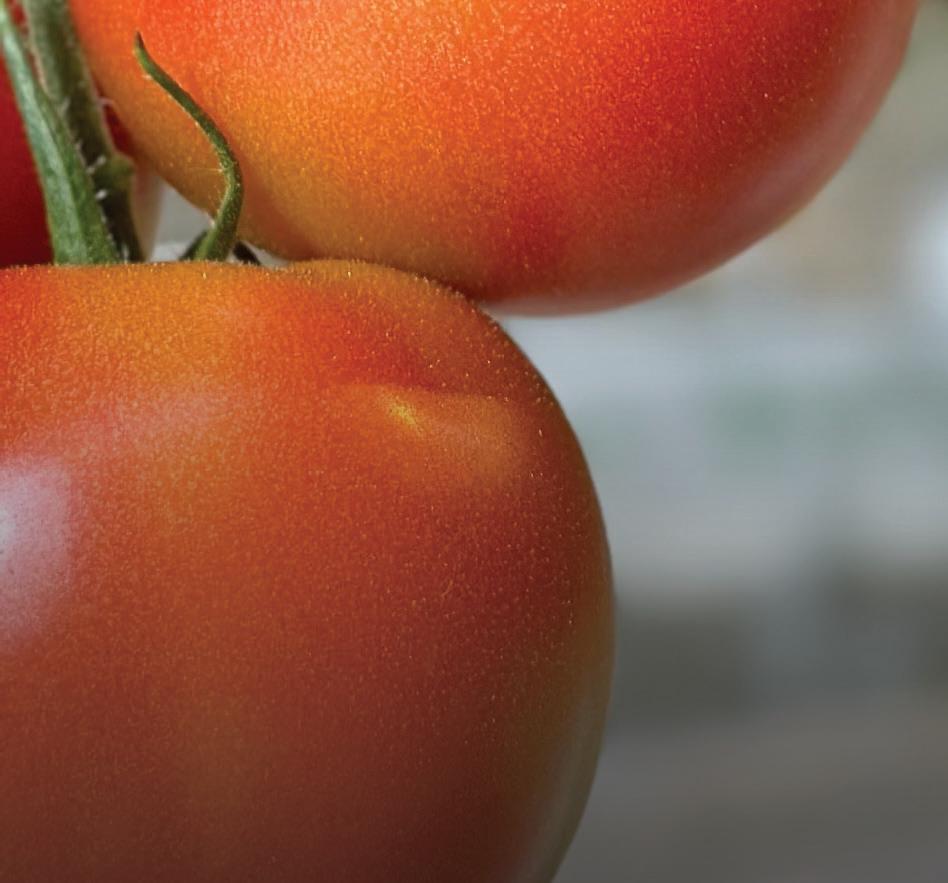

In tomato, this reduces fruit size and overall plant vigour, while in cannabis, it affects biomass formation and canopy development consistency.
Even delaying excessive venting in early morning hours can help maintain better CO2 availability during active photosynthesis periods.
Warm temperatures combined with unstable humidity create ideal conditions for pests and blight to spread through the operation.
In small greenhouse systems, common issues include:
• Spider mites in eggplant, beans, and cannabis
• Aphids in peppers and herbs
• Whiteflies in mixed cropping systems
• Botrytis in dense tomato clusters and cannabis flowers
• Powdery mildew during humidity fluctuations
One major challenge for growers is that biological control can become more challenging when climate conditions are inconsistent. Predators perform best

in stable environments, which small greenhouses often struggle to maintain in summer.
Even without major infrastructure upgrades, small improvements can significantly stabilize crop performance:
• Use shading materials or internal screens to reduce peak radiation load
• Maintain consistent airflow across canopy level, not just general ventilation
• Introduce misting during extreme VPD spikes instead of only opening vents
• Avoid large irrigation swings—smaller, frequent adjustments are more stable
• Monitor crop response daily rather than relying only on environmental readings
• Keep pest scouting consistent, especially during heat peaks
These adjustments don’t eliminate stress but they prevent it from becoming destructive.
Small greenhouse production is often underestimated because of its size. But in reality, it behaves like a highly responsive biological system where environmental changes translate into crop outcomes almost immediately.
Tomato and cannabis both reward consistency more than intensity. High light, high fertilizer, or aggressive irrigation do not improve results unless climate stability supports them.
From practical experience, the biggest improvements rarely come from major investments. They come from tightening control over small but critical factors— VPD stability, root zone behaviour, irrigation timing, and airflow consistency.
Summer doesn’t have to be a production bottleneck. In well-managed small greenhouses, it becomes a period where crop behavior is highly responsive— and where good management decisions show their impact very quickly in both yield and quality.
Vikrant Dhawan is a plant scientist and master grower at Green Mountain Health Alliance greenhouse facility in Kaleden, BC and can be reached at vdhawan@gmtn.ca.
Dr. Mohyuddin Mirza is an industry consultant in Alberta and welcomes comments at: drmirzaconsultants@gmail.com
RZ
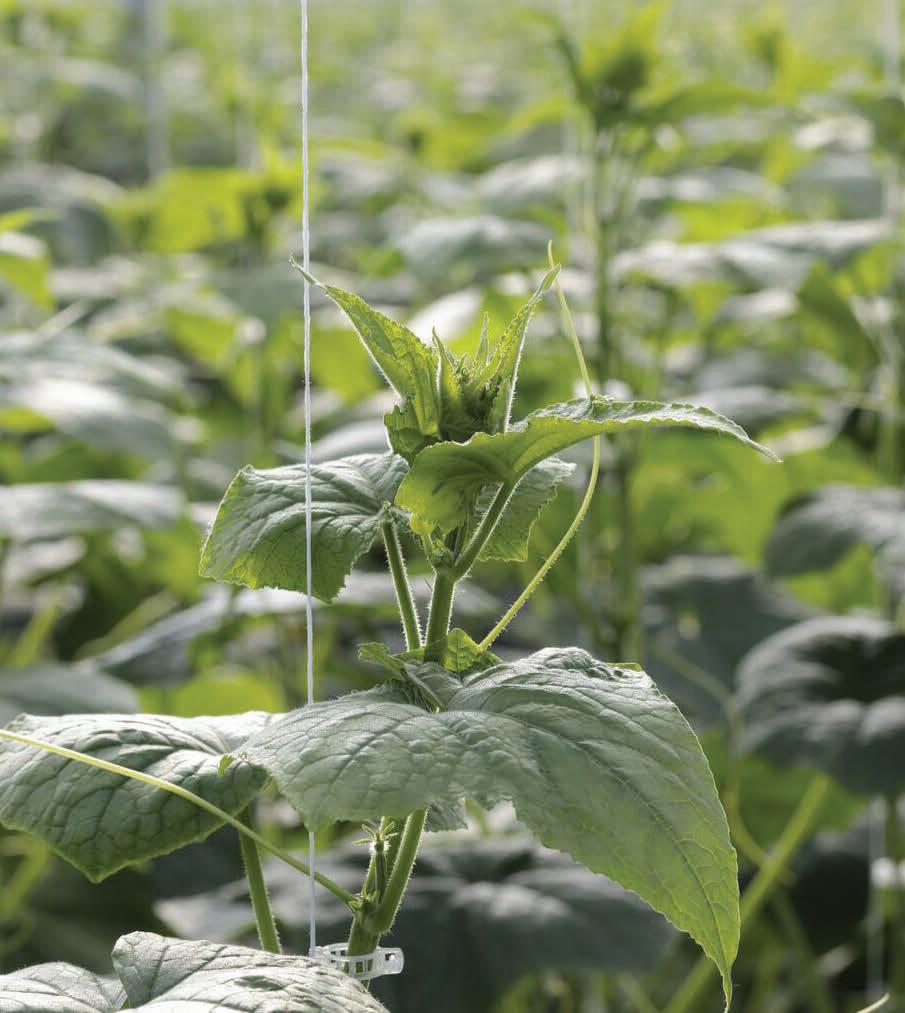
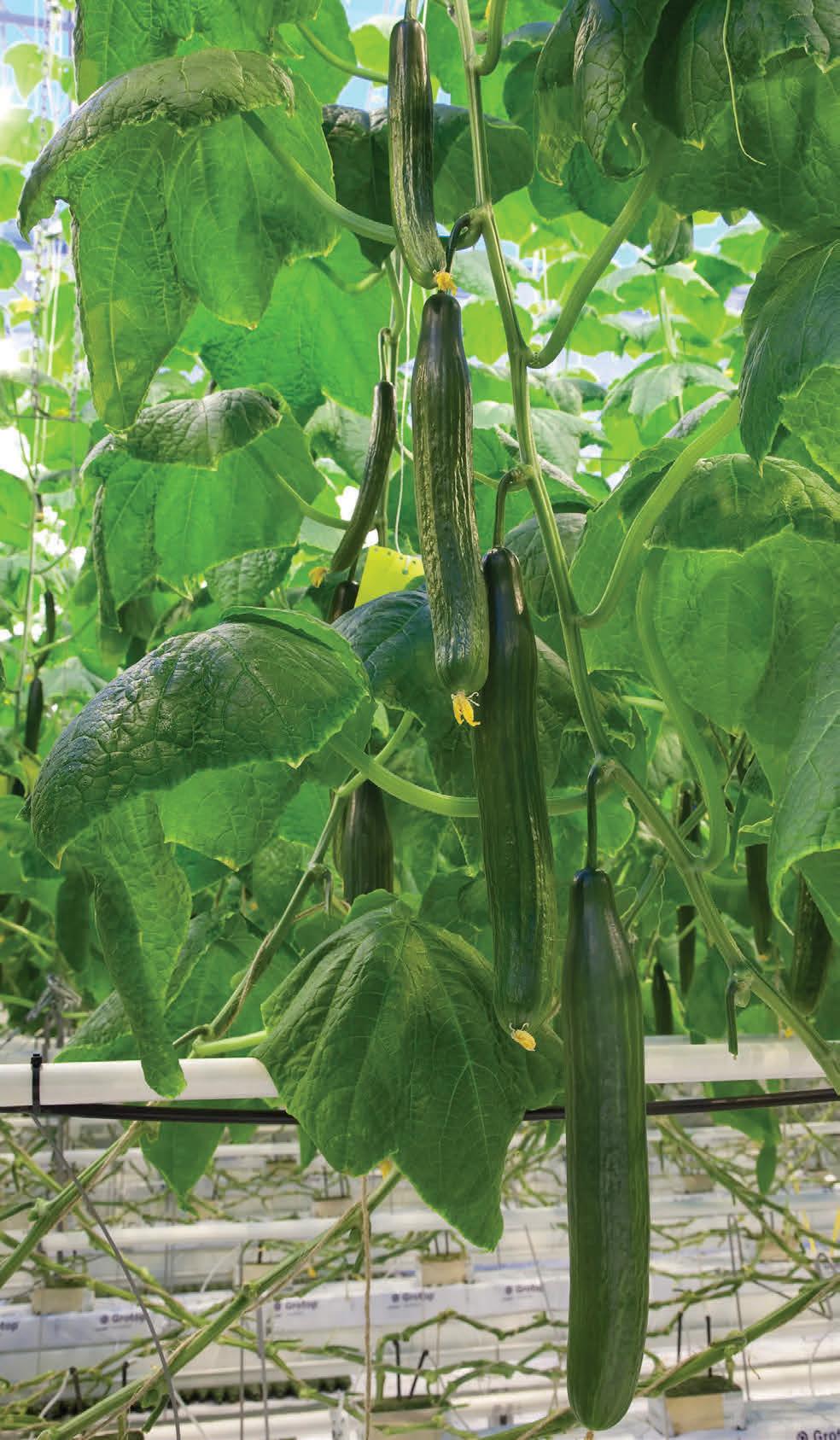
Meet Skywinder RZ , the high-performing long English cucumber variety from Rijk Zwaan. Skywinder delivers the proven summer plant type growers trust - with a fresh advantage. It combines faster leaf initiation, strong fruit setting and a large leaf area. The fruit length is a good mix of small and medium grading. These characteristics lead to higher piece potential with a North American fruit size grading.
Contact us to discover how Skywinder RZ can elevate your cucumber program!

For more information, contact: Rijk Zwaan Canada | Cucumber Crop Specialist, John DeVries | j.devries@rijkzwaan.com RZH Canada LTD | Director of Sales, Max Saad | max@rzhcanada.ca Seminova / Agrocentre Fertibec Inc. | +1 (450) 454 5155 Terralink Hoticulture Inc. | +1 (604) 864 9044

www.rijkzwaan.ca
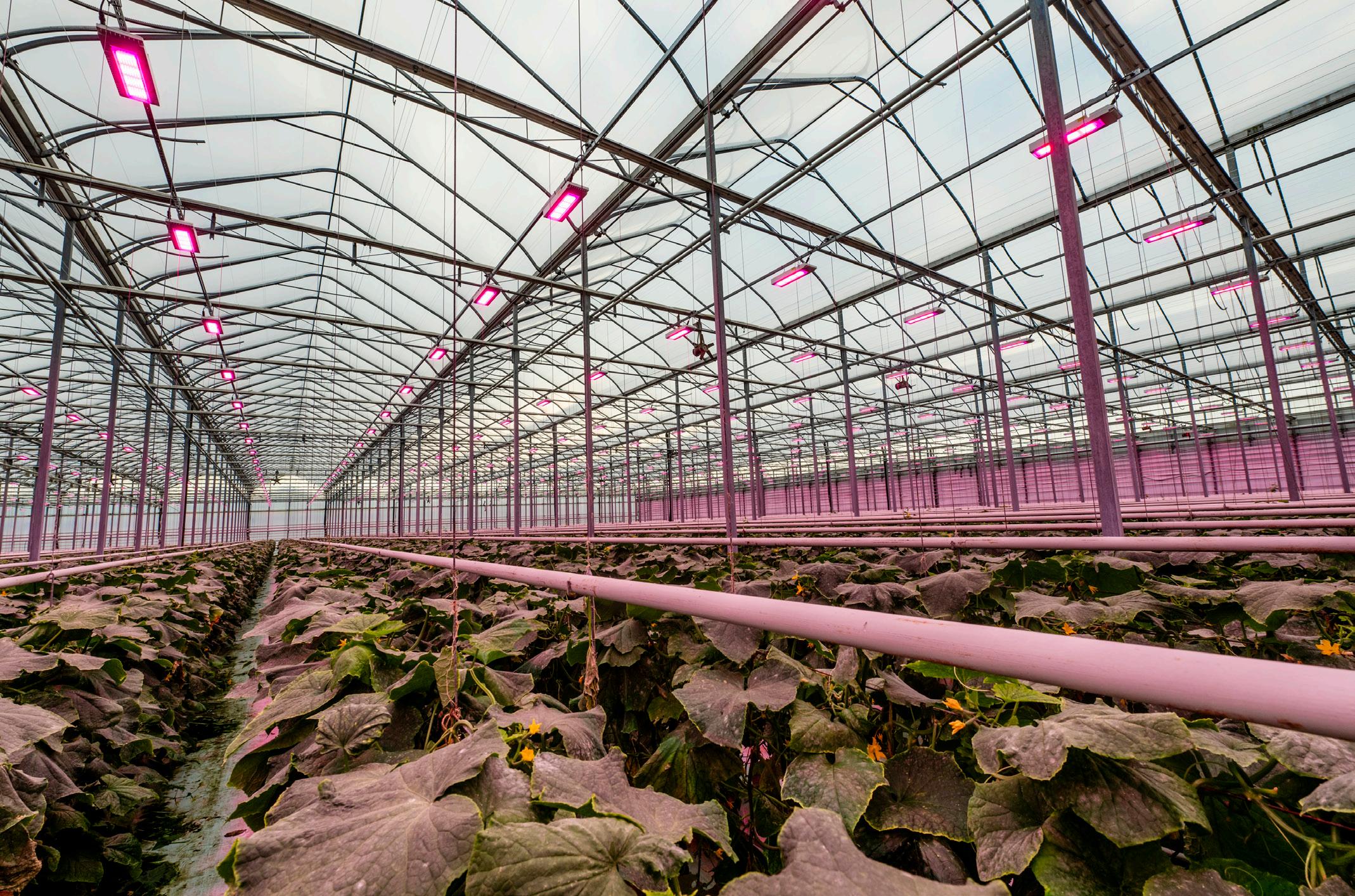
Experts unpack how growers can rethink lighting as energy costs rise and LED systems evolve
BY GREENHOUSE CANADA
Rising energy costs, shifting production strategies and rapid advances in LED technology are forcing Canada’s greenhouse growers to rethink how they approach supplemental lighting.
Based on results from the recent Greenhouse Canada grower survey, lighting is no longer viewed simply as an input to boost yield, but as a precision tool that must be carefully aligned with crop needs, climate conditions and operating costs.
In this Q&A, experts from Signify, who sponsored this initiative to learn more about how growers are using light in the greenhouse, breaks down what ‘smarter lighting’ means in practice and where growers may be leaving performance on the table.
Michael Hanan, Signify’s North America commercial leader, senior plant scientist Amos Bassi, and application engineer manager Chris Bezuyen share their insights into what’s driving inconsistencies, where the biggest gains are being
ABOVE
seen, and how growers can build more resilient lighting strategies.
Q1: In the survey, growers identified rising energy costs as one of their biggest concerns. How should growers evaluate whether supplemental lighting is still delivering a worthwhile return on investment today?
Michael Hanan: Rising energy costs is definitely shaping the conversation around supplemental lighting, but the evaluation hasn’t really changed, it’s just become more disciplined.
Growers need to ask: is the light actually adding value and delivering more consistent, higher-quality crops and lifting overall yield? Lighting drives photosynthesis, so the link between light and yield is very direct. When crops are hitting the right daily light integral (DLI), you see it show up in biomass, quality, and consistency.
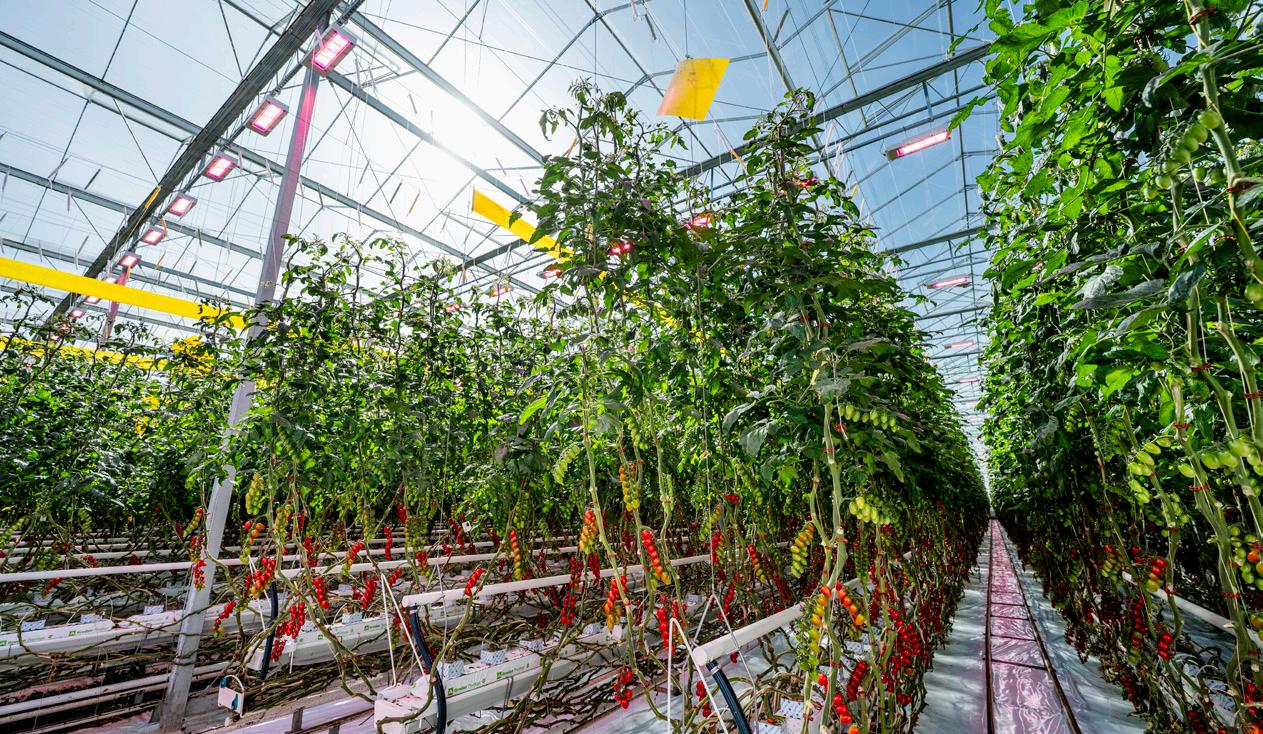
A crop basks in the glow of LEDs at Great Lakes Greenhouses in Leamington, ON. Experts suggest the key to manging system inefficiencies is ensuring you’re not adding more light than the crop needs.
Where it’s different today is the tolerance for inefficiency. It’s not just adding light: it’s making sure you’re not adding more than the crop actually needs, especially when you factor in what the sun is already giving you. That’s where energy costs can start to erode the return.
So the ROI question has become more about precision. The growers who are getting it right are the ones treating light as a managed input — actively adjusting output with energy in mind — and making sure every hour it’s running is contributing to the crop.
Q2: Survey results also suggest growers are increasingly interested in dynamic lighting strategies rather than simply adding more light. What does ‘smarter lighting’ actually look like in practice?
Chris Bezuyen: In practice, “smarter lighting” is less about adding more light and more about using what’s already there more intentionally. That usually means adjusting intensity and hours based on natural daylight, crop stage, and energy pricing, rather than running a fixed program all season. There’s also a lot of interest in far red, particularly because it can be used very efficiently when applied at specific times, such as start or end of day. But like any
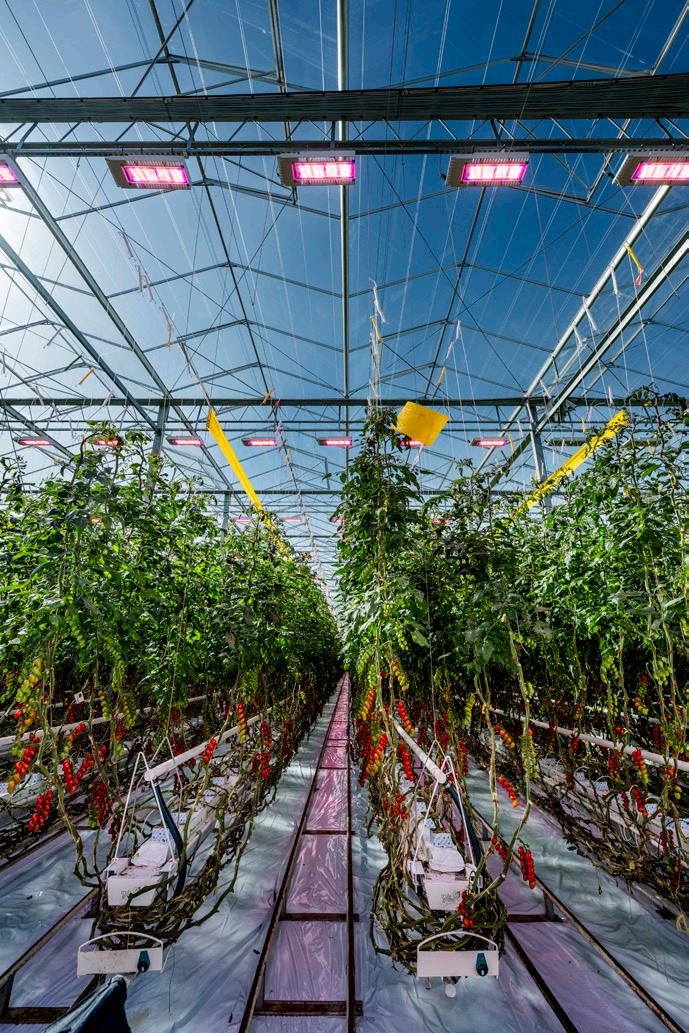
ABOVE
After years of research, crops, like tomatoes (pictured above at Truly Green in Chatham, ON) are seeing positive gains from lighting applied ‘in a way that supports clear production goals.’
advanced approach, it only makes sense when there’s a clear crop response; the key is making sure it actually delivers value for the business.
Q3: Some growers report mentioned in the survey that they experienced difficulty achieving consistent crop performance under LEDs during low-light winter months. In your experience, what factors are often overlooked?
Amos Bassi: I hear this often when an operation goes from unlit to lit
production, or when growers transition from HPS to LED, particularly with winter production. In both of these cases – unlit to lit and HPS to LED, what I’ve often seen is lighting is added or changed, but the rest of the growing strategy doesn’t evolve in proper way. Or adjustments are not made until there is a problem with the crop.
During low light winter months, plants respond very differently if temperature, humidity, irrigation, and crop load are not adjusted along with the new lighting.

Biobest helps growers build resilient cropping systems by working with nature - combining biological control, pollination, and integrated pest management (IPM) expertise to support sustainable crop outcomes.

• Pollination • Biological Control
• Monitoring & Scouting • High-tech IPM Solutions
Call your local representative today.
I see this frequently with HPS to LED transitions, where the reduction in radiant heat changes plant balance, water demand, and climate behaviour even when light levels appear comparable. I actively work with many growers to realign temperature targets, irrigation timing, and crop load so the lighting change supports plant development rather than putting stress on the crop. When the elements are brought back into balance, consistency usually improves — but it’s rarely just a lighting fix on its own.
Q4: What crops or production systems are seeing the greatest gains from advanced LED strategies right now?
MH: From our perspective, a lot of this comes from the learnings we’ve built over 20 years working with different spectral approaches across a wide range of crops. Early on, much of that learning came from static spectral outputs used in research and controlled applications, which helped establish how different crops respond to light quality, intensity and spectrum. With the introduction of our intelligent lighting
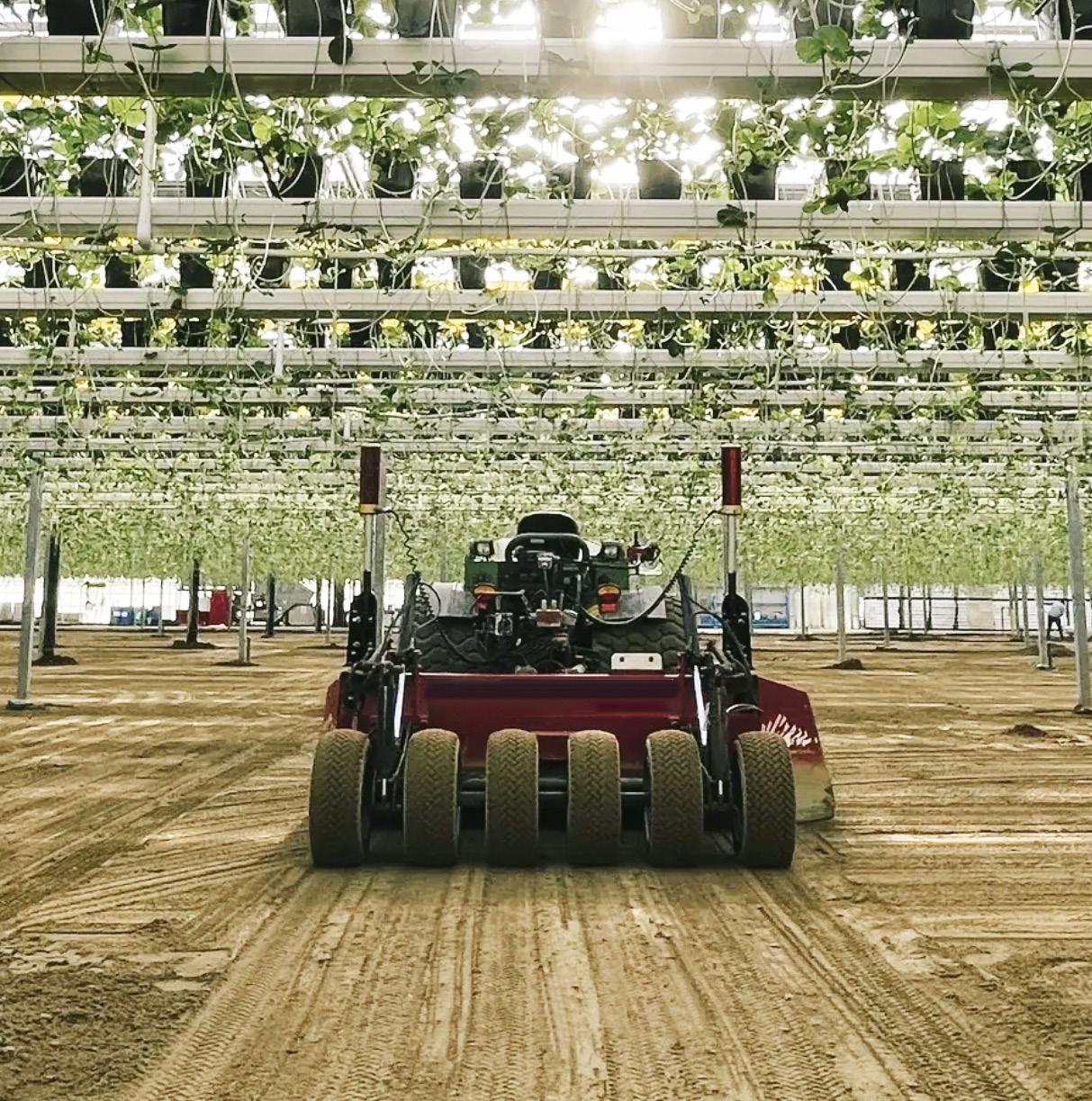
systems, we’re applying those learnings in additional research and in commercial production.
Today, we’re seeing positive results across many crop types including tomatoes, cucumbers, lettuce, ornamental young plants, and houseplants from germination through finishing, as well as more specialized mono crop applications like Gerbera and orchids. In each case, the gains don’t come from the lighting strategy itself, but from knowing where and when to apply it, whether that’s adjusting light to manage energy exposure, influencing specific crop responses, or varying light through different growth stages. The common thread is experience: understanding how a given crop responds and applying lighting in a way that supports clear production goals.
Q5: For growers hesitant to invest because technology changes so quickly, how do you advise them to future-proof their lighting strategy?
MH: When growers worry about technology changing too quickly, the first thing I try to reframe is what “future proofing” really means. It’s not about chasing the latest fixture; it’s about building a system that can adapt.
That starts with flexibility. The right solution lets you adjust light levels, timing, and strategy as energy costs, crop plans, and market demands shift. Technology will keep evolving, but a system built on control and adaptability will better hold its value. Just as important is thinking beyond the fixture. Lighting is a longterm investment, and the systems that continue to perform over time are the ones integrated into climate, energy, and overall crop strategy so they can be optimized, not replaced, as conditions change.
And finally, it comes down to who you’re working with. The growers who stay confident in their investment are backed by teams with real depth of expertise—across crops, across seasons, across generations of technology. That experience brings stability, and the confidence that the investment you make today will continue to be supported well into the future.
Thank-you to Signify for sponsoring Greenhouse Canada’s 2026 grower survey on lighting and for lending your expertise and support to this ongoing initiative to explore light management practices in Canada’s greenhouses.

Canada’s hotter, drier summers mean crop stress, higher energy demands and strained infrastructure in greenhouses
BY J LYNN FRASER
Climate change is increasing wildfire risk, with conditions that fuel fires now 36 per cent more common than they were 50 years ago (Borenstein 2026). Researchers say hotter, drier weather and lower humidity are creating more extreme fire conditions, while forecasts for a strong El Niño in 2026–27 could push temperatures even higher across Canada. (Mortillaro 2026) And while wildfires don’t pose an acute risk to most greenhouse operations, their impacts can still be far-reaching; from reduced light levels and poor air quality to labour challenges, supply disruptions and added crop stress. Smoke and ash can also affect greenhouse HVAC and ventilation systems, increasing maintenance demands and reducing efficiency during peak growing periods.
Greenhouse operations should inspect their HVAC using a HVAC technician or ventilation engineer
ABOVE
(WorkSafeBC). ‘Leaky’ greenhouses are a source of contamination. Running a greenhouse at positive pressure, advises Jeffrey Siegel, Professor, Bahen/ Tanenbaum Chair in Civil Engineering, University of Toronto, will reduce contaminants entering from outside. An airtight structure, Siegel notes, requires less energy and is less costly.
Openings, such as dampeners and doors, must be sealed or minimized during a wildfire event. Siegel recommends MERV filters of at least level 13 to remove particles (note: they won’t block gases).
Siegel acknowledges HEPA is costly but recommends them for sensitive plants. He suggests replacing them after each wildfire event and advises growers to “think ahead and have the filters at hand.”
It’s also advisable to track wildfires in Canada by consulting the Canadian Wildland Fire Information System.
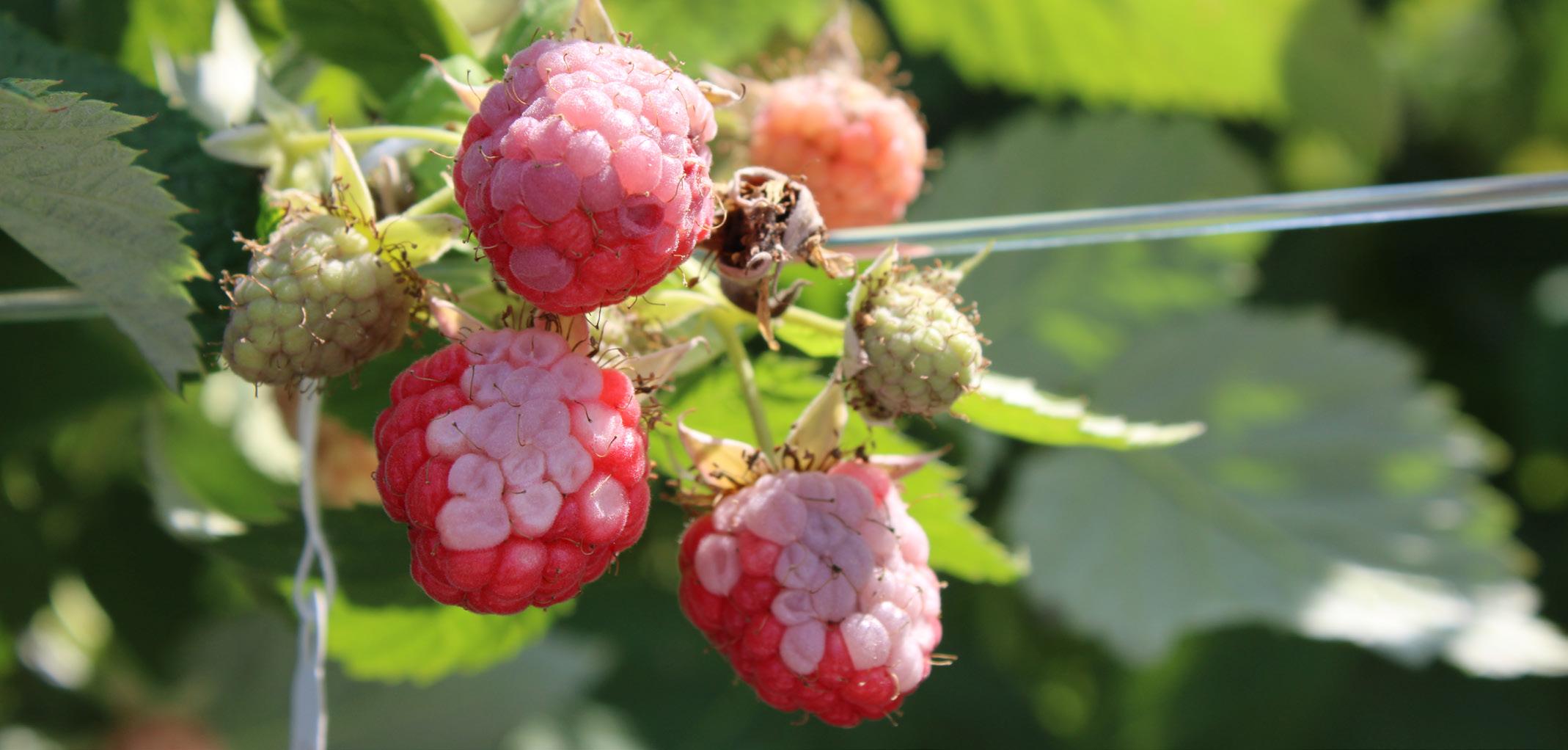
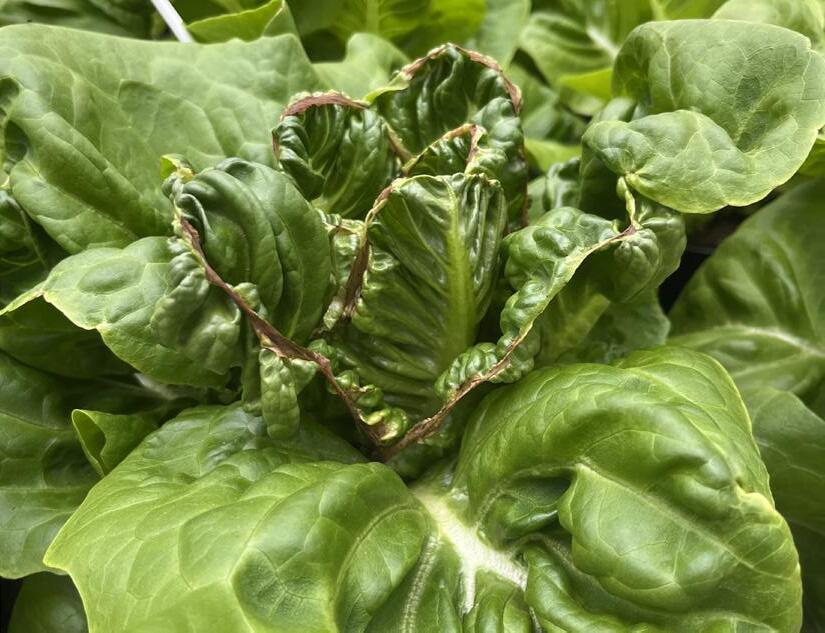
Raspberries (top) with white spots: sun scald, occurs due to high light and heatwaves. Tip burn on lettuce (lower): extreme heat can lead to high humidity which can result in tip burn.
“Smoke contains many harmful chemicals in the form of particulate matter, fine particulate matter, and ozone pollution,” said Dr. Laila Benkrima, an agronomist consultant with BC Centre for Agritech Innovation, Simon Fraser University.
These, she adds, “cause threats to human health but their effects on plants are still unclear. There are also organic pollutants such as dioxins, furans, volatile organic compounds (VOCs) and Polycyclic aromatic hydrocarbons (PAHs), and heavy metals (mercury, lead, cadmium, arsenic) that contaminate soils and can be absorbed by crops.”
Animals, plants, air, soil, water, infrastructure, and machinery are affected by wildfire smoke. The impact on these has not been broadly researched, and the same is true for how long heavy metals and pollutants remain in the environment and their effects (Community Alliance (CA) 2024).
Wildfire smoke can permeate buildings, according to property service provider, Lessen (2024), and affect filters. This causes
them to work harder, lose efficiency, and use more energy. Particulate residue can coat duct surfaces which can decrease air flow and interior air quality.
“Sensitive electronic components” may also be affected, and there may be “malfunctions” needing care, the company warns. A suggested approach to mitigation is to “shut down any outside air dampers. The automatic smoke detectors in the system will automatically shut off the unit thinking it is damaged” and “put blower fans in Auto mode instead of On mode.”
Hard surfaces need to be cleaned if they have been exposed to particulate matter. Siegel recommends wearing protective equipment and understanding how plants’ growth media may be affected. Portable air cleaners (air scrubbers) can be used to clean greenhouse air of VOCs, smoke odours, spores, and pathogens using HEPA, activated carbon, and UV-C technology.
Understanding the “likelihood of chemical bonding from contaminants in the environment” will help growers make a
choice between removing soil or growing media or remediating it (CA).
Following a smoke exposure these steps are recommended:
• Observe plants for signs of ill health;
• Testing soil before and after;
• Ensure possible sources of toxins are not moved around
• Ensure human exposure is minimized with good hygiene and protective clothing;
• More testing (CA).
“Wildfire smoke, ash, and soot present three different threats to greenhouse operations: compromising crop quality, reducing greenhouse yields, and increasing labour cost,” said Benkrima. “Working in a greenhouse during a smoke event poses significant respiratory risks to workers.”
Smoke can stunt plants because the smoke, filled with particulate matter that vary depending on the fires’ ‘fuel’, blocks sunlight (Farmtario), limiting their ability to photosynthesize. Depending on the plant, growth and yields will be decreased, and what does survive will may have less nutritional value (Botejue 2024).
“You don’t need to dispose of the plants [exposed to smoke],” said Benkrima.
26_003868_Greenhouse_Canada_JUN_JUL_CN Mod: May 4, 2026 9:36 AM Print: 05/05/26 page 1 v2.5



“Growers can wash the foliage with a gentle spray of water once the air clears to remove ash and soot buildup. This restores their ability to photosynthesize.”
In some instances, research found that photosynthesis was enhanced. When only four per cent of sunlight was affected, the smoke had a scattering effect on sunlight enabling it to “reach further down into the foliage of more dense canopies” that lead to “productivity increases” (OnFruit 2023). The origin, and thus the makeup, of smoke affects its effects. Research has shown that ethylene, found in bush smoke, aided fruit
maturation depending on the crop and the fruit’s stage of growth (OnFruit).
An extreme heat event is defined as reaching a specific threshold, as defined by a region, lasting two or more days, which is accompanied by high humidity, with relief at night (Government of Canada).
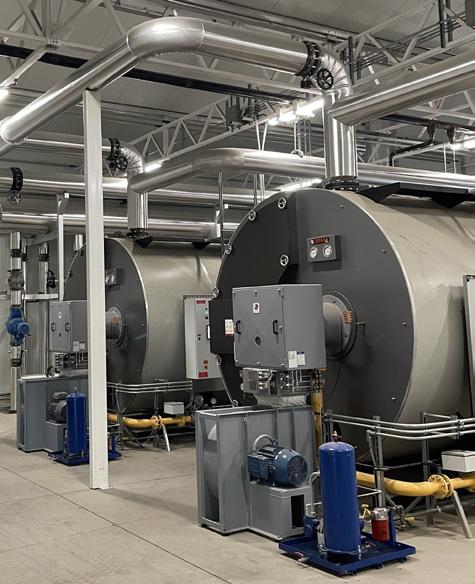
Extreme heat events are also putting added pressure on greenhouse infrastructure. Cooling, ventilation and irrigation systems are being pushed harder and for longer periods, increasing energy
use, maintenance requirements and the risk of equipment failure. When temperatures remain elevated overnight, greenhouses have less opportunity to recover, making it more difficult to maintain stable growing conditions and protect crop quality.
“Greenhouses are designed with passive vents that may not provide enough air exchange during peak summer heat and smoke fire events,” said Benkrima. “The implementation of fan and pad systems or high-pressure fogging adds significant operational costs (electricity and water) to the budget, directly impacting greenhouse profits.

“New adaptation strategies: forced air, shading systems, precision irrigation, and advanced greenhouse covering materials,” are needed to mitigate extreme heat Benkrima says.
Strategies that growers can adopt to cope with extreme heat include using shade cloths; chillers; co-ordinated ventilation, fans, and airflow to cool plants; consistent hydration, and “selecting varieties that are more tolerant of high heat,” advises Sarah Papp MSc., Research Scientist, plant production, Vineland Research and Innovation Centre.
Plants most sensitive to extreme heat are lettuce and leafy greens, according to Papp, whose master’s thesis examined the effects of extreme heat on plants and their compensatory behaviours (specifically Camelina sativa). Papp notes that the extreme heat will cause them to bolt, stems will thicken and grow tall and their leaves to become bitter. Lettuce will need to be harvested sooner, and at a lower weight. This affects yield and profit.
Strawberries and raspberries suffer issues of mushiness, lack of ripeness, and smaller size. Tomatoes, cucumbers, and peppers are more heat tolerant. Pollen production may decrease, and flowers may die or fall off. Heat waves may extend the flowering period of plants. Growth rate may be affected as will nutrient uptake. The challenge will be to select varieties with more heat tolerance.
“Heat-stressed plants,” adds Benkrima, release chemical signals (volatile organic compounds) that attract certain pests, such as Spider Mites and Thrips, which thrive in hot, dry conditions. “High temperatures can accelerate pests’ lifecycle, leading to rapid outbreaks that are difficult to control.”
In regard to today’s wildfire smoke and extreme heat, Siegel cautions growers to be aware and be prepared — “We are living in a different world.”



Part two of our CAST coverage highlights new genetics, bold colours and production-friendly intros
BY RODGER TSCHANZ
Part 2 of our 2026 California Spring Trial coverage showcases just how quickly ornamental breeding is evolving, with breeders placing equal emphasis on garden performance, production efficiency and retail impact.
Across perennial programs, flowering annuals, edibles and foliage plants, this year’s introductions highlighted stronger disease resistance, improved heat and cold tolerance, compact habits and an expanding palette of unique colours and textures.
From pollinator-friendly selections to alternatives for invasive plants and fresh takes on familiar favourites, breeders delivered no shortage of conversation starters for growers planning future programs.
DARWIN PERENNIALS
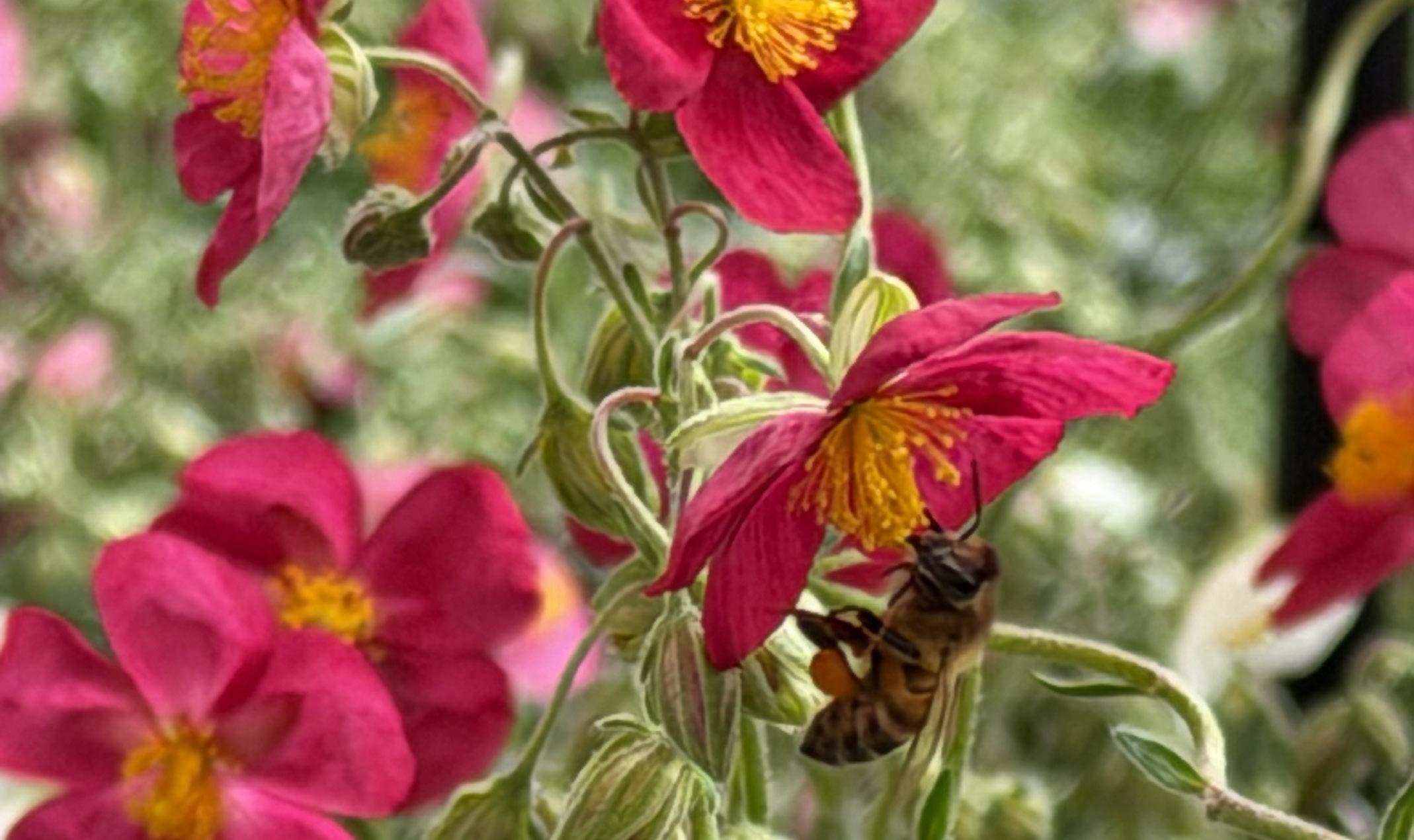
Darwin Perennials’ (DP) new Helianthemum (sun rose) Sunburst (1) series was on display at CAST. This is a great choice for early spring bloom. In the landscape, this plant performs well as a hardy, Zone 5 ground cover. It also appears to be very attractive to bee pollinators. This series is available in pink, rose and white bloom colours.
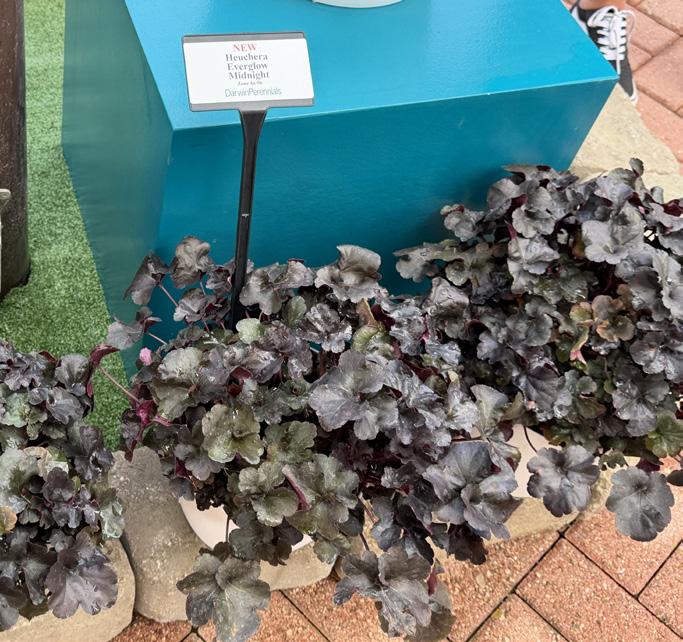
Heuchera Everglow Midnight (2) is a new
dark purple/black foliage coloured coral bells. This selection has high gloss leaves and a vigorous habit that will fill the pot faster than other black foliage sections.
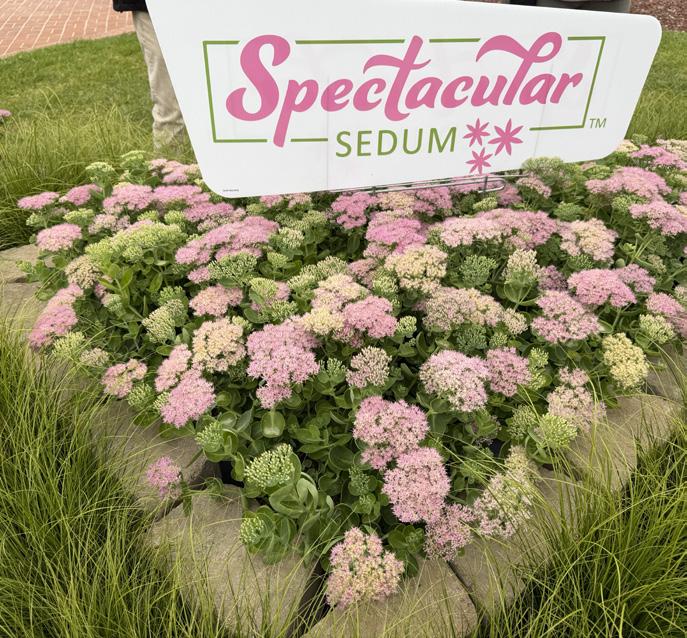
Spectacular (3) is a new Hylotelephium spectabile (sedum) from PanAmerican Seed. It is an AAS winner and gives the growth performance and uniformity typically seen with vegetative cultivars. This plant is sturdy and has less breakage than we sometimes see with this species.
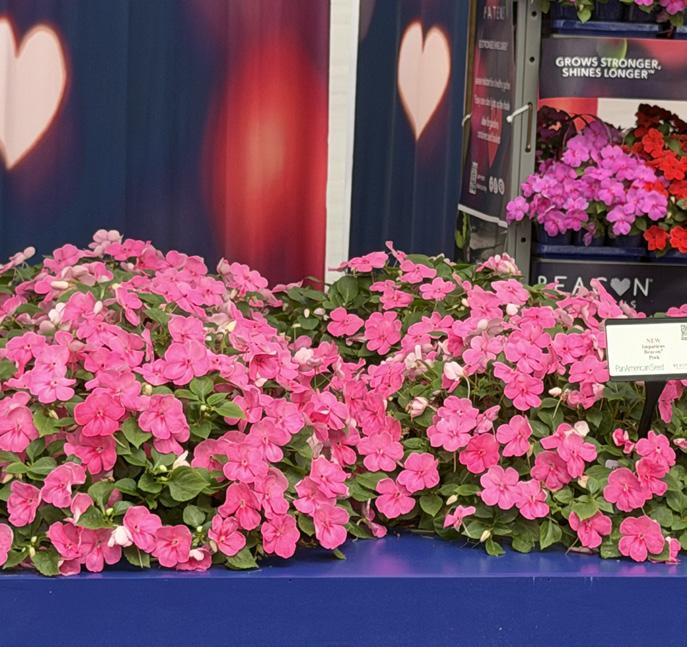
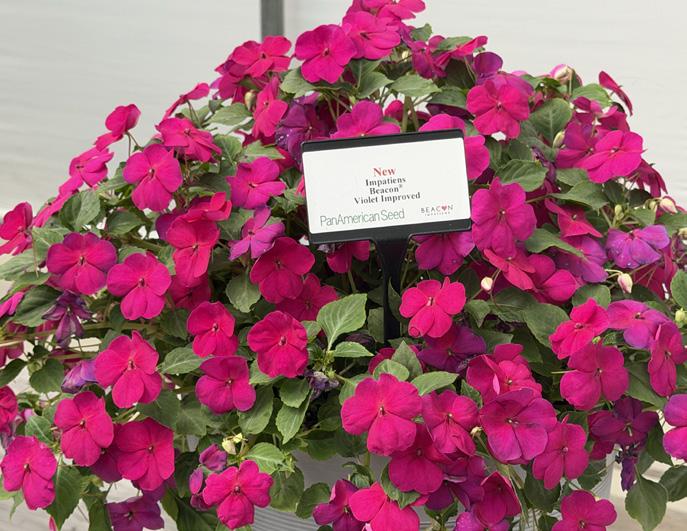
The big news with the downy mildew resistant Beacon series of impatiens this year is the release of a pink colour (4); this colour is very popular with gardeners and was sorely missed. Beacon Violet (5) has been improved and upgraded from Violet Shades to a brighter violet colour and slightly larger bloom size.
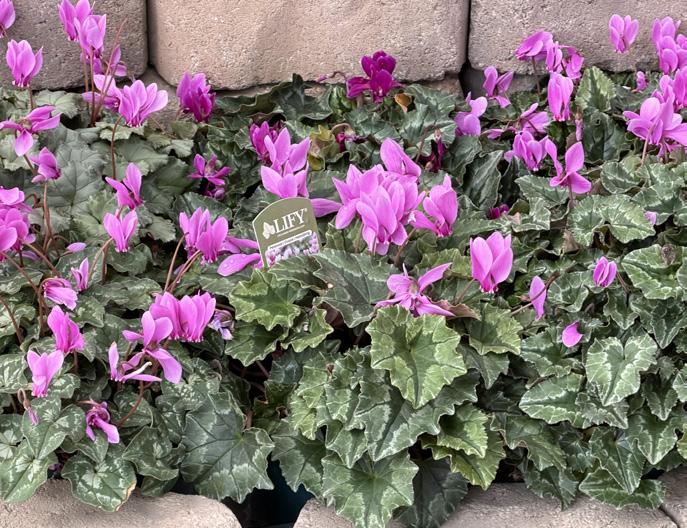
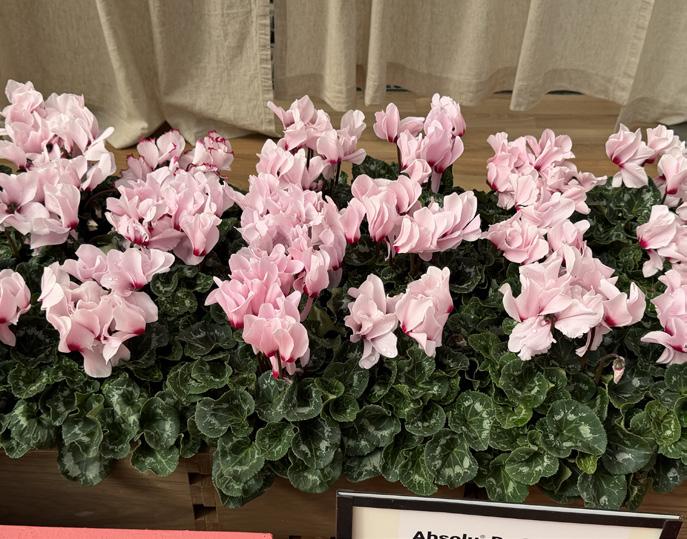
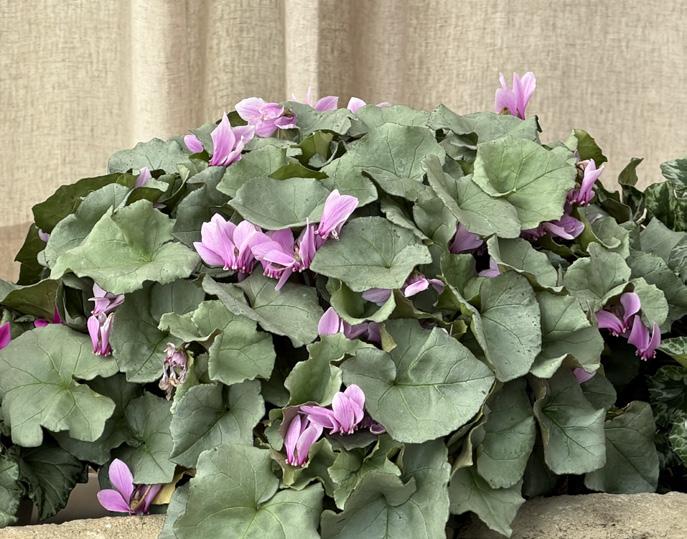
Morel has released some interesting new cyclamen cultivars this year. The fast-growing Latina Absolu (6) series is uniquely known for its fragrant bloom. Morel also has two botanical series that are hardy
to -20°C. Koumy (7) (Cyclamen coum) is available in a wide range of flower colours and foliage colour patterns. Lify (8) (Cyclamen hederifolium) has only one flower colour at the present. Both series are great for landscape applications with production suited for nine- to 10.5-cm pots.
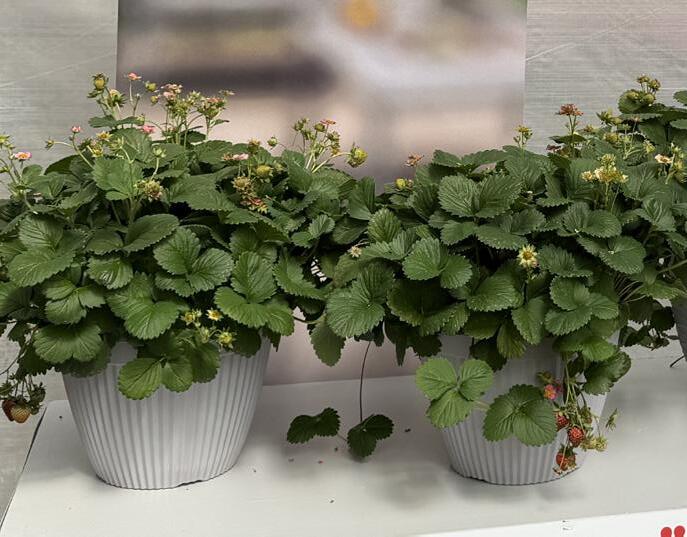
Lizzy and Queeny (9) are two new, non-trailing strawberries that have an upright habit. Both are everbearing and produce red, sweet fruit but Lizzy’s flowers are white and Queeny’s are pink. Excellent choice for table-top container uses.
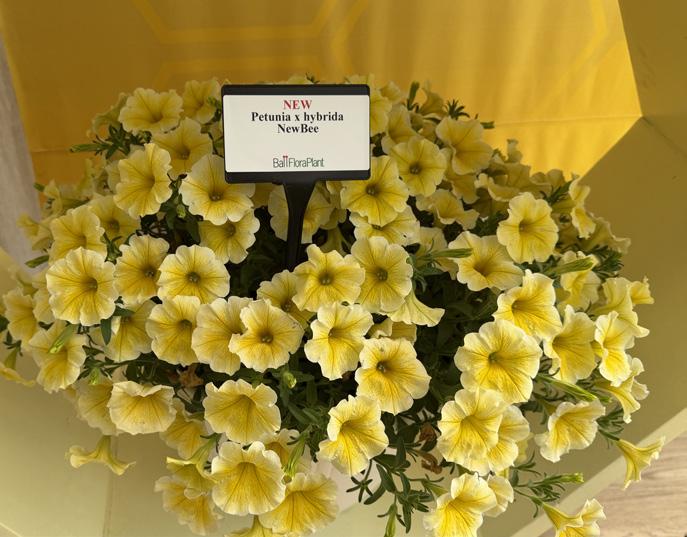
This year a cold tolerant alternative to the award-winning yellow petunia Bee’s Knees has been introduced. New Bee (10) is more compact than Bees Knees, but its mounded growth habit will be less pronounced as the season progresses; it can demonstrate more garden vigour than Bees Knees with time. The cold tolerance is the most exciting feature of this introduction with it handling 2 to 4°C during production without detrimental effect.
Sunset Glow (11) is a new standalone novelty Osteospermum. It is early to bloom with flowers that start off nearly pure yellow and transition to a reddish tint over the course of the summer.
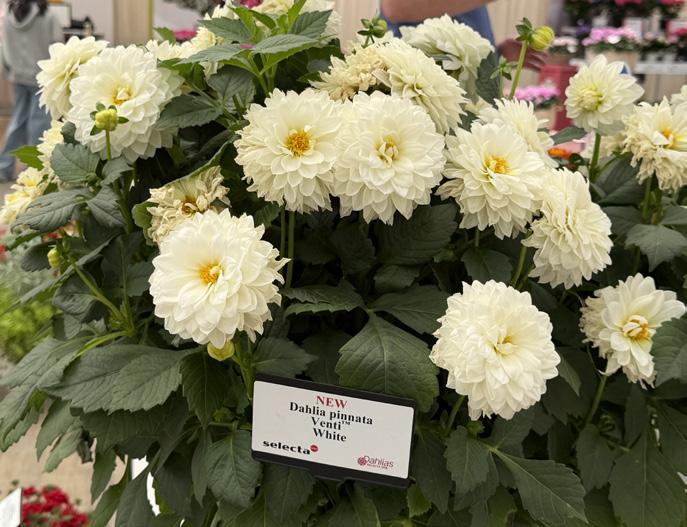
The Venti series of dahlia is vigorous with a controlled habit. This new Venti White (12) took time coming to the market because Selecta was being very critical when it came to white dahlias; this Venti White meets all of Selecta’s standards.
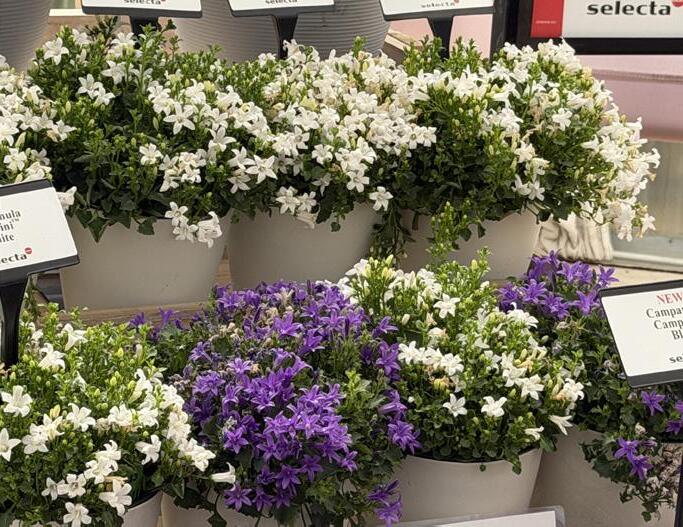
Campanula is a new breeding class for Selecta. This year we were introduced to the Campini (13) series of Campanula portenschlagiana. It is available in white and blue selections. Campini needs 15 hours of daylength to flower. It can be used as a potted plant but also has



















Plant Products supports greenhouse growers across North America with a broad portfolio of crop inputs designed to meet real world production challenges.






























Integrated solutions, backed by expert support:







• Integrated pest management (IPM) solutions designed to fit your production program.
• Crop inputs that support consistent plant health and performance.
• Knowledgeable technical and IPM representatives providing practical, on crop guidance.




landscape potential with its Zone 5 hardiness.
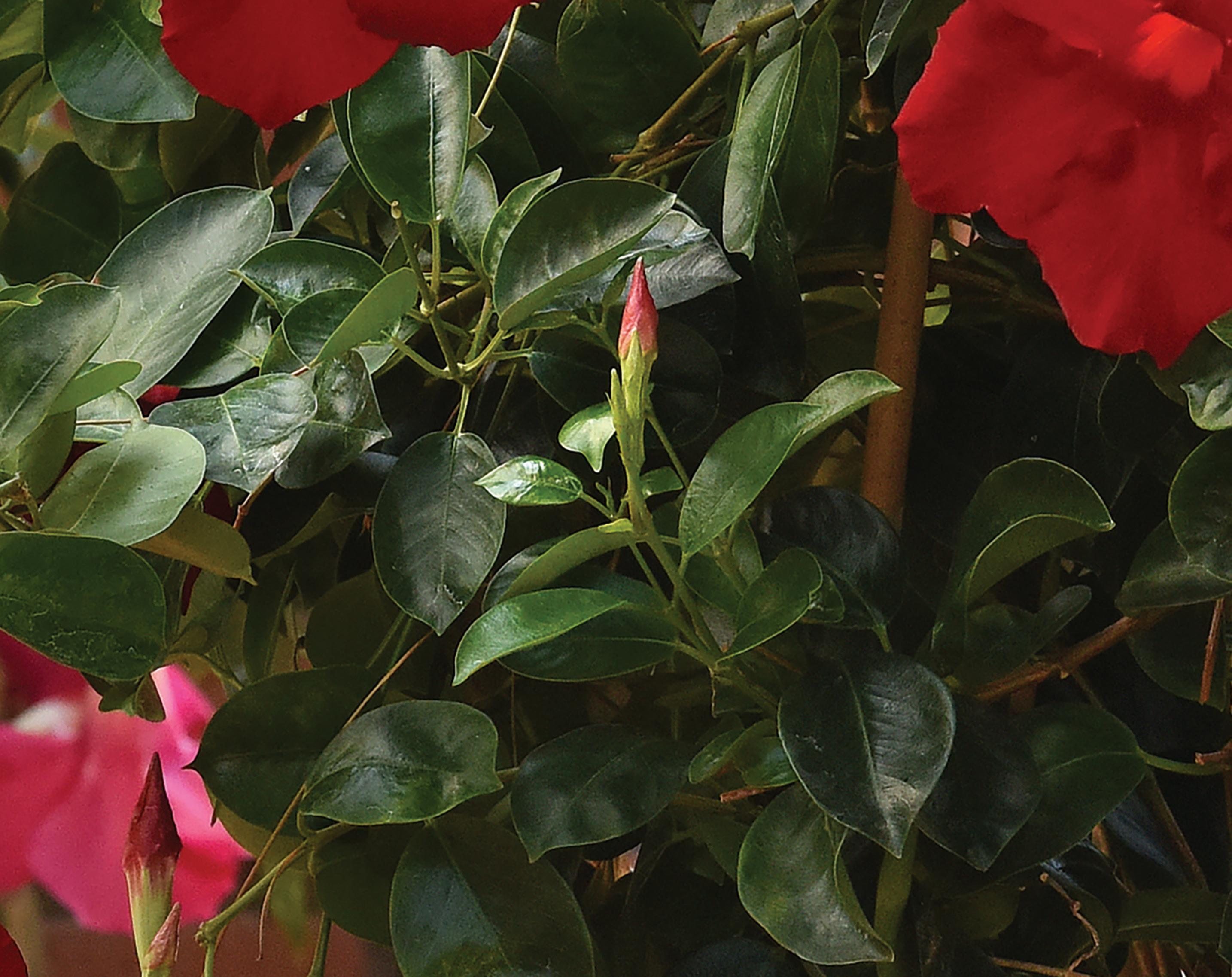
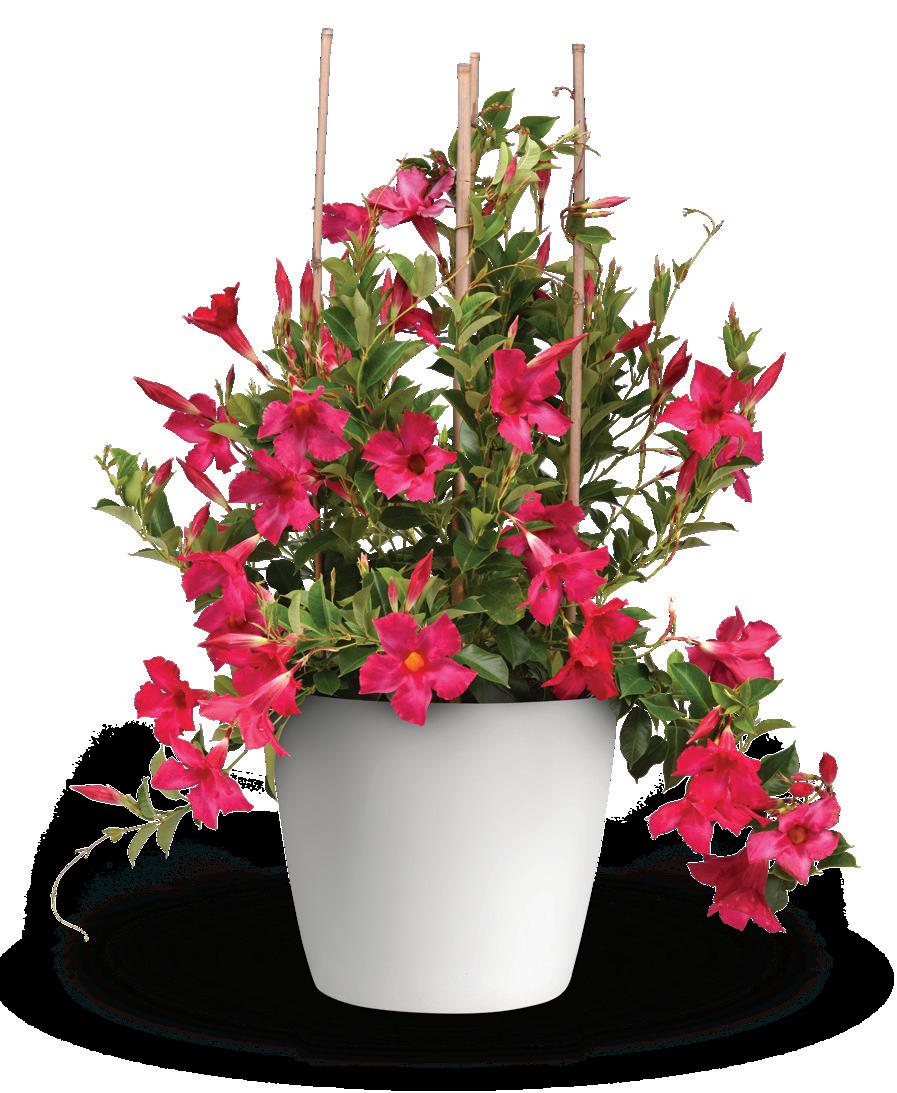
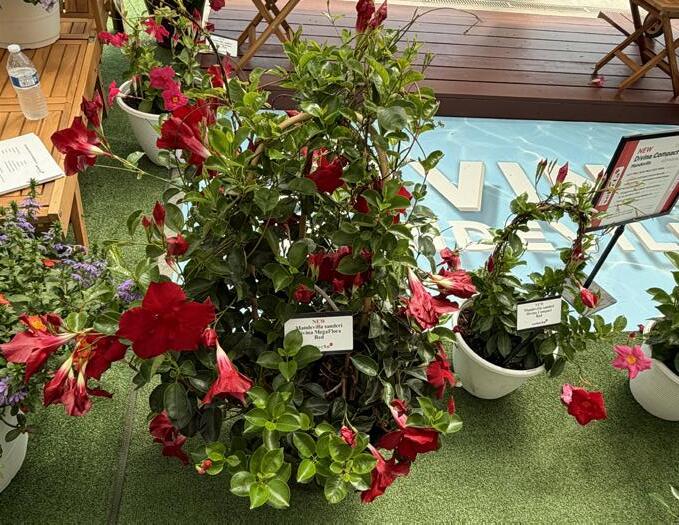
Another new class for Selecta is Mandevilla sanderi. The Divina Compact series is available in Pink, Red and White. It doesn’t need a trellis and can be used in a basket.The MegaFlora (14) series has medium vigour with large bloom size. It branches well initially before starting to climb. This characteristic allows growers to space these plants closer together on the bench before the vining begins.

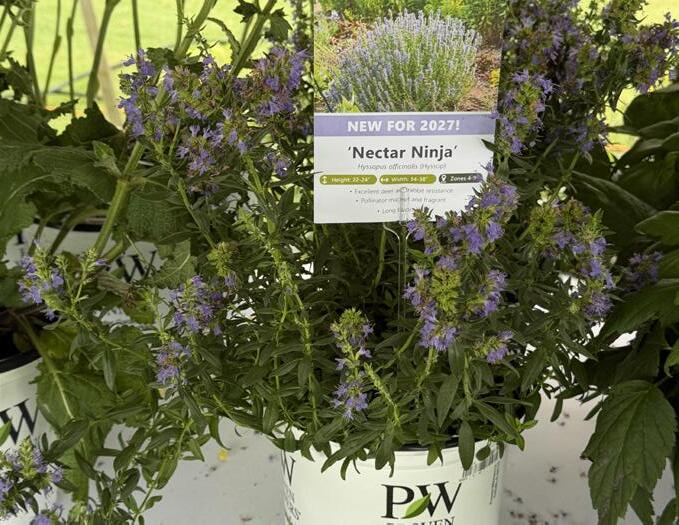
Hyssopus is a new genus for Walters but it is a favourite because it is easy to grow, tolerates adverse growing conditions, has a long bloom period and pollinators love it. The cultivar Nectar Ninja (15) has a pale blue flower and vigour suitable for production in 2-3 gal. pots.
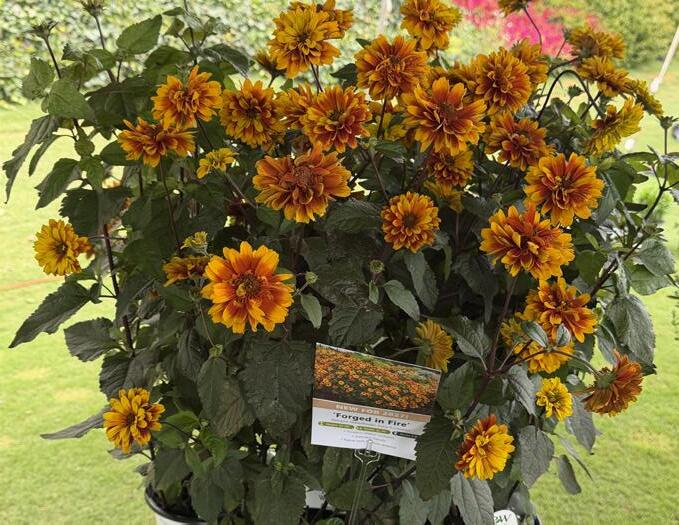
Heliopsis Forged in Fire (16) is one of the taller selections in this collection of false sunflowers. It has large bicolour flowers with dark stems and foliage. Plant growth regulators can help keep it sized
for a gallon pot but its naturally happier in three gallons. In its breeding program Walters selects for heliopsis cultivars that have excellent branching and good mildew resistance.
Two of Benary’s begonia breeding releases deserve mention. Wookie (17) is a new hybrid series of begonia that has a mounding, semi trailing habit. Instead of having a waxy sheen like B. semperflorens, the leaves and stems are covered with fine
▶ Laven de r Collection ◀
From early spring through fall La Diva Lavender brings beauty, fragrance, and value to any container or garden.
LEARN MORE !

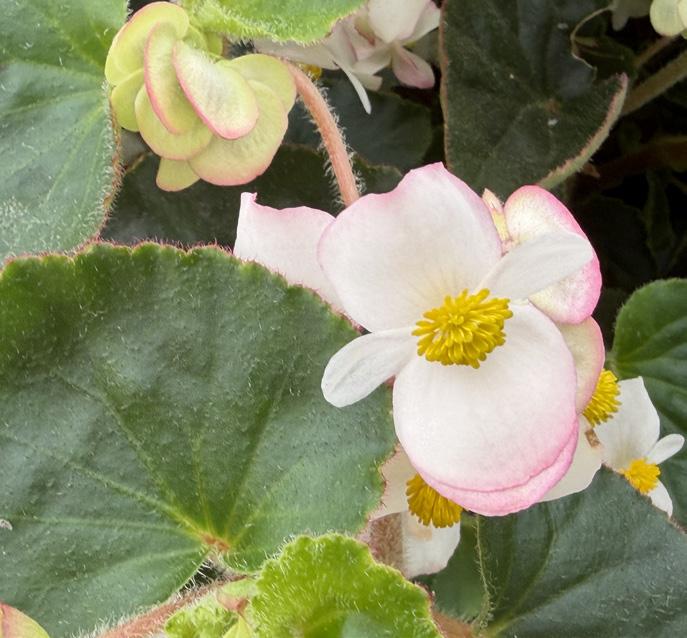
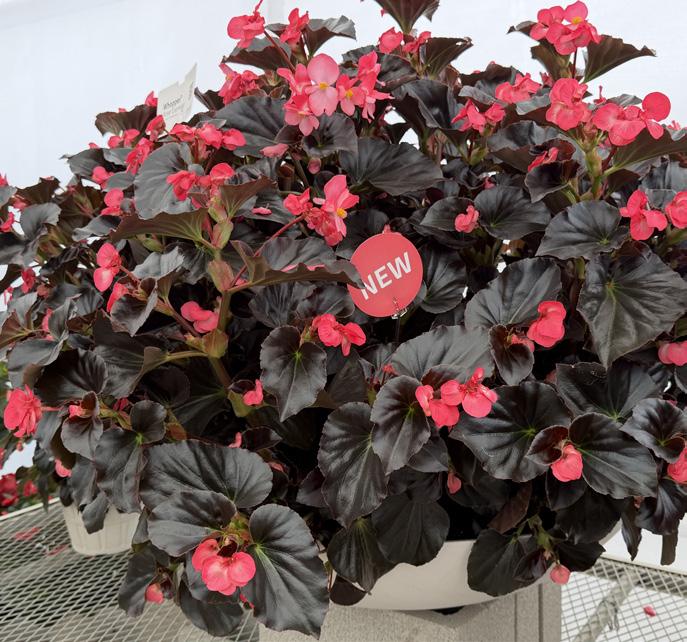
hairs. This feature is an adaptation that would help this plant survive heat and drought. Another new begonia release is the BIG DeluXXe/Whopper Espresso (18); it is so named because of its dark chocolate foliage.

Every time we expanded or renovated a greenhouse, we didn’t just build; we optimized. Even if something worked well, we’d ask, ‘How can we do it better?’
“
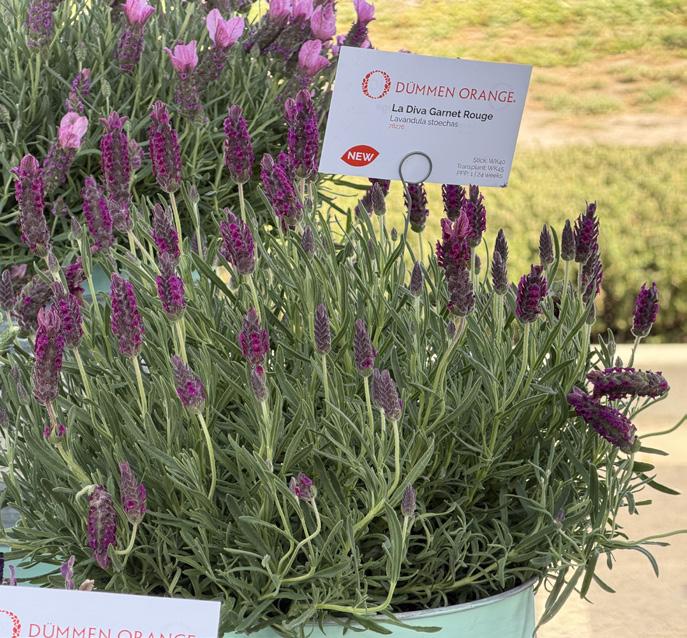
Dümmen Orange has a fantastic collection of perennials, and the True North Testing (north of Winnipeg) is inspired and gives the recipients of their Zone 3 survivors confidence that they’ll thrive under less harsh conditions. They have a great selection of lavender as well with a range of hardiness. Spanish, Zone 6 hardy lavender can just as easily be used as an annual in our Canadian conditions. The new Garnet Rouge (19) is an example of this with its unique deep burgundy colour.
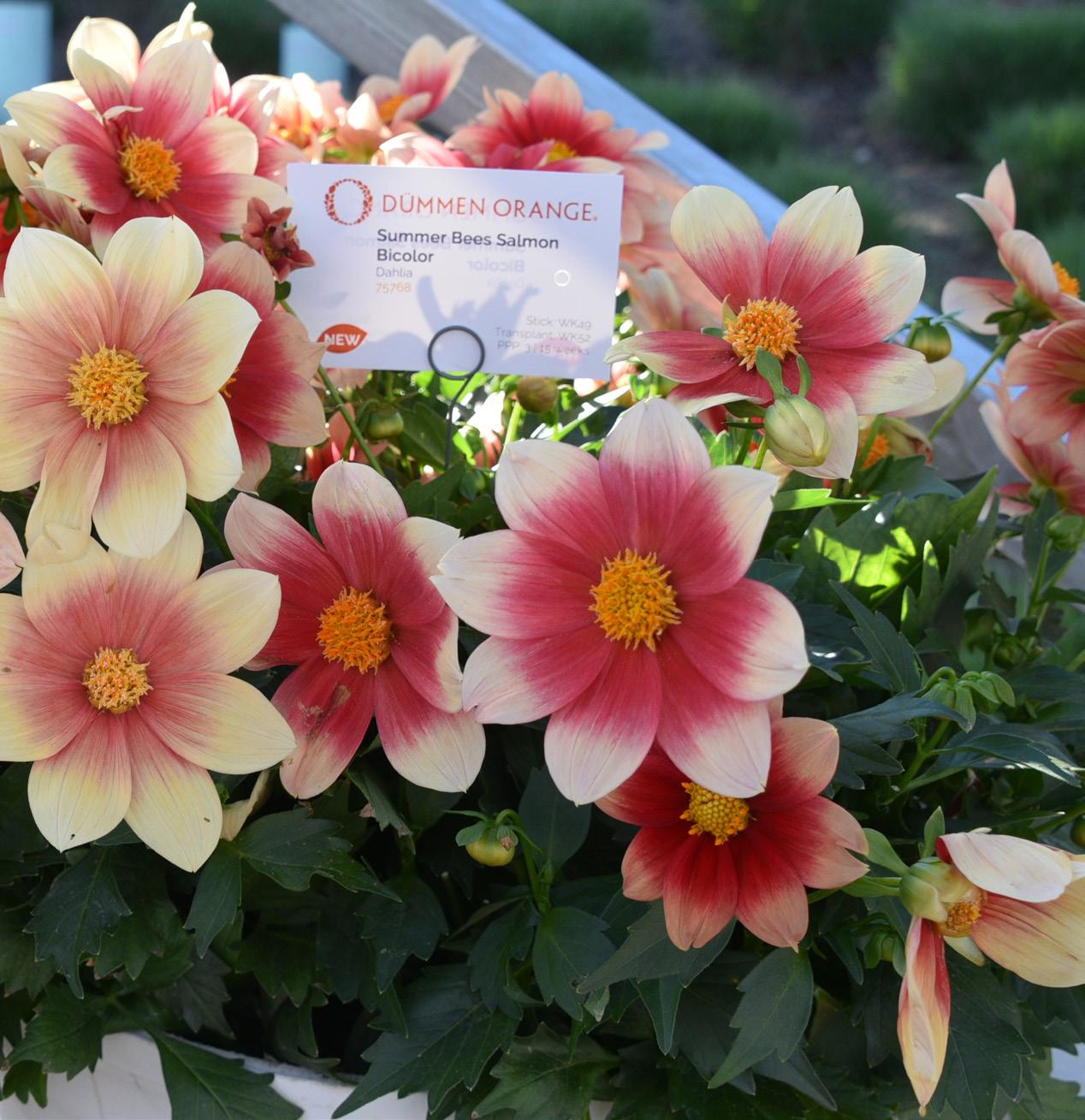
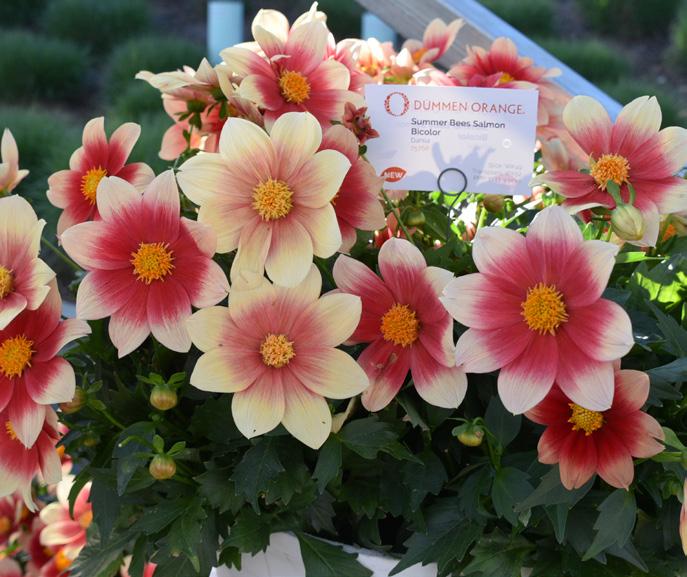
Last year DO released the single dahlia series Summer Bees with Red and Purple Bicolor flowers. This year Salmon Bicolor (20) and Red Star have been added. This series is a great addition to any pollinator garden. Now we have more colours to work with in our designs.
Sakata has added three new colours in its SuperCal family of Petchoa Sunset Orange (21) has been improved to enhance the
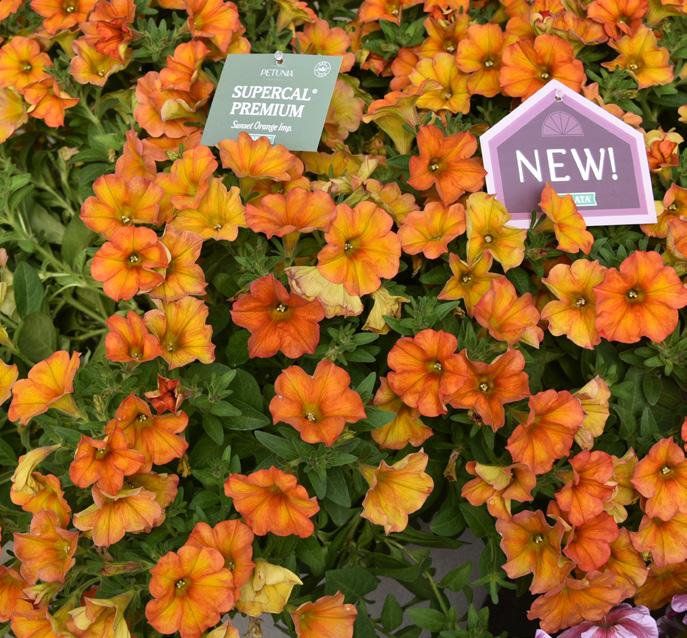
orange colour to maintain its vibrancy all season long.
In its cut flower offerings Sakata has added Celosia Dragon’s Breath (22)
We’ve long known Dragon’s Breath as a bedding plant but now its potential for cut flower applications is being promoted. It has a demonstrated vase life of 28 days at room temperature. It combines well with other flowers in an arrangement.
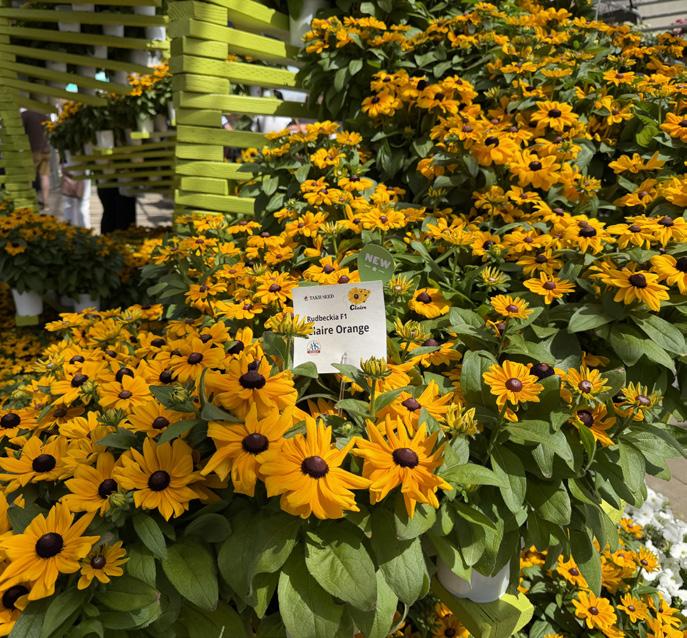
One couldn’t enter the Takii display greenhouse without noticing the stunning display Rudbeckia Claire (23). This is a 2026 AAS winner. Its habit is compact and orange flower its pollen free. It’s very suitable container applications but also does well in the landscape.
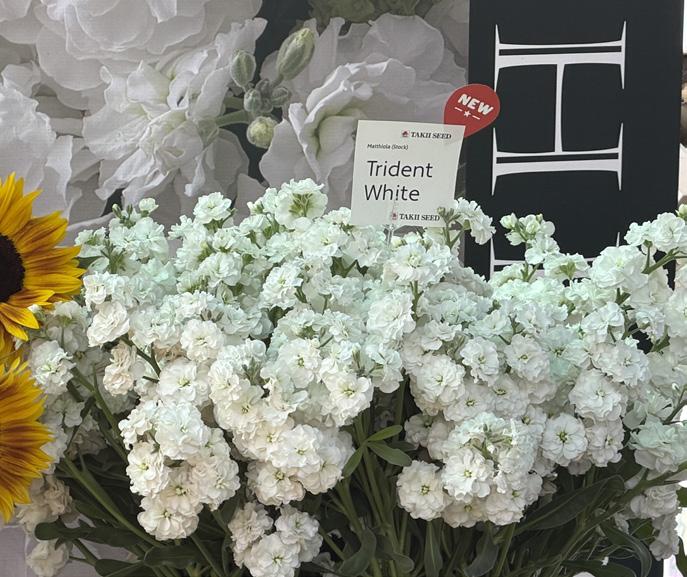
Takii, well know for its cut flower selection has a new Matthiola called Trident White (24). A pinch of the growing tip will produce an attractive spray form of cut flower. Additionally, at least 90 per cent of the seed will be double flowered thereby largely removing the need to rogue seedlings of single-flowered types.
The Capella series of petunia is known for its compact habit and excellent branching. This year there are two new

Previcur ® N is a systemic fungicide that provides long-lasting protection for existing and new plant growth. It controls Pythium (Pythium spp.) diseases causing root rot and damping off, and is labeled for use on greenhouse vegetables and ornamentals. It also controls downy mildew in greenhouse cucumbers, and Phytophthora spp. root rot in greenhouse and outdoor ornamentals.
Envu TM is always ready with the right solutions for any challenges your greenhouse crops and greenhouse or outdoor ornamentals are facing. Contact us for more information.
Recent research evaluates cleaners and disinfectants and their effectiveness against ToBRFV in greenhouses
BY KYLE HENDRICKS, MSC & ROSE BUITENHUIS, PHD
BELOW
Vineland trials evaluated cleaners’ effectiveness against ToBRFV on various greenhouse surfaces.
Tomato brown rugose fruit virus (ToBRFV) is one of the most serious challenges facing greenhouse tomato production today. Since its first detection in 2014, ToBRFV has overcome key tomato resistance genes Tm-1, Tm-2 and Tm-22 that previously protected crops from related viruses. Although several commercial tomato varieties now offer partial or intermediate resistance, the virus’s ability to mutate means that current resistance may only hold for so long within the Canadian production system.
ToBRFV can contaminate greenhouse operations at many points in the supply chain, but it spreads most efficiently through mechanical contact and can remain infective on common greenhouse surfaces for weeks to months. The virus can also move through infected seed, hydroponic systems, and even buzzpollination by bumblebees.
Recent findings, including wastewater detections in areas without tomato production (Nash et al., 2024), suggest ToBRFV is now widespread in the broader food chain, and genomic studies indicate multiple ToBRFV introductions into Canadian greenhouse systems (Fougere et al., 2025). There is no cure for ToBRFV, growers must rely on strong prevention and sanitation practices to limit transmission and protect production.
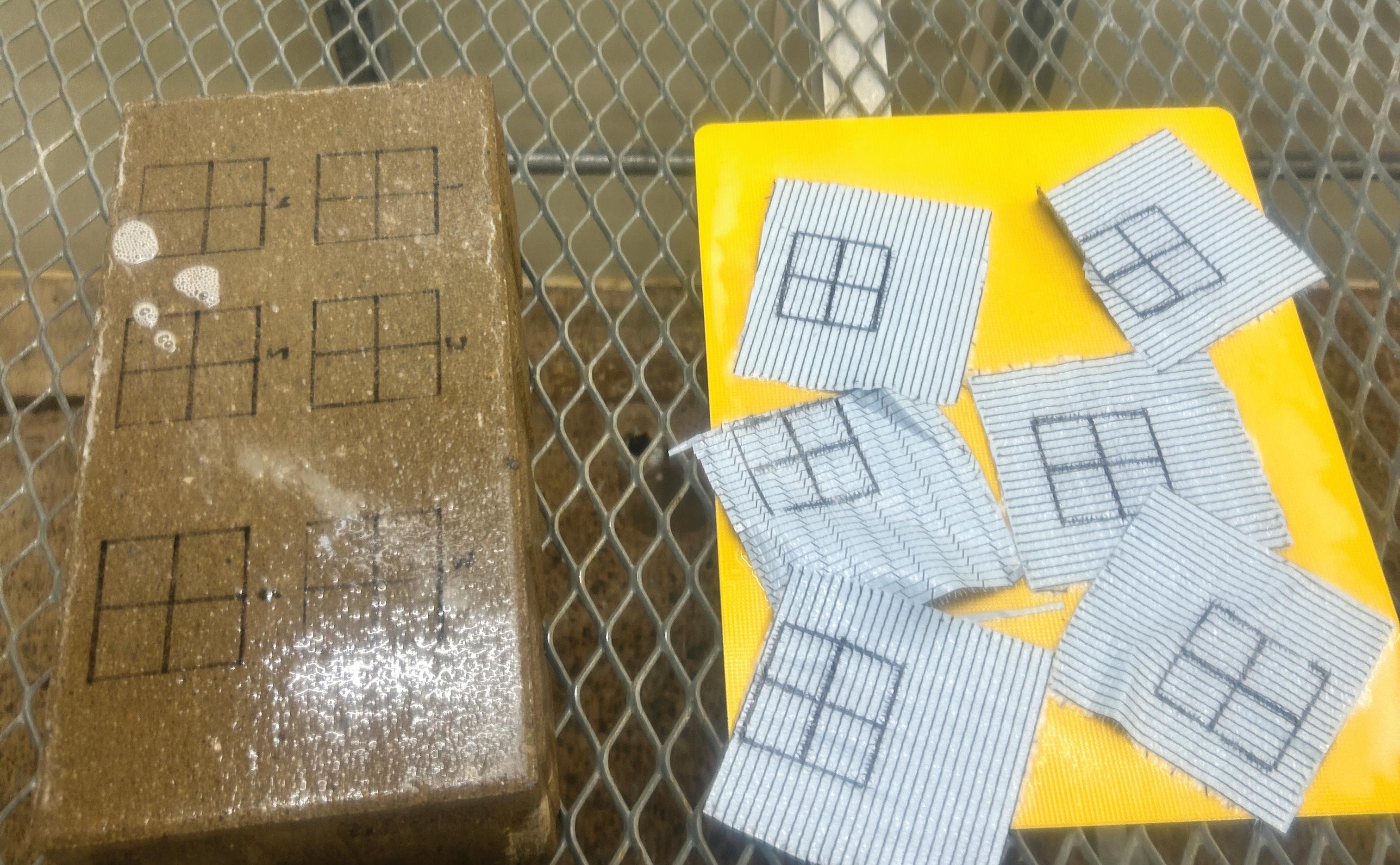



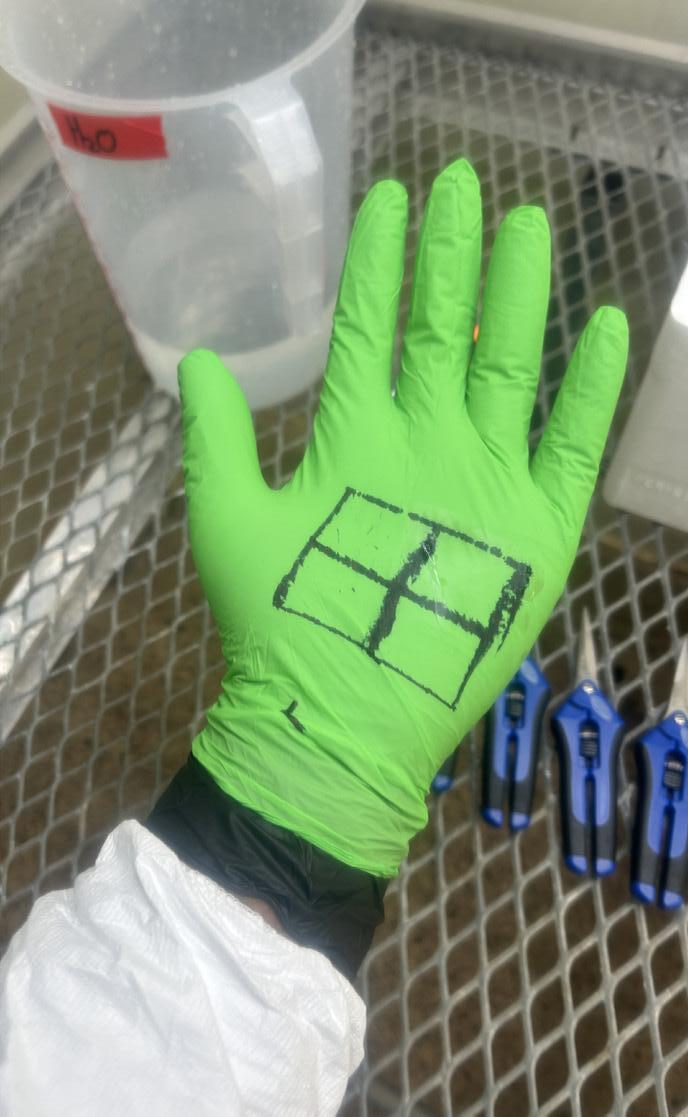
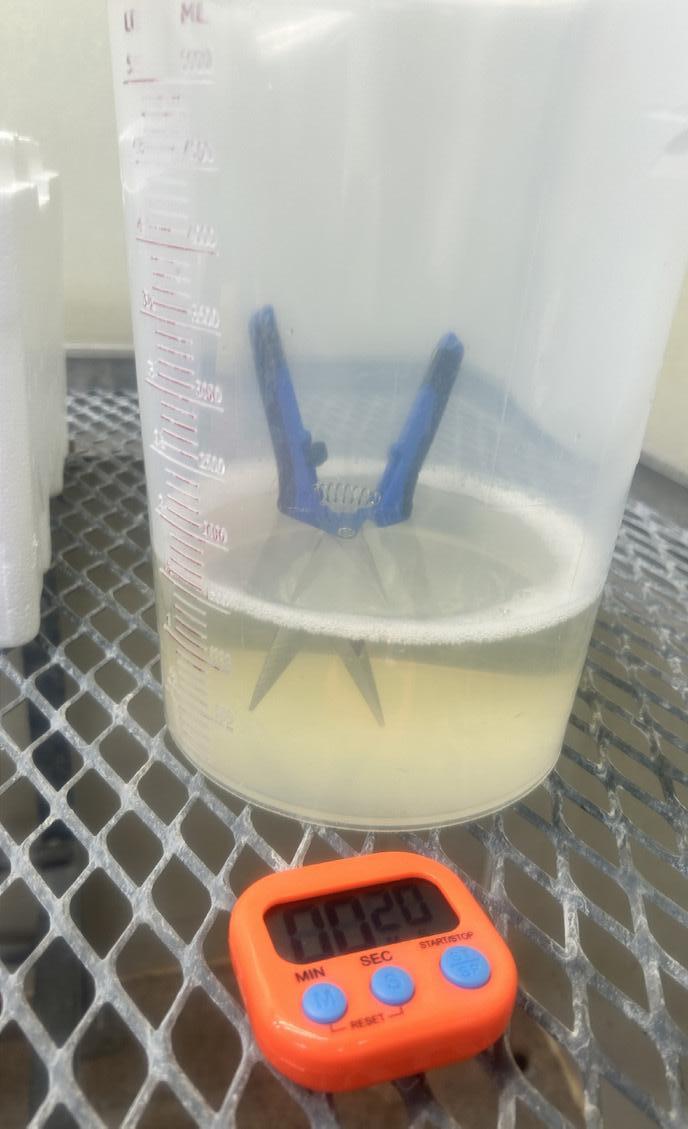
In one of the studies, dip treatments of gloves and tools were put to the test. Researchers say the virus spreads ‘most efficiently through mechanical contact and can remain infective on common greenhouse surfaces for weeks to months.’

Effective management requires preventing the virus from entering the greenhouse, stopping spread between crop cycles, and fully eliminating it if an outbreak occurs. This makes it essential to understand which cleaners and disinfectants can reliably remove or inactivate ToBRFV on different surfaces.
While past studies have evaluated several sanitation products, there is limited research on how temperature (25ºC vs 4ºC) affects their performance, even though lowtemperature cleanouts could help growers reduce energy costs during downtime. Research is also sparse on how well these products work on materials like galvanized steel or climate screens, as well as their efficacy as dip treatments on gloves and tools.
Pace Solutions, BioSafe, MENNO Chemie and Vineland Research and Innovation Centre (Vineland) teamed up to help growers manage ToBRFV by testing how well commonly available cleaners and disinfectants remove or inactivate a Canadian strain of the virus on typical greenhouse surfaces and high touch areas in two trials.
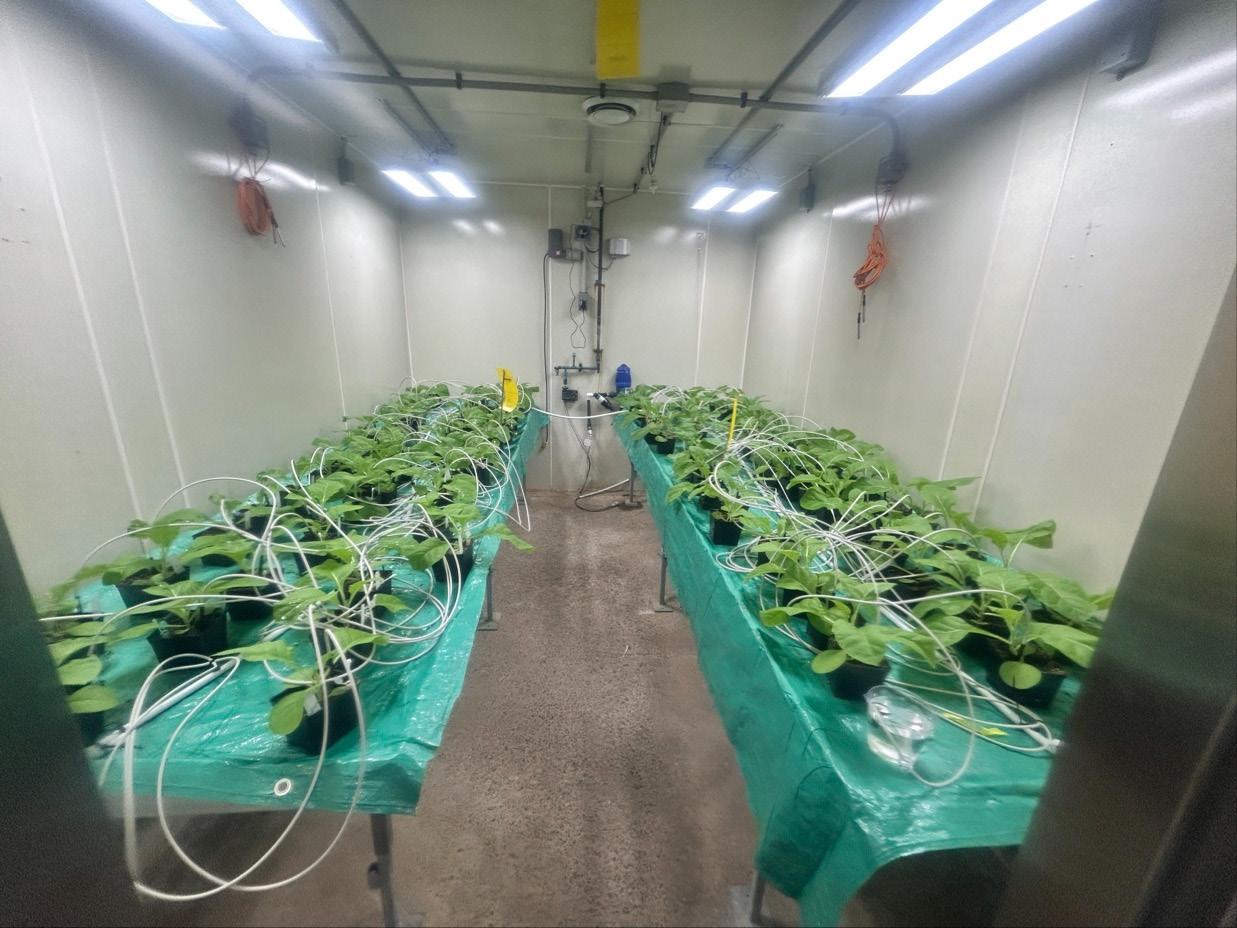
In the first trial, products were applied to surfaces including ambient temperature glass, cold glass surfaces (4ºC), aluminum, galvanized steel, and climate screens, in a simulated greenhouse cleaning and disinfection scenario. This study tested different products, product combinations, concentrations, and exposure times. In our second trial, dip treatments of gloves and tools were tested. The cleaners and disinfectants were from a wide range of chemistries.
ToBRFV-infected plant sap was applied to various materials (ambient-temperature glass, cold glass (4ºC), aluminum, galvanized steel and Svensson Obscura 9950 FR W climate screen). When dry, the surfaces were treated with cleaners or disinfectants, then swabbed after 30 or 60 minutes to assess virus recovery.
Combination treatments involved a 30-minute incubation with the first product, rinsing with water, and a 30-minute incubation with the second product, followed by swabbing. To assess the efficacy of the treatments, the collected swabs were used to inoculate five-week old Nicotiana tabacum (tobacco) plants. After 21 days, inoculated leaf tissue was tested for ToBRFV using an Agdia DASELISA kit, telling us if any ToBRFV recovered was still infectious.
Bleach (10 per cent v/v) displayed the most consistent efficacy at removing or
KleenGrow (KG) by Pace Solutions (8 mL/L, 60-minute contact time) was 100 per cent effective at removing or inactivating ToBRFV from cold glass, aluminum and
To test disinfecting efficacy, tobacco plants were ‘innoculated’ with swabs used on the surfaces that had been cleaned. The plants were then tested for ToBRFV three weeks later.
steel. KleenGrow (8 mL/L, 60-minute contact time) was 83.3 per cent effective on ambient-temperature glass, while only 66.7 per cent effective on climate screen.
KleenGrow (16 mL/L) displayed a contact-time dependent response for cold glass. After 30 minutes KleenGrow (16 mL/L) was 83.3 per cent effective at removing or inactivating ToBRFV, which increased to 100 per cent efficacy at 60 minutes. One hundred per cent efficacy was seen at both 30 and 60 minutes for ambient-temperature glass, aluminum and steel. On climate screen at both timepoints the efficacy was 83.3 per cent.
Overall, a dose dependent response was seen at 60 minutes between KleenGrow 8mL/L and 16 mL/L. In the case of ambient-temperature glass and climate screen, efficacy increased by 16.7 per cent by using the higher concentration.


Note: Values presented are per cent control of compared to NaOCL Bleach (10% v/v). For example, 100% means 100% as effective as bleach, while 16.7% represents 16.7% as effective as bleach.
Table 2. Per cent Efficacy (Relative to Bleach) following ELISA testing of collected tobacco tissue.
Note: Values presented are per cent control of compared to NaOCl Bleach (10% v/v). For example, 100% means 100% as effective as bleach, while 16.7% represents 16.7% as effective as bleach.
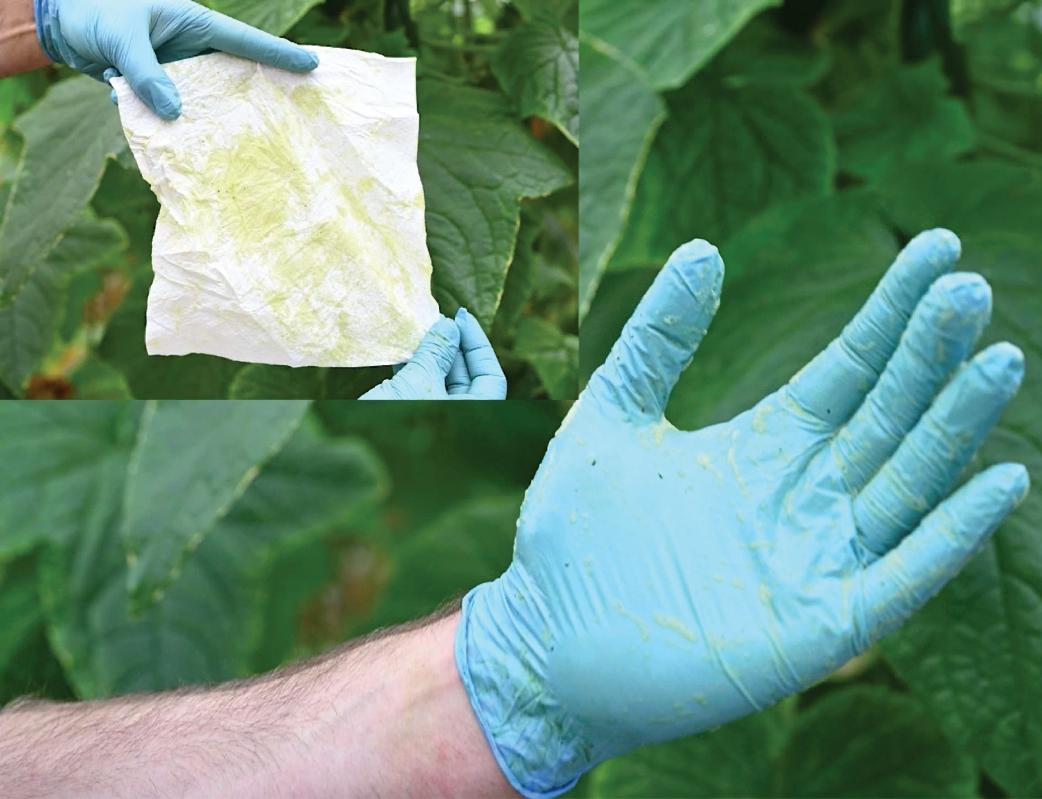


Both GC Pro Oxidizer (GC Pro, 18 g/L) with SaniDate 5.0 (SD, 2.0 per cent v/v) and GC Alkaline Cleaner (GC Alk, 4.0 per cent v/v) with SaniDate 5.0 (2.0 per cent v/v), all from BioSafe Systems LLC, were 100 per cent effective at removing or inactivating ToBRFV from all surfaces tested.
ToBRFV-infected plant sap was applied on 6.5-inch stainless steel pruners, and 1.5-mm nitrile gloves. When dry, the gloves and clippers were submerged in the treatment for only 30 seconds, then swabbed for virus recovery. The swabs were applied to tobacco plants as described above and the inoculated leaf tissue was tested for ToBRFV using ELISA.
Again, bleach (10 per cent v/v) was 100 per cent effective and used as a benchmark to determine how effective each product was.
On gloves, MENNO Rapid from MENNO Chemie-Vertrieb GmbH, performed just as well as the 10 per cent bleach, with 100 per cent ToBRFV removal. On the stainless-steel pruners, MENNO Rapid was 66.7 per cent effective removing ToBRFV.
Key outcomes:
• Several products and product combinations, including bleach, KleenGrow and SaniDate 5.0 combined with either GC Pro Oxidizer or GC Alkaline Cleaner, showed strong efficacy against ToBRFV for cleaning and disinfecting common greenhouse surfaces such as benches, glass and climate screens with a 30 or 60 minute contact time.
• Using a combination of cleaners and disinfectants is recommended as cleaners help remove plant residue and oils, while disinfectants target remaining pests and pathogens.
• Using these products at lower temperatures was just as effective as using them at growing temperatures.
• MENNO Rapid at full strength was effective as a tool or glove cleaning dip with a short contact time (30 seconds).
• While 10 per cent bleach performed well, it is not registered for greenhouse use and can damage materials like steel, so these findings give growers important context when choosing practical, effective sanitation products. These results help growers choose appropriate products for ToBRFV cleaning and disinfection. Beyond efficacy, selection
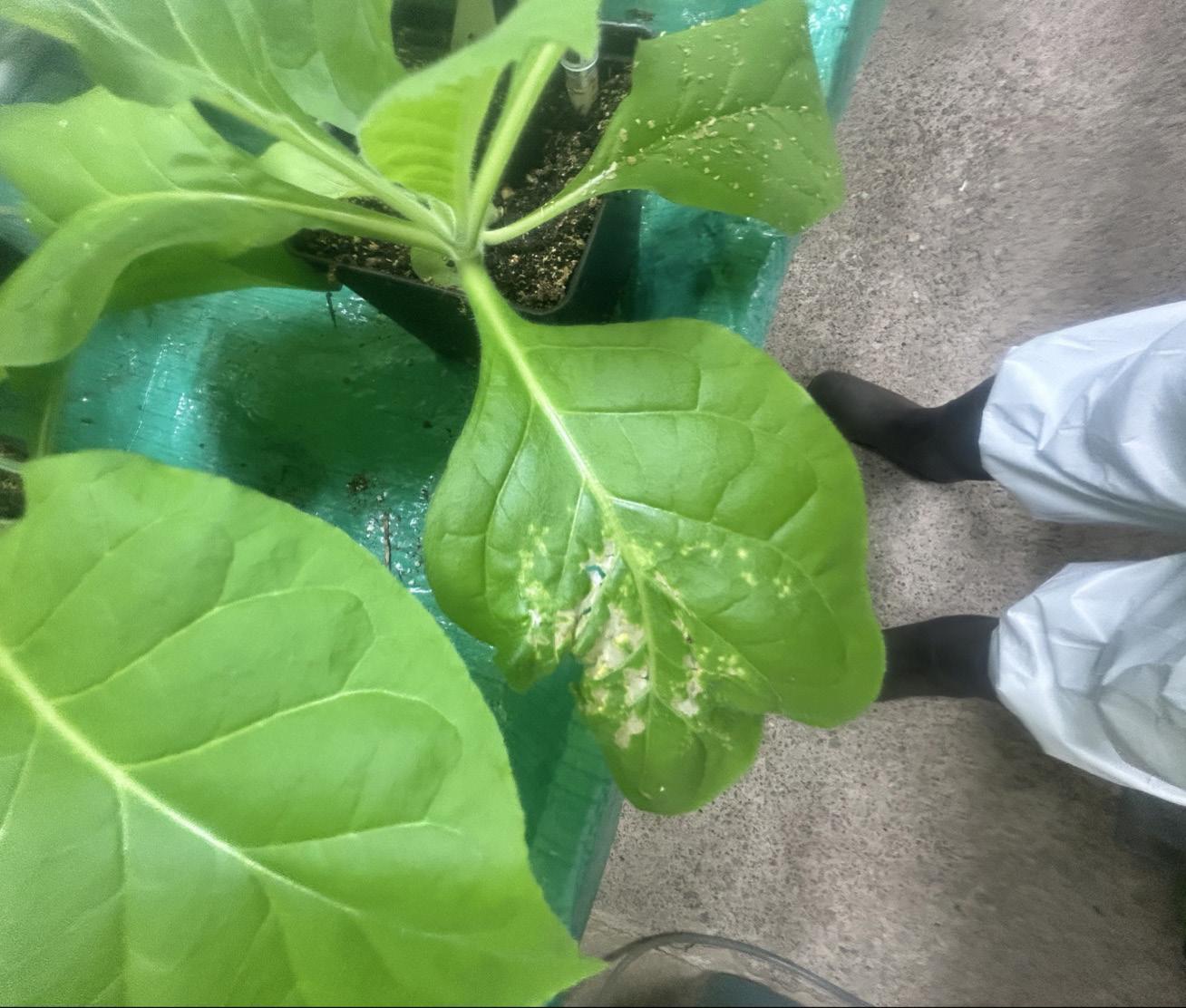
Example of damage ToBRFV can cause. Researchers caution that beyond efficacy, when evaluating cleaners and disinfectants, surface compatibility should be a big consideration as well as safety and residual effects.
should also consider surface-compatibility (damage risk), safety, and any residual activity.
A few things to note about this study are that ToBRFV was applied as infectious plant sap, which embeds the virus in a complex organic matrix (plant cell walls, proteins, debris), which shields virions and reduces disinfectant penetration, unlike purified virus assays that overestimate efficacy. This makes complete removal harder, explaining why some products may have underperformed.
Additionally, in the surface dips trial, the gloves and tools were not wiped down after application of ToBRFV. It is possible that wiping could enhance removal of ToBRFV from the tools and gloves.
Vineland recommends that users always read and follow the manufacturer’s label and instructions before use.
Anyone interested in learning more about the trial or interested in further research can contact the Vineland Research and Innovation Centre (info@vinelandresearch.com) for more information.
1. Fougere, G. C., Xu, D., Gaiero, J. R., McCreary, C., Marchand, G., Despres, C., Wang, A., Fall, M. L., & Griffiths, J. S. (2025). Genomic Diversity of Tomato Brown Rugose Fruit Virus in Canadian Greenhouse Production Systems. Viruses, 17(5), 696. https://doi.org/10.3390/ v17050696
2. Nash, D., Ellmen, I., Knapp, J. J., Menon, R., Overton, A. K., Cheng, J., Lynch, M. D. J., Nissimov, J. I., & Charles, T. C. (2024). A Novel Tiled Amplicon Sequencing Assay Targeting the Tomato Brown Rugose Fruit Virus (ToBRFV) Genome Reveals Widespread Distribution in Municipal Wastewater Treatment Systems in the Province of Ontario, Canada. Viruses, 16(3), 460. https://doi.org/10.3390/v16030460 ABOVE
BY DR. FADI AL-DAOUD, SHARON KITUR, AND DR. CAROLINE STRANG
Most Ontario greenhouse producers monitor light levels outside and inside their operations to optimize growing conditions for maximum yield. This article discusses how ultraviolet (UV) light levels inside greenhouses are affected by greenhouse coverings and how this may impact bumblebees used for pollination. It also demonstrates how monitoring natural UV light levels inside greenhouses can benefit producers and allow them to make more informed decisions about their production practices.
Commercial insect pollinators, like bumblebees (Bombus impatiens), are used to improve pollination and increase the yield of many greenhouse fruits and vegetables. Like other insects, they use ultraviolet (UV), blue and green light to navigate the complex greenhouse environment. Unlike human eyes that see visible light mostly in the photosynthetically active radiation (PAR) range (400-700 nm), bumblebees’ light receptors detect light in three main peaks: 347 nm (UVA), 424 nm (blue) and 539 nm (green). Insufficient light levels in these three colours may negatively affect the bees’ ability to forage, resulting in less flower pollination.
The natural light environment in a greenhouse is mainly determined by its covering, coating, and curtains. Glass has higher light transmission than
ABOVE
polyethylene (poly), and double poly has higher light transmission than triple poly. Ontario greenhouses also apply coating, a.k.a. whitewash, to their glass to exclude infrared radiation and diffuse sunlight. This reduces heat buildup and light intensity inside greenhouses during late spring, summer and early autumn when there’s an excess of sunlight in southwestern Ontario. Diffused light also scatters around the greenhouse, which reduces shading and increases light levels within the canopy. Newer diffuse glass technology reduces light intensity and scatters light more than traditional clear glass, but it also requires whitewash to reduce IR transmission and heat buildup in the summertime. Whitewash is not typically applied to plastic covering because greenhouse poly includes additives that allow it to diffuse light and reduce sunlight transmission.
Manufacturers of greenhouse poly coverings include UV-blocking agents in their formulas to increase their longevity by reducing UV transmission. Exposure to environmental and weather conditions takes a toll on poly greenhouse coverings and reduces their integrity over time. As poly ages, it allows more light inside greenhouses, and its ability to retain heat in cold weather deteriorates.
Overall, UV-blocking greenhouse coverings improve plant health by increasing photosynthesis and transpiration, which leads to bigger plants and
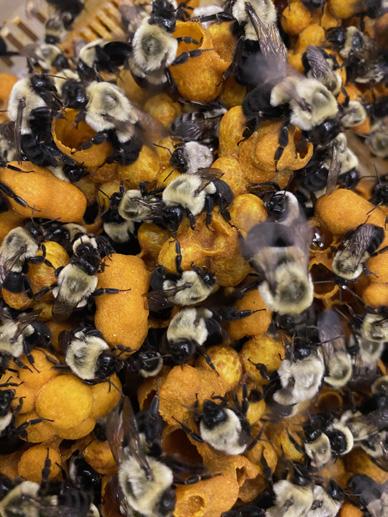
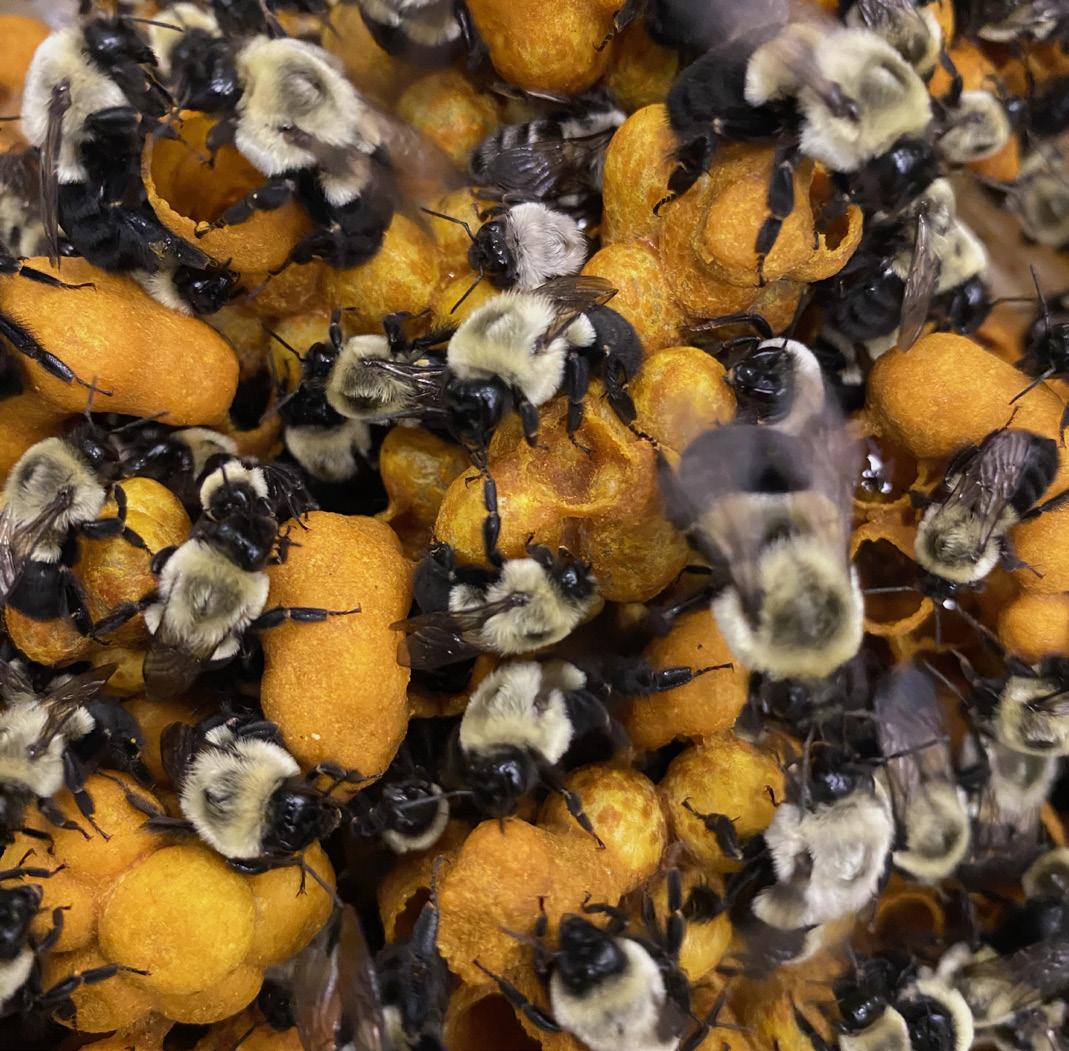
From left: Image of a typical bumblebee colony in a commercial greenhouse; Screenshot of a clip of an active bumblebee hive in a demonstration box (from video provided by Cara McCreary, OMAFA).
FIGURE 1
Irradiance levels (W/m2) outside and inside greenhouse ranges with older double poly, older triple poly and newer triple poly on a sunny day. Each bar represents the average of three technical replicates.
greater yields. However, they also negatively affect fruit quality by reducing secondary plant compounds such as phenolic compounds, flavonoids and carotenoids. The effect of these materials on pests and pathogens is mostly inhibitory. They suppress the activity of insect pests and the ability of some fungi to sporulate. However, they also negatively affect pollinating and beneficial insects in the same way.
A greenhouse producer in southwestern Ontario observed that his bumblebees were not pollinating as well in a range that had newer triple poly compared to ranges with older double and triple poly. We measured light levels in the ranges to determine if any differences in UV levels may be affecting his pollinators. A spectrometer (340-1010 nm) was used to measure light between two middle rows at different heights in the canopy (top, middle, and bottom) in each range at midday on several days in the spring and summer of 2025. This provided data for light irradiance (W/m2), photosynthetic photon flux density (PPFD, µmol/m2/s), partial UVA range (340-400 nm), PAR range (400-700 nm), far red (700-800) and partial infrared range (800-1010 nm).
The ratio of the partial UVA to PAR levels, shown here, was calculated to account for differences in time, crop height in the different ranges, and changes in weather conditions as we moved from one range to the next. Measurements were also taken outside the greenhouse to compare outdoor sunlight levels. The data shown here is from one sunny day, but these trends were also observed on multiple sunny and cloudy days.
As expected, the highest levels of irradiance (Figure 1), PPFD (Figure 2), and UVA/PAR ratio (Figure 3) were observed outdoors. The overall light levels were lower in the older triple poly range than in the other ranges, most likely because it was measured first on this day when sunlight was not as strong as it was later in the day. As expected, all three ranges showed a similar pattern of less irradiance (Figure 1) and PPFD (Figure 2) in the middle and at the bottom of the canopy than at the top of the canopy. The
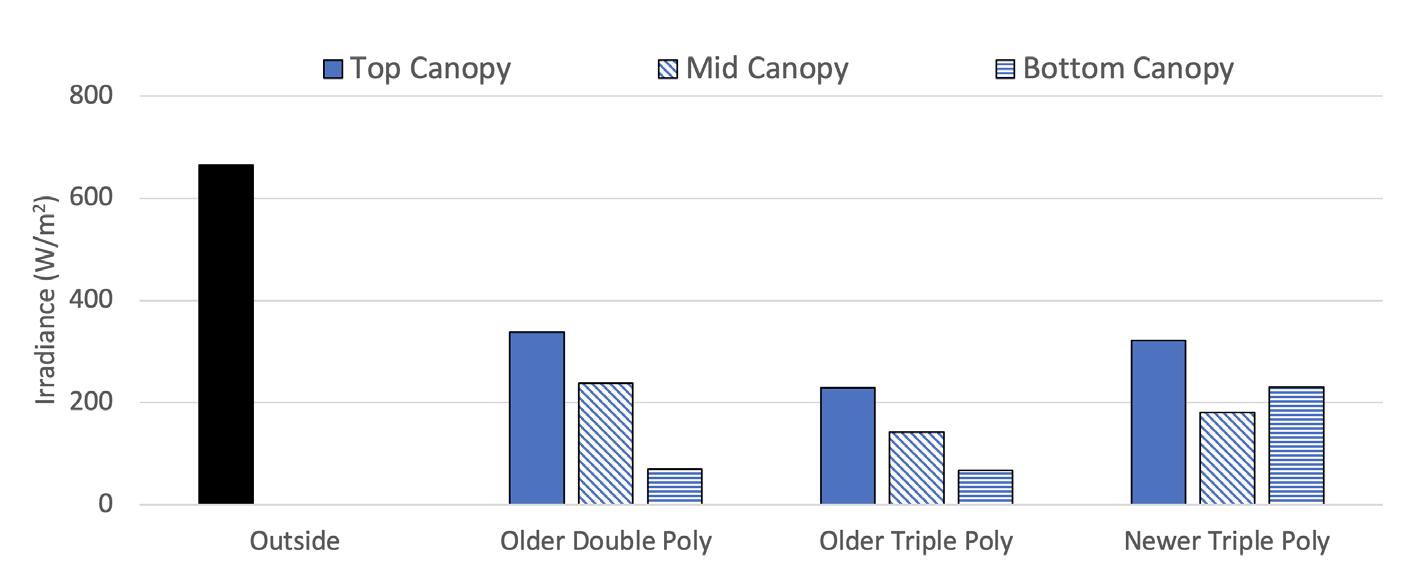

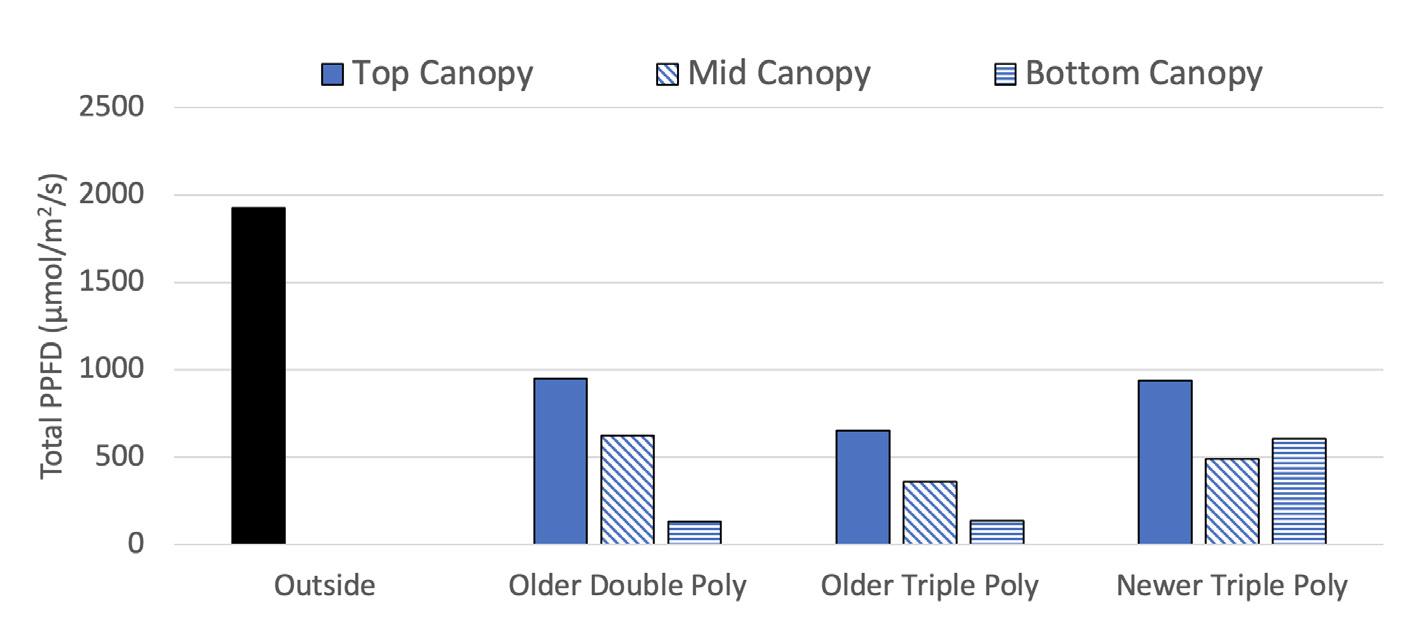
FIGURE 2
PPFD levels (µmol/m2/s) outside and inside greenhouse ranges with older double poly, older triple poly and newer triple poly on a sunny day. Each bar represents the average of three technical replicates.
UVA/PAR ratio, however, did not change much at different heights in the canopy in each range (Figure 3).
When the UVA/PAR ratios of the different ranges were compared, some differences were observed. Of all the greenhouse ranges, the older double poly range had the highest UVA/PAR ratios at all heights in the canopy. The older triple poly range had lower UVA/PAR ratios than the older double poly range. The lowest UVA/ PAR ratios at all heights in the canopy were
observed in the newer triple poly range, although it had similar or higher levels of total light (irradiance and PPFD) than the other ranges. In fact, the newer triple poly range had approximately half the UVA/PAR ratio of the older triple poly range and a third of the ratio of the older double poly range (Figure 3). This trend was observed consistently on sunny and cloudy days. Therefore, there was an association between lower UV levels in the newer triple poly range and lower pollination of the crop.

Studies have shown that lower UV levels could negatively affect crop pollination by bumblebees in a number of ways:
1. Bumblebees locate and identify flowers using UV, blue, and green light. Low UV conditions can disrupt flower identification and reduce the efficiency of flower visitation by bees, though it has been shown that bumblebees can adapt to low UV conditions over time.
2. Bumblebees are less active in low UV environments. The number of foraging trips that bees take in a day is lower in greenhouses with less UV. The activity of other insects, including pests and beneficials also decreases.
3. Bumblebees are attracted to UV light, so they will move from lower UV to higher UV environments. This is known as positive phototaxic behaviour. The greenhouse where we conducted our study had gutter vents with no insect netting. When the vents were open, the higher UV levels outside of the greenhouse may have been visible to bumblebees foraging inside. Bees may have been attracted to the higher UV levels outside, or the higher UV levels in the other ranges


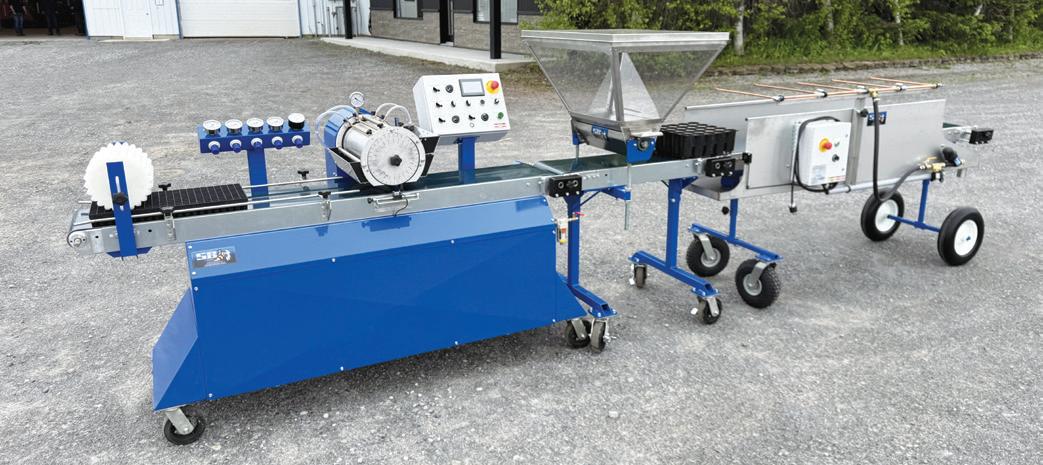
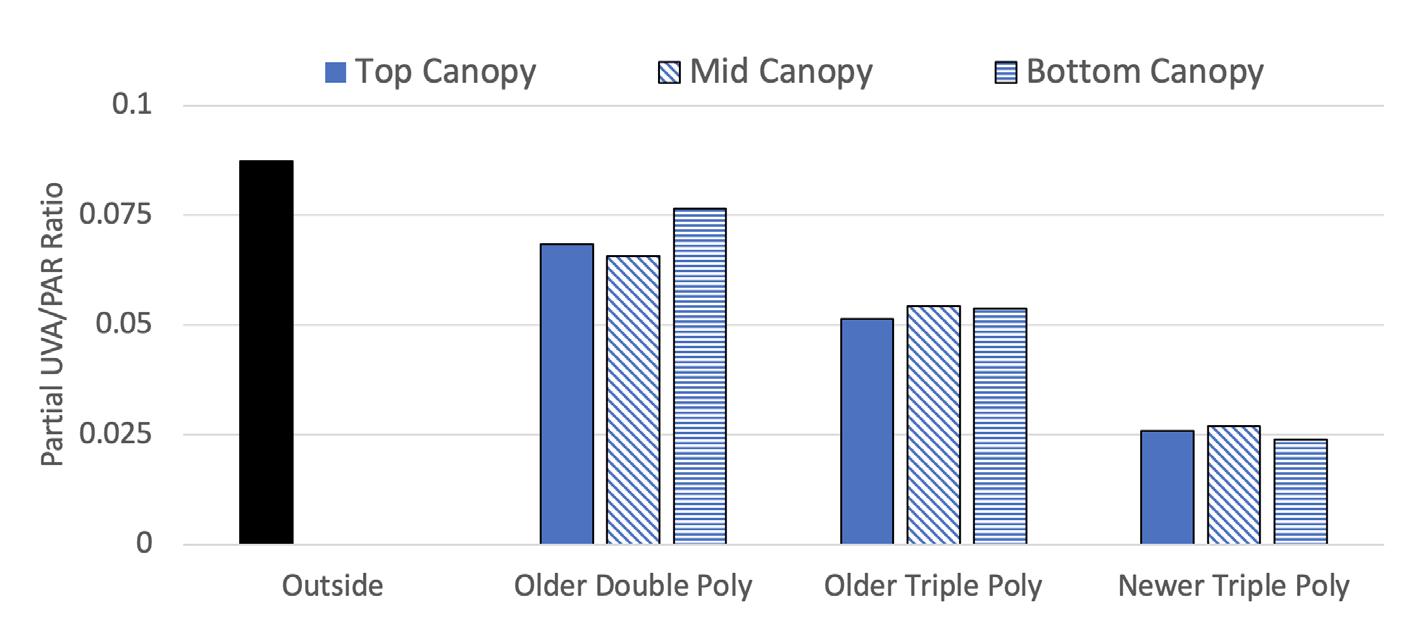
FIGURE 3
The ratio of partial UVA (340-395 nm) to PAR (400-700 nm) (UVA/PAR) outside and inside greenhouse ranges with older double poly, older triple poly and newer triple poly on a sunny day. Each bar represents the average of three technical replicates.
and escaped out of the newer range to higher UV environments. Bumblebee escapes can reduce colony size and crop pollination.
Many greenhouse producers monitor the daily light integral (DLI) and PAR levels outside and inside their greenhouses, but they don’t necessarily monitor natural UV levels. This study shows the importance of monitoring the amount of natural UV light inside greenhouses, especially in poly greenhouses. Doing so would allow
producers to assess the integrity of the poly covering over time. Because poly allows more UV transmission as it ages, producers can use increasing UV light levels as an indicator of when poly coverings should be replaced. When replacing greenhouse poly, producers can use UV level information to assess if/how the new poly covering changes the UV levels inside their greenhouses. If the new poly significantly reduces UV levels, as it did in this case study, it might signal to the producer the need to increase

their pollinator hive density to compensate for both the reduced ability of the bees to pollinate in the lower UV environment, and the bees’ escaping to higher UV environments. As the poly ages, UV levels will increase inside the greenhouse, allowing the producer to reduce hive density. It is important to think of changes you make to your greenhouse with a systems approach by asking how this change will affect the greenhouse environment as a whole. For example, reducing natural UV levels in your greenhouse may be good for suppressing some pests and pathogens, but it may also negatively affect beneficials and pollinators. The ideal level of UV required inside greenhouses to keep insect pollinators happy and reduce pests and pathogens at the same time is not known. Future research will hopefully shed light on this topic.
Fadi Al-Daoud is the greenhouse vegetable specialist for the Ontario Ministry of Agriculture, Food and Agribusiness, Sharon Kitur was a summer research student with OMAFA hired through the Summer Experience Opportunity (SEO) program, and Caroline Strang is an assistant professor in the Department of Biology at Western University.

Multifan Greenhouse Fan
• Extremely efficient
• Low-noise level
• Easy installation
Multifan V-FloFan
• Corrosion-resistant materials
• IP-55 rated
• 3-year warranty


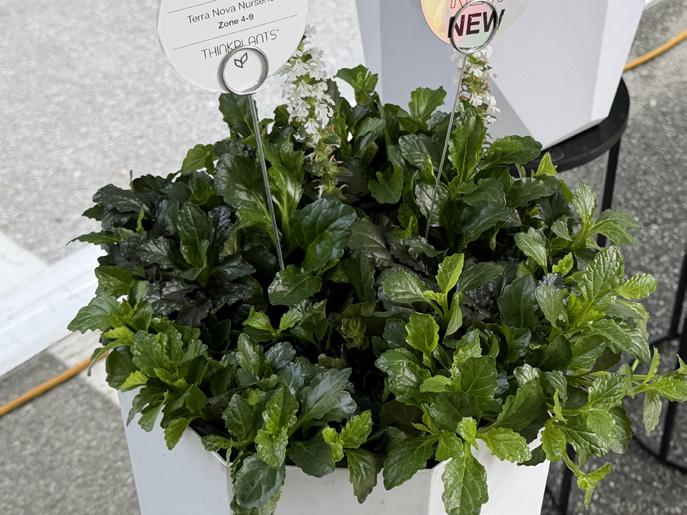
colours – Inked and Rose Ink (25). Both have coloured venation in the flower. This selection was very popular amongst visitors to the Danziger CAST stop.
I want to comment on two new Calibrachoa from different series. Eyeconic Amber (26) has a golden yellow petal and dark purple/brown eye. This colouration
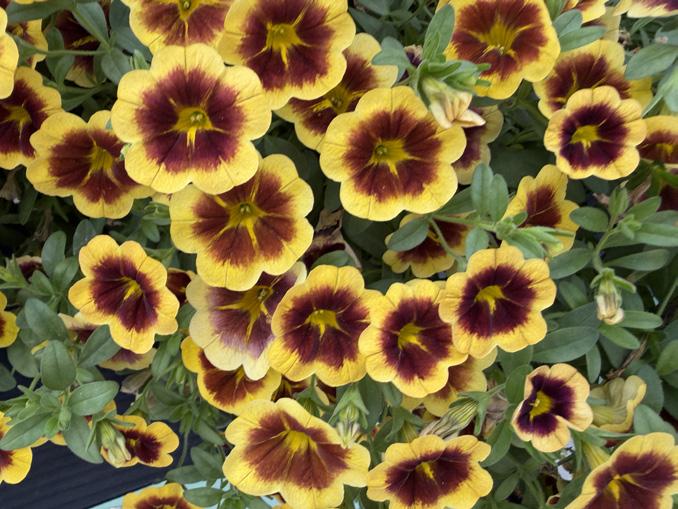
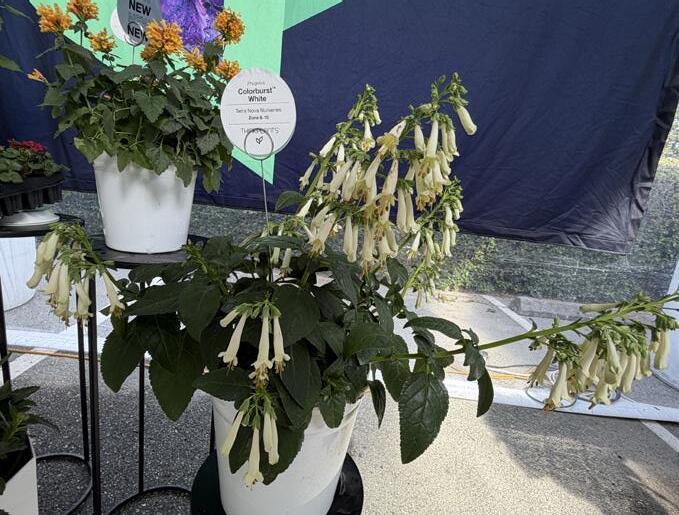
would fit well with fall themed mixed containers. Ombre Tyler Glam has variable colouration on a single plant ranging from dark yellow with a pink blush to a deep rose.
Last year the Besties series of Osteospermum was launched. All members of this series have consistent bloom size
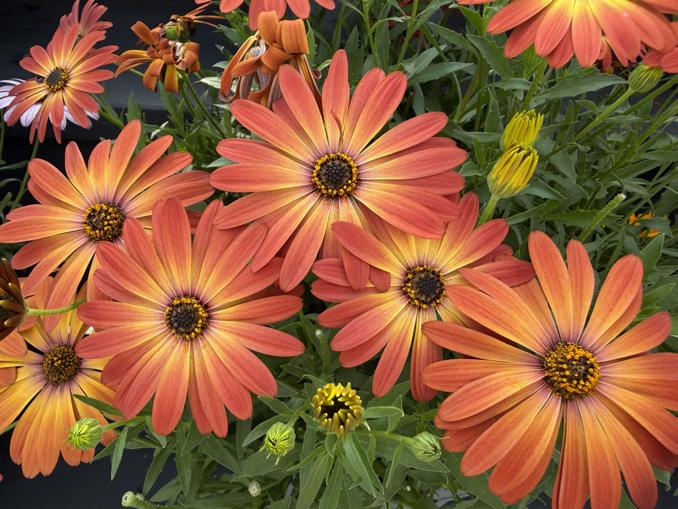
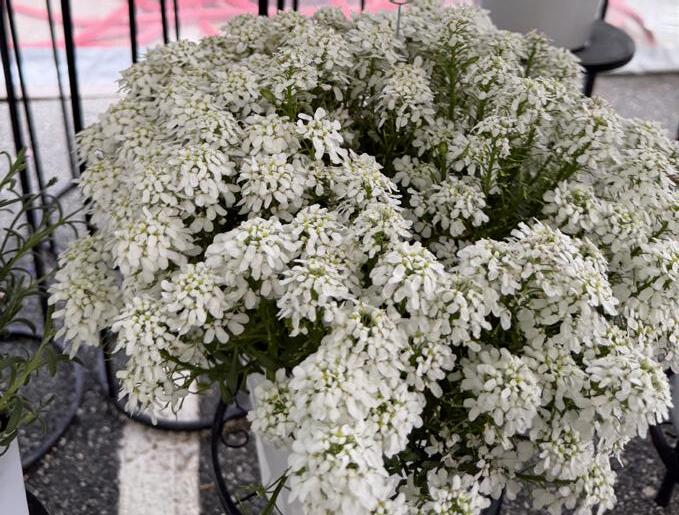
and bloom dates. This year, Brilliant Bronze (27), Playful Bicolour and Vivid Violet have been added to the colour offerings.
THINKPLANTS/TERRA NOVA NURSERIES (TNN)
Ajuga Nova White (28) – most gorgeous


Aeroponics: Growing Vertical covers aspects of the emerging technology, aeroponics, which is a sister to hydroponics, involving state-ofthe-art controlled environment agriculture. The book begins with an introduction of aeroponics followed by a summary of peer-reviewed technical literature conducted over 50 years involving various aspects of aeroponics. It covers the science and all the patent literature since 2001 to give the reader a comprehensive view of the innovations related to aeroponics.
$43.75 | Item#0367374303
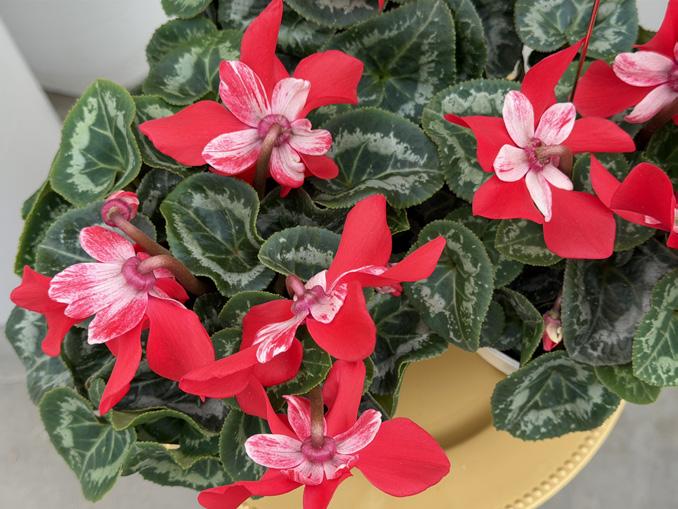
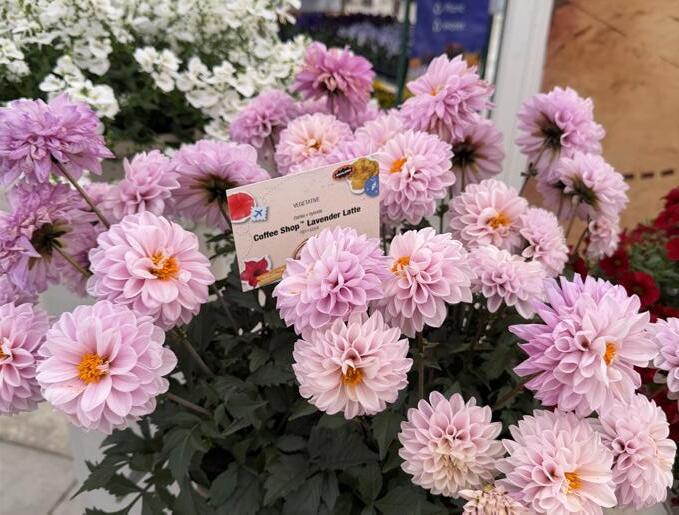
glossy green ground cover – super dense so it’s good at suppressing weed growth under its canopy, nice white flower
Phygelius Colorburst White (29) – this is the only phygelius in this series that is available as an unrooted cutting.
Syngenta has added two new late blooming Iberis to its lineup to extend the bloom period of this genus into the main garden centre buying season. Whistler White Improved (30) is mid-spring bloomer while Whistler Late blooms finish off the spring buying season.
The cyclamen series, Fleur En Vogue (31) has a new scarlet colour. When you look at this plant from above you are looking at the base of the flower allowing the white streaked calyx to contrast against the scarlet bloom.
The new dahlia series, Coffee Shop presently has only one colour. Lavender Latte (32) has a soft lavender colour positioned above dark foliage. It is said to have excellent powdery mildew resistance with blooms that hold their shape throughout the season. It’s a multipurpose dahlia with uses ranging from patio containers to cut flowers.
Rodger Tschanz is a technician at the University of Guelph where he runs the ornamental trial program. He can be reached at rtschanz@uoguelph.ca
Greenhouse Canada would
to thank the Ball Horticultural company for hosting our correspondent’s tour of CAST 2026.


GARY
No, this isn’t crystal ball musings on future politics and trade, thankfully. One of the highlights of the Greenhouse Canada calendar is the ‘Top 4 Under 40’. A time to celebrate some of the great young(-er) team members of our industry. Personally, I love hearing their stories and learning why they enjoy their work. If it’s true that ‘if you truly enjoy your work, then it’s not really work’, can we say that the nominees in this celebration have never done a day’s work in their lives?
A bit cheeky, perhaps.
But this highlights the question of how do we bring new people into the greenhouse industry, and craft the next generation of growers? Seems like we’ve been asking this same question for decades, doesn’t it? Skirma Dab (of UBIX BIO) says we need to make horticulture ‘cool’, like Matt Damon as the botanist in The Martian1. So true, Skirma.
At the time of writing, many of us just enjoyed a fantastic ‘ACT Grower Summit, BC’2. One of many highlights was a grower panel, discussing greenhouse energy, water supply, and pests. We also spoke to the issue of future growers. Panellists shared what gets them out of bed to ‘work’ each day, given the significant challenges in this new, unpredictable business climate. Here’s what they said (paraphrased):
• ‘The people, the plants, and the great machinery and equipment’
• ‘Figuring out the plants’ needs and remedies for plant problems’
• ‘The satisfaction of seeing customers get so much pleasure from purchasing fresh, local produce, knowing where it’s grown’.
It’s also incumbent upon business owners and managers to do their utmost to retain and develop good employees. A panel member at the ACT Summit told me he’s found his ‘industry home’ here in BC having moved from Colombia and has no intent to move on because his company has created a compelling culture of employee support and development. It’s a tangible ongoing commitment to helping people be the best they can be. That mindset pays long-term dividends to both employee and employer alike.
Back to the ACT Summit: discussion touched on the place of our universities and colleges that provide horticulture programs, and how they can best serve the industry. Panel members said their post-secondaries are generally doing a good job in BC and Alberta. But we mustn’t take these programs for granted, as there’s so much pressure on the economics of education these days. I was sad to hear of program closures in the UK: “Current and former agriculture students at the University of Nottingham have voiced concern following the university’s proposal to suspend its undergraduate agriculture degrees from next year. The proposed cuts, announced to staff and students … would mean that no new undergraduates will be accepted onto the affected courses from the 2026/27 academic year. … The move forms part of Future Nottingham, a university-wide restructuring programme designed to address financial pressures and reshape the institution. … Agriculture, which has been taught at Nottingham’s Sutton Bonington (SB) campus since the 1890s, is among the subjects earmarked for suspension.”4
“How do we bring new people into the greenhouse industry?”
One of the attendees told me she’d been in the greenhouse for about eight years, stumbling into her role from a range of previous jobs (including photographer and food service) where she wasn’t feeling fulfilled. She now feels ‘at home’ working with plants. I thought this fit so well with Chris Beytes’ editorial in GrowerTalks about ‘Ikigai’. “It’s a Japanese term for finding the balance between doing what you love, doing what you’re good at, doing what the world needs and—ideally—doing what you can be paid for. Say “icky guy” and you’ll have the approximate pronunciation. Interestingly, I know that many of you find your work in horticulture to be your ikigai.”3
These are fantastic feel-good stories. The challenge is how we get the public to hear them and so catch something of the contagious enthusiasm for what we do.
As a graduate of this program with very fond memories of ‘SB’, where I was instilled with much of my enthusiasm for horticulture, this news hit particularly hard. For the sake of potential future employees, we have to fight any such closures here in Canada.
1. Skirma Dab, Earth Microbials, personal communication. 6 May, 2026.
2. ‘ACT Grower Summit, BC, 2026’, Northview Golf Club, Surrey, BC. 6 May, 2026.
3. Beytes, Chris, ‘Ikigai’. GrowerTalks, 31 Dec. 2025.
4. Farmers Weekly, ‘UK: Nottingham students urge rethink on agriculture degree pause’. Nov 2025.
Gary Jones has worked in many aspects of the horticulture industry in BC, the UK, and elsewhere, and welcomes comments at greenhousewolf@gmail.com.
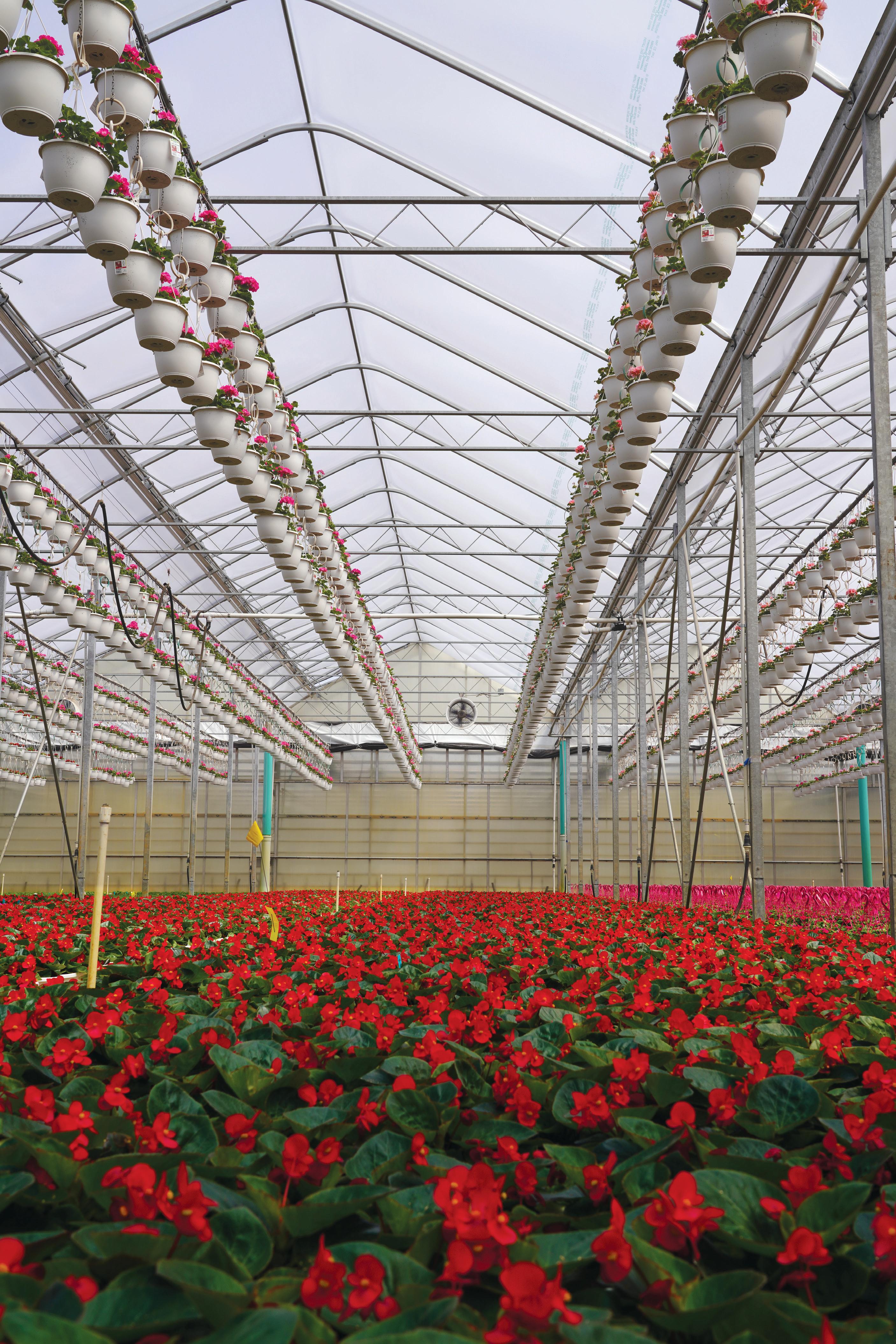
DeCloet’s team of dedicated professionals bring over 4 decades of experience to each project. With proven success in numerous installation projects we know we can put your mind at ease.