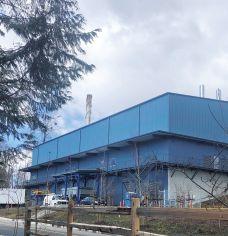
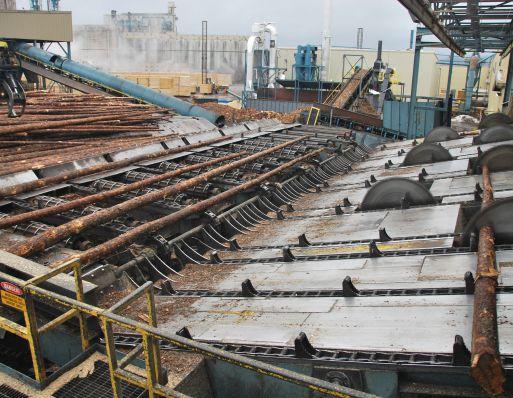
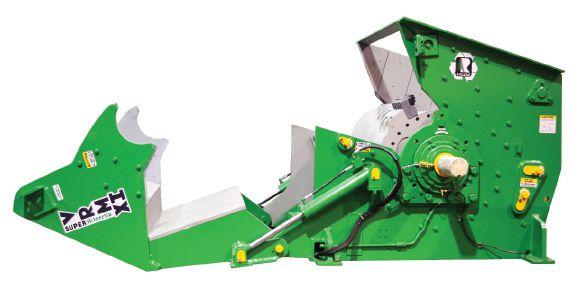
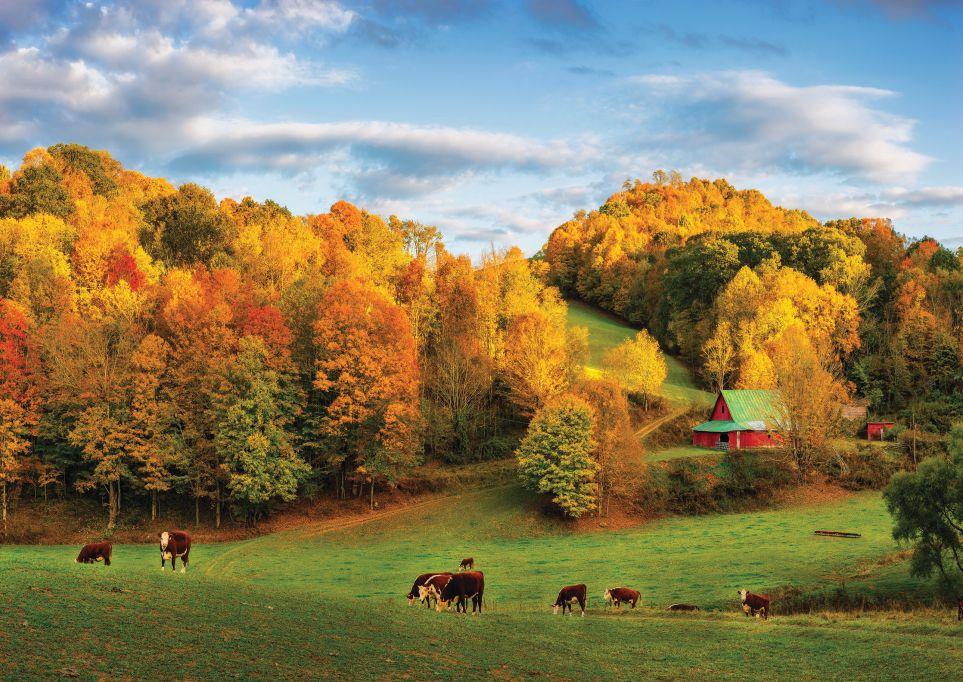
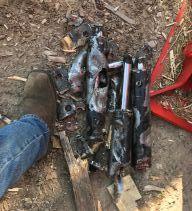
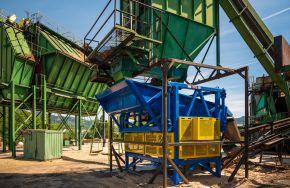
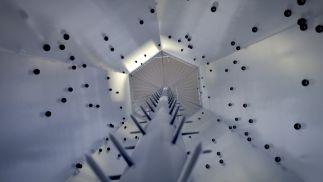
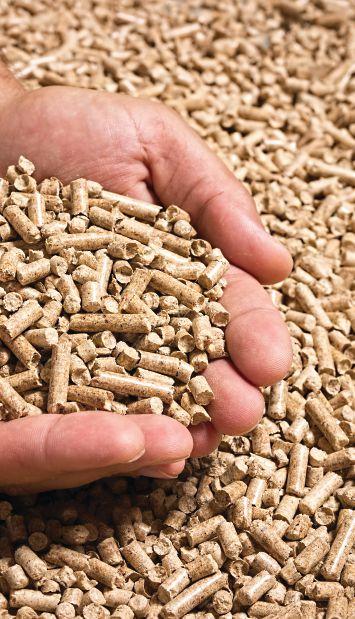
Funding from the Forest Enhnacement Society of BC has helped Duz Cho Logging and Canfor Energy North utilize residual wood waste, bringing economic and environmental benefits to local communities.
12
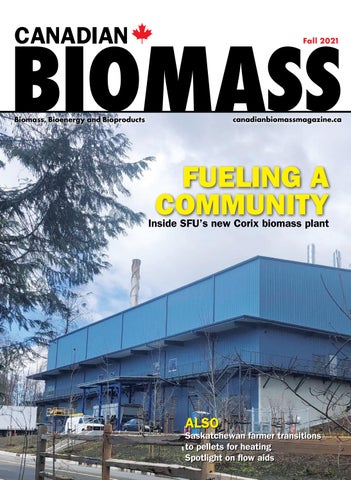
Fueling a community
SFU’s new $33 million Corix biomass plant is helping to sustainably heat a community. Canadian Biomass gives readers an inside look.
16
Making a switch
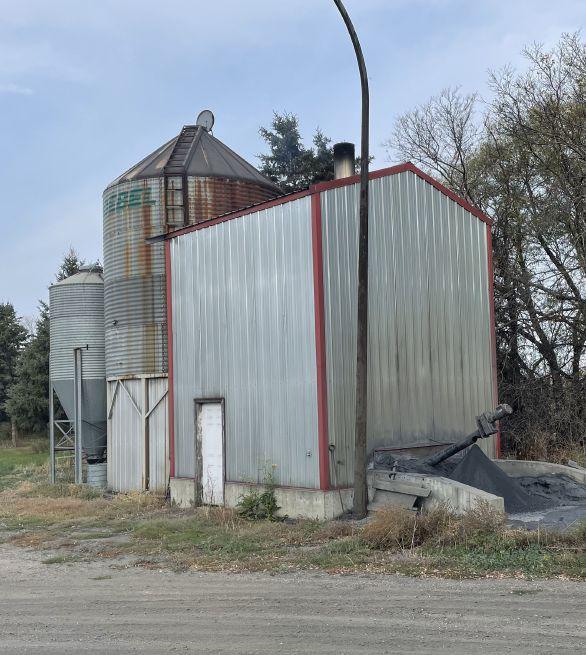
Hassan Farms Inc., a Saskatchewan chicken farm, has recently transitioned from using coal to oat hull pellets for heating at their main farm. Canadian Biomass shares their experience making the switch.
20 Achieving consistent flow
Martin Engineering’s Brad Pronschinske gives an inside look at how flow aids can help resolve bulk material handling issues.
DForward thinking
“Waste” residuals present amazing opportunities for the future
on’t be fooled by the terms “lowgrade” and “waste.” When it comes to residual wood fibre – even though it may be labeled as low-grade or waste – it doesn’t mean it’s to be completely disregarded and brushed aside.
A recent project conducted in Chetwynd, B.C. proved that low-grade residual waste wood fibre has its place in pellet and energy production, and doesn’t need to simply be piled up and burned.
Although the project was largely contingent upon funding from the Forest Enhancement Society of B.C., it nevertheless demonstrated that an otherwise wasted source of fibre could be utilized productively.
complish when they think outside the box. In today’s day and age, when the term “sustainable” is toward the top of the list of buzz words, this is especially important.
Bioproducts represent a change in direction toward the acquisition and use of items we’ve commonly relied upon in the past, yet have required certain non-sustainable elements to make them work. Technologists in more recent years have come up with ideas that have made many such products more sustainable, thereby growing the bioproducts market.
The partnering companies in this venture – Canfor Energy North and Duz Cho Logging of the McLeod Lake Indian Band – have touted the project’s success, hinting it could potentially lead to similar projects in the future.
By not burning the waste residual, fewer greenhouse gas emissions were realized, and the fibre was put to good use without reliance on residual sawmill fibre. The amount of fibre utilized in the four-monthlong project were nothing to sneeze at. More than 14,000 cubic metres of fibre was recovered, or almost 300 truckloads.
The project created work for a number of people and left a positive impact on the local Chetwynd economy. It was a winwin-win situation for all parties involved, including the environment. Read more about this project on page 10.
And, on the subject of industry trends (the good), we need not look further than what is happening at FPInnovations.
It’s amazing what great minds can ac-
Researchers at FPInnovations have found that cellulosic bioproducts used as an additive in concrete have resulted in a significant breakthrough for that industry. The bioproducts improve the service life of concrete structures, especially during freezing and thawing cycles. Their ability to contribute toward increased durability and structural longevity also helps reduce maintenance costs. It’s economically competitive compared to other additives used in concrete.
Cellulosic bioproducts derived from sustainably managed forests can reduce the concrete industry’s carbon emissions through carbon storage and decreased greenhouse gas emissions. And, since they’re a byproduct of other forest operations processes, cellulosic bioproducts are plentiful and can be easily transported. Forward thinking can produce amazing results. •
– Mike Jiggens
Volume 20 No. 4
Editor - Ellen Cools (416) 510-6766 ecools@annexbusinessmedia.com
Interim Editor - Mike Jiggens (519) 429-5184 mjiggens@annexbusinessmedia.com
Contributors - Gordon Murray, Brad Pronschinske, Carsten Huljus
Group Publisher - Todd Humber 416-510-5248 thumber@annexbusinessmedia.com
All advertising is subject to the publisher’s approval. Such approval does not imply any endorsement of the products or services advertised. Publisher reserves the right to refuse advertising that does not meet the standards of the publication.
www.canadianbiomassmagazine.ca
GOOD HR PRACTICES ARE CRITICAL
IN THE FOREST, ON THE MILL FLOOR OR IN THE OFFICE
Talent Canada, a new information source from the publisher of Canadian Biomass, is designed to provide your senior management team and front-line leaders the information they need to find, keep and engage the best workforce.
Topics covered include:
• Recruitment and retention
• Employment law and compliance
• Employee engagement and productivity
• Mental health in the workplace
• Addition and disability issues
• Return to work and accommodation
• Leadership tips and best practices
• And so much more!
RESOLUTE’S MULTI-MILLION-DOLLAR INVESTMENT INTO SAWMILL WILL ADD NEW SHIFT, JOBS
Resolute Forest Products is investing $17 million in its Fort William First Nation sawmill in Thunder Bay, Ont. The amount is $4 million more than the company had originally committed to the project.
The investment will step up production at the mill by up to 40 million board feet of construction-grade lumber.
ANOMERA
About 330 million board feet are currently being processed in addition to 45,000 metric tons of wood pellets.
Resolute plans to add another shift to create about 30 new mill jobs and other employment opportunities in woodland operations. The mill currently employs about 250 people.
RECEIVES $4.25M TO PRODUCE ALTERNATIVE TO PLASTIC MICROBEADS
The federal and Quebec governments are investing $4.25 million in Anomera Inc., to support the construction of a demonstration plant that will produce 250 tonnes per year of carboxylated-cellulose nanocyrstals (cCNC) and bring the product to market.
The facility will create up to 20 new jobs. Carboxylated-CNC is a biodegradable solution that can replace plastic and silica microbes in personal care and cosmetics. Anomera has created an eco-friendly conversion process that will create new, high-value market streams for the forest sector.
“Anomera is pleased to be supported by the Canadian and Quebec governments to enable us to expedite the development of our advanced technology which creates new products from Canadian forests in a sustainable manner. Our initiative to replace plastic microbeads worldwide with Forest Stewardship Council (FSC)-harvested Canadian forest products is truly redefining the future of cellulose. As we move into the industrial markets, there will soon be tens of thousands of tonnes of demand for the Canadian-sourced cellulose nanocrystals,” said Howard Fields, president and CEO, Anomera Inc., in a statement.
“Consumers increasingly demand that industry be more respectful of the environment, and Anomera’s products offer global industries natural, bio-degradable alternatives to silica and petroleum-based microbeads. Partnering with Anomera allows us to expand our biofuture strategy and help us to do what we do best: providing customers with sustainable, innovative products for a purer planet,” added Paul Boynton, president and CEO, Rayonier Advanced Materials.
HORSE LAKE FIRST NATION BIOREFINERY TO BEGIN PRODUCING HEAT, POWER FROM BIOMASS
Ground has been broken for a new bio-refinery at the Horse Lake First Nation in northwestern Alberta. The First Nation is partnering with BioEnergy Solutions on the project known as Horse Lake Energy Junction.
The facility is expected to be fully operational by January 2022. It will utilize biomass inputs for power, and will produce biostimulants while harvesting algae and sequestering emissions.
The facility will be self-sustaining and will combine biomass waste and agricultural waste to create heat and power.
SBP-endorsed Regional Risk Assessment for BC published
The Sustainable Biomass Program (SBP) has published the SBP-endorsed Regional Risk Assessment (RRA) for B.C.
The Wood Pellet Association of Canada (WPAC) initiated the RRA in 2018 to verify the legality and sustainability of uncertified feedstock in B.C. Hopkin Forest Management Consulting Ltd. and a team of independent natural resource and certification professionals formed the Working Body responsible for developing the RRA.
SBP-endorsed RRAs are a key part of SBP’s focus on identifying and mitigating risks associated with sustainably sourcing feedstock for biomass pellet and wood chip production. RRAs evaluate an entire geographic region and determine the risks associated with sourcing feedstock from that region. Thus, individual biomass producers do not need to conduct risk assessments and consistency between biomass producers’ risk assessments is guaranteed.
FEDERAL GOVERNMENT
The government of Canada in August announced more than $3.5 million in funding for the University of British Columbia (UBC)’s BioProducts Institute.
The money is meant to help support the development, scale-up and production of sustainable bioproducts, including filters, adhesives, lightweight materials and personal protective equipment, by helping to de-risk technologies and support the commercialization of the bioproducts.
UBC’s BioProducts Institute will be working to help pulp mills in B.C. become bioproduct or biorefinery mills that produce sustainable materials to be used in the medical field, personal care, filtration, crop protection and other industries.
“Scaling up development of high-value, bio-based materials from cellulose and lignin will generate economic and social benefits for B.C. and increase the long-term competitiveness of its forest sector. UBC’s BioProducts Institute, together with the BioAlliance and industry partners, is working on catalyzing the diversification of the forest industry into sustainable markets. We are grateful to Pacific Economic Development Canada for this new funding, which supports our efforts to help grow B.C.’s bio-economy, in alignment with the province’s goals to accelerate technological and economic growth and improve environmental sustainability,” said Professor Orlando Rojas, Canada Excellence research chair in forest bioproducts and scientific director, UBC BioProducts Institute, in a statement.
FEDS INVEST $2.1M IN FPINNOVATIONS FOR NEW EQUIPMENT TO ADVANCE BIOPRODUCTS
FPInnovations is receiving over $2.1 million from the federal government to acquire state-of-the-art equipment for construction materials and bioproducts.
The new equipment will allow FPInnovations to increase its research and development and technology transfer activities with Quebec SMEs operating in the panel industry.
“FPInnovations was able to acquire advanced analytical equipment including the optical surface profilometer or the high-performance liquid chromatograph (HPLC) that will allow improved characterization of lignocellulosic materials to support FPInnovations’ members in the development of new materials in fields such as packaging, textiles or construction,” said Stéphane Renou, president and CEO of FPInnovations.
“In addition, FPInnovations’ press has been equipped with a new system for testing resins with a lower environmental impact for composite panels. We have also integrated a dynamic image analyzer that allows it to determine the geometry of the fibres and their distribution in order to optimize the insulation properties of bio-sourced insulation materials.”
The funds were provided under Canada Economic Development for Quebec Regions (CED)’s Regional Economic Growth through Innovation program. This program is geared towards entrepreneurs leveraging innovation to grow their businesses and make them more competitive, as well as regional economic stakeholders.
“We are delighted to receive this financial support, which will allow FPInnovations to acquire new equipment that is invaluable to SMEs operating in the forestry sector, allowing them to innovate and set themselves apart in increasingly competitive markets,” said Renou. “These investments will help promote forests as a strategic source of growth for the bioeconomy and the transition to a greener economy that is needed in our fight against climate change.”
Feds invest $605K in two Indigenous-led biomass projects
The federal government is investing $605,000 in two biomass projects in the Lac-Saint-Jean, Que., region, to support Indigenous-led development projects.
Akua Nature Inc. will receive $400,000 to support the construction of new infrastructure that will facilitate the conversion of forest biomass into natural health products based on First Nations medicine.
The remaining $205,000 will go to Inukshuk Synergie to help operationalize its plan to have franchises commercialize their biomass energy heating systems, providing a turnkey energy solution to local communities.
Gaining momentum
The wood pellet industry is poised to help governments meet climate change goals
By Gordon Murray
We are officially into fall and the cooler weather is a welcome relief to all of our friends in fire-impacted areas. September also saw another information-packed Wood Pellet Association of Canada (WPAC) annual conference and AGM. You can enjoy a summary of the conference and links to the excellent panels and presentations at canadianbiomassmagazine.ca. We can’t thank our attendees and sponsors enough as we held the event virtually for another year as the COVID-19 impacts continue to prevent us from gathering in-person. We are looking forward to seeing you in Vancouver next year – mark your calendars for Sept. 18-21, 2022!
The snap federal election that was called in August concluded on September 20 with another minority government for the Liberals and the Conservatives in official opposition once again. Cabinet is ex-
pected to be appointed by early-mid-October and Parliament to return by early November. WPAC expects many familiar faces to be in cabinet and will continue to work with old and new ministers and MPs on its members’ behalf.
Prime Minister Trudeau’s priority will be to return to governing and address the impact of the pandemic’s fourth wave on the country and ensure a strong economic recovery. Climate and environment will also continue to be key areas of focus. The Liberals’ climate plan, announced during the campaign, stresses that a healthy environment will also be positive for the economy and jobs. We couldn’t agree more.
WPAC applauds the government for their ongoing commitment to a low-car-
bon economy and urges them to leverage existing policies, technologies, and products, including Canadian sustainably sourced and produced wood pellets, while also looking to invest for the future. We are pleased to see a commitment to end thermal coal exports by 2030. We have a made-in-Canada solution with wood pellets that can be used in international markets and domestically to help our export figures and reduce greenhouse gas emissions at home and abroad.
However, based on the latest science and Canadians’ real-life experiences, time is of the essence. This past summer, unprecedented climate events, including massive wildfires, record-breaking heat waves, and devastating droughts and
ABOVE: Many European electric power plants are fueled with Canadian wood pellets, contributing to the EU’s goal of reducing greenhouse gas emissions by at least 55 per cent by 2030, compared to 1990 levels. Photo credit: WPAC.
floods, brought climate change front and centre in all of our lives.
The picture is no different globally, and in Europe, politicians are leading the charge. The European Commission (EC) released On the path to fit for 55, a package of proposals to make the EU’s policies fit for reducing net greenhouse gas emissions by at least 55 per cent by 2030. Sustainable bioenergy continues to be seen as a key part of the EU energy mix, playing a role in making Europe climate neutral by 2050. The proposed revisions to the Renewable Energy Directive (RED III) include changes to biomass sustainability requirements, and the Canadian pellet industry is well-positioned to meet these criteria. We will work closely with our European industry partners and customers to ensure that the provisions of RED III are practical and viable.
Closer to home, we are encouraged by the British Columbia government’s recently released Intentions Paper with its focus on three principles, supported by WPAC, that will govern future actions and policies:
1. Increased sector participation
2. Enhanced stewardship and sustainability
3. Strengthened social contract.
Katrine Conroy, British Columbia’s Minister of Forests, Lands, Natural Resource Operations and Rural Development, opened our conference this year and challenged all of us to look beyond just energy to find more opportunities for pellets that will contribute to the emerging bioeconomy and reap some of the carbon benefits within the province as well.
Clearly there is political momentum from all angles as we get set to watch a convergence of thought leaders, political leaders, global scientists and NGOs this fall at COP26. The recently released IPCC Sixth Assessment Report linked global climate change with specific extreme weather events and warned that we should expect more of this in the years to come.
“We need immediate, rapid and sustained reductions,” says John Fyfe, senior research scientist with Environment and Climate Change Canada and a lead author. We couldn’t agree more. Replacing fossil
fuels with sustainably harvested and produced wood pellets is a solution for today.
At WPAC, we are moving forward on some ambitious initiatives and goals. At our recent AGM, we received full support of our 2021-22 priorities including building on our market outreach and advocacy efforts, getting the Sustainable Biomass Program (SBP) Regional Risk Assessments completed for New Brunswick and Nova Scotia, and moving forward on assessments for Alberta and Saskatchewan. Domestically, we will continue to improve our sector’s pellet safety performance across Canada and grow the domestic market with a focus on the Maritimes. We will also establish a research advisory group in co-operation with the University of British Columbia to tap into the full potential of pellets in the bioeconomy.
Achieving these goals and tackling climate change will require all of us listening, sharing ideas, investing in research, committing to safety 24/7 and pulling in the same direction. We have a solid track record on this front, but there’s more work to do. •
TSI BUILDS MACHINERY FOR THE BIOMASS INDUSTRY
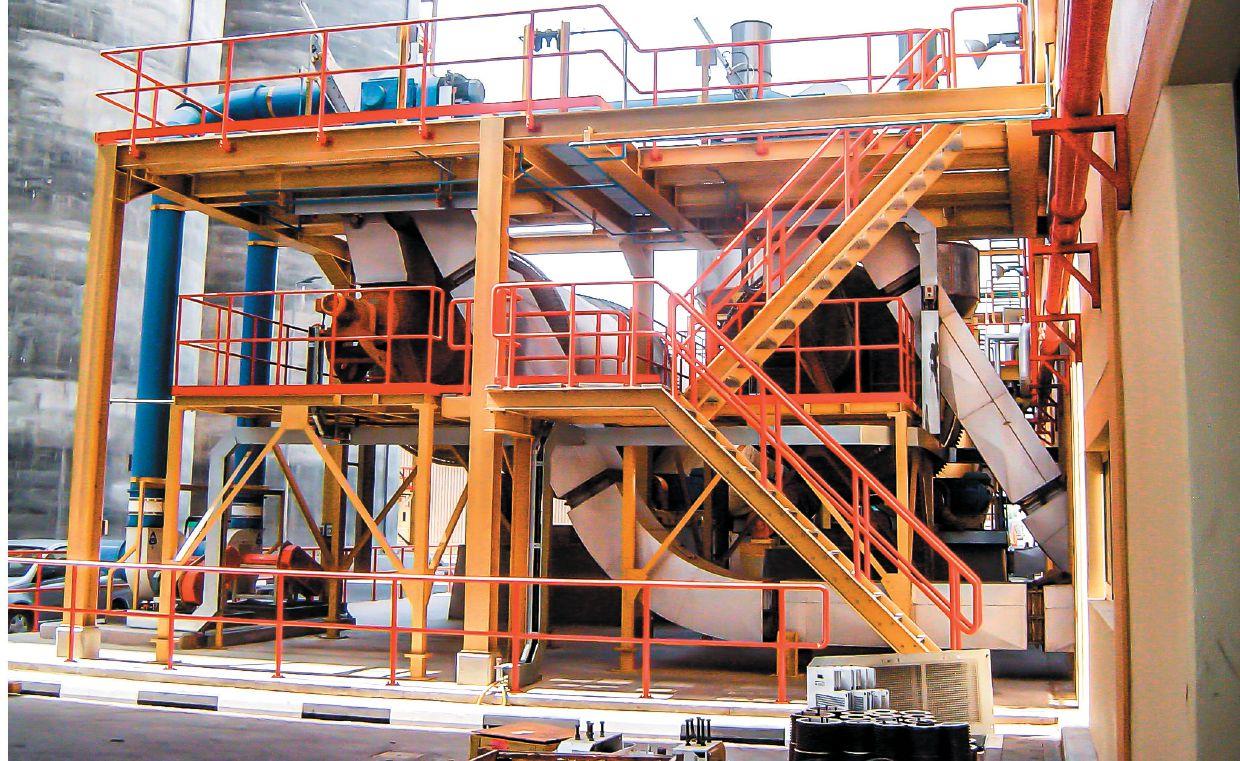
This includes Rotary Drum Dryers coupled with Heat Energy systems; TSI also builds Wet Electrostatic Precipitators when required to meet Client’s emission goals. TSI also offers technology for Torrefaction. TSI machinery is custom designed and ranges from 50,000 tons/year to 450,000 tons/year.
An exceptional partnership
Funding helps Duz Cho Logging, Canfor Energy North utilize residual wood waste
Afour-month-long project in northeastern British Columbia – in which low-grade residual wood fibre was harvested for pellet production through funding from the Forest Enhancement Society of B.C. (FESBC) – could open the door for similar projects in the future.
FESBC provided $299,759 for the partnership project between Duz Cho Logging of the McLeod Lake Indian Band and Canfor Energy North. The companies’ joint proposal was approved last November to begin the project, and work concluded in late March.
The purpose of the project was to utilize leftover low-grade fibre from harvesting operations in the Chetwynd, B.C., area – residuals that would otherwise be piled and burned – and use it for pellet and energy production.
“We collectively could envision how it might be a catalyst for more of this kind of work in the northeast region of B.C.,” explains Ray Raatz, operations manager with FESBC, reflecting on the project’s proposal submission from Duz Cho and Canfor.
The recovery of such low-grade fibre is economically limited, but the funding from FESBC allowed the fibre to be hauled to the Canfor Energy North facility in Chetwynd, where it was chipped for use in pellet and energy production. The money made it possible for low-grade fibre to be recovered from a significant distance.
Without the funding, Canfor likely never would have embarked on the project, Don Rosen, the company’s woodlands manager for its Chetwynd Division, says.
“It’s something we really hadn’t done or had any experience with,” he explains. “It’s one thing to work it all out on a spreadsheet as to what you think it might cost, but it’s another thing to actually execute and do that stuff in reality. That really gave us the impetus to try to utilize that fibre and work through the full lifecycle cost and process, and see if we can ac-
By Mike Jiggens
tually produce a product we can utilize.”
Rosen says the project was important for several reasons, including its economic and environmental benefits.
“Not only was it an exceptional partnership with McLeod Lake Indian Band’s Duz Cho Logging partnership, but the FESBC funding was the impetus for our company to do more of this work as this was our first residuals utilization project in the bush,” he explains.
The project enabled Canfor to expand its capacity for what it can do in the future in utilizing fibre from its operations and creating new revenue streams.
“We also know there are downstream benefits of these projects for logging contractors and haulers/truckers,” Rosen says.
Duz Cho Logging assigned five of its employees to the Chetwynd site to do the chipping of the fibre, and enough work was created for upwards of 10 people.
Chris Hayward, Duz Cho Logging general manager, joined the project in February after it was already a couple of months underway. He says the project
went “smooth” with the company’s crew and equipment.
“One of our core principles at Duz Cho is we ensure the footprints we leave behind are the ones our children will be proud to walk in, and this project was definitely in alignment,” he says. “The environmental benefits were significant because by avoiding pile burning, the result is fewer greenhouse gas emissions.”
The economic benefits were just as important, Hayward adds.
“We were able to provide employment for McLeod Lake Indian Band members,” he says. “Not only are these good-paying jobs to benefit our members and their families, but people have the opportunity to learn new skills while doing this hands-on work, which is important.”
Hayward also praised the efforts of FESBC in making the project possible.
“I think it’s great that FESBC did what they could to try to get funding for projects like this because it gave Canfor an opportunity to chip some of their waste right in the yard and use it as their own
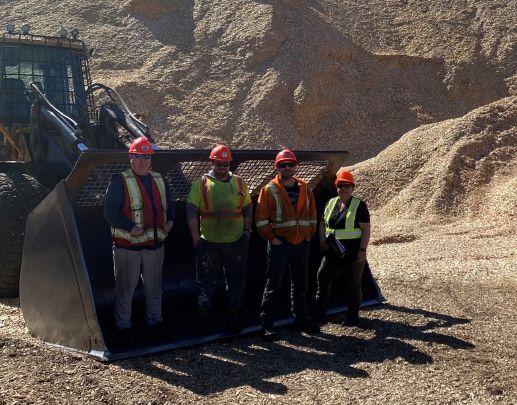
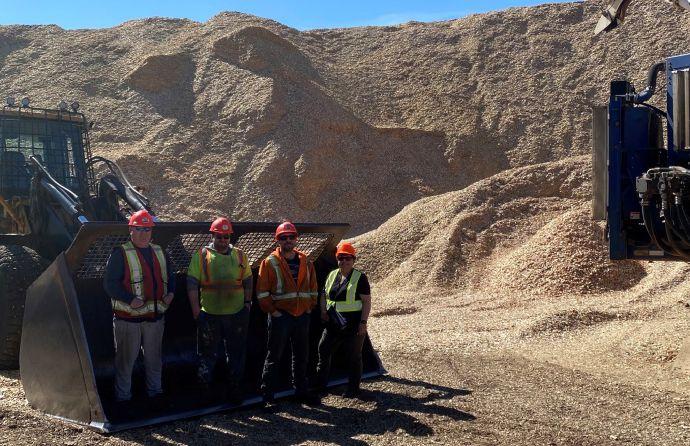
Maddy Scott, right, safety manager at Duz Cho Logging, performs an on-site safety audit and meeting with workers. Also pictured are, from left, Roy Wall, Byron Osmond and Gene Langford. Photo courtesy Duz Cho Logging.
product,” he says.
Raatz suggests there may be additional opportunities for other projects of this kind that FESBC can support down the road.
“It’s all about the economic reach,” he says, adding the partnership between Canfor and Duz Cho allowed each of the parties to learn new efficiencies to help them venture further on their own.
“Our goal is increasing utilization of low-grade fibre and, as a result of that, reducing burning and thereby reducing greenhouse gas emissions,” Raatz adds.
Canfor had historically relied on sawmill residual fibre for its pellet plant, but wanted to determine how it could obtain material directly from its bush operation instead of relying on residuals from the sawmill.
“It was an opportunity in a sense to provide some funding to try this out,” Raatz says. “They (Canfor and Duz Cho) had a large proposal, and we were only able to fund a portion of what they were proposing, but it gave them an opportunity to get some learning about how to implement this type of project and some of the economics associated with it.”
up to 12 t/h
Rosen says Canfor experimented a little bit with Duz Cho’s equipment, playing with some of the settings “to get a proper chip size and characteristics to work with our facility, and they were really good at accommodating us so that we could utilize that fibre.”
The Peterson chipper used during the project was supported by two Caterpillar wheel loaders – one equipped with a log grapple to forward wood to the chipper and another with a chip bucket that stacked the chips.
Rosen adds it was more of the chipping product that changed as opposed to the plant.
“We changed a little bit of the recipe and the blend to make that work through our facility,” he explains. “It was a really good opportunity to jump-start the utilization of that fibre and give us a better understanding of how it all works. That residual market is a very thin margin part of the business to be in.”
The project utilized 14,742 cubic metres of residual waste fibre, which is approximately equal to 295 truckloads.
“This project was a great opportunity for members of the McLeod Lake Indian Band to participate in a project that helps utilize more of the wood fibre being harvested within the traditional territories,” Hayward says. “We are creating a greener, more sustainable environment.”
Employees from both Duz Cho and Canfor contributed to the Chetwynd economy throughout the project’s duration, through fuel and food purchases and accommodations. Additionally, a number of local trades people were hired to maintain the project’s equipment.
“Our project showed true partnership,” Hayward adds. “So much happened behind the scenes in the planning and implementation, and from start to finish it was truly a collaboration – a project in support of each other for the benefit of many.”
The Duz Cho/Canfor project was one of 14 fibre utilization projects funded by FESBC in several regions of the province as part of British Columbia’s StrongerBC funding allocation. FESBC was allocated $3 million in total from the B.C. government for the StrongerBC economic recovery plan. •
MORE THAN 10 MILLION TONS. CAN ANYBODY TOP THAT?
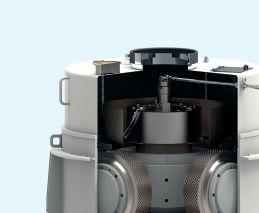
Our pellet mill 65-1500 outperforms the competition: With a throughput of up to 12 t/h, it is currently the largest flat die pellet mill for the wood sector. Worldwide, flat die pellet mills from AMANDUS KAHL produce more than 10 million tons of domestic fuel and industrial pellets from hardwoods and softwoods every year, and the trend is rising.
SFU’s new $33 million Corix biomass plant is helping to sustainably heat a community
By Ellen Cools
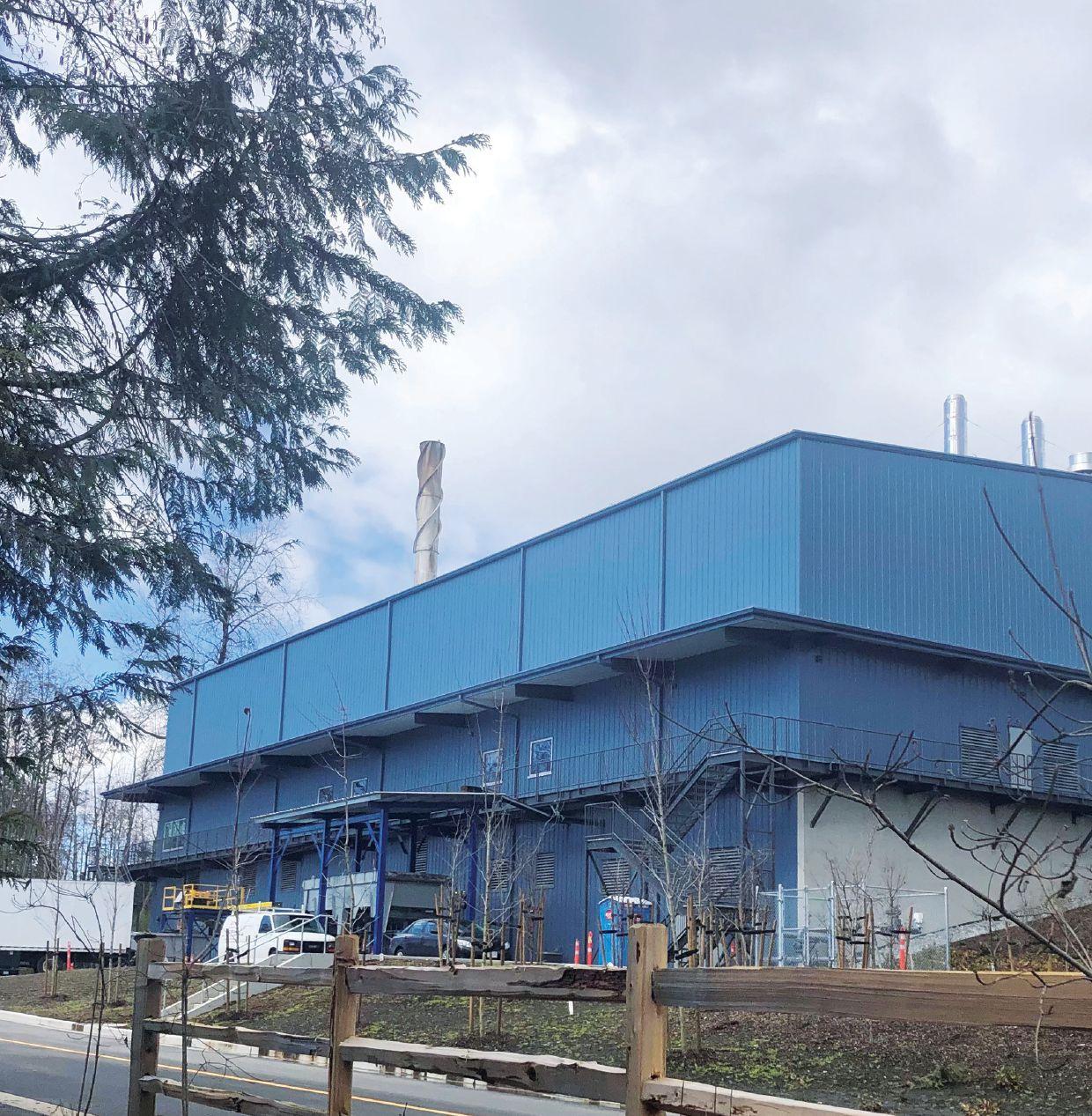
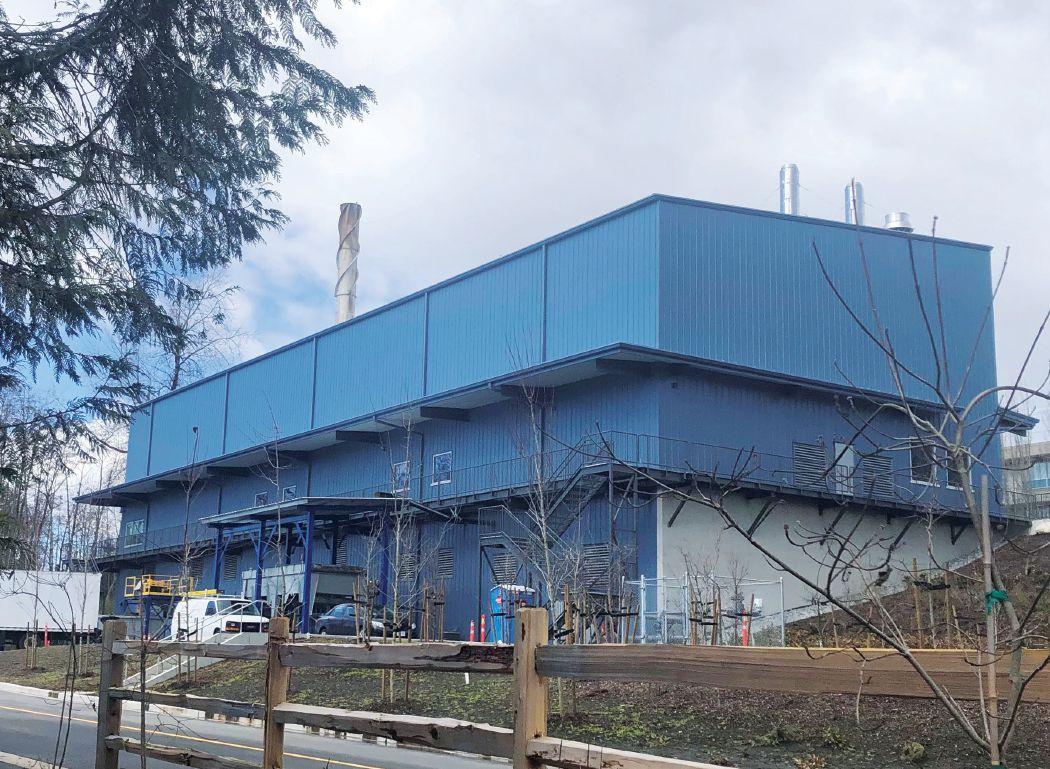
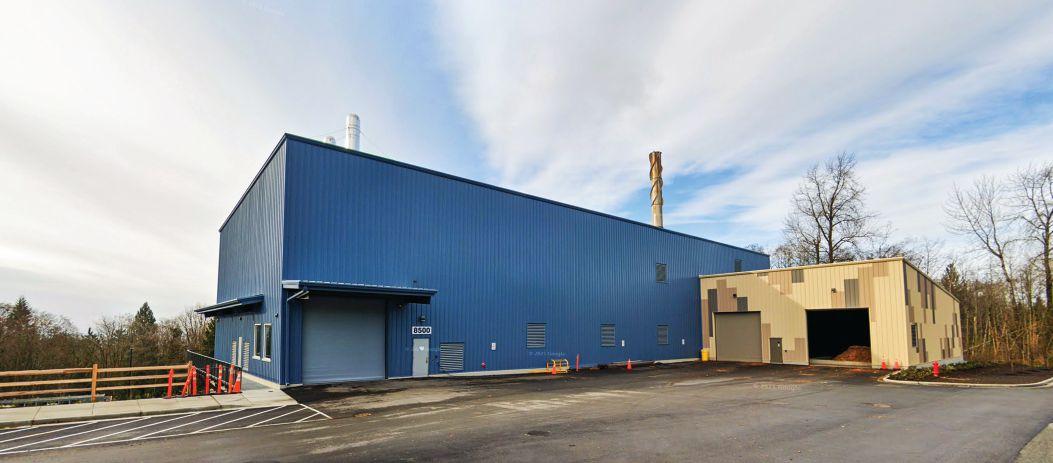
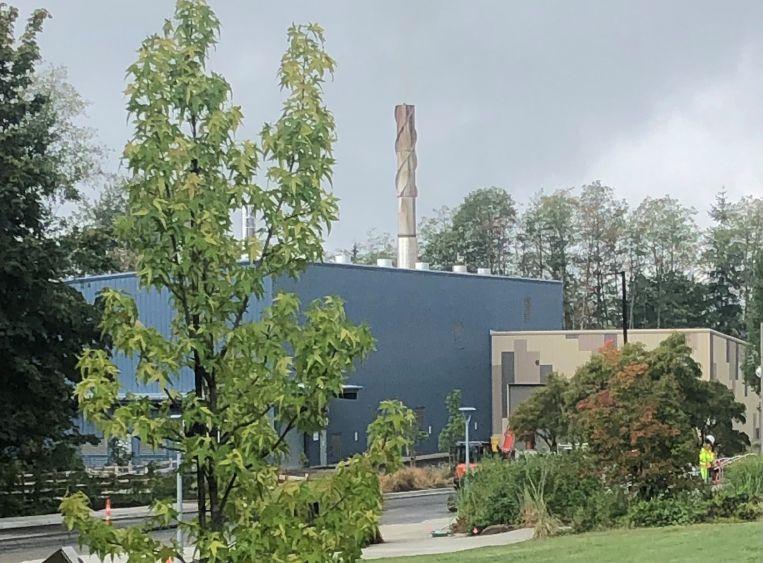
Simon Fraser University (SFU)’s campus in Burnaby, B.C., is now home to a new $33 million biomass plant that is using urban wood waste to provide heating and hot water to the campus and a nearby residential community, UniverCity.
The biomass plant has been operating since October 2020, but the project has been eight-and-a-half-years in the making.
For SFU, the motivation behind switching from natural gas to biomass for heating and hot water was two-fold, explains Larry Waddell, SFU’s chief facilities officer.
“One, SFU had an aging tradition-
al natural gas heating plant that served our campus. So, there was a desire to see what options we might have to replace or extend its life,” he explains. “There was also a desire to try to become more sustainable and respond to the province’s targets for the public sector to reduce greenhouse gas emissions.”
A UNIQUE PARTNERSHIP
At the same time, SFU’s independent real estate development group was develop-
ing a piece of land next to the campus into a private residential community, UniverCity.
The group that oversaw this project, the SFU Community Trust, wanted to make UniverCity a model sustainable community, and decided to implement a district energy system. They put out a Request for Proposal (RFP) looking for private utilities to invest in and build such a system, Waddell explains.
SFU also decided to participate in this
ABOVE: A view of the new $33 million Corix biomass plant providing heat and hot water to Simon Fraser University’s Burnaby, B.C., campus. Photos courtesy Simon Fraser University.
process. Corix Utilities was the successful proponent of the RFP, coming up with the idea of a biomass heating facility that could serve both SFU and UniverCity. As a result, a unique partnership was born between SFU, UniverCity and Corix Utilities.
However, this set-up led to a few logistical challenges. SFU negotiated their own service contract directly with Corix, but since the biomass plant serves a private residential community as well, it has to be regulated by the B.C. Utilities Commission (BCUC).
With a 13.5 MW capacity, 10 MW goes to SFU, with the remaining 3.5 MW directed to UniverCity.
“That’s what is somewhat unique about this – we do have a very specific contract that lays out the performance requirements of Corix, including how rates are determined,” Waddell says.
As part of the contract, Corix designed, planned and built the biomass plant, and now operates and finances it. They decided to install a Wellons biomass boiler inside a building designed and built by Wellons on SFU’s campus.
However, there was another logistical bump in the road.
“The City of Burnaby requires building permits to have an architect’s seal. As the building was designed by an engineering
company, an architectural firm needed to be retained,” Waddell explains. “So, that was a challenge that Corix had to deal with.”
INSIDE THE PLANT
Despite these difficulties, once construction began in 2019, things went fairly smoothly, notes Todd Gattinger, SFU’s director of maintenance operations. All told, construction took about 1416 months.
As part of SFU’s contract with Corix, the utility secured a fiveyear fixed fibre supply contract with a five-year renewal clause for the university. The fibre for the plant is urban wood waste that would otherwise have gone to a landfill or another biomass facility.
“Our contract has very specific language regarding the type of material that can be used as fuel, including the requirement that timber can’t just be cut down and ground up for fuel,” Waddell says. “We won’t accept that.”
The plant itself connects to both SFU Burnaby campus’ existing natural gas plant and to UniverCity’s boilers through underground pipes. With a 13.5 MW capacity, 10 MW goes to SFU, with the remaining 3.5 MW directed to UniverCity.
To deliver that energy to their Burnaby campus, SFU made a small change to their natural gas plant, which had five Cleaver Brooks or Foster Wheeler boilers running in parallel: they removed the fourth boiler and replaced it with a heat exchanger. At one side of that heat exchanger is the biomass plant connected by half a kilometre of piping, and on the other side is SFU’s natural gas plant.
“Given this, from our standpoint, the biomass plant is essentially
a new boiler,” Gattinger says.
The biomass plant now provides heating and hot water to 30 out of 50 buildings on SFU’s campus. The other four boilers are still running on natural gas, but they are only used to help meet heating and hot water demands during the colder months.
MEETING EXPECTATIONS
Overall, SFU expects the biomass plant will reduce greenhouse gas emissions from heating by 80 per cent – the equivalent of emissions from 900 homes each year. According to Waddell, it puts SFU well on its way to achieving the B.C. government’s 2050 greenhouse gas targets.
At the time of writing, SFU planned to conduct an analysis of actual performance versus their business case in October, at the one-year mark of the biomass plant’s commissioning, to determine how well it’s working. That said, the Corix biomass plant is running as expected.
“Back in February, our natural gas expenditure at SFU’s Burnaby campus was one-third of what it would have normally been before we had the biomass plant,” Waddell shares. “That indicates it was clearly replacing a lot of our former natural gas-generated heat with biomass heat.”
“We have been tracking expenditures on a monthly basis to determine if they are in line with what we estimated as well as the levels of carbon emissions we projected to avoid. So far, this has been tracking exceptionally well, aligning closely to what we estimated in our business case,” Gattinger adds.
COMMUNITY CONNECTIONS
The response from the local community and university students has been favourable, despite some initial reservations and misunderstandings about the sustainability of biomass.
SFU expects the biomass plant will reduce greenhouse gas emissions from heating by 80 per cent - the equivalent of emissions from 900 homes each year.
“There’s been some confusion around why we’re burning wood and why that is better than clean burning natural gas,” Gattinger says. “The issue of wood being carbon neutral as opposed to natural gas is that urban wood waste would otherwise decompose and emit carbon into the atmosphere if not burned. Whereas natural gas left in the ground would not become a greenhouse gas.
ai1633019768215_ibce22-RegisterHALF-CaBiomassMag.pdf 1 9/30/2021 11:36:10 AM
The biomass facility also has a smoke stack where some smoke and steam can be seen coming out of it, which created some concern among students. However, the university has helped address those concerns by explaining how the system works and the regulations around emissions.
“In our case, Metro Vancouver is the authority that regulates emissions in this area, and the guidelines for emissions are some of the most stringent in the world,” Waddell explains. “This plant has to meet those requirements. We’ve set up monitoring stations on some of the adjacent
buildings so we can keep track of that.”
Looking ahead, SFU doesn’t plan on expanding the biomass facility’s capacity, but does plan to reduce their energy requirements in other ways.
“We have a 55-year-old campus, so we have a lot of aging buildings – there’s an
opportunity to explore ways to improve on that,” Gattinger says. “We’re now embarking on a district energy system modernization, which will see an upgrade of terminal units from a high temperature system to a low temperature one. The outcome will be that the percentage provided by biomass will reduce our overall heating needs.”
Ultimately, Waddell and Gattinger believe that switching to biomass heating is something that other universities and institutions can do fairly easily. Some, such as the University of British Columbia and the University of Northern British Columbia, have already done so.
“We would encourage other institutions to explore the viability of this type of biomss system for their campuses as well,” says Waddell. •
SFU expects the Corix biomass plant will reduce greenhouse gas emisisons from heating by 80 per cent.
Making a switch
Saskatchewan chicken farmer sees benefits transitioning to oat hull pellets for heating
By Ellen Cools
Canada is one of the largest producers of agricultural and agri-food products. It makes sense, then, that it is also one of the largest producers of agricultural waste. But, there is a growing opportunity to turn that agricultural waste into biomass products that can be used for heating.
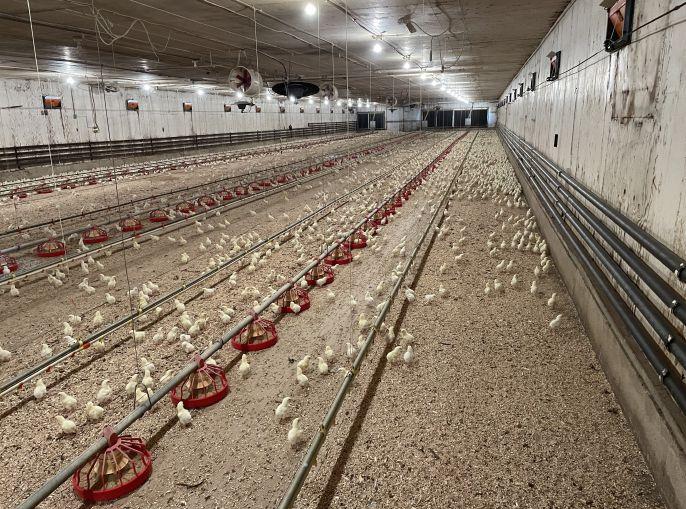
Hassan Farms Inc., a chicken farm in the RM of Preeceville, Sask., recognized this opportunity. The family-owned and operated company recently transitioned one of their three farms from using natural gas and coal for heating to using oat hull pellets.
Darryl Goossen, who took over the business from his parents in 2015, is leading the charge in switching to biomass.
HIGH COST OF CARBON
Like many Canadians, Goossen was becoming more concerned about the environmental impact of using coal for heat. And, in the years since the federal government’s carbon tax was implemented, the price of coal has skyrocketed.
Previously, Hassan Farms burned about 300 tonnes of coal to heat their main farm and 150 tonnes to heat their second, smaller farm, Goossen explains. The main farm uses a Decker 1.8 MBTU boiler for heating, while the second farm uses a smaller boiler.
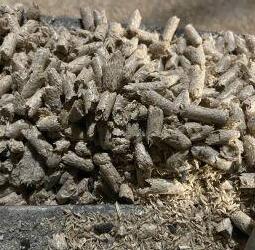
Before the carbon tax came into effect, they were paying approximately $45 per tonne for the coal, which came from Alberta, and $45 per tonne for freight, for a total of $90 per tonne. When the carbon tax came into effect in 2019, the price of coal for the farm went up from $90 to $140 per tonne. Now, the total cost of coal for Hassan Farms (including transportation costs) is $200, about half of which is carbon tax, Goossen says.
So, in September 2020, Goossen decided to switch to an alternative that was more environmentally and economically friendly. He knew there were alternatives to coal, such as wood pellets, that could work with his farm’s boiler with minimal upgrades required.
“When we bought our boilers, we were told that we could burn wood pellets in them as well as coal. So, I started calling around, checking out wood pellet suppliers, but the price for it was higher than what I was willing to pay,” he says.
But, an acquaintance told Goossen he should look into agricultural-biomass pellets, and he began researching his options. Goossen spoke with Mahmood Ebadian, biomass, bioenergy and biofuel supply chain analyst at the University of British Columbia’s Biomass and Bioenergy Research Group (BBRG), who provided some information about the benefits of using biomass to heat his operations. Ebadian also shared information about different pellet and equipment manufacturers.
‘A
VIABLE ALTERNATIVE’
Eventually, Goossen found Prairie Lake Milling in Ninette, Man., which sells oat hull pellets at a price that was economically feasible for Hassan Farms.
The pellets cost $110 per tonne, but the cost of freight is only $35 per tonne, Goossen shares. Although the cost of the product itself is more than the cost of coal, there is no carbon tax applied to that price.
The oat hull pellets could also be used in Hassan Farms’ existing boilers with only minimal changes required. Goossen brought in a maintenance company to make those upgrades.
“The biomass pellets are a little bit more fragile than coal.
Hassan Farms recently transitioned its main farm from using coal and natural gas for heating to using oat hull pellets.
Photos courtesy Darryl Goossen.
Coal is just a rock, so you can abuse it, push it, squeeze it with the augers, and it’ll come out as a rock. With the biomass, the oat hull pellets had to be handled more gently. There were some changes to the stoker auger so it didn’t break up the pellets and pulverize them,” he explains.
So far, Hassan Farms has not had any problems with combustion. The oat hull pellets produce more light ash that goes out of the chimney and settles into the yard, but that product is easier to handle than coal, Goossen says.
The biomass also does not flow through the boiler as well as coal did.
“We’ve had it bridge in the bin, which means that it doesn’t flow into the auger properly, so the boiler is shut down briefly,” Goossen explains. “And coal will sit and smolder in the boiler without any flame for nearly a week when shut off, whereas biomass will only do that for about 12 hours. So, if there is no heat drop for a long time, the boiler flame will go out and it needs to be re-lit. But, for us, with the chicken barns, we use enough heat even during the hot days of
summer that it’s not enough of a factor.”
The pellets are also a much bulkier product than coal, which means Goossen and his team have had to be more careful when ordering a new truckload of pellets because their storage bin must be nearly empty. The main farm has a storage bin that can store 65 tonnes of coal, but only 50 tonnes of pellets.
But, for Goossen, the benefits of the biomass product far outweigh the challenges.
“I like not burning coal and putting soot up in the air. It feels better that way,” he says. “Financially, it’s a business…we had to make a decision based on this being the best for our farm right now and the best for our future.
“With climate change, we wanted to make the switch ourselves, and the carbon tax enabled the switch,” he continues. “Because as a business, you make decisions based on finance. As long as coal was going to be the cheapest source of heat, we weren’t going to switch away from that. As soon as there was a viable alternative or something had pushed coal to being non-competitive, then we switched.”
A GAP IN THE MARKET
Despite the benefits of using oat hull pellets, there aren’t many farmers near Goossen using biomass for heating, due to a number of barriers.
For one thing, natural gas is still fairly cheap, despite the carbon tax. Secondly, there isn’t a reliable source of local biomass in the nearby area. Thirdly, automated handling of raw biomass, such as straw bales, firewood or wood chips, is difficult, Goossen explains.
On top of that, more education is needed to make farmers more aware of the opportunity that biomass presents.
“Very few farmers consider pellets as a feasible fuel source. They are thought to be for small residential pellet stoves, not large usage,” Goossen says.
There is also a lack of a domestic market for pellets in Canada, something Goossen says is not because of a lack of demand, but a lack of supply.
“Most of the manufacturers I talked to to get wood pellets had no facilities to load our trucks to sell it domestically,” he says. “It was a bit of a surprise.
“I think there is a huge opportunity for biomass,” he adds. “There are a significant number of chicken farms still heating with coal, all of which I think would switch to biomass should it prove feasible. Grain drying is another significant possibility for biomass heat.”
And as the carbon tax raises energy prices, Goossen hopes public awareness and support for greener fuels will push other farmers to switch to using locally produced biomass.
Goossen also sees an opportunity to begin producing biomass pellets himself, using the local resources around him, including agricultural and wood waste. Hassan Farms is on the edge of a provincial forest, which means there is plenty of wood waste available that could be turned into pellets.
This will help meet demand from small local producers and address the challenges Hassan Farms has faced with regards to storing the oat hull pellets, as well as save on the costs of transportation.
But, for now, Goossen is focused on transitioning to using oat hull pellets on the second farm, and installing a boiler to be
used on the third farm. He plans to have completed the transition by August 2022. Overall, switching to oat hull pellets has been “easier than I thought it would be,” he
says. “There are a lot of seemingly significant challenges, but learning and overcoming the challenges we’ve seen has been a lot easier than we thought it would be.” •
Hassan Farms is a chicken farm in the RM of Preeceville, Sask.
MORBARK INTRODUCES VTECTION VIBRATION DETECTION SYSTEM
Morbark recently introduced a new, patent-pending Vtection Vibration Detection System. The Vtection system monitors rotor vibration in their 6400X, 3400X, and 3000X series of horizontal grinders to reduce damage from contact with un-grindable objects or other causes of damaging vibration like an out-of-balance rotor, broken insert, or defective bearing. When coupled with Morbark’s Break-Away Torque Limiter, dual hammermill protection – both mechanical and electrical – is achieved.
To use the Vtection system, the operator sets an acceptable operating vibration level through the electronic controller. Since different feedstocks produce different vibration levels, the operator can fine-tune the trip point to match the grinding application.
Once the Vtection system is triggered, Morbark’s Integrated Control System (MICS) initiates several actions to remove the tramp material out of the rotor area. The sequence of these actions includes: reversing and stopping the infeed, bringing the engine speed to idle, disengaging the clutch, and a warning message is displayed on the MICS screen. At this time, the operator can inspect the grinder and remove the object that caused the trip before resuming operation. www.morbarkdealers.com
WSM UNVEILS NEWLY RE-DESIGNED SUPER SCREENER
SEPPI M. UNVEILS SECOND GENERATION MAXIFORST MULCHER
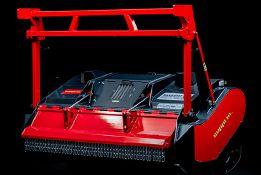
Seppi M. recently upgraded the Maxiforst high-power forestry mulcher, resulting in the second generation Maxiforst. The new machine is designed to be used on PTO tractors ranging from 300- to 500-hp, focusing on maximum wear resistance, optimal protection of the transmission of both the tractor and the machine, quality and high working speed, cutting-edge technology and operator safety.
Wear resistance is guaranteed by high-quality steel construction, with the addition of Hardox plates in the grinding unit, which can be easily replaced at the end of their life. The steel skids now also have an interchangeable wear plate.
The transmission has been completely revamped – the central box has the ADAM alignment system as standard supply, while the transmission of motion to the rotor is guaranteed by the system with six V-belts on each side. The machine can also be fitted with the new starting system with M-Turbo fluid couplings, which replace the previous system with mechanical centrifugal clutches, and guarantee a smooth start of the rotor.
The speed and quality of the cut are guaranteed by the rotor featuring the patented V-Lock tool mounting system. The benefits of this system are: reduced rotor wear, better balance, easier and faster tool changeover, cutting capacity for trees up to 60 centimetres in diameter, and the mounting of heavy-duty wear-resistant tools with tungsten carbide insert and more slender tips, which, in combination with the five rows of tempered counter knives on the frame, offer a finer and more uniform mulching performance. www.seppi.com/en
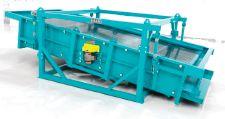
WSM’s new Super Screener has been re-designed and manufactured for reduced maintenance, increased production, and longer operating life. New rugged features include longer machine life thanks to a 15 per cent lighter basket and increased durability with oversize hangers. Material moves up to four times faster thanks to the steep slope, stainless steel pan bottom – ideal for wet material like compost and bark mulch.
Reduced maintenance downtime and expense with the relocated drive unit and easy access to the screens from the back of the basket make for a quicker change out. The relocated drive also allows for an unobstructed flow of material. Optional features include wire mesh or perforated screens, ball deck for increased material agitation to help prevent build up and blinding on the screens, multiple material classifications, top covers, access platforms, and infeed chutes. www.westsalem.com
DÜRR MEGTEC RELEASES ‘NEXT GENERATION’ OF WESP
Dürr Megtec’s “next generation” of wet electrostatic precipitator (WESP) has been released. The air pollution control system efficiently cleans industrial gases of fine particulate matter, acid mists and aerosols to meet global environmental regulations and protects downstream equipment. Notable improvements include decreased maintenance, enhanced performance, standardization and faster installation times.
Dürr Megtec achieved a more efficient contaminant capture through increased operating voltage that requires less collecting surface area. Additionally, the gas distribution system was completely reimagined to optimize flow through the system, and various tube shapes and electrodes were tested to improve overall performance. Standardized modules are used in the new design, thus reducing engineering time and streamlining fabrica-
tion. The systems are assembled from different standard modules and adapted to customer-specific requirements. The “next generation” WESP allows for faster installation times. Modules with tube bundles are pre-assembled in Dürr’s production facility for shipment to the customer. All electrodes are pre-loaded and prealigned, thus avoiding this lengthy and tedious task on the construction site. www.durr-megtec.com/en
Achieving consistent flow
How flow aids can help resolve bulk material handling issues
By Brad Pronschinske
In order to achieve controlled and consistent flow on conveyors handling large volumes of bulk material, transfer chutes and vessels must be designed not just to accommodate, but to actually facilitate the flow of the cargo they will be handling. Unfortunately, because so many conditions can hamper effective cargo flow, engineering a conveyor and chutework that would handle every material situation is virtually impossible.
Even modest changes in moisture content can cause adhesion to chute or vessel walls or agglomeration at low temperatures, especially if the belt is stagnant for any period of time. Even during continuous operation, a bulk material can become compressed, and physical properties often change due to natural variations in the source deposits, suppliers or specifications, or if the material has been in storage. If left to build up, material can encapsulate belt cleaners and deposit harmful carryback onto the return side, fouling idlers and pulleys. At worst, systems can become completely blocked by relatively small (and common) changes. To overcome these issues, a variety of devices collectively known as flow aids can be employed.
WHAT ARE FLOW AIDS?
As the term implies, flow aids are components or systems installed to promote the transport of materials through a chute or vessel, controlling dust and spillage. Flow aids come in a variety of forms, including rotary and linear vibrators, high- and low-pressure air cannons and aeration devices, as well as low-friction linings and special chute designs to promote the efficient flow of bulk materials. These modular systems can be combined in any number of ways to complement one another and improve performance. The components can be used for virtually any bulk material or environment, in-
cluding hazardous duty and temperature extremes. One of the primary advantages is that an operation can obtain a level of control over the material flow that is not possible any other way.
When employing flow aids, it’s critical that the chute and support components are sound and the flow aid be properly sized and mounted, because the operation of these devices can create potentially damaging stress on the structure. A properly designed and maintained chute will not be damaged by the addition of correctly sized and mounted flow aids.
It’s also important that any flow aid device be used only when discharges are open and material can flow as intended. The best practice is to use flow aids as a preventive solution to be controlled by timers or sensors to avoid material buildup, rather than waiting until material accumulates and restricts the flow. Using flow aid devices in a preventive mode improves safety and saves energy, since flow
aids can be programmed to run only as needed to control buildup and clogging.
AIR CANNONS
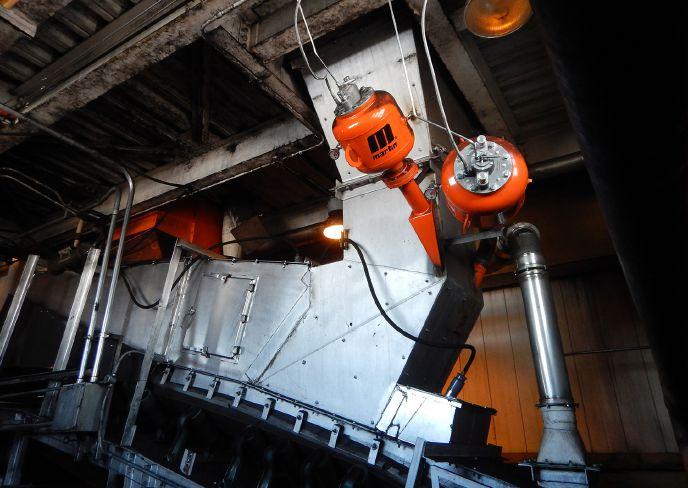
One solution for managing material accumulation in chutes and vessels is the low-pressure air cannon, originally developed and patented by Martin Engineering in 1974. Also known as an “air blaster,” it uses a plant’s compressed air to deliver an abrupt discharge to dislodge the buildup. Cannons can be mounted on metallic, concrete, wood or rubber surfaces. The basic components include an air reservoir, fast-acting valve with trigger mechanism and a nozzle to distribute the air in the desired pattern to most effectively clear the accumulation.
The device performs work when compressed air (or some other inert gas) in the tank is suddenly released by the valve and directed through an engineered nozzle, which is strategically positioned in the chute, tower, duct, cyclone or other
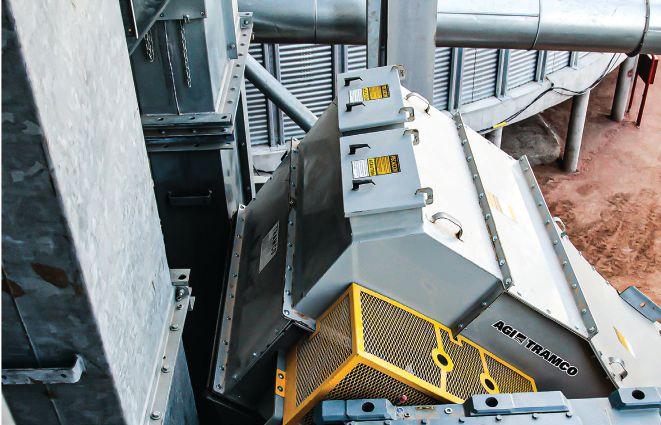
Air cannons deliver a controlled burst of compressed air to dislodge material build-up. Photo courtesy Martin Engineering.
location. Often installed in a series and precisely sequenced for maximum effect, the network can be timed to best suit individual process conditions or material characteristics. The air blasts help break down material accumulations and clear blocked pathways, allowing solids and/or gases to resume normal flow. In order to customize the air cannon installation to the service environment, specific air blast characteristics can be achieved by manipulating the operating pressure, tank volume, valve design and nozzle shape. In the past, when material accumulation problems became an issue, processors would have to either limp along until the next scheduled shutdown or endure expensive downtime to install an air cannon network. That could cost a business hundreds of thousands of dollars per day in lost production. Many designers proactively include the mountings in new designs so that a future retrofit can be done without hot work permits or extended downtime. A new technology has even been developed for installing air cannons in high-temperature applications without a processing shutdown, allowing specially-trained technicians to mount the units on furnaces, preheaters, clinker coolers and in other high-temperature locations while production continues uninterrupted.
ENGINEERED VIBRATION
The age-old solution for breaking loose blockages and removing accumulations from chutes and storage vessels was to pound the outside of the walls with a hammer or other heavy object. However, the more the walls are pounded, the worse the situation becomes, as the bumps and ridges left in the wall from the ham-
CSE Bliss hammermills and coolers paired with Graf Equipment pellet mills, we’ve got
mer strikes will form ledges that provide a place for additional material accumulations to start.
A better solution is the use of engineered vibration, which supplies energy precisely where needed to reduce friction and break up a bulk material to keep it moving to the discharge opening, without damaging the chute or vessel. The technology is often found on conveyor loading and discharge chutes, but can also be applied to other process and storage vessels, including silos, bins, hoppers, bunkers, screens, feeders, cyclones and heat exchangers.
There is another innovative solution that prevents carryback from sticking to the rear slope of a discharge chute. The live bottom dribble chute uses material disruption to reduce friction and cause tacky sludge and fines to slide down the chute wall and back into the main discharge flow. By addressing these issues, operators can experience a reduction in maintenance hours, equipment replacement and downtime, lowering the overall cost of operation.
Flow aid devices deliver force through the chute or vessel and into the bulk material. Over time, components will wear, or even break, under normal conditions. Most of these devices can be rebuilt to extend their useful life. Because clearances and fits are critical to proper operation, it’s recommended that flow aid devices be rebuilt and repaired by the manufacturer, or that the manufacturer specifically train plant maintenance personnel to properly refurbish the equipment. •
Brad Pronschinske is a global product manager of Martin Engineering’s flow aid division, where he is responsible for the development and management of the company’s air cannon products and vibration systems.
TShaping up for the future
A look at the benefits of a regional risk-based approach for woody biomass
By Carsten Huljus
he Sustainable Biomass Program (SBP) is a global certification system designed for woody biomass used in industrial, large-scale energy production. Central to the system is a risk-based approach, which requires a deep understanding of the risks faced when sourcing feedstock for biomass production and, equally important, how to mitigate those risks.
Since the launch of its standards back in 2015, SBP has automatically recognized feedstock carrying an FSC, PEFC or PEFC-endorsed scheme claim as compliant with its feedstock requirements. That means all other un-certified feedstock has to be evaluated using the SBP supply base evaluation approach.
stock, both certified by a forest management standard and un-certified.
The supply base evaluation, carried out by the biomass producer and independently audited by an accredited certification body, identifies the risk of compliance with a comprehensive set of indicators detailed in the feedstock compliance standard, rating each indicator as either ‘low’ or ‘specified’ risk.
For any indicator rated as ‘specified’ risk, the biomass producer must put in place mitigation measures to manage the risk such that it is effectively controlled or excluded. In addition, those mitigation measures must be monitored.
The key benefits of an RRA are efficiency and consistency, both of which are important to SBP and its certificate holders.
With an eye on the future, SBP is keen to promote its own supply base evaluation, and in particular Regional Risk Assessments (RRAs), rather than rely on the claims of other certification schemes.
As SBP navigates its way through the regulatory landscape of the European Union (EU), it is becoming increasingly clear that blanket acceptance of other schemes’ claims is not an appropriate business model. For one thing, SBP cannot recognise the claims of another scheme if that scheme is not approved under the relevant EU legislation, namely the re-cast Renewable Energy Directive 2018/2001 (REDII).
So, for those biomass producers wishing to sell REDII-compliant biomass into the EU, SBP must devise a way to allow that. The solution lies within applying SBP’s supply base evaluation to all feed-
As a major pellet-producing country, Canada is currently home to 28 SBP-certified biomass producers. In 2020, those biomass producers produced and sold two million tonnes of SBP-certified biomass to geographic Europe accounting for just over 12 per cent of the industrial pellet consumption in those European markets.
Canada’s SBP-certified biomass producers are spread out over five provinces – Alberta, British Columbia, New Brunswick, Nova Scotia and Quebec – with the largest concentration in British Columbia. If each biomass producer were to produce its own supply base evaluation, the level of effort soon racks up. This is where RRAs come into their own and gains are realised.
The key benefits of an RRA are efficiency and consistency, both of which are important to SBP and its certificate holders.
With an RRA covering an entire geographic region, and determining the risks associated with sourcing feedstock from that region, the need for individual biomass producers to conduct risk assessments
is avoided. And should an RRA need to be updated to reflect any revisions to the feedstock compliance standard, it is much more efficient to update a single RRA than to update the supply base evaluations of a number of individual biomass producers. Further, with one evaluation, rather than multiple, the scope for variation is removed and consistency guaranteed.
RRAs also ensure active engagement with a diverse range of stakeholders in the region and provide a public summary of the evaluation for transparency purposes.
The SBP RRA procedure specifies the requirements and process for the initial development and the revision of a risk assessment for a country, or a region, and its endorsement by SBP.
Any organization or group of parties may choose to conduct a risk assessment at their own cost.
In 2017, recognizing the benefits to Canadian biomass producers, the Wood Pellet Association of Canada (WPAC) committed to developing RRAs for the five pellet-producing provinces. Working with forest management consultants and independent natural resource and certification professionals, WPAC saw success in 2021 when SBP endorsed RRAs for the provinces of Quebec and British Columbia.
Endorsement of RRAs for New Brunswick and Nova Scotia is likely to follow next year, and for Alberta in 2023. WPAC has also decided to develop an RRA for the province of Saskatchewan, which will progress in parallel with the Alberta RRA.
SBP believes RRAs are future-fit and bring major benefits to biomass producers through streamlining both the supply base evaluation process and the re-certification process, which SBP certificate holders are required to undergo every five years. •
Carsten Huljus is the chief executive officer of SBP.
Reliable Level Measurement for an extremely wide application spectrum
VEGAPULS 69
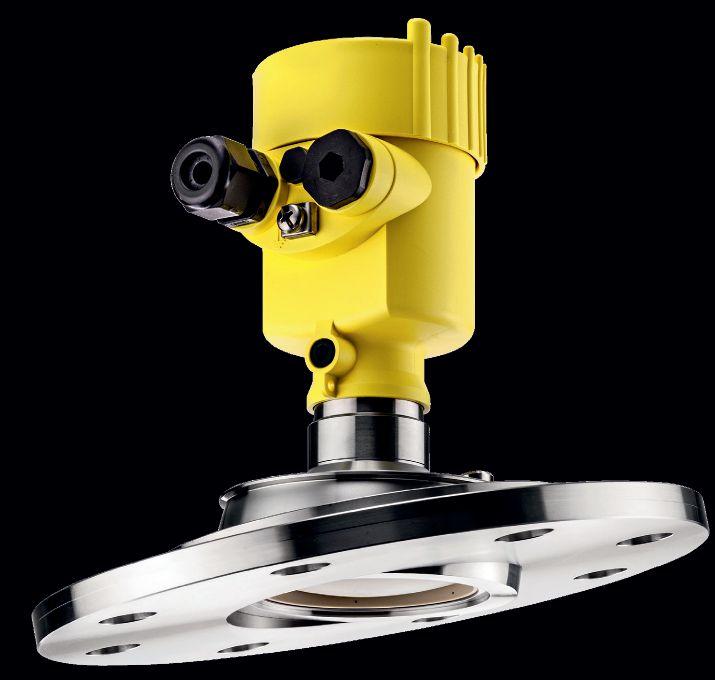
The VEGAPULS 69 radar sensor for continuous measurement of bulk solids operates with a transmission frequency 3 times higher than the widely used 26 GHz frequency. These instruments have proven their worth, especially on media with poor reflective properties, in production shafts up to 120 m deep, or in silos with numerous internal installations that generate strong false echoes.
The VEGAPULS 69 is available in two versions. With a simple, light plastic antenna and a lens antenna integrated in a flange. Completely unaffected by dirt and buildup, the innovative lens antenna guarantees maintenance-free operation even in harsh environments and has a swivel holder made of high quality stainless steel.
Further information: www.vega.com Call 1-833-538-8342 VEGA Instruments, Canada Ltd. canadaquotes@vega.com
Wireless adjustment via Bluetooth with smartphone, tablet or PC. Compatible retrofit to all plics® sensors manufactured since 2002.