VISION
EDA’s Vision is to shape the future for local distribution companies to be the premier service providers to Ontarians in the evolving energy system.

EDA’s Vision is to shape the future for local distribution companies to be the premier service providers to Ontarians in the evolving energy system.
In 2024, we learned more about the scale of the challenges ahead of us in the energy transition, with the growth in demand for electricity forecast to be even higher than expected. The Independent Electricity System Operator (IESO) started the year with a 60 per cent projection increase by 2050, but later in the year, it was revised upwards to 75 per cent. Electrification, coupled with an evolving grid, will place large demands on all aspects of the energy sector.
The EDA, powered by insights from its members, played a key role in advising decision makers on wise planning.
Our Solving Grid-Lock vision paper made a crucial contribution, outlining how local hydro utilities must play an essential role in Ontario’s transition to a low carbon economy. It was the heart of EDA’s multi-pronged advocacy efforts in an important year for the province’s energy future.
Our influence and advice were reflected when the province rolled out major announcements, including an energy policy vision paper and an initiative to reduce the cost of “last mile” connections. As you will read in this report, EDA made a compelling and effective case for the need to modernize the grid, to work towards a nimbler regulatory regime and to foster innovation so we can continue to serve our customers with safe, affordable and reliable electricity.
The EDA team was constantly engaging with stakeholders, including two new ministers and new senior civil servants, along with our colleagues in the sector and, most importantly, our members. Our signature events, the Annual Conference and Awards Dinner, EDIST and CUEE, were resounding successes with great attendance and unmatched opportunities to interact and share insights.
With profound planning decisions being made that will have generational impacts, the EDA is always at the table, ensuring that utilities are an essential and trusted contributor to the conversation.

Our industry is always growing and changing, but rarely at such a pace as today. In this challenging, exciting era, our electricity grid must adapt to accommodate new and varied demands.
As Chair of the Electricity Distributors Association, I am proud of the critical role that local distribution companies (LDCs) play in this momentous transition. We are connecting new customers to the grid, planning and innovating for the future and always supporting economic growth—all while keeping an eye on our essential role of delivering safe, reliable, affordable power. With big decisions being made that will have a generational impact, the EDA continues to be a trusted voice in developing energy policy that works for all Ontarians. In 2024, our vision paper Solving Grid-Lock outlined how Ontario’s local hydro utilities must play a crucial role in making the province grid-ready for the demands of an electrified low-carbon economy.
The EDA team worked tirelessly to bring our ideas to policy makers and stakeholders, and our paper clearly had an impact. We were able to make our case face-to-face to the people making
the decisions and they listened. The time is now to make more local investments in communities across the province to enhance the electricity grid and meet customer demand. Local Distribution Companies (LDCs) always get things done and we need to ensure we have the tools to make this happen.
We recognize that LDCs are pivotal in driving economic growth. By providing reliable and affordable electricity, we are a key supporter of businesses in their operations and expansion. Our efforts in modernizing the grid and investing in smart technologies also attract new industries which further foster job creation and economic development. LDCs are a critical component in building a prosperous future.
Throughout the fall of 2024, the EDA Board developed an action plan and budget that set priorities for the year to come, focusing on enabling continued success and value creation for LDCs. In 2025, that will mean continuing to build broad support for our Solving GridLock vision and advocating on behalf of our members to the government as it develops a new integrated energy plan.
In late 2024, the IESO received Ministerial Directives that recognize the knowledge and value that LDCs bring to eDSM (electricity demand side management), in the form of a $90 million to $150 million earmark for LDCs, per three-year period (i.e., $360 million to $600 million over 12 years), and the importance of an enduring framework that is not hampered by time-limited approaches. These funds enable LDCs’ direct participation in the eDSM framework and strongly recognize the value that LDCs provide to our customers.
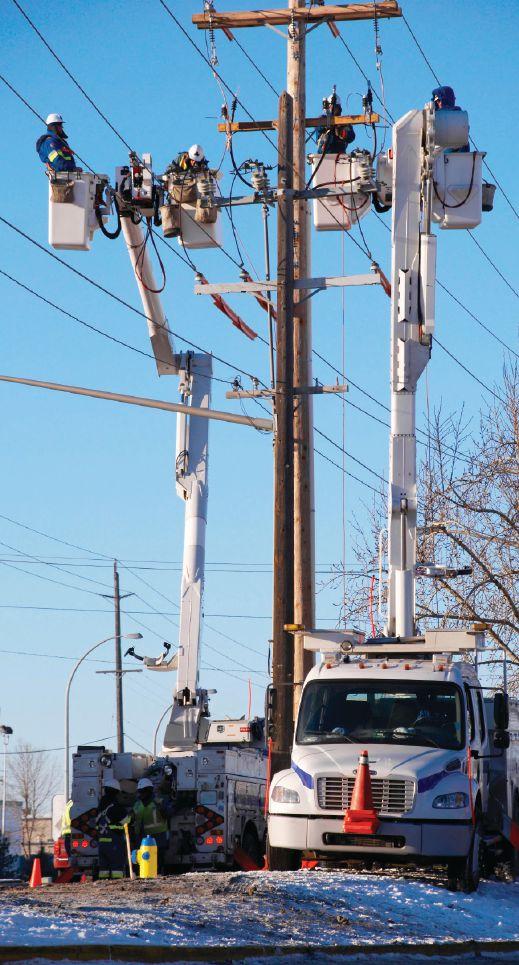
As we look back on 2024, I would like to pay tribute to the people who rise to the occasion in difficult times--the power workers across Ontario who jump into action and work tirelessly to restore power after extreme weather events. In the fall, hundreds of them drove into the face of danger and disruption to help our American friends after the devastation wrought by the double strike of Hurricanes Helene and Milton. Our commitment to safety and rapid response has always been instrumental in helping communities recover and rebuild, whether it is at home or south of the border.
Thank you to all the people at Ontario’s local hydro companies who work hard every day to keep the lights on.

TERESA SARKESIAN President and CEO
At a time of momentous change in the electricity sector, the EDA made a powerful case in 2024 for the central role that LDCs play in the development of a system that works for all. We advocated in many ways, most vividly and effectively with our Solving Grid-Lock vision paper. It was a milestone for the association, an important and influential document that received substantial attention and traction among decision makers and stakeholders. As you will read in this annual report, the influence of Solving Grid-Lock could be seen in the shape of several major policies that were rolled out this past year.
Our advocacy for grid modernization and resilience will help enable Ontario to successfully transition to an electrified economy. Solving Grid-Lock maps out the indispensable LDC contribution to a net-zero future. It speaks to the scope of investment needed in local grids; both to support booming demand and to enable LDCs to innovate, orchestrate and complete their own transformations into digital utilities of the future. The impact of Solving Grid-Lock will continue to be felt in 2025 as we use it as a foundational document to advocate for necessary policy reforms. The EDA rose to the moment in a year
packed with important initiatives and ongoing changes. Halfway through the year, a cabinet shuffle brought not only a new person to the energy portfolio, Minister Stephen Lecce, but also an additional minister. Our team acted decisively to quickly build positive relationships with the new decision makers. Most notable was the series of roundtable meetings with Associate Minister of Energy – Intensive Industries, Sam Oosterhoff, to discuss enabling last-mile customer connections to foster housing and economic development strategies. Held in four locations around the province, they offered a rare opportunity for LDC CEOs to speak face-to-face and at length about priority issues with an important leader in the development of government policy. The roundtables helped to reinforce our sector’s position as a trusted advisor, and they elevated our already significant influence at Queen’s Park. We subsequently produced a report from the roundtables for government’s consideration, and we are already seeing government and OEB action on some of the recommendations.
One of the other major files in 2024 was the Ontario Energy Board’s (OEB) Cost
of Capital review, the first of its kind in 15 years. It was an important issue for our members and the EDA devoted substantial resources to it. We worked closely with Goodmans LLP and Nexus Economics to develop a compelling and credible response that we hope will lead to some positive movement on return of equity for our members.
The EDA’s accomplishments are due to our members’ and volunteers’ engagement and collaboration. While many are recognized throughout this annual report, I want to recognize several departing members of our board of directors, Indrani Butany, Vinay Sharma, Mike Matthews, and Tim Wilson, all of whom provided valuable strategic guidance, leadership and expertise to the association over the years.
2025 promises to be another year in which major, far-reaching decisions are made about Ontario’s energy future. EDA will continue to be the trusted voice of LDCs, promoting regulatory reform, grid modernization and necessary distribution investments to ensure that all Ontarians continue to have the electricity system they need and deserve.
The Electricity Distributors Association is governed by a volunteer Board of Directors. The membership of the Board is renewed yearly at our annual general meeting, based on a representational structure that reflects both geography and utility size.















The EDA’s signature policy paper, Solving Grid-Lock: Our Vision for a Customer-Centric Energy Transition, was an important contribution that was delivered at a favourable time. With research and analysis by Power Advisory LLP, direction from an EDA board steering committee, and extensive member input, Solving Grid-Lock offers a comprehensive set of solutions to enable LDCs to make the necessary investments in grid modernization.
As Ontario plans for a far-reaching energy transition that includes much higher electricity demand and empowered consumers, the paper provided positive and wise counsel from our members, while making a compelling argument for the indispensable role that LDCs will play in the net-zero future. It was an important thought leadership piece to drive ongoing policy development with government, regulators and agencies.
The paper articulated a variety of measures to enable the necessary change:
à Promoting a shared customer-centric vision for electrification, the role of utilities, and clarity around the function of the OEB.
à Considering alternative funding approaches and policies to support the required grid modernization and other strategic investments customers need.
à Investing in the diverse talent development required to sustain a productive electricity sector workforce that can serve customers across the province.
In 2024 Utilities Kingston celebrated 16 years of Annual Safety Days, a cornerstone for safety training and regulatory compliance
The paper outlined the benefits that grid-ready investments and technologies can bring to Ontario, including: à Improved Grid Reliability and Resilience à Avoided Energy and Capacity Costs for Customers à Enhanced Economic Competitiveness
The EDA team launched broad and sustained advocacy for the vision through discussions with the then-Energy Minister Todd Smith, senior civil servants and senior representatives of IESO and OEB.
Released in April, the paper enjoyed strong engagement, with strong EDA member support, more than 300,000 social media impressions and nearly 3,000 visits to the campaign site.
We were pleased to welcome the release of the Electrification and Energy Transition Panel (EETP) report titled Ontario’s Clean Energy Opportunity, particularly given its recognition of the central role of LDCs.
This document, eagerly awaited by the industry, brought a constructive and forward-looking perspective for LDCs, which reflected the effective input provided by the EDA. It highlighted the critical role of the distribution sector and the indispensability of LDCs in facilitating the energy transition. The report calls for innovative business models to achieve these goals and underscores the expertise of LDCs, advocating for their increased involvement in

distribution planning and execution. This endorsement is a testament to the vital role LDCs play in steering local planning decisions.
The influence of EDA’s advocacy could be seen in legislation passed by the Ontario government in the fall to amend the Ontario Energy Board Act, 1998, to enable the OEB to reduce the capital costs of new lines that would otherwise increase the costs to new homes and businesses. As a result, amendments were made to the Distribution System Code (DSC) to extend the revenue horizon for connecting residential developments from 25 years up to 40 years, allowing the costs of new infrastructure that will serve this province for generations to be spread over a longer period. Extending the revenue horizon was a key recommendation in the EDA’s submission to the OEB during its consultation on the issue of system expansion for housing developments.
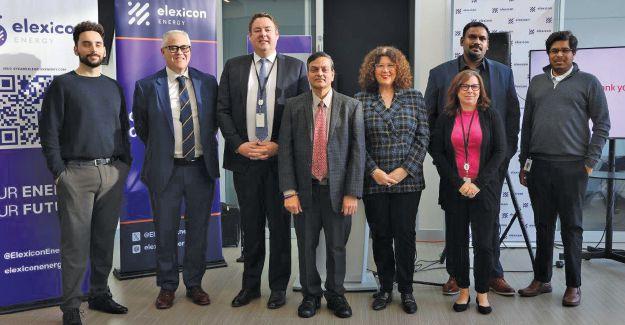
Elexicon-Western University BESS-STATCOM Project supported by EDA’s LDC Tomorrow Fund
EDA’s Teresa Sarkesian and Minister of Energy and Electrification Stephen Lecce Launch “Ontario’s Affordable Energy Future”
The EDA recognizes the importance of making it more affordable to connect new homes and businesses to Ontario’s electricity grid. Electricity distributors are at the forefront of helping to achieve the government’s goal of building 1.5 million new homes by 2031 and seeking to promote economic development through reducing connection costs and incenting proactive grid expansion more broadly.
Also in October, the EDA participated in Minister Lecce’s release of an energy policy vision paper, Ontario’s Affordable Energy Future: The Pressing Case for More Power. In a reflection of the EDA’s advocacy efforts, the paper included several positive signs for LDCs. It is intended to guide the build-out of an affordable, reliable, and clean energy system to meet the exceptional growth needs of Ontario. This paper outlined the vision through which Ontario intends to create its first integrated energy resource plan which, according to the government, will be developed for release in 2025 and will consider the long-term view of energy use across the economy and all sources of energy. It will detail actions and policy steps that will be taken to meet needs and to keep our clean energy system affordable, reliable, and abundant over the long term.
In a positive direction for LDCs, the vision says that distribution grids throughout the province will need to modernize, utilizing and integrating innovative technologies that facilitate active monitoring of their systems, while building better resilience to changes in weather patterns and extreme weather events. By providing further clarity on what is considered grid modernization activities, the province can help LDCs make prudent investments to support increasing energy demand.
Priorities for Grid Modernization include:
à Ontario recognizes the need to work with the OEB to provide greater clarity and predictability to LDCs so that they can modernize their infrastructure to provide the energy and services that ratepayers need in the future.
à There are opportunities for the government, IESO, and the OEB to accelerate the implementation of grid innovation projects that provide ratepayer value.
à There is a need to support investments necessary for the increasing energy demand.
In the runup to the introduction of the integrated energy resource plan in 2025, the government announced a consultation and engagement process, in which the EDA will be an active participant. Along the way, the association will continue to review the government’s vision and proposed Integrated Energy Plan in detail and engage the EDA Board, and appropriate Councils, to evaluate the impact on LDCs.
In 2024, the IESO received a Ministerial Directive to create a framework for LDC-led conservation programs. The EDA began advocating for LDCs to be provided funding for CDM activities in Fall 2022, through its position paper “The Power of Local Conservation.” Since 2023, the EDA worked closely to support the IESO-LDC Demand Side Management Working Groups (DSM WGs), to develop an approach to electricity energy efficiency that harnesses LDCs’ longstanding and trusted relationships with Ontario’s electricity customers.
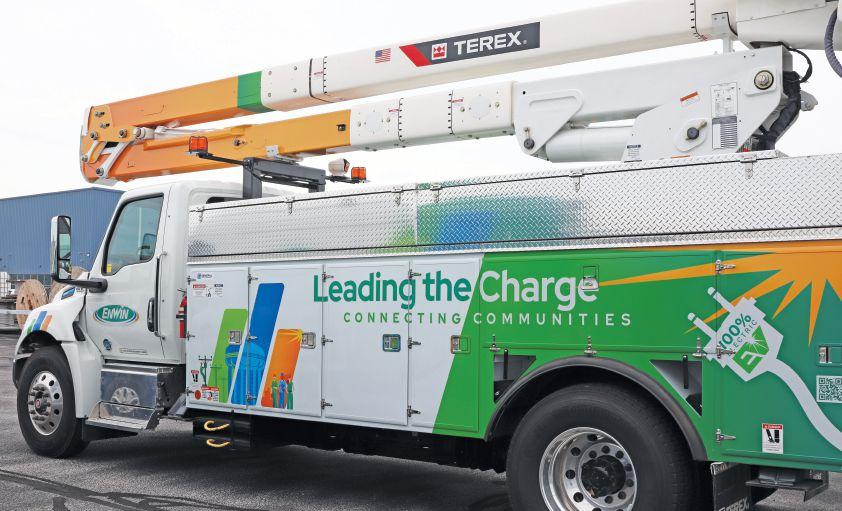
In October 2024 EDA member ENWIN Utilities unveiled its new EV fleet
The EDA is pleased that the Ministerial Directive to the IESO recognized the knowledge and value that LDCs bring to eDSM, in the form of a $90 to $150 million for LDCs, per three-year period (i.e., $360 to $600 million over 12 years), and the importance of an enduring framework that is not hampered by time-limited approaches. These funds enable LDCs’ direct participation in eDSM and build on our strength as being a natural touchpoint to customers.
We saw an important win for the EDA’s advocacy when Bill 153 was passed by the Ontario Legislature and received Royal Assent. This legislation, amending the Ontario Underground Infrastructure Notification System Act, 2012, signifies a significant step towards modernizing and enhancing the safety and efficiency of locating underground infrastructure. During consideration of the bill, the EDA made a compelling presentation to the Standing Committee on Justice Policy. It stands as a testament to our commitment to streamline construction processes, ensure worker safety, and maintain uninterrupted energy supply, all while respecting our customers.
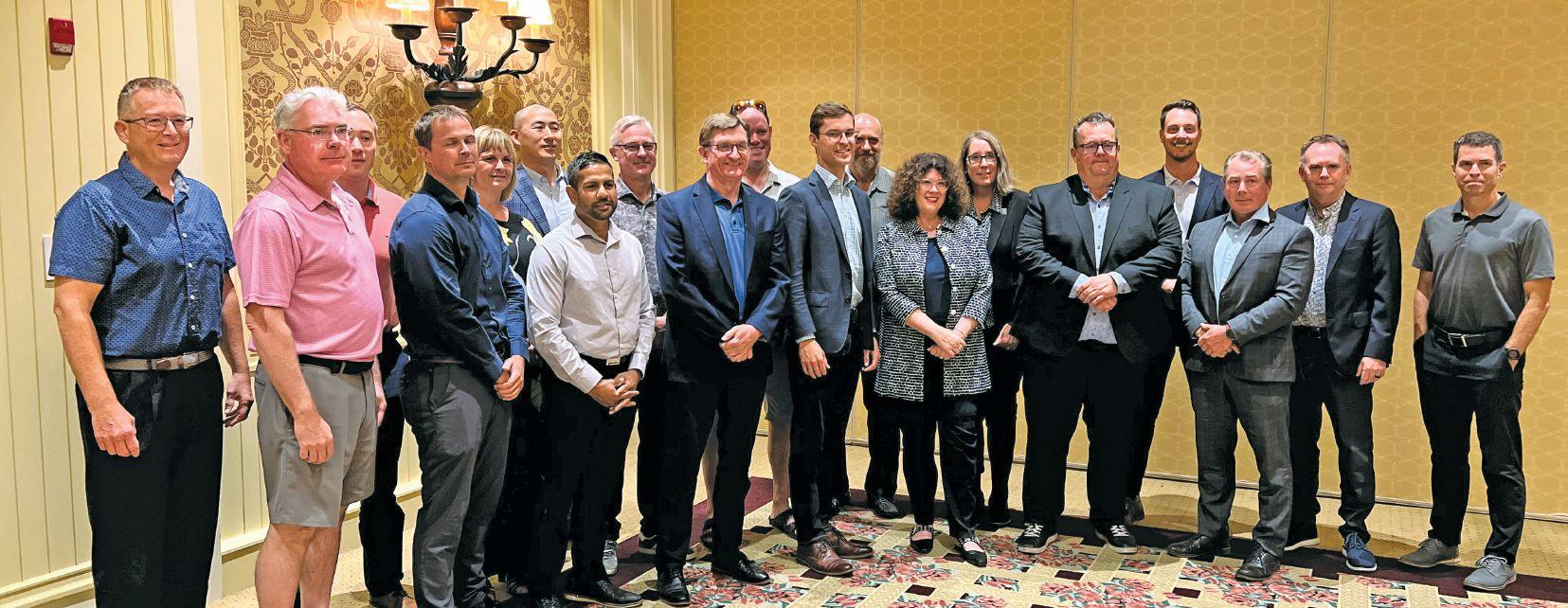
The EDA’s top priority is to ensure that the utilities’ voices are front and centre in the ongoing conversation about Ontario’s electricity sector. Throughout 2024, the Association was constantly engaging with decision makers and stakeholders on behalf of our members. Our advocacy is trusted and credible because of our record of providing wise insights towards building a grid that works for all Ontarians. The EDA showed itself to be a thought leader with the Solving Grid-Lock vision paper, while also submitting dozens of submissions on a variety of issues of concern to LDCs and engaging face-to-face with important players in the sector at all levels of government.
The EDA devoted a great deal of energy and time ensuring that our vision paper was shared and discussed widely. We engaged with several key industry stakeholders, including the Energy Minister, OEB, and IESO, to discuss the paper’s recommendations. Our advocacy focused on the policy and regulatory enablers it identifies. These include both clear direction on the need for foundational grid modernization investments, and consideration of alternative funding approaches and policies. We also promoted our customer-centric vision on EDA social media and other communication channels, including via direct mail, digital communications, in-person stakeholder meetings and presentations at policy conferences and industry events.
EDA Upper Canada-Georgian Bay District Members with Associate Minister of Energy Sam Oosterhoff
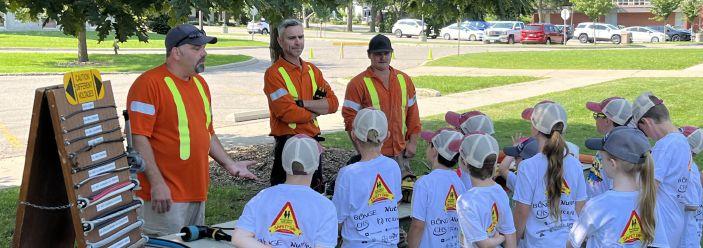
Entegrus teaching kids about electrical safety
2024 saw different faces in the Energy portfolio at Queen’s Park, and the EDA kept pace with meaningful engagement with both ministers and senior civil servants. We had regular conversations with former Energy Minister Todd Smith, who also attended major EDA events. When Stephen Lecce was appointed to the portfolio in June, we quickly engaged to get a sense of his vision and to convey insights from our members. Our message to him was that the EDA is always committed to being a positive contributor to energy policy and has always delivered on whatever the government of the day has asked us to do.
EDA held a series of four industry roundtable discussions with the new Associate Minister of Energy - Intensive Industries, Sam Oosterhoff, who was appointed to the position in the same shuffle that brought Minister Lecce to Energy. Members had in-depth discussions with the Minister. It was reflected in the great turnout, with almost full participation from every utility in the province, with executive industry leaders in attendance. We had productive conversations with Minister Oosterhoff, and identified solutions on the last mile issue and the need for capital investment.
Our team also met with the new Deputy Minister of Energy and Electrification, Susanna Laaksonen-Craig, along with other senior civil servants, as well as the new Chair of the Ontario Energy Board, Mark White.
In October, the EDA’s CEO and Chair met with the OEB, during which they articulated the Associations’ priorities, in support of the OEB’s strategic planning process. The high level message was the importance of ongoing regulatory modernization, which is needed to support LDCs as they prepare grids that will be ready to support the growth in electrification and the general growth in demand. We also advised the OEB that the regulatory environment must be agile and not place further burdens on the organizations that deliver electricity to Ontario’s consumers. In addition, the EDA provided feedback on the OEB’s proposed amendments to the Distribution System Code (DSC), which reflected our support for enhancing flexibility in hosting

The impact of our engagement could be seen when Bill 214, the Affordable Energy Act was introduced in October. Speaking in the Legislature when the bill was tabled Associate Minister Oosterhoff said:
Over the summer, I had the opportunity to visit many corners of this province and meet with local distribution companies. I want to thank Teresa Sarkesian and the Electricity Distributors Association for the work that they did to put together round tables, where we had conversations about how we can address that last-mile challenge. They all shared the same message: We need a faster, more nimble and more affordable form of grid connection for new industry and for massive housing developments.
Hon. Sam Oosterhoff, Associate Minister of Energy – Intensive Industries (Hansard – October 29, 2024)
and capacity allocation, signifying our dedication to learning and adapting in service provision.
In a fall meeting with the CEO of the Ontario Energy Board, and her senior team, EDA representatives focused on aligning the strategic initiatives of both organizations utilizing the Letter of Direction as the foundation for discussion.
This executive-level strategy discussion is a testament to our commitment to collaborative and forward-thinking industry leadership to find solutions with all our partners. We look forward to more senior level discussions on shared issues.
The EDA made an initial submission shortly after Bill 214, the Affordable Energy Act, was introduced. The bill has positive aspects, but we are concerned about the associated regulations that will be developed and we will be an active participant on the consultations to ensure that the outcomes are fair, reasonable and balanced for utilities. We are pleased that LDCs will be held whole in terms of cost shifting from first mover to other parties.
With the Association’s goal to mitigate intervenor costs for LDCs, EDA was actively involved in the OEB‘s Framework for Review of Intervenor Processes and Cost Awards project. The project was initiated in 2022, and after receiving the Minister’s Letter of Direction in November 2023, the OEB expanded the project’s scope to include the consideration of a dedicated consumer advocate and capping intervenor costs.
The EDA recommended that interventions be ‘fit for purpose’ and used for supporting the OEB in effectively adjudicating applications, amending Codes and forming policy. The EDA’s proposals focused on the OEB enhancing the effectiveness and efficiency of its intervenor processes. The EDA’s advocacy led to several positive outcomes for LDCs:
In February 2024 the OEB released revisions to Rule 28 and Rule 32 of the Rules of Practice and Procedure.
à Rule 28: Identification of Issues has been streamlined to develop a standard issues list for certain applications.

Essex Power Corporation Awarding its ‘Powering Future Leaders’ Bursaries to Students
Applicants may accept this or essentially follow the previous method.
à Rule 32 was amended to support the OEB power to hold any variation of hearing and include the new Rule 28 of a scenario where there may be a set of different issues, and not standard issues.
On March 6, OEB posted changes to filing evidence to rules of practice and procedure, specifically:
à a party cannot file written evidence without leave of the OEB
à OEB will determine if evidence is relevant and material and will consider intervenor costs before granting leave.
à The party must demonstrate why leave should be granted.
à Where multiple parties request to file evidence on the same issue, OEB may require parties to work together
à OEB may grant leave but deny cost awards
The OEB issued a report to the Minister in September, which the
Minister approved and mandated the OEB to implement the recommendations contained in the report.
These recommendations include:
à Limiting cost awards to $20K/intervenor for small LDCs (under <30K customers) in a pilot project, with intentions to expand.
à Only parties with a significant interest will be granted intervenor status
à The suggestion that intervenors collaborate became a requirement, including eliminating duplicate interrogatories.
à Individuals will only be allowed to intervene if they have unique perspectives.
à OEB will adopt key performance indicators to track cost awards and will benchmark cost awards against other jurisdictions.
à OEB will review the cost of intervenors to ensure they are within the scope of the proceedings.
The OEB’s cost of capital hearing was a key focus and engaged the EDA team for several months. The Association applied for Intervenor Status and the EDA Board approved third-party consulting support to tackle this issue comprehensively as it will have long-term impacts on an LDC’s bottom line.
The extensive and compelling evidence gathered by Nexus Economics LLC led us to determine that the return on equity (ROE) rates established by the OEB, as suggested in their London Economics International (LEI) staff report, do not match the returns available by applying invested capital to other businesses with similar risk profiles.
In fact, the ROE rates proposed by the OEB are so low they are also likely to result in a situation where Ontario utilities are unable to attract capital on reasonable terms.
In late-August we filed our response to the interrogatories and followed up with a series of presentations to the OEB in the fall. The oral hearings wrapped up in October, with EDA making a strong case through our representatives. In November the EDA filed two more submissions. The association will continue to watch this matter carefully and keep members abreast of developments. We anticipate a decision by end of first quarter 2025.
The EDA collaborated with the IESO to address questions around the Total Distribution System Operator model, not only as part of the IESO’s Transmission and Distribution Interoperability Working Group activities but also through a new EDA Board ad-hoc committee to help coalesce industry positions at the executive level. This work promises to shape the future of Ontario’s electricity distribution system. In the context of the work of the IESO Tx-Dx Coordination Working Group, the bulk of the discussion not only compared the dual participation and total DSO model but added a third model for consideration called “Market Facilitator” model. To ensure members are in the loop on this new model EDA hosted an information session in June. Most of the IESO’s work is complete with a final report to be shared with OEB and internally with IESO to the Energy Resource Planning Group. No preferred model was selected by the IESO.
In July, the EDA submitted a policy proposal to the Ministry of Public and Business Service Delivery (MPBSD) regarding the circumstances under which digging may continue beyond the locate validity period without having to request a new locate. We called for an approach that was both safe and balanced.
Engagement with the federal government and agencies was an EDA priority for 2024, in part to expand access to new funding streams beyond generation alone. In our ongoing meetings with officials in Ottawa, EDA advocated on a range of issues, including additional funding for grid modernization and tax
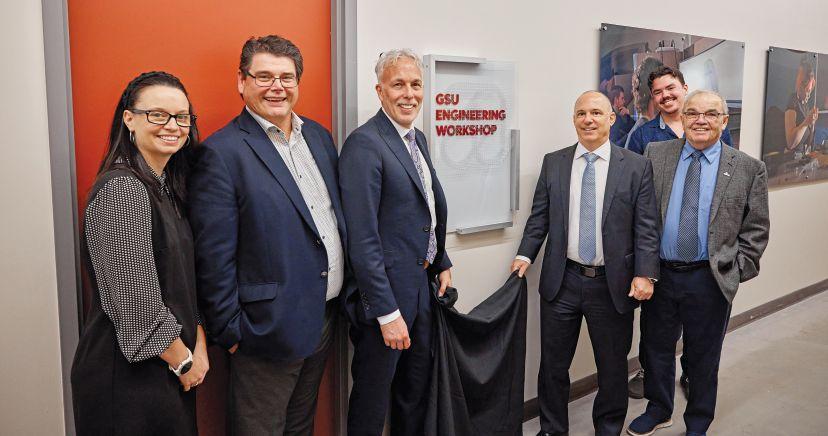
Greater Sudbury Hydro announced a $100,000 Contribution to Cambrian College’s EV Lab
reform regarding increasing non-municipal investment in utilities to support growing capital needs.
When the Canada Electricity Advisory Council released its final report, it lined up with several EDA positions, including the need for clear federal policies, aligned mandates, and support for demand-side solutions. Specifically, the EDA agrees the federal government should expedite the clarification of critical electricity policy rules to encourage investment. Mandates of different governments and agencies must be aligned, and eligibility criteria for investment tax credits should support distribution. Lastly, the federal government should prioritize demand management by refocusing existing funding toward energy efficiency, demand flexibility, and grid modernization.
In July EDA met with Natural Resrouces Canada to prepare for the relaunch of the Smart Renewables and Electrification Pathways program (SREP). This program focuses on the distribution sector and grid modernization.
The EDA’s advocacy efforts proved productive. On October 10, 2024, Minister of Energy and Natural Resources Jonathan Wilkinson announced up to $500 million in funding for the SREP program’s Utility Support Stream. This funding will be available to utilities and system operators to improve the utilization and efficiency of existing assets, increase the reliability, resiliency, and flexibility of the power system, and support other clean energy projects.
• EDA Comments on the Integrated Energy Resource Plan (to the Ministry of Energy and Electrification)
December 13, 2024
• EDA Comments on Cost Responsibility Rules for Certain Electricity System Connection Infrastructure for High-Growth Areas (to the Ministry of Energy and Electrification)
December 9, 2024
• EDA Comments on Proposed Amendments to the Distribution System Code (DSC) to Facilitate the Connection of Housing Developments (to Ontario Energy Board)
December 9, 2024
• EDA Comments to New Proposal for Electricity Energy Efficiency Programming (to the Ministry of Energy, Conservation and Renewable Energy Division) December 6, 2024
• EDA Comments on Vulnerability Assessments (to the Ontario Energy Board) November 26, 2024
• EDA Comments on Proposed Bill 214 Amendments to the Electricity Act, 1998, Ontario Energy Board Act, 1998 and the Energy Consumer Protection Act, 2010 (to the Ministry of Energy and Electrification) November 22, 2024
• EDA Comments on Enhancing Cyber Security Readiness in Ontario’s Electricity Sector (to Ontario Energy Board) November 18, 2024
• EDA Submission on Bill 214, Affordable Energy Act (to the Standing Committee on the Interior) November 14, 2024
• EDA Comments on 2025-2036 Electricity Energy Efficiency Framework (to the Ministry of Energy, Conservation and Renewable Energy Division) November 1, 2024
• EDA Recommendations: Challenges and Opportunities for LDCs to Facilitate Last-Mile Grid Connections (to the Ministry of Energy and Electrification and the Ministry of Energy Intensive Industries) November 1, 2024
• EDA Comments on Dynamic Pricing Options for Non-RPP Class B Electricity Consumers (to the Ontario Energy Board) October 10, 2024
• EDA Comments on Consultation on Potential Minister’s Regulation to Exempt Certain Broadband Projects From DL Model (to the Ministry of Public and Business Service Delivery) August 23, 2024
• EDA Response to Consultation on Potential Circumstances where Digging may Continue Beyond the Locate Validity Period (to the Ministry of Public and Business Service Delivery) July 22, 2024
• EDA Comments on Expert Report on the Cost of Capital and Certain Accounting Issues (to Ontario Energy Board) July 19, 2024
• EDA Feedback on Market Renewal – Load Forecast Deviation Adjustment (to the Independent Electricity System Operator) July 16, 2024
• Electric Vehicle Integration: Delivery Rates for Electric Vehicle Charging (to Ontario Energy Board) June 27, 2024
• EDA Comments on Ontario Regulation 429/04 Amendments related to the treatment of Corporate Power Purchase Agreements (to the Ministry of Energy and Electrification) June 21, 2024
• EDA Comments on System Expansion for Housing Developments Consultation (to Ontario Energy Board) May 1, 2024
• EDA Feedback to IESO on 2024 Grid Innovation Fund (to the Independent Electricity System Operator) April 23, 2024
• EDA Comments on Proposed Amendments to the Ontario Energy Board Act, 1998, Bill 165 (to the Ministry of Energy) April 8, 2024
• EDA Comments on The Clean Electricity Investment Fax Credits (to Minster of Finance) March 28, 2024
• Proposed Amendments to the Distribution System Code (to the Ontario Energy Board) February 13, 2024
• EDA Comments on Benefit-Cost Analysis Framework for Addressing Electricity System Needs (to Ontario Energy Board) February 2, 2024
• EDA Comments on Barriers & Solutions to Achieving Net-Zero Emissions Goals in Canada’s Electricity Sector (to the Canada Electricity Advisory Council and Natural Resources Canada) January 24, 2024
• EDA Comments on Draft EV Connections Procedure Document, renamed the EV Charging Connections Procedure Document (to the Ontario Energy Board) January 19, 2024
The EDA’s advocacy is informed and driven by insights from our members. We place a high priority on keeping our members informed on issues that matter to them, through a variety of media. The association maintains an essential, two-way communications channel in which we inform members of ongoing developments, and they advise us of issues and provide comments. It happens continuously throughout the year, with in-person meetings, virtual gatherings and our various communications platforms.
We’ve been recognized with awards for that work, including the 2024 Hermes Creative Award - Platinum - The Distributor Magazine (highest level award). In 2024, the Association launched an updated design for our e-newsletters and communications products. Much like our industry, an ever-evolving energy landscape, we wanted to ensure our member communications are current, relevant, and of value to members.
The groundwork for the Solving Grid-Lock vision paper was laid in part by extensive engagement through two all-member meetings, a comprehensive survey and a small constituency meeting focusing on detailing the objectives of the paper, addressing concerns about policy certainty, affordability, and the foundational investments required to evolve into the “digital utility of the future.”
Among the many events in 2024 were an EETP Deep Dive Member Call, and various member-only webinars on Conservation Demand Management (CDM), Distribution System Operator (DSO), and OEB Cyber Security. The sessions were all well attended, thanks to the engagement of members and sponsors.
The EDA team appreciates the many opportunities for valuable member dialogue through LDC constituency meetings hosted virtually by the association as well as in-person events. The CEO and other members of the leadership team also enjoyed attending several events in which they were able to speak with members and their Boards and shareholders in their communities around the province. They were great opportunities to update and interact with members

and to better understand on-the-ground realities in their service territories.
Megan Lund of IESO presenting an update to EDA Western District
The EDA team are grateful to all the members who took the time to submit their membership surveys. The responses to the fall survey were very positive in regard to the Solving Grid-Lock policy initiative. A total of 92% of members surveyed reported that Solving Grid-Lock was “excellent” or “good” for its success in raising awareness and ability to influence public policy on behalf of the electricity distribution sector. Overall, 96% of members surveyed reported they “strongly agreed” or “agreed” the EDA’s advocacy efforts contribute to the business success of LDC members.
The association team members were very pleased with the strong level of engagement and confidence, taking the message that, although there is always room for improvement, members feel that the EDA team is doing a good job and is on the right track. These surveys provide invaluable feedback, as the association constantly strives to provide the best possible return on LDCs’ investment through EDA membership.
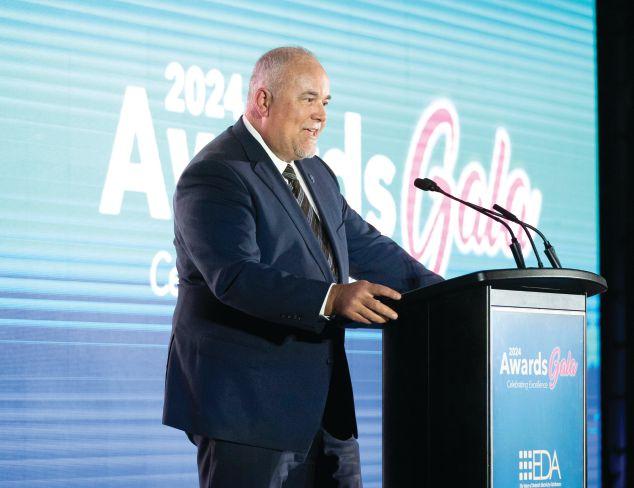
In March, nearly 600 of us gathered for our Annual General Meeting (AGM), the 25th ENERCOM Conference and Awards Gala, giving us the opportunity to address association business, absorb invaluable insights from thought leaders and celebrate the remarkable achievements of our membership. Energy Minister Todd Smith was a guest speaker at the Gala, reflecting on the importance of local hydro and the collaborative efforts needed for the energy transition, themes that resonated deeply with our collective aspirations.

Even in the age of Zoom, Teams and digital communications, the EDA believes in the value of convening people in person. We bring together members, experts and stakeholders for valuable networking and learning opportunities. We were heartened to see terrific attendance at our various events.
The EDIST conference in January was a resounding success. Overflowing with enthusiasm and expertise, the event welcomed over 1,100 attendees across the three-day conference, with an array of education sessions and more than 100 Tradeshow Floor Exhibitors showcasing cutting-edge solutions and innovations.

Minister Stephen Lecce demonstrates EDA member Milwaukee’s new battery powered equipment
Minister Stephen Lecce attended the Canadian Utility Energy (CUEE) Expo in October and delivered remarks, the first time we’ve ever had a minister in attendance at the biennial trade show. The EDA’s Diversity, Equity, and Inclusion (DEI) Conference was held in early November. In its 12th year, the conference offered valuable networking and insights on DEI in our workplaces.
NETWORKING & PROFESSIONAL DEVELOPMENT
COMMUNICATORS COUNCIL
Chair: Lynne Cunningham, Alectra Utilities
Vice Chair: Sara Penny, Milton Hydro
CONSERVATION AND SUSTAINABILITY ISSUES COUNCIL
Chair: Jeffrey Floyd, London Hydro
Vice Chair: Andy Armitage, Synergy North
ELECTRIFICATION COUNCIL
Chair: Luke Seewald, London Hydro
Vice-Chair: Frank D’Andrea, Hydro One
FINANCE AND CORPORATE AFFAIRS COUNCIL
Chair: Alyson Conrad, Festival Hydro Inc.
Vice Chair: Igor Rusic, Milton Hydro Distribution Inc.

EDA Northern Districts Conference, Sudbury (September 2024)
HUMAN
COUNCIL
Chair: Wendy O’Keefe, Kingston Hydro
Vice Chair: Elizabeth Carswell, London Hydro
REGULATORY COUNCIL
Chair: Stephen Vetsis, Elexicon Energy, Inc.
Vice Chair: Kaleb Ruch, Hydro One
SCAN TO SEE A FULL LIST OF OUR 2024 VOLUNTEERS
Chair: Karla Bailey, Synergy North
Vice Chair: Rob Koekoek, Orangeville Hydro
Chair: Peter Vickery (Smart Energy Water)
Vice Chair: Daryn Thompson (Thompson Project Management Inc.)
EDA Board Representative: Scott Mudie, 2023-24 (Oakville Hydro) & John Avdoulos, 2024-25 (Essex Power)

Directors Summit, Toronto (May 2024)
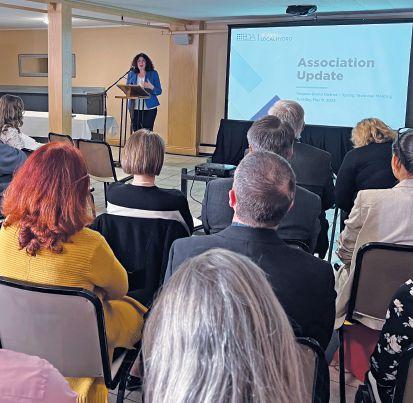
EDA Niagara Grand District Spring Technical Meeting, Port Dover (May 2024)
• Alectra Utilities Corporation
• Atikokan Hydro Inc.
• Bluewater Power Distribution Corporation
• Burlington Hydro Inc.
• Canadian Niagara Power Inc.
• Centre Wellington Hydro Ltd.
• Cooperative Hydro Embrun Inc.
• E.L.K. Energy Inc.
• Elexicon Energy Inc
• Enova Power
• Entegrus Powerlines Inc.
• ENWIN Utilities Ltd.
• EPCOR Electricity Distribution Ontario Inc.
• ERTH Power Corporation
• Essex Powerlines Corporation
• Festival Hydro Inc.
• Fort Frances Power Corporation
• GrandBridge Energy Inc.
• Greater Sudbury Hydro Inc.
• Hearst Power Distribution Company Limited
• Hydro 2000 Inc.
• Hydro Hawkesbury Inc.
• Hydro One Networks Inc.
• Hydro Ottawa Limited
• InnPower Corporation
• Kingston Hydro Corporation
• Lakeland Power Distribution Ltd.
• London Hydro Inc.
• Milton Hydro Distribution Inc.
• Niagara Peninsula Energy Inc.
• North Bay Hydro Distribution Limited
• Northern Ontario Wires Inc.
• NT Power
• Oakville Hydro
• Orangeville Hydro Limited
• Oshawa PUC Networks Inc.
• Ottawa River Power Corporation
• PUC Distribution Inc.
• Renfrew Hydro Inc.
• Rideau St. Lawrence Distribution Inc.
• Sioux Lookout Hydro Inc.
• SYNERGY NORTH
• Tillsonburg Hydro Inc.
• Wasaga Distribution Inc.
• Welland Hydro Electric System Corporation
• Wellington North Power Inc.
• Westario Power Inc.
• Bracebridge Generation Ltd.
• Utilismart Corporation
• Cornerstone Hydro Electric Concepts Association (CHEC)
• Electrical Safety Authority
• GridSmart City Cooperative
• Independent Electricity System Operator
• Infrastructure Health & Safety Association (IHSA)
• Ontario Energy Network Inc.
• Utilities Standards Forum
• 3Dot Technologies Inc.
• ABB Electrification Canada ULC
• AECON Tristar
• Aird & Berlis LLP
• Aladaco Consulting Inc.
• Altec Industries Ltd.
• AVERTEX Utility Solutions Inc.
• Bel Volt Sales Ltd.
• Bentley Systems Inc.
• BHC Canada Inc.
• Burns & McDonnell
• Cam Tran Co. Ltd.
• Candura Instruments
• Capgemini
• CES Transformers
• Chess Electric
• CIET
• CIMA+
• CLEAResult Canada Inc.
• Colm Engineering
• Comprehensive Benefit Solutions Limited
• Connect Telecommunications Solutions Inc.
• Cresa Toronto Inc., Brokerage
• Digital Boundary Group
• Doane Grant Thornton LLP
• dura-line
• DXC Technology/ESIT Canada Enterprise
• Eaton Industries Canada Inc.
• ECS Electrical Cable Supply Ltd.
• Electromark
• Engineered Intelligence Inc.
• ESAC (Electrical & Systems Advanced Control Inc.)
• Esri Canada
• Exel International
• FNX-INNOV Inc.
• G&W Electric
• GF tec Controls inc.
• Hammond Power Solutions
• HCL Canada Inc
• Hexagon
• Hubbell Power Systems
• Iconic Power Systems
• Itron Canada Inc.
• JESSTEC INDUSTRIES INC.
• JOMAR Softcorp International Inc.
• Kevin Hanson Consulting
• Kinectrics
• K-Line Insulators Limited
• KPC Utility Solutions Group
• Langford & Associates Inc.
• Lineman’s Testing Laboratories
• LineStar Utility Supply Ontario Inc.
• MacLean Power Systems
• Municipal Property Assessment Corporation
• MWG Apparel
• Nbisiing Power
• Noramco
• Nordmin Engineering Ltd.
• Novanet Communications Limited
• Olameter Inc.
• OSV Advisory Inc.
• Plan Group
• PLP Canada
• POSI+
• Power Source Instruments Inc.
• PowerPlan
• Rainer Cyber and Risk Management Inc.
• Rexel Utility
• RTS Consulting - Automation
• Schneider Electric Canada Inc.
• Schweitzer Engineering Laboratories Inc.
• Senpilot
• SEW
• Shepherds Utility Equip. Sales (1989) Ltd.
• Sieco-Tech Canada Inc.
• Soltex Canada
• Stella-Jones Inc.
• Surplec Inc.
• Super Sucker Hydro Vac Service Inc.
• Sussex Strategy Group Inc.
• Thompson Project Management Inc.
• TOC Logistics Inc.
• Trilliant Networks Canada Inc.
• Util-Assist Inc.
• UTS Consultants Inc.
• Valard Construction LP
• Wesco
• A&W High Voltage Contracting Ltd
• AESI Acumen Engineered Solutions International Inc.
• Amidyne Solutions Inc.
• BBA Inc.
• Black & McDonald Limited
• Caliber Communications
• Composite Power Group Inc.
• Cormorant Utility Services Ltd.
• Domino Highvoltage Supply Inc.
• Goodmans LLP
• Gowling WLG (Canada), LLP
• Hamilton Community Enterprises (HCE)
• Hastings Utilities Contracting Ltd.
• HomeServe
• Hydel Inc.
• ICF Canada Inc.
• Jubb Utility Supply Limited
• KA Factor Group Inc.
• K-Line Maintenance & Construction Ltd.
• KPMG LLP
• Milwaukee Tool Canada
• MNP
• NBM Engineering Inc.
• NorthStar Utilities Solutions
• Peterborough Utilities Inc.
• Posterity Group Consulting Inc.
• Rodan Energy Solutions
• RR Power Consulting Inc.
• S&C Electric Canada Ltd.
• Siemens Canada Limited
• Stantec Consulting Ltd.









The Performance Excellence Award was presented to GrandBridge Energy for integrating new information systems and streamlining operational costs. They introduced customer conservation projects that enhanced their services donated more than $100,000 to the local community.
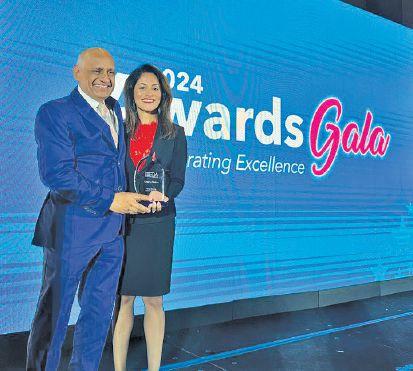
Top-performing distribution utilities from across Ontario were honoured on March 25, 2024 at the Fairmont Royal York in Toronto at the Electricity Distributors Association (EDA) Awards Gala. This annual celebration acknowledges a spectrum of key accomplishments, outstanding customer service and sustainability programs, innovations, and best practices on the part of the companies that deliver the Power of Local Hydro across Ontario.
A Chair’s Citation was presented to three members recognizing their individual achievement and long-time commitment to the electrical industry. Vinay Sharma, President and CEO of London Hydro, Jerry Van Ooteghem, former President and CEO of Enova Power and Tim Wilson, President and CEO of Synergy North were recognized for their accomplishments.
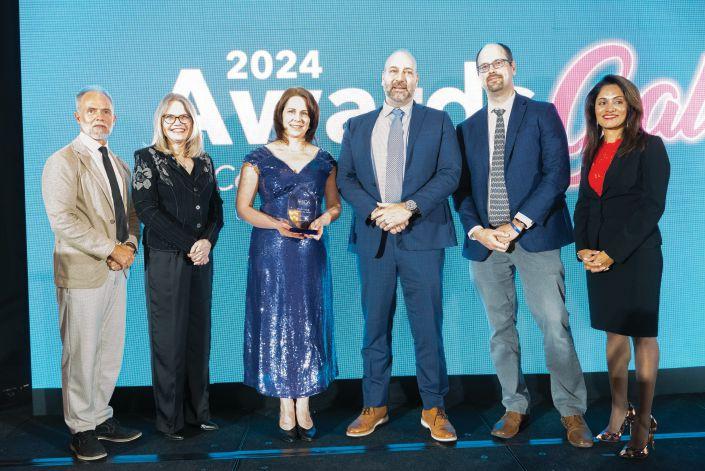
The Public Electrical Safety Excellence Award went to Synergy North for their innovative video campaign to educate customers on the importance of safety precautions around digging safely.
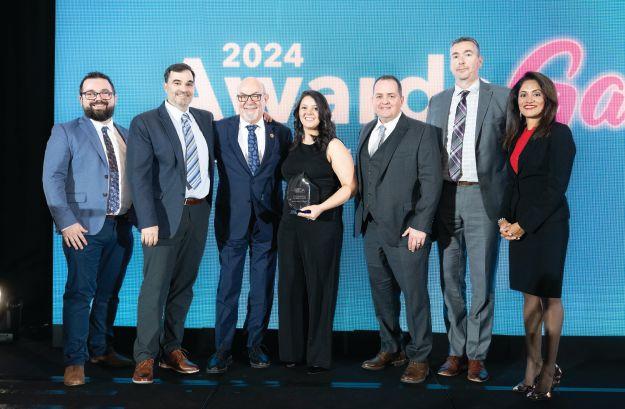
The Communications Excellence Award was received by Essex Powerlines Corporation for a powerful communications campaign informing customers about their charging stations for electric vehicles.
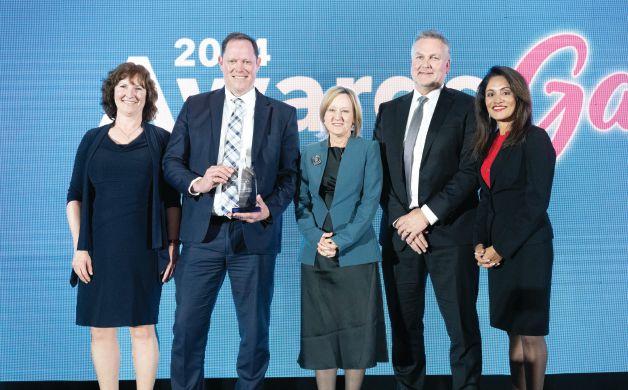
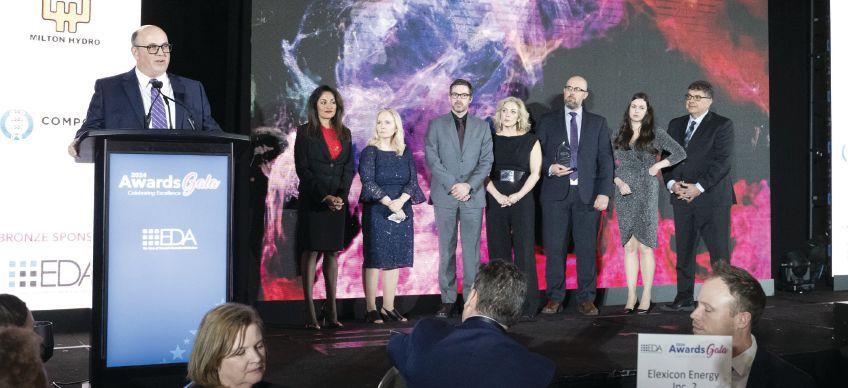
The Customer Service Excellence Award was awarded to Burlington Hydro for its new online portal that enhanced customer experience through web-based better communication tools.
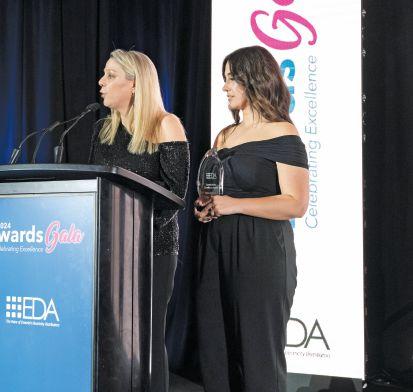
The Sustainability Excellence Award was presented to Elexicon Energy for their path toward sustainability in the development of a well-rounded ESG framework.
The Innovation Excellence Award was received by PUC Distribution for their Smart Grid solution to sustainable energy.

The Public Relations Excellence Award was received by Hydro One, Bluewater Power Distribution and London Hydro for their “Labatt Project” that removed four large beer tanks from the Sarnia Harbour and transported them to Labbat’s brewery in London, ON.

The Volunteer Excellence Award was awarded to Wilf Meston, Vice-President, Operations, Enova Power and Jane Hale-McDonald, retired from GrandBridge Energy. Wilf volunteered six years for the EDA’s Niagara Grand District and EDIST Committee, and Jane volunteered for 14 years on the EDA’s Human Resource Council. That’s commitment! Thank you.
Recognizing that 2025 will be a pivotal year in long-term energy planning, the EDA Board approved a strategic plan with specific targets to guide our advocacy. We will be active in advising the provincial government on the upcoming integrated energy plan, ensuring that they get the fundamentals right. The EDA and our members are committed to supporting economic development and clean, reliable, affordable power is an essential element. We will be advocating for a reformed regulatory environment to help our members operate successfully.
We aim to make serious headway on grid modernization, ensuring that LDCs can start pre-investing capital into the grid so that the province can be ready for the massive expansion in electricity demand that the IESO is forecasting, while always focusing on resilience. We must ensure that LDCs get the right approvals and sufficient access to capital to build out the grid and respond to the challenges identified in our Solving Grid-Lock paper.
We estimate that $120 billion will be needed by 2050 to support distribution system investment. It is an exciting time of change and expansion in Ontario’s electricity sector, with profound decisions that will have an impact for decades. LDCs will play a central role in the province’s energy future and the EDA is committed to making our members’ voices heard so that wise decisions are made that will benefit all.