





Engineering is the foundation of our modern world, and from the moment we wake up to an alarm clock (or just as likely, to the alarm on your phone) onwards, engineering is at play. At the macro level, it translates scientific discovery into practical, life-saving, and everyday solutions. It drives economic growth, solves complex global challenges, and directly impacts our quality of life, safety, and infrastructure.
In this special digital edition of Design Engineering, we’re pleased to shine a spotlight on some of the young engineering talent, age 40 and under, currently working in firms and universities throughout Canada. Engineering is often perceived as a technical field that deals with complex machinery, towering structures, or advanced technologies. And it is. But the passion behind it can be surprisingly simple. What struck me when interviewing the young professionals featured in this issue, for example, is that most of them said they had a childhood love affair with Lego. And nothing is simpler than Lego. But those little interlocking plastic bricks were, in essence, the seeds from which sprouted these big careers that involve solving increasingly complex design problems.
And the ironies multiply: Young design engineers are the literal future of engineering – which is itself a profession for the future – but they’re too often an overlooked segment. Today’s engineers are at the forefront of solving some of the world’s most pressing challenges, but you’ve probably noticed that news coverage in engineering – especially the big-picture developments – tends to rely on quotes and other input from the industry veterans to give it gravitas.
There’s nothing wrong with that, but the relative newcomers have something to say too, as you’ll learn from our profiles here. And as the world continues to evolve, engineering will become even more integral to our daily lives – the rise of artificial intelligence, automation, and smart cities will further bridge the gap between technology and society. And it’s the young engineers of today – many still fresh from navigating the winding road from engineering school – who will be most involved in shaping this over the coming decades, not the veteran engineers currently in the C-suites.
All of this said, the profiles in this issue only scratch the surface. Going forward, please feel free to reach out to me if you have a young design engineering colleague, either in your organization or whom you’ve met another way, who deserves an industry-wide shout-out. We want to keep bringing you these stories that aren’t being told.
JUNE 2026 Volume 71, No.3 design-engineering.com
READER SERVICE
Print and digital subsciption inquiries or changes, please contact Angelita Potal Tel: 416-510-5113 Fax: 416-510-6875
Email: apotal@annexbusinessmedia.com
Mail: 111 Gordon Baker Rd., Suite 400, Toronto ON M2H 3R1
EDITOR Mark Stephen 416-903-8041 • mstephen@annexbusinessmedia.com
DIGITAL EDITOR Jared Dodds 437-775-9680 • jdodds@annexbusinessmedia.com
PUBLISHER Kathryn Swan 647-339-4880 • kswan@annexbusinessmedia.com
ACCOUNT COORDINATOR Cheryl Fisher 416-510-5194 • cfisher@annexbusinessmedia.com
GROUP PUBLISHER Paul Grossinger 416-510-5240 • pgrossinger@annexbusinessmedia.com
AUDIENCE DEVELOPMENT MANAGER Beata Olechnowicz 416-510-5182 • bolechnowicz@annexbusinessmedia.com
CEO Scott Jamieson sjamieson@annexbusinessmedia.com
Design Engineering, established in 1955, is published by Annex Business Media, four times per year except for occasional combined, expanded or premium issues, which count as two subscription issues.
Printed in Canada
Publications Mail Agreement #40065710 ISSN: 0011-9342 (Print), 1929-6452 (Online)
Subscriber Services: Canada: $61.00 for 1 year; $98.12 for 2 years; Outside Canada: USA - $149.04; Overseas - $160.18; $10.00 for single copy.
All prices in CAD funds.
Add applicable taxes to Canadian rates.
From time to time we make our subscription list available to select companies and organizations whose product or service may interest you. If you prefer not to receive this information, please contact our circulation department in any of the four ways listed above.
Annex Business Media Privacy Officer: privacy@annexbusinessmedia.com Tel: 800-668-2374
No part of the editorial content of this publication may be reprinted without the publisher’s written permission.
Editorial Board

DR. MARY WELLS, P.ENG Dean, Faculty of Engineering, University of Waterloo
MYERS CEO, NGen Canada MARK STEPHEN Editor

KEVIN BAILEY CEO, Design 1st


MASSIMILIANO MORUZZI CEO, Xaba
©2026 Annex Business Media. All rights reserved. DE receives unsolicited features and materials (including letters to the editor) from time to time. DE, its affiliates and assignees may use, reproduce, publish, re-publish, distribute, store and archive such submissions in whole or in part in any form or medium whatsoever, without compensation of any sort. DE accepts no responsibility or liability for claims made for any product or service reported or advertised in this issue. DE is indexed in the Canadian Business Index by Micromedia Ltd., Toronto, and is available on-line in the Canadian Business & Current Affairs Database.


BY MARK STEPHEN
“Meet the new boss, same as the old boss” is a classic song lyric by The Who, but it’s not what you want to see as a blueprint for engineering, which is rightly called a profession for the future. We don’t know what the future will look like, but we do know that engineers will be on the front lines in shaping it, responsible for every aspect of our built environment. Faced with that prospect, more of the same won’t cut it.
The problem is, labour forecasters are predicting that over the next 10 years there will be a huge wave of retirements in engineering. Which is why it’s crucial that new engineers continue to enter the field. When it comes to design engineering, the sector needs a constant infusion of young professionals who can blend creativity with applied science in order to take concepts and turn them into manufacturable products or systems, ensuring our high-tech economy remains dynamic and competitive.
Fortunately, many young people who are naturally curious and enjoy learning new things continue to gravitate towards engineering. And Design Engineering is spotlighting some of those who have indeed pursued careers in the field: young engineering professionals in Canada age 40 and under who are making a difference and showing strong potential for leadership, or who are already leading the way. The class of 2026 ranges from mechanical engineers to adjunct assistant professors, and a good
deal in between. Let’s meet these rising stars. To invoke another lyric by The Who, think of them this way: “The kids are alright.”
Brandon DeHart, 40, is already a veteran in the Canadian robotics industry. Armed with a PhD in gait metrics for robotic bipeds, he leads the RoboHub at the University of Waterloo, in Waterloo, Ont., one of Canada’s most advanced robotics research and integration accelerators, where he also serves as an adjunct assistant professor in the Department of Electrical and Computer Engineering. In parallel, he heads robotics at Real Life Robotics, a Waterloo-based startup at the forefront of deploying autonomous delivery and service robots in public spaces.
DeHart’s fascination with the field runs deep, rooted in an admiration for history’s greatest outside-the-box thinkers. “I’ve

I’ve always admired the polymaths like Leonardo da Vinci and Nikola Tesla, who didn’t follow the strictures and norms of their day, who explored multiple fields to see what they could build.
- Brandon DeHart


always admired the polymaths like Leonardo da Vinci and Nikola Tesla, who didn’t follow the strictures and norms of their day, who explored multiple fields to see what they could build,” he said. That same curiosity has defined his career, including a sustained effort to bridge the gap between advanced research and real-world applications.
Nowhere is that effort more visible than at RoboHub. Home to a globally unique fleet of fixed-base, walking, rolling, flying, and magnetically-levitated robots, the Waterloo RoboHub has grown from a small research centre into a recognized international resource. “RoboHub began as just a few professors paying for a room with some robots and someone to help them do research,” DeHart said. “Now we’re supporting robotics initiatives at the regional, provincial, national, and international scale that weren’t even in the brief when it started. Turning RoboHub into the generally recognized international resource for expertise in all the things we do in the robotics space, particularly the human-centric robotic space –training, integration, testing, validation – is something we’re very proud of.”
DeHart’s evolution as a leader has been equally deliberate, seeing diversity – of perspective, of expertise, of lived experience – not as a nicety, but as an engineering advantage. “The more diverse the voices and people and experiences in the room, the better the product or service will be,” he said. “There are so many ancillary considerations in the robotics and automation design process beyond the math and engineering that don’t get talked about but that make the product better, whether from the legal side or the ethical side or the sustainability side. This diversity makes robotic systems better, more efficient, and more trusted.”
DeHart’s advice to the next generation of aspiring professionals is to resist the urge to let others define your path. “Don’t let someone else tell you what your engineering niche will be,” he said. “Think about what kinds of games you like to play, or the problems you enjoy solving – such as micromanaging systems, or organizing things, or making various things work together through integration –and then think about why you enjoy those things, because there’s probably a flavour of engineering where that will be a core component. Engineering is problem-solving, so make sure you’re solving the kind of problem you find satisfying.”
Raha Yazdandoost, 30, is an electrical engineering lead at RAM, in Vancouver, specializing in electrical distribution projects, with a focus on major initiatives with BC Hydro, including electric vehicle (EV) charging infrastructure and underground and overhead distribution programs. She has also collaborated with telecommunications providers like Telus and Shaw, as well as municipalities across various projects.

Yazdandoost comes from a family of engineers in her native Iran and selected engineering as her career early on. “My father is an engineer and my uncle is an electrical engineer, so I’ve always gravitated towards that – and I was always good at math, which helped,” she said. “I moved from Iran to Canada during high school knowing that engineering was what I wanted to do.”With a Bachelor of Applied Science - BASc, Electrical and Electronics Engineering degree from the University of British Columbia Okanagan, Yazdandoost is currently pursuing her Professional Engineer (P. Eng.) designation. She has been with RAM for five years, starting out as an intern, and quickly rose to become the leader of the firm’s electrical team, within RAM’s Major Projects sector.
Yazdandoost considers her role as the main design engineer for more than 50 EV charging sites across B.C. as her biggest career achievement to date, and the industry, writ large, agrees: her BC Hydro EV infrastructure project in Gitlaxt’aamiks First Nation community was nominated for the 2025 ACEC-BC Award for Engineering Excellence in the energy and industry category, recognizing its technical complexity and impact in advancing electrification in remote communities.
Yazdandoost has also developed into a dedicated electrical engineering advocate, playing a key role in guiding junior engineers through technical development and professional pathways; leading RAM’s internal “Pathway to P. Eng.” initiative that supports interns in their journeys toward licensure through mentorship, technical guidance, and career development support; and being involved in “Girls in STEM” workshops for three consecutive years, where she supports and mentors young schoolgirls who are curious about careers in engineering and technology.
Yazdandoost’s advice to any aspiring engineering professional is to join school co-op programs or take advantage of internship opportunities. “These are
really the best ways to learn,” she said. “Classroom learning is necessary, of course, but it can be formulaic – co-ops and internships give you real hands-on learning experiences that you won’t get in the classroom and give you a better sense of what working life in an engineering firm is like. Combining school with this extracurricular work is the best training for an engineer, in my opinion.”
Joseph McIntyre, 29, is the automation engineering supervisor with Molded Precision Components (MPC), a contract plastics parts maker in Oro-Medonte, Ont. Over the past decade, he has been pivotal in helping the firm keep its automation – which it develops in-house – on the cutting-edge, by designing, building, and integrating automation systems and programing controls, all against the backdrop of troubleshooting complex challenges in real time in a busy plant that makes more than 110 million parts annually.
While McIntyre had always been mechanically inclined while growing up near Oro-Medonte, he initially had his sights set on a career in film and TV production. “But there weren’t any co-op programs in film and TV anywhere nearby, so I ended up at MPC instead as a Grade 12 co-op in 2015 and I immediately felt at home – it changed my career path, and I’ve never left,” he said. “I stayed at MPC as a co-op while going to Georgian College’s engineering program, and I’m now working towards my P. Eng. designation.”
One of McIntyre’s favorite projects is MPC’s cube molding machine, a dual-shot injection molding machine with a rotating centre that produces complex molded parts – initially to mold protective face shields during the Covid pandemic and which now makes parts for the automotive industries and other sectors
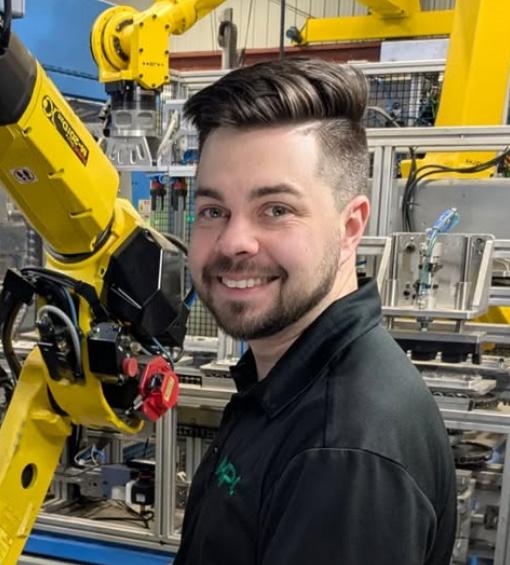
twice as fast as traditional methods. “The cube is one of MPC’s biggest new technology developments, and I was involved in most phases of it,” he said.
McIntyre also mentors and develops others at MPC to deliver the same level of excellence he demonstrates every day, particularly the many young people that MPC employs through internships, co-ops, apprenticeships, and training programs. “I had a very good mentor at MPC, so I know first-hand about how important mentorship is for young people,” he said. “I’m at the point now where I’m ready to help develop the next generation of skilled engineering talent.”
For young professionals looking to achieve similar success, McIntyre’s advice is: turn off your computer from time to time and explore your company’s shop floor. “Don’t think that engineering means you’re going to sit in front of a computer all day long,” he said. “You can do it that way, but you’re missing out. For me, getting out on the floor and working with my hands – combined with listening to new ideas from the other people out there, who know the machinery inside-out – is still the best way to learn. I’ve done everything at MPC from sweeping the floor to sorting parts, and it all combined to make me a better engineer.”
Kevin Pattison, 38, first joined Mulvey & Banani International Inc. in its Toronto office as a co-op summer student in 2008 while studying electrical engineering at Dalhousie University in Halifax. He graduated from Dalhousie with a Bachelor of Engineering at the end of 2011 and returned to Mulvey & Banani, where he’s progressed steadily through increasing levels of responsibility to his current role as vice president, leading a team of 25 other electrical engineers. “My group manages most of our corporate/ commercial interiors-type projects, which are fastpaced with tight timelines and budgets, and often working with many existing conditions and limitations,” he said.
Like many engineers, Pattison had an absorbing, and abiding, childhood interest in Lego. “I was – and still am – a big Lego fan, with several large sets and eyes on a few more,” he said. And he was one of those kids who likes seeing how things “tick.” “As a child, I was often found taking my toys apart to see what they were made of and how they worked,” he said.
Pattison holds both the LEED Green Associate and WELL Accredited Professional designations and is also an engaged member of Professional Engineers Ontario and the Ontario Society of Professional Engineers. Among his most notable achievements with Mulvey & Banani, Pattison was involved in the successful delivery of CIBC Square’s North and South Towers – two landmark commercial developments in downtown Toronto that required rigorous coordination, technical expertise, and stakeholder alignment at the highest level; and he’s currently involved in the ongoing Scotia

Bank Arena Venue Reimagination project, which is an upgrade to Toronto’s most important sports and entertainment venue. In another significant project, he led the fit-up and expansion of his own organization’s office space – a project that showcased his ability to manage internal stakeholders, balance operational needs with design excellence, and deliver results that directly support organizational growth.
These and other projects have taught Pattison a valuable lesson. “No two projects are ever the same and will never go 100 per cent according to plan,” he said. “Be ready to adapt and modify the approach to suit the changing conditions, be it the schedule, budgets, site conditions, or a client request.”
Pattison’s advice to aspiring professionals is to focus on the technical fundamentals so that you can apply your knowledge to new situations to problem-solve any challenge. “Also, attend the social events in your industry and/or community,” he said. “Regardless of the type of engineering you’re doing, it’s always people doing business with people.”
The moment I was old enough to use a screwdriver I started taking things apart to understand how they worked.
- Julio César EscuderoEstrada
Julio César Escudero-Estrada, 38, is an electronics designer and hardware engineer at product development firm Design 1st in Ottawa, and is a born engineer if ever there was one. Beginning very early in his childhood in Mexico, his innate curiosity about all things electrical was irrepressible. “When I got my first electronic toys, I was completely fascinated by the lights, the motors, and the way things moved,” he said. “The moment I was old enough to use a screwdriver I started taking things apart to understand how they worked. Looking back, that curiosity was the seed for everything. I didn’t know it was ‘engineering’ at the time, I just knew I needed to understand what was inside.”
With a Bachelor of Science in Electronics and Robotics – which included studying in France – and a Master’s degree in Electronics Design, Escudero-Estrada worked in Mexico for several years as a self-employed hardware engineer before moving to Canada

in 2020 to achieve his dream job with Design 1st, one of North America’s largest, award-winning product design firms. His role includes prototyping, testing, and prepping electronics projects for quality manufacturing across a wide range of consumer product categories – tasks that require both collaborative and hands-on technical skills. “I start by listening closely to clients, interpreting their requirements, and working with the team to define a high-level system design that meets their needs,” Escudero-Estrada said. “From there, I’m involved across the full development cycle: circuit design, component selection, schematic capture, prototyping, debugging, testing, and ongoing support for manufacturing and certification.”
A career highlight for Escudero-Estrada is a portable inflatable hospital that he worked on from concept to production. “It was actually developed before Covid, but when the pandemic hit, it ended up being deployed very successfully,” he said.
In a career defined by taking ideas from concept to a finished product, the biggest lesson that Escudero-Estrada has learned so far is to always learn about something outside his field. “Because that’s exactly where my field needs to be applied,” he said. “Whether it’s sewing machines, music, cooking, construction equipment, or whatever, when the opportunity comes to work on something fun and different, I want to understand the opportunity.”
Reflecting on his career path, Escudero-Estrada advises young professionals to be enthusiastic. “Work on your own projects outside of school or your work –this will give you experience and design satisfaction,” he said. “And learning other languages, if you can, will really open doors for you.”
Terry Brar, 37, is the director, client execution leads and proposals with Lauren Services in Vancouver, with responsibilities that include project management, engineering design, and leading a

multi-discipline project team for executing large-diameter pipelines, urban utility projects, and complex oil and gas facilities across upstream, midstream, and downstream systems.
“Before university, I always had a keen interest in both natural sciences and business economics,” Brar said. “Engineering was a natural fit for me, where the work appeared practical, had a tangible impact – getting to actually see your projects implemented – and also offered entrepreneurial opportunities.” While attending the University of British Columbia, he served as an engineering co-op student at FortisBC, and after graduating with a Bachelor of Applied Science, Mechanical Engineering, he worked at several Vancouver-area engineering firms, focusing on pipeline projects. He joined full-suite engineering and project execution service provider Lauren Services in 2015 and has held several roles with the firm as his career there has evolved. “Currently, I have many responsibilities, including being the lead account manager for a major client, leading our engineering proposal team, and contributing technical guidance to our engineering infrastructure projects,” he said.
Engineering was a natural fit for me, where the work appeared practical, had a tangible impact – getting to actually see your projects implemented – and also offered entrepreneurial opportunities.
- Terry Brar
Brar’s biggest accomplishment to date is becoming a partner at Lauren Services and taking on a leadership role there. And he’s learned some valuable lessons along the way. “There will always be varying levels of issues or problems while a project is being executed – some will be minor, others significant –and it’s important to utilize your increasing tool chest of expertise and tactile leadership to help guide the team and project to problem-solve to achieve positive resolutions,” he said. “With this approach, you’ll find there’s no problem too big to resolve.”
Brar believes there are two considerations for young people thinking about careers in engineering that often get overlooked. “First, are there job opportunities related to your engineering discipline/speciality in the cities or locations where you want to live long-term? This matters because relocation to a different province or country is often a career entry necessity for engineers and it often results in long-term relocation,” he said. “Second, do you have an entrepreneurial spirit? If so, consider developing your career in an industry and field that you could feasibly start and grow your own company.” |DE



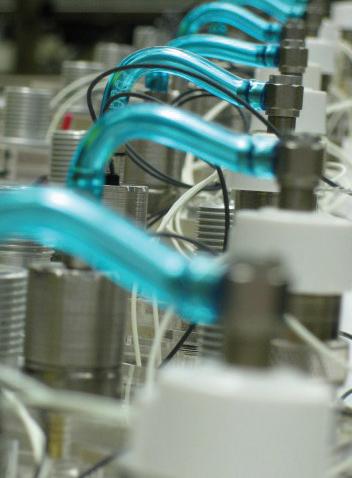

Designing efficient systems is about more than components and specifications—it’s about understanding how real requirements come together in the real world. By taking the time to understand the specific demands of your system, we bring decades of engineering experience and a people-first mindset to develop solutions that perform better, last longer, and fit exactly where they need to.
Have a challenge you’re working through? Call or email us today and let’s connect our engineers with your engineers.


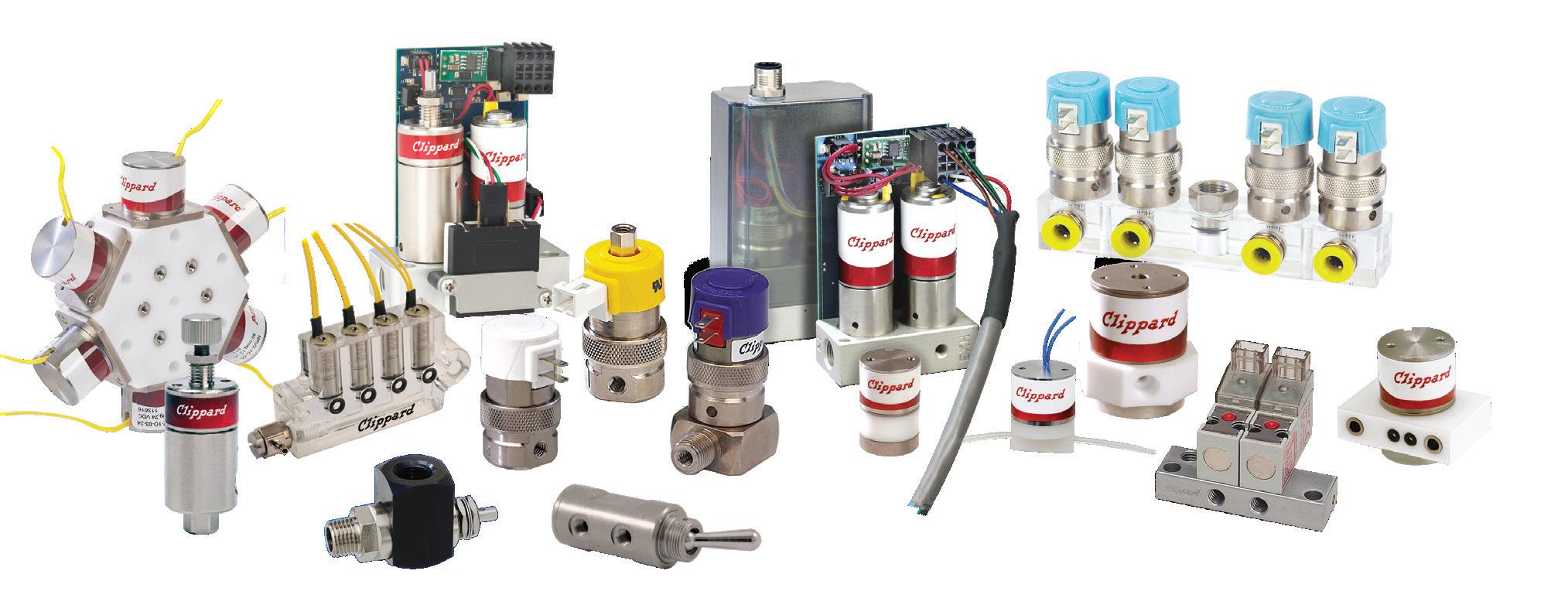
• Electronic Valves
• Proportional Valves
• Isolation Valves
• Pinch Valves
• Precision Regulators
• Toggle & Stem Valves
• Needle Valves
• Electronic Controllers
• Pneumatic Assemblies
• Special Manifold Designs
• Pneumatic Circuit Design
• Fittings, Hose & Tubing
BY ALENA MIKHAYLOVA
Municipalities across North America – and the design engineers working for them – are grappling with the same challenge: aging wastewater infrastructure and shrinking maintenance budgets. In the U.S., for example, the American Society of Civil Engineers gave that nation’s wastewater systems a paltry D plus on its most recent infrastructure report card, citing overflows, infiltration, and corrosion as critical weaknesses. Many
cities face mounting costs to maintain assets that should last decades but often don’t.
For years, the default approach to manhole corrosion protection has been field-applied coatings – protective layers sprayed or troweled onto precast concrete structures after installation. While this approach appears cost-effective upfront, the reality is much more complicated and expensive. As municipalities increasingly factor in maintenance frequency, inflation, and operational downtime,
approach locks them into a cycle of reactive maintenance rather than proactive asset management.
Sprayed coatings last, on average, seven to 10 years before requiring reapplication. In some cases, coatings have failed in as little as two years due to inconsistent surface preparation or improper curing conditions. Each new coating cycle introduces not only material and labour expenses, but also indirect costs such as more frequent inspection, mobilization, and bypassing – costs that are often underestimated or not accounted for during maintenance budgeting.
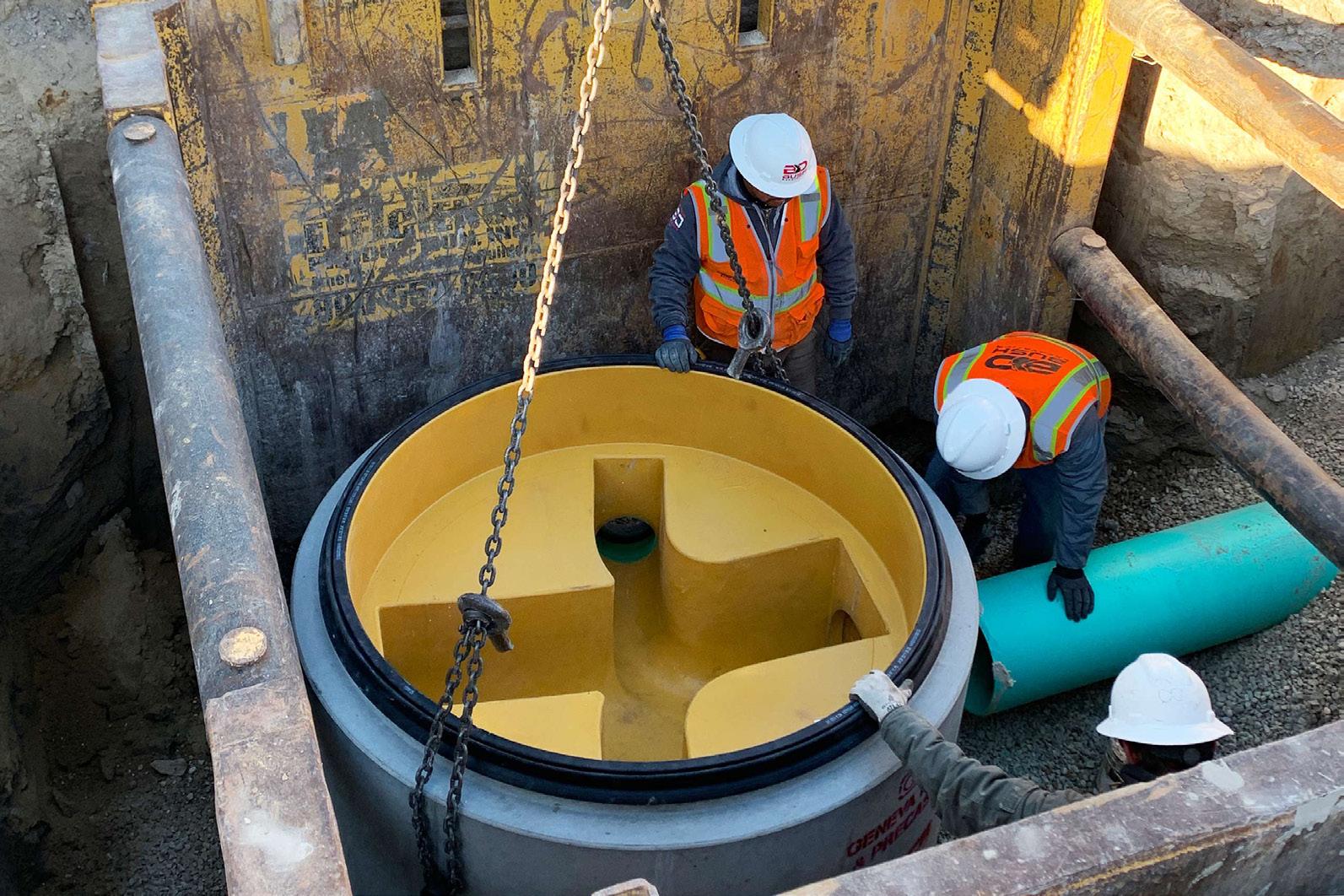
By contrast, lined manhole systems integrate corrosion protection directly into the structure. Rather than applying a coating to hardened concrete, an integrally cast in liner is mechanically embedded during the manhole pouring process. This creates a permanent bond that resists peeling, cracking, and backpressure – a common failure point for sprayed systems that rely on chemical adhesion.
Most municipalities look only at the annual budget – how many manholes they can rehab this year – not the total cost over 50 years. When they do that math, the picture changes dramatically.
lined manhole systems are emerging as a smarter longterm investment – one that emphasizes durability and total lifecycle value rather than the illusion of shortterm savings.
Municipalities are under pressure to stretch limited budgets as far as possible. As a result, they often choose the least expensive maintenance option that fits within a single fiscal year – typically recoating existing manholes.Yet this
Upfront, a lined manhole typically costs between 30 to 40 per cent more than a comparable sprayed system. That initial difference – often viewed as a deterrent – quickly dissolves when lifecycle costs are examined.
Sprayed coatings must be reapplied every seven to 10 years, with inflation adding, on the conservative side, roughly three per cent annually to material and labour costs. Over a 50-year
timeline, municipalities would pay for anywhere from five to seven coating cycles, each more expensive than the last. According to modeling from NWPX Infrastructure, the total materials cost alone can reach six times that of a lined manhole over the same period.
And materials are only part of the equation. Each recoating requires dewatering, pump rentals, and traffic control and bypass – a process which can cost thousands of dollars per day. When those indirect costs are factored in, lined manholes deliver up to 65 per cent savings over their lifetime, often breaking even by the time the first recoat cycle would roll around. Factory-lined manholes require virtually no maintenance. Once installed, the structure is sealed against infiltration and corrosion. Cities save on labour, inspections, maintenance, and emergency repairs – all of which compound over time.
The difference between these systems begins at the material level. Lined manhole systems are manufactured using two specialized liners that work together to resist corrosion and chemical attack. The base is lined with fibre-reinforced plastic – a composite of chopped glass fibre and resin that has been rigorously tested for tensile strength, acid resistance, and non-porosity. Above that, the riser walls incorporate a high-density polyethylene liner that is exceptionally smooth, dense, and resistant to hydrogen sulfide corrosion, the leading cause of concrete degradation in wastewater environments. Each liner contains anchors that mechanically embed into the concrete, creating a physical bond rather than a
chemical one. This eliminates the risk of delamination or bubbling caused by water intrusion between the liner and the wall – a common failure mode for sprayed coatings. The result is a structure with a 100-year design life and a 50-year warranty against corrosion, virtually eliminating reapplication cycles altogether. Smooth liner surfaces also minimize debris accumulation, reducing maintenance frequency and inspection labour.
These systems are engineered to meet ASTM C478 and AASHTO M199 standards, ensuring reliable structural performance under traffic and soil loads. With steel reinforcement and wall thicknesses of five inches and up, lined manholes maintain the strength of traditional precast concrete while vastly improving longevity.
Another corrosion-resistant option – polymer concrete – offers durability similar to lined systems, but at a much higher price. Polymer manholes replace Portland cement with synthetic resin, creating a dense, non-porous structure. However, this material is between 20 to 25 per cent more expensive to produce due to the specialized processes and equipment required for resin polymerization, which adds significant cost and complexity to manufacturing compared to lined concrete manholes.
In addition to higher material costs, polymer concrete introduces logistical challenges. The structures are more brittle under tension and less forgiving if damaged during transport or unloading. Contractors report that cracks in polymer manholes are difficult or impossible to repair in the field, often requiring
replacement or return to the manufacturer. Availability is also limited, with only a handful of North American suppliers producing polymer concrete manholes – causing longer lead times and potential project delays.
By comparison, lined precast systems combine the corrosion resistance of polymer concrete with the economics and availability of traditional precast manufacturing. NWPX’s Perfect Lined Manhole integrates this approach, pairing standard reinforced concrete with corrosion-proof liners and watertight rubber gaskets that eliminate infiltration and exfiltration.
The shift toward lined systems mirrors a broader movement in infrastructure management: the transition from reactive maintenance to proactive asset management. Asset management programs are showing that permanent solutions not only perform better but are also more responsible investments for taxpayers.
Municipalities that track the full lifecycle cost of their systems, rather than annual maintenance line items, are recognizing that long-term durability is the only sustainable path forward.
This change is being accelerated by EPA consent decrees, which mandate corrosion-resistant materials in new or rehabilitated sewer systems. Cities like those in the U.S. state of Utah are already moving in this direction, adopting lined manholes as a permanent protection standard for high-flow or lift station zones. At the same time, rising labour costs and skilled workforce shortages are widening the gap between lined and sprayed systems. Each coating application
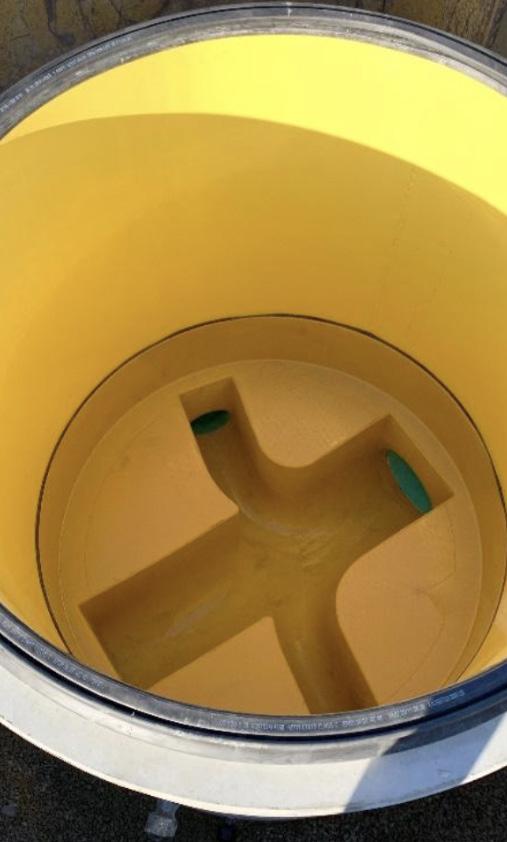
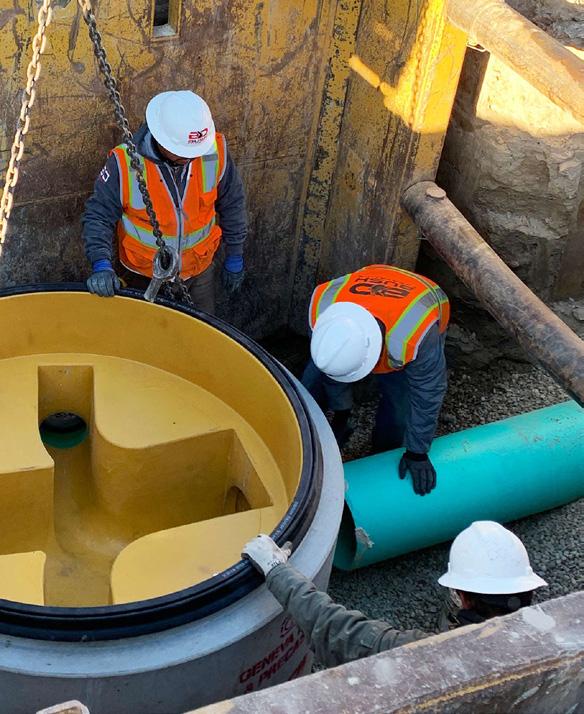
Mechanically embedded liners form a permanent corrosion barrier and prevent delamination under backpressure.
requires specialized crews, confined space work, and precise curing windows – all of which drive up cost and risk. Lined systems are delivered ready-to-install, require no specialized tools or training, and minimize exposure hazards.
For municipalities seeking to modernize their wastewater systems, the message is clear: short-term savings often lead to long-term costs. Each recoat, bypass, and repair adds up, financially and operationally. Lined manhole systems, while more expensive upfront, eliminate the need for repeated interventions, yielding lasting value through reduced maintenance, faster installation, and extended service life. In a field defined by infrastructure strain and public accountability, the most economical choice isn’t always the cheapest, it’s the one that endures. |DE
Alena Mikhaylova, PhD, is the lined precast product manager at NWPX Infrastructure. She provides technical support for agencies and engineering firms across North America.
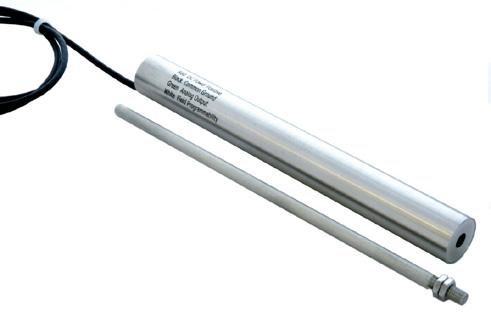
Alliance Sensors Group has launched its LZ-19 series linear position sensors, designed to meet demand for compact and high-precision sensing in industrial and automation environments – especially applications including hydraulic systems, factory automation, and OEM machinery, where space constraints and accuracy requirements are key considerations. The LZ-19 sensors feature a compact design with a stroke-to-length ratio that allows them to fit into tight spaces. The sensors incorporate built-in electronics with DC input and output. Installation is simplified with a pre-attached one-metre cable, supporting integration into OEM equipment designs. The range supports measurement spans from 2.5 millimetres (mm) to 750 mm, covering a range of industrial positioning requirements.
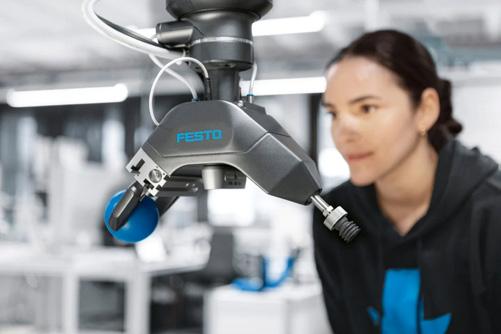
Festo’s new GripperAI is a universal artificial intelligence (AI)-based software that enables robots to handle a range of items without custom programming. The software operates locally at the cell on a standard industrial PC with a connected 3D camera and
automatically adjusts for mixed products without programming or template loading between SKUs. GripperAI is compatible with most industrial robots, cobots, and Cartesian systems that have a path control system to execute the motion the software specifies. Because the software is robot-agnostic, cells can be deployed or expanded without locking into a single brand or model, helping to protect existing investments while gaining the flexibility to add capacity with the most cost-effective equipment for the application.
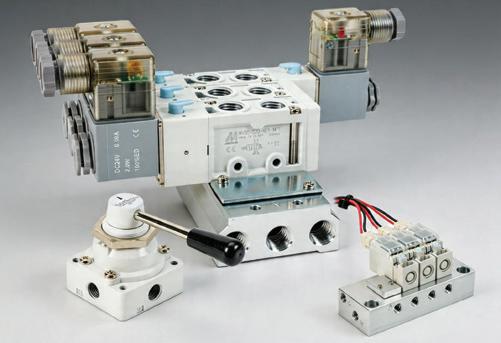
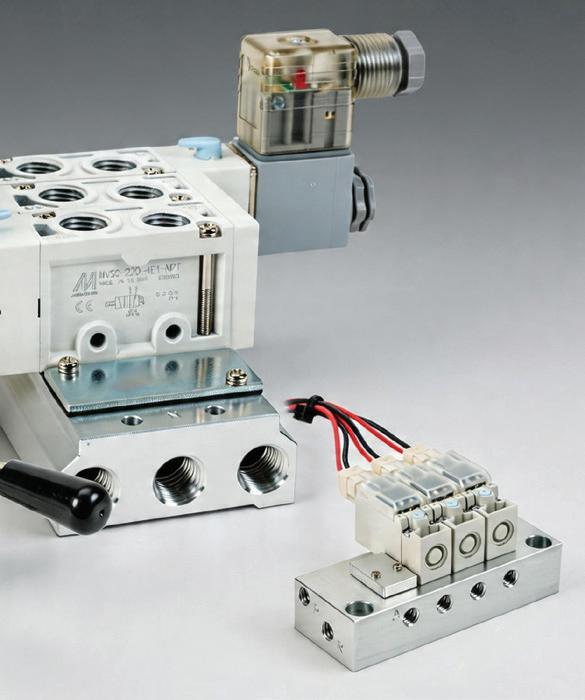
AutomationDirect has introduced Mindman MVSC and MVSC1 directional control solenoid valves and manifolds, which provide reliable, high-performance air control for a wide range of automated systems. The MVDC stackable solenoid valve series builds on that capability with a modular design that keeps installations clean and scalable, making it easy to create efficient multi-station valve banks. For compact machinery and precision equipment, MVDY miniature solenoid valves offer fast, dependable switching in a space-saving form factor ideal for tight layouts. MVAA pilot valves complement these solenoid families by delivering efficient, low-power actuation for larger valves and manifolds. Available in five-port (four-way) and three-port (three-way) designs with 116 psi maximum operating pressure.
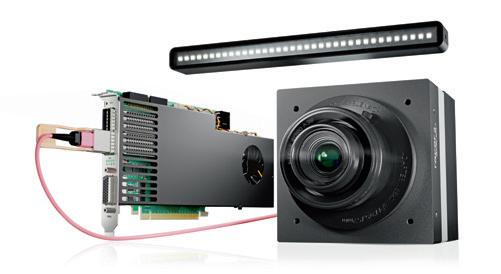
Basler AG announced a CoaXPress-over-Fibre TDI vision system with a bandwidth of up to dual 100 Gbps. The racer 2 XL TDI line scan camera with the latest GPixel GLT5016BSI CMOS line sensor delivers a line rate of up to 500 kHz at 16k resolution with 256 TDI stages. Passive cooling fins or an active compressed air cooler are available for cooling the camera. The optical connection ensures electromagnetic compatibility and an almost unlimited cable length. To connect the camera to a frame grabber, QSFP28 data cables are available in various lengths together with a QSFP28 transceiver module. The camera is compatible with the programmable imaFlex 2 Dual 100 frame grabber.
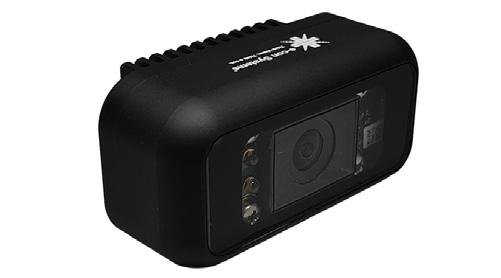
E-con Systems has launched STURDeCAM57, a 5MP global shutter RGB-IR GMSL2 camera designed to deliver reliable, context-rich vision from day to night for applications such as driver monitoring systems and occupant monitoring systems. STURDeCAM57 streams RGB and infrared frames as independent channels, providing AI vision systems with both full-colour imagery and high-contrast infrared data from a single camera. It allows continuous
monitoring across daylight, low-light, and no-light conditions without requiring multiple sensors; and is optimized for seamless integration with leading platforms, including NVIDIA Jetson. The STURDeCAM57 is equipped with an on-board image signal processor, which performs RGB-IR separation, demosaicing, and colour reconstruction directly within the camera.
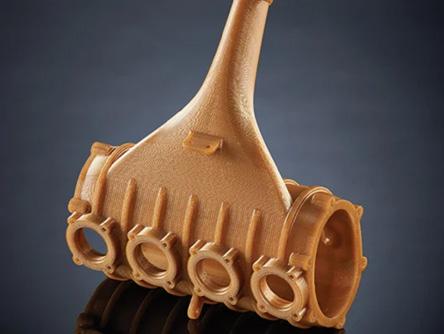
Stratasys Ltd. has expanded its portfolio of additive manufacturing to include Ultem 1010 filament for the F3300 printer, enabling the production of high-temperature, aerospace-grade parts with excellent resistance to heat and the lowest coefficient of thermal expansion in the FD technology portfolio. Optimized for composite tooling, Ultem 1010 resin allows fixtures and tools to maintain precision and reliability in demanding environments. Paired with the F3300 printer’s faster print speeds and integrated material drying, manufacturers can now produce high-performance parts while significantly reducing cost per component.
Arnold Magnetic Technologies has released its Ramcast proprietary rotor casting process, engineered to meet the rigorous demands of aerospace and other high-performance applications, and allowing motor designers to surpass the constraints of conventional rotor casting. The Ramcast process produces both
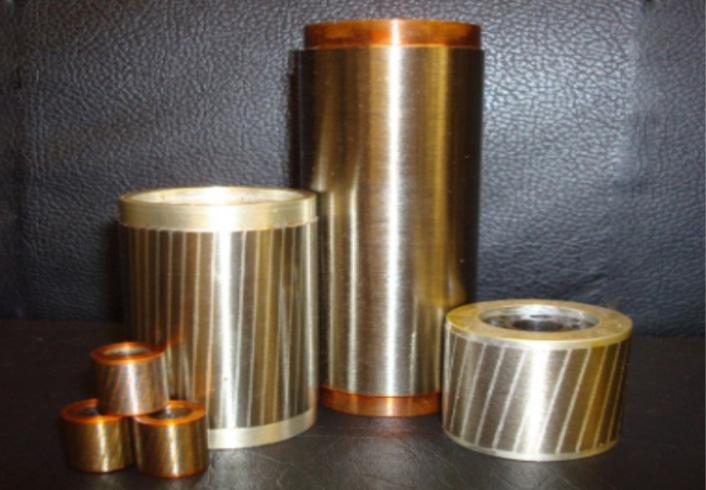
aluminum and cast copper rotors, and achieves low porosity levels of near zero, producing dense castings that ensure structurally sound end rings and enable motors to function at higher speeds and temperatures. The process also achieves tighter dimensional tolerances compared to conventional casting methods, ensuring uniform quality across all rotor designs. By accommodating individual stack lengths during casting, Ramcast reduces deformation and minimizes shunting of lamination insulation.

MathWorks has launched new hardware support packages that connect its MATLAB and Simulink design software to Renesas’ RH850/U2A microcontroller for automotive applications and its RA6T2 microcontroller for industrial controls, designed to give engineering teams a consistent model-based design workflow across both automotive and industrial programs. The integration is intended to let engineers move from simulation directly to embedded code on hardware with automated build, flashing, and
execution. For automotive engineers, the RH850/U2A integration supports deterministic and safety-critical applications including electric vehicle motor control, advanced driver-assistance systems, and body electronics. For industrial applications, the RA6T2 integration enables one-click deployment for servo and variable-speed drive use, supporting motion profiles and closed-loop tuning on-bench.
Rockwell Automation has announced new capabilities of its EtherNet/IP in-cabinet solution to expand support for additional motor control and protection devices. The update streamlines communication between devices
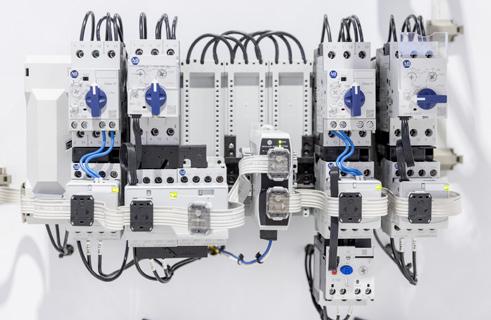
inside the panel, improving real-time data availability and making it easier to install, scale, and maintain motor control systems over time. It enables manufacturers to connect more components inside the control panel, simplify wiring, and gain deeper diagnostic insight without redesigning their existing architecture. The expanded release adds a supplemental power tap and extends EtherNet/IP connectivity to additional motor control components, including 140ME motor protective switching devices and E100 electronic overload relays through a 100-E contactor communication module.




Amplify Content Studio is a full-service custom content studio, helping companies share their story, build brand awareness and garner trust through original content.
There are so many ways to reach a target audience. We’ll craft you content for any medium:
• Thought leadership – long-form or short-form articles
• Blogs, whitepapers, infographics and case studies
• Webinars, podcasts and video
• Tradeshow marketing content
• Automated content marketing supported by first-party data ....and so much more!