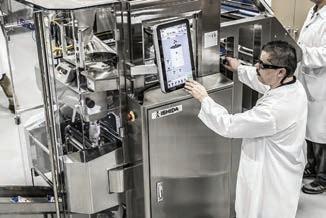
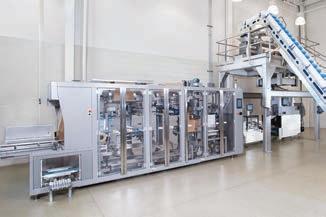
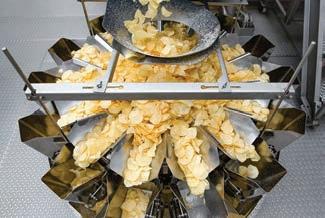
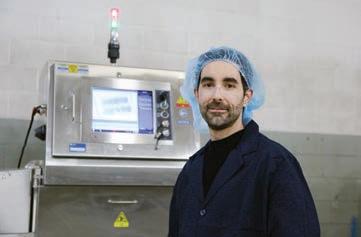
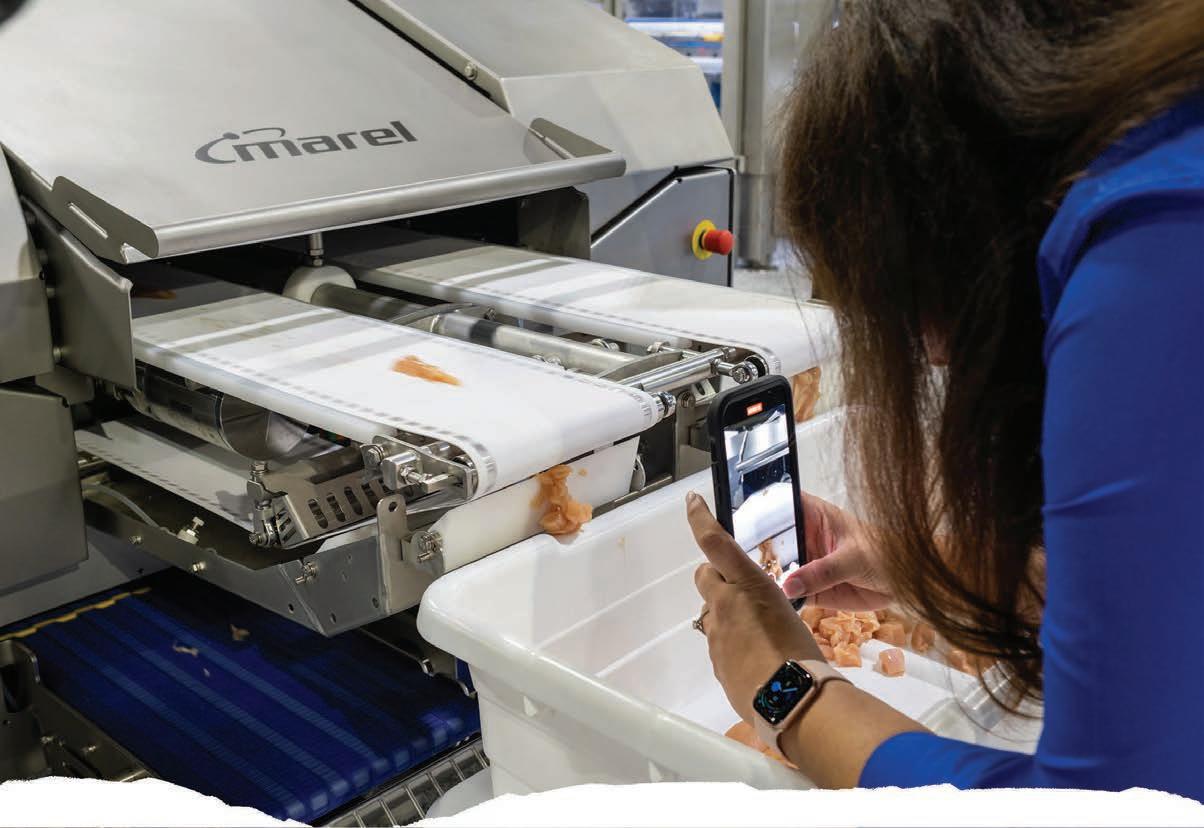
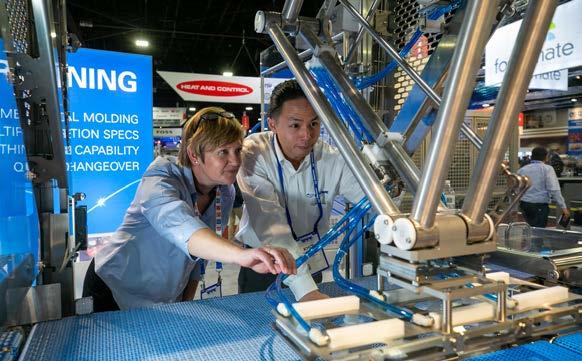
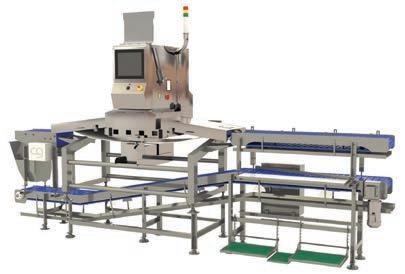
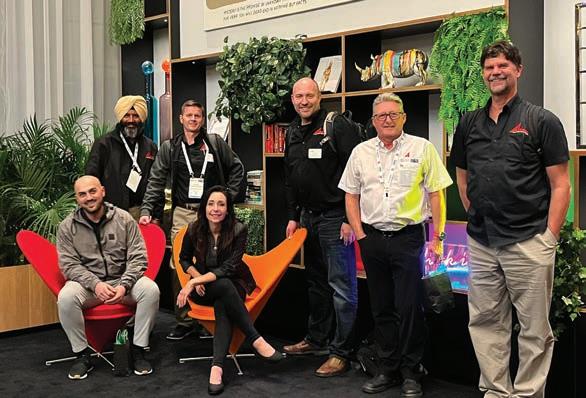
With Heat and Control, you have a partner with the scale to support your success, the innovation to advance your operations, and a commitment to quality that will help you offer better products for consumers.
COMPLETE SNACK PACKAGING SOLUTIONS
•Accumulation
•Horizontal motion conveying
•Incline, belt and bucket conveyors
•Filling and multihead weighing
•Bagmaking and casepacking
•Checkweighing and seal checking
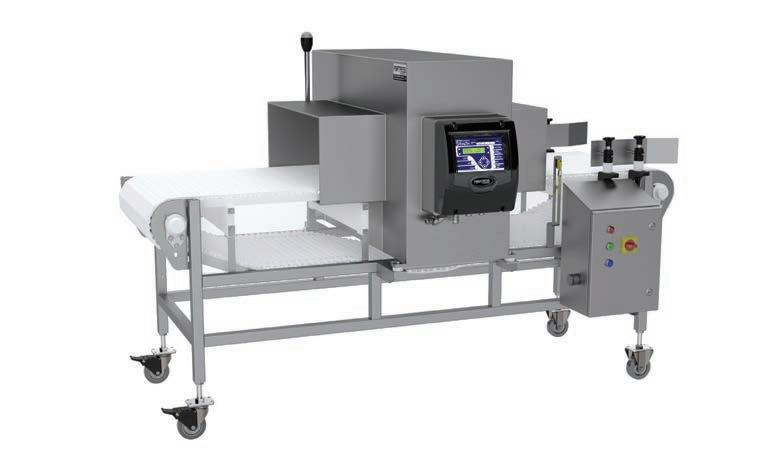
•Foreign object and defect inspection
•Controls and information systems
We are successful when you are successful. That’s why we apply creativity, engineering excellence, and determined perseverance to every project to help our customers get the performance their business demands—whether measured by flavor, efficiencies, sustainability, improvement, or innovation.
Jan. 24-26, 2023
Booth C-11069
Georgia World Congress Center Atlanta, Georgia USA
info@heatandcontrol.com | heatandcontrol.com
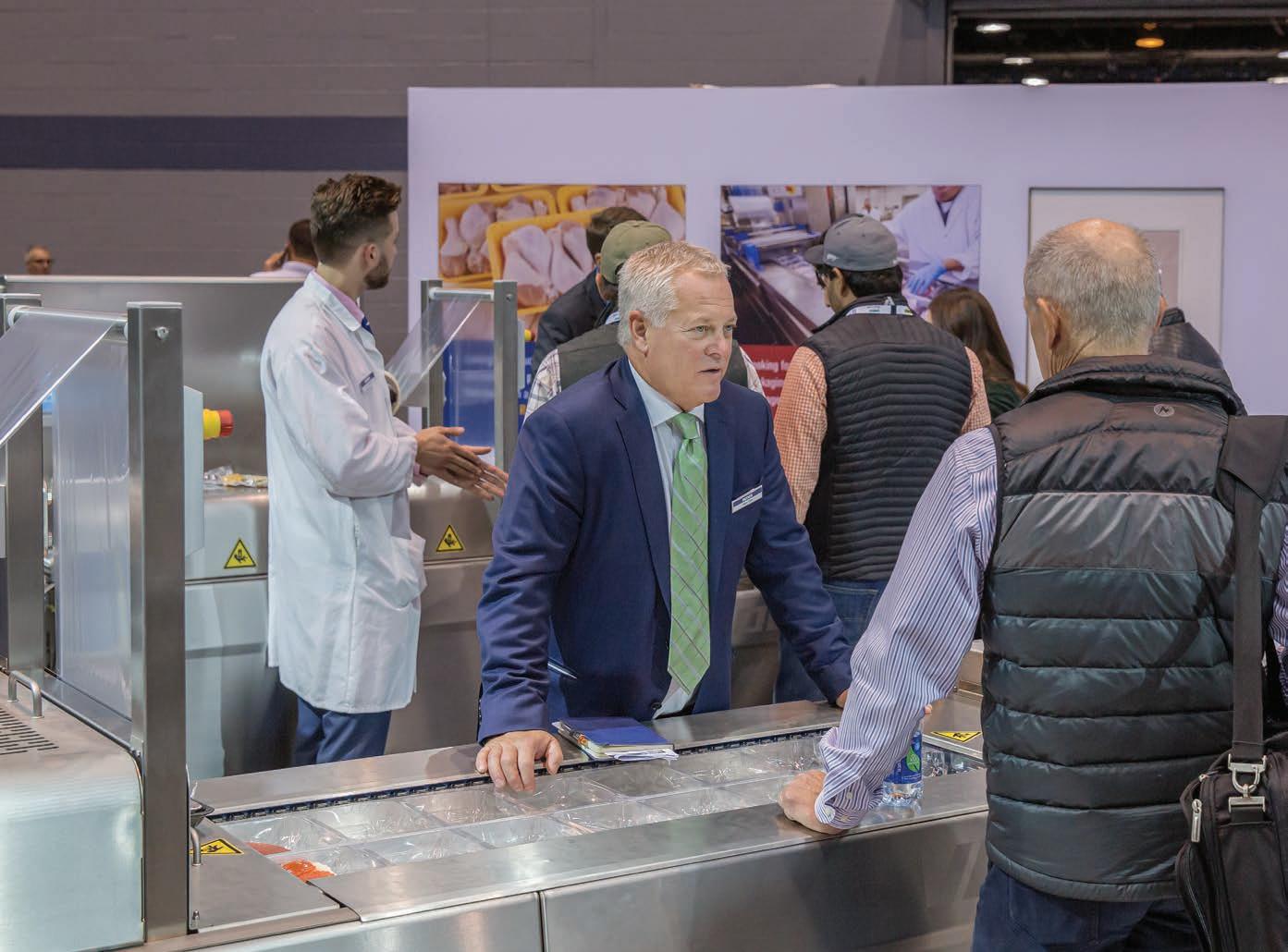
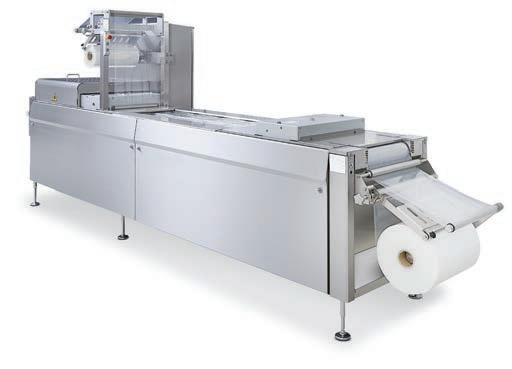
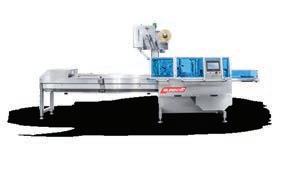
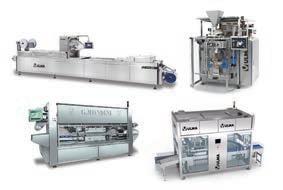
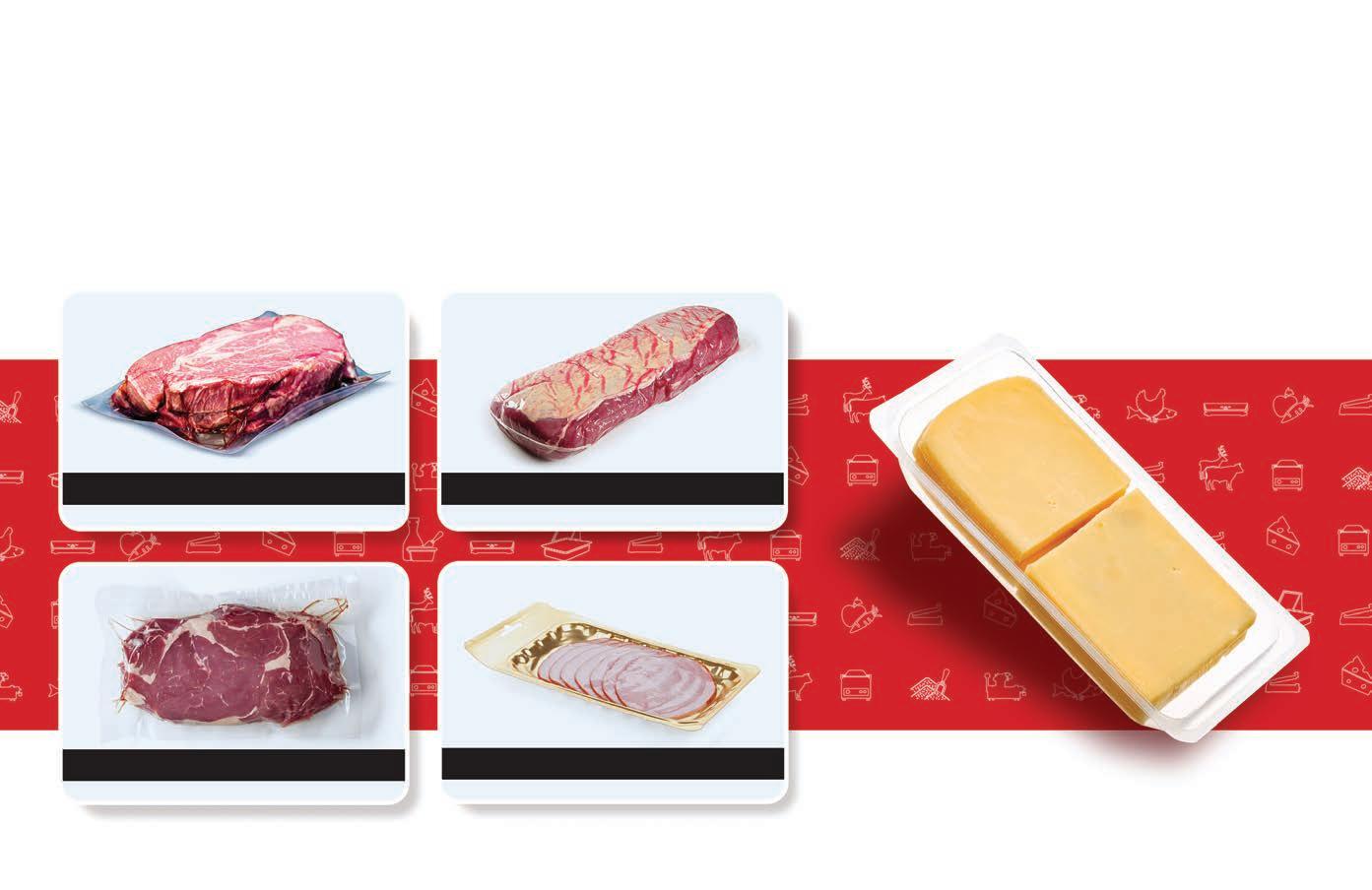
Reiser Form/Fill/Seal Packaging
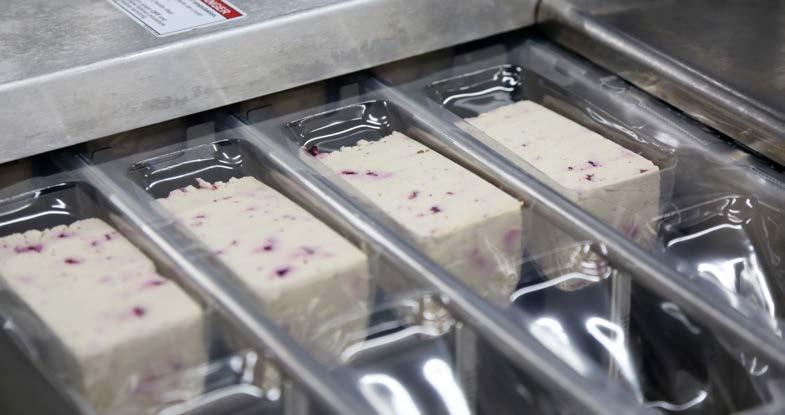
n High-speed production of vacuum, MAP, and VSP packages
n Rapid Air Forming for high-quality, high-speed forming
n Superior sealing system virtually eliminates leakers
n Stainless steel, rugged, low cost of ownership
n Extend product freshness and shelf life
COLUMNS
FROM THE EDITOR
4 George Guidoni
Pre-Christmas spending splurge just what the doctor ordered.
CHECKOUT
32 Jeff May
Joe Public speaks out on packaging hits and misses.
MIND
Upstart Ontario producer of dairy-free vegan cheese products leverages advanced thermoform packaging technology and techniques to crack the code for success in the fast-growing alternative dairy markets.
FEATURES
20 Higher Learning
Ontario meat processing industry association opens up a new research and product development hub at the University of Guelph campus to help make industry more competitive and sustainable.
24 Nice to Meat Up Again!
Your preview to the upcoming 2023 International Production and Processing Exhibition (IPPE) meat industry showcase in Atlanta next month.
27 Back to the Top
After a six-year absence, the world’s largest global packaging showcase interpack is back in business this coming spring to turn Düsseldorf, Germany, into a temporary Mecca of packaging excellence and innovation from around the world.
ON THE COVER
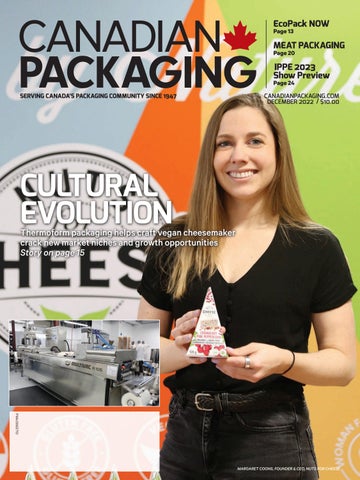
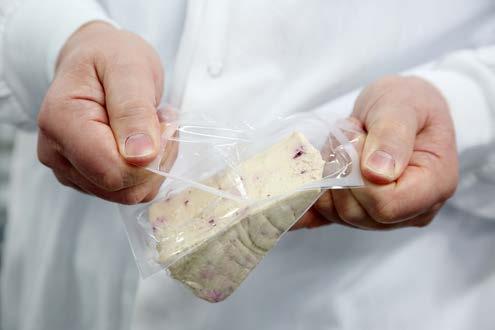
Nuts for Cheese founder and chief executive officer Margaret Coons shows off a striking pyramid-shaped package of her company’s dairy-free cheese product packed on state-of-the-art thermoform packaging machinery.
Cover photography by Naomi Hiltz
Pre-Christmas spending splurge just what the good doctor ordered
The spirit of Christmas came early last month to the southern Ontario city of Brantford, where federal minister Filomena Tassi made a high-profile stop to award $12.7 million in government funding to five major local food and packaging companies.
$12.7 MILLION
Capital infusion forsouthern Ontario food sector
As a minister responsible for the Federal Economic Development Agency for Southern Ontario (FedDev Ontario), Tassi’s announcement was a welcome reassurance that the federal government is aware of the sector’s enormous contribution to the economy and employment in one of Canada’s most densely populated regions, while acknowledging the many serious challenges the industry faces as it emerges from its post-pandemic aftershocks.
Fittingly announced at the site of a million-square-foot manufacturing and processing facility operated by renowned candy-maker Ferrero Canada Ltd., the new funding—administered through the federal Jobs and Growth Fund and the Business Scale-up and Productivity streams—is aimed at helping the five selected companies to automate their processes to increase production and, ultimately, create over 180 new jobs.”
According to FedDev, which has now invested over $49 million in 16 projects to support the food processing industry in southern Ontario since 2015, the sector is “vital” to the Canadian economy— accounting for 37 per cent of the industry’s revenue in the country and employing over 125,000 people at over 4,000 different establishments.
For am industry of such size and importance, $12.9 million may not seem like all that much money, but for the five companies that will benefit from this lateyear largess, it can make a lot of difference going forward.
“Investing in successful industries, like southern Ontario’s food processors and the businesses that support them, will lead to a growing economy that works for everyone, while showcasing and attracting talent to our thriving region,” Tassi declared.
As the biggest single recipient of the new investment capital, Ferrero Canada says it plans to use its $5-million share of the pot to increase production capacity, move to 24/7 automation on its two main
production lines, adopt Industry 4.0 networking systems, and create more then 100 skilled jobs in the Brantford area.
“This investment is a tremendous show of confidence that enables us to meet growing consumer demand with made-inCanada products, while supporting the country’s economic growth,” says Fabrizio Secco, senior vice-president of Ferrero’s Industrial Division.
“We are proud to be a part of Canada’s dynamic and critical food and beverage manufacturing sector, and grateful for the support of the Canadian government in this vital industry.”
Other deserving beneficiaries of the new investment package include:
• Tempo Flexible Packaging Inc ., Innisfil-based flexible packaging product manufacturer, which plans to use its $3.5-million share for a 10,000-squarefoot facility expansion and adopt new advanced manufacturing technology to boost production of its recyclable food packaging in response to increased demand for sustainable packaging products.
• Sheen Legend Packaging Corp. (operating as Beneco Packaging and SoOPAK), which will use its $2.5-million share to expand production of biodegradable plant-based packaging materials at the company’s new plant in Cobourg, creating an estimated 37 new jobs there.
• Summer Fresh Salads Inc., manufacturer of salads, hummus and dips for major retailers and foodservice companies , which plans to spend $1 million on new capital equipment and to expand its Woodbridge manufacturing facility to 80,000 square feet.
• Casa Bonita Foods Inc., manufacturer of Mexican-style soft corn tortillas and chips, awarded $720,000 for purchasing new equipment to automate and scale up its production and packaging lines to support additional product development..
For a year that started out with so much uncertainty and fear about runaway inflation and a looming recession, let’s hope that ending it on a high upbeat note will be harbinger of better times to come soon.
Happy New Year!
GEORGE GUIDONI, editor GGuidoni@canadianpackaging.com
DECEMBER 2022 | VOLUME 75, NO. 12
Reader Service
Print and digital subscription inquires or changes, please contact Angelita Potal, Customer Service Tel: 416-510-5113
apotal@annexbusinessmedia.com
Mail: 111 Gordon Baker Rd., Suite 400, Toronto, ON M2H 3R1
Senior Publisher Stephen Dean | (416) 510-5198 SDean@canadianpackaging.com
Editor George Guidoni | (416) 510-5227 GGuidoni@canadianpackaging.com
Audience Development Manager Barbara Adelt | (416) 510-5184 Fax: (416) 510-6875 badelt@annexbusinessmedia.com
Media Designer Brooke Shaw | (519) 428-3471x bshaw@annexbusinessmedia.com
COO Scott Jamieson SJamieson@annexbusinessmedia.com
Annex Business Media
111 Gordon Baker Rd., Suite 400, Toronto, ON M2H 3R1; Tel: 416-442-5600.
Canadian Packaging, established 1947, is published 10 times per year except for occasional combined, expanded or premium issues, which count as two subscription issues.
PRINTED IN CANADA ISSN 008-4654 (PRINT), ISSN 1929-6592 (ONLINE)
PUBLICATIONS MAIL AGREEMENT NO. 40065710
SUBSCRIPTION PRICE PER YEAR (INCLUDING ANNUAL BUYERS’ GUIDE: Canada $78.50 per year,USA $179.50 (CDN) per year, Outside Canada $203.50 (CDN) per year, Single Copy Canada $10.00, Outside Canada $27.10.
From time to time Canadian Packaging will mail information on behalf of industry-related groups whose products and services we believe may be of interest to you. If you prefer not to receive this information, please contact our circulation department in any of the four ways listed above.
We acknowledge the [financial] support of the Government of Canada
LESS IS MORE
Meet Victoria.
Victoria is a manager at a personal care products manufacturing facility.
And it’s her job to be sure the products shipping out of her facility are properly labeled with the correct traceability codes.
In the past, these labels were applied by hand and were prone to all kinds of problems: it was slow moving, expensive, and always hard to find and train labor.
But since partnering with Domino, Victoria’s job has been a whole lot easier. Labels are applied directly and accurately to packaging with an automated Domino label print and apply machine.
With consistently placed, error-free labels on cases and pallets, Victoria has lowered operating costs and eliminated a lot of headaches.
Less headaches. More efficiencies. Domino. Do more.
New vegan chocolate bars to deliver a tasteful choice for alternative indulgence
Leading global confectioneries producer Mondelēz International is introducing Canadians to a new chocolatey confection for the those looking for a vegan alternative to the classic, creamy Cadbury Dairy Milk taste.
Launched across Canada last month, the 90-gram Cadbury Plant Bars are currently available in two flavors—Chocolatey Smooth and Salted Caramel— to offer Canadians even more choice when looking for a moment of indulgence.
“We know many Cadbury-lovers have
been excited for the arrival of the Cadbury Plant Bar since it launched in the U.K. last year, and we’re delighted to finally have a vegan option for Canadians,” says Chantal Butler, vice-president of marketing at Mondelēz Canada Inc. in Toronto.
“As one of the leaders in snacking, we know Canadians’ tastes are changing, which is why it’s our ambition to provide a wide range of products for snack-lovers with even more choices to suit their lifestyles.”
Developed over two years at the Mondelēz International’s Global Centre of Excellence for Chocolate Research and Development in Bournville, U.K, the Cadbury Plant Bar is made with almond paste instead of milk. This provides a plant-based alternative to the classic Cadbury Dairy Milk, with a hint of
nuttiness. The bars are registered with the Vegan Society of the U.K. and meet their quality standards allowing use of the Vegan logo on packaging.
All of Cadbury’s chocolate brands in Canada, including Cadbury Plant Bar, source cocoa through the Cocoa Life initiative—Mondelez International’s sustainable cocoa sourcing program that encourages responsible farming by helping fight deforestation and supporting cocoa farming communities.
Mondelēz International recently announced that they were doubling down on their commitment to Cocoa Life with a $60- million investment in its cocoa sourcing practices—aiming to increase the number of cocoa farming households reaching a living income, enhance child protection systems, and ensure no deforestation on Cocoa Life farms globally.
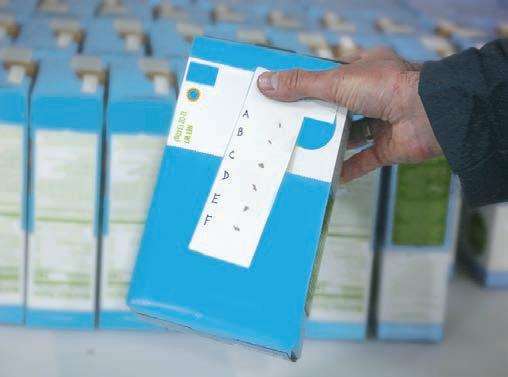
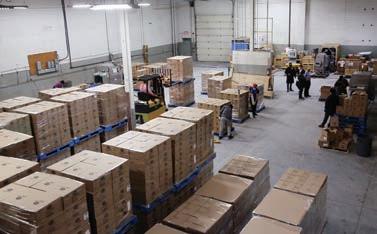
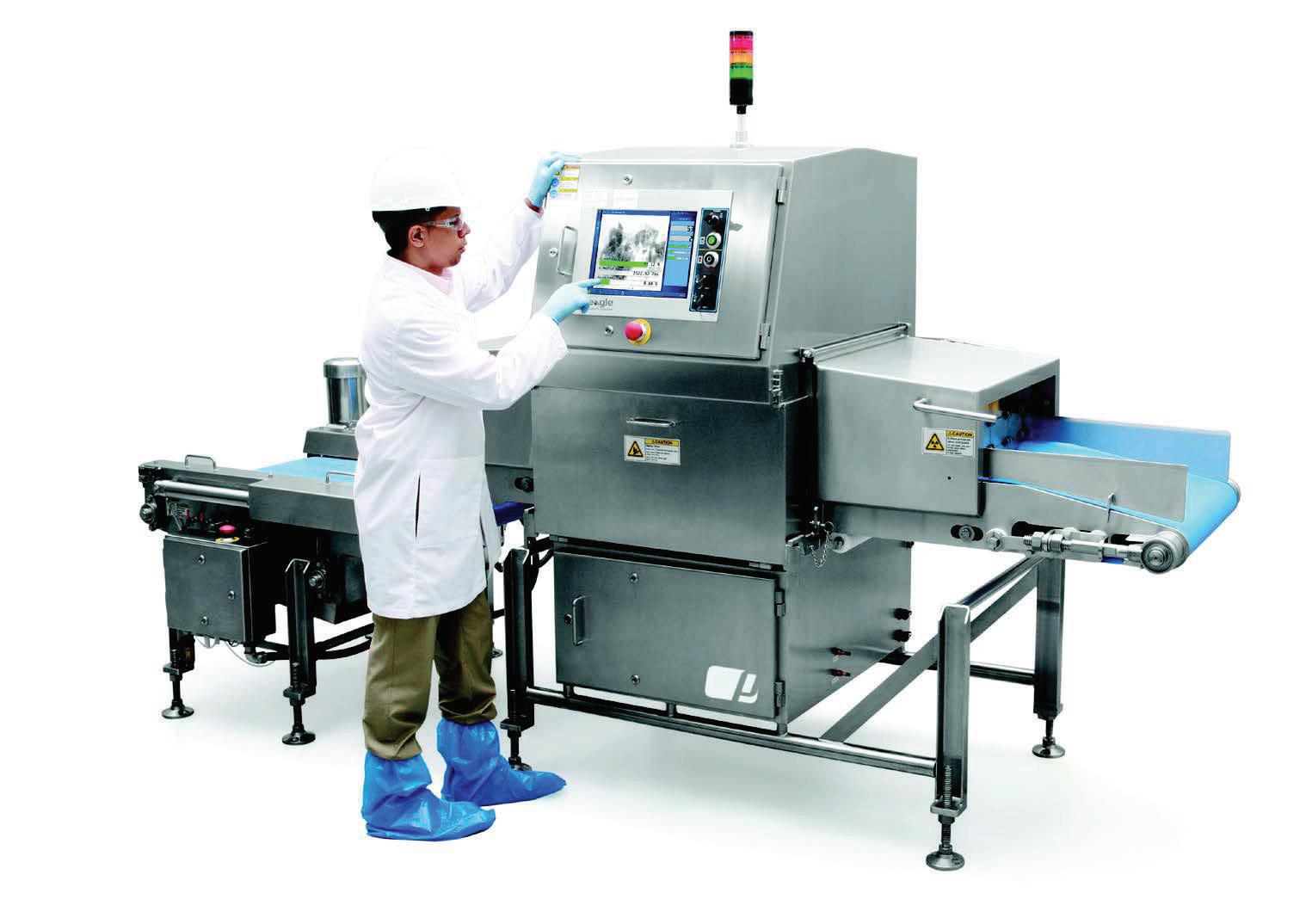
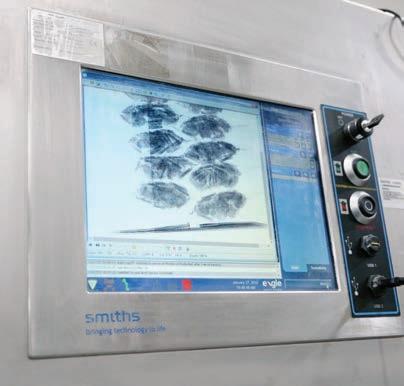
Inspect & Reclaim Your Finished Goods
How To Save On-Hold Goods:
Ontario craft brewers join up to Rally around the consumer wellness trend
With beermakers continuing to search for new ways to add some fizz to the flat beer markets, Bracebridge, Ont.-based Muskoka Brewery has acquired Rally Beer Company of Mississauga, Ont., to drive growth in their industry’s most budding and dynamic beer segments for so-called functional beers.
In a union of like-minded innovative craft brewers, the two companies are hoping to leverage their leading positions in the consumers’ wellness trend by bringing together complementary brands rooted in an outdoors-inspired lifestyle.
• Submit sample product with representative contaminants
• Plan Xray Reclaim will execute a formal inspection study, confirming that the foreign bodies can be detected
• Send your ON-HOLD finished goods to Plan Xray Reclaim for inspection and reclamation
• Cleared production returned to your site and contaminated production isolated for disposal
• A complete inspection report produced with all traceability reports
“Rally has pioneered the concept of functional beer in Canada, and we are so excited to be a part of what they have built,” says Muskoka Brewery president Todd Lewin. “We are looking forward to bringing together two brands that have championed outdoors-inspired beverages and make beer more approachable for all.”
As part of the deal, Rally Beer founder Alan Wood will join Muskoka Brewery’s team and continue to grow the electrolyte-rich Rally brands by leveraging Muskoka’s strength in operational efficiencies, widespread distribution, and expertise in bringing brands to market.
“This is certainly an exciting time for myself and Rally Beer,” Wood says. “There has been a gap in the marketplace for a beer that appeals to an active lifestyle and an authentic brand that supports the active communities.”
To address that niche, Rally Beer has developed a line-up of functional beers brewed to be rich in electrolytes for an adventure-based lifestyle, perfectly complementing Muskoka Brewery’s mantra of venturing off the beaten path and drinking in the moment with lively brands like Dry Run Non-Alcoholic Pale Ale, Backcountry Session Lager, Extra Mile Session IPA, and Trail Blazer Golden Ale.
From left: Rally Beer founder Alan Wood joins Muskoka Brewery’s president Todd Lewin and owner Bob Macdonald to toast the new partnership.
East Coast kambucha kings freshen up their packaging for the U.S market rollout
Ever since brothers John and Ryan Maclellan started brewing kombucha in their mother’s kitchen in Maliganant’s Cove, N.S., back in 2016, they’ve literally trusted their gut instincts to make their recipe a commercial success.
Soon after sharing the product with friends and family, they started selling it at local Farmer’s Market in nearby Halifax to an appreciative audience.
Within six months, they took their mission to promote gut health to pitch, produce, and package Cove Kombucha for a larger market.
Today the trendy beverage is listed in over 1,000 stores across Canada and soon coming to the U.S. following recent launch of a new
product line called Cove Soda
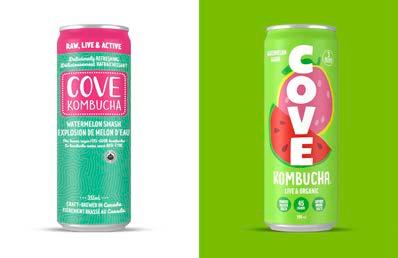
But the story is still being written. With a shifting and crowded retail space and a desire to elevate the brand to a more premium position, the brothers turned to New Yorkbased creative design agency Chase Design Group to refresh the brand’s visual identity with a bolder package design to enhance the brand’s story and drive differentiation.
“What we found during our initial research was that the visualization of taste was severely under–leveraged within a category which favored more apothecary or minimal graphic treatments,” says Steve Dunphy, executive creative director at Chase Design Group.
“The flavor story was also a huge competitive advantage that needed to be touted on the packaging,” Dunphy adds.
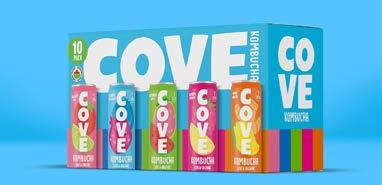
A recent switch from a generic glass bottle to a slender aluminum can provided an opportunity to craft a vertically stacked Cove logo that boldly stands out on the generous vertical proportions of the can.
The new logo pays homage to the original quirky, hand-hewn style, while the flavor story is communicated through playful fruit illustrations layered on top of a vibrant and refreshing color palette.
To help educate consumers, a communication corridor at the bottom of the can quickly and easily calls out all of the gut healthy benefits of kombucha.
The redesign successfully plays off the
We Automate Your Packaging
brothers’ passion for creating a better- tasting kombucha, inspiring the design team to push well beyond the limits of the category.
“We wanted their personalities to be tangible when people encountered the brand,” says Dunphy, “so we designed custom illustrations of them, which are featured within a storytelling panel found on the Club Store multipacks.”
“I had the opportunity to work closely with the Chase Design Group team to redefine what Cove means and where we wanted to take our brand,” says Ryan Macllelan, founder chief marketing officer of Cove Drinks
“The redesign completely nailed who we are: a fun, uplifting and positive brand that also happens to taste great.”
The Cove Kombucha brand is currently sold in Canada in six flavor varieties—including Raspberry Lemonade, Strawberry Lime, Mango Turmeric, Blueberry Pomegranate, Watermelon Guava and Pink Grapefruit—throught the Costco Club Store chain and at natural grocers, including the Whole Foods Market
The before-and-after comparison of the Cove Kambucha brand’s recent packaging redesign.
Website:
Email:
Phone:
Bedford, N.S.-based private holding company Scotia Investments Limited (SIL) and CKF, Inc., Hantsport, N.S.-based manufacturer of molded pulp, foam and recycled PET packaging products for retail and foodservice markets, have reached a definitive agreement to acquire Langley, B.C.-based Packright Manufacturing Ltd., which specializes in manufacturing clear and colored thermoformed rPET (recycled polyethylene terephthalate) plastic products for the agricultural, produce, confectionery and deli sectors. “CKF is a natural partner for Packright,” says Colin Chiu, CKF director of new market development for plastics. “The similarity in vision and culture of our two companies and CKF’s willingness to invest in growth made them an easy choice as a partner.” According to CKF, .Packright already services many of the same customers and operates in similar markets in North America, so the acquisition offers both companies, and their combined customer base, the benefits of scale, design, and market access. “Counting Packright as part of the CKF family is a milestone for our entire group,” says CKF president Ian Anderson. “Not only are we gaining a tremendous depth of knowledge in rPET design and manufacturing, but the acquisition aligns with our vision and investment strategy to build the scale and standardization required for a sustainable, circular economy for rPET.”
left: R+D
technology officer Eric Holmes; Krones AG
financial officer Norbert Broger; Krones AG chief executive officer Christoph Klenk; R+D chief executive officer Loren Esch;
AG M&A director Sebastian Schaefer; and Krones Inc. chief executive officer Holger Beckmann.
Krones, Inc., Franklin, Wis.-based manufacturer of filling and packaging solutions for the beverage industry, has acquired a majority stake in R+D Custom Automation LLC (R+D), Trevor, Wis.-based supplier machinery and equipment for the production and filling of containers for the pharmaceutical industry. According to Krones, the acquisition
of R+D strengthens Krones’ activities in the attractive life science and pharmaceutical markets showing above-average growth. “As a full-service system integrator and specialized equipment manufacturer, R+D has a clear, solid footprint in the pharmaceutical industry, as well as a steady history of success,” says Holger Beckmann, president and chief executive officer of Krones Inc. “As Krones works to increase its imprint in this market, the technology, solutions and equipment developed by R+D provide an ideal platform to expand our efforts.”
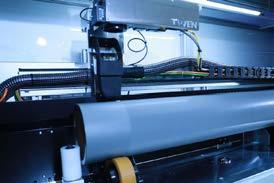
All Printing Resources, Inc. (APR), Glendale Heights, Ill.-based supplier of flexographic printing solutions and services, has entered into strategic partnership with Twen Machinery, leading Spanish manufacturer of anilox laser cleaning solutions, for the exclusive distribution and marketing of Twen’s unique technology in the U.S. market. “Although laser anilox roll cleaning has now been available for a few years, the industry has still been looking for a truly safe and effective solution, “ says APR chief executive officer David Nieman. “After doing extensive due diligence on the Twen technology, we are convinced it is the right solution for the market.
Pharmaceutical co-packer Aphena Pharma Solutions Inc. has completed a major US$20-million expansion and renovation of its production site in Cookeville, Tenn., significantly increasing its available solid dose packaging capacity. “The expansion added a new 500,000-square-foot facility that is purpose-built for FDA pharmaceutical packaging of solid dose and biologic products,” says Aphena’s president and chief operating officer Eric Allen, citing the addition of four new high-speed bottling lines and two high-speed blister lines for solidbased products. director of sales Paul Glintenkamp. “This new facility effectively make us one of the ‘Top Five’ contract pharmaceutical packaging companies in the U.S..”
Safe, built-to-last design lasts more than 6x longer than the average metal conveyor belt, even in the harshest poultry applications
Eliminate constant monitoring and adjustment of overdrive while extending belt and component life
IP69K-certified bearings designed specifically for reliable, long-lasting performance in demanding applications
From
chief
chief
Krones
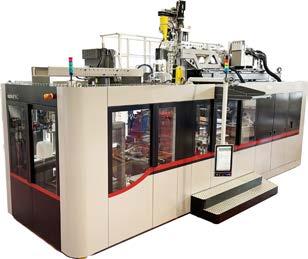
Leominster, Ma.-based food-and-beverage packaging equipment supplier IMA Dairy & Food USA has obtained the North American sales, marketing and service rights for the extrusion blowmolding machinery manufactured in Italy by AlphaMAC, also part of the IMA Group. According to IMA, AlphaMAC’s portfolio includes comprehensive, custom-engineered lines for plastic containers production, secondary packaging and quality assurance, including extrusion blowmolding machines and molds; bottle design development and production optimization tools; quality control systems for bottles; and secondary packaging robotic solutions. “As the industry-wide push for more sustainable food-and-beverage packaging solutions continues, the North American liquid dairy sector is one where eco-conscious upgrades are long overdue,” says Patrick Carroll, president of IMA Dairy & Food USA. “Adding AlphaMAC to our portfolio will provide our customers with more sustainable options, while significantly expanding our market share potential.”
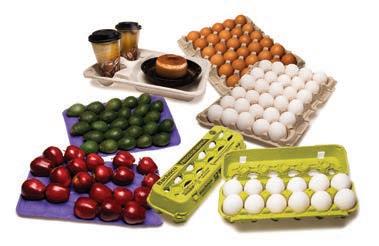
Wayne, Pa.-based TekniPlex Consumer Products has completed the acquisition of Empaques Moldeados de America Tecnologias S. de R.L. de C.V. (Ematec), a prominent Mexican of manufacturer of molded fiber packaging solutions for eggs, produce, foodservice and other fresh food items. “Ematec bolsters our commitment to leadership in the fresh foods and foodservice categories, reinforcing our strategy to focus on helping our customers win in the perimeter of the store,” says Eldon Schaffer, chief executive officer of TekniPlex Consumer Products. Employing 530 people at six manufacturing facilities across Mexico, “Ematec has a solid reputation for developing and commercializing packaging solutions for the segments it serves.” According to Schaffer, the acquisition significantly strengthens TekniPlex’s leading position as a materials-diverse solutions provider in the fresh foods industry, while complimenting the company’s recent acquisitions of other molded pulp packaging producers such as Keyes and Fibro
Mentor, Ohio-based Avery Dennison Label and Packaging Materials has announced today plans to start up a new distribution center (DC) operation in
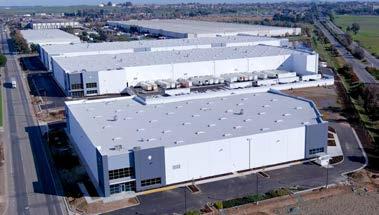
Fairfield, Ca., to enhance service capabilities and leverage the local proximity to support wine and spirits customers with same-day service to Northern California, including Napa, Sonoma and Modesto. With the renovated site in Northern California expected to be operational before the end of the year, the new state-of-the-art Napa DC will help Avery Dennison continue to provide superior label solutions that embrace the core values of the local of wine and spirits producers, according to the company. “We are committed to optimizing our distribution network, increasing capacity, and enhancing our customer service,” says Jeroen Diderich, senior vice-president and general manager of the Avery Dennison Label and Graphic Materials business unit. “This new DC will help us better serve our converters and their customers by boosting our efficiencies for shipping and delivery.”
NO CHILD’S PLAY
With the topic of child-resistant packaging becoming increasingly important at the same time as packaging must also meet the special needs of the aging population, Rieke Packaging (a TriMas Packaging brand) has launched a new two-piece child-resistant cap designed to meet both requirements, with sustainability in mind. According to the company, its new child-resistant caps are designed to help manufacturers and distributors of pharmaceutical and nutraceutical products to prevent children from accidental access to harmful products while advancing their own sustainability goals. The new two-piece, push-andturn Child Resistant Caps range features innovative patent-pending interlocking inner/outer cap design to ensure convenience for seniors and an added level of difficulty for children to open. Available in 53-mm and 63-mm diameters, the new caps were designed with less plastic—reducing their plastic footprint without compromising quality, durability or functional performance. The caps are also available with a post-consumer recycled (PCR) inner cap option for an even more sustainable solution, with pictorial instructions on the cap clearly illustrating how to open and close them properly.
Rieke Packaging
HIGH HYGIENE
Rittal Limited has launched a new range of hygienic-design (HD) pushbutton enclosures and accessories designed specifically for the high-hygiene zones inside busy food-and beverage facilities. Available in five sizes, the pushbutton enclosure line includes one-, two-, three-, four-, and six-hole enclosure options that fit standard 22.5-mm pushbuttons and switches. To meet strict food safety regulations and help maintain the highest level of protection, the HD pushbutton enclosures feature three-degree sloping on all sides to prevent accumulation of liquids; 304 brushed-grain stainless-steel construction; zinc-plated sheet-steel mounting bracket; and IP 66 and IP 69 protection ratings. All HD enclosures and accessories use an FDA-compliant blue silicone gasket to help prevent the ingress of contaminants and bacteria, while making it easier to identify any
potential containments left on the enclosure after cleaning. For their part, Rittal’s range of HD accessories—already including cable glands, wall spacers, leveling feet, hinges and hose-proof hoods—has been expanded with the addition of a viewing window, a pressure- release plug, a new alternative cam lock option, and a key-lockable T-handle.
Rittal Limited
THE SWEET MEDIUM
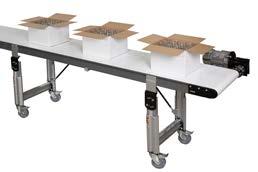
Designed for application needing a little boost in load capacity, the new 2700 Medium Duty conveyor from Dorner Mfg. Corp. has the strength to carry heavier products for a variety of industrial automation and packaging applications including palletizers, multi-lane processing, case- and tray-handling, and end-of-line packaging. Engineered for safe conveying of up to 150 pounds, the 2700 Medium Duty conveyor offers the benefits of extended widths between 26 and 36 inches—available in two-inch increments—to provide improved compatibility with AMRs (autonomous mobile robots), robotic palletizing and other technologies widely used in modern warehousing and manufacturing facilities. Because the conveyor can actually be wider than its length, it can enable an AMR to dock sideways—allowing for more efficient and faster loading and unloading across a broad range of multi-lane and medium part handling, product transfer and accumulation, and automated and manual assembly applications. The innovative design incorporates V-Guided positive belt tracking to ensure smooth, maintenance-free performance even under demanding side-load applications.
Dorner Mfg. Corp.
MAKING IT COUNT
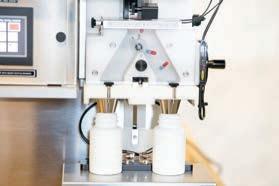
The new Pharmafill TC4 tabletop tablet counter from Deitz Co. features a choice of four funnel discharge sizes to
accommodate a wide range of pill sizes, as well as a variety of lozenges and other oral solid dosage formats. Selecting the funnel size that promotes maximum tablet flow, yet fits securely into the bottle opening, ensures smooth filling at rates up to 3,000 per minute with 99.99-percent accuracy, based on 10.25-inch diameter coated tablets. Well-suited for contract packers and growing pharmaceutical and nutritional product companies, the TC4 tablet counter allows the funnel sizes to be swapped without tools in minutes for fast and easy changeovers, with the novel design allowing for all product contact parts to be removed, cleaned and returned to service in 15 minutes or less. The compact semi-automatic machine can easily fit into nearly any filling area, according to the company, while being able to accommodate bottle sizes up to nine inches in height.
Deitz Co.
TERMINAL CASES
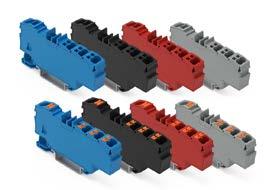
The new open tool-slot and push-button TOPJOB S distribution terminal blocks from WAGO are designed to allow feed-in up to a nominal cross-section of 8 AWG (10 AWG with ferrule) connecting 6- to 14-AWG outputs, with both options featuring dual row jumper slots for parallel configuration with additional distribution blocks and full integration with TOPJOB S terminal blocks and accessories. This new distribution line-up comes in four different color choices for intuitive field identification and various design requirements, whereby each connection point comes with molded-in conductor entry marking—meeting the distribution terminal block requirements of many CAE systems. The thin profile provides panel space savings and open design configuration options help to minimize exposure to incoming power sources.
WAGO
COMBINED EXCELLENCE
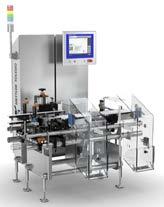
Designed to meet the production requirements of small-and mid-sized manufacturers in the pharmaceutical and cosmetics industries, the new CT33
combination checkweighing and serialization system from METTLER TOLEDO Product Inspection gives operators a deep level of integration between mark-and-verify, serialization and precision weighing capabilities— helping them to achieve compliance, better brand protection, quality control and supply chain traceability. To ensure enhanced brand protection, companies can use the CT33 to carry out serialization of individual cartons to improve supply chain transparency and help pharma and cosmetics manufacturers to protect their brands against the counterfeit products. The serialized cartons then pass into the checkweigher, where precision weighing with FlashCell EMFR technology enables complete control checks, ensuring that all product components, including leaflets, are present. Built around the company’s modular C-Series frame, the flexible system allows users the choice of many different configurations—including thermal-transfer overprinting systems and smart cameras—depending on the application. Moreover, the system’s innovative new transversal adjustment handling unit, can take cartons from upstream processing machines and adjust them to ensure they are positioned correctly on the conveyor belt for marking, verifying and precision weighing.
METTLER TOLEDO Product Inspection
BUILT TO WORK
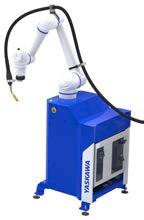
Compatible with the Yaskawa HC10, HC10DT, HC10XP and HC10DTP collaborative robots, the new HC10 workstation from Yaskawa Motoman is designed as an economical mobile solution for integrating HC10 robots with the high-performance YRC1000 controller into a single package that is well-suited for a diverse range of pick-and-place, assembly, machine tending and other repetitive industrial applications. Featuring space-saving footprint to easily integrate into current manufacturing environments, the portable workstation can be easily moved to where it’s needed with a pallet jack or forklift, and the compact metal cabinet housing the robot controller offers a comfortable working height for most collaborative applications. Moreover, built-in leveling feet ensure a highly stable platform even when the robots are running at maximum speeds and payload capacity.
Yaskawa Motoman
■
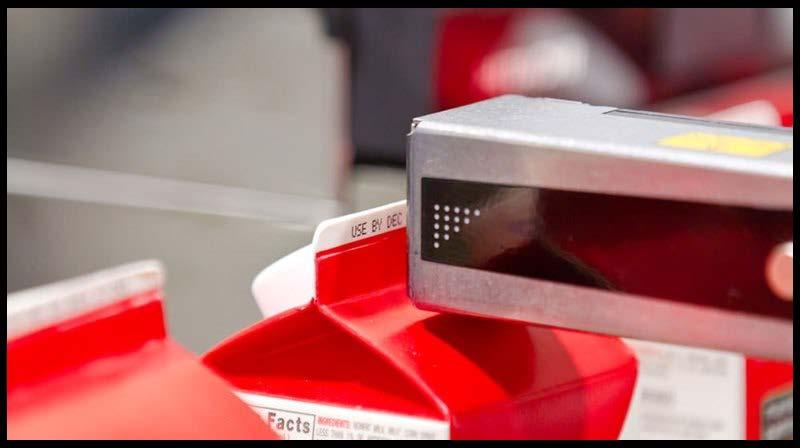
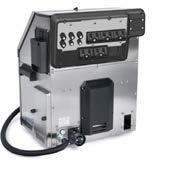
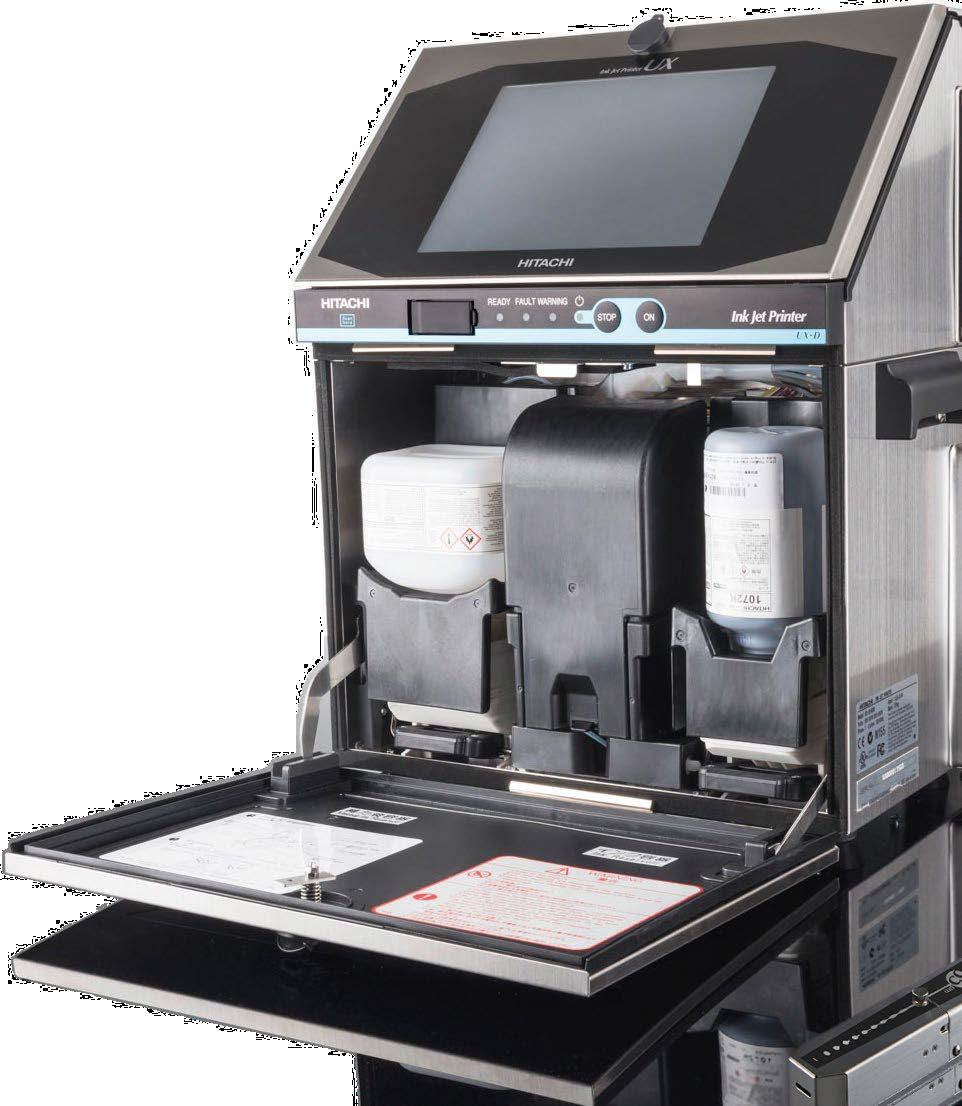
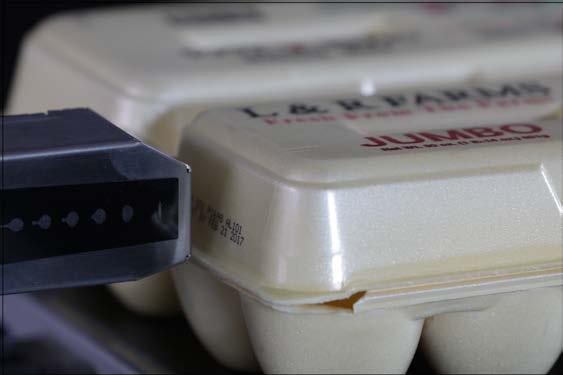
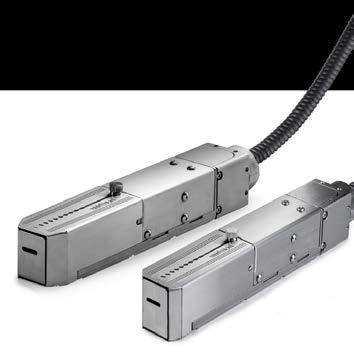
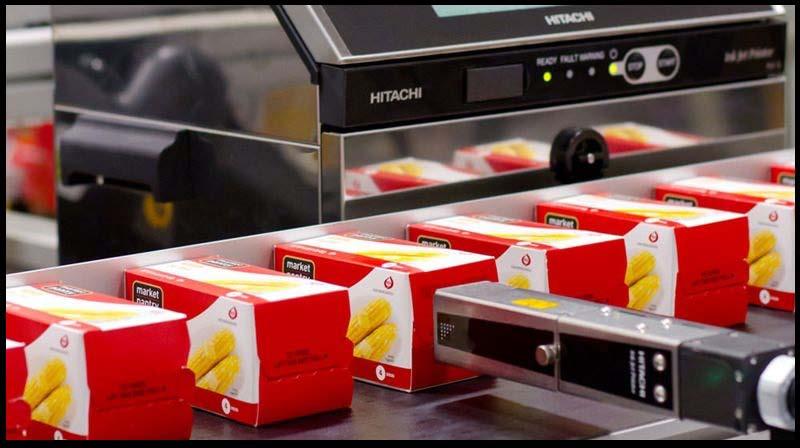
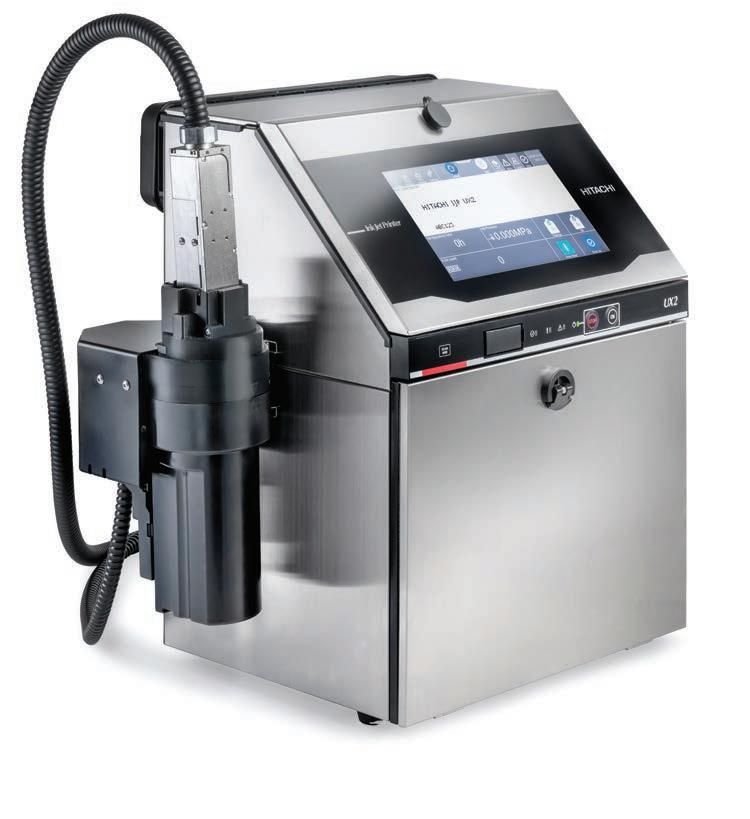
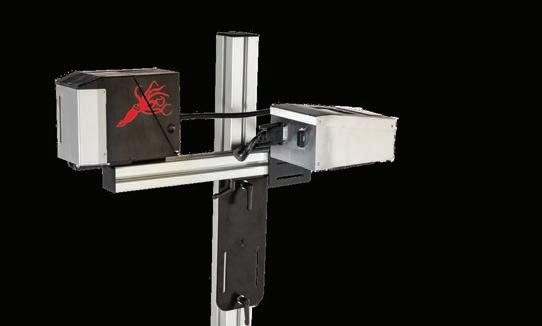
The Hitachi UX Series is the clear leader for your non-contact
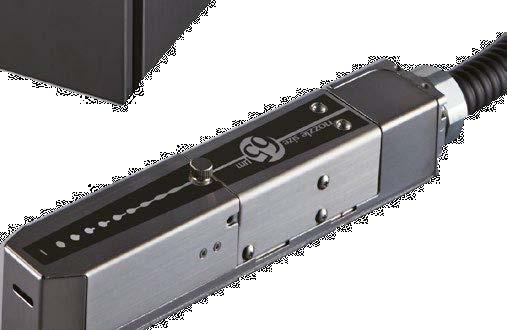
The UX Series improves existing, reliable Hitachi continuous inkjet products and provides industry-leading marking on food, beverage, dairy, health & beauty products and a variety of containers from lip balm tubes to bag printing & oversized PVC piping.
printing needs.
Masterbatch manufacturer masterminding a shift to greater plastics circularity
Founded in 2001 in the Tarragona province stretching along Spain’s gorgeous east coast, masterbatch manufacturer GCR Group has evolved into one of the world’s leaders in helping improve the environmental footprint of plastics by developing and producing consistent, high-quality plastic solutions that substitute virgin plastics and reduce energy consumption in the manufacture of plastic packaging products and materials.
And as the global pressures to reduce the amount of plastic waste discarded into the environment continue to intensify, CGR is working harder than ever to make its vision of ‘Innovating our Sustainable Tomorrow’ today’s reality.
Last month the company has commenced operations of its stateof-the-art short-term and long-term polymer-based solutions that minimize environmental impact, along with nearing completion of a large recycling plant with 200,000 tonnes of annual capacity, scheduled to start up next year.
All told, the company will have invested about $125 million in these and other upgrades by the end of 2025.
“We firmly believe that we have the capability, agility and vision to accelerate the Circular Economy,” says CGR’s innovation director Santiago Sans.
“Through this investment, we demonstrate our belief in collaboration with like-minded partners in the value chain.”
As Sans explains, the new R&D facility houses a dedicated Innovation Hub area containing all the equipment necessary for incubation and proof of concept—from development to pilot plant and final production.
According to Sans, collaborative relationships with the company’s customers will be critical to the company’s success in the recycling of used plastic packaging.
“While materials based on virgin polymer resins have well-defined and consistent properties,” he says,
“working with recycled materials or finding ways to reduce carbon footprint presents new challenges that require experimentation to solve.
“Quite often, we need to create custom solutions that are compatible with the particular waste-stream and application,” he says.
“This is why GCR believes collaborative partnerships in ‘co-creation’ projects within the value chain are vital.”
As Sans relates, existing collaborations involve technical institutions, equipment suppliers, raw material and waste-stream suppliers, plastic converters and brand-owners.
Sans adds that GCR also offers turn-key project management where customers completely trust GCR’s capabilities.
“We prefer to send you all our scrap because the quality you’re getting out of it is something we will never reach,” he quotes a major converter.
The company’s extensive materials know-how and relentless attention to quality are reflected in existing product ranges.
Its CICLIC R-polyolefins (recycled polyolefins) are based on ‘upcycling’ fully traceable wastestreams and can deliver similar and
consistent material properties as virgin plastics, according to GCR, with 60- to 80-percent lower carbon footprint.
For their part, the GRANIC mineral-filled masterbatches and compounds can offer up to a 30-percent reduction in energy costs in downstream polymer processing.
In addition to an extensive range of existing products, the high-tech Innovation Hub combines GCR’s comprehensive technical and processing expertise to customize products and bring solutions to the challenges encountered when using post-consumer or post-industrial waste.
As Sans explains, “GCR can enhance the value of waste-streams through, for example, compatibilizers or capturing/blocking odour-producing bacteria.”
Sans adds GCR is also keen to accelerate development of more bio-polymer-based and biodegradable solutions.
“Finding new sustainable solutions will require changes in how the plastics industry traditionally works: a combination of know-how, new ways of thinking, and a long-term vision,” he states. “Our investments in Innovation Hub and the new recycling plant bring new tools to help facilitate these changes.”
to achieve exceptional product shelf-life.
CULTURED MINDS
Dairy-free cheese producer automating its packaging operations as part of a plan to carve up a bigger slice of the North American market for vegan food products
By Andrew Snook
Photos by Naomi Hiltz
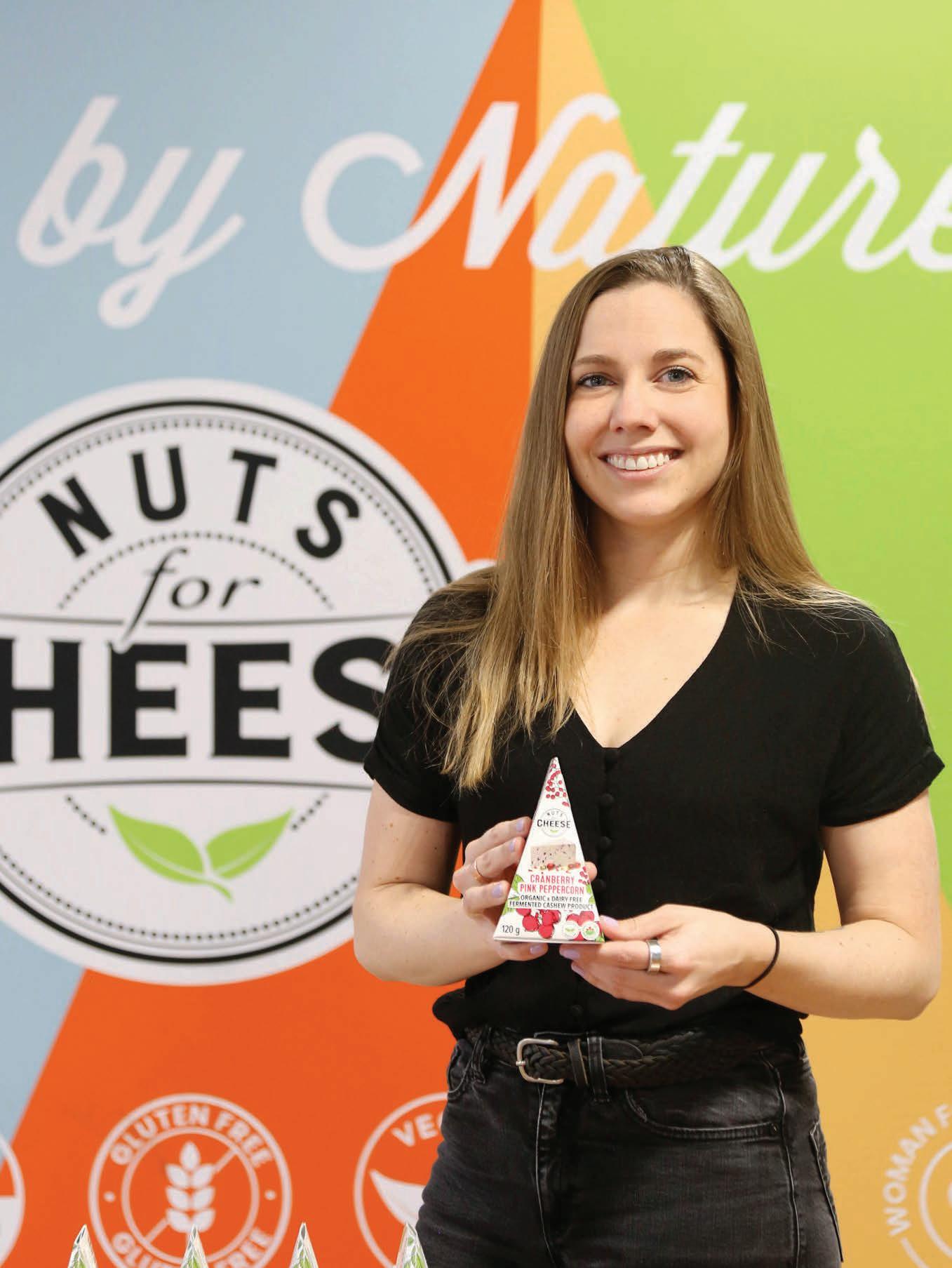
Margaret Coons, president and chief executive officer of Nuts for Cheese, has been living a vegan lifestyle for a long time. Her path towards veganism began at a young age after becoming passionate about animal rights.
“I was never a huge meat eater when I was a kid, it wasn’t something I was drawn towards, and so my plant-based journey definitely started with an animal rights motivation,” she recalls. “I loved animals and didn’t want to eat them.
“Over my teenage years, I started to learn more about the health benefits [of veganism] and the environmental impact of the animal agriculture industry,” Coons ex-
pands. “I got really focused on nutrition and got into cooking in my late teenage years and in my early twenties.
“It was really fun and exciting for me to experiment with creating vegan and vegetarian alternatives to popular foods that are not typically plant-based.”
After trying a wide variety of products available in the market, Coons found many of them to have challenges with texture and quality of flavor, so she decided to branch out and try making her own products.
“When I was working at a restaurant, I started developing my own recipes for creamy sauces, dips and other similar things like that were made with nuts and seeds,” she says.
“I developed a real passion for fermentation at a young age as well, and started experimenting with fermenting cashew milk, sunflower seed paste, and whatever else I
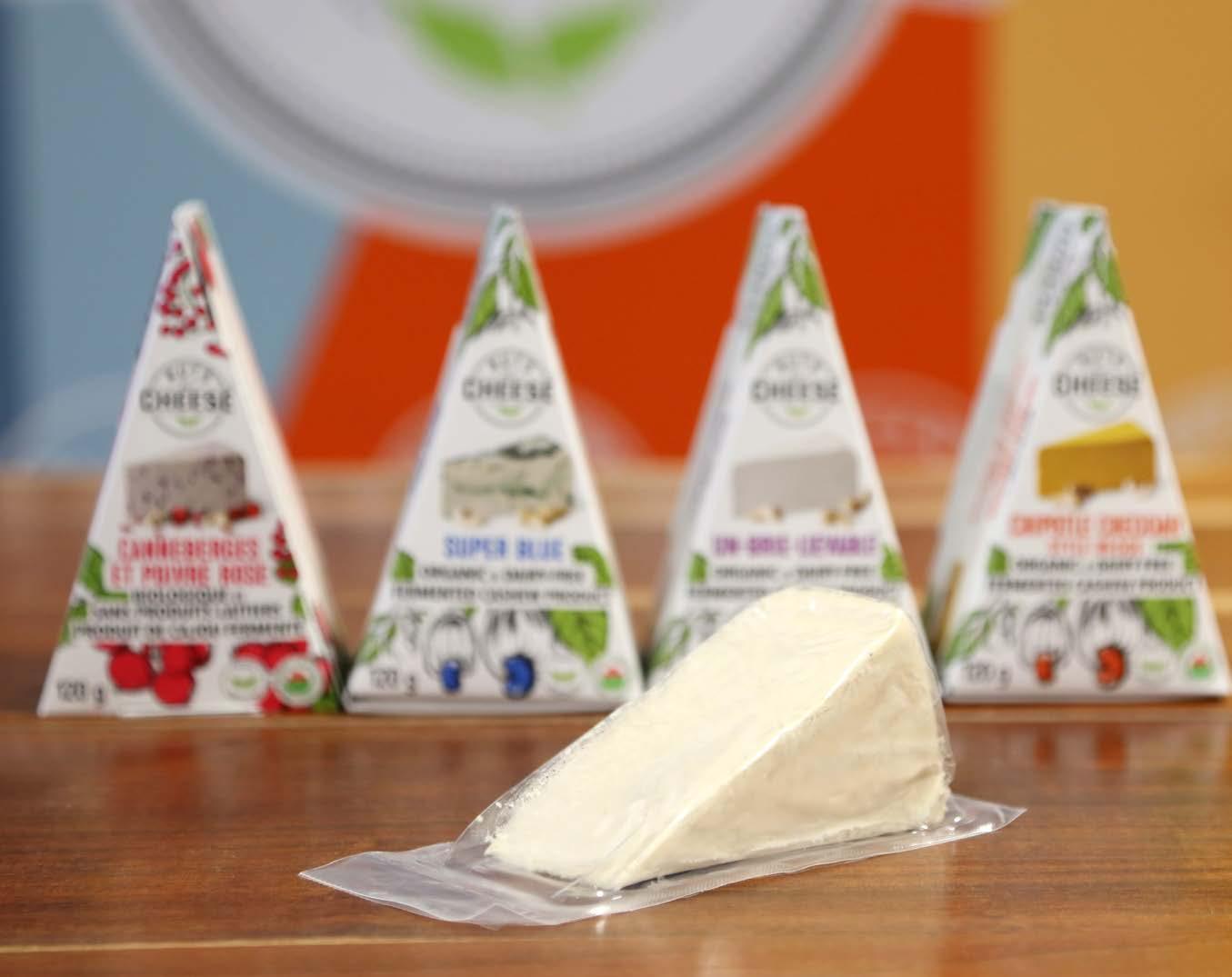
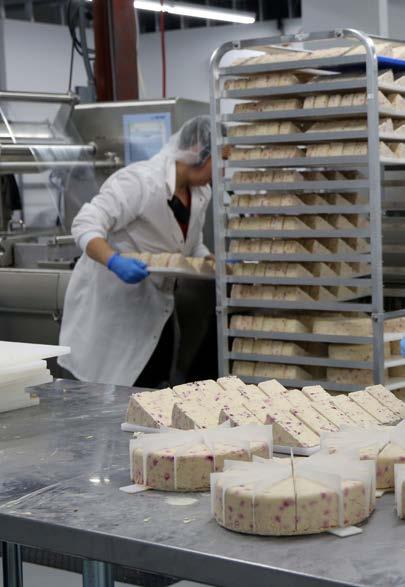
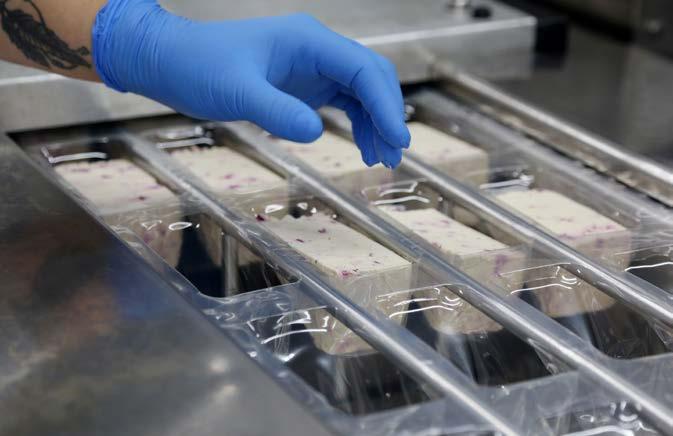
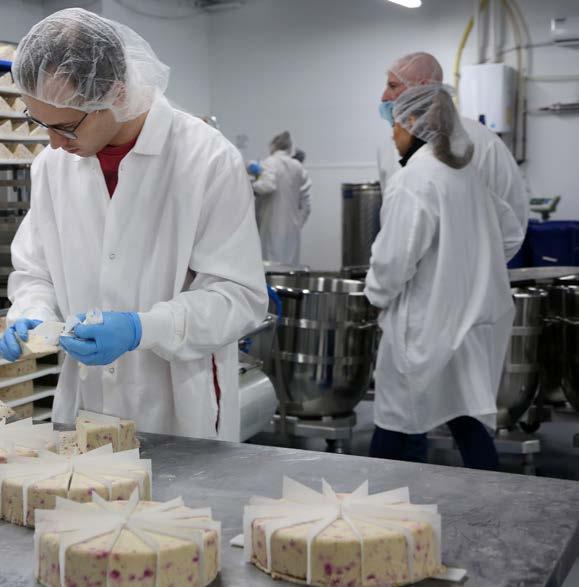
The triangular wedges of vegan cheese produced by Nuts for Cheese in London, Ont., are packed in air-tight thermoformed packs on MULTIVAC equipment
Clockwise from top
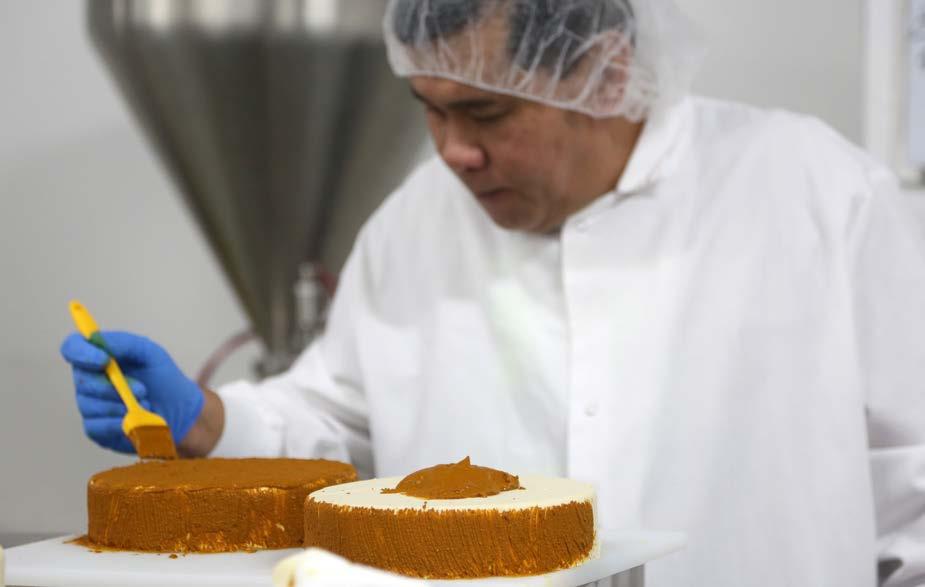
Applying decorative artisanal touches to the freshly-made cheese wheels; thorough quality control and inspection for finished product prior to packaging; loading products into their proper pockets in the film web thermoform packing machine.
could think of, to experiment and see what the what the results would be.”
Coons was also very intrigued by the conventional cheese-making techniques, as she tried to figure out a way to use them to create something for people following vegan diets.
Happily, she discovered that cashews were a great ingredient to work with.
“Cashews ferment nicely, and they create a really creamy, consistent mouth-feel,” she says. “I hear that all the time from people who say it’s just like ‘real’ cheese.”
As Coons relates, “The product was borne out of wanting a more high-quality option that was actually a viable replacement for dairy cheese, because people that are flexitarian are not going to enjoy eating processed shreds, but they might eat a creamy, high-quality cashew cheese.
“It’s about making our products more accessible to a mainstream consumer as well,” she states.
While Coons’ original dream was to own a vegan restaurant, she shifted gears into product development after opening her company to sell cashew-based cheeses at a Farmers’ Market in
London, Ont., in May 2015.
“I thought I would try a Farmers’ Market for the summer with the cheeses that I had been making, and it quickly became a popular market item,” she recalls.
“So I started expanding into local health-food stores, and other retailers and restaurants.”
The company has grown quickly over the next seven years.
“It was really fun and exciting for me to experiment with creating vegan and vegetarian alternatives to popular foods that are not typically plant-based.”
“There’s been a lot of exponential sales increases, which has been awesome,” Coons says. “We launched in the United States about two years ago.
“We’re now in about 2,000 grocery stores in the U.S. and 2,000 grocery stores in Canada.”
All the Nuts for Cheese products are 100-per-cent dairy-free plant-based ingredients that are produced at the company’s 30,000-square-foot production facility in London, which currently employs about 30 people.
The company’s top-selling product in Canada and the U.S. is its cleverly-named UN-BRIE-LIEVABLE brand of dairy-free cheese.
“It’s our take on Brie,” Coons states. “It’s a cashew-coconut blend, and it’s super rich and creamy.
“All of our products are made with organic cashew milk that we
ferment with the cultures that we make in our facility,” Coons relates, “but the Brie has coconut milk in it for an extra bit of creaminess.
“It’s a great product when used in both sweet and savory recipes,” she adds.
In total, Nuts for Cheese currently has 10 different flavor varieties of its own brands of butter and cheese products, with more new products expected to hit the market in 2023.
“We’re launching some new and innovative products next year,” Coons says, “which will bring us up to 13 SKUs (stock-keeping units).”
While looking for a packaging unit for rolling out a new line of products in September of 2021, Coons reached out to Andy Malacaria, regional sales manager for leading food processing and packaging equipment supplier MULTIVAC Canada Inc.
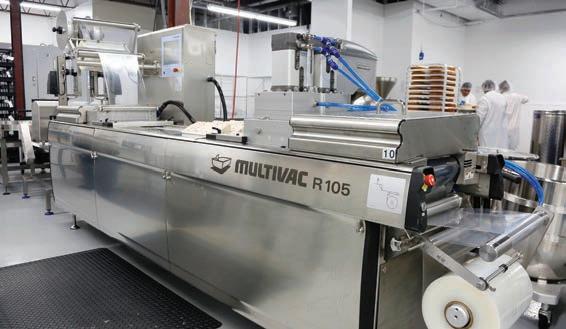
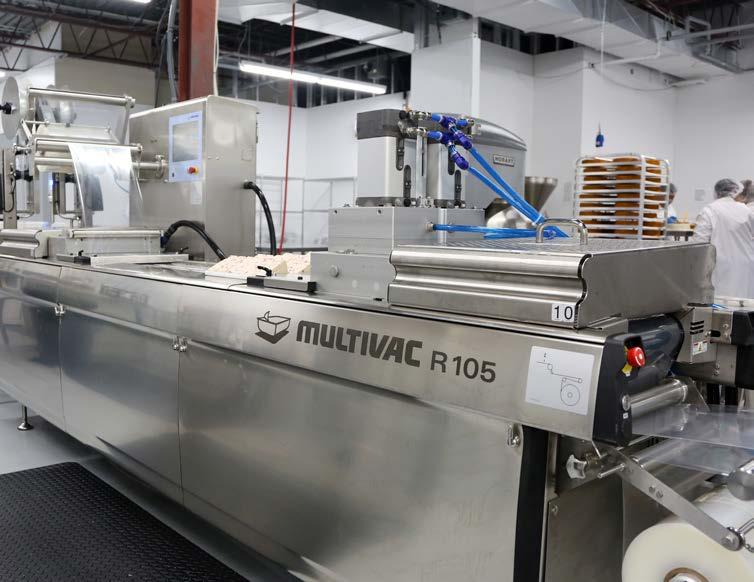
As she recalls, Nuts for Cheese had a previous relationship with the Brampton, Ont.-based packaging specialists, having previously purchased an R105 thermoforming packaging machine about three years ago for two primary reasons: to extend product shelflife and increase its production capabilities.
“We were hand-wrapping the cheeses with paper prior to purchasing this machine, “ Coons recounts. “It was super labor-in-
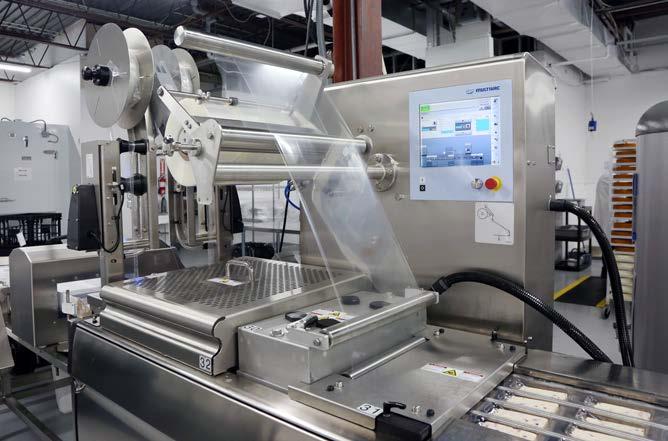
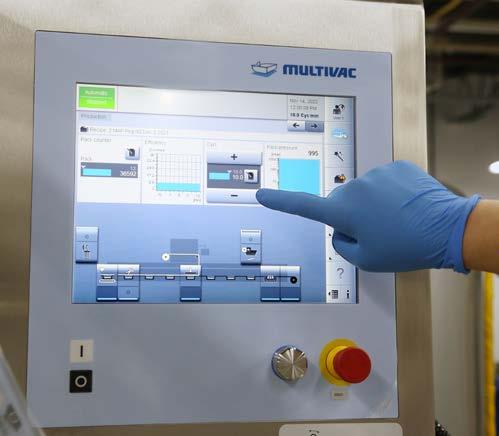
The high-perfomance MULTIVAC R 105 thermoform packaging system at the Nuts for Cheese plant offers user-friendly operation via the on-board HMI (human-machine interface) touchscreen terminal, along with exceptional final quality of the finished packages.
tensive, and the product didn’t have a great shelf-life as a result,” she recalls.
“But we were able to increase our shelf-life from 49 days to six months with the use of the R105 machine,” Coons extols, “and it didn’t require us to change our formula.”
Starting next year, the company plans to be rolling out new tub-format packaged products—beginning with a line of cream cheeses—for which it needed to find a new packaging solution.
As Malacaria recalls, “She told me that they were looking to launch a new product, which was a nut-based cream cheese they were looking to put in either trays or tubs, like your traditional cream cheese tubs.
“At the time, we were looking at more of a semi-automatic tray-sealer with more manual loading, whereby you push the carriage in, let it seal, it comes out, and away you go.
“But based on further discussions about what their future goals and needs were, we looked at more of an automated solution,” Malacaria says.
After discussing a few different automated solutions, Nuts for Cheese ended up opting for the fully-automated T 305 traysealer, which they purchased this past October.
According to Malacaria, the decision was largely based on the
machine’s key advantages of a compact footprint and high throughput speeds.
“It takes up a lot less space on your floor, which is key for a lot of facilities where space is sometimes an issue,” Malacaria says.
“From an efficiency standpoint, instead of going with a semi-automatic, you’re going to get more packs per minute through, providing an opportunity for future growth.
“They will grow with the machine, which is a benefit as well.”
The T305 machine has a stainless-steel construction and features a servo-driven knee-lever lifting system for dynamic speed and power control.
With outputs of up to 60 packs per minute, depending on the tray size and application, it provides a highly effective solution for customers looking to scale up from a semi-automatic machine.
According to MULTIVAC, all the required tooling changes—including heating up to operating temperature—can be achieved in less than 15 minutes, providing great versatility for manufacturers with multiple SKUs with quick and easy recipe and film changes.
Moreover, The MULTIVAC Hygienic Design execution offers maximum hygiene
“It’s hard to buy expensive packaging equipment when you’re small, but MULTIVAC Canada has been a really good partner for us,” Coons says. “They also provide good service.
“There’s a bunch of equipment you can buy, but you’re not necessarily going to have ease of access to replacement parts,” she says, “depending on where it’s coming from.
“But with MULTIVAC being a well-established and trustworthy company, we felt confident that if we had a problem, we would have the help we need.”
Coons adds that her company is currently looking into expanding its automation capabilities with a new denester, a case erector, box taper and an inkjet printer.
For his part, Malacaria says the team at Nuts for Cheese has been fantastic to work with.
“They’re wonderful people and they have an amazing product: it’s a great concept,” he proclaims. “I’ve tried some of their products and they are delicious.”
For Coons, further expansion in both Canada and the U.S. are all part of her company’s ambitious long-term strategy.
and the simplest cleaning to protection class IP 65, enabling complete washdown of the compact, yet highly capable machine with dimensions of approximately 1.1-meter-wide, 2.4-meter-long and 1.7-meterhigh.
While the new machine for Nuts for Cheese is currently being built, with installation and commissioning planned for the first quarter of 2023, the company is continuing to work closely with MULTIVAC on other future projects.
“They’re looking to automate,” Malacaria states. “Like a lot of the customers that I’ve been dealing with these days, their biggest concern is the lack of labor and finding people to work.
“It’s unfortunate, but it’s a reality that we’re finding many of our customers are facing,” he says. “They’re looking to see how they can best automate, and to keep those lines running.”
Partnering with a supplier that could assist with the financing of the packaging equipment was also a very important factor, according to Coons.
As she relates, one of the biggest challenges facing the vegan product industry is educating the public on which products are both healthy and delicious.
“There’s a distinction that takes forming in the consumer perception of healthy products,” she says. “Our focus has really been on using premium, high-quality, healthy, clean ingredients to produce the best-tasting vegan cheese on the market.
“I think there’s going to be an opportunity for education around the quality of products and what’s actually making people feel good in terms of what they’re eating,” Coons concludes.
“It’s an opportunity for us to work closely with our partners to raise consumer awareness.”
Please see a video of MULTIVAC thermoform packaging equipment at the Nuts for Cheese plant on Canadian Packaging TV at: www.canadianpackaging.com
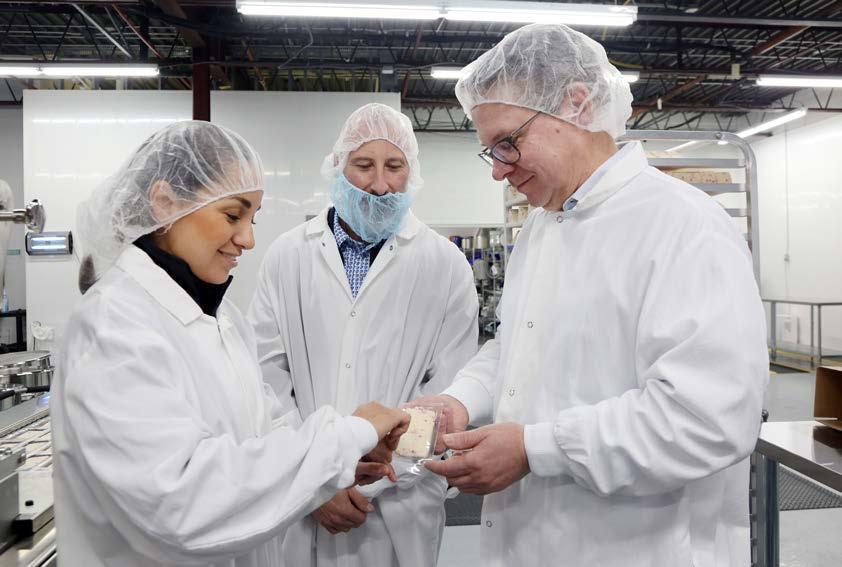
Top from left Jessica Zamora, MULTIVAC regional sales manager for materials; Andy Malacaria, MULTIVAC regional sales manager; and Scot MacMillan, Nuts for Cheese vice-president of operations examine the easy-peel film lidding incorporated into the pack on MULTIVAC thermoform packaging equipment.
• Connect with suppliers and learn about the latest ingredients, bakery equipment and services for the baking industry!
• Education sessions exploring such topics as baking techniques, improving your shop’s design and setup, making your bakery sustainable and more!
• Watch demonstrations by top bakers and pizza chefs!
• Experience exciting student competitions!
• Pick up trends at the Canadian Pizza Chef of the Year competitions!
• And much more!
HIGHER LEARNING
New meat science research facility aims to become a product innovation hub and skill training bootcamp for Ontario’s meat and poultry producers
By George Guidoni, Editor
Photos by Naomi Hiltz
Located about 100 kilometres west of Toronto, the University of Guelph is rightfully renowned and respected as an elite academic institution in the fields of food and agricultural sciences, animal and human health, biodiversity and environmental technologies, genomics and computing—providing more life science expertise per capita than any other post-secondary school in North America.
Founded in 1964, it also plays a massive role in contributing to the dynamic local economy that has attracted a number of high-profile food and other manufacturing companies to the area over the years, including meat processing giant Cargill and truck manufacturer Linamar, among other successful business enterprises.
And while the recent opening of the new Centre for Meat Innovation and Technology (CMIT) on the university campus may not rank as one of the school’s biggest or boldest expansions in recent history, it has the potential to provide Ontario’s meat and poultry producers with an exceptional competitive edge through continuous training and education services, along with significant new product development and commercialization capabilities.
Operated by the Guelph-based industry group Meat & Poultry Ontario, the new centre currently employs a staff of four people, along with director Luis Garcia, with capacity to butcher, cut, trim and process beef, pork or lamb in small production runs for many local food businesses who are not set up for efficient and cost-effective production of smaller product batches.
Despite its size and scale—contained within three separate adjoining rooms equipped with various manual and semi-automatic processing equipment— the centre is nevertheless a federally-inspected facility that can legally ship the products made there across Canada, as Garcia points out.
“Our new centre will support the meat industry in different ways,” says Garcia, a former Academic Chair at the nearby
Conestoga College’s School of Engineering, Technology and Trades.
“One of them is by offering training to employees: both for current employees in the in the industry, but also training for anybody who wants to learn some new skills,” Garcia relates.
“Another way is by conducting joint projects with companies that are looking to implement new technologies, like robotics and automation, or to develop new prod-
ucts and processes.
“Then we’re also going to conduct projects in meat science and meat research, which is something that the university has already been doing for decades,” he reveals, “but alas not that many people know about it,” he says.
“So we are going to promote their science capabilities by encouraging more and stronger connections with companies operating within the meat industry.”
Garcia says the 40-year-old Meat & Poultry Ontario association—representing over 200 independent meat and poultry producers—is extremely excited to be working with the university and having access to its space and utilities for CMIT, grateful to the university for donating its space and utilities for the project, as well as grateful to the industry for donating the vital pieces of meat processing machinery and equipment.
“We have had unbelievable support from equipment suppliers,” Garcia extols.
“We have already received about $150,000 worth of new equipment since March,” Garcia says, “along with about $2,000 worth of knives and sharpeners for our training courses.”
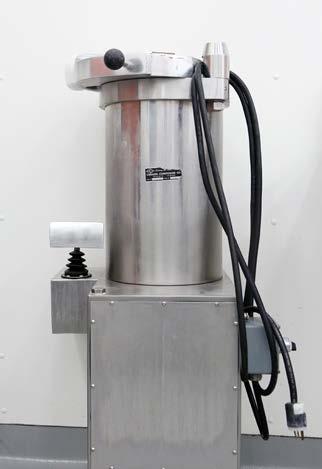
Existing equipment at the facilities includes a Scott smokehouse, a Groen mixer kettle; a Hollymatic meat saw; a ScottPec vacuum packer; a Handtmann stuffer; a BOSS vacuum-packer; a Sani Marc cleaning nd sanitation equipment; Lacal slaughterhouse and deboning equipment; and multiple-cutting tables and accessories to replicate the industrial meat production process on a pilot plant scale.
The generous donations received to date will go a long way towards training the next generation of professional butchers and upgrading the skills of various workers already in the meat business wishing to expand their skillset, Garcia told Canadian Packaging on a recent visit to the centre.
“Cutting big carcasses into halves, splitting them into quarters, making smaller cuts out of those pieces … all these steps require different skills and tools of the
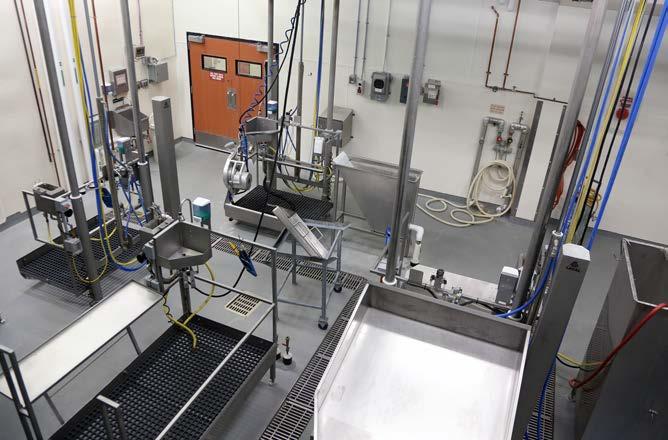
Middle left A mezzanine view of the CMIT’s processing and production area below.
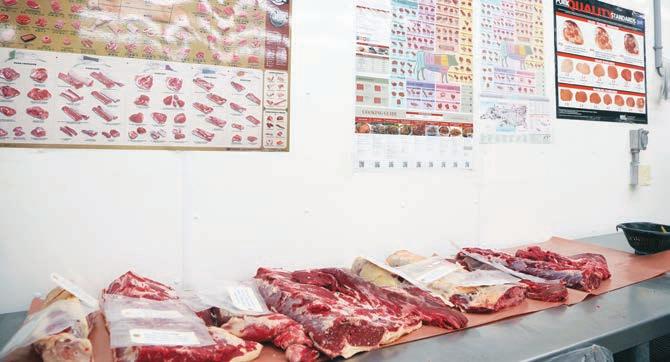
Middle bottom Different cuts of meat freshly trimmed and processed by the CMIT butchers.
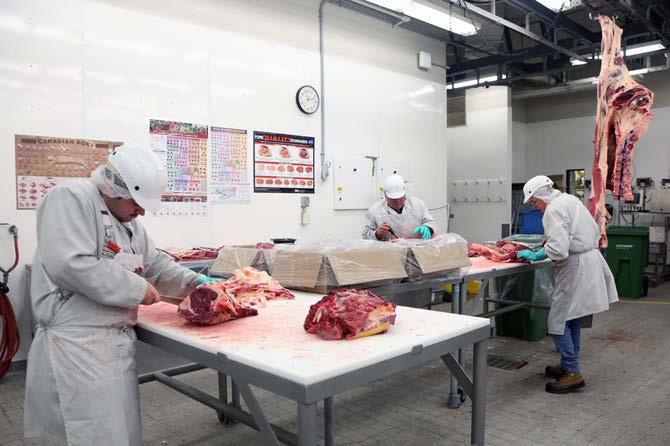
Above left Manual meat cutting and trimming expertly carried out inside the centre’s cutting room.
Above CMIT director Luis Garcia.
trade,” Garcia says.
“We offer many different types of training for different applications both in-house and in the field, whatever suits the client best.
“Everything here is based on collaboration with academia and the private sector,” says Garcia, describing the centre as a perfect collaborative partner for smaller start-up companies looking to put their products into the market.
Says Garcia: “If you’re a start-up developing a new product, and you want to make say 500 kilograms of a particular sausage recipe, you are going to have a hard time finding a place or a co-packer to do that—you would need a lot more volume than that.
“But that’s just the kind of job that we could do for them at this new centre,” says Garcia, “and the fact that we can ship that product to anywhere in Canada is a big bonus.”
Similarly, larger meat processors can use the centre for specific small-run niche products in small quantities that do not justify the time and effort of time-consuming line changeovers and extra maintenance, according to Garcia.
“We’ll be trying to reach out to and work with anybody who wants to work with us,” he says, “including all levels of government and various other academic institutions across Canada.
“We want to be the connecting hub for the meat industry, whereby companies that require help can get it from us directly, or we can connect them with the right people,” Garcia expands.
“The end goal is to strengthen the industry and make it more competitive,” Garcia states. “That’s what drives us.”
Maintaining a competitive meat sector is definitely a major
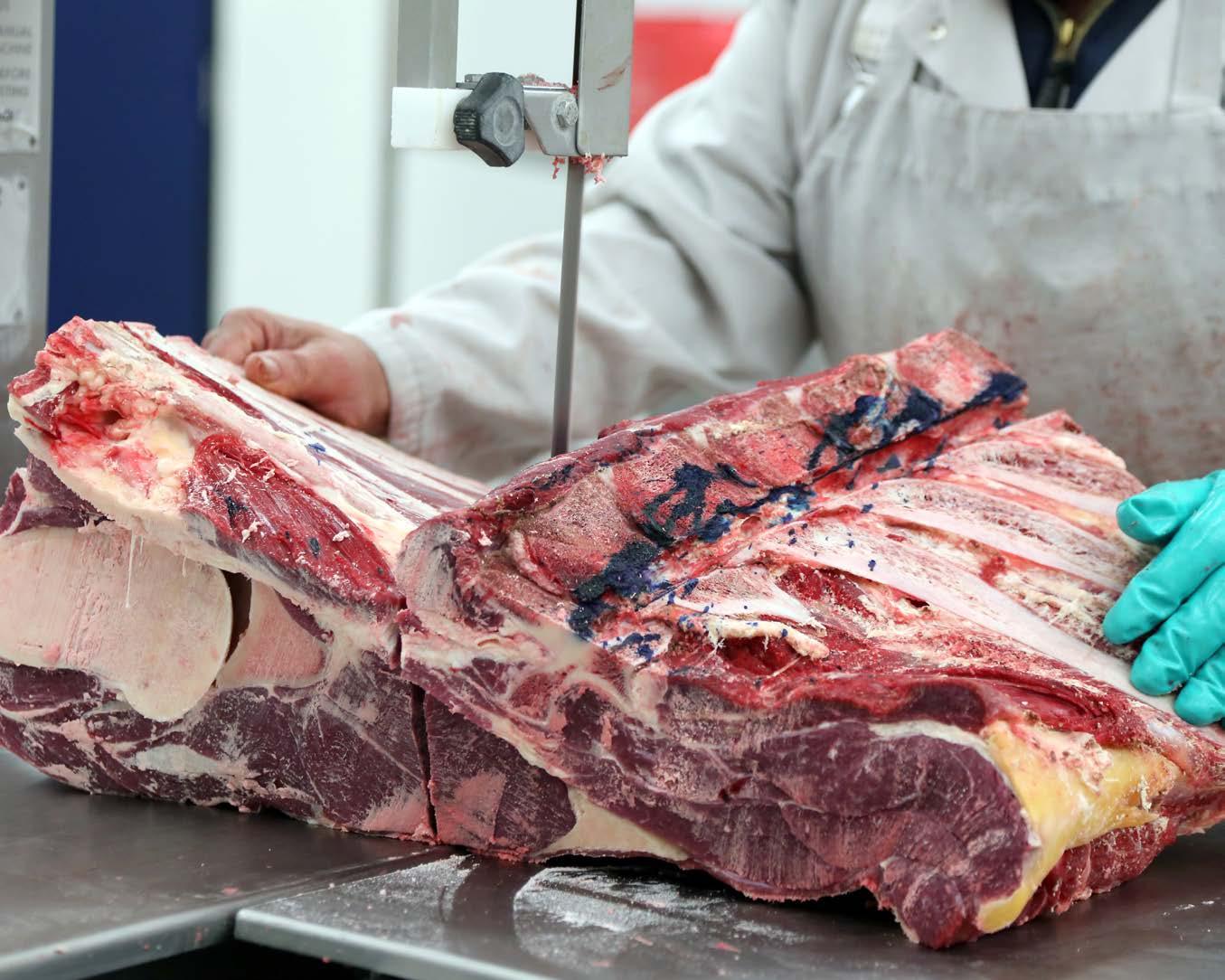
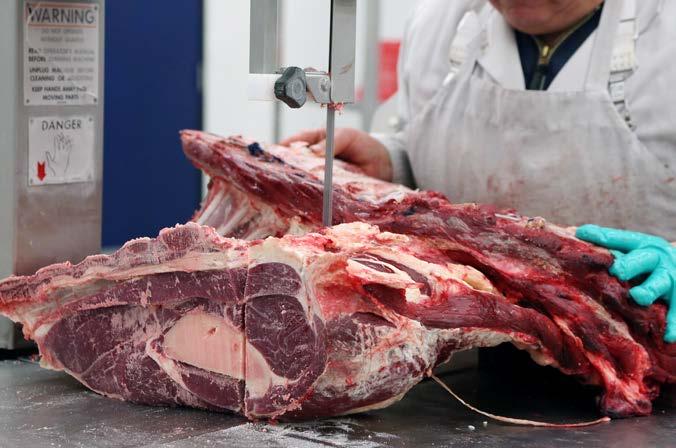
Above Close-up of a large primary cut of raw beef being cut down into smaller pieces with a fully-automatic tabletop band saw.
from left
economic priority for the province.
According to Meat & Poultry Ontario, Ontario’s food and beverage meat and poultry sector is the single largest manufacturing employer in Ontario. The meat and poultry industry employs 25 per cent of all of Ontario’s food and beverage processing industry workers—and generates $11.2 billion of the province’s $45 billion food and beverage processing industry revenue.
Like many other industries in the province, the meat and poultry sector must face up to the new challenges of labour shortages, Garcia acknowledges, making training, education and automation vitally important priorities for the centre.
“Our mission to help our meat companies compete globally,” he says, “and being competitive really means doing more with less resources and input costs.
“The industry is competing against other sectors of industry to find qualified people,” he says, “and there’s just not enough of those for everyone.
“Hence we see automation and robotics as key technologies that we could help meat companies adopt at their facilities,” Garcia states. “This could range from very simple things, like moving products inside a facility using an automated system, and perhaps adding a robot to put those products onto a conveyor belt, instead of doing it all manually.
“These are not extremely expensive things to do—most companies can afford them,” Garcia asserts.
With food safety always a major area of concern for the industry, the new centre aims to provide plenty of training in various hygienic and sanitation practices and systems, according to Garcia.
“Cleaning and sanitation is another area where we’re going to be doing a lot of hands-on training,” he says, “with different intensity levels for different audiences.
“The principle is that if you are a manager or supervisor,” Garcia explains, “you should know how to do the work of those who you are supervising.
“Our training will give managers and supervisors the opportunity to apply a foam and then grab a hose to rinse it off,” says Garcia, adding the training covers all aspects of plant and equipment sanitation, including formulating the sop mixtures, rinsing, applying sanitizers, identifying hard-to-clean spots, and so on.
“We train people how to actually do things,” he sums up, “rather than just having them learn how things should be done.”
Above
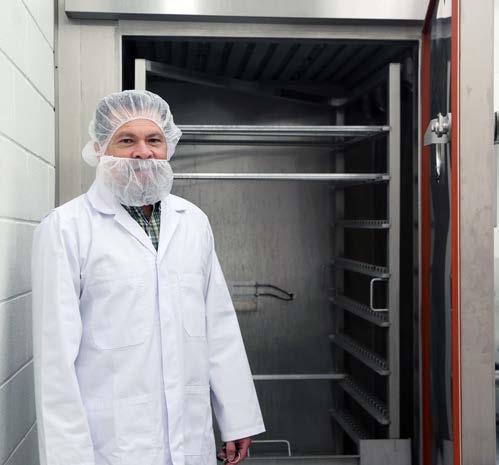
CIMT director Luis Gracia strikes a pose at the entry door to the woodchip-fired Scott smokehouse; a Groen cooking kettle; a Groen mixer.
NICE TO MEAT UP AGAIN!
North American meat industry looking forward to getting back to healthy normal at the upcoming 2023 IPPE showcase
Like many other major industry events forced to go virtual or pull out altogether due to the global coronavirus pandemic, the upcoming 2023 IPPE (International Production & Processing Expo) in Atlanta, Ga., promises to lift the mood, spirits and knowledge levels of all exhibitors and visitors to this vital North American meat industry B2B showcase.
Running from Jan. 24 to Jan. 26, 2023, at the Georgia World Congress Center, the show organizers have already sold over 515,000 square feet of exhibit space to some 1,015 exhibitors months leading up to the event, with more pouring in daily.
“We look forward to welcoming our domestic and international attendees to the 2023 IPPE!
“There is nothing like meeting face-toface to experience all that IPPE offers in innovation, networking and learning opportunities,” IPPE show management states.
Sponsored by the American Feed Industry Association (AFIA), North American Meat Institute (NAMI) and U.S. Poultry & Egg Association (USPOULTRY), the multifaceted event will comprise three concurrently running sector-focused exhibitions to represent the entire chain of protein production and processing.
As show organizers report, the 2023 IPPE will provide a full week to see and experience the newest technology in the industry, participate in events on the show floor, and network with key leaders from the animal food, meat, and poultry and egg industries.
According to show management, the 2023 IPPE is well on course to setting new benchmark standards in regards to:
• Education: Learning from the experts on topics that cross industry interests;
• Global Reach: Attracting thousands of international visitors from more
than 120 countries;
• Networking: meeting new and rekindling old relationships with leaders across the industries.
Combining extensive expertise from the three main association sponsors, 2023 IPPE will also feature countless hours of dynamic education sessions focused on the latest industry issues. These will include:
International Poultry Scientific Forum
Monday, Jan. 23, 8 a.m. – 5 p.m.
Tuesday, Jan. 24, 8 a.m. – 12 p.m.
Sponsored by the Southern Poultry Science Society, Southern Conference on Avian Diseases and U.S. Poultry & Egg Association, the forum will present information on industry topics such as environmental management, nutrition, physiology, pathology, processing and products and avian diseases.
Latin American Poultry Summit
Monday, Jan. 23, 9:00 a.m. – 5:00 p.m.
The Latin American Poultry Summit (LAPS) will present leading technical topics addressing live production and processing issues of greatest priority to Latin American poultry and egg producers and processors. The summit brings together leaders from genetic companies, suppliers, integrators, and academia to learn, discuss and network.
Understanding and Implementing Updated Appendix A&B Guidelines
Monday, Jan. 23, 2 p.m. – 5 p.m.
Tuesday, Jan. 24, 8 a.m. – 11 a.m.
Learn how to navigate the updated Appendix A and Appendix B guidelines in this workshop, which will explain the differences between the previous version and the updated version of the guidelines, and how the updates may affect your processes.The workshop will cover what to do in the event that companies can no longer follow the updated version of the Appendices, as well as include a discussion on which hazards are associated with cooking and cooling deviations. Additionally, the session will provide stepby-step instruction on how to use pathogen modeling, including information on selecting the most appropriate program and a discussion on when sampling should occur in response to a deviation. Don’t
miss this opportunity to ensure your processes are in compliance by learning from industry experts.
Pet Food Conference
Tuesday, Jan. 24, 7:30 a.m. – 4 p.m.
The American Feed Industry Association’s Pet Food Conference will cover a variety of topics from regulatory and technical aspects of production to product claims, marketing and nutrition. The conference attracts more than 300 attendees from pet food manufacturing to ingredient suppliers—covering all ingredient categories and offering an excellent opportunity to network with a diverse audience. Program registration includes breakfast and lunch.
Feed Mill of the Future Conference
Tuesday, Jan. 24, 8 a.m. – 1 p.m.
The half-day Feed Mill of the Future Conference will bring together leading feed industry experts to examine emerging feed mill technologies and processes that will impact animal feed manufacturing in the years ahead. Feed milling professionals will leave with a better understanding of how innovation and early adaptation will help achieve their sustainability, productivity and profitability goals of tomorrow.
Facility Inspection Package Training by USDA-APHIS
Wednesday, Jan. 25, 10 a.m. – 4 p.m.
Are you engaged in your company’s export activities? Specifically, preparing inspections packages for rendered products, animal-based feed or pet food? Then join us for an interactive training and Q&A with USDA-APHIS. Learn directly from APHIS how to better prepare packets and for facility inspections. This program is ideal for those actively preparing packets and facility inspections and those working directly with APHIS field staff (not a policy meeting). This program is sponsored by AFIA, Pet Food Institute and North American Renderers Association.
Biosecurity: Preparedness Must Be Perpetual
Wednesday, Jan. 25, 9:30 a.m. – 12 p.m.
The American Feed Industry Association’s Nutrition Committee is hosting a program in 2023 focused on how the industry can remain vigilant in the area of biosecurity. In addition, updates will be provided on foreign animal diseases such as African Swine Fever and Avian Influenza, and what to expect from government agencies in the event of an outbreak.
Foreign Material Prevention & Control Workshop
Wednesday, Jan. 25, 8 a.m. – 12 p.m.
This workshop is designed to help meat and poultry processing establishments reduce the occurrence of foreign material in meat and poultry products. This workshop will provide a comprehensive look at the most critical information for establishments to consider when designing a Foreign Material Control & Prevention Program (FMCPP). Divided into three main sections—prevention, detection and response—the session will provide attendees with a better understanding of how to develop establishmentspecific FMCPPs.
International Rendering Symposium
Thursday, Jan. 26, 12 p.m. – 5 p.m.
Friday, Jan. 27, 8 a.m. – 12 p.m.
Rendering is an integral and often invisible aspect of the global economy and animal agriculture sustainability. The program will discuss rendering’s impact, market value and future. Registered attendees can enjoy a reception directly after the symposium Thursday evening.
Animal Agriculture Sustainability Summit
Tuesday, Jan. 24, 9 a.m. – 12p.m.
An ever-increasing population coupled with a changing agricultural workforce has compelled the animal agriculture industry to make sustainability its top priority. Each animal agriculture sector has initiated an industry driven program to define sustainability and measure its commitment to become more sustainable. Representatives of the meat, poultry and animal feed industries will share details on the
development of industry programs or tools to advance their aspirations of producing more protein in a sustainable fashion.
AFIA Feed Education Program
Wednesday, Jan. 25, 8 a.m. – 10 a.m. The American Feed Industry Association’s production compliance committee is hosting the annual Feed Production Education program again in 2023. As regulatory requirements for the feed industry continue to evolve, this training session will update participants on any recent changes from several federal agencies including DOL, DOT, EPA, FDA and OSHA. In addition, the Feed Mill of the Year winner for the commercial feed category will be announced.
Securing the Future of Meat: Sustainability, Innovation and the Next Big Thing
Wednesday, Jan. 25, 8:30 a.m. – 10 a.m.
The future of the animal protein industry is full of promise, with no shortage of challenges to overcome. This session will bring together
thought leaders and operational experts to discuss what sustainability looks like, now and in the future, from an environmental, nutritional, food safety, workforce and animal welfare perspective.With technology, an evolving workforce, and innovation driving societal change, how does the meat industry fit in? Don’t miss this opportunity for thought provoking content, followed by discussion and interaction on what it means to create a sustainable future.
Poultry Market Intelligence Forum
Wednesday, Jan. 25, 9 a.m. – 12 p.m.
A leading industry economist and industry experts will provide insights on how the domestic and global economies, continuously improving performance, and regulatory issues impact the poultry and egg industries. They will identify challenges facing the industry and discuss how the U.S. and international poultry industries are positioned to move forward.
For further information on 2023 IPPE or to register for the show, please go to: www.ippexpo.org
At IPPE ’23, Cantrell ● Gainco will be exhibiting innovative systems and equipment that deliver added value and improved product quality for your plant operations. Some of the featured products you will see at the BOOTH C12142 will be.
• Wing Segmenters
• YieldPlus® Deboning/Trimming System
• Anritsu DualX X-ray Detection System
• Cantrell-Gainco Heavy Duty Metal Detection System
Cantrell ● Gainco is one of America’s leading manufacturers of systems and equipment for poultry first-and second-processing operations. Their strong technical expertise and service capabilities have also made us value-added distributors in the Canadian market. Every product is engineered to improve product yields, quality, and operational efficiencies.
For more details, please contact Abbey Equipment Solutions at (800) 361-5919, or you can refer to our website at abbeyequipment.com/gainco
TAKING THE CENTER STAGE
MULTIVAC is looking forward to being one of the central attractions at next month’s International Production and Processing Expo by showing a number of complete lines to demonstrate the extended capabilities of the MULTIVAC equipment line-up for providing seamless integration between processing and packaging machinery. This includes a complete tray-sealing line will be on full display showing not only the capabilities of the Tx 720 packaging unit, but also the capabilities of the GMS 520 portioning machine from TVI. Considered to be the industry benchmark for producing meat portions between two- and 50-mm-thick, the GMS 520 vertical portioner uses 2D forming to maximize product yield and provide precise cuts each and every time.. The integrated portioning conveyor allows for several product presentations, including shingled and stacked portions that can be integrated with downstream packaging processes.
Booths #C11469 and #C11559
STEALING THE SHOW
Harpak-ULMA is eagerly anticipating an opportunity to showcase the company’s s latest, cutting-edge applications ideal for customers in the meat and poultry sectors, including a high-performance ULMA thermoformer packaging meat bricks on a processing line; G. Mondini tray-sealer skin-packing chicken and robotically loading the product into cases; and its new automated gravity loading secondary packaging solutions. In addition, Harpak-ULMA will highlight vertical bagging of whole chickens utilizing the new ULMA Tight-Chicken system, as well as state-of-the-art robotic loading and pick-and-place applications! The company’s broad range of capabilities extends into robotics, thermoforming, tray sealing, filling, flow-pack, stretch-pack, blister-pack, skin-pack, vacuum-pack and much more.
Booth #C10767
REISER UP TO THE OCCASION
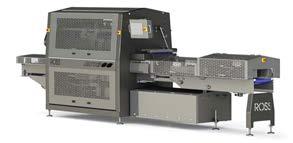
Stalwart equipment supplier Reiser will conduct live demonstrations of its complete line of food packaging equipment and processing-to-packaging solution, with every machine on display at the Reiser booth to fully be fully operational and running real or simulated product. Specifically, Reiser will showcase the full lines of Reiser form/fill/seal packaging machines; Ross tray-sealing equipment, Supervac vacuum chamber packaging machines, and Fabbri automatic stretch film wrappers. As a bonus, Reiser will feature their new Ross IN1300 inline tra- sealer, which produces modified atmosphere, vacuum-skin and lid-only packages using pre-formed trays of virtually any shape or size.
Booth # C11323
REGAL PRESENCE
Regal Rexnord Corporation will showcase a wide range of conveyor solutions for poultry processors,
including:
• PacTitan belts, featuring a proven, extended service life, with smooth belt edges to protect against worker injuries and product damage, as well as an engineered design that reduces the likelihood of contamination due to metal breakage.
• Active Drive spiral belts, an innovative alternative to legacy low-tension spiral cage systems. Designed to be actively driven from the inside edge by the drum via canonical tips, Active Drive spiral belts help eliminate the risk of overdrive and the need for constant monitoring, resulting in a more reliable system.
• Seal Master Stainless-Steel Gold bearings, engineered for reliable, long-lasting performance and contamination resistance in caustic and washdown environments.
Booth #BC9449
BACK TO THE TOP
Global packaging technologies showcase set for a triumphant return to help industry reset its course for a prosperous and sustainable future
After a six-year break due to the coronavirus pandemic, the world’s largest trade show for the packaging and related process industries is back on again, and getting closer with each passing day.
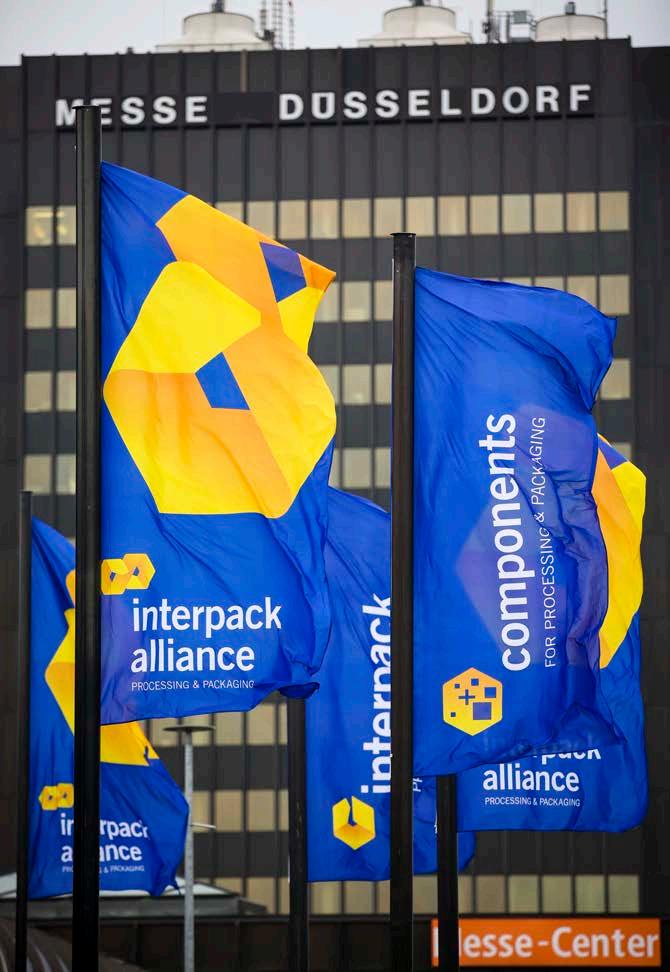
From May 4 to May 10, 2023, interpack will once again become a business platform and future technology workshop in Düsseldorf, Germany.
Already fully booked and sold out of exhibit space, interpack 2023 will occupy 18 halls and feature targeted exhibition areas, new special shows and numerous many informative forums to demonstrate the industry’s innovative strength and resilience.
According to show organizers Messe Düsseldorf GmbH , the upcoming interpack edition will feature over 2,700 exhibitors from around the world displaying a vast wealth of processes and machinery for the packaging of food and beverages, pharmaceuticals, cosmetics, confectionery, bakery products, consumer goods (non-food) and industrial goods, including newgeneration machinery for labeling, marking, packaging production and integrated packaging printing, among many others.
As the world’s leading international trade fair for the packaging sector and related processing industries, interpack traditionally attracts over 170,500 visitors from around the globe with a comprehensive platform for complete value chains, including processes and machinery for packaging and processing of packaged goods, along with packaging materials, packaging containers, packaging manufacturing, and packaging industry services and supplies.
“Interpack is the place where the industry creates the future on a global level,” states interpack 2023 project
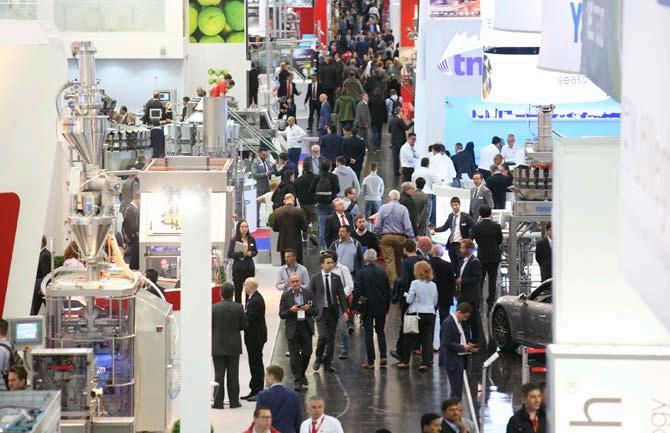
The triennial global interpack exhibition traditionally attracts well over 170,000 visitors from around the world to the week-long event in Düsseldorf, Germany, featuring over 2,700 exhibits spread out of 18 massive exhibit halls.
“Conditions like scarcity of resources and disrupted supply chains pose great challenges to the industry,” Dhose says, “while factors such as increasing demand, new technology, and a growing awareness of sustainability offer tremendous opportunities to take huge strides forward.”
According to VDMA (Food Processing and Packaging Machinery Association) , which represents over 3,500 European-based mechanical engineering companies, the global demand for machinery and equipment for the production, processing and
packaging of food, beverages, and pharmaceutical and cosmetic products is on a growth trajectory despite difficult underlying conditions.
After declining by seven per cent to about $56.5 billion in 2020 due to the global coronavirus pandemic, international trade in food processing and packaging machinery picked up again significantly in 2021.
According to preliminary data, global trade in these segments reached $60.7 billion in 2021—growing by six per cent and nearly returning to the pre-pandemic crisis levels.
With an average export ratio of 84 per
director Thomas Dohse.
cent and a share of world trade volume of 21 per cent in 2021, German manufacturers of food processing and packaging machinery continue to lead the world market. German exports increased by almost five per cent in 2021 to just over $11 billion, with Italy’s shipments t also growing by eight per cent to about $12.2 billion.
In contrast, China, Holland, U.S., Switzerland, France, Japan, Spain and Canada follow at a considerable distance, with their respective shares of the market ranging between 10 and two per cent.
During 2021, about 43 per cent of the food processing and packaging machinery shipped worldwide went to Europe, with Asia and North America following with 19 per cent each; Latin America with seven per cent; Africa at six per cent, Middle East with four per cent; and the Australia/Oceania region with two per cent.
As VDMA points out, growing populations worldwide, increasing urbanization and rising prosperity continue to drive demand for packaged food.
The global food industry is facing major challenges: there is cut-throat competition and a battle for markets and consumers.
High energy costs and fluctuating raw material prices influence production costs and put pressure on margins.
In addition, there are increasing demands for sustainable production. Producing quality products and increasing productivity, while and at the same time reducing costs and producing sustainably, is undoubtedly a complex challenge requiring plenty of both creativity and efficiency.
This challenge can ultimately be resolved with technology and digitization, requiring technology providers to provide secure, efficient and future-proof solutions.
As everyone knows, Circular Economy and resource management have emerged as top issues in the global food and packaging industry.
The aim of the Circular Economy is not to dispose of the various materials as waste at the end of their useful or service life, but to reuse them as high-quality materials through intelligent processes.
With their potential for saving energy, conserve resources and protecting the environment, sustainable solutions and materials are in demand for packaging.
One of the most common approaches to sustainable packaging is using less packaging material.
Reduced wall thicknesses, lower film thicknesses, optimized shaping, and new processing techniques mean that packaging is becoming lighter and lighter, with the same or better packaging performance and stability.
Another key component of the Circular Economy is packaging that is easy to recycle, whereby plastic packaging made from monomaterials—instead of multilayer composites— can be easily sorted and returned into the loop.
Packaging made from renewable raw materials is also
increasingly in demand. One of the trendy materials is paper, while bio-based plastics are showing a lot of promise as an alternative to classic plastic packaging.
More recently, the so-called ‘Design for Recycling’ trend, whereby packaging design is geared towards recycling, is an important factor in increasing the recycling rate, especially for plastic packaging.
However, changing packaging design is only one part in terms of sustainability.
For many poorer countries with inadequate or no collection and recycling programs, a corresponding infrastructure must be expanded or built up and an incentive for the recycling created there.
Companies today are continually faced with the challenge of acting sustainably and responsibly—making optimum use of scarce resources and, at the same time, increasing efficiency in production.
The key word here is resource management.
The production and processing of food is very energyintensive activity that consumes vast quantities of water—both for the process itself and for cleaning. This calls for implementation of innovative processes that save energy and reduce water consumption.
Intelligent control and automation technology, energyefficient drives, compressors, fans or pumps are among the classic solutions for saving electricity and operating resources and increasing energy efficiency.
More promising, however, are optimized processes and design changes that affect the process.
Mechanical engineering offers numerous solutions that help to use or save energy, water and raw materials efficiently for sustainable production and packaging.
Closed-loop systems, for example, can reduce emissions to
almost zero and optimized material cycles can avoid wasting raw materials and resources.
Likewise, digital technologies and the use of data are important drivers in the food, pharmaceutical and packaging industries—offering new opportunities to design production processes, generate data to optimize existing processes, track business performance in real time to increase overall plant efficiency; optimize the use of resources; make machine utilization more flexible; and lower production, maintenance and repair costs.
While data is often called the ‘new gold,’ it is worthless taken on its own.
Its real value is derived from the algorithms that analyze the data generated by machines, systems and employees to identify weak points or optimization potential in machines, systems or processes.
Quality and energy management, resource planning, product development and service capabilities will all benefit from Big Data, which also plays a central role in the concept of the Digital Twin concept, where it can be used to bring products, machines and systems to market faster, to commission machines virtually,
and to test new packaging developments virtually on the “real” machine in advance.
For many obvious reasons, safe and hygienic production is also a top priority in the food and pharmaceutical industries.
To manufacture products safely and hygienically and to meet the sometimes high international standards and guidelines, machines in hygienic design are a matter of course, and they are constantly being optimized.
Residue-free cleaning of machines and systems is one of the basic pre-requisites for meeting the hygiene and safety requirements for food and pharmaceutical products, while CIP (clean-in-place) are very much in vogue.
They ensure defined and time-optimized cleaning processes with the lowest possible use of resources such as water, energy, and cleaning and disinfection agents, while being constantly developed further to avoid oversized cleaning processes and, at the same time, ensure maximum safety.
For its part, intelligent packaging makes a significant contribution to reducing food losses by monitor environmental conditions to which the food is exposed, record them, and provide direct information on the quality status of the product.
Additional safety is provided by control and inspection measures., while highly efficient, computer-aided track-andtrace systems ensure that products can be traced seamlessly along the entire value chain, thus providing transparency.
They also uncover weak points in the logistics chain, using real-time radio technology to provides information on the exact location and routes of the goods—right down to any interruptions in the cold chain—making possible to organize trade routes more efficiently and save costs.
For more information on interpack 2023, including visitor registration, please go to: www.interpack.com or www.mdna. com
IN INSPECTION SYSTEMS
Christmas is a season of enjoying the simple things that make life beautiful. May you have great memories that will permanently touch your heart.
The Abbey Equipment Solutions staff wish you so much joy during this season and all through to the New Year.
Cincinnati, Ohio-headquartered packaging equipment manufacturing group ProMach has appointed Katie Williar as marketing supervisor for the company’s ProMach Pharma Solutions business unit, comprising the company’s NJM,Pharmaworks and WLS product brands.
WAGO , Germantown, Wis.-based manufacturer of electrical and industrial connectors and other power distribution devices for industrial automation applications, has appointed Tyler Schara as product manager for the company’ line of DIN rail-mount terminal blocks.
SOMIC Packaging, Egan, Minn.-based manufacture of automated case-packing and cartoning equipment for retail-ready packaging applications, has appointed Rosann Bagin as reginal sales manager for the midwestern U.S. territory.
Annapolis, Md.,-headquartered industry group Flexible Packaging Association has (FPA) has announced its 2022 board of directors, to be headed by: Chairperson: Kathy Bolhous, chief executive officer of Charter Next Generation; Vice-Chairperson: Bill Jackson, chief technology officer at Amcor Global Flexible Packaging ; Treasurer: Guenther Hering, vice-president of flexible packaging for North America at Henkel Corporation
Mobile Industrial Robots (MiR), manufacturer of autonomous mobile robots headquartered in in Odense, Denmark, has appointed Mark Joppru as vice-president of sales for the Americas region, operating at the company’s U.S.-based regional offices in NewYork and San Diego.
Power Supplies • Panel Meters • Time Delay Relays • Current-, Voltage- and Phase Monitoring Controls
CARLO GAVAZZI has the solution for your application needs, whether it’s our industry leading solid state relays, energy meters, contactors, motor controls, monitoring relays or sensors, now available with IO-Link communications.
Contact us today, and one of our field sales representatives will show you why we are one of the fastest growing automation companies worldwide. We’ll even provide a free evaluation sample to qualified customers.
2023
JAN. 24-26
Atlanta, Ga.: IPPE (International) Production & Processing Expo) 2023. At Georgia World Congress Center. To registedr, go to: www.ippexpo.org
FEB. 8-9
London, U.K.: The European Biopolymer Summit, conference by ACI London. To register, go to: www.acieu.net
FEB. 9-11
Bangkok, Thailand: Labelexpo Southeast Asia 2023, exhibition and conference by Tarsus Group Limited. At Bangkok International Trade & Exhibition Center. To register, go to: www.labelexpo.com
FEB. 15-16
Antwerp, Belgium: European Food & Beverage Plastic Packaging Summit 2023, international conference by ACI Europe. At venue to be announced. To register, go to: www.wplgroup.com/aci/events
FEB 28. – MARCH 2
Munich, Germany: LOPEC 2023, international printed electronics exhibition by Messe München ICM. At ICM – International Congress Center München. To register, go to: www.lopec.com
MARCH 12-14
Boston, Mas.: Seafood Expo North America, exhibition and conference by Diversified Communications. Concurrently with Seafood Processing North America. At the Boston Convention and Exhibition Center. To register, go to: www.seafoodexpo.com
MARCH 20-23
Chicago: ProMat 2023, global supply chain and material handling technologies exhibition and conference by MHI. At McCormick Place. To register, go to: www.promatshow.com
MARCH 28-30
Las Vegas, Nev.: SIAL America 2023, global food and beverage business showcase by Comexposium. Jointly with
International Pizza Expo. At Las Vegas Convention Center. To register, go to: www.sialamerica.com
APRIL 25-27
Toronto: CPMA 2023, annual convention and trade show of the Canadian Produce Marketing Association (CPMA). At the Metro Toronto Convention Centre. To register, go to: www.convention.cpma.ca
MAY 2-6
Essen, Germany: METPACK 2023, global exhibition for metal packaging by Messe Essen Gmbh. At Essen Convention Center. To register, go to: www.metpack.de
MAY 4-10
Düsseldorf, Germany: Interpack 2023, global showcase for packaging and processing technologies by Messe Düsseldorf GmbH. At Messe Düsseldorf fairgrounds. To register, go to: www.interpack.com’
MAY 14-15
Vancouver, B.C.: Bakery Showcase
2023, trade show and conference by Annex Business Media. At Vancouver Convention Centre. To register, go to: www. bakeryshowcasecanada.com
MAY 10-11
Boston, Ma.: Robotics Summit and Expo, concurrently with Healthcare Robotics Engineering Forum. Both at the At the Boston Convention and Exhibition Center. To register, go to: www.roboticssummit.com
SEPT. 11-13
Las Vegas, Nev.: PACK EXPO Las Vegas, international exhibition and conference by PMMI, The Association for Packaging and Processing Technologies. At Las Vegas Convention Center. To register, go to: www.packexpolasvegas.com
DEC. 5-8
Shanghai, China: Labelexpo Asia 2023, exhibition and conference by Tarsus Group. At Shanghai New International Expo Center. To register, go to: www.labelexpo.com
Getting all fired up with creative crossover packaging / Jeff May
Fire logs come in a surprisingly diverse variety of shapes, sizes and aromas. They can serve multiple purposes—albeit they are generally used for igniting wood fires, heating homes and ambiance—and they can be made from different materials like compressed hardwood, recycled hardwood, sawdust and wax, and recycled wax boxes. With so many choices at the hardware store, standing out is not an easy feat. However, a little inspired cross-marketing and packaging creativity goes a long way for the KFC-branded Fried Chicken-Scented Fire Log. Packed tight in a sturdy paperboard box colored in the familiar shade of KFC red, the rectangular brick also features the familiar white stripes off to the side and, of course, the iconic drawing of the bespectacled Colonel’s cheerful and slightly mischievous moustached smile, along with the promise of his divinely chosen 11 Herbs and Spices used in this unconventional KFC recipe. The other three panels of the box provide relevant safety information for burning, some cool ideas for where to enjoy your fire log, a pointed suggestion that some actual KFC chicken would go well with the fire, and a cheeky disclaimer that the log itself is actually not made from real live chickens. Burning cleaner and longer than wood, while helping to reuse discarded packaging from other products, the logs are manufactured for KFC by Enviro-Log, which operates a network of purpose-built recycling and manufacturing facilities dedicated to recycling the boxes and manufacturing logs from them. Working with produce leaders, grocery retailers and recyclers, the Enviro-Log process saves tens of thousands of trees from being used as firewood and millions of pounds of WOCC from going into landfills every year. Although I initially bought the log for the ambiance, I chose this particular one for the packaging and, as a reward, I also got to enjoy the distinctly unique fried-chicken scent that, alas, disappears soon after the log has been lit up.
For hashbrown fans, the Golden Grill Hashbrown Potatoes are a great product to
have around. Produced by Basic American Foods, I noticed them in the canned vegetable aisle because they stood out on the shelf by virtue of being packed in a gable-top carton usually use to pack a 500-ml serving of milk, cream and other like dairy beverages. Instead of milk, however, the carton contains 119 grams of pre-shredded dehydrated potatoes that, unlike their frozen counterparts, do not require any refrigeration and can be stored in a pantry alongside other canned vegetables, with the promise of a similarly lengthy shelf-life. The front and back of the carton are mirror images of each other, with the upper portion featuring gold lettering of the brand name and the product name in both languages, along with the 100% Real Potatoes declaration and a black-and-white GF (Gluten-Free) certification symbol. One side panel carries the required nutritional information,
while the other features instructions for preparing them, which is another stroke of genius in its own right. Not only is this milk-carton container a great differentiator on the store-shelf and a tidy storage solution, but it is also used in the preparation of the product, which only requires the consumer to open the carton, fill it up with water, and put it aside for a while to hydrate the contents. Once the hydration is complete, the carton is drained and the potatoes are ready for the frying pan, with the emptied container ready for the household recycling bin.
The condiment aisle at the grocery is a crowded place indeed, where massive competition amongst varying tastes and cultures creates a packed house of ketchups, BBQ and steak sauces, salsas, hot sauces, mustards, relishes, pickles and other toppings where product packaging is critical to swaying a consumer’s purchasing decision. And sure enough, the Bomba Italiana jar of spicy Calabrian red hot peppers, eggplant, mushrooms, dried tomatoes, herbs and natural aromas soaked in olive in oil gets full marks for daring packaging innovation and product presentation. The glass jar is wrapped in a beige paper label that starts out tight just above the bottom of the jar—exposing the bottom of the jar’s contents—and is gradually loosely overwrapped toward the top, where a thin paper ribbon is twisted around a little red paper dowel to resemble a wick for a bomb. Topped off with a clever graphic of a Calabrian chili with its stem lit up like the fuse of a dynamite stick, the package looks like a miniature Molotov Cocktail or an elaborate firecracker—projecting ample warning about the fiery nature of the hot spicy products inside. Once the extra trappings are removed, the package becomes a standard resealable glass jar offering all the usual benefits of preserving the purity, flavor and freshness of whatever is contained in it, while always remaining virtually infinitely reusable or recyclable.
JEFF MAY is a freelance writer and musician living in Halifax, N.S.
From top clockwise The KFC Fried Chicken-Scented Fire Log made from recycled waxed boxes; the jar of Bomba Italiana picked garnishes made to resemble miniature Molotov cocktail; a gabletop carton of dehydrated Golden Grill Hashbrown Potatoes.
TOUCHSCREEN CONTROL
A 4.3” full color touchscreen provides access to the system’s internal messages and print functions.
BIGGER AND FASTER
Print speeds up to 480 ft/ min, ideal for high speed production lines or web applications.
APPLICATION VERSATILITY
The CoPilot Max 512i Turbo utilizes oil-based, solvent-based, or UV curable inks for printing on a wide range of porous or non-porous substrates.
A coding and marking leader for over 25 years, Squid Ink printers and inks are made in the USA and are designed to keep your production line up and running day after day.
For more information, visit www.squidink.com or call 1-800-877-5658 for an Authorized Squid Ink Distributor in your area.