
AUTOMATE NOW Plus
DIGITAL SUPPLEMENT FOR FOOD & DRUG PACKAGERS AND THEIR OEM’S


INDUSTRY 4.0 - WHAT THE HECK IS IT?
For those of us not living under a rock, we’ve all heard the term Industry 4.0 (pronounced “four-point-oh”).
Even though many people understand it to mean the fourth Industrial Revolution, fewer still understand just what that implies.
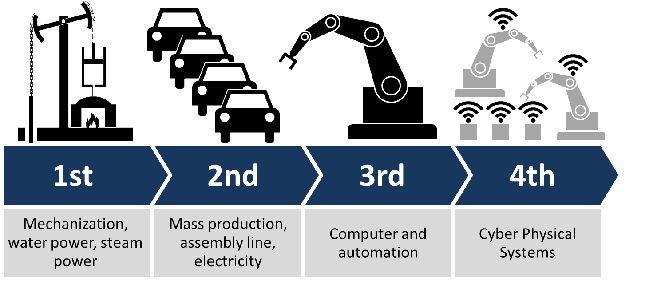
• Industry 1.0 = the 18th century industrial revolution featured water and steam power, and general mechanization;
• Industry 2.0 = took place in the late 19th century and featured mass production, assembly lines and electric power;
• Industry 3.0 = is the introduction of computers into our daily life - say 1980s;
• Industry 4.0 = cyber physical systems (CPS).
CPS is a mechanism controlled or monitored by computer-based algorithms, tightly integrated with the Internet and its users.
Within the packaging industry, it means a machine operating on the production floor is simultaneously performing its assigned duty while sending its performance data to a Cloud network offsite.
It’s not production line data being sent, rather the machine is sending data to the Cloud about how well different parts of the machine are operating. Parts could be as small as a hinge opening and closing, or even a tightened screw being shaken within the daily machine operation.
Within the Cloud, the data is analyzed and information is sent back to the machine informing it (the machine) on how it needs to alter its own operating parameters in order to maintain its peak operating efficiency. The machine then adjusts itself.
The packaging equipment is not quite self-aware—so there’s no need to worry about the fall of SkyNet and Terminators popping up asking for
your clothes, your boots and your motorcycle—but the packaging equipment is informed of future issues within itself, and performs adjustments to avoid equipment failure and downtime.
The machine does not fix the problem, it merely alters itself to work optimally at that moment. You can fix the machine’s problem when the shift is over, if you like.
Depending on the level of complexity of the machine and its Industry 4.0 wherewithal, minute machine adjustments could begin as soon as there’s a shift in the machine’s efficiency, or it could be programmed to only act after a certain level of inefficiency is detected. That is up to the manufacturer and programming software.
That’s is what Industry 4.0 is all about, basically. I think.
By the way, the term Industry 4.0 first arose about 10 years ago, went underground where deep thinkers live, and then—when the media got ahold of it—became a catchy phrase. We didn’t have descriptive terms for the other industrial revolutions, except the first one.
THE RIGHT WEIGH FORWARD
Venerable
Montreal machine-builder eager to build on stellar market success and reputation at a new state-of-the-art manufacturing complex
BY GEORGE GUIDONI, EDITOR PHOTOS BY PIERRE LONGTIN
Simply standing still is a sure way of falling behind the competition in any industry these days, and the highly competitive and dynamic global packaging machinery business is certainly no exception.
Fortunately for WeighPack Systems Inc., casually resting on past laurels and accomplishments is simply not part of the venerable Montreal company’s DNA make-up and, thanks to the stellar management skills and entrepreneurial spirit of its founder Louis Taraborelli, has never been.
And having just completed a move to the company’s spanking-new, state-of-the-art head-
quarters and production facility located in Montreal, Que., WeighPack seems clearly intent on raising its proud track record of business growth and capital expansion to a whole new level.
“Our new facility clearly positions us for further growth ahead,” Taraborelli told Canadian Packaging in a recent interview, praising the many new capabilities and competencies the new $8-million facility provides to both WeighPack and its constantly growing list of customers across a broad spectrum of CPG (consumer packaged goods) industries.
Housing the company’s fabrication department, 16 assembly workstations, and a separate
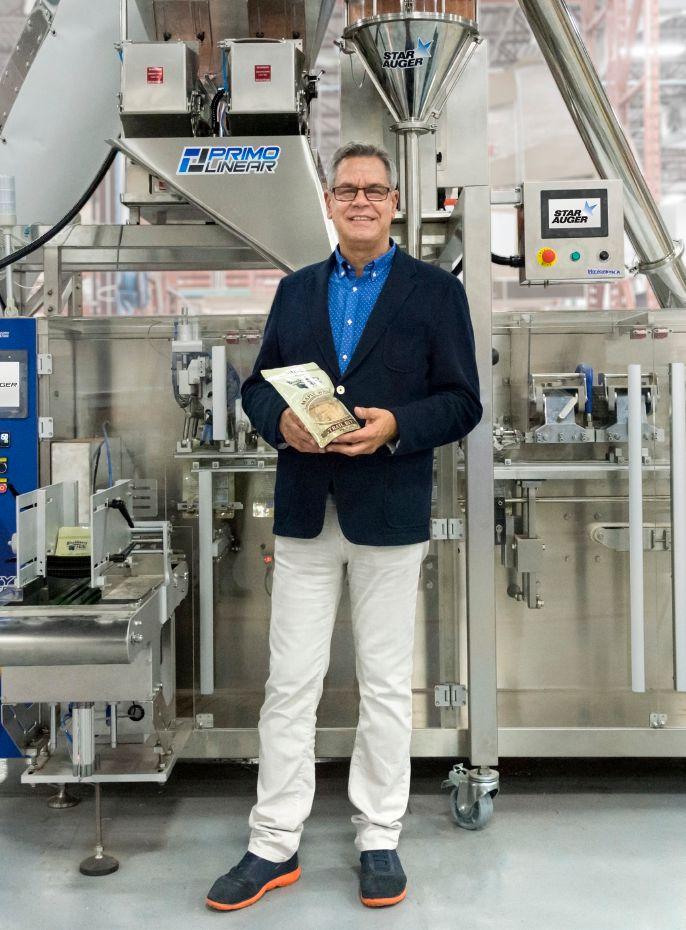
WeighPack Systems founder Louis Taraborelli strikes a pose in front of a turnkey automatic bagging line integrating high-quality packaging machinery manufactured by his company.
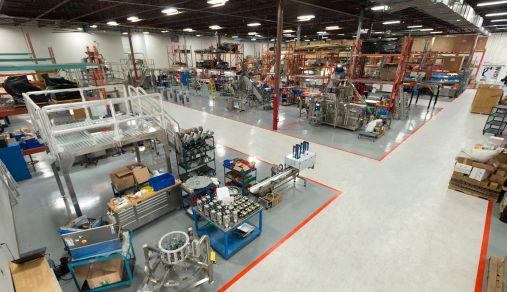
A bird’s-eye view of the extensive range of state-of-the-art production machinery and well laid-out work areas housed under the roof of WeighPack Systems’ brand new 70,000-square-foot manufacturing facility in Montreal.
protected R&D (research-and-development) area, the modern building will significantly “increase our production capacity to supply growing global demand for our products,” Taraborelli relates.
“And sitting on 250 thousand square feet of land prepares us for any future expansion to respond to market demands.”
“We even went so far as installing a huge and very tall walk-in climate-controlled area, where we can test our machines in refrigerated environments with highpressure, washdown capabilities,” Taraborelli extols.
“We can completely simulate a customer’s working environment at our new plant.
“As part of our design criteria, we instructed our architects to create a campus style environment,” he continues.
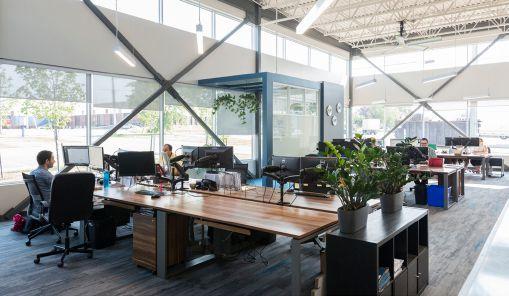
The new WeighPack Systems building features many open areas with plenty of natural sunlight to create a positive and enjoyable work environment for the facility’s dedicated and highly talented employees.
“Our open areas, our cafeteria and our leisure room are all a testament to our commitment to create a positive, enjoyable work environment for our employees,” Taraborelli points out.
“As we continue to grow, we want our employees to be proud to come to work every day,” says Taraborelli, describing the company’s 200-employee staff as “an awesome pool of talent.”
Widely acclaimed in global packaging industry circles as one of the world’s leading manufacturers of primary packaging machinery such as weigh fillers, automated bagging solutions, container fillers, custom conveyors and custom automated systems, as well as system integration, WeighPack’s rise to industry prominence is an inspiring ‘rags-
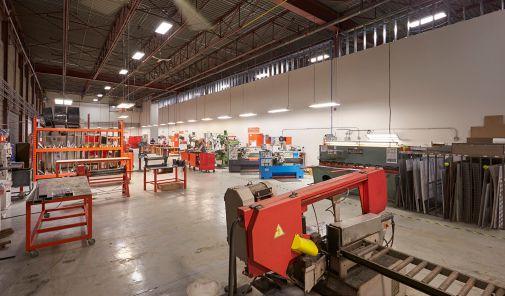
A view of the full-service fabrication department housed inside WeighPack Systems’ new $8-million production facility in Montreal, which took about 10 months to build from the ground up.
to-riches’ story offering compelling proof that Canadian manufacturers of packaging and industrial machinery are more than capable to compete on a global stage—if they’re willing to put in the time, effort and commitment like Taraborelli has for more than 45 years in the business.
“I began my journey in the packaging machinery industry in 1972 as a 17-year-old, when I was hired by Ed McPhee as a parts order clerk and shipper/receiver at the Montreal branch office of what was then largest packaging machinery sales service company in Canada, the Paul Moore Company,” Taraborelli recalls, crediting former boss Rick McLeod for nurturing his prolific sales skills so early in his career.
“After having shown initiative by generating over
$300,000 in parts business in my first year, I was promoted to a sales rep position,” he relates. “I think I was the youngest packaging machinery sales rep in Canada back then—surrounded by guys ranging from late 20s to well into their 50s.
“I still remember the day Rick McLeod asked me to come to work well-dressed so that I could now officially start selling.
“I did not own a shirt and tie,” he chuckles, “but I had a nice turtleneck.
“I drove a beat-up Volkswagen and I borrowed my father’s 1974 Lincoln Continental to make my first sales call, where Joe Lombardo, general manager at Pastene, gave my first order.”
Quickly rewarded with a company car, a brand new 1974 Chevrolet Nova, Taraborelli went on to build up an impressive client list in very short order.
“Some of my most memorable early sales were to Frank Saputo,” Taraborelli says, recalling the special bond he built with a co-founder of a fast-growing cheese producer that has since grown into a globally operating
dairy product giant Saputo Inc.
“I had a great respect and admiration for Frank,” he confides.
“I initially sold them their first ricotta filling machine in 1974, which was a semi-automatic Autoprod piston filler doing one ricotta cup at a time,” Taraborelli recounts.
“Then in 1975 he bought the automatic cup denester, a filler, a film sealer and a lidder,” says Taraborelli, “as well as the first-ever Lantech pallet wrapper installed in Canada.”
Taraborelli says the experience gave him the confidence and faith in his ability to make a name in the business for himself.
“So I left Paul Moore at the ripe age of 20 to start my own business— quickly learning the first hard business lesson of not quitting one’s job before having something solid in place to go to,” Taraborelli recalls.
To get the fledgling business going, Taraborelli hit the road to attend some of the industry’s biggest trade shows to line up some of the exhibitors for representation in the Canadian market.
“I went to the PMMI (Packaging
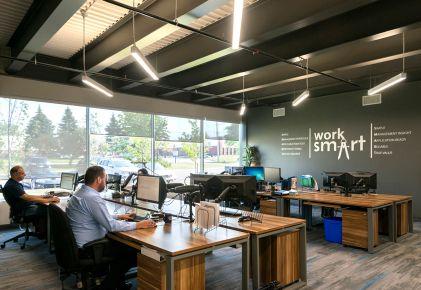
The WeighPack plant’s engineering department is situated in a bright and open area to stimulate creative thinking and fee-flowing interaction amongst its safe.
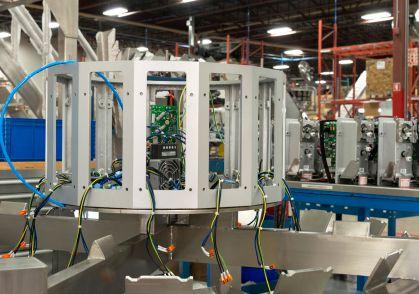
A close-up of a workstation used to assemble the PrimoCombi range of multihead weighing systems for high-performance applications requiring high throughput rates and tight accuracy tolerances in busy or harsh production environments.
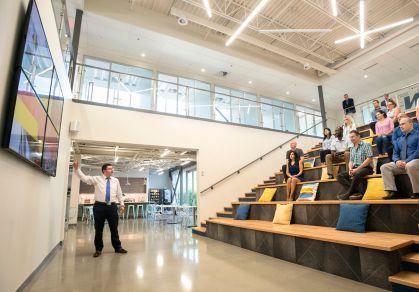
Stadium seating and gigantic TV screens are just some of the many staff amenities housed at the new WeighPack plant, along with a leisure room (background) with a ping-pong table and an on-site fitness center.
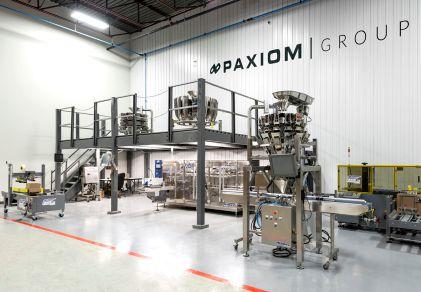
A Paxiom Group showroom inside the new WeighPack plant demonstrates the extensive range of packaging line capabilities offered by WeighPack and its subsidiaries to suit a vast array of automated packaging applications in many CPG industries.
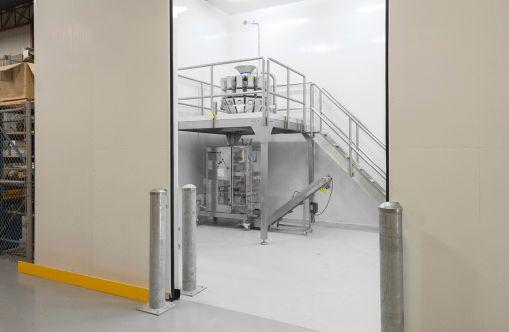
The plant’s segregated temperature-controlled room allows WeighPack to faithfully simulate the working conditions of its end-user customers in order to design the most optimal packaging solution for their application needs.
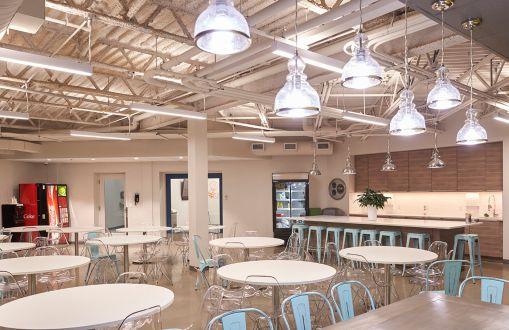
The new plant’s cafeteria is also designed to encourage positive social interaction among the plant’s personnel from across all departments.
Machinery Manufacturers Institute) show in 1976 expecting to meet some key suppliers that I did very well with when I was with Paul Moore,” he recalls, “and at the end of the day I left the show representing two companies.
“The two companies were Autoprod and Universal Packaging, a fledgling manufacturer of vertical form-fillseal machines starting at $6,900,” says Taraborelli.
“I also visited the Ipak-Ima show in Milan and came away representing the Soteco Group, which manufactured IMA, BFB, and Farcon that, at the time, were all unknown brands in North America. In 1977, I introduced Ilapak to North America.
“Ultimately, though, I decided that at some point our future had to be built with our own products,” Taraborelli states.
As it turned out, it was a brilliant decision by any measure.
From humble beginnings, with only a few people, WeighPack Systems has grown from a fledgling upstart producing six machines a year into a diverse manufacturer of well over 400 machines annually.
Moreover, WeighPack has expanded from being a stand-alone business into a bona fide group of companies operating three manufacturing plants and two systems centers in three countries, Taraborelli points out, “employing over 200 incredibly dedicated people.”
Not surprisingly, the team includes three of Louis Taraborelli’s sons—Nicholas, Justin and James—filling in senior management roles at the three major parts of the Paxiom Group business.
“My son Justin, vice-president of operations now running the show at WeighPack in Montreal, started in the family business over 10 years ago and grew through the ranks—today managing a large team of highly-qualified professionals,” Taraborelli says.
For their part, vice-president of sales and marketing Nicholas Taraborelli manages the company’s two Paxiom System Centres in Toronto and Las Vegas, Nev., while James Taraborelli recently returned to Canada after overseeing the startup and growth of the company’s subsidiary in Shanghai, China.
The company’s Paxiom System Centres—the Las Vegas location started up in 2004 and the Toronto branch in 2014—are totally “unique in the industry,” according to Nicholas Taraborelli.
“Both locations have over two million dollars of machines permanently on display and available for demonstration to the exact needs of our clients,” he explains.
“We offer technical support and can dispatch field service techs promptly with easily available flights to all cities in Canada and U.S.,” says Taraborelli, citing the company’s high comfort level with using advanced information and communication technologies to provide immediate feedback and technical support to its customers.
“We use a lot of new-generation software and hardware tools to operate efficiently. Our business-integrated software with advanced MRP (Material Resource Planning) functions and our VoIP (Voice over Internet Protocol) technology allow us to process parts orders from
any of our locations in real time,” says Taraborelli, adding that the company plans to open more strategically-located regional System Centers in the next two years to get even closer to its customers.
“I firmly believe that the future of this business lies in having superior regional sales and service support,” he states.
“The competition is ferocious,” he stresses, “and in the end it’s all about reliability of the product and after-sales service and support.
“The closer we get to our customers the more we are going to win them over for good.”
According to Taraborelli, opening shop in China back in 2006 has greatly enhanced the company’s geographic reach and influence in the increasingly globalized marketplace for packaging equipment.
“We were surprised at the amount of Chinese producers of packaging machines that already existed in China,” he recalls, “but we also learned early on that each and every machine bought there needed to be thoroughly inspected, tested and fixed prior to customer delivery.
“The Chinese were not consistent in any way with the quality of their workmanship, so we decided to open our own manufacturing facility as a WOFE (wholly-owned foreign enterprise) in the free trade zone in Shanghai.
“With labor costs being so cheap in China we wanted to outsource sheet metal and machined parts to keep our product costs low, while offering a quality product at a reasonable price, but we knew we had to be there ourselves to apply western management and quality standards,” says
Taraborelli, noting the Shanghai plant nowadays employs over 50 full-time people. “We now have installations up and down the Asia-Pacific market, including Japan.
“We are very proud of our achievements there.”
In 2008,Taraborelli successfully completed the purchase of Eagle Packaging Machinery in Miami, Fla., a wellestablished manufacturer of self-locking box formers, case
erectors, tray formers and case-packing systems.
“This strategic acquisition provided us a diverse portfolio of end-of-line packaging solutions that fit seamlessly with the WeighPack Systems,”Taraborelli notes, “providing us the ability to deliver a true complete system solution designed, manufactured and serviced by one company.
“So not only can we take raw product and weighfill fill
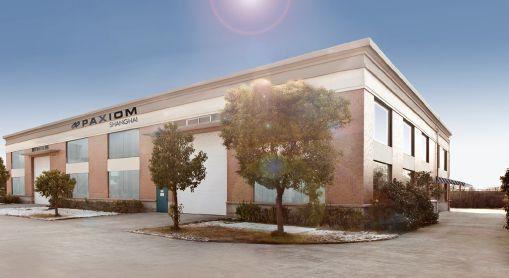
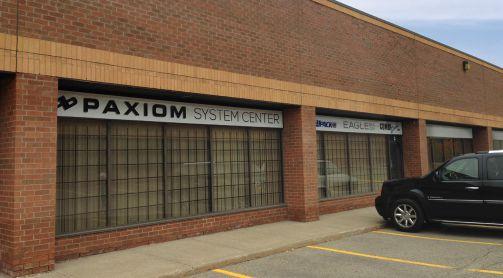
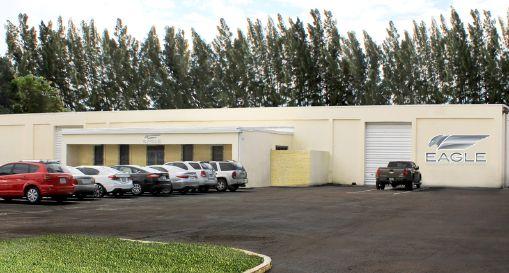
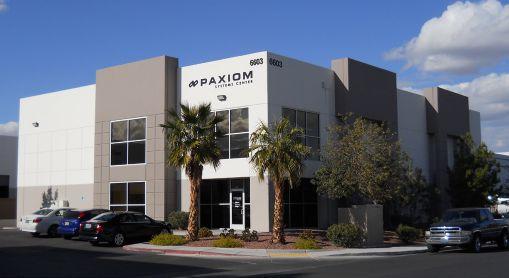
The Paxiom Group also operates from four additional strategically-located System Centers (from top left clockwise) in Shanghai Toronto, Las Vegas, in the Eagle Packaging LLC manufacturing facility (bottom left) in southern Florida.
into a bag, jar , box or most any package,” he explains, “but now also put that package into a formed case and place it onto a pallet, managing the entire packaging process.
As Taraborelli strongly points out, “We are fully committed to providing our customers a single-source supplier for high-quality packaging solutions delivered and serviced by one company.
“We pride ourselves on having complete responsibility and being totally accountable,” he states, adding there are plans in place to eventually move Eagle Packaging to a newer and bigger facility to accommodate the growing business.
In the meantime, Taraborelli says he is relishing the opportunity to see what WeighPack Systems can accomplish at its new Montreal home digs.
“Our engineering team includes mechanical, electrical and automation experts who are very experienced in machine design,” he proclaims.
“Our fabricators deliver quality parts we dare to compare to any world-class manufacturer, and our assemblers fully understand how the machines work prior to signing off for delivery.
“Our project managers are all dedicated company veterans that understand applications well and follow through from sale to startup,” he adds, “and all our support teams are staffed with dedicated and hardworking people that all contribute to the success of our business.”
While WeighPack Systems has contributed a multitude of technological and design innovations to the packaging equipment sector,Taraborelli says he is particularly proud of true ‘industry-firsts’ such as:
• The design and features of the PrimoCombi multihead weigher, the first and only combination weigher designed and built in Canada. The Bingo range of automated bagging machines for controlled atmosphere bagging applications.
• The SpinDexer container filling machine that Taraborelli calls “a standard in vitamin gummy filling.”
• The very first model V-25 bulk box filling system purchased by Hershey Choco-
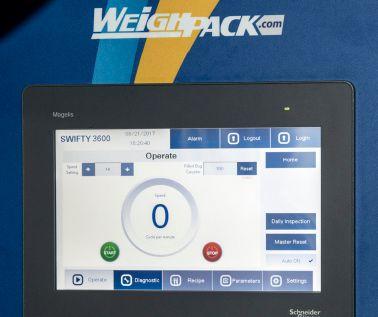
WeighPack Systems makes extensive use of the high-quality Schneider Electric Magelis HMI (human-machine inteface) touchscreen terminals to control the operation of its machinery and equipment in the most user-friendly way possible, with a short learning curve.
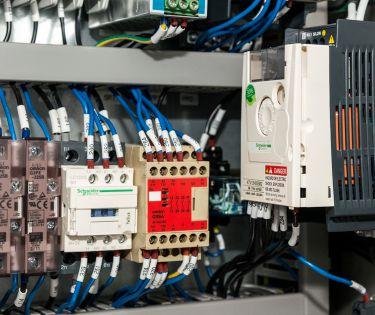
The inner workings of the electrical box of a WeighPack machine showing: (from left) Omron Automation solid state relays; a Schneider Electric contactor; an Omron G9SA safety relay, and; a Schneider Electric a variable speed drive ATV12.
lates 20 years ago—and recently made an additional equipment purchase.
• A recent partnership with an Italian-based company that builds the new Sleek range of horizontal flowwrappers.
Says Taraborelli: “We are extremely proud to have built such an innovative, diverse and robust product line that has allowed us to promote ourselves globally into all packaging industries.
“Our ability to lead, innovate, adapt, make decisions and invest will continue to serve us well into the future,” he adds.
“Like all technology-intensive industries, we recognize that we cannot rest on our laurels, and that we must continue to drive change, new products and continued value for our customers,” he concludes, “and the incredibly motivated team that we have built here at WeighPack will continue to lead and think big for many more years to come.”
A SAFER HAVEN
Modular decentralized software solution ensures optimal packaging machine safety
BY DIRK SCHLUETER AND OWEN TUCKER
Just as products come in packaging of all shapes and sizes, today’s demands on packaging machines are equally diverse.
Although packaging is primarily there to protect the contents, product presentation frequently boosts the incentive to buy, which is why it is constantly adjusted to meet varying point-of-sale requirements.
Even when the packaging tasks are changed frequently, operators expect reliability, high cycle speeds and, in particular, flexibility from their packaging machines.
Because today’s machines have a high degree of automation incorporated in their design, there is a need for intelligent, modular safety concepts that seek to maintain economic viability and to deliver a meaningful competitive edge.
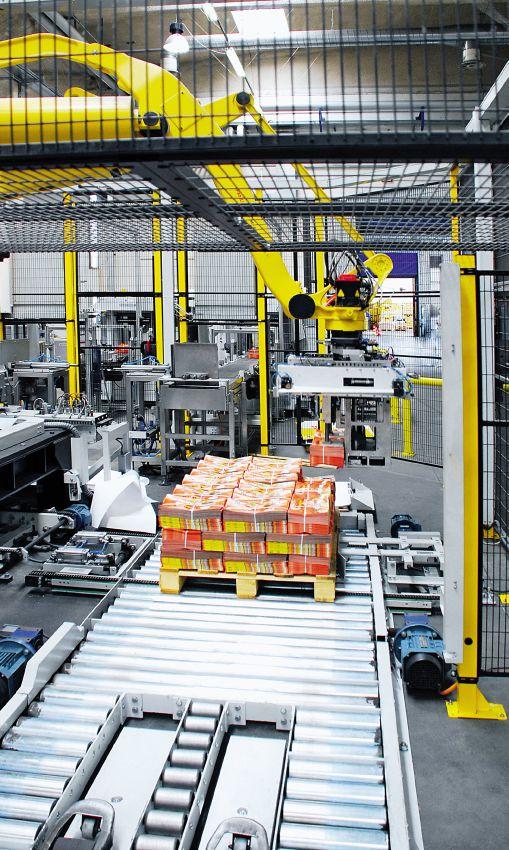
To address that need, German automation components manufacturer Pilz GmbH & Co. KG recently launched the PNOZmulti Mini configurable control system, integrated with the company’s PSENslock safety gate system and the PDP67 digital input modules to ensure complete safety for plant personnel working alongside automatic and semi-automatic packaging equipment.
Workplace safety has been high on the list of corporate priorities at Oystar North America Inc. for many years.
Headquartered in Davenport, Iowa, the company’s diverse product portfolio ranges from stand-alone traypackers and case-erectors to conveying systems, palletizing stations, and full turnkey packaging lines used in the dairy, pharmaceutical, cosmetics and food industries.
The company’s Oystar A+F division, specializing in end-of-line packaging solutions, has recently embraced the open, flexible and decentralized safety system from Pilz, which also boasts extensive diagnostics functions.
The Oystar A+F palletizing stations feature several doors that have to be opened regularly or temporarily throughout the day, which have to be fitted with safety gate systems and guard locking devices to protect the process.
In the past, these tasks would have involved costly and labor-intensive cabling work to install mechanical safety switches with guard-locking devices, with all signals evaluated centrally via safety relays.
Precise alignment between the switch and actuator was difficult because the mounting tolerances were low and diagnostics were not always reliable—sometimes resulting in damaged switches and attempts to manipulate the safeguards.
Initially, Oystar A+F considered integrating the safety technology into the control systems of the various leading automation suppliers.
This idea was soon shelved, however, on account of the high level of complexity of the software tools for the various systems and the complicated software validation this process involved.
“Our primary aim was to define an open and decentralized safety concept that could not only be designed in accordance with protection type IP67 but could also be implemented with clear separation of responsibilities between safety and standard,” says Manfred Schuster, head of electrical design at Oystar A+F.
Because the company was already familiar with Pilz’s range of products and services following years of cooperation, it opted for the configurable control system PNOZmulti Mini in combination with decentralized periphery, the input modules PDP67.
Installed in the main control cabinet, the PNOZmulti Mini base unit features 20 digital inputs and four digital semiconductor outputs to monitor the emergency stop button, the reset button and the mode selector switch, as well as taking control of the servo amplifier all the way to a safe operational stop.
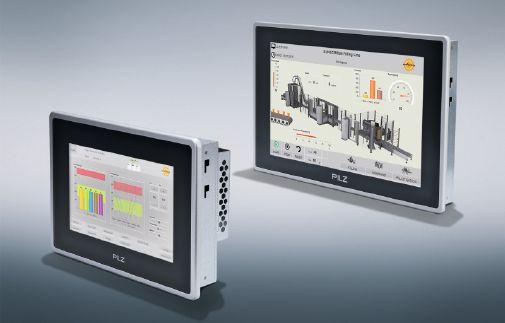
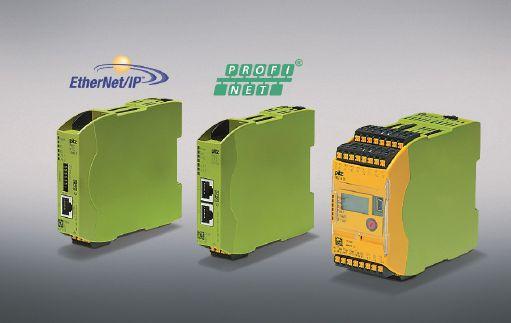
The safety gate system PSENslock from Pilz monitors the machine access points via the PNOZmulti Mini, combined with a non-contact magnetic interlock for flexible connection options to provide optimal safety gate monitoring, both individually and in series, to ensure maximum manipulation protection.
During operation, the gate system passes the signals to the decentralized PDP modules/ PNOZmulti Mini. Gates that do not require guard locking are fitted with the coded safety switch PSENcode, with the connection made directly on-site via the decentralized PDP67 modules.
When plant and machinery are interlinked and the machines are assembled as modular systems, the PNOZmulti Mini systems are simply linked to each other to ensure safe exchange of all the signals.
“By swapping the mechanical switches for the safety
gate system PSENslock from Pilz, our customers can increase the productivity and reliability of their machines considerably,” says Schuster.
“The software tool PNOZmulti Configurator makes light work of the configuration of the whole system, with the clearly structured, intuitive user interface speeding up the commissioning process.”
“All the configuration and function elements are available either as icons or in selection menus, and all inputs and outputs can be linked using logic elements via a simple drag-and-drop function,” says Schuster, also complimenting the user-friendly software’s pre-defined, approved function blocks and menus.
“Safety functions require in-depth specialist knowledge, particularly during configuration and implementation, so the fact that certified safety blocks are already stored within the software tool helps tremendously in
gaining quicker approval for the machine,” he states.
The Safety Calculator PAScal calculation software from Pilz calculates and verifies the key safety parameters such as Performance Level (PL) and Safety Integrity Level (SIL) for plant and machinery safety functions.
The software can use a graphic editor to model safety functions and define not only their structure, but also the usage pattern of the individual components.
The software’s extensive library functions make it possible for users to import machine data in the standard library formats or to create and manage their own libraries.
Says Schuster: “The close collaboration between Oystar and Pilz resulted in a system standard for safety that can be adapted to cater to the individual needs and requirements of the various installations and machine types.
“Not only did Pilz supply the machines and systems but the company was also responsible for the design, product selection, commissioning, after-sales service and support,” he adds.
“For us it was a big advantage that even
during the commissioning phase we were able to call on Pilz’s technical support at any time, and that support was always straightforward,” Schuster points out.
With their distributed structure, the products in the PNOZmulti range developed by Pilz are ideally suited to systems requiring a standardized solution, from the stand-alone machines right through to modular networks, according to Schuster.
“The large number of different communication interfaces makes the configurable control system into a safety standard that can be applied all over the world because it can be used independently of any specific operating control system
“We were looking for a new, universal safety solution that could be clearly structured,” he sums up, and we found it with the PNOZmulti Mini and the decentralized PDP67 modules.”
YUMI ROBOT A SMASH HIT CONDUCTING ORCHESTRA
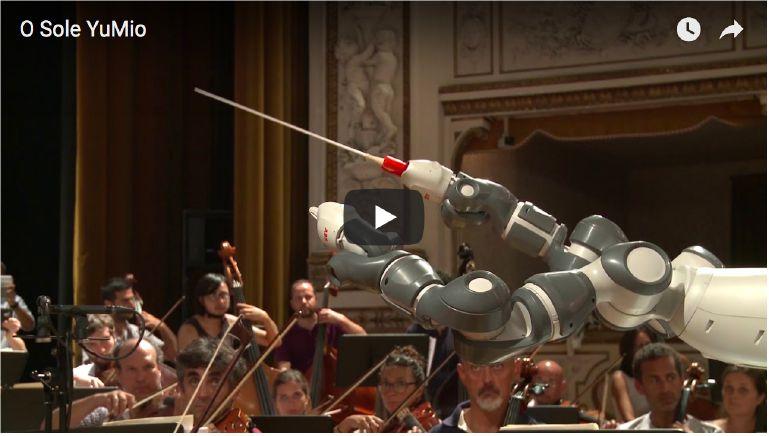
ABB’s YuMi robot to conducts Lucca Philharmonic Orchestra in front of a soldout audience in Pisa, Italy.
BY CANADIAN PACKAGING STAFF
ABB’s YuMi humanoid robot conducted Italy’s Lucca Philharmonic Orchestra on the evening of September 12, 2017, alongside Italian tenor Andrea Bocelli and opera soloist Maria Luigia Borsi at the Teatro Verdi in Pisa, Italy.
As part of the First International Festival of Robotics, the YuMi robot twirled its baton in perfect coordination to lead Bocelli and the orchestra through Giuseppe Verdi’s aria La Donna è Mobile from Rigoletto, and then Maria Luigia Borsi through O mio babbino caro from Giacomo Puccini’s Gianni Schicchi (see image above).The ABB robot also conducted a passage from Pietro Mascagni’s intermezzo from the opera Cavalleria Rusticana.

YuMi was trained by director/conductor Andrea Colombi who wrote on the ABB website: “The robot’s performance was developed in two steps. First, my movements were captured with a process called ‘lead-through programming,’ where the robot’s two arms are guided to follow my motions with great attention to detail; these movements are then recorded.
“The second step involved fine-tuning the movements in ABB’s RobotStudio software, where we made sure the motions were synchronized to the music. Of course this took some technical expertise from ABB, but the lead-through programming let me focus on naturally doing what I do best, bringing the music to life. It is amazing to me that this could be accomplished so smoothly,” he states.
Below is a YouTube video posted by ABB showing YuMi practicing for the event: https://nigelstanford.com/Cymatics/

END OF THE LINE
Get ready to travel to the end of the line with Consolidated Technologies, as Canadian Packaging takes a peek inside the Quebec-headquartered packaging machine manufacturer in the October
2017 issue, out soon.
While the company is well known and respected throughout North America for its design and manufacture of above average equipment at an average price, producing cartoners, casepackers, sleevers and palletizes, the company actually got its start thanks to a dare.
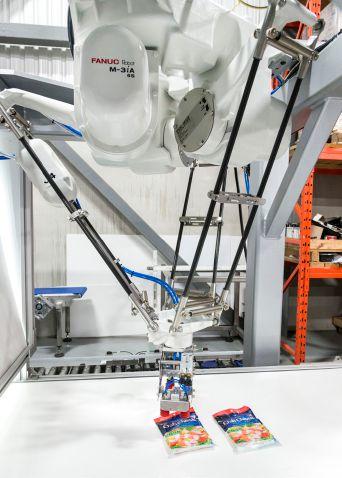
In the mid 1990s, Boris Shvab was running his Robot Industries company when an industry colleague came in to complain about the state of the packaging equipment sector, noting how there were the very expensive machines and the much lower-end machines—but nothing in the middle ground.
While not asked to build such equipment, Shvab took it upon himself to design and build a cartoner that met the middle-market expectations. After quickly selling it, manufacturing a second and selling it, Shvab started up Consolidated Technologies.
Look for the October 2017 issue to find out more about Consolidated Technologies and how it is now a Canadian rarity as a one-stop end-of-the-line shop.
ROBOT ROCK ‘N’ ROLL MUSIC IS HERE!
Roll over Beethoven and tell Tchaikovsky the news— robots can play music!
BY CANADIAN PACKAGING STAFF
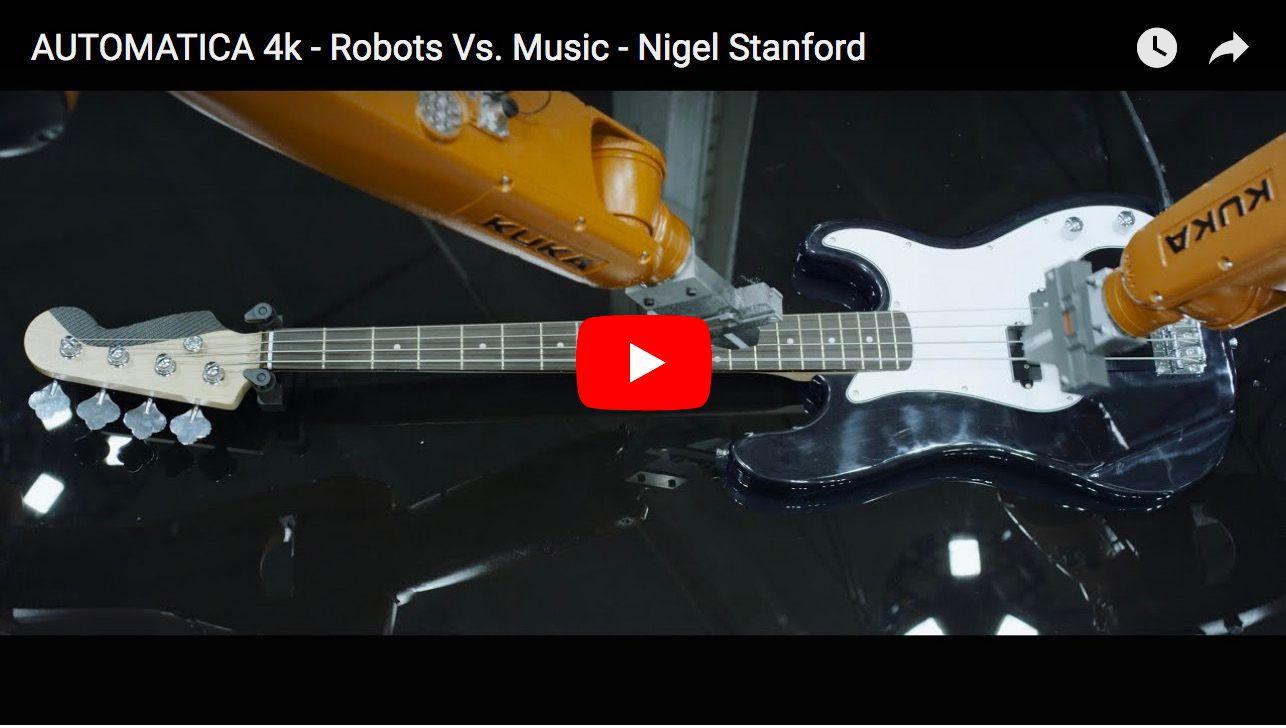
Musician Nigel Stanford has taken three re-purposed KUKA industrial robots lent to him and programmed them to play, for lack of a better term, ‘industrial’ music.
His skill as a programmer and musician belies the delicate touch the KUKA robots possess, showing that they are more than just a tool to lift pack products at a processing facility.
Stanford has created a robot band to perform his music, recording it as the album Automatica.
The robots are programmed by Stanford to play the bass guitar, drums, piano, synthesizer and the DJ table—scratching a record.

After receiving the robots from a company in Germany, Stanford placed them in his garage and spent four weeks just learning how to program them.
For the music video, he says he had to make three robots look like 16, which was done by combining separate shots into a larger scene.
The robots were programmed using Maya 3D modeling software with Robot Animator.
Look, listen and be amazed with the YouTube video on the left.
Previously, Stanford created the Solar Echoes album, but created a music video called Cymatics demonstrating the amazing properties sound plays on matter. View that video on Stanford’s website HERE.
MOTIONAL RESCUE
App-driven motion control terminal a genuine technological breakthrough for reducing complexity in industrial automation machinery design
BY JULIA DUWE
10
Pneumatics is intrinsically a user-friendly technology. And thanks to the latest developments in piezo technology and software, it is set to become even more straightforward, versatile and flexible.
Just as the smartphone turned the mobile communication market on its head a decade ago, the new Festo Motion Terminal VTEM has similar potential to revolutionize the industrial automation technology.
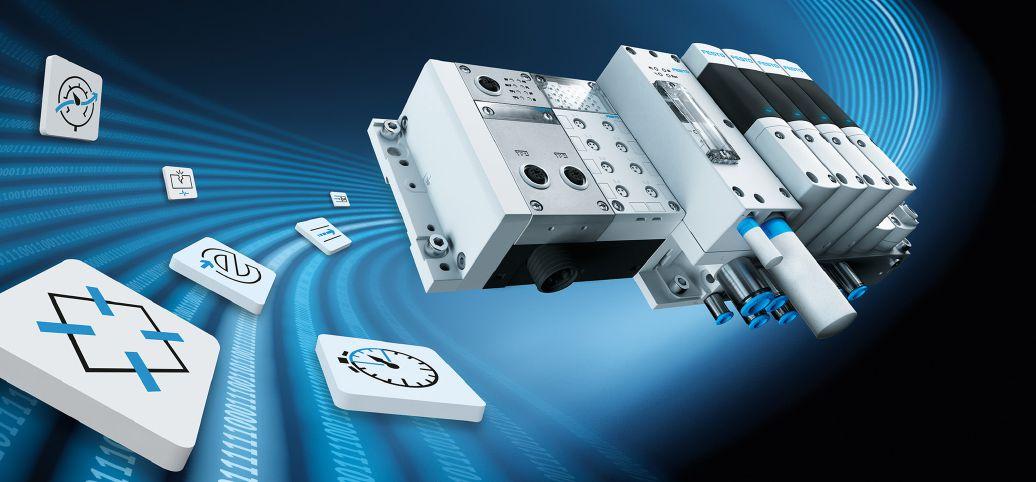
Using 10 advanced motion apps to replace over 50 individual hardware components, the Motion Terminal VTEM enables a whole new method of function integration—combined with software apps—to simplify the entire value chain with one single piece of hardware.
Beneath the somewhat unassuming exterior and classic Festo product design lies technical refinement based on state-of-the-art information technology to enable true Industry 4.0 functionalities.
This unique combination of piezo technology and integrated stroke and pressure sensors, together with control via motion apps, will open up entirely new perspectives for machinery and plant manufacturers.
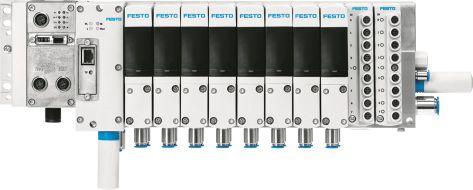
Combining the best attributes and advantages of electric and pneumatic technologies, the fusion of mechanics, electronics and software featured in the Festo Motion Terminal VTEM will transform a pneumatic product into a true Industry 4.0 component—enabling unprecedented levels of production flexibility.
The new VTEM offers 10 time-saving motion apps: from basic modification of the directional control valve functions to energy-efficient motion, and from proportional behavior to different motion profiles.
Activating
motion control functions by apps, the Festo Press
Photo Motion Terminal VTEM allows machine developers to create a basic machine type and equip it with different features as per the customer requirements to suit the application.
What makes this so special is that the same valve hardware is used for everything it is tasked to do. Thanks to the fast activation of new functions via apps, machine developers can create a basic machine type and then select the relevant apps to equip it with different functions and features as per the customer requirements.
Assigning functions via software has the added benefit of protecting against tampering and protecting know-how, since it is not possible to tell from the outside which functions the valves are executing.
Moreover, maintenance is also significantly simplified, with the long lists of spare and wearing parts soon destined to become a thing of the past.
The terminal also generates intrinsic energy efficiency with specially developed motion apps, as well as the leakage diagnostic function save energy during operation, while the terminal’s air consumption can be flexibly adapted to the requirements using the system’s “Selectable Pressure level” and “ECO Drive” apps.
With the Selectable Pressure Level app, a digitally selected pressure can limit the pneumatic force to the level required for the application. For its part, the ECO Drive app reduces the compressed air consumption to the required minimum level, provided no pressing and holding forces are needed in the end position, to enables energy savings of up to 70 per cent compared to standard operation, depending on the application.
All in all, the Festo Motion Terminal permits both fast and powerful movements and leakage diagnostics at much lower costs than current solutions. Not only does it require far fewer controllers compared to electrical systems, its uses one valve to replace the need to have a valve, a pressure regulator and a pressure sensor—decreasing required installation space by 65 per cent.
For packaging and other machine builders looking to reduce their machine complexity and accelerate their time-to-market, the new Festo Motion Terminal VTEM offers a plethora of opportunities to get their Industry 4.0 learning curve started in full stride.
Dr. Julia Duwe is the head of future solutions management at Festo AG & Co. KG in Esslingen, Germany. The above text is an edited version of her Revolution in Automation presentation made at Festo’s annual international press conference this past summer in Paris, France.
SCHNEIDER ELECTRIC INTRODUCES UPGRADED MODICON M241 AND M251 PLCS FOR ENHANCED COMMUNICATION
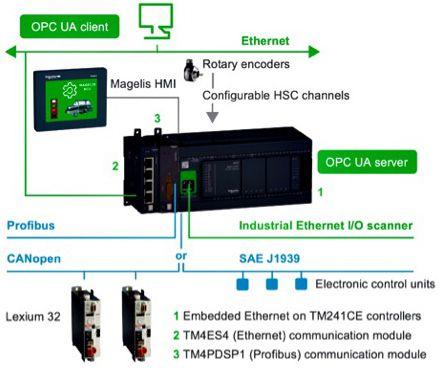
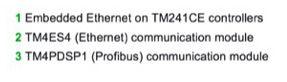
The Modicon M241 and M251 PLCs are ready for Industry 4.0 and the Industrial Internet of Things (IIoT).
BY CANADIAN PACKAGING STAFF
MISSISSAUGA, Ont.—Schneider Electric, the global specialist in energy management and automation, has launched upgraded versions of its Modicon M241 and Modicon M251 programmable logic controllers. Both PLCs now come with an EtherNet/IP scanner on board for optimized industrial network communication via Modbus TCP and EtherNet/IP.
In addition, thanks to a SoMachine 4.3 firmware upgrade, the Modicon M241 and M251 boast an impressive number of new functionalities, making them ready for Industry 4.0 and the Industrial Internet of Things (IIoT).
With the enhanced M241 and M251, original equipment manufacturers (OEMs) can enjoy greater flexibility to design and build smarter, more efficient machines at lower costs.
NEW EMBEDDED FUNCTIONS
The upgraded M241 and M251 now feature an Ethernet-embedded RJ45 port across
a dual-port network control switch and a single-port fieldbus master connection. The PLCs offer a number of communication protocols and standards, including:
• SQL for remote access with SSL/TLS encryption;
• SNTP client for synchronizing the controller’s RTC clock with a SNTP/NTP server on the same Ethernet network;
• DNS for handling URLs instead of IP addresses;
• FTP client and server;
• E-mail library for sending and receiving emails with attachments;
• PackML;
• Read and write XML and CSV files.
Furthermore, the upgraded PLCs come with an OPC Unified Architecture (OPC UA) server installed. An Industry 4.0 solution, this open-source, cross-platform, serviceoriented architecture provides multiple machine communication options and custom-
ization opportunities.
Moreover, the M241 PLCs have 4 I/O channels which can be configured either as a High-Speed Counter (HSC), e.g. for encoder input, or as a Pulse Train Output (PTO) as input signal for servo or stepper drives.
GET YOUR MACHINES READY FOR INDUSTRY 4.0
Machine builders working with older M241 and M251 PLCs can easily update firmware to enjoy new functionalities. On top of that, the PLCs offer easy integration into machine and IT architectures and remote access through apps and HTML5 websites as well as enhanced cybersecurity with the Achilles Level 1 certification. Excellent examples of Schneider’s Innovation At Every Level, the Modicon M241 and M251 PLCs deliver enhanced values around connectivity, flexibility, safety, and efficiency. They have been designed for a better-connected future, where the industrial Ethernet networking technology links machines and operations, from shop floor to top floor.
ABOUT SCHNEIDER ELECTRIC
Schneider Electric is a global specialist in energy management and automation. With revenues of US$26 billion in FY2016, its 144,000 employees serve customers in over 100 countries, helping manage their energy and process in ways that are safe, reliable, efficient and sustainable. From the simplest of switches to complex operational systems, Schneider Electric technology, software and services improves the way customers manage and automate operations.
Company information available at www.schneider-electric.ca and www.schneider-electric.com/drives.
FOGG ADVISORY
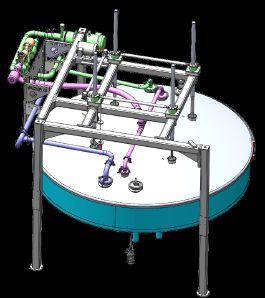
Fogg Filler, manufacturer of rotary filling systems for the liquids industry, offers its new recovery trough built-in sensors for optimized temperature management in various hot-fill applications. According to the company, the built-in sensors allow the operator to manage product temperature in the bowl and filling valve tip temperatures when line stops occur—allowing the operator to send the trough into position to purge the cooled product in the valves until production can be resumed, while sending only a small amount of product back to rework. Temperature management for hot-fill applications has been made simple with use of the Fogg recovery trough.
SAY HELLO TO HALO
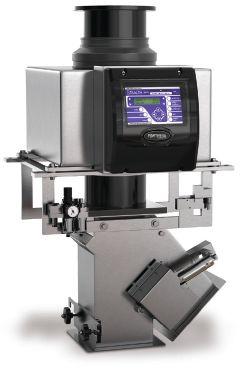
Canadian metal detection systems manufacturer Fortress Technology, Inc. is offering its new-generation Halo automatic testing system for checking the performance of the reject system and independently testing ferrous, non-ferrous and stainless-steel samples on all new Fortress metal detectors. Designed for applications where manual testing of a metal detector is made difficult due to access, position, access to the product f low, environmental conditions, etc., the Halo system harnesses the signal generated by an electrically-conductive loop system outside of the detectors coil system to provide users with cost-effective, automatic, accurate and consistent testing at programmed intervals, while ensuring full compliance with all the pertinent HACCP, FSMA and other food safety standards.
SERIAL SIGHTINGS
Canadian-based Pineberry
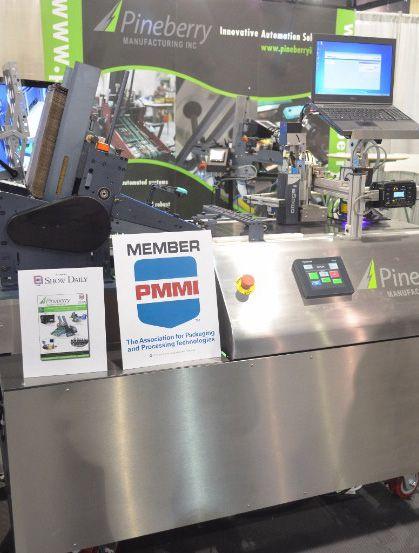
Manufacturing offers its new CartonTrac FC (Flat Carton) serialization system, designed for complex coding and high resolution thermal inkjet printing requirements for packaging and pharmaceutical serialization and traceability. Engineered to produce the cleanest possible codes, verified with an inline tamperproof reader—the system facilitates full control of all types of pharmaceutical and packaging cartons with optimal precision by generating codes and data superior to inkjet coding technology, according to Pineberry, with zero printing consumables or downtime.
SMARTER BY DESIGN
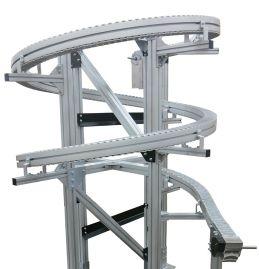
Dorner Mfg. Corp. offers its new SmartFlex Helix Conveyor designed for demanding product handling applications where product needs to travel up or down in a confined space. Featuring a proprietary flexible chain manufactured by sister Dorner company FlexMove, the conveyor’s compact design allows for five feet of elevation change in a 10-foot footprint—with an incline angle of up to 12˚—giving users more freedom and flexibility in designing a material handling system with multiple layouts using a single conveyor. Offered in a choice of 85-mm, 180-mm, and 260-mm belt widths, the SmartFlex Helix does not require any lubrication, according to the company, providing a cleaner environment and reduced risk of contamination. At the show, the new SmartFlex Helix will be operating in a loop with a 3200 Series modular belt conveyor and a SmartFlex Wedge Elevator in a synchronized system where products are wedged securely between opposing conveyors to move them vertically or horizontally between production floors or different elevations at rapid transfer rates—making them ideal for continuous high-capacity packaging line operations.