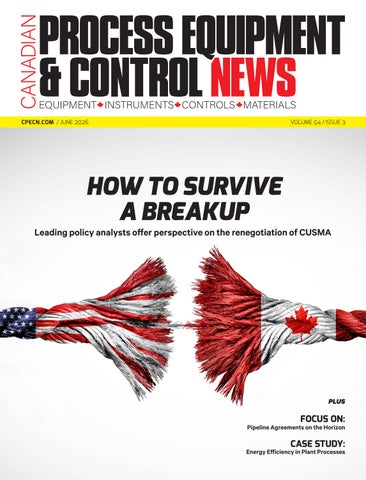

HOW TO SURVIVE A BREAKUP
Leading policy analysts offer perspective on the renegotiation of CUSMA


An
on
Remembering the dashboard is not the plant, with Claudiu
A
in B.C. is turning wasted heat into
Untethered computing for Canadian pharma manufacturing






15,000 kwh of power the amount of electricity consumed to smelt one metric ton of aluminum.
Playing WinningCanada’s Hand
Amidst the growing anxiety over Canada’s prospects in the renegotiation of the Canada-United States-Mexico Agreement (CUSMA), it is easy to feel as if the sheer scale of the American market, and the mad erraticism of the administration, doom Canadian negotiators to being overwhelmed by the hemispheric intentions of Washington. How hard can little planet Canada struggle against the relentless gravity of the United States — with its economic muscle, its theoretical military supremacy, and its newfound comfort with threatening the sovereignty of NATO allies? Well, these fears discount the tremendous asset in the Canadian arsenal: our abundant natural resources and renewable energy supply. Nowhere is this more evident than the debacle over aluminum tariffs.
Aluminum is an important input for a modern economy. The smelting of aluminum requires a very high intensity of power; smelting one metric ton of aluminum consumes 15,000 kwh of power. This is why Canada, Iceland, and Norway are world-leading aluminum smelters; they are countries with access to high-intensity hydroelectric or geothermal energy production. Up until that 2025, half of all aluminum entering the US came from Canada, and as much as 95 percent of Canadian aluminum exports went south (Natural Resources Canada).
Then Donald Trump was elected for a second time. The tariffs his administration instituted were intended to strengthen domestic production by making foreign commodities less competitive. With the imposition Section 232 tariffs, a 50 percent tariff was ultimately placed on smelted aluminum. The idea here was that the increasing expense of Canadian aluminum alone would be enough to bring about rapid investment in American smelting. The problem is that leadership is needed for that investment to occur. The American government, so traditionally averse to strong industrial policy, could not bring itself to tell industry how to spend its money.
American smelters continued to face adverse conditions. Power, especially power at the intensity needed for industrial processing, can be up to 30 to 50 percent more expensive in the United States than in the major smelting regions of Canada, like Ontario and Quebec. In-
stead of jumping at the chance to plug the supply gap, American industry is shuttering smelters and reinvesting elsewhere.
Consequently, the constrained supply of aluminum is cascading through industrial supply chains and is starting to break containment and enter the broader American economy. The manufacture of key high tech components, so pivotal to the world beating economy that Trump is trying to build, has been undercut by the damage done to the aluminum supply chain.
Canada, in contrast, has found itself in an enviable position. Aluminum processed with power drawn from hydroelectric dams — and therefore ‘green’ — has become a premium commodity, sought after by the growing number of states around the world who increasingly see the need to decarbonize their economies. The EU is chief among these. Under the Canada-European Union Comprehensive Economic and Trade Agreement (CETA), which has been in place since 2017, Canada has tariff-free access to the advanced economies and integrated consumer market of 450 million Europeans.
Here’s my point in all this: the American economy is not an unassailable and self-sufficient entity. It has needs that it cannot satisfy and shortcomings it cannot fix. Even as Trumps’ officials beat their chest and act like imperial administrators of a previous century, there is an inconvenient set of facts on the ground that refuse to play along. If Canadians can grit their teeth and weather the anger and threats that will come our way when we assert ourselves, eventually the tremendous weight of Canada’s resources, aspiration, talent, and values will have to be recognized.
Turning from the easy fix across its border, the United States has started leaning on aluminum from the UAE and Bahrain. These smelters are powered by the hydrocarbons so abundant in the region, and the aluminum is sailed out of the Persian Gulf through a little body of water called the Strait of Hormuz. Then, at the end of February 2026, the Trump administration had another great idea…
Volume 54 No.3 JUNE 2026
Reader Service
Print and digital subscription inquiries or changes, please contact Angelita Potal Customer Service Tel: 416-510-5113
Fax: (416) 510-6875
Email: apotal@annexbusinessmedia.com
Mail: 111 Gordon Baker Rd., Suite 400, Toronto, ON M2H 3R1
Audience Manager Anita Madden 416.510.5183 amadden@annexbusinessmedia.com
Brand Sales Manager Pat Lorusso 416.518.5509 plorusso@annexbusinessmedia.com
Editor Justin Yule 438.483.7451 jyule@annexbusinessmedia.com
Account Coordinator Kristine Deokaran 416.510.6774 kdeokaran@annexbusinessmedia.com
Group Publisher/ Director of Production Paul Grossinger pgrossinger@annexbusinessmedia.com
CEO Scott Jamieson sjamieson@annexbusinessmedia.com
CPE&CN is published bi-monthly by: Annex Business Media
111 Gordon Baker Rd, Suite 400, Toronto, ON M2H 3R1 T: 416-442-5600 F: 416-442-2230
© All materials in this publication are copyright protected and the property of Annex Business Media., the publishers of Canadian Process Equipment & Control News magazine.
For permission on reprinting or reproducing any materials, e-mail your requests to cpe@cpecn.com
Canadian Postmaster send address corrections to: 111 Gordon Baker Rd., Suite 400, Toronto, ON M2H 3R1
Canadian Process Equipment & Control News assumes no responsibility for the validity of claims in items reported.
Annex Privacy Officer privacy@annexbusinessmedia.com Tel: 800-668-2384
PUBLICATION MAIL AGREEMENT #40065710
Printed in Canada ISSN 0318-0859

Subscription

JUSTIN YULE, editor jyule@annexbusinessmedia.com




BRITISH COLUMBIA PREMIER QUESTIONS FEDERAL PRIORITIES ON LUMBER TARIFFS AND PIPELINE SUPPORT
British Columbia Premier David Eby criticized the federal government for promoting a new Alberta oil pipeline while excluding the province’s softwood lumber industry from recent tariff relief measures.
Speaking to reporters at the provincial legislature, Eby questioned why Prime Minister Mark Carney stated that a new pipeline project is “more likely than not” when no private company has come forward to develop the infrastructure.
The premier stated the pipeline project has not demonstrably advanced beyond its status a year ago, describing the federal promotion as featuring substantial publicity without corresponding material progress.
DOMINICAN REPUBLIC HALTS CANADIAN MINING PROJECT FOLLOWING ENVIRONMENTAL PROTESTS
Dominican Republic President Luis Abinader suspended a Canadian mining project after hundreds of citizens protested over environmental concerns related to the proposed extraction operations.
GoldQuest, the Canadian company behind the project, planned to extract gold, copper, and silver deposits from a reserve estimated at 1.1 million ounces in the Cordillera Central mountain range. The company valued the mineral deposits at approximately $5 billion.
Hundreds of locals demonstrated against the proposed mining operation, raising concerns that extraction activities would damage soil and water resources in the region.
CANADA FORMS NEW ADVISORY COMMITTEE TO NAVIGATE U.S. TRADE RELATIONS
Prime Minister Mark Carney has announced the creation of a new Advisory Committee on CanadaU.S. Economic Relations, bringing together senior figures from business, labour, and investment to help shape Canada’s strategy ahead of a critical review of its trade relationship with the United States.
Leading the committee will be Dominic LeBlanc, President of the King’s Privy Council for Canada and Minister responsible for Canada-U.S. Trade, Intergovernmental Affairs and Internal Trade. LeBlanc will chair a broad group of 24 members drawn from major sectors of the Canadian economy.
FEDERAL GOVERNMENT COMMITS $4 MILLION TO ROBOTICS-ENABLED WOOD PRODUCTS FACILITY IN BRITISH COLUMBIA
The federal government is investing in advanced wood manufacturing capacity as part of a broader strategy to modernize Canada’s forest sector and support domestic construction material supply chains.
Corey Hogan, Parliamentary Secretary to the Minister of Energy and Natural Resources, announced that Natural Resources Canada will provide over $4 million through its Investments in Forest Industry Transformation program to support construction of a new wood products manufacturing facility by Atlas Engineered Products Ltd.
SANOFI COMMITS $294 MILLION TO EXPAND TORONTO AI RESEARCH CENTER
Pharmaceutical manufacturer Sanofi announced a $294 million expansion of its Artificial Intelligence Centre of Excellence in Toronto, adding 50 positions focused on artificial intelligence and machine learning development.
The investment builds on the facility originally established in downtown Toronto in 2022. The expanded center will lead design and deployment of AI tools used across Sanofi’s global research, manufacturing, and business operations, with the stated objective of accelerating medicine and vaccine development timelines.
OTTAWA BACKS $3 MILLION NUCLEAR MICROREACTOR MANUFACTURING INITIATIVE
Canadian Strategic Missions Corporation has been selected to lead a $3 million advanced manufacturing project focused on developing production capacity for nuclear microreactors, with federal funding covering 40 percent of total project costs.
The federal government will provide $1.2 million through NGen’s Advanced Manufacturing Technology Program, while CSMC and project partners Samuel Automation and Stern Laboratories will contribute the remaining $1.8 million.
The project aims to establish a dedicated advanced manufacturing cell for factorybased production of CSMC’s microreactor systems.

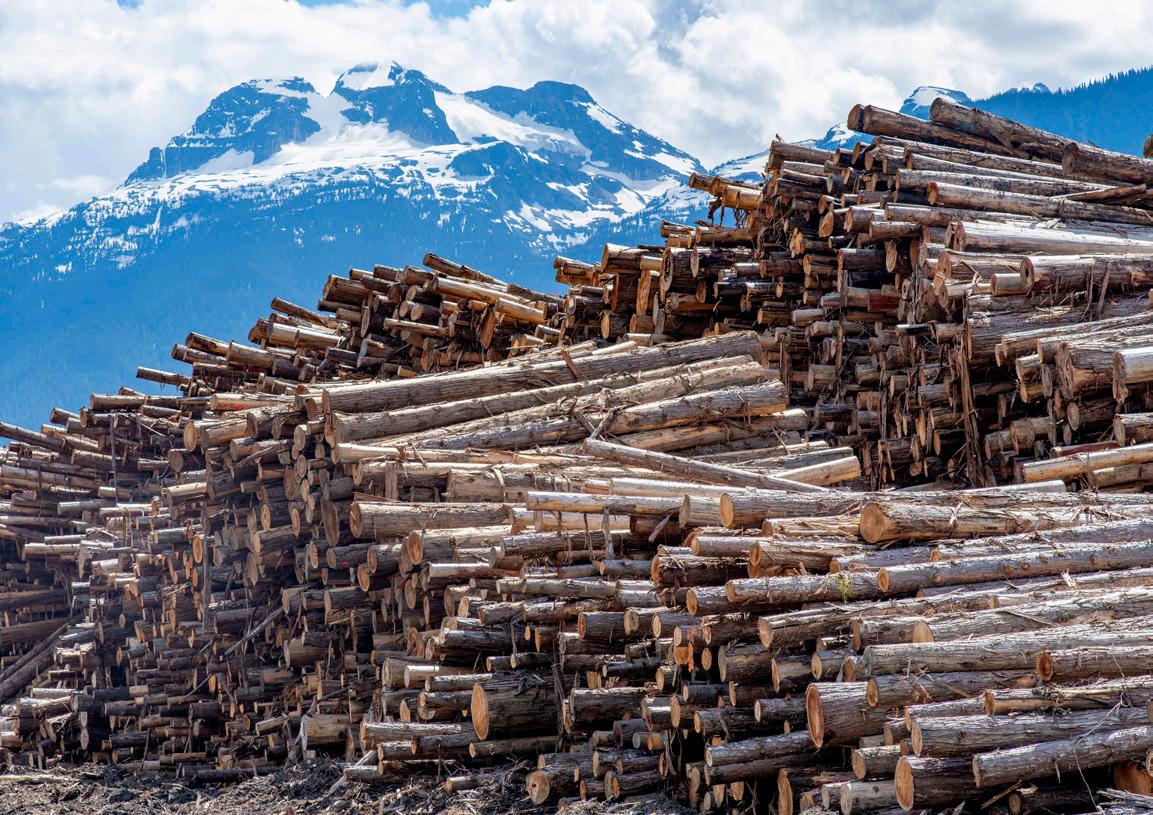
Lumber in this log yard in Revelstoke, BC continues to face tariffs into the United States. Premier Eby is calling for tariff relief measures.
HOW TO SURVIVE A BREAKUP
Leading policy analysts offer perspective on the renegotiation of CUSMA
By Justin Yule
The agreement that governs nearly $1 trillion in annual trade between Canada, the United States, and Mexico is due for its mandated review this July. For Canadian manufacturers, the prospect of deciphering what happens next and how to prepare is seriously daunting. To provide a clearer picture, I spoke with three leading policy analysts (two Canadian and one American) and asked them to weigh in: Rachel Samson , Vice-President of Research at the Institute for Research on Public Policy (IRPP) in Montreal; Jeffrey Tobin, partner and senior advisor at Pan-American Strategic Advisors, based out of Miami; and the illustrious Lawrence Herman , a senior trade
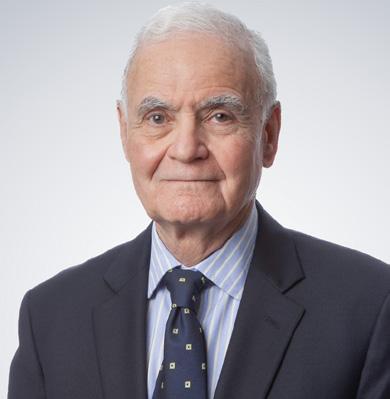
LAWRENCE HERMAN is Special Counsel at Cassidy Levy Kent with over 45 years of experience in international trade and investment law, spanning government and private practice. He has represented Canada before the International Court of Justice, NAFTA panels, and Canadian courts, and advises governments and international organizations on trade and investment matters. He is a Senior Fellow at the C.D. Howe Institute and a regular commentator in the Globe & Mail, the National Post, and on television.
analyst and lawyer with decades of experience in Canada-U.S. trade law. He is based here in Toronto. What emerges here is not fortune telling, but all three did echo the same point to Canadian manufacturers: do not wait for a concluded negotiation before you act.
The uncertainty is baked in “It all hangs on Trump,” Herman begins, dashing my admittedly faint hope that we could start somewhere else. The formal processes, the commission structures, the negotiating frameworks, all of it is secondary to the behaviour and priorities of the current U.S. administration. That framing shapes everything that follows.
Herman points to the pattern of behaviour from the White House over the past several months as

RACHEL SAMSON is a policy research executive with 25 years of experience providing evidence-based policy advice. She comments regularly on Canadian policy issues including sovereign wealth funds, skilled trades, and place-based economic development, and contributes to IRPP’s engagement with governments and practitioners across the country. As vice-president of research at the IRPP, Rachel has directed policy research and analysis relating to Employment Insurance, long-term care, childcare, digital-technology adoption and industrial policy.
evidence: cancelled tariff negotiations, escalating threats tied to unrelated irritants, the use of infrastructure like the Windsor-Detroit bridge as a bargaining chip. What is likely to emerge from the CUSMA review is not a table of equal partners, but a dynamic in which the United States wantonly asserts itself as the dominant economic force, with Canada and Mexico seeking access rather than sitting as co-signatories. Rachel Samson sums it up well: “It has become clear that any sector that depends on exports to the U.S. could be vulnerable to an unpredictable president.”
Jeffrey Tobin frames the same situation in structural terms. From the American perspective, he says, this review was never going to be routine. “It’s an opportunity to

JEFFERY A. TOBIN is a Senior Advisor at Pan-American Strategic Advisors, where he focuses on Latin American policy, governance, democracy, and corruption. He writes and comments regularly on inter-American relations, with work published in Foreign Policy in Focus, Small Wars Journal, and Inkstick Media, and maintains a Substack covering Gulf oil politics and their impact on the Americas. Tobin spent more than twenty years as a journalist, most recently serving as managing editor at CBS Interactive.”

reassess whether the agreement still aligns with how the U.S. now thinks about trade, industry, and economic security.” Trade policy in Washington is no longer a standalone discipline: it is now fused with domestic manufacturing goals, labour standards, and strategic competition with China. That shift creates a fundamental tension. In a confusing and unpredictable world, the inherent purpose of a trade agreement, Tobin notes, is to deliver predictability and stability to all parties. Canada and Mexico have entered this review expecting exactly that. The United States, however, appears more comfortable using the review process as a mechanism for leverage. “If you remove that stability,” Tobin says, “the other members of the bloc all of a sudden feel like they’re just flailing.”
The mechanics and limitations of the review
The formal review process is governed by CUSMA’s own terms. If the three parties do not agree to a 16-year extension, the agreement moves into annual reviews by the CUSMA Free Trade Commission until a 2036 termination date. The commission, however, is not an

The flags still fly side by side, but there’s nearly $1 trillion in annual trade on the line, and a July deadline approaching.
independent arbitration body. It is composed of the three countries’ trade ministers and has no permanent institutional structure.
Herman is direct about what this means in practice. The architecture was deliberately designed to give maximum leverage to the American side. “The review will not be an orderly process — it

will be Canada and Mexico attempting to negotiate an accommodation on tariffs while keeping the agreement alive,” he says. And with Trump having already called CUSMA “irrelevant,” there is a real possibility, Herman admits, of the U.S. pushing to sidestep the process entirely and demanding full-scale renegotiation. On the question of outcomes, all three
“It is most likely that negotiations stretch on for years.” — Lawrence Herman
analysts are aligned on one point: very few people expect a comprehensive agreement by July 1st. The more likely scenario, Herman says, is that negotiations stretch well beyond this year, potentially for several years. The current framework and status quo will likely persist through the remainder of 2025, with both sides probing and positioning rather than resolving. The worst case, he adds, would be an end to the free trade agreement altogether — but he does not consider that likely.
More probable, and damaging in its own way, is an indefinite loop of annual reviews with no resolution. A trade agreement that can change every year is only so much better than no trade agreement. Tobin agrees that this scenario would be corrosive. “That would be a nightmare for everyone,” he says. “Even for the U.S., that’s a major pain.” Yet he believes the Trump administration may be willing to sustain that uncertainty precisely because it maximizes leverage.

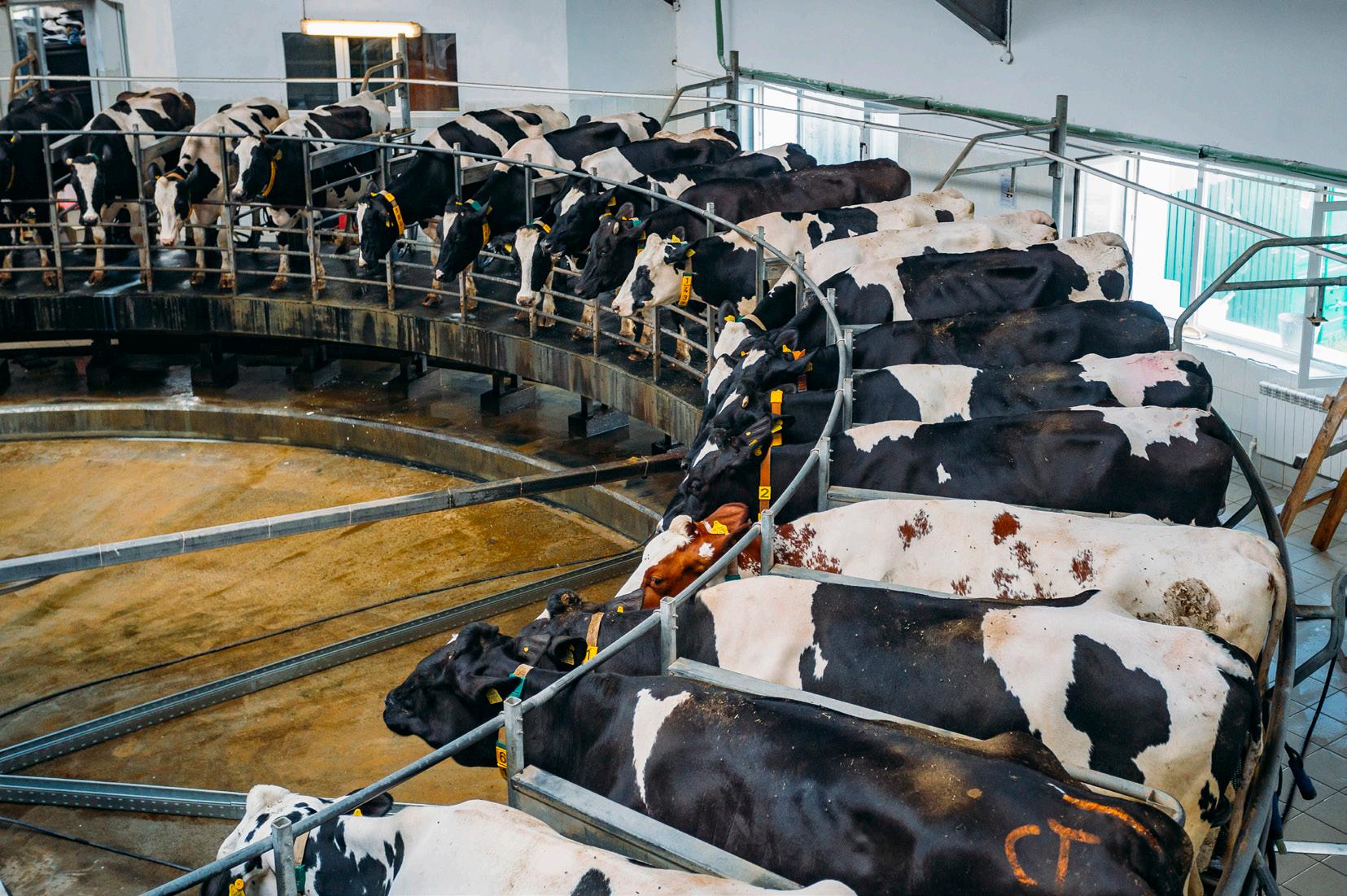
Canada’s supplymanaged dairy sector sits at the heart of CUSMA tensions — parliament has legislated it off the table, but analysts warn that American pressure on market access is not going away.
Samson notes that this outcome is broadly anticipated. “It’s every year — continual negotiations until an agreement is reached,” she says. The question is not whether the process will be prolonged, but how Canadian industry positions itself in the meantime. “Canada may not be able to control what the U.S. does, but we can start to do the work needed to reduce the economic leverage the U.S. has over us.”
Canada’s position: sovereignty and the limits of concession
One of the more striking areas of agreement across these perspectives is that Canada’s negotiating constraints are deeply structural, rooted not just in policy preference but in political and constitutional reality.
The clearest example is dairy. The United States has placed full access to Canada’s supply-managed dairy market on its list of trade irritants. The Canadian Parliament has already passed legislation (Bill C-202, amendments to the Department of Foreign Affairs Act) that prevents negotiators from agreeing to any increase in dairy and poultry imports. “Dairy is off the table in a major way,”
Samson says. “What the U.S. is demanding simply cannot be delivered within the current legal and political framework.”
Herman introduces a more unsettling possibility: that this wall may not hold indefinitely. He argues that Canada’s supply management system faces eventual collapse under the combined weight of trade pressure and its own structural contradictions. The more immediate concern is that the dairy lobby’s rigid defence of the status quo could become a liability for Canada’s broader negotiating position, allowing narrow agricultural interests to endanger progress across the entire trading framework.
His argument is not that Canada should simply capitulate. Rather, he proposes a strategic reorientation for the dairy sector, one modelled on the tactics of the U.S. softwood lumber industry. For decades, American lumber producers have used countervailing duties to fight Canadian imports, flooding U.S. investigative agencies with trade complaints alleging unfair subsidies. The result has been sustained market protection, at significant cost to Canada. Canadian dairy producers, Herman suggests, could apply the same logic in reverse.
More broadly, Samson argues that Canada cannot easily separate trade negotiations from questions of sovereignty. The American list of irritants includes Canada’s Buy Canadian policy and a commitment to source 70% of defence procurement domestically. “Reasonably, if Canada is looking to remain a sovereign nation that can defend itself,” Samson says, “it can’t give on those things.” Tobin sees things from a different angle down in Miami. As we discuss the assiduous work of Mexican President Sheinbaum to wrangle Trump, Tobin suggests that Canada’s considerable resource base, in energy, agriculture, and critical minerals, gives it more latitude than Mexico to push back. Mexico faces additional pressure points: migration, organized crime, and a security relationship with Washington that demands a more accommodating posture. “Canada feels freer to be critical,” Tobin says. “Canada has an incredible base of resources that Mexico simply doesn’t have.”
Critical minerals: leverage, opportunity, or both?
Perhaps no single sector illustrates the complexity of the CUSMA moment more than critical minerals, bound up as it is in continental negotiation. Canada holds vast reserves of the materials that underpin everything from electric vehicles to defence systems; that fact is not lost on any party at the table.
Samson cautions against treating critical minerals primarily as a concession to be offered. In her view, they represent one of Canada’s strongest cards for trade diversification, potentially more valuable as an export to Asia and Europe than as a dedicated supply to the United States. “Any deal that gives exclusive access to certain minerals to the U.S. is working against our efforts to diversify trade,” she says.
The Churchill port, she notes, offers a viable northern shipping route for readily stockpiled commodities. Unlike auto parts or assembled vehicles, which are deeply embedded in integrated North American supply chains, critical mineral supply chains can be extricated redirected. That optionality is precisely why Samson would be reluctant to trade
“If Ottawa determines that it is in the national interest to diversify trade, there may be deliberate national policy interventions … manufacturers who position themselves ahead of those interventions will be better placed to benefit.” — Rachel Samson
it away. “For me, if I were negotiating this agreement, I would be very reluctant to give too much on the critical mineral side.”
The diversification imperative — and what manufacturers can do now Against this backdrop, all three analysts converge on a practical message for Canadian industry: do not wait for the negotiations to resolve before acting.
Herman’s counsel is pointed. The current framework is more than likely to hold for the remainder of this year — and manufacturers should use that window of relative stability to firmly establish connections with European and Asian partners. The uncertainty surrounding CUSMA makes those relationships not just strategically desirable but essential. Diversification that might once have seemed like a long-term ambition is becoming a near-term operational priority.
“Canada has an incredible base of resources that Mexico simply does not have.”
— Jeffery Tobin
Samson counsels that if Ottawa determines that it is in the national interest to diversify (and she believes it is) there may be deliberate national policy interventions, and manufacturers who position themselves ahead of those interventions will be better placed to benefit.
Tobin echoes the point, noting that Canada’s resource richness remains a significantly underutilized advantage. The coun try still exports far more raw materials than finished goods, leaving considerable value on the table.
For manufacturers specifically, Samson identifies two near-term priorities. The first is defence. The level of investment flowing into defence procurement — both domes tically and among Canada’s allies — is substantial and growing. “If there are any manufactured products that will feed into the defence supply chain, I think that’s a huge opportunity.” The second is market diversification: manufacturers must assess whether existing product lines can be adapted for customers in Asia, Europe, or Latin America, and whether government support programs are available to assist with that transition.
ers should plan for an extended period of uncertainty. This will not be a single negotiation with a defined outcome, but a prolonged process with no guaranteed endpoint and a volatile variable at its centre.
Moderating forces exist: pressure from U.S. business interests, bond market discipline as tariff costs filter through the American economy. But these cannot be counted on. And as Herman puts it plainly, everything ultimately turns on one man in the White House.
For Canadian industrial companies, the strategic response is not to wait and see. It is to treat the uncertainty itself as the operating condition, and to use the present window, while the current framework holds, to build the relationships, capabilities, and market positions that will matter regardless of what version of CUSMA eventually emerges. The rules of the game are being rewritten. The manufacturers who move earliest will be best positioned to compete under whatever rules take hold.


No clear end in sight
What the combined weight of these perspectives suggests is that Canadian manufactur-

RESPECTING MURPHY’S LAW: SHARED ACCOUNTABILITY IN PROCESS CONTROL
How three preventable engineering failures shut down an industry
By Michael Wright
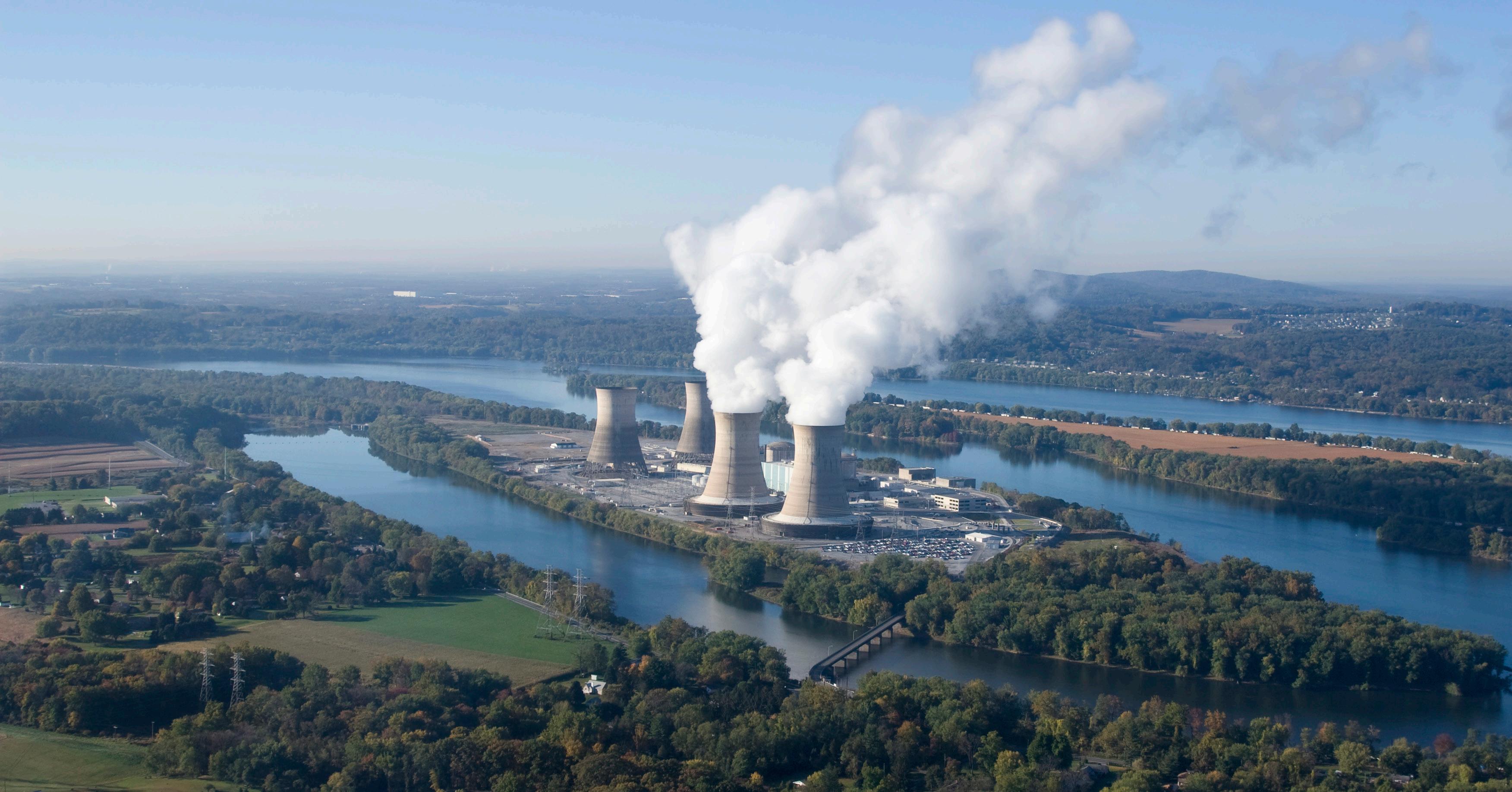
The Three Mile Island accident of 1979 was not the result of esoteric or unforeseeable failure. It was the consequence of three discrete engineering oversights, each correctable, none prohibitively expensive to fix. That this accident nonetheless crippled the North American nuclear industry for a generation is a measure of what is at stake when the discipline of anticipating failure is treated as the private responsibility of design engineers, rather than as a structured, organization-wide obligation.
Before ‘TMI’ emerged as millennial text-speak, it was the boomer buzzword
for the Three Mile Island accident, a partial reactor meltdown in southern Pennsylvania which became the largest public relations disaster to ever hit the North American nuclear industry.
Although the situation at TMI had similarities to the more recent Chernobyl incident, the fact that it used water as a moderator instead of graphite and was inside a containment building that was built to high standards meant that it did not catch fire and did not spread radioactive materials over the surrounding countryside. Consequently, nobody died from TMI. However, it did put Babcock & Wilcox out of the nuclear industry, it did set the North American nuclear industry back a generation, and it did make the movie China Syndrome very profitable.
TMI was a series of small and preventable failures which could have been handled at the design stage had the engineers shown sufficient respect for murphy’s law — anything that can go wrong, will go wrong
The incident at TMI had three major contributing factors:
The pressure relief valve was open even though the operator’s control panel showed that it was closed. This was because the valve status indication was based on the controller output (%IVP) and not on the actual valve stem position. This allowed coolant to continue escaping until the level in the reactor became dangerously low.
The coolant level sensor for the reactor was located in an expansion tank and not directly in the reactor. When steam was produced in the reactor chamber, it caused the level in the expansion tank to rise above the normal operating level, even though the actual coolant level was too low.
The operators were human, and when humans are given confusing data, they will sometimes make catastrophic errors.
In the clarifying glow of hindsight, the TMI incident would have been prevented had the reactor coolant level sensor been placed directly into the reactor chamber or, if this were not “reasonably practicable”, had strain gauges been installed on the reactor support
Three Mile Island, on the otherwise idyllic Susquehanna River, Pennsylvania.
structures to “weigh” the amount of coolant in the unit as a backup to the expansion tank level sensor.
As for the erroneous pressure relief valve indication, that could have been corrected simply by the installation of a ‘closed’ limit switch on the valve stem so that the ‘green light’ only came on when the valve was truly closed, and any other position of the valve stem would put the control loop into “alarm”.
While the TMI incident is perhaps the most famous disaster to occur because engineers put faith in their inherent brilliance instead of in murphy’s law, it is only one of many.
Far too often, murphy’s law will strike an operation causing injury or worse, some hazardous chemical (raw sewage, mine tailings, pesticide, etc.) will be released into the environment, or the plant will just be shut down for hours or days, all because the engineers involved either failed to qualify what can go wrong, or they failed to anticipate that some seemingly improbable failure will go wrong
“While the TMI incident is perhaps the most famous disaster to occur because engineers put faith in their inherent brilliance instead of in murphy’s law, it is only one of many.” — Wright
In general, plant managers need to realize that changes in process control systems always have the potential for unexpected consequences that can result in plant downtime, damage to the corporate reputation, and/or injury to personnel.
It is therefore imperative that a system of change management analysis be set up, so that the mitigation of murphy’s law is not left to the design engineers, but is also a shared responsibility of upper management, environment health & safety (EH&S) personnel, and operations representatives.
One of the most effective ways of handling this process is through the establishment of hazard & operability (HAZOP) teams. These experienced operators have the freedom to play devil’s advocate by challenging the assumed and the unexamined, and the rest of the team must then address the probability of failure and the cost/benefit ratio of preventative measures.
In looking back at TMI, addressing the issue by providing the operator with a true coolant level reading would have probably been both challenging and expensive. However, the benefit to the whole nuclear industry would have been worth billions of dollars. And as far as installing a ‘closed’ limit switch
on the pressure relief valve goes, that one falls into the category of cheap & easy fix.

MICHAEL WRIGHT is an electrical engineer with more than 50 years of experience in heavy industry. Although he has done an extensive amount of PLC/DCS programming and upgrading of power systems, he is a very strong generalist with a broad knowledge of hydraulics, pneumatics, power transfer, welding practices, mining equipment, mobile
equipment, process control strategies, pumping systems, rock mechanics monitoring, mechanical maintenance practices, MRO procurement contracts, energy management, and cost control. As such, he specializes in problem prevention as a subject matter expert (or as a fixer on “problem projects”). It is his belief that safety is not a “priority” but is a way of life; that good engineering makes life simpler and easier for others; and that the best ideas come from those with calloused hands and dirty coveralls. He can be reached at: mawright@sasktel.net
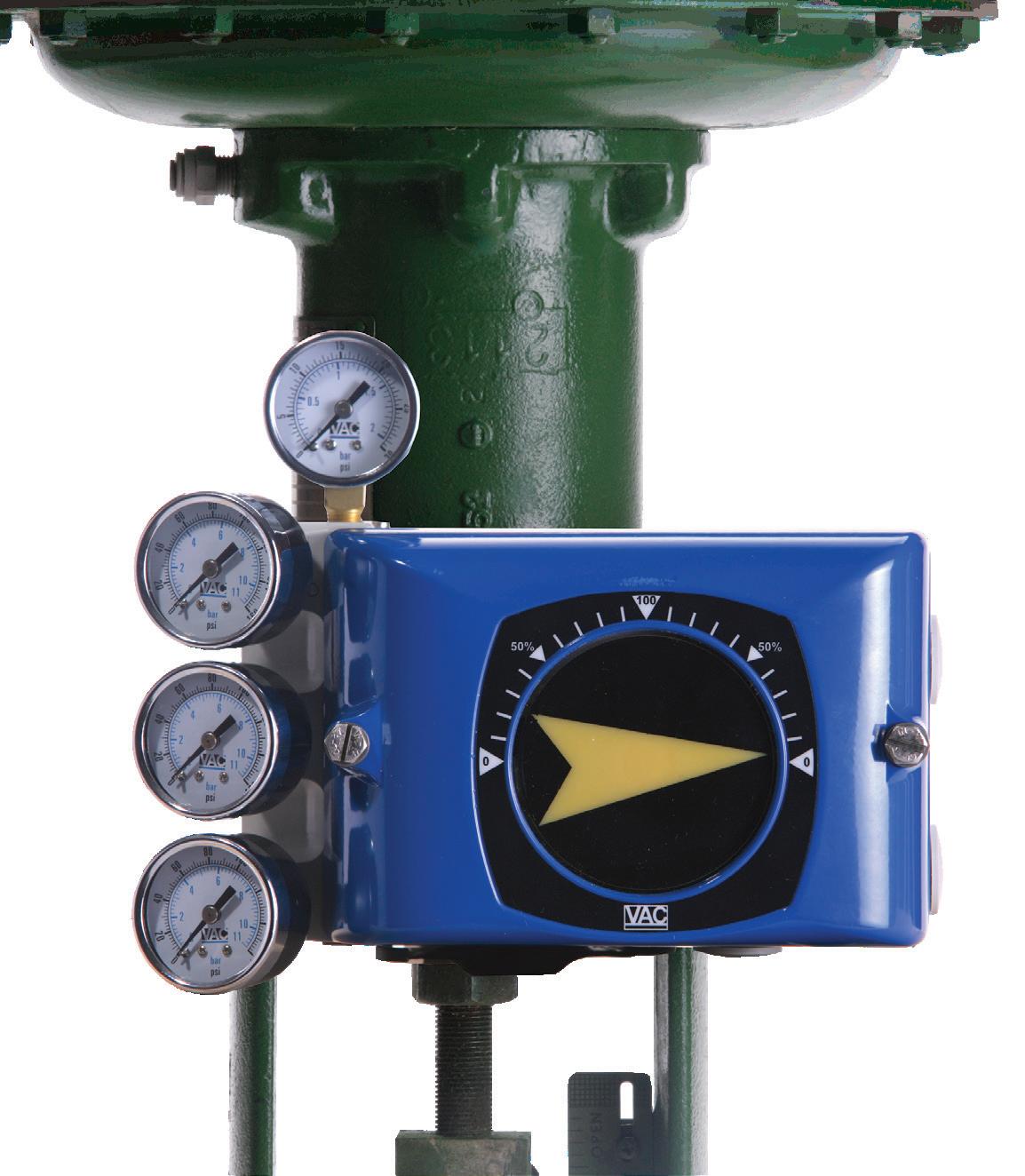
THE PROVEN VAC POSITIONERS.
• RELIABLE

Since 2001, Valve Accessories & Controls has built a reputation as a company comitted to quality products, and a commitment to service, second to none.

• Pneumatic, Analog, and Digital Positioners
• Wide selection of Mounting Kits
• No Phone Mazes to Navigate
• Experienced Staff
• Service and Technical Support
Canadian Master Distributor:
Belletek Controls Inc.
2535 Stallion, St. Lazare, Qc, Canada J7T 2E4
J.C. Labelle: (514) 916-5895
Fax: (514) 500-5802
Email: jc@belletek.com
Serving the Positioner Industry for Over 25 Years
THE VIEW FROM THE ROCKIES
An Albertan Perspective on Pipelines and Ottawa/Alberta Relations
By Justin Yule

IEVAN BAHRY is the Executive Director of Energy Connections Canada, the association representing Canada’s pipeline industry. With a career focused on advancing the investment climate for Canadian energy infrastructure, he previously led the Independent Power Producers Society of Alberta and currently serves on the Board of the Alberta Electric System Operator. He also serves on the Board of Women + Power, a community organization supporting women at all levels of experience working in the energy industry.
recently sat down to chat with Evan Bahry, Executive Director of Calgary-based Energy Connections Canada, to discuss the November 2025 memorandum of understanding (MOU) between Ottawa and the province of Alberta regarding major infrastructure. An MOU is a non-binding agreement between two or more parties that outlines shared intentions and principles, normally prefiguring more formal arrangements. Describing the political agreement as a “major recalibration of federal-provincial energy policy”, Bahry is enthusiastic that this was a material signal to investors in pipeline and CCUS infrastructure.
Energy Connections Canada is the successor to the Canadian Energy Pipeline Association, which closed in 2021. With 54 members including 14 pipeline operators and supply-chain firms, the association’s remit covers “pipeline integrity, innovation, new technologies, pipeline safety” and regulatory engagement with federal bodies such as the Canada Energy Regulator and Natural Resources Canada.
On the MOU itself, Bahry calls it “a very significant development”, and “a profound… change of direction” in relations between the two governments. He ties the agreement with a stated aim of the current administration: to make Canada “a clean and conventional energy superpower.” The MOU, he says, removes the previous antagonism between
Ottawa and Alberta, and aligns them on multiple fronts including pipelines, hydrogen, nuclear and interprovincial power lines.
Carbon policy and regulatory certainty
According to Bahry, carbon policy clarity and regulatory reform are the two critical industry signals contained in the MOU. He argues that Canada previously suffered from a “pancaking of regulation,” with three overlapping climate instruments all crowding into the same space: the national carbon price, a sectoral oil-and-gas emissions cap and the clean electricity regulation. “You have cross-threading, pancaking climate policies,” he says, adding that “three are too many.” He warns that the layering of policies reduces investor optionality and complicates mitigation strategies for producers and suppliers.
Bahry has cautious optimism about the direction of policy under this MOU. He notes with approval the commitments made to end the sectoral oil-and-gas cap and the clean electricity regulation in favour of a single carbon-pricing approach. But he cites the federal commitment to an “effective $130 a ton” carbon price as a complicating factor. “I know the policy has yet to be resolved, but it raises questions about market functioning. When you establish a carbon market… buyers and sellers then respond to that and do deals around that carbon price,” he explains. “Prescribing an ‘effective’ price

For Evan Bahry, pipelines are more than just energy infrastructure. They are a potential unifying national project for a country still searching for new trade routes.
could be inconsistent with letting a market determine the price.”
Bahry eagerly illustrates the practical implications by pointing to Alberta’s power sector, where decarbonization efforts are already well underway and have generated a supply of carbon credits. “The credits are concentrated among the utilities and generators that made early capital investments in cleaner power”, he says, estimating that current implicit market prices sit around $25. This figure reflects what buyers and sellers have actually agreed to transact at in the absence of a mandated price. The jump to an effective $130 per tonne is therefore not merely a technical policy adjustment but a significant redistribution of value: it would dramatically increase the worth of credits already held by early movers while imposing substantially higher compliance costs on those who must purchase them. This raises questions about whether the windfall to existing credit holders is an intended feature, or an unconsidered consequence.
Regulatory acceleration and major-project treatment
Regulatory streamlining is another tangible outcome of the MOU, Bahry continues. “The agreement effectively deems the Pathways Alliance CCUS project and a proposed bitumen pipeline to British Columbia projects “in the national interest,” which allows them to access the Building Canada Act’s accelerated regulatory processes and Major
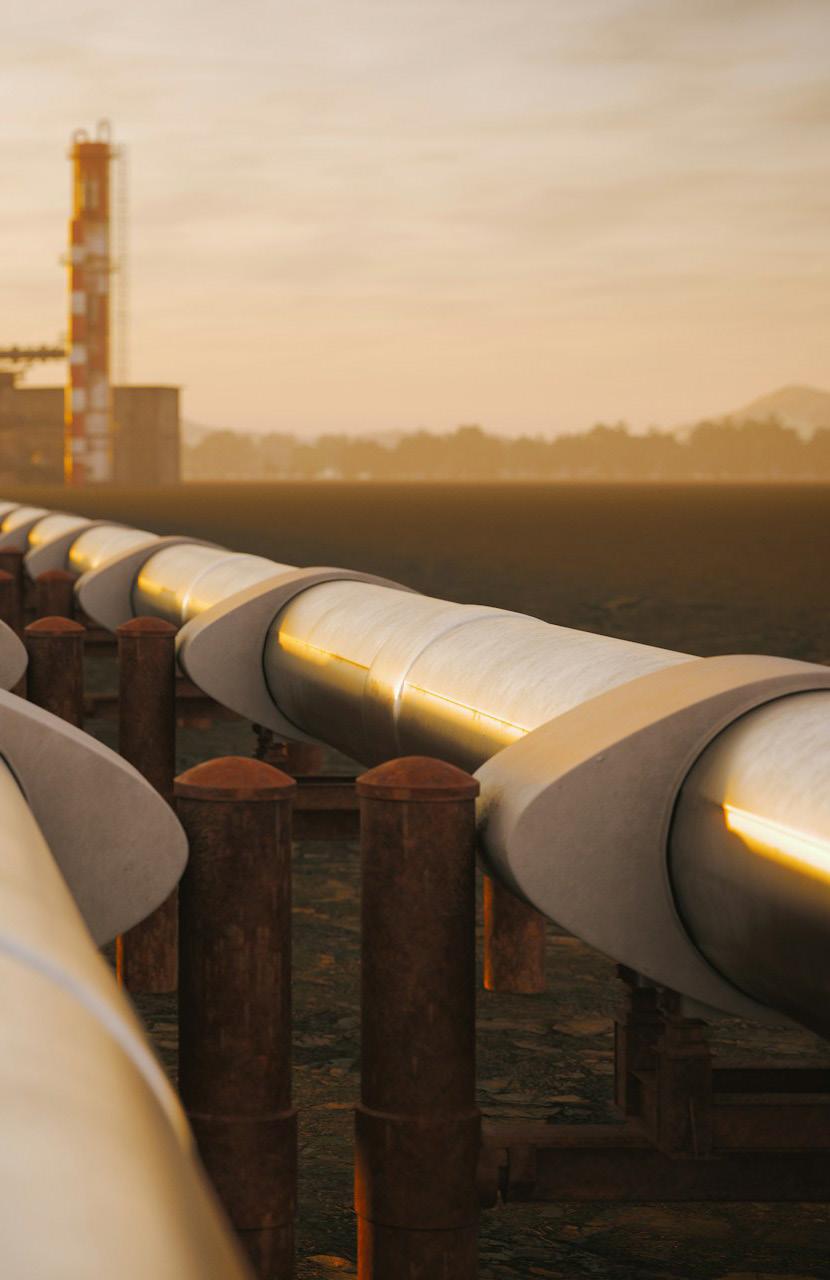
Projects Management Office’s assistance.” That designation is aimed at expediting permitting and improving the investment climate.
Bahry is keen to emphasize that permitting remains a critical barrier. He references recent public comments from energy CEOs about Canada’s permitting delays and proceeds to argue that without timely reform “it opens the door for them to invest elsewhere.” He welcomed recent federal-provincial collaboration on environmental assessments for Albertan projects, and described new time frames for project review as a positive signal.
Waiting for signals
Bahry lists the carbon-pricing regime, regulatory clarity, and the federal investment tax-credit framework as signals Energy Connections Canada members need before committing capital to CO2 infrastructure. He repeats that “carbon price… and carbon policy… remain a critical driver”, alongside permitting improvements.
Intergovernmental and Indigenous dimensions
The MOU’s political and consultative aspects are worthy of note. Bahry acknowledges the unresolved role of British Columbia and Indigenous communities in those projects that cross provincial borders. When I ask what role BC has to play in all of this, he shrugs and responds, “you tell me!” He retorts diplomatically that Ottawa must satisfy consultation duties and that Indigenous and BC support remains a “key
variable” for the bitumen pipeline and other cross-jurisdictional projects. He notes Ottawa’s exploration of equity-funding vehicles similar to Alberta’s Indigenous Opportunities Corporation to facilitate participation.
Investor perspective and national strategy
Bahry concludes by framing the MOU as part of a broader national positioning. He argues that Canada sits on substantial energy endowments
— “170 billion barrels of oil and 1,300 trillion cubic feet of natural gas” — and that global interest in secure energy supplies has increased in the wake of recent geopolitical events. “The federal government understands energy’s potential to be a ‘proven winner’, that can drive growth amid sluggish productivity and rising deficits.”
“Pipelines and associated infrastructure could be a unifying national project. Finding new trade routes… is an incredibly important and incredibly significant opportunity for Canada to seize.”

HACKING THE GRID FROM THE BACK DOOR
Remembering that the dashboard is not the plant
By Claudiu Popa
One of the stranger habits in industry is how quickly people start trusting numbers once they appear on a polished dashboard, as if a clean interface somehow disinfects all the messy compromises, assumptions, integrations, workarounds, and undocumented “temporary” fixes that produced the data in the first place.
That habit has been bothering me more lately because the numbers around industrial cybersecurity are becoming harder to shrug off. The 2025 SANS State of ICS/OT Security survey found that 22 percent of organizations had experienced an ICS or OT cybersecurity incident in the previous year, with 40 percent of those incidents causing operational disruption and remote access initiating half of them. This is no longer a theoretical risk reserved for someone else’s facility, in someone else’s jurisdiction, on someone else’s bad day. It is what happens when more systems, vendors, dashboards, devices, and decisions are connected to operational environments that were never designed to be this chatty.
I have seen this up close during security compliance audits at remote mining operations, where energy is not an abstract accounting line but a daily operational constraint with mud on its boots. I have seen it in the North, at nickel mining operations such as Raglan in Nunavik, where distance, cold, logistics,

power, permafrost, and production all sit at the same unforgiving table. I have seen it in the dry heat around Antofagasta, Chile, where mining operations depend on vast, complex webs of power, water, transport, communications, maintenance, and control systems just to keep the day from turning expensive.
These were mining operations, not power plants, but that is exactly the point. Mines do not exist to generate electricity, yet power quickly becomes
Industrial operations are never as tidy as the diagrams suggest — they are big, loud, weatherbeaten, powerhungry organisms.
everyone’s business. Crushing, grinding, hoisting, ventilation, pumping, conveying, heating, cooling, camp services, substations, water treatment, environmental controls, and communications all depend on electrical systems and the data that describes them. When the energy picture is wrong, the error does not stay neatly contained in an energy report. It leaks into production planning, maintenance priorities, safety assumptions, environmental reporting, and management confidence.
At one large operation, I remember watching an energy management screen being treated with the kind of reverence usually reserved for production targets, shutdown schedules, and weather forecasts that might ruin everyone’s week. The curves looked sensible. The demand profile looked stable. The colours were soothing in that modern software way, as if the dashboard had gone to a spa and come back certified in risk management. The rest of the site told a more complicated story.
Continuity does not always mean confidence
Real industrial operations are never as tidy as the diagrams suggest. They are big, loud, weather-beaten, power-hungry organisms assembled over years by different owners, contractors, vendors, budgets, and different ideas of what “temporary” means. They are full of equipment that still works because nobody has dared to disturb it; systems integrated just well enough to survive commissioning, and network paths that began life as practical workarounds before quietly becoming infrastructure.
“At one large operation, I remember watching an energy management screen being treated with the kind of reverence usually reserved for production targets, shutdown schedules, and weather forecasts that might ruin everyone’s week.” — Claudiu Popa
When we followed the energy data back toward the field, the tidy story began to fray. Some readings were delayed. Some values had been rounded so aggressively they were more decorative than useful. Some measurements were being trusted because they had always been trusted, which is not the same thing as being correct, although the two can be mistaken for each other after enough meetings. One feed was moving through a pathway nobody on site could explain with confidence, a discovery that sits somewhere between “the vendor set that up years ago” and “don’t touch that laptop, it runs the thing” on the industrial anxiety scale.
There was no dramatic breach, no
hooded attacker, no blinking red skull on the screen, and no cinematic nonsense where someone “hacks the mainframe” while half the room panics and the other half points at a map of the world for no useful reason. The discomfort came from how ordinary it all looked: a working system, a credible dashboard, a busy site, and a set of assumptions that had aged into something resembling fact.
Mining gives this issue a vivid setting, but the same pattern appears across oil and gas, processing, food, chemical, water, manufacturing, and building-heavy industrial environments. Over the last decade, organizations have layered smart meters, remote substations, cloud dashboards, HVAC optimization, variable frequency drives, vendor portals, load-management tools, and building automation systems onto operational environments that were never designed for this much connectivity, this much trust, or this many people logging in from somewhere else.
Everyone likes the promise of efficiency. Everyone likes lower energy costs, better visibility, smoother demand, fewer peak surprises, improved maintenance timing, cleaner reporting, and the lovely managerial sensation that chaos has been persuaded to put on a tie and attend the meeting. The awkward part is that every one of those improvements opens another door.
Bad data becomes bad decisions
Energy optimization is such an interesting attack surface because it arrives shrouded as common sense. Who is going to argue against using less power? Who is going to oppose better visibility? Who wants to stand in front of operations, finance, maintenance, sustainability, and the general manager and say, “Actually, I am in favour of waste, guesswork, surprise demand charges, and reports assembled from three spreadsheets and a prayer”?
The question is not whether energy optimization is good. It usually is. The question is whether the data behind it can be trusted, and whether the organization has confused seeing more numbers with knowing more truth.
If process decisions depend on power readings, demand signals, environmental controls, substation telemetry, building automation, or load-management data from distributed assets, then the integrity of that data is not a side issue. It is part of operational safety.
The Cybersecurity and Infrastructure Security Agency (CISA) made the point plainly in its 2026 guidance on secure OT communications, warning that insecure communications can allow a threat actor to impersonate a device or modify a message in transit. Secure versions of industrial protocols have existed for years, but adoption has lagged because of cost, complexity, and the entirely reasonable fear of interrupting live operations.
That last part matters because people outside industry love the word “just.” Just patch it. Just encrypt it. Just replace it. Just segment it. Just turn it off and back on again, preferably while a mine, mill, refinery, or process line waits patiently in the corner like a home printer.
Operational environments are different. Uptime matters. Safety matters. Testing matters. Vendors matter. Old equipment matters. The obscure knowledge of the person who configured the system in 2011 matters, especially if that
person now lives in another time zone, works for another company, and is remembered mainly through a folder called “final-final-commissioning-notes.”
Governance is catching up
Leadership should care because this is no longer just an engineering nuisance or a cybersecurity talking point. In Canada, Bill C-8 proposes a framework for critical cyber systems and new cybersecurity obligations for designated operators

Mastering digitalization is like a rally. With a proactive partner, you take every turn at full throttle.
Digital transformation in the process industry isn’t just a challenge, it’s a chance to grow. It calls on even the smallest teams to rethink what’s possible, to turn complexity into clarity, and to lead with purpose. With Endress+Hauser as your partner, digitalization becomes a shared journey. Together, we turn data into direction, infrastructure into insight, and daily work into real progress. You’re not alone on this path. With the right partner, transformation is achievable – and momentum becomes your advantage. #TeamUpToImprove!
Do you want to learn more? www.ca.endress.com
in federally regulated sectors. Not every mine or processing operation will fall directly under that regime, but the regulatory direction is clear enough: expectations for cyber resilience, incident reporting, and accountability are rising, and the old “we’ll look at it after the shutdown” approach is starting to look like negligence wearing a hard hat.
For reporting issuers, there is another layer. If unreliable OT data, weak access controls, undocumented changes, or questionable system outputs begin affecting records, reporting, asset performance, production assumptions, or financial controls, the issue does not stay conveniently buried in operations. It moves upward into governance, disclosure, audit, and executive accountability.
The answer is not panic, and it is not another miracle appliance from a vendor booth with blue lighting and a slogan about transformation. The best sites I see are usually doing something less glamorous and more useful. They identify what is actually connected,
including the awkward corners nobody wants to document. They map where energy data originates, where it travels, where it is transformed, and who relies on it. They tighten remote access so old vendor accounts do not outlive the vendors. They treat dashboards, meters, historians, optimization tools, and building systems as part of the operational environment, not as harmless reporting toys. They verify whether data is protected in transit, whether devices can be impersonated, and whether changes are logged in a way that would survive contact with an investigation.
They also ask operations and maintenance a question that gets skipped far too often: do you trust this number? Not “is the dashboard working?” Not “is the integration complete?” Not “did the vendor say it passed acceptance testing?” Those are fine questions, but they are not enough. Do the people closest to the equipment trust the reading? Do they know where it comes from? Do they know how old it is? Do they know what hap-
pens when it fails? Do they know whether the system fails loudly, quietly, or in that special industrial way where it keeps producing plausible nonsense until someone notices the pump, motor, breaker, fan, compressor, heater, kiln, crusher, chiller, or conveyor is behaving like the dashboard is lying?
Trust but verify the numbers
A dashboard is not reality. It is a claim about reality, and in industrial environments that claim has to be earned, tested, challenged, and occasionally dragged outside and shaken until the loose assumptions fall out. Energy data deserves the same discipline industry already applies to physical hazards. We inspect equipment. We calibrate instruments. We isolate energy. We lock out. We verify. We document. We do not accept “it looked fine on the screen” as a substitute for knowing what is happening in the field, because industry learned, often the expensive way, that reality does not negotiate with wishful thinking.
The same principle now applies to connected energy systems. Know what is connected. Know who can reach it. Know where the data comes from. Know whether it can be altered. Know what depends on it. Know what happens when it lies.
Once the numbers on the screen stop matching the reality in the field, the operation does not become more digital, more efficient, or more advanced. It just becomes more blind. And that is the kind of risk our industrial controls should be working to mitigate.

CLAUDIU POPA is a published author, industrial cybersecurity auditor and speaker, and leader at OT Security Canada, where his work spans digital infrastructure, industrial policy, and critical systems. As CEO of Informatica he advises on risk, policy and compliance, particularly where operations at scale meet emerging risk. Feedback and commentary are always welcomed at SecurityandPrivacy.ca and www.OTSEC.ca.
26_002794_CPECN_JUN_CN Mod: April 3, 2026 3:32 PM Print: 04/23/26 5:00:06 PM page 1 v7





OPPORTUNITY IN CHAOS
This
is the
moment to push for more standardization in manufacturing
By Ryan Kershaw
New day, new challenge. At least it feels like it has been that way for a while and will continue to be that way for at least a couple more years. Tariffs, conflict, AI, climate — it is unceasing. While many companies will describe this period as challenging, many others would call it chaotic, which could actually be the better way of looking at things. Yes, chaos is messy, but it is also an opportunity for change. So, how can automation and controls professionals leverage this opportunity to make some adjustments they’ve been considering for a bit.
SUPPLY CHAIN FLEXIBILITY THROUGH RIGID STANDARDIZATION
The best place to buy from seems to change on a monthly basis. Companies that are able to adapt can take advantage of this, while those that aren’t as flexible see their margins suffer. One solution, and I might be biased on this thanks to my time spent with the International Society of Automation (ISA) and similar organizations, is standardization. While using standardization to increase flexibility may seem counterintuitive, standards (properly implemented) can easily open the doors to other suppliers without sacrificing quality. Think of the electrical outlets around your house. Things can be swapped freely between them all thanks to the standard that defines the plug, the socket and the electricity being used in the application.
Any commodity-like product in a manufacturing organization should have the same ability to be changed out at will. How can this be done? Easily, through standardization! For instance, ISA 20 is a standard that lays out how to de-

sign instrument specification forms. If one of these forms is available for every instrument then, if one goes down, a form can be sent out to multiple vendors for quotation, rather than being limited to the legacy provider.
SAVING AND SWITCHING TO REDUCE RISK
Energy prices climbing is not news, they have been constantly going up for years. The volatility of these inputs on the other hand has become headline grabbing. Why is this important? With higher volatility, forward-looking estimates need to be adjusted to account for this, which usually means that long-term price estimates will go up. Of course, a company could keep their estimate low, though this would leave them vulnerable to price shocks.
Better automation and controls lead to better efficiency; better efficiency means lower energy usage per unit produced. With longterm energy cost estimates going up, the ROI of these types of projects goes up as well, helping to justify their implementation. It’s not just automation that is affected in this manner; the math on many maintenance projects has also swung around as well. One of the most impactful when it comes to curtailing energy costs is a steam trap survey. Estimates vary, but the number most people are willing
to agree on, is that about 20 percent of steam straps will fail each year. These small components might not seem like much, but think of each one like a window in your house. Now think of trying to heat your house in the winter with 20 percent of your windows open.
NEVER FEAR, ASSISTANCE IS HERE
Even with the increase in energy costs, companies can be hesitant to set aside capital for these types of projects. Fortunately, there are many different subsidies available for companies to help offset upfront costs. Here are three of them:
Enbridge Gas offers up to $10,000 to offset the costs of a steam trap survey or similar efficiency projects. The amount is based on the previous year’s consumption of natural gas.
Umbrella organizations like Ngen, or sector specific ones like the Canadian Food Innovation Network (CFIN), offer grants for automation projects designed to increase efficiency and productivity.
The recently announced Regional Tariff Response Initiative (RTRI) is a program designed to help those companies specifically impacted by tariffs. Eligible projects are those that focus on productivity improvements.
Many of these grants can offset up to 50% of the initial funding for the project. While this is important
on its own, this has a major impact on projects like these where initial costs can be a barrier to achieving longer term savings.
EMBRACE THE CHAOS
The world isn’t getting saner any time soon, so you might as well plan to deal with it. We are not returning to 2018, or 2005, or 1995. The current chaos will provide an opportunity for those companies that are smart enough to gain a significant advantage over their peers, and automation and controls are going to be a key aspect to gaining that edge. The rise in prices, both immediate and risk-adjusted future ones, combined with the support available has upended the equation when it comes to calculating ROI. Engineers and managers that are close to the production area need to take advantage of this situation to push projects that will have long-term benefits to their senior managers and C-suite. All companies are going to face these challenges, not all of them will be able to use them to their advantage.

RYAN KERSHAW is the Regional Ambassador – Canada, with the International Centre for Industrial Transformation (INCIT) and is based in Maple, ON. Ryan is a regular CPECN contributor.
WASTE NOT, WANT NOT
A drywall manufacturer in B.C. is turning wasted heat into energy savings
By Rajoo Jagtap
Arecent project at CertainTeed Canada Inc.’s drywall manufacturing facility in Delta, British Columbia, showcases how targeted energyefficiency upgrades can deliver measurable results in lowering energy use and associated emissions.
Supported by FortisBC, BC’s largest energy provider, the project focuses on upgrading their heat exchanger so that it now captures and recycles some of the waste heat emitted from the dryer. This is an excellent case-study that demonstrates how energy management can be integrated directly into the process of producing drywall.
Opportunity for energy-efficiency improvements
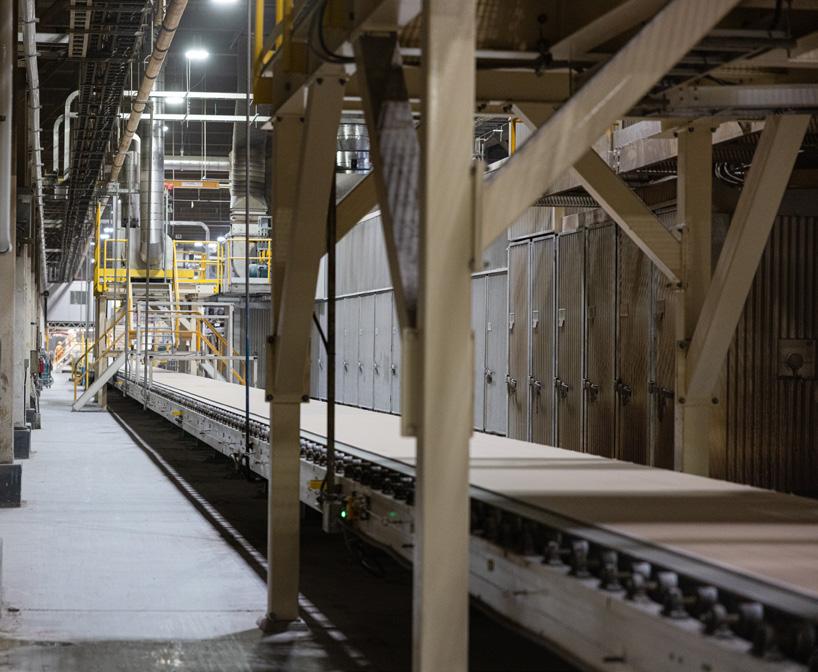
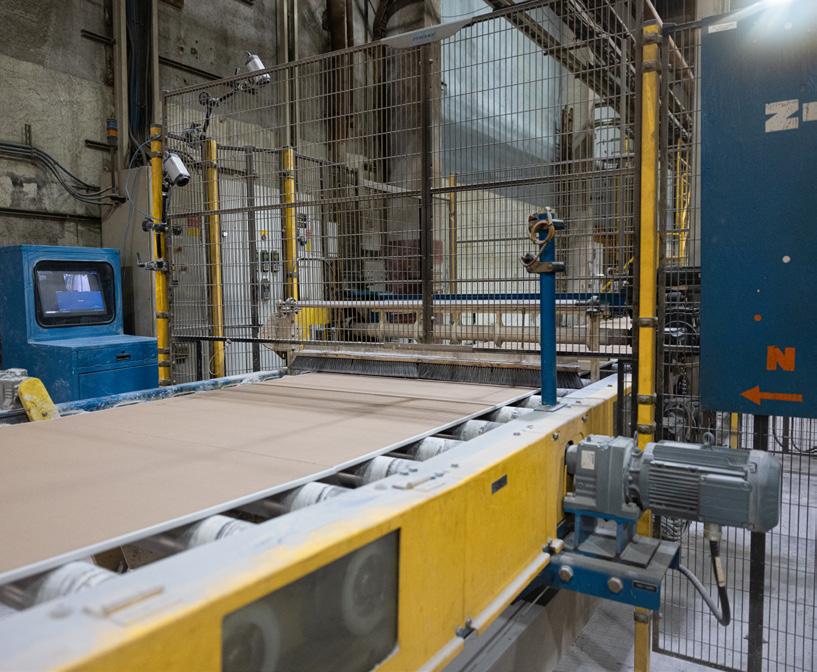
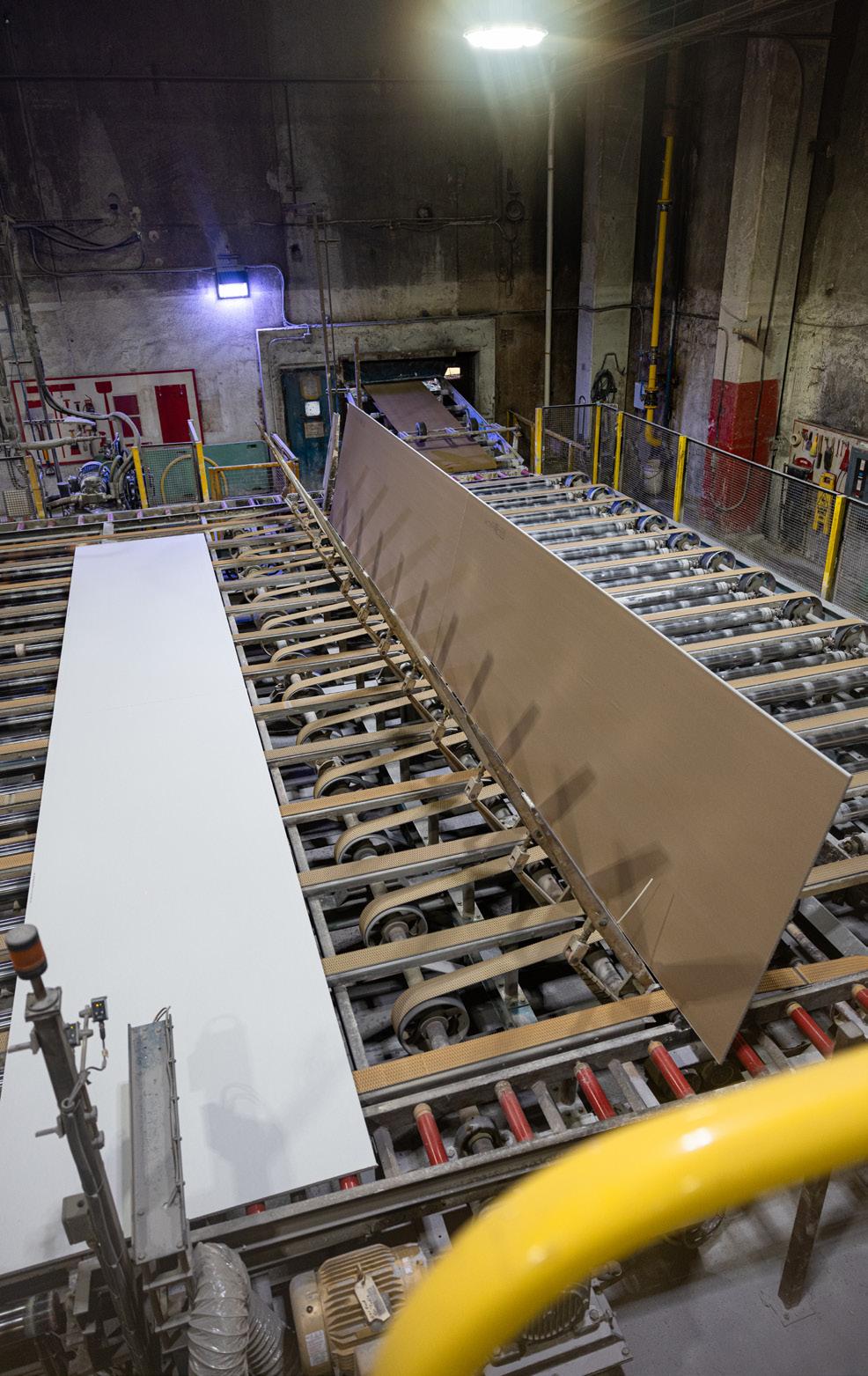
Gypsum wallboard manufacturing is a process that uses a significant amount of energy. During production, gypsum slurry is formed into boards and passed through a large industrial dryer, where heat removes moisture and solidifies the product.
The dryer generates significant volumes of hightemperature exhaust and, in many cases, much of that energy is vented into the atmosphere. Recognizing the opportunity, CertainTeed Canada — through its parent company SaintGobain — identified a project at their Delta facility to capture that waste heat and reuse it as a practical way to improve overall system efficiency while maintaining process reliability.
A collaborative approach to energy management
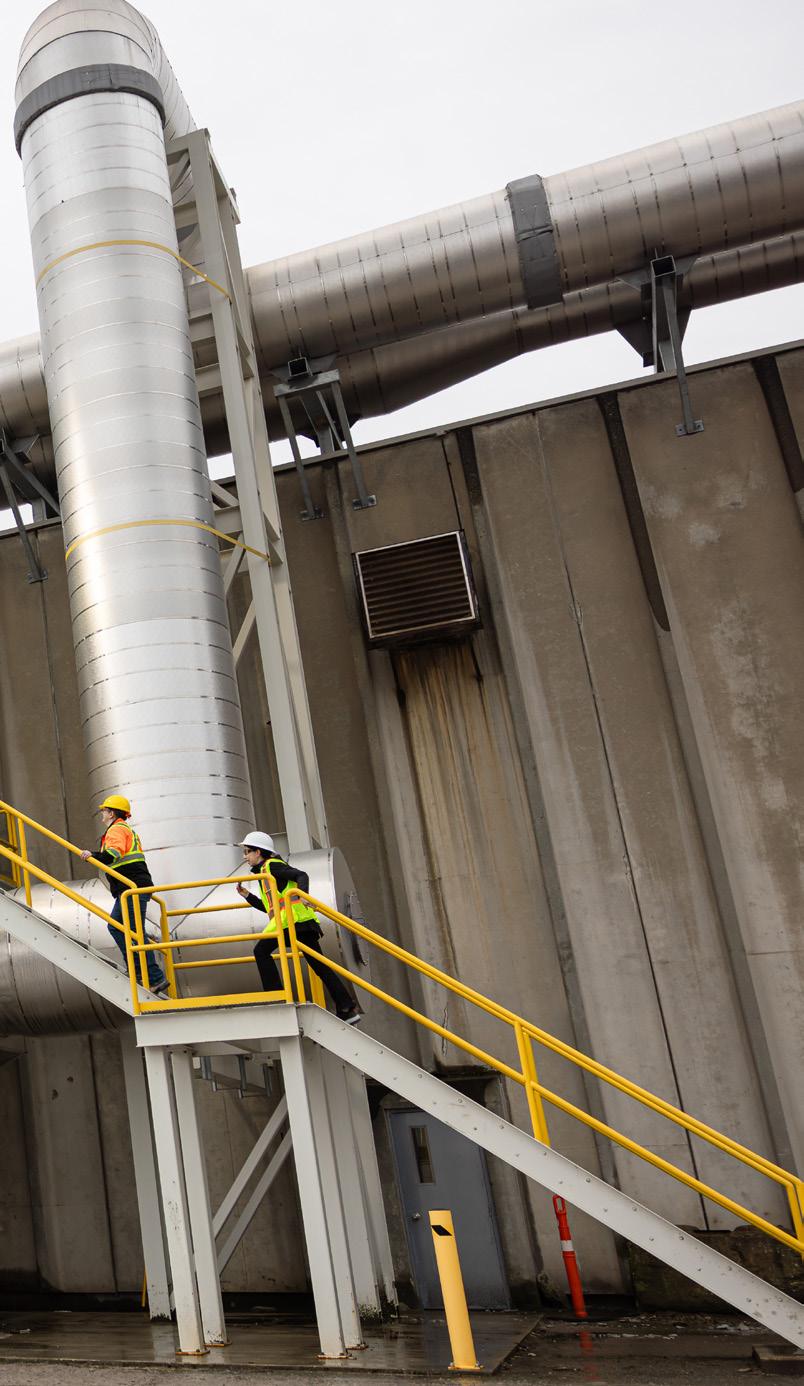
The resultant project involves recovering heat from the dryer exhaust gas and using it to preheat cold combustion air entering the system. By reducing the amount of natural gas required to bring incoming air up to operating temperature, the system lowers overall gas consumption without altering the core drying process.
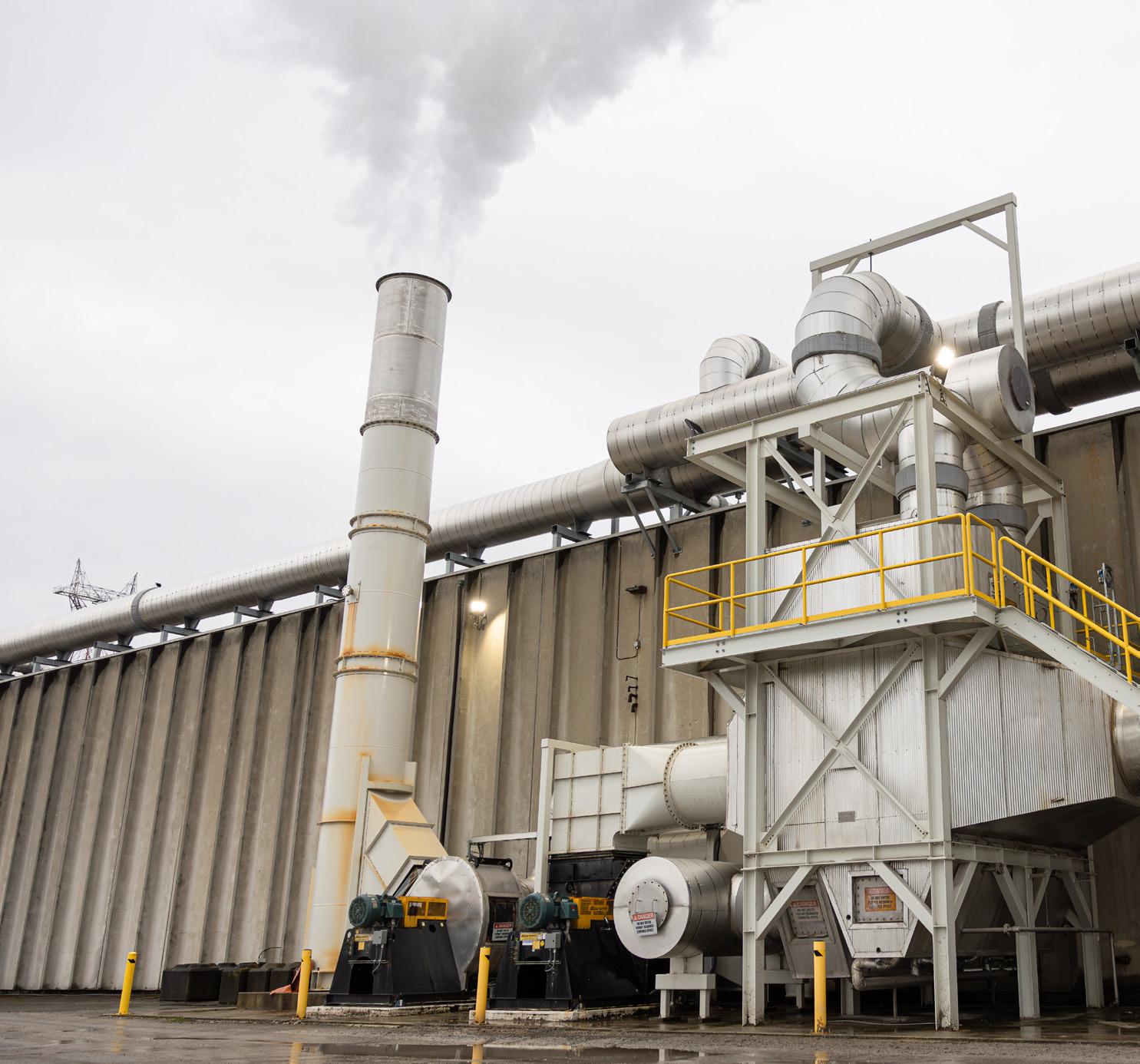
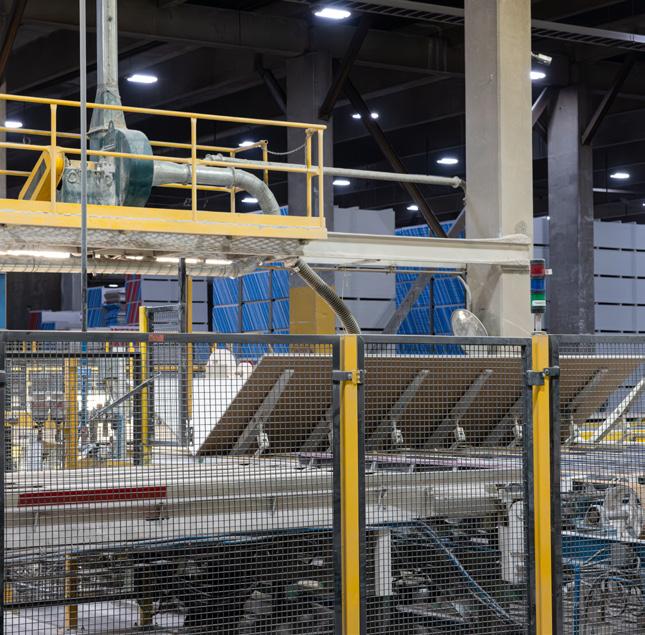
CertainTeed Canada is capturing and reusing waste heat at its Delta facility to boost efficiency while maintaining reliable production.
“The heat recovery system allows the facility to maintain dryer performance while consuming less energy, reinforcing the notion that emissions reductions do not have to come at the expense of output or reliability.” — Rajoo Jagtap
Through this upgrade, CertainTeed is lowering gas use at their Delta facility by approximately 48,000 gigajoules annually, the equivalent annual energy use of around 440 homes. This is helping the company advance their sustainability goals such as reducing the company’s energy consumption. In addition to energy savings, they are lowering the plant’s Scope 1 carbon dioxide emissions by around 12 percent.
“In manufacturing processes, finding ways to reduce energy use while maintaining performance is essential,” said Julien Perrier, vice-president operations, Saint-Gobain Canada. “This heat recovery project at our Delta facility shows how improving the efficiency of our production process can help lower energy use and associated emissions. This supports our operational goals and our broader efforts to strengthen our sustainable manufacturing operations so we can continue to deliver local products to customers.”
Key takeaways for industrial manufacturers
The project’s value extends beyond energy savings. By capturing and reusing thermal energy that would otherwise be lost, the system helps stabilize dryer operating conditions. Preheating combustion air can help improve combustion efficiency and support more consistent temperature control. This can contribute to reducing equipment stress and potentially lower maintenance requirements over time.
For those considering a similar investment, this project demonstrates how energy efficiency improvements can make a difference. The heat recovery system allows the facility to maintain dryer performance while consuming less energy, reinforcing the notion that emissions reductions do not have to come at the expense of output or reliability.
Supporting
a
lower carbon energy future
in B.C. For FortisBC, projects like this one are a key part of supporting industrial customers as they undertake energy efficiency projects. Large manufacturers play a critical role in the provincial
“In manufacturing processes, finding ways to reduce energy use while maintaining performance is essential.” — Perrier
economy, and targeted efficiency upgrades can help ensure they remain competitive while working toward a lower carbon energy future.
The project reflects the collaboration between CertainTeed and FortisBC, focused on identifying energyefficiency measures that align with operational needs. CertainTeed participated in FortisBC’s Custom Efficiency Program and received $1.5 million in rebates for this project. This rebate program is offered to industrial customers who are upgrading their gas equipment for processing and manufacturing. They will need to meet specific eligibility requirements to qualify for the program which includes achieving a minimum level of energy savings. By working directly with customers to understand process requirements and identify practical solutions, FortisBC aims to support projects that help improve energy efficiency.
As industrial energy management continues to evolve, examples like this provide a roadmap for how manufacturers can turn waste energy into energy savings, improving efficiency, reducing emissions and strengthening operational resilience.

RAJOO JAGTAP is a key account manager at FortisBC. He works with industrial customers across British Columbia to support them with their energy efficiency projects and connect them with FortisBC rebates.

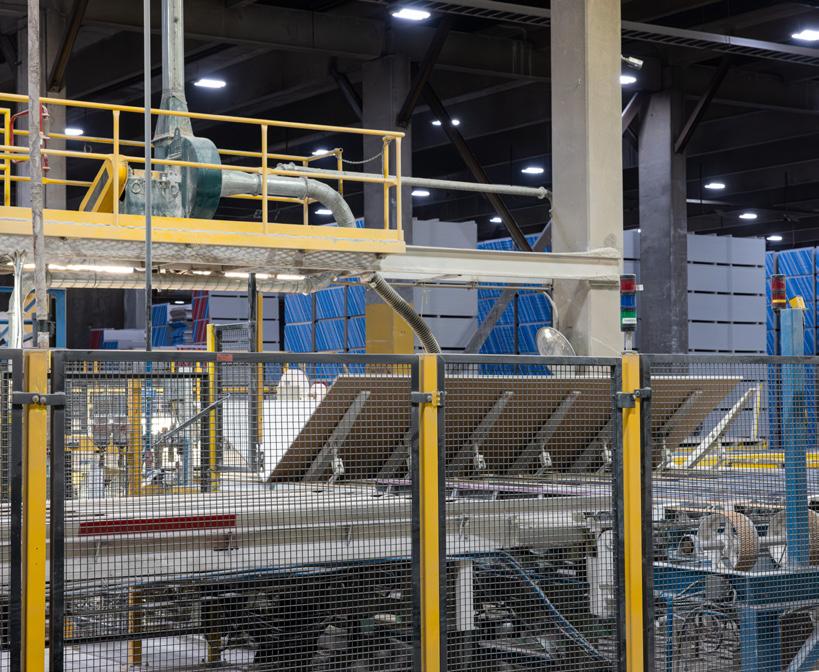
Preheating combustion air can help improve efficiency and support more consistent temperature control.
Producing gypsum wallboard uses a significant amount of energy to dry the gypsum slurry into finished boards using large industrial dryers
LET’S STAY CONNECTED
Untethered computing for Canadian pharma manufacturing
By Ethan Elliott
Pharmaceutical manufacturers are adopting centralized session management platforms (CSMP) and wireless technologies to replace complex wired setups with industrial-grade thin clients that install easily and require minimal wiring.
At Canadian pharmaceutical manufacturing facilities, critical computing platforms play a key role in controlling and monitoring production. This equipment can come in many forms, including thin clients, panel PCs, remote touch displays, and fixed and mobile operator workstations.
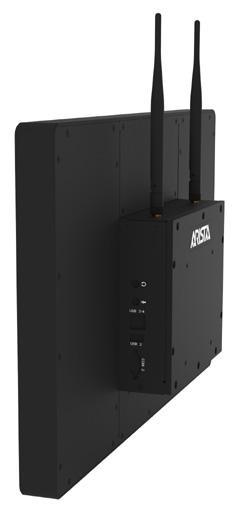
Because these devices are typically installed near processing areas and exposed to frequent wipedowns, they must be constructed from stainless steel with sealed, durable housings to resist moisture and chemical exposure.
However, durability alone no longer meets the needs of these production environments. Conventional workstation configurations continue to depend on permanent wiring and complex installation requirements. When layouts change or equipment is moved, cables must be rerouted, limiting flexibility on the plant floor.
To overcome these constraints, Canadian engineers are adopting centralized session management platforms that separate computing from the workstation itself. Options include the ThinManager® from Rockwell Automation, the IGEL Universal Management Suite, and the Praim ThinMan.
Centralized control
CSMP allow facilities to consolidate computing power in one secure location while streaming operator interfaces to lightweight, remote terminals called thin clients.
For example, with Rockwell’s ThinManager, rather than running Windows and industrial applications locally, each terminal connects to the ThinManager server, which dictates exactly what appears on its screen, who can access it, and how it behaves. The result is a simplified, secure, and easily managed environment.
For many manufacturers, this centralized model has made ThinManager-Ready thin clients a standard requirement for new installations.
As the name implies, Rockwell’s designation “ThinMan-


Centralized Session Management Platforms offer Canadian pharmaceutical manufacturers a cleaner, more adaptable computing infrastructure.
ager-Ready” means the hardware has been built and certified to integrate directly into the ThinManager ecosystem without additional setup or configuration. From the moment the device powers on, the thin client identifies itself to the server, downloads its configuration, and connects to the assigned operator session. Other products affect a similar seamless experience.
That readiness eliminates the need for manual setup or software installation, reduces downtime, and ensures full compliance with the manufacturer’s industrial security framework. These are key priorities for plants where reliability and uptime are non-negotiable.
But even with this streamlined architecture, thin clients have relied on one critical tether: the Ethernet cable. Each terminal needed a physical network connection to contact the CSMP server, a limitation that becomes costly and cumbersome in clean or controlled environments.
Wireless flexibility
In Canadian pharmaceutical manufacturing, hard-wired Ethernet connections add complexity while limiting mobility. Each cable that passes through a cleanroom wall must be sealed, inspected, and revalidated, making even small layout changes time-consuming and costly.
Hard-wired Ethernet connections add complexity while limiting mobility.
This is where Wi-Fi Boot shows its true advantage. By allowing thin clients to connect to ThinManager entirely over wireless, the technology eliminates the need for physical network cabling. When powered on, the terminal’s wireless module connects securely to the facility’s Wi-Fi network before any operating system loads. Then, it locates the ThinManager server, downloads its operating image, and begins displaying the assigned control interface within seconds. The result is a fully connected workstation that requires only a single power connection.
The implications for pharmaceutical cleanroom and highpurity manufacturing are significant. In pharmaceutical plants,

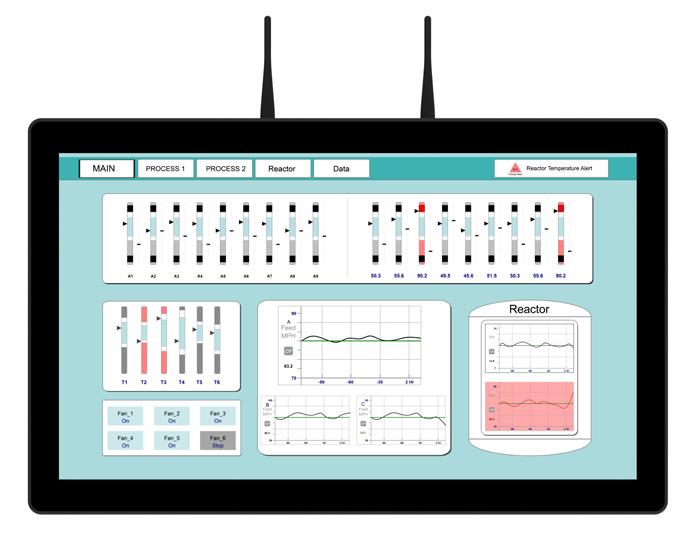
where layouts and equipment often change, Wi-Fi Boot devices provide flexibility to move and reconnect workstations instantly. Maintenance becomes easier too. If a terminal fails, it can be replaced and rebooted anywhere in the facility, instantly restoring its assigned session from the central ThinManager server.
Wireless connectivity reduces wiring complexity and installation constraints, but the devices still must be engineered for the demanding conditions of pharmaceutical production. In cleanroom and other controlled environments, computers are routinely subjected to moisture, vibration, and frequent sanitization.
To ensure long-term reliability under these conditions, they must be constructed with durable, industrial-grade materials and sealed for protection. Standard off-the-shelf components in these areas may last only a
year before needing replacement.
“When an area is routinely cleaned and sanitized, you need computing equipment that can reliably withstand harsh, wet, or humid environments,” says Paul Shu of ARISTA Corporation, a manufacturer of industrial computing solutions including thin clients, panel PCs, KVM extenders, and fully sealed stainless-steel systems designed for cleanroom and process-control environments.
Shu points to an example. A major pharmaceutical manufacturer that was regularly replacing
monitors decided to use waterproof displays.
“Previously, they had installed a TV-type monitor that was not water resistant or easy to clean. Now, they use ruggedized monitors so that is no longer an issue,” says Shu.
By combining centralized management, wireless connectivity, and industrial-grade hardware, CSMP offer Canadian pharmaceutical manufacturers a cleaner, more adaptable computing infrastructure that’s easier to deploy, maintain, and scale.
The terminal needs to be sealed and durable.
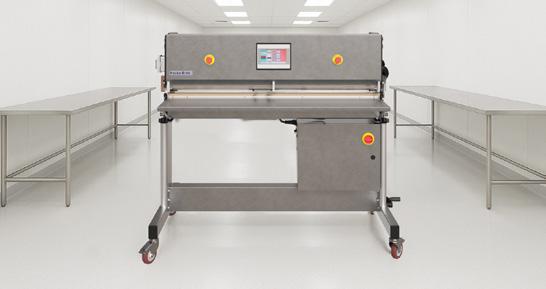
PACKWORLDUSA OFFERS HEAT SEALER FOR PACKAGING APPLICATIONS
PackworldUSA manufactures the PW5500 Series heat sealer with a C-frame pass-through design for clean room and production floor environments.
The equipment is designed for full-width bag, pouch or web heat sealing in medical, life sciences and research and development applications. Available models include the PW5536, PW5548, PW5560 and PW5572, with seal lengths ranging from 36 to 72 inches and seal widths from two to 12 millimetres.
The equipment uses TOSS PIREG Variable Resistance Control technology, which operates without thermocouples to control sealing temperatures. The system is available in single or dual band configurations. www.packworldusa.com

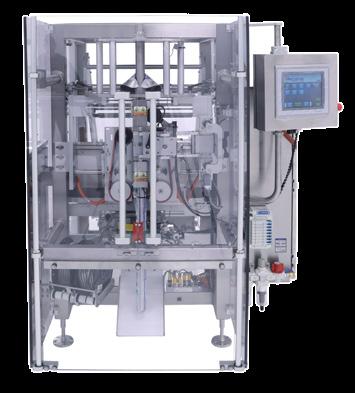
PROSYS FILL OFFERS VERTICAL CHUB FILLER FOR HIGHVISCOSITY PRODUCTS
ProSys Fill LLC manufactures the VCF Chub Filler for packaging high-viscosity industrial materials including adhesives, sealants, mastics, pastes and lubricants.
The vertical filling system operates at speeds up to 40 chubs per minute and accommodates chub sizes from five to 32 ounces. The equipment uses servo-driven dosing technology for fill accuracy and volume control.
Electrical components and the clipping head are controlled by an integrated programmable logic controller rather than pneumatic switches. According to ProSys Fill, this configuration provides synchronization and operational reliability. www.prosysfill.com




GEMÜ EXPANDS GLOBE VALVE SERIES WITH ACTUATOR SIZE FOR LOW-PRESSURE APPLICATIONS
GEMÜ has expanded its S40 globe valve series with the addition of actuator size 0 for small nominal sizes and low operating pressures.
The S40 globe valve features maintenanceaccessible construction, operational safety features and a compact design. The valve series is now available in actuator sizes 0 through 6. www.gemu.com
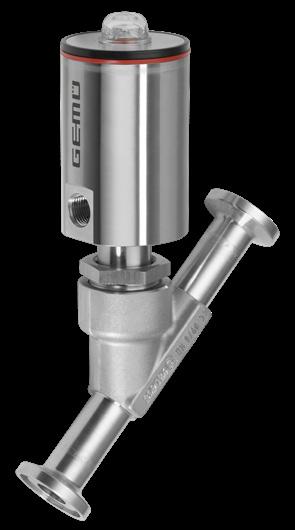
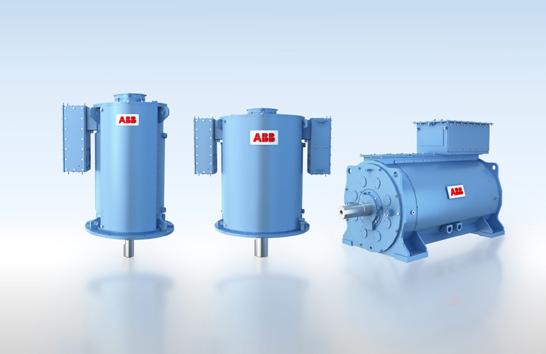
ABB LAUNCHES PERMANENT MAGNET MOTOR SERIES WITH WATER-JACKET COOLING
ABB has released a permanent magnet motor series with waterjacket cooling for marine and industrial applications.
The motors deliver efficiency up to 98 per cent and are available in frame sizes 500 and 710, with power ratings up to 5 MW. According to ABB, larger frame sizes can be developed to meet future requirements. www.abb.com

KHK USA ANNOUNCES METRIC WORM GEAR PRODUCT LINE
KHK USA Inc. has announced its line of metric worm gears manufactured by Kohara Gear Industry Co. of Japan.
The Mineola, N.Y.-based distributor said the worm gears are designed for applications requiring large speed reduction in compact installations. The gears are offered in multiple modules, tooth counts and reduction ratios.
Worms are available in carbon
steel (S45C), chromalloy steel (SCM415) and stainless steel (SUS303). Worm wheels are available in cast iron (FC200), phosphor bronze, aluminum bronze and MC901 nylon.
www.khkgears.us
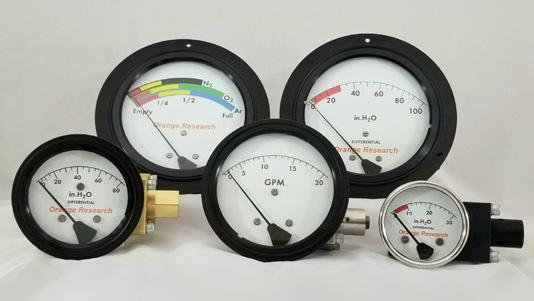
ORANGE RESEARCH OFFERS PISTON SENSOR DIFFERENTIAL PRESSURE GAUGES FOR INDUSTRIAL APPLICATIONS
Orange Research, a Cameron Instruments brand, manufactures piston sensor differential pressure gauges for filtration, hydraulic and heat-exchanger monitoring applications.
The gauges measure pressure difference between two points and display the reading on a single dial. Wetted parts are available in aluminum, brass or stainless steel construction.
www.orangeresearch.com
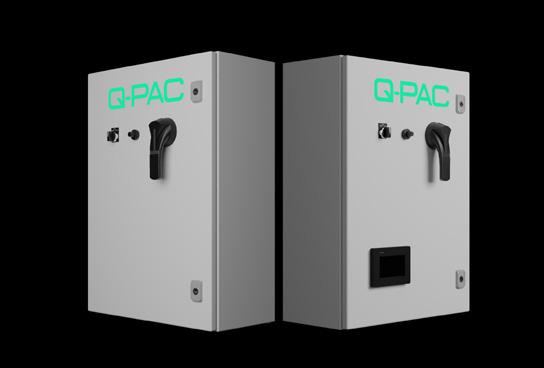
Q-PAC INTRODUCES CONTROL PANEL OPTIONS FOR HVAC FAN SYSTEMS
Q-PAC has released two control panel options for commercial HVAC fan applications: Fan-Only and Fused Disconnect solutions.
The options are additions to Q-PAC’s existing Basic and Premium Control Panel product line. Both configurations are designed for integration with the company’s Multimotor Plenum Fan systems.
The Fan-Only option allows connection of Q-PAC fans to existing or third-party building management system controls. The configuration uses the Q-PAC Fan Controller’s single point of power and control interface. Power and control signals from the building management system connect to a single connection point on the fan controller, which manages all motors as a unified fan system. www.q-pac.com

Amplify Content Studio is a full-service custom content studio, helping companies share their story, build brand awareness and garner trust through original content.
There are so many ways to reach a target audience. We’ll craft you content for any medium:
• Thought leadership – long-form or short-form articles
• Blogs, whitepapers, infographics and case studies
• Webinars, podcasts and video
• Tradeshow marketing content, with in-house commercial printing services
• Automated content marketing supported by first-party data ....and so much more!

Connect with an account manager or scan to learn more
Pat Lorusso
T: 416-518-5509
plorusso@annexbusinessmedia.com