SIGNALS quarterly

THE ARCHAEOLOGY OF WAR
INDIGENOUS SEA RIGHTS
Ten
ANMM.GOV.AU $9.95
NUMBER 123 JUNE • JULY • AUGUST 2018
Conflict, technology, remembrance
years
landmark
First
since
decision A GENEROUS GIFT William Bradley’s
Fleet log
Bearings
FROM THE DIRECTOR
NOT ONLY IS THE STORY OF MIGRATION to Australia a fundamental theme in our maritime history, it is a foundation narrative of modern Australia. Since 1945 nearly eight million migrants have stepped ashore to infuse modern Australia with more than 200 different cultural and linguistic traditions.
And this year marks an important milestone in Chinese–Australian migration history. 2018 is the bicentenary of the arrival of one of the earliest recorded Chinese-born free settlers to the colony of New South Wales, Mak Sai Ying. Mak Sai Ying’s story is beautifully told in this issue by Kim Tao, our curator of post-war immigration. Kim reminds us that 200 years after Mak Sai Ying’s arrival, more than 1.2 million Australians now identify as being of Chinese ancestry.
Mass migrations have occurred throughout human history and have transformed nearly every culture on our planet. But today the pace and magnitude of migration are unprecedented, and borne out in the changing economic, cultural, societal and political character of many of our own regional towns, cities and states. Now nearly half (49%) of all Australians were either born overseas or have at least one parent born overseas.
While the Australian National Maritime Museum has a dedicated immigration gallery and collection of nearly 10,000 objects, most of our nation’s migration storytelling is confined to a small number of predominantly state-based museums, or community-run cultural centres in Adelaide, Melbourne and Sydney.
Migrants have contributed enormously to the making of modern Australia and it’s my belief that museums sharing their stories, as we do with our bi-annual Welcome Wall unveilings, can increase our tolerance and understanding of the unique challenges many migrants face.
In an age where museums are no longer just repositories of historical and artistic treasures, but function as societal agents for change, it is not surprising that many new migration museums have sprung up in the last ten years, particularly across Europe. However in Australia we are yet to debate either the need for or function of such a national institution. From Halifax (Canada), Bremerhaven (Germany), Lambeth (UK), Paris and on Ellis Island in New York, museums with powerful new remits have embraced the challenge of explaining the unprecedented changes taking place in communities all around the world today.
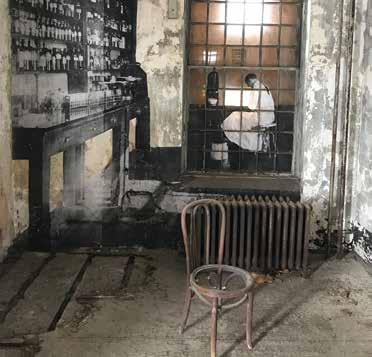
The Ellis Island Immigrant Hospital was abandoned in 1954. Today its wards serve as a backdrop for a photographic installation by the French artist JR, which re-animates the building with the haunting images of doctors, nurses and immigrant patients from 1902 to 1930. Image Kevin Sumption/ANMM
Only last month it was my privilege to visit the National Museum of Immigration on Ellis Island, situated on a substantially reclaimed island in the shadow of Jersey City. The museum is housed in the Tilton and Boring–designed Renaissance Revivalist building, which has recently been restored. Its galleries tell the story of more than 12 million immigrants who passed through Ellis Island from 1892 to 1954. I was most drawn to The Journey gallery, where the stories of new migrants setting up their lives in major cities like Minneapolis, Chicago and New York are powerfully told. A series of large-scale videos explores the way these recent arrivals have changed these cities, one school, one business and one church at a time. As I watched I contemplated the same changes taking place today, all across remote, regional and metropolitan Australia.
Kevin Sumption psm Director and CEO
Australian National Maritime Museum
Acknowledgment of country
The Australian National Maritime Museum acknowledges the Gadigal people of the Eora nation as the traditional custodians of the bamal (earth) and badu (waters) on which we work.
We also acknowledge all traditional custodians of the land and waters throughout Australia and pay our respects to them and their cultures, and to elders past and present.
The words bamal and badu are spoken in the Sydney region’s Eora language.
Supplied courtesy of the Metropolitan Local Aboriginal Land Council.
Cultural warning
Warning: People of Aboriginal and Torres Strait Islander descent should be aware that Signals may contain names, images, video, voices, objects and works of people who are deceased. Signals may also contain links to sites that may use content of Aboriginal and Torres Strait Island people now deceased.


Cover: Maritime archaeologist
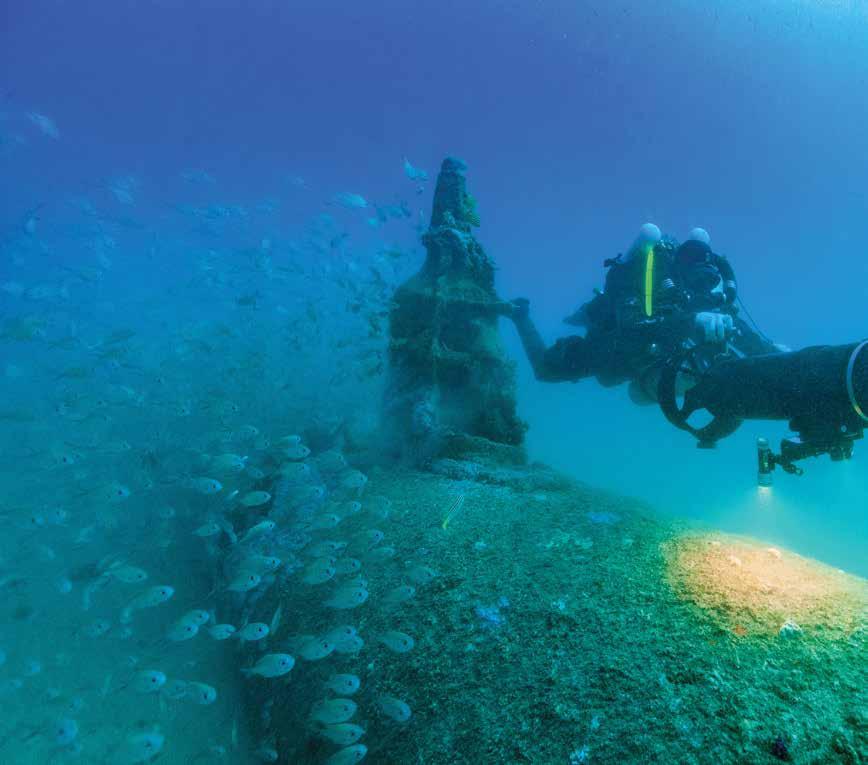
Matthew Carter exploring the wreck of the World War II Japanese M-24 midget submarine off Sydney Harbour. This war and other conflicts will be discussed in the conference The Archaeology of War, to be held in June. See story page 2. Image Steve Trewavas
WINTER 2018
Register now for ANMM conference in June
Patience, pain and perseverance: what it takes to produce award-winning nature images
Classic & Wooden Boat Festival: the beauty and diversity of Australian boatbuilding
Ten years since the landmark Blue Mud Bay Indigenous sea rights case
Watercraft in warfare – new research on Aboriginal resistance in early colonial Sydney
The museum’s links to China’s booming new sport, sailing
The museum plans another round of voyaging for HMB Endeavour
The sad fate of a brilliant Australian biologist
Australian–Japanese naval relations during World War I
Your calendar of activities, talks, tours and excursions afloat
Caroline and Ivan Juricic: Introducing two new Members
Previewing our new exhibition James Cameron – Challenging the Deep
FOUNDATION
Memories of SS Orontes
William Bradley’s First Fleet logbook, an extraordinary gift to the nation
WELCOME
Marking 200 years of Chinese immigration
The Catch ; Hawkesbury River; The Harbour
Vale Bill Barnett and David Manning
We recognise the museum’s principal supporters
AUSTRALIAN NATIONAL MARITIME MUSEUM 1 ANMM.GOV.AU
Contents
2 THE ARCHAEOLOGY OF WAR
8
UNDERWATER PHOTOGRAPHERS IN THE FIELD
12 CLASSICS UP CLOSE
18 A TIRELESS FIGHT
22 CONTESTED WATERWAYS
28 WE HAVE THE WIND IN OUR SAILS
32 ADVENTURE AND COMMEMORATION
34 DEATH IN HONOLULU
40 WHITE ENSIGN, RISING SUN
46 MESSAGE
EVENTS
TO MEMBERS AND MEMBERS WINTER
51 MEMBER PROFILE
52 AUTUMN EXHIBITIONS
56
60 COLLECTIONS
66 TALES
WALL
FROM THE
70 READINGS
74 CURRENTS
80 ACKNOWLEDGMENTS
The Archaeology of War
REGISTER NOW TO ATTEND ANMM CONFERENCE ON 22 AND 23 JUNE
Registrations are now open for The Archaeology of War, a two-day conference open to the public. It will explore the importance of archaeology in the investigation of past conflicts, how this has been affected by technological advances and what role archaeology might play in public remembrance. Leading international archaeologists, designers and other professionals will discuss what recent archaeological discoveries reveal about the past, and their influence on the present. Dr Nigel Erskine profiles just a few of the presenters and their topics.
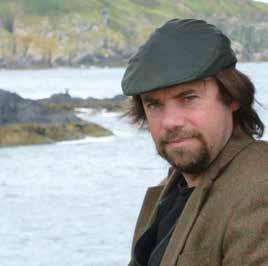
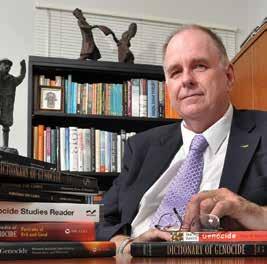
Prof Tony Pollard will discuss fieldwork into mass graves at Fromelles, France, and reflect on this emotionally charged project
01 Matthew Carter exploring the wreck of a World War II Japanese midget submarine off Sydney’s northern beaches. Image Steve Trewavas
THIS YEAR MARKS THE CENTENARY of the end of the First World War, and the end of a four-year round of commemorative and other historical events associated with 1914–1918. Despite this focus, there has been relatively little public engagement with the archaeology of sites associated with war. The Archaeology of War conference on 22 and 23 June will investigate the relationships between public remembrance and archaeology. Looking at examples of archaeological sites associated with wars in the 18th, 19th and 20th centuries, it will explore archaeology’s commemorative function, its role and importance in the investigation of past conflicts as well as the use of new and emerging technologies. It will also canvass how archaeology might reveal the effects of past warfare on society and what role it might play in understanding loss and grief, and shaping ways of remembrance.
Presenter biographies and topics
Tony Pollard is Professor of Conflict Archaeology and History, and Director of the Centre for Battlefield Archaeology, University of Glasgow. He will open the conference with his keynote address ‘I have waited patiently: The search for First World War mass graves at Fromelles, France’.
In 2007 and 2008, a team from the Centre for Battlefield Archaeology at the University of Glasgow was commissioned by the Australian Army to examine ground close to the village of Fromelles in northern France. It aimed to verify the presence or absence of mass graves containing the bodies of Australian soldiers killed in the battle fought near the investigation site in July 1916. Various historical and archaeological techniques were deployed, some of them for the first time in the examination of a mass grave site.
AUSTRALIAN NATIONAL MARITIME MUSEUM 3
01
This paper will provide an overview of the two campaigns of fieldwork and reflect on an emotionally charged project that proved to be one of the most rewarding in Prof Pollard’s career as an archaeologist.
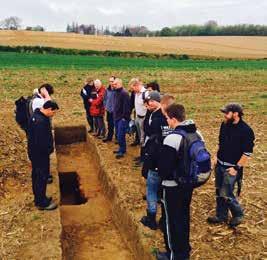
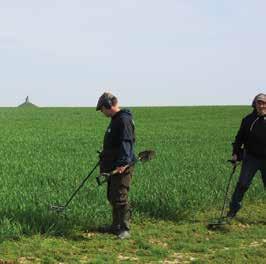
Prof Pollard is also currently lead academic for Waterloo Uncovered, a project engaging military veterans in the archaeological investigation of the iconic 1815 battlefield. Waterloo Uncovered combines state-of-theart survey techniques with veteran care and recovery in a ground-breaking archaeological investigation of one of the world’s most famous battlefields. On Saturday 23 June, Prof Pollard will present ‘These spots of excavation tell: The archaeology of the Battle of Waterloo’. The talk will focus on the results of this study, and touch upon the role that archaeology can play in the recovery of military veterans suffering physical and psychological trauma.
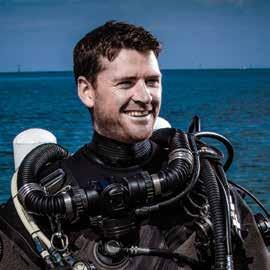
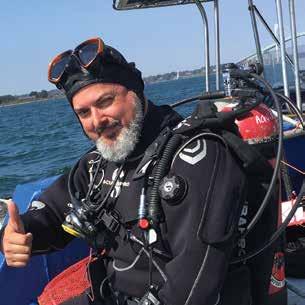
Matthew Carter is one of the leading technical diving maritime archaeologists in Australasia. He is vice-president of the Australasian Institute for Maritime Archaeology, and the New Zealand representative on the International Committee on Underwater Cultural Heritage. Matt is passionate about furthering the links between archaeological research and the technical diving community. His presentation, ‘Underwater conflict archaeology in the age of technical exploration’, looks at recent advances in technical diving equipment and image-based mapping software that offer the potential for the archaeological analysis of thousands of previously inaccessible war wrecks. However, what is becoming clear is that the exploration and research of this new frontier will require unprecedented collaboration between maritime archaeologists and technical divers. A recent Explorers Club expedition to record the M-24 Japanese midget submarine off Sydney provides a case study of how such partnerships can work to achieve archaeologically useful information while also strengthening relationships between maritime archaeologists and the technical diving community.
Paul R Bartrop is Professor of History and Director of the Center for Judaic, Holocaust, and Genocide Studies at Florida Gulf Coast University. A multi-award winning scholar of the Holocaust and genocide, he is the author or editor of 18 books and numerous scholarly articles in journals and books. A senior consultant of the Jewish Holocaust Centre, Melbourne, Professor Bartrop is currently Vice-President of the Midwest Jewish Studies Association, and is a Past President of the Australian Association of Jewish Studies.
Prof Bartrop’s presentation, ‘In the belly of the beast: The excavation and transformation of the headquarters of the Nazi regime in Berlin’ examines what might justifiably be termed the administrative centre of the Nazi State. A large complex of office buildings in Berlin, situated on the former PrinzAlbrecht-Strasse, was the location of the SS Reich Security Main Office, and, as such, the headquarters of the Security Police (SiPo), the Security Service (SD), the Secret State Police (Gestapo) and the mobile killing squads (Einsatzgruppen). While much of the complex was destroyed by Allied bombing in early 1945, certain parts of the site remained and have since been excavated and transformed into the core area of one of the most important museums and learning centres on the Nazi period and World War II, the Topography of Terror.
Dr Kathy Abbass is Executive Director of the Rhode Island Marine Archaeology Project (RIMAP). Her keynote address on Saturday 23 June will discuss ‘Why it is so hard to find the Endeavour bark: The American Revolution and the US Navy’.
James Cook’s bark Endeavour was one of 13 vessels scuttled in Newport’s Outer Harbor in the days before the August 1778 Battle of Rhode Island in the American Revolution. As the transport Lord Sandwich, this vessel had carried German troops to North America in 1776, was used as a prison ship in Newport Harbor to secure Patriots in 1777, and was part of the blockade to protect the British in Newport from the threatening French fleet in 1778. In the nearly 250 years
since, materials from the fleet have been salvaged, moved, destroyed by 19th-century divers in training, damaged by moorings and anchors, threatened by shoreside development, and obscured by dredging and other activity in the area.
Because of all this later history, RIMAP’s research design predicts that little will be left of the Endeavour related to Cook’s voyage other than what might remain of the ship’s structure. Instead, the focus has always been the ship’s service in the American Revolution, and especially the 200-plus years of local naval and commercial activities that have contributed to the natural processes of site formation and disturbance. It is the history after Captain Cook that provides the context to interpret what remains of the transport fleet, and to identify his iconic vessel.
01 Prof Tony Pollard will talk about research into the site of the Battle of Waterloo. Image courtesy Tony Pollard
02 Waterloo Uncovered team members at the site of the Battle of Waterloo. Image courtesy Tony Pollard
03 Dr Kathy Abbass will discuss efforts to find James Cook’s HMB Endeavour and the ship’s service in the American Revolution. Image courtesy Nigel Erskine
04 Veterans and archaeologists examine an excavation at the Waterloo site. Image courtesy Tony Pollard
05 Prof Paul R Bartrop will talk about the excavation of the former administrative centre of the Nazi State in Berlin and its transformation into a museum. Image courtesy Paul R Bartrop
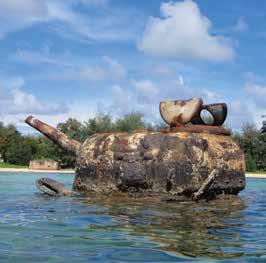
06 US World War II tank off a beach at Saipan, Northern Mariana Islands. Image courtesy James Hunter
07 Matthew Carter will showcase new technology recently used to survey the Japanese M-24 midget submarine. Image courtesy Matt Carter
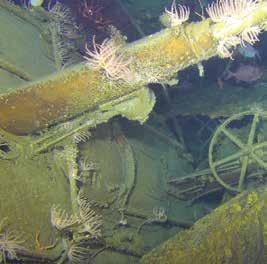
08 The recently discovered wreck of Australian submarine AE1: the aft periscope (top left); at its base, the bridge telegraph and conning tower hatch; the helm (steering wheel); and the forward periscope (bottom right). Image Paul G Allen, Find AE1, ANMM and Curtin University. © Navigea Ltd
09 Dr James Hunter of the ANMM was part of the second photographic survey of the wreck of AE1. His presentation will include detailed, high-resolution images of the wreck. Image courtesy Greg DeAscentis
4 SIGNALS 123 JUNE–AUGUST 2018
Dr Kathy Abbass will present on James Cook’s bark Endeavour, one of 13 vessels scuttled in the Outer Harbor of Newport, Rhode Island, during the American Revolution
03 02 01 06 05 04 09 08 07
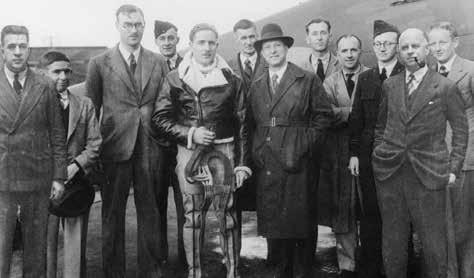
Peter Briggs (RADM RAN Rtd) served 40 years in the RAN (34 in submarines) commanding Oberon class submarines Otway and Oxley, going on to command the RAN’s submarine squadron before becoming successively Head of Strategic Command, Head of Submarine Capability and Head of Systems Acquisition (Submarines). He is currently the project leader of Find AE1 Inc and formerly led the team investigating Australia’s other World War I submarine, AE2, lost in action in the Sea of Marmara in April 1915.
Dr Ray Kerkhove from Griffith University and Dr Stephen Gapps of the Australian National Maritime Museum will discuss ‘Tactics and format in traditional and frontier Aboriginal warfare’.
Despite advances in verifying Aboriginal–settler conflict across many regions of the Australian frontier, surprisingly little work has been done on reconstructing how affrays and battles played out within the landscape – the strategies, equipment, defences, numbers and arsenal employed. Particularly lacking is an understanding of how Aboriginal groups usually organised for large-scale warfare – either traditionally or against Europeans. From a broad survey of ethnographic and historical records, the presenters suggest that there were standard tactics, chain of command, battle array and protocol employed in traditional and frontier-period Aboriginal warfare.
Dr Peter Hobbins from the Department of History, University of Sydney, is a historian of science, technology and medicine. He will talk on ‘Unearthing airspace: the historical phenomenology of aviation artefacts’.
The history and archaeology of military aviation have traditionally focused on the technologies of flight. This paper will discuss the remnants of two Australian military aviation technologies from World War II. The first, the Cotton Aerodynamic Anti-G suit, was a rubberised flying suit designed to protect fighter pilots from ‘blackout’ during high-G manoeuvres. It was developed at the University of Sydney between 1940 and 1945, and a cache of fragments was rediscovered on campus during renovations 50 years later.
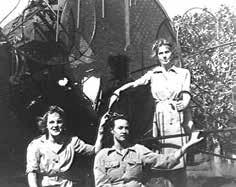
The second case study considers the archaeological residues of the wartime radar stations that dotted the Australian coastline, and suggests that as an extension of wireless and radio navigation technology, these sites both projected and protected a new domain of Australian sovereignty – airspace.
Natali Pearson is a Doctoral Candidate in Museum and Heritage Studies at The University of Sydney, whose research is focused on underwater cultural heritage in Indonesia. Her presentation is titled ‘Not our history, not our heritage: new perspectives on WWII ships in Indonesia’.
Numerous Allied and Japanese warships sank in 1942 during the naval battles of the Java Sea and the Sunda Strait. Historical and contemporary accounts of these battles have tended to focus on Allied perspectives, and to prioritise the wrecks’ archaeological and emotional significance. Only with the recent theft of these wrecks for scrap metal has greater space been made for Indonesia within these discussions. Although Indonesia is now working collaboratively with the international community, its initial refusal to accept
01 Dr Peter Hobbins will discuss Australian military aviation technologies from World War II, such as this rubberised flying suit.
FS Cotton Personal Archives, P147, Item 34, photograph 10, University of Sydney Archives
02 Members of the Australian Women’s Army Service at Nielsen Park Searchlight Station, Vaucluse, Sydney, 1945. Image Australian War Memorial P00207.001
responsibility for the destruction of these shipwrecks was indicative of a widely held belief that these vessels constituted neither the history nor the heritage of the modern Indonesian state. Within this context, this paper considers contemporary debates about the protection and preservation of World War II naval heritage in Indonesia from a critical heritage studies perspective.
The Archaeology of War conference is supported by the Australian National Maritime Foundation.
How to register
Registration is $160 for both days or $90 for one day ($130/$80 for museum Members and students). Lunch and morning tea are included. For more information, or to register, go to anmm.gov.au/ ArchaeologyofWar
6 SIGNALS 123 JUNE–AUGUST 2018
01
02
Program day one
Friday 22 June
8.45–9.30 Conference registration + coffee/tea
9.30–9.45 Welcome to Country; opening by Director Kevin Sumption; introduction and event outline
9.45–10.20 Professor Tony Pollard Director, Centre for Battlefield Archaeology, University of Glasgow – ‘I have waited patiently: The search for First World War mass graves at Fromelles, France’
10.25–10.45 Andrew Bernie Manager, Unrecovered War Casualties – Army, Australian Army – ‘“I once was lost, but now am found”: Latest directions in the search for the Australian Army’s unrecovered war casualties’
10.50–11.10 Alison Starr Doctoral Candidate, University of Queensland – ‘The enemy in our backyard: Managing the human remains of war in an Australian cemetery’
11.20–11.40 Morning tea
11.45–12.05 Dr Andrew Connelly Military Heritage Adviser, National Museum and Art Gallery, Papua New Guinea – ‘Stori blo bikpela pait bilong yumi olgeta (The story of the war belongs to all of us): History, archaeology and heritage management on the Kokoda Track, PNG’
12.10–12.30 Matthew Kelly Senior Archaeologist, EXTENT Heritage Pty Ltd – ‘Multiple voices and multiple places of the Kokoda Trail Campaign: Recent research on a Kokoda Trail battlefield at Eora Creek, PNG’
12.35–12.55 Ashley Matic Archaeologist – ‘What’s left? An archaeological assessment of the Tadji aircraft wrecks, Sanduan Province, PNG’
1.05–2.00 Lunch
2.00–2.20 Matthew Carter Maritime Archaeologist, ARCHAEOTechnic – ‘Underwater conflict archaeology in the age of technical exploration’
2.25–2.45 Peter Briggs RADM RAN Rtd – ‘The search for and discovery of HMAS AE1’
2.50–3.10 Dr James Hunter Curator, RAN Maritime Archaeology, Australian National Maritime Museum – ‘Imaging Australia’s first naval loss: The 2018 archaeological survey of submarine AE1’
3.40–4.00 Caolan Mitchell Thylacine Design – ‘Commemoration in design’
4.05–4.25 Melissa Riley Doctoral candidate, University of Tasmania – ‘Archaeology and war in the Australian curriculum: Lessons in conflict and remembrance’
4.30–4.50 Prof Paul R Bartrop Professor of History and Director, Center for Judaic, Holocaust, and Genocide Studies, Department of Social Sciences, Florida Gulf Coast University – ‘In the belly of the beast: The excavation and transformation of the headquarters of the Nazi regime in Berlin’
5.00–6.00 Drinks function
Program day two
Saturday 23 June
8.45–9.30 Conference registration + coffee/tea
9.30–9.45 Introduction and event outline
9.45–10.20 Dr Kathy Abbass Executive Director, Rhode Island Marine Archaeology Project (RIMAP) – ‘Why is it so hard to find the Endeavour bark?: The American Revolution and the US Navy’
10.25–10.45 Dan Pascoe, Dave Parham and Jessica Berry Maritime Archaeology Sea Trust and Bournemouth University – ‘The Royal Navy’s first Invincible’ (presented by Irini Malliaros)
10.50–11.10 Professor Tony Pollard Director, Centre for Battlefield Archaeology, University of Glasgow – ‘These spots of excavation: The archaeology of the Battle of Waterloo’
11.20–11.40 Morning tea
11.45–12.05 Dr Ray Kerkhove Griffith University and Dr Stephen Gapps Australian National Maritime Museum – ‘Tactics and format in traditional and frontier Aboriginal warfare’
12.10–12.30 Lynley Wallis Nulungu Research Institute, The University of Notre Dame, Broome Campus, WA – ‘The archaeology of the “Secret War” in colonial Queensland, 1849–1904’
12.35–12.55 Peter Illidge Project Manager, Maritime Cultural Heritage, Great Barrier Reef Marine Park Authority –‘The fish are their flowers: In-situ protection of WWII aircraft wrecks and the remains of their crews within the Great Barrier Reef Marine Park’
1.05–2.00 Lunch
2.00–2.20 Fiona Shanahan Archaeologist – ‘For whose benefit and remembrance do we as heritage professionals manage and preserve WWII aviation sites?’
2.25–2.45 Anna Gebels Doctoral Candidate, The University of Sydney – ‘The archaeology of war on the home front: the Empire Air Training Scheme, remembrance and the airshow’
2.50–3.10 Dr Peter Hobbins Department of History, The University of Sydney – ‘Unearthing airspace: the historical phenomenology of aviation artefacts’
3.40–4.00 Natali Pearson Doctoral Candidate, Museum and Heritage Studies, University of Sydney – ‘Not our history, not our heritage: new perspectives on WWII ships in Indonesia’
4.05–4.25
Kieran Hosty Manager, Maritime Archaeology Program, Australian National Maritime Museum –‘Protection for the remains of HMAS Perth (1)’
AUSTRALIAN NATIONAL MARITIME MUSEUM 7
Underwater
photographers
in the field
BEHIND THE SCENES OF WILDLIFE PHOTOGRAPHER OF THE YEAR
What does it take to capture life in the water?
Three finalists from the latest Wildlife Photographer of the Year competition talked to Paul Teasdale about how to navigate whale pods, ice, underwater jungles and extreme temperatures for that perfect shot.
01
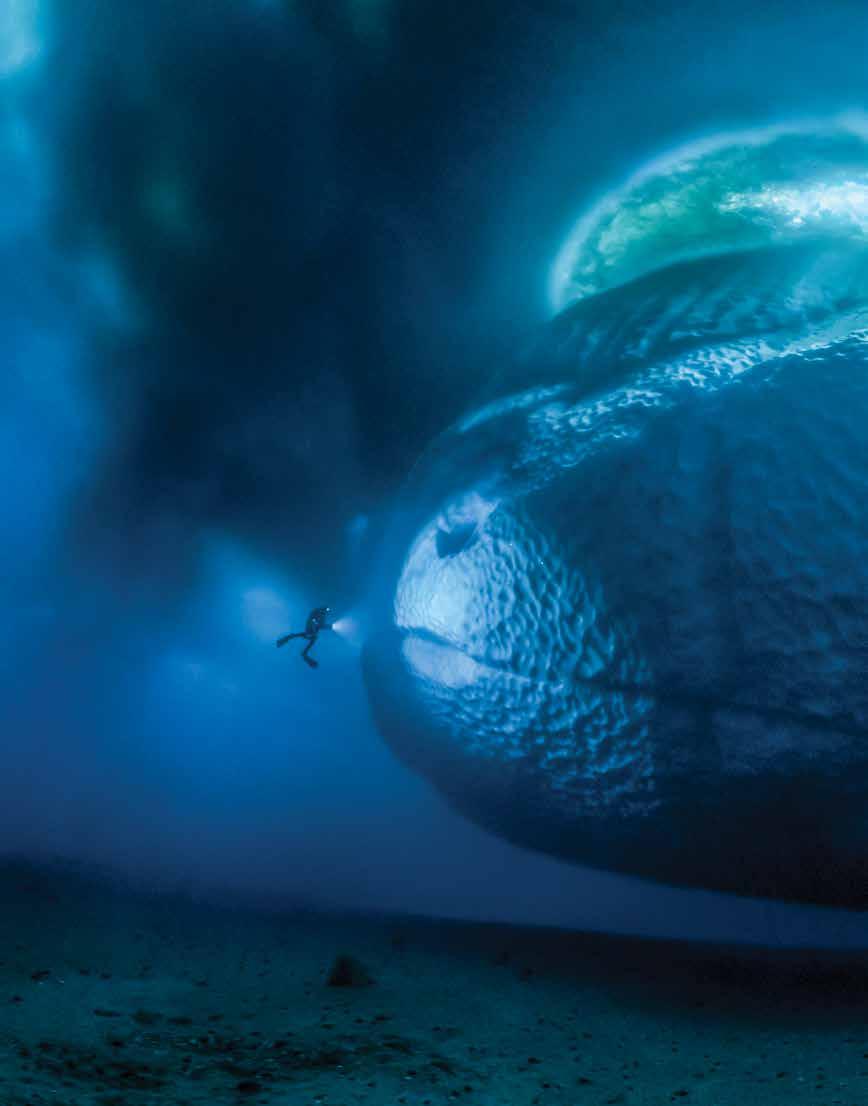
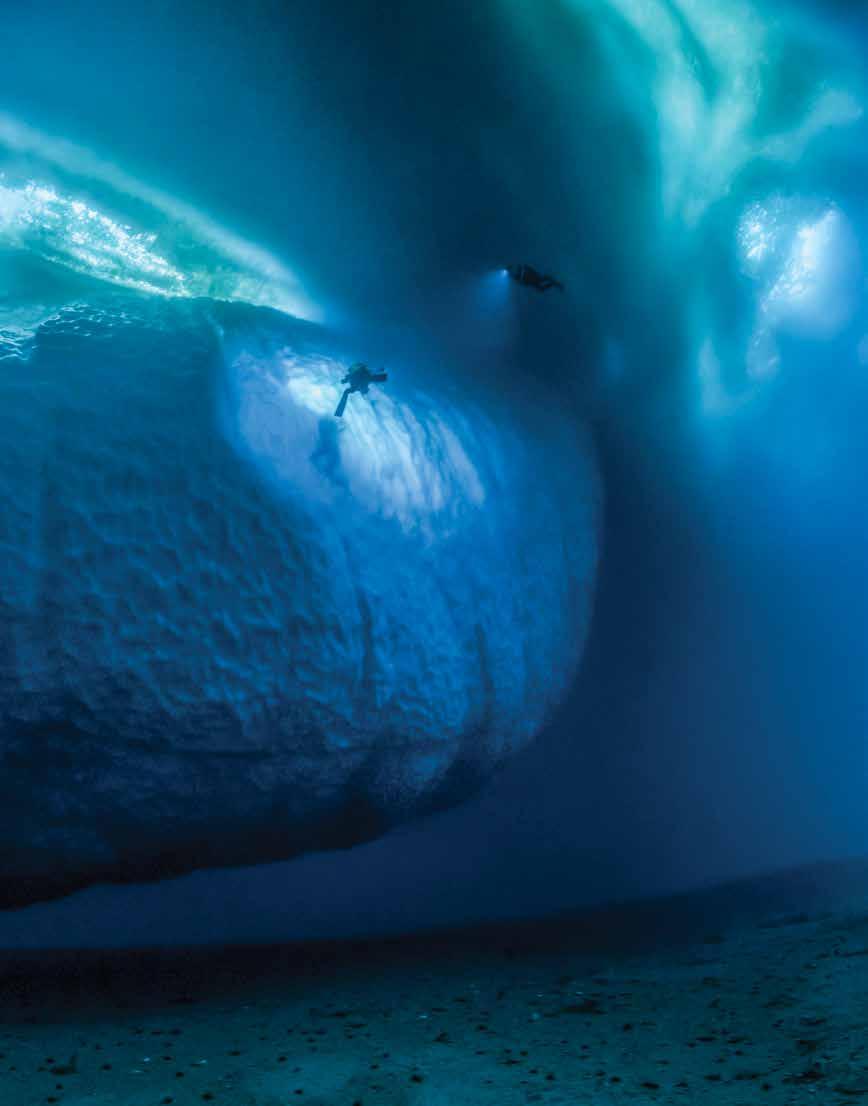
01 The ice monster by Laurent Ballesta is made up of dozens of photographs carefully stitched together. It won in the ‘Environments’ category of the 53rd Wildlife Photographer of the Year competition. © Laurent Ballesta
PHOTOGRAPHER Tony Wu knows his sperm whales.
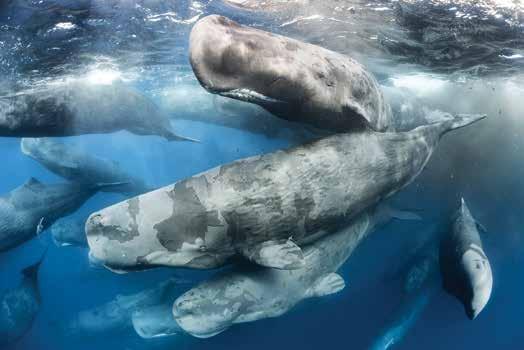
Giant gathering, Tony’s winning image in the ‘Behaviour: Mammals’ category in this year’s Wildlife Photographer of the Year competition, was only possible after a career dedicated to carefully photographing and bonding with these social marine mammals. It took all of Tony’s experience and patience to finally witness and document the extraordinary group behaviour he had previously only read about in a handful of accounts. He says:
I got this photograph by spending 20 years or so studying sperm whales. Learning about their society, making friends, being taken into their social gatherings, babysitting, having giant squid brought to me – all sorts of experiences culminated in this big gathering of several hundred, maybe even thousands of whales.
The gathering took place over two and a half days off the Sri Lankan coast. Although this window gave Tony plenty of opportunities to take photographs, one of his most important considerations was waiting for the right moment.
I didn’t actually enter the water that often. It’s important to observe. You need to understand what the whales are doing. I didn’t take many photos. Once I got into the water I was taking photos, but the process was to wait and see, slip in at the right place, take the 10–15 photos required and then get out of there.
Although it is highly unlikely that a sperm whale would intentionally harm a swimmer, when in such a large group Tony needed to pick the right moment to enter the action:
Personal safety with such big animals is a real risk. More and more people are trying to get into the water with whales and there is an issue with that, if they don’t know what they’re doing. Being in the midst of wild animals is always going to be something that requires good judgement. There are body parts flying everywhere and if you can’t move quickly you are putting yourself at risk.
I train all year in order to be as fit as possible to manoeuvre in the water with these animals. It’s like anything else – you’ve got to dedicate yourself to it. Learn about the animals and get yourself in shape.
Michel Roggo
Upstream, in unexplored shallows of freshwater rivers and lakes, Michel Roggo can often be found working just beneath the surface. He has dedicated his career to uncovering the freshwater environments that are just out of sight.
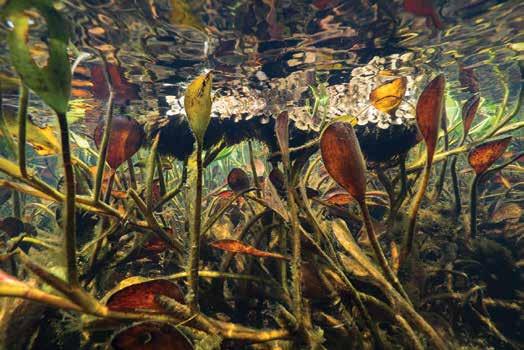
His striking image Freshwater Eden features a tangle of water hyacinths. It is a finalist in the ‘Plants and Fungi’ category of this year’s Wildlife Photographer of the Year
In a tributary of Brazil’s vast Pantanal region, Michel set out to capture the world’s largest tropical wetland. He says:
Freshwater is far too often out of sight and out of mind. I think it is vital to show these environments to the world. The Pantanal is like an underwater jungle, very dense and chaotic. I wanted to capture the essence of this jungle, but in this environment photography can be very challenging. You have to contend with a whole lot of muddy water and material. There are some clear rivers, but it really isn’t easy. And the clarity of the water isn’t the only challenge: there is also the matter of manoeuvring through the undergrowth.
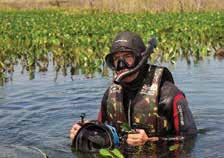
Diving in this part of the Pantanal is not an option due to the density of material, but snorkelling is a dream in 34°C.
I stayed in the water up to six hours at a time, taking lots of images. There aren’t that many people working in freshwater. The visibility and light are often a real challenge. Currents can be difficult too. It’s very different to work in the sea. If you go and take photographs in the Red Sea, for example, there will usually be excellent visibility and sunlight overhead – clear conditions. It can be hard to find this in freshwater habitats.
However, for Michel, with these challenges come exciting opportunities:
There is a huge diversity of colours in freshwater environments. The sea can often be dominated by the colour blue. Here you have greens, browns, oranges and greys – all the colours you can imagine exist in freshwater.
I took a lot of photographs in the Pantanal, but when it came to Wildlife Photographer of the Year I knew that Freshwater Eden would be the one. Maybe it’s not technically perfect, but I feel that it captures the spirit of the place. It’s powerful.
Laurent Ballesta
Plunging into the icy waters of the Antarctic coast, photographer Laurent Ballesta was planning to photograph a giant. Trapped above by the surrounding ice field, the iceberg floated safely just above the seafloor.
Creating his image The ice monster, winner in the ‘Environments’ category, was a painstaking process in these extreme underwater conditions. Laurent says, It took us three days to make the photo. It was so painful. The water temperature was minus 1.8°C. If you fell into the water naked you would die in five minutes. It’s so cold that it’s hard to stay down there, even with dry suits, even with electric heaters.
The great challenge Laurent faced was creating an image on such a large scale with limited visibility underwater, without succumbing to the cold:
As an underwater photographer you can never embrace a large landscape in one view. Sometimes people say, ‘the water was clear: it was 40-metre visibility’. But what we forget is that 40-metre visibility on land would be like working in fog.
To overcome this challenge, Laurent built his landscape across multiple images. After several hours of checking the location and preparing the shots, he and his team were ready. Using a wide-angle lens and working for many hours, they snapped 147 images.
The Antarctic temperature was not the only challenge they faced. Laurent and his team were working at incredible depths to photograph the iceberg. ‘Deep dives mean a lot of decompression,’ says Laurent. Each time the team returned to the surface they had to decompress to avoid decompression sickness, before returning to the depths to continue working. Once the shooting was complete, the images were carefully stitched together.
Despite its challenges, documenting previously unexplored underwater environments is a thrill that drives many photographers.
‘We still only know about 10 per cent of the biodiversity underwater. This is very exciting,’ says Laurent.
10 SIGNALS 123 JUNE–AUGUST 2018
Tony Wu
01 Tony Wu’s image of sperm whales, Giant gathering, took the prize in the ‘Mammals: Behaviour’ category in the latest Wildlife Photographer of the Year competition. © Tony Wu
02 Freshwater Eden, Michel Roggo’s composition of water hyacinths in the Pantanal, Brazil, was a finalist in the ‘Plants and Fungi’ category of this year’s Wildlife Photographer of the Year. © Michel Roggo
03 Tony Wu in the field, documenting the extraordinary behaviour of a large group of sperm whales in the Indian Ocean.
© Jenny Huang
04 Michel Roggo in the Pantanal, the world’s largest tropical wetland. © André Riedo
‘Being in the midst of wild animals is always going to be something that requires good judgement’
Paul Teasdale is a Digital Content Manager at the Natural History Museum in London. He focuses on telling the stories behind the images in Wildlife Photographer of the Year and brings the exhibition to a digital audience.
The 53rd Wildlife Photographer of the Year exhibition, showcasing the world’s best nature photography – including images by Tony Wu, Michel Roggo and Laurent Ballesta – is now showing at the Australian National Maritime Museum.
This article was first published on the Natural History Museum website on 21 December 2017. The text and photographs are reproduced with permission.
AUSTRALIAN NATIONAL MARITIME MUSEUM 11 01 02 03 04
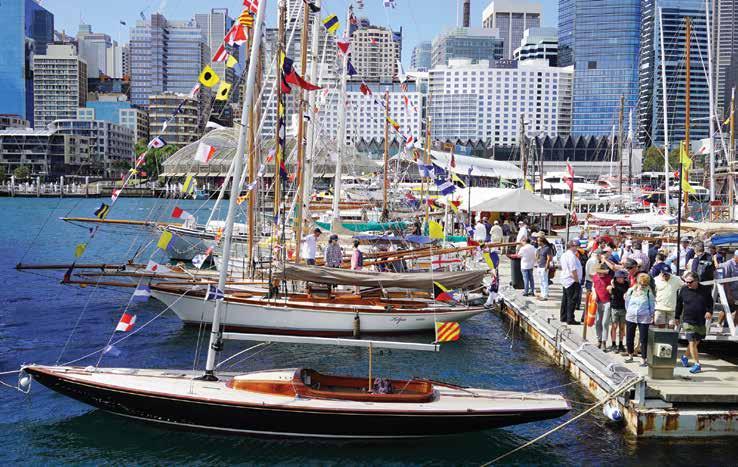
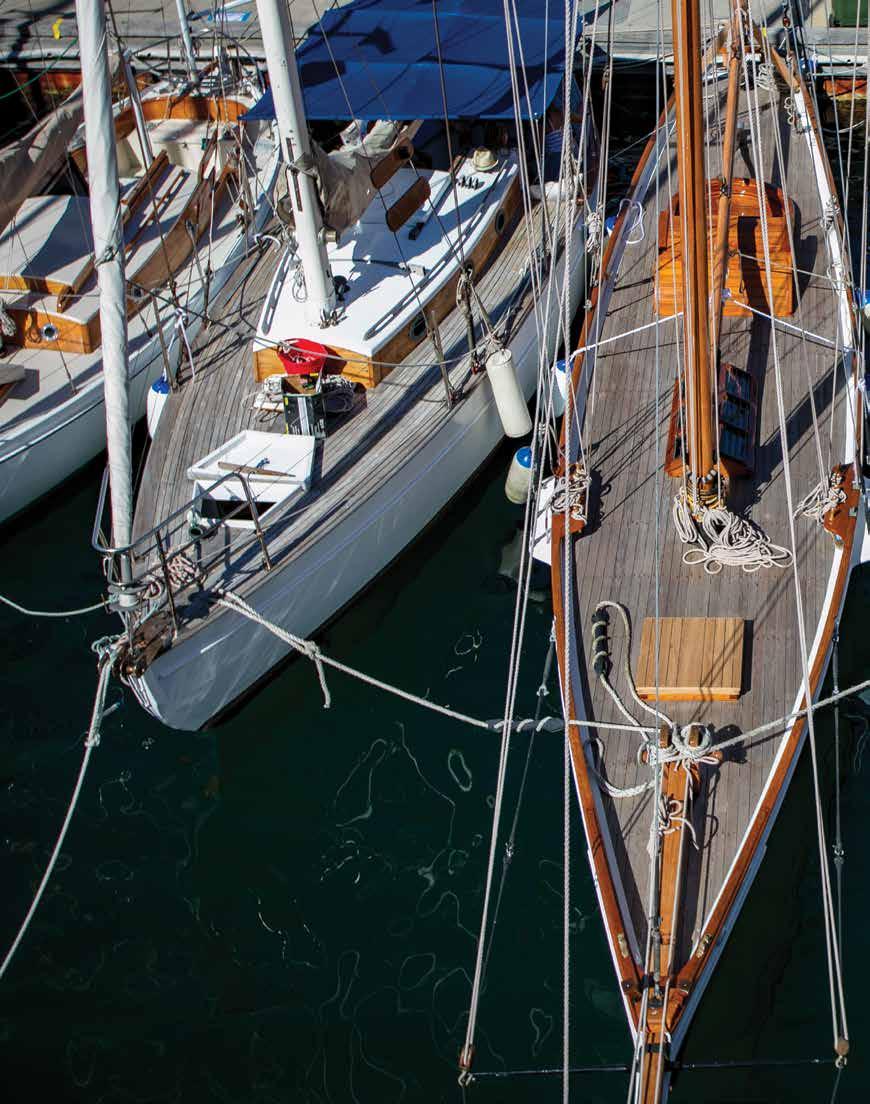 01 From centre to right: Akarana, Jenny Wren and Kelpie, three of the oldest yachts on Sydney Harbour.
Image Andrew Frolows/ANMM
01 From centre to right: Akarana, Jenny Wren and Kelpie, three of the oldest yachts on Sydney Harbour.
Image Andrew Frolows/ANMM
Classics up close
CLASSIC & WOODEN BOAT FESTIVAL
2018
The latest of our biennial Classic & Wooden Boat Festivals this April celebrated the beauty and diversity of Australia’s heritage vessels and the skills of their craftspeople.
By
Curator of Historic Vessels David Payne.
01
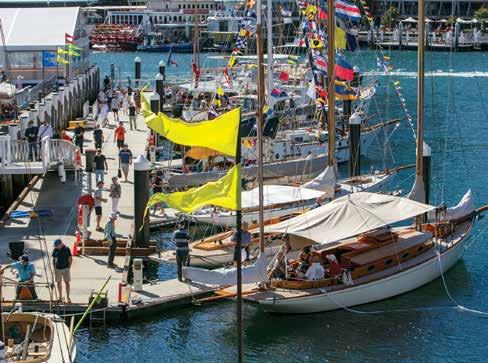
MORE THAN 33,000 VISITORS converged on Darling Harbour and Cockle Bay from 13–15 April, joining trade and food stalls, artisans and entertainers to enjoy the atmosphere of the Classic & Wooden Boat Festival
Among the 130 visiting boats, some of Australia’s most outstanding and prominent craft showed off their style and elegance, while highlighting the craftsmanship that goes into maintaining these vessels.
SY Ena and Hurrica V were centre stage. Both were built by W M Ford Boatbuilders of Sydney and have undergone multimilliondollar rebuilding and restoration projects. They exemplify classic Edwardian elegance, reflecting their original status as gentlemen’s yachts: Ena under steam and Hurrica V with sails.
Both yachts also went to war: SY Ena was HMAS Sleuth during World War I, while Hurrica V fought in the waters of Papua New Guinea in World War II as HMAS Stingray. They both have led colourful lives, and are now wonderful examples of a bygone era.
Joining SY Ena and Hurrica V were two other gentlemen’s yachts, the schooner Boomerang from Sydney Heritage Fleet and Landseer III, a 40-foot (12.2-metre) yawl that is an example of a smaller Edwardian yacht. They too were built nearby, across the water in Berrys Bay and at McMahons Point.
SY Ena, Landseer and Boomerang are all Walter Reeks designs, but another lovely craft from W M Ford is Sao, which, at around 25 feet (7.6 metres) long, shows that they also built small craft when requested.
An equally elegant craft making its first appearance at this festival was the long and lean Defiance, designed and built by Ernest Digby and originally from Victoria. Its varied career included racing in the Sydney to Hobart. Defiance was given an extensive restoration by its current owner and, in fact, continues to regularly race on the harbour, often winning its division. It was matched by the six Metre class Sjö Ro, and both epitomise the proportions of the ‘Metre’ boats from the 1920s and 30s (which, incidentally, led to a large number of classic craft being designed and built to the Metre boat rule).
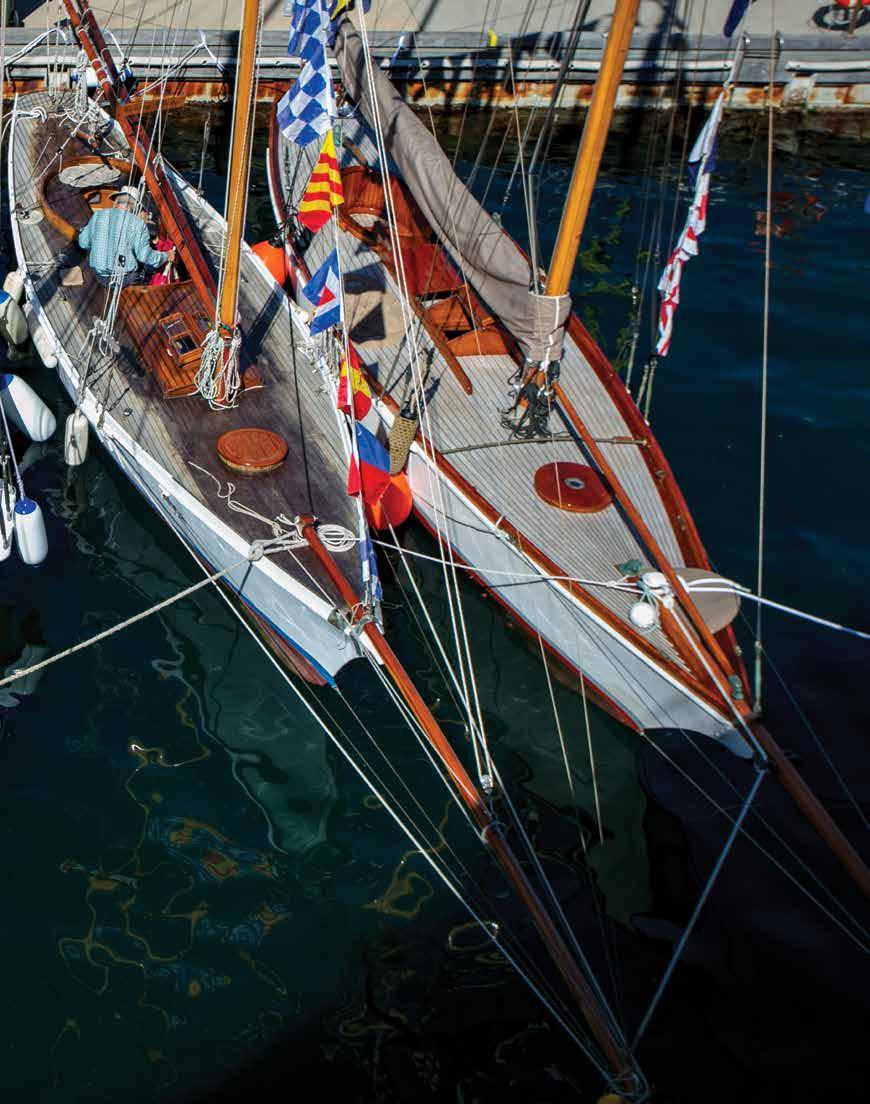
The festival once again brought together classic craft to show off their shared stories and relationships. Kelpie (from 1893), Jenny Wren (1889) and Akarana (1888) are fine examples of early Sydney yachting. All three are gaff cutters, which raced for decades and show how the ‘plank-on-edge’ boats of the 1880s transformed into more seaworthy designs with a greater beam by the early 1890s. They also all have similar clipper bows and long overhanging sterns.
Also in attendance were the three yachts once owned by Sydney marine artist and round-the-world sailor Jack Earl
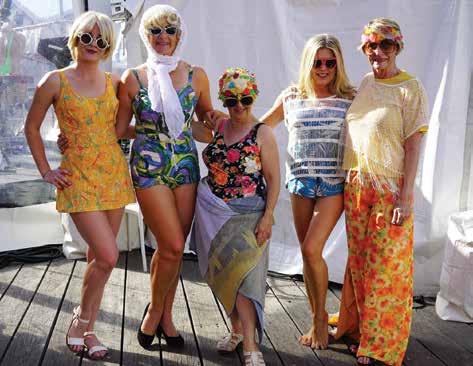
01 Museum staff and friends took part in the ever-popular parade of swimsuits through the ages. Image Inger Sheil/ANMM
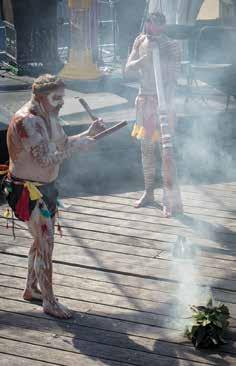
02 Matthew Doyle and Brock Tutt performed a Welcome to Country. Image Andrew Frolows/ ANMM
03 Landseer III in the foreground, with Defiance and Windward I. Image Andrew Frolows/ ANMM
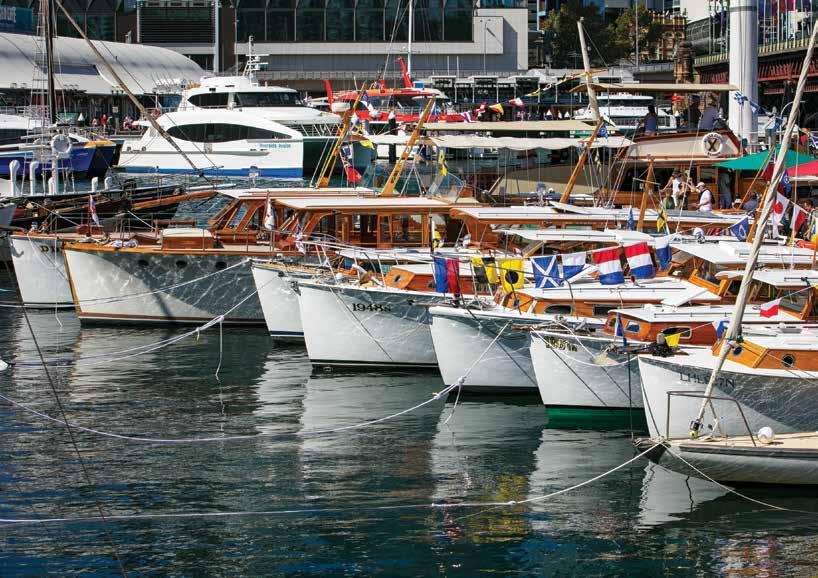
04 The Halvorsen Club fleet. Image Andrew Frolows/ANMM
14 SIGNALS 123 JUNE–AUGUST 2018 02
01
One group that always puts on a show is the Halvorsen Club fleet
04 03
16 SIGNALS 123 JUNE–AUGUST 2018 02 03 01
Also in attendance were the three yachts once owned by Sydney marine artist and round-the-world sailor Jack Earl. His original yacht, Kathleen Gillett, which circumnavigated the world during 1947/48, was joined by his next yacht Maris, an elegant Tasman Seabird design by Alan Payne, and his last yacht – a real gem – the little Len Randell–designed Smoky Cape
A key reason so many heritage vessels survive is that they move into a new life as recreational craft
One group that always puts on a show is the Halvorsen Club fleet. These are collectors’ items, but you need to be a special collector to take on restoring a big 65-foot (20-metre) long luxury cruiser like Silver Cloud Silver Cloud is a stunning example of craftsmanship, both past and present, but some of the smaller Halvorsens are brought up to a similar standard too.
Onshore were exciting powerboats, the traditional 18-foot skiff Yendys and some rowing craft. Within the fleet many working craft were represented, such as the tug Van. They have classic lines and are now well cared for as private vessels. This highlights a key reason so many heritage vessels survive: they move into a new life as recreational craft.
Two events which are always a hit during the festival were back: the parade of swimsuits through the ages and the Quick ‘n’ Dirty boatbuilding challenge. The latter may not be classic designs, but these boats always entertain the spectators while they are being built – and even more so when they are launched, as there are always a few spills along the short course they attempt to paddle and/or sail on.
The festival once again brought together classic craft to show off their shared stories
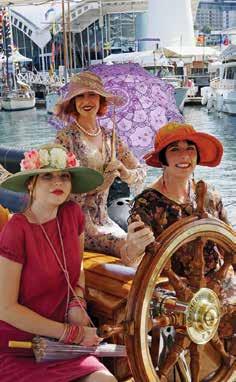
01 Museum staff and friends modelling 1920s fashions. Image Inger Sheil/ANMM
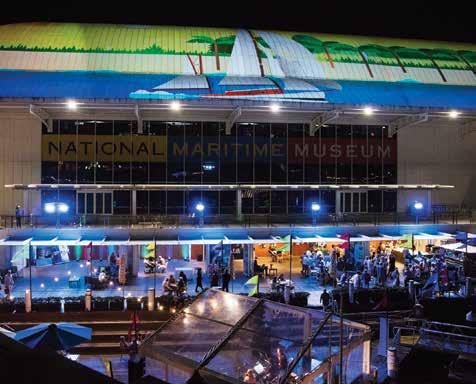
02 The museum’s waterfront on the opening night of the festival. Image Andrew Frolows/ANMM
03 The elegant yachts on display included the Dragon class Intrigue with Kelpie behind. Image Image Andrew Frolows/ANMM
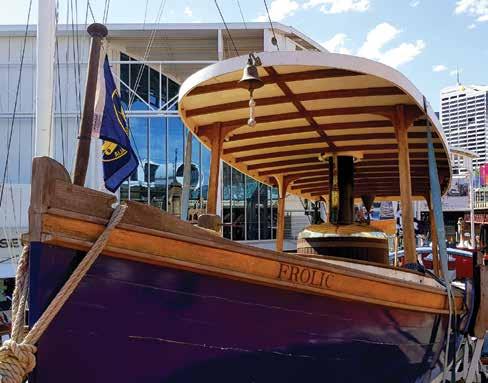
04 Frolic was one of the trailable boats displayed ashore. Image Andrew Frolows/ANMM
The next Classic & Wooden Boat Festival, the final in our current series of three, will be held in 2020.
AUSTRALIAN NATIONAL MARITIME MUSEUM 17
04
The strong fight by Indigenous peoples for land rights most definitely included the sea
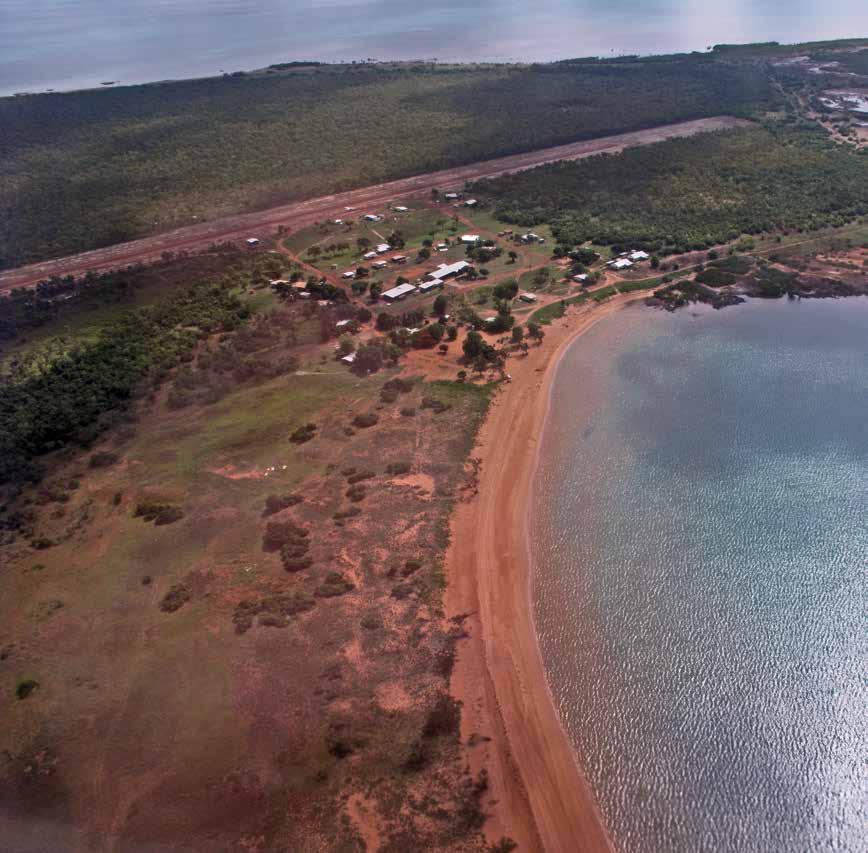
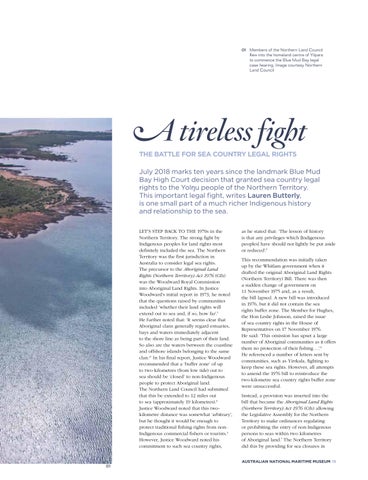
01 Members of the Northern Land Council flew into the homeland centre of Yilpara to commence the Blue Mud Bay legal case hearing. Image courtesy Northern Land Council
A tireless fight
THE BATTLE FOR SEA COUNTRY LEGAL RIGHTS
July 2018 marks ten years since the landmark Blue Mud Bay High Court decision that granted sea country legal rights to the Yolŋu people of the Northern Territory. This important legal fight, writes Lauren Butterly, is one small part of a much richer Indigenous history and relationship to the sea.
LET’S STEP BACK TO THE 1970s in the Northern Territory. The strong fight by Indigenous peoples for land rights most definitely included the sea. The Northern Territory was the first jurisdiction in Australia to consider legal sea rights.
The precursor to the Aboriginal Land Rights (Northern Territory) Act 1976 (Cth) was the Woodward Royal Commission into Aboriginal Land Rights. In Justice Woodward’s initial report in 1973, he noted that the questions raised by communities included ‘whether their land rights will extend out to sea and, if so, how far’.1
He further noted that: ‘It seems clear that Aboriginal clans generally regard estuaries, bays and waters immediately adjacent to the shore line as being part of their land. So also are the waters between the coastline and offshore islands belonging to the same clan.2’ In his final report, Justice Woodward recommended that a ‘buffer zone’ of up to two kilometres (from low tide) out to sea should be ‘closed’ to non-Indigenous people to protect Aboriginal land.
The Northern Land Council had submitted that this be extended to 12 miles out to sea (approximately 19 kilometres).3
Justice Woodward noted that this twokilometre distance was somewhat ‘arbitrary’, but he thought it would be enough to protect traditional fishing rights from nonIndigenous commercial fishers or tourists.4 However, Justice Woodward noted his commitment to such sea country rights,
as he stated that: ‘The lesson of history is that any privileges which [Indigenous peoples] have should not lightly be put aside or reduced’.5
This recommendation was initially taken up by the Whitlam government when it drafted the original Aboriginal Land Rights (Northern Territory) Bill. There was then a sudden change of government on 11 November 1975 and, as a result, the bill lapsed. A new bill was introduced in 1976, but it did not contain the sea rights buffer zone. The Member for Hughes, the Hon Leslie Johnson, raised the issue of sea country rights in the House of Representatives on 17 November 1976.
He said: ‘This omission has upset a large number of Aboriginal communities as it offers them no protection of their fishing …’.6
He referenced a number of letters sent by communities, such as Yirrkala, fighting to keep these sea rights. However, all attempts to amend the 1976 bill to reintroduce the two-kilometre sea country rights buffer zone were unsuccessful.
Instead, a provision was inserted into the bill that became the Aboriginal Land Rights (Northern Territory) Act 1976 (Cth) allowing the Legislative Assembly for the Northern Territory to make ordinances regulating or prohibiting the entry of non-Indigenous persons to seas within two kilometres of Aboriginal land.7 The Northern Territory did this by providing for sea closures in
AUSTRALIAN NATIONAL MARITIME MUSEUM 19 01
The Blue Mud Bay case was about the Yolŋu peoples’ fight for the intertidal zone – the piece of country that is sometimes wet and sometimes dry
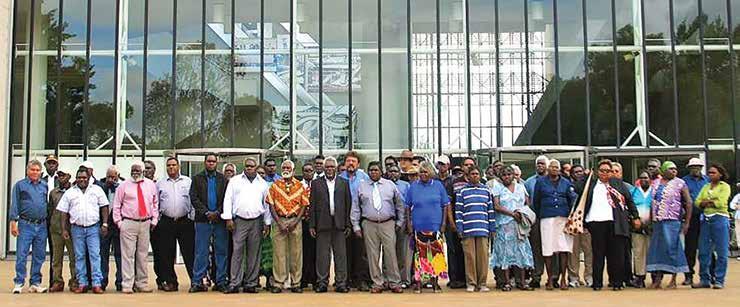
01 Yol ŋ u traditional owners and Northern Land Council executives in Canberra to witness the historic High Court Sea Rights decision.
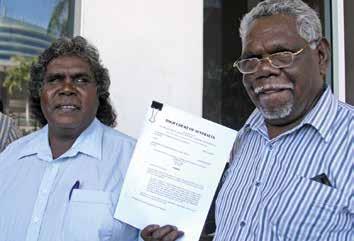
02 Blue Mud Bay case plaintiffs Djambawa Marawili AM (left) and former Northern Land Council Chair and Land Rights campaigner Mr Wunu ŋ murra (since deceased).
03 Claimants in the Blue Mud Bay case, from left: Day ŋ awa (2) Ŋurruwut’thun (since deceased), Mulkun Wirrpanda, Djambawa Marawili am, Marrirra Marawili. All images courtesy Northern Land Council. Reproduced with permission
the Aboriginal Land Act (NT), yet any non-Indigenous person who held a current commercial fishing licence was exempted from this and therefore could continue fishing in these ‘closed seas’.8 Further, applications for sea closures were a long and expensive process, involving lawyers and a multiple-day hearing before a Land Rights Commissioner. Only two sea closures were ever granted9 and that was back in the 1980s, although the law still exists on the books. The fight then shifted towards native title. Mabo (No 1)10 did, in fact, contain a claim that the Meriam people had inhabited and possessed the islands and ‘their surrounding seas, sea-beds and fringing reefs’ and claimed native title to these areas. However, a technical legal issue saw this aspect of the claim not go to the High Court in Mabo (No 2) 11 Yet, at a symposium in 1993, just one year after the Mabo (No 2) decision, the eminent professor of native title law, Richard Bartlett, stated: ‘Mabo extends to the sea. There may be problems of proof, but they will be no more onerous than on land’.12
The first legal fight for native title to sea country also occurred in the Northern Territory: the people of Croker Island went to the High Court and had native title recognised to their seas surrounding their island in 2001.13 We have now seen a number of successful native title claims to sea country – including around Blue Mud Bay,14
as well as the largest-ever native title claim to the sea in the Torres Strait.15
That determination stretches for 44,000 square kilometres and includes a historic right to fish commercially.
All native title determinations to the sea are non-exclusive, which means that the native title holders cannot control who accesses their sea country. This non-exclusivity is due to the international law right of innocent passage and the public rights to fish and navigate which came from English legal traditions. A now-retired High Court judge, the Hon Michael Kirby AC CMG, expressed frustration at this reasoning. He said the view that native title rights to the sea could only ever be non-exclusive was ‘unduly narrow’, and ‘the situation of this group of indigenous Australians [in the Yarmirr/ Croker Island case] appears to be precisely that for which Mabo (No 2) was decided and the [Native Title] Act enacted’.16
Then came the fight for Blue Mud Bay. The Blue Mud Bay case 17 was about the Yol ŋu peoples’ fight for the intertidal zone – the piece of country that is sometimes wet and sometimes dry. To the Yol ŋu peoples, there was and is no distinction between wet and dry, it is all their country. The legal question was whether the intertidal zone was ‘Aboriginal land’ under the Aboriginal Land Rights (Northern Territory) Act. But really, this case was about controlling access –
20 SIGNALS 123 JUNE–AUGUST 2018
01
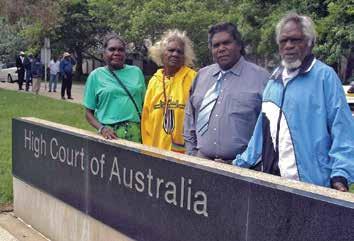
who could access those waters, and did they need permission from the traditional owners of the sea country? The practical outcome of the Blue Mud Bay case was that entry onto waters over Aboriginal land, for a purpose such as fishing, requires permission from the relevant Aboriginal Land Trust. This was exclusive ownership. Further, this case applies to approximately 85 per cent of the coastline of the Northern Territory.18 This case is one of the most important in the history of Aboriginal land rights.
The first legal fight for native title to sea country occurred in the Northern Territory
Negotiations are ongoing with the Northern Territory government about the outcome of the Blue Mud Bay case 19 What must be at the forefront of these negotiations is that the Blue Mud Bay case was a powerful affirmation of the existing legal rights of Traditional Owners on the Northern Territory coastline.
In each of these examples – sea closures, native title and the intertidal zone – strong Indigenous sea country communities have fought tirelessly, even in the face of legal setbacks along the way.
1 Justice Woodward, Aboriginal Land Rights Commission: First Report, 1973, p 33.
2 Ibid.
3 Justice Woodward, Aboriginal Land Rights Commission: Second Report, 1974, p 80.
4 Ibid, 81.
5 Ibid, 82.
6 Commonwealth, House of Representatives, Parliamentary Debates, 17 November 1976, p 2789 (the Hon Leslie Johnson).
7 Aboriginal Land Rights (NT) Act 1976 (Cth), s 73(1)(d).
8 Aboriginal Land Act (NT), ss 12 and 18.
9 The sea closures are located off the coast of Arnhem Land – the Milingimbi, Crocodile Island and Glyde River area and Howard Island/ Castlereagh Bay area.
10 Mabo v Queensland [1988] HCA 69.
11 Richard Bartlett, ‘Aboriginal Sea Rights at Common Law: Mabo and the Sea’ in Turning the Tide: Papers Presented at the Conference on Indigenous Peoples and Sea Rights, 14–16 July 1993, Darwin, pp 10–11.
12 Ibid, p 17.
13 Commonwealth v Yarmirr [2001] HCA 56.
14 Gumana v Northern Territory (2005) 141 FCR 457.
15 Akiba on Behalf of the Torres Strait Regional Seas Claim Group v Commonwealth of Australia [2013] HCA 33.
16 Commonwealth v Yarmirr [2001] HCA 56 [320].
17 Northern Territory of Australia v Arnhem Land Aboriginal Land Trust [2008] HCA 29.
18 Northern Territory of Australia & Anor v Arnhem Land Aboriginal Land Trust [2007] HCATrans 324 (21 June 2007).
19 For further analysis on this point see: Lauren Butterly, ‘A decade on: What happened to the historic Blue Mud Bay case (and why is it in the news again)?’ on AUSPUBLAW (20 June 2017) auspublaw.org/2017/06/what-happened-to-thehistoric-blue-mud-bay-case/.
This article is an edited transcript of a presentation given by Lauren Butterly at the Nawi: Travelling our Waters symposium held at the museum in November 2017.
Images in this article have been reproduced with kind permission of the Northern Land Council.
Lauren is a Lecturer at UNSW Law. She researches in the areas of native title, Indigenous heritage, environmental law and administrative law. She has particular expertise in relation to legal rights to sea country. Lauren holds a Bachelor of Arts (History) specialising in Indigenous history and a Bachelor of Laws with First Class Honours, both from the University of Western Australia.
AUSTRALIAN NATIONAL MARITIME MUSEUM 21
03 02
01
Warning: This article contains some words and terms used in the past by non-Aboriginal people that would be considered inappropriate today. It also contains graphic descriptions of violence.
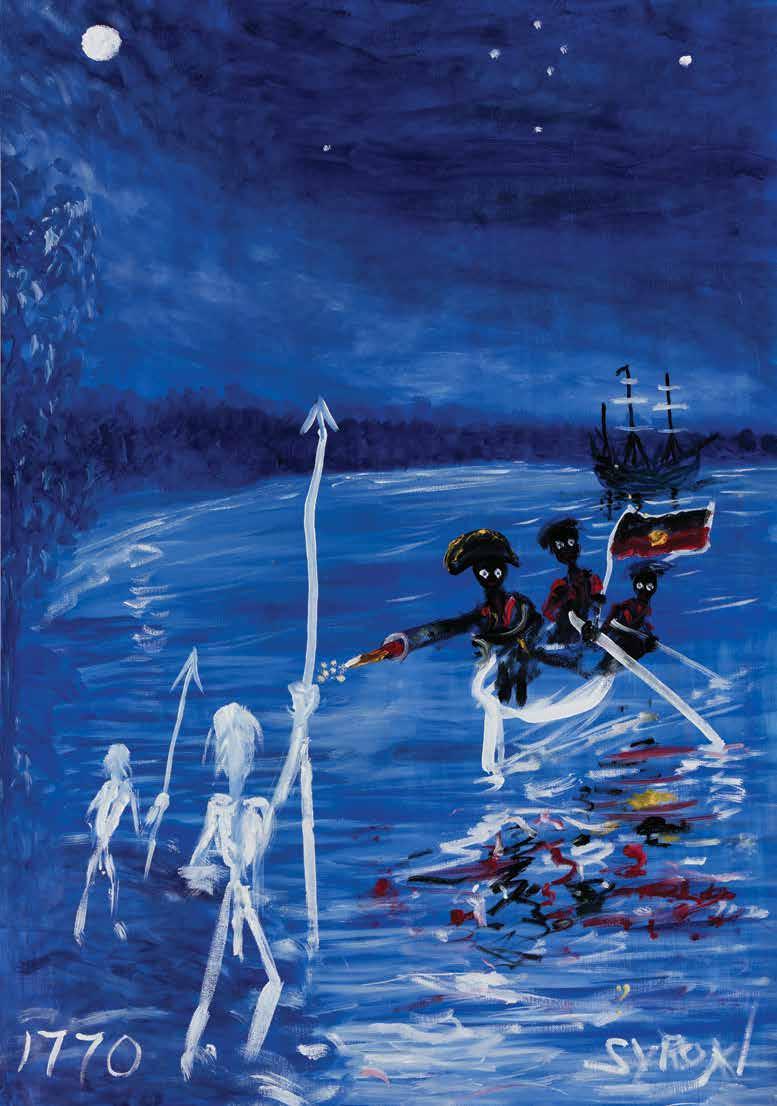
01 Black Bastards Are Coming © Gordon Syron, 2013. This work re-imagines European contact from an Indigenous perspective. The artist reverses the roles of first contact by depicting black soldiers in military red coats, approaching shore and firing guns at the white people standing in the shallows. ANMM Collection 00054536, reproduced courtesy Gordon Syron
Contested waterways
ABORIGINAL RESISTANCE IN EARLY COLONIAL SYDNEY
The importance of waterways in contests over resources has been recognised as a major reason for conflict between Europeans and First Nations people. But there has been little focus on how watercraft were used in warfare. Curator Dr Stephen Gapps has researched the subject, and also introduces new historical information from a recent museum acquisition that locates the site of the first confirmed deaths of Europeans at the hands of Aboriginal warriors.
IN THE FIRST DECADE of the British colony at Port Jackson, Aboriginal warriors in canoes conducted numerous raids on land and against British vessels, during the first conflict and resistance to the occupation of Aboriginal lands and waterways. Canoes were important cultural property in Aboriginal Sydney in 1788. As the Europeans soon found out, nawi – Sydney tied-bark canoes – were prized possessions. During March and April 1788, just weeks after the colonists had arrived, several straggling convicts were beaten and speared outside the British encampment at Sydney Cove. In May, the bodies of convicts William Okey and Samuel Davis were brought back to the settlement by Captain Campbell. They had been found ‘murdered by the natives in a shocking manner’. Okey had been speared several times and his skull split open, according to Surgeon White, ‘so much that his brains easily found a passage through’.
Governor Arthur Phillip and his military officers believed that these violent and gruesome deaths ‘must have been provoked’ by the convicts. The suspicions of JudgeAdvocate David Collins were confirmed
when inquiry was made and it appeared ‘these unfortunate men had, a few days previous … taken away and detained a canoe belonging to the natives’. Phillip suggested the warriors had acted ‘in their own defence, or in defending their canoes’.
New evidence
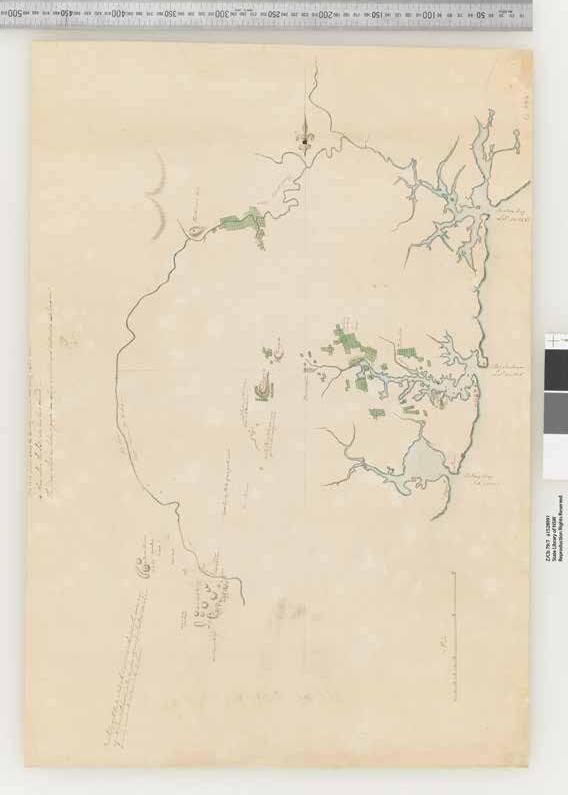
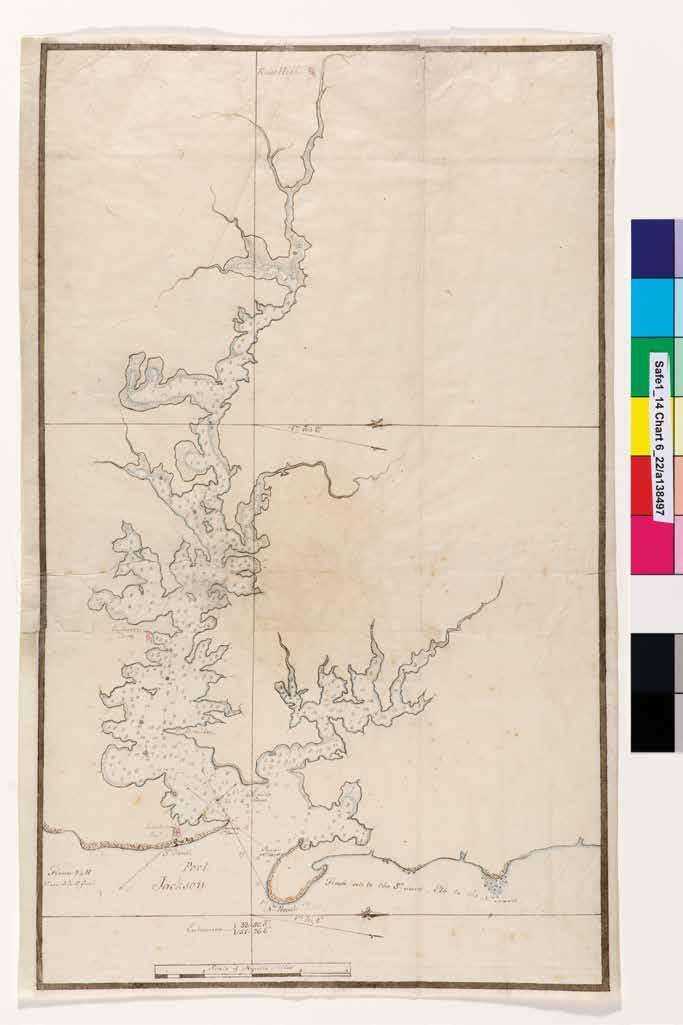
The deaths of these two convicts, who had been collecting rushes for thatch, had long been assumed by historians to have been at present-day Rushcutters Bay, although several colonial journals record the location as ‘up the harbour’. Recently, historians have suggested this was likely to have been Darling Harbour. However, the museum’s new acquisition of The Log of HMS Sirius 1787–1792 by William Bradley (see article on page 60) includes a 1788 survey of Port Jackson which has not previously been published and which was in a private collection. Importantly, the survey includes several place names around the harbour that do not appear in any subsequent maps, surveys or published journals (see map on pages 62–63). One such name is ‘Bloody Point’, located in Iron Cove, west of Leichhardt Bay, on a spit of land
where the UTS (University of Technology Sydney) Rowers Club sits today. It is almost certain that this is the location of the campsite of Okey and Davis, where their mutilated bodies were found.
While the colonists were quick to note how important canoes were to the Sydney people for use in fishing and travelling around the harbour, they also began to notice their utility in swift raids. In August 1788, Surgeon John White described how ‘a few days since the natives landed [from their canoes] near the hospital, where some goats belonging to the Supply were browsing, when they killed, with their spear, a kid, and carried it away’. Collins added that the raiding party had come ashore in five canoes, in which they escaped up the harbour with the freshly speared goat. In September, canoes were used in an attempted raid. Several nawi landed ‘above 30 natives’ at Dawes Point, ‘it was supposed after some of the sheep there’. According to Collins, they were met by ‘two gentlemen’ and, ‘after throwing some stones, they took to their canoes and paddled off’. In early 1789, a coxswain was speared after he took a nawi
AUSTRALIAN NATIONAL MARITIME MUSEUM 23
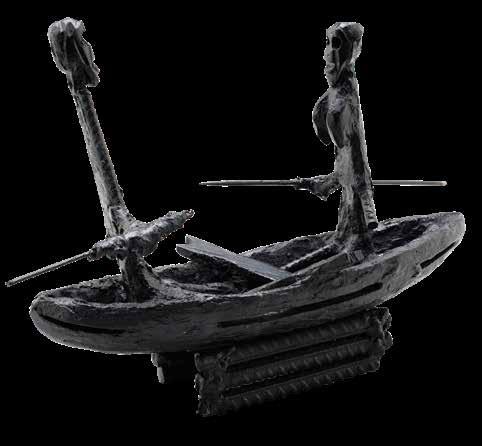
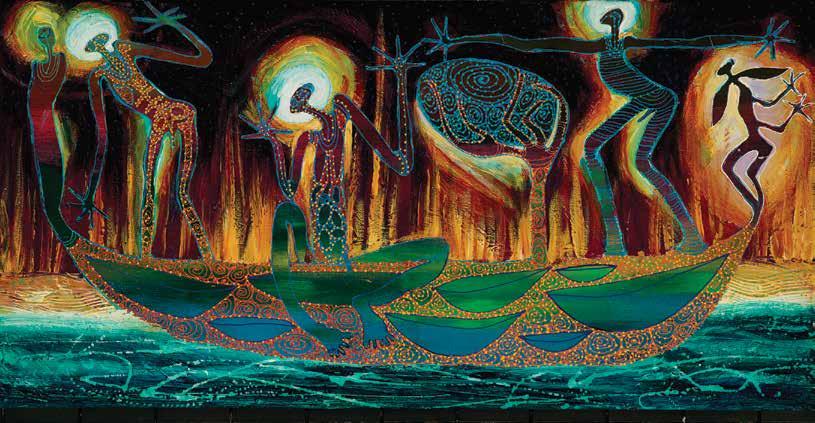
The historical importance of watercraft in Indigenous communities continues to inspire much contemporary artwork
01 Man and Woman in Canoe, Garth Lena, 2011. Purchased with funds from the Sid Faithfull and Christine Sadler program supporting contemporary Indigenous maritime heritage in Far North Queensland and the Torres Strait Islands through the ANM Foundation.
© Garth Lena/Licensed by Copyright Agency, 2017. ANMM Collection 00054527
02 Study for First Voyage to Possession Island, Arone Meeks, 2012. This work reflects upon the personal and cultural relevance of the artist’s own journey to this historically loaded site, which he sees as both a physical marker of first contact and a symbolic divider between our post and pre-settlement histories.
© Arone Meeks/Licensed by Copyright Agency, 2017. ANMM Collection 00054538
The British response to ongoing attacks on the water and at the water’s edge was to carry more firearms in their boats.
As Jacob Nagle, an American sailor on HMS Sirius, noted, ‘The natives ware now so troublesome that we ware allow’d a musket in the boat, as we were constantly up and down the harbor’.
Although nawi were often described as flimsy craft, several colonists noted how quickly the canoes could move through the water. Nawi were extremely versatile –swift and silent and easily landed anywhere. They were well suited to lightning raids and hasty retreats in the increasing guerilla warfare campaign that was hemming the colonists inside their encampment, unable to go outside the ‘lines of limitation’ without firearms or an escort of soldiers.
In April 1789, however, the nature of the warfare in and around Sydney was irrevocably changed. Aboriginal people were decimated by the disease they called galgala – probably smallpox – which killed hundreds of people, including around half of all the warriors in the region.
Striking terror
Yet resistance warfare and conflict continued even after the smallpox devastation. Nawi were used to escape from punitive expeditions and roaming parties of armed Europeans. In December 1790, Lieutenant Watkin Tench’s expeditions to Botany Bay to punish the killers of two convicts were unsuccessful – not so much because they became stuck in the mud of the Cooks River up to their armpits, but because Aboriginal people escaped his soldiers by canoe. On the second expedition Tench conducted a well-planned campaign by feigning a march to the north, then turning back to the south and force-marching by moonlight. At the ‘nearest point of the north arm’ of Botany Bay, the soldiers saw a large group of Aboriginal people who promptly fled in three canoes that Tench described as ‘filled with Indians’. Their nawi undoubtedly saved these people, as Phillip had ordered Tench to bring back six Aboriginal heads in order to strike terror into the Sydney people.
In late 1790 the pressure on fish stocks in the harbour was great and Aboriginal people used their nawi to bail up the colonists’ fishing boats. At one point, Bennelong –a noted warrior, and later good friend of Governor Phillip – joined the raids, and ‘at the head of several of his tribe’, robbed some people who were out fishing. He persuaded them to hand over their fish by the threat of ‘several spears in his canoe’.
By 1791, orders were issued that all boats should go out armed, and ‘the native people’ were forbidden from certain parts of the harbour. Then in June some convicts destroyed a nawi belonging to Balloderry. According to Collins, Balloderry ‘threatened to take his own revenge, and in his own way, upon all the white people’. Even after he witnessed the guilty convicts being flogged as punishment, Balloderry wanted further justice, on his terms. A few weeks later, ‘when everyone thought [Balloderry] was sufficiently repaid for his misfortune’, a convict who had strayed from the settlement was suddenly struck by spears. He managed to escape, but Balloderry had upheld his threat.
24 SIGNALS 123 JUNE–AUGUST 2018 01
‘...
paid for their rashness’
From 1792 conflict subsided in the Sydney and Parramatta districts, but by 1795, resistance warfare had broken out on the newly occupied areas of Darug and Darkinjung lands along the Hawkesbury River near present-day Windsor. The river proved to be of tactical importance, with several water-based raids and skirmishes. In late 1795, ‘the natives at the river’ attacked a man ‘who had been allowed to ply with a passage-boat between the port of Sydney and the river, and wounded him (it was feared mortally) as he was going with his companion to the settlement.’ This was the second ambush attack of vessels along the river.
In late 1797, there were another two attacks on vessels – this time on the lower Hawkesbury River near Broken Bay. One vessel was apparently boarded by ‘a party of natives in canoes’ who killed the sailors and took the corn they were transporting. The second attack saw a group of Aboriginal people approach a vessel and, after offering friendly greetings, being invited on board.
They then attempted to sieze the sailors’ weapons and a struggle ensued. They were overcome, but as Collins described it, ‘not before some of these unexpected pirates had paid for their rashness with their lives’. Governor Hunter was forced to send military detachments with vessels going back and forth from Green Hills (Windsor) to Sydney along the Hawkesbury River. At the same time (in late October or early November), when a boat that went missing on the Hawkesbury was discovered in the possession of some Aboriginal people, the assumption was that they had killed the crew.
As the settlers moved to take up land for farming on the rivers and creeks of the Cumberland Plain, Aboriginal people used the waterways to conduct raids on the farms, forcing many settlers on the river to abandon their properties. Another period of intense conflict began in 1804. At the Georges River and at Lane Cove, several raids were conducted by warriors who used nawi to approach farms and carry off crops and supplies. In August that year at the Georges River a settler, according to the Sydney Gazette newspaper, was talking to a group
of Aboriginal men while ‘in the very interim a body of their colleagues were busily employed in clearing a whole acre of corn, which they carried off either in canoes or on their shoulders’.
The British response to ongoing attacks on the water and at the water’s edge was to carry more firearms in their boats
Although sporadic and opportunistic (the hallmarks of guerilla warfare), the attacks on European vessels along the Hawkesbury were at times fierce. In April 1805 there were several incidents at Broken Bay. Two men employed as salt boilers on Dangar Island had all their clothing and supplies taken at spear point, forcing them to march naked back to Sydney, a distance of some 60 kilometres. At Pittwater, a group of canoes approached the William
AUSTRALIAN NATIONAL MARITIME MUSEUM 25 02
This was followed by an attempt on the Richmond, when a ‘small boat was decoyed into a small inlet by an old native who called himself Grewin’. According to the Gazette, ‘a powerful banditti then shewed themselves’, and fortunately for the boat’s crew, the Richmond appeared. When Grewin asked if it carried any guns, and was told that it did, they left the ship’s boat alone.
In June, ‘A Settler’ wrote to the Sydney Gazette bemoaning the plundering of crops along the Hawkesbury River. A government order had been issued in April that required all boats along the river to be ‘secured with a lock and chain, and the oars to be taken out’. The writer suggested the ‘propriety of discouraging as much as possible the use
of bark canoes, which can only be effectually accomplished by destroying every such vehicle upon the river, unless occupied by or known to belong to the natives themselves’. It seems (as was the case in many instances of cultural exchange in colonial Australia) that many settlers on the river had learnt the value of the light, swift and stealthy nawi and were using them to steal crops and stock at night. The writer noted how bark canoes were ‘peculiarly adapted to the purposes of silent travel’ and he attributed the disappearance of his crops and poultry to their utility.
An ‘implacable spirit’
In September 1805, a bold attack was launched on the Hawkesbury River. Chief Constable, land owner and businessman Andrew Thompson (convicted in 1790 of stealing, but by this time the richest man in the colony) operated a small fleet of vessels from Green Hills, trading and transporting goods and people. One of his vessels, the Hawkesbury, was at Mangrove Point.
The crew were resting below decks when the vessel’s master, Pendergrass, heard a whisper on deck. According to the Gazette newspaper report of the incident, ‘he started suddenly and looking up the hatchway, beheld several natives with spears, the foremost of whom, Woglomigh, seized hold of him, and the old man gaining the deck, maintained a struggle unheard by any of his companions’.
Pendergrass was wounded in the hand by a spear destined for his breast. At this point a crewman rushed up on deck with a pistol and shot Woglomigh through the head, ending the fray as the other warriors then leapt overboard and swam for shore. Among them was Branch Jack – according to the Gazette, ‘the leader and chief’ of the Hawkesbury warriors. The rest of the crew came up on deck and began shooting at the swimming Branch Jack, who apparently ducked several times but was ‘mortally wounded in the head’. The Gazette applauded the death of Woglomigh, whom it called ‘one of the most noxious and rancorous pests of that
26 SIGNALS 123 JUNE–AUGUST 2018
Sydney Cove
Dawes Point
Lane Cove River
Bloody Point
Gadigal lands
Cammeragal lands
Wallumedagal lands
Wangal lands
Botany Bay
Cooks River
Georges River
Cumberland Plain
Windsor
Lower Hawkesbury Dangar Island
Pittwater
Mangrove Point
There were numerous raids conducted in canoes, as well as attacks by Aboriginal warriors on British vessels
01 Map of Botany Bay, Port Jackson (including Sydney Harbour and the Parramatta River) and Broken Bay (including the Hawkesbury River and Pittwater), drawn by John Hunter, 1796. Annotations refer to places mentioned in this article. ANMM Collection 00046047
02 Map showing Sydney Harbour, Middle Harbour and the lower reaches of the Parramatta River. Annotations indicate Aboriginal lands in the area and sites mentioned in this article. State Library of NSW FL3541995
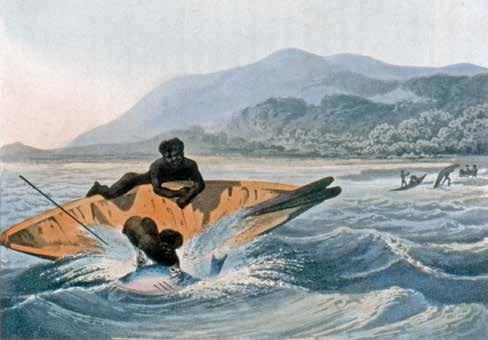
03 Coloured aquatint titled Fishing No 2, 1813, depicting two Aboriginal men in a canoe spearing fish. Nawi were, in fact, mostly used by women for fishing with hook and line. Engraved by M Dubourg after an image by John Heaviside Clark. ANMM Collection 00004390
part of the river Hawkesbury’, and warned its readers that without firearms the crew’s resistance to being overpowered by this ‘impetuous and daring tribe’ might have been futile. The brazen attack on the vessel ended with the death of two important leaders of the Hawkesbury warriors, Branch Jack and Woglomigh.
Even without their leaders, the Gazette bemoaned how ‘the implacable spirit of the Branch natives suffers no opportunity of mischief to escape’. They made an attack on the vessel Resource ‘with a shower of stones, thrown under the cover of brushwood’. The stones were reported as ‘weighty’ and their ‘velocity excessive’; the boat’s crew was taken unawares, and the vessel almost met with ‘disagreeable consequences’.
Colonial documentation of the use of nawi in warfare in the early years of the colony is limited, but shows they were indeed a factor in Aboriginal raids, attacks and resistance warfare. In the 19th century, Aboriginal people in the Sydney region
used rivers, creeks and waterways as places of refuge and survival after the devastation of colonisation. In his study of inland New South Wales and Victorian waterways, Fred Cahir has noted how Aboriginal people used their watercraft to assist Europeans in myriad ways, such as ferrying travellers across rivers, rescuing people in floods, and carting goods and stock. Further research into the often ignored use of watercraft and waterways by Aboriginal people during the rest of the more than 100 years of frontier warfare may add to the growing broader understanding and awareness of the various ways people resisted the colonisation of their country.
This article is based on research from Dr Stephen Gapps’s new book The Sydney Wars – Conflict in the early colony 1788–1817 (NewSouth Books, Sydney, ISBN 9781742232140). Due to space restrictions, footnotes have been omitted. They can be found online at bit.ly/contestedwaterways.
In the 19th century, Aboriginal people in the Sydney region used rivers, creeks and waterways as places of refuge and survival after the devastation of colonisation
AUSTRALIAN NATIONAL MARITIME MUSEUM 27 03
We have the wind in our sails
CHINESE–AUSTRALIAN YACHTING CONNECTIONS AT ANMM
China is not a country one usually associates with sailing, but this seems set to change. The sport, virtually unknown there two decades ago, is now growing rapidly, and the museum is developing strong connections with Chinese sailing interests.
By Senior Curator Daina Fletcher.
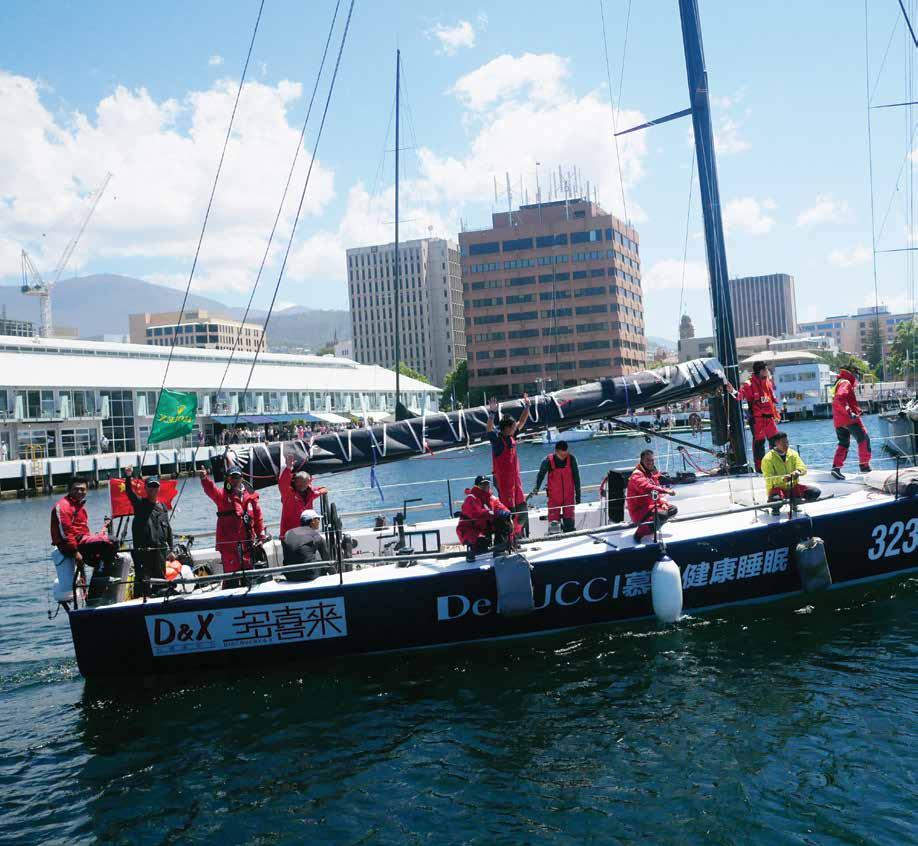
01 Derucci enters Constitution Dock, Hobart, after finishing the 2017 Sydney–Hobart race. All images courtesy Pharos Sports unless otherwise stated
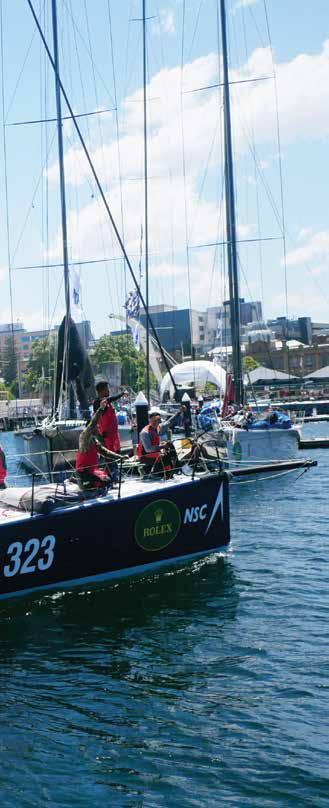
IN NOVEMBER LAST YEAR the museum hosted a visit from the Chinese yacht Derucci (formerly Ark 323), which was in Sydney preparing for the 2017 Rolex Sydney–Hobart Yacht Race. This was the second visit by a contender in the lead-up to the race – the preceding month the stunning supermaxi Wild Oats XI had graced our wharves for public tours. Derucci ’s visit showcased not only the international appeal of the iconic bluewater race, but also the sport of sailing in China, highlighting some surprising shared links between Australia and China beyond the contemporary complexities of trade and defence.
It is only 20 years since China’s first club, the Longcheer Yacht Club, was established in 1998
In tandem with Derucci ’s visit, the museum presented a seminar titled ‘We have the wind in our sails’ [ 共济沧海 ] about organised sailing in Australia and China. It was presented in association with Australian Sailing, the peak industry body for the sport in Australia; China Yachting magazine, the premier sailing publication in China, which was founded in 1998; and the Pharos Sports group, which represents the magazine in Australasia.
The audience comprised mainly Chinese and Mandarin tertiary students, mostly from mainland China and now studying at various Sydney universities. It also included tutors, translators and senior representatives from the local Chinese community. The seminar covered the history of sailing in Australia, the growth of the sport in China, learn-tosail programs in both countries and how the audience could become involved.
With the audience being newcomers to sailing and to Australia, I introduced Australia’s sailing history, and explained
how it is represented in the museum’s exhibitions and programs, in its historic fleet, and in keynote events such as the Classic & Wooden Boat Festival and initiatives such as the Australian Sailing Hall of Fame, developed in association with Australian Sailing.
Jacqueline Chan, founder of Pharos Sports, spoke about the benefits of sailing to personal and emotional well-being, and chronicled the incredibly rapid growth of sailing in China. It is only 20 years since the nation’s first club, the Longcheer Yacht Club, was established in 1998 in the south-eastern city of Shenzhen, Guandong Province, by general manager and now chair of the Guangzhou Yachting Association, Mr Xie Baiyi. Today there are close to 300 yacht clubs in major centres along the coast, such as at Sanya, Shenzhen and Xiamen in the south, Shanghai in the east and Qingdao in the north.
The number of racing events grows every year. Last year close to 100 events took place: weekly regattas at bustling Shenzhen; local events such as the Qionghai Sailing Regatta on a highland lake in Xichang, Sichuan Province, south-west China; and major international events such as the China Cup Regatta in Shenzhen, the China Club Open Regatta at Qingdao, and the Round Hainan Regatta.
China is estimated to have 60,000 sailors today, a number expected to more than double over the next three years, according to Madam Zhang Xiaodong, the current President of the Chinese Yachting Association and the first Chinese world champion of sailing. The sport is overseen by the Chinese Sailing Association with learn-to-sail programs that aim to develop sailors from introductory dinghies to keelboats. Chinese teams have competed internationally in dinghy sailing in all Olympic classes, and in bluewater events such as the Sydney–Hobart race, Volvo Ocean Race and the America’s Cup.
AUSTRALIAN NATIONAL MARITIME MUSEUM 29
01
02
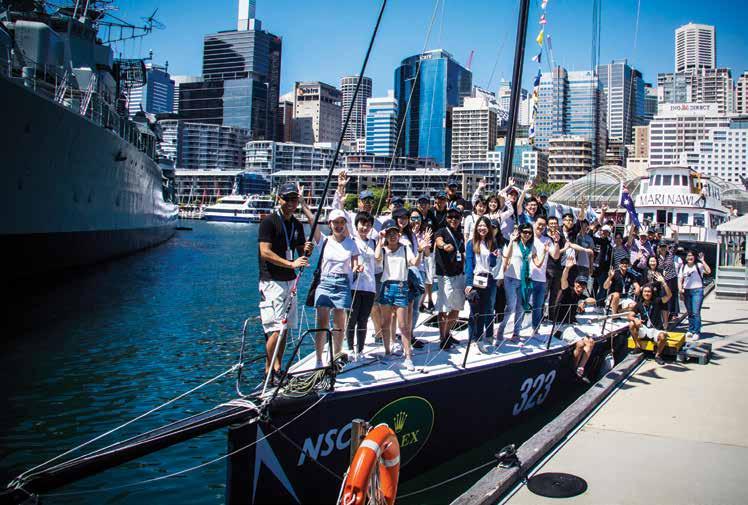
03 Derucci’s crews conducting tours for attendees of
China is estimated to have 60,000 sailors today, a number expected to more than double over the next three years
30 SIGNALS 123 JUNE–AUGUST 2018 02 01
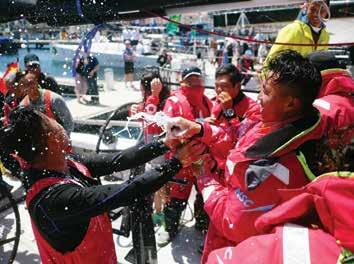
Derucci crew members celebrate in Constitution Dock, Hobart, after finishing the 2017 Sydney–Hobart race.
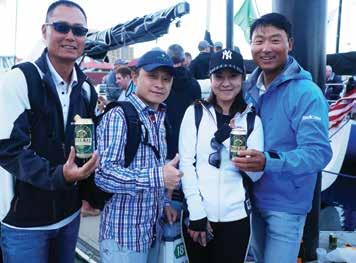
Zhang Yongdong (left) and Shen Sheng (right) celebrate in Hobart with Long Feng and Wendy Wang from the Hwa Yacht Club management team. Image courtesy Pharos Sports
the seminar. Image courtesy Kate Pentecost
China, while rising as a sailing power, is still a relative minnow in international competition when compared with yearround sailing countries such as Australia, which formed its first yacht clubs in the 1830s. Today Australian clubs number more than 350 and yield a tremendous depth of experience that sees Australian sailors in major international crews.
Megan McKay from Australian Sailing spoke about nurturing grass-roots competition and the role of recreational boating clubs and Australian Sailing as the governing body, pointing out that champions such as Tom Slingsby don’t start out on America’s Cup thoroughbreds. Students also heard how they could learn to sail while in Australia.
The high point of the seminar was the appearance of 24 members of Derucci
The skipper, navigator and key crew members were special guests in a panel presentation and Q and A session in Mandarin and English that thrilled the audience.
The Derucci team from the Noahs Group represents its reasonably new club, the Noahs Sailing Club, established in 2013 on the Shanghai waterfront in Lujiazui.
The Noahs Sailing Club is an international club committed to building professional sailing teams and developing the sport in China by participating in international sailing races and Sino–foreign cultural exchanges.
Simon Zhang, Director of Noahs Group (Australia), was joined on stage by general manager Sui Chunmu, skipper Dong Qing, team leader Yang Longshen and helmsman Chen Fulin for a presentation about their sailing program, titled Sailing with Spirit. As the team chronicled their experiences in two earlier Hobart races, one could see how central this ethos was to their vision.
Simon Zhang stated that despite the Noahs team’s youth and relative inexperience, all the crew were inspired about the vision and the value of teamwork as a key to well-being and success, despite set-backs. The panel members excited the audience with personal stories – how they became sailors in a nation not known for the sport – and compelling episodes from their sailing campaigns in the Rolex Sydney–Hobart Yacht Race. 2017 was to be the team’s third attempt to conquer the bluewater classic. In 2015, the Noahs campaign suffered a terrible tragedy when one crew member was lost on their way from Vietnam to Sydney for the yacht’s first Sydney–Hobart. The crew regrouped to continue the campaign but had to withdraw after a small collision with Ragamuffin at the start line resulted in damage to the transom.
Its next attempt in 2016 saw the boat suffer a critical gear failure, sustaining mainsail damage en route to Hobart. They persevered under reduced sail to finish the race, crossing the line after nearly five days, ahead of the last yachts.
The team did not give up. In preparation for the 2017 race the Noahs team came to Sydney three months before the race to train. The team featured key sailing stars from China today: skipper Dong Qing, one of China’s sailing pioneers; co-skipper Shen Sheng, an Asian Games gold medallist and China Yachting magazine’s Sailor of the Year for 2017; and navigator Zhang Yongdong, a national champion. Based at Woolwich Dock, they were trained by Australian coach Ben Morrison-Jack and tutored in navigation by Adrienne Cahalan.
Derucci was one of five sailing teams in the 2017 Hobart race that featured Chinese crewmembers
The carbon-fibre Derucci is a 15-metre-long TP52, built in 2006. After the seminar the students were able to tour the yacht on deck and below, guided by the crew. For all it was their very first time on board a boat, and a gentle yet exotic introduction to the ways of the maritime world.
So how did the Noahs team fare in the 2017 Hobart race? Their third attempt in three consecutive years rewarded the Derucci team with their best performance yet, and crossing the finish line in Hobart at 1:35:26 pm on 28 December proved a hugely emotional moment. With an overall race time of two days, 35 minutes and 26 seconds, Derucci sailed in 20th over the line and 18th on handicap; the latter result was ahead of line honours winner, supermaxi LDV Comanche. Of 81 entrants, 77 crews finished the race and four retired due to gear failure. The leading and favoured supermaxi, Wild Oats XI, finished second on line honours after a penalty of one hour was applied for a breach at the start.
Derucci was one of five sailing teams in the 2017 Hobart race that featured Chinese crewmembers, the others being Beau Geste, China Easyway, Seamo and Duende More Chinese crews are expected to enter in the future. The big year for the Rolex Sydney–Hobart Yacht Race will most certainly be the 75th sailing of the bluewater classic in 2019.
This seminar and yacht visit opened the door for other programs encouraging Sino–Australian cultural and sporting dialogue. In February 2018 the first group of young Chinese sailors – primary school students and their families from Guangzhou Yachting Association – visited the museum. Guangzhou is a sister city with Sydney. The visit was co-ordinated by China Yachting and Pharos Sports, who prepared the group with introductions to world sailing history, geography, astronomy and the wind. Their educational tour took in the museum displays, the HMB Endeavour replica and solo-sailor Kay Cottee’s roundthe-world yacht Blackmores First Lady According to the tour guides it was an eye-opening experience for the young sailors and their families.
Mr Xie Baiyi, Chairman of Guangzhou Yachting Association, founder of that very first Chinese sailing club back in 1998 and one of the most highly respected pioneers in the Chinese sailing community, acknowledged the importance of the visit to developing sailing in his country and to Sino–Australian cultural exchange.
The museum has always had links to China, from its foundation exhibitions on Chinese immigration 25 years ago. In recent years, however, these have grown steadily closer, ranging from Chinese communities in Australia and visitors from mainland China coming here to explore stories of the maritime world, to these recent sailing initiatives with Chinese crews and tertiary students.
These links form part of a broader, tiered engagement strategy that has resulted in high-level visits by ANMM executives to China and reciprocal arrangements at the museum about cultural exchange and maritime museum developments. ANMM curators have presented papers at conferences in China about maritime history, and have developed focus exhibitions and programs on aspects of shared maritime history. These have included dragon boating, immigration and the goldfields, Chinese seamen working in Australia’s ports, and Lunar New Year. All new ANMM exhibitions now feature thematic text in Chinese.
Due to these initiatives, the museum has been chosen to host key reward programs, bringing thousands of visitors from China, with Mandarin-speaking staff welcoming them at front-of-house and all visitor-facing areas. China is now the highest source of international visitors to the museum. We hope that number, like the number of sailors in China, will continue to grow.
AUSTRALIAN NATIONAL MARITIME MUSEUM 31
Adventure and
commemoration
ENDEAVOUR HEADS TO SEA AGAIN
The museum hopes to see Endeavour return to sea later this year, more than two years since its last voyage. Planned trips between then and 2020 will take the ship to New Caledonia and New Zealand and along the east coast of Australia, writes Endeavour ’s Master John Dikkenberg
ENDEAVOUR LAST RETURNED FROM SEA in April 2016. Since then the museum has been carefully maintaining Endeavour ’s survey status, and every year the surveyors have reviewed its certification and conducted their underway trials. Every second year Endeavour has been lifted from the water, its underwater hull repaired and fastenings replaced and painted.
A great deal of the original, and now obsolete, navigational equipment and ship’s plant has been replaced, and new 21st-century technology will ensure the safety of future 18th-century-style voyages. The aim has always been to keep Endeavour well founded and safe.
While the ship’s future program has not been finalised, it is possible that Endeavour will voyage to New Caledonia later this year. In part this program is designed to get the ship back to sailing internationally and to provide an opportunity to train the professional crew to operate this unique ship.
With voyaging programs envisaged for 2019 and 2020, there is a need to qualify more than just one single crew and to ensure that our flag state regulator, the Australian Marine Safety Authority (AMSA), is comfortable that their qualifications and experience are adequate to undertake voyages to the regions being considered.
A voyage to New Caledonia also provides an opportunity to acknowledge the great era of Pacific exploration and the role James Cook played in the charting of New Caledonia, albeit on board his second command, HMS Resolution. After crossing the Antarctic Circle, he arrived off New Caledonia on 4 September 1774. Parts of the island group reminded him of Scotland, hence the name he gave it.
Those familiar with this period of history will be aware that Dutch, French and English explorers arrived in the Pacific during these years, and that European knowledge of this ocean and its people and cultures increased exponentially as a result. It was also a period in which France and Britain were often at war, but the ships involved enjoyed immunity from attack under a passport of safe passage. A condition of this immunity was the requirement to share the science collected among the warring nations. Incidentally, these so-called ‘passports’ were issued to ships, not individuals, as Matthew Flinders discovered when detained in French Mauritius in December 1803.
2020 represents an opportunity to mark both the arrival of Endeavour off the east coast of Australia and the first encounter between two cultures
The training voyage will also provide an opportunity to conduct the Endeavour deployment under a similar regime, collecting scientific data on the passage across and exchanging the information with the French on arrival in New Caledonia. We’re exploring the possibility of a rendezvous with a French naval ship with which the data collected on the voyage will be shared. In exchange, French data will be passed across to Endeavour and landed in Australia on the ship’s return.
Final dates for the voyage are yet to be decided but it will probably take place in September this year, when the weather is likely to be favourable. This timing should ensure that Endeavour will be back in Sydney well before the cyclone season threatens the New Caledonian region, and at its berth in time for the usually busy period of school holidays.
Looking beyond 2018, the museum has been negotiating with the New Zealand government to provide Endeavour for a broader commemorative event in 2019 that recognises Pacific seafaring, the Polynesian history of voyaging and the later European arrivals.
The event has been planned to coincide with the 250th anniversary of Cook’s arrival in New Zealand, but deliberately broadens the perspective to include all the seafaring peoples who shaped the modern history of that nation and the region.
The voyage will mark the first visit to New Zealand by Endeavour in more than 10 years and, with a large number of ports involved, will be an opportunity to contribute to the cultural significance of the event.
Endeavour will depart from Sydney in September 2019 and, passing north of the North Island, will arrive off Gisborne in early October. Following visits to cities and towns on both islands, Endeavour will return to the museum just before Christmas that year.
Finally, 2020 represents an opportunity to commemorate the arrival of Endeavour off the east coast of Australia.
Those involved with the ship are aware that Cook’s voyage of exploration is not without controversy and recognise that, as in New Zealand, the occasion should
32 SIGNALS 123 JUNE–AUGUST 2018
02
03
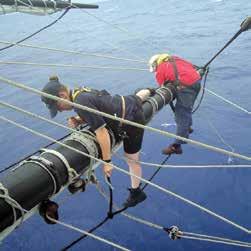
mark the first encounter between Indigenous and European cultures and provide an opportunity for reflection from all perspectives. An appropriate program for 2020 is being developed.
A voyage to New Caledonia provides an opportunity to acknowledge the great era of Pacific exploration
After such a long period in port, it is perhaps worth reiterating that voyaging in Endeavour is a great deal more than taking the ship from port to port. The voyages described above, and others that may occur in the period, are opportunities for the public to participate and experience life on board one of the world’s finest replica sailing ships.
It is not simply a matter of pulling on lines, handing in sail or sleeping on the 18th-century deck in hammocks, but also the opportunity to relive history, to understand the challenges that seafarers of this period faced and to appreciate what these small ships achieved. As Neil Oliver said in describing the ship in the Endeavour segments of the television series Coast Australia, ‘it is the spirit of adventure, the spirit of Endeavour ’.
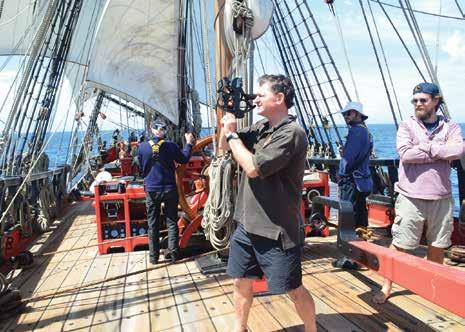
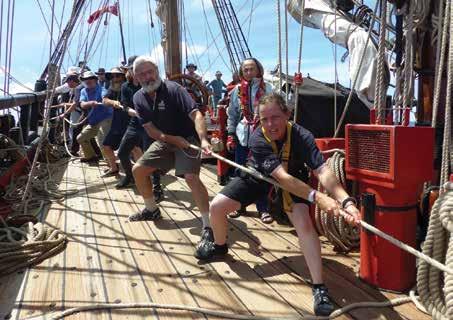
AUSTRALIAN NATIONAL MARITIME MUSEUM 33 01
01 Voyage crew have the chance to go aloft ...
to try their hand at 18th-century maritime skills, such as the use of sextants ...
02 03
and to set sail and wear ship as part of a team. All images ANMM
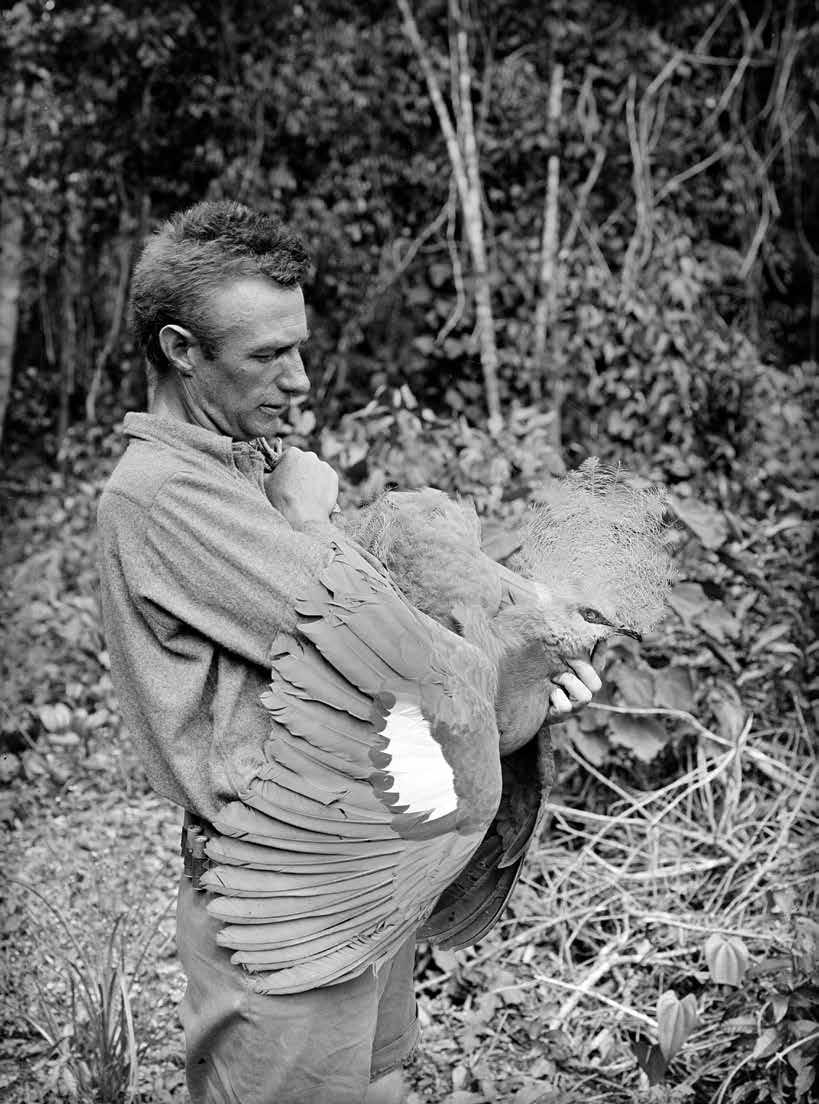
01
In the 1920s, luxury travel by ocean liner was booming across the world as people slowly recovered from the horrors of the war years
Death in Honolulu
THE RMMS AORANGI AND THE LAST VOYAGE OF ALLAN MCCULLOCH
A luxury cruise aboard the RMMS Aorangi took Australian naturalist Allan Riverstone McCulloch to Honolulu in 1925, but it could not dispel his demons, writes Brendan Atkins
PHRYNE FISHER IS THE STAR DETECTIVE in crime writer Kerry Greenwood’s series of mystery novels. In Death by Water , 1 Miss Fisher solves a series of robberies and a murder aboard the fictitious SS Hinemoa Greenwood later wrote: ‘When I came to research the New Zealand–Australia route in 1928, I found that I needed to construct my own ship, due to lack of information on the SS Aorangi ’. Well, Kerry, I’m jolly pleased to let you know that detailed descriptions of the Aorangi and some of its passengers have recently been unearthed. And they resemble your Hinemoa closely in many respects.
In July 2016, maritime historian Reuben Goossens released a cache of rare photos online2 showing the Aorangi ’s luxury interiors, and he republished details of its construction, operation and history. The other source of Aorangi information is an eyewitness account of life on board provided by the Australian naturalist Allan McCulloch. In July 1925, McCulloch departed Sydney aboard the new RMMS 3 Aorangi, then undertaking only its fourth return trip to Vancouver via Auckland, Suva and Honolulu.
McCulloch, then aged 40, could list many trips and faraway locations visited during field expeditions to collect specimens for his employer, the Australian Museum in Sydney.
McCulloch was Australia’s leading expert in ‘fish science’, or ichthyology. ‘He is not only the best authority in Australia, but one of the six or eight best in the world, so far as fishes are concerned’, wrote the world’s leading fish authority, David Starr Jordan, in 1925. McCulloch was also a popular staff member and museum educator, a talented illustrator, innovative photographer and cinematographer, artist and adventurer – truly a Renaissance man.
McCulloch boarded the Aorangi against the advice of his doctors, who just three months earlier had prescribed him a year’s leave from his job as senior curator of zoology to recover from a series of nervous breakdowns. He’d already shown signs of a depressive illness, but these attacks followed a series of personal crises for McCulloch, reducing him to ‘a set of jangled nerves’, he wrote. A controversial trip to Papua with adventurer Frank Hurley in 1922, during which he’d admitted stealing sacred artefacts from a tribal village, had left him frazzled. Discovering that his former mentor Edgar Waite had used many of his fish illustrations without acknowledgement in 1923 saw him waver. But what pushed him over the edge was, after more than 25 years of faithful service to the museum, being refused permission to attend the 1924 fisheries conference in Honolulu by the museum’s
board of trustees. ‘The worry and difficulty of the last 12 months has got me down so completely that I am compelled to take a long rest as far away from office affairs and Trustees etc. as can be managed’, he wrote from his refuge on Lord Howe Island.
The second Pan Pacific Fisheries Conference in Honolulu planned to bring together scientists from Australia, Japan and North America. This time, despite his ill health, nothing would stop McCulloch from finally stepping on to a world stage.
A fine and modern vessel
The Mitchell Library in Sydney houses one of the few archives of McCulloch’s papers. In its Reading Room, I was given access to a box of McCulloch’s papers, including the journal that McCulloch kept during his journey to Honolulu aboard the Aorangi He recorded nothing of the five-day journey from Sydney to Auckland but began the journal as the ship departed Auckland’s Waitemata Harbour, bound for Honolulu on 7 July 1925. His neat, cursive entries patiently fill the first few pages, singlespaced, sometimes with programs, cards and newspaper clippings pasted opposite. ‘This ship, the Aorangi, is the finest and most modern vessel I have ever travelled on’, reads his first entry.
AUSTRALIAN NATIONAL MARITIME MUSEUM 35
01 Allan McCulloch with gaura pigeon, New Guinea, 1923. Image Frank Hurley, courtesy Australian Museum.
Aorangi ’s speed, stylish lines and luxury interiors all combined to make it the most modern of travel experiences, the Concorde of the Pacific
Like McCulloch’s deteriorating mental health, the journal becomes more untidy as the days and weeks pass by. Blank pages appear where he’d been too busy to write up the day’s activities. The entries become shorter and less regular; his pen runs dry more than once, the ink colour changing midparagraph; and the handwriting becomes scrappier and more urgent. He sometimes records the wrong year, 1922 or 1927, or day of the week on the entries.
Between its pages I find McCulloch’s copy of the colour brochure issued to all Aorangi passengers by the ship’s managing agents, the Union Steam Ship (USS) Company of New Zealand. The front cover features a painting of the Aorangi, and the contents include lists of all passengers from the First and Second saloons (as First and Second Class were known).
The Aorangi – the pride of the USS Company – operated the regular mail and passenger service from Sydney to Vancouver in tandem with its older but still-luxurious sister ship, the Niagara. Reuben Goossens explains that the Aorangi had been built and fitted out in Glasgow’s Clyde shipyards, where it was given ‘some of the most spectacular interiors, which were as good as many of the great Trans-Atlantic liners of her time’. Named for Mt Aorangi (formerly Mt Cook) in New Zealand, it was the first liner to be equipped with internal diesel engines – the fastest and most luxurious liner in its class, and one of the largest. Its classic, slender lines were finished with
the USS Company’s crisp colour scheme: a dark-green hull banded with yellow, topped with a white superstructure and twinned funnels and radio masts. Its speed, stylish lines and luxury interiors all combined to make it the most modern of travel experiences, the Concorde of the Pacific.
On board were more than 900 passengers, 280 of them travelling in First Saloon, like McCulloch. The whole operation was serviced by a 328-strong crew and 11 officers, all under the command of Captain Robert Crawford.
In the 1920s, luxury travel by ocean liner was booming across the world as people slowly recovered from the horrors of the war years. A shifting zeitgeist brought optimism and wealth. You could forget your troubles and cares, allow yourself to enjoy some leisure time and make a statement by boarding one of these glorious floating hotels. Then, you could cruise the ocean for weeks with a glittering passenger list of other rich and influential people like yourself, all seemingly going somewhere in the world.
But this luxurious travel didn’t come cheap: the newspapers advertised special fares for the round trip from Sydney to Vancouver starting at £70 return – a sizeable chunk of the average salary. McCulloch was lucky that the government of New South Wales was paying half his fare, thanks to Sir Joe Carruthers, an ageing ex-Premier of New
01 RMMS Aorangi, illustration from front cover of Union Steam Ship Company of New Zealand passenger booklet.
02 RMMS Aorangi, view of First Class music room. Image from Motorship magazine, January 1925
03 RMMS Aorangi, view of main lounge with Georgian furnishings. Image from Motorship magazine, January 1925
All images courtesy Mitchell Library
South Wales and an influential friend of McCulloch’s uncle. Sir Joe was travelling as an official emissary with the aim of establishing a park on the island of Hawai’i to commemorate the sesquicentenary of Captain James Cook’s death there in 1779. These were interesting times in the turmoil following World War I, with public life in the USA a rich ferment of ideological and cultural battles. The Scopes Monkey Trial held in Tennessee in June 1925 had convicted high school teacher John Scopes for teaching Darwin’s theory of evolution in science classes. In social spheres, the prohibition of alcohol resulted in regular busts of gin joints and society figures. It was also the year of The Great Gatsby, 4 heralding the Jazz Age, a time when serious-minded educated men cultivated style, young independent women dressed and behaved as they pleased, and ‘corks popped, the music played, life was full of extravagance and laughter, and there was the heartbreak of emptiness behind it all’, as one reviewer of Gatsby put it.
But there was also a surge in communityminded organisations seeking greater international ties towards world peace. That’s how the Pan Pacific Union had begun, powered by one entrepreneur, Alexander Hume Ford, and his talented secretary, Anne Satterthwaite. It was Ford who had proposed the fisheries conference that McCulloch believed he was now heading for at a steady 17 knots.
36 SIGNALS 123 JUNE–AUGUST 2018
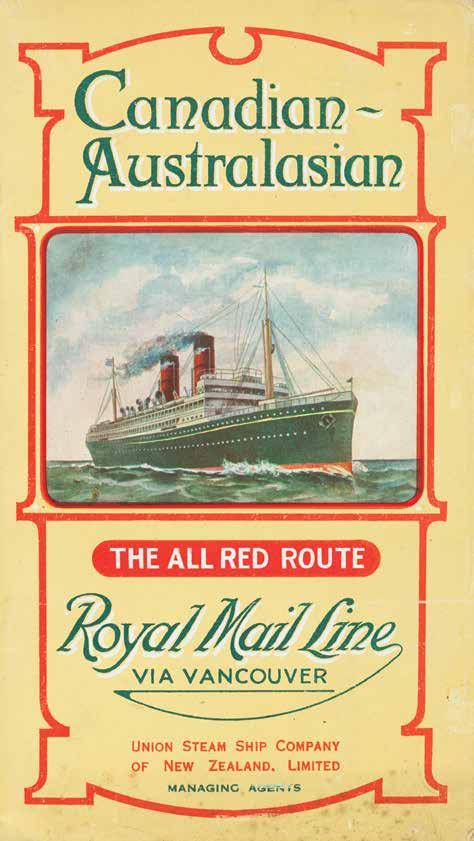
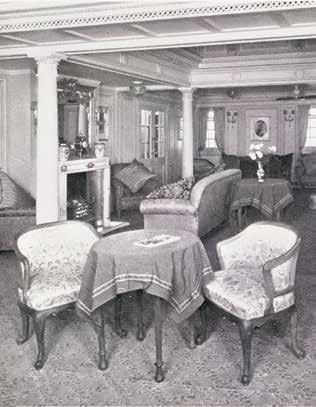
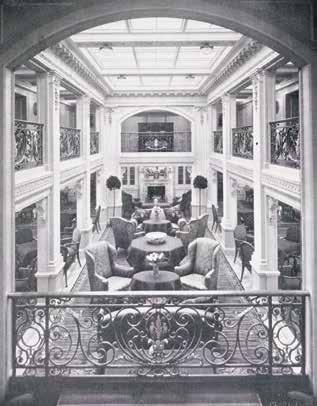
02 01 03
Like McCulloch’s deteriorating mental health, the journal becomes more untidy as the days and weeks pass by
Onboard diversions
The Aorangi offered many distractions for its passengers. ‘Card games, dominoes, chess, etc. are played in a luxurious and airy lounge, wherein also bar-stewards are kept busy supplying drinks and cigars, etc.’, writes McCulloch. More active pastimes included shuffleboard, deck-tennis, quoits, open-air dancing, film nights and fancy-dress balls, but McCulloch was in no state to enjoy them. ‘Young lads and lassies of athletic build enter into everything wholeheartedly & with the best of good sportsmanship so as to leave me envious of their virility. For I am too listless even now to tackle anything demanding muscular activity.’
But when the captain asks him to present a lecture in the First Saloon lounge about his Papua adventures, he readily agrees. He’d come prepared to present public talks in Honolulu with ‘lantern slides’ – photographs printed onto glass plates, sometimes handcoloured. This lecture on the ship went well: ‘Have just left the luxurious lounge of the “Aorangi ” in which I have had the great privilege of lecturing to as delightful an audience as I have so far known’, he gushes to his journal. The Georgian-inspired main lounge resembled a gentleman’s club. During the day its glass-panelled ceiling brought daylight to the mezzanine floor, with ornate staircases delivering passengers to the large sitting room below dotted with comfortable armchairs.
In the lounge that night he found a connection from his past: ‘I saw beside me none other than the famous “Galli Curci”,
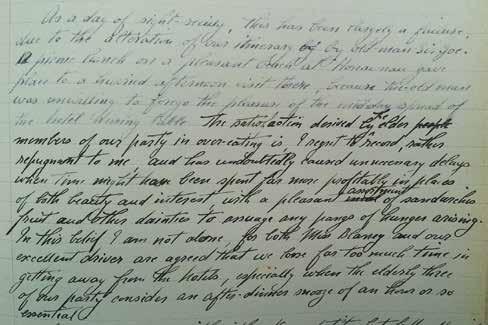
with hands extended in congratulations of my efforts.’ This was not the real Amelita Galli-Curci, a world-famous Italian soprano, but Kate Rooney-Kirkham, a leading contralto from Sydney who had built an international reputation. ‘And she was so delightfully sincere that I wished more than ever that my poor old mater could have witnessed this little success.’ They uncover a childhood connection; the young Kate Rooney practised singing at St Vincent’s College near the McCulloch home in Sydney’s Potts Point while Allan and his three sisters dutifully completed their daily piano practice, ‘which Mother insisted upon as a preliminary to breakfast’. As the ship neared Hawaii, McCulloch accompanied the singer in an evening recital. ‘Just how grateful I am for that same insistence [on daily practice] can be judged by the fact that it enabled me to play the accompaniment for Madame Rooney when she sang Tosti’s Goodbye in the music room this evening.’
Just like the SS Hinemoa of the Phryne Fisher book, the Aorangi was populated with interesting characters whom McCulloch met and whose stories he recorded: Miss Gertrude Colcannon, a young rising opera and popular singer; Mr A J Rutherford, ‘a charming old man of seventy-three summers’ who had been responsible for introducing trout to New Zealand waters; and a Mr Duncan, who had studied with the German engineer Rudolf Diesel: ‘And poor Diesel committed suicide by jumping off the Dover to Calais steamer because he foresaw naught but failure ahead of his invention.’
An untimely end
One character largely absent from the journal entries is Sir Joe, McCulloch’s superior. He appears in its pages for the first time only when the ship arrives in Honolulu and they are met by Alexander Ford, Director of the Pan Pacific Union. But amid the confusion of the shipboard medicals and customs inspections, Sir Joe starts to worry about his luggage and then accuses McCulloch of deserting him during the voyage, a remark that causes McCulloch’s temper to ‘boil over’:
The poor old man is very deaf and is therefore dependent upon others to a large extent. Being old wealthy and a former premier of New South Wales, he has become accustomed to having his own way without consideration of others. Which is doubtless the reason for his intense rudeness to me without, as I believe, any cause whatsoever.
Ah, but Allan, didn’t he arrange for your expenses to be paid? Maybe he expected a little companionship in return. It would take weeks for the relationship to improve, but for now McCulloch had more to worry about: ‘I learnt that the Fisheries Conference, which I had supposed to be an event fixed for July, was largely “in the air”, and that no others interested in fishes were present save myself.’ He vowed to take the Aorangi back to Sydney when it returned in early August. By then, however, McCulloch had become a local celebrity speaker, giving regular lectures about his expedition to Papua. He was also writing a science-based strategy for international cooperation in the conservation
38 SIGNALS 123 JUNE–AUGUST 2018
01
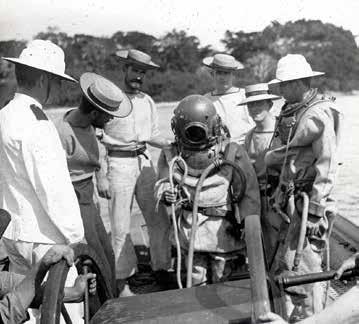
of fish stocks in the Pacific. The conference, now scheduled for mid-September, would be attended by David Starr Jordan and other international scientists. As the Aorangi departed Pearl Harbor for Sydney on 3 August, McCulloch was travelling between islands after inspecting the Captain Cook memorial on Hawai’i with Sir Joe.
‘The worry and difficulty of the last 12 months has got me down so completely’
And that’s where his journal ends, leaving the next few weeks a mystery that we can only partially piece together from newspaper reports, letters and other scraps. We know that he continued to give lectures and was even flown around the islands in a navy plane to view the coral reefs from the air. But his mental condition continued to deteriorate. ‘Mr. McCulloch, while a charming companion, has been under a constant mental strain, and his friends were doing everything to locate him in a quiet place and take care of him’, wrote Ford at the Pan Pacific Union.
On the first of September, the early editions of the Honolulu Advertiser carried the first shock reports of the death of Allan McCulloch. Having completed his conference paper on 28 August, McCulloch had spiralled into a depressive slump and, fearing madness, ended his life with a
handgun in the bathroom of his suite at the Colonial Hotel. It was a tragic end to a brilliant career.5
Sir Joe left for Sydney alone aboard the Niagara on the third of September, taking with him a suitcase or two of McCulloch’s personal effects. The Hawaiian authorities cremated McCulloch’s body and returned his ashes to Sydney three weeks later –ironically, in the care of Captain Crawford aboard the RMMS Aorangi
References
1 Kerry Greenwood, 2005, Death by Water (Allen & Unwin, Sydney).
2 ssmaritime.com/Aorangi-II.htm, accessed 8 January 2018.
3 RMMS stands for Royal Mail Motor Ship.
4 F Scott Fitzgerald, 1925, The Great Gatsby (Charles Scribner’s Sons, New York).
5 McCulloch’s career is detailed by Brian Saunders (2012) in Discovery of Australia’s Fishes (CSIRO Publishing, Melbourne.)
Brendan Atkins is currently writing a biography of Allan McCulloch (1885–1925). Brendan was editor of Explore magazine at the Australian Museum, Sydney, from 2006 until 2015. He is now a freelance writer and editor.
01 The final entry in McCulloch’s journal reveals his restless mind. Image Brendan Atkins
02 Allan McCulloch in a diving suit, on a collecting trip at Vila, New Hebrides (Vanuatu). He’s being assisted by members of the crew of HMS Pegasus, 1910. Photographer G C Clutton © Australian Museum VV1096
03 Route map, Sydney to Vancouver via Auckland, Suva and Honolulu. Image Jo Kaupe
Aorangi vital statistics
Gross registered tonnage 17,491 tons (15,900 tonnes)
Length 600 feet (183 metres)
Beam at upper deck 72 feet (22 metres)
Moulded depth 46 feet (14 metres)
Propulsion Four screws propelled by four reversible two-cycle six-cylinder Fairfield Sulzer
Diesel engines of 700-millimetre bore
Aggregate power 13,000 brake horsepower at 127 rpm
Maximum cruising speed 18 knots
Range Fuel sufficient for a round trip between Sydney and Vancouver, total 25,000 kilometres
Daily fuel consumption 50 tonnes
Fresh water for drinking 900 tonnes
Cargo Eight holds, equipped with 16 silent winches; refrigerated space for carrying cargo of frozen meat, cheese, butter and fruit
AUSTRALIAN NATIONAL MARITIME MUSEUM 39
Auckland Sydney Vancouver
03 02
Suva Honolulu
White Ensign, R ising Sun
AUSTRALIAN–JAPANESE NAVAL RELATIONS DURING WORLD WAR I
In the late 19th and early 20th centuries, Japanese warships were frequent visitors to Australian shores. Later, Japan was one of Australia’s allies against Germany during World War I, its ships performing escort duty and joining the hunt for the notorious German raiders Emden, Wolf and Seeadler Greg Swinden traces the alliance between the two navies.
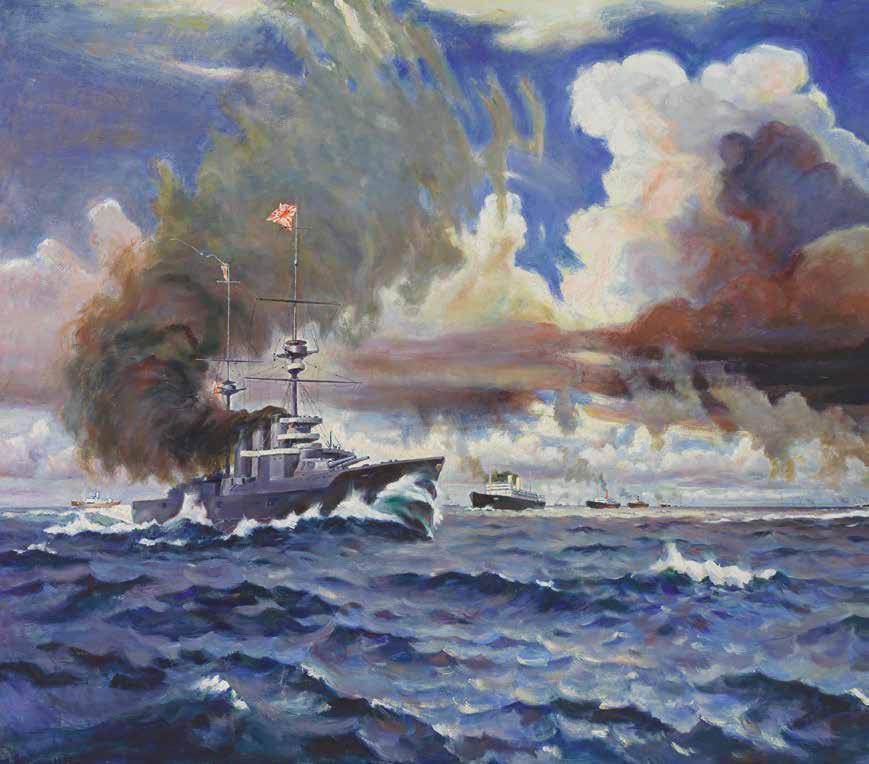
01 HIJMS Ibuki with HMAS Melbourne escorting the first Australian and New Zealand convoy in the Indian Ocean, 1914. HMAS Melbourne was in charge of the convoy when HMAS Sydney was detached from it to join battle with an enemy ship – which proved to be SMS Emden – near the Cocos Islands. Artist Rokuo Arai, 1939. Australian War Memorial ART13569
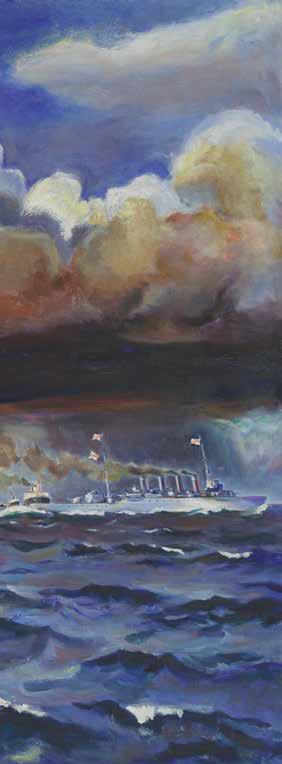
BEFORE WORLD WAR I, Japanese warships were a familiar sight in Australian waters. In 1872, only three years after the Imperial Japanese Navy (IJN) was formed, the steam ironclad HIJMS Ryujo visited Sydney and Melbourne. In 1882 the corvette HIJMS Tsukaba visited Sydney, Melbourne and Hobart. In 1900 and 1901 the corvette Hiei visited Australian east coast ports and in May 1906 the Training Squadron cruisers HIJM Ships Hashidate, Itaukushima and Mataushima were active off Australia’s east coast ports. The cruisers Aso and Soya visited Australia’s east and west coasts in 1910 and 1911.
Japanese officers were hosted at official dinners and tours of the local countryside were provided. Although the two navies worked together well, Japanese sailors did not mix with the Australian population. In Sydney and Newcastle Japanese businessmen provided recreational facilities to visiting Japanese seafarers and the Japanese-owned Mikado Farm, at Guildford, Sydney, was regularly used as a home away from home. In many cases the Japanese crews were watched closely, as Australian authorities considered they were collecting intelligence regarding port facilities and defence capabilities. While probably correct, this was not dissimilar to what every other nation’s military and naval personnel did when on port visits to other countries.
War in the Pacific and Indian oceans
In 1914 Japan had a population of 53 million with a large and capable army and navy that had been successful in wars against the Chinese (1894–95) and the Russians (1904–05). Its navy comprised 12 battleships, five battle cruisers, eight heavy cruisers, 21 light cruisers, 50 destroyers, one sea plane tender and 12 submarines. Conversely, Australia had a population of less than five million, with a very small regular army and a Royal Australian Navy (RAN) that had
only one battlecruiser, five light cruisers, three destroyers, two submarines and some small patrol vessels. The Australian colonial forces had seen limited operational service supporting British forces in colonial wars in New Zealand, Africa and China.
The crew of Ibuki felt cheated by not taking part in the destruction of Emden
Japan entered the war against Germany on 23 August 1914 and captured the German colony of Tsingtao (China) and the island territories north of the equator (including Yap and the Mariana, Caroline and Gilbert Island groups). Australian and New Zealand forces captured the German territories south of the equator, including New Guinea, Samoa and Nauru. Japanese warships then sailed across the Pacific to Mexico in search of Admiral von Spee’s German East Asia Squadron. By late November 1914, the RAN’s battlecruiser HMAS Australia had joined them but von Spee’s squadron had rounded Cape Horn and entered the Atlantic; his force was destroyed by British warships at the Battle of the Falkland Islands on 10 December 1914.
Closer to home, the Imperial Japanese Navy formed the 1st Special Service Squadron, based in Singapore, for operations south of the equator (including the north-west coast of Australia). This squadron became part of a British, French and Russian force hunting the elusive German light cruiser SMS Emden. It had been detached from von Spee’s squadron and by October 1914, Emden had sunk or captured 22 Allied merchant ships, bombarded the ports of Madras (Chennai) and Penang and also sunk the Russian cruiser Zhemchug and French destroyer Mousquet
AUSTRALIAN NATIONAL MARITIME MUSEUM 41 01
Emden’s actions in the Indian Ocean were of major concern to Australia and New Zealand as their expeditionary forces were ready for dispatch to England. With Emden on the rampage there was a dire need for convoy escorts to protect the transport ships carrying 20,000 troops. The Japanese battlecruiser Ibuki, with three British warships, collected ten troop transports carrying New Zealand soldiers and escorted them to Albany, Western Australia, where the first Australian and New Zealand convoy was formed.
On 1 November 1914, 28 Australian and 10 New Zealand troopships sailed from Albany escorted by the heavy cruiser HMS Minotaur (in command), Ibuki and the light cruisers HMA Ships Melbourne and Sydney. On 8 November Minotaur was detached and Melbourne, commanded by Captain Mortimer Silver RN, took charge of the convoy.
The following day Melbourne received a wireless message from the cable station at Cocos Island indicating that a strange warship had arrived. Silver quickly realised that his duty lay with protecting the convoy and dispatched Sydney to Cocos Island.
Ibuki, under Captain Kanji Kato, attempted to join Sydney and steamed westward with battle ensigns flying and black smoke pouring from its funnels, and signalled ‘I wish to go and help Sydney ’. Silver ordered the Japanese warship back to its position protecting the convoy. Sydney proceeded to Cocos Island, engaged Emden and, in a battle lasting nearly two hours, destroyed it. Silver was correct in sending only Sydney to investigate the ‘strange warship’ sighting. Sydney ’s 6-inch guns were more than a match for Emden’s 4.1-inch guns and Ibuki
Although the two navies worked together well, Japanese sailors did not mix with the Australian population
could only steam at 22 knots compared to Sydney ’s 26 knots. Ibuki also produced vast volumes of black funnel smoke, which was visible for many miles. If it had accompanied Sydney this smoke may have alerted the Germans of approaching Allied warships and enabled Emden to escape.
Ibuki carried 12-inch guns that could have easily outgunned Emden, but Silver was still concerned regarding the location of von Spee’s squadron and his first duty lay with protecting the troop convoy. The crew of Ibuki felt cheated by not taking part in the destruction of Emden, but in later years, when Japanese warships visited Australia, the ‘Samurai spirit of the Ibuki ’ was often quoted at official functions, indicating that the IJN was right to have placed duty above glory.
Operations 1915 to 1918
From December 1914 to January 1915 the cruisers Chikuma and Yahagi operated off the north coast of Queensland, while Nisshin visited the New Guinea ports of Rabaul and Madang in April 1915. During May to July 1915 the training squadron cruisers Aso and Soya visited ports from Rabaul southwards through to Fremantle, Western Australia. By then Australian naval defence comprised the old cruiser Encounter and destroyers Parramatta, Warrego and Yarra Australia’s major warships were operating overseas in the North Sea (Australia), Caribbean (Melbourne and Sydney), German East Africa (Pioneer) and South-East Asia (Pysche). Australia’s two submarines had been lost. The cruiser Brisbane was under construction at Cockatoo Island Dockyard, as were three more destroyers, but they would not join the fleet until 1916.
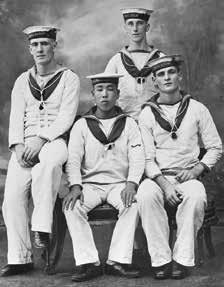
By late 1915 even Encounter had been relocated to South-East Asia.
With the destruction of von Spee’s squadron, the threat from German imperialism in South-East Asia and Australian waters was minimal, but Allied warships still operated in Australian waters and the Indian Ocean. Many German merchant ships were trapped in neutral ports in the Netherlands East Indies and the Philippines; there was concern they could be armed to become auxiliary commerce raiders and attack Allied shipping in the Indian and Pacific Oceans.
In late 1916 the Germans decided to take the war to the southern seas again. On 30 November 1916 the raider Wolf (Commander Karl Nerger) departed Kiel bound for the Indian Ocean to lay mines and attack merchant shipping. On 21 December 1916 the sailing vessel Seeadler (Commander Felix von Luckner) also departed Germany bound via Cape Horn for the Pacific. In mid-January 1917 Wolf laid mines off Cape Town before mining the approaches to Bombay and Colombo.
The minefields were soon located and sweeping operations commenced, as did the search for the raider. Part of this involved Japanese warships escorting Australian and New Zealand troop convoys across the Indian Ocean to Colombo and the Cape of Good Hope. In March the cruisers Tsushima and Niitaka were based at Mauritius and searched the sea-lanes in the western Indian Ocean. The cruisers Idzumo, Kasuga and Nisshin were deployed to the eastern Indian Ocean and escorted convoys from Fremantle to Colombo, Ceylon (now Sri Lanka). The port of Fremantle saw frequent visits by Japanese warships to collect convoys and obtain supplies, particularly coal.
42 SIGNALS 123 JUNE–AUGUST 2018 01
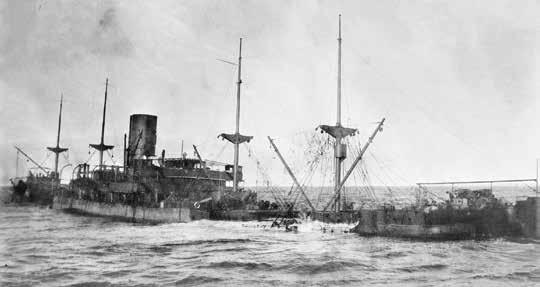
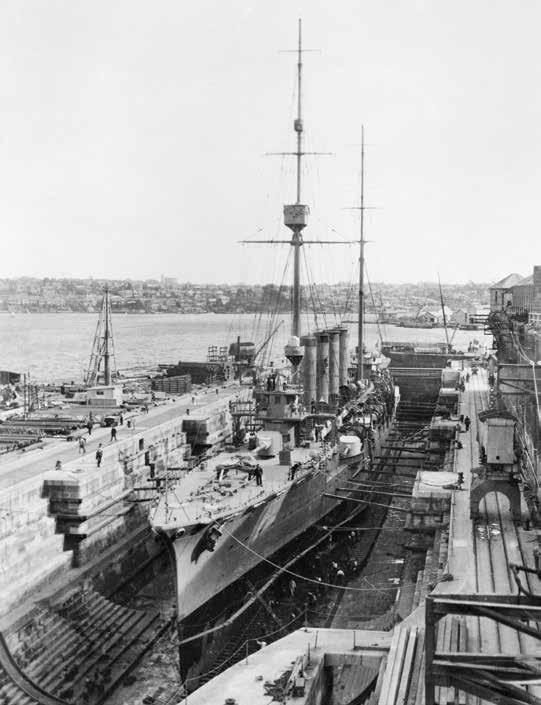
The actions of German raiders in the Indian and Pacific oceans were of major concern to Australia
01 Studio group portrait of crew members of HMAS Psyche and a Japanese sailor. Ordinary Seaman 2140 Charles Sykes McIntosh Johnston is seated far left. The other men are unidentified. Image Australian War Memorial P07758.006
02 The wreckage of SS Cumberland off Gabo Island after hitting one of several mines which had been laid by the German raider Wolf, 7 July 1917. Australian War Memorial A00711
03 The Japanese Navy light cruiser Hirado in dry dock at Cockatoo Island, Sydney, 8 May 1917. It was one of the Japanese cruisers that patrolled off the Australian coast at various times. Australian War Memorial H13971
02 03
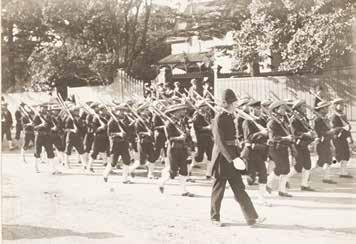
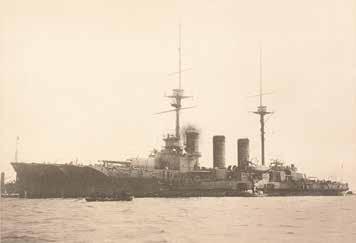
From May to December 1917 Chikuma, Hirado and Yahagi were based in Sydney and conducted patrols and convoy escort work in Australian and New Zealand waters. The Japanese warships were docked occasionally at Cockatoo Island Dockyard for maintenance and hull cleaning. The new cruiser Brisbane, which had commissioned in October 1916, also operated in the Indian Ocean searching for the elusive Wolf from June to September 1917.
Meanwhile, in May to June 1917, Wolf laid mines in New Zealand waters and sank four merchant vessels. On 3 July it crossed the Tasman and laid a minefield off Cape Howe, New South Wales, before heading towards Fiji. Wolf ’s minefield was discovered on 6 July when the steamer Cumberland struck a mine near Gabo Island; the ship’s master beached the vessel but it later sank during salvage operations. Chikuma, with Rear Admiral Yamaji embarked, was first on the scene and its divers advised that an internal explosion had sunk Cumberland This misinformation resulted in months of wasted effort as Australian authorities sought to prove the sabotage had been conducted by radical members of the Union of International Workers of the World. Eventually the Japanese report was proven incorrect and mine-sweeping operations commenced in October 1917, with several mines swept or destroyed.
On 6 August 1917 Wolf captured the merchant ship Matunga in New Guinea waters, taking its crew and passengers as prisoners and later sinking the vessel. When the RAN was advised that Matunga was overdue, Encounter was dispatched to search for it. Admiral Yamaji was requested to send Hirado to assist but declined, even though the ship was ready to sail. Admiral Yamaji remained unconvinced that a German raider was operating in the Pacific
even with the loss of four vessels in New Zealand waters and the discovery of the burnt-out hulks of three US schooners in the eastern Pacific; these had been sunk by Seeadler on 23 July 1917.
The Japanese crews were watched closely, as Australian authorities considered they were collecting intelligence
Wolf ’s next victim, on 26 September, was the Japanese vessel Hitachi Maru, sunk south-west of Sumatra. The raider then headed home via the Atlantic. Despite the presence of several British, Australian and Japanese warships, Wolf escaped detection and returned to Germany in triumph on 24 February 1918. Seeadler was less of a threat – it had entered the Pacific in April 1917 and destroyed three US vessels, but was wrecked on the isolated atoll of Mopelia on 2 August and its crew eventually taken prisoner.
The Australian–Japanese naval relationship was now starting to show real signs of strain. Ibuki missing the action with Emden in 1914 still rankled with some, but the events surrounding the misinformation regarding Cumberland ’s loss and Admiral Yamaji’s refusal to send Hirado to sea to search for Matunga only added to this strain. Equally, Admiral Yamaji was concerned that Japanese naval activities in Australian waters were not reported in the Australian press and that the RAN was keeping information from him – particularly the discovery of the wrecked Seeadler
On 20 November 1917 the situation became worse. That morning the cruiser Yahagi (Captain Miyagi) was entering Fremantle Harbour, with a harbour pilot embarked, when the ship failed to hoist the special code signal of the day. As a result the Fremantle port gun battery fired a warning shot across its bows. Suddenly the good working relationship between the IJN and the RAN dissolved and a great deal of correspondence between the two navies took place. Eventually the Governor General, Sir Ronald Munro-Ferguson, made a personal apology to Admiral Yamaji regarding the incident.
By late 1917 Australia had returned to its backwater status as far as the war was concerned. The German raiders were gone and the mines had been swept. The Japanese warships in Australian waters were withdrawn in January 1918; however, Yahagi conducted a port visit to Fremantle in March, and then from May to October 1918 it patrolled off the north-eastern coast of Australia and the island groups further north. Nisshin also conducted a brief patrol off Fremantle in October 1918. Both ships were then withdrawn from Australian waters and the planned replacement of Yahagi, with the cruiser Chitose, never eventuated once the Armistice came into effect.
Greg Swinden is a Commander in the RAN and the author of several books and articles on the Australian navy during World War I.
01 Japanese sailors marching in Sydney’s Centennial Park in 1903. State Library of NSW ID647223
02 HIJMS Ibuki during World War I. National Library of Australia Album 412 #PIC/15871/ 1-143
44 SIGNALS 123 JUNE–AUGUST 2018 01 02
COME AND ENJOY A HOT BEVERAGE AT YOTS.
Stunning Sydney skyline views, including the submarine HMAS Onslow, the destroyer HMAS Vampire and the daily buzz of this social hot spot.
 Wildlife Photographer of the Year is developed and produced by the Natural History Museum, London.
BE INSPIRED
YOUR EVENT
02 9298 3549 I venues@anmm.gov.au I anmm.gov.au/venues *On for a limited time from 30th of March, 2018 until 14th of October, 2018
Image: Snow Spat by Erlend Haarberg Norway
HOST
amongst the world’s best nature photography with Conference, Post Conference and Cocktail Packages from $50p/p*
winter program Welcome to our
MESSAGE TO MEMBERS
Welcome to winter! We have an array of interesting tours, talks and other events to tempt you away from the heater and into the museum this season.
IN THE SECOND HALF OF THE YEAR, we continue our range of talks, cruises and behind-the scenes-tours. In July we celebrate NAIDOC week with the chance to see Sydney Harbour from an Indigenous perspective. Enjoy a cruise on the Tribal Warrior Association’s vessel Mari Nawi and learn about the customs and traditions of the area’s first inhabitants. Only 50 places are available to Members at the special price of $10, so be sure to book early.
Our off-site tour to the Port Botany container terminal in March was so popular that we have scheduled another for August. This is a rare chance for an up-close look at the import/export hub of New South Wales, a site that is normally off limits to the public.
Our current major exhibition is James Cameron: Challenging the Deep, which traces Cameron’s lifelong interest in deepocean science, technology and exploration. It details his many achievements in this field, including his record-breaking dives in the submersible DEEPSEA CHALLENGER, designed and built in Sydney. The exhibition takes visitors into an underwater environment using cinema-scale projections, artefacts and specimens from Cameron’s expeditions, and objects relating to his documentary and feature films.
The popular Wildlife Photographer of the Year exhibition continues until 14 October 2018. One of the world’s most prestigious photography events, it showcases 100 extraordinary images that celebrate the diversity of the natural world, from intimate animal portraits to astonishing wild landscapes.
Also still on show is Gapu-Monuk Saltwater – Journey to Sea Country, which tells the powerful story of the Yol ŋu people of NorthEastern Arnhem Land and their fight for recognition of Indigenous sea rights.
If you don’t often get to our Wharf 7 building, we encourage you to make the short detour to see The Women of River Country. This exhibition, opening on 20 June, showcases the stories of 19 unique women from the mid-1800s to the present day, all of whom have connections to the riverscape of the Murray–Darling Basin, home to Australia’s three longest rivers: the Murray, Darling and Murrumbidgee. While at Wharf 7, you can also reacquaint yourself with the classic wooden sailing vessels on display there.
Talks this season include the July Maritime Series, at which Captain John Dikkenberg will launch his new book, In Whom We Trust. John is the Master of our Endeavour replica and has been at sea most of his life. He will speak about sea disasters from the perspective of the captains involved. Then in August, Jeffrey Mellefont, former Signals editor, will talk with Ian Burnet about Ian’s latest book, Where Australia Collides with Asia
I would also like to make sure you are all receiving our monthly emails and of course Signals magazine. If you are not receiving any of these, please contact us directly in the Members office on 612 9298 3646.
Some of you may be aware that Renae Sarantis has moved across to the Volunteers section. I would like to take this opportunity to thank her for her support and dedication to the Members department. Renae has been an integral part of the team and we wish her all the best in her new role. Tracey, Sherry and Rania share Renae’s role for now. Finally, thank you for your ongoing support of the Members programs and the museum. I hope to see you here and at our events soon.
Oliver Isaacs Manager, Members
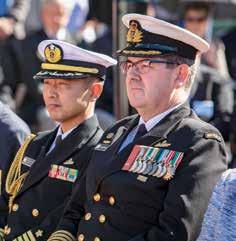
01 Attendees at the ceremony preceding this year’s Battle of the Coral Sea commemorative lunch. Image Andrew Frolows/ANMM
02 Younger Members explore the museum’s vessels by torchlight. Image McCulloch Photography
46 SIGNALS 123 JUNE–AUGUST 2018
01 02
Members events
JULY
The Maritime Series Book launch –In Whom We Trust
2–4 pm Thursday 5 July
John Dikkenberg, master of Endeavour, talks about a century of sea disasters
On the water NAIDOC cruise
2–4 pm Sunday 8 July
Cruise Sydney Harbour aboard Tribal Warrior’s Mari Nawi
Winter holiday programs
Kids’ and family activities
9–22 July
Exhibitions, tours, vessels, performances and themed creative activities
One-day youth workshop
Young inventors – Kinetic art, design and engineering
10 am–4 pm Wednesday 11 July
Experiment with engineering creations that move, float, fly and spin
Two-day youth workshops
3D digital modelling
10 am–4 pm Wednesday 18 and Thursday 19 July
Children aged 8–14 can learn to make short films in this adventurous workshop
Family torchlight tour
Shipwrecked!
6–7.30 pm Thursday 19 July
A dramatic after-dark tour, plus themed creative activities
Tours and play for carers and babies
Seaside Strollers tours
12.30 pm Tuesday 24 July
Educator-led tours through our exhibitions, plus baby play time in a sensory space
AUGUST
The Maritime Series
In conversation: Jeffrey Mellefont and Ian Burnet
2–4 pm Thursday 2 August
Jeffrey Mellefont talks with author Ian Burnet about his book Where Australia Collides with Asia
Tours and play for carers and babies
Seaside Strollers tours
12.30 pm Monday 20 August
Educator-led tours through our exhibitions, plus baby play time in a sensory space
Behind the scenes
Port Botany Container Terminal tour
10.30 am–3 pm Thursday 23 August
Special access to New South Wales’s premier port, with industry experts to guide you
Bookings and enquiries
Booking form on reverse of mailing address sheet. Please note that booking is essential unless otherwise stated. Book online at anmm.gov.au/ whats-on/calendar or phone (02) 9298 3646 (unless otherwise indicated) or email members@anmm. gov.au before sending form with payment. Minimum numbers may be required for an event to go ahead. All details are correct at time of publication but subject to change. Members are requested to check our website for updated and new event information.
Available free ANMM Speakers
The complete list of talks can be found on anmm.gov.au/Speakers. If you would like to invite a speaker to your club, please contact Noel Phelan or Ron Ray: noelphelan@bigpond.com / 0402 158 590 / (02) 9437 3185
ron.ray@aapt.net.au / 0416 123 034 / (02) 9624 1917
For your diaries
6 September – The Maritime Series: Ships that shaped the world
2 September – Whale-watching cruise
25 October – Endeavour build: 30th anniversary of the laying of the keel, with John Longley
1 November – the Sydney – Kormoran battle and search for wrecks, with Gillian Lewis
24 November – 27th annual Members anniversary lunch, with guest speaker Rob Mundle
AUSTRALIAN NATIONAL MARITIME MUSEUM 47
MEMBERS WINTER 2018 WINTER
2018
Members events
WINTER 2018
The Maritime Series Book launch –In Whom We Trust
2–4 pm Thursday 5 July
Captain John Dikkenberg is Master of the museum’s HMB Endeavour replica. He has been at sea most of his working life and has commanded diverse vessels, including submarines, destroyers and square-rigged sailing ships. His new book reviews a century of sea disasters from the perspective of their captains, examining the backgrounds and experiences of those involved and what led them to make the decisions that destroyed their ships.
Members $20, general $35. Includes afternoon tea. Bookings essential
On the water
NAIDOC cruise –special Members offer
2–4 pm Sunday 8 July
To celebrate NAIDOC Week, cruise Sydney Harbour aboard Tribal Warrior Association’s Mari Nawi (Big Canoe) and hear stories of the Cadigal, Guringai, Wangal, Gammeraigal and Wallumedegal peoples. We’ll go ashore on Be-lang-le-wool (Clark Island) to learn of pre-European customs, traditional fishing methods and food-gathering techniques, then participate in an exciting Aboriginal cultural performance.
Members $10 (limited to 50 places), general $20. Bookings essential at anmm. gov.au/schoolholidays
The Maritime Series In conversation: Jeffrey Mellefont and Ian Burnet –Where Australia Collides with Asia
2–4 pm Thursday 2 August
Jeffrey Mellefont, founding editor of Signals and Honorary Research Associate of the museum, will talk with author Ian Burnet about his book Where Australia Collides with Asia. This work follows the epic natural-history voyages of Joseph Banks, Charles Darwin and Alfred Russel Wallace – and of the wandering continent Australia itself!
Members $20, general $35. Includes afternoon tea. Bookings essential
Behind the scenes
Port Botany Container Terminal tour
10.30 am–3 pm Thursday 23 August
Port Botany is home to the largest container facility in New South Wales. Join this special behind-the-scenes tour for a first-hand look at the operations of the port and to get close to the giant ships as they load and unload their valuable cargoes. Industry experts will act as your guides and share insights on the port and cargo operations.
Members $45, general $60. Includes coach pick-up at museum, tour and light refreshments. Bookings essential
01 Image courtesy John Dikkenberg
02 Image courtesy Ian Burnet
03 Vasa in its purpose-built museum is a huge drawcard for visitors to Stockhom, Sweden. Photograph Stephen Gapps
The Maritime Series Ships that shaped the world
2–4 pm Thursday 6 September
ANMM Assistant Director of Public Engagement and Research, Michael Harvey, discusses some of the great museum ships from multiple ages of history – Vasa, Victory, Mary Rose, Warrior, Mikasa, Belfast, Constitution and the Roskilde Viking ships. Stories abound of these unique and massive objects that are dramatic and evocative symbols of pride, prestige, power and even of hubris and tragedy. Michael will explore their heritage, significance and the visitor experience they offer.
Members $20, general $35. Includes afternoon tea. Bookings essential
Under 5s activities
Mini mariners
10–10.45 am and 11–11.45 am
Every Tuesday during term time and one Saturday each month
Explore the galleries and sing and dance in interactive tours with costumed guides. Enjoy creative free play, craft, games, dress-ups and story time in our themed activity area. For ages 2–5 + carers.
June – Aquanaut Adventures
July – Fun in the Sun
August – Pirates Ahoy
Child $8.50, first adult $3.50, extra adults $7 (includes galleries). Members free. Booked playgroups welcome. Bookings essential at anmm.gov.au/ whats-on
48 SIGNALS 123 JUNE–AUGUST 2018
01 02 03
04 Enjoy messy creative play in Kids on Deck. Image Annalice Creighton/ANMM
05 Our NAIDOC Week cruise focuses on Aboriginal peoples of Sydney Harbour. Image Pierre Toussaint
06 Kids can touch and learn at the Cabinet of Curiosities. Image Annalice Creighton/ANMM

Activities for primary school-aged children
Kids on Deck Sundays
11 am–3 pm every Sunday during school term
Play, create and discover at Kids on Deck with art making, interactive games and dress-ups!
Included in any paid admission. Members free
NAIDOC Week celebration
Saltwater Sunday
10 am–4 pm Sunday 8 July
Join in a day of creative cultural activities for all ages as we celebrate NAIDOC Week at the museum. Enjoy lively performances, art-making activities, face painting, activity trails and storytelling. You can also book in for a harbour cruise with Tribal Warrior (see page 48).
Free entry. No bookings required
Cabinet of Curiosities
Epic explorers
11 am–12 noon and 2–3 pm daily 9–22 July
Explore wonderful and curious artefacts related to contemporary and historic maritime explorers in this hands-on discovery device in our galleries.
Free with entry
For carers with children 0–18 months Seaside Strollers tours and play
Enjoy a tour through new exhibitions, delicious catered treats in Yots Café, adult-friendly conversations in the galleries and baby play time in a sensory space.
10.30 am or 12.30pm Monday 25 June –Tour: Wildlife Photographer of the Year; Play: Sensory Jungle
12.30 pm Tuesday 24 July –
Tour: James Cameron – Challenging the Deep; Play: Under the sea theme
12.30 pm Monday 20 August –
Tour: James Cameron – Challenging the Deep; Play: Under the sea theme
Member adult $15, general adult $20. Babies free. Bookings essential at anmm. gov.au/schoolholidays
Winter holidays
Kids on Deck
Deep-sea Mystery
10 am–4 pm daily 9–22 July
Play, create and discover at Kids on Deck – a fun-filled activity space with art-making, interactive games and dress-ups! Be inspired by maritime archaeology and curious deepsea creatures this winter. Sculpt your own explorer’s vessel, craft a deep-sea creature softie, and experiment with printmaking and handmade animation devices!
Included in any paid admission. Members free
Performance program Deep-sea Sensorium
12.30 and 2 pm daily 9–22 July (except Saturdays)
Journey into the world of strange and wonderful deep-sea life though this captivating and interactive physical theatre performance. Duration 30 minutes. Entry included in any Exhibitions Ticket or Big Ticket. Members free. No bookings required
AUSTRALIAN NATIONAL MARITIME MUSEUM 49 MEMBERS WINTER 2018 06 05 04
Members events
WINTER 2018
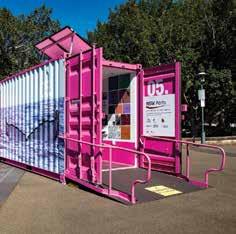
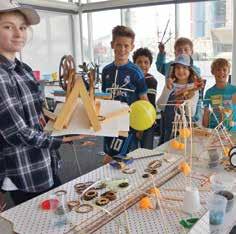
Free for kids
Activity trails
Daily 9–22 July
Explore our exhibitions Container and Gapu-Mon_uk Saltwater – Journey to Sea Country with fun and creative activity trails for ages 5–12 years.
Free with entry
One-day youth workshop
Young inventors – Kinetic art, design and engineering
10 am–4 pm Wednesday 11 July
Experiment with engineering creations that move, float, fly and spin. Learn about submersible vehicles and invent your own creative underwater exploration device. For ages 8–14.
Members $50, general $65. Bookings essential at anmm.gov.au/ schoolholidays
01 Our free outdoor exhibition Container – the box that changed the world continues until October. Image Andrew Frolows/ANMM
02 Learn creative construction techniques in our one-day workshop. ANMM image
03 Join our character guide Stormy Grey the stowaway for a thrilling torchlight tour. ANMM image
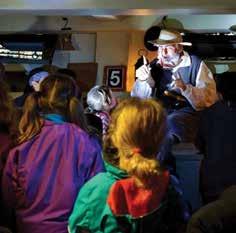
Family torchlight tour Shipwrecked!
6–7.30 pm Thursday 19 July
Join your character guide for a dramatic after-dark tour through the museum’s galleries and new exhibitions. Enjoy creative capers, light refreshments and exclusive after-hours access to the museum and our new exhibition James Cameron –Challenging the Deep. For ages 4–12 and adults.
Members: child $20, adult $14.
General: child $24, adult $18. Bookings essential at anmm.gov.au/ schoolholidays
Free activity
Deep-sea Lounge
Daily 9–22 July
Hang out in our reading lounge/activity area inspired by our new exhibition James Cameron – Challenging the deep
Free with entry
Two-day animation workshops
3D digital modelling
9.30 am–4.30 pm
Wednesday 18 and Thursday 19 July
Join one of two workshops run by AIE (Academy of Interactive Entertainment) and inspired by our new exhibition
James Cameron – Challenging the deep
Option 1: Sea Creatures 3D
Digitally create a wild and wacky sea creature in 3D using the same software used in games and film. For ages 8–14
Option 2: Underwater World
Use 3D modelling and texturing to produce your own creative underwater world for use within a game engine. For ages 12–15.
Cost: Members $180, general $200. Bookings essential anmm.gov.au/ schoolholidays
Science Week celebration
Secrets of Sydney Harbour Thursday 17–Sunday 19 August
Explore cutting-edge ocean and marine science work from across the country in a series of interactive programs inspired by our partnership with James Cameron and the Avatar Alliance. Step inside the Sydney Harbour Laboratory, get hands on with underwater drones and ocean plastics, explore virtual-reality seafloors and investigate some of the harbour’s smallest animals.
Science Week @ANMM is presented in partnership with the Sydney Institute of Marine Science, the NSW Office of Environment and Heritage and the University of Technology Sydney.
Free entry. No bookings required. Full program details at anmm.gov.au/ scienceweek
50 SIGNALS 123 JUNE–AUGUST 2018
01 02 03
Two of our
newest
Members
MEMBER PROFILE CAROLINE AND IVAN JURICIC
When and why did you become Members?
We joined in July 2017, so we’re fairly new! We moved to Sydney from London in May 2017. In London we loved going to see the Natural History Museum’s Wildlife Photographer of the Year exhibition every year, so we made a point of going to see this at the Maritime Museum and then realised membership was a very good deal (especially compared to our old memberships in London!) We had also always liked visiting the museum when previously visiting Australia, especially the old ships.
Do you have a nautical background?
Ivan’s father owns a seven-foot dinghy in Croatia, does that count? Otherwise … no.
What’s your favourite aspect of museum membership?
It’s great to always have access to all the special exhibits and the ships.
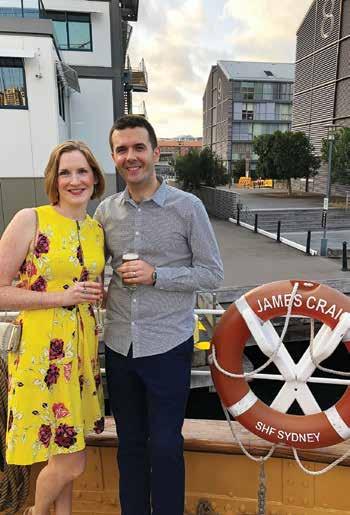
Membership means we have the flexibility to make short-term visits to the museum when we have a spare hour or two (this is particularly handy as we only live up the road in Pyrmont). For example, we dropped in on our way home recently to explore what was on and check out the Arctic Voices exhibition.
Also, it’s always nice to get a fresh coffee and biscuit served by a friendly volunteer in the Members Lounge!
What sort of museum events or programs do you tend to participate in?
We enjoy the talks by specialists or exhibit curators, which have been a fantastic opportunity to learn more about the special exhibits and the museum.
What have been some of your favourite exhibitions or events here at the museum?
The outdoor Container exhibition was incredibly creative and original – it was
amazing how the exhibit used the story of a relatively simple object to talk about globalisation, the environment and the impact of the way we live now. Hearing the curator speak at a Members event about how the exhibit was conceived and put together was also eye-opening.
Attending the Christmas lunch last year, with the iconic Valerie Taylor speaking, was pretty special as well.
If you had to sum up the museum in three words, what would they be?
Can I have four? More than (just) boats. What else would you like to see the museum doing in the future?
Late openings once a week would be a fun way to see the museum after work.
AUSTRALIAN NATIONAL MARITIME MUSEUM 51 MEMBERS WINTER 2018
04 Caroline and Ivan Juricic aboard Sydney Heritage Fleet’s James Craig
Image courtesy Caroline and Ivan Juricic
04
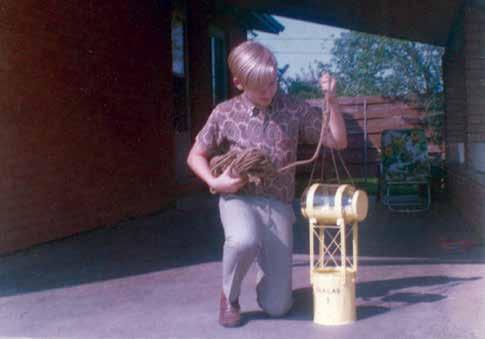
James Cameron –
01 Fourteen-year-old James Cameron with his first bathysphere – built using his Erector Set, a can and a pickle jar, and tested in the local creek. Image courtesy James Cameron
Challenging the Deep
Opens 29 May
In an exhibition that integrates two worlds of modern museums – the power of the artefact and the thrill of experience – visitors will encounter the deep-ocean discoveries, technical innovations and scientific and creative achievements of underwater explorer James Cameron.
As a teenage inventor in rural 1960s Canada, James Francis Cameron was enthralled by science fiction. He lived in a future-oriented era in which science and technology challenged nature and extended the limits of human endurance and imagination.
Inspired by seeing Dr Joe MacInnis’s underwater habitat Sublimnos displayed outside the Royal Ontario Museum, young James Cameron designed and built his first bathysphere using his Erector Set, a can and a pickle jar. He tested it in the local creek with a mouse on board. (The mouse survived unscathed.)
Challenging the Deep travels with Cameron from 1960s Chippawa to Hollywood and beyond.
In five immersive screen experiences, visitors accompany Cameron behind the scenes of making the pioneering sciencefiction cinema classic The Abyss, mostly acted and filmed under water; on three innovative expeditions to the wreck of RMS Titanic; taking survivors back to the wreck of German battleship Bismarck ; exploring the world of deep-ocean hydrothermal vents with young scientists; and on a personal ten-year odyssey designing and building the DEEPSEA CHALLENGER submersible in the USA and Australia. In this vessel in 2012 he explored Challenger Deep – at 11 kilometres down, the deepest place on Earth – becoming only the third person to go there and the first to do it alone.
Through his lifelong drive and commitment to extend his reach into the depths and to show the world what is and could be there in his documentary and feature films, James Cameron has made a once forbidding and alien place exciting and familiar. As Jim says, ‘the human eye has to see’.
Along the way Cameron has pioneered lighting, submersible, ROV, communication
and recording technologies, broken records (the first to film the interior of the wreck of RMS Titanic, the first seafloor-to-surface live broadcast, the first solo dive to the Mariana Trench) and been the first to see and explore – and allow us to see and vicariously explore – the least-known places on earth.
Designed as a continuous experience, the exhibition integrates immersive cinema with orchestrated light and sound and a collection of artefacts. These include a 5-metre-long scale model of the wreck of Titanic used to plan expedition dives; specimens collected from Challenger Deep; costumes (Rose’s drowning dress, Margaret Brown’s evening dress, Jack’s outfit) and props from the movie Titanic; ROVs (remotely operated underwater vehicles) that explored the wrecks of Titanic and Bismarck ; unique materials and technologies, dive logs and notes from the DEEPSEA CHALLENGER; and miniatures from The Abyss
Created by the Australian National Maritime Museum’s USA Programs supported by the USA Bicentennial Gift Fund
52 SIGNALS 123 JUNE–AUGUST 2018
EXHIBITIONS WINTER 2018 01
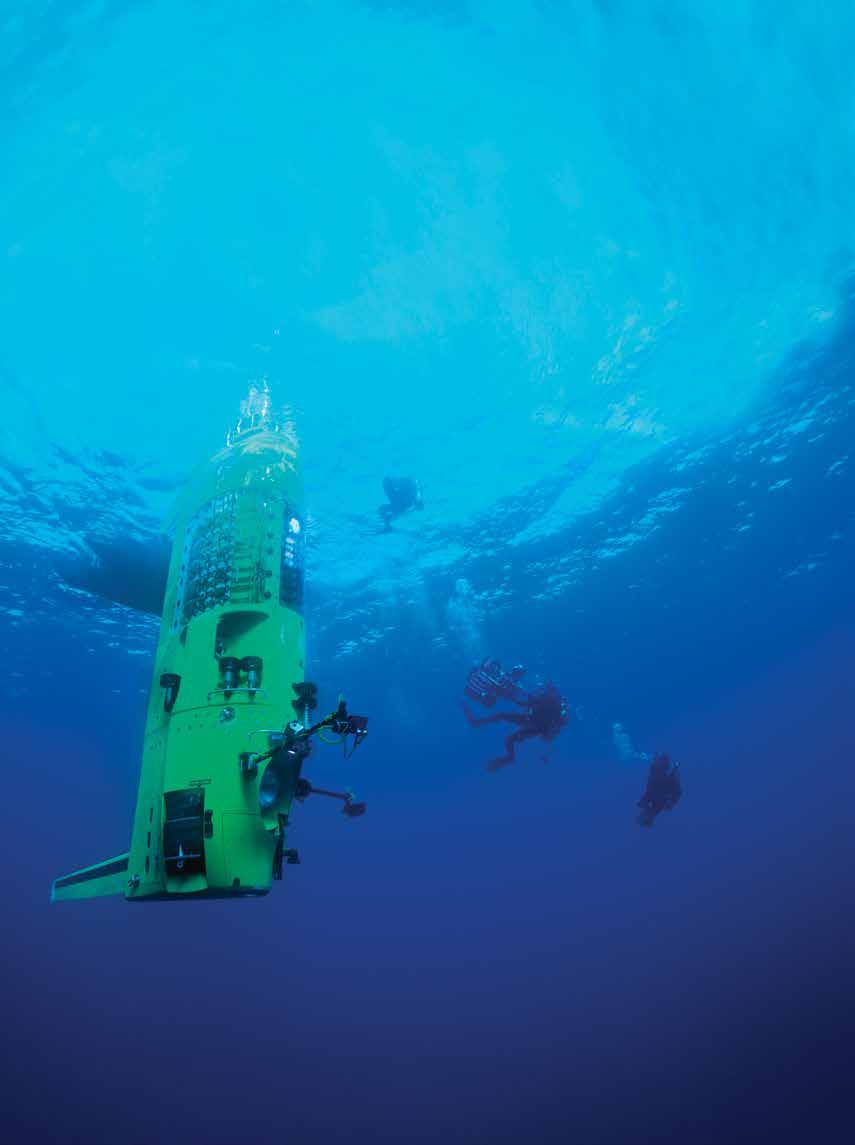
‘I really got bitten by the bug with deep ocean exploration–it was adventure, it was a curiosity, it was an experience that Hollywood couldn’t give me.’
James Cameron
AUSTRALIAN NATIONAL MARITIME MUSEUM PRESENTS
Immersive Exhibition on Now | Tickets at anmm.gov.au/jamescameron Created by the Australian National Maritime Museum’s USA Programs supported by the USA Bicentennial Gift Fund. Image Mark Thiessen / Nat Geo Creative Catering Partner Media Partners Strategic Sponsors In collaboration with Developed by ANM013_Challenging The Deep_Signals magazine ad_V12.indd 1 8/5/18 11:03 am
Women of the River Country
20 June–20 September
This exhibition showcases the stories of 19 unique women from the mid-1800s to present day, all of whom have connections to the magnificent riverscape of the Murray Darling Basin home to Australia’s three longest rivers, the Murray, Darling and Murrumbidgee.
Women of the River Country was developed by the volunteers and staff of the Mannum Dock Museum in South Australia.
Wildlife Photographer of the Year
Until 14 October
This world-renowned exhibition, on loan from the Natural History Museum in London, presents 100 extraordinary images that celebrate the beauty, drama and diversity of the natural world. From intimate animal portraits and astonishing landscapes to photo essays and mesmerising abstract images, Wildlife Photographer of the Year has been enchanting and challenging visitors for more than 50 years. This year’s competition attracted almost 50,000 entries from professionals and amateurs across 92 countries. The winning images were selected for their creativity, originality and technical excellence.
Remembering Skaubryn : 60 years on
Until 24 June
The Norwegian liner Skaubryn was the only vessel lost at sea during the era of post-war migration to Australia, when it caught fire and sank in the Indian Ocean in 1958. This small photographic display captures the dramatic fire and rescue on the 60th anniversary of the Skaubryn disaster.
Gapu-Mon _ uk Saltwater –Journey to Sea Country
Currently showing
Gapu-Mon uk Saltwater – Journey to Sea Country acknowledges the Yolŋu people of north-east Arnhem Land and their fight for recognition of Indigenous sea rights in the landmark Blue Mud Bay legal case.
The Yirrkala Bark Paintings of Sea Country – also known as the Saltwater Collection –were created by 47 Yolŋu artists who petitioned for sea rights by painting their Sea Countries onto bark.
The museum would like to advise visitors that this exhibition may contain the names and images of, and artwork by, deceased Aboriginal or Torres Strait Islander people.
01 Women of the River Country is on display in the Wharf 7 Maritime Heritage Centre and in the Vaughan Evans Library
02 Sewage surfer © Justin Hofman (USA)/ Wildlife Photographer of the Year
03 Container, a free outdoor exhibition at the museum. Image Andrew Frolows/ANMM
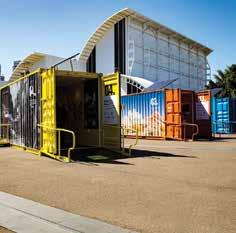
Container – the box that changed the world
Currently showing
The museum’s first-ever outdoor exhibition is dedicated entirely to the history and impact of the humble shipping container. The exhibition goes beyond the corrugated steel to reveal the fascinating story of this revolutionary maritime invention. Housed entirely within specially modified 20-foot containers, the exhibition quite literally takes our visitors ‘inside the box’ to explore the economic, geographic, technical, environmental, social and cultural history and impact of containerisation.
Container – the box that changed the world is open daily and is free.
Clash of the Carriers: Battle of the Coral Sea, 4–8 December 1942
Currently showing
Three navies, four aircraft carriers, 255 aircraft and 76 ships in a four-day battle that changed naval warfare forever. Eight ships sunk, 161 aircraft destroyed and 1,622 men killed in a battle that should never be forgotten.
As part of our ‘War and Peace in the Pacific 75’ program, the museum has launched a new documentary short film in the Action Stations cinema to commemorate the 75th anniversary of the Battle of the Coral Sea, fought by the US Navy and Royal Australian Navy against the Imperial Japanese Navy.
Funded by the USA Bicentennial Gift Fund
54 SIGNALS 123 JUNE–AUGUST 2018
01 02 03
04 Undiscovered 4 (detail), 2010 by Michael Cook. ANMM Collection
05 Detail from a diorama of Suvla Bay, Gallipoli, made by Geoff Barnes. Image Andrew Frolows/ANMM
06 Shackleton banner display. ANMM image
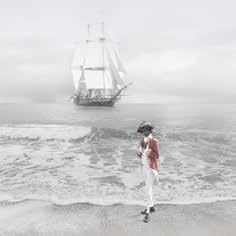
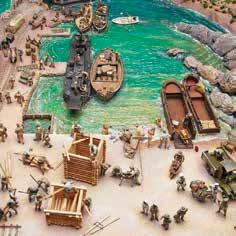
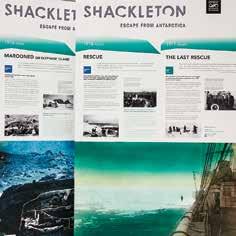
ANMM travelling exhibitions Undiscovered: Photographic works by Michael Cook
Araluen Arts Centre, Alice, Springs, NT
Until 24 June
A striking series of large-scale photographic works by celebrated Aboriginal artist Michael Cook, from the Bidjara people of south-west Queensland. Undiscovered provides a contemporary Indigenous perspective of European settlement in Australia, a land already populated by its original people. Cook’s artworks shift roles and perspectives around the notion of European ‘discovery’ of Australia, reflecting upon our habitual ways of thinking and seeing our history.
War at Sea
Queensland Maritime Museum
Until 12 November
The histories and stories of the Royal Australian Navy and its sailors – less widely known than those of the soldiers at Gallipoli and the Western Front –are told through diaries and journals, objects, film and interactives from the National Maritime Collection, the National Film and Sound Archives and the Australian War Memorial.
This project has been assisted by the Australian Government through the Australia Council for the Arts, its arts funding and advisory body
Shackleton: Escape from Antarctica banner display
Various venues in WA, SA, QLD and NSW
Through dramatic photographs taken by Australian photographers Frank Hurley and Keith Jack, Shackleton: Escape from Antarctica walks in the footsteps of the Imperial Trans-Antarctic Expedition of 1915–17. Discover what happened to these great men and their ships.
The display is supported by the Australian Antarctic Division and sponsored by Antarctica Flights and APT Luxury Touring & Cruising.
Horrible
Histories®
Pirates – the Exhibition
Western Australian Maritime Museum, Fremantle, WA
Until 12 August
Get hands-on with pirate history at this exhibition based on the bestselling Horrible Histories series. Take command of a pirate ship, design and project your own pirate flag, try out different weapons from cutlasses to cannons, find your fate on the wheel of misfortune, discover the best loot to steal and splat rats in the quayside tavern.
Author Terry Deary and illustrator Martin Brown’s unique approach to storytelling comes to life in this blockbuster family exhibition.
Submerged
Various dates and venues
The Australian Maritime Museums Council (AMMC) and the Australian National Maritime Museum partnered to develop the graphic panel display Submerged: stories of Australia’s shipwrecks. Content for the display was developed by AMMC members at maritime heritage organisations across the country, and merged into a nationally touring display by the ANMM. Submerged highlights Australian shipwrecks of national, regional and local importance.
There is no cost to host the graphic panel display and the ANMM will arrange and pay for transport costs. This display is supported by Visions of Australia. For bookings and enquiries, please contact touringexh@anmm.gov.au
Voyage to the Deep: Underwater adventures
Newcastle Museum, Newcastle, NSW
From 7 July
Based on Jules Verne’s 1870 classic 20,000 Leagues Under the Seas, the exhibition brings to life the mythical deep-sea world of Captain Nemo and the fantastical submarine Nautilus. Kids can climb aboard and take control at the helm, peer through the periscopes, crank the propeller, test out the bunks and explore the Cabinet of Curiosities, full of wonderful marine specimens. For children under 12, it’s a hands-on experience with opportunities to touch, explore and play.
AUSTRALIAN NATIONAL MARITIME MUSEUM 55 04 05 06
EXHIBITIONS WINTER 2018
A crack liner on
the Australian run
MEMORIES OF SS ORONTES
The museum’s Foundation recently sought support to purchase and restore a remarkable 1929 model of the SS Orontes. The model’s importance has been clearly demonstrated by the number of donors and Members who have told us about their experiences on the ship. By Dr Kimberley Webber
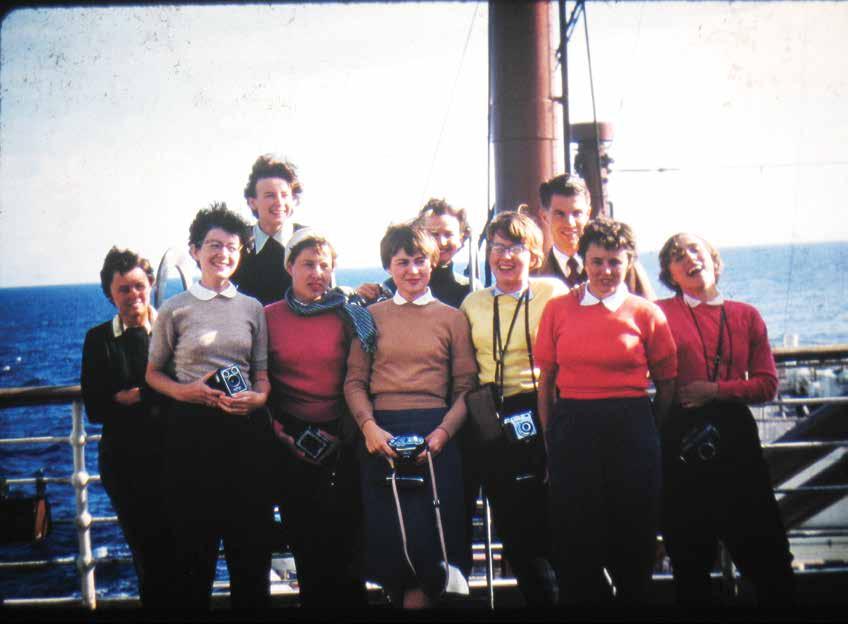
01
01 Phyllis Rowe (centre, in brown jumper) and friends made on board SS Orontes
Image courtesy Phyllis Lyall
02 Phyllis Rowe dancing on board ship, 1956.
Image courtesy Phyllis Lyall
03 David Barnsdall and Hugh Clemens on board the Orontes on the day of departure.
Image courtesy David Barnsdall
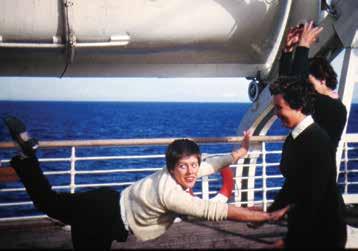
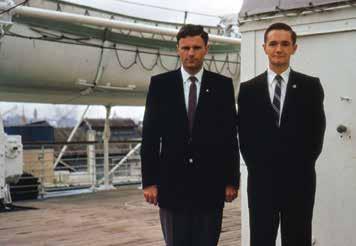
THE SS ORONTES was an Orient Line passenger ship that plied the England to Australia route for over 30 years, interrupted only by its World War II conversion to a troop ship. It brought out tens of thousands of migrants and took back equally large numbers of young people, tourists and others returning ‘home’.
The Foundation is very appreciative of the support we have received for our Orontes campaign, which has been one of our most successful to date. Everyone I spoke to about their experiences on SS Orontes emphasised how different sailing was in those days. As David Barnsdall and Hugh Clemens recall of their trip from Sydney to Fremantle in 1960: ‘the whole family came on board to farewell you. There were streamers and a certain amount of excitement about ship travel … people stood on the wharf at Pyrmont singing farewell songs, especially the Scots, and as we pulled away all the streamers broke’. For 22-year-old Phyllis Rowe it was particularly thrilling when the Orontes sailed under the Harbour Bridge and she could look back at her old office in Macquarie Street and see white bed sheets being waved out of the office window.
By the time David and Phyllis sailed on the Orontes, it was a one-class vessel. When Andrew Robertson joined the vessel in Fremantle in 1948, however, its pre-war class system was still in place.
An officer in the Royal Australian Navy, Andrew was sailing to England to attend a specialist gunnery course at the Royal Naval College in Greenwich and went first class: ‘We had our own dining room with excellent food and a very good steward who looked after you. I had a single cabin with a porthole, bunk and desk, all beautifully decorated.’
Days at sea were interspersed with port visits, when passengers were encouraged to venture ashore
Colin Denny was five years old when he, his mother, Elizabeth, and older brother, Hugh, sailed first-class to England to visit relations in 1956. Despite never having seen a ship before, he says, ‘I don’t remember being daunted by it’. Colin and Hugh quickly found their way around and realised that, if they rushed down to the children’s dinner – held before the adults’ – ‘we could have meals our mother would never let us eat’.
Attracted by the good remuneration that the United Kingdom offered to dental graduates, Malcolm Brodie and his wife left Sydney
on 5 April 1955 planning to live and work in London. Their trip in Cabin 515 – ‘the cheapest we could find, on E deck’ – cost £145 pounds (equivalent to about $4,800 today). The voyage was very memorable as most of the passengers were under 25: ‘we played a lot of deck sports and the officer and engineers would play with us in the afternoons, deck cricket, deck tennis and quoits’. There were no children on board so the children’s hostesses taught them Scottish dancing in the late afternoon and this soon became the highlight of the day.
Days at sea were interspersed with port visits. Leaving Sydney, the Orontes stopped at Melbourne, Adelaide, Fremantle, Colombo, Aden, Port Said, Naples, Marseilles and Gibraltar before arriving at Tilbury, UK, and then Southampton. Passengers were encouraged to venture ashore, and for many this was the first time they had been to such places. Young Colin Denny found the experience fascinating. He can still vividly recall the little boats that came alongside selling things in the Suez Canal: ‘colourful leather cushions and things like that and I remember them bargaining and hauling the goods up on ropes when the sale was complete’. Andrew Robertson, now a Rear Admiral, remembers the ‘ghillie ghillie men’ (magicians) who came on board at Port Said, and the small boys who swam out to the boat and dived for coins that the passengers threw overboard.
AUSTRALIAN NATIONAL MARITIME MUSEUM 57 FOUNDATION WINTER 2018 02 03
The Orient Line was not just marvellous for passengers, it was also known as a good place to work
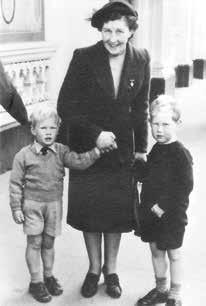
01 Colin Denny with his brother Hugh and their mother, photographed in Melbourne shortly before they left on the Orontes Image courtesy Colin Denny
02 David Barnsdall and Hugh Clemens snoozing on deck, 1960. Image courtesy David Barnsdall
03 The Orontes left from Pyrmont and as David Barnsdall recalled, ‘people stood on the wharf singing farewell songs … and as we pulled away all the streamers broke’. Image courtesy David Barnsdall
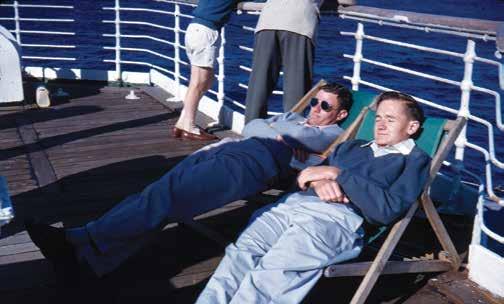
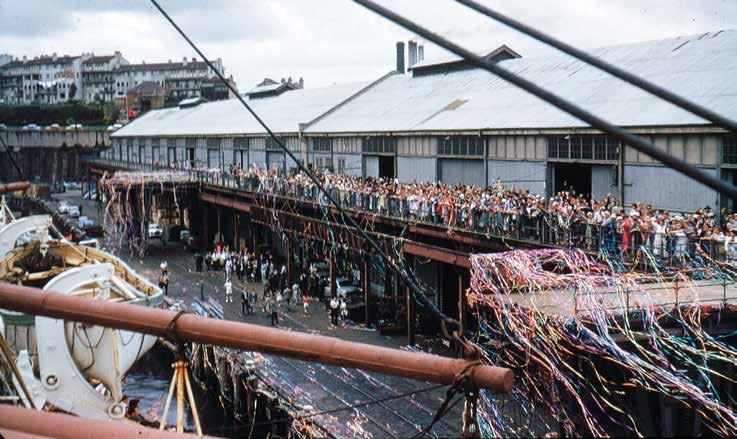
58 SIGNALS 123 JUNE–AUGUST 2018 01 02 03
The Orient Line was not just marvellous for passengers, it was also known as a good place to work. Osmond Pitts applied to the Orient Line for a job because his father, a sea captain, had always said that ‘the Orient Line is the best line to be in’. In 1951 he became Senior Second Officer on the Orontes, having already worked on the far more modern Orcades and Oronsay. Although some thought that the Orontes, built in 1929, was ‘a bit passé’, he recalls that ‘in its day it was one of the crack liners on the Australian run’. As a navigator he particularly appreciated how well it handled the sea.
The Orient Line encouraged officers to mix with the passengers and, with the crowd on board often young, the experience could be very agreeable. All meals were in the First Class Dining Room: ‘In those days there were two sittings and I had my table and depending on what my duties would be, I went to the first or second sitting. And they had a rule that once a week we had to join a table in the Tourist Class Dining Room … which was a bit of a chore because there was no air-conditioning, but it was the rule’. As a Senior Second Officer, however, Osmond’s opportunities for socialising were limited as he had the middle watch, so was in charge of the ship from midnight to 4 am and from midday to 4 pm.
Theodore Tracey worked as a quartermaster on the Orient Line on the Oronsay and Orion and vividly remembers his time with the company. The six quartermasters were responsible for steering the vessel when under way. In fog, one was up the very front of the vessel, ringing a bell for 10 seconds every minute so that other ships would know they were there. Theodore was given this task in June 1954 when the Oronsay was making a ‘coronation voyage’ to London. The ship made good time on the route from Sydney, but then became stuck in fog in the English Channel, taking three days to get into the Thames estuary, by which time they had run out of fresh food. They eventually made it into London with 12 hours to spare.
A more unusual job for quartermasters was to act as pall bearers for funerals at sea. As Theodore Tracey recalls, ‘there was a big doorway on the side of the ship and when there was a burial, the ship would slow down, the door would be opened and the six quartermasters would support the board on which the body was laid. The chaplain read a funeral service and when the officer of the watch gave the word, we would tip up the board and the body would slide off.’
With such experiences it is unsurprising that both passengers and crew found their time on the visiting the bridge with other children, was interviewed over the tannoy and ‘with great self-assurance said that I was going to be captain of the Malcolm Brodie recalls that the trip ‘was one of the highlights of our life’. Long after the voyage ended, he and his wife continued to catch up with fellow passengers at the Denmark pub in Kensington, London, nicknaming themselves the ‘goanna farmers’ union’. For Osmond Pitts and Theodore Tracey, their experience working with the Orient Line eventually led to them settling in Australia, with Pitts being offered a job in Sydney by a first-class passenger, George Hudson of Hudson Homes. When he resigned in 1952, the Orient Line gave him a passage out at ‘victualling rates.
A more unusual job for quartermasters was to act as pall bearers for funerals at sea

How to donate
A first class cabin and all it cost was £30 [$1,100 in today’s terms]. It was a wonderful way to finish working with the Orient Line, they did look after their people’.
Thanks to these memories of the Orontes, Members and supporters have been keen to assist with the purchase and restoration of the model. Malcolm Brodie remembers ogling it in the Orient Line window in Spring Street, Sydney, as a child, and was delighted that the museum was acquiring it. For David Barnsdall it is ‘a nostalgia thing’, an exhibit that he is confident will fascinate his grandchildren as much as himself.
This issue of Signals contains information and a donation form for the 2018 end-of-financial-year campaign, which focuses on raising funds to support the SY Ena Conservation Fund. If they prefer, Members can nominate that their gift be directed to their particular area of interest, including the SS Orontes, MV Krait, Indigenous education and migration stories. If you would like further information, please contact the Foundation Office, 02 8241 8324, or email kimberley.webber@anmm. gov.au.
The cover of an SS Orontes menu from 1956, kept by Phyllis Rowe. Image courtesy Phyllis Lyall
AUSTRALIAN NATIONAL MARITIME MUSEUM 59 FOUNDATION WINTER 2018
An extraordinary
gift to the nation
WILLIAM BRADLEY’S LOG OF HMS SIRIUS
An extremely generous donation to the museum has brought an important early colonial record back to Australia. By Head of Research Dr Nigel Erskine
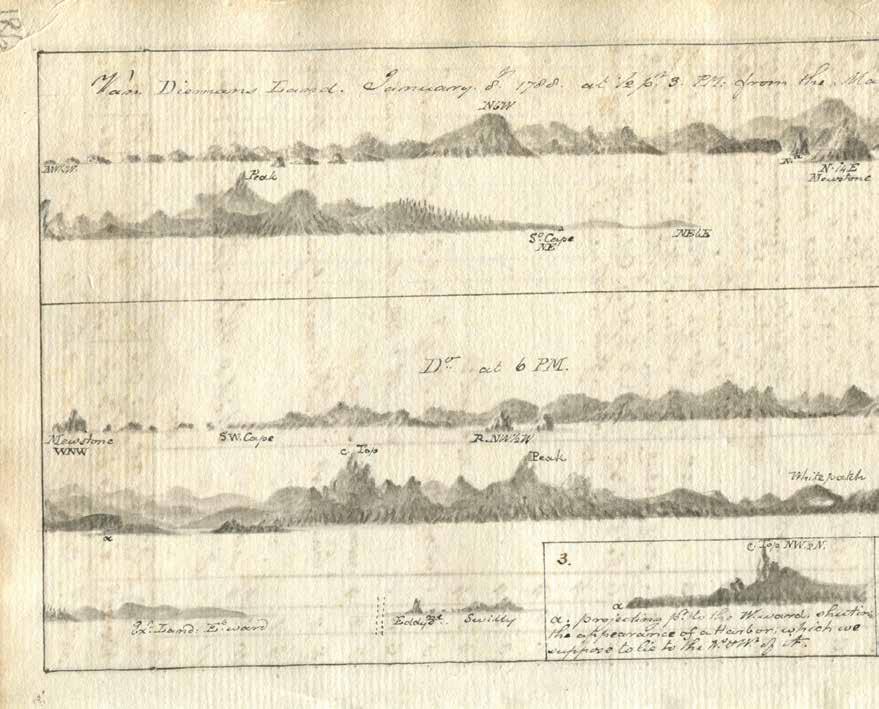
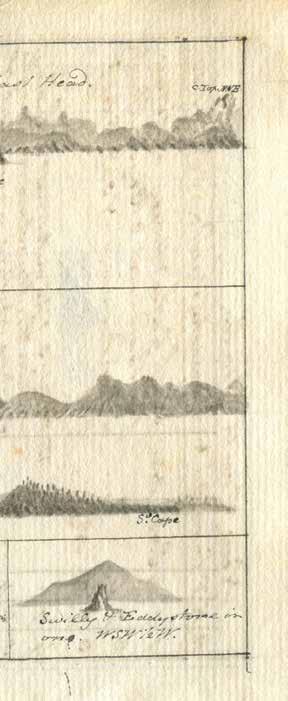
EARLIER THIS YEAR I flew to England a examine a previously unknown log of HMS Sirius, written by First Lieutenant William Bradley, covering the period from the departure of the First Fleet from Portsmouth, UK, in May 1787 to the return of the ship’s crew to England in April 1792 aboard the Dutch vessel Waakzaamheydt. It was a formative period in Australia’s colonial history and the logbook, signed by William Bradley, written in his neat hand and illustrated with maps and small coastal profiles, is an extraordinary gift to the nation.
A generous donation
The log has been donated to the museum by UK resident Mr Anthony Gannon. It had previously passed down through several generations of his family, including Vice-Admirals Harry Edmund Edgell CB and Sir John Augustine Edgell KBE CB FRS, Hydrographer of the Navy (1932–1945). The latter was Mr Gannon’s maternal grandfather.
Mr Gannon’s ancestor Henry Folkes Edgell was captain of the 14-gun sloop HMS Pluto, which served off the east coast of North America (the Newfoundland Station) at the same time that William Bradley was captain of HMS Cambrian on the same station. HMS Pluto was a sister ship to HMS Comet, Bradley’s first command, and it is possible that the log came into the Edgell family through this connection.
William Bradley’s log
Much of what we know about William Bradley is based on his journal in the Mitchell Library. Like the journal, William Bradley’s log is a ‘fair copy’ made at some time after the events it describes.
01 Bradley’s notes and coastal profiles of Van Diemen’s Land (now Tasmania), made on 8 January 1788, less than three weeks before the First Fleet arrived in Sydney Cove. All images Andrew Frolows/ANMM unless otherwise attributed
The logbook, signed by William Bradley, is written in his neat hand and illustrated with maps and small coastal profiles
The two works complement each other, the journal providing a flowing description, while the log is a precise record of Sirius ’ course, speed and position, weather conditions, wind direction and matters relating to sailing the ship, with additional remarks about anchorages or uncharted dangers encountered during the voyages of the Sirius and subsequently the Supply and Waakzaamheydt
Among the entries are some surprising details, such as the following, which refers to Sirius ’ battle to round southern Tasmania on 22 April 1789 while returning to Port Jackson from the Cape of Good Hope:
AM. At 2 weathered the land to the eastward at 1½ or 2 miles distant; from the land trending away N [north] we knew this to be Tasman Head and the point of land we were at 7 AM, the South Cape. The ship was so pressed with sail to get her round the land that the pumps were kept going all night and all hands upon deck. The sea washed away the figurehead.
Two days later the damage to the ship’s stem was so serious that the jib boom and spritsail yard had to be removed, and the bowsprit was jury-rigged with ropes to each cathead. Little wonder that when the ship finally arrived safely back at Port Jackson it needed major repairs to strengthen the hull, before it was again ready for sea.
The place where those repairs were made is named Careening Cove on Bradley’s chart of Port Jackson inserted in the log (see following pages). Bradley surveyed the harbour under Captain John Hunter, who sent a large and beautifully coloured version of the chart back to England, where it can now be seen at the National Archives in Kew.
AUSTRALIAN NATIONAL MARITIME MUSEUM 61 01 COLLECTIONS WINTER 2018
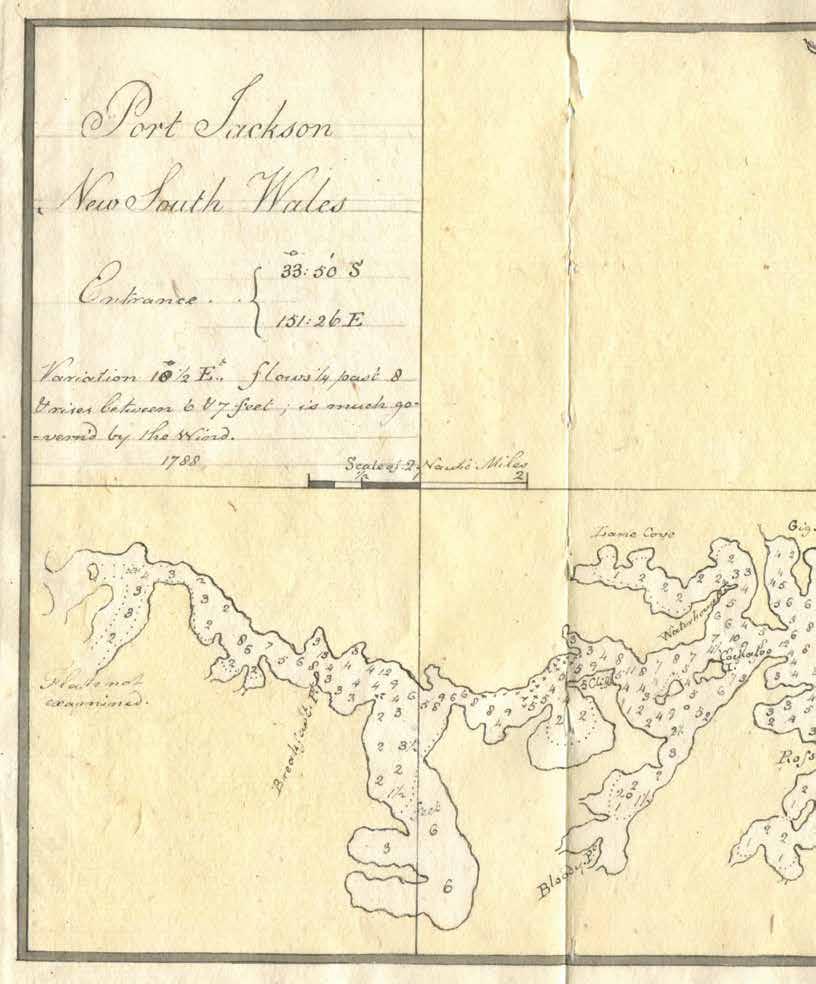
01
The chart of Sydney Harbour in Bradley’s log notes place names, some of which are still in use, while others have been superseded.
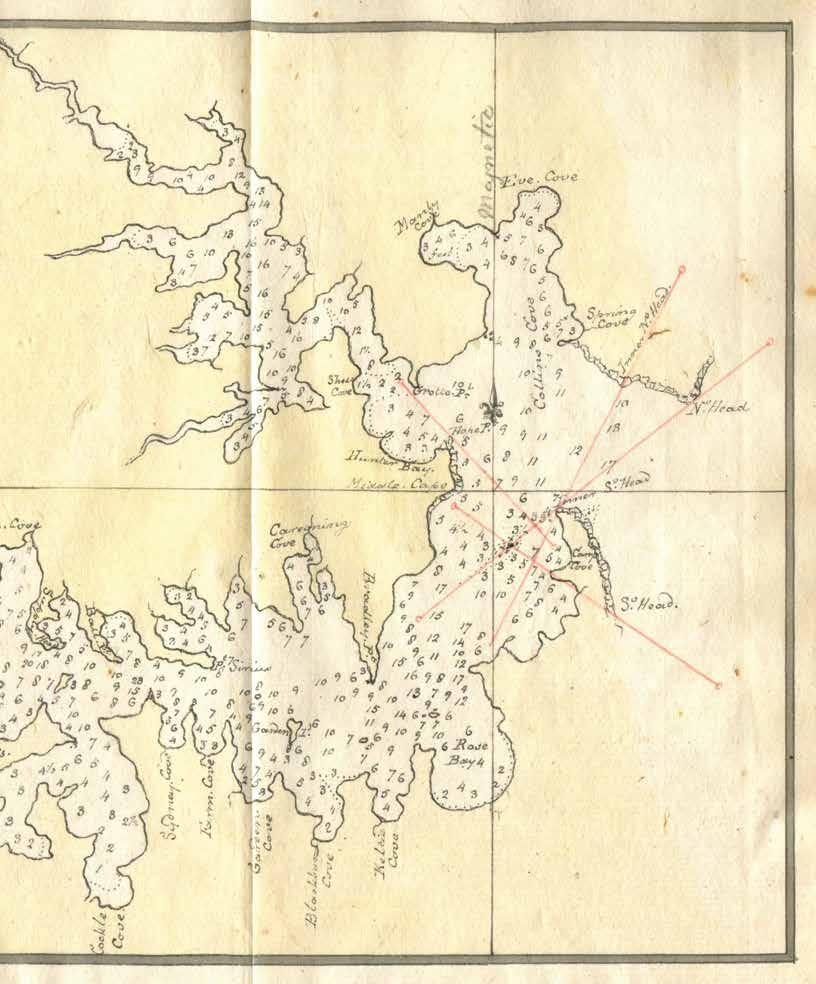
01 COLLECTIONS WINTER 2018
01 The donor of the logbook, Mr Anthony Gannon, presenting it to Dr Nigel Erskine. Image Nigel Erskine/ANMM
02 Coastal profiles drawn by Bradley, depicting the entrances to Botany Bay (south of Sydney), Port Jackson (Sydney Harbour) and Broken Bay (north of Sydney).
Compared with the chart in Bradley’s log, it is clearly a more accurate version, and as intended, became the basis for the first published chart of the harbour. A wonderful aspect of Bradley’s chart of the harbour in his log, however, is his inclusion of names given to many of the bays and headlands.
William Bradley surveyed Sydney Harbour under Captain John Hunter
Some of these – such as Sydney Cove, Rose Bay, Farm Cove, Hunter Bay and Bradleys Point – are still used today, but Bradley’s chart includes other names that haven’t survived. Keltie Cove (Double Bay), Waterhouse Point (Woolwich) and Collins Cove (North Harbour) refer to James Keltie, Master of the Sirius; Henry Waterhouse, a midshipman on the Sirius; and David Collins, Deputy Judge Advocate of the colony. Bloody Point (Dobroyd Point, Iron Cove) probably refers to the murder of two convicts (see article on page 22).
In addition to Port Jackson, Bradley’s log includes charts of Botany Bay, Rio de Janeiro and Table Bay (Cape of Good Hope), as well as the Waakzaamheydt ’s route and anchorages on the voyage to England. Additionally the log includes exquisite coastal profiles of the Canary Islands, Rio de Janeiro, the coast of southern
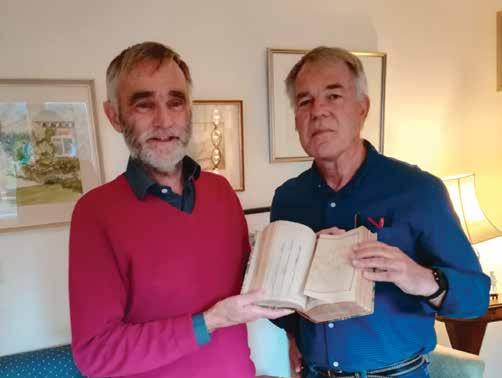
Tasmania (Van Diemen’s Land) and the entrances to Botany Bay and Port Jackson –these last being the earliest depictions of the coastal cliffs around Sydney yet discovered.
William Bradley’s career
Many details of William Bradley’s life remain a mystery, but the basic details of his naval service are clear.
After returning to England in April 1792 he was promoted Commander and placed in charge of the 14 gun Comet, seeing action in the Battle of Ushant off the coast of France. Following that battle he was promoted Captain to the 74-gun ship Ajax (1794–1802) and subsequently commanded the 40-gun Cambrian on the Newfoundland Station (1802–1805). He returned to England in 1805 and was appointed captain of the 74-gun Plantagenet as part of the Channel Fleet until 1809, when he departed the ship.
The exact details of his departure remain unclear, but in January 1809 Bradley informed the Admiralty that he had received a writ to appear before His Majesty’s Court of Common Pleas. Bradley attributed the writ to a sentence passed by a court martial, of which he was president, upon Captain Christopher Laroche of the 38-gun frigate HMS Uranie [Urania].
At this court martial, convened at Portsmouth in July 1807, Laroche was charged with failing to do his utmost to bring about an engagement with an enemy frigate. Found guilty, he was dismissed from his command.
While the exact nature of the writ brought against William Bradley is unknown, it effectively brought an end to his sea-going career. After taking an extended leave of absence to attend the court in London, and with the stress of the situation weighing on him heavily, Bradley’s health declined to a point where he was forced to relinquish command of the Plantagenet However, by the following year he had been appointed to the shore-based Impress Service at Cowes on the Isle of Wight.
Finding men to crew the ships of the Royal Navy during the long war with France and its allies was a constant problem. While the government attempted to attract volunteers by offering the ‘King’s bounty’ (an inducement equivalent to about two month’s advance wages) to men who freely entered the service, in times of need it was also empowered to take British seamen from merchant ships in home waters and to round up suitable men on shore through the press gang, and force them into naval service.
By their nature, the activities of the Impress Service were unpopular and its members regularly liable to verbal or even physical abuse. Bradley’s career was rocked in 1812 by an anonymous letter sent to the Admiralty – whether made in retribution, a genuine observation, or simply a mistake – claiming that he had been seen intoxicated in the street at Cowes. The complaint came at a critical moment in Bradley’s career.
64 SIGNALS 123 JUNE–AUGUST 2018 01
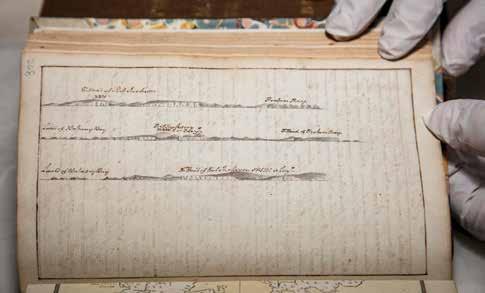
By 1812 Bradley was a post captain of 18 years. Having advanced in seniority to the top of the list of captains serving in the navy, he could expect, by convention, to be promoted to the rank of admiral when the next vacancy occurred. In 1812 there were 191 flag officers on active service and another 31 ‘superannuated’ rear-admirals. In effect, a superannuated officer was a retired officer holding honorary rank but receiving a pension equal to the half pay of a rear-admiral.
Finding men to crew the ships of the Royal Navy during the long war with France and its allies was a constant problem
Bradley seems to have first become aware of the threat to his expected promotion when a panel of three captains was tasked with investigating the complaint against him, and he quickly went about securing character references that he sent to the Admiralty Board. At this stage, the sevenmember board appears to have been against awarding Bradley his flag, but after Bradley successfully appealed directly to the Prince Regent, it reversed its earlier decision, placing him on the list of superannuated rear-admirals on 22 September 1812.
The victory should have been enough to support Bradley, his wife, Sarah, and their five children – James (24), Louisa (18), Eliza (16), Maria (12) and Angus (6) – in relative comfort, but events were soon to prove otherwise.
In 1814 William Bradley was found guilty of defrauding the postal system as outlined in The Salisbury and Winchester Journal on 25 July:
It appeared on the trial that Admiral Bradley carried to the post-office, at Gosport, a parcel containing 411 letters, which he pretended to have brought by the vessel William and Jane, from Lisbon, upon which he claimed (in the name of Wm. Johnstone) and obtained a premium of 2d. per letter (amounting to about £3:8 s) which is given by a statute of George II to masters of vessels bringing letters from foreign parts. The letters were all written in his own hand on half sheets of paper, and addressed to different Members of Parliament. He had previously obtained premiums at the same post-office for the delivery of great numbers of letters under exactly similar circumstances, and suspicion of fraud was first entertained at the general post-office in London, by order of which enquiry was set on foot at Gosport.
… Evidence was given on the prisoner’s behalf, of his intellects having been in a disordered state in the year 1809; testimony to the honesty of his character was also adduced; the Jury however, returned a verdict of Guilty.
The log includes exquisite coastal profiles of the Canary Islands, Rio de Janeiro, the coast of southern Tasmania and the entrances to Botany Bay and Port Jackson
A singular circumstance is related respecting the above prisoner; it is positively asserted that he incurred an expense of £2 for the chaise hire, to carry the letters to Gosport; which expense, with the cost of the materials of 411 letters, must have reduced his gain to almost nothing.
In October, the same newspaper announced that Bradley was to be transported for life, but within weeks he received a pardon on condition that he leave Britain and never return. As a result, William Bradley crossed the Channel to France where he lived at Le Havre until his death in March 1833.
The circumstances of Bradley’s fraud suggest a mental breakdown which, as his defence argued, may have been linked to incidents in 1809. Whatever the reason, it was a sad end to a long and dutiful career.
With the log now finally in Sydney, museum Director Kevin Sumption commented, ‘This is without doubt the most significant early colonial acquisition made in my time and I dare say one of the most significant documents ever donated to an Australian cultural institution. We are indeed privileged to be entrusted with this national treasure – a point that I hope to make personally to the donor, when I am next in the United Kingdom.’
A digitised version of the log will be available online shortly.
AUSTRALIAN NATIONAL MARITIME MUSEUM 65 02 COLLECTIONS WINTER 2018
John Shying has the distinction of being the first Chinese landowner and publican in Sydney
‘A Native of Canton’
CELEBRATING TWO CENTURIES OF CHINESE IMMIGRATION
This year marks an important milestone in Chinese–Australian history, as the bicentenary of the arrival of one of the earliest recorded Chinese-born free settlers to the colony of New South Wales. Curator Kim Tao traces the story of Cantonese carpenter and publican Mak Sai Ying.
MAK SAI YING (also known as Mak O’Pong, later anglicised to John Pong Shying) arrived in Sydney in 1818, just 30 years after the First Fleet and several decades before the 1850s gold rushes that would bring thousands of Chinese fortune seekers to Australia. John Shying has the distinction of being the first Chinese landowner and publican in Sydney, and also the grandfather of one of the first Chinese–Australian servicemen.
Shying was born about 1796 in Canton (now Guangzhou), the southern Chinese port to which all foreign trade had been restricted since the mid-18th century under the Qing dynasty’s Canton System. Shying arrived in Sydney on 27 February 1818 on the Laurel, an Indian-built vessel that sailed between Calcutta, Canton and Sydney. It is not known whether he was a passenger or a crew member on the ship, which was carrying a cargo of tea from Canton to Sydney.
Shying first worked as a carpenter at English settler John Blaxland’s Newington estate on the banks of the Parramatta River. Blaxland later stated, in an 1838 character reference, that ‘John Shying lived with me as a carpenter on his arrival in the colony for three years, and always conducted himself with the greatest propriety, since which I have always heard that he has been an honest, respectable character.’1
In 1821 Shying was granted 30 acres (12 hectares) of land at Brush Farm, near Parramatta, following a written
request to Governor Lachlan Macquarie in which he described himself as ‘a Native of Canton in China … anxious to become an Agriculturalist of this Colony’.2 Shying also worked for the pastoralist Elizabeth Macarthur (who with her husband, John Macarthur, pioneered the wool industry in Australia) at Elizabeth Farm in Rosehill, where he was referred to in daybooks as the ‘Chinese carpenter’.
On 3 February 1823, Shying married English free settler Sarah Jane Thompson (c1802–1836) at St John’s Anglican Church in Parramatta. The wedding was officiated by the Reverend Thomas Hassall and witnessed by ex-convicts Matthew Todd and Alice Williams.3 Sarah Jane Thompson and her younger stepbrother John O’Neill had arrived in the colony on the Morley in 1820. In Parramatta they were reunited with their convict parents, servant Sarah O’Neill (née McLean, c1762–1839) and gardener Daniel O’Neill (c1773–1842), who had been transported in 1815 for counterfeiting coins. The young Sarah Jane had been implicated in her parents’ crime by attempting to pass the counterfeit coins in Nottingham, but she was acquitted at their trial in 1814.
After Shying’s marriage to Sarah Jane, lands records reveal that he purchased a number of properties and allotments in the town of Parramatta and the district of Bathurst, west of Sydney, throughout the 1820s. He also ran a shop (which was
known to supply goods to the Female Orphan School at Parramatta) until he was granted a publican’s licence in 1829 for the Lion Inn. Another licence, issued in 1830, notes that he was ‘a fit Person to keep a Public House’ and authorised ‘to retail wines and malt and spirituous liquors’ at the Golden Lion on Church Street, Parramatta.4
Shying and Sarah Jane had four sons: John James (1823–1885), George Hugh (1826–1893), James Henry (1828–1891) and Thomas Jones (1830–1894). All would become successful businessmen, firstly in Parramatta and later in Sydney town.
A search of the Sands Directory from the 1860s to the 1880s shows the two eldest, John and George, operated J&G Shying Undertakers, while James was a cabinetmaker (and then a tobacconist) and Thomas was a butcher.
John James Shying was an acquaintance of Mei Quong Tart, the prominent Sydney tea merchant and philanthropist who actively campaigned against the importation of opium. Shying’s son, Sergeant John Joseph Shying (1844–1900), a draper, became one of the earliest Chinese–Australian servicemen when he served with the New South Wales Contingent of the Colonial Military Forces in the Anglo–Sudan War in 1885. Another Shying descendant, Private Christopher John Shying (1896–1980), served with the First Australian Imperial Force during World War I.
66 SIGNALS 123 JUNE–AUGUST 2018
In one of history’s great migrations, more than six million people have crossed the seas to settle in Australia. The museum’s tribute to all of them, The Welcome Wall, encourages people to recall and record their stories of coming to live in Australia
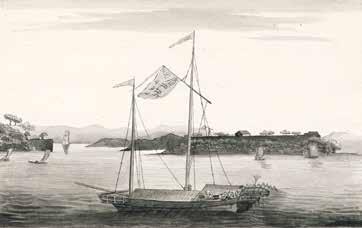
01 Watercolour by unknown artist titled The entrance of the Bocca Tigris leading to Canton, c1800. The narrow strait known to Europeans as the Bocca Tigris (meaning ‘tiger’s mouth’, now Humen) was the gateway to the trading port of Canton and heavily fortified during the Qing dynasty. ANMM Collection 00019970
02 ‘Newington’ – residence of John Blaxland on the Parramatta River, where John Shying worked as a carpenter after his arrival in New South Wales. Reproduced courtesy NSW State Archives
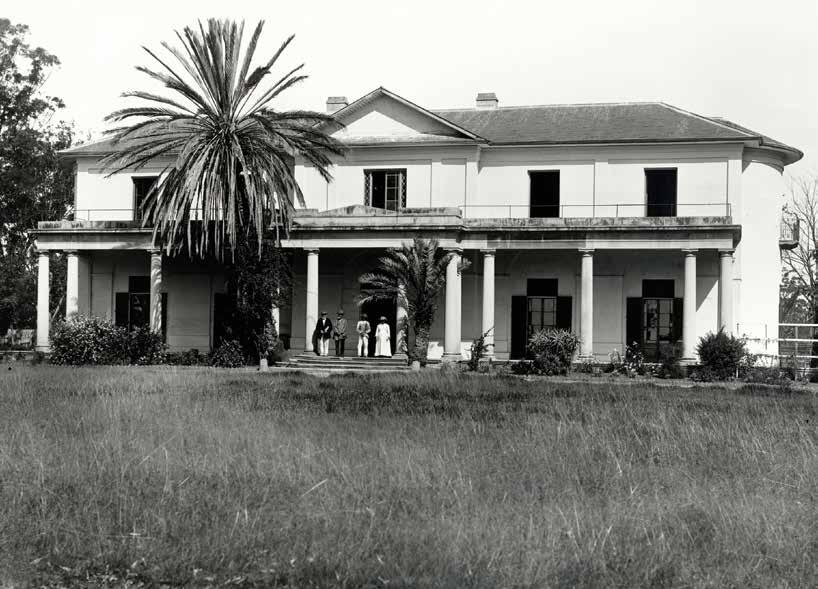
WELCOME WALL WINTER 2018
01 02
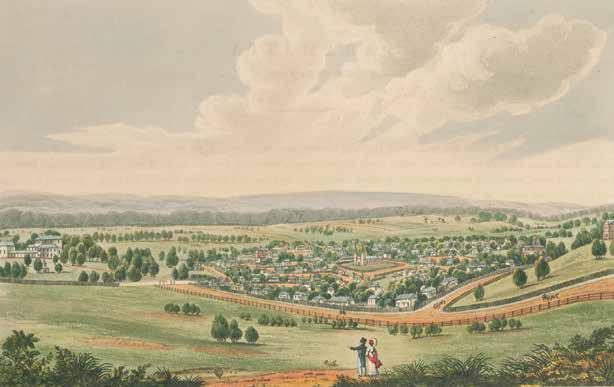
Shortly after the birth of his fourth son, John Shying returned to China, where he may have been employed as a customs official or port liaison in Canton.5 In October 1831 he granted Power of Attorney to Joseph Hickey Grose, a merchant and auctioneer, and John Foreman Staff, a local schoolmaster, to act generally over his affairs ‘in consideration of the said John Pong Shying leaving the colony’.6 The following month, Sarah Jane Shying wrote to the Colonial Secretary of New South Wales, Alexander Macleay, to request that the title deeds to her husband’s allotments be made out in her name. Her letter was forwarded to the Attorney General, John Kinchela, who replied to Macleay:
I have the honour to acknowledge the receipt of your letter of the 17th instant transmitting to me a letter addressed to you by Sarah Shyong [sic] , requesting that the Title Deeds of certain Town allotments in Parramatta claimed by her husband John Shyong [sic] , who is a native of China, and not naturalised, may be executed in her name, and requesting by direction of His Excellency the Acting Governor that the same may be returned with my legal Report, whether there is any legal objection to its being done –in reply I have the honour to state, that as the husband of Sarah Shyong [sic] cannot receive a grant of land, I see no legal objection to the Grant being made if His Excellency shall be pleased to do so to Trustees, to the use of
the wife, and her children, but as a married woman the Grant cannot be made directly to herself. The Trusts may be for her use solely, or to her for life with such power to dispose of the property to her children, as shall be arranged before the Grant shall be finally made out.7
While Shying was in China, his wife Sarah Jane died on 27 March 1836 and was buried in St John’s Cemetery in Parramatta. Shying returned to Sydney on the Orwell a few months later, before the outbreak of the First Opium War between Britain and China, which would result in the abolition of the Canton System and the opening of five Chinese treaty ports to foreign trade. He resumed buying and selling real estate, noting that he had ‘brought capital with him from China’ in a letter to Governor Richard Bourke in 1837.8
Records from this period show that Shying became the publican at the Lamb Inn on Pennant Street, Parramatta, in 1837.9 On 10 October 1842 he married a widowed Irish bounty immigrant, Bridget Gillorley (1813–1845), again at St John’s Anglican Church. The wedding was conducted by Reverend Henry Hodgkinson Bobart in the presence of James Turner and John Foreman Staff.10 Bridget Shying died in 1845 and was buried in St Patrick’s Cemetery in Parramatta with Daniel O’Neill, the stepfather of Shying’s first wife, Sarah Jane.
In 1844 a number of newspaper advertisements referred to Shying as the proprietor of the Peacock Inn in Parramatta, which was to be sold at auction on 13 March. The Inn was described as having ‘an excellent China-fashioned verandah running the whole frontage, and contains a bar, tap-room, three sitting and three bed rooms, large yard, stables, coach-house, a never-failing well of good water, and cellars’. The property was situated in ‘the best thoroughfare in the town, and is proverbial as being a LUCKY HOUSE’.11
Shying and Sarah Jane had four sons, all of whom would become successful businessmen
John Shying made his will in October 1844 and after this period he disappears from the public records. Although a later land transaction refers to John [James] Shying as the executor of the will of John Shying the Elder, the absence of a death certificate suggests that his death may have been documented under a different name.12 Research by two of his descendants, Vanessa Gai Johnson and Valerie Blomer,
68 SIGNALS 123 JUNE–AUGUST 2018
01
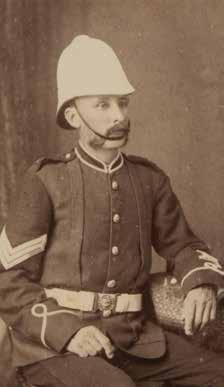
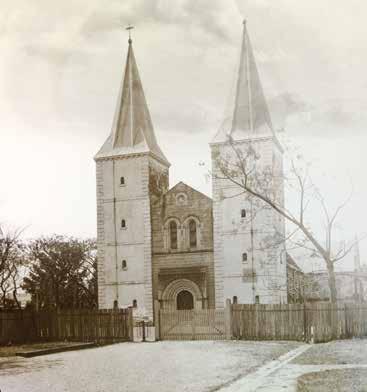
puts forth the rather intriguing proposition that Shying could have married for a third time under the name of John Shin or Sheen. Johnson and Blomer discovered that John Shin, a gardener and native of China, married Irishwoman Margaret McGovern at the Scots Church Sydney in 1846 and their children were known as Sheen.13 John Sheen died on 18 June 1880 and was buried at Rookwood Cemetery, in Sydney’s west, by J&G Shying Undertakers. However, while John Sheen’s death certificate bears information that is consistent with that of John Shying, the connection has not yet been conclusively established by his descendants.
Nevertheless, today many of Shying’s descendants still live in Sydney and their family history research papers are held at the State Library of New South Wales.14 John Shying’s name, along with that of his first wife Sarah Jane Thompson, was registered on the Welcome Wall by his great-great-granddaughter to honour a pioneering Chinese settler. Two centuries after Shying’s arrival, more than five per cent of Australia’s population (some 1.2 million people) identify as having Chinese ancestry.
1 Valerie Blomer, An Alien in the Antipodes: The Story of John Shying, unpublished manuscript, 1999.
2 NSW State Archives: NRS 899, Fiche 3001–3162.
3 St John’s Anglican Church, Parramatta: REG/COMP/1, vol 01, no 907, p 404, 1823.
4 NSW State Archives: 14401, [4/61–62], 5049.
5 Blomer, Alien in the Antipodes
6 NSW State Archives: 1573, 12992, 1825–1842.
7 Blomer, Alien in the Antipodes
8 Blomer, Alien in the Antipodes
9 NSW State Archives: 14401, [4/67–68], 5053.
10 St John’s Anglican Church, Parramatta: REG/MAR/4, vol 04, no 238, p 58, 1842.
11 The Sydney Morning Herald, 24 February 1844, p 3.
12 Winsome Doyle, Research papers relating to John Shying (Mak Sai Ying), 1992, State Library of New South Wales MLMSS 5857.
13 Vanessa Gai Johnson, First Families 2001 pandora.nla.gov.au/pan/10421/20041220-0000/ firstfamilies2001.net.au/firstfamily4dc0-2.html; Blomer, Alien in the Antipodes
14 Doyle, Research papers MLMSS 5857.
Two centuries after Shying’s arrival, more than five per cent of Australia’s population (some 1.2 million people) identify as having Chinese ancestry
01 Joseph Lycett, Parramatta, New South Wales, published 1824. St John’s Anglican Church, with its distinctive twin towers, is visible in the centre of the town. Reproduced courtesy State Library of Victoria
02 John Shying’s grandson, Sergeant John Joseph Shying, 1885. Photographer William H Vosper. Reproduced courtesy Winsome Doyle
03 St John’s Anglican Church, the Parramatta church in which John Shying was married to both of his wives, c1875–c1938. Photographer John Henry Harvey. Reproduced courtesy State Library of Victoria
The Welcome Wall
It costs just $150 to register a name and honour your family’s arrival in this great country. We’d love to add your family’s name to The Welcome Wall, cast in bronze, and place your story on the online database at anmm.gov.au/ww. Please call our staff during business hours with any enquiries on 02 9298 3777.
AUSTRALIAN NATIONAL MARITIME MUSEUM 69
02 03 WELCOME WALL WINTER 2018
The Catch: the story of fishing in Australia
By Anna Clark, published by NLA Publishing, Canberra, 2017. Paperback, 162 pages, illustrations, notes, index. ISBN 9780642279064. RRP $39.99/Members $35.95
The Hawkesbury River: a social and natural history
By Paul I Boon, published by CSIRO Publishing, Clayton South, Victoria, 2017. Hardback, 564 pages, illustrations, maps, notes, index. ISBN 9780643107595. RRP $120
Fishy tales
and river stories
NATURAL, SOCIAL AND FISHING HISTORIES
IS THERE ANOTHER WAY in which so many Australians engage with their oceans, lakes, rivers, creeks and dams than by going fishing? If there is a part of our maritime heritage that almost everyone has at some point been linked to, it has to be fishing. It’s often described as the national pastime, or as author Anna Clark begins her history, as ‘Australia’s love affair’.
Clark is a public historian and avid fisher, and The Catch brings together her insights from both camps. The Catch is an ambitious and visually rich overview of the long history of fishing. It begins with Indigenous fishers and fishing, moving through colonial and modern Australia as well as recreational and commercial fishing, right up to presentday questions of sustainability.
The Catch is full of imagery drawn from the wonderful collections of the National Library. It is not a dense work, and is immensely readable. Clark draws on her personal experience with a light touch and manages to succinctly tell the essence of what is a huge story.
Importantly, Clark notes how the practice of fishing is deeply linked to place and memory – how families pass on ‘techniques and generations of keen observations’. Fishing stories are not just tales of the one that got away, but are links and bonds within families and communities. Perhaps more could have been made of the role of fishing in Australian social memory, and a deeper interrogation of the gendered elements of fishing, but that might be another story for a different audience.
The Catch is not an overly nostalgic view of fishing. Clark does not shy away from the at times serious conflicts and contests that have occurred. It is a book that, importantly, will resonate with the broad public that has some small or large connection with fishing.
While the Hawkesbury River, north of Sydney, has been a special place for fishers for thousands of years, Paul Boon’s recent book The Hawkesbury River – A social and natural history is a very different kettle of fish to The Catch. Boon meticulously details the long environmental history of the river through a study of its geography, river systems, plants and animals – as well as the human interactions with the river.
We begin with the formation of the wonderful Hawkesbury sandstone and how this is part of the broader Sydney Basin. Boon then takes us through chapters on how the river became an estuary, why it floods, and why the mangroves, saltmarshes and seagrasses have become valuable protected areas.
It is only after 230 pages that we get to the human histories of the river, and here Boon presents an overview of the Aboriginal Hawkesbury River, then its occupation and exploitation by European–Australians. The chapters are diverse – Boon considers road, ferry and railway crossings, boats and shipping, the river’s strategic military role defending the northern gateway to Sydney, and ‘the river as muse’, which explores the artists, musicians and writers inspired by the river.
At more than 500 pages, The Hawkesbury River is, like the river itself, not to be taken lightly. Boon’s research and scholarship are comprehensive. But the book is not daunting; it is at times very personal and passionate, at others scholarly and scientific. It is always readable, and ultimately a plea to respect the river. This work will stand as a one-stop resource point for many diverse audiences interested in the Hawkesbury River for many years to come.
Reviewer Dr Stephen Gapps is a curator at the museum and has spent many long and wonderful hours fishing and boating on the Hawkesbury River.
70 SIGNALS 123 JUNE–AUGUST 2018
The Catch is an ambitious and visually rich overview of the long history of fishing
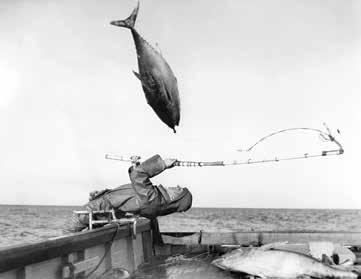
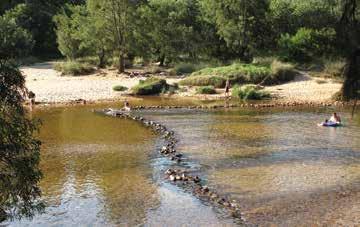
01 From The Catch: Tuna poling at Eden, NSW, 1960. National Library of Australia nla.obj-137011608
02 From The Hawkesbury: the Grose River at Yarramundi Reserve. Image Paul Boon
03 This image of a community of Aboriginal fishers, as depicted by Joseph Lycett (c 1817), appears in both of the reviewed books. National Library of Australia nla.obj-138500727
04 From The Catch: Migrants fishing, 1958. For many migrants, fishing was seen as a way of getting to know, and fitting into, their new culture. National Archives of Australia A12111, 1/1958/16/170
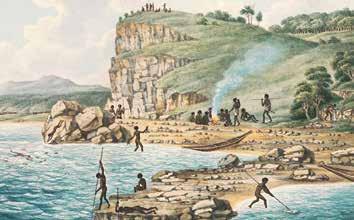
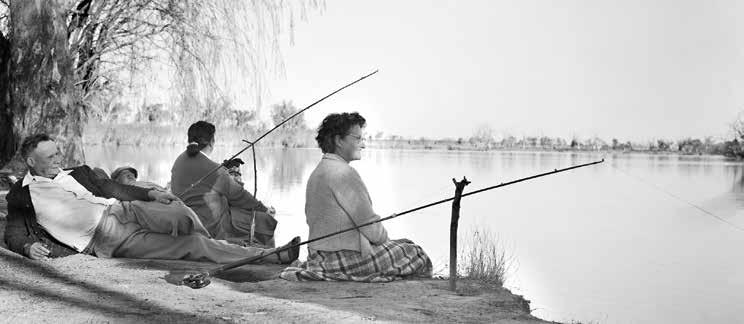
AUSTRALIAN NATIONAL MARITIME MUSEUM 71 01 02 READINGS WINTER 2018
03 04
a country’s soul A city’s heart,
EXPLORING SYDNEY HARBOUR
BY
KAYAK
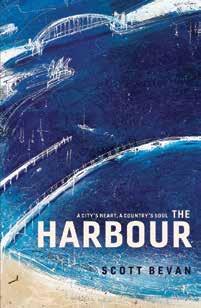
The Harbour – A city’s heart, a country’s soul
By Scott Bevan, published by Simon & Schuster, Sydney, 2017. Hardback, 630 pages, photographs, map, notes, index. ISBN 9781925368772. RRP $50.00/ Members $45.00
01 The cover of The Harbour features a detail of Rockin’ Redleaf by Mark Hanham. Image courtesy Simon & Schuster
02 Underneath Gladesville Bridge.
03 Luna Park, the Harbour Bridge and the Sydney Opera House from Lavender Bay
04 At sunrise, Pulbah Raider heads towards the Sydney Harbour Bridge. Images 02–04 courtesy Scott Bevan
WE SIGNALS READERS are an eclectic bunch, but one thing we all have in common is a love of the sea and of things maritime. And for those who live in Sydney, we have ‘our’ Harbour. We walk its foreshores, swim in its bays (often oblivious to the sharks that also call the harbour home!) and sail, motor or, as The Harbour ’s intrepid author Scott Bevan did, kayak its 55 square kilometres of deep green, blue, or brown water – muddy after heavy rain, shimmering in the winter sun or wearing the haze of summer.
Sydneysiders are inordinately proud of Sydney Harbour, but most of us are ignorant of the stories of its countless nooks and crannies. The Harbour – a city’s heart, a country’s soul gradually peels away the layers of early Indigenous occupation and two centuries of post-European settlement to reveal often complex histories, while also providing a snapshot of the harbour in the early 21st century. Personal stories give the book an extra dimension.
Bevan rejects suggestions that he has written a history, preferring to explain that he simply wanted to explore a place he knew, from a different perspective – from the water from his kayak, Pulbah Raider. But actually The Harbour contains a lot of history and much more. It blends history with Bevan’s own observations and accounts of meeting and talking with people during his travels. Make no mistake, though, Bevan’s laid-back style of writing is backed up by meticulous research, an extensive bibliography and comprehensive endnotes. As someone who was interviewed by Bevan for the book, I can attest to his scholarly methodology and great care for accuracy, and also to his ability to put people at their ease, a skill that has resulted in many enjoyable anecdotes. During his paddling excursions, Bevan would pull Pulbah Raider in to the shore or to a boat for a chat – a ‘yarn’, as he calls it
– to dig deeper and to add a personal touch to his stories, complementing his off-water research and planned interviews. As you read, there is a sense that you are with him on Pulbah Raider
At first glance, this weighty tome may look daunting, but Bevan hasn’t had to use complex words to impress – there is no need to have a dictionary to hand. Bevan instinctively knows his audience and writes as if he is having a chat with his reader. A century ago, Danish writer Isak Dinesen wrote, ‘The cure for anything is salt water: sweat, tears or the sea’. I don’t know how many tears Scott Bevan shed as he explored, but in paddling the length and breadth of Sydney Harbour in his kayak, he certainly had no shortage of sea water and, no doubt, of sweat. The Harbour is a huge achievement.
The Harbour is logically presented and includes a comprehensive index, although I would have preferred to see the map of Bevan’s travels at the beginning of the book for readers who don’t make the contents page their first port of call. It’s also a shame that the publishers chose to put most of the images in ‘blocks’, rather than within the relevant text where they could be better appreciated. But these are small quibbles in an otherwise excellent publication.
I can recommend The Harbour as a great read, as well as an invaluable resource. I will certainly be keeping a copy on my boat when I’m exploring Sydney Harbour.
Reviewer Randi Svensen is the author of Wooden Boats, Iron Men: The Halvorsen Story and Heroic, Forceful and Fearless: Australia’s Tugboat Heritage
72 SIGNALS 123 JUNE–AUGUST 2018
01
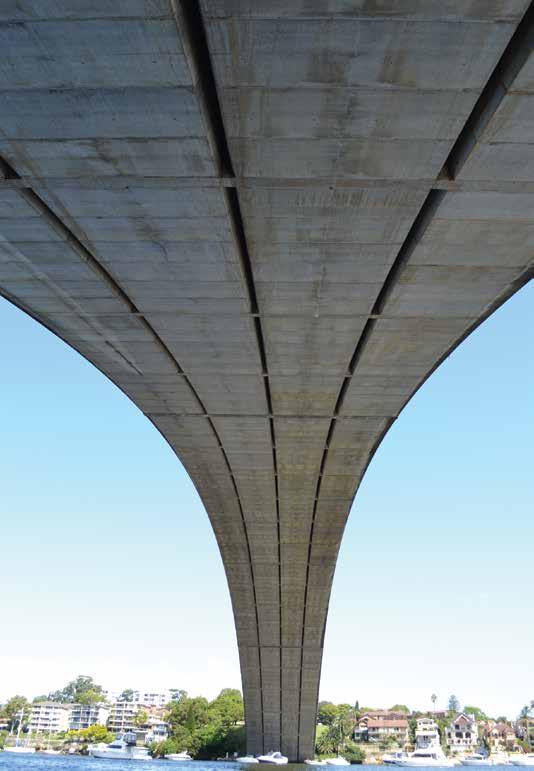
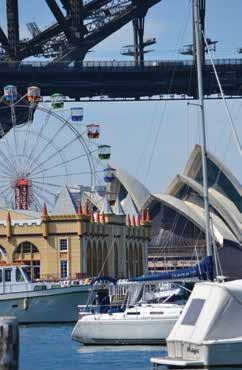
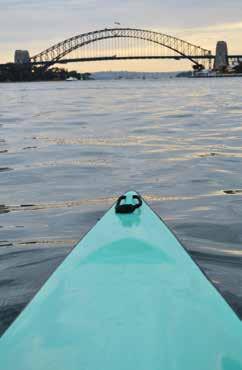
READINGS WINTER 2018 04 02 03
A century on the water
SHIPWRIGHT AND SAILING LEGEND
Bill Barnett died in March this year. He was almost 103 years old, and had spent his life on Sydney Harbour. Bill was the best known of his family’s three generations of boatbuilding through his sailing with the 18-foot skiff class and the construction of many fine yachts, including two Australian America’s Cup challengers.
Bill was born in 1915 and started sailing at a young age, first racing with his two younger brothers in eight-foot dinghies. At 17 he started racing competitively in a 12-foot canvas class dinghy called Myra, named after his father’s first 10-footer. He won the New South Wales State Championship in the class in 1934 and 1935 and then moved into 12-foot skiffs. With Myra he represented New South Wales in two Australian championships.
Bill became involved with boatbuilding by helping his father Prince, a shipwright, who often left him jobs to do after school. He built his own dinghy at home and then left school to begin a shipwright apprenticeship with Neptune Engineering in Lavender Bay. After five years there he was credited with only four on his apprenticeship, and left to finish his last year with the Manly Ferry Company in Neutral Bay. After a few months he was put onto a full tradesman’s wages as the manager was so impressed with his work. He was empowered during World War II to work as a shipwright, and went to the nearby Shell Oil Company. In his spare time he sailed on skiffs, and became a crew member on Billo Hayward’s Malvina, as the bailer boy.
VALE WILLIAM HENRY ‘BILL’ BARNETT OAM 1915–2018
After building and helming Joe Audsley’s 16-foot skiff Havoc, Bill became skipper of the 18-foot skiff Joyce in 1943. He then became part of a syndicate that bought the champion skiff Jenny Too from Norman Wright Snr in Brisbane. After winning many races, including the state title in 1946/47, he designed and built the six-foot (twometre) beam Myra. With Bill as skipper and his brothers in the crew, Myra won the Australian Championship in 1950. For the 1951 season Bill built Myra Too, which dominated its class, winning the state, Australian and world Championships, a rare feat. Myra Too had a powerful Marconi-rigged big sail, but showed good all-round speed in any conditions, and strung together many wins on Sydney Harbour over the season. Myra III and Myra IV followed, then Jan. Bill then left the class and contested the Olympic trials in the International Sharpie class, but was beaten by the eventual silver medallist, Rolly Tasker. Bill Barnett also built 18-footers for other clients. They were consistently fast and often filled the top places in races. In the 1970s he built probably the last timber 18-foot skiff, the plywood, single-chine hull KB for Dave Porter.
Bill had set up his own business after the war in a shed in front of his home in Blues Point, and many champion yachts came from there. The best-known are the two America’s Cup challengers Dame Pattie and Gretel II. He also built the ocean racers Boambillee and Kingurra, 6 Metre class yachts Toogooloowoo and Toogooloowoo II, Prince Alfred and Pacemaker, the 5.5 Metre class yachts Southern Cross
(I to IV), a number of Dragon class yachts –including his own Cynthia, named after his first daughter – and several cold-moulded surfboats. He worked with a small number of shipwrights and apprentices as his staff.
On 7 October 1971 Bill’s shed burnt down when a fire started on an adjoining property and the strong, hot westerly wind spread the flames into his yard. Everything was destroyed but, undaunted, he cleared the debris and started again, with help from friends who put up a shed as soon as possible before the council could consider rezoning the location and not allowing his yard to continue on the site. Bill Barnett retired in the 1980s.
He married Glory Nelson in the late 1940s and they had two daughters, Cynthia and Margaret. They learnt to sail in a Manly Junior class dinghy, and spent many hours of their childhood mucking around in their father’s boat shed.
In 2013 a tribute luncheon was organised for Bill and his family. Gretel II and three of his Dragons were there on the waterfront, plus more than 200 guests to honour the occasion. At that time the Australian Open Skiff Trust had commissioned a replica of Myra Too, which was built by Bill’s former apprentice Bob McLeod and launched early in 2014 (see Signals 107, June–August 2014). Racing with the Sydney Flying Squadron and trust’s fleet of historic skiffs, Myra Too was the race winner the Saturday after Bill passed away.
David Payne
74 SIGNALS 123 JUNE–AUGUST 2018
Bill was the best known of his family’s three generations of boatbuilding
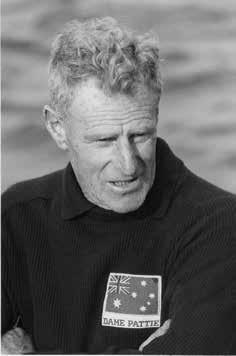
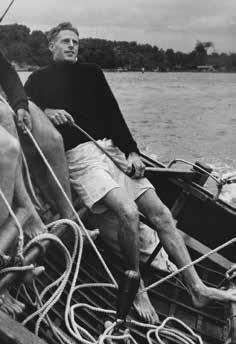
01 Bill Barnett, c1967, wearing a sweater from that year’s America’s Cup campaign. He built Australia’s contender, Dame Pattie, to a design by Warwick Hood.
02 The champion 18-foot skiff Myra Too heads downwind, showing her impressive spread of canvas, 1952.
03 Bill on the tiller of Joyce during the war years.
04 Bill and staff in his McMahons Point boat shed, 1960s. His apprentice, Bob McLeod (far right) built a replica of Myra Too for a 2013 tribute to Bill.
All images courtesy the Barnett family
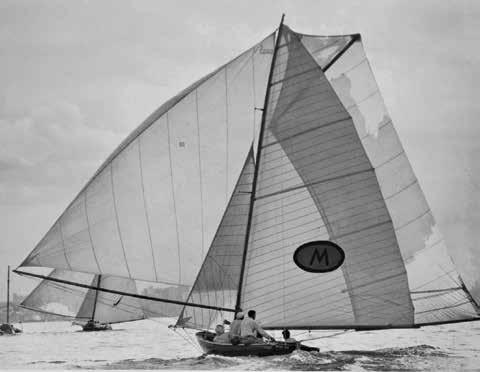
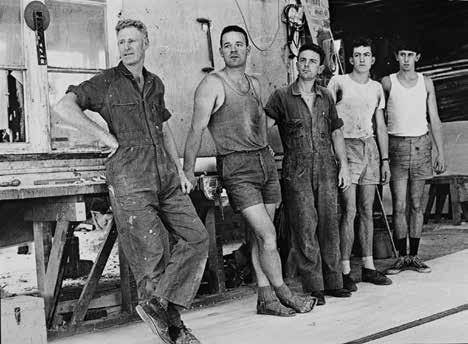
AUSTRALIAN NATIONAL MARITIME MUSEUM 75 CURRENTS WINTER 2018
01 03 02 04
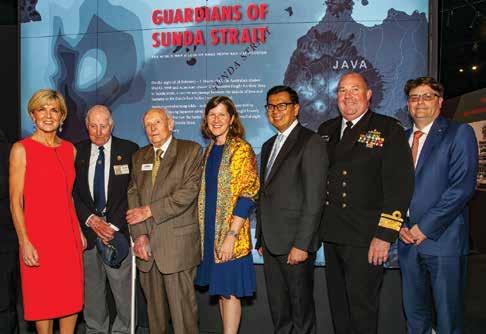
Farewell to a
Perth survivor
VALE DAVID MANNING
ON WEDNESDAY 21 FEBRUARY, former RAN sailor and HMAS Perth (I) survivor David Manning died in Victoria, aged 94. He first joined the navy in 1937 as a 13-yearold cadet midshipman, but after a year was withdrawn by his family for financial reasons. At 18 he rejoined the navy as an ordinary seaman and was assigned to HMAS Perth, where he served as a gunner.
Mr Manning survived two major naval battles – the Battle of the Java Sea and the Battle of Sunda Strait – while with HMAS Perth
Last October, Mr Manning and Mr Frank McGovern attended the opening of the exhibition Guardians of Sunda Strait at the museum. Mr McGovern is now the sole survivor of the 683 men who fought on board Perth against insurmountable odds when it encountered the Imperial Japanese Navy fleet off Banten Bay, Indonesia, on the evening of 28 February 1942.
At the opening of Guardians of Sunda Strait, Mr Manning described the battle as ‘more like a dog fight’. He vividly recalled being surrounded by Japanese destroyers while the search lights carefully swept the dark waters for survivors of the sinking.
He spent 10 hours that night hanging onto a net until he managed to climb aboard an abandoned raft in the early daylight.
By the time David Manning was captured and taken aboard one of the Japanese destroyers, he was covered in oil and fuel. The Japanese commanders ordered all survivors to strip off any clothing, citing fire risks due to the oil and fuel contamination. Mr Manning recalled being naked upon arrival in Indonesia and was still deeply grateful to the local woman who had handed him a handkerchief-sized piece of cloth with which to cover himself. Aside from a sarong, this was his only clothing for nine weeks, until he arrived in Batavia (now Jakarta) and received a pair of pants from a fellow Australian POW.
Mr Manning spent seven months in Java before being transferred to Burma and put to work for 13 months, along with other Perth survivors, building the notorious Thai-Burma Railway in southern Thailand.
After the war, Mr Manning lived in Ballarat with his wife Audrey and three children Jill, Greg and Dawn.
Kate Pentecost
Digital Curator
left), with Foreign Minister
The Hon Julie Bishop MP, US Consul General Valerie Fowler, Indonesian Consul General Yayan Mulyana, RADM Stuart Mayer CSC & Bar AO, and ANMM Director Kevin Sumption PSM Image Andrew Frolows/ANMM
76 SIGNALS 123 JUNE–AUGUST 2018
01 Pictured are HMAS Perth survivors Mr Frank McGovern (second from left) and Mr David Manning (third from
01
01 More than 100 models, of all sizes and from various eras, will be in display.
02 Modellers will be on site demonstrating their techniques and answering visitors’ questions. Images courtesy Anelia Bennett
Crafting all
manner of craft
EXPO 2018
THE SYDNEY MODEL SHIPBUILDER’S CLUB (SMSC) will host its sixth annual Ship Modelling Exhibition on 18 and 19 August at the Georges River 16-Foot Sailing Club, on the shores of Botany Bay. Entry is free.
The SMSC has a longstanding connection with the Australian National Maritime Museum, and its members regularly demonstrate their craft in the museum’s entry foyer. Most importantly, the museum has been a generous supporter of the club and is the principal sponsor of the exhibition.
The SMSC partners with other ship modelling clubs to present the exhibition. Each club has a different focus and we hope that visitors will leave with some sense of the variety and vitality of the hobby.
The models built by the SMSC and its sister Canberra club are generally for display only, housed in glass cases or protected in cabinets. Other clubs build models of real ships that can sail under their own power guided by radio control. Task Force 72 build all of their models to the same scale so that they form a realistic fleet when together on the water.
Members of the Carrs Park Radio Yacht Club sail their replicas of America’s Cup yachts competitively against each other, while ‘Pond Yachts’ recall the 1920s, when punters on Sydney Harbour ferries laid bets on the outcome of the model yacht races held on Saturday afternoons.
The Australian Plastic Modellers Association (APMA) generally specialises in highly detailed small scale models of modern warships, while other modellers focus
on miniature versions of ships’ figureheads and ornamental carvings, or ships that they served on. There are usually more than 100 models exhibited. They range from miniatures small enough to hold in the palm of your hand to three-metre-long models of contemporary warships and liners.
The Endeavour, the First Fleet and ships of Nelson’s time will all be present, as well as clipper ships, cargo vessels, Sydney ferries and current ships of the Royal Australian Navy. A special feature will be a collection of ships in bottles – with an explanation of how they got in there.
A popular feature of our expos are our demonstration modellers, who set up shop to work on their current projects. They are there to answer your questions, demonstrate their techniques and hopefully persuade you to have a go yourself.
The Georges River 16-Foot Sailing Club, located at Sanoni Avenue, Sandringham, has beautiful views over Botany Bay, plenty of parking, a café, a bar and a restaurant. Children are welcome and the expo makes a great day’s outing for the whole family.
The expo is open 10 am–5 pm Saturday 18 and 10 am–4 pm Sunday 19 August. Entry is free, and a raffle includes starter model kits as prizes. Get a taste of what to expect at the expo at – youtu.be/ gVjeEbTBzCc
Michael Bennett
If you are interested in joining the SMSC, contact Michael Bennett on 0411 545 770 or email secretary@smsc.org.au. Beginners are especially welcome.
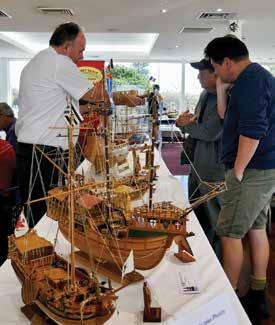
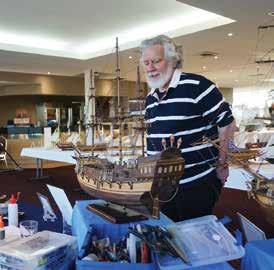
AUSTRALIAN NATIONAL MARITIME MUSEUM 77 CURRENTS WINTER 2018
01 02
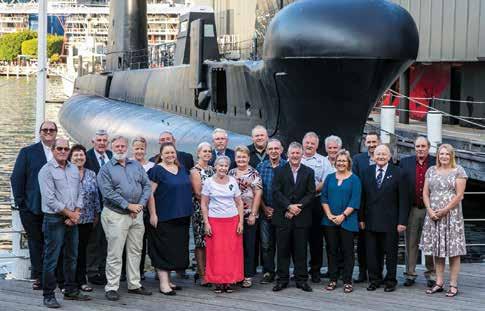
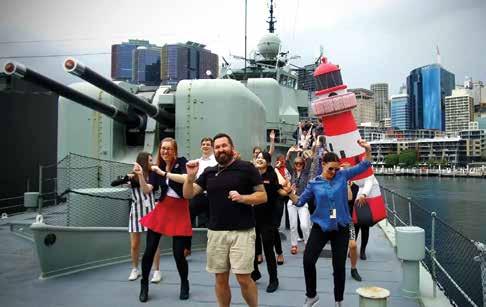
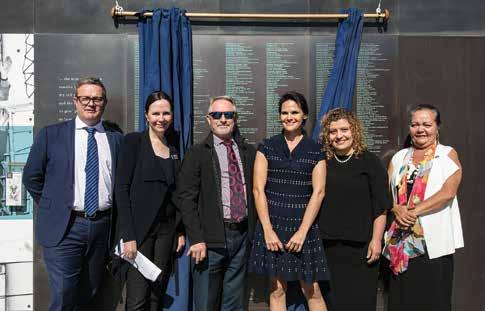
01 Descendants of AE1 crew gather at the museum On 12 March 2018, the descendants of the crew of Australia’s first submarine, HMAS AE1, were invited to a special presentation at the museum. RADM Peter Briggs, of Find AE1 Ltd, shared the findings from the December expedition that located the submarine 103 years after it disappeared with all hands.
A preliminary report of the search and discovery, together with detailed underwater footage and stills of the wreck of AE1 was presented to the descendants during the evening. A small exhibition produced by museum staff was premiered in conjunction with the event.
The descendants (pictured) and RADM Briggs were joined by the Minister for Defence, Senator the Hon Marise Payne; the Papua New Guinea Minister for Foreign Affairs and Trade, The Hon. Rimbink Pato OBE MP; Chief of Navy VADM Timothy Barrett AO CSC; and museum Director Kevin Sumption PSM and Chairman Peter Dexter.
Story Shirani Aththas; image Andrew Frolows/ANMM
02 The museum gets its groove on The museum was an Australian finalist in Museum Dance Off 2018, an international competition that grew out of Maggie Guzowski’s popular blog When You Work at a Museum. Now in its fifth and final year, Museum Dance Off unites museums, galleries, archives and libraries from around the world to showcase our collections, facilities and staff as well as our dance moves. This year there were 48 entries. The National Film and Sound Archive went on to represent Australia in the Grand Final round, ‘Thunderdome’.
Our entry, The Last Dance, was inspired by photographs in our collection featuring couples boogying on board ships. We wanted to bring the collection to life and to share our enthusiasm for our magnificent vessels to the music of Benny Goodman’s classic Sing Sing Sing. From filming inside the cramped confines of submarine HMAS Onslow to dancing on the deck of HMB Endeavour and even bringing out the big guns on HMAS Vampire, this project has encouraged our staff to collaborate in an unexpected and wonderful way. You can view the film at bit.ly/ maritimemoves or youtu.be/0rUg8yJqslo
Story and image Kate Pentecost
03 New names added to museum’s Welcome Wall Around 1,000 people attended the latest Welcome Wall unveiling ceremony on Sunday 6 May at the museum, honouring 300 migrants and the contributions they have made to multicultural Australia. This ceremony paid special tribute to a much-loved sports journalist and soccer broadcaster, the late Les Murray, with his name and that of his family being added to the Wall. Les Murray and his family migrated to Australia after fleeing Austro–Hungary in 1956. Les, who died last year, went on to become one of the country’s most prominent soccer broadcasters, coining the phrase ‘the world game’.
Story Shirani Aththas; image Andrew Frolows/ANMM
78 SIGNALS 123 JUNE–AUGUST 2018
02 01 CURRENTS WINTER 2018 03
SEE WHAT’S IN STORE

3D TITANIC PUZZLE
Build your own model of the world’s most famous ship with this 113-piece 3D puzzle.
$65.00 / $58.50 Members
JAMES CAMERON’S DEEPSEA CHALLENGE
DVD
Film maker James Cameron is also a passionate ocean explorer. This is the story of his solo dive to the deepest known point in our oceans.
$29.95 / $26.95 Members
EYEWITNESS: TITANIC
This book for young readers highlights all aspects of the ship and its fateful maiden journey.
$22.00 / $19.80 Members
EXPLORING THE DEEP: THE TITANIC EXPEDITIONS
A thrilling account of James Cameron’s expeditions to the wreck of Titanic and the incredible technological innovations that made them possible.
$55.00 / $49.50 Members
THE SINKING OF HMAS SYDNEY
For 66 years it was a mystery: what happened to HMAS Sydney? The search for our navy’s most iconic ship tested all the skills of famed shipwreck hunter David L Mearns – but find it he did.
$35.00 / $31.50 Members
FINDING THE TITANIC
The story of the ship through images by Robert Ballard, who discovered its wreck in 1985, and later expeditioners.
$19.95 / $17.95 Members
THE SINKING OF THE BISMARCK: THE DEADLY HUNT
Documents the rise and incredible fall of the German navy’s ‘unstoppable’ behemoth of a battleship, the most powerful raider in history.
$19.95 / $17.95 Members
MOVIE BUFF MUG
Love the movies? Put your inner geek to the test and try to identify the 50 classic films from image clues on the mug.
$24.95 / $22.45 Members
JOSEPH BANKS: FLORILEGIUM
Florilegium was the first full-colour publication of some of the most extraordinary botanical prints of the 18th century.
$140.00 / $126.00 Members
Books DVDs & CDs Brassware Models Gifts Prints Posters Toys Shirts Hats Scarves Souvenirs Shop online at store.anmm.gov.au 9.30 am–5 pm 7 days a week | 02 9298 3698 store.anmm.gov.au | Members’ discounts
Acknowledgements
The Australian National Maritime Museum acknowledges the support provided to the museum by all our volunteers, members, sponsors, donors and friends.
The museum particularly acknowledges the following people who have made a significant contribution to the museum in an enduring way or who have made or facilitated significant benefaction to it.
Honorary Fellows
RADM Andrew Robertson
AO DSC RAN (Rtd)
John Mullen
Ambassador Christine Sadler
Honorary Life Members
Robert Albert AO RFD RD
Bob Allan
Vivian Balmer
Vice Admiral Tim Barrett
AO CSC
Maria Bentley
Mark Bethwaite AM
Paul Binsted
Marcus Blackmore AM
John Blanchfield
Alex Books
Ian Bowie
Ron Brown OAM
Paul Bruce
Anthony Buckley
Richard Bunting
Capt Richard Burgess AM
Kevin Byrne
Cecilia Caffrey
Sue Calwell
RADM David Campbell AM
Marion Carter
Victor Chiang
Robert Clifford AO
Helen Clift
Hon Peter Collins AM QC
John Coombs
Kay Cottee AO
Helen Coulson OAM
Vice Admiral Russell Crane
AO CSM
John Cunneen
Laurie Dilks
Anthony Duignan
Leonard Ely
Kevin Fewster AM
Bernard Flack
Daina Fletcher
Sally Fletcher
CDR Geoff Geraghty AM
Tony Gibbs
RADM Stephen Gilmore AM
CSC RAN
Paul Gorrick
Lee Graham
Macklan Gridley
Sir James Hardy KBE OBE
RADM Simon Harrington AM
Gaye Hart AM
Peter Harvie
Janita Hercus
Robyn Holt
William Hopkins
Julia Horne
RADM Tony Hunt AO
Marilyn Jenner
John Jeremy AM
Vice Admiral Peter Jones
AO DSC
Hon Dr Tricia Kavanagh
John Keelty
Ian Kiernan AO
Kris Klugman OAM
Jean Lane
Judy Lee
Keith Leleu OAM
Andrew Lishmund
James Litten
Tim Lloyd
Ian Mackinder
Casimiro Mattea
Jack McBurney
Bruce McDonald AM
Arthur Moss
Patrick Moss
Rob Mundle OAM
Martin Nakata
David O’Connor
Gary Paquet
Prof John Penrose AM
Neville Perry
Hon Justice Anthe
Philippides
Peter Pigott AM
Len Price
RADM Neil Ralph AO DSC
Eda Ritchie AM
RADM Andrew Robertson
AO DSC RAN (Ret)
John Rothwell AO
Kay Saunders AM
Kevin Scarce AC CSC RAN
David Scott-Smith
Sergio Sergi
Mervyn Sheehan
Ann Sherry AO
John Simpson
Shane Simpson AM
Peter R Sinclair AC KStJ
(RADM)
Peter John Sinclair AM CSC
John Singleton AM
Brian Skingsley
Eva Skira
Bruce Stannard AM
J J Stephens OAM
Michael Stevens
Neville Stevens AO
Dr Andrew Sutherland AM
Hiroshi Tachibana
Frank Talbot AM
Mitchell Turner
Adam Watson
Jeanette Wheildon
Mary-Louise Williams AM
Nerolie Withnall
Founding Members
Chad Bull
Janette Biber
Bruce Webster
Margaret Molloy
Kaye Weaver
David Leigh
Yvonne Abadee
Maria Tzannes
George Fehrenbach
Derek Freeman
Alan Stennett
Rob Hall
Ivor MacDonald
Nancy Somerville
Ross Wilson
Marcia Bass
Christopher Harry
Malcolm Horsfall
Virginia Noel
Dennis Rose
John Lynch
Barry Pemberton
John Butler
Judy Bayles
Allaster McDougall
Sybil Jack-Unger
Richard Newton
James Downie
Glenn and Sue Yates
Neville Sully
John Seymour
Peter Magraith
Judy Finlason
Cliff Emerson
David Toyne
Kenneth Grundy
Geoff Tonkin
David Voce
David Waghorn and
Helen Nickson
Vincent Favaloro
Colin Randall
Denise Taylor
Joan and Robert
Killingsworth
Ian Peters
Robert Heussler
Dean Claflin
Harry Wark
John Hamilton
Kenneth Swan
Mark Latchford
James Hawkins
Ross and Valda Muller
Joyce Groves
Lyndyl Beard
Walter Pywell
John and Marlene Vaughan
Peter Wilson
Angela and Teresa
Giannandrea
Fairlie Clifton
Richard and
Margaret McMillan
Timothy Lewis
Maxwell Beever
Paul Joyce
Petra Blumkaitis and Paul Wahltuch
David Robinson
Paul Cavanagh
Robert and Mary Dick
Michael Stacey
Peter and Jan Scutts
Peter Rowse
John Hoey
Ronald McJannett
John Swanson
Herbert White
John O’Toole
Robert Newell
Tim and Kathe Swales
Peter Harvey
Andrew Kerr
Ronald and Toni White
Michael Connor
Len Watson
Pamela Lowbridge
John Carter
Paul Richardson
Peter O’Hare
Stephen Dowsett
Simon Barker
Bruce Watson
Steven White
John Bach
Bill and Eugenie Forbes
Geoffrey Winter
Michael and Evelina O’Leary
Colin Delaney
Mitchell White and
Suzanne Peel
Adrian Lane
Halcyon Evans
Bill Fenwick
Stephen Smith
David Cunningham
Peter Inchbold
Jean Morgan
John Egan
Barry Allison
Walter Bateman
Peter Siebert
Michael Turner
Stuart Ridland
David Nutley
Anthony and Katy Palmer
Mark Johnson and Lyn Ashby
James Littlefield
Hilda Farquhar-Smith
Robert Holman
Bruce Small
Garry Kerr
William Bixley
Derrick Heywood
Peter Anderson
Neville Rothfield
John Brock
Graeme Broxam
Fred Cory
Michael Dowsett
Maxwell Surman-Smith
Campbell Edmondson
Paul Lincoln
Tempe Merewether
Sydney Jones
Stephanie Ross
Robert Murphy
Derek Moore
Anne Liddy
Nigel Stoke
Alan Ward
Philip and Jennifer Andrew
Peter Cramer
Jeffery Coleman and Lindsey Marwood
Allan Bridekirk
Bruce and Robyn Tolhurst
Chris Clark
John and Cecily Ristuccia
Andrew Johnston
Phillip Good
Dawn Springett
Greg Swinden
Ron and Helen Scobie
Edwina Gowans
Murray Doyle
Adrian and Glenda Hutchings
Peter Gill
Ian Robinson
Trevor Thomas
Jeffrey Mellefont
Neville Marshall
Bob Walton
Peter Bailey
Andrew St John-Brown
Ann Parry
Gary Wilson
Kevin Murphy
Richard and Christine Diaz
Robert and Lynette
Schaverien
Richard Gardner
Rosemary Mahon
Daniel and Rosemary
Howard
Lindsay Rex
Valerie Packer
Angus Caporn
Tom Fawcett
Patrick Cooney and Madeleine Degnam
Craig Webb
William Abbott
Neil Brough
Susan Tompkins
Michael Wise
Ann Campbell
Ken Woolfe
Sarah Marang
Chris Mitchell
Rob Landis
Lloyd Seaforth Poulton and Joan Poulton
Margaret White
Maxwell Bryan
Peter Campbell
Peter Cumes
Len & Marion Graff
Alan Brown
Gregory MacMahon
Cheryl Manns and Robert Scott
Vicky Bourne
John Inglis OAM
Kenneth Edwards
Stephen Robinson
Margaret Arthur
John Clifton
Johan Brinch
John Duncan
Garry and Janice Sherwood
Julie Armour
Dawn and Ron Bradner
Alexander Bradner
Owen Summers
Warwick Birrell
Jack McBurney
Brian and Judith Skingsley
Marcus Blackmore AM
Anthony Duignan
Helen Kenny
Honorary Research
Associates
Lindsey Shaw
Jeffrey Mellefont
Paul Hundley
Rear Admiral Peter Briggs
Ian MacLeod
80 SIGNALS 123 JUNE–AUGUST 2018

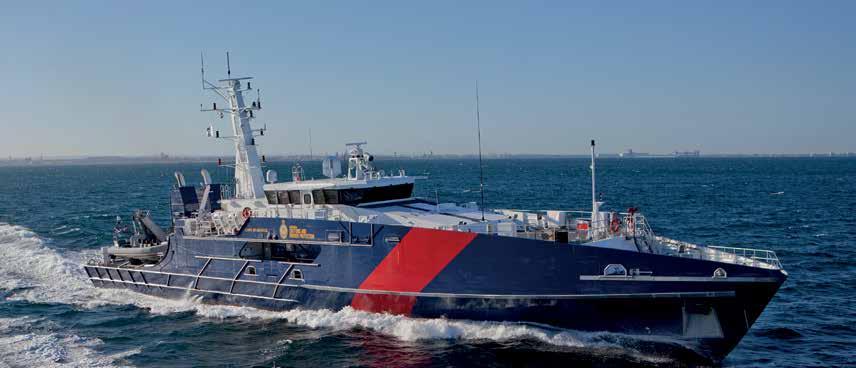
Austal is an Australian-based, global shipbuilder that has delivered 32 patrol boats to the Commonwealth over the past 19 years – vessels that continue to play a significant role in the protection of Australia’s borders and offshore interests.
AUSTAL.COM

PROUD PARTNER OF THE AUSTRALIAN NATIONAL MARITIME MUSEUM
 The ABFC Cape St. George – one of 10 Cape Class Patrol Boats designed, built and sustained by Austal, currently in service with the Australian Border Force and the Royal Australian Navy.
SIGNALS quarterly
Enter our new caption contest!
Write an amusing caption for this photo from our collection. The winner, as chosen by the Signals editor and possibly an accomplice or two, will win a $50 Store voucher, valid for in-store or online purchases. Please read the Terms and Conditions at anmm.gov.au/ captioncontest before entering, as these form part of your entry. Send your entries to: signals@anmm.gov.au
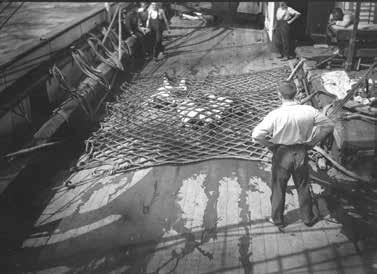
01
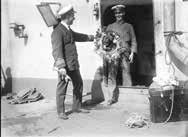
01 Samuel J Hood Studio ANMM Collection 00036991
02 Congratulations to Russell Walton, who won the Signals 122 caption competition with this entry: ‘Congratulations, Pusser, you’ve been promoted to Chief Morris Dancer.’
Signals
ISSN 1033-4688
Editor Janine Flew
Staff photographer Andrew Frolows
Design & production Austen Kaupe
Printed in Australia by Pegasus
Print Group
Material from Signals may be reproduced, but only with the editor’s permission.
Editorial and advertising enquiries signals@anmm.gov.au
Deadline mid-January, April, July, October for issues March, June, September, December
Signals is online
Search all issues at anmm.gov.au/ signals. Issues 110 onwards available via the App Store
Signals back issues
Back issues $4 each or 10 for $30
Extra copies of current issue $4.95
Call The Store 02 9298 3698
Australian National Maritime Museum
Open daily except Christmas Day
9.30 am to 5 pm (6 pm in January)
2 Murray Street Sydney NSW 2000 Australia. Phone 02 9298 3777. The Australian National Maritime Museum is a statutory authority of the Australian Government.
Become a museum Member
Benefits include four issues of Signals per year; free museum entry; discounts on events and purchases; and more. See anmm.gov.au or phone 02 9298 3646. Corporate memberships also available.
/anmmuseum #anmm /anmmuseum
/anmmuseum #anmm anmm.gov.au/blog
Signals journal is printed in Australia on Sovereign Silk 250 gsm (cover) and Sovereign Silk 113gsm (text) and printed using vegetable-based inks.





ANMM Council
Chairman Mr Peter Dexter am faicd
Director and CEO Mr Kevin Sumption psm
Councillors
Mr David Blackley
The Hon Ian Campbell
Prof Sarah Derrington
Ms Maria Teresia Fors
Rear Admiral Stuart Mayer csc and Bar
Mr John Mullen
Ms Alison Page
The Hon Margaret White ao
American Friends of the Australian National Maritime Museum
Chair Peter Collins am qc
Director Robert Moore
Foundation partner
ANZ
Major partners
Austal
Nine Entertainment
NSW Ports
Returned and Services League of Australia (Queensland Branch)
Partners
AccorHotels’ Darling Harbour Hotels
ACFS Port Logistics
AMSA
Aurora Expeditions
Damen
Destination NSW Dirk Hartog 1616–2016
Douglas Fabian Productions
DP World
Foxtel History Channel
Gordon Darling Foundation
IAS Fine Art Logistics
Italian Consul-General Kingdom of the Netherlands
La Fiamma
Laissez-Faire
Maritime Container Services
National Geographic
NITV
Property NSW
Royal Wolf Holdings Ltd
Shipping Australia Limited
Smit Lamnalco
Sydney by Sail Pty Ltd
Sydney.com
Sydney Morning Herald
Total E & P
Transport for NSW
UNSW
White Umbrella




02