Disclaimer: Opinions expressed in this publication are not necessarily those of the Editor or of the Board of Angus Australia. Neither the Editor nor Angus Australia takes any responsibility for the accuracy of the information contained within this publication, nor for the outcome (including consequential loss) of any action taken by readers or others based on information contained therein. The publishers reserve the right to refuse or cancel without notice any advertisement in a publication issued by them.
EDITOR’S NOTE
WINTER IS OFTEN a season of decisions.
Across Angus businesses, it is a time when plans are tested, priorities are sharpened and the choices made now can have a lasting impact on performance in the seasons ahead. From joining and nutrition through to genetic selection, pasture management, market positioning and succession planning, winter reminds us that strong results are rarely shaped by one decision alone. More often, they are the outcome of many considered choices made at the right time.
This edition of The Angus Bulletin brings that idea together under the theme Decisions that shape performance.
Throughout the issue, we look at the people, systems and strategies helping Angus producers make informed decisions across different environments and stages of business. Our regional features move across very different Angus production systems, from the discipline of long-term herd and business decisions through to the northern opportunity for Angus, where land condition, pasture quality, fit-for-purpose genetics and supply chain collaboration all influence performance. Together, they show that while environments may differ, the principles behind consistent results are often much the same.
In Land and Stewardship, we consider the connection between soil, pasture and livestock performance, and the importance of building resilience from the ground up. In Industry and Markets, we look at the broader signals shaping commercial confidence and the opportunities that continue to sit behind the Angus name. Our Next Generation section also celebrates the energy, curiosity and capability of young people coming through the
As always, this edition reflects the breadth of the Angus Australia membership and the many ways performance is being shaped across different regions, systems and stages of business. It includes practical insights, member stories, research updates and industry perspectives that together show the strength of a breed and a community, that continues to evolve while staying focused on long-term performance.
We hope this Winter edition provides useful ideas, fresh thinking and a few moments of reflection as you make the decisions that will shape the months ahead.
Kind regards,
Caroline
DON'T MISS THE NEXT EDITION
The Angus Bulletin is published quarterly and distributed across our membership and wider Angus community. The next edition will be available at the end of September as our Spring edition. If you would like to discuss advertising opportunities, partnerships or have feedback, please direct all queries to marketing@angusaustralia.com.au
CAROLINE LAINE | Marketing & Communications Manager
President’s Report
PETER COLLINS | President
DEAR MEMBERS
It is a great honour and privilege to write my first President's Report as President of Angus Australia.
I am deeply humbled by the confidence placed in me by the Board of Directors and the wider Angus Australia membership. I would like to begin by sincerely thanking Sinclair Munro for his service to the Angus community over the past two years. Sinclair's presidency encompassed a period of significant activity and some challenging circumstances and I thank him for his leadership, commitment and dedication to our breed and our organisation.
As President, I want to assure members that I will strive to represent all sectors of the Angus breeding community. The Angus breed and the people behind it are very close to my heart, and I am committed to serving our members to the very best of my ability.
I also want members to know that I am approachable and accessible. Whether you wish to speak with me as President, with our CEO Scott Wright, COO Carel Teseling, or with your State Director, please do not hesitate to reach out. We value member feedback and will always listen carefully to your ideas, concerns and suggestions as we work to continually improve the services and support we provide.
Recently, we gathered in Ballarat, Victoria, for a productive Member Workshop, our Annual General Meeting and a subsequent Board of Directors meeting. The AGM provided an opportunity to acknowledge Sinclair's contribution and leadership, while also welcoming changes to our Board.
I am pleased to welcome Simone Bond as Vice President. Simone is a highly respected Angus breeder from South Australia, and I look forward to working closely alongside her. She brings diligence, experience and sound judgement to the role and I greatly value her support.
We also welcomed two new Directors to the Board and I look forward to working with them as we continue to guide the organisation forward. At the same time, I would like to sincerely thank Erica Halliday and Andrew Kuss for their service to Angus Australia. Board positions require significant voluntary commitment and we are grateful for the time, energy and expertise they have contributed on behalf of members.
One of the key matters discussed at our recent Board meeting was Angus Australia's financial position. Following the World Angus Forum in 2025, the organisation recorded a significant financial loss. While the Forum was a tremendous success in many respects, it also placed considerable pressure on the organisation's finances.
As a Board, we are working closely with management to review our cost structure and identify opportunities to return Angus Australia to a sustainable profit position. This work requires careful balance. We must maintain financial discipline while continuing to support member services and invest in the programs and initiatives that will strengthen the Angus breed into the future.
Please be assured that your Board is focused on ensuring Angus Australia remains strong, sustainable and firmly committed to delivering value for members.
One initiative particularly close to my heart is the future of the Angus Youth Roundup. I have been working closely with CEO Scott Wright and Company Secretary Kathryn Duddy to establish the 2027 Angus Youth Roundup in Victoria.
The Youth Roundup has played a vital role in developing the next generation of Angus breeders and industry leaders. We are progressing plans for an exciting venue, a new committee structure and a refreshed vision for the event. I am confident we will deliver an outstanding experience for our young people and their families.
As President, I intend to make every effort to attend events across Australia and New Zealand whenever possible. One of the great privileges of this role is the opportunity to meet members, listen to your experiences and better understand the opportunities and challenges you face in your own operations.
While I have been fortunate to know many people across the Angus community over the years, I look forward to meeting many more of you in person and ensuring your views are represented at Board level.
We are fortunate to be part of one of the finest cattle breeds in Australia. More importantly, we are part of what I often refer to as the "Angus family", a community united by a shared passion for the breed and a commitment to its future.
That sense of community is something special. It is something worth protecting. As we navigate the opportunities and challenges ahead, it is important that we continue to maintain a strong, independent Angus Australia that serves the interests of members and the long-term success of the Angus breed.
I am fortunate to have a strong working relationship with Scott Wright and the entire Angus Australia team. I look forward to
continuing to build those relationships and supporting our staff as they work to deliver the best possible service to members.
I am also mindful of the seasonal challenges many producers have faced. While much of southern Australia has received welcome rainfall following prolonged dry conditions, many regions in northern New South Wales and Queensland have endured difficult seasons. These conditions have resulted in significant reductions in breeder numbers across some areas.
To those members facing these challenges, please know that you remain very much in our thoughts. The resilience of Australian cattle producers is remarkable and I sincerely hope recent rainfall signals a more positive period ahead.
Angus Australia operates through a full annual cycle of Board meetings in May, August, November and March. These meetings involve significant discussion and decision-making across a wide range of strategic and operational matters. If you have ideas, concerns or feedback you would like considered, I encourage you to contact your State Director, myself, CEO Scott Wright or COO Carel Teseling. Member input is an important part of our decision making process.
I also recognise that Angus Australia continues to deliver a growing range of services, technologies and innovations,
including the ongoing development of Angus Australia's genetic evaluation systems. At times, the volume of information can be overwhelming. If you have questions about any aspect of our programs or services, please do not hesitate to reach out. Our Directors, Staff and Management team are always willing to assist.
The Angus breed faces several important strategic opportunities and challenges over the coming years. Your Board is actively engaged in considering these issues and making decisions that will shape the future direction of our organisation and our breed.
Finally, I would like to thank the many volunteers who contribute to Angus Australia. Great organisations are built by people who willingly give their time, energy and expertise for the benefit of others. Angus Australia is no exception. Whether through committees, youth activities, regional events or industry leadership, your contribution is greatly valued and deeply appreciated.
Thank you for your ongoing support of Angus Australia and the Angus breed. I look forward to meeting many of you over the coming months and please feel free to contact me at any time.
Yours sincerely
PETER COLLINS President, Angus Australia
CEO’s REPORT
SCOTT WRIGHT | Chief Executive Officer
DEAR MEMBERS
As we move into winter, it has been another busy and eventful period for Angus Australia and for the Angus breed across the country.
Seasonal conditions continue to dominate discussions wherever I travel. Many northern regions have recently received much needed rainfall following an exceptionally dry five month period. This has provided welcome relief, but it follows a very difficult period for many producers. Estimates suggest that between 50,000 and 100,000 cows may have been reduced from herds across the New England and North West regions of New South Wales alone. This represents a significant adjustment and we know many members have faced difficult decisions and considerable financial pressure over recent months. I am also acutely aware that this may affect bull sales in spring.
Reports indicate many areas received between 50 and 75mm of rain, while members across Victoria and southern New South Wales report excellent winter conditions, strong soil moisture profiles and a positive start to the season. We remain hopeful that favourable conditions continue across the country and provide all producers with an opportunity for a successful year ahead.
I would also like to personally thank the many members who contacted me following a recent medical emergency which required emergency surgery. Unfortunately, this prevented me from attending a number of important events, including the Angus Breed Marketing Think Tank, our Member Workshop, the Annual General Meeting and the Board of Directors meeting held in Ballarat.
I am extremely grateful to our Chief Operating Officer Carel Teseling, who stepped into the Acting CEO role during my
absence and provided excellent leadership across those events. I would also like to acknowledge Kathryn Duddy for facilitating the Angus Breed Marketing Think Tank and ensuring its successful delivery.
LEADERSHIP AND GOVERNANCE
The AGM marked an important leadership transition for Angus Australia. I congratulate Peter Collins on his appointment as President of Angus Australia and look forward to working closely with Peter, our Board of Directors and staff as we continue to secure positive outcomes for Angus breeders across Australia.
At the same time, I would like to recognise the significant contribution made by Sinclair Munro during his two-year term as President. Sinclair's leadership encompassed a period of substantial activity and challenge, including the successful delivery of the World Angus Forum. He devoted an extraordinary amount of time away from his own business to serve the breed and on behalf of our Members, Directors and Staff, I sincerely thank him for his commitment and leadership.
Congratulations are also extended to Simone Bond on her election as Vice President. We look forward to working closely with Simone as she supports Peter and continues her growing leadership role within the organisation.
The AGM also saw the election of two new Directors to the Angus Australia Board. I congratulate Mark Muir from Western Australia and Stewart Halliday from New South Wales on their election. Both bring valuable experience and perspectives and I look forward to working alongside them. I would also like to acknowledge and thank Erica Halliday and Andrew Kuss for their eight years of dedicated service as Directors. Their contribution to the Angus breed has been substantial and is sincerely appreciated.
FINANCIAL DISCIPLINE AND FUTURE FOCUS
Members recently received the 2025 Annual Report, which reflected a substantial financial loss. This outcome was anticipated and communicated throughout the year and was largely, although not exclusively, associated with the World Angus Forum. It is important that members understand that the Board and management are actively addressing this position. Like many farming businesses, Angus Australia is experiencing cost pressures that require careful management. We are undertaking a comprehensive review of our operations to ensure the organisation is positioned strongly for the future while continuing to deliver high-quality services to members.
One challenge moving forward is the likely reduction in calf registrations and inventory levels resulting from seasonal conditions experienced across large parts of New South Wales. This may continue to impact our business throughout 2026. The Board has already begun considering a range of strategic options designed to improve efficiency, strengthen our financial position and ensure we remain focused on delivering value to members.
PROTECTING THE VALUE OF ANGUS GENETICS
One of the most significant strategic investments undertaken by Angus Australia in recent years has been the development of Angus GenetiQ™, our in-house genetic evaluation platform. This platform has been developed over a five-year period and
The Angus industry is unique. Angus is more than a breed; it is a value chain. “
provides Angus Australia with an Angus-specific genetic evaluation capability that positions the breed strongly for the future.
Importantly, Angus GenetiQ™ allows us to deliver weekly evaluations, introduce new traits more rapidly and focus our research and development efforts specifically on Angus cattle. The next trait to be released will be Temperament, with a number of additional traits scheduled to follow.
While Angus GenetiQ™ has been well received by the vast majority of members, there has also been some criticism regarding the strategic decision to invest in our own evaluation platform. I welcome those discussions. It is important to understand that this investment was not undertaken lightly. It was driven by long-term strategic considerations aimed at protecting the interests of Angus breeders and ensuring Angus Australia maintains the flexibility, efficiency and independence required to support members into the future.
BREEDPLAN has served the Angus breed exceptionally well for more than forty years and has been instrumental in delivering genetic progress across the industry. Our investment in Angus GenetiQ™ is not a criticism of that history. Rather, it reflects our responsibility to ensure Angus breeders have access to a robust, flexible and sustainable genetic evaluation platform for decades to come. I remain available to discuss Angus GenetiQ™ with any member who wishes to better understand the rationale behind this investment and the opportunities it presents for the breed.
Another significant issue currently before the Board is MLA's proposal to develop a multi-breed genetic evaluation framework. At face value, this may appear a logical progression for the industry. However, the Board and management believe it is essential that any future system protects the value proposition that has underpinned the Angus breed's success for many decades.
The Angus industry is unique. Angus is more than a breed; it is a value chain. The Angus brand is not owned by Angus Australia, nor by a single company, processor, feedlot or breeder. Rather, it is collectively supported by every participant in the supply chain.
The success of Angus has been built on predictable performance, cumulative genetic gain and a consistent eating experience for consumers. Angus delivers value at every level of the supply chain, from seedstock producers and commercial breeders through to feedlots, processors, retailers, food service operators and ultimately consumers. The Angus premium exists because consumers associate Angus beef with quality. It has been earned through decades of investment in genetics, performance recording, breed improvement and market development.
As a Board and management team, we are carefully evaluating what a multi-breed evaluation framework may mean for Angus breeders in the future. We are particularly focused on ensuring that any future system does not undermine the simple and highly effective Angus seedstock model that has delivered sustained profitability and genetic improvement over generations. I encourage members to share their thoughts and perspectives on this issue. It is one of the most important strategic discussions currently facing the breed, and your feedback will help inform our thinking moving forward.
MEMBER PROGRAMS, SERVICES AND INDUSTRY PRESENCE
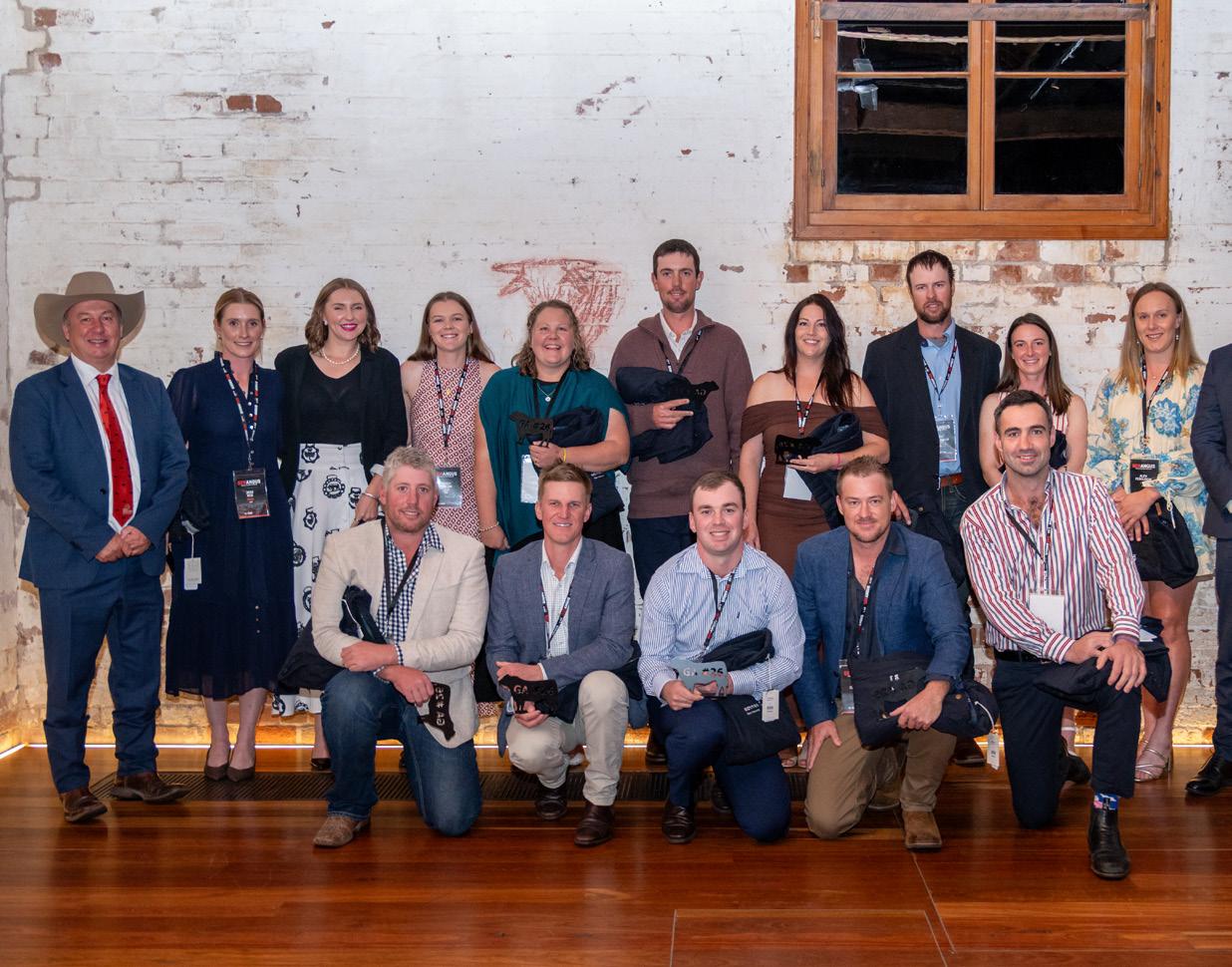
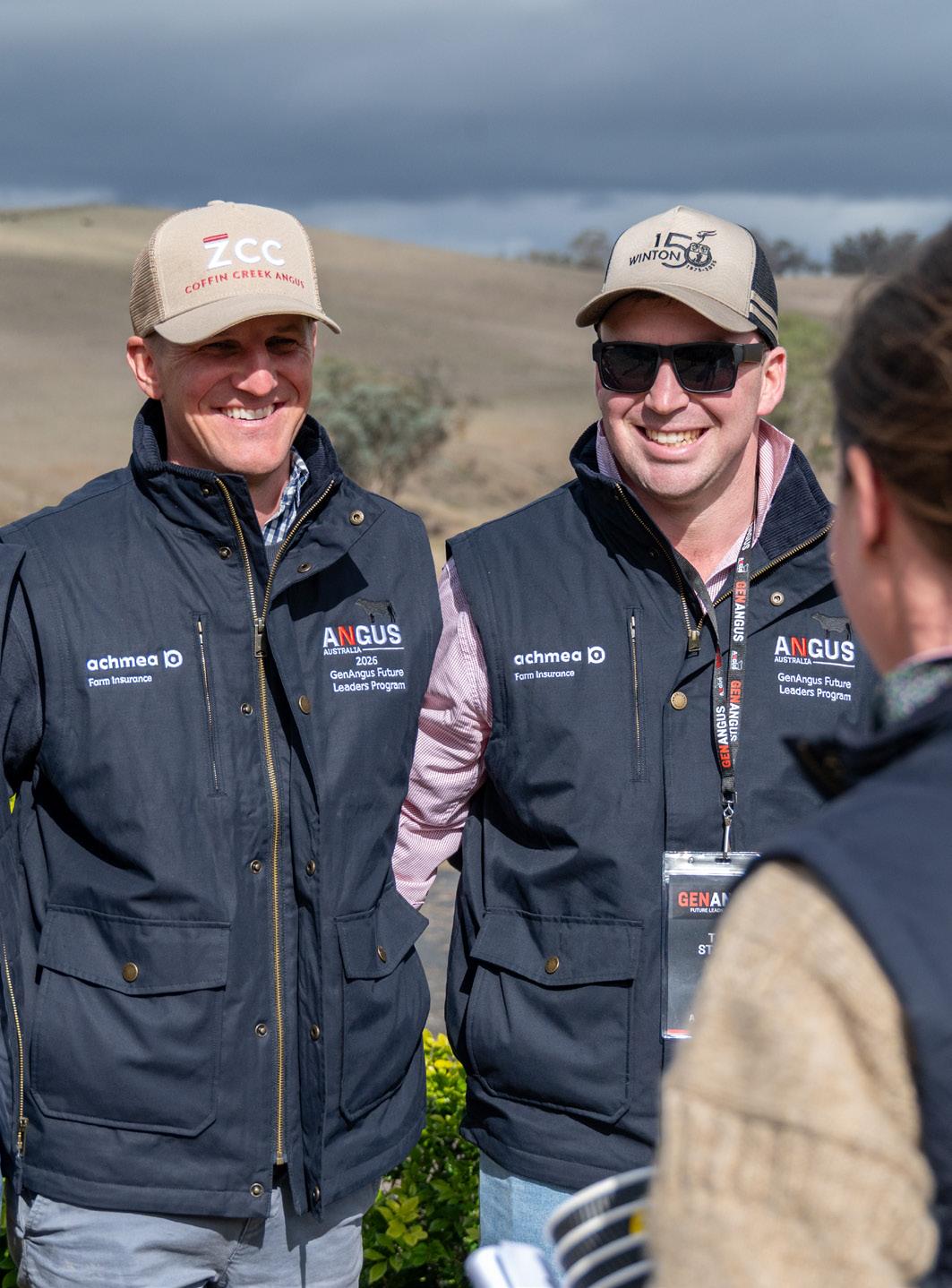
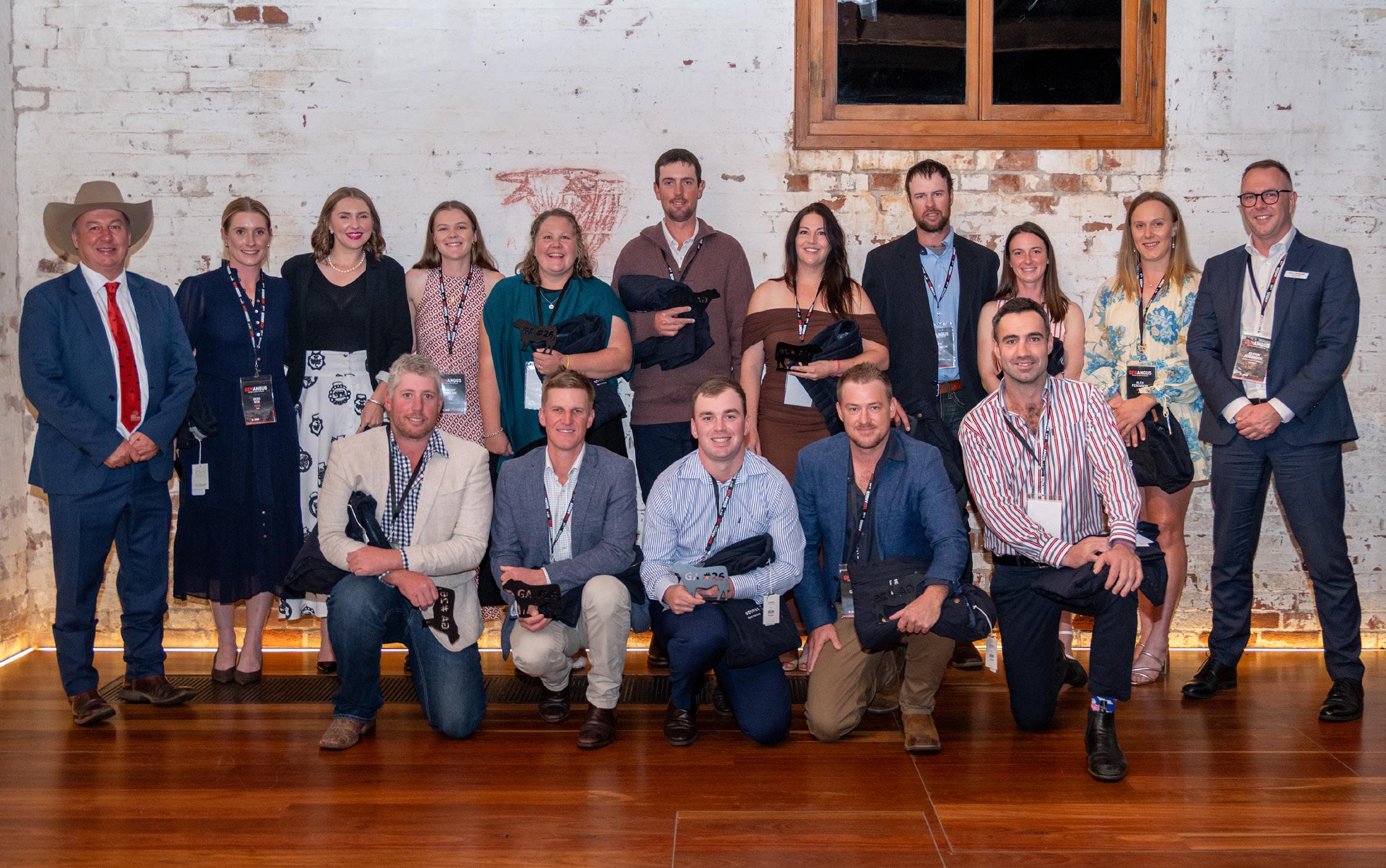
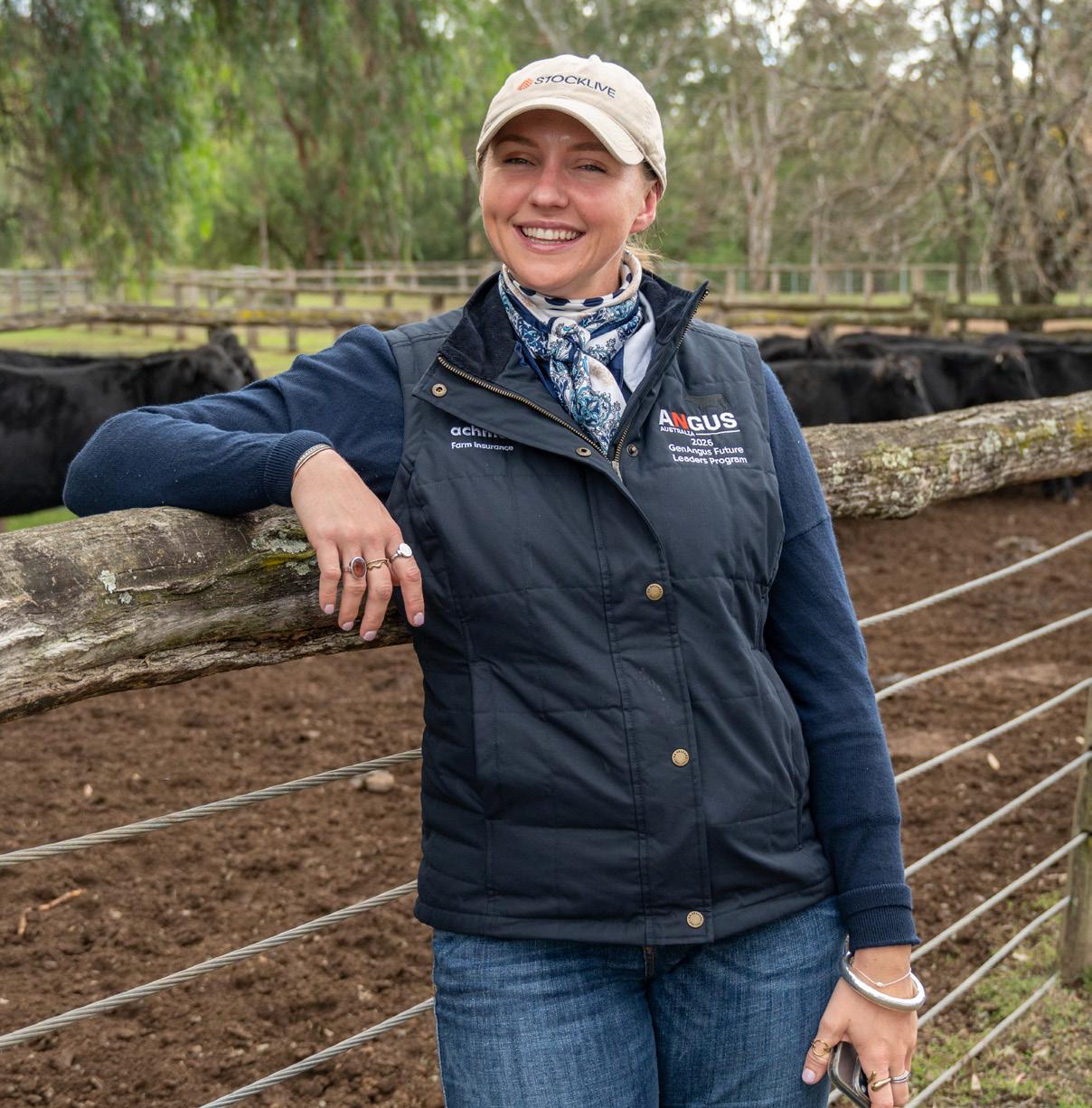
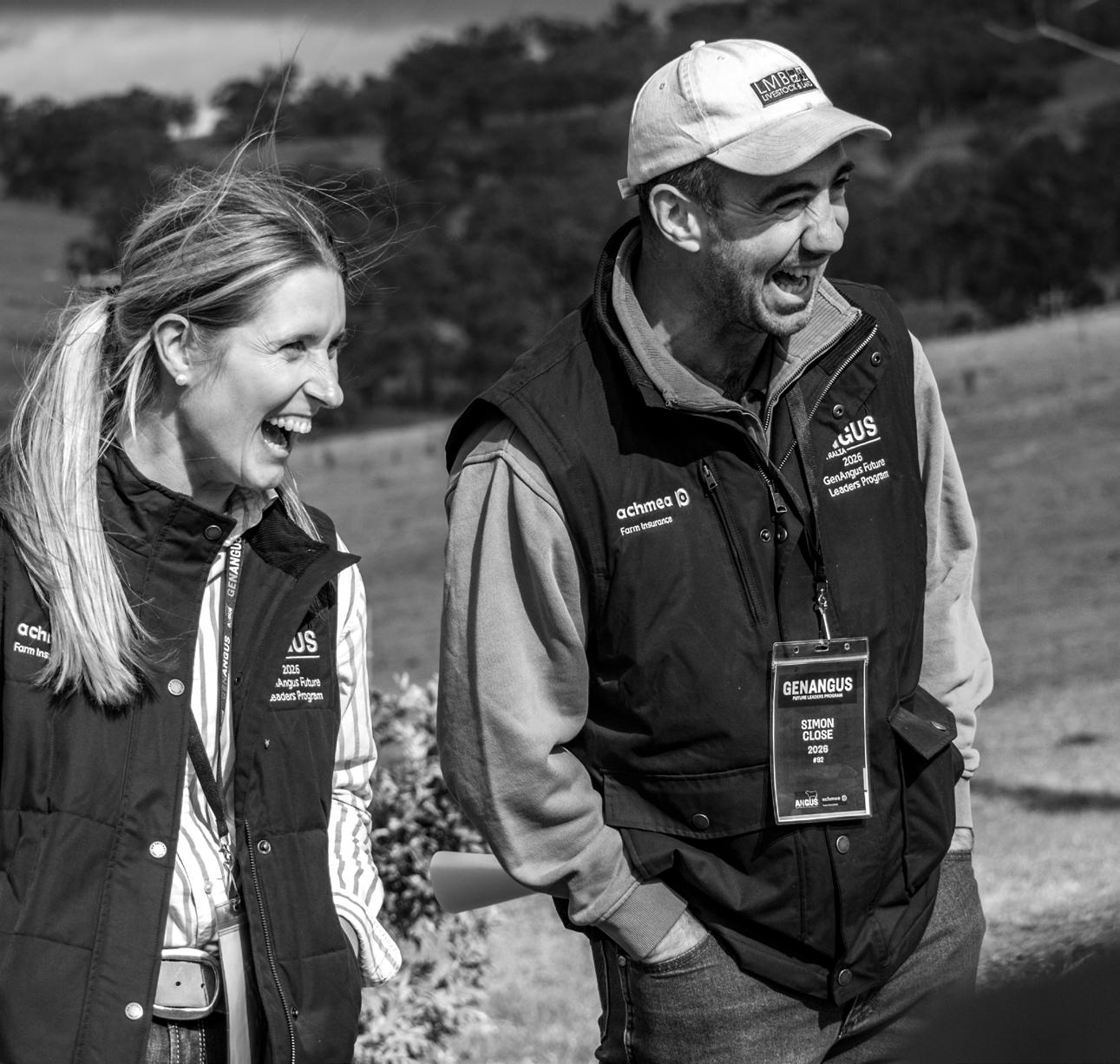
One of the highlights of recent months was the completion of another successful GenAngus program. Fourteen young leaders from Australia and New Zealand participated in this year's program, continuing a tradition of developing future leaders within the Angus industry. It was a privilege to spend time with this group and speak on the topic of purpose in agriculture. I would like to thank all participants, alumni, presenters and particularly Nancy Crawshaw for her leadership in delivering another outstanding program.
At the closing dinner, I reflected on the idea that each of us is simply one brick in a much larger wall. Every member contributes something valuable to the Angus breed. It was encouraging to see another group of young leaders preparing to make their contribution to that wall in the years ahead.
Across Australia, Angus Australia continues to maintain a strong industry presence. The Queensland Angus Group recently exhibited at FarmFest in Toowoomba and will attend AgGrow in Emerald later this month. Angus Australia will also be represented at Central Australian Beef Week in Alice Springs, Red Meat Updates Tasmania and a number of educational workshops throughout Queensland.
We are planning commercial producer workshops in Roma, Longreach and Emerald during the second half of the year.
These workshops are designed to help commercial producers better understand the value of Angus genetics and improve bull selection decisions. I encourage members to invite their commercial clients to attend.
I would also like to acknowledge the efforts of our Member Services team. We are currently experiencing higher-than-normal workloads, combined with staff absences and recruitment activity. As a result, turnaround times have extended beyond the standards we strive to achieve. I apologise for any inconvenience this may cause and thank members for their patience. Our team is working diligently to restore service levels as quickly as possible.
I would also like to recognise the excellent work being undertaken by our Marketing and Communications team under the leadership of Caroline Laine and Kathryn Duddy. The recently launched Registered Angus Bull campaign has generated strong engagement. The campaign highlights the value of purchasing registered Angus genetics and reinforces the importance of pedigree integrity, performance recording, parent verification and reliable breeding values.
Protecting the value of registered Angus genetics remains a priority for Angus Australia. As discussions around multibreed evaluations continue, it will be important to ensure that the investments made by registered seedstock breeders are
on the merits of their breeding and management programs. Importantly, the competition also provides entrants with the opportunity to have their cattle included in the prestigious Beef Australia Carcase Competition in 2027.
Further information can be found in this edition of the Bulletin. I encourage all members to consider entering a team and taking advantage of this exciting opportunity to showcase the performance and quality of Angus genetics.
I would also like to welcome Weatherbys Scientific to the Angus community in Australia. At our AGM, we officially launched a new partnership with Weatherbys Scientific, providing members with an additional DNA testing option through Angus Australia. This partnership introduces a new ordering process known as DNA Direct.
Weatherbys Scientific becomes an important addition to our suite of service providers, particularly in light of the proposed acquisition of Neogen by Zoetis. As competition within the DNA testing market potentially reduces, the inclusion of Weatherbys helps ensure that competition remains strong and that members continue to benefit from choice and innovation. I encourage members to take the time to learn more about Weatherbys Scientific and consider how the DNA Direct system may fit within their breeding and testing programs.
Angus Australia Board meets in Ballarat BOARD OUTCOMES MAY 2026
FOLLOWING THE ANGUS AUSTRALIA Annual General Meeting held in Ballarat, Victoria, on 26 May 2026, the newly elected Angus Australia Board of Directors convened for its first meeting on 27 May 2026.
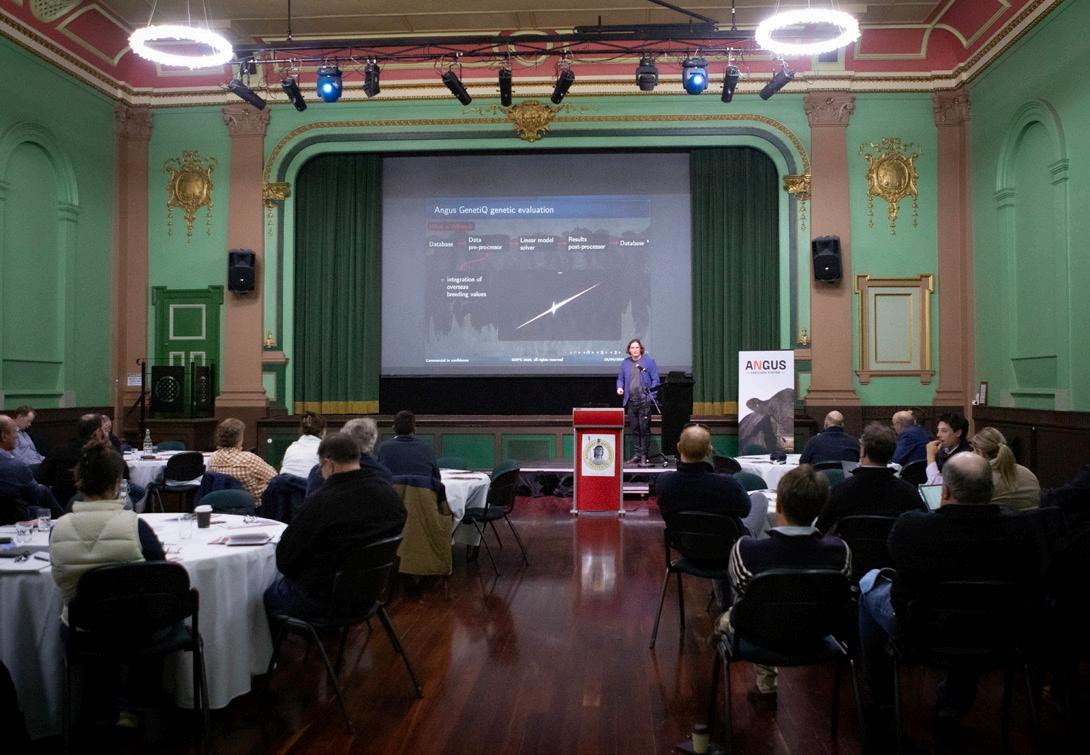
Prior to the AGM, members attended a well-supported Member Workshop featuring presentations from a range of industry leaders and technical experts. Presenters included Will Evans from Cattle Australia, Dr Vinzent Boerner, architect of the Angus GenetiQ genetic evaluation system, and Angus Australia Chief Operating Officer Carel Teseling, along with several other contributors who provided updates on key industry and society initiatives.
A significant announcement at the workshop was the launch of a new partnership between Angus Australia and Weatherbys Scientific. This partnership expands the DNA service options available to members, increasing competition, enhancing service delivery and providing additional efficiencies through the Society’s new DNA Direct platform.
The AGM also marked the final official function for outgoing President Sinclair Munro, who was acknowledged and thanked for his leadership and service to Angus Australia. Directors and members also recognised the contributions of retiring directors Erica Halliday (NSW) and Andrew Kuss (WA), both of whom have provided dedicated service to the Society and its membership.
WELCOMING NEW DIRECTORS
The Board welcomed two newly elected Directors to their first meeting: Stuart Halliday (NSW) and Mark Muir (WA). Both Directors participated in an induction program and joined discussions on a broad range of strategic and operational matters affecting the Society and the Angus breed.
STRATEGIC FOCUS ON EFFICIENCY AND SUSTAINABILITY
A key area of discussion centred on the increasing cost pressures facing Angus Australia, reflecting many of the same challenges confronting agricultural businesses across the country.
The Board undertook a detailed discussion regarding future structural efficiencies and organisational effectiveness, with a focus on ensuring Angus Australia remains financially sustainable, operationally efficient and well positioned to deliver value to members into the future. Directors considered a range of options and received updates on work already undertaken by management in this area.
MULTI-BREED GENETIC EVALUATION
The Board continued its review of the Meat & Livestock Australia (MLA) proposal to develop a national multi-breed genetic evaluation system for the Australian beef industry.
No decisions were made at this meeting. Rather, Directors considered the information currently available and discussed the potential implications for Angus breeders. Given Angus cattle represent a significant proportion of Australia’s beef industry, the Board remains committed to ensuring that any future genetic evaluation framework delivers the highest possible outcomes for Angus seedstock and commercial producers.
This remains an important strategic issue for the Society and will continue to be monitored closely.
STRENGTHENING THE ANGUS ADVANTAGE
Directors also discussed the ongoing development of the Angus premium and the broader Angus supply chain framework.
The Board remains focused on ensuring that Angus cattle continue to deliver value and profitability throughout the supply chain, from seedstock producers through to commercial producers, processors, retailers and consumers. Discussions centred on maintaining the strength of the Angus brand and identifying opportunities to further enhance its position in domestic and international markets.
KATHRYN DUDDY | Company Secretary
GENETIC EVALUATION
The Board received updates on several important genetics initiatives.
Directors reviewed progress with Angus GenetiQ, which is currently operating alongside BREEDPLAN during a transition and evaluation period. This process allows Angus Australia to gather member feedback and assess future strategic options regarding genetic evaluation services.
The Board also considered and approved an Issue Paper relating to the inclusion of Temperament EBV within the Angus GenetiQ™ suite of Estimated Breeding Values. Directors welcomed progress in this area and acknowledged the importance of temperament as a commercially relevant trait.
WEATHERBYS SCIENTIFIC AND DNA DIRECT
The Board received a detailed briefing on the recently announced Weatherbys Scientific partnership and the rollout of DNA Direct through Angus.Tech.
The initiative is expected to deliver improved efficiencies, competitive pricing and streamlined DNA processing for members. Directors encouraged members to review the information released regarding the partnership and the opportunities it presents.
COMMUNICATIONS AND MEMBER ENGAGEMENT
The Board reviewed several positive developments within the Society’s communications and marketing activities. Directors
noted the strong member response to the redesigned Angus Australia Bulletin, the continued growth of The Angus Table podcast and increased engagement across the Society’s digital channels.
Updates were also provided on the development of the new Angus Australia website, which is expected to further improve member access to information and services.
YOUTH AND LEADERSHIP PROGRAMS
The success of the 2026 GenAngus Program was recognised by the Board, with positive feedback received regarding participant engagement and outcomes. Directors congratulated Nancy Crawshaw and all involved in delivering the program.
The Board also reviewed a strategic review of Angus Youth Roundup. Expressions of interest have been received for future event coordination arrangements, and Directors discussed opportunities to strengthen the program’s long-term sustainability and delivery.
GOVERNANCE AND BUSINESS OPERATIONS
Several governance and financial management matters were considered during the meeting. Directors reviewed policy papers relating to intangible asset accounting and debtor management, ensuring the Society continues to maintain contemporary governance and financial practices.
Updates were also provided on the successful implementation of new business systems, including the transition to Xero accounting software and the introduction of the Employment
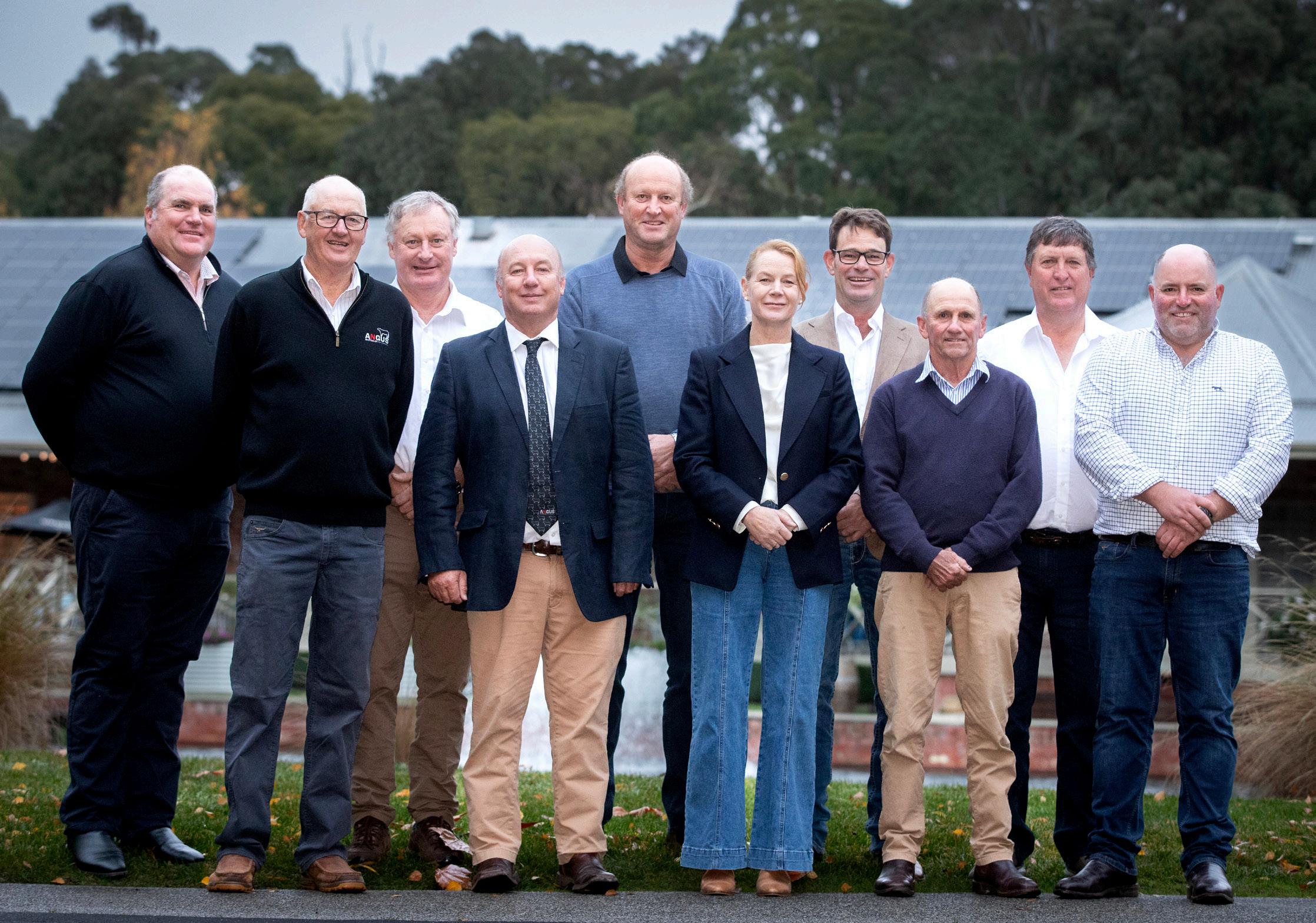
The Angus Australia Board of Directors 2026.
Hero human resources platform. These systems are expected to improve operational efficiency and reporting capabilities.
INFORMATION SYSTEMS AND MEMBER SERVICES
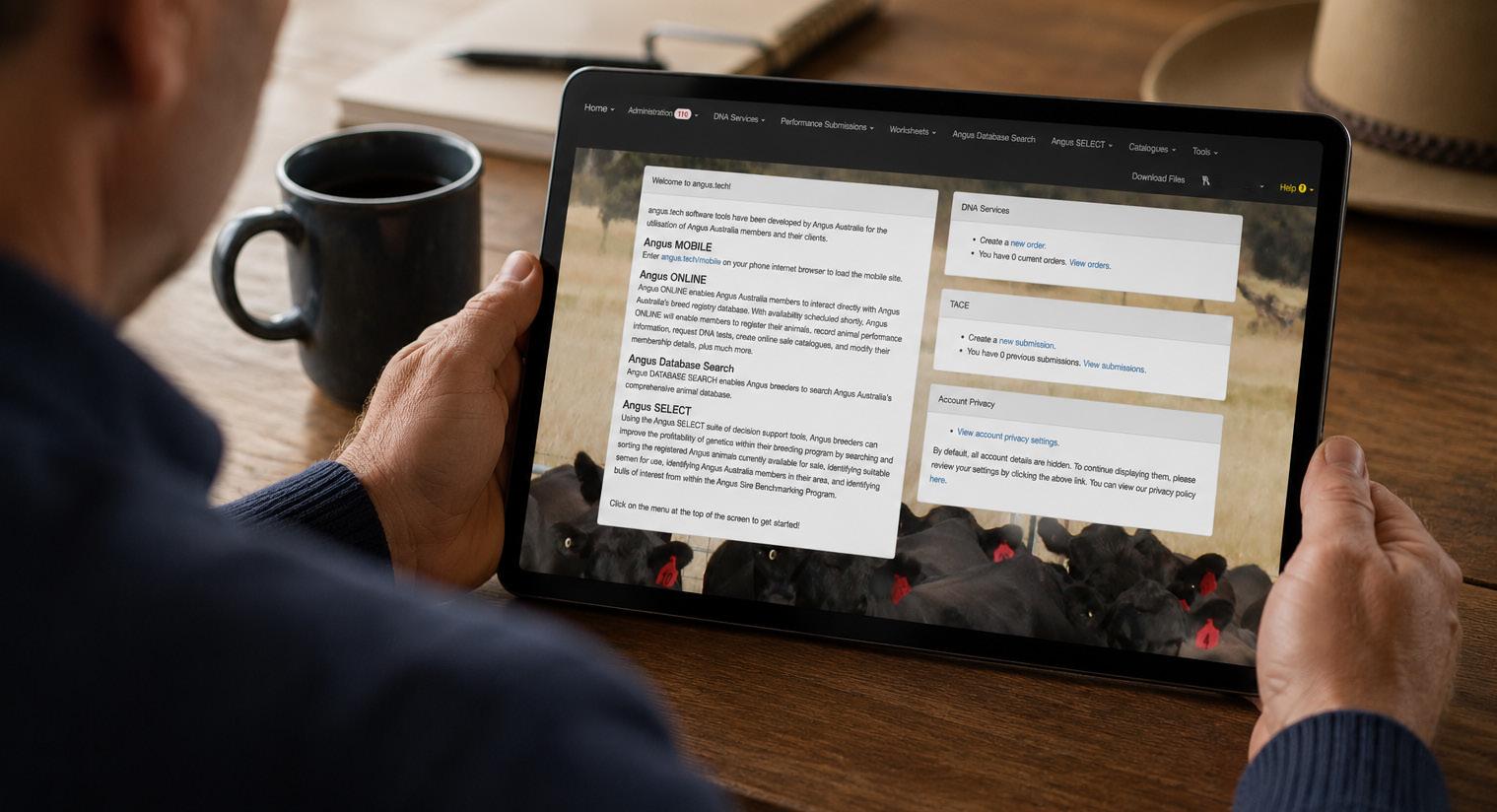
The Board received updates on angus.tech, including progress with the Member Zone import system and ongoing development work across the Society’s digital platforms.
Management also reported on current turnaround time pressures within the Member Services team. Directors noted that service levels have been impacted by staffing changes and an increase in member demand. Recruitment activities are underway and management continues to work closely with the team to improve processing times.
STRONG GOVERNANCE AND STRATEGIC OVERSIGHT
As part of each Board meeting, Directors receive comprehensive departmental reports covering genetics, member services, business development, extension, marketing, finance and information systems.
The Board remains committed to strong governance and strategic oversight of the Society. Directors undertake professional governance development through organisations such as the Australian Institute of Company Directors and the Australian Institute of Management. New Directors were given an induction session ahead of the Board meeting.
LOOKING AHEAD
The Ballarat meeting was productive and forward-looking, with Directors focusing on several significant strategic matters that will influence the future of the Society and the Angus breed.
Due to the medical leave of Chief Executive Officer Scott Wright, Chief Operating Officer Carel Teseling attended the meeting in the CEO’s place. The meeting was chaired by newly appointed President Peter Collins and marked the first meeting of the newly constituted Board.
With a strong focus on innovation, member service, governance and breed leadership, the Board remains committed to ensuring Angus Australia continues to deliver value for members and maintain the strength of the Angus breed into the future.
GENERATIONS OF COMMITMENT
CELEBRATED
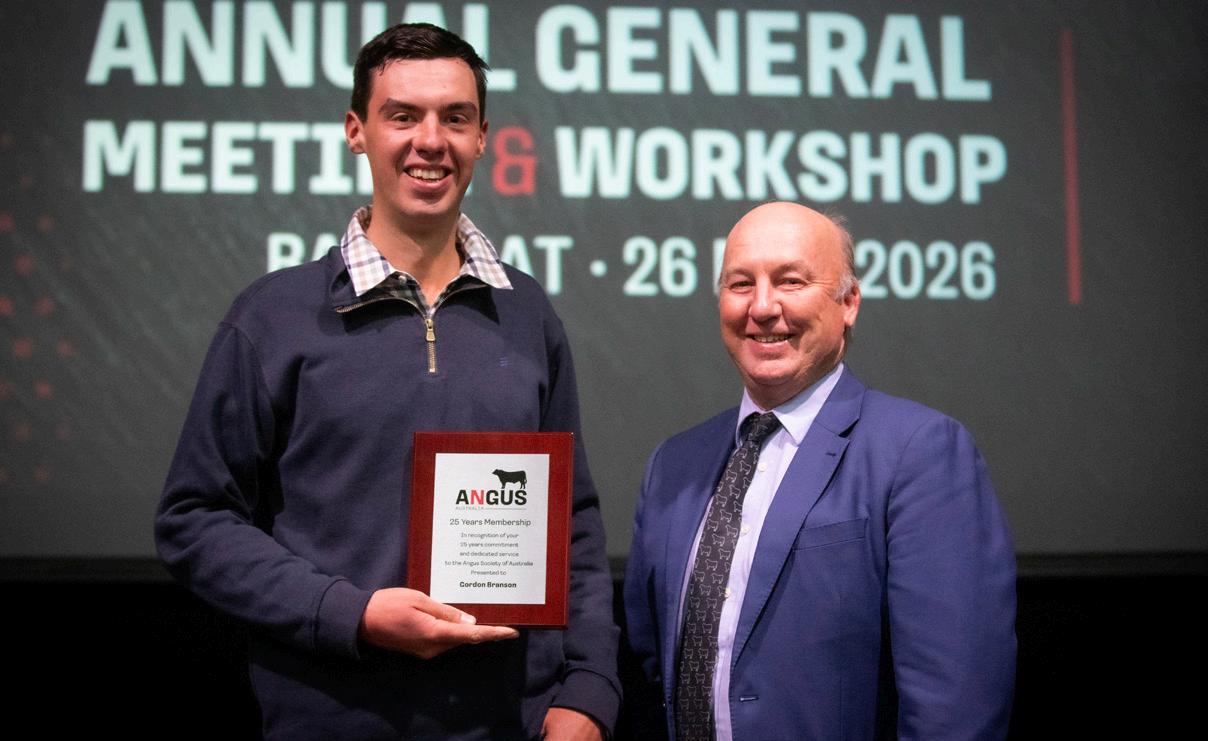
THE 2026 ANGUS AUSTRALIA Annual General Meeting and Member Workshop, held in Ballarat, Victoria, provided an opportunity to recognise members whose long-term commitment has contributed to the Angus breed and Angus Australia over many decades.
Alongside industry presentations and member discussions, the AGM acknowledged members who reached 25, 50 and 75 years of continuous membership.
CELEBRATING 75 YEARS OF MEMBERSHIP
Three memberships were recognised for reaching the remarkable milestone of 75 years with Angus Australia. Having joined the Society in 1951, these members are among the longest-standing supporters of the Angus breed in Australia.
The recipients were:
• WC Gray
• Eulonga Pastoral (Bengarra Angus)
• J & K Sunderman (Pinora Angus)
Their 75 years of membership reflect a long-standing commitment to Angus cattle, the beef industry and the advancement of the breed.
RECOGNISING 50 YEARS OF MEMBERSHIP
Seven members were acknowledged for reaching the significant milestone of 50 years of membership, having joined Angus Australia in 1976.
The recipients were:
• Carawatha Pastoral Co
• R F J Larkin
• Invergowrie Park
• M & H Lucas (Reiland Angus)
• Bryan Joseph & Lucinda Corrigan (Rennylea Angus)
• A M & F Kuss (Allegria Park Angus)
• Nixon Bros (Border Reivers Angus)
Over five decades, these members have supported the development and success of Angus cattle through their ongoing involvement in the breed and the wider industry.
A QUARTER CENTURY OF ANGUS MEMBERSHIP
Representing seedstock breeders, commercial producers and industry partners, these members have contributed to the growth and strength of the Angus breed over the past quarter century.
Their continued involvement helps ensure a strong future for Angus cattle and the Angus community.
A further 77 members were recognised for reaching 25 years of membership in 2026, having joined Angus Australia in 2001.
HONOURING SERVICE TO ANGUS AUSTRALIA
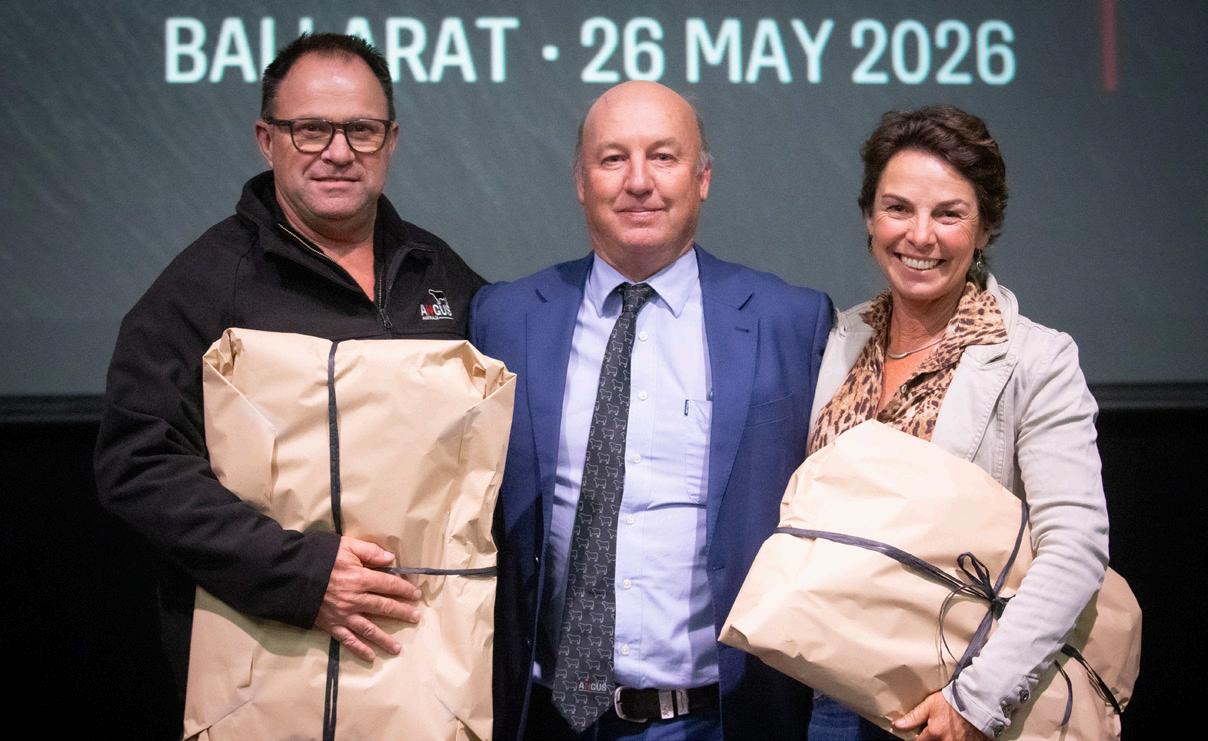
The AGM also recognised outgoing Directors Erica Halliday and Andrew Kuss who retired from the Angus Australia Board after eight years of service.
Throughout their tenure, both Directors contributed through leadership, committee involvement and support of the organisation's strategic direction. Their commitment to Angus Australia and its members has been greatly appreciated.
Angus Australia thanks all recognised members and Directors for their contribution, commitment and service to the Angus breed and the organisation.
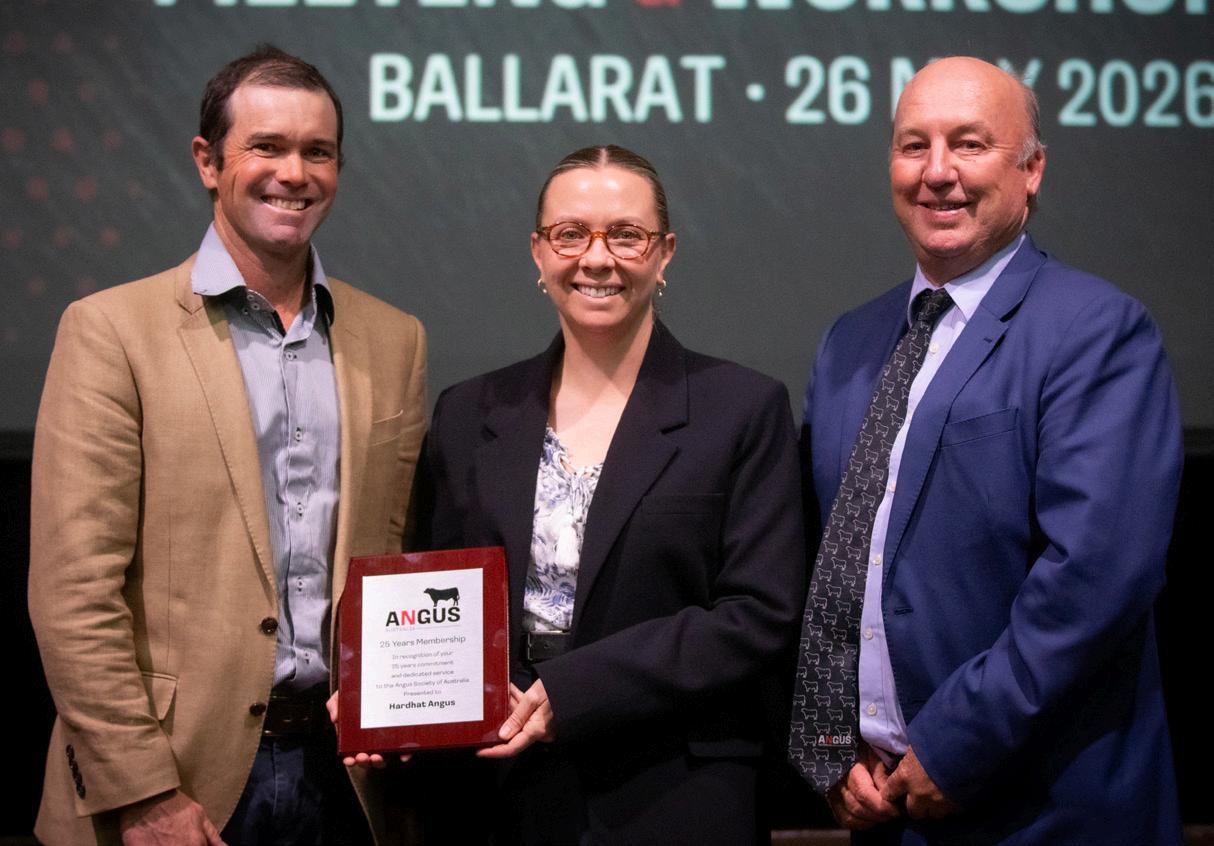
Pictured from top to bottom 25-Year Membership recipients Hardhat Angus with Sinclair Munro; 25-Year Membership recipient Gordon Branson accepted by son Hamish Branson (pictured); Retiring Angus Australia Directors Andrew Kuss and Erica Halliday.
VERIFIED FROM PADDOCK TO PLATE
As premium Angus claims carry increasing value in the market, Angus Reserve Black Angus Beef is showing how verification, traceability and supply chain discipline can help protect trust from paddock to plate.
DNA VERIFICATION IS MOVING closer to the centre of premium beef supply chains because breed claims now carry far more commercial weight than they once did. For Angus breeders and commercial producers, that matters. Angus continues to command strong market recognition, but that recognition now sits in a market that is more layered, more competitive and more closely examined than in earlier stages of the breed’s commercial rise. As Angus has become more widely used across breeding systems, branded programs and premium beef categories, the discipline required to protect the value of the breed claim has risen with it. For Australia’s largest verified Black Angus Beef brand, Angus Reserve Black Angus Beef, sustaining breed confidence is integral to maintaining both brand integrity and customer satisfaction.
“The Angus claim carries real value in the market and once a claim carries value, the systems behind it need to be strong enough to support confidence in that claim,” says Andrew McDonald at NH Foods Australia.
The central question is no longer whether Angus has market value because in many parts of the chain that point has long been settled. The more pressing issue is how that value is protected when breed claims are being used across multiple
programs, interpreted through different specifications and tested against stronger expectations around transparency and traceability. In that setting, DNA verification is becoming less of a technical option sitting at the edge of the industry and more of a practical mechanism for supporting confidence in what a premium Angus claim is meant to represent.
WHEN RECOGNITION BRINGS SCRUTINY
This shift communicates a much broader change in the market. Premium beef programs, such as Angus Reserve Black Angus Beef, have multiplied and with that growth has come a more competitive environment in which credibility matters alongside eating quality and brand presentation. Retailers, food service buyers and export customers are increasingly attentive to the systems that sit behind premium claims, particularly when those claims carry a price signal. At the same time, the commercial cost of confusion or inconsistency has increased because an integrity issue can move quickly through a brand program and into customer confidence.
For Angus, this is especially relevant because the breed now occupies a mature and highly visible commercial position. Angus is no longer a breed seeking recognition. It is deeply established, broadly used and often employed as a signal of premium quality.
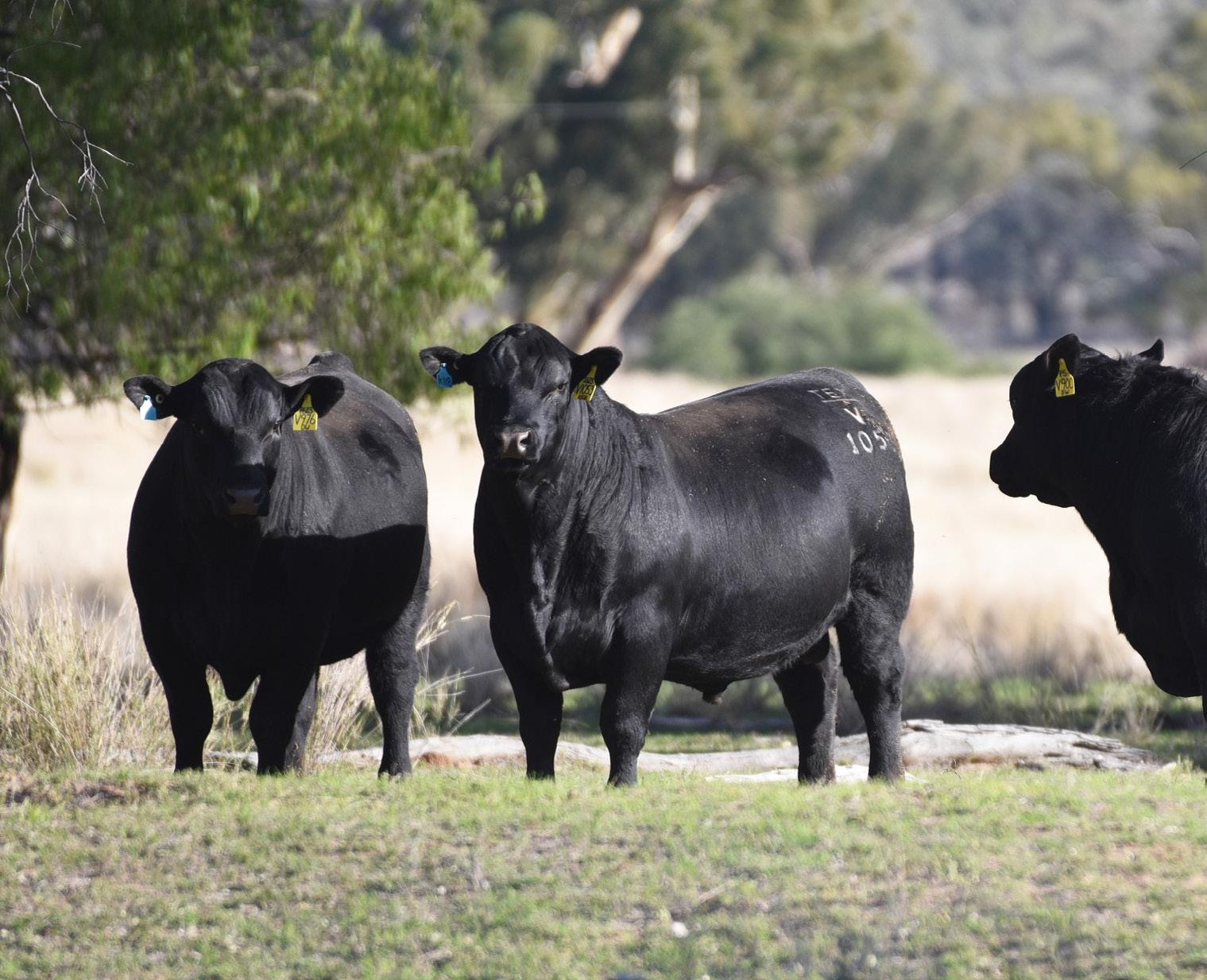
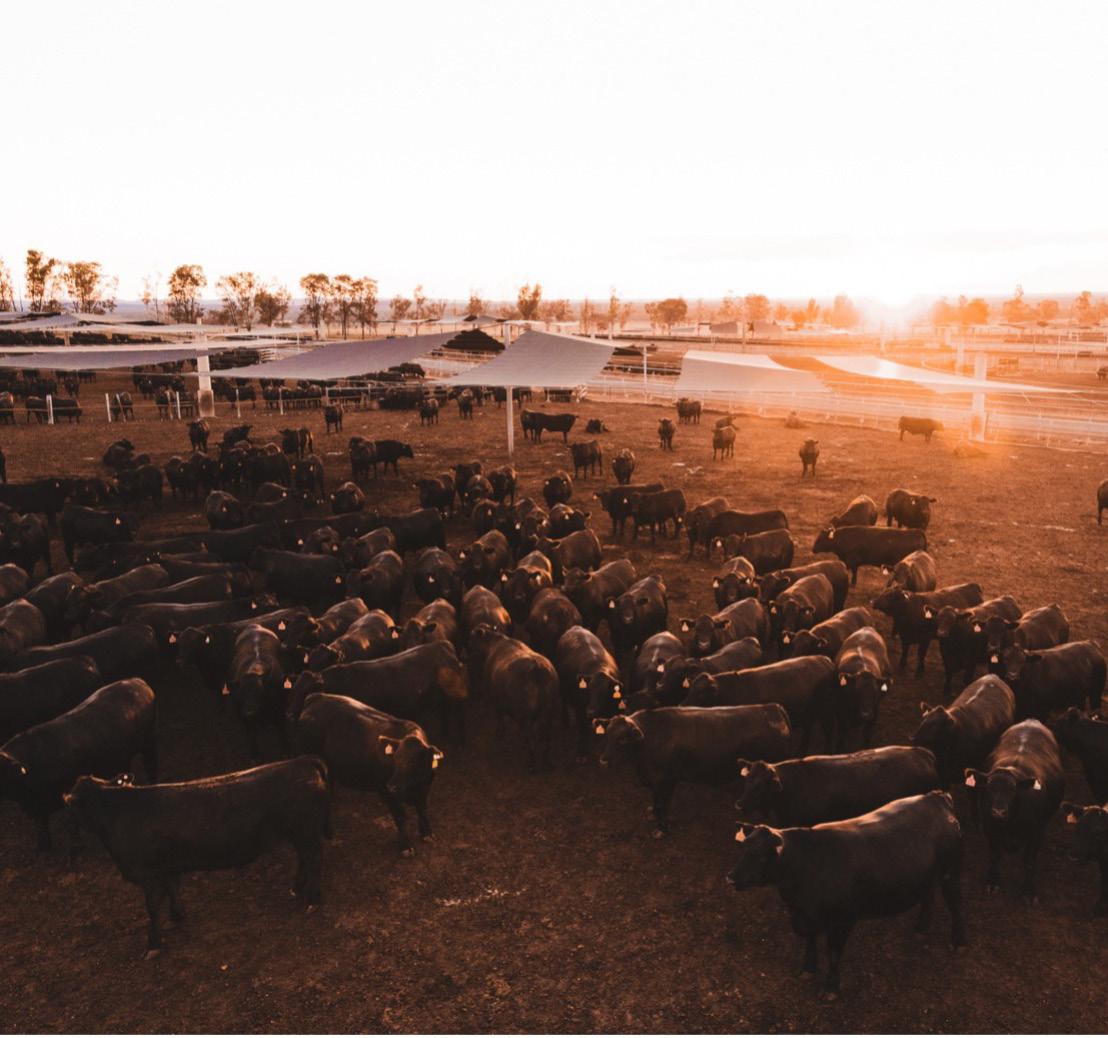
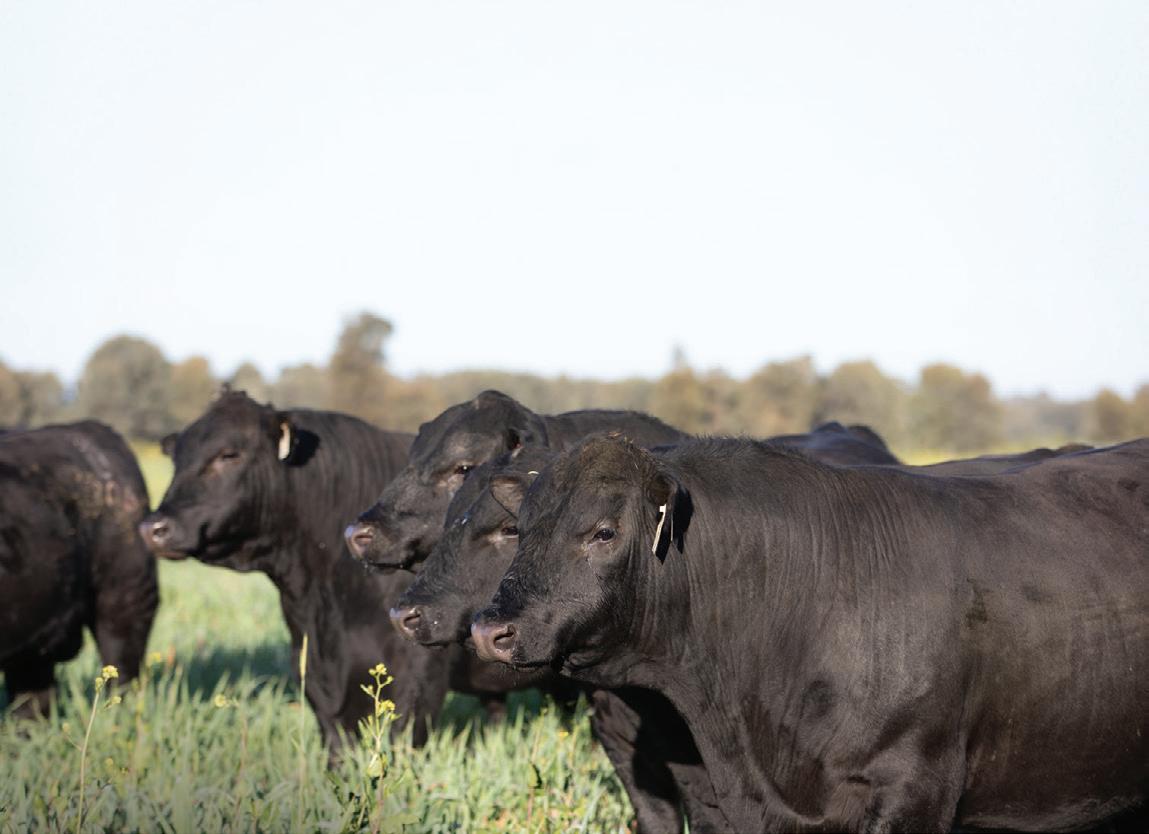
Black Angus cattle at NH Foods Australia’s Whyalla Beef Feedlot. (Image supplied by NH Foods)
That success has created opportunity, but it has also introduced the possibility of dilution if claims are not supported by systems strong enough to hold their meaning. The wider the commercial use of Angus becomes, the more important it is for the industry to distinguish between a breed description used loosely and a breed claim that can be substantiated with confidence.
“Customers are asking more of premium claims than they did a decade ago. They want consistency, traceability and confidence that the story being told about the product is supported by the right systems,” says Andrew.
HOW PROOF BUILDS CONFIDENCE
What makes DNA verification commercially useful is that it reduces ambiguity. In practical terms, it strengthens the link between the animal, its breeding background and the premium claim attached to it as it moves through the chain. That does not mean verification replaces good breeding, strong management or sound market judgement. It means that in a chain where claims increasingly need to withstand greater scrutiny, measurable evidence becomes more valuable.
The science matters but the commercial effect matters more because what supply chains are really seeking through verification is not testing for its own sake but a stronger and more portable form of trust. That trust now must carry further than it once did. In earlier periods, many cattle transactions were still anchored in relatively direct relationships, where buyers had a closer understanding of the breeder, the country and the type of cattle they were dealing with. Those relationships still matter but they no longer describe the whole market.
Premium Angus cattle may now move from breeder to commercial producer, through feedlot pathways, into processing systems and then on to branded programs serving domestic and export customers. Every extra step in that sequence increases the value of information that is reliable, transferable and capable of holding up under examination. Verification sits naturally within that setting because it travels with the claim and helps strengthen it beyond the point where familiarity alone can do all of the work.
“As supply chains become more connected, verification gives us a stronger foundation of confidence from producer through to customer,” Andrew says.
HOW INTEGRITY IS BUILT IN
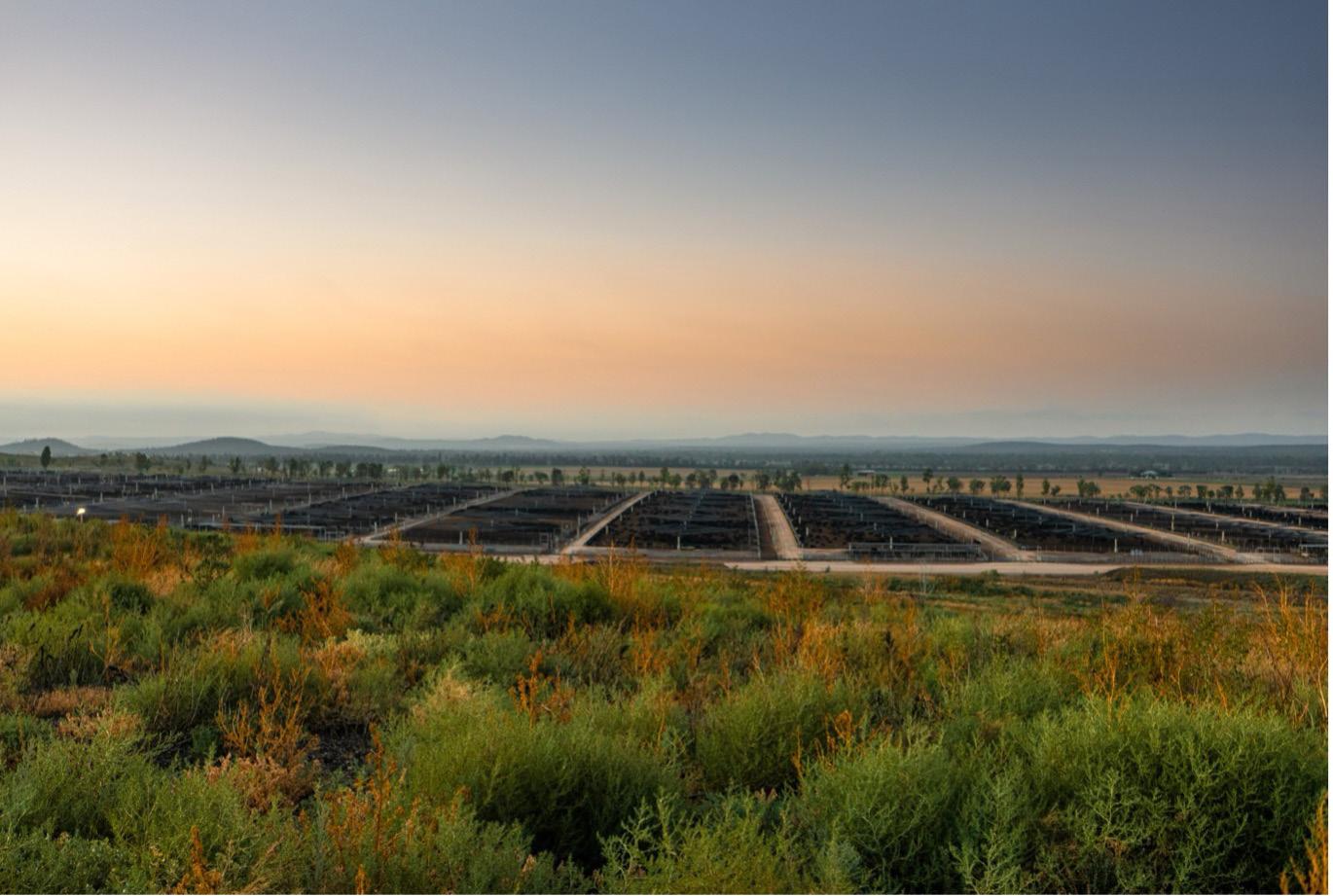
That becomes clearer in programs such as Angus Reserve Black Angus Beef, where verification sits within a broader framework designed to support transparency, consistency and confidence from producer through to end market. The significance of that approach lies less in the fact of testing itself and more in the way verification is embedded within a commercial program linking producers, feedlot, processing and market expectations into a single operating structure. For NH Foods Australia, this includes their feedlot, Whyalla Beef, one of the largest and most technologically advanced feedlots in the Southern Hemisphere, which forms a key part of the vertically integrated supply chain behind Angus Reserve Black Angus Beef. This vertically integrated model uses verification alongside broader control points to support breed claims and product consistency, reflecting a supply chain view that integrity is not an abstract principle but part of how premium value is protected over time. This matters because it shows how verification is evolving within
premium beef programs more broadly. Where systems such as Angus Reserve Black Angus Beef are investing in verification, they are doing so because the market value of the claim depends increasingly on the ability to support it with something more formal than assumption or legacy alone. DNA verification is not changing the core strengths of Angus as a breed. It is reinforcing them by helping supply chains preserve clarity around what Angus means when a premium is attached to the name.
“For us, verification is part of protecting consistency through the chain, because the Angus promise has to hold not only at the start of the program but all the way through to the customer experience,” Andrew says.
WHAT THIS MEANS FOR PRODUCERS
For breeders, this has practical implications. Documentation and traceability discipline are likely to matter more, particularly in premium pathways where breed identity forms part of the product proposition. Programs able to support their claims with stronger evidence may be better placed to defend premiums and maintain clearer differentiation in the market. Feedback loops may also tighten over time because the more closely breed composition, management, performance and product outcome are linked within a program, the more likely it is that producers will receive clearer signals about what is creating value and what is not.
Image supplied by NH Foods
The Angus promise has to hold not only at the start of the program but all the way through to the customer experience. “
ANDREW McDONALD, NH FOODS
For commercial producers, the question is not simply whether verification is scientifically sound but whether it is becoming commercially relevant to the programs they wish to access. In some cases, participation in verified pathways may require additional process, greater operational discipline or closer alignment with program specifications. Yet the counterweight to that added discipline is the prospect of stronger access to premium programs whose claims are more likely to hold their value in a market that is becoming less tolerant of ambiguity. If verification supports greater confidence in breed identity and greater confidence supports stronger premiums or more reliable market access, then verification becomes part of the value equation rather than merely a cost sitting alongside it.
WHERE PREMIUM MEETS PROOF
The longer-term significance for the Angus industry is that the economics of genetic investment depend in part on the credibility of the premium attached to the breed. Angus has made substantial genetic progress over decades and that progress has been sustained by demand flowing through commercial supply chains. If breed claims become less meaningful, the premium attached to them weakens and if that premium weakens, the incentive structure supporting ongoing improvement becomes less secure. Verification cannot preserve that value system on its own but it can strengthen one of its most important foundations by protecting the integrity of the claim that underpins it.
Whether DNA verification becomes an expected standard across premium beef supply chains will depend on practical considerations such as cost, feasibility, market demand and the extent to which value is clearly shared across the chain. Systems that are cumbersome or commercially disconnected will always struggle to gain traction, while systems that strengthen market confidence, support clearer access to premium pathways and help defend breed-based value are more likely to become embedded. The direction of travel, however, is already visible. In premium segments of the beef market, unsupported breed claims will become harder to sustain, while claims backed by stronger systems will be easier to defend. That shift does not diminish Angus brand equity. It strengthens the mechanisms by which that equity is maintained.
For Angus breeders and producers, this is straightforward even if the commercial implications are significant. Premium programs are building stronger frameworks around breed identity, customers are placing greater value on confidence and traceability and DNA verification is emerging as one of the clearest ways to support both. For brands such as Angus Reserve Black Angus Beef, these frameworks ensure the integrity of the Angus claim remains closely aligned with the premium eating experience customers have come to expect. In that environment, the businesses best placed to hold their position will be those able to provide not only performance, but proof, because in a mature Angus market the two are becoming harder to separate.
From the Central West of New South Wales to Northern Queensland, this edition’s regional feature explores how Angus businesses are adapting decisions to suit their country, markets and long-term goals. Across contrasting systems, the shared focus is clear: building consistency, confidence and performance from the paddock through to the customer.
FOR MANY
CATTLE
The making of a connected Angus business
How Sunny Point Pastoral Company has built continuity, consistency and customer trust across the full supply chain.
PRODUCERS, paddock to plate remains more aspiration than operating model because while the phrase is familiar enough across the industry, relatively few businesses have genuine line of sight from breeding paddock to retail shelf. At Sunny Point Pastoral Company near Oberon, that connection is neither abstract nor incidental. It sits at the centre of how the Mawhood family thinks about cattle, supply, customer trust and long-term performance. The family runs Sunny Point Pastoral Company alongside three IGA supermarkets in the Central West of New South Wales, giving the business something unusual in the Angus space, which is visibility at both ends of the chain. That visibility has changed the questions the business asks. Before drawing the cattle and retail sides together more deliberately, the family had already seen through MSA pathways that it was producing stock that graded well and delivered a quality, consistent result. At the same time, it was buying boxed beef into the supermarkets without always knowing what sat behind it. The late family patriarch saw the contradiction clearly. “Why are we selling all our cattle to other people and then buying in cattle for our supermarket?” That question has shaped the business ever since because it forced the family to think not only about producing cattle but about controlling the product from start to finish.
Sunny Point itself is a relatively recent pastoral structure, operating since around 2010, but it stands on much older
foundations. The farming side reaches back through the family to the 1950s and 1960s, while the supermarket business began with the family’s grandfather in about 1930. What has emerged is not simply a diversified enterprise but a tightly linked one in which breeding, management, retail and customer confidence are all part of the same commercial system.
WHAT INTEGRATION CHANGES
Integration has brought something more valuable than novelty; it has brought clarity. The family is no longer relying on assumptions about how cattle were raised before the beef reaches the cabinet because it now controls the product from breeding through to retail. That control has sharpened the way decisions are made across the whole business. The fundamentals remain the same, with the cow herd still at the centre because fertility, conception and the ability to raise a calf each year continue to underpin every commercial outcome.
What has changed is the precision around the finished animal. Retail has made the family far more conscious of carcass size, portion size and what the customer is actually prepared to buy. As Ian Mawhood puts it, “you’re starting to think more about the end user”. That has led Sunny Point to focus on cattle that finish at about 450 kilograms liveweight, reflecting the view that retail rewards balance, consistency and suitability rather than sheer scale alone.
WHY ANGUS STAYED AT THE CENTRE
Angus has remained central to Sunny Point because it has continued to prove its worth commercially, both in the paddock and further along the supply chain.
The family’s early move into Angus was shaped by market demand but the breed’s place in the business deepened as the herd developed and the commercial benefits became clearer. Ian Mawhood is equally clear that Millah Murrah and Bongongo Angus have played a major role in where Sunny Point beef sits today. Their influence on the herd has helped shape the type of cattle the family now relies on, giving Sunny Point a stronger base for fertility, consistency, eating quality and market suitability. That foundation has allowed the business to produce cattle that work within its own branded beef line while still retaining flexibility across feedlot, supermarket and other market channels. Angus is not simply a breed choice, it is part of the business structure that underpins quality, reliability and commercial adaptability.
BREEDING FOR CONTINUITY
The self-replacing herd sits at the centre of Sunny Point’s longterm approach, though it is more demanding than it may first appear. In a favourable season, the model looks disciplined and well structured. In a hard year, however, it forces more difficult decisions because the easier path can be to offload younger cattle, ease feed pressure and simplify the business. A branded beef line changes that equation because supply cannot be interrupted without consequence. As Mark Mawhood put it, “It’d be too hard to regain those sales,” even when other markets may offer stronger short-term prices.
This is where an integrated business differs most clearly from a conventional cattle operation. There are times when the feedlot market may be paying more for the same class of animal but Sunny Point has taken the view that maintaining continuity in its
Ian Mawhood, Sunny Point Pastoral.
own brand carries greater long-term value than chasing every market spike.
One of the most important changes behind that continuity has been the move from one joining each year to three. That decision was made to spread beef supply more evenly across the year, but it has also improved bull use, feed use and seasonal flexibility, allowing one group to be tightened or sold without unsettling the whole system.
CONSISTENCY AS A COMMERCIAL DISCIPLINE
When production and retail sit inside the one business, consistency becomes more than a quality aspiration. It becomes a commercial discipline. At Sunny Point, consistency is not reduced to a single trait or measure. “A little bit of everything worked together” is how Ian described it, meaning eating quality, supply, presentation and customer confidence all need to hold together at once.
The Mawhood name gives the business a head start because it has been present in retail for 96 years and already carries trust within the local community. Customers know the supermarkets, they know the family and they expect quality local produce when they walk through the door. That trust helps build the Sunny Point beef brand but it also sharpens the family’s sense of responsibility. A reputation built over generations can be reinforced by a good product but it can also be damaged by inconsistency.
The results suggest the family’s discipline is paying off. Gold medals at the Teys Beef Spectacular in 2024 and 2025, along with silver and bronze medals across several years at the Sydney Royal Fine Food Show, have added formal recognition to what the business is hearing from its own customers. The strongest proof, however, still comes from the customer experience. “The experience of eating it” was Mark’s first answer when asked what keeps people coming back, with word of mouth following closely
behind. If the Sunny Point label is on the pack, then the customer has to know that “what is in there is a quality piece of meat” that will justify the choice once it reaches the plate.
That is why the business treats quality control so seriously. If a line of cattle does not meet expectation, it can be redirected into another market rather than risk disappointing a retail customer. The family has learned that retail is unforgiving in that respect. A buyer makes the purchase in seconds but the real judgement comes later and if the eating experience falls short the business may not get another chance.
HOLDING SUPPLY THROUGH THE SEASON
Seasonality remains one of the hardest tests of the model, particularly in Oberon where conditions can tighten quickly and winters can be severe. The customer still expects beef regardless of whether the farm is dealing with drought, snow or a sudden feed gap, which means the business has had to build its own capacity to “take the season out of it” as far as possible. That has required fodder made in stronger years, substantial reserves of hay and silage and a willingness to act early rather than wait until pressure becomes obvious.
This is where the practical discipline of the business is most visible. Sunny Point cannot decide in the week what cattle will be right for the beef line. It needs to be thinking roughly three months ahead, identifying which groups are likely to fit the required specification and using supplementary feed early enough to protect the supply profile. Mark describes “this as one of the hardest parts of the system” because the business has to keep hitting its target weight range week after week while still staying ahead of the season.
The family has responded by treating feed reserves as a strategic asset. Hundreds of big square bales have been made and stored in recent years and the principle is straightforward. If the hay shed is full, it is still topped up. A good season is not a reason to relax. It is a reason to prepare for the next hard one. Integration can offer better cash flow and a clearer line to the customer, but it also demands more work and more planning than many people appreciate. As Mark reflected, producing 13 or 14 head every week can be “a lot harder than you think,” even if it is also more rewarding.
FAMILY STRENGTH AND LOCAL TRUST
Family involvement has strengthened the business not because everyone plays the same role but because each member brings different strengths. Within the operation, the four brothers balance one another across production, machinery, finance and retail and that internal balance is reinforced by outside advice from agronomists, animal health consultants, vets, accountants and seedstock suppliers. The result is a business that retains family continuity without becoming closed to outside expertise. Local trust matters just as much. The Mawhood businesses
“
In a model like this, performance has to be visible in the herd, in the paddock, in the cabinet and ultimately, at the table.
have staff who have been with the family for decades and they continue to invest in younger people through employment, school-based agriculture pathways and support for local cattle teams. In a regional setting, that sort of continuity matters. The business is not judged only by the steak in the cabinet but also by its place in the district. Even the condition of the family’s country, visible from the road in many places, forms part of that judgement. Healthy paddocks and healthy cattle reinforce the confidence that local customers place in what they buy under the Sunny Point label.
The retail connection has not made the family more cautious. If anything, it has made it more ambitious. Repeated positive feedback from customers has strengthened the family’s confidence in the product and given it reason to believe the Sunny Point line could extend beyond its current footprint. The ambition is not careless, but it is real, and it rests on a product the family knows consumers enjoy.
BUILDING THE NEXT STAGE
Looking ahead, the business is likely to be shaped by technology, pasture management and more refined breeding decisions.
On the retail side, the family is investing in more efficient refrigeration, solar and electronic shelf labels. On the farm side, attention is turning toward HeiferSELECT, sire data, soil testing, lime, improved pastures and tools that allow more precise use of feed and grazing. The intention is not to chase technology for its own sake but to use it where it sharpens management and strengthens the consistency of the system.
When performance is discussed at Sunny Point, it is not reduced to one number. Fertility comes first because without a live calf there is no system to speak of. From there, kilograms produced, stocking rate, growth, eating quality, customer loyalty and profitability all have to hold together. None of those measures stands alone and none of them has much meaning if the others are not carrying their share of the load.
That is perhaps the clearest way to understand Sunny Point Pastoral Company. It is not simply a story about family beef sold through family supermarkets. It is a story about what happens when one business takes responsibility for the full chain and then accepts the discipline that comes with that responsibility. In a model like this, performance has to be visible in the herd, in the paddock, in the cabinet and ultimately, at the table.
Left Mark Mawhood, Sunny Point Pastoral Right Sunny Point Pastoral steaks.
The groundwork behind better beef
On the Atherton Tablelands, Altitude Beef and Cross Meats are showing how better beef begins well before processing, with land condition, pasture quality, fit-for-purpose genetics and supply chain collaboration all shaping the consistency of the final product.
ON THE ATHERTON TABLELANDS, the conversation about beef quality begins well before cattle enter a feedlot, a processing floor or a retail cabinet, because in northern systems the final product is shaped much earlier by the condition of the country, the strength of the pasture base, the suitability of the genetics and the quality of the relationships holding the supply chain together.
That is what makes Altitude Beef and Cross Meats more than a profile of a regional beef business. At one level, it is about building demand for high-quality locally produced beef in northern Queensland. At a deeper level, it is about the slower and more demanding work required to make that product possible in an environment where consistency cannot be assumed, where land performance and cattle performance are tightly connected and where supply chain confidence depends on far more than the final cut.
For Doug Cross, the connection between production and market outcomes has become impossible to separate. “The closer you get to both ends of the chain, the clearer it becomes that beef quality is not something you fix at the end,” he says. “It starts with the country, the pasture base and the kind of decisions producers are making months and years before the animal ever reaches processing.” That view sits at the centre of the business because in the north quality is rarely the result of one intervention. It is cumulative, built through land management, pasture improvement, fit-for-purpose genetics and a supply chain prepared to work with producers rather than simply buy from them.
A NORTHERN SYSTEM SHAPED BY ITS CONDITIONS
Northern beef systems are often framed in terms of their constraints, whether that means distance, seasonal volatility, variable pasture quality or the challenge of maintaining reliable supply across a wide and demanding production landscape. Those constraints are real but they do not tell the whole story. The north also imposes a certain discipline because it reveals very quickly which systems are robust, which pastures can carry cattle effectively and which management decisions still hold up once conditions tighten.
That discipline has shaped the evolution of Cross Meats and Altitude Beef. The business operates close enough to both producers and consumers to see the commercial cost of inconsistency from both directions. It can see what happens when pasture quality falls away, when cattle performance becomes uneven or when a product story is asked to carry more than the production system behind it can reliably support. It
can also see the gains that become possible when cattle are better aligned to the market because the country behind them is functioning more effectively.
“The hardest trade-off in the north is that everyone wants consistency but consistency takes time to build and conditions here can change very quickly,” Cross says. “You are always balancing what the market wants today with what the land and the producer can sustainably deliver over the long term.” That tension gives the north much of its commercial weight because it means that land and pasture decisions are never separate from market decisions. What may once have looked like an agronomy issue starts to look much more like a supply chain issue and then very quickly becomes a market issue as well.
THE LAND SETS THE CEILING
In the north, pasture is not a background consideration but it sets the ceiling for performance.
Nick Trompf says producers can underestimate the relationship between pasture condition and cattle performance because northern pastures behave very differently from those in southern systems. “There is a wide variety of pastures in northern Australia, from the wet tropics to the much-drier savannah country,” he says. “Typically, the level of protein in pastures in the north is much lower than southern pastures, so producers are well aware of stocking accordingly. In the wet season pastures grow incredibly quickly, offering considerable bulk but lower quality.”
That distinction is critical because more feed on offer does not automatically translate into better cattle performance. Where pasture quality falls away, growth rates become less reliable. Where country is pushed too hard or pasture composition declines, the consequences do not remain confined to one season. They accumulate over time. In that sense, land health is not simply a stewardship issue or an environmental talking point. It is part of the commercial base of the enterprise.
Doug Cross puts it more bluntly. “You see the impact of land management in market outcomes when cattle stop hitting the marks you need them to hit, when supply becomes uneven and when the product loses that reliability the customer expects,” he says. “At that point, pasture is no longer just a paddock issue but becomes a business issue.”
WHY PASTURE IMPROVEMENT MATTERS
This is where pasture improvement enters the story with real force. Legumes, in particular, are not merely an agronomic input. In the right system, they can materially improve protein availability, support stronger cattle performance and lift the productivity of the grazing base as a whole.
For Doug, that is the point at which pasture stops being discussed as a technical issue and starts being understood as a commercial one. “Once producers can see that better pasture means more predictable cattle and more predictable cattle mean a stronger market outcome, the whole conversation changes,” he says. “You are no longer talking about improvement for its own sake. You are talking about building a more reliable business.”
But that improvement rarely happens quickly. It depends on producers being willing to think beyond immediate seasonal pressure and on the wider supply chain recognising that some of the most important gains are built gradually. In northern systems where volatility may be present, that longer view is what separates businesses that continually absorb pressure from those that begin to shape it.
ANGUS AND THE SCALE OF THE OPPORTUNITY
Within that broader context, northern Australia represents the biggest growth opportunity for the Angus breed.
Nick Trompf points to the contrast between north and south as the clearest sign of that potential. “Black cattle dominate markets and breeding programs in southern Australia with 75 per cent of females, cows and heifers, being Angus or Anguscross,” he says, citing Meat and Livestock Australia producer sentiment work. “However, it’s northern Australia where the biggest growth opportunities lie. With about 10 million females
in the north, only 39 per cent of herds have Angus, Brangus or Ultrablacks, highlighting just how big the growth opportunities are for the right type of bulls.”
The phrase “the right type of bulls” matters because the challenge for Angus in the north is not simply adoption. It is adaptation. Nick is direct on that point saying, “Climate adaptability is the number one challenge for Angus and Angusinfused cattle in northern Australia, particularly north of the Tropic of Capricorn. Seedstock producers are increasingly focused on breeding fit-for-purpose bulls to suit the north with finer skin and less hair plus ensuring they are not extreme in size given the harsh climate they will work in.”
Doug sees that adaptation challenge in practical commercial terms. “The opportunity for Angus in the north is real but it has to be built on cattle that genuinely fit the conditions,” he says. “If the genetics are right, the supply chain can do a lot with them. If they are not, the country tells you very quickly.”
Nick also points to developments that could materially change the equation. “Research into a cattle tick vaccine is well advanced and this would be a game-changer for Bos Taurus cattle in northern Australia,” he says. Distance to market remains another challenge, especially for more remote producers but he notes that “more and more feedlots are opening as the demand for premium red meat continues to soar.”
COLLABORATION LIFTS THE STANDARD
One of the clearest themes is that no single part of the chain can improve outcomes on its own. A processor can ask for better cattle but that does not automatically lift land condition or pasture quality. A producer can invest in stronger country and better herd performance, but if the market does not recognise or reward that effort, the incentive weakens.
This is where producer collaboration and peer learning matter. “The northern system improves fastest when producers can see what is working on other places and when the supply chain is giving clearer signals about what is valued,” Doug says. “No one part of the chain can solve it by itself. It has to be a shared lift.”
That is also why Altitude Beef and Cross Meats occupy an important position. By working close to both producers and consumers, the business is able to read the system from both ends. It can see what happens when supply becomes uneven, when cattle fall away from specification or when the promise being made to the customer is not consistently supported by what is happening on the ground. Just as importantly, it can see how much stronger the whole chain becomes when producers, pasture advisers and supply chain operators are working from a shared understanding of what drives long-term performance.
Improvement in the north rarely comes through one dramatic breakthrough. More often, it is built through accumulated learning, clearer feedback and a stronger willingness to share knowledge across the chain.
BUILDING DEMAND FOR LOCAL BEEF
Consumer demand is part of this story too but not in a simplistic way.
There is obvious value in building demand for high-quality locally produced beef, particularly in a region where local identity still carries weight. Yet a regional beef story only works when the product consistently supports the promise being made. Customers may be drawn first by the local story but they return because the product performs.
Doug sees that point very clearly from the market side. “Customers will support local beef, but only if local also means reliable,” he says. “Regional branding can open the door but consistency is what keeps it open.”
That places pressure back on the supply chain. A local beef brand in northern Queensland cannot rely on geography alone. It has to deliver a product that holds up, which means the production system behind it must be disciplined enough to support quality
with consistency. This is where the connection between land health and beef quality becomes impossible to ignore. Better country does not simply produce more cattle. It improves the chance of producing cattle that fit stronger market pathways and build more durable customer trust.
A LONGER VIEW OF PERFORMANCE
The deeper lesson here is that northern performance cannot be judged on output alone.
In a more demanding environment, long-term performance is shaped by decisions that hold their value across seasons. Stocking pressure, pasture quality, legume adoption, herd direction, producer engagement and supply chain discipline all matter and none of them is decisive in isolation. Together, however, they determine whether a business can build consistency in a region where inconsistency has often been treated as unavoidable.
That is what gives Altitude Beef and Cross Meats its significance. It is not simply about producing a better product. It is about showing that better decisions around land, pasture, genetics and collaboration can strengthen both the productive base of the business and the market outcomes that follow from it.
“The big opportunity in the north is not just to sell a premium product,” Doug says. “It is to build a system behind that product that is stronger, more consistent and more rewarding for everyone involved.”
The north will always differ from the south in climate, scale and biological reality. It will not become southern Australia with a different rainfall pattern. But that does not mean it cannot produce stronger, more reliable and more commercially valuable Angus-based outcomes. It means only that the path there runs through land health, fit-for-purpose genetics and a supply chain that recognises beef quality begins well before the hook.
THE PRINCIPLES that shape Angus performance
Across very different Angus production systems, long-term performance is shaped less by a single season or market opportunity and more by the connected decisions that build consistency, resilience and commercial trust over time.
ACROSS ANGUS PRODUCTION SYSTEMS, the visible differences are often the first to draw attention, whether that is climate, pasture base, enterprise scale, market access or the structure of the supply chain itself, yet what tends to matter most over time is not the variation between one region and another but the quality of the decisions sitting beneath performance and giving a business its ability to endure. That becomes clearer when very different systems are considered side by side.
In one setting, discipline may be expressed through herd structure, retail alignment and the need to maintain customer trust every week of the year. In another, it may be expressed through pasture improvement, land stewardship, producer collaboration and the effort required to build more reliable outcomes in a northern production environment. The conditions are different, but the commercial principles are often much the same. Performance is rarely shaped by one strong season, one favourable market or one isolated decision that happened to work in the moment. More often, it is built by a series of connected choices that accumulate across the land, the herd, the supply chain and the market.
BUILT FOR CONTINUITY
One of the clearest dividing lines in agriculture is not between north and south, nor between larger and smaller businesses, but between enterprises built around continuity and those forced too often into reaction. Short-term pressure is unavoidable because seasons turn quickly, costs move without much warning and markets can reward one decision in the present while exposing its weakness later. Any serious operator has to respond when those pressures arise, but the more durable businesses tend to do something more than simply react. They continue making decisions that protect the
direction of the herd, the productive base of the country and the standards the market has come to expect.
That longer view does not remove uncertainty, but it changes how uncertainty is absorbed. A business built for continuity is less likely to be rebuilt from scratch each time conditions tighten and more likely to be adjusted with care, because its operators understand that performance is cumulative. The strongest gains usually come through measured decisions repeated over time, each reinforcing the next and gradually building a business that is harder to unsettle.
That principle is visible in very different ways across the Angus industry. In one operation, it may show through the discipline of maintaining a branded beef line even when another market is offering stronger short-term returns. In another, it may be seen in the slower work of improving the country, lifting pasture quality and building relationships that support stronger outcomes over several seasons rather than one. The form varies, but the principle is the same. The businesses that hold their shape tend to be the ones making decisions they can still defend when conditions turn.
CONSISTENCY IS DELIBERATE
Consistency remains one of the most valuable and demanding outcomes in the cattle and beef industry, yet it is still sometimes spoken about as though it naturally follows good breeding or favourable country. In practice, consistency depends on systems, restraint and a clear understanding of what the market expects and what the production environment can realistically support.
That discipline now carries more weight than it once did because inconsistency is felt more quickly and more directly.
In customer-facing businesses, it appears through eating quality, presentation, supply and confidence in the product. In systems further back from the end market, it may show up more gradually through uneven cattle performance, weaker alignment with specifications or a decline in confidence around the reliability of the enterprise. In either case, the effect is cumulative.
What becomes clear across very different Angus systems is that consistency is rarely accidental. It comes from aligning breeding, management, land capability and market understanding over time. It also requires a willingness to shape the herd around the business rather than assume the market will absorb whatever the system happens to produce. In one operation, that might mean breeding cattle that suit a retail tray as much as they suit a carcase specification. In another, it may mean recognising that better pasture and better land conditions are essential if the business wants to deliver a more predictable animal into the chain. Regardless of which way you look at it, consistency is less a virtue than a discipline.
ANGUS AS A COMMERCIAL ANCHOR
Another strong point of common ground is the way Angus genetics continue to function not merely as a breed preference but as a source of commercial confidence. In many businesses, Angus provides confidence in the cattle themselves, in the
marketability of the product and in the expectations surrounding the final outcome. That gives the breed a role that is larger than selection alone, because it becomes part of the architecture of the business.
This matters particularly where predictability has real value. Buyers want confidence in what they are introducing into their system. Supply chains want confidence in what they are putting through a program. End customers, whether or not they are directly engaging with the breed name, respond to the consistency and trust associated with it. Angus does not remove complexity from the business, nor does it solve every challenge created by climate, management or market volatility. But it continues to offer a level of confidence that remains commercially important across very different operating environments.
That point becomes even more relevant when Angus is considered across regions. In one setting, Angus underpins a tightly connected paddock-to-retail model where eating experience and repeat purchase matter immediately. In another, Angus represents one of the largest growth opportunities available, provided the genetics are properly adapted to northern conditions and supported by land and pasture systems strong enough to carry them. In both cases, Angus sits at the centre of a broader commercial equation built around confidence, marketability and consistency.
Performance is rarely shaped by one strong season, one favourable market or one isolated decision. More often, it is built by a series of connected choices. “
PROTECTING THE PRODUCTIVE BASE
The same practical logic extends to stewardship. In some parts of agriculture, stewardship is still discussed as though it sits beside performance rather than within it, yet that distinction becomes much harder to maintain when viewed through the lens of long-term business capacity. Land condition, pasture quality, herd resilience and the ability to maintain standards under seasonal pressure are not secondary concerns. They are part of the productive base of the enterprise and therefore central to its commercial future.
In northern systems, that link may appear more explicit because pasture quality, legume content and land condition show up so clearly in cattle performance and market reliability. In more temperate systems, the same principle may be expressed through feed planning, fodder reserves, soil improvement and the discipline required to keep the productive base strong enough to support continuity of supply. The language may differ, but the principle remains consistent. Businesses that take a short view of country, pasture or herd function gradually narrow their own options, whereas those that protect the productive base tend to retain greater flexibility, stronger resilience and a more dependable path through change.
WHEN THE MARKET REACHES BACK
One of the more important shifts shaping Angus businesses today is the way the end market now sits closer to production decisions than it once did. That proximity is not always physical and not always direct, but it is increasingly commercial. Expectations around quality, consistency, origin and trust now travel further back through the supply chain, which means breeding, pasture and management decisions are more exposed to the logic of the market than they were in earlier periods.
This has changed the nature of decision-making because businesses are being asked to think not only about output but about what that output must represent when it reaches the next point in the chain. In one business, that may mean understanding exactly how carcase size translates to portion value for the customer. In another, it may mean recognising that a regional beef brand only holds its value when the production system behind it can support the promise being made. In both cases, trust has to travel further than it once did and businesses that understand this are more likely to make decisions that hold together across the full path from paddock to customer.
Seen in this way, the common ground between different regions becomes easier to recognise. Long-term thinking, consistency, confidence in Angus, stewardship of the productive base and a sharper awareness that trust must be preserved through the chain are not region-specific qualities. They are business principles that remain relevant regardless of climate, system or geography. The landscapes may be different but the principles that shape performance are often the same.
GENETICS & INNOVATION
Better information, better decisions
The tools available to Angus producers continue to evolve. From genetic evaluation and genomics to practical on-farm technologies, better information is helping members make more confident decisions and drive performance across their herds.
RESEARCH THAT MATTERS
What’s next for Angus in a changing production environment
HANLIE JANSEN | Genetic Improvement Specialist
ACROSS MUCH OF AUSTRALIA this season has been a reminder that no two regions, or even neighbouring properties, are operating under the same conditions. While some producers are navigating tightening feed and difficult decisions around herd structure, others are taking advantage of a more favourable run. Regardless of the season, one constant remains, the importance of making decisions that protect long term productivity.
It is within this context that research becomes more than a future investment, it becomes part of how the breed continues to perform today. The latest Angus Foundation Research Grant recipients reflect a clear focus on where the breed is heading, not only in terms of genetic gain, but in how animals perform, adapt and remain profitable across a wide range of environments. Rather than sitting in the background, this work is helping shape how Angus cattle respond to changing climates, evolving production systems and increasing expectations around efficiency and welfare.
PROTECTING REPRODUCTIVE EFFICIENCY
Reproductive performance remains one of the most important drivers of herd productivity, and often one of the first areas to come under pressure when conditions tighten.
In more challenging seasons, even small declines in conception or pregnancy establishment can have a compounding effect across the herd. At the same time, for seedstock producers and those investing in advanced breeding programs, reproductive inefficiencies can slow genetic progress and reduce the return on that investment.
Current research is taking a closer look at what is happening during the earliest stages of pregnancy, particularly in embryo transfer programs. By better understanding how nutrition and the uterine environment influence pregnancy establishment, the aim is to improve outcomes in a way that is both practical and scalable.
“This research is investigating whether a practical nutritional strategy, omega-3 supplementation through linseed oil, can improve embryo survival in recipient Angus cattle and support better fertility outcomes for producers. If successful, the findings could provide producers with another evidence-based tool to improve pregnancy outcomes in embryo transfer programs, helping convert genetic investment into more calves on the ground," said Jack Wood.
While the research is focused, the message is broader. Reproductive efficiency is not just a breeding outcome, it reflects the overall management of the system. Consistency in joining, nutrition and herd management remains critical, particularly when seasonal conditions are less forgiving.
ADAPTING ANGUS TO A CHANGING CLIMATE
As Angus genetics continue to expand into northern and more environmentally challenging regions, adaptability is becoming an increasingly important part of the conversation.
MEET THE 2026 ANGUS FOUNDATION RESEARCH GRANT RECIPIENTS
Jack Wood
PROJECT: Improving Embryo Survival in Recipient Angus Cattle Through Nutritional Supplementation FOCUS: Reproductive efficiency and embryo survival outcomes.
Mehrnush Forutan
PROJECT: Genomic and Performance Tools for Heat Resilience in Angus Cattle FOCUS: Identifying cattle able to maintain performance under heat stress.
Manjul Gautam
PROJECT: Immune-Based Approaches to Managing Pinkeye in Angus Cattle FOCUS: Reducing reliance on antibiotics through targeted immune therapies.
Producers are already seeing the benefits of Angus influence in these systems, from improved fertility through to market access and carcase quality. However, sustained heat load can still impact performance, particularly through reduced feed intake and overall productivity.
New research is now working to better understand these responses. By linking feed intake data with environmental conditions, researchers are identifying animals that are able to maintain performance as temperatures rise.
“Our research is focused on turning genomic and performance data into practical tools that help Angus producers breed cattle with greater resilience to heat stress. While this work is highly relevant to northern Australia, its value extends much further, as heat stress is becoming an increasing concern across many production environments under a changing climate. Looking ahead, this research will support more confident breeding decisions, helping producers maintain productivity, animal welfare and profitability in future climates,” said Mehrnush Fortan.
The opportunity here is long term. Genetic selection provides a permanent and cumulative way to improve resilience,
without relying on infrastructure or short term interventions. For producers operating across diverse environments, this represents another step in ensuring Angus cattle continue to perform where they are needed.
Importantly, this is about building on the strengths of the breed, not changing them. It is about ensuring Angus remains relevant and reliable across a broader range of production systems.
HEALTH, WELFARE AND PERFORMANCE
Animal health continues to play a significant role in both productivity and profitability, particularly when conditions place additional pressure on stock.
Infectious Bovine Keratoconjunctivitis, or pinkeye, remains one of the most common and frustrating conditions affecting beef cattle. Its impact goes beyond animal welfare, often resulting in reduced weight gain and lost production.
Research is now shifting toward understanding how the animal’s own immune response contributes to the development of the disease. By identifying these pathways, there is potential to develop new approaches that reduce reliance on traditional treatments.
"Current control strategies for infectious bovine keratoconjunctivitis (IBK) affecting Angus cattle rely heavily on antibiotics, while effective vaccines remain unavailable. Our research will help understand how the bovine immune system responds to pathogenic bacteria, identify new ways to control harmful eye inflammation, and develop targeted immune
“
Research becomes more than a future investment, it becomes part of how the breed continues to perform today.
based therapies. In the long term, this work has the potential to improve animal welfare, reduce reliance on antibiotics and provide producers with more sustainable strategies to manage IBK,” said Manjul Gautam.
This reflects a broader shift in thinking. Health, welfare and performance are closely connected and improvements in health and welfare management often lead to gains across the system. For producers, reducing the impact of disease supports more consistent growth, better outcomes and improved confidence in herd performance.
FROM RESEARCH TO THE PADDOCK
Taken together, these projects highlight a clear direction for the Angus breed. Reproductive efficiency, environmental adaptability and animal health are not separate challenges, they are all part of the same system. Strengthening each of these areas contributes to herds that are more resilient, more productive and better equipped to perform under a wide range of conditions.
What stands out is the practical intent behind this work. The focus is not simply on generating knowledge, but on delivering outcomes that can be applied on farm, whether through improved management, better selection decisions or tools that support consistency.
In a season where many producers are making difficult short term decisions, this research reinforces the importance of maintaining a long term view. Protecting genetic investment, selecting for resilience and managing herds with discipline remain central to sustained profitability.
LOOKING AHEAD
The Angus breed has long been recognised for its consistency, market acceptance and ability to perform across systems. Continued investment in research ensures these strengths are not only maintained but strengthened.
As conditions continue to evolve, the role of research becomes even more important. It provides the foundation for informed decision making and supports producers in adapting to change with confidence.
For Angus producers, the message is clear. The future of the breed is being actively shaped, with a focus on ensuring Angus continues to perform, deliver and lead across every system.
Making sense of the numbers Using Angus data with confidence
For many producers, the work of making confident spring bull sale decisions begins well before sale day, with winter providing an important opportunity to review breeding objectives, assess herd direction and identify the information that matters most.
HANLIE JANSEN | Genetic Improvement Specialist
AS THE SPRING BULL selling season approaches, many producers will be evaluating potential sires and making decisions that will influence the future performance of their herd for years to come.
These decisions are rarely made in isolation, with seasonal conditions, feed availability, market signals and business priorities all influencing where producers focus their attention and which genetics they choose to invest in.
At the same time, producers have access to more genetic information than ever before. Sale catalogues are filled with Estimated Breeding Values (EBVs), selection indexes, percentile bands and genomic information, all designed to provide greater insight into an animal's genetic potential.
While this information is a valuable resource, it can sometimes feel like there is more data available than time to interpret it. However, genetic information is not intended to complicate sire selection, it is there to support clearer, more informed decisions. Although conditions and markets may change, sire selection remains one of the most important long-term decisions in any breeding program. The genetics selected this spring will influence herd productivity, profitability and resilience for years to come. The key is knowing what information matters most for your operation and using it to support your breeding objectives.
START WITH YOUR BREEDING OBJECTIVE
Before comparing bulls or interpreting figures, it is worth stepping back to consider what success looks like within your production system.
Different enterprises place value on different traits. For example, two Angus self-replacing herds may both prioritise fertility, calving ease and maternal performance, recognising the importance of maintaining a productive and efficient cow herd. However, if one enterprise is targeting a feeder steer market and the other is predominantly selling weaners, their selection focus may differ.
While both systems rely on a strong maternal foundation, the feeder steer producer may place greater emphasis on genetics that drive performance beyond weaning and capture value further along the supply chain. The weaner producer may place relatively more emphasis on genetics that support performance to weaning and early growth, while maintaining cow herd efficiency.
This is why a clear breeding objective is essential, it provides the context needed to determine which information is most relevant within each production system.
NARROWING THE FIELD
Once a breeding objective is defined, selection indexes provide a useful starting point when identifying animals that align with your production system. By combining information across traits into a single value, they help narrow the field to animals expected to deliver genetic improvement and increased profitability within a defined production scenario.
Indexes are not designed to replace other information, but to help prioritise animals for further evaluation. They provide a practical first step in moving from a long list of potential sires to a more manageable group of candidates.
INTERPRETING THE NUMBERS
From there, EBVs provide a deeper understanding of genetic differences between animals. EBVs estimate genetic merit for individual traits and allow direct comparison between animals within the same evaluation
The value of EBVs is not in the number itself, but in how they help inform selection decisions. EBVs are a comparative tool, used to assess how the progeny of sires may differ.
Percentile bands can further assist producers in quickly comparing animals by indicating where an animal sits relative to the wider Angus population.
With this information, attention can shift away from attempting to assess every available trait and instead focus on the traits that most strongly align with your breeding objective and influence herd performance and profitability in your system.
While some traits may be of particular importance, selection decisions should not be based on a single trait in isolation. Many traits are genetically correlated, meaning selection for improvement in one trait can have favourable or unfavourable impacts on other traits.
3 THINGS TO FOCUS ON DURING BULL SALE SEASON
DEFINE YOUR BREEDING OBJECTIVE
Identify the traits that have the greatest impact on profitability and performance within your system.
To assist with setting your breeding objective view “Bull Selection: Your Roadmap to Herd Improvement” a worksheet developed by Angus Australia’s Extension Team.
USE THE TOOLS TO NARROW SELECTION
Use selection indexes and EBVs to focus your shortlist and understand genetic differences between animals.
APPLY INFORMATION WITH CONFIDENCE
Combine genetic information with visual appraisal and practical experience to select bulls that align with your system.
The objective is not to identify the leading animal for a single trait, but to select bulls with a genetic profile that aligns with the direction of the breeding objective, while maintaining balance across other economically important traits. In this way, the numbers support decision making rather than drive it.
TURNING INFORMATION INTO ACTION
The most effective breeding decisions combine genetic information with practical experience.
Structural soundness, temperament assessments, fertility information, visual appraisal and suitability to the production environment all remain important considerations. EBVs do not replace these assessments; rather, they provide additional insight into future performance potential.
For example, two bulls may present similarly when viewed in the sale pens. However, their genetic information may indicate important differences in calving ease, growth, fertility or carcase performance. These differences may not be immediately visible, but they can have a lasting impact on the performance of future progeny.
This highlights one of the key advantages of genetic information: it allows producers to look beyond what can be observed visually and gain insight into the performance potential of future generations. When viewed in this way, sire selection becomes less about chasing individual figures and more about making consistent decisions that support long-term herd improvement.
CONFIDENCE IN A CHANGING LANDSCAPE
As producers prepare for the spring bull selling season, many will be asking the same question: which bulls are best suited to move my herd in the right direction?
While genetic evaluation technology continues to evolve, the fundamentals of answering that question remain unchanged. Producers still need to identify their breeding objectives, understand what drives profitability within their system and select animals that align with those goals.
This spring, producers will continue to see TACE EBVs and selection indexes presented in sale catalogues and online sale information. These values remain central to how bulls are compared and selected and their interpretation and use remain unchanged.
Alongside these established tools, Angus GenetiQ™ has been introduced as a new genetic evaluation available through angus. tech. As a separate evaluation system, Angus GenetiQ™ is not directly comparable to TACE EBVs.
While values may differ between evaluations, the purpose remains the same; supporting informed comparison between animals and helping producers assess how genetics align with their breeding objective.
Importantly, Angus GenetiQ™ does not replace existing selection tools used during sire selection. Rather, it adds to the suite of information available, giving producers another resource when interpreting genetic potential.
NEED A HAND?
The Angus Australia Extension Team is available to support members in interpreting genetic information, understanding EBVs and selection indexes, and identifying tools that best fit their breeding program.
Contact the Angus Australia Extension Team extension@angusaustralia.com.au (02) 6773 4600
CHASING THE BULLSEYE
On Victoria's Bass Coast, Russ Bradley is finishing 1,100 Angus steers a year on perennial grass with a tractor, a quad bike and a horse. His secret is not the low-input, seemingly old-fashioned system. It is the genetics, the data and the relationships that get him to the premium grades.
SARAH HORROCKS
RUSS MANAGES AROUND 2,100 acres for Parklea Developments, spread across three properties on Victoria's Bass Coast. He’s finishing roughly 1,100 head of Angus steers a year and processing at JBS. The country gets about 38 inches of rainfall annually and carries what Russ describes as "pretty much continuous green grass" throughout the year. It is the kind of country that lends itself to a low-input system and Russ has leaned into that.
The operation is genuinely minimal.
"I've got one tractor, a quad bike, and I use horses," he says. "If I'm not turning the tractor on, I'm happy."
It is a deliberate philosophy. Russ’ system works by using lime, gypsum and guano instead of synthetic fertiliser or broad acre chemical use. The pasture base on the farms is rye grass, some natives, and clovers, and Russ does his weed control the oldfashioned way.
"Just a knapsack or off the quad bike, spraying the odd thistle and blackberry."
No broad-acre chemical is applied and no hay is cut on the farm either, because he prefers the nutrients to cycle back into the soil.
GENETIC FOCUS
For the past four or five years, the focus has sharpened considerably on marbling. Russ spent time with Euro cattle before making the switch to straight Angus about a decade ago. Now the system is entirely Angus-based and the genetics are doing the heavy lifting.
"The Angus breed is far superior for what we're trying to achieve," he says, "and we're seeking the genetics that will perform best."
He buys weaners and yearlings in from Team Te Mania members, Rennylea, and other noted bloodlines that focus on carcase performance. He also buys cattle through AuctionsPlus and does handshake deals directly from farmers. A lot of his buying is out of the western districts of Victoria.
"I try to buy from the guys who are breeding high IMF animals."
When sourcing cattle, he is looking for progeny in the top 25% of the breed for intramuscular fat (IMF). He buys in at 280 to 450 kilograms liveweight, which gives him flexibility across the system, and targets a consistent type.
“I’m looking for moderate frame and high marbling potential.”
He pays feedlot prices for the weaners and is upfront about that, knowing it’s the cost of staying competitive in the feeder buyer market.
The moderate frame is a deliberate shift from how he used to think.
"I used to be a bit more old fashioned and go for a black animal that I just focused on getting big and heavy, but I’ve changed to a more moderate frame.”
During a wet winter on Bass Coast country, a more moderate animal means less pugging. It also suits the grass finishing system, where the goal is steady, consistent energy intake rather than raw growth at any cost.
INFORMATION IS EVERYTHING
Russ Bradley is a finisher, not a breeder, which means his ability to influence the genetics in his supply chain comes down almost entirely to the buying decisions he makes. That’s why information matters so much to him and why he’s become a genuine believer in SteerSELECT as a buying tool.
He's purchased cattle with SteerSELECT data from Dane Skinner at Big Springs, south of Wagga Wagga, through AuctionsPlus. The data gives him an objective snapshot of each animal's genetic potential for marbling, growth and carcase traits before he commits to buying. On a grass system where so many variables are outside his control, having that layer of genetic certainty at the point of purchase is something he values highly.
"I find it's all good extra information.”
In Russ's world, extra information is never wasted. SteerSELECT adds another filter, another data point to stack on top of the genetic reputation of the vendor and the visual assessment of the animal.
What strikes him about Dane Skinner is the attitude behind the data.
"It's a great measure of your cattle and it's a way to benchmark your progress from year to year,” Russ says of the SteerSELECT tool.
He sees that same thinking reflected in the way Dane approaches his breeding program. The data is not just a sales tool. It’s a discipline, a way of holding yourself accountable to the direction you say you’re heading. That kind of transparency between breeder and finisher is exactly the sort of relationship Russ is drawn to.
He is realistic, too, about what that information can and cannot do on a grass system. You can’t control the weather. You can’t
guarantee that every paddock will carry the same feed quality from one week to the next. Comparing animals within the same mob or between mobs on farm is near impossible when feed conditions shift daily. What good genetics and good data can do is raise the floor. They narrow the range of outcomes and give a grass finisher like Russ a better starting point to work from.
"When cattle are in a feedlot environment, they have constant energy driving them," he says.
On grass, marbling is more variable and a bit more hit and miss. That is simply the reality of the system. But when you’re buying animals with proven genetic potential for IMF and you’re managing them well on quality perennial pasture, you’re giving yourself the best possible chance of hitting the grades that matter.
NATURAL PASTURE SYSTEM
The pastures are perennial and Russ runs a true closed-loop system. Nothing grown on farm leaves the farm and he’s meticulous about how cattle interact with the available feed. In spring, he runs larger mobs to control the flush growth, moving them twice a day.
"That longer stem, without it going to seed in a vegetative state. That’s what we want them eating."
The energy management is where Russ spends a lot of his thinking. With high rainfall and lush green feed, protein is rarely the limiting factor. Energy is. Vetch and hay are fed over summer and in the two weeks prior to processing to help manage pH in the beef carcase.
Mob sizes shift with the weather. He might run 500 in a mob in good conditions, then break that right down to smaller mobs when it gets wet and puggy. He also uses strip grazing and lowstress stock handling runs through everything he does.
"I try to buy in cattle every month or so, so that we have cattle going off farm every month, too.”
That steady throughput keeps the system humming and the relationship with JBS warm. When cattle are approaching prime weight, he brings them in over the yard scales and picks them off for JBS at 650 to 730 kilograms liveweight, targeting a carcass of 360 to 410 kilograms. He runs an Optiweigh that he moves around the paddocks throughout the year, which cuts down on unnecessary yarding and helps Russ keep track of weight gains.
HITTING LITTLE JOE
The JBS programme called Little Joe sits at the top of Russ' target. It requires a minimum marble score of 4 and an MSA score of 64 (3 star), and it pays a 40c/kg premium on the carcase. Russ says JBS expects to draw only a few percent of its grass-fed kill from this grade.
"It's a really little bullseye.”
He recently sent a load of 89 steers and 42 of them hit Little Joe. That was a standout result with the remainder falling into the Pinnacle grade at marble scores 2 and 3. That tier carries no premium, which keeps the incentive for Little Joe sharp.
THE LONG GAME
Russ Bradley is not chasing every price jump between processors. He’s building something over time and relationships are the foundation of it. He buys from the same breeders year after year and if prices are against him one season, he’ll buy from somewhere else and try again the next year. He sells through JBS and has no interest in shopping around.
"If things get tough and you need to move a couple of loads, the relationship shows its value."
He thinks about the whole chain, from the breeder selecting their genetics, through his own pasture and nutrition management, right to the chef plating the beef…
"It starts with breeders producing a consistent line of steers and then it's my job to finish them consistently and deliver a premium carcase and eating experience."
All those small decisions along the way, that Russ calls the one percenters, add up to a plate of beef that brings the consumer back time after time.
The market is moving his way. Consumers are increasingly aware of grass-fed beef, and the demand for clean, grass fed products is growing.
“JBS just cannot get enough of the high-end grass-fed beef."
The clean green story that Australia and New Zealand tell is real. But Russ is a realist about what underpins it.
"The product has to be there to back it up. We have to stand out in this competitive world beef market, otherwise the consumers will stop buying it."
For Russ, the one percenters start with a breeder selecting the right genetics and end with a diner pushing back an empty plate. Every decision in between is his responsibility and he takes that seriously.
Under the Skin
DANE SKINNER, WAGGA WAGGA NSW
Dane Skinner doesn’t like the unknown. It’s about the most straightforward summary of his breeding philosophy you will find and it explains why data collection has become such a central part of how he runs Lawn Hill, his operation at Big Springs near Wagga Wagga in NSW.
"Genomics takes the guesswork out and allows me to see under the skin," he says.
Dane runs 330 cows and he’s been using HeiferSELECT since the tool's early days. Now in his fifth year of testing his young females, Dane says it’s become part of his standard farming programme.
SteerSELECT came next, with Dane testing two year groups in 2023 and 2024 and now sampling again in 2026 after skipping a year.
The value he places on the tool goes beyond simply knowing which steers will perform. SteerSELECT has given him the ability to get data on both sides of the cow herd.
“It allows me to see both sides of the females, not just the females with heifer calves."
Where HeiferSELECT identifies young females worth retaining in the breeding herd, SteerSELECT helps him identify which mothers are worth holding onto and which he can comfortably move on in a tight season. He tags at birth and records all dam data, running an AI programme over the cows to tighten the genetics at every opportunity.
"SteerSELECT allows us to tighten our breeding group to be where we want it, as fast as possible.”
Dane is aiming for high end carcase animals, but consistency is the real goal.
He sells weaners at around 400 kgs in mobs, moving them to feedlots or listing them through AuctionsPlus, usually following up with a few phone calls to buyers he knows will be interested.
Interest in the SteerSELECT data from those buyers has been growing and Dane understands why. Telling a buyer your cattle are good cattle is one thing. Having the evidence to back that up is another thing entirely and he believes that distinction is powerful.
It’s the same thinking that drew Russ Bradley to Big Springs in the first place. When a finisher is chasing a premium grade on a full grass system, every piece of factual information at the buying end counts. For Dane, providing that information is simply part of doing business the right way.
“My interest has always been in data collection. I don’t like the unknown."
Angus Online brings member data submission into angus.tech
The launch of Angus Online marks an important step in Angus Australia’s ongoing investment in practical, member-focused digital tools, giving members a central online pathway to submit registrations, transfers, animal fate records and performance data through angus.tech.
ACCURATE,
TIMELY HERD DATA underpins genetic progress. It supports more reliable recording, strengthens evaluation outcomes and helps members make better-informed decisions across their breeding programs. For Angus Australia, the continued development of angus.tech is therefore not only a technology project, but an investment in the data systems that support members and the future of the Angus breed.
Angus Australia is pleased to confirm that Angus Online is now live and available to members through angus.tech. The new online platform provides members with a more flexible way to submit key herd information, including calf registrations, transfers, animal fate records and performance data.
Since the transition to angus.tech, a key objective has been to deliver a modern online submission platform that reflects the practical needs of members. Angus Australia sincerely thanks members for their patience and adaptability during the transition from the former ILR2-powered Members Area to the new internally managed system.
DEVELOPED WITH MEMBER FEEDBACK
Angus Online was initially opened in November 2025 to a small member focus group as part of a testing and refinement phase. The feedback received from breeders during this period was critical to shaping a platform that works in real-world herd recording situations.
Over the following months, Angus Australia’s IT and Member Services teams worked together to review suggestions, address issues and refine functionality before Angus Online was released to the wider membership in March 2026.
This member-led approach was an important part of the process. While the platform is now available for use, Angus Online will continue to evolve as members use the system and provide feedback on future improvements.
WHAT MEMBERS CAN DO IN ANGUS ONLINE
Angus Online has been designed to streamline several important submission processes through one centralised area within angus. tech. Members can enter information directly into the platform or, where applicable, upload CSV or DAT files generated from herd management software.
CALF REGISTRATIONS
The Calf Registrations module allows members to submit registration information for calves born naturally or through AI and ET programs, including calves recorded to recipient dams and base animals. The system provides a summary indicating whether records are ready to be submitted as registered, pending or unable to be processed because they do not meet recording requirements.
TRANSFERS
The Create New Transfer Submission module allows members to transfer animals into the single ownership of purchasers, including transfers to non-members. This provides a more direct pathway for recording ownership changes through angus.tech.
ANIMAL FATE RECORDING
The Animal Fate Recording module module allows members to keep active inventories aligned with current herd records. It can be used to update the status of active animals, reinstate previously inactive females to the inventory, or make noninventory animals inactive where required.
PERFORMANCE DATA SUBMISSION
Members can submit performance information for more than 40 recorded traits through Angus Online, including birth, weaning, post-weaning, structure and mature cow traits. This information can be entered manually or uploaded through CSV or DAT files using the Create New Performance Submission module.
“Accurate, timely herd data underpins genetic progress.”
A SUPPORTED SUBMISSION PROCESS
Once a submission is finalised through Angus Online, a Member Services Officer is automatically notified to review and complete the process before the information is added to the Angus Australia database. Members will then receive the relevant reports, along with notification of any issues requiring follow-up. This workflow is designed to combine the convenience of online submission with the support and quality control members expect from Angus Australia’s Member Services team.
ACCESSING ANGUS ONLINE
Members can access Angus Online by visiting the angus.tech homepage and signing in using the login details associated with their membership account. For most members, this will be their three-letter herd ID. Once logged in, members will see an Angus Online drop-down menu, which provides access to the available submission modules.
If the login details are not correctly linked to an active membership, the Angus Online functions will not be visible. Members who are unsure of their login details or access should contact the Member Services team for assistance.
WHY IT MATTERS
The launch of Angus Online is a practical improvement for
LOOKING AHEAD
Angus Australia encourages members to use Angus Online for their next eligible submission and to continue providing feedback as the system develops. The Member Services team remains available to assist with questions about the platform, submission requirements or the capabilities of Angus Online.
As Angus Australia continues to invest in digital systems and member-focused innovation, Angus Online represents another step toward a more connected, efficient and practical experience for members managing herd and performance data through angus.tech.
ANGUS ONLINE AT A GLANCE
• Now available to members through angus.tech
DNA DIRECT
Decisions that shape performance in the genomics era
CAROLINE LAINE | Marketing & Communications Manager
ACROSS THE AUSTRALIAN BEEF industry, the decisions shaping herd performance are becoming increasingly driven by information.
From breeding direction and fertility management through to commercial performance, parent verification and long-term genetic improvement, producers today are operating in an environment where access to timely, accurate and practical data is more valuable than ever before.
As genomics continues to play a larger role in seedstock and commercial decision- making alike, the systems supporting DNA testing also need to evolve.
This Winter, Angus Australia will take an important step forward with the introduction of DNA Direct (powered by Helical), a new online DNA ordering and management platform designed to improve efficiency, simplify workflows and support the next generation of genetic decision-making.
Launching initially with Weatherbys testing services, DNA Direct will progressively expand to also incorporate Neogen and Zoetis testing, creating a more streamlined member experience across multiple providers.
Importantly, DNA Direct is not a new DNA provider. Rather, it is Angus
Australia’s new member-facing online DNA platform, designed to centralise and simplify the DNA testing process through a modern digital system.
THE INCREASING ROLE OF GENOMICS IN HERD MANAGEMENT AND BREEDING PROGRAMS
The role of genomics within the Angus industry has changed dramatically over the past decade.
What was once considered a specialist or emerging technology is now becoming a practical part of everyday herd management and breeding strategy. From identifying elite replacement females and accelerating genetic gain, through to improving the accuracy of selection decisions and validating commercial outcomes, DNA information is increasingly influencing the direction of Angus breeding decisions.
At the same time, member expectations around usability, speed and access to information have also evolved.
Producers are looking for systems that are practical, efficient and capable of supporting increasingly sophisticated breeding and management decisions without adding unnecessary complexity. DNA Direct has been developed with that future in mind.
BUILT FOR THE MODERN GENOMICS ERA
Powered by the globally recognised Helical platform, DNA Direct has been purpose built for the cloud and genomics era. The platform has been designed to manage complex genetic
and registry information while remaining practical and intuitive for everyday use. By bringing DNA ordering, sample tracking and future DNA management functionality together into one environment, the system represents an important step toward a more connected and efficient member experience.
Initially, members will access DNA Direct directly through angus. tech via the existing DNA services area, creating a familiar and consistent access point from launch.
Importantly, Angus Australia views this as the beginning of a broader digital evolution in how members interact with DNA services and genomic information.
SIMPLER PROCESSES. BETTER EFFICIENCY.
One of the key drivers behind the introduction of DNA Direct is efficiency.
Historically, DNA ordering and management processes have often involved multiple systems, provider-specific workflows and manual administration. As testing volumes continue to increase
across the industry, those inefficiencies become more significant for both members and service providers alike.
DNA Direct has been developed to streamline those processes and create a more consistent user experience.
From placing DNA test requests through to managing historical testing activity and future add-on services, the platform is designed to make the process faster, clearer and more accessible.
Over time, additional functionality is expected to include expanded DNA management capability, improved visibility of testing history and greater opportunities to streamline workflows connected to parent verification and animal registration processes.
SUPPORTING BETTER DECISIONS
The theme of this Winter edition, “Decisions That Shape Performance”, reflects the reality that the future performance of Australian Angus herds will increasingly be shaped by the quality of the decisions made today.
That includes breeding decisions, management decisions and increasingly, data-driven decisions.
The ability to efficiently access and utilise genomic information is becoming a critical part of how producers manage risk, accelerate genetic progress and improve commercial outcomes.
Whether identifying elite breeding females, validating pedigrees, improving the accuracy of selection decisions or supporting commercial supply chain requirements, genomics is now firmly embedded within the future direction of the Angus breed.
DNA Direct has been developed to support that shift.
A PLATFORM DESIGNED TO GROW WITH THE INDUSTRY
The launch of Weatherbys as the first DNA service provider available through DNA Direct represents the first stage of the rollout, with Neogen and Zoetis expected to be incorporated soon.
Angus Australia has also released a series of practical education videos and member resources to support adoption and help members navigate the new system with confidence.
As the platform evolves, DNA Direct is expected to become an increasingly important part of the Angus Australia member experience, not simply as a DNA ordering tool, but as a platform supporting the future management of genetic information within the breed.
Because ultimately, the decisions shaping performance tomorrow begin with the systems, information and technologies producers choose to adopt today.
Scan the QR Code to view the Angus Australia Knowledge Centre with video guides for DNA Direct.
BULL INSPECTION DAY
TUESDAY 28th JULY ‘Brooklyn West’ 494 Brooklyn Lane. BOOK BOOK, NSW 2350
LAND & STEWARDSHIP
Performance starts from the ground up
Healthy soils, productive pastures, sound nutrition and reproductive discipline all shape what a herd can achieve. This section looks at the decisions beneath performance, from the feedbase and breeder condition through to long-term business resilience.
Winter decisions that shape reproductive performance
Winter is more than a season to get breeders through. As Dr Ced Wise explains, the decisions made around nutrition, condition, timing and herd prioritisation can shape conception rates, calf survival and next season’s productivity long before joining begins.
DR CED WISE | Chairman/Head Veterinarian WiseRepro
WINTER IS A REPRODUCTIVE DECISION POINT
Across much of Australia, the decisions and actions taken during winter actively shape the reproductive performance of the coming year and often several years beyond.
While joining and calving naturally attract most attention, the nutritional and management decisions made through winter frequently have the greatest influence on fertility outcomes. In many breeding herds, females may appear to be coping adequately during this period, yet subtle nutritional decline can already be compromising future reproductive performance long before obvious weight loss or poor body condition becomes visible.
For producers navigating seasonal variability, rising input costs and increasing pressure on feed resources, winter management is no longer simply about survival. It is about protecting the business’s reproductive engine.
SEASONAL PRESSURE AND FERTILITY
Pasture growth declines significantly during winter across most grazing regions. Unless cereal crops or forage systems are established successfully, cattle are often reliant on standing dry feed of relatively low nutritional value.
When seasons have already been dry, winter becomes particularly challenging because standing feed reserves may be limited before the colder months even begin.
At the same time, most breeding females are either in mid to late gestation or entering early pregnancy, depending on mating systems. During these stages, cows can lose body condition without immediately affecting the pregnancy itself. As a result, nutrition is often given less priority than it deserves during winter.
The problem is that fertility is extremely sensitive to nutritional stress and negative energy balance.
When feed quality declines or energy intake becomes inadequate, the cow’s biological priority shifts away from reproduction toward maintenance and survival. Cycling activity slows, conception rates decline and pregnancy losses may increase. In younger females, poor nutrition can delay puberty or reduce joining success entirely.
Importantly, these effects are not always immediately visible. A herd may appear to be coping through winter while reproductive performance is already being compromised months before joining. By the time disappointing pregnancy rates are identified later in the season, the opportunity to intervene has usually passed.
BODY CONDITIONS DRIVES REPRODUCTIVE PERFORMANCE
Body Condition Score (BCS) remains one of the most reliable practical indicators of reproductive potential.
Scored on a scale from 1 (poor) to 5 (fat), BCS reflects the nutritional reserves available to support cycling activity, conception, pregnancy maintenance and lactation.
Females entering joining in poor condition will almost always underperform compared with cows carrying adequate reserves.
The aim should generally be to ensure females reach a BCS of at least 3 at calving and at an absolute minimum of 2 at joining.
Maintaining condition through calving and early lactation supports:
• Earlier return to cycling
• Improved conception rates
• Better colostrum quality
• Increased calf survival
• Improved milk production
Bulls must also be considered. Bulls should ideally maintain a body condition score of at least 2.5 to protect semen quality and mating performance. Importantly, nutritional stress can persistently affect semen quality for up to 2 months after nutrition has been corrected.
Reproductive performance is cumulative. Fertility is rarely determined by a single event during joining. Rather, it reflects the nutritional and management pathway leading into the breeding season.
THE HIDDEN ENERGY COST OF COLD WEATHER
Winter feeding programs are further complicated by the additional energy cattle require to maintain body temperature.
For every 1°C drop below the animal’s Lower Critical Temperature (LCT), dietary energy requirements increase by approximately 2%. The LCT varies depending on coat cover, body condition, age and wind chill, but in many situations may begin at temperatures below 15°C.
Cold, wet and windy conditions can dramatically increase maintenance energy requirements, in some cases doubling them.
This means cattle can continue losing condition even when the feed appears visually adequate.
SUPPLEMENT WITH A PLAN, NOT A GUESS
Supplementation during winter is often critical, but effective supplementation begins with understanding the nutritional value of the feed already available.
Feed testing of pasture, hay or silage allows producers to target supplementation programs more accurately according to:
• Pregnancy status
• Stage of gestation
• Lactation status
• Age and growth requirements
• Without testing, supplementation can easily become either inadequate or unnecessarily expensive.
Strategic nutrition is particularly important for young breeders and first-calf cows. Wet cows require substantially more dietary energy and protein than dry cows, while first-calf females also need additional nutrients to continue their own growth toward mature body size.
EARLY WEANING: ONE OF THE MOST POWERFUL TOOLS
Early weaning remains one of the most effective nutritional management tools available during difficult seasons.
Lactation is extremely demanding nutritionally. Removing the calf substantially reduces the cow’s energy and protein requirements, allowing the breeder condition to stabilise or recover before reproductive performance is compromised.
In most situations, it is more economical to feed cows and calves separately than to feed the cow-calf unit together. Dry cows can maintain condition on lower-quality feed, while higher-quality supplements can be directed toward growing calves.
Where possible, calves should ideally weigh around 100kg or be approximately three months old before weaning. Earlier weaning can be successful but generally requires higher quality specialised feeding and more intensive management.
Importantly, weaning before cows fall below a body condition score of 2.5–3 can significantly improve rebreeding performance and conception rates in the following joining period.
PREGNANCY TESTING AND HERD PRIORITISATION
Pregnancy testing becomes even more valuable during difficult seasons.
At the most basic level, identifying empty females allows nonproductive cows to be culled, immediately reducing pressure on limited feed resources.
However, the value of pregnancy testing extends well beyond identifying empties.
Ageing pregnancies enable females to be grouped by calving periods, allowing a more strategic allocation of pasture and supplements. Where herd reductions are necessary, pregnancy ageing also helps producers retain females at preferred stages of gestation. Foetal sexing can provide additional management flexibility. Knowing which cows are carrying bull or heifer calves allows producers to align decisions with future breeding and marketing objectives.
ASSISTED REPRODUCTIVE TECHNOLOGIES STILL DEPEND ON NUTRITION
The use of reproductive technologies such as Fixed Time Artificial Insemination (FTAI) and Embryo Transfer (ET) continues to expand rapidly across both seedstock and commercial herds.
However, regardless of how advanced the reproductive program may be, fertility outcomes remain heavily dependent on nutrition and energy balance.
Females joined through AI or ET programs require an increasing level of nutrition leading up to and during joining. When cows are losing condition or are under nutritional stress, conception rates can decline rapidly despite significant investment in semen, embryos, and genetics.
Hormonal treatments can assist in lower-condition females, particularly where higher numbers of non-cycling cows are present. The inclusion of eCG products, such as Novormon, in synchronisation programs can improve follicle development and cycling activity in females in lighter condition.
However, reproductive hormones cannot fully compensate for poor nutrition, particularly in females in deep anoestrus.
Ultimately, reproductive treatments should complement sound nutritional management, not replace it.
SEXED SEMEN AND STRATEGIC HERD MANAGEMENT
One of the more significant developments in recent years has been the increasing use of sexed semen as part of broader herd management and seasonal decision-making.
For seedstock producers facing difficult seasons, male sexed semen provides an opportunity to substantially reduce breeder numbers while still maintaining confidence in producing sufficient sale bulls in future years.
Rather than joining the entire herd, many operations strategically retain elite females and use male-sexed semen to concentrate bull production from their highest-genetic-merit cows.
Commercial producers are increasingly applying similar strategies.
During drought or herd-reduction phases, some producers are using male sexed semen to maximise steer production and capture steer market premiums without generating large numbers of replacement heifers that require retention and additional feed.
Conversely, when seasonal conditions improve and herd rebuilding begins, female sexed semen is increasingly being used to accelerate breeder recovery by increasing the proportion of replacement heifers entering the system.
MOET AND IVF: PRESERVING GENETICS THROUGH DIFFICULT SEASONS
Embryo technologies such as Multiple Ovulation Embryo Transfer (MOET) and In Vitro Fertilisation (IVF) are also becoming increasingly important management tools during challenging seasons.
Where significant breeder sell-downs become necessary, embryos from elite females can be collected and stored, preserving valuable genetics for future herd rebuilding once seasonal conditions improve.
This highlights how reproductive technologies are no longer simply about improving conception rates. They are increasingly being integrated into broader business resilience, herd structure and long-term breeding strategy.
Winter management decisions can influence reproductive outcomes well beyond the immediate season, shaping body condition, conception, calf survival and next season’s productivity.
TIMING IS OFTEN THE DIFFERENCE
One of the most common mistakes during difficult seasons is simply acting too late.
Whether the decision involves supplementation, early weaning, reducing stocking pressure or prioritising high-value breeders, timing is critical.
Once females enter a severe nutritional deficit, recovery becomes progressively more difficult and expensive. The producers who consistently achieve strong reproductive outcomes across variable seasons are often those who act early, before nutritional decline becomes severe.
Protecting the breeder condition before fertility is compromised is almost always more effective than attempting to recover reproductive performance later.
LOOKING AHEAD
The decisions made during winter have a profound influence on the herd’s future productivity.
They affect joining performance, calving spread, calf survival, milk production and rebreeding success well into the following season.
There is no single formula that suits every operation. Seasonal conditions, feed base, breeder numbers and business objectives all influence the most appropriate management pathway.
What remains consistent, however, is that reproductive performance is shaped by management decisions, particularly during periods of seasonal pressure.
For producers facing another variable winter, the challenge is not simply getting cattle through the season. It is protecting the fertility and productivity that will determine the business’s longterm performance.
Sire Mandayen Mainland T221
PASTURE, SOIL & PERFORMANCE
The decisions beneath every system
CAROLINE LAINE | Marketing & Communications Manager
ACROSS EVERY ANGUS PRODUCTION system, long-term performance begins well before cattle enter the paddock. The decisions made around soil condition, pasture utilisation and seasonal feed planning quietly shape carrying capacity, animal performance, input costs and business resilience. This holds true whether you are running cattle in the high country, the tropics, a mixed farming system or a highly improved grazing enterprise.
In beef production, performance is often discussed through the lens of genetics, carcase outcomes, market access and management technology. These are all critical elements of a modern Angus production system. However, beneath every successful enterprise sits a more fundamental layer: the soil and pasture base that supports it. The feedbase sets the limits of what the system can sustainably produce. Good cattle cannot perform to their potential if pasture quality, quantity and timing are not aligned with animal demand.
For Angus producers focused on productivity and profitability, soil and pasture decisions are not simply environmental considerations. They are business decisions, among the most consequential ones made across the year.
THE FEEDBASE AS A PERFORMANCE DRIVER
Pasture remains the lowest-cost feed source available to most grazing businesses. The ability to grow, utilise and protect that pasture has a direct influence on carrying capacity, weight gain, reproductive performance and the need for supplementary feeding. Meat & Livestock Australia's grazing land management resources reinforce the importance of improving pasture utilisation while maintaining the long-term condition of the land. In practical terms, this means producers need to think not only about how much pasture is grown, but how much is converted into saleable beef without compromising the paddock's ability to recover.
A strong pasture base gives producers more options. It allows stock to be matched more confidently to seasonal conditions, supports better joining and weaning decisions and reduces pressure to make reactive calls when conditions tighten. Conversely, when utilisation is poorly matched to carrying capacity, the effects can flow through the entire business. Overgrazing reduces ground cover, weakens desirable species, exposes soil to erosion and diminishes future pasture production. Under utilisation can equally limit productivity, particularly where feed quality declines before it is converted into liveweight.
The challenge is not simply to grow more grass. It is to grow the right pasture, at the right time and utilise it in a way that supports both livestock performance and long-term land condition.
SOIL HEALTH UNDERPINS PASTURE RESPONSE
“Good cattle cannot perform to their potential if pasture quality, quantity and timing are not aligned with animal demand.”
Soil condition is one of the quieter drivers of beef business performance. It influences water infiltration, nutrient cycling, root development and the ability of pasture plants to respond after grazing, rainfall or fertiliser application. Across the range of environments Angus producers operate in, from high rainfall coastal country to the variable soils of mixed farming zones, from northern tropical systems to southern tablelands, the fundamentals hold: productive soils support responsive pastures, which in turn support productive cattle.
In practical terms, soil health is reflected in what happens above the ground. Are desirable pasture species persisting? Is there adequate ground cover? Are pastures responding well to rain? Are particular paddocks becoming less productive over time? Are animals performing consistently across the grazing platform? These observations, alongside soil testing and long-term paddock
“
Good cattle cannot perform to their potential if pasture quality, quantity and timing are not aligned with animal demand.
records, help identify the limiting factors most likely to be affecting business performance.
The most effective decisions are those that respond to the specific constraints of the paddock. In some systems, the limiting factor may be soil acidity. In others, phosphorus, sulphur, compaction, declining legume content or poor ground cover. Understanding the hierarchy of those constraints, specifically what is holding the system back most, is where targeted investment in soil management delivers the strongest commercial return.
GROUND COVER PROTECTS FUTURE PRODUCTION
Ground cover is one of the clearest and most practical links between land condition and business resilience. NSW DPI research reinforces that maintaining adequate ground cover is one of the most effective ways to minimise run-off and erosion, retaining soil, nutrients and organic matter while allowing more water to infiltrate and remain available for plant growth. This is not only a land stewardship principle. It is a productivity and profitability principle.
Paddocks with poor cover are more exposed to moisture loss, erosion and weed pressure, and are slower to recover when conditions improve. In a beef enterprise, that translates into reduced carrying capacity, higher supplementary feeding costs and fewer management options in the following season.
Maintaining ground cover requires timely decisions: adjusting grazing pressure earlier than planned, spelling vulnerable paddocks, protecting areas at risk after dry periods. These decisions can be difficult when market or seasonal signals are uncertain. But they are often central to preserving the productive capacity of the business over the full run of seasons.
MATCHING STOCKING PRESSURE TO CARRYING CAPACITY
“Ground cover is not just a conservation measure. It is a productivity and resilience measure.”
Few decisions influence grazing business resilience more directly than stocking rate. MLA describes long-term carrying capacity as a useful benchmark for safe stocking under a set-stocking regime, while noting that short-term carrying capacity may differ significantly and seasonal adjustments are often required. This distinction matters in practice.
The number of cattle a property can carry sustainably over the long term is not always the number it should carry in a particular season. In a good year, the temptation is to run more cattle and capture the available feed. In a tight year, the challenge is deciding early enough whether to reduce numbers, supplement, move stock or adjust marketing plans before pasture condition is compromised.
The most resilient systems are those that plan for variability, rather than defaulting to a single average season. FutureBeef's practical grazing resources emphasise this directly, placing strong focus on matching cattle numbers with available forage, especially in northern systems where dry-season planning is critical. The same logic applies across regions: when stock numbers and feed supply are aligned, producers protect animal
performance, reduce drought feeding costs and avoid the slow erosion of pasture condition that becomes costly to recover.
Feed budgeting, pasture monitoring and regular paddock assessment can help turn seasonal uncertainty into a more structured decision-making process. For breeding enterprises, the stakes are particularly high. Cow condition at joining, calving and weaning influences reproductive outcomes and future productivity in ways that may not be immediately visible, but emerge later through conception rates, calf weights and supplementary feeding costs.
PASTURE UTILISATION AND ANIMAL PERFORMANCE
Efficient beef production depends on converting pasture into liveweight as effectively as possible. This requires attention to both quantity and quality. Young cattle, growing stock and lactating cows have higher nutritional demands and respond strongly to pasture quality, making feed allocation one of the most powerful management levers available. It is also one that costs nothing to apply beyond management attention.
MLA's More Beef from Pastures resources reinforce the importance of managing grazing frequency and intensity while allowing adequate rest periods for pasture recovery. Rest periods become particularly important when growth is slow, including through winter, late dry season or extended drought conditions, while faster growth periods offer greater flexibility. No single grazing system is right for every enterprise. The most important question is whether the system allows the producer to control grazing pressure, protect recovery periods and match feed supply to stock demand across the year.
In practical terms, this may mean spelling key paddocks ahead of the main growing season, protecting pastures after dry periods, managing residual levels to support re-growth, or adjusting paddock sequences to prevent repeatedly grazing desirable species at their most vulnerable stage. The aim is not to follow a textbook system. It is to make pasture decisions that align with the production goals of the business.
INPUT COSTS AND BUSINESS EFFICIENCY
Rising input costs have sharpened the focus on efficiency across all beef enterprises. Fertiliser, supplementary feed, fuel, labour and animal health costs all place pressure on margins. Wellmanaged soil and pasture systems can significantly reduce reliance on reactive inputs. This does not mean avoiding fertiliser or supplementary feeding where commercially justified, but rather using them strategically, based on evidence and likely return.
Soil testing helps ensure fertiliser is directed to paddocks where the response is most likely to be profitable. MLA's producer demonstration work has shown how strategic fertiliser investment can lift pasture productivity, growing-season yield and diet quality in the right circumstances. Agriculture Victoria's research points to the potential commercial return from producing additional pasture dry matter where it can be efficiently converted into liveweight gain.
The commercial value of good land management is often most visible in avoided costs: less emergency feeding, fewer forced sales, better persistence of productive pastures, and greater flexibility to respond when seasonal conditions change. Feed
budgeting can identify a developing gap early, when options remain available. Pasture monitoring can signal whether a paddock needs spelling, renovation or adjusted grazing pressure before the problem becomes expensive.
For producers, this is where soil and pasture decisions become a practical business discipline. They influence not only what a paddock can grow, but how efficiently that growth can be turned into kilograms of beef, reproductive performance and long-term enterprise resilience.
MANAGING SEASONAL VARIABILITY
Seasonal variability is one of the defining features of contemporary grazing management. Producers are making decisions in the face of shifting rainfall patterns, variable feed availability and increasing pressure to maintain both productivity and land condition across the cycle of seasons.
The businesses best placed to navigate this variability are those with clear decision frameworks. These may include minimum ground cover benchmarks, trigger points for destocking, feed budget review dates, joining condition targets or paddock recovery thresholds. Decision frameworks help remove some of the emotion from difficult seasons, allowing producers to act earlier and protect the resource base needed for recovery.
In many cases, the most important pasture and soil decisions are made before the difficult season arrives. Maintaining ground cover, protecting key pastures, managing grazing pressure prudently and building flexibility into stocking decisions all contribute to the resilience that matters most when conditions deteriorate. Recovery speed when rain returns has real commercial value, reflected in reduced supplementary feeding duration, earlier restocking timelines and maintained genetic and reproductive progress through the herd.
DECISIONS BENEATH EVERY SYSTEM
“Every grazing decision either builds or draws down the productive capacity of the system.”
The Angus breed operates across a wider range of environments and production systems than almost any other breed in Australian and New Zealand beef production. That geographic and enterprise diversity is one of its strengths. But regardless of region, rainfall pattern, enterprise type or scale, the link between land condition and livestock performance remains constant.
Genetics, management technology, data and market access all help drive production performance. They are most effective when supported by a productive and resilient feedbase. For producers, the opportunity is often not in making dramatic changes, but in making more deliberate decisions: understanding which paddocks are carrying the business and which are underperforming, where the true feed gaps occur and how stocking pressure aligns with actual pasture growth across the full range of seasons.
Soil and pasture management is sometimes framed as a longterm investment and it is. But it is also a daily performance lever. Every grazing decision either builds or draws down the productive capacity of the system. In that sense, the decisions beneath every Angus production system are among the most consequential decisions made across the enterprise.
REGIONS & SYSTEMS
Different systems, shared goals
There is no single path to success in the Angus industry. Across different environments and enterprise models, producers continue to adapt their systems while pursuing the same goal: profitable, productive cattle that perform where they are run.
RETHINKING THE SYSTEM
From policing the beat to walking the hills, Nick Rolley’s pathway to farming is not what you’d call conventional, but he’s found a clever way to maximise efficiency from first calvers on his Cambridge block, while minimising the impact on the land.
REBECCA GREAVES | Images CHRISTINE CORNEGE
SEARCHING FOR A PROFITABLE, but flexible, system that involved owning their own stock, Cambridge beef farmers Nick and Michelle Rolley hit on their policy of calving heifers and then, once the calves are weaned, killing them while still on the heifer schedule.
The couple’s 120 hectare (100ha effective) block boasts a prime location on the outskirts of Cambridge, New Zealand. Near Lake Karapiro, the farm’s back boundary is the pest-proof fence at Sanctuary Mountain Maungatautari.
The farm includes an 8ha QEII block and a chunk of land behind the pest-proof fence. Over the last 10 years, the couple has planted 15,000 native trees on the farm, retired areas and fenced off waterways.
With 1200-1400mm of rain annually, the allophanic soils are free draining and good for growing plenty of grass, but big heavy cattle on over winter tend to cut it up, hence the younger cattle are a good fit environmentally.
With location comes land value. Opportunity for expansion is limited and Nick and Michelle have created a viable system from their block, on a smaller scale. Michelle works full-time off farm as a financial advisor and branch manager for Forsyth Barr and Nick spends a day or two a fortnight off-farm working as a farm consultant for Total Ag. The couple has two boys, Finn, 15, and Blake, 12.
Nick completed a Bachelor of Agricultural Science at Massey University and spent time working for Rabobank and National (now ANZ) before a 15-year career in the police force in Hamilton as a Detective and then Detective Sergeant.
At the age of 40, Nick left the police and returned to his rural roots, realising a long-held dream to own a farm.
“The timing was perfect. I wanted to go farming at 16, but my mother convinced me to get something involving higher education behind me. We’ve been here 16 years now. We had a little lifestyle block and 10 years ago, we managed to secure the
neighbour’s farm and turn it into a commercial operation, on a small scale. Even though I’m working, it doesn’t feel like it.”
Having the off-farm income takes the seasonal cashflow of farming out of the equation and gives them flexibility.
When they started out, they went down the dairy grazer pathway. “When we bought the farm, we had truckloads of debt, and it meant we didn’t have to buy capital stock.”
The first couple of seasons were plain sailing, with favourable weather conditions and plenty of grass growth to match feed demand. But Nick soon discovered that with good seasons come challenging ones.
“The heifers grew well and I was patting myself on the back. Then we had a few dry summers, grass didn’t grow and we used all the supplementary feed we had made and had to buy in more. Every day, I was driving around working out how much money I was losing.”
“We discovered the pitfalls of having stock we had overcommitted to and we needed to send them back in good condition. The flexibility was zero.”
Searching for a profitable, but flexible, system that involved owning their own stock, they hit on their current policy of calving heifers and then killing them while still on the heifer schedule. This highly efficient system means the Rolleys get a quality calf and once weaned, send mum to the works on a good schedule. This also means they avoid having heavy cattle on during the winter months.
They do run a small flock of 150-200 terminal ewes on the steeper country, reserving the less erodible country for the cattle. It’s a simple policy; they finish everything on grass and aim to have 80% of lambs killed off mum before Christmas.
Nick puts in a 3 ha rape forage brassica crop for in-calf heifers in February-March. “If we’re going to feel a pinch for feed, it’s then. It also gives the grass a break and means we avoid facial eczema, which is a saving in not having to bolus cattle. They spend a
month on the crop with baleage and it allows us to do pasture renewal where we can.”
The cattle policy allows them to offload stock in early autumn. All weaner steers are sold at the Frankton Weaner Fair, held in the first week of March each year. Nick worked out that if he could make a margin of $600-$800 per steer, he would be winning. Since he started selling at the fair, he’s never averaged less than $1000/head. This year, the top pen averaged 283kg and sold for a whopping $1995/head. His average for the 32 steers sold was $1860 (averaged 266kg).
“This year is certainly out the gate (price-wise), although it is going to be slightly painful buying in replacements.”
All heifer calves are retained and calved as yearlings. They aim to calve 100 Angus or Angus cross heifers annually, putting between 110 and 120 to the bull. They pregnancy test in February and get rid of any empties.
Nick aims for a 90% calving rate from the 100-odd that are incalf. While calving itself is usually good, it’s Theileria that really stings them, and Nick is yet to discover a magic solution, losing about five calves a year to the disease.
“Ticks transmit the disease, which breaks down the red blood cells in the animal, and they get really weak and anemic. Older cattle that contract it will generally be dull but tend to come right if you take the pressure off. Calves, if they get dehydrated, will lose their suck reflex. It’s the biggest animal health challenge that we have.”
When it comes to treating calves, it’s a case of lighting a candle and praying. “It’s a fine line. You want to take the pressure off
so they don’t get stressed, but I think sometimes the stress of treating them can tip them over the edge. It’s a terrible disease.”
To combat Theileria Nick tries to keep tick numbers down in the first place, but he’s yet to find anything that eliminates it. Those dams that come through it will have immunity, which they pass on to their calves. For this reason, when buying cattle, Nick tries to source them from areas where they have been exposed to Theileria, usually north of their farm.
Generally, 95% of the in-calf heifers will produce a live calf; it’s the Theileria that knocks off another 5% post calving.
All heifer calves are kept, while all steer calves are sold the first week of March at Frankton. Heifers are weaning a couple of weeks earlier; steers are weaned the day of the sale. As soon as the dams have reared a calf, if they’re in good condition, they are sent to the works, still on the heifer schedule (as opposed to the mature cow schedule). Everything is killed by Wilson Hellaby in Auckland.
It’s a simple but effective system – Nick is basically fattening a heifer and getting a calf out of her along the way.
“We are killing them at 500 to 550kg liveweight, they are big girls when they go, but they go before winter, and we avoid having them over winter. If it’s a dry season, I’ll put them all on the truck, no matter what their condition. If it’s a good season, I might hold a few lighter ones for longer. It depends on the feed and the season.”
Nick’s ideal animal can milk well enough to rear him a good calf, but retain its condition and go to the works. He finds the Angus heifers, particularly their own homebred ones, fit the bill perfectly.
It’s a simple but effective system – Nick is basically fattening a heifer and getting a calf out of her along the way. “
Unsurprisingly, calving ease and low birthweight traits are high on Nick’s list of considerations when selecting yearling bulls. He also looks at the 200-day and 600-day growth rates, given that he is targeting a marketable product for the March weaner fair.
“We want easy calving and a high growth rate. My policy when looking for a bull is to target those in the top 20% of the breed for calving ease traits, including calving ease of the daughters, which is important because I’m retaining them for breeding. I then like to have 200-600-day growth rates at, or above the breed average.”
Figures are important, but visual assessment plays a role. Nick admits he has purchased bulls on figures alone in the past and regretted it. “It’s got to be structurally sound, and you need a bull you’re happy to keep on and like the look of. Temperament is important, too.”
With a smaller operation, he balances affordability with the traits he’s chasing. When putting a value on a bull, he has to consider the fact that it will only be on the farm for a maximum of two seasons, and be killed before it’s three, when they’re getting too big to put to heifers (and with the potential for his daughters to be coming through).
“We have to be mindful of the commercial reality. I’m not building a stud or retaining the heifers for a long time. We can’t afford to buy elite bulls, those real curve bending bulls. I find I can usually get a bull that suits us, at an affordable price,” he says.
“Bulls are expensive, but the value you get from good genetics, peace of mind at calving and a good, saleable product come to the weaner fairs, it’s worth it.”
His aim is for no more than 3% assisted ‘normal presentations’ calvings in his heifers. “The six weeks over calving in spring are probably the biggest stressful time on the farm for us. If it goes well, you sleep a lot better at night.”
For Nick, bulls from Mark and Sherrie at Stokman Angus in Rotorua tick all the boxes in terms of calving ease, growth rates and ability for daughters to have calves and milk well.
“They have a big selection of bulls and plenty that fall into the categories we are looking for. We have purchased two bulls a couple of years ago and another two last year. Some of the steers that just sold at Frankton were Stokman progeny.”
The bulls have impressed Nick enough to stay for two seasons, and he plans to purchase more yearling bulls from Stokman Angus in the future.
“One bull got an infection last year, which was no fault of theirs, but Mark put another bull straight on the truck so I was covered for the rest of mating. Their level of service is amazing; they really look after their clients. When mating was finished, I sent him home.”
The reason Nick chose the Angus breed is simple. He sees they are always sought after, and a line of attractive black cattle attracts buyers. Sourcing replacements is generally easy, as there are enough numbers out there and perhaps most importantly, they perform.
TEXAS ANGUS
MARKETS & SUPPLY CHAIN
Protecting the Angus Advantage
Market confidence is built on more than demand alone. Consumer expectations, breed integrity, supply chain feedback and verified performance all play a role in protecting the value of Angus genetics and the premium attached to the Angus name.
Understanding the Angus advantage
LYNN | Economic Research Assistant to CEO
MARKETS DO NOT USUALLY move in predictable ways, least of all agricultural markets. Seasonal conditions vary, input costs change, trade settings shift and confidence can move quickly. Yet even in uncertain times, the decisions being made by market participants tell a story.
For the Angus breed, the start of 2026 has been a story of continued confidence. This can be seen when comparing this year's sales statistics to the same period last year. The average clearance rate is tracking at 91%, up from 85%. The number of registered bulls sold is up 14% to 4,452 head, while the average sale price is up $1,148 per head to $10,627.
These increases do not simply describe a strong start to the year. They suggest producers are continuing to invest in high-quality genetics, even as broader market signals remain mixed.
That uncertainty has come from a number of directions. The year has included disruption in the Middle East, the introduction of China's safeguard measures on Australian beef imports, ongoing cost pressures and varied seasonal conditions across Australia. These factors, among others, have contributed to a moderation in the cattle market following two years of strong price growth.
A BROADER MARKET CONTEXT
This moderation also needs to be considered in the context of the broader global beef outlook. Speaking at the Angus Australia
AGM Workshop in Ballarat on 26 May 2026, independent global commodity analyst Simon Quilty outlined a positive mediumterm outlook for beef, driven by strong global protein demand, tightening supply and growing interest in high-quality beef.
Quilty described current global beef and lamb prices as sitting at record levels, with further gains expected as supply tightens. He pointed in particular to the United States as a critical market, where beef demand remains strong and the national herd has been in decline for more than a decade. As the US moves toward a herd rebuild, global supply is expected to tighten further, supporting continued demand for Australian beef.
Figure 1 shows the positive trend in the Online Young Cattle Indicator (OYCI) through 2024 and 2025, with the trend shifting to a slight decrease in 2026 to date. This has not been a correction or a crash, but rather a moderation of the growth the market had been experiencing.
HARRY
“
In a market shaped by global demand, tightening supply and increased focus on quality, Angus producers appear to be continuing to invest in the traits that support long-term performance.
SIMON QUILTY
The strength of the US market is significant because it flows through to other premium export destinations, including Japan, South Korea and China. Quilty also highlighted a structural shift in consumer behaviour around protein, with demand being supported by younger consumers focused on muscle building, older consumers seeking to maintain muscle mass and a growing cohort of weight-loss medication users being advised to increase their protein intake.
For Angus producers, this message is particularly relevant. In a market where quality, consistency and assurance matter, the Angus breed is well positioned. Quilty expressed strong support for the recently announced AUS-MEAT Angus content rules, including Angus 50, Angus 75 and Angus 100 categories, noting that clearer content rules provide a meaningful point of difference in increasingly quality-conscious markets.
He also linked Angus genetics to opportunities beyond traditional Angus-branded programs. In particular, Quilty noted the importance of high-quality Angus females to the Wagyu sector,
where the ability to consistently lift marbling performance depends heavily on the quality of the Angus foundation female. As genomic tools and breed content assurance continue to develop, this creates another potential pathway for Angus breeders to capture value from high-performing genetics.
WHAT THIS MEANS FOR ANGUS CONFIDENCE
Comparing the moderation in the Online Young Cattle Indicator with the strength of the Angus bull sale season shows that confidence in Angus genetics remains strong. In a market shaped by global demand, tightening supply and increased focus on quality, Angus producers appear to be continuing to invest in the traits that support long-term performance.
Quilty's presentation also suggested the domestic market may be nearing a turning point. He noted that female kill rates in southern Australia have been elevated for an extended period, indicating that Australia has reached, or is very close to reaching, the limit of its herd liquidation cycle. As retention begins, demand for quality females and proven genetics is likely to strengthen.
This is particularly relevant for Angus. Quilty described Angus cattle as a major opportunity within the southern Australian herd, pointing to the degree of liquidation that has occurred and the potential value of quality Angus females as the rebuild gains momentum.
As Angus producers, we have little control over international politics, trade settings or seasonal conditions. What we can influence are the breeding decisions, genetic direction and quality of our herds. It is this focus on quality and consistency that has allowed the Angus breed to remain strong in uncertain times - and well positioned for the opportunities ahead.
Disclaimer: This market report reflects the view of the author and is general in nature. It does not constitute professional, financial or business advice.
CLOSING THE FEEDBACK LOOP FROM PADDOCK TO CARCASE
Angus for Every System Feedlot and Carcase Trial to deliver commercial performance insights
FOR MANY PRODUCERS, one of the most valuable pieces of information in a breeding program is also one of the hardest to access: how cattle perform beyond the farm gate.
The Angus for Every System Feedlot and Carcase Trial has been developed to help close that feedback loop, giving producers the opportunity to benchmark Angus and Angus-influenced cattle in a commercial feedlot environment and receive detailed performance and carcase data after processing.
Hosted by Teys Australia and powered by Optiweigh, supported by Zoetis and Stocklive, the trial brings together feedlot performance, genomic information, carcase feedback and eating quality results in a format designed to provide practical insights for producers. Rather than assessing cattle on a single measure, the trial recognises the importance of balanced performance across the supply chain, from liveweight gain and feedlot suitability through to market compliance, retail meat yield and eating quality.
The trial is open to teams of 10 steers, with cattle eligible across 100 percent Angus, 75 percent Angus, 50 percent Angus nonIndicus and 50 percent Angus Indicus classes. This structure reflects the broader Angus for Every System approach and recognises the role Angus genetics play across a wide range of commercial production environments.
A key feature of the trial is the use of Optiweigh units in trial pens, allowing cattle performance to be monitored throughout the feeding period. Entrants and Angus Australia members
will be able to follow liveweight gain data through angus.tech, providing visibility well before final carcase results are available.
All steers entered in the trial will also be genetically tested using SteerSELECT. This will provide genomic predicted traits and breed content information, helping producers compare paddock observations, feedlot performance and carcase outcomes against genetic information.
For commercial and seedstock producers alike, this type of feedback can help validate breeding decisions and identify where further improvement may be possible. It also provides a useful reference point for producers seeking to better understand how cattle perform against market specifications under commercial conditions.
Following processing, entrants will receive detailed carcase feedback including carcase quality, MSA grading and eating quality results. Teams will be assessed on a combination of feedlot performance, carcase performance and administration compliance, including documentation and NLIS accuracy.
The trial also carries broader industry significance. By linking genetics, management, feedlot performance and carcase outcomes, it provides a practical demonstration of the value of objective data in strengthening the Angus supply chain.
With growing interest in performance verification and market compliance, the Angus for Every System Feedlot and Carcase Trial offers producers a valuable opportunity to test, benchmark and learn.
FEEDLOT & CARCASE TRIAL
KEY TRIAL DATES
DELIVERY TO TEYS CONDAMINE: Tuesday 15 September 2026
INDUCTION: Wednesday 16 September 2026
HGP CATTLE EXIT: Thursday 14 January 2027
HGP CATTLE PROCESSING: Friday 15 January 2027
HGP CATTLE CHILLER ASSESSMENT: Monday 18 January 2027
NON-HGP CATTLE EXIT: Thursday 21 January 2027
NON-HGP CATTLE PROCESSING: Friday 22 January 2027
NON-HGP CATTLE CHILLER ASSESSMENT: Monday 25 January 2027
WHAT ENTRANTS RECEIVE
• Regular performance updates through Optiweigh.
• Liveweight gain data through angus.tech for entrants and Angus Australia members.
• SteerSELECT genomic testing, including breed content information.
• Feedlot performance data under commercial conditions.
• Detailed carcase feedback, including MSA grading and eating quality results.
• Benchmarking against cattle in the relevant Angus breed content class.
• A chance to share in competition prize pool.
FOR MORE INFORMATION
Producers should contact Jake Bourne, Angus Australia jake.bourne@angusaustralia.com.au or call 0456 792 504.
BEYOND THE RIBBONS
People, pride and presence in the showring
Royal Shows continue to provide a place for Angus cattle, exhibitors, young people and industry supporters to connect with each other and with the broader public.
EACH YEAR, ROYAL SHOWS bring together a familiar mix of cattle, competition, preparation and people. For many Angus Australia members, the showring has long been part of the broader rhythm of the seedstock calendar, a place to present cattle, catch up with clients and peers, support young people and keep the Angus breed visible to a wider audience.
While the role of showing continues to evolve, the value of these events is not only measured in ribbons or results. Much of their significance sits outside the judging ring: in the early mornings on the wash bay, the conversations along the cattle lanes, the young handlers gaining confidence and the families, staff and volunteers who contribute many hours behind the scenes.
For some exhibitors, Royal Shows remain an important opportunity to benchmark cattle, promote their breeding programs and connect with commercial producers, fellow seedstock operators and industry stakeholders. For others, the value is increasingly found in the community that surrounds the event, the chance to support the next generation, maintain longstanding friendships and showcase Angus cattle to people who may have little direct connection to agriculture.
The public-facing nature of Royal Shows also gives the beef industry a valuable opportunity to meet consumers where they are. Among the crowds, school groups and families moving through the pavilions are people who may never visit a stud, attend a sale or step onto a commercial cattle property.
CAROLINE LAINE | Marketing & Communications Manager • Images BRANDED AG MARKETING
Much of the value of the show season sits outside the judging ring, in the conversations, mentoring and connections that happen along the cattle lanes. “
The presence of well-presented Angus cattle, knowledgeable exhibitors and confident young people helps tell a broader story about the care, skill and professionalism behind beef production.
This year’s Sydney Royal and Canberra Royal events again highlighted the people behind the cattle. From experienced exhibitors supporting younger handlers to families working together across generations, the show season continues to reflect a strong culture of effort, pride and connection.
Like many parts of the agricultural calendar, the show scene is changing. Time pressures, cost, distance, labour demands and shifting business priorities all influence how members choose to be involved. But whether members exhibit every year, support
from the sidelines, volunteer, judge, steward or simply call in to reconnect, these events continue to provide a valuable gathering point for the Angus community.
The photographs from this year’s Royal Show season capture more than competition. They capture preparation, teamwork, mentoring and the shared pride that comes from presenting cattle and representing the breed in front of industry and the public.
In that sense, the showring remains more than a place where cattle are judged. It is also a place where people connect, where skills are passed on and where the Angus community continues to be seen.
Build cows with your bottom line in mind.
NEXT GENERATION investing in tomorrow
The future of Angus depends on developing capable, curious and connected young people. Through leadership programs, scholarships, exchanges and industry support, the next generation is gaining the skills and confidence to shape what comes next.
GENANGUS 2026 Connection, confidence and the next generation of beef leaders
At Goonoo Goonoo Station in New South Wales, the 2026 GenAngus cohort found more than new knowledge. They found confidence, perspective and a national network of peers who understand the challenges and opportunities of building a future in beef.
NANCY CRAWSHAW | Extension Manager
NOW IN ITS EIGHTH year, the GenAngus Future Leaders Program has grown from a professional development course into something much more personal. The 2026 program, held at Goonoo Goonoo Station in New South Wales, was a powerful reminder of why.
Run by the Angus Australia Foundation in partnership with Achmea Farm Insurance, GenAngus brings together emerging beef industry leaders for an intensive four-day workshop, followed by a 12-month mentoring journey. The program covers genetics, beef marketing, finance, mindset, succession planning, leadership and business growth. What sets it apart, however, is harder to capture on a program schedule.
It was barely an hour into team building on day one when Simon Close, a participant from Victoria, set the tone for the week. Asked in pairs what they needed to get the most out of the event, his answer came quickly enough for everyone to hear it: “Be vulnerable.” From that moment, the 2026 cohort created a safe space for each other and the connections formed across the week are the kind you know will only get stronger.
A WEEK BUILT ON CONNECTION
Leadership and performance coach Pete Clark from 21 Whispers opened proceedings with a session on mindset, giving the group the headspace and foundation to engage fully with everything that followed. From there, the program moved through a carefully sequenced line-up of speakers whose sessions built on each other in a way participants noticed and appreciated.
“Really high-quality speakers. It was all very well aligned and cohesive with one another,” said Tyla Comerford. Jess Roe agreed: “Lots of content, but it was seriously interesting. It all tied in really well and each speaker flowed on from one another.”
Simon Quilty, Global Agritrends delivered his beef market update with the kind of conviction that cuts through, leaving more than one participant feeling proud to be a farmer and excited to be producing beef. Kate Campbell described the day’s speakers as “amazing and powerful”, adding that they allowed the group to go deeper with their thoughts as individuals.
Across the week, that balance of professional insight and personal reflection became a defining feature of the program. Participants were challenged to think about where their businesses are heading, how they lead, how they work with others and what they need to do differently to create the future they want.
LEARNING THAT LANDED
One of the standout sessions came from Elliott Connors, a 2024 GenAngus alumnus and Angus Australia Accountant, who stepped into the finance speaking role for the first time. Framing his session around purpose and linking it back to the seven pillars of financial proficiency, Elliott connected with the cohort in a way that surprised even those who were not expecting to be engaged by a finance session.
“Elliott’s talk surprised me with how engaged I was. I was hanging on every word,” said Jessica Dewar. Marie Fitzpatrick put it plainly: “Elliott’s ‘why’ and the way he broke down the finances really made me question what success looks like for me and the importance of having the right accountant alongside you to help execute that vision in your operation.”
His session became the highest rated finance session the program has seen and his work behind the scenes to support GenAngus makes him one of the event’s most valued contributors.
Chad Taylor from Mumblebone Merino offered a candid look at his seedstock business, the people, the pivots and the discipline of stepping back from the day-to-day to think strategically.
Angus Street, CEO of Zentera, tackled team culture and the reality that even the most driven leaders face burnout and need to actively manage themselves, a message that landed strongly with the group.
“It was great to know that even powerful people can experience burnout and have to manage and improve themselves,” said Marie.
James Jensen from K6 Consulting, a former SAS Patrol Commander, led a leadership workshop that became one of the
Life-changing week. Amazing connections made, a huge positive mindset shift and I’ve arrived home with an inner confidence I thought I had lost.
JESSICA DEWAR
Angus isn’t a breed, it’s a family. Breaking the ceiling opens your mind and fuels the fire. “
SIMON CLOSE
week’s most talked-about sessions, particularly his focus on how others perceive you and the dynamics of managing people and teams. “James has been my favourite so far, absolutely incredible,” said Jessica. Maddy Sudlow summed up the day simply: “Seriously enjoyed all the speakers. I was really engaged in them all.”
UNDERSTANDING RISK, GENETICS AND PEOPLE
If day two was about purpose and business, day three turned inward and resonated just as strongly. Richard Officer from Achmea Farm Insurance walked the group through insurance and risk in a way that made the practical feel personal.
“I thought I knew what insurance was. I love how interactive it was and I think it will be very beneficial for our business,” said Marie. Jess Roe found it equally valuable: “Insurance was very interesting and informative.”
Nancy Crawshaw, Angus Australia Extension Manager, 2022 GenAngus alumna and GenAngus Coordinator, led the breeding and genetics session with a collaborative approach that let the group’s own knowledge and curiosity drive the conversation.
“The genetics session was very good, very much self-led by the group but also well directed by Nancy,” said Jess. For Marie, it sparked a hunger for more: “I love breeding and I know I have so much more to learn.”
Milly Nolan’s DISC profiling session gave participants a framework for understanding themselves and the people around them. “I think the DISC profile is something I’ll get a lot out of long term, now knowing what makes people tick,” said Marie. Jess found it “very interesting and interactive, a real selfreflection.”
Zeke Bennett, a 2023 GenAngus alumnus, rounded out the day with a session on igniting your vision. “Zeke was lovely and impressive, light-hearted and gave us all some work to do for our own business and Angus brand awareness,” Marie reflected.
PURPOSE, PERSPECTIVE AND THE CONVERSATIONS THAT MATTER
The evening session with Scott Wright, CEO of Angus Australia, shifted the tone entirely. Delivered in a relaxed setting before dinner, Scott’s session on finding your purpose sparked conversations that continued well into the night.
“It was good to have Scott’s session in a different setting and in a different tone,” said Maddy Sudlow. Tom Stuart agreed: “I found
the chat with Scott at the end of the night very beneficial.” For Marie, it led to something unexpected: “Scott’s session led to our conversation at dinner where our end of the table each shared our life story. It brought so much discussion.”
Those moments are what make GenAngus difficult to summarise as a program alone. The formal content is valuable, but the conversations around the table, in the bus, between sessions and on farm are often where the learning takes hold.
THE ALUMNI NETWORK GROWS
This year marked an exciting addition to the GenAngus model, with a dedicated alumni half-day workshop held alongside the 2026 program. Past participants joined the current cohort for the celebration dinner and Friday farm tours, adding another layer to the sense of connection that has become a hallmark of GenAngus.
GenAngus has a way of bringing together people from opposite corners of the country who would never otherwise have met. The laughter and easy conversation shared across the day was a reminder of just how quickly those connections can become lifelong friendships and professional networks.
The alumni workshop featured two speakers who struck a chord with the group. Tim Vincent from Booragul Angus, Chair of Angus Australia’s Northern Development Consultative Committee, shared his journey from starting with a single cow to now selling 80 bulls annually, a story of patience, vision and what is possible when you back yourself over the long term.
Nev Brady from Browsup Consulting tackled a topic many in the room knew all too well, opening with the line that conflict is
not like red wine: it does not get better with age. For an alumni group, many of whom are working within family businesses or alongside partners, it was a message that landed close to home.
TAKING LEARNING BEYOND THE ROOM
The farm tours brought the week to life in a different way. Monique and Corey McKinnon have long been known for their generosity in giving back to youth events and supporting the next generation wherever they can. Getting behind the scenes at their operation was eye-opening and hearing about the setbacks they have faced and how they have overcome them left many in the group genuinely inspired.
At Waverley Station, Heath had his weaner heifers drafted into three AI sire lines, which for any cattle enthusiast was a highlight: genetics on a large scale and in plain sight. The questions for Heath were non-stop, with the group deeply engaged in learning about the Waverley Station business and how they navigate the very different challenges of running operations from Scone to King Island.
A further highlight was hearing from 2025 participant LeeEmma Norman, who has just completed her 12-month mentoring placement with Ed Archer from Landfall Angus. Lee-Emma described the experience as life-changing and her reflections were a testament to what the program’s ongoing support can deliver beyond the four-day workshop.
RECOGNISING THOSE WHO MAKE IT POSSIBLE
The week also provided a long-overdue opportunity to recognise two people at the heart of GenAngus. Facilitator Milly Nolan has
The 2026 GenAngus Future Leaders Program Cohort with Sinclair Munro (far left) and Chief Client Officer at Achmea Glenn Rosbrook (far right).
guided the program for five years, with a remarkable ability to get to know every participant personally and ensure they each get the most from the experience.
James Knight was part of the original Angus Youth Consultative Committee, alongside Hannah Powe, Murk Schoen and Laura Grubb, when the concept of GenAngus was first discussed. Since rejoining the program in 2024, James has become an invaluable behind-the-scenes contributor.
Both Milly and James were surprised on the night with handcrafted keepsakes designed and engineered by 2024 alumnus Cody Best of Pleasant Vale Angus, Tasmania, a fitting tribute from the community they have helped build.
THE TAKEAWAYS THAT STAY
By the final day, the theme that had run quietly through the week came into sharp focus. The cohort left not just with new knowledge and tools, but with a shift in perspective that, for many, went far deeper than they had anticipated.
“Angus isn’t a breed, it’s a family,” reflected Simon Close. “Breaking the ceiling opens your mind and fuels the fire.” Peter Gaffney was equally direct: “Get out of your comfort zone. The time is now. Get involved.”
Jess Roe captured the spirit of the week in a few lines: “The power of connection. Growth happens outside your comfort zone. There is no one size fits all in ag.”
For Jack White, the week’s impact was immediate and personal: “The connections we made early, breaking down the walls and being vulnerable, that set everything up.”
Jessica Dewar perhaps said it best of all: “Life-changing week. Amazing connections made, a huge positive mindset shift and I’ve arrived home with an inner confidence I thought I had lost. Thank you so much to Nancy and Milly. Dream team.”
LOOKING AHEAD
GenAngus exists to be a springboard: a place where emerging leaders can take a step back, challenge how they work, what they could do better and where they want to go next. It gives participants practical knowledge, but it also gives them something equally important: the confidence and connections to keep growing long after the workshop ends.
The 2026 cohort arrived as individuals and left as a connected peer group. That is the GenAngus at its best.
Angus Australia and the Angus Australia Foundation congratulate all 14 participants and extend sincere thanks to the partners, speakers and sponsors who made the 2026 program possible, including Achmea Farm Insurance, Cultivate Advisory, the Zanda McDonald Award, RB Sellars, Zentera, Branded Ag, Jack’s Creek, Halter and the Victoria State Committee. Their generosity and ongoing commitment to developing the next generation of beef industry leaders continue to make GenAngus possible.
The 2026 GenAngus Future Leaders Program was made possible thanks to the following sponsors
A MOMENT BEYOND THE SALE RING
Glenavon Foundation heifer realises $6,000
WHAT BEGAN AS A milestone moment for Glenavon Angus became something more enduring when Lot 1 of their inaugural Female Sale sold for $6,000 in support of the Angus Foundation.
Held at “Outer Bald Blair”, Guyra, the 2026 sale marked the first time in more than 75 years that females from the Glenavon herd had been offered publicly. Yet despite the significance of the offering itself, it was the purpose behind the opening lot that resonated most strongly on sale day.
Rather than simply presenting one of their elite females to the market, Richard and Prue Post chose to direct the proceeds of Lot 1 toward the next generation of the Angus industry through the Angus Foundation.
The successful purchaser, Richard (Dick) Whale of Independent Breeding & Marketing Services, understood exactly what that opportunity represented.
Mr Whale has maintained a long association with Angus Australia and the Angus breed, including being awarded the University of Illinois Scholarship in 1985, an experience he credits as having a significant influence on his career and development within the beef industry.
“I just purchased the donated heifer at Glenavon today,” Mr Whale said. “I’ve had a long association with Angus, including being part of the University of Illinois Scholarship back in 1985, and I saw this as an opportunity to give something back. That experience gave me a real kick along in my career and I’m very grateful to Angus Australia and the Angus community.”
For many within the Angus industry, opportunities such as scholarships, youth programs and industry development initiatives become defining moments, creating pathways, relationships and experiences that shape careers over decades.
Mr Whale’s purchase reflected that full-circle moment. A chance not only to support the Angus Foundation, but to help ensure those same opportunities remain available for future generations entering the beef industry.
For Richard and Prue Post, the donation reflected a similar longterm view.
“It’s a pleasure for my wife Prue and I to make such an elite heifer available to such a good cause and we thank Angus Australia for the opportunity to contribute,” Richard Post said.
Angus Australia Chief Executive Officer Scott Wright acknowledged the significance of the donation and the leadership shown by the Post family.
“Richard and Prue’s generosity reflects the very best of the Angus community,” Mr Wright said. “Their decision to donate such an elite female to support the Angus Foundation demonstrates a genuine commitment to the future of our industry and the people coming through it. Contributions like this help ensure young people continue to have access to opportunities that can shape lifelong careers within the beef industry.”
The Glenavon breeding program itself has been built through decades of disciplined breeding decisions focused on fertility, structural soundness, commercial profitability and maternal strength. With more than 75 years of selection pressure behind it, the offering represented far more than a sale catalogue, it reflected generations of investment into the future of the breed.
The decision to donate Lot 1 carried that same philosophy forward, recognising that the long-term strength of the Angus industry is shaped not only by genetics, but by the people within it.
Proceeds from the Glenavon Foundation heifer will now directly support scholarships, youth programs and leadership initiatives delivered through the Angus Foundation.
As the hammer fell on Lot 1, the result became about far more than a single sale.
It became a reminder that some of the most important investments made within the Angus industry are those made in people.
“
Genetic merit cannot be separated from the system it is expected to perform within.
OSCAR LAWSON
WHERE PERFORMANCE IS PROVEN Lessons from across the Tasman
Through the 2025 Trans-Tasman Exchange, Oscar Lawson explored how genetics, environment and management combine to shape commercial performance, with clear lessons for Australian systems.
OSCAR LAWSON
ACROSS BOTH THE NORTH and South Islands of New Zealand, one theme stood out, performance is not driven by genetics alone, but by how well genetics, environment and management are aligned.
Through the 2025 Trans-Tasman Exchange, Oscar Lawson set out to better understand how these elements interact in commercial systems. What became clear is that New Zealand’s environments place constant pressure on both livestock and management, exposing any weakness in structure, fertility, temperament and overall functionality.
In these systems, cattle are expected to perform without compromise, females must remain sound, calve unassisted, rear a quality calf and rebreed on time, all while producing progeny that can finish off grass. It is this level of accountability that underpins performance and ultimately drives profitability.
Across both the North and South Islands in February 2026, it was clear that genetic merit cannot be separated from the production system it is expected to perform within. New Zealand’s environments make that apparent, with topography, temperature and rainfall placing constant demands on both livestock and management.
Within the management piece, grazing management sat at the centre of the production system, rather than being treated as a secondary tool. Across the businesses visited, decisions were consistently framed around utilisation, plant recovery, feed conversion, intake and the relationship between stocking rate and carrying capacity on farm profitability, with the efficiency of feed grown into kilograms of saleable product per hectare.
Regional differences were also important. In many North Island hill-country systems, there was a clear emphasis on mobility, resilience and cattle that could continue to perform under wetter and more physically demanding conditions. In the South Island, breeding and grazing decisions appeared more closely linked to finishing capacity and the ability to deliver cattle consistently to specification.
The relationship between genetics and production systems was reinforced through the stud visits. Programs such as Twin Oaks and Stokman reflected the importance of a consistent cow base and long-term breeding direction centred
on predictable, commercially relevant cattle. Rissington stood out for its disciplined approach to selection and use of measurable efficiency, while Totaranui demonstrated a strong ‘breed for purpose’ philosophy, where profitability and female accountability were clearly embedded in the program.
A visit with Will Wilding at Te Mania added another perspective, particularly around how increasing scale and land acquisition influence breeding direction and market flexibility. Southern Pastures broadened the discussion further, showing how composite beef genetics are being integrated into high performance, ROI-driven dairy businesses. Additional visits reinforced the importance of structural integrity, temperament and commercial acceptability across New Zealand systems.
Halter collars also demonstrated a practical role in progressive breeding programs, particularly in improving grazing management and labour efficiency. Their use supports a more precise and controlled approach to pasture utilisation, plant recovery and feed allocation, while reducing labour requirements across the system.
Exposure further along the supply chain reinforced a final point, markets reward consistency. Genetics and management are ultimately judged by whether they enable a system to meet specification reliably, efficiently and profitably.
Overall, the Trans-Tasman Exchange strengthened understanding of New Zealand’s farming systems and provided valuable reference points for Australian producers operating in similar environments. The strongest businesses consistently shared the same underlying principles, selecting for functionality, aligning genetics with environment, managing feed effectively and measuring outcomes objectively.
Deep appreciation to Angus Australia and the Angus Australia Foundation for the opportunity to participate in the 2025 Trans-Tasman Exchange, and for their continued investment in developing young people within the beef industry.
Sincere thanks to Twin Oaks Angus, Stokman Angus, RSG New Zealand, Rissington Cattle Company, Totaranui Angus, Te Mania New Zealand, Meadowslea Angus and Cleardale Station for their time, knowledge and openness in sharing their systems and perspectives.
INVESTING IN POTENTIAL
How the Angus Foundation is shaping future industry leaders
EVERY SUCCESSFUL BEEF BUSINESS is built on decisions.
Decisions around genetics. Decisions around management. Decisions around investment.
Some of the most important decisions, however, are those made in people.
For more than four decades, the Angus Foundation has been helping young Angus Australia members take opportunities that have shaped careers, expanded horizons and strengthened the future of the Angus breed.
Through initiatives such as the University of Illinois Scholarship and Kansas State University Scholarship, the Foundation continues to invest in the next generation of beef industry leaders, providing experiences that many participants describe as career-defining.
The scholarships offer far more than international travel.
They provide young people with the opportunity to challenge themselves, develop new skills, build lifelong networks and gain first-hand exposure to production systems, research programs and industry practices beyond Australia's shores.
For 2026 University of Illinois Scholarship recipient Eden Kaminski, the experience proved transformative.
"What started as a debate about whether I should leave Australia and put some of my commitments on hold for six months quickly became one of the best decisions I have ever made," Eden said.
During his semester in the United States, Eden competed at major livestock judging competitions, visited leading seedstock and commercial livestock enterprises and developed friendships and professional connections that will remain with him throughout his career.
"The University of Illinois Scholarship gave me far more than just an education. It challenged me, pushed me outside my comfort zone, introduced me to lifelong friends and mentors and allowed me to see the livestock industry on a global scale."
The University of Illinois Scholarship remains one of the Angus Foundation's longest-running youth development initiatives.
For more than 40 years it has provided young Angus members with an opportunity to immerse themselves in the American livestock judging system and gain exposure to one of the world's largest beef industries.
The Kansas State University Scholarship offers a different but equally valuable pathway.
Designed around academic development, the scholarship allows recipients to tailor their studies to their own interests, whether that be animal science, genetics, veterinary science, agricultural business or marketing.
Recent recipients have used the experience to broaden their understanding of global agriculture while gaining practical skills that continue to influence their professional journeys long after returning home.
The long-term impact of these opportunities can be seen throughout the Angus community.
Former scholarship recipients include industry leaders such as Jason Strong, former Managing Director of Meat & Livestock Australia, and Gary Edwards, Director of Cattle Australia. Others have gone on to build successful careers in research, extension, seedstock production, commercial agriculture and agribusiness.
The scholarship experience often creates a lifelong connection to the Angus community.
Dick Whale, recipient of the University of Illinois Scholarship in 1985, remains an active supporter of Angus Australia and the Angus Foundation more than 40 years after undertaking the program. His ongoing involvement reflects a common theme among former recipients. Those who benefit from the opportunities provided through the Foundation often return to support future generations.
Laura Grubb, a past scholarship recipient, credits the experience with building the confidence and resilience that continue to influence her career today.
Pictured 2026 University of Illinois Scholarship recipient Eden Kaminski.
"The scholarship gave me the confidence in myself that I can be thrown out of my comfort zone and still thrive," she said.
Stories such as these demonstrate the value of investing in people.
While the impact of a scholarship may be measured in months, the impact on an individual's career can be measured in decades.
The Angus Foundation exists to create those opportunities.
Through scholarships, bursaries and youth development initiatives, the Foundation helps young Angus members gain experiences that might otherwise be beyond their reach while ensuring the breed continues to benefit from skilled, informed and passionate future leaders.
As the Angus industry continues to evolve, the importance of investing in people remains unchanged.
The decisions made today will help shape the leaders, innovators and advocates of tomorrow.
SUPPORTING THE NEXT GENERATION
The Angus Foundation relies on the generosity of members, supporters and industry partners to continue delivering opportunities such as the University of Illinois and Kansas State University Scholarships.
Every contribution helps invest in the future of the Angus breed by supporting the next generation of industry leaders.
To learn more about the Angus Foundation or to discuss sponsorship opportunities, visit the Angus Australia website or contact the Angus Australia team.
THE ANGUS SHELF
Winter 2026
A selection of books exploring land, systems and the decisions that shape performance over time.
The Lean Farm
BEN HARTMAN
A straightforward look at improving efficiency by removing unnecessary steps and costs. Focuses on practical decision-making that leads to simpler, more productive systems.
The Goal
ELIYAHU M. GOLDRATT
A well-known business story that challenges how we think about performance and productivity. Centres on identifying the key constraint and making decisions that improve overall outcomes.
Managing Pasture for Profit
DALE STRICKLER
A practical resource on grazing systems and pasture utilisation. Focuses on decisions that improve pasture use and overall system performance.
Good to Great JIM COLLINS
A widely respected look at what separates high-performing businesses. Reinforces disciplined decision-making and consistency over time.
WHAT’S ON THE BEDSIDE TABLE THIS SEASON
What we read often reflects how we think, and in turn, the decisions we make. This season’s selection brings together perspectives from agriculture, business and beyond, each offering insight into how small, consistent choices can shape performance over time, whether on the land, in the herd or across the broader enterprise.
Grass Productivity
ANDRE VOISIN
A practical guide to pasture management grounded in real farming systems. Highlights how everyday grazing decisions directly influence livestock performance.
Start with Why
SIMON SINEK
A simple framework for thinking about purpose and direction. Shows how clarity in thinking supports better decisions and long-term performance.
The Farming Game
BILL MALCOLM, JACK MAKEHAM & VIC WRIGHT
An Australian farming story centred on business, succession and financial decisions. Highlights the realities and pressures behind running a family farming enterprise.
If there’s a book that has shaped your breeding program, influenced your business thinking or changed the way you approach leadership, we’d love to hear about it.
The Angus Shelf will become a regular seasonal feature, shaped by recommendations from across the Angus community.
Sometimes the best ideas don’t come from a paddock walk or a data sheet — but from a page turned at the right time.
Book cover images are reproduced for editorial purposes. All rights remain with the respective publishers and authors.
Feature Sires: Hoover About It, Dulverton Smart Missile S068, Glenisa Moe S154, Landfall Signature S1755, Lawsons Rocky R4010, K. So Right S48, K. Statesman S105, K. Revolution R190, Baldridge Versatile.
• So Right S48 progeny continue to attract interest at on property sales, with both the top prices and top sire group averages at the recent Wattletop and Sprys sales.
• The Nobleman N127 son, Paringa Statesman S115 sons topped sales in three states, including the Tasmanian season high seller Cluden Newry U177 at $86,000.
• Grand Champion Sydney RAS Carcase Taste Test was sired by Knowla Montana M13.