ANGULUS 2025 SUSTAINABILITY REPORT
At ANGULUS we go to work every day to promote lifelong foot health as the foundation for healthy, active and joyful lives. We do this by creating footwear that nurtures healthy feet crafted with care for people and planet.
In our 2025 Sustainability Report, we are happy to share challenges, progress, and valuable lessons we have learned in the past year. We are proud to have reduced our Co2 emissions by 10% since last year and the progress we have made in our material strategy.
However, it has in many ways also been a year with severe bumps along the road, which has underlined our deep dependence on collaboration within our value chain. It has highlighted the urgent need to invest in partnerships that enhance our collective impact for a more sustainable shoe industry.
Our collaboration with leather suppliers is foundational to our mission in ANGULUS. Unfortunately, we faced a significant setback when our valued partner, Scan-Hide, was forced to close their tannery for the time being due to a decline in demand. This partnership is pivotal in our journey towards implementing fully traceable leather —from farm to shoe. This highlights the complexities of our industry, where traceability remains a challenge.
Recognizing that we are a small player in a vast industry, we understand that we cannot drive the necessary changes alone. To enhance our efforts, we have joined the Leather Working Group and are actively participating in research projects aimed at extending the lifespan of products in the fashion industry.
This year has also tested our resilience in sales, particularly in defending the value of high-quality products amid rising European production costs and declining regulatory support for sustainability. However, this has prompted us to introspect: What should a pair of ANGULUS contribute to the world? Consequently, we have streamlined our collections, reaffirming our commitment to quality over quantity.
As we move forward, we are dedicated to ensuring that every pair of ANGULUS shoes you choose is not only the best choice for your feet but also a responsible choice for both people and the planet.
Thank you for being part of our journey!
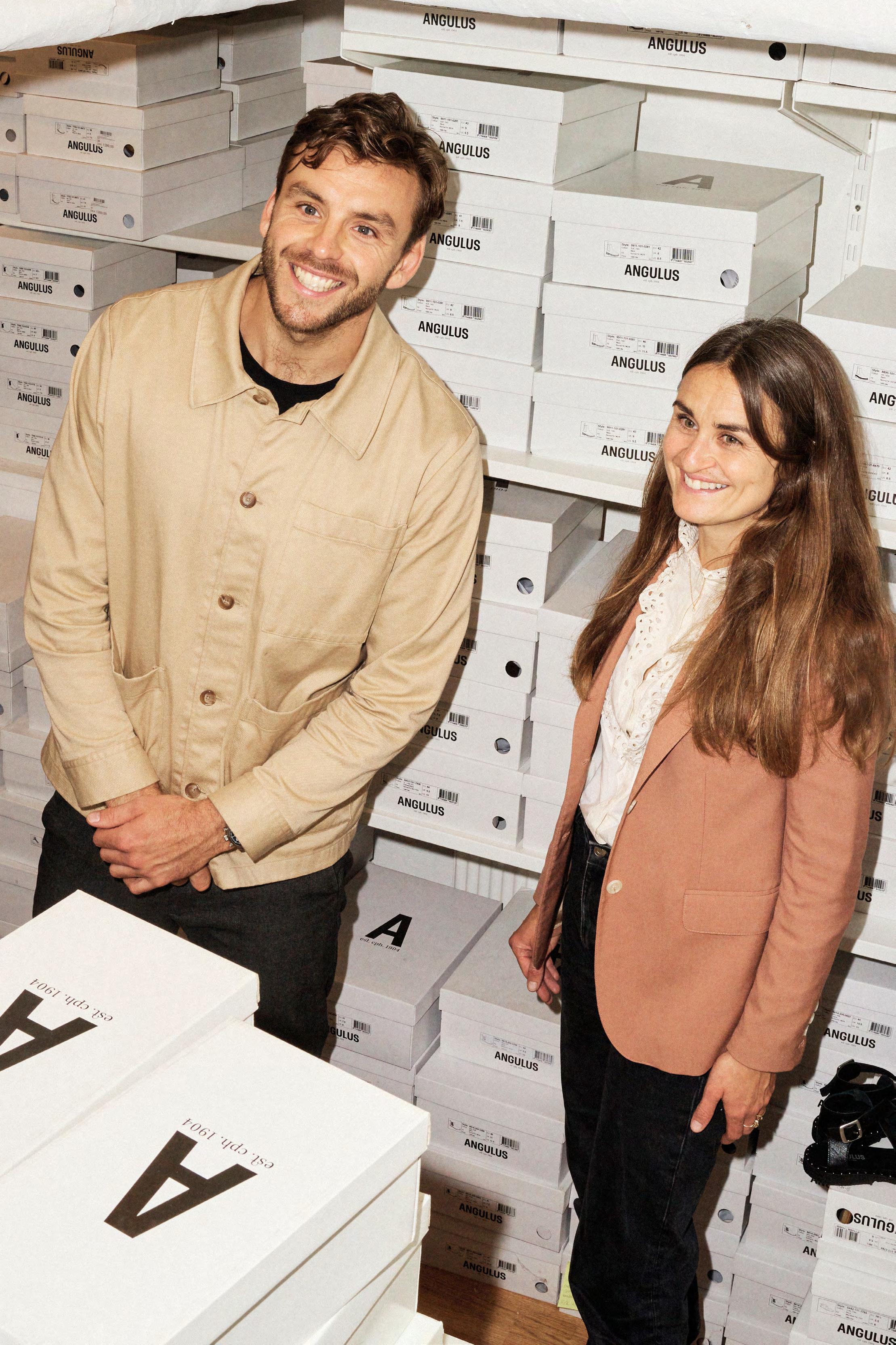
Sebastian Dawe, CEO
Clara Dawe, Chair of the Board
Reduced our Co2 emissions by 10%. Co
Joined Leather Working Group working to drive positive impact in the leather industry.
Took important steps on our journey to become a B-Corp.
Joined the research project “Prolong” working together with researchers from Kolding School of Design and other partners to prolong the life of our products.
Increased the share of our leather coming from LWG certified tanneries to 77% – with a growing number obtaining silver and gold certification.
Covered 50 % of our energy use on our production facility with green energy from our own solar panels.
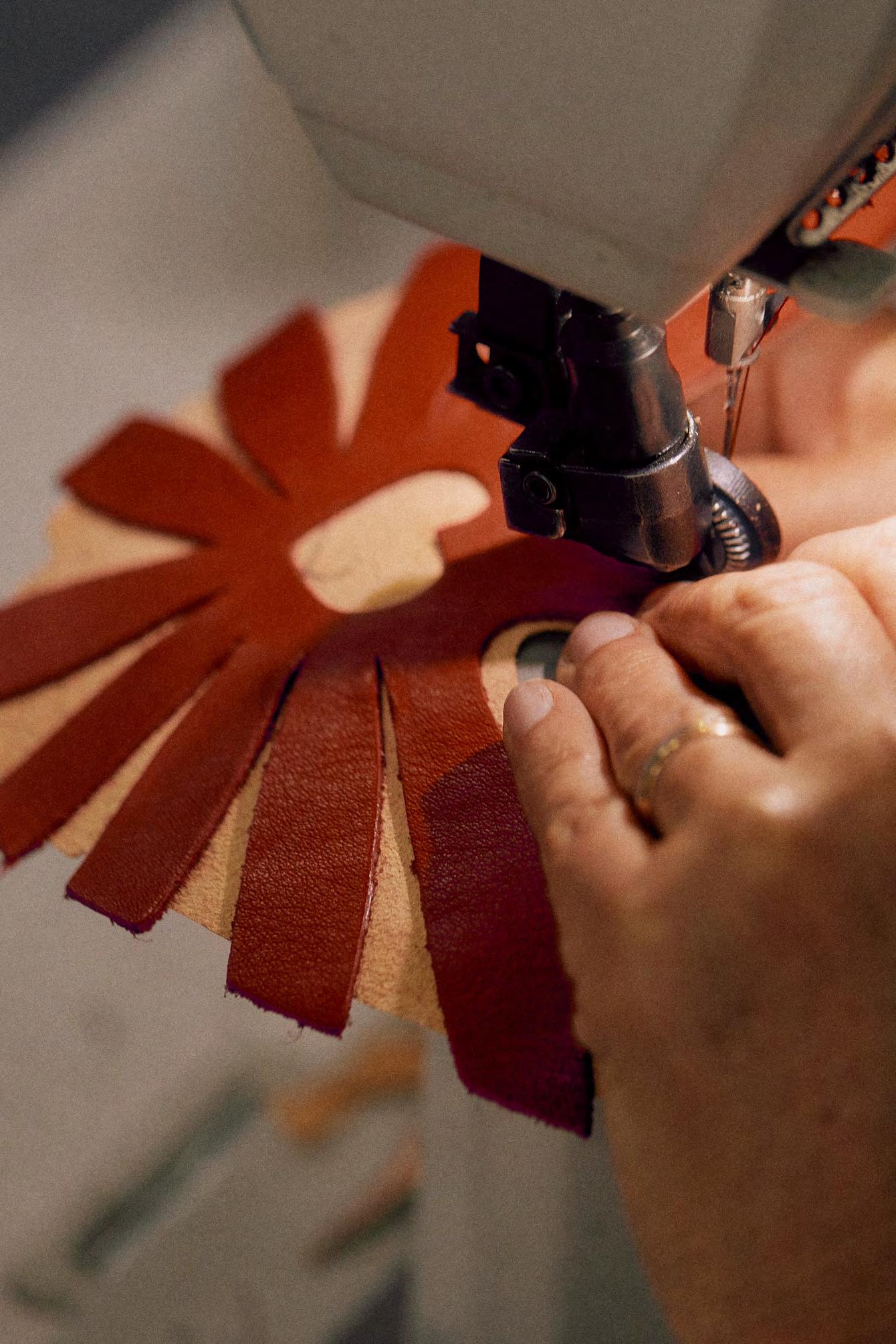
This report is based on analysis, data and counselling from ANGULUS’ collaboration with The Footprint Firm (TFF). We have chosen to collaborate with TFF because they – in our opinion – represent some of the most ambitious, competent and demanding sustainability consultants in the field. We made this choice not to take the easy route. We chose TFF to ensure that our sustainability efforts build on ambitious and solid analysis and universally recognized methods as well as an authentic dedication to create change.
“With their own production facility ANGULUS has a unique insight into their chain of production as well as a high degree of control and opportunity to leverage impact in their value chain. Working with them on their Scope 1-3 GHG baseline and ESG strategy has been very rewarding and given us new insights on sustainability challenges and opportunities in the industry.”
Asbjørn Bøhm Støvring, Manager, Footprint Firm
At ANGULUS we design, produce, and sell shoes. Our chain of production is a system tof people, machines and technology that enable the transformation of designs and materials into shoes and distributes them throughout the world.
THE MAIN CONCEPT IS THIS:
Shoes are designed by our designers in Denmark and produced on our facility in Portugal, with natural materials sourced as locally as possible. 98 % of our material suppliers are based in Europe and 73 % in Portugal. For us, closer is better.
material suppliers
Leather
Crepe
Rubber, etc.
• Production • Product development • Quality assurance
Logistics
Design/Product
Development
Management
Quality assurance
Sales
At ANGULUS, we have one thing in our value chain that makes us stand out in our industry. Even though we are a small business, we own and manage our own production facility in Portugal. ANGULUS shoes are made in one place, by skilled shoe crafters who are proud to work for ANGULUS with working conditions that we are proud of. No sweatshops, only fair and proper treatment of our valued colleagues that we are proud to pay a fair salary every month.
Our operations in Denmark where all products are designed and developed all the way from ideas to shoes. This is also where we service all of our customers and consumers around the world through our logistics and costumers service operations, making sure that all the shoes we produce reach their final destination, in the warehouse of a retailer or the front door at the home of the final user.
Located in Herlev, outside of Copenhagen, Denmark our HQ is where all back-office tasks are taken care of. Logistics, IT services, management and much more all take place here.
Production of rubber boots, thermo boots and wool slippers
Our facility in Portugal are experts on crafting leather shoes. But we know that our customers want to put ANGULUS rubber and thermoboots on their feet for a rainy day. For this we collaborate with the Danish company LUXKIDS on selecting the best production facilities for this type of shoes as well as some of our wool-slippers. The production of these products take place in China. LUXKIDS are committed to transparency, fair working conditions and human rights in their supply chain and report on this in their yearly CSR report.
Our ambition is to get more people to buy less, but better shoes. And we genuinely believe that ANGULUS is better. But we also believe that we need to raise the bar and continuously work to make ANGULUS even better.
We aspire to contribute to the movement towards more circular shoe production by creating high-quality, long-lasting, repairable shoes – handcrafted with love, care and the finest materials.
But, how do we go from strategic ambition to actionable initiatives and efforts? What is important and what is not? How do we distinguish between what sounds right and what is right? To help us answer these questions, we have gone through the rigorous process of a double materiality assessment. Our ESG Strategy is based on this analysis.
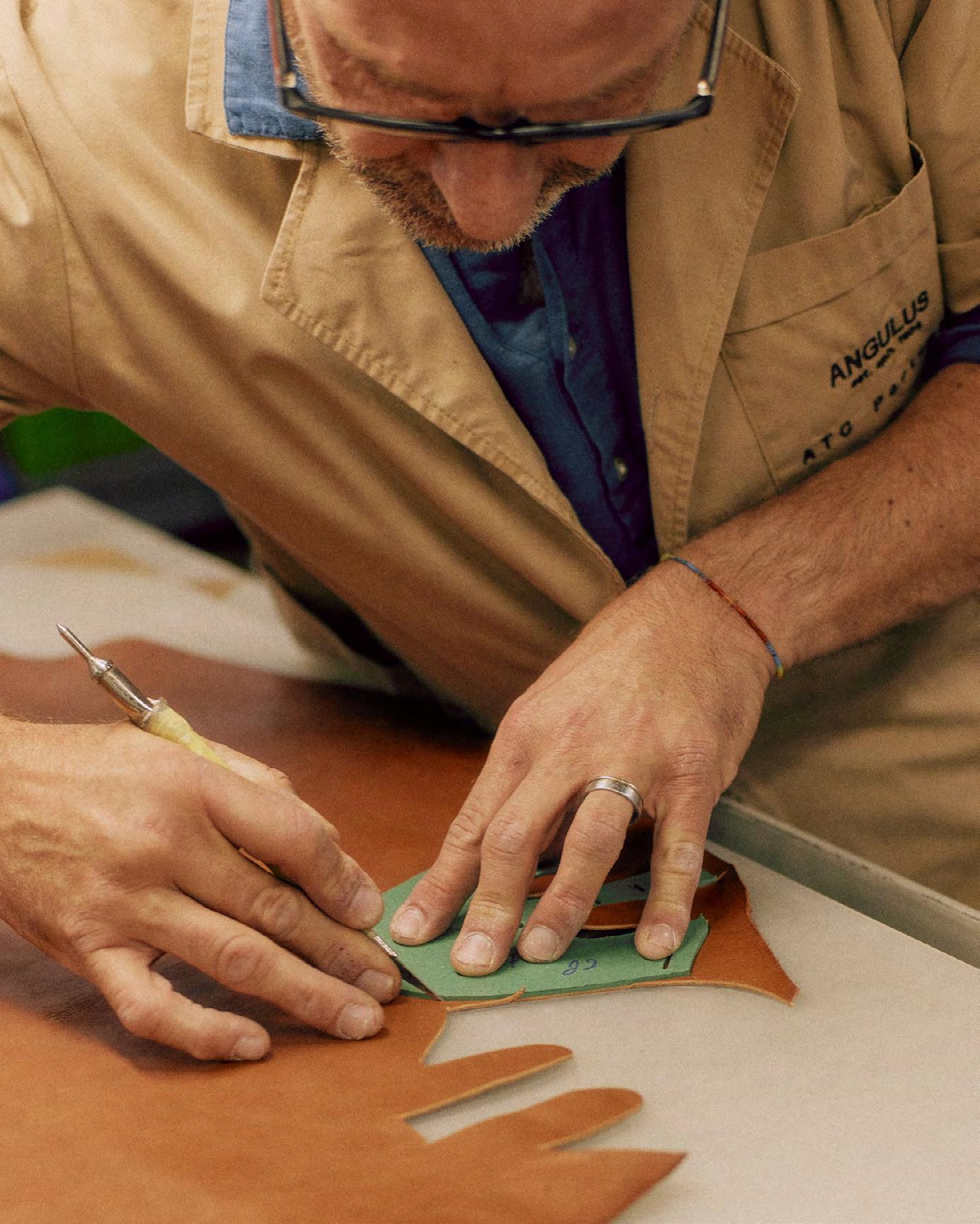
We make choices about what materials to use in our production based on a material hiarachy that balances upfront emissions with the quality and longevity of the materials. We are dedicated to transparency, traceability, and choosing low emission leather types.
Increasing transparency throughout our value chain has been a key priority in 2025 and will be in the coming years. We are committed to reporting on our progress yearly and will focus on improving data for our GHG baseline as well as aligning with the B-corp framework for monitoring our impact on people and planet.
We work to extend the lifetime of our products through our principle of constant care. This applies in all stages of a shoe-life cycle: design, material choices, construction and assembly methods as well as promoting a culture of care, reuse and repair among our customers.
Our social responsibility covers all parts of Angulus’ value chain. We ensure a safe and fair working environment in both Denmark and Portugal. We prioritize upskilling, training and health insurance for all our employees. And we engage with our customers to support them on their journey towards becoming more responsible consumers.
Greening operations through renewable energy sources and better transport solutions are key priorities.
We are proud to present our updated 2025 GHG inventory conducted in accordance with The Greenhouse Gas (GHG) Protocol - the world’s most widely used greenhouse gas accounting standard.
When we set out to create our GHG baseline in 2023, our ambition was not to cut corners but to dig deep in our value chain and create a baseline that could tell us where we can actually make a difference in the choices we make. In our opinion this requires a baseline that covers scope 1-3, calculated on the basis of activities, where possible.
ANGULUS CO2 baseline is based on The Greenhouse Gas (GHG) Protocol - the world’s most widely used greenhouse gas accounting standard. Specifically, our baseline follow “The GHG Protocol Corporate Accounting and Reporting Standard” and “The Corporate Value Chain (Scope 3) Accounting and Reporting Standard”.
A combination of spend-based and activity-based approach has been used to calculate GHG-emissions in scope 1.2 and 3. Specifically, a great accuracy was paid to the raw materials used for the shoe production at our factory in Portugal. For these raw materials granular data was collected and combined with best available GHG-emission factors from various databases (such as DEFRA3) and specific Life-Cycle-Assessments (on e.g., leather types). This gave clear insights into emission drivers, as well as potential reduction levers to be further assessed.
THE OVERALL PICTURE
• Total decrease in emissions by 10%
• 99% of our emissions come from scope 3
• Increase in the emission intensity of leather by 2%
SCOPE 1
SCOPE 2
SCOPE 3
• 5% decrease in emissions in scope 1
• Scope 2 emissions at the same level as 2024 – scope 2 remains at 0,5% of our total emissions
• Decrease in scope 3 emissions by 9,5%
• Emissions from leather accounted for 90% of all material related emissions
• Leather emissions intensity increased by 2% from 2024 to 2025, but overall decrease since baseline year 2023 of 6%
SCOPE 1 20 tons Co2 (0,3%)
SCOPE 2 26 tons Co2 (0,5%)
SCOPE 3
5.691 tons Co2 (99,2%)
SCOPE 1 21 tons Co2 (0,3%)
SCOPE 2 26 tons Co2 (0,4%)
SCOPE 3 6.342 tons Co2 (99,3%)
SCOPE 1
tons Co2 (0,3%)
SCOPE 2
tons Co2 (0,5%)
SCOPE 3 6.342 tons Co2 (99,2%)
Note: The 2024 baseline result has been updated due to better data quality, explaining the small difference in 2024 baseline result communicated in this report and in our 2024 report.
In this table we show the development in Co2 emissions related to the level of activity in the company.
2023 2024 2025
kgCo2e/M2 leather
leather
leather 114
tCo2e / thousand # of shoes sold 45
tCo2e / thousand # of shoes sold 44
tCo2e / thousand # of shoes sold 46
Our approach to setting reduction targets has been to carefully analyze our value chain, map the main drivers of our emissions, and identify the most effectful reduction levers.
80% of our total emissions come from leather used for shoe production. And we know that emission factors for different types of leather and tanneries vary significantly. So, procuring the right type of leather and working closely with our suppliers is where we will put our efforts.
By 2030 we will reduce the emission intensity of the leather we procure by 35%.
On this basis we have set a reduction target for the emission intensity of the leather we procure. Our baseline is 121 kg Co2 pr. m2 leather. The target is a reduction in intensity of 35% by 2030. All things equal, this will mean an absolute reduction in our emissions of 30% in 2030. In our material strategy, we lay out how we will reach that goal.
See development in emssion intensity on the next page.
The emmision intensity of our leather increased by 1,8% from 2024 to 2025. This is mainly due to changes in amounts of leather purchased for lining and uppers, respectively. And we still see an overall decrease from baseline year 2023 by 6%. However, this is not a development that we are happy about. So, we will sharpen our focus on how to bring more lower emission leather into our production. It is definitely not an easy task, and events in our supply chain in 2025 tell us that it is going to be even harder than we imagined.
“Our big job, when it comes to reducing emissions, is to find materials which meet our quality standards and have the lowest emissions possible. This is the core of our material strategy.”
Sebastian Dawe, CEO
The purpose of our material strategy is to strike the right balance between reducing the upfront emissions of the materials we use and securing that we make long lasting quality shoes. This is a process where our designers, shoecrafters and suppliers work together to make the right material choices and continuously aspire to improve.
When it comes to robustness and durability, our assessment is that there is no real alternative to natural leather at the moment. But C02 emissions and other environmental impact from leather vary significantly depending on farming of the cattle, different tanning methods and the concrete procedures at different tanneries.
In 2023, we started a corporation with the Danish leather tannery, Scan-Hide, leveraging their SPOOR technology and traceability. The goal of this collaboration was to implement fully traceable hides from SPOOR as the base for the leather used in our shoes. SPOOR hides are sourced directly from Nordic abattoirs and with no unnecessary middlemen in the value chain.
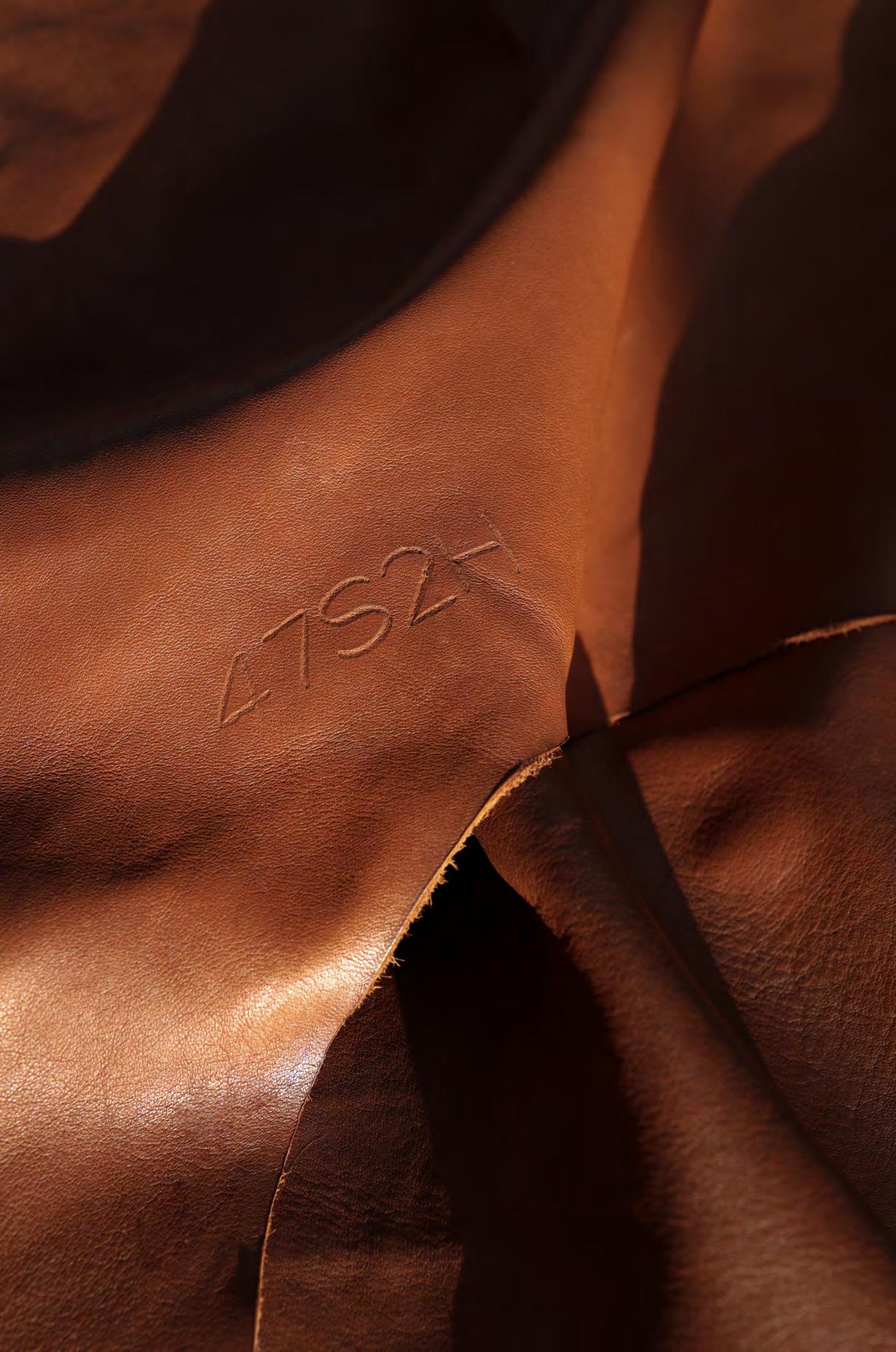
Through a unique, laser printed reference, SPOOR leather is fully traceable from shoe all the way back to the cattle. This enables full transparency in the value chain, through data and documentation from both farmers, abattoirs and tanneries, and provides a guarantee of responsible sourcing.
Furthermore, SPOOR provides data on the actual emissions associated with leather production all the way through the value chain. In 2024, the emission factor on SPOOR leather was 17,5 kg C02 pr. m2 leather – approximately 7 times less than the standard emission factor for comparable leather. Approximately 90% of emissions from leather come from farming, and emissions vary significantly with different farming methods and the utilization rate of the animal.
From our collaboration with Scan-Hide on Spoor we learned that we could significantly reduce C02 emissions associated with shoe production by choosing suppliers that can supply full traceability back to the cattle and who work with farmers committed to lowering emissions associated with the farming process. However, at the end of 2025, Scan-Hide, due to declining demand for leather globally, decided to stop tannery production for the time being. This leaves us with a job of finding new suppliers that can provide the same level of traceability.
We have done extensive market research and found that, at the moment, tanneries can only provide traceability back to the abattoir, meaning that there is no information about farming methods, which is key in terms of animal welfare and C02 emissions.
Therefore, we have decided to join the Leather Working Group to try and push for higher standards when it comes to traceability in the industry. And we continue the dialogue with our own suppliers pushing for traceability.
In our ongoing efforts to promote environmental sustainability and ethical sourcing, we have committed to exclusively using FSC-certified natural rubber for all our crepe soles. The Forest Stewardship Council (FSC) certification ensures that the rubber is harvested in a manner that is environmentally responsible, socially beneficial and economically viable. Natural rubber, as a renewable resource, offers considerable environmental advantages over synthetic or oilbased alternatives, including lower carbon emissions and reduced reliance on fossil fuels. By choosing FSC-certified sources, we not only support sustainable agriculture and forest management but also contribute to protecting biodiversity and the rights of workers and local communities in our value chain.
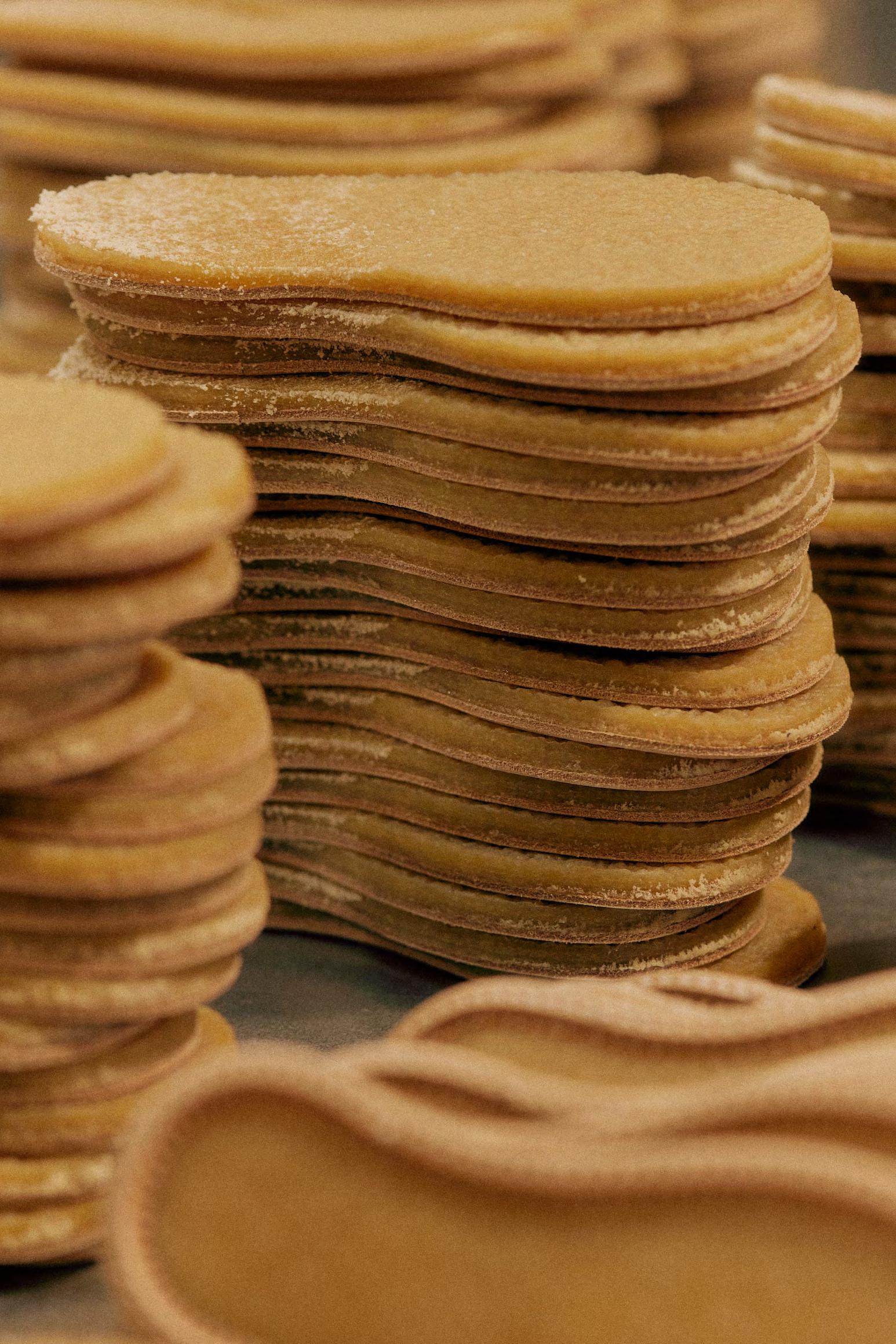
Our goal is to increase the share of fully traceable leather to 35% by 2030. This is going to be the main driver in our C02 reduction strategy. This requires close collaboration with our suppliers and a clear focus on traceability all the way through our value chain.
In 2025, 3,5% of the leather we procured came from Scan Hide. This is a slight decrease since 2024 where the number was 4,3%1.
6,6% of all ANGULUS shoes, 8274 pairs, sold in 2025 were made with traceable leather.
In 2023, we made the decision to phase out chrome tanning in the leather lining of all our women’s and men’s shoes. We have now reached that goal, which means that 100% of ANGULUS shoes have chrome-free linings.
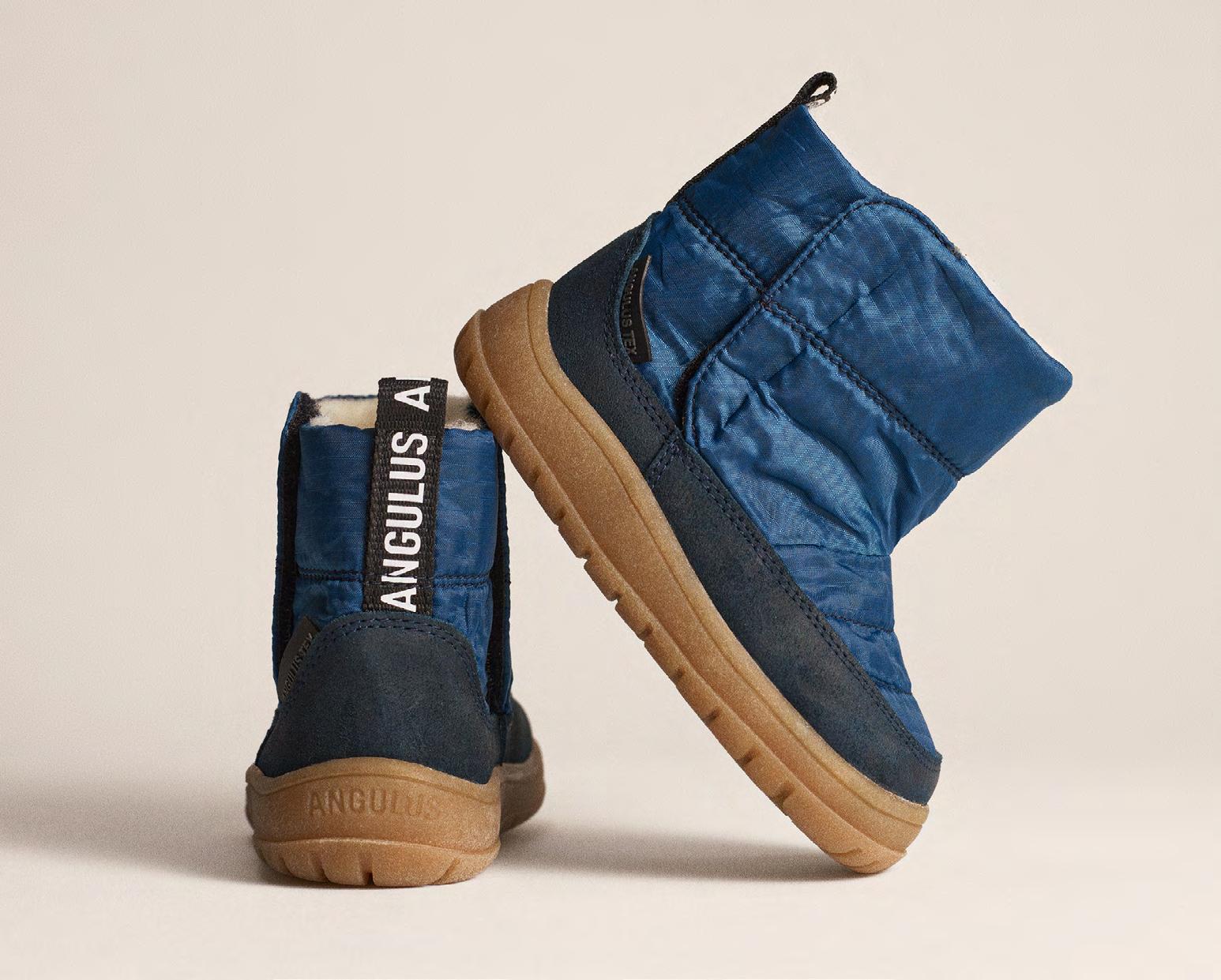
At ANGULUS we are dedicated to high quality materials that last, and leather is second to none when it comes to durability. But we also acknowledge the need to experiment with materials with lower Co2 emissions. In 2025 we introduced a new material in our KIDS collection: Recycled Nylon. This material has 26 times lower emissions than average chrome tanned leather. In our new products, we combine this material with leather to ensure wear resistance.
Leather Working Group (LWG) is a global not-for-profit multi-stakeholder organization that is committed to building a world where leather is sourced, produced and used sustainably, protecting people and the planet. Leather Working Group sets Audit Standards for leather manufacturers to be assessed and certified – this recognises best practice and drives improvements in the industry.
We joined LWG to contribute to the development of the industry, especially focusing on higher standards for traceability. We believe that collective action is needed to drive changes in the industry.
1: The number has been updated since 2024 report due to better data.
Working with certified tanneries is an important tool for us to secure transparency and the best possible tanning procedures. 77% of the leather we used in 2025 came from Leather Working Group certified tanneries – in 2023 the number was 35%.
We also see an increase in the number of suppliers obtaining higher levels (Silver and Gold) of certification.
The certification by Leather Working Group means that the tanneries have high standards on a broad range of criteria covering energy consumption, water usage, air-emissions, chemical management and health & safety preparedness.
We will continue to use certification as one of the parameters that we evaluate our suppliers through. However, we don’t believe that excluding non-certified tanneries from our supplychain is the right approach now, because this would mean excluding some of the local small businesses that rely on us for their business. We believe in impacting our supply chain by collaboration, dialogue and involvement, and we are happy to see that this approach is working and an increasing number of local tanneries obtaining certification.
We aspire to contribute to the movement towards more circular shoe production by creating high-quality, long-lasting repairable shoes. The circular economy is a system where materials never become waste and nature is regenerated.
We base our circularity efforts on the ‘REUSE, REPAIR & RECYCLE’-principles, defined by the Ellen MacArthur Foundation and supported by existing and upcoming EU-regulation. This applies to our entire value-chain, where we aim to create as little waste as possible, to extend the lifetime of our products through design, material and construction choices and by actively supporting a care and repair culture and praxis among our customers. To ensure maximum lifetime of our products we depend on our customers to take good care of their shoes and to have them repaired when needed. We guide our customers on shoe care, supply protective cream/spray and facilitate repair of shoes with our vetted repair partners.
We will incorporate more recycled materials in our production as recycled materials, living up to our quality and durability standards, become available.
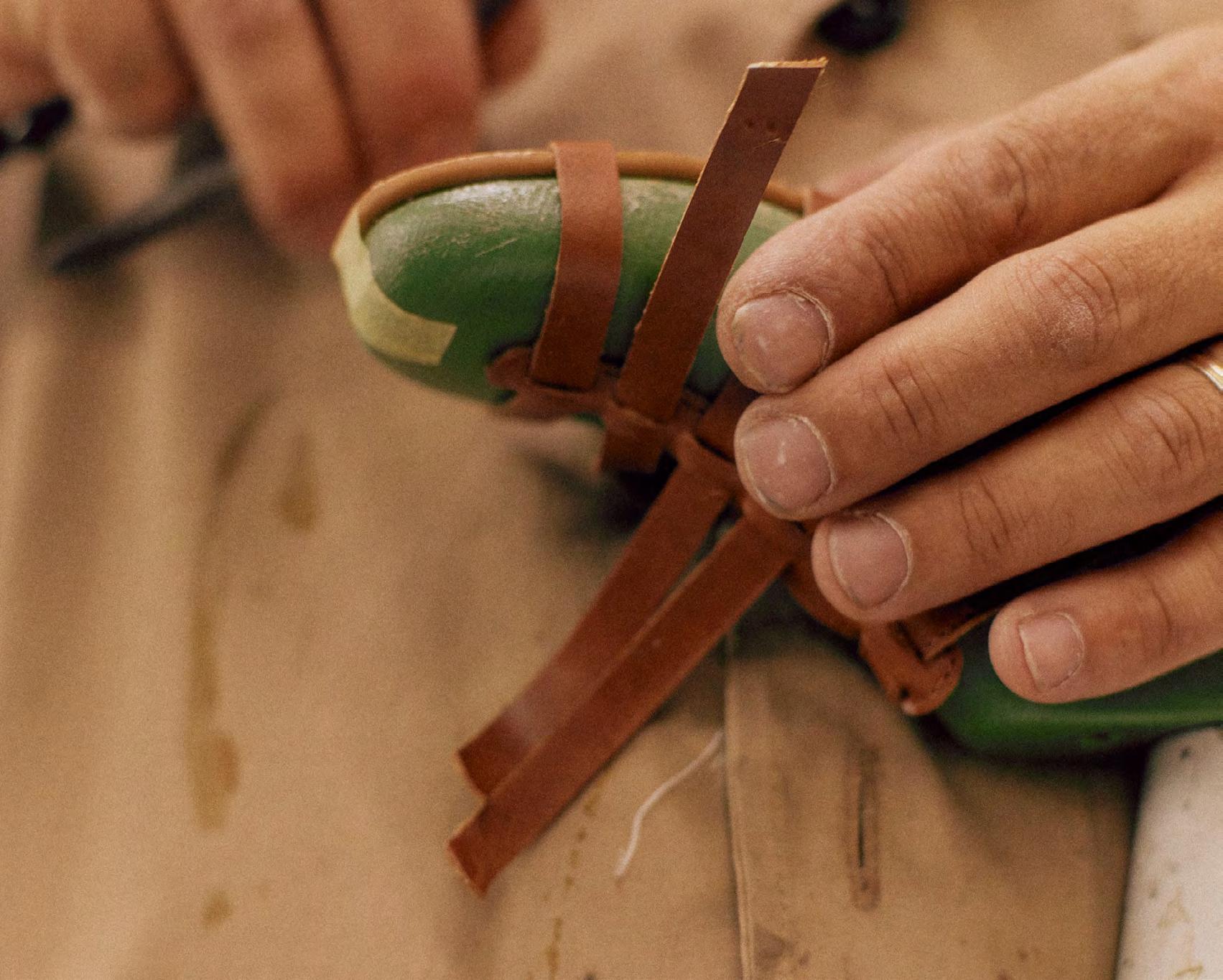
In our opinion; some should, some should not. From a perspective of circularity, reuse is always the preferred option. Passing on products that you are done with and that are still good to use, either by selling or giving, holds great potential for extending the lifetime of products. However, when it comes to shoes, there is a tradeoff between extending the lifetime of products and potential health-related issues from wearing pre-used shoes.
Shoes are shaped after the feet that wear them. In particular if they are made from natural materials. Walking in shoes that have been shaped after someone else is not good for your feet. Moreso, it can also damage knees, hips and back if you wear shoes that have been worn by another person with a different use pattern. This is especially important with children, whose feet and bodies are soft and growing, and therefore in high risk of the health-related consequences of wearing shoes that prohibit natural development and movement of their feet. Also, children will not always be able to express that a shoe doesn’t feel right.
There are no official recommendations on this issue at the moment. At ANGULUS we take the stand that children’s shoes should only be passed on to someone else if they haven’t been shaped by the former user. In effect this means that children’s shoes that have been used on a daily basis should not be passed on. And we always recommend that you let your child try on the shoe before buying.
When it comes to adults, we recommend reuse, but encourage you to examine and try the shoe first and make sure that it fits in both size and shape and that soles (both inner and outer) aren’t crooked.
We acknowledge the inherent dilemma that we face between extended lifetime of our products and costumer safety, and we are committed to exploring how reuse of children’s shoes can be done in a safe way. We don’t have the answers yet, but in the coming years we will invest in gaining more knowledge and experience in this field.
To ensure maximum lifetime of our products we depend on our customers to take good care of their shoes and to have them repaired if needed, should they break in some way. ANGULUS are quality shoes made of natural materials that provide good repair options.
In 2024 we launched ANGULUS Repair Service to help customers have their shoes repaired instead of disposing of them. Within the first two years, we offer free repairs. We also pay the shipping back and forth.
The repair is done either in our own workshop, at our regular partners, or our customers can use their local shoemaker and have the costs covered by us. We are also happy to supply spare parts that customers can take to their local shoemaker. We track the number of repairs that we do each year, in 2024 the number was 168 and in 2025 it was 180. We increased the share of reclamations handled with reparation from 10,5 % to 12,5 %.
In 2025, we started a strategic focus on refining and focusing our collections to ensure we produce only what is necessary and valuable for our customers. By focusing on creating durable shoes that last, we aim to better meet consumer needs and support informed choices. Our commitment to smaller, more purposeful collections drives us to prioritize quality and sustainability in every step we take.
As a partner in the “Prolong” research project, ANGULUS collaborates with Aarhus University (AU), VIA University College (VIA), Designskolen Kolding (DSKD), and the Technical University of Denmark (DTU) to support the EU’s strategy for sustainable and circular textiles. This strategy emphasizes “Design for Longevity” as a key approach to reducing production, enhancing utilization, and minimizing CO2 emissions.
The project focuses on identifying essential data collection points and types necessary for evaluating long-term design strategies and product life cycle assessments (LCA) with a focus on CO2 impact. By working alongside like-minded Danish brands committed to a design-for-longevity approach, we aim to strengthen our own longevity design strategy in alignment with upcoming EU regulations. This collaboration will provide insights into potential gaps between our design strategy and actual product lifespan, as well as enhance our understanding of user practices and behaviors related to long-lasting products.
In 2023, we embraced a practical approach to waste reduction by implementing a circular economy strategy with our natural rubber waste. In 2025 we redirected approximately 5288,70 kilograms of excess material from our sole production. The material was sold to our glue producer, who repurposed it into a key component of the adhesive products used in our shoes.
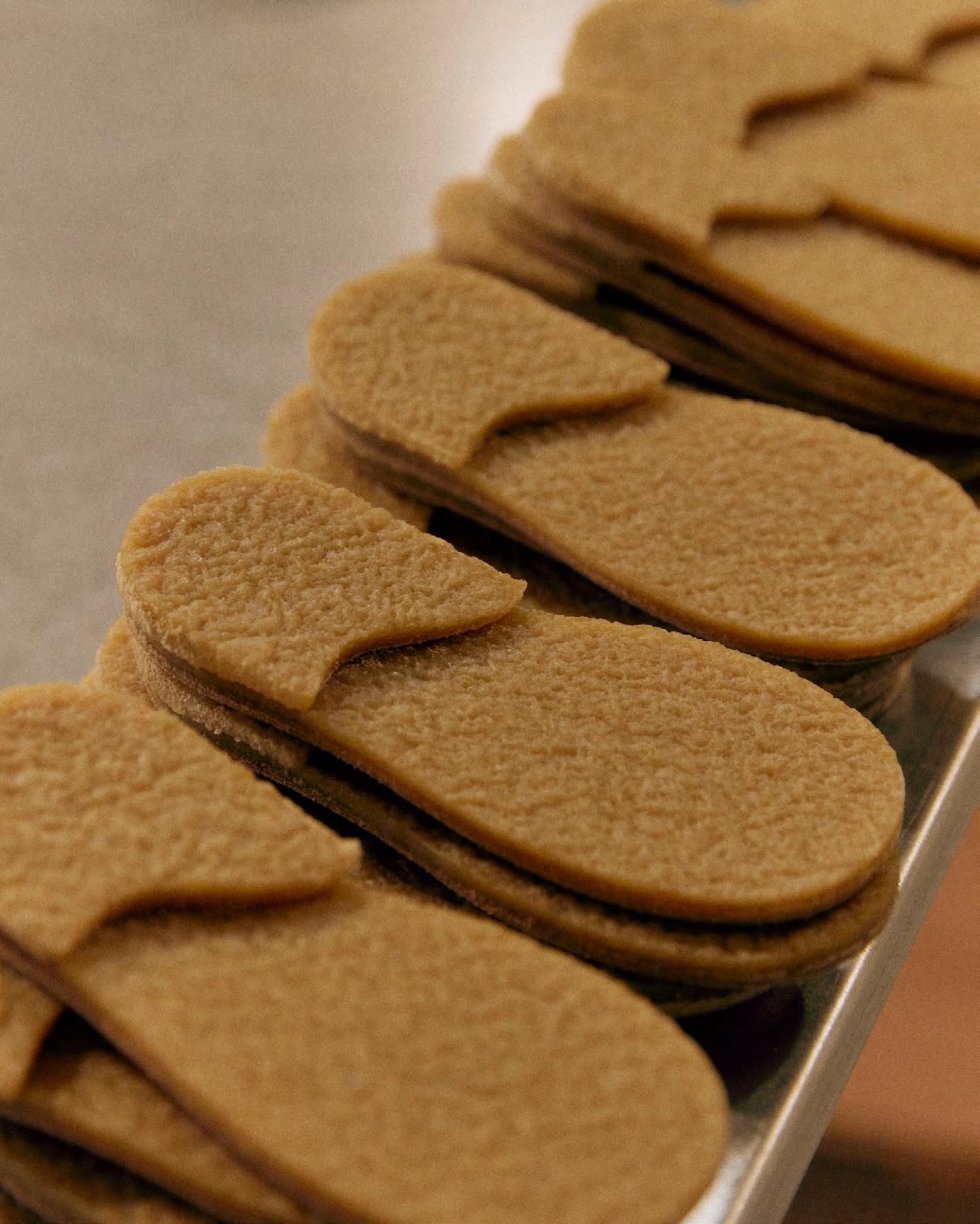
In 2023, we made a significant investment in renewable energy at our production facility, by installing a comprehensive array of solar panels. In 2025, we produced 50% of our energy use on our production facility on our own solar panels, effectively enhancing our energy efficiency and significantly reducing our reliance on non-renewable energy.
In 2023, we introduced a company policy requiring that all newly purchased company cars must be electric or hybrid vehicles. As part of our ongoing efforts to improve, we recognize the need to eventually transition away from hybrid vehicles to a fully electric fleet. Currently, our company operates 5 electric cars, 2 hybrids, and 2 petrol/diesel cars, with plans to phase out all non-electric vehicles.
Our goal is to transition to only using electric vehicles in transport of our products from the production facility in Portugal to wholesale costumers and our own retail. However, the market for logistics still fails to supply this, so we have not yet managed to achieve this goal. This will be a strong focus area in our future collaboration with logistic partners.
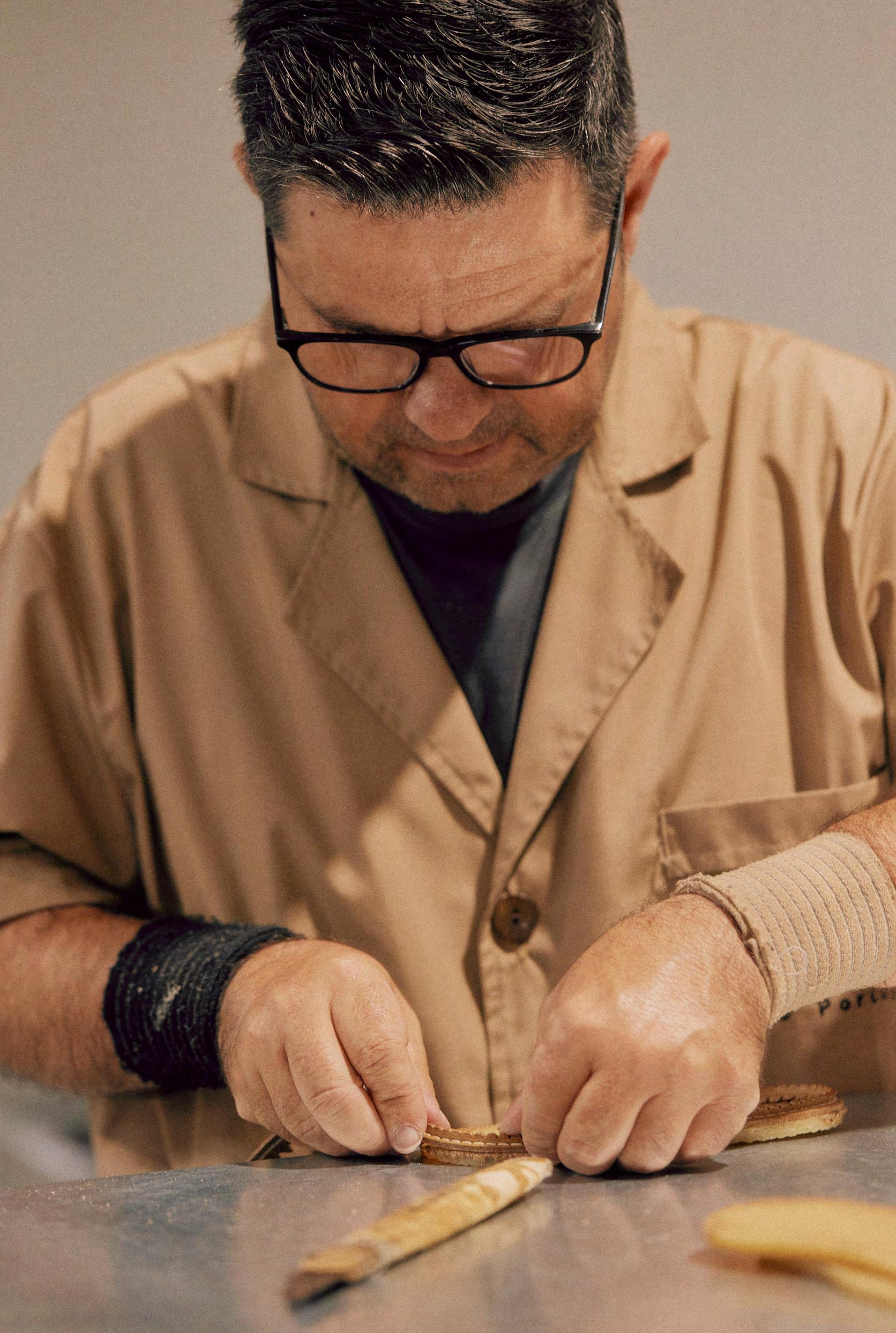
OUR SOCIAL RESPONSIBILITY COVERS ALL PARTS OF ANGULUS VALUE CHAIN. We ensure a safe, attractive and fair working environment for our colleagues in both Denmark and Portugal. We recognize the value of having a skilled workforce with possibilities for our employees to learn and grow as part of their job. We believe in continual learning and invest in development opportunities for our team. We offer health insurance for all our employees in both Portugal and Denmark. And we play a positive part in our local community in Portugal by collaborating with the local vocational training center for shoemakers and the local employment agency.
Costumer safety is in our DNA at ANGULUS. Shoes are not just a question of fashion and function. It’s ultimately a question of health and giving people the best conditions to move around freely. Especially when it comes to children, we have a big responsibility to make footwear that gives tiny feet the best conditions to grow and move freely and supported. At ANGULUS we take this responsibility very seriously – and we aspire to be a credible partner for our customers in making the right footwear choices.
We make shoes in different fits – because feet are different. We use natural materials that create the best conditions for free movement and a healthy foot climate. And we advise our customers on how to make the right shoe choices.
We want to enhance these efforts and increase transparency about our products and support our customers in taking good care of their shoes, so they last as long as possible.
Understanding the composition of the products you choose is essential. That’s why we are committed to improving transparency by labeling all our products with detailed material information. We believe that informed consumers make better decisions, and our straightforward labeling will help customers to know exactly what they are buying, enhancing trust and satisfaction with every purchase. This is a journey where we are continuously improving and expanding the amount of data on each product without overloading and confusing our customers. In 2025, we added information on our own website about what products are made with fully traceable leather from SPOOR.
As part of our social responsibility, we have a partnership with Danish Red Cross on providing footwear for those in need. Every year, following our clerance sale, we donate 100-200 pairs that are distrubuted to refugees residing at Røde Kors Sandholm.
In 2025 we expanded the collaboration and added 1,415 pairs, which were dispatched abroad for humanitarian aid. Overall, in 2025, our partnership with the Red Cross allowed us to provide approximately 1,700 pairs of shoes for those in need.
ANGULUS has been in the shoe making business for 120 years and has been a family-owned business for over three generations.
Being a family owned business comes with both privilege and responsibility. A privilege to invest in the things that are important to us. And a responsibility to take care of the heritage that we have been entrusted with. Long term, cross-generational thinking is in our DNA. In our products and in the way we do business.
We are committed to fostering a culture of responsibility, transparency and ethical practices throughout the organization. This strategic direction not only aligns with contemporary consumer values but also stems from a steadfast belief that taking care of people and planet is a moral obligation and fundamental for the business’ license to operate.
We believe in the importance of local leadership to effectively align our operations with community needs. The two directors of our Portuguese operations each hold a 5% share of the company. This decision reflects our commitment to integrating local expertise into our decision-making processes, ensuring that our strategies are informed by those most familiar with the context in which we operate.
The history of ANGULUS starts in 1904 with a small cobblers shop on Nørrebrogade in Copenhagen owned by Johannes Madsen. His son, Willy Madsen, was a schoolteacher and concerned with the pointy children’s shoes at the time, that hindered movement and the natural development of growing feet. In 1928 Willy Madsen turned the Danish footwear industry upside down with his new foot-formed shoes developed in collaboration with doctors and physiotherapists. The new type of shoes quickly gained popularity and soon the ANGULUS factory in Nørrebro became the largest shoe factory in Denmark.
From 1949 and onwards ANGULUS has been owned and led by the Dawe Family. Starting with Roland Dawe who was initially employed as a leather buyer at the ANGULUS Factory, who lead the company until the early 1990, where his son Christian Dawe took over. After a successful generational change in the leadership, ANGULUS is currently managed by Clara Dawe (Chair of the Board) and Sebastian Dawe (CEO).
At ANGULUS, we are actively pursuing B-Corp certification, which signifies our commitment to meeting high social and environmental performance standards. In 2025 we invested resources in developing competencies, establishing monitoring systems, and creating policies that align with B-Corp requirements. By focusing on data management and reporting and integrating these standards into our leadership practices, we aim to strengthen the implementation of our sustainability and accountability goals in our daily operations.
Our goal is to become B-corp certified in 2026.
We are committed to reporting on our progress, learnings and shortcomings in a yearly ESG report. In 2025 we have worked on getting more accurate data, eg. in the data we have from our suppliers on their specific tanning methods and incorporating material specific emission factors based on Life-cycle analysis provided by our suppliers.
Thank you for reading our 2025 Sustainability Report!
We hope that you found the report informative, useful –and maybe even inspiring?
We are committed to continuing our sustainability efforts and look forward to collaborating with suppliers, customers and other stakeholders on our mission to make more people buy fewer, but better shoes.
If you have any questions, please feel free to reach out.
info@angulus.dk
LOVE WHAT YOU BUY TAKE CARE OF WHAT YOU HAVE