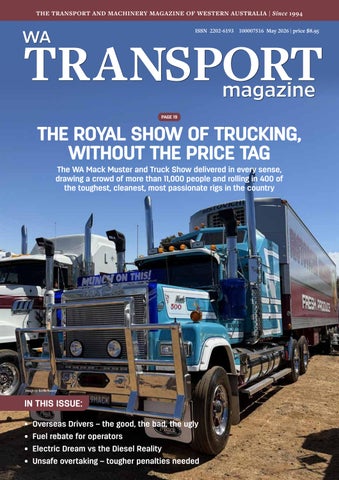
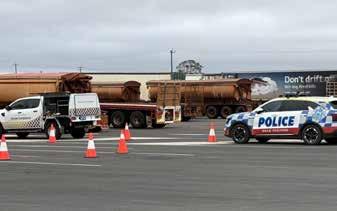
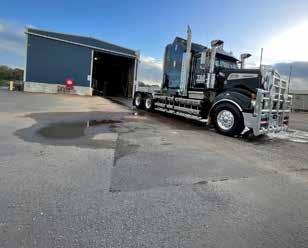
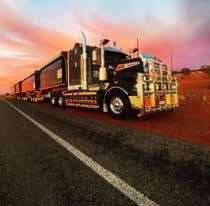
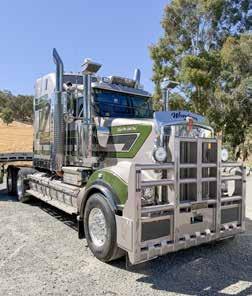
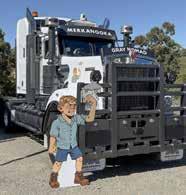
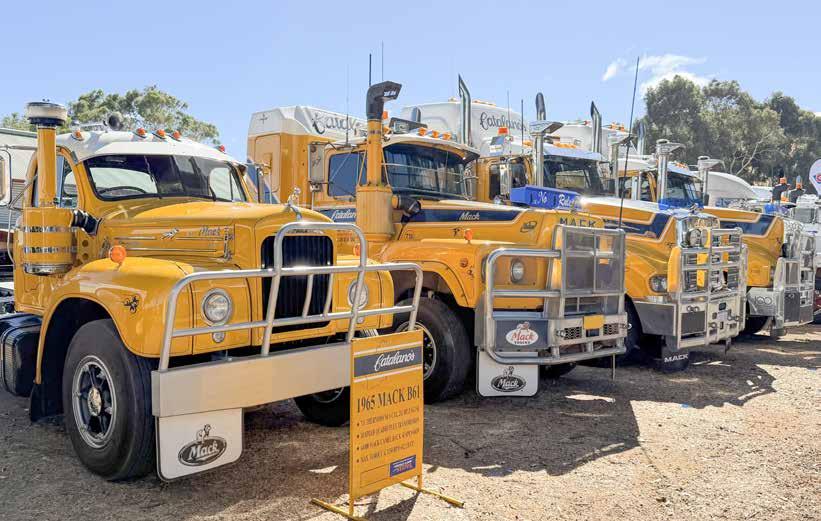
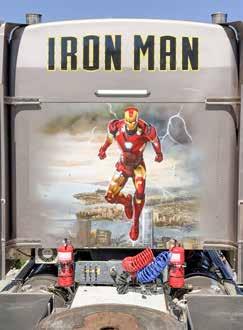
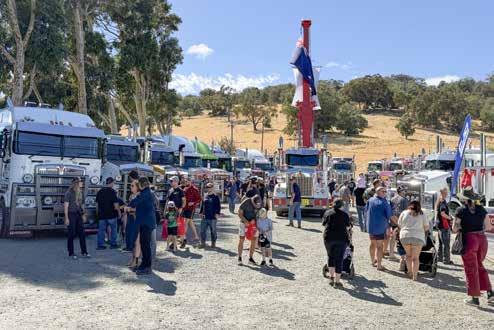
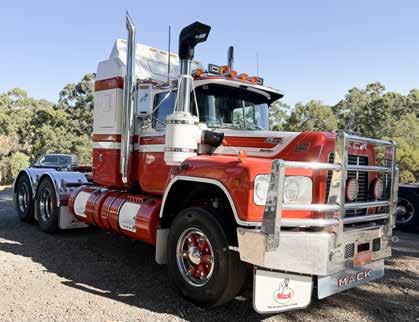
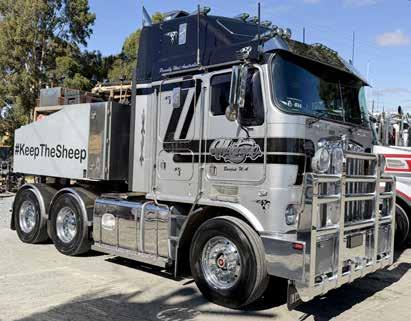
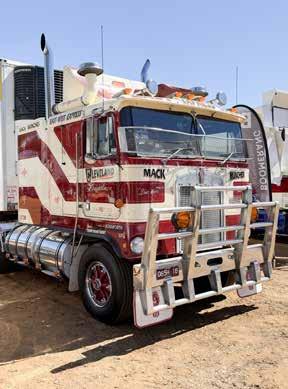
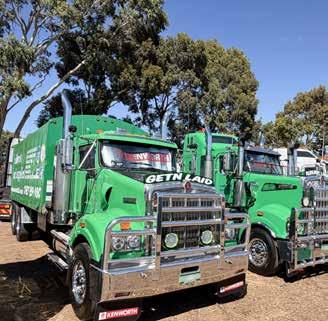
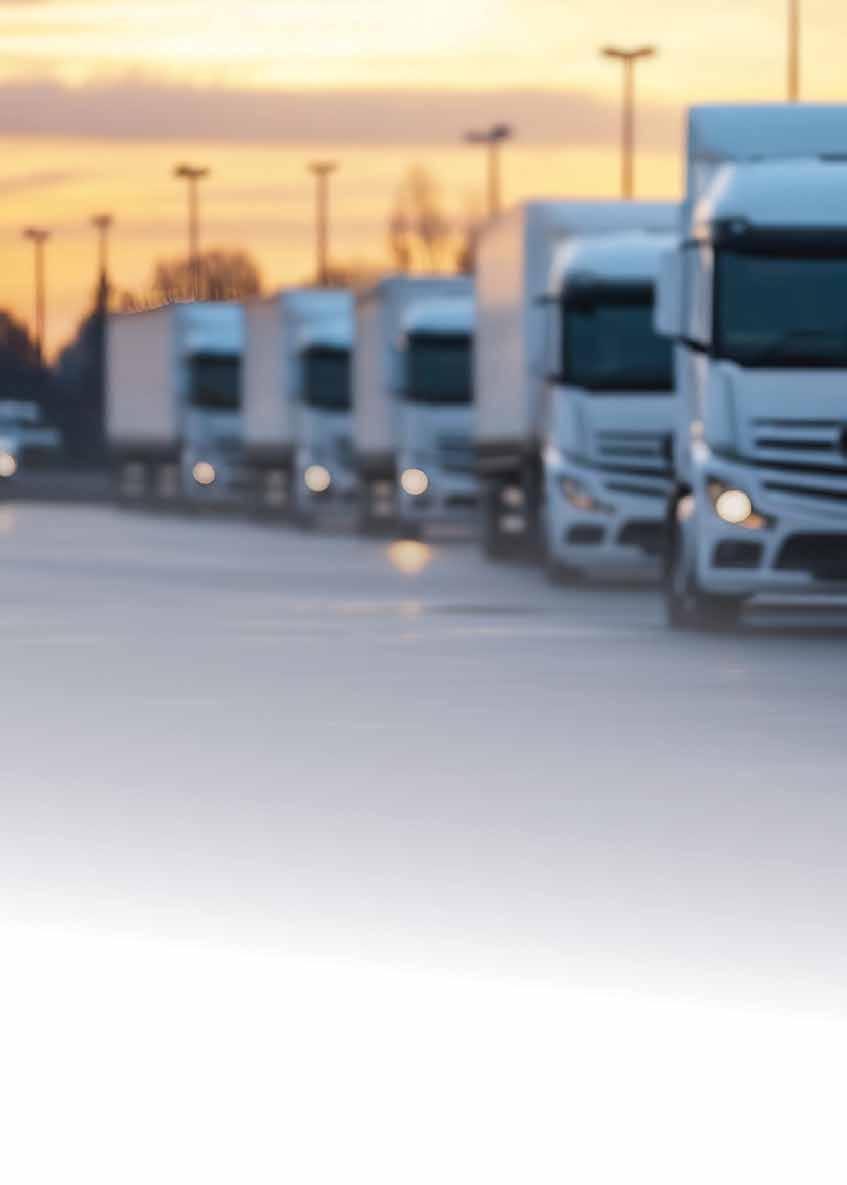
The WA Mack Muster and Truck Show delivered in every sense, drawing a crowd of more than 11,000 people and rolling in 400 of the toughest, cleanest, most passionate rigs in the country
IN THIS ISSUE:
• Overseas Drivers – the good, the bad, the ugly
• Fuel rebate for operators
• Electric Dream vs the Diesel Reality
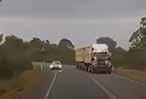
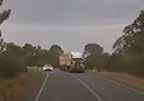
• Unsafe overtaking – tougher penalties needed
Image by Kevin Toovey
The Heavy Vehicle Helpdesk is open from: 7am to 6pm Monday to Friday, and WA Public Holidays.
On weekends the Main Roads Customer Information Centre will receive telephone calls on behalf of the Heavy Vehicle Helpdesk on 138 HVO (138 486) and email enquiries can be sent to hvs@mainroads.wa.gov.au
As you can imagine a lot of the content this month is about fuel in Western Australia and on this fast moving subject there is some ‘good news’ with the Fair Work Commission provisionally backing an emergency plan forcing businesses to lift the fuel reimbursements offered for transport operators as diesel prices soar. Governments are obviously addressing issues, but it does seem only when they are put under pressure from the public and lobbying by the transport industry.
I want to thank the road train drivers who are contributing to the magazine, particularly Cliff Graham, Russel Walsh and Silvia Parra for her candid focus in this edition ‘Overseas drivers in Australia –the good, the bad and the ugly’. It really is a must read as Silvia has ‘first-hand’ knowledge of what is really happening and
I found the reality quite shocking. I hope the powers to be are listening because it opens a very big can of worms.
I feel for you guys, the transport companies, the owner drivers and the drivers – it is hard out there for everyone at the moment every way you look at it but more so for the transport industry and I can’t imagine how much you are all worried. Whatever you need to put pressure on Governments to help you - speak up and speak up loudly and collectively – there is a lot of people and organisations especially Cam Dumesny at Western Roads Federation and the LRTAWA who are rallying for you and getting ‘real results.
Best,
Angry Chicken Publishing Pty Ltd
Telephone 0430 153 273
www.angrychicken.com.au
ABN: 35 486 530 095
PUBLISHER / COMMISSIONING EDITOR
Karen-Maree’ Kaye T: 0430 153 273
Email: karen@angrychicken.com.au
WRITERS
Karen-Maree’ Kaye, Russell McKinnon
CONTRIBUTORS
Jan Cooper, Cam Dumesny, Cliff Graham, Lara Jensen, Carol Messenger, Ray Pratt, Russel Walsh
ADVERTISING ENQUIRIES
Angry Chicken Head Office T: 0430 153 273 E: karen@angrychicken.com.au
DESIGN / PREPRESS
Cally Browning | Bare Creative
ACCOUNTS
T: 0430 153 273
E: karen@angrychicken.com.au
PRINTER
Daniels Printing Craftsmen
SUBSCRIPTIONS
Subscriptions available directly from the Publisher.
T: 0430 153 273
E: karen@angrychicken.com.au
Australia: 1 year $130 (inc GST )
Overseas subscribers: Airmail postage will be added to subscription rate.
Editorial Submissions: The Publisher welcomes editorial submissions. Once received they will become the property of the Publisher who reserves the right to edit the or adjust the content to fit with the format of our publication.
West Australian Transport Magazine (WATM) is published by Angry Chicken Publishing Pty Ltd
ABN: 35 486 530 095 All rights reserved. No part of this publication may be reproduced, adapted or transmitted in any form by any process (graphic, electronic, mechanical or storage and retrieval system) or sold, resold or otherwise exploited for any purpose without consent of the Publisher.
The publisher, contributors, editors and consultants disclaim any and all liability and responsibility to any person or party, be they a purchaser, reader, advertiser or consumer of this publication in regards to consequences and outcomes of anything done or omitted, or being in reliance whether partly or solely on the contents of this publication. No person, organization or party should rely on or on any way act upon any part of the contents of this magazine without first obtaining the advice of a fully qualified person. The Publisher shall have no responsibility for any action or omission by contributor, consultant, editor or related party for content within WATM. The opinions and content within WATM does not necessarily reflect those of the Publisher, editor or their agents. No responsibility is accepted for damage or loss of material supplied to the publisher.
Overseas drivers in Australiathe good, the bad and the ugly
By Silvia Parra
The topic of ‘overseas truck drivers’ is met with great passion in our industry. The problems we are encountering are not just felt in Australiaour mates in Canada and the USA are already in the eye of the storm so let’s analyse the type of overseas drivers we are attracting, the safety issues arising from it and the solutions we are trying to implement.
USA,
Europe and Canadathe lessons to learn
Some USA states allowed illegal immigrants to get a professional driver's licence and they attracted a large majority of people who had never driven a truck before nor had a basic command of the English language.
They lined up in droves for this licence because the wages were higher and
this resulted in ‘carnage’ on USA roads. President Trump ordered these licences which were issued without reaching Federal ID requirements be cancelled and mandated the minimum English proficiency rule, which removed many drivers from USA roads.
Unfortunately, he also ordered to freeze indefinitely the visas EB3 for importing overseas truck drivers and this overreach harmed the real skilled ones; thousands of legitimate truck drivers had their visa process put on hold. The dollars-per-mile rate in the USA is not rising despite the driver shortage and Sham Contracting is blamed for that.
Europe has a different but no better scenario. Overseas drivers with correct visas are hired through legal channels, but mostly in areas that have lost their drivers to neighbouring countries due to wages not rising in the last decade.
Shockingly, the five European countries with the lowest truck driver wages are racing to the bottom against each other to bring drivers from outside the European Union. There is such an urgency to fill seats
they filter candidate’s dependant on fast visa processing and not their truck driving skills. This ‘hit and miss result has given them a mix of dangerous drivers and the ‘scarce’ excellent drivers.
In Canada, they sponsor overseas drivers in a similar fashion to the USA and Australia, but the student-turned-truckdriver phenomenon, which aimed to be a solution, has become a problem.
The student-turned-truck-driver
The overseas student turned truck driver model is so successful that some recruiters around the world are starting to copy it.
There is nothing wrong with getting your licences while you study and spend your allowed 24 hours a week of work on your student visa driving a truck and helping ease the driver shortage. The issue comes when these students have no clue of what it means to drive a truck with a load and are being churned into a funnel as cheap overseas labour, with promises of sponsorship.
They choose the ‘cheapest’ driving school giving them the least training to obtain
Silvia is a road train driver in Western Australia and she is also an overseas truck driver recruiter at ProDriversHub.com.au
a licence instead of valuing the skill and knowledge and are told that whoever employs them will teach them while they earn.
The bad
Usually, those companies happy to take them throw them in a truck with another driver who shared the same fate and expect that the two of them will manage without issues. Those bosses treat a driver like a steering wheel attendant, so the new driver thinks it is normal that they cannot back a semitrailer, or that ‘hitting “things’ is part of the learning curve.
Some live in their own cultural bubble, with fellow citizens as bosses and workmates, so they never understand what the standard is that they have to reach in Australia. Due to their lack of skill and western style assessment of risk, many are trapped working ‘happy or not’ for the same company that gave them a chance, as they cannot pass a skill test at any other company.
The ugly
Others come sponsored with dubious overseas truck licences, or licences that required no assessment at the country of origin, and zero experience. The right documents can always be produced at a price in many poor countries and certain overseas recruiters are happy to make a quick buck out of a desperate person. They will learn, they think but the reality is the gap is so big they take years until they manage to be safe drivers. The price we pay for this type of hiring is putting our lives at risk every hour we are on the road.
It is a normal occurrence that these drivers pay thousands of dollars to intermediaries overseas (or company bosses in Australia) and get into serious debt (AUD 40k to 60k) to get a job that they are unqualified for. The job will lead to residency and the opportunity to bring their family to Australia, so their undertaking is an investment. They are not truck drivers; they just drive trucks. Their mentality is that the end always justifies the means.
The good
There are solutions to the truck driver shortage, but they will not happen unless we act and our governments need to be responsible and proactive.
The government needs to go after and heavily penalise Sham Contracting when the rules for ABN contracting are clearly broken.
Certain nationalities who own companies are asking their countrymen for
thousands of dollars for a visa sponsorship that leads to Australian residency. This is human trafficking and totally illegal. Our governments only issue fines and the perpetrators continue their practices, using intermediaries when they should face jail time at the very least.
Dodgy driving schools who give away licences to unqualified drivers need to be closed immediately and the assessors involved stripped of their capacity to pass assessments for a number of years.
On the most positive note, the programs reaching out the general public are a top priority such Transafe WA’s iNSTRUCTA! which gives the opportunity to see what it is like from the truck cab with 3D goggles and
Certain nationalities who own companies are asking their countrymen for thousands of dollars for a visa sponsorship that leads to Australian residency. This is human trafficking and totally illegal. Our governments only issue fines and the perpetrators continue their practices, using intermediaries when they should face jail time at the very least
stirs interest in young people, and those thinking of changing careers or acquiring a second profession. These are projects making a difference and must continue.
Women are 50% of the population and hardly 7% of the driver workforce. They mostly show an interest in around-town delivery jobs and mining applications and this needs to be nurtured because there is room to grow.
We cannot forget that there are many types of driving jobs that will suit different people, but in the end, driving professionally is not for everyone.
Overseas drivers need to be selected for Australia due to their skills and transferable experience. Many countries around the world have B-doubles and A-doubles on their roads such as Europe, Argentina, the USA, Mexico, Canada, South Africa and Zimbabwe. Drivers without road train experience can adapt more easily than
many would expect to bigger weights and dimensions because of the good driver training programs they go through in countries such as the UK, the European Union, Chile, Peru or Ecuador to name a few.
The real victims
Skilled drivers from certain countries are suffering the bad reputation left behind by their unprofessional countrymen, and their candidacy for roles is being rejected automatically due to their origin, as their surnames betray them.
All other nationalities are put in the same bag. Professional drivers who immigrated here, and are safe drivers and hold high standards are labelled “overseas drivers” with contempt, like it means something negative.
And, obviously, the local truck drivers and other road users are the main victims. They see how the professional truck driver skill level is getting lower every year, resulting in a ridiculous number of mistakes, which has more to do with common sense and risk assessment than with driving a truck with little experience. It is scary to see. The level of risky behaviours from truck drivers seen on our roads is on the rise, with old school truckies leaving their interstate runs concerned about their safety, feeling like each trip is a gamble with their lives - because it is.
The Skilled vs the Unskilled overseas drivers
Differentiating the skilled from the unskilled drivers for Australia is an important mission, and an urgent one, because we are at a crossroads. Overseas truck drivers can be hired if the company has a base inside a DAMA area, but the visa processing takes about a year, so taking care of it now is essential.
In conclusion, there is a shortage, and we need overseas truck drivers urgently; there is no doubt about it, but we need the right ones. Skilled by our standards, with the concept of safety indivisible to the concept of driving, and able to adapt safely to extra tonnes due to their solid foundation training and experience.
Those drivers exist, and the ‘right’ recruiters can distinguish them. So, which overseas drivers do we want for Australia, and how are we selecting them, will define the level of skill and safety we bring to our roads right now and into the near future.
Luckily, the choice is 100% in the industry's hands because you are the ones hiring them.
FuelWatch strengthened
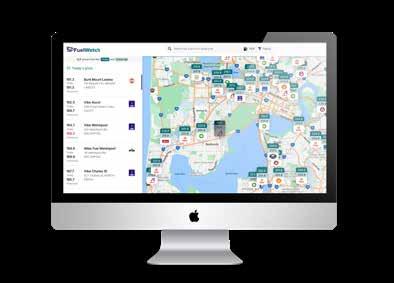
The State Government is making it mandatory for all fuel retailers across Western Australia to report their prices to FuelWatch - and increasing fines for those who don't.
The changes will make it quicker and easier for motorists to find the cheapest fuel sites and check supply across the State, supporting the State Government's response to the fuel shock caused by the conflict in the Middle East.
The FuelWatch scheme applies to retailers in the Perth metropolitan area, local government districts and other areas of the State, as listed in the Petroleum Products Pricing Regulations 2000
Currently, this covers all metropolitan retail outlets, but only about 80 per cent of regional outlets in Western Australia. The expansion of the scheme will see mandatory reporting requirements apply to every retailer across WA, adding approximately 200 extra retailers to the FuelWatch system.
These amendments will commence on 1 May 2026, giving the sector time to prepare and comply. The FuelWatch team in the Department of Local Government, Industry Regulation and Safety (LGIRS) will reach out to the retailers that are not part of the FuelWatch scheme to help them understand their obligations.
Penalties for retailers who don't comply with the reporting requirements will also increase significantly from $1,000 to $4,000. This increase will be in place from Thursday, 2 April and the government will not hesitate to escalate enforcement if
ongoing non-compliance is identified.
Under the FuelWatch scheme, retailers are required to notify their fuel prices for the next day by 2pm and the fuel price must stay at that notified price for 24 hours from 6am.
WA motorists are not subject to price fluctuations during the day, and prices are published by FuelWatch so that WA motorists can make informed decisions about when and where to buy fuel.
The State Government is making it mandatory for all fuel retailers across Western Australia to report their prices to FuelWatch - and increasing fines for those who don’t
The FuelWatch system also provides retailers with the option of reporting whether they are out of different types of fuel. To assist with the transparency of WA's fuel supply chain, the government will soon announce measures to make it compulsory for fuel retailers to report this information, consistent with the National Fuel Security Plan.
For more information, visit fuelwatch.wa.gov.au
Larger road trains to travel closer to Perth
The Western Australian Government is permitting larger road trains to travel closer to Perth along the Great Northern Highway for a three-month trial, following discussions with Western Roads Federation.
Under the changes, 53.5-metre triple-trailer road trains will be permitted to travel along Great Northern Highway between Wubin and Muchea with strict safety conditions for the vehicle, and drivers required to have a minimum of three years' experience driving vehicles of this length.
Triple-trailer road trains are currently not permitted to travel further south than Wubin when travelling into Perth, before needing to be broken down into smaller doubletrailer road trains.
These changes will help improve productivity and reduce truck movements along this key route connecting Perth to the Wheatbelt, Murchison, Goldfields, Pilbara, and Kimberley regions.
The trial will not only improve freight efficiency by helping to get more equipment, food, and supplies to communities and industries in the north of the State but will help operators use less fuel by using bigger trucks to reduce overall truck movements.
These changes follow a recent decision by the Cook Government to permit 27.5-metre and 36.5-metre road trains to transport up to an additional 10 tonnes per load if they are carrying petrol, diesel, and/or fertiliser to certain priority regions.
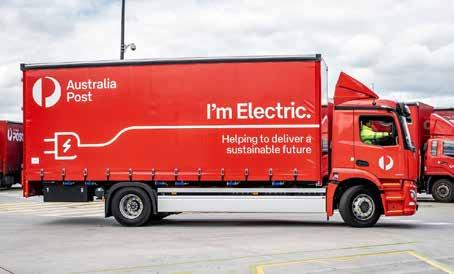
The Industry Support Working Group is continuing to work with the freight industry to encourage the use of more electric trucks across the network as well as consulting with the dairy industry to identify opportunities for practical support measures.
Crackdown on heavy vehicle compliance in Goldfields – but what about the rest of the state?
Abig pat on the back to ‘everyone’ who assisted in making the public and State Government aware of the freight industry’s concerns about heavy vehicles being left in roadside parking bays and unsafe driver behaviour on busy Goldfield’s roads - to which the Government responded with a compliance blitz.
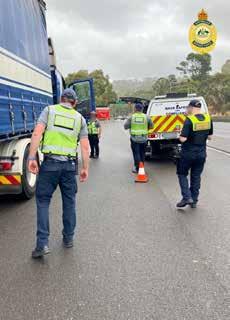
Main Roads’ Goldfields-Esperance team led a multi-agency operation to crack down on heavy vehicle compliance across the Kalgoorlie-Boulder region.
WA
OWNED AND RUN
and
Main Roads partnered with WA Police, DWER, the Department of Transport and Major Infrastructure, the City of KalgoorlieBoulder, and Shire of Coolgardie to conduct 350 heavy vehicle inspections over five days, with most operators found to be doing the right thing.
The operation detected 74 heavy vehicle compliance offences with 28 heavy vehicle assets impounded as well as environmental offences for issues including roadside littering and dumping.
This operation is part of an ongoing effort by government agencies to keep Goldfield’s roads safe and ensure operations in this critical freight corridor are running smoothly.
This move has been applauded, however as industry has pointed out the problem is not restricted to this one area and is in fact a state wide problem.
The Western Australian transport industry is strongly suggesting that the State Government look at the broader picture.
Reports from those on the ground are suggesting that this activity is and has been taking place in RTAA’s in Upper Swan, Muchea and Wubin as well as the Abernethy Road Hook Up Area which is reported to being used as a storage facility.
Geraldton and Port Hedland have also been impacted with further reports saying that operators are moving their equipment from the roadside and parking it in the bush.
From major truck workshops, heavy haulage, cranes, the mining industry and more… our team of knowledgeable and qualified technicians share over 100 years combined experience and focus on delivering prompt service alongside the supply of top name brakes and clutchesthroughout Australia and Asia.
With over 20 years in the industry we have a well-earned reputation for the development, manufacture and supply of quality standard and customised designs to suit a wide range of applications.
For the best advice and friendly service contact us today.
The State Government has struck a deal with local independent fuel supplier Cambridge Gulf to purchase and store 4 million litres of diesel in the Kimberley.
The agreement will see additional volumes of diesel coming to Australian shores, with Cambridge Gulf placing extra orders from overseas suppliers.
The fuel will be stored free-of-charge by Cambridge Gulf but 100 per cent owned by the State - meaning the fuel can be directed to where it is most needed.
Having an additional quantity of diesel under Western Australia's direct control is important key industries such as agriculture which rely heavily on uncontracted fuel volumes.
The option for future fuel purchases is now being considered, with capacity for up to 12 million litres to be stored at the facility.
The announcement represents a major step toward WA holding its own strategic stockpile of liquid fuel, allowing the State Government to respond swiftly to acute shortages and shore up fuel security.
The fuel will be stored free-of-charge by Cambridge Gulf but 100 per cent owned by the State - meaning the fuel can be directed to where it is most needed
This approach complements the Federal Government's Minimum Stockholding Obligation, which requires fuel companies to hold reserves.
The decision builds on the State Government’s targeted work to secure fuel supply for all Western Australians, including:
• introducing emergency powers compelling suppliers to provide detailed supply chain information;
• expanding FuelWatch to include every operator in the State;
• increasing access for triple road trains and allowing heavier loads for perishable goods; and
• standing up the Fuel Industry Operations Group and State Fuel Controller to increase engagement with industry.
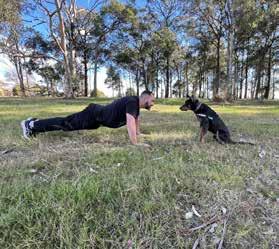
Push-Up Challenge calling on Australians in transport
Australia’s largest mental health and fitness event, The Push-Up Challenge is back for 2026 and calling on Australians in the transport and logistics industry to get involved.
Celebrating its tenth year in 2026,
registrations for the June event have opened which will see over 200k Australians take on 3,307 push-ups across 24 days: one push-up in honour of each life lost to suicide in 2024.
The Challenge is calling on Aussies to rally their communities and workmates to do something great for their physical and mental health, have fun with mates, and support Lifeline, headspace, or the charity which runs the event, The Push For Better Foundation. Note that the Challenge is a free event and fundraising is optional.
TPUC founder, Nick Hudson, who started the Challenge after his own experience with depression, has gone on to raise over $60M for mental health and was recognised as a 2024 Australian of the Year Local Hero. For more information visit www. thepushupchallenge.com.au
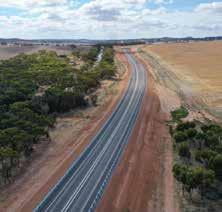
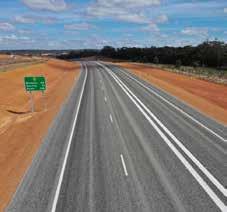
Bindoon bypass northern section opens to traffic
Work on the new 7km northern section of the Bindoon Bypass is complete and it officially opened to traffic.
The new alignment is located about 10km south of New Norcia and running parallel to the existing Great Northern Highway.
Currently, in a bid to support the transport industry using less fuel the Government is allowing triple road trains along this section of Great Northern Highway temporarily and once complete the Bindoon Bypass will enable triple road trains to travel along the entire length of this key freight corridor in the long-term.
These upgrades to Great Northern Highway will increase efficiency for freight operators, improve safety for all road users, and divert heavy vehicle traffic away from the Bindoon town centre.
Updated Class 2 & 3 Order Operating Conditions
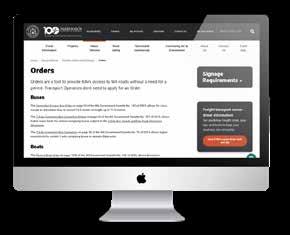
In March, Main Roads Heavy Vehicle Services (HVS) was pleased to advise industry that Tri Drive Combinations had been included under the Prime Mover Combinations Operating Conditions and the Truck Combinations Operating Conditions.
This means that operators of Tri Drive Combinations are now covered by the Class 2 & 3 Orders and will no longer require permits if operating an approved vehicle combination within statutory mass limits.
When you visit our website, you will notice the Tri Drives page has been removed and the Orders page at www.mainroads.wa.gov.au/ heavy-vehicles/permit-order-scheme/orders/ is where you can now find the following:
✔ Updated Prime Mover Combinations and the Truck Combinations Operating Conditions
✔ Tri Drive Prime Mover Trailer
Combinations - RAV Categories
✔ Tri Drive Truck Trailer CombinationsRAV Categories
✔ Approved Tri Drive Networks
We have made this change as part of our ongoing efforts to provide improved
We have made this change as part of our ongoing efforts to provide improved efficiency by removing the need for operators to apply for Tri Drive Period Permits
efficiency by removing the need for operators to apply for Tri Drive Period Permits.
For further information, please contact the Heavy Vehicle Services Helpdesk on 138 486 or email hvs@mainroads.wa.gov.au.
Over to you
FAIR GO FOR OWNER DRIVERS by Ray Pratt
Fuel proces bit hard as transport operators bear the load
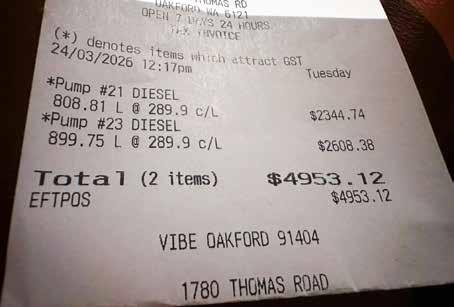
The cost of fuel has once again surged, and as usual, the trucking industry is left carrying the weight. The ongoing conflict involving Iran has sent shockwaves through global oil markets, tightening supply and pushing diesel prices to levels that are simply unsustainable for many operators. While governments talk, delay, and debate, truck drivers and Owner-Drivers are forced to absorb the immediate impact.
After weeks of hesitation, the government has stepped in with a partial reduction in fuel excise and some GST relief. On paper, it sounds like action but in reality, it feels like too little, too late and it is not being felt at the pump. For those running trucks across vast distances, particularly here in Western Australia, where freight routes stretch thousands of kilometres, these measures barely scratch the surface.
Fuel is not just another expense in this industry - it is the lifeblood. When diesel prices spike, everything tightens. Margins, already razor thin, are pushed to breaking point. Owner-Drivers, who carry the bulk of financial risk, are often locked into contracts that don’t allow for quick or fair adjustments to rising costs. Large operators might have some room to move, but even they are feeling the pressure.
The harsh truth is that truck drivers are almost always the last in the chain to recover increased costs.
By the time freight rates are reviewed, negotiated, and adjusted, the damage has already been done. Bills have piled up, repayments have been missed, and stress levels have gone through the roof. In many cases, operators are forced to keep running at a loss just to hold onto contracts and stay afloat.
This is not a new problem. It is a recurring cycle. Fuel goes up, the industry absorbs the shock, and governments respond slowly, if at all and when relief does come, it rarely matches the scale or speed of the crisis. Meanwhile, the expectations placed on drivers do not change. Freight still needs to move. Deadlines still need to be met and supermarket shelves still need to be stocked.
What makes the situation worse is the
There needs to be a fairer system that allows transport operators to recover costs in real time, not months down the track
structure of the industry itself. Too often, rates are driven down by large companies chasing the cheapest possible transport costs. This race to the bottom leaves little room for resilience when external pressures like fuel spikes hit. The result is an industry that is constantly operating on the edge.
It is no surprise that bankruptcies are rising and it will not surprise me to see many more operators go to the wall now. Nor is it surprising that fewer people are willing to get behind the wheel and why would they? Long hours, time away from family, rising costs, and shrinking returns do not make for an attractive career. The shortage of experienced drivers is not just about lifestyle, it is about viability.
Something has to change.
There needs to be a fairer system that
allows transport operators to recover costs in real time, not months down the track.
Fuel levy systems should be standard, transparent, and enforced across the industry, not optional or selectively applied. Contracts must reflect the realities of operating a truck in today’s environment, not yesterday’s pricing.
Governments also need to recognise that trucking is not just another industry. It is an essential infrastructure and without it, the economy stops. That means faster, more decisive action is needed from all governments when crises hit, not drawnout untransparent responses that leave operators exposed.
The current situation is a stark reminder of how vulnerable the transport industry is. Operators have once again been left to battle through rising costs with limited support, carrying the burden for everyone else. It is not sustainable, and it is not fair.
If the transport industry is to survive and be viable enough to attract the next generation, there must be a better way. A system that shares the load, rather than dumping it squarely on those who can least afford it. Until then, the cycle will continue, and the people who keep this country moving will keep paying the price. Keep it safe, Ray Pratt.
How Ya Travellin?
Healthy Heads in Trucks and Sheds has released a special episode of ‘How Ya Travellin?’, featuring host Shane Jacobson, WA truckie Heather Jones and psychologist Arthur Papagiannis.
Heather shares practical tips and perspective from the road, while Arthur unpacks the mental load that can come with financial stress.
Together, they talk about staying steady, looking after your headspace and getting support early when the pressure starts to build.
To get the podcast visit howyatravellin. podbean.com/e/episode-14-under-thepump-–-focussed-on-the-fuel-crisis/
We need to understand the pricing structure of diesel in this country
ALRTA Council members from across Australia came together recently for a two-day strategic workshop to reassess where they are as an industry, and confirm where they need to go as a national body. Obviously, with a large gathering the subject of the pressure on operators particularly when it comes to fuel was talked about.
Executive Director Anthony Boyle said, “While there has been significant focus on supply, and we acknowledge the work government has done to stabilise the situation, the reality at the bowser tells a
while ensuring supply chains remained operational. We also saw movement from financial institutions and governmentbacked support mechanisms to help steady the industry with cashflow support during a volatile period.
“Those actions matter, and they’ve made a difference - but they don’t explain where we are now.
“If the tax burden has been reduced, and supply has been stabilised to a point, why are fuel prices continuing to rise? This is the question that needs to be answered.
“In a crisis, leadership isn’t just about
If the tax burden has been reduced, and supply has been stabilised to a point, why are fuel prices continuing to rise?
different story. Diesel continues to climb in price.
“That’s despite the effective removal of the Road User Charge, which reduced the tax impost by approximately 32 cents per litre. Without that intervention, we would be staring down prices closer to $3.50.
“The ALRTA was actively engaged in advocating for that relief - working with government, engaging through the Prime Minister’s office, and calling for calm
reassurance; it’s about transparency. It’s about clearly explaining to industry and the broader community what is driving these outcomes, and what can be done about them. Right now, that clarity is missing.
“We need a greater focus on understanding the pricing structure of diesel in this country, because this is not a discretionary cost. It underpins freight, agriculture, and the movement of food across Australia,” Mr Boyle said.
Emergency plan to force businesses to pay more fuel rebates
Responding to joint application from ARTIO and the TWU, the Fair Work Commission (FWC) has provisionally backed an emergency plan forcing businesses to lift the fuel reimbursements offered for transport operators as diesel prices soar.
The draft order compels businesses to offer extra financial support to the transport operators and if enacted, the would force businesses to lift fuel reimbursements by the amount necessary to ensure that the other primary party recovers the increased cost of fuel.
This would ensure businesses seeking transport services foot the bill for surging fuel costs, not the transport or logistics firms actually moving the goods.
Those adjusted rates would be benchmarked against the increased cost of fuel since March 6, with the goal of leaving road transport workers no worse off than before the conflict began.
The draft order expects businesses to adjust its rebate rates fortnightly, or twice a month, and take ‘reasonable steps’ to ensure updated reimbursements flow down their contractual chain.
The order covers all work in the road transport industry, spanning traditional long-haul truckers through to road transport workers who get their work via digital labour platforms. The FWC said those fuel kickbacks could take the form of new or updated fuel increments, levies, direct reimbursements, or offsets, so long as drivers have the funds they need to stay on the road.
If enacted, the order will begin on Monday, April 20, and cease whenever the standard price of diesel falls below $2 a litre.
CONTACTS:
7 Tipper Crt, Hazelmere WA
Office: (08) 9274 6355
Mobile: 0418 802 007
Rentals: 0488 003 228
Email: alan@haulmore.com.au
Website: www.haulmore.com.au
We have the following units currently in stock available for sale or hire:
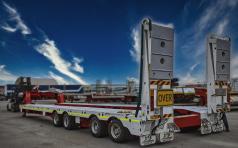
Quad 4 Rows of 8 Full Axle Widening Low Loader with Hydraulic Suspension
Quad 4 Rows of 4 Full Axle Widening Low Loader with Hydraulic Suspension
Western Roads Federation Industry Site Visit Program – Inspiring the Next Generation Transport Workforce
By NATALIE GRINCERI | Western Roads Federation
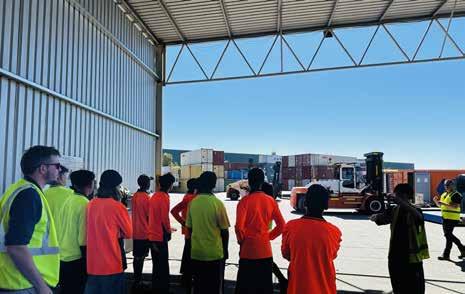
Western Australia’s transport and logistics sector is the backbone of the state’s economy, yet like many essential industries, it faces ongoing workforce shortages and an ageing talent pipeline. To address this challenge, the Western Roads Federation (WRF) has created and launched an innovative Industry Site Visit Program designed to connect secondary school students directly with real workplaces, real people, and real career pathways.
The initiative is already gaining strong momentum, with eight transport and logistics companies registered to host visits and nine schools participating across the Perth metropolitan area. With plans to expand into regional centres such as Kalgoorlie, the program is quickly becoming a model for industry led workforce development.
A Program Designed for Impact
The Industry Site Visit Program provides structured, on site exposure for Year 10 students, giving them a firsthand look at the scale, diversity, and importance of Western Australia’s transport and logistics sector. Rather than hearing about careers in a classroom, students step directly into operational environments - warehouses, transport yards, fleet depots, and logistics hubswhere they can see the industry in action.
Each visit runs for approximately three hours and accommodates up to 14 students. The program is intentionally hands on and interactive, ensuring students remain engaged while gaining a realistic understanding of the work involved. Activities typically include:
• Guided tours of warehouse, fleet, or dispatch operations
• Safety briefings and introductions to workplace procedures
• Presentations from industry staff about their roles and career journeys
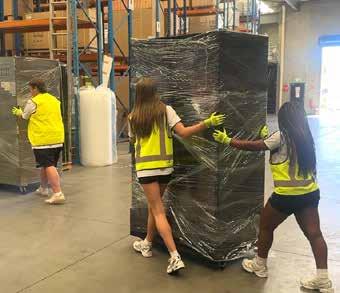
• Interactive activities such as load prepping, vehicle and technology demonstrations and pallet maintenance
This structure allows students to explore a wide range of roles, from forklift operations and freight coordination to fleet management, warehousing, and supply chain planning. It also highlights the breadth of pathways available, including
apprenticeships, traineeships, TAFE qualifications, and university level logistics programs.
One of the upcoming site visits will offer a rare and memorable experience: a student, selected through a random draw, will have the chance to ride in the jump seat of a locomotive as the engine shunts wagons into the freight facility’s rail yard. It’s an opportunity well beyond what most young people would ever encounter in their day to day lives.
Connecting Students to Real Pathways
A key feature of the program is its partnership with MEGT Apprenticeship Support Services. MEGT representatives attend site visits to explain school based traineeship options and help students understand how they can begin gaining paid industry experience while still completing their education.
This connection between industry exposure and practical next steps is critical. It ensures students leave not only inspired, but also informed about how to pursue opportunities in the sector.
Strong Industry and School Engagement
The response from both industry and schools has been overwhelmingly positive. Companies have embraced the opportunity to showcase their operations and contribute to building the future workforce. In fact, several businesses have proactively contacted WRF requesting to be involved, an encouraging sign of industry ownership and enthusiasm.
One company’s feedback arrived with the subject line, “Can we brag about you on our socials?” Their message continued, “Thanks again for letting Goldstar Transport host your careers day, we look forward to future collaborations with you all.”
Schools have been equally enthusiastic. After one visit, a teacher shared, “The boys were ecstatic to be invited on this excursion and their excitement only grew as the day progressed. The chatter on the bus ride home was a clear indication of how impactful the experience was… It truly opened the students’ eyes to the wide range of career paths available, and life beyond school.”
Another school highlighted the value of combining presentations with hands on activities saying, “It was a great
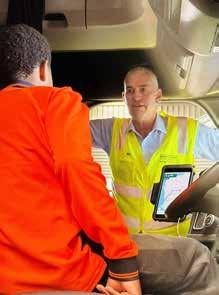
day, having a combination of sitting for presentations and practical components to the day was fantastic. Students were talking about being in the truck cab and using forklifts on the way home. They enjoyed it more than they thought they would, especially the girls.”
This feedback demonstrates the program’s ability to shift perceptions, particularly among students who may never have considered transport and logistics as a viable or exciting career option.
Industry Hosts Leading the Way
The organisations participating in the Industry Site Visit Program represent a broad cross section of Western Australia’s transport
and logistics sector, giving students exposure to a wide variety of real operational environments. Current host sites range from large scale transport yards and integrated warehouse - rail facilities to smaller, specialised freight operations. Across these workplaces, students gain insight into everything from warehouse coordination and fleet movements to sensitive freight handling and rail based logistics. Each host contributes a unique perspective, helping students appreciate the scale, diversity, and career potential within the industry.
Looking Ahead: Expanding Into Regional WA
While the program is currently focused on the Perth metropolitan area, WRF is preparing to expand into regional locations, with Kalgoorlie identified as the next major hub. Regional students often have limited exposure to industry pathways, despite living in areas where transport and logistics play a critical economic role. Bringing the program to these communities will help ensure regional employers have access to a strong, locally developed workforce pipeline.
A Collaborative Approach to Workforce Development
The Industry Site Visit Program is more than an excursion, it is a strategic initiative that brings together industry, schools, training providers, and apprenticeship services to build long term workforce capability. By giving students meaningful, hands on exposure to the sector, the program is helping young people discover new career possibilities while supporting industry to attract the next generation of skilled workers.
With strong early results, growing demand, and plans for expansion, the WRF is positioning this program as a cornerstone of WA’s future transport and logistics workforce strategy.
The ‘Electric Dream’ vs The Diesel Reality
The cost of living is biting hard across Australia, and nowhere is it hitting more brutally than in the transport industry. Every link in the supply chain is feeling it, but for those behind the wheel, it’s not theory — it’s survival.
Fuel prices have surged again, driven in large part by the escalating conflict in the Middle East that has rattled global oil markets, disrupted supply chains, and exposed just how vulnerable Australia really is. Prices have climbed past levels many operators simply cannot absorb, and in some cases, supply itself has become uncertain.
In regional areas, transport companies have already reported fuel being rationed or simply unavailable. Trucks are being parked up not because there’s no work, but because there’s no diesel.
Government intervention has provided some short-term relief, with temporary cuts to fuel excise and emergency supply measures designed to keep the country moving. But let’s be honest — shaving a few cents off a litre doesn’t fix a system that is fundamentally flawed.
Against this backdrop, a familiar argument has resurfaced. Electric trucks, we’re told, are the answer. Clean, efficient, immune to global oil shocks — the future of freight.
It sounds good on paper and to be fair, technology is moving forward with major manufacturers investing heavily and genuine gains being made in urban and short-haul applications where distances are short, loads are lighter, and charging infrastructure is within reach.
But that’s not the reality of Australian trucking where distances are measured in thousands of kilometres, not hundreds. Where a single run across Western Australia can stretch longer than entire European supply chains. Where road trains haul payloads pushing 100 tonnes through heat, isolation, and conditions most citybased policymakers will never experience.
In that environment, the idea that electric trucks are ready to replace diesel is not just optimistic — it’s disconnected.
Range remains a critical limitation. Even the most advanced electric trucks struggle to match the distance and flexibility of a
By RAY PRATT
Right now, diesel is not just part of the industry – it is the industry and what the current crisis has exposed is not the need to rush headlong into unproven solutions
diesel unit. Charging infrastructure across regional Australia is virtually non-existent, and even if it were rolled out tomorrow, the time required to recharge simply doesn’t stack up in an industry where time is money and delays kill margins.
Then there’s the payload issue. Batteries are very heavy — every kilogram dedicated to battery capacity is a kilogram lost from freight. In an industry already operating on razor-thin margins, that trade-off is not commercially viable.
Cost is another barrier. Electric trucks come with a significantly higher upfront price tag, and while proponents argue that lower running costs will offset that over time, that equation assumes stable conditions — something the current environment has clearly proven we do not have.
None of this is to say electric technology doesn’t have a future. It does. But the gap between where the technology is today and what is required for long-haul, heavy-duty transport in Australia is enormous.
Right now, diesel is not just part of the industry — it is the industry and what the current crisis has exposed is not the need to rush headlong into unproven solutions, but the fragility of the system we already rely on. Australia imports the vast majority
of its fuel, leaving it exposed to exactly the kind of geopolitical shock we are now experiencing.
If there is a lesson in all of this, it’s that we have failed to secure the fundamentals. The transport industry doesn’t need pipe dreams. It needs reliability, affordability, and realism.
Until electric trucks can haul massive loads across vast distances, refuel in minutes instead of hours, and operate without a complete overhaul of national infrastructure, diesel will remain king of the road and for now, the idea that it can be replaced anytime soon is just that – an idea.
Fennell Forestry in South Australia undertook an electric vehicle trial in 2023 using the vehicle to transport logs from forests to sawmills and whilst it had enough torque and capacity to tow the large loads, it fell short on cost.
Managing director Wendy Fennell said, "The reason why the truck is no longer in operation is it wasn't financially viable to continue it when you compare it with a like-for-like diesel truck.”
"The costs that impaired that truck was the charging infrastructure costs and the range of the truck on a full charge was only about 200 kilometres due to the weight of the load,” she said.
Closing the Gap – Why Unsafe Overtaking in Western Australia Requires Tougher Penalties
On Western Australian roads, overtaking remains one of the most dangerous driving manoeuvres, yet the penalties attached to unsafe behaviour fail to reflect the potentially catastrophic consequences.
While drink driving rightly attracts severe punishment due to its welldocumented risks, unsafe overtaking continues to be treated as a comparatively minor offence, despite posing an equally immediate threat to life.
The rules around overtaking in WA are clear. Drivers must only overtake when they have a full, unobstructed view of oncoming traffic and must never exceed the speed limit to complete the manoeuvre. It is also illegal to overtake across continuous centre or dividing lines unless the driver is turning right i.e leaving or entering the road. The same applies if there is a continuous line on the left of a broken or dotted line.
Despite these rules, enforcement outcomes remain relatively light. For instance, overtaking on a continuous white line attracts a $200 fine and three demerit points. These sanctions pale in comparison to drink driving penalties, which can involve licence disqualification, heavy fines, and even imprisonment.
This disparity raises an uncomfortable question: why is behaviour that can lead to a head-on collision, often at 110 kilometres an hour, treated less seriously than other high-risk offences?
For those who spend their working lives on the road, particularly truck drivers, the consequences of unsafe overtaking are not theoretical. Heavy vehicle operators
routinely witness reckless decisions: drivers attempting to pass multiple vehicles in a single move, misjudging distances, overtaking on hills or ahead of a blind corner, or cutting back in dangerously close. These are not rare events. They are daily occurrences.
If WA is serious about reducing road trauma, unsafe overtaking must be elevated to the same level of concern as drink driving. This means stronger penalties, greater enforcement, and a cultural shift in how the behaviour is perceived
What is less often discussed is the psychological toll this takes. Truck drivers sit high above the road with a clear view of unfolding risky situations, yet they are often powerless to intervene. When a car narrowly avoids a head-on crash or cuts in front of a fully loaded truck, the driver behind the wheel of that truck carries the weight of that near-miss. They know that if the timing were slightly different, the outcome could be fatal and that they may be involved, regardless of fault.
Heavy vehicles require significantly longer stopping distances. A car that pulls in too soon after overtaking can leave a truck driver with no physical ability to avoid
a collision. Similarly, if an oncoming truck must take action to evade an overtaking vehicle, the result can be disastrous. The stress of constantly anticipating these risks, combined with repeated exposure to near misses, contributes to fatigue, anxiety, and long-term mental strain on our drivers.
We talk often about the difficulty in attracting and retaining good, professional drivers. While we continue to subject them to this disgraceful on-road behaviour, there will continue to be an exodus from the industry.
If WA is serious about reducing road trauma, unsafe overtaking must be elevated to the same level of concern as drink driving. This means stronger penalties, greater enforcement, and a cultural shift in how the behaviour is perceived. Increased fines, higher demerit points, and the possibility of licence suspension for dangerous overtaking would better reflect the real-world risks involved.
Road safety campaigns have successfully changed attitudes toward drink driving over decades. A similar effort is now needed for overtaking, one that recognises that a single poor decision, made in seconds, can have irreversible consequences. I call on the Minister for Road Safety and the Road Safety Commission to consider a targeted campaign and education program to improve driver understanding of risky overtaking.
Until penalties match the danger, too many drivers will continue to take the gamble. And for those sharing the road with them, especially truck drivers, that gamble is one they are forced to witness every day. Unfortunately, some drivers will leave the industry, and some will not come home.
LRTAWA by Ben Sutherland President, Livestock and Rural Transport Association of Western Australia (Inc)
TLet me introduce myself.
My name is Russel Walsh. I have been in and around trucks for around 40 years. My driving career started at 20 in the town where I grew up, Mukinbudin and over the years I’ve owned, driven and fixed a couple of trucks. I did a cert IV as a heavy commercial vehicle mechanic later in life and managed a large private fleet workshop. I’ve carted most types of freight including livestock, end tippers Ag cartage to side tippers on ore jobs in Leonora, Groote Eylandt, The Granites and Bootu Creek plus some general and refrigerated and now fuel to throw into the mix.
The turning point ...
When industry chose pressure over principle and instead of fixing the problem, chose corruption and exploitation over safety
here are currently 28,000 truck driving roles advertised in Australia so either the industry is growing at an incredible rate or a lot of older drivers are abandoning the industry or both. Personally, I am on a knife’s edge because this industry has become far too dangerous, my partner of 25 years fears that one day I might not complete a trip and with some of what I see out there I understand her concerns.
Several decades ago, the heavy vehicle industry reached a crossroads which resulted in a shift. Driver shortages were growing, older, highly skilled operators were leaving, freight demand was increasing and timelines were tightening.
Commonplace were unreasonable deadlines, two pay envelopes – one for your pay and one for your drugs. Bullying, belittling and intimidation tactics were the
norm and industry had a choice to fix the system or feed the demand. The turning point wasn’t a single decision, it was a series of smaller ones made under pressure.
Instead of investing heavily in long-term training, improving conditions to retain experienced drivers and slowing unrealistic supply chain expectations we moved toward fast-tracked licensing pathways, looser, inconsistent training standards, a growing reliance on pushing people through quickly and filling seats instead of building capability.
That was the moment the industry shifted from a skilled profession to a supply pipeline and the cracks didn’t disappear they widened.
Concerns began to surface around licensing integrity, assessment standards, ‘tick and flick’ competency sign-offs and
training providers under pressure to produce numbers, not quality.
To be clear, this was not the entire industry – there were still strong operators, high quality trainers, and companies doing the right thing. But when demand outweighs discipline - standards don’t always hold. And this is where exploitation crept in; shortages create pressure and pressure creates opportunity where workers needing employment accepted roles they were not fully prepared for, employers under pressure accepted lower standards to keep freight moving and systems designed for safety began bending under operational demand.
This isn’t about nationality or background - it’s about what happens when any workforce is placed into high-risk roles without the level of preparation those roles require. Heavy vehicle operation
National crackdown tackles migrant worker exploitation
Australian Border Force (ABF) officers have put heavy vehicle operators and unlawful migrant workers on notice during the launch of a national joint compliance operation. The operation targets visa integrity, migrant worker exploitation and safety risks in the heavy vehicle transport industry that put other road users at risk.
ABF officers, alongside the National Heavy Vehicle Regulator (NHVR), checked more than 200 vehicles across South Australia, Queensland, New South Wales and Victoria during the weeklong operation, conducting visa checks, identifying potential migrant worker
exploitation and detaining unlawful noncitizens to help ensure only lawful, safe and compliant drivers operate heavy vehicles on Australian roads.
While ABF officers checked immigration status, NHVR Safety and Compliance Officers conducted comprehensive safety and compliance inspections — including work diaries, fatigue management, mechanical standards, access/permits and load security, all critical factors in preventing fatigue-related crashes and keeping roads safer for everyone and protecting the integrity of the sector.
Across the operation, ABF officers also
cancelled three student visas where the holders had breached their visa conditions, issued three Notices of Intention to Consider Cancellation (NOICCs), and counselled nine drivers on their visa conditions. During one Victorian operation, officers identified an unlawful non citizen driving a heavy vehicle who had been in Australia unlawfully for more than 12 years.
Employers also faced scrutiny, with the ABF issuing five compliance notices for employing an unlawful non-citizen or individuals with incorrect visas or work rights, and a further five employers are now under review for potential breaches, with
is not entry level work - it’s a high-risk profession that demands time, exposure, and experience that cannot be gained in five minutes.
The part of the conversation most people steer around and we are just getting to the interesting bit is the pipeline to fast track MC licences endorsed by Australian governments.
Large operators like Linfox, (Fox Group Holdings Pty Ltd), along with other major players are known to contribute to political parties, maintain strong influence within industry and policy discussions and operate their own internal logistics training courses.
None of this is unlawful but it does raise a question… when major players are shaping policy, contributing financially to the system, and supplying their own workforce who is independently holding the line on standards?
Perception matters and right now the view across parts of industry is that oversight is not keeping pace with pressure and the price we are seeing on the ground is increased incidents and near misses, experienced drivers leaving the industry, a widening gap between capability and expectation and a growing concern from both within the workforce and the public.
And the core issue remains unchanged - the road is the workplace but it is not treated like one. If these conditions existed in mining or construction, operations would be shut down pending investigation. But because risk is spread across public roads it has become normalised.
This is bigger than trucks. This is what happens when an industry prioritises efficiency over safety, chooses speed
several new investigations underway across multiple states.
Under Labor’s tougher new laws, employers who exploit migrant workers face serious consequences, including up to two years’ imprisonment and substantial financial penalties.
Heavy vehicle operators can expect the focus on visa compliance and protection of vulnerable migrant workers to continue with lessons learned from the operation applied in the next phase of enforcement. A strong enforcement presence will ramp up in coming months, with further joint ABF and NHVR checkpoints, mobile patrols and surveillance planned across the country.
Anyone with information relating to potential immigration offences or
over skill and responds to pressure with shortcuts instead of solutions.
Over time, what was once unacceptable becomes standard practice. The heavy vehicle industry didn’t end up here by accident - it arrived here through a series of decisions made under pressure.
The real turning point wasn’t when the cracks appeared it was when we saw them and chose to work around them instead of fixing them. The industry didn’t weaken because it broke, it weakened the moment we decided it was easier to push people through the system than to build one worth standing in.
We’ve legislated against coercive control in relationships but we still tolerate the same patterns in the workplace.
A recent article about illegal immigrants being caught driving heavy vehicles on Australian roads by Border Force poses some interesting questions.
If a company can employ an illegal immigrant, how are they paying his
suspicious activity are encouraged to contact Home Affairs and make a report online at Border Watch at www.abf.gov.au/about-us/ what-we-do/borderwatch Reports can be made anonymously.
Assistant Minister for Citizenship, Customs and Multicultural Affairs, Julian Hill said, “Most transport operators do the right thing, and they deserve a level playing field. This operation targets the small minority who cut corners by exploiting workers or ignoring visa rules.
“These joint operations protect workers from exploitation, protect honest businesses from unfair competition and protect the public on our roads. Exploiting migrant workers and undermining safety standards has no place in Australia’s transport industry.”
Superannuation and Tax because surely, he should not exist in the system. Isn’t this fraud, exploitation or worse? Are these trucks registered and insured? Are they even roadworthy and if a company is willing to exploit an illegal immigrant in this way, what other short cuts are they taking?
Australia’s transport sector is on life support and the government along with its relevant regulating authorities have been asleep at the wheel for far too long.
Add to this the current fuel crisis and we are up shit creek without a paddle. I’m going to be brutally honest here and say this - I hope this fuel crisis sends all the sham contractors and rate cutters broke. This will be a fantastic outcome for industry and it’s well overdue for a clean out and a correction.
I just wish there was a way of protecting the smaller family shows out there doing the right thing.
What a time to be alive.
Premier Roger Cook and Minister Saffioti, when will you act?
By LARA JENSEN
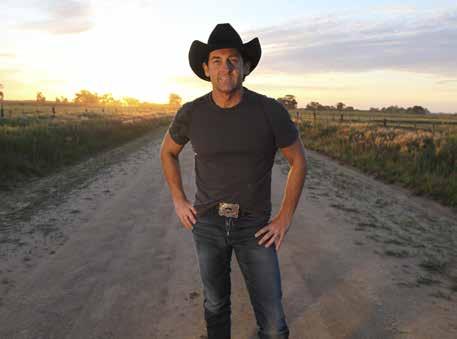
In the latest push for nationwide rail safety reform, our families of rail crash victims released a social media video prior to the Easter break in conjunction with the Australian Trucking Association (ATA) featuring country music legend Lee Kernaghan OAM calling on the Australian Governments to legislate mandatory train safety and visibility lighting standards.
The video was created by our families to serve as a timely reminder to the travelling public of a rail safety gap and a reminder of beloved family members lost at country railway crossings, where there were no lights, boom gates or second chances. It reinforces the devastating human toll of government and rail industry inaction and the urgent need for reform.
The video is backed by 20 prominent national and grass roots organisations including agriculture, road transport, community groups and the WA National and Liberal parties and is headed by 2008 Australian of the Year, Lee Kernaghan. Lee has strong personal roots in the transport industry and rural Australia and said, “Years on the road through country Australia have shown me how difficult these trains are to detect at night as they approach
level crossings. They are simply not visible enough, and that needs to change.”
ATA CEO Mathew Munro said, “To ensure trucks can safely share the road with passenger vehicles and pedestrians, they must have marker lights showing their full length, width and height from any angle day or night. Yet right now, the biggest vehicles on our roads-trains-are the hardest to see!”
Staggeringly, the average annual economic burden of rail safety incidents in Australia as reported by Tracksafe from 2007-2015 is approximately $360.1 million. Between 2016-2023 Tracksafe reported there were 27 fatalities and 138 injuries because of collisions with a road vehicle at a level crossing and 13 fatalities and 17 injuries because of collisions with a pedestrian at level crossings and 7445 near hits at level crossings, an average of 930 a year.
It is simply not acceptable that regional motorists are currently expected to yield to approaching trains they cannot always see in a range of conditions such as dawn, dusk, complete darkness, heavy dust, heavy fog, heavy rain and glare - scenarios all flagged by coroners and parliamentary enquiries.
The sad fact is that while we have stronger laws governing bicycle lighting
than we do for trains we are about as close to achieving the federal government's utopian pie-in-the sky vision of “zero harm” at level crossings by 2050 as we are to arriving at the metaphorically unachievable destination of Timbuktu.
The evidence has not changed, but government and industry inaction remain constant. Instead of mandating lighting, the national rail safety regulator (Office of the National Rail Safety Regulator (ONRSR) introduced a voluntary Code of Practice on Train Visibility that was signed off by state and territory transport ministers in 2024 asking rail operators to merely consider beacon lighting on their locomotives and side lighting on their rolling stock. After 25 years of deaths, coronial inquests and research, all our political leaders could muster was “consider”.
And so, we are left with nothing mandatory or enforceable and still no legal requirement for flashing beacon lights on locomotives or side lighting on wagons.
Rail safety regulation is governed by the principle of "so far as is reasonably practical", but how can rail operators claim compliance to this ONRSR directive when they refuse to install proven, life-saving lighting on their trains? How can the Office of the National Rail Safety Regulator tolerate this glaring contradiction when the rail industry’s own research highlighting the effectiveness of visibility and safety lighting on trains through numerous trials is disregarded by the very industry it oversees? How can our state and federal governments continue to allow the rail industry to self-regulate, resist reform and ignore coroners, scientists, safety experts and the findings of numerous parliamentary enquiries? If the rail industry were held to the same standard as other sectors are held, this problem would have be fixed. Instead, we see governments – sadly, on both sides of politics – and the national rail regulator giving cover to an industry that consistently puts cost and convenience before public safety.
The only thing missing now is political will. Premier Roger Cook and Minister Saffioti, when will you act?
To view the video go to www.facebook.com/ reel/1474799227347427
Lee Kernaghan
The Royal Show of trucking, without the price tag
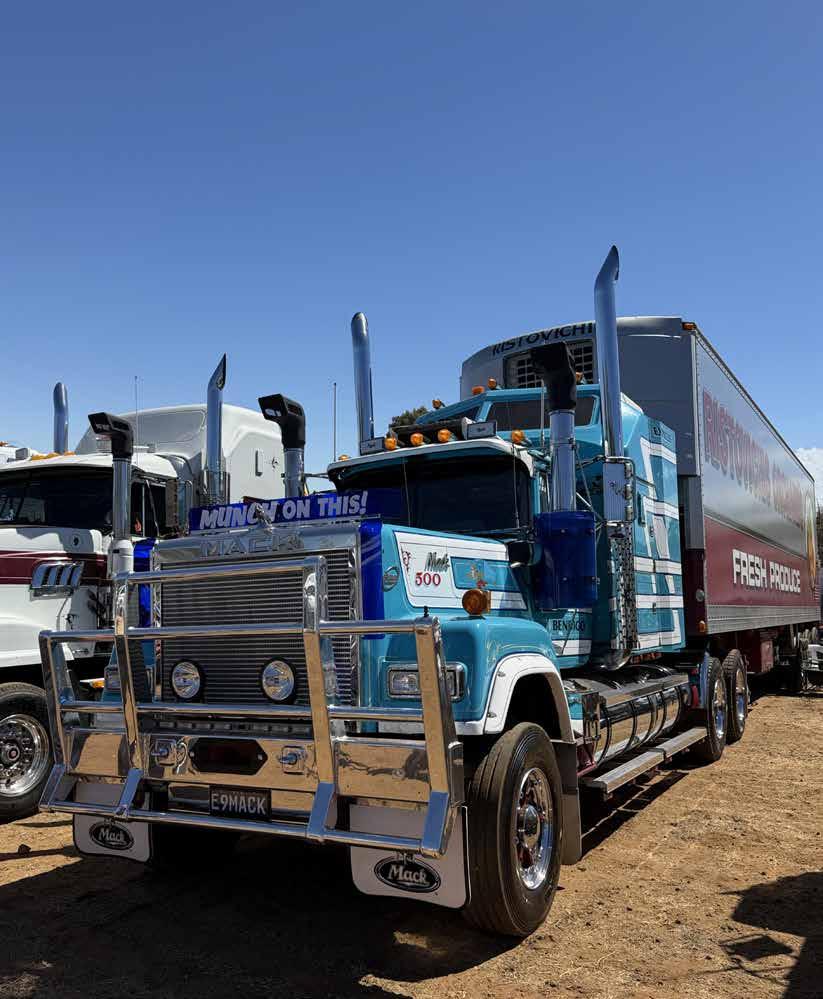
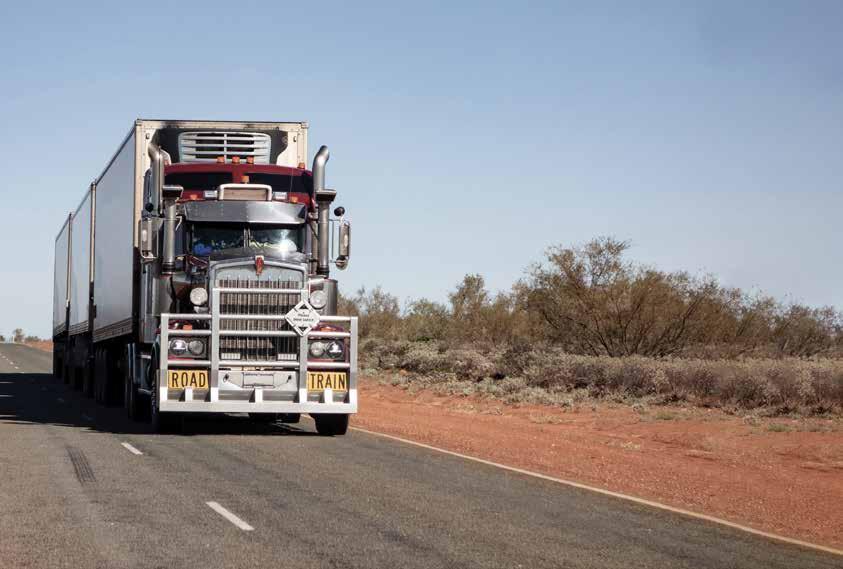
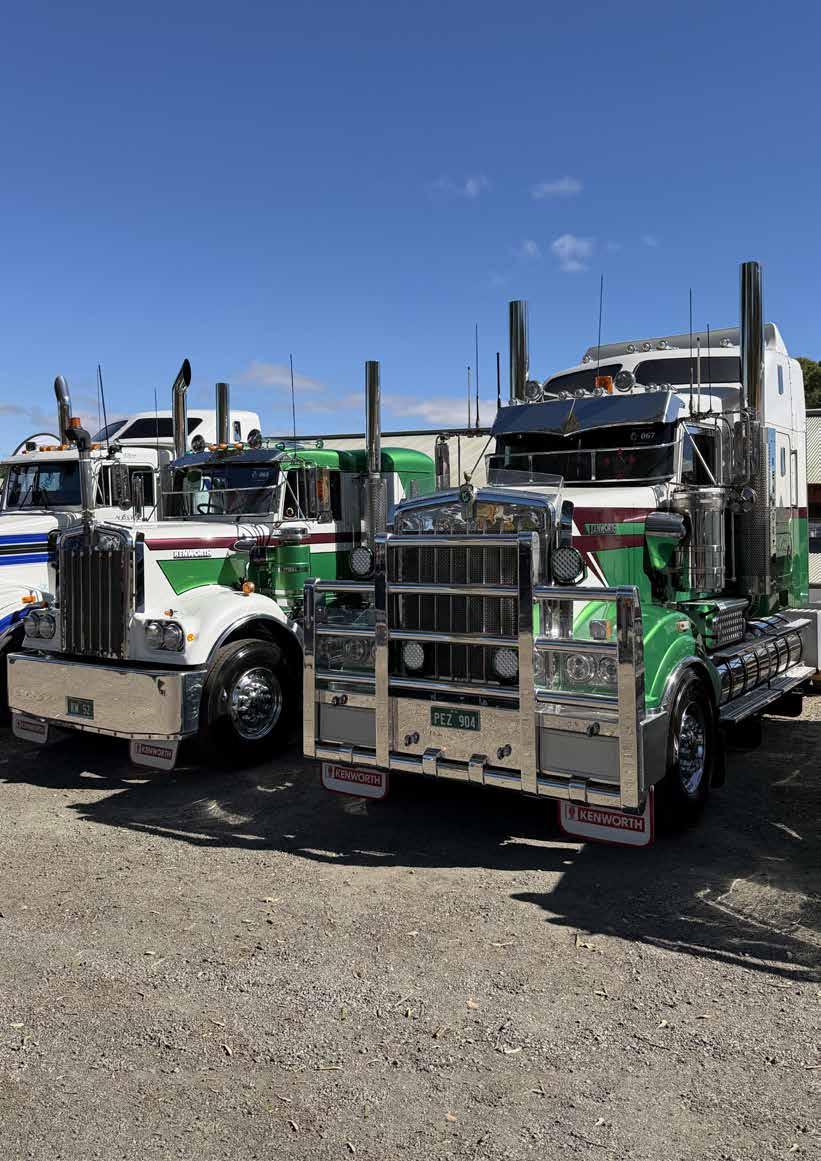
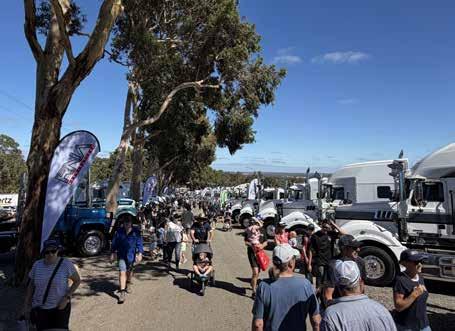
Perth’s premier truck show – the WA Mack Muster and Truck Show – delivered in every sense, drawing a crowd of more than 11,000 people and rolling in 400 of the toughest, cleanest, most passionate rigs in the country. Dust in the air, diesel in the lungs, and a community that showed up in force.
This is what happens when you strip it back to what matters.
No overpriced gates. No polished concrete. No pretence. Just trucks, families, and a shared love of the industry.
From the moment the gates opened, it was clear this wasn’t just for operators and diehards. It was for everyone. Kids ran straight for the carnival rides, faces lit up with paint and sugar. The mega sand pit turned into a full-scale construction zone of its own, packed all day with future truckies building, digging and refusing to leave.
Parents could actually relax. That’s rare at events like this.
Then came the heartbeat moments.The truck start-ups.
Four hundred engines firing in unison, a
wall of sound that you don’t just hear, you feel. It rolled across the farm and straight through the crowd. Phones out, smiles everywhere, that unmistakable moment where everyone knows they’re part of something special.
Food trucks kept the energy up, the paddock stayed full, and everywhere you looked there was conversation. Old hands catching up. New entrants finding their place. Kids climbing on guards and dreaming big.
And that’s the difference.
Images by KEVIN TOOVEY
This isn’t just a truck show. It’s a gathering of an industry that doesn’t often stop. A rare moment where the people who keep Western Australia moving take a breath, stand back, and celebrate what they do.
But what makes it truly powerful is what sits behind it all.
Every truck, every ticket, every sponsor, every family through the gate contributed to something bigger than the day itself. Vital funds were raised for cutting edge cancer research at the Harry Perkins Institute of Medical Research, supporting work that is changing lives right here in Western Australia. And the impact is still growing. The donation is still being counted with news to follow on how much the volunteer team has raised.
That is the real engine behind this event. Community, purpose, and impact. Call it what it is. The Royal Show of trucking, without the price tag.
No shortcuts. No gimmicks. Just a proper, honest, world-class event built on community, grit, and pride. And if 2026 proved anything, it’s this. Nothing else in the country comes close.
Matt Lawrence Chairman – WA Mack Muster and Truck Show
BUILDING YOUR RETIREMENT NEST EGG AS AN OWNERDRIVER
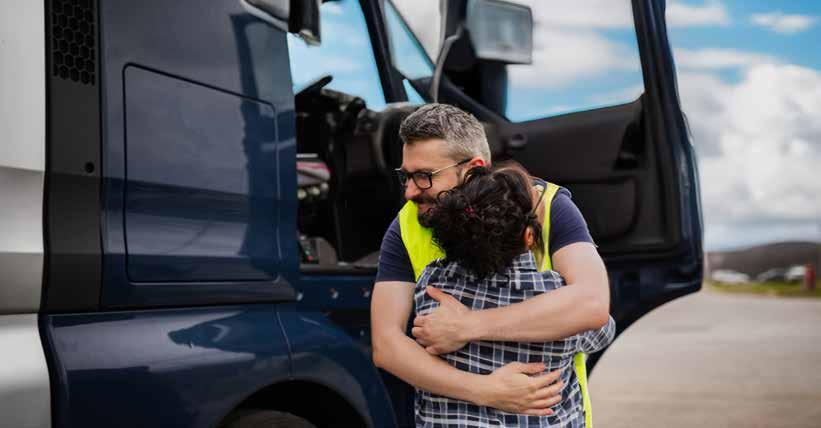
The compulsory superannuation system is one of Australia’s great success stories, helping millions of Australians enjoy their retirement by building a strong financial nest egg over time. Our super system works as a special investment structure with tax advantages created by the government to help people save for retirement during their working life. It is largely built around mandatory employer contributions, with your employer generally needing to pay 12% of your pre-tax salary, known as Super Guarantee (SG) contributions, into your super fund.
But what about those without an employer? Many owner-drivers have spent decades behind the wheel but may risk retiring with very little super and few other safety nets to fall back on. According to financial adviser Tim Hughes from Team Super Financial Advice, this illustrates the importance of making personal super contributions if you’re self-employed. Read on as Tim answers some common questions that owner-drivers may have when it comes to super.
Why should I be making super contributions as an owner-driver?
If you’re self-employed – that is, a sole trader or a partner in a partnership, which many owner-drivers are – you don’t have to make super contributions for yourself. However, Tim points out that
you may want to consider making super contributions because it’s an easy and tax effective way to save for your retirement during your working life.
‘The lower tax rates also mean the same investment in super can grow more than if invested outside super, which can make a big difference when you retire.’
I can only add small amounts, will that even be worth it?
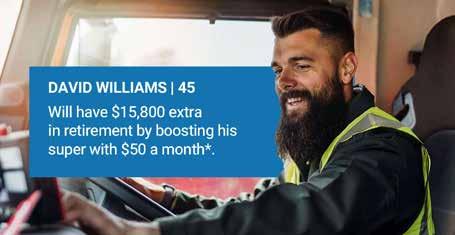
Owner-drivers often work on small margins, leaving little room for longer term planning, but even small amounts do add up over time, thanks to the snowball effect of compound interest. Adding an extra $50 a month to your super, could mean an extra $15,800 in retirement*.
Apart from the benefits of saving for your retirement, as an owner-driver you may also be able to claim your super contributions as a tax deduction, as long as you meet the eligibility criteria. Or, if you’re a low-income earner, adding after-tax money to super may qualify you to receive a government co-contribution of up to $500.
‘The amount of co-contribution you may receive is based on your total income and how much after-tax contributions you add to your super in a financial year. The maximum co-contribution for the current financial year is $500 if you earn $47,488 pa or less. The co-contribution reduces by 3.33 cents for every dollar you earn over this amount, cutting out once your income reaches $62,488 pa,’ explains Tim.
Should I get insurance with my super?
Most super funds also offer insurance, which can give you peace of mind (whether you’re self-employed or not!) as it provides financial support to protect what’s important to you if you die or must stop work due to illness or injury.
Super funds, including Team Super, typically have three types of insurance for members:
o Death and Terminal Illness Cover (also known as life insurance)
o Total and Permanent Disablement (TPD) Cover
o Income Protection (IP) insurance
Tim highlights that deciding if and how much insurance is best for you depends on your circumstances, such as your age, whether you have dependants and the amount of savings or other income you have. ‘It’s important to check if you have any insurance on your super account, as often this is automatically applied when you meet certain eligibility requirements.’
Is it true that some ‘dangerous jobs’ are excluded from insurance cover?
While most super funds offer insurance cover to their members, they may not cover people working in a job that’s considered ‘dangerous’. If you work in transport or a related industry, jobs commonly excluded from insurance cover include drivers, loaders, mechanics, flight crew or store persons.
‘At Team Super, our insurance caters for members working in such high risk or ‘dangerous occupations’, who can find it hard to obtain adequate and reasonably priced insurance elsewhere, due to their jobs,’ says Tim.
Can anyone access financial advice?
Most super funds offer some sort of advice, explains Tim. ‘At Team Super, we offer both general and personal financial advice through Team Super Financial Advice. As everyone’s situation is unique, we provide a range of advice options to help you create, manage and protect your wealth – from simple super-related advice to full financial plans.’
‘Members are entitled to a complimentary appointment and personal advice on how your account is invested is at no extra cost, but there are fees associated
with providing more comprehensive financial advice. During your appointment your adviser will discuss the fees and how you’d like to proceed. If you have a super account, the advice fees related to your super can be deducted from your Team Super account,’ explains Tim.
I can’t add money to my super now. Are there other ways I can manage my super?
If you’re not able to put money into super now, there are other things you can do.
‘Knowing how your super is invested and what fees and costs you’re paying puts you in control,’ says Tim.
‘Check if your investment option is right for your needs. Does it align with your goals, risk tolerance and stage of life? For example, younger people may be more comfortable with higher growth investments, that may have a higher risk of negative returns in some years. At Team Super, if you don’t make a choice, you’ll be automatically invested in our Lifecycle Investment Strategy. This works by giving you greater exposure to growth assets, such as shares in the early stages of your working life, and then reducing this as you get older by increasing your exposure to defensive assets such as fixed income and enhanced cash. This exposes you to greater risk and potentially higher returns when you are young and then aims to reduce volatile investment returns as you get older.’
‘Whatever you do, it’s important to not put all your eggs in one basket, and to consider balancing long-term financial goals against your willingness (or capacity) to live with the risk of losing money, especially over the shorter-term,’ says Tim.
HANDY TIP
You can use the ATO YourSuper comparison tool to compare your super fund based on their performance. It shows you investment returns and annual fees. You can access a personalised version or a non-personalised version of the tool. The advantage of using the personalised version is that your existing super account is shown, so you can easily compare it with others.
If you have multiple super accounts, consider combining them, so you’re not paying unnecessary fees. ‘If you've ever changed your name or job, you may have more than one super account. According to the Australian Taxation Office (ATO) as at 30 June 2025, around four million people had two or more super accounts. If you're not sure, you can always use the Find my super tool via myGov,’ explains Tim.
Tim adds that it’s also worthwhile to check if you have any lost super you’ve forgotten about. ‘As of 30 June 2025 there was a total of over $18.9 billion for just under 7.3 million accounts. You can find out if some of this is yours through myGov. Go to ATO online services, then from the top menu, select Super,’ finishes Tim.
Ultimately, looking after your super is about protecting your future financial security. For owner-drivers in particular, who do not have an employer making contributions for them, this could make a tangible difference later in life.
Already a member of Team Super?
You can view and manage your account online! Simply grab your member number from your last statement and log in via teamsuper.com/login
Not yet a member? Learn about the benefits of joining Australia’s top specialist fund for transport, energy and mining at teamsuper.com/join
Team Super is Team Super Pty Ltd AFS licence 246864, the trustee for the Team Superannuation Fund. Refer to the PDS and TMDs on Team Super’s website at teamsuper.com when considering if their financial products are right for you. Any financial advice in this article does not take into account your financial situation, needs or objectives, and you should consider these factors before taking any action.
* Calculation made using Industry SuperFunds Super contribution calculator. Based on a 45 year old earning $90,000 pa with a super balance of $120,000, retiring at age 67 and adding $50 per month as an after-tax contribution now and claiming a tax deduction in their tax return. Calculation as at 18 February 2026.
Tim Hughes, Team Super Financial Advice
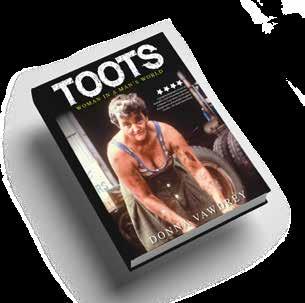
A BOOK BY DONNA VAWDREY
TOOTS
– Woman in a Man's World
Follow the inspiring and at times devastating journey through Toots Holzheimer’s life. Australia’s most recognised truck driver battling non-existent roads and no telephones from the 1960s to 1990s.
• To purchase Toots’ inspiring book and merchandise visit toots-thebook.com.au •
Born on the 5th of July 1934, in Bundamba a suburb of Ipswich, Queensland, Toots was the fifth child of John Albert Bishop (Jack) and his wife Ethel. Toots’ father Jack was born in New Tredegar, Wales on the 14th of February 1892. Times were extremely tough for his parents James Henry Bishop and Emily Grey who shared a detached house with Nana Brown and Uncle Charley. James worked with horses as a farrier, or ostler, to support his wife and three children (Jack, Percy and foster daughter Mary).
Being the eldest child and unable to find work on the land, Jack found himself working in the coal mines at 12 years of age. Wanting a better life for their boys, James and Emily used the little savings they could scrape together and paid for Jack and Percy to migrate to Australia. Arriving in Australia in 1914 the boys settled in the Warwick district. Jack was 21 and Percy 16. They were two of the thousands of young English men and women lured to Australia during this period by the Australian Commonwealth Government’s advertising campaign designed to increase Australia’s population and workforce.
Jack and his brother worked initially for BHP before joining the army and fighting in World War 1. Returning from the war they began work as gangers for the railway. As foreman, responsible for a gang of labourers, Jack travelled with his men repairing railway lines and replacing the wooden sleepers throughout the southern part of Queensland.
Toots’ mother, Ethel Louisa Bavister, was born on the 12th of August 1903 to English migrants Robert and Elizabeth
Bavister. Ethel was the station mistress in Bundaberg, the clerk-in-charge of the Railway Station, responsible for selling tickets, weighing and handling parcels, attending to trains and passengers, and lighting signal and station lamps. She was also responsible for operating the point’s levers in the siding, a vital and hazardous job. It was uncommon for females to fill this position, especially in a regional centre like Bundaberg.
While working in Bundaberg Jack met Ethel, was attracted to this independent woman full of grit and determination (characteristics Toots inherited) and proposed. They married after a short engagement in 1925. Jack’s brother Percy, also stationed in Bundaberg at the time, married Ethel’s sister Myrtle four years later in 1929. Two brothers marrying two sisters was a common occurrence at the time.
Ethel continued to work as station mistress in Bundaberg before transferring to Bollon where her first two children were born, Fay Columbine in 1926 and Zillah Mavis in 1928. Jack, being Welsh, chose rather unusual names for his children.
Jack and Ethel moved from railway station to railway station throughout the region over the next few years. Ethel continued working even after the children were born, again something that was unusual in those days. Gwynfa Deline was born in 1929, Alwyn Chauncey in 1931 and Toots in 1934 before the family moved to Maryborough where Quintice Lexia was born in 1936. With Ethel’s health deteriorating, Jack moved his family to Aratula, a community situated at the foot of Cunninghams Gap in south-east Queensland and settled there.
Aratula is a small village at the centre of a farming community near Warwick. The family lived on the railway station. Chauncey and Toots often jumped on one of the pump cars to deliver their father’s lunch. They challenged each other to who could make the trolley go fastest. These childhood competitions further developed their skills and strength.
They walked to the local school, a small co-educational establishment boasting only 60 students and two teachers. Alwyn, known as Chauncey, then got a bike and everyone climbed on. One sister was on the front of the handlebars and one on the back, two on the back carrier and one on the seat. Poor Chauncey had to stand and pedal. This may be where Toots learned how to handle a push bike; a skill she would need when married with five children.
Toots and Donna
The Livestock and Rural Transport Association of Western Australia (Inc) is the only transport association in WA specifically representing rural transporters.
We are a strong voice for rural WA, ensuring that policy decisions support the viability and safety of rural transporters, primary industry and the communities they service.
Members of the Management Committee are hands on business people, most of whom would drive a truck weekly and travel on nearly every road in WA’s 150,000 km road network in the course of a year.
This close proximity between transporting operations and the advisory role means that representatives of the Association are at the coal face and as such are able to provide that all too rare practical hands on advice in committees, consultative forums and meetings.
Visit our website to sign up for email updates and access handy tips and tools, including:
• A cost calculator to help with business costs
• Guideline rates of payment for 13 truck types
• Templates and tips for negotiating contracts with hirers
• Tips on how to deal with hiring disputes For more information, visit transport.wa.gov.au/ownerdrivers or scan the QR code.