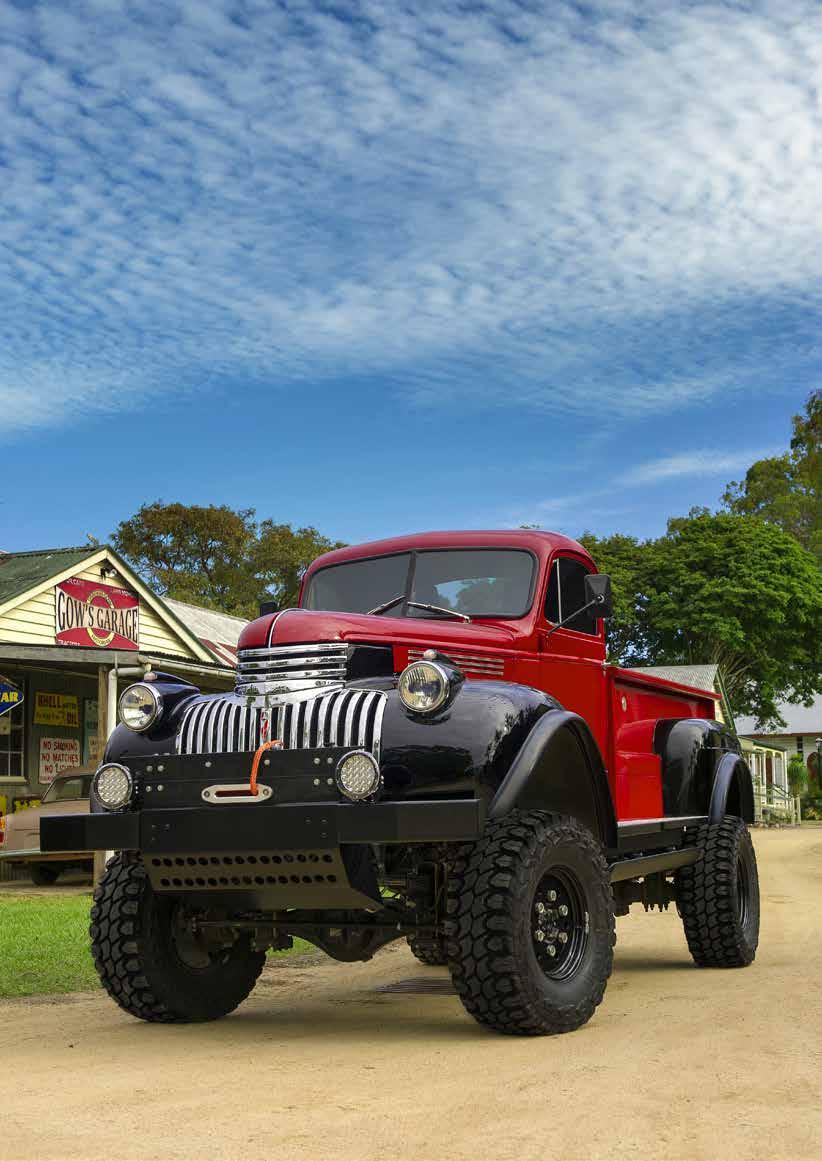
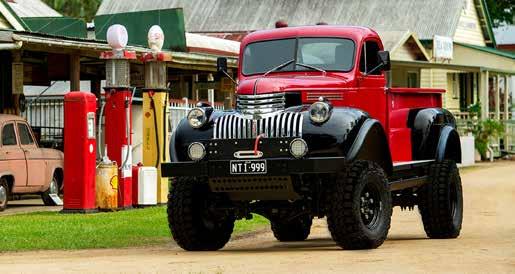
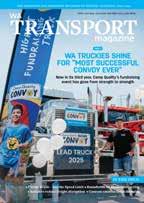
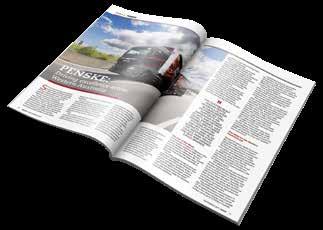
The striking red and black truck, named ‘Ruby’, is the ninth to be raffled by Australia’s largest transport and logistics specialist insurance provider, NTI, in support of the MND and Me Foundation
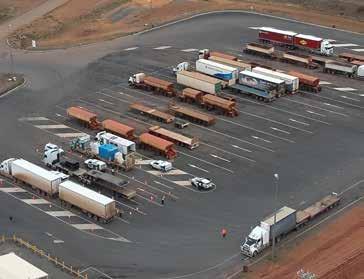
• WA Parking Bays – the worst in the country?
• Fuel Relief Welcome
• Budgets do not deliver productivity reform
• Is emission compliant environmentally friendly?
The Heavy Vehicle Helpdesk is open from: 7am to 6pm Monday to Friday, and WA Public Holidays.
On weekends the Main Roads Customer Information Centre will receive telephone calls on behalf of the Heavy Vehicle Helpdesk on 138 HVO (138 486) and email enquiries can be sent to hvs@mainroads.wa.gov.au
Thank you to everyone who reaches out to me regarding the articles and content of WA Transport Magazine. It encourages me greatly to know that this home-grown publication, now in its 32nd year does make a difference to industry by tackling the ‘hard’ issues and what really matters to industry. At the end of the day, it is all about making the transport industry better for all in Western Australia and it is ‘your’ place that you can have a say or make a suggestion so it truly becomes public domain.
I think it is particularly important that we share the experiences of actual drivers and I thank all the contributors who give their time to say what is actually happening to them on our roads. In this edition road train driver Russel Walsh has been given the key spot (Pages 2 and 3) to talk about exactly what is going on in parking bays in WA. It may make
FROM THE PUBLISHER Contents
some uncomfortable, and whilst Russel has portrayed the truth in good humour it is really not a laughing matter.
As we have just gone through a state and federal budget, many in industry talk about the what these decisions will mean for the transport industry. What continues to amaze me is transport and infrastructure always seems to lag behind population and housing. Surely, you get the infrastructure set in place in the beginning.
As always, thank you to everyone who supports and reads WA Transport Magazine and if you would like to have your say, please email me at karen@ angrychicken.com.au
Best,
2 Western Australian Parking Bays – the worst in the country
4 Fair Work Commission has issued mandatory fuel cost recovery order
8 Main Roads News - Main Roads assistance to industry during the fuel security challenges
9 Fuel relief welcome, but the road fight continues
11 Western Roads Federation - How the Heavy Vehicle Driving Operations Skill Set became one of WA’s most successful transport training partnerships
12 Classic Chevrolet ‘ruby’ revealed as latest truck to be restored and raffled for MND Research
14 Seeing Machines Releases Part 2 of Technical Paper Series on Intoxication
15 LRTAWA - Budgets deliver spending — But not yet the productivity reform transport needs
16 What is the State Budget delivering for the transport industry?
19 Reinvesting in Road Safety: Securing the future of WA Transport
20 PAYDAY SUPER: What you need to know to be ready
Angry Chicken Publishing Pty Ltd
Telephone 0430 153 273
www.angrychicken.com.au
ABN: 35 486 530 095
PUBLISHER / COMMISSIONING EDITOR
Karen-Maree’ Kaye T: 0430 153 273
Email: karen@angrychicken.com.au
WRITERS
Karen-Maree’ Kaye, Russell McKinnon
CONTRIBUTORS
Jan Cooper, Cam Dumesny, Cliff Graham, Lara Jensen, Carol Messenger, Ray Pratt, Russel Walsh
ADVERTISING ENQUIRIES
Angry Chicken Head Office T: 0430 153 273 E: karen@angrychicken.com.au
DESIGN / PREPRESS
Cally Browning | Bare Creative
ACCOUNTS
T: 0430 153 273
E: karen@angrychicken.com.au
PRINTER
Daniels Printing Craftsmen
SUBSCRIPTIONS
Subscriptions available directly from the Publisher.
T: 0430 153 273
E: karen@angrychicken.com.au
Australia: 1 year $130 (inc GST)
Overseas subscribers: Airmail postage will be added to subscription rate.
Editorial Submissions: The Publisher welcomes editorial submissions. Once received they will become the property of the Publisher who reserves the right to edit the or adjust the content to fit with the format of our publication.
West Australian Transport Magazine (WATM) is published by Angry Chicken Publishing Pty Ltd
ABN: 35 486 530 095 All rights reserved. No part of this publication may be reproduced, adapted or transmitted in any form by any process (graphic, electronic, mechanical or storage and retrieval system) or sold, resold or otherwise exploited for any purpose without consent of the Publisher.
The publisher, contributors, editors and consultants disclaim any and all liability and responsibility to any person or party, be they a purchaser, reader, advertiser or consumer of this publication in regards to consequences and outcomes of anything done or omitted, or being in reliance whether partly or solely on the contents of this publication. No person, organization or party should rely on or on any way act upon any part of the contents of this magazine without first obtaining the advice of a fully qualified person. The Publisher shall have no responsibility for any action or omission by contributor, consultant, editor or related party for content within WATM. The opinions and content within WATM does not necessarily reflect those of the Publisher, editor or their agents. No responsibility is accepted for damage or loss of material supplied to the publisher.
Walshy's PERSPECTIVE
Over to You
Let me introduce myself.
My name is Russel Walsh. I have been in and around trucks for around 40 years. My driving career started at 20 in the town where I grew up, Mukinbudin and over the years I’ve owned, driven and fixed a couple of trucks. I did a cert IV as a heavy commercial vehicle mechanic later in life and managed a large private fleet workshop. I’ve carted most types of freight including livestock, end tippers Ag cartage to side tippers on ore jobs in Leonora, Groote Eylandt, The Granites and Bootu Creek plus some general and refrigerated and now fuel to throw into the mix.
IWestern Australian Parking Bays –the worst in the country
would like to touch on a couple of subjects in this article. So far, I have spoken about Sham Contractors and the impacts that come with them. I have also spoken about the pipeline to easy and quick MC licences along with the ‘conflict of interest’ in the big corporate companies desperate to get meat in the seat and the dangers this greed has created. I have so far been factual and politically correct in my writing but that is going to loosen up a bit in this article.
The first subject is Parking bays Who is responsible for maintaining them, emptying the rubbish bins and the general housekeeping of the bays and the
surrounding bush in Western Australia?
After a bit of research, I have found it is the responsibility of the Main Roads Department Western Australia (MRDWA). They have a sub department called heavy vehicle services (HVS) who are the compliance arm looking after permits and all things to do with heavy vehicles. Local shires manage the rest of the parking bays.
Most local shires in WA are doing a satisfactory job of looking after theirs and some even supplying toilet and shower facilities in many rural towns throughout WA which is appreciated.
As for the MRDWA, in my opinionmeh. From what I have experienced, their facilities are not being looked after at all.
I’m going to be critical and say this, “You are doing a poor job MRDWA and as a tax payer funded organisation it’s time you were called out”. Let me tell you why.
I have travelled through all states of Australia in my 40 years of pedalling trucks. For me, WA would have some of the worst parking bays in the country and South Australia is not far behind. They actually do a weird thing in SA – they put a chicken wire fence around the bays that have no toilets so you can’t walk into the bush for a nature call.
What does every driver want to do after four or five hours of driving? You guessed it and where is the consideration for the female truck drivers?
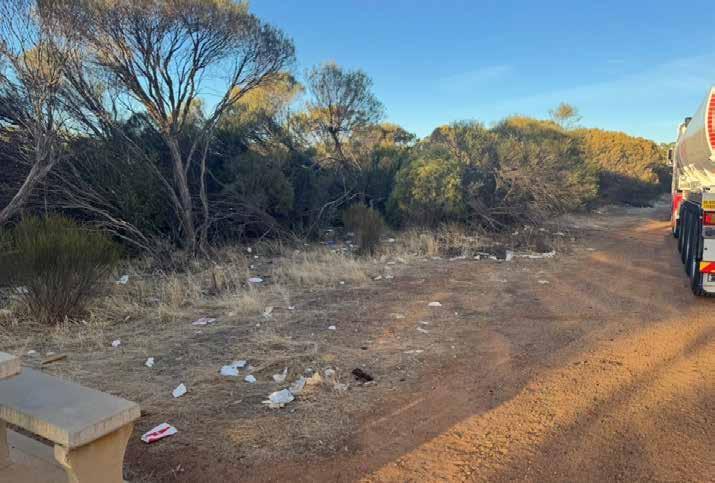
Some bays have shade and a concrete table and chairs, most are sealed on the major highways whereas, only a small percentage of WA’s are sealed. The unsealed ones are full of pot holes and haven’t seen a grader in years. Bins are provided but they are constantly overflowing with the litter strewn throughout the bush.
WA removed rubbish bins a few years back and that was a disaster with the surrounding native vegetation representing a rubbish tip. They were gradually reintroduced but someone forgot to tell the government that they have to empty them… regularly.
Northern Territory do the best – easily the best presented and maintained parking bays in Australia. Most are sealed with plenty of natural bush around for nature calls. Many have concrete table and chairs with some even having a roof for shade. The bins are emptied regular and the grass surrounding the bays is mowed or slashed several times a year. They are spaced out about every 50 kms as well so if you miss one then the next one is only half an hour further along the track. Excellent work NT and common sense still prevails in the top end - better facilities, the least regulation and the least heavy vehicle accidents with the largest combinations on the road.
The second subject is parking bay etiquette
This one is enough to give you a dose of the runs (literally). In recent years we have seen the standard of truck drivers dramatically plummet and this just so coincided with our new overseas drivers.
The reality is ‘now’ drivers have to do a recon mission as we approach and enter a parking bay in WA because of the, as I call them, Rogan Josh (resembling a chocolate Mr Whippy ice cream) or Butter Chickens (resembling a caramel cow pat) dropped right where we park.
Seriously though, whilst I try to be good humoured about it - it is not a laughing matter. Many times, I have jumped out of my truck in my favourite double pluggers only to find I’ve missed one by inches.
If you are a driver, you will understand what I’m saying and if you are in governance, then I can’t put this any more clearly. This is what WA truck drivers have to deal with daily.
What is wrong with walking off into the bush and doing your business and kicking a bit of dirt over it so nature can do its job?
Another problem that is creeping in is
how to park in parking bays or at truck stops.
There seems to be little to no concern for fellow truckies these days. Years ago, when we pulled up at a roadhouse it was always in an orderly fashion to try and make it easy for other trucks to enter and exit the parking area. We always considered our fellow truckies. These days it’s random and one truck is often parked where you could fit two or even three.
On both of these subjects I ask, “Where is the consideration for others?”
If you need to be told – When you are pulling into a bay for the night then go to the front of the bay, over to the left so
For the people actually on the road – ‘the drivers’, it seems to us that implementing regulations without expanding and improving facilities and infrastructure is madness
other trucks can get in and out as well.
The amount of times I’ve seen a white automatic European made truck parked right in the middle is unbelievable.
In summary
We have an industry growing rapidly as the countries freight task enlarges and we have authorities and government bodies that are not growing with it.
For the people actually on the road – ‘the drivers’, it seems to us that implementing regulations without expanding and improving facilities and infrastructure is madness.
Add to the mix culture and language issues, untrained and unskilled drivers and we are setup for one disaster after another… and that’s exactly what is happening.
I have been extremely critical of the regulatory bodies from Federal government through State Government to WAPOL, DOT and MRDWA and HVS. They have put the regulations and compliance in place
and there seems to be very little policing or enforcement especially when it comes to the drivers causing the largest safety issues. Truck drivers do talk to each other and many of us are wondering why. It’s almost as if they have been instructed to leave them alone.
I’ve had my say – some of it is blunt, some of it’s hard to hear but it’s coming from 40 years behind the wheel, not from behind a desk.
Now here’s the part that actually matters - because whinging about it won’t fix it. If we want this industry to be better safer, cleaner, more professional then everyone has a role to play.
Government and regulators
You need to catch up with the freight task. That means more sealed, well-maintained rest areas. Bins emptied regularly not when it becomes a biohazard. Basic facilities like toilets and shade, especially for long-haul drivers and more rest stops every 40 – 60 km on major routes. You can’t keep tightening regulations without building the infrastructure to support them. That’s not safety that’s setting people up to fail.
Companies and operators
Stop chasing numbers at the expense of standards. “Meat in the seat” might keep trucks moving, but it lowers the bar for everyone. Invest in proper training, pair new drivers with experienced ones, chuck in a bit of cultural awareness training for those arriving to our country and for us so we can understand their culture. Set expectations around etiquette, safety, and respect on the road
A licence doesn’t equal experience — and experience is what keeps people alive.
Drivers all of us
This one’s on us too, take pride in the job. Respect the next bloke or woman pulling in after you, park like someone else matters. Walk 20 metres into the bush if you have to and leave the bay usable. It’s not complicated - It’s just standards.
Because at the end of the day, this industry used to run on respect not just rules. And we can get that back; not by pointing fingers at each other, but by lifting the standard across the board.
I’m not interested in tearing the industry down. I’m interested in seeing it step up. Because if we don’t fix it properly then the next headline won’t be about parking bays…
Calls for national road funding reform
Australia has the technology, public support and international evidence to replace the fuel excise with a fairer road user charging model, according to the new Transport Australia’s paper, The road to reform: Why Australia needs a sustainable funding model. It argues that Australia can no longer rely on a declining fuel excise as a revenue source for road maintenance to support a growing population, supply chains and a highperforming national transport network.
The paper calls for the Federal Government to expedite development of a nationally harmonised road user charge framework in this term, in close cooperation with states and territories.
Transport Australia CEO Ehssan Veiszadeh said, “Fuel excise was designed for a different vehicle fleet and a different economy. As vehicles become more efficient and more Australians shift to
electric and hybrid vehicles, the revenue base that helps maintain our roads will continue to decline.
“The question is no longer whether Australia needs a new funding model. The question is how we design one that is fair and nationally consistent.
Transport Australia research shows Australians understand the need for reform, particularly when it is linked to better roads, better maintenance and a more transparent system.
According to a national survey, 59 per cent of Australians support replacing fuel excise with a per-kilometre road user charge, rising to 71 per cent among EV and hybrid drivers. It also found 78 per cent of Australians are concerned about inadequate road maintenance, with support increasing when road user charge revenue is dedicated to road investment.
Fair Work Commission has issued mandatory Fuel Cost Recovery Order
The fuel cost recovery order came into force on April 21 and will apply across the whole road transport contract chain. Under the order, parties in the road transport contract chain will need to adjust their rates within each fortnight or twice per calendar month to ensure that the transporter undertaking the work can recover the increased cost of fuel since on or before 6 March 2026.
The Australian Trucking Association (ATA) supported the order before the commission, while proposing amendments to make it clearer and more workable, backed by written submissions, oral submissions and witness evidence.
ATA Chair Mark Parry said “I urge every trucking business to read the order, talk to their financial adviser and seek the necessary rate adjustments”.
In the hearings, concerns were raised about clause 4.2 of the draft order, which requires primary parties to take reasonable steps to ensure that secondary parties engaging owner drivers adjust the rates they pay to cover the increased cost of fuel.
“The ATA proposed removing the clause, on the grounds that it would be administratively burdensome. Given that the order has a dispute settlement clause,
we argued that there was no need to require primary parties to police the operation of the clause,” Mr Parry said.
“The commission retained the clause, while providing that it does not apply to a small business primary party that is not a road transport business. Earlier in the hearing process, the commission also pared back the requirement from all reasonable steps to reasonable steps.
“The Fair Work Ombudsman will need to provide industry with clear guidance about what are reasonable steps. The ATA will provide the commission with any evidence we receive about issues with the clause when it reviews the order after its first month of operation.
“The commission will then review the order every three months. The cost recovery obligations in the order will cease to apply if the national weekly average terminal gate price of diesel falls below $2.00 per litre.
“These rules about when the order ceases to apply will ensure that it continues for the period of the emergency and no longer,” he said.
To read the order visit www.fwc.gov. au/documents/sites/ms2026-1/ms2026-1order-rtcco-20-04-2026.pdf
The Australian Chamber of Commerce and Industry (ACCI) has released an employer guide to the Fair Work Commission’s fuel cost recovery order.
The 25 page guide includes advice about the businesses covered by the order, the specific obligations on primary and secondary parties, including the obligation on primary parties to take reasonable steps to ensure that secondary parties adjust the rates they pay owner drivers and gig workers, an immediate action checklist and two detailed case studies.
The ATA is a member of ACCI, who developed the guide with funding from the Australian Government Department of Employment and Workplace Relations through the Productivity, Education and Training Fund grant program.
To read the guide visit https://cdn-au. mailsnd.com/49022/r-B4xdyiWX1T29w43Kd8MPV8hqUhGCvUxLn1T7BM Uo/1778205820/2582172.pdf
The State Government has secured an extra 8 million litres of diesel for WA's strategic stockpile, bringing the State controlled backup supply to 20 million litres.
The extra supply of fuel - provided by bp - can be accessed in Kalgoorlie, Geraldton and Kwinana where it can be
The cargo is the first tranche of the State's strategic stockpile and is expected to be used by remote communities which rely largely on diesel generation for power in addition to the agricultural, resource and transport sectors.
The strategic stockpile will be 100
Expected to be net debt neutral, the fuel will be sold on to customers
quickly distributed to farmers and miners facing supply challenges.
Expected to be net debt neutral, the fuel will be sold on to customers.
It comes as a shipment of four million litres of diesel arrived in Wyndham, shoring up emergency supplies in the Kimberley.
per cent WA owned and able to be used at the discretion of the State, providing an agile volume of liquid fuel when supply is compromised.
This approach complements the Federal Government's Minimum Stockholding Obligation, which requires fuel companies to hold reserves.
WA OWNED AND RUN
Amendments to modernise WA Fuel Emergency Powers legislation
The State Government have introduced amendments to the Fuel, Energy and Power Resources Act 1972 (FEPRA) to modernise and clarify the legislation, helping avoid the potential for costly and time-consuming legal challenges.
A State of Emergency was announced under FEPRA on 1 April, allowing the State Government to compel fuel companies to provide critical supply information which will support the State Government's fuel security response.
If National Cabinet escalates to level three under the National Fuel Security Plan, Western Australia may need to activate additional emergency powers secure fuel supply for petrol stations and key economic sectors.
The current Act - which was introduced in the 1970s - uses outdated wording to describe the compensation available to fuel companies affected by government actions.
premier brake and clutch specialists proudly servicing the states industrial clutch and brake applications.
From major truck workshops, heavy haulage, cranes, the mining industry and more… our team of knowledgeable and qualified technicians share over 100 years combined experience and focus on delivering prompt service alongside the supply of top name brakes and clutchesthroughout Australia and Asia.
With over 20 years in the industry we have a well-earned reputation for the development, manufacture and supply of quality standard and customised designs to suit a wide range of applications.
For the best advice and friendly service contact us today.
All Talk, No Diesel - Truck Drivers Left Carrying the Load
The recent announcement that the government is considering to help truck drivers with regard to high fuel costs is I’m afraid just another hollow promise.
The government loves an announcement. Flash the cameras, roll out the press conference, promise relief for struggling industries – and then… nothing. Or worse, delays so long they may as well be nothing.
For Australia’s truck drivers, this cycle has become painfully predictable.
We’ve heard it all before. Fuel relief is “being considered”. Assistance packages are “on the way”. Reviews are “underway”. Meanwhile, out on the highway, the reality couldn’t be further removed from the polished words coming from our politicians’ mouths.
Fuel prices spike – and they don’t just spike, they explode. Owner-drivers and small operators are forced to absorb the hit immediately. There’s no buffer. No grace period. No government stepping in overnight to ease the pressure. The bills come in real time, and they must be paid in real time.
But cost recovery? That’s a different story entirely. Weeks – sometimes months you need to wait.
That’s how long operators are expected to wait before those increased costs are reflected – if they’re reflected at all. By then, the damage is already done. Credit cards are maxed, loans are stretched and margins that were already razor-thin are pushed past breaking point.
And during that time, while operators are hanging on by their fingernails; the government response is still “in progress”.
Let’s call it what it is - too little, too late.
The trucking industry operates at the very end of the supply chain. That means we carry the cost first and argue about it later. Big business at the top has the power to delay, negotiate, and deflect. Ownerdrivers don’t. They’re left carrying the financial burden while everyone else takes their time deciding what’s “fair.”
And it’s not just financial strain – it’s mental.
There’s a side of this crisis that rarely gets the attention it deserves. The sleepless
An industry already stretched to its limits cannot survive on promises. It runs on diesel, determination, and people willing to do one of the toughest jobs in the country
nights, the constant stress of wondering whether the next fuel bill will tip things over the edge and what about if you need to fork out for an unforeseen equipment repairs, or replace tyres due to bad road conditions? The pressure of keeping a business afloat while still trying to be present for family – if you’re even home long enough to do that.
Truck drivers already face long hours, isolation, and fatigue. Add financial uncertainty and a feeling of being ignored by those in power, and it becomes a dangerous mix.
Burnout is no longer the exception – it’s becoming the norm.
Drivers are walking away from the industry, not because they don’t love the job, but because the job is no longer sustainable. And who can blame them? When you’re working 70-hour weeks just to stand still, something has to give.
What makes it worse is the growing sense that no one is truly listening.
Government representatives talk about supporting “essential industries” yet the people keeping supermarket shelves stocked and construction sites moving are left fighting for scraps. Policies are announced with great fanfare, but by the
time they trickle down – if they trickle down at all – the urgency has long passed.
It’s not enough to acknowledge the problem months after the fact. It’s not enough to offer temporary relief that barely scratches the surface. And it’s certainly not enough to expect truck drivers to continue absorbing costs while waiting for bureaucracy to catch up with reality.
If the government is serious about supporting the transport industry, action needs to be immediate, not delayed. Cost recovery mechanisms must be faster, fairer, and enforced – not left to be negotiated by those with the least power.
Because right now, the message being sent to truck drivers is loud and clear: you’re on your own.
And that’s not just bad policy – it’s a direct threat to the future of the industry.
An industry already stretched to its limits cannot survive on promises. It runs on diesel, determination, and people willing to do one of the toughest jobs in the country.
But even that has its limits.
And we’re getting dangerously close to finding out exactly where that breaking point is.
Keep it safe, Ray Pratt.
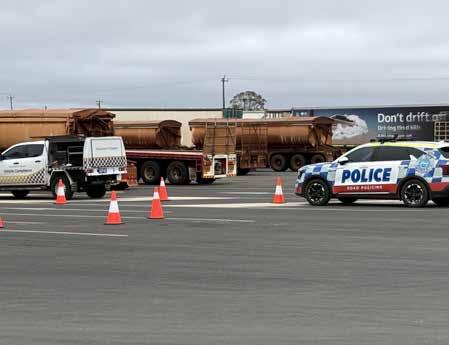
Recent operation to address the misuse of roadside parking bays in the Goldfields
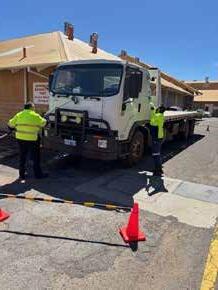
In response to industry and community concerns about the inappropriate use of parking bays, Main Roads recently led a targeted multi agency compliance operation across the Kalgoorlie Boulder area. This operation focused on heavy vehicle compliance, roadside safety, and environmental standards.
The operation was undertaken in conjunction with Main Roads Heavy Vehicle Compliance, the Department
of Transport and Major Infrastructure Compliance, Western Australia Police Force, Department of Water and Environmental Regulation, the City of Kalgoorlie Boulder, and the Shire of Coolgardie. Over a five day period, agencies collectively carried out approximately 350 heavy vehicle inspections. Encouragingly, many operators were found to be compliant. However, the operation did result in the detection of
Main Roads assistance to industry during the fuel security challenges
To assist industry Main Roads issued HVS Update 6-2026 (v3) approving Temporary Special Assistance access. This allows concessional mass for fuel, fertiliser, lime, milk and bulk perishable goods deliveries. This enables Restricted Access Vehicles (RAVs) to transport more petrol, diesel, fertiliser, lime, lime sand, milk and bulk perishable goods to WA Regions until further notice. The details are available in the HVS Update.
Main Roads also issued HVS Update 112026 (v2) which introduced the 53.5 metre Bindoon Hill Special Assistance Permit, as part of the ongoing support the State is providing to industry to help keep WA
moving amid fuel security challenges. This temporary three-month Special Assistance Permit provides for eligible 53.5 metre Triple Road Trains, up to AMMS level 3 mass limits, to operate on Great Northern Highway between Wubin and Muchea with certain requirements for drivers and the Triple Road Trains. For further information, please contact the Heavy Vehicle Services Helpdesk on 138 486 or email hvs@mainroads.wa.gov. au or go to www.mainroads.wa.gov.au/ heavy-vehicles/updates/hvs-updates/62026v3/ and www.mainroads.wa.gov.au/ heavy-vehicles/updates/hvs-updates/112026v2/
74 heavy vehicle compliance offences, as well as 27 environmental offences related to matters such as roadside littering and dumping. These outcomes highlight the importance of continued enforcement activity to deter non compliance and address unsafe practices.
Appropriate use of rest areas and parking bays is essential to manage driver fatigue and to maintain safety for all road users. Government agencies continue to work closely together to monitor conditions in the region, respond to community feedback, and take enforcement action where required. Instructional signage is being arranged for heavy vehicle parking bays to assist local enforcement actions.
This recent operation forms part of an ongoing commitment by government agencies to keep Goldfields roads safe and ensure this critical freight corridor operates efficiently and responsibly.
Feedback plays an important role in guiding enforcement priorities. Specific information regarding suspected vehicles (including any RAVS that are over staying in rest areas) can be provided by calling Main Roads on 138 486 or emailing heavyvehicleintel@mainroads.wa.gov. au with details such as the time, date and place of sighting, the direction of travel, the nearest intersection or side road, and the prime mover registration number or company name displayed on the vehicle.
Fuel relief welcome, but the road fight continues
In a win for the transport industry, the Federal Budget has kept the industry’s fuel tax credits despite a Productivity Commission plan recommended phasing out fuel tax credits for on-road heavy vehicles over ten years.
The Government has temporarily reduced the road user charge to zero in response to the Iran war, but the charge is currently scheduled to go back to 32.4 cents per litre on 1 July.
Australian Trucking Association Chair Mark Parry said the fuel tax credit system reduced the cost of freight for everyone in Australia, as well as rural exporters.
Mr Parry said, “The Productivity Commission’s plan would not achieve its goal of encouraging decarbonisation as the reality is there is no single technology available to replace diesel engines.
“For those businesses that do have an alternative to diesel, the effective tax increase would reduce their financial capacity to invest in new vehicles and equipment.
“The Government’s immediate focus should now be on considering whether to extend the temporary reduction in the road user charge for another three months,” he said.
Gerard Johnson National President of the Australian Livestock and Rural Transporters Association (ALRTA) said, “What the budget gets right is the cut to the heavy vehicle road user charge for three
The Government has temporarily reduced the road user charge to zero until 1 July
months and the $3.2 billion Australian Fuel Security Reserve, together with increased stockholding obligations which will lift diesel reserves to 50 days, backed by a $7.5 billion Fuel and Fertiliser Security Facility. But on roads, Mr Johnson is critical
YOUR
saying, “The Budget does not match the scale of its fuel investment. There is $8.179 billion in road funding in 2026–27 and $38.7 billion over five years - but no clear plan to direct that money to the livestock routes, bridges, rest areas, saleyard access roads and first-and-last-mile connections that you use every day.
“Compounding this, the Budget includes a $2 billion infrastructure slippage in 2026-27 alone - rising to $4.1 billion across three years - reflecting Budget assumptions about Middle East supply disruptions and the availability of key construction materials. Delayed road projects mean delayed safety and productivity gains for regional freight.
“The Roads to Recovery program allocates $843 million in 2026–27 for councils to direct to local roads. That funding can make a real difference, but only if councils treat heavy vehicle access and freight productivity as priorities rather than afterthoughts,” said Mr Johnson.
It all started with an idea
How the Heavy Vehicle
Driving Operations Skill Set became one of WA’s most successful transport training partnerships
By NATALIE GRINCERI | Western Roads Federation
When the course code AE871 first appeared in TAFE guides, no one imagined it would go on to reshape how people enter Western Australia’s road transport industry. AE871 is the course code for the Heavy Vehicle Driving Operations (HVDO) Skill Set, a program that has to date, opened doors for 1700+ new drivers, that have strengthened metropolitan and regional workforces across the state.
And on 6 May 2026, that impact was recognised on a national stage when Central Regional TAFE (CRTAFE) took home the Power of TAFE Partnerships Award at the TAFE Directors Australia Convention. The award celebrates partnerships that genuinely shift outcomes, improving access, solving real industry problems, and delivering results that matter. AE871 fits that description perfectly.
A Partnership Built to Solve a Real Problem
The HVDO Skill Set started with a simple idea: if TAFE and industry worked together, they could tackle WA’s growing shortage of trained, job ready truck drivers. CRTAFE partnered with the Western Roads Federation (WRF) and the Western Australian Transport Workers Union (TWU) to design a program that reflected
the real-world requirements, not just the licensing system.
From day one, industry sat at the table. CRTAFE, WRF and TWU co designed a program that was fast tracked, practical, safety focused and aligned with employer expectations. Government support through Lower Fees, Local Skills ensured the program was accessible to new entrants, career changers and regional jobseekers, exactly the people the industry needed.
This is the kind of collaboration the award celebrates: strategic partnerships that innovate, expand access, and deliver shared success.
From Small Beginnings to Statewide Delivery
The program’s early days were spent at the Driver Risk Management facility at Perth Airport, and a smaller contingency at Tech Park in Geraldton, where students learned from trainers with a vast and diverse range of industry experienced, before hitting the streets to put their developing driving skills into practice.
Demand grew quickly and CRTAFE responded. The program expanded across regional WA, where delivery hubs were expanded into Kalgoorlie, Northam, Carnarvon, Moora, and Merredin. And
new programs have been scheduled in for Mt Magnet and Meekatharra. This wasn’t just expansion for the sake of it, it was a deliberate strategy to bring training to where the people and jobs were. By reducing travel barriers and delivering training locally, CRTAFE and its partners strengthened regional workforces and have created, and will continue to create, genuine pathways into the transport sector.
What Makes AE871 Award Winning
The HVDO Skill Set consistently delivers outcomes that match the award’s criteria:
• Innovation and Shared Problem Solving: Co designed with industry, continuously refined through consultation.
• Industry Impact: Graduates who are licensed, confident and workplace ready.
• Shared Success: A partnership built on aligned vision, mutual benefit and measurable results - from licensing outcomes to employment pathways. Students graduate with HR, HC or MC licences, WorkSafe high risk forklift accreditation, and essential safety training in workplace health and safety, fatigue management, load restraint and Chain of Responsibility. Employers gain competent
new drivers. Communities gain local training and local jobs.
A Program That Keeps Evolving
- Including a New Pathway Extension
he strengths of AE871 is that it hasn’t stood still. As industry needs changed, the program adapted. The latest evolution is the development of a short course extension pathway, allowing graduates to continue their skills development beyond the initial predominantly HR focused program.
This new HC/MC short course gives students a clear, supported pathway to progress into higher licence classessomething industry has been asking for. It builds on the foundation of the HVDO
Skill Set and keeps the original goal alive: creating a pipeline of skilled, safe, job ready drivers who can grow with the industry.
It’s a natural next step, and one that strengthens the long term impact of the partnership.
A Team Effort Worth Celebrating CRTAFE is the first to say this award belongs to everyone involved. From HVDO and Skills for Study lecturers across regional WA and the CRTAFE administration teams who kept everything running, the WRF staff who continue to engage with both students and industry, and especially to the Industry experts who give their time as guest speakers or open their transport yards and expose
students to toolbox meetings, tours of working facilities and even allowing them to participate in activities like vehicle and trailer inspections - every part of the organisations involved play a role.
The Story Isn’t Finished
AE871 began with an idea: that TAFE and industry could work together to build a safer, stronger, more sustainable transport workforce. Today, it stands as one of WA’s most successful examples of partnership driven training and with national recognition now behind it, the program is only gaining momentum.
Real skills. Real jobs. Real impact. And a partnership that continues to deliver for Western Australia.
Classic Chevrolet ‘Ruby’ revealed as latest truck to be restored and raffled for MND research
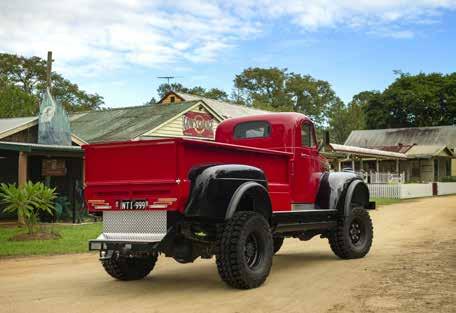
Acustom-built 1947 Chevrolet Maple Leaf truck, brought back to life with modern engineering is the latest vehicle to be restored and raffled to raise funds for Motor Neurone Disease (MND) research.
The striking red and black truck, named ‘Ruby’, is the ninth to be raffled by Australia’s largest transport and logistics specialist insurance provider, NTI, in support of the MND and Me Foundation. Since 2017, NTI has raised more than $3 million for vital research, with 100 per cent of funds going directly to the official NTI Research Grant for MND.
Powered by a Hino 4-litre turbo diesel engine and built on Hino 4x4 running gear, ‘Ruby’ combines vintage character with modern performance, continuing NTI’s tradition of transforming classic trucks into one-of-a-kind collector’s items.
The truck comes equipped with front and rear disc brakes supported by an anti-lock braking system, vehicle stability control, and traction control to enhance handling and driver confidence. An exhaust brake adds further control, complemented by a robust multi leaf spring suspension setup designed for durability.
Powered through a 6-speed manual transmission, the truck is built for practical capability, including a 6tonne electric winch and a 3.5tonne tow bar.
Inside, modern comforts are seamlessly integrated, including electric windows, air conditioning, a touch screen media system, and a reversing camera, making this classic
truck as functional as it is distinctive.
NTI CEO Janelle Greene said the organisation is proud to continue its commitment to funding research aimed at finding a cure for MND.
“Every day, MND claims the lives of two Australians, and another two are diagnosed. That’s why this work is so important,” Ms Greene said.
“NTI became involved with MND after our former CEO, Wayne Patterson, was diagnosed with the disease and later passed away. Wayne is widely regarded as the leader who created the modern NTI, and we wanted to honour his legacy in a meaningful way.
“Our approach of restoring and raffling classic trucks has brought together our people, partners, customers and the broader community in an incredible show of support. To have raised more than $3 million for MND research is something everyone involved should be immensely proud of.
“I think Wayne would be amazed and humbled by what this initiative has achieved. It’s a legacy that continues to drive us forward.”
MND and Me Foundation CEO Jane Milne said the partnership with NTI continues to have a profound impact on those living with the disease, and their families too.
“Our mission is to care and to cure. We support people and their families and carers from the moment they are diagnosed through to end-of-life care,” Ms Milne said.
“This can include everything from equipment and home modifications to psychological and grief counselling.
“On the research side, consistent funding through the NTI MND Research Grant has been critical, enabling leading institutions such as the University of Queensland, the Queensland Brain Institute and the Clive Berghofer Medical Research Institute to undertake vital work in the search for a cure or effective treatments.
Tickets are available online at raffletix.com.au/?ref=tsa25&sref=ewvf4dvp
CONTACTS:
7 Tipper Crt, Hazelmere WA
Office: (08) 9274 6355
Mobile: 0418 802 007
Rentals: 0488 003 228
Email: alan@haulmore.com.au
Website: www.haulmore.com.au
We have the following units currently in stock available for sale or hire:
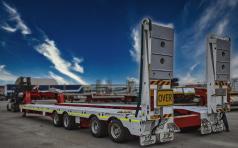
Quad 4 Rows of 8 Full Axle Widening Low Loader with Hydraulic Suspension
Quad 4 Rows of 4 Full Axle Widening Low Loader with Hydraulic Suspension
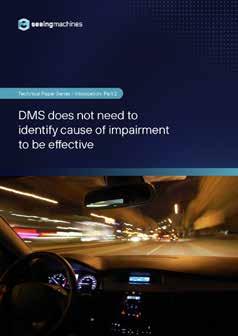
Seeing Machines Releases Part 2 of Technical Paper Series on Intoxication
Seeing Machines Limited, a global leader in vision-based monitoring technology, has released the second part of its Technical Paper series exploring driver intoxication and impairment.
The latest instalment, outlines how Driver Monitoring Systems (DMS) provide a fundamentally different and more versatile approach to road safety by detecting real-time functional impairment, regardless of the underlying cause.
For more than a century, road safety initiatives have focused on deterrence through law enforcement and public awareness campaigns. These approaches have typically relied on static chemical thresholds, such as blood alcohol concentration, as proxy indicators of risk. When extended to other substances, they require distinct chemical markers and dedicated sensor configurations for each drug.
While effective as deterrents, these methods do not directly assess a driver’s real-time fitness to operate a vehicle.
Part Two of this series highlights the critical distinction between intoxication and impairment. Intoxication refers to the presence of substances in the body, whereas impairment reflects the extent to which those substances affect functional capacity and driving performance.
Camera-based DMS technology focuses
on impairment. It detects visual indicators of reduced driving capability, tracking both the severity and progression of symptoms to enable timely, potentially life-saving interventions. Because the system assesses functional state, it does not rely on breath, saliva, or sweat-based detection methods for individual substances.
"Our second paper reinforces that effective in-cabin safety systems must focus on a driver's functional state, rather than identifying a specific chemical cause," said Dr Mike Lenné, Chief Safety Officer at Seeing Machines.
"By detecting the physical signs of impairment directly, camera-based DMS provides a versatile safety net, capturing risks arising from both substance and nonsubstance related causes, and complements existing roadside deterrence strategies."
This cause-agnostic approach enables intervention strategies to be aligned with immediate crash risk. It positions DMS as a critical technology for the future of automotive safety, capable of addressing complex challenges such as polydrug use and combined fatigue, without requiring multiple specialised chemical sensors.
Part One of the Technical Paper series, Blood Alcohol Concentration is an Insufficient Ground Truth for RealTime Impairment Detection, released in December 2025, is available at https://
Additional police resources to the regions
The State Government is prioritising community safety in the regions by deploying more police officers and other operational assets in response to antisocial behaviour through Operation Regional Shield.
$24.2 million has been invested to continue Operation Regional Shield for a further two years after the program was initially created in 2022 to combat youth crime in the Kimberley.
Since its inception, Operation Regional Shield has grown the WA Police Force's capabilities to respond and disrupt crime across the State, supporting thousands of staff deployed to 20 locations across the Kimberley, Pilbara, Mid-WestGascoyne, Wheatbelt and GoldfieldsEsperance districts.
Operation Regional Shield provides additional police resources to the regions through rotational deployments to support local policing operations and targeted enforcement activity, and when deployed, the purpose of the additional resources is to enhance the capability to respond to, and deter, criminal activity and antisocial behaviour.
The State Government says that this increased police presence has been a success in managing antisocial behaviour.
There are still reports from the Transport Industry and community that objects are still being thrown at vehicles and it is hoped that this initiative targets this dangerous activity on our roads.
seeingmachines.com/technical-paperseries-intoxication/ and to view the Part Two visit https://seeingmachines.com/wpcontent/uploads/2026/04/Technical-PaperIntoxication-Part-2.pdf
Seeing Machines will continue to release future papers in the series to advance DMS capability and improve road safety outcomes.
Budgets Deliver Spending – But Not Yet the Productivity Reform Transport Needs
The 2026 Western Australian and Federal Budgets delivered in May this year both contain welcome transport and freight investments. There is money on the table for roads, freight corridors and fuel security. Unfortunately, neither budget confronts the deeper productivity and sustainability challenges facing our transport sector.
The result is a familiar pattern: substantial spending commitments without the policy reform required to maximise the long-term economic return.
The Western Australian budget delivered on health, housing and cost-of-living relief. There is little evidence of a coordinated productivity reform agenda targeting heavy vehicle access and regulatory efficiency.
That said, there are several genuinely positive initiatives.
The planning for the Western Trade Coast is significant for freight and logistics operators. Without properly planned industrial precincts connected to ports, road and rail infrastructure, tension between industrial and domestic land uses become imbedded as we have seen on routes like Thomas Road.
Other welcome announcements include upgrades to Anketell Road, Stage 1 of the Great Northern Highway Fitzroy to Gogo flood resilience works, boosting the Main Roads' maintenance program, funding for regional bridge replacements and water drainage bridges in Busselton and Harvey, the latter included after a sustained political and industry campaign.
The temporary removal of the heavy vehicle road user charge for three months
from 1 April together with the removal of the fuel excise were significant Federal Government announcements with obvious budget implications. This measure provided direct operational relief to transport operators facing cost pressures as a result of the global fuel crisis, however there was no indication they would be extended. The start of pay day superannuation and the return of the RUC and excise on July 1 are likely to result in cashflow issues for some businesses.
There is little evidence in the 2026 State Budget of a coordinated productivity reform agenda targeting heavy vehicle access and regulatory efficiency
If there is a positive outcome for the Australian transport industry from the current fuel issues it is that it has forced governments to recognise that fuel security is inseparable from national supply chain resilience.
The $3.2 billion Australian Fuel Security Reserve, combined with expanded stockholding obligations and the broader $7.5 billion Fuel and Fertiliser Security Facility, reflects a much more serious approach to sovereign supply resilience.
If diesel supply fails, freight movements stop and agricultural supply chains grind to a halt, the nation has a food security
issue on its hands. That reality has finally received recognition at a federal level.
Where the Federal Budget falls short is in connecting fuel security policy with freight infrastructure reform.
The Government has committed $8.179 billion in road funding in 2026–27 and $38.7 billion over five years. Yet there remains little clarity around whether that funding will prioritise the regional freight routes, bridge upgrades, rest areas and first-and-last-mile connections that drive freight productivity.
The Budget also acknowledges a significant $2 billion infrastructure delivery slippage rising to $4.1 billion over three years, driven by global supply chain disruptions. Delayed infrastructure means delayed productivity gains, potentially longer travel times, reduced payloads, restricted access, increased vehicle wear, higher fuel use and rising safety risks.
The deeper issue linking both budgets is that infrastructure spending alone is no longer enough.
Australia’s freight task continues to grow rapidly, yet governments remain reluctant to aggressively pursue the harder productivity reforms needed to support that growth sustainably. The transport industry still faces disconnected heavy vehicle access frameworks, workforce shortages, local government bottlenecks and urban encroachment on freight corridors.
Taken together, both budgets represent a good start but not yet a long-term strategy for freight efficiency and resilience. Are governments preparing Australia’s transport network for the future economy or simply funding the pressures of the present?
LRTAWA by Ben Sutherland President, Livestock and Rural Transport Association of Western Australia (Inc)
Road Safety Week 2026
By LUKE OLSEN Managing Director APAC at Microlise
Road Safety Week 2026 (17-24 May) came at a critical moment for Australia’s transport industry. With 139 lives lost due to heavy vehicle related incidents in the 12 months leading up to February 2026, and truck drivers 13 times more likely to die at work than workers in other industries, the numbers demand more than awareness campaigns. They demand action at an operational level.
Behind every statistic is an individual, a family, a workplace, and a community permanently affected by tragedy. That is why road safety cannot simply be treated as a compliance experience or annual talking point. It must be embedded into day-to-day operations and decision-making across the entire supply chain.
Inattention, distraction, fatigue, and speeding account for almost half of all heavy vehicle incidents. These are not freak accidents - they are predictable, measurable, and in most cases, preventable. The technology to address them exists right now. The gap is not capability; it is adoption and accountability.
Businesses are aware of their obligations in principle but knowing what is required and having the systems and processes in place to consistently meet it, is an essential difference. That gap is where incidents happen and where liability accumulates.
What Road Safety Week should have been forcing transport leaders to ask is not whether they have a safety policy; it’s whether their safety culture is real or just documented. Technology is one of the clearest ways to tell the two apart.
Australia’s Chain of Responsibility (CoR)
legislation has fundamentally changed the game. Liability no longer stops at the driver. It sits with the scheduler who set an unrealistic run, the manager who did not act on fatigue alerts, and the business that had the data but did not use it.
The nation-wide Operation Ambit initiative and the inbound Heavy Vehicle Accreditation (HVA) scheme transition
With 139 lives lost due to heavy vehicle related incidents in the 12 months leading up to February 2026, and truck drivers 13 times more likely to die at work than workers in other industries
are making that accountability real and enforceable. Operators who are still treating compliance as a checkbox exercise are carrying significant legal and reputational risk, whether they know it or not.
The businesses getting this right are not just avoiding incidents; they are building a demonstrably safer operation that holds up under scrutiny. That is a competitive advantage in a market where enterprise customers are increasingly asking hard questions about their supply chain partners and drivers are in demand.
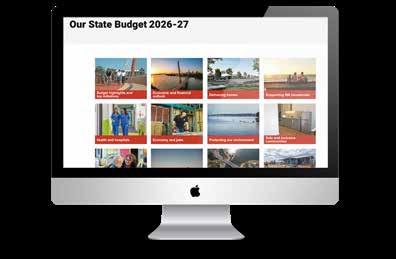
What is the State Budget delivering for the transport industry?
Roads and ports infrastructure across Western Australia got a look in, in the 2026-27 State Budget with a joint $1.1 billion investment by the Federal and State Governments to deliver critical upgrades to Anketell Road between Leath and Abercrombie Roads.
The road upgrades will improve freight efficiency and safety for all road users, as well as support the construction and future operation of the new Westport container terminal and productivity across the wider Western Trade Coast.
Another investment of $3.6 billion is committed for regional roads over the next four years to progress a range of critical road projects across WA, including:
• $127.4 million to replace priority timber bridges across regional WA;
• $113.5 million boost for Main Roads' maintenance program;
• $83.2 million to deliver the first stage of flood resilience upgrades to Great Northern Highway between Fitzroy and Gogo;
• $61 million to complete upgrades to Toodyay Road;
• $25 million to support road infrastructure planning at Latitude 32 and the Australian Marine Complex;
• $9.4 million allocated for priority works on water drainage bridges in the South West;
• $7.5 million towards the Safer Local Roads and Infrastructure Program for new and expanded heavy vehicle rest areas; and
More than $30 million will be also invested by the Department of Transport and Major Infrastructure to maintain and upgrade maritime assets across the State and $4.8 million to begin long-term planning for additional capacity at the Port of Bunbury.
To support iron ore export growth at the Port of Port Hedland, a $50 million investment – funded by port users –will deliver the Zone 5 Bypass Channel, enhancing vessel safety and operational reliability.
For more information, visit ourstatebudget.wa.gov.au
This is ‘The Outback’
By Cliff Graham
Are emission compliant vehicles environmentally friendly?
Iread or ‘misread’ an article recently, where one of the suggested conditions for trucks towing three trailers out of Perth or Muchea was that they had to be ‘emission compliant’.
This got me thinking - just imagine if it was true.
That would mean that prime movers that aren’t compliant would have to run two trailers to Wubin then go back to pick up the third trailer - then repeat this process on the return trip. One could be forgiven to wonder how is this scenario better for the environment?
On a bigger picture I really wonder if this emissions compliance really stacks up to be environmentally sound – particularly in the outback where maintenance mechanics are few and far between, often hundreds of kilometres and many hours if not days away. If you have a fully loaded road train of cattle you are in a heap of trouble.
My own personal experience in one particular truck with an EGR engine involved four turbo’s collapsing. Now you can’t just carry one of these turbos under the sleeper toolbox, and fit them yourself –no, they have to be tuned into the computer on the truck.
This is the problem with emission reduction engines - gone is your ability to fix many of your own problems on the go and you have to rely on a technician who is not around every corner in the outback.
That coupled with only getting a few
hundred thousand kilometres life out of an engine that has components that don’t grow on trees. In fact, the manufacture of the precision products for emission reduction capability has to be mined, processed, casted, lathed or whatever the procedure to make them is – all for a few hundred thousand kilometres before something goes wrong.
I understand there are exceptions to the norm regarding longevity and reliability of emission compliant components but I would suggest that’s quite rare. I myself own an emission compliant 4x4 which I have driven to Queensland lots of times to visit family and friends however, I could count on one hand the number of trips I have done ‘without’ any problems with the DPF where the engine has derated and I have had to do up to a 40 minute burn off on the side of the road.
How is that good for the environment when an engine is running for 40 minutes and going nowhere?
On one particular trip, I decided to drive across to Queensland after my dear old mum passed away. I was heading east across the Nullarbor and my vehicle started derating – so off to the side of the road to disconnect the battery, then reconnect the battery and do a burn off. This continued to happen every one hundred to one hundred and fifty kilometres so I rang ahead to book it into dealership in to Ceduna to see what was going on. After the inspection
it was revealed the DPF was faulty and required replacing. They had one in stock and it would be replaced under warranty, so happy days I could still make it to my mum’s funeral.
Then after closer inspection it was revealed it also needed an oxygen sensor –which they didn’t have in stock. So, in order to make it to my mother’s funeral I had to fly from Ceduna to Adelaide, then Adelaide to Brisbane and was left with no car to catch up with family and friends after the funeral and then all the return flights back to Ceduna – back to my emission compliant vehicle whose fuel compliance had failed.
Maybe my vehicle was a lemon but I don’t think it is the first and even when these issues are covered under warranty when you add up the cost to manufacture these components, availability of parts and repairers and alternative transport - it is questionable if this is good for the environment.
I know of companies who get the extra warranty when they buy a new truck just to cover faulty DPF components.
This seems to be a problem around the world. I read about an overseas government who had a huge percentage of taxpayer funded vehicles off the road at any given time because of DPF component failures.
It seems to be an endless cost of environmental damage to create a product that is emissions compliant to be environmentally friendly.
Reinvesting in Road Safety: Securing the Future of WA Transport
TRANSAFE WA is a dedicated Western Australian not-for-profit (NFP) road transport industry safety association focused on improving road safety outcomes through education, collaboration and community engagement. It works with transport operators, government agencies, industry stakeholders and the wider community to promote safer roads for everyone.
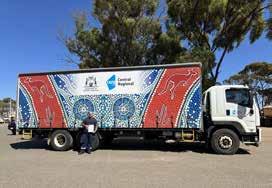
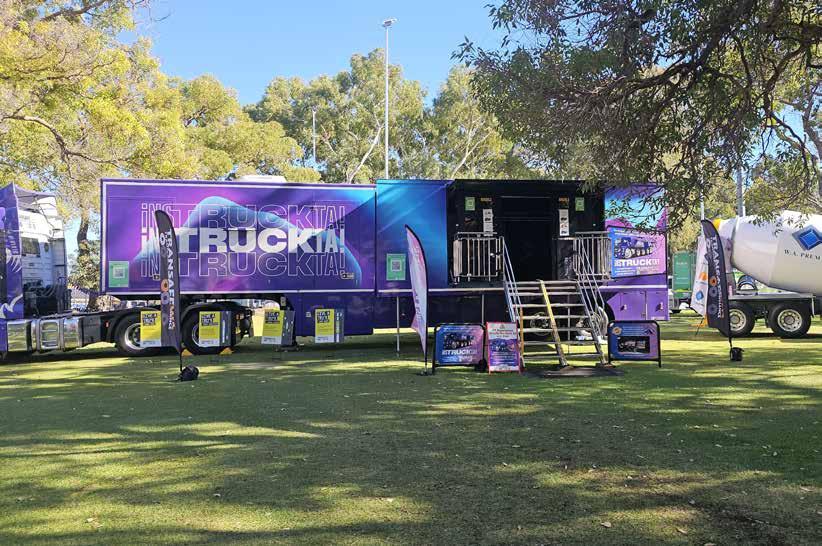
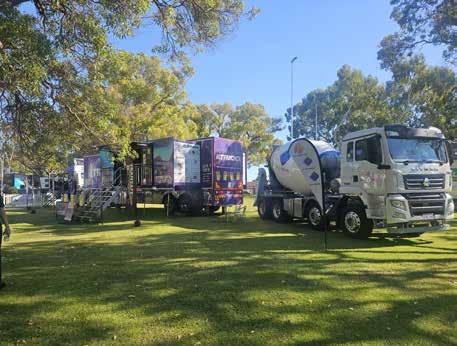
TRANSAFE WA is well known for delivering road transport industry safety forums, heavy vehicle awareness campaigns and its mobile education safety truck, iNSTRUCKTA!, which attends events across WA to share important road safety messages and help promote careers in the transport industry.
Western Australia’s transport industry has always played a major role in keeping the state moving. From servicing regional communities to supporting mining, agriculture, construction and retail, road transport is critical to everyday life. Whether it is freight heading north to mining operations, produce travelling from regional farms, or stock arriving at local
businesses, the transport industry quite literally keeps WA running.
Despite this importance, the sector continues to face a number of challenges. Skilled driver shortages remain one of the biggest concerns, operating costs continue to rise, road safety pressures are constant, and public perception does not always reflect the professionalism and commitment shown by the majority of operators and drivers.
That is why now is the time for transport companies to view investment in road safety and industry promotion as more than just another expense. It should be recognised as a strategic investment in the long-term strength of both individual businesses and the industry as a whole.
Strong road safety initiatives deliver measurable benefits. Fewer crashes mean fewer injuries, reduced downtime, lower repair costs, improved compliance outcomes and stronger confidence from customers and the community. Businesses that support fatigue management, driver wellbeing, modern vehicle safety technology and ongoing professional
development are not only protecting their workforce but also improving productivity and resilience.
Just as important is attracting new people into the industry. One of the greatest long-term challenges for transport is replacing an ageing workforce and encouraging younger people to consider driving and logistics careers. For too long, trucking has been overlooked as a profession, when in reality it offers responsibility, independence, technical skills and genuine career pathways.
To attract the next generation, the industry needs to be visible and proactive. That means engaging with schools, careers expos, trade events and community days to show people what modern transport careers look like. It also means supporting traineeships, mentoring and entry-level pathways that make it easier for people to get started.
There is also a need to tell the positive stories of the industry. Too often, heavy vehicles only receive attention when something goes wrong. Yet every day, thousands of professional drivers operate
safely and efficiently, often in demanding conditions, delivering the goods and services everyone relies on. Those stories deserve to be heard.
TRANSAFE WA Executive Officer Rob Sharpe said more companies are recognising the value of investing in initiatives that benefit both road safety and industry sustainability.
“We are seeing a positive shift in support from forward-thinking company decision makers. They are recognising the benefits of collaborating with our safety truck at community events, where there are opportunities to recruit potential drivers and strengthen heavy vehicle awareness among current and future road users, ” Mr Sharpe said.
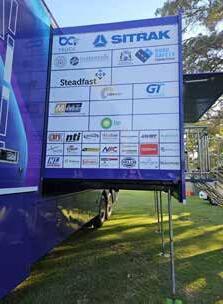
TRANSAFE WA continues to offer practical opportunities for companies connected to the road transport industry to become involved through collaboration as iNSTRUCKTA! Event Sponsors. Event sponsors are acknowledged as the organisation supporting the attendance of the safety truck iNSTRUCKTA! at a particular event. Sponsoring companies are encouraged to make the most of the opportunity by displaying their flags and banners onsite, engaging directly with the public and volunteering on the day alongside the TRANSAFE WA team.
These events provide a unique platform to showcase a company’s commitment to road safety while also promoting employment opportunities and building
Businesses that choose to reinvest in road safety, workforce development and community engagement will be the ones helping lead the industry forward
stronger community connections. They place businesses in front of families, young people, future drivers and everyday road users in a positive and meaningful environment.
By promoting safety achievements, supporting local events and maintaining an active community presence, transport businesses can help improve the image of the industry while creating new recruitment opportunities.
The future of WA transport is not just about trucks, trailers and freight volumes. It is about people, leadership and making smart investments now that will deliver benefits for years to come. Businesses that choose to reinvest in road safety, workforce development and community engagement will be the ones helping lead the industry forward.
Superannuation
PAYDAY SUPER:
What you need to know to be
Are you:
• an employer who uses the Small Business Super Clearing House,
• an employer who pays super at a different frequency to salary or wages, or
• a self-employed person who operates through a company and pays yourself a salary and has to pay the Super Guarantee?
The rules for paying super are changing on 1 July 2026 with the introduction of Payday super. Read on to see what you need to do to be ready for these changes.
Big changes in super are coming Payday Super means super will need to be paid at the same time as salary or wages. This means that super must generally be paid within seven business days (with a few exceptions, such as where you have a new starter).
For some employers, adjustments will need to be made to the processes and technologies used to make super payments.
Why are these changes happening?
The aim of these changes is to improve the retirement outcomes of Australian workers. Under the new Payday Super rules, Treasury estimates that around 8.9 million employees will benefit from higher retirement savings from receiving their super contributions earlier and more frequently throughout their working life*. These changes also mean that the ATO can take prompt action where an employee has not been paid super by their employer.
*Source:
quickly identify any errors so super can be paid within seven business days.
Step 2
If you use the SBSCH, you must make your final quarterly payment before 30 June 2026 as this service will switch off at 11.59pm 30 June 2026. You will not be able to download employee transaction records from the SBSCH after this time.
Step 3
If you will be using new payroll software to meet the Payday Super requirements, confirm when this will be ready – contact your payroll provider or clearing house if necessary.
Step 4
ready!
The key changes
1. For Super Guarantee (SG) payments, the new term Qualifying Earnings (QE) will be used to include ordinary time earnings, salary sacrifice contributions, and other amounts that are currently included in an employee's salary or wages for the SG.
2. Employers must report both QE and super liability through Single Touch Payroll (STP).
3. Super must be paid to an employees’ super fund on payday and received by the super fund within seven business days (unless an extended timeframe applies, such as for new employees).
4. The Small Business Super Clearing House (SBSCH) will close at 11.59pm on 30 June 2026. Transaction records won’t be available after this time, so employers should make any payments before 30 June 2026 and download the documentation they need.
What to do now
Employers must review your cash flow, payroll governance and business processes in preparation for the start date of 1 July 2026.
If you haven’t prepared yet, there is still time – please review the five steps below.
Step
1
Check your payroll governance processes to ensure that processes are in place to
Familiarise yourself with the new ‘qualifying earnings’ (QE) concept. This is what will be used to calculate the super you must pay your employees.
What if super is paid late?
Under the Payday Super rules, an employer will have to pay a Super Guarantee Charge (SGC) which is calculated and assessed by the ATO.
Help from Team Super
Team Super is the top specialist super fund for transport, energy and mining workers. Our Key Employer Relationship Managers can work with your business to ensure you are Payday Super ready and able to smoothly transition to the new requirements.
To arrange a site visit or presentation, contact us via 13 64 63 8am to 6pm weekdays AEST/AEDT or email employers@admin.teamsuper.com or fill out the form below.
For further information visit teamsuper.com/payday, which includes factsheets and checklists.
Statistics don't bleed
By LARA JENSEN
Statistics – most people don’t have cause to think about them until a family member becomes one. I have decades worth of research backed by sobering statistics that reinforce the urgent need for improved train visibility – but what about the human tragedy?
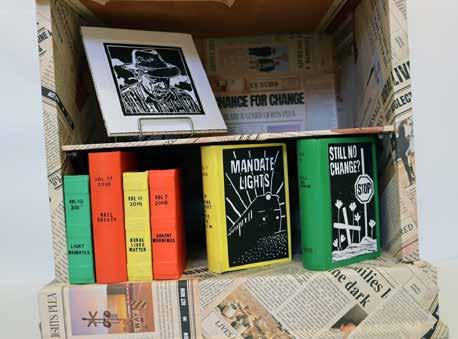
To communicate my own family’s loss, I’ve chosen incredibly powerful artwork titled “Illuminate” which has had a lasting impact on me and countless others.
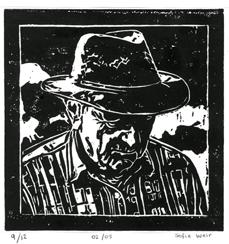
The artwork is by a student, Sofie Weir who was in her final year at Nagle Catholic College in Geraldton. “Illuminate” is a decorated hallstand covered in newspaper articles depicting years of my rail safety advocacy, symbolic objects and two highimpact black and white drawings.
My eyes were immediately drawn to one of these pictures - a lino drawing of a father’s sorrowful face. It was not my own father but I recognised the magnitude of grief on the man’s face immediately. My four children gathered around to comfort me as tears streamed down my face.
In that instant I was taken back to the night of the crash that claimed the life of my youngest brother Christian and his two friends Jess Broad and Hilary Smith.
It was just before midnight when I answered the knock at the door of our Murchison homestead from two police officers who were asking to speak to my father. It was Saturday, July 8, 2000.
After I woke my parents, we were seated around our kitchen table and told the devastating news, that Christian and his friends had been killed when a loaded grain train struck their vehicle near Jennacubbine in the WA Wheatbelt earlier that night.
The police drove away, and we were left reeling with shock and I looked at my father, his tear-stained face had instantly aged 30 years. I comforted my devastated mother, and saw my older brother overcome with sorrow as he faced the reality that his only brother would never return home.
I lay awake and wept all night wondering how our family could ever navigate life without Christian.
As children Christian and I were inseparable. As adults we remained very close and I was so proud of the kind, funny, smart, hardworking and extremely safety conscious young man he had become.
With dawn came the realisation that this nightmare was our new reality. A steady
stream of neighbours arrived and grieved with us and rolled up their sleeves to help with the annual shearing of our Merino flock which was already organised to start - allowing us to arrange Christian’s funeral and support the shattered families of Jess and Hilary.
At his funeral, I sat there in disbelief that somebody so loved by me and so many others could occupy so little space as I looked at his flower adorned coffin in the overflowing Hale School chapel. I felt the same disbelief when my shattered parents brought the urn containing his ashes home.
Following the funerals, Christian’s ‘personal effects’ including his swag retrieved by police following the crash had to be collected. I then understood that these are the terms used when a life becomes a statistic. The slow trip home to a homestead full of memories, the empty seat at our kitchen table… Sofie’s artwork depicts that emptiness so profoundly – the invisible but overwhelming ache of grief that follows the sudden loss of a family member.
I congratulate Sofie for this profound artwork that symbolically honours rail crash victims while demanding decades overdue legislative change. The lantern that features in the artwork is a particularly powerful to me. It represents the life of my brother Christian and countless others whose lives have ended early and in the same way. It represents the lives that could still be saved through legislative reform. It is my lantern of hope.
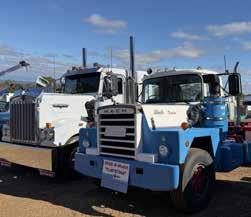
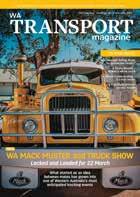
The HCVC at WA Mack Muster & Truck Show
OBy KEVIN TOOVEY
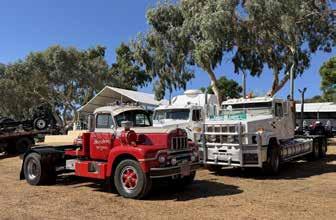
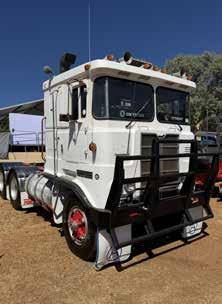
ur club makes the WA Mack Muster & Truck Show a feature event. The club encourages members to bring their trucks along and pay their entry fee.
Club president Colin Blackburn attended several meetings with the Mack Muster committee to organise our attendance and secure a good spot for the club. On the day before the event some of our members erected the marquee and put their trucks in place for the show as it is very busy to get everyone parked in the right area by nine o’clock in the morning.
Members assisted each other to get to the event. Not all old trucks are driveable and some of the drivers are not so mobile either, but it is a good group and everyone lends a hand. Even though there were a couple of breakdowns on the way, we still managed to get over 30 HCVC members to attend on the day.
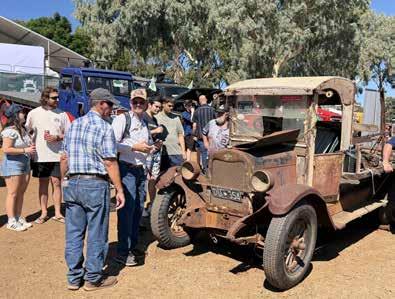
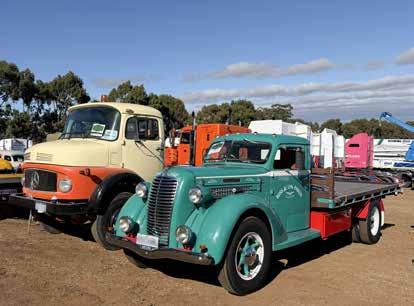
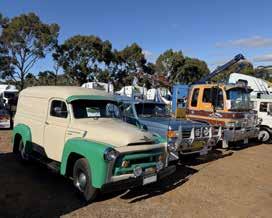
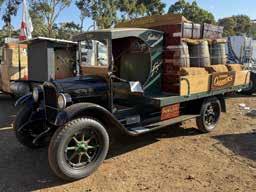
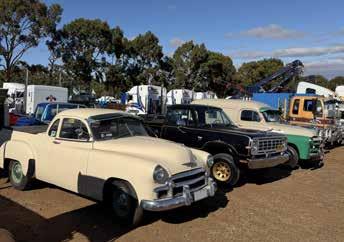
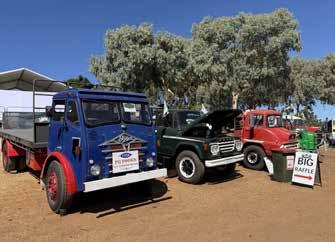
The Historic Commercial Vehicle Club of WA is for the preservation and restoration of old commercial vehicles. The oldest trucks in the club Morris and Colin Danks 100 year old unrestored Chev trucks still draw a large crowd every time they are started. Ken
Griffiths also crank started his Morris truck several times during the day, much to the delight of the crowd.
It was good to see some trucks that we haven’t seen before or for a while including “Trev the Chev” that made the long trip from Coolgardie to Perth. Trev is a 1927 model Chev owned by Wayne Bird from Coolgardie. Trev was fully restored a few years ago now and named in memory of Trevor Watson from Kalgoorlie. This Chev looked great with its full load of whiskey barrels and general freight.
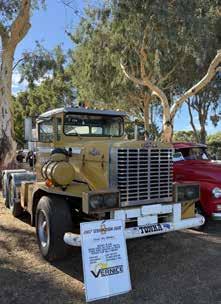
Vernice Contractors from Toodyay brought their 1967 Oshkosh to the event for the first time, these trucks are pure American steel. A local truck from the southwest made an appearance and a heap of noise, the Atkinson with a Detroit 8V-92 motor stirred up a few memories for the older drivers.
The Mack Muster is a very big fund raising event. The HCVC contributed with their own raffle sponsored by OTR tyres who generously donated a set of eight drive tyres and they were won by Owen Bozzanich. Our raffle proceeds are distributed to local charities.
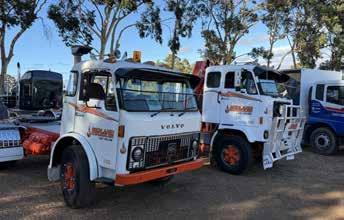
A good looking bunch of Internationals
Pete Haynes’ Volvos
Colin Danks starts one of the old Chevs Mercedes 911 and Diamond T
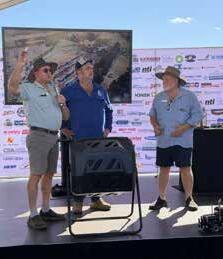
HCVC president Colin Blackburn with the winning ticket raffle ticket, drawn by Yogi Kendall with Trevor Davies commentating
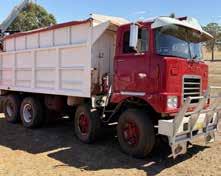
Classic Mack 8 wheeler tipper
Some of the HCVC line up
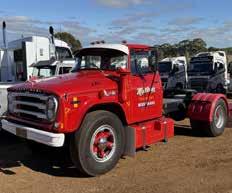
Michael D’Amico’s Kenworth and Colin Days Mack
Vernice Contractors Oshkosh
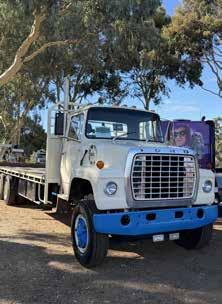
Ford Louisville tray top
Trev the Chev
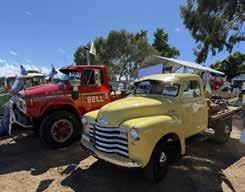
Kim Martins Dodge and Mel Taylors Chev
AB International Mathews Transport Modewarre
HCVC members vehicles
HCVC members vehicles
Atkinson with a Detroit motor
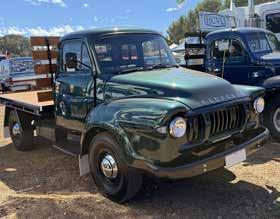
Phillip Morris Bedford
History
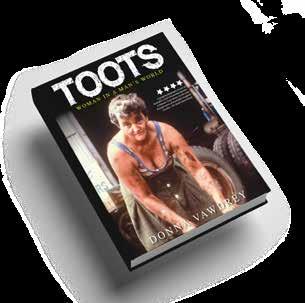
A BOOK BY DONNA VAWDREY
TOOTS
– Woman in a Man's World
Follow the inspiring and at times devastating journey through Toots Holzheimer’s life. Australia’s most recognised truck driver battling non-existent roads and no telephones from the 1960s to 1990s.
• To purchase Toots’ inspiring book and merchandise visit toots-thebook.com.au •
At school Toots learned life skills as well as reading, writing and arithmetic. The teachers encouraged the children to challenge themselves academically as well as to use their common sense in solving everyday problems. Ethel also enrolled all the girls in sewing classes which were taught after school finished in the afternoon.
Life was full of fun and laughter even though Ethel was often sick. There was always plenty to do. After school and chores, there was time for sport, movies and especially dances. There was no TV back then. Weekends were spent playing cricket or having a sing-song around the piano.
Toots, although head strong, was a popular, fun-loving child. She was a good sportswoman, excelling at vigaro, and a talented seamstress making clothes for herself and her sisters. Ethel taught all the children to play the banjo and piano. Occasionally Toots would play at parties, although she believed that Fay and Zillah had much more talent in this area. They were members of the local band.
Toots’ greatest pleasure was spending time with her only brother Chauncey. During school holidays Jack and Ethel would send the children to visit their maternal grandparents who lived at Glen Aplin, a rural village on the New England Highway, 14km south-west of Stanthorpe in South-east Queensland. Robert and Elizabeth Bavister operated the Glen Aplin Hostel which was considered a first class hostel. On the 18th of January 1945 Grandma died and Grandad Bavister came to live with Ethel and Jack. Holidays were now spent travelling around the state. One year Jack took the whole family to Cairns for a holiday. He really liked the place and hoped to move there one day. Ethel continued to work as station mistress until March 1948 when her father died. It was only a few weeks later on the 12th of June that Ethel herself passed away from complications associated with diabetes.
Her funeral was held on a bitterly cold, wet day in Kalbar just over ten kilometres north of Aratula. Jack did not have a car so the family had to walk. Fay was living in Kalbar and said she would meet them at Morwincha. Jack and his five children dressed and began walking to Morwincha along the railway track. It was less than three kilometres but it was raining and the rivers were up. Jack had to carry Quintice over the many bridges as she was scared of walking above open water. They arrived in Morwincha wet and
cold. Fay dried everyone off and they all squeezed into her car to drive the last eight kilometres to Kalbar, a town known for its rich German history.
Saying her final goodbyes to her mother brought an abrupt end to Toots’ carefree, happy childhood. Zillah took over as station mistress and tried to hold the family together but the family unit broke up. Fay was already married and living independently, so Jack left Quintice in her care. Jack had been working since the age of 12 in the coal mines back home, so he considered Toots, at 14 years and Chauncey 17, old enough to fend for themselves.
Quintice never got along with her eldest sister. She found living with Fay impossible so she moved back in with her father who had just received a transfer to Maryborough. A short time later Jack’s dream of moving to Cairns came to fruition. Arriving in Cairns he paid the deposit on a home at 53 Grove Street. Toots and Chauncey had travelled to Brisbane where Toots found work picking fruit during the day and serving as a bar-maid at night.
She planned to join the army and become a truck driver. It was not to be. They told her she was not tall enough to be a truck driver, ironic in retrospect. Disappointed at having her dreams crushed, Toots went back to work.
Chauncey and Toots
The Livestock and Rural Transport Association of Western Australia (Inc) is the only transport association in WA specifically representing rural transporters.
We are a strong voice for rural WA, ensuring that policy decisions support the viability and safety of rural transporters, primary industry and the communities they service.
Members of the Management Committee are hands on business people, most of whom would drive a truck weekly and travel on nearly every road in WA’s 150,000 km road network in the course of a year.
This close proximity between transporting operations and the advisory role means that representatives of the Association are at the coal face and as such are able to provide that all too rare practical hands on advice in committees, consultative forums and meetings.
DIGITAL EDITIONS
(11 per year) FREE OF CHARGE
Our digital editions (11 per year) are available at ‘no cost’ and to subscribe please email karen@angrychicken.com.au
You will receive a monthly email from us and be given a link to a high quality Flip Book that you can download and access any links within the publication.
HARD COPIES ~ (11 per year) $130
We do not make any profit on our subscriptions. Due to the rising costs of postage and producing the magazine we charge only ‘what it costs us’ to print and post your publication to you.
To receive the hard copies, please email karen@angrychicken.com.au with the following details and you will receive an invoice with EFT details:
Note, this option costs $140 (one year) and the price includes ISUBSCRIBE fees on top of $130 base cost (printing and postage only). Thank you for your understanding and support of an independent publisher who has been producing the WA Transport Magazine for 30 years