
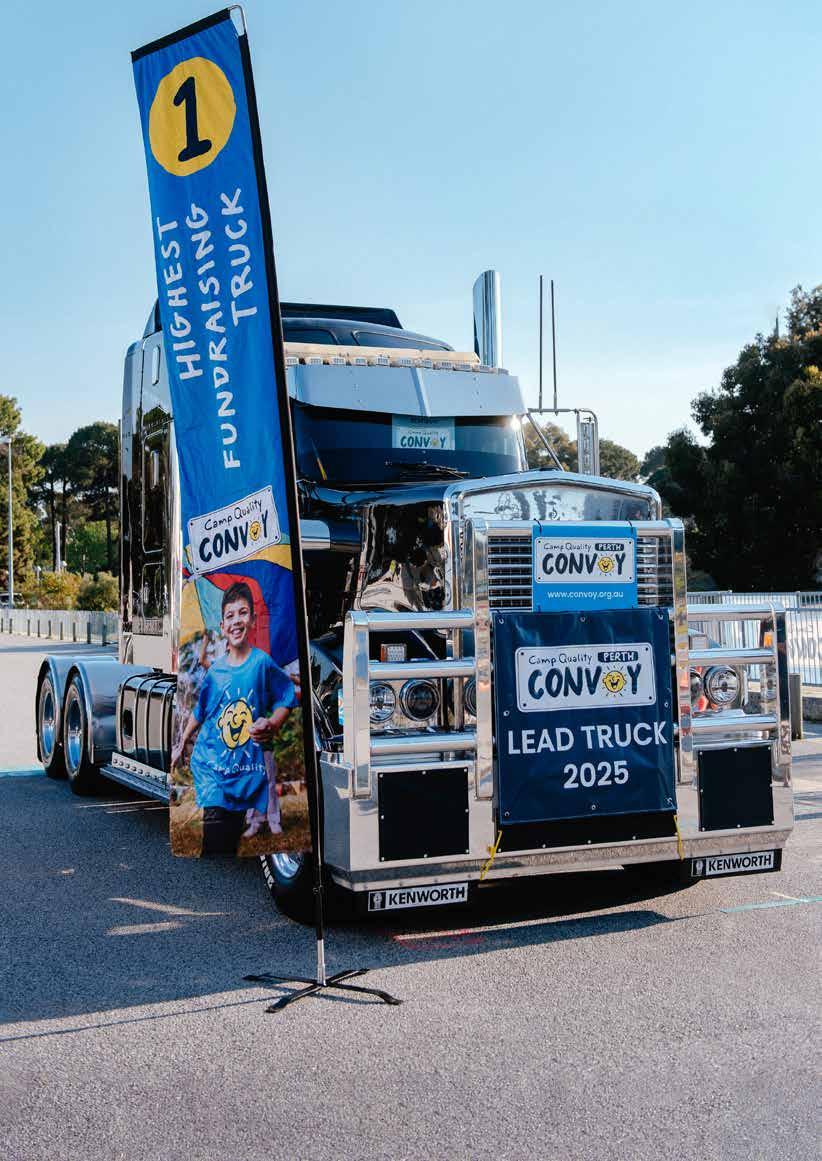
WESTERN AUSTRALIAN TRUCKIES ARE CONVOY COOL
Sunday, 4 October is set to be an epic day with a 50km convoy procession around Perth beginning and ending at Perth Motorplex. IN 2025, WA truckies hauled in over $422,000 to fund Camp Quality’s services and programs and organisers hope to smash that in 2026
The Heavy Vehicle Helpdesk is open from: 7am to 6pm Monday to Friday, and WA Public Holidays.
On weekends the Main Roads Customer Information Centre will receive telephone calls on behalf of the Heavy Vehicle Helpdesk on 138 HVO (138 486) and email enquiries can be sent to hvs@mainroads.wa.gov.au
Tel: 138 486 Fax: 9475 8455
Email: hvs@mainroads.wa.gov.au www.mainroads.wa.gov.au

FROM THE PUBLISHER
It is fast approaching the 2026 Camp Quality Kids’ Convoy and the organisers are hoping to crack the $450,000 mark this year with the help of our generous transport industry. This year’s event is on Sunday 4 October at Perth Motorplex and all the details are in this edition.
This month I thought I would bring you ‘both sides’ of ‘in-cab’ technology including driver facing cameras. On one side, (Pages 2 and 3) Colin Hughes from Optix Australia talks about why we need to help our drivers and says that ‘education’ is the key with the twin killers of tiredness and distraction and that driver facing cameras can be part of this ‘education’. On the other side of the coin is an actual Western Australian road train driver Russel Walsh (Page 19) who says that many older experienced drivers are leaving the industry due to rapid technology changes, overregulation and invasive monitoring systems that for them unintentionally damage morale, autonomy,
trust and productivity.
Another interesting column in this edition is Cliff Graham’s ‘This is the Outback’. It really resonated with me with regard to other drivers lack of empathy towards other road users with scenario’s that unfortunately, we all see every day.
With this year flashing past at a rate of knots, the LRTAWA are getting ready for their Annual Conference which this year will be combined with the Australian Livestock and Rural Transporters Association on the 21st and 22nd of August at Joondalup Resort. Nonmembers are invited to register and all of the information is on Page 12 of this issue.
As always, thank you to everyone who supports our home grown transport publication now in its 32nd year.
Best,
3 We need to help our drivers - why fleets need to invest in education
5 Western Australian truckies are Convoy cool
7 First of its kind psychosocial risk management pilot program for transport and logistics industry
8 Zero interest loans for trucking and logistics businesses
9 Main Roads News - Main Roads WA Heavy Vehicle Services (HVS) Compliance
12 The 2026 LRTAWA Annual Conference will continue to unite and strengthen Rural Transport
15 Western Roads Federation - Building the next generation of transport professionals: Why industry must lead the way 16 Fair Work Ombudsman acts on Sham Contracting
19 Walshy’s Perspective - Compliance culture – the breakdown of morale, autonomy, trust and productivity
20 Is Your Safety Strategy Built to Prevent Incidents or Just Document Them?
Angry Chicken Publishing Pty Ltd
Telephone 0430 153 273
www.angrychicken.com.au
ABN: 35 486 530 095
PUBLISHER / COMMISSIONING EDITOR
Karen-Maree’ Kaye T: 0430 153 273
Email: karen@angrychicken.com.au
WRITERS
Karen-Maree’ Kaye, Russell McKinnon
CONTRIBUTORS
Jan Cooper, Cam Dumesny, Cliff Graham, Lara Jensen, Carol Messenger, Ray Pratt, Russel Walsh
ADVERTISING ENQUIRIES
Angry Chicken Head Office T: 0430 153 273 E: karen@angrychicken.com.au
DESIGN / PREPRESS
Cally Browning | Bare Creative
ACCOUNTS
T: 0430 153 273
E: karen@angrychicken.com.au
PRINTER
Daniels Printing Craftsmen
SUBSCRIPTIONS
Subscriptions available directly from the Publisher. T: 0430 153 273
E: karen@angrychicken.com.au
Australia: 1 year $130 (inc GST)
Overseas subscribers: Airmail postage will be added to subscription rate.
Editorial Submissions: The Publisher welcomes editorial submissions. Once received they will become the property of the Publisher who reserves the right to edit the or adjust the content to fit with the format of our publication.
West Australian Transport Magazine (WATM) is published by Angry Chicken Publishing Pty Ltd
ABN: 35 486 530 095 All rights reserved. No part of this publication may be reproduced, adapted or transmitted in any form by any process (graphic, electronic, mechanical or storage and retrieval system) or sold, resold or otherwise exploited for any purpose without consent of the Publisher.
The publisher, contributors, editors and consultants disclaim any and all liability and responsibility to any person or party, be they a purchaser, reader, advertiser or consumer of this publication in regards to consequences and outcomes of anything done or omitted, or being in reliance whether partly or solely on the contents of this publication. No person, organization or party should rely on or on any way act upon any part of the contents of this magazine without first obtaining the advice of a fully qualified person. The Publisher shall have no responsibility for any action or omission by contributor, consultant, editor or related party for content within WATM. The opinions and content within WATM does not necessarily reflect those of the Publisher, editor or their agents. No responsibility is accepted for damage or loss of material supplied to the publisher.
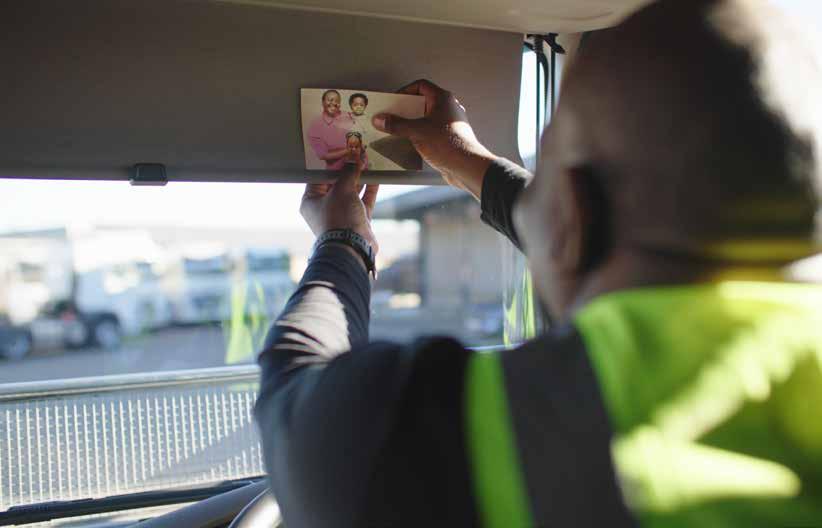
WE NEED TO HELP OUR DRIVERS –Why fleets need to invest in education

By COLIN HUGHES
APAC Senior Vice President, Optix Australia
Government figures published in December 2025 show that road deaths involving heavy vehicles increased in the previous twelve months. As we know that human error is the leading cause of commercial and heavy vehicle accidents, there are questions to be asked about where we are going wrong.
The twin killers: tiredness and distraction
“Human error” falls largely into two categories: distracted behaviour and fatigue. Distracted behaviours while driving can range from using a mobile phone or smoking a cigarette to simply eating or drinking. Harder to detect is fatigue. This is estimated to be a factor in around a third of fatal truck crashes but, unlike alcohol, cannot be measured easily.
The National Heavy Vehicle Regulator has repeatedly identified fatigue as one of
the biggest safety hazards facing the heavy vehicle sector, warning that tiredness can reduce alertness, impair judgment and dramatically slow reaction times. What makes fatigue particularly dangerous is that drivers themselves are not always aware of the effect that it is having on them.
Distraction presents a similar challenge because many risky behaviours have become normalised. Drivers may believe that quickly checking a phone, adjusting a satnav or searching quickly for a podcast is harmless, particularly on familiar roads. However, small lapses of concentration over time can build up into behaviour that is likely to cause an incident.
So how can we address these two issues?
Education for all
One contributing factor, which is currently causing concern within the industry, is that we currently have a great many drivers who
are relatively inexperienced. Australia has been recruiting truck drivers as fast as it can. 47% of drivers are over the age of 55 here, and the International Road Transport Union (ITRU) calculates that one in five is likely to have retired by 2029. As the sector has struggled to bring in young recruits and failed to attract sufficient women drivers, it has become reliant on drivers from overseas. The result is a workforce that contains many drivers who are new to Australian roads, vehicles and culture. Some have claimed that the training currently provided is simply not enough. For all drivers, whether home-grown or not, education is essential. If we want safer roads, we need to place more emphasis on mentoring, coaching and long-term professional development. New drivers should not just be handed keys and schedules; they need support from experienced operators who understand not only vehicle handling, but also fatigue management, defensive driving, road etiquette and the realities of operating across Australia's vast transport network.
In the long term, however, training needs to continue throughout a driver’s career - the best induction process in the world needs to be maintained. Here, there is a role for technology - specifically, for intelligent cameras.
The role of intelligent video
Video has been used in the cabs of commercial vehicles for years. Dashcams have long captured footage of incidents on the road and have played an important role in exonerating drivers from blame. Recently, cameras have been equipped with artificial intelligence which allows them to interpret the images that they capture. This “intelligent video” now has a vital role to play in the long-term education of drivers.
In-cab, driver facing cameras are now able to identify a wide range of behaviours. This includes not only the distraction mentioned earlier but also the facial signs of fatigue, such as excessive blinking, yawning and a drooping head. This AI video analysis takes place in real time and can be configured to trigger a specific response. This means that the technology can be used for driver education in three different ways.
1. Keeping the driver alert
The camera’s ability to recognise distracted behaviours or signs of fatigue as they happen enables immediate action to be taken. On spotting that the driver is losing concentration - or consciousness - the
One contributing factor, which is currently causing concern within the industry, is that we currently have a great many drivers who are relatively inexperienced
device will issue an audio or visual alert, such as a bleep or a flashing light, which will be repeated if no action is taken. In this way, the driver has the option to selfcorrect before an incident takes place. It is important that this type of intervention should not be viewed as punitive. The aim is not to catch out drivers, but to support them before a dangerous situation escalates. Many experienced drivers will acknowledge that fatigue and distraction can affect anyone, particularly during long shifts, night driving or a period of personal stress. Sometimes a simple alert is enough to prompt a driver to pull over, take a break or simply refocus their attention.
2. Self-review of the footage
In the interests of bestowing maximum autonomy, many fleets offer drivers the option of reviewing captured footage themselves. This can be a powerful but lighttouch way of communicating the reality of particular behaviours, particularly if coupled with telematics data that demonstrates a corresponding effect on the car’s steering or braking. Most fleets configure the cameras so that only a few seconds of footage will be saved - just those that lead up to the moment the alert is triggered. Frequently, this only happens if an alert has been issued on multiple occasions, so nobody needs to sit through hours of video.
This approach can be particularly effective because it encourages drivers to take ownership of their own improvement. Seeing footage of a genuine moment of distraction or fatigue often has a far greater impact than generic safety messaging delivered in a classroom environment. For younger or less experienced drivers it also creates the opportunity to build confidence and awareness without feeling singled out or criticised.
3. Coaching programmes
Perhaps the most effective application of video technology for the long-term is its use in driver coaching. Reviewing footage allows managers to understand exactly where problems are occurring and to adapt
coaching programmes accordingly. Fleets are free to choose at what point a manager is sent recorded footage, so they too are spared the job of watching long chunks of irrelevant video. By sitting drivers and managers down to look at video together, driver education can be more targeted and more effective. It can also help to identify any underlying issues that may be occurring, such as stress or poor mental health.
Running education programmes using this type of AI-enabled technology also brings other benefits in terms of the data that it collects. Information about the time and location of distracted or fatigued driving can be very valuable. If incidents regularly occur at certain times of the day, on specific routes or after particular shift patterns, businesses can make operational changes accordingly.
Focus on the driver
In all of these examples, drivers must remain the focal point. Their wellbeing and mental health are vital to the smooth running of the fleet. Commercial drivers, particularly those working in the heavy vehicle sector, are disproportionately highly represented in statistics for mental health issues. Long hours, irregular schedules and extended periods away from family can all affect driver well-being, which in turn can have a negative effect on concentration, decision-making and overall safety.
Technology is only one part of the solution. Cameras, AI and telematics can provide valuable insights, but long-term improvements in safety still depend on people. Australia’s transport industry has invested heavily in safer vehicles and safer infrastructure over the years. The next step is to invest more in safer driver behaviour through education, mentoring and ongoing support.
Every fleet operator wants the same outcome; that every driver returns safely home to their family. Achieving that goal requires the industry to work together to raise standards, strengthen training programmes and to recognise that education is not a one-off exercise, but a continuous process throughout a driver’s career .
Western Australian truckies are Convoy cool
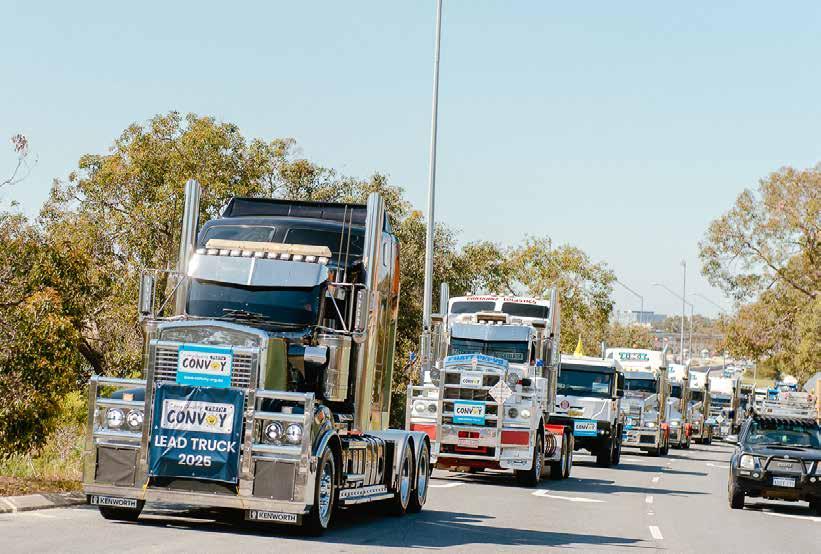
How cool are WA truck drivers? VERY cool.
Want proof? Look no further than Camp Quality Convoy Perth.
Camp Quality is an Australian children’s cancer charity that has been bringing positivity, fun and laughter to kids facing cancer for over 40 years.
The organisation supports children and families at every stage of the cancer journey, from the heartbreaking news of a cancer diagnosis, during treatment, through to remission and in the tragic case of bereavement. A cancer diagnosis steals childhood; Camp Quality is there to help kids take it back.
Every year, hundreds of Western Australian truckies come together to give the people of Perth a fun day out while making a life-changing impact on the lives of kids diagnosed with cancer.
Kids like Perth local, Riley. At just eight months old, little Riley was diagnosed with retinoblastoma, a cancer that forms in the retinas. She had it in both eyes.
Thinking back to the diagnosis, Riley’s mum Demi says it came as a huge shock. “We actually didn’t think anything was wrong at first. We just thought she had a lazy eye that she would grow out of, but a physio told us to get it checked.”
Within days, doctors told her parents the devastating news that they needed to remove her right eye. A week later, Riley was in surgery.
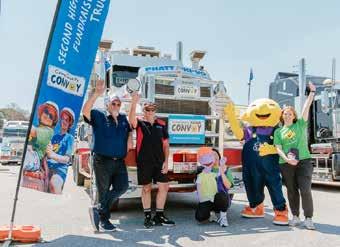
Riley then endured six months of chemotherapy at Perth Children’s Hospital. She lost her hair and was constantly tired and nauseous.
Because Riley was only eight months old, she was too young to understand what was going on. Her parents could only hold her close, comfort her, and try to ease the pain of an experience no child should ever face.
One of the medics on Riley’s treatment team recommended Camp Quality and Demi immediately registered.
When Riley was finally well enough, the family went on their first Camp Quality Family Camp on the Swan River.
“It was so much fun,” Demi says.
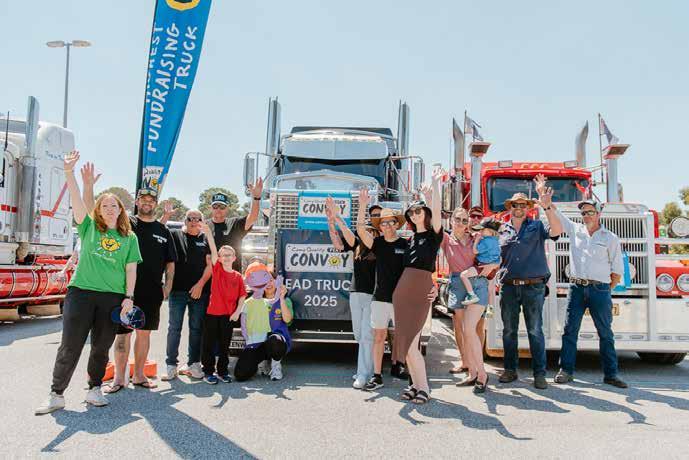
“It might’ve been as much fun for us as it was for Riley.
“It was one of the first times she could be around other kids, and it was so nice to meet other parents who understood what we were going through.
“Even though Riley had more of a unique diagnosis, there was still a sense of community.”
Riley’s story is just one of the thousands Camp Quality sees. Around 1,000 children are diagnosed with cancer every year in Australia and every year, the numbers get bigger. Three thousand new families registered with Camp Quality last year alone.
As treatment improves, so does those children’s life expectancy and likelihood of remission. However, the impact of childhood cancer reaches beyond the months or years of illness and treatment.
Cancer effectively steals childhood. They miss school, they miss time with friends. There can be delays is reaching developmental milestones. Their education and social life suffer. They miss out on everything that makes childhood special, and its effects are felt far beyond the illness and treatment period, even into adulthood.
That’s why Camp Quality’s services and programs for kids with cancer – and children living with the diagnosis of a sibling, parent or carer – are so important. While many charities raise money to fund cancer research, Camp Quality’s focus on reducing the heavy psychological toll cancer takes on a child is just as important.

Camp Quality Kids’ Camps give children a chance to forget about their illness and run amok with other kids who understand what they have been through. There’s no need to explain why you don’t have any hair. No one will make fun of you for having tubes coming out your nose. Camp Quality Kids’ Camps offer a chance to laugh, play, have some adventures and simply enjoy the childhood every kid deserves.
Cancer can be an extremely isolating experience, not only for the patient, but for the whole family. Everyone wants to help, but no one really gets it. At Family Camp, parents get to talk to


other mums and dads who are going through the same thing. Just knowing they are not alone gives them strength to keep going.
Siblings suffer, too. They live with the fear and anguish of their beloved brother and sister being sick. But they also have to adjust to their needs taking a back seat as every resource goes to the diagnosed child. That can breed resentment – and guilt for feeling that way. At a Camp Quality Family Camp, the whole family can spend some time together and just have some fun without worrying about cancer. Parents get to hear their children laugh again.
Convoy Perth also helps fund the Camp Quality Child Life Therapy program. When you’re a small child, a cancer ward is a scary place. Child life therapists work to ease the trauma of invasive and painful medical procedures by being a friend to the patient and using medical play techniques to reassure the child understand what’s happening.
These programs simply wouldn’t be possible without the support of Western Australia’s logistics community, which comes out in force at Convoy Perth to do their part.
Last year, a record 214 generous WA truckies hauled in over $422,000 to fund Camp Quality’s services and programs and make life brighter for kids facing cancer and their families. Organisers hope to go even bigger in 2026, looking to raise a whopping $450,000.
And while the cause wins the day, participants also get a lot from the Convoy experience. It feels good to do good and it’s an opportunity to enjoy the company of other drivers who care and remind the broader community how important truckies are to every industry, every business, every household in Australia.
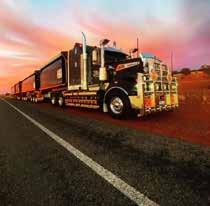
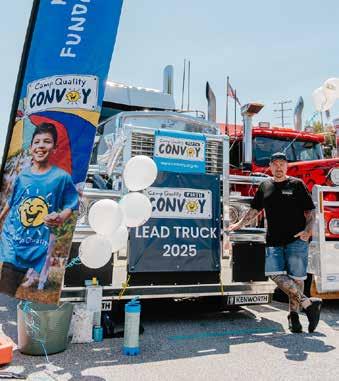
It’s set to be an epic day out for everyone, with a 50km convoy procession around Perth beginning and ending at WA’s premier motorsport venue, Perth Motorplex.
Every truckie who raises more than $5,000 earns the title of ‘Truckin’ Legend’ and receives special acknowledgement and exclusive merchandise on the day.
Baaz Heavy Towing returns as Platinum Sponsor for the second year, including as naming partner for the free Family Festival. Running from 10.30am to 1.30pm, the festival will feature entertainment and experiences for kids and adults alike.
There will be food vans, rides, face painting, roving entertainment, live music, fundraising award presentations, and of course the opportunity to cheer on the returning Convoy and check out all the trucks and vehicles at the popular ‘Show and Shine’.
Everyone is welcome for a great day of activities, while showing support for kids and families experiencing the fear, uncertainty and heartbreak of a cancer diagnosis.

Riley’s story is just one of the thousands Camp Quality sees. Around 1,000 children are diagnosed with cancer every year in Australia


Ready to roll with the Convoy crew?
Here’s what you need to know.
WHERE: Perth Motorplex
WHEN: Sunday, 4 October.
ENTRY: $50 per truck, public entry free.
REGISTER at campquality.org.au/ convoy-perth
Riley
First of its kind psychosocial risk management pilot program for transport and logistics industry
Healthy Heads in Trucks & Sheds, a national not-for-profit foundation dedicated to improving mental health and physical wellbeing across Australia’s road transport, warehousing and logistics sectors, has announced the launch of an industry-first psychosocial risk management pilot, Healthy Heads Thrive, in collaboration with AP Psychology & Consulting Services and Gallagher Bassett.
The pilot has already attracted 10 businesses across the transport, warehousing and logistics sector and as part of the initiative, these organisations will trial a digitally enabled end-to-end psychosocial risk management system built for the sector, helping employers identify workplace hazards, assess risks and implement practical workplace control measures before issues escalate into psychological injury.
The launch comes at a critical time with


rising mental health claims, increasing regulatory scrutiny and growing concern around burnout, fatigue, isolation and workforce retention across the sector.
Further claims insights from Gallagher Bassett show psychological injuries
Psychological injuries account for 12% of serious claims but cost more than four times as much as physical injuries on average
account for 12% of serious claims but cost more than four times as much as physical injuries on average ($67,000 compared to $16,000), with claims lasting an average of 35.7 weeks.


Melissa Weller, General Manager, Healthy Heads in Trucks & Sheds, said, “Despite growing awareness and increasing regulatory attention around psychosocial safety, many businesses still lack a practical, end-to-end approach to managing these risks in operational environments”.
“Across transport and logistics, many of the conditions impacting mental health and wellbeing have become normalised because people are deeply committed to getting the job done. Psychological health is no longer a ‘nice to have’ conversation. Healthy Heads Thrive has been designed by the industry, for the industry, to help businesses systematically identify, assess and manage psychosocial hazards in a practical and scalable way.”
To learn more about the pilot, visit www.healthyheads.org.au/healthy-headsthrive-pilot/





















Zero interest loans for trucking and logistics businesses
Around 150 businesses were approved to receive more than $150 million in zero interest loans in the Economic Resilience Program’s first five weeks,” said Minister for Industry, Tim Ayres.
The program offers zero interest loans to trucking, logistics and manufacturing businesses to help with their skyrocketing fuel costs. Loan applications under the program opened on 20 April and the figures cover the period to 22 May.
The companies who have received loans include a smaller transport operator in northern NSW whose fuel costs had almost doubled overnight and had a limited ability to pass on price rises to customers. They accessed a loan of $50,000 to cover its increased costs. Another medium-sized business in the logistics industry in Victoria received more than $1 million to replenish fuel
reserves at depots, which were needed to ensure business continuity and keep trucks on the road.
In addition to the zero interest loan program, payment relief assistance is available through the ATO’s fuel response payment plan and direct bank support, which could include moving a customer to interest only payments for a period or temporary payment deferrals. To find out more visit www.nrf.gov. au/what-we-do/investment-sub-funds/ economic-resilience-program
In
addition to the zero interest loan program, payment relief assistance is available through the
ATO’s fuel response payment plan
Road User Charge, fuel excise is the ‘wrong call’
The National Road Transport Association (NatRoad) has warned the return of the Road User Charge (RUC), and an increase to fuel excise in July will place further pressure on mum-and-dad businesses and send cost of living soaring.
NatRoad CEO Warren Clark said it was not realistic to expect a resolution to the Middle Eastern conflict by July, and warned reinstating charges too early would be a major setback for people still under enormous financial strain.
“This is the wrong call and a kick to Australians who are already on their knees,” Mr Clark said.
“We have said over and over – the RUC should be suspended until the end of the year to keep the country going. For many smaller operators, the 32.4 cents per litre saving from cutting RUC was no a bonus — it was the difference between parking up and staying afloat.
“Our members are already absorbing enormous cost increases across fuel, insurance, finance and compliance. Reinstating the Road User Charge and
increasing fuel excise will hit small businesses, and their cashflow, hardest — making them even less likely to be able to absorb future increases.”
NatRoad warned the measure would inevitably flow through to higher freight costs and increased prices for Australian households and businesses.
“When trucking costs rise, everything costs more,” Mr Clark said.
Mr Clark added that moves to change trust taxation rules would be another blow for mum and dad businesses – many of which had been set up to protect assets like the family home.
“These are significant and complex changes. While it is pleasing the Government has provided for a significant transition period, the reality is a lot of our smaller operators have set themselves up this way to ensure that if everything went belly up, their kids would have a roof over their heads. The government needs to adequately consult with our industry on these changes, otherwise it just feels like another way for the Government to grab
Expansion of school road safety program
The State Government is shaping the behaviours and attitudes of the next generation of drivers and road users with the launch of a new road safety education program for year nine students.
Road Smart Interactive builds on the success of the Road Safety Commission’s Road Smart Kickstart year 7 and 8 incursion program - an immersive techdriven program using hands-on digital learning stations covering the dangers of speed, distractions, fatigue, peer pressure and protective gear.
Road Smart Interactive extends this learning for older students through scenario based decision making and more complex road safety challenges, utilising the latest in immersive virtual reality technology to engage students in their role to eliminate road trauma.
Thanks to a $15.2 million funding commitment in the December 2025-announced Road Safety Reform package, and a further $48.4 million funding boost announced in the 2026/27 State Budget, this funding will ensure life-saving road safety education is delivered to every year 7 to 9 student in WA over the next four years.
So far in 2026, the Road Safety Commission is on track to complete about 500 incursion sessions reaching almost 14,000 students across the State, with booking spots still available.
cash from truck drivers.
“It is disappointing when the Government continues to speak about productivity, resilience and supply chains but then chooses to punish small businesses.
“You cannot build a stronger economy while making it harder for the businesses that physically move that economy every day.”
Main Roads WA Heavy Vehicle Services (HVS) Compliance
Main Roads WA Heavy Vehicle Services (HVS) Compliance is continuing to make meaningful strides in improving safety, access, and amenity across regional Western Australia, with a series of targeted enforcement operations delivering strong results.
Building on the success of Operation HELIX in the Goldfields, two subsequent initiatives, Operation ORBIT in Coolgardie and Kalgoorlie, and Operation STRIDE in the Mid-West Gascoyne region have further strengthened compliance outcomes across key freight corridors. These follow up operations were launched in response to the movement of previously identified compliance issues between regions, enabling agencies to respond proactively as trends emerged.
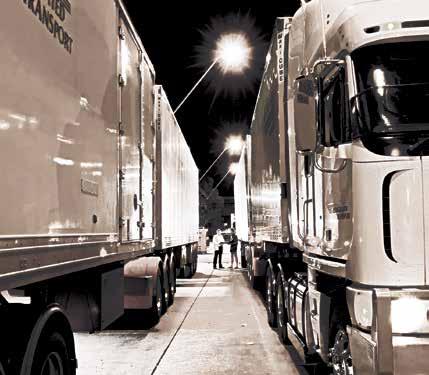
Both operations focused on addressing persistent challenges such as the illegal dumping of trailers, inappropriate parking and overstays in Road Train Assembly Areas and designated parking bays, and unauthorised vehicle maintenance activities. Through targeted enforcement and a consistent on ground presence, these behaviours have been significantly reduced, resulting
in safer and more accessible facilities for heavy vehicle operators while improving the overall amenity of key freight hubs for local businesses and the wider community.
The strong outcomes achieved through Operations ORBIT and STRIDE were made possible by a coordinated, multi agency approach. HVS Compliance worked closely with Main Roads regional offices in the Goldfields and Mid-West Gascoyne, the Department of Water and Environmental Regulation (DWER), Western Australia Police (WAPOL), and the Department of Transport and Major Infrastructure (DTMI). This collaborative model allowed agencies to combine intelligence, share resources, and respond holistically to issues affecting industry and regional communities, creating a more consistent compliance environment across WA.
To help protect drivers and other road users, Main Roads encourages the reporting of heavy vehicle breaches so that road safety concerns can be addressed promptly. Reports can be made by calling 138 486.
WA Heavy Vehicle Accreditation
In addition to its on ground enforcement

efforts, Main Roads continues to support Heavy Vehicle auditor capability and professional standards. An auditor conference will be held on 25 September 2026 at Aloft Perth, providing an opportunity to share insights, strengthen consistency, and support continuous improvement in heavy vehicle accreditation. As the program is shaped, auditors are warmly encouraged to contribute their ideas. Suggested agenda items or topics can be emailed to hvamodules@mainroads.wa.gov.au by 31 July, with this input playing a key role in ensuring the conference reflects the priorities and interests of the auditor community. A detailed agenda, including session timings and delivery format, will be shared as the event approaches.
Complementing this work, the WAHVA Business Rules and Guidelines for Audit Providers have been updated following extensive auditor consultation and will be published on the Main Roads website in the coming months, providing clearer guidance and supporting consistent, high quality auditing across the State.
Over to you
A FAIR GO FOR OWNER DRIVERS by
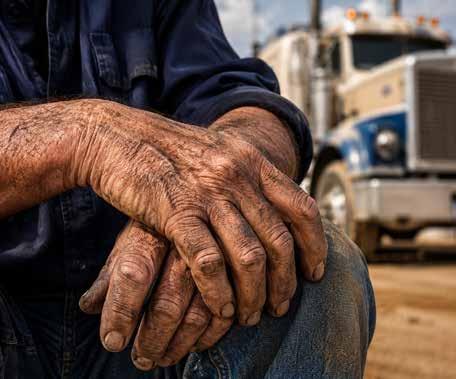
The Last of the Old Hands
We often hear about the ‘good old days’ of truck driving in this great state of Western Australia but nowadays, things are changing, and whilst come changes are good and beneficial, many of us older drivers often reminisce about times gone by.
We senior drivers reflect with emotion, pride and sadness as we watch an old way of life slowly disappear across the state.
There was a time in WA when truck driving was more than a job. It was a lifestyle – a passion and a brotherhood. A life lived out on the highways between Perth, Kalgoorlie, Port Hedland, Kununurra and every lonely stretch of bitumen in between.
The old hands will tell you the same thing. Back then, the road belonged to the driver.
There were no cameras staring at you from every angle, no fatigue alarms beeping in your ear and no office staff watching dots move across computer screens wondering why you stopped for ten minutes longer than planned. A man climbed into his truck, pointed it towards the horizon and got the job done.
Those drivers became part of the landscape of WA itself.
They knew every dangerous bend on the Great Northern Highway, every corrugation heading into the mines and every pothole that would shake the teeth out of your head during the wet season. They knew where to get a decent feed at two in the morning and which roadhouses would help a stranded driver without asking questions. They knew nearly every truck and driver on the road.
They drove through dust storms, cyclones, floods and heat that could melt the soles off your boots on the blacktop. Roads were hardly ever closed and if rivers flooded, they would wait and watch and as the water receded, we would make a ‘captains call’ and proceed. Sometimes this would take several days.
Same with cyclones, many a truck driver got caught up in a storm or cyclone and survived by just driving to the conditions. They watched the sunrise over the Nullarbor and the sun disappear behind the Pilbara ranges more times than they could count.
Truck driving demanded sacrifice, but it also gave something back.
It gave freedom.
That freedom is slowly disappearing. Modern trucking is now buried under
layers of regulation, surveillance and pressure. Cameras watch drivers every second of the day, fatigue monitoring systems track eye movements and steering patterns and GPS tracking follows every kilometre travelled. Enforcement officers can pull over a truck and turn a good run into a nightmare over paperwork, compliance or minor defects.
The old-school truck drivers are not against safety. They understand danger better than most people ever will as many have lost their mates on these roads. They know what fatigue can do and they know the consequences of mistakes when you are hauling 100 tonnes across isolated country.
But what many struggle with is the feeling that experience no longer counts for anything.
An entire generation of drivers learned their craft through instinct, hard miles and respect for the road. Today, many younger drivers enter an industry where technology makes decisions for them before experience ever has a chance to grow. They have never known the freedom that once came with the job because they were born into an era of monitoring, compliance and constant pressure from the other end of the phone.
And perhaps the saddest part of all - the old breed truck driver is disappearing. Men and women who gave decades of their lives away from the people they loved so supermarket shelves stayed stocked, mines kept operating and fuel reached remote communities.
Many sacrificed marriages, health and family life for an industry they genuinely loved. They always stopped to help anyone in trouble and this comradeship progressed into long lasting friendships.
Now many of them are quietly parking up for the final time.
When the last of those old hands climb down from the cab for good, something will disappear with them. Not just experience, but a culture. A way of life built on independence, resilience and pride.
WA will always need trucks - the distances are too vast but there was something truly special about the drivers who helped build this industry in the toughest conditions on earth.
They were never looking for praise. All they ever wanted was the freedom to do what they did best and for those who lived that life, the road never truly leaves you. Keep it safe, Ray Pratt.
Ray Pratt

LRTAWA by Jan Cooper LRTAWA Chief Executive Officer
The 2026 LRTAWA Annual Conference Will Continue to Unite and Strengthen Rural Transport
For more than 40 years, the LRTAWA Annual Conference has been the beating heart of rural transport networking, advocacy and industry connection in Western Australia.
Since 1980, the conference has brought together transport operators, suppliers, government representatives, regulators and industry leaders in a welcoming and solutions-focused environment designed to encourage collaboration and strengthen the future of the industry.
More than just an annual gathering, the conference has become one of the most respected and valued events on the Western Australian transport calendar. It is where important conversations take place, industry relationships are built and practical ideas are shared between those who understand the realities of operating across regional and remote Australia.
As the transport industry faces increasing pressure and rapid change, the importance of industry collaboration has never been greater. The 2026 event on the 21st and 22nd August will be a combined conference
Transporters Association with strong attendance from other states expected.
This year more than ever, the conference provides an important opportunity for industry to come together and focus on the future of rural transport in Western Australia and across the nation.
The sector is facing a range of critical challenges that require strong advocacy, practical solutions and ongoing collaboration between industry and government. Issues including fuel certainty, driver availability, unsafe driving
The 2026 event on the 21st and 22nd August will be a combined conference with the Australian Livestock and Rural Transporters Association with strong attendance from other states expected


conditions, constrained first and last mile access, supply chain vulnerability, land use conflicts and the ongoing shortage of driver facilities continue to place pressure on operators and regional freight networks.
At the same time, the industry must continue to innovate and adapt to changing technologies, evolving customer expectations and increasing regulatory complexity. Ensuring the regulatory environment keeps pace with operational realities remains a key priority for transport operators and industry leaders alike.
The Friday afternoon sessions will be hands-on workshops covering issues such as rollover prevention, safe hill descents, how to use the Main Roads Restricted Access Vehicle mapping system and tips for fuel efficient driving.
On Saturday during a more formal format speakers will tackle the hot button issues. A tandem dolly and a drop deck trailer will also be auctioned It’s an event not to be missed. Non-members are invited to register.
Follow us on Facebook for more details







CONTACTS:
7 Tipper Crt, Hazelmere WA
Office: (08) 9274 6355
Mobile: 0418 802 007
Rentals: 0488 003 228
Email: alan@haulmore.com.au
Website: www.haulmore.com.au


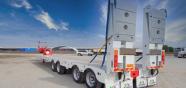
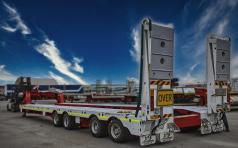
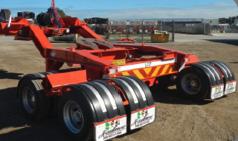
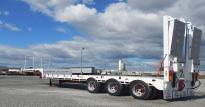
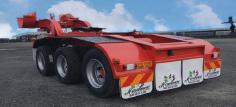
We have the following units currently in stock available for sale or hire:
Quad 4 Rows of 8 Full Axle Widening Low Loader with Hydraulic Suspension
Quad 4 Rows of 4 Full Axle Widening Low Loader with Hydraulic Suspension
Tri Axle Drop Deck Widener with Bi Fold Ramps
Dollys: 3x4 Low Loader Dolly – 2x8 Low Loader Dolly – 2x4 Low Loader Dolly
Side Tippers and Water Tankers
Flat Top Semi Trailers and Flat Top Extendables

Building the Next Generation of Transport Professionals: Why industry Must Lead the Way
Western Australia’s transport and logistics sector is currently at a bit of a crossroads. Freight volumes are continuing to rise, the state’s population is growing, and customer expectations around speed, safety and reliability have never been higher. Yet the workforce responsible for keeping WA moving is ageing, stretched and under increasing social and economic pressures.
If we want a strong, resilient transport industry in ten or twenty years’ time, we need to invest in the people who will be behind the wheel, in the yard, in the office, in the warehouse and in the scheduler’s chair. That means taking an active role in training, mentoring and supporting the next generation. Not wait for someone else to do it.
Turning ‘what’s in the book’ into reality
Training packages, units of competency and safety manuals are essential, but they
By NATALIE GRINCERI | Western Roads Federation
are only the starting point. What’s written in a book needs to be translated into real practice, in real yards, with real equipment, under the guidance of people who know the job inside out.
This is where experienced operators, drivers, yard, warehouse and office staff become invaluable. Their lived experience, the things they’ve learned through years, things like early starts, tight schedules, tricky loads and unexpected challenges can’t be replicated in a classroom.
When seasoned professionals step forward to share their knowledge, the industry gains something powerful: frontline wisdom. And when that wisdom is passed on deliberately, consistently and with pride, it becomes the foundation of a safer, stronger and more capable workforce.
Why industry involvement matters more than ever
The next generation entering road
transport today, bring with them so much potential. They are tech aware, values driven, and often approach problems with a fresh mindset. But they also need structured support, clear expectations and opportunities to learn by doing.
Industry involvement ensures that training is:
• Relevant and aligned with real job requirements
• Practical and focused on hands on capability
• Current and reflecting modern equipment and technology
• Safe and grounded in real world risk awareness
• Supported and backed by mentors who care about their success
When companies open their yards for industry visits, provide equipment for training, or allow staff to act as mentors, they are not just helping students, they are investing in their own future workforce.
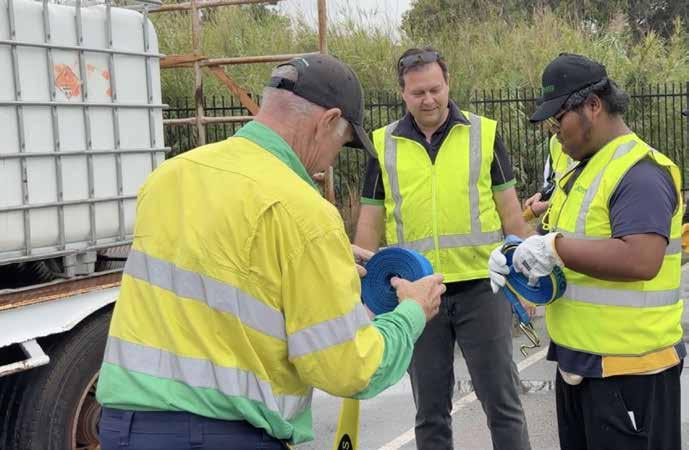
Staff from KTrans and a student from Belmont City College
Embracing a new mindset: The next generation has a lot to offer It’s easy to just believe that new entrants need to ‘fit into’ the existing culture. But the truth is more collaborative. The next generation brings new ideas, different communication styles, a stronger focus on wellbeing and job/life balance, a willingness -and sometimes annoyance - to question existing tried and tested processes, and a natural comfort with technology.
Instead of resisting these differences, the industry has an opportunity to embrace them. When experienced operators and new entrants learn from each other, the result is a more adaptive, innovative and resilient workforce.
This is not about replacing or rejecting tradition - it’s about building on what already exists.
Formal training teaches skills. Mentorship teaches confidence
A mentor is the most powerful workforce tool we have. A mentor can explain why a load needs to be secured a certain way, how to communicate with a difficult customer, or what to do when a schedule changes at the last minute. They can model
If we want a strong, resilient transport industry in ten or twenty years’ time, we need to invest in the people who will be behind the wheel, in the yard, in the office, in the warehouse and in the scheduler’s chair
professionalism, safety, patience and pride in the job. And mentorship benefits the mentor too. Many experienced operators rediscover their passion for the industry when they see a new driver succeed because of their guidance.
Building a workforce that reflects the future of WA
The transport workforce of tomorrow will be:
• Younger
• More diverse
• More tech enabled
• More safety driven
• More collaborative
To get there, we need to create pathways that welcome people from all backgrounds - school leavers, women, career changers, migrants, regional jobseekers and those re entering the workforce. Programs like the Heavy Vehicle Driving Skill Set, forklift
training, warehousing pathways and school industry visits are already opening doors. But programs alone are not enough. Industry must stay involved, offering placements, equipment, mentorship and real world exposure.
Looking ahead
The future of WA’s transport industry will not be built by chance. It will be built by the companies, trainers, mentors and operators who choose to invest in people. People who choose to pass on their knowledge, open their doors, and help shape the next generation of transport professionals. If we embrace the strengths of both experienced operators and new entrants, we won’t just fill jobs. We’ll build a workforce that is safer, smarter and ready for the challenges ahead. And that is how we keep Western Australia moving.
Mitchell Freeway safety cameras operational from 1 June
Caution notices for seatbelt and mobile phone offences detected by new fixed safety cameras on the Mitchell Freeway were issued from Monday, 1 June.
A second set of cameras has been installed at Karrinyup Road adding to cameras at Vincent Street which are now operational.
The two new fixed safety camera locations add to the two existing fixed freeway safety cameras on the Kwinana Freeway, as well as a fleet of eight mobile safety camera trailers operating State-wide.
The cameras detect seatbelt, mobile phone, and speeding offences.
The State Government has taken an education before enforcement approach with the new Mitchell Freeway cameras giving drivers a six-month period of grace where caution notices will be issued instead of infringements for seatbelt and mobile phone offences.
Given speeding offences have been enforced by radar camera technology on
WA roads for almost 40 years, speeding offences will not be exempt from the cautionary period.
Between February 2025 when the cameras were first introduced and May, rates of detected seatbelt offences dropped by more than 85 per cent, mobile phone offences have dropped by 88 per cent, and speeding has improved, falling by 51 per cent.
In the 10-year period between 2014 and 2024, on average 23 per cent of motor vehicle occupant deaths were directly linked to people not wearing a seatbelt.
In one year, through the introduction of safety cameras, along with dedicated education and increased enforcement, seatbelt-related motor vehicle fatalities dropped to 13.8 per cent in 2025.
This is a clear indication that changing behaviour saves lives.
All money from safety camera infringements goes into the Road Trauma Trust Account to be spent of road safety initiatives.
Fair Work Ombudsman acts on Sham Contracting
The Fair Work Ombudsman has written to 45 road transport companies notifying them of its interest in addressing Sham Contracting and misclassification arrangements. They have also conducted site visits and have a number of ongoing investigations.
Senator Glenn Sterle convened a roundtable in May and participants included industry association representatives, the TWU, state and federal ministers, NHVR CEO Nicole Rosie and senior officials from the Treasury, the tax office, the Australian Border Force and the FWO.
Senator Sterle has been acclaimed for his work on this subject by drawing attention to the issue and bringing industry, plus lead agencies and their responsible ministers, together resulting in a shared
Those who continue to engage in deliberate illegal Sham Contracting
practices should be worried
understanding of the problem and a more cooperative approach.
All parties seem to be in consensus that this requires policy and regulatory changes and an enhanced multi-agency frontline enforcement effort.
The message is clear – those who continue to engage in deliberate illegal Sham Contracting practices should be worried.
Right to Repair framework to include agricultural machinery
The Australian Government's discussion paper proposing to expand the Right to Repair framework to agricultural machinery and strengthen the existing Motor Vehicle Service and Repair Information Sharing Scheme (MVIS) has been welcomed as representing a meaningful commitment to building a fairer and more competitive repair market for independent businesses.
The motor vehicle scheme has already delivered real results — a $2.4 billion expansion in the repair sector's annual turnover since it commenced and this discussion paper builds on that foundation.
The discussion paper proposes extending the Right to Repair framework to agricultural machinery and industry bodies are indicating they will use the consultation process to advocate for the future expansion of the Right to Repair framework to heavy vehicles and motorcycles — two categories currently outside the scheme's scope.
Fuel Cost Recovery Order revised
The Fair Work Commission has proposed changes to its Fuel Cost Recovery Order following its review hearing on 25 May.
The order came into force on 21 April and it requires parties in the road transport contractual chain to adjust the rates paid for road transport work to ensure that the increased cost of fuel arising from the Iran war is covered.
The proposed changes include —
• clarifying that rate adjustments must be implemented each fortnight or twice per calendar month’ to avoid uncertainty as to whether a contract that provided for less regular adjustments would be sufficient
• providing that the weekly national average diesel terminal gate price must fall below $2.00 per litre for four consecutive weeks before the obligations under the order end.
To read the FWC statement visit www. fwc.gov.au/documents/decisionssigned/ pdf/2026fwcfb131.pdf
This is ‘The Outback’
By Cliff Graham

No room for 'self-entitlement' on our roads
Reading the traffic, using the road rules and having the humility to recognise everyone is trying to get somewhere on our roads sounds simple enough. But frequently we see the same scenarios play out and here’s a couple of them.
The first being in regional towns where there are two lanes each direction through the main street. I was coming with a single trailer up to a set of traffic lights at an intersection with the lights turning orange to red, following two vehicles who had already stopping at the lights. On my left I could see a concrete truck coming out of a driveway so I made room for him to safely pull out. There was no traffic behind me and I just needed to move forward 1.5 metres to make it safe for him to exit. I edged up to the car in front of me, who obviously could not see the concrete truck trying to leave the driveway.
By now traffic was coming up behind me, which did pull up to let the concrete truck out and all of this happened in a matter of seconds and job was done.
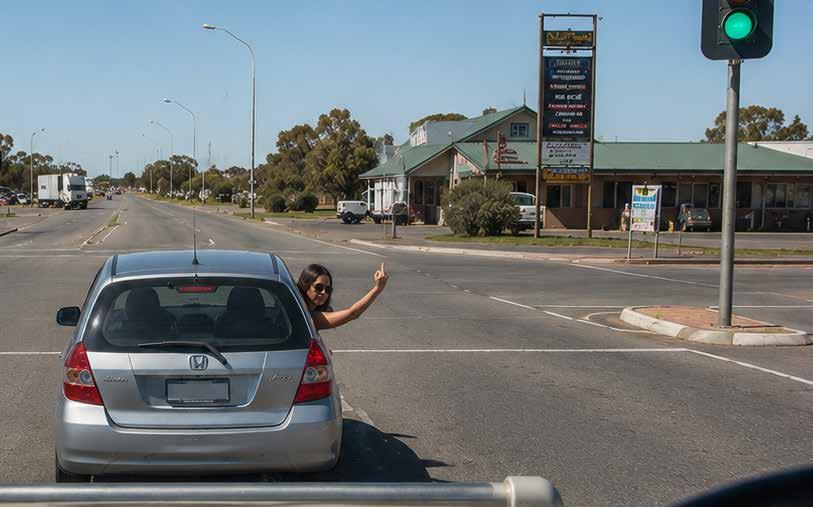
The lights turned green we were on our way however, that experience must have offended the driver of the car in front of me that that I got close behind them at the intersection because at the next intersection where I indicated to turn left, they decided to teach me a lesson and stopped far enough back to block me from turning left.
I tried edging up to see if I could fit
through the gap between them and the power pole but it wasn’t safe enough to try.
I then see a woman’s arm coming out of the driver side window giving me ‘the bird’.
I’m not even thinking about what happened at the last intersection where I moved forward to let the concrete truck out and I look in my left hand mirror and every vehicle behind me for as far as I could see was indicating to turn left.
So, we all had to wait until the lights changed colour then she drove off still with her middle finger straightened like the hairs on the back of her neck.
Here’s my point - with the traffic turning behind me means the next line of traffic going straight ahead would have missed that green light. What if there was an emergency vehicle or someone trying their best to get a someone to hospital?
I understand that traffic hold ups are a normal occurrence but why would people need to be so arrogant to a particular vehicle whilst affected so many others?
Obviously, this arrogant behaviour can’t be policed.
Next scenario - I’m in a road train coming from a side street at an intersection without traffic lights and wanting to turn right. Knowing it was going to take a while, I try to show a bit of consideration to the traffic travelling in the direction I wanted to go.
There was lots of traffic coming from the left, and traffic coming from the right was long enough away that I could safely cross
their lane. The second and third vehicles coming from the left have their indicators on showing their intention to turn right in front of me and go down the street I just came from. I checked my mirrors and traffic is building up behind indicating they were going to turn left.
However, they needed me to go before they could.
So now I’m waiting for the first car to continue to drive along the road and the cars behind it to turn in front of me and surprise, surprise the first car slows down and at the last possible moment puts their indicator on to turn right in front of me. Now the traffic from the right is too close for me to pull out in front of them.
My point is I could have been gone and not held up any traffic had the car that turned in front of me read the situation and indicated earlier so I could have cleared the intersection before they got there.
What if an emergency vehicle was held up behind me?
Interestingly, my son said the man taking him for his license test suggested he was putting on his indicator on way too early. I have taught all my kids to indicate early when coming up to intersections especially when trucks are waiting to enter the road.
It shows that the driving instructors and licensing people are exactly who should be spending time in trucks seeing what goes on in front of heavy vehicles every single day, at nearly at every intersection.

Let me introduce myself.
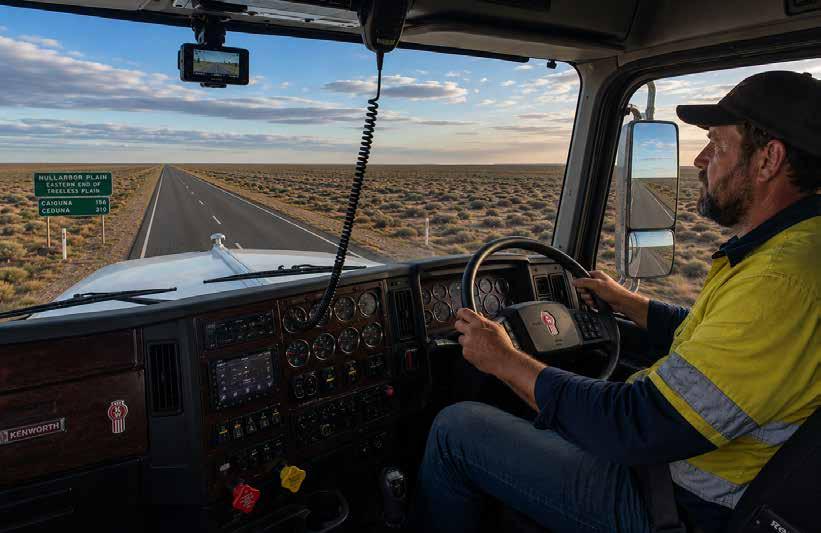
My name is Russel Walsh. I have been in and around trucks for around 40 years. My driving career started at 20 in the town where I grew up, Mukinbudin and over the years I’ve owned, driven and fixed a couple of trucks. I did a cert IV as a heavy commercial vehicle mechanic later in life and managed a large private fleet workshop. I’ve carted most types of freight including livestock, end tippers Ag cartage to side tippers on ore jobs in Leonora, Groote Eylandt, The Granites and Bootu Creek plus some general and refrigerated and now fuel to throw into the mix. Walshy's PERSPECTIVE
COMPLIANCE CULTURE –
the
breakdown
of morale, autonomy, trust and productivity
Why are older drivers leaving the industry when many could still give it a few more good years?
For me, it comes down to rapid technology changes, overregulation, invasive monitoring systems, and an avalanche of compliance being pushed down the chain onto drivers in a bid for everyone above us to CTA - cover their arse.
The psychological impact this is having on older drivers is enormous.
Many of us grew up in an era where common sense, experience, and professional trust still meant something.
You learned your trade properly, earned respect over time, and took pride in your work without feeling like you were under constant electronic surveillance.
That world is disappearing quickly.
COR (Chain of Responsibility) laws were a rude awakening for companies and management. Suddenly businesses realised they could no longer simply blame the driver when something went wrong. If a crash occurs because of poor training, unrealistic scheduling, or inadequate safety systems, management can now be held accountable too and rightly so.
That part is positive, but like everything, there has been a reaction.
Companies now dump enormous amounts of technology, monitoring systems, compliance, and policy onto drivers in an attempt to protect themselves from liability.
And this is where the divide begins. Drivers push back because many of us hate being micromanaged to death. We grew up figuring things out ourselves. We had accountability, but we also had autonomy.
Then come the threats, “Follow the policy or cop a warning.”
So, drivers respond with their own version of protection namely CYA – cover your arse.
Suddenly everything becomes slower and more mechanical - drivers follow procedures word for word, not because they believe in them, but because they no longer feel trusted. Pre-starts blow out, productivity drops and morale sinks.
An “us and them” culture forms between management and drivers and once that wall goes up, it is hard to bring down.
What we are now seeing in transport is what mining went through years ago. Heavy surveillance, endless compliance, constant monitoring, and increasing disconnection between management and workforce.
How do those industries attract workers despite that environment? Money, big money, because eventually people stop tolerating these conditions unless the pay compensates for the stress. And who pays for it in the end - the consumer.
We call it inflation, but a large part of rising costs comes from compliance overload, expanding bureaucracy, insurance pressures, and government overreach forcing increasingly expensive systems onto operators.
The technology itself is not cheap either. Some of these AI monitoring systems cost upwards of fifteen grand per truck once installed. Then come subscription fees, maintenance costs, satellite connectivity, repairs, and constant updates and for major fleets, we are talking millions of dollars.
And this is only the beginning, Government regulators, insurers, and major corporates are all pushing these systems harder every year. Eventually every operator including small contractors and farmers will be dragged into it.
The issue isn’t safety itself - most drivers support genuine safety improvements. The issue is the growing feeling that professional drivers are no longer trusted professionals and are becoming monitored liabilities.
Driver-facing cameras, AI behavioural monitoring, live satellite feeds, seats vibrating randomly because an algorithm thinks you blinked too long… Where is the privacy that you should be entitled to and you start to have dark thoughts about the manager that is viewing your every move wondering if they are enjoying the new found power and control they have over you.
That constant surveillance wears people down psychologically. You begin feeling less like an experienced operator and more like a suspect being monitored and for older drivers especially – this is becoming the final straw.
I’ll be honest the psychological impact of constant monitoring has genuinely made me reassess whether I even want to remain in the industry long term because I have always maintained one thing - the day I stop enjoying this job is the day I leave and I know I’m not alone in that thinking.
There are a lot of experienced older drivers quietly considering early retirement because they no longer recognise the industry they once loved.
This is not necessarily a criticism of individual companies either. Many operators are simply trying to survive within systems increasingly dictated by insurers, regulators, and large corporate customers demanding higher levels of compliance but somewhere along the line, the industry lost balance.
Compliance culture may have improved accountability, but it has also unintentionally damaged morale, autonomy, trust, and productivity. That tension between safety, accountability, and human trust is becoming one of the biggest issues facing transport today.
Now let’s move onto why the industry struggles to attract young Aussie drivers.
To be blunt, if I was twenty years old looking at this industry today, I’m not sure I’d choose it either and the cost of entering transport has become ridiculous. Licences, medicals, inductions, courses, clearances, training, fatigue management, site requirements… the hoops are endless and the costs keep climbing.
My view is simple, if an employer requires a licence, course, or qualification to perform a role, then industry should contribute far more heavily toward funding it, just like PPE. Large mining companies and corporates already do this because they understand workforce development matters and the transport industry still tries to shift those costs onto young drivers, and then wonders why younger drivers aren’t entering transport.
Meanwhile many young Aussies watch foreign workers being fast-tracked through government-approved pathways linked to large corporate training systems, while local drivers spend years progressing through licensing stages. Whether people like hearing it or not, many drivers see that as inequitable.
The reality is the big corporates drained the pool of experienced Australian drivers years ago and are now desperately searching for ‘meat in the seat’, so where does that leave us?
Older drivers are leaving, young Aussies are not entering, experience is bleeding out
Compliance culture may have improved accountability, but it has also unintentionally damaged morale, autonomy, trust, and productivity. That tension between safety, accountability, and human trust is becoming one of the biggest issues facing transport today
of the industry, mentoring is disappearing and companies continue asking why retention is collapsing.
These are the conversations the industry should be having. Why are experienced drivers leaving early, why aren’t companies investing heavily in mentoring younger drivers, why are rushed competency pathways becoming normal, why is genuine hands-on training disappearing and why are companies ignoring the value of experienced older drivers who still have decades of knowledge to pass on?
A few years ago, I worked for a very reputable fuel transport company on the east coast with exceptionally high standards. They flew me to Queensland for a full week of training covering classroom work, practical assessments, NHVR requirements, fatigue management, policies, procedures, and operational standards. They supplied PPE, paid wages for the week, covered flights and accommodation then flew me home to Darwin to commence work.
Even back then the onboarding cost for one driver was around ten grand and that company understood something many others still don’t which is quality training costs money, but poor training costs far more.
This isn’t about attacking industry - It’s about starting conversations that desperately needs to happen because if transport continues down a path where trust disappears completely, surveillance keeps expanding, experienced drivers keep leaving, and young Australians keep avoiding the industry altogether, then we are heading toward a far bigger crisis than fatigue or distraction alone.
Is your safety strategy built to prevent incidents or just document them?
Why Western Australian heavy vehicle operators need to stop treating safety as a box to tick and start treating it as a competitive advantage

By LUKE OLSEN Managing Director APAC at Microlise
Most Western Australian transport and logistics businesses approach safety the same way: reactively. An incident happens, a regulator asks a question, an audit lands - and suddenly everyone is very interested in what the data says.
That approach made some sense ten years ago but makes no sense now, considering the regulatory environment is shifting faster than most operators can keep up with. While there is proven technology available to help fleet managers get ahead of compliance, many still choose the reactive approach – the cost of which shows in elevated insurance premiums, off road time and avoidable incidents.
Compliance and safety are not the same thing
A very common misconception among fleet operators is ‘ticking the compliance box means I have a safety culture’. You don’t. Compliance is the floor. Safety is what you build above it, and the best operators build well above it.
The businesses with genuinely strong safety outcomes are not focused primarily on what the regulator requires. They are focused on what their data is telling them about risk, and they are acting on it before it becomes an incident. That distinction matters more now than it ever has before.
What the data actually shows
To illustrate this distinction perfectly, let’s consider the real case study below.
A large national retailer sought to implement AI-assisted driver distraction camera technology across their fleet. Before implementation, their own incident data told a stark story: 65 percent of all motor vehicle incidents within the fleet were attributable to driver distraction. Not fatigue. Not mechanical failure. Distraction. Following implementation, distraction events were reduced by more than 80 percent. The impact on incidents was significant. But equally important was the less obvious benefit: vehicles stayed on the road. Every time a vehicle goes off road for incident repair, the business absorbs downtime, repair costs, and operational disruption. Across a large fleet, the financial case for prevention becomes very clear, very quickly.
before they become problems.
It also means being able to audit a fleet operation in real time. When a regulator or insurer asks what was happening on a specific vehicle at a specific time, operators should be able to answer that question in minutes with complete confidence - not because they ‘got lucky’ with the paperwork, but because their systems captured it automatically.
The window to get ahead of compliance is narrowing
Businesses that invest in the right technology now and shift from reactive to proactive safety management approaches will find it easier to operate under the new framework. They will also find it easier to argue the commercial case for the investment they have made. On the other hand, the businesses that wait for a regulatory intervention or a major incident to force the change will spend the next two
A very common misconception among fleet operators is ‘ticking the compliance box means I have a safety culture’. You don’t.
This is what proactive, data-led safety really looks like, rather than a simple policy document. Fleet operators should aim for a system that identifies risk in real time, changes behaviour, and produces measurable outcomes.
Reframing safety as a data discipline
Operators should avoid treating safety as a compliance checklist and instead approach it as a data discipline. That means having real-time visibility of what is happening across the fleet rather than waiting for a monthly summary. It means using that visibility to identify patterns
to three years catching up.
Safety compliance is the starting point. The businesses treating it as the destination are already falling behind.
The ones getting this right are already seeing the results, including lower incident rates, reduced insurance costs and vehicles staying on the road rather than sitting in repair bays. Furthermore, their drivers are better supported, better managed, and better protected. And when a regulator, insurer, or major customer asks hard questions about safety performance, they can answer with data-backed confidence. That is not just a compliance outcome. It is a commercial one.

WAFarmers President Steve McGuire has written an outstanding piece on inadequate train illumination that I would like to share with WA Transport Magazine readers. WAFarmers has long supported our family’s advocacy for improved train lighting and level crossing safety and is one of 20 organisations around Australia supporting this important work. Indications are that the final redraft of the train lighting standard AS 7531 is due for release in the third quarter of 2026. I live in hope. Lara Jensen.
Train Lights, Train Wrecks, and the State That Never Learns

By STEVE McGUIRE President, WAFarmers
Only in Western Australia could we reach 2026 and suddenly ‘discover’ that trains need lights.
Not because someone had a brainstorm in Perth, but because enough people have been killed at level crossings over the years that regulators have finally decided visibility might matter.
Edging closer to the final standard, the AS 7531 is due for release in the third quarter of 2026 after a period of public submissions, received largely from the people who actually cross these tracks in dust, fog and darkness. It’s unbelievable that the laws of physics were even up for consultation.
This consultation followed a long campaign by safety advocates and regulators after a series of tragic accidents at railway crossings around the country. These incidents are always described as ‘rare’ right up until the moment they happen again. And when they do, it is never abstract. It is a family. A truck driver. A farmer. A community left asking how something so basic went wrong.
So yes, it matters that trains are visible.
But WA has been here before – quite literally.
Following a spate of serious crashes at railway level crossings in WA in the 1960s, the Cabinet of the day, under Premier Sir David Brand, appointed an inter-departmental
committee to review safety requirements for level crossings across the State.
A 109-page report, Railway Level Crossing Protection in WA, was released in December 1968.
And what did it talk about?
Painting rolling stock.
Rotating beacons.
Reflectors and lights on trains.
In other words, nearly sixty years ago WA was already asking: can motorists actually see the train?
Fast forward to 2026 and we are back here again, still consulting on the same question with newer fonts.
This is not progress. It is policy amnesia.
Out in the Wheatbelt and the SW, level crossings are not tidy metropolitan interfaces with boom gates, flashing lights, underpasses and maintenance crews nearby.
Nearly sixty years ago WA was already asking: can motorists actually see the train?
They are often passive crossings. Narrow approaches. Dust haze. Fog. Harvest traffic. Road trains. Oversized machinery. Long days and tired drivers trying to get home before midnight.
In those conditions, visibility is not a ‘nice-to-have’.
It is the difference between stopping safely and not stopping at all.
And yet we still have freight trains moving through the countryside like dark ships of the night; long, low, snaking across country roads with minimal side visibility.
A locomotive might have a headlight, but the rest of it can disappear into the grey; a moving wall of steel, side-on, poorly contrasted, detected too late.
A train that blends into dusk is not a driver failure. It is a system failure and other places have worked this out.
Canada mandates auxiliary ditch lights. Europe treats rolling stock visibility as basic safety and interoperability. They do not rely on vague language about ‘adequate conspicuity’.
They mandate performance because they understand a simple truth: you cannot avoid what you cannot see.
But in WA, it raises an obvious question: why are we still reinventing the wheel? Or in this case, the train light?
The answer is the same as the answer to almost every rail question in this State.
Fragmented responsibility and underenforced standards.
A system where rural crossings remain stuck in time while the paperwork continues to multiply.
Perth can spend billions on grade separations. Flyovers, underpasses, urban rail projects of extraordinary ambition.
But beyond the suburbs, it is as if time has stood still. Passive crossings, minimal modernisation and minimal urgency.
Lighting upgrades are not glamorous. They don’t come with ribbon-cuttings. But they are among the simplest and cheapest safety improvements imaginable — far cheaper than rebuilding crossings, and far cheaper than the cost of another tragedy.
So, the finalising of this standard, and consultative stage, should not be treated as a box-ticking exercise.
And WA should reflect on the deeper lesson: we have known about this problem since 1968. Train visibility should not be optional.

Lights on the Hill hosted by Tracmach
By KEVIN TOOVEY
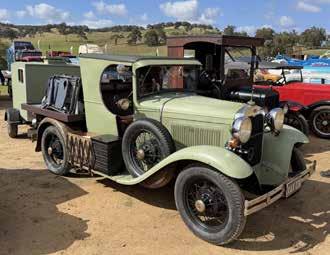
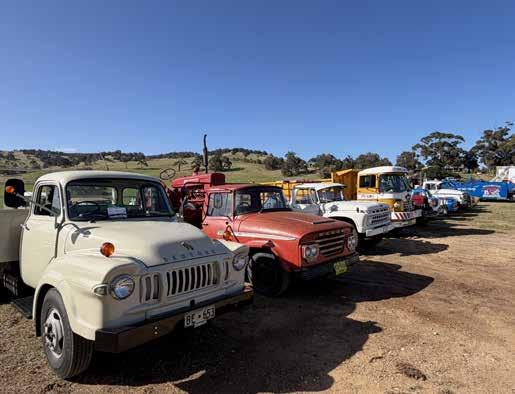
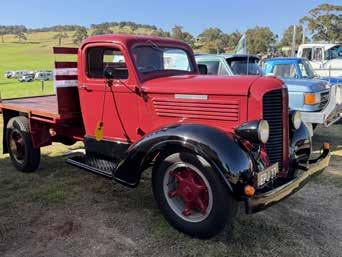
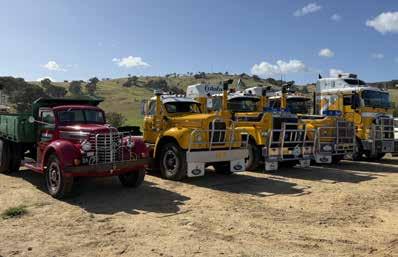
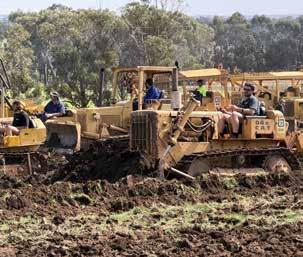
This annual event started back in 2014 and has become one of the ‘must go to’ events for enthusiasts of old tractors, trucks, bulldozers and stationary engines in Western Australia. Tracmach invites the HCVC of WA every year and we are more than happy to come along.
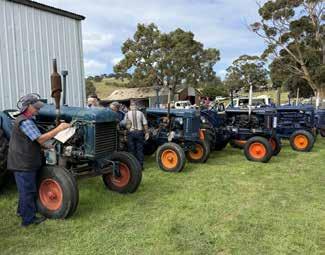
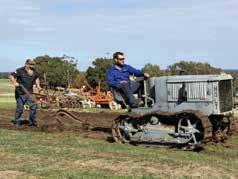
In 2026 ‘Lights on the Hill’ featured 80 years of the Fordson E27N tractor which was produced from 1945 to 1952 and was called ‘Britain’s stopgap tractor’ because of the shortages of materials available after the war. It had a distinct dark blue colour. One of the favourite parts of the day is the working displays. You can see many old bulldozers pushing up and levelling
out the dirt. Some of the old Caterpillar machines were using cable blades and winches. Many of the old tractors are hand cranked to start and a few needed preheating with a blowtorch. These skills to start, drive and operate these machines are learned over many years of working with them. Hydraulics, electric starters and cabs on the old gear would have been pure luxury.
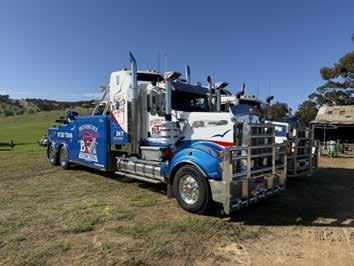
This year featured a modern working display as well with Bunbury Towing's Kenworth tow truck pulling a bulldozer along with its winch cable. The bulldozer had its ripper in at full depth and it registered at 78 tons on the cable.
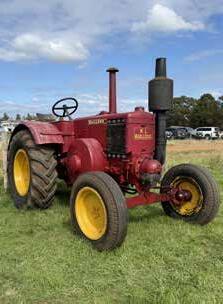
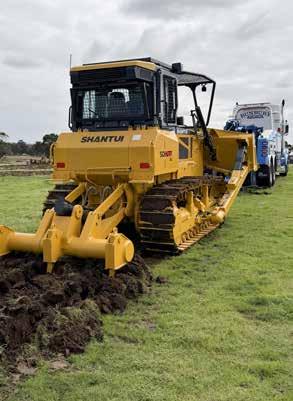
Ford and caravan KL Bulldog tractor
Bunbury Towings Kenworth was used to tow the Bulldozer
The line up of Fordson E27N tractors

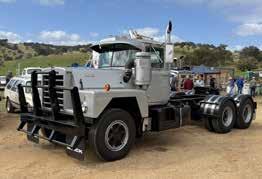
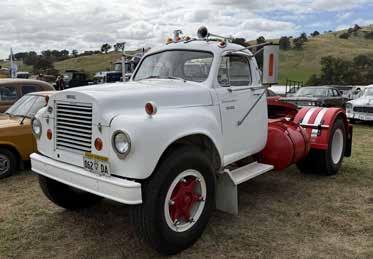
Studebaker Prime mover Bulldozers at work
The Catalano fleet
1937 Dodge
A line up of Chamberlains
Caterpillar Holt crawler towing a single furrow plough Mack Flintstone out to its first event
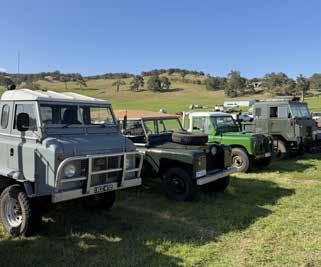
A line up of old farm trucks
A line up of Landrovers

A BOOK BY DONNA VAWDREY
TOOTS – Woman in a Man's World

Follow the inspiring and at times devastating journey through Toots Holzheimer’s life. Australia’s most recognised truck driver battling non-existent roads and no telephones from the 1960s to 1990s.
• To purchase Toots’ inspiring book and merchandise visit toots-thebook.com.au •
At the beginning of 1951, when she was only 16, Toots fell pregnant. Being underage Toots had to complete 100 hours community service while the father spent time in jail. After completing community service Toots turned to her sisters for comfort but they rejected her so she headed north back to her father in Cairns. Chauncey joined her thinking there may be more opportunities to find work in the north.
On the 8th of September 1951, Toots gave birth to a very healthy little boy. She named him John Joseph Bishop (JB), not wanting to have any association with his natural father. Toots was now 17 years old and quickly settled into life in Cairns.
Quintice enjoyed having her big sister home. Together they would go to dances much to her younger sister’s delight as she was not allowed to go on her own. They both loved dancing and Jack was only too happy to babysit his grandson. Whenever Toots was not working at night they donned their special dance dresses that Toots had made and walked to one of the dance clubs. Saint Joseph’s was the closest to home although they were also regulars at the Trocadero or the Aquatic in town. Having no male partner was never an issue as Quintice and Toots would pair off joining in all the old time barn dances.
Night life in Cairns in the early 1950s came to an abrupt halt at midnight, so Toots always made sure that they left the dance in plenty of time to walk home, before the lights went out leaving the town in darkness. Working during the day for Cummins and Campbell and at night in a local café did not leave much free time for Toots. Chauncey had found work in Cairns driving for Bell’s Transport, just around the corner from where Toots lived, where he immediately made friends with Cecil Hill and his twin brothers Bill and Bob. Every spare moment they had they did what young men still do today. They cruised around in Chauncey’s Chevy Tourer. Toots often went driving with the boys. With no seatbelts or passenger limitations, the car was always full to overflowing. Toots usually sat on the back seat with JB. Cecil recalls the day when a large group of friends had gone to Crystal Cascades for a swim. He was so squashed against the back door that when Chauncey took off the door flung open and he fell out. Without hesitation he climbed back in, but this time he shared Toots’ lap with JB. While looking for a place to rent of his own Chauncey spent a

lot of time around at the Hill residence as did Toots. Toots found a couple of baby galahs one day and carefully placing them in a box took them around to Cecil’s mum Pearly. Pearly took one look at the birds and said no when Toots offered them to her to keep. The birds were covered in lice, which is why Pearly said she didn’t want to keep them, so Toots took them home and sprayed them with Mortein. A week later Pearly asked Toots about the birds. Toots confessed they had died and everyone had a chuckle when she told them the story.
Chauncey finally found a place to rent at Stratford and it became a common meeting place for the guys to share many yarns much swearing and hurling of insults at each other. No one took any notice of two legs sticking out from under Chauncey’s car. When Toots climbed out from under the car there was complete silence and many red faces. Chauncey was very protective of his younger sister and his mates all respected Toots.
Like Toots, Chauncey had dreams of succeeding in his own business. Trying his hand at growing and selling mushrooms proved profitable but not enough to fulfil his dreams. When an opportunity to earn big bucks in the Solomon Islands was offered, Chauncey jumped. While working overseas Chauncey celebrated his 21st birthday made all the more memorable by winning a sizable amount of money in the Golden Casket Lottery. He sent seventy pounds to Cecil’s mum Pearly for looking after him and the rest to another friend, Bill, to buy a house.
Alwyn, Zilla,Toots and Quintice


The Livestock and Rural Transport Association of Western Australia (Inc) is the only transport association in WA specifically representing rural transporters.
We are a strong voice for rural WA, ensuring that policy decisions support the viability and safety of rural transporters, primary industry and the communities they service.
Members of the Management Committee are hands on business people, most of whom would drive a truck weekly and travel on nearly every road in WA’s 150,000 km road network in the course of a year.
This close proximity between transporting operations and the advisory role means that representatives of the Association are at the coal face and as such are able to provide that all too rare practical hands on advice in committees, consultative forums and meetings.






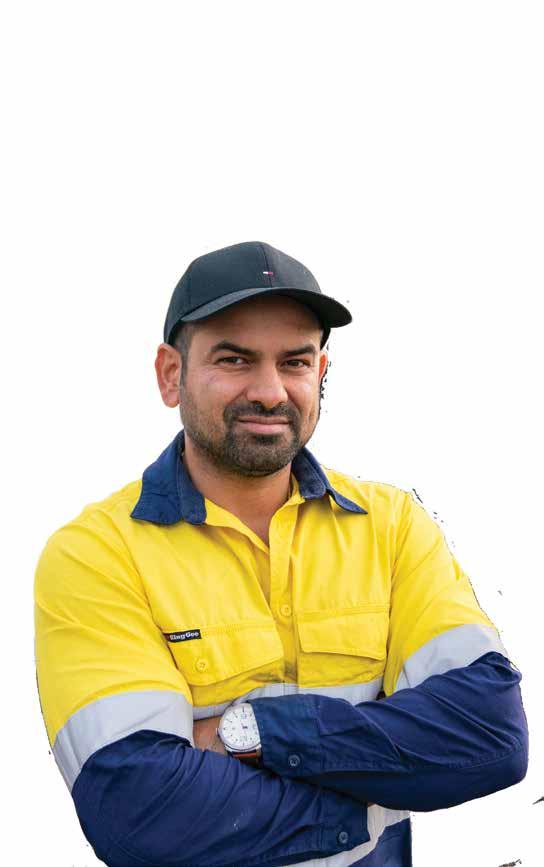
Visit our website to sign up for email updates and access handy tips and tools, including:
• A cost calculator to help with business costs
• Guideline rates of payment for 13 truck types
• Templates and tips for negotiating contracts with hirers

• Tips on how to deal with hiring disputes For more information, visit transport.wa.gov.au/ownerdrivers or scan the QR code.