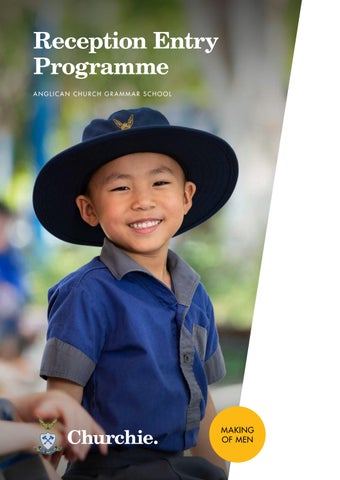
Reception Entry Programme
ANGLICAN CHURCH GRAMMAR SCHOOL
Welcome
Dear prospective Churchie parents
It is with great excitement that I welcome you as you consider the next step in your son’s educational journey Starting school is a significant milestone not only for your son but also for your whole family We’re delighted that you are considering Churchie as a place for your son to begin his adventure.
Preparing your son for Reception often brings questions and, at times, a few worries. Rest assured, there is no need for your son to have ticked every box before taking this step. School readiness is not about having mastered every skill or knowing all the answers; rather, it’s about your child’s confidence, independence, and most importantly, his positive attitude towards learning.
At Churchie, we believe that the strongest foundation you can provide for your son is built through simple, joyful experiences such as play, conversation, and encouragement at home. Let your son explore, get messy, and ask endless questions. Chat with him about his day, listen to his stories, and celebrate his curiosity. These small, everyday moments are what truly help a child to grow into a confident, independent learner who feels excited about the world around him.
We also understand that this is a time of change for parents as much as for the boys. Please know that you are not alone on this journey The Churchie community is here to support you, offering guidance, understanding, and a welcoming environment where both you and your son can thrive.
We hope you find this booklet both informative and reassuring as you prepare for the incredible adventure ahead. Should you have any questions or simply want to chat further about how best to help your son transition into Reception, please don’t hesitate to contact the School.
We look forward to welcoming you and your family into the Churchie community and sharing in the joy of your son’s first steps at school.
Kind regards,
MarkWyer Head of Preparatory School

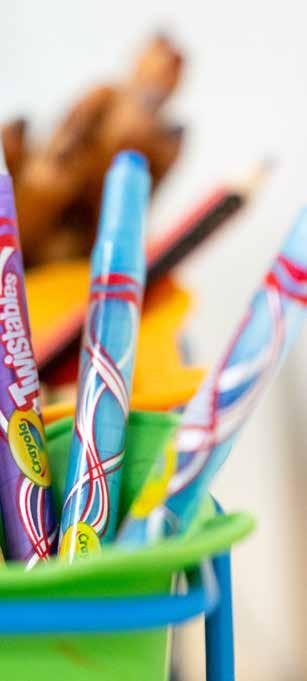
Starting school is a significant milestone for any child and their family. Preparing your son for this journey involves more than just purchasing a new backpack and labelling uniforms. It’s about building confidence, independence and curiosity. School readiness spans early learning, social, emotional, and self-care skills. The following overview outlines key areas to support a smoother transition into the school environment.
By nurturing these practical skills and emotional strengths in your son, you’ll help pave the way for a positive and successful start to his school journey. Remember, every child develops at their own pace. Celebrate the small steps and enjoy this exciting chapter together.
Learning skills
Early literacy and numeracy exposure
Introducing your son to basic literacy and numeracy concepts before school sets a solid foundation for learning. Engage in activities such as reading books together, discussing stories, and pointing out letters and numbers in everyday settings (on street signs, at the shops, or while cooking). Practise counting objects, recognising shapes and colours, and singing rhymes These experiences make learning fun and foster curiosity about words and numbers.
Oral language skills
Oral language skills form the foundation of literacy and academic success. A solid foundation of oral language helps boys become successful readers, strong communicators, and more confident individuals with an overall sense of wellbeing.
Your son’s ability to use language effectively influences his learning, relationships, confidence and sense of self. Strong language skills support wellbeing, while limited language development can make learning and relationships more challenging.
The need for a high-quality language environment
Your son’s language grows best in a rich language environment filled with conversation, stories and questions.
What are the principles of creating a high-quality language environment in the home?
Children learn what they hear most – repeated exposure to books and conversation builds vocabulary and strengthens oral language skills.
Children learn words for things and events that interest them. Rather than trying to divert your son talk about what he is looking at and what he shows an interest in. Boys will learn more when they are interested than when they are drilled.
Children learn best when they are engaged interacting.Talk with your son rather than at hi expand on what your son says, comment on your son is interested in and ask lots of questions.
Children learn best in meaningful contexts. with your son and engaging with him allows greater learning opportunities than direct instruction. For example, while playing with blocks, an can model spatial language such as “Put the behind the green block” Or teaching maths and language during play with toy animals, such as “Which one is bigger? How many sheep are there? Let’s make the same number of chickens in each pen”
Children need to hear a wide range of examples of words and language structures –quality is essential, not just quantity. Talk with your son about lots of topics, read a wide range of books, and sing songs and rhymes.
Tips to help:
Read and talk every day
Let learning happen through play


10 ways to nurture language development
1. Have meaningful and genuine conversations with your son and model speaking kindly and respectfully
2. Ask open-ended questions
3. Encourage your son to explain what he is thinking or feeling, and offer words/ vocabulary when needed
4. Comment on ideas and objects in your son’s environment to encourage oral engagement
5. Read to your son, frequently and at length, every day and encourage a response to reading
6. Sing, chant, and recite rhymes and finger plays
7. Teach your son how to take turns and how to respond (on-topic) during a conversation
8. Encourage asking questions by modelling thinking aloud, for example, “I wonder what would happen if…”
9. Use new vocabulary when speaking with your son and encourage him to use new words
10. Read young reader chapter books aloud to your son
Social and emotional skills
Social readiness
School life requires children to interact with peers and teachers in new ways. Social readiness involves learning to take turns, share, and work collaboratively. Encourage your son to play group games, practise waiting patiently, and follow simple group instructions. Teach strategies for managing frustration, such as taking deep breaths or asking for help, and model these behaviours at home. Practising these skills helps your child feel more confident and connected in the classroom.
Emotional regulation
School can bring a mix of excitement and anxiety, particularly around separating from parents. Talk openly about what to expect and reassure your son that it’s normal to feel a range of emotions. Practise short separations and praise his bravery. Encourage him to express feelings and seek help from teachers when needed. Reading stories about school or role-playing scenarios can help him become more comfortable with these new experiences.
Daily routines
Establishing consistent routines at home helps children adjust to the structured nature of school days. Set regular bedtimes and morning routines to ensure your son gets enough rest and is ready for learning. Practise getting dressed, eating breakfast, and leaving the house on time. Review the schedule for the day ahead, so he knows what to expect. Predictability provides comfort and fosters a sense of security during the transition.
Tips to help:
Model patience and sharing
Talk about feelings and problem-solving through play

Physical and practical skills
Self-care skills
Being able to manage basic self-care tasks is essential for school independence. Practise toileting routines, including handwashing. Encourage your son to open lunchboxes and food packaging, use a drink bottle, and tidy up after himself. Learning to dress independently—zipping jackets, putting on shoes, and managing hats—builds confidence. Involve him in organising his belongings, such as packing and unpacking his bag, so he feels responsible and prepared.
Fine motor skills
Fine motor skills involve the coordination of the small muscles in the hands and fingers with what the eyes can see. These skills underpin everyday tasks such as holding a pencil, using cutlery, buttoning a shirt, tying shoelaces, cutting with scissors, and fastening zips. Developing strength and control in these muscles happens through actions like grasping, pressing, threading, or using a pincer grip (holding an object between the thumb and forefinger).
Strong fine motor skills are not only essential for independence in daily routines but also lay the foundation for academic tasks such as writing and drawing. When boys struggle with these skills, it can affect their confidence and limit opportunities to build self-care and independence.
On the opposite page are 10 fun ways to help your son strengthen his fine motor skills.
Tips to help:
Encourage independence with dressing and lunchboxes
Offer daily active playtime
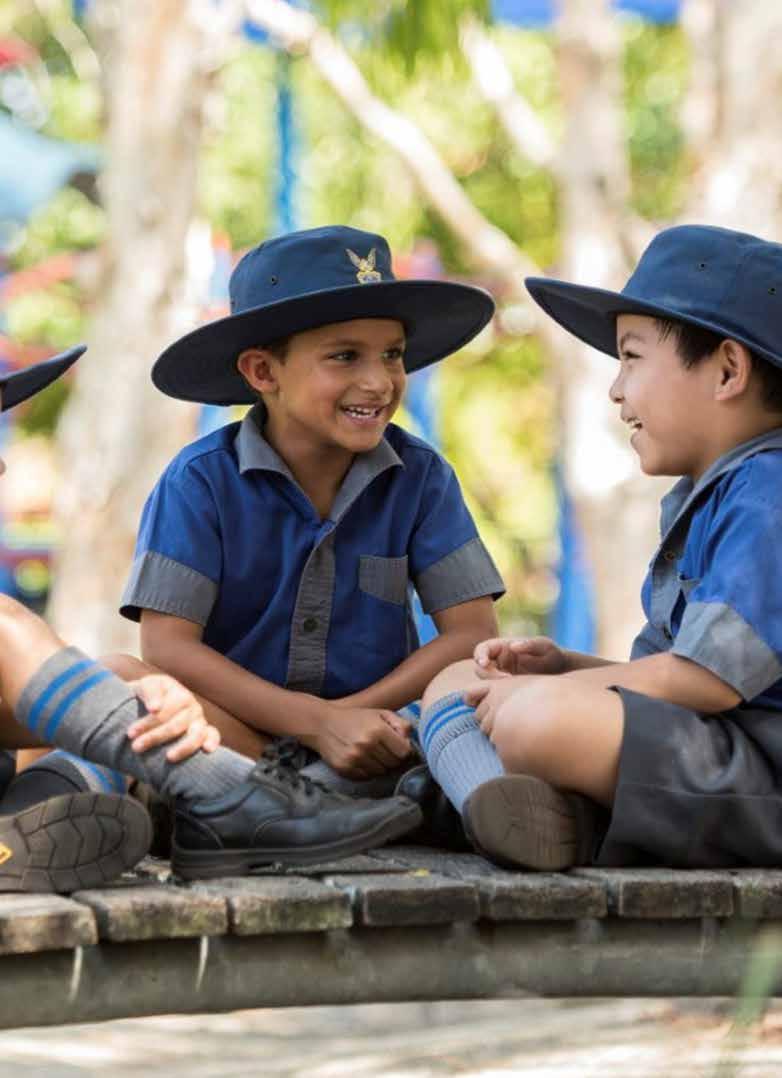


1.Playdough
Tactile play with familiar materials like playdough is an excellent way for your son to experiment and build fine motor skills. To make this even more interesting, consider making the playdough with your son first, before they start playing with it.
2.Puzzles
Do puzzles together. Picking up and moving puzzle pieces into place helps develop pincer grasp. Watching or helping your son learn how to complete a puzzle can be frustrating; he may be impatient, give up easily, lose pieces, or even put them in his mouth. But if you stick with it, the rewards are worth it. Engage with and encourage your son to complete easy puzzles at first, and then gradually move on to progressively harder ones. Doing this will improve his hand-eye skills, coordination and motor skills.
3.Drawing, colouring in and painting
Encourage your son to draw and paint. This helps not only his fine motor skills, but also creativity and imagination. Try different types of painting and other mediums, like crayons, chalk, finger paints, brush painting or charcoal, to spark his interest and strengthen your son’s hand-eye coordination. Painting with a paintbrush helps boys learn to hold a brush and gain greater control using things in their hands, including pencils and other items. Paint-bynumber can be an excellent form of brush painting for young boys.
4.Using kitchen tongs or tweezers
Create a game for your son using a small pair of kitchen tongs or tweezers to pick up some small objects like sultanas, grapes, pasta, and buttons, into a bowl.
5.Cutting with scissors
Using scissors is a great way to strengthen fine motor skills in addition to improving hand-eye coordination and concentration. You can draw shapes for your son to cut around. Make some paper snowflakes. Even cut playdough. Make sure you use age-appropriate scissors.
6. Bath time play
In the bath, use cups to fill and pour out the water, sponges or squeaky rubber toys to squeeze. Don’t worry about a bit of splashing. Fun is part of learning.
7. Sand play
Like bath time play, using cups to fill and pour out is fantastic fun and also encourages sensory development. Scoop and dig with spoons. Use moulds. Draw pictures and build things. If you’re inside, magic or kinetic sand is a great alternative.
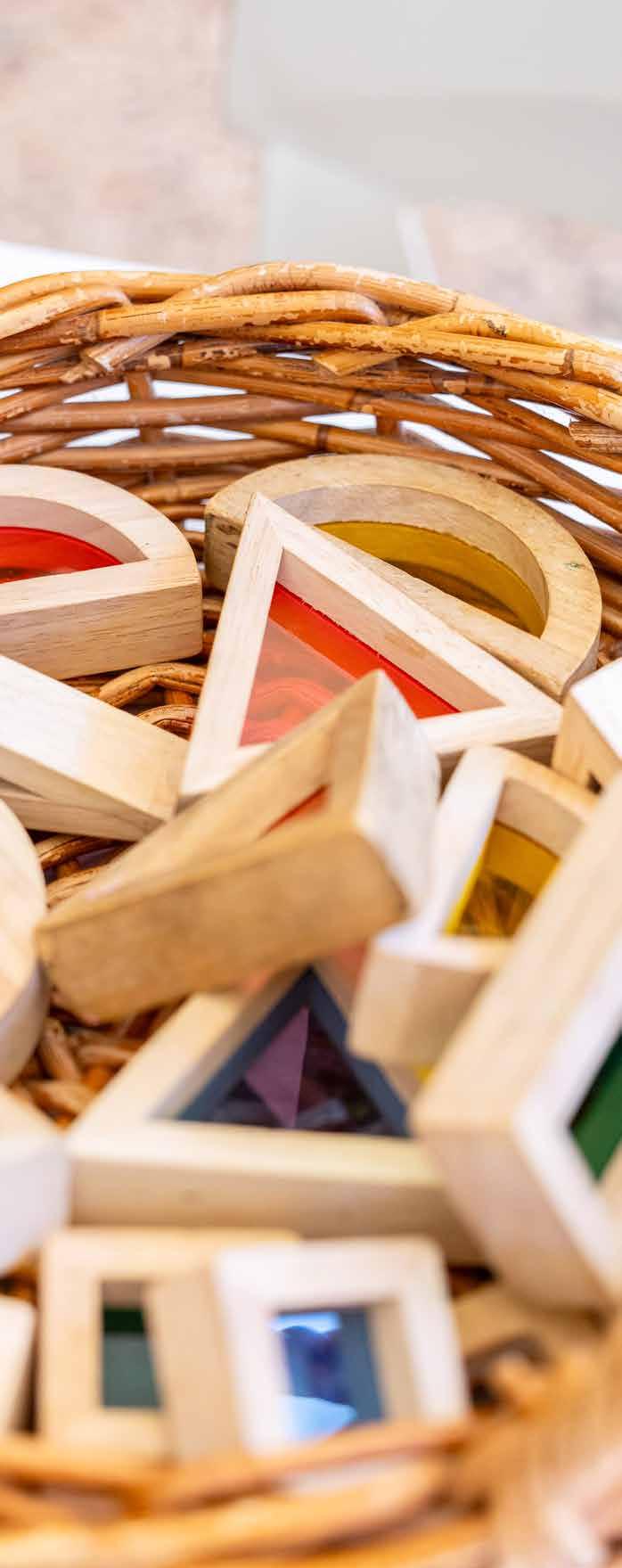
8. Build with blocks and LEGO
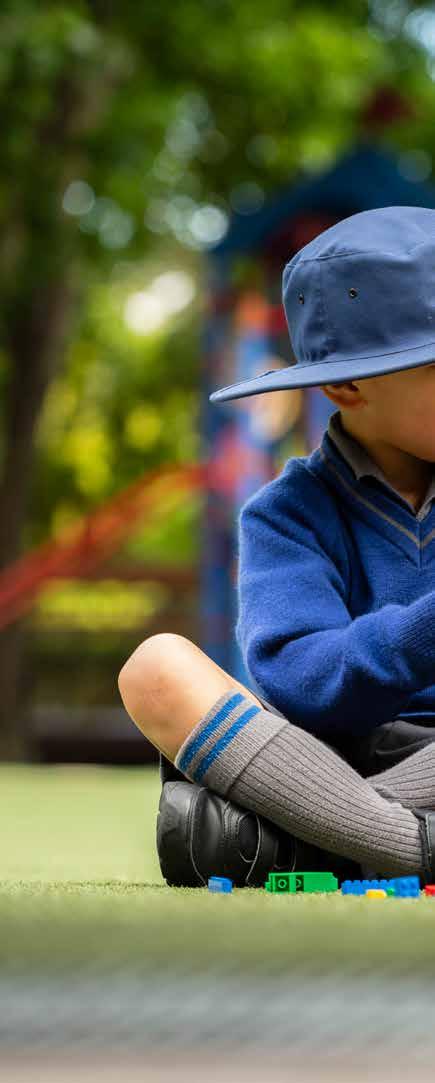
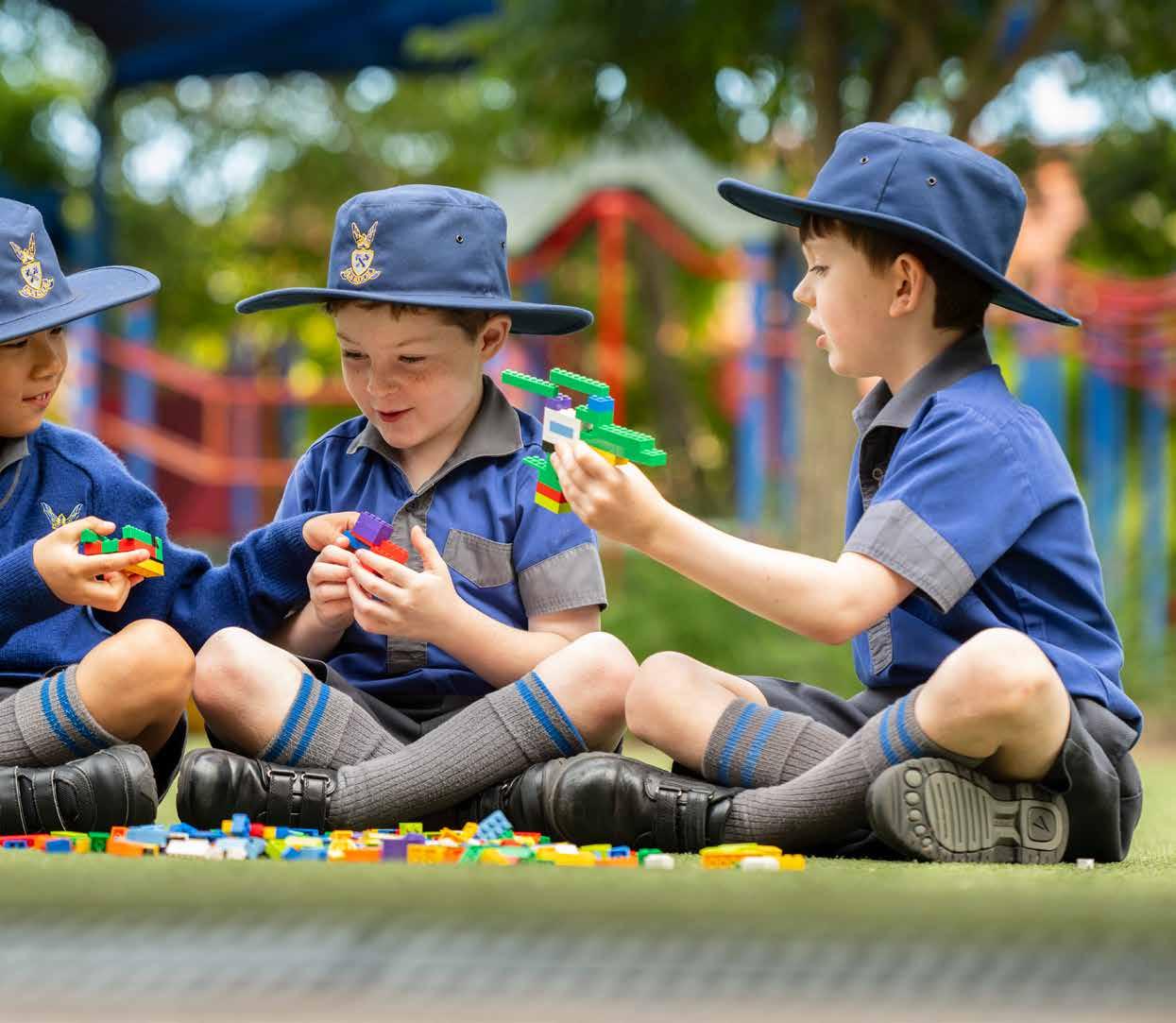
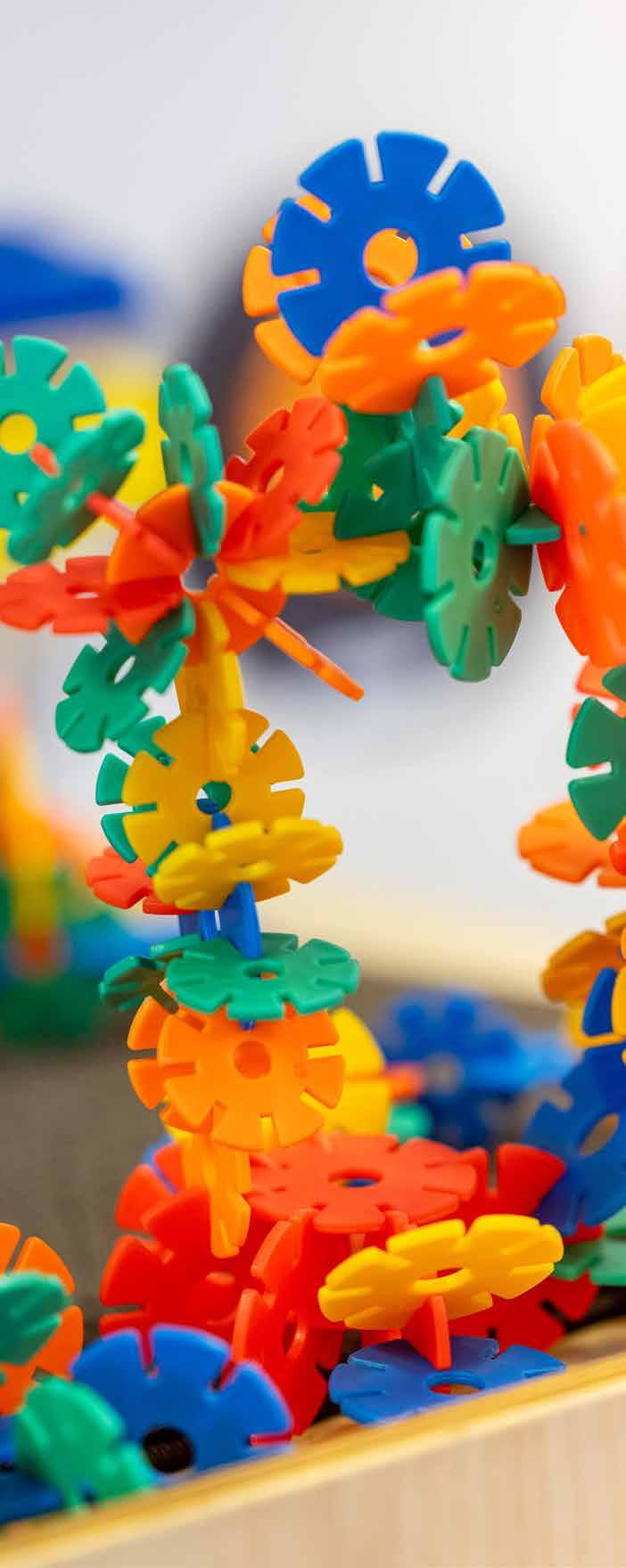
Stack, connect and build things together with blocks and LEGO These activities encourage fine pushing and pulling movements. LEGO is also great for fostering creativity. Building with LEGO is an effective way to develop your son ’ s fine motor skills. As your son builds with and picks up LEGO pieces, he will develop stronger hand muscles and improve his coordination. This will help him improve other skills, such as holding a pencil and writing. Other skills your son can learn from playing with LEGO include persistence, a sense of accomplishment and an improved ability to solve puzzles.
9. Eye dropper tests
Put some water in a few glasses. Pour a few drops of food colouring into each glass, so that you have different coloured water in each glass. Have a couple of empty bowls and glasses where your son can use an eye dropper to experiment with mixing different coloured water Try using vinegar instead of water, and have a bowl of bicarbonate soda that will fizz up when the coloured vinegar is dropped in.
10. Threading and lacing
Thread different-sized pasta or beads onto strings, laces and pipe-cleaners. Tie knots and bows in the string. Finger knitting is easy and fun too!
Gross motor skills
Gross motor skills involve whole-body movement and the use of large, core-stabilising muscles.
These skills enable boys to walk, run, jump, sit upright, and take part in activities such as riding a bike, swimming, or playing ball games. They also support coordination, balance, and endurance.
Strong gross motor skills are essential for school readiness. They help boys maintain posture at a desk, move confidently between classrooms, and manage tasks such as carrying a school bag These abilities also lay the foundation for fine motor control, influencing skills like writing, cutting, and drawing.
Beyond the classroom, gross motor skills support independence in selfcare (dressing, eating, toileting) and encourage participation in play and sport. This not only builds physical ability but also nurtures social skills, problem-solving, and selfconfidence.
Regular opportunities for active play are the most effective way to strengthen gross motor skills and prepare boys for the demands of school life.
10 ways to develop and improve gross motor skills
1.Create and do an obstacle course together
A basic obstacle course, for example, could involve using hula-hoops to jump in and out of, drawing lines to walk along (using chalk for outdoors and tape for indoors), and providing things for him to crawl on or under.
2.Balloon and bubble play
Blow up a few balloons, throw them up and try to keep them from touching the floor. Or blow some bubbles for your son to chase and as many as possible. This activity supports hand-eye coordination.
3.Put on some music and dance together
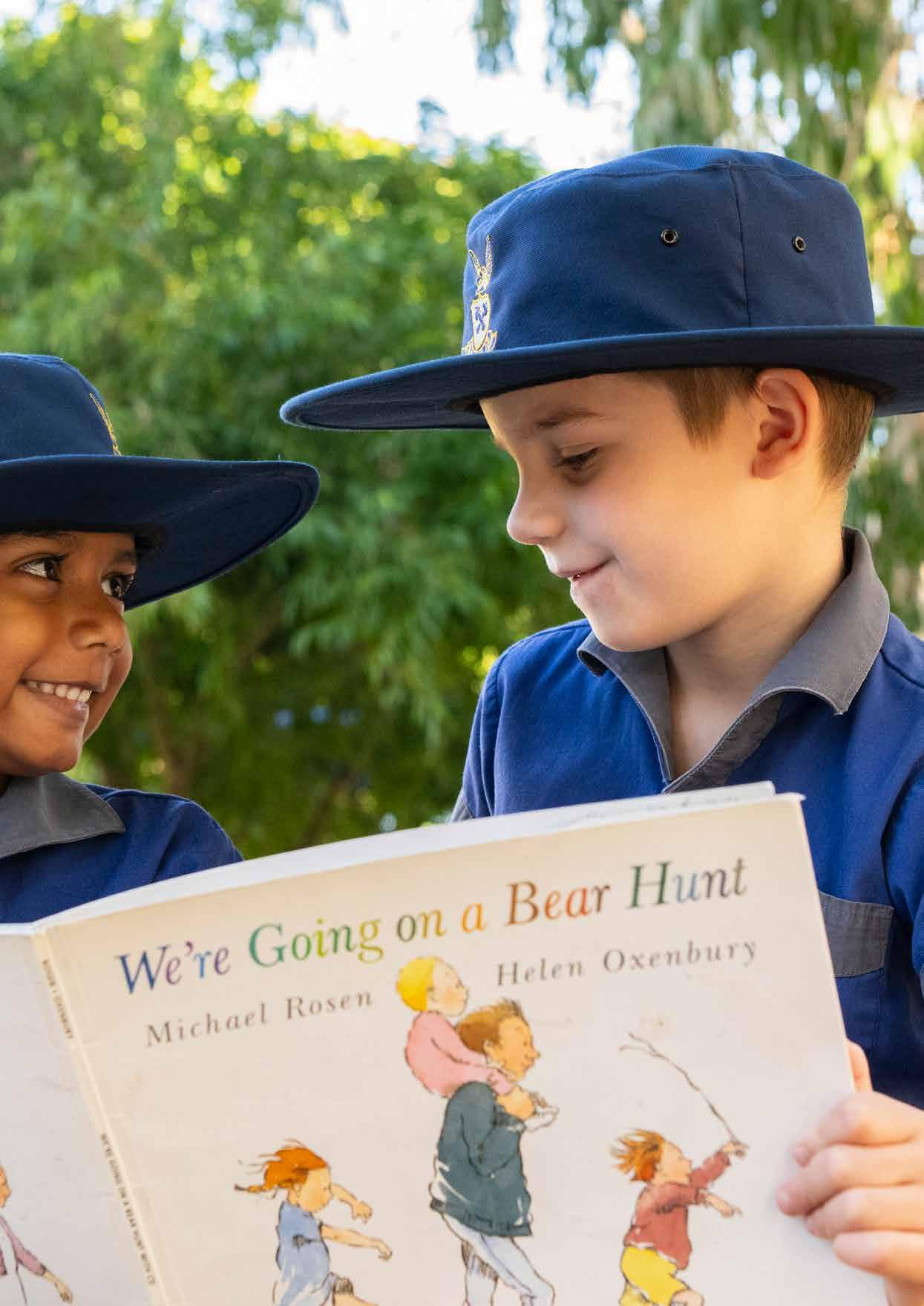
Create some dance movements or a routine to follow. Try songs with actions like The Hokey Pokey, I’m a Little Teapot, and I’m Going On A Bear Hunt.
4.Explore the park, a playground, or some trees
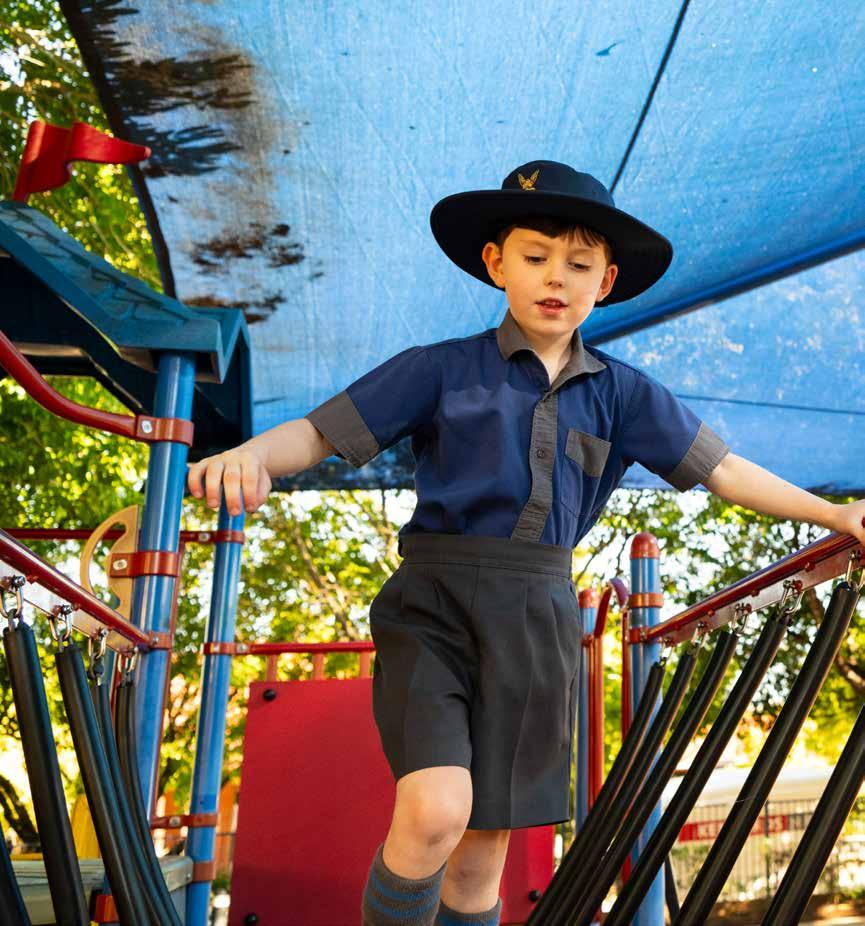
Activities like swinging and climbing can help your son work his muscles, learn to coordinate his arms and legs, and develop balance.
5.Ball activities
Activities like throwing, catching, kicking and bouncing are great for hand-eye coordination. Try using balls of different sizes, like tennis balls, basketballs, and footballs or hitting a ball with a hand, bat or racquet.
6.Play Simon Says... with a twist
Simon Says do star jumps/pretend you’re riding a motorbike/gallop like a horse/walk backwards/ walk sideways. It’s great for body awareness and movement planning.

7. Bounce on a trampoline
If you have a trampoline in the backyard, get bouncing to improve balance.
8. Play ‘tug of war’ activities
These can help build upper limb and core strength.
9. Riding a tricycle, bike or scooter
These activities are great for balancing, coordination and movement planning.
10. Hop into hopscotch
Hopscotch helps your son practise his jumping and balancing skills and build awareness of the right and left sides of his body. You could use chalk to draw your hopscotch outside or tape if inside.
Crossing the midline
Crossing the midline involves moving an arm or leg across the middle of the body to perform a task.
Before midline crossing is well established, boys typically only use one side of their body, e.g., reaching for an item placed on their left side with only their left hand.
Crossing the midline is vital for developing the use of sides of the body together, such as when putting on shoes and socks, writing and cutting. It promotes the coordination and communication of the left and right hemispheres of the brain. It also encourages bilateral coordination, the development of a dominant hand, and the development of fine motor skills.
Learning to cross the midline
As your son grows, daily activities like dressing or playing naturally build coordination and help him use both sides of the body together.
Necessary skills:
•Sufficient control and use of both sides of the body
•Sufficient body awareness
•Sufficient trunk control
Observable difficulties:
•Switching hands during an activity, e.g., writing, cutting
•Rotating the trunk instead of reaching across the body for objects on the opposite side
•Difficulty performing age-appropriate self-care tasks independently

10 ways to help support crossing the midline
1.Sorting activities
Sorting activities are a great way of working on early maths, but sorting objects into two or more piles also encourages crossing the midline to place objects into the correct pile.
2.Clapping games
Play a clapping game where a series of movements are performed with another person – slapping knees, clapping your own hands and slapping hands together are common ones.
3.Art on vertical surfaces
Painting on easels or drawing on walls with chalk provides enormous benefit to the development of crossing the midline. Again, this is an activity where boys are likely to start using one hand to reach up and across to create shapes and lines. These large-scale movements help to develop muscles that will later be needed for pen or pencil control.
4.Throw, catch, and kick balls
Provide opportunities for your son to throw and catch small and large objects with his friends and other adults. Soft toys and balloons are also a great way to do this. Get him involved in games like soccer because this encourages him to cross the midline and develops gross motor skills at the same time.
5.Play with stickers
Put stickers on one side of the body, and have your son remove them with his opposite hand, placing them on the other side of the body.
6.Draw figure 8s
Draw a large figure-eight with a pencil, his hand, or his feet on paper, sand or in the air.
7. Washing the car
Another chore that also provides an opportunity to develop crossing the midline! Give your son a sponge and some soapy water and encourage him to help with washing the car (or a ride-along toy). As they scrub and wash in circular motions, they will usually get a feel for a dominant hand and begin to use this to reach across and wash to the sides, rather than switching hands.
8. Dancing
Put on some upbeat music and get your son to dance. Create a dance routine that incorporates a variety of arm movements and rotations
9.
Play a game of Simon Says
Simon Says is an excellent game that can be played to develop a whole host of skills. Give commands that will encourage your son to build coordination skills.
10. Using outdoor play equipment
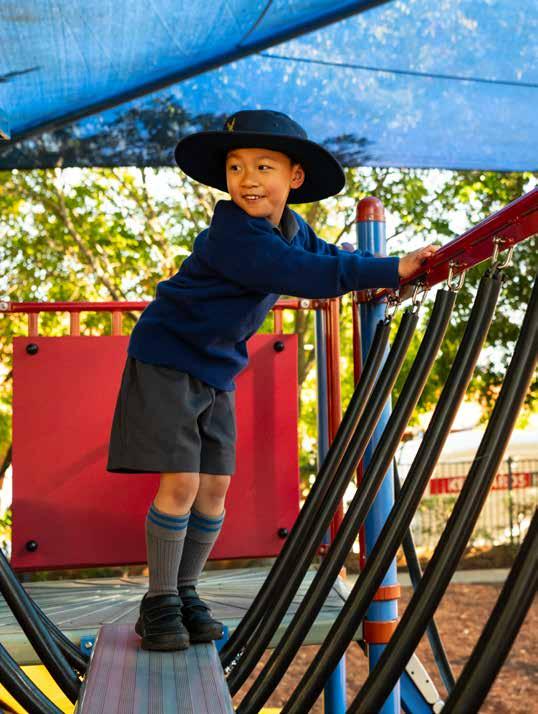
Climbing frames and climbing walls all encourage the development of strength, gross motor skills and crossing the midline.
Ready for Reception: A quick guide for parents
Starting school is a big step for your son and for you. The following tips highlight simple, everyday ways you can help him feel confident, capable and excited for his Reception year at Churchie.
Communication and early learning
• Talk often, describing what you see, think and do together
• Read every day and discuss stories and pictures
• Encourage curiosity through counting, shapes and rhymes in daily routines
• Introduce new words naturally during play and conversation
Independence and self-care
• Let him practise dressing himself, including buttons, shoes and hat
• Encourage toileting independence and regular handwashing
• Involve him in packing his school bag and lunchbox
• Establish predictable routines for mornings, meals and bedtime
Social and emotional readiness
• Practise taking turns, sharing and waiting patiently
• Encourage your son to ask for help when he needs it
• Talk about feelings and help him name and manage them
• Try short separations to build confidence for school drop-offs
Physical development
• Fine motor activities: playdough, drawing, threading, puzzles and cutting
• Gross motor activities: running, climbing, dancing, ball games, bike or scooter play
• Encourage activities that cross the midline, such as throwing, clapping games or painting on an easel
Above all:
Celebrate effort rather than perfection
Play, talk and explore together, as learning begins with curiosity
Remember that readiness looks different for every child, and your support and encouragement will help your son thrive

References
Child Development Centre. (2018, January 24). What is crossing the midline and why is it so important? Retrieved June 8, 2020, from https://www.cdchk.org/parent-tips/what-is-crossing-the-midline/
Genishi, C. (n.d.). Young children’s oral language development. Reading Rockets. Retrieved June 8, 2020, from https://www.readingrockets.org/article/young-childrens-oral-language-development
Gruetman, H. (2011, August 11). 10 crossing the midline exercises for kids. Growing Hands-On Kids. Retrieved June 8, 2020, from https://www.growinghandsonkids.com/crossing-midline-exercises-for-kids.html
Inspiro. (2019, June 1). 10 active play activities for kids’ gross motor skills. Inspiro Community Health. Retrieved June 8, 2020, from https://www.inspiro.org.au/blog/why-active-play-is-important-for-pre-school-kids
Inspiro. (2019, July 16). 10 ways to improve your child’s fine motor skills. Inspiro Community Health. Retrieved June 8, 2020, from https://www.inspiro.org.au/blog/improve-your-childs-fine-motor-skills
McIlroy, T. (2020, April 6). 15 crossing the midline activities for preschoolers. Empowered Parents. Retrieved June 8, 2020, from https://empoweredparents.co/crossing-the-midline/
Parents. (n.d.). Developing motor skills. Parents Magazine. Retrieved June 8, 2020, from https://www.parents.com/toddlers-preschoolers/development/physical/child-developing-motor-skills/
Punkoney, S. (n.d.). The big four of preschool literacy instruction: Oral language development. Stay at Home Educator. Retrieved June 8, 2020, from https://stayathomeeducator.com/the-big-four-of-preschool-literacy-instruction-oral-language-development/
Rigg, D. (2019, October 16). The importance of strong oral language and vocabulary skills for later literacy success. PLD Literacy and Learning. Retrieved June 8, 2020, from https://pld-literacy.org/the-importance-of-strong-oral-language-vocabulary-skills-for-later-literacy-success/
CHURCH GRAMMAR SCHOOL
Oaklands Parade, East Brisbane Queensland 4169 Australia info@churchie.com.au + 61 7 3896 2200 ABN 34 243 342 840 CRICOS: 00487E
A School of the Corporation of the Synod of the Diocese of Brisbane trading as Anglican Church Grammar School www.churchie.com.au