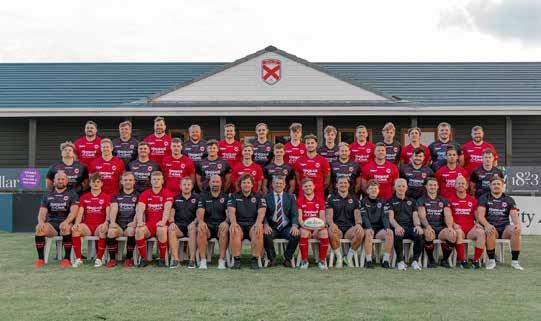
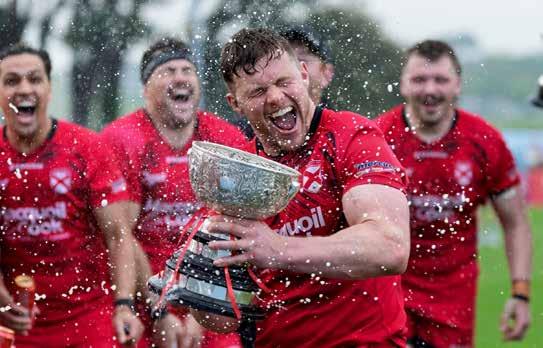
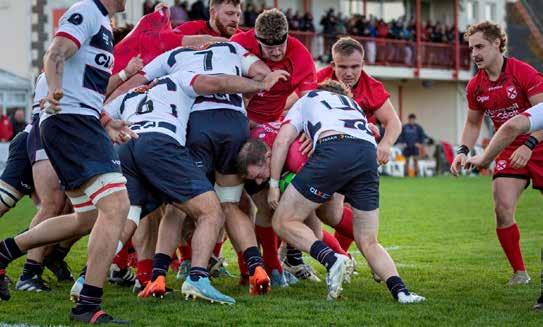
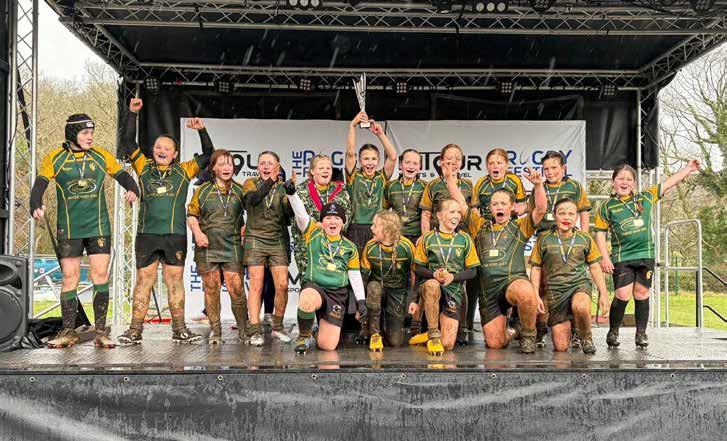
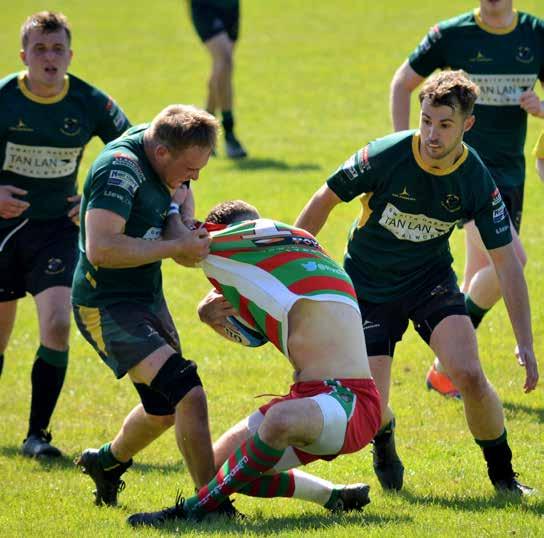
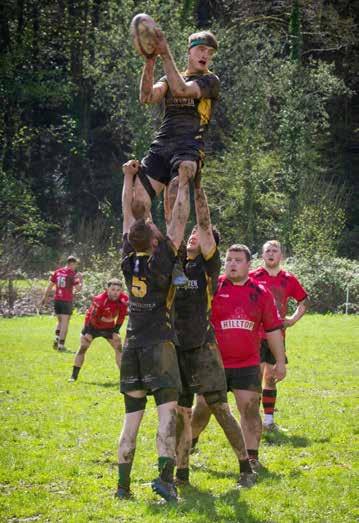
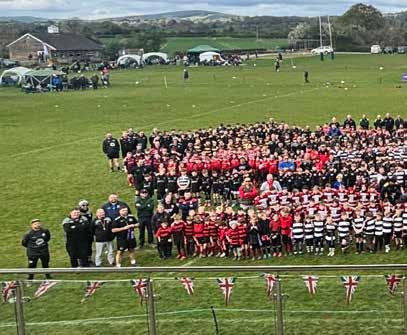
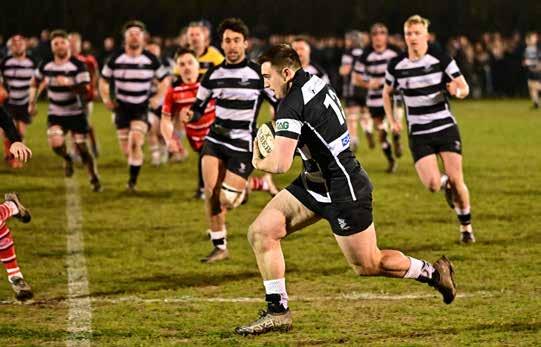
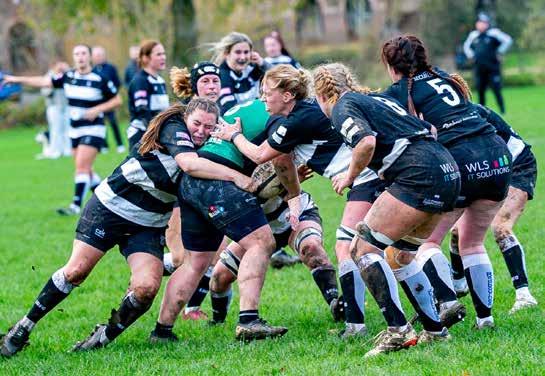
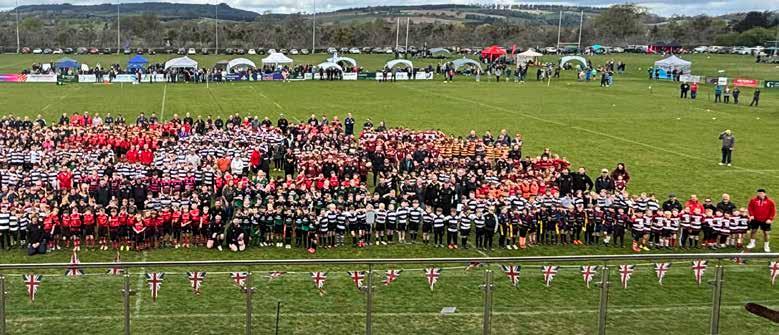
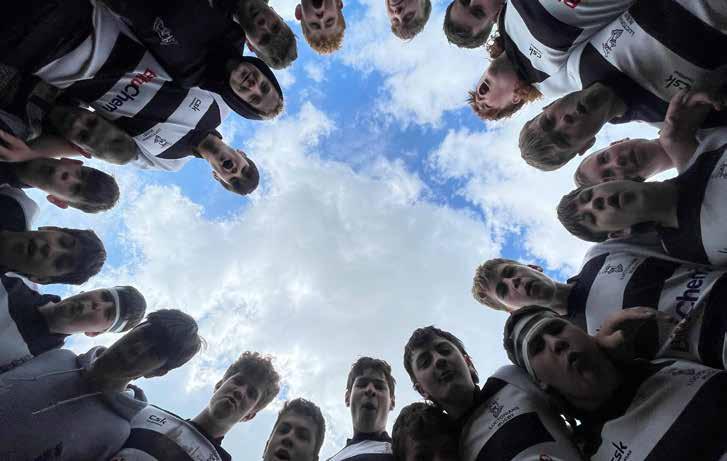
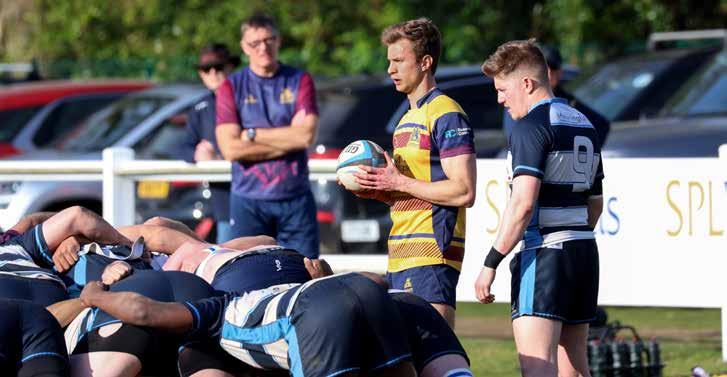
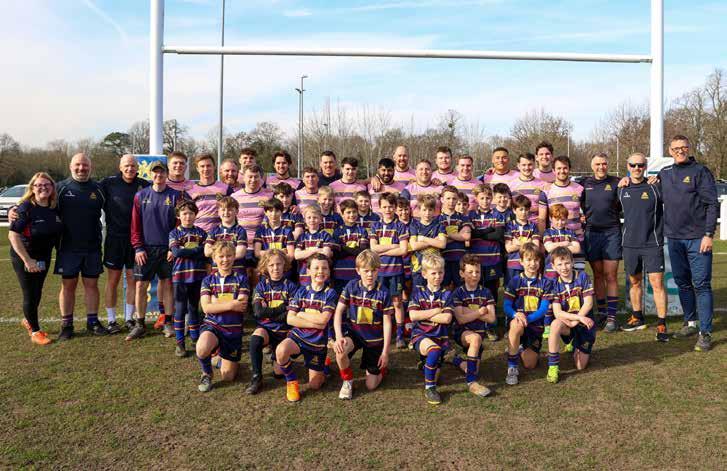
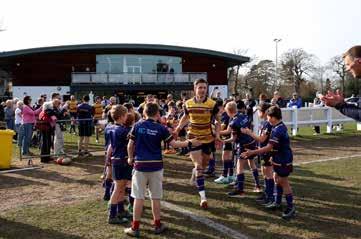
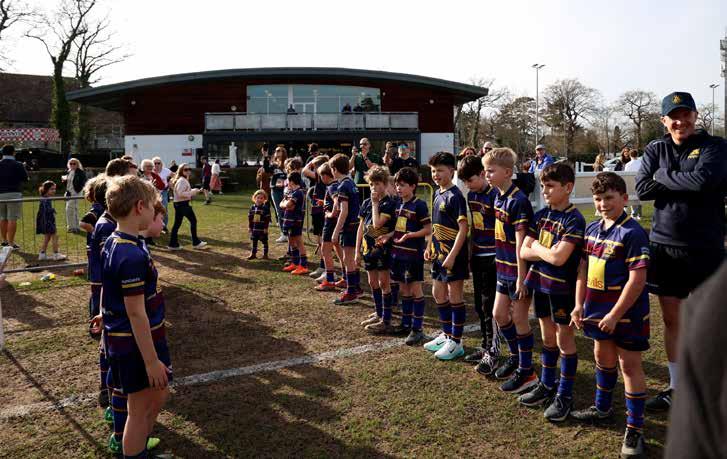
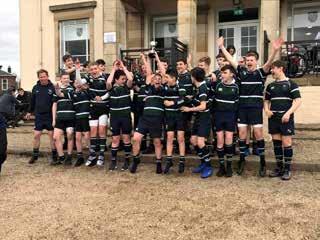
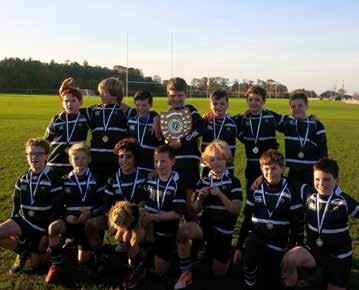
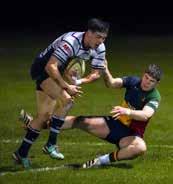
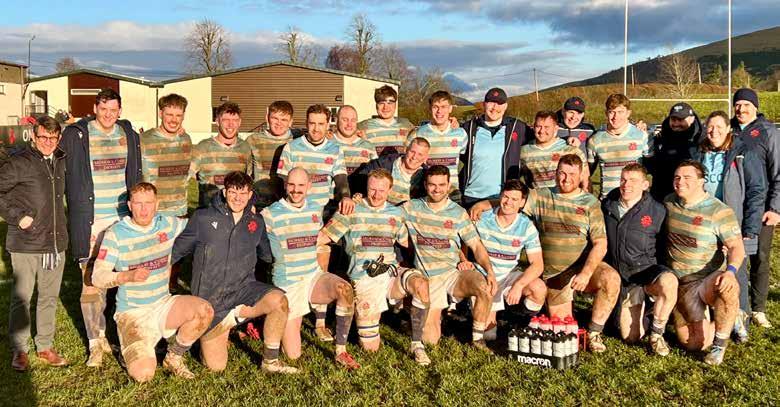
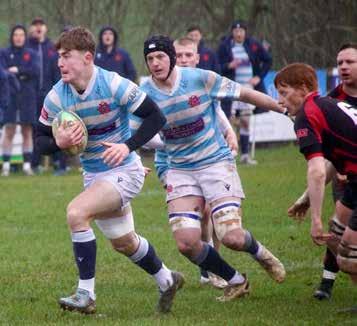
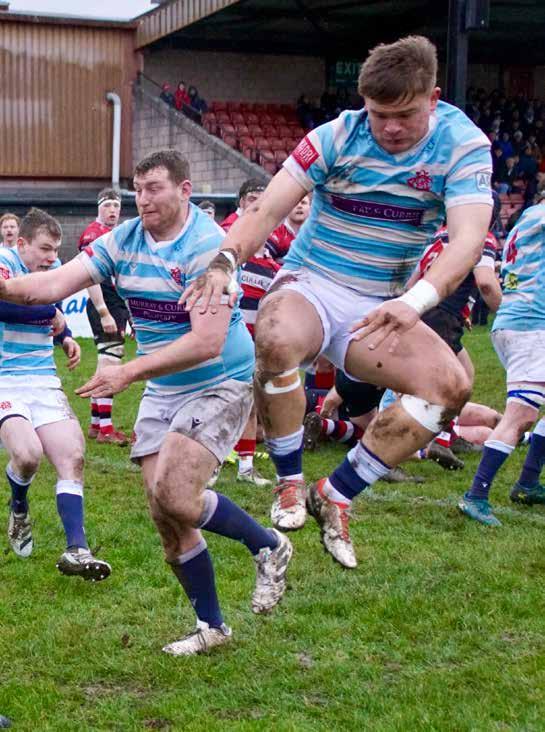
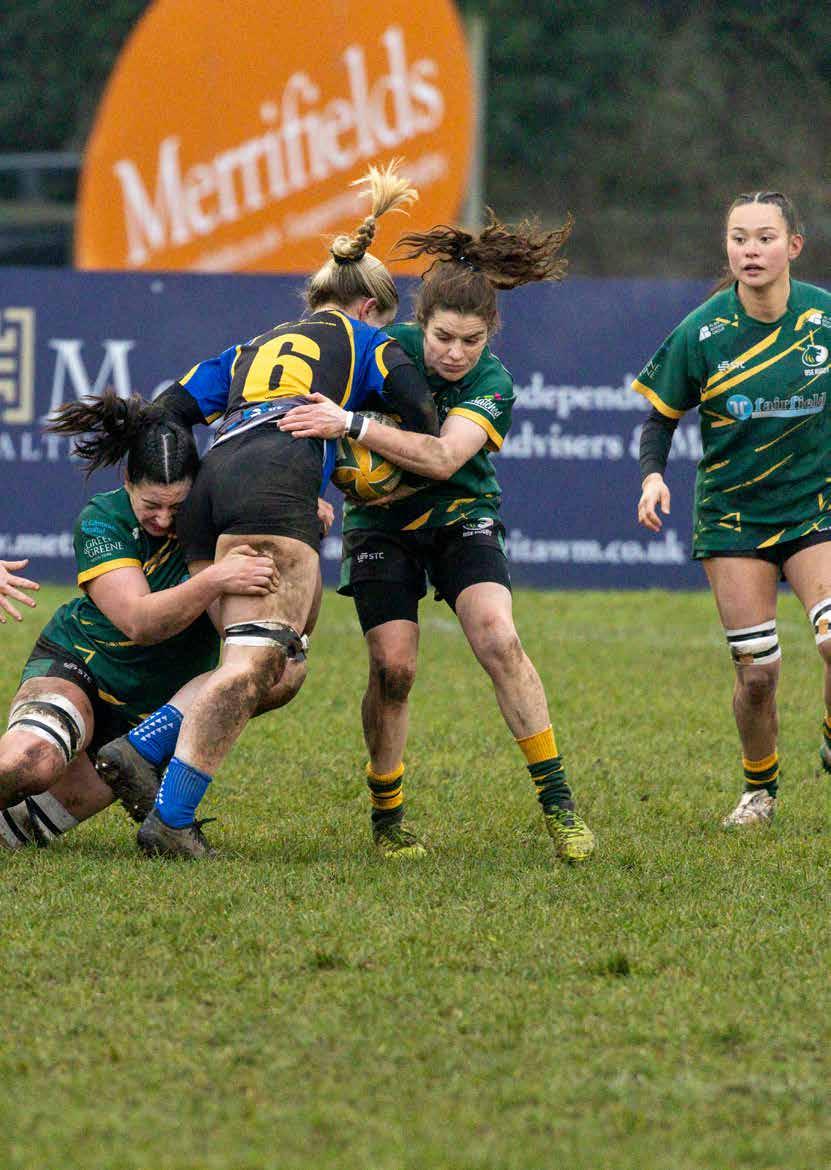
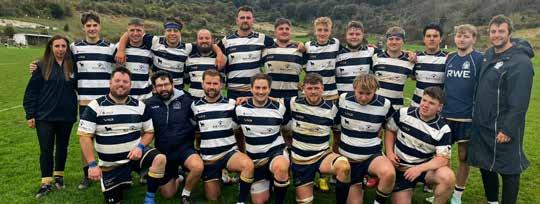
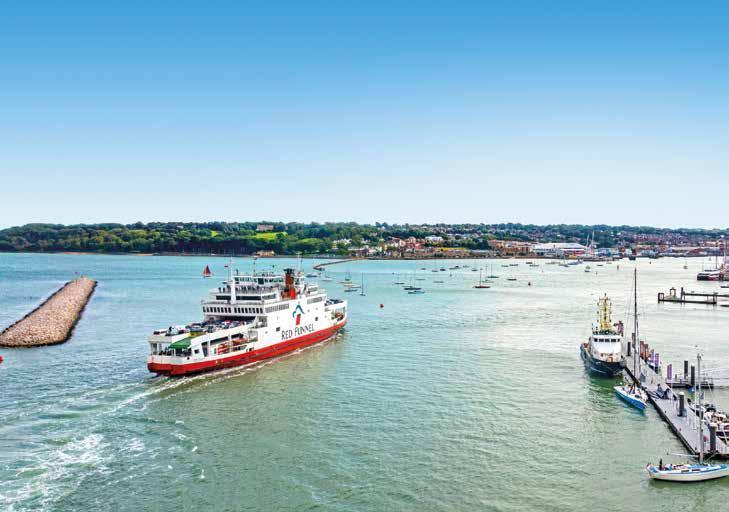
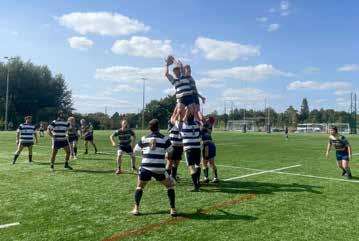
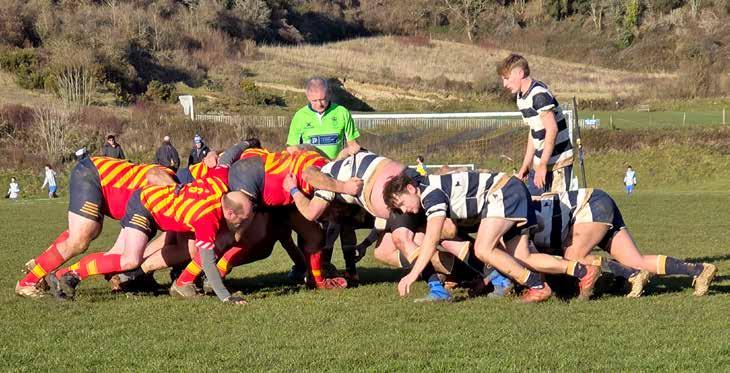
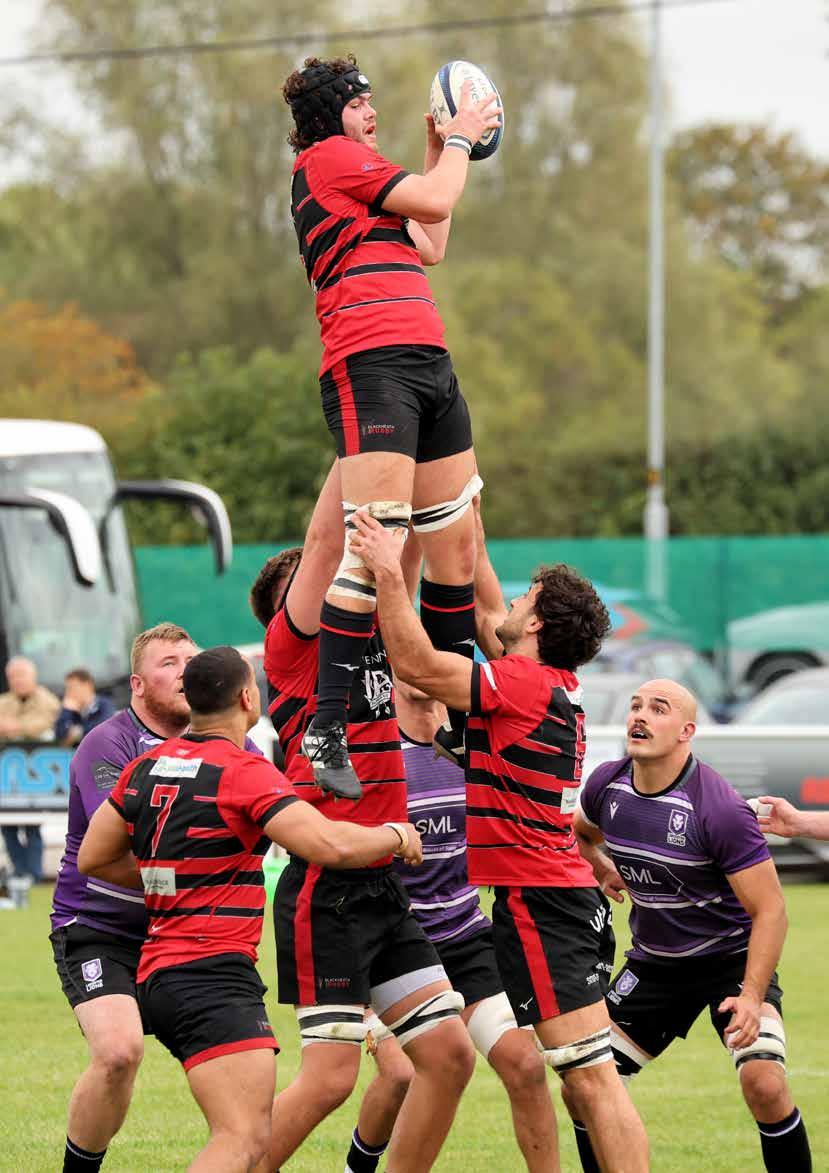
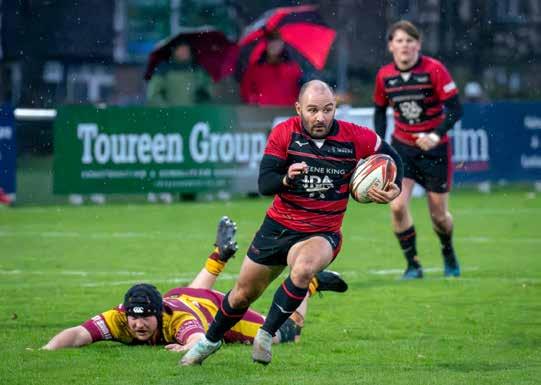
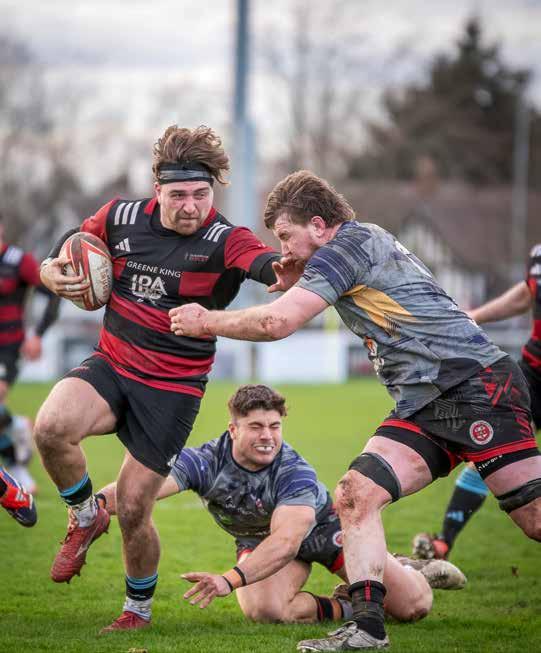
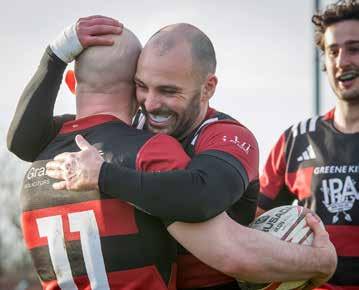
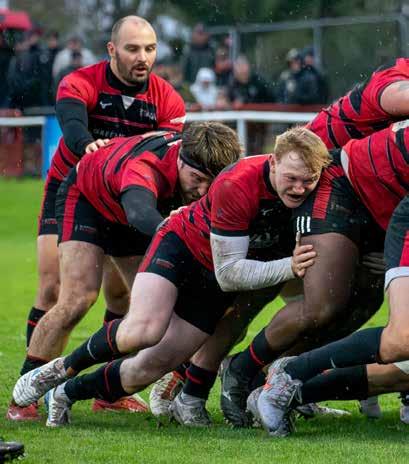
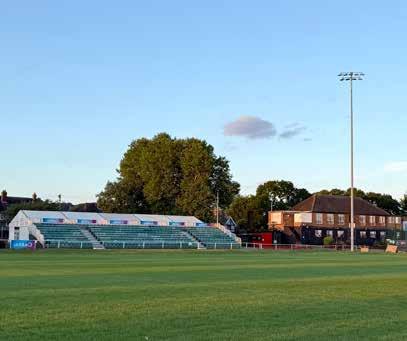
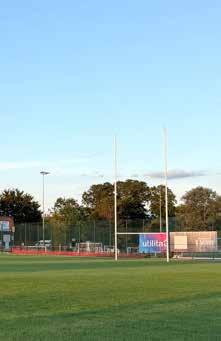
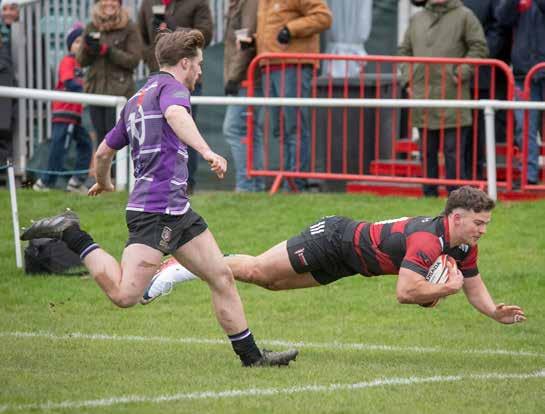
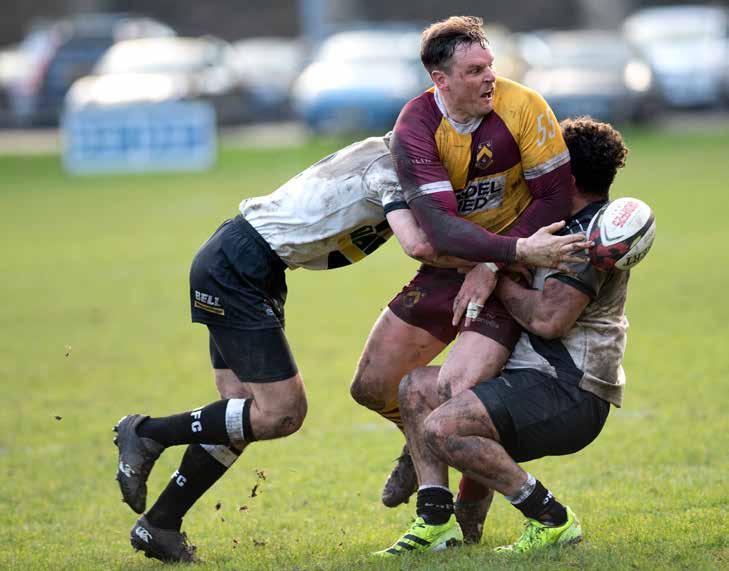
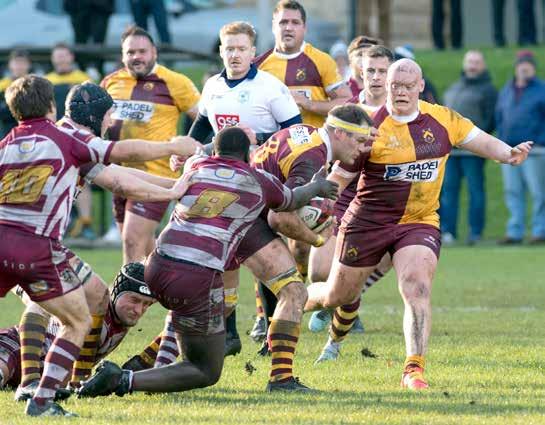
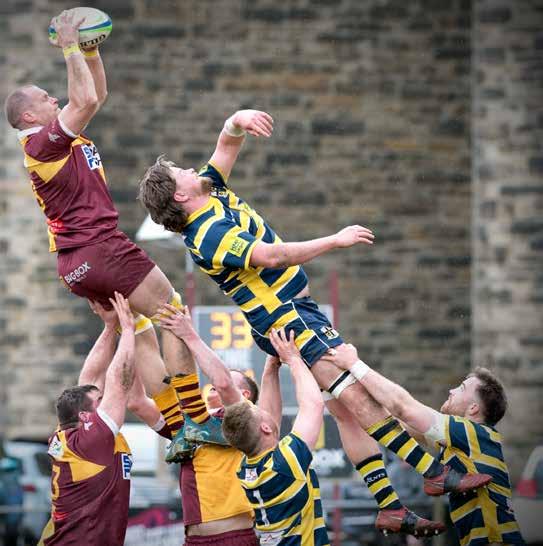
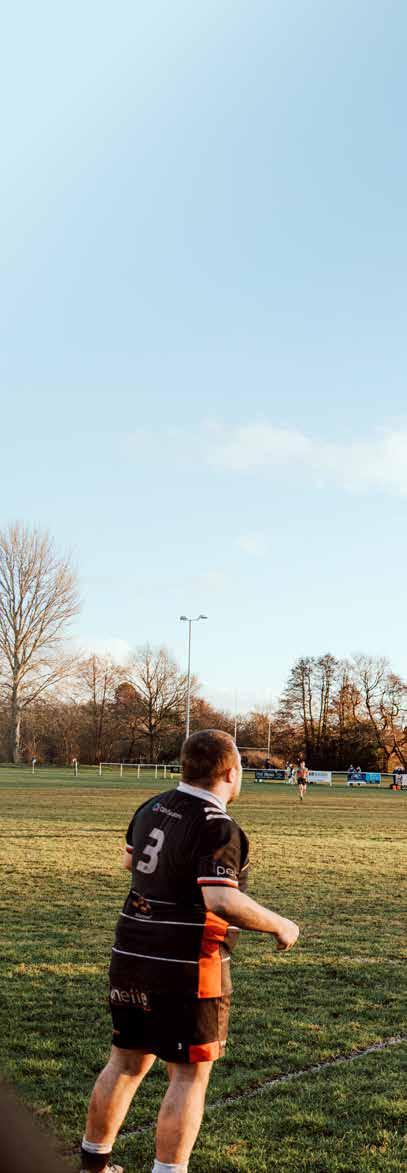
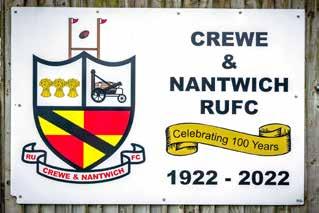
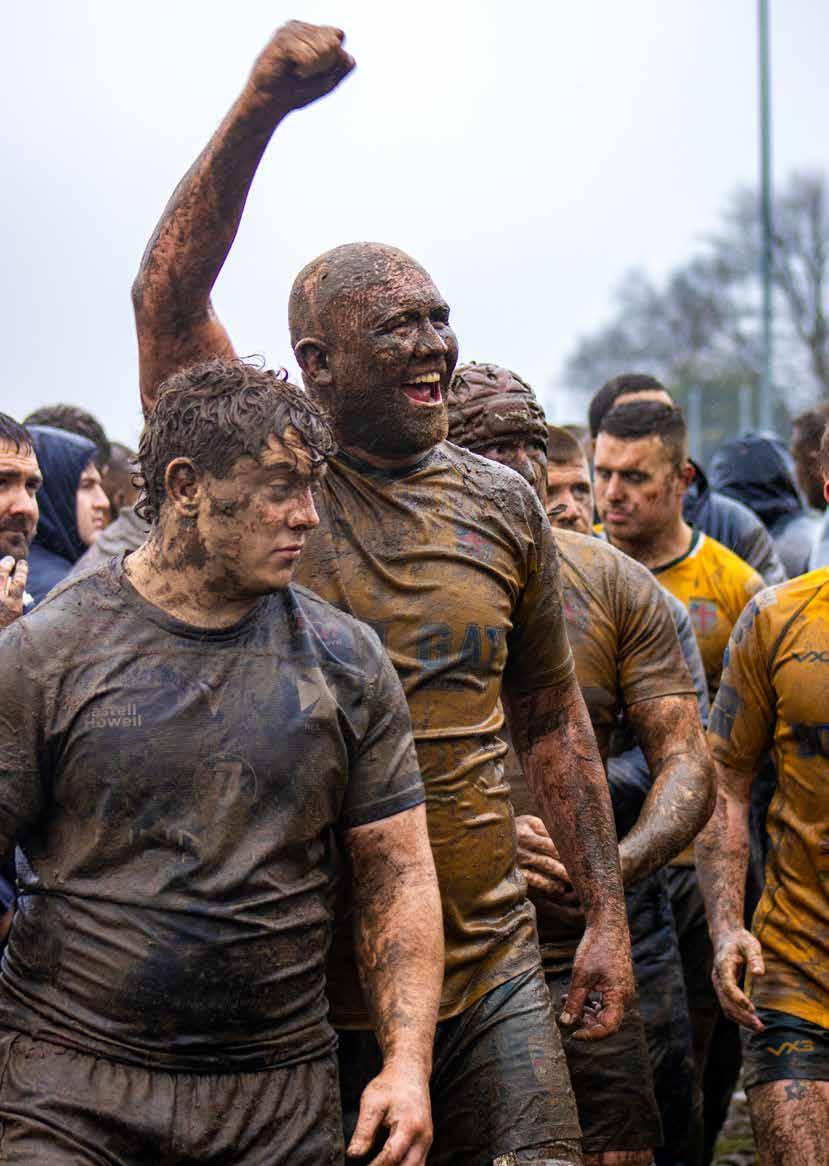
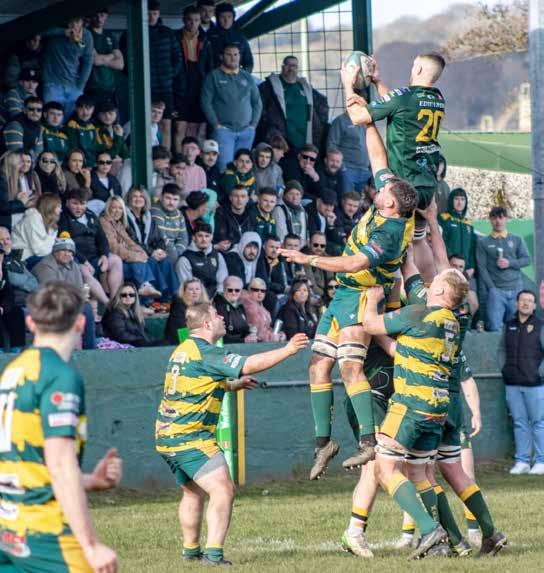
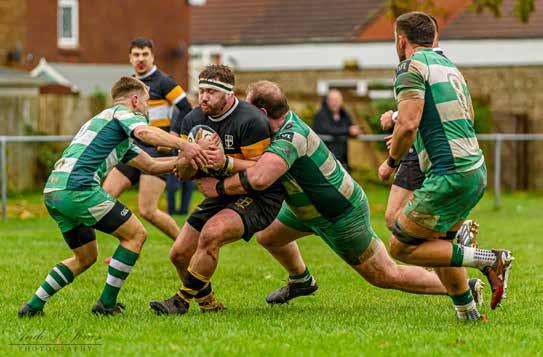
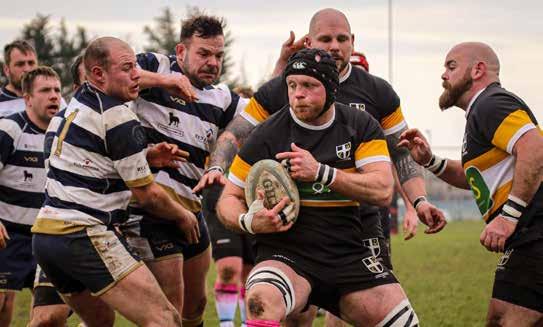
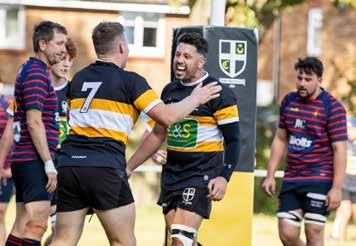
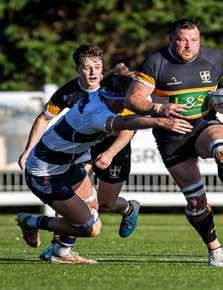
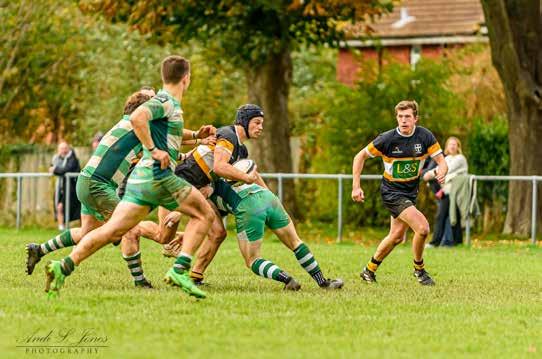
”Celebrating 150 Years of Outstanding Contribution to Sport!”
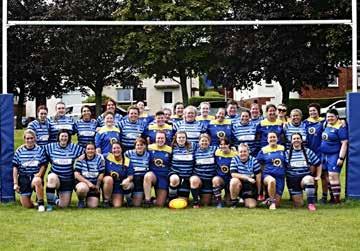
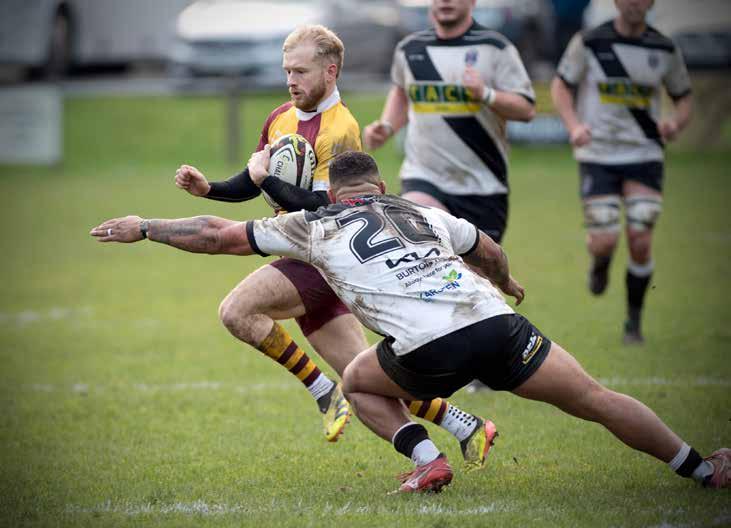
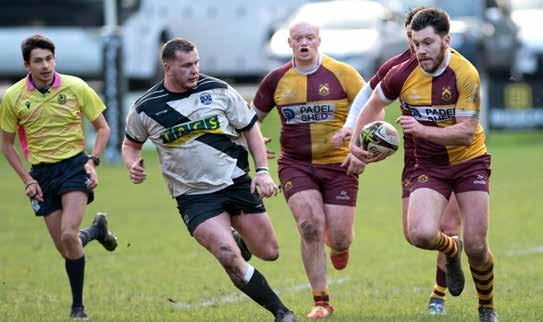
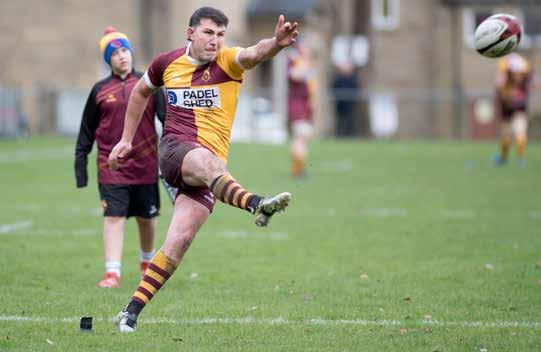
CARRICK RFC
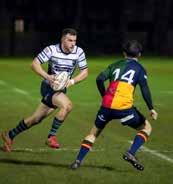
“Everyone’s on Board!”
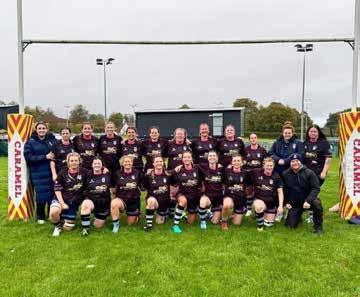
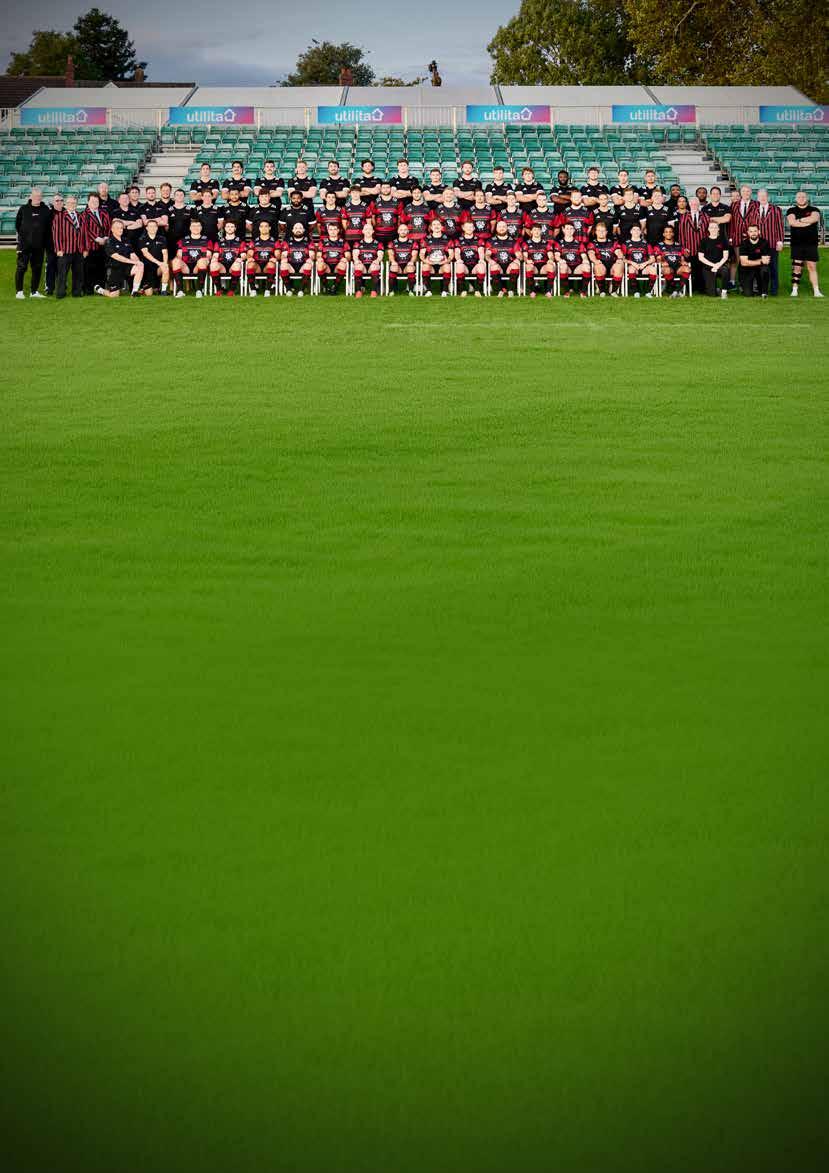
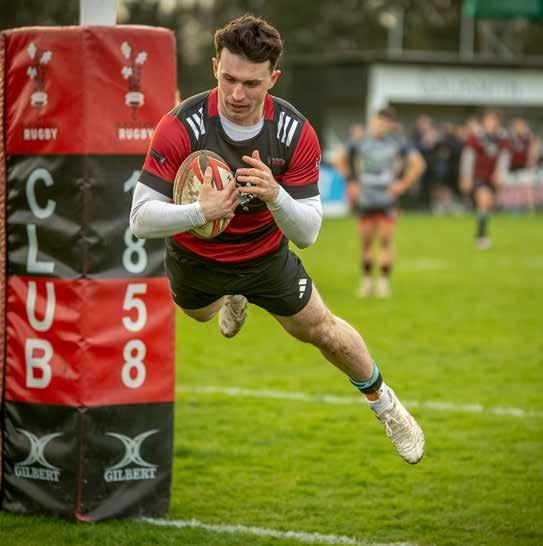
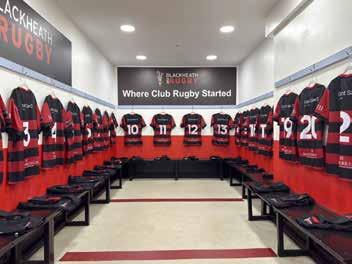
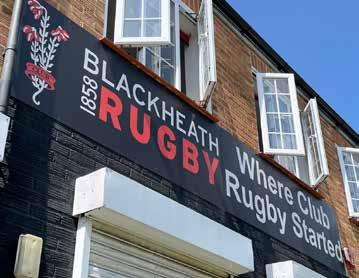
BLACKHEATH RFC
“One Club One Family!”
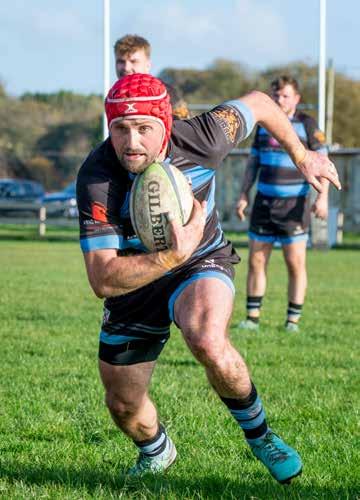
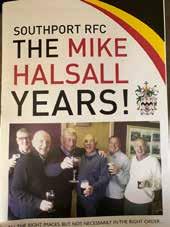
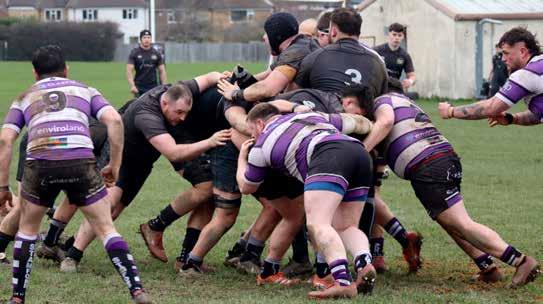
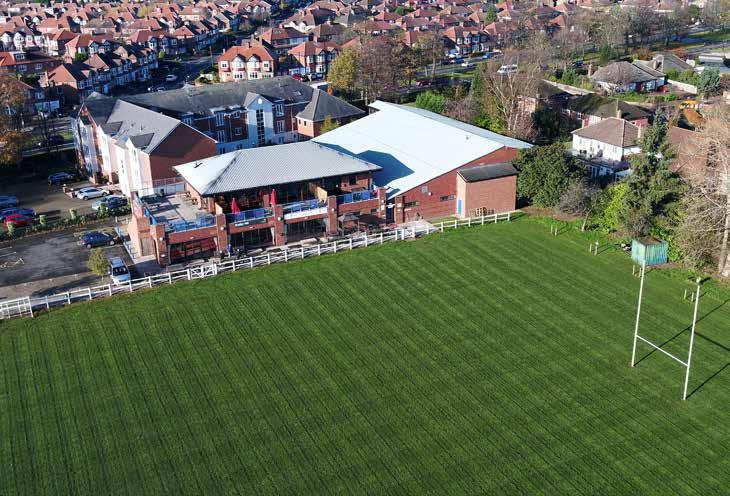
SOUTHPORT RFC
"Much more than a sporting Venue!"
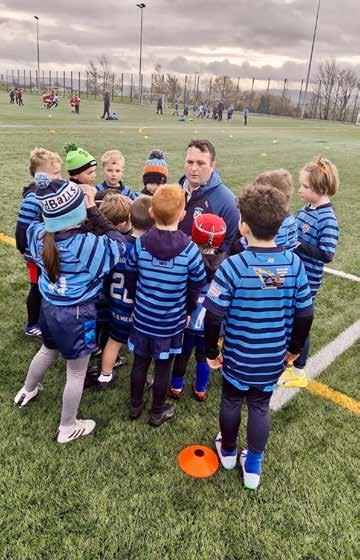
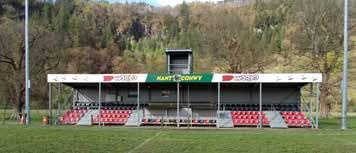
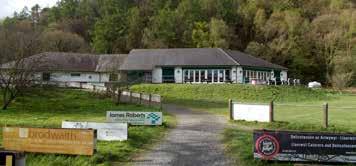
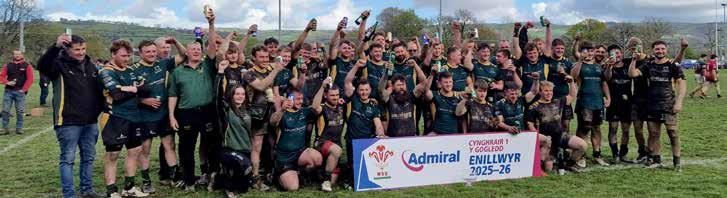
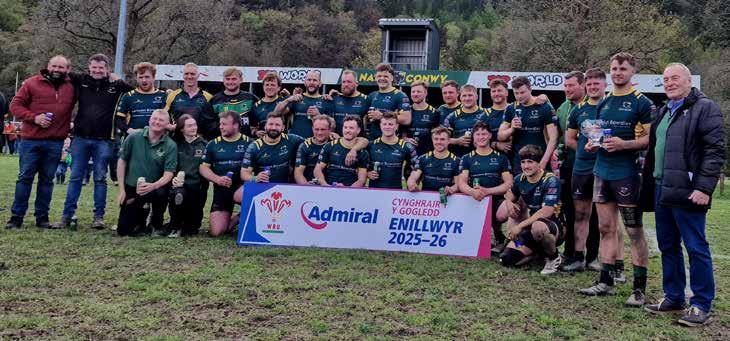
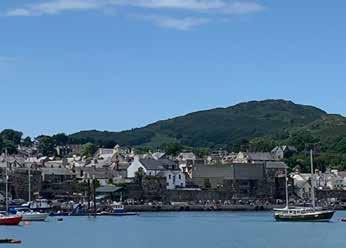
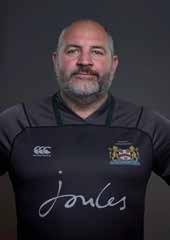
NANT CONWY RFC
”We want to strengthen the club for our community”
GHK RFC
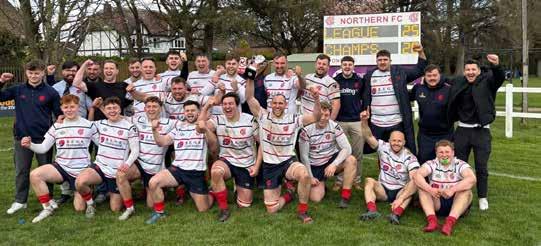
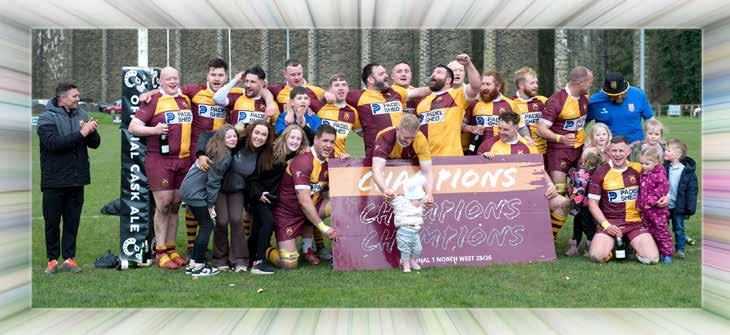
“National League Division 2 Champions 2025/2026!”
COBHAM RFC
“Some of the best people I have ever Known!”
Rugby has always had a wonderful way of taking itself seriously without ever losing its sense of humour. As the great Wales centre Ray Gravell is often credited with saying, “You’ve got to get your first tackle in early, even if it’s late.” Tony O’Reilly, the former Ireland and Lions wing, once said of All Blacks legend Colin Meads that he was “the kind of player you expect to see emerging from a ruck with the remains of a jockstrap between his teeth.”
That mixture of courage, mischief, laughter and togetherness is part of what makes rugby so special.
This edition of Rugby Club Magazine is a celebration of the people who make the game what it is. Not just the players who cross the white line, but the coaches, committee members, sponsors, parents, volunteers, supporters and families who give freely of their time, energy and love to their clubs and communities.
To everyone who has helped us put their respective features together, thank you. Your stories remind us that rugby clubs are places of lifelong friendship, belonging, resilience and shared purpose.
Across the UK, the values of teamwork, respect, enjoyment, discipline and sportsmanship continue to shine through at every level of the game.
Each club featured in this edition contributes in its own way to making its community stronger, kinder and more connected. In that sense, rugby does something quietly wonderful. It helps make the world a better place.
Yours in Rugby
Martin Morgan
STUART
BRYDEN PRESIDENT
My name is Stuart Bryden and I am President of Carrick Rugby Club. I live just outside Maybole, only a couple of miles away, so Carrick has always been part of my area and part of my life. I have been involved in rugby for years and I still play, which I think helps me connect with the players and understand what the club feels like from the inside, not just from the committee table.
My rugby journey started when I was in Primary Four. At that time there was not much youth rugby locally, so I began playing at Ayr Rugby Club because they were the closest club with a youth section. I stayed there until around second year of secondary school, then rugby became mainly school rugby for me, and I played right through at Carrick Academy. I took a couple of years away from the game when I went to college, but I came back to rugby around the age of twenty-four or twenty five and returned to play for the Carrick senior men’s team. Since then, I have never really stopped.
Even now I am still turning out. I am a second row, and I have just turned forty one. I am probably the youngest President the club has had for a long time and that was a deliberate move by the committee. The previous Presidents were older lads from the era I played with when I started, and the club wanted to freshen things up and bring in someone younger. I think that matters, because fresh energy keeps
CARRICK RUGBY
FOOTBALL CLUB
a club moving forward. It also helps that I am still involved as a player because it keeps you close to the squad and the changing room, and I know many of the younger players as well as the youth players coming through.
We are keen to encourage that progression in other ways too. We try to get some of the players along to committee meetings so they can see how things work behind the scenes. We try to bring younger volunteers in as well, because the future of any club depends on people being willing to step up, learn the ropes and eventually take over. Rugby clubs survive on that handover.
Carrick is a small club, but we have done very well for ourselves over the years. We have reached the national leagues before, which is not easy for a club of our size, and we have also had success
at Murrayfield. We won the National Shield three years in a row from 2015 to 2018 and when we reached those finals, we took six or seven buses up to Murrayfield. Those days stay with you. They show you how strong the link is between a club and its community.
This season has been an exciting one. We were promoted into this league last season and going into the year we would probably have been happy with mid table, but the boys have kicked on and we have exceeded expectations. We have a very young first team, the average age is around twenty two, and I am by far the oldest. There might be a couple in their thirties, but most are eighteen or nineteen and they are learning quickly. We are in a strong position and if we keep results coming there is a real chance of doing a league and cup double, which would be massive for the club.
A big part of that progress has been our head coach Andrew Gamble. This is Andrew’s second season as head coach. He came in last year and we gained promotion in his first year. What helped is that Andrew previously ran the youth section at the club and coached a lot of the boys who are now coming through into the senior side. So, when he stepped up, it was a natural transition. The players trusted him and he already knew the group. That continuity matters. We are also lucky that a number of former
players who have played at a good level have stepped up to help coach and support the squad. When ex-players come back and give their time, it strengthens everything.
But when I think about what makes Carrick special, it is not just results. It is the community role around the place. It is the fact that the whole community in Maybole and the surrounding areas is on board. It is the feeling that you are helping young people, giving them something positive, and bringing families together.
We now have rugby right across the club, from Primary One, Two and Three teams right up to the women’s team, and we have both our first- and second-men’s teams playing this weekend as well. When I started at the club, we had about fourteen senior players and we struggled for numbers. Now we have a full structure across all ages. It is all volunteer run, and it depends on good people giving up their time. That is what makes it work.
One of the things I am most proud of is the work we do away from match days. On Friday nights we run a diversionary programme for young kids to help keep them off the streets. We provide free transport to and from Carrick Academy for kids coming in from surrounding areas and we regularly have fifty to seventy kids involved. The Scottish Rugby Union have even come down and done a segment on it. Parents can come along too, there
is food and drink available, and the whole thing creates a safe and positive space. I have seen how much it helps. Some kids are really struggling and to see them getting fed, having a run about with mates, being part of something, it genuinely makes a difference. It is not just about rugby, it is about giving kids a chance.
That is why I love the club. The team spirit on a Saturday, mixing with the volunteers, the people cooking food, being down at training, helping coach younger kids, giving them advice, watching them grow. It is a community club in the truest sense and that is what gives me joy.
Rugby has shaped me. It has taught me values,
introduced me to people I feel lucky to have met, and it has given me friendships that last. As President I see my job as helping keep Carrick moving forward, making sure we keep bringing young players through, supporting the volunteers, and protecting that community spirit that makes the club what it is.
"It is the community role that makes Carrick special, the feeling that everyone is on board and you are helping people.
ANDREW GAMBLE HEAD COACH
I`m the Head Coach at Carrick RFC, in my second season as senior men’s coach and I can honestly say I feel proud of what we are building at the club, not just because of results on the pitch, but because of what Carrick does for people off it as well. I am local. I was born in Ayr originally, then moved up to Maybole when I was younger. I was always a football man at heart, but rugby came into my life through my son. He had two left feet, and football was never going to be his thing, so I took him down to Carrick when he was five and he got involved in rugby. He is eighteen now, still involved with the club, and playing around the second team when his apprenticeship allows. That is how I got into rugby properly. I had played a bit of school rugby, and I played some second team rugby in my twenties, but my serious involvement came later. I tore my ACL playing football and that finished football for me. I played my first full rugby game at thirty-one. It was a long journey into the sport. Where I grew up, rugby was seen as a class thing. It felt like it belonged to a certain type of person and a certain background, and I never had the opportunity when I was younger. I honestly feel I am a prime example of talent that never got the chance to go into rugby early enough. That is why our mission at Carrick is
to do the opposite of that and make sure everybody realises rugby is for everyone. Every club will say that, but we have made it a real focus.
We are trying to be a community club for everybody, not just for the kids who already have access. We help pay memberships for around ten members. We work with local children’s homes and bring kids into the club who might never have had the opportunity to be involved. We provide kit and support. We partner with organisations locally and we try to remove barriers so that young people can take part. That matters to me because I know how easy it is for a kid to miss out, and I never want to see that happen if we can help it.
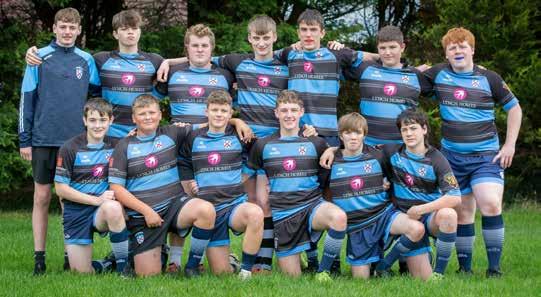
Rugby has been great for me personally. I had my own difficult periods growing up and rugby helped level me out. It gave me focus. It helped me in life, and it even helped me career wise. But more than that, it gave me a way to give something back. I started as a youth coach, and I worked right through the age groups from Primary One all the way up to under eighteens. There is no age group I have not coached within the club. Over the years we built the youth section from nine kids up to around one hundred and twenty before Covid disrupted a lot of things. Even now, if I look back at a photo of one of our under eighteen squads, fourteen of those boys are still involved in rugby every week and still part of the club. That tells you everything. They stuck together and they found their place here.
I became senior men’s coach two years ago. The focus has been clear. We want to give young players a proper pathway into senior rugby. We are close to bigger clubs and stronger rugby
centres within travelling distance and historically a lot of boys drifted away. What we want is for Carrick to be the place where local players can come, develop, and play competitive senior rugby. We do not pay players. What we offer is camaraderie, opportunity, development and a place to belong. It is a different kind of motivation, and it creates loyalty.
Last season we won promotion and this season has honestly surprised me in the best way. I would have been happy finishing eighth if I am being honest, but we have found ourselves right up near the top. We are taking it one game at a time, because that is the message for a young squad, but their consistency has been class. We have a lot of under twenties playing senior rugby every week and that is exactly what we want. The boys have put their bodies on the line for the club, and the results have reflected that.
For me coaching is ninety percent man management. You need a system, but it has to suit the players. I can have a way I want to play rugby, but if the players are not comfortable, it does not work. I want the players to have a voice. They are volunteering. They have to enjoy coming in. If they enjoy it and feel valued, then you get the best out of them. I want to win, of course I do, but winning takes many forms. For some people it is improving as a player. For others it is finding confidence. For others it is becoming part of something after feeling lost. That is why I always come back to identity and environment.
We have built something in Carrick that goes beyond sport. The Friday night diversionary programme is a big part of that. We get young people in, we keep them off the streets, we give them something to belong to,
"Our mission is simple, to make rugby accessible for everybody and to make sure no kid misses the opportunity.
"and we see the benefit in their behaviour and confidence. We see boys who have come through that now playing senior rugby and still popping in on a Friday to support it. That is what I mean when I say rugby reaches beyond rugby.
The club is run properly because people give everything. The support network off the pitch is superb. We have development officers doing great work, we have a strong committee, and we have volunteers giving their time constantly. We also have senior players coaching Primary One kids. There are no barriers. The first team boys are accessible. Kids can see the players who represent the club on a Saturday and then be coached by them during the week. That gives young players something to look up to and it strengthens the whole club culture.
If we do go on and win something, it will be a testament to the players and the hard work they have put in. It will not be about me. It will be about a young group of lads who bought into the club, bought into each other, and showed what is possible when you create a positive environment.
Carrick might be tucked away, but we are proud of our region. We want local boys to represent their area and their club. A lot of them do not want to move away. They are happy here because it feels like family. That is what we are building, and that is why I feel so positive about where Carrick RFC is going.
DAN MCALISTER CHAIRMAN
I’m Dan McAlister, chairman of Jersey RFC. I’ve lived on the island for more than 30 years now, but I grew up in Norfolk and went to St Joseph’s College in Ipswich, a school with a strong rugby tradition. I started playing at about the age of 10 and the game grabbed me early because it taught the things that really last. Teamwork, respect, and that sense that everyone matters.
I went on to study at the University of Leeds, where I played for the university and locally. After finishing my studies, I came to Jersey through a relationship at the time and I never left. Jersey felt familiar to me. It was outdoorsy, social, and grounded. When I arrived, the rugby here was very different from what people see now. It was more pub rugby, and the club was competing at the lower levels. Seeing where we are today makes the journey feel even more meaningful. What rugby gave me, and what I still believe it gives our young players, is respect. Respect for the referee, respect for teammates, and respect for the fact that winning is great, but it is not the only thing. For me, the club has to be family friendly. People come to watch, to be together, to enjoy the day, whether that involves having a drink or not, and still
JERSEY
RUGBY FOOTBALL CLUB
Built on Belonging
feel welcome. That sense of inclusion matters.
Over the last four years, what has really excited me has been the rebirth of the amateur side and the club feeling connected again across men, women, minis and juniors. The professional era brought bigger crowds and a different energy, but it can also separate parts of a
club. I grew up in the amateur game, and I value the feeling of everyone pulling together. I stopped playing serious rugby around 2008 when the club began moving towards its semi-professional journey and my own life became busier with family and work. You reach a point where your head tells you one thing and your body tells you another,
and stepping aside felt like the right decision.
Later, I was asked to become involved on the committee side when the amateur section returned to the leagues while Jersey Reds continued. I said yes, thinking I had a bit of time to give. I did not fully appreciate how much time it would take, but I do not regret it. What happened with Jersey Reds was very sad and it changed everything. Suddenly we had to run the club properly, manage the grounds, employ people, organise the whole operation and make sure Jersey rugby had a future. It is a credit to the committee, our staff and the army of volunteers that we have come through that period and that the whole club is now thriving.
The player pathway is a major focus for me. We have improved things and we know we can improve further. This season we brought back a second team because we had around 50 players training and needed a proper bridge into senior rugby. We are putting a framework in place so that by the time players reach Colts, and even earlier at around 15 or 16, they are learning specialist roles properly. Scrum work, lineouts, the technical details, not just playing the game. That is how you sustain a club.
For me, belonging is at the heart of everything. Rugby puts a farmer, a sparky, a
lawyer, an accountant and a student in the same changing room and for those hours it does not matter what anyone does outside the game. You are in it together. That is why clubs matter. That is why communities matter.
I always say it is not my club; it is our club. Jersey RFC is a members club owned by its members. We take responsibility for decisions, but we are not a dictatorship. We want people to speak up, bring ideas and help build a culture of psychological safety where everyone has a voice.
That is why the people around us are everything. We have been fortunate to have Myles Landick at the heart of rugby development, Claire Lowe, our club manager, and the volunteers who make Sundays happen for the minis and juniors. We simply could not do what we do without that army of people giving their time.
On the pitch, the momentum is real. We are top of the table and in a
position where a couple more wins could take us into the National Leagues next season. That is a huge challenge, and we are not naïve about it, but it is what the men wanted and what we have worked towards. The women’s section is also pushing on strongly and that matters to me because they bring a different energy and dimension to the club that makes us better.
What makes Jersey RFC special is that it represents the island itself. People here are proud of Jersey and we try to extend that pride into a community everyone can be proud of. Our common purpose is what happens on the field and what we build off it. We have around 1100 members on an island of about 100,000 people and on big days we welcome thousands to the ground across multiple fixtures. That is Jersey. That is why we have a responsibility to nurture this club, help it grow, and pass it on stronger for future generations.
MYLES LANDICK HEAD COACH AND DIRECTOR OF RUGBY
I was born in Jersey, and this island has shaped everything about me, not just as a rugby man but as a person. Sport was always part of my upbringing, though rugby was not actually my first love. I played football growing up and because I was a big lad I usually ended up in goal. It was not until I was about fifteen that a friend persuaded me to come down to the rugby club. They needed a prop, saw my size, and said I was coming with them the following weekend. I fell in love with it straight away. The friendships, the environment, the belonging. I started later than most, but once I found rugby I never looked back. My playing career eventually caught up with my body. I had six knee operations and a shoulder operation, and after the last one I knew it was time to stop. I have been retired for over a decade now, though I did come out of retirement once when the club were short of a front rower. I ended up playing a half after a prop was injured. My neck and back reminded me why I had retired, but I loved every minute of it.
Coaching came naturally because I had already begun helping out while I was still playing. I first coached at Les Quennevais RFC, the Jersey club where I had started senior rugby, and we went on a great run in a Hampshire competition. When I stopped playing, the second team coach at Jersey moved away and I stepped in. That was really the start of the journey. Over time the club structure evolved, including the period when Jersey Rugby
Club became Jersey Reds during their professional era before later returning to their original identity. I have now been involved with the club in different roles for around sixteen years.
I currently serve as Head Coach and Director of Rugby, though my role is far broader than the title suggests. I oversee rugby operations, but I also help run the business, maintain the pitches and facilities, work in schools, and support community rugby. It is hands on in every sense. Some Directors of Rugby roles elsewhere are purely strategic or performance based. Mine touches every part of the club. I would not have it any other way. For me it is a dream job. I get to work with great people, from our men’s squad to the women’s section and the community game, and I am surrounded by a committee that has done an incredible job steering the club through challenging transitions, especially after the professional side folded in September 2023 and running costs increased dramatically.
We are very fortunate with the experience we have around the squad. We have players and coaches who have played professional rugby across competitions such as the Premiership, the Championship, and the United Rugby Championship. For example, Scott van Breda, who played for the Southern Kings and Worcester Warriors, leads our attacking and backs work. Guy Thompson, formerly of Wasps and Leicester Tigers, oversees breakdown and defence. We also have coaches like Dan Hawkes and Tom Ellis supporting skills and development, and Jerry Sexton runs our lineouts. Jerry
has extensive professional experience and is the brother of former Ireland captain Johnny Sexton. Having people like that involved is priceless for younger players. At the moment we even have a seventeen year old training alongside someone who has played at the highest levels. That kind of exposure accelerates player development massively.
My job is to bring all of that together and create an environment where players feel supported and valued. I want them to know they can come and talk to me. Selection is one of the hardest parts of coaching because you cannot pick everyone, especially when the match day squad at level 5 is only eighteen players. I believe honesty and understanding the individual is crucial. Some players respond to a firm word. Others need encouragement. Treating everyone the same does not work, in my experience, but treating everyone fairly does.
A lot of that mindset comes from my upbringing. I was raised by incredibly supportive parents. My father was the playing field manager for Jersey, responsible for the island’s sports grounds, so I grew up surrounded by pitches, cricket squares, football fields and open space. I think that environment gave me a deep appreciation for sport as a community asset. I also worked for British Airways as a turnaround coordinator when I was young, dealing with customers from my mid teens. That experience matured me quickly and taught me how to communicate with all sorts of people, something that has helped enormously in coaching.
Another person who had a huge impact on me
"This Club Is My Life, My Home, and My Responsibility to Protect for the Next Generation.
"was Ben Harvey, a former Director of Rugby at Jersey. He saw me playing locally and invited me into the club setup. He offered me the chance to work at the club as a groundsman while training as a professional player. That leap of faith changed my life. I later played at Twickenham in the final of the tier 5 play offs in 2010, one of the proudest moments I have ever had, and I was part of three promotions in as many years as a player, featuring in a couple of games at Championship level in 2013 before my knee gave up on me. I often think that if Ben had not taken that chance on me, I might not be sitting here now.
Looking ahead, my ambition is simple and grounded. We are currently close to promotion back into the National Leagues and that is exciting, but the real goal is sustainability. The priority is ensuring this club is here for the next hundred years and beyond. That means building properly, not chasing short term glory. We want a strong first team, a second team giving opportunities to developing players, a thriving women’s section, and a healthy minis and juniors pathway. Recently we fielded five youth players in a second team match. That tells me we are growing the right way.
Rugby has given me most of my closest friends, and even my wife and I share friendships that came through the sport. It is a powerful game because it connects people for life. You can walk into a rugby club anywhere in the world and feel welcome. That sense of belonging is what I want every player and every youngster who comes through our doors to experience.
I am a dad now myself, with a little girl and another child on the way, and that changes your perspective. It makes you think about legacy. For me, this club is not just a workplace. It is part of who I am. My responsibility is to look after it, grow it, and pass it on stronger than I found it.
MARTYN STRATFORD JERSEY RFC SPONSOR COASTLINE
I am a Jersey boy through and through, and although football was probably my first love growing up, rugby was always there in the background. I played both sports at school, and when I left at 16, I had to make a choice. I went down the football route because most of my mates were footballers, but if they had all been rugby lads, I would have gone into rugby without hesitation. Even then, I still found myself drawn back to the game, watching Jersey whenever I could and following the club’s journey with real interest. A lot of that early connection came through friendship. I grew up around people like Mick Mayo and Andy Mayo, and that made the club feel even closer to home. Mick was one of those rugby people who gave so much to the game, not just as a player but as somebody who later put a huge amount of time and effort into helping others come through. That always stayed with me. Rugby has that effect. It creates friendships, community and belonging in a way that is very hard to match.
"What I love most is that Jersey RFC feels like a genuine community club again, with real energy, real pride and real togetherness.
"My own family’s connection with the club became even stronger through my youngest son, Luke Stratford. Luke was a very good front row player and he came through the Jersey pathway before going on to play for Jersey Reds and later Hartpury. Watching his journey brought me even closer to the club. It also deepened my understanding of what Jersey rugby means to local families because it is not just about the First XV, it is about the whole pathway, the friendships, the coaching, the commitment and the memories that come with it. Luke is now building his own coaching career, and rugby has remained a huge part of his life.
That family connection, combined with my love for the game and my local roots, is what led me to support the club through my business, Coastline. I have been involved as a sponsor for around 10 to 12 years, going back to the Jersey Athletic days before the current Jersey RFC era took shape. What appealed to me then, and still appeals to me now, was the sense that this was a club built on proper rugby values. It was never just about what happened on the pitch. It was about people, atmosphere, community and giving local players and supporters something they could really belong to.
There have been different phases in the club’s story, but what has been brilliant to watch is the way Jersey RFC has grown into a club that feels vibrant, welcoming and connected. For me, one of the biggest positives is that there is now a real sense of togetherness around the place. People like Dan McAlister, Miles Landick, Cliff
Chipperfield and Claire Lowe have all helped create that feeling, and you can sense it on matchdays and beyond. There is real energy there now, and just as importantly, there is authenticity.
That is what I love most about the club today. It feels alive again. It feels local again. It feels like it belongs to the island again. The crowds are strong, the support is growing, the women’s side is thriving, the minis and juniors are part
of the same bigger picture, and matchdays have become proper occasions. There is a buzz around the place, but it is not artificial. It comes from people caring. Even little things, like hearing Trevor Griggs on the microphone during the game, add to that sense that Jersey RFC is a club with personality and warmth as well as ambition.
What I admire most is that the club now feels united from the grassroots upwards. There is a clear sense that everybody is pulling in the same direction. The players, the coaches, the volunteers, the sponsors and the supporters all seem invested in the same thing. That is rare, and it is why the place feels so positive. There is momentum, but there is also substance behind it.
For me, Jersey RFC is special because it reflects the best of the island. It is proud of its roots, it values its people, and it understands that rugby is about far more than results. Of course, everyone wants success, and this team has given supporters plenty to enjoy, but the bigger story is that the club has rebuilt itself in the right way. It has rediscovered its identity. That is why I am proud to support it, and why my association with the club means so much to me.
MANAGING DIRECTOR,
HACQUOIL & COOK
There are some places that remind you what community is supposed to feel like, and for me Jersey RFC is one of them. You can arrive there carrying the weight of work and all the usual pressures that come with life, and somehow the place still lifts you. There is warmth there, pride there, and a real sense that people from all walks of life can come together around something good. That is why the club means so much to me.
I am not Jersey born. I grew up in Tunbridge Wells, but I have now spent more of my life on the island than I did in Kent, so Jersey is home in every sense that matters. I first came over after being made redundant during a difficult spell in the building trade and thought it would only be for a short time. Instead, I found work, settled here and never really left. I love island life and feel lucky to call this place my home.
Rugby had always been part of me. I played when I was younger and, although I played football too, rugby was the game that really got hold of me. It had that mix of competition, release, camaraderie and respect that stays with you long after you stop playing. When the chance came for Hacquoil & Cook to get involved with Jersey Rugby Club, I embraced it straight away. What appealed to me most was the grassroots side of the club. At that time the Jersey Reds were attracting most of the attention, which was understandable given what they were achieving, but I felt the amateur game risked being overlooked. That was the part I wanted to support, because that is where rugby does some of its best work. It is in the local players, the volunteers, the supporters on the touchline, the boys and girls coming through, and the women’s game continuing to grow. That is where the heart of a club really lives.
What I have always loved about rugby is its spirit. You can watch players go at each other relentlessly on the pitch and then see them come off, share a drink and show one another genuine respect. That says something important about the game. Rugby is fiercely competitive, but it teaches you that competition does not have to destroy respect. You can want to win desperately and still value the person in front of you. I think that is one of the reasons
"When you walk into Jersey RFC, you feel part of something bigger than a result.
"rugby clubs matter so much, especially for young people. They are not just places to play sport. They are places where values are lived out in front of you.
Our business, Hacquoil & Cook, has now been backing Jersey RFC since 2013, and although there is clearly a commercial side to sponsorship, that has never been the main driver for me. The real satisfaction comes from being involved in something that gives back to the island. We are a local company, and we care deeply about the community we work in. That is why we support not only rugby, but other local sport and community initiatives as well.
Sport has also shaped the way I think about work. In business, just as in rugby, nobody succeeds alone. I am one part of a bigger team. From labourers through to directors, everyone matters and everyone has a role to play. Sport teaches you very quickly that if people are not working together, listening to one another and pulling in the same direction, things fall apart. That sense of teamwork and shared effort is something I value enormously.
That is also why I admire what is happening at Jersey RFC now. People like Dan McAlister, Myles Landick, Cliff Chipperfield and Claire Lowe have helped create a real energy around the place. There is vision there, but there are also good people there, and that combination is powerful. You can feel it when you go up to the club. You see it in the welcome, in the organisation, in the standards and in the excitement around
what the future might hold. It is not just about one team either. It is about the whole club, from the men to the women, from minis and juniors right through the wider community.
For me, that is what makes Jersey RFC special. It is not just about results or league positions. It is the sense of belonging. It is the pride people feel when they walk through the gates. It is the
way the club brings people together and makes them feel part of something. Even those who are not lifelong rugby people can go there, enjoy the day and come away smiling. In the end, that is what stays with you. Jersey RFC is not just a team to support. It is a community to believe in, and when you find a place like that, you do not just sponsor it. You care about it.
From residential developments and large commercial properties, to bespoke joinery, our reputation as one of Jersey’s premier building contractors has enabled us to successfully deliver some of the Island’s most prestigious residential and commercial projects.
Investec Jersey
My name is Andy Smith, and I am Head of Investec Jersey. I originally came from the UK, but Jersey has been home for the past 25 years and during that time I have had the privilege of watching the island grow and evolve.
One of the most remarkable stories I have seen over those years has been the journey of Jersey RFC. The club has been through many chapters, from its amateur foundations to the professional success of Jersey Reds and now into a new phase that feels very closely connected again to the community.
My own relationship with the club began in quite an unexpected way because I did not grow up as a rugby player. I came from a football background and that was the sport I followed most closely for many years. Rugby was always something I respected but it was not something I
there might be trouble or bad feeling once the match finished. Instead, when the players came back into the clubhouse, it was the complete opposite. They were arm in arm, laughing, sharing stories and talking about the game with complete respect for one another.
What happened on the pitch stayed on the pitch. Off it there was friendship, mutual respect and a strong sense of community. That moment really stayed with me because it showed me something unique about rugby culture. There is fierce competition during the game, but afterwards there is genuine respect between players and supporters alike. That was the point where I began to feel a real connection with the club.
Over the years I watched Jersey RFC grow and achieve something quite extraordinary. The rise through the amateur leagues was a remarkable journey and it created a huge sense of pride across the island. When the professional era arrived and Jersey Reds were competing in the Championship it was a major milestone for the club and for Jersey as a whole.
At the same time, if I am honest, the move into the fully professional game inevitably changed the character of the club. Professional sport brings success and visibility, but sometimes it can move a club slightly away from the local identity that grassroots sport is built upon. For me personally, the strongest connection has always been when the club feels rooted in the community and when supporters know the players as people as well as athletes.
most important things for us is creating an environment where people genuinely enjoy coming to work, where colleagues build friendships and where people support each other.
When people feel happy in their environment and feel valued by the people around them, it changes everything. It creates a stronger team, a stronger culture and ultimately a more successful organisation. In many ways the atmosphere I see at Jersey RFC reminds me of those same principles. It is a place where people know each other, where friendships are formed and where there is a real sense of belonging.
The clubhouse on matchdays is a perfect example of that. Families bring their children along, friends meet after the game and players mix freely with supporters. It feels welcoming and inclusive, and there is a genuine sense that everyone is part of the same community.
Our support for Jersey RFC through Investec is therefore about much more than sponsorship. Of course, there is always a commercial element to partnerships like this, but for us it is also about supporting organisations that reflect our own values. Jersey RFC plays a vital role in the life of the island and in bringing people together through sport.
had been deeply involved in. That changed through friends who played at Jersey RFC and encouraged me to come along and watch a few games.
One of those friends was Marcus Nobes, who played prop for Jersey and was one of the characters around the club who really embodied its spirit. Being around people like Marcus gave me my first real insight into the culture of rugby and the sense of camaraderie that sits at the heart of the sport.
I remember one of the very first matches I watched. There was a big confrontation on the pitch and, coming from football, I assumed that the tension would carry on afterwards. I thought
That is why the current chapter of Jersey RFC feels so positive. Under the leadership of Dan McAlister there is a real sense that the club has returned to its foundations. Dan understands the amateur game and the importance of building a club that is inclusive, welcoming and deeply connected to the island. There is a strong focus on the wider club structure, including women’s rugby and the minis and juniors’ sections, and ensuring that Jersey RFC remains a place where people from across the community can come together.
From my perspective as Head of Investec Jersey, that philosophy resonates strongly with the culture we aim to create within our own organisation. Investec may be an international financial services business, but at its heart it is still about people and relationships. One of the
Personally, I feel incredibly proud to see the club building again with such strong foundations. Rugby clubs thrive when they stay true to their identity and when they keep their community at the centre of everything they do. Jersey RFC has always had that spirit, and it is wonderful to see it continuing.
For me, the club represents everything that makes rugby special. It creates friendships, it builds trust and it gives people a place where they feel they belong. Those are values we care deeply about at Investec as well, which is why our relationship with Jersey RFC feels so natural and meaningful.
Jersey RFC reminds me that the strongest organisations are built on people, friendships and a real sense of belonging.
Mercury Distribution
My name is Nigel Campbell, and I am the owner of Mercury Distribution, a business that has been part of life in the Channel Islands for more than sixty years.
Mercury supplies everyday essentials across the islands, from janitorial products to commercial catering equipment and specialist items that help people in their homes. Because our business is rooted in the local community, supporting organisations like Jersey RFC has always felt like a natural fit.
Mercury’s relationship with the club actually goes back many years. One of the key figures in that connection was Bill Dempsey, who was Managing Director of Mercury and also chairman of Jersey Rugby Club during the period when the team
rose through the leagues. Bill devoted a huge amount of personal time to the club as it climbed division after division and established itself as something special on the island. That early connection created a long-standing bond between Mercury and the rugby club from ex-players working for Mercury and even one of the long standing photographers.
I moved to Jersey in 2013 and took over the business, and since then I have continued that relationship. At the same time my young son became involved with the minis and juniors at the club and spent around four years playing there. Seeing that side of the club really reinforced for me how important rugby is to the island. It gives young people a sense of belonging, teaches teamwork and creates friendships that often last a lifetime.
For me, sport has always been an important part of life. I have lived and worked in different parts of the world, including Australia and Germany, and wherever you
go the same principles apply. Sport teaches teamwork, resilience and trust, and those qualities mirror what is needed to build successful businesses and strong communities.
That is why rugby stands out. It is the ultimate team sport. Every player has to rely on the people around them and everyone has to contribute. The camaraderie that develops from that shared effort is something unique, and it is one of the reasons rugby clubs become such strong social environments.
Today Mercury Distribution is what the club calls a legacy sponsor, reflecting our long involvement. We regularly bring colleagues and customers up to the club during the season and I try to attend several games each year. What always stands out to me is the sense of community around the club. Jersey is a small island and when big matches take place you can see thousands of people coming together, supported by a large number of volunteers who give their time simply because they care about the club and the community.
One of the most positive developments in recent years has been the leadership shown by Dan McAlister and the current committee. When the professional era arrived with Jersey Reds the
For me, Jersey RFC is more than a rugby club. It is a place where people come together to support each other and strengthen the community.
club inevitably changed and the connection with the local community was not quite the same. What Dan and his team have done is bring that connection back. The club once again feels like it belongs to the community, with strong amateur foundations and a welcoming environment for players, families and supporters.
For a local business like Mercury, supporting something that plays such an important role on the island is very important. Jersey RFC brings people together and gives something positive back to the community. That is why we are proud to have been involved with the club for so many years and why we continue to support the work being done there today.
One partner for all your business needs in the Channel Islands We supply leading brands and services to the
NOVOCASTRIANS
RUGBY FOOTBALL CLUB
DOUG KAY CHAIRMAN
I have always felt that a good rugby club gives people more than a game. It gives them friendship, belonging and a place where they can be themselves. That is what Novos has been for my family and for so many others over the years. When I look at the club now, I do not just see teams and league tables. I see generations
of people coming through, parents becoming coaches, youngsters becoming senior players, and a community that keeps renewing itself in the right way.
My own route into Novos was not the straightforward one. I was born in Inverness, but within six months I was in Pakistan, followed by Middle East and then later I went to school on the Isle of Man before coming to Newcastle
for university. That is where I met my wife, stayed in the region and built my life here. So, while I was not born and raised in Benton, I have certainly come to feel rooted in this part of the world. There is also a real family link to Novos through my wife’s side. Her brother, Alastair Gascoigne, captained the first team in the early 1980s, his father Donald played for the club as well, and there is even an older family connection beyond that. So, when my own sons came through, it felt like the next chapter in something that had already been running for a long time. My eldest, Peter, played his way into first team rugby, and my youngest, Angus, was the one I coached all the way from the junior age groups through to senior colts. That is really where my strongest personal bond with the club was formed, by being a parent, a coach and then someone who simply
"Novos works because everybody belongs, whatever their background, whatever their age, whatever their place in the club.
"could not imagine stepping away from it. I played a bit myself in school, mainly at King William’s College on the Isle of Man, always in the second row alongside my twin brother David. I was the number five, he was the number four. I loved the game, but my own playing days were cut short after I suffered collapsed lungs in my late teens. Even so, rugby never left me. That is the thing about the sport. Once it gets into your system, it tends to stay there.
These days I still get my fix through touch rugby at Novos on a Thursday night, and I absolutely love that. It keeps you active, keeps you connected and reminds you what a rugby club can still mean even when your more physical playing days are behind you.
What has always stood out to me about Novos is its diversity. We are in an area where you get people from all sorts of backgrounds, all sorts of jobs, all sorts of schools and all sorts of life experiences, and when they come through the gate none of that really matters. You are just part of the club. That has always struck me as one of the best things about rugby. There is genuinely something for everybody. Different shapes, different sizes, different ages, different personalities. The club makes room for all of them.
I saw that first hand when I was coaching. You would have lads from very different parts of the city coming together, boys from different schools, different backgrounds and different family circumstances, and they just became a team. That is a powerful thing. It teaches respect, discipline and trust in a way that is hard to recreate anywhere else. I have always believed that rugby gives young people something really important, not just physically, but emotionally and
socially as well. It gives them a place to grow.
That is why I am so proud of what Novos continues to be. It is not just one senior side chasing results. It is women’s rugby, junior rugby, social rugby, touch rugby, older players still involved, younger players coming through, and families staying connected to the place for decades. When people talk about rugby for all and rugby for life, I think Novos genuinely lives that. It is not just a slogan. It is how the club feels.
This season has given the whole place a real lift. The first team have been outstanding, the wider club is thriving, and there is a sense of momentum around Novos that is really exciting. But even with all of that, what matters most to me has not changed. The club is special because of its people. It is special because you can walk in and feel welcome. It is special because boys and girls can start young, adults can stay involved, and people can still find friendship and purpose here years after they thought their playing days were over.
That is why Novos means so much to me. It is not just a rugby club. It is a place where people find their tribe, where families build memories, and where you are always part of something bigger than yourself.
TOM DIAS CLUB SECRETARY
Some places become part of who you are, and for me Novocastrians has always been one of them. It is much more than a rugby club. It is part of my family story, part of my upbringing, and part of the reason I understand so clearly what friendship, loyalty and community really mean.
I was born and bred in Newcastle, and my journey with Novos began when I was about five or six years old. My dad, John, used to play for one of the lower sides at the club, and some of my earliest memories are of standing on the touchline watching him. He was the one who first brought me down, and from then on the club became a huge part of my life. Sunday mornings were spent at Novos for years, first as a young player and then as part of a family that simply felt at home there.
I played all the way through the minis and juniors, through school rugby, and eventually into the senior game. I was always a front rower, covering anywhere across the front row, though I often played hooker. There
is something about playing in the front row that sums rugby up for me. You rely completely on the people around you, and that teaches you trust in the most direct way possible. Rugby gives you resilience, discipline and friendship, but it also teaches you how much can be achieved when people work selflessly for each other.
When I left Newcastle for Leeds University, rugby remained a huge part of my life. I loved my time there and played for the University of Leeds for three or four years. Like a lot of people, I probably threw myself into student rugby a little too enthusiastically at times, but it gave me fantastic memories and friendships that have lasted. Playing in Yorkshire was a real eye opener too. The rugby was tough, competitive and intense, and I loved that challenge. Even while I was away though, Novos still felt like home, and when I came back to Newcastle for work, returning to the club felt completely natural.
I played senior rugby for Novos from 2014 until a couple of seasons ago
and managed to get to 100 caps, which is something I will always be proud of. I have not fully admitted to myself that I have retired, and I would never rule out another game if the call came, but these days most of my contribution is off the field. As club secretary, I see just how much work it takes to keep a rugby club moving forward. I am also the disciplinary officer, which means I sometimes have to have difficult conversations, uphold standards and deal with situations that are not always easy. But that role matters, because it is still part of helping people grow through rugby and understand what it means to be part of something bigger than themselves.
I have seen first hand what this game and this club can do for people. Rugby gives confidence, structure and friendships that can last a lifetime. In my day job I am a lawyer, and when I look back I can see clearly how much rugby helped shape me professionally as well as personally. It gave me confidence in social situations, taught me how to speak to
new people, how to walk into a room, how to deal with pressure and how to lead. It also gave me a release, a support network and a sense of belonging that matters enormously in life. What makes this period so special for Novos is that the success on the field means more than just points or league positions. It feels like a reward for years of work by generations of people who kept pushing the club forward. It means a lot to see young players coming through the junior section and making their mark in the first team. It also means a great deal to see the women’s and girls’ side continuing to grow and make such a positive contribution to the club. That has been one of the most important areas of development for a long time. The club has worked hard to improve facilities, including the changing rooms, so that there is a proper environment for that part of the game to keep growing. The women’s and girls’ section is a huge part of the club’s future, and everyone involved in that side of things deserves enormous credit for the work they are doing.
"This club gives people a place to belong, and that is why Novocastrians means so much to me.
"My dad John is still part of the story too. He went from being a minis coach to president and now a life member, and he is still there watching games and supporting the club. That means a great deal to me, because in so many ways my own story at Novos began with him and continues alongside him.
When I think about what makes Novocastrians special, it always comes back to the people. They are the ones who support each other, who go the extra mile, who lift you when life is difficult and who make the club feel like family. That is what Novos has always been at its best. It is a place where people can grow, a place where friendships are formed, and a place where community really means something. Long after the final whistle, that is what stays with you, and that is why this club will always mean so much to me.
MAGNUS LEASK
HEAD COACH
I have been around rugby long enough to know that a special season does not just appear out of nowhere. It grows out of people, out of relationships, out of standards, out of hard conversations, and out of a club getting its environment right. That is what I feel at Novos this year. Yes, we are having a historic campaign, sitting top of Counties 1 Durham and Northumberland with 95 points from 20 games, and yes, we remain unbeaten at home at Sutherland Park, but for me the bigger story is the kind of club we are trying to be and the kind of people we are trying to produce. This season has been built on that.
I am originally from Upper Hutt, just outside Wellington in New Zealand, and rugby was in me from the time I was five. I played right through until I was about 40, and like most lads who stay in the game that long, it shapes how you see the world. It teaches discipline, honesty, resilience and teamwork, but more than anything it gives you friendships for life. That is one of the reasons rugby means so much to me. It makes the world feel smaller. You can travel, meet people, join a club and suddenly feel connected.
That is exactly what happened when I came over here in 1998. My father Walter had played for Westoe and South Shields before the family moved to
New Zealand, and I grew up hearing all those stories. In the end I decided I wanted to come over and play for his old club and see for myself what that part of the world was all about. I did not really have a grand plan. I just wanted to do something different, and rugby gave me the route to do it. It has a way of opening doors like that.
From there I moved into coaching almost naturally. I had played fly half, so I always loved the thinking side of the game, the little details, the patterns, the problem solving. I became a player coach at Gateshead and then, when I realised, I no longer wanted to drift down the teams just to keep playing, coaching became the way I stayed competitive. I came to Novos in the summer of 2012 from Gateshead and I have been here ever since. That is a long time at one club, but it tells its own story. There have been ups and downs, some very good sides and some difficult periods, but I have stayed because there is something about this place that gets hold of you.
What I love about Novos is that it is a proper family club. The phrase the club uses is rugby for all, rugby for life, and while that sounds neat on a poster, it actually means something here. We really do try to cater for everyone. I do not think of myself as just the first team coach. I am the rugby club coach. I care about the lad in the first team, and I care about the lad in the thirds
as well. I want everyone who comes through the gate to feel they matter. That is what gives a club real strength. I have changed as a coach over the years. When I was younger, I was probably more boisterous, more intense in the wrong ways maybe. Age teaches you a bit. Life teaches you a lot. The biggest lesson for me now is that it is not just about helping lads become better rugby players. It is about helping them become good blokes. Over the last few years, the club has had to deal with some heartbreaking moments, including the loss of one of our 19 year olds, and experiences like that remind you that rugby matters, but people matter more. If we can help lads through difficult times, if we can be a place where they find support, friendship and a bit of perspective, then we are doing something worthwhile. That probably explains why this season has meant so much. We have had a couple of strong sides in my time here, and in 2016 we gave promotion a good crack, but this is the first time since then that it has really felt like everything has lined up. The best players have been available, the standards have been high, and the group has bought into the bigger picture. We are chasing the club’s first league title since the 2001 to 02 side won Durham and Northumberland Division 3, and that gives the season real historical weight. The boys know that. They
also know that before this run, the club’s best finish of recent years had been second last season, so what they are doing now matters.
But the thing I am proudest of is not the points total or the table. It is the fact that we have done it while staying true to what Novos is. We have taken the rugby seriously, but we have kept the warmth, the humour and the social side that make this club such a brilliant place to be. If you cannot have a good time at Novos, then honestly the problem is probably you, not us. It is an incredible club to be part of. It is caring, it is loyal, it is full of fun, and it gives people a home.
For me, that is what rugby should do. It should challenge you, but it should also hold you. It should make you tougher, but it should also make you kinder. Novos has done that for a lot of people over a lot of years, and this season has just shown what can happen when a good club gets the balance right. Whatever happens from here, that is the part I will always value most.
"At Novos we want good people first, then good players, and this season that belief has carried us a long way. "
COLIN TRISTRAM NOVOCASTRIANS RFC SPONSOR, COACH, VOLUNTEER AND LONG STANDING CLUB MAN
Sometimes the most important work a rugby club does is not seen on the scoreboard. It is in the quiet child who finds confidence, the young player who keeps coming back after defeats, the lad who feels he belongs, or the girl who walks a few inches taller because someone believed in her. That, for me, is what rugby should be about. It should look after the person first.
I have been in the North East for about 30 years now, longer than I have lived anywhere else, although I was not born here. I was an army brat really, born in Aldershot and brought up in places like Germany and Kenya. Rugby has been part of my life for almost all of it. I had a 15 year break after university, when work and travel took over, but I came back to the game through my children and Novos.
Some ten years ago, when I was helping to coach my daughter Chloe’s team, stepping into Novos felt like walking back into the club I grew up in. She was under 7 and going into under 8s when my son Samuel started under 6s. For some reason, beginning to play rugby again seemed like a good idea too, although these days the body reminds me that enthusiasm and fitness are not always the same thing.
Growing up, I was never a great player. I was bang average, but I was in a bloody good team, and I put
guaranteed half a match, its the encouragement and development of individuals on and off the pitch. Rugby should not just be for the polished kids from the best rugby schools. It should be for everyone.
Some players come and go. Some do not fall in love with the game. Others want to play for a team that “wins”. But that is not rugby. Rugby is playing with and for your mates. It is taking the highs and the lows and being able to sit in the changing room afterwards, look around, and know you got through it together, win or lose. The cups, trophies and scores are not the things you end up holding dearest. It is the memories, the friendships and the feeling of having been part of something.
"Before anything else, our job is to look after the person and make sure they fall in love with rugby.
my heart into rugby because it gave me so much back. My dad helped coach, but our head coach was Martin Young at Stratford upon Avon, and he believed in everyone’s potential. He stuck with me until I became quite a handy player in the colts. I have never forgotten that, and I think it is one of the reasons I wanted to give something back.
Something Magnus Leask, the club’s senior coach, said many years ago has also stayed with me. Coaches are there to encourage and instil a love of the game in the kids. They all mature at different rates. Those destined for the Premiership or England often have it in them naturally. You may not make a huge difference to their ability, but you will impact whether they love the game enough to keep going. The quiet ones, the ones who need time, patience and belief, are often the ones who go on to play senior rugby for your club, volunteer to run it and coach the next generation.
With the help of other coaches, that is what I have tried to do. In Samuel’s team we have had about 20 lads. A handful could tear it up in any side, but others have had different strengths. What they may have lacked in ability, they more than made up for in spirit. We have not won many games, but I would challenge anyone to find a tighter bunch.
We have had boys who needed extra patience, extra understanding and extra belief. One has to remember they develop at different rates. Beyond the
I have seen that in the lads I have coached. I have seen perseverance and tenacity grow in them. I have seen them get knocked down and get back up again. I have seen them deal with the hurt of players moving to other teams. I have seen them welcome lads from Rockcliff as their own. I have seen them become one team, not just for a club or a badge, but for each other. That spirit is what makes me most proud.
My daughter Chloe had her own journey through rugby too. She played when she was younger, came back later and went on to be involved in the England Player Development Group programme. Injuries and circumstances eventually took her away from the game, with netball winning out in the end, but rugby still gave her a huge amount. It gave her confidence, surprised her with what she could do physically, and helped her walk a little taller.
That is what I love about Novos. It is built on loyalty, enjoyment and camaraderie. The senior men, the women, the vets, touch rugby, boys, girls and minis all make it a big club, and of course it is always a work in progress. But the heart of it is good. The current success of the senior sides is partly because good
people have been retained from the youth section and have chosen to stay.
For me, the measure of success is not points or trophies. I was asked several years ago how we would measure the success of our boys. I thought about a reunion at my old club with the lads I had grown up playing with and said, “I won’t measure it this season, or the seasons yet to come. I’ll measure it in 10 or 20 years, when that same spirit brings them back together at Novos for a reunion and they ask us coaches to join them.” That is when I will know we were successful.
When I first walked into the Novos clubhouse, it felt like home. It is not shiny or perfect, but it has soul. It accepts people from every walk of life and every level of ability. If you commit to Novos, Novos commits to you. That is why I care about it so deeply. Because when a club looks after the person and helps them become a better version of themselves, the rugby takes care of itself.
HARRY MASON
NOVOCASTRIANS RFC PLAYER AND SPONSOR THROUGH MASON INFOTECH
When I think about what Novocastrians RFC means to me, I do not start with league tables, trophies or even the rugby itself. I start with the people. I start with the feeling of driving into Sutherland Park and knowing I am going to see friends, teammates and a club that has become a second home. I came to the North East through university, moved away for a while, came back for love and ended up finding a rugby family I would not swap for anything.
I was born and raised in Nottingham and rugby was always going to be part of my life. My dad, Steve Mason, was a rugby man rather than a football man, so there was only ever one direction for me. I probably had a ball in my hands from the moment I could walk. I started as a youngster at Nottingham Rugby, played through school at Nottingham High School, and for a while rugby was everything. I was playing on Tuesdays, Wednesdays, Thursdays, Saturdays and Sundays, and loving every minute of it.
When I went to university, I actually took a break from the game. I think I had played so much that I needed a pause. But when I moved back home, I joined Nottingham Moderns, where my dad had played as an adult, and I fell in love with it all over again. That club has a funny connection with Novos too. There have been a number of players over the years who have played for both, and when I was moving back to the North East, the advice from people at Moderns was clear: Novos was the place to go.
I moved into my house on 1 July, trained with Novos on 2 July, and I have never really looked back. From the beginning, it felt welcoming. Much like the North East itself, the club made me feel at home very quickly. That matters when you move back to an area where many of your old university friends have moved away. I knew my partner and her family, but the
"Novos became my rugby family, and I would choose this club again a million times over.
"club gave me my own circle again. It gave me 100 or so blokes I could have a beer with on a Saturday, or a Diet Coke if that was the better option.
On the field, I have had an interesting season because there is an ongoing debate between me and Magnus Leask about whether I am a front rower or a centre. I have played a fair bit of both, loosehead and 12, which keeps life interesting. Amateur rugby is like that. You can turn up expecting to play one position and suddenly someone pulls out and you are somewhere else entirely. I love that side of it.
I mainly play for the second team and help with the team manager role as well. All my first team rugby has been at other clubs, but at Novos the second team has been a brilliant thing to be part of this year. Both the firsts and seconds won their leagues, and that says a lot about the strength of the club. The second team has not been a case of scrambling around for players on a Friday night. We have had lads who were genuinely unlucky not to be in the first team, experienced players, younger players pushing through, and a standard that kept everyone honest.
Through Mason Infotech, the family business started by my dad in 2002, we have also been able to support the club as a sponsor. That has been a recent step, but a meaningful one. We helped provide kit for the second team, partly because they needed it and partly because I know exactly what that means to the lads. When you run out in matching kit, you feel like a proper rugby team. As a player and sponsor, I can see both sides. I know what the boys need, and if the business can help make that happen, that feels like a privilege.
What makes Novos special
is that it genuinely looks after people. We have players like Michael Scott, who has spoken about how rugby helped him find himself again after leaving the Army. We have newer lads finding their confidence, outstanding rugby players like Josh Farley and Sam Busby, and people right across the club who all bring something different.
The clearest example of the club’s heart came after we lost Jack Bolam. I did not know Jack as well as some of the lads did, but I saw the way the club rallied around his family, his friends and everyone affected. His dad, Steve, still comes down, and
the family are still part of the club. The memorial games and fundraising in Jack’s name showed Novos at its best: not just talking about community, but living it when it mattered most.
That is why I would choose Novos again every time. Doug Kay, Magnus, Tom Dias, the players, the volunteers, the families, the women’s team, the supporters, everyone helps create the same feeling. It is good people first and good rugby players second. That is the culture. That is why it works. And that is why, for me, Novocastrians RFC will always feel like home.
SOUTHPORT RUGBY FOOTBALL CLUB
ENDA RYLANDS CHAIRMAN OF SOUTHPORT RFC
I am originally from Ireland and grew up playing Gaelic football with Mullingar Shamrocks, so rugby was not really my sport in those early years apart from watching the big internationals. It was only when I moved to Southport in 2010 and my son Conor joined the club as a tenyear-old that my own journey with Southport RFC really began.
Like a lot of parents, I first came through the gate because of my child, but it did not take long for the club to become something much bigger than that. Conor came through the age groups, made great friends and went on to play senior rugby, and as he moved through the ranks, I found myself getting more and more involved in the life of the club. That is often how it happens. You start off standing on the touchline watching, then before you know it you are helping, volunteering and becoming part of something that really matters. For us as a family, Southport was a wonderful way of settling into a new area. We had just moved here, so the club gave us friendships, a social network and a real sense of belonging. The people we met in those early days are still our friends now. Even my daughters, Gabbie, Katie and Keira, who never played rugby themselves, grew up around the club and feel part of it. That is one of the special things about a good rugby club. It is never just about the players on the pitch. It becomes part of family life and part of the wider community around it.
What I love about Southport is that it is a proper community club with a strong pathway for young players. We rely heavily on our minis and juniors coming through into senior rugby, and that
is a huge source of pride for us. On a typical first team matchday, most of the squad will be homegrown lads who have come through the ranks. That tells you a lot about the culture of the club and the work that goes on behind the scenes. We are always looking to bring young players through in the right way, making sure they are supported and developed properly rather than just throwing them in before they are ready.
We have been fortunate that Connor came through in a very good age group. They won two Lancashire Cups together, and several of those boys are still involved with the first team now, while others have gone on to play at a higher level. Seeing those friendships continue into adulthood and watching those young lads grow into men has been one of the most rewarding parts of my time at the club.
As Chairman, I see every day that the club only works because of the volunteers and the people who care deeply about it. It is a collective effort. Whether it is the coaching staff, the bar and kitchen team, the volunteers who organise fixtures, the parents who bring the kids down on a Sunday morning, or the senior players who keep turning up and giving their all, everybody plays a part. No club like ours succeeds because of one person. It succeeds because a lot of good people give a lot of time and energy to make it work.
That is why I always say what makes Southport special is the people. We have a strong environment, we do not operate in a silo, and we
"understand that we are part of a wider community. On a Sunday morning alone, we have hundreds of children coming down to play rugby, enjoy themselves and be part of something healthy and positive. That matters. It gives them an outlet, it gives families a place to connect, and it helps create friendships that can last a lifetime.
We also try to do our bit beyond rugby. We do a lot of fundraising in the local community, and we are always looking at ways to make the club feel inclusive and welcoming for everyone. This season, for example, we introduced Friday night games under the lights for some of our minis and juniors. It gives them a completely different experience, playing on the main pitch with a bit of atmosphere around them, and little touches like that can make a huge difference in helping young players feel part of the wider club.
On the field, it has been an exciting period for us. The first team has had three strong seasons, finishing third in each of the last two campaigns and winning a national cup competition last year. There is a good energy around the squad, and because they are still a relatively young group, there is a feeling that there is even more to come from them. When your first team is doing well, it lifts the whole club. The social members feel it, the younger players feel it, and the momentum spreads right through the place.
But for me, success is never only about league tables or trophies. Of course everybody wants to win, and it does create a buzz when things are going well, but the real value of Southport RFC is in the friendships, the belonging and the sense of community it creates. We are not perfect, but we have a good club, strong people and a real desire to keep building. I feel grateful that Southport has been such an important part of our family’s life, and I know many others feel exactly the same way.
Southport is more than a rugby club to us; it is part of our family and part of our community "
MIKE DALE
DIRECTOR OF RUGBY
Rugby has shaped my life from childhood to the present day, and when I look back it is impossible to separate the game from my family, my working life and the values that matter most to me.
My journey started in Yorkshire through my dad. He was heavily involved at Wensleydale Rugby Club, and I grew up in that environment, seeing first hand what a club could mean to people. It was never only about the match on a Saturday. It was about belonging, friendship, service and community. I loved that from an early age, and it stayed with me. From there I went on to play at Harrogate, where I spent a number of years and had the honour of captaining the colts. Rugby then opened another door for me through the fire service,
where I played for England Fire Service, and from that point on the game was woven right through my life.
Work eventually brought me across to Lancashire and I settled around Southport. I had been commuting back into Yorkshire, but rugby has a way of helping a place
become home. I came down to Southport RFC as a player and, over time, one role led to another. I became Director of Junior Rugby, then Club Captain, then Director of Senior Rugby, and for the past fourteen years I have served as Director of Rugby. That journey has given me a deep
appreciation of the club not just as a rugby environment, but as a real part of the town and its people.
What matters most to me is that a community rugby club is far more than a sporting venue. Professional clubs are businesses, but clubs like ours are homes for people. They are safe spaces. For some children, some adults and some families, the rugby club is the place where they find connection, support and purpose. Sometimes it is about playing, sometimes it is about volunteering, and sometimes it is simply about knowing there is somewhere you can turn up on a Tuesday, Thursday or Sunday and be welcomed. That matters enormously to me.
Rugby has become central not only to my own life but to my whole family. My wife Louise is the chef at the club,
so she plays her part as well, and both of my daughters have had strong journeys in the game. Jessica has played at Richmond and Amy has had a terrific path through rugby, captaining at Hartpury, playing for England Universities and now playing for Bristol. To see that as a father has been incredibly special. Rugby has given our family friendships, opportunities and shared experiences that we will always carry with us.
That family connection is one of the reasons I have always felt so strongly about girls and women’s rugby. Around twelve years ago we started our girls’ team and our women’s section because I wanted us to give something back to the game. I believed then, and still believe now, that clubs should embrace women’s rugby fully. At Southport, they do not play for a separate identity. They play for Southport. That has always been important to me. One club, one set of colours, one board and one common purpose. That sense of parity matters.
Coaching girls and women has also made me a better coach and, I would say, a better person. It teaches you to listen more carefully, understand people more deeply and coach the individual in front of you. It sharpens your awareness and broadens your perspective. I have always believed that
every day is a school day, no matter how long you have been in rugby, and that has certainly been true for me. There are clear parallels between rugby and leadership in life. I worked as a senior manager in the fire service and I have always felt that rugby helped shape the way I lead. The game teaches teamwork, standards, trust and responsibility. It also teaches humility. In rugby, everybody matters. It does not matter whether somebody is a solicitor, a plumber, a bricklayer, a paramedic or a teacher. They
all stand shoulder to shoulder. Rugby is a great leveller and that is one of the things I love most about it.
As a coach and as Director of Rugby, the values I try to bring are simple. Everybody matters. Everybody is different. Everybody deserves to be seen. I want players to feel safe, valued and able to be themselves. I want young people to know they are part of something bigger than themselves and that the club is a place they can rely on. I also want parents to know that we care. We have set up support initiatives through
the club because life is not always straightforward and a good rugby club should respond to that.
For me, Southport RFC is special because of its togetherness and its family values. It is a huge part of the local community, and I truly believe it is a place where people can be themselves. When you walk through the doors, you should feel supported, included and safe. That is what rugby gave to me, that is what it has given to my family, and that is what I want Southport RFC to keep giving to others.
DARREN HALL HEAD COACH
Rugby has shaped my life in many ways and my journey in the game began a long way from Southport. I was born in Johannesburg in South Africa and spent my childhood and teenage years growing up there. Rugby is a huge part of the culture in South Africa, so like many boys I played throughout high school. I was fortunate to attend a strong rugby school and that environment helped develop both my understanding and my love of the game. I would not claim I was a world class player, but I was passionate about rugby and that passion has stayed with me ever since.
Even when I was still playing, I had a sense that coaching might be where I would eventually end up. I realised quite early that I enjoyed organising, managing and helping players improve. I was fascinated by how teams’ function and how standards, discipline and collective effort could turn a group of individuals into something powerful. Once that idea took hold, I knew it was something I wanted to pursue.
In my early twenties I made the decision to leave South Africa and come to the United Kingdom. At the time I had been working within family businesses and life was stable, but I felt that the world had more to offer and I wanted to explore it. Moving to England in 2004 was a big change. Everything was different, from the climate to the culture and even the language and slang. But that challenge was exciting. It allowed me to experience a new environment and gradually build a life here.
When I first arrived, I did not immediately jump into coaching. I needed time to settle, understand where I would live and find my feet professionally. I worked in different areas for a while and once I felt established, I returned to rugby through coaching. From that point I committed fully to developing myself in the role. I completed the RFU coaching qualifications, working through the different levels and taking every course available to me. At the same time, I started coaching at smaller clubs, learning the craft step by step. Those early years were incredibly valuable. Working with different groups of players taught me that success is built through standards and hard work. When players commit to a common goal and take pride in the process, results tend to follow. I was fortunate to win a few trophies with some of those clubs and those
"If a group of players from the same town can rise together, win trophies and leave a legacy for the next generation, then we have done something truly worthwhile.
"moments created memories that stay with you forever. Achieving success together with a group of players is one of the most rewarding aspects of coaching.
Over time I coached at several different clubs, gaining experience and building my understanding of the game and of people. Eventually that journey brought me to Southport RFC. By that stage I had coached at around seven clubs and learned a lot along the way.
I became Head Coach at Southport in the 2019–2020 season. It was a unique time to start because the Covid pandemic ended the season early, but it was still the beginning of an important chapter for me. When I first met with Mike Dale, our Director of Rugby, I told him very clearly that this club had the structure and the people needed to win trophies. My goal was simple: help deliver success for the club.
I was proud that we were able to fulfil that promise and bring silverware to Southport. Those achievements meant a lot to everyone involved with the club and they set a benchmark for what we want to achieve going forward. This
season we are once again competing strongly and the group of players we have built continues to push the standards higher.
For me, coaching always comes back to fundamentals. In any collective environment everyone must commit to a common goal. That goal is supported by standards that apply to players and coaches alike. If we maintain those standards and work relentlessly to meet them, we give ourselves the best chance of success. When teams lose focus or cut corners, performance suffers. That is why I constantly reinforce discipline, accuracy and attention to detail. Excellence often comes from doing the simple things consistently well.
This season has been extremely competitive. It has developed into a real three way contest between ourselves, Bolton and Littleborough. Every match matters and every point is crucial. For our group the focus remains on performance first. We have five games left and each one must be approached with the same intensity. If we control the set piece, apply scoreboard pressure and manage multi
phase rugby effectively, we can put ourselves in the strongest position possible.
What I admire most about this squad is their resilience. I have seen them in tough situations where we have lost and learned from it, and I have seen them respond and win big games as well. Those experiences build character and maturity within a team.
Southport RFC itself is a very special club. When a rugby club has existed for more than 150 years it carries a legacy that goes far beyond the present day. Being part of that history means you understand that your role is just one chapter in a much bigger story.
For me, the motivation is simple. If this group of players can rise together, achieve success and leave behind a positive legacy, then future generations at Southport will look back and believe that they can do the same. When players from the same town, wearing the same colours, step up and win leagues and cups, it sends a powerful message.
That is what rugby is really about. It is about standards, teamwork and leaving the game in a better place for the people who follow you.
ANDREW CARNEY IS A LONG STANDING SUPPORTER, FORMER CHAIRMAN AND REGULAR MATCH SPONSOR OF SOUTHPORT RFC, A CLUB FOUNDED IN 1872 AND ANN SHORROCK BECAME THE CLUB’S FIRST LADY PRESIDENT IN 2009. There is something deeply moving about a rugby club when it gets under your skin early and never really leaves you. That is how Southport has always felt to me. I was born in Wigan, where rugby league is woven into the place, and when we moved to Southport at the age of 10, union became the natural next step because that was the local club. Looking back now, that one change gave me a second home.
I played schools rugby league in Wigan and I still have a huge affection for both codes. I have always felt that rugby league and rugby union overlap in the best possible ways. Family, friendship, competition, loyalty, respect, all of those things matter in both. But Southport became our club. Me and my brothers headed there as boys, came through the junior section, and from then on, it was always the place I thought of as home, even though I later played some senior rugby at Waterloo and then spent many years working away.
When family life brought me back to Southport, the connection started all over again through my own children. My sons Charlie and Jack both came through the
junior section at the club, and that pulled me back into it properly. As often happens in rugby clubs, one thing led to another. You spend more time there, you get to know people, and before long you are giving more of yourself because you can see the potential of the place.
When I became chairman, that was really the challenge. Southport already had good people and strong values, but I felt it needed a clearer plan and a stronger sense of itself. Around the 2015 Rugby World Cup there was legacy funding available, and after a lot of work we secured major backing that helped transform the club. We improved the clubhouse, upgraded the facilities, created better spaces for girls
and junior rugby, and pushed hard to make Southport feel like a genuine family and community hub rather than just a traditional men’s rugby club. That wider culture matters every bit as much as the bricks and mortar.
What I am proudest of is that the club now feels comfortable in its own skin. It is welcoming, mixed, community minded and charitable. The women and girls have become an important part of that story, and I think the club became warmer and stronger because of it. We have good people such as Enda Rylands carrying things on now, and I was delighted to see Mike Dale, who has given so much on and off the field, honoured recently as he stepped away from playing duties while continuing his wider leadership role.
I still support the club through match sponsorship and by helping where I can, but what really stays with me is the atmosphere. On a day when the place is full, when old players, families, juniors, sponsors and volunteers are all together, you can feel what makes Southport special. The people look after one another. They want to help. They care. For me, that is the true heart of the club, and it is why Southport has never stopped feeling like home.
"Southport is full of kind, caring people, and that is why it feels like home.
RAY QUINTANA
SPONSOR AND SUPPORTER OF SOUTHPORT RFC THROUGH BROADBENT TRAVEL WORLDCHOICE
Community is one of those things you only truly understand when you feel it starting to disappear. I grew up in a world where people knew each other, looked out for each other and shared something bigger than themselves. These days, life can feel more individual, more disconnected and more about people looking after their own patch. That is why I think Southport Rugby Club is so important. It is not just a rugby club. It is a vital local institution.
My parents were Spanish, so football was always in my blood. I was brought up in Melbourne, where Australian Rules Football was the dominant winter sport, and I was very sporty growing up. I played football and loved all sports. Rugby was something I watched on television, both Rugby League and Union, and the State of Origin matches between Queensland and New South Wales were must watch events. Rugby always looked a bit nuts to me, with people running into each other, but it was a great spectator sport and brilliant to watch.
I left Australia in 1992,
spent time in Tenerife, where I met my wife, and I have now been in Southport for 22 years. My connection with Southport Rugby Club came through friends. A friend of mine was a big rugby man, and we had already shared some great rugby experiences, including going to the World Cup in New Zealand. At international level you feel that rugby atmosphere straight away. People mingle, talk to each other and enjoy the occasion. It feels safe, open and friendly. That is what struck me about Southport. I had been involved in sporting clubs before, including playing semi professional football in Australia, but there is something about rugby clubs, and Southport in particular, that feels different. On a Saturday morning, when you walk down there and see the kids playing, the parents watching, the grandparents there, people having a coffee or a bite to eat, and then the senior lads coming out later, it is fantastic. It is families, generations and people from all walks of life in one healthy environment.
Through Broadbent Travel Worldchoice, we have sponsored the club for around six or seven years. We are an independent travel agency, established in 1969, and we are community
based ourselves. Most of our business comes from local people, or from people recommended to us by local people, even if they now live elsewhere in the UK. That is one of the reasons the relationship with Southport Rugby Club feels right. There is a symmetry between what they do and what we do. We are both about trust, service, relationships and community.
As an independent business, you have to stand out. People can book travel from home now, so what we offer is service, experience and trust. When things go wrong, people need someone to turn to.
During the pandemic, every single one of our clients got their money back. In some cases it took months to get through everything, but we did it. People remember that. It is why businesses like ours are still here when many independents have disappeared.
I see that same trust and commitment at Southport Rugby Club. It teaches respect, discipline, social confidence and how to deal with other people. It gives young people something positive to be part of and gives families somewhere to belong. In a world where community can feel like it is fading, that matters more than ever.
I do not get down to as many games as I would like, but I still manage a few each year. The standard is good, the beer is even better, and it is always a good afternoon. This season has been brilliant for the club, with the first team becoming champions and earning promotion, but the bigger achievement is what Southport gives to the town week after week.
I truly believe that if every town in the UK had a club like Southport Rugby Club, this country would be a much nicer place. It is a shining light. It brings people together, keeps families connected and gives young people values they can carry through life. What Southport Rugby Club does for the local community is phenomenal, and I am proud that Broadbent Travel Worldchoice can support it.
"Southport Rugby Club is a shining light, because it keeps alive the sense of community that every town needs.
MICHAEL HALSALL, SOUTHPORT RFC SPONSOR
Southport Rugby Club has been part of my life for a very long time. I played there from around 1965 to 1975, and although that was a very different era, the things that mattered then still matter now. Friendship, team spirit, respect and camaraderie have always been at the heart of the club.
I have always believed in team sport. I was a member of Birkdale Golf Club through my father, but for those years I did not play much golf because I much preferred rugby. Golf and tennis are sports you can take up later. When you are young, I think you should be part of a team. Whether it is rugby, football or another sport, you learn to mix with people, rely on others and build friendships that can last a lifetime.
That has certainly been true for me. Even now, I can go back to Southport, see people I played with all those years ago, and it is like putting on an old glove. You do not need to start with small talk. You shared those Saturdays, those away trips, those muddy pitches and those club nights, and the bond is still there.
Rugby in the 1960s and 70s was a different game. The pitches were heavier, the forwards lumbered around more, and there was far more kicking to touch. Away games were proper days out. You went by coach, you stayed after the match, and the social side was a huge part of it. There were songs around the piano, long evenings with teammates and friendships made that never really left you.
The modern game is a better spectacle in many ways. It is quicker, more expansive and better to watch. I have been down to a few games this season, and Southport have played some excellent rugby. The atmosphere in the clubhouse is still very good, and it is lovely to see so many people supporting the club.
What pleases me most is the strength of the younger
"Southport has always been a friendly club, and I am happy to give something back to a place that gave me so much.
"section. On Sunday mornings there can be hundreds of children down there, and that is vital for the club’s future. The fact that so many of the current first team have come through the colts says everything. It gives young people somewhere to go, something positive to do and a sport that teaches them respect, discipline and friendship.
I now sponsor the club personally, as I am retired from business, and I am very happy to do that. I made a little bit of money over the years, and it feels right to give something back to a club that gave me so much. If that support helps youngsters with kit, opportunities or simply keeps grassroots rugby strong, then it is money well spent.
Southport is a friendly club. There are no airs and graces, no class nonsense and nobody pretending to be something they are not. People from all walks of life come together there, and that has always been one of its great strengths.
The club also plays an important role in the wider community. Whether it is supporting young players, hosting social events or helping with local fundraising, Southport RFC is a genuine hub. If it was not there, it would leave a massive hole.
For me, that is why it remains special. I have played there, laughed there, made friends there and returned there years later to find that same warmth still in the place. Southport Rugby Club gave me memories and friendships for life, and I am proud to support it as it continues to do the same for the next generation.
Michael Halsall
Proud Sponsor
of
Southport
RFC
Congratulations to everyone at the club on another great season especially to all those Volunteers who tirelessly keep showing up for our Great club!
PAUL HALSALL OWNER OF BROADLEY DEVELOPMENTS AND SPONSOR OF SOUTHPORT RFC
There is something deeply uplifting about seeing a rugby club thrive, especially when it is a place that has meant so much to your family for generations. For me, Southport RFC is far more than somewhere my boys go to play on a Sunday morning. It is a place full of friendship, encouragement, belonging and care, and that is why we are so proud to support it through Broadley Developments.
I grew up in Southport and sport has always been a big part of my life. I played rugby myself when I was younger and represented Yorkshire Schools for two seasons, which was a fantastic experience. But my strongest connection to Southport RFC really comes through family. My dad, Michael Halsall, played for the club in the 1960s and has supported it for many years since. He is nearly 80 now and he still sponsors a day at the club. Over the years
he has helped in all sorts of ways, and his association with Southport has been a long and meaningful one. That sense of family connection has continued with my own children. My three boys, Hugo, Hamish and Hans, have all come through the club, and it has been a huge part of their lives from a very early age. Hans is in the under eights, Hamish is 11 and Hugo is 13. My daughter Heidi did not go down the rugby route, but she is very sporty too and plays hockey, which is great to see. As a parent, you just want your children to be active, enjoy being part of a team and build confidence, friendships and resilience. Team sport gives them that in a way very little else can.
What has always impressed me about Southport is how welcoming and inclusive it is. It does not matter what shape or size you are, or whether you are the quickest player on the pitch. There is a place for everybody. The coaches and parents are brilliant, and the club runs on the dedication of volunteers like Enda, Mike,
Louise, Mark and Sue, who give so much of themselves to keep everything going. They deserve enormous credit.
Whenever I sponsor a first team lunch and Mike Dale announces the team, I always ask the same question. How many of the lads in senior rugby have come all the way through from minis and juniors? The answer is always impressive, usually 11 or 12 in the squad, and I think that says everything about the club. To see boys start out at under six or under seven and still be there years later, playing senior rugby with their mates, is something really special.
I also love watching how rugby allows different children to grow into the game in different ways. In the early tag rugby years, the quicker boys
"Southport is a proper family club, and that is why it means so much to us.
"often shine because they can dart around and score tries. But as the children grow, others begin to come into their own too. The bigger lads, who may have had to be patient in the younger age groups, start to realise their own strengths and value within the team. That is one of the lovely things about rugby. It gives everybody a chance, and at some stage the game can just click for a child and everything changes.
That, to me, is what makes Southport RFC so special. It is not only about results, although it is wonderful to see the first team doing so well. It is about community, continuity and people looking after one another. It is about boys and girls, parents and grandparents, old players and young players all feeling part of the same club. Southport is a proper family club, and being involved with it is something I will always feel positive and grateful about.
Broadley Developments are a small family owned housebuilding business based in Southport Merseyside with a reputation built on quality, design and value for money. sales@broadleydevelopments.co.uk
ALLEN WOOD ALLEN WOOD CONSTRUCTION SERVICES LTD (AWCS) SPONSOR AND SUPPORTER
When I look back on my journey with Southport Rugby Club, it’s not really about rugby in isolation. It’s about family, about people, and about how one club can quietly influence the direction of your life without you even realising it at the time. What started as a simple decision to take my eldest son down to a training session has turned into something far more meaningful than I ever expected.
I was born in Liverpool and have spent most of my life in Formby, just a few miles from the club. Like most people around here, I grew up in a football mad family and even had a spell as an associated schoolboy with Everton. But in the 1990s, I found myself drifting away from football. The game was changing and, at the same time, England Rugby under Will Carling was capturing the imagination. I remember watching the 1991 World Cup final and the 1995 semi final against Jonah Lomu’s All Blacks. Those moments stayed with me and nudged me towards rugby.
The real turning point came in 2001 when I took my eldest son, Joe, down to Southport RFC. He wasn’t the most naturally athletic kid and had more interest in WWF wrestling than sport, but I told him if he wanted to see real toughness, he should give rugby a go. The club itself was going through a difficult period at that time, with facilities needing serious work, but what stood out immediately was the welcome. Coaches Jon Gillow and Frank Marsh took Joe under their wing, made him feel at home and within no time he was hooked.
Those five years he spent at the club were hugely important. He barely missed a session, went on tours, made friends and, more importantly, learned what it meant to be
part of a team. That discipline and love of training never left him. It eventually took him into boxing, where he fought eight professional bouts before moving into a career building wind farms. Even now, working out in Denmark, he still carries those habits with him.
My own involvement deepened when my middle son Adam came along. Through Formby Vikings, set up by Jason Keating, I found myself stepping into coaching despite having very little rugby knowledge. I took my Level 1 badge, did refereeing courses and even ended up pulling on the boots myself, playing nine games at full back between the ages of 46 and 48 before my body told me that was enough.
When Formby Vikings folded in 2013, the natural move was back to Southport RFC, and what we walked into was a completely transformed club. The facilities had improved, but more importantly, the spirit of the place had grown. The “one club” ethos was clear. Sunday mornings became something special, with huge numbers of minis and juniors, parents gathering, the kitchen open and a real sense of community.
Adam became part of a hugely successful junior side, winning Lancashire honours and building friendships that still exist today. His rugby took him to St Mary’s College in Crosby on a scholarship, and eventually back to Southport, where he is now a first team regular and part of the leadership group. Watching his development into a confident young man has been one of the proudest aspects of my involvement with the club.
My wife Fiona has played her part too. For years she was at the heart of the club shop, opening up every Sunday, kitting out hundreds of kids and dealing with the chaos of kit changes and deliveries that often took over our house. It was a massive commitment, but like so many
volunteers at Southport, she did it because she cared.
Then there is our youngest son Nathan, whose story probably says more about the club than anything else. Nathan has autism and has always found communication and social situations difficult. For years he was around the club without really engaging, but slowly, people made the effort to include him, to speak to him, to make him feel part of it. That meant everything to us.
Eventually, he found his own way in. He trained alongside Adam, built his confidence, and then took on a completely different challenge by producing a documentary on the club for his college course. The film was shown to over 100 people at a local cinema and received a standing ovation. Seeing him stand there, answering questions, was a moment I will never forget. The club gave him that platform.
Now, as a family, we remain closely tied to Southport RFC. Through Allen Wood Construction Services Ltd, we sponsor players, support events and spend more time and money at the club than we probably should. We are currently renovating a house just around the corner and look forward to being even closer to it all.
What Southport RFC has given us cannot really be measured in wins or trophies. It is in the friendships, the support, the shared experiences and the way it has helped shape my sons into the men they are becoming. For me, that is what a great rugby club is all about.
"Southport RFC didn’t just give my family a sport, it gave us a community that helped shape who we are today.
LINDSEY MCKIRDY
PURPLE PLASTIC SURGERY
LTD, SOUTHPORT
RFC SPONSOR
Rugby has been part of our family life for a long time. My husband Stuart is Scottish and has always been a keen rugby man, so the sport has been around Rory and Ailsa almost from the beginning.
When the children were little, Stuart used to take them down to Preston Grasshoppers to play tag rugby. They were only about
five or six at the time, but both of them took to it. We were often up at Murrayfield when they were young, with them dressed in their Scottish colours, and rugby became one of those family threads that stayed with us.
Rory went on to play rugby himself, including at Lancashire and Garstang, but Ailsa really found her path in the women’s game. She had played at West Park as a junior, but when she reached 18 there were not many clubs offering women’s rugby at the level she needed. Southport RFC gave her that opportunity, and she joined the women’s team.
She was a good player, and rugby gave her a lot. She had played county level and had grown up in the game, so Southport became another important part of her journey. She made friendships there, felt part of the team, and we became involved with the club through supporting her.
Then, in October 2022, Ailsa suffered a very serious back injury while playing for Southport. She broke her back and there was concern about a possible spinal injury. She spent six weeks in hospital, which was a huge shock for her and for all of us. Thankfully, her spinal cord was intact and she made a full recovery, without needing surgery.
The first thing she asked after the MRI was when she
could play rugby again. That probably says everything about her love for the game.
Although she was eventually cleared to return, the psychological side was different. After an injury like that, being tackled again was too difficult, and she did not go back to playing. But the support she received from Southport meant such a lot. The girls came to see her in hospital, the wider club rallied round, and the men’s team clubbed together to buy her gifts and wish her well. Those gestures touched her deeply.
Ailsa still has close friendships with players and coaches at the club, and she keeps rugby in her life in a different way now. She studied sport rehabilitation and is now doing a Master’s in Physiotherapy. Her own experience has given her real insight into what patients can go through, and she now works as a physio with the seconds at Vale of Lune. She is also a huge Manchester United fan, so sport remains a massive part of who she is. Through Purple Plastic Surgery Ltd, the business Stuart and I run together in Garstang, we are proud to sponsor Southport RFC. Stuart is a consultant plastic surgeon at Royal Preston, and our clinic has a strong medical focus, including skin cancer removal and some aesthetics.
"Southport has a big heart, and when Ailsa needed support the club was there for her.
"For us, the sponsorship is personal. Southport looked after Ailsa when she needed it, and we will never forget that. What makes the club special is the people. It is a small club with a big heart. The coaches, players and families look out for one another, and when someone needs support, they are there. That is what grassroots rugby should be about, and that is why Southport RFC will always mean a great deal to our family.
NANT CONWY
RUGBY FOOTBALL CLUB
SEAN TAYLOR CLUB PRESIDENT
When life gets noisy, Nant Conwy has always been the place that brings me back to what matters. I have had a full-on working life, first in the Royal Marines, then in business, and both of those worlds can be demanding in very different ways. But rugby has always given me a release. It has given me something real. It has given me a team, a purpose and a reminder that the best things are usually built by ordinary people who care enough to keep showing up. That is what Nant Conwy means to me.
I am from Trefriw, the nearest village to the club, less than a mile away, so although I left the area when I was 19 to join the Royal Marines, this has always been home. Before Nant Conwy existed, I played my rugby with Colwyn Bay, then the Marines became a huge part of my life, and I played a lot of rugby there too when I was not on operations. It was fast, physical and demanding, exactly what you would expect, and I loved it. I served for 20 years, and when I came back home for good, I found myself getting involved with Nant more and more, not really as a player by then, but as someone who wanted to help the club grow.
That is how it has been for me since around 2004. I came back, got stuck in, and over time became one of the club’s prominent sponsors as well as club president. Through my business, Zip World, we have backed the club in a number of ways, including helping to build a stand, but the title or the sponsorship is not really the important part. What matters is the sense that you are helping something worthwhile. There are plenty of people at Nant who do more than I do day to day, and I would be the first to say that. People like Geraint Jones are absolutely incredible in what they give. But that is the beauty of a club like this. Everybody does their bit and nobody is bigger than the place.
That, for me, is the essence of Nant Conwy. We are a very humble club. We do not go in for superstars, we do not put up with egos, and there are probably people in the clubhouse
who would not know who the chairman or president is. That suits me fine. We are fiercely competitive and very ambitious, but we try to play the game in the right spirit. I would like to think we are good winners and good losers, and that other teams would say we are a club that respects the game.
What makes what Nant Conwy has achieved even more remarkable is where the players come from. We are not a town club drawing from one large place. We are built from around nine or 10 villages in the Conwy Valley, in an area where football is still hugely prominent, and yet we run three senior sides, a youth team, age grade sides right through the club and girls’ teams too. Most of our players are homegrown. We do not pay anybody. If someone has not come through our junior section, it is usually because they have moved into the area. That matters to me because it tells you this is real. It is not built on quick fixes. It is built on people.
A lot of that identity comes from the farming communities around us. Ninety per cent of the lads are farmers or come from that background, and that gives us something special. They are physical, robust, hardworking boys who stay local rather than disappearing off elsewhere, and that continuity is massive for us. It is one of the reasons we have such strength in depth. Our second team is strong in its own right and that keeps standards high because first team players know there is always someone pushing. We are never the biggest pack, but we are usually one of the fittest, and that tells in the last 10 or 15 minutes. We tend to wear teams down.
I also love what is happening on the women’s side. That side of the club is huge for our future. You have the Metcalfes and the Pyrs family producing
"Nant Conwy gives me perspective, pride and a place where ego never matters more than the team.
"senior internationals from this one small club, which is extraordinary when you stop and think about it. That tells you everything about the standards, the pathway and the environment here. And it is growing all the time.
Off the field we are just as busy. We support charities, we are always looking at how we can improve facilities, and we are thinking big with ideas like 4G pitches because weather and flooding can have such an impact on us. But whatever project we are talking about,
the aim is always the same. We want to strengthen the club for the community, not for ourselves.
That is why Nant Conwy means so much to me. It is not only somewhere to watch rugby. It is a release from the pressures of work, a place where people laugh, take the mickey out of each other, pull together and remember what really matters. It is ego free, deeply rooted and properly alive. When a club gives you that, you do not just support it. You carry it with you.
MARK GORDON JONES CHAIRMAN
When I look at Nant Conwy, I do not just see a successful rugby club. I see a community that has kept faith with itself, a place built by volunteers, families and local people who believed we could create something special and never let go of that idea. We are in a rural part of North Wales where clubs like this matter deeply. They are places of identity, places of belonging, places that hold people together. For me, Nant Conwy has always been that. I genuinely believe we are one of the great community club success stories in Wales, not simply because of what we have won, but because of what we mean to the people around us. We are also fully committed to being bilingual and immensely proud of our Welsh speaking roots. That matters greatly to us, because the club reflects the community it serves, and our language and culture are a huge part of who we are.
I am local, born and bred, and my own connection to the club goes right back
to the beginning. The club was officially formed in the Queen’s Hotel in Llanrwst on 25 January 1980, after the original idea had been sketched out over a beer mat in the Pen y Bryn just before Christmas 1979. Humphrey Hughes was one of the driving forces behind that and has remained hugely important to the club ever since. In those earliest days, we were changing at the local school and walking back and forth to wash after games. We had little more than determination, grit and a sense that rugby belonged here if people were prepared to fight for it. That feeling never left us.
I came to rugby a bit later than some. Football was the stronger school game when I was growing up, though I still remember teachers like Mike Rainer and Mike Reynolds trying to plant the early seeds of rugby in the area. Later, when the club started to take shape, I was right in the middle of it because I was one of the local lads in and around the same circles. I played, coached and stayed involved because it quickly became
obvious that this was going to be bigger than a few fixtures on a Saturday. It was going to become a proper club.
In the early years, coaches like Tony Greenwood, Mike Roy and then Geraint Morgan helped shape us. Geraint in particular brought a huge amount of rugby knowledge and changed the way we played. We were never going to be the biggest side, so we had to find a style that suited us. He helped create that.
The club started winning trophies in the late 1980s, and players like Emrys Evans and Eric Evans went on to represent North Wales. That success gave everyone belief, but it was the introduction of league rugby in North Wales that really changed our story because suddenly nobody could dismiss us or shut us out. We could prove ourselves properly.
That was the period when I ended up coaching alongside Kevin Thomas. We had a talented youth side coming through, and the natural step was to bring that group on. We were successful, winning promotion, winning the league and the North Wales Cup, and going unbeaten for a long stretch. Kevin remained a big figure afterwards too, and over the years the club has been well served by people like Elwyn Williams, Medwyn Vaughan, Elgan Metcalfe and Peredur Ellis. This season, when Elgan had to step back for family reasons, Bedwyr Jones came in alongside Peredur, and the transition has been seamless. That tells you a lot about the depth of good people in this club.
Off the field, the story has
"Nant Conwy is not just a rugby club, it is the beating heart of our community.
"been just as important. We bought land at Pant y Carw in the 1990s, played our first game there in September 1994, and then gradually built the clubhouse and facilities that have taken us forward. The club has grown and grown, and now we are bursting at the seams. We have a first team, Teirw Nant, a third team, a thriving youth section, junior teams through the age groups and a women’s section that is growing all the time. The women’s and girls’ side of the club is a huge part of our future and one of the things I am most proud of.
What makes me proudest, though, is the people. We have a superb board and so many hardworking volunteers. Geraint Jones, our club secretary, is one of those people I genuinely do not know how we would manage without. Pete keeps the website and club information in such good order. Bedwyr Jones has worked hard on rugby development and succession planning. There are subcommittees chasing grants, people looking after the ground, coaches giving their time right across the sections, and everyone does it because they care. Nobody is being paid. Nobody is here for ego. They are here because Nant Conwy matters.
We are even looking beyond rugby in the narrow sense. We have mental health work through Dal Dy Dir. We are trying to reduce chemicals on the ground. We are exploring a hydro scheme from the mountain above us to help make the club carbon neutral. That might sound ambitious, but that is how we have always had to think. We have always had to build with imagination as well as effort.
That is why this club means so much to me. It gets to the heart of you. It is not just the trophies, though we have plenty of those. It is not just the rugby, though we love it. It is the friendships, the identity, the shared work and the knowledge that this place gives people something they might not find anywhere else. Nant Conwy is more than a club. It is part of who we are, and as long as we keep that spirit, and remain true to our community, our language and our values, there is no limit to what it can still become.
Elan Jones Brychan and Elan splitting firewood together as a functional workout, building core strength and stability and continuing to forge the work ethic and helping Dad at the same time.
One set of siblings in a national team squad is something of a novelty. Two pairs of sisters is even rarer. Having both hail from the same grassroots club is quite something, but that's exactly what happened.
GERAINT JONES CLUB SECRETARY
When I think about what rugby has given me, I do not begin with league tables or trophies. I think first of belonging. I think of friendships that have lasted a lifetime, of values that have stayed with me, and of a club that becomes part of your character before you even realise it. That is what Nant Conwy means to me. It is not simply a place where I have spent time. It is part of my life, part of my family and part of the community that shaped me.
I am local, born and bred, living about 12 miles from the club, right in the heart of our catchment area. Rugby came into my life through school. I still remember my first day at comprehensive school in 1972, feeling nervous and a bit overwhelmed, when the PE teacher pointed at a group of us and told us to report to his office at midday. We had no idea what it was about. He wanted to build a team. I knew very little about rugby beyond what I had watched on television, but that was the beginning. From there I played for school, county and North Wales Schools, and I was fortunate enough to be involved in one of those experiences that stays with you forever when we played Australia Schools in 1977.
That was a huge moment for me. Looking back, it means even more because that Australian Schoolboys side has since been widely
regarded as one of the greatest ever to tour the UK. It produced a remarkable line of future Wallabies, including the Ella brothers and Michael O’Connor, and among them was Mark Ella, who went on to become one of the great names in Australian rugby and later captained the Wallabies. At the time you do not fully understand the significance of what you are seeing. You just know you are in the presence of something different. I still remember the impression they made, the way they trained, the way they carried themselves and the way they worked together. It showed me standards and habits that stayed in my mind long afterwards. My own position was tighthead prop, and I stayed involved in the game alongside work and family life for many years. I retired from regular playing around the age of 40, apart from the odd veterans game, but by then I had already moved into coaching. That became another important chapter for me. I worked with some very good coaches and some talented young players, many of them from farming backgrounds, and I learned a lot through that experience. One of the biggest lessons was that the standout player at under 9 or under 10 is not always the same one who is leading the way at under 15 or under 16. Other boys grow, other boys develop, and coaching teaches you patience as much as anything.
Left to right, sisters Nel Metcalfe and Branwen Metcalfe with Alaw Pyrs and Gwenllian Pyrs (Image: Huw Evans Picture Agency)
I have always believed in the basics. Good technique, strong tackling, proper passing, fitness, balance and core strength. For me, everything starts there. Whether you are scrummaging, carrying, clearing out or holding your body in contact, it all comes back to that strong core. That is why I have always valued the natural strength and resilience of so many of our local lads from farming backgrounds. They often come with a physical base that really suits the game, but more than that they bring work ethic, toughness and honesty. I genuinely believe that farming communities have shaped the core of rugby in this area, not just in physical terms but in character as well.
That understanding has carried through into my own family. My son Brychan came through the pathway and now plays club rugby in South Wales, having moved from tighthead to hooker, and he is also working as a strength and conditioning coach. My daughter Elan has gone on to represent Wales from under 18 level and was selected for the senior squad this year. I am immensely proud of both of them, not only because of where rugby has taken them, but because of the commitment, discipline and sacrifices they have shown along the way.
What makes that pride even greater is that Elan is part of something truly special at Nant Conwy. For this season’s Six Nations campaign, the club had four players selected in the senior Wales women’s squad: Elan Jones, Gwenllian Pyrs, Alaw Pyrs and Branwen Metcalfe. It could easily have been five had injury not ruled out Nel Metcalfe. That is extraordinary for a community club like ours, and I believe it is a record that will take some beating. To have two sets of sisters, Gwenllian and Alaw Pyrs, and Nel and Branwen Metcalfe, selected to play for Wales from the same club says so much about the standards, the pathway and the culture we have built here. It is a wonderful achievement for those families and a source of huge pride for everyone connected to Nant Conwy.
As club secretary now, I see every day how much goes into keeping a club like Nant Conwy strong. It is far bigger than what happens on a Saturday afternoon. It is a living community built on volunteers, coaches, committees, parents, players and supporters all pulling
together. We are proud of our Welsh speaking roots and fully committed to being bilingual, because the club should reflect the people and culture it represents.
That, for me, is the real strength of Nant Conwy. It is not only the rugby. It is the people, the values, the friendships, the language and the sense that everybody is building something together. When I see the youngest children carrying a ball almost bigger than they are, then think of where that journey can take them, I feel the same pride now as I did all those years ago. Rugby has given me so much. Helping to carry this club forward feels like the most natural and meaningful way I could ever try to give something back.
"Rugby has given me friendships, pride and purpose, and that is why Nant Conwy will always mean so much to me.
ALAN “GINGER” FARRAR, GWASANAETHAU COED ALFA TREE SERVICES, NANT CONWY RFC SPONSOR
I was never the academic child. I grew up in South Manchester, had a happy childhood, kicked a football around and even had a trial when I was young, but school was not really where I found myself.
The Army was different. I joined at 16 as a boy soldier and, in many ways, it was perfect for me. I was once told that if you could sew on a button, climb a rope and swim, you would do all right in life. It sounds simple, but those things have served me well. I can still climb a rope, I have always been comfortable around water, and those practical skills became part of the way I lived and worked.
My military career gave me discipline, confidence and a sense that you get on with the job in front of you. Later, while serving with Airborne Forces and the Pathfinder Platoon, I carried out a lot of high altitude military free fall, which then led me into sports parachuting in my spare time. I became a cameraman and was in demand for parachute displays, capturing images and footage of friends and colleagues doing what they loved. I also carried out many displays and jumps with the
Red Devils, the Parachute Regiment Freefall Display Team, and it was through that world that I came across Sean “Shrek” Taylor.
Sean, now President of Nant Conwy RFC, was in the Royal Marines, and we crossed paths through that world. There was a bit of friendly rivalry, but the connection stayed, and years later, here we are in North Wales, still having the banter.
Towards the end of my Army career, I did a lot of cadet and military training. That eventually brought me to North Wales and Anglesey, and from there the business grew. With Gwasanaethau Coed ALFA Tree Services, we have built something practical, professional and rooted in hard work. Our work has always been about finding what is needed, doing it safely, and building a team that can be trusted to get on with the job properly.
That pride in doing things properly is one of the reasons I like Nant Conwy RFC. I see the club very much like I see my own business. They stamp their name on what they do. They are proud of it. They do not hide behind anything. They put the work in, they do it properly, and everyone can see it.
I do not pretend to know everything about rugby. Do not ask me about the offside rule. But I know people, and I know community, and Nant Conwy is full of both. The club is not just for the players. It is for families, young people, volunteers and everyone who feels part of it.
That is why supporting
"Nant Conwy shares the same values we try to live by as a business, supporting local people and helping the community thrive.
youth rugby there matters to me. I see young people around the area who may one day work for me, work with me, or build something of their own. If we are doing well as a business, I think it is right that some of that goes back into the community. It should not just disappear somewhere else. It should help local people thrive.
Nant Conwy does that. It gives young people discipline, friendship, confidence and a place to belong. It also looks beyond rugby, supporting
people through difficult times and mental health challenges, recognising that sometimes the first step is simply admitting that someone is struggling.
For me, that is proper community work. It is not always loud, and it is not always immediate, but it matters. Nant Conwy has built something strong, honest and rooted in its people. That is why I am proud to support the club, and why I believe our partnership can keep going well into the future.
Hazardous Access
ALFA Wales carry out vegetation clearance work on sites that are overgrown and considered unworkable due to access, proximity of buildings, roads or water and the nature of the ground.
Grounds Control
ALFA Wales offer a full chemical treatment service, treating tree stumps to prevent regeneration and control & neutralisation of non-native species such as rhododendron, ragwort, bamboo, himalayan balsam etc. We also routinely install waymarking & information boards.
Arboriculture
ALFA Tree Services provide tree care including crown reductions, crown lifting, pruning & felling, either on the ground or working at height. We will remove all waste from sites or leave as required. We have particular experience of dealing with large trees using crane access and full public safety protocols.
Get in touch with ALFA WALES today for expert environmental solutions delivered safely, professionally, and with full accreditation.
BEDWYR JONES
HEAD COACH
When I look at Nant Conwy, I do not only see a successful first team or a club that has enjoyed a remarkable run in recent years. I see family, community and generations of people giving their time for one another. That is what has always made this place special for me. Rugby has been a huge part of my life, but the deeper meaning of it has always been in the people around it, the values it teaches and the way it holds a community together.
I am from the Conwy Valley and this club has been part of my life for as long as I can remember. My father, Hywel Jones, was one of the first players to turn out for the club in its earliest days, and he still comes to watch his grandchildren play now. That says everything about what this place means to our family. We are not unusual in that either. There are many families at Nant Conwy where the connection runs through generations, and I think that gives the club a very special feeling. It is not just somewhere you go to play on a Saturday. It becomes part of
your life.
My own rugby journey started later than some. There was not much rugby in school because of the teacher strikes in those days, so the club became my route into the game. I started with the second team at 16, first out on the wing, but I soon got fed up there and moved into the back row, which suited me much better. From there I pushed on into the first team, represented the county and then got the chance to play for Wales at district level. That opened up opportunities to play against sides from places like Germany, Portugal, Scotland and Denmark, which was a huge experience for a lad from the valley.
Then life did what life does. I took on my own farm, got married and stepped away from the club for a few years. I still followed the team and watched when I could, but I did not have an active role. It was really my children who brought me back in properly. Once they were old enough to start in the juniors, I went along to help, and that was the start of my coaching journey. Like a lot of people in community rugby, it was
never some grand plan. It just happened naturally. You help out, you do your bit, and before you know it the club becomes part of the rhythm of your life again.
I have four children, three sons and a daughter, and all of them have played for the club. Aron is with the first team, Aban plays for the seconds, Erin has represented Wales at age grade level, and Sion has been at university but still turns out when he can. I am hugely proud of all of them. Watching them grow through rugby has probably been one of the most rewarding parts of my whole involvement in the game. It is not only about who wins or who gets selected. It is about seeing them become good young adults, responsible, grounded and part of something bigger than themselves.
Coaching has taught me a lot too. I started with the younger age groups, then moved through with the boys into youth rugby and later into a wider development role, helping coaches upskill and trying to get everyone thinking along similar lines. That was
"What matters most to me
is seeing good people grow through this club and knowing Nant Conwy is helping shape them for life.
important to me because I have always believed in the basics. Good passing, strong tackling, running into space, doing the simple things well and making sure players understand the game. We try not to overcomplicate it. If you get the basics right, everything else has something to grow from.
That same thinking has fed into the first team. I did not expect to step into the senior role quite as quickly as I did, but when a good friend had to step away because of his wife’s illness, the timing changed and I had to move sooner than planned. The players have made that transition easier because they are a good bunch. They take responsibility, they talk honestly, and they are prepared to work. We have tried to play to our strengths by being positive and attacking. We do not want to be a boring side. We want to entertain people, score tries and play with ambition, and this season the lads have done that brilliantly.
For me, the most important thing in the end is still the same as it was years ago. It is the people. It is seeing children grow into players, players grow into adults, and adults stay connected to a club that means something to them. It is the arm around the shoulder when somebody is struggling, the beer after the game, the shared work, the laughs and the sense that nobody is on their own here. That is what Nant Conwy has always tried to be. It is why this club matters so much to me, and why I will always feel proud to be part of it.
ED NUTTING PARTNER AT LANYON BOWDLER, NANT CONWY RFC SPONSOR AND PARENT
When you have children, you want them to find places where they feel they fit in, where they are happy, included and given the chance to grow. For our family, Nant Conwy RFC has become one of those places. I moved to North Wales around 12 years ago, having grown up not too far away, and I have always considered myself North Wales-ish. I was sporty growing up, although football was more my game than rugby, but I have always believed in the value of team sport. It teaches children friendship, confidence, discipline and how to be part of something bigger than themselves.
My two boys are now part of Nant Conwy, and that has brought the club much closer to home for me. Harri, my eldest, has just turned eight and plays in the under 8s. Robin, my youngest, has just turned five and is involved with the Teirw Bach, where the youngest children start out.
Harri first got involved after hearing about other children at school going along. He was about six when he started, and it has been great for his confidence. He is quite a quiet boy, but he has come a long way through being part of the club.
Robin is a different character entirely, a bit more of a bull in a china shop, and would probably be happy to start tackling now if he was allowed. He was mascot at the final in Colwyn Bay recently, while Harri was part of the guard of honour. Moments like that are brilliant for children because they feel connected to the senior team and can see something to aspire to.
What I really appreciate about Nant Conwy is the fairness. At their age, ability does not matter. Everybody gets a chance. Nobody is left standing on the sidelines. They all play, they all feel included and that gives children a massive confidence boost.
Our business relationship with Nant Conwy goes back several years. Lanyon Bowdler’s head office is in Shrewsbury, but when we opened our North Wales Office in Conwy , we were clear that we had to look after the local community. The support we have received locally has been phenomenal. Eight years ago it was just me here. Now there are over 20 of us, and a big part of that
growth has come through local work.
That is why supporting Nant Conwy matters. We started by sponsoring the second team and then became main sponsors of the first team. We have had that association for around six years now, and we are pleased to be carrying it on.
The club gives so much back. It would be a massive blow to the area if Nant Conwy RFC did not exist. The amount of time people give freely is extraordinary. Coaches, organisers, volunteers and parents all have their own families, jobs and commitments, yet still turn up for other people’s children.
For me, what makes Nant Conwy special is that quiet determination running through the club. There is a real loyalty to the place and to the people involved in it. It has helped my boys feel part of something positive, and it has helped us feel rooted in the area. Sponsoring the club is a small way of saying thank you and giving something back to a place that does so much for local families.
Nant Conwy has a quiet determination about it, and the loyalty people show to the club and community is remarkable.
LUCTONIANS
RUGBY FOOTBALL CLUB
MIKE FORRESTER CHAIRMAN
Some clubs creep up on you. You go along for a look, you watch a game, you meet a few people, you enjoy the afternoon, and before you know it the place has got under your skin. That is exactly what happened to me at Luctonians. I came down from Cumbria many years ago, played my rugby in places like Penrith and Chester and spent plenty of time around the game, but I had no idea that a club in rural Herefordshire would come to mean so much to me. Then I was invited over to Mortimer Park by a trustee, I watched a couple of games, took a table for lunch with friends, and that was that. I always say I got infected by the place, and once that happens there is no cure. What struck me from the start was that this was never just about one team or one Saturday afternoon. There was something deeper to it. There was a spirit around the place, a sense that people were building something together and doing it for the right reasons. I came in first as a supporter and sponsor, and now I have the great privilege of serving as chairman. That still means a lot to me because this is a club that has earned a national reputation not just for rugby, but for the way it brings people together. Today the first team are pushing hard near the top of National Two West, the club has been recognised nationally with Sports Club of the Year and Marketing Club of the Year honours, and yet
the real pride is that none of it feels detached from the wider club. It still feels like one place, pulling in one direction.
That club first mentality is everything to me. We have boys in the senior side who started here when they were six years old. That matters. It means the first team is not some separate thing sitting above everyone else. It is an extension of the mini and junior section, a pathway the younger players can actually see and believe in. The same goes for the second team and beyond. I love the fact that we do not have to go looking all over the place to fill gaps because the depth is already in the building. That is one of the healthiest signs any club can have. It tells you the culture is strong, the coaching is strong and the loyalty is strong. Luctonians itself describes that youth pathway as one of the best in England, and when you see how many players keep coming through, you understand why. The other thing people sometimes miss is just how broad the club really is. Yes, rugby is at the heart of it for me, but this is a true multi sport community hub. We have women and girls thriving at the club, alongside cricket, cycling, netball, rounders, archery and more. The community arm of the club has become a huge part of our identity, and rightly so.
Through Luctonians in the Community we have raised more than £230,000 for charitable causes since 2016, supported more than 20,000 children through our coaching programme since 2003 and
built a place where well over a thousand people take part in grassroots sport. We now have more than 100 women and girls playing regularly, which is something I am hugely proud of.
That work in schools means a lot to me because it gets right to the soul of what a club like ours should be doing. We are not waiting for talent to arrive at the gate. We are going out into the community and opening doors. Lark Atkin Davies first came into rugby through our community coaching pathway and went on to become a World Cup winner with England. Seb Atkinson came through Luctonians too and earned his first England cap last year. They are both brilliant examples for young players, but what matters just as much to me is the child who has never played before, never thought sport was for them, then suddenly finds a place where they feel seen and included. That is every bit as important as producing an international.
One of the moments that really stayed with me this season came through our new Year 7 schools’ series. We had boys and girls coming in from local schools, many of them trying rugby for the first time. That in itself was wonderful, but one moment hit me harder than anything else. One father was standing on the touchline in tears watching his daughter run around smiling and enjoying herself. Her mother had died two years earlier, and he said she had shut herself away from almost everything
"What we have built at Luctonians is far bigger than rugby, it is a community that changes lives.
"since then. In that moment, watching her out on the field, he felt hope again. For me, that is the whole argument for clubs like ours won in a single instant. Rugby cannot fix everything, but it can open a door. Sometimes that door changes a life.
I am proud of the sport on the pitch, of course I am, but I am just as proud of the structure we are trying to build off it. My business background makes me think a lot about sustainability. A club like ours cannot afford to drift. We have to plan properly, think long term, protect what matters and make sure we are still here for the next generation. That means stronger income streams, deeper partnerships, better facilities and a constant awareness that nothing can happen without good people giving their time. Our volunteers are the lifeblood of the place, and in 2019 the club received the Queen’s Award for Voluntary Service, which said a lot about what already existed here long before I came in. More recently, ten volunteers completed Mental Health First Aid training, which again shows the kind of club Luctonians wants to be.
ROB LEWIS DIRECTOR OF SENIOR RUGBY
I grew up in Abergavenny, but a huge part of who I am was shaped in Hereford. I went to Hereford Cathedral School and, looking back, that was where rugby really took hold of me. I had played bits and pieces when I was younger, but I had not properly fallen in love with the game. Football was my first sport. Then I went into that school environment, surrounded by good teachers, good coaches and strong values, and something changed. Rugby started to make sense to me in a different way.
What really hit home was the team element of it. As a young lad, I think football had left me with more of an individual mindset. You wanted to play well yourself, even if the team lost. Rugby made me think differently. Suddenly, what mattered most was the team winning. That shift stayed with me. It probably became one of the biggest principles of my life in sport, and later in coaching and teaching as well. I was lucky to come through strong systems at school and in the club game. My twin brother and I pushed each other all the time, and that healthy competition helped drive us both on. We were always out in the garden, always trying to improve, always trying to get one over on each other.
From there, things developed quickly. We moved through county rugby, representative rugby in Wales, the Dragons Academy and then into the professional game. I had experiences with Wales age grade rugby, Wales Sevens, the Dragons, Cardiff Blues, London Welsh and Moseley. It gave me some brilliant memories and showed me a lot about high standards, resilience and the demands of elite sport.
London Welsh was a massive part of my journey. It was a club with a huge identity and a huge heart, and once a club like that gets hold of you, it stays with you. I think Luctonians has that same kind of pull. It is different in terms of setting, but the feeling is similar. When a club has real roots, real people and real connection, you feel it very quickly. I felt it when I played there, and I feel it even more now that I am back overseeing senior rugby. When I returned, what stood out straight away was the strength of the culture. There are lads at Luctonians who have been there for years. Some have come all the way through the minis and juniors, others arrived and simply never wanted to leave. That says everything to me. It tells you the club means something. It tells you people enjoy being there, enjoy the friendships, enjoy the standards and enjoy representing the place. There
is ambition there, definitely, and there is a very professional outlook in how people want to do things, but it still has those core amateur values that matter so much. That is a really special balance.
One of the things I have tried to do is formalise the connection between the senior section and the younger players. We talk about mini to Mortimer, that pathway from the youngest age groups through to representing the first team at Mortimer Park. But we also flip it and talk about Mortimer to mini. That is just as important to me. I want senior players involved with the younger sections. I want them coaching, helping, being visible and being role models. I want the young players to know who the first team are, and I want the first team to know the youngsters coming through. When that connection is strong, the whole club feels joined up.
That probably comes back to the biggest philosophy I have. I have always believed that the development of good rugby players is linked to the development of good people. If you help shape character first, then the rugby tends to follow. Values, commitment, buy in and standards all grow from that. I believe it in schools and I believe it in clubs. It is why I care so much about rugby environments and the sort of people they help produce.
That is also why this next move means so much to me. After my time at RGS Worcester, the chance to go back to Hereford Cathedral School as Head of Rugby and Assistant Director of Sport feels deeply personal. I owe a lot to that school. I would not be where I am now without the teachers, coaches and opportunities I had there. So, for me, this is about giving something back. It feels like things have come full circle.
Luctonians has that same emotional pull. It is a club where everybody interacts properly, where people care for one another and where no one should think they are above anyone else. There are roles and responsibilities, of course, but in life we should treat each other as equals. That is the feeling I get at Lucs. It is serious and ambitious on the field, but at its heart it is still about people, belonging and community. What excites me most is that Luctonians still feels like a true community club, and that is what makes it such a special place to be.
"What excites me most is that Luctonians still feels like a true community club, and that is what makes it such a special place to be.
GEORGE THOMAS HEAD COACH
Some clubs become part of your life. Luctonians became part of mine before I was even old enough to understand what that meant. When I look back now, I realise I have never really known life without this place. It has been there in the background of childhood, friendships, family, competition and now coaching. That is why it matters so much to me. It is not just the club I coach. It is the club that helped shape who I am.
I am from Leominster and I have been involved with Lucs in one form or another since I was about 2 years old. My dad, David Thomas, was and still is heavily involved at the club as a player, captain, then chairman and president and my mum was first team physio for years, so as kids we were always there. I started playing as a junior at six, went through the age groups, then moved on to Bromsgrove School and into representative rugby. I played for England Under 16s & 18s, and also made my first team debut for Lucs at 18 whilst I was still at school. I joined Worcester Warriors Academy full time but a double shoulder injury
"pushed me to Loughborough University where I regained fitness and played for their 1st team for 2 seasons, ironically playing for them against Lucs. I had spells at Pertemps Bees and very briefly London Welsh before coming back to the club after another injury at the age of 23.
I would have loved to have had a much longer playing career, but by my early-twenties I had already had a catalogue of injuries and multiple operations. The biggest issue was nerve damage in my neck, and eventually I started losing feeling and mobility in my arm. At that point, the decision was really made for me and I was forced to retire at 24, but I was not ready to walk away from the game or from the club.
That is where coaching came in. At first, it was simply a way to stay involved, to keep contributing and to remain part of an environment that had given me so much. I started with the Colts, followed by the 2nd XV, then stepped up to the 1st XV coaching team under Ryan Watkins, and now I have the privilege and pressure of leading the side as head coach, with Rob Lewis
overseeing senior rugby at the club. I enjoy it, but the truth is I would not coach anywhere else. When I stop coaching, that will probably be me done.
Outside rugby, I run our family construction business, G P Thomas, which dates back to 1929. I am the fourth generation involved and have been managing director since 2020. There is a lot of crossovers between business and rugby. Both are about people, trust and creating a culture where others can take ownership. That has definitely shaped the way I coach, and coaching has probably shaped the way I work as well.
This season one of the
biggest shifts for us has been giving more ownership to the senior player group. Ben Link, our captain, has embraced that brilliantly. He is exactly the sort of leader you want around a club, someone who buys fully into the environment and drives standards through his actions. We have got good people here, and that matters every bit as much as tactics or training plans. If there is one thing I believe strongly as a coach, it is that you have to be authentic. Players know if you are not. They know whether you are being real with them, and if they do not trust you, nothing else really works.
I get a huge amount of satisfaction from seeing
"At Luctonians, you hang your ego up at the door and give your best to something bigger than yourself. Richard Hall
players grow in that environment. Quite a number of our first team I coached as colts and it’s hugely rewarding to see them come through and play National League rugby.
The environment is not just great for our juniors but also those who join later on. Archie Benson is a brilliant example. He came to us having stopped playing through injury, reconnected with the game and earned a move to Northampton Saints. Joe White is another one. He has become a major figure at the club, joining us at 18 and has gone on to earn over 220 first team caps. Those stories mean a lot because they show what Lucs can do for people. They show that this club can help players improve, belong and thrive.
Then there are the friendships that run even deeper. Joff Bemand, who coaches the 2nd XV, is one of my oldest mates. We have known each other since we were toddlers with our parents heavily involved at the club, and we were best men at each other’s weddings. That says everything about what rugby clubs can become in your life. They are not just places where you train and play. They become the setting for your longest friendships and most important relationships.
For me, what makes Luctonians special is simple. It is the club first mentality. No one person is bigger than the place. I was always told you hang your ego up at the door, weigh in and do your bit. Generations before us built that. Our job is to protect it and add to it. That is why I keep coming back, and why I always will. Because when a club has given you your friendships, your memories, your identity and your purpose, giving something back does not feel like a duty. It feels like home.
DAN ROWBOTTOM MANAGING DIRECTOR, WLS
IT SOLUTIONS
MAIN SPONSOR
Some places have a way of drawing people in and making them feel at home almost straight away, and that is exactly what Luctonians did for me. I did not grow up in rugby in the way many people around the club did, but I understand now why it means so much to those who have. When you spend time at Luctonians, you quickly realise it is not only about what happens on the pitch. It is about people, belonging and that rare feeling that you are part of something bigger than yourself.
I moved to Hereford in 1991, so I have been around long enough to feel local now. Sport has always mattered to me, although football was really my game growing up. Rugby was not something I played seriously myself, so my connection to Luctonians came later in life and through business rather than through my own playing career. In a way, though, that has made the experience even more special, because I arrived with fresh eyes and was able to appreciate just how remarkable the club really is.
My introduction to Luctonians came through my business partner. There was a sponsorship opportunity after Covid, and when he explained more about the club, the people and the community side of it, it immediately felt
like something worth being part of. We became the main sponsor in 2021, and at that point I walked through the door not really knowing anyone. It did not take long for that to change. Now it feels as though I know just about everybody, and every time I go down there, I am reminded why it was the right decision. What struck me from the start was the warmth of the place. You go into the clubhouse for a quick drink before a game and you are guaranteed to bump into someone you know. Even if you do not, you end up speaking to someone new, and before long they are part of your circle as well.
That sense of welcome is rare, and it says everything about the culture of the club. Luctonians has that family and community feel that so many organisations talk about but very few genuinely have.
From a business point of view, the connection also made perfect sense. At WLS IT Solutions, we provide IT services and cyber security support to businesses, effectively becoming their outsourced IT team. We are still a relatively young business at seven and a half years old, but we have grown well, particularly across Herefordshire and Worcestershire. When you build a business, you learn very quickly that success is never about one person. It is about the team. Communication, trust and
teamwork are everything, and that is why I see such a strong alignment between what we do and what I watch at Luctonians.
Any successful team, in business or in sport, needs people pulling in the same direction. You cannot have individuals all doing their own thing and expect to thrive. People need to understand their role, feel valued in it and be trusted to make decisions. That is true in our business and it is just as true in rugby. When I look at Luctonians, I see those same qualities. There is a togetherness about the place, and this season especially that has really stood out.
I am not going to pretend I can break down every coaching detail, but even from the outside it feels as though this group believes in itself more than ever. There have been good seasons before, but this year there seems to be a stronger sense of purpose and belief. They feel like a unit. They feel like they belong where they are, and that makes a difference. With George Thomas and Rob Lewis involved, there is clearly a talented coaching set up there, but what stands out to me most is the spirit around the place.
What also drove me to become a sponsor was not simply the rugby itself, but what the club gives back to the local community, especially to young people. Clubs like this can shape lives. They can give children
"Luctonians is far more than a rugby club. It is a place where community, friendship and ambition all come together. "
confidence, guidance, friendships and a place where they feel seen. That matters enormously. I always enjoy bringing customers or prospective clients down to the club as well, especially those who have never been before. They take the long drive through the country roads expecting a small rural setup, then they arrive and are completely taken aback by the scale of it and the atmosphere around it. They leave understanding why it is such a special place.
That, for me, is the real power of Luctonians. It is ambitious, welcoming and rooted in its community. It is somewhere people come to watch rugby, but it is also somewhere they come to connect, to grow and to feel part of something real. I only wish I had found rugby earlier in life, because I can see how fulfilling it is. Still, I feel lucky to be part of it now. And every time I walk into Luctonians, I come away with the same feeling: grateful to know it, proud to support it and certain that places like this make the world a better one.
STEVE HEARD CHAIRMAN
I have lived in the Cobham area for around forty years now, so the club is a huge part of my life even though I was not originally born here. My route into rugby at Cobham was not the traditional one. Growing up I actually played a lot of football. My father and brother both played semi professional soccer, so that was the path I followed for a while. I did play rugby at school until I was about eighteen, but it was really through my son Nicholas that I came fully back into the game. Nicholas joined the club as a mini when he was about five or six years old and that was the start of a journey that took me right into the heart of Cobham RFC. I became involved with the age group, coaching some of the players and helping guide that group all the way through from Under 5s to Under 18s. It was a special group and the friendships that were formed among the parents during those years have lasted decades. Some of the people I met standing on the touchline at Cobham are still among my closest friends today.
During those years my involvement with the club naturally grew. I became Youth Chairman, overseeing the development of our younger sections, and then around ten or eleven years ago I was asked to step into the role of Club Chairman. It has been an honour to serve in that position and to help guide a club that means so much to so many people.
Cobham RFC has a proud history. The club
COBHAM
RUGBY FOOTBALL CLUB
originally grew out of the Old Surbitonians, the old boys of Surbiton Grammar School, before opening up to become a community club in the 1970s. Today we remain proudly amateur. That is central to who we are. We do not pay players, and we do not chase success by bringing in mercenaries. Instead, we invest everything back into the club, particularly into the facilities and the environment for our members.
Because of that philosophy we have been able to create a fantastic rugby setting. Our clubhouse and grounds are among the best at this level, and we have an all-weather pitch alongside several grass pitches. Those facilities exist because the club has always reinvested its resources back into the people who use them.
One of the things I am most proud of is the strength of our mini and junior section. Today we have around six hundred young players coming through the club, including around one hundred girls. The pathway from youth rugby into the senior game is something we value enormously. Roughly seventy five percent of our first team squad came through our mini and youth system, and if you include the second team that figure rises to around eighty percent.
Over the years we have also seen some outstanding players come through Cobham.
George Lowe, who played centre for Harlequins, began here. Jack Clifford, another Harlequins and England international, also started his rugby with us. Finn Baxter, now part of the Harlequins setup, came through Cobham as well. On the women’s side Grace Crompton progressed from the club to represent England and Great Britain Sevens and now coaches our Under 18 girls.
Our location in Surrey also helps develop talent. The county is a real rugby hotbed with more than sixty clubs, and we are surrounded by strong rugby playing schools where the coaching standards are extremely high.
Running the club is always a team effort and there are some excellent people helping to drive things forward. Billy Davison is our Director of Rugby and brings a wealth of experience, having played professionally for Harlequins and Saracens and represented England A. He also famously played for Hawke’s Bay against the British and Irish Lions while in New Zealand as a young
"player. Chris Melton oversees the senior playing side as Senior Club Chairman, while Matt Lunn looks after the youth and girls’ sections. Their commitment, along with many other volunteers, keeps the club thriving.
Our priorities are clear. We want to be a welcoming amateur club that provides a great rugby environment for everyone. While we are enjoying an excellent season on the field, promotion or league status has never been the driving force behind Cobham. What matters most is sustaining the club, developing players from within and creating opportunities for more people to enjoy rugby.
Looking ahead, one of our ambitions is to establish a senior women’s team. With the growth of girls’ rugby at the club and players like Grace Crompton returning to coach, we believe that is a natural next step.
For me personally, grassroots sport is what it is all about. I would always choose to spend a Saturday watching Cobham over almost anything else. Amateur sport builds friendships, creates community and gives people something to belong to. That is the spirit Cobham RFC was built on and the spirit we will continue to protect.
Amateur rugby and the friendships it creates mean more to me than anything else. Cobham is about people, community and giving players the best environment to enjoy the game.
CHRIS MELTON SENIOR SECTION CHAIRMAN
I was not born and raised in Cobham, but in many ways it has become one of the great constants in my life. I found the club in 1995 after graduating, when my family home was in Dorking and I was working in a local pub in Cobham. I had started playing rugby properly at university in Cheltenham and knew I wanted to keep going once I came home. A few of the regulars in the pub were involved with Cobham, mainly second and third team lads, and they said to me, “Why don’t you come down?” I did, and that was that. More than 30 seasons later, I am still here. Before that, rugby had not exactly been central to my life. We played a little at school, but not much, and I had a brief spell at Dorking. It was fine, but it never really felt like my place. Then I went off to university, gave rugby a proper go and, if I am honest, got completely drawn into the whole rugby lifestyle. We trained hard, played hard and built friendships that stayed with me long after. I was a prop, more by body type than by grand design, and I stayed a prop for the rest of my playing days. I was never going to be the tactical mastermind. I just loved the game, the camaraderie and everything that came with it. What Cobham gave me from day one was a sense of
belonging. I walked in there as a new player and instantly felt welcome. That matters. It is one thing to join a club, but it is another thing entirely to feel at home in it. Cobham always had that warmth. It was friendly, open and full of people who wanted the place to thrive. I think that is why I have stayed involved for so long, because from the beginning it felt less like somewhere I played and more like somewhere I belonged.
Over the years my role naturally evolved. I captained the thirds, then shared responsibilities with the seconds, and gradually found myself taking on more and more of the off field work. I seem to have discovered quite early that organising, communicating and helping people settle were strengths of mine. These days, as Senior Section Chairman, my role is really everything off the pitch. I look after budgets, player communication, availability, recruitment and making sure new players are welcomed properly, while the coaches focus on the rugby itself.
A huge part of what I love about the club is the culture. We are not about throwing money at a first team for a season or two and chasing something unsustainable. We are about growing the whole club. That means investing in facilities, backing player welfare, having proper medical support in place, and creating an environment
where people want to stay. Cobham today has four senior teams as well as large youth and mini sections, and that breadth is important because it reflects exactly what we are trying to be, a proper club, not just a team.
What gives me the biggest satisfaction is seeing players come through and stay connected. We have a strong retention rate with our youth section, and that does not happen by accident. We keep in touch with lads while they are away at university, bring them back for under 22 fixtures, help with travel when we can and make sure they know they still have a place here. So, when an 18 year old colt makes his first team debut and messages afterwards to say how welcomed he felt, that means a lot. When parents of a young overseas player tell us they are grateful their son is in a place that genuinely cares for him, that tells you the club is doing something right. That, for me, is what Cobham is all about. Rugby is the game that brought me there, but people are the reason I stayed. It is the friendships, the trust, the sense of community and the shared effort to build something that lasts. From the outside, people might see results or league positions. I see a club that looks after people, values character and keeps opening its doors. That is why Cobham means so much to me.
"From the first night I walked into Cobham, I knew I had found my club.
MATTHEW LUNN YOUTH & GIRLS CHAIR
I came to Cobham in 1996 after moving up to the area for work, and from the moment I joined, the club became a huge part of my life. I had grown up down near Havant on the south coast in a very rugby minded part of the world, and the game was in the family from the start. My grandfather and uncle were both rugby mad, my dad took me along when I was about seven, and I played all the way through school, university and into adult life. By the time I found Cobham, I already loved rugby, but I do not think I yet realised quite how deeply it would shape the rest of my life.
I played at all levels at the club over the years, mostly in the centres and a bit at 10 before that, and my last game was a short run out for the vets
just before Covid. Coaching came later and, like it does for a lot of us, it really came through the kids. I started about 15 years ago with my eldest in the under fives. One of my daughters dipped in and out, my son Henry has gone right through to Colts, and my daughter Emily has had a remarkable journey in the game. Seeing her grow from those early sessions into a player who reached the Harlequins pathway, represented England Under 18s in 2024 and is now playing BUCS rugby at Brunel has been a huge source of pride. What has kept me hooked is not just the rugby itself but the human side of it. When children are very young, your job is really to keep them moving, smiling and warm enough to stay involved. As they get older, the conversations become richer.
You can talk properly about decision making, about why a game unfolded the way it did, about what they saw and felt and learned. I have loved that progression, especially with my own children, because rugby becomes a shared language. You are not just taking them somewhere on a Sunday morning. You are seeing how they think, how they grow, how they handle setbacks and how they become themselves.
Coaching girls rugby in particular has been a huge part of my journey. I have been doing that for around a decade now, and I have found it incredibly rewarding. The girls often come to the game for very different reasons. Some are ambitious and want to take rugby as far as they can. Others simply love being part of it, love the challenge, the mud, the tackling, the friendships and the togetherness. What I have seen time and again is that rugby gives them a place to belong. Girls from different schools, different backgrounds and different personalities come together and become friends through the game. That is powerful. It is not just about producing great players. It is about helping people find confidence, connection and joy.
That is why my role at Cobham has grown into something bigger than organising pitches, referees and training camps, though all of that matters. What really matters to me now is helping the club be a safe space.
"The kids are what make Cobham special, and I want the club to be a safe, joyful place for every one of them.
"Over the last few years, I have become more and more aware that a rugby club can be much more than somewhere kids come to train and play. It can be somewhere they feel seen, supported and understood. That is why I have put a lot of energy into safeguarding, first aid, coach education and mental health awareness. We have tried to make sure our coaches are not just better rugby people, but more empathetic people too.
For me, that is what makes Cobham special. Of course I love seeing the first team do well, and of course it means a lot when so many of those players have come through the minis and youth system, because that tells its own story about the club we have built. But if you ask me what sits deepest in my heart, it is the kids. It is watching them arrive shy and uncertain, then grow into teammates, leaders and good people. Rugby has been very good for my soul, and Cobham has given me the chance to pass some of that on. That is why I am still here, and why I suspect I always will be.
BILLY DAVISON
DIRECTOR OF RUGBY
I came to rugby later than most people. I was born in Zambia and brought up in Surrey, and my early memories of sport were not really about organised rugby at all. I played a bit of basketball, rode my bike, built jumps in the woods and had a great upbringing with loving parents, but I was not one of those kids being driven around every weekend to mini rugby or mini football. It was only when I left school at 16 and went to sixth form college that rugby properly arrived in my life. My dad had played, so I knew a little about the game, but from the first time I stepped onto the pitch, I absolutely loved it. I said yes to everything, played as much as I possibly could, and I think I was trying to make up for lost time.
What I loved then, and still love now, is that rugby gives people a chance, even if they come to it later. I was playing alongside lads who had been at it since they were five or six, but I never felt shut out by that. Rugby has always had that wonderful quality of finding room for people, rewarding effort, courage and honesty. It is part of what made me fall for the game so quickly.
Once I had found rugby, I wanted to push it as far as I could. I had some unbelievable luck along the way, those sliding doors moments where you meet the right person or find yourself at the right club at the right time, and I tried to make the most of every one of them. That journey took me far beyond Surrey. I played in South Africa, then in New Zealand, then had further spells back in South Africa, all while building a professional career that included Harlequins, Saracens and Rosslyn Park. I was lucky enough to be part of the Hawke’s Bay side that beat the British and Irish Lions in 1993, and those years gave me so much in terms of experience, resilience and perspective. Cobham’s own records also reflect that I later went on to make 190 appearances for Harlequins and represent England A. Coaching came a little differently. It was not some
"Cobham gave me my start in rugby, and all these years later it still feels like home.
"grand masterplan. I had finished my last professional contract, I was involved in a business that was not really making me happy, and then an opportunity came up through a school. I went in on what was meant to be a short term arrangement and within a month I knew I had found the next chapter of my life. That was about 20 years ago, and I have been coaching and teaching ever since. Cobham’s current senior set up still lists me as Director of Rugby, and I remain deeply involved in helping players develop and in protecting that connection between youth rugby and the senior game.
Cobham is a very special place to me because it is where it all began. I first came to the club as a 17 year old playing for the third team, and the people I met then are still part of my life now. Some of those senior lads I looked up to all those years ago are still around the club, still involved, still friends. If I am having a birthday party, some of them are still on the list. That tells you everything. I have gone away and come back, and the club has changed in some ways as all clubs do, but the thread has never been broken. I also had the privilege of serving as Director of Rugby in an earlier spell, when we enjoyed two promotions and won the Surrey Trophy, so there is a lot of shared history there.
What makes this period so precious for me now is that it is not just my club story anymore, it is my family’s too. My son Tom is a first team player and captain, so my great privilege is that I get Wednesday nights and Saturday afternoons with him in a rugby environment we both care about deeply. My wife is there on the touchline most weeks, my daughters are part of the wider club story too, and that means a huge amount to me. Tom is building his own life now, and I can see how much team sport has given him, not just as a player but as a young man with confidence, resilience and the ability to connect with people. That is one of the things I value most about rugby.
When I drive into Cobham on a Wednesday evening and see girls’ rugby, youth rugby, vets touch and senior training all happening at once, it makes me smile. It reminds me what a club should be. Busy, varied, welcoming and full of life. Cobham gave me my start in rugby, and after all these years, all the travel, all the playing and coaching, it still feels like home.
TONY BALKWILL SPONSORSHIP DIRECTOR
My journey with Cobham RFC goes back a very long way. I first went down to the club in 1976 after being invited from school to come and play for the old boy’s side. In those days Cobham was still deeply tied to its Old Surbitonians roots, and the club itself had grown out of that tradition going right back to 1930. I walked through the doors as a young lad, played my first game for the fifth team against the London Bar Brigade, scored a try, got fed, got given a beer, and thought to myself, this is fantastic. I have been part of it ever since.
What struck me straight away was the warmth of the place. It was busy, full of teams, full of characters, and full of people who made you feel welcome. That mattered. I started low down in the club structure, but over time I worked my way through and eventually only ever played first team rugby until I had to stop at around 38 because of recurring injuries. Even after that, I never really left. I have been captain, chairman, and just about everything else apart from president, and I am still on the board now. These days I serve as Sponsorship Director, which suits me because I still feel very strongly about helping the club move forward.
Rugby gave me far more than Saturdays and muddy boots. It taught me about teamwork, leadership and responsibility, and those lessons carried into my working life as well. I run a family garage business in East Molesey, and I have always felt there are strong parallels between building a good rugby side and building a good team at work. If people enjoy being part of something, if they feel valued and trusted, they stay, they commit, and they give you their best. I learned that on the pitch and in the clubhouse, and I have carried it with me ever since.
One of the great joys of my Cobham life was coaching my son from under fives right through to under eighteens. I loved every minute of that. Sadly, he had a couple of nasty injuries and his playing days were cut short, but he still comes down with me to watch and be part of it. That is one of the lovely things about a rugby club. Even when your own playing days are over, even when plans change, the connection remains. You still feel part of the place, and the friendships last a lifetime.
"Cobham is my club, and after all these years I still feel a duty to help it thrive.
"That is one of the things that makes Cobham so special to me. I have seen generations come through. You watch children tearing around at five and six years old, and then before you know it, they are pulling on a first team shirt. When you see a senior side with 15 or 16 lads who have come through the mini and youth section, you cannot help but feel proud. That homegrown pathway says everything about what the club is trying to do. Cobham today has a large youth and mini section alongside its senior rugby, and that broad one club identity is a big part of what gives it such strength.
I also think the club has changed for the better in my lifetime. When I first arrived, it was much more of an old boys environment. Now you go down and see girls rugby, boys rugby, minis, youth, senior men, vets, families, all shapes and sizes, all part of one place. That is a wonderful thing. Rugby has opened up, and Cobham has opened up with it. There is another reason I feel so strongly about the club, and that is its history. Our ground at Fairmile Lane is the Memorial Ground, and that matters. After the Second World War, when the club had lost 50 members, people came together, raised the money and secured the ground in 1949 as a permanent home and a living memorial. I think we owe those people a great deal. We are only custodians really, and it is our job to keep the club healthy for the next generation.
That is why I am still here. Cobham has given me rugby, friendship, purpose and some of the best people I have ever known. It is more than a club to me. It is part of my life.
PETER LINNELL
FORMER TREASURER,
SPONSOR AND LONG STANDING SUPPORTER:
SPL VILLAS
Some clubs stay with you, even when life takes you in other directions. That is how Cobham has always felt to me. I may not have played the game deep into adulthood, but rugby never really left me, and neither did the people around this club. What has always struck me about Cobham is the way it keeps drawing people back. Men who played here decades ago are still involved, still turning up, still giving their time, and I think that tells you everything you need to know about the place.
I was not originally a local lad in the strict sense. I was born in Coventry, grew up mainly in Worthing on the south coast and played some rugby in my younger days, although I drifted away from it in my mid teens as other sports and life in general took over. But once rugby gets under your skin, it tends to stay there. I moved into the London area for work, settled around Surbiton and through friends I already knew from school and rugby circles, I found my way into what was then Old Surbitonians. Cobham itself began life as Old Surbitonians in 1930, before becoming Cobham RFC in 1989, so even the club’s modern story is built on long standing friendships and continuity.
My first proper involvement came in the late 1980s, when I was asked to become treasurer. I am a chartered accountant by training, so I suppose I was an obvious target when the role came up. It was a smaller club then, with a far more modest clubhouse, but even in those days there was ambition. That was always one of the things I admired about Cobham. It never stood still. There were smart people around the committee table, people who gave up huge amounts of time and energy because they wanted to build something worthwhile.
I stepped away after a few years, then later came back for a second spell as treasurer when the club was starting to grow again in a serious way. By then you could really feel the momentum. The mini section was booming and there were already hundreds of youngsters involved. That, to me, was one of the biggest signs that Cobham was doing something right. A club does not attract and keep that number of children unless it is giving families a positive experience. It was becoming one of the biggest mini sections in Surrey, and you could see the foundations being laid for the larger, thriving club that people know today. Cobham now has a substantial mini and youth section, multiple senior sides and facilities that reflect how far the club has come.
What I have always loved about rugby is the camaraderie. It is hard to beat. You see it in the match itself, in the discipline and commitment, but you also see it afterwards in the way people come together. Cobham has always had that spirit in abundance. Even now, years later, I am still touring, to 6 Nations away fixtures, with friends in their sixties and seventies who have crossed paths through clubs like Cobham and Worthing. Those friendships last because rugby clubs give people shared experiences that stay with them.
My more recent connection with the club has come through sponsorship. In 2022, through my business SPL Villas, I had the chance to support the youth section. That made sense from a business point of view, because the club community is very much the sort of family market we work with, but it was also personally satisfying because it allowed me to reconnect with Cobham in a meaningful way. SPL Villas sponsorship gives me a lot of pleasure because it feels like a way of putting something back into a club that has given a lot to so many people over the years.
What makes Cobham special, in my eyes, is not one thing on its own. It is the accumulation of effort, loyalty and goodwill over decades. It is the men who stay involved
"Cobham has always been more than a rugby club to me, it is a place that keeps people connected for life.
"for 30, 40 or 50 years. It is the volunteers who sit on committees and quietly do the hard work for no reward. It is the families who bring their children in and then find themselves becoming part of the fabric of the place. It is also the way the club has looked outward, not just serving rugby, but serving the wider community too, whether through its pitches, its facilities or simply by being a welcoming place for people to gather. The AGP at Fairmile Lane is a good example of that wider role, because it is used not just by the club but by schools and other community groups as well.
For me, Cobham has always been proof of what a good rugby club can be. It can start as a few friends, a modest clubhouse and a bit of ambition, then grow into something that touches thousands of lives. That is no small thing. And when a club can do that, while still keeping people connected for life, it deserves all the admiration it gets.
GAVIN HUTTON PRESIDENT
I grew up on the south side of Glasgow, but my rugby life really began when I went to the High School of Glasgow at Old Anniesland. Before that I was a football boy at primary school. My first little taste of rugby actually came through a cousin at Cumbernauld, but it was when I got to school that I really fell in love with the game. From that point on rugby had me. I still played football when I was younger and later in life as well, but rugby gave me something different. It gave me friendships, a sense of belonging and an understanding of what it means to work with other people towards something bigger than yourself.
When I was around 21, I was playing for GHK when the club was competing at a very strong level and there were even a couple of Scottish internationals involved around that time. I was loving it, but I joined the police and that changed everything. Shift work and the demands of that career made it very difficult to train and commit properly, so I drifted away from rugby far earlier than I would ever have wanted. Looking back, that is one of my biggest regrets. I was still playing football because it fitted more easily around police life, but my own rugby playing days were effectively over by the time I was about 23.
I dropped out of the club for quite a long time after that. It was not through any lack of affection for GHK. It was simply the reality of the job. Policing is not just work, it becomes a way of life, especially when you are working shifts and trying to keep up with family and friends on the few days you have free. But rugby has a habit of finding its way back into your life, and for me that happened through my son.
When Ben started playing rugby, I found my way back into the club. Because of my work, I still could not commit to regular coaching, so I took up refereeing instead. That suited me perfectly. I had ginger hair, I was in the police
GHK
RUGBY FOOTBALL CLUB
and I was a referee, so I was already well used to people not always being delighted to see me. But it was a way to get involved again and to reconnect with the game and the club.
That gradually opened other doors. Through my police career I became heavily involved in negotiation work and later in crisis negotiation and mental health related support. When people at GHK became aware of that background, they asked me if I would help in a mental health capacity around the club. That was something I cared deeply about because rugby clubs are not just about results and selection. They are also about people, their wellbeing and making sure there is somebody there when life gets difficult. That role then grew into becoming vice president for a couple of years and, for the last two years, president of the club.
A lot of them are young men in their early to mid twenties who have known each other for years, whether through school, youth rugby or playing together over time. Last year we were down near the bottom and fighting through some difficult moments, but you could see the foundations of something. This season that same group has grown together, matured together and become a much stronger unit. They are enjoying each other’s company, pushing one another and understanding what it means to play for each other. That has made a huge difference.
Just as importantly, there is real competition for places now. For the first time in a while, we have genuine strength in depth, where two players are properly competing for one jersey. That is healthy for any side. It also strengthens the link with the second XV, which has had a really successful season of its own. That connection between the teams is something we had been missing for years, and now it feels as though the club is much more joined up.
For me, that is what makes GHK so special. It is friendly, inclusive and rooted in people rather than egos. We try to open our arms to anybody who wants to be part of it. If someone walks past the clubhouse and thinks they would like to give rugby a go, then we want them to feel there is a place for them here. Life is too short for anything else. NATIONAL LEAGUE DIVISION 2 CHAMPIONS 2025/2026!
What I love about GHK is that it really does try to be a proper club in the fullest sense of the word. My son actually summed that up better than I ever could. After spending time elsewhere, he came back and said to me, “Now I understand why you wanted me to play at GHK. The other place was just a team of guys. This is a club.” That stayed with me because it captured exactly what I feel. We want people to come along, whether they are there to train, play, watch or volunteer, and feel welcome straight away.
That matters even more when you look at the group of players we have now.
I am a big believer that rugby teaches values you carry into every other part of life. It taught me about teamwork, trust, communication and looking
after the person beside you. Those lessons stayed with me through my police career and then came back with me into the club when I returned in a different role. Communication is a massive part of that. Clubs only thrive when people feel informed, involved and valued. You cannot do everything yourself and you should not try to. You need people around you and you need to care for them properly.
That is also why I care so much about the younger players and the wider club structure. We are only custodians of this game and this club. It is not about people my age. It is about making sure the next generation want to come in, stay involved and eventually pass it on themselves. That means creating a welcoming environment, managing expectations properly and giving young people the chance to grow.
What makes GHK special is that it is a club, not just a team. We try to welcome anyone who comes through the door and make them feel they belong.
KENNY BROWN HEAD COACH
I am originally from Dumfries and rugby has been part of my life from a very young age. I started out at Dumfries, joining as an Under 9, and from there the game really took hold of me. My father had played, I had cousins involved too, so there was already a family connection, but the moment that really lit the spark was when a man called Jock Rome came into school one day. Jock was a legendary figure in Dumfries rugby, a farmer, a real character, and he came in holding a flat rugby ball that was not even pumped up properly. Somehow that was enough. He spoke to us and that Sunday morning there must have been a hundred new kids at the rugby club. I was one of them, and looking back now, it is amazing how one small moment can change the course of your life.
That is one of the things I love most about rugby. So much of it is built on those little turning points, the people you meet, the coach who takes an interest, the teammate who becomes a friend, the club environment that makes you want to keep coming back. The experiences young people have in those years can shape them for life. The friendships, the connection, the sense of belonging, they stay with you forever. I feel very strongly about that because I have lived it myself.
After my playing days at Dumfries, I spent time in Glasgow and played with clubs including Hillhead, Hamilton and Hawks. As I got older, I do not think I ever sat down and decided I wanted to be a coach. It just seemed to grow naturally. When you are later in your playing career, your contribution changes a bit. You begin to see the game differently, you start helping those around you more, trying to lead, trying to support others. In many ways I drifted into coaching through that process. By the end of my playing days, I was almost
player coaching without really planning it. I found I really enjoyed it, and from there it evolved.
I have been fortunate to work with some brilliant people in rugby. Coaches, team managers, committee members, all sorts of people leave impressions on you. The best of them leave positive memories, and I have always thought that if you can do that for someone else, then you are doing something worthwhile. That is certainly something I try to carry into my coaching.
For me, the biggest thing as a coach is authenticity. You cannot pretend to be what you think a coach should look like. Players see through that. You have to be genuine. That has been a huge thing for me at GHK. We have worked really hard over the last few years to create a positive
environment where people genuinely enjoy being at the club. That means training nights, matchdays, social events, everything. I want it to be a place full of good people, good fun and a lot of laughter. Trust and connection within a group matter enormously. Once you have that, you can build everything else on top of it.
This is my third year at GHK and when I first came in it was a difficult period. We had lost players, we were relegated and we had some hard weekends. But what pleased me most was that the group stayed together. Nobody walked away. Not one player left after that first season. That said a lot about them. Last year we developed well and finished mid table, and this season we have seen the rewards of that hard work. We are right in the mix in a
"What makes GHK special is simple: it is full of really good people.
very competitive league and that is exciting. It has been a brilliant division to be part of, with several teams capable of winning it, and that is exactly how you want it.
What gives me the most satisfaction though is not just results. It is seeing the strength of the group. When you travel away and the lads who are not selected still want to come along just to be part of it, that tells you you have built something healthy. It shows the players care about each other and value the environment.
That, for me, is what makes GHK such a special club. When I arrived as a newcomer, I was struck immediately by the quality of the people. From the playing group to the committee, from sponsors and partners to the wider club community, I met a really good group of human beings. They enjoy each other’s company, they care about the club, and they make it a very happy place to be. Not every club has that. GHK does, and that is why it means so much to be part of it.
RONNIE GOURLEY CLUB DEVELOPMENT OFFICER
I have lived in Glasgow all my life and in many ways GHK has always felt close to home. I grew up in Knightswood, not far from the club, and rugby first came into my life when I went to the High School of Glasgow. I had always enjoyed sport and liked giving everything a go, but rugby was the one that really stayed with me. I took to it straight away and, looking back now, it became one of the great threads running through my life.
I was never the quickest player in the world. I played mainly at centre and I used to joke that I was the sort who decelerated into a gap rather than burst through one. But I loved the game, loved being part of a team and loved the friendships that came with it. Even now, some of my closest and longest standing friends are people I first met through rugby at school. We still watch games together, travel together and keep that bond alive all these years later. That, more than anything, tells you what rugby can give you.
My involvement with GHK never really stopped. I played here, then later came back through mini rugby when my own children were involved. I coached, took on committee
roles, served as president and, over time, found myself helping wherever the club needed me. That is really the spirit of GHK. People do not just turn up on a Saturday and disappear again. They give themselves to the club.
The development officer role came out of that same instinct. After Covid, there was an opportunity to rebuild and reconnect with schools, but I felt strongly that if we were serious about doing it properly, it needed coordination
and management. My background is in education, first as a teacher and later in leadership roles, so I knew how important it was to get relationships right with schools. You cannot simply appear at the gate and hope for the best. You need trust, consistency and the right people.
Over the past few years, that work has allowed us to build real links with schools such as Knightswood Secondary, St Thomas Aquinas and Hyndland Secondary, along with their associated primaries. We have delivered hundreds of sessions through a team of community coaches and, although the biggest challenge is always getting youngsters to make the transition from school rugby into club rugby, we have seen encouraging progress. I am especially proud of the young people who came through from St Thomas Aquinas, including three boys who made it into the Under 15 pathway. For me, that is what this work is all about. It is about opening doors and giving opportunities that otherwise might not exist.
We have also helped develop young coaches from within the club. We have supported them through their coaching essentials, PVGs and their first steps in delivering sessions. Some may not carry on in coaching long term, but some will, and that matters. It means the club is helping develop people, not just players.
Consequently, it has been extremely disappointing that the SRU has decided to withdraw their financial support for our club’s development activities, as the programme has created
real opportunities and helped us build meaningful links in the community. I still believe the work has shown its value and that there is a strong case for continuing to invest in this kind of development, especially where it can make such a positive difference for young people and schools.
Even so, I remain positive because I know the kind of club GHK is. There is a real kindred spirit here. There are no cliques. There is a genuine one club feeling, from mini rugby right through to the senior side. The players appreciate the volunteers, the volunteers appreciate the players, and everybody understands that the club only works when people work for each other. You see it in the bus journeys, in the Christmas events, in the mini tournaments and in the willingness of good people to step forward and help.
Rugby has shaped my life in so many positive ways, and GHK has been at the centre of that. It has given me friendship, purpose, community and memories that have lasted decades. More than that, it has shown me what can happen when people pull together. That is why I still believe so strongly in what this club stands for. What makes GHK special is that everybody is in it together, and that gives me real belief for the future.
"What makes GHK special is that everybody is in it together, and that gives me real belief for the future. "
BEN FRAME CURRENT GHK RFC PLAYER, FORMER CAPTAIN AND CBC STONE SPONSOR
There are some parts of your life that are difficult to separate from who you are, and for me rugby is one of them. When I speak about what the game has given me, I can feel myself welling up a little, because it has shaped so much of my life over the last two decades. It has
given me friends, memories, discipline, resilience and a way of understanding what it means to work hard with other people.
I was born and bred in Glasgow, and rugby first came into my life because my dad, Graeme Frame, had played when he was at school. I played a bit when I was very young, then went to Kelvinside Academy and carried on from there. Rugby
became the sport I played all the way through school, and when I left, I knew I wanted to keep playing. I just did not know exactly where.
A coach I had known through minis and midis encouraged me to come down to GHK, and that was where the relationship really began. I then went away travelling in Australia for a year or two and played a little bit there, but when I came home it was GHK again. I spent five or six years at the club, then went to Ayr for two seasons, where I was lucky enough to be part of their journey back into the Premiership and then win the Premiership last year. That was a brilliant experience, but coming back to GHK this season has meant a lot.
I have played right through from September to Murrayfield this year, missing only a couple of games, and it has been a special season. I have been co-captain at GHK in the past and then captain the following year, before I went to Ayr. Whether my body has another season in it is something I will decide after a bit of time away, but National One next season is certainly in the back of my mind. I will take a couple of months, let the body settle and see where things stand.
GHK is also connected to my working life through CBC Stone, the family business led by my dad Graeme and where I now work as a contracts manager. We are a stonemasonry contractor working across Scotland, looking after tenements, historic buildings and anything involving stone, across the Central Belt and
"Rugby has made me everything I am, and GHK has always attracted my kind of people.
"beyond, from Ayr up to Aberdeen and St Andrews. The company has sponsored GHK for as long as I can remember, right from my younger days through to the senior side. Supporting the club has always felt natural because GHK has been such a big part of our family’s life.
Rugby has helped me massively away from the pitch too. In my job, I am dealing with projects, clients, architects, consultants and teams of people every day. The lessons are the same. You build trust, you work as a team, you understand that nothing happens properly unless people pull together. When things are tough, whether at work or on the rugby field, you keep your head down and keep working.
That is what rugby teaches you. I have seen lads arrive at preseason at 17 or 18, barely saying a word, and then years later they are senior players standing up and speaking to the team. The game changes people. It gives them confidence, connection and a place to grow.
For me, what makes GHK special is that it always seems to attract the right type of people. I do not know if that is Glasgow, the school connections, the club itself or all of it together, but it just seems to bring in good guys. You can sit down with people, have a proper conversation, grab a coffee away from rugby, and feel that they are people you genuinely want in your life.
The club supports the team, the schools around it support the team, and it has attracted quality coaches as well, from Peter Wright to Kenny Brown this year. There is a work ethic there, but also a warmth. For me, GHK is the perfect club because it has given me rugby, friendship, memories and a sense of belonging. I could not have asked for a better sport or better teams to have played for.
SANDY KENNEDY IS THE OWNER OF ROCK SALT, A LONG TIME SPONSOR AND SUPPORTER OF GHK RFC, A FORMER PLAYER AND CAPTAIN, AND THE PROUD FATHER OF CURRENT PLAYER ADAM KENNEDY. There is something deeply moving about seeing a club carry a family through the generations. For me, GHK has never just been somewhere to watch rugby or catch up with old pals. It has been part of the story of our family for as long as I can remember, from my dad taking me along as a boy, to my own years playing and captaining the side, and now to watching my son Adam pull on the same jersey. When that happens, a club stops being a place and becomes part of who you are.
I was born in Glasgow, although my accent is a bit mixed because my parents moved to Africa when I was only a baby. Rugby was there from the very start. My dad, Iain Kennedy, had played for the old High School FP side before it became part of GHK, and when my parents were in Malawi he joined a rugby club almost immediately. It gave them a social life, a circle of friends and a sense of belonging, and I think I absorbed that long before I understood it.
There is also an even older family connection through my grandfather, James Morris Thomson, who was at The High School of Glasgow in the 1930s. I believe he played for the FP club, although I am not 100 per cent sure of that. Even so, the link with the school, the rugby and
the wider club tradition has always felt like something that runs quietly through the family story.
I started mini rugby in Kenya when I was five or six, then when we came back to Scotland and I went to The High School of Glasgow, rugby quickly became central to my life.
One of the most influential people for me was Colin Mair, who taught at school and had played for Scotland. He saw something in me early on and steered me towards full back, which became my position all the way through. He was one of those teachers who did more than coach the game. He gave you confidence, direction and belief. Looking back, people like that leave a bigger mark on you than you realise at the time.
After school I went straight into GHK and spent years around the club, playing, travelling and enjoying all that comes with rugby. I played until my mid thirties and eventually had the privilege of captaining the side when the club was rebuilding and finding its feet again. Those were brilliant years. We had a band of committed lads, a lot of voluntary effort behind the scenes and some excellent coaches helping drive things forward. It was not glamorous, but it mattered, and it helped lay the foundations for where the club is now.
That is why this season has been so pleasing to watch. Adam has come through the club too, and after stepping away from the game for a bit, he has come back in and absolutely loves it. What has
"GHK has always been there for me, and that kind of club stays with you for life.
My daughter Zara has gone down a different sporting path through hockey and done brilliantly there as well, which I love, because I have always believed team sport at any level gives young people so much. That same spirit runs through our business, Rock Salt, too. We have supported GHK for a number of years, not only financially but by helping with food and events whenever we can, because that is what you do for a club you care about.
made me happiest is hearing him talk about the friendships he has found there. That is one of rugby’s greatest gifts. Your life changes, people move away, jobs take them elsewhere, but the game gives you a new group, a new bond, another place to belong. I know how much that matters because it did the same for me.
For me, GHK is special because it is a true community. People look out for each other, across ages and across generations. There is always somebody there for a chat, a laugh or a bit of support. That is a rare thing in life. It is even rarer to find a place that has been there through your grandfather’s generation, your father’s, your own and now your son’s. When a club gives you that, it never really leaves you.
KIRK KINNELL
NEGOTIATED RESOLUTIONS
GHK RFC SPONSOR
I would not describe myself as the typical rugby man. I grew up in the East End of Glasgow and I was probably more football than rugby for a lot of my life. My son went to Lenzie, which is a rugby school in many ways, but we kept him away from the cauliflower ears and more towards the football side of things.
My connection with GHK really came through Gavin Hutton. Gavin and I worked together in the police for many years and when he became involved around the club, and with his boy doing well in the game, I began to understand a bit more about what GHK stands for. For me, the connection was not just about
rugby. It was about values.
I retired from the police nine years ago after 30 years of service, latterly as head of armed policing and hostage negotiation. When I left and set up my negotiation company, it was a natural step because so much of what I had done in the police was about helping people. As hostage negotiators, you were out at two, three, four in the morning, cold and wet, helping people at the very edge of life. That becomes part of your DNA.
So, when I looked at GHK, I saw something familiar. I saw people giving up their time, looking after others, helping young people, and trying to make a difference in their community. That is what attracted me to the club.
The work we now do
through Negotiated Resolutions is mainly in the corporate world. Very often it is a David and Goliath situation, where a smaller business is being squeezed by a larger one. We help people navigate that difficult process, support them, coach them, empower them and try to help them get a fair outcome. It is not life or death in the same way as police negotiation, but it still carries that same purpose of standing beside people when they need support.
The qualities I value in my own team are integrity, resilience, craft, know how, trustworthiness and humility. We never celebrate victories in a loud way. It is not about gloating or chasing wins. It is about doing the job properly, staying humble and helping people.
That also extends into
"There is no better feeling than helping people. That is what connects us with GHK. "
some humanitarian work we do with organisations such as the Red Cross and the World Food Programme, helping with negotiations to get food into camps. There is no real financial reward in that, but it is about giving something back.
I think a lot of my outlook comes from a working class Glasgow upbringing. The message was always that no one is better than you, but you are no better than anyone else. You respect people. You look after people. You understand that being kind and decent matters.
That is why I admire what GHK does. When people at the club go into schools and give their time to young people, they may not always see the difference they are making straight away. But they are making one. They are helping children, families and the wider community, one small act at a time.
That kind of selflessness matters. GHK may be a rugby club, but it is also a place where people care about one another. I am proud to be associated with that.
ANDY MARTIN
MARTIN PLANT HIRE, GHK RFC SPONSOR, MIDI RUGBY CONVENER, COACH AND PARENT
Rugby has a lovely way of passing from one generation to the next. In our family, that started with my dad, Jimmy, who was a rugby man and a player himself. GHK meant an awful lot to him. He was a past president of the club and took a huge interest in GHK and its people. Although he sadly passed away 15 years ago, that connection and love for the club was something he passed on to me, and it still means a great deal to our family today.
My son James started at Rugby Tots when he was only about two and a half. At that age it is all about fun, running around, picking up a ball, laughing, learning how to listen and getting used to being part of a little group. But from those very early days,
he just fell in love with it. The game caught him, and it has stayed with him ever since.
As a parent, that is a wonderful thing to see. You watch your child grow into a sport, but you also watch the sport grow something in them. It gives them friends, confidence, resilience and a feeling that they belong somewhere. For James, GHK has become that place. It is where he has learned the game, made friendships and enjoyed being part of a team.
For me, getting involved was natural. Like so many parents, you start by taking your child along, standing at the side and watching. Then you begin helping with bits and pieces, then coaching, organising and doing whatever needs done. Before long, the club becomes part of your week and part of your life.
My wife Nichola, known to many as Nicki, has been heavily involved too, so GHK has genuinely become a family affair for us. It is not just James’s club. It is our club. We have spent so much time there as a family, and we have seen first hand how much effort goes into creating the right environment for young people.
Through Martin Plant Hire, we are proud to support GHK as sponsors as well. Sponsorship, for me, is about more than a name on a board or a shirt. It is about backing something that matters. A club like GHK gives children and teenagers far more than rugby. It gives them a safe, positive, challenging and enjoyable place to grow up.
The junior years are so important. Children develop at different speeds, and not
everyone is full of confidence straight away. Some are natural rugby players from the start, others take time to find their place. That is where good coaching, encouragement and patience matter. The job is to keep it enjoyable, help them improve and make sure they want to come back.
The Midi age groups are a big part of that journey because they bridge the gap between the early fun of mini rugby and the more structured world of older youth rugby. It is where players start to understand the game more deeply, but it still has to be built around enjoyment, friendship and belonging.
What I love about GHK is that it has that feel of a proper club. It is not just about the first team or the results on a Saturday. It is about the minis, the midis, the parents, the coaches, the volunteers and the people who quietly keep everything going. It is about children turning up with smiles on their faces, parents becoming
"GHK is part of our family life, and we are proud to support a club that gives so much to young people.
"friends, and families feeling that they are part of something.
When I see James enjoying his rugby, I think back to my dad Jimmy and the love he had for the game and for GHK. That is what clubs like this do. They keep the baton moving. They carry the game, the friendships and the values from one generation to the next.
That is why GHK means so much to us. It has given James a place to fall in love with rugby, it has brought our family closer to the club, and it has allowed us to support something we truly believe in. For me, that is what grassroots rugby is all about.
JOHN GREAVES HEAD PROFESSIONAL AT GLASGOW GOLF CLUB AND DIRECTOR OF J G GOLF LTD, IS A LONG TERM SUPPORTER AND SPONSOR OF GHK WHOSE SON CHARLIE GREAVES PLAYS AT FLY HALF/FULL BACK FOR THE CLUB.
There is something deeply satisfying about watching your children find their place in sport, not just because of the game itself, but because of the people, the habits and the values that come with it. That is a big part of what GHK has meant to me over the years. It has been more than somewhere for my family to go on a Saturday or Sunday. It has been a place where friendships are built, standards are learned and young lads grow up in the right sort of environment.
I am from Bearsden, so I am local enough, and sport has always been a big part of my life. Golf became my main sport and ultimately my profession, but I played a bit of rugby when I was younger too, including at West at age group level. I have always believed sport matters enormously for young people. It gives them discipline, enjoyment, resilience and a sense of belonging, and that is something I have seen with my own two sons, Charlie and Oliver.
Our connection with GHK came through friends. Charlie started there at mini level, and I even coached for a spell in those early years. Oliver came through the game as well, and although his path has been a little different, with rugby at West and a frustrating spell out injured after breaking his collarbone, both boys have taken a huge amount from the sport. Charlie is now part of the first team at GHK, and seeing that journey come full circle has been special for me as a dad. He is heading back to Canada after the season finishes for another spell playing there, which tells you a
lot about how much the game still means to him.
What has impressed me most about this GHK side is how they have stayed together. It is still a young group, but they have grown together, learned together and now you are seeing the benefit of that. When Charlie first came into it, he was only 18 and the team were playing at a very high level against experienced sides. Since then, they have had setbacks, but they have stuck at it. That togetherness has been the real strength.
I sponsor a player at the club through J G Golf Ltd, and that felt a natural thing to do because GHK is one of those places that has a genuine club feel. Some clubs can have a good team without really having that sense of togetherness around the place, but GHK has it. The minis, the youth section, the events, the sponsors, the old conversations over a pint after the match, all of that matters. It creates an atmosphere that people want to come back to.
I work at Glasgow Golf Club, so I know how important that wider club environment can be. Sport is never just about what happens on the pitch or on the course. It is about the people around you, the encouragement, the friendships and the chance to feel part of something. That is what GHK offers. For me, that is what makes it such a special club and why supporting it has always felt like a very easy decision.
"GHK gives you more than rugby. It gives you a club, a community and people you want to be around.
"John Greaves, PGA Professional & Sponsor of GHK RFC would like to congratulate everyone at this great club on such an exceptional season and wish you all continued success for many more seasons to come!
GRAEME NICHOLS IS THE MANAGING DIRECTOR OF WEST END MORTGAGES, A GLASGOW BASED MORTGAGE AND PROTECTION FIRM, AND A LONG TERM SPONSOR OF BOTH THE RUGBY AND HOCKEY SECTIONS AT GHK. WEST END MORTGAGES FIRST CAME ON BOARD AS A RUGBY SPONSOR FOR THE 2022 TO 23 SEASON AND HAS STEADILY INCREASED ITS BACKING EVER SINCE. There is something deeply reassuring about finding a club where you feel welcome straight away. For me, that is what GHK has always been. I had no school tie to the club, no playing connection, no old network to lean on. I was simply a local businessman who lived nearby, had recently set up my own business, and wanted to support a local sports club in the way I remembered local businesses doing when I was younger. From the first conversation, though, GHK made me feel as though I belonged.
That mattered to me. I had played rugby and football when I was younger, and one of the things I always loved about rugby was that it did not matter where you were in the world, you could walk into a club and be met with warmth, humour and openness. GHK has that spirit in abundance. What struck me was not just that people were polite or organised, but that they were genuinely kind. They gave their time, they wanted to help, and they made a complete outsider feel like part of the whole thing.
That is why my support
"GHK made us feel part of something from day one, and that is why we keep giving back.
"has grown year on year. What began with a single banner developed into a much deeper commitment, and with each passing season I have been happy to increase that support because the club has always made it feel worthwhile. West End Mortgages is now one of the main backers around the rugby section, and that relationship has become a meaningful part of both our business and our family life. It has never felt like a transaction. It has felt like becoming more and more part of something that genuinely matters to us.
It also changed the way I looked at the wider club. My partner Natalie and our daughter Sadie, who is nine, come along too, and seeing the place through Sadie’s eyes has meant a lot to me. She is an only child, so when older girls at the hockey club take her under their wing, that means the world. She does junior training, she sits with them at dinners and matches, and she gets the kind of attention and encouragement that makes a child feel safe and included. That family side of sport matters enormously.
That is one of the reasons I also got involved with the hockey section. I saw how competitive and committed the women were, and I wanted them to feel equally supported. What began with a simple offer to help has grown into sponsorship of banners, strips and events, and I am proud that West End Mortgages now backs both parts of the GHK community.
For me, that is what makes GHK special. It is open to everyone. It is warm, inclusive and full of people who make you feel valued without making a fuss about it. In a world where that sort of welcome is rarer than it should be, GHK stands out. We came in as strangers, but it has never felt like that for long, and that is exactly why the club means so much to me and my family.
DAVID ROWAND IS MANAGING DIRECTOR OF CAIRN ESTATE AND LETTING AGENCY, A FORMER GHK PLAYER, PAST PRESIDENT, LONG TIME SPONSOR AND PROUD FATHER OF CURRENT FIRST TEAM TIGHTHEAD LEWIS ROWAND. CAIRN WAS FOUNDED IN 1999 AND DAVID STILL RUNS THE BUSINESS TODAY.
Rugby has a habit of finding its way back into your life, even when you think that chapter might have closed. That is certainly true for me. My first steps in the game came through Kelvinside Academy, even though I was originally from Paisley, and from a young age rugby gave me an outlet, a structure and a set of friendships that would stay in the background of my life even when I drifted away from the sport for a spell. Looking back now, with my son Lewis still playing for GHK and my family woven into the life of the club, I can see just how much rugby has shaped me.
At school, rugby was a huge part of life. In that era, we had some outstanding players around us, including future Scotland internationals Murray Wallace and Alan Watt, and a number of us went on to Scottish Schools as well. I was fortunate to be part of that environment and then to go on and play for GHK for a couple of seasons afterwards. It meant a lot to me because that was the natural continuation of everything school rugby had given us.
My own playing days ended fairly young. I had a serious health issue as a teenager, and although I did play on into my early twenties, there came a point where I knew enough was enough. If I am honest, when I stopped playing, I stepped away from rugby almost completely for quite a few years. Life moved on. I got on with work, family and all the rest of it. But rugby has a way of drawing you back, and for me that happened through my children.
My eldest son Fraser enjoyed rugby at school but
GHK is special because it is inclusive, welcoming and full of the kind of friendships that stay with you for life.
decided it was not for him after that. My daughter Ellie has always been sporty too and has played hockey, which fits perfectly with the wider GHK environment because it is not just a rugby place, it is a genuine sports club with different people, different sections and a real social buzz around it. Then there is Lewis. He is 26 now, a tighthead prop, and seeing him run out for GHK has brought everything full circle for me. It is one thing to have your own memories of the game, but it is another altogether to watch your son create his own. What I love about GHK is that it never feels narrow or closed off. There is no sense of clique or barrier. Yes, there are strong links with Kelvinside Academy and The High School of Glasgow, but the club is open, friendly and welcoming to anybody who wants to be part of it. That matters. The rugby is important, of course, and this season has been a terrific one, with a young side growing together, winning promotion and showing what can happen when belief builds inside a group. But for me the deeper value is always in the atmosphere around the place. Rugby has run through my whole life, from my schooldays and my own playing years to business, friendship and family. It has taught me about trust, teamwork and resilience, and those lessons carry over into everything else. That is why GHK still means so much. It is not only about what happens on the pitch. It is about belonging, camaraderie and the simple comfort of being in a place where people look out for one another. That is what lasts, and that is what makes the club special.
TONY COCHRANE CHAIRMAN AND 1ST TEAM MANAGER
MARKET HARBOROUGH
RUGBY FOOTBALL CLUB
I have always believed that rugby is about people first. It is about friendship, behaviour, community and connection. You want to win, of course, but the values of the game stay with you for life. I am still in contact with people I played rugby and cricket with more than fifty years ago, and that tells you everything about what sport can give you.
I originally come from North London, where I first played rugby at school. We were a rugby playing school, we did not play football at all, so that was where my journey in the game began. After leaving school I played club rugby and also played cricket to a higher standard than rugby, which meant I had to make a decision fairly early on about which sport to pursue. In the end rugby gave way when I was around thirty, while I continued playing cricket until my mid forties. My twin brother went on to play first class rugby, so sport has always been part of our lives.
Over the years I was involved with several clubs. My first club was the old Saracens, long before the modern professional era. Later I spent time around Bedford, and then in Essex I followed a rural club called Diss in Norfolk, where my brother was president. Eventually I moved to Leicestershire around ten years ago, discovered Market Harborough RFC and, as they say, the rest is history.
I am now chairman of the club, first team manager and involved in several other roles. I retired from work this year, which has given me the time to commit fully to something I genuinely love. I have always been someone who commits fully to what I take on, and this stage of life allows me to give something back to the
"game and the community. Rugby has shaped my life in many ways. It helped prepare me for leadership roles, including serving as chairman of governors at a secondary school for ten years. Rugby teaches you how to deal with different personalities, how to manage disagreements, and how to bring people together. Without that background in sport, I do not think I would have had the confidence or mindset to take on those responsibilities.
Market Harborough RFC is now my fourth club, and it is a very special place. The club is in a strong position at the moment. The first team have been pushing for three or four seasons and this year everything has clicked. We lost our first game by a single point, drew the second, and have not lost since. A large part of the squad has come through our own mini and junior section, so they are not just good players, they are good friends who understand each other, and that makes a huge difference.
Our junior section is thriving, with around 450 children involved. On a Sunday the club is packed with activity.
Rugby Is About People, Friendship and Community That Lasts a Lifetime
"We have multiple senior sides, a women’s team, a growing girls’ section, touch rugby and community initiatives. The women’s game has developed enormously in recent years and is now a vital part of the club. It has strengthened our numbers, our culture and our sense of inclusion.
Facilities play a big part in our success. We have seven pitches, five with floodlights, which allows everyone to train and participate. It creates logistical challenges at times, especially with the weather, but it means the whole club can function together. The club is not just about rugby either. Local athletics and rounders groups use our facilities, and we work closely with the neighbouring football club. Together we support thousands of young people in sport every week, which is hugely important for the community.
What matters most to me is that we remain a true community club. We do not pay players, and we focus on developing our own people. If a player wants to move on to a higher level, we wish them well. Rugby should be open, inclusive and supportive. Anyone who wants to be part of the club is welcome.
Communication and connection are essential in a club of our size. We work hard
to keep everyone informed, from players to coaches to parents and volunteers. Social media now plays a big part in that, helping us keep the whole club connected and engaged.
The game itself has changed over the years. When I was younger there were no mini or junior sections, no women’s rugby and far fewer community programmes. Those developments have helped sustain the sport and secure its future. The core values of rugby, however, remain the same. You battle for eighty minutes on the pitch, then walk off together and share a drink afterwards. That spirit still defines the game.
Market Harborough is a traditional market town and a wonderful place for rugby. Both local secondary schools play the game, which is incredibly important for developing young players. The club sits at the heart of the community, providing a place where people can meet, connect and belong.
At this stage of my life, I am simply grateful to be involved. Rugby has given me friendships, purpose and a sense of belonging, and being chairman allows me to help ensure the club continues to thrive for future generations. That is what it is all about.
DUSTIN KANJURS COMMERCIAL CHAIRMAN
What Market Harborough RUFC Means to Me
“For me, Market Harborough is far more than a rugby club. It’s a second family, a place built on respect, belonging and a shared love of the game.”
I have always called Market Harborough home. I was born in the Cottage Hospital and my connection with the rugby club goes all the way back to the 1980s, when it was called Kibworth Rugby Club. Sport was everything to me growing up, representing the town in football, swimming and rugby. It did not just keep me fit and out of trouble, it shaped who I became. It gave me friends, confidence and a sense of belonging that has stayed with me my whole life.
My Rugby Journey
I first got involved playing for the Colts. After that, university took me away for a bit and like a lot of people, I drifted in and out. I would occasionally come back and play when I was home, but eventually life
"in London took over and I stepped away.
Then around 2012, we moved back to Market Harborough and everything changed again. My middle son, Henry, started playing on Sunday mornings. It did not take long before I was persuaded to get involved and pull on a pair of boots again. I started coaching, then playing for the Vets, then found myself in the Thirds, then occasionally the Twos... and somehow, I am still playing now at 53.
Sport and Family
Rugby has become part of our family story. My wife, Anabel, is sporty herself and loves running for the Athletics Club. Our kids have all grown up with sport at the centre of their lives. Isaac, our eldest, is at Sheffield Uni and heavily into football, having played for Harborough Town. Henry, now in Newcastle Uni, plays football there too, and Ava, our youngest, was a regional champion gymnast before a serious knee injury.
For me, Market Harborough is far more than a rugby club. It is a second family, a place built on respect, belonging and a shared love of the game.
"Sport has been a constant for all of us, and I genuinely believe it gives young people so much. Team sports especially help young people to learn how to work together, deal with setbacks and build resilience. On a rugby pitch, it does not matter who you are or what background you come from, everyone has a place and a role. That is one of the reasons why rugby has always meant so much to me.
Still Playing
Even after all these years, I still get a huge amount of satisfaction running onto the pitch and playing. I have spent most of my time in the back row but as the years have passed, I have found myself edged toward the front row and usually play hooker. Apparently, I have got the right build for it. It is not glamorous and is tough. In the last game of the 2024/5 season, I detached my right bicep and spent six months out, fortunately I was signed off and played in our annual Boxing Day match. For me, injuries and rehab are part of rugby, where you put in the graft and you go again. That attitude sums up the sport and the people in it.
Why This Club Is So Special
What I love most about Harborough is the sense of family. Some of the lads
I am playing with now are the sons of men I played alongside years ago, that says everything about the club. It’s not a place where you just turn up, train and go home. It is a real community. The volunteers, coaches, members and families create an environment where people feel valued. All ages, all abilities, all backgrounds, everyone belongs here. That is the beating heart of this club.
How Rugby Shapes
My
Working Life
Away from rugby, I am Commercial Director for a construction business, which means leadership, relationships and teamwork are a big part of what I do. Rugby has had a huge influence on that. Whether you are on a pitch or in a meeting you rely on the people around you. You need trust, a common goal and everyone pulling in the same direction. Those values have stuck with me throughout my career.
My Role as Commercial Chairman
I have been the Commercial Chairman at the club for just under 2 years now. My focus is on sponsorship, creating value and revenue. When I took on the role, we had less than 30 sponsors, now we are approaching 60 in total which is amazing.
Most of our sponsors are local businesses, many run by former players and longtime supporters. This makes our relationship personal. They are not just names on a board, they are part of our extended family. We keep them involved, invite them to events and make sure they know what is going on.
Looking Ahead
Supporting Market Harborough means a lot to me because this club has supported people for generations. There is always a buzz around the place created by the volunteers, M&J’s, Girls, Ladies, Colts, Senior teams and everyone who helps make the club what it is.
We are only custodians of the club for a short time. Our job is to keep it strong, sustainable and moving forward, so the next generation inherit something even better than we did.
What the Club Means to Me
Market Harborough is not just a rugby club. It been part of my life for decades and it is a community I am incredibly proud to be part of. It really is a family, one I am grateful to belong to. Up the Black Cats!
JOE HILL HEAD COACH
Rugby has been part of my life for as long as I can remember. I grew up in Leicestershire, not in Market Harborough itself but close enough for it always to feel part of my wider rugby world. My journey into the game came through my dad. He got me started when I was about five and from that point I was hooked. I began in mini and junior rugby and just loved it. Like a lot of lads who fall for the game early, I wanted to see how far I could take it, so I pushed on through representative rugby, spent time in the Leicester Tigers academy setup, and then went into senior rugby with that same appetite to keep improving.
Most of my senior rugby was played at Leicester Lions, with a spell at Nuneaton as well, and those years gave me a really good grounding in the standards, discipline and commitment needed to compete. I retired relatively early, around 27, mainly because my body had taken a fair bit of punishment. I had five operations through my twenties and eventually there comes a point where you know enough is enough. But if anything, finishing early probably sharpened my appetite for coaching. I still had that need to be around the game, to think about it, to help shape it, and to try to get the best out of players.
The coaching side developed steadily. I had
links with Leicester Tigers and did community work there, then worked as a rugby development officer. I also spent time in New York, where I was still coaching while playing, particularly with younger players. After that I came back, went into PE teaching, and that kept me deeply involved in sport and player development. Looking back now, that journey was important because it taught me that coaching is about much more than sessions, drills and team talks. It is about people, growth, communication and understanding what makes different players tick.
My first proper senior coaching role came at Oadby Wyggs, and then after a short break from coaching when my first daughter arrived, Market Harborough came into my life at the right moment. I joined in 2018. I already knew the previous head coach well, I knew some of the lads, and the fit just felt right. Since then, Chris Bale and I have worked closely together and built something that I think reflects the club really well.
One of the things I have become more and more certain about is that rugby has to support life, not get in the way of it. I am really clear on that. Work and family have to come first. Rugby should be something that strengthens those things by giving people a release, a support network, a sense of identity and enjoyment. If an amateur club forgets that, it loses
something essential. I think the best environments are the ones where people are serious about improving and serious about winning, but where they still understand why people play in the first place. That balance has been a big part of what we have tried to create at Market Harborough. We want to be as successful and as professional as possible within an amateur setting. That means borrowing standards from the professional game, but making sure they fit the reality of the lives our players are living. This year, for example, we adjusted our weekly structure to reflect that. Tuesdays became much more focused on individual development, with players able to work in smaller blocks around specific parts of their game. Thursdays were then more about collective shape, team patterns and getting everyone aligned. It has given players more flexibility and more ownership, and I think that has helped us. What has also been crucial is the culture. We have worked hard to keep a strong core of homegrown players and to maintain good relationships with younger lads who go off to university, drift into academy systems or lose their way in the game for a bit. We are not a club that is going to throw money around chasing players. That is not us. What we can do is offer a really good environment, a high standard of rugby, strong friendships, proper support and a club
"What matters to me is building a team that plays serious rugby, but within an amateur environment that makes people’s lives better, not harder.
"identity that means something. When players feel that, they want to stay involved.
That is probably what pleases me most. The group has real buy in. They care about each other. They enjoy being around each other. The post match changing room, the little team rituals, the shared laughs, the difficult conversations, the support when someone is struggling, all of that matters. In my first spell of coaching I probably saw things too much through a semi professional lens and expected people to absorb information and pressure in the same way. This time I have been much more aware of the emotional side of it. Losing my dad in 2017 changed me in that respect. It definitely made me more thoughtful and more conscious of the importance of empathy, of listening, and of understanding that sometimes what players need from you goes well beyond rugby.
I think that is one of the reasons this group has responded so well. They know I care about them as people, not just as players. That matters. And when that trust is there, you tend to get more honesty, more resilience and more commitment in return.
For me, Market Harborough is a club that understands what rugby should be. It is ambitious, but grounded. It is serious, but still fun. It values development, but it values people first. And when you get that right, the rugby tends to follow.
PRADIP KARANJIT
EVEREST LOUNGE
SPONSOR
I am originally from Nepal and my wife Yelena is from Latvia, so ours has always been a multicultural family. We were living in Rochester before moving to Market Harborough in 2013, and since then this town has become our home. Coming from different countries and backgrounds has shaped how we see family life and, in particular, how we have brought up our two boys, Nicholas and Sebastian.
When I was growing up in Nepal, education was everything. Like many children from South Asian
families at that time, I was expected to focus on my studies above all else. I had interests in sport and other activities, but they were never seen as important in the same way. Looking back, I understand that way of thinking, but I also see what it can take away from you. You can end up living to meet expectations rather than discovering what you really enjoy or where your natural strengths might be.
That stayed with me as I got older. I first came to Europe for my studies, spending time in Germany before moving to the UK in 2001. I had hoped to study medicine, but life took me
in a different direction and I eventually moved into health service management. I now work in the NHS in operations, and that journey has taught me a lot about people, opportunity and the importance of support around you.
Because of my own experience, Yelena and I were very clear that we wanted Nicholas and Sebastian to have opportunities I did not really have. We wanted them to explore their interests and find their own path. Of course, as parents, you still have to teach discipline. Children need guidance and commitment. But there is a difference between a child losing interest because something is not right for them and simply not wanting to put the effort in. We have always tried to understand that balance.
So, we encouraged our boys to try different activities. Rugby, football, karate, swimming, diving, dance, whatever interested them, we were happy to support. For me, that has been one of the great joys of being a parent. I did not have those same opportunities, so being able to give them to Nicholas and Sebastian has meant a lot.
Nicholas’ journey with rugby is a good example of that. He first played when he was younger, then moved away from it. At that stage, neither football nor rugby really felt like the right fit for him, so we supported his interest in other sports. Then, when he was about fourteen or fifteen, he came back to us and said he wanted to return to rugby. This time it was different because it was his decision. He knew what he wanted, and when a young person makes that conscious choice, your job as a parent is to back them.
That is really how our relationship with Market Harborough Rugby Club developed. Nicholas became involved again and started
playing regularly, and at the same time I became involved as a sponsor through Everest Lounge. For me, those things go hand in hand. My son is part of the club and my business is part of the town, so supporting the club felt like a natural way to be involved in the local community.
What makes Market Harborough Rugby Club special to me is its community spirit. Results matter, of course, but wins and losses come and go. What stays is the culture of people supporting one another. When things are going well, that spirit drives everyone on. When times are harder, it gives people something to lean on. That is the sign of a strong club.
That idea of giving back means a great deal to me as both a parent and a local business owner. We launched our first business during the pandemic, and that made me appreciate even more the value of local support. The Harborough community stood by local businesses and that support helped us survive. I have never forgotten that.
That is why sponsoring the club matters to me. It is not only about visibility for a business. It is about helping something that gives young people opportunities, brings families together and contributes to the wider community. For me, Market Harborough Rugby Club represents the best of community life, and I am very proud that Nicholas is part of it, that our family is part of it, and that Everest Lounge can help support it.
Community supported us when we needed it most, so giving something back is something I feel very deeply about. www.everestloungeonline.co.uk
"Northern is more than a rugby club. It is a community.
REGIONAL LEAGUE 2 NORTH CHAMPIONS 2025/2026!
150 YEARS OF NORTHERN
From Historic Roots to 2026 Champions.
Founded in 1875 as Elswick Football Club, Northern FC stands as Newcastle’s oldest rugby club. After adopting their iconic red, white, and blue colours, the club wandered without a permanent ground until 1937, when McCracken Park became their lasting home. Squash courts were added later, and by 1994, the current clubhouse was established.
Northern has a proud legacy, producing many internationals. England’s Mason Scott was capped in 1890. Our very own Jim Pollock, capped for Scotland between 1982 and 1985, is one of many the club has nurtured. Northern has even contributed presidents to both the RFU and SRU.
In 2026, Northern’s first XV crowned this legacy by
winning the RFU’s Regional 2 North League—an achievement perfectly timed for the club’s 150th year. From humble origins to champions, Northern’s story is one of endurance, community, and passion for the game. Today, Northern FC is known as one of the most welcoming and inclusive sports clubs in England, where anyone who walks in can find their own rugby family.
JAMES POLLOCK PRESIDENT
I was born and bred in Wallsend, in a family with Scottish roots, and sport was always a huge part of life. Rugby came through school, through the Royal Grammar School, and then through Novocastrians, where I learned very quickly what it meant to be a young
lad stepping into the senior game. Northern was another level again, and later I went on to Gosforth. Scotland then gave me the great honour of eight caps, and those memories, the friendships, the standards and the pride, stay with you forever. What rugby has given me, above everything else, is a way of life. It gave me opportunities, it gave me lifelong friendships, and it gave me a sense of purpose that stayed with me long after my own playing days. I went into teaching and coaching, later returning to the Royal Grammar School, and over the years I came to realise that helping other people through the game can be every bit as rewarding as playing it. Watching young players grow, improve, mature and understand what it really
means to be part of a team has been one of the great privileges of my life.
That is why this season at Northern has meant so much. This title has not arrived by accident. The club has worked towards it for a number of years and the first XV have earned it the right way, through hard work, resilience and a real commitment to the way they want to play. They have defended with great determination, they have handled setbacks, they have coped with injuries, and when the moment has come to attack they have done so with real ambition and quality. To become Regional 2 North champions in the club’s 150th year feels especially fitting for a club with Northern’s history and standing in the game.
I do not think you can talk about this side without talking
about Tom McCullough. His contribution over the past few years cannot be overstated. He has led from the front, set standards, taken responsibility and embodied the resilience of the group. When you have a captain who keeps turning up, keeps driving the team on and keeps delivering in big moments, that matters enormously. Tom has done that time and again, and he has been a huge part of what this Northern side has become.
Of course, no successful club is ever just about one team or one captain. Northern has always depended on good people and there are too many to mention properly, but men like Mel Vecsey, Ron Borley and Alan Belford absolutely deserve to be named. They represent the sort of loyalty, care and graft that keeps a club alive year after year. Those are the people who give a place its continuity, its standards and its soul, and every strong rugby club needs them. Northern has been fortunate to have that kind of commitment running through it for generations.
For me, that is what makes Northern special. It is more than a rugby club. It is a community in the truest sense, a place where people come together for sport, friendship, family and belonging. That is why this title matters so much. It is not only about winning a league. It is about what the club stands for, what it has stood for since 1875, and what it can still become. As president, I am immensely proud of the players, the coaches and the wider club. Winning the Regional 2 North title is a wonderful achievement, but the real satisfaction for me is seeing Northern remain the kind of place that people are proud to belong to.
DAVE GUTHRIE
HEAD COACH
I have been around rugby for most of my life, and the game has shaped me in more ways than I could ever properly explain. Northern has been a huge part of that journey. I first joined the club as a young player at 19, and even then, there was something about the place that stayed with me. Later, after a long spell at Blaydon, where I had the privilege of captaining the side for 10 years, I came back to Northern and have now been involved here as a coach since 2009. Along the way I was fortunate enough to represent Northumberland and captain the British Police team as well, and all of those experiences helped form the way I see the game and the way I try to coach it now.
"If you turn up, work hard and give your best, you belong here.
"What rugby has always given me is structure, connection and purpose. When you are part of a good club, it becomes woven into the fabric of your life. You train on a Tuesday and Thursday, you play on a Saturday, and over time those routines, those friendships and those shared experiences become part of who you are.
The friendships in rugby are like nothing else. You can bump into someone you have not seen for 20 years and in an instant, you are back in the same old rhythm, laughing about the same stories and remembering the same moments. That bond is one of the great gifts the game gives you.
That is a big part of how I try to coach. I will always reward effort and honesty. If someone has trained well, committed themselves to the group and done the hard work, that matters to me. At the same time, I also think you have to understand the individual. These lads are not full time players, they are people with jobs, families and
pressures away from rugby. If someone is doing his best to balance all of that and still give what he can to the club, then you work with him, not against him. I think players respond to that. They know when they are being treated fairly and they know when they are being respected as people.
That has been one of the real strengths of this Northern side. We have built a culture where people buy in, not because they are ordered to, but because they believe in what we are trying to do together. There is a real honesty in the group and a real willingness to work for each other. If somebody misses out on the first team, there is still a strong environment around the Wanderers and the wider club, and they know they will get another chance. That has made us stronger. It has improved the depth, sharpened the standards and kept everybody connected to the same goal.
This season has been special because it has felt like the reward for a long
process. Northern went into the newly formed Regional 2 North in 2022, and this group has been building year on year. There have been disappointments along the way, and there have been games this season where we have had to dig in properly, but the pleasing thing is that the players have shown maturity and resilience when it mattered most. They have defended brilliantly, adapted when injuries hit, and played some really attractive rugby when the opportunities have opened up. To come through that and win the league in the club’s 150th year makes it all the more satisfying. What makes Northern special to me is that it is far more than a rugby club. It is a proper community club, full of good people who care about it and keep it moving forward. There are volunteers and grafters everywhere you look, people doing the unseen jobs because they love the place and want others to enjoy it as much as they have. That matters. It sets the tone. The players feel it,
the members feel it, and the wider community feels it too. For me, that is the real heart of Northern. The league title is a wonderful achievement, but what makes me proudest
is being part of a club where people still look after one another, still work hard for each other, and still believe that if you turn up and give your best, you belong.
PAUL MATTHEWSON HEAD OF HOUSE
I am a North East lad through and through. I was born in North Shields, grew up in Morpeth, and although work has taken me to London and even out to New Zealand, this has always felt like home. Sport was always part of my life, but I would not pretend I was some great player in any one discipline. I just loved being active, being outdoors, and being involved. Rugby came more through family life than through my own playing career, and that is really where my Northern story begins.
Like a lot of parents, I first got involved because one of my children started playing at the club at a very young age. You take them along, stand on the touchline, and before long someone asks if you fancy helping out. That is how it starts. You think you are just lending a hand for half an hour, then suddenly years have gone by and the club has become a huge part of your life. I ended up coaching, helping with the young players, and getting drawn further and further into the wider life of the club. Northern now lists me among its youth contacts and volunteer team, and that says a lot about how this place works. People get involved because they care, and once Northern gets under your skin it tends to stay there.
What has been especially rewarding is seeing how the club has grown with families. My son came through the minis and is still part of the club, and my daughter also became involved when the girls section was really starting to build. Back then it felt like
something new and full of possibility. Now you can see just how far that side of the club has come. Northern has a dedicated Women and Girls contact in Adam Lenham, and the club now fields girls’ teams across a number of age groups, which is a brilliant sign of progress and a real source of pride.
For me, one of the best things about Northern is that it is not only about what happens on the pitch. Yes, the rugby matters enormously, but so does everything around it. The house side of the club, the bar, the food nights, the functions, the simple act of walking in and finding good company, all of that matters too. The Terrace Bar is open to anyone, not just members, and the club has long described itself as a community pub. You can stand there looking out over the first team pitch and the nature reserve beyond, and it is easy to see why people keep coming back. Add in the squash section, with its four courts and strong membership, and you have a club that really does draw people in for all sorts of reasons.
That is why I always come back to the idea of rugby family. It sounds like a simple phrase, but it is true. Good clubs help raise young people. They give them friendships, confidence, structure and a sense of belonging. They give parents a community too. Even years later, when the children are older, you still find yourself down at the club, watching games, catching up with old coaches and parents, and feeling that same connection. Northern has that in abundance.
What makes the club special to me is the warmth of it. It is the sort of place where rugby people, squash people, local regulars and families all mix together naturally. You are never short of a conversation, never short of a welcome, and never very far from someone willing to muck in for the good of the place. In its 150th anniversary year, that feels worth celebrating as much as anything, because the real strength of Northern has always been its people and its sense of community.
"Northern is the kind of place where you walk in, see familiar faces, and feel at home straight away.
ADAM LENHAM WOMEN AND GIRLS SECTION
I am a North East lad originally from Stockton, and although I played a bit of rugby myself, mine was always more social and for the enjoyment of the game than anything especially serious. My real Northern journey began through family life. We moved closer into the city, my eldest daughter Amelie started at rugby tots, then moved into the under sixes at Northern, and like so many parents I found myself being drawn in. One minute you are standing on the side watching, the next you are helping out, coaching, and becoming part of something much bigger than you first imagined. Northern now lists me as Women and Girls
Contact and also as coach of the Under 18 girls, but the truth is that this has never been about one person. It has always been about a group of people pulling in the same direction.
When the girls reached the point where they could no longer continue in mixed rugby, we had a choice. We could have looked elsewhere, or we could try to build something at Northern. We chose to build. That is the part I am most proud of, not in a personal sense, but in what it says about the club and the people in it. What started from a very small base has grown into a proper pathway, and Northern now has girls’ teams right through from Under 12 to Under 18. That does not happen by accident. It takes
"What we have built in the girls section has only happened because of the coaches, volunteers and families who keep giving their time and energy to it.
"coaches giving up evenings and Sundays, volunteers organising everything behind the scenes, parents turning up week after week, and a club willing to back the section properly.
The rewards for that work go far beyond results. Of course, it is brilliant to see players progressing and achieving recognition. Amelie was selected this year for the England Under 18 Women training camp, and Katherine Bird was selected for Scotland Under 18, which says a lot about the standard of players coming through. But for me the real story is not only about representative honours. It is about the girls who arrive shy and unsure of themselves, then gradually grow in confidence, find their voice, trust their bodies, build friendships and discover a resilience they maybe did not know they had. Rugby can do that. It can change how young people see themselves.
Coaching girls has taught me a lot as well. It has made me think more carefully about how I communicate, how I explain things, and how I create the right space for players to develop. But again, I would not want this
piece to sound as though I am putting myself front and centre. My wife Suzanne is deeply involved, our whole family has been part of it, and there are coaches and volunteers across every age group who deserve enormous credit. They are the ones who create the environment, keep things moving, and make sure the girls feel supported. I might have an overview of the section, but the section belongs to all of them.
That is why Northern means so much to me. It is a family club in the truest sense. It wants to be a place for everybody, whether you are an Under 6 player just starting out, a teenager finding your way in the girl’s section, or someone who has been part of the club for decades. In its 150th anniversary year, that feels especially important. The history matters, of course it does, but what matters just as much is that Northern is still growing, still welcoming people in, and still creating opportunities for the next generation. If the girl’s section is thriving now, it is because a lot of very good people have worked hard to make it thrive, and they deserve every bit as much credit as anyone.
MATT
FLINDERS,
COMMERCIAL DIRECTOR, MINCOFFS SOLICITORS NORTHERN RUGBY CLUB: A REFLECTION ON YOUTH, CHARACTER AND COMMUNITY
There is something profound about watching a child discover a place where they genuinely belong — an environment that does not merely occupy their time, but actively shapes who they are becoming. As parents, we hope to find spaces that build confidence, instil respect and surround our children with the right people. For our family, Northern Rugby Club has become exactly that.
What began as Harry's introduction to the game at a young age has grown into something far more significant. The club has become woven into the fabric of our weekends, our friendships and our experience of watching him mature.
Rugby has long been part of my life from playing school rugby to watching the Newcastle Red Bulls (formerly Newcastle Falcons). I have followed the sport closely over the years and always considered it to carry values that distinguish it from many others — discipline, camaraderie, respect for
"Northern has given Harry much more than a game, it has given him confidence, friendship and a real sense of belonging.
"opponents and officials.
When Harry was younger, my wife and I were both keen for him to engage with the game. He began at Rugbytots before joining Northern at around five years old, coinciding with his first year at school. He is now part of the Under 13s and his enthusiasm has never wavered. Children are honest about what they enjoy, and Harry's sustained commitment has been the clearest indication that rugby — and Northern in particular — is right for him.
What has been most striking over the years is the extent to which the sport has contributed to his development as a person. He carries himself with a quiet, grounded confidence that feels genuinely healthy rather than performed. Rugby provides young people with structure, physical resilience and an understanding of what it means to be part of something larger than themselves. That last element is one I value most about Northern. The boys come from different schools and different backgrounds, yet within the club they function simply as a team. The friendships that have formed — some pre-existing, many built through shared experience on the pitch — reflect the quality of the group and the environment in which they have been nurtured.
A great deal of credit for that environment belongs to the coaching team. Harry's age group benefits from an exceptional team of volunteers: Chris Blyth, Steven Burdett, Andrew
both reassuring and deeply appreciated. It was that same sense of purpose that led Mincoffs to become involved. Through my connection with Chris Blyth, the opportunity to support the club's mini and youth section arose naturally, and it felt entirely fitting. Mincoffs became a sponsor of Northern's junior programme and has since renewed that commitment — something we are proud to have done. It is straightforward to support an organisation when its values are so clearly in evidence. Northern is not defined by results alone. It is defined by its determination to provide young people with a safe, constructive and ambitious environment in which to develop.
The collective commitment these individuals bring speaks to the culture of the club. They give their time and energy not for recognition, but because they genuinely care about the young people in their charge and the standards they are helping to set. For any parent, that level of dedication is
That, ultimately, is what makes the club stand apart. It has history and genuine pedigree, but what endures is the character of the place — the quality of the coaches, the cohesion among parents and the sense of collective investment in the children's progress. What Northern has given Harry extends well beyond technical ability on the rugby field. It has given him confidence, lasting friendships and a sense of belonging to something worthwhile. As a parent, it is difficult to ask for anything more than that.
Hall, Ross Hutchison, Julius Jooste, Will Mawson and Jonathan Rudge.
JOE JOBLING JOBLING WEALTH MANAGEMENT SPONSOR AND NORTHERN FC PARENT, COACH AND SUPPORTER
Some clubs become part of your life in a way you never quite expect. They do not arrive with fanfare, they just slowly work their way into your weekends, your friendships, your family routines and your memories, until one day you realise they have become part of your story. That is what Northern has been for me. I did not play there myself, but through my boys, through coaching, through standing on the touchline in all weathers and through the friendships we have made, Northern has become a very big part of our family life.
My own rugby journey started in the Ponteland area. I grew up in a little village not far away, but I went to school in Ponteland and that was really where the game began for me. From school rugby I moved into the local club game and played for Ponteland. I was first team captain there for a number of years and I loved everything rugby gave me. It was never just about playing.
It was about the friendships, the sense of belonging, the tough times you go through together and the lessons you carry with you long after you stop pulling the boots on.
club, which has been lovely to see. Toby is the youngest, and he has been part of the Northern story too, although school rugby may shape the next stage of his journey.
To see all three boys wear the colours of the same club means a huge amount to me. There is also a lovely connection there with head coach Dave Guthrie and his son Harvey. Harvey came through the group just ahead of Will. Watching that age group grow into senior rugby, and seeing that father and son link mirrored in different ways across the club, says a lot about what Northern is doing well.
It is not just about producing players, it is about keeping young men connected to the club and to each other. When you see lads like Harvey and Will featuring in the 1st XV, it brings home that those years in the junior section really do lead somewhere. That matters to me because I think one of the best things Northern does is hold onto the traditional values of a rugby club.
Over the years I have also been proud to support the club through my business, Jobling Wealth Management. That support started in small ways with the youth section, bits of kit and sponsorship where I could help, and over time it became a longer standing commitment. For me, that has never just been about having a board up at the ground. It has been about giving something back to a club that has given my family so much.
When I think about Northern, I do not think first of league tables or results, however good this season has been. I think of muddy boots in the car, early mornings, standing with other parents, old rugby friendships that still feel fresh and the pride of watching your children find their place in something you have always loved yourself. That is what Northern has given us. It has given us more than rugby. It has given us memories, friendships and a place that feels like home.
When I became a dad, I was naturally keen for the boys to find rugby too, but you cannot push them too much. They have to find their own way into it. In our case, Northern came into our lives through Will. He found his way there through a friend at school, and then his brothers followed him in. That is often how these things happen. One child opens the door and before long the whole family has walked through it.
I had stopped playing by then. I always joke that I am a decrepit old prop with a bad back and bad shoulders, so my own playing days were behind me. I went along at first just to watch, but it was not long before somebody discovered I used to play and I got pulled into coaching. I coached Will’s age group for years and then later coached Ewan as well. Those years gave me so much.
You are not just helping boys become better rugby players, you are watching them grow up. You see them learn about trust, discipline, disappointment, friendship and how to keep going when things get hard. That is the real value of the game.
Each of my boys has had his own journey through it. Will was the one who first brought Northern into our lives. Ewan followed his own path, spent time in the Newcastle Falcons and Red Bulls development set up, and has come back to the
It is not about chasing glamour or buying in success. It is about people. It is about giving young lads a place to grow, families a place to gather and friendships a place to deepen. There is a warmth to it, and a real honesty about it, that means a lot.
"Northern gives you more than rugby, it gives your family a place to belong.
NORTHERN SQUASH
ROGER TAMES NORTHERN SQUASH
There are some places in life that stay with you long after the score is forgotten, and for me one of them is a squash court. You walk in, close the door, hear the outside world dull for a moment, and suddenly it is just you, another player, and that white box. There is nowhere to hide in there. No one to cover for you, no place to drift, no way to pretend. Perhaps that is why the game gets under your skin. It asks something honest of you, and if you
keep turning up, it gives something honest back.
I found squash after a football injury, when I needed to get fit again and stumbled into a game that turned out to be much more than exercise. What kept me in it was not just the physical side, although it is demanding and wonderfully intense, but the people. Squash is often seen as an individual sport, and in one sense it is, because once that door shuts you are on your own. But around that court is a whole culture of friendship, team spirit, humour, rivalry and support. The people who have never really been around squash often miss that. Those who
know it understand that some of the strongest bonds in sport are built around those courts, on club nights, in team matches, and in the conversations before and after you play.
My own connection with Northern goes back a very long way. I first played on the courts there in 1976, when the club looked very different and the squash set up felt much more tucked into the older rugby surroundings.
Your got changed in the rugby changing rooms keeping a wary eye out for the splinters off the wooden floor and walked through the bar in your kit to get on court. I was not a member throughout all those years, so I would not claim that, but Northern has been part of my squash life for close to half a century. Publicly, the club’s own history records squash arriving at Northern in 1956, and that matters because it shows that squash is not some recent add on. It has been part of the life of this place for generations. So as Northern Football Club celebrates 150 years in 2026, I think everyone connected with squash should offer warm congratulations, because we are proud to be part of that wider story and proud to belong to a club whose survival and growth over so many decades is an achievement in itself.
If you want to understand why Northern Squash has become what it is, you have to start with people like Richard Vitty. Richard is an England Squash Level 4 qualified coach, the highest coaching level in the system, and his work over more than thirty years has helped build one of the strongest junior sections around. He has gone into local schools, created a pathway for young players, and made the game visible to children who would never otherwise have picked up a racket. That kind of work changes clubs from the ground up. It does not just produce players. It produces belonging, standards, continuity and hope.
Then there is Bob Aynsley, who has had an enormous impact on the adult side of the club. Bob is now a Level 3 coach and was recognised by England Squash as Coach of the Year for the programme he built at Northern to bring new adults into the sport. He helped create sessions that made squash feel accessible, friendly and possible for people who might once have thought it was not for them. That is a gift in any sport. It
is one thing to coach well. It is another to influence the atmosphere of a place so people walk in and feel they belong there. Richard and Bob, working in parallel, have given Northern a structure and an energy that any club in the country would admire. What I love about Northern is that this is not just a rugby club with a few courts tucked away beside it. It is a genuine multisport club, and when that relationship works well it benefits everyone. Northern’s own club pages make that clear. The rugby club provides the history, the identity and the wider setting. Squash brings life into the building across the week, fills the courts, keeps people coming through the doors, and adds another strand to the community. The cultures may be different, but the principle is the same. A strong club survives by bringing people together, not by dividing itself into camps. The more rugby and squash understand each other, respect each other and value what each side contributes, the healthier the whole place becomes.
And what stays with you over time is not simply your own story, but the shared life of the club. It is the sight of juniors coming through, older members still playing, coaches giving their time, teams travelling together, and people of completely different ages and backgrounds finding common ground in one place. That is one of the quiet beauties of squash. In very few sports can there be such a wide spread of ages, standards and experiences all under the same roof, all still connected to the same game. Northern has that. It has players who have come through the junior system to the highest standards, like
"There is nowhere to hide in that white box, and that is why I love it.
"Michael Mattimore who came to Northern as a seven-yearold and became our first squash international when he played for England Under 13s. Then there’s former club champion, club chairman and influential coach, Derek Collins, a massive force both on and off court who became England Over 65’s Champion. Just as importantly though, it has genuine clubmen who remain woven into the fabric of club life like Vincent O’Sullivan into his eighties and still cutting a dash on court. That sense of continuity means a great deal.
When people ask me what squash has given me, the quick answer is still fitness,
friendship and fun. But the deeper answer is that it has given me a place to care about and people to care about within it. It has given me laughter, competition, release, and a sense that sport can still do what it has always done at its best, which is bring human beings together in a meaningful way. And as Northern Football Club celebrates 150 years, I think that matters more than ever. Long after results are forgotten, what people remember is how a club made them feel. For me, Northern at its best feels alive, generous and full of possibility, and I can think of no better thing to celebrate than that.
Michael Mattimore
Richard Vitty
Derek Collins
Bob Aynsley
EWAN ALEXANDER PRESIDENT
I am Ewan Alexander and I am currently serving as President of Edinburgh Accies Rugby Club. I am in my second season as President, having previously served two years as Vice President, which is the traditional progression within the club. My involvement with Accies began back in 1990 when I joined the club as a player, and I played here until 2008. It has been a significant part of my life ever since. I am originally from Dundee. My childhood and teenage club was Panmure Rugby Club, and that is where my rugby journey began. Panmure were one of the early pioneers of mini rugby in the mid to late seventies and I was fortunate to be part of that. I went on to play at Grove Academy, which had a strong rugby programme, and continued through youth rugby before
Rugby has been part of my life from the age of ten through to nearly forty-two. Aside from a short spell at university when I did not play as much, I played every season across more than three decades. It has shaped my friendships, given me lifelong connections and provided experiences that stay with
EDINBURGH ACCIES
FOOTBALL CLUB
you. Like any sport, it is not always smooth sailing, but overall, it has been a hugely positive influence in my life.
As President my role is largely focused on supporting the senior rugby side of the club. We have strong structures in place across the whole organisation. Our mini section is thriving with around two hundred children involved and we have recently established our own independent youth section, which has been a major development for the club. We currently have under thirteen, under fourteen and under fifteen teams with close to ninety players across those age groups, and our aim is to continue developing that pathway into under sixteen and under eighteen rugby over the next few years.
The ambition is clear. We want as many young players as possible to come through and play senior rugby for Edinburgh Accies. It is not always straightforward because many young people leave the city for university, but building strong links with local schools, particularly Edinburgh Academy, as well as other schools such as Fettes and Broughton, is important to us. On match days the minis form guards of honour and serve as ball boys,
and there is real integration between senior players and youth rugby. That connection between generations matters.
This season has been particularly exciting. We were relegated from National One last year but managed to retain the majority of our first team squad. The players and coaches have responded superbly, and we remain unbeaten in the league with two games to go. It is a competitive division, and we are not counting any chickens, but it has been immensely satisfying to see the team step up and perform consistently. Everyone involved wants to win and to compete at the highest level possible.
What makes Edinburgh Accies special for me is first and foremost the people. Rugby clubs are built on people and that is certainly true here. But alongside that we have a heritage that is almost second to none. We are the second oldest rugby club in the world, founded in 1857, and the oldest in Scotland and Great Britain. We hosted the first international match in 1871 and the first ever Calcutta Cup match was played at our ground. More than one hundred and twenty Scotland internationals have come from this club over the years,
with only London Scottish providing more.
That history carries responsibility. We are custodians of something far bigger than ourselves. Our heritage attracts interest from around the world. Recently we hosted France’s oldest rugby club who contacted us as part of their anniversary celebrations. Being who we are opens doors and creates relationships that extend beyond Scotland. I take pride in that.
For me it has been an honour to serve the club in this capacity. Rugby has given me so much and I intend to remain involved long after my presidency ends. Clubs like Edinburgh Accies endure because of volunteers, players, supporters and families who care deeply about them. To be part of that continuing story is something I value enormously.
"The people and the heritage make this club special, and I feel privileged to play my part in taking it forward.
MATT COUPER BOARD MEMBER (MEN’S & YOUTH RUGBY)
Edinburgh Accies has been the constant in my adult life. I’m not Edinburgh born, but I feel like I belong here now. I grew up just north of the city in a place called Blairgowrie, and I first came down to Edinburgh in 2002. I was fresh out of school, and my coach had played for Accies, so he pointed me in this direction. I followed that path and I’ve never really left. I’ve now spent just over half my life in Edinburgh, and Accies has been at the centre of it.
My rugby started early through minis. Like a lot of kids in smaller towns, club rugby came before school rugby. My school wasn’t a big rugby school, so we didn’t really get going properly until we were about fifteen. You know the type of setup, not enough numbers to run full teams until you get older and can pull players from younger groups to fill the gaps. I even ended up playing when I was the third-year youngest just so we could make up enough bodies across three teams. That’s where the love for the sport grew, and after minis I went further afield for youth rugby, because the youth system there was strong too. When it came time for senior rugby, Edinburgh and Accies became home.
I don’t play much now, but I still turn out occasionally for our veterans team. It’s more social than serious and if I’m
honest it’s often an excuse to keep the culture alive. There’s always a good bunch of boys involved and that social rugby spirit is something most of us grew up with. That never really leaves you.
My main contribution now is off the pitch. I stopped playing properly around 2017, but even before I finished, I’d started moving into the committee side of things. After that I moved onto the board and I’ve been there since. Like most people in a community club, you end up doing a bit of everything. My career is in IT, so I’ve been the one fixing the website, sorting the tech, helping when systems break, and I’ve even done social media in the past, though not anymore. My official role now is as one of four board members, and I oversee men’s and youth rugby. We share responsibility across the club, with Graham Bonner leading on the men’s rugby side, and Stuart Patterson and Ed Stott involved with minis and the youth pathway, so we’re all pushing in the same direction.
Having kids in the club keeps you connected in a very real way. I’ve got two, Emma and Murray. Emma is in Primary Two and Murray is in Primary Five. Emma is as happy in rugby as she is in hockey, and I’m completely fine with that. We want kids to experience as much sport as they can. Murray does football as well, and because it doesn’t clash, he gets to
do both. He loves them both, and that’s the important part. If I’m honest, when you have kids who love being at the club, it makes everything else easier. It means the whole family is invested. It means you can spend more time there, you can volunteer more, you can give the club what it needs, and it doesn’t feel like a sacrifice because you’re all part of it.
Rugby has absolutely shaped me. That team mindset becomes second nature. You find yourself in work situations, in meetings, in pressure moments, and you realise you’re thinking like a rugby player. You understand teamwork and trust instinctively. You see how people who never had that sporting background sometimes approach things differently, and you realise what rugby quietly gave you. I see it in the kids as well. Every season you watch someone come through. Maybe a boy who was a bit disruptive or unsettled two years ago, and then he finds his squad and suddenly he has his people. That little group becomes family. Watching that happen year after year is one of the best parts of being involved. It’s why sponsors support clubs. It’s why volunteers keep showing up. They want kids to have that environment. They want the club to feel safe, fun, supportive, and real.
There’s also something special about rugby in a city like Edinburgh. I grew up somewhere small where everybody knows everybody. Edinburgh is the opposite. Kids can be from fifteen different schools and rugby might be the only place they ever properly mix. You’ve got schools sitting right next to each other, but the kids might never really meet unless they do something like sport. Rugby breaks that barrier. It gives them a broader community than their classroom. That social connection matters more than ever now.
That same sense of community is one of the reasons Accies is so attractive to new players. Edinburgh is a city where people arrive for work, study, or a fresh start. A rugby club becomes a point of familiarity. My dad always said to me, if you’re ever anywhere new, the first place you should find is a rugby club. You’ll be welcomed, you’ll find your feet, and you’ll feel part of something quickly. I’ve always believed that’s true. Accies tries hard to live it, but it’s also something you find in rugby clubs all over the world.
I’m lucky because I live five minutes from the club. If
"If you want instant community anywhere in the world, find a rugby club, it will welcome you in.
"my kids aren’t clashing with something else, I’m there. I make most home games. My wife is into the club too. I met her when I was still playing, so she understands the culture and loves the place. We’ve also got a new clubhouse now and the setting is hard to beat. We’re in the centre of Edinburgh, inside a big enclosed green space. You go down on a Saturday and the kids have the whole pitch to run around on while the adults are chatting and having a drink. Stockbridge is right there too, one of the best parts of the city, and it genuinely feels like a brilliant way to spend a Saturday afternoon.
This season has been exciting. I’ve always felt that man for man Accies often have one of the strongest squads around, though that doesn’t always translate into winning. That’s why you treasure the seasons when it does. After relegation last year we lost coaches and things could have gone either way. Graham came in as Director of Rugby and then had to step into an interim head coach role because of timing. He brought in excellent people around him and the players have responded. The club feels like it has found itself again. The results are a reflection of that. The players deserve the credit, but the environment matters too, and Graham has been a key part of creating that. If the first team can finish the job and go over the line, it will mean a lot. The kids are engaged. They know the senior players. They have favourites, they look up to them, and the guards of honour and youth involvement on match days creates a real link between the generations. Winning is never the only reason we exist, but when it comes on the back of a positive club culture, it gives everyone a lift.
That’s what Accies is for me. A rugby club that feels like a community first, and a competitive club second, with the simple belief that if you get the people and the environment right, everything else has a chance of following.
GRAHAM BONNER
INTERIM HEAD COACH
Sometimes in rugby you take on a role you were not expecting, and that is exactly how I found myself standing on the touchline as interim head coach at Edinburgh Accies this season.
I had originally stepped into the role of Director of Rugby in May, happy to support the club in a strategic way without committing to the full demands of coaching three days a week. But within a few weeks our head coach and assistant coach both stepped away for unrelated reasons, and suddenly the season was approaching fast with no one in place. I spoke to several very good coaches about coming in, but with preseason already around the corner most of them had committed elsewhere. In the end I said, “Right, we need to get the season moving, I’ll step in temporarily and we’ll make it work.”
What followed was a bit of a collective effort that I am incredibly proud of. I had already brought in former Scotland prop Simon Berghan, who was keen to start his coaching journey, and he took on responsibility for the forwards and much of the game management. Charlie Shiel, who at the time was playing professionally with Edinburgh Rugby, was already connected to the club and wanted to contribute more, so he stepped in to run our attack and backs
play. Then Jamie Sole, one of our long-time Accies players and a former club captain, offered to help with defence coaching. After a couple of sessions he decided he might as well pull the boots on again as well, and he has played a big part for us this season.
Alongside that, George Hamilton has continued to guide the second team, which has given the whole senior setup a bit of continuity. It is not the biggest coaching group in the world, but the quality of people involved has made a huge difference. Charlie brings current professional insight, Simon has come straight from the elite game, and Jamie understands the DNA of the club inside out. My role has really been to oversee things and help create an environment where those guys can do their work.
One of the first things we spoke about together was simplifying how we play. I have spent many years coaching sevens rugby and in that format you learn quickly that if you cannot tackle, pass and run well you will be exposed. The basics matter more than anything. So, we said from the start that we would strip things back and make sure we did the fundamentals properly. Over the course of the season, we have gradually layered new ideas on top of that, but the guiding principle has remained the same. Get the
basics right first. It has worked well for us. We have had some close games, but when I look back over the season there have only been one or two moments on the touchline where I thought we might actually lose. The players have dug deep and shown real resilience. What has pleased me most is not just the results, but the atmosphere around the group. The environment is positive, players want to come to training, and even when the second team have had difficult results we are still getting forty lads down on a training night. That tells you the culture is right.
The truth is that none of it works without the players. I keep saying this to our board and anyone who will listen. You can have the best coaches in the world, but if you do not have players you do not have a club. Looking after the players has always been my priority.
My own rugby journey started a long way from Edinburgh. I was born and brought up in Annan, Dumfriesshire, and played my early rugby at Annan Academy. I represented Dumfriesshire schools and South West Scotland schools, and my first senior game came when I was just seventeen, turning out on a Wednesday night against Langholm Thirds. They were part of a club that had some serious rugby pedigree at the time, so that was quite a baptism of fire.
After school I moved to Edinburgh for college and had a short spell playing with Edinburgh Academicals before a shoulder injury interrupted things. Life moved on quickly after that, my eldest son was born, and I stepped away from the game for a few years. Eventually I returned with Broughton FP in Edinburgh, where I spent around twelve seasons and had the privilege of captaining the club for a period.
Coaching actually began through my children. My two boys both played mini rugby, and at the time Broughton did not have a mini section. A good friend of mine, Colin Weir, and I decided to start one ourselves. That initiative eventually became part of the broader BATS partnership between Broughton, Accies and Trinity, which aimed to bring more young players into rugby in north Edinburgh.
From there my involvement grew. I coached youth teams, then adults,
"If you don’t have the players, you don’t have a club. Everything we do starts with looking after them.
"and eventually returned to Accies where I spent many years involved in different roles including first team manager and running the club’s Sevens programme. That programme became something of a passion project for me. We competed regularly on the Kings of the Sevens circuit and took it very seriously, which helped raise the profile of the club in that format. This year we are even hosting a Kings event in Edinburgh at Raeburn Place, which is something I am very proud of.
Over the years rugby has taught me many things, but two values stand above the rest for me: loyalty and honesty. Those have to sit alongside good communication. If a player is not selected, I will always speak to them directly and explain why. They may not agree with the decision, but they will respect the honesty. The worst thing a coach can do is allow someone to find out they have been dropped through social media or a team sheet. People deserve better than that.
At the heart of everything is trust. Rugby is a game built on trust between teammates, between coaches and players, and even between players and referees. It teaches discipline, respect and responsibility. I have seen young players come into the sport from difficult backgrounds and grow into impressive adults because rugby gave them structure and a sense of belonging.
That sense of belonging is what makes Edinburgh Accies special to me. It is not the history or the facilities, although both are important. It is the players and the people around them. If you create an environment built on trust, honesty, loyalty and communication, good things tend to happen.
This season has reminded me why I fell in love with rugby in the first place. Sometimes you take on a role you were not planning to fill, but when you are surrounded by good people and committed players, it can turn into something really special.
STUART PATTERSON MINIS PRESIDENT
Edinburgh Accies has been part of my life for as long as I can remember. I grew up around the club, I was a ball boy and scoreboard kid before I ever played, then I pulled on the jersey myself, and now I find myself in charge of the minis, helping the next generation feel the same sense of belonging that shaped me.
I’m Edinburgh through and through. I went to school at Edinburgh Academy and my rugby started there, then carried straight into mini rugby at Accies. I loved playing and I would still be out there if my body had allowed it, but rugby had other plans. I’m forty six now and I had a hip replacement when I was twenty eight, so that forced my playing days to end earlier than I wanted. Even so, I look back at my time on the pitch with huge affection. I absolutely loved it.
The reason I’m involved with minis now is simple. My son Jake came of age for mini rugby when he was in Primary One. The people running minis at the time encouraged me to get involved and I jumped at it. Anyone who has coached Primary One knows it’s more like herding cats than coaching rugby, but that’s part of the charm. Jake is eleven now and about to finish Primary Seven minis, which means we’re coming to the end of his minis journey and mine too in that specific role. At our club the Minis President is usually a Primary Seven parent and I stepped in when there wasn’t anyone ready to take it on. I agreed
"Rugby gives you friendships for life and a club that feels like a family village you can always come home to.
"to do it for a couple of years, and I already have someone ready to take over, which feels like the right way to do it.
I also have a daughter, Katie. She played rugby until Primary Four and then moved into other activities like hockey, lacrosse, hip hop dance and diving. That is part of the challenge we face in girls’ rugby. It can be hard to keep the momentum going when there are so many choices, but we are working on creating a model that supports girls rugby properly and keeps the pathway visible.
What I always come back to is that sport is about more than sport. Both my kids do other activities too, but what matters to me is that they get the experience of being part of a team and a shared culture. We are social animals. We need connection and we need other people around us, especially because life eventually throws all of us curve balls. Rugby gives young people a community and a structure that can carry them through a lot.
Rugby has shaped me massively. The friendships, the camaraderie, the support, the sense of belonging, that stays with you for life. Even in my
working life it comes up all the time. I work for a Swiss private bank and it’s funny how often the answer to “how do you know that person?” is simply “I played rugby with him.” There’s a shared respect in rugby that lasts beyond the match. You might have faced someone ten or twenty years ago, but you can still pick up the conversation like it was yesterday.
I experienced that myself recently. I was in Australia in the summer for one of the Lions tests and a guy I played with nearly twenty years ago travelled over from New Zealand just so we could meet up. We hadn’t seen each other in years, but it felt like no time had passed. That’s rugby. It’s a worldwide clan.
Even with the minis work, I still make time to watch the senior team whenever I can. Jake and I were both up at Stirling County for the big match and he actually chose to come and support Accies even though he had school rugby on the same day. That told me everything. He wanted to be there. We get to most home games, and I also help on the business generation side of the club, trying to think longer term about sustainability rather than just year to year.
This season has been a joy. If you think back to the end of last year we were relegated, we lost a couple of coaches, and it felt like it might be a difficult rebuild. Instead, the boys have responded brilliantly. Graham Bonner stepped in as interim head coach, supported by Simon Berghan and Charlie Shiel, and the squad have bought into them completely. Watching the team grow week on week and seeing the club come alive again has been brilliant. Winning breeds winning. The clubhouse is busy on Saturdays, people want to come down and watch, and that energy lifts everyone.
From a minis perspective, we try to connect the whole club together. We held a day at the end of January where we brought a big group of youth rugby players down to experience the club environment and support the first team. We had around one hundred and thirty adults and kids there. Those days matter because they show young players what the club can be. They show them that this is more than a training pitch. It is a place to belong.
We are also trying to grow rugby in the wider community. One of our long-term projects, alongside Matt Couper and Ed Stott, is increasing the number of state school kids involved in rugby
in north Edinburgh. We want to engage at primary level because that is where the opportunity is missed most often. There’s also a broader issue around after school care. Many parents have to work and clubs can play a role in supporting families by providing safe structured activity. We want Accies to be a hub for that. The plan is to launch that work over the next month and a half.
What makes all of this special is seeing people give back. Some of the minis parents have said they got so much from rugby in their own lives, they’ve done well in business, and now they want to help others have the same opportunity. That is what rugby culture looks like when it is healthy. People see the value and they want to pass it on.
For me, Edinburgh Accies is a family club in the best sense. It’s the bacon roll on a Sunday. It’s parents chatting in the clubhouse. It’s year groups going on tour and kids building friendships that will last decades. It is a village. And if you grow up in that village, you always have somewhere to come back to.
BURY ST EDMUNDS
HEIDI TILBROOK
PRESIDENT
RUGBY FOOTBALL CLUB
I am Heidi Tilbrook, President of Bury St Edmunds Rugby Club, and I am proud to be the first woman to hold this role in the club’s 100-year story. I am 58 now, and in truth my connection with Bury Rugby runs so deep it feels like it has been there my whole life.
I grew up with the club around me, with family ties and rugby people who have known me since I was small. Even now I can stand up at a lunch, and someone will smile and say they remember changing my nappies. That is what rugby clubs are. They are families, and they carry your history.
Rugby has shaped me quietly and steadily over decades. It shapes how you deal with people, how you stay grounded, how you build friendships that last. I trained and worked as a nurse and later moved into teaching, and I have always felt that the best parts of rugby mirror the best parts of those worlds — teamwork, responsibility, humour in the hard moments, and the instinct to look after others.
My own family story is intertwined with the club’s story. My father was Christopher Tilbrook, known as Doff. He was first team captain at the time of the saddest part of our history. His brother Michael died in the 1974 air disaster connected to the club. I was only six at the time, but the impact never left the town. The club lost 18 friends that day.
That tragedy shaped the club and shaped me. It left a legacy in the way people looked out for one another. When I reflect on Bury Rugby, I do not just think about teams and results. I think about the human things — the lifts home, the checking in on someone, the way a club can keep someone standing when life has taken too much away.
My role as President has landed in a centenary period for the club, and it feels meaningful. The club was founded in 1925, so 2025 marks 100 years. Rather
than treating it as a single date, the club has framed it as an extended centenary celebration. The formal kickoff came in March 2025 with a designated centenary fixture and day of activities at The Haberden. The 2025–2026 season has been described as the second year of those celebrations.
What I love most about being President in this moment is that it is not just about looking back. It is about who gets to feel seen and included now.
I will be honest. When women’s rugby first started in our world, I did not instantly get it. I remember looking at it in the early days and thinking, girls, I am not sure this is right. Not because I did not believe women should play, but because what I was seeing then was new, raw and still finding its feet. But the women persevered, the club stuck with it, and over time it has become one of the strongest and most joyful parts of the whole place.
We now see girls’ and women’s rugby changing the culture around the club — including the opinions of people who once doubted it. One of my favourite examples is our Monday Morning Crew, a brilliant group of older ex-players who come down and do the jobs that keep a club alive — sweeping, painting, clearing gutters, moving wood, all of it. Some of them took a little time to get used to women’s rugby. Now they love it. They watch, they follow, they care, and they celebrate what the girls are doing. That change of mindset tells you everything about how powerful sport can be.
The girls’ pathway has exploded. Anna and her work with the Vixens and the youth section have taken it from a tiny group to something with real momentum and aspiration. Girls now have something visible to aim at. They can see a first team. They can imagine a second team. They can picture themselves staying in the game.
That matters because girls in my generation were not
offered that. What I want now is simple — choice. If a girl wants to play, there is a place for her. If she is fast, slow, tall, small, powerful or still learning, there is a position. Rugby is one of the few sports where that is genuinely true. It also means clubs have to grow up in practical ways. Equality is not sameness — it is fairness. We might need different facilities, more toilets, different changing spaces. That is not special treatment. It is what makes participation possible and safe. And when those facilities exist, everyone benefits because the whole club becomes a better place to be.
I am also determined to use the centenary year to bring people back into the fold. I did not want the only time we see old faces to be at funerals. So we created moments that felt like the club again — themed lunches, decades reunions, getting people through the gates, letting them laugh, remember and reconnect. People travelled from Wales, Scotland and all over, and it felt like rugby at its best. You pick up where you left off, even after 30 years.
When I look around on a Sunday, I see what we are really doing. Kids everywhere. Parents and grandparents chatting. Coaches giving their time. Volunteers holding it all together. Sponsors supporting us through good and bad. And I remind myself that this club has been here since 1925, still finding ways to keep going, still trying to make rugby feel like it belongs to everyone.
That is why I keep doing it. Because it matters. Because it is home. And because I want the next century of Bury Rugby to feel bigger, warmer and more open than the last.
"I have been at this club forever. It is home, and I want every girl and every boy to feel they belong here.
JAMES SHANAHAN
HEAD COACH
My name is James Shanahan and I am Head Coach at Bury St Edmunds Rugby Club. Coming into the club this season has felt like a really positive move for me, not just because it is a strong rugby environment, but because it is a proper community club with real potential. It is slightly isolated in the east, which makes identity and development even more important, and that has shaped the way I want to build things here.
I am originally from Norwich and my rugby started when my dad took me to North Walsham Rugby Club when I was eight years old. I was hooked straight away. My dad John played for North Walsham as well and he still follows rugby closely even though he now lives in Perth in Western Australia. He watches the internationals and keeps up with rugby back home, and he has always been supportive of what I have done. I have been lucky in that respect. Coaching has its ups and downs, but I feel privileged to still be doing this as my job after playing professionally and
then coaching for more than twenty years.
When rugby turned professional in 1995, I was already playing first team rugby at North Walsham in National League Two. I remember being offered fifty pounds a game and thinking it was brilliant, basically beer money. At that stage I was looking at the police force and considering PE teaching as a career, but then Bedford Blues offered me a professional contract in 2000. I took it and I have not looked back since.
Coaching came naturally because I have always been a rugby nerd. Even growing up I was watching Barbarians games, the Five Nations, and remembering the touring Wallabies in the eighties, then trying to copy moves outside. I played fly half, so you learn to be analytical and understand the game properly, and within a couple of years at Bedford I knew coaching was something I wanted to do long term. I was playing in Italy and enjoying it, but in 2005 I took the opportunity to come back to England as a player coach at Cambridge. It felt early at the time, but it was a great
chance, and I have been coaching ever since.
I do not really point to one single mentor in rugby. I have taken influence from different people over the years. My wife Hannah has been my best sounding board. We have been married for twenty years and together since around 2001, so she has known me through most of my senior rugby career. She is analytical, logical and honest, and she tells me the truth, which is exactly what you need. My dad has been another sounding board, and I have a close group of friends in rugby who I have bounced ideas off for years. It has been more a combination of people than one standout figure.
At Bury, one of the first things I wanted to do was align the club more closely. It is a really good community club, but I felt there needed to be more reliance on developing homegrown players. That pathway has maybe not been as strong as it could have been over the last few years. One of my main goals is to make the link between the Colts, the second team and the first team much closer, so that younger players can
see a clear route forward. If we get success on the field with those teams, then we can build the rest of the club around it.
The club already has a strong base. We have four senior men’s teams, and we also have a very successful women’s team who play in the Championship. The women’s section has grown massively in a short time, from seven or eight players to more than seventy, which is a brilliant achievement by the club.
For me the next step is to keep building that, with the long term goal of having two women’s teams and a full competitive girls’ pathway as well as boys. When you build that kind of structure properly, it supports everything else.
The key thing I want is more Bury boys playing for Bury. You will always have a sprinkling of players from outside because of where we are and that is fine, but I want the core to be local, because that is what gives you identity. The best clubs have loyalty running through them. One thing that stood out to me is that there are already five or six lads who have played one hundred games for Bury. That is always a marker of a healthy
rugby club. At Blackheath we celebrated one hundred caps and two hundred caps heavily and during my time there we had a good dozen players reach that level, and it creates a culture where players want to stay and belong. I want Bury to keep building that and over the next five years I would love to see another group of players reach one hundred appearances.
In terms of how I coach, I am direct, open and honest. I tell players when they are doing well and I tell them when I do not think they are applying themselves properly. It is never personal. It is always about improving the individual, because improving the individual improves the team. I also believe in being loyal. If you have a bad game you will get another opportunity. If you back it up with another poor one it becomes harder to keep you in that place, but you will always get a fair chance. I cannot micromanage forty five players. That is not realistic. There will be a group who need a lot of development and support, another group who need a bit, and a group who are doing their jobs well and just need
"If players leave Bury better than when they arrived, then we have done something right.
"consistency. Players can always come to me for feedback, and that balance is important.
The club has clear ambition. Bury would like to become a National One club and establish itself there. The second team is currently pushing at Level Seven and the aim is to move that team towards Level Six. If you could eventually have a first team at Level Three and a second team at Level Six, that would be a major achievement. But the biggest thing for me over the next four to five years is building a squad that includes ten to fifteen homegrown players coming through the Colts and junior system into the first and second team environment. Every team has a how and a what, but the best teams also have a why. Homegrown players create that why because they understand what the club means.
My belief is that rugby should be exciting and detailed at the same time. I want Bury to play a brand of rugby that players enjoy and supporters enjoy watching, but I also want a culture where anyone who comes here becomes a better player. That is always the goal. I also coach Cambridge University and that is a constant development environment because squads change so quickly every year, so you have to improve players fast. The same principle applies at Bury. If someone is a regular in the second team now, within two years they should be pushing for the first team and aiming to become a regular there.
Bury also still feels like a rugby club in the old sense. Players want to stay after games. They want to be around the place. I have been at clubs where you have to force socials or put rules in place about staying after matches. That is not the case here. There is a community feel that still exists and it matters because that is how clubs build loyalty and identity.
That is why I am enjoying my time here. Bury St Edmunds has tradition, ambition and community, and if we can keep developing local players and strengthening the pathway, we can build something sustainable that lasts.
WILL AFFLECK PLAYER AND COMMERCIAL MANAGER
I grew up in Norfolk, and rugby has been in my life for as long as I can remember. My dad played in the front row, and when you are a kid watching your hero on a Saturday, you do not need much convincing. I was four when I started playing, and I am 33 now, so rugby is not just something I do, it is what I have always known.
I came into the game through proper grassroots clubs. Lower level, muddy, full of characters, and full of the values that last. That mattered when I later stepped into a more demanding environment, because the foundation was already there. I knew what a rugby club is meant to feel like, and I knew what it can do for people.
I joined Bury St Edmunds as a player around 2014 or 2015, when the club was pushing into the National Leagues, and I honestly only meant to give it a go. I ended up staying, year after year, and it became my place. I am still playing now, and I have just been coming back from injury, so that pull to get back out there is still strong.
But I am also here professionally now, as the club’s Commercial Manager, and that gives me a different angle on what Bury really is. The rugby matters, of course it does, but the club is bigger than Saturdays. It is minis, youth, women’s rugby, social rugby, and everything that sits around it, the people, the friendships, the routines, the support. You feel it walking around town. When the first team has won, Monday morning feels lighter. When you are in a rough patch, you feel that too. It comes from a good place, because the club and the town are deeply connected.
That connection is rooted in the club’s history, and we cannot talk about Bury without mentioning the Ermenonville air disaster. In March 1974, 18 members of the Bury rugby family were lost, and the club continues to commemorate them. Their names are remembered publicly by the club, and it is still a living part of what this place is.
This is also why sustainability is not optional here. Bury was founded in 1925, and the club marked its centenary year across 2025 and into the 2025 to 2026 season.
When you have that kind of history, you stop thinking only about next season. You start thinking about the next fifty years, the next hundred years. That is the mindset behind the commercial work too.
My job is sponsorship and partnerships, and the honest truth is that you are never
“done”. Costs rise, ambitions grow, and running a club at this level is expensive. What I have tried to change is the relationship piece. If sponsorship becomes just an invoice once a year, you lose the human side. The real strength we have is engagement. We are not trying to compete with bigger nearby cities on pure numbers. Our strength is that the rugby club is often the common denominator across the area. People genuinely care, and if you look after partners properly, they stay, and they talk, and word of mouth does the heavy lifting.
That means creating value that is real. Not gimmicks. It is partner events, stronger communication, and giving sponsors an experience that feels authentic. At Bury, players are accessible, the club is a real meeting place, and the atmosphere is not manufactured. When you get that right, you create an environment where there is a genuine chance of business return, not overnight miracles, but real relationships.
On the rugby side, the club has been pushing forward too. The women have achieved something huge, moving into Championship North 1 for 2025 to 2026, which brings national travel and real added costs, and the men have ambitions to keep climbing.
The club also announced James Shanahan joining as Director of Rugby for 2025 and beyond, and he is also listed as Head Coach at Cambridge University RUFC. All of that progress adds to the scale of what the club has to fund and manage.
For me, it is personal as well. I have a little girl, and we are expecting again, and it makes you think differently. It makes you look at the minis running around and think, they deserve the same opportunities we had. They deserve a safe club, a thriving club, and a club that will still be here when they are grown.
If you ask me what makes Bury special, I always come back to the same answer. It is the history and the people. When you put on a Bury shirt, whether it is ones, twos, social sides, women, minis, whoever you are, you are carrying more than a result. You are carrying a community, a story, and a responsibility. That is why it has meant so much to me to play here, and it is why it means so much to me to work here too.
When you pull on a Bury shirt, you are carrying far more than yourself.
ANNA BOWMAN
YOUTH GIRLS CHAIR
My name is Anna Bowman and I am the Youth Girls Chair at Bury St Edmunds Rugby Club. I was born in Bury St Edmunds Hospital, I have ventured away over the years, but I am back home now, and I feel very lucky that rugby has become such a big part of our lives, even though it was never something I expected.
When I was growing up I did not really have involvement with rugby. My dad played at university and he watched it at the weekends, but it was never my sport. I was more into horse riding, and if I am honest, rugby only came into my world because of my daughters. That is how it started for me, and it is also why it means so much.
My eldest daughter Lily is now seventeen and my youngest Holly is thirteen. It was after Covid when Lily’s interest in horse riding began to fade and we had that conversation many parents recognise. It is fine to move on from something, but what will you do next. Around that time an advert appeared on my Facebook page. It mentioned the Bury women’s team returning to training and also youth girls rugby. I showed it to Lily and asked if she fancied giving it a try. She said yes, why not, and that was the beginning. She fell in love with rugby immediately.
At that point the girl’s
section at Bury was tiny, mixed ages, very small numbers. Lily started when she was thirteen, and a couple of years later Holly joined as well. Holly started at under twelves, and this is now the end of her third season. Somewhere along the way I realised that if I was going to stand on the sidelines in freezing weather every weekend, I might as well get involved properly. That is how
rugby pulls you in. Before long, you are part of the club, part of the crew, part of the wider family around it all.
Watching Lily’s journey has been incredible. She is in her final year of college at St Albans Oaklands and she now plays for the Saracens Academy. I am hugely proud of her. Rugby is one of those sports that gets you up in filthy weather and demands commitment, and when you
see your child find something they love and then aim for something with real drive, it makes every mile and every muddy pitch worth it. What I have come to love about rugby is how much it gives people beyond the sport itself. Especially for young people who missed out on social interaction during Covid, rugby gives them connection and belonging. It is one of the most inclusive
sports I have ever seen. It does not matter what size or shape you are. We have girls from different schools, different walks of life, and they come together as one team. You put your body on the line. You rely on every teammate. You build trust and confidence in a way that is hard to replicate anywhere else.
It also teaches discipline and respect. You are not always going to get on with everyone, but you learn to work together. I think rugby is tribal in the best sense. You might be opponents on the pitch and then as soon as the whistle goes everyone is hugging, congratulating each other, and the tension is gone. There is nothing like it. I also love that when you go to watch rugby there are no home and away stands, no segregation, no toxicity. Everyone is mixed together because rugby is the common denominator and people simply want to watch a good match.
One of the things I have valued most is the people. When you volunteer at a rugby club, you meet a certain kind of person. People who put themselves forward without financial gain. They are the salt of the earth. You meet them on the sidelines and you know they are kindred spirits. I have made amazing friends through the club and it becomes a second family.
We try to extend that spirit into the community as much as we can. We support local Suffolk girls’ rugby events when we can, providing coaches or help. We hosted an under twelve school’s tournament and one of our under eighteen girls, who had completed a refereeing course, came along and refereed matches. We also have girls in the under sixteens and under eighteens helping out with minis on Sunday mornings. The older girls love being involved, not just playing, but giving something back.
I have also seen first hand how rugby can help girls who find other environments difficult. We have players with different needs, including neurodivergent needs, and rugby can be a real escape for some of them. On the pitch they are not singled out as different. They are part of the team. I have watched girls arrive shy and unsure, sometimes not even wanting to step onto the pitch in their first session, and within half a season they are smiling, confident, and surrounded by a new group of friends they look forward to seeing every weekend. That is powerful.
If I could say one thing to any girl who has never tried rugby before it would be simple. Rugby is a sport for anyone. Come and give it a go. We are a friendly bunch and the growth proves it. We have gone from twelve girls three years ago to over eighty now, so there is clearly something in it. It builds fitness, confidence, friendships, and a sense of belonging. We also try to create experiences away from the pitch. We have been on tour, we have attended Premiership matches together, and recently a group of our girls went to a Leicester Tigers match and were flagbearers for the team. It is about what happens on the pitch, but it is also about what happens off it. Come and find your tribe.
For me, Bury St Edmunds Rugby Club is special because
it is rooted in the community. The men’s side operates at a high level, but the club still feels like a place where everyone is welcome. We have walking rugby, social men’s teams, women’s rugby, and age group rugby from under sixes right through. It offers something for everyone. It is warm, friendly, and has that old fashioned club feel that so many people crave now.
We are also proud of the women’s team and what they have achieved, and we are working hard to strengthen the pathway into that. Girls sport has key drop off ages and we try to support players through those points. This season we have already had two under eighteen girls playing in matches with the women’s side, including one Championship match, and others playing in development
"Come and give it a try, see if you like it, and come and find your tribe.
"fixtures. That shows what is possible when a club commits to the pathway properly.
I never expected rugby to become part of my life, but now I cannot imagine our weekends without it. It has given my daughters confidence, friendship and ambition, and it has given me a community and a purpose too. That is why I believe so strongly in what we are building at Bury, and why I want every girl who walks through the gate to feel she belongs.
JULES ARTHUR
LOGAN CAPITAL ADVISORS
I was born and bred in Bury St Edmunds, and my connection to the rugby club goes right back to childhood. Rugby was part of family life for me because my father and my two uncles all played the
game. My father, Brian Arthur, had played at a very good level with Bedford, at a time when they were a strong side with internationals in the team, and he also captained Eastern Counties. When his career began to wind down and life took him back to Bury, he joined the club there, so
as a little boy my Saturdays were spent at the rugby club, watching matches, running around after the games, kicking conversions in the fading light and tackling my mates on the first team pitch. A lot of those boys whose parents were involved at the club are still my friends today, which tells you everything about the kind of place it was and still is.
Because I grew up around the game, and because I was a big lad, rugby felt like a natural fit. I played it at school at Framlingham College and then moved into Bury Colts when I left school. From there I went off to university at Trent Poly and played for Nottingham Rugby Club
"Bury St Edmunds RFC is part of who I am, and no matter how far away life has taken me, the club has always felt like home.
"second team. After university I came back and played for Bury, Suffolk and then a couple of games for Eastern Counties, so rugby carried me through some important years and gave me friendships and experiences that have stayed with me ever since.
But for me, Bury St Edmunds RFC has never just been about rugby. It is tied up with something far deeper than that. When I was seven, my father was killed in the 1974 Paris air disaster. It was not just a personal loss for our family. It devastated the wider Bury rugby community too, because it was effectively a whole team and rugby group lost overnight. My father had played with men whose families were also left behind, and a lot of us children grew up together with that shared loss in the background. Looking back now, I think that shaped many of us in ways people perhaps did not fully understand at the time.
In those days, people might have recognised that a widow needed support, but not many thought about what children were carrying. I think a lot of us who lost our fathers in that tragedy grew up with feelings and wounds that were never really addressed, and those things can surface later in life in all sorts of ways. That is one of the reasons the club has always meant so much to me. It was not just where my father played. It was a place where his memory lived on. It connected me to him, and to the others who had gone through something similar.
That came home strongly again when we did a memorial bike ride from the crash site near Paris back to Bury to raise money for the club and charity. It was a very cathartic experience because it brought together many of the sons of the men who were killed, lads I had grown up with, and it gave us a chance to talk, reflect and relive something that had marked all of our lives. There was sadness in that, of course, but also pride. The club had suffered an unimaginable loss, yet it rebuilt. That history gives Bury a resilience and spirit that is hard to explain unless you feel it.
Rugby then carried on taking me around the world. After my time in England, I moved permanently to the United States in 1994. I played over there too, including for Old Mission Beach Athletic Club, and later, after a break from the game, I returned through veterans rugby with the KwaZulu Old Crocs, a touring side made up of players from different countries and different backgrounds. That was one of the great joys of my later rugby life. We toured all over the world, played in amazing places and built friendships that stretched far beyond the pitch. I eventually captained the side, and what I loved most was that sense of rugby as a worldwide family. You could go almost anywhere and find the same values, the same welcome and the same shared understanding.
Professionally, my path went from commission only sales into property and then into building Logan Capital Advisors. At some point the light bulb went on for me that more money was made by owning real estate than by simply selling it. I had the background from my studies, and when an opportunity came along to partner in affordable housing, I took it. Over time we built something substantial, but I do not think rugby and business are separate worlds. Rugby taught me about
teamwork, listening, trusting other people, building culture and making sure people feel valued. Those lessons absolutely carried into business. When you are building a company, just as when you are building a
team, people need to know they matter.
That is also why sponsoring Bury St Edmunds RFC through Logan Capital Advisors has meant so much to me. During the pandemic I heard the club was struggling with the loss
of a lead sponsor, and even though I was sitting thousands of miles away in California, I wanted to help. I reached out to my good friend Gordon Ellis whose father was also killed in the air crash and we decided to joint headline sponsor the club. It began as something that might only be temporary, but it simply felt right to do it. For me it was never really about commercial return. It was about giving something back to a place that had given so much to me.
What makes Bury special is that it is trying to do things the right way. It is building from the ground up. It is not only focused on the first team, but on the whole club, on developing young players, on creating a pathway and on being a focal point for the community. In a town like Bury St Edmunds, clubs like that matter. They give people somewhere to belong, somewhere to grow and somewhere to find purpose and friendship.
When I think about Bury St Edmunds RFC, I think of family, friendship, loss, resilience and community. I think of a club that endured something dreadful and still found a way to rebuild. I think of a place that has always stood for more than results. No matter where life has taken me, that club remains part of my story, and I will always be proud to be connected to it.
GORDON ELLIS DIRECTOR AT MERRIFIELDS AND HEADLINE SPONSOR
My earliest memories of rugby are really memories of family. My father, Bryan Ellis, was deeply involved with Bury St Edmunds Rugby Club and was chairman of the club in 1974, as well as a past captain of the first fifteen. My mother was every bit as involved too. She chaired the social committee for years and still reminds me that she was the first women member and one of the first honorary members of the club. Ours was a proper rugby family. The club was not just somewhere we went on a Saturday. It was part of our life, part of our routine, part of who we were.
I can still picture those afternoons now. The game would finish, and like so many kids I would be out on the pitch in the fading light, kicking a ball around and enjoying every last minute. On the way home we would often stop at a pub, and I would get a bottle of Coke, a packet of crisps and two straws. Those small things stay with you. They become part of the feeling of what home was, what family was and what the rugby club meant. My sister wasn’t so impressed!
Then, like Jules Arthur, my life was changed by the 1974 air disaster. My father was one of the men who died on that flight. It is something that has stayed with me all my life. After that, things naturally went a bit quiet for a time, but rugby was still there in the background. It continued through school and then,
once I left school, I found my way back to Bury through the Colts. In that sense, rugby became both a connection to the past and a way of moving forward. Our coach was coached by my father, and that relationship continues to this day.
Later on, I ended up in Nottingham at the same time as Jules. He played for the second team and I was further down the club, in whatever the lowest side was at the time, but we had good times. We travelled together too, and when I came back, I played right through my twenties and into my thirties. I captained the thirds and the fourths and loved that side of the game. In the end I stopped playing around 37 because being self-employed and playing rugby every weekend was not the easiest combination. Turning up to work on a Monday with a fat lip or a haematoma was not ideal when you were trying to run your own business.
But as with so many people in rugby, once I stopped playing, I did not really leave. I moved into coaching when my children started. They were about five when I was handed a ball and told I could coach, which is very much how these things happen in club rugby. I did that for a few years, then found myself chairing the youth committee and sitting on the main committee for a long spell. After that I refereed for about five years, which I genuinely loved and still miss. More recently, Jules Arthur and I have been joint headline sponsors of the club through Merrifields, sitting alongside the likes of Greene King and trying to give something back to a place that has given us so much.
What I love now is seeing
"Rugby gave me friendship, purpose and a way back home, and without the order and respect created by the referee, the whole game would fall apart in seconds.
"how healthy the club feels. The mens first team are doing well, and people are rightly excited by what James Shanahan is building, but it is much bigger than that. There are strong senior community teams beneath them, the women’s section has grown enormously, with our brilliant women`s 1st XV playing in the championship, and the place is full of life! I went down there the other night and there were people everywhere, players, volunteers, families, kids running around. It felt alive. It felt like a proper club. That matters to me.
As a sponsor, I would not say I am involved in the everyday running in the way I once was, because my business takes up a lot of my time, but I still help with special projects. My background is in commercial property, so if there are issues around leases, property deals, extra pitches or generating income from the club’s estate, I will get involved. I helped negotiate when the club bought its ground about ten years or so ago, and if my experience can help the club now, then I am very happy to offer it. That is how I see it. If the club has people within its own community who can do useful things, then it makes sense to use them for the good of the place.
The clubs sponsors network meetings are the best network meetings I have ever attended, it seems everyone wants to be there
and help each other for the better of the club.
There are a lot of parallels for me between rugby and business. At Merrifields we are a team of ten, with people of very different ages and at very different stages of life. Rugby teaches you how to work with people, how to understand different personalities and how to respect everyone equally. One of the biggest lessons the game gives you is that respect is not selective. It does not matter whether our client is a lord, a lady or the person sweeping a courtyard in one of the buildings we manage. They deserve the same respect and the same honest advice.
That is also why I feel so strongly about referees. Rugby would not work without the order and discipline pronounced on the game by the referee. It simply would not function. It would disappear in seconds. That is one of the great things about rugby. The referee, whether man or woman, is respected. There is an acceptance that without that authority, without that discipline, the game cannot be what it is. I have refereed big men, strong men, tough men, and they still call you sir. That says everything. It breeds respect, and that respect carries into life and work.
For me, Bury St Edmunds RFC has always felt like home. When I walk through the gate and into the clubhouse, I still feel that. It is a place full of memories, full of friendships, full of people looking out for each other. After my father died, there were so many quiet acts of kindness and support for families like ours. That kind of bond never really leaves you. Years later, taking part in the memorial bike ride back from the crash site gave me a sense of healing I had not expected, even after all that time.
So, when I think about the club, I think about much more than rugby. I think about family, friendship, sanctuary and belonging. I think about giving something back. And I think about a club that has been in my blood from the very beginning. That is why I am proud to support it through Merrifields, and why I always will be.
JAMES MORTON CHAIRMAN
I have been around Ventnor Rugby Club for most of my adult life, and if I am honest, it is one of the most grounding things in my world. I started playing for Ventnor in 1976. My career was very undistinguished, but I loved it, and I never really left the place. Even now, as chairman for my sins, I still turn up, lean on the bar, laugh with the lads I played with, and remind myself why rugby clubs matter. The numbers of those old teammates are starting to diminish, which is sobering, but it also makes you value the club even more. It reminds you that you are not just looking after a team. You are looking after a living community.
Rugby has always been about more than results for me. It is the banter, the fun, and the respect. It is the one sport where an Englishman can walk into a rugby club in Scotland and be welcomed, and a Scot can do the same down here, and it all feels natural. That sense of trust is at the heart of the game. You do not go into a scrum unless you trust the people either side of you. It is the same off the pitch too. Rugby puts people from completely different walks of life in the same changing room and makes them part of the same story.
I am not a big social animal by nature. If anything I am quite introverted. But Ventnor has always had the sort of people who lift you. Not only some of the nicest people you will ever meet, but some of the funniest. Just being among them is uplifting. The fun they have with each other is infectious, and I think that is why people stay involved, even when life gets busy, even when they drift away for a bit, even when bodies start creaking and priorities change. The club gives you a place to come back to.
Family has been wrapped up in the club for me as well. I have four kids. I coached a bit when they were under nines, like so many parents do. I have twin daughters, and one of them played service rugby, captaining the Navy women against the Army women around 2018 or 2019. She had a serious knee injury, an ACL, so she does not play now, but she still coaches, which makes me proud. My youngest son is 35 now and he is captain of Ventnor at the moment, playing out of his skin. The other boy has stepped away, but that is life, and I have
VENTNOR
RUGBY FOOTBALL CLUB
The View From The Bowl By The Sea
learned not to panic about that. People take a break, then the club draws them back in when the time is right.
One of the things we work hard at is keeping Ventnor as one squad. Clubs can fall into a first team, second team split, and it can get cliquey, but we try to avoid that. Everybody trains together, everybody is treated equally. There might be moments when you split into units for lineout work or scrum work, but fundamentally we are all in the mud together. That matters because we have all sorts coming through. You get talented youngsters who have played Colts and have proper skill levels, and then you get lads who are 27 or 28 and decide they want to give rugby a go and they are basically starting from the beginning. Mixing those different levels in one session is not always easy, but our coaches have managed it, and it has been a big part of why this season has gone so well.
There is another thing that makes Ventnor unique and it is something people do not always realise. Apart from one away game, against Isle of Wight at Wootton, every away match we play is on the mainland. That could be a nightmare, but we are lucky. We have sponsorship support that covers the ferry travel, and then we all go together on a coach. That coach journey becomes part of the culture. On the way back, whether you have won or lost, you have singing, laughter, and proper bonding. A lot of clubs do not get that anymore because players drive separately and disappear straight after the game. Travelling together gives you unity. It keeps you connected.
The club itself has a proud story. It dissolved before the war, then it was reformed in 1974 by a group of lads who simply wanted to play social rugby. They were a very good side too. We have celebrated the club’s 50 year anniversary, and when I look at what we have now, it is hard not to feel grateful. Our ground is special. It sits on the south side of the island in a kind of
horseshoe bowl, tucked into the downs. You stand there and you have hills and trees around you, and at the open end you look out to sea. On a sunny day you would struggle to find a better place to play rugby. It genuinely lifts the spirits. We have a clubhouse that is the right size, a proper bar, good social space, and there is football on site too with youth football, so there is always life around the place.
We are also closely tied to the local community. We are not funded by the council, but we feel the support. Local figures turn up, help out, and we have sponsors who are genuinely philanthropic. That matters at our level. Clubs like ours do not survive without people around them choosing to care.
This season has been a step change for us. We were not struggling financially and we were not struggling in terms of club health, but results wise we had been stuck for a few years. This year we made a decision to improve properly. We knew we had a talented group of players, but they needed shape and structure. We were fortunate to bring in our head coach, Damien Marriott, and he and his coaching team have transformed the way we play and the enthusiasm within the group. Training numbers are strong. Even on a cold Thursday night we will have around 25. That consistency, especially from key players, has been vital.
We are not a huge side. We are quite a lightweight team compared to some of the heavy outfits in the league, so we have to play smart. We have to move the ball, use skill, work the edges, and stretch bigger sides. It does not always work, and we have learned hard lessons, especially away from home. We have lost games by one or two points. We have also learned we cannot afford to give away silly penalties because big sides will kick to the corners and drive lineouts and mauls, and you will pay for it. Winchester showed us that. Two of their tries came directly from mauls, and another came
from a long maul then pick and go. That is a coaching point we are taking seriously. Even so, we are in a strong position. We came away from Winchester with a last minute draw, which felt like a real moment for us, and it kept our league position healthy. We are ahead at the top, and while others may have games in hand, the important point is this. The league is in our own destiny. If we keep taking five point outcomes, we win it. Simple as that. But I do not take anything for granted. Form counts for nothing at this level. You only have to watch an international one weekend to know that.
What has made this season feel even bigger is what is happening behind the scenes with youth. On the island, years ago, the clubs pooled youth rugby into one set up because there were not enough numbers across three clubs. That arrangement has had its ups and downs, and this year we have worked hard to improve the relationship and make it function properly. Recently we have had a couple of Colts come to Ventnor, and it is the first time we have had Colts joining us in that way. They are terrific. You can see the skill levels and enthusiasm, and it gives you a glimpse of a long term end game. You start to see how the club can be sustained properly for the next generation.
Damien has also raised standards with how we approach the modern side of rugby. He is analytical. He studies the game. Early on he wanted us to invest in GPS vests and video, and it is not cheap, but the committee backed him. We took the view that if it supports rugby development, we will find a way. The players have loved it. It makes training competitive. If you can see that someone has done 50 sprints and you have done 23, you know you have to lift your game. That kind of feedback changes habits.
When I am asked what makes Ventnor special, the answer is simple. It is the people, first and always. The ground helps, the views help, the clubhouse helps, and the setting is unbelievable, but clubs are built on relationships. Ventnor is a place where people can belong, laugh, learn, graft together, travel together, and carry each other through life. That is what has kept me coming back since 1976, and that is what I want us to protect.
FRAN COLLINS CHIEF EXECUTIVE, RED FUNNEL FERRIES, VENTNOR RFC SPONSOR
Red Funnel has been supporting Ventnor RFC for more than eight years now, and it is a relationship we value enormously.
As a ferry operator, we have a very particular role in island life. We are a lifeline provider for the Isle of Wight, but we also operate as a commercial business. That means we have to balance commercial responsibility with what we call our moral licence to operate. We are part of the island’s life, and with that comes a responsibility to understand and support the communities we serve.
Ventnor RFC is exactly the
kind of club that deserves that support. What stands out about the club is its place in the local community. It is not just about rugby results, although of course it has been wonderful to see the success they have enjoyed this season. What matters most is the way the club brings people together. It gives young people a chance to get into sport, it runs have a go days, it welcomes families, and it provides a place where people can meet, belong and make friends.
That is so important, particularly when we think about the pressures people face today. We are seeing real challenges around mental health, especially among young people. Social media means they are
always connected, always switched on, and not always in a healthy way. Sport gives them something different. It gets them moving, puts them alongside others, and gives them a break from the phone and from the noise of everyday life.
Sometimes, one conversation can make all the difference. When you are part of a club, there are people around you. A coach, a teammate, another parent or supporter might notice when you are having a bad day. Someone might put an arm around your shoulder, ask how you are, or simply let you know you are not on your own. That kind of connection is powerful.
What I appreciate about
A WORLD AWAY in under an hour
‘Scrum aboard’ and discover the Wonderfully Different Isle of Wight with Red Funnel.
Ventnor is that they involve us properly as sponsors. They keep us updated, invite us to events, include us in what they are doing and make our team feel part of the journey. It is not just a name on a board. It feels like a genuine partnership.
For Red Funnel, that matters. We want to support organisations that make a real difference, and Ventnor RFC does that every week. Their success on the pitch is fantastic, but the real story is deeper than that. It is in the friendships, the confidence, the support and the community spirit they create.
The island would be poorer without clubs like Ventnor. They provide a welcoming place for everyone, young and old, and they help make their community healthier, happier and more connected. That is something we are very proud to support.
"Ventnor RFC brings people together, and that sense of connection can make a real difference to people’s lives.
DAMIEN MARRIOTT
HEAD COACH
I’m Isle of Wight born and bred, and rugby has been part of my life for as long as I can remember. My journey into the game started through family. My dad, Pete Marriott, coached Ventnor’s senior side, and from about the age of eight I was down at the club every Saturday, running the line and helping out where I could. From there I just progressed naturally through the game and through the club.
I played for many years before eventually stepping away from playing a few seasons ago to focus fully on coaching. The move into coaching came quite early for me. When our head coach left while I was still playing, I stepped in and thought, “Why not give it a go?” I was about 21 or 22 at the time, and I’ve been coaching ever since. It’s now not just something I enjoy, it’s my career.
Alongside my role at Ventnor, I’m a sport and fitness lecturer and run sports coaching at the Isle of Wight College. I also work
with Hampshire Under 18s and coach within the private school system on the island. Coaching and developing players is what I love doing, whether that’s in education or in rugby.
Before joining Ventnor, I had been Director of Rugby at Sandown and Shanklin. After stepping away from that role, I took a break to focus on other coaching commitments, but when Ventnor approached me during pre season and asked if I would help out, I saw it as a challenge I couldn’t turn down. The club had struggled the previous season and had only stayed up due to a league restructure, so I knew it would be a real test of my coaching. I wanted to push myself and see what impact I could make.
The response from the players has been outstanding. The group have taken everything on board and the results have followed. One of the first areas we focused on was defence. After reviewing video footage from the previous season, it was clear that was something we
needed to address quickly. The players bought into it and we’ve built one of the strongest defensive records in the league.
I’m very big on using modern tools and staying ahead of the game. We use performance data, video analysis and AI tracking systems to monitor games and training. I spend a lot of time looking at what’s happening at the top level and bringing those ideas back into grassroots rugby. Our squad is very young and heavily influenced by social media, so we use that positively by sharing performance data and statistics with them. It motivates them and gives them ownership of their development.
Recruitment on the island presents its own challenges. We don’t have a university locally, so many of the best young players leave to study and don’t always return. With three senior clubs on the island as well, the player pool can be limited. Our approach has been to bring the club together, use our links through schools and development programmes, and raise the profile of Ventnor again. The aim was simple, get Ventnor back on the map after falling behind the other island clubs.
What makes this group special is that every player comes from the island. There is a real sense of pride and identity in representing your local club, and that has helped create a strong team spirit this season. The players set themselves the challenge of pushing for promotion at the start of the year, and they’ve worked incredibly hard to give themselves that opportunity.
"Ventnor Is More Than a Club — It’s a Family That Always Brings You Home
For me personally, Ventnor has always been more than just a rugby club. It’s been part of my life from childhood. Even after spending time with other clubs, there is something unique about Ventnor that always brings you back. It’s a proper family club.
That sense of family was never clearer than recently, when we lost one of our players in a tragic accident. It was a devastating moment for everyone connected to the club, but it also showed the strength of the rugby community. The way the players, volunteers and supporters came together during that time reminded us what the club truly stands for. It brought everyone closer and reinforced why rugby matters so much here.
I’m proud of where we are this season and proud of the environment we’re building. We know there are challenges ahead, especially if we move up the leagues, but the players want that challenge and we will keep working to improve.
Ventnor has given me so much throughout my life, first as a young boy running the touchline, then as a player, and now as head coach. Being part of this club, developing local players and helping build something positive for the island community is what drives me every day.
BLACKHEATH FOOTBALL CLUB
RORY O’SULLIVAN PRESIDENT
I joined Blackheath when I was 16. A school rugby master invited me up and I have been part of the club ever since. Forty-eight years later I am now the president, and I still feel the same responsibility I felt as a young player. Look after the place, look after the people, and leave it in a better position than you found it.
I played right through the club, Colts, seconds, first team when I was needed, and I captained a number of sides along the way. What I am proudest of is not titles, it is the sense of fellowship that comes with club rugby. I captained our social side, the Bandits, for years. It was simple. You turn up, you play for each other, and you share the best part afterwards, the food, the chat, and the bond that keeps people coming back.
Blackheath is 167 years old and we are proud of our heritage, but we cannot live on history alone. The most important thing we have done in recent times is secure real stability for the future. For the first time ever, we own our own ground, and that changes everything. It gives us a platform to build sustainably, to plan properly, and to make sure the club is still here for the next generation. We have to be realistic too. The economic climate is tough, and nothing is guaranteed, so we keep our feet on the ground and we do the hard work.
On the rugby side, I love what I am seeing. Tom Stradwick has come in as head coach and the first team have become a really cohesive group. He has built on the foundations James Shanahan put in over his years in charge and he has started to tweak things in his own way. What I like most is the feeling that
the squad are playing for each other and for the badge, and that comes from culture as much as tactics.
Tom did something early on that really mattered. He brought the players in to meet the people running the club and introduced them to James Fleming, our chairman, Russell Ticehurst, our managing director, and me. We told them why we love Blackheath and what we are trying to build. It sounds a small thing, but it closes distance. It helps everyone feel connected, valued, and on the same page. That sense of belonging is everything in a club like ours.
I talk a lot about values because they are the club. We try to live the RFU core values across the whole organisation, teamwork, respect, enjoyment, discipline and sportsmanship. We are volunteers, and that means we are always learning and always improving. We listen, we respond, and we try to be fair across the whole club, not just focused on the first team. One club means minis and juniors, women’s rugby, social rugby, and the people behind the scenes who make matchdays happen.
I am also a proud dad. My son Finley has come through the system and he recently reached his 25th cap
for the first team. Watching him run out in red and black is one of those moments that makes you realise what this club really is. There is a brilliant example of it in two photos that mean a lot to me. Years ago, Finley ran out as a mascot holding hands with Tom. More recently they recreated it with Finley as the player and Tom alongside him. That is what we are trying to protect, the thread from boyhood to senior rugby, from supporter to volunteer to leader.
Coaching young people taught me as much as playing did. When Russell and I coached our age grade group, we insisted the boys came into the clubhouse after training. Not for phones, not to disappear, but to sit together, talk, drink blackcurrant, eat pizza as they got older, and learn how to be part of a team off the pitch as well as on it. We told parents that half an hour of social time was just as important as the two hour session. That is where confidence grows.
"That is where boys learn to communicate, to speak up, to reflect on what went well and what they will do better next time. Those are life skills, not just rugby skills.
Rugby has helped me in business and in life because it teaches you to be a team member, to communicate, to respect others, and to accept honest feedback. You cannot hide on a rugby pitch. There is an honesty to the game, and that honesty carries into the friendships. It is also good for wellbeing. People sometimes ask what the “news” is after an afternoon at the club and the answer might be “nothing”, but the truth is you have been with your rugby brothers, you have talked, you have laughed, you have shared problems and perspective, and you come away lighter.
That is why I still care, and why I still give my time. I love this club, I believe in its values, and I want everyone who walks through our doors to feel what I felt at 16. This is Blackheath. One club, one family.
One club, one family and we are simply custodians of something bigger than us.
JAMES FLEMING CHAIRMAN
One Club, One family!
I was born in Blackheath and this club has been part of my life for as long as I can remember. My first match was Blackheath against Northampton in 1978. We won 16 15, and I can still see it now. Watching that game as a young boy confirmed something inside me. I already loved rugby, but that day I knew Blackheath would always be my club. I have travelled all over the country and across the rugby world since, but I have never belonged anywhere else. I am Blackheath through and through.
I came into the game through school. My father played, so there was encouragement at home, but like many of my generation rugby really began around age eleven. I loved it instantly, even if injuries meant the sport did not always love me back. I had some serious setbacks, including a ruptured ACL, and eventually I had to accept that my professional life needed priority. So I put the ball down and picked the pen up, but I never left rugby. I simply gave my contribution off the field instead of on it.
I spent my executive career in banking and eventually became chief executive of a couple of businesses. Now I chair companies in the non executive world. The leadership, governance and mentoring skills that shaped that career were not separate from rugby. They were born in rugby. The sport teaches discipline, respect, boundaries and accountability. It teaches you that there are lines you do not cross and consequences
if you do. It teaches respect for referees and opponents. Those values stay with you for life.
At Blackheath we live those values every day. We call ourselves one club, one family. That is not a slogan, it is how we operate. I know our players well, not just as athletes but as people. Many are young men starting their careers, often moving to London from elsewhere. We help them settle, open doors, guide them. I have personally mentored former professional players transitioning out of elite sport because that shift can be harder than people realise. Helping them was never work. It was a privilege.
Last season brought change. Our head coach James Shanahan left after seven years for family reasons, needing to work closer to home in Norfolk. He remains a friend of the club and I wish him nothing but success. His departure gave us the chance to promote Tom
Stradwick into the head coach role. We knew Tom well. He had been helping with our forwards and had also coached Kent County to multiple county titles, so we trusted his ability. Even so, we entered the season with uncertainty. We lost between ten and twelve players, some retiring after outstanding careers and others moving on. We simply hoped to stay mid table.
So to be sitting third in National League One now is immensely satisfying. This is a tough league where anyone can beat anyone on the day. You cannot take a single fixture lightly. But there is a feel good factor around the club at the moment and that is what sport is about. You want supporters and players looking forward to Saturday with excitement, not fear.
Our ambition is very clear and we express it in one sentence. We want to play at the highest level we can afford to play at on a sustainable basis. If that
This Club Is in My DNA and My Duty Is to Leave It Stronger Than I Found It.
means the Championship one day, wonderful. But we will never chase success recklessly. We want growth that lasts, not promotion followed by collapse. Sustainability is everything.
One of the proudest achievements of recent years is securing our ground. Between 2019 and 2024 we completed a five year project to acquire the freehold from the previous owner and raise the funding to buy it. Now we own it outright. That gives us security for the future
and allows us to develop commercial partnerships so the ground generates income beyond matchdays. Rugby can only be played a few hours a week. The facility must work for us the rest of the time. That financial stability underpins everything. Blackheath’s history carries weight as well as pride. Founded in 1858, the club is recognised as the oldest open rugby club in the world and has been involved in the
formation of key institutions in the sport, including the Rugby Football Union and the Barbarians. Being entrusted with stewardship of a club like that is an honour. Not a burden in the negative sense, but a responsibility. My colleagues and I feel it deeply. Our job is to ensure this club is still thriving 150 years from now. What makes Blackheath special to me is simple. It is my home club. It shaped me
as a boy, as a man and now as chairman. It is part of my formation, my friendships and my memories. The characters, the people, the heritage, the sense of belonging. Those things cannot be manufactured. They are earned over generations. We start with children as young as eighteen months in our Diddy Rugby programme, then minis, juniors, amateur rugby and into senior level. Some of
our current first team players have come all the way through that pathway. That is what success really looks like. Not just league tables, but lives shaped positively through sport.
I often say that rugby gives you more than a game. It gives you a framework for life. And if I can help ensure that Blackheath continues to give that to others long after I am gone, then I will consider my job well done.
RUSSELL TICEHURST
MANAGING DIRECTOR
I am a South East London lad, born and bred, and I lived there my entire life until moving to Tunbridge Wells about five years ago. Rugby was not part of my upbringing at school because I went to Alleyn’s, which was very much a football focused environment, so I came to the game relatively late, in my early twenties. But once I found rugby, I threw myself into it.
I first played in South Africa and when I returned to England I joined Blackheath. I went on to play more than forty games for the first team and many more across the club. I was quite small but fit and energetic, and once I understood what the game demanded, I committed to it fully. Sport always came naturally to me, even if physics at school did not.
Blackheath quickly became far more than just a place to play. It became part of my life and my identity. Rugby teaches simple but powerful values, respect for each other, working hard for your teammates, and putting in effort for others. Those lessons stay with you. The friendships you make and the experiences you share never really leave you.
Family has been central to my journey at the club. I have twin sons, Lawrence and Nathaniel, who have been involved with Blackheath since
they were eight years old. They are now twenty four and play in the club’s second team, the Club XV, with ambitions to progress into the first team.
One of the proudest moments of my life was playing a friendly match alongside both of them just before the Covid lockdown. Sharing the pitch together felt like a fitting moment and a special chapter in my rugby story.
Even after my main playing days ended, I stayed closely involved. I enjoyed several years playing veterans rugby with former teammates, and when I stepped away from regular playing I moved into club administration. I became chairman of Blackheath around 2011 and served for six years before passing the role on to my good friend Rory, a former second row teammate. He in turn handed over to our current chairman, James. We have worked together for many years and share a deep commitment to the club.
Today I serve as Managing Director of Blackheath RFC.
My role, like many in rugby administration, is about service. You put in the effort for the benefit of hundreds of members, players, volunteers and supporters. It is not about popularity, it is about trying to improve the club for everyone. Sometimes you make mistakes, but you learn, adapt and move forward.
The values I learned through rugby at Blackheath have shaped every part of my life, my work, my relationships and my role as a father. Working hard, being part of a team and striving to
do your best are principles that transfer directly from the pitch into everyday life. As you get older, those values extend beyond personal ambition to supporting your family and community.
This season has been an exciting one for the club. We would be lying if we said we expected to be in the top three so soon, so we are delighted with how things have developed. A key factor has been recruitment and culture. Under Tom Stradwick and the coaching team, we focused not just on ability but on character. We wanted the right people as well as the right players, individuals who would contribute to a strong, honest and united environment.
At a semi professional level, cohesion is essential. Players train together several times a week and the group has to function as a family. We made some difficult decisions about recruitment to ensure the right fit, prioritising unity, honesty and shared purpose. That approach has created a squad that challenges each other positively and works together through good and difficult moments.
Success at first team level lifts the entire club. When the senior side performs well, younger players are inspired, the community feels connected and the atmosphere around the club improves. Seeing children talk about wanting to play
for the first team one day is a powerful reminder of why we do what we do.
What makes Blackheath truly special for me is its history. To be part of the oldest open rugby club in world rugby is an enormous honour. That heritage brings responsibility. We often talk about leaving the club in a better place than we found it. The pressure to protect and develop something with such history drives everything we do.
One of our greatest achievements in recent years has been securing ownership of our ground. For a club founded in 1858, it is remarkable that it took more than 160 years to own our own facilities. Having our own home allows us to plan for the long term, to think about the next century rather than simply the next season. It provides stability and a foundation for future generations.
Ultimately, rugby clubs are about people, relationships and shared purpose. At Blackheath we are custodians of something much bigger than ourselves. My hope is that we continue to build a strong environment, support our community and ensure the club thrives long after our time.
TOM STRADWICK HEAD COACH
I was born and grew up in Bromley, about twenty minutes from Blackheath, so the club was always in the background when I was younger. I would see their results in the local paper, the News Shopper, and they were the closest semi professional rugby club to where I lived. But I actually went to more of a football focused school, so rugby did not really become a major part of my life until I was about nineteen.
I played a bit of rugby at school and represented Kent age group sides, largely because my teacher was the county coach, but my real involvement came at university. At the time I was playing semi professional football, so moving over to rugby was a big shift for me, but the rugby environment just felt right. The people, the culture and the camaraderie drew me in, and I stayed with rugby throughout my university years.
After university I played at Henley for a period, travelling long distances to train and play, but I loved the experience. I later represented Kent and that helped me understand where I could develop my rugby further. Blackheath stood out immediately, and I joined the club at the age of twenty four. From the moment I arrived, I loved the environment and that feeling has never changed.
I played in the back row and spent many years at the club before retiring just before my thirty ninth birthday. Alongside playing, I coached the forwards at Blackheath for seven years. When the previous head coach, James Shanahan, moved on to join Bury St Edmunds, the opportunity arose for me to step into the role. When Russell, our managing director, approached me, I jumped at the chance. Coaching is something I have always wanted to do.
I have worked in coaching and teaching for most of my adult life. I started coaching through school programmes after university and later worked at Whitgift School, which has a strong rugby programme. Working in that environment taught me a huge amount, not just about rugby but about leadership and communication. You learn how to manage people, how to structure sessions and how to bring the best out of individuals. Being surrounded by coaches from other sports working at a high level also helped shape my approach. Two people in particular have been very important mentors in my journey. Chris Wilkins, Director of Rugby at Wycliffe School, has been a major influence on me. He was head coach of Kent when I first started playing and later coached me on England Counties tours. His understanding of man management and how to build strong environments shaped much of my coaching philosophy. I also learned a great deal from James Shanahan during his time at Blackheath, particularly in terms of standards and professional approach.
As a coach, I try to keep things simple. I hang my approach on three core principles. The first is hard work. Everyone at the club, players, coaches, medical staff, volunteers and executives, must pull in the same direction and give their best. The second is development. I want every person involved with the club to feel they are better at what they do this time next year. The third is enjoyment.
If people do not enjoy being part of the environment, nothing else works. When people feel valued and enjoy their rugby, they give more and improve naturally.
Creating that sense of belonging is hugely important to me. Whether someone has played two hundred games for the club or it is their first season, I want them to feel connected to Blackheath. That is why we try to bring different parts of the club together, players, supporters, volunteers and staff. It is about recognising contributions and making sure everyone feels part of something shared.
This season has brought a fresh challenge. We lost a significant number of experienced players, which meant rebuilding the squad and bringing in younger players. That created some uncertainty, but it also gave us a blank canvas to shape a new identity. We now have a group of young, hungry players who are eager to develop and grow with the club. Many of them are only in their early twenties and have enormous potential.
Our focus has simply been to reach our potential in every game. We believe that if we perform at our best, we can compete with anyone in
"If People Feel They Belong and Enjoy It, Success Follows.
"the league. The ambition at Blackheath is always to play at the highest level possible, but it must be sustainable. We want long term stability and progress, not short term success that risks the future of the club.
My relationship with Blackheath has not really changed since I first joined. From day one I loved the place and I still do. I have always thrown everything I can into my role, whether as a player or now as head coach. It has been a constant passion for me.
Blackheath is special because of its culture and its people. There is a genuine sense of connection and shared purpose throughout the club. When everyone works hard, develops together and enjoys what they do, you create an environment where people want to be. For me, that sense of belonging is at the heart of everything we are trying to build.
MARK SHERIDAN
LIFELONG SUPPORTER
I grew up in south east London and first went to Blackheath with my dad in 1987 when I was about 13. We were just supporters, but from that moment the club became a huge part of my life. For many years we went to games together, home and away, and I was incredibly lucky to spend that time with him. A lot of people don’t get that kind of relationship with their parents, so those memories mean everything to me.
My dad, Richard Sheridan, sadly passed away two years ago. After he died, I realised how special the club was to us. In a strange way, I probably felt just as at home at Blackheath as I did anywhere else because we had created so many memories there together. We even fixed a brass plaque with his name on his seat in the stand, with his favourite phrase, ““Don’t panic, Mr Mainwaring.” It’s a small tribute, but it keeps his presence alive at the club.
Now I carry on that connection by going to matches with my mum, Patricia. It gives us something to share, just as my dad and I once did. The club has become part of our family life and a place where we continue those bonds.
I never played for Blackheath myself. I did play rugby when I was younger, but injuries ended that, including an ACL tear in my early twenties. These days I channel my competitive energy into marathon swimming and have swum the Channel
three times. Watching the players put their bodies on the line every week gives me enormous inspiration and mental strength in my own challenges.
I’ve been a life member of the club for nine years and try to contribute wherever I can. I help the media team, run the club’s social media on match days, write reports when needed, and travel to most games home and away. I like to feel involved and to give something back rather than just stand on the sidelines.
My mum and I also support the club financially where we can. We helped with the loan notes when the club bought its ground, which I think has been one of the most important developments in its history. Owning the ground gives the club stability
and security for future generations, and it’s our way of helping protect something that has given us so much. What makes Blackheath special to me is its inclusivity. Neither my dad nor I played for the first team, yet we have always been made to feel completely welcome. When my dad passed away, so many people from the club attended his funeral and wake. That showed me what the club truly represents — community, connection and belonging.
It’s a place where everyone can contribute, whether through volunteering, supporting financially, or simply turning up. My mum now organises fundraising events, helps at pre match lunches and has built her own social circle there. It shows that you get out what you put
"Blackheath Is Home to Me — A Club Built on Belonging, Family and Giving Back
"in, and the club gives people purpose and connection.
Blackheath is owned by its members, not one individual, and that makes it balanced and sustainable. It’s the collective effort of many people doing small things that keeps the club strong. From volunteer days maintaining the ground to sponsoring players each season, everyone plays their part.
On the pitch this season has been fantastic. The team has exceeded expectations, and you can see the players want to play for the coach and captain. At this level, where players balance rugby with full time careers, that commitment and unity make all the difference.
For me, the club is more than rugby. It’s an outlet, a community and a place where you can make a difference. You’re only here for so long in life, so giving your time and support to something meaningful matters.
Blackheath has given me memories with my father, connection with my family, friendships and a sense of belonging. That’s why it will always be a very special place to me.
PAMELA KILMISTER, HEAD OF MEDIA & COMMS
I grew up just outside Bath and rugby has always been part of my life. My dad played at a local village club, Avonvale RFC, and he was deeply involved in the club beyond playing. He volunteered in various ways during his time with ‘Vale’, serving as Hon. Secretary for many years, as well as being part of a group of former players who did a lot of fundraising. My mum volunteered as well, and my sister and I spent a lot of time there growing up, helping out and getting involved in whatever was going on.
It was a real rugby family environment. My greatgrandfather and grandfather had both played for the club, and my dad later became one of only a small number of life members. Being part of that community from such a young age shaped my outlook on life. It showed me what rugby represents beyond the game itself — connection, belonging and people looking after each other.
After university in Coventry, I moved to South East London and, by chance, the house I bought was just a threeminute walk from Blackheath’s Rectory Field, so I started going along to matches. I became a member and gradually got more involved. When the club later moved to
Well Hall, there was a call for volunteers, and I put my hand up. From that moment my involvement really grew.
I initially helped with the Supporters’ Club and then began managing Facebook activity, which at the time was the club’s main social platform. I’ve always been particular about presentation and consistency, so I gradually took responsibility for the club’s wider social media and communications. When the club formalised volunteer roles, I became Media and Communications Manager: I work with a small and dedicated team of volunteers who handle match reports, photography, newsletters and programmes, alongside the social media updates.
I love the work. My professional background is largely analytical, dealing with spreadsheets and data, so the role gives me a creative outlet. It’s a lot of work, but it’s great fun and incredibly rewarding to play such an active part in the club.
For me, rugby has always been about more than the level of the game. It’s about the environment and the
people. Outside of the 1st XV, Blackheath has a strong men’s section, a solid women’s game and a thriving minis and juniors set up. It has that real sense of being a rugby family. It’s a welcoming, supportive place where everyone plays a part.
The club has become my community. It’s where I feel I belong. People look after one another, friendships are formed and everyone contributes in their own way. That sense of connection is incredibly powerful.
One of the things I love most about rugby is its inclusivity. I truly believe I could walk into a rugby clubhouse anywhere in the world, have a drink, watch a match, feel safe and be welcomed. It’s quite unique in sport. You can sit alongside opposition supporters, share conversation and enjoy the game together. That spirit of respect and community is something very special.
My early experiences at my local club in the West Country had a huge impact on me. Those formative years showed me how volunteering, supporting others and being
part of something bigger creates lifelong bonds. That sense of belonging has followed me into adulthood and is exactly what I’ve found again at Blackheath.
The club also works hard to grow the game within the community, particularly in local schools where rugby is not always widely played. We want more people to understand that rugby is for everyone. Whether it’s playing, volunteering, supporting or simply enjoying the social side, there is a place for anyone who wants to be involved.
What matters most is maintaining what many call “the rugby way” — respect, accountability and community spirit. It’s about looking after one another, taking responsibility when mistakes are made and protecting the culture that makes the game so special.
I’ve lived in the Blackheath area for around thirty years now, and the club has become part of who I am. Even if I ever moved away, the red and black would always stay with me. Like a stick of rock, you might take me out of Blackheath, but you’ll never take Blackheath out of me.
The more you give to the club, the more you get back. For me, Blackheath isn’t just somewhere I go on a Saturday. It’s my community, my rugby family and a place that brings people together in the best possible way.
Blackheath Is My Community — It’s Where I Belong
MIKE CLARY PARTNER
GRANT SAW SOLICITORS
I live in Eltham, so Blackheath is very much part of my corner of South East London, and that local connection matters. Even when sponsorship begins as a business relationship, it only really becomes meaningful when there is a sense of shared place and shared purpose behind it. That is what makes our involvement with Blackheath feel so natural to me. It is not simply about having the Grant Saw name associated with the club. It is about being connected to an organisation that stands for the right things and is trying to build something in the right way.
I have always been a big rugby fan, so that side of it was already there for me. I enjoy the game, I enjoy the culture around it and I understand why clubs like Blackheath matter so much to the people around them. Rugby brings people together. It creates loyalty, connection and a real sense of belonging, and
those are all qualities that resonate strongly with us as a firm as well. At Grant Saw, relationships are central to everything we do. We want people to know who we are, trust what we do and feel they can speak to us. In that sense, there is a strong fit between our values and the culture you find at a club like Blackheath.
One of the things that has impressed me most is that Blackheath are not standing still. They are ambitious and forward thinking, but they have not lost sight of who they are. They have a strong identity, a real sense of history and a clear place in the local community, yet they are always looking at how to improve and strengthen what they do. That mindset aligns very well with the way we think as a business. We value continuity and trust, but we also know the importance of evolving and making sure you are well placed for the future.
Our sponsorship has also created some great opportunities to strengthen relationships with clients and colleagues in an enjoyable and authentic setting. Through
the partnership, We have been able to attend home Six Nations fixtures, including the Wales and Ireland games, with clients. Occasions like that remind you that sport can be a brilliant way to bring people together. It creates conversation, shared experience and a relaxed bond that is hard to replicate in more formal business settings.
What I also admire is the wider role Blackheath play beyond the senior side. Clubs like this matter because they give something back to their community. They create opportunities, encourage participation and provide a focal point for people of all ages. That is a big part of what makes a club relevant and respected. It is not just about what happens on match
"day. It is about the wider contribution a club makes to local life, and Blackheath clearly understand that.
For us, sponsorship has to mean more than visibility. It should reflect well on the firm, not just because of exposure, but because of what the club itself represents. With Blackheath, that is exactly how it feels. There is ambition there, there is professionalism there and there is a genuine effort to do things properly.
Ultimately, I see our connection with Blackheath as a relationship rather than a transaction. It is about shared values, long-term thinking and being involved with good people who are moving in the right direction. That is why the partnership feels like such a good fit for Grant Saw.
Our relationship with Blackheath works because it is built on shared values, genuine connection and a belief in doing things properly for the long term.
BILL BULLEN
SUPPORTER AND STADIUM SPONSOR, BLACKHEATH FC (UTILITA)
I am a South East London lad through and through. I was born in Abbey Wood, spent much of my youth in Bexleyheath and my family roots run straight through this part of the world. My dad was born and bred in Lee Green, right next to Blackheath, and later in life I ended up living in Lee myself as well. So even before I was properly involved with the club, Blackheath was always there in the background. It was the local rugby club, the one whose results you would always look out for on a Saturday, the one that felt part of the area and part of the fabric of growing up around here.
Sport was a big part of my life from a young age,
although rugby did not come into school until later. Ours was a state school, so football was the main game for most of us. It was, football for years, and when rugby finally came in during my later school years I took to it straight away. I had a brief spell playing the game properly at school and then later at university, always as a forward, mainly in the second row, back row or at number eight. I was never some Blackheath star, far from it, but rugby always stayed with me because of the kind of sport it is. There is a place for everybody in rugby. That is one of the great things about it. If you are quick, there is a role for you. If you are big and strong, there is a role for you. If you are built a bit differently, there is still a place for you. It is such an inclusive
game in that sense.
My real connection with Blackheath came later when my wife and I had settled back in Lee and our boys were growing up. I wanted my eldest son Nick to get into rugby when he was about six or seven, and through knowing Rory socially we found our way into the club. That was really the beginning of it. Nick started in mini rugby, Tom followed not long after, and before I knew it, I was drawn right back into the game myself. I started helping to coach Tom’s age group, as so many parents do, and then, after not having played since university, I found myself pulling the boots back on just before I turned forty.
That whole period gave me a much deeper appreciation of the club and of rugby itself. Watching your kids come through the game, seeing what it gives them in terms of fun, discipline, friendship and confidence, really brings home how important clubs like Blackheath are. I was always conscious that not every child comes from the same background and not every child has the same support around them. Sometimes a rugby club can provide the structure, encouragement and sense of belonging that makes a huge difference in a young person’s life. Looking back now, I realise even more how much those Sunday mornings and that shared time together mattered.
My own playing return was cut short by injury after
"Blackheath is my club because it is part of my area, my family story and everything I love about rugby, from community spirit to the sheer joy of being there on a Saturday afternoon.
"a motorbike accident left my knee in a bad way, but by then the club had already become part of our family life. Tom still turns out now and again, which gives me a huge amount of pleasure, and my connection with Blackheath has continued in a different way through sponsorship with Utilita.
Utilita has always been keen to support sport, especially where it involves communities, young people and participation. We sponsor children’s football, women’s teams and other sporting initiatives because we believe there is real value in being associated with environments that bring people together. With Blackheath, there was also a personal connection for me, which made it feel even more natural. The club has been through some tough periods, but the work that people like Rory and James have done has been tremendous. Buying the ground and giving the club security for the future was a massive step. It means Blackheath can really look ahead and build for the next generation rather than simply trying to get through the next few seasons.
What I love most about Blackheath is the atmosphere. It is a genuinely welcoming place, full of humour, warmth and that particular rugby camaraderie that is hard to explain unless you have experienced it. Rugby is an incredibly physical sport, but somehow that never spills over into bitterness off the pitch. The game is hard, but the environment around it is open, social and full of good people. Blackheath has that in abundance.
For me, that is why the club means so much. It is my local club, my family club and a place that represents everything I value about rugby. There is history there, there is belonging there, and there is still that same feeling that a Saturday afternoon at Blackheath is simply a very good place to be.
Solar from the energy saving experts
Scan to find out more!
CHRIS SIBSON KEY PARTNER OF BLACKHEATH RFC WITH GREENE KING
I am originally from Birmingham, and rugby has been part of my life for as long as I can remember. I went to Bromsgrove School, where rugby was a big part of the culture, and that was really where the game took hold of me. One of the things I always loved about rugby was that there was room for
everybody. It did not matter whether you were big, small, quick, powerful or somewhere in between, there was always a place for you. More than that, there was always a place for you socially too. Rugby was never just about the game itself. It was about meeting up beforehand, playing hard, then spending time together afterwards. That community side of it has always stayed with me.
I played right through my younger years and then into my late teens and twenties. After school I had a gap year and played for Tamworth Spartans, which opened my eyes to a completely different world of men’s rugby. It was full of policemen and ex policemen, big personalities, strong characters and a lot of life experience. That taught me a lot. Then I went to Manchester University and played there too, which brought another set of friendships and another rugby community into my life. When I look back now, so many of my closest friendships were either formed directly through rugby or through people connected to the game. Even now, decades later, those friendships are still there. The stories may have grown slightly in the retelling, but the bonds are absolutely real. Rugby shaped me in other ways too. It taught me resilience. I broke my ankle
when I was 17 and was out for half a season, and when you are that age, injuries feel huge. You learn patience, discipline and how to deal with setbacks. You learn how to socialise, how to mix with all kinds of people and how to be part of a team. Rugby people often get stereotyped from the outside as a noisy group who like a drink, and there is definitely a social side to it, but there is much more to it than that. The game gives you confidence, perspective and a real sense of how to deal with people at all levels.
the various challenges that come with a historic club having to adapt. Moves like that are never easy because clubs build relationships over decades. People grow up walking to a ground, bringing their children there, making memories there. So, when a club moves, even if it is not far, it is still a major emotional shift. Blackheath have handled that transition and have come through it in a strong way.
That is one of the reasons my relationship with Blackheath has always felt so natural. Through Greene King, I have worked with a number of rugby clubs over the years, but Blackheath is different. It has the history, of course. It has that standing in the game that very few clubs can match. It is one of those names that carries weight wherever rugby is spoken about. But what I love about it is that despite that history, despite being such a significant club, it still feels grounded. It still feels human. It still feels like a community club in the best possible sense.
A huge part of why the relationship has worked so well for so long is the people. In particular, Russell Ticehurst has been a massive part of that for me. I have known Russ for a long time now and he absolutely epitomises what is good about Blackheath. He has that booming confidence and that sense of purpose that makes you feel things will get done, because with him they usually do. You can have a conversation with Russ, offer an opinion, push back on something, and at the end of it he has somehow still convinced you that the job is happening and you are glad to be part of it. That is a rare quality. He has that mix of belief, drive and warmth that makes people want to come
Our relationship with Blackheath goes back a long way. In fact, it is probably one of the longest standing relationships we have in our free trade side of the business. I have seen records going back to 1988, and I suspect it stretches even further back than that. So, Greene King has been there through a huge part of the club’s journey, from the days at Rectory Field through the move to Kidbrooke, through the changing shape of the game and through
"What I love about Blackheath is that for all its history and stature, it still feels like a real rugby club built on relationships, community and people who genuinely care.
with him rather than feel pushed by him.
That, to me, says a lot about Blackheath as a club. They do things in a relationship led way. It is not all forms, criteria and corporate layers. You sit down, you have a chat, you have a beer, people walk in and out, things are discussed naturally, and somehow decisions get made in a way that feels real. That is what I love. It reminds me of how sport should feel. It takes me back to school days and to the clubs I loved as a player. It is not over processed. It is not pretending to be something it is not. It is a proper rugby club.
I would not want Blackheath to lose that. For all the game’s changes, I think Blackheath’s strength is that it still feels authentic. It is rooted in community. It has heritage, but it also has personality. It has people like Russ, James & Rory and the wider group around the club who keep pushing, keep believing and keep finding ways to move it forward without losing its soul. That is not easy in the modern game, but Blackheath seem to manage it.
For me, that is what makes the club so special. It is the history, yes, but more than that it is the people, the relationships and the sense that you are part of something that matters. Through Greene King, we have been privileged to support Blackheath for many years, and from my own point of view it has never felt like just another sponsorship. It has felt like a genuine relationship with a great club, built on trust, continuity and a shared appreciation of what rugby is really about.
CHRIS HARTLEY CLUB MANAGING DIRECTOR, PARENT, COACH AND SPONSOR AT AYLESFORD BULLS RFC
There are some clubs that measure themselves only in results. At Aylesford Bulls, I think we have always tried to measure ourselves in something deeper than that. Of course, we want teams to do well and players to be ambitious, but the real success of a rugby club is seen in the people it helps shape, the friendships it creates and the community it holds together. I have lived in the local area pretty much all my life, and rugby first came into my life through school. I played school rugby and then, for a couple of seasons when I was younger, I actually played at Maidstone. After that I stopped for a long time, but once I had children, I remembered what rugby culture had given me. I made a very conscious choice to pick
AYLESFORD BULLS
RUGBY FOOTBALL CLUB
rugby over football for them, because I knew the values and the environment I wanted them to grow up around.
I first took my eldest son, Cowyn, down to the club when he was in reception, so he was only four or five. That was around 15 years ago, and from there the club became part of our family life. Cowyn has now stopped playing, but my youngest, Ayden, is still involved. He is 16, turns 17 in June, and has just finished his first year in Colts. He has been playing up in the first select team within the academy set up, and before Colts his age group had been very successful, winning the Kent league four years in a row without losing a game.
As a club, you can look at losing players to college scholarships as a failure in one way, because you would love to keep them all, but really it is a success for the players. That is what coaching should be about: pushing young
people as far as they can go. We have had boys from that group involved around England under 18 and under 17 pathways, and that is something everyone can be proud of.
I coached Cowyn’s age group from under 7s all the way through to under 18s, then went back down to coach within Ayden’s development group for the last few years. I also helped set up the academy four years ago and was Academy Director of Rugby until this season, when I handed that role over to Dave Smith because I had also taken on the Club Managing Director role. There are only so many hours in the day.
What I have always loved most is not only coaching talented teams, but helping individual players grow. When you have a group of already skilled players, you are coaching a team. That is rewarding, but I get something different from working
"Once you join the Bulls family, you become part of something that looks after you.
with players who need development, confidence and belief. They might not become the best player in the side, but if they are ten times better than when they started, and if they walk taller because of it, that matters.
Rugby gives people respect. It gives them discipline, confidence, friendships and a sense of belonging. At Aylesford Bulls, we often talk about the Bulls family, and it really is that. Some of my closest friends now are parents of players I
coached. Those friendships continue long after the age group has moved on. I know that if I picked up the phone and said I was in trouble or needed help, people from the rugby family would respond.
That is what makes a club more than a club. It becomes part of your support system. It becomes the place where children learn from adults outside their own family, where parents build friendships, and where people from different backgrounds come together through shared values.
This season, the senior vibe has been the best it has been for a number of years. I have probably taken even more interest because players I coached from under 18s are now cementing places or picking up chances in the first team. Some have gone away to university and still travel back at weekends to play. Seeing those lads become part of the senior squad is ultimately the target.
I have sponsored the club for a number of years as well, and I do that because I believe in what the club is trying to be. I work in construction as an expert witness on construction claims, so my business life is separate, but supporting the club is personal. It is about helping something that matters locally.
For me, what makes Aylesford Bulls special is that we have worked hard not to become a win at all costs
rugby club. We want there to be a space for everyone. We have spoken about walking rugby and have even looked into wheelchair rugby, because the aim is to push further and make the club as inclusive as possible.
We want to be at the centre of the community, not just a rugby club that sits within it. If somebody needs help, past member, current member, player, parent or volunteer, Aylesford Bulls steps up. That is why it matters. Once you join the Bulls family, you are not just joining a team. You are joining a place that cares.
JAYNE ASHDOWN DENNEY GENERAL MANAGER
Aylesford Bulls is much more than somewhere nearby to me. It is where my family has always belonged. We are a rugby family through and through. My dad played for his school and a London club as a youth, my brother played for our local club and for his work team, my boys have grown up with rugby in their lives and Finley plays here at Bulls.
I first got properly involved when Finley was five. Like so many people at grassroots clubs, it started with a simple ask. Could I help out at a few mini rugby festivals and lend a hand. I said yes, and that was the beginning of everything.
Before long I was chairing the minis, a role I held for six years as a volunteer. I loved it because Sunday mornings at the club show you what rugby is really about. You see kids laughing, learning, making friends, and growing in confidence. It is fun, it is safe, and it is one place where the whole club comes together. The under sixes do not train in one place and the under sevens somewhere else. Everyone is in the same ground, sharing the same space and feeling that sense of belonging.
In 2012 the club secretary needed to step down , and the club asked if I would step in and cover the role until the AGM. I thought it would be for a 6 months . In the end I stayed in post until May this
year. Alongside that, I took on more safeguarding and discipline responsibilities . I am still the club safeguarding officer, and I also support age grade discipline work within Kent rugby. Learning as you go, you keep showing up because the club needs people who care.
I actually work at the club too since 2016. I am the General Manager of the clubhouse, and if I am honest, it has become my life. Partly because it is my job, but also because I want to. People something joke I am always here , but the truth is I love what rugby gives me , and I love what rugby builds. You cannot fake it in rugby. If you are not genuine, you get found out quickly. And that honesty is one of the reasons the environment works.
Watching my son grow through the game has been special. Finley plays for Aylesford Bulls first fifteen now and he has had a strong youth pathway, including Kent honours along the way. He has been involved in academy rugby too, and just been selected for Kent under twenties. I am proud of him, of course, but I do not tell him that too often. He is a rugby player, so you have to keep them grounded.
But for me, the real pride is not just about representative rugby. It is about community rugby milestones and what they mean to people’s lives. This season, our captain Ben Pass will reach his two hundred
and 1stxv caps. He is the first Bulls youth player to come all the way through the age groups, reach the first team, and hit that two hundred mark. That is massive achievement for Ben and the club . That is loyalty, identity, and belonging made real over years and years. Journeys like this deserve celebrating because that is the heartbeat of a club like ours.
That sense of belonging matters even more for kids growing up now. I honestly think it is tough being a child today. They are constantly told what they should be, what they should look like, how they should fit in. Rugby cuts through that. In rugby there is a place for every shape, every personality, every strength. You can be fast or slow, tall or short, a great kicker, a grafter, a leader, or someone who quietly does their job. There is a postition for you. That is why I always say rugby is the best sport to get children involved in. It gives them a home.
It also teaches you what a club family really is. Our senior players look after the younger ones. They protect them on the pitch, and they support them off it. The care goes beyond rugby. When people bring a baby down to the club, people do not just smile and move on. They ask, “do you need a hand”, check if you are alright, if you want a drink.
Rugby is still developing in the many ways especially in the Women and Girls game. We too are growing a strong
girl’s section, and I love seeing the game expand. It brings huge value to rugby, but it also brings practical challenges. It can be harder to recruit coaches and volunteers in smaller groups, especially when many parents have not played rugby themselves. But I see parents stepping up all the time as managers, first aiders, organisers, and supporters. Often, they could coach too, they just do not realise it yet. We are learning how to balance it and build it properly. When I look at what makes Aylesford Bulls special, it is not one thing. It is the people. It is the volunteers who keep it moving. It is the senior players who set the tone. It is the young players finding their feet as they hit that difficult age where school changes, confidence wobbles, and life start pulling them in different directions. It is the way the club keeps them connected. It is the way players leave for a while and so often come back to where their heart lives. That is what rugby does when it is done properly, and that is what we are trying to protect and grow at Aylesford Bulls.
"At a rugby club, you do not just join a team. You find your people.
AYLESFORD BULLS
RFC CAPTAIN AND LONG SERVING FIRST TEAM PLAYER
There are milestones in rugby that make you stop for a moment, even if you are not the sort of person who wants a fuss. For me, reaching 200 senior first team appearances for Aylesford Bulls is one of them. I would probably rather just get on with playing, but I am proud of it. To come through the youth system, stay loyal to the club and now have the chance to become the first youth player to reach 200 senior first XV caps means a lot.
I am a Kent lad. I lived in Maidstone for more than 20 years and now live in Medway with my partner, so this part of the world has always been home. My first real interaction with rugby came in Year 7 at secondary school. A friend of mine, Liam Ingram, had come across from another school and mentioned playing for the school team. At that age, part of the attraction was probably that it got us out of class, but once I tried it, I fell in love with the game.
A month or so later, Liam suggested we should join a local club. We knew a few boys playing at Maidstone, but they were a year above us and there was not an age group for us there at the time. So we went to Aylesford, and that was that. It would have been around 2007 or 2008, and I have been there ever since.
I have played hooker from day one. I am not sure I could play anywhere else, although I would have no
problem stepping into the 10 shirt if needed! The front row is a strange place, but I love it. You need trust there. You are going down into a scrum with people either side of you, and you have to rely on them. That is one of the things rugby teaches you without you really noticing: trust, respect and being part of something bigger than yourself.
I am now captain of the first team, and this season has had plenty in it. We had a rocky start, but then we found our feet and got back to enjoying rugby. Once people started enjoying it again, we began playing properly.
Rugby has helped me massively away from the pitch too. I was quite an angry kid when I was younger, and the game helped me with that emotionally. It gave me somewhere to put things, a team to be part of and people around me. Even as an adult, when life is tough, there is no better place to be than out there with your mates.
It has helped me in work as well. I found my current job through someone I met in rugby, and the relationships you build through the sport are real. You meet people from all walks of life and you learn how to deal with things together. There are sacrifices too. I have a wife and two children now, a daughter who is nearly 12 and a son who is seven, so sometimes rugby has to fit around family life. Neither of them is interested in rugby yet, unfortunately, but there is still time.
What makes Aylesford special for me is the people. It is the supporters who come
every weekend, whether they are injured, retired, involved with the minis, watching the boys or supporting the girls. The mini section is huge, with kids coming from all over to play here, and there is always a warm welcome when you walk through the clubhouse. It is a nice environment, a proper club environment, and there is never a shortage of beer, which always helps. But more than that, it is home. I came here as a schoolboy and grew into a senior player, captain and a 200 cap first team player. I do not need a
"Rugby has helped me grow up, calm down and find friends for life.
"big fuss, but I know what the club has given me. Aylesford Bulls has helped shape who I am, and I will always be grateful for that.
JAMES EDGE
TLS TOTAL LIFTING SOLUTIONS, AYLESFORD BULLS RFC COMMITTEE MEMBER, SPONSOR AND PARENT
Rugby has always had a strong place in our family life. It is one of those sports that seems to pass naturally from one generation to the next, not just through the playing of the game, but through the friendships, values and memories that come with it.
For us, that rugby baton was passed on by my dad, Michael, who was a formidable rugby player in his own right, playing for Leek Town RFC. He gave us that early connection with the sport, and it is lovely now to see him still coming along to Aylesford Bulls to watch his grandchildren play. My mum, Karen, is part of that family support too, and rugby remains something that connects us across the generations.
My brother Stephen and I both played rugby at school and then at Vigo Rugby Club. We also turned out briefly for Kent County Schools, which was a great experience and something we both look back on with real pride. Rugby gave us a lot when we were younger, and now we are seeing that same enjoyment being passed on to the next generation.
My son Ruben started playing rugby at Rugby Tots and then joined Aylesford Bulls. He has loved every aspect of the sport from those earliest days. He has progressed with a group of friends through the age groups and is now part of the under 12s. That journey is one of the best things about a club like Aylesford. You see children grow together, learn together and build friendships that go far beyond rugby.
My daughter Rebecca was also inspired by some of the women’s rugby players while joining the summer touch sessions, and she joined a team last season, playing for the under 16s. That was wonderful to see, because the growth of the women’s and girls’ game has opened doors and given young players role
"Rugby has been passed through our family, and Aylesford Bulls has become a special part of that story.
"models they can properly connect with. She is also lucky to have her mother Andrea as the team manager.
The wider family connection continues through Stephen’s children, William and Oliver, who play at Aylesford Rugby Club. So, rugby is not just something in our past. It is very much alive in the family now, across different age groups and through different branches of the family.
Through my company, TLS Total Lift Solutions, I am proud to support Aylesford Bulls. I do not really look at that support as a straightforward commercial arrangement. For me, it is about helping a grassroots club and recognising the role it plays in the community.
Clubs like Aylesford Bulls rely on volunteers, coaches, parents and local support. They give young people somewhere positive to go, somewhere to belong, and somewhere to learn lessons that will help them in life as much as in sport. If local businesses are in a position to help that continue, then I think that support should be seen as a community gesture.
Aylesford Bulls has given our family a great deal. It has given Ruben a place to grow in the game, given Rebecca inspiration through the women’s game, and given us all a club environment we are proud to be part of.
When I watch the children playing now and see my Mum and Dad there still taking it all in, it reminds me what grassroots rugby is really about. It is family, friendship, opportunity and community, and that is why Aylesford Bulls means so much to us.
TOM VEITCH
APOLLO PRIVATE HIRE, AYLESFORD BULLS RFC COACH, PARENT AND SPONSOR
I did not grow up around rugby. I was born and brought up in Aylesford and, as a youngster, my sports were kickboxing and football. Rugby was not part of my life at all, and in a way I regret that now, because having seen what the game gives to young people, I think it would have been a brilliant sport to have grown up with.
Our connection with Aylesford Bulls began through my eldest son, Oscar. He had started out in football, but it was not a good experience. At only five years old, the children were being separated into the good players and the not so good players, and it was made obvious to them. At that age, children should just be included, encouraged and allowed to enjoy sport.
So, we brought Oscar along to rugby without any real preconceived ideas. He did not know what he was doing at first, and neither did I, but what stood out straight away was the way the children were treated. They were welcomed, included and made to feel part of things. That made a huge impression on us.
Oscar is now playing in the under 13s and rugby has become pretty much his whole life. Everything revolves around it. He has found his friends there, his community there, and it has been fantastic for him. School has not always been something he naturally enjoys, but because his rugby friends are supportive and doing well, it has helped give him that extra incentive there too.
Our younger son, Will, followed him into the club and is now in the under 10s. He had been doing both football and rugby, but last year he made the choice to focus on rugby. As a family, that has pulled us even deeper into the
club. My wife Becky is involved as U13`s manager, I coach as well, and she has also taken on managing duties around Oscar’s age group. Most of our social life now seems to be rugby orientated, whether that is at the club, watching the first team, the girls, the children, or going to watch Saracens.
Through Apollo Private Hire, which operates around Maidstone and Aylesford, we have also supported the club as sponsors for the past two years. For me, one of the biggest reasons for doing that is the equality of the place. Children turn up at Aylesford Bulls from different backgrounds, but once they put on the same shirt, they are all treated the same.
That is what I love about the club. It does not matter whether a family has the children are included, valued and given the same opportunity. That is enforced throughout the club, and people like Jayne and Tony make sure that no child is left out.
Aylesford Bulls has become a huge part of our family life. It has given Oscar and Will a positive place to grow up, surrounded by coaches, parents and people who care about them. I would far rather they were on a rugby pitch, learning those values, than sat in front of a screen or drifting somewhere without that support around them.
For a couple of hours each week, those children can just be with their mates, play the game, feel part of something and not worry about anything else. That is what makes Aylesford Bulls special. It is community, opportunity and belonging, and we are very proud to be part of it.
"Once the children put that same shirt on, nothing else matters. They are all part of the same club.
RON BRYANT
DSL
My family moved to Aylesford in 1966, so the village has been part of my life for a very long time. We grew up here, worked here and, over the years, Aylesford Bulls RFC became woven into our family story as well.
Our business, DSL, was based just the other side of the motorway from the club, so it was always very local to us. We used the club socially, for meet ups and gatherings, and then the family connection grew stronger through rugby. My youngest brother, Rick Bryant, was involved in the early days when the club was still Linton, before it became
Aylesford Bulls. He played, was very much part of the team, and served as secretary for a couple of seasons. He lives in Canterbury now, but he still comes back with me for lunches and remains connected.
We have supported the club on and off for more than 25 years, probably going back to around 2002, and my son Louie started playing there at about the same time. Louie was always a chatterbox as a child. He could sit with adults, join in conversations and hold his own, and rugby helped that confidence grow. It was one of the best things that ever happened to him. He now lives down on the south coast near Brighton and still
plays rugby for Shoreham RFC.
For me, the greatest joy has been watching youngsters grow through the club. I was very involved in minis/youth rugby, and I still get a real buzz from seeing lads I first knew when they were five or six years old now playing senior rugby, or having moved on to higher levels of the game. Some are now in their late twenties and thirties, but they still remember me, the club, still come over to shake my hand and show that respect.
That means a great deal. I remember boys turning up without proper kit, maybe no shorts, maybe odd socks, and you just did what you had to do. You gave them a shirt, helped them out and made sure they felt part of things. Sunday mornings could not come quickly enough for many of them because they knew they were going somewhere they would be welcomed, respected and spoken to properly.
Ben Scofield, DSL Managing Director, shares that appreciation of the Bulls. He values the club’s inclusivity, the charity events, the social side and the way it serves the local community. He also recognises the role the club plays in giving young people from all walks of life mentoring, friendship and direction.
That is what Aylesford Bulls means to me. Whatever game I go to, there is always somebody there I know, always somebody to chat with, whether I have spoken to them twice or a hundred times. Sometimes the conversations are about rugby, sometimes they are about life, and sometimes they are simply the familiar words of old friends enjoying each other’s company. It is relaxing, it is friendly, and it is something I always look forward to.
"There’s always a conversation to be had at Aylesford Bulls and it is a part of the week I always look forward to.
"
ADAMS & BOWLES AND THE COMMUNITY SPIRIT OF AYLESFORD BULLS
LUKE ADAMS MANAGING DIRECTOR, ADAMS & BOWLES WEALTH MANAGEMENT LTD
I first came to Aylesford Bulls RFC around two years ago and, although the relationship began through business, it very quickly became something far more personal.
Adams & Bowles Wealth Management Ltd, which I run alongside my business partner Daniel Bowles, is based in Kings Hill, only a few minutes from where I live in Larkfield. Having lived in Kent for many years, supporting a local sports club so deeply connected to its community felt like a very natural fit for us.
What struck me very early on was the people. From the moment we arrived, everyone at the club was welcoming, friendly, and genuine. It did not take long before we felt part of something much bigger than a sponsorship arrangement.
Over time, I have had the privilege of supporting many people from the Aylesford Bulls community with their finances — helping to simplify what they have, put plans in place for the future and create more confidence around retirement and longterm financial security.
Often, people come to us feeling overwhelmed or unsure where they stand financially. One of the most rewarding parts of what we do is helping bring clarity and structure to things that may have felt complicated for years. Whether it is futureproofing retirement plans, organising investments or simply helping people feel more in control, there is a huge sense of relief when
someone knows they finally have a plan and someone they can rely on.
That is where I see the real synergy between what we do and what Aylesford Bulls represents. Our role is about giving people confidence and peace of mind. The club does something very similar in its own way — creating an environment where people feel supported, welcomed and part of a community.
I am not a player, a member or a parent at the club, but I have never been treated like just a sponsor. Whether it is a lunch, a game or a club event, I genuinely enjoy being there.
Every time I walk through the gates, there is somebody to have a laugh
"It did not take long for Aylesford Bulls to feel less like a business relationship and more like a community I was part of. "
and a chat with. There is no awkwardness, no barriers — just good people and a brilliant atmosphere. That warmth is what makes Aylesford Bulls special to me, and it is why our relationship with the club has continued to grow from strength to strength.
TYRONE COWLAND AYLESFORD BULLS RFC COACH, PARENT AND SPONSOR
Rugby has been part of my life since I was very young. My dad first got me into the game when I was about five or six, and I started playing at Gravesend Rugby Club. From there, I stayed in the game all the way through my childhood, playing at Gravesend until I went off to university.
I also played rugby at school, at King’s, where there was a strong connection with the sport, and then went on to Stafford University, where I played for both the university and Stafford Town First XV for three years. After that, rugby became less of a regular playing thing for me. I trained for the Royal Marines, got into weight training and other physical challenges, and although I have dipped back into rugby here and there, I don’t want to risk any injuries and continue playing – and I
"Aylesford Bulls gives children confidence, discipline and a close knit community where they can grow.
"is how much rugby builds confidence. Some children come in unsure of themselves, but contact rugby teaches them that they can do more than they think. If they miss a tackle or shy away from one, we put them back in way and help them realise they can make it. Once they do, that confidence starts to grow.
The discipline is just as important. Blake used to get frustrated if a whistle went against him, but rugby teaches children quickly that the referee’s decision stands. They learn respect, control and how to manage themselves. That is a huge part of the game and something that carries into life away from rugby too.
As a dad and a coach, it can be difficult at times. You want to be honest with your own child without being too hard on him, and you want to praise him without making it look like favouritism. Blake knows I will tell him the truth, and we talk about what went well and where he can improve. That honesty has helped both of us.
listened to, volunteers give their time, and solutions are found where possible. What makes the club special is the people. There is a strong junior section coming through, good coaches across the age groups and a culture that encourages children to improve. Good players help lift others, good coaches help shape young people, and the whole place has that feeling of a community pulling in the same direction.
For Blake, Aylesford Bulls has given him friendship, confidence, discipline and a place to belong. For me, it has given me a chance to help coach, support the club and watch my son grow through the game I have loved since I was a boy. That is what grassroots rugby should be about.
don’t have time.
My connection with Aylesford Bulls came through my son, Blake. We were looking for a rugby club for him and Aylesford felt like the right fit. It was nearby, but more than that, it had the best feel. It had that family atmosphere, and you could sense very quickly that it was a proper club.
Blake started young, after trying a few different sports. Football did not really stick, but rugby did. He began with the early age groups, moved into tag, then contact, and now he is in the under 10s.
He also plays rugby at school and is one of those children who seems to do every sport going, including cross country. He is fit, competitive and loves being involved.
I first got drawn into coaching when one of the coaches stepped down and I was asked to help. I started out assisting and have stayed involved ever since. I have coached alongside some excellent people, including Sai, who has an armed response police background, and Matt Rose, who is a head teacher and has that natural healthy authority with children. There is another Matt involved too, so we have a strong group around the boys.
What I have seen through Blake and the other children
Through my business, which works in drainage, groundworks and M&E across London and the South East, I am proud to support the club as a sponsor as well. Aylesford Bulls is a close knit community, and you can see that people genuinely care. Concerns are
ALAN ELLIS
HUDDERSFIELD
RUGBY UNION FOOTBALL CLUB
Regional North West1 Champions 2025-2026 Season!
IS CHAIRMAN OF HUDDERSFIELD RUFC, A FORMER PLAYER AND COACH AT LOCKWOOD PARK, AND THE FATHER OF ACADEMY FRONT ROWER VINCENT ELLIS
There is something deeply heartening about a rugby club when you can feel that it is moving together in the right direction. That is how Huddersfield feels to me now. Of course, promotion matters, results matter and winning a title matters, but what has given me the greatest sense of pride is not just what the first team have achieved. It is the feeling that the whole club is pulling the same way, from the youngest age grade players right through to the senior men, the women’s section, the volunteers, the members and the staff. That is when a club starts to feel properly alive.
I am not originally from Huddersfield. I am a Cornishman by birth, but Yorkshire has been home for around 30 years now and my wife is from Huddersfield, so this is very much where life took root. I have been involved with the club for about 26 years on and off, first as a player, then as a coach, then through committee work and now as chairman. Rugby has been woven through all of that. I played first team, third team and vets rugby here, and like
so many of us, I probably came for the game but stayed for everything else that comes with it.
What brought me back into deeper involvement was family. My son Vincent is now 17 and has just come through our academy pathway, and my nephew Teddy Smith is in the age grade too. When you see young players coming through, it sharpens your sense of responsibility. You want to leave them a club that is healthy, ambitious and properly joined up. That was a big part of why I took on
the chairman’s role. I knew there was work to do, but I also knew there was huge potential here if we could get the structure right.
One of the most important things we have done has been to think carefully about the step between colts’ rugby and senior rugby. Too many clubs lose players at that point. They either drift away, go elsewhere, or are pushed into an environment that is too big a leap too soon. We wanted to change that. So, we built a proper player pathway and development squad
structure, with its own identity and stronger integration into the senior setup. For me, that is absolutely vital. We have one of the biggest age grade sections in the north of England, close to 300 youngsters, and if you are serious about the future you have to protect that pipeline and make it feel real for the lads coming through.
This season has shown what can happen when the pieces start fitting together. Danny Brough has been outstanding for us. He has brought clarity, standards and a real defensive edge, and he has fully bought into the longer term picture as well. We had some huge moments along the way, particularly those two games against Anselmians, and the title decider at Lockwood Park was one of those days that reminds you why rugby clubs’ matter so much. We had nearly 2,500 people here, the place was bouncing, and there was that sense of a whole community gathering around the team. That kind of day lifts everybody.
We have had some exceptional performers too. Finn and Kean Stewart have been phenomenal out wide, and there is a lovely link there because they are the sons of Marcus Stewart, who so many people know from Huddersfield Town. Marcus has also been closely involved
"We are building something that is bigger than one season, and that is what makes Huddersfield so exciting. "
in support for the Darby Rimmer MND Foundation, a cause that means a great deal locally and one that connects strongly with the club. Up front, our pack has given us the platform all year. Our forwards have been dominant, physical and relentless, and players like Dicky Piper have brought huge experience and presence to the side. That balance of youth and seasoned heads is a big part of why this group has been able to drive on.
What excites me just as much is what is happening beyond the first team. Our women’s section has come through a difficult spell and is growing again, and our girls’ Firebirds setup is giving younger players a place to belong and develop. That matters enormously. A strong club cannot be one dimensional. It has to feel open, progressive and rooted in the whole community. That is where I think Huddersfield is heading now.
For me, Huddersfield is special because of its people and its place. Lockwood Park is a beautiful setting, with the viaduct sweeping across the view and the sense that you are somewhere a bit different, somewhere with real character. But in the end, it is
the people who make it. The members, the coaches, the parents, the volunteers, the players, the supporters, all of them help create the culture. And when the culture is right, everything else starts to grow around it. That is what I feel at Huddersfield now. We are not simply celebrating a promotion. We are building a club that feels stronger, healthier and more hopeful, and that is a wonderful place to be.
DANNY BROUGH HEAD COACH
There is something special about watching a group of players come together, trust each other and get what they deserve at the end of it. For me, that has been the greatest satisfaction this season at Huddersfield.
Yes, winning matters. Yes, promotion matters. But what matters most is that the lads bought into what we were trying to do, held themselves to better standards and earned the right to enjoy the season they have had.
I am from Dewsbury originally, and rugby league
was the game I grew up with. There was not really rugby union around me when I was young. I actually fell into rugby league by chance. I was walking to football training one day, found out it had been cancelled, and ended up joining the rugby league team instead. It is funny how
one little moment can change the direction of your life. I started out with Thornhill Trojans and went on from there. Pete Smith was one of the people who helped me early on. We did not have Sky Sports at home, so he would record games and give us the videos to watch. That was a big thing at the time, because it helped me learn the game and fall in love with it properly.
Rugby league gave me my life in many ways. I went on to play professionally for clubs including Wakefield Trinity, York, Hull FC, Castleford, Huddersfield Giants and Bradford Bulls. I also had the privilege of playing internationally for Scotland and England. My grandfather was Scottish, from around Glasgow, so representing Scotland meant a lot. I loved the togetherness in those squads. We might not always have been the best paid or the most resourced, but the bond was strong, and that is something I have always valued in rugby.
If rugby league had not come along, I honestly think I would probably have gone into the Marines. I was not the most academic lad, but I had
drive, pride and a real need to test myself physically. Rugby gave me somewhere to put that. It gave me discipline, purpose and eventually a family too, because I met my wife through the game and now, we have two kids who both play rugby league.
Coaching was never something I had mapped out in a big way. It happened almost by accident. Huddersfield were struggling defensively and I was asked to come down and run a few drills. From there, things changed quickly, and before long I found myself more involved. Coming from league into union was different, but people bought in, and that made all the difference.
My coaching is built around pride, standards and doing the basics well. I am not interested in overcomplicating things. You need people to understand what you want, trust what you are asking of them and then commit to it together. That is what this group did. I had a great bunch of lads, and a lot of the credit has to go to them. I drove the standards, but they delivered them.
One thing I have tried to do is keep things sharp and realistic. Lads work all day. They do not always need two hours of hard graft on a Tuesday and Thursday just for the sake of it. If something needed fixing from the weekend, we would work on it. On a Thursday, we would keep it shorter, then get the lads upstairs for a beer together. Same after a match. Families involved, players together, a bit of time to build trust. That matters. You cannot build a proper team if everyone just turns up, trains, plays and disappears.
The win over Anselmians was a great way to finish it. I was nervous, probably for the first time all season, because they had beaten us at their place and had been confident about it. But I felt we knew how to get at them, and the lads had that extra drive. We played well, stuck to what we wanted to do and deserved it in the end.
What I also like at Huddersfield is that there is more going on than just the first team. The women’s team is growing, the second team won a final, the third team finished strongly, the colts have had an outstanding season, and there is a good age grade structure beneath all that. That is important because the club has to be about more than one side.
For me, the biggest joy is still seeing people grow. If you tell a young player
something, they listen, then you see them go out and do it, that is a massive buzz. Seeing kids with smiles on their faces, seeing players improve, seeing a group
enjoy what they have worked for, there is no better feeling. That is what Huddersfield has given me this season, and that is why I have enjoyed it so much.
"The biggest buzz for me is seeing players buy in, improve and enjoy the rewards together.
CREWE AND NANTWICH
RUGBY UNION FOOTBALL CLUB
GRAHAM JACKSON CHAIRMAN
My name is Graham Jackson, Chairman of Crewe and Nantwich RUFC, and for me our club has always been about players first. Rugby is the vehicle, but what we are really trying to create is a place that feels like an extended family. A community club where you can turn up, be known, be valued, and belong.
Originally from Birmingham. I played my rugby there, starting at school and then playing for my club rugby for Dixonians. I grew up in a proper rugby household too with three brothers who all played in the front row, while I played fly half, so you can draw your own conclusions about the family dynamics. That rugby upbringing helped to shape me in life. It kept me grounded. The banter in the changing room has a way of stopping anyone getting too big for their boots, and it teaches you how to mix with people from every background because once you are teammates, that is what matters most.
We have lived in Cheshire for about 22 years now. My journey into Crewe and Nantwich RUFC started in the way it does for a lot of us. It started with our son, George. He was 11 when he wanted to play rugby, and once you are stood on the touchline as a parent, you are only ever a short step away from helping. I did some coaching with his age group alongside a great group of dads. Our daughter, Grace, also played in mixed rugby and later became a physio helping at the club. I remained involved through sponsorship and then got a call out of the blue asking if I would consider becoming Chairman.
This has been my role for around six years, and almost immediately we hit the biggest challenge any club can face. Covid. There was no rugby being played, but we worked hard to keep the club functioning and to keep young people connected, within the rules at the time. We did the risk
assessments, the organisation, the structure. It mattered because we wanted children and families to still have an outlet, fresh air, movement, and routine. Like every club, we lost some senior players during that period, but we also learned a lot about what the club means to people.
When I talk about our club being a rugby family, that is not just a nice line. We are lucky because we have very hard working committees backed up by a small army of volunteers who turn up week in, week out. Some have been with us a long time, some are new because their children are now in the Mini and Junior section. We also have a great set of loyal sponsors who have stayed with us and continue to support the club. We work hard to stay in touch with players from the past too through our vice presidents and our wider network, because keeping people involved after their playing days is part of sustaining a healthy club culture.
Our junior section is a big part of who we are. We run age grade rugby from the youngest ages right through to Colts, and we have a strong girl’s pathway that has grown year on year. Our Mini and Junior section at over 250 young people aged 5 to 18, with a growing girl’s section. That lines up with what I see every week at the club. The energy, the families, the friendships. It is the heartbeat. Women and girls’ rugby is one of the most positive shifts in the sport, and I can see it locally. The success and visibility of the Red Roses have inspired young girls to get involved, and we have hosted introductory sessions where girls who have never played before come down, smile from ear to ear, and just enjoy being active in a team. That is what this is about.
On the senior side, the mood around the club is positive. We are playing in Counties 1 Midlands West North, and we have been in the promotion mix this season, sitting second behind Whitchurch on the table at the time of writing. We have
only lost two league games across the season so far, and we have also reached the quarter finals of the cup, with the next cup fixture scheduled for 2 May 2026 at home to Evesham.
A big part of our progress comes down to having good people in key roles. Dan Lynch, our head coach, is an out and out club man. He has played for the club,
captained the club, helped build our Colts Academy pathway, and he understands what it means to represent Crewe and Nantwich. We put a lot of emphasis on transition from Colts into senior rugby, and we also try to keep relationships with players when they go away to university so they still feel connected and come back into the club when they can.
Our Ladies team play in the Women’s NC North (South) league. Mollie Latham is the ladies head coach. Like Dan, Mollie is an out and out club lady having played and captained the Ladies team for many years before taking on her coaching responsibilities.
We also have strong links into the wider player pathway, including connections into Sale Sharks development programmes, and our younger players take inspiration from
the Curry twins, Tom and Ben, who are proud products of grassroots rugby having started their rugby careers in the Crewe and Nantwich M&Js section. We have a major event coming up in April where Tom and Ben will be in conversation at Nantwich Civic Hall.
Off the pitch, we have been working hard on facilities and sustainability. Programmes like Impact 25, delivered by the RFU with Sport England and other partners, exist to improve opportunities and environments for women and girls in rugby, including facility improvements that make clubs more welcoming and inclusive. We have also seen practical support coming into the game through partnerships between the RFU, STIGA and OffPitch Sports International, which is aimed at helping grassroots
clubs with grounds care equipment and reducing the burden on volunteers who keep pitches playable.
If you ask me what makes Crewe and Nantwich special, it is simple. We are trying to nurture a culture where the players are the focus, and everything else exists to support them. But the real magic is the community around the players. The volunteers. The families. The sponsors. The past players who still care. The youngsters who arrive as Under 6s and look up at the first team. The people who come down for the first time and realise they have found their place.
That is what I am proud of. That is what I want us to keep building, season after season and we are always open to welcoming new players, sponsors and supporters to our club.
We are building our own rugby family and community, where anybody is welcome.
DAN LYNCH HEAD COACH
If you want to understand why I care so much about Crewe and Nantwich, it helps to know that this club has been part of my life since I was nineteen. I live in Northwich now, about twenty five miles away, but Nantwich is where I grew up in senior rugby terms. I joined the club in 1997, and what started as a chance to train somewhere new quickly became the place where I played, learned, and eventually found my way into coaching.
Before Nantwich, my rugby started at Winnington Park when I was about eleven or twelve. I joined at high school, played age grade rugby, then had a season at senior level but did not really get a look in for first team rugby. I say this to players now because it matters. If you get a chance to play first team rugby, take it. It does not matter what level you are at; first team rugby is the pinnacle of that club. It is where you feel the meaning of being part of something.
At the time I was playing hooker and I had been a hooker since I was twelve. That is what happens in rugby, you get pigeonholed early. Body shapes change, and so do people, and I wanted something different. I wanted to play in the backs. When I went over to Nantwich they asked me a simple question that changed everything. Where do you play and where do you want to play. I said fullback. Within six weeks I was first team fullback. The rest is history.
As I got older and slower I moved inwards, fullback to outside centre, then inside centre, and eventually fly half. That was the most enjoyable part of my playing life because it became less about running and more about game management. You start to see the bigger picture. You start to see how you manipulate a defence, how you pull people in, where the weaknesses are, how you create space somewhere else. That part of the game has stayed with me, and I try to carry it into how I coach now. I played first team rugby into my early thirties, then had a break, played a couple of seasons of fourth team rugby just for a laugh, and somewhere in that period coaching came into my life through my son Logan. It started in the most normal way. I was standing on the touchline watching someone coach badly and thinking, we should not be teaching six year olds how to hit rucks, we should be teaching them how to catch and pass. Passing is
the fundamental skill and it is amazing how many adult players have never been properly coached it. Even now I still run twenty minutes of passing drills before every session because if you cannot catch and pass you cannot play rugby properly, and if you get that right early the whole game becomes more enjoyable.
Coaching also pulled me in because I missed rugby when I stopped playing. I missed the changing room, the lads, the banter, the feeling that a rugby club is a safe place. Things get said in rugby changing rooms you cannot say anywhere else, but for a lot of people that space is where they belong. It is where they can be themselves. And once you understand that, you see that rugby is not just about performance, it is about people.
I coached Logan’s group through the years, and there was another coach alongside me called Dave. We took a long view. We were not fussed about winning a
cup when they were seven. We wanted them to win something at eighteen because it would mean more and they would remember it. That group eventually won the league and the cup at Colts level, and the best part is what happened next. Nine of those lads stepped straight into the first team the following season. That is one of the biggest influxes of Colts into a senior set up the club has had, and it matters because it shows you have built something sustainable. Not every player stays of course. My son has moved on and now plays at Macclesfield. I always tell good young players the same thing. Go and play at the highest level you can while the opportunity is there. If it does not work out, you know where we are and you will always be welcome. Another lad, Jacob, played first team for a couple of seasons, went to university in Manchester, and is now involved in rugby there. I would love them all
to play for me every Saturday, but I would rather see them take their chance and push themselves. Rugby careers are short at every level, and you do not get many big opportunities.
What I love about this club is that it lives the values properly. We had a darts social recently and there were forty people there, from eighteen-year-olds to forty five year olds, first team players, second team players, ex-players, people who just love being part of the place. That is what a proper community rugby club looks like. It is not just match day. It is standards. It is togetherness. It is looking after people. We run what we call honesty sessions every week. At seven o’clock we shut the changing room doors for fifteen minutes and we speak truthfully, sometimes brutally. Not in a nasty way, but in a real way. What did we do well. What did we not do well. How do we get better. That applies across the club from third team to first team. We have a structure and a way we want to play, and it runs through all the senior sides. The first team execute it more consistently because they have better players and better attendance, but the principle is the same. If you turn up for training, play well, and show intent, your opportunity will come. I am big on rewarding the next man up, not the easy phone call to a thirty five year old who has not trained for six weeks. If an eighteen year
old has trained hard and done his job in the twos, then he is next. I do not care how old you are. That is how you build hunger and it is how you keep training numbers high. We regularly get forty five or fifty at training now. Years ago you would struggle to get fifteen on a Thursday night. That shift is culture. It is people buying into the idea that effort leads to opportunity.
Coaching wise, I believe you lose your voice if you shout at everything that is wrong. One of the best bits of advice I ever got was to congratulate what people do right because heaven forbid they might do it again. That is especially true with kids, but it applies across the board. I also like players to work things out for themselves. I will set the drill, set the scenario, explain the outcome, then step back. I want to see what they come up with because if they solve it, it sticks. They own it.
This season has been strong for us and I have enjoyed it. Winning helps, of course it does. It lifts everyone. It creates enthusiasm. But even when we win by forty points we can still be honest and say, we were not great. We can be better. That is the standard we are trying to build. We have lost two games all season, and the league is tough. You have the two at the top and then a group beneath who can beat anyone on the day. We take it one game at a time, and we respect every opponent. When we lost to Whitchurch at our place, they were better than us. Bigger, more physical, wanted it more. I said to the lads after, remember how this feels because you do not want to feel it again. That feeling becomes fuel.
I also ask players to be as professional as they can within themselves. Nobody
is paid, and I cannot force people, but you do not get better just on Tuesday and Thursday. You get better with the choices you make on the other days too. Recovery. Food. Sleep. Gym. Stretching. It all matters. The moments you remember in rugby do not come often. Promotions. Cup finals. Big wins. You might play twenty years and only get two or three moments like that. What I want is to give players the best chance of earning those moments, so years later they bump into an old teammate in a pub and they can say, do you remember that season. Do you remember what we did.
For me, that is what this is really about. Rugby gives people a place to belong, a place to be supported, a place where if someone is down on their luck the club rallies around them because that is what rugby people do. We had a lad turn up from South Africa last season with very little, and the club sorted him kit, helped him find his feet, helped him into work, helped him get on tour. Not for payback. Not for credit. Just because we care.
That is Crewe and Nantwich to me. A club where the standards matter, the honesty matters, and the people matter most. If we get promoted, brilliant. If we do not, it has still been a successful season because the culture is strong and the group is growing. And that, in the long run, is always what lasts.
"A community rugby club is more than what happens on the pitch. It is standards, honesty, and looking after people.
As joint main sponsors of the Men’s and Women’s 1st XV Rugby teams at Crewe & Nantwich Vagrants, Cheshire Lamont was proud to attend a highly successful Curry Night hosted at Nantwich Civic Hall last Friday.
The event, featuring special guests Tom Curry and Ben Curry, drew an impressive crowd of over 300 attendees, highlighting the strong support for the club and the local community.
The evening proved to be a resounding success, with guests enjoying a lively atmosphere, engaging Q&A session with the Curry brothers, and a raffle featuring
a range of sought-after prizes. The interactive Q&A was particularly well received, offering attendees unique insights into the professional rugby careers of both players, who proudly represent England on the international stage.
A special highlight of the evening saw Cheshire Lamont Directors, Alex Kemp, and Bill Swindley, presented with an England Rugby shirt signed by both Tom and Ben Curry — a memorable token marking the occasion and the company’s continued support of grassroots and elite rugby.
Cheshire Lamont remains committed to supporting Crewe & Nantwich Vagrants and fostering community engagement through sport, with events like this reinforcing the strong partnership between sponsors, players, and supporters.
CLIVE NELSON
SUPPORTER AND SPONSOR CAN SOLUTIONS
I have been a Crewe lad all my life and still live only a stone’s throw from where I grew up. Sport was always part of my life, although football was my main game rather than rugby. I played for school teams and even now I still get out twice a week for a six a side game with lads I have known for years. For me it has always been as much about the friendships as the sport itself.
Rugby came into my life a little differently. My school was not really a rugby school, so I did not grow up playing it in the usual way. It was actually through my best friend Will Potts that I first got involved. Will and I have known each other since we were about three years old, so our families have been close for decades. His dad, David Potts, is now President at Crewe & Nantwich RFC and the whole family has always been deeply connected to the club.
Will encouraged me to give rugby a go when we were around fifteen and we played together in our final year at school. That was the extent of my playing career, but it gave me a real appreciation for the game and its culture. Over the years I have stayed close to the Potts family. David’s three sons Dan, Will and Ed have all been involved with the club and through that connection I have spent plenty of time around Crewe & Nantwich.
My business, CAN Solutions, is now in its
fifteenth year. We provide telecoms, IT support and technology services to businesses across the UK, with our head office in Crewe and another office in Swindon. Like any successful business, it is built around teamwork. I may have started the company, but along with my business partner Tom and the people around us, it would not be where it is today, and in many ways that is similar to sport.
My involvement with Crewe & Nantwich as a sponsor came about quite naturally. I was chatting with Will one day about sponsorship and before long David was knocking on the door with an opportunity to support the club. CAN Solutions is now in its second year of sponsorship.
The Vagrants ground is only five minutes from where I live, so I try to get down to home games whenever I can. I have a wife and two young daughters, so weekends are busy and I do not usually travel to away matches, but I enjoy supporting the club when they are at home. Recently we were match sponsors for one of the games, which was great to be part of.
What stands out most to me about Crewe & Nantwich RFC is the atmosphere and the people. There is a real community spirit around the club. From the moment I started spending time there, people made the effort to introduce themselves and include you. Even though I was never a long-time player, they make you feel part of the club.
"The thing about Crewe & Nantwich is the community spirit. You go down there and people make you feel welcome straight away. It makes you want to give more back.
That feeling makes you want to contribute more. I recently volunteered a couple of hours of my own time helping set up a marquee for an event at the ground. It was not something I had to do, but I genuinely wanted to be involved and help out.
Community rugby clubs like Crewe & Nantwich are important because they bring people together. They give young people somewhere to
"belong and allow friendships to grow across generations. Rugby in particular seems to welcome everyone and the respect within the game is something special.
For me, Crewe & Nantwich RFC represents exactly that. It is a club built around community, friendship and shared values, and through my long friendship with the Potts family it is a place I am proud to support.
ALEX KEMP DIRECTOR, CHESHIRE LAMONT
We are a local business, and for me that has always been an important part of why our relationship with Crewe & Nantwich RUFC works so well. Cheshire Lamont has been part of Nantwich since the 1960s, so when the opportunity came to support the club as main shirt sponsor, it felt like a natural fit. Around three years ago, the club needed help after a large organisation pulled out at the last minute as one of the main sponsors, and we were able to step in. Since then, it has been a relationship I have been very happy with because it has worked for the club and for us as a trusted local brand.
I am not originally from Cheshire. I grew up in the South East and lived in Brighton for many years, but my wife is from Manchester, and we moved here 23 years ago when the children were young. We live just outside Nantwich, only five minutes from the sports club, and over time that local connection became a big part of why the sponsorship meant something to me. We wanted to do something that gave a little back to the community while also supporting a club that genuinely matters to local people.
I have always had an affinity with rugby. I played when I was younger, even if it was more through school than club rugby, and that stayed with me. I always wanted to play football as a boy, but I went to a rugby school, so rugby was what I grew up with. Looking back, I think that gave me a lasting respect for the game, the values around it and the kind of people it tends to attract. In many ways, we are more of a rugby company than a football company, and that probably explains why this partnership has felt so comfortable from the start.
What has really made the difference, though, is the people at Crewe & Nantwich. From the moment I got involved, everyone made me feel welcome. I have been going down to the club on my own for the last three years and, although I have lived here long enough to know plenty of faces, I still arrived very much as the new kid on the block. That never seemed to matter. The club embraced
"me straight away and that told me a lot about the place.
A huge part of that, in my view, is Graham Jackson. I have a lot of respect for Graham, and I think he is a great chairman who brings a huge amount to the club. He sets the tone in many ways and helps create the sort of atmosphere that makes people want to stay involved. We have become quite friendly over the last few years, and that has been a lovely part of the whole experience. He and his wife only live up the road, and while I did know them before, our connection has grown through the club. We have even been to Twickenham together, which says a lot about how these relationships can grow when you share something you genuinely care about.
What Graham has done, and what the club does so well more broadly, is make people feel included and appreciated. He once said to me that one of the things he values about my approach is that I turn up to games. That meant a lot, because I do feel a responsibility. Our name is on the front of the shirts and around the ground, so I think a representative from Cheshire Lamont should be there, showing support and being part of it. In truth, I have got a great deal out of that personally. For most of the last 30 years I worked weekends, however
It feels like one big happy family, and a lot of that comes from the people who drive the club forward.
"in recent years I have had more freedom on Saturdays, and the club has given me something purposeful and enjoyable to be part of.
That is what makes Crewe & Nantwich RUFC special to me. It is not just the rugby, though I love the sport and understand it from having played. It is the people, the welcome, the family atmosphere and the sense
that everybody is pulling in the same direction. Graham embodies a lot of that, and the wider club does too. You feel valued there, and that is why we have stayed involved. Of course, there is a business benefit in supporting a respected local club, but for me it goes far beyond that. It is about community, connection and being part of something good.
We are incredibly proud to share that the Cheshire Lamont has been awarded Gold as the Best Estate & Letting Agents in Nantwich at The British Property Awards for 2025–2026.
BEDDAU
RUGBY FOOTBALL CLUB
CHRIS GOODFIELD CHAIRMAN
Some clubs are just teams. Beddau has always felt like something much deeper than that to me. It is part of the village, part of the history and part of the way people look after one another. When I stand at the ground and look out with the old industrial backdrop still there of the
Cwm Coke Works, I do not just see a rugby pitch. I see generations of effort, pride and belonging. That is what makes this club so special. It is built on people turning up, mucking in and doing their best for something bigger than themselves.
I am Beddau through and through. I was always around the club, but I did not actually start playing rugby until my early twenties. I was more into football when I was younger. A good friend of mine Byron Pullen, who boxed and played for Beddau, kept saying to me, come and play rugby, and in the end I did. I started out in the second team, had a couple of spells in and out of the first team, I was mainly a second team player who were called the Chuckles, I played senior rugby for about ten years before injury finished me around the age of thirty.
I went straight onto the committee after that, because I was not ready to walk away from the place. By then I already had two young boys, and I was coaching in the mini and junior section as well. I ended up coaching youngsters for eleven years and that gave me just as much pride as anything I did as a player. You realise very quickly that clubs like this do not survive by accident. They survive because people care enough to give their time. That sense of family runs right through my own life. My two sons, Duane and Lewis, both came through rugby and both have given so much back to the club. Duane played the game at a very high level. He captained Wales through a number of age grade sides and went on to play professional rugby with Cardiff and the Dragons.
"Beddau works because everybody pulls together, for the club, for the village and for each other.
Later he coached in the Cardiff setup as well. Lewis also came right through the system and was pushing on before injury forced him to stop, but he is still heavily involved and now chairs the mini and junior section. Between them, and now with my grandkids coming through too, rugby has become part of our family story in a very real way. What pleases me most at the moment is that the club is thriving at every level. Yes,
it is great seeing the first team competing so well after promotion and showing they belong in that company, with Lee Davies back as head coach, but for me it goes beyond that. Our seconds are doing brilliantly, our thirds are doing brilliantly, and our youth section is strong as well. In the valleys now there are clubs struggling to put out one side, so for Beddau to be strong from the youngest age groups right through to senior rugby says an awful lot about the health of the place.
A lot of that comes back to volunteers. We have so many good people involved now, and that is one of my biggest jobs as chairman, bringing people in and giving them a role. We have a rugby development group, people working on the future of the game at the club, people looking after the field, people giving up time every week because they care. We have built a hospitality suite through volunteer effort, this we have named the Green & Gold Suite and has been a game changer for the club and village, We have mental health support in place and 4 Dewi 4 Mind Health runs from the Green & Gold suite, We have people who want to do their bit not just for the rugby club, but for the whole village. That matters because Beddau was built on togetherness. It was a mining community and that spirit has never really gone away. The old pits may have shut, but the instinct to stand by each other is still there. You can feel it in the club. You can feel it in the way people work, in the
way they volunteer and in the way they rally round whenever something needs doing.
Rugby has shaped my life completely. It has kept me grounded, kept me honest and given me friendships and values that have stayed with me through everything. But when I think about Beddau, I do not just think about rugby. I think about people. I think about community. I think about fathers and sons, mothers and daughters about volunteers on the touchline, about boys and girls growing into men/lady’s and about a village still proud of what it has built. That is why Beddau means so much to me. It is not just where we play. It is who we are. #ASONE
"Beddau feels like home to me, and when a club feels like home, you give it everything.
LEE DAVIES
HEAD COACH
I have been lucky enough to spend my life in rugby, but every now and then a club comes along that feels different. It is more than the team sheet, more than the league table, more than the result on a Saturday. It gets under your skin. It feels like home. That is what Beddau feels like to me. I had not played there, I had not grown up there, but from my first spell at the club I could feel exactly what it stood for. It is a proper family club, full of humble people who want the best for each other and the best for the place. When you find that in rugby, it is powerful.
I am a valley boy originally, and my own rugby journey started through school and club at about the same time. Pont Harlequins was probably the club that gave me my real love for the game, and from there I moved through youth rugby at Pontypridd, then into senior rugby at Treorchy. I had a spell in Australia, another in New Zealand at Southbridge, and played for clubs like Ebbw Vale, Bridgend and Pontypool before a back injury finished me as a player at 30. I was a tighthead, so there was never much glamour in it, but I loved the graft and the honesty of the role. Even when I was playing, though, coaching had probably already started to pull at me. I was a secondary school PE teacher at the time, and once you are around young people and sport every day, you begin to understand just how much influence those environments can have.
I taught for eight years, and that probably shaped me as much as rugby did. You would get boys in Year 7 and then watch them grow all the way through to sixth form and the first team. Seeing that development, not just as players but as young men, gave me a huge amount of satisfaction. If I am being honest, that is where my real passion in coaching has always sat. I love working with young players because they are still learning, still developing, still open to what the game can teach them. That is what took me into age grade coaching, into the college system at Coleg y Cymoedd and then into regional and international age grade environments. To have had a small part in helping lads like that move on in the game is something I am very proud of.
My first spell at Beddau came about around 12 years ago. They were in a difficult place then, if I am honest. I remember my first senior
training session and there were only seven or eight boys there. But even in that moment, you could sense that there was something worth building. We got relegated that first season, but we built momentum, set some clear values and standards, and then bounced straight back up. That is the thing with clubs like Beddau. They have resilience in them. They have people who care too much to let things drift. That is why the club stays strong.
After that I had opportunities elsewhere. I worked at Coleg y Cymoedd, coached age grade sides, stepped into Ebbw Vale and then Pontypridd, and there was a point where I thought I might go fully into elite coaching. But family matters. I have a wife who has held everything together for me more than once, and three children who need their dad as much as rugby needs another coach. So, we made decisions as a family, and I stepped away from the chase for that world. Looking back, it was the right call. It let me keep rugby in my life without losing sight of everything else that matters.
Then came the call from Duane Goodfield. He has a
huge influence at Beddau and always will. He asked whether I fancied coming back. If I am honest, if it had been another club, I probably would not have done it. But because it was Beddau, because I had loved my first experience there and because I knew what the place was about, I said yes. I stepped back in, kept the coaches who were already there, and we started building again. What has happened since has been special. We had a strong pre season, a brilliant year in the Championship, and then stepped up into the Premiership far more competitively than even I expected. That has not happened because of me. It has happened because the club already had so much in place. There is experience in the squad, quality leaders on and off the field, and a culture that gives people the chance to thrive.
That is what I love most about Beddau. Everybody pulls in the same direction. Chris Goodfield may be chairman, but he is also there dragging the jerseys out and getting stuck in on a Saturday. Duane drives so much of the rugby side. Lewis Goodfield is involved with the minis
and juniors. My brother Mark is coaching with me. Leon Prosser is one of those people every club needs, switched on, committed and always looking at how the place can improve. There are no egos. There are just good people in the right roles, trying to make the club stronger. That is why the first team is doing well, but it is also why the second team, the thirds, the youth and the minis all matter just as much. Beddau is not about one side. It is about the whole club.
I have had some wonderful influences in my life, my parents above all, then coaches and teachers who helped shape me, and now my own family, who make all of this possible. So maybe that is why Beddau means what it does to me. It shares that same feeling. It is a place built on support, honesty and people looking after one another. In rugby you sometimes come across clubs that are successful. Then you come across clubs that matter. Beddau matters. And when you are lucky enough to coach somewhere like that, somewhere that feels like home, you do not just turn up and do a job. You give it your heart.
PORTSMOUTH
RUGBY FOOTBALL CLUB
NIGEL MORGAN
PRESIDENT
I did not grow up in Portsmouth, although plenty of people have assumed over the years that I must be local because I have been part of the club for so long. I am originally from Stroud, near Gloucester, and with a name like Morgan there is certainly Welsh blood somewhere in the background, but I am very much English, and I was brought up in that part of the world. Rugby came into my life at secondary school, because in those days clubs did not have the junior structures, they do now. Once I started playing, that was it. I loved the game straight away and it became one of the defining parts of my life.
I went on to teacher training college in Winchester, met my wife Ann there, and after that we could really have gone anywhere. Instead, I ended up getting a teaching job in Hampshire and that decision shaped the rest of my life. I joined Portsmouth Rugby Club in 1975, and I have been there ever since. When I think about that now, it is quite something. One club, one set of colours, one place that has been there through all the different chapters of life.
As a player I was always in the backs, mainly at fly half and
full back. I loved the game, loved the challenge of it, and played for a long time. My last proper game was at 46 when I took a veteran’s side on tour back to Stroud. After that, I still had the odd run out here and there, but by then I had moved more fully into coaching and other roles around the club. Over the years I have been captain, coach, manager, Director of Rugby, fixtures secretary for around twenty five years, and now president. I have worn most of the hats there are to wear.
Sport has been central to my whole life, not just rugby. I was a PE teacher and played cricket as well, right up to my last game at 60. I have certainly paid for some of it over the years, with both hips replaced and now waiting for a knee replacement, but I would not change any of it. If anything, it just reminds me how much the game has given me. My left hip replacement is now twenty five years old and the right one is fifteen, so I have done well out of them. You get to an age where you laugh about these things, but the truth is that sport gave me a lifetime of friendships, purpose and memories.
Rugby in particular has shaped my life in profound ways. It started with school, as it does for so many people,
and I can still remember my PE teacher, Tony Croucher, who was a huge influence on me. At one stage I thought I wanted to join the police, but in Gloucestershire at that time you had to be six foot and I was only five foot nine. Tony was the one who steered me towards teaching after seeing me work with younger pupils. That one conversation changed the direction of my life. From there, rugby kept putting good people in my path. At Stroud there were friendships that lasted, and at Portsmouth one of the great influences on me was Roy Harris, who died just before Christmas at the age of 93. Roy had been my scrum half in my first game for Portsmouth in 1975, and over the years he became a real mentor to me and to so many others at the club. People like that stay with you.
That is one of the reasons I feel so strongly about community rugby. It changes lives. I know it from my own experience as a player and teacher, and I know it from the boys I taught over the years. I can think of so many youngsters who were kept out of trouble or given direction because of rugby. It is an incredible institution when it is done properly. It gives young people discipline, structure, friendship and belonging. It
gives them role models and it gives them a place where they matter. If Portsmouth RFC did not exist, there would be a huge hole in the city and on the island. We are the main club there, with a huge junior section, girls rugby, women’s rugby, Colts, three senior men’s teams, a vets team and walking rugby as well. That breadth matters because it means people can find their place in the game at all stages of life.
I am very fortunate in my current role because I get to move across the whole club. I know the women’s players, I watch the Colts, I see the juniors, and I still spend time with men I played alongside decades ago. My son Simon is now coaching the Colts, which gives me enormous pride, and Ann has been a huge part of the club too. She is not naturally a sports person, but she threw herself into club life over the years, organising teas and helping drive things forward behind the scenes. So, for us, Portsmouth RFC has never just been somewhere I went on a Saturday. It has been part of our family life.
What makes the club special really is simple. It is the people. It is the players, the families, the volunteers, the people you stand beside on the touchline, the people you have lunch with before the match, the people you share a joke with after the game. That is what stays with you. Results matter, of course they do, and this season has been exciting because the team has got into a real habit of winning and they are defending extremely well. But underneath all of that, the real strength of the club is still the same thing it has always been. It is the people.
"What makes Portsmouth special is simple. It is the people. Over fifty years on, it is still the people who make the club what it is.
JON WHITEHOUSE CHAIRMAN
I am not originally from Portsmouth. I grew up in the North East, in a village in North Yorkshire called Stokesley, and rugby came into my life a little later than it does for some people. My school did not play rugby at first, but halfway through my time there a new PE teacher arrived. At that point I was more into basketball and sprinting, but he took one look at me and decided I ought to be playing rugby instead. He got me a trial for Darlington area schools, I managed to get in, and that was really the start of it all. I joined Darlington Rugby Club when I was 15 and stayed there right through until I graduated several years later.
From there I went to university in Cardiff and played for the University of Wales. After that I had spells with St Neots and Evesham, so by the time I arrived in Portsmouth I had already experienced rugby in a few different places. But the way I came to Portsmouth RFC was as simple and as rugby like as it gets. I had moved down here in 1988, I saw the rugby posts from where I was living, and I just walked through the door and introduced myself at preseason training. That was it. That was the beginning of my life with the club.
I was 26 at the time and got stuck straight in. In my first season I managed to play for the firsts, seconds, thirds, fourths and fifths, which probably tells you quite a lot about my enthusiasm and perhaps a little about the state of availability that year as well. My main position became second row, although that was not where I started out. In my youth rugby I actually played on the wing
because I had been a sprinter. But when I got to university, I was six foot four, started wandering over towards the backs in the fresher’s trial, and was very quickly told to get over with the forwards. I have been there ever since.
I carried on playing until I was 50, with my last game coming on tour with Portsmouth Veterans in Paris. Looking back, I feel very fortunate because rugby gave me a huge amount over a very long period. It gave me friendships, belonging, purpose and a connection to people and places wherever I went. It is one of the few sports where you really can walk into a club almost anywhere and find your people.
After my own playing days began to wind down, I stayed involved through coaching. That came about because my son Tom was in the under 6s, and once your children are involved it is very easy to find yourself drawn further in. I coached all the way from under 6s through to under 16s, and I also coached Hampshire at under 14s, under 15s and under 16s. Those years were incredibly rewarding. There is something very special about seeing a group of young players grow together, improve together and build those bonds that rugby creates. Watching them do well in tournaments, enjoy cup runs and go away on tour together gave me just as much satisfaction as playing ever did.
One of the great joys for me has been seeing that pathway continue. My son is now 36 and still involved, playing occasionally for the first team and the veterans, and now helping with coaching the girls as well. That means a lot to me. It feels like the baton has been
passed on in the right way. There are also lads I coached years ago who are still part of the game, and one of my favourite memories was during the World Cup in Japan when a former player of mine, now a teacher in Shanghai, brought a side over to play. The teams that played that day were East China, with some Portsmouth guests, and Mitsubishi. In that East China side were several of the boys I had coached from the age of six, including my son. My wife and I went over to watch, and it was one of those moments that summed rugby up perfectly. Different places, different stages of life, but the same camaraderie, the same friendships and the same shared love of the game.
That is a big part of what rugby has given me in life. It teaches you teamwork, respect for others, respect for officials and a respect for the game itself. It also teaches inclusion. Rugby is one of those rare sports where there is a place for everybody. Whatever your shape, size, speed or strengths, there is a position for you somewhere. That is a philosophy that carries into life as well. You
"I walked through the doors in 1988, and more than three decades later Portsmouth RFC still feels like one of the friendliest and most special rugby clubs I could ever have hoped to find.
"learn to value different people for different qualities, and you learn that nobody succeeds on their own.
As Chairman now, I feel hugely proud of what Portsmouth RFC is doing. The first team are having a terrific season and there is real excitement around the club, but what matters just as much to me is the wider picture. We have Colts coming through, the women’s side is showing signs of real resurgence, and there is a genuine pathway from the junior section into senior rugby. That is what keeps a club healthy. It is not just about one team or one season. It is about building something that lasts.
What makes Portsmouth RFC special to me is the people and the welcome. I have been here more than 35 years, and I still sometimes think of myself as the new boy because so many people were here long before me, having grown up through the club man and boy. But that says something wonderful about the place. It brings people through, it keeps them involved and it welcomes others in as well. If I had to sum it up simply, I would say this is one of the best social rugby clubs I have ever known. It is warm, friendly and rooted in the right values. I walked through the doors all those years ago looking for a rugby club, and I found something far more lasting than that. I have corrected the St Neots reference and the Japan section.
"We’re building a one club culture here, where everyone matters and everyone plays their part in success.
"JORDAN CRACKNELL DIRECTOR OF RUGBY
I’m Portsmouth born and bred, and this club has been a constant in my life since I first walked through the gates as a teenager. I didn’t actually start in rugby straight away. Growing up I played all sorts, karate, archery to a decent level, football like most kids. But it was through school friends that I found my way down to Portsmouth Rugby Club at around 13, and from that point I was completely hooked. Once rugby gets hold of you like that, it doesn’t really let go.
I came through all the age groups at the club, into Colts and then senior rugby, and I was fortunate enough to represent the county along the way. Like a lot of young players, I had to go out and earn my stripes, so I spent some time at United Services Portsmouth to get senior experience. That period was massive for me. We got promoted, had a brilliant season, and it really helped shape me as a player before I came back to Portsmouth a few years later.
My playing career didn’t quite follow a straight line. I was diagnosed with polycystic kidneys, which meant I had to step away from playing for a while. That was tough, but I still wanted to be involved, so I moved into coaching and management, starting with the second team and then progressing into the first team environment. I did return to playing for a period once things stabilised, but eventually health made that decision for me, and I stepped away for good. Looking back, that moment probably pushed me further down the path I’m on now.
I became first team manager and was effectively doing a lot of the Director of Rugby responsibilities anyway, so when the role became available, I put myself forward. I officially took it on around the 2022–23 season, and since then I’ve really tried to drive standards, culture and direction across the whole club. More recently, I’ve also taken on responsibility for the women’s programme, which is something I’m really
passionate about rebuilding and growing over the next few years.
That’s been a big learning curve for me. Coaching and managing women’s rugby changed my perspective massively. With the men, you can sometimes just say, “This is what we’re doing,” and they’ll go and do it. With the women, they want to understand the why. At first that challenges you, but actually it makes you better. It forces you to think, to justify decisions, and to communicate more clearly. It’s improved me as a coach, as a manager and as a person. If you can get that buy in, you get full commitment.
This season has been a huge one for the club. We’re top of the league, pushing hard for promotion, and it would be the first time in around 20 years that the club has gone up. We know exactly what’s required. We’ve been very clear with the players about what it will take, not just on a Saturday but in the preparation, the recovery, the detail. That’s the step some players find hardest, especially if they haven’t been in that environment before.
What’s been key for us is the whole club approach. It’s not just about the first team. We’re only as strong as the second team, and they’re only as strong as the third team. I’ve made a big point of reinforcing that. Everyone matters, whether you’re starting, on the bench, or training midweek. We had a game before Christmas where our third team captain was on the first team bench. That tells you everything about how connected the group is.
There’s a real sense of belief building. The lads are
all in, and we’re taking it one game at a time. We’ve got some tough fixtures ahead, including big local derbies, and those are never straightforward. But that’s the challenge you want to be part of. You want to be in meaningful games with something on the line.
Off the pitch, the club has given me everything. I met my wife here, she runs our sports therapy clinic, and we’ve built our life around the club in many ways. We’ve got a young son now who already loves coming down, wearing his kit, being part of it. That’s what it’s all about. It’s not just rugby, it’s community, it’s family, it’s belonging.
When I was going through my health issues, the support I had from the club was incredible. Messages from players, coaches, committee members, people just checking in. That kind of support is priceless. It reminds you that this is more than a game. It’s people looking after people.
We talk a lot about a “one club culture” at Portsmouth. From juniors right through to seniors, men’s, women’s, everyone pulling in the same direction. We don’t always get it perfect, no club does, but the intent is always there. The junior section is thriving, we’ve got girls coming into the game, and you can see how that feeds everything else. The seniors inspire the juniors, the juniors come through and strengthen the seniors. It’s a cycle, and when it works, it’s powerful.
For me, rugby has shaped who I am. It’s made me more resilient, more disciplined, more aware of how to deal with people. It’s given me friendships, purpose, and
a sense of pride in being part of something bigger than myself. I honestly don’t think I’d be the same person without it.
And that’s why I care so much about getting things right here. Because clubs like Portsmouth matter. They don’t just produce players, they shape people.
STEVE CAMERON VICE CHAIRMAN
I am Portsmouth born and bred, and although rugby became a huge part of my life, it actually arrived a little later than it does for many people. Portsmouth has always been a big football city, so rugby was not the obvious route for a lad growing up there. I went to Portsmouth City Boys School, and it was there that everything changed for me. We had a Welsh PE teacher called Mr Morgan, and he started a school rugby team when I was about 14. That decision ended up shaping so much of my life.
Mr Morgan was not the sort of man who just wanted to start something and then let it fade away. He built a strong team at the school, and when the time came for him to return to Wales, he did something really important. He made sure that what he had started would continue by bringing us down to Portsmouth Rugby Club. That group of players became the re-emergence of the Colts at the club. There had been a Colts section before, but it had fallen away, so in many ways the current Colts setup came out of that moment back in 1975. When I look at the club now and see the Colts doing well and winning their division, it gives me a real sense of pride because I can trace that thread all the way back to those early days.
From that point, rugby really became my university
"Portsmouth RFC has given me friendship, guidance and a sense of belonging for life, and that is why the club will always mean so much to me.
"of life. It was not just a game. It was where I learned about friendship, standards, loyalty and character. There were people in the club who took me under their wing, and those role models made a big difference to the man I became. Mr Morgan was one of them. Ken Joseph, who was central to the Colts as manager, organiser and guide, was another. There were others as well, players and club people who showed you how to carry yourself, Ken Rielly being a massive part of how to look after others and how to be part of something bigger than yourself.
As a player, I stayed with the club for many years. I played for the Colts for two seasons, represented at Colts level, moved into the first team at 16, which would not happen now, and carried on from there. At the age of 21 going on to proudly captain the club for a total of 5 years. I had one season with London Scottish because I wanted to test myself and see how far I could go, but the truth is that playing at the highest possible level was never really what drove me. What mattered most to me was playing with my friends and being part of the life of the club. That sense of community meant more than anything else, so I came back and carried on enjoying my rugby where I felt most at home. I eventually finished playing veterans rugby when I was 50.
Even after my playing days, the club never left me. In many ways, rugby becomes part of your identity. It is not
something you simply move on from. My family became a rugby club family too. My children were brought up around the club, so Portsmouth RFC became stitched into family life as much as into my own sporting life. That is one of the great strengths of a good rugby club. It is not just somewhere you turn up for a match. It becomes part of your social life, part of your friendships, part of your values and often part of your family story as well.
I became Vice Chairman in the period after the pandemic, which was a difficult time for everyone. The club needed to steady itself and think carefully about how it moved forward. At that stage there was a feeling that, alongside the great volunteers already involved, we also needed a little more business experience on the committee. Jon Whitehouse had just retired, Mike Caspall and I were still working, and together with a group of drinking buddies we were able to bring some of that business thinking into the club. The immediate priority was to get things back on a sound footing financially. We brought in a new steward and a new catering manager, and that has worked very well. It helped us create a stronger base, and from there you can begin to build properly.
What is pleasing now is that the stronger foundation off the pitch is beginning to be matched by what is happening on it. The first team has played some very good rugby this season, and there is real momentum around the place. Everyone
is excited, because if results go our way we have a real opportunity to move up. Of course, promotion brings its own challenges, especially financially, because the league above places more demands on clubs and players, but it is still a very positive position to be in. It shows the club is moving forward.
In my working life, rugby has helped me enormously. I manage people, and rugby taught me very early that every kind of person has a place in a team. Not every player looks the same, thinks the same or responds the same way, and understanding that diversity of character is important. Rugby gave me a feel for people. It taught me how to lead, how to listen and how to get the best out of different personalities. I have been fortunate in that respect because I also had influential people in business who saw something in me and helped develop me, just as I had mentors in rugby. Those influences all matter.
What makes Portsmouth RFC special to me is simple. It is the fraternity, the friendship and the acceptance. We hold past players lunches a couple of times a year, and old faces come back through the doors as if they have never been away. That says everything. People belong here. They stay connected here. They are welcomed here. For me, that is the heart of the club. Portsmouth RFC is not just somewhere I played rugby. It is a community that helped shape my life, and that is why it will always be such a special place to me.
A new “Sun King” ascends the throne in The Greatest Ever Six Nations
By Ralph Henderson MBE
“Great teams are made of great individuals.” This is one of my favourite lines in sport, and we need look no further than the England World Cup winning team of 2003 for evidence of its truth.
As Sir Clive Woodward once reflected, when he started as England Head Coach in 1997, he was determined to break away from the stereotypes of English rugby. He wanted to play an all court game that could get 70,000 England fans at Twickenham on their feet, going nuts. This meant playing with relentless speed, keeping the ball alive and attacking the opposition with and without the ball.
Rugby continues to evolve. The most recent incarnation seemed to involve the implementation of innumerable kicking strategies, ranging from “The Wiper”, “The Banana Kick”, “The Box Kick” and “The Chip”.
This meant that the likes of Dan Biggar, Johnny Sexton, George Ford and Owen Farrell often grabbed the headlines. Furthermore, we were all treated to something akin to a re enactment of The Dambusters, with protagonists caught in No Man’s Land, fighting over a few crumbs, the detritus left over from an infernal spiral bomb.
Where were the great characters who lit up the tournament? The Brian O’Driscolls, Jason Robinsons,
Shane Williamses, Barry Johns or even a Gavin Henson?
Then, almost miraculously, our prayers were answered.
The first weekend of the Six Nations heralded a new brand of high octane, attacking rugby that was little short of sensational.
Louis XIV of France was known as Louis the Great, the Sun King, a child prodigy who ascended to the throne of France at the age of four. His reign of over 72 years is the longest in European history, just over a year longer than British monarch Queen Elizabeth II. Regarded as one of the greatest French kings, Louis built not only a dynasty, but also the magnificent Palace of Versailles.
Whilst Wales struggled to find their DNA and Scotland foundered at the sodden first hurdle, a new hero emerged in the form of a callow, fleet footed paladin in the number 11 shirt, the insuperable Louis Bielle-Biarrey.
Strictly speaking, he wears 11, although he has played on the right wing. In truth, he prefers the role of le grand voyageur, wandering around the pitch looking to poach tries like a frenzied Chris Ashton.
The Bordeaux Bègles flyer
is still just 22. He has been clocked at around 23.5 miles per hour and has run the 100 metres in 10.8 seconds, compared with the other Louis, Rees Zammit, whose power training has lifted him to 10.45.
Bielle-Biarrey, however, has incredible cadence allied to football dribbling skills, which he demonstrates at high velocity. He displayed celerity, panache and a certain joie de vivre as he produced a myriad of skills to become the first player to score in every match of the tournament for two consecutive Six Nations campaigns.
His understanding of the running lines of the wonderful Matthieu Jalibert, who accelerates off his sidesteps like the Welsh fly halves of history, is uncanny and presents endless scoring opportunities.
His four tries against England oozed class, pace and variety, but always a hunger for more. Able to offer every sort of improvisation in his attacking kicks, one has to admire the detail of execution.
When you consider all the other contenders for Player of the Tournament, that perennial nominee for the title of world’s greatest player, Antoine Dupont, hardly gets a mention. Meanwhile, team mate Thomas Ramos, surely one of the greatest kickers of his generation and almost blasé in the nonchalance of his role as second playmaker, is also left in the slipstream of the new king on the block.
Even though BielleBiarrey was upstaged by the significant power of Kyle Steyn in the Scotland game, he was still easily the player of the tournament, which, in the absence of a Grand Slam, was something of a curate’s egg for all the teams.
The term “curate’s egg” emanates from Punch magazine in 1895. A cartoon depicts a timid curate who eats a bad egg at a bishop’s table and, when challenged, proclaims: “Oh no, my Lord, I assure you that some parts of it are excellent.”
This illustrates something partly good and partly bad. The competition began with France and England underlining their ambitions and their tags as favourites after outstanding
autumn campaigns. Ireland appeared stale and old, with many pundits signing their death warrant.
A sorry Wales were put to the sword in pitiful fashion as England seemed too powerful to handle. Their rotation of both front row and back row players emulated the South African trend, with Ben Earl’s power and versatility the perfect foil for the ostentation of Henry Pollock, his white mane prominent at every media opportunity.
The final game of the first block, played in monsoon like conditions, highlighted the wonderful growth in the Italian game as Scotland found no way through. Danilo Fischetti and Paolo Garbisi were outstanding, mastering the conditions way beyond Scotland’s capacity to secure lineout possession.
The second week saw something of a recovery for Scotland, dashing England’s hopes of a Grand Slam in a Murrayfield humdinger, where the beautiful arcing runs of Huw Jones complemented the power of skipper Sione Tuipulotu and the scavenging work of unsung hero Rory Darge, who finished with the highest number of turnovers in the competition.
This had been a game where England were almost the architects of their own downfall. Programmed in their strategy of aerial dominance, Henry Arundell’s two yellow cards, George Ford’s desperate drop goal attempt and the runaway try for Huw Jones sealed their fate. Gregor Townsend silenced most critics and the Scots were back in the glory hunt.
Ireland got their campaign back on track with Jamison Gibson Park back to his best and Robert Baloucoune announcing himself on the international stage with his fine turn of pace, swerve and width of sidestep. Andy Farrell finally made up his mind at 10, opting for the slightly more phlegmatic Jack Crowley over the tyro, Sam Prendergast.
Wales were also undecided between Joe Hawkins, Dan Edwards and Sam Costelow. There were those who wanted Wales to go big, but the debate was settled when Costelow suffered an injury just as he was staking his claim and Edwards seized the mantle.
Unfortunately, Wales’s internal troubles continued to provide the excuse for yet another drubbing, this time at home to the French, who rarely had to get out of second gear to inflict even greater pressure on the Principality.
Baloucoune was announced
as the Rising Player of the Tournament after his critical tries against Italy, Scotland and England, although Kyle Steyn, Darcy Graham and one or two others might feel a little aggrieved.
After the surprise of England’s defeat at Murrayfield, the next round provided the early favourites with the opportunity to bounce back at headquarters against an inconsistent Ireland.
Yet another error strewn, undisciplined performance allowed Tadhg Beirne and Caelan Doris to muscle their way through the thin white line and set up “The Irish Fridge”, Stuart McCloskey, to smash his way through the English defence in what would be a career defining accomplishment.
France edged out Italy with a flattering score line, before a new look Wales found their mojo under Steve Tandy with a brilliant defensive effort led by Eddie James, Alex Mann and Dafydd Jenkins. In the end, Scotland were fortunate to take the spoils, leaving a luckless Wales staring at a third consecutive wooden spoon.
Worse was to follow for England. Smarting from the loss of a host of front line props, their pack of Lions looked increasingly weary and they were shot down by a resurrected Ireland, who now gave themselves a stab at the title. The highlight was the sight of the giant McCloskey hunting down England attackers and catching them from serious deficits.
The penultimate round saw the continued improvement of Wales, who travelled to Dublin fearing the worst, but quietly optimistic about their changing fortunes and armed with a smart game plan. They tackled Ireland off the park and were only denied a famous victory when officials missed a clear obstruction and a forward pass.
What a fabulous advert for the Six Nations was about to develop. Everything seemed to fall into place for Scotland as Finn Russell orchestrated, arguably, the greatest achievement of this golden era of Scottish rugby.
The ebbing and flowing of the game was encapsulated in the late French comeback, but the sheer brilliance of Steyn, Graham, Ben White et al was enough to seal this monumental victory.
As if this were not enough, Italy’s historic first triumph over England was no more than the Azzurri deserved, with Tommaso Menoncello cementing himself as one of the best centres on the planet.
In fact, this was a tournament
which featured so many brilliant operators in the middle of the field when you consider the emergence of McCloskey, young Eddie James, Jones, Tuipulotu, Freeman and a host of other talent.
And so, what many claimed as the greatest Six Nations in living memory reached its climax, and there could not have been a more dramatic conclusion. Sadly for the Scots, in spite of their frenetic efforts, they could not escape the stranglehold of Ireland at the Aviva. Ireland were back to their best, with Gibson Park and the Irish pack doing what they always do at home.
Ireland delivered the Triple Crown and demonstrated that they are still at the top table of world rugby. Wales got the result that brought their fans hope that they were back in contention, as the crowds came back to the world’s best rugby stadium.
Wales had displayed passion and commitment as they bought in to Steve Tandy’s new direction. A lunch with a couple of the players just prior to the game displayed a new found confidence and belief. Wales are back on track, much to the relief of all genuine rugby lovers.
Furthermore, there is real optimism, in spite of years of turmoil, concerning the future of the game in Wales. Yes, there are many unresolved issues surrounding management, pathways, the viability of regions and education, but there is still life in the valleys and, if aspiration is the sequel to inspiration, then the future can be compelling.
As the philosopher Empedocles suggested:
“When everything falls apart, it is not always the end. Sometimes it is rearrangement.”
Scotland produced two of their greatest victories alongside two of their greatest disappointments. However, the magnificent wins against the pre tournament favourites must offer as much encouragement as the new strength in depth, when you consider the omission of both Duhan van der Merwe and Blair Kinghorn on occasions.
There is little doubt that England were the biggest losers this season. After an almost faultless autumn campaign and a seemingly endless wealth of talent, they justified their tag as pre tournament favourites alongside France.
Unlike all great teams, however, England appeared to be hamstrung by strategy, and Steve Borthwick’s fall back position was to revert to Ben Spencer, George Ford and a strong kicking game.
In fairness, it seemed that, ultimately, the players were allowed a far greater degree of freedom in the final game, and when Freeman scored with three minutes to go, this decision appeared vindicated.
A great student of the game, perhaps the England coach should have heeded the words of Wayne Gretzky, “The Great One” of ice hockey:
“A good hockey player plays where the puck is. A great hockey player plays where the puck is going to be.”
Borthwick had earlier spoken about the pressures on England, but it was probably Fabien Galthié who should have been feeling the heat.
Having failed to go beyond the quarter finals of a home World Cup in 2023, France were Six Nations runners up in 2024 and champions in 2025, without a Grand Slam. They failed to avenge their World Cup defeat to South Africa in the autumn and then came the catastrophic loss to Scotland by 50 points, which left Shaun Edwards apoplectic.
So, into the finale, it was possibly Galthié who had more to lose than his counterpart. What a game. The climax to the greatest Six Nations of all.
There were many who suggested that France against Scotland was the greatest of all time, but even that was surpassed by the excruciating drama that unfolded in Paris.
When Tommy Freeman scored that pulsating try with three minutes of the Championship remaining, Henry Pollock was celebrating as if England had won the World Cup.
But it was the same young man who, alongside his captain, would make the errors that ensured Louis Bielle-Biarrey’s quadruple of sensational tries would not be wasted, when the impeccable Thomas Ramos kicked the winning penalty with consummate inevitability.
Even though France had conceded 96 points in their last two games, every metric from metres gained to tries scored showed that they topped the tournament’s attacking statistics and deserved their ultimate success. The new Sun King could ascend to his throne at the top of world rugby.
FCA Authorisation, FCA Licence Services
We are a specialist provider of compliance consultancy services to FCA regulated firms. Our clients range from global banks to small hedge fund managers in the UK and Europe.
Our mission at City is to provide cost effective compliance solutions. This enables our clients to concentrate on their mainstream activities of satisfying their clients’ needs, growing their business and adding shareholder value in the knowledge that their business activities are fully complying with FCA rules and regulations.