Selecting concrete waterproofers 12 Water is not ‘one size fits all’
Why auctions are preferred for legal asset disposals
Architects seeking solutions to prevent building collapses
19 Global reconstruction boom to drive resources sector 20 Encouraging collaboration on collective agreements
23 Regulation equals predictability
24 The 2026 Africa construction law award winners
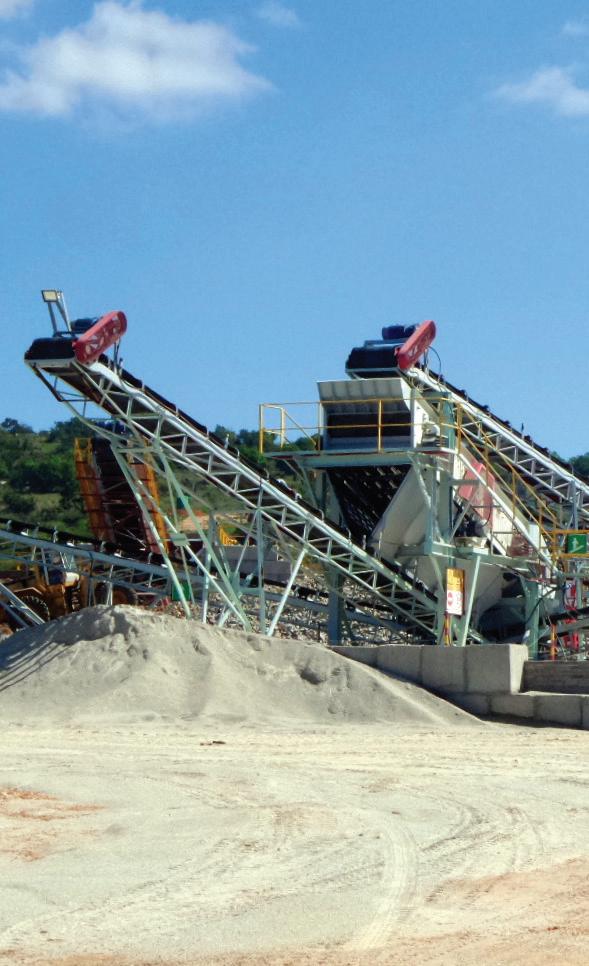
37 Ethically sourced aggregates essential for green construction
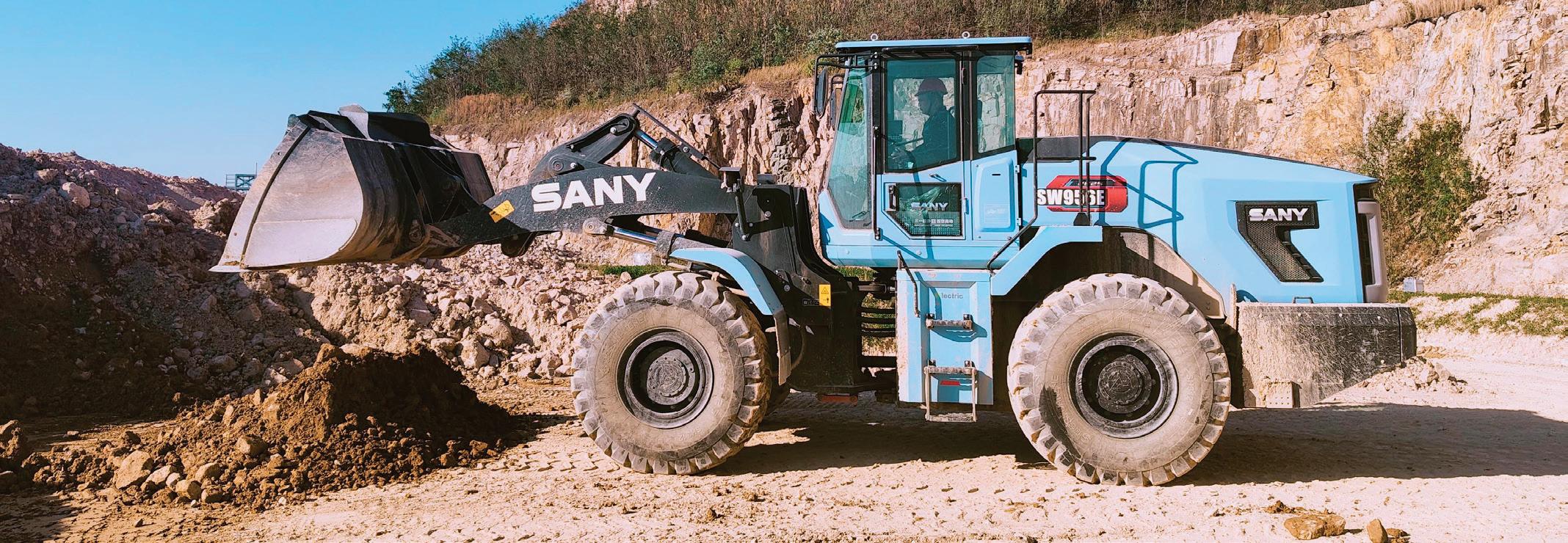
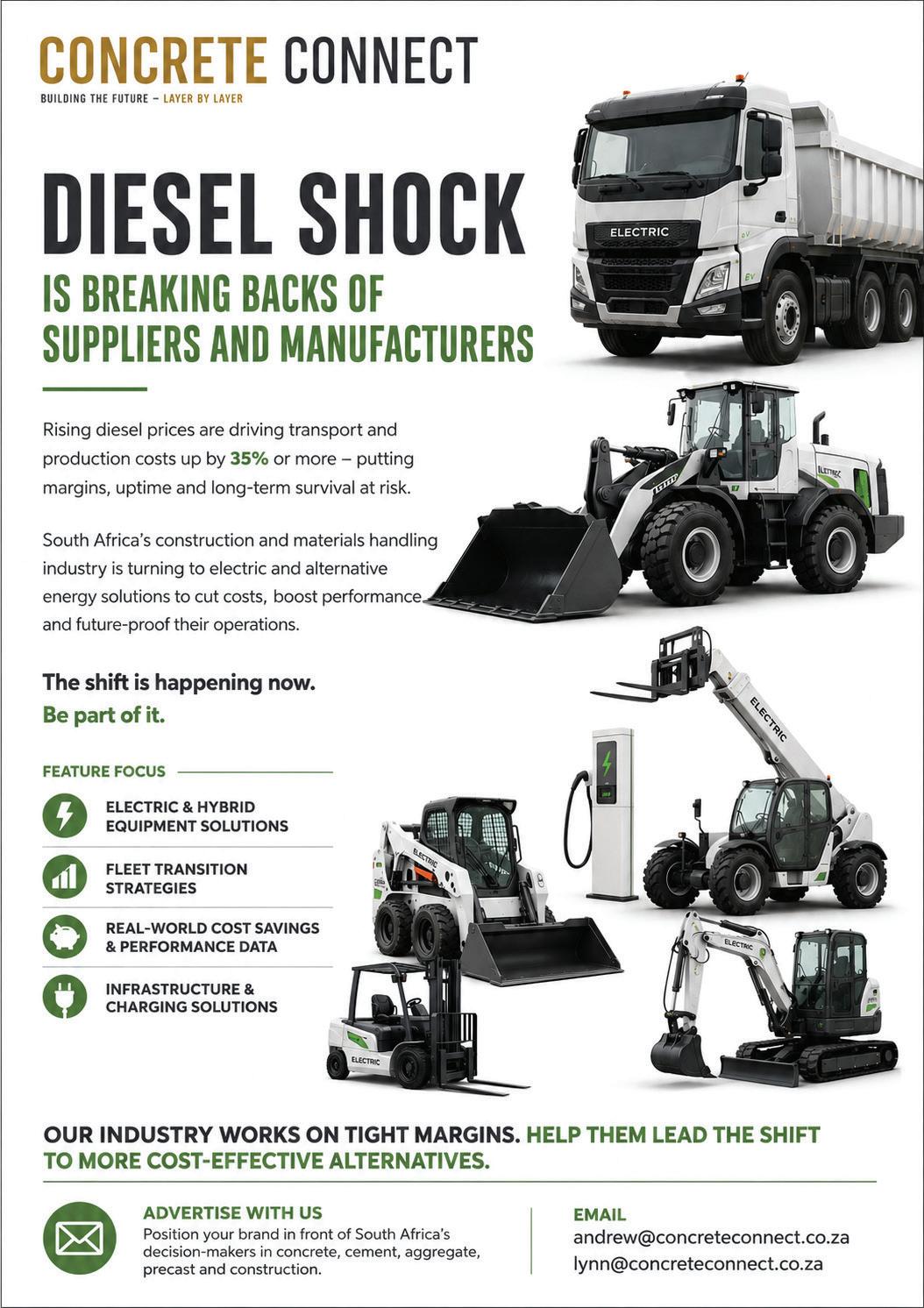
38 Diesel price crisis hastens the entry of electric loaders
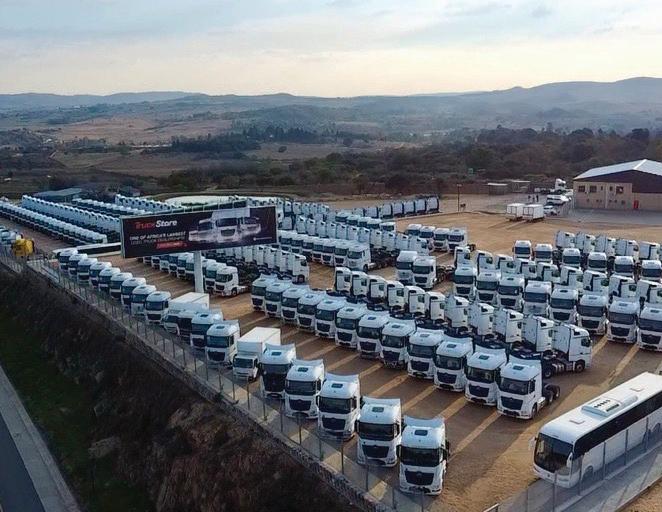
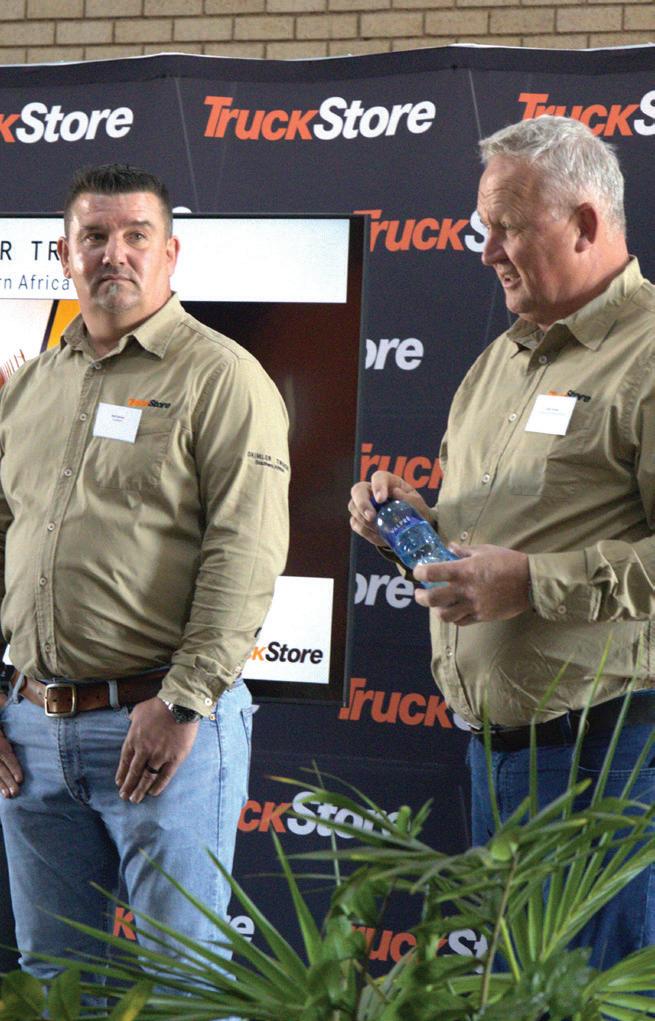
40 West rand truck store opens its doors
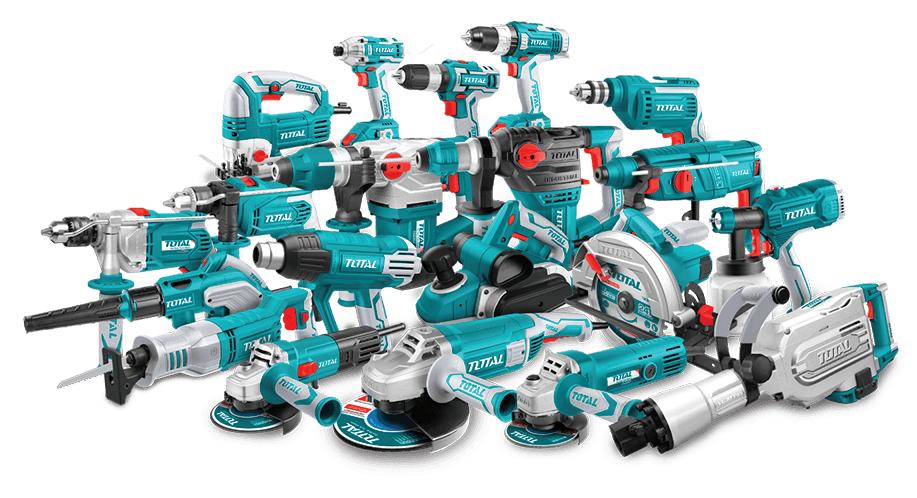
43 Total tools range for trade and small businesses 44 Blacklisting rogue contractors
45 A new benchmark for Botha’s hill 46 Concrete through the ages
25 Construction barometer highlights resilience in Africa 26 10 Reasons to specify readymix concrete 29 Manufacturer expands digital design capabilities 31 Rocla introduces the square manhole 32 Lidar offers certainty when its needed 34 Boom time may be coming 35 Colloidal silica: an easier, cleaner, tougher alternative to silica fume
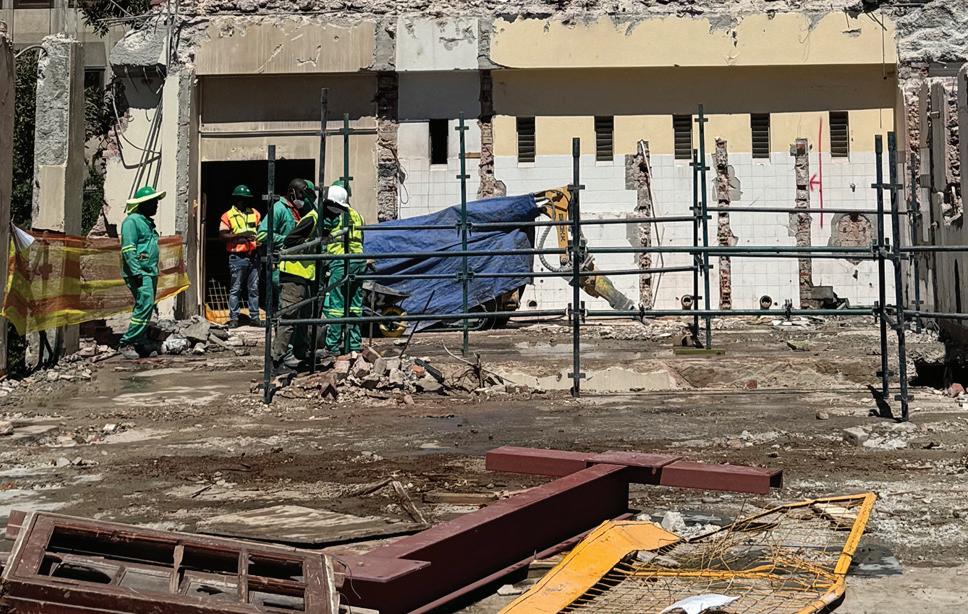
48 Members list 50 Rehabilitating parliament
Publisher & Advertising: Andrew Meyer (Owner)
Cell +27 (0)82 456 5175
E-mail: Andrew@concreteconnect.co.za
Editorial Director: Raymond Campling (Owner)
Cell +27 (0)76 297 2775
E-mail: Raymond@concreteconnect.co.za
Production & Administration: Lynn Malcolm
Cell +27 (0)84 031 3057
E-mail: Lynn@concreteconnect.co.za
Design & Layout: dv8ion.creative
Technical Support: Tech Xperience Distribution: Mail Blaze
Publishing Platform: ISSUU
The views expressed in this publication does not represent those of the publishers or advertisers. While every effort has been taken to ensure the accuracy of the content, the editor, writers or publishing house can’t be held responsible for any omissions or errors or damages that might arise from the content. No part of this publication can be reproduced in any form without written permission from the publishers.
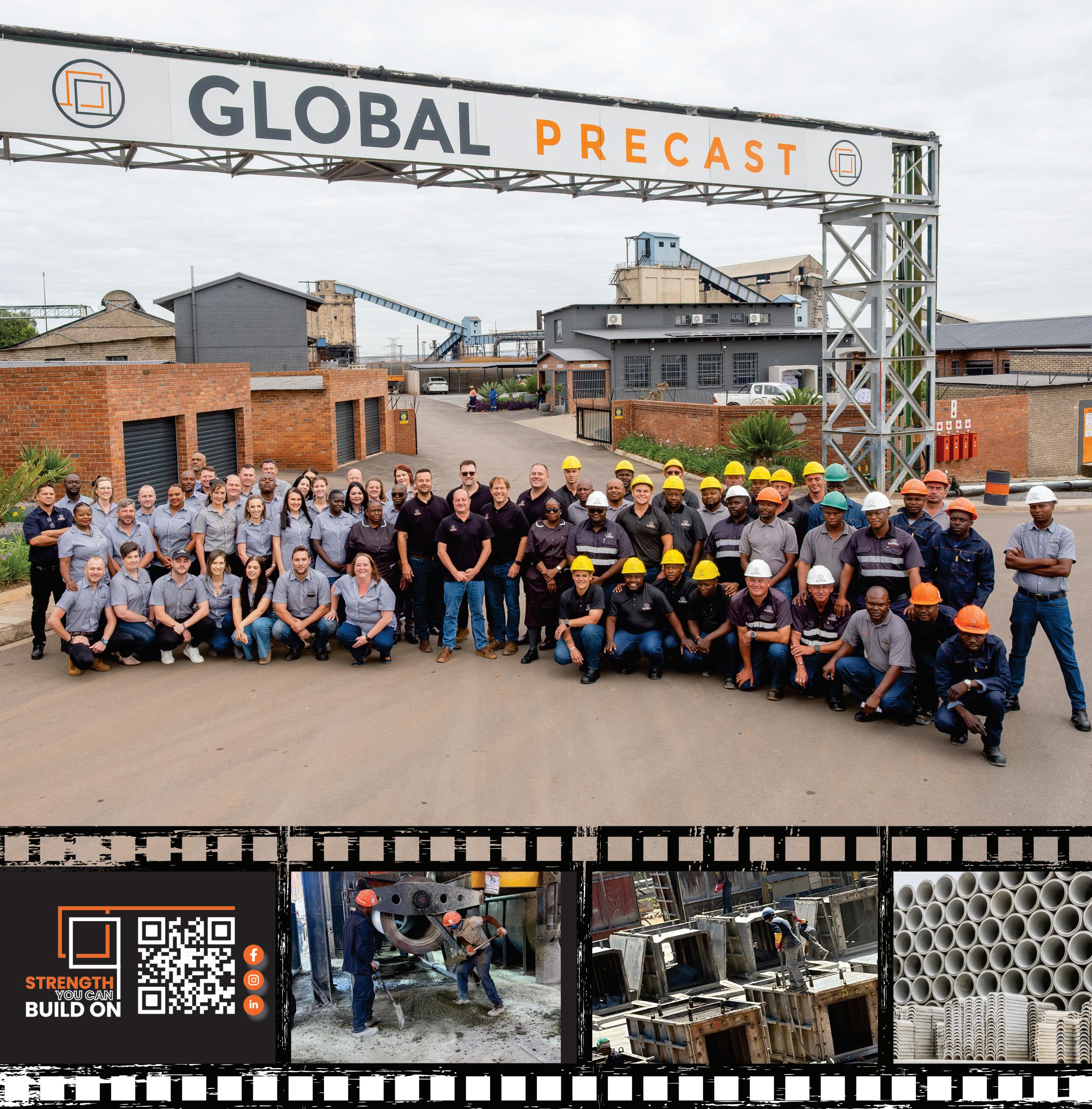
GLOBAL PRECAST
AIMING FOR THE STARS
“People are our biggest success factor and that is why we look after our staff. We firmly believe that if your staff are committed then the business gets the best out of them and all aspects of the business can function properly.”
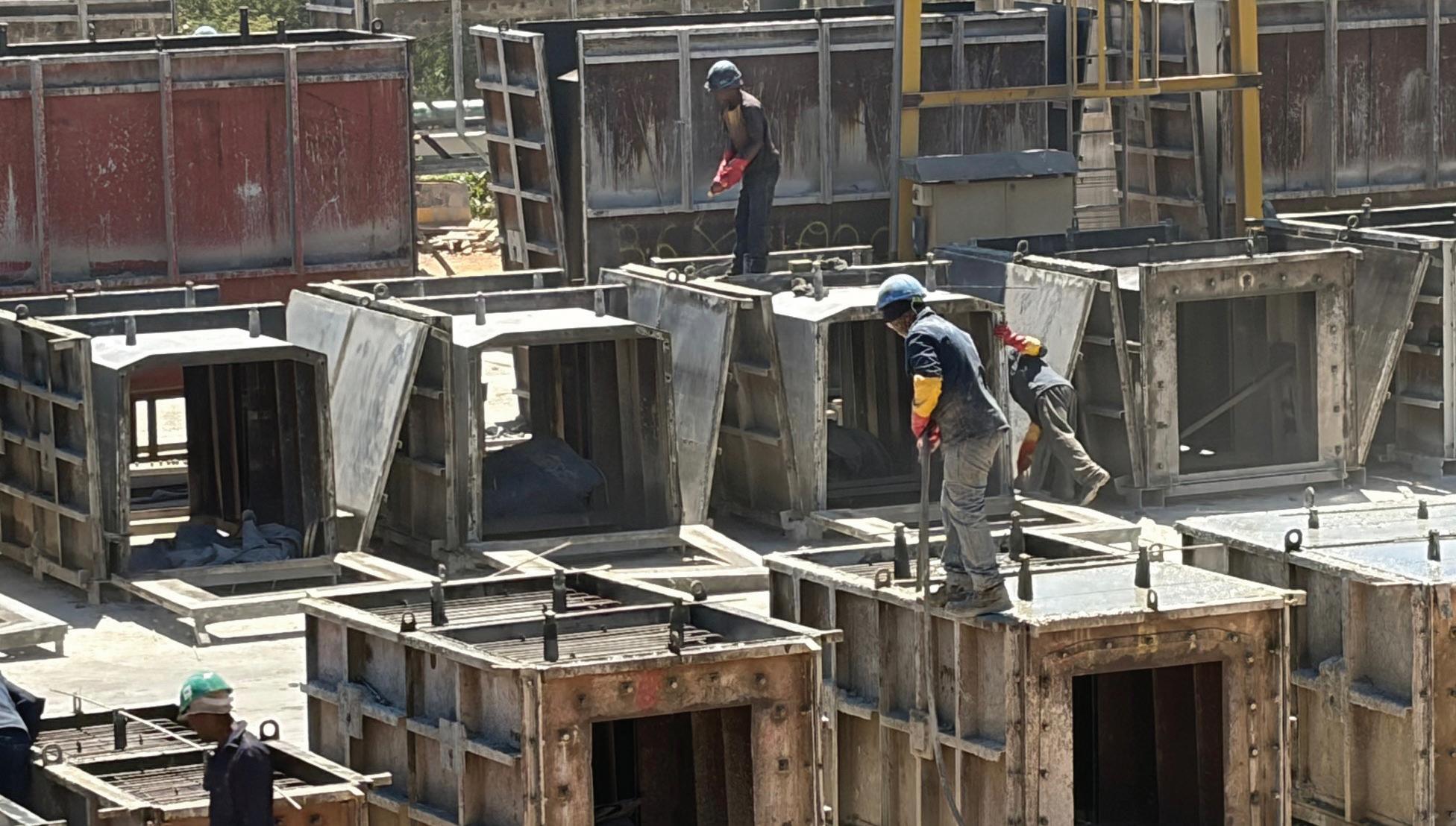
Moulds at Global Precast’ s yard in Pretoria
Scarcely two years after merging a number of thriving precast manufacturing businesses under the Global Precast banner the group is becoming a major contender for infrastructural projects throughout South Africa and the sub-Saharan African region.
While the operations have enjoyed unprecedented growth, the success of the operation was cemented at the outset of the merger with smart planning that allowed strategically placed companies within the group to service large areas of the sub-region through clever transport strategies and planned stockholdings. This combined
with strategically positioned agents has given the company unmatched reach and competitive pricing in areas suppliers had previously thought were uneconomical to service.
According to Global Precast managing director Werner Viljoen, the group’s growth has been measured with expansion following demand and has also been paced through due financial diligence. This has allowed the five independently registered businesses consisting of Global Precast in Pretoria, Global Precast Central in Bloemfontein, Global Precast Coastal in Port Edward, Global Precast Namibia near
Windhoek and the soon-to-be opened Global Precast Zambia operation in Ndola to grow at a sustainable pace.
The company currently maintains agents or sales representation across the North West, Northern Cape, Western Cape, Free State, Lesotho, Eswatini, Mozambique, Botswana and Zimbabwe supported by a sales force of approximately 40 to 50 representatives operating throughout the market.
“It is important to understand that these are individual companies with each business having its own structure and management with the same core
principles and manufacturing systems. We manage our cash flow very carefully and we do not like debt so we rather grow steadily than expand too aggressively,” Werner says.
Alongside its manufacturing operations, the group also operates a plant hire and civil construction division supplying trucks and construction equipment to contractors for large-scale infrastructure contracts.
Werner explains that the Pretoria business which acts as the hub for the group was established in 2003 on a smallholding where sanitation and infrastructure products played a major role in accelerating the company’s early expansion. As demand increased, the business consolidated additional operations into the Global Precast structure creating a regional manufacturing network designed to improve logistics efficiencies and service delivery into infrastructure markets across Southern Africa.
Growing a strategically planned footprint
According to Global Precast sales and marketing director Willem Daniel van Dyk, regional manufacturing capacity has become increasingly important as infrastructure demand grows across Southern Africa. This is particularly important for the Bloemfontein oper-
ation which trades as Global Precast Central and was recently established to service the large Free State, Northern Cape, Lesotho regions and parts of the Western Cape. The facility underwent redevelopment and certification before restarting production earlier this year.
“We manufactured all the samples required by SANS and then CMACS came to conduct the audits and we passed everything first time and received all the certifications required for our concrete products including our range of pipes and manholes, as well as culverts. There is a lot of work in the Free State at the moment especially on roads and mining projects and the establishment of Global Precast Central allows us to supply that entire region efficiently.”
Willem Daniel says transport logistics remain one of the biggest challenges facing the precast industry particularly when moving heavy infrastructure products over long distances. “When one of the original companies in Namibia started several years ago we realised that there are ways to transport culverts from Pretoria to Windhoek economically and were even able to compete with local suppliers. In this way we managed to create fast and efficient methods to incorporate it into our business.
The lessons learned in Namibia have subsequently been expanded into the group’s transport capability through its own internal logistics division using a combination of its own transport supported by third party transporters. This has given the group much greater control over logistics and reduced pricing to end users.
However this level of management of transport as well as all other operations from manufacturing, procurement and quality requires tight control and is the reason the company’s management structure remains completely handson. “We know exactly what is happening inside these businesses every day.”
He adds that the next expansion is now underway in Zambia where Global Precast Zambia is being established in Ndola through a partnership structure with local stakeholders. With the establishment of this hub in the Copperbelt region the company will be able to supply mining and infrastructural products in Zambia as well as the southern areas of the Democratic Republic of Congo.
“We have already secured the location, signed the lease agreements, opened the companies and bank accounts and started with earthworks while the equipment is being refurbished in South Africa for installation there.
We are expecting to begin manufacturing towards the end of the year to allow stock building and certification processes to be completed before fullscale production. Once completed the Zambia operation will have the same technical capability as other group companies,” Willem Daniel says.
Sharing the same capabilities and standards across the group is an important differentiator in these instances as engineered infrastructure solutions require close adherence to specifications wherever the project takes place. It also allows technical support to contractors as well as supervising engineers and consultants. “If there are technical questions on site you need to be able to speak the same language as a large portion of our business today involves custom engineered products
where we work with clients to solve specific infrastructure challenges.
Cross border operations
In Namibia, Global Precast Namibia has established a strong position within the country’s infrastructure market with an established and long-term customer base. Director Brendan Britten says the market is currently performing well and four months into the year the company has already achieved around 65% of last year’s total production tonnage. Similarly to the other operations, it manufactures rectangular portals, stormwater pipes and sanitation systems with the addition of agencies for guardrails, gabion baskets, geotextiles, geosynthetics and rockfall protection systems for the infrastructure and mining markets.
“Namibia is a smaller market and it makes sense to add additional product agencies and solutions to ensure the business remains stable when our construction and infrastructure or mining clients’ demand slows down.”
Brendan explains that despite the smaller size of the market competition is fierce and certification is a strong requirement in the Namibian infrastructure market. As with all Global Precast operations the Namibian company manufactures its products to SANS specifications and undergoes biannual audits while maintaining mandatory CMACS certification for its infrastructural products.
He says long distances and relatively fewer suppliers also requires detailed procurement and supply chain planning in order to be competitive. “In larger centres there may be multiple suppliers available immediately, but in Namibia planning is critical. We communicate with suppliers the same way we communicate with clients because good communication improves service levels throughout the chain.”
Brendan adds that the integration into the wider Global Precast group has strengthened the Namibian operation through improved access to operational equipment like moulds and welding technology and has brought new levels of technical expertise and support.
Serving coastal regions
A similarly beneficial operational advantage has transformed the Global Precast Coastal operation with the merger allowing the company to expand its operation from a focused sanitation supplier into a broader regional infrastructure manufacturer servicing projects across KwaZulu-Natal, the Eastern Cape and inland border regions.
Coastal director Scott Burmeister says since the operation was established in 2012 it has built a solid reputation supplying mainly rural municipal infrastructure projects with sanitation products, concrete pipes, manholes, culverts, lids and stormwater infrastructure products as demand increased across the region.
“It was tough in the beginning because everybody knew us as the toilet guys. We had to build credibility in the infrastructure market and establish ourselves product by product among municipalities, contractors and
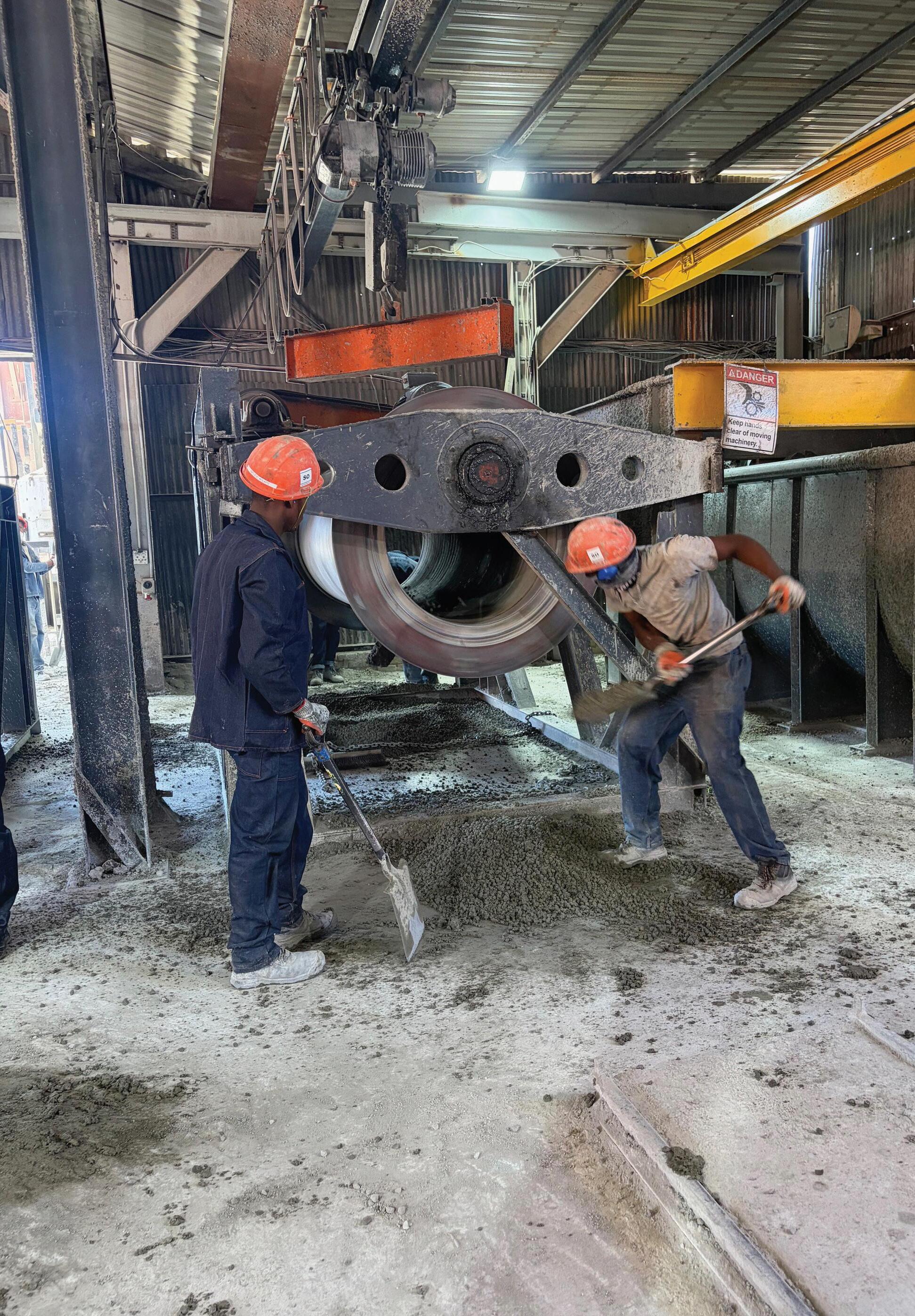
Manufacturing a pipe
consulting engineers and those hardearned customers have grown to trust us implicitly.”
The operation officially rebranded as Global Precast Coastal in April 2026 following investment and shareholder participation from the Pretoria operation and continues to service a growing market base extending from Gqeberha through the Eastern Cape and across KwaZulu-Natal as far north as Nongoma near the Mozambique border, while also supplying inland regions towards the Drakensberg and Lesotho border.
“We are still the same business, in the same location, with the same people. The difference now is that we have stronger branding with more support and access to a wider product range and strengthened technical advice if needed. If there are challenges on site we can send technical teams out quickly to investigate and assist,” he says.
People are the key
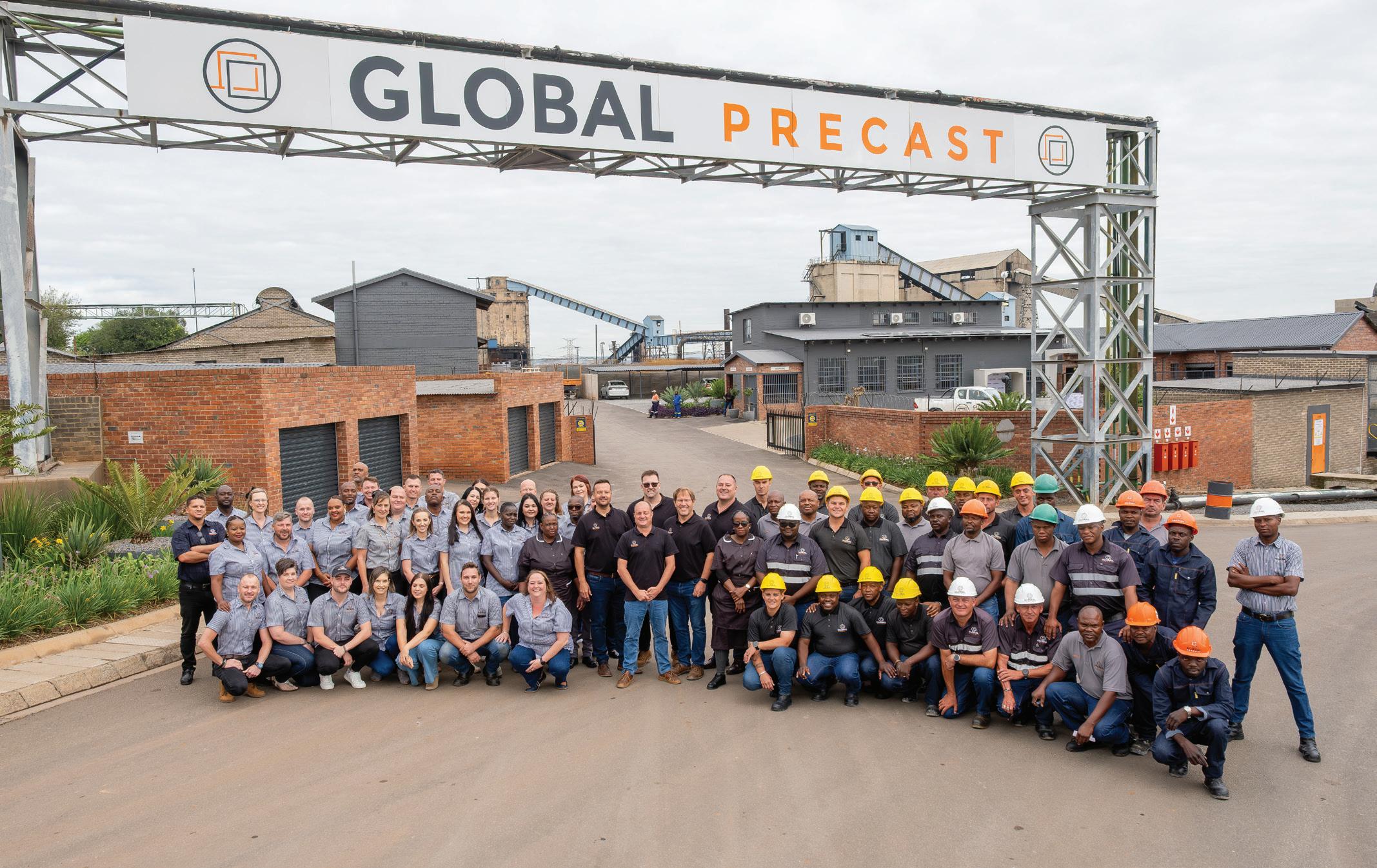
From a central point of view, Werner acknowledges that the shared goals and work ethic of all the operations as well as the company’s agent network are key aspects of the company’s success. Global Precast places a big emphasis on retaining its staff and developing people within the organisation. This is true throughout the group and many employees have remained with the business for years.
“People are our biggest success factor and that is why we look after our staff. We firmly believe that if your staff are committed then the business gets the best out of them and all aspects of the business can function properly.”
He points to one of the star sales staff in the team as a prime example. Philemon Mampshika joined the Pretoria operation at its formative stage as a general worker. During this time the business was operated on a limited budget manufacturing products by hand seeking new customers.
Philemon joined the business straight out of school when Global Precast was still a small startup operation. Starting in production he worked across mixing, moulding, quality control, deliveries, supervision and factory setup before eventually moving into sales where he lived by the company motto that in concrete you do it right the first time as there are no second chances.
Fortunately his ability to learn quickly and work diligently quickly led to him becoming an invaluable staff member and he was soon entrusted with important tasks that included assisting with the establishment of new operations as well as training local staff and identifying future leaders in different roles and regions. This background has also allowed him to become a key figure in driving sales with the ability to support and advise customers from a practical and technical perspective.
“I know our manufacturing and supply abilities and understand what customers need on site which allows me to advise our customers and give them honest solutions which I think is central to our company’s customer approach. Contractors appreciate honesty more than
promises you can’t keep,” he says.
According to Philemon, the close working relationship between sales and production has helped him to build long-term customer trust across the infrastructure sectors and has led to him developing a deep love for serving customers in a sales capacity in what is widely regarded as a tough industry. It has also led to him leading the company’s sales efforts in sanitation and related sales and receiving numerous company awards for his efforts.
This love for the job has seen him receive numerous offers from competitors over the years but he says the company’s culture and long-term relationships have kept him committed to the business. “We started this company together and built this together. Global Precast is where I belong.”
This type of sentiment runs through the company and is a part of the culture that the entire team embraces while continuing to push hard and grow the business across Southern Africa. “This remains central to the team and we want to continue building the same trusted brand wherever we go,” Werner concludes.
Werner Viljoen Managing Director
Brendan Britten Director
Philemon Mampshika Sales
WD van Dyk Sales & Marketing Director
Scott Burmeister Coastal Director
CEMENT PRODUCER BUILDS RESILIENCE
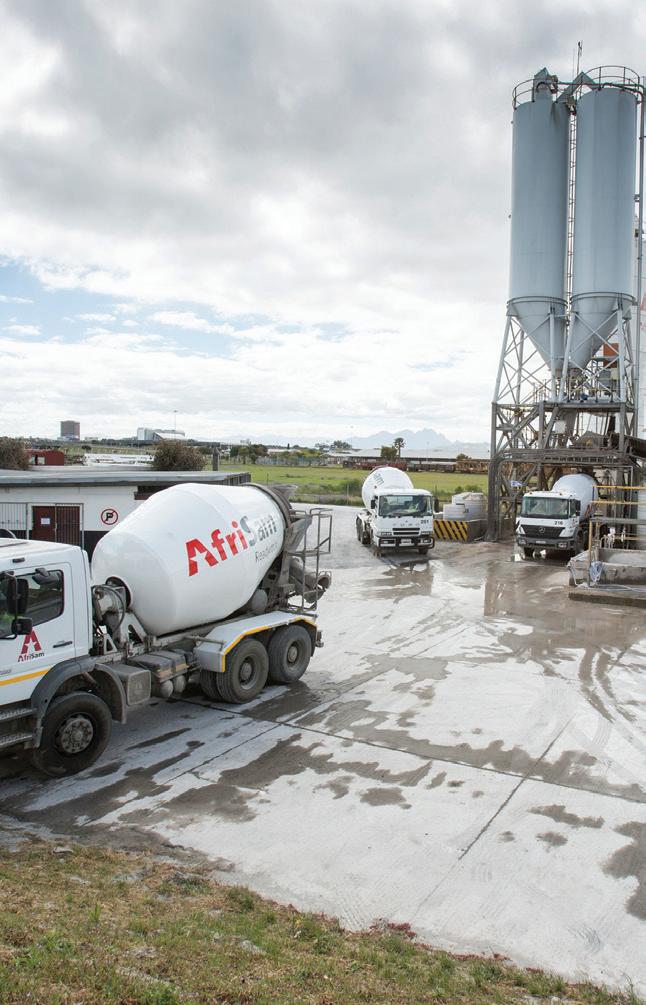
South Africa’s construction materials sector continues to face significant pressure, but early indicators suggest conditions may gradually improve. In response, AfriSam is focusing on operational resilience, continued investment in its production facilities and strong customer partnerships as the market navigates a slow and uneven recovery.
AfriSam Executive Chairman and CEO Eric Diack says the sector’s outlook remains closely linked to the pace of infrastructure investment across the country. In recent years constrained public spending along with rising input costs and shifting demand patterns have created a challenging environment for construction materials producers.
“The most important issue for our industry remains the level of infrastructure investment,” Diack says. “There are some encouraging developments,
particularly in road infrastructure which show what can happen when investment begins to gain momentum.”
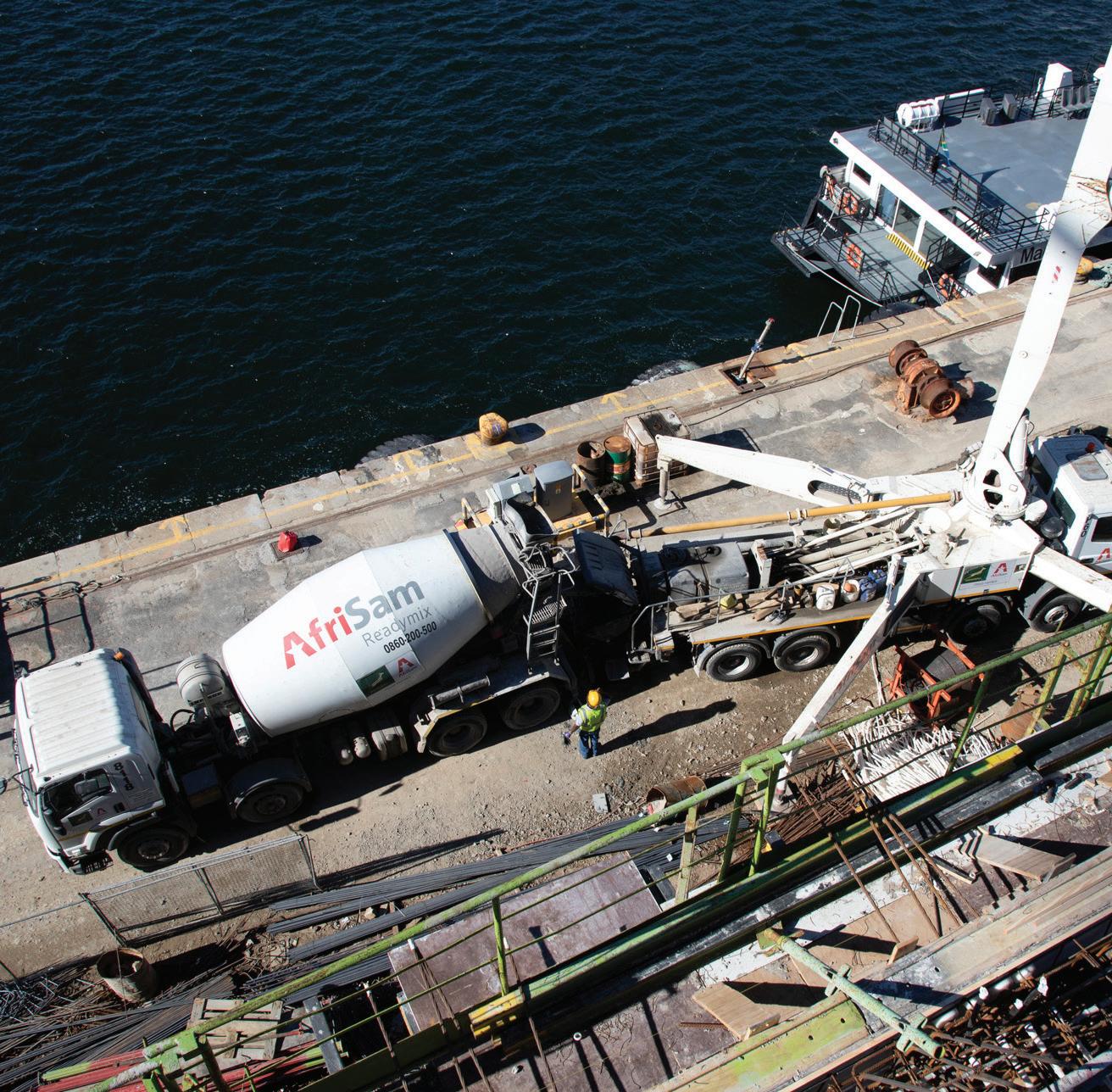
While the market remains subdued, several road infrastructure projects are supporting demand for aggregates and readymix concrete. Work on key routes such as the N3 and N2 in KwaZulu-Natal and the N7 in the Western Cape is contributing to construction activity.
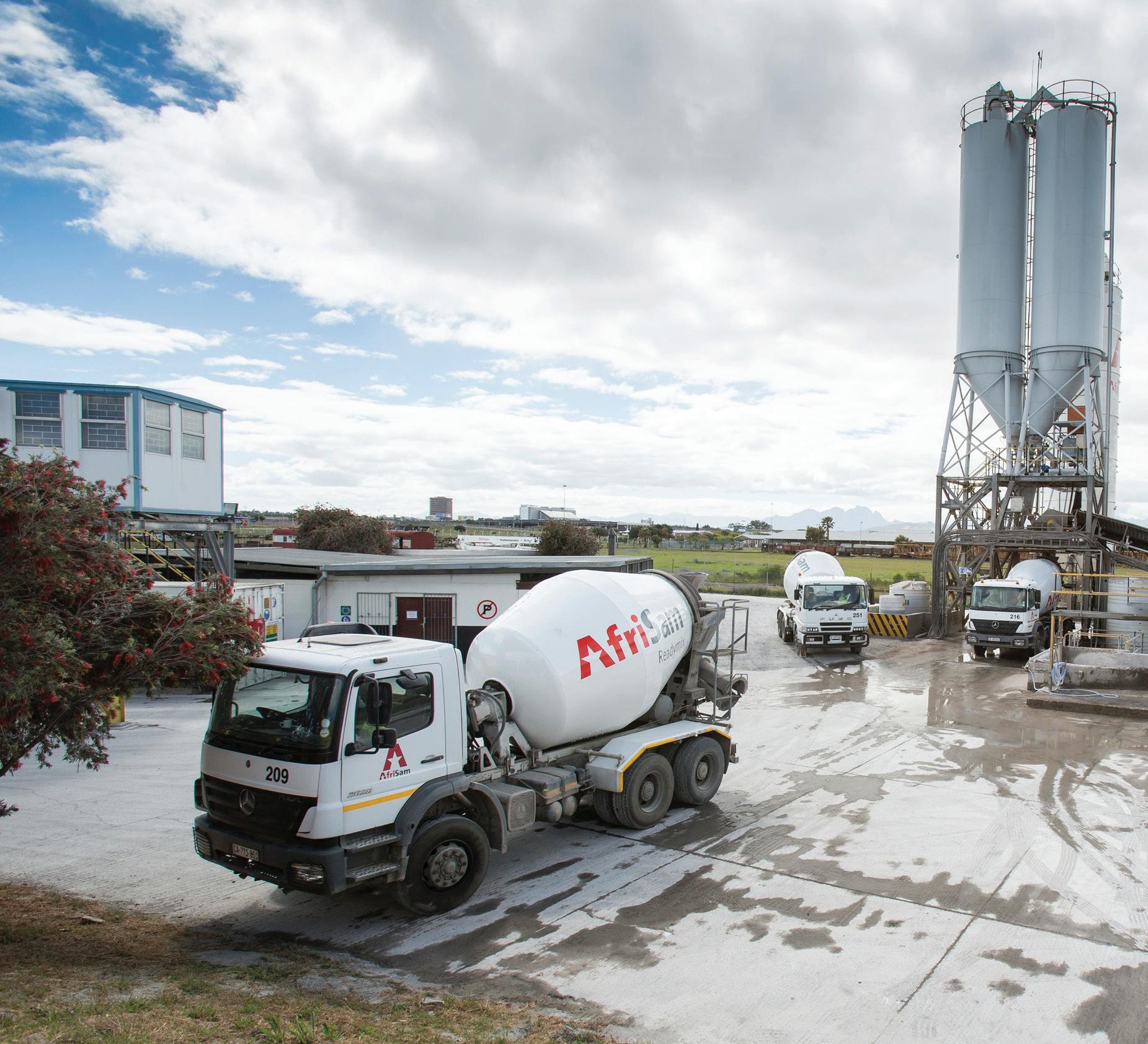
AfriSam’s national footprint of quarries and production plants positions the company well to supply these projects. Although current developments represent only a small portion of South Africa’s substantial infrastructure backlog they highlight the opportunities that could emerge if infrastructure investment accelerates.
Diack notes that AfriSam has continued to prioritise upkeep on its production facilities to ensure plants remain
in strong operating condition. “Our board has been clear that we cannot compromise on maintaining our plants. By continuing to invest, we ensure consistent product quality and remain ready to support customers as construction activity grows.”
Regional variations in construction activity are also evident, with the Western Cape showing stronger momentum than other parts of the country. “There is clearly more confidence in the Western Cape at present,” Diack says. “Major developments under way in areas such as the Cape Town city bowl and Granger Bay will ultimately translate into increased cement demand.”
Despite these pockets of activity overall cement volumes remain largely stagnant notes AfriSam sales and marketing executive Richard Tomes. At the same time rising input costs continue to place pressure on the sector.
AfriSam’s focus on quality and reliability ensures that its construction materials deliver consistent performance on large infrastructure and road construction projects.
Combining operational resilience with a strong customer-centric approach, AfriSam continues to support infrastructure growth and construction excellence across South Africa.
Energy costs remain a key concern for cement producers with electricity representing one of the largest cost pressures for energy-intensive manufacturing processes.
“Even when national increases appear moderate the structure of tariffs often results in higher effective increases for large industrial users,” Diack says.
Maintaining strict quality standards remains a non-negotiable priority for AfriSam, Tomes adds, noting that durable infrastructure depends on materials that consistently meet required specifications. Logistics has also become more complex as the deterioration of South Africa’s rail network forces greater reliance on road transport, increasing both costs and supply chain challenges.
Drawing on more than 90 years of industry experience, AfriSam continues to build on its technical expertise and operational capabilities. “Our cement business remains at the core of our operations,” says Diack. “When market conditions improve, we will be well positioned to respond.”
Through its commitment to quality construction materials, AfriSam helps contractors build durable infrastructure that meets demanding project standards.
OVERCOMING CLAY’S CHALLENGES TO DECARBONISE CEMENT
The use of limestone calcined clay cement (LC³) is gaining momentum as a path to decarbonisation for the cement sector and Chryso Southern Africa is investing its depth of expertise and research capability to support this exciting opportunity.
Clinker reduction has emerged as one of the most effective levers for lowering CO₂ emissions and LC³ is one of the supplementary cementitious materials (SCMs) to achieve this, according to Mpume Mabaso-Mlalazi, research and development manager at Chryso Southern Africa. However, while LC³ offers clear environmental benefits, its successful implementation is far from straightforward, she warns.
Unlike traditional SCMs such as fly ash or slag which are industrial by-products calcined clay is derived from natural deposits which introduce a high degree of variability. “Clays vary considerably in terms of their mineralogy, chemical composition and granular properties. These factors depend on where the clay is sourced and their variability becomes a challenge for cement producers trying to maintain consistency.”
Having presented at the 5th International Conference on Calcined Clays for Sustainable Concrete (ICCCSC 2026) in Cape Town earlier in the year, she says speakers at the event once again emphasised that LC³ was sensitive to raw material variability and early-stage hydration behaviour.
“The primary technical challenge in LC³ adoption lies in managing the inherent variability of calcined clay while maintaining predictable performance in cement and concrete,” she says. “Rheology and water demand are particularly problematic issues as clays are thirsty. Their high demand for water directly affects how the material behaves in both cement and concrete.”
The tension is that, while increased water content may improve workability, it compromises strength and durability. A delicate balance is required which demands precise understanding and control. Compounding this issue is a phenomenon known as polymer intercalation, where clay particles absorb and immobilise admixture molecules particularly superplasticisers thereby reducing their effectiveness.
“Where the clay essentially ‘captures’
the admixture a much higher dosage is required to achieve the same effect. This can increase cost and reduce efficiency.” To address these challenges, Chryso has invested heavily in R&D, building a deep understanding of calcined clay behaviour through global research initiatives dating back to 2019. The company can now characterise clays with precision, enabling targeted solution design.
“While standard techniques such as X-ray diffraction and particle size analysis are widely used, we have developed a proprietary clay test method to assess intercalation risk. This patented method allows us to quantify how strongly a given clay will interact with admixtures; this information is critical for optimising formulation strategies.”
The test evaluates the risk of polymer intercalation, from which can be determined the most suitable chemistry and dosage of superplasticiser - an im-
Mpume Mabaso-Mlalazi, Chryso Southern Africa’s Research & Development Manager
The Chryso Clear Test quantifies clay–admixture interactions to support optimal concrete mix design and improved performance consistency.
portant aspect of customisation. This capability allows Chryso to move beyond generic solutions toward configuration-specific admixture design.
“We can help customers optimise their mix designs through advanced admixtures,” she says. “Successful LC³ implementation needs more than binder innovation; it depends on mix design flexibility and system-level optimisation.”
This aligns strongly with Chryso’s strengths in hydration control, rheology management and strength development optimisation, as well as adjusting for durability and transport properties. The company can now collaborate with customers on tailored admixture packages that bridge laboratory design and real-world performance, she argues. Given the high water-affinity of clays, controlling water demand is essential. Chryso leverages its expertise in polymer chemistry to design superplasticisers that remain effective even in the presence of reactive clays.
“Our key expertise is understanding how to deal with water in these systems,” Mabaso-Mlalazi notes. “That’s why we say polymer chemistry is central to solving LC³ challenges.”
Optimising rheology is also critical to maintain flowability without compromising strength. Chryso’s tailored admixtures enable improved dispersion and workability even in systems with high clay content. In terms of strength development, Chryso solutions optimise hydration kinetics and particle interactions to support early and longterm strength development. These capabilities include product ranges such as EnviroAdd® for cement and EnviroMix® for concrete, which are specifically designed to address the unique challenges of low-clinker systems.
“We have created entirely new product ranges based on what we’ve learned about clay behaviour. These are not traditional admixtures; they are designed specifically for LC³ configurations.” She points out that durability and long-term performance also remain key concerns in LC³ adoption, with the recent conference highlighting factors such as transport properties, carbonation resistance, chloride ingress and microstructural development.
As clinker content decreases, these properties become more sensitive to mix design and material interactions. Our approach is to integrate durability considerations into the overall optimi-
sation strategy ensuring that performance is not compromised in pursuit of lower carbon. Importantly, Chryso also treats cement and concrete as a connected system rather than isolated components by operating across the full value chain. With its respective solutions for cement and concrete, the company acts as a bridge to ensure that what is produced at the cement plant will perform correctly in the final concrete. This integrated approach is particularly important for LC³ where changes at the binder level can have cascading effects on concrete performance.
Mabaso-Mlalazi concludes that industry is now shifting from research to full-scale deployment of LC³, which demands more support for industrial rollout and application readiness. Chryso is well equipped to provide such support, adding considerable value through its technical assistance during raw material qualification, plant-level optimisation strategies and field support for concrete producers adapting to LC³ mixes.
“As more markets in Africa and beyond push toward decarbonisation, Chryso can play a central role in ensuring LC³ concretes are consistent, durable and application-ready.”
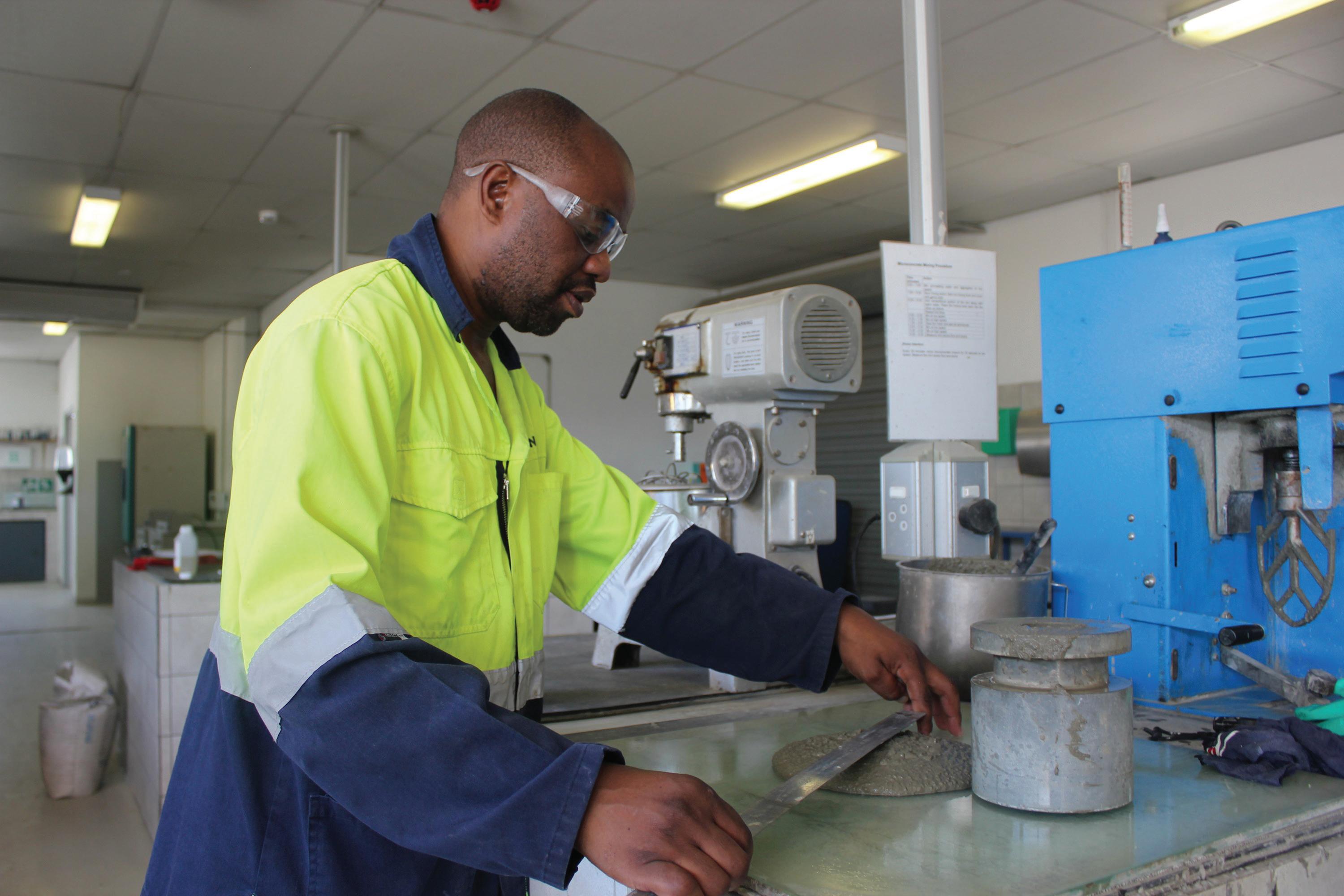
The slump test highlights the water sensitivity of LC³ blends and the importance of precise mix control to achieve consistent performance characteristics.
SELECTING CONCRETE WATERPROOFERS
Water ingress remains one of the leading causes of deterioration in concrete and masonry structures whether it is from rising damp, roof leaks, water-retaining structures or exposed concrete surfaces which makes selecting the correct waterproofing solution critical to achieving long-term durability and performance.
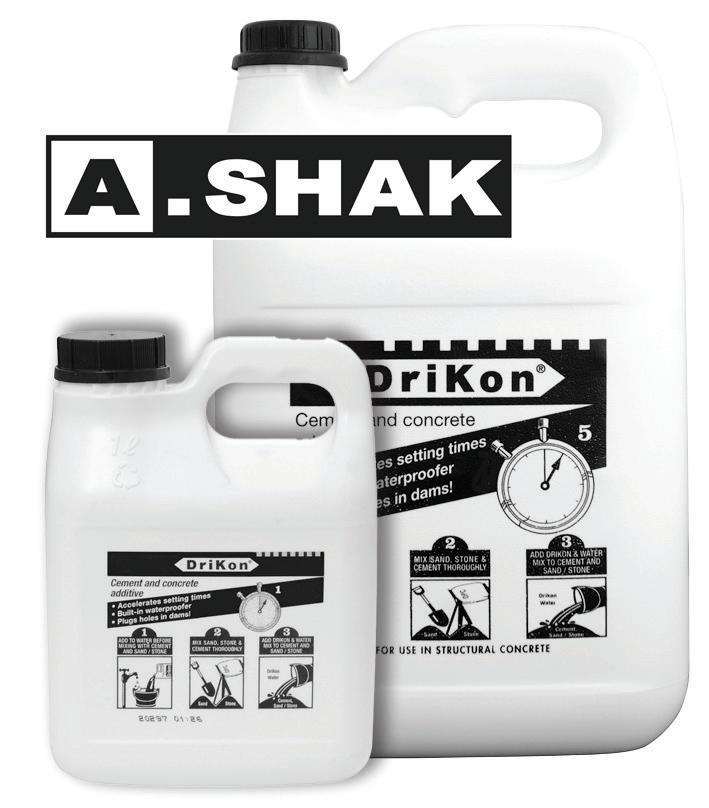
South African concrete chemical manufacturer A.Shak has developed a range of waterproofing products designed to address specific challenges encountered in both residential and commercial construction. The company’s established portfolio includes AquaLoc, DampLoc, WaterLoc, DriKon and Sprayseal products that have been used across the construction industry for decades.
According to A.Shak director Cindy Engels each product has been formulated to fulfil a distinct role which allows users to select a solution that matches the application requirements.
Flexible Surface Waterproofing
AquaLoc is a flexible copolymer latex waterproof coating designed for use on roofs, walls, floors and a variety of concrete and masonry surfaces. Once cured the coating forms a durable waterproof membrane capable of accommodating minor substrate movement through its ability to stretch and contract without cracking. It is particularly suitable for structures exposed to temperature fluctuations and weathering conditions where conventional rigid coatings may fail over time.
Application is straightforward and with adequate surface preparation can be applied by brush, roller or spray equipment. Two coats are typically recommended with the first coat allowed to dry before the second is applied. The result is a resilient protective barrier that provides long-term resistance to water penetration.
Combatting Rising Damp
Rising damp is an enormous problem in many buildings and causes damage
to finishes and can eventually damage structural elements. DampLoc has been specifically developed to address this issue. A styrene acrylic copolymer-based coating which seals concrete as well as brickwork and cement-based plaster surfaces and stops moisture migration through walls and floors.
For application the surfaces should be cleaned thoroughly using a suitable degreaser or sugar soap solution before application. Two coats are typically applied by brush allowing sufficient curing time between coats to establish an effective moisture barrier. The product is widely used in refurbishment projects as well as preventative waterproofing during construction.
Waterproofing Water-Retaining Structures
Where waterproofing requirements
extend beyond surface protection WaterLoc offers an effective solution as a waterproofing admixture incorporated directly into cement-based mixes. The copolymer latex additive enhances the waterproofing characteristics of screeds and plasters used in water-retaining and below-ground structures including ponds, canals, tunnels, showers and basements.
By becoming an integral part of the cement matrix WaterLoc assists in reducing permeability and improving resistance to water ingress. Proper surface preparation and repair of joints and voids remain essential before application of the waterproofed plaster or screed system.
Accelerated Hardening and Water Resistance
For smaller construction projects and non-structural concrete applications
DriKon has earned a longstanding reputation within the industry. Used for more than six decades, the product functions as a rapid-hardening concrete additive while simultaneously improving water resistance. It is commonly specified for applications such as fence post installations, gate track foundations, manhole chambers, paving and general plastering work.
By reducing setting times DriKon enables contractors to complete installations more efficiently while achieving improved resistance to moisture penetration.
Invisible Protection for Exposed Surfaces
Sprayseal provides a different approach to waterproofing by acting as a penetrating water repellent rather than forming a surface coating. The
water-based siloxane treatment delivers excellent resistance to carbon and chloride ingress while repelling water from concrete, brickwork, plaster, grout and painted surfaces. This makes it particularly valuable for protecting structures exposed to harsh environmental conditions.
Application is typically carried out using either a backpack or handheld sprayer. Once the surface has been saturated, the product penetrates into the substrate and cures without altering the appearance of the treated surface. Unlike many coating systems Sprayseal generally requires only a single application to provide effective protection.
Matching the Product to the Application
Effective waterproofing begins with
WATER IS NOT ‘ONE SIZE FITS ALL’
When industrial water treatment company G-Chem Aquacare’s CEO Shaun Golding looks at water he knows that it is not ‘one size fits all’ and that each sample may have a different pH, total dissolved solids (TDS) and mineral content.
In order to manufacture quality concrete it is important to understand that water differs from region to re-
gion depending on geography or human intervention and companies like G-Chem Aquacare can draw on strong technical capabilities and chemistry to create a tailored water treatment plan to suit each client’s specific needs.
“From the outset it is important to understand the use of water in a plant. You need to look closely at where in the plant this water will be used. Each of those streams does not necessarily require the same quality water and to produce each different quality may require a different solution, capital and operational cost,”
Golding points out, adding that a common trap many companies fall into is assuming that drinking-quality water is automatically suitable for industrial applications: “In reality, water that is perfectly safe for human consumption can still cause severe scaling, corrosion or operational issues in process systems. Understanding this distinction is vital,” he explains.
Delivering fit-for-purpose water is rarely straightforward. Businesses must decide whether to produce premium-grade water for an entire site or whether a more strategic approach is
selecting a product that addresses the specific source and mechanism of water ingress. Surface coatings, penetrating repellents, waterproofing admixtures and rapid-setting additives each serve a different purpose and should be specified accordingly.
With decades of experience supplying waterproofing solutions to projects throughout South Africa, A.Shak continues to provide products suited to applications ranging from residential maintenance to large-scale civil engineering works.
Understanding the performance characteristics of each waterproofing system allows contractors and property owners to maximise durability, reduce maintenance requirements and protect concrete structures against the long-term effects of moisture exposure.
preferable: using pre-treatment plants for lower-grade applications throughout a plant such as toilets and cleaning, while deploying reverse osmosis (RO) systems for critical processes.
Golding adds that companies must consider three critical issues: downtime reduction, water quality and a consistent water supply during drought or municipal infrastructure failures. South African industry has already experienced the consequences of disruption, most notably during the Cape Town ‘Day Zero’ water crisis when many companies found cooling systems and boilers could no longer operate reliably and were forced to seek alternatives such as private dams, well points and boreholes. It is here that water inequalities are most prevalent.
However, even municipal water, Golding stresses, may not be uniform: “Seasonal changes can dramatically alter water quality in some areas. During winter rainfall periods, agricultural runoff and catchment contamination can significantly increase dissolved solids and mineral loading within certain water sources.
G-Chem Aquacare CEO Shaun Golding
Good water stewardship
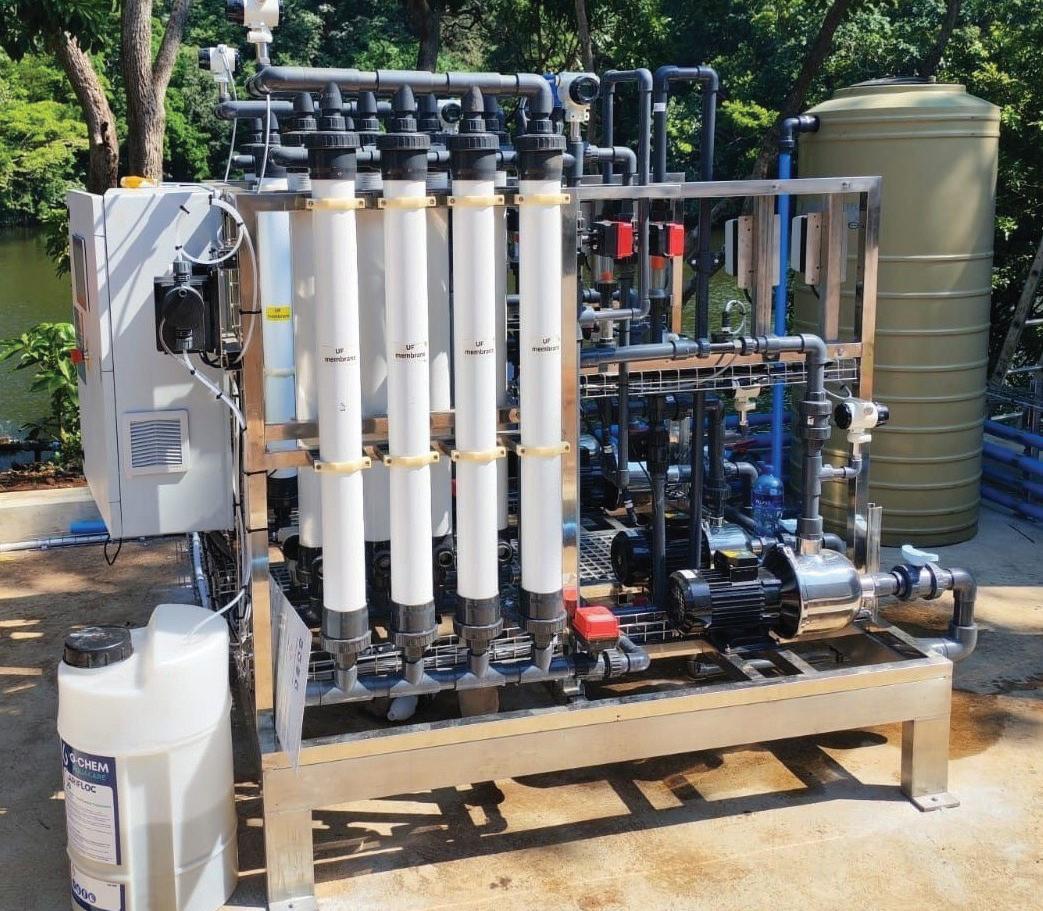
As natural water sources deteriorate and infrastructure ages, businesses are compelled to invest more heavily in water treatment: “In the past, companies pulled water from clean sources and used water without treatment. Now they are finding e coli forming, total dissolved solids (TDS) increasing and have to adapt - adding ultra-filtration, RO plants and pre-filtration to get the water to the quality required. They also have higher monthly maintenance costs to ensure that they have usable water,” says Golding.
He also warns that reactive decision-making and rushed implementations can create long-term liabilities: “Unfortunately in Cape Town, when it came to ‘Day Zero’ companies focused on drilling boreholes, putting in treatment plants and getting water to the factory to keep workers employedwhich is understandable.
In an ideal world, you would go through the correct processes and understand all the intricacies. Many manufacturing facilities were unable to take the time to understand how and where this water would be used. Then the problems started. When the water shortage ended, many companies just mothballed those plants.”
He emphasises that drawing water from natural sources requires careful
planning and the involvement of the correct specialists from the outset. Groundwater specialists help to ensure the sustainable and environmentally responsible use of the resource, while water treatment specialists determine how the water can be treated to become fit for its intended purpose.
A cautionary example comes from an Eastern Cape production facility, which installed multiple boreholes and a major treatment plant to counter unreliable municipal supply: “The client plugged the main reverse osmosis supply into the entire factory. However, low-mineral RO water, when not correctly remineralised or stabilised for the application, can become highly aggressive to pipework and equipment, and it consequently corroded much of the facility’s pipework and equipment. Something well-intentioned cost the company a lot of money - because the implications were not properly thought through.”
From the point of delivery
Municipalities are typically responsible for water quality only until the point that it enters a facility or site. Beyond that, businesses must adapt the supply, if required, for their own requirements.
An example of how changing water supplies can impact end-users was highlighted through recent calls from
hotels and commercial developments reporting unusual corrosion within their hot-water systems. Further investigation suggested that municipal water quality in certain areas had changed significantly, with the water becoming far lower in mineral content and therefore more aggressive in nature - almost as though reverse osmosis-quality water was being introduced into the network.
These companies are now having to investigate additional treatment measures, including corrosion inhibitors and small remineralisation systems, to stabilise the water and protect infrastructure.
“People are becoming increasingly aware of the fact that water is not simply ‘water’,” Golding observes.
The whole picture
The main outcomes of poor water treatment are reduced efficiency and decreased lifespan of equipment. These effects also differ according to region and system design. “For example In the Western Cape, equipment will tend to corrode and the lifespan will be shortened. In Gauteng, scale forms, efficiencies are not achieved and eventually you lose equipment due to under-deposit corrosion,” Golding explains.
Despite these risks, economic pressure often drives companies to cut maintenance budgets, including water treatment spend. “Water treatment represents 1 - 2 % of the overall monthly spend on these plants energy/fuel being the largest - and is a drop in the ocean compared to what the actual equipment is worth. Plants can cost hundreds of millions of rands and often, critical maintenance is the last thing on the list,” Golding cautions.
Overall, declining water quality, water shortages and environmental constraints mean that recycling will become an imperative, to the point where companies strive to achieve zero liquid discharge (ZLD). Golding sees South Africa going the ZLD route, because water shortages and water crises are becoming more and more prevalent:
“The technology exists, and G-Chem Aquacare is already collaborating with global partners to bring this to South Africa.”
G-Chem Aquacare Ultra filtration plants
WHY AUCTIONS ARE PREFERRED FOR LEGAL ASSET DISPOSALS
“The process establishes a clear market price which can be difficult to achieve and possibly defend through out of hand sales”
Auctions remain a primary mechanism for the disposal of assets In South Africa’s legal and insolvency environment where the process is consistently called upon to convert assets into cash in a transparent and defensible manner.
According to Nico Maree, vice chairman of the South African Institute of Auctioneers (SAIA) and a legal expert in the field, the use of auctions in legal proceedings is based on its practicality and inherent fairness which gives any person the opportunity to bid.
Although the country’s law does not prescribe auctions in every instance it does strongly favour processes that are open, competitive and capable of achieving market-related value. In insolvency and estate matters, fiduciary representatives such as liquidators and executors are required to act in the best interests of creditors and beneficiaries.
According to Maree auctions provide a structured method to meet these requirements. By inviting public participation and competitive bidding the process establishes a clear market price which can be difficult to achieve and possibly defend through out of hand sales. The auction process also creates a documented audit trail from advertising and bidder registration through to the fall of the hammer which provides legal defensibility should the sale be challenged.
“A public auction is usually advertised nationally and can be regarded as organised marketing of property which is subject to the seller’s confirmation.
It may even result in sales after the auction due to the reach of advertising which is also conductive to a larger eventuality of sales of assets.
“Another important aspect is time. Auctions provide a defined timeline from marketing and viewing to a predetermined sale date. This is particularly important in insolvency and similar scenarios where asset values may deteriorate over time or where ongoing holding costs erode returns. Simultaneously, auctions provide finality once the hammer falls there is a binding agreement which is subject to the terms and conditions of sale. This reduces the risk of failed transactions which are more common in negotiated sales,” he says.
Maree adds that auctions are highly adaptable to the type of sale required and can be used to dispose of a wide range of assets from immovable property, vehicles, plant and equipment, general and niche items where the process can be tailored to suit the asset class and legal context. For example, auctions may be conducted on-site, online or both depending on what will attract the strongest pool of bidders.
Future challenges
The auction industry in South Africa operates within a framework of general law which includes contract law, consumer protection legislation and insolvency statutes and unfortunately there is no single, overarching statute that governs all aspects of auctioneering. This places the responsibility on the professionals involved to appoint competent, ethical and experienced auctioneers.
“There is simply no room for error in legal sales. The consequences of an improperly conducted auction can be severe and result in future legal challenges and financial loss. The appointment of unqualified or “fly-by-night” operators who lack the necessary expertise and ethical standards required to conduct auctions in a legal context is bound to become a costly mistake.
“Improperly managed auctions can undermine the very principles they are meant to uphold. For example, inadequate marketing may limit bidder participation or procedural errors can expose the sale to legal challenge. In some cases, misconduct can result in assets being sold below value or disputes over the validity of the transaction and this is where industry bodies play a critical role.
“The South African Institute of Auctioneers serves as the primary professional body for auctioneers in South Africa and sets high standards of professionalism for its members. SAIA membership requires members to uphold its strict code of conduct which includes ongoing professional development as well as compliance with required standards and legislation,” says Maree.
He explains that SAIA is also actively involved in developing formal training and qualifications for the industry to further promote professionalism and ensure consistency of standards across the industry. In this way SAIA is ensuring that auctions, with their combination of speed, transparency and market-driven pricing, remain a trusted mechanism to achieve this especially in legal proceedings where the stakes are high and scrutiny is intense.
Nico Maree of the South African Institute of Auctioneers
ARCHITECTS SEEKING SOLUTIONS TO PREVENT BUILDING COLLAPSES
Halting the increase of building collapses requires a multi-pronged approach with a sharper focus on materials quality, skills on site and increased professional oversight by the architects and engineers responsible for the design of our structures.
This is according to Charles Nduku, President of the South African Council for the Architectural Profession (SACAP) speaking during an exclusive interview with Concrete Connect recently. He explains that building collapses are increasing in frequency which exposes a deeper problem on building sites when qualified eyes are removed from construction. This worrying trend allows unintentional mistakes to creep in, corners to be cut and the use of the incorrect or inferior building materials to be used in critical structural phases.
SACAP is at the centre of the country’s architectural regulation as the statutory body mandated to protect the public by regulating architectural professionals. “Our primary mandate is to uphold standards and protect the public to ensure that the work of architectural professionals does not harm the public. This mandate is backed by law and no individual may practise as an
architect without being registered with SACAP. We have enforcement powers that extend to investigation, sanction and in serious cases criminal action in collaboration with authorities.”
However, blame does not always fall at the feet of building professionals as clients often perpetuate it. Nduku points to a growing trend where professional involvement is cut back once approvals are secured. Architects and engineers are often appointed only up to design and submission stages with limited or no role during construction which is the phase where quality is either achieved or lost.
In one recent example linked to a major building collapse, the architect’s appointment ended before construction supervision began. The result was a site operating without the full oversight of the professionals who understood the design intent and technical requirements. “That supervision stage is critical, quality follows process, it does not happen by chance.”
He adds that where professional site visits are reduced or replaced with less qualified oversight compliance with standards begins to slip. Industry norms such as regular inspections, material verification and process control are either diluted or ignored altogether.
The cost of penny pinching
Developers under pressure to speed up timelines and reduce expenses are cutting back on professional services and relying more heavily on contractors to self-manage quality. The result, in many cases, is predictable and it is understandable that without consistent oversight the temptation to cut corners increases.
“Adherence to correct concrete practices are a good example of weak points. Proper curing times are frequently ignored and structures loaded before reaching design strength. Critical protection measures such as moisture retention during curing are
Charles Nduku, President of the South African Council for the Architectural Profession (SACAP)
overlooked and the correct acceptance of batched concrete is ignored. These are serious deviations that can have severe consequences in penalties as a result of failed concrete tests, removal of incorrectly placed concrete at the cost of the developer or in the worst-case scenario can lead to the collapse of a structure with injuries or loss of life.
Compounding the oversight problem is the increasing availability of substandard building materials. Unlike professional practitioners material suppliers operate in a far less regulated environment and according to Nduku this gap is allowing inferior products to enter the supply chain from low-grade cement and aggregates to incorrectly sized components and poorly manufactured concrete units. “We must remember that even a correctly engineered design could fail if the materials used do not meet exact specification and this reminds me of as recent case in the Eastern Cape where largescale foundation piling failures were traced back to inferior cement forcing costly remediation after widespread structural defects emerged.”
Nduku continues that oversight extends to the competence of those executing the work and the duly appointed representatives of the engineering,
architectural and contractor firms responsible for the project. They need to ensure their representatives have the practical knowledge at site level and a basic material understanding, such as distinguishing between suitable sand types, recognising contamination, or managing mix consistency and to conduct basic tests if necessary.
For its part SACAP is eager to work with regulators and industry bodies in all disciplines in order to identify training pathways at site-level. As construction methods become more reliant on Precast components, readymix supply and mechanisation firsthand material knowledge needs to be reinforced to prevent a disconnect between design intent and execution reality. “Construction is complex, it requires knowledge at every level without that mistakes are inevitable.”
The word of the law
South Africa does not lack regulators. It lacks alignment. Nduku says that multiple industry bodies operate in parallel, often without sufficient coordination. The result is fragmented oversight and duplicated mandates that can lead to a blame game in the event of a failure. SACAP is calling for stronger collaboration between regulators, professional bodies and techni-
cal institutions including those focused on concrete standards and materials science. “When a building collapses, the question is asked of all of us.”
“We need to educate everybody in the cycle including and especially the client and developer. Decisions made around cost and programme timelines etc directly influence site behaviour. The problem is that many clients lack the technical understanding to see how their decisions can risk the success of a project and poor decisions at the onset of a project can create a gap where poor practices can proceed unchecked until failure occurs.
“We are therefore advocating for broader public education, including clear indicators of what compliant construction should look like and where red flags lie. The intention is to create accountability beyond the professional layer,” says Nduku.
He concludes that South Africa’s construction environment is under strain from economic pressure, skills shortages and increasing project complexity but insists the fundamentals should always remain unchanged for design, materials and execution to align. Remove professional oversight from the equation and that alignment collapses.
GLOBAL RECONSTRUCTION BOOM TO DRIVE RESOURCES SECTOR
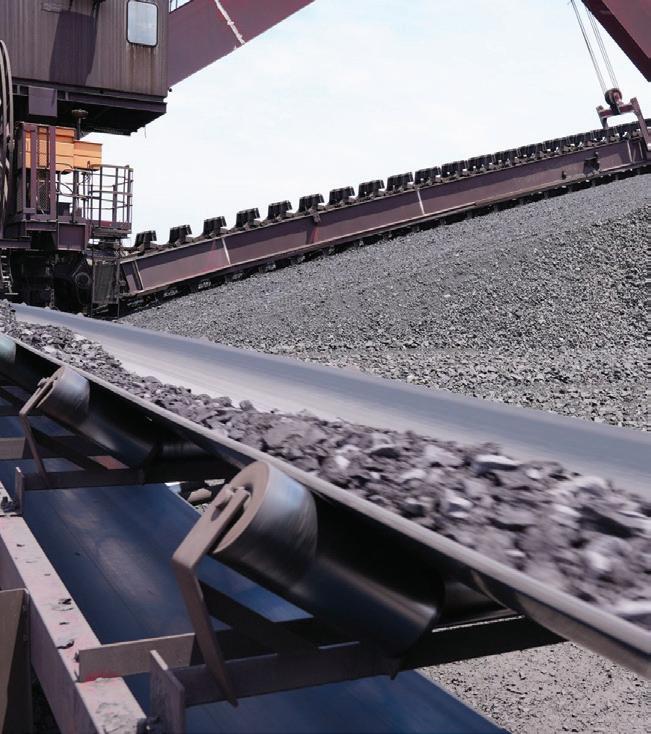
According to Malcolm Curror, chief executive of United Manganese of Kalahari (UMK), the South African resources sector is anticipated to experience significant growth following global disruptions, as large-scale reconstruction efforts will require substantial quantities of natural resources, including manganese and other steelmaking inputs.
Curror stated that the transition from geopolitical conflict to reconstruction efforts in affected regions may result in a sustained increase in global demand for strategic minerals in the near to medium term, especially those associated with infrastructure, energy, transport and industrial redevelopment.
Historical evidence indicates that post-disruption reconstruction consistently triggers significant increases in demand for construction materials and the minerals necessary for their production. Curror stated, “Once rebuilding begins, steel demand rises rapidly because countries need to rebuild infrastructure like bridges, ports, rail networks, housing, power infrastructure and manufacturing capacity.” He further emphasized, “Resources such as manganese become strategically important because there is no substitute for it in steel production at scale.”
Curror stated, “This is potentially really good news for South Africa.” He further explained, “From community benefit through to miners, beneficiation and the upside of greater and reasonably sustainable job creation.”
He noted that a rebuild phase could cyclically initiate a global and local economic boom, which may positively influence development in markets not directly impacted by initial disruptions. “We could see an upward trajectory across many resource markets for decades,” he added.
Given the scale and extent of current global disruptions, Curror anticipates increased pressure across entire value chains. Rising demand in geographically dispersed regions is expected to intensify competition for resources and exert upward pressure on production and fulfilment processes. Curror further notes that this dynamic may elevate not only commodity prices but also freight and logistics costs. He states, “Freight pricing may remain elevated for longer, but in a rebuild phase, for different reasons. It may not necessarily be driven by energy prices alone, but increasingly by competition for freight space as reconstruction economies compete for shipping capacity, bulk commodities and port access.”
South Africa is well-positioned to benefit from this environment because of its substantial mineral reserves, estab-
lished mining expertise and robust export capabilities. Curror emphasized that responsible resource development, investment in logistics and active community participation are essential for South Africa to realize the full potential of this opportunity.
South Africa’s mining industry supports thousands of jobs and generates significant export earnings and tax revenue. The current phase of industrial growth could further strengthen the Northern Cape’s status as a leading global mineral region, while also creating secondary opportunities in rail, ports, engineering services, local suppliers and related industries. However, maintaining competitiveness will require improvements in operational efficiency, sustainability and the reliability of logistics infrastructure.
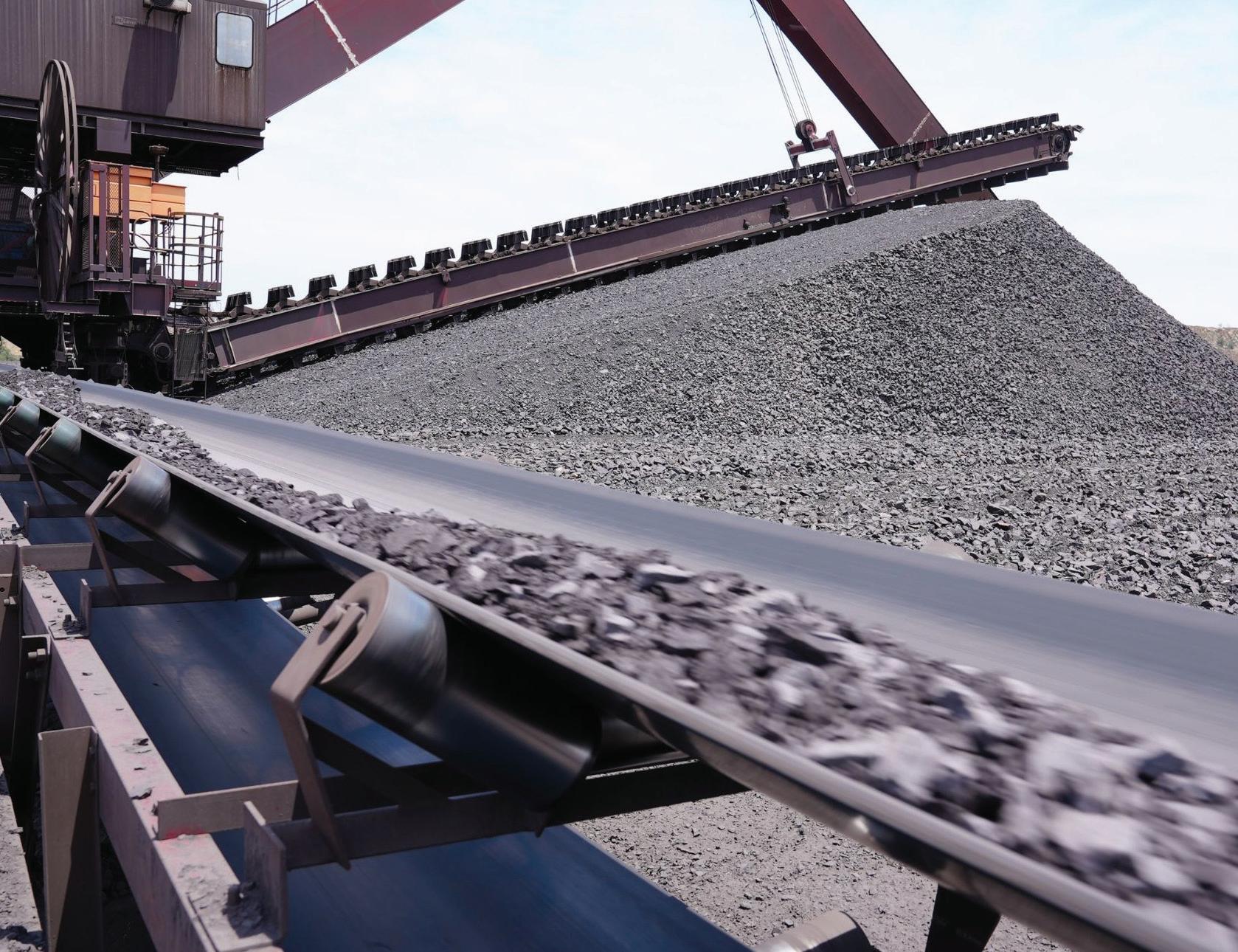
Approximately 90% of global manganese production is utilised in steelmaking to enhance strength, durability, hardenability, wear resistance and serves as a vital desulfurizer and deoxidiser to remove impurities from steel. South Africa accounts for about 36% of global manganese ore production, with most reserves in the Northern Cape, where UMK operates.
Malcolm Curror, Chief Executive of United Manganese of Kalahari (UMK)
ENCOURAGING COLLABORATION ON COLLECTIVE AGREEMENTS
The Bargaining Council for the Civil Engineering Industry (BCCEI) continues to play an important role in supporting stability, compliance and fair labour practices across South Africa’s civil engineering sector. One area where this role is increasingly valuable is in raising awareness and understanding of the industry’s collective agreements among contractors and subcontractors operating on construction projects.
The civil engineering sector relies heavily on collaboration between principal contractors and a wide network of subcontractors. These subcontractors often provide specialised skills and services that are critical to the successful delivery of infrastructure projects. However, many smaller or emerging subcontractors may not always be fully familiar with the requirements and obligations contained in the industry’s collective agreements.
According to Lindie Fourie, operations manager at the BCCEI, improving awareness of these agreements benefits the entire sector. “When all parties understand the applicable wage determinations, employment conditions and compliance requirements, projects can operate more smoothly and avoid unnecessary disputes or misunderstandings,” she explains.
Importantly, this responsibility does not rest solely with principal contractors. While main contractors typically engage subcontractors as part of project delivery, the BCCEI itself provides a range of resources and support mechanisms to help industry participants understand the collective agreements that govern the sector. Through its established structures, the BCCEI offers guidance, information sessions and engagement opportunities aimed at ensuring that both established and emerging contractors have access
Collaboration across the civil engineering value chain supports fair, transparent and lawful employment practices on construction projects.
Lindie Fourie, Operations Manager at the BCCEI.
to accurate and practical information. These initiatives are designed to strengthen compliance while also supporting a more inclusive and transparent operating environment within the industry.
One practical step that can further strengthen this awareness is for main contractors to consider inviting the BCCEI to participate in briefing sessions or induction programmes for
prospective subcontractors. “These engagements create an opportunity for the BCCEI to explain the collective agreements directly, answer questions and clarify expectations before work begins on site,” Fourie notes.
Such sessions are particularly valuable for subcontractors who may be entering the civil engineering environment for the first time or who operate across multiple sectors where labour frame-
works differ. Direct engagement with the BCCEI helps ensure that contractors and subcontractors receive consistent, authoritative information from the body responsible for administering the agreements.
This collaborative approach benefits all stakeholders. Subcontractors gain clarity on their obligations and rights, main contractors reduce the risk of compliance challenges on their projects and the industry as a whole strengthens its commitment to fair and lawful employment practices.
“The BCCEI’s role is not only regulatory but also supportive. By working alongside contractors and providing accessible information, the BCCEI aims to build a culture of understanding and cooperation within the sector” Fourie adds.
As South Africa continues to prioritise infrastructure development, ensuring that all participants in the civil engineering value chain understand the framework that governs labour relations will remain essential. Through continued engagement and partnership with industry stakeholders, the BCCEI is well positioned to assist contractors and subcontractors alike in navigating the collective agreements that underpin the sector’s stability and growth.
Direct engagement between the BCCEI, principal contractors and subcontractors helps create greater clarity around labour obligations and employment conditions.
Through ongoing partnership with industry stakeholders, the BCCEI helps strengthen the stability and long-term growth of South Africa’s civil engineering sector.
REGULATION EQUALS PREDICTABILITY
Why appropriate regulation protects South Africa’s building industry
Calls to reduce ‘red tape’ in South Africa’s building sector have become increasingly common often framing regulation and labour protections as obstacles to growth. But according to the Building Industry Bargaining Council (BIBC), Cape of Good Hope, the conversation has become increasingly blurred with important distinctions being lost between unnecessary bureaucracy and appropriate industry regulation.
For Danie Hattingh, spokesperson for business at the BIBC, the issue is not whether regulation should exist, but whether it is balanced, practical and capable of protecting both economic sustainability and human dignity.
“There is a difference between inefficient bureaucracy and appropriate regulation,” says Hattingh. “One creates unnecessary obstacles. The other creates predictability, accountability and fairness, which are essential in a sector like construction of which the building industry forms a significant part.”
Established under the Labour Relations Act, the BIBC’s role includes supporting fair labour practices and contributing to policy discussions affecting the building sector. Hattingh says the council recognises that excessive administrative burdens can place pressure on small businesses, particularly in a difficult economic climate. However, he cautions against the growing tendency to label all regulation as ‘red tape.’
“There are practical and economically viable reforms South Africa can implement to ease compliance pressure on low-risk small businesses,” he says. “But reducing unnecessary burdens should never mean removing core protections relating to worker safety, fair wages or basic employment standards.”
The distinction is important because construction and building remain one
of the country’s most labour-intensive industries, capable of absorbing large volumes of entry-level workers while also creating pathways into skilled trades such as plumbing, bricklaying and electrical work. At the same time, the sector continues to face serious challenges relating to labour exploitation, informal employment and unsafe working conditions. According to Hattingh, these issues are often linked to attempts to cut costs through unregulated labour practices with one of the most concerning trends being the growing use of undocumented and highly vulnerable workers through informal labour networks and labour-only subcontracting arrangements.
In a recent joint enforcement operation involving the Department of Home Affairs and the Border Management Agency, a large upmarket residential development site was found to have 248 workers on site, 211 of whom were foreign nationals.
He says the consequences extend beyond workers themselves. Informal labour practices frequently result in poor-quality workmanship, unsafe sites, unstable subcontracting chains and businesses that struggle to survive long-term. “There are no examples anywhere in the world where exploitation consistently produces high-quality outcomes,” says Hattingh. “In construction and building especially, poor labour conditions and poor building standards usually exist together.”
He points to international examples where weak regulation and inadequate oversight have contributed to broader industry failures. Melbourne, Australia, has become one such case study, where widespread concerns around poor-quality construction, subcontracting abuses and weak enforcement mechanisms have had major implications for property owners, insurers and the wider economy. Reports from the Australian construction sector have highlighted issues ranging from unsafe
worksites and unlicensed labour hire to supply-chain exploitation and significant structural defects in residential developments.
The BIBC argues that regulation also provides predictability for responsible employers operating within the formal economy. Under the council’s collective agreement, the lowest-paid category of building workers earns above the National Minimum Wage and receives additional protections including sick pay, annual leave, bonuses and pension benefits.
The broader challenge is ensuring that debates around economic growth do not reduce regulation to a simplistic argument between restriction and deregulation.
Danie Hattingh, Spokesperson for business at the BIBC
THE 2026 AFRICA CONSTRUCTION LAW AWARD WINNERS
The Africa Construction Law Annual Gala Dinner and Awards to recognise individuals, firms and organisations that have demonstrated outstanding leadership, innovation and impact in the delivery of infrastructure and the advancement of construction law across the continent was held in Johannesburg, South Africa.
The gala dinner and award ceremony forms part of the ACL Conference which returned for its 6th edition. It also marks the first time the two-day convention has taken place in South Africa, having previously taken place in Nigeria and Kenya. The theme for the 2026 Conference was Construction in Transition: Building Africa’s Infrastructure for the Next Era.
The category award winners (and nominees) were:
Rising Star winner Wambui Githu, Principle Associate, Mohammed Muigai LLP, Kenya.
Also nominated in this category were Abide Raselabe, Senior Associate Bowmans SA (South Africa); Adel Tour-
bah, Senior Director FTI Consulting (France); Adeleresimi Philips-Adeleye, Senior Associate Aluko & Oyebode (Nigeria) and Jeremy Odor, Legal Counsel NSIA (Nigeria).
Also nominated Cephas Caleb, Partner Aluko & Oyebode (Nigeria) and Tosho Suleiman, Deputy General Counsel (NSIA Nigeria).
Leading Expert (non-legal) winnerThierry Linares, Senior Managing Director, FTI Consulting, France.
Also nominated Daniel Rowe, Managing Director Jackson Rowe (United Kingdom), Gabriel Armanet, Senior Director FTI Consulting (France) and Xavier Rayo, Senior Director FTI Consulting (France).
Also nominated Anjarwalla & Khanna (Kenya); Banwo & Ighodalo (Nigeria) and Nigerian Sovereign Investment Authority (Nigeria).
Lifetime Achievement Award –Babatunde Fagbohunlu, SAN Senior Partner, Aluko & Oyebode (Nigeria)
Fagbohunlu specialises in commercial litigation and arbitration. He has litigated on an extensive range of issues, including maritime, intellectual property, telecommunications, taxation, finance and banking, contracts, receiverships and insolvency, commercial law transactions and general litigation both at trial and appellate levels. He has advised clients in numerous industries, including oil and gas, construction and infrastructure, financial services and telecommunications. He regularly represents Nigerian as well as foreign and multinational clients in ad hoc arbitrations and arbitrations administered by arbitral institutions such as the International Court of Arbitration of the International Chamber of Commerce.
2026 Africa Construction Law Annual Award winners - Uganda’s David Kaggwa and Nigeria’s Adeleresimi Philips-Adeleye and Ngo-Martins from Aluko & Oyebode. Kaggwa, Senior Partner, Kaggwa & Kaggwa Associates in Uganda, was the Leading Legal Practitioner winner. Aluko & Oyebode’s Project Pulse Enugu - Onitsha Expressway (RITC Scheme) was named the leading project/initiative. The award was accepted by Philips-Adeleye and Okonmah. Pic by Yolanda van der Stoep
South Africa’s Abide Raselabe, Senior Associate Bowmans South Africa, was nominated in the Rising Star category at the 2026 Africa Construction Law Annual Awards. Pic by Yolanda van der Stoep
CONSTRUCTION BAROMETER HIGHLIGHTS RESILIENCE IN AFRICA
Saint-Gobain has launched the 4th edition of its global Sustainable Construction Barometer, offering fresh insights into how citizens, industry stakeholders and financial institutions perceive sustainable construction and the barriers still slowing its adoption worldwide.
Spanning 30 countries and drawing on input from 4,800 stakeholders and 30,000 citizens, the Barometer is one of the most comprehensive global studies of its kind. This year’s findings point to a clear shift: resilience and adaptation are becoming central to how sustainable construction is understood across markets.
While the Barometer captures global trends, its findings resonate strongly in Africa, where rapid urbanisation and exposure to climate-related risks are shaping construction priorities.
New to the 4th edition, Kenya joins South Africa, Egypt and Morocco, strengthening the continent’s representation and providing a more nuanced view of regional perspectives.
Across citizens and stakeholders surveyed in Africa, sustainable construction is most commonly defined as the ability of buildings to withstand climatic and environmental shocks, highlighting the growing importance of durability and resilience in local contexts.
The global results reveal a growing consensus: sustainable construction is increasingly recognised as essential. However, the study also uncovers a persistent gap between awareness and implementation.
Despite this recognition, resilience is not yet consistently embedded in investment decisions, development strategies, or large-scale construction planning: a trend reflected both globally and within African markets.
For the first time, the Barometer in-
cludes a global qualitative study with banks, development finance institutions, and insurers, exploring how resilience and adaptation are factored into investment decisions.
The findings show that while the financial sector acknowledges the importance of resilient construction, it remains difficult to translate these considerations into credit models and capital allocation frameworks.
Across all regions, stakeholders point to a common challenge:
The lack of clear, measurable return on investment for resilience and adaptation.
Unlike carbon reduction, where standardised metrics are widely used, resilience is often associated with longterm and indirect benefits, such as reduced future losses, business continuity and asset value preservation.
Encouragingly, sentiment is shifting. In Africa, 51% of stakeholders surveyed believe sustainable construction delivers greater value than traditional methods, pointing to growing recognition of its economic potential.
The Barometer identifies three priority levers to accelerate adoption globally:
• Making the benefits of sustainable construction more tangible
• Guaranteeing performance for end users
• Demonstrating the economic competitiveness of solutions
Financial institutions are expected to play a central role in scaling progress. In Africa, access to appropriate financing could help improve the competitiveness and uptake of sustainable construction materials and solutions.
With the 4th Sustainable Construction Barometer, Saint-Gobain continues to play a leading role in facilitating the global dialogue on sustainable construction, while supporting regions such as Africa in translating global insights into locally relevant action.
The full 4th Sustainable Construction Barometer is available at: https://www. saint-gobain-africa.com/en/sustainable-construction-observatory
10 REASONS TO SPECIFY READYMIX CONCRETE
South Africa has a well-developed readymix concrete industry supported by extensive manufacturing capacity and established delivery networks. Despite these advantages a significant proportion of construction projects continue to rely on site-mixed concrete.
While site mixing may appear familiar and cost-effective modern construction projects increasingly demand higher levels of quality control and performance. For these reasons globally, readymix concrete has become the preferred choice for many construction projects.
1. Convenience
Readymix concrete is manufactured to a specified design mix and delivered directly to site when required. Contractors can order concrete with the required specification including strength and workability for specific applications which effectively eliminates the need to source, store and mix raw materials on site. The result is a more streamlined construction process with less disruption to site operations.
2. Consistent Quality
Readymix plants operate under controlled manufacturing conditions by
trained personnel using calibrated batching and mixing equipment. Every constituent material is measured accurately to ensure the concrete produced meets the specified performance requirements. This level of control is difficult to achieve consistently with site-mixed concrete where variations in material quality and moisture content as well as batching practices can affect the final product.
3. Faster Construction
Time is one of the most valuable resources on any construction project. Readymix concrete eliminates the delays associated with manual batching and mixing allowing contractors to focus on placing and finishing concrete. Multiple deliveries of different types of concrete can be scheduled throughout the day where needed to a continuous supply of material is available where needed as the project progresses. This reduces interruptions during critical construction phases.
4. Improved Cost Efficiency
Although the direct cost of purchasing cement and aggregate may appear lower the actual cost of site mixing often includes additional expenses such as labour, equipment, material wastage, theft, storage and quality-related rework. When these factors are
considered then the overall cost difference between site-mixed and readymix concrete is often significantly less than anticipated.
5. Increased Productivity
Construction projects are under constant pressure to improve productivity while maintaining quality standards. By removing the need for on-site concrete production labour resources can be allocated more effectively to core construction activities. This allows contractors to complete projects more efficiently and improve overall site utilisation.
6. Design Flexibility
Modern readymix plants can produce a wide range of concrete mixes tailored to specific project requirements. These include high-strength concrete, pump mixes, architectural concrete, self-compacting concrete, rapid-hardening mixes and specialised solutions for challenging environmental conditions. The ability to customise concrete properties provides engineers and contractors with greater design flexibility and performance assurance.
7. Reduced Construction Risk
The use of concrete supplied to a verified specification reduces the risk associated with inconsistent site batching practices. Comprehensive production material traceability and quality-control procedures should be available to provide an additional layer of assurance. Should performance concerns arise the availability of documented production data assists engineers and project teams to identify the root cause and implement corrective measures.
8. Better Quality Assurance and Traceability
Every load of readymix concrete can be linked to specific batch records detailing material quality-control data. This traceability is particularly important where compliance with specifications must be demonstrated. Site-mixed concrete rarely offers the same level of documentation and accountability.
9. Cleaner and Safer Construction Sites
Readymix concrete significantly reduces the need for stockpiles of aggregate and cement on site. It also eliminates many of the mixing activities that contribute to waste and congestion. A cleaner site improves safety and reduces housekeeping requirements. It also minimises environmental impacts associated with material handling and storage.
10. Enhanced Sustainability
Centralised concrete production allows for more efficient use of raw materials. Modern batching plants also implement environmental management practices aimed at reducing dust and lowering water consumption. By producing only the quantity of concrete required and optimising logistics the use of readymix concrete can contribute to more sustainable construction practices while supporting long-term economic development and employment within the sector.
Summary
While site-mixed concrete may still have a role on smaller projects, the technical and operational benefits of readymix concrete make it the preferred choice wherever time is of the essence and performance is critical to project success.
MANUFACTURER EXPANDS DIGITAL DESIGN CAPABILITIES
Building Information Modelling (BIM) continues to reshape the way building professionals design construction projects and is leading manufacturers to provide accurate BIM-ready product data that can be directly integrated directly into project models.
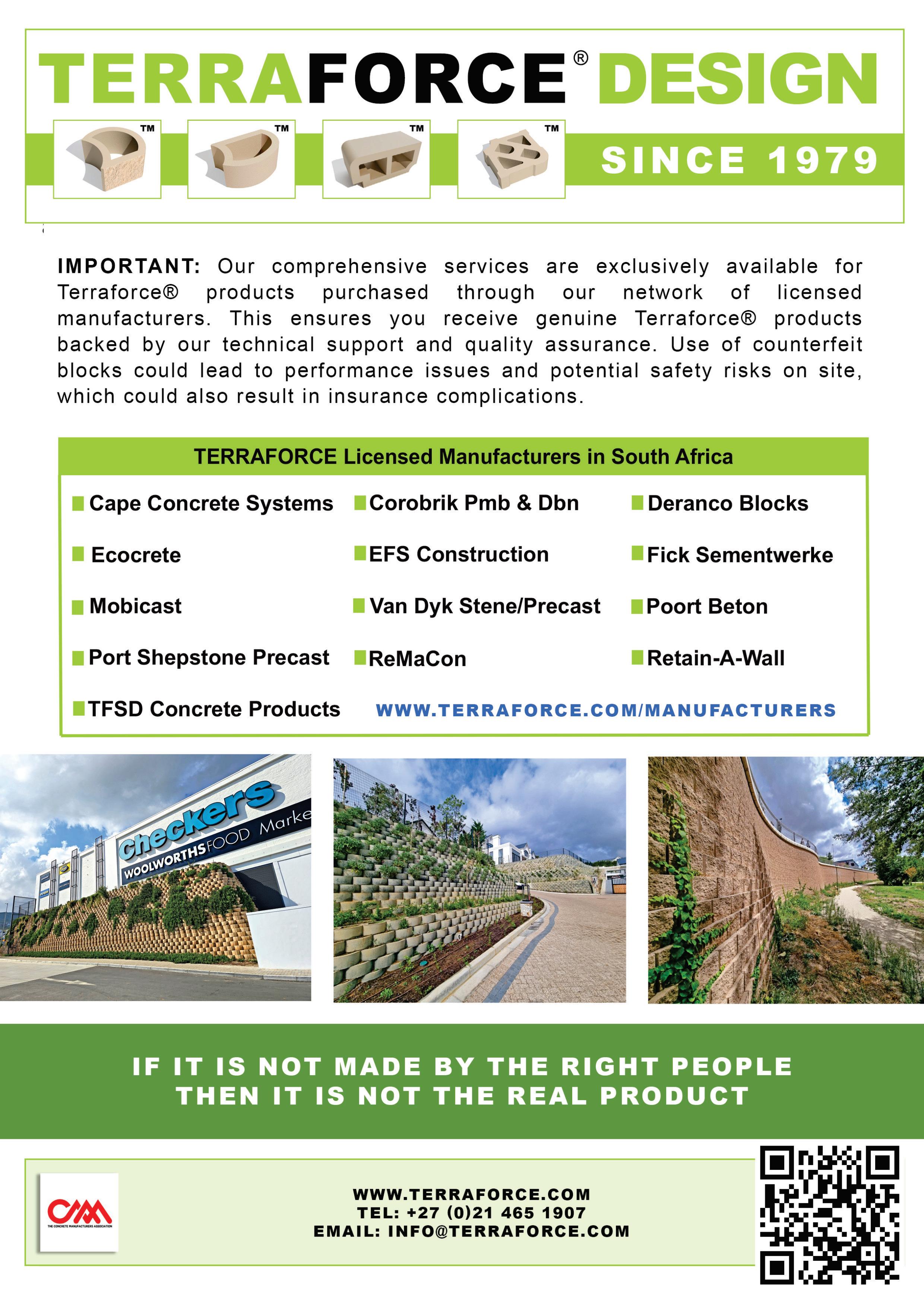
This has prompted retaining wall manufacturer, Terraforce, to take the lead by placing most of its retaining wall and erosion control product on its own dedicated Revit Family Showroom which has been developed in collaboration with York Bros Construction (YBC). The initiative provides designers and specifiers with direct access to digital representations of Terraforce products in order to improve project planning and visualisation during the design phase.
Established in 1979, Terraforce has become one of South Africa’s most recognised names in segmental retaining wall technology. The company’s interlocking hollow-core concrete retaining blocks are used extensively in landscaping, erosion control and slope stabilisation applications locally and internationally. Its retaining wall systems are manufactured under licence in numerous countries and have been used on projects ranging from residential developments and commercial properties to roads, embankments and large-scale civil engineering works. The company has built its reputation on developing permeable plantable retaining wall systems that combine structural performance with environmental integration.
The new Revit Family Showroom provides designers with a central repository containing most of the Terraforce block range within a lightweight 12MB file. It also acts as a technical reference and a practical BIM resource for users to incorporate retaining wall products into project models without the need to create custom objects from scratch.
The digital library includes a dedicated landing page that introduces users to the contents of the showroom while explaining key BIM terminology and
navigation processes. This approach allows both experienced Revit professionals and those new to BIM workflows to quickly access and use the available content.
For engineering consultancies and landscape architects as well as multidisciplinary design teams the resource is invaluable especially early in the design process where it can improve coordination between disciplines. Accurate product modelling assists with quantity estimation and clash detection while making construction planning easier by reducing the risk of specification errors later in the project lifecycle.
Terraforce has also recognised the need for interoperability across different design environments allowing working within the Autodesk ecosystem to utilise the complete showroom file directly. For professionals using alternative platforms such as ArchiCAD, SketchUp and other BIM-compatible software, IFC exports of individual block families are available.
The availability of Industry Foundation Classes (IFC) files is particularly important for multidisciplinary projects where multiple software platforms are being used. IFC remains one of the construction industry’s most widely accepted open standards for exchanging BIM information between different software applications.
One of the challenges frequently encountered during retaining wall design is effectively communicating the final appearance and functionality of a proposed installation to clients and stakeholders. To address this, users can view the Terraforce digital models through the free Autodesk Viewer platform without requiring specialised software licences. This enables project teams to share retaining wall concepts with clients through accessible digital models that can be reviewed remotely.
The ability to visualise wall geometry, terracing layouts, planting configurations and site integration before con-
struction begins can assist with decision-making and reduce the likelihood of costly design revisions.
Increasingly, engineers and contractors are seeking product information that extends beyond traditional technical datasheets. For retaining wall applications where geotechnical considerations, drainage requirements and landscape integration play critical roles the access to accurate BIM content can help improve design confidence and streamline specification processes.
The Revit Family Showroom was developed in partnership with York Bros Construction which was founded in 2015 and brings more than three decades of combined international construction experience spanning the full project lifecycle from concept development through to construction delivery. Their expertise in digital construction workflows played a key role in translating Terraforce’s product range into BIM-compatible content suitable for modern design environments.
For the first time the launch of the Terraforce Revit Family Showroom integrates retaining wall design into the digital construction ecosystem and provides project teams with practical tools to support modern BIM-based workflows from concept through to construction.
ROCLA INTRODUCES THE SQUARE MANHOLE
Manholes are traditionally expected to be round in shape, but industrial sectors such as electrical, plumbing, fibre optic networks, infrastructure, internal drainage systems and basement utility chambers can all benefit from Rocla’s square manholes and manhole covers.
“The Rocla square manholes offer infrastructural benefits such as larger areas for the purpose of cable installations and maintenance access while also providing space for valves and control systems. Internal space can be maximised for the electrical and telecommunications sectors and basements and corridors are more easily integrated into the building layout with square manholes. Whilst it is a novel product, the square manholes would, for example, also make access to conduct maintenance and repairs to underground installations more easily accessible.” said Muhammad Bodhania, Technical Executive at Rocla.
During a recent project for a bulk sewer upgrade in Montague Gardens in the Western Cape, which also included a complete new pipeline for the City of Cape Town, a new Sandtrap Screening Station was constructed to reduce the impact of waste material in the sewerage on Koeberg rd pumpstation.
City of Cape Town made a request to the CSV Construction for a connection to be created for the future pumpstation. “We suggested a connection be allowed from the Sandtrap Screening Station to the planned pumpstation to reduce risk and additional work in future the, City agreed that it was a better solution. Rocla’s square manholes were selected for the project as they were able to meet all the site and design specifications in works area with limited space. “said Cobus le Roux, Construction Manager at CSV Construction.
“There were major benefits in partnering with Rocla, not least the adaptability of the square manholes to site conditions, but also in Rocla’s willingness
to accommodate and assist for items out of the norm. The benefit of using the square manholes on the project is that the overall cost and risk mitigation is contained due to the availability of a workable product” le Roux concluded.
Manufacture of the Rocla units supplied commenced in August of 2025, and all items were delivered within one month. “We manufactured 12 off 3000 x 2500 x 0.50 square manholes and 3000 x 2500 manhole cover slabs (MD) for the Montague Gardens project” commented Bodhania.
“We currently offer three sizes in the square manhole range namely 1.2m x 1.2m, 2m x 2m and 3m x 2.5m. The 1.2m x 1.2m is an ideal replacement for the traditional municipal brickwork manholes. The 2m x 2m and 3m x 2.5m have been used nationally for bulk infrastructure projects such as Rand Water. Rocla offers a standard design for the manholes to be buried 6m deep, but we can accommodate special depths and sizes if required and feasible” he concluded.
Modular concrete rooms can be con-
structed from square manholes, with the manholes making up the walls and the cover slab being used as the roofing. A channel is cast into the unit to create a frame for the door to be mounted (supplied by the client). This is ideally suited to house equipment such as pumps.
The Rocla square manholes offer enhanced aesthetics as they align better with the final finish level (such as pavers for example) and the flat surface of the square manhole allows for incoming perpendicular pipes to enter the manhole flush with the surface making sealing easier. Likewise mounting equipment, installing vents are also easier due to the flat surface.
Transportation and storage of square manholes can be managed more efficiently due to no gaps being between the products which can allow for an easier installation in certain scenarios where the square manholes can be fitted snugly against adjacent walls and corners.
LIDAR OFFERS CERTAINTY WHEN ITS NEEDED
People often think LiDAR scanning is simply a more advanced way to measure a building. According to Edward de Jager, Head of Operations at BPAS Architects, that misses the point entirely. “The most common misunderstanding is the belief that a raw LiDAR scan is a finished BIM model,” he explains. “In reality, converting a LiDAR point cloud (a massive collection of 3D data points generated by scanning an object or environment with a laser sensor) into a smart, parametric model still requires significant human expertise and processing time.”
The scan itself is only the starting point, De Jager says. The real value lies in what accurate building data enables. BPAS uses LiDAR to create digital models and twins that support coordination, asset management and long-term decision-making across a building’s lifecycle.
For BPAS, De Jager says, the value lies
in the fact that once a point cloud is integrated into BIM, teams are no longer working from assumptions, incomplete surveys or outdated drawings, but from a precise digital representation of reality. Because small inaccuracies can snowball quickly in the built environment, this reduces long-term costs.
The hidden cost of “good enough”
Construction projects rarely fail or significantly overrun deadlines and budgets because of a single catastrophic error. Typically, problems accumulate over time. “The industry often defaults to ‘good enough’ traditional surveys, ignoring the compounding interest of errors that occur when every subsequent consultant works off an inaccurate original measurement,” says De Jager. “Inaccuracies typically begin to compromise the project during the schematic design phase, as every subsequent layer of engineering and
detailing is built upon a flawed foundation. This creates a ‘snowball effect’ where minor initial errors lead to massive downstream consequences, such as structural clashes, wasted materials and expensive redesigns during active construction.”
The industry has traditionally accepted some uncertainty as inevitable, especially with existing buildings or complex retrofits, but that uncertainty comes at a cost. LiDAR – when used well – can help to improve certainty and thereby decrease risk. “Many firms still treat high-resolution data as a luxury, failing to realise that the cost of a LiDAR scan is negligible compared to the 10%–20% budget blowouts caused by late-stage structural surprises,” De Jager notes.
The consequences of late-stage changes are familiar to anyone involved in project delivery: variation orders, delays, site clashes, rework and strained
coordination between consultants and contractors. And, of course, the financial effects of all of these.
What LiDAR changes is not just the quality of measurement, but the level of certainty teams can establish upfront.
Identifying problems digitally
One of the biggest advantages of accurate scan data is that it allows problems to be identified digitally before they appear physically on site. “By capturing complex geometries and hidden structural deviations that traditional tools might miss, it eliminates the ‘surprises’ typically found during construction,” says De Jager. “This precision allows for prefabrication and design decisions to be made with total confidence, significantly reducing the need for costly on-site adjustments later.”
This becomes particularly valuable when coordinating prefabricated elements, such as structural steel, timber decking or bespoke components. “In our experience, having a millimetre-accurate scan allows us to detect clashes between new designs and existing structural elements virtually, long before a single brick is laid,” De Jager explains. “By ensuring these elements fit perfectly the first time, we drastically compress the assembly timeline and reduce the waste associated with on-site adjustments.”
This lets BPAS focus on proactive coordination instead of reactive problem-solving. Teams can resolve issues during design rather than during construction and make decisions with
greater confidence from the outset. The long-term value of a digital twin
By using a scan to create a digital twin (a dynamic virtual copy of an asset, such as a building), the value of accurate LiDAR information can be extended beyond construction, with buildings being understood as more than physical structures, but as long-term operational assets with measurable performance data attached to them.
“A digital twin serves as a living record that allows facility managers to simulate maintenance scenarios and monitor structural health throughout the building’s lifecycle,” says De Jager.
When integrated with live building systems and sensor data, these digital environments can support predictive maintenance, energy optimisation and more informed facilities management decisions.
“In recent projects, calculating efficiency ratios for companies with a large stable of assets has proven incredibly useful when they look at acquiring new buildings,” De Jager says. In that sense, the technology is moving beyond architecture and construction into operational strategy and asset intelligence.
For BPAS, the value also lies in making technical data usable for people who are not working inside architectural software every day. LiDAR scans and architectural models are integrated into platforms that developers and stakeholders already feel comfortable using, allowing teams to engage with live project information in a more intuitive and practical way. This helps cli-
ents to better understand spatial relationships, operational implications and project risks without needing deep technical expertise themselves.
Technology backed by human expertise
While advocating for the use of LiDAR and digital twins, BPAS is cautious about overstating what the technology can do on its own. De Jager says the technologies are often presented as highly automated, near-instant solutions. But, in practice, the quality of the outcome still depends heavily on interpretation, modelling expertise and ongoing data management.
“There is also a misconception that a digital twin is a ‘set-and-forget’ product rather than a living data ecosystem,” he says. “Without consistent updates and integration with building management systems, a scan is simply a static 3D snapshot that loses its operational value as the physical building inevitably changes.”
Edward de Jager, Head of Operations at BPAS Architects
BOOM TIME MAY BE COMING
South Africa is heading into one of its biggest construction periods in decades. At the South Africa Infrastructure Investment Summit in May 2026, President Cyril Ramaphosa made it clear that government is serious about building, committing R1.07 trillion over the next three years to roads, energy, water and other critical infrastructure across the country.
“We are not merely building infrastructure. We are building a new growth path for South Africa, one defined by resilience, competitiveness and shared prosperity,” the President said at the Summit. It is an ambitious vision but turning that vision into reality will depend on having the right people in place to do the work, and that responsibility falls on the engineering and construction sector.
The scale of what is planned is hard to ignore. Government has set aside over R400 billion for transport and logistics, R219 billion for energy, and R156 billion for water and sanitation. These figures represent real projects that will need engineers, project managers and technical professionals to plan, design and deliver them. Each of these projects depend on a skilled workforce that is ready and available to get the job done.
President Ramaphosa pointed to a problem that still needs solving. “We have recorded four consecutive quarters of growth into early 2026, although we are yet to see this translate into a meaningful rise in employment,” he said at the Summit. Economic growth and job creation
The engineering and construction sectors have a direct role to play in closing the gap between job opportunities and skilled professionals. South Africa has qualified engineers and technical professionals who are ready to contribute and a growing list of projects that need them. The issue is that finding jobs or professionals for the work is often harder than it should be.
The South African Institution of Civil Engineering (SAICE) has been at the heart of the civil engineering profession for many years and has always believed that a strong profession produces strong infrastructure and that means investing not just in technical standards, but in the people who carry those standards into the field. It means making sure that engineering professionals at every stage of their career have access to the support, opportunities and connections that allow them to do their work to the best of their ability. That is where SAICE Connect comes in.
SAICE Connect is a new platform built specifically for the civil engineering community in South Africa. It was created to solve the employment and mentorship issues in a practical way by giving engineers and employers with vacancies a dedicated space to find each other.
Engineering professionals in SAICE can upload their CV, making themselves visible to employers who are actively looking for talent. When an employer finds a candidate whose profile matches what their project needs, they can request to view that profile and see the candidate’s full qualifications. Because every person on the platform is a verified SAICE member, employers can be confident they are looking at someone with relevant credentials. For employers, project teams, contractors and consulting firms, the platform gives access to a pool of engineering professionals.
SAICE Connect is SAICE’s direct response to that need. It is the institution putting its network, its credibility and its platform in service of the sector at the moment South Africa needs it most.
For more information on the platform visit https://saice.org.za/saice-connect/
COLLOIDAL SILICA: AN EASIER, CLEANER, TOUGHER ALTERNATIVE TO SILICA FUME
Africa faces unique construction challenges. These include sulphate-rich soils and groundwater in mining areas, coastal chlorides, variable quality aggregates, high cement costs, logistics issues in remote regions and a strong push for sustainable and affordable durable infrastructure.
Spray-Lock Concrete Protection (SCP) offers a practical, durable alternative to silica fume for sulphate-resistant concrete, delivering strong benefits in ease of use, cost and logistics across the African continent. Post-applied colloidal silica (nano-scale or colloidal nano-silica) enhances both new and existing concrete. Primarily, it optimises water usage, significantly reduces permeability, and improves overall durability by promoting additional calcium silicate hydrate (C-S-H) formation within the concrete matrix.
In contrast, silica fume (micro-silica) is a traditional pozzolanic supplementary cementitious material (SCM) added as a dry powder. It is renowned for its ultra-fine particles that react with calcium hydroxide (CH) to form extra C-S-H, densifying the matrix, lowering permeability and boosting resistance to sulphate attack, chlorides and other aggressive agents.
In many cases, SCP can improve or at least match durability in sulphate-resistant concrete applications. Testing with SCP products use an ordinary portland cement paste without silica fume or fly ash which would assist in increasing the concrete durability results. Both promote additional calcium silicate hydrate (C-S-H) formation, which refines the pore structure, sharply reducing permeability and limiting ingress of sulphates, chlorides, and other ions.
SCP leverages colloidal silica technology to penetrate deeply and react within the matrix, disconnecting capillaries and blocking fluid movement. Research on colloidal nano-silica shows it can provide comparable or superior
reductions in sulphate-related expansion. In some studies, colloidal forms reduced expansion more effectively at lower dosages than silica fume equivalents, with strong resistance to combined chloride-sulphate attacks.
Colloidal silica treatments are documented to enhance resistance to sulphate attack, chemical ingress, salt penetration and aggressive environments overall. This complements sulphate-resistant Portland cement (Type II or V equivalents, or blended cements) by emphasising low permeability to prevent ettringite/gypsum formation and expansion. Independent testing and industry reports highlight colloidal silica’s ability to improve durability against sulphate exposure, often with benefits in reduced mass loss, lower porosity increase and maintained strength under long-term immersion.
… with Logistics and Cost Wins
However, silica fume has notable practical drawbacks:
• Its dry powder form, which is difficult to handle, dusty, requires high-shear mixing, and can lead to reduced workability if incorrectly dosed.
• Higher risk of balling or inconsistent dispersion in the mix.
• Often more expensive and logistically challenging in remote or high-volume sites, requiring special storage/silos and increasing transport costs in sub-Saharan Africa.
• SCP directly addresses these, providing:
• Easier logistics and handling. Its liquid form suits sites with limited equipment for dust control or specialised mixing, mitigating dust hazards and simplifying batching in remote or resource-constrained areas.
• Cost-effectiveness by optimising water use, enabling lower cement content (reducing material costs) and improving long-term durability. This leads to extended service life and fewer repairs in budget-constrained public works and infrastructure projects.
• Supply security in Africa, where blended cements with fly ash/slag are common for sulphate resistance, SCP enhances mixes without relying on imported dry silica fume (which can be expensive, scarce, or delayed by supply chain disruptions).
Sustainability Alignment
Furthermore, pozzolanic enhancement supports partial cement reduction, significantly lowering the CO2 footprint of concrete mixes. This aligns closely with accelerating ESG (Environmental, Social and Governance) trends across Africa. Construction and cement sectors face mounting pressure to decarbonise amid rapid urbanisation and massive future build-out – 80% of Africa’s 2050 building stock is yet to be constructed, driving a projected 230% surge in cement demand by mid-century.
Silica Fume is added as a dry powder
ETHICALLY SOURCED AGGREGATES
ESSENTIAL
FOR GREEN CONSTRUCTION
Sustainable construction extends far beyond energy-efficient building designs and environmentally friendly materials. The source of the aggregates used in concrete, asphalt, road construction and infrastructure development plays an equally important role in determining the overall sustainability of a project.
Aggregates remain the most widely used bulk construction material in the world, with billions of tonnes extracted annually for use in roads, bridges, dams, hospitals, schools, commercial developments and housing projects. As urbanisation and infrastructure investment continue to accelerate, demand for quality aggregates is expected to increase significantly.
While aggregates are indispensable to modern development their extraction can have substantial environmental and social impacts if not managed responsibly. For this reason, construction companies worldwide are increasingly scrutinising the origin of the materials they specify and procure.
Sustainable aggregate production begins with the responsible development of quarry resources located within suitable geological formations. Modern quarrying operations are planned around long-term resource management and efficient extraction practices to minimise waste and maximise the use of available reserves.
Reputable producers operate within strict environmental management frameworks that address issues such as dust suppression, noise control, water management, biodiversity protection and progressive rehabilitation. These measures help reduce the environmental footprint of quarrying while ensuring compliance with applicable legislation and industry best practices.
Equally important is the rehabilitation of quarry sites once extraction activities have been completed. Quarrying is a temporary land use and successful rehabilitation programmes can restore land to productive agricultural use, conservation areas, recreational facil-
ities or other beneficial post-mining purposes.
The procurement of aggregates from professionally managed quarries supports a formal industry that creates stable employment opportunities and which invests in local communities as well as maintaining high standards of occupational health and safety.
Responsible operators invest heavily in human resources and capital equipment while operating in accordance with management systems and environmental management programmes. These investments contribute to a reliable supply of consistent, high-quality materials while reducing operational risks throughout the construction supply chain.
By contrast, aggregates sourced from unregulated operations may not meet the same standards for environmental stewardship, worker safety, product quality or legal compliance. The longterm costs associated with poor-quality materials and unsustainable extraction practices can far outweigh any short-term procurement savings.
Key Principles of Sustainable Quarrying
The modern aggregates industry increasingly measures sustainability against several core principles:
• Maintaining a no-harm approach to employee, contractor and visitor safety.
• Minimising environmental impacts during extraction and processing activities.
• Implementing progressive rehabilitation and responsible closure planning.
• Maximising resource efficiency through optimal extraction, processing and transport practices.
• Supporting circular economy initiatives through recycling and the beneficial use of by-products.
• Operating in full compliance with legislation and recognised industry standards.
• Engaging openly with surrounding communities and stakeholders.
• Collaborating with research institutions and industry bodies to develop improved environmental and operational practices.
• Promoting transparency and accountability throughout the production process.
As the construction sector places increasing emphasis on sustainability the sourcing of aggregates will become an increasingly important consideration for infrastructure planners. True sustainability in South Africa with all its cost pressures requires confidence that the materials used to make concrete have been produced responsibly by selecting aggregates from reputable producers. In this way the concrete industry can help ensure that essential infrastructure development is achieved while protecting natural resources for future generations.
DIESEL PRICE CRISIS HASTENS THE ENTRY OF ELECTRIC LOADERS
The South African concrete industry has become increasingly exposed to global energy shocks with the latest escalation of conflict in the Middle East again highlighted the vulnerability of operations that rely heavily on diesel-powered equipment.
Although diesel prices softened slightly during June 2026 equipment users are still paying in excess of R30/litre for fuel. In the yards of concrete producers and readymix operations the trusty wheel loader is among the most widely used pieces of equipment and they run continuously feeding batching plants, loading aggregate stockpiles, handling raw materials and supporting logistics operations.
This has placed electric wheel loaders firmly on the radar of South African concrete producers seeking greater control over operating expenses.
According to Freg Wei, deputy general manager of Sany in Southern Africa, it is easy to see why the market is calling for electric equipment and is the reason Sany is introducing a new range of electric loaders. He says the maths is easy to work out with a conventional 5-ton wheel loader consume approximately 14 to 18 litres of diesel per hour depending on application and loading cycles. At current diesel prices, fuel for loading alone can represent one of the largest variable costs on a concrete production site and can easily amount to well over R5000 per shift for fuel alone.
Using SANY’s comparative operating data, a traditional diesel loader consuming around 16 litres per hour incurs higher energy costs than an equivalent electric machine. Over a typical 3,000hour operating year the difference becomes significant enough to influence equipment procurement decisions rather than simply day-to-day operating budgets. For many producers, the question is no longer whether electric equipment can work but whether they can continue absorbing volatile diesel costs.
SANY’s latest generation of electric wheel loaders has been developed specifically for heavy-duty industrial applications including construction, quarrying, concrete production and bulk material handling.
The range includes:
• SW936E – 3.5-ton capacity
• SW956E – 5.8-ton capacity
• SW970E – 7.0-ton capacity
• SW978E – 7.5-ton capacity
According to Wei the machines are tried and tested with more than 3,000 units having already accumulated over 10 million operating hours since introduction. Available data already points to significant benefits of replacing diesel machines and allays one of the biggest concerns among plant managers considering electrification whether electric machines can match the pro-
ductivity of conventional loaders.
SANY globally says its electric loaders were designed around the same hydraulic and steering architecture used in conventional diesel machines. It also reports industry-leading performance in three critical loader metrics including traction force, gradeability and lifting force. The performance advantages also equate to productivity gains where the machines’ two forward speed ranges allow operators to select either high-speed travel or precision loading modes, while full hydraulic braking provides familiar machine control characteristics. The machines also use proprietary machine-control systems and active energy recovery technology designed to maximise efficiency during operation. For concrete plants where loading cycles are repetitive and predictable, these characteristics make electrification particularly practical.
Wei says the strongest argument for electric wheel loaders remains operating cost. Using SANY’s operational data for its 5-ton machine electricity consumption averages approximately 35kWh per operating hour compared with diesel consumption of around 16 litres per hour for an equivalent conventional machine.
The resulting energy cost differential creates a substantial saving over the machine’s lifespan and the company calculates that energy costs can be reduced by approximately 75% com-
pared with conventional diesel-powered loaders under comparable operating conditions.
Over 3,000 annual operating hours, these savings can translate into hundreds of thousands of Rands in reduced operating expenditure depending on local electricity tariffs and diesel pricing. For concrete producers operating multiple loaders the cumulative impact can be considerable.
Reduced Maintenance
Maintenance represents another significant operating expense often overlooked when evaluating equipment costs. Electric wheel loaders eliminate many of the routine service requirements associated with diesel engines.
There are no:
• Engine oil changes
• Fuel filters
• Air filters
• Engine-related consumables
• Exhaust after-treatment systems
According to Wei the electric system is maintenance-low and reduces servicing costs and planned downtime. For around the clock operations fewer maintenance interventions can translate directly into improved machine availability. As far as batteries are concerned operating runtimes of between eight and ten hours per charge can be expected covering a typical production shift in many concrete applications.
Charging performance is also designed around industrial operating requirements:
• 20% to 80% charge in approximately 48 minutes
• 20% to 100% charge in approximately 90 minutes
This allows charging during shift changes, lunch breaks or planned production downtime. For sites requiring continuous operation, charging infrastructure can be integrated into fleet management strategies.
ment once tanks, bunding, environmental compliance requirements and safety systems are considered.
“By comparison, charging infrastructure can be implemented at a lower initial cost, particularly where existing electrical capacity is available. For permanent concrete production facilities, the economics become increasingly favourable over time.
“Renewable energy can also be investigated in many instances where electric wheel loaders can be integrated into microgrid systems incorporating solar or wind energy. For concrete producers with large roof areas, unused land or quarry properties, renewable energy generation could offset a significant portion of charging costs,” says Wei.
He adds that as fuel prices continue their upward trajectory and environmental regulations become more stringent globally, electric equipment is expected to retain increasing value through lower operating costs and growing market acceptance. The recent diesel price shock has exposed a risk that many concrete producers have been reluctant to confront that means energy costs have become a strategic business consideration.
“For operations that rely heavily on wheel loaders our electric alternatives offer a realistic pathway to gaining a competitive advantage and avoiding future fuel price shocks,” concludes Wei.
“Many contractors assume diesel infrastructure is cheaper than charging infrastructure but comparative analysis suggests otherwise. Establishing a dedicated diesel storage facility can represent a substantial capital invest-
sis suggests otherwise. Establishing a
WEST RAND TRUCK STORE
OPENS SITS DOORS
TruckStore, a division of Daimler Truck Southern Africa (DTSA), today announced the opening of its new West Rand facility, reaffirming its long-term commitment to the Southern African used-truck market. The new facility strengthens TruckStore’s national footprint and complements its existing head office Centurion operation, with both sites remaining fully operational to enhance accessibility, flexibility and customer service.
Originally launched globally in 2001, TruckStore has evolved into Daimler Truck’s trusted used-vehicle division, offering quality, reliability and peace of mind to customers across the world. South Africa became the first market outside of Europe to establish a TruckStore operation in 2012, laying the foundation for a strong national network. The West Rand facility now positions TruckStore at the heart of Gauteng’s growing used-truck hub, close to key transport corridors, mining regions and industrial centres, bringing the business closer to its customers and the market it serves.
A Clear Investment in the Future
Maretha Gerber, President and Group CEO of Daimler Truck Southern Afri-
ca, emphasises the strategic importance of the investment: “The opening of our West Rand facility is a clear demonstration of our commitment to Southern Africa. We are invested, we are present and we are here to stay. At Daimler Truck Southern Africa, our purpose is to keep Africa moving by creating real value for our customers and TruckStore plays a critical role in supporting customers through their re-fleeting cycles. For customers in the used-truck space, TruckStore ensures that vehicles continue to deliver value well beyond their first lifecycle.” She adds: “This facility strengthens our ability to serve our customers in the areas where they typically shop for used trucks, while reinforcing our long-term confidence in the resilience and potential of the regional trucking market.”
Positioned for Market Relevance and Growth
Wolf Edmayr, General Manager of TruckStore, highlights the strategic timing of the expansion: “The investment comes at a time when the usedtruck market is stabilising following a period of significant fluctuation between 2023 and 2025. As demand and supply rebalance, used trucks continue
to offer a cost-effective and dependable solution for transport operators. The West Rand has established itself as the hub of the used-truck market in Gauteng. This is where our customers look for used trucks when they are in the market. It was essential for us to be present here.” He adds: “With this new facility, alongside our Centurion operation, we are better positioned than ever to provide certainty, accessibility and trusted solutions in a dynamic market. This investment ensures that TruckStore remains relevant, competitive and ready for future growth.”
Driving Value Beyond the First Owner
TruckStore continues to play a vital role in supporting businesses across Southern Africa by providing high-quality used trucks that enable logistics operators, entrepreneurs and industries to keep moving. The opening of the West Rand facility represents more than a physical expansion, it reflects DTSA’s commitment to supporting economic activity and mobility across the region.
Gerber concludes: “Ultimately, our business is about more than trucks — it is about enabling the people and industries that keep Africa moving.”
Wolf Edmayr (General Manager, TruckStore) with Mike Honiball (CEO, DTFS SA)
TOTAL TOOLS RANGE FOR TRADE AND SMALL BUSINESSES
As cost pressures and project demands continue to shape the South African construction, maintenance and small business landscape, access to reliable, cost-effective tools has become a critical consideration for tradespeople and operators alike.
In response, Brights Hardware has expanded its in-store range of Total Tools products, strengthening its offering to better support professionals who depend on consistent tool performance to get the job done.
Built for daily use on site
The expanded Total Tools range introduces a broader selection across key categories, including power tools, hand tools, workshop equipment and accessories.
From cordless drills and angle grinders to impact wrenches, air compressors, tool storage and precision hand tools, the range is designed to support a wide variety of trade applications – whether on construction sites, in workshops or in maintenance environments.
By consolidating these categories under one roof, Brights makes it easier for tradespeople to source essential equipment quickly and efficiently, reducing downtime and simplifying procurement.
Reliable performance
Total Tools has built a strong international presence by offering a wide range of practical, dependable tools designed for both DIY users and tradespeople. From cordless drills and angle grinders to compressors, garden equipment, hand tools and workshop essentials, the brand focuses on delivering reliable performance, ergonomic design and everyday durability at a price point that remains accessible to a broader market.
This balance between affordability and functionality is particularly relevant for small businesses and independent contractors, where tool investment needs to be carefully managed without compromising on performance. The brand’s growing global footprint
and expanding cordless tool ecosystem further support its suitability for regular, ongoing use.
Differentiated offering
Brights Hardware is currently the only hardware retail chain in South Africa to offer such an extensive range of Total Tools products, positioning it as a practical sourcing point for tradespeople seeking both range and value.
The expanded selection allows customers to build and maintain their toolkits more effectively, with access to a consistent brand offering across multiple categories.
Supporting productivity
To further support trade customers, Brights is also offering a selection of special deals across the Total Tools range, including price reductions on widely used items such as cordless drills, angle grinders, air compressors and essential toolkits.
These offers are designed to ease the upfront cost of acquiring reliable equipment, helping businesses manage cash flow while maintaining the tools required to operate efficiently.
The initiative also forms part of Brights’ 55th birthday celebrations, reinforcing the retailer’s long-standing focus on delivering practical value to the industries and communities it serves.
Practical value
According to Orlando Luis, the expanded range reflects a clear under-
standing of what trade customers require.
“For our trade customers, tools are not a once-off purchase - they are essential to daily operations,” says Luis. “That means reliability, consistency and value are critical considerations. Total Tools allows us to offer a dependable solution across a wide range of categories, without the high price points that can put pressure on smaller businesses.”
“By expanding this range, we are giving our customers greater flexibility in how they equip themselves, while helping them manage costs in a very practical way.”
Consistent delivery
As tradespeople and small businesses continue to balance performance expectations with financial realities, access to tools that offer both durability and affordability remains a key enabler.
By expanding its Total Tools offering, Brights Hardware is strengthening its role as a practical partner to the trade - supporting customers with the tools they need to deliver consistently, day in and day out.
Total Tools are available in all Brights branches, located in Boston, Blackheath, Langebaan, Mitchells Plain, Richmond Park, Plattekloof, Stonewood, Brackengate and Sunningdale. They are also available online at www. brights.co.za with delivery nationwide and express delivery in Cape Town.
BLACKLISTING ROGUE CONTRACTORS
Government’s blacklisting of 52 construction companies for poor performance, fraud and contractual failures signals tougher enforcement. But the Building Industry Bargaining Council (BIBC) says it also exposes a deeper issue a systemic culture of non-compliance across South Africa’s building sector.
While blacklisting may be considered a final sanction the BIBC says it reflects a deeper problem. Many of the 52 contractors have been barred until 2029 for offences including falsified B-BBEE certificates and invoicing for work not done, but this is not the root cause. “What we are seeing is a pattern where non-compliance in one area is always mirrored across others. It is rarely isolated to non-compliance with the BIBC only,” says Danie Hattingh, spokesperson for business at the BIBC. By cross-referencing publicly available data, the BIBC identified 68 construction-related companies linked to the blacklist. Of these only 12 were registered with the BIBC with all 12 non-compliant at the time of assessment.
Analysis by the Building Industry Bargaining Council (BIBC) links blacklisted firms to broader patterns of non-compliance across the South Africa’s building sector.
“This directly supports our contention that non-compliance with one regulation strongly indicates non-compliance everywhere else. Whether it is labour obligations, tax compliance or contractual delivery the same patterns repeat,” Hattingh explains.
The implications are serious: poor and non-compliance drives substandard work, project delays, site failures and safety risks while also enabling unfair competition based on the exploitation of labour that undercuts compliant contractors. The problem is compounded by a system that can enable repeat offenders to re-enter the market. The BIBC says non-compliant contractors often deregister, rename or re-establish entities sometimes using associates and family members as the directors of new companies to avoid detection.
“The trend towards ‘fronting’ companies is widespread and complex. Even if a new entity has no record of non-compliance it can still be the same operators making it difficult for clients and procurement officials to know who they are really dealing with. This lack of visibility is especially acute in high-volume public procurement, where scale makes tracking difficult. As a result, problematic contractors can reappear under new guises, continuing cycles of poor delivery and non-compliance.”
The BIBC points to procurement processes as a critical lever for change and currently, a point of vulnerability. Weak or inconsistently applied tender requirements can allow non-compliant contractors to slip through the cracks. “The role of ‘givers of work’ (government, municipalities, SOEs and private clients) is central. From tender design to contract monitoring, procurement decisions either strengthen compliance or undermine it.”
Where due diligence is robust, the risk of appointing unsuitable contractors is significantly reduced. Conversely, opaque processes, poor contract design and weak oversight create fertile ground for abuse. Encouragingly, efforts are under way to better align
enforcement and procurement. The BIBC is working closely with the City of Cape Town and the Western Cape Department of Infrastructure to embed compliance into tender frameworks and to strengthen oversight. In recent and ongoing discussions with the City of Cape Town it is evident that working with organisations like the BIBC, who are committed to stronger compliance-linked procurement, will improve due diligence, contractor vetting and ensure only compliant service providers are appointed.
The focus is expected to be on embedding BIBC registration and compliance in tenders, strengthening supply chain controls and aligning labour allocation systems, including on Expanded Public Works Programmes (EPWP).
For labour, the crisis is equally severe. “Tender processes face many challenges that undermine efficiency and fairness. These include retaliation against whistleblowers, political interference and weak pricing skills,” says Luyanda Mgqamqo, BIBC labour spokesperson.
The scale of the issue suggests that the 52 blacklisted contractors are not isolated, but part of a wider trend. Over five years, several BIBC-registered firms appeared on the list at different times, underscoring the persistence of non-compliance. If left unaddressed, the risks extend far beyond individual projects. Economic losses, weakened institutions, declining investor confidence and growing public distrust are all potential consequences of sustained non-compliance.
“Cutting corners for short-term profits creates long-term systemic risk,” warns Hattingh. “It undermines infrastructure quality and the credibility and sustainability of the entire industry.”
Ultimately, addressing this crisis requires more than enforcement. It demands a culture of compliance, where accountability is built into every stage of the building industry value chain.
Danie Hattingh, Spokesperson for business at the BIBC
A NEW BENCHMARK FOR BOTHA’S HILL
Botha’s Hill, KwaZulu-Natal – Isphetho Developments has officially marked the on-site launch of Inqaba Views Residential Estate, a boutique seventy-five-unit development elevated above Botha’s Hill, following several years of rigorous planning.
The site-based launch marked the transition of Inqaba Views from concept to delivery and confirmed strong market demand for a thoughtfully designed and competitively priced residential offering in the Upper Highway corridor. Originally conceived prior to the COVID-19 pandemic, the project was acquired by Isphetho with an architecturally ambitious but over-engineered design that was misaligned with market realities. One-bedroom units priced at up to R1.6 million placed the scheme beyond its intended buyer market. Instead of abandoning the project, Isphetho undertook an intensive value-engineering process, preserving architectural integrity and sense of place while repositioning the product to meet genuine market demand.
“The presales momentum and turnout we’ve already achieved tell us the market was waiting for exactly this product,” says a spokesman for Isphetho Developments. “Despite competing with a long-weekend public holiday, engagement on the day was excellent.”
Isphetho opted for an on-site public launch rather than a traditional showroom reveal. Scaffolding provided elevated viewing points; stands and parking were clearly pegged; architectural plans were on display and buyers were encouraged to engage directly with the land and professional team.
The approach proved effective. Buyers were not browsing casually, but actively comparing alternatives, asking detailed questions and in many cases, confirming that Inqaba Views outperformed neighbouring schemes on value, size and location.
With only seventy-five units, Inqaba Views offers lock-up-and-go convenience without the anonymity of large-scale estates. While avoiding unnecessary frills, it delivers essential modern amenities including 24-hour security, guarded access, clubhouse, swimming pool, communal braai facilities, fibre-ready units, optional storage and energy-efficient features such as gas stoves, solar infrastructure and smart meters.
Unit sizes have been carefully benchmarked against the Upper Highway market and remain competitive without pricing buyers out. The result is a high-quality, intimate neighbourhood offering where residents can live, work and unwind in a secure and considered environment.
The estate’s elevated position within the Valley of a Thousand Hills further enhances its appeal. Upper-level homes will enjoy uninterrupted views across Hillcrest and over Camelot Golf Course, with glimpses of the heritage steam train passing through the corridor. The natural slope of the site has been stepped intentionally to protect views throughout the development, strengthening both visual openness and long-term value.
Location sits at the heart of Inqaba Views’ long-term logic. Positioned between Durban and Pietermaritzburg, the Upper Highway corridor offers practical commuter access, proximity
to employment nodes and a lifestyle that continues to attract residents.
Ongoing SANRAL highway upgrades, coupled with residential, retail and commercial investment, continue to underpin the area’s growth. Beyond infrastructure, the region offers excellent schools and healthcare, strong sporting and outdoor communities, diverse dining options and a temperate climate. Once residents settle in the area, turnover remains low.
Inqaba Views has been structured to serve a wide buyer profile, including first-time homeowners, young professionals, families, downsizers and investors seeking quality rental stock. Phase One comprises two-bedroom, one-bathroom units targeting entry-level buyers, while Phase Two will introduce larger two- and three-bedroom configurations.
The development is also positioned for institutional and collective buyers. Section 13Sex tax incentives make the acquisition of five or more units particularly attractive, opening opportunities for stokvels, syndicates and institutional portfolios.
Delivery will take place over two seamless phases across approximately eighteen months, allowing Isphetho to remain responsive to market conditions while leveraging early completions as show units and marketing tools.
As an emerging developer, Isphetho has prioritised strong delivery partnerships. The project team includes Pam Golding Properties, ooba Home Loans, Rubro Building (with a provincial construction track record exceeding R3 billion), Kloppers Inc. and a seasoned team of architectural and engineering consultants. The most fas-
CONCRETE THROUGH THE AGES
The Pantheon early use of concrete
cinating part of the Pantheon in Rome is its giant dome, with its famous hole in the top (The eye of the Pantheon, or oculus). The dome was the largest in the world for 1300 years and to present remains the largest unsupported dome in the world.
The Pantheon dome stands as a towering testament to the genius of Ancient Roman architecture, a staggering achievement for a structure completed around 126 AD during the reign of Emperor Hadrian.
The dome of the Pantheon in Rome is a perfect hemisphere. Its diameter is a remarkable 43.3 meters, which is exactly equal to the interior height of the rotunda from the floor to the oculus. This geometric precision creates a visually stunning and harmonious interior space. The dome’s weight is a massive 4,500 metric tons, yet it has stood firm for nearly two millennia.
Roman concrete is particularly strong because it makes use of volcanic ash as one of the ingredients. The chemical reaction from using this material actually makes the concrete stronger over time. The design has also allowed the dome to stand for as long as it has. The dome is a perfect half sphere. The
The Architectural Design of the Pantheon Ceiling
The most distinctive feature of the pantheon ceiling is the oculus—a circular opening at the very top. Measuring 8.2 meters in diameter, the oculus serves as the only source of natural light, essentially functioning as a giant skylight. It was deliberately left open to the sky, allowing rain to fall into the building, which is then drained by a system of 22 holes in the floor.
Below the oculus, the interior surface of the dome is adorned with five rings of 28 deeply recessed panels, known as coffers. These coffers served a dual purpose: they dramatically reduced the overall weight of the structure while also providing an aesthetic, patterned effect that draws the eye upward to the oculus.
How the Dome of the Pantheon was Constructed?
The secret to the dome’s longevity lies in the sophisticated use of Roman concrete (opus caementicium). Roman engineers cleverly varied the concrete
mix as they built upward. They used heavier, denser aggregates (like travertine) at the base and progressively lighter materials (like porous volcanic scoria and tufa) toward the top near the oculus.
Furthermore, the dome’s thickness was significantly tapered—it is a robust 5.9 meters) thick at the base but thins out to just 1.5 meters around the oculus. This strategic use of lightweight materials and graduated thickness was crucial in managing the downward and outward thrust, ensuring the stability of the immense pantheon dome.
The engineering behind the Pantheon dome represents a pinnacle of Roman ingenuity. They utilized a massive, complex wooden framework to support the dome during construction, a feat of temporary scaffolding that was nearly as impressive as the final structure. The construction also showcases an early understanding of arch and vault principles, as the weight is channelled down through 8 massive piers hidden within the walls of the rotunda.
Light and Space: The Role of the Dome in the Pantheon
The dome and its oculus fundamental-
diameter across is as long as the dome is tall from floor to oculus.
ly define the interior experience of the Pantheon. As the sun moves across the sky, the beam of light entering through the oculus acts like a giant spotlight, sweeping across the coffered ceiling and walls. This dramatic, ever-shifting quality of light creates a dynamic, spiritual atmosphere. The architect’s goal was to connect the human space with the divine heavens, an effect achieved entirely through light, scale and perfect geometry.
The dome of the Pantheon remains an indispensable reference point in the history of architecture, influencing Renaissance masters like Brunelleschi (for the Florence Cathedral dome) and Michelangelo (for St. Peter’s Basilica) and continuing to inspire modern designers.
The 4,535-tonne weight of the Roman concrete dome is concentrated on a ring of voussoirs 9.1 metres in diameter that form the oculus, while the downward thrust of the dome is carried by eight barrel vaults in the 6.4-metre-thick drum wall into eight piers. The materials used in the concrete of the dome also vary. At its thickest point, the aggregate is travertine, then terracotta tiles, then at the very top, tufa and pumice, both porous light stones. At the very top, where the dome would be at its weakest and vulnerable to collapse, the oculus lightens the load.
Beam in the dome of the Pantheon
No tensile test results are available on
the concrete used in the Pantheon; however, tests on ancient concrete from Roman ruins in Libya, which gave a compressive strength of 20 MPa. An empirical relationship gives a tensile strength of 1.47 MPa for this specimen. Finite element analysis of the structure found a maximum tensile stress of only 0.128 MPa at the point where the dome joins the raised outer wall.
The stresses in the dome were found to be substantially reduced by the use of successively less dense aggregate stones, such as small pots or pieces of pumice, in higher layers of the dome. It is estimated that, if normal weight concrete had been used throughout, the stresses in the arch would have been
some 80% greater. Hidden chambers engineered within the rotunda form a sophisticated structural system. This reduced the weight of the roof, as did the oculus eliminating the apex.
The height to the oculus and the diameter of the interior circle are the same, 43.3 metres, so the whole interior would fit exactly within a cube (or a 43.3-m sphere could fit within the interior). These dimensions make more sense when expressed in ancient Roman units of measurement: The dome spans 150 Roman feet; the oculus is 30 Roman feet in diameter; the doorway is 40 Roman feet high. The Pantheon still holds the record for the world’s largest unreinforced concrete dome. It is also substantially larger than earlier domes. It is the only masonry dome to not require reinforcement. All other extant ancient domes were either designed with tie-rods, chains and banding or have been retrofitted with such devices to prevent collapse.
The Romans’ mastery of concrete allowed them to create a massive, unreinforced dome that has withstood the test of time. This achievement demonstrated the potential of concrete as a building material and inspired future architects to explore its possibilities.
The oculus Pantheon Rome also inspired future architects. The concept of a central opening at the top of a dome was adopted by many Renaissance and Baroque architects, who used it to create dramatic lighting effects and emphasize the spiritual significance of their buildings.
REHABILITATING PARLIAMENT
Draco Group has been appointed to assist with the restoration and rehabilitation of the Old Assembly Building at the Parliament of the Republic of South Africa in Cape Town, one of the most significant heritage recovery projects in the country’s history.
The appointment forms part of the broader programme to restore the historic parliamentary precinct the seat of South Africa’s national legislature following a fire that broke out on 2 January 2022.
The blaze burned for nearly three days and required a substantial emergency response, with more than 300 firefighters, 60 firefighting appliances and two specialised aerial units deployed to bring it under control. The National Assembly Building was completely destroyed, while the adjacent Old Assembly wing, encompassing hundreds of offices and committee rooms, sustained severe damage.
Draco Group’s scope of work encompasses assistance with structural repair and stabilisation, fire damage remediation, heritage restoration, controlled demolition, regulatory compliance upgrades, and bulk infrastructure works. This includes the removal of damaged concrete, brickwork, ceilings, screeds and roofing elements, alongside the restoration of timber doors, frames, shutters, steel and timber windows, stained glass, architectural joinery and historic chamber seating. The works further encompass crack stitching, brickwork reinforcement, concrete spalling repairs, mortar repointing, underground service replacement, site investigations and the installation of protective temporary structures, including dust containment barriers up to 8 metres in height.
The discovery of asbestos on site has made a complex project even more demanding. To manage that risk, Draco Group is conducting all removal work in line with the Occupational Health and Safety Act and the Asbestos Abatement Regulations. The process is overseen by an Approved Inspection Authority and supported by sealed containment areas, negative pressure systems, HEPA filtration and continuous air monitoring. From removal to disposal, every step is carefully controlled to protect people on
site and ensure hazardous materials are managed safely.
The parliamentary precinct encompasses approximately 10 buildings, four of which - Tuynhuys, the National Assembly Building, the Old Assembly Building, and the National Council of Provinces Building - were declared a National Heritage Site in April 2014 in recognition of their historical, aesthetic, scientific, and social value, and their rare and representative character.
The building’s history stretches back to 1885, when the original Parliament was completed in the Company’s Gardenat the time, one of the first buildings in Cape Town to run on electric lighting. When the Union of South Africa was constituted in 1910, a new chamber
was created to house the Union Parliament. The chamber served in this capacity until 1961, while the building continued to function as the House of Assembly until 1994. Since South Africa transitioned to democracy, it has hosted committee meetings, caucuses and public functions that are essential to Parliament’s work.
The building also occupies a distinguished place in global political history. The second chamber of the former Cape Parliament was subsequently converted into a formal dining hallthe same venue in which British Prime Minister Harold Macmillan delivered his celebrated Wind of Change address on 3 February 1960, signalling a profound political transformation across the African continent.