









B U ILT T O LA S T
CEO Linda Hausma nis reflects on t he IW FM’s evololution on


A PL A C E T O B EL ON N G
I WFM volunteers revea l how w FM creates inclusive spaces


WA S T E NO T, WANT NO T a How to use unused land a s back back-up energy solution


B U ILT T O LA S T
CEO Linda Hausma nis reflects on t he IW FM’s evololution on
A PL A C E T O B EL ON N G
I WFM volunteers revea l how w FM creates inclusive spaces
WA S T E NO T, WANT NO T a How to use unused land a s back back-up energy solution
Translating a global ambition to reverse nature loss into practical, scalable action for FMs
Translatin g a global ambi tion to rever se e n aturre loss into prac tical, scalable action foor FMs




























06 Renewable answers
Solar solutions are set to surge as a world oil crisis hits
08 Environmental lead FM is being pushed into a more decisive role in climate resilience
11 IWFM Live! 2026
IWFM introduces a day of fresh ideas with its June conference


this time with Chris O’Donnell and Andy Dunn



12 Dutch dimension
Pleun van Deurssen discusses FM in the Netherlands
14 News in numbers
A numerical overview from Facilitate’s online reporting
48 The FM Fix
How FM teams are updating skills to keep operations running
49 Powered up

16 10 years of LGBT+ in FM LGBTQ+ professionals are making their voices heard across the sector
20 Biophilic design

How to solve and avoid common errors in load bank testing
50 Hot into cold
Using waste heat to handle data centre cooling
52 Relational space


How FM can help integrate nature into the workplace
26 Built to last Linda Hausmanis talks about her decade structuring IWFM
32 Building belonging
Living the World FM Day 2026 theme of ‘Cultivating belonging through built environments’
42 Perspectives
Four FM professionals seek to influence your insight agenda
46 A bit about you Our ‘Behind the job’ Q&As –
How the quality and layout of workspaces promotes bonding
57 Data trials
Challenges facing teams with CRE portfolios at multiple locations
61 Network Rail’s targets 100% renewable energy
Network Rail has a deal to access renewable energy from a wind farm in North Wales
62 Introducing AI tools demands value-based assessments
FM firms may be eager to adopt AI, but many aren’t sure how they should be using it
Security’s frontline medical response
Pocket defibrillators should become a part of every security team’s safety plan, writes Gareth Barker, head of event healthcare at St John Ambulance, given that the first person to reach the patient is rarely a paramedic and often a security officer.
b.link/FacilitateC26-015
A new frontier for wellbeing
Today’s workforce seeks food offerings to fit unpredictable schedules while actively supporting nutrition, wellbeing and performance. That’s why workplace dining is being redefined by how spaces are used, argues Sally Hillman of Restaurant Associates.
b.link/FacilitateC26-016
FM leaders to spend more on tech
FM principals expressed a clear intent to increase investment in technology, with 97% of them planning higher spending over the next 12-24 months, according to research by Bidvest Noonan.
b.link/FacilitateC26-017
FACILITATE
Employee engagement takes a dip
Globally, employee engagement fell to 20% in 2025 – its lowest level since 2020, according to research by Gallup. This cost the world economy $1w0 trillion in lost productivity last year.
b.link/FacilitateC26-018
Workers’ stress soars
A third of UK bosses (32%) report staff citing stress, anxiety, depression or other mental health issues as a cause of absence, and one in five workers has taken time off sick because of stress-related mental health issues.
b.link/FacilitateC26-019
Supplier consolidation is key FM procurement strategies are changing as organisations respond to rising costs, reduced budgets, disrupted supply chains and operational risk, according to research.
b.link/FacilitateC26-020
Poor diet hampers focus
Research shows a correlation between workplace catering and workers’ wellbeing and productivity, with 62% of employees reporting that unhealthy eating leaves them feeling tired and unfocused.
b.link/FacilitateC26-021
Facilitate is the magazine and online news content resource of the Institute of Workplace and Facilities Management (IWFM). We inform members and others about the latest thinking around workplace and facilities management. In 2019, we were judged Best Magazine (1032,000 members)
at the Association Excellence Awards, the body which assesses the media brands of trade bodies, membership organisations and associations. In 2023, Facilitate and IWFM were judged to have conducted the best association digital transformation at the same awards, the work
described as ‘a stellar example of how a digital transition driven by deep understanding of the audience’s needs can future fit a professional body’s content strategy. At the same time opening commercial opportunities for new revenue streams’ Got a story? email editorial @ facilitatemagazine.com
Facilitate, incorporating FM World, is the publication of IWFM, the professional body for workplace and facilities management. For information on membership, qualifications and training contact us:
Institute of Workplace and Facilities Management
Suite 15, Thremhall Park, Start Hill, Bishop’s Stortford, Hertfordshire, CM22 7WE, UK
+44 (0)1279 712 620 • admin@iwfm.org.uk • www.iwfm.org.uk
Redactive Publishing Ltd Fora, 9 Dallington Street London EC1V 0LN www.facilitatemagazine.com
EDITOR Martin Read 020 7880 7664 martin.read@facilitatemagazine.com
DEPUTY EDITOR Bradford Keen 020 7880 7615 bradford.keen@facilitatemagazine.com
NEWS DESK 020 7880 7664 newsdesk@facilitatemagazine.com
SUB-EDITOR Deborah Shrewsbury 020 7880 6223 deborah.shrewsbury@redactive.co.uk
SENIOR DESIGNER Will Williams 020 7880 2747 will.williams@redactive.co.uk
PICTURE EDITOR Akin Falope 020 7324 2713 akin.falope@redactive.co.uk
CONTENT ASSISTANT Prithvi Pandya 020 7880 6229 prithvi.pandya@redactive.co.uk
SALES — DISPLAY, DIGITAL, EVENTS 020 7880 6206 display@facilitatemagazine.com
SALES — RECRUITMENT 020 7880 6212 recruitment@facilitatemagazine.com
PRODUCTION MANAGER Aysha Miah-Edwards 020 7880 6241 aysha.miah@redactive.co.uk
PUBLISHING DIRECTOR Joanna Marsh 020 7880 8542 joanna.marsh@redactive.co.uk
Subscriptions
IWFM members with Facilitate subscription or delivery queries should call the IWFM’s membership department on +44 (0)1279 712650.
Facilitate is sent to all members of the Institute of Workplace and Facilities Management and is available on subscription to non-members. Annual subscription rates are UK £110, Europe £120 and rest of world £130.
To subscribe call 01580 883844 or email subs@redactive. co.uk – alternatively, you can subscribe online at www.facilitatemagazine.com/about-us/subscribe/
Editorial Advisory Board
Simon Ball, market director at EQUANS UK & Ireland; Rob Greenfield, regional health & safety consultant at Croner; Kate Smith, executive director, consulting at CBRE UK; Liz Kentish, managing director at Kentish and Co; and Simone Fenton-Jarvis, co-founder and director of workplace consultancy The Human-Centric Workplace.
Printed by Warners
Average net circulation
10,977 (July 2022 to June 2023)
Facilitate (Print) ISSN 2752-5171
Recycle your magazine’s plastic wrap – check your local LDPE facilities to find out how.


It was a pleasure to spend time with the editor of this magazine reflecting on the 10 years I’ve been CEO of IWFM.
We all know, of course, that anniversaries are just dates in a calendar, but I really valued the opportunity to talk about what makes this job, and this profession, so special and so rewarding. And I didn’t need to think too hard to arrive at the one thing that I value above all: people.
Membership of this Institute is, of course, grounded in the world of work –we are a professional body, after all. But this is a people profession, and it’s the human connections, the community, that makes what we do so important.
For a decade, I’ve seen our members connect with each other through shared experiences, through a common interest in a specialism, through a need to learn, or to mentor others, and through a simple desire to meet more determined people in the same line of work.
In those years I’ve seen newcomers to the profession gain an FM qualification, join the Institute, volunteer with one of our communities and rise through the ranks to become some of the most respected and well-known leaders in our industry. It has been a privilege to witness their growth.
Recognition and professional credibility are what our community makes possible, and if IWFM, as the heart of that community, can provide the structure within which all of that can happen, then this will have been a decade well spent.

Several times, in this extraordinary decade to date, FM has come close to taking its rightful place as the routinely visible aspect of organisational performance we all know it to be. The pandemic, the Ukraine War, Net Zero targets, inflation surges, output drops, whatever this current conflict is – each has shone its light on the value of strong, progressive FM.
As well as these headline grabbing events, we’ve also seen less immediately dramatic but nevertheless significant economic indicators – low pay, debates over minimum wage thresholds – helping to nudge FM upwards into conversations about long-term sustainability in all its myriad aspects.
You could argue that all of these factors together have led to a rather transformative decade for the sector. And that’s true in so many ways. But what’s also clear is that more needs to be done to ‘seal the deal’ when communicating this sector’s message. Social mobility, productivity, wellbeing – core elements of the national debate for which FM has as much a right as any other sector to have its voice heard.
What has remained frustratingly elusive is a certain stickiness. An event or moment binding FM permanently the issues above. We see FM rise suddenly up the agenda for perfectly good reasons, only to slip back down when some other cause mucles its way to the fore. Is this lack of stickiness unavoidable? Or is it because the sector more broadly lacks a coordinated plan of works to help maintain political and public interest as and when we need it? That, admittedly, is a difficult challenge to resolve. It needs time, money and broad sector agreement; such unified messaging in today’s multi-voice world can be difficult to sustain.
What has remained frustratingly elusive is a certain ‘stickiness’
We do not lack for erudite communicators, nor for incontrovertible evidence of the sector’s impact through data. Perhaps making FM ‘stickier’ requires aligning FM as closely as possible to those national debates as they emerge.
One example, perhaps, might be when IWFM launches its 2026 sustainability survey, with its focus on the importance of retrofit. Messaging around the powerful cumulative impact of retrofit projects could well offer that stickiness. Here’s to FM being more routinely referenced in the national press and beyond.

08
11
Sustainability guidance launched as energy and political crises flare up
12
A view of best practice facilities management from the Netherlands
by Calum Fuller and Martin Read
Challenging as it is to determine the long-term impact of the Iran war, significantly restricted oil-based energy access for the UK seemed an inevitability as Facilitate closed for press. Emerging consensus was that even the most optimistic scenario would lead to a six-month adjustment back to normal supply, while pessimists pointed to the inevitable imposition of work-from-home mandates and travel restrictions in a depressing echo of the 2020 pandemic.
Amid the international confusion, talk is of long-term sustainability upsides. China had made clear its extraordinary plans to pivot to renewables before the US-Israeli attacks, with the latest conflict leading to an increasing clamour for energy security – and with it, further and faster-paced investment in renewable infrastructure.
The question remains – what of retrofit? How fast can organisations adapt existing properties? The answer varies, but the calculations are becoming more appealing.
18
IWFM Policy Pipeline – a focus on strategic reflection and practical progression
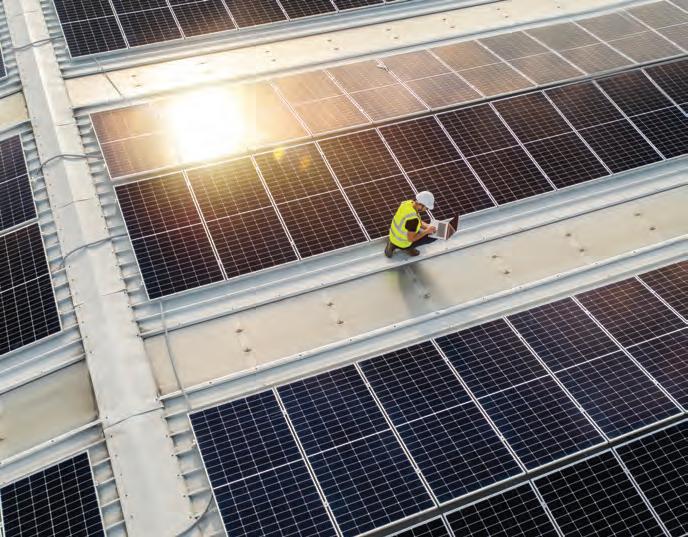
Already benefitting from falling costs, the swift scaling up of commercial solar power in the UK is taking place at an opportune time. For one thing, prices have fallen to an accessible level (around 90% since 2015). According to market intelligence outfit Solar Media Market Research, the total UK solar market was forecast to grow by 50 per cent yearon-year for the second year in a row.
“Costs have gone down, but not massively,” says Solar Energy UK chief executive Chris Hewett. “It's more the fact that the price of electricity has gone up –that’s what’s making it more cost-effective, and it's likely to continue to increase with what's happening in the Middle East.”
Commercial purposes are set to be a major element of that growth, with commercial new builds effectively set to come with solar-by-default to meet EPC requirements.
Retrofitting, too, has a major role to play, and thankfully, it is relatively straightforward in practical terms.
Advances in panel efficiency, mounting systems, and battery storage mean that even older buildings with unconventional roof structures or limited space can often be adapted.
“I think the advent of more electric heating and more electric vehicles is shifting businesses’ energy load into electricity,” Hewett says. “Essentially, the more electricity you consume, the more cost-effective it becomes.”
Car parks, too, are being used as
We’re increasingly seeing solar put in car parks – in effect, a mini solar farm
sites for solar power generation.
“We're increasingly seeing solar being put in car parks,” says Hewett. “So you have, in effect, a mini solar farm over the top of the car park, and as you're shading the cars, you're generating power across the top.”
Hurdles to retrofitting are decreasing, but one that persists is the often differing priorities of freeholders who may think differently from tenants and leaseholders.
“You may want solar on the roof, but your landlord doesn’t, or you’re only staying there for five years, and so they don’t really think it's worth it,” says Hewett. “There are complexities there, which is a problem.”
One issue that Solar Energy UK expects to see improvement in is the commercial sector data quality about solar use. This is perhaps surprisingly difficult to attain. While small installations of up to 50kW are under the purview of the standards body MCS, with usage tracked over time, the same is not true for commercial-scale systems, which are also not subject to planning permission. As such, keeping track of how much power is generated in and delivered each year is much more difficult to track, as is the proportion of commercial buildings with solar panels fitted.
“It’s a problem,” Hewett acknowledges.
BY THE NUMBERS
A government consultation on the potential for solar carports to increase the UK’s electric power generation capacity and improve the country’s energy security has resulted in a partial government response. The original idea, whereby installation of solar canopies on new, large outdoor car parks would be mandated, has been deferred.
When the consultation was first mooted, Damian Baker, founder and managing director of RenEnergy, suggested that commercial premises with land already used for car parking –from supermarkets to service stations, golf clubs, train stations, airports and retail parks – could bring about significant savings on energy costs, with surplus energy sold back to the grid.
However, the government has said that it is continuing to gather evidence on the feasibility of the proposed mandate.
“I was recently on a call with Ofgem and UK Power Networks, and one of the top subject matters is improving data on connections. Once that data starts to be cleaned up and improved, we will get much more accurate.
“It's very accurate in 50kW and below,
and it's very accurate for 5MW and above. But it's that bit in the middle – the commercial, industrial rooftop market –which is a bit sketchy at the moment in terms of data. But that will get better.”
Although the case for solar is mounting among businesses, there is a key waste management issue requiring consideration at the procurement stage. Solar panels may be durable – typically lasting 30 years or more with regular maintenance – but what happens later is less well-defined.
Professor Fiona Charnley, who specialises in circular innovation at the University of Exeter and researcher at the ReMake Value Retention Centre, warns that renewable energy technologies are yet to make the shift to recyclability in the way commonly seen in other industries, such as automotive.
“The end-of-life pathway for solar panels remains underdeveloped,” she warns. “Disassembly is complex, material recovery is limited, and the UK currently lacks the dedicated infrastructure needed to manage the growing volumes of panels approaching retirement. Globally, solar photovoltaic waste could exceed 200 million tonnes by 2050, and without change, valuable materials such as silver and silicon risk being lost, shifting the environmental burden from carbon emissions to waste accumulation.”








by Bradford Keen









Facilities management is being pushed into a more decisive role in climate resilience as new industry guidance, standards updates and sector-wide analysis converge on a common theme: climate adaptation must be embedded into operations.
At the centre of this shift is the IWFM’s new climate adaptation guidance, launched alongside a webinar titled Futureproofing facilities: Climate adaptation for workplace and facilities managers
The guidance marks an intentional move beyond decarbonisation alone, towards a more immediate concern: how buildings and the services within them withstand a changing climate.
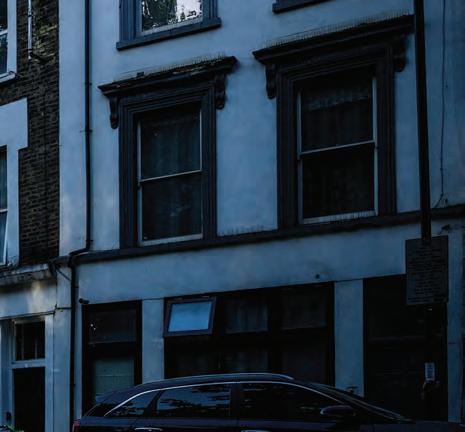
A case study shared during the webinar illustrated the stakes. Two office buildings in the City of London, located metres apart, experienced the July 2022 heatwave very differently. One lost critical services
after IT infrastructure overheated; the other remained fully operational.
As webinar participant James Heritage, climate risk and adaptation manager at Equans UK & Ireland, explained, the failure was “purely down to the placement of its IT infrastructure – hardware was exposed to a significant amount of heat stress, and it failed”. The neighbouring building had accounted for such risks, with better positioning and cooling strategies.
This example emphasises a core component tenet of IWFM’s guidance: climate risk is highly localised, and adaptation strategies must be tailored accordingly – dependent on the unique or contextual threats of heat, flooding, storms and supply chain disruption.
Heritage described climate adaptation as “the process of adjusting to those changes in our climate and the effects that they can cause”, encompassing acute weather events
and longer-term environmental shifts such as rising temperatures.
Physical risks – flooding, heat stress, storms – can damage building fabric, disrupt services and increase maintenance and energy costs. Transitional risks – linked to the low-carbon transition, including regulatory change and supply chain volatility – are reshaping how buildings are operated and maintained.
FMs play an essential role as “the first line of defence against climate risks”, Heritage argued. Their responsibilities extend beyond maintenance to influencing investment decisions, integrating resilience into operations and aligning adaptation measures with organisational strategies. This means organisations understanding their exposure to physical and transitional risks, as well as their tolerance for them.
“It’s about aligning the solutions you're putting in place with your






organisation strategies – and investment cases need to be proportionate and sustainable,” Heritage said.
The complexity of these decisions was highlighted by Peter LeightonJones, head of sustainability at Mid Yorkshire Teaching NHS Trust, who spoke of the paradox of cooling. Rising temperatures make many buildings “cooling deficient”, but retrofitting cooling systems is costly and carbon-intensive.
Short budget cycles further complicate matters, making it difficult to justify investments based on risks that are “completely unbounded and impossible to quantify”, said Leighton-Jones.
On supply chains, Anna Williamson, associate lecturer at the University of the Built Environment, spoke of a “great turbulence”, urging a broader view of sustainability that goes beyond carbon
to include sourcing and logistics.
Leighton-Jones added that bringing manufacturing back to the UK could mitigate risks, though dependencies on global raw materials would remain.
● Williamson advocated incremental progress, encouraging FMs to engage with the guidance and “make a start”;
● Heritage highlighted the importance of embedding climate considerations into everyday decision-making; and
● Leighton-Jones called for more worked examples to translate theory into practice, particularly around the financial case for proactive adaptation.
A push towards structured, practical action also came from the British Standards Institute (BSI), which updated its environmental management systems standard to help organisations respond to climate commitments, ESG expectations and regulatory change.
The updated BS EN ISO 14001 reinforces a framework for managing environmental responsibilities across operations, products and services. It places greater emphasis on leadership accountability, life cycle thinking and supply chain oversight.
The standard’s new provisions on change management and externally provided services, with clearer audit requirements, suggest a shift to integrating environmental considerations into broader governance and risk frameworks.
Progress has been positive, but more needs to be done. As the Sustainable Facilities Management Index (SFMI) says in its Sustainable Ambitions Report 2026, the next five years will be driven by intensifying environmental, social and regulatory pressures.
Under its ‘expectations curve’ model, the SFMI maps the sector’s trajectory on four themes:
1 Decarbonisation;
2 Wellbeing;
3 Social impact; and
4 Risks and opportunities.
Progress has been made, particularly in structured energy planning and
carbon measurement, the report identifies gaps in integrating these efforts into core business strategy.
Decarbonisation is expected to become fully embedded in financial planning by 2030, while wellbeing is set to gain prominence, supported by real-time monitoring and design interventions.
Social impact remains hindered by inconsistent methodologies and limited supply chain integration.
Risk management, a key pillar of adaptation, is underdeveloped. The report predicted tighter auditing and greater scrutiny of supply chains, alongside growing opportunities in asset optimisation and AI-enabled efficiency.
The SFMI framed adaptation as part of a broader shift in how FM operates, and called for:
● Clients to take ownership of sustainability strategies;
● FM providers to enhance technical capabilities; and
● Government to strengthen regulatory alignment.
Systemic barriers stymie progress
Systemic barriers continue to hamper actions on climate resilience. Research from the UK Green Building Council (UKGBC) showed many sustainable solutions already exist but fail to scale due to organisational, financial and procedural obstacles rather than technical limitations.
Issues such as procurement practices, risk frameworks and financing structures are slowing adoption, while pilot projects often lack clear pathways to wider deployment. The report argued that solutions must align with operational and financial realities and be supported by clearer verification systems and reduced perceived risk.
Collaboration across the value chain – developers, asset owners, contractors, manufacturers, investors and policymakers – is essential to overcoming these barriers. Without it, innovations risk remaining isolated rather than becoming standard practice.
Together, IWFM’s adaptation guidance, updated environmental standards and sector-wide analysis point to a pivotal moment for the sector as focus shifts from understanding climate risks to making adaptation an operational imperative.
In the UK, almost a fifth of workplace tasks are now ‘exposed to automation’, according to Coface and the Observatoire des Emplois Menacés et Émergents (OEM). FM is seeing this change, with 65% of sector professionals – in a recent Johnson Controls survey – using AI to improve operation, use and maintenance of workplaces.
Typically, this is seen through predictive maintenance, scheduling of engineers, automated helpdesk triaging and energy optimisation. Other areas include compliance tracking, monitoring service intervals, statutory checks, and documentation areas where human error can be costly.
Lucy Lloyd, chief services officer at Kingdom Cleaning, says agentic AI is having an effect on her company’s workflows. “We’re able to build a picture of how spaces are used, with footfall and peak hours as the
main indicators of use. AI agents can help us understand what areas our clients actually need cleaned, and how many colleagues need to be assigned to a job on any given day. We’re responding to data in real time.”
Looking to the near future, agentic AI will shift tools from assistants to actors with frontline workers, in turn, required to be more proactive and digitally savvy.
Such systems can execute multi-step workflows rather than assist with isolated tasks; a shift which could automate entire job functions rather than individual tasks, reducing demand for cognitive, white-collar roles and moving human involvement to oversight rather than execution.
“Agentic AI represents a step change because it moves from assisting to acting,” says Peter Forshaw, managing director of Maxwell Stephens. “Instead of simply analysing data, systems can initiate actions raising work orders, reallocating resources, or even negotiating service responses across vendors.”
by Calum Fuller
This could affect reactive maintenance, contract management, and service coordination, Forshaw explains. For example, an agentic system could detect an issue, diagnose causes, instruct the appropriate

Agentic AI represents a step change because it moves from assisting to acting
contractor and follow up on completion, with minimal human intervention.
The revolution ahead
Forshaw has seen early signs of this change in integrated workplace management systems and smart building platforms, “but the real shift will be in end-to-end orchestration rather than isolated automation”, he says.
Performance metrics, too, will change, argues Lloyd, with the traditional metric of “square metres cleaned per hour” becoming obsolete because it measures physical effort rather than efficiency.
With the help of AI, she says, “Roles will instead be defined by how colleagues can manage automated systems and redirect them according to real-time data. In short, it makes roles more specialised and skilled.”
Away from frontline work, the shift will be more pronounced, with Forshaw saying “mid-management value will move towards problem-solving, stakeholder management, and strategic thinking”.
A decision for organisations is whether to use a closed- or open-source model. Opensource models offer control, customisation, and data privacy, ideal for specialised, secure applications; closed-source are more out-of-the-box, ready to plug in and go.
“We solely employ closed-source agents and recommend this measure is adopted by sector colleagues,” says Lloyd. “Costefficiency, customisation and flexibility may be easier in an open-source setting, but the increased protections of closed-source options are something we can’t afford to miss out on. With closed-source models being privately owned by the development company, they cannot be modified or rebuilt when accessed. Because of this, they don’t feed input data to train future versions, ensuring your organisation and client are protected in all circumstances.”
NOTE: See also: Introducing AI tools ‘demands value-based assessments’, p.62
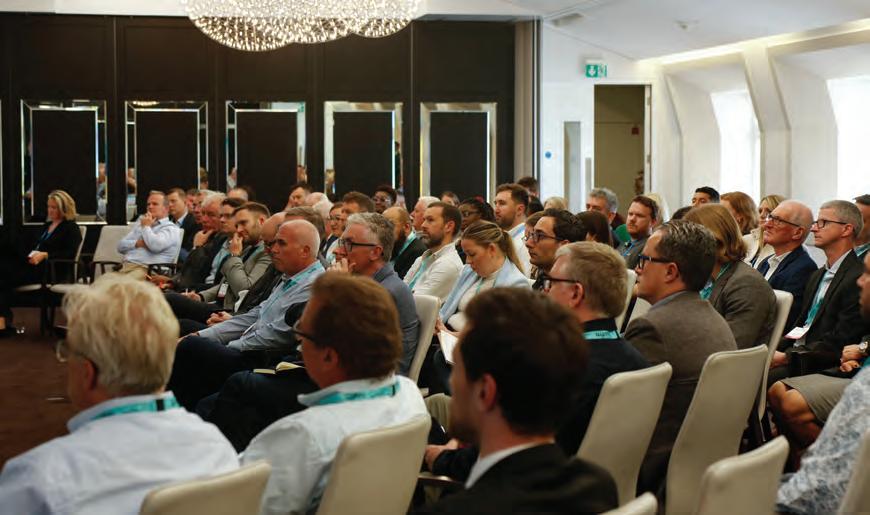
IWFM is returning to the FM conference scene with a fresh day-long offering in June
IWFM Live! is set to unleash the force of FM. That’s the aim behind IWFM’s new in-person conference which brings the workplace and facilities management community back together for a day of insight, challenge and connection.
Taking place on 16 June 2026, from 9am at the Leonardo Royal Tower Bridge in London, the event is designed as a featurefilled, speaker-packed gathering that puts people, ideas and action at its core.
Tickets are free for members, while non-members can attend for £264, with pre-registration essential.
Sessions will address key topics such as:
● Resilience
● Compliance
● Women in leadership
● How FM can shape the future of the built environment.
Keynote speakers
Tess Cope brings more than 25 years of experience in cultural transformation and leadership development. As founder of The Transformation Agency, she has built her reputation on helping organisations look beneath the surface. Rather than chasing quick fixes, Cope encourages leaders to understand the deeper systemic forces shaping behaviour, performance and culture. Her philosophy reframes organisations
as living systems rather than problems to be solved. By focusing on purpose, values, belonging and balance, she argues that sustainable performance emerges naturally when the conditions are right. It’s an approach that resonates strongly in today’s complex workplace, where change is constant and often uncomfortable.
At IWFM Live!, Cope is expected to challenge delegates to rethink how transformation happens – not through isolated interventions, but through rebalancing entire systems.
Alongside her, Jonty Bloom offers a sharply analytical perspective shaped by decades in journalism. One of the BBC and Radio 4’s most respected reporters, Bloom spent 20 years covering business, economics and European affairs.
His work on The World Tonight earned him multiple Wincott Awards and recognition from the Royal Statistical Society, reflecting both his storytelling ability and his command of complex data. Bloom continues to comment on domestic and international economic issues, and his insights are likely to add a broader geopolitical lens to the day’s discussions. Known for his forthright style, he does not shy away from uncomfortable truths about economic performance and policy direction.
Take a recent Substack writeup which included this gem: “This is the real crisis of the British economy… we have been wallowing in pathetic levels of productivity growth for at least 16 years and probably much longer.”
His willingness to confront
difficult realities makes him a particularly relevant voice for a sector navigating uncertainty, cost pressures and shifting expectations.
Proceedings begin with a welcome session at 09:30 followed by keynotes and discussions on sustainability, climate resilience and the skills crisis.
IWFM Live! is designed as a flexible, drop-in event, allowing attendees to move in and out of sessions as needed. While there’s no formal lunch break, refreshments will be available to purchase on site. With its blend of big-picture thinking and practical insight, IWFM Live! signals a day of lively discussion – and a renewed invitation to IWFM members and others in the FM community to come together, grow together and make an impact together.
Programme for the day
● 09:30–10:00 – Welcome
● 10:05–10:35 – Keynote (TBC)
● 10:40–11:10 – ESG, sustainability and net zero – the business case
● 11:15–11:45 – Brilliance in resilience: adapting to a changing climate
● 11:50–12:10 – Tackling the skills crisis – the importance of skills and investing in them
● 12:15–13:00 – Compliance
– the new value offering
● 13:50–14:20 – The leadership surgery: the language of leadership
● 14:25–14:55 – The value engine
– ‘thinking left to right’
● 15:00–15:20 – Panel discussion: Women in leadership
● 15:25–15:55 – 21st century behaviours: Departments of empowerment
● 16:00–16:30 – The Power of community: today’s highlights and tomorrow’s commitments
Scan the QR code for more information and the latest programme details for IWFM Live!
by Martin Read
Having left the Netherlands for England aged 20, Pleun van Deurssen arrived as the product of Breda University of Applied Science’s now-famous FM degree course. Today, following formative UK roles with Incentive FM, Capita, JLL and Mace, Van Deurssen has returned to Breda in the role of lecturer facility management, real estate (management) & workplace design. The former chair of IWFM’s Rising FMs network has made much of her own inbuilt inquisitiveness – and she’s now seeking to pass it on to her own students.
“Because of my international experience and FM background,” she says, “when the university moved toward problembased learning and a four-block yearly structure, I was invited to join the curriculum committee to help define what is important for the industry.
“We’re trying to up our game to make it possible for students to showcase themselves within the industry and professional networks much earlier. I strongly believe in this approach; I became successful because I was under the wings of mentors like Bernard Crouch. I want to be that role model for my students.
“We are also developing a new curriculum. While the core content of

Students are tired of the word ‘sustainability’. They feel brainwashed by it
FM doesn’t require a 360-degree change, the way we teach is shifting completely. We’ve moved away from siloed modules –marketing, economics, finance – towards more integrated projects. In business, you don’t just get a ‘marketing assignment’, you get a project where marketing is just one component. We found that students struggled to know when to apply specific theories. They didn’t know how to tackle real-world problems.”
Skills gaps
On skills, Van Deurssen says: “I don’t think there is a traditional skills gap in terms of daily tasks like contract management. In fact, the gap created when an experienced person leaves is the loss of a curious brain; someone who wants to take a contract to the next level and link different professions like HR and FM to optimise the workplace.
“We often focus too much on making things aesthetically pleasing without asking
what employees actually need to do their jobs. Technical skills can be taught on the job, but the attitude must be right. That’s why we now teach our students critical thinking and decision-making; they need to know what information is actually required to make a well-rounded decision.”
The Evolution of Dutch FM
In the Netherlands, FM originated in the 1970s as ‘Applied Household Sciences’ – learning to cook, clean and calculate costs. “Today,” Van Deurssen says, “it has evolved into a strategic layer. While the majority of employees work operationally, we educate students for tactical and strategic levels.”
Netherlands vs UK FM
The UK and the Netherlands are at different stages, Van Deurssen explains:
“In the UK, people talk a lot about innovation, but at the bottom line, they don't always do that much. In the Netherlands, things like hybrid working, flexible workplaces and activity-based working are no longer trends – they are standard practice.
“The UK remains quite transactional and focused on hard KPIs, whereas the Dutch approach is very consensus-driven and partnership-based, even when services are outsourced. We see FM as a strategic business partner who stays inhouse to hold the company values, while the operational services are outsourced.”
The ‘sexy’ side of FM
Student numbers are decreasing, partly due to demographics, Van Deurssen says. “We need to focus on our strategic impact rather than just managing cleaning and security. We often strip the ‘sexy’ elements out of FM – like smart buildings, proptech, and workplace design – and treat them as separate things. We need to reclaim those terms under the FM umbrella.
“On a controversial note, students are tired of the word ‘sustainability’. They feel brainwashed by it and are more focused on their immediate ‘bubble’ and social success than the planet 60 years from now. As we get older, we see the vision and the impact on our children, but students don't always connect with it the same way.”





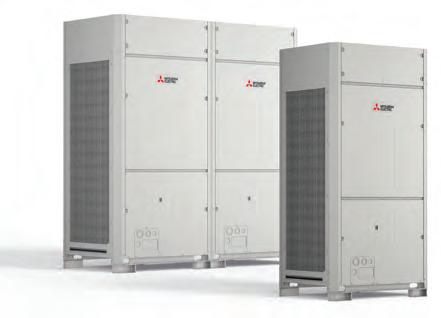
With 20% reduction in running costs,* 10% more energy efficiency and 6% smaller footprint, the new City Multi R32 VRF YXM range will help you heat and cool your building, whilst helping you on the road to net zero.
Your building, our solutions. Launching May 2026.
To find out more about the new City Multi R32 VRF YXM range, visit https://citymultiyxm.com
*Compared to 30kW R410A YNW model
1.4
Culture Amp’s research draws on 1.4 billion employee survey responses from 3.3 million workers across 8,200 organisations. The data shows 30% hold back their true feelings, with significant gender gaps in stress levels, work-life balance and psychological safety — highlighting persistent trust and wellbeing challenges globally 82%
BSIF testing of 88 PPE products from non-registered suppliers found 82% failed to meet required standards in 2025-26 assessments. Covering 116 lab tests, the study revealed widespread performance, certification and documentation failures across key safety categories, underscoring a major compliance gap compared with verified suppliers, which achieved a 96% pass rate.
WEEK COMMENCING 2 MARCH 2.5m
NUMBER OF UNDIAGNOSED NEURO-DIVERGENT ADULTS
Research by Opinium for law firm Stephensons highlights major workplace gaps in neurodiversity support Surveying more than 2,000 UK adults, the study found that almost half say their employer lacks clear policies for neurodivergent staff, while an estimated 2.5 million neurodivergent people remain undiagnosed nationwide.
Research by Direct365, analysing Home Office Fire Statistics for England, shows it would take 48 years to inspect every known commercial and social housing premises once. The study also found that half of hospital audits in 2024/25 were unsatisfactory, highlighting uneven enforcement and persistent fire safety risks nationwide.
WEEK COMMENCING 9 MARCH 37%
PERCENTAGE OF EMPLOYERS PLANING TO CUT HIRING
The Chartered Institute of Personnel and Development’s Labour Market Outlook finds that 37% of UK employers plan to reduce permanent hiring because of the Employment Rights Act reforms. The report warns that new rules on unfair dismissal, sick pay and contracts could raise costs, dampen recruitment and heighten workplace conflict
WEEK COMMENCING 16 MARCH £1bn AMOUNT OF SKILLS FUNDING NEEDED TO UNLOCK GROWTH
Make UK’s Shape of British Industry report urges the Treasury to release £1 billion in unspent apprenticeship levy and immigration funds to tackle skills shortages. The research warns that gaps in education and training are constraining growth, with manufacturers increasingly reliant on digital and AI capabilities to drive productivity.
Avison Young analysis shows refurbishments account for 53% of the 2026 office pipeline across the UK’s Big Nine markets, up from 41% in 2025. With new development slowing sharply, refurbishment is filling the gap as take-up holds near 7.6 million square feet, sustaining rental growth in key regional cities. 53%
WEEK COMMENCING 23 MARCH 65%
ON-TIME DELIVERY BECOMES TOP PROCUREMENT PRIORITY
The 2026 RS and CIPS Indirect Procurement Report finds 65% of organisations now rank on-time delivery as the chief supplier performance metric The study highlights a shift to centralised procurement, fewer supplier relationships and stronger partnerships, as FM teams respond to cost pressures, operational risk and rising expectations on service reliability.
£72BN
The British Cleaning Council reports the UK cleaning, hygiene and waste industry reached £72 billion in economic contribution in 2023, up from £67.7 billion the previous year. Employing 1.51 million people and comprising nearly 79,000 businesses, the sector remains one of the UK’s largest, driven by FM, waste and cleaning operations.
WEEK COMMENCING 30 MARCH
5 million
NUMBER OF WORKING DAYS
LOST TO ILL-HEALTH
Research by Simplyhealth reveals that more than five million UK working days were lost to mental ill-health by 24 March, the 58th working day of the year. The study highlights widespread absence linked to anxiety, depression, stress and burnout, with notable age-related differences in frequency and duration of time off.
The government’s Education Estates Strategy commits £38 billion from 2025/26 to 2029/30 to upgrade and rebuild school and college buildings. Backed by retrofit funding and long-term capital support, the programme aims to address deterioration, eliminate RAAC risks by 2029, improve sustainability and renew infrastructure across England’s 22,000 education estates.
Experts warn that short-term procurement cycles are undermining embodied carbon performance, despite 80% of buildings in use by 2050 already existing. With attention often ending at handover, industry leaders argue that estates and FM teams must prioritise operational efficiency, adaptability and life-cycle planning to improve long-term building performance.
51,026
Government data shows 51,026 fire safety audits were carried out in 2024/25, with 21,312 deemed unsatisfactory and nearly 3,000 formal notices issued The figures indicate rising scrutiny since Grenfell, as tougher enforcement under the Building Safety Act 2022 and Fire Safety Act 2022 exposes long-standing compliance weaknesses nationwide.
WEEK COMMENCING 6 APRIL
90%
SOLAR COST DROP DRIVES COMMERCIAL UPTAKE
Solar panel costs have fallen by around 90% since 2015, fuelling rapid commercial adoption across the UK. Analysis from Solar Media Market Research and Solar Energy UK highlights rising electricity prices and easier retrofitting as key drivers, with strong growth expected as businesses turn to solar to cut costs and meet energy demands.
WEEK COMMENCING 13 APRIL 26
MINUTES LOST TO DAILY WORKPLACE NOISE
Research by Oscar Acoustics, surveying 2,000 UK office workers via Censuswide, found that employees lose 26 minutes of productivity each day owing to noise disruption. The study links poor acoustics to reduced work quality, increased stress and retention risks, with many organisations failing to assess or invest in improvements.
£17.5 MILLION
The UK government says closing three Central London offices – including 10 Victoria Street – will cut estate costs by £17.5 million a year. Part of a wider estate consolidation plan, the move relocates staff into existing government space and supports a programme delivering £94 million in annual savings by 2030.
WEEK COMMENCING 20 APRIL
240,000
WORKERS NEEDED TO MEET CONSTRUCTION DEMAND
Research by MoneySuperMarket shows shifting graduate attitudes, with many reconsidering trade careers, while the Construction Industry Training Board estimates 240,000 additional workers are needed by 2029. Despite interest in roles like electricians, barriers remain in translating demand into workforce growth across the construction sector.
Here’s where we detail the challenges, chart the progress and celebrate the success of workplace and WFM projects undertaken to ensure inclusive work and workplaces for all. Got something that fits the bill? A project or a person deserving of recognition? Email editorial@ facilitatemagazine.com
In 2016, a group of people working across the FM industry felt largely invisible. LGBTQ+ professionals – especially those in smaller organisations without internal EDI groups – lacked networks, visible role models, and formal support or advocacy. Today, LGBT+ in FM develops resources, advocates for fair treatment, and provides a space for LGBTQ+ voices to open up and honestly discuss progress.

A small group of committed volunteers, keen to reshape the industry’s approach towards LGBTQ+ inclusion, created LGBT+ in FM. "Ten years ago, we were behind many sectors when it came to LGBT+ inclusion.”
LGBT+ in FM co-founder and IWFM NED Sharon Slinger
“We have made vast improvements. We have many visible role models across different seniority levels who are happy to be open about who they are. We have companies, large and small, realising that to be a truly inclusive culture, it's an area that needs focused time and resources."
LGBT+ in FM co-founder and IWFM NED Sharon Slinger
The UK has faced significant shifts, government policy has not clearly reflected the community’s needs, and the global climate for LGBTQ+ people has become complex. With hardwon rights challenged and inclusion deprioritised in some areas, the group’s work is incredibly necessary. The FM sector's relationship with LGBT+ inclusion looks markedly different today than it did in 2016 (see box to the left).
More businesses are reaping the benefits of reporting on EDI,
including conducting surveys with colleagues and equipping managers with tools and training, such as on implicit bias. There is also a danger of complacency.
Co-chair Colin Kimber says that despite policy changes, challenges remain: “Discrimination and hate crimes have not gone away, and as a whole community, we are still being attacked, currently at our most vulnerable point, our trans brothers and sisters.”
Co-founder Emma McLaughlin-Edwards says now is the time for action: “We need to
create environments where inclusion is consistent, not conditional. Where LGBTQ+ people, across the whole community, feel genuinely safe, supported, and able to progress without having to navigate additional barriers or secondguess whether they can be themselves.”
Co-founder Sharon Slinger calls for continued collaboration: “At LGBT+ in FM, we've been so good at that for the last 10 years, and long may it continue.”
You can read the full LGBT+ in FM @ 10 article at facilitatemagazine.com
“Organisations are taking inclusion more seriously, embedding it into policy, leadership priorities, and workplace culture in ways that simply didn’t exist before.”
LGBT+ in FM co-chair Emma McLaughlin-Edwards
“Over the years, we’ve supported organisations that had little to no EDI presence, created guidance where none existed, and advocated, sometimes in rooms where our voices weren’t always welcomed.”
LGBT+ in FM co-founder and former committee member Nia
Bezuidenhout
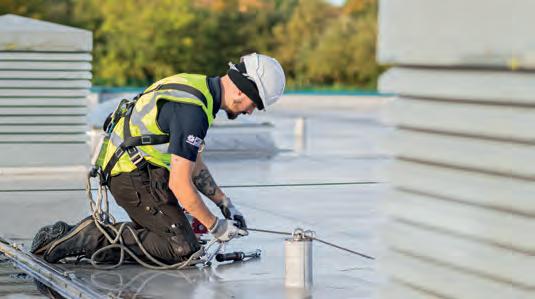













When building compliance works, nobody notices. When it doesn’t, everyone does. disciplines – Access & Safety, Electrical Services, Building Access Specialists, Fire Solutions and Water Treatment – with integrated reporting, consistent standards and single-point accountability. One partner. One platform. Total transparency. So, your compliance stays invisible while your control stays absolute.




TStrategic reflection and practical progression have characterised the last two months of work, says Andrew Gladstone-Heighton , head of policy and research at IWFM
he Middle East crisis was the background to our discussions at our pre-Easter Knowledge Insight Group (KIG) meeting, which brings together the chairs of our Special Interest Groups.
Global events are not abstract concerns for FM. The effects are felt through energy price volatility and supply chain disruption. Even in a scenario where geopolitical tensions ease immediately, the lag effects – particularly in oil pricing – mean the consequences could stretch well into 2027. The extent to which this will be seen in the FM sector will be reflected in our 2026 Market Outlook Survey data, which we are currently analysing.
Alongside this, we have initiated a comprehensive review of IWFM’s guidance library. Over time, guidance has expanded, and with that comes the risk of duplication, inconsistency and outdated legislative references.
Our aim is to create a more coherent, standardised body of knowledge that maintains a clear ‘golden thread’ across all outputs. This is not a one-off exercise; rather, it marks the beginning of a continuous, cyclical review process that ensures our guidance evolves in step with regulation and practice.
We have progressed the development of our 2026 Sustainability Survey
The technical drafting phase has now concluded, following an intensive period of work focused particularly on retrofit and refurbishment, which are central to FM strategy. The emphasis is on producing actionable insights that support inhouse teams and service providers.
Finally, we used the members council and the subsequent KIG forum to
disseminate findings from our recent Impact and Experience Survey to chairs of regions, networks and SIGs. This is to ensure our communities are equipped with meaningful, localised data to shape their activities and better reflect member needs.
IWFM output you should be aware of Recycling, Waste and Resource Management Good Practice Guide – while often viewed through a sustainability lens, this guidance addresses critical safety considerations. Improper disposal of items such as lithium-ion batteries – commonly found in vapes and other devices – presents a growing fire risk.
Updated Space Planning and Management Good Practice Guide –We’re aiming to launch this ahead of the IWFM Conference in June. Alongside this, we are drafting our annual Market Outlook Report for a comprehensive view of sector trends, challenges and opportunities.
New Climate Adaptation Guidance –offers a framework to assess and enhance resilience across estates. This reflects a shift in focus, from reacting to extreme weather events to proactively planning for them.
2026 Sustainability Survey – open for response between May and June, the research will explore retrofit, energy security and cost management. The survey will move beyond ‘interesting findings’ to deliver insights to drive tangible change.
We continue to encourage member engagement with external consultations, including the ongoing review of BS 8703 on
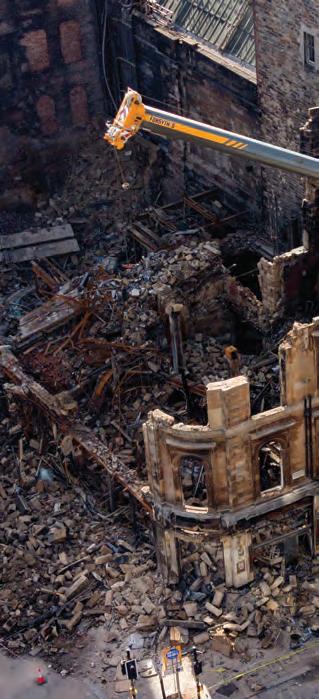
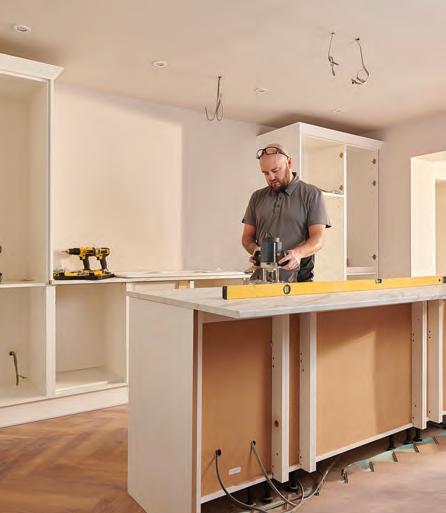
1. The aftermath of the fire in Glasgow highlights the risk posed by lithiumion batteries and the importance of fire safety compliance
2. Retrofit and refurbishment provide cost-effective, sustainable alternatives to new builds in a volatile economic climate
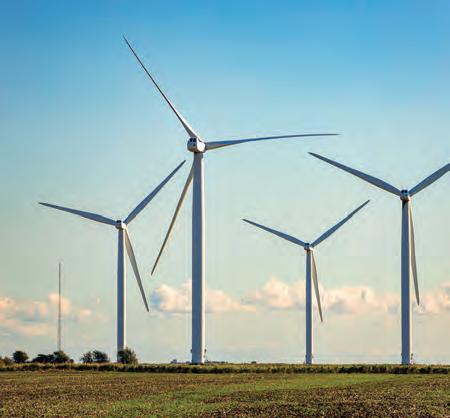
3. Energy security and sustainability are intertwined; renewables are key to mitigating global volatility


We’re keen to hear from you about the topics you think we should cover, but this is a two-way street – you can help us by participating in our surveys. We’d like to convince more of you to
take a volunteering role with IWFM. You can make a difference within the profession by involving yourself with our regions, groups or networks – or by putting yourself forward as an awards judge or board member. IWFM thrives through its volunteers and we’re keen for more of you to step forward. As for policy, we welcome your thoughts on our future work so please get in touch at policy@iwfm.org.uk
workplace strategy. These standards will shape future operational practices, and it is vital that the FM voice is represented.
What’s happening as you read this

RESOURCES
● IWFM’s Climate Adaptation for WFM: b.link/ FacilitateC26-025
● IWFM’s Recycling, Waste and Resource Management: b.link/FacilitateC26-026
● IWFM Live! b.link / FacilitateC26-027
We are engaging further with members who opted in to provide feedback following our Impact and Experience Survey. This is an opportunity to deepen our understanding of practitioner needs and refine how we design and deliver guidance in future. Work continues to develop a standardised template and flow for all IWFM guidance, which is fundamental to improving usability and ensuring consistency across our outputs.
Beyond our own workstreams, we are monitoring several areas of policy development:
● Building safety – with ongoing government activity around the categorisation of higher-risk buildings and the supply of qualified fire risk assessors.
● Skills – we welcome efforts to streamline apprenticeship standards and remove barriers to entry into construction and engineering roles, but seek the maintenance of demand-led pathways –particularly for Level 3 FM qualifications.
● Energy and climate policy – economic benefits of net-zero investment can outweigh costs by a factor of two to four, providing an important counter-narrative to the perception of sustainability as purely a cost burden.
Looking further ahead, several issues remain on our radar. Internationally, the volatility in energy markets continues to act as a
shockwave through global supply chains. From rising LNG prices to disruptions in fertiliser production, the effects are being felt across sectors – including those that FMs engage with directly, such as catering and food services. Sustainability is not just an environmental concern, but a matter of economic resilience.
Closer to home, fire safety remains a pressing issue. The recent fire in Glasgow, which destroyed a historic building near a major transport hub, serves as a stark reminder of the consequences of non-compliance. Increasingly, we are seeing incidents linked to lithiumion batteries – an emerging risk that requires updated approaches to fire safety and waste management.
Climate resilience demands attention. The notion of ‘once in 100 years’ weather events is rapidly becoming outdated. Flooding and extreme weather occur with greater frequency, and the built environment must adapt.
Our focus is on helping FMs integrate resilience into everyday decisionmaking, rather than treating it as an exceptional consideration.
We are watching developments in education and skills policy, including the proposed introduction of vocational V-level qualifications. While still in early stages, any initiative that strengthens vocational pathways into the profession is to be welcomed.
As we look inward, we are shaping our own priorities for the year ahead. This includes a renewed emphasis on mentoring and reverse mentoring –recognising that the profession’s long-term strength depends on the effective transfer of knowledge between generations.









In March, the UK Green Building Council published a naturefriendly built environment framework through which it seeks to translate a global ambition to halt and reverse nature loss into ‘practical, scalable action’. So what are the tools and processes FM needs to choose from to integrate nature into the workplace? Dr Vanessa Champion, founder of the Journal of Biophilic Design, explains
The built environment sits at the very heart of nature recovery. As underscored by the UK Green Building Council’s recently introduced Nature Framework, thriving ecosystems are not a ‘nice to have’ but are instead the foundation of a resilient economy, healthy communities, and long-term asset value. The places we plan, design, construct and operate have a profound influence on
biodiversity, climate resilience, and human wellbeing, placing our sector at the crux of both the challenge and the solution. What is needed now is consistent action that goes beyond minimum compliance. Nature recovery must be embedded at the earliest stages of decision-making and carried through the full life cycle of buildings and infrastructure, from concept and procurement to operation, maintenance, and eventual reuse. But doing this demands a shift towards longterm, performance-led asset management, where outcomes for nature are considered alongside cost, risk, and user experience.



Facilities teams, developers, designers, and estates teams sit at the centre of this change. And the choices we make now will define the ecological and social legacy of our built environment for generations.




Biophilic design is the lever that guides ambition into action, enabling buildings to become nature-positive, delivering net gains for biodiversity across their entire life cycle, and driving regeneration throughout the full value chain of the built environment.
Understanding biophilic design
Let’s first understand the principles at play here: biophilic design is the intentional

































integration of nature, and patterns of nature, into buildings and their operations to support human health, performance, and ecological outcomes.
‘Biophilic’ refers to our innate tendency to flourish in nature. We are nature, not a separate biological system. We evolved in a bio-based environment, surrounded and immediately dependent on nature, and our senses still respond to our immediate environment just as if we were still living outside and connected to nature. Our offices might have changed, but our physiology and biology are more or less the same as they were 200,000 years ago.
Maybe it’s not a surprise that our often noisy, plastic-filled workplaces aggravate our senses and send our cortisol and blood pressure so high that workplace users often don’t want to come to work. So for FMs, biophilic design translates into the adoption of practical strategies enhancing indoor air quality, maximising natural light, introducing planting and biodiversity, using natural materials, and aligning maintenance regimes with living systems.
It also means managing buildings as dynamic environments, with responsive controls, seasonal adaptation, and performance
“‘Biophilic’ refers to our innate tendency to flourish in nature. We are nature, not a separate biological system”
monitoring that prioritises both occupant wellbeing and of course nature recovery.
Research proves that nature can enhance concentration, cognitive performance, and overall satisfaction, reinforcing the powerful link between healthy ecosystems and healthy people.

Frameworks to the fore
In the context of naturepositive frameworks, including the latest from UKGBC, biophilic design becomes a delivery tool, embedding measurable benefits for people and biodiversity across the full life cycle of an asset. For instance, three of the UKGBC framework’s calls to action specified in the design and delivery guidance are directly supported by biophilic design. Firstly, “Integrate Nature into every decision”; secondly “consider the whole life cycle” (the very nature of biophilic design specification is circular, nothing that is installed should harm ‘life’ at any stage of its cycle); and thirdly “have a regenerative approach”: biophilic design principles support the flourishing of life, not just the sustaining of it. The UKGBC’s Nature Framework encourages

SENSORY EXPLORATION
1
Greening the standard workplace
By adopting a biophilic regenerative approach to the whole life cycle of a built asset, facilities teams can play a crucial role in fast-tracking more efficient nature-positive solutions inside and out of buildings for people and planet; a biophilic regenerative approach, while supporting ESG and BNG goals.
Direct connection to nature is, of course, one of the best things you can retrofit in design, for instance, through wellplanned indoor greenery or living walls in high-occupancy areas. Choose species that support air quality, are easy to maintain, and, where possible, encourage biodiversity (eg, pollinator-friendly planting in external spaces).
“Indoor planting provides immediate visual connection to nature and is appreciated by staff, providing high user impact.” Tomkins adds. “Solutions are scalable and could be outsourced via maintenance contracts, providing flexibility.
Planting can support air quality, providing improved working environments.”
Professor Derek Clements-
Croome advises that, alongside a good maintenance regime, plants should be selected carefully and shares Clare Bowman’s suggestion that plant density should be about 1 per 6 m3. Plus, planting should be distributed horizontally and vertically, thus making the most of greenery in terms of height and breadth. All of these things can also contribute towards fresher environments.
2
Maximising access to daylight
Another tool is the maximising of daylight; moving desks to have views of the outside, or to where natural light can be enjoyed. This is a lowcost but highly effective way of improving the occupier experience while aligning the building more closely with nature-positive principles. Achieving it can be as simple as relocating workstations, using lighter surface finishes, or adjusting blinds. Where views to nature are limited, introduce natural textures, materials, and imagery to reinforce that nature connection.
“Natural light and views have a high impact on users with the least ongoing operational complexity.” Says
Tomkins. “Access to daylight is linked to reduced absenteeism and occupant satisfaction whilst supporting energy efficiency through reduced artificial lighting. Flexible workplaces combine and provide a balance between open plan light spaces for connection and cellular sheltered spaces for more focused, quieter work. This provides a hybrid environment that improves space efficiency.”
3
Looking beyond the obvious
For Soler, “people’s first thoughts when the word Biophilia is mentioned are related to plants, but if we have a slightly longer conversation, things like nature mimicry, sense of awe and other interesting things like manipulation of natural light or integration in systems start to be discussed.”
“Sensory variation (light, acoustics and texture) is important for occupants to feel more comfortable, therefore reducing fatigue over long working days. Acoustic comfort and lighting control in particular, improve comfort metrics and require careful design consideration,” concludes Tomkins.
the delivery of solutions which benefit nature, on-site, off-site, and through ecological impacts on the value chain and through the asset life cycle, including landscape restoration. At its most fundamental level, biophilic design provides ecosystem services, climate resilience and human wellbeing as well as improving biodiversity.
Let’s take planting as one example. This is a great biophilic design strategy, one that helps mitigate climate change by removing carbon dioxide from the atmosphere through photosynthesis and carbon sequestration. Trees also cool the air through shade and evapotranspiration, reducing urban heat and lowering the energy demand for cooling in buildings. They also improve soil health and water regulation, increasing resilience to flooding and drought, both impacts of climate change. Learning and working with ecologists, and by doing so understanding how to plant the right trees in the right places and managing them over time, allows facilities teams to put themselves at the forefront of driving biodiversity value, as well as a wider integration with landuse strategies. Research has also shown that access to trees and green spaces reduces stress, lowers blood pressure, and improves mood, all by re-establishing a sensory connection with nature. With more green environments (like pocket parklets or wild gardens with benches to encourage dwell time), human wellbeing is further supported through social interaction and time spent outside. Consider planting trees so people inside buildings can see tree canopies and biodiversity from where they work. If they can open the windows of the offices, they can hear the increase in birdsong which arboreal habitat encourages.
1
Maximise Natural Daylight & Sky Views
Reconfigure layouts, keep windows unobstructed, upgrade glazing, optimise blinds and cleaning regimes.
Benefits: Improves mood, focus, and circadian health; reduces reliance on artificial lighting and energy use.
2 Enhance Views & Access to Real Nature
Open up sightlines to green spaces, create access to gardens, terraces, or even small outdoor breakout areas. Use nature-inspired artwork, patterns, and spatial design where real nature isn’t visible.
Benefits: Reduces stress, boosts cognitive performance; supports mental restoration and focus; reinforces biophilic experience indoors.
3
Introduce Meaningful Planting (Inside & Outside)
Install indoor plants, green walls, and biodiversity-rich outdoor planting (pollinator-friendly).
Benefits: Improves air quality, wellbeing, and biodiversity; contributes to climate resilience and building cooling in the summer and warmth in the winter.
4
Specify Natural, Bio-Based Materials
Retrofit with stone, timber, cork, linen, felt, bamboo, and natural fibres in furniture, flooring, doors, and finishes.
Benefits: Reduces embodied carbon, lowers toxins, creates warmer, more human-centred environments, plus it enhances comfort and acoustics; supports emotional wellbeing and reduces stress.
5 Move beyond white walls
Specify natureinspired colour palettes using low-VOC or mineralbased paints (eg, breathable, non-toxic finishes from Crown, KEIM or Graphenstone).
Benefits: Improves indoor air quality, creates calming, restorative environments aligned with natural systems.
6
Create spaces for refuge & calm
Think about how the space impacts all the senses.
Design quiet zones, breakout spaces, and enclosed areas with softer and circadiantunable lighting and natural elements.
Benefits: Supports mental recovery, reduces cognitive overload, enhances productivity and wellbeing. Tuneable lighting aligns with natural body rhythms, improving sleep, alertness, and overall health; optimises energy use.
Framework options
One way of navigating the plethora of frameworks and standards is to first create your own estates strategy from biophilic design principles and then tie it to the delivery mechanisms that best suit you.
Clare Bowman of RCZM Architects advocates an approach with her clients that includes developing a sustainable estates design code.
“We advocate and refer to BREEAM accreditation principles which advocate a post occupancy evaluation
CIBSE TM22,” says Bowman, “We also look at The Flourish Wheel for wellbeing created by Professor Derek ClementsCroome and Maylis Ramos for Workplace and the Urban Green Factor calculator (London Plan and UK
“The choices we make today will define the ecological and social legacy of our built environment for generations”
wide Natural England) which are essential for existing buildings when considering nature-based solutions for the whole site.”

For Nicola Tomkins, head of design for major projects at Overbury, “the international WELL Building Framework is redefining how buildings are designed and managed by placing human health at the centre of decision making. Its people-first approach enables organisations to integrate wellbeing into ESG strategies, linking occupant health directly to
real estate value and business performance. By applying evidencebased standards, WELL supports smarter investment decisions, with biophilic design acting as a key, scalable principle for enhancing human and social capital.”
A post-pandemic realisation
Enrique Soler, design director for major works at fit-out firm Area, says that “wellbeing in general, and the Equality Act 2010 in particular, are being looked at in more detail. Particularly around neurodiversity, clients are becoming aware and adapting their workspaces to a wider range of people.”

One thing the pandemic taught us is how much we value being able to get outside and to experience a direct connection to the natural world. We wondered at the blossom on the trees, the bird song in silenced skies, and realised how much we appreciate human connection and personal choice.
“Since the pandemic,” says Overbury’s Tomkins, “there has been a heightened appreciation of the role nature plays in everyday life. Increased engagement with outdoor environments and reduced urban activity have made this relationship more visible and valued. The shift
back to office environments has heightened interest in biophilic design and the positive impact it has on occupant wellbeing.”
“I think the pandemic made people more aware of what they needed in terms of workspace,” adds Soler.
“Once people realised that working from home was not only a viable option but solved some wellbeing issues, it was impossible to go back to the previous style of thinking. As well as through its connection with nature at all levels (i.e. not only contact with living things, but also natural light, water, nourishment…), biophilic design
went through an inevitable catalyst during and after the pandemic.”
“The most practical thing FM teams can do is obtain data about their spaces before and after implementation: people surveys, air quality, lighting control, temperature monitoring; [in so doing] FM teams can track their ROI and demonstrate the improvements biophilic design implementation can bring to their workplace.
Professor Clements Croome also advocates for managers to measure the effects on the environment, plus reactions of people using smart watches and other wearables to understand the impact on such indices as heart rates, sound levels and air quality.
Above all, he says, users must be brought along on the journey. Explain what you are doing. “Some occupants will have valuable ideas on planting, so listen too.”
Remember that biophilic design principles help FMs provide spaces which echo a more natural environment to help users of the space perform better and enjoy their place of work.
Bowman worked with estates teams before and after the pandemic: “We had a focus on building comfort through naturebased solutions. We were able to plan safe working environments for return to work to improve emotional and cognitive comfort, introduced new layouts of workspace with views to nature and plants in space cared for by staff. These proved very successful in reducing anxiety and creating calming environments.”
Facilities management sits at the forefront of a nature-positive movement, which over the next five to 10 years will deliver healthier workplaces and cities across the whole life cycle of buildings. Let us move away from mere compliance towards a contribution to the wellbeing of all life and the health of the planet we depend on. What will you do first?




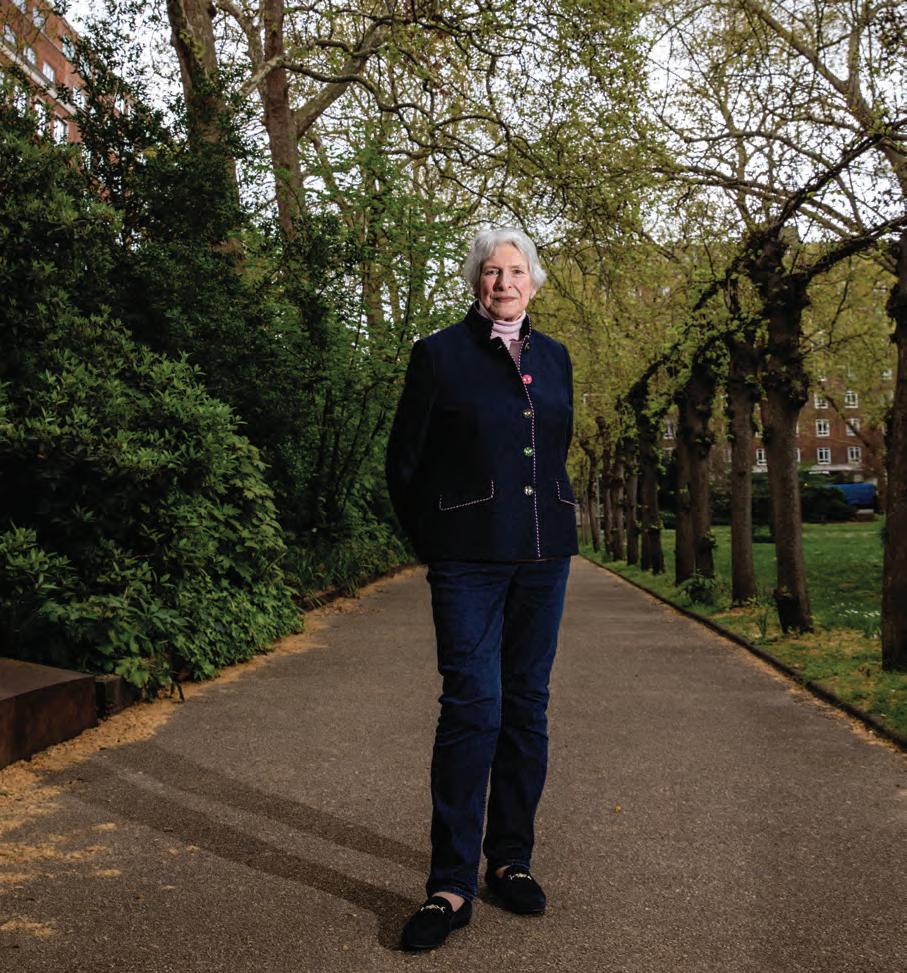
Chief executive Linda Hausmanis has spent the past decade steadily structuring IWFM. Her quietly effective presence belies an iron will to ensure workplace and facilities management professionals –and the sector itself – are sufficiently resilient to make the most of the role’s steadily developing position. Martin Read reports
PHOTOGRAPHY: LOUISE HAYWOOD-SCHIEFER




Aserious message emerged from the recent Built Environment Futures Assembly event in London. Talk was of a built environment sector “atomised, heavily dispersed and fragmented”; of a clearer understanding of workforce composition, capability and future need being necessary to break the cycle of ongoing skills shortages.
Run by the Construction Industry Council and Construction Leadership Council, the event in London brought together senior voices from industry, government, professional bodies and education to consider how to move beyond short-term responses towards longer-term workforce planning.
Linda Hausmanis was among their number, representing IWFM’s members. The IWFM chief executive, coming up on 10 years in IWFM’s top job, has made it her mission to travel wherever and whenever necessary to listen to whoever is advancing a valuable argument, be it on productivity, sustainability, the economy – essentially, wherever the impact of a positive and empowered workforce.





The event’s themes – stronger workforce intelligence, sharper forecasting of labour demand, clearer visibility of current and future skills base – are meat and drink to IWFM’s CEO. Indeed, moving beyond short-term thinking to longerterm decision-making has been a key part of the Hausmanis ethos, evidenced by changes she has introduced to IWFM’s executive structure, product development and public profile. The IWFM of 2026 is far more focused, effective and transparent.
“I’d like to think I have brought a quiet assuredness and stability. You might say I come across as a quiet person, but I never shy away from tough decisions”







When we meet, the passion Hausmanis continues to bring to her role after 10 years is clear.
”This is about the whole built environment,” she says of the CIC/CLC event. “We don’t currently have a plan in this nation about the supply and demand of future skills, which are going to change dramatically because of AI and other factors. That’s why I'm here; to give the occupier stage of the built environment a voice in all of this.”

This desire to put management of the workplace front and centre whenever there is danger of it being sidelined or dismissed is an abiding passion for IWFM’s leader. Under Hausmanis, IWFM has strengthened its executive capability in policy, insight and research – the three functions she regards as essential to operating as a serious professional body rather than a membership club.
Hausmanis accepts that her style is not to be constantly on show or on stage, instead







targeting shrewd appointments into key executive positions, and in doing so, transforming the presence of IWFM on the national stage.
“I’d like to think I have brought a quiet, assuredness and stability to this institute,” she explains. “You might say I come across as a quiet person, but I never, ever, shy away from making tough decisions where they are called for.”
Throughout her time with IWFM, concerns about skills shortages, impending demographic shifts and a deeply frustrating lack of understanding about the nature of the FM role have remained constant. Hausmanis has always known that part of her role is to provide a muscular defence of the FM profession’s role in national life. And she accepts that there is a fight for recognition that still needs to be won.
“The people in this profession keep organisations running, keep people safe, and create environments where other people can do their best work,” she tells me. “That is not a support function. That is a strategic function.”
it matters. In a way, it gave the profession a visibility it had never quite had before.”
Perhaps the most testing moment of the decade came when the pandemic struck in 2020. IWFM moved rapidly to pivot its offer, supporting members through an existential moment for the built environment sector, and demonstrating that the profession was not peripheral to the crisis response but central to it.
“That period accelerated everything,” reflects Hausmanis. “It forced conversations about what workplaces are for, who manages them, and why
“The people in this profession keep organisations running, keep people safe and create environments where people can do their best work. That is a strategic function”
National and international events in the ten years Hausmanis has been at IWFM’s helm have been turbulent to say the least. She has led the institute through that global pandemic; a fundamental questioning of what membership organisations are actually for; and several unexpected periods of economic turbulence that have tested every professional body in the country. More such turbulence seems guaranteed, but in Hausmanis, IWFM has a leader who is comfortable in her own skin, with an undimmed determination to take the work further.
Today, Hausmanis has taken her love for learning (see box, ‘Education, Education…’) and applied it holistically to the CEO role. The marking of ten years in the job is just that, a marker; she has already moved on with the work of furthering her legacy of educating and empowering FMs. Ask what drives IWFM’s 2030 strategy, and she returns, consistently, to the same place: the member. Not the abstract member, not the average member, but the real,
F
rom her earliest years, Linda Hausmanis understood something that would shape everything that followed: education, done well, is transformative. It opens doors, builds confidence and changes the trajectory of lives. Her own path was not straightforward. Family loss meant that a childhood ambition to teach had to give way to the practical reality of supporting her family, and she found her way instead into the City of London — building what she describes as a thrilling career in corporate finance. But it was her final role in that world, with a professional body serving the financial services sector, that brought her passion and her profession into the same room for the first time. There, she began developing programmes of learning — and realised she had found her purpose. That experience opened the door to BIFM in 2007, where she was
brought in to support the execution of the Institute’s educational strategy: achieving regulated awarding organisation status, shaping its professional development programme, building professional standards and developing apprenticeship frameworks. The foundations of much of what IWFM stands for today were laid in that work.
What has driven all of it, she will tell you, is a commitment to her own learning that has never dimmed. Her personal programmes of study span arts and humanities, leadership and management, the psychology of organisational change — and most recently, AI. She completed a business school course on artificial intelligence not as a box-ticking exercise, but because she leads an organisation whose members’ working lives are being reshaped by it.
“Every day is a learning day,” she says. “I genuinely try to live up to that.”

specific, individual person – at a particular career stage, in a particular type of role, with particular needs that IWFM can and should be meeting.
Hausmanis’s adoption of this discipline can be seen in her response to AI, for which MOVING UP
IWFM’s 2030 Strategy, which has membership value at its core, addresses this through a commitment to audience segmentation, persona-led engagement and a member experience that meets people where they are – in the format they prefer, at the moment they need it. It is an ambition made possible by investment in AI and digital infrastructure, data capability and a customer relationship management system that will, for the first time, give IWFM a genuine single view of each member's journey.
It’s the human dimension of IWFM’s future role as a professional community that Hausmanis is fervently keen to explain. An emphasis on human connection runs through everything Hausmanis describes about the Institute's direction. At a time when professional communities face competition from LinkedIn groups, online forums and an increasingly fragmented media landscape, she believes IWFM's value lies precisely in what algorithms cannot replicate: genuine professional community, shared purpose and the kind of trust that is built over years.
“I want every person in this profession – whether they're just starting out, or they're running a global estates portfolio – to feel that IWFM is there for them. Not in a vague, aspirational way. In a specific, practical, useful way."
“One of the most important shifts we are making is from a one-size-fits-nobody approach to something genuinely personalised,” she explains. “We know that a new entrant coming into the profession through an apprenticeship has very different needs from a senior leader who has been in the industry for twenty years. We need to be relevant to both – and we have not always been as good at that as we should be.
“There is a real hunger for authentic professional community,” continues Hausmanis, warming to her theme. “People want to connect with others who understand the specific challenges they face – who speak their language, who have stood where they are standing. That is what our networks, our events, and our mentoring offer. That is what Facilitate does throughout the year. You cannot automate belonging.”
A constant analyser of both person and professional best practice, Hausmanis applies the concept of ‘humble inquiry’ – communicating through genuine curiosity, rather than an assertion of authority or expertise – to her approach. “It’s something we should all do,” she advises. “You shouldn’t just accept what you are being told on face value, you should take a positive and inclusive approach to challenging it.”
she undertook a business school course, having just completed an apprenticeship in strategic leadership.
“I run a business,” she says. “AI is changing the world of work and the business I'm responsible for – and you can bet your life it’s going to change the lives of our members. It’s crucial to take as comprehensive a view as possible.
In this, we see something of Hausmanis’s view of the value of community and the role of institutional membership as a passport to credibility. “Our role is to provide that community within which people can learn from and support each other. I want people to be proud of their profession, of what they do, day in and day out, to impact their organisations and the people who work in those organisations. You stand






behind those initials after your name. You stand behind the standards, behind our Code of Professional Conduct. This is what it means to belong to IWFM.”
While chartership is not the only focus of the current strategy period, Hausmanis is clear that the question of how members can access chartered professional status is actively being discussed. A working group is being established this year to identify the most practical route, and members will be kept closely involved. An IWFM board session will then be held to evaluate options.
Beyond this, there is value in both IWFM and members behaving as if already chartered.

“We walk in both the built environment and management discipline camps,” says Hausmanis. “Ours is still effectively an emerging profession, and it’s up to us to continue determining the profession to create that distinct place to allow for Chartership. And we should be working towards fulfilling and meeting the criteria laid down by the Privy Council for a chartered body anyway; that we’re there for the greater good; to set standards, to stand for ethical codes of behaviour, to be profitable, to know our market. By living these things, we will become what we want and need to be.”
The 2030 strategy and beyond Commercially, the Institute enters the current strategy period in a position of genuine stability. After years of careful stewardship, IWFM moved into the black in 2024 – a milestone that gives the 2030 Strategy the financial footing it needs.
“You cannot deliver for members if you are not sustainable,” Hausmanis says simply. “That has been a priority, and it is now a reality.”

What she wants members to take from the 2030 Strategy and IWFM's work in the years ahead, is certainty; certainty that there is a professional body that sees them, fights for their recognition and invests in their development; a body that is relevant, useful and supportive at every stage of their career.
And in return, she wants to see commitment to the cause.
“If you believe in this profession, and that the work we do should have a standing in society, in business, in the economy, then we need you to get behind the institute and
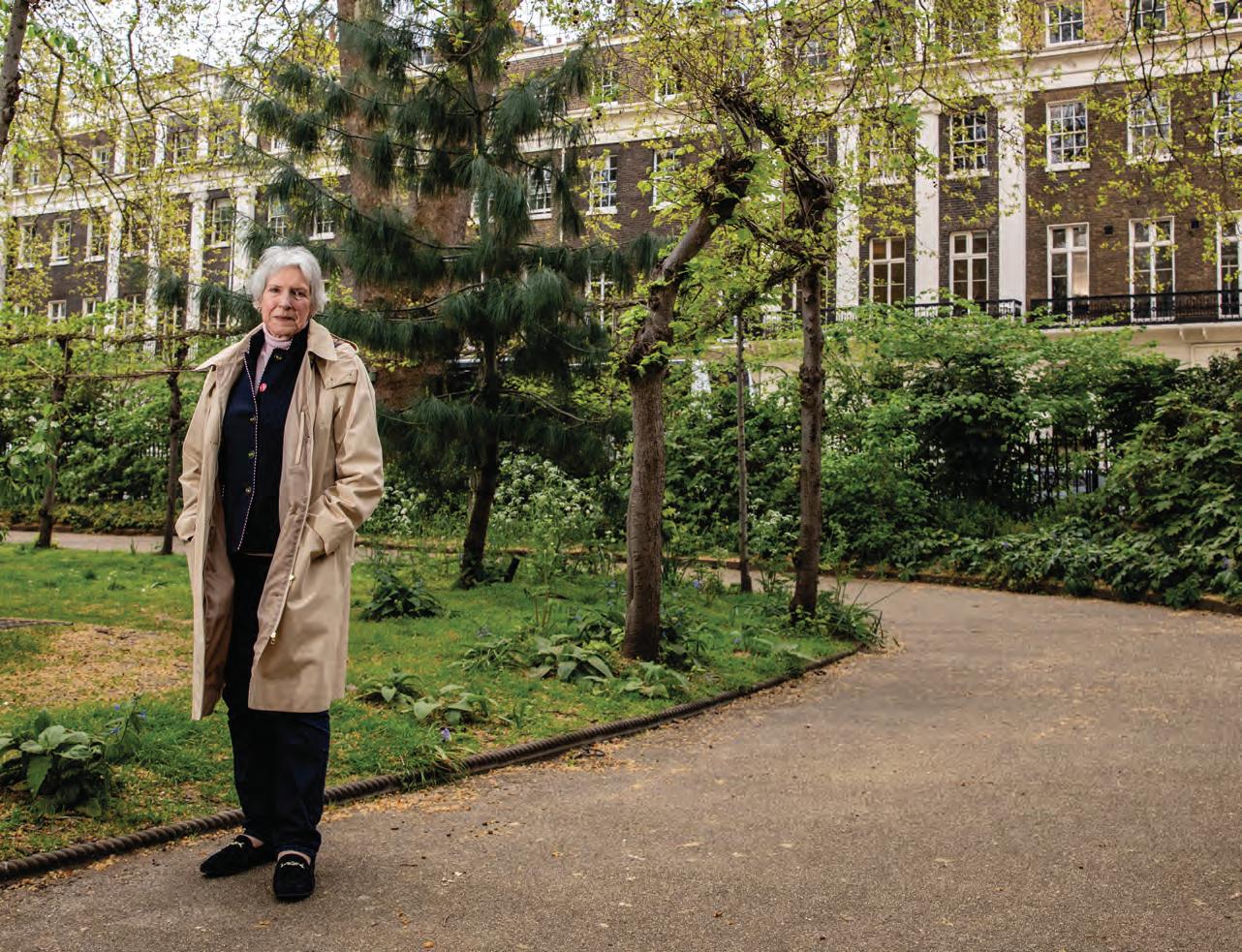
our Strategy, and to help us deliver it.”
What Hausmanis has done with IWFM is to pivot it from its founding role as primarily an organisation for networking and qualification development towards something more valuable. While still both of those things, today’s IWFM combines more focused communication and targeted, actionable guidance to members as well as, crucially, a conduit back to the government departments and other professional bodies whose work shapes the environment in which current and future FM professionals operate.
“I’m not that good at looking back and going,
“If you believe that the work we do shold have a standing in society, business, the economy, then we need you to get behind our Strategy and help us deliver it”
FM’S LACK OF BARRIERS
“I am proud of the fact that we have entry for all and no barrier to membership, learning or recognition. You don’t need a degree or to jump through any hoops. But, of course, we do have standards for you to aspire to reach. And there are so many avenues by which you can access this profession. You can scale to the highest of heights in this profession.”
IWFM’S EDI STANCE
“Our work on equity, diversity and inclusion has opened my eyes, and I know we have so much to do. I recognise that everyone is unique and we shouldn’t presume to know someone’s true motivation. We’ve now formally established an EDI subcommittee within the constitution and ethics committee as we look to be as robust as we can be in this area.”
A LOVE OF LEARNING
“All my six-year-old self wanted to do was become Mrs Boyd, my primary school teacher. I went through school loving education. If I could, I would have stayed at school forever. Even now, it’s why I still engage in programmes of learning.”
“I was proud that we supported Stan Mitchell and the development of the ISO suite of FM standards. That has done more to raise the profile of FM globally than anything else. Governments around the world are now taking notice, and we should be in a much stronger position to articulate to all organisations that FM is not a cost, it is a value to you and your organisational performance.”
‘Oh, that was really good work’,” Hausmanis concedes. “I'm always looking ahead rather than back. But perhaps sometimes I should pause to take a breath and recognise how far we've come.
“Ten years gives you a perspective you simply cannot manufacture," concludes Hausmanis. "I know this profession deeply. I know what our people need, what holds them back, and what the opportunity looks like. And the opportunity right now is significant."























































































On Wednesday 13 May, World FM Day 2026 takes as its theme ‘Cultivating belonging through built environments’. Martin Read, Bradford Keen and Nick Martindale took the opportunity to ask IWFM volunteers about how they go about doing just that
ILLUSTRATIONS: DAVIDE COMAI

o much has been said in recent years about what constitutes a sense of ‘belonging’. The Covid-19 pandemic, with the forced distance it obliged between workers, helped turn this often vague concept into one that is critical to organisational performance. Suddenly, ‘belonging’ became increasingly imbued with notions of safety, security and wellbeing. Performance in the workplace was more obviously tied to it.
It’s interesting to note how instilling a sense of belonging is on the list of must-haves in other built environment disciplines, not least in town planning. Creating public spaces and residential estates to foster a sense of community means that belonging forms part of conversations from initial design onwards. Moreover, this is often when consideration of inclusivity and representation through the built environment begins. Take this quote from a planning conference two years ago: “Addressing the lack of diversity in the built environment professions should be the starting point to addressing issues of inequality. It is
important that the people who make decisions about how places are used represent the communities that occupy them. Secondly, good design enables well-connected places, ensures access to fresh air and natural light, and can create a feeling of belonging or joy.”
That’s the view from those who plan buildings. For FMs dealing with the subsequent 80% of a building’s time in use, belonging is both a management issue (assuring a fit-for-purpose, inclusive, productive and welcoming environment) and a performance one (fostering team cohesion through emotional and physical support).
Tribal affiliations
There’s also a longer-term view. Community-focused FM affects everyone using the facilities, including those who will be using a building many years after the current occupiers have left. This means an operational mindset that evolves the workspace to be fit for purpose from the very beginning, catering, for example, for whatever disability may be an issue. And FMs are also dealing with their organisation’s HR policy. Collectively, FM and HR at its best sees the promotion of belonging, mutual respect and being part of something bigger as key to employee motivation and retention. When employees know their purpose and are a part of a wider team, they take part in evolving and improving the processes, working smarter and celebrating successes – helping each other instinctively.
Professional literature tied to this theme has been growing throughout the 2010s. Creating Emotionally Intelligent Workspaces: A Design Guide to Office Chemistry by Eddy Finch and Guillermo Aranda-Mena (2019) argued that the physical and social environment plays a critical role in fostering or undermining employee emotions, shifting focus from individual emotional intelligence (EQ) to the intelligence of the workspace itself. It also touched on how issues of trust, identity, belonging and sensemaking can be difficult to reproduce in a remote working environment.
More recently, consultant Simone Fenton-Jarvis has argued that “the workplace offers a reason to get together with our tribe. We need to tie what it is to be human to what the office provides for us.”
Ultimately, the commercial built environment has a role in creating community and belonging, every bit as important as the residential and public realm. An organisation’s colleagues and the community they serve thrive through
Turn up at an FM networking event, and you feel the excitement that exists among the sector’s professionals. FMs tend to be sociable, eager to connect with and learn from one another, and committed to growing the community by including more people.
No wonder that FM has such a keen ability to create a sense of community and common identity among different groups within single workplace populations. This proclivity towards sociability is even more important in the post-pandemic working environment.
“With so many people working remotely now, I think that there's almost a sense of isolation,” says Lee Cooper, IWFM North chair. “The key piece – when they do go to the office – is how welcoming everything is. A sense of belonging is more around camaraderie in the workplace. It's actually being included in the office.”
Not to elevate one IWFM community above another, but Veterans in FM Network chair, Louisa Clarke, says veterans have a unique capacity to create a sense of belonging. “Speaking from experience, you’re part of something bigger than yourself when you serve. That stays with you. Veterans bring a strong sense of team, accountability, and looking out for others. It’s not forced, it’s how we operate.
“We also know what it feels like to transition into something new, which builds awareness and empathy for others finding their place. That combination helps create environments where people feel supported, included, and connected quickly.”
shared connections, a mutual sense of belonging and purpose, encouraging personal responsibility. Over these pages, we’ve spoken to IWFM network, region and special interest
group members about how they go about developing belonging on a practical level (andyou’ll find more from other IWFM groups on World FM Day itself).
DANIEL TYLER:







“There should be no meaningful distinction between the public and private sectors. Both possess the capacity and responsibility to drive genuine inclusion within their organisations”



FM’s ability to connect people and provide spaces where differences can be celebrated and incorporated can lead to greater business outcomes. But there is also a broader social value component here – both in the public sector procurement definition of the phrase, and interpreted as a more intrinsic interpersonal connection.
Daniel Tyler, chair of IWFM’s procurement & contract management SIG and property contracts performance manager at City of London Corporation, talks of “FM teams actively engaging with neighbouring London boroughs, some of which are among the most deprived areas in the UK, to foster social value, inclusion and social mobility.”
Kam Singh, IWFM Sustainability SIG chair, looks at the broader ESG initiatives, urging companies to “embed it into the overall business strategy” because: “Responsibility then cascades down through teams and into the wider organisation.”
As for the less formal, interpersonal notion of social value, this can be increased






SARAH JOWETT
“The biggest issue is fairness. You get long-term occupants forming little fiefdoms, thinking ‘this is my space, my desk’. Setting the balance of work, delivery, and responsibility is key, and you need high-level backing for that. FM plays a big part, but unless the culture supports belonging, it won’t work”
through something as simple as FM hosting cultural events.
“Cultural events are probably the best opportunity to enable things,” says IWFM South West chair Richard Kimber. “We just had Eid, and making sure that you’ve got a space where the local community, not just the people who work for you, can break their fast and pray together can help you pull communities into your organisation.”
Regi Taylor, IWFM South chair, agrees: “FMs can take it upon themselves to make things a reality. Sometimes there’s so much for management to do that they might not realise that Ramadan is happening, for example. It’s up to facilities to put it on the radar, and to make sure that staff feel celebrated and accepted.”
FM’s ability to create real social value for people is best explained by an early-career experience of IWFM Customer Experience SIG member Jamie Thomas while working at an MoJ Approved Premises.
“I was still early in my career, still seeing FM largely
through an operational lens. But one evening, watching a theme night unfold, everything shifted. Residents who normally held themselves tight eased into conversation; the room softened; the space felt less like a system and more like a community.”
Ask FMs for similar stories of the sector’s power to create community, and they will start at the top of a very long list of magical moments. We really enjoyed this one from IWFM Catering SIG chair Simon Biggs.
“A few years ago, I was working with a company that was redesigning its catering. It wanted to downsize the restaurant and turn it into a café, and have half of it as a games room with a snooker table and a table tennis table.
“I couldn't get my head around it, but they had done an employee survey which found that people wanted time to come together and relax. I remember visiting it afterwards, and I couldn't believe the electric atmosphere that was in that restaurant from people using it as a space to have fun. That’s always stuck with me.”
SIMON BIGGS
“Businesses need to make sure that the actual setting within the building allows people to fulfil their job in a more satisfying way” way”




CHANGING ATTITUDES
Much is said about the differences between generations, with labels and characteristics applied that can be simultaneously pejorative or praiseworthy depending on the speaker.
Undoubtedly, though, these generational shifts place fresh demands on FMs to ensure workplaces cater for all users’ needs. Thomas reflects on the changes he has seen in his working life: “When I started out, belonging was often treated as something you earned by blending into whatever culture you walked into. That’s not how people see it now. Today, they want workplaces that accept differences in identity, background, neurotype, life circumstances and working style.”
IWFM Scotland chair Mark Jenkins also reminds readers of the differences among workers – and that FM’s role is to accommodate everyone as best as possible. “Some younger professionals may expect flexibility as standard and can be more open about the importance of wellbeing and work-life balance. Those with more experience may place greater value on stability, trust and long-term working relationships.”
Nevertheless, as Taylor argues, we could all learn from the younger generations increasing in numbers across the workforce. Notably, she points to Gen Z colleagues’ flexibility and tendency to accept and celebrate differences as behaviours to emulate.
MARK JENKINS
“A genuine sense of belonging is created when people feel respected, supported and able to contribute with confidence”



UNEIL FRIGHT
“People who choose not to work in London have


typically chosen a different work-life balance or trajectory. You see that in behaviours and workplace culture. Employees tend to stay longer, planning horizons are longer. People place more value on work-life balance and community”






ndoubtedly, it is FM’s responsibility – assuming there is sufficient support from leadership – to create spaces in which people feel they belong.
As Biggs says: “Businesses need to make sure that the actual setting within the building allows people to fulfil their job in a more satisfying way. Spaces such as breakout areas and
coffee lounges allow people to collaborate and be more productive. From a catering point of view, it’s about having seating booths or courtesy screens so people can have informal meetings in a safe environment.”
Customisation is key. There is no one-size-fits-all solution. Thomas says it best: “No two people experience a space in
the same way. A room that feels energising to one person may overload someone else. A layout that feels intuitive to some can be disorienting for others.”
The prevailing and perennial narrative in the sector has long been one of inclusion – with the target of inclusivity changing over the years. Consider how, not too long ago, the big focus
was on creating workplaces to accommodate multiple generations. (See ‘Generational shifts and evolving expectations’.)
Frequently, the conversation centres around people with neurodivergent traits and how best to accommodate them in a modern workplace. Again, Thomas is right. No two people’s needs are identical.
FROM THE TOP DOWN
Just like a chef’s meal will only be as good as the ingredients in their pantry, so too is an FM’s capacity to create belonging dependent on the culture of their organisation, or their client’s organisation.
Unanimously, our correspondents cited the importance of leadership, both desiring and embodying a workplace culture that invites their people to belong, to feel accepted, psychologically safe and a part of something bigger.
“When values are clearly led from the top and felt throughout the organisation, it helps create an environment where people feel valued, included and connected to a shared purpose,” says Jenkins.
For Singh, today’s language may be different, but what’s driving modern workers and employers remains the triple bottom line. “They’re interested in commercial success, but also the social aspect, how the company treats people, and its environmental responsibility. People might not use the phrase ‘the triple bottom line’ anymore, but they are definitely thinking that way when evaluating workplaces.”
Despite differences that exist between the public and private sectors, Tyler says: “Many impactful changes can be achieved by re-evaluating existing approaches, fostering a culture of openness, and making incremental adjustments that prioritise diversity and representation.”
So leadership, culture and shared values are the starting points. Once these have been set, FM has a massive role to play in facilitating spaces and services that support workers’ sense of belonging.


LEE COOPER
Creating safe spaces for people to do their best work requires a fine balance between current demands and future anticipation and growth. Taylor, explains: “When you create a new building from scratch, it’s about thinking ahead about the potential new workforce coming in. You need to make sure that it is accessible for people who perhaps use a wheelchair or have a vision impairment or hearing impediment.”
KAM SINGH
“Even
within something like autism or ADHD, everyone’s needs are different. Individualised support plans - templates for conditions like autism, ADHD and dyslexia - guide managers and employees through a process of identifying specific needs and support mechanisms”


RICHARD KIMBER
“Design
the space without looking at the desk spaces first; think about the toilets, kitchens and breakout spaces, then worry about desks afterwards. Make sure it’s light, airy, heated or cooled.
It’s going to be of a fair standard”
“With so many people working remotely now, there's almost a sense of isolation. The key piece – when they do go to the office – is how welcoming everything is”
Ultimately, though, the fundamentals remain. IWFM Wales chair Sarah Jowett says: “Most people in property management will know it’s the basics that matter.
“Things like good quality toilets and hygiene facilities are often overlooked, especially for people who are peripatetic, working out and about. In rural communities, where I live, there isn’t a McDonald’s or somewhere to pull over, use
the loo, wash your hands, and grab something to eat; it just doesn’t exist.
“The biggest issue is fairness. You get long-term occupants forming little fiefdoms, thinking, ‘this is my space, my desk’.
“Setting the balance of work, delivery, and responsibility is key, and you need high-level backing for that. FM plays a big part, but unless the culture supports belonging, it won’t work.”
Singh says something as simple as having a clear recycling policy or visible, easy-to-understand recycling stations can give people a sense that they belong at their organisations – businesses that care about the environment rather than see it solely as a compliance function. The same is true for supplying responsibly sourced coffee at the coffee machine. “People notice that. They make a mental note of these things.”
REGI TAYLOR:
“Gen Z are much more flexible and accepting of differences… It means people feeling comfortable in the workspace, feeling that they can be their true selves without having to put a mask on before turning up to work. That’s the ideal workplace”

LOCATION SPECIFIC




Speak with most of the IWFM regions and nations’ chairs, and they will tell you a similar story: outside of major urban centres, it is much harder to sustain a sense of community. The major challenge is geographical and the related limitations when it comes to public transport.
Cooper in the North says: “The biggest challenge is the geography. You've got rail links, which is fine when they're working.” Although that doesn’t mean you won’t be travelling for extended periods to get to meetings. There are, after all, only limited numbers of high-speed rail links.
Sitting in one’s own car doesn’t necessarily mean smoother travels either. Cooper says: “I'll go for two or three meetings, and I'm driving three or four hours just to get to those meetings. It's probably the biggest challenge in the North.”
And when there is an accident on the motorway, a one-hour journey can quickly become three or four hours, he explains.
Jowett in Wales cites limited public transport as an issue, especially in the rural areas of the country. But connectivity, more broadly, can also hinder workers and their ability to bond with others. “Broadband can be poor. This affects how workplaces function and what’s feasible for employers.”
Of course, not all nations and regions are blighted by precisely the same challenges. For many in the East of England, they could commute to London for work. But as region chair Neil Fright points out, they choose not to because they want a “different work-life balance or trajectory” – and this has implications for the workplace.
JAMIE THOMAS
“People feel connected when there’s psychological safety, when spaces feel designed with them in mind, and when relationships can happen naturally rather than cautiously. Younger colleagues expect customisation and agency. Others value predictability and clarity. FM sits between, shaping spaces that give people options, not ultimatums”





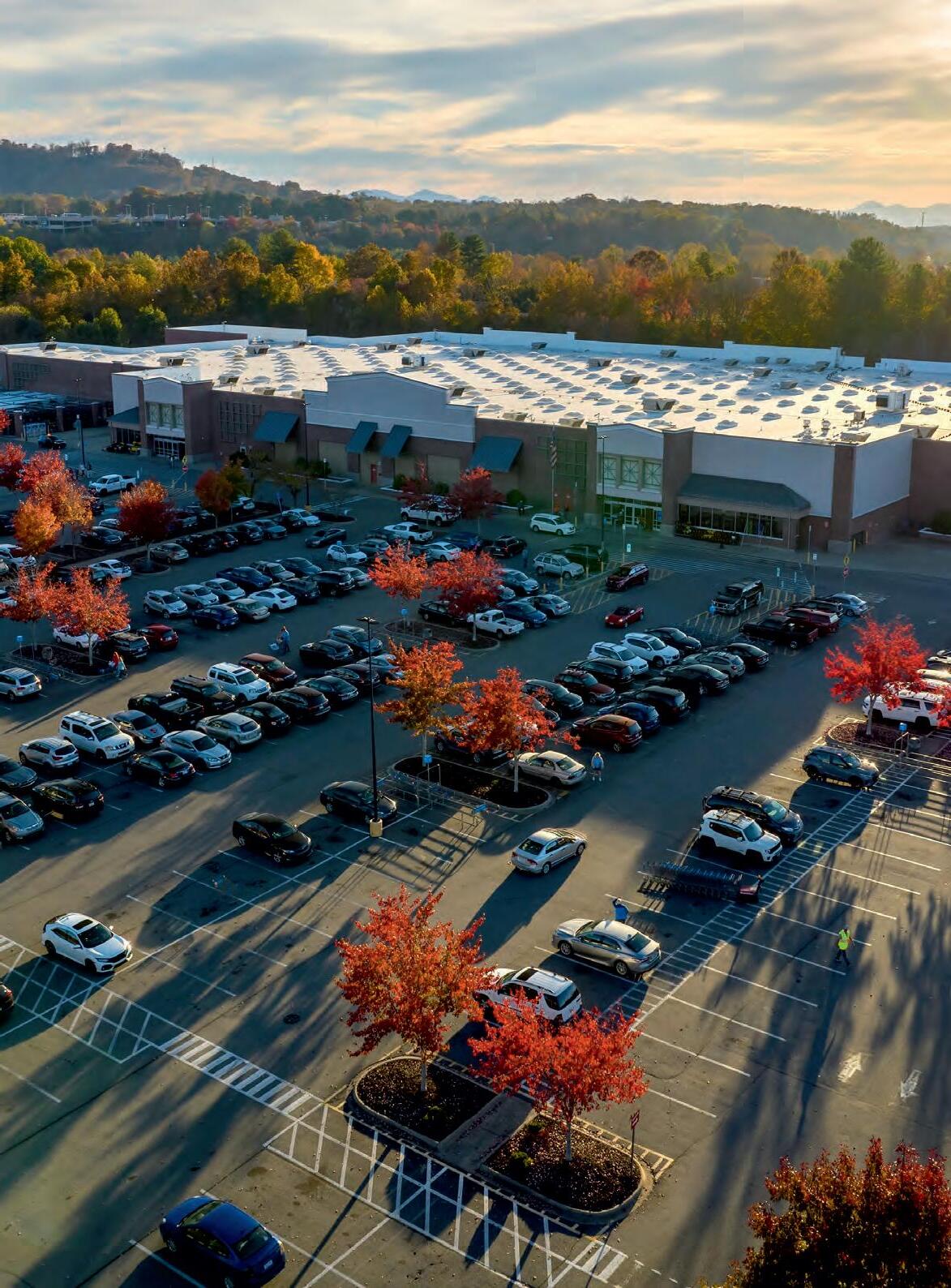
42-43
Lynda Rawsthorne, Heather Nicholson, Chandra Hughes, Alex Horsfall-Turner
44
IWFM East Region chair
Neil Fright provides an update from the community
45
Mark these workplace and facilities management events in your diary
46-47
Chris O’Donnell and Andy Dunn give us a glimpse behind their jobs

Don’t do more work for the same pay – unless it’s part of a coherent career strategy
Your line manager asks you to help out on a new project, mentor someone junior, lead meetings or fix problems a little beyond your scope. You have more work and responsibilities, but your pay cheque doesn’t show it. If this is you, you could be experiencing ghost growth.
Wait, this is just normal work stuff, right?
To a point, yes. Roles evolve. Businesses have busy periods. People need to rise to the occasion. But as Peter Duris, CEO of Kickresume, says, there’s a line that many organisations cross.
“It can be very frustrating for workers to take on extra tasks when they don’t feel like their work is being recognised or rewarded.”
When extra effort becomes the baseline expectation, a star employee can soon become resentful and resign.
Is this issue worsening?
Unfortunately, it is – often caused by leaner teams, tighter budgets and, perhaps, part of the hybrid disruption with organisations asking fewer people to do more. Those most affected, it seems, are high performers.
Duris explains: “Sometimes managers might be reluctant to promote their best team members because it can be hard to find someone to fill their current roles.”
That’s OK for managers but grim for those overloaded with new tasks.
What does ghost growth look like in FM?
Officially, you’re an FM –and we all know how the role expands and evolves – but extras add up, and you still have the same job description and salary.
Maybe you’re managing additional sites or floors
without extra support, taking on ESG, wellbeing or tech responsibilities, covering roles during vacancies that somehow never get filled, and becoming the unofficial ‘fixer’ for everything from access control to office culture.
That can’t be good It’s not. Ghost growth affects employees, and poses an operational risk. Overstretched teams are more likely to slip up on maintenance or security, struggle to spot issues or deliver the type of user experience visitors expect. And when roles double in size, performance seldom grows with it.
Employees must revolt? Or something like that Hang on. Why don’t we
start by following Duris’s suggestions. “Make a note of extra work you take on… and any evidence of your impact.”
If you’re doing a bigger job, you need to be able to show it when the conversation about pay or progression comes around. He also recommends assessing whether the additional work is taking you where you want to go. If not, ghost growth may be derailing your career path.
Do you think ghost growth has benefits? More responsibilities and opportunities can build skills, confidence and visibility. But they need to be temporary, acknowledged, and leading somewhere. Otherwise, it’s just unpaid overtime.
NOW IS THE TIME TO BE BOLD
Every day, the workplace and facilities management profession faces uncertainty; no two days are ever the same, and even with the most meticulous planning, our daily plans will change.
It’s the nature of what we do, and for a lot of us, it’s why we do what we do and love it.
We are, indeed, in uncertain times, but when aren’t we? It’s just the scale of that uncertainty that changes.
Today, we not only face changes in legislation, increased emphasis on sustainability and workforce pressures, but also potential supply chain issues driven by the current war in Iran.
We are looking at rising costs in just about every area that we come into contact with. The increasing price of oil affects everything from manufacturing parts to deliveries. It puts extra pressure on staff as the cost of living has an impact on them outside the workplace.


Higher up the organisational chain, our leaders need to anticipate this change. In many ways, WFM holds crystal balls, and the best WFM professionals read those crystal balls with spectacular accuracy. We need to translate the most complex scenarios into bite-sized information bundles that colleagues on the ground can understand, while communicating the risks and impact with C-level and board colleagues so they support the required changes.
The single most important skill workplace and facilities managers can practice is adaptability.
WFM is at the heart of everything: people, buildings, budgets and compliance. We need to adapt to changes, especially when they are economically led and affect on organisational priorities.
Flexibility keeps our sites and operations running. If something needs to change, don’t hang about – you may have already missed an opportunity. It’s time to be bold!
We need to be able to translate the most complex scenarios into bite-sized information bundles
NOTHING BUT OUR BEST


Which quality feels most valuable right now for our sector?
I’m drawn to three: curiosity, resilience, and professionalism. In a world shaped by rapid change, curiosity feels like a superpower. We need to understand what new tools can do for us and explore how they can improve our effectiveness. But professionalism is just as vital. It keeps us grounded, helps us recognise the real limits of emerging technology, and keeps us close to the standards and guidance our professional bodies provide. Our focus must always come back to risk, outcomes, safety, and compliance.
We bring hardwon experience to everything we do. We should feel confident questioning what we’re told, because sometimes it really is wrong.
Resilience, though, is what carries us. The first time I heard the phrase “change will never be as slow as it is now”, it stopped me in my tracks – but it has proven remarkably true.
I smile when I remember how the arrival of a computer on my desk once felt like the most significant shift I’d ever


experienced at work. How little I knew! The ability to keep moving forward, to stay calm and steady when those around us feel unsettled, is something I genuinely admire in people.
In a world shaped by rapid change, curiosity feels like a superpower
Working at the Foreign, Commonwealth and Development Office, where I'm responsible for a global estate spanning 180 countries, I see the importance of all three qualities every day. It takes curiosity, resilience, and professionalism in equal measure to navigate our projects well.
Of all three qualities, I’d choose professionalism.
I’m proud to be a FIWFM, and I’m grateful for an institution that champions our continuous professionalism. The estates we manage shape the daily lives and safety of the people within them – and that deserves nothing less than our very best.


There is a longstanding joke in FM that if we do everything perfectly, nobody notices at all.
But the world we operate in has changed. With fluctuating occupancy, rising energy costs and debates about the future of work, staying invisible is not an option. Our value is tied not to what we fix, but how well we reassure people in our spaces.
Which is why modern FMs need to be strategic communicators. We operate at a high-pressure intersection of physical assets and human experience. On any given day, I might explain an HVAC failure to a frustrated CEO, negotiate a contract with a service partner, arrange access for a specialist engineer and reassure 500 anxious tenants – all before lunch. Fixing the fault is half the job. Take a burst pipe in a reception area. From a technical perspective, it’s routine. But if the work happens without communication, the situation can spiral. Rumours spread. Confidence drops.


Imagine instead that a message goes out explaining what has happened, which areas are affected, what remains operational and commits to an update within a clear time frame. The disruption is there, but the mood is different. People feel informed, respected and in control. That comes down to trust. I think of a trust reservoir. Communicate clearly during normal operations and build goodwill over time. When something goes wrong, that trust gives us breathing space. People are patient when they are informed and told the truth.
Strategic communication makes FM a source of insight. We translate technical risks into practical information so leadership can make decisions. We help organisations understand what is happening and why it matters.
Our technical expertise keeps buildings running. Our communication keeps organisations functioning well. Creating confidence through clarity is our most critical infrastructure.
Strategic communication makes FM a source of insight


Certainty is a luxury. With the pandemic, wars, energy shocks, economic turmoil, evolving workplace expectations and tightening budgets, conditions for estates teams are unpredictable. Technical expertise remains essential, but characteristics that matter most are resilience and adaptability.
A concept that captures this comes from Finland, as does my wife, Elina. She often mentions sisu, a Finnish word that loosely translates as determination, perseverance and inner strength in the face of adversity. It’s the quiet, practical resolve to keep moving forward when circumstances are difficult or uncertain.
For estates professionals, sisu feels relevant. Our essential but unglamorous work sits at the intersection of infrastructure, people and place. Buildings must remain safe, efficient and welcoming regardless of external disruption. That means dealing with fire risk assessments one day, addressing sustainability the next, and managing unforeseen plant room failures with Legionella and asbestos risks the day after.
Resilience is about adapting intelligently and maintaining the continuity organisations need.


Whether navigating energy transitions or new technologies, or rethinking how spaces are used, estates teams turn strategy into reality. Adaptability is a daily discipline: learning new systems, analysing data, reassessing priorities, and finding workable solutions under pressure. This is part of the FM job description. It requires curiosity, collaboration, and a willingness to experiment, but also steadiness to keep operations running smoothly. That’s where Sisu comes in. It allows professionals to persist, adjust and improve even with an unclear path ahead.
For estates professionals, sisu feels particularly relevant
In uncertain times, estates teams don’t just need technical capability. They need people with the resilience to endure and the adaptability to evolve; people who keep buildings, and the organisations inside them, functioning no matter what.
Despite recruitment and supply chain challenges, a strong sense of heritage and identity is driving the practice of FM in IWFM’s East Region as Neil Fright reports
What makes the FM community in the East unique?
How vast the region is, how cities can feel quite isolated from each other, and its heritage, strong cultural identities and communities. People feel locally connected, but when you zoom out to the wider FM profession, that connection is weaker. There’s a clear desire for more professional support and networking opportunities to grow peer groups.
What pressing local issues or trends are affecting FM?
Supply chain and recruitment. It’s hard to invigorate the supply chain, and recruitment is limited by geography. Encouraging more people into the industry is key.
There’s optimism in engineering; for example, developments like Sizewell C are driving investment in skills and education. That’s raising the region’s profile. The challenge is linking that back to day-to-day FM.
How are you supporting professional development?
We plan to run events in each major city over the next 12 months that focus on CPD. Career pathways are another big theme – how people enter the profession and choose FM as a career.
We’re engaging with communities, colleges and universities to connect those institutions with employers.
How have economic or social shifts influenced your region’s priorities?
Hybrid working has had a massive impact. There’s still a challenge
around getting people back into offices, or even defining what the office should be. Recruitment is affected, particularly for roles that require five days on-site.
How has the role of the region changed as needs have evolved?
The region hasn’t had a strong voice as it has been diluted between the Midlands and London. The priority is building that sense of community.
Which business sectors in your region are most innovative from an FM standpoint?

The university sector stands out. The University of Suffolk has developed facilities that combine virtual and real environments – spaces like dentistry labs, courtrooms and IT facilities that are real-world environments to support learning. Higher education is very strong in the region, and that feeds into wider FM innovation.
Cambridge as a city is a strong example of how to approach development – integrating facilities into the city.
Developments like Sizewell C are driving investment in skills and education. That’s raising the region’s profile. The challenge is linking that back to day-to-day FM
19-21 MAY - LEEDS
UKREiFF (Real Estate Investment & Infrastructure Forum)
Professionals from national and local government, the built environment, and investors meet to drive sustainable, inclusive and transformative investment and regeneration.
b.link/FacilitateMJ26-09
10-11 JUNE - LONDON
CIPD Festival of Work
The event brings together expert speakers, interactive experiences and meaningful networking focused to improve performance and productivity.
b.link/FacilitateMJ26-05
16 JUNE - LONDON
IWFM Live!
A feature-filled, speakerpacked, real-life event free to all IWFM members. The conference will tackle some of the biggest issues facing the industry today, and look to the future and the vital role WFM plays in the built environment and beyond.
b.link/FacilitateMJ26-08
16-17 SEPTEMBERBIRMINGHAM
Environmental Services & Solutions Expo
A showcase of sustainable services and environmental technology covering net zero, decarbonisation, resource management, circular economy, water scarcity and management, and energy solutions.
b.link/FacilitateMJ26-07
22 SEPTEMBER - LONDON
Wellbeing at Work Summit
Takes place in 22 cities globally, providing leaders and employers with tools and insight to create
comprehensive people and wellbeing strategies fit for the ever-changing workplace.
b.link/FacilitateMJ26-04
1 OCTOBER - LONDON
Future of Work conference: expo 2026 Gain insights into workplace transformation, change management, employee experience, culture building and more. Hear from leaders on the tools, thinking and practice to drive change.
b.link/FacilitateMJ26-06
13-14 OCTOBERMANCHESTER
Healthcare Estates Engage with the issues shaping the sector through a programme of presentations and workshops. Also includes a free-to-attend exhibition featuring presentations with sector leaders.
b.link/FacilitateMJ26-03
20-21 OCTOBERMANCHESTER
Education Estates Education Estates® explores the funding, design, build, maintenance and management of schools, colleges and universities, including funding, design, construction, management and maintenance.
b.link/FacilitateMJ26-02
25-26 NOVEMBERLONDON
Build2Perform Live
This CIBSE event returns to elementalLONDON with two dedicated stages focused on the future of building services and building performance with engineers, consultants and policymakers exploring the biggest challenges in delivering high-performance, netzero buildings.
b.link/FacilitateMJ26-01




What do you do? I’m head of facilities at The Trampery, a purpose-led enterprise making business a positive force in society, providing workspaces, venues, management and training services.









What attracted you to FM, and how did you get into the industry? I worked in retail, then retail operations delivering small projects, liaising with contractors, planning and reviewing works. These aspects suited my personality and I made a decision to move into a more operational role. I picked up my first FM role and haven’t looked back.




























How long have you been in your current role?



Which “FM/Workplace myth” would you most like to put an end to? I advocate for my team to communicate their successes and achievements to colleagues. Often, FM works behind the scenes – the cleaners who are in early morning, finish before others arrive, or improvements are made in the hidden plant room. It’s easy for colleagues to think, ‘what are they doing?’ – we need to communicate it to them.




worked for the organisation in the past as an FM. Previously, I was estates manager at The Design Museum.







t and task-focused, n ys. However, nd the ing
Do you see yourself predominantly as a task or a people manager?
From an outside pers be very process and task-focused, which it is in many ways. However, there is always a person behind the process – from creating and reviewing reports or a tradesperson completing a job. It’s important to balance both.
CHRIS O’DONNELL is head of facilities at The Trampery, which provides workspaces, venues, training and management services in London





Would you describe your role as predominantly operational or strategic? I see a transition from predominantly operational as a facilities/ estates manager to now strategic as a head of facilities.
How many people are there in your FM team, and to whom does the FM team ultimately report? Five in total. Three FMs split between six sites – some are multi-site managers depending on size – a building services engineer and a project manager.
My top perk at work is… I can work for any of our sites as well as remote-




working. Having the flexibility allows variety and adaptability, but with an emphasis on work-life balance.


What has been your biggest career challenge to date? Moving from a workplace FM to an FM at a museum was a challenge. A lot of systems/processes are the same, but there are many industry-specifics. exhibition changeovers, environmental conditions for collections, etc.
Luckily, I had an experienced manager and mentor who was able to direct my efforts (thanks, Tom!).
If you could change one thing about the industry, what would it be? FM is often viewed as a budget spender as opposed to a value adder so it’s often at the top of the list of budget reductions. The industry needs to reposition itself, communicating the value we add to our organisations as opposed to the money we spend.
What advice would you give to a young facilities/workplace manager starting out? Be nosey and take an interest in all disciplines. As FMs, we often span a range of areas – from M&E and H&S to security and cleaning. It’s important to have knowledge across a wide range of subjects. Talk to your subject experts, pick their brains, shadow them and review their reports.
Early bird or night owl? Early bird to avoid the rush hour in London (although on weekends I am a night owl – a vicious cycle!).
What FM job in the world would you love more than anything? I enjoyed working in the museums/heritage sector at the Design Museum. So a historic building like the Natural History Museum or the Royal Albert Hall would be.
And where would FM be an absolute nightmare I could imagine a hospital would have an incredible amount of challenges – the 24/7 use of the building, the critical nature of the activities, the age of the infrastructure…

If I wasn’t in FM, I’d probably be… Likely something industry adjacent – project management, operations
Your life outside FM mostly involves… I gym five or six times a week and value evenings and weekends with my partner. Hobbies keep me busy; playing piano, reading, watching films, and there’s always a DIY project I am halfway through at home.








What do you do? I am a regional workplace operations manager for Experian. I mostly focus on FM Services UK&I, but my team has a global remit for Travel and Fleet.
What attracted you to FM, and how did you get into the industry? I spent a decade working in service operations in retail and manufacturing at Games Workshop – an opportunity arose to lead the estates operations, and my focus on customer service delivery felt like a good fit, as our internal stakeholders and staff are our customers. I found that an attitude of getting things done as agreed has transferred perfectly.
How long have you been in your current role? Two-and-a-half years.
ANDY DUNN is the regional workplace operations manager at global data, analytics, and technology company Experian, at its UK base in Nottingham
Do you see yourself predominantly as a task or a people manager? A people manager predominantly, however, leading on projects and strategic direction has involved being able to grip tasks well to deliver on time through the teams.
Would you describe your role as predominantly operational or strategic? Predominantly operational; however, strategic vision and leadership for the team are essential.
How many people are there in your FM team, and to whom does the FM team ultimately report? Circa 100 FTEs through a third-party IFM with three direct reports within Experian. Our FM team is ultimately part of procurement.
My top perk at work is… It is being able to work on different things every day and being able to explore and understand how our workplaces could function better for our internal customers.
What has been your biggest career challenge to date? It's hard not to pick the reset during Covid-19. The demands and stress were immense. What was hard





was balancing the very important needs to protect staff, whilst getting things done.
If you could change one thing about the industry, what would it be? I would change the perception that service staff tend to have – that they are subservient. We are the engine that fuels the workplace, allowing our colleagues to perform at their best.
Any interesting tales to tell? I started my FM journey with holes in the floor to deal with an asbestos issue under the office. What a way to start!

If I wasn’t in FM, I’d probably be… I always wanted to be an RAF pilot and even went to Cranwell IOTC; however, realistically, I’d have loved to be in F1 on the pit wall in engineering.
Which “FM/Workplace myth” would you most like to put an end to? The workplace being boring, it really isn’t. You should hear stories about some of the projects we deliver.


What advice would you give to a young facilities/workplace manager starting out? I would let them know that it’s OK that they don’t know the answer. I would guide them to be open and honest in all dealings and to do what they say they are going to do. In FM, we overcomplicate things and worry that we don’t have all the answers. Getting going and making incremental changes is very powerful over time.
What was the weirdest day you’ve had in the office? I stayed up till 2am to hear the results of air monitoring in our factories, stopping global production. I had a surreal conversation about paint with the COO around 1am.
Early bird or night owl? Probably a night owl, I have begun to value quiet time to ensure delivery of updates.
What FM job in the world would you love more than anything? Aston Martin F1 estates director would be pretty cool.
And where would FM be an absolute nightmare? FM in government. Financial approval is hard enough!


Your life outside FM mostly involves… I have a passion for hiking and getting outdoors, be it mountains, skiing, camping or off-roading in my 1984 Land Rover 110. Equally, I have spent 30 years painting toy soldiers and enjoy a beer and BBQ weekend with my friends!






FM
While the FM role has expanded beyond just keeping the lights on, too many FM teams tell us they are still working across disconnected systems, legacy CAFM platforms and spreadsheets that only tell part of the story.
Our platform brings everything into one place. Assets, maintenance, contractors, compliance – all visible, connected and in real time. Less chasing. Less admin. More time improving how things run.
And it’s designed to be used. No unnecessary complexity, no long, painful roll-out. Just something that works the way FM teams do. That approach already supports Fitness First, The Co-operative Bank, Prezzo and UP Fitness, where teams have moved toward more structured, proactive working with clearer oversight of spend, performance, and risk across multiple sites.
Giving FM a voice – not just better
In FM, a lot of work behind the scenes doesn’t get the recognition it deserves. The FM Fix podcast is something we launched to have real conversations with people in FM. Hosted by our CEO Josh and COO Tom we discuss what’s really going on: sustainability pressures, budget trade-offs, digital transformation, career paths.
The FM Fix is for anyone in FM to listen to and be part of; some of the best conversations we’ve had have come from people who didn’t think they had anything worth saying, but turns out they did. You, too, can get involved.
systems, not more complexity
Our view is simple: if your CAFM doesn’t make life easier, it doesn’t
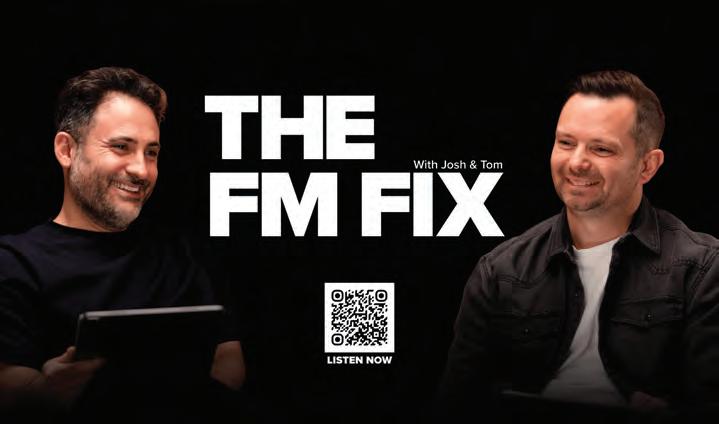
In 2026, FM teams are managing compliance, driving sustainability, controlling costs, and keeping operations running across increasingly complex estates. But while the role has evolved, the experience of doing it hasn’t always kept pace

belong. Better reporting, clearer data, seeing where time and budget actually go without pulling it together manually – these insights make it easier to spot patterns and have meaningful conversations with the wider business.
Everything’s in one place… I’m not searching for paperwork or chasing contractors anymore
Kevin Short, head of facilities at UP Fitness
expansive AI helps to log jobs without second guessing the detail, analyses quotes to ensure you’re getting the best value, handles invoices without the back-and-forth, and pulls out actions that actually matter from compliance documents. For time-poor FMs, this makes a huge difference.
Online at expansivefm.com, or on LinkedIn where Josh and Tom regularly post – and love it when you join in with your comments. We’ll be at IWFM Live! this June, running a workshop on how CAFM and AI are helping FM teams move from reactive to strategic. We’re also sponsoring the IWFM Impact Awards ‘Everyday Excellence’ category. If you’re attending, come find us. Or tune into The FM Fix.

52
Ever heard of relational spaces? They facilitate how people connect
Although essential, load bank testing can be rendered ineffective if carried out incorrectly. Here are five common errors maintenance teams need to avoid.
1
Skipping regular testing
Since back-up power supplies are largely used in case of emergencies, it’s easy to neglect regular testing. However, this increases the risk of unexpected failures when generators are needed most.
Routine load bank testing should be part of your maintenance schedule to identify issues early, prevent costly repairs and ensure back-up power sources are operational. Regularly scheduled testing helps businesses to remain compliant with industry standards; for example, ensuring emergency lighting systems are functioning and able to safely guide building occupants outside.
2 Low loading
While regular testing is key, simply connecting power units to a load bank and running them at a low load can lead to serious issues in itself. When generators operate under loads of less than 40% of their rated power for prolonged periods, carbon deposits can accumulate, leading to ‘wet stacking’ and reduced efficiency. This can increase maintenance costs and reduce the lifespan of the generator.
53
Workplace hospitality closes the gap between design intent and operational reality
55
How to convert ‘wasted’ land such as car parks and grass verges into energy generators
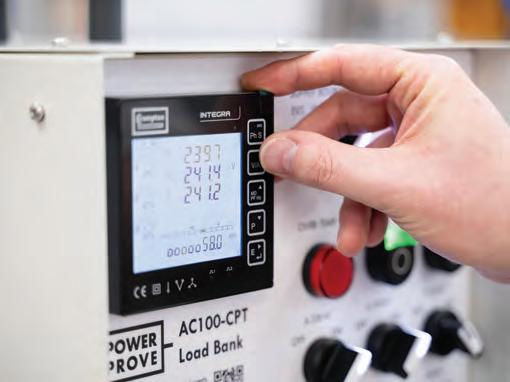
ENERGY MANAGEMENT
Load bank testing is a non-negotiable requirement for any business relying on electrical power, says Andrew Keith
Regular load bank testing at the optimum load ensures generators operate within optimal parameters, improving performance and reliability.
3 Underestimating load testing requirements
With low loading in mind, it’s important to assess the power requirements for testing. Selecting a load bank with insufficient capacity can lead to incomplete testing and an inaccurate assessment of back-up power systems.
On the other hand, significantly overestimating requirements can result in unnecessary costs. Aim for a load bank set-up with a
57
The way you manage data affects compliance across multi-site CRE portfolios
to conduct thorough and frequent tests, particularly in remote or hazardous locations.
Advancements in digital load bank control systems allow for real-time data collection, remote operation and predictive maintenance. Investing in modern load bank solutions ensures faster, more accurate testing and enhances overall power system reliability.
Load bank testing is only as valuable as the insights gained from it. Failing to record and analyse test results can render the process ineffective, as businesses miss out on key trends and early warning signs of potential failures.
slightly higher capacity than your current equipment requirements, allowing for effective testing and room for future growth.
Ageing load bank technology is less precise than modern load banks, which can lead to inaccurate test results.
Additionally, older load banks often lack automation for modern power testing. Manual systems require on-site adjustments, making it difficult


ANDREW KEITH is division director of load bank manufacturer Power Prove
Traditional manual data collection methods can be time-consuming and prone to errors, making it difficult to track performance over time. Modern load bank systems automatically record and store test data in accessible formats that are downloadable onto a USB. This enables quick analysis and integration into predictive maintenance strategies, ultimately reducing downtime and improving overall system reliability. By avoiding these common pitfalls, organisations can enhance their load bank testing and ensure back-up power systems are ready for any situation.
On-site generation can solve one problem for data centres – power availability – while creating another: large volumes of waste heat.
Absorption chillers turn that waste into a useful asset, producing cooling with little electrical input and reducing the power penalty typically associated with chilled water.
The timing of absorption chiller innovation is pertinent. AI-era growth is pushing many operators into the same constraint at once: the grid can’t always deliver power where and when it’s needed.
Across major markets, connection lead times are extending, available capacity is being capped, electricity prices are rising, and confidence in future reinforcement schedules is weakening. These conditions are reshaping decisions around where to build, how fast to expand, and how to de-risk delivery.
Generation is key
On-site power is becoming part of the default design, with projections indicating that by 2030, one-third of data centres may be operating as fully on-site-powered campuses. That shift comes with an often overlooked efficiency lever: only 35-50% of the fuel energy is converted into electricity; the remainder is released as high-temperature thermal energy. Instead of rejecting that heat, it can be recovered for cooling, adding
Waste
heat
can be adapted to function as data centre cooling, says Mihir Nandkeolyar
capacity instead of straining an overcommitted grid.
Absorption chillers create a Combined Cooling and Power (CCP) plant to recover otherwise wasted energy from gas turbines, fuel cells or engine-driven generators to power the thermally driven chiller to produce cooling.

energy source, absorption chillers provide a powerful and sustainable alternative to traditional electric cooling, cutting energy and water use, reducing emissions, and moving organisations toward a cleaner, more efficient future. Their application at large data centres – where vast amounts of hightemperature waste heat are abundantly and economically available from on-site generation sources – is ideal. For every 2MW of cooling supplied, an absorption chiller needs only 20-25kW of electrical input compared to 500kW or more for an electric chiller. That’s more than a 90% reduction in needed electricity.

MIHIR NANDKEOLYAR is director of business development, global data centre solutions at Johnson Controls
Absorption chillers are not new; their use has been common where thermal energy is more easily or economically available than electricity. But modern absorption chillers are engineered to maintain optimal operating conditions with ease, ensuring smooth, uninterrupted cooling even in demanding environments.
By harnessing a combination of varying grades of waste heat as their
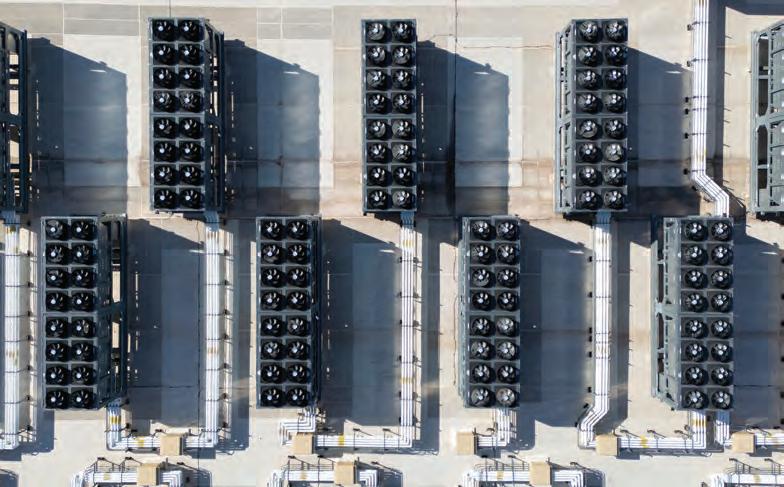
How absorption chillers work
● They use waste heat as the driving force for cooling, replacing the mechanical compressor found in traditional refrigeration systems with a thermally driven process.
● The shifting concentration of the absorbent solution is a powering mechanism and a heat transfer mechanism.
● Through a sequence of evaporation, absorption, generation and condensation – each governed by changes in temperature and pressure – the refrigerant and absorbent circulate to produce chilled water.
Absorption chillers can be easily combined with other thermal management technologies if additional cooling demand is required.
Scaling within constraints
Data centres will not be defined by raw compute power alone. They will be defined by how intelligently they use energy, heat and water.
Efficient cooling is an enabler for competitiveness in an increasingly constrained environment. Absorption chillers are reshaping what is possible in real time at on-site powered data centres.
While some operators will remain stuck with long grid connection delays and rising energy costs, operators turning waste heat into a strategic resource become more efficient, resilient, and sustainable while delivering greater benefits to their communities.













































You understand how physical environments shape creativity, routines and meaningful interactions.
Natural light improves mood and energy. Ergonomic furniture reduces physical strain. Collaborative zones invite people to gather. Quiet spaces support focused work.
Yet, despite perfectly designed spaces, statistics tell us something is missing. In the UK:
● 17.1 million working days are lost annually owing to workrelated stress, depression and anxiety, representing half of all work-related ill health cases.
● One in five workers needed time off in the last year because of poor mental health related to pressure or stress.
When people operate in survival mode – fight, flight or freeze – their thinking becomes rigid, their perception narrows, and their capacity for collaboration shuts down.
Drawing on neuroscience, we know our nervous systems constantly scan for safety or threat. When a perceived or real threat is detected in an email tone, a tense meeting, or from feeling unheard or unseen, the body responds physiologically with defence, attack, withdrawal or disconnection.
What is relational space?
Your work creates the container – the physical environment

where people gather, focus, collaborate, and recharge. You know that by offering choices of workspaces, views and green spaces, employee wellbeing and productivity increase.
But another layer needs your attention – the relational space. This is the quality of how people relate to each other. It is the invisible atmosphere that determines whether:
● People feel safe enough to share that they are struggling;
● Curious enough to collaborate across differences; and
● Present enough to be with each other under pressure in a calm, supportive manner.
The physical space sets the stage. The relational space determines what actually happens in it.
Isolation drives burnout Chronic stress and burnout are less about hours and more about isolation.
Even the most thoughtfully designed breakout space will sit empty if the relational space feels unsafe. People will not gather in your collaboration zones if they are operating in survival mode and do not feel able to share a genuine connection.
This is where your expanding role becomes strategic:
● You are no longer just asking: Does this space function well?
● You’re now asking: What kind of relating does this space invite?


KERRY-LYN STANTONDOWNES is an author and relationship psychotherapist
Spaces to support connection
1. Walking routes – for physical health and processing challenging experiences and conversations while moving side by side. Walking together shifts nervous system states and creates space for different interactions than when sitting across the table from each other.
2. Varied work settings –including quiet zones and collaborative spaces to match these different nervous system states.
3. Water cooler zones –intentional spaces where informal connections can happen naturally. The goal is removing barriers to organic connection – so our nervous systems can help each other feel safe through proximity and presence.
4. Outdoor connecting spaces –green spaces and natural elements regulate the nervous system, widening the window of tolerance, and creating conditions where people can move from survival state to feeling safe enough to connect. Physical design creates possibilities. But what people do with those possibilities depends on the relational capacity to connect with others.
PSYCHOLOGICAL EFFECTS
What’s missing, even in perfectly designed workplaces, is relational space, says Kerry-Lyn Stanton-Downes
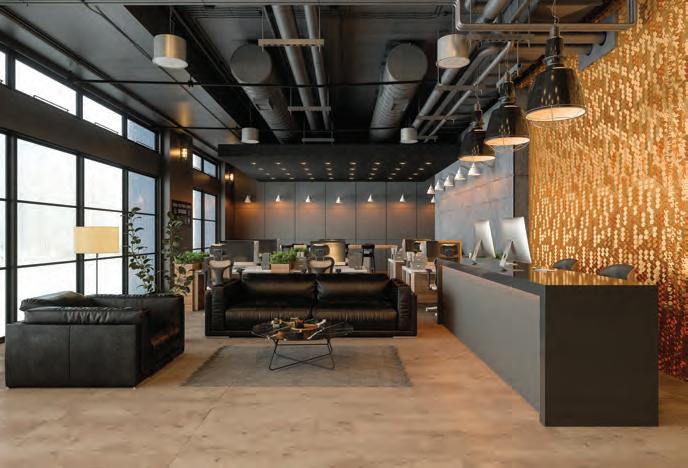
the same thinking to the workplace by measuring everyday interactions.
The gap between design intent and operational reality is where workplace hospitality becomes especially relevant, says Michael Fildes-Peace
Receptions resemble boutique hotels. Shared spaces mirror hospitality environments. Cafés, lounges and wellness rooms signal a shift towards a more human-centred workplace.
Despite the ‘hotelification’ of the office, design alone does not determine workplace performance. Even well-designed spaces can deliver an inconsistent employee experience when the operations are not intentionally managed, and services are fragmented and impersonal.
According to analytics firm Gallup, just 36% of employees strongly agree that their workplace enables them to do their best work, despite significant investment in workplace design.
In hospitality environments, experience is not left to chance; it is structured through service standards and performance metrics. Organisations are applying
The workplace experience begins before employees reach their desk. Reception, visitor management and front-of-house services shape the first impression. In many offices, these interactions are fragmented. Organisations applying hospitality principles treat arrival as a managed service experience, supported by clear service standards and coordinated teams.
Performance can be measured by satisfaction surveys, visitor feedback and interaction data that reveal whether the arrival experience feels welcoming or creates friction.
A defining principle of hospitality environments is personalisation. Employees are not treated as anonymous occupants of a space; their preferences and past interactions shape how service is delivered.
Most workplaces still operate with standardised service models, where employees navigate the same processes regardless of individual needs or working styles.
Workplace hospitality introduces a different approach by using interaction data to personalise service delivery. Preference information collected through onboarding profiles, service requests and
experience surveys provides insight into how employees use the workplace.
Preferences such as event interests or workspace settings can be captured and applied across future interactions. Surveys at touchpoints such as reception, service requests or event participation, provide feedback on how experiences are perceived.
These insights allow workplace teams to identify patterns of workplace friction, track satisfaction by interaction type and quantify time saved through service.
A third touchpoint is the activation of workplace spaces through events and programming. Collaboration spaces often remain underused when operational coordination is missing.
Participation rates, space utilisation, satisfaction scores and attendance trends during events provide insight into which events best support how employees engage with the office.
The growing interest in workplace hospitality reflects a broader realisation; experience is not created solely through architecture or facilities. It emerges through the daily interactions employees have with their working environment.
For facilities leaders, the challenge is to ensure that well-designed spaces are supported by service models, operational standards and feedback mechanisms that shape how the workplace functions every day.
Time saved through service support can be tracked by analysing service requests and response times to understand which tasks are being handled by workplace teams and how quickly they are resolved.

Participation data from workplace events and facilities use, combined with short pulse surveys deployed after key interactions, provide insight into how employees engage with the workplace and where friction remains.
MICHAEL FILDES-PEACE is managing director for Circles UK & Ireland, a Sodexo company
At that point, workplace hospitality moves beyond aesthetics into an operational system that reduces friction, improves engagement and demonstrates how the workplace contributes to organisational performance.



Businesses sometimes sit on land that can’t be used for anything productive, has little or no development potential, and can be expensive to maintain. And car parks are a prime example. With flexible or hybrid working patterns, car parks often require less capacity than when they were originally built. Although these small plots often have little or no traditional development potential, innovations in energy storage mean this land can be given a new lease of life.
A small battery energy storage system (BESS) requires just 24 square metres of land, roughly the size of two standard parking spaces.
Each BESS connects directly into the local electricity network. They charge when the cost of electricity is low, which is normally on windy or sunny days when there is excess renewable power, or overnight, when the power demand is reduced.
But it’s not just car parks. Verges or unloved landscaped land, which are expensive to maintain, can provide great locations for a micro-scale BESS.
Four steps for a new use for unused land
To transform a redundant land into a battery asset, here is the ‘know-how’ for FMs:
1 Identify land –survey your site or work with a partner to do this on your behalf. Many BESS providers offer a free suitability assessment to help you uncover your hidden assets. The difficult part is starting to look at a verge or unused car parking space as a valuable asset and not a liability.

Lower emissions and generate income without any capital investment by using ‘orphaned’ or wasted land, says Ben Wallace
2
Design the connection – the BESS operator will work with the local distribution network operator (DNO) to design the connection to the local power network. On large schemes, delays to connections can run into years, but on small-scale projects, you can often connect in a matter of months.
3 Consider planning requirements – given the small size of micro-scale BESS, planning is often uncontroversial and is supported by most councils’ existing planning policies. However, ensuring sitespecific concerns are considered is vital.
4
Lease agreement – the BESS operator and FM will agree to enter into a traditional lease agreement. Normally, the FM’s/landlord’s legal and professional fees will be covered and, once signed, lease revenue is generated from the get-go. Construction takes two to four weeks. Once complete, the sites will be monitored remotely by your BESS partner, who will visit the site once or twice a year, requiring little to no input from the FM.


BEN
BESS benefits FM
1 Energy storage supports sustainability plans and economic growth while reducing a business’s environmental impact. For example, independent estimates show that a BESS saves around 160 tonnes of CO2 a year, almost 5,000 tonnes over its life.
2
Installing a small-scale asset on a piece of unused land comes at no cost to the business. Rather, it provides a source of long-term indexed rental revenue that can be reinvested in additional sustainability or energy-saving measures.
3

Provides renewable power to local networks and supports grid resilience by preventing power cuts, particularly during times of low wind and solar output. Installing a BESS reduces the amount of investment needed to upgrade local networks, which can reduce disruption and the impact on bills.

is development director at decarbonisation solutions provider AMP
Small-scale distributed energy storage will play a vital role in supporting the rollout of renewable energy.
FMs with surplus parking spaces, grass verges or unused land can lower emissions while generating long-term revenue.






Sustainability and operations teams managing CRE portfolios across multiple locations, countries, and continents need building data to be organised, complete and ready to respond across different jurisdictions, timelines and reporting frameworks. That requires navigating three common challenges.
Many teams treat compliance as a simple size-and-type check, but that only holds up if the underlying asset data is accurate and every building has been mapped against current requirements.
In practice, size thresholds are shrinking, from 50,000 square feet to as low as 5,000, and they are often changed as mandates mature. Water reporting requirements differ by location. Some require verification by a third-party professional, while others don't.
A single building can be subject to a local benchmarking law or mandate and an emerging Building Performance Standard simultaneously, each with its own compliance requirements.
The solution is to have a live compliance register that links each asset to its applicable ordinances, thresholds and deadlines – and maintaining it continuously, and not just reviewing it when it comes to filing time.
2 Treating compliance as a once-a-year exercise
A common pattern is for teams to gather utility data and prepare filings only as a deadline approaches. By then, it may be too late to address problems.
Data may be missing, values may be outliers, whole meters may be missing –and when these issues are uncovered shortly before the submission is due, there is no time to fix them.
This is where many compliance programmes break down – processes are built around deadlines rather than data readiness.
The solution is to treat data collection as a continuous process rather than an annual scramble. Regular monthly data collection with ongoing checks for missing values, anomalies and format changes reduces the last-minute risk. Doing so also uncovers opportunities. With yearround monitoring, teams can
COMPLIANCE
spot performance trends early enough to act on them, turning compliance data into operational insight that can reduce costs, rather than simply be a box-ticking exercise.

Teams are also using AI and machine learning to support this, flagging anomalous data, estimating missing values and extracting information directly from utility bills.
These tools reduce manual effort and improve coverage, particularly across large portfolios. But their effectiveness depends on complete, reliable underlying data.
Ensuring compliance in CRE portfolios spanning different jurisdictions requires a sophisticated approach to data management, says Mike Zatz
MIKE ZATZ is senior vice-president of global ecosystem data and partnerships at Measurabl
3
Fragmented compliance data across systems and teams For portfolios spanning multiple jurisdictions, the instinct is to handle each one’s requirements locally (separately), with different spreadsheets, contacts and processes. The result is duplicated effort, versioncontrol issues and no clear portfolio-wide view of compliance status.
A centralised approach in which one system maps every building against its applicable ordinances, tracks deadlines and validates data before submission, replaces that fragmentation with a single structured workflow.
Instead of reacting to each jurisdiction individually, teams manage compliance proactively – often supported by technology platforms that bring data, requirements and workflows into a single system. Fragmented data, disconnected systems and processes built for one-off filings rather than continuous monitoring of compliance requirements are usually where the challenges arise.
As regulatory frameworks expand globally, this challenge will increase. When building data is fragmented, every new regulation amplifies the operational burden, with increased risk of:
● Missed deadlines;
● Inaccurate reporting; and
● Potential financial penalties. Organisations that map their regulatory exposure, maintain reliable data throughout the year and centralise compliance workflows are more likely to avoid penalties and make better operational decisions.
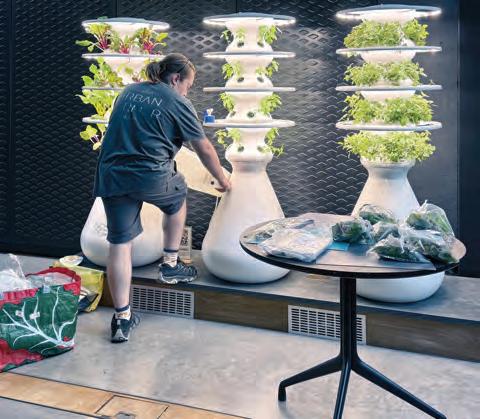
Data-driven workforce deployment eliminates inefficiencies without deskilling people, says Colin Pepper, a strategic project manager at JPC by Samsic
● Demand-led cleaning, supported by smart solutions, monitors real-time use of washrooms, showers, and high-traffic areas 24/7.
● Occupancy and usage data are used to inform where and when cleaning operatives are deployed, rather than relying solely on pre-set rotas.
● Smart solutions track patterns of use across the building, allowing the cleaning team to prioritise areas experiencing higher footfall or peak demand while reducing unnecessary repeat cleaning in low-use zones.
Read the full article at b.link/FacilitateC26-001
Facilities leaders increasingly operate within structured assurance frameworks – and access control cannot remain a static hardware decision, says Bruce Donald, UK and Ireland country manager at access control experts SimonsVoss
Key takeaways:
● Access control must be a governed system aligned to policy, risk assessment and organisational structure.
● While restrictions may be present, structured policy alignment is inconsistent.
Facilities leadership requires defined access hierarchies aligned to job roles, timebased permissions reflecting operational risk and zone controls mapped to estate layout.
● Whether responding to safeguarding issues, aggressive behaviour, asset protection concerns or health and safety incidents, the ability to isolate zones quickly and consistently forms part of structured risk mitigation.
Read the full article at b.link/FacilitateC26-002








Better data integration can help facilities managers turn building data into smarter decisions, writes Peter Schwartz, senior technology consultant at IT and security provider OryxAlign
Key takeaways:
● Research from the UK Green Building Council highlights a persistent gap between expected and actual performance, which is why building data matters to FMs.
● The issue is rarely the lack of information itself. More often, the challenge lies in making sense of it across systems and using it in a way that supports practical decisions.
● Improving insight does not require a complete overhaul of existing systems. A more practical starting point is to identify which systems already generate useful data across the estate. From there, it becomes easier to assess where gaps exist in visibility, compatibility or accessibility. The Know How learning continues at facilitatemagazine.com. Here is a summary of the key takeaways from a selection of our online-only articles
Read the full article at b.link/FacilitateC26-003




Linda Hausmanis CEO, IWFM
Andrew Hulbert Chair, IWFM
Tess Cope Founder, Transformation Agency
Jonty Bloom Former BBC Business & Europe Correspondent

Tuesday 16 June 2026
Leonardo Royal Hotel Tower Bridge, London
Discussion and insights
• ESG, sustainability and net zero –the business case
• Brilliance in resilience: adapting to a changing climate
• Tackling the skills crisis – the importance of skills and investing in them
• Compliance – the new value offering
• The Leadership Surgery: the language of leadership
• 21st century behaviours: Departments of empowerment
• and much more
Sponsors:






62
Sodexo results show profit dip and margin pressures despite strong contract pipeline
62
Companies feel the pressure to adopt AI – but many aren’t sure what they want from it 65
Our at-a-glance guide to the latest contracts, mergers, acquisitions and appointments
By Martin Read
Network Rail has signed a contract with renewable energy company RWE, which will see around 65% of its non-traction electricity – powering all its offices, depots and managed stations – delivered through from RWE’s Gwynt y Môr offshore wind farm, located 15 miles off the coast of North Wales.
The arrangement, through a Corporate Power Purchase Agreement (CoPPA), will see 300GWh of renewable electricity delivered annually over five years.
Clean power play
Paul Marshall, Network Rail’s chief financial officer, said that the contract “marks a significant step forward in our transition to renewable energy. It also highlights the important role organisations can play in driving investment in clean energy”.

Power will be supplied from RWE's Gwynt y Môr offshore wind farm, which is located 15 miles off the coast of North Wales.
Network Rail has calculated that the arrangement will allow the firm to reduce its carbon emissions by around 168,000 tonnes of CO2e – the equivalent of planting 6.5 million trees.
Network Rail's ambition is to have all of the non-traction electricity used across its offices, depots and 20 managed stations sourced from sustainable energy by 2030.
The deal is part of Network Rail's Greener Strategy. Another CoPPA was signed with EDF Renewables in 2025, through which the firm secured 64GWh of clean energy a year from a new solar farm now under construction.
The two pacts will provide 80% of the organisation's non-traction electricity from renewable sources.
The Gwynt y Môr Offshore Wind Farm will supply power to Network Rail’s offices in stations and depots from 1 April 2027.
The deal highlights the role organisations can play in driving investment in clean energy
Maintenance costs are set to rise 15% over the five years to Q4 2030, as measured by the Building Cost Information Service (BCIS) All-in Maintenance Cost Indices. Cleaning costs are expected to rise by 23% over the same period, driven by increasing labour costs.
Energy costs were forecast to decline overall by around 3% between 2025 and 2030, despite higher prices in the more immediate term.
R&M output was expected to grow modestly over the forecast period, increasing by 9% between 2025 and 2030, after rising by 1.7% in 2025.
But escalating geopolitical tensions associated with the conflict in Iran, alongside rising energy costs, are likely to weigh on economic confidence and investment, potentially constraining the pace of growth.
Dr David Crosthwaite, chief economist at BCIS, said: “While repair and maintenance (R&M) output is expected to grow over the forecast period, pressure on labour costs, combined with uncertainty around energy prices, means organisations will need to keep a close focus on cost control.
“Political instability in the Middle East has contributed to disruptions in global oil and gas supply chains. In this environment, organisations that prioritise energy efficiency and long-term strategic planning are likely to be better positioned to maintain operational continuity and financial stability.”
Sodexo Group has reported a decline in profitability for the first half of fiscal 2026, despite modest organic revenue growth across its global operations.
Total revenues fell by 3.7% to €12 billion (circa £10.3 billion), mainly because of a 5.3% negative currency impact and contract losses. Operating profit dropped to €312 million (£268 million), down from €580 million (£498 million) at the same time last year.
Performance varied by region, with Europe achieving 2.8% organic growth, supported by healthcare activity. North America saw a 1.8% organic revenue fall, driven by contract losses in education and business services. while the Rest of the World grew 9.2%, led by markets including India and Australia.
Group net profit fell 56.7% to €188 million (£162 million), while underlying net profit dropped by 36.7% to €285 million (£245 million).
The results indicate continued cost and contract pressures across global FM markets, with implications for UK providers facing similar labour constraints, competitive pricing, and the need to balance service delivery with efficiency improvements.
Jean Renton, Sodexo UK&I CEO, said: “Across our business, we are seeing the benefit of combining the strength of our integrated offer with an emphasis on quality, innovation and client partnership.
“From our appointment as a strategic partner to the Home Office to new partnerships with organisations such as EY in Ireland, Edinburgh Zoo, and continued long-term relationships with clients including the Scottish Parliament, Leyland Trucks, the Royal Academy of Arts, and additional services for ESB in Ireland, these wins demonstrate the breadth of our capabilities.
“Looking ahead to the second half of the year, we remain focused on driving performance and longterm value across our business.”

By Bradford Keen
Companies are feeling pressured to adopt artificial intelligence and other smart technology in their operations, but the reality is that many aren’t even sure what they really want from it.
Take occupancy sensors. Their deployment is excellent in airports, train stations and shopping malls “because there’s lots of variation” in the use of these facilities, explained Samsic commercial director John Norris.
“But in an office or a school, I already know the patterns. I know Mondays and Fridays are quieter, and I know when toilets are busy. I don’t necessarily need a sensor to tell me that. So we might install sensors, gather three months of
data, and that data is then valid for years because nothing changes. But we’re still paying for hardware and subscriptions, and it’s just repeating the same data.”
Spending on tech, he said, should be on a solution that delivers value “not just at the start but over time”. This raises an important challenge
We’re definitely moving away from labour-based contracts to more techdriven, data-driven, hybrid models. Clients expect technology now
many businesses face: they’re eager to adopt AI, so they are not left behind, but aren’t sure how they should be using it to enhance their operations.
“We’re in a shiny new AI era – a honeymoon period – where companies are quick to deploy AI almost from a fear of missing out,” he said.
This eagerness, coupled with inaccurate or inconsistent data, can lead to rather dire consequences. Especially when AI is inclined to fill in any gaps in the data based on what it ‘thinks’ – which could lead to an erroneous outcome. Essential to any successful AI adoption or deployment is getting clear on your business needs.
Here’s what Norris said organisations should be asking: Who is your client base? What is your strategy? Is it right for your environment? What are the hidden costs –maintenance or subscription, for example?
Before deploying a cobot, for example, Norris said businesses should know whether it can travel up or down stairs or in a lift, move through doors, and how much human interaction it needs.
“What is the true ROI, and what intervention does it still need from a human being? People aren’t quite seeing all of that.”
To bridge the space between adoption of AI and choosing the right solutions for your business requires “testing and validation” to “build a feel for different types of environments… what works well in a modern school, what won’t work in an older one, what works in a shopping mall because you’ve had an AI solution in 10 of them and you know it works well”.


With IoT and cobotics, contracts are often fixed over several years; the FM provider carries the risk
out pain points and opportunities. At the same time, procurement teams are starting to use AI to analyse bids and validate them against industry benchmarks. There’s also a growing requirement for case studies and evidence that innovations actually work.”
An approach Samsic takes when it comes to innovation is to introduce it to clients as something new rather than a finished product. “Some clients are open to that and like being part of shaping the solution. That’s seen as added value. It’s not just delivering a static service for three years; it’s continuously evolving and improving. That leads to better retention and engagement.”
Supply chain challenges


It’s not in every organisation’s interests to roll out AI –particularly when their business model is based on high-volume sales, Norris explained. “For example, suppliers of consumables and chemicals are based on volume sales. The more products you use, the more money they make.
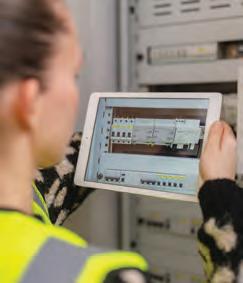
FM principals have expressed a clear intent to increase investment in technology, with 97% of them planning higher spending over the next 12–24 months.
Research undertaken by Bidvest Noonan gathered responses from FM decision-makers managing estates across multiple sectors, with no respondents expecting a reduction in budgets.
Half of the participants anticipate significant increases, rising to around two-thirds among those responsible for estates larger than 500,000 square feet. This suggests that organisations with more complex portfolios are accelerating digital adoption, possibly reflecting positive returns from earlier investments.
The research highlighted three technology priorities set to shape FM organisations’ investment plans for the year ahead:
● 59% said smart building sensors and IoT
There is a notable shift in the FM marketplace because of technology, argued Norris. “We’re definitely moving away from labour-based contracts to more tech-driven, data-driven, hybrid models. Clients expect technology now. If you don’t include it, it raises questions.
“It’s becoming more value-based rather than volume-based. It’s not just about hours anymore; it’s about outcomes. Is the building clean, secure, and aligned with how the client operates day to day?
“There’s more flexibility, like adjusting staffing based on occupancy. We’re also using AI tools in bidding to pull
“If AI reduces usage, that goes against their model. So there can be reluctance to adopt or promote efficiency tools. Some are starting to adapt, offering things like digital dosing systems that track usage, carbon footprint and ESG metrics, even enabling automated reordering. But a lot of the market is still based on volume.
“There are also lock-in models, where systems only work with specific products or dispensers. With IoT and cobotics, contracts are often fixed over several years, and the FM provider carries the cost and risk.
“Clients also tend to want new equipment at the start of contracts, which makes redeployment on other contracts harder. So there needs to be more flexibility in the supply chain.”
● 52% said digital FM platforms
● 43% said AI-powered software.
Other drivers included operational efficiency (63%) and service quality (62%), suggesting that investment is aligned with performance outcomes rather than cost reduction alone.
The findings also showed that 96% of respondents have established frameworks to measure the impact of technology, pointing to a more structured, data-led approach to investment decisions.
Cormac Sheils, chief operating officer at Bidvest Noonan, said that the results reflect a shift in focus: “FM leaders aren't asking whether to invest in technology, they're asking how to make it work.”

Transform your organisation in a way that’s right for you
Revolutionise your workplace and facilities management teams by transforming them from a cost centre into a strategic asset with IWFM's expert guidance and bespoke training solutions.
IWFM’s training needs analysis identifies the specific competencies and knowledge required to optimise your teams’ capabilities. By pinpointing skills gaps and providing solutions to close them, this targeted approach ensures that training initiatives are directly contributing to maximising WFM’s value in your organisation.
By leveraging decades of insight and research, IWFM analyses your organisation’s unique strengths and areas for improvement through our Maturity Framework, resulting in bespoke recommendations for enhancing performance and unlocking value. Hands on support includes implementation strategies and expert guidance to embed lasting improvements.
IWFM’s group membership enables collaboration and knowledge sharing within organisations, coupled with CPD. By prioritising team development and individual growth, IWFM empowers organisations to build high-performing WFM teams capable of realising immense commercial value.
By analysing your organisation’s WFM strategies and understanding the level of competence across your organisation, IWFM can then supply the right learning and development that will enhance your teams and unlock WFM’s organisational value. All learning and development initiatives encompass best practices, the latest sector developments and CPD, enabling your teams to gain cutting edge skills and foster a culture of ongoing learning.
Aligning with IWFM's approval standards provides organisations with access to decades of expertise and independent verification of training quality. This commitment to excellence represents a strategic investment in the professional development of your people.
Whether you’re an organisation delivering in-house training or a Training Provider offering professional development for WFMs, your organisation can utilise IWFM Approval. With an ongoing review process to ensure you retain high standards, you will gain an L&D advantage over competitors.
The latest outsourced business activity across the sector
VINCI Facilities: A £19 million-a-year TFM contract managed by LocatED, an arm’s length body of the Department for Education, continues VINCI’s role in supporting the education estate across England.
Mears Group: Leeds City Council has awarded the firm a new five-year deal worth around £18.5 million annually, to maintain its 20,000-unit housing portfolio in west Leeds.
Elior UK: The firm will be catering partner to the Wildfowl & Wetlands Trust (WWT) London Wetland Centre, after securing a five-year deal to service the centre’s café, retail and event spaces at Richmond upon Thames.
Portfolio: The division of Churchill Group has been chosen by CBRE for global legal firm Herbert Smith Freehills Kramer to carry out cleaning services at four of its London locations – three in the City of London, and its Canary Wharf office –involving housekeeping, window cleaning, confidential waste management and pest control.
Q3: Under a two-year extension to its established alliance with Chelsea Harbour, a multi-use development beside the Thames in West London, Q3 will increase the scope of its mechanical and electrical deal to cover cleaning, waste management, events management and marina maintenance.
DMA Group: A new three-year contract with the London Borough of Sutton for delivery of hard FM services across the council’s operational and office portfolio of offices, libraries, children’s centres, leisure sites and commercial properties.
The Westgrove Group: A threeyear, multi-million-pound TFM deal at retail centre
Festival Place in Basingstoke, with property management firm Estama, was won in a competitive tender process.
The 1.2 million-square-foot indoor shopping and leisure destination houses over 180 high-street retailers, several restaurants, a 10-screen Vue cinema, and a sports centre.
Sodexo UK & Ireland: The caterer has renewed its services partnership with commercial vehicle maker Leyland Trucks for another five years, with a £4 million deal. Sodexo has been Leyland Trucks’ food services partner for 20 years, serving its 1,000-strong workforce sustainable meal options at its 86-acre Leyland Assembly Plant in Lancashire.
ISS: The firm has won a four-year integrated facilities services deal with the Bank of England at several of its UK sites, including ‘The Old Lady of Threadneedle Street' – its City of London HQ.
Velway: The property management firm has extended its TFM deal with Nottingham-based tech company Ideagen to supply reactive works, planned maintenance, statutory compliance, risk assessments, asset life cycle management, cleaning, keyholding and security.
United Infrastructure: Its Social Infrastructure division has been assigned a contract to carry out planned maintenance and investment works for the Guinness Partnership, one of England’s largest housing associations. It runs for 15 years and is worth around £364 million in total, with an annual works delivery of about £24 million.

APPOINTMENTS






Webber Culinary director, Government & Energy
To expand its electrical services, multidisciplinary building services specialist PTSG has bought Testing Services, based in Heckmondwike, West Yorkshire, which operates nationally, delivering compliancefocused works, including Electrical Installation Condition Reports (EICR), Portable Appliance Testing (PAT), emergency lighting inspections and fire safety-related works.
MarkOne Safety Solutions designs, supplies, installs,

CEO, UK & Europe Serco

commissions, and maintains fire safety and emergency lighting systems. The business serves a range of clients, from small retail premises to larger multi-site organisations, providing services covering the full life cycle of fire safety systems.
Back on the acquisition trail, the Londonbased fire and security services provider bolsters its fire risk rating capabilities with Bolton firm Total Fire Group, which has a Northern client base spanning social housing providers, housing associations, and public and private sector organisations over more than 20 years.
The technology-led security firm operating in Ireland will reinforce OCS’s capacities in monitoring, communications resilience and Alarm Receiving Centre (ARC) services. The acquisition supplements OCS’s technology-enabled security abilities.
Morrison, established more than 30 years ago, employs 300 staff across six locations in Scotland and England, providing technical and IFM services focused largely on public sector clients, including education and healthcare facilities, across Scotland and the south of England.

“WITHOUT DOUBT, ACADEMIC
FM QUALIFICATIONS PROVIDE A GOOD FOUNDATION, BUT THE TRUE VALUE ONLY COMES WHEN YOU COMBINE THEM WITH YEARS OF FM EXPERIENCE.”
FM PROFESSIONAL RICHARD HARRIS REFLECTS ON HIS WORKING LIFE SINCE COMPLETING HIS MASTER’S DEGREE IN FM 13 YEARS AGO
“Sustainability isn't an all-or-nothing game. It’s a ‘do the most good where you can’ game.”
ANNA KORLATH, CLIMATE BRAND DESIGNER, OFFERS USEFUL ADVICE ON HOW TO MANAGE SUSTAINABILITY SUSTAINABLY




“W




hen you understand how spatia l choices a ffec t yournervoussystemyourfocusandyoursenseof
“When you understand how your spatial choices aff your nervous system, your focus, and your sense of possibility, you start to see transformation everywhere.”
‘DESIGN ALCHEMIST’ KATIE TITI ADVISES PEOPLE TO THINK OF SPACE PLANNING AS A PERSONAL TRANSFORMATION THROUGH ONE’S ENVIRONMENT
“Most FM teams in 2026 are investing in AI, digital twins and smart buildings. Yet many still overlook something possibly more powerful or critical… Standards.”
IWFM TECHNOLOGY SIG CHAIR GORDON MITCHELL OFFERS A REMINDER OF HOW STANDARDS REDUCE RISK, IMPROVE GOVERNANCE AND BOOST STAKEHOLDER CONFIDENCE
“They’re asking about flexibility. About culture. About whether their manager actually knows how to lead. About whether the role will still exist in two years.”
FM RECRUITER PETER FORSHAW SAYS WHAT JOB CANDIDATES WANT HAS CHANGED, AFFECTING HOW EMPLOYERS RECRUIT AND RETAIN EMPLOYEES
“PART OF THE FLEXIBLE MINDSET IS GOING WHERE THE VALUE IS. THIS MEANS EXPERIMENTATION. AND GOOD NETWORKING FLOWS BETWEEN THE VIRTUAL AND THE PHYSICAL. SOME OF THE BEST SERENDIPITY IS ALSO TO BE HAD ONLINE.”
WORK RECONSTRUCTED DIRECTOR CHRIS EARLY ON THE FLUID CHARACTERISTICS OF CONTEMPORARY WORKING
“CREATIVITY ISN’T A ONE-OFF WORKSHOP. IT’S A HABIT.”
MITIE’S DIRECTOR OF SIGNATURE, BIANCA ANGELICO, ENCOURAGES HER TEAM MEMBERS TO SCHEDULE TIME TO EXPLORE WITHOUT OUTCOMES

“There’s a big difference between thick data and thin data, and if we just rely on thin data without triangulating it, vetting it, and digging into the why and what it means, data can be misleading.”
KAY SARGENT, SENIOR PRINCIPAL – DIRECTOR OF THOUGHT LEADERSHIP, INTERIORS AT HOK, ON THE IMPORTANCE OF PROPER DATA MANAGEMENT
“Is there any industry that talks as much about AI, but lacks as much seriousness, as Commercial Real Estate?”



you
Facilities Managers and Workplace Professionals juggle multiple requirements every day but this can be a challenge when your building is at the end of its lease also moving your business to a new location.
With East On Projects, our team will deliver your dilapidations a range of suppliers and contractors. And we can create an inspirational workplace for your next premises too!
Working as main contractors and project managers, we are works requirements, come to the team that has the solution.
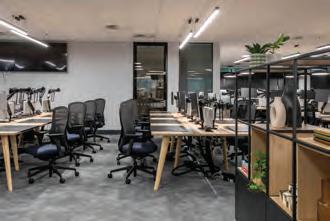

Design & Build
Interior Design
Furniture
Specialist Audio Visual
Space Planning
Dilapidations
Cat A & B Fit Out
M&E
HVAC
IT