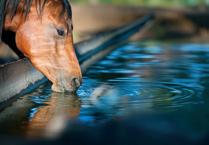
THE IMPORTANCE OF GOOD HYDRATION
Essential for strength, speed, and recovery
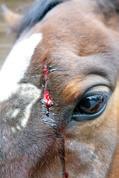
THE HIDDEN HEALING TIMELINE
Understanding the unseen stages of equine recovery
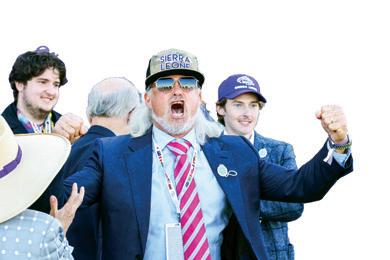
SUPPORTING THE BACKSTRETCH
Brook T. Smith steps up for racing’s workforce



THE IMPORTANCE OF GOOD HYDRATION
Essential for strength, speed, and recovery
Understanding the unseen stages of equine recovery
SUPPORTING THE BACKSTRETCH
Brook T. Smith steps up for racing’s workforce
Triple Crown season is finally here.
This has to be one of the most open series of races in recent memory. This spring it seems like key contenders have fallen by the wayside on a weekly basis. So next year, I’m going to suggest that Churchill Downs construct a new future wager—when the nominations are published. The bet would be based on selecting five horses who actually make the starting gate.
In this issue, our main profile is on Cherie DeVaux and her rise to the Triple Crown stage. For me, she is a Triple Crown-winning trainer in the making.
Her transition from a high-level assistant to a Grade 1-winning conditioner is rooted in a deep commitment to the athlete and an “intentional” methodology that leaves no detail to chance.
Whether nursing a champion like Lady Eli through laminitis or preparing a sophomore like Golden Tempo for the Classics, DeVaux relies on a trove of hands-on experience and a refusal to step outside the comfort zone of what is best for the horse.
This philosophy of quality over quantity is mirrored in her sister, Adrianne DeVaux, who is building a boutique stable where she can maintain “hands and eyes” on every horse. It is a vital reminder that even in an era of super-stables, there remains a place for the intimate, detail-oriented trainer.
This dedication to the athlete is further personified by owners like Brook T. Smith, who views elite horses as “everybody’s horse.” Through his “Purses For a Purpose” initiative, Smith leverages racetrack success to support the Backside Learning Center, providing essential resources for the workforce that serves as the industry’s backbone.
For Smith and the connections behind Triple Crown contenders like The Puma and Chief Wallabee, the “Derby Mystique” is not merely about trophies, but about the lifelong journey and the people who make it possible.
To sustain these dreams, we must lean on the science that protects our athletes. This issue explores the “hidden timeline” of musculoskeletal healing and hydration’s critical role, reminding us that a horse’s physiology requires patience and precision.
Experts highlight that most fractures are the result of accumulated micro-damage, necessitating a training balance between appropriate load and essential rest. We also face new frontiers in integrity; the emergence of gene doping, challenges us to ensure the racetrack remains a test of natural ability rather than a competition between laboratories.
As we navigate this Triple Crown season, these pages remind us that whether through advanced imaging or a well-prepared flake of hay, our priority must always remain the welfare of the horse.
Wherever racing takes you this Triple Crown season—good luck!

Editorial Director/Publisher & Advertising Sales
Giles Anderson (859) 242-5025
Sub-Editors
Nico Jeeves & Virginia Lisco
Advert Production, Circulation/Website
Nico Jeeves & Virginia Lisco (859) 242-5025
Cover Photograph
Scott Serio /Eclipse Sportswire
Trainer Magazine is published by Anderson & Co Publishing Ltd.
Tel: (859) 242-5025 Fax: (888) 218-4206 info@trainermagazine.com www.trainermagazine.com
North America
PO Box 13248, Lexington, KY 40583-3248
United Kingdom
Ground Floor Office, 72 Medstead Road, Beech, Hampshire, GU34 4AE

Trainer Magazine is the official magazine of the California Thoroughbred Trainers. It is distributed to all ‘Trainer’ members of the Thoroughbred Horsemen’s Association and all members of the Consignors and Commercial Breeders Association, the Maryland Horse Breeders Association, the Pennsylvania Horse Breeders Association, the Alberta Thoroughbred Owners & Breeders Association and the Virginia Thoroughbred Association.
Alan F. Balch was hired as executive director of the California Thoroughbred Trainers in April 2010. His professional career in racing began at Santa Anita in 1971, where he advanced to senior vice president of marketing and assistant general manager, and was in charge of the Olympic Games equestrian events in Los Angeles in 1984. He retired in the early 1990s to become volunteer president of the National Equestrian Federation of the USA, as well as the National Horse Show at Madison Square Garden.
Jackie Bellamy-Zions has served as Equine Guelph’s communications manager since 2010 and has more than 30 years of experience in the horse industry as a coach, trainer, stable manager, competitor, judge, and journalist.
Bill Heller is an Eclipse Award–winning author who published his 27th book, Fred Hooper – The Extraordinary Life of a Thoroughbred Legend. His other biographies include those of Hall of Fame jockeys Ron Turcotte, Randy Romero, and Jose Santos. Bill and his wife, Marianne, live near Gulfstream Park.
Alicia Hughes is an award-winning writer and reporter with more than 20 years of experience. She currently serves as Director of Communications for Ocala Breeders’ Sales Company and previously served as Racing Editor for The Blood-Horse and lead turf writer for the Lexington Herald-Leader newspaper from 2008 to 2016.
Jennifer S. Kelly is an author and freelance turf writer. Her first two books, Sir Barton and the Making of the Triple Crown and The Foxes of Belair: Gallant Fox, Omaha, and the Quest for the Triple Crown, chronicle the lives and careers of the first three American Triple Crown winners. She also contributes to The Racing Biz, America’s Best Racing, and TwinSpires Edge
Jessica Licausi is currently a junior at the University of Kentucky and a Keeneland College Ambassador for the class of 2025–26. She also works at Spendthrift Farm, looking after mares and foals, and prepares yearlings in the summers. She has a strong passion for the Thoroughbred industry and feels honored to be surrounded by so many people who have believed in her since the very start of her journey.
Virginia Lisco is an Italy-based journalist with a strong focus on the horse racing world. With hands-on experience in Italian racing stables and a lifelong passion for horses, she is dedicated to advancing industry knowledge and promoting horse welfare.
Prof. Jacqui Matthews qualified as a vet before completing a PhD in parasitology. She worked in academia for over 25 years, leading projects valued in excess of £14 million. Her outputs include over 150 peer-reviewed papers, as well as patents and lay articles. She is a Fellow of the RCVS and the Royal Society of Edinburgh, and an RCVS Specialist in Parasitology.
Chris Riggs BVSc, PhD, DEO, DipECVS, FRCVS, studied Veterinary Science at the University of Bristol and trained in equine surgery at the Royal Veterinary College. He joined the Hong Kong Jockey Club in 2003 as Head of Veterinary Clinical Services and, in 2019, was appointed Director of the HKJC Equine Welfare Research Foundation and Chief Advisor for Mainland Veterinary Engagement.
Laura Steley, BSc (Hons) in Equine Sports Science, is Senior Stud Secretary at Shadwell Stud in Newmarket and a contributor Owner Breeder magazine. She has experience in Thoroughbred pre-training, rehabilitation, and racing data analysis, with a strong focus on improving equine welfare through science.





Trainer Magazine (ISSN 17580293) is published 4 times a year: February, April, July and October by Anderson & Co Publishing and distributed in the USA by Modern Litho | Brown Printing, 6009 Stertzer Road, Jefferson City, MO 65101. Periodicals postage paid at Jefferson City, MO, and additional mailing offices.
POSTMASTER:
Send address changes to Trainer Magazine, Anderson & Co Publishing, PO Box 13248, Lexington, KY 40583-3248.


08 Cherie DeVaux – cover profile
Jennifer Kelly profiles Cherie DeVaux ahead of her first Classic bid with a pair of promising contenders.
20 Adrianne DeVaux – doing it her way
Jennifer Kelly looks at Adrianne DeVaux as she builds a small, hands-on stable and forges her own path in training.
24 What the hay?
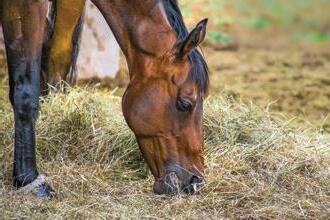
Jackie Bellamy-Zions examines how hay preparation, delivery and feeding strategies influence nutrition, respiratory health and gut function.
30 The importance of good hydration
Jessica Licausi outlines the science behind hydration, electrolyte balance and performance in the equine athlete.
36 The hidden timeline of healing
Laura Steley explains the hidden stages of wound and musculoskeletal recovery in the equine athlete.
44 Reducing the risk of fractures
Chris Riggs examines the causes of fatigue fractures and strategies to reduce risk in racehorses.
50 To worm or not to worm?
Jacqui Matthews discusses a diagnostic-led approach to parasite control and when horses in training actually require worming.
56 Brook T. Smith – ownership with purpose
Alicia Hughes highlights Brook T. Smith’s rise in ownership and his commitment to using success to support racing’s backstretch community.
62 Triple Crown trail – winning owners
Bill Heller looks at the ownership groups behind The Puma and Chief Wallabee on their Triple Crown trail journeys.
70 Gene doping – future perspectives in breeding
Virginia Lisco examines emerging gene editing technologies, detection methods and their potential impact on breeding.
06 View from the CTT Alan Balch – Derby Mystique
76
#Soundbites
Bill Heller asks “Are there any racing regulations you’d like to see changed, and if so, why?”
our current digital editions and access back issues of both European and North American Trainer.



If memory serves, the first for me was Swaps, that mind-boggling California bred, winning the one in Kentucky in 1955. I didn’t even hear of Santa Anita’s until years later, and Kentucky’s was on the radio. Who knows why I was listening to it, but I guess that winner stuck with me because of the “funny name.”
I became more and more horse crazy as the years went by, so the Kentucky Derby was mandatory listening for me, and then watching on television. I particularly remember Carry Back in 1961, probably because I had him in one of those barn-pools and won some cash, when he beat Crozier … but there was also that fascinating pedigree (by Saggy out of Joppy) and, later, all the ridiculous moves of his owner Jack Price that somehow he survived. No wonder Red Smith, the legendary Pulitzer Prize winning sportswriter, loved racing above all others: “there are more stories at the track than anywhere else.”
Ten years later, having been introduced to Robert Strub of Santa Anita at a horse show I was announcing, I was driving across the country to report for my first real job, the track’s “Director of Public Relations.” I had seen the Derby that year on television at school; Preakness week was for travel. In the middle of nowhere in Nevada, I frantically tried to find a radio station to hear if Canonero II would shock the world. Again. Having been relegated to “the Field” for betting on the Derby, the Venezuelan had stormed from way back to win. This time, he did the opposite, and broke Nashua’s track record. Little did I know I would soon see him in person, after King
Ranch acquired him, and Buddy Hirsch brought him to Santa Anita for the winter.
Assigned to supervise advertising, I was from an almost strictly academic background, so I immediately plunged into learning everything I could about racing in general and Santa Anita in particular. Including the Key to the Quarter Pole. Racing a Tuesday through Saturday schedule in those days, there was one major stake on each Saturday … and our own Derby was outshone by the historic Big ‘Cap, a few weeks earlier each season.
My first winter, 1972, Solar Salute won our Derby, and didn’t go to Kentucky. Trainer Lou Glauburg didn’t think he was the best horse even in the field he beat! That got me to thinking seriously about where the Derby came from, and what it meant. Especially since I was sent to Louisville that year (mainly to be Mr. F. E. Kilroe’s chauffeur, as it turned out), and lived the dream of seeing Riva Ridge win, then joining all his connections for their celebration. You know what happened the next year.
Churchill Downs then, over a halfcentury ago, was nothing like what it has become. My first look down the homestretch early that Derby Week revealed a rickety post and rail inside fence that wasn’t even exactly straight. The old wooden grandstand and “Millionaire’s Row” topped by the Twin Spires, not to mention the inside paddock, were … shall we say … vintagevery-old-school. Kentucky Oaks Friday attendance was somewhere around 30,000, it was said , and the standard 100,000 announced number for Derby Day was suspect. But I believed it, given the massive, rowdy drinking party in
the infield attended by just about every college kid within the surrounding ten states.
So, it had been sheer promotion that made the Kentucky Derby, and Churchill Downs. Col. Matt Winn (like P.T. Barnum) was a marketer before the term was widely used, who loved and nurtured and grew it, from the first one until his death in 1949.
In the early 1900s, he had introduced parimutuel betting to save it from the wave of anti-gaming sentiment and legislation sweeping the nation, putting tracks most everywhere else out of business. Later, sensationally successful in capitalizing on the use of radio to put his race at the top of public consciousness when racing was the most popular by far of all American professional sports, Churchill has endured and massively grown ever since.
During the 1970s to the mid-80s (despite Secretariat, Seattle Slew, and Affirmed), Churchill and the Triple Crown were beset by increasing competition and questioning. The 1985 Santa Anita Handicap Day even briefly overtook Derby Day for the biggest single-day handle in North America. But a revamped corporate structure for Churchill, and the modernization, investment orientation, and aggressive new leadership of Tom Meeker, soon restored its unassailable preeminence.
The migrations of D. Wayne Lukas and then Bob Baffert to Santa Anita didn’t hurt a bit. It was as if their own business plans, as trainers, put “winning the Kentucky Derby” as a realistic lure to new owners. Logical, and wildly successful … even though unimaginable as a proposition before their time.
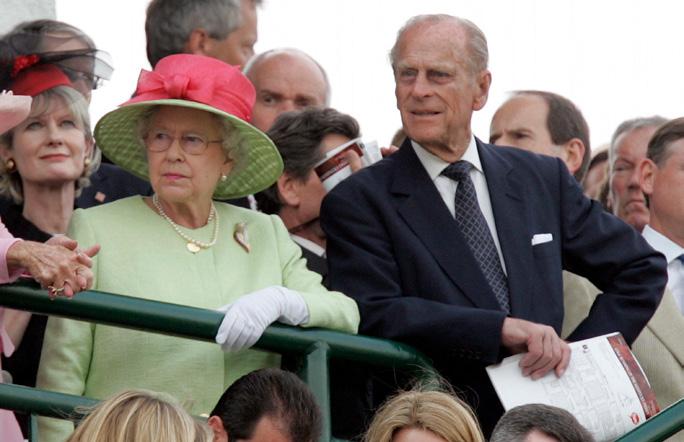
There can be little doubt that The (original) Derby, at Epsom, inspired and informed Col. Winn. Massive celebratory crowds in the hundreds of thousands attended. It once had all the trappings of an unofficial Wednesday national holiday for Londoners. Those times have changed. Ironically, a lifetime dream of Queen Elizabeth II, the world’s most prominent advocate of horse racing, was to see America’s version. Those stars aligned in 2007, when she and the Duke of Edinburgh visited the Kentucky Derby.
They were hosted by Churchill’s president, the late Steve Sexton, who had overseen its years-long $121-million renovation. He had begun his racing career, right out of college, in 1984 … in the Marketing Department at Santa Anita.
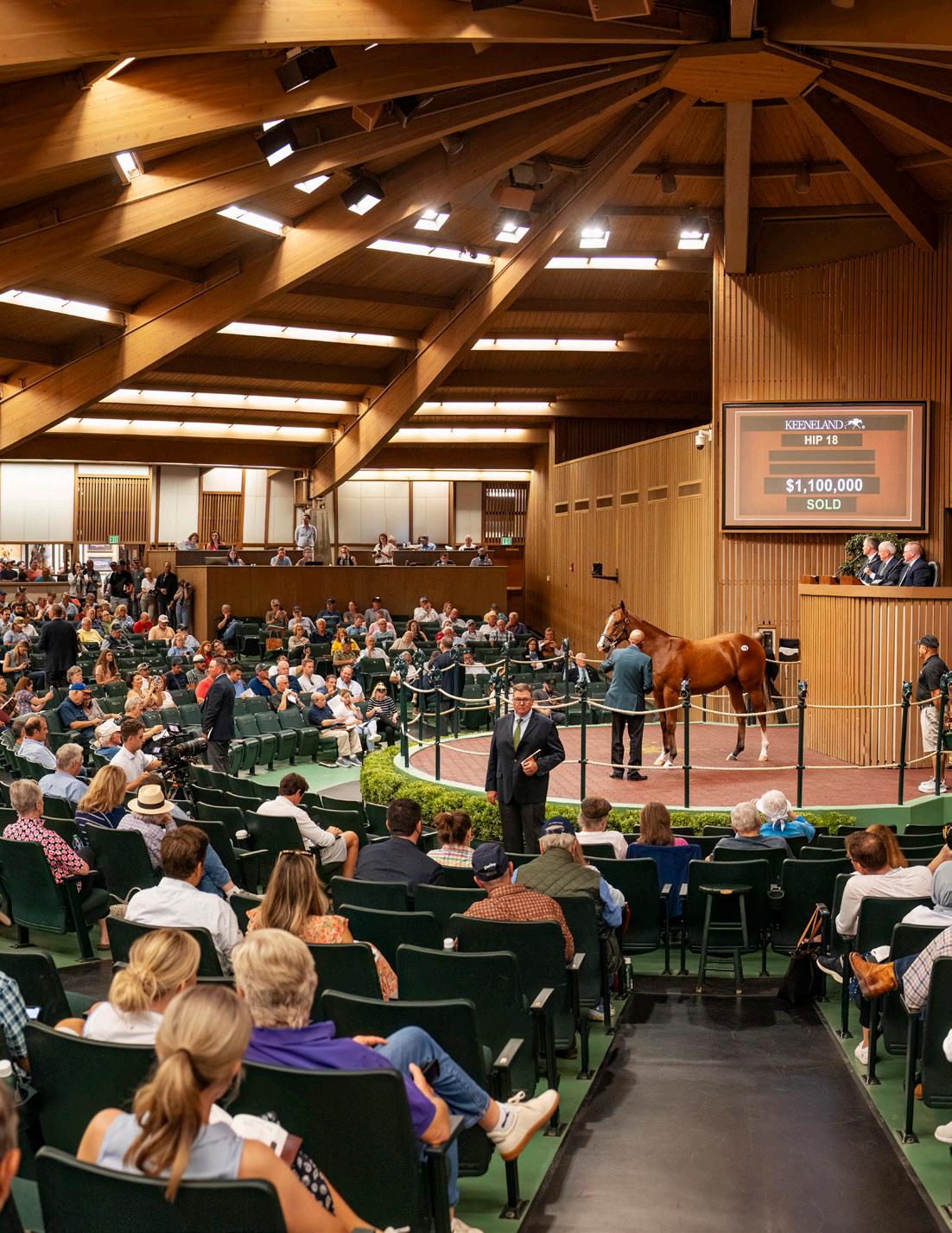
WORDS: JENNIFER KELLY PHOTOGRAPHY: ECLIPSE SPORTSWIRE, HODGES PHOTOGRAPHY/THE FAIR GROUNDS, KEENELAND

Few races inspire the pageantry and glory that the Triple Crown classics do. For anyone involved in American horse racing, a win in any of the three puts you in an exclusive club, your name forever etched in the history of the sport.
“These big races are the ones you dream of when you look at these young horses that are being born right now, and you say, ‘We might have a chance.’ That’s why every single person on every single level loves the sport,” said Daisy Phipps Pulito, whose Phipps Stable won the Derby with Orb in 2013.
A classic victory is special for all involved with the winning horse, from the hot walker and groom whose love and care touch the athlete every day, to the jockey who guides them through the journey to the winner’s circle, to the conditioner who watches them develop from a young racehorse learning the ropes to maturing professional finding their best every time they step onto the racetrack. For any trainer, having a classic contender in the barn is a chance to imagine what once might have seemed out of reach. For trainer Cherie DeVaux,
this signals a new phase on the heels of a stellar 2025 season, where she conditioned her first Eclipse champion a year after getting her first Breeders’ Cup victory.
“This year, I thought, especially when the two-year-olds start running and when they started as a group maturing, I did make the comment that if we don’t have at least one in the Derby, all things considered, all things being equal, I would be surprised,” said DeVaux.
“This was the first year I even allowed myself to dream that we might have one to run in the Derby.”
As DeVaux enters the 2026 season with a potential Derby starter and other classy sophomores in her barn, a first for her solo career, the road to the Triple Crown is both new and familiar at the same time. In her previous job as an assistant to a classic-winning trainer, she has witnessed the ups and downs of this time of the year and understands the task ahead of her. As the captain of her own ship, classic contenders like Golden Tempo and Reagan’s Honor signal a new phase of her time at the helm, an opportunity to add a classic win to her already stellar resume.
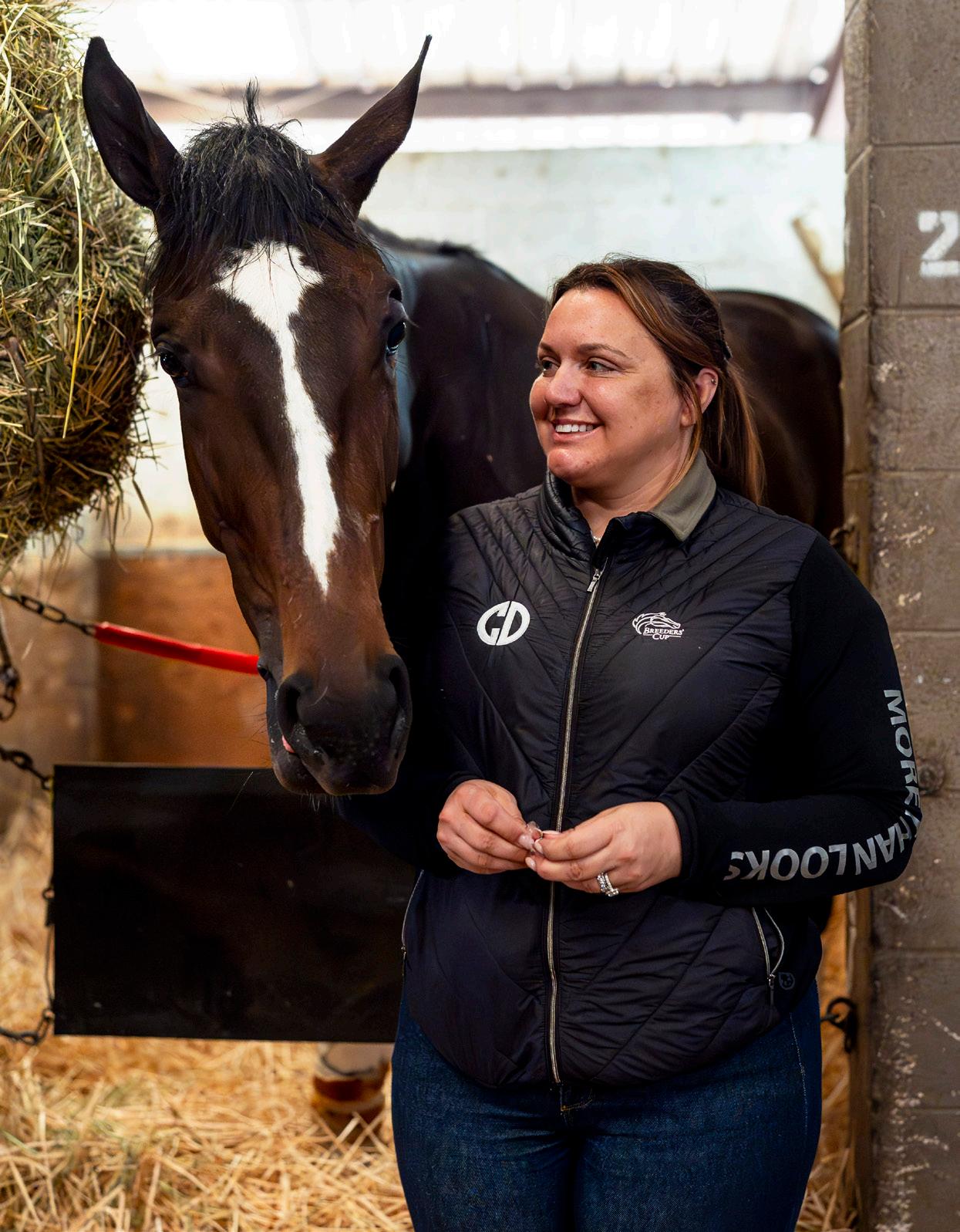

DeVaux arrives at this moment with horses in her blood, her focus on the athlete and her intuition about their development foremost in her mind. She comes by this naturally.
If you wanted a textbook example of a horsey family, the DeVauxes would be it. Cherie is one of 10 children of Janet and Adrian ‘Butch’ DeVaux, retired Standardbred trainers who still keep several horses on their Florida farm. They competed at New York tracks in Saratoga Springs and Monticello, following in the footsteps of Cherie’s grandfather, also a Standardbred trainer, while raising a family that would include Jimmy, who trains and drives; her brother Kenny and his wife Dawn, also in
the Standardbred world; and of course, younger sister Adrianne, who worked for Cherie for four years before striking out on her own as a Thoroughbred trainer in 2024.
The older sister, who calls herself ‘an overachiever,’ recalls a life that “was never void of horses. I used to participate in rodeos. I was a barrel racer. But I never was involved with Thoroughbred racing.”
She fell into racing by accident while she was in college in the early 2000s. “When my parents moved back to New York, I was in college [in Florida], and I lost my scholarships and my residency after two years. I went back to New York, and I needed a summer job,” said DeVaux. “And my mom said, ‘You can just be a hot walker.’ And that’s when I started. I started as a hot walker that summer. Then I realized I can ride these horses too.”
DeVaux transitioned from hotwalking to galloping in the mornings. That is how she came to reunite with the late Chuck Simon, who had worked for Butch as one of his first jobs in racing years earlier. A broken leg knocked her out of commission as an exercise rider and led her to see that she needed to take more of a management role in Simon’s barn if she wanted to stay in the sport.
“Chuck saw that I needed some direction, and he knew that if he gave me responsibility, I would rise to the occasion, or he felt that I would. If there’s one thing I can pinpoint to why I am here, that I am now, it would be Chuck just sitting me down and saying that I have more to give in my life than just being a party girl.”
She stayed with Simon until 2010, when she moved on to become an assistant to Chad Brown, who had struck out on his own in late 2007. Her tenure with Brown lasted for eight years, a time when she was able to experience the Triple Crown trail with Normandy Invasion, Brown’s first Derby starter, who finished fourth in 2013, and Practical Joke, who was fifth behind Always Dreaming in 2017.
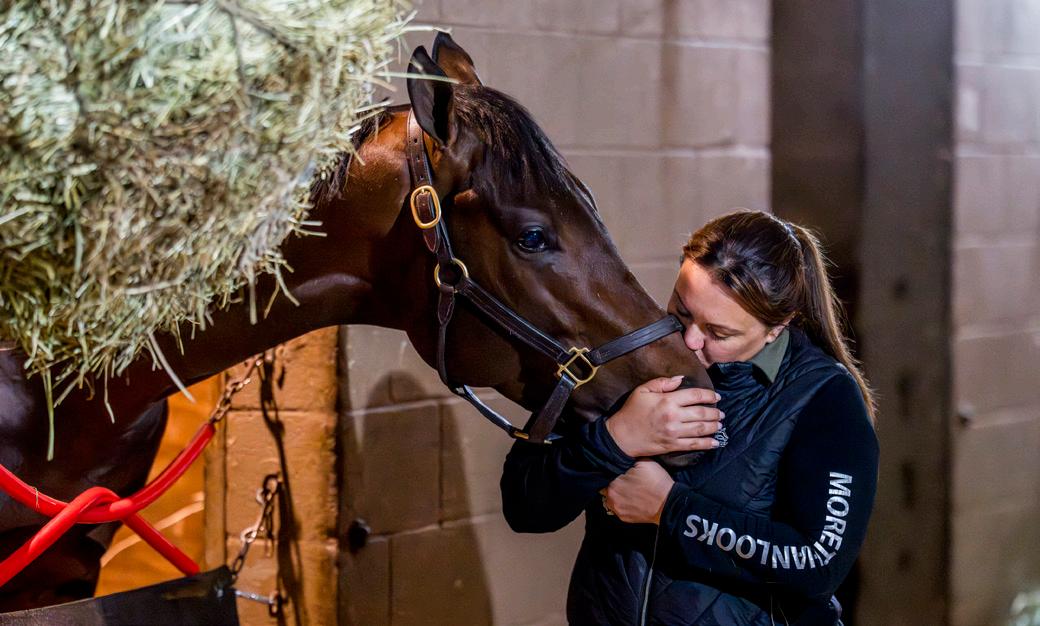
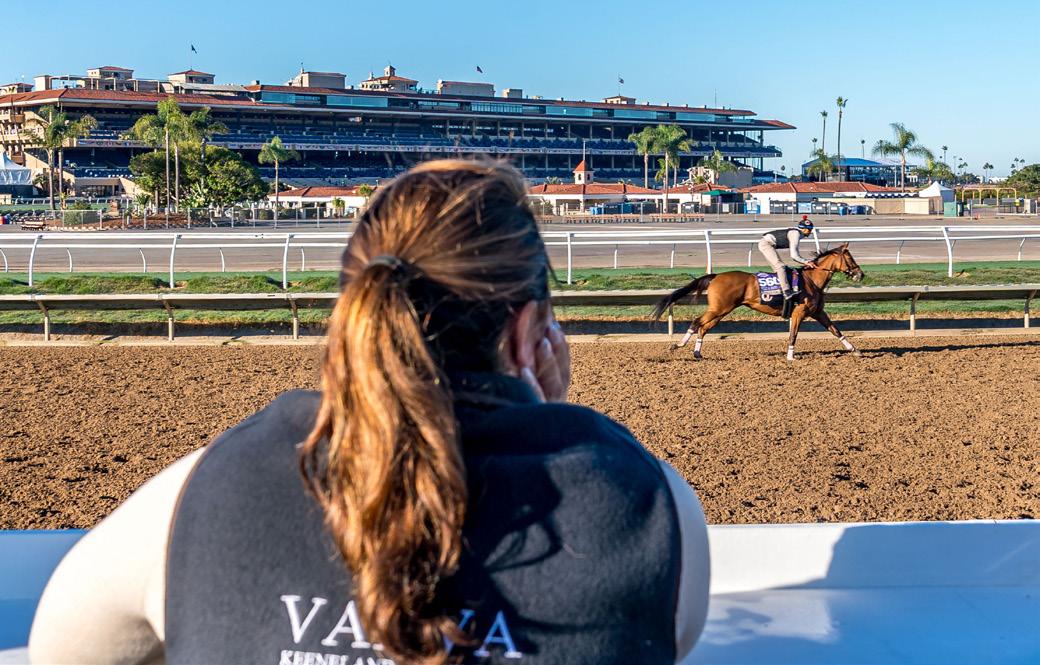
“I got to work with really high-level horses, and a lot of them. When I started working for him, he had already won a Breeders’ Cup. He was on the rise, so I got to be a part of that big growth,” said DeVaux.
In addition, she worked closely with Lady Eli, 2017’s Champion Turf Female, whom she helped nurse through a case of laminitis that sidelined the horse for a year. “Somebody asked me what made her special in an interview about her when she won the Gamely after her return. I said her tenacity is what makes her special,” reflected DeVaux. “I think that that is the only thing that has kept me going, is that you have to be able to overcome things, to overcome obstacles, to be outside your comfort zone and continue to want to learn and know when you’re wrong and take a step back.”
By 2017, she was dating bloodstock agent, David Ingordo, whose stepfather John Shirreffs had won the Kentucky Derby with Giacomo in 2005, and of course had conditioned Hall of Famer Zenyatta, whom Ingordo purchased for Jerry and Ann Moss as a yearling. At that point in her career, she felt ready for a change.
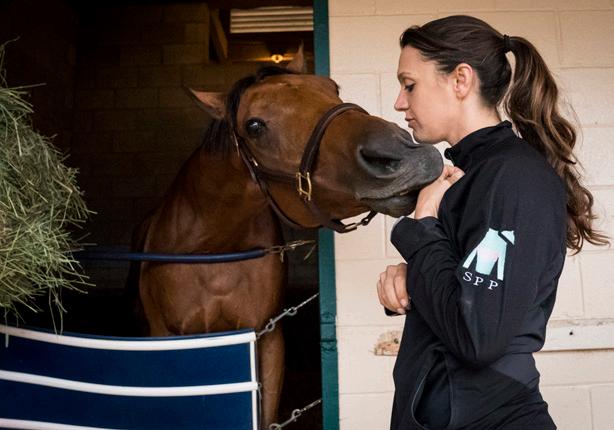
“When I decided to be a trainer, I was at a crossroads in my life. I was working for Chad. I was burned out in that capacity. David sat me down one day in the summer of 2017 and asked what I was doing with my life, and I just said, ‘I can’t continue this. My life is in a different place. I just don’t want to do this,’” DeVaux reflected.
“He said, ‘You really owe it to yourself to give yourself a chance to be a trainer.’ You’re very talented. He believed in me, and I just said, ‘I know what my strong suits are, and that’s working with the horses, running the barn.’ But I was deficient in the business part of it. He said, ‘If I help you with that, would you at least give yourself the opportunity to try?’”
In April 2018, DeVaux announced that she was going out on her own. That same week, she married Ingordo and became stepmother to his daughter Reagan, both integral supporters in her journey from assistant to leader.
One thing that stands out about DeVaux is her commitment to the horse and the deliberateness she brings to every job she has had since those early days as a hot walker.



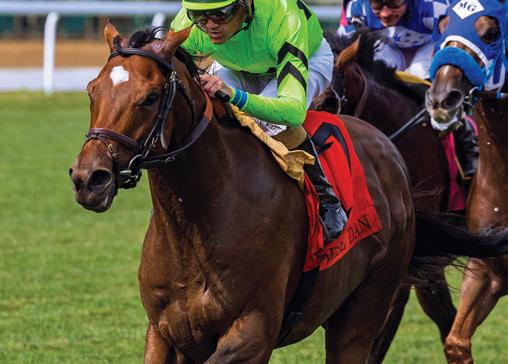
“I was very intentional when I worked for Chad. Up until that last day when I left the barn, I put everything that I had into that job,” said DeVaux. “Then in my head, after that, I’m starting the new chapter of the rest of my life. That’s really how I thought of it. That’s when I started. I didn’t have any clients lined up. I didn’t have anything.”
“When you make the decision to go out on your own, you are making a decision to start over. You have to have no expectation that anyone’s going to help you, not staff, not clients, nobody. You have to go in with zero expectations.”
Within a month, she had her first starter, Take Charge Tina, who finished fifth in a one-mile allowance at Belmont Park in May 2018. She got her first win nearly 11 months later, when Traveling won a one-mile maiden claiming race on the Gulfstream Park turf. Two years later, she collected her first stakes win and graded stakes win with Gam’s Mission, sporting the classic colors of Lazy F Ranch, best known for racing Forego in the 1970s, in the Regret Stakes (Gr.3) at Churchill Downs in May 2021.
That same year, DeVaux campaigned the First Samurai filly Tarabi to a start in the Breeders’ Cup Juvenile Fillies. Tarabi debuted with a 5 ½ length win at Ellis Park, finished second to eventual Champion Two-Year-Old Filly Echo Zulu in her next start in the Spinaway, and then was third behind that filly in
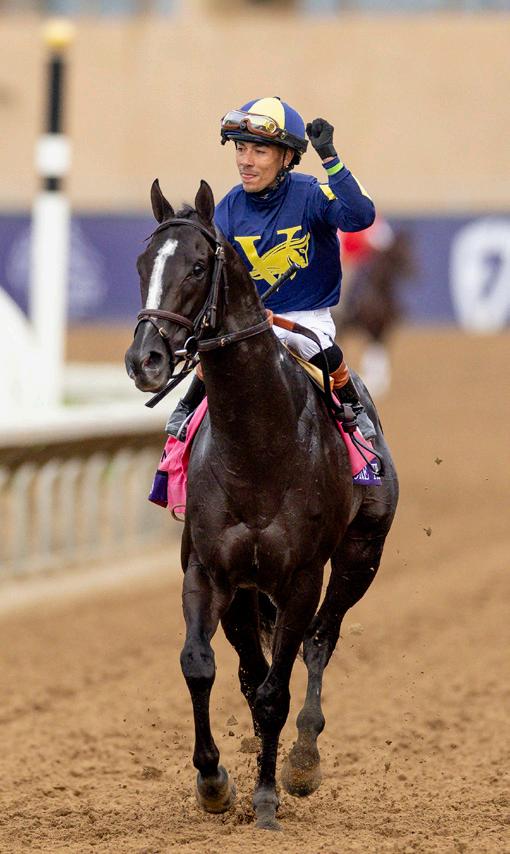
the Breeders’ Cup Juvenile Fillies at Del Mar. In just over three years, DeVaux had risen from assistant trainer to graded stakes winner with a Breeders’ Cup placement.
Her client list expanded as she became a more frequent visitor to the winner’s circle. She currently has horses for Belladonna Racing, her partnership with Ingordo and Paul Manganaro; West Point Thoroughbreds; the Violas’ St. Elias Stable; Phipps Stable; and others. She trains Brilliant Berti, a multiple graded stakes winner, for Klein Racing. She conditioned Vahva, a daughter of Gun Runner owned by Belladonna, West Point, and other partners, for four seasons and earned multiple graded stakes wins, including the Derby City Distaff (Gr.1) and a second to Splendora in the 2025 Breeders’ Cup Filly and Mare Turf.
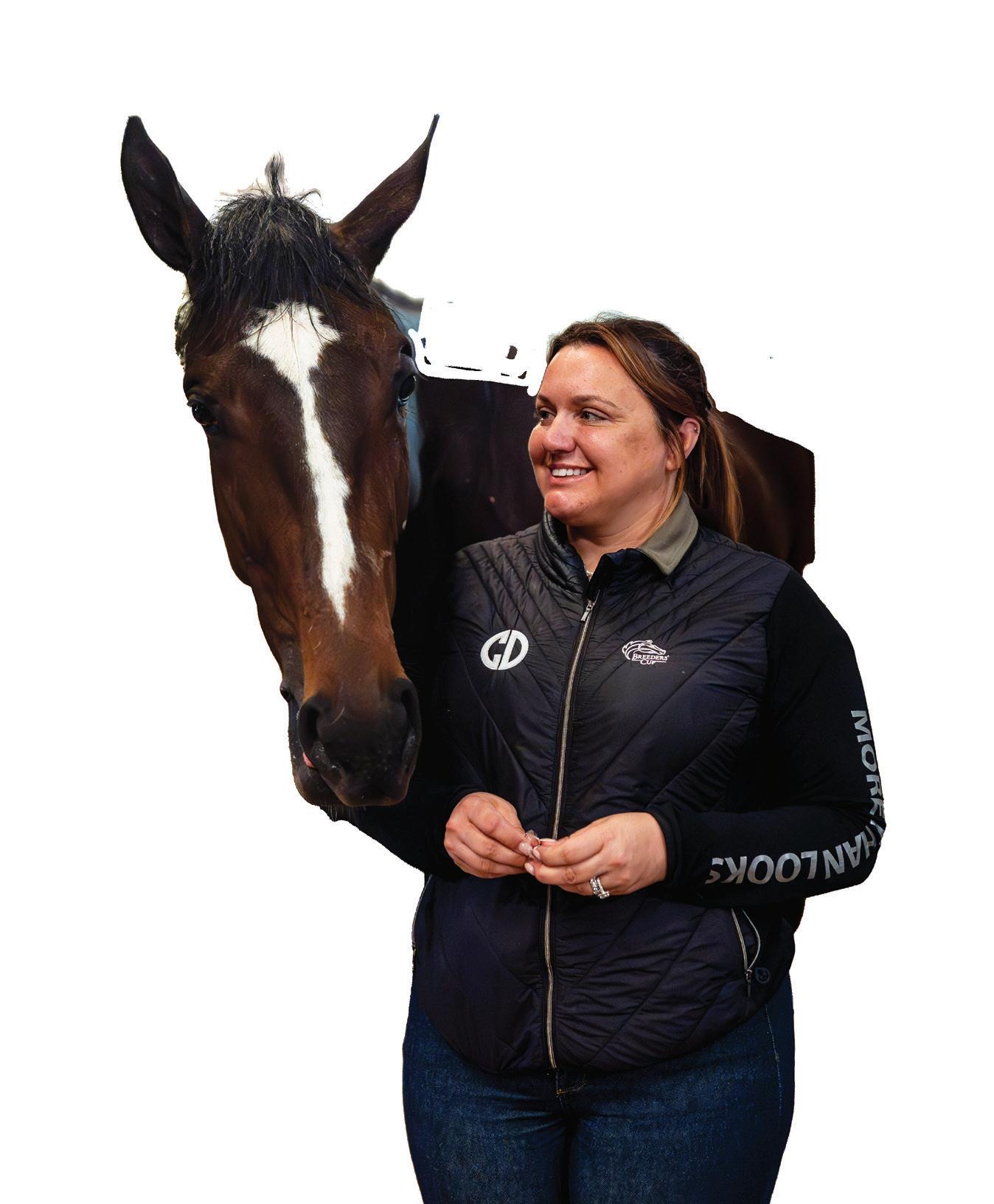
Her stacked stable over these past two seasons has also included the recently retired She Feels Pretty and More Than Looks, who both gave the trainer more milestone wins. The former brought home DeVaux’s first Grade 1 in the 2023 Natalma Stakes at Woodbine, and then More Than Looks scored the 2024 Breeders’ Cup Mile at Del Mar, giving DeVaux her first Breeders’ Cup victory in her third trip to the World Championships. Lael Stables’ She Feels Pretty came within a half-length of scoring DeVaux’s second victory in 2025.
In addition to her runner-up in the Filly and Mare Turf, She Feels Pretty won three of her five starts, all graded stakes. Her wins in the Modesty (Gr.3), the New York (Gr.1), and the E.P. Taylor Stakes (Gr.1) earned the daughter of Karakontie the Eclipse for Champion Turf Female title for the 2025 season and gave DeVaux her first champion, seven years after going out on her own. The filly’s title was also a first for Lael’s Roy and Gretchen Jackson, who won the 2006 Kentucky Derby with fan favorite Barbaro and several graded stakes with Divining Rod and Arrest Me Red.

“I didn’t realize the Jacksons had never had a horse win an Eclipse Award,” said Ingordo. “But to do something like that for a storied stable and then to have the opportunity to train for the Phipps and Vinnie Viola, who are two of the classiest groups of people in our business is amazing. I don’t know if she pinches herself because there’s a lot of people that have never had that opportunity to perform at such a high level.”
While DeVaux’s path might have begun gradually, the combination of her tireless work, a strong support network, and an unwavering devotion to the horse has skyrocketed her into the sport’s top tier and yielded both elite success and the threshold of a historic milestone.
“I just closed one chapter, opened another, and then, of course, you have to catch up,” said DeVaux. “I was really struggling in the beginning mentally with everything. David said, ‘Let’s give it three years and we’ll reevaluate.’ I felt like I was grinding, grinding, pushing the rock uphill. Then all of a sudden, it became easier and easier. At the three-year mark, it was like, okay, we’re here. Everything worked out.”
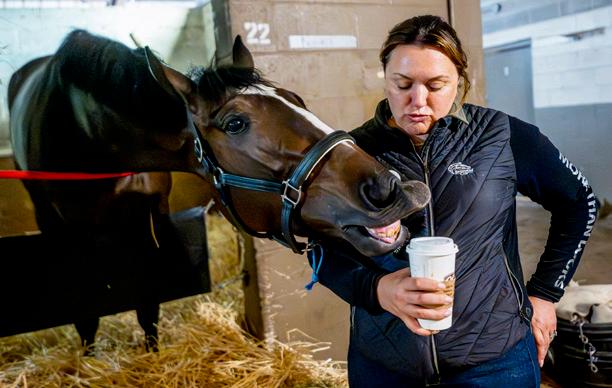
With a Breeders’ Cup winner and an Eclipse champion on her resume, this lifelong horsewoman now turns to a new challenge: negotiating the Triple Crown trail.
She has a strong hand with two three-year-old colts that she is pointing toward those elite sophomore prizes. Owned by Phipps and St. Elias Stables, Golden Tempo is a son of Curlin, two-time Horse of the Year, Preakness winner, and sire of two classic winners, out of the Bernardini mare Carrumba, a
homebred graded stakes winner for the Phipps. Reagan’s Honor is a son of Honor A.P., whom John Shirreffs trained to a fourthplace turn in the 2020 Kentucky Derby, and Rutile, a daughter of Medaglia d’Oro that Shirreffs also trained for Jerry and Ann Moss. Both certainly have the pedigree that promises ability at classic distances, though Golden Tempo’s early success has come as somewhat of a surprise.
“He’s a surprise, especially that he came out of the box early being brilliant,” said Monique Delk, Executive Director of Racehorse Development for St. Elias Stable. “You saw talent in there, but it was something that we knew we would have to cultivate. He wasn’t going to be a typically early horse.”

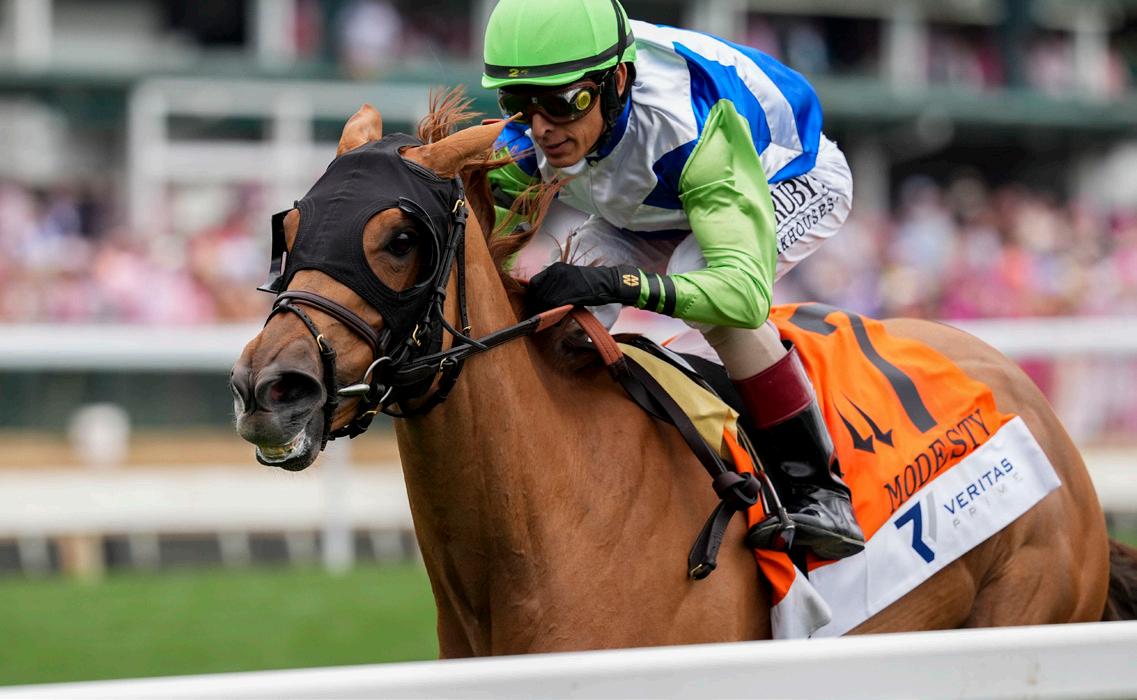
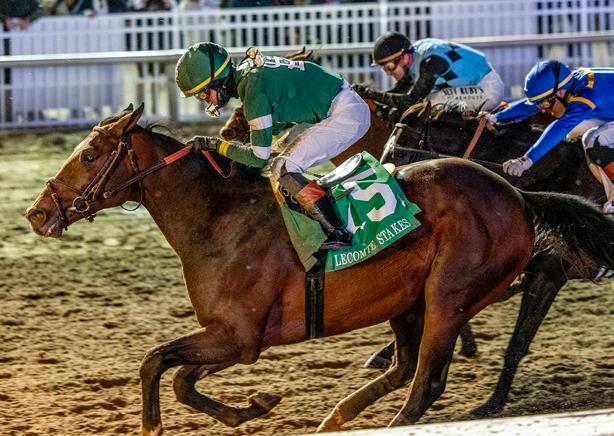
Golden Tempo won first time out in a six-furlong maiden race at Fair Grounds in late December 2025. His 1:10.66 for the sprint was an unexpected result. “I think he really surprised us all. Obviously, he’s a horse that’s bred to go a lot longer. And then when he won his first out, that six-furlong sprint, we were all pretty surprised and ran him back in the Lecomte thinking, ‘Okay, let’s see what we got,’” said Daisy Phipps Pulito of Phipps Stable.
His next start was the 1 1/16-mile Lecomte (Gr.3), a two-turn stakes with Kentucky Derby points. Golden Tempo handled the race with aplomb, the stretch-out to two turns not a problem at this early point in his sophomore season. The son of Curlin ran into trouble in the Risen Star, where he was seventh early, his customary late run helping him make up ground to be third at the wire. “He just left himself way too much to do,” said Pulito. “Obviously, he likes to come with one big last run, and that’s his natural running style. I think a little longer race, obviously, he’s bred for that, and hopefully, he’ll like that.”
Golden Tempo rounded out his spring prep season with a turn in the 1 3/16-mile Louisiana Derby (Gr.1), also at the Fair Grounds, where he closed readily to finish a head and a length back of winner Emerging Market and runner-up Pavlovian.
“We’ve been very pleased with him. I think the more he matures and he’s still lightly raced, I think there’s a lot to be excited about here, for sure,” said Delk.
Their choice to send Golden Tempo to DeVaux came because of her approach to training. “I like how she does a personalized plan for each horse. I like the way she manages them. I like the way that she communicates with me on the horses. I like how she’s super patient with the horses,” Pulito shared.
“Cherie, obviously, she’s very talented. She’s a very accomplished horsewoman. Her credentials speak for themselves,” said Delk. “I like what I’m seeing from her program. I love that she’s as hands-on as she is. She pays very close attention to detail. She’s a brilliant communicator. There’s no gray areas. I just related to
her on a horsewoman level, and I felt like we wanted to give it a shot. Mr. and Mrs. Viola were all for it. Daisy had a very high regard, so it was an easy decision.”
Reagan’s Honor is DeVaux’s other potential sophomore stakes performer, his connection to DeVaux coming via Ingordo, who not only did the mating that produced the colt but also named him for daughter Reagan, one of several he has named in her honor. The combination of Honor A.P., a son of Honor Code and grandson of Belmont Stakes winner A.P. Indy, with Rutile, a daughter of Set Them Free, the dam of 2005 Kentucky Derby victory Giacomo, gave Ingordo confidence in this dark bay colt.
“I looked at the mating on paper and I said, this is a good mating. He’s a strong horse, fits the mare physically, dirt, ought to get two turns. Honor A.P. had plenty of speed, which I thought the family might need,” said Ingordo. “We got this colt and he was a superstar from day one.”
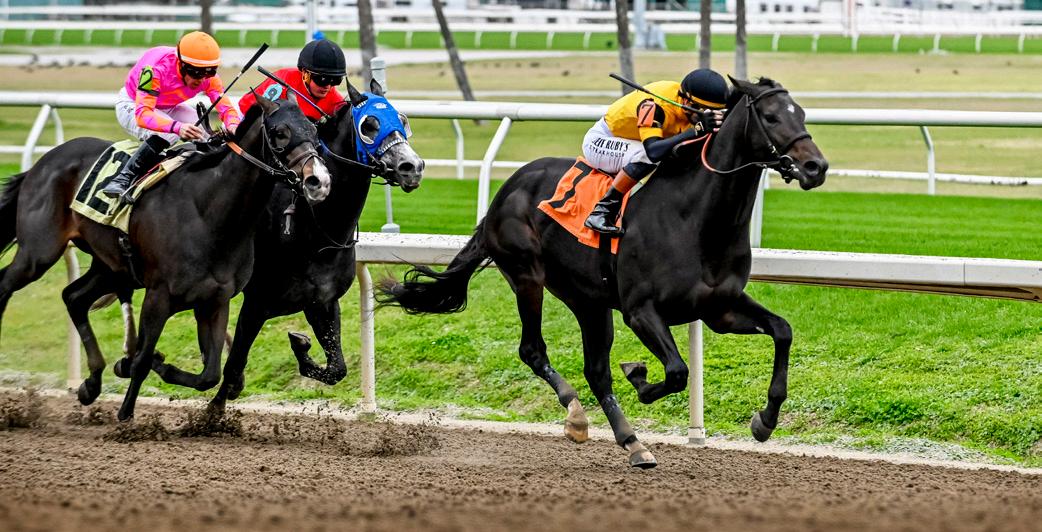
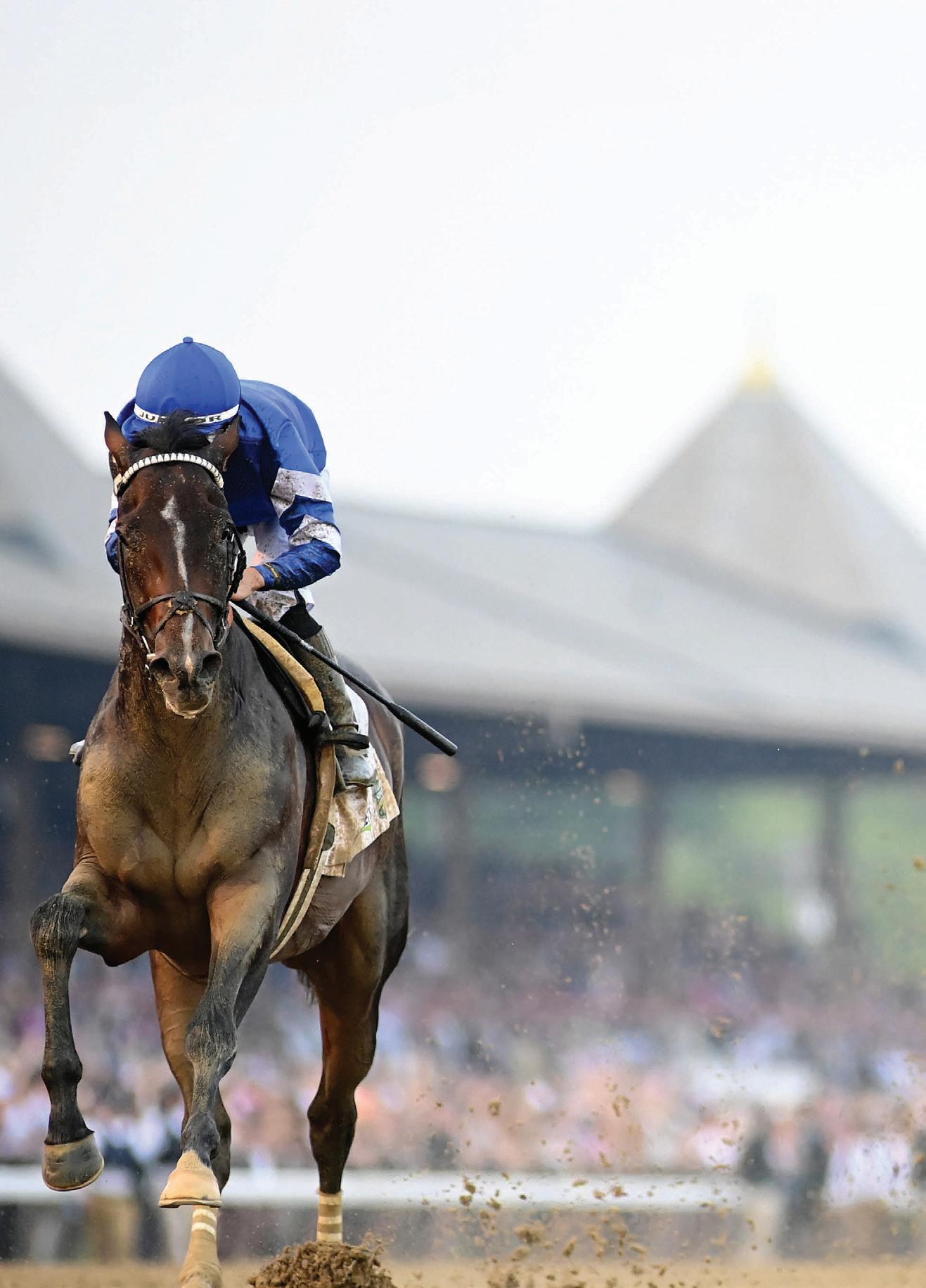
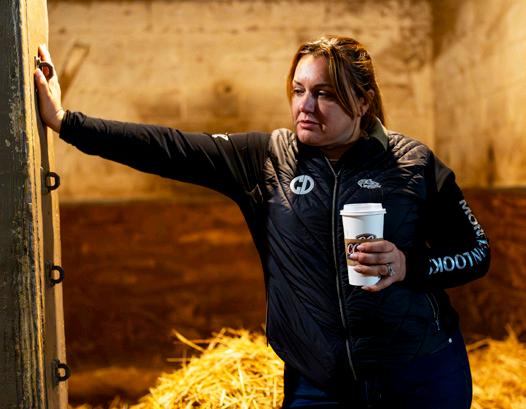
Like Golden Tempo, Reagan’s Honor received his early education at Dr. Barry Eisaman’s Eisaman Equine in Florida and stood out from the day he arrived at DeVaux’s Fair Grounds barn. “He showed up down here, never missed a beat. Cherie’s philosophy is that she’s not worried about her win percentage. When you’re developing horses, they might need a race or two. And oftentimes with these two-turn dirt classic-type horses, you got to give them a run,” said Ingordo. “Reagan’s Honor had a kind of prototype first race, broke pretty sharp, was right in there and finished fine. He ran fourth and it was a good race.”
In the colt’s second start in mid-January, he stretched out to 1 1/16 miles against 11 other three-year-olds and had the lead at every pole, holding off late challengers to break his maiden by 1 ¼ lengths. DeVaux brought him back in an allowance against older horses at the same distance on the Lecomte undercard.
Golden Tempo and Reagan’s Honor, along with other sophomores like Englishman in her barn, represent another phase of DeVaux’s career at the helm. Her list of graded stakes winners grows each year. She has a Breeders’ Cup win and an Eclipse champion on her resume. Traversing the Triple Crown trail and then the three-year-old stakes that follow are the natural next step for this lifelong horsewoman. Her time with Simon and then Brown has given her the confidence necessary to navigate this season and maybe even enjoy it.
“I have a trove of experience just from the sheer number of horses that I’ve worked with. I’m grateful for that because you can read about it in books, you can watch videos, but nothing beats that hands-on experience,” said DeVaux. “I have worked
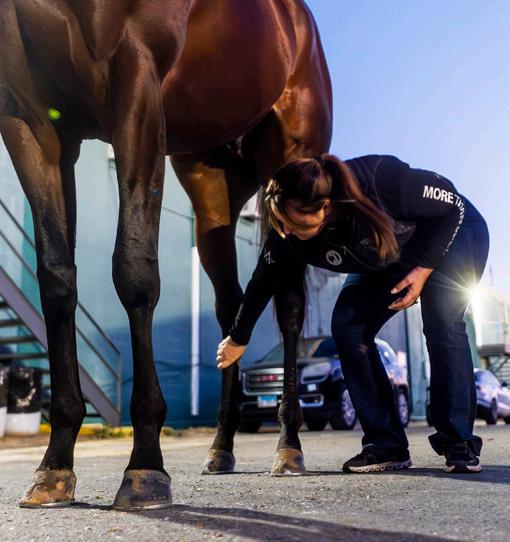
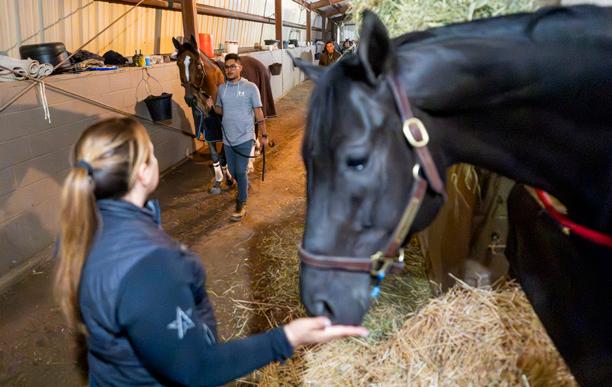
with horses that went to the Derby. I have worked with horses that went on to be champions. So the process is not intimidating to me. I think that experience working with those horses on that level prepares you to be put in those situations, to have the knowledge and confidence in your decisions to get there.”
In the midst of the months-long run-up to this year’s classic season, her focus remains on the horses themselves rather than on those targets. “This is my first year with a lot of two-turn dirt colts and fillies, mostly dirt. But I have learned that they all come around on their own time, and I don’t need to borrow the trouble of worrying about it. When we do get there, they have a way of sorting out themselves,” said DeVaux.
“With a lot of my horses that are stakes horses, we have big targets. How do you get from one to the next? It’s hard to think of the Breeders Cup or Derby right off. So you’re making little mini targets. Then you come up with a plan for how to get to each of those from the first one.”
That measured approach and her individualized plan for each of her horses, regardless of their target, has brought her to this point and earned her the respect and admiration of those also on the journey with Golden Tempo and Reagan’s Honor.
“This may be the first year she’s had this horse that’s going to go for this, but I have every confidence that the program she has in place is amazing,” said St. Elias’s Delk. “Her calmness comes from confidence. For me, when you’re a confident person, you’re confident in your training program, and you’re confident in the horse, all the rest of it falls into place. He’s the perfect horse for both of them to take this journey together. I think it’s a very good fit.”
“She just fits all those qualities that I look for with a trainer. She’s not too big. She had the time, and she got a pretty good horse right now,” said Pulito. “We’re all just letting the horse tell us what’s next.”
“Cherie’s philosophy mirrors mine, what I’ve learned over the years. You need to listen to the horses and do the right thing by them,” said Ingordo. “At the end of the day, she’s training each horse individually. I think as an owner, you have to give your trainer the latitude to do their job.”
“The fact that she’s hands-on, that she’s got all this experience, she’s putting it all together, and she’s letting the horse tell her what the plan should be, not her trying to make the horse fit a plan or a race schedule. She’s got an innate talent that you can’t teach.”
As for the trainer herself, who grew up on the backside of Standardbred tracks, spent time as a barrel racer, and came into the Thoroughbred side of racing in her early 20s, her perspective on the coming gauntlet is focusing on taking on this next challenge. “I really hope that throughout the whole process I can be present and really just enjoy. It’s pressure. All eyes are on you,” said DeVaux. “I hope that, when the time comes, I can really be present enough and let the nerves settle and just separate that out. Enjoy the whole experience.”
“The Derby is just such a specialized race. It’s our premier race in thoroughbred racing. Everybody knows the Kentucky Derby, but not everybody knows what the Breeders’ Cup is,” said DeVaux. “You only get one shot at the Derby. You get one shot at it, and it just everything has to go perfectly for you on that day. I think that part of the lure and the excitement of it is you only get one shot.”
Whether she is on the backside on a weekday at Fair Grounds or the week of the Run for the Roses at Churchill Downs, DeVaux comes back to the joy at the heart of what she does. “My favorite part of the day is interacting with the horses and the staff. I really enjoy interacting with the horses, watching their personalities change as they’re developing, especially from two to three,” said DeVaux. “It doesn’t matter what kind of horse
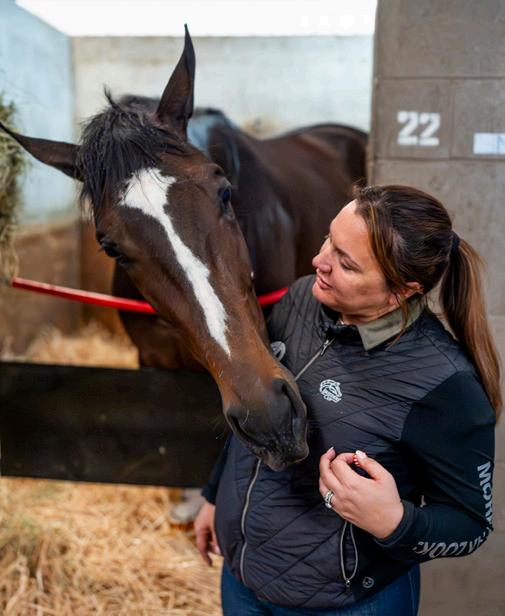
they are. They’re not all going to be stakes horses. Most of them won’t. But just watching through the process is what I get the most enjoyment out of.”
“I love the horses. I enjoy the process of developing a horse. When they come in all the way up until when they’re running, I enjoy taking that journey with the owners, with each client, with our team. And that’s why I do this.”
As she embarks on her first solo journey through the classic season, DeVaux carries with her the respect of a backstretch she has worked since her days as a hot walker. In Reagan’s Honor and Golden Tempo, she may have the right horses to cement her legacy within the history of the sport she has made her life’s work. The Triple Crown can be the ultimate test of a trainer’s resolve, and if her recent success is any indication, Cherie DeVaux is exactly where she belongs.
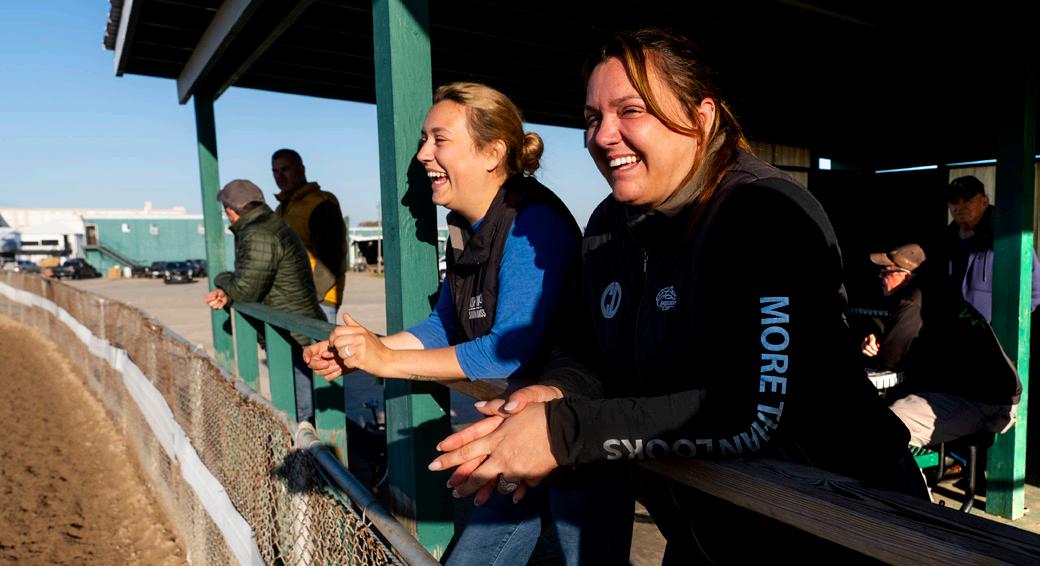
On a rainy late September afternoon in 2024, Adrianne DeVaux sent out her first starter and got her first winner at the same time, a confluence of events that left the now-27-year-old in tears. With husband Rodrigo Ubillo by her side, the youngest daughter of Janet and Adrian “Butch” DeVaux entered the training game with a bang as Shoot the Nickel earned his first win. The neck victory at six furlongs was a hint at things to come for his rookie conditioner.
Eighteen months later, she has four wins in nearly 50 starts, her barn currently totaling three horses, and then four more to pick up when she returns to her New York home. Her stable may be the opposite end of the spectrum in terms of numbers compared to her sister Cherie, whose nationally ranked stable stands at about 100 horses, but this is just how the younger DeVaux likes it.

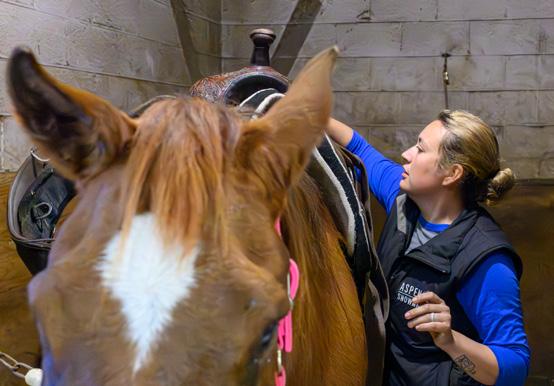
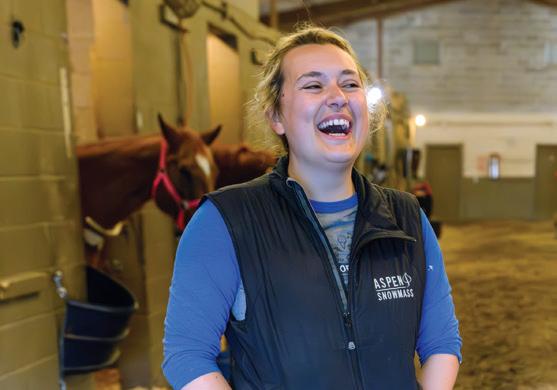
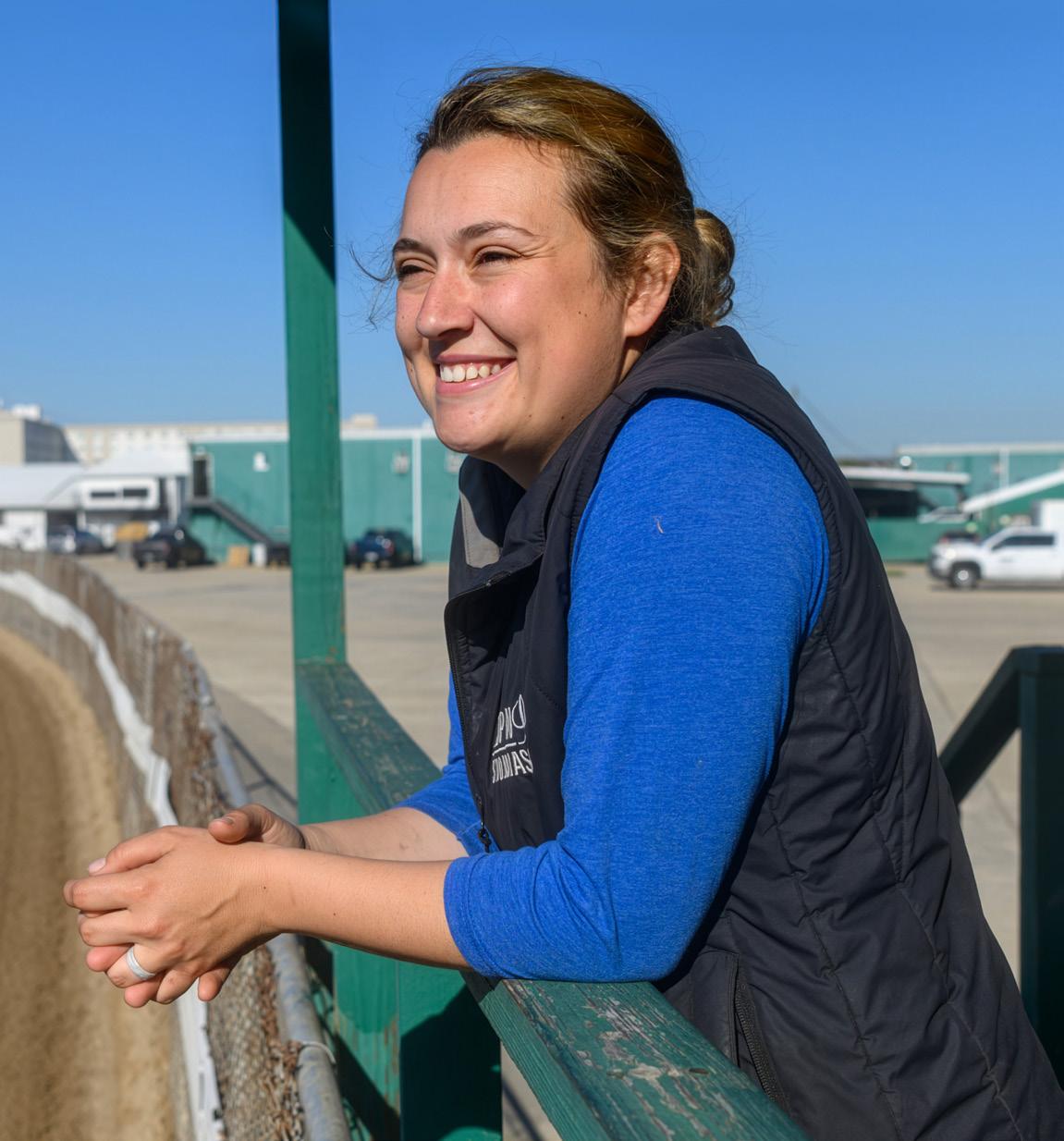
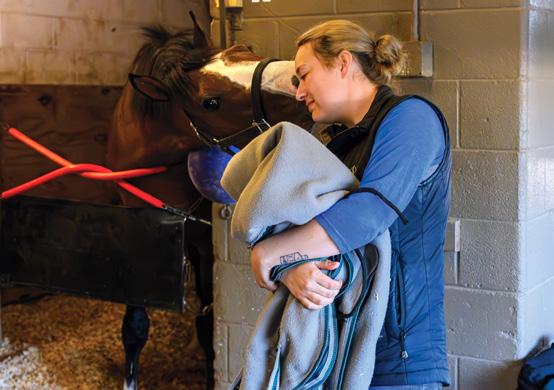
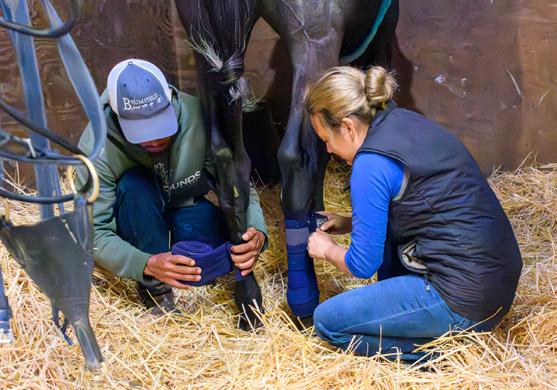
“Ten is the sweet spot, 10 to 12,” said DeVaux. “It’s easier to focus that way on taking things and improving them and just doing everything, having hands and eyes on everything. I just said I never, ever, ever really wanted to be a big barn and have numbers. I like quality over quantity.”
“I am extremely hands-on, and that is how I prefer to be.”
She comes by it honestly: Butch and Janet DeVaux made their living with Standardbreds until retiring in 2020, and though they may be out of racing, they are still horse people through and through, keeping retired horses on their Florida farm. Their family is a veritable ‘Brady Bunch’ of the horsey sort as Adrianne described them. Brother Jimmy is still in the harness world as is Kenny, whose wife Dawn trains as does their daughter Nicole. Even the siblings not in racing will “come help out at the track when Cherie and I come into town. They help us do everything, get set up,” said DeVaux
Like her siblings, Adrianne was in the saddle from her earliest days. “Cherie used to barrel race, and she’d put me up on the horse and run me around the barrels, and I would be yelling ‘faster, faster,’” she laughed.
When her parents returned north to New York and harness racing after a sabbatical in Florida, Adrianne helped out around their barn. “I would be there at the races every time after school, and I would help out as much as I could. I got my license at the harness track at 14, so I could start paddocking and going to the races,” said DeVaux.

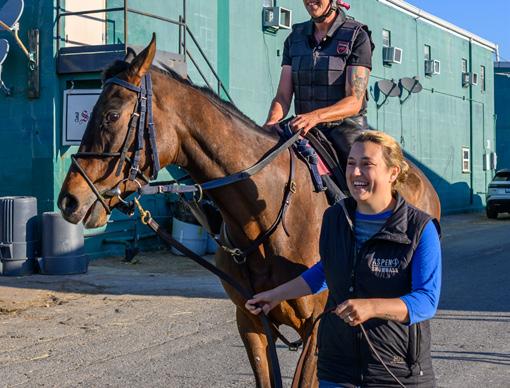
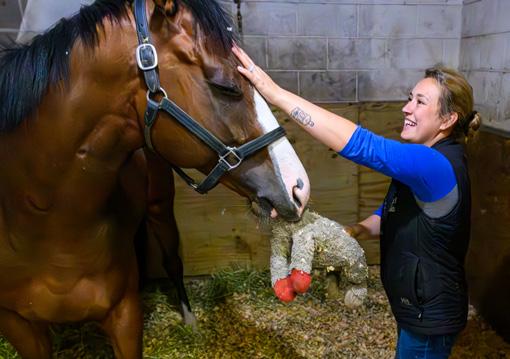
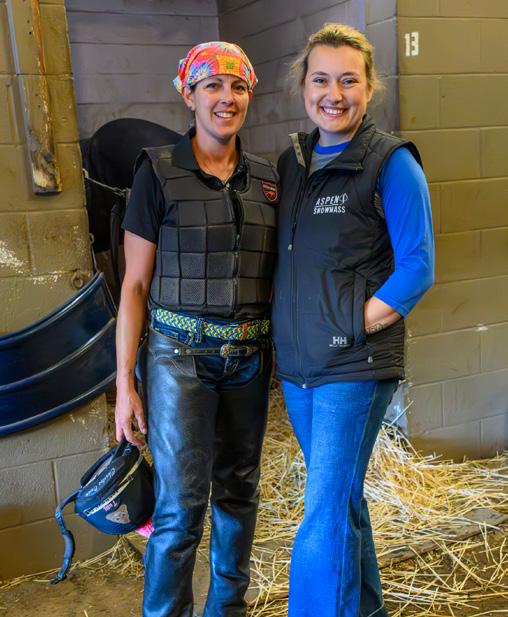
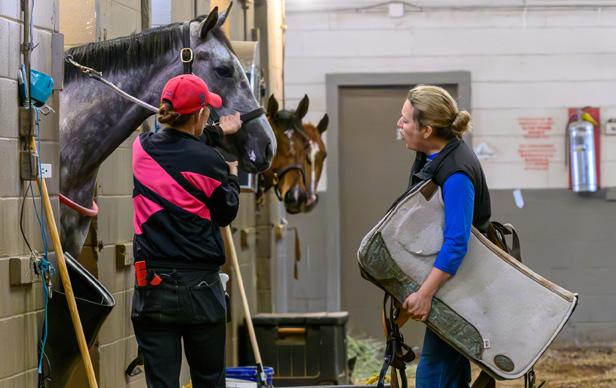
Not only have her parents been her biggest cheerleaders, but they have also been her biggest teachers. As a teenager, her dad gave her a Standardbred to train on her own. “It was my project to train the horse all summer and mess around with him. He was okay. I got a third and a fourth out of him.” That experience whet her appetite for training, but not Standardbreds.
Instead, she followed Cherie into Thoroughbred racing, trading trotting and pacing for galloping and breezing. For Adrianne, Thoroughbreds “are more of a challenge; it’s a lot more tweaking and keeping them sound, and you’re racing at different distances and figuring things out. They’re more of a puzzle to me.”
As a teenager, the younger DeVaux worked for trainer Art Magnuson for three years. “He was really instrumental in fostering my love of racing. I’ve always loved horses, but he really made me love racing. He set the wheels in motion for what I love to do, which is take horses that might be overlooked or just need a good old college try. That’s what he did as well. That really was what I enjoyed doing.”
“That’s what I enjoy doing now, too: let’s get this horse, see if you can get to the races. If you do, great. If not, we’ll figure something else out.”
After her time with Magnuson, she worked briefly for Pat Meadows and then for Chad Summers, trainer of graded stakes winners Mind Your Biscuits and Napoleon Solo, and later for her sister in 2020.
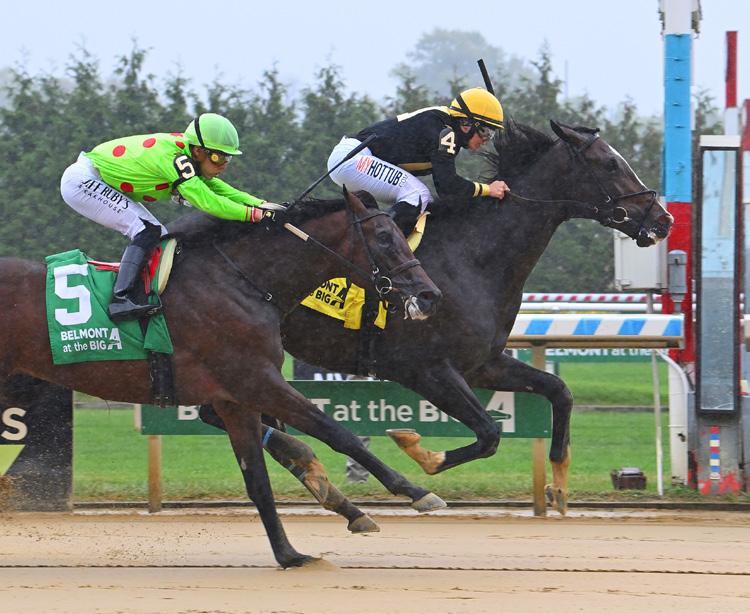
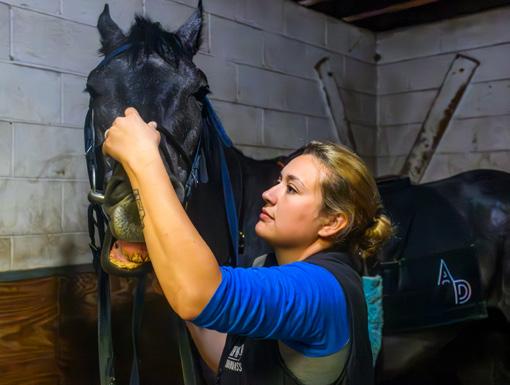
As an assistant trainer for Cherie, “I was learning the ropes of being a foreman in a bigger barn and traveling with horses to the races. And I was getting on a couple of race horses just to learn how to gallop. I’ve ridden my whole life but not race horses. That was super fun and a great second thing to learn.”
She spent four years with her sister and then went back to Summers for a brief stint before deciding to strike out on her own. “Chad didn’t know if he wanted to retire, what he wanted to do. That’s when I said I don’t really want to go work for anyone else. It’s hard for me to fit into a place because I like to be more hands-on and do everything myself,” DeVaux said.
“And that’s not going to work in most places. Most places don’t need an assistant for that. Al Gold and Chad gave me my first horses, and said, ‘All right, go ahead. See what you can do.’”
That brings the story back to Shoot the Nickel, the then twoyear-old owned by Al Gold’s Gold Square Stable, which counts Cyberknife and Full Count Felicia among its best horses. The son of Violence was fourth in his next start, the listed Atlantic Beach Stakes at the Belmont at the Big A meet in autumn 2024. Though Shoot the Nickel was claimed away late last year, DeVaux keeps track of him.
“I love watching him go on, knowing eventually we’ll probably be reunited at some point. I love rooting for him. It really is an honor to watch these horses. It’s an honor to watch them blossom in places where they can win and do good things.”

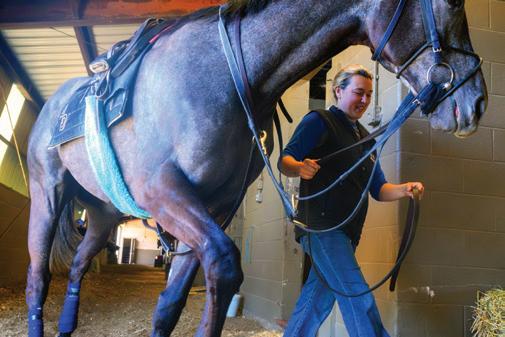
While she shares a career with her sister, Adrianne has found her own groove in starting earlier and staying smaller. Cherie watches her younger sister with admiration. “She is so personable. She is so bubbly, and she’s got a positive outlook,” said the elder DeVaux. “I’m super proud of her because going out on your own is hard,” said Cherie. “I’m very proud of how brave she is to go out and do life in her 20s when it took me a lot longer to feel ready for that.”
A year and a half into her career, what has Adrianne DeVaux learned about herself after a lifetime of learning alongside a long list of teachers? “I have learned that I can achieve a lot more than I think I can. Mentally, I found that I have a different drive,” shared the trainer.
“As an assistant, you want to do your best and you want everything to be perfect and succeed. But when it’s your own, it’s more of an achievement and I just want it.”
Ultimately, Adrianne DeVaux’s measure of success is not found only in the win column, but in her mission to leave the sport better than she found it. With a ‘hands-on’ approach which prioritizes the individual needs of the horse, she is proving that in an era of the super trainer, there is still a vital place for the intimate, detail-oriented horsewoman.
“I love everything, every aspect of what I do. I want to be involved in every part of it,” said this third-generation trainer. “With new babies coming in, there’s always new dreams and hopes. It’s exciting.”

Hay may look like the simplest part of a horse’s diet, but as University of Guelph professor Dr. Anna Kate Shoveller explains, it’s the foundation of equine health and far more complex than it appears. Horses are designed to graze for 14–18 hours a day, relying on a steady flow of forage to protect the stomach, fuel the hindgut, and support overall wellbeing.
Whether we feed hay dry, soaked, or steamed, those decisions matter. Each method shifts something, from dust levels to nutrients and even taste, and knowing the differences helps us choose what’s best for our horses. In a University of Guelph study, Shoveller and her team examined how these treatments change the hay, how horses respond, and why the “right” choice depends entirely on the individual horse.
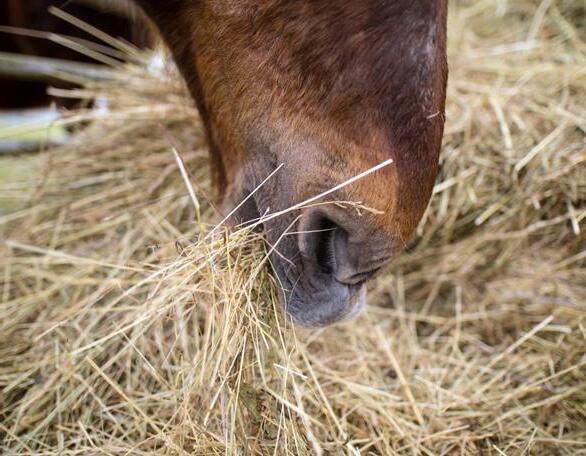
The University of Guelph study found horses appeared to prefer steamed hay equally to their normal dry hay, while soaked hay was a less-favoured choice. In this research, horses were offered different hay types side by side, and their behavior was monitored to see how long they spent investigating and eating from each option. Horses consistently ate less of the soaked hay and spent less time interacting with it, whereas dry and steamed hay were eaten more readily.
In addition to observing how the horses behaved, the research team also measured changes in the hay itself. Soaking was shown to wash out some nutrients, such as
certain proteins and sugars, while steaming proved better at conserving them, which may help explain why horses gravitated toward the dry and steamed options. Researchers hypothesize that the horses may prefer hay that is more nutrient dense, since soaking results in losses of watersoluble carbohydrates and protein. Although texture differences were speculated as a possible factor, the study’s conclusions were based on the horses’ clear choices shown through interest in and time spent eating each hay type.
“Whether you’re going to do secondary processing of your hay (steaming or soaking), it’s the original hay that you select that is the most important decision that you’re going to make,” says Shoveller. “The best way to understand the quality of your forage is to do a forage analysis, and that should be the foundation of your nutritional approach.”
When working with an equine nutritionist Shoveller describes the starting point is factoring how much hay your horse consumes voluntarily, and then calculate their nutrient requirements. The next calculation is if their voluntary consumption of hay meets all their nutrient requirements before figuring out what they will need in the way of concentrates and supplements. First and foremost, is predicting your hay and or pasture intake, then finding out the nutrient composition of that forage. For horses prone to obesity, selecting hay with a low nutrient profile is usually advisable, whereas nutrient dense hay is more optimal for the highest performing horses.
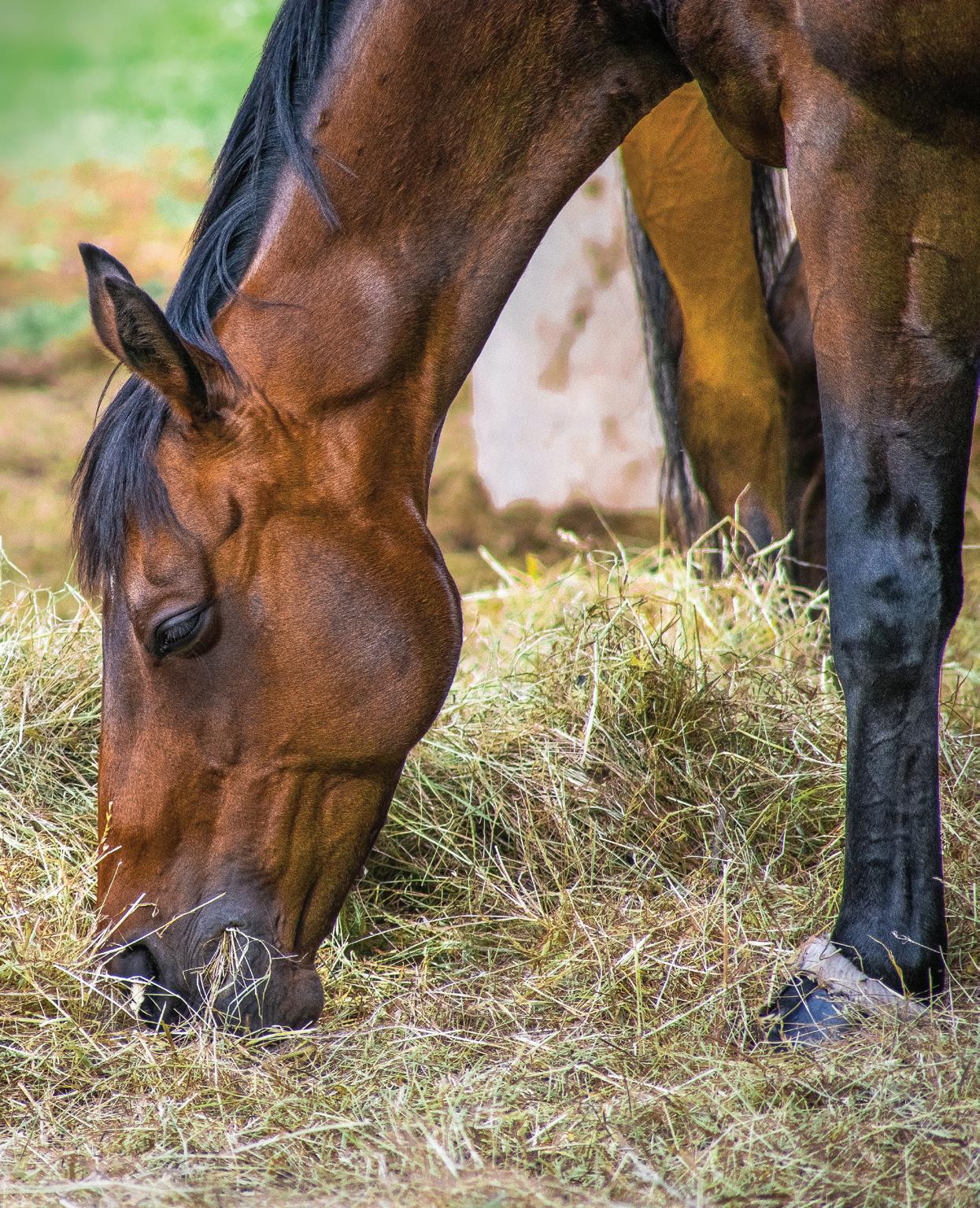
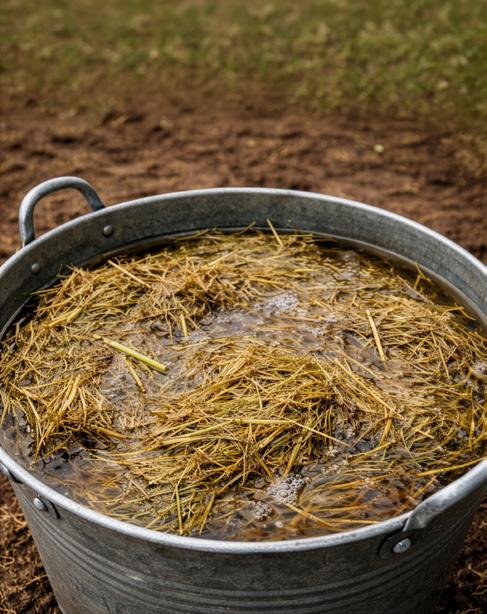
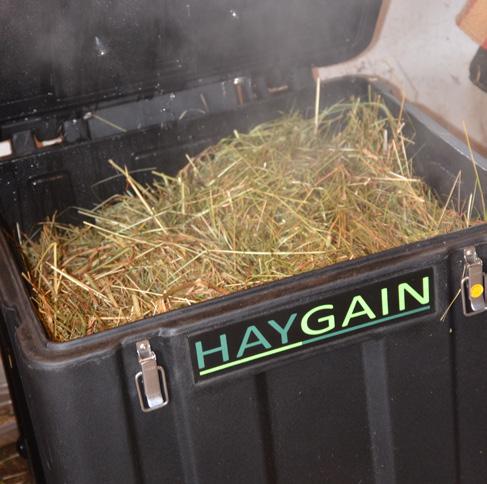
Soaking hay causes losses of soluble protein, potassium and nonstructural carbohydrates (NSCs) which would be sub-optimal for horses with high nutrient demands.
Soluble protein (SP) is the portion most readily digested and used; performance horses rely on it to build and maintain muscle for training and recovery. In the Ontario study, soaking hay for 30 minutes reduced potassium by 41%, a key consideration for athletic horses that lose electrolytes in sweat.
Non structural carbohydrates (NSC) are the easily digestible simple sugars and starches in hay that supply fast-energy in contrast to the energy produced from fermenting structural carbohydrates, such as the components of total dietary and crude fiber, or structural carbohydrates Non-structural carbohydrates are not part of the plant’s fibrous cell wall structure and contain mainly WaterSoluble Carbohydrates (WSCs) are part of the NSC content, and are susceptible to being washed out during the process of soaking hay.
To make the concept relatable, Dr. Shoveller compares soaking vs steaming hay to boiling vs steaming carrots: boiling colours the water as nutrients leach out, while steaming keeps more nutrients in the food.
“When we steam carrots, the water below the steamer remains clear but when we immerse them in boiling water, that water will turn an orangey-brown from carotenoids. This signals the removal of carotenoids in the carrots and along with that, other soluble components of the carrots.
In steaming, far more of the nutrients that are within carrots stay within the carrots. When we think about this concept and apply it to soaking or steaming hay, this is where soaking hay leads to a reduction in NSCs and specifically those are the carbohydrates that increase the horse’s glycemic response. If I had an overweight horse that I’m trying to control weight on, that generally means I also want to control the glycemic index. So, I don’t want to see big increases in blood glucose when they choose to eat larger portions. Soaked hay might be really practical for horses with metabolic syndrome and for horses that are easy keepers.
If I have performance horses, young horses or old horses for this matter, who have a harder time getting the same amount of nutrients from the same feed, this is where steaming hay is an obvious go-to. We don’t want to limit intake and we certainly don’t want to limit nutrient intake with our horses that have really high nutrient requirements.”
While soaking hay is often used to reduce sugar for metabolic or overweight horses, Dr. Shoveller emphasizes that sugars are not all that is washed away in the process. Along with the water-soluble carbohydrates (WSCs) that many owners are intentionally trying to lower, soaking also removes a wide range of other nutrients, including minerals and micronutrients that would otherwise remain available in dry or steamed hay. Steaming does not cause these same nutrient losses, and dry hay, of course, maintains its original nutrient profile.
Shoveller explains that soaking hay creates a balancing act for owners. It is a useful strategy for horses where sugar reduction is desired, such as managing metabolic syndrome, insulin resistance, or obesity. However, owners need to understand that they’re also reducing many nutrients the horse requires. When soaked hay makes up a large portion (or all) of the forage ration, she advises adding a ration balancer or appropriate supplement to replace the vitamins and minerals removed during soaking. This becomes especially important when the horse isn’t receiving anything in addition to forage.
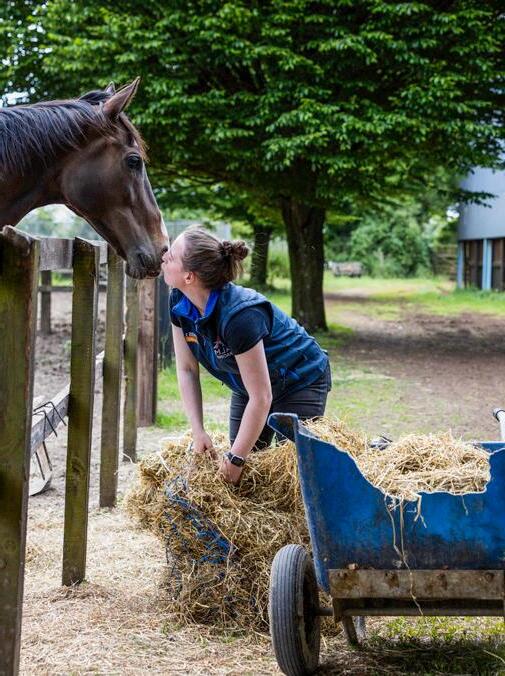
A caveat for soaking hay concerns time. As we know, drenched hay quickly grows moldy. Once hay becomes wet, it creates ideal conditions for rapid microbial growth, especially in warm weather. For most situations, soaking should be kept to the minimum effective duration and fed promptly afterward. Many equine nutritionists recommend soaking hay for 15–30 minutes and no longer than one hour. Research supports this guidance: a University of Minnesota study notes that 30 minutes in warm water or 60 minutes in cold water is effective for reducing carbohydrates. Shorter soaks have also been shown to have an impact, with 15 minutes resulting in significant decrease of sugar levels in some types of hay. If you are thinking of soaking hay, talk with your equine nutritionist to discuss desired results and make sure it’s the right strategy for your horse and to ensure that any nutrients lost in the process are balanced appropriately.
Reducing particles the horse may inhale at meal time is one step toward improving respiratory health. Shoveller says, “When we think about dust from hay, both soaking and steaming will reduce it, so long as the dust isn’t coming from mold that produce mycotoxins.” That stipulation is key: if “dust” is actually moldy fines and spores, no amount of wetting the forage will solve the underlying problem. In fact, you may end up masking an issue that needs to be addressed at the source.
Mold matters, even in small amounts! “Mold and mycotoxins can be extremely deleterious to horses, and even small amounts can reduce performance,” cautions Shoveller. “We can’t fix poor hay, we can’t fix heavily moulded or mycotoxin contaminated hay with either one of these techniques (steaming or soaking).” For that reason, suspect hay that is dusty or musty, should be tested for mold and mycotoxins or discarded.
Furthermore, good storage practices (dry, ventilated, off the ground), careful selection, and minimizing indoor dust sources (bedding, traffic, wetting aisles before sweeping and sweeping when there are no horses in the barn) all support healthy air supporting both horses and those who work with them.
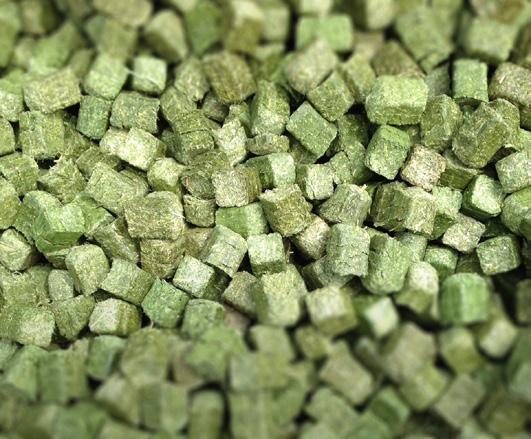
For horses that are especially reactive or when caretakers need the most controllable, low-dust option; processed forage may be a practical next step. “For horses that need the lowest dust possible, I would move to pelleted or extruded hay,” recommends Shoveller. “Those products are checked for mold and mycotoxins, and the pelleting or extrusion process reduces the ability for mold to grow.” Pellets and cubes don’t replace the need for good ventilation and overall dust control measures, but they can cut down on inhaled particulates at feeding time while maintaining nutritional consistency.
Shoveller added, “Sources of dust inside tend to be far greater than the sources of dust outside.” For horses with respiratory problems outdoor pasture is usually the best option. 24/7 group turn out also helps to meet the behavioral needs of horses. Shoveller encourages considering all the environmental dust exposures a nd implementing every management technique possible.

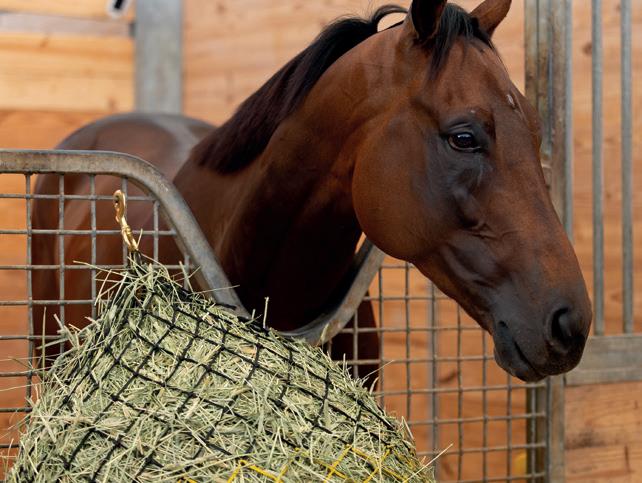
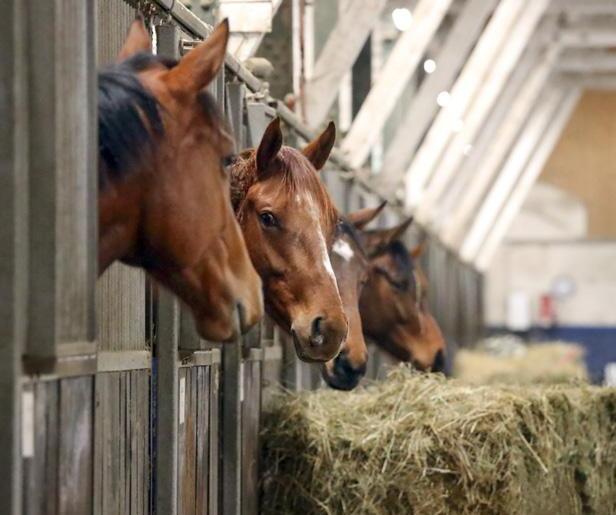
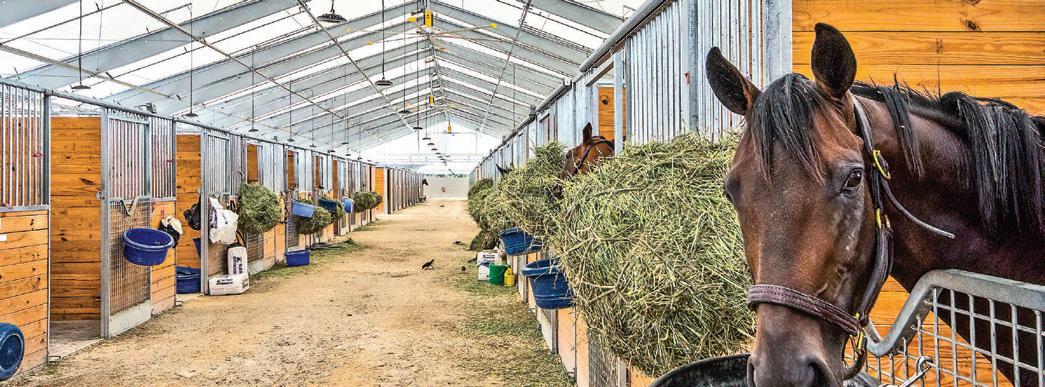
We have already digested that horses are built to graze 14–18 hours a day, with a steady trickle of forage moving through the stomach and into the hindgut. That slow, continuous flow matters because the equine stomach secretes hydrochloric acid all the time, not just at mealtimes. When long gaps occur without available forage, the stomach environment becomes more acidic which significantly raises the risk of ulcers.
Frequent, fiber-rich chewing supports the production of saliva, which is nature’s antacid for the horse’s stomach. The forage journey continues from the stomach to the hindgut for ongoing fermentation to generate energy to keep their systems running and fueling daily work. Consistent access to forage protects the stomach up front and keeps the engine humming in the back. Shoveller emphasizes, “constant forage helps to keep the stomach ulcer free and healthy.”
Potentially reducing the risk of ulcers could be a side-perk from a new study on automated hay feeders which has received funding from Equine Guelph at the University of Guelph. The idea of automated hay feeders is to mimic natural grazing ‘feeding little and often’ both during the day and overnight. This could help busy barns maintain healthy equine digestive systems, especially through the hours where staff are not on site. The project is scheduled to begin June 1, 2026 in the Okanagan region of British Columbia with Dr. Katrina Merkies, Professor in the department of Animal Biosciences at the Ontario Agricultural College, Dr. Megan Ross and master’s student, Alayna Riddell.

LEFT: Consistent access to forage protects the stomach up front and keeps the engine humming in the back.
“The main focus of the study is to look at social dynamics and voluntary physical activity in relation to providing hay from automated feeder,” says Dr Merkies. “However, forage meals with long gaps are a known risk factor for ulcers. Feeding smaller, more frequent meals is considered optimal for the equine digestive system and may help lower ulcer risk.”
Automated feeders can be loaded with a hay bale and programmed to open multiple times, targeting a percentage body weight in total daily forage to be dispensed and adjusting the duration based on how quickly the allocation is consumed. By spreading access across many windows, the system supports the protective trickle feeding pattern without requiring staff to feed 7–12 times a day—an ideal most barns can’t manage.
When asked how the equine welfare and behavior focused study will be structured, Ross explained, “We’ll monitor eating and drinking frequency, social and agonistic interactions, and use a 24/7 halter-mounted sensor to log distance travelled and activity patterns.” When first introduced to the automated feeder, horses may learn to anticipate feeder opening times and an increase in social interactions may occur in response to the limited resource. However, once horses learn that forage will be available regularly and often throughout the day, displacements at the feeder should taper off. The automated feeders will be installed on fencelines in paddocks and the halters will allow tracking of movement, distance travelled and activity patterns. The team plans to compare findings from automated feeding to those recorded during unlimited hay access.
The researchers note that while ad-lib, unlimited access to hay meets the need for constant gut fill, some horses overeat, and are therefore at risk for obesity and the complications that go along with it. An automated schedule may offer a middle path of frequent, predictable access that protects the stomach and supports hindgut fermentation, while avoiding unchecked intake. It may also ease management of metabolic horses (e.g., those pulled off pasture) by delivering more frequent, but controlled portions, including overnight, when human labour is hardest to supply.
Once the team has recruited barns and horses in varied group sizes, they will begin with feeders open continuously to establish baseline behaviors then transition to scheduled feeding windows.
In situations where time, turnout, or staffing limit how often hay can be offered, automated feeders may help close the gap between what horses need and what is realistically possible in a busy barn.
Equine Guelph is the horse owners’ and carers’ centre at the University of Guelph in Canada. Looking to learn more about equine nutrition, feeds and feeding practices, and dive even deeper into nutrient requirements?
Equine Guelph offers 12-week online courses in equine nutrition–scan the QR code for more information. EQUINE NUTRITION COURSE DETAILS


When working, horses can lose 2-3 gallons of water through sweat. Hydration is gut driven.
To prevent dehydration, we need to provide the gut with the right tools. High moisture, low binding feeds is essential to proper hydration.
Speedi-Beet and Fibre-Beet provide high levels of water, helping gut transit and allowing for hindgut absorption. This allows for correct functioning of the gut and provides a reservoir for hydrating tissues that lose water through normal activities, metabolism and exercise. Highly palatable, easily digestible, low in starch and sugar. Non-GMO, no additives or preservatives!

Fueling the Thoroughbreds athlete is a very complex and precise world; but one that demands much attention among the many talented horsemen and women within the industry. What is going into the body can be a direct reflection on what can be seen in performance across all levels of racing. Finding the correct balance to maximize energy, muscle strength, and recovery through an organized training schedule is a specialized skill within itself. As grain-based nutrition plays a major role, proper hydration is the foundation that supports every aspect of performance on the track.
From a physiological standpoint, horses are equipped with one of the most efficient internal temperature regulation systems on the planet. Kentucky Equine Research has been setting the bar for equine nutrition and physiology research for the past thirty years. The valuable insights of its founder Dr. Joe Pagan, PhD, provides a deeper understanding of hydration and the unique physiology of the horse.

Water affects racehorses on a deep biochemical level – so much that it isn’t just “hydration,” it’s the medium that makes almost every process at the cellular level possible. Without adequate hydration, not even the best feeding program will be as effective or support optimal athletic performance.
Pagan opens with the statement, “Hydration is one of the most critical things you can have for a racehorse.” Through years of research on elite equine athletes, including Olympic sport horses, Dr. Pagan highlights the topic of mass heat production during exercise. “The first thing I think people underestimate is how hot horses get during exercise. When their muscles contract, 80-85 percent of the energy that they actually expend is lost as heat, and the other 15-20 percent is actually used for muscle contraction – so they’ve got to get rid of all that heat,” he explains.
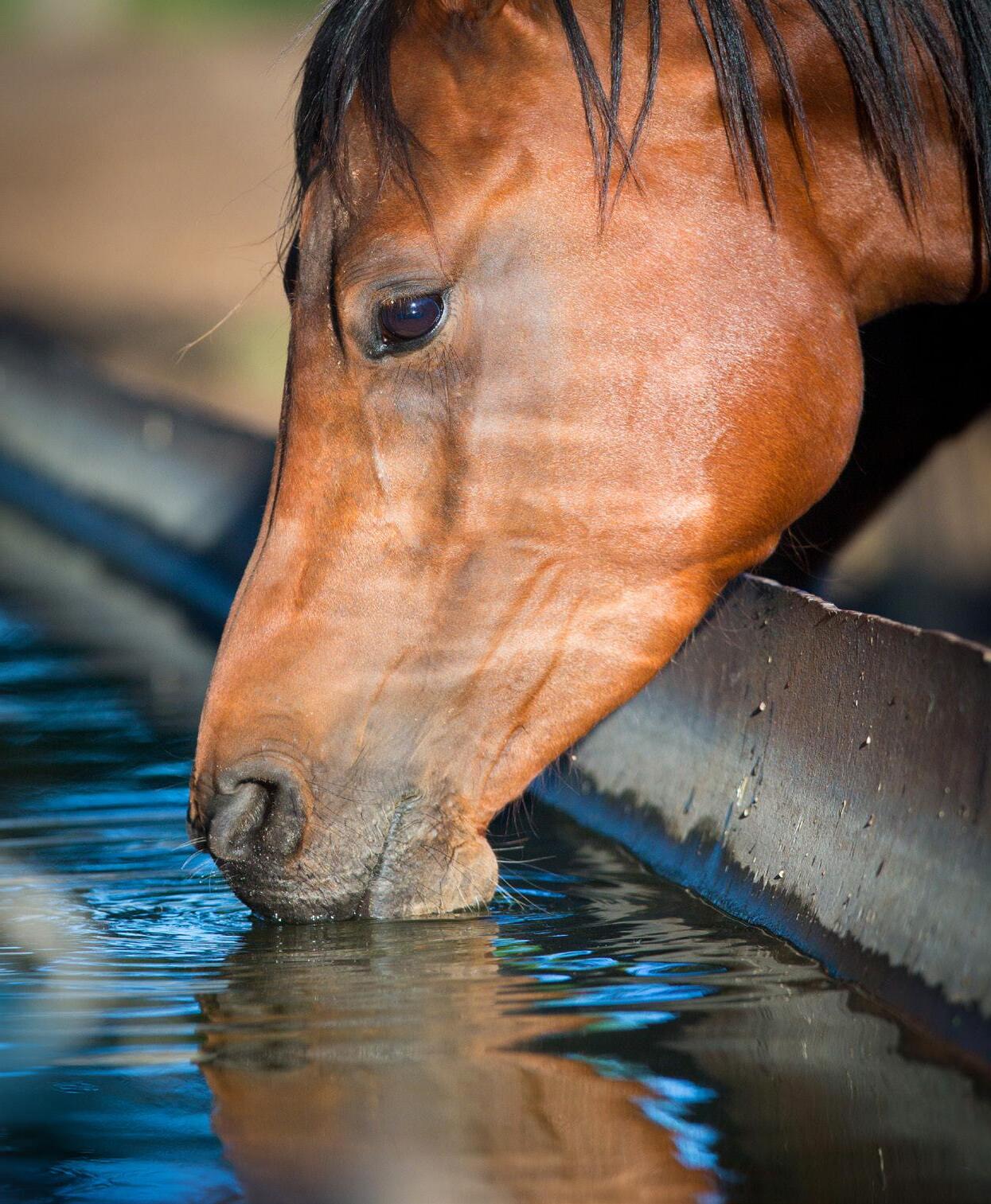
Horses are exceptional sweaters – more so than any other animal. Evolutionarily, their survival often counted on the avoidance of overheating rather than escaping predators. Pagan remarks, “Horses sweat like no other animal on Earth.”
Knowing that these athletes have to quickly cool down a thousand pounds of pure muscle, they have evolved to sweat in a way that is very different compared to other species. Pagan explains, “Horses actively secrete electrolytes, chloride particularly, into their sweat glands. Sodium follows that, and then the water follows that. Because horses evolved this way, they lose a tremendous amount of electrolytes in their sweat.”
When compared to humans, our sweat is characterized as hypotonic, meaning that there is less salt than in the blood. In horses, their sweat would be characterized as hypertonic, meaning it contains more salt than in the blood. A big challenge that many horsemen face today is getting horses to drink. When asked about this issue, Pagan explains, “When there’s as much or more electrolytes in the sweat as in the blood, the horse doesn’t really get a signal that it’s thirsty.” For this reason, electrolyte supplementation is crucial.
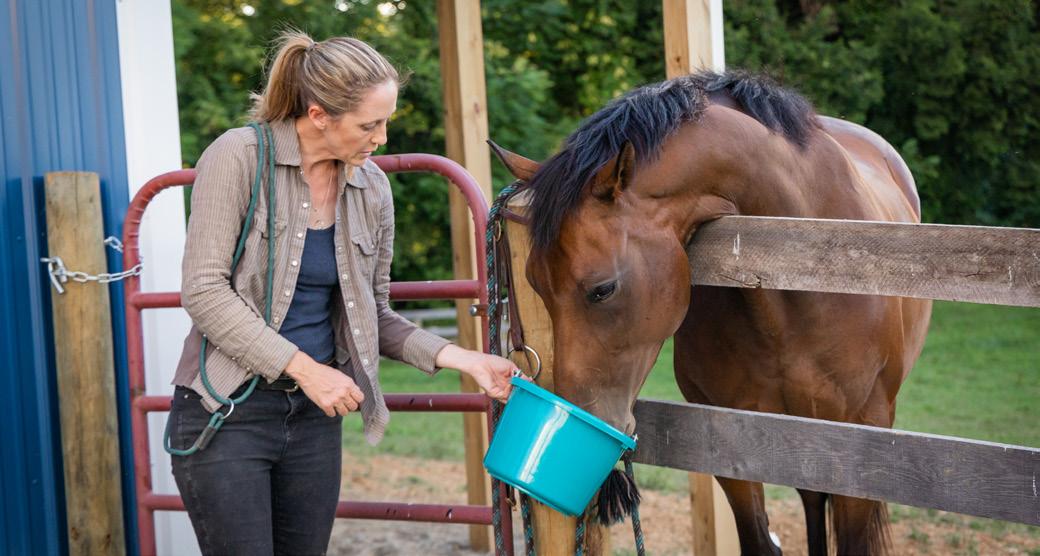
Making sure your horse is getting their required electrolytes cannot be stressed enough. Adding electrolytes to a horse’s feed helps replace essential electrolytes such as sodium, chloride, and potassium that are lost through sweat. Electrolyte based products are designed to restore these losses and stimulate drinking.
According to Dr. Pagan, timing is also important. Pagan explains, “The main thing you’re trying to do with electrolytes is after exercise, not before. Horses need to have their electrolyte status good when they start exercising, but they don’t need to be loaded with electrolytes necessarily. It’s replacing the electrolytes that are lost in sweat is where you give larger quantities.” Hydration challenges can also arise when horses travel, as they will also refuse to drink simply because they don’t like the taste or smell of the water.
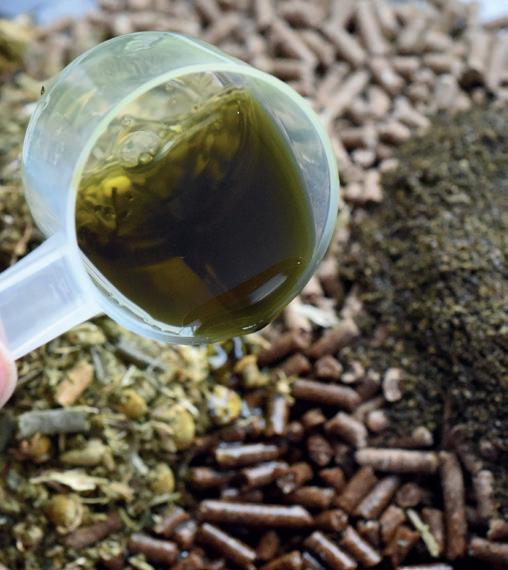
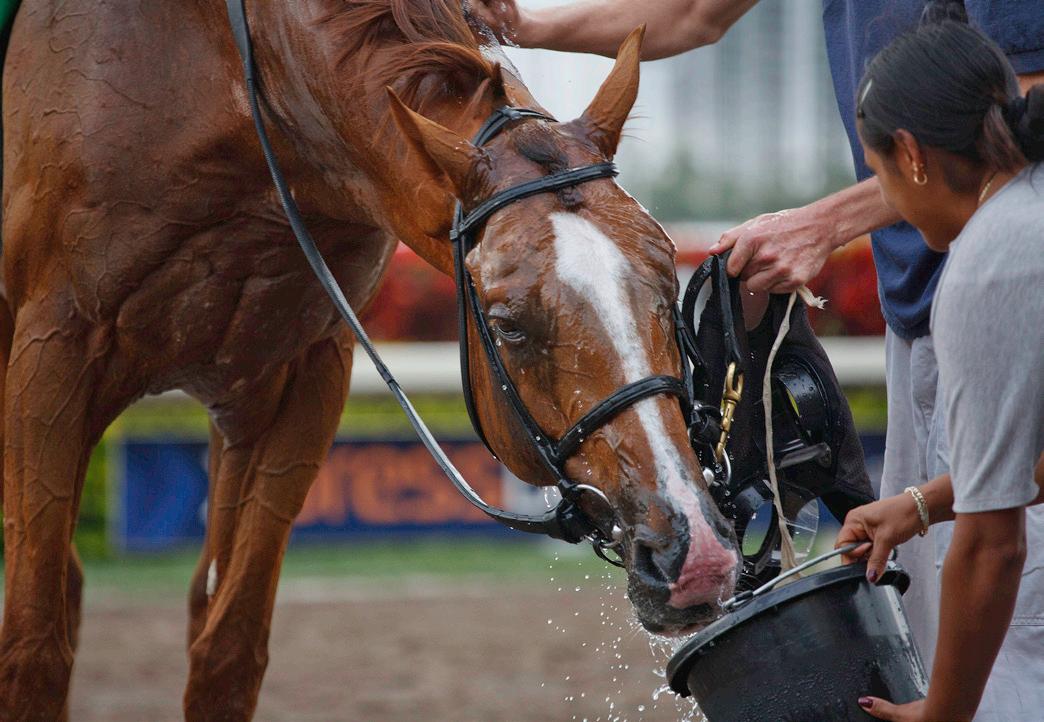
BELOW: Adding electrolytes to a horse’s feed helps replace key minerals like sodium, chloride, and potassium lost through sweat.
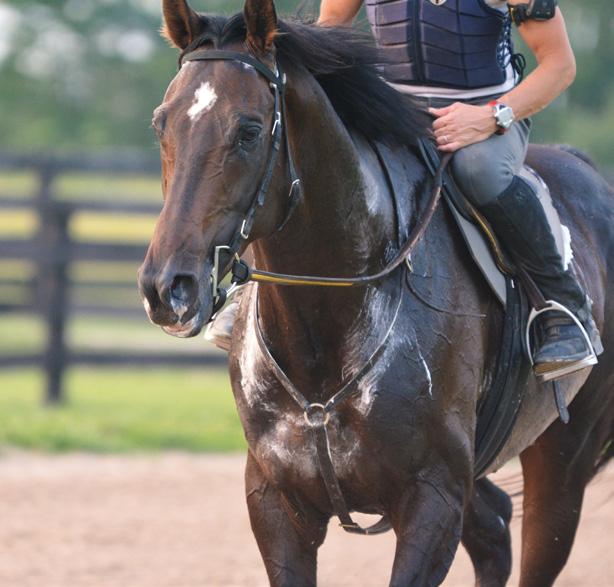
ABOVE & BELOW: Horses are exceptional sweaters. To cool a thousand pounds of muscle, they’ve evolved a sweating system unlike most species.
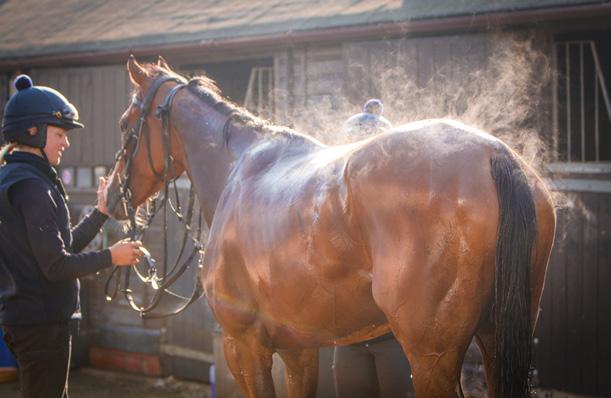
This can come into play when horses are moving from track to track where the minerals composed in the water could be very different; in turn creating an unfamiliar taste that the horse is not used to. Flavored water is growing in popularity, as a way to “train your horse to drink,” while on the road. Pagan states, “One thing that people will do is they will flavor the water at home, and then have that same flavor they can put in water when they travel, so the horse doesn’t smell that strange kind of water.” Overall, no matter what method you choose in order to get your horse to drink, it all comes down to getting the electrolytes circulating throughout the body of the athlete to carry out crucial repair, growth, and overall wellness.
Vitamins also play a crucial role in supporting the performance of racehorses. Pagan puts a strong emphasis on Thoroughbredss in particular, simply because they exercise intensely over a short period of time. He adds, “One supplement
that’s really important is Vitamin E. If you have these engines that are running hot on a racehorse, they are producing oxidative stress that’s going to use up the Vitamin E – so in most cases you need to supplement racehorses with Vitamin E.” Not only does this keep up with the very high nutritional demand of the Thoroughbreds racehorse, you are supplying the resources to your horse’s engine so it doesn’t burn out.
As temperatures rise during racing seasons, the importance of hydration becomes even greater. Increased heat leads to increased sweating, which in turn raises overall electrolyte losses. Trainers must be ready to adapt while keeping a close eye on their horses’ hydration status. When asked about such temperature changes, Pagan suggests, “They need to be prepared to potentially change their electrolyte intake to match their sweat.”
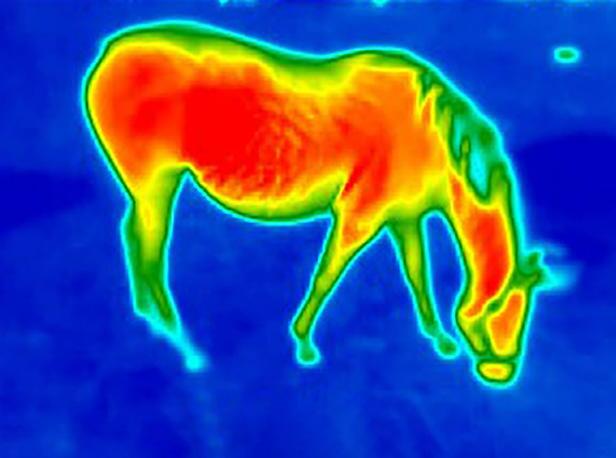
As Dr. Pagan advises, managing hydration effectively means matching electrolyte replacement and the horse’s level of sweat loss. As Dr. Pagan concludes, “Hydration is absolutely critical, and it’s this interrelationship that the horses have with electrolytes – that’s really the key to it all.”
From the field of education, Dr. Laurie Lawrence, PhD, of the University of Kentucky shares more valuable insight through her expertise in equine nutrition and metabolic physiology. Widely regarded as one of the best in the field, Dr. Lawrence has conducted extensive research spanning nutritional requirements from foals and broodmares to high-performance horses. Through such research, she has contributed significantly to the understanding of exercise, metabolism, and the critical relationship between diet and performance in equine athletes.
When asked to bridge her knowledge of nutrition with hydration in the context of stable management, Lawrence replies, “Horses commonly drink after eating. So making sure there is plenty of water available after a meal is over is important. Also, horses tend to drink more when a diet is higher in fiber/ forage. Many people make sure the water buckets are full when they feed; but it would be good to check an hour or so after feeding as well to refill the buckets.”
This emphasis on accessibility enforces a consistent theme among experts – hydration is and must be actively managed, not assumed. Recovery being the driving force of performance further enhances the important role that water and proper hydration play behind the trainer’s eye.
In describing just how vital hydration is for high-level performance Thoroughbredss, Lawrence states, “Water is an important part of blood volume and sweat. Adequate blood volume is essential for adequate blood flow to muscles during exercise. Exercise generates heat, and the main means of heat dissipation in horses is sweat. So water is important for thermoregulation.” This clearly explains that proper hydration is not just supportive, but is absolutely essential for maintaining performance, and regulating body temperature to carry out the body’s procedures.
Another respected lecturer at the University of Kentucky, Dr. Jackie Wahrmund, PhD, offers a valuable perspective on hydrating the equine athlete for high-performance success.
As an owner and breeder of high-performance horses herself, Dr. Wahrmund blends her expertise of nutrient pathways and digestive biology with hands-on experience. This dual perspective allows her not only to educate the next generation of equine professionals, but also successfully manage and develop her own competitive string of horses.
In terms of combining practical management with hydration practices while keeping an eye on water quality, putting electrolytes into water can be conflicting. Wahrmund explains, “So if they have something that has salt in it, which that’s what electrolytes are, then it’s going to stimulate the desire to drink. If what they’re drinking already has salt in it, even if
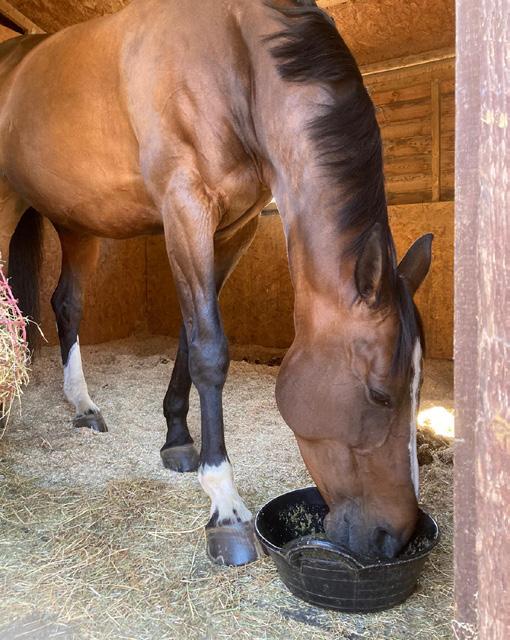
LEFT: Providing moisture through feed—such as a well-prepared mash —supports hydration, especially for stalled horses on a dry hay diet.
it doesn’t taste salty, their body will recognize it – and it will trigger the desire to drink. They’re not going to get the right balance of water and salts in their body. It can kind of be a spiral at that point.”
In conclusion to that statement, it circles back to the reasoning behind putting electrolyte supplements into feed rather than into water, previously discussed by Dr. Pagan. In return, Dr. Wahrmund further explains, “So that way if they’re consuming electrolytes in their feed, that’ll stimulate the desire to drink the water, and then they can balance out the water and salt balance in their body.”
For horses that are on the cusp of needing a little more hydration, Wahrmund suggests the idea of soaked hay or mash to incorporate into the horse’s diet. “When we have stalled horses, ones that have a heavy hay diet, we tend to worry about them a little more. If you feed them wet contents – whether it’s soaked hay or a mash, anything that’s wetter than dry, dry hay could be a good way to deliver water through their feed too. It’s a little more in line to what they were adapted to eat,” she describes.
Such insight from Wahrmund highlights how incorporating moisture into a horse’s diet not only supports proper hydration, but also closely mimics the natural feeding conditions horses were evolved to thrive on more accurately.
The world of hydration and nutrition for a racehorse is one that requires specialized attention and expertise. Getting horses to drink truly does come down to a science. Together, these insights score a simple but powerful truth: properly hydrating the horse is fundamental to supporting the immense physical demands that are placed on Thoroughbred athletes. Guided by advice, knowledge, and proven practices of industry professionals, you can lead your horse not only to the winner’s circle, but to overall good health.


Injury is an unavoidable part of life and the ability to repair is one of the most vital characteristics of any living organism continually exposed to environmental harm. Regardless of the cause, the body immediately attempts to restore tissue continuity. Being prey animals as well as finely tuned athletes, Thoroughbreds can experience a wide range of injuries throughout their lives.
The three main goals of healing are: to restore tissue continuity with the best possible quality of tissue, to do so in the shortest safest time and to prevent recurrence or breakdown of the repair. In order to meet these goals to the best of our ability, a sound knowledge of the physiology of healing is necessary.
Accidental wounds and musculoskeletal injuries are extremely common in horses, representing welfare, performance and financial challenges. A study of three large training yards (>100) in Newmarket between 2005–2007 found that among a population of 616 Thoroughbreds, 248 musculoskeletal injuries were recorded in 217 horses over the study period. The same study estimated that the overall injury incidence among horses in training was approximately 23–26% per year (Ramzan and Palmer, 2011). Most musculoskeletal injuries are not sudden catastrophic events, but rather the accumulation of microdamage from repetitive strain. At a certain point, the damage outpaces the body’s ability to repair.
The healing cascade consists of four main steps which the body must complete to become “fully healed.” Whether a horse has injured itself in the paddock causing a large open wound or succumbed to a tendon lesion, the basic principles of healing are the same.
Hemostasis is the body’s immediate, automatic response to blood vessel injury. The sole aim is to stop the bleeding and stabilize the injury site. This is completed within a matter of hours and the effectiveness of this process is particularly crucial for open wound healing, with the following stages being highly dependent on the outcome.
In both open wounds and musculoskeletal injuries, the hemostasis phase begins immediately after blood vessels are damaged.
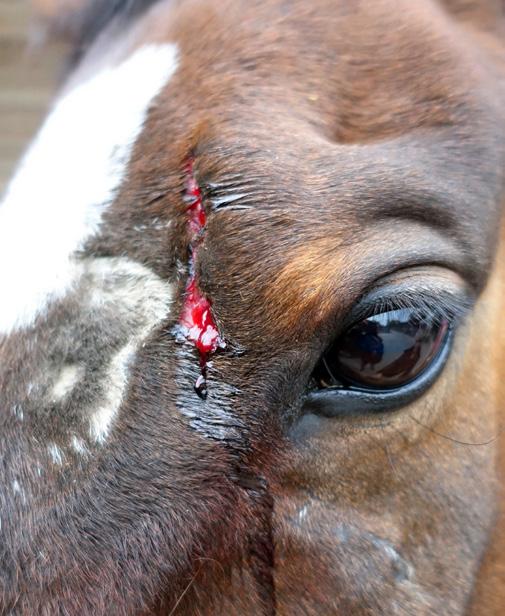
Hemostasis is the body’s immediate, automatic response to blood vessel injury. The sole aim is to stop the bleeding and stabilize the injury site.
In an open wound, bleeding occurs externally, triggering rapid vasoconstriction for approximately 5-10 minutes. This response reduces blood loss but also temporarily deprives the surrounding tissues of oxygen and nutrients. The short, local fall in oxygen, increased glycolysis (conversion of glucose) and pH shifts help promote platelet activation and clot formation. These changes manifest clinically as the characteristic local heat, redness, and swelling.
Platelets bind to exposed collagen which activates the coagulation response, leading to the formation of a stable fibrin clot that fills and covers the wound. As time passes, the surface of the clot dries, forming a scab that helps shield the wound from infection. This clot not only stops blood loss but also creates a temporary protective barrier against contamination and fluid escape while providing a scaffold that supports the inflammatory response and later granulation tissue formation. It also establishes the essential foundation for epithelialization.
In contrast, musculoskeletal injuries occur beneath intact skin, so the hemostatic response produces an internal fibrin-rich hematoma rather than a surface clot. Although vasoconstriction, platelet collection and fibrin deposition still occur, the resulting hematoma serves only as a provisional internal matrix for inflammatory cells and fibroblast (connective tissue cell) activity.
The inflammatory phase is probably the most well-known bodily response to trauma. Many moons ago the general consensus was to try and reduce inflammation or more commonly called swelling, as much as possible. We now know the importance of letting it do its thing! Marked prolonged swelling does need managing but in general inflammation is friend not foe.
The inflammatory response is triggered as soon as hemostasis is activated. Its main job is to prepare the injured area for healing by clearing contaminants, breaking down damaged tissue and releasing signals that set the next stages in motion. The more severe the injury, the stronger the inflammatory response and this often influences how much scarring develops later on.
The inflammatory phase unfolds in two interconnected stages, a pattern which is broadly shared between open wounds and musculoskeletal injuries. In both situations, the body’s immediate goal is the same: to clear damaged tissue, prevent or control infection and create the conditions needed for repair. The key difference lies in the environment.
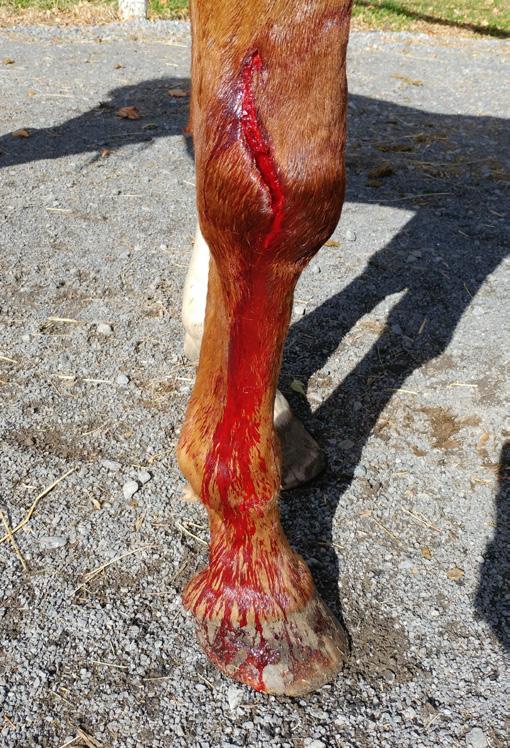
Open wounds are exposed to the outside environment, so they carry a real risk of contamination. Because of this, they trigger a stronger and more urgent inflammatory response to help prevent infection. In contrast, bone, tendon, ligament, and muscle injuries occur in a closed, relatively sterile environment. Their inflammatory response is still essential, but it tends to be more controlled and focused on clearing damaged tissue rather than dealing with microbes.
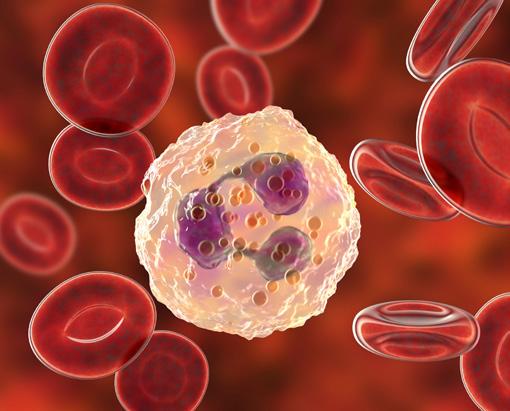
ABOVE: In open wounds neutrophils (white blood cells) focus on removing debris and bacteria. In sterile musculoskeletal injuries, their role is more focused on clearing damaged collagen fibers and cellular debris.
These deeper tissues also have a much poorer blood supply than skin. That reduced vascularity means inflammatory cells arrive more slowly, which can delay debris clearance and sometimes allows small areas of damage, such as micro-tears, to persist longer than ideal.
Overall, the difference in response reflects the nature of the tissues: skin is designed to react rapidly to protect against infection, musculoskeletal tissues are designed to bear load and resist mechanical stress, not to generate fast inflammatory responses.
The first stage is dominated by neutrophils (white blood cells). Within minutes of injury, chemical signals released following hemostasis and coagulation draw circulating white blood cells toward the injured area. These signals help to slow the cells down, as well as increasing capillary permeability allowing the white blood cells to travel to the necessary area easily and quickly, usually peaking within one to two days. In open wounds, they focus on removing debris and bacteria. In sterile musculoskeletal injuries, their role is more focused on clearing damaged collagen fibers and cellular debris rather than fighting infection.
Once their job is done, neutrophil activity winds down. Many are trapped in the surface clot of an open wound, while in soft tissues the cells simply die (Apoptosis). They are then cleared by macrophages (a type of WBC) or modified fibroblasts (connective tissue cell).
The second stage of inflammation begins as monocytes (another type of WBC) migrate from the bloodstream and convert to macrophages. This shift happens in both open wounds and musculoskeletal tissues. Macrophages are highly adaptable and alter their behavior as healing progresses.
At first they take on a strongly pro-inflammatory role, clearing debris, presenting antigens and releasing the proteins and growth factors needed to direct the subsequent phases of repair. In musculoskeletal tissue, they also help orchestrate the removal of damaged extracellular matrix so that new collagen can be laid down in an organized way.
LEFT: Open wounds are exposed to the outside environment, so they carry a real risk of contamination. Because of this, they trigger a stronger and more urgent inflammatory response to help prevent infection.
A breakthrough equine therapy that activates the horse’s neuromuscular system through powerful muscle contractions not achievable through training or other modalities.
More Powerful than PEMF* 50X See V-SIS
Noninvasive, Drug-free
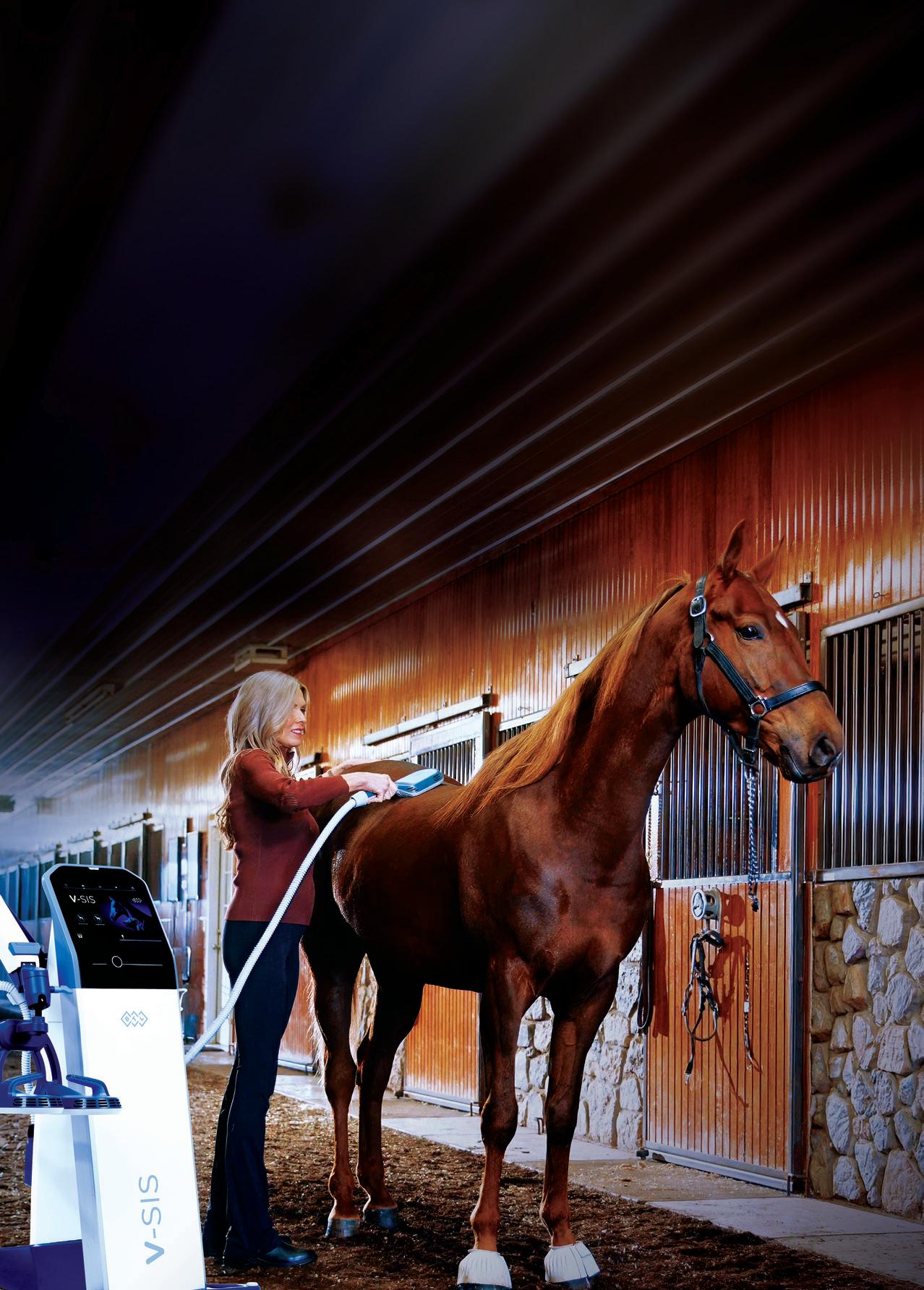
Under 10 Min. Procedure
Prolonged inflammation can be problematic. In open wounds, it can drive the development of exuberant granulation tissue. In musculoskeletal injuries, ongoing low-grade inflammation promotes disorganized collagen deposition and fibrosis, weakening the tissue and significantly lengthening rehabilitation. As processes strive on, inflammatory cells gradually withdraw from the area. Resolution depends on shutting down the same pathways that initiated the response. Apoptosis removes cells that are no longer needed without reigniting inflammation. This process continues throughout the proliferative stage and ultimately produces tissue, whether skin, bone, tendon, ligament or muscle that becomes increasingly sparsely populated with cells as it matures. When resolution fails, chronic inflammation, persistent discharge (in wounds) or fibrotic thickening and stiffness (in soft tissues) can develop, all of which greatly compromise the quality of healing.
• Fibroplasia
As the inflammatory phase begins to settle, the proliferative or repair stage begins. The body will do its utmost to replace the tissue which has been lost or compromised. In open wounds this stage is clearly apparent with the formation of healthy, red granulation tissue gradually filling the wound. Although the area is immediately busy at a cellular level, the wound itself remains weak at first. Over the first three to five days, fibroblasts, endothelial cells (vessel cells), and epithelial cells (skin cells) move into the site and begin laying the groundwork for repair. However, true increases in tensile strength only develop later once the extracellular matrix starts to mature and organize.
Granulation tissue develops as macrophages, fibroblasts, and new capillaries move into the wound in a tightly coordinated sequence. Macrophages continue to clear remaining debris and release growth factors that draw in fibroblasts and stimulate new blood-vessel growth, gradually replacing the initial fibrin clot. Once in place, they begin producing the extracellular matrix
(collagen, proteoglycans, and other structural components) that forms a stronger and more organized tissue base. Early type III collagen is slowly traded for tougher type I collagen as the wound gains strength. As repair progresses, fibroblast numbers naturally decline and the granulation tissue becomes less cellular.
Musculoskeletal injuries follow the same core biological principles but they play out differently dependent on tissue type. Instead of forming a granulation tissue “bed,” fibroblasts populate the torn or disrupted extracellular matrix and begin producing substantial amounts of type III collagen to bridge gaps between damaged fibers. This early repair tissue is weak and disorganized, which is why injured tendons and ligaments feel thickened and stiff during the early weeks.
Muscle repair involves both fibroblasts and muscle satellite cells: the latter regenerate new muscle fibers, while fibroblasts form scar tissue between them. The balance between regeneration and fibrosis varies with injury severity and heavily influences longterm function. As in wound healing, excessive fibroblast activity, inadequate matrix remodeling, or prolonged inflammation can lead to excessive scarring and reduced performance.
• Angiogenesis
Angiogenesis is the formation of new capillaries. When a tissue is damaged the area becomes low in oxygen and full of chemical signals released by inflammatory cells. These signals “switch on” nearby endothelial cells and tell them it’s time to start building new ones. The vessel walls become compromised, the surrounding membrane softens and small sprouts begin to push outward into the injured area.
These sprouts grow in a very organized way. The cells at the front act like “pathfinders,” sensing where to go, while the cells behind them multiply. As soon as these tiny new vessels are formed the body works hard to stabilize them. The endothelial cells build a fresh basement membrane and supporting cells wrap around them to strengthen the walls. This is why granulation tissue in open wounds looks so bright red: it is packed with newly formed, highly active capillaries.
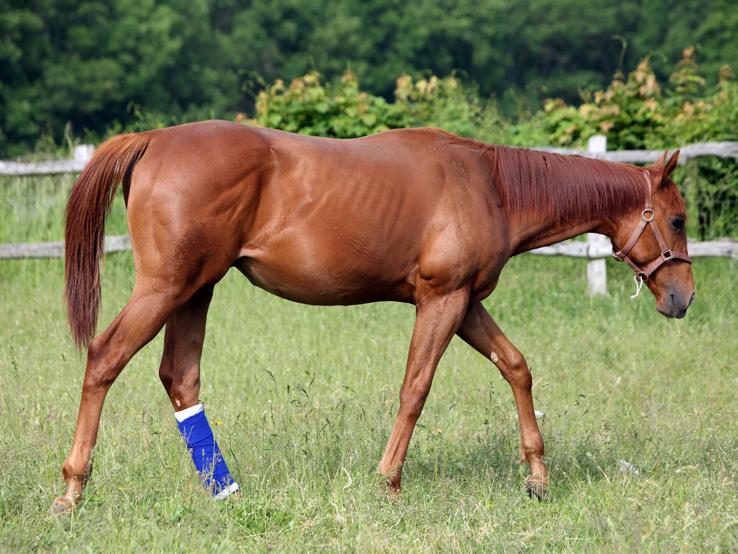
Once the tissue becomes better organized and the oxygen supply improves, the demand for so many vessels decreases. The body then naturally reduces the number of capillaries and as this happens, the wound or injured tissue becomes paler and begins to look more mature.
In musculoskeletal tissues angiogenesis is equally important albeit not as visually obvious. These tissues don’t normally have a rich blood supply, so new vessels are crucial to bring oxygen and nutrients for repair. This influx of vessels supports collagen deposition and cellular activity but also contributes to the thickened, nodular appearance of healing tendon lesions on ultrasound. However, too much or poorly organized vessel growth, particularly in tendons can contribute to chronic pain and impaired function. In muscle, angiogenesis supports the re-establishment of functional muscle fiber networks.
In short, angiogenesis is the body’s strategic way of re-establishing blood flow to injured areas, supporting fibroblasts, supplying oxygen for collagen formation, and setting the stage for strong, healthy repair.



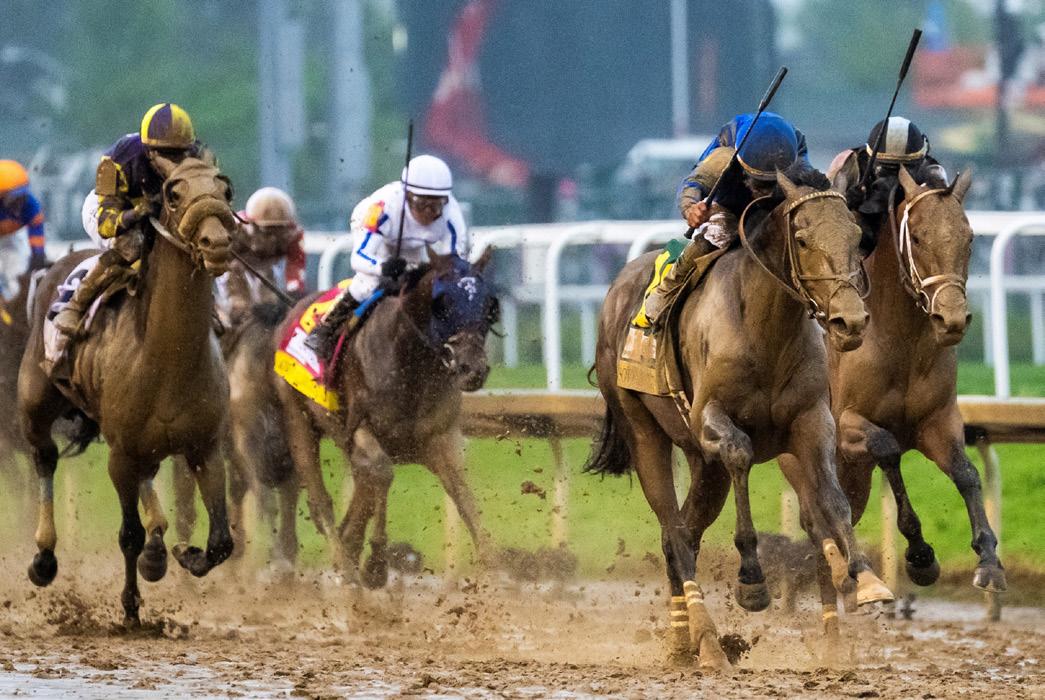
– Graham Motion, Trainer
Epithelialization is a function unique to wound healing as it involves restoring the skin’s surface. Once the provisional barrier is in place, keratinocytes (skin cells, outermost layer) start to migrate inward from the wound edges to re-cover the exposed tissue. Although this migration begins within the first 24–48 hours, the visible “pink edge” of new epidermis appears much more slowly, and its progress depends heavily on the wound’s depth, location, and the condition of the underlying tissue. In horses, full-thickness wounds cannot epithelialize until healthy granulation tissue has formed. Even once the surface is closed, the new epidermis stays thin, delicate, and easily damaged for quite some time and often lacks hair follicles and glands.
Musculoskeletal tissues do not undergo epithelialization. Instead, bones, tendons, ligaments and muscle repair themselves entirely through matrix production and cellular remodeling. Their version of “surface coverage” is the slow rebuilding of a continuous collagen scaffold, or in the case of muscle, the regeneration of fibers supported by connective tissue.
Although there is no epithelial layer to migrate, the same core principles still apply: cells move into the injured area in a directed way, respond to signals from the surrounding matrix and reshape the tissue through controlled matrix breakdown. Together, these processes guide repair and influence the quality of the final tissue.
The remodeling, or maturation, phase marks the slow shift from fragile repair tissue to something stronger and more functional. It begins around three weeks after injury and can continue for many months. During this stage, the early, loosely arranged extracellular matrix (ECM) is gradually re-worked into a more durable structure. In skin, this involves tightening and reorganising collagen and replacing early type III fibers with stronger type I.
Wound contraction helps draw the edges inward, especially in areas where the skin is loose; on the distal limbs this effect is far more limited, which can be problematic and delay closure. As tension in the wound settles, the scar continues to strengthen as collagen realigns along lines of load. Healed skin regains meaningful but incomplete tensile strength, reaching roughly 60% of pre-injury state (Theoret, 2016).
A similar cycle of matrix turnover occurs in musculoskeletal tissues, but the consequences are greater because these structures depend on precise fiber alignment and elasticity.

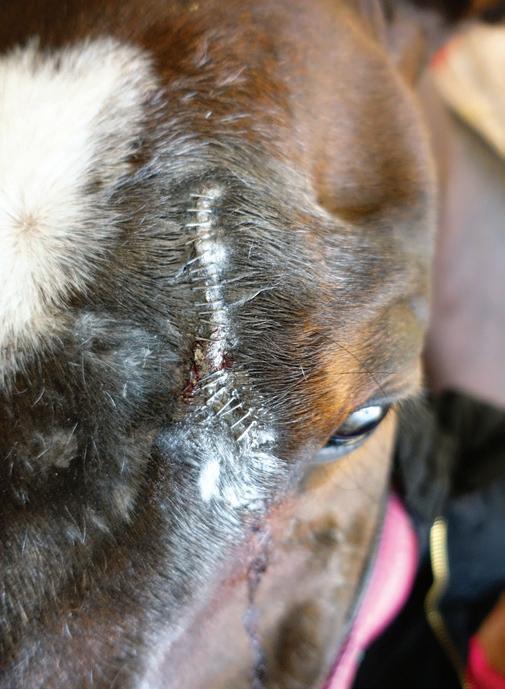
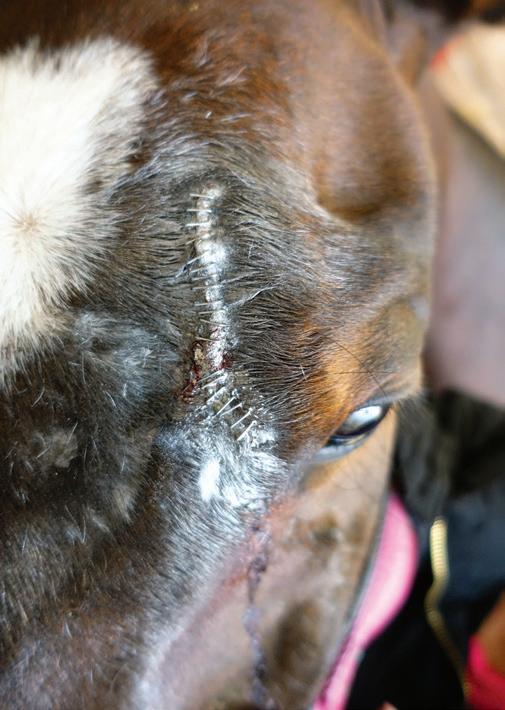
Early repair tissue in a tendon, for example, is rich in type III collagen and arranged in a disorganized pattern, leaving it weak and stiff. During remodeling, mechanical loading becomes a key signal. Controlled, progressive exercise helps orient new fibers, encourages a shift back toward type I collagen, and reduces the risk of dense, disorganized scar tissue that predisposes the horse to re-injury. Too much load promotes fibrosis, while too little leads to a weak, poorly aligned repair.
Ultimately, the remodeling phase is about refinement. Regardless of the tissue type, the body is trying to produce the strongest, most functional tissue possible under the circumstances. Genetics, age, tissue type, mechanical forces and the duration of earlier inflammation all affect the outcome. Although improvement continues for months, healed musculoskeletal tissues never fully regain their pre-injury strength and remain mechanically inferior.
This is an important consideration when managing training and racing post injury. Horses can look and feel sound, ultrasound scans can prove satisfactory, but they can still be at major risk if pushed too early.
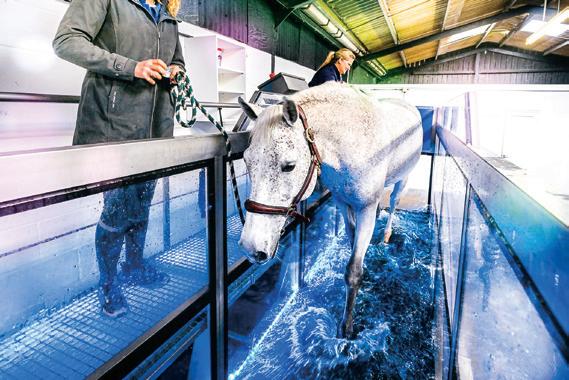
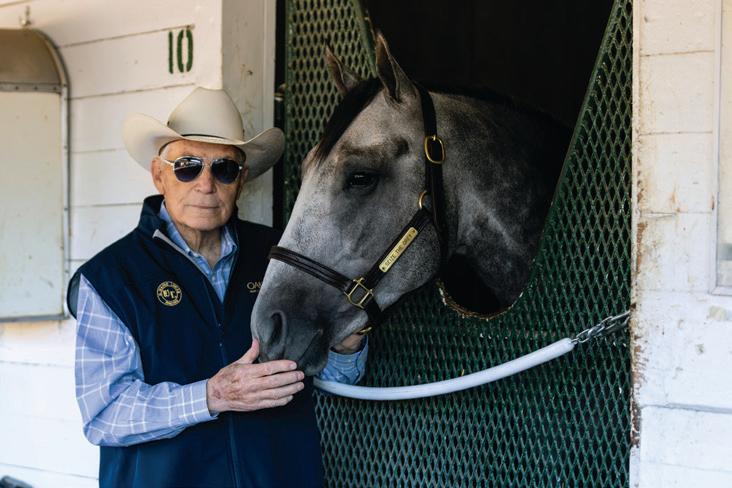
At Equine Therapy International, our mission is simple—prepare, perform and recover. Whether it’s race preparation, improving everyday performance, or helping your horse recover from injury, we believe in supporting every step of the horse’s journey. Our carefully chosen collection of performance and rehabilitation equipment uses cutting-edge, tried and tested technologies to enhance equestrian health. From PEMF blankets to equine water treadmills, our systems are trusted by owners and professionals around the world.
Whether they are athletes or cherished friends, our horses need to meet the higher standards of today’s competitive world. However, we must put their mental and physical well-being first if we want them to perform at these highest levels. To accomplish this balance, equine therapy combines cutting-edge technology with traditional horsemanship. Our collection of cold saltwater spas, underwater treadmills, salt therapy and therapy blankets provide comprehensive care for horses at every stage, including rest, recuperation, and preparedness.
The Combi Pro PEMF and Massage Therapy Blanket is designed to promote suppleness, flexibility, and overall wellness. In order to improve circulation, lower inflammation, and support the body’s natural healing processes, this PEMF horse blanket combines focused cyclonic massage therapy with Pulsed Electromagnetic Field (PEMF) therapy. It’s not just a therapeutic horse blanket; it’s an all-round wellness solution.
The blanket can be used pre-ride to help warm up and relax the horses’ muscles or after exercise to help them recover. This PEMF blanket easily integrates into any routine, whether it is for promoting healing of injuries, managing chronic ailments, or just enhancing everyday performance. Add-on leg wraps extend the power of PEMF to the limbs where many common injuries occur. They can run simultaneously with the blanket or be used on their own.
Our equine aqua treadmills are custom designed to suit your space, training goals, and your budget. Options include choice of:
• Salt or freshwater systems
• Incline and decline capabilities for targeted muscle work
• Integrated chiller to reduce inflammation
• Combined Aqua Treadmill Spa (includes chiller and spa jets)
- two machines in one.
Using a water treadmill helps horses build core strength, encourages proper gait and supports straightness and balance— all while reducing concussion on joints and also giving injured horses a chance to maintain fitness while healing. All aqua therapy systems come with complete training and support from our experienced team.
With two decades of experience in designing therapy rooms, installing water treadmills, and training clients across the globe, we know what it takes to elevate equine care. Our systems are in use by private horse owners, veterinarian clinics, and top competition and training barns.
Whether you’re a private barn or a professional training establishment, Equine Therapy International offers flexible product options and financing solutions. We understand that therapy equipment is an investment—and we’re here to make that investment in truly effective equine therapy equipment accessible.
For more information please visit equinetherapyint.com or call Equine Therapy International on (215) 305 8770
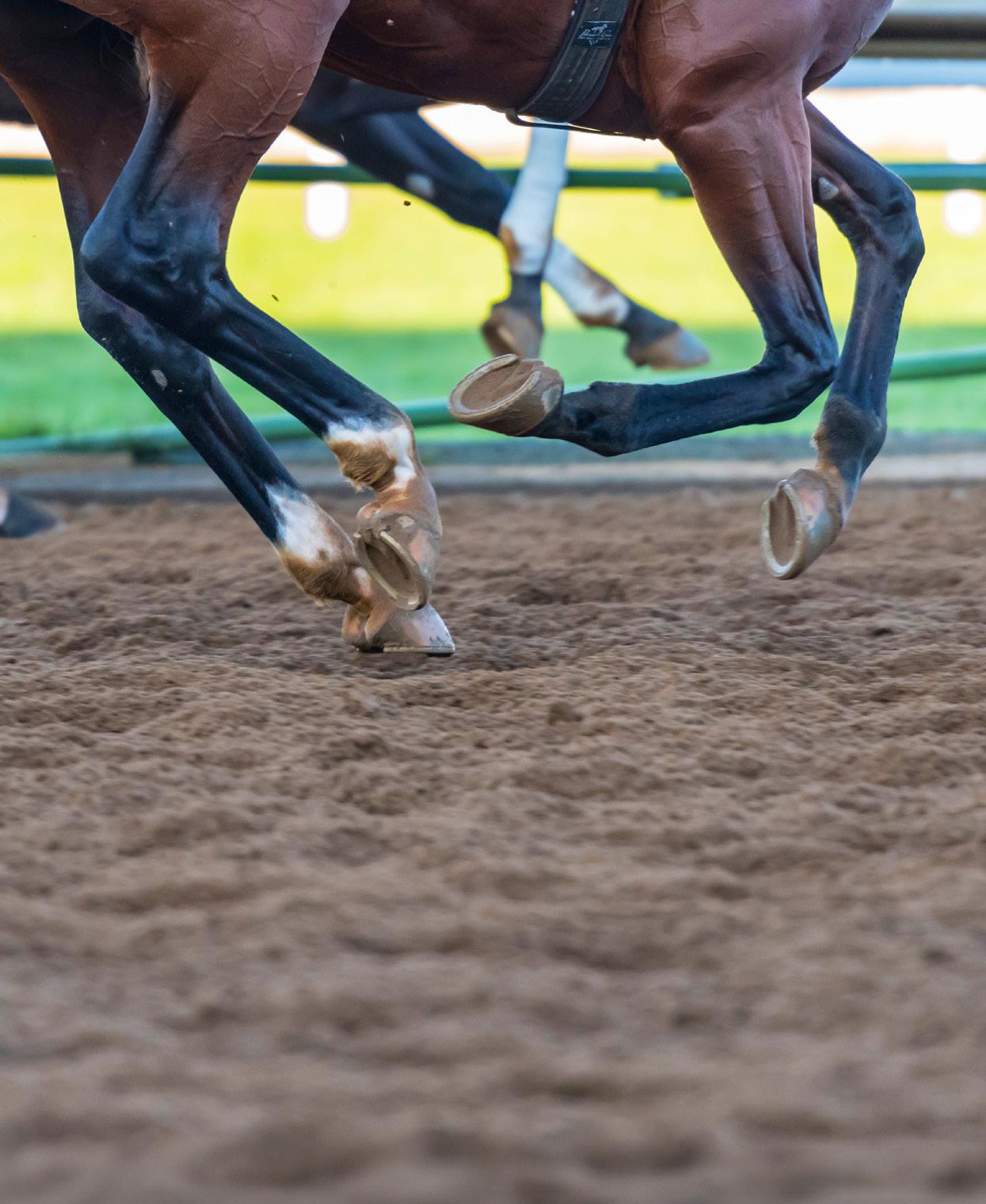
The incidence of serious fractures in horses racing on the flat is low (around one case every one to two thousand starters); but when fractures occur the consequences are often severe for the horse and, sometimes, the jockey. Both the severity and the dramatic nature of these injuries cause a significant negative impact on everyone connected with the horse, as well as spectators.
The International Federation of Horseracing Authorities (IFHA) convened the Global Summit on Equine Safety and Technology at Woodbine Racecourse, Toronto, in June 2024, to focus on how current research into causes of racehorse fatalities on the course, including fractures, can be advanced and translated into action to better understand the factors leading to fatalities and potentially mitigate them. At the meeting there were two workshops where specialist veterinary clinicians, pathologists and researchers came together to focus on Exercise Associated Sudden Death incidents and fractures.
While most fractures that affect racehorses on the flat appear to arise spontaneously, while the horse is racing, and in the absence of any obvious trauma, we now know that the majority are the consequence of structural fatigue, involving a process that started weeks or even months earlier. Just as a paper clip will break if it is repeatedly bent once too often, a bone will fracture if it is loaded recurrently beyond certain limits. Microscopic damage accumulates in the bone tissue until a small fissure develops, which can extend to a severe fracture if it is not detected and the horse continues to race. The fatigue life of bone decreases exponentially as the magnitude of load on the bone during each loading cycle increases. Loads on the skeleton are directly related to the speed of exercise, work at a fast gallop causes fatigue damage at a rate many orders of magnitude greater than when the horse is exercised at slower speeds. Unfortunately, fatigue damage, and even formation of small fissures in the bone, often proceed without the horse showing any outward signs and so, historically, affected horses have often gone undetected until it is too late.
An ability to run fast has been of evolutionary benefit to horses by enabling them to escape predators. Humans have refined this characteristic in specific breeds, notably the Thoroughbred, through targeted breeding and training practices. The need for a horse to undertake a fast gallop in the wild is likely to be relatively infrequent and well within the bounds that are likely to cause fatigue damage. Conversely, society’s expectations of racehorses, and the training imposed on them, place loads on the skeleton that may be excessive.
Some readers may be surprised to learn that bone is a remarkably “smart” tissue. It is so much more than the equivalent of the “concrete structural beam” laid down to support manmade structures. While bone is composed partly of mineral, it is still very much a living tissue, packed with blood vessels, nerves and cells. Furthermore, the cells are all physically interlinked through microscopic projections, and can communicate with each other



through their interconnections. This biological network allows bone tissue to detect the effects of loads applied to the bone as a whole, and to initiate a cellular response to model the bone structure if those loads change.
For instance, an increase in the magnitude of prevailing loads (e.g. through an increase in an animal’s weight or the introduction of high-speed work) will cause greater deformation of the bone and this will stimulate a process that results in the formation of additional bone mass and, if beneficial, subtle reshaping of the bone’s geometry. The bone will be stronger as a result and deform less for the given load. Conversely, if the prevailing loads decrease (e.g. during a period of rest) bone deformation is reduced, and bone may be removed through a process of resorption. This overall mechanism of remodeling is called “adaptation”. Bone adaptation facilitates the formation and maintenance of a skeleton that is continually fit for purpose, even as that purpose changes.
Beyond this, there are biological mechanisms that detect when a bone is damaged (e.g. small cracks develop) and will initiate repair. The restoration process involves removal of microscopic packets of bone tissue, including the damaged portion, and its replacement with fresh, healthy material. This process means that fatigue-related damage of bone can be resolved and, theoretically that a bone can tolerate infinite cycles of load. However, the process of repair has been shown to be inhibited if the bone is still regularly subjected to cycles of high load (i.e. the horse remains in training) and it can also be overwhelmed if the rate of damage accumulation is too high.
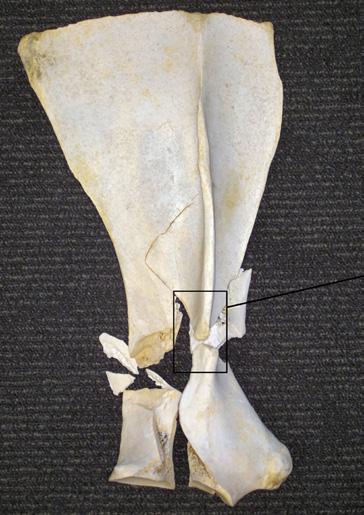

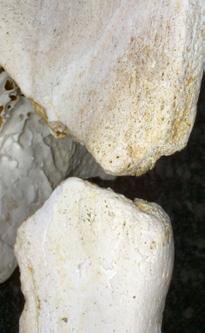
Shoulder Blade
Upper Humerus
Lower Humerus
Joint between Thoracic & Lumbar Vertebrae
Upper Tibia
Lower Tibia
Upper Cannon
Mid Cannon
Lower Cannon
ANATOMICAL
Are fractures something that racing just has to live with or can we do something about them?
Applying the knowledge we have gained from research over the past forty years has already had an impact on reducing the risk of fractures in some situations, and there are good reasons for optimism that we will be able to prevent a much greater proportion of racing fractures in the future. For example, epidemiological studies can help to identify certain management practices and design features of racecourses associated with an increased risk of fracture and these can be modified.
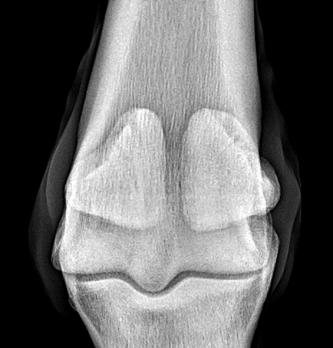
Pastern Wing of Ilium (Pelvis)
Ischium (Pelvis)
The introduction of strict rules governing the validity of the sale of a horse in a claiming race in some jurisdictions in the USA, depending on the health status of the horse immediately after the race, has had a significant impact on reducing the incidence of fractures. Over 300 potential risk factors have been examined and those found to have a significant association with fracture, modeled in numerous studies.
Applying the findings to individual racecourses still requires much work and, ultimately, almost half of the variation in risk of fracture appears to be due to factors associated directly with the horse itself. Epidemiology has also been applied to identify characteristics of a horse’s history that may indicate that it is at higher risk of fracture. These studies depend on access to detailed and accurate data and recent work has highlighted the importance of including veterinary records. Access to these records, suitably anonymized to protect confidentiality,
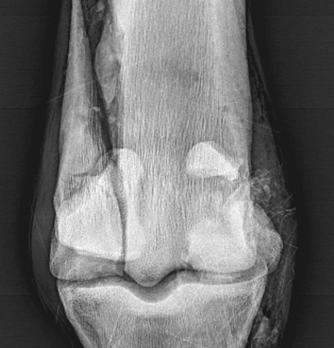
LEFT: An example of how damage associated with fatigue progresses. No.1 radiograph was taken several months before the severe fracture occurred (No.2). Close examination reveals a small, incomplete fissure at the point where the major fracture subsequently developed.
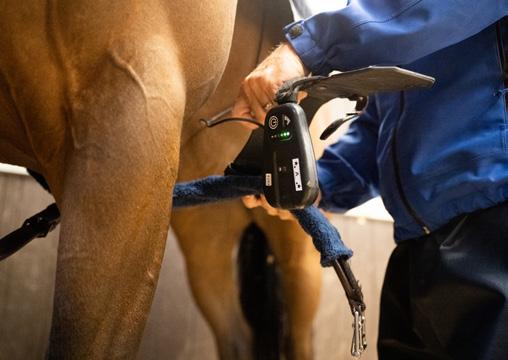
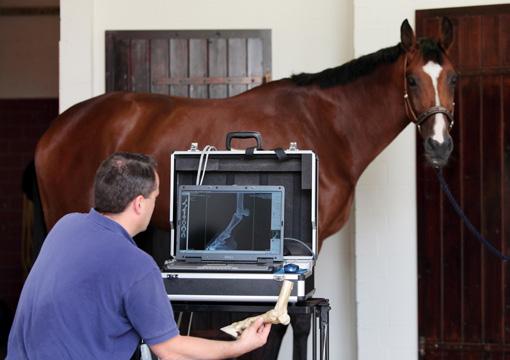
will have a profound impact on the development of more accurate models that can be used to predict the risk of fracture.
Studies into the genetics of Thoroughbreds have identified particular genes that are associated with a predisposition to fracture. This is a highly complex field and interaction of the environment and genetics ultimately determines the fracture status of an individual animal. However, genetic screening will help to identify horses that may benefit from closer monitoring. Clearly this is a sensitive topic, especially to breeders, although hopefully stakeholders will make choices that will be in the best interest of Thoroughbreds and racing in the long term.
Wearable technology, carried on the horse to record cardiac and stride data shows promise in being able to identify horses at early stages of skeletal injury. Preliminary results suggest that this is possible by identifying changes in stride characteristics, such as stride length, in individual animals in races leading up to the horse sustaining an injury. There has been a lot of interest and publicity associated with wearable technology and its use to identify horses both at imminent risk of fracture as well as those with irregularities of cardiac rhythm, which may lead to exercise associated sudden death, although work still needs to be undertaken to substantiate their use in both these contexts. These devices are also proving increasingly valuable as tools to record actual workload undertaken by individual horses in training. This is important information that is needed for researchers to accurately model associations between
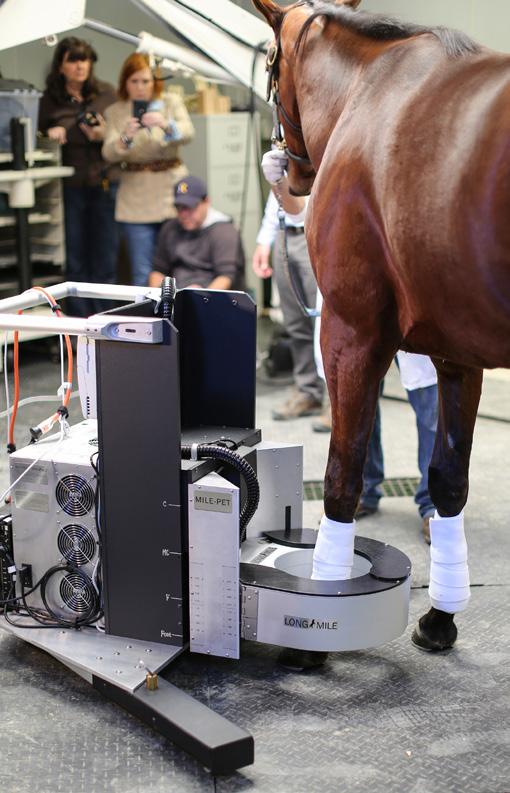
ABOVE: The increasing availability of Positron Emission Tomography (PET) machines that can be used to image the lower limb of standing horses has made their application more practical in horses that are in active training.
workload and risk of fracture, and for trainers to use to apply such models in the future.
Modern clinical imaging technology, especially that which allows detailed scrutiny of areas of bones in the locations where fractures commonly originate, facilitates identification of bone damage due to fatigue much earlier than was previously possible. The increasing availability of computed tomography (CT) and positron emission tomography (PET) machines that can be used to image the lower limb of the standing horse has made their application more practical in horses that are in active training.
There is potential for this technology to be used to screen horses prior to racing, as is currently undertaken before some race meetings in the state of Victoria, Australia. The enhanced resolution of CT helps to identify subtle fissures in bone that may be overlooked by conventional X-ray procedures and in such cases its value as a screening tool is indisputable. However, work is still ongoing to decipher the importance of even more subtle changes in bone structure. Undertaking imaging studies carries expense, and is not without some risk, and the concept of regularly imaging the relevant anatomical regions of racehorses to screen for risk of fracture clearly has challenges.
A simple blood test for “biomarkers” that could identify animals at an early stage of pre-fracture pathology would be a helpful tool. Even if the accuracy of such a test was insufficient to make important decisions about whether or not to race a horse, it could at least be used to reduce the number of animals that would need to be subjected to imaging studies. Research into changes in the patterns of arrays of many molecules in the blood (so-called “omics” studies) have led to many breakthroughs in screening systems in humans and animals. Preliminary studies give hope that this technology can be used to assist in the detection of horses at increased risk of fracture, although a practical test is still likely to be several years off.
It is important to acknowledge that all screening tests carry some risk: they may falsely identify normal horses to be at increased risk (false positives) and fail to recognize horses that have a problem (false negatives). Careful development and thorough testing of screening systems is therefore essential, and this takes time and money. Furthermore, no test is ever 100% accurate, and the practical application of screening designed to prevent fractures will require racing to strike a balance between stopping some normal horses from running and failing to identify some of those likely to suffer a fracture. This will require informed and engaged discussion between researchers and all relevant industry stakeholders, and strong leadership and clear communication from racing’s regulators.
An even greater question is whether we can recommend ways of exercising horses in training that minimize the risk of fatigue damage that leads to fracture in the first place. Research conducted in Melbourne, Australia demonstrated that trainers who worked their horses at high speed in training less frequently than others experienced a lower incidence of fracture.
A very important additional bit of detail was that, excepting the extremes, their racing results and performance outcomes were no different. Recognition that bone is like other tissues, in that it needs time to respond to changes in physical activity and requires a training program that accounts for this, is important. We are all well aware of the need to develop muscle to improve power and endurance in training, but the concept of training bone is less familiar.
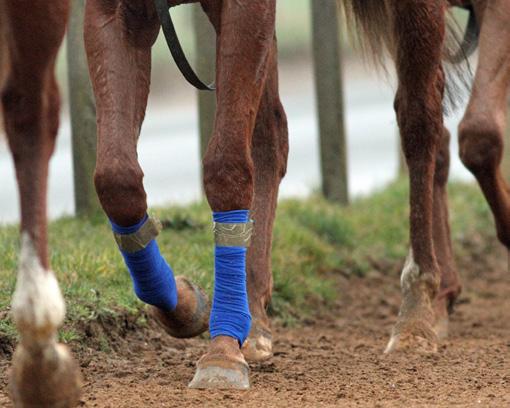
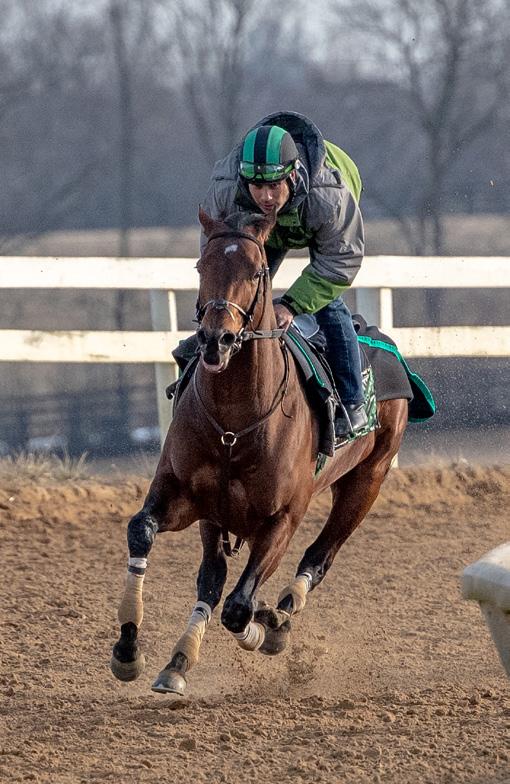
Fortunately, an adaptive response of bone has been shown to occur reasonably quickly to only a few cycles of altered load. Stimulating young, healthy racehorses to increase the strength of their bones requires only a short distance of gallop work. Therefore, introducing a very small amount of fast work at the early stages of a training program can be sufficient to prepare the bones for more sustained work without the risk of causing substantial fatigue damage. However, if the horse is rested from high-speed work for more than a few days, the process reverses, and bone mass will start to be resorbed (in evolutionary terms, there is no point wasting energy carrying around bones that are bigger and heavier than you need them to be).
So, when a horse is brought back into work after a period of rest, the process of training the skeleton has to be considered all over again. Periods of rest in themselves are also important to allow the bone to repair because even a sensitive training program will result in some fatigue damage, and the accumulation of this damage may eventually lead to fracture. The innate, biological mechanism of bone repair is switched off (inhibited) while horses remain in active training and a period of rest is required for this process to be reactivated and for repair of fatigue-damaged tissue to take place. Therefore, periods of rest from training are required in order to give the skeleton the best opportunity to heal and “reset” itself.
In summary, a training program that:
1. Reduces the distance of work (especially high-speed work) that a horse undertakes in its racing career to optimal levels that promote bone health (while racing and training);
2. Stimulates appropriate development of bones through short bursts of fast work early on in a training campaign;
3. Builds periods of rest into a horse’s lifespan in training; will all reduce the risk of accumulated fatigue damage that predisposes to fractures developing.
To move forward, the industry needs to invest in research so that metrics can be developed to help trainers to apply these concepts to their own training techniques in a practical way. There will be a range of durations and speeds of work that will reduce the risks of fracture across different populations of Thoroughbreds, and these will only be demonstrated by investing in studies measuring the effects of different training regimens in significant numbers of horses.
Developing and applying measures that are designed to reduce the risk of fracture will require the commitment of all stakeholders. We also need to be realistic in acknowledging that, due to the athletic nature of racing, the risk of a racehorse sustaining a fracture will never be eliminated and, sadly, for some of these injuries, euthanasia will be the only humane option. When racing authorities communicate to the public that the safety of equine athletes in racing is a priority, their credibility is clearly demonstrated by investing in work to bring the risks of injury, including fractures, down to the lowest possible level. There will inevitably be an element of “pain” associated with the work and changes required to reduce injury rates. Screening systems will disrupt normal cycles of work, there will be frustration as horses that appear fit are withdrawn from races on the basis of findings of “risks” that we might find difficult to conceptualise, there will be additional financial demands to fund studies, and a sense of exposure as records that are necessary for researchers to do their work are shared, even with promises of confidentiality and anonymity.
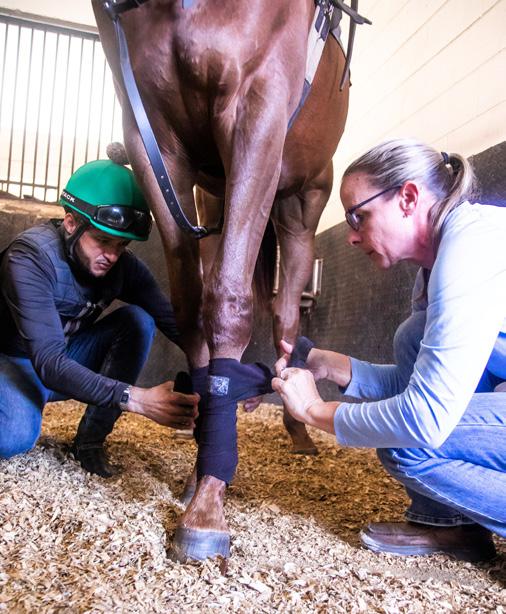
At the Toronto meeting, the IFHA has already committed to supporting global scientific research efforts to reduce the incidence of racehorse injuries, including fractures. I look forward to the benefits this coordinated approach to research can bring by both reducing injury rates in equine athletes, and at the same time, demonstrating to society the priority racing gives to equine welfare.
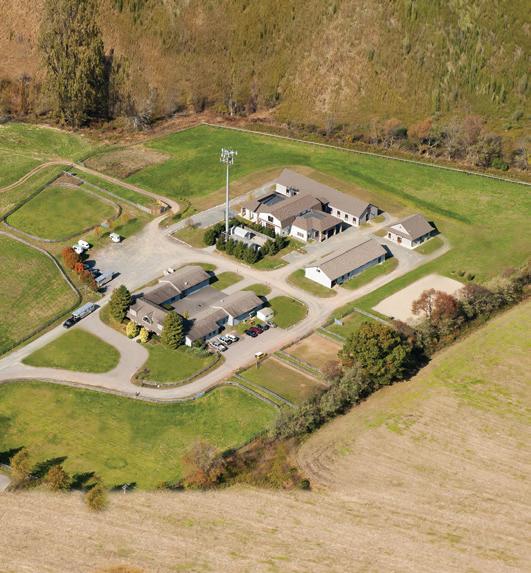
so
it almost makes you wish you were a horse.
We offer every type of medical care your four-legged athlete could ever need. With board-certified specialists in all fields we provide everything from upper airway, arthroscopic and laparoscopic surgeries, to internal medicine, complex fracture fixation and advanced diagnostic imaging, including bone scans, CT scans and MRIs – all in one place. It’s enough to make a human jealous.
800.724.5358
40 Frontage Road Ringoes, NJ 08551 www.midatlanticequine.com
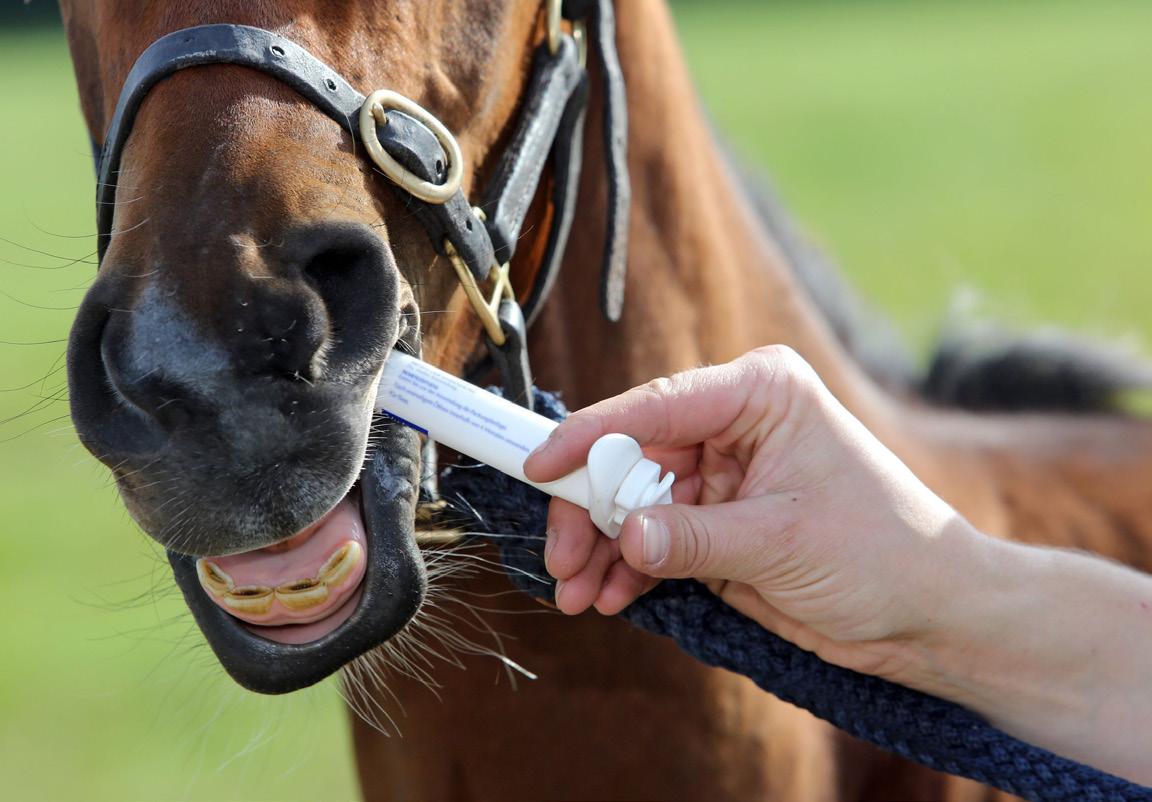
All horses are exposed to parasitic worms at some point in their lives. It is not possible to eradicate all worms from all horses, nor completely avoid the risk of worm-associated disease, so some level of parasite control is necessary in any environment where horses are kept. Traditionally, regular all-group wormer (anthelmintic) treatments were used to control these parasites, regardless of the management conditions. Increasing reports of wormer resistance over the last two decades indicate this is no longer sustainable and will only act to worsen the situation, especially as no new wormers are coming to market any time soon.1 It is essential to take an approach that safeguards the effectiveness of anthelmintics. As common equine worms are spread via grass (Fig. 1), and horses in training do not routinely graze for significant periods (so are at lower risk of infection), they represent ideal candidates for diagnostic-led programs.
The main worms of concern for horses in training are small redworms and tapeworms. Young horses (<2-year-old) may also be infected with ascarids. Small redworms can cause weight loss; in heavy infections (10,000-1,000,000 worms),
this can be severe and accompanied by diarrhea and/or colic. Tapeworms can cause colic but at a lower infection level; burdens of >20 tapeworms have been shown to cause gut damage. Ascarids are more likely to be problematical on studs; infections usually peak in 4-8 month-old foals, with a gradual reduction in susceptibility due to immunity. Immunity takes longer to develop against small redworms and tapeworms and a few horses remain susceptible throughout life, especially when exposed to heavily-contaminated paddocks and/or have medical conditions that affect their immunity.
Wormers available include fenbendazole, pyrantel salts (double dose for tapeworms), ivermectin, moxidectin and praziquantel (tapeworms only). Resistance to these wormers has been reported in small redworms (benzimidazole resistance is ubiquitous, with reports of resistance to all other wormers), ascarids (especially resistance to ivermectin) and tapeworms (pyrantel and praziquantel resistance was recently reported).2 If effective worm killing is not achieved due to the presence of resistance, a situation could occur where veterinarians are unable to effectively treat horses that present with disease due to heavy burdens. It is therefore essential to reduce the amount of wormers administered and only treat horses when an assessment indicates that worming is necessary.
In small redworm and tapeworm infections, immature larvae are found in the gut or gut wall.
Immature worms develop and grow to adult worms.
Small redworm larvae ingested with grass.
Tapeworm larvae ingested within mites.

Small redworm adult worms are found throughout the large intestine. Tapeworm adults are mostly found at the junction between the small and large intestine.
Small redworm females release eggs. Tapeworm hermaphrodite adults release eggs within body segments.
Tapeworm larvae develop in mites to become infective in 8-12 weeks.
Small redworm worm third stage larvae migrate onto grass in as short as 1 week.
Both processes are temperaturedependent: the warmer the conditions, the faster is development.
• Small redworm larvae can persist on paddocks from one year to the next, and mostly die out by the middle of summer. Tapeworm larvae in mites are thought to persist for many months.
Eggs excreted in dung.
Regular dung removal prevents infective stages developing.
• Tapeworm eggs are eaten by oribatid mites and develop within mites. Small redworm eggs hatch in dung to release larvae which develop through three stages.
Be aware of the risk factors for worm infection, with age and access to contaminated grass key features. As most horses in training have no/limited access to pasture, they should be at low risk of infection, especially horses >4 years. Yearlings, 2 and 3-year-olds are more likely to have higher burdens, especially small redworm; this should be taken into account when planning testing and treatment options (see below). Older horses (>15 years), used as riding horses or companions, may also have higher burdens so can act as potential sources of contamination.
Regular assessment with your veterinarian of the risk of infection to the individual or group enables danger zones in management practices to be identified, addressed, and the impact of improvements monitored over time. Include sufficient detail in the assessment so that seemingly innocuous practices that increase risk (for example, short daily turn-outs) can be identified and action taken. Risk assessment will:
1. Inform which tests to perform, test frequency and which horses to include.
2. Indicate the need for strategic treatments; for instance, small redworm larvicidal therapy in highrisk (younger) horses where tests cannot be used to guide treatment decisions.
3. Provide information on potential worm exposure and the need to reduce the opportunity of horses being infected (at the yard or elsewhere).
Small redworm and tapeworm eggs are excreted in dung, regular removal prevents infective stages developing.
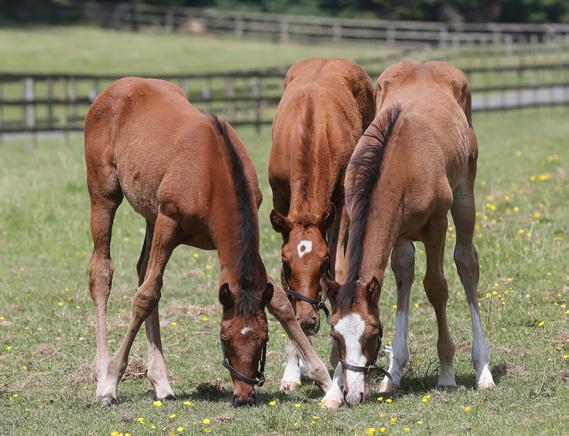
Diagnostics are essential for making informed decisions about worming and for selecting which product to use, while reducing selection for resistance. Tests available include fecal egg count (FEC) and antibody-based assays.
FEC tests estimate the number of worm eggs a horse is passing in dung (a measure of contamination potential) and provide information on the type of eggs excreted. On racing yards, testing is recommended every 12-16 weeks. Usually, ~80% of horses excrete ~20% of the eggs passed, 3 meaning that many individuals have no/low worm egg shedding and will not need treatment, thus preserving wormers. Horses estimated as passing >200 to >500 worm eggs per gram (epg) in dung are recommended for treatment. When collecting a dung sample, select at least three balls from the pile, with a minimum of 5 grams placed in a pot/bag with all air excluded and the samples kept cool. FEC reduction tests should be conducted once a year to provide information on effectiveness of the wormers being used to target small redworm.
FEC tests only detect the products of egg-laying adult worms and are not reliable indicators of the burden within an individual, especially as male and immature worms are not detected. In the case of tapeworm, FEC methods are also affected by inconsistent release of egg-containing segments from adult worms so are not recommended for identifying infection with this parasite. Instead, tests that detect antibodies can be utilized to provide information on the level of tapeworm or small redworm infection in individuals.
FEC test
Tapeworm saliva or blood test
Small redworm blood test
Administer ivermectin, moxidectin, pyrantel or fenbendazole when a small redworm FEC test result exceeds 200 epg or 500 epg. The epg threshold to select for treatment will depend on a veterinarian risk assessment.
Administer praziquantel.
When other tests indicate a requirement to treat for small redworm, administer pyrantel (at the double dose rate) or combination products containing ivermectin/praziquantel, or moxidectin/praziquantel.
Administer moxidectin or a five-day course of fenbendazole for small redworm larvicidal activity.
Alternatively, administer ivermectin or pyrantel if larvicidal activity is not required. A 1,000- or 10,000-small redworm serum score can be selected for treatment depending on a veterinarian risk assessment.
Tapeworm antibody tests are available in saliva and blood formats. Both work on the principle of measuring worm-specific antibodies, levels of which show a strong positive relationship with tapeworm burden. The tests have been shown to accurately identify all horses that harbor clinically-relevant burdens of >20 tapeworms.4 Testing identifies horses that will contaminate areas where horses graze, as well as those harboring burdens that may put them at risk of colic. All horses should be tested at the same time to identify those that need antitapeworm treatment; ideally, in combination with tests that detect small redworm infection (FECs or small redworm blood test). By doing this, the correct worming product can be selected based on the test data (Fig. 2). Testing can be performed once or twice a year, depending on the level of risk identified at the initial assessment and informed by ongoing data. Tapeworm testing results in large reductions in anthelmintic use; from 2015-2022, >164,000 UK horses were assessed using the saliva test and only 1/3 were recommended for treatment. 5 In the unlikely event where many horses test tapeworm-positive on a yard, the source of infection needs to be identified and management rectified to reduce transmission via oribatid mites. It was previously recommended to treat all horses for small redworm encysted larvae in late autumn/winter. As it acts to select resistance, routine all-group treatment is no longer advised for horses at low risk of infection. Horses in training will usually fall into this category. For low-risk horses, the options are to not administer this treatment, or use the Small Redworm Blood Test. Similar to the tapeworm tests, this measures worm-specific antibodies and demonstrates high sensitivity in identifying horses with low small redworm burdens that do not require treatment. The test can be utilized in autumn/winter when it is more likely that small redworm encysted larvae, that are not detected by FEC tests, are present. Applying the test in low-risk sport horse groups demonstrated that many horses (>60%) fell below the low 1,000-small redworm threshold. 5
There are high levels of fenbendazole resistance in small redworm; do not administer this wormer unless a FEC reduction test indicates efficacy.
If a FEC test or small redworm test is negative but a tapeworm test is positive, select praziquantel due to its narrow spectrum of activity. As a single formulation, this can be prescribed by UK veterinarians under the cascade.
There are high levels of resistance to fenbendazole in small redworm; do not administer this wormer unless a FEC reduction test indicates efficacy.
Horses in training can test positive by any of these methods, despite the fact that they do not graze for significant periods. This is because they can become exposed to worm infections during short turnout periods, or if they are allowed to graze on training grounds or at the race course. Wherever there is dung deposited, there may be worms!
In the case study (Fig. 3), tapeworm and small redworm serum scores in December are shown from horses based at a training yard in the UK. The results demonstrated negligible burdens (<1,000 worms) of small redworms in ~1/3 of the group, with only 14% of horses recommended for tapeworm treatment. These horses had 30 minutes turnout to a small paddock each day; dung was not removed from this paddock, providing a source of worm infection. The veterinarian subsequently advised the trainer to remove dung daily from the paddock and to treat test-positive horses with a larvicidal anthelmintic and, where indicated, an anti-tapeworm treatment. These horses previously received regular all-group treatments, so although blood testing recommended a proportion to be wormed, this strategy reduced worming frequency overall and, importantly, provided the trainer with insights regarding management procedures.
56 horses in training were assessed in the Tapeworm and Small Redworm Blood Tests in December 2023.
In the tapeworm test, 86% of horses were not advised for treatment (green). In the small redworm test, 32% of horses had results that indicated that they had burdens of <1,000 worms.
The introduction of newcomers or the return of previous residents to a yard risks introduction of ‘new’ parasites. All new arrivals should be isolated, tested (FEC/small redworm blood test, tapeworm test) and wormed based on the results. For small redworm, a FEC reduction test should be performed to assess wormer sensitivity of the parasites the horse is carrying. Ideally, keep the horse away from grazing in the interim, or at least prevent access to turnout paddocks for 3 days after worming to stop transmission of eggs that are excreted after treatment.
Few studies have examined worm prevalence, control practices or effectiveness of anthelmintics on training yards. Those that have, indicate industry-wide overuse of wormers, with few trainers using evidence-based methods.6 The racing industry must avoid the legacy of spreading drug-resistant worms to other parts of the sector. Once horses retire from training, they enter a spectrum of environments where the introduction of wormer-resistant parasites could prove extremely detrimental, particularly, breeding enterprises where susceptible young animals
will co-graze with mares, or retirement homes/sanctuaries containing geriatric horses that may be more prone to wormassociated disease. The introduction of drug-resistant parasites to leisure riding establishments or yards focused on eventing, show jumping or dressage, would be viewed as a negative sequelae of the overuse of anthelmintics in the training sector. Given the amount of attention paid to the health and physiology of racehorses, trainers, working with their veterinarian, are perfectly poised to adopt worm control plans designed to meet the needs of the individual by following a diagnostic-led approach. An exemplar control plan is shown in Fig. 4
References:
1. Nielsen 2022. Int J Parasitol Drugs Drug Resist. 20;76-88.
2. Nielsen 2023. Int J Parasitol Drugs Drug Resist. 22:96-101.
3. Relf et al. 2013. Parasitology 140:641-652.
4. Lightbody et al. 2016. Vet Clin Pathol. 45:335-346.
5. Matthews et al. 2024. In Practice 46:34-41.
6. Rosanowski et al. 2016. Equine Vet J. 48:387-93.
Improve management to reduce risk of worm infection and deploy appropriate quarantine measures
Consider strategic treatments in high risk horses where no test can provide diagnostically informative data (e.g. small redworm larvicidal therapy of young horses).



ST FRONTS HISA Compliant for all Surfaces LT HINDS
"I love the new SCF Racing LT hinds. Strong clips, easy pattern to fit, & the nails seat perfectly. When I come back 30-40 days nothing has shifted, & everything is still tight."
-Roman Richards, Arkansas
"First time using the LT hinds & I was impressed as they practically fit out of the box & needed less shaping. I'll be using them again."
-Nathan Stayton, Kentucky
"The ST front shoes are designed for performance. The boxed & tapered heels give you confidence to shoe your horses with a full & supportive fit. The ST pattern require less shaping. The nail spacing & crease depth work great with the Capewell 3.5XL nails. The Capewell nails are my go-to nails & provide minimal damage to the hoof wall."
-Dean Balut, California

OR 3.5XL RACE NAIL
Scan the QR code to connect with Rob & learn more.


NEW MEXICO HORSE BREEDERS ASSOCIATION
WORDS: ALICIA HUGHES PHOTOGRAPHY: JETTA VAUGHNS, ECLIPSE SPORTSWIRE, THE BACKSIDE LEARNING CENTER
The words come easily and in uninterrupted batches, forming detail-laden sentences delivered with a genuine timbre. They go on for minutes at a time, not because the orator is indulging in a stream of consciousness but rather, when Brook T. Smith is asked to speak on topics that have hit the marrow of his soul, he isn’t going to skimp on the breadth and depth of their context.
Don’t ask the Louisville, KY native and serial entrepreneur how he got into Thoroughbred racing if you don’t have, at minimum, a 15-minute chunk of time at the ready, lest you miss the key intangibles of how he went from cheering on whatever Kentucky Derby (Gr.1) contender’s name he picked from a bowl during his family’s annual rite, to being enthralled after a horse part-owned by his roommate’s father won a graded stakes at Churchill Downs, to taking every half bottle of champagne he could find in his hotel’s minibar into the hot tub after the colt who ignited his current fantastical reality triumphed in the 2024 Breeders’ Cup Classic (Gr.1).
As each yarn unspools, the enthusiasm in Smith’s voice remains constant, matched only by the charisma he projects into each space he occupies – which is why whenever he steps onto racing’s biggest stages, it is his smiling, silverfringed visage that becomes a beacon for those seeking content of both the written and visual kind.
And what a story it is that Smith is in the midst of crafting, having burst onto the elite-level racing scene the last few years thanks to his involvement in the ownership conglomerate
that campaigned Sierra Leone, the champion 3-year-old male of 2024 and newly minted Coolmore America stallion. He is no overnight newcomer to the whiplash-inducing ride that is Thoroughbred ownership, having raced horses at various levels for more than two decades. Through his burgeoning relationship with such top-end partners as Coolmore Stud, however, he has elevated his investment in the sport and, in the process, become a high-profile example of how to use one’s standing to pull others up along the way.
Because as deliberate as he is with his words, Smith is even more intentional in his actions, a byproduct of his working-class upbringing and appreciation for the opportunities that can be taken for granted in certain socioeconomic echelons. Just as he has used his means and resources to venture into an industry that continues to produce life-altering experiences, he is utilizing that same agency to help enhance the lives of those who allow the sport he reveres to endure.
In the runup to the 2024 Kentucky Derby, Smith drew praise for his affable demeanor as he was repeatedly sought out to discuss Sierra Leone, whom he owns in partnership with representatives of Coolmore, Westerberg, and longtime owner Peter Brant. While the son of Gun Runner, who would finish second by a nostril in the first leg of the Triple Crown, gave Smith no shortage of material, the native of Oldham County used the privilege of his platform to inform his captive audience about another entity on the backstretch deserving of much shine.
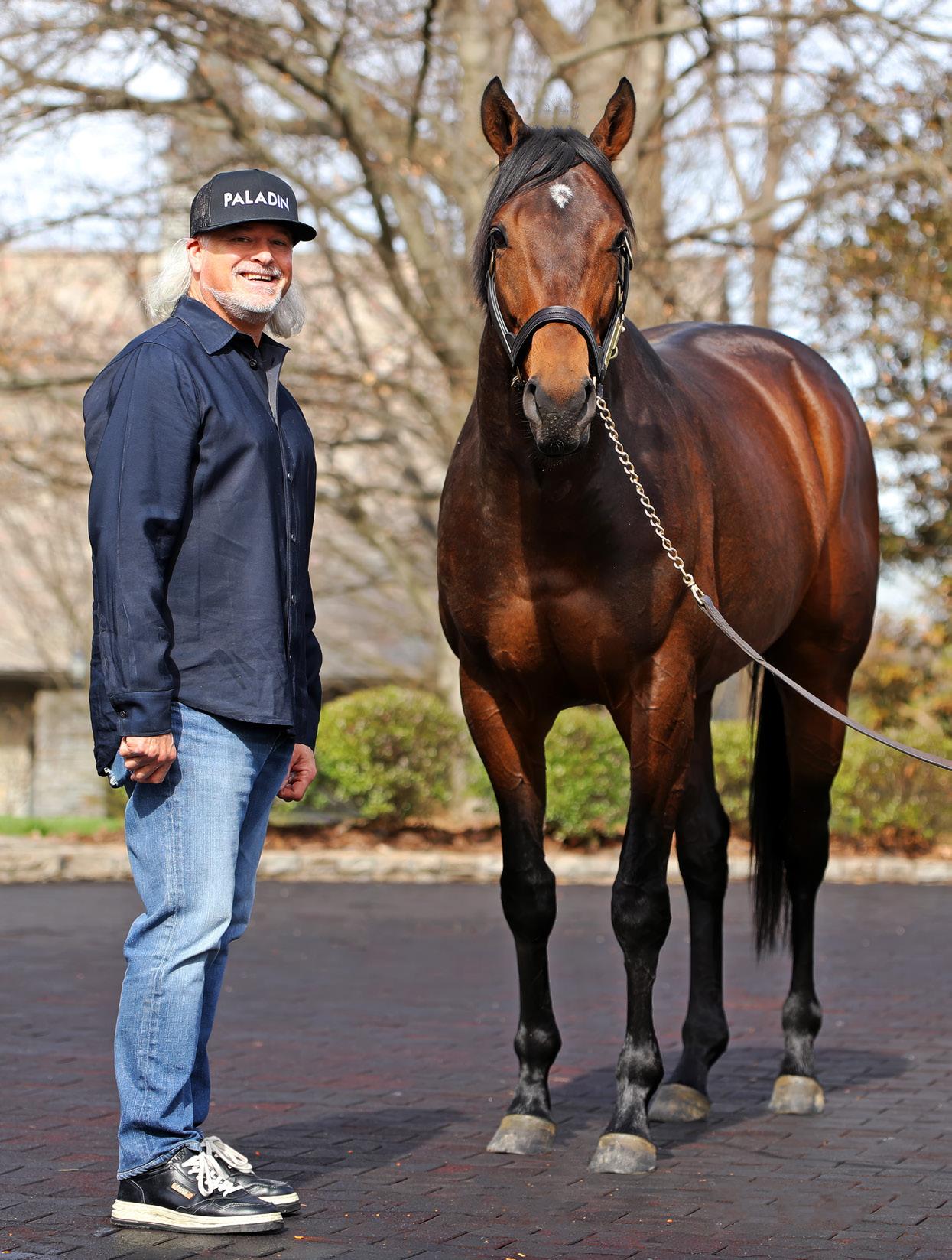
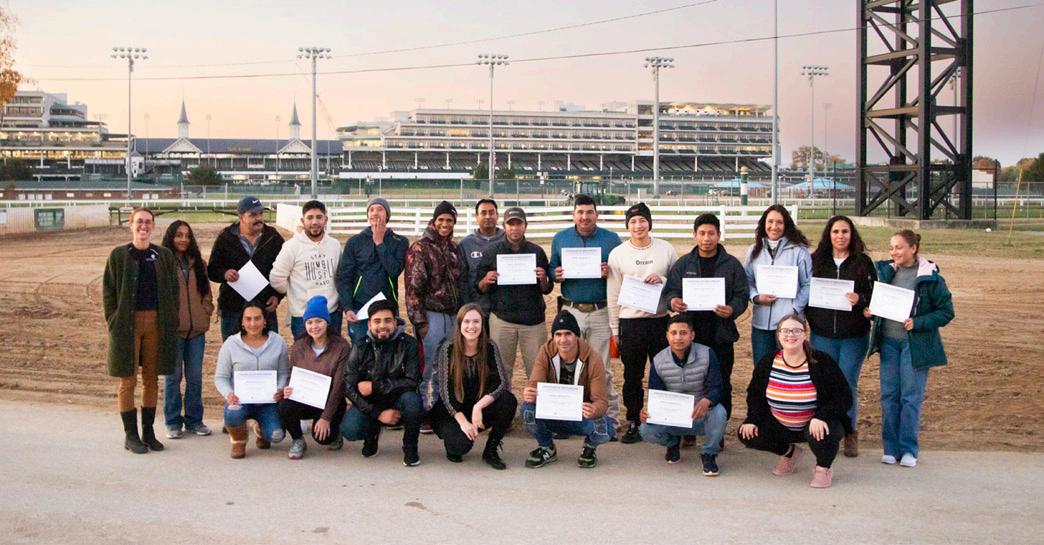


While he dutifully recounted to the masses how he came to be involved in the sport, Smith also spoke at length about the crucial needs of Churchill’s Backside Learning Center, a non-profit that provides education, support, and wellness resources for racetrack workers and their families. After the Backside Learning Center first came onto his radar a handful of years earlier, Smith helped launch the Purses For a Purpose program, an initiative where owners can donate a portion of their horses’ winnings to support the organization that aids in upwards of 1,000 of the most crucial employees in the sport.
In addition to enrolling Sierra Leone and other members of his stable in the program, Smith has contributed to the organization in a multitude of ways, including challenging his fellow owners to follow his lead of putting their money where their mouth is. Just as he fell hard for the sport after watching Laura’s Pistolette, who was owned by a syndicate his then roommate’s father was involved in, upset the field in the 1995 Humana Distaff Handicap (Gr.3) beneath the Twin Spires, Smith was similarly moved seeing firsthand the work the Backside Learning Center does to help a community whose absence would cause the industry to crumble, yet remains the most vulnerable in terms of compensation, benefits, and protections particularly in the current climate where its largely immigrant workforce must cope with the ongoing threat of raids by Immigration and Customs Enforcement (ICE).
“I saw the different programming they had for the adults and young people, and I just thought, there needs to be a lot more of this,” Smith said of the BLC. “It’s a program that means a lot to a lot of people. There is so much money in and around this
industry and if you just give even 1% of your outcome that is positive, it would change a lot. And in the world we live in today, we have to do that kind of stuff as individuals.
“Today with all the stuff going on with ICE and things like that, there are a lot of people out there that are doing their best. They’re working hard every day; they’re crossing T’s and dotting I’s and they’re living scared. It’s a tough thing. I just feel like if anyone has any good fortune in anything, they need to share it and angle it into programs that are being run correctly that can give people a leg up or maybe a little confidence or whatever they need.”
One could fill the length of a stretch with the number of people who speak about horse racing’s various quandaries only to have said discussions often end up more robust than any response. Spend any amount of time in Smith’s orbit, however, and one quickly realizes it is part of his DNA to tangibly move the needle toward progress.
Throughout Smith’s myriad of professional endeavors, which include a career in the insurance industry offering surety bonds as a broker with his agency Smith Manus (now Acrisure), philanthropic work has been lockstep with his business achievements, from bestowing gifts to his alma mater Clemson University to numerous ventures supporting the local community in Louisville. A commonality in his personal and professional journey has been his commitment to taking action whenever his passion is piqued, whether it’s knocking on the door of a neighbor with ties to racing, showing up for the workers who show up for his horses, or saying yes when the Coolmore team asked if he wanted to partner on some high-end purchases.
“I feel like I’m inside some kind of a storybook, you know, a made for TV movie or something,” Smith said. “Just walking around and thinking about all of it. I’ve been doing this for 20 years. I’ve had all kinds of knockers and claimers.
“I think I was in the infield that year when Laura’s Pistolette won, and we could see (her owners) in the winner’s circle celebrating and I was like ‘Wow’. The celebration and excitement and beating the odds….I was just like ‘Okay, I want more of that. I want to be around that.’”
One of the critiques of the Thoroughbred industry is it can be challenging to find a pathway into its inner workings without the benefit of a certain background or familial connection. While Smith may not have had such entryways laid at his feet, he did have the good fortune to live across the street from the owner of Exhaust Pro muffler shop.
A literal driving force behind Smith’s initial foray into the sport in the early 2000s came when the late trainer Danny Hutt, president of the auto services operation DH Enterprises, Inc., shared a zip code with Smith, who himself was seeing his grinder mentality pay off with success in the insurance industry. Smith got wind of his neighbor’s equine vocation and, being the selfstarter he is, arrived on his doorstep one day and started asking his fellow Louisville native about his involvement in the racing industry. Once Hutt got past his initial skepticism of his inquisitive street mate, the two ended up putting together a partnership and enough funds to buy about 15 yearlings at the Keeneland September Yearling Sale under the nom de course Real Deal Racing.

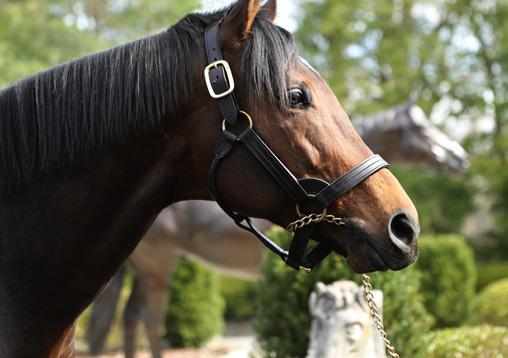
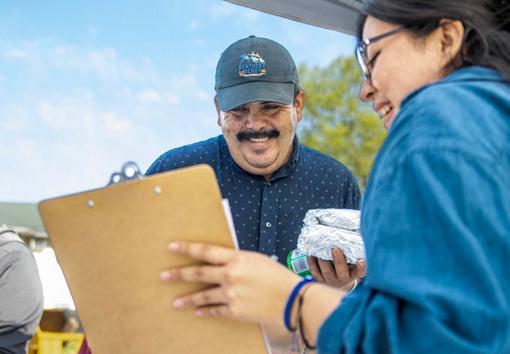
“I remember he looked at me like ‘Who is this guy, and does he know what in the hell he’s talking about,’” Smith recalled of his initial inquiries to Hutt. “I just kind of kept at it and we ended up coming together. And we had some real success. We had a horse named Bunk N Ted that I named after two of my construction contractor clients. He won the Sam F. Davis (in 2002) and actually went off as the favorite in the Tampa Bay Derby.”
When Hutt passed away in 2004 due to a heart attack, Smith took a brief respite from Thoroughbred ownership only to be lured back with the help of his friend Bill Denzik, who would go on to become racing manager for Smith’s Rocket Ship Racing. After years of good times and modest successes with Denzik and the likes of trainer Jeff Hiles, Smith’s day job again put him in the path of opportunity, one that continues to leave him gob smacked with its outpouring of good fortune.
He invested in a London-based insurance company a handful of years ago and one of his partners happened to be Charlie Pearson, the son in law of Irish magnate John Magnier, owner of Coolmore Stud. As the lads got to know the ebullient Kentuckian and his affinity for their signature industry, an invitation to join their ownership ranks was extended. It was a commitment that was tested when Smith was on a plane during the 2022 FasigTipton Saratoga Select Yearling Sale and got informed in midair by Wallace that one of the colts they wanted him to partner on had elicited a final bid of $2.3 million.
He was good, Smith assured his new partners – a declaration that would become wild understatement once the youngster eventually named Sierra Leone commenced a multiple Grade 1-winning, 14-race career under the craft of five-time Eclipse Award winning trainer Chad Brown.



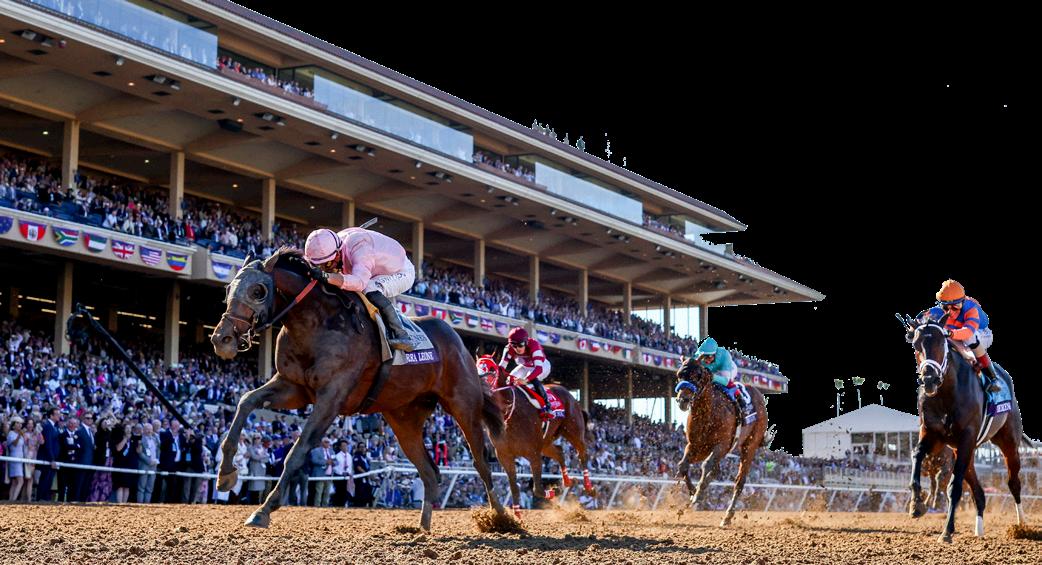
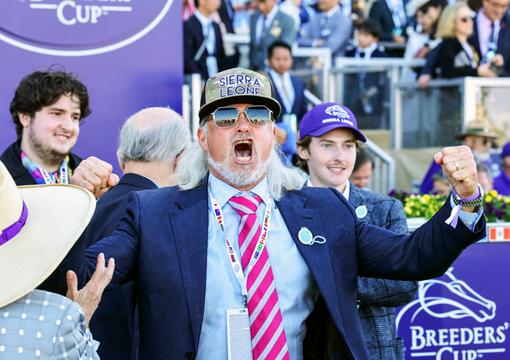
Four years and several prestigious pieces of hardware later, even Smith’s loquacious self is pressed to articulate what it has meant to him to be at the center of a whirlwind some participants spend their lives chasing.
“It is extremely hard to process. It’s not something that you can possess or covet for sure,” Smith said. “It just so happens that this has crossed my path. The lads are incredible at picking horses, they’re super talented, and Chad and his operation is first class and has a Hall of Fame record. But even then, it’s so hard to have this kind of good fortune.
“Winning races is amazing, but just being at the track and being around people is amazing. That’s why I try to remember the people that are behind these horses.”
Among Smith’s favorite memories of the last couple years is the unadulterated flood of emotions that got uncorked after Sierra Leone capped off his sophomore season with a stirring 1 ½ length victory in the Breeders’ Cup Classic at Del Mar two years ago.
“Somehow I ended up in a hot tub for most of the night, voice was gone, and had, like, these splits of champagne floating in there,” Smith laughed. “People walking by were probably like, ‘Look at this wreck’. I didn’t care. We’d just won the biggest horse race in the country.”
Later that month, another audience got to reap the benefits of Sierra Leone’s aptitude and Smith’s desire to share his spoils when he presented a check for $100,000 to the Backside Learning Center thanks to the Purses For a Purpose program.
“Brook is incredibly strategic and an incredibly smart person and that’s why he has been so successful in his life,” said Sherry
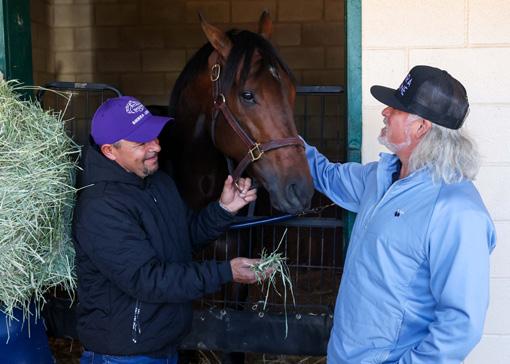
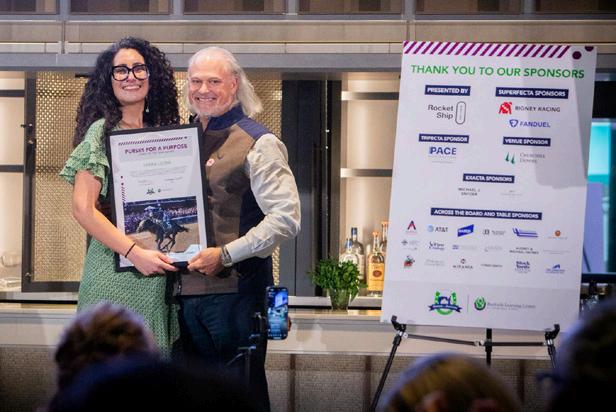
executive director
“You have these kinds of supporters that write checks and don’t really want to be involved or want to keep a low profile and then there are people who want to use what they’re doing and the actions they take to inspire others. And Brook is all about that. He’s like ‘How can I leverage who I am and that profile and inspire other people?’ He does that at every opportunity. He has been all in with the organization.”
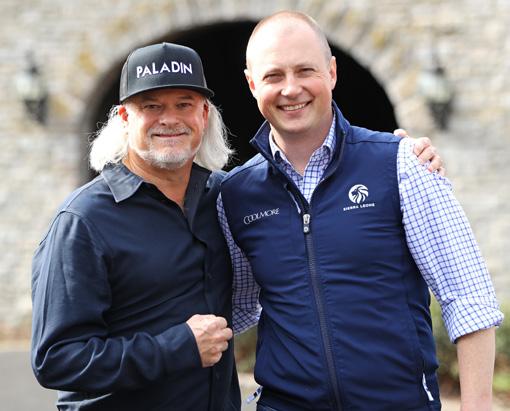
As Sierra Leone was in the midst of his championship campaign the summer of 2024, his connections were purchasing his heir apparent by going to $1.9 million at the Fasig-Tipton Saratoga auction for another well-bred son of Gun Runner. Now known as Paladin, the unbeaten chestnut colt seemed poised to put Smith back in the Kentucky Derby spotlight when he opened his sophomore season with a half-length victory in the Risen Star Stakes (G2) this February, only to be knocked off the 2026 Triple Crown trail when he emerged from a March 28 workout with a condylar fracture in his right front ankle.
“The highs in this sport are breathtaking, the lows too,” Smith said of the injuries to Paladin and Canaletto, another promising sophomore prospect he co-owns who was purchased out of the same Fasig-Tipton sale.
Such a kaleidoscope of feelings is part and parcel of Thoroughbred ownership; hence the reason proper perspective is as necessary as financial resources for anyone delving into the sport. When one is as invested as Smith in each life impacted by each horse, keeping the bigger picture in focus becomes a less arduous transition.
“Brook is a very special guy. What you see is what you get,” Wallace said. “He’s been a wonderful partner…and one we hope will develop into a long-term relationship. We’re off to a very good start obviously with Sierra Leone, you couldn’t imagine a better horse to start any business relationship off with. But more than a business relationship, he’s a great friend. And what he’s done for the business, what he’s done for the Backside Learning Center at Churchill Downs, he’s larger than life.”
Gratitude. Respect. Amazement. Awe. Such emotions pepper Smith’s statements whenever he speaks about the sport that has him in an impassioned vice grip.
He holds the same level of sentiment for the individuals who allow the Thoroughbred industry to operate, and he’s ready to give an articulate earful on both matters to all willing to listen.
“I just love walking around these tracks and backsides and talking to people. I wake up with it. I go to bed with it. And I want it to be part of the rest of my life,” Smith said. “You learn a lot about life (in racing) because you have to deal with so many things: disappointment, frustration. There is a lot more of that kind of heartache than elation but that’s what makes the wins and elation even better.
“It’s like history that’s happening around you and, all of the sudden like, you’re in the story. And I’m not trying to be a part of the story. I’m just trying to not screw anything up, revel in it, elevate it, and have fun.”
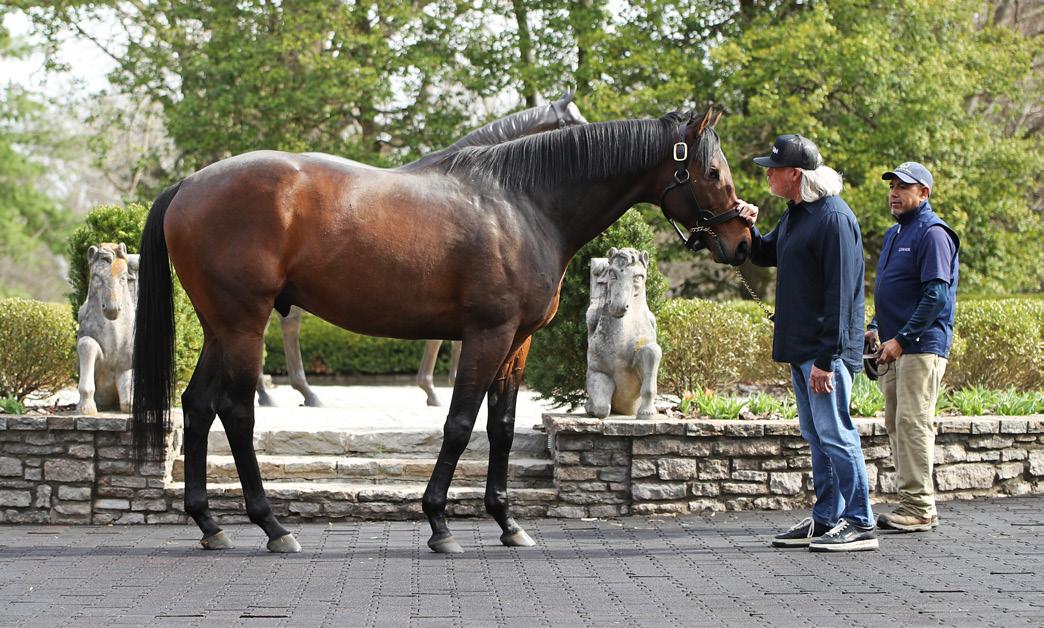
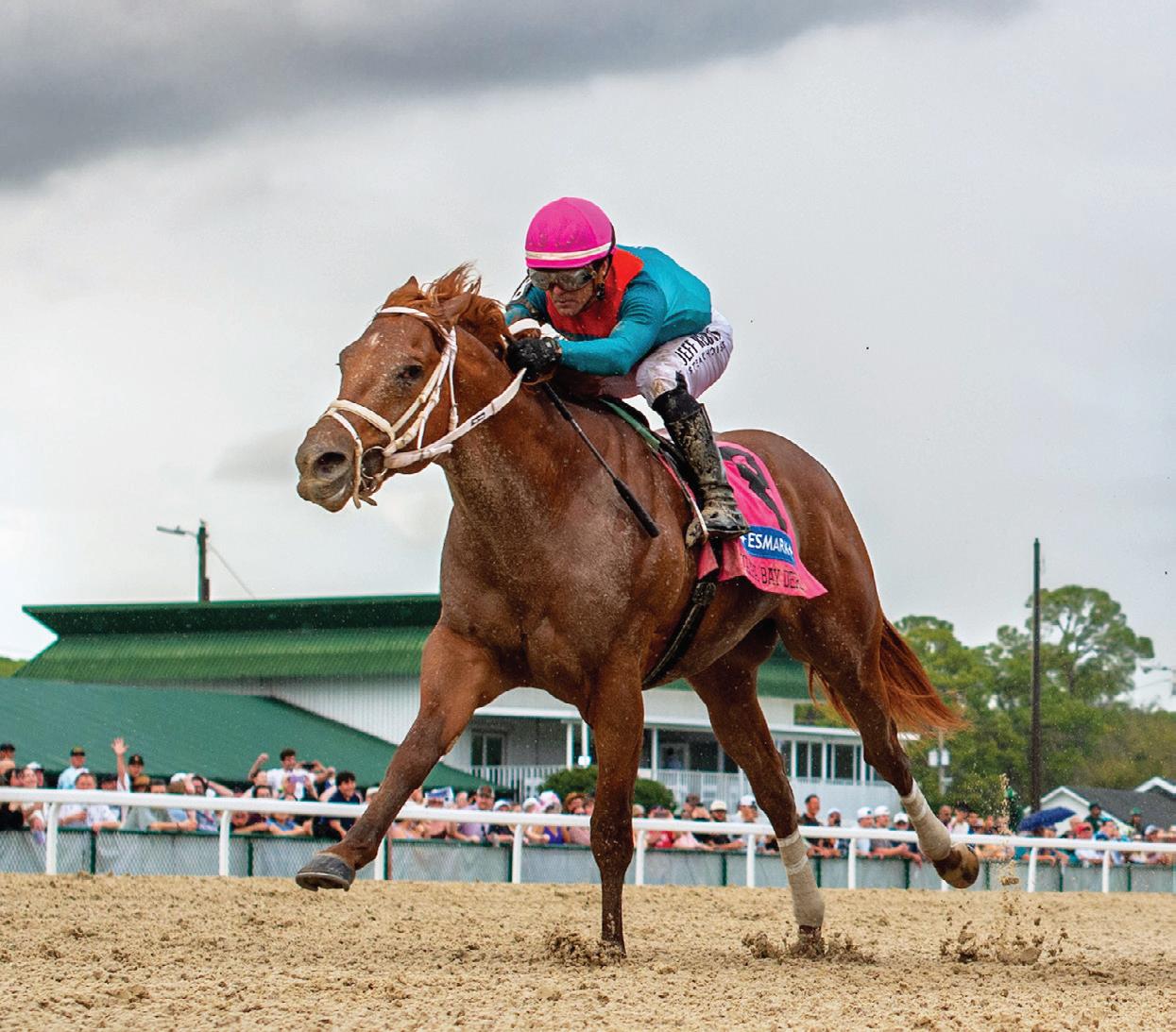
OGMA Investments (led by Gustavo Delgado Jr.), High Step Racing (Randall Guy, Joe Noble, Kevin Avera, Jim Ferreira and Todd Perry) and JR Ranch (Ramiro Restrepo, Jose and Rita Aguirre)
Back in 2015, Ramiro Restrepo, then working for FasigTipton as a sort of South American ambassador, met Venezuelan trainer Gustavo Delgado Sr. at Keeneland. He said, “Let’s start working with each other. I’ll own an interest in some of the horses, and you bring people to come in and be partners,” Restrepo said. “Then, I owned pieces of some of those horses.”
Delgado came to Florida the next year to begin training in the United States, assisted by his son, Gustavo Jr. “My dad’s been training horses for 40 years,” Gustavo Jr. said. “He’s a legend in my country, Venezuela.”
Having trouble building a stable on their own, the Delgados began getting partners while maintaining an ownership interest. “It’s very strange to have a trainer that owns,” recounted Restrepo.
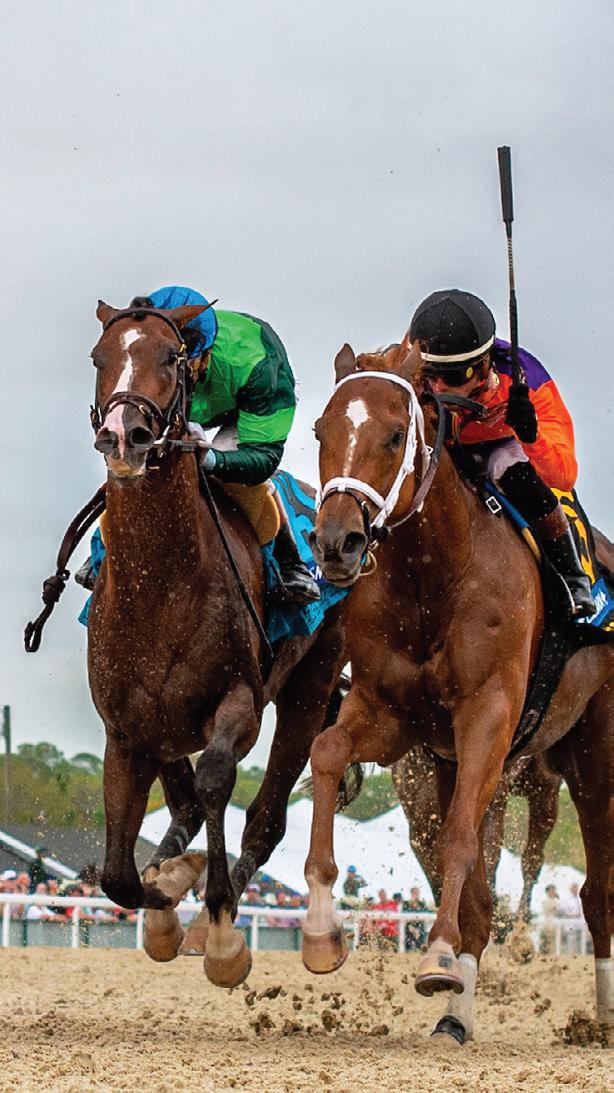
But it works for the Delgados. “The approach is different for us. It’s very important that we control the campaign of the horse. When to put the foot on the pedal; when to stop. It’s a very fine line. My dad’s experience carries a lot of weight.”
The race his father coveted was the Kentucky Derby. “My dad grew up thinking about the Derby,” Gustavo Jr. said. “He was very influenced by Canonero II (the 1971 Kentucky Derby and Preakness Stakes winner). He had that in the back of his mind when he came to the States. He had a horse in the Derby the first year he started training here, Majesto (who finished 18th). In 2019, we had Bodie Express (who finished 13th).”
In 2023, they won the Kentucky Derby with Mage, who was owned by OMGA Investments and Commonwealth Thoroughbreds. “That was a pivotal moment for my family, the barn and all the partners involved,” Gustavo Jr. said.
Restrepo, who is JR Ranch’s racing manager and bloodstock agent, was, happily, one of the co-owners of Mage: “I get emotional because of how much that horse meant to so many people. That horse changed our lives. That horse has allowed me to gain the ability to go and buy horses all over the planet. Nine countries. I’ve been able to do the bloodstock work there because that horse opened the door for me.”
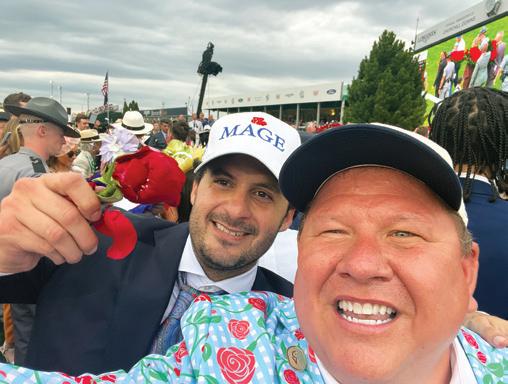
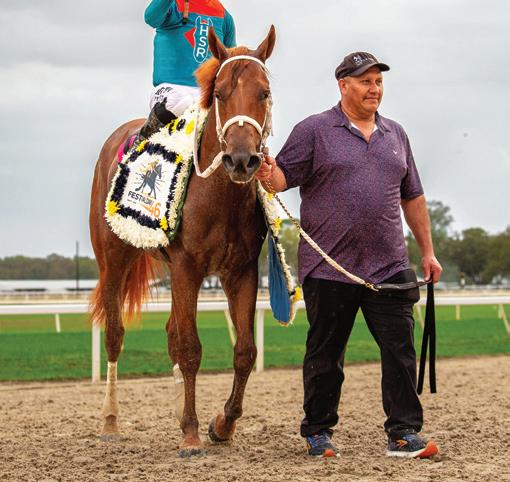
Mage also got Randall Guy into the game. Guy, who works in computer supplies and digital signage, made a trip to Saratoga 30 years ago. “It was a beautiful, mid-summer day,” I said, “this horse racing is okay”. I go back every year.”
His interest was further piqued by the pandemic. “There was nothing to do, me and my buddies were talking every day about racing. A buddy of mine was at Keeneland. He called and asked me about [taking] a microshare in Mage. I met Gustavo the night before Mage broke his maiden at Gulfstream Park.”
He described going to the Kentucky Derby to see Mage was an incredible experience. It was the first time I had real seats. I wound up in the winner’s circle. I got a picture of me and Gustavo holding a rose together.”
Of course, he wanted to get more involved after winning the Derby. He and four buddies formed High Step Racing, the name derived from Guy high-stepping it to the window to cash a winning ticket. Randy is the managing partner. He’s been friends with Joe Noble for 30 years, who is an independent agent in the commercial construction business, and Kevin Avera, who is in sales. They both were in. So were Jim Ferreira, who retired from Home Depot, and former National Football League offensive lineman Todd Perry.
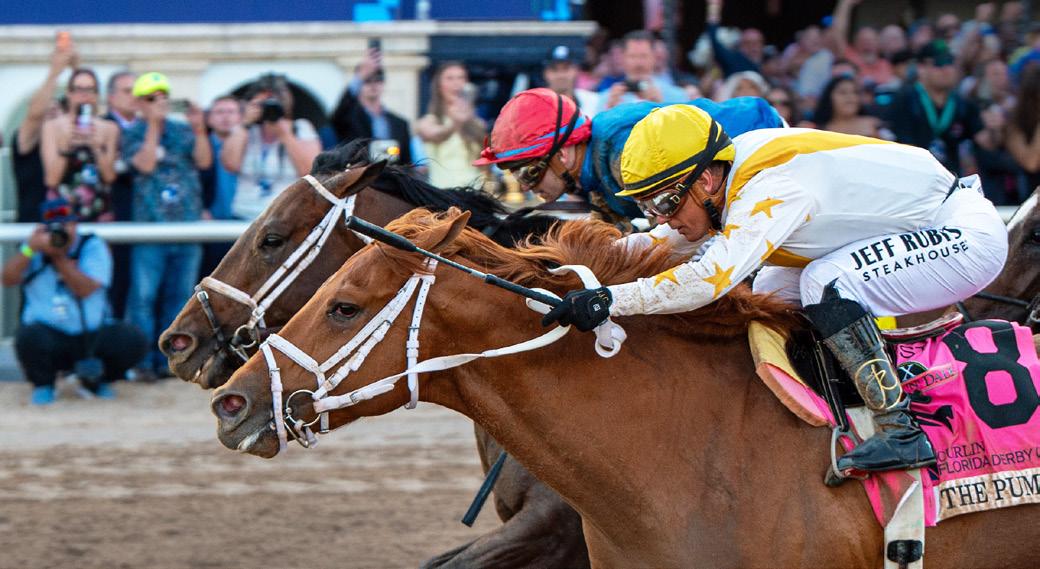
“I’m from Eastern Kentucky, and I always went to Keeneland,” Noble said. “I worked with horses for a couple of summers with trainer James Morgan in Ohio.”
Perry, who was born in Elizabethtown, Kentucky, was a 6-foot-5, 310-pound (playing weight) guard at the University of Kentucky, who was a fourth-round pick by the Chicago Bears in the 1993 NFL Draft. He played eight seasons with the Bears and three with the Miami Dolphins. He was inducted into the Kentucky Pro Football Hall of Fame in 2017. “He’s my bodyguard,” Guy joked. “Our daughters played softball together in Milton, Georgia. He’s a super nice guy. Quiet. Real humble.”
The partnership thought they had another starter in Ferocious, who won his debut at Saratoga by 7 ¾ lengths in 2024, posting a 96 Beyer Speed Figure, the highest by any two-year-old that year. He was second in both the Gr.1 Hopeful Stakes and Gr.1 Breeders’ Futurity and fifth in the Breeders’ Cup Juvenile. But while finishing fourth in the Gr.3 Holy Bull Stakes in February, 2025, he suffered a muscle tear. Several weeks later, he died of laminitis. “He was a special horse,” Guy said. “It’s a shame he got hurt.”
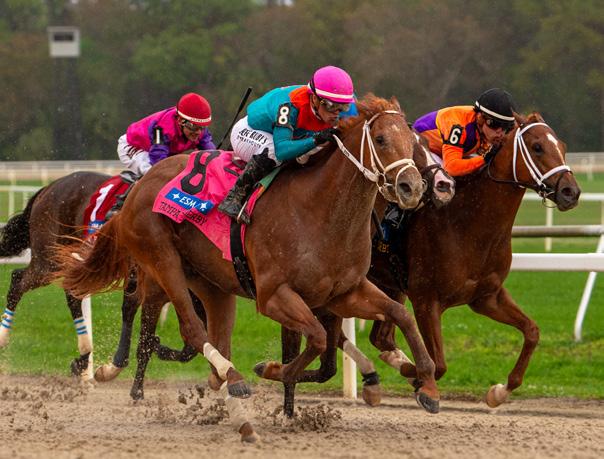
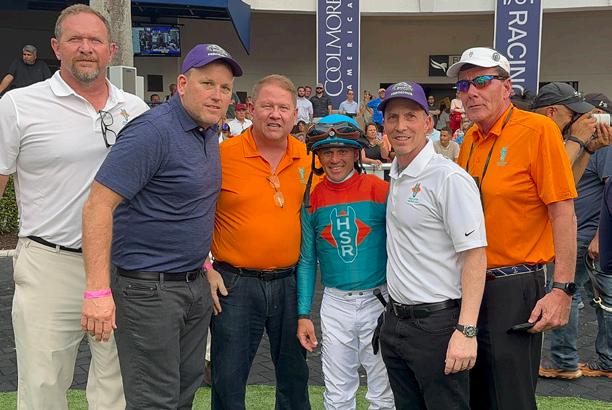
The Puma is healthy, and after winning the Gr.3 Tampa Bay Derby and finishing second by a nose to Commandment in the Gr.1 Florida Derby, is a prime contender for the Run for the Roses. “I was definitely high-stepping after the Tampa Bay Derby,” Guy said. Restrepo is not involved in The Puma, but two of his clients are, High Step Racing and JR Ranch.
About JR Ranch, Restrepo said, “I met Jose and his wife, Rita, during our Kentucky Derby run with Mage. They’re in the insurance world. They fell in love with horse racing. They owned a part of Ferocious. For a brief moment, he was our Derby horse. They’ve owned several graded stakes winners in South America and have half a dozen horses in France. They’re really passionate about horse racing.”
Winning can do that for you. And winning at racing’s highest level? “We know the odds are against us in horse racing, so you want to do it with people that you know are really aligned with us. With Jose, we’ve gotten pieces of horses we would never have been able to afford.”
Gustavo Jr. said, “Originally, we bought The Puma for ourselves. Then we decided to share the horse with High Step and JR Ranch. They have other horses in our barn. That’s what we like to do.”


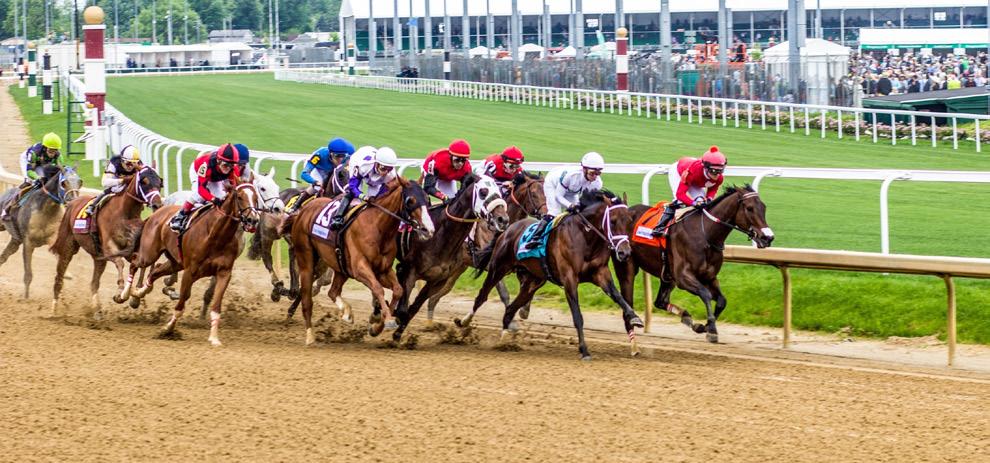




EC






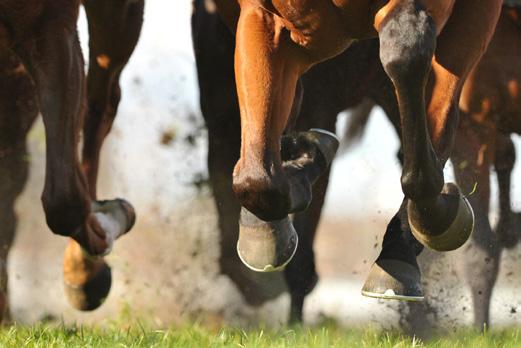


Mike and Katherine “K.K.” Ball
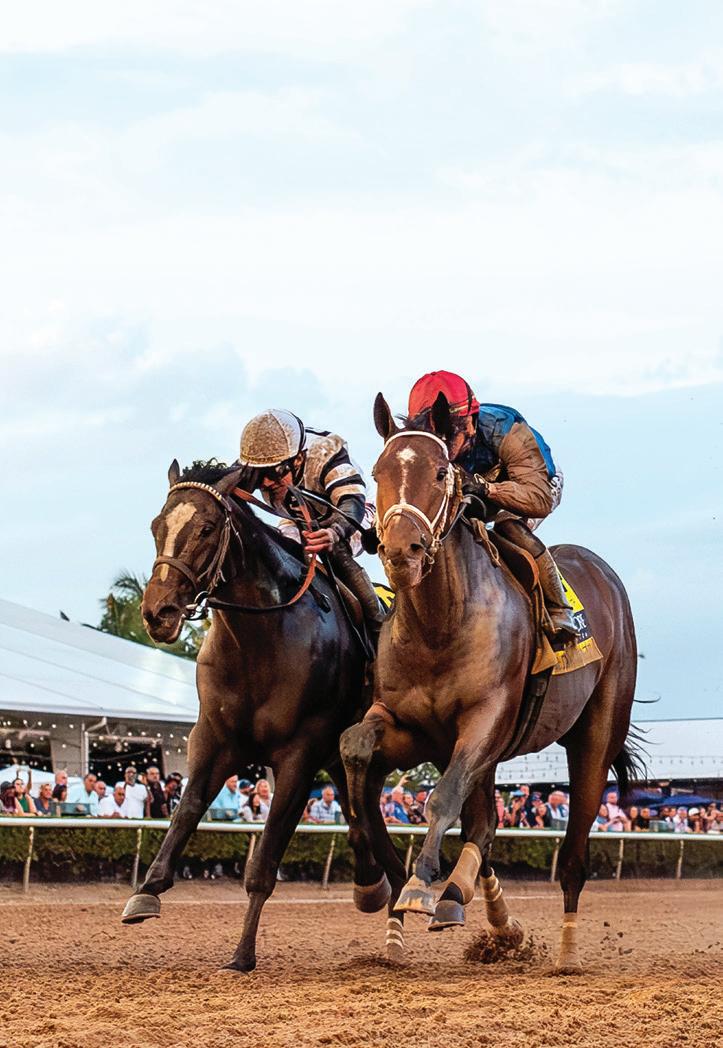
With their home-bred Chief Wallabee stepping into the pre-Kentucky Derby spotlight, Mike and Katherine “K.K.” Ball are in unfamiliar territory. “We’re not used to this much hype,” Katherine said.
Mike and Katherine Ball have spent decades racing and breeding Thoroughbreds in Kentucky without getting as much of a whiff of the Kentucky Derby. Both spent more than a decade training their horses.
“As long as we’ve been in the business, it’s our first Derby,” Katherine said. “We are enjoying every minute of it.”
Mike just wishes his father, Don, was around to see it. Don bought the family’s Donamire Farm in Lexington; built a successful home construction business where Mike still works, and bred, raced and trained Thoroughbreds. He died in 2018. “He always wanted to have a Derby horse,” Mike said.
Mike was going into the fourth grade when his family moved into their new farm. “I was always interested in horses, I read all the publications.”
He attended the University of Kentucky, studied business, and began working at the track. His parents’ home-bred Going Investor, originally trained by Mike’s father, had quite a run
to begin his career in 1977, winning his maiden debut by a head at Keeneland and a $20,000 stakes at Churchill Downs by 3 ½ lengths. Sent off at 4-1 in the $35,000 Great American Stakes at Belmont Park, he finished third behind Alydar and Affirmed. Alydar won by 3 ½, and Affirmed was two lengths clear of Going Investor. After Going Investor finished fifth in another stakes race at Belmont Park to Tilt Up, Going Investor got a trainer change: to Mike.
“I had a trainer’s license by then. That gave me an opportunity at a young age.”
He took advantage of it as Going Investor continued his outstanding two-year-old campaign, winning an allowance race by four lengths, then taking the Jockey Club Stakes at Churchill Downs by 2 ¼ lengths. Going Investor finished his career with 10 victories, six seconds and 13 thirds from 55 starts and earnings of $219,131.
“I learned from my mistakes,” Mike said. “I thought I knew more than I did.”
He knew enough to develop Summer Advocate, another Ball home-bred who put together quite a streak in 1980: five wins, seven seconds and one third in 14 starts.
In compiling that streak, Summer Advocate passed on the Gr.1 Kentucky Derby. “We could have run him in there. He wasn’t going to win, but he was good enough to beat half of them. We decided not to run. I was 21 years old. I thought I’d have another one the next year.”
He didn’t, but Summer Advocate had an outstanding career, earning $582,370 from nine victories, 17 seconds and four thirds in 43 starts.
Mike’s priorities changed when he met Katherine, a native of Cincinnati. She, too, loved horses: “Horses have been my life. I’ve been a horse person since I was seven years old. I rode pony club and hunter jumpers.”
She thought she’d abandon horses, at least for a while, when she attended the University of Kentucky: “I was going to be a real college girl and join a sorority.”
Then she found out the college had a riding team. The heck with sororities. “I did really well, then I started to break yearlings at a farm. Then Tommy Colebrook, who was where I’m from, got me to go over to Donamire Farm. He couldn’t work full-time because he was taking care of his two-year-old son, Ben. We split a week on, a week off.”
Mike’s parents, Don and Mira, offered her a job as a farm secretary. She told Don, “I don’t type.” He replied, “I don’t either.” She quit college, worked as farm secretary for a couple of years, and then did even more after meeting Mike.
“We hit it off,” Katherine said.
They married, and when Katherine became pregnant, Mike decided to leave training and work in his family’s business, Ball Homes. He’s still working there: “We build houses here in Lexington, Louisville and Knoxville, Tennessee.”
Mike was 29 when he changed jobs. Katherine took the horses over and trained for some 20 years. She loved it.

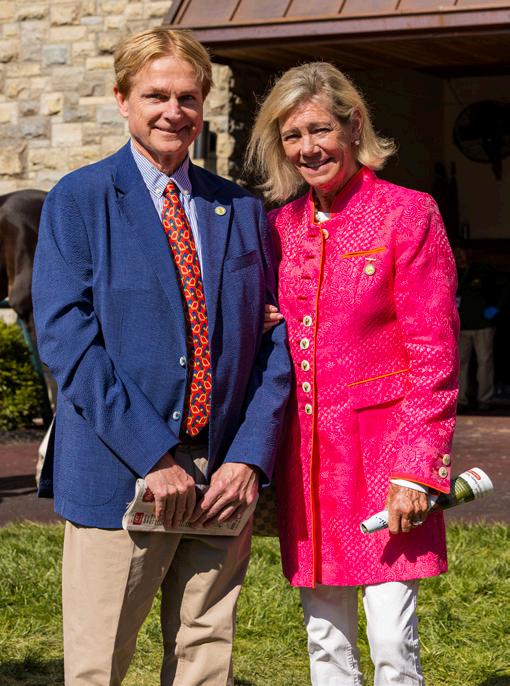
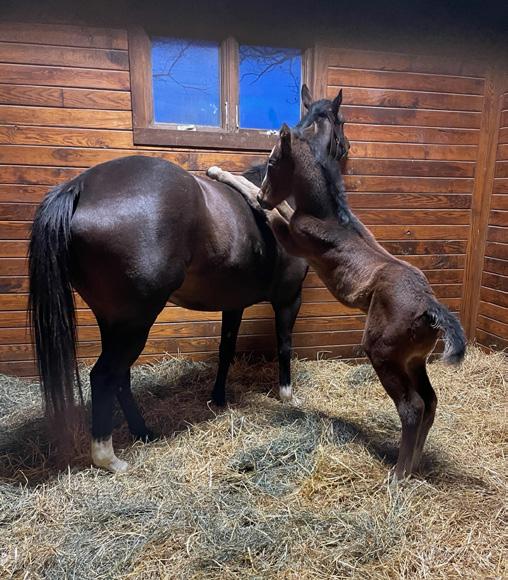
The Balls’ focus eventually changed. They sent their horses to other trainers while they built a broodmare band that now numbers eight. Then their home-bred Limousine Liberal revived their passion. “He got us hooked,” Mike said. “For three years. He ran on Travers Day three times and on big days at Churchill Downs. It’s a lot of fun having a horse run six or seven times a year in those big events.”
It’s even more fun when they’re right there at the finish. He finished second by four lengths to Run Happy in the 2015 Gr.1 King’s Bishop at Saratoga in just his third lifetime start. He’d go on to win three consecutive stakes at Churchill Downs in 2017: the Gr.2 Churchill Downs Stakes, the Gr.3 Aristides and the Kelly’s Landing. The following year, he took the Gr.2 Belmont Sprint Stakes at Belmont Park.
Limousine Liberal finished his career with nine victories, six seconds and seven thirds from just 27 starts with earnings of $1,815,261.
His trainer? Ben Colebrook. Yeah, that Ben Colebrook.
The Balls continue to send their yearlings to Bill Harrigan, who breaks and develops them at his Kentucky farm. Harrigan winters at Payson Park in Florida.
“They’re not just clients; they’re friends,” Harrigan said. “They’re horse people. Mike and K.K. are kind of a staple around Lexington, where I’ve had a farm for 30 years. I’ve known them for all that time, back to when Mike was training horses. I’ve known him forever.”
The Balls’ four yearlings they sent to Harrigan in 2024 included Chief Wallabee, a son of Constitution out of A La Lucia by Medaglia d’Oro. Chief Wallabee distinguished himself early, and Harrigan suggested they send him to Hall of Fame trainer Bill Mott. “Bill’s been a very good friend,” Harrigan said. “I’ve been going to Payson Park for 20 years.”
Mott was happy to take Chief Wallabee. A minor problem delayed his debut, but it was worth the wait. Chief Wallabee began his career with a length-and-a-half maiden victory at
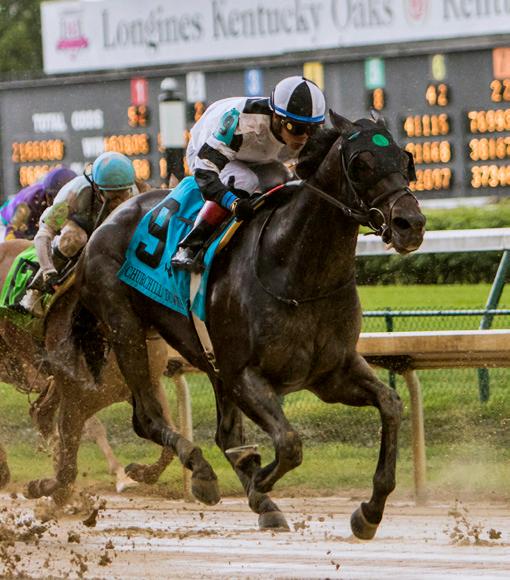
Gulfstream Park January 10th. He then finished second by a neck to Commandment in the Gr.2 Fountain of Youth, and then third by a half-length to him in the Gr.1 Florida Derby.
He’s earned enough points to start in the Kentucky Derby.
“I hope we get the chance to run,” Mike said. And if he wins? “I can’t hardly imagine that.”
Harrigan said, “This is extra special. If this horse goes to the Derby, this will be a very popular horse around Lexington, and people will really be pulling for Mike and K.K. Everybody likes them. They’re Kentucky through and through.”

Effective January 1, 2026, NYRA will increase purses for 2-year-old New York-bred overnight races to match open-company maiden special weight purses. This initiative will be in effect for 2026 at Aqueduct, Saratoga and the new Belmont Park.
2-year-old New York-bred maiden races will offer the same purse money as open-company races.
The initiative is expected to raise overall New York-bred overnight purses by 15% compared to 2024 levels.
The program focuses on the 2024 NY-bred foal crop starting their racing careers in 2026.
By September 2026, coinciding with the reopening of Belmont Park, comprehensive increases for all NY-bred overnight races will be accelerated.
In addition to increased purses, $5,000 bonuses are available for New York-sired, New York-bred winners of maiden special weights and allowance races.

The work being done to monitor and detect gene doping practices and understanding the future perspectives in breeding.
The pursuit of genetic perfection no longer ends with traditional selection. Alongside meticulously planned breeding programs and increasingly sophisticated genomic profiling, a new and controversial possibility is quietly gaining ground - gene doping. The idea of altering a thoroughbred’s gene expression to enhance muscle power, endurance, or cellular recovery is both compelling and profoundly unsettling.
In experimental research, these tools are already being tested using animal models and although no official cases have been reported in racing so far, the specter of their potential use is growing increasingly real. The discourse around gene doping and gene therapy more broadly, is emerging with greater urgency, raising complex ethical, technical, and regulatory questions.
This is an extremely dangerous development, not only because it threatens the integrity of competition, but also due to the unknown risks it poses to the animals themselves, who may be subjected to genetic manipulation without the capacity to understand or consent. Both the World AntiDoping Agency (WADA) and the International Federation of Horseracing Authorities (IFHA) have taken a clear stance against such practices, prohibiting their use in both human and equine athletes.
Despite these regulatory safeguards, the rapid pace of genetic science is testing the limits of current frameworks. Advances in biotechnology are no longer confined to the laboratory or speculative discourse they are beginning to manifest in the real world. While equestrian regulators have outlined strict prohibitions, enforcement is inherently reactive, often lagging behind innovation. The gap between what is technically possible and what is legally permitted is widening, and within that space, experimental applications of gene editing are quietly advancing. It is in this gray zone, between regulation and research, that the first real-world example of genetically edited equine athletes has emerged.
This shift from theory to application became strikingly evident in October–November 2024, when Argentina’s biotech firm Kheiron Biotech announced the birth of five genetically edited polo foals, marking the world’s first CRISPR‑Cas9–engineered equine athletes.

In practice, a horse with genetically enhanced EPO expression could maintain high levels of exertion for longer without performance dropping off.
These horses were derived from mesenchymal stem cells of Polo Pureza, a champion Argentine polo mare celebrated in the breeders’ Hall of Fame. Rather than cloning, scientists used CRISPR‑Cas9, a highly precise genome-editing tool, acting like molecular scissors to modify specific DNA segments. The primary target was the myostatin (MSTN) gene, which restricts muscle growth by silencing or altering this gene. The resulting foals were designed to possess enhanced muscle mass and explosive speed, while preserving the mare’s natural agility and temperament.
The editing process involved removing an oocyte’s nucleus, replacing it with DNA from Polo Pureza’s edited stem cells, and implanting the embryos into surrogate mares; five live foals were born from eight pregnancies.
In the context of the horse racing industry, where the value of a thoroughbred can hinge on milliseconds of performance and the ability to sustain speed over distance, gene editing presents an especially tempting field.
Scientifically, the answer is yes. The same techniques used to enhance athletic potential in polo ponies could, in principle, be applied to racehorses. Several genetic traits directly influence race performance and could be enhanced through precise gene editing. The range of traits that could be enhanced is both broad and strategically targeted. The ultimate goal would be to produce a horse that runs faster, resists fatigue better, recovers more quickly, and possibly even suffers fewer injuries, all thanks to targeted genetic interventions.
One of the primary areas where gene editing could intervene is muscle development. Racehorses rely on explosive power and speed, and one of the key genes responsible for regulating muscle growth is myostatin (MSTN).
This gene acts like a natural limiter, preventing muscles from growing excessively. By suppressing or modifying MSTN, it’s possible to significantly increase the mass and strength of skeletal muscles, giving horses more power during acceleration and allowing them to maintain higher speeds.
Enhancing muscle development could be especially valuable for short-distance (sprint) races, where raw power is a major performance factor. Alongside MSTN, scientists may also target follistatin, a glycoprotein that naturally inhibits myostatin and encourages muscle growth. Its manipulation, already studied in other species, could serve as an indirect yet powerful enhancer of muscle development in horses.
Another key aspect involves muscle endurance and recovery, where hormones like Insulin like Growth Factor 1 (IGF-1) and growth hormone (GH) play essential roles. IGF-1 stimulates protein synthesis and helps in repairing tissue damage after intense effort.
Gene therapy involving IGF-1 has shown increased muscle mass in animal studies, even without training. When combined with exercise, its effects are amplified, and it may also reduce muscle loss during periods of rest (highly relevant in racing horses recovering from injury or off-season periods).
Performance in longer races, however, is not just about power, it’s about how efficiently a horse uses oxygen. Here, oxygen transport genes like erythropoietin (EPO) and HIF 1 become highly relevant. By increasing red blood cell production, these
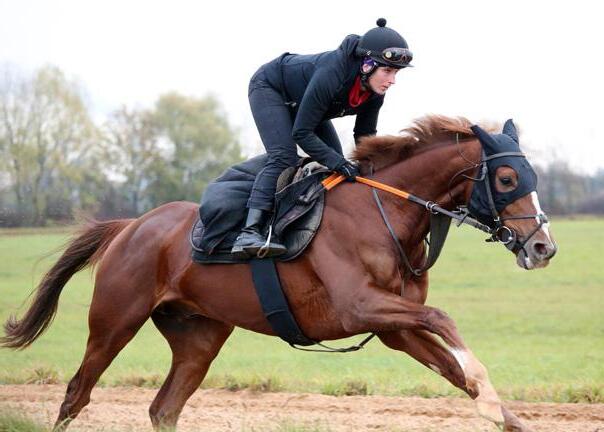
genes allow muscles to receive more oxygen during effort, delaying fatigue and improving aerobic endurance. In practice, a horse with genetically enhanced EPO expression could maintain high levels of exertion for longer without performance dropping off. In addition, HIF-1 also activates other processes, such as the formation of new blood vessels (angiogenesis) and improved mitochondrial function, both of which contribute to athletic stamina.
There is also the possibility of influencing muscle contraction efficiency through genes like ACTN3, which is associated with fasttwitch muscle fibers, those responsible for rapid, explosive movements. Variations in this gene may help differentiate a horse better suited to sprints versus long-distance racing.
Beyond functional performance, gene editing also opens the door to phenotype modification, adjusting physical traits that contribute indirectly to racing ability. This includes aspects like limb length, back structure, stride angle, body mass distribution, and joint strength. Studies have identified quantitative trait loci (QTLs) and genes like TBX15 that influence skeletal development and muscle fiber differentiation.
By acting on these, one could refine the physical ideal standard of a horse to better match the ideal conformation for speed and biomechanics. This would mark a radical shift from traditional breeding, where physical traits emerge through generations of selection, to a scenario where conformation is engineered at the embryonic stage.
In essence, the application of gene editing in horse racing presents the theoretical possibility of designing equine athletes tailored not only for general fitness, but for specific racing distances, styles, and even track conditions. A genetically customized thoroughbred could, in theory, be built for explosive sprints, long-distance endurance, or optimal biomechanics on certain surfaces.
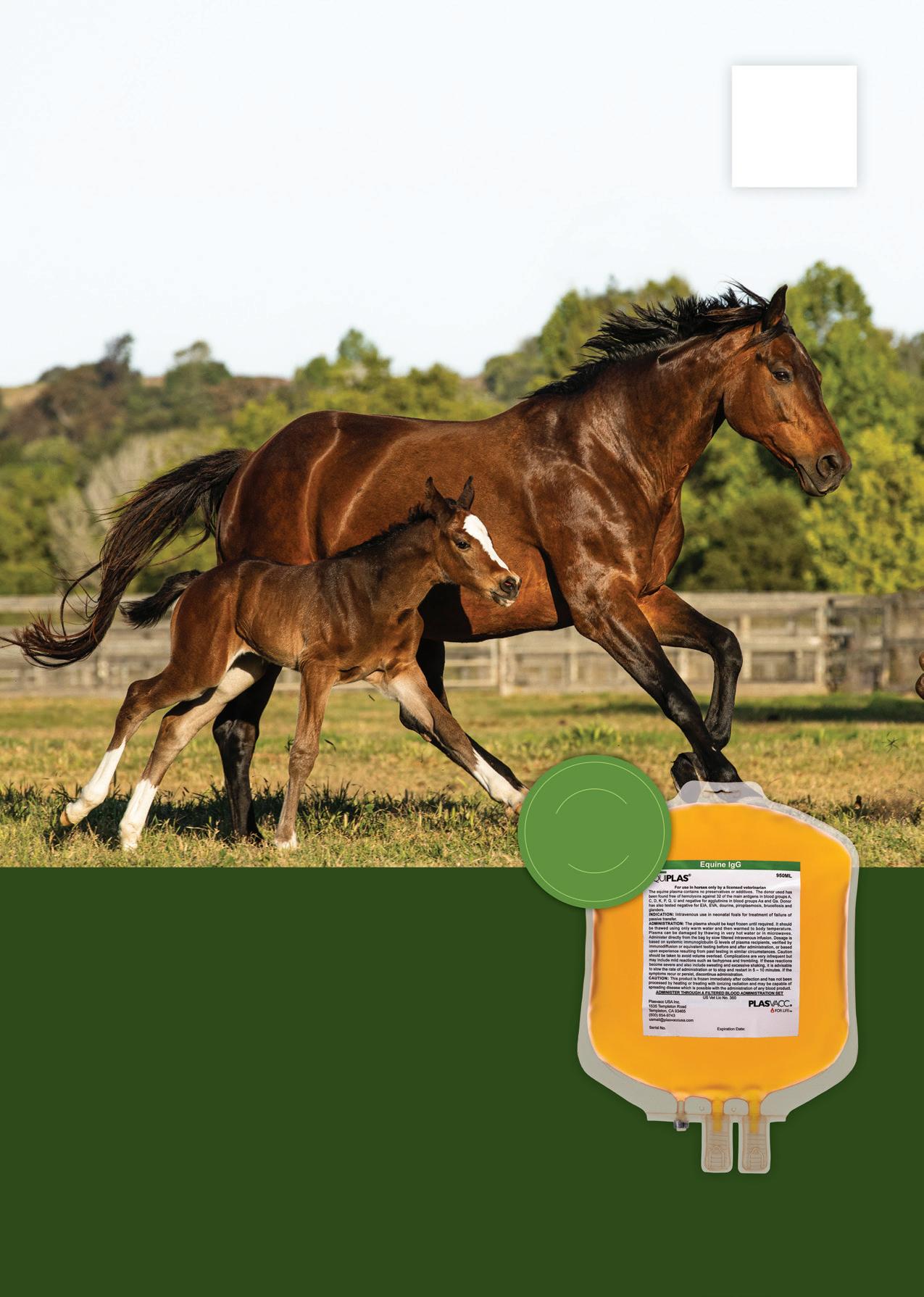


“Does the end justify the means?”
This timeless question, posed by Machiavelli centuries ago, feels strikingly relevant in today’s ethical debate over gene editing in sport horses. The growing scientific evidence that gene editing in horses is not only possible but increasingly feasible brings to the forefront a complex and deeply important moral dilemma. Just because we can manipulate the genome of a future equine athlete, should we?
At the heart of the discussion lies the fundamental value of fair play, a core principle that defines the legitimacy of competitive sport. If one horse is genetically enhanced before birth while others are bred through traditional means, can they still compete on equal terms? Gene editing, by its very nature, introduces an artificial advantage, one that is not earned through training, nutrition, or breeding judgment, but through direct technological intervention at the biological level.
Such practices risk turning the racecourse into a competition not of horses, but of laboratories and geneticists. The fairness of the sport would be compromised, not only for competitors but for owners, breeders, and spectators who trust in the authenticity of the contest. Moreover, equine athletes cannot give consent to be genetically modified. Altering their genome for humandefined goals raises profound questions about animal welfare, autonomy, and dignity. Is it ethical to “design” an animal for performance, knowing that such manipulation may also carry unknown health risks or reduce genetic diversity?
While innovation has always shaped sport, from training techniques to equipment, the line between enhancement and manipulation must be clearly drawn. Gene editing, when used for performance purposes, crosses that line. It challenges the spirit of horsemanship, the unpredictability of natural talent, and the integrity of racing itself. Ultimately, preserving fair play may mean accepting the biological limits of even the most elite thoroughbreds and recognizing that what makes sport meaningful is not control over the outcome, but the uncertainty of it.
LEFT: To confront the emerging threat of gene doping the BHA has invested nearly $2.7 million in cutting-edge scientific research.
Indeed, these ethical concerns have not gone unnoticed by the governing bodies of equine sport. Organizations such as the World Anti-Doping Agency (WADA), the International Federation of Horseracing Authorities (IFHA), and most notably the British Horseracing Authority (BHA) have already taken a firm and proactive stance against the use of gene editing for performance enhancement.
The BHA, in particular, is now leading the way globally in developing and implementing anti-gene doping protocols within its world-class equine anti-doping program. In a decisive move to protect the integrity of British racing and the welfare of thoroughbred horses, the BHA has officially expanded its antidoping operations to include routine testing for gene doping, both on race day and out-of-competition.
This includes the detection of direct DNA manipulation via gene editing as well as gene transfer, where foreign genetic material is introduced into the horse’s cells to boost athletic traits or accelerate recovery.
Such practices are clearly prohibited under the Rules of Racing, and the BHA recognizes gene doping as a serious and growing threat, not only to fair competition, but also to equine health and the future integrity of the breed.
To confront this emerging risk, the BHA has invested nearly $2.7 million in cutting-edge scientific research in collaboration with the LGC laboratory in Fordham, establishing a dedicated gene doping detection team as early as 2019.
In partnership with the Center for Racehorse Studies, researchers at LGC have successfully developed analytical techniques capable of identifying evidence of gene doping, achieving UK Accreditation Service approval to perform this next generation of highly sensitive testing. This new gene doping detection framework is already active, forming part of a comprehensive testing program that combines random sampling with intelligence-led investigations.
The goal is not only to ensure compliance with the Rules of Racing, but also to act as a powerful deterrent preserving the fairness of the sport and prioritizing the welfare of the horse. With this initiative, the BHA is sending a clear message: that the use of genetic engineering to manipulate equine performance will not be tolerated, and that the tools now exist to detect and act upon it.
Gene doping represents the current frontier of innovation and concern within the world of racing. While science continues to demonstrate the increasing feasibility of genetic intervention, both in theory and in practice, this progress brings with it a set of unresolved questions that extend beyond biology or regulation.
The potential to influence a horse’s genetic makeup with surgical precision is no longer a distant possibility, but a reality under active discussion. Yet, embracing such power uncritically could signal a shift in the very foundation of equestrian sport: from a celebration of natural ability, training, and partnership, to a controlled outcome engineered in a lab.
At its core, this conversation is not just about doping, it is about the boundaries between humans and nature, between technological capability and ethical restraint, and between competition and manipulation. The choices made now will shape not only the future of the sport, but also its meaning. As the line between what is possible and what is permissible becomes increasingly thin, the challenge will not only be to detect gene doping, but to decide, collectively, whether sport should allow itself to go down this path at all.



Are there any racing regulations you’d like to see changed, and if so, why?
The first thing that comes to mind is allowing Lasix for all horses. I think it’s an effective treatment for the problem that we have. I think you can argue it’s the best thing for the horse with limited dosages. I think it can be effective and helpful to the horses’ short-term and long-term health.

There’s hundreds of them, literally. I’d love for uniform regulations around the country. That was what HISA was supposed to do. Now there are HISA rules. There are state rules. There are house rules. I have more regulations now than I’ve ever had. The penalties are outrageous. The fines and suspensions are outrageous. The trainer insurer rule needs to be modified to account for things that are completely out of the trainer’s control. I got a $9,000 fine from HISA for basically a clerical error. It’s punitive, and it’s outrageous. The penalties don’t fit the crime. There are other regulations that just make no sense. They’ve taken away Lasix. They’re taking away things that are beneficial to the health and the welfare of the animal. The game was always tough, but it was fun. Now it’s just tough. They’re chasing us out of the game.
I would like to change all the paperwork that goes into what HISA has to register horses. It’s very redundant, I think the horses are already registered with the stable office when we sign a horse in, and then we have to go on the HISA website every time a horse moves or gets changes. So it’s three different places you’ve got to do it, and I would like them to show me what they use it for - that’s in a positive way. Now they’re going to fine people $1,000 for not having it done in time by the horse’s first work.









I have so many of them, especially regulations regarding anti-inflammatories We used to be able to give stuff to horses that made a difference of how the horses feel. If you were to tell a pro athlete right now that they couldn’t take Tylenol or Aleve or ibuprofen, over-the-counter stuff, before they played, you’d have a lot more sore guys. If you watch baseball players after they pitch, they’ve got 10 pounds of ice on their shoulders and elbows. Horses are not as happy as they could be if they were given therapeutic drugs. I’m not talking about performance-enhancing stuff. These are medicines we were allowed to give closer to the race before the formation of HISA. Since HISA, the amount of medication we’re able to give therapeutically is really diminished.

Caution
•
How
•
(omeprazole) Paste for horses contains 37% w/w omeprazole and is available in an adjustable-dose syringe. Each syringe contains 2.28g of omeprazole. Syringes are calibrated according to body weight.
Indications
• For treatment and prevention of recurrence of gastric ulcers in horses and foals 4 weeks of age and older.
Dosage Regimen
• For treatment of gastric ulcers, GASTROGARD should be administered orally once-a day for 4 weeks at the recommended dosage of 1.8 mg omeprazole/lb body weight (4 mg/kg). For the prevention of recurrence of gastric ulcers, continue treatment for at least an additional 4 weeks by administering GASTROGARD at the recommended daily maintenance dose of 0.9 mg/lb (2 mg/kg).
Directions For Use
• GASTROGARD for horses is recommended for use in horses and foals 4 weeks of age and older. The contents of one syringe will dose a 1250 lb (568 kg) horse at the rate of 1.8 mg omeprazole/lb body weight (4 mg/kg). For treatment of gastric ulcers, each weight marking on the syringe plunger will deliver sufficient omeprazole to treat 250 lb (114 kg) body weight. For prevention of recurrence of gastric ulcers, each weight marking will deliver sufficient omeprazole to dose 500 lb (227 kg) body weight.
• To deliver GASTROGARD at the treatment dose rate of 1.8 mg omeprazole/ lb body weight (4 mg/kg), set the syringe plunger to the appropriate weight marking according to the horse’s weight in pounds.
• To deliver GASTROGARD at the dose rate of 0.9 mg/lb (2 mg/kg) to prevent recurrence of ulcers, set the syringe plunger to the weight marking corresponding to half of the horse’s weight in pounds.
• If, after dosing, the syringe is not completely empty, it may be reused on following days until emptied. Replace the cap after each use.
Warning
• Do not use in horses intended for human consumption. Keep this and all drugs out of the reach of children. In case of ingestion, contact a physician. Physicians may contact a poison control center for advice concerning accidental ingestion.
• The safety of GASTROGARD has not been determined in pregnant or lactating mares.
Adverse Reactions
• In efficacy trials, when the drug was administered at 1.8 mg omeprazole/lb (4 mg/kg) body weight daily for 28 days and 0.9 mg omeprazole/lb (2 mg/kg) body weight daily for 30 additional days, no adverse reactions were observed.
• To report suspected adverse drug events, for technical assistance, or to obtain a copy of the Safety Data Sheet (SDS), contact Boehringer Ingelheim Animal Health USA Inc. at 1-888-637-4251. For additional information about adverse drug experience reporting for animal drugs, contact FDA at 1-888-FDA-VETS, or online at www.fda.gov/reportanimalae.
Efficacy
• Dose Confirmation: GASTROGARD, administered to provide omeprazole at 1.8 mg/lb (4 mg/kg) daily for 28 days, effectively healed or reduced the severity of gastric ulcers in 92% of omeprazole-treated horses. In comparison, 32% of controls exhibited healed or less severe ulcers. Horses enrolled in this study were healthy animals confirmed to have gastric ulcers by gastroscopy. Subsequent daily administration of GASTROGARD to provide omeprazole at 0.9 mg/lb (2 mg/kg) for 30 days prevented recurrence of gastric ulcers in 84% of treated horses, whereas ulcers recurred or became more severe in horses removed from omeprazole treatment.
• Clinical Field Trials: GASTROGARD administered at 1.8 mg/lb (4 mg/ kg) daily for 28 days healed or reduced the severity of gastric ulcers in 99% of omeprazole-treated horses. In comparison, 32.4% of control horses had healed ulcers or ulcers which were reduced in severity. These trials included horses of various breeds and under different management conditions, and included horses in race or show training, pleasure horses, and foals as young as one month. Horses enrolled in the efficacy trials were healthy animals confirmed to have gastric ulcers by gastroscopy. In these field trials, horses readily accepted GASTROGARD. There were no drug related adverse reactions. In the clinical trials, GASTROGARD was used concomitantly with other therapies, which included: anthelmintics, antibiotics, non-steroidal and steroidal antiinflammatory agents, diuretics, tranquilizers and vaccines.
• Management Considerations:
Safety
• GASTROGARD was well tolerated in the following controlled efficacy and safety studies.
• In field trials involving 139 horses, including foals as young as one month of age, no adverse reactions attributable to omeprazole treatment were noted.
• In a placebo controlled adult horse safety study, horses received 20 mg/kg/day omeprazole (5x the recommended dose) for 90 days. No treatment related adverse effects were observed.
• In a placebo controlled tolerance study, adult horses were treated with GASTROGARD at a dosage of 40 mg/kg/day (10x the recommended dose) for 21 days. No treatment related adverse effects were observed.
• A placebo controlled foal safety study evaluated the safety of omeprazole at doses of 4, 12 or 20 mg/kg (1, 3 or 5x) once daily for 91 days. Foals ranged in age from 66 to 110 days at study initiation. Gamma glutamyltransferase (GGT) levels were significantly elevated in horses treated at exaggerated doses of 20 mg/kg (5x the recommended dose).
Reproductive Safety
• In a male reproductive safety study, 10 stallions received GASTROGARD at 12 mg/kg/ day (3x the recommended dose) for 70 days. No treatment related adverse effects on semen quality or breeding behavior were observed. A safety study in breeding mares has not been conducted.
For More Information
• Please call 1-888-637-4251.
Marketed by: Boehringer Ingelheim Animal Health USA Inc., Duluth, GA 30096, U.S.A. Made in Brazil
GASTROGARD® is a registered trademark of Boehringer Ingelheim Animal Health USA Inc. All Rights Reserved. ©2026 Boehringer Ingelheim Animal Health USA Inc. US-EQU-0242-2022

Rev. 07-2020
Reference: Product Insert 147528-002
Revised 05/2019