Art asking questions
Showcasing new talent and ideas

Art asking questions
Showcasing new talent and ideas
Plus Harold Offeh
Graduates one-year on Degree show details
for graduating students
Ever y thing you need to make the transition from student to professional ar tist:
• Insurance to cover your work as an ar tist
• Jobs and oppor tunities listings
• Resources, guides and toolkits to suppor t your ar t practice and career
• Invitations to members-only events
• 24/ 7 Legal and tax helpline suppor t
• A monthly mailing with ar t news and insights Join a-n today for £19 * To redeem your discount, email membership @a-n.co.uk with your institution name and course title
Undergraduate Graduate Show
18 – 25 June*
Tavistock Place PL4 8AT & Studio 11 PL4 8BE
MA Graduate Show
20 – 30 July*
MIRROR PL4 8AT & Studio 11 PL4 8BE
Open Day
20 June
Tavistock Place PL4 8AT
Discover work by the graduating class of 2026. Free entry and open to the public aup.ac.uk
*21 June & 26 July closed
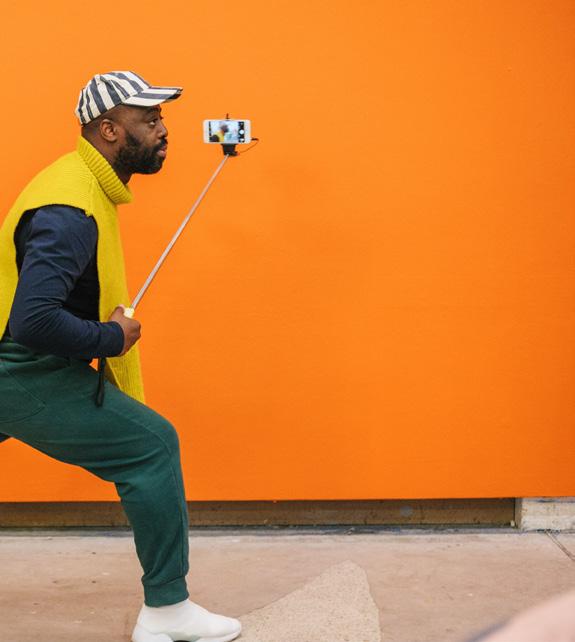
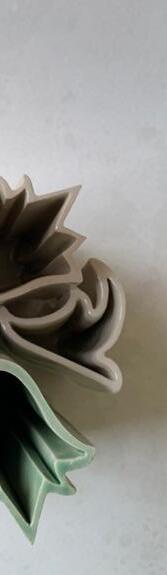
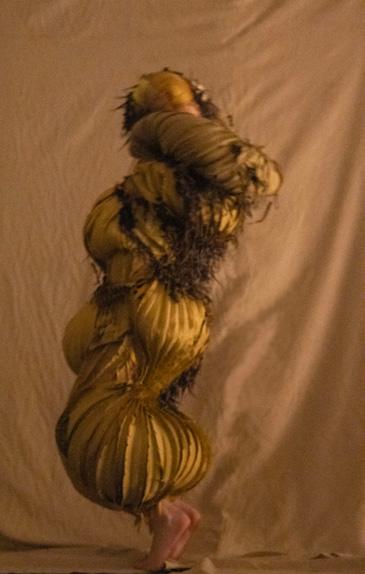
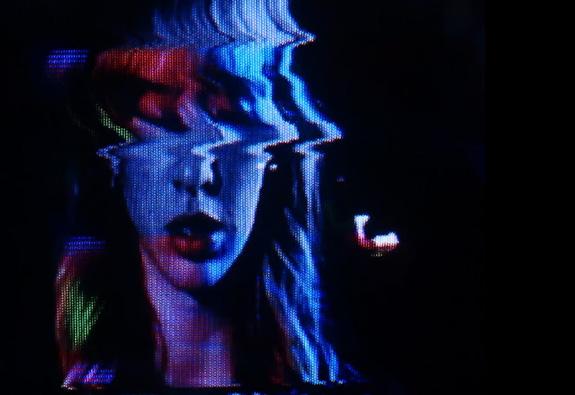
WELCOME
a-n Head of Programmes Natalia Palombo introduces this year’s guide.
09-53 CLASS OF 2025
Interviews and profiles of work by 31 graduating students from art schools in England, Scotland, Wales and Northern Ireland.
10-12
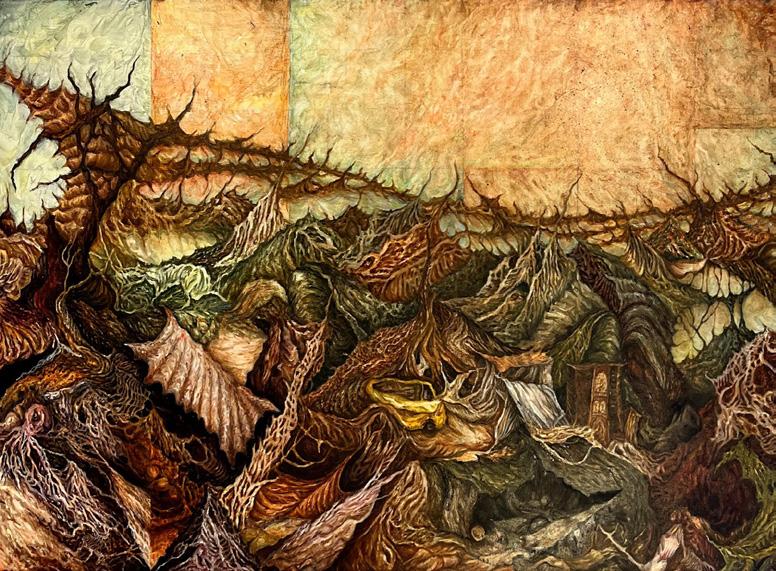
COVER: LINES AND SCARS
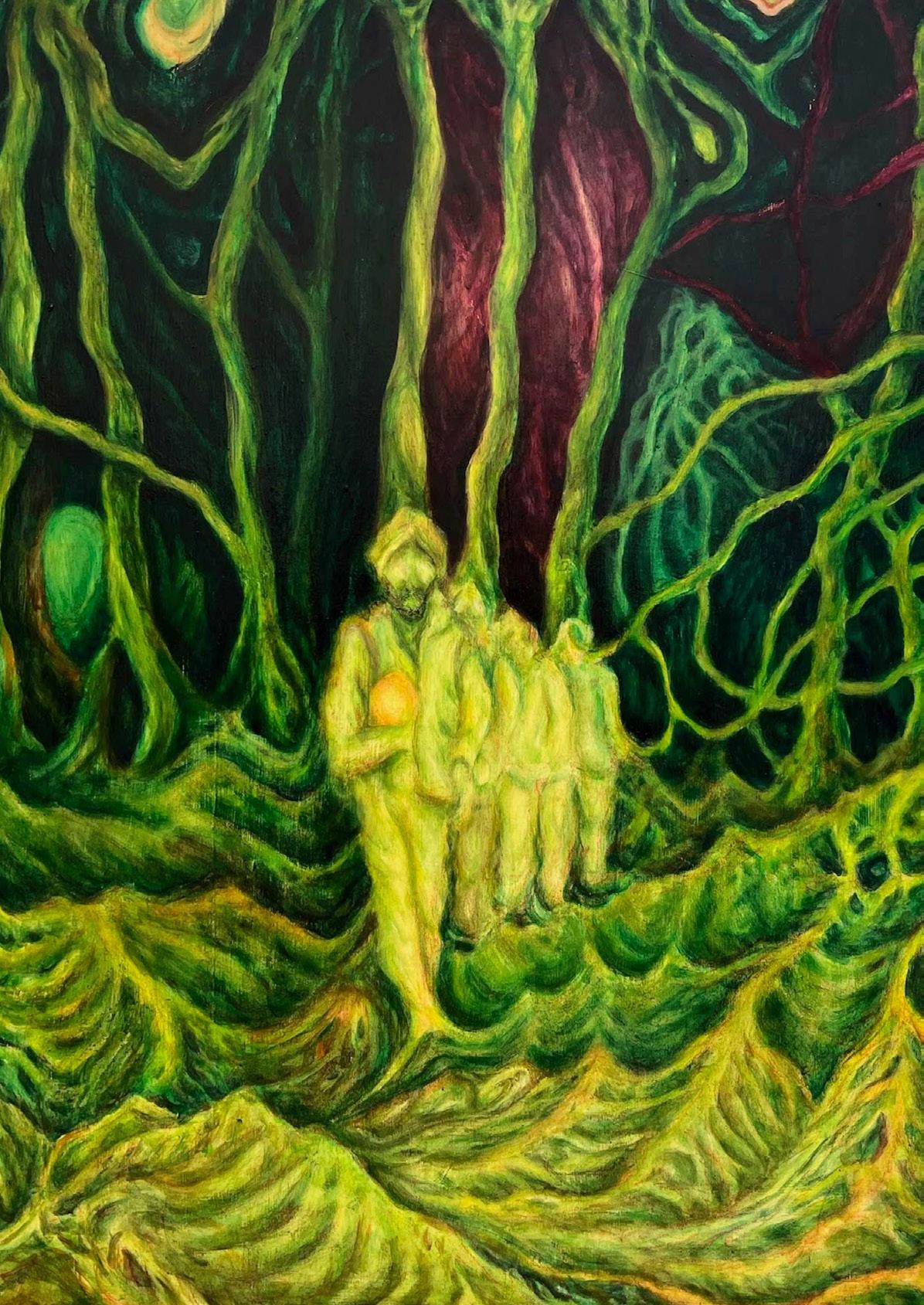
In paintings and film, Slade student Uday Banerjee addresses India’s contemporary politics and post-colonial history.
18-20
ON THE EDGE
Reading School of Art student
Tiba L Ghadeer focuses on home and cultural heritage as she examines the fragility of living.
30-31
BODY AND SOIL
Inspired by forms found in nature, Newcastle University student Molly Sale makes wearable sculptures that are activated by performance.
40-42
MAKING HISTORY
Central Saint Martins ceramic design student Iona Singleton examines the legacy of William Morris, Eric Gill and David Pye.
48-50
SUBVERSIVE STITCH
Interdisciplinary artist Deirdre Nic Ainmhire resurrects icons of medieval feminism for her Belfast School of Art show.
61-71
Five 2025 graduates look back on their degree show experiences and share how they’re getting on, while artist and head of the RCA’s Contemporary Art Practice MA, Harold Offeh, discusses the importance of dialogue and community for sustaining an art practice.
West Dean Sussex 4-10 July, 10am-5pm
Edward James Studios
West Dean College, PO18 0QZ July 2026
West Dean London 16-19 July, 12-6pm
Dilke House
Malet Street, WC1E 7JN
When the world feels chaotic and unfathomable, art can cut through the confusion and provide a space for reflection. Most importantly, perhaps, it can ask questions and create conversations that our always-fast culture just doesn’t allow time for.
While the 31 graduating students featured in this year’s a-n Degree Shows Guide make work that is varied and unique, what they share is an enquiring, questioning approach, often thoughtfully examining issues of inequity and systems of power in the art they are making.
That’s not to say that all the work is fully formed, that ideas aren’t still being developed. For many, the degree show will be the first time they’ve exhibited to an audience beyond that of their peers. It is a testing ground, mistakes are allowed.
This guide celebrates the energy and ideas of these graduating artists, with interviews and previews that highlight their ambition and skills. It also celebrates the very idea and reality of the degree show – this energetic, sometimes messy, always exciting annual event.
But that’s not all. In the Next Steps section we address life after graduation, including how a-n membership can help with the transition from student to professional artist. We also welcome back five of our Class of 2025 and talk to the artist Harold Offeh, head of programme in MA Contemporary Art Practice at the Royal College of Art.
As well as discussing postgraduate study and the importance of being connected to a community of artists, Offeh recalls his own degree show and the “intensity and camaraderie” he experienced.
Welcome, then, to this special moment in the art calendar.
Natalia Palombo, a-n Head of Programmes, May 2026
a-n.co.uk/degree-shows
www.a-n.co.uk/degree-shows
Editor: Chris Sharratt
Editorial contributors: Jack Hutchinson and Ellen Wilkinson
Advertising: Jessica Holland
Marketing: Jessica Roper, Charlotte Chappel
Design: Founded.Design
© writers, artists and a-n The Artists Information Company 2026
ISBN: 978-1-907529-38-2
Published by a-n The Artists Information Company
Registered in England, Company No. 1626331
anartistsinfo a-n The Artists Information Company ANartistsinfo
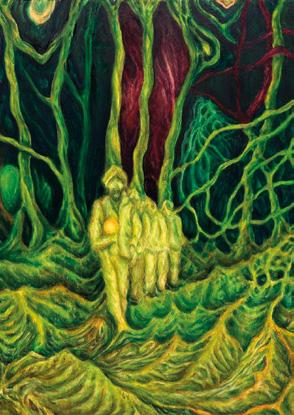
Cover: Uday Banerjee, Illegal Aliens, 2026, oil on wood, 70x85cm
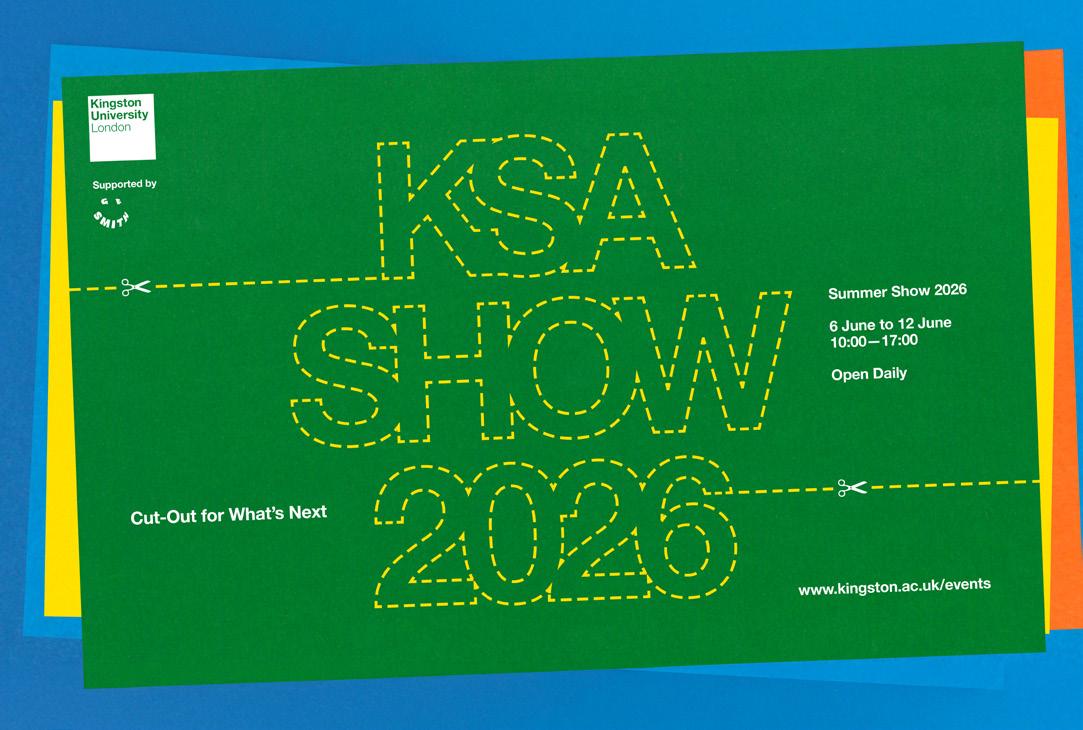
Analogue video, painting, performance, sculpture, ceramics that make you think – the work of this year’s graduating students is engaging, experimental and full of ideas. Selected by open call and featuring 31 artists from art schools across the UK, welcome to the Class of 2026
Uday Banerjee’s multi-stranded practice examines the cult of personality and the relationship between lines on a map and scars on the land. By JAMIE LIMOND
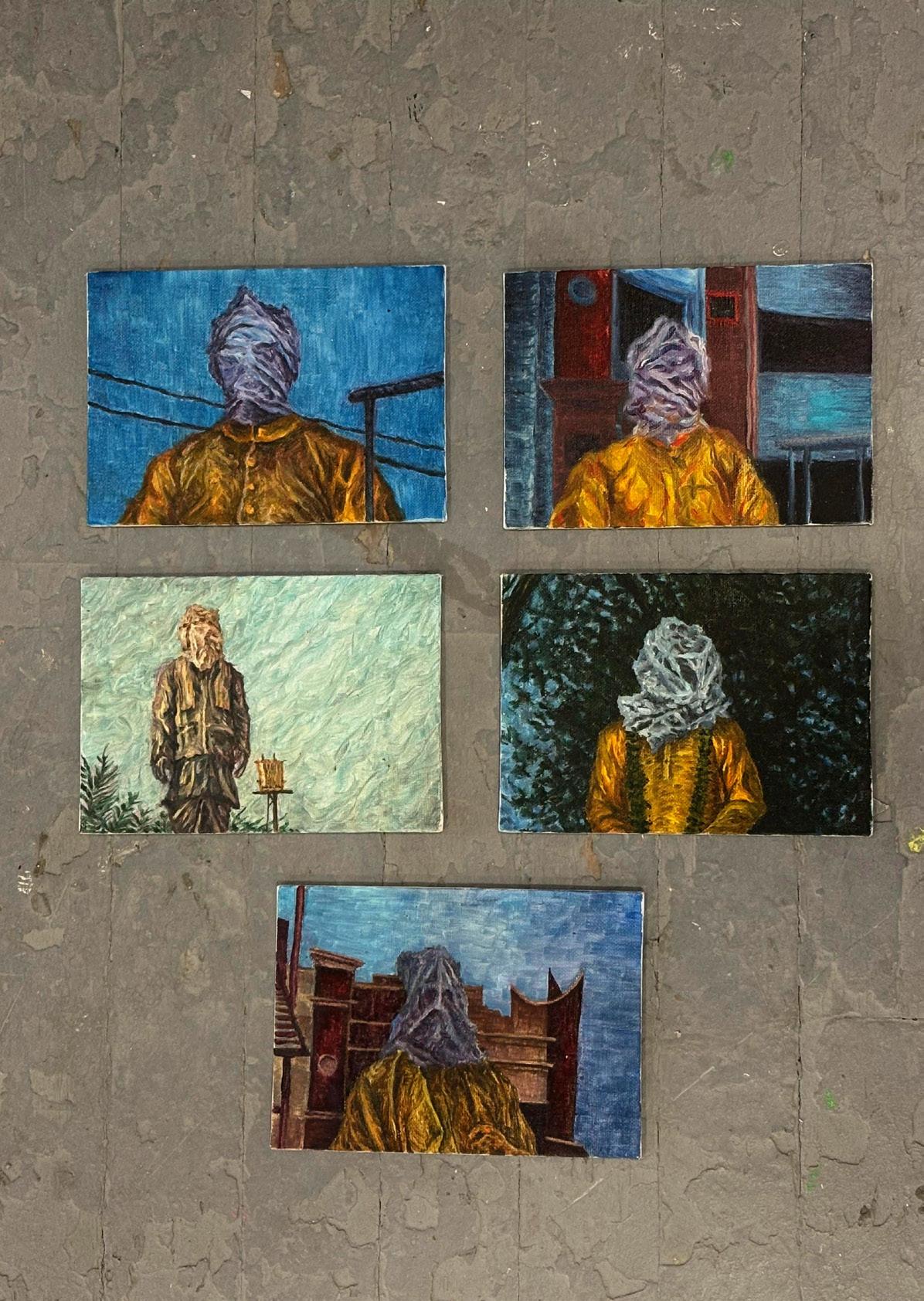
A series of five small paintings feature men with shrouds over their heads, as if being kidnapped or readied for execution. But there’s another narrative of power in play here, as Slade student Uday Banerjee explains about the works, collectively titled Golconda (2025).
“I spent two years in Hyderabad, near the ruined diamond mine of Golconda in Southern India, where there’s a tradition of making gold statues, originally of religious figures but also of politicians,” he clarifies. “During election week it’s forbidden to display the face of a politician because it’s considered last-minute campaigning. The local government goes around and covers
“I’m interested in the environment as this living being that we torture.”
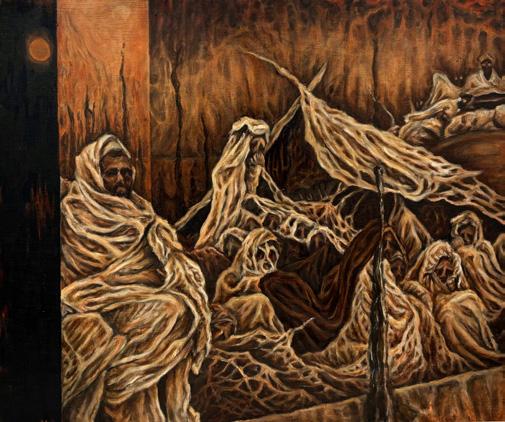
every statue with a cloth. They obviously think they still have some kind of power.”
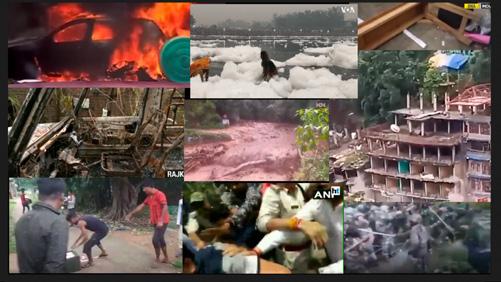
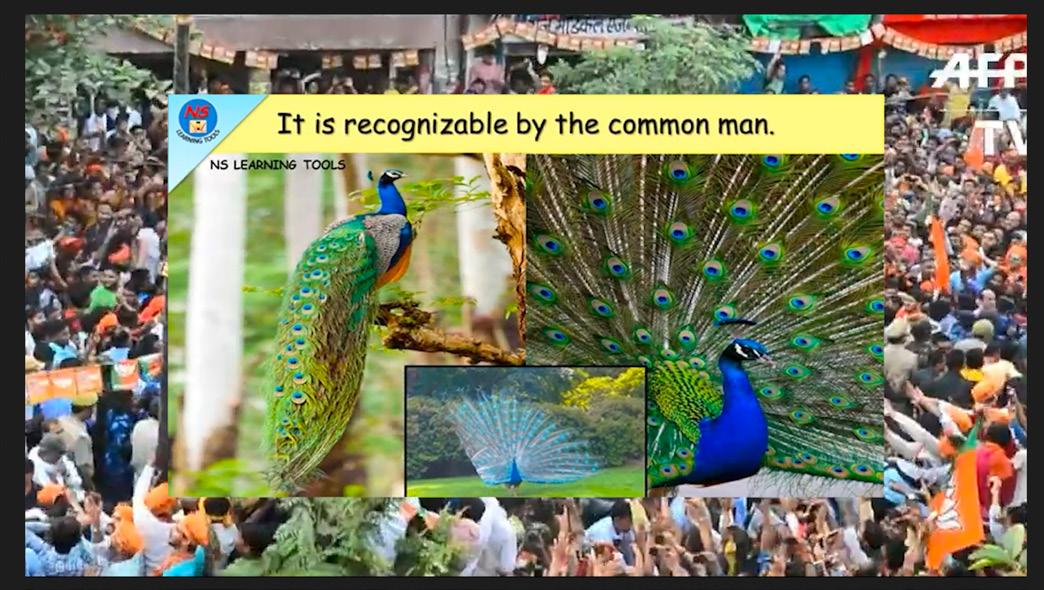
The political power of image-making is something Banerjee’s degree show will explore in a film work, National Bird of India (2026), which takes a satirical look at the absurdities of populist nationalism. “The peacock is a national symbol in India. National symbols are important there because it’s only two generations away from independence. There was a viral video of a school kid in the northeast where someone asks him, ‘what is our national bird?’. He thinks for a second then says, ‘Narendra Modi!’. I was looking for the video to show a friend, so I googled ‘Modi, peacock’, and what showed up were five or six ten-minute videos from his YouTube channel of him feeding peacocks in his garden with romantic music playing. Through these associations he wants to build the idea that he is India.”
Banerjee grew up in Pune with four grandparents who all lived through the independence movement and partition in 1947. But the cult of personality was never far away. “Pune is where [religious cult leader] Rajneesh/Osho fled to when he was banned everywhere. His ashram is still there. I spent the other half of my early life in Mumbai, the home of Bollywood, where you wouldn’t take a certain route home on a Sunday evening because Amitabh Bachchan would be waving from his
balcony like the pope. Politics, film, the religious guru, they’re separate spheres but they’re all connected by this practice of worship and the creation of these largerthan-life figures, which is crucial in understanding India’s culture of spectacle and personality.”
Another strand of his practice – paintings of spiky, biomorphic landscapes against a spectral grid – explores the incorruptible testimony of the earth’s physical memory. “I’m interested in the environment as this living being that we torture. On the border with Pakistan the soil is a different texture, tree roots move through a different path, purely due to the amount of shelling from either side. The line of partition itself was drawn by someone who’d never been there before, but his cut remains in acts of violence today. The grid in the paintings is a way of reengaging with that act, but it also feels very much relevant to the way the films are edited, with clips cutting rapidly.”
Indeed, the calmer paintings can seem like they operate on a different frequency to the
film works. “That’s been a major challenge. Some people recommended I bring elements of one into the other, but I was never comfortable with that. To bridge the gap for the degree show, the soundtrack to the film will also soundtrack the paintings, with drones and songs in Hindi and clips from speeches, which will create a slightly chaotic atmosphere. But to me, that’s the atmosphere which I grew up in and that the work exists in.”
Fighting the received wisdom that everything has to be neatly wrapped, the strands that, as we talk, increasingly seem to want to come together also, stubbornly, admirably, remain content in their tonal whiplash. “I pushed to have paintings and video together because I wanted to make work that reflected my experience of the world. Which is, I assume like most people’s, contradictory.”
Degree show: 22-28 May (PV 21), Slade School of Fine Art, UCL, Gower Street, London WC1E 6BT
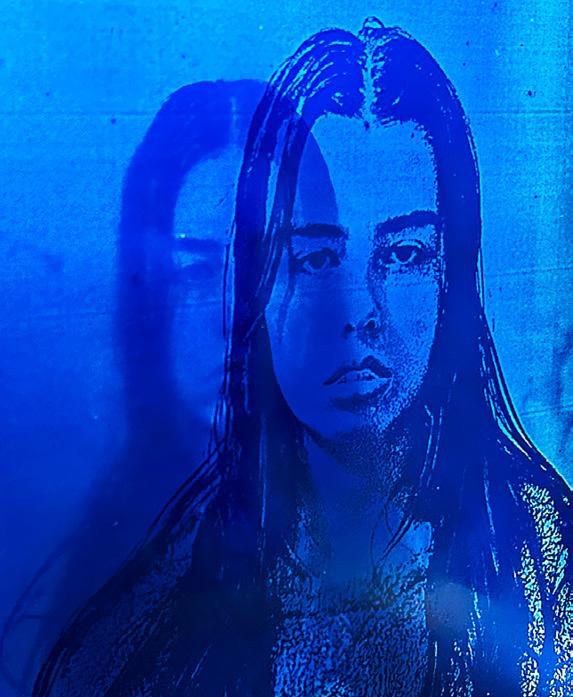
Sophie Dodd, BA (Hons) Contemporary Art Practice (Glasswork), City of Glasgow College
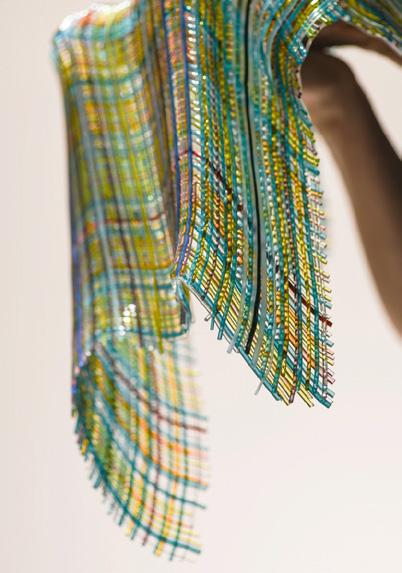
Sophie Dodd’s Beneath the Mask (2026) consists of a series of cyanotype on glass prints that form a self portrait. The work, Dodd explains, reflects on “feeling only partially seen in society as an autistic person”. Experimenting with non-traditional processes “mirrors the restrictions I feel in both an art practice and social life”. Each layered glass print shows a different stage of masking, and “reveals what’s hidden beneath”.
Degree show: 27-29 May (PV 26), City of Glasgow College, City Campus, 190 Cathedral Street, Glasgow G4 0RF
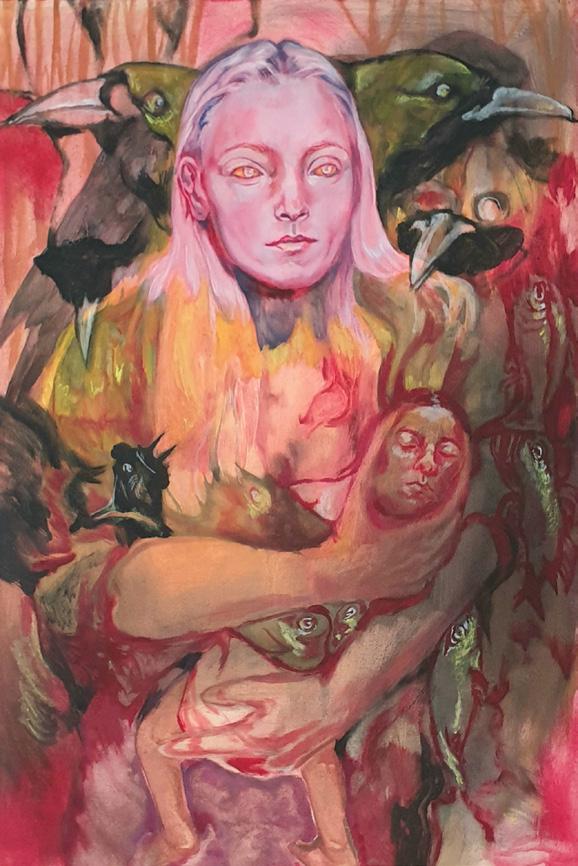
India Clarke, BA (Hons) Fine Art, Liverpool John Moore’s University
India Clarke’s jewel-toned paintings depict female subjects in states of transformation. The figure in Bronze at the Breast (2025) draws on myth and literature, referencing Irish goddess The Morrigan and Shakespeare’s Lady Macbeth. Whether a “femme fatale” or “scorned mother”, Clarke’s practice centres “the ‘otherworld’ of women’s pain, nature, rituals and the spiritual relationship between body and mind”.
Degree show: 22 May – 5 June (PV 21), Liverpool John Moore’s University, John Lennon Art and Design Building, 2 Duckinfield Street, Liverpool L3 5RD
FINE
SCHOOL OF ART
Agricultural history and an interest in traditional skills informs Olivia Madland Shorter’s sculptures.
By ANNEKA FRENCH
Olivia Madland Shorter’s practice is rooted in the land, drawing on her rural upbringing in Suffolk. She uses local and historical knowledge and traditions connected to agriculture and seasonal cycles to develop functional, working sculpture. While rooted in skills that span generations, her ecological awareness and use of found materials brings a contemporary urgency to the work.
You’ve described Suffolk as your homeland. How does place shape your practice?
I was born in London but moved to Suffolk when I was four. I grew up in an old farmhouse surrounded by fields. Last year I lived in Brittany, a landscape similar to Suffolk, and that’s when it became inspiration for my work in relation to home and agricultural traditions I hadn’t really thought about before. My practice is materials-driven and Suffolk is very agricultural. My mum is from farming family in Kent and my Grandma was an apple picker; my dad’s side is Norwegian with a generational knowledge of textile crafts.
Can you tell me about Flax Brake (2025)? I’ve been looking at processes and tools used for centuries to transform flax, from seed, to fibre, to linen. I’m fascinated with that length of time and the accumulation of knowledge. I wanted Flax Brake, a wooden tool used to process flax stalks, to be really
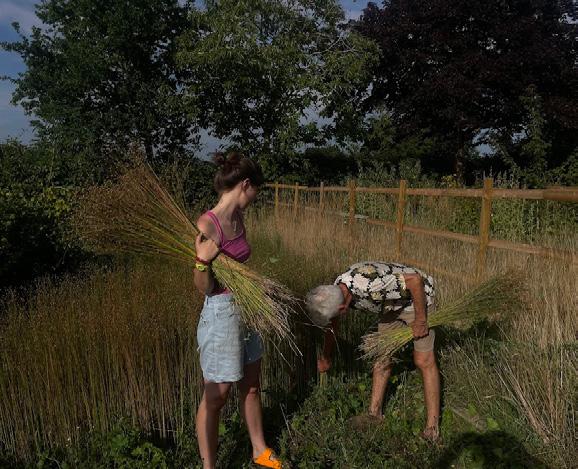
well made because I invested so much time into growing and harvesting the flax. In one photograph, I’ve returned the work to the field where the flax was grown and harvested, allowing the dust that falls while stalks are crushed and separated to return to the soil.
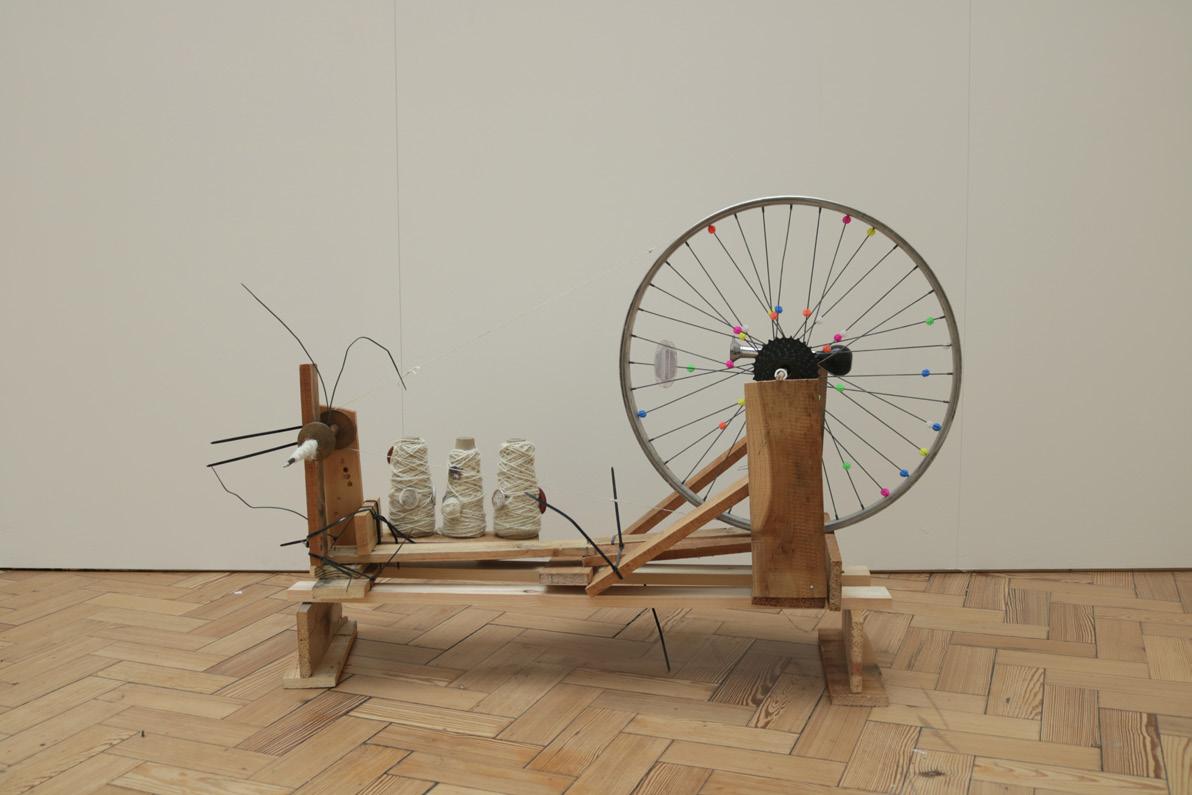
The Commuter (2026) feels more contemporary. It’s based on a spinning wheel. It still functions but it is more ad-hoc in construction. I was interested in how archaic a wheel, and a spinning wheel, is, and incorporated found materials to replicate the structure and nature of wool itself. It was made quite spontaneously. I found a bike wheel leaning against a bin on my cycle to the studio in Manchester. The plastic spoke beads give the piece a rhythmic sound when you spin the wheel. The sculpture is fastened together with cable ties and there’s a horn on the wheel as well. Sometimes I use humour to make quite complex practices or traditions more accessible. The wool comes from a farm ten minutes from my home.
How do you intend to show your work? Those sculptures will be in the main gallery and in our studios I’d like to show a 2m-long image of Flax Brake in the field. I think it
needs to be quite immersive. I’ve looked at producing video works but that feels like a different realm. I’ve been thinking about exhibiting a desk and jars to show materials I’ve collected but don’t want to process.
The care and slowness within your work is distinctive. How do you see this in relation to the contemporary climate?
I got into this work through the practical problem of not having much money for materials. When I lived in France, I went knowing that all I had was a rucksack. I lived there for a year and the work that I created needed to be small scale, learningbased or things I could return back to the soil before I left. I’ve been thinking more about my impact and footprint as an artist and the materials I’m using. A lot of the works I want to make are based on the longevity of objects, objects being useful and bringing skills back. That’s a very
sustainable way of creating, even if it’s just teaching yourself. I want to use the workshops at uni to build objects I can then have for decades.
What are you looking forward to?
Learning more about these traditions and processes through sculpture. My work is grounding for me, especially in relation to the climate crisis. Being more in touch with the seasons and giving power to natural cycles and their reliability helps me learn about the world. An exciting thing for me is that I’m going to plant more flax this year with the seeds from last year’s harvest. That’s an interesting line of enquiry because these seeds are now better adapted to the soil and I’ll have more knowledge of that.
Degree show: 6-19 June (PV 5), Manchester School of Art, Grosvenor West, Cavendish Street, Manchester M15 6BR
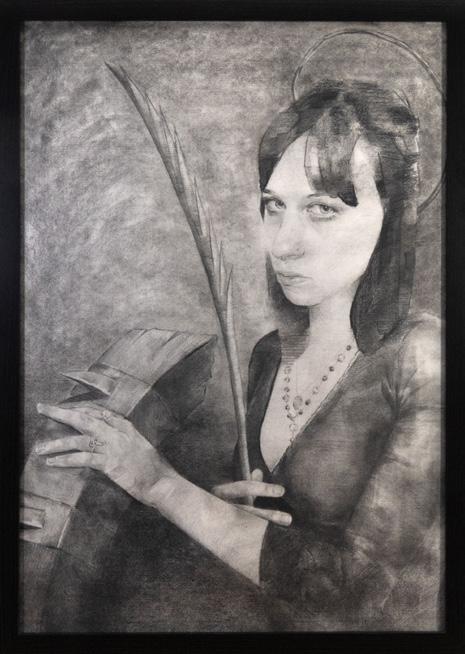
Katie Waller, BA (Hons) Fine Art, University of Lincoln
Katie Waller’s practice focuses on the treatment of women by society. Self Portrait as Saint Catherine of Alexandria (2025) is a homage to the 17th century Italian artist Artemisia Gentileschi and aims to “embody both Saint Catherine and Gentileschi, with the idea that all women are connected in their experience of systemic misogyny”.
Degree show: 8-12 June, Project Space Plus, University of Lincoln, Brayford Pool, Lincoln LN6 7TS
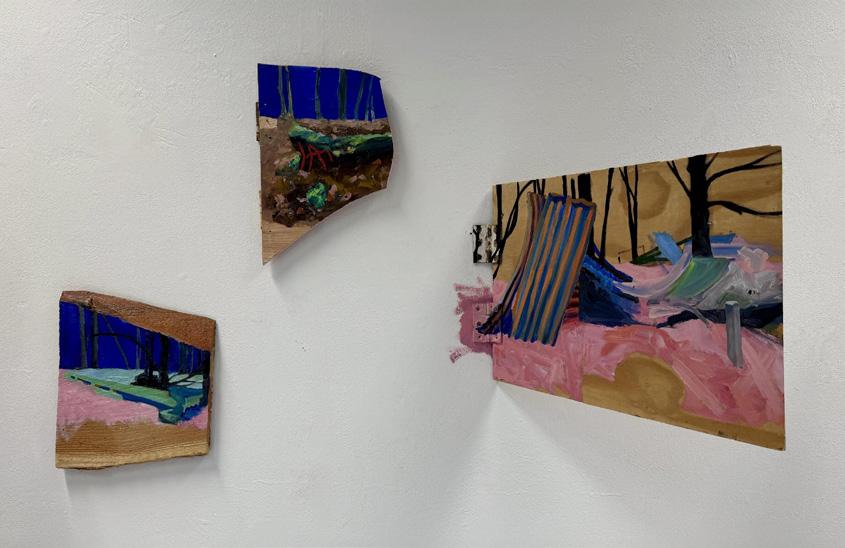
Belinda Downing, BA (Hons) Fine Art, University of Suffolk
Left: Belinda Downing, Fragments (Rendlesham
, 2026, oil on found boards, found metal hinges, dimensions variable, work in progress
“My intention,” Belinda Downing explains, “is to depict the memory of a place through its architecture, both internal and external, through fragments, as memory often is.”
In Fragments (Rendlesham PoW) (2026), hinged boards allow the paintings to be moved “so the viewer is able to alter the appearance (or ‘memory’) of the entire installation”.
Degree show: 19-26 June, University of Suffolk Arts Building, Ipswich IP4 1QJ
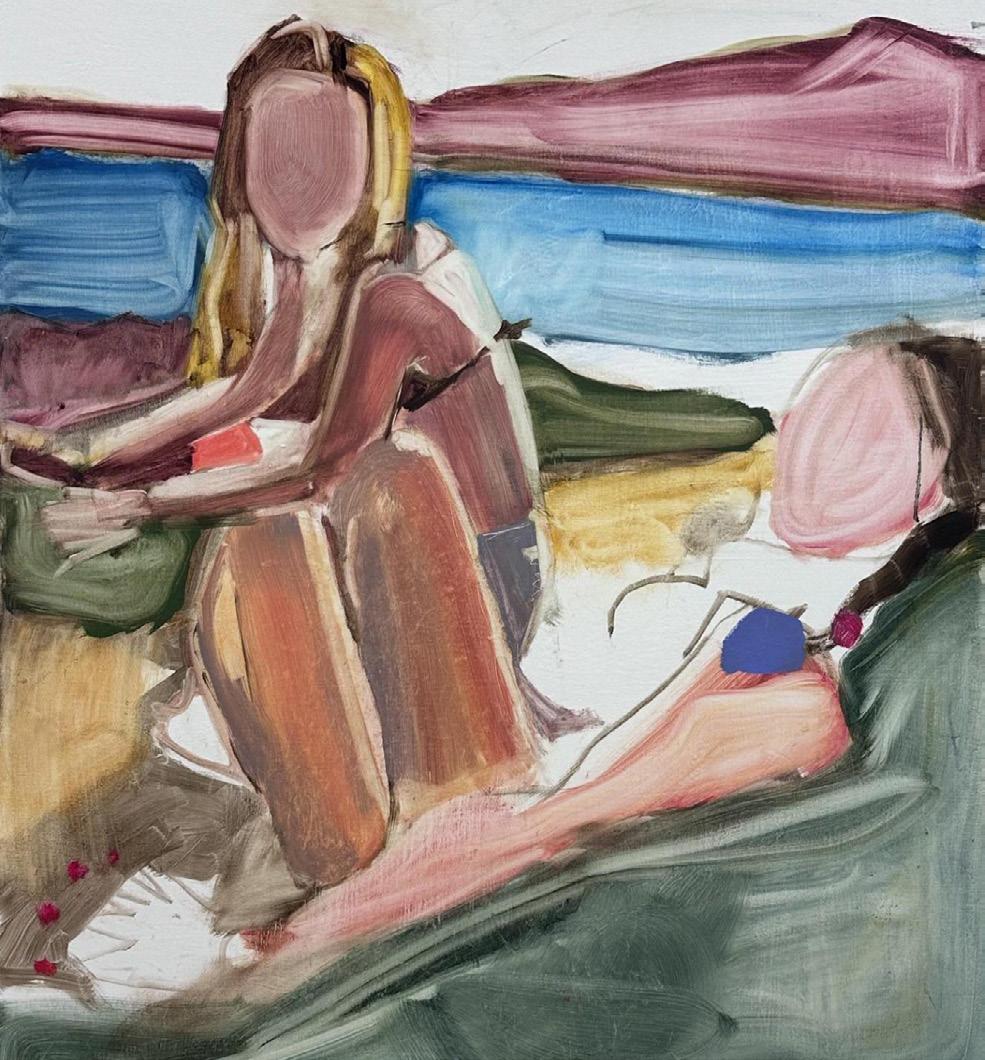
XENIA GREGORIADIS, BA (HONS) FINE ART PAINTING, UNIVERSITY OF BRIGHTON
Two loosely-painted figures on a beach, one sitting, one reclining, appear in Xenia Gregoriadis’ Between Sunlight and Shadows (2025). Seemingly turning towards the viewer, their faces are blank, pinkish ovals, with no detail revealing their expression or feelings. Their postures suggest intimacy and difference. “My practice explores a felt sense of being in a close relationship,”
Gregoriadis says. With motherhood and family life playing a central role in her work, she often uses personal photographs as a starting point for painting. “Figuration tends to dissolve into abstraction as memory and emotional residue lead via colour, texture and mark making,” she explains. The painting’s soft edges and fluid, gestural marks allow the figures’ forms to shift and overlap, “suggesting how identity is shaped through relationship”.
Degree show: 30 May – 5 June (PV 29), University of Brighton, 58-67 Grand Parade, Brighton BN2 0JY
Tiba L Ghadeer reconfigures household objects to ask universal questions about our fragile lives.
By ORLA FOSTER
“Most of the time, my work is about fragility,” says Tiba L Ghadeer, “it’s about people living on the edge.” Ghadeer’s degree show at University of Reading School of Art will focus on home and cultural inheritance. While originally inspired by her family’s experiences moving to the UK from Iraq, her work has shifted towards migration in a broader context, exploring what it means to try and put down roots against a backdrop of turbulence and instability.
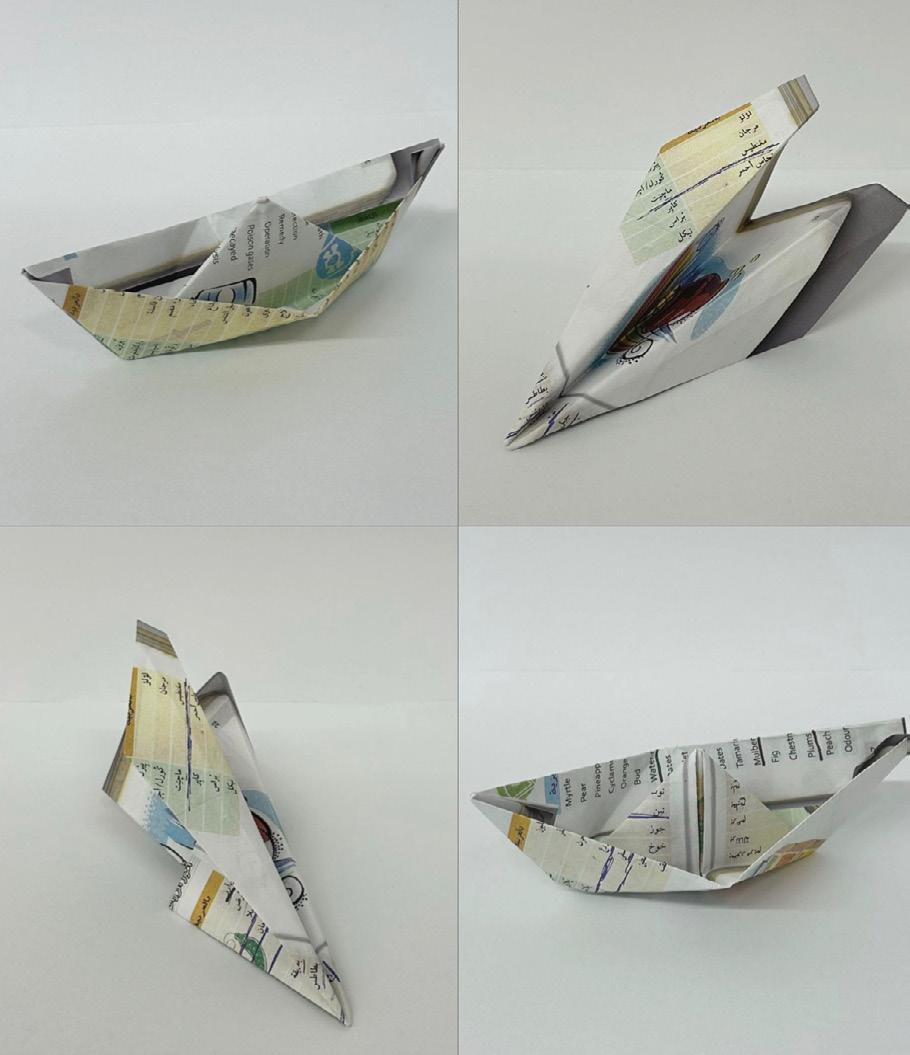
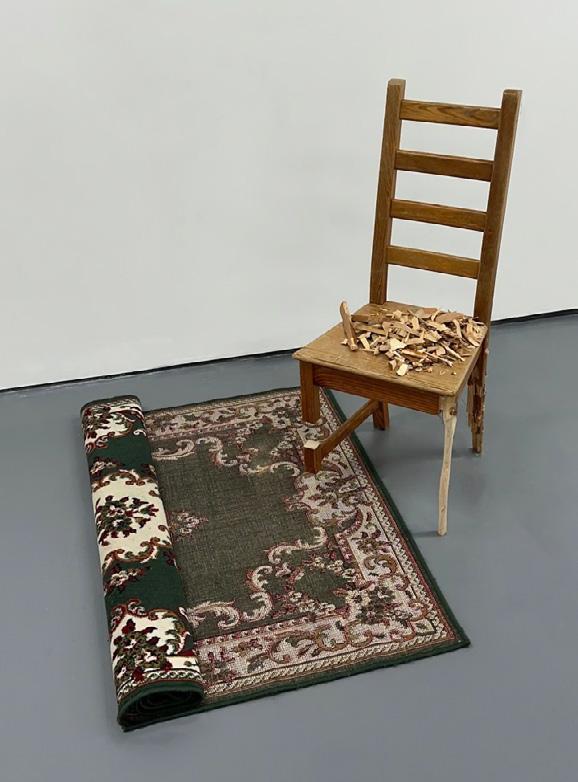
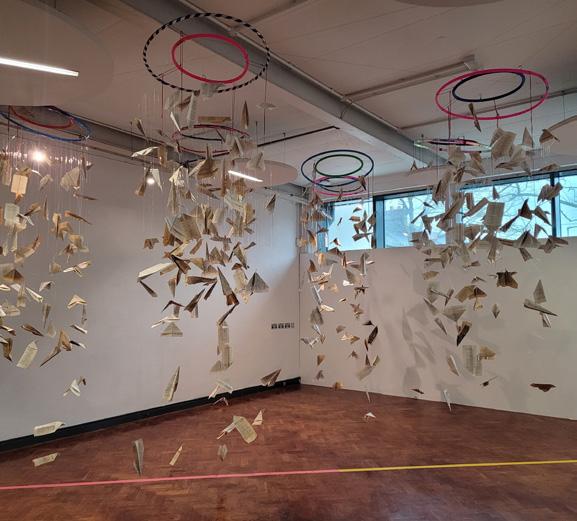
The idea of survival echoes through Ghadeer’s work, which often involves reconfiguring household furniture and precious objects from childhood. Her piece, square homeland (2025), displays a rolled-up rug alongside a broken chair, its seat strewn with shattered wood. For surviving (2026), pages from an Arabic-English dictionary were turned into paper boats and aeroplanes. “When I found the dictionary, it was filled with marks my mother had made,” Ghadeer explains. “She had highlighted words relating to food, school, education. This was what my parents cared about most, just like so many other families who immigrate.”
Ghadeer underscores the fact that migration is a universal issue, that anyone’s life can be upended by geopolitical forces outside of their control. Such upheaval, she carefully emphasises, is not unique to the Middle
East. “I started the project thinking about Iraq,” she explains, “but it’s happening everywhere. We all lead unstable lives that could be destroyed in seconds. You cannot look away.”
Ghadeer still feels a deep connection to Iraq. Despite living in the UK since 2009, sometimes she feels like she never left. “Iraq exists for me in stories I’m told, and in my home,” she says. “The house I grew up in has everything you can find in my
“We all lead unstable lives that could be destroyed in seconds. You cannot look away.”
country, including tradition, religion, injustice and gender inequality. I don’t need to go back.”
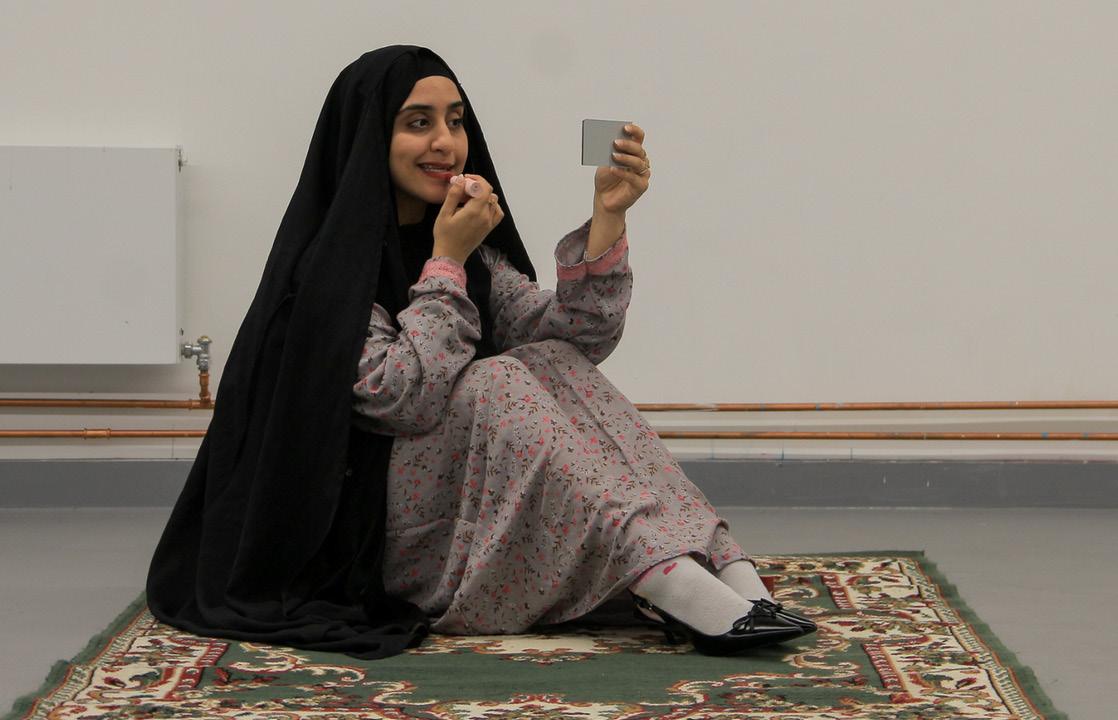
As her performance One-eye (2025) explores, a house can both protect and oppress its inhabitants, insulating them
from society while upholding fixed gender inequalities. Seated on her bedroom rug, the video shows Ghadeer reapplying endless coats of lipstick, her gaze fixed on a handheld mirror, occasionally rearranging her headscarf as it slips out of place. After she performed it on campus, a student told her how moved she felt to witness another woman nervously readying herself for the outside world.
Anxiety around physical appearance is something Ghadeer has observed in many women, particularly those who wear an abaya – a robe-like garment that reaches the ground – or other modest clothing. “Women have told me that before leaving the house, they bend themselves into different poses in front of the mirror, to make sure everything is covered. It’s the idea of focusing on yourself too
much and trying to be perfect. In the eyes of society, it’s always women who are at fault.” Ghadeer will bring these themes of vulnerability and external pressure into her final piece. She plans to create a dining table and chairs from discarded cardboard, before subjecting them to different processes that degrade and damage the material. By the time the exhibition is installed, these items, usually associated with family gatherings and togetherness, will be barely recognisable, tested to their physical limits.
Even while she uses comfortingly familiar household objects, Ghadeer reminds us that any haven has its limits. Parents might risk everything in the hope of securing a safe future for their children, only for that peace and protection to evaporate the moment they step outside their front door. She plans to recreate this uneasiness within the exhibition space, perhaps suspending cups of water above the sculptures.
While bittersweet, there’s a tenderness to her approach, inviting compassion for people forced to rebuild their lives elsewhere. “I heard recently that the average person looks at an art work for only 30 seconds,” she says. “But my work asks people to look for longer, to investigate before they judge. I hope it will make people think more about how others live.”
Her damaged furniture symbolises a shattering of illusions, perhaps understood best by those who have had to leave their homeland. “As a child, you grow up thinking the world is peaceful and beautiful and open to you,” she reflects. “But when you get older, you start to notice how challenging and unfair it all is.”
Degree show: 2-8 & 13-14 June (PV 29 May), Reading School of Art, Pepper Lane, Reading RG6 6PU
AUTUMN ROSE EVERSON-DARRAGH, BA (HONS) FINE
ART, BATH SPA UNIVERSITY
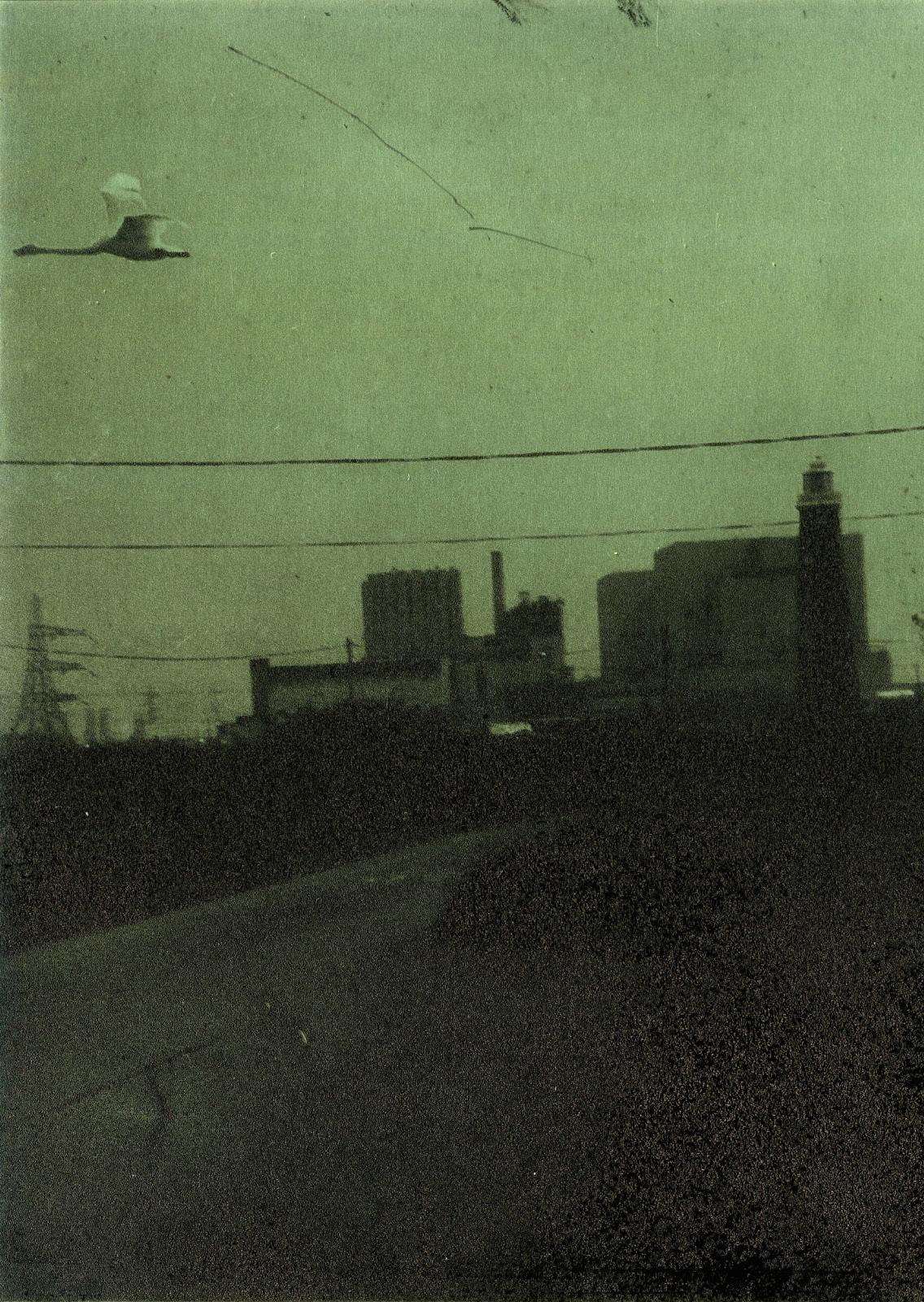
Fragments of childhood memory combine with the looming presence of a nuclear power station in Autumn Rose Everson-Darragh’s Bird Sequence 8 (2025), part of a series of photo etchings that together create a stop-motion film. “It depicts the winter visitor to Dungeness, a whooper swan, flying past the nuclear power station,” she explains. Everson-Darragh says she is drawn to “desolate coastal landscapes, fading seaside towns, and spaces that echo times gone by”. In making the etchings, her aim is to explore “the tension between the softness of cyanotype and the starkness of metallic brutalist elements”. Her degree show will see moving image and stop-motion sequences projected from a two-metre lighthouse structure, inspired by the one in Dungeness.
Degree show: 6-13 June (PV 5), Bath Spa University, Locksbrook campus, Bath BA1 3EL
AILSA MADILL, BA (HONS) FINE ART & FILM, LANCASTER UNIVERSITY
Ailsa Madill’s film, Remains, follows the dream logic of a corrupted archive to explore the nature of media memory. By JAMIE LIMOND
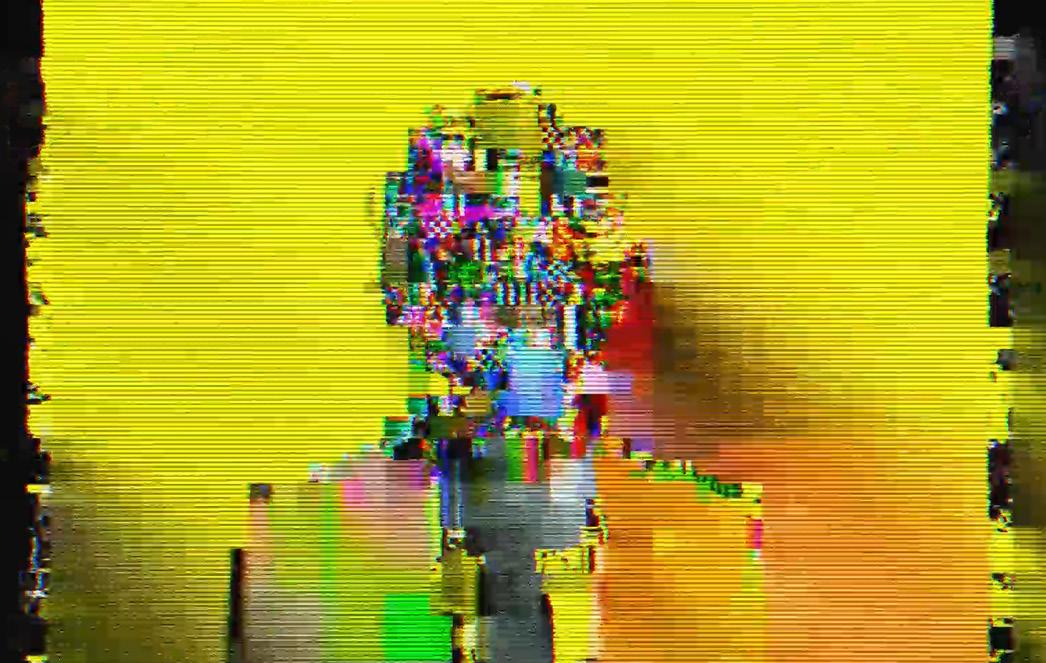
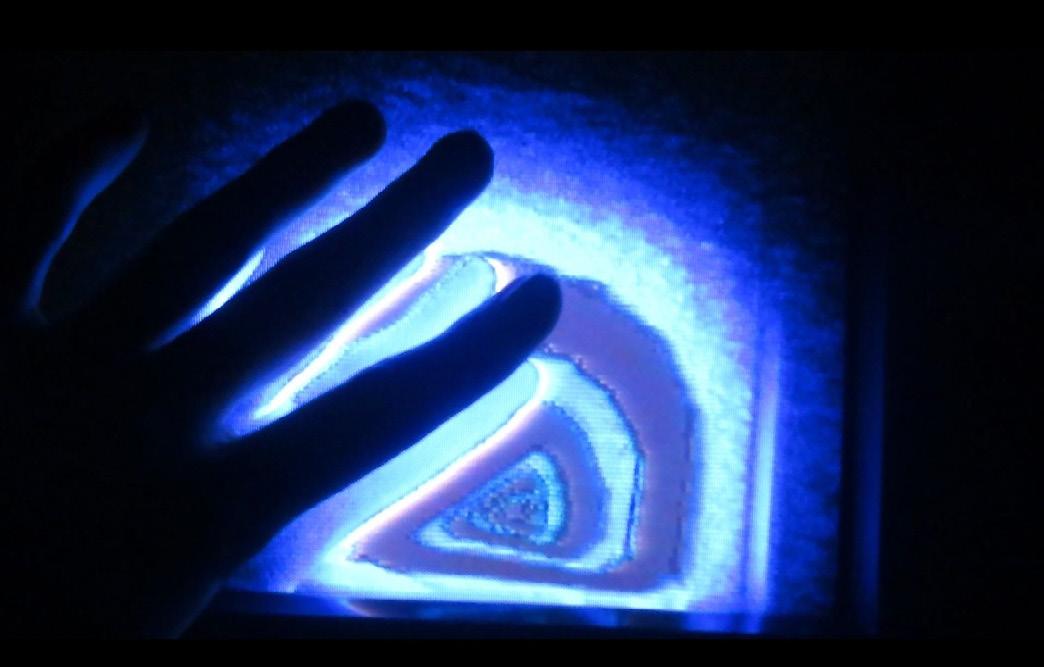
Rainbow-coloured pixel chunks crumble like ancient ruins. TV static snows. A readout appears: ‘File type: Photographs. Recovery: partial.’ This terse message becomes a kind of shorthand for the nature of media memory as it’s explored in Ailsa Madill’s Remains (2026), a 10-minute video that follows the dream logic of a corrupted archive as it attempts to retrieve and process a series of broken files. Gradually, a picture forms of some unspecified catastrophe having occurred.
How is the archive personified in the film? It begins with the archive trying to figure out what’s happening in the images it’s processing. It becomes clear that people in the footage are wearing gas masks, so it seems there’s been some kind of chemical spill or something that’s made domestic environments unliveable. But the narrative progresses through associative dream logic. It moves from processing degraded photographs to retrieving home videos, to a public information film which the people in one of the home videos are watching. It’s like the archive itself has a connection to what the characters are experiencing, even though it’s a somewhat oblivious observing agent. I’m interested in how the unconscious can feel quite foreign to us and the archive embodies that. It evokes the way that you might experience a dream: it can feel bizarre or like it doesn’t relate to you, but it still comes from you.
Do you feel you become something like the archive when you’re editing?
I think so. It feels like I’m watching it from the outside even though I’ve shot a lot of these clips; it feels like I’m piecing it together and recovering the information in the same way that the archive does. Editing, especially, is a very intuitive process. You can put a found clip next to something you’ve staged and it creates a new world which you wouldn’t have seen otherwise.
What’s your relationship to analogue technology? Is the physicality important?
I shoot on an analogue Sony Hi8 camcorder and it creates these grainy visuals that make the world look ‘80s, ‘90s, 2000s, which feels quite uncanny. It has a mood to it. I was also inspired by The Caretaker, which is a project by the musician Leyland Kirby that focuses on
how technology materializes memory, using tape hisses and crackles to forefront the degradation of the medium. You get these visual accidents with the camcorder’s signal dropout – like scratches on celluloid. It makes the images feel more charged, and because you can’t perceive them as clearly it takes away the realism from them.
For me, the more the image degrades the more real it feels… It feels more emotionally real. More like how you would process your own memory. Clarity makes things feel more fictional.
Do you find the idea of digital subconsciousness scary or exciting?
I’m not really sure! It can feel a bit troubling but I think it resonates with the human experience. I find it more exciting because it has a truth to it. It relates to the way memory shapes perception, and how the past shapes the present, like a collective
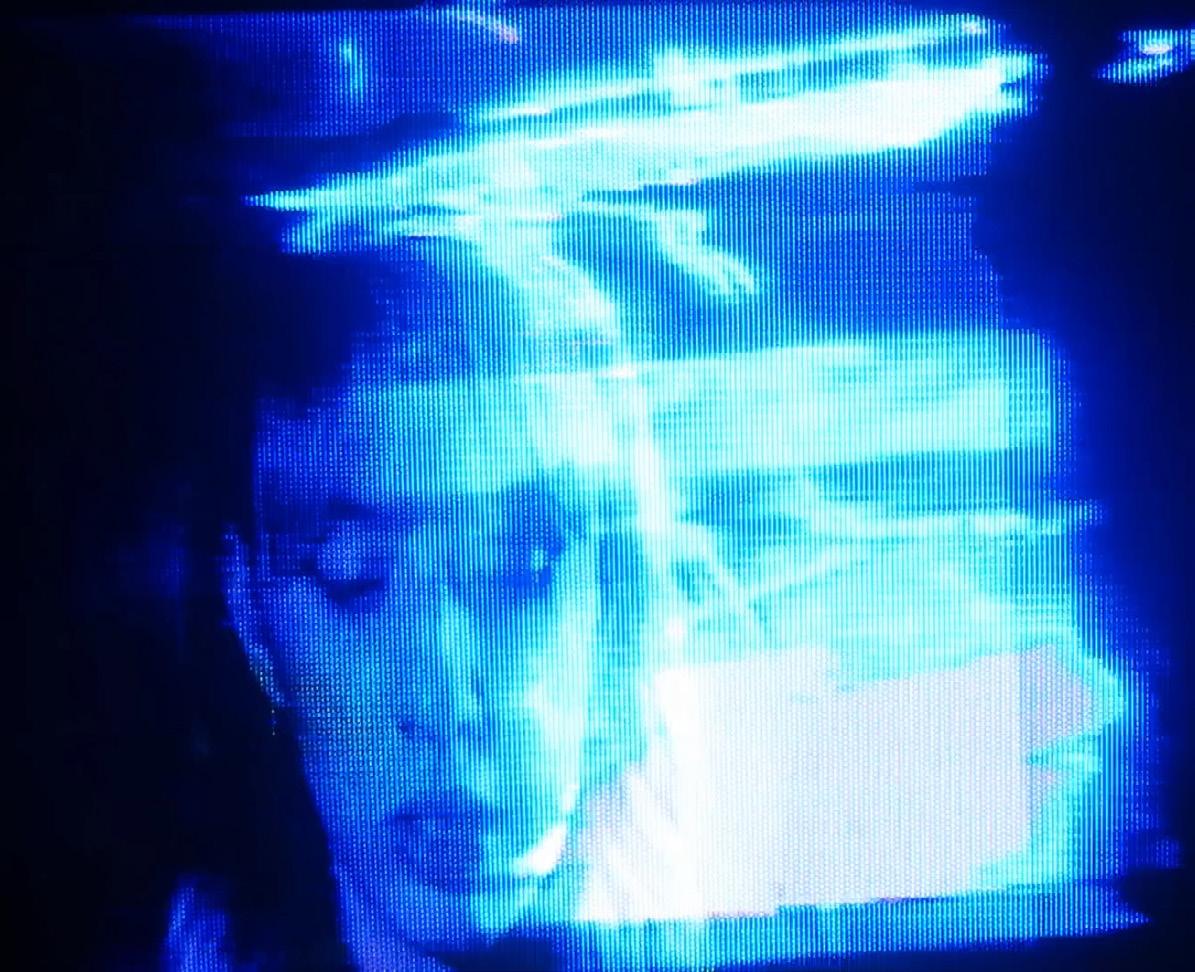
Ailsa Madill, Remains, 2026, video
unconscious. Rosa Menkman also talks about glitch art revealing flaws in ideologies and systems, which resonates with my work because a lot of it is about women in domestic spaces and the confinement of gender stereotypes.
How do feel about media obsolescence?
I’ve had cameras break and it can feel quite tragic at the time. But on the other hand, I’ve recently been transferring a file from tape to digital and it’s been datamoshed by accident, so now it looks more interesting than the original. It can be quite sad but it’s also quite inevitable. It’s a lot like the way we are as vulnerable physical bodies that are going to deteriorate one day.
The writer and theorist Mark Fisher talks about recordings being ghosts that trouble us because they’re reminders of our own relative insubstantiality. Do you believe in ghosts?
Can I say yes and no!? There’s definitely a feeling when you’re sourcing and editing footage from someone else’s home movies or places like Internet Archive of something from the past existing in front of you. So yes, I believe they’re real, but in a psychological sense.
Degree show: 18-24 June (PV 17), LICA Building, Lancaster University, Lancaster LA1 4YD
Aedamer Long, BA (Hons) Fine Art, Chelsea College of Art & Design
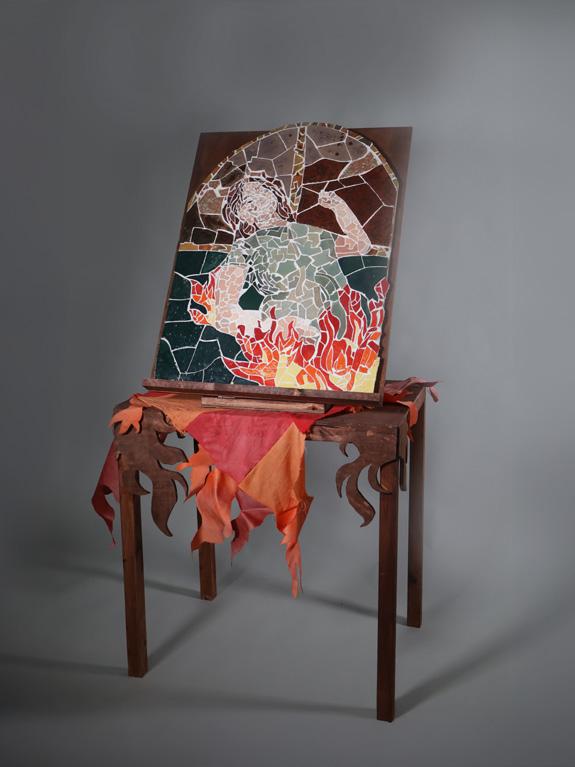
Ceramic mosaic The Burning of Bridgit Cleary (2025) depicts the murder of the ‘last witch burned in Ireland’, to consider folk culture and the treatment of women. Aedamer Long’s practice engages with the current folklore revival and her own English and Irish heritage, considering “the fluid dynamics of oral traditions, intersectional feminism and connections to the pastoral”.
Degree show: 12-19 June (PV 11), Chelsea College of Art & Design, 16 John Islip Street, London SW1P 4JU
Tess Foley, BA (Hons) Photography, UWE Bristol
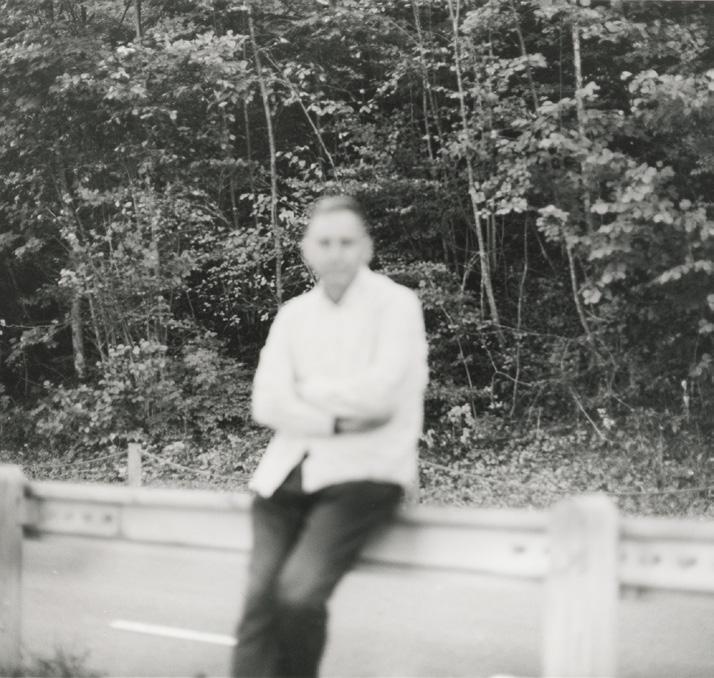
Untitled (Ble.) (2025) features the blurred figure of Tess Foley’s dad, taken on a road trip intended “to heal the emotional separation” created when she left the UK to live alone in Bulgaria. The “materially and process-led” project considers the experience of “living in the company of sadness,” but balanced with “joy and quiet beauty”.
Degree show: 6-10 June (PV 5), UWE, City Campus – Bower Ashton, Spike Island and Arnolfini, Bristol
Beth Flanders’ performative paintings use allegory and music to explore ideas of class and wealth.
By ISAAC NUGENT
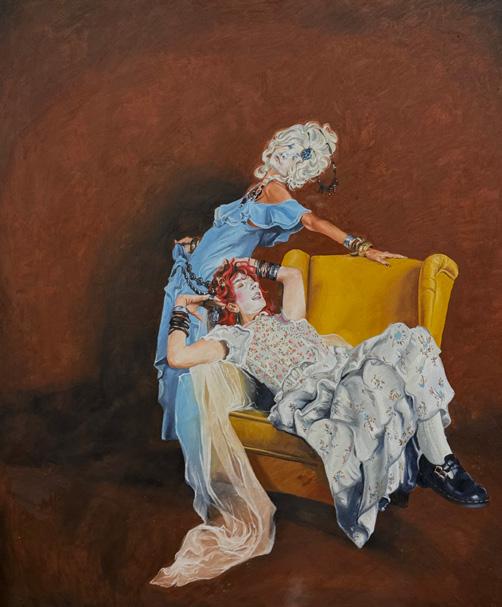
A woman with strikingly dyed red hair lounges confidently across a vibrant yellow armchair. Dressed in a flowing white gown adorned with flowers and a fitted bodice, she runs her fingers casually through her hair. Behind her, a second woman stands wearing an off-the-shoulder pale blue dress. Leaning back in a theatrical way, she caresses the top of the yellow chair with her hand. Both women are adorned with an excess of jewellery, lending an impression of abundance and excess.
Titled Treasury of Meadows (2025), this flamboyant double portrait by Beth Flanders is part of a recently completed multi-media project, using allegory to explore ideas of class and wealth. Inspired by a song co-written with her sister, this particular painting imagines two intruders who have broken into the house of an elderly woman called Miss Meadows. Putting on her precious jewellery and clothes, the thieves begin to dance wildly through the house.
Flanders leaves the meaning of Treasury of Meadows open to interpretation. Perhaps it is a commentary on disparities of wealth and economic status between generations. “Politically you can’t really ignore what’s going on anymore,” she explains. Allegory – where characters, places and objects in “Allegory feels like the most logical way
I can
talk about issues I think about on a day-to-day basis.”
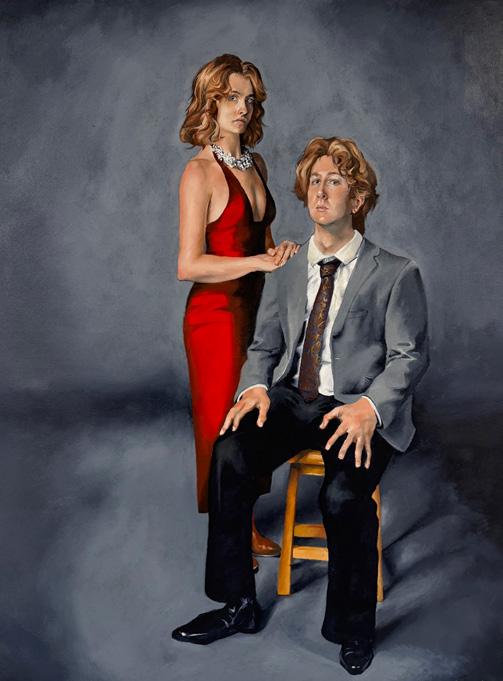
a narrative carry deeper meanings – plays a fundamental role in Flanders’ work. Another painting in this series, titled Grievances (2025), probes the caustic effects of cancel culture. She speaks about contemporary anxieties surrounding AI, religion and the manosphere as issues that may inform further work.
Citing the “timeless and universal” morality tales of CS Lewis and John Bunyan, Flanders describes allegory as “the best way of communicating” what is going on in the world. “It feels like the most logical way
Beth Flanders, PROP&GANDER , 2026, oil on canvas, 100x120cm
I can talk about issues I think about on a day-to-day basis.” She is also drawn to art that has a strong sense of narrative and world-building. “I love being able to get lost in an artwork,” she says. When it comes to her own work, her goal is to construct “pocket universes” – immersive environments that draw the viewer in.
A clear example of Flanders’ approach is the innovative way she installed these paintings. She wanted to find a way to connect them to the songs that had inspired them. “It was quite a difficult task,” she explains. In the end, she created an installation that combined painting, light and sound. Arranging the paintings in a row, she programmed spotlights to illuminate the correct painting as the song associated with it was playing. “It ended up being a kind of performance.”
To accomplish this, Flanders acknowledges the support she received from technical support staff at Bath Spa University. “Otherwise, I would have had no idea what I was doing,” she admits.
Each of Flanders’ paintings begins with a photoshoot, with friends invited to pose for the characters that appear in her paintings. She believes in involving others in her work, explaining that “it makes the work better”. “When I started Uni, I was so nervous to ask other people to be part of what I was doing, but when you’re in an [art school] environment, it’s really easy.”
She has also eagerly participated in the artistic projects of other students. As a cohort, her fellow students have been “really interested in taking on personas and playing with characters or narratives,” she says. One of her housemates recently put together a drag-king boy band. “We were all like spoofs of real celebrities,” she explains. “I was a gender-bent Stevie Nicks,
called Steven Nicks.” The group also featured Ozzy Frog-spawn, inspired by the legendary heavy metal musician Ozzy Osbourne, and Barry Fib, based on Barry Gibb, the last surviving member of pop trio the Bee Gees.
Flanders’ thoughts have now turned to the degree show, which opens in early June. She plans to construct another multi-sensory installation, based on a fantasy-style short story she has written. Her exhibition will consist of three large paintings, which are currently underway, each representing a different part of the story. An accompanying soundscape will relate the narrative unfolding in the paintings.
As ever, Flanders’ aim is to achieve immersion. Visitors should prepare themselves for an installation in which painting, sound and narrative converge.
Degree show: 6-13 June (PV 5), Bath Spa University, Locksbrook campus BA1 3EL
FRANCESCA PEASE, BA (HONS) FINE ART, FALMOUTH SCHOOL OF ART
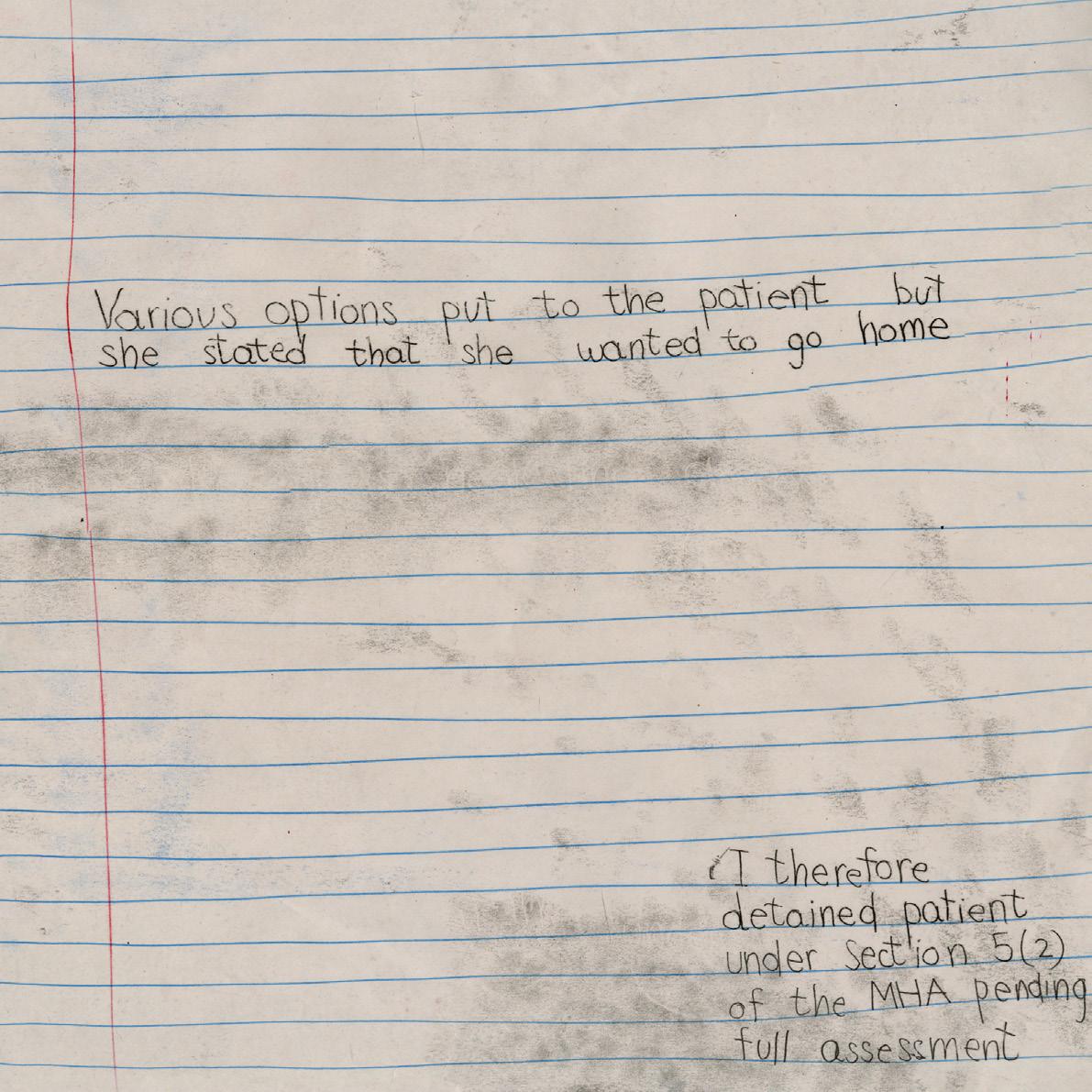
Francesca Pease’s monotype
Detained (2025) developed from a series of drawings exploring the disjunction between lived experience and representation of psychiatric illness. Making reference to hospital notes, the work examines systems of bureaucracy, observation and control within medical spaces. Through handwriting and finger marks created in the printmaking process, Pease disrupts the detached language of institutional documentation in favour of embodied
experience and memory. She explains: “My work reflects on the vulnerability of patients under the Mental Health Act, where clinical language can obscure trauma and shape how illness is understood.” In Detained, the direct presence of human mark making acts as a challenge to the labelling and disordering of individuals, instead seeking to create space for expanded understandings of illness.
Degree show: 23-31 May (PV 22), Falmouth University, Woodlane campus, Falmouth TR11 4RH
Molly Sale’s beguiling forms create a bodily connection to the natural world.
By JESSICA RAMM
Molly Sale’s intuitive construction processes are inspired by forms found in nature. She inhabits the objects she makes, which she sees as neither sculpture, performance or fashion, but something more ambiguously alive. Her appreciation of the natural environment was fostered by her parents, who took her hiking through England’s South Coast as a child.
What are you making at the moment?
I’m working on my final piece, ruckling seatbelt material under a sewing machine, forming these organic lumps and bumps. I’m drawn to materials that have strange non-organic qualities. This material has a sheen to it, it glistens like it’s wet, especially
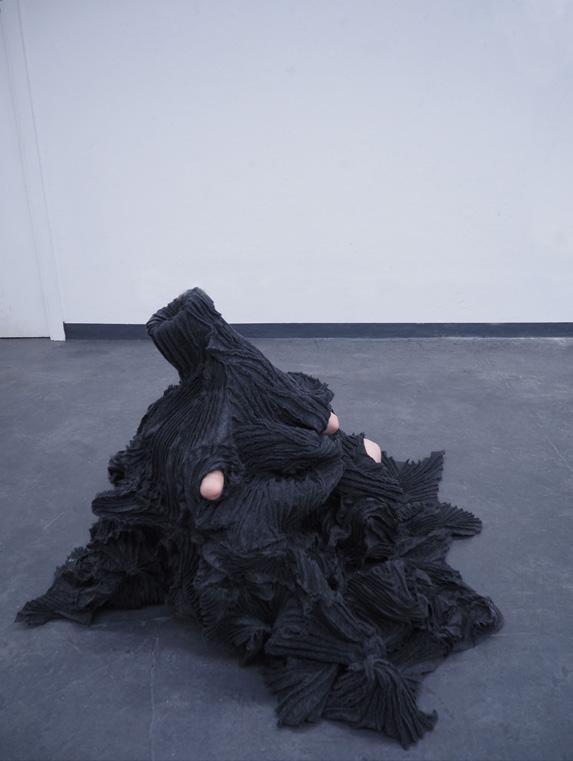
when I’ve been puckering it. Every day I come into the studio I feed it and it grows and grows, becoming more alive.
It’s as if the objects you make are alive? It really feels like that. They feel like extensions of me in material form.
I’m satisfied with them once I’m performing in them and embodying them in a space with people, but they’re also functional sculptures, so that when I leave them, they still act as a piece in the space.
Your sculptures are extensions of you?
My favourite pieces, when I really hit on a good technique and process, require manipulation of the material. It takes a lot of forcing it to fit into something it doesn’t want to do. Doing that for hours every day is a way of processing things I’m feeling and thinking. This process changes it: it’s no longer just material; it becomes a body part, like an extra limb that I’ve grown over months.
How important is the performative aspect of the work?
It’s important that it’s seen and witnessed, but I don’t necessarily want them to be a performance, more a happening that’s stumbled upon. Something that’s grown and suddenly seen by a passer-by appeals to me. It needs to be organic, but I still view them in gallery spaces. I don’t want them to be in unusual, natural spots. I can’t compete with nature itself.
Can you describe the bodily connection you make with the natural world?
It starts with being in nature and just noticing things – grasses growing in cracks, pigments and the textures of wood. Feeding my brain with those organic elements of the everyday then feeds into
Molly Sale, Sitting on the floor of the left showroom, picking at her toes, 2025, embodied sculpture, wool felt, 150x150x100cm
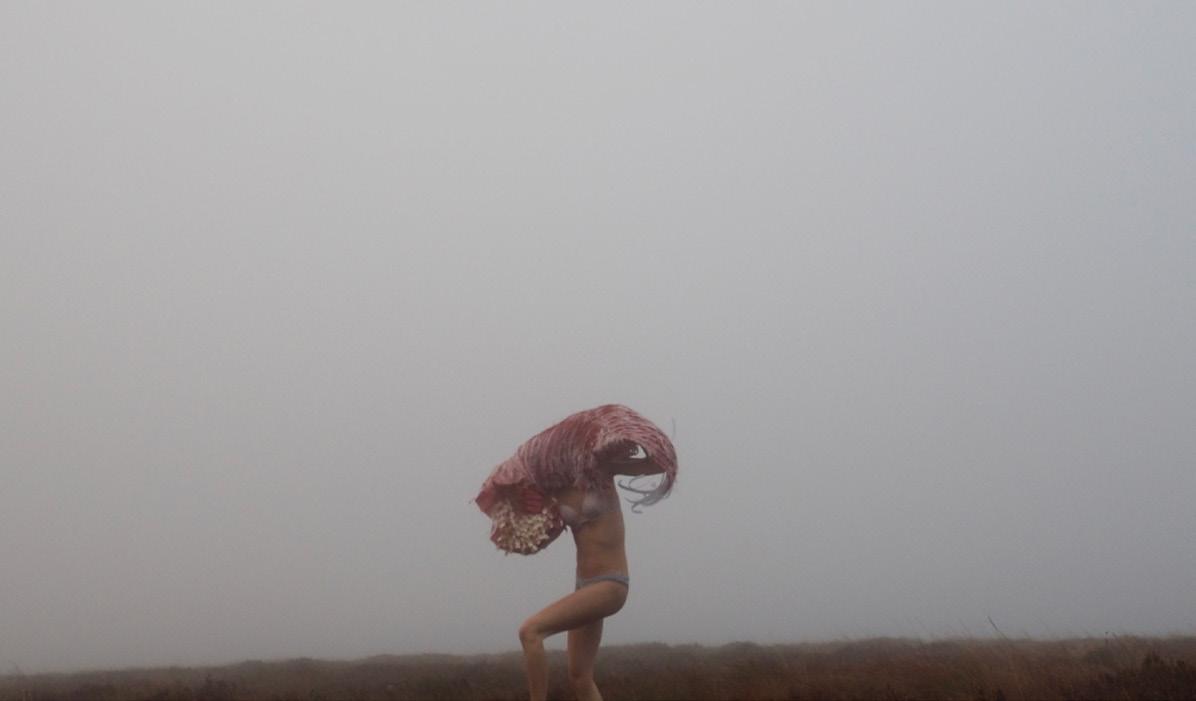
what I’m wanting to do when I manipulate material. I only ever want to make something that has an organic, natural growth form. That leads on to desperately wanting to be close to the thing that I’m making, for it to be my skin, to cover myself in it, move with it, breathe with it.
How will the piece you’re working on manifest in your degree show?
I’m in a huge basement room and I have the whole floor. I can see this piece hanging by butchers’ meat hooks and chains. It’s going to fill the space and fall to the ground, meeting me there. The material frays, and I’ve been making these hairy strands. I can see myself being crumpled in a ball connected by these strands, as though this piece has been grown by me but it’s separated. Or it might end up that I want to be inside it. I’ve been experimenting with having a hole for my back so you can just see my spinal cord protruding out. I should say that these performances are never extravagant. I’m never moving much. It’s
usually just breathing, staying quite still for an hour or so.
Is your work about you, the natural world, or both?
I think it’s about what it is to be landscape and what it is to be human. It’s personal, the process of creating it and performing in it. I think it’s personal for the viewer too – especially when they can’t identify me inside it. It connects them to their bodies and their relationship with the world. We’re so disconnected. The quiet power of nature and the way it whispers to you is lost because we’re bombarded by everything we absorb, from McDonald’s ads at every bus stop to Instagram reels. Nature refuses to compete, it stays quiet, and the way the wind blows, it’ll just be. You have to really pick up on those things.
Degree show: 23 May – 5 June (PV 22), Newcastle University Fine Art Building, Hatton Gallery and the Boiler House, Newcastle upon Tyne
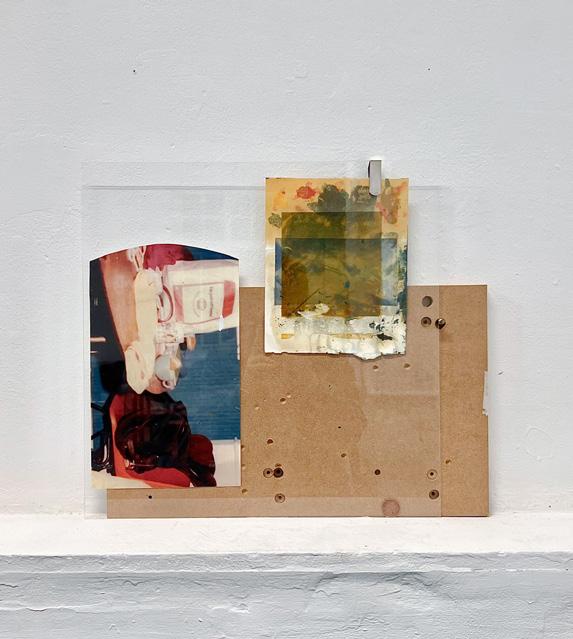
Oliver Parker-Dobson, Accumulating Objects, 2025, acrylic sheet, cotton paper, mdf board, metal clip, 2p, solarfast print, ink
GEMMA WILKINSON-RUSH, BA (HONS) FINE ART, UNIVERSITY OF SUNDERLAND
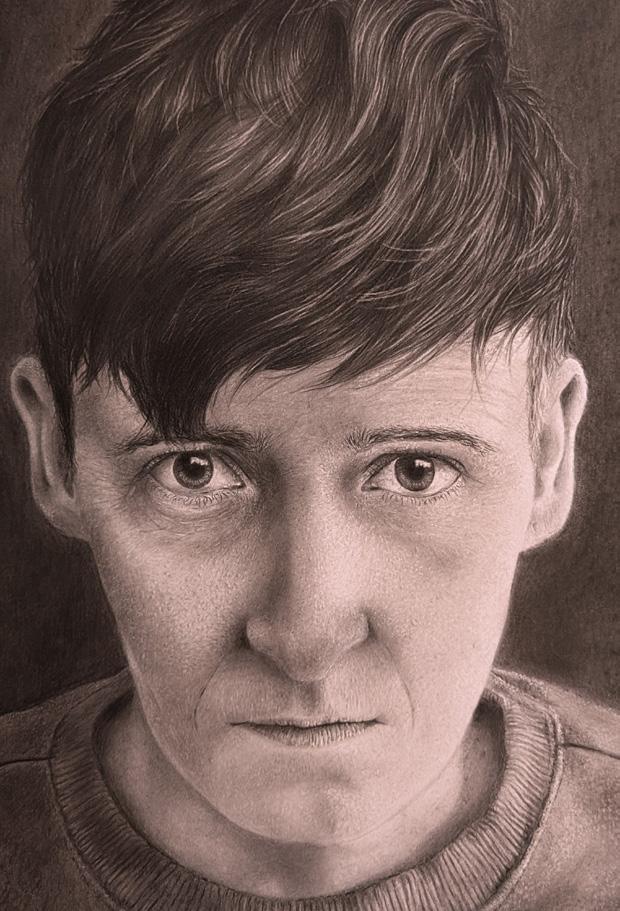
Gemma Wilkinson-Rush’s work examines “silence, survival and the experiences people are often expected to endure quietly”. Installation Lies of Acceptance (2025) confronts real online comments directed at LGBTQ+ communities, “drawing viewers from surface celebration into a narrowing corridor of projected voices”, with the central graphite and charcoal self-portrait grounding the work in lived experience.
Degree show: 6-12 June (PV 5), University of Sunderland, Priestman Building, Sunderland SR1 3PZ
OLIVER PARKER-DOBSON, BA (HONS) FINE ART, CHELSEA COLLEGE OF ARTS
Within a practice focusing on habitual routines, Oliver Parker-Dobson’s Accumulating Objects (2025) “acts as a homage to those minute details played out within the domestic sphere”. His works assemble the stuff of everyday life – coins in the couch, empty mugs on the kitchen table – to highlight how “small acts become part of the fabric of our homes”.
Degree show: 12-19 June (PV 11), Chelsea College of Arts, 16 John Islip Street, London SW1P 4JU
Gemma Wilkinson-Rush, Lies of Acceptance (Self Portrait), 2025, graphite and charcoal on A2 paper
SANDY KIRALAWELLA, BA (HONS) FINE ART,
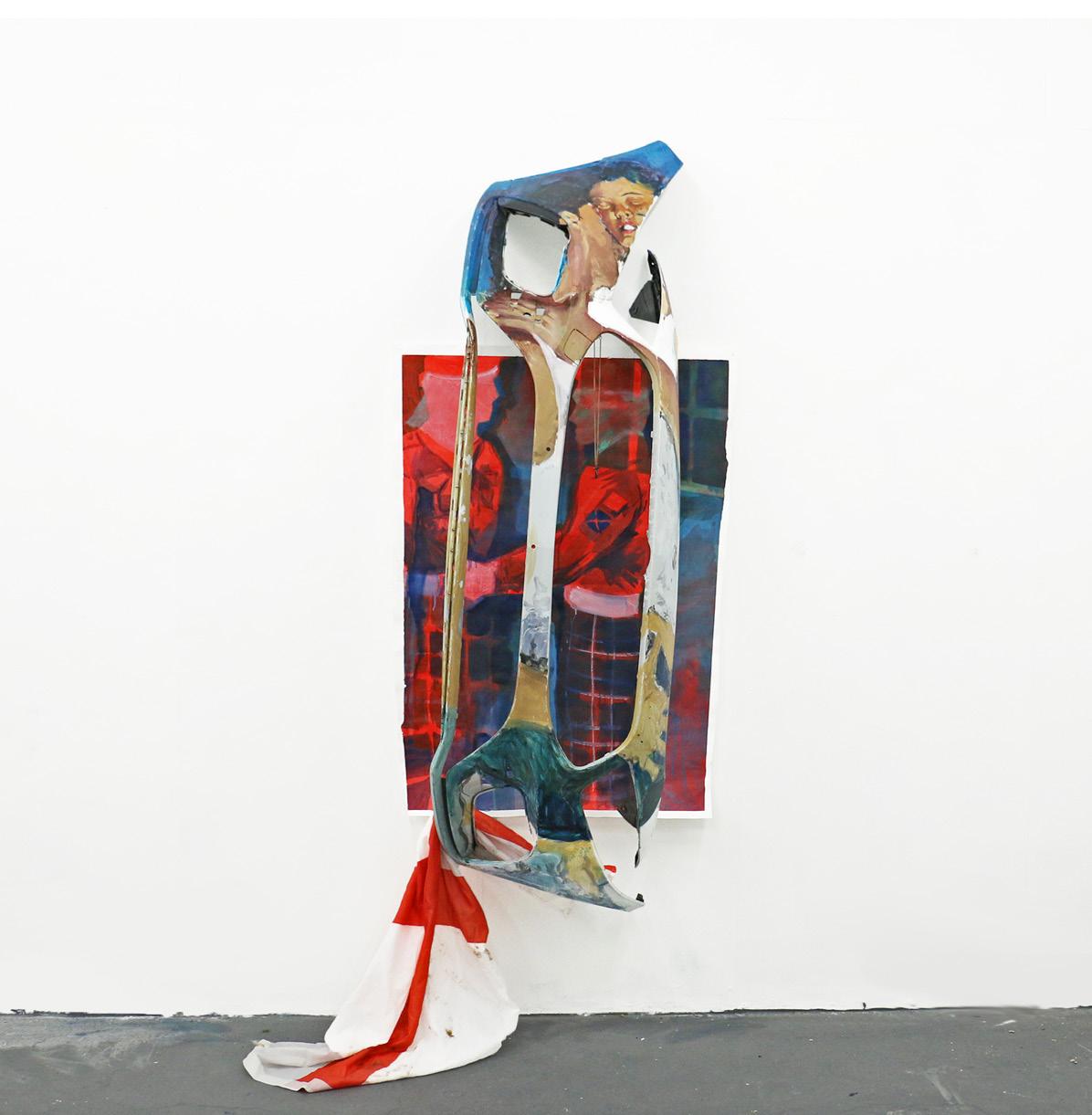
Societal boundaries around gender and sexuality are examined in Sandy Kiralawella’s painting-led installation, Sex in Solitude (2025). Pulling from perfume campaigns in Milan and first world war archival imagery from Berwick Barracks, his assemblage explores “how the innately primal act of sex has been simultaneously commodified and criminalised depending on one’s sexuality”. Kiralawella wants
Sandy Kiralawella, Sex in Solitude, 2025, installation of oil on car bumper, oil on paper, crucifix from grandfather, Saint George’s flag taken off lamppost, 203x190x160cm
audiences to speculate on a narrative by using superimposed imagery on specifically selected, unorthodox painting supports. “Whether the truth is contorted to sell a dream, or to protect a specific image of masculinity, my installation is an attempt to uphold the harsh lines that define societal infrastructure.” The result is a work that explores the current divisions in society, and considers who benefits from them.
Degree show: 23 May – 5 June (PV 22), Newcastle University Fine Art Building, Hatton Gallery and the Boiler House, Newcastle upon Tyne
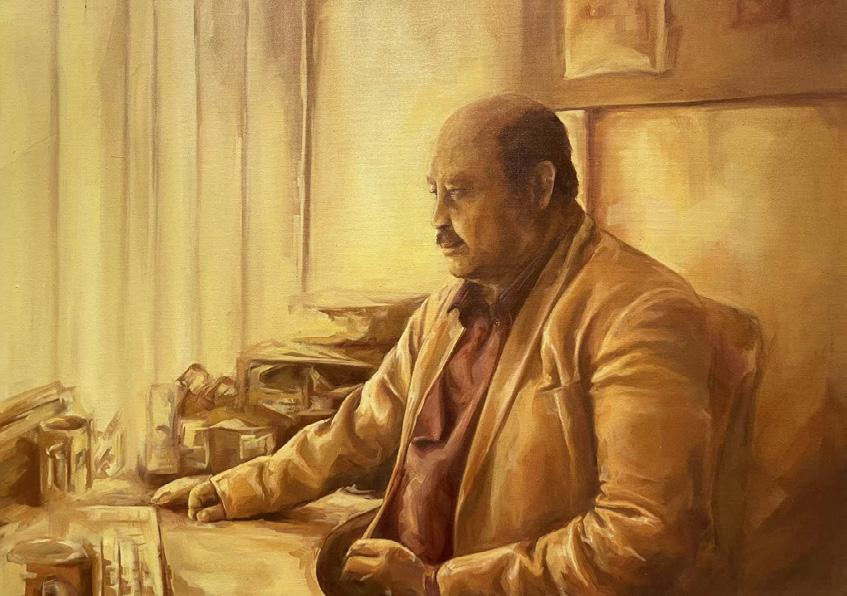
NELL DARLEY, BA (HONS) FINE ART, LEEDS ARTS UNIVERSITY
Nell Darley’s contemplative portraits of people seeking refuge or asylum offer a contrasting narrative to mass media coverage.
By ELLEN WILKINSON
In Nell Darley’s oil painting Ali (2025), a man sits at a desk scattered with the usual objects – keyboard, mug, stack of paperwork. There are vertical blinds and a noticeboard behind him. He could be an office worker or a GP. He looks thoughtful. The muted, umber tones are reminiscent of sepia photographs. But Darley’s paintings aren’t nostalgic – they are firmly rooted in the present.
Ali, notes Darley, “could be anyone”. He is a person of facets and multitudinous experiences – a man shaped by “this life full of things,” as Darley puts it. He is also an asylum seeker.
Darley’s degree show will present portraits of people she initially met through teaching
Photo: the artist
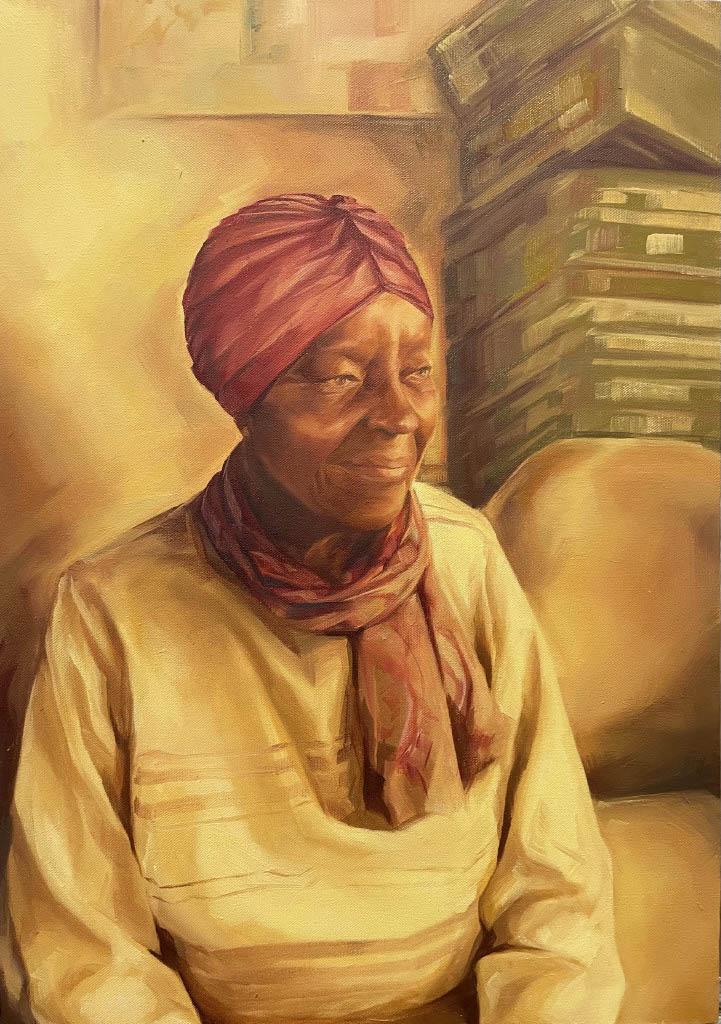
Right: Nell Darley, Cecilia, 2026, oil on canvas, 42x59cm.
Photo: the artist
English classes and volunteering with Leeds Refugee Forum and PAFRAS (Positive Action for Refugees and Asylum Seekers). The series of paintings developed from her frustration with “the tonal shift in UK media about people seeking refuge and asylum,” she explains.
“I was meeting humans, but in the news I saw statistics and demonising imagery – young men on boats looking very chaotic, as we all would in that situation. Portrayed as distressed, vulnerable or dangerous, with no other context of who these people are. Images hold power when it comes to prejudice.” Studying such imagery, Darley realised that to counter it wasn’t to re-churn it in paint, but to provide something else. “Something calmer and softer, with people at heart instead of statistics.”
Many attendees at Darley’s English classes come for the social aspect as much as the teaching. “As we got to know each other I realised that I didn’t want to paint anyone else. I felt a big responsibility but also a duty – for people to see them.” She makes sketches – value studies with graphite and ink – and takes reference photos while in
conversation with her sitter. “My practice is always in communication with them. They see the studies, then the paintings.”
Cecilia (2025) exudes a sense of respect. The seated woman looks assured and serene. “Cecilia’s really wise. Her presence is empowering,” Darley says. A loosely-painted tower of folders or boxes rises behind Cecilia’s shoulder, suggesting the heavy administration involved in seeking asylum, and the accompanying state of precarity.
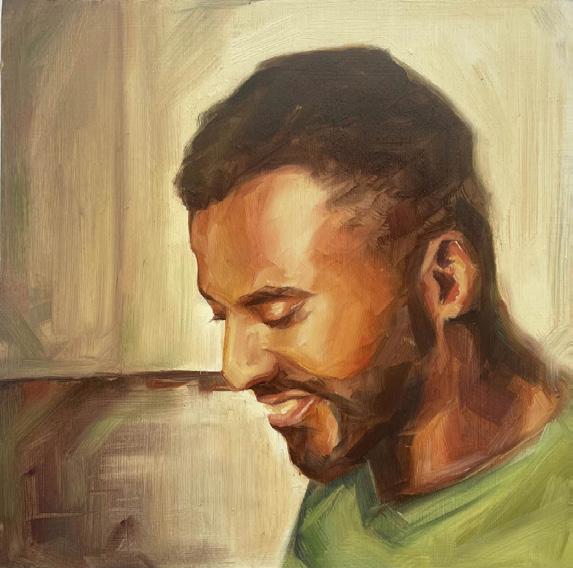
While Cecilia and Ali have quiet, still atmospheres, in the oil on plywood study, Bini (2025), the subject appears in action. He’s smiling, living. Darley tells me he was in his kitchen, and I can imagine him chopping while he chats, and the fragrances of cooking.
In all three paintings the sitter’s gaze rests beyond the frame. “My dissertation was about absorption and theatricality in 18th century painting – a Michael Fried theory, where the subject appears unaware that they’re being viewed, and are immersed in their own world. When I started this series, I wanted the sitters to address the viewer
“As
we got to know each other I realised that I didn’t want to paint anyone else.”
with their presence, but not necessarily their gaze. I wanted a sense of calmness, and for Cecilia, Ali and Bini to not feel harshly observed.”
The sensitivity of Darley’s work is also founded on her careful consideration of the ethics of painting people whose lived experiences are not her own. “There’s a real power and privilege in who you choose to paint. You’re showing someone on a gallery wall, a place that they’re not usually seen, in a medium that people are very rarely seen in.”
While she’s considered including wall texts, one of her work’s strengths is its restraint. “I’m still working out how to make viewers aware of the context of the work, but without the sitters being completely defined by one aspect of the many parts of their lives. Instead of your initial response being ‘they’re a refugee’, the first thing you see when you look at these paintings is a human.
“I know these people’s stories, or the parts they’ve told me, and their stories deserve to be told. But in terms of what I’m trying to do here, it’s to make people seen. I want to paint people as they are. And the audience meets them in the moment. So I think the painting does enough”.
Darley says that her studio space currently feels “like a collection of people, a community. People that I know and have come to love, so I think my degree show exhibition will be similar.” Her sitters, of course, are all invited.
Degree show: 15-20 June (PV 19) Leeds Arts University, Blenheim Walk LS2 9AQ
Rosa Binias, BA (Hons) Ceramics and Glass, University for the Creative Arts, Farnham
Rosa Binias’ retro-futuristic ceramic artefacts form part of her “fictive exhibit” degree show. “Treating the conventions of museum display as an artistic medium, I combine my ceramic work with fabricated labels and fictional archive material,” she explains. Other Earth Collection (2025) and its imagined world of text and diagrams, raise questions about truth, authority and interpretation.
Degree show: 10-20 June (PV 9), University for the Creative Arts, Falkner Road, Farnham GU9 7DS
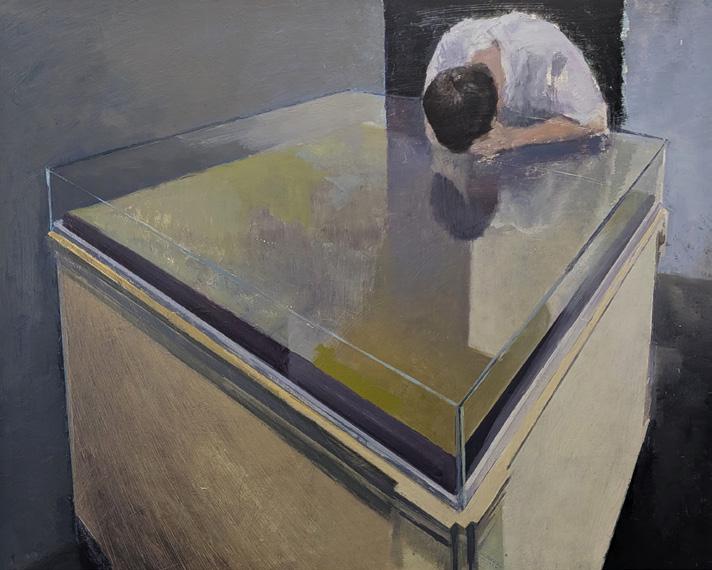
Draycott, Miniature, 2026,
Connor Draycott, BA (Hons) Fine Art Painting and Printmaking, Glasgow School of Art
In Miniature (2026) a bent figure peers into a museum-style glass display case, but the object of their gaze is obscured from us by their reflection. Connor Draycott’s work explores “what our idea of history is built on”, how we receive information, and “how this alters the way we view the world and ourselves”.
Degree show: 29 May – 7 June, Glasgow School of Art, Stow Building, 43 Shamrock Street, Glasgow G4 9LD
YULIIA HOLOVATIUK-UNGUREANU, BA (HONS) FINE ART, STAFFORDSHIRE UNIVERSITY
Ukranian artist Yuliia HolovatiukUngureanu finds hope and a future through her art. BY LAURA
DAVIDSON
Coming to the UK from Ukraine, Yuliia Holovatiuk-Ungureanu’s art practice uses her own journey as a starting point to tell the story of the Ukrainian people. The Stoke-on-Trent based artist works with installation, performance, found objects, photography, and ceramics to show how strength and resilience can grow from vulnerability. Her most recent works take their methodology from the Ukrainian people themselves, who are constantly forced to adapt to circumstances outside of their control. Although the war with Russia is ever present, she has begun to consider
what peace and rebuilding mean to her, and is looking towards a bright future.
What have been significant turning points in your practice?
Around the time of my first performance in 2024. The Escape was based on the memory of me and my two children escaping the war. During the performance I moved with a pushchair, carrying all of our belongings, through the space. This led me to start working with artefacts from the war.
Have you been back to Ukraine?
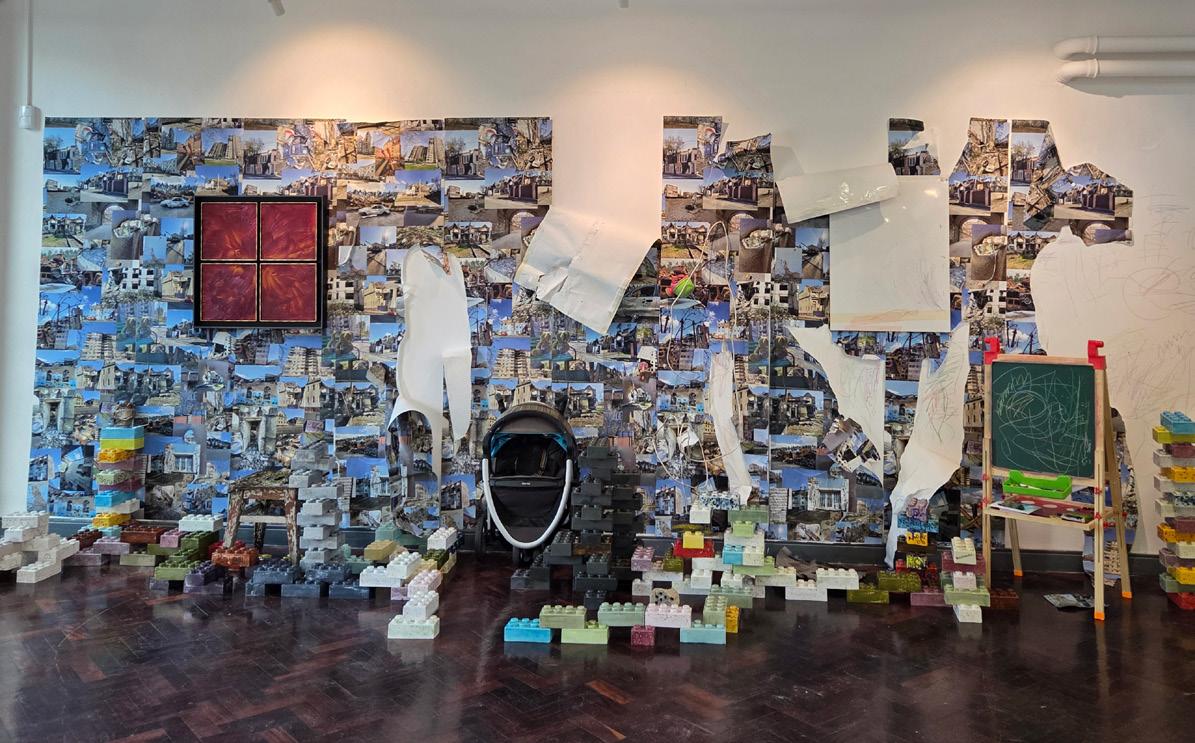
I visited Ukraine in 2024, because I felt obliged to visit, to really feel the war on my skin. I made wallpaper from photos I took of destroyed houses in Ukraine. As part of an installation called Where We Begin (2026), I displayed artefacts from those houses; a pushchair, bricks from the walls, and plates that had melted together.
Has any particular artist influenced your approach?
During the first two weeks of the course, we researched contemporary art and one of the artists was Tracey Emin. She is not afraid to be weak, to show pain and to be vulnerable in front of an audience, and I took inspiration from this.
How did you develop these ideas?
I wanted to make something dedicated to children who died in the war, and I went through a few ideas. For both of my children, one of their favourite toys is Lego. In my work, Lego bricks have become a symbol of rebuilding the future and of childhood. Stoke-on-Trent, where I live, is the World Capital of Ceramics, and it’s one of the reasons why I wanted to make ceramics. I made around 200 medium ceramic Lego bricks and 20 large ones. They are difficult to make, but each brick is a blank canvas. Some of the bricks were made with local children during workshops. I asked them to write or draw about peace on the bricks.
How does the work change when you exhibit it?
I curated an exhibition in the university gallery, but some of the Lego bricks were stolen and broken. It was the first time this had happened, and security found out
someone broke the bricks by accident. I was shocked by it, but I was thinking about how I could respond. I decided to leave the broken pieces in the exhibition space. I thought that’s what happens every day to Ukrainians. They don’t want missiles or rockets falling on their heads, but that’s what is happening. It’s not a choice.
Another day, somebody placed fresh yellow flowers on the floor near the broken bricks. In Ukraine, yellow flowers symbolise loss and death. Outside every destroyed building I visited in Ukraine, flowers and toys were gathered there. When I saw the sculpture the next morning, it looked like destroyed houses in Ukraine, so I left the flowers.
How do you embrace vulnerability in your practice?
Sometimes your soul, heart, and emotions are broken. Coming back to Tracey Emin, some people try to escape bad feelings, and don’t want to be vulnerable, especially Ukrainians. I never wanted to look weak, but I said to myself that I should accept that weakness as part of my art. I think it’s not always a pleasant feeling, but I started going with it because it is honest. I like to present something raw, and to also show the strength of Ukrainians through this.
What gives you hope?
Even though the war is happening, people are trying to rebuild their lives either in a new place or from ruins. In war, a rocket can fall, but people still rebuild and take care of their homes. It’s amazing, and that’s why my art practice gives me hope.
Degree show: 30 May – 6 June (PV 30) University of Staffordshire, College Road, Stoke-on-Trent ST4 2DE
Yuliia Holovatiuk-Ungureanu, Where We Begin, 2026, time-based site-responsive installation including photographic wallpaper, ceramic bricks, found objects, dimensions variable. Photo: the artist
Iona Singleton embraces risk and controversy in ceramics that reference Eric Gill, William Morris and David Pye. By LYDIA
ASHMAN
When Iona Singleton encountered sculptor Eric Gill’s work in the museum archive at Central Saint Martins (CSM), it felt like “a prompt” she couldn’t ignore. “My grandfather was his apprentice towards the end of Gill’s life,” explains Singleton. “This was something I’d chosen not to look into too deeply because it seemed like a rather dark area. But I realised I needed to figure out what I thought about it all.”
Gill (1882-1940), whose sexual abuse of his daughters came to light in 1989, had been a student and teacher at CSM and designed
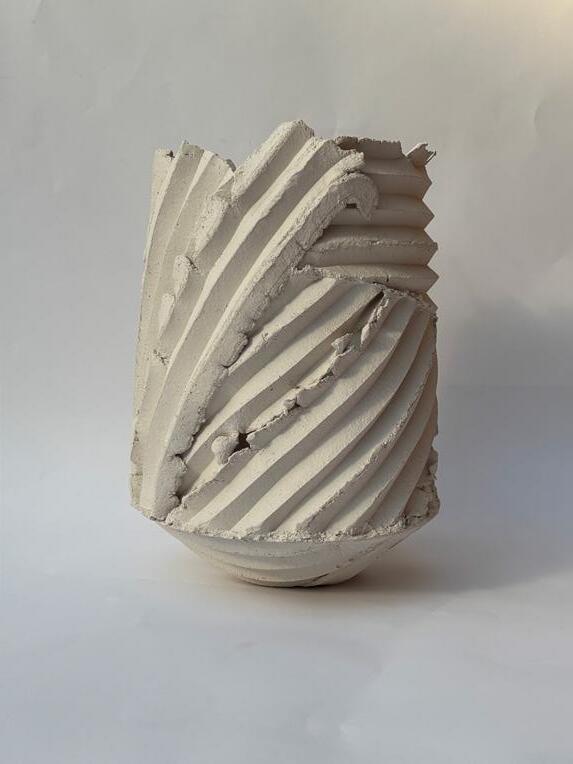
Iona Singleton, David Pye tall white vessel, work in progress, 2026, ceramic
the widely used font, Gill Sans. As well as reading about Gill and having conversations with curators and directors, Singleton began to “think through making”, a process that has become integral to her practice.
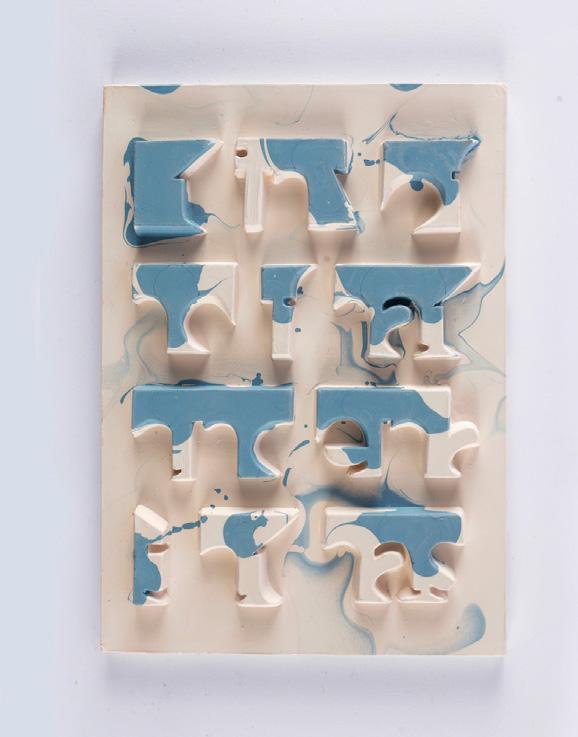
Sans Gill Light (2024) incorporates words from a Gill print that was originally Singleton’s grandfather’s, but now lives in her parents’ home. The negative space between the letters is foregrounded, revealing abstract shapes which only allow glimpses of the original text. Splashes of blue slip seep through the shapes, a nod to how Gill’s influence is draining away. By emphasising what we normally overlook, Singleton wants to draw attention to the hidden, murkier parts of Gill’s history.
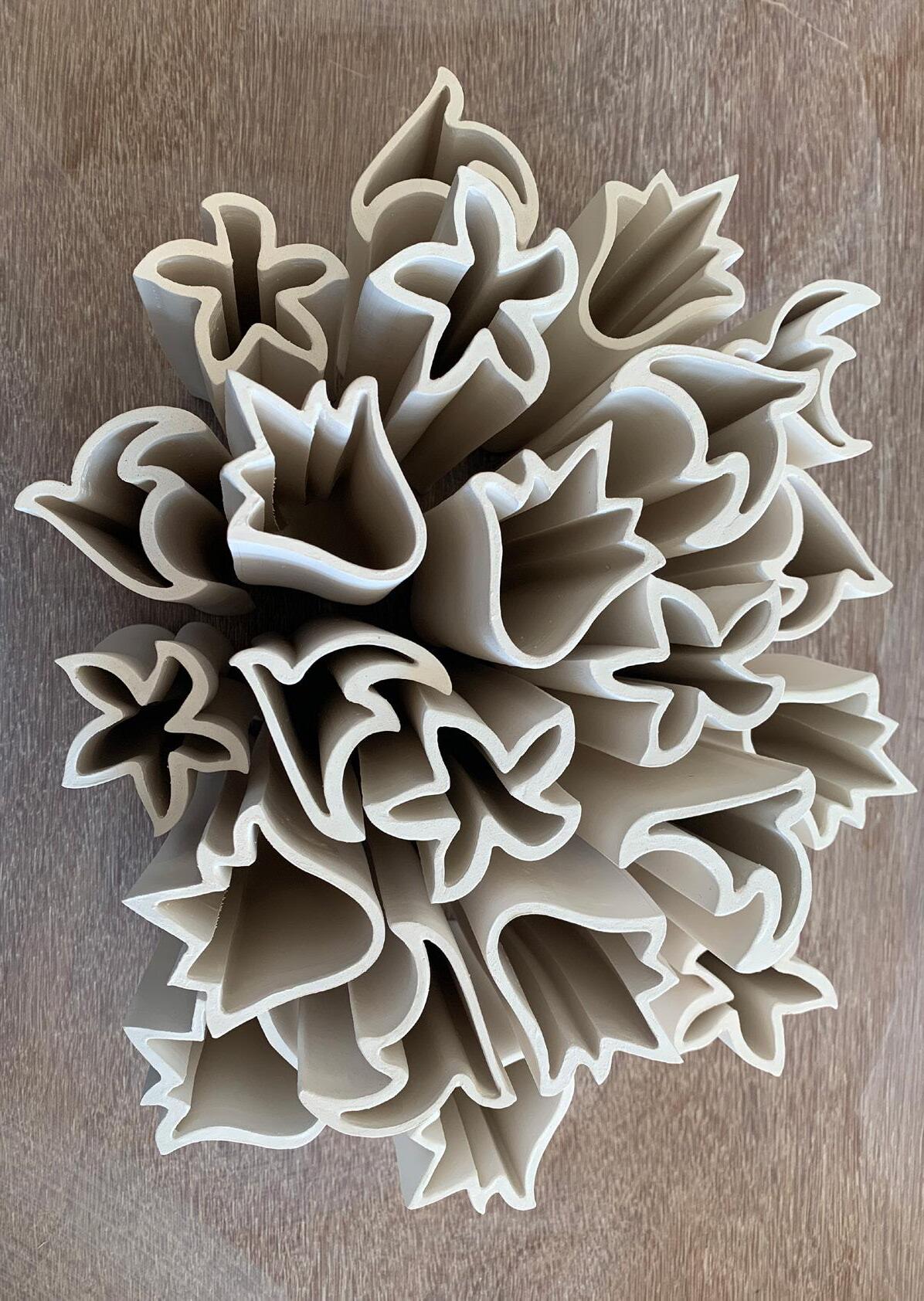
In her degree show, as well as Gill, Singleton is including pieces that investigate William Morris and David Pye: three people she describes as having “deeply considered and fiercely opinionated views on how art or craft should be made”. By “coming at these figures from different directions”, she tries to work out knots in her own thinking.
Last year, in the same week she joined a protest against Meta’s ‘book scraping’ to feed its generative AI system, Singleton was learning about potential uses of AI in her ceramics practice. To explore questions about her relationship with technology, she turned to Pye, the furniture designer who coined the terms “workmanship of risk”, linked to handicraft and the potential to fail, and “workmanship of certainty”, associated with producing a pre-determined outcome.
“Pye said that it’s not the tools themselves that make work inherently valuable or not. It’s how you use them, which I found really
“By making a three-dimensional object, my aim is to spark curiosity in other people.”
helpful and relevant to current debates. He suggests that artists refine their skills towards precision. I wanted to see if I could move in the opposite direction and use the tools that we’d normally associate with ‘workmanship of certainty’ – things like moulds, laser cutting and designing on the computer – to incorporate more risk into my work.” The resulting vessels, constructed from pieces of grooved clay, are replete with tears, kinks and rough edges. Full of character, they’re a far cry from the smooth and soulless outcomes we might associate with technology-aided production.
Meanwhile, when Singleton was selected from her year group to make work for the William Morris Museum shop, she used it as an opportunity to research his contradictory
Iona
Singleton, Sans Gill Light, 2024, ceramic, 20x29cm
views on labour practices. “Morris cared deeply about the life of makers in this country and campaigned vociferously about the effect of industrialisation on them. But he was quite short-sighted when it came to workers in other countries. He developed a new way of using indigo, which he used a lot. But that indigo came from plantations in India where there was ryoti, a brutal system of forced labour. I found this limit to his concern strange.” Despite blue being an obvious choice for the slim, sleek vases Singleton designed, she boycotted the colour because of the child labour and high mortality rates connected with cobalt mining in the Democratic Republic of Congo.
Singleton’s finished pieces don’t always have an overt visual connection with the historical figure she’s researched, but that’s not the point. By moving from 2D into 3D, from flatness into something multifaceted, she creates multiple perspectives. “In Glenn Adamson’s book Fewer Better Things, he said, and I’m paraphrasing, when we’re confronted with opinions that we don’t agree with, we tend to dig our heels in. But when we come across objects, we get curious. By making a threedimensional object, my aim is to spark curiosity in other people.”
Nor is Singleton seeking her own singular answer. She says of her research into Gill: “I don’t feel like I’ve come to a concrete conclusion. In some ways, I’ve ended up with even more questions. But by working through it and making a physical object, I feel like I’ve got a more nuanced understanding.”
Degree show: 18-21 June, Central Saint Martins, 1 Granary Square, London N1C 4AA
KYRPENKO, BA (HONS) FINE ART, CITY AND GUILDS OF LONDON ART SCHOOL
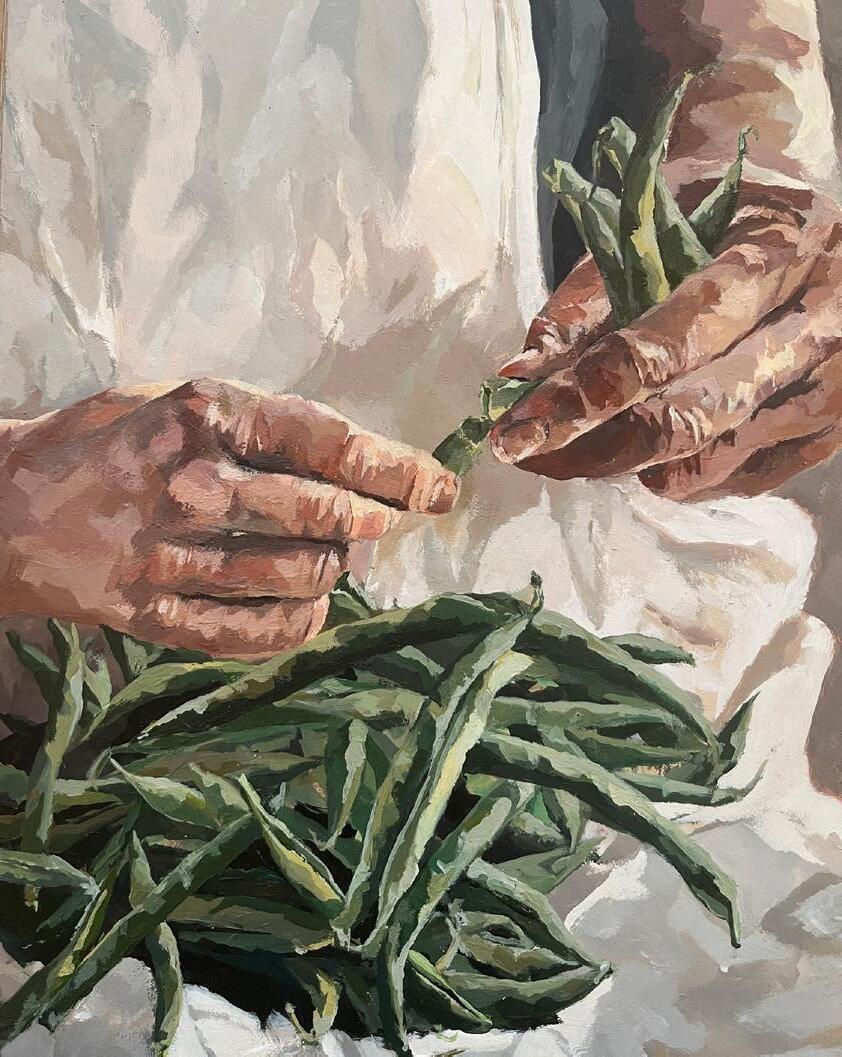
Vicarious (2025) shows a pair of hands shelling long green pea pods from a pile resting in a white-aproned lap. The painting’s close framing imbues this simple, repetitive action with greater significance than such an apparently mundane task might suggest. “As a displaced artist, my experiences shape the lens through which I work,” explains Anastasiia Kyrpenko. Her prominent subject matter is people and experiences, expressed through everyday
objects and moments. Vicarious represents “a fragment of memory from a place changed by war. Being scared to forget what once was ordinary, I paint small, intact moments shaped by absence”. Her paintings are both intimate and anonymous, providing glimpses rather than grand narratives. “I’m driven to tell stories and create narratives that expand and go beyond the canvas’s frames. I like freedom.”
Degree show: 20-26 June (PV 19), City & Guilds of London Art School, 124
Kennington Park Road, London SE11 4DJ
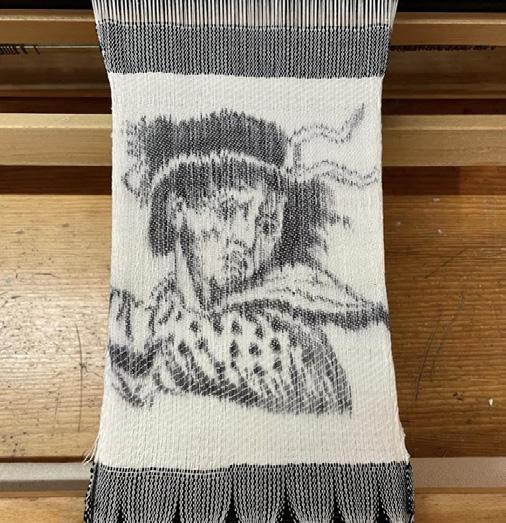
Bea Arden’s textile art brings 19th century Luddites into dialogue with the contemporary challenges of AI.
By JACK HUTCHINSON
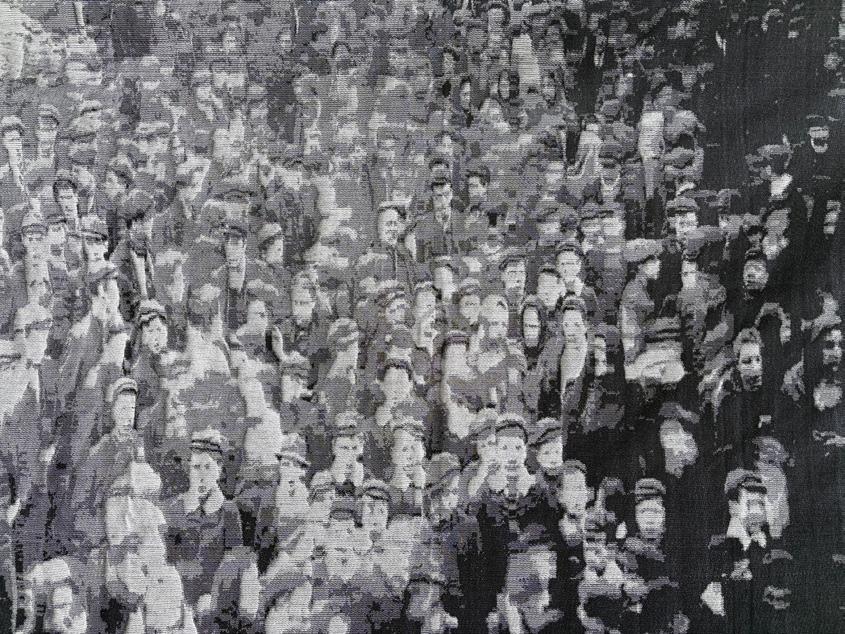
Exploring the dialogue between humans and technology through textiles, sound and moving image, Bea Arden examines how power is woven into the technological systems which surround us. Reflecting on current debates around AI and technology, she uses a Jacquard loom to create works that weave stories of those most affected by automation throughout history.
How do you juxtapose old and new tech in your practice?
My work is an ode to the Luddites, textile workers in England in the early 19th century who have become quite popular because of current debates around AI. They’re well
known for smashing up machines for the textiles industry and people often associate the word ‘Luddite’ with someone who’s against technological progress. My work aims to challenge these perceptions. The Luddites were not anti-machinery, but projob security. I’m trying to weave the stories of these workers back into the machine.
What is it about the Jacquard loom that fascinates you?
The Luddites were highly-skilled artisan textile workers – weavers, croppers, framework knitters – whose livelihood was threatened by the distribution of automated machinery such as the Jacquard. By using these machines to tell the stories of those who once resisted them I want to emphasise an important point: workers’ rights should be at the centre of any conversation surrounding automation.
Do you think your work challenges current perceptions of AI being a bad thing?
I’ve been really inspired by the 19th century mathematician Ada Lovelace, who is widely seen as the first computer
programmer, using binary code, either through a punched hole or no punched hole, to instruct the loom to carry out an automated process such as weaving. I’m quite determined that the work is not at all a rejection of technology, because I’m obviously using technology to make the pieces.
What technology do you use to create the works?
In order to turn an image into an embroidered pattern I have to put it through a programme called Pixel-Stitch, which converts the colours into stitches. I really enjoy these processes, and that’s how I kind of feel about technology and AI. I am concerned about some of the ways AI is used, but not necessarily its actual existence. It is more the people who control it – and that’s probably how the Luddites felt about the people controlling their industry and distributing jobs after these machines were created. They felt it was detrimental to society in the same way many people think AI is a threat now.
Outside of the degree show, is there potential to make site-specific work? I recently visited the mill and photography archive in Marsden, West Yorkshire. Using archival research alongside these quite advanced technological textile processes has been really interesting. There’s actually lots of drama in the Luddite stories, such as the assassination of a mill owner in Marsden. Seeing that the mill was still there, albeit quite derelict, and thinking about how many people had worked there and how many lives were sustained by the mill, was inspiring. It would be interesting to display some of my work in that space at some point.
Do you think tech controls us rather than the other way around?
I’m quite wary of this idea that we’re at the whim of technology, because it suggests
humans are passive in all this and risks absolving big tech corporations of responsibility for how these systems are designed. Technology isn’t an autonomous force. It’s something we’ve created and it reflects human priorities and decisions. So when people say ‘tech controls us’, I worry it overlooks the role of decision makers, who are actively choosing how these technologies are deployed.
Brian Merchant’s book, Blood In the Machine, makes this point that the Luddites weren’t anti-machine, they understood the technology ‘all too well’, but they resisted how it was being used against them. I find this distinction really useful in my work and try to carry it through by engaging with technology rather than rejecting it. As an artist concerned with process and materiality, I’d rather work with and around these systems than position them as something entirely outside of us. So I wouldn’t say technology controls us. I think the more important question is who is distributing it, and how.
Degree show: 29 May – 8 June (PV 28), Glasgow School of Art, 167 Renfrew Street, Glasgow G3 6RQ
Jessica Miller, BA (Hons) Fine Art, Oxford Brookes University
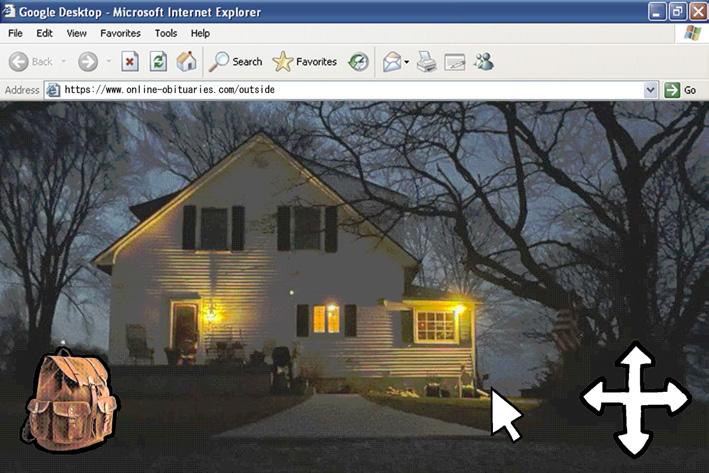
Influenced by technological change, Jessica Miller’s video works explore the post-AI online world through the aesthetics of early point-and-click computer games, horror tropes and media archaeology. Degree show piece Online Obituaries (2026) draws on the internet’s “influence on faith, the grieving process and the impact of digital footprints in the modern computing era”.
Degree show: 9-17 May (PV 8), Oxford Brookes University, School of Arts, Headington Hill campus, Oxford OX3 0BP
Ethan Elcocks, BA (Hons) Photography, Manchester Metropolitan University
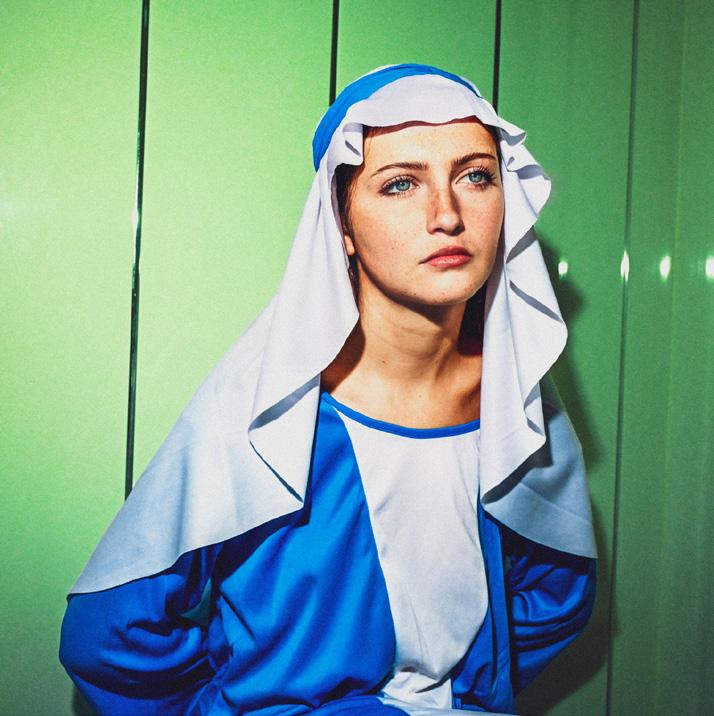
Mary (2025) is part of a photographic series concerned with “challenging the ideals of society, which are often reinforced through religion, media and tradition”. Interested in how identity is formed and constructed through staged and performative imagery, Ethan Elcocks’ practice draws on the visual language of pop culture and film to subvert and satirise structures of conformity.
Degree show: 6-19 June (PV 5), Manchester Metropolitan University, School of Digital Arts, 14 Higher Chatham Street, Manchester M15 6ED
CHHAINGUNS, BA (HONS) FINE ART,
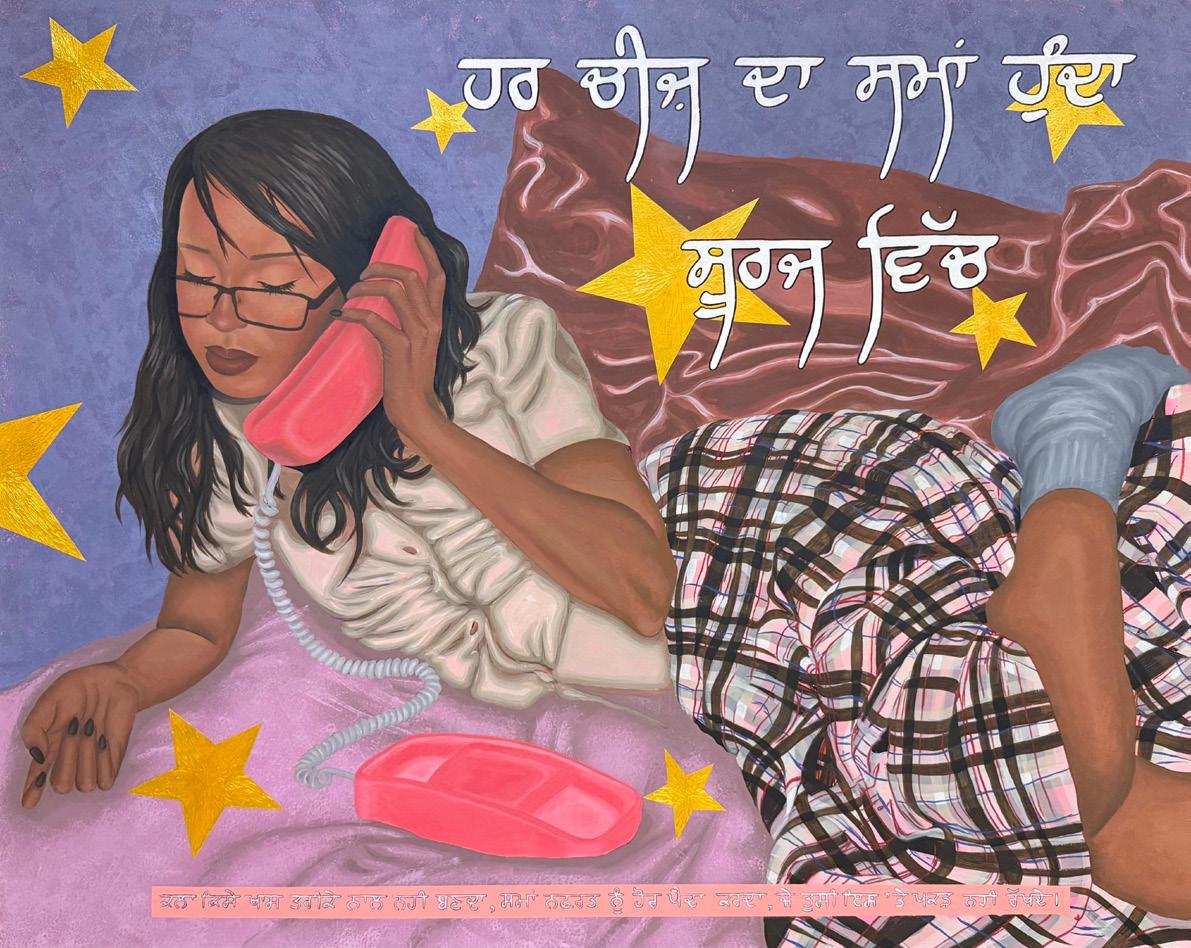
Drawing themes from surrealistic dreams to the girlhood of Brown and Black women, Chhainguns describes her oil and acrylic paintings as “dreamlike” and “whimsical”. Explaining her painting, Normal Girl (2026), she says: “It was visually inspired by the aesthetic of 1960s South Asian adverts which were a highly stylised marriage of text and colour. I decided to depict the
image of a woman on the phone, due to its persistent appearance in media depicting girlhood.” For the text featured in the work, Chhainguns translated part of her secondyear artist manifesto into Punjabi. “The main body of text roughly translates to ‘everything will have its time in the sun’. It was written during frustration and a period of feeling unseen and unheard.”
Degree show: 6-9 June (PV 5), Southampton Solent University, Michael Andrew’s Building, East Park Terrace, Southampton SO14 0YN
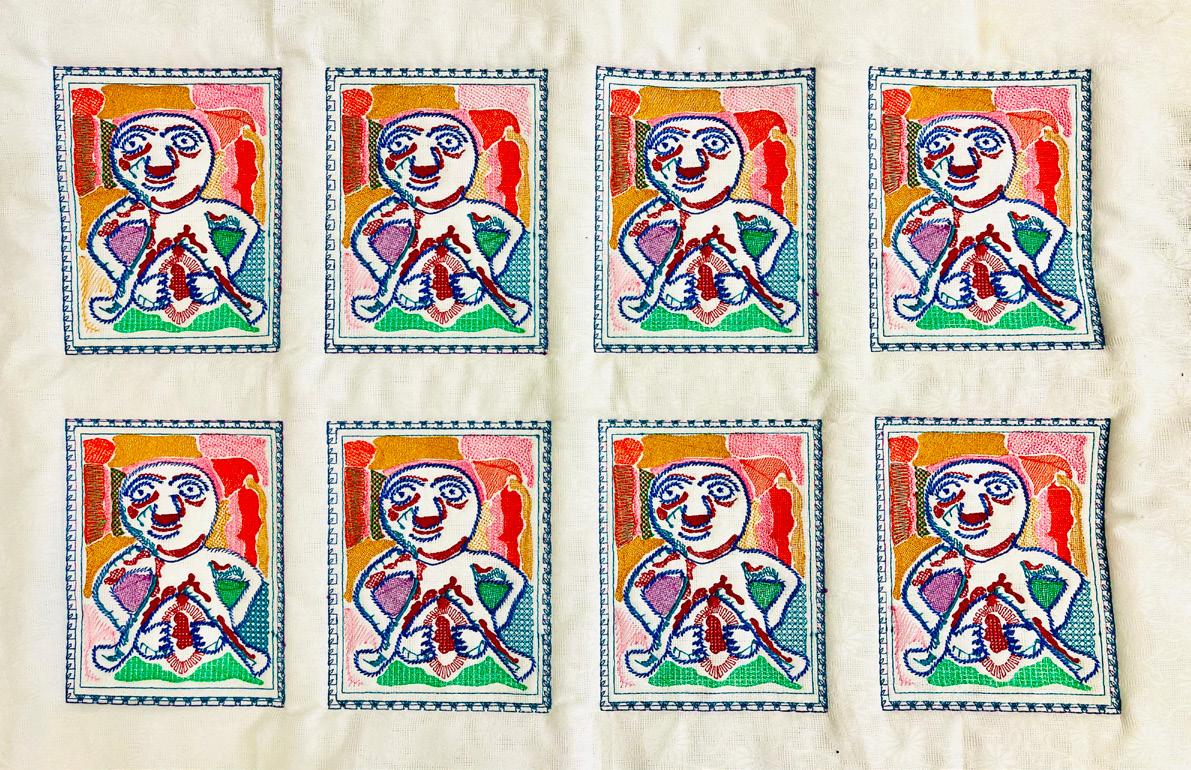
DEIRDRE NIC AINMHIRE, BA (HONS) TEXTILE ART, DESIGN AND FASHION, BELFAST SCHOOL OF ART
Medieval feminism takes on modern misogyny in Deirdre Nic Ainmhire’s embroidered textiles.
By JOANNA BYRNE
Deirdre Nic Ainmhire is an interdisciplinary artist working with textiles and embroidery in a provocative way. Playfully blending contemporary memes with medieval iconography and ancient symbols, she sees her feminist practice as both inclusive and subversive.
Could you tell me a bit about yourself and your practice?
I want my work to empower people to
challenge patriarchal norms. When I hit menopause, I realised I’d become invisible to the male gaze. But there’s a great freedom in that: I’m much braver now. Western society wants women to be as skinny and as small as possible. But I want my work to celebrate different bodies and take up space.
What drew you to express your ideas in your chosen medium?
I feel textiles and embroidery have often been overlooked by the patriarchy and the fine art world. This means you can say things that you might not get away with otherwise. That’s a gift because I can be playful, but also hard hitting. I’m really inspired by the arpilleristas in Chile and their patchwork textiles. They were only able to let the world know about the atrocities under Pinochet because the men in power weren’t looking – women meeting to craft together weren’t viewed as politically dangerous.
Can you tell me more about your creative process – how do you work in a sustainable way?
I work with embroidery using a CADoperated studio machine. It helps me sketch out complicated pieces and it’s a quick way to make iterations. I also hand build sculpture in layers, covering with the embroidered textiles. Textile waste is massive, so I only work with found or gifted fabrics like old linen or tablecloths, often patching pieces together, then hand-dying, ageing, or manipulating them. I also use gifted materials like sequins – they might as well be on a wall instead of in landfill.
Would you tell me more about the iconography you use?
In my work I want to reclaim sheela-nagigs – ancient stone and wood carvings hidden in chapels and castles throughout
Europe, found mostly in Ireland. They’re kind of non-binary, and they have massive vulvas. When I was growing up I didn’t even know the word ‘vulva’ – it was like an absence. Sheelas are not ‘beautiful’ in a Western way, and they’re unashamedly not trying to please anybody. I work with them as multiples, in unity together – like in Sile’s Got Your Back and Return of the Sheelas [both 2026].
Talking of a return or a revenge, what’s happening in Pussy Bites Back ? It’s a response to Trump’s infamous “grab ‘em by the pussy” quote. Here, he’s grabbed a vagina dentata and it’s bitten his hand off! The sheela-na-gig is made out of tufted tumble drier lint – coming back to life from waste. It’s a call to get big vagina energy going – for women to stand up and stick together, and not be cowed by the
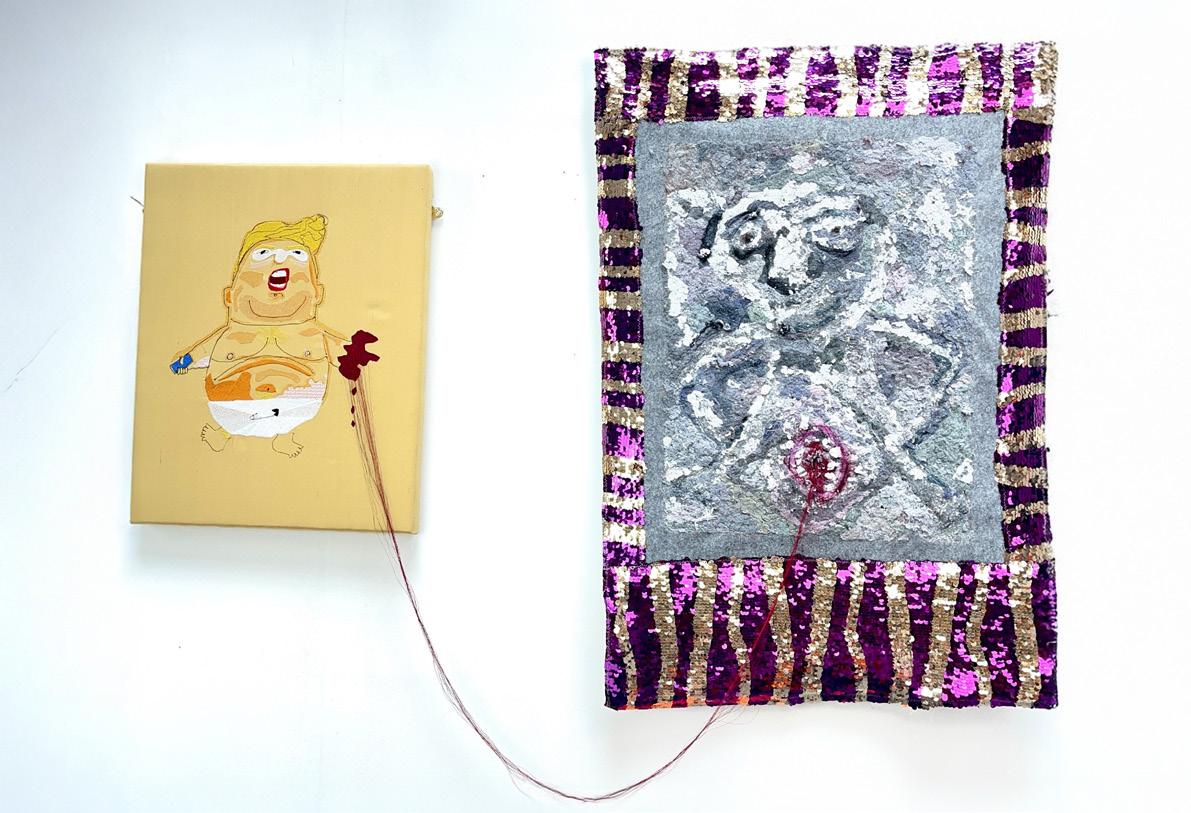
manosphere or patriarchy. Beware – we’re not going to stand for this!
I can also see toothy sheelas, monsters, and other magical creatures?
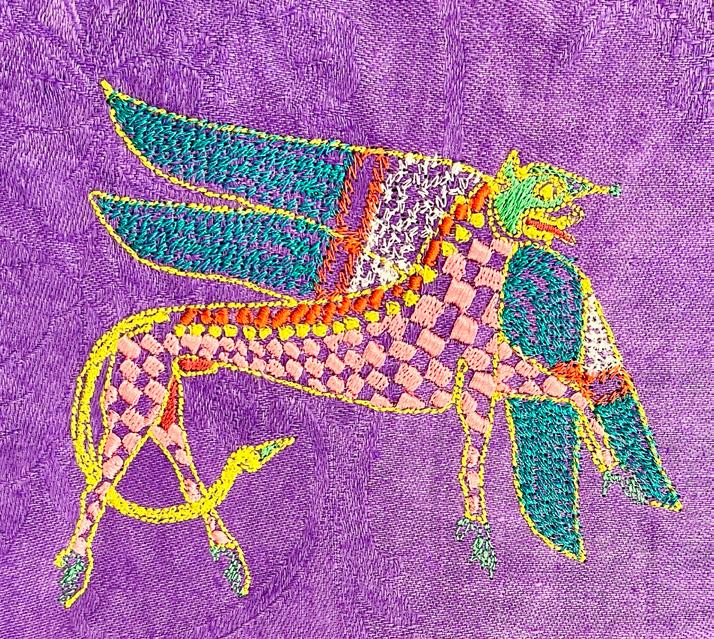
The sharp-toothed Monster Síle [2026] is female, anthropomorphic and joyful in her unique body. Faithful Hound [2026] is based on a Celtic dog figure from the Book of Kells, a Medieval illuminated manuscript I saw on show in Dublin that’s been inspirational to me. The monks who created it embellished everything so beautifully, and many of the letterforms are human-creature hybrids. I’m connecting with Irishness: learning my own history, respecting the land and what came before.
What are you working on at the moment?
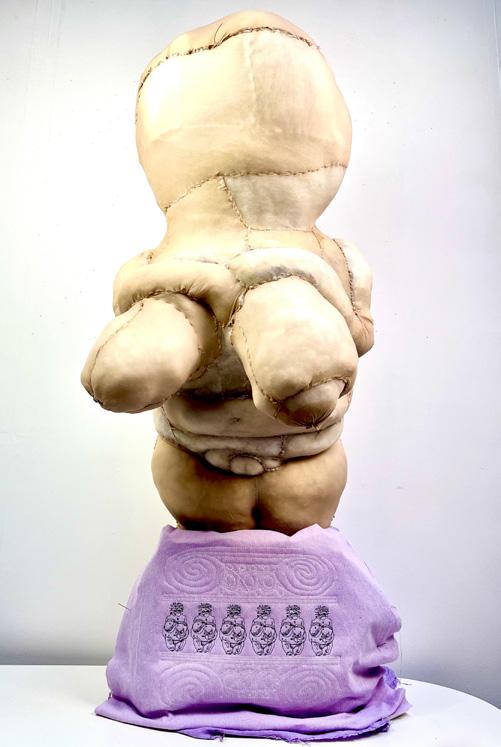
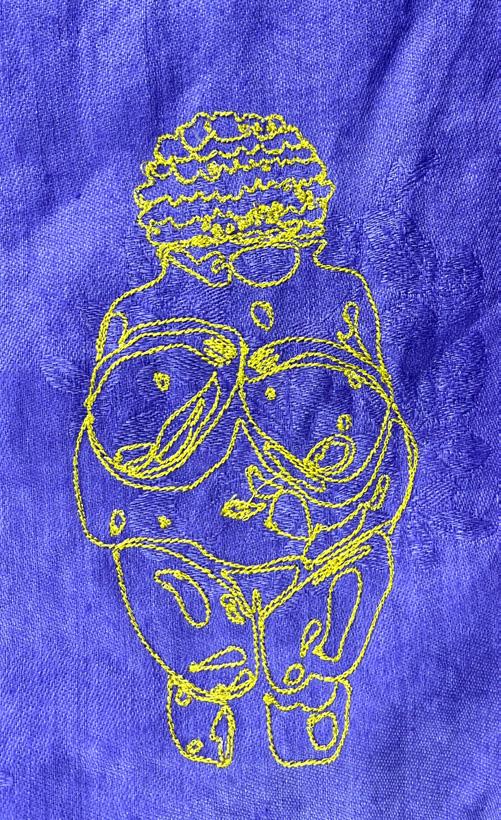
A new textile sculpture based on the Venus of Willendorf, which is an ancient goddess
Left: Deirdre Nic Ainmhire, Venus de Willendorf, work in progress, 2026, mixed textiles
Below: Deirdre Nic Ainmhire, Venus de Willendorf, 2026, damask linen, thread, 21x30cm
figurine thought to be 30,000 years old. She has an oversized head, representing women’s hidden responsibilities.
How will your work be activated for exhibition at the degree show?
As well as Venus de Willendorf [2026], I’m showing multiple sheelas for strength in unity. There’ll be suspended armies of laser-cut sheela-na-gig figures, and a ceramic sheela, which will be glazed, with ribbons attached for the LGBTQ community. It’s important to me that the sheelas are non-binary figures, and inclusive for all. You can’t have feminism without equality for everybody.
Degree show: 5-19 June, Belfast School of Art, York Street, Belfast BT15 1ED
JOHN FRASER-NATALE, BA (HONS) PHOTOGRAPHY, CARDIFF METROPOLITAN UNIVERSITY CONNECT WITH COLEG GWENT
In the photographic series Still Signing (2025), John Fraser-Natale captures British Sign Language (BSL) in action in portraits of Deaf people and interpreters using the visual and expressive language. “I’m profoundly Deaf and communicate using BSL,” explains Fraser-Natale. “The Deaf community are strong and resilient in the face of daily barriers.” The photographs,
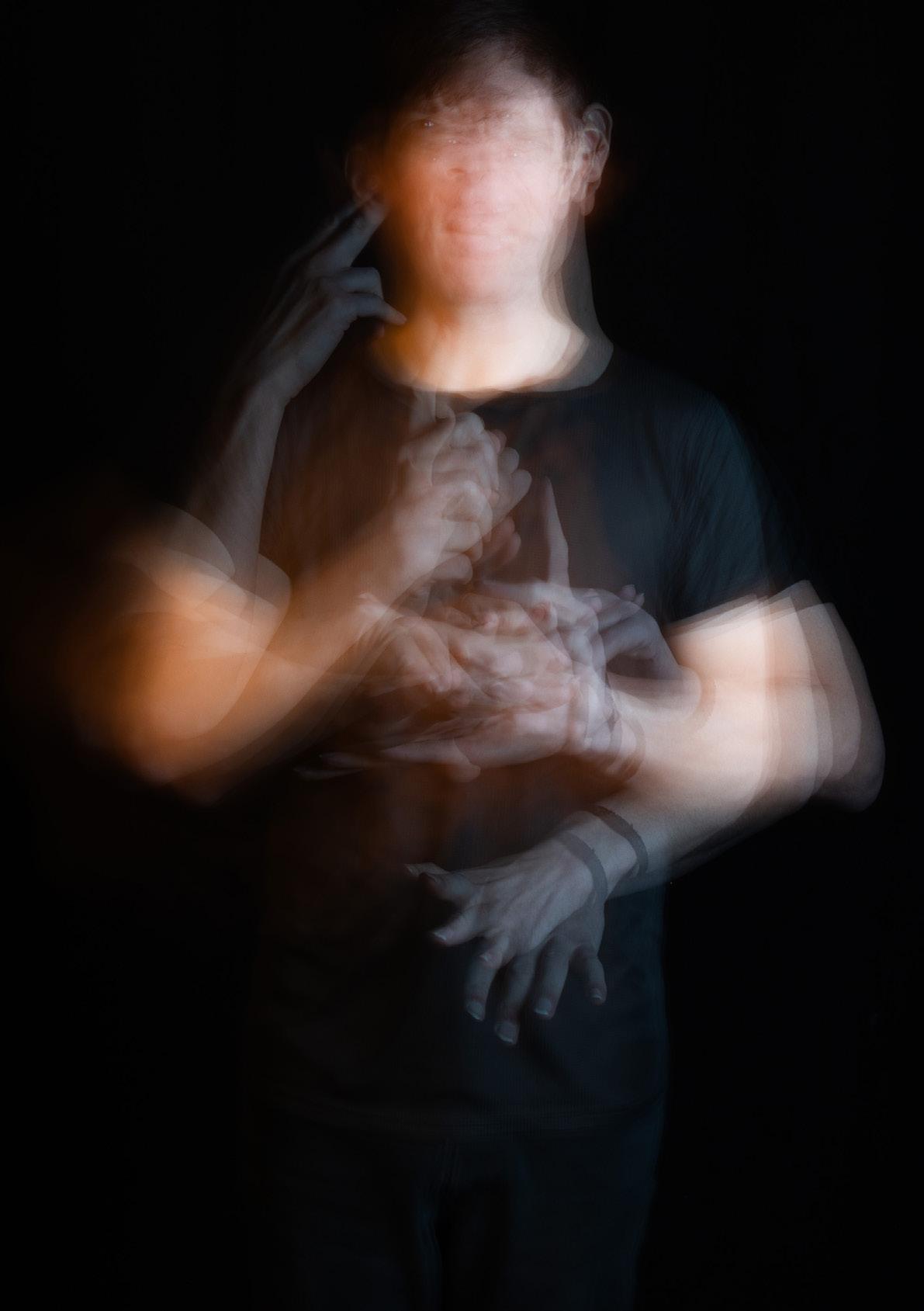
which use a slow shutter speed to capture movement, show light-skinned people dressed in black against a black background, so their hands, arms and faces are emphasised but blurred. The images suggest a continuity from past to present, as using BSL is one way of “passing on our culture and heritage,” says the artist. “The images hold anger, memory, strength and beauty. BSL was banned, controlled, and ignored – but it survived. It is still here. It is still moving. It is still powerful.”
Degree show: To be confirmed – contact Coleg Gwent for details
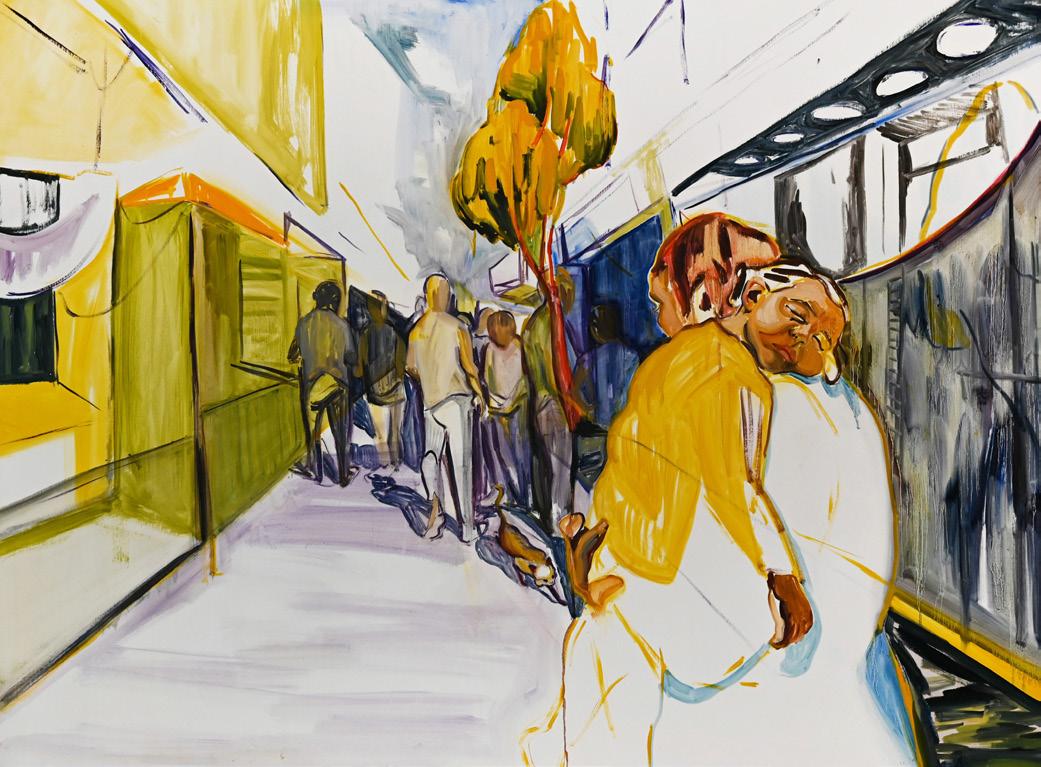
For Ella Sheltawy, the use of colour and negative space is a way to create tension and ambiguity.
By ANNEKA FRENCH
Ella Sheltawy’s oil paintings and charcoal drawings combine found and family photographs with other source materials, including stills from moving image. It’s a process that affords them an unsettling quality as Sheltawy places motifs, including young children and animals, into environments or configurations imbued with dark socio-political undercurrents.
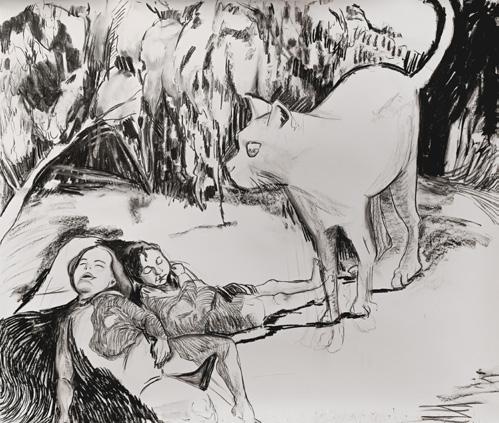
In the haunting charcoal drawing, Shut Eyes, for example, an enormous cat looms over the diminutive figures of two children lying on the ground. The children’s postures and
expressions suggest that they may not be simply sleeping. The light, almost tentative repeated outline of the cat’s paws brings movement to the scene, almost as if the cat is dancing or, as Sheltawy observes, “humming”. In either case, the cat’s presence is at odds with the absolute stillness of the children’s forms.
“Instead of trying to translate a direct message,” Sheltawy explains, “I like to play with the mood of a work, to get a feeling of uncertainty or disassociation, something many of us are experiencing – me certainly – in light of world politics. I think of it a bit like magical realism, where elements within an environment become a metaphor for tension.”
Baby Sleep (2025) is an oil painting on paper, a surface Sheltawy favours for its smoothness, directness and accessibility. Like other of her paintings, Baby Slee p features intense areas of colour within
“I like to play with the mood of a work, to get a feeling of uncertainty or disassociation.”
a small value range. Rooted in a recent trip to Cairo, in which she visited family for the first time in 17 years, the painting features a busy street scene, with the two figures in the foreground taken from a family photograph. For Sheltawy, Baby Sleep is distinct from other works in its relative calmness. This said, the negative space within the painting offers ambiguity, while the security and safety of this particular sleeping baby starkly contrasts with the children in Shut Eyes (2026).
The vulnerability of children is a motif further explored within the painting Playtime (2026). Sheltawy highlights the importance of colour in this work, viewing it as indicative of a potential tipping point or threat. The child here is taken from a childhood photograph of herself. This is a device Sheltawy employs frequently – a motif is isolated and recontextualised quite radically. “I sort of collage as I go,” she explains. “I’ll paint things in and then paint them out again.”
Attracted to tension while painting, she wrestles with striking an ideal balance within a composition. Sometimes this is achieved within a single work, otherwise narratives are set up via dialogue between works, aspects she is carefully considering during the planning for her degree show presentation. This is all part of the process. “On my degree, I found myself placing works high up the walls to maximise my studio space, with multiple pieces being developed together at the same time. The symbolism within one often feeds into or germinates an idea in another painting or drawing.”
Sheltawy comes from British and Egyptian parentage. Both parents are vocally
political and spent time campaigning, an upbringing she describes as informing her lens and her work. “I recognise a real inequity. A lot of the privileges we have in the West are racial and geographical, and this has become a driver for my practice. In seeing horrors and genocides on our screens all the time, there is a real disconnect between others’ pain and our safety,” she says. “It’s a funny relationship: I am an Arabic woman but I didn’t grow up with Egyptian culture. I’m only learning to speak Arabic now.”
It’s a perspective that plays out subtly. Sheltawy notes that though more directly political imagery, especially around climate change, informed some of her earlier work, this has become less explicit over time. This may in part be due to her interest in cinema and video works found online, which afford scope for compositions that draw narrative tension between stillness and movement. One crucial element is the negative space that Baby Sleep, Playtime and Shut Eyes all share – an artistic decision that indicates an unknown or unfinished quality – and offers an invitation for the viewer to actively step within.
Degree show: 26-28 June, The Art Academy, 185c Bankside, Park Street, London SE1 9BL
ARU, Cambridge and online
creativeshowcase.aru.ac.uk/graduate-showcase
UNDERGRADUATE DEGREE SHOW 2026
PUBLIC VIEW 6–13 JUNE 10AM–6PM
BATH SCHOOL OF ART, FILM AND MEDIA
BATH SCHOOL OF DESIGN
ARCHITECTURE
CREATIVE ARTS PRACTICE
FASHION DESIGN
FASHION PHOTOGRAPHY
FINE ART
PRODUCT DESIGN
GRAPHIC COMMUNICATION
GRAPHIC DESIGN
INTERIOR DESIGN
PHOTOGRAPHY
TEXTILE DESIGN
BATH SPA UNIVERSITY
LOCKSBROOK CAMPUS
LOCKSBROOK ROAD
BATH BA1 3EL
bathspa.ac.uk/degree-shows
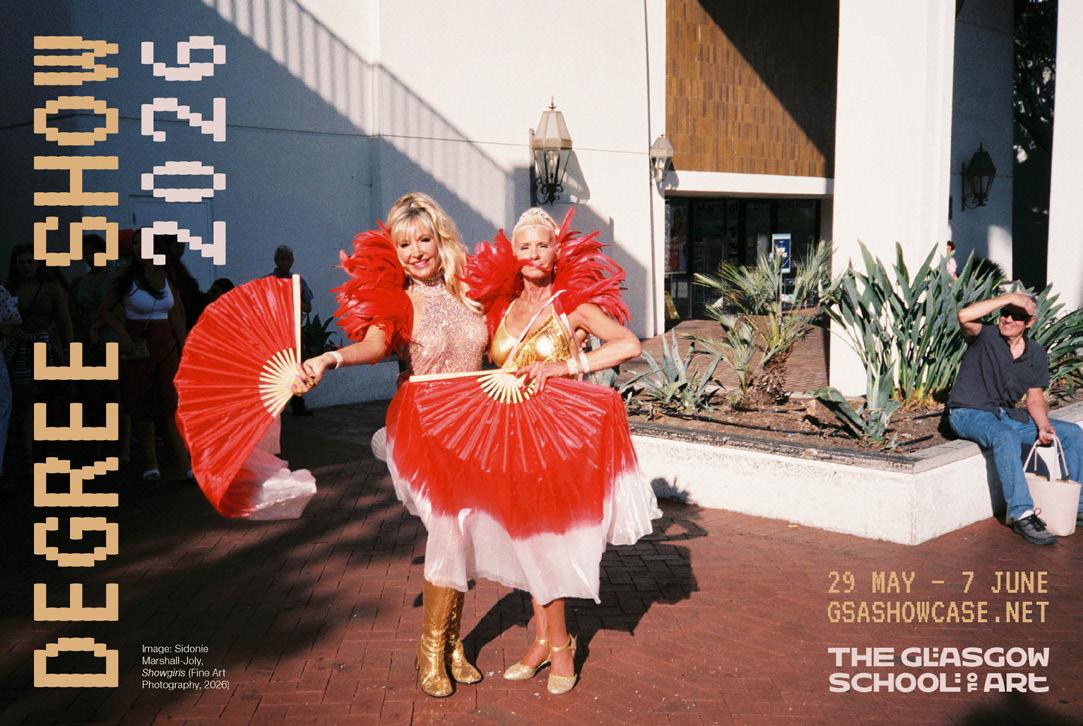















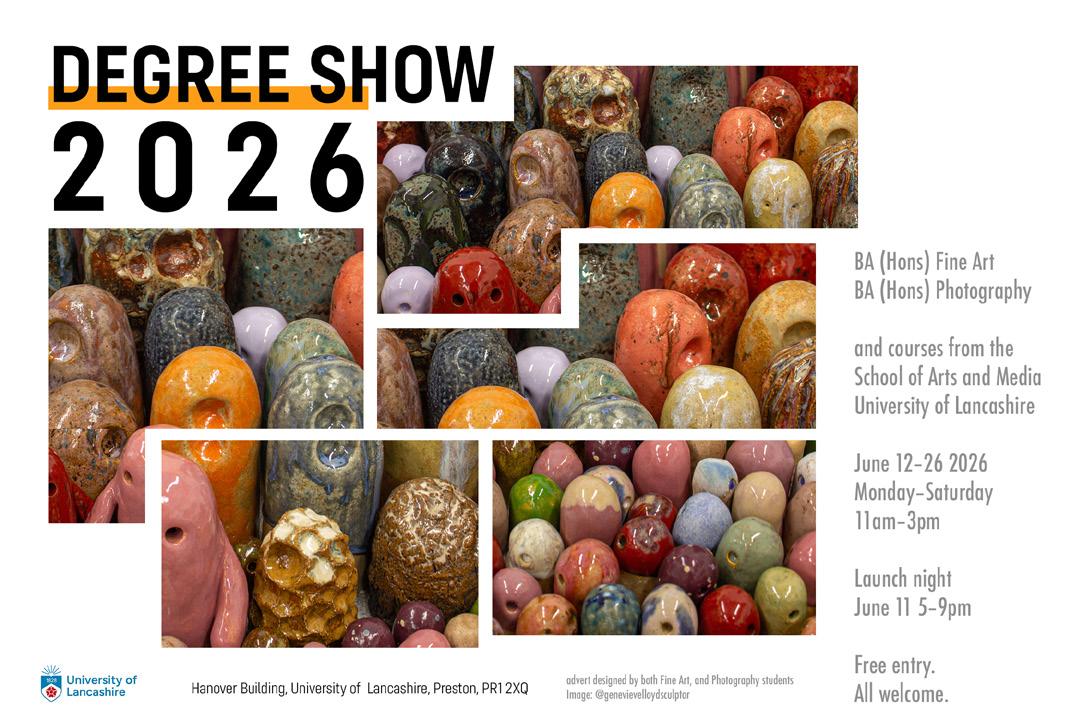
12-19 JUNE 2026

DACS supports you by protecting your copyright and collecting and paying you royalties.
Membership is free and, you do not need to be earning yet.
Get in touch with us to find out more.
dacs.org.uk
DACS
@dacsforartists
@dacs.org.uk
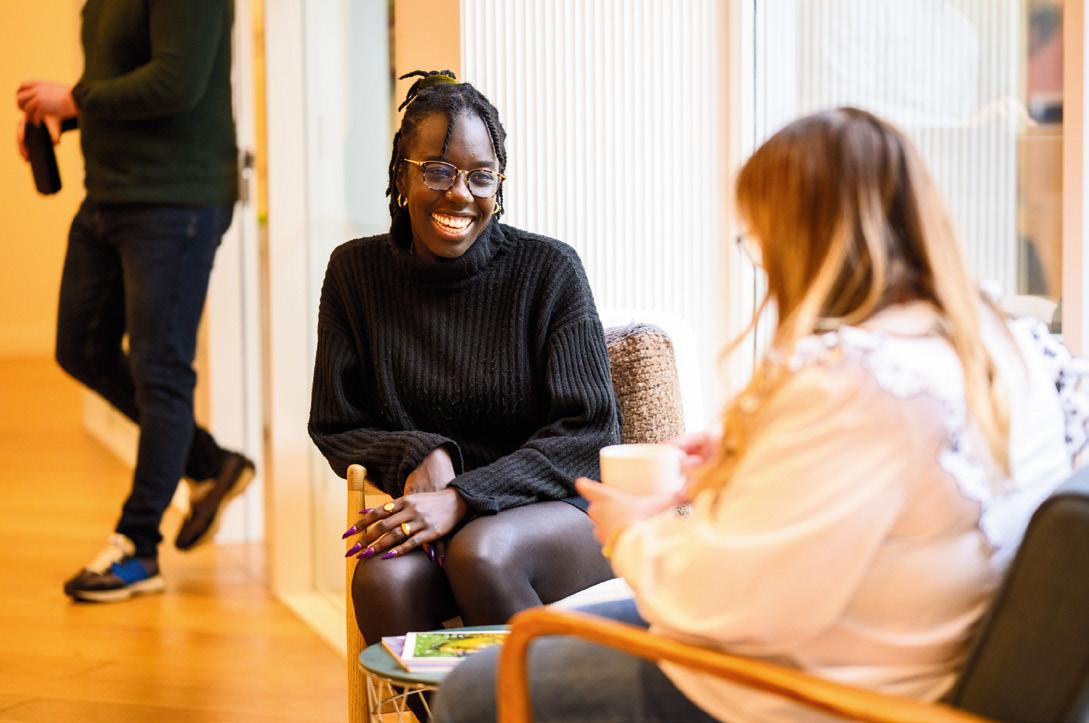
Student membership Join a-n for £16*
As a student member, you get access to:
Online community: Connect with other students, artists and arts organisers, with tools for sharing, collecting, conversing.
Resources: Early career advice and professional guides, profiles, contracts, research, toolkits, plus archives.
Opportunities: Full access to job and opportunity listings to prepare you for the work environment.
Events: Invites to artists’ events for networking and professional development.
*Membership is free to undergraduate students at universities with a JISC licence agreement. Check here for a full list of current JISC university licence holders.
What now? It’s the big question with no easy answer. But while postgraduate life can be tough, it’s also full of possibilities waiting to be grabbed. One year on, five 2025 graduates share what they’ve done so far, while artist and RCA head of Programme in MA Contemporary Art Practice, Harold Offeh, talks about his art journey and the importance of community.
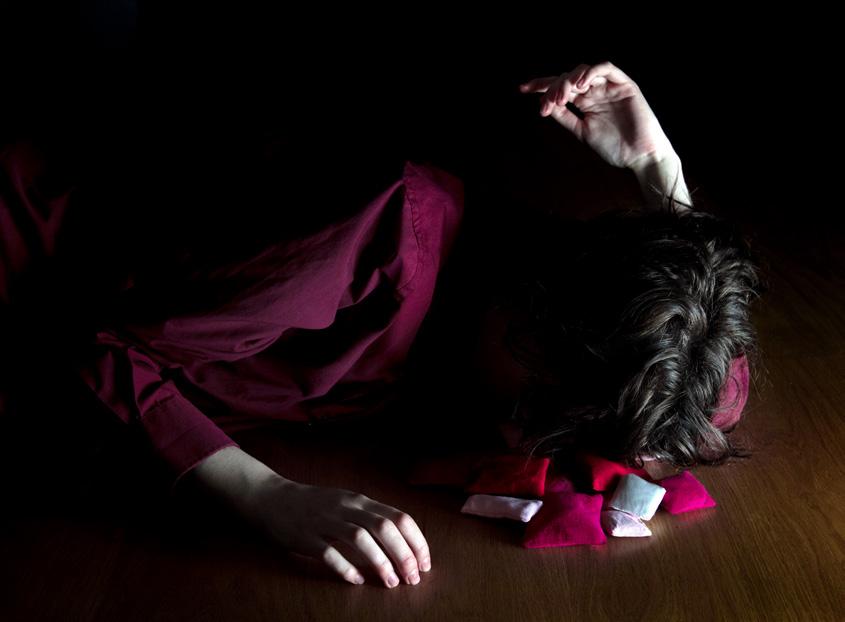
Five 2025 graduates featured in last year’s guide look back on their degree show and share what they’ve been up to since.
Being a new graduate doesn’t get any easier, and every year brings new challenges and obstacles to overcome.
But as our five 2025 graduate interviewees make abundantly clear, whatever path you decide to take next, it’s always worth remembering that you are not alone.
Art and the artists that make it thrives on connection, collaboration, community. Making the most of that, keeping in contact with your peers, being mutually supportive – it’s all part of the job of developing your art practice.
This time can also be a chance to explore new approaches and outcomes.
As Hereford College of Arts graduate Rebecca Baddeley puts it: “Let your
Emrys Thurgood, Sleepover With Mice, 2026
“Working to the deadlines of competitions and open calls has been a useful tool to push myself.”
Emrys Thurgood, UWE Bristol
practice shift – it doesn’t need to stay the same as it was during your studies.”
How was your degree show?
Rebecca Baddeley: Intense but really rewarding. I was pleased with how my work came together, particularly the way people engaged with it physically and emotionally. Hereford College of Arts also gave me the opportunity to present my work to a wide audience. I was even able to perform for artist Bobby Baker during her visit to the college, which will always stand out as a core memory for me.
Tafsia Muzib Dana: The most enjoyable part for me was the preparation stage. During this time, I learned a lot about curation – deciding which paintings to exhibit, which works should be displayed together, and how to present artworks that couldn’t be hung directly on the wall. I also enjoyed collaborating with my peers throughout the process. Overall, it was a wonderful experience.
Shiv Lalgi: While the weeks leading up to the degree show were quite stressful and unpredictable, the show itself went really
well and exceeded my expectations in many ways. Seeing all my ideas unfold in that space was a wonderful feeling, almost like a conclusion of my thoughts at the time, which was very exciting as it made me look forward to all of the things I could create next.
Issie Martin: It was such a great celebration of all of our hard work and time on the course at Loughborough. My favourite part ended up being the text I engraved onto the door which led into my exhibition room, conveying the ideas of porosity, site and bodies of water within the work. With my friends in the same exhibition area, we collaborated to make
“Stay curious and proactive – opportunities often come from simply putting your work out there.”
Tafsia
Muzib Dana, Leeds Arts University
our own makeshift ‘library’ of books that had influenced our work. This was a lovely way to bring together all the different practices sitting in the same space.
Emrys Thurgood : We had a show in Bristol where everyone curated their own artwork, and one in London that I helped curate as a salon-style hang, and they were both great experiences. Making my frames
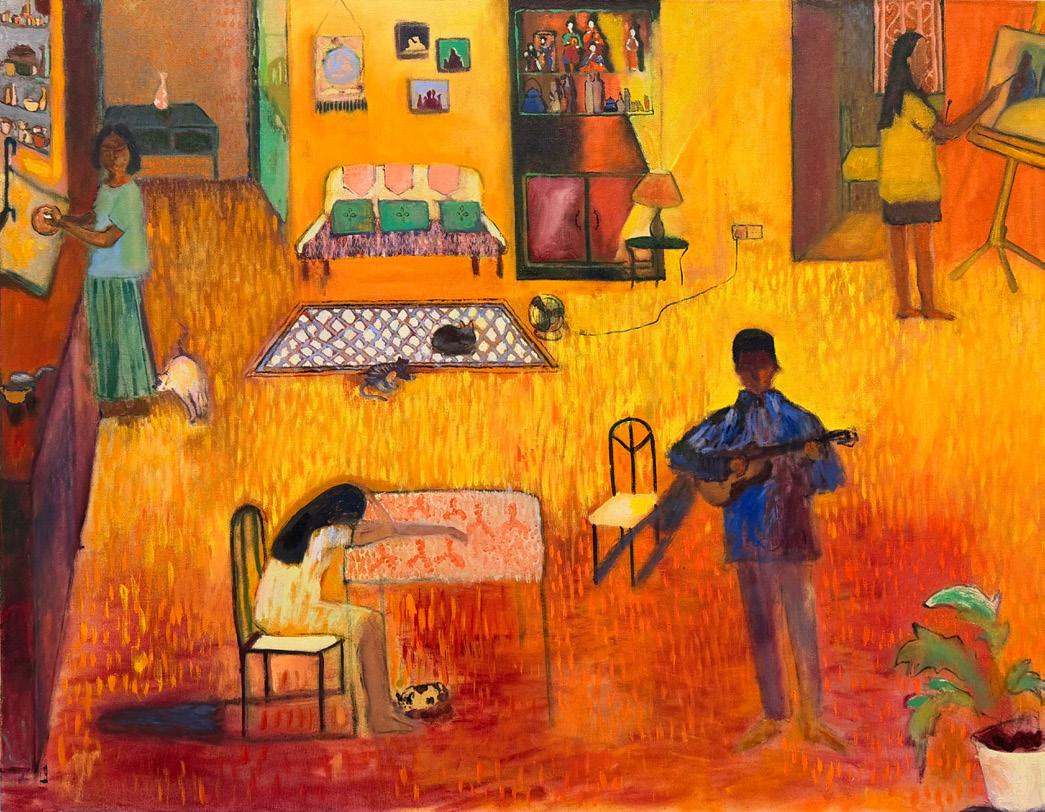
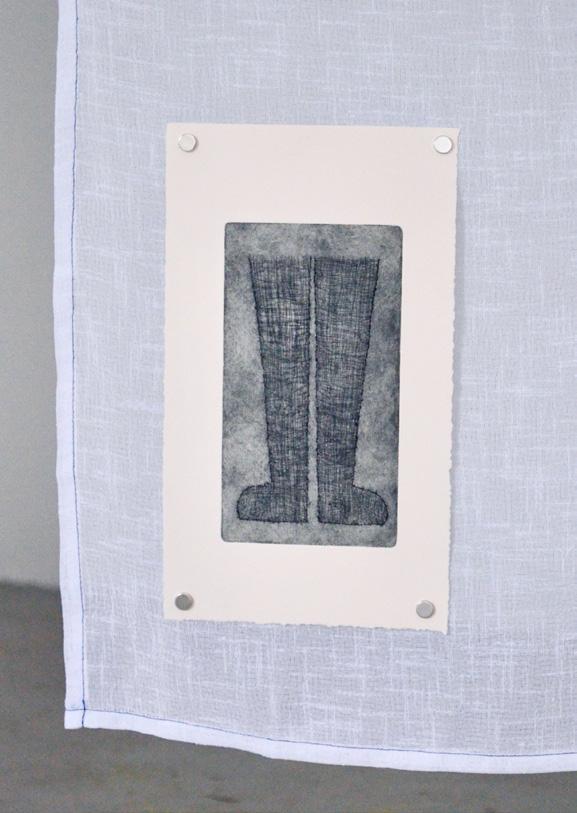
“Making connections and collaborating with friends or other artists is the best way to keep your practice ticking along.”
Issie Martin, Loughborough University
and photobooks from scratch was especially educational. If I were to exhibit again, however, I would play more with my presentation to try to make my display more interactive.
What have you been doing since you graduated?
RB: I’ve continued working as an artist while developing more community-based and participatory projects. Currently I’m working with the Artlandish group in Hereford as assistant creative director, helping to plan and deliver events that sit between art and social practice, with care
at the centre of the work. I’m also looking into postgraduate study for the coming year.
TMD: Initially I continued working at my barista job in Leeds and spent time painting in my room. I was very happy to win a residency award through Mall Galleries London in Crinan, Scotland shortly after graduating. I was also awarded a residency at East Street Arts in Leeds where I spent three months developing a new body of work, and I’m very grateful to have been accepted into the three-month Creatives in Residence scheme at Leeds Arts University. Currently, I am visiting my home country, Bangladesh, and working on a new body of work for upcoming exhibitions in Dhaka.
SL: I was working as an assistant art teacher through my last two years of university, so once I graduated I was lucky enough to immediately get a job as an art teacher. I now teach young children, teenagers and adults while trying to maintain my own practice when I can. I look forward to continuing travelling and completing a postgraduate course eventually.
IM: I started on the MA Art & Ecology at Goldsmiths in September. It’s been such a big change moving to London but the course is wonderful and I’ve been learning so much, surrounded by a cohort of really exciting and different practices, conversations around ecology and artistic practice. Outside of my course, in October I assisted textile artist Alice Burnhope at workshops at Kew Gardens, and I ran an online zine workshop with No Jobs In The Arts in January. These opportunities have helped me develop my facilitating skills and understand different ways I might continue my career in the arts following graduation.
ET: I’ve been working as a design and technology technician, which has developed a different avenue of my technical skills. The position lets me play more with making props, which is a big part of my personal work. I’ve also moved to London and have been able to attend lots of great exhibitions and panels.
How has your art practice developed?
RB: I don’t have a traditional studio, but I work flexibly from my dining table at home, in shared spaces and community venues, which suits the participatory nature of my work. I’ve made new work that’s been shown in exhibitions, alongside running workshops and performances. I’ve also sold work and gained opportunities through exhibitions and residencies, which has helped keep things moving after the degree show.
TMD: I have tried to remain consistent in my painting practice, gathering ideas through constant sketching and drawing. I am currently painting at home and feel very happy working in the company of my cats, who keep me entertained. Recently, I was a finalist for the Ingram Prize 2025, and my work was featured in the exhibition at Unit 1 Gallery in London. I also sold some of my work during my degree show.
SL: In February I had my first solo salon show with Crème Fraîche, a two-year artist incubator programme based in London, which has been a great source of motivation to keep creating work. I have been able to continue my practice to a limited extent as I’ve only recently secured a studio space, but it’s challenging to maintain a consistent routine and dedicate time to thinking and making when I also have to compete with work commitments. I’m still in the process of building a healthy and sustainable practice.
IM: I’ve had a lot of time to continue developing my practice in my new studio space – mostly focussed on developing my knowledge of materials from my home coastline and using these within natural inks, dyes, sculptural works and tools. I’ve also been really enjoying getting into the print studio and making lots more etchings. We had an Interim Show in March and our MA Degree Show is in July, so I have lots of motivation to make. Also, in November I had a solo exhibition at Modern Painters, New Decorators in Loughborough.
“Don’t panic if everything doesn’t happen straight away. Momentum builds over time.”
Rebecca Baddeley, Hereford College of Arts
Rebecca Baddeley, What Was She Wearing? 2025, textile mask and manipulated knitwear costume, mask: 40x56x19cm. Photo: Leonie Freeman (www.leoniefreeman.co.uk)
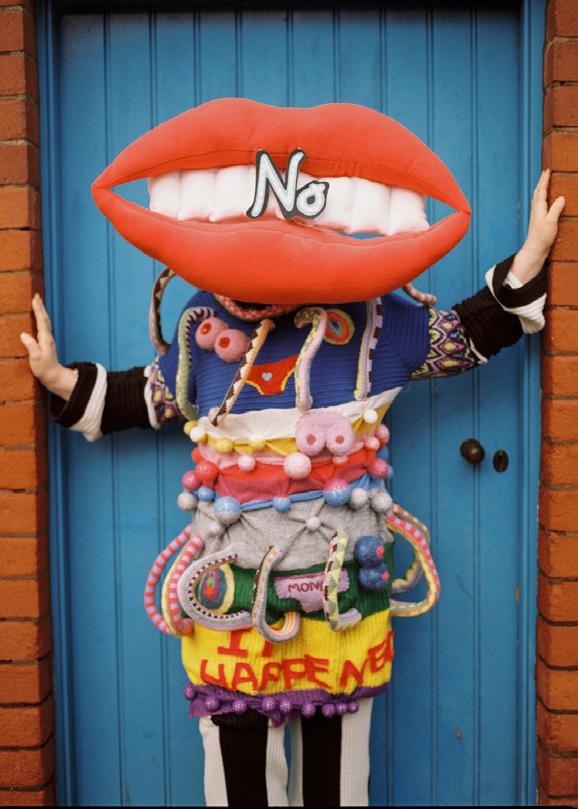
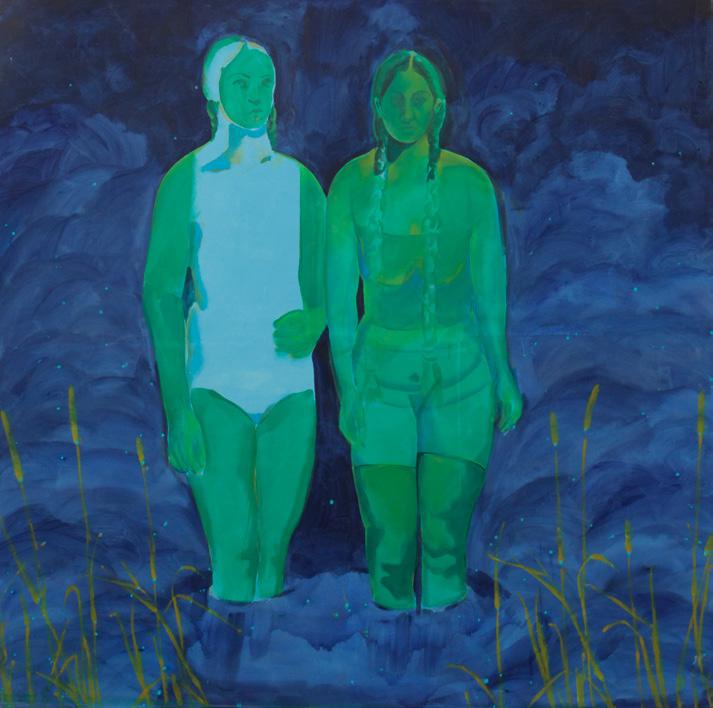
ET: My image making slowed down for a couple of months after graduating, but I’ve been back to making new images again. As I no longer have access to the studios and lighting kits of university, I’ve been pushed to work more minimally and have grown doubly in love with my hot-shoe flash! I’ve had work exhibited at Fotonow for the South West Graduate Photography Prize, had an image in M, the magazine of Le Monde, and had my photobook featured in Photoworks 30th Anniversary Celebration.
Do you have any advice for this year’s graduates?
RB: My main advice would be not to panic if everything doesn’t happen straight away. Stay in touch with people you meet during the degree show and be open to opportunities as they arise. Let your practice shift – it doesn’t need to stay the same as it was during your studies. Getting involved locally and applying for open calls can be just as valuable as aiming straight
Shiv Lalgi, What the water knows, 2025, acrylic on canvas, 170x170cm
“Community is one of the most valuable things you gain at art school, so keep in touch with your peers and tutors.”
Shiv Lalgi, Slade School of Art
for full-time artistic work. Momentum builds over time.
TMD: Staying connected to your art is important. Inspiration often comes from small, everyday moments that can bring unexpected joy and keep you motivated. For me, it was difficult to leave my university studio and move all my paintings and materials into the four walls of my bedroom. At first, it felt limiting. But I soon realised that all I really needed was some paint and a surface to work on. Stay curious and proactive – opportunities often come from simply putting your work out there.
SL: Community is one of the most valuable things you gain at art school, so keep in touch with your peers and tutors, and show up for one another. I would also recommend dedicating some time to researching opportunities, applying to open calls, residencies and programmes – these can provide a sense of structure and
motivation to keep making work alongside other commitments. Finding even small, consistent ways to keep thinking and making can help maintain momentum.
IM: When I started making again after taking a summer break, I found that lots of reading and regular drawing really helped me to regain confidence in my practice. Doing a master’s has been a great way to continue exploring my interests in ecology and sustainable practice, as well as having access to a studio and workshops. Finding something to keep you making and seeing artwork, making connections and collaborating with friends or other artists is the best way to keep your practice ticking along.
ET: The advice I got that rang true was to find a job that would facilitate personal projects, either creatively or financially. I’ve also found it useful to set personal deadlines for making new work. I try to make an image a week, but I’ve also found working to the deadlines of competitions and open calls has been a useful tool to push myself to grow my projects.
And finally, what’s next?
RB: I want to keep developing my practice through community-led and participatory work. Alongside exhibiting, I’m keen to expand my workshops and collaborative projects, and I’m interested in residencies, funding, and longer-term socially-engaged work. Looking ahead, I see my practice sitting somewhere between making work and teaching, with a strong emphasis on facilitating spaces for others.
TMD: My goal is to continue developing my painting practice. I’m trying to experiment with each new piece I create and I’m excited to see where my practice is heading in the future.
SL: My main goal at the moment is to build a consistent studio practice and continue developing a strong body of work. It is quite exciting and freeing to paint outside of an academic setting as there is space for unlimited experimentation and discovery. I’m most interested in taking the ideas I began during my degree further and seeing how they evolve over time, with different ways of making.
IM: I’ve been looking for residency opportunities but I’ve mainly been concentrating on making the most of my access to university workshops and learning from the artists around me. I’d also really love to continue developing my writing skills, as I’ve been experimenting with this throughout my MA.
ET: I’d love to do a master’s degree, and I’d also love to scale up the set and prop design skillset that I’ve used for my photography, possibly through theatre or assisting work. But first I’m working into my style and trying to improve my storytelling abilities. I am slowly working towards a dummy of my next publication and I’m trying to produce more physically engaging outcomes through experimentation.
Class of 2025: Who’s Who
Rebecca Baddeley, BA (Hons) Fine Art, Hereford College of Arts
Tafsia Muzib Dana, BA (Hons) Fine Art, Leeds Arts University
Shiv Lalgi, BFA (Hons) Fine Art, Slade School of Fine Art
Issie Martin, BA (Hons) Fine Art, Loughborough University
Emrys Thurgood , BA (Hons) Photography, UWE Bristol
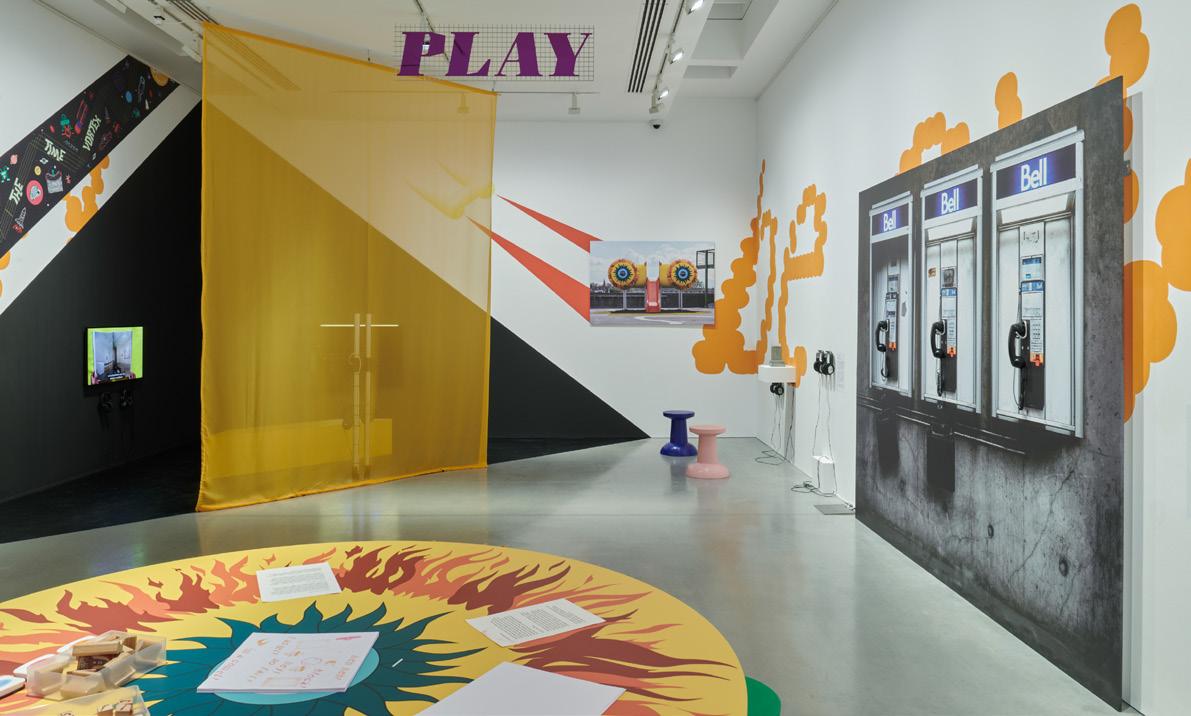
Artist, a-n member and head of the RCA’s Contemporary Art Practice MA, Harold Offeh, discusses degree shows, post-grad study and developing a practice. By CHRIS SHARRATT
Harold Offeh has vivid memories of his undergraduate degree show, more than 25 years on. “It was incredibly charged and nerve wracking. It felt like the centre of the universe!” What he remembers enjoying the most was “the intensity and camaraderie. People were working late and supporting each other and helping each other. There’s a sense that you’re all working individually on your things, but you’re also working together and in parallel. That was really fortifying.”
That sense of working together and being part of a community of fellow artists, stayed
with Offeh as he went from BA to MA, to becoming an internationally recognised artist and, since 2025, head of MA Contemporary Art Practice at the Royal College of Art (RCA). “Maybe a better word than community is ecosystem,” he muses. “It’s thinking about relationships between people, organisations and structures, and understanding your place within that.”
Offeh is keen to stress that becoming part of that ecosystem doesn’t necessarily mean printing business cards and practising your
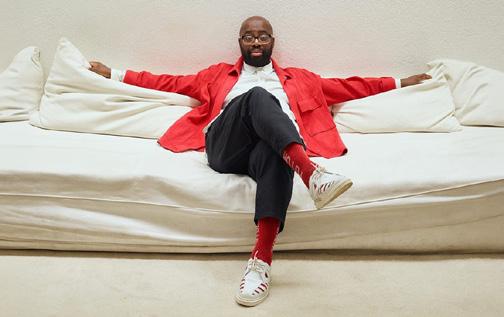
networking skills – although that’s a personal choice, of course. “People can have a sense of alienation, that the art world is over there and as an artist I need to get into it,” he says. “But you shouldn’t forget that you have agency, that you can make your own art ecosystem. So many artists and change-makers within the broader cultural sector have come about by creating their own network. Every artist has the ability to do that. It doesn’t necessarily require a huge amount of resources but it requires motivation.”
When Offeh graduated in 1999 with a BA in Critical Fine Art Practice from the University of Brighton, he went straight on to MA Fine Art Photography at the RCA (1999-2001). He accepts that this route isn’t for everyone. “I was in a minority. A lot of people are sensible
“You shouldn’t forget that you have agency, that you can make your own art ecosystem.”
in terms of having a moment to reflect and then using that later when they do an MA. But I had a lot of tutorial support that said, ‘Oh, you should think about doing an MA’, and I was like, ‘Oh, OK!’ For me, I think that momentum was useful going on into a master’s programme.”
Crucially for Offeh, the move back to London for his MA allowed him to continue developing his ideas in the company of other artists; to continue to be “fortified” by discussion with fellow students, lecturers and practitioners. “We talk a lot with students about sustaining a practice and what the best conditions are for this – and
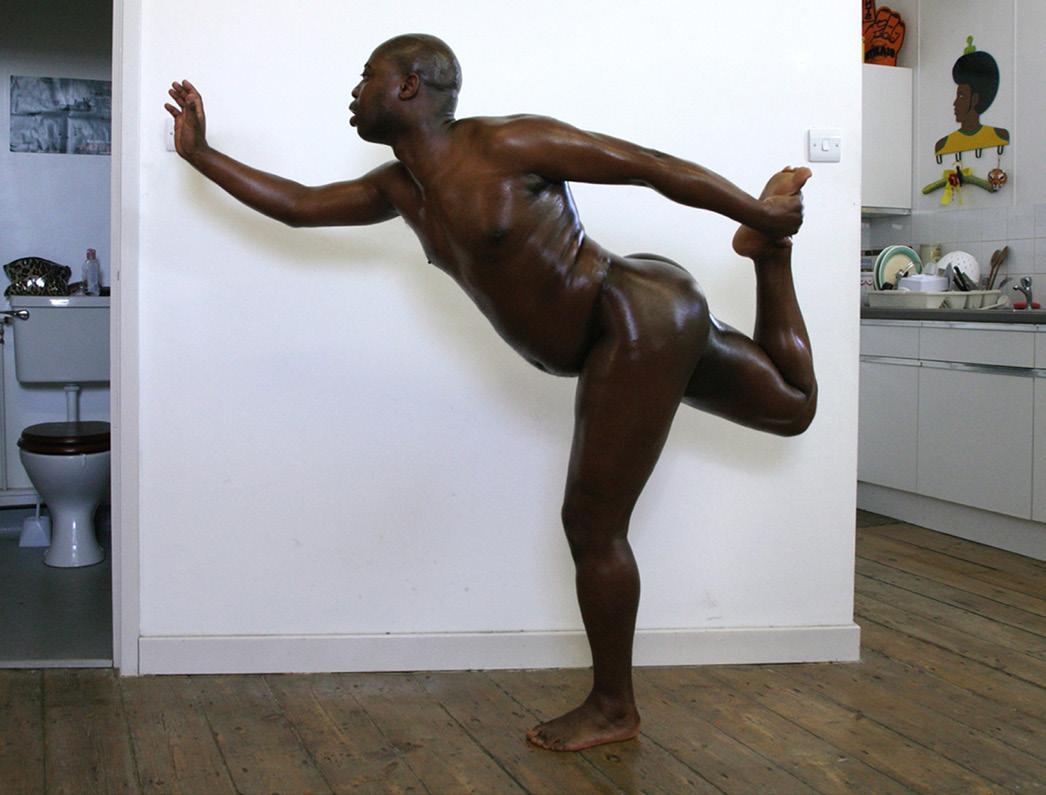
“We talk a lot with students about sustaining a practice and what the best conditions are for this – and it’s not isolation!”
it’s not isolation! So much comes out of conversation and dialogue, but also just that sense of camaraderie and friendship. When I think about my career, it’s these ongoing friendships and conversations, with other artists but also people who work in institutions, that have been the key factor in keeping going.”
Offeh’s practice is characterised by humour, openness and a strong connection to pop culture; he works in a variety of media including photography, performance and video. His recent solo exhibition, ‘Mmm Gotta Try a Little Harder, It Could Be Sweet’, at Kettle’s Yard, Cambridge brought together work spanning two decades, including Covers (2008-2020), which saw him reenacting the album sleeve photographs of Black singers from the 1970s and 1980s, including Grace Jones’ Island Life
He completed that project for a PhD by practice at Leeds Beckett University, and Offeh sees his art career as a form of learning in of itself. His first teaching role was in 2010 as a visiting lecturer for Arts University, Bournemouth and his association with the RCA began in 2018, first as a visiting lecturer and then tutor. His teaching, he explains, is another aspect of his practice, rather than something separate.
“I see it very holistically – it’s just the context in which the practice is operating,” he says. “As an artist I’m interested in critical pedagogies, in creating and facilitating learning, primarily my own but also thinking about how that operates in relation to other people. Whether that’s facilitating institutionally, informally, in partnership, in collaboration, or adjacent to – they’re just
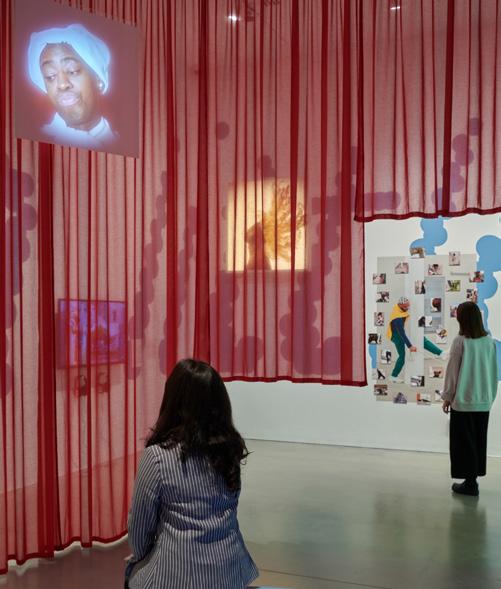
modes and strategies. It’s the same research interests and motivations, whether I’m collaborating with a group of young people in south London or doing curriculum development and review for an MA.”
Offeh’s students on the Contemporary Art Practice MA – 106 in total – will have their final show from 18-21 June at the RCA’s Battersea campus. What, then, does Offeh hope this year’s cohort will have got out of their time on the course? “It’s not necessarily about having an amazing, slick show,” he says. “You can learn as much –if not more, actually – from something that doesn’t quite work or is structurally problematic or materially problematic. So for me it’s about creating a tool kit which comes from being able to experiment, and from certain values and qualities like playfulness and curiosity. It’s about building resilience, too – that’s a huge thing.”
He continues: “I also hope they’ve made friendships, that they’ve made connections and found people who they have an affinity with. And that they can feed that into an ongoing and sustainable practice.”
We catch up with Will Hughes, who first joined a-n through our graduate offer, before taking out full Artist membership to support their practice and career.
Since Will Hughes joined a-n while completing their MA Fine Art at BxNU (Northumbria University and BALTIC Centre for Contemporary Art) in 2021, their practice has gone from strength to strength. They were named as one of the five Tees Valley Visual Artists of the Year 2025, and in 2022 took part in YSI Sculpture Network and were shortlisted for the Henry Moore Foundation Award.
Their sculptural practice explores ideas of aspiration, queerness and glamour: the latter being, as they put it, “a spell which is cast, a blur that’s transformative and seductive”. With titles such as The air that I’m breathing, Forever’s not enough borrowed from pop song lyrics (Lady Gaga), the glossy, shiny surfaces of Hughes’ work veils deeper narratives, social relationships and material histories.
“Leaving university is like leaving a bubble,” Hughes says. “Once you’re out it’s so much harder to stay connected, hear about opportunities from your peers and continue making around the pressures of everyday life.”
Hughes initially joined a-n to “look for opportunities”, and as their practice
developed, found other benefits became essential. “It’s cheap and joining was a no brainer. I’ve used the insurance many times. The resources on fair pay have helped me choose the right opportunities for me.”
After studying in Bath then Newcastle, Hughes is now based in Teesside, and finds that their membership keeps them connected: “It gives me the ability to stay up-to-date with what’s happening nationally and apply for things outside my region.”
Since graduating, Hughes has supported their practice with other work. “I’ve had many jobs in retail to pay my living costs, my favourite being a kitchen designer for B&Q. Recently I’ve worked in project management with a gallery which I loved. Not relying on your practice to pay the bills gives you autonomy – you can create whatever you like and not worry about whether it sells.”
As we enter the excitement of degree shows season, Hughes’ advice to this year’s graduates is to “allow yourself to grow. Down the line more of your income will come from your practice and you can rebalance the ratio of second or third job to practice. Give yourself time.”
And in the meantime, join a-n.
“Joining a-n is a no-brainer because of the resources, insurance, and to stay up-to-date with what’s happening nationally.”
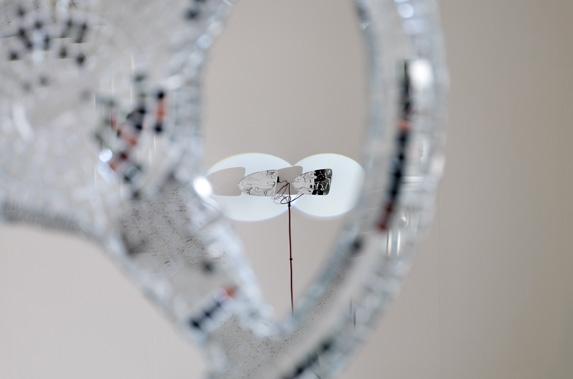
Higher Education and Fur ther Education membership with a-n
to a-n through a JISC licence, plus:
• Free student memberships
• Unlimited access to resources and research
• Invitations to members-only events
• A professional development talk for students
• with a-n
• Exclusive
From £293 per year
Find out more