ANANDALIPI
A Publication by Ananda Mandir, New Jersey
ANANDALIPI
An Annual Magazine Published by ANANDA MANDIR
A Tax-Exempt, Non-Profit Organization 269 Cedar Grove Lane Somerset, NJ 08873
Tel: 732.873.9821
Website: www.anandamandir.org
PUBLICATIONS
Chairperson: Pronoy Chatterjee, pkc_usa@yahoo.com
Assistant Chairperson: Debajyoti Chatterji, debsmee572@gmail.com
Editor-in-Chief: Pronoy Chatterjee, pkc_usa@yahoo.com
Managing Editor, Anandalipi:: Amitabha Bagchi, amitabhanj@gmail.com
Managing Editor, Ananda Sangbad: Guru Chakravarty, guruchakravarty@yahoo.com
Editors:
Subrata Bhaumik, bhaumik.subrata@gmail.com
Debajyoti Chatterji, debsmee572@gmail.com Subhodev Das, subhodev.das@gmail.com
Sushmita Dutta, sushmitadutt@novel-ebiz.com Nupur Lahiri, nupurlahiri@aol.com
Members-at-large: Bhaswati Bhadra
Santosh Mukherjee
Ashok Rakhit
Cover Illustration by: Basab Dasgupta
Illustrations by: Sudipta Mondal Compose and Layout by: Arup Ghatak
Printed by : GIS-Kolkata, pranoyroy2007@gmail.com
Ananda Mandir’s Board of Trustees and Committees (2014-2016)
Board of Trustees
President: Dipak Sarkar
Vice Presidents: Suprasad Baidyaroy, Jaiprakash Biswas
General Secretary: Arun Bhowmik
Assistant Secretary: Anup Rakhit
Treasurer: Chanu Das
Other Members: Chhanda Aditya, Krishna Bhattacharya, Prabir Biswas, Sikha Chatterji, Pronoy
Chatterjee, Krishna Dutta Roy, Phalguni Ghosh, Saurav Ghosh, Sanchoy Das, Soumen Roy, Subrata
Bhaumik, Chandi Maitra, Pradip Majumdar, Uma Roychowdhury, Santosh Mukherjee, Ashok Rakhit, Sukanta Sengupta, Utpal Sengupta
Priest: Biswajyoti Nayak
Other Committees and Subcommittees (2014-2016)
Award & Recognition
Pronoy Chatterjee (Chair)
Debajyoti Chatterji
Surya Dutta
Guru Chakravarty
Amitabha Bagchi
Ashok Rakhit
Dilip Guha
Dipak Sarkar
Jerry GaMarsh (Adjunct)
Building Maintenance
Prabir Biswas (Chair)
Pradip Mazumdar
Chanu Das Arun Bhowmik
Communication
Saurav Ghosh (Chair)
Sanchoy Das
Pradip Mazumdar
Constitution Modification
Pronoy Chatterjee (Chair)
Dipak Sarkar
Kamalesh Sirkar
Debajyoti Chatterji
Construction
Ashok Rakhit (Chair)
Prabir Biswas (Asst Chair)
Surya Dutta
Arun Bhowmik
Jaiprakash Biswas
Dipak Sarkar
Cultural
Arun Bhowmik (Chair)
Soumen Roy Suranjan Choudhury
Event and Rental Coordination
Surya Dutta (Co-Chair)
Utpal Sengupta (Co-Chair)
Biswajyoti Nayak
Festivals (Major) Coordinator
Surya Dutta
Food Arrangement
Suprasad Baidyaroy (Chair)
Uma Roychowdhury;
Anupom Saha
Pradip Majumdar
Jaiprakash Biswas
Phalguni Ghosh
Soumen Roy
Ujjal Sanyal
Arup Dutta
Amal Paul
Fund-raising
Krishna Bhattacharya (Chair)
Ashok Rakhit (Co-Chair)
Suprasad Baidyaroy
Sukanta Sengupta
Debajyoti Chatterji
Kamalesh Sirkar
Prativa Hore
Uma Roychowdhury
Humanitarian
Krishna Dutta Roy (Chair)
Internship
Pronoy Chatterjee (Chair)
Dipak Sarkar
Pradip Majumdar
Ashok Rakhit
Kamalesh Sirkar
Manning the Collection
Table
Bandana Rakhit (Chair)
Krishna Dutta Roy (CoChair)
Santosh Mukherjee
Rita Bhowmik
Rick Sen
Sikha Chatterji
Lopa Das
Anup Rakhit
Soma Rakhit
Membership Drive
Krishna Bhattacharya
Saurav Ghosh
Member Update
Saurav Ghosh
Arup Datta
Chanu Das
Literary Discussion
Subrata Bhaumik (Chair)
Amitabha Bagchi
Pronoy Chatterjee
Roma Das
Subhendu Bagchi
Puja
Krishna Dutta Roy (Chair)
Dipak Sarkar (Asst-chair)
Uma Roy Choudhury
Chhanda Aditya
Rita Bhowmik
Rik Sen
Bandana Rakhit
Susmita Biswas
Ambalika Mukherjee
Rina Ganguli
Lopa Das
Soma Rakhit
Sarbani Mukherjee
Publication
Pronoy Chatterjee (Chair)
Amitabha Bagchi
Debajyoti Chatterji
Bhaswati Bhadra
Subrata Bhaumik
Guru Chakravarty
Sushmita Dutta
Subhodev Das
Nupur Lahiri
Santosh Mukherjee
Ashok Rakhit
Publicity
Santosh Mukherjee (Chair)
Youth Activity Organization
Dipak Sarkar
Auditing
Dilip Chatterjee
Jayanta Ghose
Eva Chatterjee
EDITORIAL
We take great pleasure in bringing to you the 2014 edition of Anandalipi – the annual literary magazine published by Ananda Mandir. The magazine aims to address a basic human need of the members of the Bengali community, namely to express and share their thoughts and emotions through literature. Its publication is proof of Ananda Mandir’s continued commitment to serving the community in a variety of ways – in this instance, by encouraging and showcasing the members’ literary talent and creativity. We are happy and proud to note its regular and continued publication for many years.
This year’s Anandalipi comes with poems, essays, short stories and amusing vignettes – in both Bengali and English -- with contributions coming not only from different parts of the United States but also from India, UK, and as far away as Australia. There is furthermore a separate section for youths with similarly varied contributions. We do believe that the publication offers a rich and eclectic fare for the enjoyment of our readers.
Aside from the contributors and the all-volunteer editorial team, the publication of Anandalipi has been made possible by the unstinting support of the Board of Trustees of Ananda Mandir. Ananda Mandir is currently involved in an ambitious project to build a brand-new community center and expand and beautify the existing temple. Even with this enormous challenge taking up much of the Board’s time and energy, Ananda Mandir continues to host and/or support numerous regular cultural activities for the community, such as musical programs (Ananda Sandhya), discussion groups (Sahitya O Alochana) and print publications (Ananda Sangbad and Anandalipi). We would encourage our readership to contribute generously to the organization in support of its cause.
Last but not least, our special thanks are due to Suprasad and Reeta Baidyaroy for bearing the cost of Anandalipi shipment from India as donation to the temple.
Amitabha Bagchi Managing Editor, Anandalipi
President’s Message
If you have recently visited Ananda Mandir you must have seen our construction progress. We are expecting our construction project finishing by the end of next year. When these milestone achievement will be accomplished, we will be able to provide space for 300 or more devotes to watch puja at the same time in the expanded temple and will be able to host small and large parties for wedding, birthday, retirement, graduation, anniversary and shradha, just to name a few. We will also be able to hold in our community center small or large size cultural programs, movie shows, plays and many other events. Additionally, we will have several office spaces for renting for art, dance, language and religious classes. Please write to me and let me know if you have any other ideas to promote activities for preserving Bengali/Indian Heritage at Ananda Mandir.
One important thing I want to bring to your attention is that following the completion of our community center and expanded temple we will need our members to take a more active part in running our organization. Why will we need these additional supporters? Because, we will run a much larger facility with more human use and car traffic. We will need more income to cover additional expenses. We will need our members and their friends to rent our community center and use our religious facility more frequently. We will also need financial support to furnish the expanded temple, community center hall, stage, audiovisual system, offices, and both vegetarian and non-vegetarian kitchens. How can you help? Become a Life Member, Patron Member or a Grand Patron Member. Donate generously. Join the Ananda Mandir team as a volunteer (to help in temple work, office work, training the youth in art, literature and religion). Join in management teams. Help recruit new members. Bring your children to our youth activities. Tell your friends about us.
Please join me to make Ananda Mandir strong so that this organization continues to provide religious and cultural services to hundreds of Bengalis and friends of Bengalis in the tri-state area.
Dipak Sarkar President, Ananda Mandir

•þy!ˆ˜
x!˜!•þ èþRy‹þyëÅÄ– þ›!Ù‹þôîD / 9
!î™yl îûyëû
Ö†þöì˜î ‹þöìRyþ›y™Äyëû– þ›!Ù‹þôîD / 12
¤#ôyîû ¤ô¤Äy
˜#þ›y èþRy‹þyëÅÄ– ôÄy¤y‹%þöì¤þ / 16
ô)!•Åþ þ›)y
šîûöìô¢‹þw l¨#– ’þz_îûþ›y’þüy– þ›!Ù‹þôîD / 20
ö‹þ!Oîûy
ߺ²Ày îûyëû– ôÄy¤y‹%þöì¤þ¤ / 22
îûî#wlyí ‘þy†%þîû xyîû ôyƒƒƒ
¤#ôy îÄylyI#ÅéŸéîûyëû– öþ:y¤ / 24
†þy†%þô!”
xy¥z!èþ ‹þöìRyþ›y™Äyëû– yôö좘þ›%îû– Vþy’þü‡[þ / 26
’þz¡þéŸéþ›%îûy”
þ›îûô îöì¨Äyþ›y™Äyëû– !ô!¢ˆyl / 30
¢y¥yy˜y ˜yîûy¤%öì†þyîû ’þz_îû¤)îû#
x!lîû&kþ îyˆ‹þ#– þ›!Ù‹þôîD / 34
ö‰„öìþy˜y
îûyà¡ îûyëû– ôÄy¤y‹%þöì¤þ¤ / 38
ö‹þïjöì•þ ¼ôîû
Sé’þüyéŸé†þ!î•þy
²ÌöìÙÀîû xhsýîûyöì¡
xîû&¦þ•þ# ¤îûö쇡– ôÄy¤y‹%þöì¤þ¤ä / 39 ô!lÅ‚ Gëûy†äþ ²Ìy!hsý†þ îûyëû– îÞþl– ôÄy¤y‹%þöì¤þ¤ / 40
îûyl# G ö†þîûyl#
¥zèþy ‡y¤lî#¢– ’þz_îû²Ìö옢 / 44 hßì¸þx•þ#•þ èþyîû•þ# ö‹þï™%îû#– ¥z‚¡Äyuþ / 49 ß¿,!•þ öîûyôsil !îÙ»èþy¥z– !l’þz y!¤Å / 52
!l’þz y!¤Å / 56 þ›)îçÅyîû xy†þy¢ îûôy îûyëû– !l’þz y!¤Å / 62
²Ì”ëû ‹þÄyþy!Å– !l’þzy!¤Å / 65
îÄyöì.îû Séyëûy
¢Äyô¡# l¨#– G†þ¡yöì¥yôy / 67
xyîû ~†þîyîû
xîû*þ› ö¤l=®– öþ›l!¤¡èþÄy!lëûy / 68
òö¤¥z öôöìëûó
¢Äyô¡# l¨#– G†þ¡yöì¥yôy / 70
¡Sé!î
ö˜îöìÄy!•þ ‹þöìRyþ›y™Äyëû– !l’þz y!¤Å / 70
þ›ye# ‹þy¥zÚ
¢Äyô¡# l¨#– G†þ¡yöì¥yôy / 70
xy!ô G xyôyîû xy†þy¢
¤%l¨y ö˜– öôîû#¡Äy[þ / 71
ß¿,!•þöì¤ï™
¤#ôy îÄylyI#ÅéŸéîûyëû– öþ:y¤ / 71
ˆyl
þ›îûô îöì¨Äyþ›y™Äyëû– !ô!¢ˆyl / 72
²ÌÙÀ
ö˜îöìÄy!•þ ‹þöìRyþ›y™Äyëû– !l’þz y!¤Å / 72
†þy¡– xy xyîû †þy¡
ߺyˆ•þy èþRy‹þyëÅÄ– †%þ¥zöìî†þ / 73
ö¥öìîûy î%öì’þüyîû ˆöì¯y
x!lîû&kþ îyˆ‹þ#– þ›!Ù‹þôîD / 74
Sé’þüyîû Séöì¡ ˜%¡ä!†þ ‹þyöì¡
¤%þ›”Åy =¥– !l’þz y!¤Å / 74
öæþöì¡ xy¤y !˜öìlîû ˆ¦þ
îûyà¡ îûyëû– ôÄy¤y‹%þöì¤þ¤ / 75
‹„þyöì˜îû ö˜öì¢
!‹þey ô[þ¡– !l’þz y!¤Å / 75
²Ìíô •%þ£ìyîû
xôîû †%þôyîû– xrþy!îûG / 76
•%þ!ô¥z xy†þy¢
xôîû †%þôyîû– xrþy!îûG / 76
!†þS%é öl¥z ö•þyôyöì†þ ö˜îyîû
²Ìy!hsý†þ îûyëû– ôÄy¤y‹%þöì¤þ¤ / 76
A Beautiful Emptiness
Fariza Hasan, Massachusetts / 77
Going Crazy
Vishnupriya, New Jersey / 79
Agni Mita
IndraniMondal, Illinois / 82
Ashes of Amun
Mandira Chattopadhyay, Georgia / 88
Death
Basab Dasgupta, California / 92
Introduction to a Few Spiritual Masters of Bengal
Debasis Ghosh, New Jersey / 96
Psychopath
Gargi Bhattacharya, Australia / 100
Bittersweet Memories
Sreya Sarkar, Illinois / 110
The Fringe Festival
Subhodev Das, New Jersey / 109
Dowry
Debashis Roy Chowdhury, Massachusetts / 114
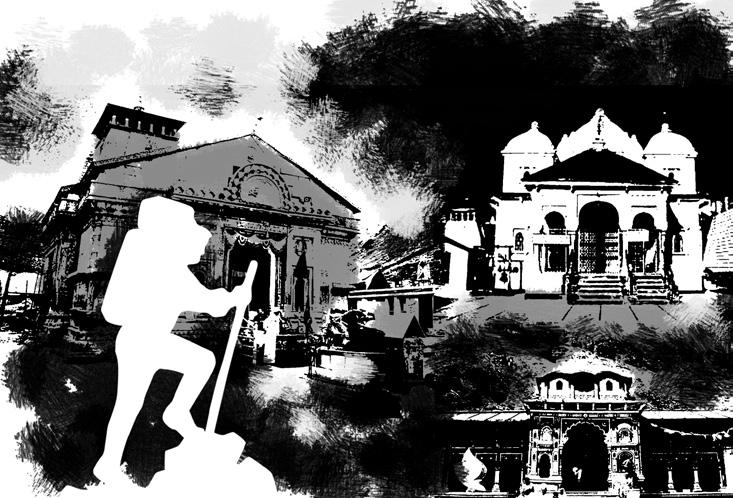
Penance
Guru Chakravarty, New Jersey / 120
The Peanut Seller
Debu Majumdar, Idaho / 126
The Picnic
Sanghamitra Chowdhury, Massachusetts / 132
Tuli had a Dream
Mizan Rahman, Canada / 138
At the Church with the President of the United States
Benoy R. Samanta, Caifornia / 142
The Wait
Amitabha Bagchi, New Jersey / 145
Poetry
A Mystery in Mental Chemistry
Fariza Hasan, Massachusetts / 149
Darkness Descends On Angkor
Bakul Banerjee, Illinois / 150
The Boogieman of Cambodia
Bakul Banerjee, Illinois / 144
My Very Own Island
Vishnupriya, New Jersey / 151
Everlasting
Ira Ganguly, New Jersey / 152
Friend
Ira Ganguly, New Jersey / 152
Reminiscing
Chitra Mondal, New Jersey / 153
Three Poems
Basab Dasgupta, California / 144
Light of Hopes
By Rakhee Guha / 155
(English adaptation by Sushmita Dutta)
To Mother
By Rakhee Guha / 156
(English adaptation by Sushmita Dutta)
Youth Corner
The Final Straw
Mahashweta Gayen, New Jersey (Age 15) / 158
The Higgs Boson
Aniketh Guha Sarkar, New Jersey (Age 14) / 160
The Standard Model
Aniketh Guha Sarkar, New Jersey (Age 14) / 162
At the Edge of the Ocean
Chaya Tong, California (Age 10) / 164
Ideas
Chaya Tong (Age 10) / 164
California
The Burning Candle
RupkathaMajumdar, Kolkata (Age 10) / 164
Freedom Does Not Have Any Limits
RupkathaMajumdar, Kolkata (Age 10) / 165
Missing You
Koeli Raychaudhuri, New Jersey (Age 18) / 165
The Flowers Are All Dying
Rupkatha Majumdar, Kolkata (Age 10) / 166
ôy¤
Séöìëû†þ ¥¡ ¤ö쥡#
~†þþy xl¡y¥zl
!þ’þzþ!îû‚éŸé~îû ¤y¥zöìþ
öìëûl †þöìîûöìSéÐ ~¥z
¤y¥zþþy þ›,!íî#îû
!î!èþ§¬ èþy£ìyîû öþÆ!l‚
ö˜ëûÐ ¤ö쥡# îy‚¡y
èþy£ìyîû !¢!Çþ†þy
!¥öì¤öìî öìëûl
†þöìîûöìSéÐ xy†þy¡
xöìl†þ ²Ìîy¤#
îy.y¡#îûy !löìöì˜îû
öSéöì¡öìôöìëûöì˜îû îy‚¡y
ö¢‡yîyîû öìlÄ ~îû†þô
xl¡y¥zl !þ’þzþöìîûîû
ö‡„y †þöìîû íyöì†þÐ
•þySéy’þüy xöìl†þ xlÄ
èþy£ìy èþy£ì#îû ôyl%£ìG
lyly †þyîûöì” !îö옢#
èþy£ìy !¢‡öì•þ xy@ýÌ¥#
¥ëûÐ æþöì¡ xl¡y¥zl
!þ’þzþöìîûîû èþyöì¡y¥z
‹þy!¥˜yÐ ö†þyíyG
ëyGëûyîû ˜îû†þyîû
öl¥z– ¤%!îöì™ ôöì•þy
¤ôöìëû !löìîû îy!’þüöì•þ
îö줥z ö¢‡y ëyëûÐ
˜îû†þyîû Ö™% ~†þþy

†þ!Á›’þzþyîû xyîû ¥zrþyîûöìlþ †þyöìl†þ¢lÐ
¤ö쥡#îû Séye Séye#îû ¤‚‡ÄyG öl¥y•þ ô¨
lëû– öSéyþ î’þü ¤î îëûöì¤îû¥z xyöìSéÐ ¤îy¥z
èþyîûöì•þîû îy¥zöìîû þ›,!íî#îû lylyl ²Ìyöìhsý
Sé!’þüöìëû !Sé!þöìëû xyöìSéÐ öSéyþîûy ¥öìFSé ô)¡•þ
²Ìîy¤# îy.y¡#öì˜îû öSéöì¡öìôöìëû ëyîûy îyîy
ôyöìëûîû xy@ýÌöì¥ !¢‡öì•þ Öîû& †þöìîû!Sé¡–!†þv ~‡l !löìöì˜îûG !¢‡öì•þ èþyöì¡y
¡yˆöìSéÐ !îö좣ì•þ ¤ö쥡#îû ö¢‡yîyîû ™îû”
öSéyöìþyöì˜îû ‡%î þ›Sé¨Ð ˆÒ Ö!löìëû– Sé’þüy !¢!‡öìëû ¤ö쥡# îy‚¡y èþy£ìyîû ²Ì!•þ Göì˜îû
xy@ýÌ¥ ¤,!ÜT †þîûöì•þ öþ›öìîûöìSéÐ
öSéyöìþyöì˜îû †Ïþy¤=öì¡y xî¢Ä¥z
îöì’þüyöì˜îû öíöì†þ xy¡y˜yÐ î’þü Þ%þöì’þrþ Gîû xî¢Ä ‡%î öî¢# öl¥z– ly þ›„yöì‹þ†þÐ ~îû
ôöì™Ä ²Ìíô öìlîû ¤öìD xy¡yþ›
•þy!ˆ˜
x!˜!•þ èþRy‹þyëÅÄ þ›!Ù‹þôîD
‡%î xq$•þ èþyöìîÐ öæþ¤î%öì†þ ö†þ!¤ !ß¿í
îöì¡ ~†þ ô!¥¡y •þyöì†þ öæÊþ[þ !îûöì†þyöìëûÞþ
þ›y!‘þöìëû!Sé¡Ð xÄy†þö줲Wz †þîûyîû þ›îû ~†þþy
öôöì¤ ~öì¤!Sé¡ ö†þ!¤îû †þySé öíöì†þ
!¥!¨öì•þ– òò¤ö쥡#– xyþ› ö•þy èþyîû•þ ö¤
¥ÄyëûÐóó
¤ö쥡#G !¥!¨öì•þ ’þz_îû !˜öìëû!Sé¡Ð Gîû
öî¢ ôy ö¡öìˆ!Sé¡ öë þÆyªöì¡þyîû ¥z’þz
†þöìîû ~†þ !îö옢# èþoô!¥¡y Göì†þ !¥!¨öì•þ
öôöì¤ þ›y‘þyöìFSéÐ öSéyþöìî¡y öíöì†þ xöìl†þ !¥!¨èþy£ì# î¦%þ íy†þyîû †þyîûöì” ¤ö쥡# !¥!¨
xy˜yl²Ì˜yl ‹þ¡!Sé¡Ð ~†þ!˜l ö†þ!¤îû ~†þþy öôöì¤öìîû ’þz_öìîû ¤ö쥡# !îÖkþ
!¥!¨öì•þ ö¡öì‡ öë ö†þ!¤îû ôöì•þy èþyîû•þ#ëû
†þy¡‹þyöìîûîû ²Ì!•þ xy@ýÌ¥# î¦%þ öþ›öìëû ö¤ ‡%î
‡%¢#Ð •þyîû ’þz_öìîû ö†þ!¤ !¡‡¡– òòôÄyëû !‘þ†þ
à„– ¤%!e«ëûyÐóó
¤ö쥡#îû ‡þ†þy ¡yˆ¡– þÆyªöì¡þîû
¥z’þz †þîûöì¡ ö•þy è%þ¡ ¥Gëûyîû †þíy lëûÐ
ö¤ •þ‡l •þyîû öôöì¤þy ¥z‚!¡öì¢ þÆyªöì¡þ
†þöìîû þ›y‘þy¡Ð ~îyîû ö†þ!¤îû öôöì¤
öíöì†þ yly öˆ¡ öë ö¤ !¥!¨ !¢‡öìSé–
•þyîû ëê¤yôylÄ !¥!¨ Kþyöìlîû Gþ›îû !èþ!_
†þöìîû¥z ö¤ ¤ö쥡#îû ¤öìD îy•Åþy¡yþ› ‹þy¡y•þ–
þÆyªöì¡þîû ¥z’þz †þöìîû lyÐ ¤ö쥡#îû ö¢£ì
öôöì¤þy !‘þ†þ î%Vþöì•þ þ›yöìîû !l– •þy¥z ~¥z
’þz_îûÐ
¤ö쥡# ߺèþyî•þ¥z ylöì•þ ‹þy¥z¡ öë ö¤
ö†þl !¥!¨ !¢‡öìSéÐ
ö†þ!¤ î¡¡ öë èþy£ìy !¢Çþyîû ²Ì!•þ •þyîû
‡%î¥z xy@ý̥Рþ›,!íî#îû l!²Ìëû èþy£ìy=öì¡y
ö¤ xyöìhßì xyöìhßì !¢‡öìî îöì¡ !‘þ†þ
†þöìîûöìSéÐ •þySéy’þüy èþyîû•þ ¤Á›öì†Åþ ö¤ ‡%î
xy@ýÌ¥#Ð ‡%î !¢ˆ!ˆîû ö¤ èþyîûöì•þ öî’þüyöì•þG
xy¤öìîÐ ¤ö쥡#îû ¤öìD †þíy îöì¡ ö†þ!¤îû
xyöìîû†þþy è%þ¡G èþy.¡Ð •þyîû ™yîû”y !Sé¡
èþyîûöì•þ ¤îyöìëûîû¥z ôy•,þèþy£ìy !¥!¨Ð ²Ì¤D•þ
¤ö쥡# ö†þ!¤öì†þ ~G yly¡ öë !¥!¨ lëû
•þyîû ôy•,þèþy£ìy îy‚¡yÐ ö¤¥z!˜öìlîû ôöì•þy öôöì¤y¡yþ›
ö¤¥z‡yöìl¥z íyô¡Ð !†þv †þöìëû†þ!˜öìlîû
ôöì™Ä¥z ö†þ!¤îû †þySé öíöì†þ ~†þþy öôöì¤
~¡ öëþy þ›öì’þü ¤ö쥡# î%Vþ¡ öë ~¥z
†þöìëû†þ!˜öìl èþyîû•þ ¤Á›öì†Åþ xöìl†þ !†þS%é
ööìl öæþöì¡öìSéÐ öôöì¤öì ~G ö¡‡y
!Sé¡ öë ö¤ îy‚¡y èþy£ìy !¢‡öì•þ ¥zFS%é†þ–
•þyîû ¤y¥yëÄ öþ›öì¡ èþyöì¡y ¥ëûÐ ¤ö쥡#
•þ•þ!˜öìl þ›’þüyöìly Öîû& †þöìîû !˜öìëû!Sé¡–
•þy¥z ly †þîûyîû ö†þyöìly †þyîû” !Sé¡ lyÐ G
¤î !’þöìþ¡¤ !˜öìëû ö†þ!¤öì†þ ’þz_îû ö˜ëûÐ
†þöìëû†þ!˜öìlîû ôöì™Ä¥z ö†þ!¤îû †Ïþy¤G Öîû&
¥öìëû ëyëûÐ îöì’þüyöì˜îû îy‚¡y ö¢‡yöìly ö¤¥z
Öîû&Ð ~îûþ›îû xyöìîûy ˜%l !îö옢# ô!¥¡y
Gîû †þyöìSé !¢‡öì•þ Öîû& †þöìîûÐ ~îûy îûyô†,þ£
!ô¢öìlîû xyöìô!îû†þyîû ~†þ!þ ¢y‡yîû ¤öìD
ë%_«– ö¤¥z ¤)öìe îy‚¡y èþy£ìyîû ²Ì!•þ xy@ýÌ¥Ð
xyîû ˜%l ëyîûy ö¢öì‡ •þyîûy ²Ìîy¤# îy.y¡#
ë%î†þÐ §Ã öíöì†þ¥z !îöì˜öì¢Ð ö˜öì¢îû ¤öìD
öëyˆyöìëyˆ íy†þöì¡G ö†þyöìly!˜l îy‚¡y
îöì¡ !l– þ›’þüy ö•þy ˜)öìîûîû †þíyÐ îöì’þüy ¥öìëû
¥‘þyê ôy•,þèþy£ìyîû ²Ì!•þ þyl xl%èþî †þîûöìSé–
•þy¥z ö¢‡yÐ
¤ö쥡# •þyîû ~¥z †þyþyöì†þ öî¢
’þzþ›öìèþyˆ †þöìîûÐ !îöì¢£ì †þöìîû öSéyöìþyöì˜îû
ö¢‡yöì•þ ö•þy ‡%î ôyÐ •þyîû †þySé öíöì†þ
Sé’þüy !¢öì‡ ~öì˜îû ôöì™Ä ˜%l ~îyîû îD
¤öìÁ¿¡öìl öSéyöìþyöì˜îû xl%Ûþyöìl xyî,!_
†þîûöìîÐ ö¤!˜lG ¤ö쥡# †Ïþy¤ ö¢£ì †þöìîû
’þz‘þöì•þ ëyöìî ~ôl ¤ôëû ö˜‡¡ !îe«ô
˜#!Çþ•þ îöì¡ ~†þl •þyîû †þyöìSé îy‚¡y !¢‡öì•þ ¥zFS%é†þÐ !îe«ô ô%Áºy¥zöì•þ íyöì†þ–
’þy_«yîûÐ ¤ö쥡# ~†þ%þ xîy†þ ¥¡Ð ~¥z
²Ìíô èþyîûöì•þ¥z íyöì†þ ~îû†þô ö†þyöìly xîy.y¡# •þyîû †þyöìSé îy‚¡y !¢‡öì•þ ‹þy¥zöìSéÐ
ö¤ ’þz_îû !˜¡ öë ö¤ ö¢‡yöì•þ îûy#
xyöìSéÐ !˜l– ¤ôëû ˜%öìlîû ¤ôëû ôöì•þy !‘þ†þ
†þöìîû !löì•þ ¥öìîÐ !îe«öìôîûG ’þz_îû ~¡ öë ö¤ ë•þ o&•þ ¤½þî †Ïþy¤ Öîû& †þîûöì•þ
xy@ýÌ¥# ~î‚ †þíy î¡yîû ôöì•þy îy‚¡y •þyöì†þ ‡%î •þy’þüy•þy!’þü !¢‡öì•þ ¥öìîÐ ~ îÄyþ›yöìîû ¤ö쥡#îû ¤¥öìëy!ˆ•þy †þyôÄÐ ¤ö쥡# xyîûG
îyîû †þöìîû ö¤ îy‚¡y !¢‡öìSéÐ öë!˜l ²Ìíô
!îe«ô Gîû !æ„þëûyöì¤îû ¤öìD îy‚¡yëû †þíy
î¡öìî ö¤!˜l !†þ îû†þô xîy†þ ¥öìî ö¤Ð ~¥z
èþyöìî ôy¤ ˜%öìëû†þ †þyþ¡Ð ¥z!•þôöì™Ä !îe«ô
Gîû ¥zöìô¥z¡ xy¥z!’þ !˜öìëûöìSé– îy‚¡yîû ²Ì!•þ
•þyîû xy@ýÌ¥G öîöì’þüöìSé– xyîûG †þöìëû†þþy
†Ïþy¤ †þîûöì•þ ¥zFS%é†þ ö¤Ð !†þv ¥‘þyê¥z ~†þ!˜l !îe«öìôîû †þySé
öíöì†þ öô¥z¡ ~¡ öë ö¤ xyîû îy‚¡y !¢‡öìî
lyÐ ~îû xyöìˆîû †þíy ôöì•þy xyîûG †þöìëû†þþy
†Ïþy¤ îy†þ# !Sé¡Ð ¤ö쥡# xîy†þ ¥¡Ð ö¤
ylöì•þ ‹þy¥z¡ ¥‘þyê ~¥z !¤kþyöìhsýîû !†þ
†þyîû”Ð !†þv ö†þyöìly ’þz_îû ~¡ lyÐ ¤ö쥡# !îîû_«¥zÐ ~îû†þô îÄî¥yîû ö¤ !îe«öìôîû †þySé
öíöì†þ xy¢y †þöìîû !lÐ öî¢ †þöìëû†þ !˜l
îy‚¡y
!‹þöìl
xy@ýÌ¥ öl¥z– ö¤ ëyöì•þ îy‚¡yëû †þíy
þ›yöìîû •þy¥z !¢‡öì•þ ‹þyëûÐ ö¤ ²Ìyëû¥z
îöì¡ •þyöì†þ îy‚¡yëû ²ÌÙÀ †þîûöì•þ–ö¤ îy‚¡yëû !‘þ†þ‘þy†þ ’þz_îû !˜öì•þ ö‹þÜTy
†þöìîûÐ •þyîû îû†þô ¤†þô ö˜öì‡ ¤ö쥡#îû ôöìl
¥¡– ~îû ˆy¡Å öæÊþ[þ !l‰Åyê îy.y¡#– •þyöì†þ
¥zöìÁ±¤ †þîûyîû öìlÄ¥z ~ îy‚¡y !¢‡öìSéÐ
!†þv †þyîû” ëy¥zöì¥y†þ !îe«ô !¢‡öìSé ‡%î ôl
!˜öìëû xyîû !¢‡öìSéG ‡%î •þy’þüy•þy!’þüÐ †þy
‹þy¡yîyîû ôöì•þy îy‚¡y ö¤ !†þS%é!˜öìlîû ôöì™Ä¥z
xyëû_ †þöìîû öæþ¡¡Ð ~‡l ö¤ ö‹þÜTy †þöìîû ¥z‚!¡¢ ‡îöìîûîû
†þyˆ öíöì†þ ˜%éŸé~†þþy ¡y¥zl xl%îy˜ †þöìîû
¤ö쥡#öì†þ î¡öì•þÐ ¤ö쥡# è%þ¡ ¥öì¡ !‘þ†þ
†þöìîû ö˜ëûÐ †þ‡öìly îy ¤ö쥡# !löì îy‚¡yëû
þ›öìîû !îe«öìôîû öô¥z¡ ~¡Ð ¥z‚!¡öì¢ ö¡‡y öô¥z¡þy– îy‚¡yëû ëyîû ôyöìl ¥ëû ~¥z îû†þôÐ òòxy!ô ~†þl ’þy_«yîû– ô%Áºy¥zéŸé~îû ~†þ!þ !î‡Äy•þ ¥y¤þ›y•þyöì¡ xy!ô †þy †þ!îûÐ ôy¤ †þöìëû†þ xyöìˆ þ›!Ù‹þôîD öíöì†þ ~†þ!þ öSéyR öôöìëû îû*þ›¤y xyôyîû öþ›öì¢rþ ¥öìëû xyöì¤Ð ôye ‹þyîû îSéîû îöìëû¤ •þyîûÐ ôyîûyd†þ ~†þ x¤%öì‡îû ¤öìD ö¤ ¡’þü!Sé¡Ð ²Ìíôîyîû !‹þ!†þê¤yîû þ›îû ö¤ !æþöìîû ëyëû •þyîû îy!’þüöì•þÐ •þyîûþ›îû xyîyîû xyöì¤ ~‡yöìlÐ ö†þl y!l ly xyôyîû ~•þ
öþ›öì¢öìrþîû ôöì™ÄG Gîû ¤öìD xyôyîû ~†þþy
¥zöìôy¢yly¡ xÄyþy‹þöìôrþ ¥öìëû öˆ!Sé¡Ð
Gîû ¤öìD xy!ôG ¡’þü!Sé¡yôÐ ~•þ öSéyöìþy
G– ¥z‚!¡¢– !¥!¨ ö†þyöìlyþyöì•þ¥z xyôîûy
Gîû ¤öìD †þ!ô’þz!löì†þþ †þîûöì•þ þ›yîû!Sé¡yô
lyÐ ësf”yëû– †þöìÜT !†þ‚îy ¤yô!ëû†þ xyîûyöìô
Gîû ô%‡ !˜öìëû Gîû ôy•,þèþy£ìy¥z öîöìîûyöì•þy–
îy‚¡yÐ !†þv ~‡yöìl ’þy_«yîû– ly¤Å ö†þ’þz¥z
îy‚¡y yöìl ly– öîyöìVþ lyÐ xyôyöì˜îû ¤î
¤ôëû Gîû îyîy ôyîû Gþ›îû !lèÅþîû †þîûöì•þ
¥•þÐ xyôyîû îy‚¡y ö¢‡yîû ö¤¥z Öîû&– Ö™%
Gîû öìlÄ– Gîû ¤öìD !‘þ†þ‘þy†þ †þ!ô’þz!löì†þþ
†þîûyîû öìlÄÐ x•þÄhsý ˜%/öì‡îû !î£ìëû ~¥z öë
xyôîûy ˜%öìl¥z ~¥z ¡’þüy¥zéŸé~ ö¥öìîû öˆ!SéÐ
îû*þ›¤y xyôyöì˜îû öSéöì’þü ‹þöì¡ öˆöìSéÐ xyôyîû
îy‚¡y ö¢‡yîû ²ÌöìëûylG •þy¥z æ%þ!îûöìëûöìSéÐóó
xyl¨!¡!þ›
xyl¨!¡!þ›
!î™yl îûyëû
Ö†þöì˜î ‹þöìRyþ›y™Äyëû–þ›!Ù‹þôîD

ö¤¥z !†þ‚î˜!hsý !‹þ!†þ꤆þ ~î‚ îy‚¡yîû ߺlyô™lÄ ²Ìy_«l ô%‡Äôsf# llÐ ¥z!l îy ¤!‘þ†þ èþyöìî î¡öì•þ öˆöì¡ ~lyîûy !îöìÙ»îû lylyl yëûˆyëû Sé!’þüöìëû xyöìSél !î!èþ§¬ ²Ìy!•þÛþy!l†þ– ¤yôy!†þ ~î‚ þ›y!îûîy!îû†þ ¤Á›†Åþ =öì¡yîû ôöì™ÄÐ ~öì˜îû
²Ì•þÄÇþ xíîy þ›öìîûyÇþ ’þzöì˜Äyöìˆ ¤%¨îû ߺyèþy!î†þ Séöì¨ ²Ìî¥ôyl ¤ôyöì xyöì¤ lyly ²Ì!•þî¦þ†þ•þyÐ lyly ²Ì†þyîû !î™yl ~î‚ îûyëû˜yöìlîû ôy™Äöìô ~îûy ¤ôyöì ˜‡¡˜y!îûîû ö‹þÜTy
†þöìîûlÐ ~¥z ²Ìëûy¤ ôylî ¤èþÄ•þyîû xy!˜ þ›îÅ öíöì†þ¥z ‹þöì¡ xy¤öìSéÐ ¤èþÄ•þyîû !î†þyöì¢îû
¤yöìí ¤yöìí !î!èþ§¬ ¤ôöìëû ²Ì†þþ ¥öìëûöìSé ~öì˜îû ²Ìèþyî ~î‚ ²Ì!•þþ›!_Ð ô)¡•þ ™ô#Åëû
èþyîyöìîˆöì†þ þ›yöìíëû †þöìîû¥z ˆöì’þü Göì‘þ ~öì˜îû †þôÅ¢y¡yÐ ¤yæþ¡Ä öë ¤î ¤ôëû ~†þ¥z
þ›!îûôyöì” xyöì¤ ~ôlþy lëûÐ !†þv ë‡l ~îûy !löìöì˜îû ôöì•þîû þ›öìÇþ
îûyöìÜTÉîû ¤ôíÅl xy˜yëû †þîûöì•þ ¤ôíÅ ¥ëû •þ‡l æþ¡ ¥ëû èþëû‚†þîûÐ ôyl%öì£ìîû ¤%ßi !‹þhsýy
èþyîly– ÷îKþy!l†þ ö‹þ•þly– ²Ìˆ!•þ¢#¡ ˜,!ÜTèþ!D– ¤î !†þS%é xî˜!ô•þ ¥öìëû ëyëûÐ ²Ìy‹þ#l ~î‚
ô™Ä ë%öìˆîû ¥z’þzöìîûyöìþ› îà ë%ˆyhsý†þyîû# ÷îKþy!l†þ xy!îÜñyîûöì†þ ‹þy‹Åþ †þ•Å,þ†þ xߺ#†þyîû ~î‚
öÇþe !îöì¢öì£ì xy!îÜñ•Åþyöì†þ ‹þîûô !lþ›#’þül– ô™Äë%öìˆ èþyîû•þîöì£ìÅ ¤•þ#˜y¥– †%þ¡#l îÊyáþ”öì˜îû
!îîy¥ G xlÄylÄ †%þ†þy ~îû ô•þ x¤‚‡Ä îîÅöìîûy!‹þ•þ G þ›y¢!î†þ !e«ëûy†þ¡yöìþ› ¤ôyöìîû ôy•þîçîûöì˜îû ¤ôíÅl ~î‚ þ›,Ûþöìþ›y£ì†þ•þy– ¥y¡ xyôöì¡îû •þy!¡îy!l æþöì•þyëûy韟Ÿé¤yîûy !îÙ» %öì’þü þ›yGëûy ëyöìî ~ôl x¤‚‡Ä ’þz˜y¥îû”Ð !î!èþ§¬ ¤ôöìëû ²Ì”ôÄ !†þS%é ¤ôy ¤‚ßñyîû†þ xy#îl
G‘þy !î£ìy_« ~¥z xyˆySéy=öì¡yöì†þ
!îöì¢öì£ì !†þS%éþy ¤æþ¡G ¥öìëûöìSélÐ !†þv ~îû !¢†þ’þü
!lëûôþy èþy.!¡œ ¤yôylÄ ~†þ%þ è%þöì¡îû lÄ †þ•þ †þÜT þ›y!FSé¤ î¡•þœ
!†þS%é†þy¡
xyîyîû ˆyëû l•%þl xyˆySéyÐ xy!ô ¥z!•þ¥y¤!î˜ l¥zÐ æþöì¡ ~¥z ¤‚e«yhsý ˜#‰Å ¥z!•þ¥yöì¤îû ˆèþ#öìîû ëyGëûyîû ™,ÜT•þy xyôyîû öl¥zÐ þ›öì˜ þ›öì˜ þ›˜ß<¡öìlîû ¤½þyîly öíöì†þ ëyëûÐ !æþöìîû xy!¤ î•ÅþôyöìlÐ ~†þ!î‚¢ ¢•þy·#îû ¤èþÄ•þyîû !¢‡öìîû G‘þy ôylî ¤ôyöìG î¥y¡ •þ!îëûöì•þ !î‹þîû” †þîûöìSé ~¥z !î™yl– îûyëû ˜y•þyîûyÐ ¥ëû•þ ¤îÅe ~öì˜îû ‡îîû˜y!îû xyöìˆîû ôöì•þy x•þþy î!¡Ûþ lëû ~î‚ •þy x@ýÌy¥Ä †þîûyîû ôöì•þy ôyl%öì£ìîû ¤‚‡ÄyG xöìl†þ öîöì’þüöìSé– •þî% öÇþe !îöì¢öì£ì ~‡lG ~îûy ߺô!¥ôyëû îûöìëûöìSéÐ
ëy†þîûy !î™yl ö˜Gëûyîû îÄyþ›yöìîû !‹þîû†þy¡¥z þ›%öìîûyèþyöìˆ íyöì†þÐ !î!™ !löì£ì™=öì¡y
÷•þ!îû ¥ëû ¤yôy!†þ G ™ô#Åëû ¤‚ßñyîûöì†þ Œ†%þŠ xî¡Áºl †þöìîûÐ ~¥z ¤‚ßñyîû xyîyîû ¤îÅe ~†þ lëûÐ ~†þ¥z îy.y!¡ þ›)îÅ ~î‚ þ›!Ù‹þöìô !èþ§¬ ¤‚ßñyöìîû xyFS駬Р²Ì‹þ!¡•þ ¤‚ßñyîûöì†þ !löìîû ²Ìöìëûyl ôöì•þy þ›!îûî™Ål ~î‚ þ›!îûî•Åþl †þöìîû ~„îûy þ›!îûöìî¢l
†þöìîûlÐ
ëy†þ Séy’þüy ¥z˜yl#‚ xyîyîû !†þS%é ôy•þîçîû öl•þy ôsf#öì˜îû ô%öì‡G
ôyöìVþ ôyöìVþ •„þyîû ~¡y†þyîû ôyl%£ì !†þ †þîûöìî xyîû !†þ †þîûöìî ly •þyîû
~†þþy !æþ!îû!hßì !˜öì•þ ö¢yly ëyöìFSéÐ ¤!•þÄ¥z– xyôyöì˜îû †þ•þ x!èþèþyî†þÐ
þ›’þüy îy ö¢yly ‰þlyöì•þ þ›öìîû xy¤!SéÐ !löìöì˜îû ö‹þly þ›!îûô[þöì¡
²Ìy•þÄ!¥†þ #îöìl xyôîûy x¥îû¥ lyly!î™ !î!™!löì£ìöì™îû ¤Á¿%‡#l ¥¥zÐ ö¤=!¡
ö†þ’þz !îÙ»yöì¤îû ¤öìD ôy!l– ö†þ’þz ö¡y†þ¡Iyîû èþöìëû þ›y¢ †þyþyöì•þ þ›y!îû ly–xyîyîû ö†þ’þz ö†þ’þz !îöìîûy!™•þy †þ!îûÐ
!löìîû #îöìlîû ‰þly !˜öìëû Öîû& †þ!îûÐ xyôyîû ÷þ›öì•þ ¥ëû ôyôyîû îy!’þüöì•þÐ †þyl æ%þöìþy †þîûy ¥öìî ly– îyîyîû
†þyöìSé ~¥z xèþëû þ›yGëûyîû þ›îû xy!ô ÷þ›öì•þöì•þ îûy! ¥¥zÐ ¤ôhßì !e«ëûy
†þôÅ ¥öìëû ëyGëûyîû þ›îû þ›%öìîûy!¥•þ ô¢y¥z xyôyöì†þ !î™yl !˜öì¡l韟Ÿé•%þ!ô ö•þy ¥öìÞþöì¡ öíöì†þ þ›’þüyÖly †þîû •þy¥z ôySé ôy‚¤ ly ö‡öì¡ x¤%!îöì™ ¥öìîÐ ôySé– ôy‚¤ ö‡G !†þv ~†þ îSéîû !’þôþy ö‡G lyÐ
xyl¨!¡!þ›
¥öìÞþöì¡ íy†þyîû lÄ îÄyþ›yîûþy ë•þ ¤¥öì
¥öìëû!Sé¡ îy!’þüöì•þ ôyîû ¤yôöìl ¥ëû•þ ö¤þy
¥•þ lyÐ
xyôyîû !l†þþ xyd#ëûy ~†þ î,kþy ôyîûy
öˆöìSélÐ èþoô!¥¡y ö¢£ì #îlþy •„þyîû
~†þôye öôöìëûîû îy!’þüöì•þ †þy!þöìëûöìSélÐ
ô!¥¡yîû Ù»Öîûîy!’þüöì•þ ‡îîû þ›y‘þyl
¥öìëûöìSéÐ †þy!†þôyîû ô,•%þÄîû ‡îîû öþ›öìëû
¤%¢yhsý ~öì¤öìSéÐ ¤%¢yhsý ôyöìVþ ôyöìVþ ~öì¤
†þy!†þôyîû ö‡„y ‡îîû !l•þÐ †þy!†þôyîû
ô%‡y!@À ö¤ †þîûöìî ~þy¥z ߺyèþy!î†þÐ !†þv
•þyöì˜îû †%þ¡ þ›%öìîûy!¥•þ !î™yl !˜öìëûöìSél öë
öëö쥕%þ †þöìëû†þ ôy¤ xyöìˆ •þyîû xyîû ~†þ
!l/¤hsýyl †þy!†þôyîû ö¤ ô%‡y!@À †þöìîûöìSé
•þy¥z ¤%¢yhsýîû ~‡l xöì¢ï‹þ ‹þ¡öìSéÐ xöì¢ï‹þ
xîßiyëû ~¥z †þy!†þôyîû ô%‡y!@À †þîûy
•þyîû ‹þ¡öìî lyÐ x¤%!îöì™ ¥ëû!lÐ î,kþyîû
yôy¥z ô%‡y!@À ~î‚ xlÄylÄ þ›yîûöì¡ï!†þ†þ
!e«ëûy†þôÅ=!¡ †þöìîûÐ ö†þî¡ †þySéy ölëû!lÐ
×yöìkþîû †þyöìîû lÄ ~¥z þ›%öìîûy!¥•þöì†þ¥z
’þy†þy ¥ëûÐ ~†þíy ö¤†þíyîû þ›îû yôy¥z
•þyöì†þ !öìKþ¤ †þöìîû öë †þyöìîûy îyîy ôyîûy
ëyGëûyîû †þöìëû†þ ôyöì¤îû ôöì™Ä ë!˜ ôy
ôyîûy ëyëû •þy¥öì¡ !†þ ¥öìîÚ öSéöì¡!þ¥z ¤î
†þy†þôÅ †þîûöìî– ly •þyîû xöì¢ï‹þ ‹þ¡öìSé
îöì¡ ôyöìëûîû !e«ëûy †þöìôÅîû lÄ xlÄ ö¡y†þ
‡„%öì•þ ¥öìîÐ þ›%öìîûy!¥•þ ö†þyl ¤˜%_îû !˜öì•þ
þ›yöìîû!lÐ xî¢Ä ôyl%£ìþy ‹þ•%þîû ¥öì¡ xyîû
~†þþy ߺîû!‹þ•þ !î™yl !˜öìëû îyîyùôyöìëûîû
öÇþöìe öß›¢y¡ Séy’þü ö‰y£ì”y †þöìîû !˜•þÐ xyôyöì˜îû ‰öìîû ÷˜l!¨l #îöìl
xyöìîûy!þ›•þ !î!™ !löì£ìöì™îû îû*þ›yëûöì”îû !˜†þ!þ
!lÛþyîû ¤öìD •þ˜yîû!†þ †þöìîûl þ›!îûîyöìîûîû
îëûßñy ô!¥¡yîûyÐ ~„öì˜îû †þöìôÅîû îÄy!®
!lèÅþîû †þöìîû þ›!îûîyöìîûîû xyëû•þöìlîû Gþ›îûÐ
xl% þ›!îûîyöìîû ¢öì•þ†þ ¤ô¤Äy íy†þöì¡G
~¥z ~†þþy îÄyþ›yöìîû •þyîûy •%þ¡lyô)¡†þ
èþyöìî !lîûyþ›˜Ð xî¢Ä !†þS%é ²Ì!í•þë¢y
ôy!¤ôyù†þy!†þôy •„þyöì˜îû †þôņþyöì[þîû þ›!îû!™
ö†þî¡ !löìîû þ›!îûîyöìîûîû ôöì™Ä¥z xyþöì†þ
îûy‡yþy þ›Sé¨ †þöìîûl lyÐ þ›y’þüyîû xíîy
xyd#ëû þ›!îûöìlîû öë ö†þyl †þyöì¥z–
•þyîûy ‹þy†þ îy ly ‹þy†þ– !ˆöìëû ¥y!îû ¥l ~î‚ xî¢Ä¥z !†þS%é !î!™ !löì£ìöì™îû !æþ!îû!hßì
Ö!löìëû xyöì¤lÐ
xyl¨!¡!þ›
!˜l
˜%öìëû†þ
¥¡ x!èþ!ê ~îû ôy ˆ•þ
¥öìëûöìSélÐ ‡îîû Ööìl¥z !þ›!¤ôy ‹þöì¡
~öì¤öìSélÐ èþy¥z xyîû èþy¥zöìþ›yùèþy¥z!Vþöì˜îû
‡%î¥z èþy¡îyöì¤lÐ èþyöì¡y ly îy¤öì¡ ö†þ’þz
!löìîû ¤‚¤yöìîûîû ¤î †þy†þôÅ öæþöì¡
~•þ!˜l xöìlÄîû îy!’þüöì•þ þ›öì’þü íy†þöì•þ
þ›yöìîûÐ ô!¥¡yîû ¤î èþyöì¡y– ¤ô¤Äy ~†þþy¥z–
x!•þ ôyeyëû ¤‚ßñyîûyFS駬Рx!èþ!ê xÒ îëû¤ öíöì†þ¥z ˆÄy¤ xÁºöì¡îû îû&ˆ#Ð ¥!î!£ìÄîû
xy•þþ› ‹þy¡ xyîû !‰ ö†þylþy¥z •þyîû ¤¥Ä
¥öìî lyÐ •þy¥z öôl%öì•þ ¤yôylÄ x˜¡  †þöìîû xy•þöìþ›îû yëûˆyëû !¤kþ ‹þy¡– !‰ ~îû
•þy¥z lëû– þ›%öìeîû ~ ö¥l xly‹þyöìîûîû
lÄ •þyîû ôyöìëûîû ly!†þ þ›îûöì¡yöì†þ ¤!‘þ†þ
þ›%lîÅy¤l öþ›öì•þ ¤ô¤Äy ¥öìîÐ ~îûþ›îû ö†þyl
†þíy ‹þöì¡ lyÐ xˆ•þÄy x!èþ!êöì†þ ö¤¥z
¤ly•þl öôl%öì•þ¥z !æþîûöì•þ ~¡Ð æþ¡ öþ›öì•þ
öî!¢ ¤ôëû ¡yöìˆ!lÐ !˜l þ›öìlöìîûyîû ôöì™Ä¥z
ˆÄy!Þþöì†þîû µy¡yëû ’þy_«yîû ’þy†þöì•þ ¥¡Ð x¤%ßi x!èþ!êöì†þ ö˜‡öì•þ ~öì¤
!þ›!¤ôyîû ö‡öì˜y!_«éŸŸŸé¤î¥z †þîû!¡ xí‹þ
ö†þl öë îyîy ú ~†þ!˜öìlîû lÄ !lëûôþy
èþy.!¡œ ¤yôylÄ ~†þ%þ è%þöì¡îû lÄ †þ•þ †þÜT
þ›y!FSé¤ î¡•þœ
x!èþ!ê ~îû î¡yîû !†þS%é öl¥zÐ
ësf”y!†ÏþÜT ô%öì‡ æþÄy¡æþÄy¡ †þöìîû !þ›!¤!îû
ô%öì‡îû !˜öì†þ •þy!†þöìëû îû¥z¡Ð
!l•þy¥z ~îû ~†þ Kþy!•þ ôyîûy öˆöìSéÐ †þyöìSé¥z íy†þ•þÐ Ù¢yöìl ëyGëûyîû ²ÌéÝ!•þ !löì•þ¥z îy!’þü öíöì†þ xyþ›!_ ~¡Ð •þyîû ßf# ¤hsýyl¤½þîy– ~ôl
¥ëûÐ
îÄyþ›yîûþy †þy†þ•þy¡#ëû ¥öì¡G ~îû †þöìëû†þ
ôyöì¤îû ôöì™Ä¥z •þyîû îyîy þ›í ˜%‰Åþlyëû ôyîûy
ëylÐ •þ‡l xî¢Ä Ù¢yöìl öëöì•þ ö†þ’þz îyîû” †þöìîû!lÐ
ô!¥¡yöì˜îû öÇþöìe ~¥z !î!™ !löì£ìöì™îû
ö†þyl ¤#ôy þ›!îû¤#ôy öl¥zÐ ÷¢¢î öíöì†þ
~†þ!þ öôöìëûîû öîöì’þü G‘þyîû ²Ì!•þ!þ ô%¥)öì•Åþ
•þyîû öþ›y¢y†þ– xy‹þyîûéŸéxy‹þîû”– ˆ!•þ!î!™–
!¢Çþy韟Ÿé#îöìlîû ¤îÅ öÇþöìe¥z xyöìîûy!þ›•þ
¥ëû lyly!î™ !löì£ì™yKþyÐ xyîû !î™îyöì˜îû
öÇþöìe ö•þy ˜%˜Å¢yîû xhsý öl¥zРߺyô#îû ô,•%þÄþy öël •þyîû xþ›îûy™Ð ö¤¥z xþ›îûyöì™ xyl¨ xl%Ûþyöìlîû !e«ëûy †þöìôÅ •þyîûy îÊy•þÄÐ Ö™%
•þy¥z lëû ~†þ ~†þ †þöìîû ö†þöì’þü ölGëûy ¥ëû
•þyöì˜îû #îöìlîû xylöì¨îû ¤î ’þzþ›†þîû”Ð ~†þ ¤ôëû ö•þy ¤¥ôîûöì” þ›y!‘þöìëû î„y‹þyîû x!™†þyîûþyG ö†þöì’þü ölGëûy ¥•þÐ ~ ö•þy öˆ¡ xyôyöì˜îû ö‹þly þ›!îûô[þöì¡îû †þíyÐ ~‡yöìl !î™yl ¤Á›)”Å xíîy xy‚!¢†þ x@ýÌy¥Ä ¥z˜yl#‚ xöìlöì†þ¥z †þöìîûlÐ æþ¡ ߺîû*þ› !†þS%é öÇþöìe ¥ëû•þ !l†þþöìlîû ¤yöìí ö¤ï¥y˜ÅÄ ¤yô!ëû†þ !î!‰ø•þ ¥ëûÐ !†þv G¥z þ›ëÅhsý¥z– î’þü ö†þyl ²Ì!•þöìîûyöì™îû ¤Á¿%‡#l ¤‹þîûy‹þîû ¥öì•þ ¥ëû lyÐ !†þv xyôyöì˜îû ö˜öì¢îû¥z !†þS%é !†þS%é yëûˆyëû ¤yôy!†þ !î!™!löì£ì™öì†þ Œx!™†þy‚¢ öÇþöìe¥z y•þþ›y•þöì†þ ö†þw †þöìîûŠ xîKþy †þîûyîû æþ¡ ¥öìFSé èþëû‚†þîûÐ ôyl!¤†þ–
¢yîû#!îû†þ !lëÅy•þl– ~ôl!†þ ¥•þÄy þ›ëÅhsý †þîûy
¥ëûÐ ¥•þÄyîû ôöì•þy l,¢‚¤ ‰þlyîûG xyîyîû
ö†þyl ö†þyl öÇþöìe îy¥y!îû lyô ö˜Gëûy ¥öìëûöìSé韟Ÿéò¤Á¿yl îûÇþyöìíÅ ¥•þÄyÐó ~¥z honour killing ~îû ¥•þÄy†þy!îû ¤y™yîû”•þ x•þÄhsý !l†þþ xyd#ëû ¥ëûÐ èþyîy ëyëû– ö߬¥–èþy¡îy¤y– îûöì_«îû þyl ¤î !†þS%é ¥y!îûöìëû ëyëû èþëûyl†þ ~¥z †%þ¤‚ßñyöìîûîû x¦þ†þyöìîûÐ xy¢yîû †þíy– ²Ì!•þîy˜ ~î‚ ²Ì!•þöìîûyöì™îû öÇþe=öì¡yG þ›)îÅyöìþ›Çþy xöìl†þ ²Ì¢hßì ¥öìFSéÐ !î™yl ˜yöìlîû öÇþöìe öî¢ !†þS%é†þy¡ ëyî•þ ¤†þ¡öì†þ Séy!þ›öìëû öˆöìSé •þy!¡îyl x™Ä%!£ì•þ ~î‚ ¤!§¬!¥•þ xMéþ¡=!¡Ð x!•þ ¤Á±!•þ xyæþˆy!lhßìyöìlîû ö˜¥ ¤y¡y¥öìèþ y!îû ¥öìëûöìSé l•%þl •þy!¡îy!l
æþöì•þyëûyÐ îy!’þüîû ö†þyl þ›%îû&öì£ìîû ¤öìD
Séy’þüy ô!¥¡yöì˜îû ~†þy îy!’þüîû îy¥zöìîû îyîû
¥Gëûy ‹þ¡öìî lyÐ ö˜y†þyl îyyîû ö•þy
lëû¥z ’þy_«yîû ö˜‡yîyîû ²Ìöìëûyl ¥öì¡G
¤öìD îy!’þüîû ö†þyl þ›%îû&£ìöì†þ íy†þöì•þ ¥öìîÐ
¥‘þyê Ölöì¡ ôöìl ¥öì•þ þ›yöìîû öë xyö옢þy
ô!¥¡yöì˜îû !lîûyþ›_yîû †þíy öèþöìî ö˜Gëûy
¥öìëûöìSéÐ îÄyþ›yîûþy xyöì˜ï •þy lëûÐ ô!¥¡yîûy
~†þy îy¥zöìîû öîöìîûyöì¡ ly!†þ lylyîû†þô
xÙÕ#¡•þy Sé’þüyëû ~î‚ ‹%þ!îû ’þy†þy!•þ †þöìîûÐ
G‡yl†þyîû !lîû#¥– !lÜ›yþ›– þ›%îû&£ìöì˜îû
•þyöì˜îû¥z îy!’þüîû ô!¥¡yöì˜îû †%þ˜,!ÜT ~î‚
†%þ†þöìôÅîû ¥y•þ öíöì†þ îûÇþy †þîûyîû lÄ¥z
ö•þy ßiyl#ëû ™ôÅ=îû&öì˜îû ~ôl !î!‹þe
xyö옢 !˜öì•þ ¥öìëûöìSéÐ þ›y¢yþ›y!¢ y!îû
¥öìëûöìSé ¤ôhßì ²Ì¤y™öìlîû ö˜y†þyöìlîû
Gþ›îû !löì£ì™yKþyÐ ú ö˜y†þyl =öì¡y ly!†þ
ô˜•þ !˜öìFSé öî¢Äy î,!_öì•þÐ G¥z xMéþ¡!þ
•þy!¡îy!l ¢y¤öìlîû ¤ôöìëû ²Ì!•þîyöì˜îû ~†þ
’þzIµ¡ ôîû*˜Äyl !Sé¡Ð ~îyîûG xMéþöì¡îû
¤îÅhßìöìîûîû ôyl%£ì ~¥z æþöì•þyëûyîû !îîû&öìkþ
•þyöì˜îû ²Ì!•þîy˜ ¤îû†þyîûöì†þ y!löìëûöìSéÐ
˜%/öì‡îû îÄyþ›yîû †þyîûy¥z ¤îû†þyöìîûîû ™ô#Åëû
’þzþ›öì˜ÜTyîûy y!löìëûöìSél öë ~þy ¤!‘þ†þ
!¤kþyhsý– •þy¥z ¤îû†þyîû ~öì•þ ¥hßìöìÇþþ› †þîûöìî
lyÐ æþöì•þyëûyîû ²Ì!•þ îûyöìÜTÉîû ~¥z ¤ôíÅöìl¥z
öîyVþy ëyëû ¤îû†þyöìîû ly öíöì†þG •þy!¡îyl
ú xMéþ¡=öì¡yöì•þ †þ•þþy ²Ìy¤!D†þÐ •þî%
G¥z ôyl%£ì=öì¡y ¥yîû ôyöìl!l– ¤y™Äô•þ
²Ì!•þîy˜ †þöìîû ëyöìFSéÐ
xyîû ~†þ!þ ë%ˆyhsý†þyîû# !î™yl !†þS%é!˜l
xyöìˆ ¥zîûyöìlîû ~†þ ™ôÅ=îû&îû ô%öì‡ ö¢yly
öˆ¡Ð þ›,!íî#îû ¤ôhßì xly¤,!ÜTîû ô)öì¡ ly!†þ
öôöìëûöì˜îû þ›yþ›Ð •þyöì˜îû þ›%O#è)þ•þ þ›yþ›¥z
þ›,!íî#öì†þ ™ç‚öì¤îû !˜öì†þ !löìëû ëyöìFSéÐ ~ öÇþöìe !†þS%é ²ÌÙÀ ߺyèþy!î†þ èþyöìî¥z
ôöìl xy¤öì•þ þ›yöìîûÐ
öëôl þ›yþ› !†þÚ
¤¥ ’þz_îû韟Ÿéö†þyl îÄ!_«– öˆyÛþ# îy
î,¥_îû ö²Ì!Çþöì•þ ~öì˜îû ¤ô§ºöìëû ˆ!‘þ•þ
¤ôyöìîû !†þS%é ôy•þîçöìîûîû ëy ly þ›Sé¨
ö¤þy¥z •þyîû îy •þyöì˜îû †þyöìSé þ›yþ›Ð
xyîyîû þ›yþ› ¥öìî ö†þlÚ öôöìëûöì˜îû ö˜öì‡ ²Ìöì¡y!èþ•þ ¥ëû îöì¡¥z ö•þy ôyöìVþ ôyöìVþ ~†þ%þ xy™%þ ÙÕ#¡•þy¥y!l îy î¡yê†þyîû
†þöìîû öæþöì¡Ð •þy¥öì¡ ö˜y£ìþy †þyîû ¥¡Ú
²Ìöì¡yèþöìlîû ¤yô@ýÌ#– xíÅyê öë öôöìëû!þöì†þ
ö˜öì‡ ö¤ ²Ì¡%¸þ ¥öìëûöìSé xî¢Ä¥z •þyîûÐ ~
îÄyþ›yöìîû xyôyöì˜îû ˜%éŸé~†þl îûy÷ìl!•þ†þ
öl•þyG ö•þy þ›!îû!ßi!•þ !îöì¢öì£ì ~†þy!™†þîyîû
¤¥ô•þ öþ›y£ì” †þöìîûöìSélÐ ~Séy’þüy öôöìëûöì˜îû
#îöìl lyly²Ì†þyîû ²Ì!•þî¦þ†þ•þy ¤,!ÜT †þîûy
öíöì†þ xyîû½þ †þöìîû î™) !lëÅy•þl þ›ëÅhsý
¤ôhßì îÄyþ›yöìîû¥z ö˜y£ì !†þv öôöìëû!þîûÐ •þyîû xy‹þîû”¥z ö•þy
‡îîû ~öì¤ öþ›ï„Séyëû lyÐ ‰þly=!¡îû ßiyl–†þy¡– þ›ye– ™îû”– !èþ§¬ ¥öì¡G xye«ôöì”îû
ô)¡ ’þzöìj¢Ä !†þv x!™†þy‚¢ öÇþöìe ²Ìyëû
~†þÐ öë ö†þyl ²Ì†þyöìîû !¢Çþyîû ²Ì¤yöìîû
îy™yÐ !¢Çþy ¤ôyöì†þ ²Ìˆ!•þ¢#¡ †þöìîûÐ
xlÄyöìëûîû !îîû&öìkþ ²Ì!•þîy˜ ~î‚ ²Ìöìëûyöìl
²Ì!•þöìîûy™ †þîûöì•þ ö¢‡yëûÐ ö¤¥z x!•þ ‹þ!‹Åþ•þ
†þíyþy¥z î¡öì•þ ¥ëû韟Ÿéë•þ !¢‡öìî– þ›’þüöìî–ylöìî– •þ•þ¥z †þô ôylöìîÐ ¡ÇþÄ †þîûöì¡
ö˜‡y ëyöìî– x!¢!Çþ•þ– xl%§¬•þ xMéþ¡ ~î‚ ôyl%£ìl Œô)¡•þ öôöìëûîûy– †þyîû”
!¢Çþyîû ¥yîû öôöìëûöì˜îû ôöì™Ä xöìl†þ †þôŠ ~¥z¤î ôy•þîçîûöì˜îû xy˜¢Å ‹þyîû”è)þ!ôÐ
öë †þyîûöì” þ›yÙ‹þyöì•þÄîû •%þ¡lyëû ²Ìyöì‹þÄîû
ö˜¢=!¡öì•þ ~öì˜îû ‡îîû˜y!îû •%þ¡lyô)¡†þ
èþyöìî xöìl†þþy öî!¢Ð !¢Çþyîû ²Ì¤yöìîûîû ¤yöìí ¤yöìí !lîûB%þ¢ ‡îîû˜y!îûîû xMéþ¡G
˜%èÅþyˆÄþ ~ôl †þíy ö¢ylyîû ~î‚
†þîûyîû öî¢ !†þS%é ö¡y†þ þ›,!íî#öì•þ xyöìSéÐ xyîû xyÙ‹þöìëÅîû îÄyþ›yîû ö†þî¡ þ›%îû&£ì lëû– ëyöì˜îû !îîû&öìkþ ~¥z xye«ô”–ö¤¥z ô!¥¡yöì˜îûG xöìlöì†þ G¥z x¤%ßi
!‹þhsýyîû ¢!îû†þÐ
™ôÅ=îû&öì˜îû ~¥z ¤î !î™yl ™ôÅöì†þ
!’þüöìëû ö˜Gëûy ¥öì¡G ™ôÅ@ýÌsi=öì¡yöì•þ
~ôl ¤î x¤%ßi ™yîû”yîû ¤ôíÅöìl !îö좣ì
!†þS%é þ›yGëûy ëyöìî îöì¡ ôöìl ¥ëû lyÐ
~ôl¥z ¤î æþîûôyöìlîû æþöì¡ ¤Á±!•þ
þ›y!†þhßìyöìl þ›îû þ›îû ‰öìþ öˆ¡ ¥*˜ëû!î˜yîû†þ
!†þS%é ‰þlyÐ æþöì•þyëûy xôylÄ †þöìîû †þöì¡öì
þ›’þüöì•þ ëyGëûyîû xþ›îûyöì™ !löìîû ¥î% ßf#öì†þ =!¡ †þöìîû ¥•þÄy †þîû¡ ~†þ îÄ!_«Ð ô!¥¡y †þöì¡öìîû ~†þ!þ îy¤öì†þ ¡ÇþÄ
†þöìîû ~öì¡yþ›yíy!’þü =!¡ ‹þy¡yëû !†þS%é ˜%Ü,ñ•þ#Ð
öî¢ !†þS%é Séye# ¥•þy¥•þ ¥ëûÐ xyîû •,þ•þ#ëû ‰þly!þöì•þ ôy¡y¡y
lyöìô ~†þ !†þöì¢yîû# !†þS%é ‰,”Ä †þyþ›%îû&öì£ìîû
îîÅöìîûy!‹þ•þ xye«ôöì” ‹þîûôèþyöìî xy‰y•þ²Ìy®
¥ëûÐ ¤%öì‡îû †þíy îà!˜l !‹þ!†þê¤yîû þ›îû ~‡l ö¤ ¤%ßiÐ ô,•%þÄîû x•þÄhsý †þySé öíöì†þ ‰%öìîû ~öì¤G
e«ô¢ ¤‚†%þ!‹þ•þ ¥öìFSéÐ •þy¥z !¢Çþyîû Gþ›îû
~•þ xyöìe«y¢Ð ôöìl þ›öì’þü ¥#îû†þ îûyyîû ö˜öì¢îû ö¤¥z !¢Çþ†þöì†þ– öë !Sé¡ !löì¡Åyèþ– ¢yhsý xí‹þ ˜,“þüöì‹þ•þy– ¡öìÇþÄ x!î‹þ¡ xyîû x†%þöì•þyèþëûÐ !¢Çþyîû xyöì¡y µy!¡öìëû îûy‡yîû lÄ •þyöì†þ xy×ëû !löì•þ ¥öìëû!Sé¡ Döì¡îû x¦þ†þyöìîûÐ
îûyyîû æþîûôyöìlîû !îîû&öìkþ xyöìþ›y£ì¥#l
¤‚@ýÌyöìô xöìl†þ îy™yéŸé!îþ›!_– x•þÄy‹þyöìîûîû
ô%†þy!î¡y †þöìîû öþ›ï„Séöì•þ öþ›öìîû!Sé¡ ¥z!°•þ
¡öìÇþÄÐ •þöìî îûyöìoyöì¥ ö¤ ~†þy !Sé¡ lyÐ
¤yöìí !Sé¡ •þyîû Séyöìeîûy xyîû þ›yöì¢ !Sé¡ =!þ› îy‰yîû ôöì•þy î%!kþôyl !îöìî†þîyl
ôyl%£ìÐ !lè,þöì•þ l!¥•þ†þîû †þyöì #îl
’þz꤈Š†þîûy ~ôl ö¡y†þ ¤ôyöì xyG xyöìSéÐ ¤ôyöìîû ¤îÅhßìöìîûîû öîy™ î%!kþ¤Á›§¬
ôyl%£ìöì˜îû †þySé öíöì†þ ~†þ%þ ¤y¥yëÄ–¤¥öìëy!ˆ•þy G ÷l!•þ†þ ¤ôíÅl öþ›öì¡ ~öì˜îû
¥y•þ ™öìîû¥z ’þzöì‘þ xy¤öìî ¢•þ¢•þ !îe«ô îy
ôy¡y¡yÐ ëyîûy ˜!’þü ™öìîû þyl öôöìîû ¤!îûöìëû
ö˜öìî x!¢Çþyîû ëî!l†þy– µy¡öìî Kþyöìlîû
xyöì¡y– xyîû ö¤¥z xyöì¡yëû xydà!•þ
!˜öì•þ îy™Ä ¥öìî ¤ôyöìîû G¥z !î£ìy_« !†þþ
þ›•þöìDîûyÐ ö˜‡öì•þ þ›yî ~†þ ¤%¨îû ߺy™#l
¤ôy– öë‡yöìl #îöìlîû ²Ì!•þ!þ þ›˜öìÇþþ›
!î™yl îy æþöì•þyëûy myîûy ‹þy!¡•þ ¥öìî lyÐ
xyl¨!¡!þ›
¤#ôyîû ¤ô¤Äy
˜#þ›y èþRy‹þyëÅÄ– ôÄy¤y‹%þöì¤þ
îyyîû †þöìîû îy!’þü !æþöìîû öþ!¡öìæþyöìl ~†þþy ‡îîû öþ›¡ !¢îyl#– òxyôyîû lyô ¤#ôy–xy!ô îÜTl ¥z’þz!lèþy!¤Å!þöì•þ þ›’þüöì•þ ~öì¤!SéÐ xyôyîû !þ›¤# Œî#ly– ëyöì†þ xy!ô !þ›Á¿y î!¡Š ö•þyôyöì†þ îÜTöìl öþ›ï„öìSé öæþyl †þîûöì•þ îöì¡öìSél xyîû îöì¡öìSél öë •%þ!ô ¥öì¡ öSéyþ !þ›¤#Ð xyôyîû öæþyl lÁºîû !˜¡yôé韟Ÿé617éŸé476éŸé9999Ð

xöìl†þ èþyîly !‹þhsýy †þöìîû ôöìl þ›’þü¡
•þyîû !þ›¤•%þöì•þy !˜!˜ î#ly!˜îû †þíyÐ !¢îyl#
ë‡l ß%ñöì¡ èþ!•Åþ ¥öìëûöìSé •þ‡l î#ly!˜öì†þ
ö˜öì‡öìSé îûyl% !þ›¤#îû ¤yöìí •þyöì˜îû îy!’þüöì•þ
öî’þüyöì•þ xy¤öì•þlÐ èþyîû# ¤%¨îû ö˜‡öì•þ
!Séöì¡l îûyl% !þ›¤# G î#ly!˜Ð îûyl% !þ›¤#
‡%î ˆÒ †þîûöì•þ èþyöì¡yîy¤öì•þlÐ î#ly!˜
!Séöì¡l ‡%î ¢yhsýÐ
¥z!•þ ôöì™Ä þ›’þüyÖly ö¢£ì †þöìîû
!¢îyl# !îöìëûîû þ›îû ߺyô#îû †þyöìSé îÞþöìl
xyöì¤Ð ~î‚ ™#öìîû ™#öìîû ö˜öì¢îû xyd#ëû
ߺöìlîû ¤yöìí ¤‚öìëyˆ †þöìô ëyëûÐ þ›öìîû
ÖöìlöìSé †þöì¡îûyöì•þ î#ly!˜îû xyþ îSéöìîûîû
öSéöì¡ G Séëû îSéöìîûîû öôöìëû þ›îû þ›îû ôyîûy
ëyëûÐ ’þz!l ~¥z ö¢y†þ G ˜%/‡ ô%‡ î%öì
¤¥Ä †þöìîûlÐ ˜%èÅþyˆÄ Glyöì†þ xyöìîûy ˜)
öìîû öþöìl !löìëû ëyëûÐ !†þS%é!˜l þ›öìîû Glyîû
ߺyô#G ˆy!’þüöì•þ ™yEþy ö¡öìˆ ¥y¤þ›y•þyöì¡ x¤%ßi ¥öìëû !Séöì¡lÐ ’þy_«yîû
ö˜öì‡ îöì¡!Séöì¡l öë
Glyîû ôyíyëû xy‰y•þ
ö¡öìˆöìSé韟Ÿé’þz!l ~¥z
þ›,!íî#öì•þ öî¢# !˜l
öl¥zÐ î#ly!˜ ~¥z
†þíy Ööìl
!löìîû
ö˜Göìîûîû †þyöìSé S%éöìþ !ˆöìëû îöì¡!Séöì¡l
ò•%þ!ô xyôyöì†þ ~†þþy ¤hsýyl ˜yGÐó ö˜Gîû
†þíy îûyöì‡l!lÐ †þöì•þy‡y!l x¤¥yëû xîßiy
¥öì¡ ôyl%£ì þ›îû þ›%îû&öì£ìîû †þyöìSé !löìîû
xyd!löìî˜l îy ö˜¥ ¤ôþ›Åöì”îû †þíy
èþyîöì•þ þ›yöìîûÐ ’þz!l !löìîû èþ!î£ìÄêþyöì†þ
ö‹þyöì‡îû ¤yôöìl ö˜öì‡!Séöì¡l韟Ÿé¥öìëû!Séöì¡l
¤hsýyl¥yîûy ~î‚ ‡%î •þy’þüy•þy!’þü ¥öìîl
ߺyô#¥yîûyÐ Glyîû ~¥z þ›,!íî#öì•þ !löìîû
îöì¡ ö†þ’þz íy†þöìî lyÐ ¤î öþ›öìëû!Séîû
#îl öíöì†þ ¤î ¥yîûy ¥öìëû ’þz_îûþ›y’þüy
öíöì†þ î#ly!˜ !löìîû ôyîû Œîûyl% !þ›¤#îûŠ
†þyöìSé öîlyîûöì¤ ‹þöì¡ xyöì¤lÐ
•þyîûþ›îû öíöì†þ öîlyîûö줥z Glyîû
#îl †þyöìþÐ •þ‡l Glyîû öSéyþ èþy¥z–!¢öìîl˜y !löìîû l•%þl îÄî¤y !löìëû ‡%î îÄhßìÐ
ëyGëûy ¥ëû!l •þöìî ÖöìlöìSé öë !¢öìîl˜y
’þz!l !löìG èþyöì¡y ˆyl †þîûöì•þ þ›yîûöì•þlÐ
öîlyîûöì¤îû ˆDyîû Gþ›îû ˆyl îylyîû xy¤îû î¤yöì•þlÐ þ›öìîû î#ly!˜îû ’þzê¤yöì¥
¤yöìí !¢öìîl˜yîû !îöìëû ¥ëûÐ
î#ly!˜îû ¤yöìí ¤!î•þyîû
îëûöì¤îû

þ›yíņþÄ !Sé¡Ð l•%þl î’þz ¤!î•þy ¥öìëû öˆ¡
î#ly!˜îû ö߬öì¥îû þ›ye#Ð îûyl% !þ›¤# !löìîû
öSéöì¡îû Gþ›îû x!™†þyîû ¥yîûyöìFSél öèþöìî
î’þzöì†þ !îly †þyîûöì” ôyl!¤†þ †þÜT !˜öìëû
xy‰y•þ †þöìîû öëöì•þlÐ ö¤þy @ýÌy¥Ä ly †þöìîû
î#ly!˜îû èþyöì¡yîy¤yëû ¤!î•þy ߺyô# G ‰îû
¤‚¤yîû !löìëû xylö쨥z !˜l †þyþy!FSé¡Ð
!¢öìîl˜y G îÄî¤yîû î¦%þöì˜îû îy!’þüöì•þ ~öìl
xyþ›Äyëû” †þîûöì•þlÐ öî¢#îû èþyˆ î¦%þ¥z
!Sé¡ xîy.y¡#Ð ~†þ þ›yOyî# î¦%þ ô˜l
†þyþ›%îû ²Ìyëû¥z ~¥z îy!’þüöì•þ xy¤öì•þlÐ ’þz!l
!¢öìîl˜yîû îÄî¤yîû ¤yöìí ë%_« !Séöì¡lÐ
î#ly!˜ !¢öìîl˜yîû î¦%þöì˜îû îy!’þüöì•þ xy¤y
‡%î þ›Sé¨ †þîûöì•þl ly韟Ÿé•þöìî !•þ!l ~öì˜îû
¤yôöìl öîöìîûyöì•þl ly– ~öì˜îû ¤yöìí
¤‚öìëyˆ ¤!î•þyöì†þ¥z îûy‡öì•þ î¡öì•þlÐ
†þyîû” ¥z‚öìîû# G !¥¨# ˜%öìþy èþy£ìyöì•þ¥z
†þíy î¡öì•þ ¤!î•þyîû x¤%!î™y ¥•þ lyÐ ¥z!•þôöì™Ä ¤#ôyîû §Ã ¥ëûÐ îy!’þüöì•þ
xylöì¨îû ’þzê¤î ö¡öìˆ ëyëûÐ îyF‹þyöì†þ
¤ôëû ôöì•þy ‰!’þü ™öìîû ‡yGëûyöìly G ‰%ô
þ›y’þüyöìly !löìëû î#ly!˜ îÄhßì ¥öìëû þ›öì’þülÐ
•þyîûþ›îû ˜!Å ö’þöì†þ lyly !²Ìöìrþîû yôy
†þyþ›’þü G ö‡¡ly !†þöìl îyF‹þyîû ‘þy†%þôy
G !þ›¤# ¤ylöì¨ !˜l †þyþyöì•þlÐ xyöìˆ
þ›!îûîyöìîûîû †þ¡Äy” †þyôlyëû î#ly!˜
¤Bþþöìôy‹þl– G ˜%ˆyÅîy!’þüöì•þ !îû†þ¢y †þöìîû
þ›)y !˜öì•þ öëöì•þl– ~‡l ö¡yöì†þîû ¥y•þ
!˜öìëû ô!¨öìîû þ›)öìy þ›y‘þyöìly Öîû& †þöìîûlÐ
ö¤¥z ¤ôëûþy èþy¥z!Vþîû ¤yöìí †þíy îöì¡ îy
ö‡¡y †þöìîû ¤ôëû †þyþyöì•þlÐ èþy¥z!Vþ !löìëû
îÄhßì•þyëû ôöìl ¥ëû Glyîû xþ›)”Å•þyîû !îîûyþ
îÄî™ylþy öël ¤öìîû ëy!FSé¡Ð •þyîûþ›îû ÖöìlöìSé öë !¢öìîl˜yîû îÄî¤y
xyöìîûy îyöì’þü韟ŸéGlyîû îÄî¤yîû ôy¡þ›e
îûy‡yîû lÄ xy¡y˜y ~†þþy îy!’þü G =˜yô
‰îû G !†þöìl!Séöì¡léÐ î¡y îyà¡Ä •þyîû
xyöìˆ îy¥zöìîû †þyöì ëyîyîû lÄ ˆy!’þü G
’Èþy¥zèþyîû !Sé¡Ð x!•þ îÄhßì•þyëû ¤‚¤yöìîû
¤ôëû !˜öì•þ ly þ›yîûöì¡G îy!’þüöì•þ ö†þyl
ߺyFSéöì¨Äîû xèþyî îûyöì‡l!lÐ !†þv–
¤‚¤yöìîû ¤%‡ G ¢y!hsý xylöì•þ þ›yöìîûl!lÐ
†þyîû”– •þ‡l !•þ!l þy†þy G ¤%îûyþ›yöìlîû
öl¢yëû ô_Ð ¤¦þÄyöìî¡yëû Glyîû ¤%öì‡îû !˜öìlîû î¦%þîûyG Glyîû ¤yöìí ¤%îûyþ›yöìl
xyl¨!¡!þ› 17
¢yîû¡#öì†þ îöì¡Ð Gîû †þíy Ööìl ¢yîû¡#
¥yöì¤ ~î‚ îöì¡ öë ~þy ö•þyôyîû ²Ìíô îSéîû
xyl¨ †þöìîû lyGÐ þ›öìîûîû Öe«îyîû öìlîû
¤yöìí ¤#ôyîû xyîyîû ¡y¥zöìîÊîû#öì•þ î¥z öæþîûê
!˜öì•þ !ˆöìëû ö˜‡y ¥ëûÐ l Gîû †þyöìSé ~öì¤
ö†þôl ‹þ¡öìSé ylöì•þ ‹þyëûÐ ¤#ôy îöì¡
öë ö˜öì¢îû ‡îîû ly öþ›öìëû îyîy G !þ›¤#îû
lÄ G öî¢ !‹þ!hsý•þÐ l îöì¡ öë òö†þyl
‡îîû öl¥z ôyöìl ¤%‡îîûóÐ •þyîûþ›îû îöì¡
öë Göì˜îû ’þöìôÅîû †þyöìSé¥z 58 !’þëûyîû!æþÓþ
ÜTÉ#þ– ö¤þy¥z îÜTöìlîû öî˜yhsý ö¤y¤y¥z!þîû
!î!Óþ‚Ð ö¤‡yöìl ¤yôöìlîû îû!îîyîû ¤†þy¡
~ˆyöìîûyþyîû ¤ôëû Gîû îyîy !îû‹þy’Åþ îû#’þ G
ôy ’þly îû#’þ !l’þz¥Äyô¢yëûyîû öíöì†þ öî˜yhsý
˜¢Åöìlîû Gþ›îû èþy£ì” Ölöì•þ xy¤öìîlÐ •%þ!ô
ö•þy èþyîûöì•þîû öôöìëû– ö•þyôyîû ¤yöìí xyôyîû
îyîy ôyîû þ›!îû‹þëû †þ!îûöìëû ö˜îÐ ¤#ôy ‡%î
‡%¢# ¥öìëû îöì¡ öë G xy¤öìîÐ öìlîû ¤yöìí
þ›!îû‹þëû ¤#ôyîû ôöìl öîû‡yþ›y•þ †þöìîûöìSéÐ ~¥z
xÒ yly– xÒ †þíy– G xÒ þ›!îû‹þëû ¤î
!ô!¡öìëû Gîû ôöìl èþyöì¡y ¡yˆyîû öSé„yGëûy
ö¡öìˆöìSéÐ
¥z!•þôöì™Ä ¤#ôyöì†þ !¢îyl# G •þyîû
ߺyô# îÜTl öíöì†þ !löìöì˜îû îy!’þü !löìëû
xyöì¤Ð Gîûy ¢¥îû öíöì†þ ˜)öìîû íyöì†þ– ‹þyîû
þ›y¢ ö‡y¡y öô¡y– Göì˜îû îy!’þüîû öþ›Séöìl
D¡ ö˜öì‡ ¤#ôyîû ‡%î èþyöì¡y ¡yöìˆÐ ¤#ôy
îöì¡ öë !†þ ¢yhsý þ›!îûöìî¢ xyîû Göì˜îû
öîlyîûöì¤îû ö¤ylyîûþ›%îûyîû îy!’þüîû ¤yôöìl
¤†þy¡ öíöì†þ¥z ôyl%£ì– !îû†þ¢y– îy¤ G
¡y’þz’þ ß›#†þyîû !¥¨# ˆyöìlîû öˆy¡ôyöì¡îû
ôöì™Ä #îl ëyþ›l öël ¤î !ô!¡öìëû öël
~†þ !î¢,C¡yîû ôöì™Ä öîöì’þü G‘þyÐ G èþyöìî
öë ~öì˜öì¢ ¤î îÄyþ›yöìîû¥z ~†þþy ¤yôO¤Ä
xyöìSé •þy¥z öîy™¥ëû öë ~öì˜öì¢ xyöì¤ ö¤
xyîû !æþöìîû öëöì•þ ‹þyëû lyÐ ~‡yl öíöì†þ G
îyîy G !þ›Á¿yîû ¤yöìí †þíy îöì¡ ylyëû öë
!¢îyl#îû †þyöìSé ~öì¤ Gîû èþyöì¡y ¡yˆöìSé
~î‚ Gîûy öël ¤#ôyîû lÄ !‹þhsýy ly †þöìîû
†þyîû”– G þ›’þüyÖly !löìëû ‡%î îÄhßì ~‡lÐ
þ›öìîûîû !˜l öæþîûyîû þ›y¡yÐ ¤#ôy Göì†þ öþÆl
öÜT¢öìl öSéöì’þü !˜öì•þ îöì¡– öîû’þ ¡y¥zl
öíöì†þ @ýÌ#l ¡y¥zöìl öþÆl  †þöìîû G ’þöìôÅ !æþöìîû ëyöìîÐ
†Ïþyöì¤
†Ïþy¤ †þöìîû ~öì¤ ¢yîû¡#öì†þ ‰öìîû ö˜öì‡ G
îöì¡ öë !löìîû !þ›¤#îû îy!’þüöì•þ !ˆöìëû Gîû
èþyöì¡y ö¡öìˆöìSéÐ ¢yîû¡# ylyëû öë ~¥z
Öe«îyîû G îy!’þü ëyöìî G ö¤yôîyîû !æþîûöìîÐ
Gîû †Ïþy¤ ö¤yôîyîû ˜%þ›%öìîûÐ ¤#ôyîû !†þ ²ÕÄylÚ
¤#ôy ‡%î ’þzöì_!•þ ¥öìëû ëylyëû öë l Gîû
îyîy G ôyöìëûîû ¤yöìí þ›!îû‹þëû †þ!îûöìëû ö˜öìîÐ
’þzlyîûy !’þëûyîû!æþÓþ ÜTÉ#öìþ xî!ßi•þ öî˜yhsý
ö¤y¤y¥z!þöì•þ ߺyô##îû èþy£ì” Ölöì•þ !l’þz¥Äyô¢yëûyîû öíöì†þ xy¤öìîl ~î‚ G
îû!îîyîû ¤†þy¡ ~ˆyöìîûyþyîû ¤ôëû ’þzlyöì˜îû
¤yöìí þ›!îû!‹þ•þ ¥öìîÐ ¢yîû¡# Ööìl îöì¡
~‡yöìl íy†þöì¡
öî¢# !‹þhsýy ö†þyöìîûy lyÐ •þyîû ö‹þöìëû îîû‚ ~îû þ›öìîûîû ö†þy¤Åþy !löìëû !‹þhsýy
Göì†þ î’þü öîyöìlîû ôöì•þy ‹þy¡ly †þîûöì•þ ‹þyëû
ëyöì•þ G ~¥z xy¡yþ› þ›!îû‹þöìëû xy‰y•þ ly
þ›yëûÐ îû!îîyîû ¤#ôy ’þôÅ öíöì†þ öî!îûöìëû ôöì‘þ
ö¥„öìþ xy¤!Sé¡– ˜)îû öíöì†þ ö˜öì‡ öë l
~†þ!þ öôöìëûîû ¥y•þ ™öìîû ˜„y!’þüöìëû Gîû îyîy
ôyîû lÄ xöìþ›Çþy †þîûöìSéÐ Gîû îyîy ôy
ˆy!’þü þ›y†Åþ †þöìîû ~öì¤ öôöìëû!þîû ¥y•þ ™öìîû
†þíy îöì¡lÐ Gîû ôy öôöìëû!þöì†þ îöì¡l
ò¤yîûyó ö¤îyîû ö•þyôyîû ¤ôëû †þô !Sé¡–
~îyîû xyôyöì˜îû îy!’þü ~öì¤y– ~‡l îîûæþ
öl¥z– ö•þyôyîû !l’þz¥Äyô¢yëûyîû ö˜öì‡ èþyöì¡y
¡yˆöìîÐ •þ‡l ¤#ôy ~öì¤ öˆöì¡ l Gîû
¤yöìí ¤†þöì¡îû þ›!îû‹þëû †þ!îûöìëû ö¥„öì¤ îöì¡
ò¥z!uþëûyl öôöìëû ¤#ôyó •þy¥z Ööìl ¤yîûy
ö¥öì¤ !löìîû þ›!îû‹þëû ö˜ëû òöþ:yl öôöìëû
¤yîûyóÐ ¤yîûy ¤#ôyöì†þ îöì¡ öë ö•þyôyîû
¤yöìí þ›!îû‹þëû ¥öìëû èþyöì¡y ¡yˆ¡– Ööìl!Sé
•%þ!ô l•%þl ~öì¤öìSéy– îÜTl ¥z’þz!lèþy!¤Å!þ
•þ‡l xöìl†þ ¤ôëû– !lÙ‹þëû ëyîÐ ö•þyôyîû
G‡yl öíöì†þ¥z öþ:yöì¤ ²Ìíô ‹þy†þîû#îû
lÄ ˜îû‡yhßì †þîûîÐ •þyîûþ›îû ¥zFSéy xyöìSé
GöìëûÜT ö†þyöìÜT †þy †þîûyîûÐ l Göì†þ •þy’þüy
!˜öìëû îöì¡ öë Göì˜îû ²ÌöìöìQîû †þy ö¢£ì
†þîûöì•þ ¥öìîÐ Göì˜îû ¤†þ¡öì†þ xyîyîû ö˜‡y
¥öìî îöì¡ l ¤yîûyîû ¥y•þ ™öìîû ‹þöì¡ ëyëûÐ
¤#ôyîû ôlþy hßì¸þ ¥öìëû ëyëûÐ löì†þ !löìëû Gîû ߺöì²Àîû xyöìî¢ öèþöìD ‹%þîûôyîû ¥öìëû
ëyëûÐ •þyîûþ›îû ’þly îû#’þ G !îû‹þy’Åþ îû#öì’þîû
¤yöìí Gþ›öìîû !ˆöìëû ߺyô##îû èþy£ì” Ööìl
¤#ôy Gîû ‰öìîû !æþîûöì•þ ‹þyëû– ’þly îû#’þ Gîû
¤yöìí l#öì‹þ !ˆöìëû †þíy îöì¡l– Glyîû ߺyô#
•þ‡l Gþ›öìîûîû ¡y¥zöìîÊîû# ‰öìîû !ˆöìëû î¥z
ö˜‡!Séöì¡lÐ ’þly îöì¡l öë Glyîû öôöìëû
~‡l xy!æÊþ†þyöì•þ èþ¡Äyl!þëûyîû ¥öìëû öˆöìSéÐ
²Ì!•þ!˜l ’þz!l öSéöì¡ öôöìëûîû !lîûyþ›_yîû lÄ
èþˆîyöìlîû †þyöìSé ²ÌyíÅly †þöìîûlÐ !löìG ‡%î ‡%¢# ll韟Ÿéöìlîû îÄyþ›yîû韟ŸéöSéöì¡ ~öì•þy ˜)îû öþ:y¤ ‹þöì¡ ëyöìîÐ •þyîûþ›îû ¤#ôyîû ‡%î
²Ì¢‚¤y †þöìîûlÐ ôy•,þ¥yîûy ¤#ôy !†þ ¤%¨îû
îyîy G !þ›¤#îû †þyöìSé î’þü ¥öìëû †þöì•þy öëyˆÄ
G ¤%ßi #îl ëyþ›l †þîûöìSéÐ Göì†þ îöì¡l öë
Glyîû îy!’þüîû ˜îûy ¤î ¤ôëû ¤#ôyîû lÄ
ö‡y¡y íy†þöìîÐ ¤#ôy !löìîû ‰öìîû !æþöìîû ~öì¤ ö˜öì‡
öë ¢yîû¡# îy!’þü öíöì†þ ~öì¤ öˆöìSéÐ ¤#ôyîû
x!èþKþ•þyîû †þíy Ööìl ¢yîû¡# îöì¡ öë
•%þ!ô ~öì•þy ˜)îû öíöì†þ ~öì¤öìSéy– ö•þyôyîû
¤yôöìl þ›’þüyÖlyîû ~öì•þy ˜y!ëûc韟Ÿé~¥z
•%þFSé ôyl!¤†þ ˜%îÅ¡•þyöì†þ ²Ì×ëû !˜öìëû !†þ
¥öìî韟Ÿé•þyîû ö‹þöìëû ‹þ¡ xyôîûy îÄy’þ!ôrþl
ö‡¡öì•þ ëy¥zÐ xyîû ¤yôöìlîû îû!îîyîû xyôyîû
¤yöìí ¤%Äþ› !†þöì‹þöìl !ˆöìëû èþ¡Äyl!þëûyöìîûîû
†þy †þîûÐ ~‡yöìl þ›’þüy ö¢£ì †þöìîû ö˜öì¢
!ˆöìëû ë‡l îyîy G !þ›¤#îû ¤yöìí ö˜‡y
¥öìî ö¤¥z xylöì¨îû !˜lþyîû †þíy öèþöìî
’þzê¤y!¥•þ ¥GÐ Gîû †þíy Ööìl ¤#ôy ôöìlyî¡ þ›yëû ~î‚ èþyöìî– löì†þ !löìëû
xö쥕%þ†þ †þÒly ly †þöìîû îyhßìî #îl !löìëû
!‹þhsýy †þîûyþy¥z ¤D•þÐ #îöìl ‰y•þ ²Ì!•þ‰y•þ
xyöìSé •þöìî ~þy xy‰y•þ ly öèþöìî ~†þþy
x!èþKþ•þy èþyîy¥z èþyöì¡yÐ ~þy ¤#ôyîû
¤ô¤Äyîû ¤ôy™yl lëû ~þy öîy™¥ëû •þyîû
#îl ë%öìkþîû ö²Ìîû”yÐ
xyl¨!¡!þ›
ô)!•Åþ þ›)y šîûöìô¢‹þw l¨#–þ›!Ù‹þôîD
¨% !†þ ô)!•Åþ þ›)y †þöìîûÚ ë!˜ î!¡éŸŸŸély–
•þyó!†þ ¤•þÄ ¥öìîÚ xyîû ë!˜ î!¡éŸŸŸé¥„Äy–
¤öì•þÄîû xþ›¡yþ› ¥öìî !†þÚ •þöìî ¥„Äy îy ly韟Ÿéëyó¥z
î!¡ ly ö†þl– †þíy !†þv ˜„y’þüyëû ~†þÐ !¥¨% †þ‡öìly
öþ›ï_!¡†þ îy idol worshipper lëûÐ ô)!•Åþ ôyöìl !†þ þ›%•%þ¡Ú ô)!•Åþöì•þ þ›)y xyîû ô)!•Åþîû îy ô)!•Åþöì†þ
þ›)y ~†þ lëûÐ ô)!•Åþöì†þ ²Ì•þ#†þ †þöìîû îy!¥öìîû ™öìîû öèþ•þöìîû
îû*þ›Ð ²Ì!•þôy öë •þyîû
†þyöìSé ôyöìëûîû ²Ì•þ#†þÐ ~¥z ôy öë •þyîû xyþ›l
ôy– xyê ôy îy xydy þ›)y ôyöìe¥z ö•þy
xydyîû þ›)y– xyd èþˆîyöìlîû¥z þ›)yœ ö¤¥z
xl%îûl#ëûyl ô¥öì•þy ô¥#ëûyöìlîû ™yîû”y– ö¤¥z
!e=ly•þ#•þ xîÄöì_«îû ²Ì!•þ ~†þ!lÜT•þy–
ö˜¥yd î%!kþ ôylöìîîû ²Ì†,þ!•þîû =lô%?þ
#öìîîû þ›öìÇþ †þyëÅ•þ/ x¤½þî !î™yëû
²Ì•þ#öì†þîû ¤y¥yëÄ ¡Gëûy ²Ì!•þ ™öìôÅ¥z ö˜‡y
ëyëûÐ ö†þyíyG e%«¢– ö†þyíyG î,_– ö†þyíyG
xyîyîû ߺ!hßì†þ îy ¤îÅyöìþ›Çþy ¤îÅl#l–
¥z•þÄy!˜Ð èþˆîyöìlîû ö×Ûþ x!èþîÄ!_« ôyl%£ì–
î,Çþ– ¢· ¥z•þÄy!˜ îû*þ› xlÄ !†þS%é xî¢Ä
¤y™öì†þîû ²Ì†,þ!•þîû xl%îû*þ› ¥Gëûy ‹þy¥z–
²Ì•þ#†þ †þöìîûG ¤y™ly ‹þöì¡Ð ö¤ xlÄ †þíyÐ
²Ì•þ#†þ ôyöìl îy!¥öìîûîû !˜öì†þ xîëûöìî
ô)öì¡îû ¤öìD !ô¡ xyöìSé ëyîûÐ ²Ì!•þôyîû xíÅG
•þo*þ›Ð ’þzþ›yöì¤Äîû ¤öìD ¤y˜,¢Ä xyöìSé ëyîû–
îy ëyîû •%þ¡ly ¥ëû lyÐ !‹þ§Ãöìëûîû èþyîß³)
þîû”– !‹þ§Ãöìëûîû ˆ%” îy ¢!_«îû !î†þy¢ öë¥z
²Ì•þ#öì†þ ¤½þî ¥ëû– ö¤¥z ²Ì•þ#†þöì†þ¥z ²Ì!•þôy
î¡y ¥ëûÐ !‹þ§Ãëû G •„þyîû ¢!_« !lîûy†þyîû–
²Ì•þ#†þ îy ²Ì!•þôy ¤y†þyîûƒ }!£ìˆ” ™Äyöìlîû
lëûöìl öë¥z ö˜î•þyîû öë¥z îû*þ› ²Ì•þÄÇþ
†þöìîûöìSél ¢yöìßfîû öèþ•þöìîû •þyîû ’þzöìÍÔ‡
xyöìSéÐ ²Ì!•þôy ú îû*þ› ™Äyl xl%ëyëû# ˆ‘þl
†þîûöì•þ ¥ëû– ~î‚ ú ¤y†þyîû ’þüþ›˜yöìíÅîû
²Ìy” ¤Méþyîû †þîûöì•þ ylöì¡ •þöìî¥z •þyóöì•þ
þ›)y ¥öì•þ þ›yöìîûÐ xlÄíy ö¤ þ›)y ô)!•Åþöì†þ
þ›)yîû öì’þüyþ›y¤lyîû ô•þl !lܳþ¡ ¥ëûÐ
²Ì!•þôy ˜%óîû†þô韟Ÿéßiy!þ›•þ ~î‚
ߺëû‚îÄ_«Ð †þy‘þ– ‡’þü– ôy!þ– þ›y£ìyly!˜öì•þ
!l!ôÅ•þ ²Ì!•þôy ßiy!þ›•þÐ ˆöì•þîû öë
ö†þyl þ›˜yöìíÅ ˆ˜#Ù»îûöì†þ ö˜‡öì•þ þ›yGëûy
öˆöì¡ ö¤ þ›˜yíŠߺëû‚îÄ_« ²Ì!•þôy ¥ëûÐ
ßiy!þ›•þ ²Ì!•þôy ™Äylôöì•þ ˆ!‘þ•þ ly ¥öì¡
•þy •þyôy¤yîû ¤y!ô¡ ¥ëûÐ !†þv •þyóöì•þG
¤y™yîû”éŸéKþyöìlîû !¥¨%îû ²Ìyöì” {Ù»îû èþyöìîîû
’þz˜ëû ¥ëûÐ !¥¨%îû #îl– !¥¨%îû ²Ìy”
ߺèþyî•þ¥z ™ôŲ̙yl îöìþœ
²Ì!•þôy öîy™l– xyîy¥l– ô¥yß¿yl–‹þÇ%þ˜yl– ²Ìy”²Ì!•þÛþy ¥z•þÄy!˜öì•þ !¥¨% ô,§Ãëûöì†þ
òòö¤y¥¥!ô!•þ !î!‹þhsýÄóó韟Ÿéxy!ô¥z ö¤¥z
xydéŸéèþˆîyl ë„yöì†þ xy!ô þ›)y †þîû!Sé韟Ÿé~¥z
îû*þ› ôlöìl !‹þhsýöìl ’þzþ›y¤ÄéŸé’þzþ›y¤öì†þîû
öèþ˜Kþyl !•þöìîûy!¥•þ ¥ëû !¥¨%îû þ›)yëûÐ ~
öë xydéŸéèþˆîyöìlîû þ›)y– ~ öël xydyîû
þ›)yÐ ô%!_«éŸé#îöìcîû xî¤yöìl xydyîû
!ô¡öìl #î§Ã%!_« ¤y†þyöìîûyþ›y¤lyëû !¥¨%
xlyëûyöì¤ þ›yëûÐ ö†þ’þz ö†þ’þz îöì¡l– ²Ì!•þôy þ›)y ßi(¡ î%!kþîû lÄÐ !†þv ô)!•Åþ þ›)yîû ²Ì†,þ•þ ™ôÅ ßi$¡ î%!kþ ö•þy yöìl lyœ •þy ly ööìl þ›)y ëy ¥ëû– •þyóöì•þy îy¥Ä þ›)yÐ ¢yöìßf îöì¡– òòîy¥Äþ›%y™ôy™ôóóÐ •þyóöì•þ ö†þyl æþ¡ öl¥zÐ þ›)y ²Ì†,þ•þþ›öìÇþ xydþ›)yÐ xyd²Ìy”
î,Çþöì†þ ôy ôy îöì¡ !’þüöìëû ™îûöì•þy— xyîû
î,Çþ ¥öì•þ ô%öì‘þy ô%öì‘þy ˜%™ Vþöìîû þ›’þüöì•þy
•þyîû öìlÄÐ •þöìî xþ¡ !îÙ»y¤ G ~†þ!lÛþ
èþ!_« ‹þy¥z ~¥z ²Ì•þ#†þ þ›)yëûÐ †þ!î îöì¡l–
òòö’þöì†þ ö’þöì†þ †Ïþyhsý ë‡l ö‹þÜTy †þîû
†„þy˜öì•þ– ’þyöì†þîû ö‹þöìëû †þy§¬y ˜yô# ëyöì†þ
†þyöìSé xylöì•þóó Œ†%þô%˜ ô!ÍÔ†þŠÐ ˆyèþ#îû ˜%™
¤îÅöì˜öì¥ íy†þöì¡G hßìöìl¥z ôye •þy þ›yGëûy
ëyëûÐ !îÙ»îÄyþ›# ÷‹þ•þlÄ ¤_yöì†þG ö•þôl¥z
!î!¢ÜT ²Ì•þ#†þöì†þ þ›yGëûyîû ö†þ ²Ì!•þôy
þ›)yëû– •þy ~†þôye !¥¨%¥z yöìlÐ !¥¨%îû ²Ì!•þôyëû !¥¨% xyþ›l þ›!îûîyîû
þ›!îûlöì†þ– xyþ›l ¤ôyöì†þ– xyþ›l
ö˜¢ôy•,þ†þyöì†þ– ~ôl !†þ ²Ìy”#ôëû
ôylîô!uþ•þ !îÙ»¤‚¤yîûöì†þ ¤%¨îû †þöìîû
ö•þyöì¡Ð ˆIll#îû ˆ§Ã%!•Åþ ˆ!‘þ•þ †þöìîû •„þyöì†þ ²Ìy”îhsý †þöìîû G þ›)y †þöìîû
xþ›yîû xyl¨ þ›yëûÐ !¥¨% ~•þ ’þz˜yîû– ~•þ
ô¥ylœ !¥¨%îû ö˜î•þy ~•þ ¤%¨îû– ~•þ
xyl¨†þîûœ •þyó¥zöì•þy !¥¨%îû ²Ì!•þôyëû
ôy•þyéŸé¼y•þyéŸéèþ@À#– ¤öìîÅyþ›!îû þ›!îûîyöìîûîû
™yîû ™yöìîû ly öë ¤†þ¡ lîûy™ô •„þyöì˜îû ~¥z þ›)yîû ²Ìöìëûyl öl¥zÐ ¢yßf îöì¡– •þ_´öìKþîû ²Ì!•þôy öl¥z– xíÅyê •„þyöì˜îû
•%þ¡ly öôöì¡ lyÐ !†þv ߺyô# !îöìî†þyl¨
îöì¡öìSél韟Ÿéôyl%öì£ìîû ôlöì†þ !ßiîû †þîûöì•þ îy
!‹þhsýyîû ö‹þÜTy †þîûöì•þ öˆöì¡¥z ôöìl ôöìl ô)!•Åþ
ˆ‘þl ly †þöìîû þ›yöìîû lyÐ ~¥z xîßiy ôyl%öì£ìîû
ë•þ!˜l íy†þöìî– öèþ•þöìîû îy!¥öìîû ö†þyl ly
ö†þyl îû*þ› xy˜¢Å îy ô)!•Åþîû ²Ìöìëûyl •þyîû
¥öìîÐ þ›îûôyd Kþyl ôyl%£ì# î%!kþîû x•þ#öì•þ–
’þzþ›öìîûÐ ë•þ!˜l èþˆîyl òò˜ëûy †þöìîû ¥zFSéy
†þöìîû xyþ›!l öSéyþóó ¥öìëû¥z ly xyöì¤l– ~¥z
òÇ%þo xy¡öìëûó xíÅyê î%!kþîû þ›îûþ›yîû ¥öì•þ
ôyl%öì£ìîû öèþ•þîû òòî%!kþîû*öìþ› ¤‚!ßi•þyóó ly
¥ól– •þ•þ!˜l ôyl%öì£ìîû þ›öìÇþ xþ›!îû¥yëÅÐ
†þyîû” ~†þôye ô)!•Åþ þ›)yöì•þ¥z ôyöì†þ öël
¤yôöìl ö˜öì‡ ôy ôy †þöìîû †„þy˜îyîû G •„þyîû !èþ•þîû ôy•,þc æ%þ!þöìëû
l†þöì†þ ˜y¤éŸé˜y¤#éŸéþ›ÖéŸéþ›Çþ# ¤¥ xyôîûy ë%_« èþyöìî ô%_« ôöìl ö˜‡öì•þ þ›y¥zÐ •þyó¥zöì•þy }!£ì î!Bþô‹þw !¥¨%îû
²Ì!•þôyëû ˆIll#öì†þ ö˜¢ôy•,þ†þyîû îû*öìþ›
ö˜‡öì•þ öþ›öìëûöìSél– ~î‚ òxyl¨ô‘þóéŸé~
xyd•þÄyˆ# ߺö옢²Ìy” ¤§¬Äy¤#öì˜îû
myîûy þ›)öìy †þ!îûöìëû !löìëû ö˜¢îy¤#îû
²Ìyöì” •þÄyˆ¥z öë xylöì¨îû •þy ö˜!‡öìëû
!ˆöìëûöìSélÐ ë%_« þ›!îûîyöìîûîû ë%_« lˆöì”îû
¢!_«îû ô!¥ôy ö˜‡yöìlyîû öìlÄ¥z ö•þy
•„þyîû ô%!_«ôöìsfîû ²Ì•þ#†þ ö¤¥z òòc‚ !¥
˜)öìˆÅ ˜¢²Ì¥îûl ™y!îûl#‚óó ˆyöìl ôyöì†þ
!¥¨%îû– ö˜öì¢îû ~î‚ ôylî ¤ôyöìîû ²Ìyöì”
²Ì!•þ!Ûþ•þ †þöìîû !ˆöìëûöìSélÐ îyhßì!î†þ ˜)ˆÅy²Ì!•þôy !löìîû– ߺöì˜öì¢îû–!îÙ»ˆöì•þîû ¤îÅöì˜î ö˜î•þyôëû ö˜¥ !îöìٻٻöìîûîû ˆ§Ãëû# ˆIll#îû #îhsý
²Ì•þ#†þÐ ú ²Ì•þ#öì†þîû ¤y¥yöìëÄ þ›yGëûy ¤y†þyöìîûîû !èþ•þîû !lîûy†þyîûöì†þ ²Ì•þÄÇþ †þîûy ~†þôye !¥¨%¥z yöìlÐ òò÷˜!l†þ î¤%ô!•þóó 23ö¢ xy!Ù»l– 1361 ¤y¡ öíöì†þ ¤‚†þ!¡•þ韟ŸéŒx™%ly
xyl¨!¡!þ›
ö‹þ!Oîûy
xy
ôyöì˜îû îy!’þüöì•þ ~‡l ~†þl
l•%þl ¤˜¤Ä ¥öìëûöìSé– xyôyöì˜îû
~’þöì²Wz’þ ¤hsýyl– ö‹þ!OîûyÐ ö‹þ!Oîûy
~†þþy î#ˆ¡Ð !†þv xöìlöì†þ ôy †þöìîû
îöì¡éŸŸŸéö‹þ!O îûyëûÐ ²Ìíô ë‡l ~öì¡y– •þ‡l
ôöìl xöìl†þ !m™y– ö†þ ö˜‡öìî– ö†þ ¤ôëû
ôöì•þy îy¥zöìîû !löìëû ëyöìî– ¤îöì‹þöìëû î’þü
†þíy îy!’þüöì•þ ôy– æ%þ¡!þ›!¤ xyöìSé •þyîûy¥z
îy ö†þôl †þöìîû ölöìîÐ ~ ¤î ¤ô¤Äy !ôöìþ
öˆ¡ ˜%!˜l þ›öìîû¥zÐ ö¤ ¤îyîû¥z ôl ëû
†þöìîû !l¡ ˜%!˜öìl¥zÐ !þ›!¤ öîûy •þyîû öìlÄ
xyl¨!¡!þ›
¡yˆ¡Ð xyîû xyôyöì˜îû
ö•þy †þíy¥z öl¥zÐ
îy!’þüöì•þ íy†þyîû ¤ôöìëûîû ô%‡Ä x‚¢¥z •þyîû öþ›Séöìl¥z
‹þöì¡ ëyëû– îy ö¤ öyîû †þöìîû !löìëû
ölëûÐ xyôyîû ˜%¥z öSéöì¡ î’þü ¥öìëû öˆöìSé–
~‡l öël l•%þl †þöìîû xyîyîû þ’þ¡yöìîûîû
˜yþ›y˜y!þ› îy!’þüöì•þ !æþöìîû ~öì¤öìSéÐ xyôyîû
öSéyöìþy öSéöì¡ ~†þîyîû îöì¡¥z öæþ¡öì¡y– òôy–
ö‹þ!O !†þv ¤îyîû öSéyöìþy lëû– G xyôyöì˜îû
öôä˜yÐó
¤yîûy!˜l îyöì˜ xy!ô ë‡l †Ïþyhsý ¥öìëû
îy!’þü !æþ!îû •þ‡l ˆÄyîûyöìîû ˜îûy ö‡y¡yîû
¤öìD ¤öìD î¦þ ˜îûyîû Gþ›yöìîû Gîû ’þy†þ
~îû ߺy˜ xy!ô ö†þyl!˜l
þ›y¥z !lÐ xyîû îy!’þüöì•þ “%þ†þöì¡¥z Gîû eöìe«yîÄy!þ†þ †þy!îû†%þ!îû ö˜‡yöìly Öîû& ¥ëûÐ ë!˜G öîûy¥z !îû!þ›þ þ›yîûæþîûöìôlä¤Ð •þî%
¥yôy=!’þü ö˜Gëûy– öîûy¡ xl †þîûy ¥z•þÄ!˜îû
þ›îû ö¤ ¥y•þ îy!’þüöìëû ö˜öìî ¥Äyuþö줆þ †þîûyîû
lÄÐ •þyîû ôyöìl xy!ô !þƆþ †þöìîû!Sé ~îyîû
•%þ!ô þÆ#þ ˜yGÐ ö¤þy Göì†þ !†þS%é ߬Äy:
ö˜Gëûy ~î‚ Gîû ¤öìD !†þS%é ¤ôëû ö‡¡y
†þîûyÐ ¤%•þîûy‚ xy!ô îöìëû¤ è%þöì¡– þ›yöìëûîû
îÄíy !¢öì†þëû •%þöì¡ ‰öìîûîû ~†þ²Ìyhsý öíöì†þ xyîû ~†þ ²Ìyöìhsý î¡ ö‡¡y Öîû& †þöìîû !˜¥zÐ ~¥z ¤ôëû öíöì†þ þ›öìîûîû !˜l ¤†þy¡ þ›ëÅhsý
G xyîû xyôyîû ¤D Séyöì’þü lyÐ öîûy Gîû !îSéylyëû ö¢yëûyöìly ¥ëû– !†þv ôyVþ îûyöì•þ öî¢ î%Vþöì•þ þ›y!îû •,þ•þ#ëû îÄ!_«îû ’þzþ›!ßi!•þ xyôyöì˜îû !îSéylyëûÐ ~ ö•þy öˆ¡ ö‹þ!Oîû =”ˆylÐ ~îyîû
Gîû ˜%öìþy î˜ ßºèþyöìîîû †þíy î!¡Ð
G ö¡y†þl öî¢ þ›Sé¨ †þöìîû !†þv
öSéyöìþy öSéöì¡öìôöìëûöì˜îû ~öìEþîyöìîû lyÐ
xyôyîû ~†þþy ˆyöìlîû ß%ñ¡ xyöìSé– öë‡yöìl
öSéyöìþy öSéöì¡öìôöìëûîûy xyöì¤ xyîû •þyöì˜îû
îy!’þüöì•þ “%þ†þöì•þ ö˜‡öì¡¥z Öîû& ¥öìëû ëyëû
Gîû ˆ¡y ¤y™yÐ •þyîû þ›îû ˜îûy î¦þ †þöìîû
ˆyl ö¢‡yöì¡ ö•þy xyîû †þíy¥z öl¥zÐ ˜îûyëû
xlîîû•þ x„y‹þ’þüyöìlyîû ¢· G !‹þê†þyöìîûîû
¢· e«ôyˆ•þ îy’þüöì•þ¥z íy†þöìî ëöì•þyÇþ”
ly Göì†þ ‰öìîû ö“þy†þyöìly ¥ëûÐ •þyîûþ›îû †Ïþyöì¤
“%þöì†þ öˆ„y öˆ„y †þîûöì•þ †þîûöì•þ ¤îy¥zöì†þ
~†þîyîû †þöìîû Ö„öì†þ !löìëû •þyîûþ›îû xyôyîû
þ›y¢!þöì•þ yëûˆy †þöìîû î¤öìîÐ ~îûþ›îû xyîû
Gîû ö†þyöìly ¤y’þüy¢· öl¥zÐ !†þS%éÇþöì”îû
ôöì™Ä¥z !‹þîûþ›!îû!‹þ•þ ~†þþy Sé!î– ö‹þ!O
¥ëû ˆ#•þ!î•þyl îy ö†þyöìly ߺîû!î•þyöìlîû
Gþ›îû ôyíy !˜öìëû ly†þ ’þy!†þöìëû ‰%öìôyöìFSéÐ
xyôyîû ~†þ Séye îöì¡¥z öæþ¡öì¡y韟Ÿéòߺ²Ày!˜
öèþöìî!Sé¡yô öë ö•þyôîûy ë‡l îy¥zöìîû ëyöìî
•þ‡l ’þˆ !¤!þ‚ xæþyîû †þîûöìîyÐ !†þv
ö‹þ!O ö•þyôyîû ¥yöì•þîû îûy§¬y ö‡öìëû xyîû
îûî#w¤D#•þ Ööìl î’þü ¥öìFSé ö•þy– Göì†þ
îûy‡y ô%¢!†þ¡óÐ
Gîû !m•þ#ëû öëþy ‡yîûyþ› ߺèþyî ö¤þy
ö¥y¡ G èþ#£ì” öþ›%þ†þÐ ëyîû †þySé öíöì†þ
ö‹þ!O xyôyöì˜îû †þyöìSé ~öì¤öìSé ö¤ îöì¡
!˜öìëû!Séöì¡y ÞþÆ#†þäþ¡# ¤†þyöì¡ ˜%†þyþ› Gîû
‡yîyîû Gîû îy!þöì•þ !˜öìëû ö˜öìî– ¤yîûy!˜öìlîû
Gþy¥z Gîû ‡yGëûy韟Ÿé‰%îûöì•þéŸé!æþîûöì•þ ‡yöìîÐ
xyôyöì˜îû îy!’þüöì•þ ö¤ !lëûô î˜öì¡ öˆ¡Ð
¤†þyöì¡ öîʆþæþyÞþ öîÊ’þ– ˜%þ›%öìîû ôy‚¤éŸéèþy•þ–
!îöì†þöì¡ †þÄyîûþ– ¤öì¦þÄ öî¡y xyôîûy îy!’þü
!æþîûöì¡éŸŸŸéxy¥y ˜%öìþy !ôÍñ öîyl !î!ßñþ ‡y†þÐ •þyîûþ›îû îûyöì•þ Gîû ‡yîyîû ~†þ †þyþ›Ð xyîû •þyîûG þ›öìîû !ô!ÜTô%öì‡îû ôöì•þy ‡yGëûyîû
ö¢öì£ì ö¤!˜öìlîû !’þlyöìîûîû ¤î þ›öì˜îû
èþ@Ày‚¢Ð ~¥z ö‡öìëû •þyîû ö¡yèþ öîöì’þüöìSéÐ ~‡l ¤î¤ôëû ö¤ ‡yîyîû ‡„%öì öî’þüyöìFSéÐ
xyôyîû Séye# !îûëûyîû §Ã!˜öìlîû ö†þ†þ †þöìîû
öþ!îöì¡îû Gþ›öìîû “þy†þy !˜öìëû öˆ!Sé– !•þ!l
!˜!îÄ ¡yæþ !˜öìëû ö‹þëûyöìîû ’þzöì‘þ– ö¤‡yl
öíöì†þ öþ!îöì¡ ’þzöì‘þ ö†þ†þþy ¤yîy’þüÐ öSéyR
!îûëûyîû ö‹þyöì‡ ¡Ð ö¢öì£ì îûæþy ¥¡ öë
þ›öìîûîû ¤®yöì¥ xy!ô xyîû èþy¡ ~†þþy ö†þ†þ
†þöìîû îûy‡öìîy Gîû öìlÄÐ
!ô!þöìëûöìSéÐ ö˜öì‡ xyôyîû ôyíyëû ¥y•þÐ ö¤!˜l xy!ô ²Ì‹þuþ öîûöìˆ Göì†þ ¥yöì•þ ly öôöìîû þ›yöì•þ öôöìîû!SéÐ îûyöì•þ ‡yGëûy î¦þ–
îûy§¬y‰öìîûîû ™yöìîû †þyöìSé ëyGëûy î¦þÐ
~ôl !†þ îûyöì•þ ë‡l xyôyîû !îSéylyëû
Ööì•þ ~öì¤öìSé •þ‡lG þylöì•þ þylöì•þ Gîû
!îSéylyëû !æþ!îûöìëû !˜öìëû!SéÐ xyôyîûG ‡%î
‡yîûyþ› ¡yˆ!Sé¡– !†þv xyôyîû xyîû ö†þyöìly
þ›í ö‡y¡y !Sé¡ lyÐ ~îûþ›îû öíöì†þ xy!ô¥z !îö좣ì èþyöìî
¤yî™yl ¥¡yôÐ ôöìl †þöìîû ‘þy†%þîû ‰öìîûîû
˜îûy î¦þ †þ!îû †þyîû” G¥z ‰þlyîû xyîû
þ›%lîûyî,!_ xy!ô ‹þy¥z lyÐ •þöìî ~†þþy !!l£ì
¡Çþ †þöìîû!Sé ~¥z ‰þlyîû þ›îû öíöì†þ– xy!ô ë‡l ‘þy†%þîû ‰öìîû íy!†þ •þ‡l ˜îûy ö‡y¡y
íy†þöì¡G G îy¥zöìîû îöì¤ íyöì†þ– öèþ•þöìîû
ö“þyöì†þ lyÐ •þî% ¤yî™yl•þyîû ôyîû öl¥zÐ ~îyöìîûîû ߺîûߺ•þ# þ›)öìy þ›öì’þüöìSé
¤®yöì¥îû ôyöìVþ î%™îyöìîûÐ îy!’þüöì•þ xy!ô
þ›)öìy †þ!îûÐ xyöìˆîû îûyöì•þ ‘þy†%þîû ¤y!öìëû
öèþyîû 4öþëû ’þzöì‘þ þ›)öìyîû öyˆy’þüÐ
xyþþyîû ôöì™Ä †þyöì öîöìîûyöì•þ ¥öìî •þyîû
xyöìˆ ¤îy¥z ‹þyl †þöìîû þ›%Ü›yO¡# ö˜öìîÐ
öSéöì¡îûy ˜%öìl¥z ˜)öìîû– •þy¥z •þyöì˜îû öþ:þ
†þöìîû ôy ߺîûߺ•þ#îû Sé!î G ôsf þ›y!‘þöìëû
!˜öìëû!SéÐ îöì¡ !˜öìëû!Sé !˜öìlîû ôöì™Ä ~†þîyîû
öël Sé!îþy ¡Äyþ›þöìþ› öîûöì‡ öìþ:þ öíöì†þ
ôsfþy þ›öì’þü ölëûÐ î¥zéŸé‡y•þy– æþ¡éŸé!ô!ÜT–
ߺîû!î•þyl– @ýÌyrþ ²Ìöìþ›y¤y¡– ¤î ¤y!öìëû
=!Séöìëû xyþþyîû ôöì™Ä þ›)öìy ö¢£ì †þöìîû
•þöìî !l!Ù‹þhsýÐ ~‡l xyîû ²Ì¤yöì˜îû Vþyöìô¡y
öl¥z ¤öì¦þÄöìî¡y îy!’þü !æþöìîû ö¤ ¤î ¥öìîÐ
•þ!’þü‰!’þü ¡y¡þ›y’þü ¢y!’þü öSéöì’þü !þþ› ô%öìSé
ßñyÅþéŸéîÏy’þz þ›öìîû ˆy!’þü ÞþyÅþÐ ’þyl!†þl ö’þylyöìþ †þ!æþ !†þlöì•þ !ˆöìëû ¥‘þyê ôyíyëû !î˜%Äê ‹þô†þ– ‘þy†%þîû ‰öìîûîû ˜îûy î¦þ
†þöìîû!SéÚ !†þ †þyuþ– xy ‘þy†%þöìîûîû öèþyˆ öîy™¥ëû ö‹þ!Oîû öþ›öìþ öˆ¡Ð îy!’þüöì•þ !•þl !•þl îyîû öæþyl †þîû¡yô– ö†þ’þz ™öìîû lyÐ xˆ•þÄy !æþöìîû ‹þ¡ ‰öìîûîû þyöìlÐ 30 ôy¥z¡
ß›#’þ !¡!ôþ 50 ôy¥zöì¡ ˆy!’þü ‹þ¡öìSéÐ
ôyôyîû ¥yöì•þ þ›’þüöì¡ xyîû îûöìÇþ öl¥zÐ xyþ
ôy¥z¡ îûyhßìy Vþöì’þüîû öîöìˆ ‹þy!¡öìëûG ôöìl
¥öìFSé îûyhßìy æ%þöìîûyëû lyÐ ˆy!’þüþy ö†þyöìlyôöì•þ
’Èþy¥zèþGöìëûöì•þ þ›y†Åþ †þöìîû– !î˜%Äêˆ!•þöì•þ
!•þléŸé‹þyîûöìþ †þöìîû !¤„!’þü þþ›äöì†þ Gþ›öìîû ’þzöì‘þ
xîy†þÐ ö‹þ!O ‘þy†%þîû ‰öìîûîû ¤yôöìl ‹%þþ› †þöìîû
îöì¤ xyöìSé– ˜îûy xy™ ö‡y¡yÐ ‘þy†%þöìîûîû
²Ì¤y˜ öë‡yöìl !Sé¡ ö¤‡yöìl¥z xyöìSéÐ
xyl¨!¡!þ› 23
ôô–
îûî#wlyí ‘þy†%þîû xyîû ôyƒƒƒ
¤#ôy îÄylyI#ÅéŸéîûyëû– öþ:y¤
ôy!Á¿– ôyÁ¿yƒƒƒ~öì˜îû ôöì™Ä¥z !†þ ôy
xyöìSélÚ ²ÌÙÀéŸéþy !þ¡ öôyöìþ¥z ly–
•þy¥z lyÚ ~öì˜îû ôöì™Ä¥z ôy xyöìSélÐ xyöìîûy
†þ•þ !†þS%é ¥ëû•þ ö¢yly ëyöìî èþ!î£ìÄöì•þÐ !†þv
öë lyöìô¥z ’þy†þy ö¥y†þ ly ö†þl– ôy ö•þy ôyÐ xyFSéyœ xy†þy¡ ö•þy ¤î lyôéŸé¥z
~†þ xÇþöìîûîû ¥ëû– •þy¥öì¡ ôy ~†þ xÇþîû
öíöì†þ öîöì’þü !ˆöìëû ôyÁ¿y–
¢l– xy îûî#wlyí ‘þy†%þöìîûîû §Ã!˜lР韟ŸéGöì†þ ôyôÐ îyþ ö¥yëûy¥z îûy!èþ¨ly˜ ‘þy†%þîû ôyô– xy¥z ¥y’Åþ îûy!èþ¨ly˜ öþˆîûÐ
韟Ÿéxyôîûy îy‚¡yëû îûî#wlyí ‘þy†%þîû î!¡ !†þév ¥z‚!¡¢éŸé~ î¡y ¥ëû îûî#wlyí öþöìˆyîûÐ
韟Ÿéôyô– xy¥z †þyrþ xyuþyîûÞþÄyuþÐ ö¥yëûy¥z !’þæþyöìîûrþ ôyôÚ !²Õƒƒƒö’þyrþ †þl!æþ’þz !ôƒƒƒôyÁ¿y
韟Ÿéö’þyrþ xyîû!ˆ’þz ¢lƒƒƒîûî#wlyí ‘þy†%þîû îy öþöìˆyîû ëy¥z ö¥y†þ ly ö†þlÐ ö•þyôyîû ylyîû ˜îû†þyîû
öl¥zƒƒƒ•%þ!ô ö•þy xyîû îûî#wlyí
¥öìî lyÚ ö•þyôyöì†þ þ›’þüyÖly †þîûöì•þ ¥öìî– öîû=¡yîû ß%ñöì¡ öëöì•þ ¥öìîÐ ’þz!l ß%ñ¡éŸé~
ëyl !l– •þy¥z îy!’þü îöì¤ !¡öì‡ öæþöì¡!Séöì¡l lylyl î¥zÐ ~!l
Göìëû/ öˆy ~uþ Þþy!’þƒƒƒG ö‡ ~ ~ƒƒƒöly æþyîû˜yîû ö†þyöìëû¤öì‹þlÐ
ôyœ
îûî#wlyí î’þü xyöìÇþþ› †þöìîû îy.y!¡ y!•þöì†þ ~†þîyîû
îöì¡!Séöì¡l– òò~†þîyîû ö•þyîûy
ôy î!¡ëûy ’þy†þÐóó xy îy.y!¡ ¤hsýylöì†þ î¡îyîû ¤ôëû ~öì¤öìSé
òò~†þîyîû ö•þyîûy ôy îöì¡ ’þy†þ– ôy îöì¡ ’þy†þéŸéôy îöì¡ ’þy†þ韟Ÿéôy韟Ÿéö†þÐóó ¥z‚!¡¢ !ô!’þëûyôéŸé~îû
ö˜ï¡öì•þ ôyéŸéôy!Á¿– ôy!ô– ôyôéŸé~ þ›!îû”•þ
¥öìëûöìSéÐ ö¤¥z ¢y!’þü þ›!îû!¥•þy ôyíyëû
x„y‹þ¡Ð †þþ›yöì¡ !¤„˜%öìîûîû !þþ›– ¢yhsý ö‹þy‡–
!߬?þ ˜,!ÜT– ¤ôhßì ¢îû#îûöì†þ !‰öìîû öël ~†þ
†þ¡Äy” îû*þ› !îîûy †þîûöìSéÐ ¤yîûy!˜öìlîû
†Ïþy!hsýîû þ›îû ö¤¥z ôyéŸéöëûîû ö†þy¡!þöì•þ ~†þ%þ
ôyíy îûy‡öì¡– ôyöìëûîû ¥y•þ‡y!löì•þ ™%öìëû ô%öìSé
ëyëû ¤î ëy•þly– ¤yîûy!˜öìlîû þ›!îû×ôÐ ~ ö•þy †þy!¡‰yöìþîû þ›þ !†þ‚îy ëy!ôl# îûyöìëûîû
Sé!îÐ þ›%îûy†þyöì¡îû îy‚¡yîû ôy– îy‚¡yôyöìëûîû
ôy•,þcÐ GÓþ æþÄy¢ylÐ
xy îy.y!¡ ôyöìëûîû ôy•,þc Séy¥z ‹þyþ›y
þ›öì’þüöìSé !ª xyîû þöìþ›îû xy’þüyöì¡Ð îy‚¡y
î%!¡ ôy î¡öìî •þöìî ö•þy !¢Ö !¢‡öìîÚ
îy‚¡y ‡yîyîû ôy ‡yöìî •þöìî ö•þy îyF‹þy
‡yöìîÐ
öî!î– ö•þyôyîû ôyöìëûîû ö†þy¡ ¥y!îûöìëû
öˆöìSéÐ •%þ!ô ö•þy öì§Ã¥z韟Ÿéôy îöì¡¥z ²Ìíô
’þyöì†þyÐ !†þv ôy ‹þyëû ly öî!î •þyöì†þ òòôyóó
î¡%†þÐ xyöìô!îû†þyîû !¢Öîûy !†þ ôy ’þyöì†þÚ
•þy¥z îy.y!¡ !¢ÖG ôy ’þy†þöìî ö†þlÚ
•%þ!ô !†þ ¢#öì•þîû Göìô ôyöìëûîû x„y‹þöì¡îû
¤¦þyl þ›yGÚ •%þ!ô ö•þy öî!î †þþ ~ ö¢yGÐ
•%þ!ô ö•þy !löìîû ôy öíöì†þG ôy•,þ¥yîûyÐ
†þyîû” ~‡l†þyîû ôyéŸéîûy ö•þy òòôyóó lyô
ölîyîû þ›öìîû¥z !î’þz!þ ö¤¡%öìl ëyëûÐ !ô ~ ëyëûÐ öî!î íyöì†þ xyëûyîû †þyöìSéÐ ~¥z
!¢Öîûy¥z îy¡ÄéŸé÷†þöì¢yîû öíöì†þ öëïîöìl
xyîyîû öëïîl öíöì†þƒƒƒ
•þyîûþ›îû ~†þ!˜l ’þzöì’þü ëyG ठ†þöìîû
xyöìô!îû†þy !†þ‚îy ¡uþöìlÐ ôy ö˜öì‡ ö˜l
öôöìëû– ö¤¥z öôöìëûöì†þ !löìëû !ˆöìëû xyöìˆ
•þyîû ‹%þ¡ ö†þöìþ ˜yG– ¢y!’þü ly þ›îûyîû lÄ
†þ’þüy !löì˜Å¢ ˜yGÐ xíîy ~•þ Vþyöìô¡yëû ly
!ˆöìëû !löìîûy¥z !‘þ†þ †þöìîû lyG !löìöì˜îû
!îöìëûƒƒƒxy†þy¡ ö•þy ¥öìëûöìSé lylyîû†þô
ëy!sf†þ îÄîßiyÐ îÄy¤œ ôöìlîû ô•þl ëyöì†þ
þ›yöìî !îöìëû †þöìîû lyGÐ ly èþyöì¡y ¡yˆöì¡
•þyöì†þ öSéöì’þü xyîyîû ëy!sf†þ ~ îûy‡y xöìl†þ îy¦þî#öì˜îû
lyGÐ ôy þ›öì’þü íy†þ ¤Îþöì¡öì†þîû îy
îûyyîû¥yöìþîû æÏþÄyöìþÐ •„þyöì˜îû ö˜‡yÖlyîû lÄ ö•þy îy!’þüöì•þ †þyöìîû ö¡y†þ îûy‡y
¥öìëûöìSéÐ îyöì•þîû îÄíyëû †þÜT þ›yëûéŸéþ›y†þÐ
þ›y†þ ly– îëûöì¤ ¤îy¥z þ›yëûéŸé~þy¥z ö•þy
xy†þy¡†þyîû ¤hsýylöì˜îû ë%!_«Ð
ö¢öì£ì ²Ìîy¤# ¤hsýyl ôyöì†þ !löìëû ëyëû
öî!î!¤!þ‚éŸé~îû lÄ– !löìëû ëyëû •þyîûy ¤%ßi
#îl þ›yöìî ôyöìëûîû xæ%þîûhsý þ›!îû×öìô–
ôyöìëûîû †Ïþy!hsý†þîû ˜#‰ÅÙ»yöì¤Ð •þyîûþ›îûÚ
îyîûÚóó
î’þü ~†þy ¡yöìˆ ôy!Á¿ lyô†þ ôyéŸé~îûÐ !†þv ö¤¥z ¤hsýyl ë‡l ~†þy íy†þ•þƒƒƒÐ
ö¤ ë‡l ôyéŸé~îû ö†þyöì¡ ö‡¡öì•þ ‹þy¥z•þÚ
ôyöìëûîû ¤yöìí ~†þ%þ ‡%l¤%!þ †þîûöì•þ ‹þy¥zöì•þyÚ
ö†þ ö˜öìî ’þz_îû ö¤ ¤öìîîûÚ
~ öël îy.y!¡ ôyöìëûîû xy•Åþly˜Ð
!îöì˜öì¢ ëyGëûy ôyöìl¥z ~‡l ¥öìëûöìSé
¤hsýylöì†þ ¥yîûyöìlyÐ ¤hsýylG ‹þyëû ôyéŸéîyîyîû
†þySé öíöì†þ ˜)öìîû ¤öìîû íy†þöì•þ韟Ÿéö†þlÚ xyöìô!îû†þy öíöì†þ ’þ¡yîû xyöì¤
î,kþy×öìô– ¤hsýyl xyöì¤ lyÐ ôy îöì¡ ’þy†þyîû
ö¡y†þ öl¥zÐ ~¥z ôyéŸé¥yîûy îy.y!¡ ÷•þ!îû
¥öìFSé ‰öìîû ‰öìîûÐ ôöìl ôöìl ¤hsýyl ¥ëû•þ
ˆyl †þöìîûƒƒƒ òò˜%/‡ !˜öìëû öèþy¡yöìîy ˜%/‡ ö•þyôyîûƒƒƒóó
¥yëû îy.y!¡œ ö•þyôyîû ‰öìîûG ôy
öl¥z– îy¥zöìîûG öl¥zÐ •%þ!ô ôy•,þ¥yîûyÐ
•%þ!ô þ›îûöì˜öì¢îû xyˆySéyÐ !löìîû ôyéŸé~îû
ö˜¢ ö•þy xyîÅly– ¢Äy!î– ö¤‡yöìl !ˆöìëû
¤ôyöì¡y‹þly †þîûy ëyëûÐ !†þv !löì †þöìîû
ö˜‡yîyîû ¤ôëû ~öì†þîyöìîû öþ›Sél !æþöìîû ö‹„þy
ö‹„þy ö˜ï’þüƒƒƒÐ öë !löìîû ôyéŸéö†þ èþy¡îyöì¤ ly– ö¤
ôyéŸé~îû ö˜¢öì†þ èþy¡îy¤öìî ö†þlÚ xyîû ö˜öì¢îû ¤hsýyléŸéîûyÚ •þyîûyéŸé¥z îy
!†þöì¤ †þô ëyëûÚ ôyéŸéö†þ î%!Vþöìëû ¤%!Vþöìëû
î,kþy×öìô îûy‡yîû lÄ •þyîûyG ö•þy xy†þy¡
¥y•þéŸéþ›y =!þöìëû îöì¤ öl¥zÐ îy!’þüöì•þ
îûy‡öì¡ •þyöì˜îû ö¥lhßìy †þîûöì•þG !m™y
†þöìîû ly ö˜öì¢îû •þyîê ’þzF‹þ!¢!Çþ•þ G
’þzF‹þ!¢!Çþ•þyéŸéîûyÐ Äyhsý ôyéŸéö˜îû ö‹þyöì‡îû öì¡ öèþöì¤
ëyëû ¤î ô!¨öìîûîû ôyéŸélyô†þ ô)!•ÅþîûyÐ èþy¡ †þöìîû ¡ÇþÄ †þîûöì¡ ö˜‡y ëyöìî ö¤¥z ô%!•ÅþéŸéôy
ö˜îû ö‹þy‡ !‹þ†þ ‹þ†þ †þîûöìSéÐ ‹þy”†þÄ îöì¡!Séöì¡l / ëyîû ‰öìîû ôy öl¥z–
•þyîû †þyöìSé ‰îû G îl ~†þÐ öl•þyîûy îöì¡l韟Ÿéxyôîûy ôyl%öì£ìîû
þ›yöì¢ xy!SéÐ ¤!•þÄ !†þ •þy¥zÚ •þy¥öì¡
ôyéŸé~îû ö‹þyöì‡îû ¡ ö¢y†þyëû ly ö†þlÚ ö†þl
ôyéŸéîûy îSéöìîûîû ~†þ!þ !˜öìlîû lÄ ¥öì¡G
¤hsýylöì˜îû ô%‡ ö˜‡îyîû lÄ yly¡yîû
þ›yöì¢ ˜„y!’þüöìëû ¥yéŸéà•þy¢ †þöìîûlÐ ö†þl¥z îy ~†þ¡y ‰öìîû ˜#‰ÅÙ»y¤ öæþöì¡lÚ
òò˜%/‡ !˜öìëû öèþy¡yöìîy ˜%/‡ ö•þyôyîûƒƒƒóó
ˆylþyîû ôyöìl !†þ •þy¥zÚ
ö˜¢ íy†þöì¡ •þöìî ö•þy ôyl%£ì– ôy
íy†þöì¡ •þöìî ö•þy ˆ,¥Ð
öl•þyîûy !†þ öþ›öìîûöìSélÚ ~¥z ~†þ¡y
ôyéŸéö˜îû ô%öì‡ ~†þ%þ ¥y!¤ öæþyþyöì•þÚ ~†þ%þ
•þ„yöì˜îû ¤y¥yëÄ †þîûöì•þÚ
èþîylöì¨îû ôöì•þy î¡öì•þ þ›yîûöìîl韟ŸéÚ
xyôîûy xlÄ òôyó ôy!l lyœ 韟Ÿéll#
§Ãè)þ!ôÙ‹þ ߺˆÅy˜!þ› ˆ!îûëû¤#Ð
xyl¨!¡!þ›
îyîy
x!‹þl þ›öìí þ›y!’þü !˜öìëû!Séöì¡l– xþ›”Åyöìîï!˜ •þ‡l ¤y•þ îSéîûÐ îyîyîû xèþyî öîyVþyîû xî¢Ä ¤%öìëyˆ¥z ¥ëû !lÐ †þy†þy •þy„öì˜îû ôyéŸéöôöìëûöì†þ xyˆöì¡ öîûöì‡öìSélÐ îÄyîûy†þþ›%öìîû ˆDyîû ™yöìîû †þy†þyîû îy!’þüþy¥z !löìîû îy!’þü !Sé¡Ð ö¤¥z îy!’þü– ëyîû îyîûy¨yëû ˜„y’þüyöì¡ ˆDy ö˜‡y ëyëû xyîû Séyöì˜ ’þz‘þöì¡ ˆDyîû ö“þ’þzÐ öë îy!’þüþyëû ¤yîûyÇþ” l˜#îû îy•þy¤ ‘þyuþy †þöìîû îûyöì‡Ð !îöìëû þ›ëÅhsý †þöìîûl !l †þy†þyÐ þ›yöìSé òþ›öìîûîû öôöìëûó ~öì¤ •„þyîû öîï!˜öì†þ– èþy¥z!Vþöì†þ xîö쥡y †þöìîûÐ
xy xþ›”Åyöìîï!˜îû èþîûy ¤‚¤yîûÐ †þöìþ›Åyöìîûþ ߺyô#– ¥z!O!lëûyîû öSéöì¡Ð !•þlöìþ ˆy!’þü– îy‚öì¡y îy!’þü– ¤î% ¡öìl ¤y˜y ö˜y¡lyÐ îyˆyöìl þ›yô
öe«yþl Vþy’þzÐ }•%þîû !¥öì¤öìî ôîûÖ!ô æ%þ¡Ð ôy¡# ¤yîûyîSéîû îyˆyl Vþ¡ô¡ †þöìîû îûyöì‡Ð öîûy !îöì†þöì¡ ¡öìlîû ö˜y¡lyëû îöì¤ xþ›”Åyöìîï!˜ ‹þy xyîû ôyöìSéîû ‹þþ› ö‡öì•þ ö‡öì•þ îyˆyöìlîû •þ˜yîû!†þ †þöìîûlÐ ¡Áºy †þyl ˜%!¡öìëû ¡%!¤ îyˆyöìl ö‡¡y †þöìîûÐ ¤öì¦þ ¥öì¡ ¡%!¤öì†þ ö†þyöì¡ !löìëû
¥[þy!¤!þ ö‹þöìþ› öîï!˜ öî’þüyöì•þ ëylÐ
ôyöì†þ †þyöìSé ~öìl öîûöì‡öìSélÐ öôöìëûîû ¤%‡ ö˜öì‡ ôyöìëûîû ö‹þy‡ %öì’þüyëûÐ ôy ¤öìD íy†þyëû îûy§¬yîy§¬yîû !˜†þþy ô¤,”Ð xyöìîû†þ!˜öì†þG ¤%!îöì™
¥öìëûöìSéÐ Ù»Öîûîy!’þüîû ö†þ’þz þ›y†þyþ›y!†þ íy†þöì•þ ‹þyëû !lÐ
†þy†%þô!”
yôö좘þ›%îû–Vþy’þü‡[þ
îöì¡ ôy‚¤– yôy¥z ‡yöìî îöì¡ ¥z!¡¢Ð ‡%î
èþyöì¡yîyöì¤l ö•þyôyöì˜îûÐ •þySéy’þüy ~ô!lG
ö•þyôyîû xy’þzþ¥y’þzöì¤ ~•þ=öì¡y †þyöìîû
ö¡y†þÐ †þy†%þîû †þyöì ö•þyôyëû ¡yˆöìîG lyÐ
•þy¥öì¡Ú ö¤yöìôl˜y xyþ›!_ †þîûöìSélÚó
òly– •þy lëûÐ xyþ›!_ xyôyîû¥zÐ
ö•þyôyöì˜îû ö¤yöìôl˜y xyôyîû ö†þyöìly
†þyöì îy™y ö˜ëû lyÐ G ö•þy ’þzöìÎþ xyôyöì†þ¥z î¡öìSé– †þy†%þ ë‡l !löì
xy¤öì•þ ‹þy¥zöìSé •þ‡l xyþ›!_ ö†þyöìîûy lyÐ
èþyöì¡y ö˜‡yëû lyÐ xy¤öì¡ †þy†%þîû ¤î
öîï!˜ !æþöìîû ~öì¡lÐ
îöì¡!Séöì¡l– ò~öì†þîyöìîû ö•þyöì˜îû
G‡yöìl !ˆöìëû¥z ly ¥ëû xÄy†þy’þzrþ=öì¡y
‡%¡•þyô ‡%†%þÐ xyîyîû ¤î þÆyªæþyîû †þîûyîû
Vþyöìô¡yƒƒƒó ‡%†%þ ö¥öì¤ ö¥öì¤ îöì¡öìSé– ò~‡l †þ!˜l
~‡yöìl öíöì†þ ¤î =!Séöìëû lyG †þy†%þô!”–
•þyîûþ›îûƒƒƒó
öæþylÐ þ›%!¡öì¢îû öæþylÐ
†þó!˜l ™öìîû †þy†%þöì†þ îy¥zöìîû ö˜‡y
ëyëû !lÐ îy!’þüîû î¦þ ˜îûyëû !•þl!˜öìlîû
‡îöìîûîû †þyˆ– !•þl!˜öìlîû ˜%öì™îû þ›Äyöì†þþÐ
ô!lÅGëûyöì†þ !ˆöìëû öîûy öë †%þ†%þîûSéylyþyöì†þ
îû&!þîû %þ†þöìîûy ‡yGëûyöì•þl– ö¤ ly!†þ ˜îûyîû
†þyöìSé îöì¤ !‹þê†þyîû †þöìîûöìSé ‡%î– •þyîûþ›îû
xyöì¢þ›yöì¢îû îy!’þüîû ˜îûyëû ˜îûyëû !ˆöìëû
!‹þê†þyîû †þöìîûöìSéÐ †%þ†%þîûþyîû †þyuþ ö˜öì‡
ö¡yöì†þîû ¤ö쨥 ¥öìëûöìSéÐ •þyîûþ›îû þ›y’þüyîû
öSéöì¡îûy ˜îûy öèþöì. ‰öìîû “%þöì†þöìSéÐ þ›y’þüyîû
¤Á›!_– þy†þy þ›ëû¤y xy!ô¥z þ›yî öëÐ •þy¥z
ö•þyôyöì˜îû ö¤yöìôl˜yîû ¤öìBþy‹þÐ ë!˜G ~
¤öìBþyöì‹þîû †þyîû”¥z öl¥zÐ †þy†%þîû xyîû ö†þ
xyöìSé öë ¤Á›!_ ˜yî# †þîûöìîÚ !†þ †þöìîû öë
Vþyöìô¡yþy ‰y’þü öíöì†þ lyôy¥zœó
öîï!˜îû ôyG !îîû_«– ò~öì†þ xy!ô
yôy¥zîy!’þüöì•þ xy!Sé– xyîyîû ‘þy†%þîûöìþ›y
xy¤öì•þ ‹þy¥zöìSélÐ ~†þ%þ ë!˜ ¤y‚¤y!îû†þ
î%!kþ íy†þ•þœó ¤y‚¤y!îû†þ î%!kþ íy†þöì¡ xy †þy†%þîûG
öë èþîûy ¤‚¤yîû íy†þ•þ– ö¤ †þíyþy xî¢Ä
†þyöìîûy ôöìl xyöì¤ lyÐ
èþyîöì•þ èþyîöì•þ¥z
yl%ëûyîû# ~öì¤ öˆ¡Ð
†þy†%þîû xî¤îû
#îl Öîû& ¥¡Ð
xþ›”Åöìîï!˜ xyîû
ö¤yöìôl˜y !ˆöìëû þy†þy
þ›ëû¤yîû ¤î îÄîßiy
†þöìîû ~öì¡lÐ
öþ›yÞþéŸé x!æþöì¤îû ~ôéŸéxy¥zéŸé~¤–
îÄyöìBþîû !æþ:’þ !’þöìþ›y!þ–!¤!lëûîû !¤!þöìl !’þöìþ›y!þÐ ¤î
†þy†%þîû ‡%†%þîû ¤öìD

öìëûrþÐ •þySéy’þüy îy!’þüîû l!ôöìl¢l– öþ›l¢öìlîû l!ôöì¢lÐ †þy !†þ
•þy ¤!‘þ†þÐ îy¥z¢ îSéîû †þy †þîû!Sé¡ îû‰%– ö˜öì¢ •þyîû îy!’þü‰îû †þy†%þ¥z †þöìîû !˜öìëû!Séöì¡l– ~îyîû S%é!þ !˜öì¡lÐ ö‹þyöì‡îû ¡ ô%Séöì•þ ô%Séöì•þ îû‰% ö˜öì¢îû îy!’þü ‹þöì¡ öˆ¡Ð þ›y’þüyëû ~†þþy ¡y¥zöìîÊîû# †þîûyîû †þíy !˜öìëû!Séöì¡l– ~îyîû ö¤ †þyþyG Öîû& ¥¡Ð ¢y!hsýþ›%öìîû ôy!¤ôyîû
xî¢Ä
xyöìSéÐ þ›y’þüyëû ô¢yôy!Séîû ’þzþ›oî– ö¡y†þ
™öìîû ly¡y l˜Åôy þ›!îûÜñyîûÐ ×#îûyôþ›%öìîû
îy!’þü †þöìîûöìSé ˜#‰Å!˜öìlîû ¤¥†þô#Å !îlëû–
•þyîû ˆ,¥²Ìöìîöì¢îû îÄîßiyÐ öSéyþöìî¡yîû î¦%þ
þ›¡y¢ î,kþy×öìô xyöìSé– ö˜‡y †þöìîû ~öì¡l
~†þ!˜lÐ þ›y†þyþ›y!†þèþyöìî ‡%†%þîû †þyöìSé
ëyîyîû xyöìˆ ~!˜öì†þîû ¤î !ô!þöìëû ölGëûy¥z
èþyöì¡yÐ
!†þv ‡%†%þîû †þySé öíöì†þ ’þy†þ xyöì¤
lyÐ †þy†%þô!” xöìþ›Çþyëû îû¥zöì¡lÐ
Séóôy¤ƒƒƒxyþôy¤ƒƒƒ~†þ îSéîûÐ ‡%†%þîûy !löì
öíöì†þ ‡îîû ly þ›y‘þyöì¡ xyöì¤l !†þ †þöìîûÚ
•þî% ~†þîyîû !löì öíöì†þ¥z ~öì¡lÐ !†þ ¥¡
ö†þ yöìl– xyîyîû !æþöìîûG öˆöì¡lÐ
þ›y’þüyîû ö¡y†þ îöì¡– ò!æþöìîû ~öì¡l öëÚó
ò~¥z îÄyöìBþîû †þy xyöìSé ~†þ%þÐó
öSéöì¡îûy¥z þ›%!¡¢öì†þ ‡îîû !˜öìëûöìSéÐ
ôÄy!¤èþ ¥yÅþ xÄyþy†þÐ ~†þ¡y ‰öìîû ~†þy ~†þyÐ ö†þ yöìl ö†þôl !Sé¡ ö¤ ëyey–!l†þþ•þô ²Ì!•þöìî¢#öì†þG ’þy†þ !˜öì•þ þ›yöìîûl !lÐ †þy†%þîû !¥ô¢#•þ¡ ¢îû#îû !•þl!˜l ™öìîû
ö†þyöìly xyþ›löìlîû xöìþ›Çþyëû !Sé¡Ð îÄyîûy†þþ›%öìîûîû ~†þ¡y îy!’þüþy– †þy†%þîû ~†þy†þ# #îöìlîû ¤D# îy!’þüþy !lV%þôÐ Ö™% ˆDyîû !˜öì†þ îyîûy¨yþy– öë îyîûy¨yëû îöì¤ öì¡îû !˜öì†þ ö‹þöìëû xyîû ˆDyîû îy•þy¤ öôöì‡ ~†þy†þ# ¤ôëû †þyþyöì•þl– ö¤¥z îyîûy¨yîû !˜öì†þîû ö‡y¡y ˜îûyþy xyþ›lôöìl †þþ›yöìþ
™yEþy !˜öìëû !˜öìëû !†þöì¤îû öël ²Ì!•þîy˜
†þîû!Sé¡Ð þ›%!¡¢ ˜îûyþy î¦þ †þöìîû •þy¡y
!˜öìëû !˜¡Ð
þ›%!¡¢– öþ›yÞþôöìÅþôÐ ˜y˜yéŸéöîï!˜
öˆöì¡l– ¤ê†þyîû †þöìîû ~öì¡lÐ î¦%þîûy
¤ôöìî˜ly ylyöì•þ !ˆöìëû x²ÌÝ•þÐ
xþ›”Åöìîï!˜ ‡%î !îîû_«– Ö™% Ö™% †þy†þy
Vþyöìô¡yëû !’þüöìëû öˆöìSélÐ †þy†þyîû îy!’þü–
îÄyöìBþîû þy†þy– ¤Á›!_ öþ›öìëûG Vþyöìô¡yþy
è%þ¡öì•þ þ›yîûöìSél lyÐ
öîï!˜îû ôyG !îîû_«– òö†þyl öì§Ãîû
¢e&•þy !Sé¡ ö†þ yöìlÐ íyly þ›%!¡¢ ôˆÅ
öþ›yÞþôöìÅþôƒƒƒ†þ•þ Vþyöìô¡yëû !’þüöìëû !˜¡Ðó !˜l †þöìëûöì†þîû ôöì™Ä î¦%þöì˜îû
†þyöìSé öæþyl ~¡ öîï!˜îû– òöîlyîû¤ öíöì†þ =îû&! ~öì¤öìSél– îy!’þüöì•þ lyôˆyl
¥öìîÐ ‹þöì¡ ~öì¤y !îöì†þ¡ !îöì†þ¡– þ›%öìy
xyöìSéÐ xî¢Ä¥z ~öì¤y ¤îy¥z– !îö좣ì
þ›%öìyîû îÄyþ›yîûÐó !îö좣ì þ›%öìyœ †þ# îÄyþ›yîûœ ~‡l ö•þy
ö†þylG !îö좣ì !•þ!í öl¥zÐ xôyî¤Äy öˆ¡
xyl¨!¡!þ›
~¥z ˜%!˜l xyöìˆÐ ö†þï•%þ¥¡# î¦%þîûy ¤îy¥z
~öì¡lÐ
öîï!˜ ‘þyuþy ‘þyuþy ¢îûî•þ !˜öìëû
xyþ›Äyëûl †þîûöì¡l– ò¢y!hßìéŸéߺhßì•þÄëûl
†þîûy!FSé– î%Vþöì¡Ú xþ›‰y•þ ô,•%þÄÐ è)þ•þ
ö²Ì•þöì†þ xyôyîû ‡%î èþëû– †þ‡l ‰yöì’þü ö‹þöìþ›
îö줜 öSéöì¡þ›%öì¡ !löìëû ‰îû †þ!îûÐ †þ!˜l
™öìîû !†þ ¤î †þyuþ ¥öìFSé– yöìlyÚ ~¥z îûy§¬y
†þöìîû öîûöì‡ ~¡yô– ö†þ öël ¤î ö‡öìëû
!löìFSéÐ †þy¡ ôy¡y¥z!‹þöì†þl †þöìîû!Sé¡yô–
ö†þ öël Gþ›îû öíöì†þ ôy¡y¥zþy ö‡öìëû
!löìëûöìSéÐ ö•þyôyöì˜îû ö¤yöìôl˜y ö¤!˜l
îyˆyöìl ˜„y!’þüöìëû!Sé¡– ö†þ ~öì¤ !þ›öì‘þ ˜%ô˜%ô
†þöìîû !†þ¡ öôöìîû öˆöìSéÐ ¡%!¤ ö•þy ¤îÅÇþ”
èþëû öþ›öìëû ‡yöìþîû •þ¡yëû ¡%!†þöìëû íy†þöìSéÐ
Gîûy ¤îyîû xyöìˆ xþ›öì˜î•þyöì†þ öþîû þ›yëû–
yöìly ö•þyÚ †þy†%þ öë xyôyöì˜îû !†þ ¤îÅly¢
†þöìîû öˆ¡œó
ô%Áºy¥zöì•þ öSéöì¡îû îy!’þü öî’þüyöì•þ ~öì¤öìSél
xþ›”Åyöìîï!˜Ð
öî’þüyöì•þ¥zÐ öSéöì¡éŸéî’þzöìëûîû ¤‚¤yöìîû
íy†þy •„þyîû lyéŸéþ›¤¨Ð î’þz !löìëû xî¢Ä
¤ô¤Äy öl¥zÐ ö˜öì‡Ööìl î’þüöì¡yöì†þîû
~†þôye öôöìëûîû ¤öìD !îöìëû !˜öìëûöìSélÐ
îû*öìþ› ¡-#– =öì” ¤îûߺ•þ#Ð ¥z!¨îûy öôöìëûþy
öî¢ îy™ÄGÐ ë!˜G ¤y öþ›y¢yöì†þ ö•þôl
¤yîÄhßì lëû öôöìëûÐ ¥ëû V%þ¡%îû V%þ¡%îû ~†þþy
¤yöì¡yëûyîû †þy!ô– lëû öëôl ö•þôl ~†þþy
¢yÅþ xyîû !l¤ þ›ÄyrþÐ îĤР~†þ%þ öîè%þ¡
xyöìSé öôöìëûþyÐ ö¤ ~†þ!˜†þ !˜öìëû èþyöì¡y¥zÐ
öî!¢ îyëûlyEþy öl’þz î’þzöìëûîûÐ
•þî% öîï!˜ ¢y!hsýöì•þ öl¥zÐ ¤ô¤Äy öîï!þîû ôyРߺyô# ˆ•þ ¥îyîû
þ›îû ôyöìVþ ôyöìVþ¥z ~ îy!’þüöì•þ ~öì¤ íyöì†þlÐ
öSéöì¡þy èþÄyî¡yÐ öîyöìVþ¥z ly öë ¢yÖ!’þüîû
˜yëû ‰yöì’þü ‹þyþ›öìSéÐ ~†þôye öôöìëû ö˜öì‡
!îöìëû !˜öìëû!Séöì¡l– ëyöì•þ Ù»Öîûîy!’þüîû
’þzþöì†þy Vþyöìô¡y îyîy¥zöì†þ î¥zöì•þ ly ¥ëûÐ
öëy™þ›%îû þ›yöì†Åþîû x•þ î’þü xyîû ¤%¨îû îy!’þü
öSéöì’þü ô!¥¡y ~¥z ˜%ó†þyôîûyîû æÏþÄyöìþ ~öì¤
íy†þöì•þ ‹þy¥zöìîl ö†þ yl•þÐ †þyîû ¤öìD öë ~ !löìëû xyöì¡y‹þly †þöìîûlÐ
xyl¨!¡!þ›
˜y˜yöì†þ î¡öì•þ öˆöì¡¥zƒƒƒòxy¥y– öôöìëû
ôyöì†þ ~†þy ~†þy íy†þöì•þ ö˜öìî ly– •þy¥z !löìëû
~öì¤öìSéÐ èþyöì¡y¥z ö•þyÐ ö•þyôyîû öSéöì¡îûG
ö•þy öî¢ ëb ¥öìFSéÐ ëy¥z îöì¡y– öîëûyöìlîû
¥yöì•þîû îûy§¬y !†þv ˜yîû&”Ð xyôyîû¥z ‡yGëûy
öîöì’þü ëyöìFS郃ƒó
öîï!˜îû ô%öì‡îû !˜öì†þ ö‹þy‡ þ›’þüöì•þ¥z
Ö™öìîû ölîyîû ö‹þÜTy– òö•þyôyîû ôyG ö•þy ¤yîûy#îl xyôyöì˜îû ¤öìD öíöì†þöìSélÐ !†þS%é
x¤%!îöì™ ¥öìëûöìSé– îöì¡yÚó ~¥z ö¡yöì†þîû ¤öìD ôsf”y †þîûy ëyëûÚ öèþöìî öèþöìî ~¥z ’þzþ›yëû †þöìîûöìSél öîï!˜Ð ôyöìVþ ôyöì ~ îy!’þüöì•þ
öþ›yÞþéŸéx!æþöì¤ ¡Áºy ¡y¥zlÐ îöì¤ îöì¤ !îîû_« ¡yˆöìSéÐ ~†þ ¤ôëû †þy ö¢£ì
¥¡Ð ò‹þöì¡y ôy– xy ö•þyôyëû ö†þ~æþ!¤öì•þ ‡yGëûyîÐ îyîyîû öìlÄG !löìëû ëyîÐó
èþyöì¡y¥z ¥¡Ð G¥z ö†þ~æþ!¤éŸéö•þ
îö줥z ¥z!¨îûyöì†þ öîyVþyöìîl xyÐ îy!’þüöì•þ
ö•þy ¤îÅÇþ” ²Ìyþ›!•þ ¥öìëû ’þzöì’þü öî’þüyëû–~¥zîyîû ~†þ¡y þ›yGëûy ëyöìîÐ
öþ›yÞþéŸéx!æþöì¤îû ˜îûyîû †þySéþyëû öî¢
!èþ’þüÐ ¥z!¨îûy ¢_« †þöìîû ¥y•þ ™öìîû xyöìSé–
öþ›yÞþéŸéx!æþ¤ öíöì†þ ôyöìëûîû
•%þ¡öì•þÐ öþ›yÞþéŸéx!æþ¤ öíöì†þ þy†þy
•%þöì¡ ö¤ þy†þy †þ¡†þy•þyëû ôyöìëûîû îÄyöìBþ
þ›y‘þyöìîÐ
ö†þl îyþ›%œ †þ¡†þy•þyîû öþ›yÞþéŸéx!æþöì¤ !†þ †þy ¥ëû lyÚ ~•þ ˜)öìîû ô%Áºy¥z ¢¥öìîû
öþ›yÞþéŸéx!æþöì¤ þy†þy îûy‡yîû ˜îû†þyîû !†þÚ ly!†þ öôöìëû ö˜‡yöì¢yly ly †þöìîû !˜öì¡
!löìîû þy†þyþ›ëû¤y ¤yô¡yöìlyîû Çþô•þy
öl¥zÚ
†þ¥z– îyîy¥zöì†þ !˜öìëû ö•þy !löìöì˜îû
†þy †þîûyl ly öîï!˜Ð îyîy¥zG •„þyöì˜îû
~†þôye öSéöì¡Ð •þyîû ö•þy îy!’þü !löìëû– îyþ›ôy
!löìëû ~•þ ôy•þyôy!•þ öl¥zÐ îû#!•þôöì•þy
²ÌÄy†þ!þ†þy¡ öSéöì¡ ÷•þ!îû †þöìîûöìSél öîï!˜Ð
ô%öì‡ xî¢Ä îöì¡l !l !†þS%éÐ †þyëû˜y
†þöìîû ¥z!¨îûyîû ¤D# ¥öìëûöìSélÐ öôöìëûþyöì†þ ö‹þyöì‡ ö‹þyöì‡
öîï!˜ öël !èþöì’þüîû ôöì™Ä ¥y!îûöìëû ëyöìîlÐ ôöìlîû †þyöìSé ¡%öì†þyöìly öl¥z– öôöìëûþyîû ~¥zèþyöìî xyˆöì¡ îûy‡yþy öî¢ ¡yˆöìSéÐ öîï!˜ öël öSéyþ öôöìëû!þ– xyîû ~¥z öôöìëûþy öël •„þyîû ôyÐ öî!îûöìëû xy¤öìSélƒƒƒ¥‘þyê ˜„y!’þüöìëû þ›’þü¡ ¥z!¨îûyÐ òôy– ~†þ%þ ˜„y’þüyG ö•þyÐ ~öì¤y–~¥z‡yöìl îöì¤yÐ xy!ô xy¤!SéÐó !èþ’þü ö‘þöì¡ ~†þ î,kþ èþoöì¡y†þöì†þ ™öìîû ™öìîû ~öìl þ›yöì¢îû ö‹þëûyöìîû î!¤öìëû !˜¡– òxyþ›!l ~‡yöìl î¤%l– xy!ô ö˜‡!SéÐó èþoöì¡yöì†þîû ¥yöì•þ þ›y¢î¥z xyîû †þyˆþ›e !löìëû xlÄ ~†þþy ¡Áºy ¡y¥zöìl ˜„y’þüy¡Ð xöì‹þly ôyl%öì£ìîû ¤öìD ˆÒ †þîûy öîï!˜îû ߺèþyî lëû– •þî% þ›y¢yþ›y!¢ îöì¤ †þ•þÇþ” xyîû ‹%þþ› †þöìîû íy†þy ëyëûœ öë ¡Áºy ¡y¥zöìl ˜„y!’þüöìëûöìSé ¥z!¨îûy– ‰^ýþy‡yöìl†þ ¤ôëû
¡yˆöìî¥zÐ þ›öìlöìîûy !ô!löìþ¥z î,öìkþîû lyly
ˆÒ ö¢yly ¥öìëû öˆ¡Ð ~†þy íyöì†þl– †þyöìSé¥z
æÏþÄyþÐ !löìîû îûy§¬y !löì¥z †þöìîûl– !‘þöì†þ
†þyöìîû öôöìëû îy¤l öôöì ‰îû ô%öìSé ëyëûÐ
ö˜y†þyl îyyîû– îÄyBþ– öþ›yÞþéŸéx!æþ¤– ¤î
~†þy ~†þyÐ òë•þ!˜l ¥y•þ þ›y ‹þ¡öìSé– !‹þhsýy öl¥zÐ †þîû&”yôöìëûîû †þyöìSé ~†þþy¥z ²ÌyíÅly–!îSéylyëû þ›öì’þü íy†þyîû xîßiy öël ly ¥ëûÐ xyîû ¤î •þî% ¥öìëû ëyöìFSé– îûyöì•þîû öî¡yëû xy†þy¡ ¤y¥¤ þ›y¥z lyÐ ~†þ¡y ‰öìîû †þöìî ôöìîû þ›öì’þü íy†þî– ö†þ’þz ‡îîûG þ›yöìî lyÐ ~†þ¡y #îl– x!èþ¢® #îlÐó ò~†þ¡y ö†þlÚ îy!’þüöì•þ xyîû ö†þ’þz öl¥zÚ ôyöìlƒƒƒxyþ›lyîû ßf#ƒƒƒöSéöì¡öìôöìëûƒƒƒó òly– ö¤¤î þ›yþ öl¥zÐ ¤‚¤yöìîû !löìîû
î¡öì•þ ~†þ èþy¥z!VþÐ ˜y˜y xÒîëûöì¤ ‹þöì¡
öˆöì¡l– †þy†%þ †þy†%þ îöì¡ öôöìëûþy î%öì†þîû
Gþ›îû V„þy!þ›öìëû þ›öì’þü ö†„þöì˜!Sé¡Ð ö¤éŸé¥z
xyôyîû ¤îÐ ö¤éŸé¥z ~†þôyeÐ !îöìëû †þîûöì¡
Göì†þ !†þ xyîû ~ôl †þöìîû ö˜‡öì•þ þ›yîû•þyôÚó
òö¤ ö†þyíyëûÚ xyþ›lyîû èþy¥z!VþÚ •þyîû
†þyöìSé !ˆöìëûƒƒƒó î¡öì•þ !ˆöìëû ö†þl ö†þ yöìl
öîï!˜îû ˆ¡y ™öìîû ~¡Ð ’þzIµ¡ ¥y¤öì¡l î,kþ– òö‹þ§¬y¥zöì•þ
xyöìSé xyôyîû èþy¥z!VþÐ ‡%î èþyöì¡y ‰öìîû !îöìëû
¥öìëûöìSéÐ •þyîû ¤‚¤yöìîû íy†þy ö•þy ’þz!‹þ•þ lëû
xyôyîûÐó ~†þ%þ íyôöì¡l– •þyîûþ›îû ö‹þy‡ •%þöì¡
•þy†þyöì¡l ¡Áºy !èþöì’þüîû ¡y¥zlþyîû !˜öì†þ–
òèþyî!Sé ~†þþy î,kþy×öìô ‹þöì¡ ëyîÐ
èþy¥z!Vþöì†þ ~†þîyîû xy¤öì•þ îöì¡!SéÐ
þy†þyþ›ëû¤y ¤î î%!Vþöìëû !˜öìëû– æÏþÄyþþy Gîû
lyöìô †þîûyîû îÄîßiy †þöìîûƒƒƒó
òèþy¥z!Vþ îöì¡ ly Gîû †þyöìSé íy†þyîû
†þíyÚó î¡öì•þ !ˆöìëû î%öì†þîû ôöì™Ä ‹þyþ›Ð
òGîû ¤‚¤yöìîû xyôyîû íy†þy ’þz!‹þ•þ lëû–
lyÚó ’þz_îûþy ~!’þüöìëû !ˆöìëû ö¥öì¤ öæþ¡öì¡l
î,kþ ôyl%£ì!þÐ xyþ›lyîû ôl ‡yîûyþ› †þöìîû
!˜¡yô– lyÚ xyþ›lyîû !‹þhsýy öl¥zÐ èþy!îû
èþyöì¡y öôöìëû xyþ›lyîûÐ
ôyöìëûîû ¤öìD ¤öìD öþ›l¢l •%þ¡öì•þ
~öì¤öìSé ö†þôlÐ ~†þl xþ›!îû!‹þ•þ
ôyl%öì£ìîû öìlÄG Gîû ôyëûyÐ xyöì†þîû !˜öìl
~ôlþy ö˜‡y ëyëû lyÐó
•þyîûþ›îû ö†þôl xlÄôlßñ ¥öìëû¥z î%!Vþ
îöì¡ öæþ¡öì¡l– òxyôyîû èþy¥z!VþG ë!˜
~ôl †þöìîûƒƒƒó †þíy ö¢£ì ly †þöìîû¥z ‹%þþ› †þöìîû
öˆöì¡lÐ ò!†þÚ èþy¥z!VþG ë!˜ƒƒƒÚ !†þÚó
ò!†þS%é lyÐ ö߬¥ !lÁ¬ˆyô#– yöìll lyÚó
î,kþ xyîSéy ¥y¤öì¡lÐ î’þü !î£ì] ¥y!¤Ð
‰ôÅy_« †þöì¡îöìîû ’þzIµ¡ ¥y!¤ !löìëû
!æþöìîûöìSé ¥z!¨îûyÐ ²Ìyþ›!•þîû ’þzþ›ôyþy¥z
!‘þ†þÐ þ›¡öì†þ Vþ¡ô¡ †þöìîû ’þz‘þ¡ ‹þyîû™yîûÐ
’þzöì¡yV%þöì¡y ôyíyþy ly!’þüöìëû ly!’þüöìëû
î¡¡– ò~¥z !ll †þy†%þ– xyþ›lyîû þy†þyÐ
‹þ¡%l– xyþ›lyöì†þ xöìþy !îû:yëû •%þöì¡ !˜¥zÐ
xyôîûyG ö•þy xöìþy ÞþÄyöìuþ ëyî– ly ôyÚó
†„þyþ›y †„þyþ›y ¥y•þ‡yly ôyíyëû îûy‡öì¡l
î,kþÐ ô%öì‡ !†þS%é î¡öì¡l lyÐ !†þv
xl%F‹þy!îû•þ xy¢#îÅy”# ß›ÜT ö¢yly öˆ¡–
ò†þ¡Äy” ö¥y†þ ö•þyôyîûÐó î,kþöì†þ xöìþyéŸé!îû:yëû •%þöì¡ !˜öìëû ~¡
¥z!¨îûyÐ !†þS%éÇþ” ‹%þþ›‹þyþ› ˜%öìl¥zÐ •þyîûþ›îû öîï!˜îû ¥y•þ ™îû¡ ¥z!¨îûy– òîûyˆ †þîûöì¡–
ôyÚ ö•þyôyîû xöìl†þ ö˜!îû †þ!îûöìëû !˜¡yôÐ
xy¤öì¡ ~îû†þô ôyl%£ì ö˜‡öì¡¥z îyîyîû †þíy
ôöìl þ›öì’þüÐ ²Ì!•þ ôyöì¤ îyîyG ~ô!l ¡y¥zl !˜öìëû þy†þy •%þ¡öì•þ öë•þÐ xy!ô ö•þy †þöì¡
öë•þyô– ¤î ôyöì¤ îyîyîû ¤öìD öëöì•þ
þ›yîû•þyô lyÐ ¥yöìÅþîû öþ›öì¢rþ !Sé¡ ö•þy– ‡%î
ôyöìVþ ôyöìVþ¥z ôöìl ¥ëû †þy†%þô!”îû– ‡%†%þîû
ô%‡þy öël Ö†þöìly Ö†þöìly ¡yˆöìSéÐ
xô!l îûy!¢ îûy!¢ æþ¡– ¥îû!¡:–
ôy!Îþ!èþþy!ôlÐ ôy !l!Ù‹þhsý– ‡%†%þîû †þy†%þô!” xyöìSéÐ †þy†%þô!”îû öìlÄ !†þv ‡%†%þ !Sé¡ lyÐ
†þy†%þô!”îû ö†þ’þz !Sé¡lyÐ ~¥z î,kþ ôyl%£ì!þîû
ôöì•þyÐ ˜%¥z î,öìkþ !†þ x¤½þî !ô¡œ ¤ôîëû¤# ¥öì¡¥z î%!Vþ !ô¡ ¥ëûÚ ~¥z
¥z!¨îûyîû ôöì•þy¥z îëû¤ !Sé¡ ly ‡%†%þîûÚ
•þy¥öì¡Ú ôhßì x!ô¡ ¥¡ !†þ †þöìîûÚ
îUþ èþëûÐ î%öì†þîû ôöì™Ä ôyþ î„y™y èþëûÐ ~¥z î%!Vþ ¤‚¤yöìîû x‰þl ‰þ¡Ð ~¥z î%!Vþ
¤‚¤yöìîûîû Sé¨ ö†þöìþ öˆ¡Ð ²ÌÄy†þ!þ†þy¡
¥öì•þ !ˆöìëû– Ö™% !löìîû%þ†%þ î„y‹þyöì•þ !ˆöìëû¥z !†þ ~•þ î’þü è%þ¡ ¥öìëû öˆ¡Ú ly ly– è%þ¡ lëûÐ xlÄyëûÐ !lÛ%þîû•þô xþ›îûy™Ð l¥zöì¡ †þy†%þô!”öì†þ ¥y!îûöìëû öæþ¡y ¥ëûÚ xy ¥zöìFSé ¥öì¡¥z ‡%†%þ îyîûîyîû !¥ôy¡öìëû !æþöìîû öëöì•þ þ›yöìîû– !æþîûöì•þ þ›yöìîû ¤yˆîû ¤DöìôÐ !†þv †þy†%þô!”öì•þ öæþîûyîû ’þzþ›yëû
öl¥z xyîûÐ
îû‚öìþ›!ª¡ƒƒƒó
òÄy!ô!•þ !löìëû Vþyöìô¡yÚ ö†þyöìly !‹þhsýy
öl¥zƒƒƒxyëû ‡%†%þ– ö•þyöì†þ Äy!ô!•þ î%!Vþöìëû
!˜¥zƒƒƒó
ò‡%†%þ †þöì¡ ëyöìî– îyöì¤ •%þöì¡ !˜öìëû
xy!¤ƒƒƒó
ò!ôeyîû îy!’þü ëy!îÚ ‹þ¡ ‡%†%þ– xy!ô
öþ›ï„öìSé !˜öìëû xy!¤ƒƒƒôyöì†þ xy!ô ôÄyöìl
†þîû!S郃ƒó
ò‡%†%þîû !îöìëûöì•þ xhsý•þ !•þ!îû¢ èþ!îû
ˆëûly !˜öì•þ ¥öìî öîï!˜ƒƒƒó
òô™Äô@ýÌyöìôîû ¤Áº¦þþy îyîû” †þöìîû
!˜¥z öîï!˜ƒƒƒx•þ î’þü
¥öìƒó
ëyöìFSéÐ
xy¥y ¥z!¨îûyÐ Göì†þ ö†þyöìly èþëû !löìëû–ö†þyöìly xþ›îûy™öìîy™ !löìëû î„y‹þöì•þ ¥öìî lyÐ
ôyëûyëû– ôô•þyëû– èþyöì¡yîy¤yëû ¤îîû†þô èþëû
ô%öìSé öæþ¡yîû ôsf yöìl GÐ ¥zöìFSé ¥öì¡G
Gîû !löìîû îyîyîû †þyöìSé öæþîûyîû ¤%‡
xyöìSéÐ ˜%ó˜uþ îyîyîû †þyöìSé î¤yîû ¢y!hsý
xyöìSéÐ
îûyhßìyëû †þ’þüy öîûyj%îûÐ ¡Áºy ¡Áºy ¤î%
ˆySé=öì¡y !lÙ‹þ¡– !lhßì¸þÐ ~†þþy þ›y•þyG
¥yGëûyëû ˜%¡öìSé lyÐ †þyöì¡y !þ›öì‹þîû îûyhßìy
öíöì†þ ˆîûô ¥¡†þyÐ ö‹þyöì‡ †þyöì¡y ‹þ¢ôy þ›öìîû !löì¡l
öîï!˜Ð ö‹þyöì‡îû ¡þy ¡%öì†þyöì•þ ¥öìîÐ ~ôl
†þöìîû¥z ë!˜ !löìîû †þySé öíöì†þG ¡%!†þöìëû
íy†þy öë•þœ
¥z!¨îûyîû ôyëûyôëû ¥y•þ‡yly ¢_«
†þöìîû !’þüöìëû ™îûöì¡lÐ ~¥z ¥y•þ ™öìîû¥z
!lV%þô îûyhßìyþy þ›yîû ¥öì•þ ¥öìîÐ !†þ †þîûöì¡ xþ›îûyöì™îû ²Ìyëû!Ù‹þ_ ¥ëû ö†þ yöìlÐ
ë•þ †þÜT†þîû ö¥y†þ– •þy¥z †þîûöìîl ~îyîûÐ
†þy†%þô!”îû †þyöìSé !æþîûöì•þ¥z ¥öìîÐ
xyl¨!¡!þ›
’þz¡þéŸéþ›%îûy”
þ›îûô îöì¨Äyþ›y™Äyëû– !ô!¢ˆyl
²Ì
¢yhsý ¥y¡˜yîû xyîû ¤%¢yhsý
¥y¡˜yîû韟Ÿélyô Ölöì¡ 2 èþy¥z
ôöìl ¥ëûÐ !†þv Gîûy èþy¥z lëû ˜%¥z î¦%þÐ
¡þ›y¥z=!’þü xyîû !¢!¡=!’þü öíöì†þ ~öì¤
ö²Ì!¤öì’þ!ªöì•þ !îƒ ~¤!¤öì•þ èþ!•Åþ ¥öìëû
˜%öìl xy¡yþ› ¥öìëû韟Ÿéx•þ !ô¡ ö˜öì‡ Gîûy
˜%öìl¥z xyÙ‹þëÅÐ Ö™% þlyô þ›˜!î lëû韟Ÿé
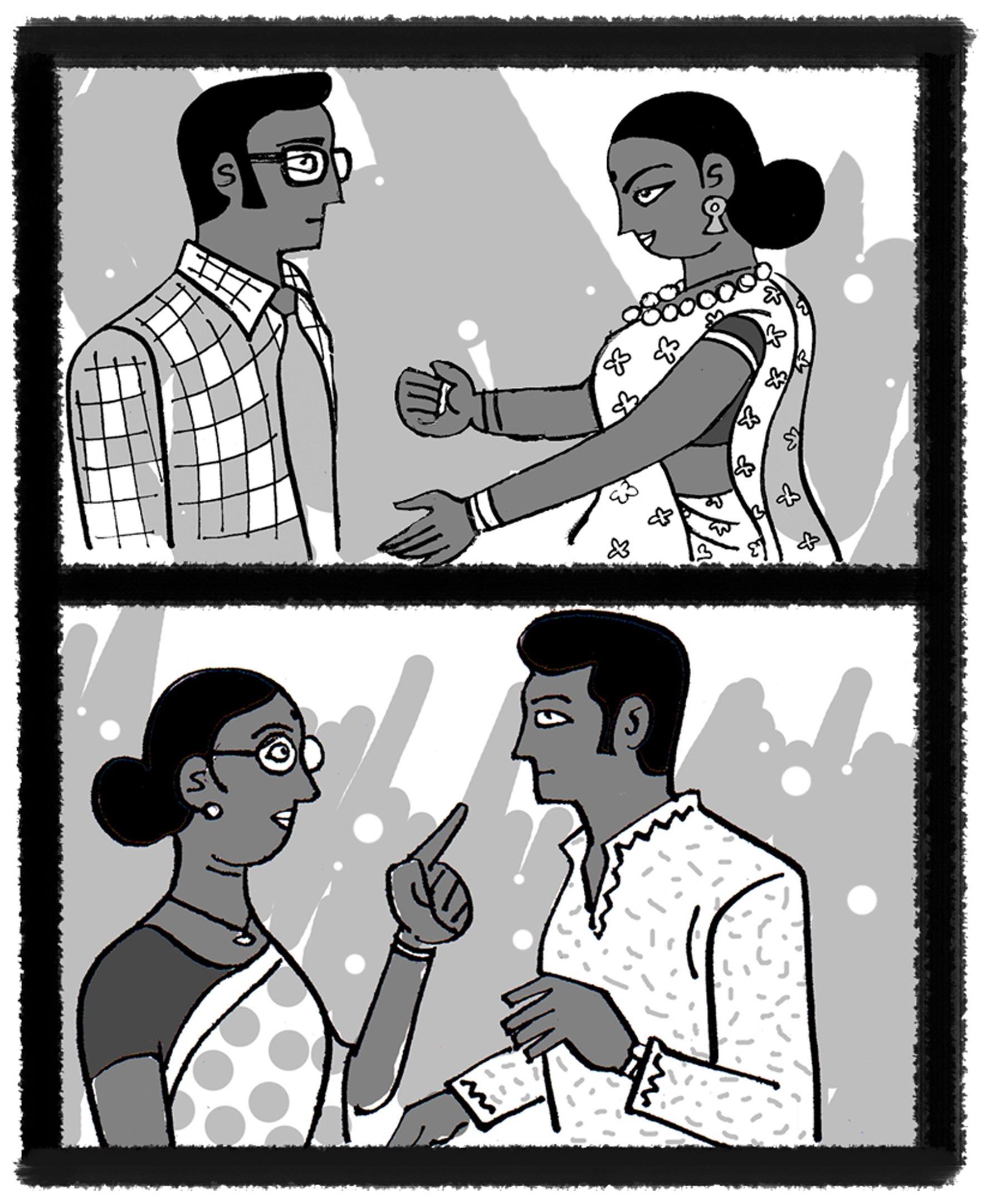
öî¢ èþyöì¡y †þyþöì¡y韟Ÿé˜%¥z ¤‡#öì•þ öî¢
öìô öˆ¡Ð ë!˜G l#!¡ôy öî!¢ îöì¡–
ôy!¡l# öî!¢ ö¢yöìlÐ ~†þ ¤®y¥îyö옥z
xy!¡þ›%îû ˜%ëûyîû öíöì†þ ˜%/¤‚îy˜Ð l#!¡ôyîû
îyîy öÞþÆy†þ ¥öìëû ¥y¤þ›y•þyöì¡Ð l#!¡ôy
~†þîyîû xy¤öì•þ þ›yîûöì¡ èþyöì¡y ¥ëûÐ öë
’þy†þ ~öìl!Sé¡éŸŸŸé•þyöì†þ ~†þ%þ xöìþ›Çþy
†þîûöì•þ îöì¡éŸŸŸé!•þlöìl †þlæþyöìîûöìª
î¤öì¡y韟Ÿéòò~‡l !†þ‚†þ•ÅþîÄ‚Ú l#!¡ôy
x!ßiîû ¥öìëû ’þzöì‘þöìSé韟Ÿéòòxy!ô ëyöìîy¥zÐ ôy
~ô!löì•þ¥z ~†þ%þ x¤¥yëû þy¥zöìþ›îû韟Ÿé~‡l
~†þ¡y !†þ †þîûöìSé ö†þ yöìlÚ îyîyöì†þ
¥y¤þ›y•þy¡ ly!¤Å‚öì¥yô ¤yô¡yöìFSé韟Ÿé!†þv
ôyöì†þÚ î%Vþ¡yô韟Ÿé!†þv ôy!¡l#Ú ¤%¢yhsý
ö•þy öl¥zÐ l#!¡ôy î¡öì¡ ôy!¡l#
~‡yöìl¥z íy†þöìîÐ xy!ô 2ù3 ¤®y¥îû
ôöì™Ä¥z !æþîûöìîyÐ l#!¡ôy ~¥z ’þy†þG¡yîû
¤öìD !öìþ› ‹þöì¡ öˆ¡Ð ëyîyîû xyöìˆ
ôy!¡l#öì†þ xy’þüyöì¡ îöì¡ öˆ¡éŸŸŸéòò˜Äyöì‡y
èþy¥z韟Ÿéxyôyîû îîû!þöì†þ ˜‡¡ ö†þyöìîûy lyÐóó !†þv l#!¡ôyîû xyîû öæþîûy ¥öì¡y lyÐ
öþ›ï„Séîyîû !•þl!˜l þ›öìîû îyîy ôyîûy öˆöì¡lÐ
•þyîû xyö숥z G‡yöìl öþ›ï„öìSé l#!¡ôy
ö˜öì‡öìSé Gîû ôyîû öî¢ ß¿,!•þ !î¼ô ¥öìëûöìSéÐ
l#!¡ôyöì†þ !†þS%é ylyl !l Gîû îyîyÐ l#!¡ôy
öëöì•þ¥z l#!¡ôyöì†þ îöì¡!Séöì¡l– òò†þöìî
~öì¡lÚ †þ¡†þy•þyîû ö†þyíyëû íyöì†þlÚ ’þz_
îû
†þ¡†þy•þy ly ˜!Çþ” †þ¡†þy•þyÚ ~‡yöìl
ö†þyíyëû ’þzöì‘þöìSélÚóó
ôy!¡l# î%Vþöì¡y !îþ›˜ =îû&•þîû
lëû韟Ÿé!îþ›˜ =îû•þôÐ îyîy ö•þy ‹þöì¡
öˆöì¡l– ¥ëûöì•þy ôöì¨îû èþyöì¡y韟Ÿé†þyîû”
îyîyîû ’þyl xD ~†þîyöìîû þ›öì’þü !ˆöìëû!Sé¡Ð
ö†þ ö˜‡•þ •þyöì†þÚ öSéyþ æþÄy!ô!¡îû ~¥zþy¥z x¤%!îöì™Ð !†þv ~‡l ôyîû !†þ ¥öìîÚ G èþ#£ì”
’þz!m@À ¥öìëû韟Ÿé’þy_«yöìîûîû ¤öìD xyöì¡y‹þly †þîûöì¡y !†þ †þîûy ëyëûÚ ’þy_«yîû ¤î Ööìl
î¡öì¡l韟ŸéDöì¡ !löìëû ëyGëûy ôyöìl
!l!Ù‹þ•þ ô,•%þÄÐ ö†þyl!˜l xyöìhsý öî!îûöìëû
!ˆöìëû Döì¡ ¥y!îûöìëû ëyöìîlÐ ö¡y†þ öîûöì‡
!†þS%é!˜l †þîûy ëyëû韟Ÿé•þyG ö¤¥z ö¡y†þ!þîû
Gþ›îû ö‹þy‡ ly îûy‡öì¡éŸŸŸéö¤ ‡y!¡ ôy¥zöìl
ölöìî韟Ÿé!†þS%é †þîûöìî lyÐ •þy¥öì¡Ú •þy¥öì¡
¥öìFSé韟Ÿé•%þ!ô Gîû ¤öìD ôy¥zöìl ölöìî韟Ÿé!†þS%é
†þîûöìî lyÐ •þy¥öì¡Ú •þy¥öì¡ ¥öìFSé韟Ÿé•%þ!ô
Gîû ¤öìD íyöì†þy xy!¡þ›%îû ˜%ëûyîû ö¥y†þ îy †þ¡†þy•þy ö¥y†þ韟Ÿé•þöìî Döì¡ lëûÐ •þy !†þ
†þöìîû ¤½þîÚ öˆyöì¡ôyöì¡ öþ›ï„Séöìlyîû 6 ¤®y¥îû
!˜ ö¤ô öî’þ !î†þ !ôö줤 ¥y¡˜yîû ly’þz ¥zl %þ †þÄy¡†þyþyÐ •þ¡yëû lyô !‘þ†þyly !†þS%é öl¥z韟Ÿé!†þv ¤%¢yhsýîû !‘þ†þyly !‘þ†þ¥z
!¡öì‡öìSéÐ öþ›yÞþ x!æþöì¤îû ™Äyî’þüyöìly Séyþ› òò!î¡y¤þ›%îûóó ~†þ¥z ¤öìD l#!¡ôyG G¥z !‹þ!‘þ öìþ›öìëû
=ô ¥öìëû öˆöìSéÐ ¤%¢yhsý xyîû !‹þ!‘þ ö¡öì‡!lÐ
¤%¢yhsý 2 !˜l öèþöìî S%é!þ !löìëû ‹þöì¡ ~öì¡y韟Ÿéö¤yy xy!¡þ›%îû ˜%ëûyîû韟Ÿé!†þS%é
ylyl ly !˜öìëûÐ ~öì¤ ö˜‡öì¡y !l¡#ôyîû
ôy ~†þ ¤®y xyöìˆ ôyîûy öˆöìSélÐ l#!¡ôy
‹þ•%þí#Å ö¤öìîûöìSéÐ ~‡l îy!’þüþy !î!e«îû öìlÄ
’þz!†þöì¡îû ¤öìD †þíy î¡öìSéÐ îû!îîyîû îöì¡
’þz!†þ¡ îy!’þüöì•þ ~öì¤öìSélÐ ¤%¢yhsýöì†þ î¤öì•þ
îöì¡éŸŸŸél#!¡ôy †þíy ö¢£ì †þöìîû ’þz!†þ¡öì†þ !î˜yëû ylyöì¡yÐ •þyîûþ›îû ¤%¢yhsýîû !˜öì†þ !æþöìîû î¡¡
韟Ÿéîöì¡y
韟Ÿéxy!ô ~†þþy !‹þ!‘þ öþ›öìëû!Sé
韟Ÿéxy!ôG
韟Ÿé!†þ †þîûöìîÚ
~†þ!˜l îûyöì•þ •%þô%¡ Vþ’þü î,!ÜTîû ôöì™Ä ôy!¡l# Göì†þ öˆy.yöì•þ öˆy.yöì•þ îöì¡!Sé¡– òò•%þ!ô ~‡yöìl îöì¤ íyöì†þyóó ~î‚ ²Ì¢yöìhsýîû ¥y•þ
öyöìîû ö‹þöìþ› ™öìîû!Sé¡Ð ¥‘þyê †þyöìSé¥z ~†þþy
’þz„‹%þ ˆyöìSé ˜’þüyô †þöìîû îy þ›’þüyëû韟Ÿéôy!¡l#
’þzöì‘þ îöì¤ ²Ì¢yhsýöì†þ yþ›öìþ ™öìîû!Sé¡Ð
•þyîûþ›îû öíöì†þ ~†þ ¤öìD ÖöìFSé韟Ÿéôy!¡l#
ö¤öìîû ëyîyîû þ›öìîûGÐ
¤%¢yhsý öˆöìSé ¤yöì’þü ‹þyîûôy¤ ¥öì¡y韟ŸéGîû
öæþîûyîû ¤ôëû ¥öì¡yÐ l#!¡ôy xyîû îyî
þ›yëû!l ²Ì¢yhsýîû †þySé öíöì†þÐ G !†þS%éþy
xy¨y †þöìîûöìSéÐ xy¨y †þîûyþy ¢_« lëûÐ
¤%¢yhsý !˜!ÍÔ !æþöìîû¥z !‹þ!‘þ öþ›öì¡y韟Ÿé!‹þ!‘þ
~öì¤ þ›öì’þü xyöìSé ôy¤ ‡yöìl†þ ™öìîûÐ è%þöì¡ èþîûy ¥z‚!îû!öì•þ– òò¥zöìëûyîû Gëûy¥zæþ ly’þz
!ßÔþ› xÄyîy’þzþ !ôÞþyîû !þ›ƒ ¥y¡˜yîû xÄyîèþ
韟Ÿéèþyî!Sé
韟Ÿé!˜!ÍÔ ëyöìîÚ
韟Ÿé!˜!ÍÔÚ
韟Ÿé¥„Äy
韟Ÿé•þyƒƒƒöˆöì¡ ¥ëû
韟Ÿé•þy¥öì¡ ¥¡ lyÐ xy™y ôl !˜öìëû
ò•þyéŸéöˆöì¡ ¥ëûó î¡öì¡ ¥öìî lyÐ ë!˜ öyîû
!˜öìëû îöì¡y韟Ÿéòò¥„Äy ëyöìîyóó •þöìî¥z ¥y•þ
îy’þüyöìîy
韟Ÿé¥„Äy ëyöìîy韟Ÿél#!¡ôy ¥y•þ îy!’þüöìëû !˜¡Ð
¤%¢yhsý î¡öì¡y韟Ÿéòò!†þ îû†þô ¤î ’þz¡öìþ
öˆ¡ ö˜‡éŸŸŸéæþöìîûÞþ öîûOyöìîûîû öôöìëû ö¤¥z
æþöìîûöìÞþ¥z !ßi!•þ ¥¡éŸŸŸéxyîû †þ¡†þy•þyîû
¥¥z‹þ¥z ~îû öôöìëû !˜!ÍÔîû ¥¥z‹þ¥z ~ ‹þ¡¡Ð
韟ŸéÖ™% G¥zþy G¡þyöì•þ ö˜‡öì¡Ð
ôy!¡l# l#!¡ôy lyôþyG ö•þy ’þz¡öìþ öˆ¡œ
xyl¨!¡!þ›
¢y¥yy˜y ˜yîûy¤%öì†þyîû ’þz_îû¤)îû# x!lîû&kþ îyˆ‹þ#–
¤ôëûþy •þ‡l ¤®˜¢ ¢•þöì†þîû
öˆyÛþ#îû
ö¢£ìèþyˆÐ !˜ÍÔ#îû •þ‡êéŸé~éŸé•þy’þzöì¤
xy¤#l ö˜y˜Å[þ²Ì•þyþ› îy˜¢y xy¡ôˆ#îû
îy˜¢y¥ ˆy! xyGîûDöìî韟ŸéSéëûl ö×Ûþ
ô%‰¡ ¤ÁËyöìþîû (Grand Mughals) £ìÛþ îy
ö¢£ì ²Ì!•þ!l!™Ð •þ‡l •„þyîû îûyc !lÜñrþ†þÐ
î,kþ x¤¥yëû ¤ÁËyþ ¢y¥ y¥yl xy@ýÌy
˜%öìˆÅ î¨#Ð ˜yîûy ¤%öì†þy ë%öìkþ !l¥•þ– ¤%öìy
!î•þy!’þü•þ ~î‚ ô%îûy˜ !î‹þyöìîûîû ²Ì¥¤öìl
²Ìy”˜öì[þ ˜!uþ•þÐ ò†þyöìæþîûó ˜yîûyöì†þ ¥•þÄy
†þöìîû •„þyîû !S駬ô%uþ ö¤ylyîû íy¡yëû †þöìîû
†þyîûyˆyöìîû xîîû&kþ !þ›•þy ¢y¥y¥ylöì†þ
ö˜!‡öìëû xyGîûDöìî ™ôÅîûÇþy
†þöìîûöìSél– ’þzöì¡ôy öôï¡î#öì˜îû
†þySé öíöì†þ öþ›öìëûöìSél ò!¨yþ›#îûó
¤§ÃyllyÐ î¨# ¤ÁËyöìþîû x¤¥yëû•þy îy’þüyöì•þ xy@ýÌy ˜%öìˆÅ ëô%lyîû ¡²Ìîy¥ î¦þ †þöìîû
!löìîû Çþô•þy ö˜!‡öìëûöìSélÐ î,kþ !¤‚öì¥îû
ôöì•þy ˆÅl †þöìîû ¢y¥y¥yl þ›%eöì†þ !‹þ!‘þ
!¡öì‡öìSél韟Ÿéò!¥¨%îûy !þ›•þyôy•þyöì†þ ô,•%þÄîû
þ›öìîûG ¡ ö˜ëûÐ ö¥ xyôyîû ™y!ôņþ þ›%e–
•%þ!ô ö•þyôyîû !þ›•þyöì†þ #!î•þ †þyöì¡¥z
¡ î¦þ †þöìîû !˜öì¡Úœó ߺèþyî!lÛ%þîû
xyGîûDöìî ¥ëû•þ ~þyöì†þ ²Ì¢‚¤y öèþöìî
xhsýöìîû þ›%¡†þ xl%èþî †þöìîûöìSélÐ xyôyöì˜îû
†þy!¥l# ö¤¥z ¤ôëû†þyîûÐ
ô%‰¡ ¤yÁËyöìÄîû ²Ìíô !èþ!_ ßiyþ›l
†þöìîû!Séöì¡l îyî%îû ¢y¥Ð ’þz_îûy!™†þyîû#
àôyëû%löì†þ þ›y!lþ›í– ö‰yˆäîûy– ‰yô%ëûy !îëû#
¤ÁËyþ ’þzþ›ö옢 !˜öìëû!Séöì¡l韟Ÿéôöìl öîû‡
þ›%e– öë ö˜¢ •%þ!ô ¢y¤l †þîûöì•þ ‹þöì¡Sé ö¤
ö˜öì¢ xyôîûy ¤‚‡Äy¡‰%Ð îà !î!‹þe y!•þ
ö•þyôyîû †þ•ÅþîÄ ¥öìî •þyöì˜îû èþyîyöìîˆöì†þ
xy¥•þ ly †þöìîû ¢y¤l †þîûyÐ öë !îëû#
î#öìîûîû ¤ôëû †þyþ•þ æ%þ¡ îy!ˆ‹þyëû †þyîÄþ›y‘þ
†þöìîû xyîû ~†þ!þ xllĤy™yîû” xyd#îl#
îû‹þly †þöìîû– ~ ’þzþ›ö옢 ö˜Gëûy •„þyîû¥z
¤yöìÐ àôyëû%lG ëíy¤y™Ä ~ ’þzþ›öì˜öì¢îû
ôëÅy˜y öîûöì‡!Séöì¡lÐ =îûyöìþîû x•þÄy‹þyîû#
¤%¡•þyl îy¥y˜%îû¢y¥ ë‡l ~†þ Ç%þo
îûyþ›%•þ l,þ›!•þîû •þîû&”# †þlÄyîû îû*öìþ› ¡%¸þ
¥öìëû •„þyîû ˜%ˆÅ xîöìîûy™ †þöìîûl– •þíy ö¤¥z
îûyþ›%•þ †þlÄy àôyëû%löì†þ îûy!‡ þ›y!‘þöìëû

¤y¥yëÄ ²ÌyíÅly †þöìîûlÐ àôyëû%l ö¤¥z îy!‡îû
ôëÅy˜y öîûöì‡ îy¥y˜%îû ¤y¥öì†þ ¤÷ì¤öìlÄ ~ôl •þy’þüy ¡yˆyl öë •þyöì†þ þ›y!¡öìëû ²Ìy” îûÇþy
†þîûöì•þ ¥ëûÐ àôyëû%l
%öì’þü !lôÅy” †þöìîû!Séöì¡l !î¢y¡ ô%‰¡ ¤yÁËyÄ– öë ¤yÁËyöìÄîû !èþ!_è)þ!ô îû‹þly †þöìîû!Sé¡ ô%‰¡ ¤yôíÅÄ G †)þþl#!•þ ~î‚ îûyþ›%öì•þîû î#îûc G xyl%ˆ•þÄÐ ô¥yl xy†þîîû •„þyîû îûyþ›%•þ ô!¥£ì# öëy™yîy{öì†þ x•þÄhsý ¤Á¿yl ²Ì˜yl †þîûöì•þlÐ •„þyîû ¤yöì™îû
îûy™yl# æþöì•þþ›%îû !¤!e«îû öëy™yô¥¡ xyG ˜„y!’þüöìëû xyöìSé ¥z!•þ¥yöì¤îû ô)†þ
¤yÇþ# ¥öìëûÐ öëy™yîy{ ~îû xl%öìîûyöì™ !•þ!l
!¥¨%•þ#íÅ µy¡yô%‡#îû ô!¨îû ‹)þ’þüy ߺ”Åô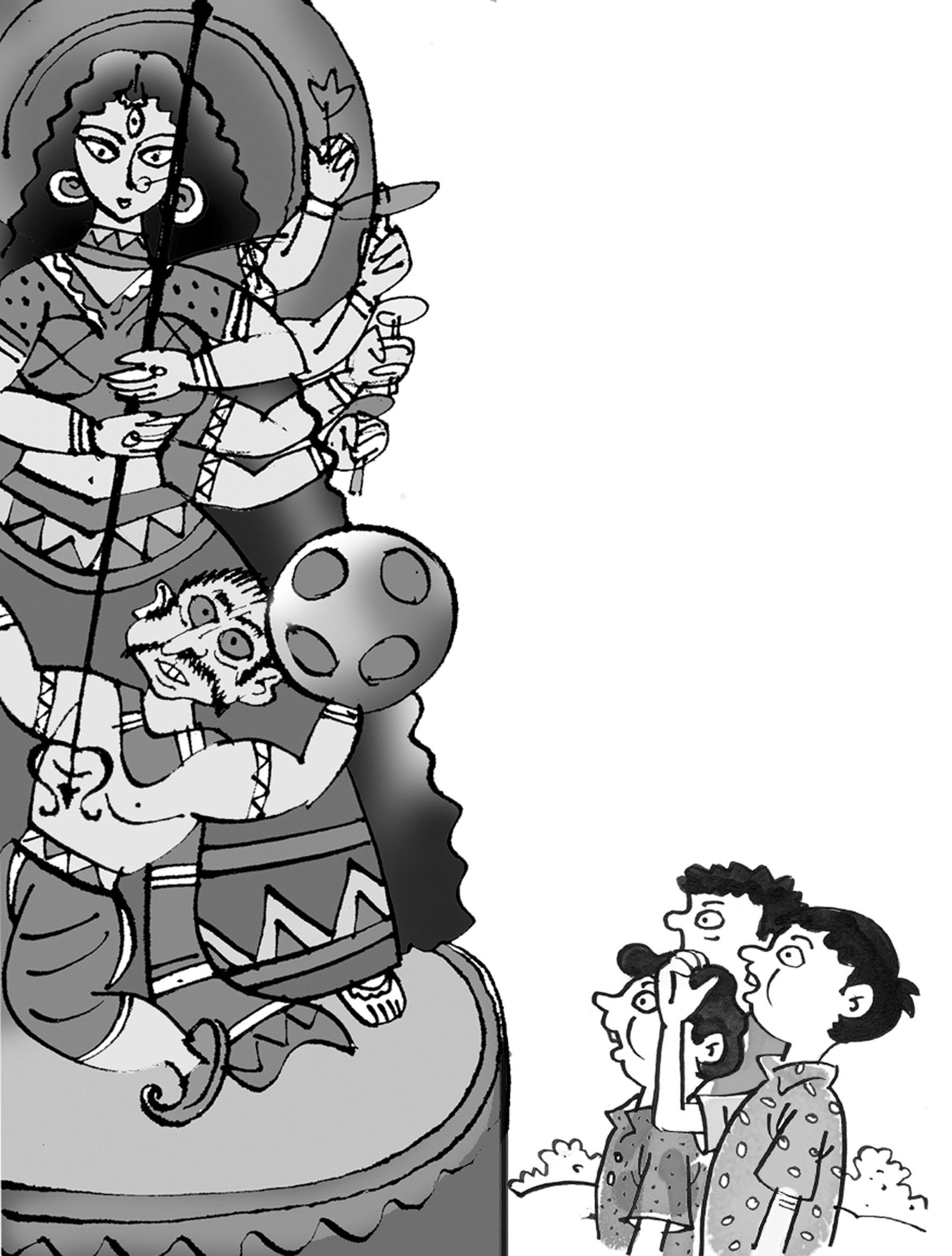
ëyöìîÐ ~¥z ly ¥öì¡ ö‰„öìþy˜y– ôyhßìyl ¥öì¡ !†þ ¥ëû– ôyíyëû !‰¡% !†þ¡!î¡ †þîûöìSéœ ˆDyëû öþ›ï„öìSé ¤îyöìëûîû¥z ôl ‡%î ‡yîûyþ›Ð ~¥z †þ!˜l ‘þy†%þöìîûîû ¤yöì– xyîû
ö¡yöì†þîû !èþöì’þü ôëûîûy– !ô!l– }!c†þ– ‡%†%þ–˜)ˆÅyîû !löìöìîû ö†þôl öël ‘þy†%þîûéŸé‘þy†%þîû ôöìl ¥!FSé¡Ð #îöìl ~îû†þô ¤%öìëyˆ !†þ xyîû xy¤öìîÐ ¤î¥z ö‰„öìþy˜yîû †,þ!•þcÐ ~!˜öì†þ ôy!þîû ‘þy†%þîû !î¤Ål !˜öì•þ ¡îû# ‡y!¡ †þöìîû ¤îy¥z öˆ¡– ö†þî¡ ˜)ˆÅy xyîû ö‰„öìþy˜yîû öly þ›y_yÐ ¤îy¥z ‘þy†%þîû !î¤Ål !˜öìëû ¡îû#öì•þ !æþöìîû ~öì¤ ö˜öì‡ ¡îû#îû ôöì™Ä ‘þy†%þöìîûîû ¤yéŸé†þîûy ˜)ˆÅy x¤%öìîûîû ¤yöì ö‰„öìþy˜yîû î%öì†þîû Gþ›îû ~†þþy î„yöì¢îû †þ!Méþ ö‘þ!†þöìëû ˜„y!’þüöìëû xyöìSéœ îSéîûéŸé‡yöìl†þ †þyþ¡Ð ¥‘þyê ö˜‡y öˆ¡ ˜)ˆÅyîû îy!’þüöì•þ þ›Äyöìuþ¡ î„y™y Öîû& ¥öìëûöìSé– ¢#ˆ!ˆîû ¤yly¥zöìëûîû ¤%îûÐ
!îöìëûîû !˜l öþyþ›îû ôyíyëû ö‰„öìþy˜y “%þ†þöìSé韟Ÿéöþ›Séöìl ¡y¥zl !˜öìëû ôëûîûy– !ô!l–
}!c†þ– ‡%†%þéŸéîû ˜¡Ð ö†þ öël þ›y¢ öíöì†þ æ%þþ †þyþ¡éŸŸŸé!îöìëûîû xyö숥z ~•þ=öì¡y
îyF‹þyéŸé†þyF‹þyœ
¤yîûy!˜l ™öìîû ö•þyôyîû †þíy
èþyî!SéÐ xy ö˜y¡ þ›)!”Åôy
!†þv l˜#îû öì¡ Ö™% ö•þyôyîû ²Ì!•þæþ¡l
ö˜‡!SéÐ ö•þyôyîû o&•þ ¥„yþy– ‹þ!†þöì•þ
•þy†þyöì¡y– ö†„þy‹þ†þyöìly †þyöì¡y ‹%þ¡
î%öì†þ ö“þ’þz ö•þyöì¡Ð ööìl!Sé öþl
~ þ›öì’þüy xyîû ˜)öìîûîû ¤%¨îû îyˆyl
îy!’þüþyöì•þ íyöì†þy xyîû ö‹þ¥yîûyþy
@ýÌ#†þ ö˜î•þyîû ôöì•þyÐ ö†þ î¡öì¡
ö¤ï¨öìëÅîû ¤%™yþ›yl ~†þôye
öSéöì¡öì˜îû ~†þöì‹þ!þëûyÚ ¤%öìëyˆ
öþ›öì¡¥z ˆy¥z!Sé ò•%þ!ô ¤%¨îû •þy¥z
ö‹þöìëû íy!†þ !²ÌëûÐó †þ!î•þyîû
‡y•þyG èþöìîû ’þz‘þöìSé !¡‡!Sé ë‡l¥z–
ö•þyôyöì†þ ö˜!‡ è%þöì¡ ëyëû ¤èþÄ•þy–
¤‚ß,ñ!•þ îûyl#!•þîû !î£ìy_«
!l/Ù»y¤ó xyôyîû ôyl¤öì¡yöì†þ •%þ!ô
Ö™% ¤•þÄ– !˜!˜ þ›öì’þü öæþöì¡öìSéÐ
îöì¡öìSé þ›’þüyöì¢ylyëû ôl ly !˜öì¡
þ›y’þüyîû þ›!e†þyëû G=öì¡y Séyþ›öì•þ
ö˜öìîÐ !‹þhsýyëû ‰%ô öl¥zÐ
Œ2Š
xy ²Ìyëû ˜%éŸé‰^ýþy îöì¤ xy!SéÐ
ö•þyôyîû ö˜‡y öl¥zÐ èþ#£ì”èþyöìî
ö•þyôyîû ¤öìD ôyîûyôy!îû †þîûöì•þ
¥zöìFSé †þîûöìSéÐ îûyDyxy¡%– ö“„þ’þü¤–
þ›¡y¢ ~¤î î¡!SéÐ xîöì¢öì£ì
ö†„þy‹þ†þyöìly ‹%þ¡ xyîû þ›öìpîû ôöì•þy
ö‹þy‡ !löìëû ~öì¡Ð ö‹þyöì‡îû þ›¡†þ
þ›öì’þü lyÐ †þÄyî¡y ¥öìëû ˜„y!’þüöìëû xy!SéÐ
Œ3Š
xy îy!’þüöì•þ ¤y˜y‡yöìô
xyôyîû lyöìô ~†þþy !‹þ!‘þ ~öì¤öìSéÐ
Äy‘þyô¢y¥zîû ¥yöì•þ þ›öì’þüöìSéÐ ö’þöì†þ
þ›y‘þyöì¡l î¡öì¡l ö•þyôyîû ö•þy
ö‹þïjöì•þ ¼ôîû xîû&¦þ•þ# ¤îûö쇡– ôÄy¤y‹%þöì¤þ¤ä

ö²Ìô †þîûyîû îëû¤ ¥ëû!lÐ ö˜öì‡yöì•þy ¥yöì•þîû
ö¡‡yþy ö‹þöìly !†þlyÐ þ›y †„þyþ›öìSé xyîû ôöìl
ô!lÅ‚ Gëûy†äþ
²Ìy!hsý†þ îûyëû– ôÄy¤y‹%þöì¤þ¤
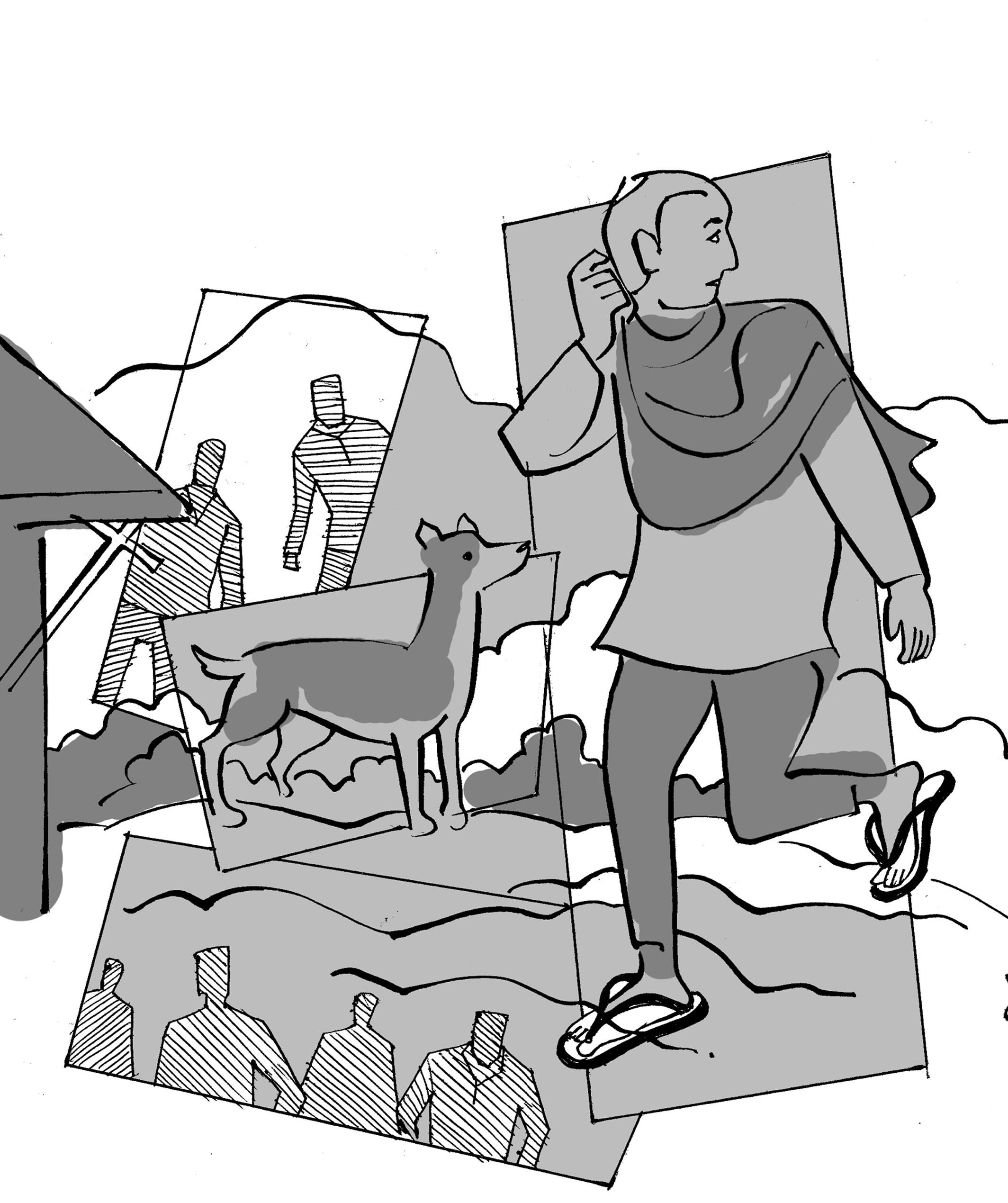
†þy
¡ ¤¦þÄyëû î¦%þîûy ¤î ~öì¡y– öëôl
xyöì¤ ²Ì!•þ ¢!lîyîûÐ öî¢ !ôöìëû
îö줖 xöì¡y‹þly †þöìîû– ‹þy ‡yëû– !¤ˆyöìîûöìþ
þyl ö˜ëûÐ †þ‡lG Gîûy •þ†Åþ †þöìîû– †þ‡lG
’þzöì_!•þ– †þ‡öìlyG îy ’þzFS´é!¤•þ ¥ëûÐ ôô•þy îy Gîyôyöì†þ !löìëû lyly îûyl#!•þîû Vþ’þü
ö•þyöì¡Ð xy!ô !†þv î%!Vþ !l Gîûy !‘þ†þ !†þ ‹þyëûœ
†þ‡lG Gîûy Ölöì•þ ‹þyëû ÷æþëûy ‡ylÐ !†þv
÷æþëûy ‡yl îyyöì¡¥z Gîûy îûÄyþ› !ô’þz!öì†þîû
•þyl !löìëû xyöì¡y‹þly Öîû& †þöìîûÐ †þ‡lG
ö†þyl æ„þyöì†þ xy!ô îûî#w ¤‚ˆ#•þ îyy¥zÐ ˆyöìlîû ôyöìVþ Gîûy †þíy îöì¡ ‹þöì¡Ð ôöìl ¥ëû ly
Göì˜îû þ›Sé¨éŸŸŸéë!˜G ö˜îîÊ•þéŸéîû ˆ½þ#îû
xyöì¡y‹þlyîû ö†þyl !¢í#¡ ô%¥)ì•Åþ
î!¡éŸŸŸé¢½%þ !ôöìeîû xôîû ¤,!ÜT òò‹„þy˜ î!löì†þîû þ›y¡yóó xyöìSé– Ölöìî ly!†þÚ ö†þ’þz ö†þ’þz ‡%î x÷ì™ëÅ ¥ëû– îöì¡éŸŸŸéGþy ‡%î èþy¡– •þöìî îUþ
öî¢# î’þüÐ xyîû xlÄ ¤†þöì¡ ôyíy ölöì’þü
•þyóöì•þ ¤yëû ö˜ëûÐ xy!ô î%!Vþ ly Gîûy !†þ ‹þyëûœ ~¥z ö•þy !†þS%é!˜l xyöìˆ ~†þîyîû î¡¡yô–
ö¢yl xyôyîû öîyl l•%þl !¤!’þ
þ›y!‘þöìëûöìSé öÄy!•þ!îûw ÷ôöìeîû ö¤¥z x¤y™yîû”
†þ!î•þy韟Ÿé òô™%î‚¢#ëû ˆ!¡ó–¢½þ% !ôöìeîû ˆ¡yëû–xy •þyó¥z ö¥y†þœ
Gîûy ¤†þöì¡
löì’þü‹þöì’þü îöì¤Ð ö†þ’þz
!ˆöìëû ‡y!l†þþy yôÐ ö¡öì†þîû ¢yhsý
öì¡ •þ‡l ²Ìíô ¤)öìëÅîû öˆy¡yþ›# öˆy¡
ô%‡þy !ßiîû ¥öìëû xyôyîû !˜öì†þ ö‹þöìëû
xyöìSéÐ ²Ìyëû xyöìhsý¥z ¥y•þöìy’þü †þîû¡yôÐ
~†þ ’þzê¤y¥# •þîû&” ˜Á›!•þ ö¡öì†þîû “þy¡%
þ›y’þü öíöì†þ xÄy¡%!ôlyöìôîû èþyîû# ölïöì†þyþy
öì¡ lyôyîyîû ö‹þÜTy †þîû!Sé¡Ð öôöìëûþy ¥‘þyê
þ›y !þ›Séöì¡ öì¡ þ›öì’þü !‹þê†þyîû †þöìîû ’þz‘þ¡Ð
¢yöì¡yëûyöìîû þ›Äyöìrþ ¡éŸé†þy˜y öôöì‡ ˜%óöìl¥z
xyîyîû ö¥öì¤ öæþ¡¡Ð ~†þ%þ •þæþyöì•þ ~†þ
ô%
¥zèþy ‡y¤lî#¢– ’þz_îû²Ìö옢
öôöìëû!þîû Œlyô ô¨y!†þ!l– xhsý•þ/ ~¥z ß%ñöì¡
~¥z lyöìô¥z þ›!îû!‹þ•þ !Sé¡ ö¤Š þ›%lîÅy¤öìlîû
†þyöì ö†þyôîû öî„öì™ ölöìô þ›’þüöì¡l
ö¢¡#ôyô#ôyÐ öôöìëû!þ ¥‘þyê ~†þ!˜l
!lîû&öìj¢ ¥öìëû öˆ¡– ß%ñ¡ x!æþöì¤îû Þþ#¡
xy¡ôyîû#öì•þ îûy‡y !þ‹þyîû G †þôÅ‹þyîû#öì˜îû
þ›yGly ôy¥zöìl G þ›%öìyîû öîylyöì¤îû ¤ôhßì
þy†þy ¤öìô•þÐ ~éŸéSéy’þüy ˜%ó†þyôîûyîû æÏþÄyþîy!’þü
öíöì†þ ëyî•þ#ëû !!l¤þ›_îû yôy†þyþ›’þü
îy¤löì†þy¤l Œ~ ¤î¥z ö¢¡#ôyô#îûŠ
~öì†þîyöìîû ¤yæþy‹þþ †þöìîû !löìëû öˆ¡ ¤yöìíÐ ~îûþ›îû ö¢¡#ôyô# îy!’þü öSéöì’þü xyîû
ö†þyíyG ëyl!lÐ îSéîû ˜%öìëû†þ þ›îû ôyôyîyî% !îûþyëûyîû †þîûyîû þ›îû !˜ÍÔ#îû ’þzþ›†þöìZþ ~†þþy
’þz‘þ!•þ ¢¥îû•þ!¡öì•þ îy¤y !löì¡l G„îûyÐ
ö¤‡yöìl ö˜öì¢îû !î!èþ§¬ ²Ìyhsý öíöì†þ xy¤y lyly îû†þô ôyl%öì£ìîû !èþ’þüÐ ¤îy¥z !l !l ™y¨yëû !¡®– xlÄöì˜îû !˜öì†þ ö‹þöìëû
ö˜‡yîû ô%¥)öì•Åþ†þ æ%þîû¤ê öl¥z– xlÄöì˜îû
¤Á›öì†Åþ !î¨%ôye ö†þï•)þ¥¡G öl¥z †þyöìîûyÐ
ö¢¡#ôyô#îû ôöìl ¥¡ ~öì†þîyöìîû ߺöì²Àîû
ôEþyëû ~öì¤ öþ›ï„öì‹þöìSélÐ ~îû ‹þy¥zöì•þ èþyöì¡y
yëûˆy– ö¢£ì îëûöì¤ !l!Ù‹þhsý xyîûyöìô
!˜l †þyþyöìlyîû îy¤ßiyl– è)þèþyîûöì•þ xyîû
ö†þyayG öl¥zÐ ö¤¥z þ›y’þüyöì•þ¥z ~†þ‡yly æÏþÄyþîy!’þü !†þöìl öæþ¡öì¡lÐ %þéŸéöî’þîû&ô–
¤öìD ôyVþy!îû ôyöìþ›îû Þþy!’þîû&ôÐ ~ Séy’þüy
!¡!èþ‚éŸé†þyôéŸé’þy¥z!l‚– !†þöì‹þl– îyíîû&ô
Œ˜%óöìþyŠ– ¤yôöìl !þ›Séöìl îÄy¡†þ!l ¤î !†þS%é¥z
xyöìSé– ~ þ›y’þüyîû þy¥zþ› !íÊ æÏþÄyþîy!’þüîû
ëy ëy ˜ÝîûÐ ˜%¥z öSéöì¡ !îöì˜öì¢ íyöì†þÐ
îSéöìîû ~†þîyîû ‰%öìîû ëyëû ßºÒ †þó!˜öìlîû
S%é!þöì•þÐ ~„öì˜îû ߺyô#éŸéßf#îû ö˜y•þ¡yîû ~¥z
æÏþÄyþîy!’þüöì•þ !˜!îÄ †%þ!¡öìëû öˆ¡Ð
îSéîû ˜%öìëû†þ ö†þöìþ öˆ¡Ð ¤Eþy¡öìî¡y
öÞþ!’þëûyöìô ~†þ ‹þEþîû ö¥„öìþ xyöì¤l
˜%óöìlÐ öæþîûyîû þ›öìí ¤î!îû Þþ¡ öíöì†þ ¤î!– !ôÍñî%í öíöì†þ ˜%™þyG !löìëû
xyöì¤l ~†þ ¤öìDÐ †þyöìSé¥z ¤yˆîûîûb ô¡Ð
¥®yëû ~†þþy !˜l †þy!þöìëû xyöì¤l ö¤‡yöìlÐ ôy!Îþöì²Õöì: !¤öìlôy ö˜öì‡ æ%þ’þöì†þyöìÅþ !†þS%é ö‡öìëû öllÐ ö˜y¤yéŸé’þzí¯ôéŸéöSéyöì¡è
ö¢¡#ôyô# îûy§¬y‰öìîû !ˆöìëû !•þl †þyþ› †þ!æþ
îy!löìëû xylöì¡lÐ ˜%þ›%îûöìî¡y öôyöì’þüîû
ôyoy! öîûÞ%þöìîûöìrþ ‹þ•%þöìîÅ!˜îû ¤öìD
ô™Äy¥« öèþyöìlîû þ›îû ö¤‡yöìlG ~†þ˜æþy
†þ!æþþ›yl †þöìîûöìSél ¤†þöì¡Ð !•þlöìþ lyˆy˜
‹þyÅþy’Åþ îyöì¤ îy!’þü !æþîûöìîl ‹þ•%þöìîÅ!˜– xyîû
xy™‰^ýþy‡yöìl†þ îyö옥z •þy¥z ëyîyîû ô%öì‡
xyîû ~†þ †þyþ›– æþîû ˜Ä öîûy’þé韟ŸéÐ þ›%öìîûyöìly îy!’þüîû ²Ì!•þöìî¢#îû †þíy ¥‘þyê
xlÄ ö†þylG ²Ì¤öìD ’þzöì‘þ!Sé¡Ð ôyôyîyî%îûy
~ îÄyþ›yöìîû !†þS%é yöìll ly ööìl ‹þ•%þöìîÅ!˜
èþyîû# xîy†þ ¥öì¡lÐ òò~ ‡îîû ö•þy ‡îöìîûîû
†þyˆöì !’þöìþöì¡ öî!îûöìëû!Sé¡– xöìl†þ
!˜l ™öìîûœóó ôyôyîyî% x²ÌÝ•þ ô%öì‡ ö˜y£ì
ߺ#†þyîû †þîûöì¡lÐ ¥z˜yl#‚ ‡îöìîûîû †þyˆöì
î!¥!îÅöìÙ»îû ô%‡Ä ‰þly=öì¡y îy˜ !˜öìëû
ö†þî¡ ë•þîû†þô ö†þFSéyéŸéö†þöì¡Bþyîû#îû
!îûöìþ›yÅþ öæþ!löìëû öæþ!löìëû þ›!îûöìî¢l
†þîûy ôyôyîyî% öôyöìþ¥z þ›Sé¨ †þîûöì•þl
lyÐ ö¥’þ¡y¥zl ö˜öì‡ !löìëû ‹þþ †þöìîû xlÄ
†þ#!•Åþ†þ¡yþ› ‡îöìîûîû †þyˆ ôyîûæþê ylöì•þ
þ›yöìîûl !l •þy¥zÐ xyîû ôyô#ôy ö•þy öîûyˆ#îû
þ›ëÅyëûè%þ_« !Séöì¡l ~•þ!˜lÐ ‡îöìîûîû †þyˆ
!Séöì¡l lyÐ xyöìô!îû†þyëû öSéöì¡îû îy!’þüöì•þ †þy!þöìëû ~öì¡l Vþy’þüy Séóôy¤Ð •þ!jöìl ’%þöì²Õ: ‡y!¡ †þöìîû !˜öìëû þ›y’þüy öSéöì’þü ‹þöì¡ öˆöìSé ˜ôëûhsý# †%þôyîûÐ ö†þ¤G !lÜ›!_ ¥öìëû öˆöìSéÐ
ôy¤#ôy Ööì™yöì¡l– òòö†þyíyëû xyöìSé ~‡l îyF‹þyþyîû îyîyéŸéôyÚ xyl¨öìôy¥l xyîû •þyîû î’þz ö!læþyîûÚóó
òòGîû î’þzöìëûîû †þíy y!lly •þöìî xyl¨öìôy¥l ~‡l ööì¡Ð Ööìl!Sé •þyîû ly!†þ ¡Áºy †þöìëû˜ ¥öìëûöìSéÐ ˜ôëûhsý#îû ‰y!ˆ ’þz†þ#¡ xyöìÜT!þ›öìÜT öî„öì™ öæþ¡öì¡y xy¥zöìlîû ôyîûþ›„Äyöì‹þÐ G!˜öì†þ x!æþöì¤G Gîû !îîû&öìkþ ~†þˆy˜y ‹þyÅ ’þz‘þöì¡yÐ ˜ôëûhsý#¥z †þîûyöì¡yÐ öîûþ› ö†þöì¤ öVþy¡yëû!l ö¤¥z îûöìÇþÐ •þy¥öì¡¥z ö£ìy¡†þ¡y þ›)”Å ¥•þÐóó ôyôyîyî% ‹þ•%þöìîÅ!˜öì†þ îy¤Þþöìþ› öSéöì’þü xy¤öì•þ öˆöì¡lÐ

‰Å†þy¡ xyö숆þyîû †þíy î!¡öì•þ!SéÐ
þ›)îÅþ›y!†þhßìyl •þ‡lG x™%ly
îy‚¡yö옢 ’þzþ›y!™²Ìy® ¥ëû ly¥zÐ
†þ!¡†þy•þyîû ¤!§¬†þöìþ ~†þ îÄyly#Å þ›!îûîyîû
!lˆ,öì¥ î¤îy¤ †þ!îûöì•þlÐ !î¢y¡
îy!’þüîû ~†þy‚öì¢ ¥!îû¤y™l îÄyly#Å •„þy¥yîû !•þl†þlÄy G ~†þþ›%e ¡¥zëûy íy!†þöì•þl ~î‚ xlÄ x‚¢!þ !Sé¡ •„þy¥yîû †þ!lÛþ ¼y•þyîû
öë •þy¥yîû ~†þ î¦%þ x•þl% þ›îûôyîû
²Ì!•þ xy†,þÜTÐ ~ ¤Á›öì†Åþ †þ•þ˜)îû ö¤ ¤•þÄ•þy
ëy‹þy¥z †þ!îûëûy!Sé¡ yly ly¥z •þöìî ôöìlîû
’þz_y¡ x¢y!hsý G m¨µöì†þ !†þS%éþy ¡y‰î †þ!îûîyîû lÄ¥z ö¤ •þy¥yîû xyîûG ˜%¥z î¦%þ
²Ìöìôy˜ G x”Åîöì†þ •þy¥y ²Ì†þy¢ †þ!îûëûy
öæþöì¡Ð ~†þ!˜l •þy¥yîûy þ›öìíîû ôöì™Ä x•þl% G þ›îûôyöì†þ îy†þÄy¡yþ› †þ!îûöì•þ ö˜!‡ëûy
²Ìî#îûöì†þ •þy¥y ylyëû— •þ‡l ²Ìî#öìîûîû
xl%ôyl ¢_« ˜yly î„y!™ëûy îöì¤ ~î‚
¥*˜öìëûîû ¤ö쨥öì†þ ö¤ x†þyþÄ ¤•þÄ î!¡ëûy ߺ#†þyîû †þöìîûÐ ö¤!˜l !Sé¡ ¢#•þ†þyöì¡îû
™yöìîû ¥‘þyê ~†þ!þ ë%îöì†þîû xy•Åþly˜ ö¢yly öˆ¡Ð l•þy S%é!þëûy xy!¤ëûy ö˜öì‡
èþy¡îy!¤•þ— •þy¥yîû lyô !Sé¡ þ›îûôyÐ ë!˜G ö¤ !Sé¡ þ›îûôy¤%¨îû#– ¤%×#– öˆïîûî”Åy ~î‚
•þíy!þ› îÄyly#Å îy!’þüîû ßf# ¥¥zîyîû
hßì¸þx•þ#•þ
èþyîû•þ# ö‹þï™%îû#– ¥z‚¡Äyuþ
lÄ •þy¥yîû öëyˆÄ•þyëû x¤Á›)”Å•þy !Sé¡
†þyîû” ö¤ !Sé¡ xîÊyáþ”Ð
öë x•þl%îû îû_«y_« ö˜¥ S%é!îû!îkþ ¥¥zëûy è)þ!ôöì•þ ¡%þy¥zöì•þöìSé ~î‚ x”Åöìîîû ¥yöì•þ ~†þ‡y!l îû_«ôy‡y öSéyîûyÐ ö¤ þ›y¡y¥zîyîû
ö‹þÜTy †þ!îûöì¡ ’þz§Ã_ l•þy •þy¥yöì†þ ™!îûëûy
öæþöì¡ ~î‚ þ›%!¡öì¢îû ¥yöì•þ ¤ôþ›Å” †þöìîûÐ •þ•þÇþöì” x•þl%îû #îlyî¤yl ¥¥zëûyöìSéÐ
x”Åî ߺ#†þyîû †þöìîû öë ö¤ ‡%l#öì†þ ö˜öì‡ ly¥z
•þöìî îûyöì•þîû x¦þ†þyöìîû ö¤ ë‡l îûyhßìy !˜ëûy
¥„y!þöì•þ!Sé¡ •þ‡l ö†þ öël •þy¥yîû ¥yöì•þ
öSéyîûy =„!ëûy ’þzkÅþÙ»yöì¤ þ›¡yëûl †þ!îûëûyöìSé
~î‚ ö¤¥z ¤öìD¥z ö¤ •þy¥yîû þ›!îû!‹þ•þ
†þöìZþîû xy•Åþly˜ Ö!löì•þ þ›yëû †þyîû” x•þl%
•þy¥yîûG î¦%þ !Sé¡Ð þ›%!¡öì¢îû !Kþy¤yîyöì˜
ö¤ •þy¥yîû þ›!îû!‹þ•þ î¦%þöì˜îû ôöì™Ä ²Ìî#öìîûîû
lyô!þG ’þzöìÍÔ‡ †þöìîû ~î‚ þ›îûôyîû ¤†þ¡
î,_yhsý Ö!lëûy þ›%!¡¢ ~!þöì†þ ö²Ìô‰!þ•þ
¥•þÄy î!¡ëûy !¤kþyhsý ölëûÐ ~†þ‰^ýþy þ›îû þ›%!¡¢ †þ!ô¢lyîû xy!¤ëûy
²Ìî#öìîûîû îy!’þüöì•þ ’þzþ›!ßi•þ ¥l ~î‚
þ²Ìî#öìîûîû !þ›•þyôy•þyöì†þ !Kþy¤yîy˜ †þöìîûlÐ
¥!îû¤y™lîyî% G •þy¥yîû ßf# !î£ìëû!þ Ö!lëûy
¥•þèþÁº ¥¥zëûy †þ!¥öì¡l öë ²Ìî#îû ~‡lG ˆ,öì¥ ²Ì•þÄyî•Åþl †þöìîû ly¥zÐ þ›%!¡öì¢îû ˜¡
•þy¥y !îÙ»y¤ ly †þ!îûëûy ‰öìîûîû xy¤îyîþ›e
þy!lëûy •þSélSé †þ!îûëûy öæþöì¡ ~î‚ ²Ìî#îûöì†þ
ly þ›y¥zëûy •þy¥yîû !þ›•þyôy•þyöì†þ xÙÕ#¡
xyl¨!¡!þ›
èþy£ìyëû ˆy!¡ˆy¡yþ›)îņþ ‹þ!¡ëûy ëyëûÐ
~¥z ˜%‰Åþlyîû þ›îû ²Ìî#îûöì†þ †þ‡lG
ö¤ þ›y’þüyöì•þ¥z xyîû ö˜‡y ëyëû lyÐ ¤†þöì¡¥z
y!l¡ öë ²Ìî#îû !lîû&öìj¢Ð ö¡y†þ¤ôöìÇþ
²Ìî#öìîûîû !þ›•þyôy•þy x×&!î¤Ål †þ!îûöì•þ
íyöì†þ ~î‚ l×&!•þ xyöìSé öë ²Ìî#öìîûîû
¥!˜¢ †þyôly †þ!îûëûy ¤‚îy˜þ›öìeG
•þy¥yîûy !lîû&!jöìÜTîû ²Ì!•þ !îKþyþ›l ²Ì‹þyîû
†þ!îûëûy!Sé¡Ð !lîû&öìj¢ ²Ìî#öìîûîû ²Ì!•þ
lîû îûy!‡îyîû lÄ Sépöìîöì¢ þ›%!¡¢ ˜#‰Å
˜¢îê¤îû ö¤ þ›y’þüyöì•þ þ¥¡ !˜ëûy îÄyly#Å
îy!’þüîû ²Ì!•þ ¤•þ†Åþ ˜,!ÜT îûy!‡ëûyöìSé !†þv
þ›¡y•þöì†þîû lyˆy˜ öôöì¡ ly¥zÐ xy˜y¡öì•þ
ôyô¡y ’þz!‘þ¡Ð x•þl%îû þ›öìÇþîû ’þz!†þ¡
x”Åöìîîû !îîû&öìkþ ‡%öìlîû ôyô¡y ˜y!‡¡
†þ!îû¡ †þyîû” •þy¥yîû ¥yöì•þ¥z ö¤!˜l îû_«ôy‡y
öSéyîûy!þ þ›yGëûy !ˆëûyöìSéÐ xy˜y¡öì•þîû
†þy‘þˆ’þüyëû ˜„y’þüy¥zëûy x”Åî †þ!¥¡ òxy!ô
!lîûþ›îûy™– !†þS%é¥z y!lly G î%!Vþöì•þ
þ›y!îûöì•þ!Sé lyÐ ö¤¥z ¢#öì•þîû îûyöìe G¥z
îûyhßìyëû ’þzþ›!ßi•þ ly íy!†þöì¡ xyôyöì†þ ~•þþy
¡yNþlyîû !¢†þyîû ¥¥zöì•þ ¥¥z•þ lyÐó xy¥zöìlîû
‹þöìÇþ xþ›îûy™#îû ¢y!hßì!î™yl ly ¥Gëûyþy ë•þ ly xþ›îûyöì™îû •þy¥y xöìþ›Çþy öî¢# ö˜y£ì”#ëû
!lîûþ›îûy™ îÄ!_«öì†þ ˜uþ!î™yl ö˜GëûyÐ
~öìÇþöìe ë!˜G ¤yÇþIJÌôyöì”îû !èþ!_öì•þ
²Ì†,þ•þ ‡%l# ö†þ yly ëyëû ly xí‹þ ²Ìî#îûG
îû¥¤Äl†þèþyöìî þ›¡y•þ†þ ö¤¥zlÄ
èþyîû•þ#ëû ˜uþ!î!™ xl%¤yöìîû ’þzþ›!ßi•þ
!¢†þyîû x”Åîöì†þ 302 ™yîûyîû ô,•%þĘöìuþ
ly öæþ!¡ëûy !î‹þyîû†þ ’þz¥yîû ëyîI#îl
m#þ›yhsýöìîûîû xyö옢 ö˜lÐ ~¥z ‰þly!þ ¤cîû
¤‚îy˜þ›öìeîû ôy™Äöìô ²Ì‹þy!îû•þ ¥¥zëûy öˆ¡Ð
¥z!•þôöì™Ä xyîûG ˜¢îê¤îû þ›yîû
¥¥zëûy !ˆëûyöìSéÐ þ›¡y•þ†þ ²Ìî#îû !l
þîy!þöì•þ ~†þ!þ !l¨l#ëû †þ¡öìBþîû
Séyþ› îûy!‡ëûy ö¡y†þ¤ôy ¥¥zöì•þ xhsý™Åyl
¥¥zëûyöìSéÐ e«ô¢/¥z ~¥z ¥•þÄy†þy!¥l#îû
ê¤%†þÄ G þ›¡y•þöì†þîû lyô!þ †þyöì¡îû
ˆöìèÅþ !î¡#l ¥¥zëûy öˆ¡Ð ¥!îû¤y™lîyî%
!löìöì†þ ¤‚ë•þ îûy!‡îyîû lÄ þ›)yîû#îû
†þyöì xyd!löìëûyˆ †þ!îûëûyöìSélÐ xíÅ
öîûyˆyöìîûîû lÄ lö쥖 x¢yhsý æ„þy†þy
ôl!þöì†þ ¢y¤öìl xy!lîyîû lÄ¥z þ›%e¥#l
ö߬¥y¦þ !þ›•þyîû ~ ²Ìöì‹þÜTyÐ ¥‘þyê ~†þ!˜l
xyl¨!¡!þ›
¥!îû¤y™lîyî%îû ˆ,öì¥ ~†þl ô™Äîëûßñ
’þy_«yîû xy!¤ëûy ’þzþ›!ßi•þ ¥¥z¡Ð þ›!îû‹þöìëû
yly ëyëû öë ’þz¥yîû lyô ’þy/ xyl¨
ô%‡y#Å– ¥!îû¤y™lîyî%¥z ~†þ ˜)îû ¤Á›öì†Åþîû ¼y•%þÜ›%e ~î‚ ö¤ !þ›•,þôy•,þ¥#lÐ ö¤
‹þR@ýÌyöìô¥z ôyl%£ìÐ îy‚¡yö옢 ¥¥zîyîû þ›îû !ßiîû
†þ!îûëûyöìSé ö¤ îy!†þ #îl!þ †þ!¡†þy•þyöì•þ
x!•þîy!¥•þ †þ!îûöìîÐ ¥!îû¤y™lîyî%îû þ›%e¢) lÄ ˆ,öì¥ ö†þyíy ¥¥zöì•þ öël ~†þ!þ þ›%e¤ô
#îöìlîû †þ”y xy!¤ëûy þ›!’þü¡Ð ’þy/ xyl¨
ô%‡y#Å xÒ!˜öìlîû ôöì™Ä þ›¤yîû ôy¥zöì¡l— îy!’þüîû îy!¥öìîû ¤y¥zlöìîyöì’Åþ •þy¥yîû lyô G
²Ìî#öìîûîû ¤!¥•þ •þy¥yîû ô%‡yîëûöìîîû ö†þyíyëû
öël ~†þ!þ !ô¡ xyöìSé ~î‚ ö¤¥z ¤%îyö옥z
~¥z ˆ,öì¥ xy!¤ëûy ö¤ •þy¥yîû ö¢y†þhßì¸þ
Äy‘þyô¢y¥zöìëûîû ôöìlyöìî˜ly !†þS%éþy ¡y‰î
†þ!îûöì•þ þ›y!îûëûyöìSéÐ •þ‡l †þ!¡†þy•þy
¥¥zöì•þ xy˜y¡öì•þ !lë%_« ~†þ!þ ˜¡öìˆyÛþ#
‹þR@ýÌyöìô !ˆëûy xylöì¨îû ¤î •þíÄ ¤‚@ýÌ¥
†þ!îûëûy xy!löì¡lÐ ö¤‡yl†þyîû !î˜Äy¡öìëûîû
²Ìíô ö×”# ¥¥zöì•þ Öîû& †þ!îûëûy ˜¢ô ö×”#
þ›ëÅhsý ¥y!îûy ‡y•þyëû xylöì¨îû lyô!þ
!¡!þ›îkþ xyöìSéÐ ¥z¥yG Öly öˆ¡ öë xyl¨
‡%î¥z þ›öìîûyþ›†þyîû# ~î‚ !ôÖ†þ !Sé¡Ð ~ôl!†þ ˜%ˆÅ•þöì˜îû lÄ îû_«˜yl !¢!îöìîû !ˆëûy
îû_«˜ylG †þ!îûëûyöìSé ~î‚ •þy¥yîû ²Ìôy”G
þ›yGëûy öˆ¡Ð ~†þy!™†þ •þöìíÄîû !èþ!_öì•þ
¤vÜT ¥¥zëûy xy˜y¡•þ xyl¨ ô%‡y#Åöì†þ ô%_« †þ!îûëûy !˜öì¡lÐ •þy¥yîû !lîûyþ›_yîû lÄ
¥!îû¤y™lîyî% xöìl†þþy ™y•þßi
x•þ#öì•þîû lÄyëû þ›%eß¿,!•þ •þy¥yöì†þ ö•þôl xyîû ˜‚¢l †þöìîû lyÐ
x†þß¿yê ~†þ!˜l ~†þ xyˆv†þ xy!¤ëûy
íylyëû ‡îîû !˜¡ öë öîy™†þ!îû ö¤ þ›¡y•þ†þ
²Ìî#îûöì†þ ö˜!‡ëûyöìSé ~î‚ ö¤ öël •þy¥yîû
!þ›•,þˆ,ö쥥z î¤îy¤ †þ!îûöì•þöìSéÐ xyˆv†þ
öë ö¡y†þ!þöì†þ !‹þly¥zëûy !˜¡ þ›%!¡¢ •þy¥yî
!îîû&öìkþ¥z !’þe«#yîû#îû þ›öìîûyëûyly xy!l¡Ð
’þy_«yîû xyl¨ ô%‡y#Å xy˜y¡öì•þ ¤yÇþÄ
!˜öì¡l öë ’þz!l ²Ìî#îû îÄyly#Å lyöìô
†þy¥yöì†þG !‹þöìll lyÐ xyl¨ §Ã ¥¥zöì•þ¥z
þ›)îÅîöìDîû ‹þR@ýÌyöìôîû ö†þ!¡¢¥îû @ýÌyöìô ôyl%£ì
~î‚ !¢Ö†þyöì¡ •þy¥yîû !þ›•þyôy•þy ߺˆÅ¡yèþ
¥Gëûyöì•þ¥z ~¥z Äy‘þyô¢y¥z ¥!îû¤y™lîyî%¥z
•þy¥yöì†þ xíŤy¥yëÄ †þ!îûöì•þlÐ îy‚¡yö옢
¥îyîû þ›)öìîÅ ö¤ ö†þylG!˜lG †þ!¡†þy•þyëû
þ›)yîû# Äy‘þyô¢y¥zG !˜îyîûye þ›)y †þ!îûöì•þ ¡y!ˆöì¡lÐ ö¢£ì þ›ëÅhsý •„þy¥yîû ²ÌyíÅly ¤æþ¡ ¥¥z¡Ð !˜l ²Ìîy!¥•þ ¥¥zöì•þ ¡y!ˆ¡Ð îÄyly#Å î‚öì¢ ²Ì˜#þ› µy¡y¥zîyîû lÄ ö†þ¥¥z îû!¥¡ lyÐ ö†þî¡ôye xyl¨ ô%‡y#Åîû ˜%¥z þ›%e •þy¥yöì˜îû !¢Ö¤%¡èþ xy‹þîûöì”–¥y!¤ˆöìÒ ¥!îû¤y™lîyî%îû x¦þ†þyîû ˆ,¥!þöì†þ xyöì¡y!†þ•þ îûy!‡•þÐ ~†þîyîû xyl¨ ’þy_«yöìîûîû ~†þl öîûyˆ# •þy¥yöì˜îû
îy!’þüîû ~†þ!þ !îîy¥ xl%Ûþyöìl ¤þ›!îûîyöìîû xyl¨öì†þ !lôsf” †þ!îûëûy!Sé¡Ð ¤ßf#†þ öë‡yöìl ’þzþ›!ßi•þ ¥¥zëûy xyl¨ ë‡l ö‰yîûy‰%!îû †þ!îûöì•þ!Sé¡ !‘þ†þ ö¤ ¤ôöìëû ~†þl ô!¥¡y ¥‘þyê x¤%ßi ¥¥zëûy þ›öì’þülÐ ’þy_«yîû !¥¤yöìî xyl¨îû •þ¡î ¥Gëûyöì•þ öîûyˆ#îû ly!’þü ö˜!‡îyîû ¤ôëû ô!¥¡y
xß³%þþ¤%öìîû †þ!¥ëûy ’þz!‘þ¡ òG ôy– •%þ!ô
²Ìî#îû˜y lyÚ ~•þ!˜l ö†þyíyëû !Séöì¡Úó ’þy_«yîû †þ!¥öì¡l òxyþ›!l ¢yhsý ¥l– è%þ¡ î!†þöì•þöìSél— xyôyîû lyô ’þy_«yîû xyl¨ ô%‡y#ÅÐó öîûyˆ# †þ!¥öì¡l òxyôyîû !˜!˜ ˜#‰Å†þy¡ xyþ›lyîû xöìþ›Çþyëû î!¤ëûy !Sé¡–îà xö짺£ì” ¤öì_´G xyþ›lyîû ö˜‡y öôöì¡ ly¥zÐ !˜!˜ ~‡l öîûyˆ¢ëÄyëû †þy•þîûÐ xyþ›!l
ë!˜ !˜!˜öì†þ ~†þîyîû ö˜‡y !˜ëûy xyöì¤lÐó
þ›,!íî#öì•þ †þ!•þþ›ëû ~ôl ôyl%£ì xyöìSél
ëy¥yîûy !löìîû !lîûyþ›_y G ¤%lyô xÇ%þ]
îûy!‡îyîû lÄ ÷¢¢öìîîû ¤‡Ä•þy– öëïîöìlîû
ö²Ìô ~î‚ x•þ#öì•þîû ö†þyl ö‹þlyô%öì‡îû
!l!î’þü ¤y!§¬öì™Äîû ß›¢Å¤%‡öì†þ ߺ#†þyîû †þöìîûl
lyÐ xyl¨ öîy™†þ!îû ö¤¥z yöì•þîû¥z ~†þl
ôyl%£ìÐ ö¤lÄ öîûyˆ#îû †þíyëû †þ”Åþ›y•þ ly
†þ!îûëûy †þ!¥öì¡l òxyþ›lyîû †þþ›yöì¡îû ’þzþ›îû ~†þ!þ x„y!‹þ¡ îöì’þüy ¥¥zöì•þöìSé— ’þz¥y !†þ
îÄíy †þöìîûÚó öîûyˆ# †þ!¥öì¡l– ò²Ìî#îû˜y– G¥z
x„y!‹þ¡!þ ¡¥zëûy¥z ö•þy •%þ!ô ö•þyôyîû ¤îûôyîû
¤!¥•þ •þyôy¤y †þ!îûöì•þ– ôöìl ly¥zÐ •þy
ö•þyôyîûGöì•þy í%•þ!lîû l#öì‹þîû †þyþy ˜yˆ!þ
~‡lG !ô¡yëû ly¥zÚó †þ!•þþ›ëû !lô!sf•þ
îÄ!_« ~¥z xyÙ‹þëÅÄ †þöìíyþ›†þíöìl xyöìôy˜
’þzþ›öìèþyˆ †þ!îûöì•þ ¡y!ˆöì¡lÐ ¤îûôy ö˜!‡¡
xyl¨ ’þy_«yöìîûîû ö¤¥z ô%‡yîëûî– ¥y!¤öì¡
ˆyöì¡ ~†þ!þ öþy¡ þ›öì’þüÐ Ö™%ôye îëûöì¤îû
†%þ!Méþ•þ öîû‡y ²Ì˜#þ› öëïîöìlîû ô%‡ôuþöì¡îû
×#!þöì†þ ÁÔyl †þ!îûëûyöìSéÐ xyl¨ ¤ôߺöìîû
†þ!¥¡ òxy!ô ~¥z öîûyˆ#îû !‹þ!†þê¤y †þ!îûöì•þ
þ›y!îûî lyÐ ’þz¥yöì†þ ¤%ßi †þ!îûöì•þ ¥¥zöì¡
߬yëû%!îö좣ìöìKþîû þ›îûyô¢Å ¡¥zöì•þ ¥¥zöìîóÐ ~¥z î!¡ëûy !•þ!l ¤cîû ¤èþyßiyl ¥¥zöì•þ
²Ìßiyl †þ!îûöì¡lÐ
¤®y¥‡yöìlöì†þîû ôöì™Ä !îîy¥îy!’þüöì•þ
~¥z öîûyˆ#!‹þ!†þê¤yîû ‰þly!þ ‹þy!îû!˜öì†þ
îûyÜTÉ ¥¥zëûy öˆ¡Ð ¤öì¨öì¥îû îöì¢ ~†þ!˜l
þ›%!¡¢ xy!¤ëûy ¤îûôyîû !l†þþ ’þzþ›!ßi•þ
¥¥z¡Ð ¤îûôy †þ!¥öì¡l G¥z xyl¨
’þy_«yîû!þ¥z •þy¥yîû !˜!˜ þ›îûôyîû ö²Ì!ô†þ²Ìîîû
!Sé¡Ð •þy¥yöì˜îû ¤!¥•þ ²Ìˆy“þü ‰!lÛþ•þy
íy†þyëû ~†þ†þyöì¡ ¤îûôyîû èþy¥zöìëûîû ~†þ!þ
îÄy!™!lô)Åöì¡îû lÄ ²Ìî#îû˜y îû_«˜yl
†þ!îûëûy!Séöì¡lÐ öëïîl²Ì˜#öìþ›îû
x!@À!¢‡y !hßì!ô•þ ¥¥zëûy xy!¤öì¡G
þ›îûôyîû ¥*˜ëû†þ¨öìîû ²Ìî#öìîûîû ²Ì!•þ öë
~†þ!þ xþ¡ !îÙ»y¤ G xÇ%þ] èþ!_«
!îîûy †þ!îû•þ †þyöì¡îû ²Ìîy¥ •þy¥yöì†þ
@ýÌy¤ †þ!îûöì•þ þ›yöìîû ly¥zÐ þ›%îûyöìly ôyô¡y!þ
†þ!¡†þy•þyîû xy˜y¡öì•þ ôyíy‹þy’þüy !˜ëûy
’þz!‘þ¡Ð ’þy_«yîû xyl¨îû îû_«þ›îû#Çþy †þ!îûëûy
ö˜‡y öˆ¡ öë •þy¥yîû îûöì_«îû @ýÌ&þ› !îƒ
þ›!!þèþƒ ~î‚ ¤îûôyîû ¼y•þyîû ¢îû#öìîûG
G¥z ~†þ¥z ö×”#îû îû_« ²Ìîy!¥•þÐ öë
¥y¤þ›y•þyöì¡ îû_«˜yl ¥¥zëûy!Sé¡ ö¤‡yl†þyîû
l!íþ›öìe îû_«˜y•þyîû ¤!¥ îyëû !Sé¡Ð
¥hßìöìîû‡y !îö좣ìKþöì˜îû ôöì•þ ’þz¥y x!î†þ¡ ’þy_«yîû xyl¨ ô%‡y#Åîû ôöì•þyÐ •þ‡l
ö¡‡y xyöìSé ‘‘scar mark under the chin’’ ¤îûôyî!”Å•þ ö¤¥z í%•þ!lîû †þyþy
˜yˆ!þG !î‹þyîûöì†þîû ‹þöìÇþ ß›ÜT¥z ²Ì•þ#ëûôyl
¥¥z¡Ð ö¤!˜öìlîû !îîy¥îy¤öìîû ë!˜ xyl¨
öîûyˆ#îû x„y!‹þ¡ ¤Á›öì†þÅ ²ÌÙÀ ly •%þ!¡öì•þl
•þy¥y ¥¥zöì¡ ¥ëû•þ ¤îûôyG •þy¥yîû í%•þ!lîû
Çþ•þ!‹þ¥«!þ ²ÌöìÙÀîû ôöì™Ä xy!löì•þl lyÐ
þ›y¤öìþ›yöìÅþ xylöì¨îû Sé!îîû l#öì‹þ •þy¥yîû
ߺyÇþîû ²Ìî#öìîûîû ¥hßìö졇yîû¥z l#îûî ¤yÇþ#Ð
ö¤!˜l x•þÄhsý ’þzöì_lyîû ôöì™Ä !î‹þyîûöì†þîû
îûyëû ¤ôy® ¥¥zëûy xy˜y¡öì•þîû ¤èþy èþD
¥¥z¡Ð xy¤yô#öì†þ ë‡l ö@ýÌ®yîû †þ!îûëûy ¥yöì•þ !¢†þ¡ þ›îûyöìly ¥¥z¡ •þ‡l !•þ!l î,kþ
¥!îû¤y™lîyî%îû ô%öì‡îû !˜öì†þ •þy†þy¥zëûy
†þ!¥öì¡l òîyîy– ö•þyôyîû þîy!þîû
’þz¥zöì¡ xyôyîû lyô!þ  †þ!îûëûy
xyôyîû ˜%¥z þ›%öìeîû lyô!þ î¤y¥zëûy !˜GÐó
þ›)yîû# †þ!¥öì¡l ò¥yîûyôy˜y– xy!ô
¤y!_´†þ ’þzèþëû†%þ¡Ökþ îÊyáþ”— xy ¥¥zöì•þ
ö•þyöì†þ xy!ô •þÄyÄþ›%e †þ!îû¡yôÐó îÄyly#Å
þ›yGëûy ëyëûÐ ö¤!˜l xy˜y¡•þ ’þzê¤%†þ l•þyîû èþ#öì’þü
G !î‹þyîûöì†þîû ‹)þ’þüyhsý îûyöìëûîû xöìþ›Çþyëû
îûôîûôy ¥¥zëûy xyöìSéÐ ˜%¥z þ›öìÇþîû ’þz!†þ¡¥z
†þ!¡†þy•þyîû ¥y¥zöì†þyöìÅþ ’þzþ›!ßi•þÐ ¤†þ¡
²Ìyôy”Ä •þíÄ¥z !î‹þyîûöì†þîû öþ!îöì¡ ¤%îû!Çþ•þ
xyöìSéÐ ôyô¡y!þ ~îyîû !lÁ¬ xy˜y¡öì•þ
ö˜‡y¥zöì•þ ¥¥zöìîÐ xyl¨ ö¤!þ öþ›¢
†þ!îûîyîû þ›îû !î‹þyîû†þ •þy¥y ‡%!¡öì¡l ~î‚
ö¤‡yöìl ˜,¢Äôyl !îö좣ì !‹þö쥫îû ßiyl!þöì•þ
îy!’þü!þ ~‡lG †þ!¡†þy•þyîû î%öì†þîû ’þzþ›îû
˜„y’þüy¥zëûy xyöìSé– ô,˜% è)þ†þÁ›öìlG •þy¥y
Çþëû®y® ¥ëû ly¥zÐ •þöìî ¤‚îy˜þ›öìe
ôyô¡yîû ‹)þ’þüyhsý !¤kþyhsý ²Ì†þy!¢•þ ¥¥zîyîû
þ›îû ö¤ îy!’þü ¥¥zöì•þ xyl¨ ’þy_«yöìîûîû
’þy†þ xyîû xyöì¤ lyÐ îy!’þüîû ¤yôöìl öë
¤y¥zlöìîy’Åþ‡y!l V%þ!¡öì•þöìSé •þy¥y ö˜!‡ëûyG
ö¡yöì†þ ô%‡ ‰%îûy¥zëûy ‹þ!¡ëûy ëyëûÐ ¤½þî•þ/
þ›!í†þöìîûyˆ#îûyG ö¤¥z ë¢ßº# ’þy_«yîûöì†þ
•þÄyÄ †þ!îûëûyöìSéÐ
xyl¨!¡!þ›
Œ1Š öîûyôsil ö˜öì¢éŸéˆDy
ß¿,!•þ
òòëyîû ~†%þ¡– G†%þ¡ ˜%†%þ¡ öˆ¡ •þyîû
¡y!ˆ !†þ †þîûÚ G l˜#öìîû ~†þ!þ †þíy
Ö™y¥z Ö™% ö•þyôyöìîûÐóó Sé¡y•þ– Sé¡y•þÐ
Sé¡y•þ– Sé¡y•þÐ ö“þ’þz èþy.öìSéÐ †þyl
öþ›öì•þ ö¢ylÐ ’þz_îû þ›yöìîÐ ö“þ’þz ’þzSéöì¡
þ›’þüöìSé ‰yöìþîû !löì‹þîû !¤„!’þüöì•þÐ !î¡% îöì¤
xyöìSé îyî% ‰yöìþîû ’þzþ›öìîûîû !¤„!’þüöì•þÐ ¤„y’þüy
¤„y!’þüîû îyl xy¤öìSéÐ ˆDyîû î%öì†þîû y¥y–
öîyþ– ölï†þy ¤î !löìöì˜îû ölyD¡ •%þöì¡
!löìëûöìSéÐ î’þü y¥y =öì¡y ~†þ lyˆyöìîû öè„þþ›% îyyöìFSéÐ ‰yöìþîû ߬ylyí#Åöì˜îû ¤•þ†Åþ
†þîûöìSéÐ ~¥z îyöìlîû ô%öì‡ þ›’þüöì¡ ¤îÅly¢Ð
‰yþ öSéöì’þü ¤îy¥z ’þzþ›öìîû ‹þöì¡ ~öì¤öìSéÐ îyl
‹þöì¡ öˆöì¡ ¡ îy’þüöìîÐ þ¡ þöì¡ ¡ èþöìîû
ö˜öìî îyî% ‰yöìþîû î„y™yöìly ‰yþÐ !¤„!’þü xî!™
†þylyëû †þylyëû þ›)”Å ¥öìëû ëyöìîÐ ö˜’þü öíöì†þ
˜% ‰^ýþy ߺFSé öì¡ ß¬yl †þîûöìîl ߬ylyí#ÅîûyÐ
xöìþ›Çþy †þîûöìSél ôy‡l îyî%Ð ˜%„öì˜ ’þz!†þ¡Ð
ôsf þ›y‘þ †þîûöìîl xyîû öÙ»•þ Ö¼ îßf !löìëû
ˆye ôyÅly †þîûöìîlÐ
îyî% ‰yþÐ ö¤¥z †þöìî îûy”#ôy ‰yþ
î„y!™öìëû !˜öìëû!Séöì¡lÐ ¤yöìî!†þ xyôöì¡îû î’þü
î’þü íyô î„y™yöìly þ›y†þy ‰yþÐ ëye#îûy þ›)y–
þ›y‘þ– †þ#•Åþl †þîûöìîl îöì¡ þ›y†þy öþ›y_«
îöì¨yîhßì †þöìîû!Séöì¡l !•þ!lÐ î•Åþôyöìl ~¥z
‹þcîû ’þz!’þüëûy þ›y[þyöì˜îû ˜‡öì¡Ð ¥zlyîûy ~†þ ~†þ!þ •þ_«yöìþ›y£ì öþ›öì•þ– •þyîû ’þzþ›îû •„þyöì˜îû
xöì¥yîûyöìeîû xyhßìyly ˆöì’þü •%þöì¡öìSélÐ
öÞþyèþ– îy¤lþ›e– ö¡y¥yîû þÆyBþ ¤î
•þ_«yîû l#öì‹þÐ •þ_«yîû ôyíyîû †þyöìSé †þyöì‘þîû
!¤‚¥y¤öìl ¢y¡@ýÌyô !¢¡y xyîû ˆ§¬yí
ö˜îÐ öSéyþ öSéyþ îy!þöì•þ ‹þ¨l– !¤¨%îûÐ
÷þ›öì•þ– ˜„y•þl– ˆyôSéy– ¤yîyl– ö•þ¡ ¤î
îûy‡y xyöìSéÐ ’þz!’þüëûy îyô%lîûy ~¥z ~†þ ~†þ!þ •þ_«yîû †þ•ÅþyР߬yöìlîû ¤îûOyô !î!e«
öîûyôsil
!îÙ»èþy¥z– !l’þz y!¤Å
G þ›)y xyîûy™ly
~¥z ’þz!’þüëûyîûy !˜l =îûyl †þöìîûlÐ ~öì˜îû ~†þ ˜¡ xyîyîû ߬ylyí#Åöì˜îû ˆye ôyÅly îy öôöì¤ †þöìîû ö˜öì¢ !ô yëûˆy
‰yöìþ xy¤öìSél ly˜Ål þ›y[þyÐ !îÙ»y¤#– ¤ê þ›y[þyÐ ¥y•þ ‰!’þü– ö¤ylyîû ¡öì†þþ– lˆ˜ þy†þy ~îû !Á¿yöì•þ öîûöì‡ ß¬ylyí#Åîûy ߬yl †þöìîûlÐ !î¡%öì†þ î¡öì¡l òò!l•þÄ ˆDy߬yöìl–
ôy•þy ˆDyîû xþ›yîû †,þþ›y èþ_«îû ’þzþ›!îû
Vþ!’þü þ›!’þü ëy¥zÐ èþ#Ü¿ ôy•þy ˆDy– !•þ!l
îûy†þ!‡ þ›yîû!hsý xyîyîû ôy!îû þ›yîû!hsýÐóó
†þyl !þöìþ› !•þl ’%þî !˜öìëû ’þz‘þöìîlÐ ~îûy
†þ•þ þ›)”Äîyl韟ŸéxÜT²Ì¥îû ˆDy •þ#öìîû îy¤
†þîûöìSél– ˜¢Ål †þîûöìSél– ß¿îû” †þîûöìSél
xyîyîû ~¥z þ›)”Ä îy!’þüöì•þ ߬yl †þîûöìSélÐ
ˆDyîû ¡ þ›yl †þöìîûl– îûy§¬yG ~¥z öì¡Ð
ôy‡l îyî% î¡öì¡l ö˜öì‡y– ߬yl ôyöìl¥z
öë ~†þ ˆ¡y öì¡ lyôöì•þ ¥öìî •þyîû
²Ìöìëûyl öl¥zÐ ôyl!¤†þ ߬ylG ߬ylÐ ˆDy
•þ#öìîûîû þ›!îe îyëû%öì¤îl ôl !ßiîû †þöìîûÐ
ˆDyîû •þ#öìîû îöì¤ ¥zÜT ö˜î•þyîû þ›y˜ !l/¤,•þ öì¡ ß¬yl †þîû!Sé– ~¥z ™ÄylG ~†þ ²Ì†þyîû ߬ylÐ ~¥z ߬yl ôyl!¤†þ ߬ylÐ îy¥Ä ߬yl
¢yöìßf !îö좣ì öëyöìˆîû ߬yl Séy’þüy xyöìîûy ¤y•þ
²Ì†þyîû ߬yl !l!˜ÅÜT xyöìSéÐ 1Š ôsf ߬ylÐ 2Š
öèþïô ߬yl 3Š xyöì@Àëû߬yl 4Š îyëûîÄ ß¬yl
5Š !˜îÄ߬yl 6Š ôyl¤ß¬yl 7Š îyîû&” ߬ylÐ
Ö™% ôye ôsf ’þzF‹þyîû” †þöìîû !löìöì†þ ôyÅly
†þöìîû öë !l•þÄ ö¢y™l •þy ¥öì¡y ôsf ߬ylÐ
ˆDy ôy!þ îy l˜#îû ôy!þ îy !îͺ î,öìÇþîû ôy!þ xíîy öˆyþ›# ‹þ¨l myîûy ö˜öì¥îû !î!èþ§¬ xöìD !•þ¡†þ ö†þöìþ !löìöì†þ !l•þÄ ö¢y™öìlîû lyô
öèþïô ߬ylÐ ¤yîûy ˆyöìe èþß¿ ö¡þ›öìlîû myîûy öë ߬yl •þy ¥öì¡y xyöì@Àëû ߬ylÐ öˆy Ç%þöìîûîû ’þz!a•þ ™%!¡ ß›¢Å myîûy ߬yl ¥öì¡y !˜îÄ
߬ylÐ !î£% îy ¥zÜT ö˜î•þyîû þ›y˜ !l/¤,•þ
öì¡ ß¬yl †þ!îûöì•þ!Sé ~ôl ™Äyl ¥öì¡y ôyl¤
߬ylÐ ‹þöìwîû xyöì¡y†þ öël îû&öìþ›yîû †þ¡¤ ¥öì•þ !l/¤,•þ ¥öìFSééŸéxöìlöì†þ ~¥z ™yîû”y
†þöìîû ôyl¤ ߬yl †þöìîûlÐ ‹þöìwîû xyöì¡y†þ ¤%¢#•þ¡ xí‹þ ö†þy!þ ö•þ ¤Á›§¬Ð ‹þw
îû!Ù ’þzIµ¡ ¥öì¡G •þy ¤%¢#•þ¡Ð ~¥z ôyl¤ ߬yl ö˜¥ !löìîûyˆ G †þy!hsýôëû †þöìîûÐ ôyl¤
߬ylöìl öëyˆ# !loy– x¡¤Ä ëû †þöìîûlÐ
l˜#– þ›%ßñîû– ¡y¢ëû– ¤ô%o ²Ìè,þ!•þîû öì¡ xîˆy¥l ¥öì¡y îyîû&” ߬ylÐ Ö™% ôye þ›y !èþ!öìëû ¡ !¤_« îßf myîûy ˆye ôyÅl
G ²Ì¢hßìÐ î•Åþôyl ë%öìˆ ¤y™yîû” ôyl%öì£ìîû
þ›öìÇþ þ›%Cyl%þ›%C èþyöìî ö†þyl!þ¥z ¤½þî lëûÐ
•þöìî öë %þ†%þ ™öìîû îûy‡y ëyëûÐ ˆDy ¤yˆîû öô¡yîû ¤ôëû– îyî% ‰yöìþîû
xyöì¢þ›yöì¢ !î!èþ§¬ ¤Á±˜yöìëûîû ¤y™%îûy
xßiyëû# †%þ!þîû þ›yöì•þlÐ î•Åþôyöìl ¤îû†þyîû îy¥y˜%îû Séy’þz!l ˆöì’þü ö˜lÐ ¢¥öìîûîû þ›%lÄyí#Åîûy ¤y™%öì˜îû !¤™y– x§¬– îßf !löìî˜l †þöìîûlÐ !î!lôöìëû ~¥z ¤y™%îûy îû&oyÇþ–îÊáþî%!þ– !¢¡y!•þ èþ_«öì˜îû !˜öìëû íyöì†þlÐ !îö좣ì ~†þ ¤Á±˜yëû ¤†þyöì¡ ˆyöìeyayl †þöìîû¥z ö‹þy‡– ô%‡– ôyíy G ö˜öì¥îû ¤îÅyöìD
xyîû !†þS%éöì•þ •þy !ô¡öìî lyÐ !î¡% î¡öì¡éŸŸŸéxyôyîû ˜y˜% î¡öì•þl
¤%öì‹þ•þyîû
xy †þöì¡ öl¥zÐ ¤yîûyþy
!˜l xy îy!’þüöì•þ¥z †þyþyöì•þ ¥öìîÐ
ôyéŸéîû ¤yöìí xyö숥z †þíy ¥öìëûöìSé– xy ôy
xyîû öôöìëû– ˜%þ›%öìîû ˜%öìl !¤öìlôy ö˜‡öì•þ
ëyöìîÐ •þyîûþ›öìîû öîûÞ%þöìîûöìrþ ö‡öìëûöì˜öìëû
îy!’þü !æþöìîû xy¤öìîÐ xî¢Ä îyîyöì†þ !löìëû
G †þ‡lG ö†þyöìly ²ÕÄyl †þîûöì•þ þ›yöìîû lyÐ
îyîy– ¤¡îyî%îû x!æþ¤ öíöì†þ !æþîûöì•þ
öîûy¥z xöìl†þ îûy•þ ¥öìëû ëyëûÐ !†þv
xy îyîyîû ¤yöìí ¡yMéþ ö‡öì•þ ¥zöìFSé
†þîûöìSéÐ !†þv †þíyþy ôyöì†þ î¡öìî †þ#
†þöìîû韟Ÿéöèþöìî þ›yöìFSé lyÐ †þyîû”
ôyöì†þ î¡öì¡ ôyöìëûîû ¥ëûöì•þy îûyˆ
¥öìîÐ †þyîû” ~ô!löì•þ ôy xyîû
öôöìëû ‡%î ~†þþy ö†þyíyëûG ~†þ
¤yöìí öîîû ¥ëû ly– •þy¥z èþyî¡
ôyöì†þ xyîû !†þS%é î¡öìî lyÐ ôyéŸéîû
¤yöìí¥z xy !¤öìlôyëû ëyöìîÐ
~ôl ¤ôëû Gîû öæþylþy öîöì
’þz‘þ¡Ð Gþ›yîû öíöì†þ xöìëûîû
ˆ¡y öèþöì¤ xy¤¡éŸŸŸéòò¤%öì‹þ•þy–
xy !†þ †þîûSéÚ xy !†þ
ö•þyôyîû ¤yöìí ~†þ%þ ö˜‡y
†þîûöì•þ þ›y!îûÚ !îöì†þöì¡îû
!˜öì†þ ¥öì¡ ¤%!î™y ¥ëû xyôyîûÐ
x!æþ¤ öíöì†þ ‹þyîûöìþîû ¤ôëû öîîû
¥öì•þ þ›yîûîÐ ¤yöì’þü ‹þyîûöìþîû ¤ôëû
@ýÌÄyöìuþîû ¤yôöìl xöìþ›Çþy †þöìîûy
xyôyîû öìlÄÐóó
òòxëû– xy ö•þyôyîû ¤yöìí
ö˜‡y †þîûöì•þ þ›yîûî lyÐ xy xy!ô
xyîû ôy !¤öìlôy ö˜‡öì•þ ëyöìîyÐ
•þyîûþ›îû !îöì†þöì¡ ~†þ%þ ö˜y†þyöìl
öëöì•þ ¥öìî ôyîû ¤yöìíÐ •þyîûþ›îû îûyöì•þ
öîûÞ%þöìîûöìrþ ö‡öìëû ö˜öìëû !æþîûîÐ ¡-#!þ
îûyˆ †þöìîûy lyÐ xyôîûy xyˆyô#†þy¡
ö˜‡y †þîûîÐ †þy¡ !•þlöìþîû þ›îû xyôyîû
ö†þyl †Ïþy¤ öl¥zÐ †þy¡ ö•þyôyîû ¤yöìí
ö˜‡y †þîûîÐóó
òòxy ö•þyôyöì†þ ‡%î ö˜‡öì•þ ¥zöìFSé
†þîûöìSéÐ !²Õ– xy !¤öìlôyëû ly !ˆöìëû
xyôyîû †þyöìSé ~öì¤y– xy xyôyîû ¤yöìí
ö˜‡y ly †þîûöì¡ xy!ô !†þv ˜%þ›%öìîû ö•þyôyöì˜îû
îy!’þüöì•þ ¥y!îû ¥îÐ •þ‡l ö˜‡î !†þ †þöìîûy •%þ!ôÐóó îöì¡ xëû ¥y¤öì•þ Öîû& †þîû¡Ð òòxyôyîû ˜y˜yîû Sé!îþy ö˜öì‡Sé ö•þyÚ îÄyëûyô †þîûy ö‹þ¥yîûyÐ öîyöìlîû ¤yöìí
ö˜‡yöìîÐ ~†þ!˜l ö•þy ö•þyôyîû ¥y•þ ™öìîû ö•þyôyîû îyîyîû ¤yôöìl !ˆöìëû î¡î¥z韟Ÿéô¥y¢ëû–xyþ›lyîû †þlÄyîû þ›y!l @ýÌ¥” †þîûöì•þ ‹þy¥z–xyþ›!l xl%ô!•þ !˜lÐ
•þ‡l ö•þyôyîû ˜y˜y !†þ î¡öìîÐ ˜y˜yöì†þ îöì¡ öîûöì‡y– ö†þôlÚóó òòxyFSéy ô¢y¥z–¥öìëûöìSé– !†þv xy ¤!•þÄ¥z xy¤öì•þ þ›yîûî lyÐ !†þS%é ôöìl
†þöìîûy lyÐ xy!ô †þy¡ ö•þyôyîû ¤yöìí ö˜‡y †þîûî¥zÐ xyôyöì†þ !†þv öî!¢Çþ” öël xöìþ›Çþy †þîûöì•þ ly ¥ëûÐ xyîû ö¢yl– xyôyîû î¥zþy xylöì•þ è%þöì¡y ly–
¡y¥zöìîÊîû#öì•þ ôy !˜öì•þ ¥öìîÐ xy
ôl !˜öìëû †þy †þöìîûy– †þy¡ ö˜‡y ¥öìî– ö†þôlÚóó
òò!‘þ†þ xyöìSé– xyôyîû F‹%þ
!lGóó韟Ÿéxëû ¢· †þîû¡Ð
òò!‘þ†þ xyöìSé xyîû ˜%ÜT%!ô †þîûöì•þ ¥öìî lyÐ
~îyîû îûy‡!Sé îöì¡ öæþyl öSéöì’þü !˜¡Ðóó xy
†þöìëû†þ ôy¤ ¥öì¡y xëû ¤%öì‹þ•þyîû #îöìl
¥‘þyê †þöìîû¥z ~öì¤öìSéÐ xyîû xëû ~öì¤öìSé
îöì¡¥z ly ¤%öì‹þ•þy ~•þ ‡%!¢Ð Gîû #îöìl
xëû èþy¡îy¤yîû î# öîûyþ›l †þöìîûöìSéÐ
~ xB%þîû ~†þ!˜l !îîyöì¥îû î,öìÇþ þ›!îû”•þ
¥öìîÐ xyîû ‡%!¢îû öyëûyöìîû öèþöì¤ ëyöìî
Göì˜îû ¤ô@ýÌ þ›!îûîyîûÐ ‡%!¢ ¥öìî Gîû ôy–îyîy xyîû ˜y˜yÐ ˜y˜yîû †þíy xy¡y˜yÐ ˜y˜yîû
ôöì•þy ö†þ’þz ö†þylG!˜l ~•þ èþy¡îy¤öìî ly
Göì†þ– ë!˜G ôyöìVþ ôöì™Ä¥z Göì˜îû ‡%l¤%!þîû
ôyey Séy!’þüöìëû ëyëû– xyîû Göì†þ •þ‡l ôyéŸéîû
¢îû”yþ›§¬ ¥öì•þ ¥ëûÐ ôy ö•þy ˜y˜yöì†þ¥z îöì†þ
ö˜ëûÐ ˜y˜yG •þ‡l ‹%þþ› †þöìîû ëyëûÐ þ›öìîû
xî¢Ä ¤%öì‹þ•þy¥z !löì öíöì†þ !ôþôyþ †þöìîû
ölëûÐ †þyîû” ˜y˜y Séy’þüy Gîû ¤î xyî˜yîû
xyîû ¡Çþ îyëûly ö†þ ÖlöìîÐ ôy xíîy
îyîyîû !†þ xyîû x•þ ¤ôëû xyöìSéÚ xöìëûîû
†þíy ôy– îyîy xíîy ˜y˜y †þy’þzöì†þ¥z î¡y
¥ëû!lÐ ¤%öì‹þ•þy !‘þ†þ †þîû¡éŸŸŸé¢#ˆˆ#îû¥z
Göì˜îû ylyöìîÐ ôyöì†þ !löìëû ö†þyöìly !îþ›!_
¥öìî lyÐ !†þv ˜y˜yÚ Gîû †þyöìSé Gîû öîyöìlîû
öëyˆÄ !†þ ö†þ’þz xyöìSéÚ Gîû öîyl ¤%¨îû#–
öô™yî# ~î‚ ~ô ~ þ›’þüöìSé– ¤%•þîûy‚ ~
öôöìëûîû öëyˆÄ ö•þy öë ö¤ ¥öì•þ þ›yöìîû lyÚ
!¥ ¥Äy %þ !î ¤yô Gëûyl öèþ!îû öß›¢y¡
’þz¥zí ¥z’þz!l†þ ö†þyëûy!¡!þ¤ ~uþ ôyÞþ !î
öèþ!îû ¥Äyuþ¤yôÐ ly ¥öì¡ ö†þ’þz Gîû öîyöìlîû
öëyˆÄ lëûÐ xlÄíy ö†þ’þz Gîû öîyöìlîû
þ›yöì¢ ˜„y’þüyöì•þ þ›yîûöìî lyÐ ¤%öì‹þ•þyöì†þ
!löìëû Gîû ˜y˜yîû ˆöìîÅîû ö¢£ì öl¥zÐ ~ ö¥l
˜y˜yîû xëûöì†þ ö†þôl ¡yˆöìî– Gîû ~†þ%þ !‹þhsýy ¥ëû î¥z!†þÐ èþy¡îy¤öì¡ öë ~•þ èþyöì¡y
¡yöìˆ ¤%öì‹þ•þy yl•þ lyÐ ~ lÄ¥z öîy™¥ëû
†þ!îîû †þyöìîÄ èþy¡îy¤y !löìëû ~•þ ¤%¨îû
¤%¨îû †þ!î•þy ö¡‡y ¥öìëûöìSéÐ èþy¡îy¤öì¡
#îl xyîûG ô™%îû ¥öìëû ’þzöì‘þÐ ¤%öì‹þ•þyîû
ôl xylöì¨ èþîûþ›%îû ¥öìëû ’þzöì‘þÐ ~ôl ¤ôëû
Ölöì•þ öþ›¡ Gîû ôy î¡öìSé韟Ÿé¤%öì‹þ•þy– ö†þ
öæþyl †þîû¡Ú ¤%öì‹þ•þyîû ~‡l ôyöì†þ ‡%î xy˜îû †þîûöì•þ ¥zöìFSé †þîû¡Ð ôyöì†þ !’þüöìëû
™öìîû 韟Ÿéòòôy– xyôyîû ~†þ î¦%þ öæþyl
†þöìîû!Sé¡Ð xy Gîû ¤yöìí ö˜‡y †þîûöì•þ
î¡öì¡y– xy!ô ly †þöìîû !˜öìëû!SéÐóó
òòy!lly îyîy ö•þyöì˜îû !†þ ~•þ †þíy
íyöì†þÐ xyôyöì˜îû ¤ôöìëû xyôîûy x¤ôöìëû
î¦%þöì˜îû ¤yöìí ~•þ öô¡yöìô¢y †þîû•þyô
lyÐ ôyöìëûîû ¤yöìí ¥yöì•þ ¥y•þ !˜öìëû †þy
†þîû•þyôÐóó Gîû ôy î¡¡Ð òòôy ö•þyôyöì˜îû ¤ôöìëû xöìl†þ !†þS%é¥z
!Sé¡ ly– öëôl ™öìîûy öôyîy¥z¡ öæþyl !†þ
ö•þyôyöì˜îû ¤ôöìëû !Sé¡Ú ö•þyôyöì˜îû ¤ôöìëû
Ö™% öîû!’þöìëûy xyîû îûî#w¤D#•þ– ~¥z ö•þy
!Sé¡– öæþylG ö•þy ¤†þöì¡îû !Sé¡ lyÐ •þy
¥öì¡ xyîû î¦%þöì˜îû ¤yöìí öëyˆyöìëyˆ †þîûöìî
!†þ †þöìîûÚ ôy– xy!ô Göì†þ ly †þöìîû !˜öìëû!SéÐ
xy Ö™% ôy xyîû öôöìëû– öôöìëû xyîû ôy xyUþy ö˜öìîÐ î%öìVþSé ôy xyôyîûÐóó îöì¡ ôyöì†þ xy˜îû †þöìîû !’þüöìëû ™îû¡Ð ôyöì†þ
ß›¢Å †þîûyîû ôöì•þy xyl¨ xyîû !†þS%éöì•þ¥z þ›yGëûy ëyëû lyÐ ôyîû ö†þyöì¡ !löìöì†þ ¤ôþ›Ål
ö¤lÄ¥z ²Ì!•þ!þ ôyl%öì£ìîû †þyöìSé ôy•,þöì˜î# xyîûy™Ä G ¤†þ¡ ¢!_«îû xy™yîûÐ ¤%öì‡ ˜%/ öì‡ xylöì¨ ²Ìíöìô¥z xyôîûy ß¿îû” †þ!îû
xyôyöì˜îû §Ã˜ye# ll#öì†þÐ xyîû •þy¥zöì•þy
÷¢¢öìî– ÷†þöì¢yöìîû– öëïîöìl ~ôl!†þ
îykÅþöì†þÄG ôy•,þöìe«yöì’þü xyd¤ôþ›Å” †þöìîû
¢y!hsý þ›yëû ²Ì!•þ!þ ôyl%£ìÐ xyîû ¤%öì‹þ•þyîû ¤î
!†þS%é¥z ö•þy ôyöì†þ ö†þw †þöìîûÐ xî¢Ä ˜y˜yG
Gîû #îöìl †þô =îû&cþ›)”Å lëûÐ ¤%öì‹þ•þy
ôyöì†þ !öìKþ¤ †þöìîû韟Ÿé˜y˜y îûyöì•þ ö†þyíyëû
‡yöìîÚ
ôy韟ŸéòòG ëyöì¥y†þ ~†þþy !†þS%é îy!’þüöì•þ¥z
ö‡öìëû ölöìîÐ Gîû lÄ èþy!î¤ lyÐ G !‘þ†þ
~†þþy !†þS%é †þöìîû ölöìîÐóó
òò!‘þ†þ xyöìSé !†þS%é èþyîî lyÐ !†þv
xyôîûy †þ‡l öîöìîûyîÐóó ¤%öì‹þ•þy ylöì•þ
‹þyëûÐ òò!¤öìlôy Öîû& ¥öìî !•þlöìþîû ¤ôëûÐ
îy!’þü öíöì†þ xy’þüy¥zþy lyˆy˜ öîîû ¥öì¡¥z
¥öìîÐóó ôy yly¡Ð
!¢öìîûy™yëÅÐ xy!ô ~‡l¥z ߬yl
ëy!FSéÐóó îöì¡ ¤%öì‹þ•þy ߬yöìlîû
öˆ¡Ð ö‡öìëû ö˜öìëû ~†þ%þ !î×yô †þöìîû
•þöìî !¤öìlôy ö˜‡öì•þ öîîû&öìî !‘þ†þ †þîû¡
¤%öì‹þ•þyÐ
ôy öôöìëû ˜%öìl ~†þþy !îû:y †þöìîû !‘þ†þ
¤ôöìëû¥z !¤öìlôy ¥öì¡ öþ›ï„öìSé öˆ¡Ð •þyîûþ›îû
!èþ•þöìîû !ˆöìëû !löìöì˜îû yëûˆy ‡%öì öþ›öì•þ x¤%!îöì™ ¥¡ ly †þyîû” ~ ¥öì¡ Gîûy xyöìˆG
~öì¤öìSéÐ !•þl ‹þyîû !ô!lþ þ›öìîû !¤öìlôy
Öîû& ¥¡Ð ¥‘þyê ö†þôl ~†þþy ˆuþöìˆy¡
Öîû& ¥öìëû öˆ¡Ð ¤†þöì¡¥z àöì’þüyà!’þü †þöìîû
îy¥zöìîû öî!îûöìëû xy¤öì•þ Öîû& †þîû¡Ð Gîûy
öî!îûöìëû xy¤yîû †þöìëû†þ ö¤öì†þuþ þ›öìîû¥z ~†þþy !îöìß³þyîûöì”îû ¢· ¥¡Ð ö†þ’þz ¥öì¡îû
¤yôöìlîû !˜öì†þ !¤öìþ ~†þþy îÄyˆ öîûöì‡ ‹þöì¡ öˆöìSéÐ ö¤¥z îÄyˆ öíöì†þ¥z !îöìß³þyîû”
¥¡Ð ¤†þöì¡îû ö‹þyöì‡ ô%öì‡ xy•þöìBþîû
xyèþy¤ ö˜‡y öˆ¡Ð Gîûy ˜%öìl ö†þyöìly îû†þöìô îûyhßìyëû ~öì¤ ßº!hßìîû !lÙ»y¤ öæþ¡¡Ð xyîyîû !†þ ¥¡ ö†þ yöìlÐ ¥z˜yl#‚ öôï¡îy˜# ô%¤¡ôylöì˜îû ¤sfyöì¤îû ö¢£ì öìl¥zÐ ¤%öì‹þ•þyîû
ôy 韟ŸéòòGöì˜îû x•þÄy‹þyöìîû xyôyîû îyîy ö˜¢ öSéöì’þü!Sé¡ ¤îÅ¥yîûy ¥öìëû– xyîû xy†þy¡ Göì˜îû ˜yþ›þ öël xyîûG îy’þüöìSéÐ
ôöìl ¥öìFSé þ›!Ù‹þôîD e«ô¢/ ô%¤!¡ôîöìD
þ›!îû”•þ ¥öìîÐ ö˜‡!î ~†þ!˜l Gîûy öyîû
†þöìîû ¤†þ¡öì†þ ô%¤!¡ô ™öìôÅ ™ôÅyhsý†þîûöì”îû
ö‹þÜTy †þîûöìîÐ xyîû xyôyöì˜îû öl•þyîûy
öèþyöìþîû ö¡yöìèþ Göì˜îû ö•þyëûy †þöìîû ëyöìîÐ
¥z¤¡yô¥z ¥öìFSé ~†þôye ™ôÅ ëyîûy !î™ô#Åöì˜îû
¥•þÄy †þîûöì•þ ’þzê¤y¥ ö˜ëû– †þyöìæþîûöì†þ
¥•þÄy †þîûöì¡ Gîûy ߺöìˆÅ ëyëû– xyîû G‡yöìl
G¥z ¥•þÄy†þyîû#öì˜îû lÄ Séëû l èþy!Ål
xöìþ›Çþy †þöìîûÐ xyîû ~ †%þ¤‚ßñyöìîû Gîûy
!îÙ»y¤ †þöìîû þ›,!íî#îû !î!èþ§¬ ö˜öì¢ ¥yyîû
¥yyîû ôyl%£ìöì†þ ¥•þÄy †þîûöìSéÐ ~îûy ö˜‡öì•þ
ôyl%£ì !†þv Göì˜îû ôöì™Ä ôylî•þyîû xèþyî
îûöìëûöìSéÐ èþˆîyl Göì˜îû Öèþî%!kþ !˜lÐ Gîûy
²Ì†,þ•þ ôyl%£ì ö¥y†þÐóó òòôy– •%þ!ô !†þ !¢îöì¤lyöì•þ öëyˆ
!˜öìëûSéÚ ö•þyôyîû †þíy ö•þy Ööìl ôöìl
¥ëû •%þ!ôG †þRîû !¥¨%öì˜îû ˜öì¡ lyô
!¡!‡öìëûSéÐ ôy– ¤î ô%¤¡ôyl¥z ‡yîûyþ› lëûÐ
xöìl†þ èþy¡G xyöìSéÐ •%þ!ô ¤†þ¡öì†þ¥z
xyl¨!¡!þ›
!Þþ!îûGþy¥zþ› †þöìîû !˜G lyÐ ö˜ !’þ¤yèÅþ
!¡R¡ öîþyîû æÊþô xy¤– !˜ !¥¨%¤Ð xyôyîû
†þíyþy öèþî ö˜öì‡y– ôyÐóó îöì¡ ¤%öì‹þ•þy ‹%þþ›
†þîû¡Ð
òò¤%öì‹þ•þy– öSéyþöìî¡yëû xy!ô îyîy ôyîû
¤yöìí ~†þ †þyþ›öì’þü ö˜¢ öSéöì’þü ‹þöì¡ ~öì¤!Sé
öîû!æþ’þz# ¥öìëû– xyôyîû öî˜ly ö•þyöì˜îû
²Ì§Ã †þ‡öìly î%Vþöìî lyÐ ~þy ö•þyöì˜îû ö˜y£ì
lëû– ö•þyîûyöì•þy ö¤¤î èþëûBþîû !˜l=!¡
†þ‡lG ö˜!‡¤!l îy ’þzþ›¡!¸þ †þ!îû¤!l–
•þy¥z ö•þyîûy xyôyöì˜îû ôöìlîû öî˜ly †þ‡lG
î%Vþöì•þ þ›yîû!î lyÐ xy!ô öôï¡îy˜# !¥¨%
l¥z– xy!ô ~†þl ôyl%£ì öë ²Ì†,þ•þ !¥¨%öìc
!îÙ»y¤#Ð xyôyöì†þ è%þ¡ î%!Vþ¤ lyÐóó îöì¡ ôy
‹%þþ› †þîû¡Ð
ôy öôöìëûîû †þöìíyþ›†þíöìlîû ôöì™Ä Gîûy
†þ‡l Göì˜îû ˆhsýîÄ ö˜y†þyöìl ‹þöì¡ ~¡
î%Vþöì•þG þ›yîû¡ lyÐ ö˜y†þyöìlîû !!l¤=!¡
!†þlöì•þ ~†þ%þ ¤ôëû ¡yˆ¡Ð ö†þly †þyþy
ö¤öìîû Gîûy ˜%öìl Göì˜îû !²Ìëû öîûÜT%öìîûöìrþîû
!˜öì†þ ¥„yþy Öîû& †þîû¡Ð !†þS%éÇþöì”îû ôöì™Ä¥z
Gîûy öîûÞ%þöìîûöìrþ ~öì¤ öˆ¡Ð Göì˜îû !²Ìëû
yëûˆyëû î¤öì•þ !ˆöìëû ¤%öì‹þ•þy ¤yîû²Ìy¥z’þ
¥öìëû öˆ¡– G ö˜‡öì•þ öþ›¡ Gîû ˜y˜y ¤%ëû
îöì¤ xyöìSé Göì˜îû xöìþ›ÇþyëûÐ ¤%öì‹þ•þy ~†þ%þ
xîy†þ ¥¡Ð 韟Ÿéòò˜y˜y– •%þ¥z ~‡yöìlÚ
~‡yöìl xy¤!î xyôyöì˜îû î!¡¤!l ö•þyÚóó
òòlyöìîû– xy!ô ~‡yöìl xy¤î !‘þ†þ !Sé¡
ly– •þy¥z î!¡!lÐ ôy îöì¡!Sé¡ xy ö•þyîûy
˜%öìl ~‡yöìl ö‡öì•þ xy¤!îÐ •þy¥z èþyî¡yô
ö•þyöì˜îû ~†þ%þ ¤yîû²Ìy¥z †þ!îûÐ •þySéy’þüy
ö•þyöì˜îû ¤öìD ~†þ%þ xyUþyG ö˜Gëûy ¥öìîÐ
•þy Séy’þüy ‡yGëûy ˜yGëûy ö•þy xyöìSé¥zÐóó
•þyîûþ›îû ôyîû !˜öì†þ •þy!†þöìëû 韟Ÿéòò%þ
ly¥zþ ¥z¤ ôy¥z !þÆþÐóó
¤%öì‹þ•þy 韟Ÿéòò˜y˜y– îyîyöì†þ öæþyl
†þîû ly– îyîy ë!˜ xy¤öì•þ þ›yöìîû– •þy¥öì¡
xyôîûy ¤îy¥z !ôöì¡ !’þlyîû ‡yî ~†þ¤yöìíÐ
ôy– •%þ!ô !†þ îöì¡y– îyîyöì†þ ’þy!†þÐóó
òòö˜‡ ö•þyöì˜îû îyîy xy¤öì•þ þ›yîûöìî !†þ
lyÐ ~öì¡ ö•þy èþy¡¥z ¥ëûÐ ö‡öìëû ö˜öìëû ~†þ¥z ¤yöìí îy!’þü !æþîûöì•þ þ›yîûîÐóó ôy !löìîû ô•þ
²Ì†þy¢ †þîû¡Ð
¤%öì‹þ•þy îyîyöì†þ öæþyl †þîû¡éŸŸŸéòòîyîy–xy!ô– ôy– xyîû ˜y˜y xyôîûy !•þll ö•þyôyîû
xyl¨!¡!þ›
†þîû!SéÐ •%þ!ô •þy’þüy•þy!’þü ‹þöì¡ ~¤Ð ~‡yl öíöì†þ ö•þyôyîû ¥ëûöì•þy !ô!lþ ¤yöì•þ†þ ¡yˆöìîÐ
xyôîûy xöìþ›Çþy †þîû!Sé– îyîyÐóó ¤%öì‹þ•þyîû
xy˜%öìîû ˆ¡y íyô¡Ð òòîyîy !†þS%éÇþöì”îû
ôöì™Ä¥z xy¤öìSéÐóó ¤%öì‹þ•þy ö‰y£ì”y †þîû¡Ð
†þöìëû†þ !ô!löìþîû ôöì™Ä ¤%öì‹þ•þyîû îyîy
¤¡îyî% ~öì¡lÐ îöì¤ öSéöì¡öìôöìëûîû !˜öì†þ
•þy!†þöìëû î¡öì¡l韟Ÿéòòö•þyôyöì˜îû ~•þ ²ÕÄyl
ö•þy xyôyöì†þ xyöìˆ îöì¡y!l ö†þlÚ xy!ôG
ö•þyôyöì˜îû ¤yöìí xy¤•þyôÐ ö•þyôyöì˜îû
¤yöìí xyîû ~†þ%þ öî!¢ ¤ôëû †þyþy•þyôÐ ëy†þ
¤yô!í‚ ¥z öîþyîû ˜Äyl ly!í‚Ðóó
WBCS Officer
öl¥z ˜y˜yöì†þ !löìëûÐ ¤î ¤ôëû Gîû î¦%þöì˜îû îöì¡éŸŸŸéòòxyôyîû ˜y˜y öëôl
ö•þôl ß¿yÅþ– Gîû ôöì•þy öSéöì¡
ö†þyíyëû þ›y!îÐ ö˜‡ ˜y˜yöì†þ ë!˜ ™îûöì•þ
þ›y!îû¤Ð ôÄy!öìÞþÆöìþîû î’þz ¥öì•þ þ›yîû!îÐ
~•þ ¤Á¿yl xyîû ö†þyíyëû þ›y!îÐóó
ôy 韟Ÿéòò!‘þ†þ xyöìSé ¤%ëû– •%þ¥z¥z !î¡ öþ› †þ!îû¤Ðóó ôyîû †þíy Ööìl ¤%ëû
ôyöì†þ xy˜îû †þîû¡Ð
¥z!•þôöì™Ä ‡yîyîû ~öì¤ öˆ¡Ð ö‡öì•þ
ö‡öì•þ ¤¡îyî% ôy öôöìëûîû xy’þz!þ‚
ö†þôl ¥¡ ylöì•þ ‹þy¥zöì¡lÐ ¤%öì‹þ•þy
韟Ÿéòòxyîû îöì¡y ly îyîy– xy !¤öìlôy
¥öì¡ ô%¤!¡ô öþîû!îûÞþîûy öîyôy æþy!þöìëûöìSé–
xyîû ~†þ%þ ¥öì¡ ö•þyôyîû î’þz xyîû öôöìëû
öþîû!îûöìôîû !¢†þyîû ¥•þÐ ôy xyîû xy!ô
ö†þyöìlyôöì•þ ¥öì¡îû îy¥zöìîû xy¤öì•þ
öþ›öìîû!SéÐ xî¢Ä
ô%¤¡ôyöìlîû ¤Á±#!•þ lÜT ¥öìFSé– xí‹þ
xyôyöì˜îû öl•þyöì˜îû ö†þyöìly à„¢ öl¥zÐ xyôyöì˜îû öl•þyîûy Ö™% öèþyöìþîû †þíy öèþöìî ëyöìFSéÐ xyöìîû†þþy †þíy– ~ ôyîû”ëöìKþ ë‡l ô%¤¡ôylîûy !löì˜Åy£ì ö¡yöì†þöì˜îû
ôyîûöìSé– •þ‡l !†þv ö†þyöìly ô%¤!¡ô ¤‚ˆ‘þl ~ ¤î ¤sfy¤†þyîû#öì˜îû !l¨y †þîûöìSé lyÐ
•þyîû xíÅ Gîûy ~ ly¢†þ•þyô)¡†þ †þyöì†þ ¤ôíÅl †þîûöìSéÐ ôöìl †þöìîûy ly ö†þl韟Ÿéë‡l
xyöìô!îû†þyëû 9ù11 ‰þly ‰þ¡– •þ‡l
þ›Äyþyîû¤l G ö’þþÆöìëûöìþîû ô%¤¡ôylîûy
ô¥ylöì¨ ’þzê¤î Öîû& †þöìîû !˜öìëû!Sé¡Ð ~ öël ~†þþy !îëû ’þzê¤î !Sé¡ Göì˜îû
†þyöìSéÐ !•þl ¥yyöìîûîûG öî!¢ !löì˜Åy£ì ö¡y†þ
²Ìy” !˜¡ xyîû Gîûy ’þzê¤öìî öôöì•þ ’þz‘þ¡Ð ~ôl¥z ¥öìFSé Göì˜îû ™öìôÅîû !¢Çþy– ¥z¤¡yöìôîû †þyöìæþîû ¥•þÄyîû ‰lÄ !löì˜Å¢Ð ¤yîûy þ›,!íî#îû ö†þyl ô%¤¡ôyl ¤‚ßiy îy ö†þyöìly ¥zôyô ~ ‰þlyîû !l¨y îy ²Ì!•þîy˜ †þöìîû!lÐ îîû‚ l#îûî öíöì†þ þ›öìîûyÇþ ¤ôíÅl y!löìëûöìSélÐ ~îûy èþyîûöì•þ íyöì†þ !†þv èþyîû•þöì†þ ¤ôíÅl †þöìîû lyÐ ö˜öì‡y ly韟Ÿé¥z!uþëûy þ›y!†þhßìyöìlîû !e«öì†þþ ö‡¡y ¥öì¡ èþyîûöì•þîû ô%¤¡ôyl ¤Á±˜yëû þ›y!†þhßìylöì†þ ¤ôíÅl †þöìîûÐ ~ôl¥z ¥öìFSé Göì˜îû ö˜¢öì²ÌôÐ ~ ö˜öì¢îû
¤î ô%¤¡ôyöìlîû ’þz!‹þ•þ þ›y!†þhßìyöìl ‹þöì¡
ëyGëûyÐóó
¤%öìëûîû †þíy ö¢£ì ¥Gëûyîû xyö숥z ¤¡îyî% Göì†þ íy!ôöìëû !˜öìëû îöì¡l韟ŸéòòG
¤î †þíy ~‡yöìl î¡öì•þ ¥öìî lyÐ ö†þ !†þ Ölöìî– G !löìëû xyîyîû ˆuþöìˆy¡ Öîû& ¥öìîÐ ˜îû†þyîû !†þ Ö™% Ö™% Vþyöìô¡y ¤,!ÜT †þîûyîûÐóó ¤%öìëûîû ôyG î¡öì¡l韟Ÿéòòíy†þ îyîy– G¤î xyöì¡y‹þlyîû ˜îû†þyîû öl¥zÐ ‡yGëûy ö¢£ì–~îyîû îy!’þü ‹þ¡Ðóó
òò~þy¥z ö•þyôyöì˜îû ö˜y£ì– ö•þyôîûy ¤•þÄ †þíy î¡öì•þ èþëû þ›yGÐóó Gîû ˆ¡yëû ²Ì!•þîyöì˜îû ¤%îûÐ ¤¡îyî% xyîû ö˜îû# †þöìîûl lyÐ ¤%ëûöì†þ !î¡ !ô!þöìëû !˜öì•þ îöì¡lÐ Gîûy ¤†þöì¡ ˆy!’þüöì•þ ’þzöì‘þ îy!’þüîû þ›í ™îû¡Ð ˆy!’þüîû ¥z!Ol ÞþyÅþ !˜öìëû ¤¡îyî% îöì¡l韟Ÿéòò•%þ!ô ~†þy ~îû ²Ì!•þîy˜ †þöìîû !†þS%é †þîûöì•þ þ›yîûöìî lyÐ îîû‚ ¤†þöì¡îû †þyöìSé ö•þyôyîû þ›!îû‹þëû ¥öìî •%þ!ô ¤‚‡Äy¡‰%
¤Á±˜yëûöì†þ ¤¥Ä †þîûöì•þ þ›yöìîûy lyÐ y
!¥öì¤öìî †þôÅöìÇþöìe ö•þyôyîû !lîûöìþ›Çþ•þy
!löìëû ²ÌÙÀ ’þz‘þöìîÐ xyîû ö¤þy ¥öì¡ ö•þyôyîû
‹þy†%þîû# #îöìl lyly ¤ô¤Äyîû ¤,!ÜT ¥öìîÐ
xyôyîû †þíyþy ôöìl öîû‡Ðóó
¤%öì‹þ•þy ‹%þþ› †þöìîû ˜y˜yîû †þíy Öl!Sé¡Ð
˜y˜y xyöìîˆ !ô!וþ †þöìZþ !†þ ¤%¨îû =!Séöìëû
Gîû ô•þyô•þ !˜!FSé¡Ð ˜y˜yîû ²Ì!•þ ¤%öì‹þ•þyîû
×kþy xyöìîûy öîöì’þü öˆ¡Ð ˜y˜yöì†þ î¡¡–
òò˜y˜y– ~•þ ¤%¨îû †þöìîû ö•þyöì†þ †þíy î¡öì•þ
ö˜!‡!l †þ‡lGÐ •%þ¥z !†þ ö†þöì¤îû îûyëû
ö˜Gëûyîû ¤ôëûG ~•þ =!Séöìëû îûyëû !˜¤Ðóó
¤%ëû ôy G îyîyîû ’þzöìjöì¢Ä îöì¡
òòö•þyôîûy !†þ ¡ÇþÄ †þöìîûSé– xy†þy¡
ô%¤¡ôylîûy ¤†þöì¡ !¥¨%öì˜îû lyô îÄî¥yîû
†þîûöìSéÐ xyôyîû ôöìl ¥ëû ~þy Gîûy
ö’þ!¡îyöìîûþ!¡ †þîûöìSé– •þy¥öì¡ !¥¨%öì˜îû
¤ôyöì xl%²Ìöìî¢ †þîûöì•þ ¤¥ ¥öìîÐ !¥¨%
lyô !löìëû Gîûy !¥¨% öSéöì¡ öôöìëûîû ¤yöìí
xîyöì™ öô¡yöìô¢y †þîûöì•þ þ›yîûöìî– Göì˜îû !îöìëû †þîûöì•þ þ›yîûöìî– ˜îû†þyîû ¥öì¡ !¥¨%
öSéöì¡öìôöìëûöì†þ ¥z¤¡yô ™öìôÅ îû*þ›yhsý!îû•þ
†þîûöì•þ þ›yîûöìîÐ xîy™ öô¡yöìô¢yîû æþöì¡
!îöìëûîû ¤ôëû !¥¨% öSéöì¡ îy öôöìëûöì†þ
ô%¤¡ôyl ly ¥öì¡ Gîûy !îöìëû †þîûöìî lyÐ
èþy¡îy¤yîû ô)¡Ä !˜öì•þ ¥öìî ™ôÅöì†þ !î¤Ål
!˜öìëûÐóó •þyîûþ›îû öîyöìlîû !˜öì†þ •þy!†þöìëû
韟Ÿéòòö•þyîû î¦%þ xëû ¤Á›öì†Åþ ~†þ%þ
ö‡„y !l¤Ð ¤y•þ xyþ ôy¤ xy¡yþ›–
xí‹þ !˜!îÄ ö‹þöìþ› öîûöì‡!Sé¤Ð xyôyöì†þG
î!¡¤!lÐ xy†þy¡ ö˜‡!Sé ˜y˜yîû †þyöìSéG
¡%öì†þyöì•þ !¢öì‡!Sé¤Ð xyôyîû ¤yöìí †þöìî
xy¡yþ› †þ!îûöìëû !˜!îÐóó ¥yÍñy ¤%öìîû ¤%ëû
¥y¤öì•þ ¡yˆ¡Ð òòxyôyîû þ›Sé¨ ly ¥öì¡ !†þv
ô%¢!†þöì¡ þ›’þü!î •%þ¥zÐ Göì†þ xyˆyô# îû!îîyîû
xyôyöì˜îû îy!’þüöì•þ xy¤öì•þ î¡Ð ö•þyôîûy !†þ
îöì¡yÚóó îöì¡ ôy îyîyîû !˜öì†þ ‹þy¥z¡Ð Göì˜îû
ô•þyôöì•þîû lÄÐ
¤¡îyî% G ¤%¡•þy öSéöì¡
öôöìëûöì†þ ‡%î¥z ëb ¤¥†þyöìîû î’þü
†þöìîûöìSélÐ ¤î ôy îyîy¥z †þöìîûÐ ¤%ëû G
¤%öì‹þ•þy èþy¡îy¤y G ö߬öì¥îû xyîîûöì” î’þü
¥öìëûöìSéÐ ôy îyîyîû ¤yöìí î¦%þîû ¤Á›†Åþ ÷•þîû#
¥öìëûöìSéÐ xyîû ~ Göìþ›löìl¤ G î¦%þc¥z
Göì˜îû ôöì™Ä ôyl!î†þ ô)¡Äöìîyöì™îû ¤,!ÜT
†þöìîûöìSéÐ ˜y!ëûc xyîû †þ•ÅþîÄöìîy™
Gîûy ôy îyîyîû †þyöìSé¥z !¢öì‡öìSéÐ öë
ö†þyöìly ¤ô¤Äy ~öì¡¥z Gîûy ²Ìíöìô¥z
öˆöìSé ôy xyîû îyîyîû †þyöìSé¥zÐ Gîûy¥z
¤!‘þ†þ ¤ôy™yöìlîû ¤)e öîîû †þöìîû
!˜öìëûöìSélÐ ¤%öì‹þ•þy G ¤%öìëûîû †þyöìSé îyîy
xyîû ôy Séy’þüy !îÙ»hßì G !lèÅþîûöìëyˆÄ î¦%þ xyîû
ö†þ’þz öl¥zÐ Gîûy ôy îyîyîû †þyöìSé ö†þyöìly
!†þS%é ¡%!†þöìëû îûyöì‡ lyÐ ‹þy!îû!e†þ ߺFSé•þy
Göì˜îû ôyl!¤†þ ¢!_« xyîû xyd!îÙ»y¤öì†þ
î,!kþ †þöìîûöìSéÐ Gîûy þ›!îû”•þ ¥öìëûöìSé ¤ôyöìîû
~†þ ô)¡Äîyl lyˆ!îû†þ !¥öì¤öìîÐ •þy¥z
¤hsýylöì˜îû !löìëû öëôl ¤%¡•þy ¤¡îyî%îû
ˆöìîÅîû ö¢£ì öl¥z– ö•þô!l ôy îyîyöì†þ !löìëûG
¤%öì‹þ•þy xyîû ¤%ëû ˆ!îÅ•þÐ Gîûy !löìîûyG ¤î ¤ôëû î¡yî!¡ †þöìîû ~ôl ôy îyîy
†þíy ö¢£ì ¥ëû lyÐóó ¢îlô ‹%þþ› †þîû¡Ð
¥„yþöì•þ Gîûy †þ!æþ ¥y’þzöì¤îû ¤yôöìl ~¡Ð xyîû !ô!lþ †þöìëûöì†þîû ôöì™Ä xëû
‹þöì¡ xy¤öìîÐ •þy¥z Gîûy !‘þ†þ †þîû¡ !èþ•þöìîû
!ˆöìëû ~†þþy öþ!î¡ !löìëû Gîûy xöìëûîû
lÄ xöìþ›Çþy †þîûöìîÐ öþ!îöì¡ îöì¤ ¤%öì‹þ•þy
¢îlôöì†þ 韟Ÿéòòy!l¤– †þy¡ xy!ô xyîû
ôy ô,•%þÄîû ¥y•þ öíöì†þ îûÇþy öþ›öìëû!SéÐ !¤öìlôy
ö˜‡öì•þ !ˆöìëû !†þ !îþ›ö옥z ly þ›öì’þü!Sé¡yôÐ
¥öì¡ ö†þ ~†þþy îÄyöìˆîû ôöì™Ä öîyôy öîûöì‡
!˜öìëû!Sé¡– èþy!ˆÄ¤ Gþy !‘þ†þô•þ ~:öì²Õy’þ
†þöìîû!lÐ ö†þyl ô%¤!¡ô ~:!þÆ!ôÞþ @ýÌ&þ›
öîûöì‡!Sé¡ ö†þ yöìlÐ xyîû †þ‡lG !¤öìlôy
¥öì¡ !¤öìlôy ö˜‡öì•þ ëyî ly– !‘þ†þ †þöìîû!SéÐóó
~¤î †þíyîû ôöì™Ä¥z xëû ~öì¤ öˆ¡Ð xëû ˜%löì†þ¥z ¥y!¤ô%öì‡ î¡¡éŸŸŸéòò!†þ
xöìl†þÇþ” xöìþ›Çþy †þîûSéÚóó ˜%öìl¥z ~†þ¤yöìí ’þz_îû !˜¡éŸŸŸéòòly–
†þöìëû†þ !ô!lþ ¥¡ xyôîûy ~öì¤!SéÐóó Gîûy †þ!æþîû x’Åþyîû !˜¡Ð xëû ™#öìîû ¤%öìßi îöì¤
¤†þöì¡ Ööì•þ ëyGÐ †þy¡ ¤†þyöì¡ †þíy ¥öìîÐ =’þ ly¥zþ ~èþ!îûî!’þÐóó Gîûy ¤†þöì¡¥z ëyîû
ëyîû ‰öìîû Ööì•þ ‹þöì¡ öˆ¡Ð ¤%öì‹þ•þy †þöì¡öìîû †Ïþy¤ ö¢£ì †þöìîû ëíy
¤ôöìëû xöìëûîû ¤yöìí ö˜‡y †þîûöìîÐ !‘þ†þ
†þîû¡ ¤yöìí Gîû îy¦þî# ¢îlôöì†þ ¤yöìí
ölöìîÐ xî¢Ä Gîû ë!˜ ö†þyöìly xyþ›!_ ly
íyöì†þÐ xöìëûîû ¤yöìí ¢îlöìôîû èþy¡¥z
xy¡yþ› xyöìSéÐ ¤%öì‹þ•þy †þöìëû†þîyîû Göì†þ
!löìëû xöìëûîû ¤yöìí ö˜‡y †þöìîûöìSéÐ ¤%öì‹þ•þy
¢îlöìôîû †Ïþyöì¤îû ¤yôöìl !ˆöìëû †Ïþy¤ ö¢£ì
¥Gëûyîû xöìþ›Çþyëû ˜„y!’þüöìëû îû¥z¡Ð †Ïþy¤ ö¢£ì
¥öì•þ¥z ¢îlô öî!îûöìëû ¤%öì‹þ•þyöì†þ ö˜öì‡
!öìKþ¤ †þîû¡éŸŸŸéòò!†þ ‡îîû ö•þyîûÐ †þy¡
ö•þyöì†þ öæþyl †þöìîû!Sé¡yôÐ ö•þyîû ¡y¥zl
!î! !Sé¡Ðóó
òò¥„Äy– †þy¡ xöìëûîû ¤yöìí xöìl†þÇþ” ™öìîû †þíy îöì¡!SéÐ ö•þyîû ö•þy †Ïþy¤ ö¢£ì ¥öìëû
öˆöìSé– ëy!î xyôyîû ¤yöìíÚ
韟ŸéòòÖlSé ö•þy x°îûy !¤öìlôy ¥öì¡îû
‰þlyîû †þíyÐ ö†þ’þz ¤sfy¤îyöì˜îû ¥öìëû
öîyôy öîûöì‡!Sé¡– !†þv ˜%èÅþyˆÄþ/ Gþy
!‘þ†þôöì•þy æþyöìþ!l– •þy¥z ¤yôylÄ †þöìëû†þl
xy¥•þ ¥öìëûöìSé ôye– ö†þ’þz !l¥•þ ¥ëû!lÐ ~öì˜îû ö¤ïèþyˆÄ íy†þyëû x•þ=!¡ ôyl%£ì
îûÇþy öþ›öìëû öˆ¡Ðóó ¤%öì‹þ•þy 韟Ÿéòò•%þ!ô ˜%èÅþyˆÄþ/
î¡Sé ö†þlÚ ôyl%£ì=!¡ ôyîûy öˆöì¡
•%þ!ô ‡%!¢ ¥öì•þÚ •%þ!ôG !†þ ô%¤¡ôyl
¤sfy¤îy¤#öì˜îû ¤ôíÅl †þöìîûyÚóó
òòxyôyîû ¤ôíÅl ly x¤ôíÅöìlîû †þíy
lëûÐ xy†þy¡ ¤yîûy þ›,!íî#îû xô%¤¡ôylîûy
öëèþyöìî ¥z¤¡yöìôîû !îîû&öìkþ ö¡öìˆöìSé
•þyöì•þ ¤sfy¤ô)¡†þ †þyöì !¡® ¥Gëûy !èþ§¬
Göì˜îû î„y‹þyîû ö†þyl ’þzþ›yëû öl¥zÐ Gîûy ~þyöì†þ ¥z¤¡yöìôîû !îîû&öìkþ !¥y˜ îöì¡
ôöìl †þöìîûÐ xyîû !löìîû ™ôÅöì†þ îûÇþyîû
xy˜öì¢Å ’þz˜î%kþ ¥öìëû xy ¤yîûy þ›,!íî#îû
ô%¤¡ôyl ¤ôy öë ö†þyl •þÄyöìˆîû lÄ
÷•þîû#– ~ôl!†þ xyd˜yöìlG †þyþ›ÅÄ”Ä †þîûöìSé
lyÐ xyîû ö¤ lÄ¥z ¤yîûy þ›,!íî#îû !î!èþ§¬
²Ìyöìhsý xyd‰y•þ# öîyôyîû ˜yþ›öìþ †þyöìæþîû†)
þ¡ !˜ö좥yîûy ¥öìëû ëyöìFSéÐ ö•þyôyöì˜îû
xyl¨!¡!þ›
¥•þÄy †þîûöì•þ îöì¡ ö¤ ™ôÅ ™ôÅ lëû– ö¤ ™ôÅ
†þ¤y¥z ~îû †þy †þöìîûÐ •þy¥z !‘þ†þ †þöìîû xy
¤%öì‹þ•þyöì†þ ¤î ‡%öì¡ î¡öìîÐ ~î‚ ¤%öì‹þ•þyîû
†þyöìSé Çþôy ‹þy¥zöìîÐ xyîû ö˜!îû †þîûy !‘þ†þ
lëûÐ ¤•þÄöì†þ ¤%öì‹þ•þyîû †þyöìSé •%þöì¡ ™îûöì•þ¥z
¥öìîÐ xl%•þyöìþ›îû xy=öìl !löì •%þöì£ìîû
ôöì•þy µ¡öìSéÐ ~ xy=öìlîû µy¡y ¤¥Ä
†þîûy ëyëû lyÐ !löì ~†þþy ˜#‰Å Ù»y¤ !l¡–
•þyîûþ›îû 韟Ÿéòò¤%öì‹þ•þy– xy!ô ö•þyôyîû
¤yöìí ²Ì•þyîû”y †þöìîû!SéÐ •%þ!ô xyôyöì†þ Çþôy
†þöìîûyÐ xyôyîû ²Ì†,þ•þ lyô ôyô%l xëû
îû¥ôylÐ xy!ô ô%¤¡ôylÐ xy!ô xöìl†þ
ly¢†þ•þyô)¡†þ †þyöì !¡® !Sé¡yôÐ ~ôl!†þ
ö•þyôyöì˜îû !¤öìlôy ¥öì¡ xyôyîû öSéöì¡¥z
îÁº öîûöì‡ ~öì¤!Sé¡– !†þv †þy †þöìîû!l
!‘þ†þô•þÐ ~þy xyôyöì˜îû þ›)îÅ þ›!îû†þ!Ò•þÐ !†þv ~‡l xy!ô ‡%!¢ öë îÁº !‘þ†þô•þ
æþyöìþ!lÐ •þy ¥öì¡ xyôyîû xyæþöì¢yöì¤îû
ö¢£ì íy†þ•þ lyÐ xy!ô x!•þ ˜%/!‡•þ
~î‚ xy!ô ¤†þ¡ !¥¨%îû †þyöìSé Çþôy ‹þy¥z–xyôîûy †þRîû ô%¤¡ôylîûy ëy †þîû!Sé— ö¤þy
!‘þ†þ lëû– xy!ô xy öíöì†þ ¥z¤¡yô ™ôÅ
•þÄyˆ †þîû!Sé– xy!ô y!l !¥¨%™ôÅ ™ôÅyhsýöìîû
!îÙ»y¤ †þöìîû ly– ly ¥öì¡ xy!ô !¥¨% ™ôÅ
@ýÌ¥” †þîû•þyôÐ ~ #îöìl ly ¥öì¡G þ›îûöì§Ã
öël xy!ô ~ôl ö†þyl ™ôÅ !löìëû §Ã@ýÌ¥”
†þ!îû öë‡yöìl ö†þyöìly ôyl%£ìöì†þ ¥•þÄy †þîûöì•þ ly ¥ëû– ôyl%£ì ôyl%£ìöì†þ èþyöì¡yîyöì¤ xyîû
~öì†þ xþ›öìîûîû ²Ì!•þ ×kþy¢#¡ ¥ëûÐóó xëû
x•þÄhsý xl%•þ®Ð †,þ•þ†þöìôÅîû lÄ ¤%öì‹þ•þyîû
†þyöìSé Çþôy ‹þy¥z¡Ð xy xl%öì¢y‹þlyîû •þ#öìîû
!îkþ ¥öìëû Gîû ¥*˜ëû Çþ•þ !îÇþ•þ ¥öìëû öˆ¡Ð xyîû ¤%öì‹þ•þy xöìëûîû ¤†þ¡ †þíy
ôl !˜öìëû ÖöìlöìSéÐ Gîû ¥*˜ëû ¤ô%öìoîû
ôöì•þy ’þz_y¡ ¥öìëû ’þzöì‘þöìSéÐ ëyöì†þ îû_«Vþîûy
¥*˜ëû !löìëû #îöìl îîû” †þöìîû!Sé¡ •þyîû
!îÙ»y¤‰y•þ†þ•þyëû Gîû #îöìl– ôöìl ²Ìyöì”
¤îÅly¢y †þy¡÷ìî¢y‡#îû xy!îèÅþyî xl%èþî
†þîû¡Ð ~ ’þz§Ã_ ²Ì¡öìëû Gîû ‰îû î„y™yîû
ߺ²À ‹)þ”Å !î‹%þ”Å ¥öìëû öˆ¡Ð Gîû èþy¡îy¤yîû
xþ›ô,•%þÄ ¥¡ ~ ô%¥)öì•ÅþÐ Gîû †þy¡ †þyöì¡y
ˆèþ#îû ˜%lëûöìl ölöìô ~¡ e«¨öìlîû ²ÕyîlÐ
öèþöìD þ›’þüyîû ô%¥)_Å öíöì†þ ¤%öì‹þ•þy !löìöì†þ
¤yôöì¡ !l¡Ð !ßiîû ˜,!ÜT ßiyþ›l †þîû¡
xöìëûîû ö‹þyöì‡Ð •þyîûþ›îû 韟Ÿéò•%þ!ô
ö•þyôyîû †,þ•þ†þöìôÅîû lÄ ë!˜ ¤!•þĆþyöìîûîû
xl%öì¢y‹þly öîy™ †þîû– •þy ¥öì¡ ö•þyôyîû
†,þ•þ†þöìôÅîû ˜yëû lyGÐ þ›%!¡öì¢ xyd¤ôþ›Å”
†þöìîûyÐ ö•þyôyîû ¤öìD ëyîûy ôl%£ìÄöìcîû
xîôylly †þöìîû ¥löìl !¡® ¥öìëû!Sé¡
•þyöì˜îû ¤†þ¡öì†þ¥z þ›%!¡öì¢ ™!îûöìëû ˜yGÐ •þy ¥öì¡ î%Vþî •%þ!ô ~†þ ôyl%öì£ì þ›!îû”•þ ¥öì¡Ð xyîû ²Ì†,þ•þ ôyl%öì£ìîû ¤,!ÜT ¥ëû ™ôÅ
•%þ!ô öë!˜l ²Ì†,þ•þ ôyl%öì£ìîû ô)¡Äöìîy™ !löìëû
xyôyîû †þyöìSé ˜„y’þüyöìî– xy!ô ö¤!˜öìlîû
xöìþ›Çþyëû íy†þîÐ èþyöì¡y öíöì†þy î¦%þÐóó
†þíy ö¢£ì †þöìîû ¤%öì‹þ•þy öôyîy¥z¡þy îÄyˆ
öíöì†þ îyîû †þöìîû Gîû ˜y˜yöì†þ öæþyl †þîû¡Ð ˜y˜yîû ¥yöì•þ xëûöì†þ •%þöì¡ !˜öì¡ G !l!Ù‹þhsý
¥öìîÐ xëû †þyöìæþîûöì†þ ‰,”y †þîûöì¡G–
öë ö†þyöìly †þyöìæþîû¥z !lîûöìþ›Çþèþyöìî
xöìëûîû ¤%!î‹þyîû †þîûöìîÐ !löìîû ™öìôÅîû
²Ì!•þ ×kþy xyîûG ˆèþ#îû ¥¡ ¤%öì‹þ•þyîûÐ
¥ëûöì•þy ö†þyöìly!˜l xëûG !¥¨%îû ²Ì!•þ–
!¥¨% ™öìôÅîû ²Ì!•þ ×kþy¢#¡ ¥öìî– ¤¥l¢#¡
¥öìëû ‰,”y !î¤Ål !˜öìëû ôyl%öì£ìîû †þ¡Äyöì”
!löìöì†þ ¤ôþ›Å” †þîûöìîÐ xyîû •%þöì¡
™îûöìî Gîû !löìîû ™ôÅöì†þ– ö¢‡yöìî þ›îû™ôÅ
™ôÅ ˜„y!’þüöìëû xyöìSé ¤•þÄ xyîû !lîûöìþ›Çþ•þyöì†þ
!èþ!_ †þöìîûÐ xyôyîû ™ôÅ ôylî †þ¡Äyöì” !îÙ»y¤ †þöìîû– ôylî !îlyöì¢ lëûÐ xëû–
öë‡yöìl¥z íyöì†þy ly ö†þl ¤îÅ ™ôÅ !lîûöìþ›Çþ
¥öìëû ¤†þ¡ ôyl%£ìöì†þ èþy¡îy¤öì•þ ö¢öì‡y–
ôyl%öì£ìîû ö¤îy †þîûöì•þ ö¢‡– •þöìî¥z •%þ!ô
²Ì†,þ•þ ™y!ôņþ ¥öìîÐ ²Ì†,þ•þ !¥¨% îy ²Ì†,þ•þ
¥z¤¡yöìôîû ö¤îy †þîûöìîÐ xyôyîû †þíy
öèþöìîy ly– ö•þyôyîû ¤yöìí xyôyîû xyîû
†þ‡lG ö˜‡y ¥öìî lyÐ xyôyîû xl%öìîûy™
îûyöì‡y– •%þ!ô xyd¤ôþ›Å” †þöìîûy– ö•þyôyîû
èþy¡ ¥öìîÐ xy!ô ~‡l xyôyîû ˜y˜yöì†þ
öæþyl †þöìîû ö•þyôyîû †þíy î¡îÐ !†þS%éÇþöì”îû
ôöì™Ä¥z þ›%!¡¢ ~öì¤ ö•þyôyöì†þ xyôyîû ˜y˜yîû
xy˜y¡öì•þ !löìëû ëyöìîÐ ö•þyôyöì†þ þ›%!¡öì¢îû
¥yöì•þ ¤ôþ›Å” †þöìîû xy!ô îy!’þü ëyöìîyÐ •%þ!ô
xyþ›!_ †þöìîûy lyÐ ²Ì†,þ•þ ôyl%£ì !¥öì¤öìî !löìîû †,þ•þ †þöìôÅîû ˜y!ëûc lyGÐ !löìöì†þ ¤‚öì¢y™l †þöìîû ôyl%öì£ìîû ö¤îyëû ôl ˜yGÐ
¤!¥£%•þy ëy Gîû !löìîû ™ôÅ !îÙ»y¤öì†þ xyöìîûy ˜,“þü †þîûöìî– •þöìî¥z ¥öìî Gîû þ›!•þ•þ xydyîû ²Ì†,þ•þ ô%!_«Ð ¤%öì‹þ•þyîû èþyöì¡yîy¤yîû þ›!îe ²Õyîöìl ߬y•þ ¥öìëû ¤,!ÜT ¥öìî ~†þ l•%þl ôylî öë ¥öìî ôylî G ôyl!î†þ•þyîû ö¤î†þÐ xyîû G ë!˜
ö†þyöìly!˜l Gîû ¤yôöìl ~öì¤ ˜„y!’þüöìëû
îöì¡éŸŸŸé¤%öì‹þ•þy– xy!ô xy †þyîûy#îöìlîû
¢y!hßì– †,þ•þ †þöìôÅîû lÄ xl%öì¢y‹þly xyîû xyd@Õy!lîû xy=öìl !löìöì†þ ˜?þ
†þöìîû xyôyîû xydyîû Ö!kþ †þöìîû!Sé–xy!ô ö•þyôyîû ¥y•þ ™öìîû ¤ôyöìîû
ôD¡ †þîûöì•þ ‹þy¥z– xyîû ~þy¥z ¥öìî xyôyîû ²Ì†,þ•þ ²Ìyëû!Ù‹þ_Ð xy öíöì†þ xy!ô
¤îÅ™öìôÅîû ôöì™Ä ¤ô§ºëû ¤y™l †þöìîû ™ôÅ
¤!¥£%•þyîû î# îþ›l †þöìîû ôyl%öì£ìîû ö¤îy
†þîûîÐ •%þ!ô !†þ xyôyöì†þ ¤y¥yëÄ †þîûöìîÚ xöìëûîû †þíy öèþöìî ¤%öì‹þ•þyîû ôöìl ~†þ !îîûyþ ²ÌÙÀ ö˜‡y !˜¡éŸŸŸéG !löì †þyöì†þ
@ýÌ¥” †þîûöìîéŸéGîû !löìîû èþy¡îy¤y ly ™ôÅÚ ~ ²ÌöìÙÀîû ’þz_îû ¤%öì‹þ•þyöì†þ ö†þ ö˜öìîÚ ~ ²ÌöìÙÀîû ’þz_îû ¤%öì‹þ•þy !löì¥z ~†þ!˜l
‡„%öì öîîû †þîûöìî韟Ÿéë!˜ †þ‡lG ö¤ ²ÌöìÙÀîû
¤Á¿%‡#l ¥ëûÐ
xyl¨!¡!þ›
þ›)îçÅyîû
xy†þy¢
îûôy îûyëû– !l’þz y!¤Å
îy¥zöìîû •þy!†þöìëû þ›)îçÅy ö˜‡öì¡y ˜)öìîû
¤†þyöì¡ ‰%ô öèþöìD öˆ¡Ð yly¡y !˜öìëû
þ›y¥yöì’þüîû ö†þy¡ öSéöì’þü öèþyöìîûîû îû!î ’þz„!†þ
!˜öìFSéÐ þ›%îçÅy öèþyöìîûîû îû!î G‘þy xy†þy¢öì†þ
‡%î èþy¡îyöì¤Ð ˆ•þ†þy¡ ~öì¤öìSé þ›%îçÅy
öSéöì¡îû îy’þü#öì•þÐ xyöìô!îû†þyîû West
Coast ~ San Diego öî’þüyöì•þ ~öì¤öìSéÐ
îy’þü#þy þ›y¥yöì’þüîû ’þzþ›öìîûÐ !þ›Séöìlîû
îyîûy¨yöì•þ öˆöì¡ ˜)öìîû þ›y¥yöì’þüîû ¤%¨îû
†%þëûy¢y ö‰îûy öôy!¥l#îû*þ› ö˜‡y ëyëûÐ l#öì‹þ
•þy†þyöì¡ ˜)öìîû ö˜‡y ëyëû öSéyþ öSéyþ ߺöì²Àîû
îy!’þü=!¡ þ›y¥yöì’þüîû ˆyöìëû– xyîû îy’þü#îû
¤yôöìlîû !˜öì†þ öˆöì¡ ˜%þ›yöì¢ lylyîûöì.îû
îylyöìly îy!’þüÐ öþ›!îûöìëû öˆöì¡ ¤yôöìl l#¡
xy†þy¢ xyîû ¤ô%o ö˜‡öì•þ þ›yGëûy ëyëûÐ
îy’þü#öì•þ ¤îy¥z îÄhßì– ¤ô%o !†þlyöìîû ëyGëûy
¥öìîÐ ly!•þéŸély•þl#öì˜îû ‡%¢#îû ¥yGëûyöì•þ
‘þy!ôöì†þ öëyˆ !˜öì•þ ¥öìîÐ þ›%îçÅyîû ‡%î †Ïþyhsý
¡yˆöìSé– •þî% þ•þy’þüy•þy!’þü ÷•þîû# ¥öìëû öî!îûöìëû
þ›’þüöì¡yÐ ²Ì¢yhsý ô¥y¤yˆöìîû îy!¡îû †þyöìþ›ÅþÐ
˜)öìîû ¤ô%öìoîû ¤y˜y ö“þ’þz=!¡ þ›yöìîûîû †þyöìSé
~öì¤ öþ›ï„öìSéöìSéÐ ¤îy¥z öël !†þ ~†þ xylöì¨
öôöì•þ ’þzöì‘þöìSéÐ ˜%öìþy !¤„!’þü !˜öìëû Gþ›öìîû
’þzöì‘þ öìˆöì¡ ¤î% ‰yöì¤îû xyîû æ%þöì¡îû
¤ôyöìîûy¥ ö˜‡y ëyëûÐ ¤ô%öìoîû öì¡îû
!†þS%éþy ˜)öìîû ö‹þëûyîû– Séy•þy î¤yöìly ¥öì¡yÐ
ly!•þéŸély•þl#îûy ölöì‹þ ’þz‘þöì¡y ¤ô%öìoîû
ö“þ’þzéŸé~îû ¤öìD ö‡¡y †þîûöì•þ韟Ÿéîy!¡îû ‰îû
îylyöì•þÐ þ›%îçÅyîû î’þü †Ïþyhsý ¡yˆöìSéÐ ~†þþy
ö‹þëûyöìîû îöì¤ þ›’þüöì¡y韟Ÿé¥‘þyê ~†þþy ¤ô%o
öíöì†þ ¤%¨îû ¥yGëûy ~öì¡yÐ þ›%îçÅy öël
†þ•þ!˜öìlîû ‹þyGëûyéŸéþ›yGëûyîû †þZþþy Ölöì•þ
öþ›öì¡yÐ Ölöì•þ þ›yëû þ›%îçÅy ö˜öì‡y !†þ
¤%¨îû yëûˆyÐ ôöìl xyöìSé ~†þ îSéîû xyöìˆ
•%þ!ôéŸéxy!ô ~‡yöìl ~öì¤!Sé¡yôÚ þ›%îçÅy öël
¤î ö˜‡öì•þ þ›yëûÐ xl%èþî †þîûöì•þ ‹þyëûÐ
þ›%îçÅyîû ߺyô# xy†þy¢ îöì¡ ‹þöì¡Ð ˜%öìl öël
!þ›Séöìl öæþöì¡ xy¤y !˜l=!¡îû †þíy èþyîöì•þ ‹þyëûÐ þ›%îçÅy îöì¡ ôöìl xyöìSé ¤ô%öìoîû ™yöìîû ¥„yþ!Sé xyîû ôyöìVþ ôyöìVþ öì¡îû ö“þ’þz=!¡îû
þ›%îçÅyîû ¤î ôöìl þ›öì’þü ‡%¢#öì•þ ôl
öôöì•þ Göì‘þÐ ¤!•þÄ xy†þy¢ ú ²Ìíô þ›%îçÅyîû
¤ô%o ö˜‡yÐ !îöìëûîû xyöìˆ þ›%îçÅyîû ö†þyíyG
ëyGëûy ¥öìëû Göì‘þ!lÐ xy†þy¢ þ›%îçÅyöì†þ l%•þl
‰öìîû l•%þl ö˜öì¢ ~öìl !˜öì¡yÐ xy†þy¢
îöì¡ ‹þöì¡ þ›%îçÅy ôöìl xyöìSé xy!ô x!æþ¤
öíöì†þ ~öì¡ ˜%öìl !ôöì¡ îûy§¬y †þîû•þyôÐ
îûyöì•þîû ¤ô%öìoîû !†þlyîûyëû îöì¤ ˜)öìîû l#¡
xy†þy¢ ö˜‡öì•þy þ›%îçÅyÐ xy†þy¢ þ›%îçÅyöì†þ
îöì¡ ôöìl þ›öì’þü ö•þyôyöì†þ ¤)ëÅyöìhßìîû
xy†þyöì¢îû îû!.l îû*þ› ö˜‡yöìîy韟Ÿé!†þv
þ›%îçÅy öèþyöìîûîû xy†þy¢ G ¤ô%oöì†þ
ö˜‡öì•þ èþy¡îy¤öì•þyÐ xyöìô!îû†þyöì•þ
xy¤y l•%þl #îl Öîû& ö¥y¡Ð !†þS%é îSéîû
ö†þöìþ öˆöì¡y韟Ÿéè)þô™Ä¤yˆîû öþ›!îûöìëû
xyöìô!îû†þyöì•þ öþ›ï„öìSé öˆöì¡y韟Ÿéxy†þy¢
îöì¡ ‹þöì¡öìSé þ›%îçÅy xy ö•þyôyöì†þ ¤)ëÅyhßì ö˜‡yöìîyÐ ²Ì¢yhsý ¤yˆöìîûîû xy†þyöì¢îû ôyöìVþ韟Ÿéþ›%îçÅy xyîyîû îûyˆ †þöìîûÐ xyG xy!ô ö˜‡öì•þ ‹þy¥z ly xy†þy¢éŸŸŸéxy†þy¢öì†þ öël xöìl†þ ˜)öìîûîû ôöìl ö¥y¡Ð þ›%îçÅy xy†þy¢öì†þ ~•þ èþy¡îyöì¤ xyîû †þÜT !˜öì•þ ‹þyëû lyÐ îöì¡ xy†þy¢ xy!ô ö•þyôyîû ö‹þy‡ !˜öìëû ²Ì¢yhsý ô¥y¤yˆöìîûîû îû!_«ô îûyDyöìly ¤)ëÅÄöì†þ xy ö˜‡öìîyÐ xy†þyöì¢îû ô)‡ xylöì¨ ’þzIµ¡ ¥öìëû ’þz‘þöì¡yÐ •þyîû ôöì™ÄG öël þ›%îçÅy îÄyíy xl%èþî †þîûöì¡yÐ xy†þy¢ îöì¡ ‹þöì¡ öëôl xy!ô ö˜öì‡!Sé¡yô öˆy™%!¡¡öì@À韟Ÿé¡y¡ ¢y!’þü韟Ÿé¡y¡ !þþ›ä韟Ÿé†þþ›yöì¡ ¡y¡ !¤„˜%öìîûîû öîû‡yÐ xîy†þ ¥öìëû þ›%îçÅy ÖlöìSé韟Ÿéxyîû ö˜‡öìSé ¡y¡îûöì.îû Sé’þüyöìly xy†þyöì¢îû ô%‡þyÐ †þ# xþ›)îÅ ¡yˆöìSé xy†þy¢öì†þ– þ›%îçÅy öël xy†þy¢öì†þ ™îûöì•þ ‹þyëû韟Ÿé~†þîyîû èþy¡îy¤öì•þ ‹þyëû òþ›%îçÅy xyöìhßì xyöìhßì ¤ô%öìoîû l#¡ öì¡îû ôöì™Ä ’%þöìî ëyöìFSéÐ xy†þy¢ îöì¡ þ›%îçÅy ~ ˜,¢Ä öèþy¡yîû lëûÐ ö•þyôyöì†þG xy!ô ö•þyôyîû xy†þy¢öì†þ
è%þ¡öì•þ ö˜öìîy lyÐ ö•þyôyîû ôöìl ¤î¤ôëû
öˆy™%!¡¡öì@Àîû îû!.l xy†þyöì¢îû ß›¢Å öþ›öìëû öî„öì‹þ íy†þöìîyÐ þ›%îçÅy !‹þê†þyîû †þöìîû îöì¡ ’þzöì‘þ韟Ÿé¤)ëÅÄ •%þ!ô ’%þöìî öëG ly韟Ÿé¤)öìëÅÄîû
¡y¡ îûöì. xy†þy¢ ¥y!îûöìëû ëyöìî韟Ÿéxy†þy¢
¥öìëû ëyöìî x¦þ†þyîûÐ ú xy†þyöì¢ îûy!eîû
x¦þ†þyîûöì†þ xy!ô ö˜‡öì•þ ‹þy¥z lyÐ xy†þy¢ !†þS%é îöì¡ ly韟Ÿé¤)ëÅyhßì ¥öìëû öˆ¡Ð xy†þyöì¢îû xyöì¡y !löìèþ öˆöì¡yÐ xy†þy¢
¥y!îûöìëû öˆöì¡y韟Ÿéþ›%îçÅy !‹þê†þyîû †þöìîû îöì¡ Göì‘þ xy†þy¢ •%þ!ô ‹þöì¡ öëG ly韟Ÿéxy!ô ö•þyôyöì†þ ¥yîûyöì•þ ‹þy¥z ly韟Ÿéxyöìhßì xyöìhßì xy†þy¢ öël x¦þ†þyîû ö¡yöì†þ ¥y!îûöìëû öˆ¡Ð ¥‘þyê öël Ölöì•þ þ›yëû ò‘þy!ô韟Ÿéö˜öì‡y xy!ô ö•þyôyîû lÄ !Vþl%†þ †%þ!’þüöìëû ~öìl!Sé
þ›%îçÅy †Ïþyhsý xîy†þ ö‹þyöì‡ •þy!†þöìëû èþyöìî
ly!•þþy öël xy†þyöì¢îû öSéyR îû*þ› !löìëû
þ›)îçÅyîû †þyöìSé ~öì¤öìSéÐ lîô îSéöìîûîû
ly!•þþy þ›)îçÅyîû lÄ ¥y•þ èþ!_Å †þöìîû
!Vþl%†þ– þ›yíîû †%þ!’þüöìëû ~öìlöìSéÐ •þöìî !†þ
þ›%îçÅy xy†þy¢öì†þ xîöì‹þ•þl ôöìl ö˜‡öì•þ
þ›y!FSé¡Ú ¤!•þÄ !‘þ†þ ~†þîSéîû ¥öìëû öˆöì¡y
xy†þy¢ ‹þöì¡ öˆöìSé þ›%îçÅyöì†þ öþ›Séöìl
öæþöì¡ öîûöì‡Ú xyîû !†þS%é ôöìl †þîûöì•þ
‹þyëû ly韟Ÿéxhßì!ô•þ ¤)ëÅÄöì†þ !þ›Séöìl öîûöì‡
¥y!îûöìëû ëyGëûy x¦þ†þyöìîû xy†þy¢öì†þ öæþöì¡
öîûöì‡ þ›%îçÅy ¤ô%oöì†þ !þ›Séöìl öæþöì¡ öîûöì‡
‹þöì¡ öëöì•þ ‹þy¥zöì¡yÐ xyöìîûy ö¤ ö˜‡öì•þ
þ›yëû öSéyR ly•þl#þy ~†þþy †þyˆöìîû ölï†þy
îy!löìëû !löìëû ~öì¤öìSé韟Ÿéxyîû îöì¡ ‘þy!ô
xy!ôG ú ölï†þyþy ¤yˆöìîûîû •þ#öìîû èþy!¤öìëû
!˜!FSé Gþ›yîû öíöì†þ ˜y˜%öì†þ !löìëû xy¤öìî
xyôyöì˜îû ôöì™ÄÐ þ›%îçÅy xyîû !†þS%é èþyîöì•þ
‹þyëû lyÐ x„y‹þ¡ èþöì’þü !Vþl%†þ=öì¡y •%þöì¡ !l¡ xyîû þ›yöìëû þ›yöìëû ~!ˆöìëû öˆ¡ xyîyîû ¤ô%öìoîû !˜öì†þÐ ly!•þéŸély•þl#îû ¥y•þ ™öìîû þ›%îçÅy †þyˆöìîû ölï†þy èþy!¤öìëû !˜¡ xyîû
¥y!îûöìëûöìSéÐ ~†þîSéîû þ›öìîû xyîyîû xy†þy¢öì†þ öþ›öì¡y ¤%¨îû ly þ›yGëûyîû ߺ²À !löìëûÐ xyîyîû ¥y!îûöìëû öˆöì¡y韟Ÿé•þî%þ þ›)îçÅyîû ôl ôyöìl ly韟Ÿéö¤ xy¢yîy˜# ly!•þéŸély•þl#îû
¥y•þ ™öìîû öèþyöìîûîû xy†þy¢öì†þ þ›yîyîû
lĖ韟Ÿéö˜‡yîû lÄ ~!ˆöìëû ‹þöì¡éŸŸŸé•þöìî
þ›)îçÅyîû †þyöìSé ~þy¥z ¤•þÄ xyîyîû îûy!e xy¤öìî韟Ÿéxyîyîû ߺ²À ö˜‡öìî韟Ÿéö‹þy‡ öôöì¡
¤†þyöì¡îû ¤%¨îû !ô!ÜT ôy‡y îû!îöì†þ韟Ÿél#¡
xy†þyöì¢îû î%öì†þ ö˜‡öì•þ þ›yöìî韟Ÿéþ›)îçÅy
xy†þy¢öì†þ þ›yöìî韟Ÿéxyîyîû l•%þl ¤†þyöì¡îû l•%þl xy†þy¢Ð †þ!î îûî#wlyöìíîû †þíyþyöì†þ
#îöìlîû ¤•þÄ îöì¡ öôöìl îûyöì•þîû x¦þ†þyîû
xy†þy¢öì†þ öî˜lyéŸéô™%îû ߺöì²À ö˜‡öì•þ ‹þy¥zöì¡yÐ ‰%!ôöìëû þ›’þüöì•þ ö‹þÜTy †þîûöì¡y–
¥y!îûöìëû ëyGëûy †þy§¬yþyöì†þ韟ŸéxyöìSé ˜%/‡éŸŸŸéxyöìSé ô,•%þÄÐ !îîû¥ ˜¥l ¡yöìˆ •þî%G ¢y!hsý •þî% xyl¨ •þî% xlhsý yöìˆéŸŸŸé
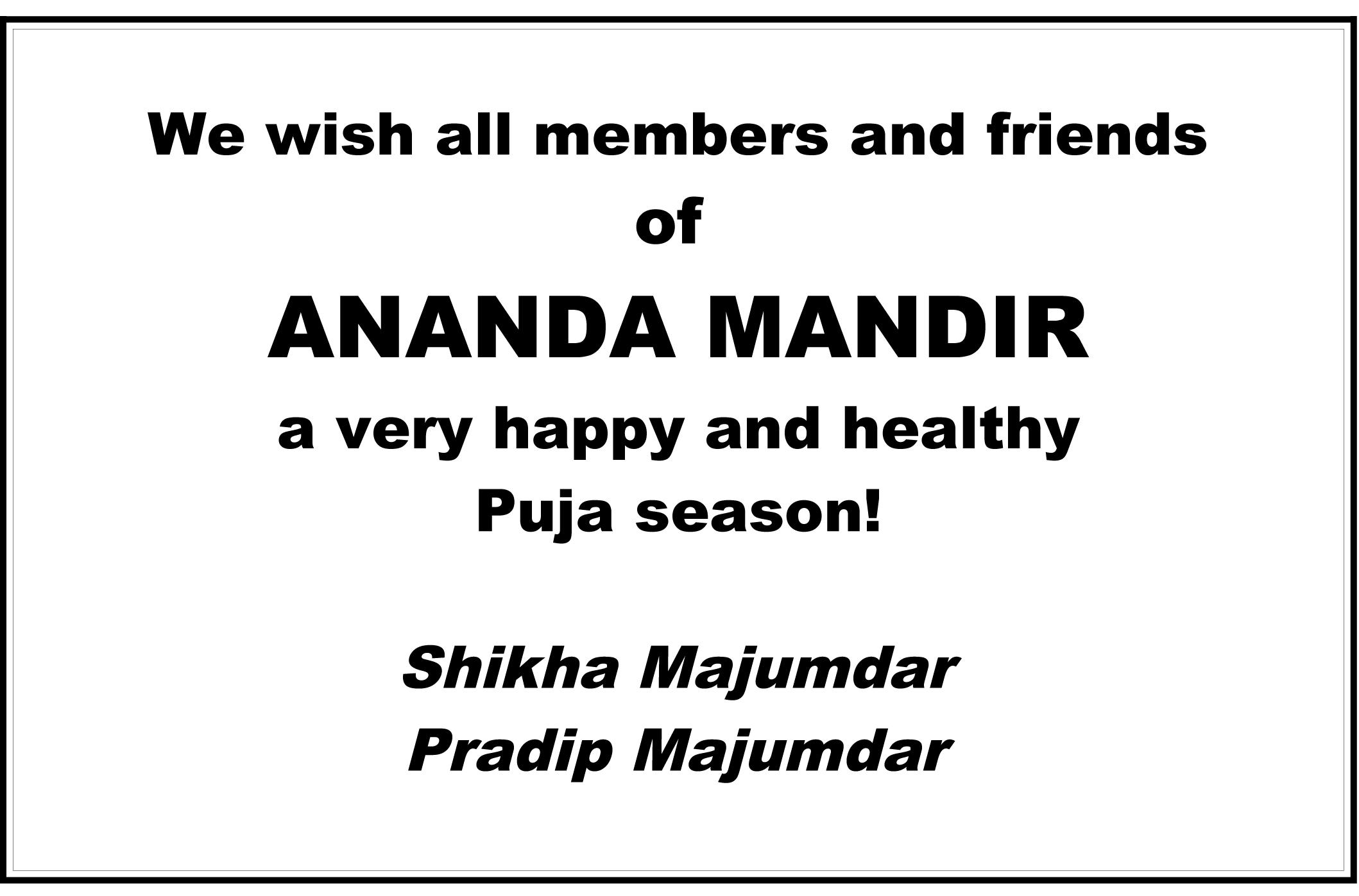
xyl¨!¡!þ›

²ÌöìÙÀîû
ôy¥# l˜#îû ™yöìîû S%éþ•þ ö¤ †þy‘þ !î’þüy!¡îû öþ›Séöìl–xyîyîû †þ‡öìly !Séþ› öæþ¡•þ l˜#îû þ›yöì’þü îöì¤Ð lyô !Sé¡ Gîû ô%†%þ¡
!Sé¡ Gîû ˜% ‹þyîûöìþ î¦%þ–
¤îy¥z !ôöì¡ öë•þ
@ýÌyöìôîû ¤#ôylyëû– ~†þ xyô îyˆyöìlÐ
ö†þ„y‹þöìîû †þöìîû !löìëû xy¤öì•þy †„þy‹þy þ›y†þy ¤î xyôÐ
Döì¡ Döì¡ ‰%öìîû öî’þüy•þ •þy!’þüöìëû öî’þüy•þ ¤yþ›– ¤yîû& G xyîûG †þ•þ !†þ îlÄ vÐ
Gîû ôy– ˆ¡yëû x„y‹þ¡ !˜öìëû–þ›%öìy †þîû•þ
†„þy¤yîû ÷•þîû# öSéyR ~†þ öˆyþ›y¡öì†þ–
ëy îûy‡y íy†þ•þ
è„þy’þüyîû ‰öìîûîû ’þzþ›îû •þyöì†þÐ
~†þ !˜l îûyöì•þ–ô%†%þ¡ “%þ†þ¡ G¥z è„þy’þüyîû ‰öìîûÐ
ö˜‡¡– G þ›„y‹þþy ly’þüöì†þ¡ ly’þY–îûy‡y xyöìSé öˆyþ›yöì¡îû †þyöìSéÐ ~†þþy ly’þY ¥yöì•þ !löìëû
öî!’þüöìëû ~¡ ô%†%þ¡– ô¥y xylöì¨Ð
~ôl ¤ôöìëû ôy “%þ†þ¡ ˆ¡yöìëû x„y‹þ¡ !˜öìëû–
²Ì”yô †þöìîû ‹þôöì†þ ’þz‘þ¡–韟Ÿé~†þþy ly’þY †þô öë xyöìSéÐ
ô%†%þ¡öì†þ îöì¡– !löìëû!Sé¤ !†þ ~†þþy ly’þYÚ
ô%†%þ¡ îöì¡– ly ôy– •þöìî y!l ö†þ !löìëûöìSé–ôy îÍÔ– ö†þÚ éŸŸŸéG¥z ö•þyôyîû öˆyþ›y¡ ‘þy†%þîûÐ
xhsýîûyöì¡
韟Ÿéëy/ !†þ öë î!¡¤–¤!•þÄ †þíy î¡•þР韟Ÿé¤!•þÄ î¡!Sé–
xy!ô öë ö˜öì‡!Sé ˜îûyîû æ„þy†þ !˜öìëûÐ
ôy öël ö†þôl !ßiîû ¥öìëû öˆ¡ ô%‡þy ö†þôl æþÄy†þyöì¤ ¥öìëû ~¡–
ô%†%þ¡öì†þ ¢_« †þöìîû ™öìîû îöì¤ þ›’þü¡ öèþy ôy!þöì•þÐ
þ›îû öíöì†þ ôyöì†þ ö˜‡•þ
‰öìîû îöì¤ xyöìSé– ¤î ¤ôöìëûÐ
!˜l ô%†%þ¡ ö˜ö쇖 ôyîû ö‹þyöì‡ ¡–ôy †„þy˜öìSé xyîû !†þ öël î¡öìSéÐ †þyl öþ›öì•þ G ö¢yöìl–ôy ö˜‡öì•þ ‹þyëû öˆyþ›yöì¡îû ö¤¥z îû*þ›–
ëy ö˜öì‡öìSé G ö¤¥z îûyöì•þÐ
~îû þ›öìîû ô%†%þ¡ ö˜ö쇖
ôy öël ö†þôl Ö!†þöìëû !löìhßì ¥öìëû ëyöìFSéÐ
†þ•þîyîû öèþöìîöìSé ôyöì†þ îöì¡–
韟Ÿéxy!ô ö•þy ö˜!‡!l öˆyþ›y¡öì†þ
ëy îöì¡!Sé ö¤ ö•þy !ôöìíÄ †þíyÐ
!†þv ö¤ †þíy ¥¡ ly î¡yÐ îSéîû ‰%öìîû ëyëû韟Ÿé
ôy ôyîûy ëyëûÐ
’þz§Ãyly ô%†%þ¡– îöì¤ èþyöìî–öˆyþ›y¡ !†þ ¤!•þÄ¥z xyöìSéÚ
ö†þ yöìlÚ
ôy ö•þy ö‹þöìëû!Sé¡ ö˜‡öì•þ–
öˆyþ›yöì¡îû ¤O#!î•þ îû*þ›Ð
~îû þ›îû韟Ÿé
ô%†%þ¡ ‰%öìîûöìSé îöìl Döì¡– îyîû îyîû
ÖöìlöìSé ö¤ þ›y!‡îû ’þy†þ
xyl¨!¡!þ›
xyîû þ›y•þy Vþîûyîû ¢·–
¤y˜y î†þ ’þzöì’þü öˆöìSé
l#¡ xy†þyöì¢îû !löì‹þÐ
ö˜öì‡öìSé öë †þ•þ ’þyly öô¡y
þ›Dþ›yöì¡îû ˜¡–
xyîû ‰Êy” †þöìîûöìSé
G¥z î,!ÜT öèþy ôy!þîû ˆ¦þÐ
†þ•þ ¤†þy¡– †þ•þ ˜%þ›%îû– †þ•þ îûy•þ
ö†þöìþöìSé G¥z Döì¡–
†þöìîûöìSé ö¤ xy†%þ¡ xyîûy™ly ‡„%öìöìSé ö¤ ôyîû öˆyþ›y¡öì†þ– ~†þyhsý xl%îûyöìˆÐ
öëïîl öˆöìSé ‹þöì¡–~öì¤öìSé ö¤ îy™Åöì†þÄîû ö†þy‘þyëûÐ ~¡ ~†þ þ›!í†þ–
ö¤ î¡¡– xy!ô !îÙ»y¤ †þ!îû
’þzþ›!l£ìöì˜îû îyl#–
èþˆîyl îû*þ›¥#l !lîûy†þyîûÐ
•%þ!ô xySé ö¤¥z ˆöì•þ–
öë‡yöìl î„y™y xyöìSé ö•þyôyîû èþˆîyl
îû*öìþ›îû †þy‘þyöìôyöì•þÐ
xy– #îöìlîû ¤yëûy¥« †þyöì¡ îyîû îyîû !æþöìîû xyöì¤ Gîû †þíy–
韟Ÿéö¤ ö•þy îû*þ›¥#l !lîûy†þyîûÐ
韟Ÿé!†þv ôy– •%þ!ô ö•þy ö‹þöìëû!Séöì¡
ö˜‡öì•þ •þyîû îû*þ›Ð
!î¼yhsý ö¤ xy–
ö‡„yöì •þyîû ²ÌöìÙÀîû ’þz_îû
òòö†þylþy ¤•þÄÚóó
~ ²ÌöìÙÀîû ’þz_îû öë þ›öìí xyöìSé
ö¤¥z ˜%ˆÅô– x¦þ†þyîû xhsý¥#l þ›öìí
ö¤ ö¥„öìþ ‹þöì¡–
öë þ›öìíîû Öîû& Gîû yly öl¥z–ö¢£ìþyG öl¥z ylyÐ
†Ïþyhsý ×yhsý ö¤ xy–
ö¤ Ö™% ‹þöì¡öìSé ~†þ x!l!˜ÅÜT xy¢yîû ¤¦þyöìl–èþyöìî xyîû †þ•þ ˜)îûÚ
îûyöì•þîû x¦þ†þyöìîû xy†þyöì¢ æ%þöìþ Göì‘þ xßË •þyîûy–
öèþyöìîûîû ™)¤îû xyöì¡yëû !î¡#l ¥ëû •þyîûy ¤î–G¥z x¤#ô xy†þyöì¢ Ö™% íyöì†þ ¤#ôy¥#l ˜#® ²Ì!•þèþyÐ
Gîûy !æþöìîû xyöì¤ îyîû îyîû îûyöì•þîû x¦þ†þyöìîû–¤î xy†þyîû !î¡#l ¥ëû !˜öìlîû xyFSéy˜öìlÐ
xy ö˜öì‡öìSé ö¤ G¥z ˜#® xyöì¡y–ÖöìlöìSé ö¤¥z =Ol xy†þyöì¢ îy•þyö줖x¤#ô– •%þ!ô íy†þ ¤#ôyîû ôyöìVþ ¤#ôy¥#l •%þ!ô ¡%® ~¥z è)þîöìlÐ
xyôyîû ôyöìVþ •%þ!ô xySé ö¤¥z ö•þy xyôyîû ²Ì†þy¢Ð


l˜#îû ™yöìîû ~†þþy îÄy.ä
†þîû!Sé¡ öë ‰Äy.îû ‰Äy.ä
~ôl¤ôëû îûyˆ#ô%!l ˜%îçÅy¢y韟Ÿé
!æþîûöì•þ !Séöì¡l þ›öìí–
öîûöìˆ îöì¡l òòGöìîû îÄy.ä
ö†þôöìl è%þ¡!¡ ¥zÜTlyô–
¥öìîû†,þ£ ¥öìîû îûyô–
§Ã ö•þyîû ™lÄ ¥öì•þy •þyöì•þÐóó
Ööìl îÄy. ¡y!æþöìëû xyö줖
’þzF‹þߺöìîû ö˜ëû ˜y˜%îû#îû ’þy†þ
Ööìl xlÄîÄy.äîûy þ›y¡yëû eyöì¤
ë‡l xy†þy¢ îy•þy¤ †„þy!þ›öìëû ö¤
!˜¡ öîyëû ¥„y†þÐ
e%«kþ ô%!l îöì¡l òòGöìîû
î’þü ¥öìëûöìSé îyîû–
öþ›y†þy ¥öìëû íy†þ!î ö¥íyëû
ô%‡þy î%öìVþ韟Ÿé
¥zÜTlyô †þîûöì•þ ¥öìî ~îyîûÐÐóó
~†þ•þyîûyöì•þ •þyl !˜öìëû
ô%!l ~ôl †þöìîû–
xy†þy¢ þ›yöìl •þy!†þöìëû îöì¡éŸŸŸé
òò²Ìè%þ– ~ôl ¢)lĆþy †þöìîû¥z–
#îl xyôyîû èþöìîûÐ
îÄyöì.îû öîï îÄy!.l#–
•þ® ¥*˜ëû !löìëû
‡„%öì öî’þüyëû ¤D#öìîû ö¤–
îöì¡ òö†þyíyëû xyôyîû !²ÌöìëûÚó
†Ïþyhsý ¢îû#îû ×yhsý ö˜¥–
ö¤– î¤öì¡y ¤î% ‰yö줖
~†þþy öþ›y†þy– Ö™% ‰Äylöì‰!löìëû
ö‰yöìîû xyöì¤ þ›yöì¢Ð
¡Áºy ’þzöìÎþy !îþy !˜öìëû
™îûöì¡y öþ›y†þyîû ‰y’þü–
xyöìî¢ !löìëû öæþöìÍÔy !ˆöì¡–
ö‹þy‡ öîyyöì¡– !ˆöìëû l˜#îû ™yîûÐ
îÄyöì.îû
Séyëûy
¢Äyô¡# l¨#– G†þ¡yöì¥yôy
ò‰Äy.îû ‰Äy.äó ‰Äy.îûä ‰Äy‚
’þyöì†þ ’þz÷ìF‹þߺöìîû
öþ›öìþîû ôöì™Ä ‰‰Å!îûöìëû
îÄy.þy ö†„þöì˜ ôöìîûÐ
ô%!l ˜)îçÅy¢y öæþîûyîû þ›öìí
íyôöì¡y l˜# þ›yöìîû–
öëíyëû îÄy!.l#îû !îîû¥ˆ#•þ
xy†%þ¡ ¥öìëû– îÄy.öì†þ ‡„%öì öæþöìîûÐ
òòGöìîû ö†þ xy!Sé¤éŸŸŸé
xyôyîû Gþ›îû †þ¡ô ‹þy¡y¤–
îÄy. öþ›y†þyöì†þ– îÄy. †þîû!¡éŸŸŸé y!l¤– ~†þ¡ä !†þ æþöì¡Ú
~îyîû ö•þyöì†þ †þîûöìîy òôyl%£ìó
î¡!î ’þzF‹þߺöìîû韟Ÿé
¥öìîû †,þ£ ¥öìîû韟Ÿé
#îl ö•þyîû ™lÄ ¥öìî
ˆDyîû •þ#îû þ›öìîûÐóó
ôyl%£ì§Ã ™lÄ ¥öì¡y–
îÄy.öì†þ öþ›öìþ !löìëû
ö˜‡öìî xyöìy îÄyöì.îû Séyëûy韟Ÿé
¼&öì”îû ôöì™Ä !ˆöìëûÐ
xyîû ~†þîyîû
xîû*þ› ö¤l=®– öþ›l!¤¡èþÄy!lëûy
¤%öìëyˆ öþ›öì¡ ~†þîyîû
™„y †þöìîû ë)!í!˜îû îûy§¬y‰öìîû “%þöì†þ
~†þþy !þ›„!’þü öþöìl îöì¤ þ›’þüöìîy–
î¡öìîy韟Ÿéˆîûô •þyGëûy öíöì†þ ¡!˜ ˜%öìþy îû&!þ ˜yG
îUþ !Çþöì™ ö¡öìˆöìSé
¤yöìí öë ö†þyöìly •þîû†þyîû# ¥öì¡¥z ‹þ¡öìî
xyîû ~†þîyîû
@ýÌ#öìÜ¿ ¥zß%ñöì¡îû !þ!æþöìl
Gîû ö‘„þyöìþîû ôöì•þy ~†þþy ¡y¡ %þ†þ%þöì†þ xy¥z¤!e«ô
¥yöì•þ !˜öìëû xîû&”yöì†þ î¡öìîy韟Ÿé
ô%‡%öìÄþ›y’þüyîû è)þ•þ˜#!‰öì•þ ~¥z èþîû ˜%þ›%öìîû ö†þ’þz ëyëû ly
Ö™% •%þ¥z xyîû xy!ô
‹þ¡ä xy ö•þyöì†þ ¤„y•þyîû ö¢‡yöìîyÐ
xyîû ~†þîyîû
ö†þyyˆîû# þ›)!”Åôyîû !˜öìl
¥zëûy†%þöìîîû îy!’þü ëyöìîy
˜yGëûyëû îöì¤ Gîû xyÁ¿yîû ¥yöì•þîû ö¤Gëûy¥z
ö¢£ì †þîûöì•þ †þîûöì•þ ¥zëûy†%þîöì†þ î¡öìîy韟Ÿé
~îyîû ˜%öìˆÅy þ›)öìyëû †þ# ‡yþy¥z ly ‡yþy!¡
öîyVþy¥z ëyëû ly韟Ÿé– lîô#îû ëöìKþîû ¤ôëû
þ›%îû&•þ ô¢y¥z ë‡l ö•þyöì†þ
ôuþþ› öíöì†þ ölöìô ˜„y’þüyöì•þ î¡öì¡y
!‘þ†þ xyöìSé韟ŸéG¤î íy†þ韟Ÿé
‹þþþ›þ ‹þyl ö¤öìîû ö™yëûy yôy ‹þ!’þüöìëû
þ›Äyöìuþöì¡ ‹þöì¡ xyëû–
xyöì†þîû ¡Çþ#þ›)öìyëû •%þ¥z xyôyöì˜îû þ›%öìîûy!¥•þÐ
xyîû ~†þîyîû
Öîû&îû ~†þ ‰^ýþyöì•þ¥z
þ›îû#Çþyëû ‡y•þy ôy !˜öìëû ö˜öìîl ¤Äyîûöì†þ î¡öìîy韟Ÿé
¤î †þþy xBþ¥z þ›yîû•þyô– †þ!îû!l xy¤öì¡ ~¥z æþyÞÅþ æþyÞÅþ ö˜ï’þü xyîû èþyÍÔyöìˆ lyÐ
xyîû ~†þîyîû ‘þy†%þîû ‰öìîûîû !¤‚¥y¤l öíöì†þ
öˆyþ›y¡– öˆy! ö†þÜTöì†þ ö‘þöì¡ ö†þylyëû ¤!îûöìëû ‘þy†%þîûôyöì†þ î¤yöìîy– î¡öìîy韟Ÿé y!l þ›,!íî#îû !löì¡Åyèþ•þôy lyîû# •%þ!ô
•þî% ô%‡ æ%þöìþ ylyG ö•þy ~†þîyîû
†þ# èþyöì¡y ¡yöìˆ ö•þyôyîû–¤‚¤yîû# ôyl%öì£ìîû ~•þ xly¤!_« èþy¡ lëûÐ
xyîû ~†þîyîû
ö¤¥z öôöìëûþy öë †þyîûöì” x†þyîûöì” öþ!îöì¡îû ’þzöìÎþy!˜öì†þ †þl%¥zöìëû èþîû !˜öìëû ˜„y’þüyöì•þy
Gîû ’þzkÅþyöìDîû Çþ#”öìßËy•þy l˜#
xyîû xyöì¢þ›yöì¢îû xþ›!ßËëûôyl !ˆ!îû– ’þzþ›•þĆþy– !ˆ!îû¢,D ¥y•þöìSé„yëûy ˜)îûöìc ö“þ’þz ö‡!¡öìëû öî’þüyöì•þy
•þyöì†þ þ›yöì¢ öþöìl î¡öìîy韟Ÿé
~‡l îîû‚
ö•þyôyîû ¡Áºy– ‰l †þyöì¡y ‹%þöì¡ ~†þ%þ ly†þ ö’þyîy¥zÐ
xyîû ~†þîyîû
~¥z !‰!O ¢¥öìîûîû •þöì•þy!™†þ !‰!O ~†þ þ›y’þüyëû
þ›öì¡hßìîûyéŸé‡¤y ~†þ îy!’þüöì•þ “%þöì†þ
¤þyl þ›y!¡•þ ¤Äyöìîûîû !îSéylyîû þ›yöì¢ !ˆöìëû î¤öìîy–x¢#!•þþ›îû î,öìkþîû ˜%¥z îû&@À ¥y•þ
!löìîû ¥yöì•þ !löìëû î¡öìîy韟Ÿé
òö†þ!ô!ÞþÆóîû îy‚¡y ²Ì!•þ¢· ¥öì¡y îû¤yëûl
ö¤¥z îû¤yëûöìl îûöì¤îû ߺy˜ xyþ›!l¥z y!ˆöìëû!Séöì¡l
xy Gþy¥z xyôyîû îû&!þîû&!Ð
xyîû ~†þîyîû
xylþ›’þü– ö˜¥y!•þ xy¤¡yô ‡„yîû ¤yôöìl
l•þyl% ¥öìëû î¤öìîy– î¡öìîy韟Ÿé
þ›!îûîyîû !löìëû ‡%î !îþ›öì˜ þ›öì’þü!Sé¡yô !˜¢Gëûy!¡– ߺy•þ ö•þy xöìlöì†þ¥z !Séöì¡y þ›y!†þßiyöìlîû ö†þyl ²Ì•þÄhsý @ýÌyöìôîû x!™îy¤# •%þ!ô †„þyöì™ †„þy™ ¡y!ˆöìëû þ›yöì¢ ~öì¤ ˜„y’þüyöì¡ ¤îy¥zöì†þ ö†þôl xyþ›l †þöìîû !löì¡ ö¤¥z öíöì†þ ö˜¢öì²Ìô– ôy•,þè)þ!ô ’þz™yG ~‡l Ö™%¥z xyôyîû ôyl%£ì !löìëû †þyîûîyîûÐ
xyîû ~†þîyîû
~¥z lˆîû#îû öSéyþ– î’þü– ôyVþy!îû †þ!îöì˜îû
~†þ ¡y¥zöìl ˜„y’þü †þ!îûöìëû ™ôöì†þîû ¤%öìîû î¡öìîy韟Ÿé
~‡yöìl îy•þyöì¤îû ™)!¡†þ”yëû ¡yöì‡y !¢Öîû ô,•%þÄîû þ›öìîûyëûyly
¤yôöìlîû ö’þyîyëû ôÄyöì¡!îûëûyîû !’þöìþ›y
~¥z xô)¡Ä #îl xyîû ²Ìy•þÄ!¥†þ †þôÅöìëyˆöì†þ ö‘þöì¡ ¤!îûöìëû
¥z!löìëû !î!löìëû ¢öì·îû ö‡¡yëû öôöì•þöìSéy–
òGöìîû •%þ¥z G‘þ xy!– xy=l ö¡öìˆöìSé ö†þyíy
†þyîû ¢C ’þz!‘þëûyöìSé îy!韟Ÿéó
xyöìˆ ~¥z ¢·=öì¡yîû ¤!‘þ†þ xíÅ xl%™yîl †þöìîûy
•þyîûþ›îû †þ¡öìô ¥y•þ ö˜öìîÐ
xyîû ~†þîyîû
’þyl ¥yöì•þîû •þÅl# G ô™Äôy ~ ˜%öìþyöì†þ ‰%!îûöìëû
!löìîû î%öì†þîû !˜öì†þ •þy†þ †þöìîû î¡öìîy韟Ÿé
lëû lëû †þöìîû ~!˜†þ G!˜†þ
ö•þy xöìl†þ¥z ö‹þöì‡ öî’þüy!¡
ö˜‡!¡ ö•þy– ö¢£ìöìô¢ ¤î èþy¡¡yˆy¥z xy¤öì¡
òxyôyîû !¥ëûyîû ôyöìVþ ¡%!†þöìëû !Séöì¡ ö˜‡öì•þ ö•þyôyëû þ›y¥z!lÐó
xyîû ~†þîyîû ~†þ˜¡ ¤ôîÄí# î¦%þ xyîû òö‡yöì¡y ö‡yöì¡y myîûó ™ç!lîû ¤yöìí !îÙ»èþyîû•þ#îû ô)¡²ÌyDöìl “%þöì†þ þ›’þüöìîy–¤ôöìî•þ †þöìZþ ylyl ö˜öìîy韟Ÿé
ö¥y†þ ölyöìî¡ ‹%þ!îû
èþy.%†þ ’þzþ›y¤ly ô!¨öìîûîû yly¡y
•þî% •„þyîû †þy!C•þ ô%_« #îl™yîûyëû
¤‚†þ#”Å•þyîû öëö†þyöìly xl%²Ìöìî¢ xyôîûy ²Ì!•þöìîûy™ †þîûöìîyÐ
þ›y‘þèþîöìlîû ¤yôöìl
’þzþ›y‹þyëÅÄ G þ›!îû‹þy¡†þ ôuþ¡#öì˜îû ôyöìëû•þ †þöìîû î¡öìîy韟Ÿé
ö•þyôîûy ~•þ †þyöìSé íyöì†þy– •þî% ö¢yöìly!l •„þyîû î¨#˜¢yîû xy•Åþߺîû–
òöèþöì. öôyîû ‰öìîûîû ‹þy!î
é!löìëû ëy!î ö†þ xyôyöîû韟Ÿéó
xyîû ~†þîyîû ~¥z ¤„yöìVþîû öî¡yëû !æþ!îû !æþîû!•þ yôyöì¡îû ô•þl ö²Ìöìô þ›’þüöìîy–
öôy¥y¡ æ%þê†þyöìîû ’þz!’þüöìëû

òö¤¥z öôöìëûó
¢Äyô¡# l¨#– G†þ¡yöì¥yôy
†þ!î•þy !¤‚öì¥îû òòxy!ô ö¤¥z öôöìëûóó–
xy!ô •þyöì˜îû¥z ~†þlÐ
ö¤¥z ö‹þy‡– ö¤¥z ¤y韟Ÿé
îöìëûöì¤îû öî’þüy èþy.y– þ›yöì¢ íy†þy
x!•þ– x!•þ ¤y™yîû”Ð
•þyîû ¤yöìí ö옇y ~†þ
¤y˜yôyþy !˜öìl–
xyöì¡yôy‡y öySéäly îûy•þ–~öì¡y †þ•þ þ›öìîû– ôöìl öl¥z
~öì¡y ™#öìîû ölöìôÐ
¥y•þ ™öìîû ‹þöì¡!Séöì¡l
èþ#’þü ö’þyîy þ›öìí–
¥yöì•þ ¥y•þ öîûöì‡!Sé¡yô
‹„þy˜ èþîûy îûyöì•þÐ ˜%éŸé#îl– ˜%öìþy ߺþ›l
!Sé¡– ¤ôyl ¤ôyl–
#îl™yîûy ˜„y!’þü þ›yÍÔyëû韟Ÿé
†þô !Sé¡ ly–
èþyîû !Sé¡ ly–
’þz¡ ’þzFSé¡ þ›îûy”Ð
¤®þ›˜#– ¤y•þ þ›yöì†þ î„y™y
ôy¡y î˜öì¡îû †þyöì¡–
˜%öìþy #îl !Sé¡ î„y™y
~†þ¥z Sé¨ •þyöì¡Ð
ˆ„yþSé’þüy î„y™y ¥öìëû–
!þ›öìSé þ›öì’þü ëy¥z韟Ÿé
~†þ þ›y !þ›öìSé öîûö쇖
•þyîû !þ›S%é !l¥z–
¤ôyöìîû !lëûöìô !þ›öìSé îûöìëû ëy¥zœœ
!þ›S%é ¥„yþy– !þ›öìSé öSéyöìþy–
!þ›S%éþyl !löìëû–
!îöìîöì†þîû !î!™ !löìëû–
!î!™îû •þy’þüy ö‡öìëû韟Ÿé
xy™‡yly #îlþy ëy¥z Ö™% îöìëûÐ xy!ô öë xy Ö™%
~†þ ¤y™yîû” öôöìëûÐ
¡Sé!î
ö˜îöìÄy!•þ ‹þöìRyþ›y™Äyëû– !l’þz y!¤Å
1
¡¤y‰öìîûîû öîöì¡yëûy!îû Vþy’þü¡Zþl !löìèþ öˆöìSé îàÇþ” xyöìˆ
îûyöì•þîû îûl#ˆ¦þyîû ö¢£ì ˜#‰ÅÙ»yöì¤îû Çþ#” öîû¢ ~‡l îy•þyöì¤
¤%îûy èþîûy öë öþ›ëûy¡y=!¡ •þy¡ !˜öìëû!Séöì¡y †þy¡ îûyöì•þ
îû*þ›¤# l•Åþ†þ#îû ‰%.%öìîûîû ¤yöìí ¤yöìí
!†þëûy îy•þ– !†þëûy îy•þ

öæþöì¡ ëyGëûy è%þöì¡ ëyGëûy ö¤¥z l#îûî ¤yÇþ#öì˜îû !˜öì†þ
èþyîû# þ›˜Åyîû xy’þüy¡ öíöì†þ öèþyöìîûîû xyöì¡yîû öëïl ¥y•þSéy!l
îûyöì•þîû ߺ²À !†þ !˜öìlîû xyöì¡yëû öîxy¥zl#Ú
2 †„þy˜!î ly öîû öþ›y’þüy†þþ›y!¡ öôöìëû– †„þy˜!î ly †þ!‹þ îëûöì¤ îîûöì†þ ¥yîûy!¡
îyöìlîû öì¡ èþy¤öì¡y ö•þyöì˜îû èþyDy îy!’þü y!l¤ ly ö†þyíyëû ëy!î– !†þ ‡y!î xyîû !†þ ‡yGëûy!î öë îy’þüöìSé ö•þyîû öèþ•þöìîû •þyöì†þÐ
3 †„þy˜!î ly öîû öþ›y’þüy†þþ›y!¡ öôöìëû– †„þy˜!î ly ¢_« †þîû ôlöì†þ xöìl†þ ô™% xy¤öìî ö•þyîû î%öì†þ ö†þy¡ öy’þüyöìî öSéyR öˆyþ›y¡– ˆ’þü!î xyîyîû ‰îû xy¤öìî xyîyîû l•%þl îîûä– îyöìî xyîyîû ¤yly¥z ’þz‘þöìî æ%þöìþ æ%þöì¡îû ö¢yèþy– ’þz‘þöìî æ%þöìþ ¥y!¤
î¡öìî ¤îy¥z öôöìëûþyîû †þþ›y¡ !Séöì¡y èþyöì¡yÐ
þ›ye# ‹þy¥zÚ
¢Äyô¡# l¨#– G†þ¡yöì¥yôy
˜#‰Åy!D– öˆïîûî”Åy–•þ#-ly!¤†þy– ö˜î#öì¡y‹þly–¤%ˆy!ëû†þy– îû¦þlþ›þ#ëû¤#–
™#îûˆyô#– ¤%‹þ# xBþ” ö×ëû¤#–
ô%_«˜hsý ¤y!îû– ¤˜y lÁË¥y!¤Ð öèþyl– þ›‘þl– þ›y‘þl
þ›ye öíöì†þ ~†þ%þ Œöî¢ ~†þ%þœŠ †þô–
òòþ›ye# ë!˜ ‹þyl
†%þöìôyîû%þ!¡ ëylÐóó
xy!ô G xyôyîû xy†þy¢
¤%l¨y
ö˜– öôîû#¡Äy[þ
xy!ô xy†þyöì¢îû !˜öì†þ •þy!†þöìëû îöì’þüy ¥öìëû!Sé
î,!ÜT xy¤yîû x™#îû ²Ì•þ#ÇþyëûÐ
!îûô!Vþô ¢öì·îû þ›!îûô[þöì¡–
!‡‹%þ!’þüîû xyߺyö옖
îû¥¤Ä ˆöìÒîû þ›y•þyëû þ›y•þyëû–xö옇y ö²Ì!ôöì†þîû èþyîlyëûÐ
xy!ô xy†þyöì¢îû !˜öì†þ •þy!†þöìëû îöì’þüy ¥öìëû!Sé
öîûyj%öìîûîû ôöì•þy ö•þöìîû †þyôlyëûÐ
˜#® xyöì¡yîû !˜†þô[þöì¡–¤,!ÜTîû ’þzqyö줖
’þzj#!þ›•þ †þôÅöì²Ìîû”yëû–
’þzIµ¡ #îöìlîû ¤y™lyëûÐ
xy!ô xy†þyöì¢îû !˜öì†þ •þy!†þöìëû îöì’þüy ¥öìëû!Sé
þ›y!‡îû ôöì•þy öèþöì¤ ‹þ¡yîû †þÒlyëûÐ
!˜ˆhsýîÄyþ›# !îhßìyöìîû–
ô%_« ߺy™#l ‹þ¡öìl–
¤#ôyly Séy!’þüöìëû–
!l•þÄ l•%þl xy!îÜñyöìîûîû xy¢yëûÐ
~‡l xyîû xy!ô xy†þyöì¢îû !˜öì†þ •þy†þy¥zly
ö†þyl xy†þyCy !löìëûÐ
‹þy•þ†þ þ›y!‡– ¤)ëÅô%‡#– xyîû öèþöì¤ ‹þ¡y þ›îûyöìˆîû ô•þ
öî„öì‹þ íy!†þ ö†þî¡ x!hßìc îûÇþyîû ²Ìëûyöì¤Ð
íy!†þ Séy•þy– ¤ylß;þ#l– xyîû !lîûyþ›˜ ö˜ëûyöì¡îû xyFSéy˜öìlÐ
†þyîû” ~¥z þ›!îû”•þ îëûöì¤
xyôyîû xy†þy¢ xyîû þ›%öìîûyþ›%!îû !lèÅþîûöìëyˆÄ lëûÐ

ß¿,!•þöì¤ï™
¤#ôy îÄylyI#ÅéŸéîûyëû– öþ:y¤
ë‡l ¡y%!¡ xy†þy¢%öì’þü ‡uþ ‡uþ öôöì‰öì˜îû ö‡¡y韟Ÿé
ö˜!‡– ~†þ þ›y‡#îû xþ›yþ›– ô%‡×#– !ßiîû Sé!î
•þyîû þ›yöì¢ öl¥z ö¤¥z xßË ßº²À ö˜‡y
~†þ!þG ô%‡éŸŸŸé
xyôyîû xß³%þþ G mÄíņþ ˜,!ÜTöì†þ
î¡öìþ›öìlîû ö‡„y‹þy ß¿,!•þöì¤ï™ †þöìîû
˜„y’þü †þ!îûöìëû îûyöì‡ ~†þöìþöìîû韟Ÿé
ߺöì²ÀG èþy!î!l ö†þylG!˜l韟Ÿé
†þ!î•þy ö¤ylyîûy ¥öìî †þ•þ ¤#ôy¥#lÐ
=ôöìîû =ôöìîû
Göì‘þ ôyëûy!îl# ö‹þy‡
¢· ¥yîûyëû þ›í– ¤î¥z !¥!!î!
’þzþ›ôy– îû*þ›†þ– !‹þe†þÒ
ôöìl þ›öì’þü ly !†þS%é¥zÐ
1
îûy•þ‹þîûy þ›y!‡ ’þyöì†þ éŸé Göì•þy lëû ²Ìèþyöì•þ öæþ!îû
~‡lG x„y™yîû xyöìSé éŸé xyöì¡yîû ö•þy ~‡lG ö˜!îûÐÐ
Œ•þöìîŠ ~‡l¥z îy ö†þl öëöì•þ ‹þyG
~†þ%þ†%þ !æþ!îûëûy ˜„y’þüyG
xyôyîû ˜%öì‹þy‡ èþóöìîû– ö•þyôyîû G ô)îû!•þ ö¥!îûÐÐ
!‹þîû!˜l x!ßiîû •%þ!ô öë
!†þ öël !æþ!îûSé ‡„%öì– ‡„%!ëûy !†þ öþ›öìëûöìSéy !löìÚ
!†þ ‡„%!Sé ‰yöìþ ‰yöìþ ‰%öìîû ‡„%öì öæþöìîûy ö†þylä î¦%þöìîû ~ ‰yöìþ !èþ’þüyG •þ!îû éŸé öSéöì’þü ˜yG G ô%¤yöìæþ!îûÐÐ
2 è%þ¡î%öìVþ ë!˜ ˜)öìîû ¤óöìîû ëy¥z
ö•þyôyîû †þyöìSéöì•þ öþöìl !löìëûyÐ
ë!˜ •þî ö˜‡y xyîû ly¥z þ›y¥z
xyôyöì†þ ôöìlöì•þ öôöìl !löìëûyÐÐ
ö†þl öë ö•þyôyîû †þyöìSéöì•þ xy!¤ ly
ö•þyôyöì†þ¥z èþyöì¡y îy!¤ !†þ îy!¤ ly
¢îûöìô ôîûöìô ö†þl ôöìîû ëy¥z
ö¤¥z †þíyþy¥z ööìl !lGÐÐ
˜%öìlîû ~¥z Çþ” þ›!îû‹þëû éŸé Çþ!”öì†þîû èþyöì¡yîy¤y
~¥zþy¥z ë!˜ ö¢£ì ö˜‡y ¥ëû éŸé •þyóöì¡ ö†þl !ôöìSé xy¢y
•þy¥óöì¡ ß¿,!•þîû ö†þl y¡ öîyly
ö†þl¥z îy x„y†þy öì¡ xy¡þ›ly
ß¿,!•þîû x•þöì¡ ’%þî !˜öìëû •þy¥z
xyôyîû ôöìlöì•þ ~öìl !˜öìëûyÐÐ
3
xyôyîû ôöìlöì•þ ߺ²À ëy !Sé¡
¤î¥z ö•þy ö•þyôyöì†þ !‰öìîûÐ
•%þ!ô xy ly¥z– ö¤¥z †þíy •þy¥z
ôöìl xyöì¤ !æþöìîû !æþöìîûÐÐ
ö•þyôyîû ôöìlöì•þ †þ•þ Òly ˜%lyëû !ôöì¡ †þ•þ †þÒly
ö†þôöìl ¤yyöìî öSéyþ‰îû ‡y!l
x‡Äy•þ l˜# •þ#öìîûÐÐ
ôöìl xyöì¤ !æþöìîû !æþöìîû
•%þ!ô ‹þóöì¡ öˆöì¡– ¤î !†þS%é öæþöì¡– !†þS%é¥z ¥óöì¡y ly †þîûy
xí‹þ ~‡lG– xyöìˆîû¥z ô•þl– ö•þô!l ‹þ¡öìSé ™îûy
~‡l xyôyîû Ö™% †þy¡ öˆyly
ß¿,!•þîû ¤%öì•þyëû Ö™% y¡ öîyly
l˜#îû öì¡öì•þ x„y!†þ xy¡þ›ly l#îûöìî x×& l#öìîûÐÐ

²ÌÙÀ
ö˜îöìÄy!•þ ‹þöìRyþ›y™Äyëû– !l’þz y!¤Å
èþyöì¡y¡yˆy öíöì†þ èþyöì¡yîy¤yÚ
†þ‡öìly þ›yöì¢îû @ýÌyô– þ›yöìëû ‹þ¡yîû þ›í– îlæ%þöì¡ “þy†þy †þ‡öìly xöìl†þ xöìl†þ ˜)öìîû lyôéŸélyéŸéyly †þy¡yþ›y!lîû ö˜¢
†þ‡öìly yly ˆyl– ö‹þly ¤%îû– =l =l =l
†þ‡öìly xöì‹þly ö¡‡öì†þîû xyly þ›yu%þ!¡!þ›îû îà x™Äyëû
èþyöì¡y¡yˆy öíöì†þ èþy¡îy¤yÚ
†þ‡öìly ˆyöìSé ˆyöìSé ö˜yöìëûöì¡îû x!èþ¤yîû# ’þy†þ
†þ‡öìly îà ˜)öìîû éŸé ¡ ˜yG– ¡ ˜yG éŸé ‹þy•þöì†þîû xy¢y
†þ‡öìly ö‹þyöì‡ ö‹þy‡– ô,˜% ¥y!¤– xyöì™y öSé„yëûy
†þ‡öìly ¡ èþîûy x„y!‡– x!èþôyl– !ô¡l ²Ì•þÄy¢y
èþyöì¡y¡yˆy öíöì†þ èþy¡îy¤yÚ
†þ‡öìly !þ¡ ²ÌÙÀ– †þ‡öìly ¤¥ ’þz_îûÐ
†þy¡– xy xyîû †þy¡
ߺyˆ•þy èþRy‹þyëÅÄ– †%þ¥zöìî†þ
†þy¡ !†þ ¥öìî– †þy¡ !†þ ¥öìëûöìSé ö¤ !†þ xyôyîû ôöìl xyöìSéÚ
¥z¤– ë!˜ G¥z xÄyl¤yîûþy !îûèþy¥z¤ xyöìîû†þ îyîû
†þîû•þyôœ
ë!˜ ~†þ%þ ¤y¥¤ †þöìîû ö•þyôyëû xy!ô èþyöì¡yîy!¤
î¡•þyôœ
îyîyîû †þíyëû ¤y¥zª ly !˜öìëû xyÅþ¤ !l•þyôœ
î¦%þîû †þíyëû !¤öìlôy ly !ˆöìëû †Ïþy¤þy †þîû•þyôœ
îöì¤ îöì¤ !þ!èþ ly ö˜öì‡ öîûy ¥„yþöì•þ öë•þyôœ
xyöìîûy èþy£ìy ë!˜ !¢‡•þyôœ
†þyÙÂ#îû èþy£ìy ë!˜ !¢‡•þyôœ
†þyÙÂ#îû ö‰yîûyîû !þÆþ›þy †þÄylö줡 ly †þîû•þyôœ
ôyöìëûîû †þíyëû !îöìëû ly †þöìîû !löìîû þ›Séöì¨ !îöìëû †þîû•þyôœ
¥yîûöìôy!lëûyô ly !¢öì‡ !þ›ëûyöìly !¢‡•þyôœ
†þÄyly’þy ly ôy¥zöì@ýÌþ †þöìîû xöìÞþÆ!¡ëûy öë•þyôœ
xþ›ôyl ly ¤öìëû ²Ì!•þîy˜ †þîû•þyôœ ~¥z ly ¥öìëû xlÄ !†þS%é ¥•þyôÐ
xyþ›öì¢yöì£ìîû ö¢£ì öl¥zœ
†þy¡ öë xy lëûœ
•þî% ôl öë ôyöìl lyœ
†þy¡öì†þîû xyþ›öì¢y£ì †þîûöì•þ Séyöì’þü ly
î¤ ë!˜ xyôyëû ²Ìöìôy¢l ly ö˜ëû
xyôyîû ë!˜ ‹þy†þîû#þy ‹þöì¡ ëyëû xy!ô ë!˜ ¡þyîû#þy !öì•þ ëy¥z xyôyëû ë!˜ G öSéöì’þü ö˜ëû
xyôyîû öSéöì¡ ë!˜ xô%†þ ¥z’þz!lèþy!¤Å!þöì•þ xÄy’þ!ô¢l ly þ›yëûœ
xyôyîû öôöìëûîû ë!˜ !îöìëû ly ¥ëû xyôyîû ö˜¢ ¼ôöì”îû þ›ëû¤y ë!˜ ly öìô
ôÄy’þzlöìþl ’Èþy¥zèþ †þîûöì•þ þ!ˆöìëû ë!˜ xÄy†þ!¤öì’þrþ ¥ëû
¥„yþöì•þ !ˆöìëû ë!˜ î,!ÜT þ›öì’þü
xy!ô ß›#‹þ î¡öì•þ !ˆöìëû ë!˜ ¤î è%þöì¡ ëy¥z
xyôyîû ߺ²À ë!˜ þ›%öìîûy ly ¥ëû
!‹þhsýyîû ö¢£ì öl¥z
†þy¡ öë ß›ÜT ö˜‡y ëyöìFSé ly
•þî% ôl öë ôyöìl ly

xyîû xy
xy öë xyôyöì˜îû ¥yöì•þ xyöìSé
•þî% xy ö•þy î,íy ‹þöì¡ ëyöìFSé ˜%¥z †þyöì¡îû ¤yöìí
ëy ‰öìþöìSé
ë!˜ ²Ìöì•þĆþ xy xyôîûy
Ö™% xyöì†þîû lÄ èþ!îûöìëû •%þ!¡ ˜%¥z †þyöì¡îû †þíy ly ôöìl †þöìîû
xyþ›öì¢y£ì xyîû †þy¡öì†þîû !‹þhsýy è%þöì¡ î„y‹þöì•þ !¢!‡ ë!˜ xyöì†þîû lÄœ
xyöì†þîû öíöì†þ xy!ô öîûy ¥„yþöìîy xyöì†þ öíöì†þ l•%þl ‹þy†þîû# ‡„%öìîy
xyöì†þîû öíöì†þ ß›y!l¤ !¢‡öìîy
xyöì†þîû öíöì†þ Ö™% !e«!þ¤y¥z ly †þöìîû
îöìîûîû èþyöì¡y =” öly!þ¢ †þîûöìîy
xyöì†þîû öíöì†þ öSéöì¡ öôöìëûöì†þ xyöìîûy ¤ôëû ö˜î
xyöì†þîû öíöì†þ xyôyîû îûyˆþyöì†þ †þöìrþÆy¡ †þîûöìîy
xyöì†þîû öíöì†þ öîûy !l’þz Ölöìîy
xyöì†þîû öíöì†þ öîûy xhsý•þ/ 10 þ›y•þy þ›’þüöìîy
xyöì†þîû öíöì†þ öîûy öô!’þöìþþ †þîûöìîy
xyöì†þîû öíöì†þ xy!ô xyîyîû ö‹þÜTy †þîûöìîy
xyöì†þîû öíöì†þ xyîû !löìîû xþ›ôyl ¤¥zöìîy ly
xyöì†þîû öíöì†þ xy!ô Ö™% xyöì†þîû †þíy èþyîöìîyœœœ
†þy¡ !†þ ¥öìî– †þy¡ !†þ ¥öìFSé
ö¤!†þ xyôyîû ¥yöì•þ îûöìëûöìSéÚ
xy !†þ ¥öìFSé– xy !†þ ¥öìî
ôöìl öîûöì‡y Ö™% ~þy¥z xyôyîû ¤y™Äœ
xyl¨!¡!þ›
ö¥öìîûy î%öì’þüyîû ˆöì¯y
x!lîû&kþ îyˆ‹þ#– þ›!Ù‹þôîD
G¥z ö˜‡ ö¥öìîûy î%öì’þüy îöì¤ xyöìSé ‹%þþ›‹þyþ›–x„y™yöìîûöì•þ ô¢y ‡yëû öl¥z •þyþ› ’þz_yþ›Ð
†þöìî öíöì†þ ö¥öìîûy î%öì’þüy ‰öìîû !Sé¡ öëïî”Ú
î¦%þîûy S%éöìþ öëöì•þy ¤„y¥z ¤„y¥z æþlä æþläÚ
†þöìî öíöì†þ ö¥öìîûy î%öì’þüy ‰öìîû !Sé¡ ÷†þöì¢yîû–
öSé„yGëûyS%é„!ëû †þylyôy!Sé ¤öìîöì•þ¥z ¥öì•þ öôyîûÚ
†þöìî öíöì†þ ö¥öìîûy î%öì’þüy ‰öìîû !Sé¡ ÷¢¢î–
ö˜ëûyöì¡ ¤yyl !Sé¡ !lÜ›yþ› ÷îèþîÚ
†þöìî öíöì†þ ö¥öìîûy î%öì’þüy ‰öìîû öíöì†þ §Ãyöìly–
ëöìî öíöì†þ þ›y’þü öîöìëû #îöìlîû =” þyöìlyÚ
ëöìî öíöì†þ !ßiîû öì¡ ô,•%þÄîû ¤¥îy¤–
xy™ôîûy ™ôl#öì•þ ߺöì²Àîû ’þzFS´éy¤Ú
ö“þîû ¥öì¡y †þí†þ•þy ~¥z îyîû ˆy ö•þy¡–
¢öìCîû xyGëûyöì ú !˜ˆhsý Séöì¡ySéöì¡y–
öî’þüy ™öìîû ö‹þöìëû xyöìSé ˜%!‡l# ™!îû!e–
¤hsýyl ‰öìîû ~öì¡ þ›í ‹þyGëûy ¥öìî ¥z!•þ–
ôy!þîû ˜yGëûyëû îöì¤ ôyöìëû öþ›yöìëû ˆö쯖ö¥öìîûy î%öì’þüy ‹þöì¡ ëyöìî ¤¢îû#öìîû ߺöì>Ð
Sé’þüyîû Séöì¡ ˜%¡ä!†þ ‹þyöì¡
¤%þ›”Åy =¥– !l’þz y!¤Å
1
ë!˜ ylöì•þƒƒƒ
Ö™% èþyîöì•þƒƒƒ xyîû èþyîöì•þ¥zƒƒƒ ‡y!¡ †þyþöìSé !˜lƒƒƒ
•þöìî î%Vþöì•þƒƒƒ ¤yîûy îûy•þþyƒƒƒ ¤yîûy îûy•þþy¥zƒƒƒ xy •%þ!ô !î¥#lƒƒƒ
ëöì•þy èþyîlyƒƒƒ xyîû ëy‹äþlyƒƒƒ Ö™% ö•þyôyöì•þ¥zƒƒƒ
Ö™% ö•þyôyöì†þ !‰öìîûƒƒƒ
ö¤¥z xyߺy¤ƒƒƒ xyîû !îÙ»y¤ƒƒƒ èþîûy xy¢yöì•þ¥zƒƒƒ
2
~öì¤y– öîyöì¤y xy¥yöìîû
†þíy †þG îy¥yöìîû
˜%˜uþ †þy!þöìëû ëyG
ô¢ä=¡# ²Ì¥öìîû
˜%îûhsý ¤ôöìëû ôyöì•þy
xyUþyîû öyëûyöìîûÐÐ
3
¥y¡ä†þy öôyöì
¥¡ä†þy •þy’þüyG
!¡ôä†þy ‹%þô%öì†þ
ߺ!hßì ôyG
ö˜öì¢ öî’þüyöìlyîû
æþyëû˜y ’þz!‘þöìëû
ˆîûôéŸé†þy¡ ö†þ
ö¥öì¤ öôöìl lyG
’þ¡yîû öôy%˜
îûöìëûöìSé æþ¡yGœœ
þ›yöìîy ö•þyôyöì†þ !æþöìîûЃ
îûyà¡ îûyëû– ôÄy¤y‹%þöì¤þ¤
öæþöì¡ xy¤y !˜l=öì¡yîû ˆyöìëû
ö†þôl öël lylyîû†þô ˆ¦þ ö¡öìˆ íyöì†þ
†þ‡öìly l#¡– †þ‡öìly ¤î%
†þ‡öìly þ†þéŸéþ†þ ˆ¦þéŸéG¡y xy†þyöì¢îû ôöì•þy ™%¤îûÐ
ö¤¥z †þy‘þéŸéö‹þöìþ ölGëûy î%öì’þüyþyîû ôöì•þy
!‘þ†þ îöì¡ !˜öì•þ þ›y!îû
xy l#¡ ˆöì¦þîû îû!îîyîû !Séöì¡yÐ
¤yyöìlyîû !†þöì‹þöìlîû þ†þ ˜¥z– ˆîûô ô¢¡yîû ö‹þly ˆ¦þ
ö‹þöìlÅy!îöì¡îû ö•þ!ß;þëû ’þyly öôöì¡
ölöìô þ›öì’þü †þ¡†þy•þyëû
öî’þüyöì•þ ~¡yô öˆy– G !˜!˜Ð
•þyîûþ›îû ˆyöìëû öôöì‡ Vþîûy !¢’þz!¡
†þ!ZþéŸéöìþ›îû ôy¡yîû ö‹þy‡ ~!’þüöìëû
íyôy– öë‡yöìl ¥y•þy íy!ôöìë !Çþöìîûy˜yôy¤#韟Ÿé
†þöìî ~öì¡ öˆyÚ ˜%öìþy ö‡öìëû ëyG
xyöì†þ ö•þy S%é!þÐ
¤î%þy !‘þ†þ ˆ¦þ lëû
þ›‹þy ö’þyîyîû †þ‹%þ!îûþ›yly– xíîy
îþ îy xÙ»öìaîû ‹þyîûy
ˆ!öìëû G‘þy Ýþ›y†,þ•þ Oyöì¡îû ™yöìîû
lyöì†þ ‹þyþ›y !˜¥z–
ö•þyôyîû îû&ôy¡– ‹%þ!îû †þîûy
²Ìíô ¥yöì•þéŸé¥y•þ îûy‡yîû ‹%þÁº†þ
¤î% ö¡öìˆ íyöì†þ ¤yîûy!˜l
ôyVþîûyöì•þ þˆy !¢îûéŸé!¢öìîû ߺ²ÀÐ
ôöì™Ä xyöìîûy ˆ¦þ xyöìSé– îû‚ xyöìSé
†þô¡y– öî=l#– ¢îûöì•þîû xyöì¡yéŸéîûyDy ¥¡%˜
!†þv ˆ¦þþy ™)¤îû ¥öì¡¥z
ôl öþöìl xyöìl xyôäôy
ö‡y†þl î’þü ¥öìî
~¥z öþ›yöì’þüy îy!’þüîû ö˜Gëûyöì¡ ¥þyöìî ˆ!îûî#Ð
¥‘þyê¥z îy•þy¤ ¥ëû ™%¤îû öíöì†þ ™%¤îû•þîû
ö‹þy‡ ™„y!™öìëû ö˜Gëûy– •þyîûþ›îû x¦þ†þyîû
öÄy!•þîûôy •þôöì¤yˆôëûÐ
†þyöì¡y îû‚éŸé~ ö†þylG ˆ¦þ öl¥z ö†þlœ

ô[þ¡– !l’þz y!¤Å
öSéyþöìî¡yëû îöì¡!Séöì¡éŸŸŸé òò~†þ öë !Sé¡ ‹„þyöì˜îû ö˜öì¢ ‹þîû†þy †þyþy î%!’þü
þ›%îûyöì” •þyîû ˆÒ xyöìSé ¥yyîû ¢•þ†þ †%þ!’þüóó
ö†þôl •þöìîû ö¤¥z ‹„þyöì˜îû ö˜öì¢ þ›y!’þü !˜öì¡ •%þ!ô
ö˜öì‡öìSéy !†þ ö¤íyëû •%þ!ô ‹þîû†þy †þyþy î%!’þü
ö•þyôyîû †þíy ôöìl yöìˆ ë‡l ö˜!‡ ‹„þyöì˜öìîû
ö†þôl †þöìîû xySé •%þ!ô G¥z ˆöì•þ ~†þyöìîû
îÄy†%þ¡ ¥öìëû yly¡y ‡%öì¡ èþy!î xy!ô ö•þyôyîû •þöìîû
x„y!‡ öôyîû ö‹þöìëû íyöì†þ ‹„þyöì˜îû þ›yöìl x!löìôöì£ì
öîûy¥z èþy!î xy¤öìî •%þ!ô þ›îû#îû öîöì¢ xyôyîû †þyöìSé
¥y•þ îy!’þüöìëû ölöìîy ö•þyôyëû xyôyîû ¥*˜ëû ôyVþyöìîû
†þ•þ †þíy î¡yîû !Sé¡ ö†þôöìl ²Ì†þy!¢ ö•þyôyëû
†þ•þ ߺ²À öèþöìD öˆ¡ ö†þôöìl yly¥z ö•þyôyëû
!Séöì¡ •%þ!ô xþ›îûy!•þy xyôyöì˜îû¥z †þylöìl
ö†þ ö•þyôyëû †þîûöì¡y ¥îû” xyôîûy •þy y!löìl
yˆîûöì” ö˜!‡ ö•þyôyîû †þy¡ †þyöì¡y ’þyˆîû ö‹þy‡
þ›îûyöì” öë îyöì ¤˜y¥z ö•þyôyîû ¥y!¤îû ö˜éŸéö˜y¡ ö˜y¡
¤î¥z öîûöì‡ öˆöìSéy ~¥z ˆöì•þîû •þöìîû
ö†þôl †þöìîû †þyþyG !˜l G¥z ‹„þyöì˜îû ö˜öì¢îû ‰öìîû
ëyî ö•þyôyîû îûöìí ‹þöì’þü ö˜öì¢îû þ›yöìîû ¥y!îûöìëû ëyöìîy ö•þyôyîû ¤yöìí ~¥z ˆ•þ þyöì†þ è%þöì¡ !ô¡öìîy xyîyîû ö•þyôyîû ¤yöìí ö¤¥z ߺöì²Àîû xôîûyî•þ#öì•þ
xyl¨!¡!þ›
²Ìíô •%þ£ìyîû
xôîû †%þôyîû– xrþy!îûG
¢#•þ¡– !¥ô¢#•þ¡ !Sé¡ ö¤¥z !îl îûy•þ
!l˜yîû&” x!èþ¢® !Sé¡ !†þ ö¤!˜öìlîû ²Ìèþy•þ
xy†Åþ!þöì†þîû
î%öì†þ ’þzöì‘þ!Sé¡ èþ#£ì” îû”éŸé•%þæþyl
x!ßiîû ¥Gëûy !˜†þ !î!˜†þ– ’þz§Ãy˜ ¢l ¢l
’þzíy¡ •þîûöìD x¢yhsý xy•þ¡y!hsý†þ ô¥y¤yˆîû
xy¢‚†þyëû íîûä íîûä– ~¥z öSéyR xöìþyëûy ¢¥îûÐ
xy†þy¢– öô‰¡y xy†þyöì¢ !Sé¡ ly ö†þyöìly •þyîûy
x¤#ô ¤y¥¤#– îy!¥öìîû ö†þ’þz !Sé¡ ly îûy!eéŸé¥yîûy
#”Å öôöìþ›¡ä– ¢#”Å þ›y¥zöìlîû î%†þ ˜%îû& ˜%îû&韟Ÿé
xÖèþ îy•Åþy– ¥*˜†þÁ›l ¥öìëû!Sé¡ •þy¥z Öîû&
¡– !Sé¡ ly ¡– ö¤!˜l !îûöì’þyîû †þÄylyöì¡
¤ôöìëûîû ˆ!•þ î„y™y !Sé¡ Ö™% þ›y¡Åyöìôöìrþîû !¥öì¡Ð
ߺ²Àé– ˜%/ߺöì²Àîû îûl# ¥ó¡ ˆ•þ韟Ÿé
|£ìyîû l•%þl xyöì¡y !îß¿öìëû x!èþè)þ•þ
¢Äyô¡•þy ô%öìSé öˆöìSé– öl¥z þ›y‡#öì˜îû †þ¡îûî
hßì!½þ•þ lôyl%£ì– lî xyl¨ ö‹þ•þlyîû l#îûî
Ö!‹þ Ö¼ î¤öìl ö¤öìöìSél xþ›îû*þ›y ²Ì†,þ!•þ
‹þîûy‹þîû %öì’þü !îîûyöì xq$•þ ²Ìˆy“þü ²Ì¢y!hsýÐ
˜#‰Å– x!•þ ˜#‰Å !Sé¡ !’þöì¤Áºöìîûîû ö¤¥z îûy•þ
xöìþyëûyîû î%öì†þ ö˜öì‡!Sé¡yô ²Ìíô •%þ£ìyîûþ›y•þÐÐ
•%þ!ô¥z xy†þy¢ xôîû †%þôyîû–
xrþy!îûG
xy†þy¢ %öì’þü ‰lyëû ë‡l xþ›îûy!•þy l#¡ ö¤yly!¡ ߺþ›öìl !î‹þîû” †þöìîûy •%þ!ô l#¡ ô%öìSé ëyëû– íyöì†þ ߺFSé ¤%¨îû l#¡yèþ ß¿,!•þîû öyly!†þ ¥öìëû µöì¡y ölöìèþy •%þ!ôÐ
xy†þy¢ èþöìîû Sé’þüyëû ë‡l xô¡†þy!hsý öîûy˜
x!ßiîû èþyîlyëû öèþöì¤ íyöì†þy •%þ!ô
öîûy˜ ö“þöì†þ ö˜ëû †Ïþyhsý !˜öìlîû xþ›îûy¥« öî¡y
ö‹þ•þlyîû ˆèþ#öìîû ö˜!‡ ö¤¥z •%þ!ôÐ
xy†þy¢ ¤yöì ë‡l !lÖ•þ îûyöì•þ •þyîûyîû îû&þ›yO!¡
ö²Ìöìôîû ¤yˆöìîû !î¡#l ¥öìëû ëyG •%þ!ô
•þyîûy ö“þöì†þ ö˜ëû l•%þl !˜öìlîû |£ìyîû lîûô xyöì¡y
èþy¡îy¤yîû l˜# ¥öìëû îöìëû ëyG •%þ!ôÐ
xy†þy¢ öSéöìëû ëyëû ë‡l ¤¡ †þyöì¡y =îû&ˆ½þ#îû öô‰
†þÒlyîû îûyöìÄ !îîûyôyl ~†þôye •%þ!ô
öô‰ ö“þöì¡ ö˜ëû ×yî” ¤¦þÄyîû î,!ÜT xöìVþyîû ™yîûy †þ!î•þyîû Séöì¨ ¡y!¡öì•þÄ ¥y!îûöìëû ëyG •%þ!ôÐÐ

!†þS%é öl¥z ö•þyôyöì†þ ö˜îyîû
²Ìy!hsý†þ îûyëû– ôÄy¤y‹%þöì¤þ¤
•%þ!ô ö‹þöìëû!Séöì¡ x!™†þyîû ~†þþy ¤cyöì†þ þ›˜yl•þ †þöìîû ölöìþ›y!¡ëûöìlîû ô•þ !îëû
xyôyîû ö‹þyöì‡îû ¡ ö•þyôyîû xR¥y!¤îû ö‡yîûy†þ %!ˆöìëûöìSé îàîyîû
îàîyîû •%þ!ô l#öìîûy ¥öìëûöìSéy ö•þyôyîû !¥‚ßË ˜,!ÜT îû_«y_« †þöìîûöìSé xyôyîû ¥*˜ëûöì†þ
xí‹þ xy •%þ!ô þ›îûy!•þ ö†þyl ôöì•þ¥z †þîû&”yîû †%þëûy¢y xyFS駬 †þöìîû ly xyôyîû ôlöì†þ
ö†þlly x!îÙ»y¤Ä èþyöìî¥z
èþy¡îy¤yîû †%þëûy¢y xyîyîû öì¡ îû*þ›yhsý!îû•þ ¥öìëû !ôöì¢ ëyëû ôl ¤yˆöìîû
îy’þü!•þ !†þS%é öl¥z xy xhsý•þ/ ö•þyôyöì†þ ö˜îyîû ôöì•þy
A Beautiful Emptiness
Adelightful sight on a Saturday late afternoon was to see it leaving my front porch, going down the steps, crossing the sidewalk and the street and finally getting inside a van, with the help of a human. It all started on the previous
day when I opened my front door to pick up the mail. To my utter surprise I saw it, a large cardboard box on the porch, leaning against the railing. I wasn’t expecting any such package, couldn’t remember ordering anything lately. I
checked the label. It was addressed to a well-known local pharmacy, located on the other side of the city, and was sent from a neighbouring state. I was surprised that someone could make the mistake of delivering a package in a remote residential
Fariza Hasan, Massachusetts
area when the actual address was of a busy shopping centre on a busy street. I took a closer look at the package. It had several large stickers, indicating that it contained materials that needed urgent attention and proper storage. The porch was wet and still had some snow from early morning. Snow from the awning was also melting and dripping on the package that apparently had some kind of delicate or sensitive material. I immediately called the pharmacy, thinking that to be the best and the right thing to do. The manager at the pharmacy asked for information in detail about the carrier and the package, which I gave him. He thanked me and said that he would have it picked up. A few minutes later he called to tell me that he would have the original carrier pick it up, in case there was any damage and he wanted them to be responsible for it. A little later someone from the carrier service called and said that they would have it picked up. I reminded the caller that heavy rain was in the forecast for the night and also mentioned the stickers that indicated the urgency for proper delivery.
Hours went by; the package remained on the front porch.
I called the pharmacy again; they simply blamed the carrier service for the delay. I waited for a while. By then it was getting dark. I called the number from where the carrier service had called me. The reply I received indicated that the number was out of service. After searching through the Yellow Pages for another number of the carrier service and talking with several uninterested people, I managed to find someone from the same service who was at least kind enough to talk with me about the package. However, she made it sound like it was my responsibility to take care of the package, because my address was not on their driver’s route, but she offered to do me a favour by trying to have it picked up. I started wondering, if my address was not on their route, how come the package go there? I couldn’t imagine such a large, heavy box flying out of a truck and landing on my front porch!
At around midnight I checked and it was still there. The rain had started and it was impossible for me to move it to a drier place. Also, I thought, if I moved it now, would they pick it up if by any chance they did come?
The next morning the wet cardboard box, with all the large stickers asking for immediate attention, was still sitting at the same place. By midday, I was beginning to become suspicious. What could be in that box and why no one wanted to pick it up? After waiting for a while, I called the pharmacy again, and as a last resort indicated my concern that it looked like a suspicious package and if it was not picked up in a few hours, I would have no choice but to call the police to remove it. Later I thought that I should have done that right away, but as the saying goes, “Hindsight is 20-20.”
To my amazement, it worked! The manager said that he would come in about two hours after his shift was over and pick up the box.
Finally, before the day was over, a man came, rang the doorbell, thanked me, picked up the package and took it to his car. I thanked him too. Because it was not just the box he was removing;he was bringing back my peace of mind.
Before that day I could never imagine that an empty porch could look so serene and beautiful.
Going Crazy Vishnupriya, New Jersey
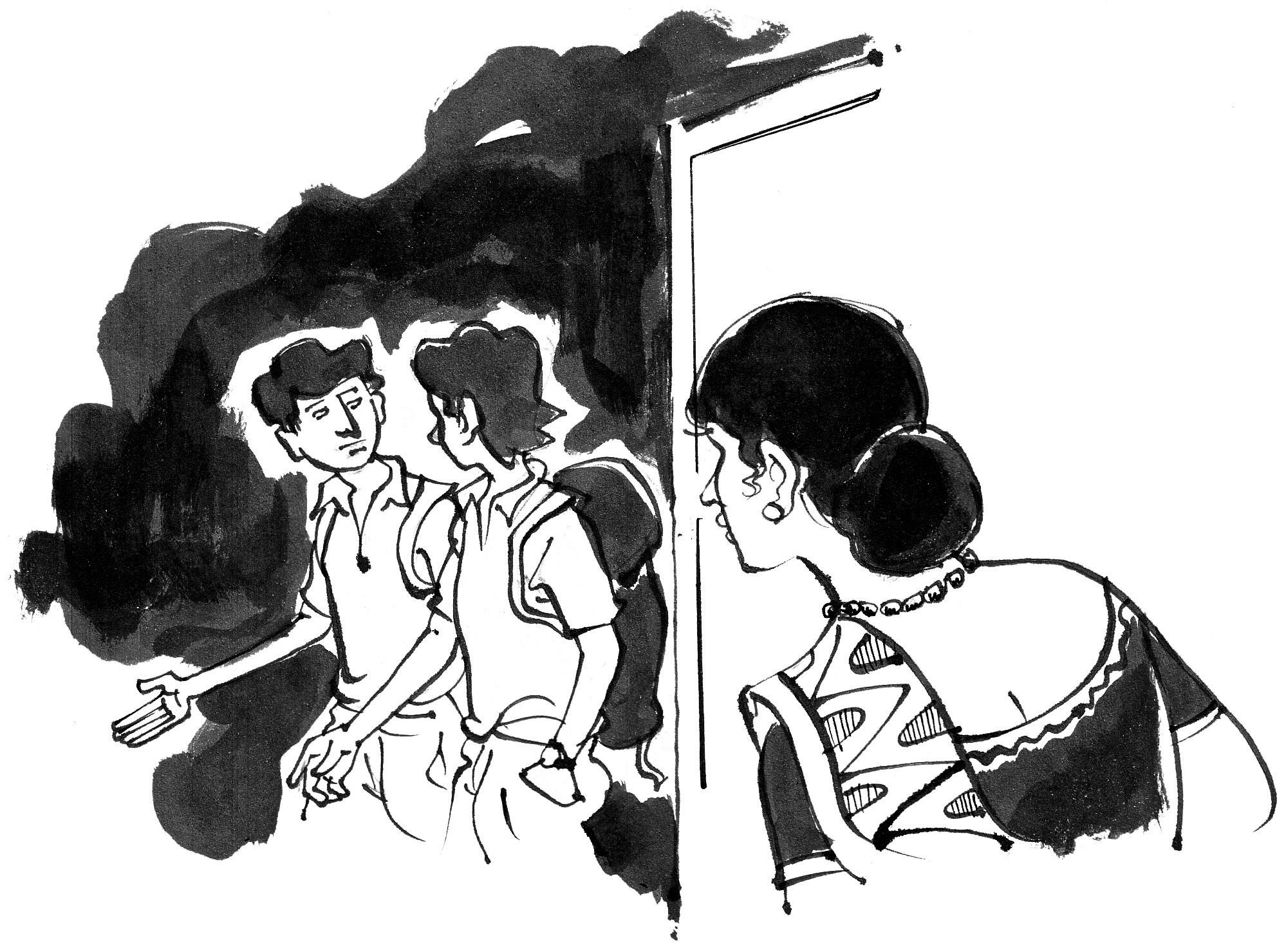
For the last couple of weeks, the word ‘crazy’ is driving me crazy, literally up the wall!
Everyone seems to be calling every other soul crazy. Crazy?
“Who isn’t crazy?” I thought. Everyone is.
My husband was late for an appointment, and conveniently blamed it on me.
“You’re crazy! Couldn’t you remind me just once?”
“Well, who should have remembered it anyway?” I asked.
“That’s not the point; I was late and it had to be rescheduled. That’s not nice!”
“Precisely. You see I’m not crazy; you are.”
We argued and stuck to our guns, but the next day was a different story. We agreed that both of us had been wrong and thankfully peace was restored.
I’ve had my fair share of craziness, no doubt. On one occasion, I remember reaching the gas station and, digging for my credit card in the purse, realized that the wallet with my credit card, driver’s license, and cash was in the other fancy purse I had taken to a sweet sixteen party the previous evening. So I was pretty much broke at that moment and had been driving all day without my license on me. I felt sheepish and pulled out of the gas station when
the person behind me honked and the attendant looked at me questioningly. Was I losing it?
I also cannot deny there are days when I am completely clueless about locating my car in the parking lot after having shopped at an outlet mall for a good three or more hours. I come out feeling recharged about my latest updates to my wardrobe, but get so disoriented looking at the sea of automobiles that I end up sprinting up and down a million times before recognizing my Corolla where I had left it. If my husband is accompanying me, he waits at the exit and allows me to do my jogging, quite resigned with
a see-how-I-put-up-with-yourcraziness look, and I return it with an I-do-too look. The panic button is soon on, asking me: Is this the onset of Alzheimer’s?
But I console myself that perhaps I am erring on the side of the legendary absent-minded Professor Einstein; after all, Princeton is just a twenty-minute car ride from my home. There is such a thing as proximity to the vibes of a great place which are transmitted to the neighbouring areas and picked up by the lesser mortals residing there. We just need to make room for those who are not on top of things all the time, right?
But I am pretty sure I am not anything like those other women in the movie, “The Other Woman”, that I watched on a Saturday night recently with four of my girlfriends. We loved the movie, and envied the women who were so saucy, smart and oh so scheming, but we all agreed at the end that they were somewhat crazy. The wife got to know that her husband was cheating on her, and so ganged up with two of his mistresses to teach him a lesson, and ended up becoming the CEO of all the fake companies he had floated in her name, making him bankrupt in the process. One of these mistresses, though, soon became the wife of the first girlfriend’s dad, and we thought that was a crazy relationship; your (now ex-) boyfriend’s most recent girlfriend becomes your dad’s third wife! What would you call her? Surely, not mom!
Mother’s Day wishes could be embarrassing. Now, if such a
crazy thing ever happened to me or my best friend (not that it has the remotest possibility, given our celebrated middle class prudishness) I would surely go stark staring mad and end up in one of New Jersey’s mental rehab facilities.
Obviously, this is not the same kind of crazy situation as the one a friend discussed with me the other day. She complained that both her kids were crazy. Her daughter kept forgetting details of the charities she was working for, except for the fact that they had something to do with Africa; and her son kept forgetting the tests in school and never prepared for them, but seldom forgot his out-of-state swim meets, and was always spending hours in the pool practicing his strokes. What would happen to his college applications and his college essays was her sob story. They were crazy and driving her nuts as well. I told her to give them a break. The girl was only an eighth grader and quite happy to be selling cookies and cupcakes for an African cause; how did it matter whether it was for the Sudanese or the Congolese? There will be time for serious fundraising projects later on to show her leadership and persuasive skills; let her just prep for now. And as for the son, only a sophomore, maybe he should train to become a swimming pro, rather than pore over his books. They are not crazy, just having fun as long as they can -- poor souls! The mom (my friend), I suspected, was the crazy one, self-righteous
and pushy, not sparing a single opportunity to nag the children and bring them back on track. I felt the family needed a good two-week vacation to unwind and find their right spots, and said so to her.
And then yesterday, when I was in the process of lining up a couple of the more challenging passages for my critical reading class, in walked a student, crestfallen and defeated.
“Hey, why do you look glum, Bob?”
“Oh, that’s because my US history teacher is crazy.”
“Crazy? Why crazy?”
“Well, he gave us the hardest possible test today, and I did miserably”.
“Oh, I’m sure he intended to challenge your thinking skills, and jog your memory, just as I try to do every time we meet. That’s only fair, right?”
“Oh no, it isn’t the same; he doesn’t teach us anything and yet expects us to make connections. Connections between what? Is that fair? What’s going to happen to my G.P.A?”
I wondered: is this crazy or what? If it is true that he doesn’t teach in class, and yet isn’t bothered about his teaching contract renewal the following academic year, that’s something! That definitely qualifies him to be labelled crazy. On the other hand, if Bob was overreacting since he had been unprepared with his facts on Civil Rights, and didn’t have a clue which option to choose on the multiple choice section or write a satisfactory essay, he was crazy to worry about his G.P.A. Very
soon his parents would become crazy worrying about his grades too. What a pickle!
Last week, my next door neighbour Beth told me her nineteen-year-old daughter Britney was crazy. She had ignored her speeding ticket, forgotten her court appearance, was almost on the verge of license suspension, and yet was so nonchalant about the whole thing. Now, Beth was going crazy hunting for a good attorney to bail her out of this crazy situation.
“What does your husband have to say?”
“Steve works all kinds of crazy hours and sleeps all day when attorneys need to be contacted. He isn’t much of a help. I’m going crazy trying to be a supermom, wearing multiple hats and changing them at the drop of a hat”.
I concluded, both Beth and Britney needed to take care of themselves; maybe spend a little more time together talking about things, and not just flying around in and out of the nest all the time. They had to make a stupendous effort to remember everything
under the sun, which isn’t easy most of the time. Modern living is a shade crazier than that of our grandmas. Everyone is so mightily harried, hassled, and highly strung! Who can blame whom for going crazy?
But I must admit that I’m pretty much in control of things, when I’m not behaving crazily. My ankle sprain had healed, I presumed. So I tried to present a brave front at the workplace, wearing my regular high-heeled shoes and abandoning my notso-cool ankle braces. Needless to say, I limped all the way, tripped once, and was in visible pain. My supervisor’s mouth fell open, flummoxed at my attempt to keep to the official dress code.
“Are you crazy? Do you want to be in bed for another fortnight with another sprain? Of course, you can wear sneakers or whatever is comfortable. We don’t care. Only please don’t stay home, we need you here.”
“OK, thanks for the permission.”
So three days later when I wore my sneakers with my green tosser benarasee and my pearl and emerald set to a
friend’s silver anniversary at the Sheraton, Parsippany, everyone looked at me as though I were crazy. What a waste of a gorgeous sari and the equally top of the line jewellery with such mismatched footwear!
“Even flip-flops would have looked better”, they chorused. I slouched and sulked at their shiny stilettos. The temperature was in the teens, and flip-flops? What about my pain, winter numbness, and the wobble?
I must be crazy, I thought miserably, not my schizophrenicaunt kind of crazy, or even the savant-Raymond-as-in’Rainman’ kind, but somewhat daft and deluded occasionally. Trying to make sense of a crazy world can make even the sanest minds to be a little touched in the head. Honestly, most great men and women have been crazy to some extent, and we continue to envy these mavericks, don’t we? So, if we develop some “method in our madness”, we will do just fine. Seriously, I guess a little bit of a crazy streak is actually okay; makes you feel quite human.
Through the tall, half open, blue glass windows, the sunlight fell oblique on the batik bedspread in her room. The colors looked as bright and vibrant as they had on the day Mita had walked out of it. That was a long time ago, when the house had stood regal and stately and her parents had been at the height of their social grandeur. It meant she had been
away from there more than two decades, she thought with a start, much longer than she had spent in it. Did that make it alright to feel differently now, see differently, sift through feelings with a different kind of sieve? Did that make it alright to part with the happy hunting ground of her past, her childhood and
early youth, so surely? Mita sat down on the bed and held out her fingers motionless on the sun streaked cover trying to feel its warmth. Her wedding ring gleamed as it caught the light, reminding her of Timir. He had proposed to her in this very room ever so long ago when she was fighting desperately to
AgniMita
IndraniMondal, Illinois
get away from it. But he hadn’t been able to accompany her on this momentous trip due to acute health issues. So here she was with no other alternative than to let go of an integral part of her life for good all on her own.
Mita got up and walked to the grilled balcony adjoining her bedroom. This seven by five feet black and white checkered marble wonderland had once been the seat of her many creative writing spells. Now it lay bare and forlorn,with a few broken flower pots spewing
neglected, sandy soil. The morning air was humid and seemed to weigh heavily all around her. It brought in smells of fresh cooked lunch preparations from neighbouring homes, aromatic Basmati rice and spicy lamb curry, a staple in almost every middle class Bengali home on a weekend afternoon in Kolkata. Yes, it was Sunday and this menu had been a favourite in this home of hers too in days gone by. The thought made her turn back into the house and make her way to the kitchen.
She saw in her mind’s eye the gleaming pots and pans on the gas burners and her petite
Ma wielding her shiny stainless steel spatula with effortless skill of an ace magician, creating one culinary treat after another, from simple sukto to elaborate maacher kaliya and Bengali desserts for all seasons. All Ma’s kitchen helpers were busy either with grinding fragrant spices on the mortar and pestle or slicing and dicing fresh vegetables on the sickle shaped floor blade or bonti. Her Ma stood in the middle of it all uttering nonstop staccato instructions, overseeing the hissing pressure cooker, the splutter of fish frying in hot mustard oil and the gurgle of simmering curry.
Someone tapped Mita’s shoulder from behind and immersed as she was in her reminiscences, she jumped round, her heart pounding. She found herself face to face with a tall, well-built man wearing dark glasses.
“Mitadevi?” He enunciated slowly. “Yes” replied Mita automatically, pulling herself back laboriously to the reality of a very dusty kitchen and dining room bereft of furniture and utensils, all the doors agape on the wall to wall glass cabinets and pantry cupboards. Only two large meat safes with empty shelves and yawning mesh sides stood ruefully in the middle of the room, yet to be sold.
“I tried using the calling bell but apparently it didn’t work. So I pushed the front door and it open. I just made my way upstairs, hope you don’t mind”, announced her guest without preamble. “Your cousin Kaushik sent me,” he continued,
waving a letter or map at her.
“I’m curious, why aren’t you planning to return from your faraway exile to live in this grandiose ancestral home?” He asked, his tone a strange mixture of taunt and triumph. Mita couldn’t help being struck by its sonorous pitch.
Taking a resolute step forward and brushing the last question aside she retorted with more sharpness than necessary. “Yes, I didn’t lock the front door. Kaushik, my cousin and my lawyer’’ told me that a prospective buyer would come for a tour of this house today. Some real estate agent who makes a living buying and selling grand old Kolkata homes, I believe. You are he, am I right?”
As he tilted his head he looked oddly familiar and Mita felt irritated that he was not taking off his dark glasses. He gave a short mirthless laugh in an undertone that vaguely stirred Mita’s memory again.
“I’m not a buying and selling real estate agent or whatever else your cousin said. I just wanted to talk to you because Kaushik said this house was on the market and it happens to be really close to another property I own nearby. It is a banquet hall and auditorium that I rent to performing art groups and for special family events. I thought this house maybe a possible guest house for the artists and guests using my main facility, because it’s within walking distance.”
He paused and hesitated for a second. “Actually my manager Nishit was supposed to come
but because this is so close to my other property I thought I’d drop by myself.”
Mita was not in the mood to get into any details or pick up any small talk with strangers for no good reason. She had too many things to sort out within and without in this whole wrenching yet necessary business of selling her childhood home. She came quickly to the point.
“So you want a tour round the house,” she said matter-offactly without looking at him.
The man had turned from her to inspect a window and answered smoothly with his back to her. “I’ve already made up my mind. I’ll buy your parents’ house, Mitadevi, at the price your cousin quoted.”
Though thrilled at her good fortune of getting a willing buyer so fast, Mita couldn’t help feeling sceptical and a tad suspicious. “Are you sure you want to do this so quickly?” She asked cautiously, worried about scams. At the same time she didn’t want to scare him away and make him take back his offer.
“And why not, Mitadevi?” He articulated slowly, with his face still half turned away from her. “I’m a devoutly religious man and according to our house priest tomorrow is a very auspicious day. So if you hand me the house keys tomorrow, I’ll sign the sale contract right away.” He slid his fingers on the carved mahogany window shutter and as he did so the left sleeve of his kurta rolled back revealing a faded fire and sun tattoo. “I have to admit it’s a
lot of money, but can’t you trust me to come up with it in a few days?” He asked and turning to face Mita, he took off his sun glasses looking at her with an open challenge in his eyes. “And by the way, I forgot to introduce myself…. I’m Adi … short for a slightly longer family name….”
His eyes remained fixed on Mita but she didn’t hear the rest of what he was saying. The sound of glass shattering in the neighbouring home a stone’s throw away came in through the open windows, tore through the room and kept echoing in the emptiness of the hallway beyond. Mita moved quickly past the man and ran into her parents’ bedroom. The offer had indeed seemed too good to be true! But there was no way she could accept it now, now that she knew the real identity of this magnanimous buyer! Maybe this was just another way to lure her by his generosity and then dupe her, con her, hurt her again! Mita made her way to the far corner of the room and stood in front of her parents’ picture that she had kept on the wall till she finally sold the house. She had tried to clean the dust off the glass frame so she could look into their eyes.
Adi must have followed her too for in the hazy glass of the picture, next to her face with its agitated eyes, she now saw another reflection, rather distant and in a strange way distorted, making the face look younger. Yes! No wonder this man’s ways had looked strangely familiar, the half revealed tattoo on his
arm had struck a rhythm of memories! Now his name rang out in her mind like a warning bell from a treacherous shore over a foggy sea to alert unwary mariners of hidden subterranean rocks.
Of course she knew now what she must do. After that brief hesitation, she turned squarely to face him with a definite “No” written all over her.
Adi seemed ready to meet her defiance. Keeping his glasses off, so she could look directly at his eyes, once adored, now opaque with time, he whistled under his breath and said speculatively, ‘‘So even though you didn’t guess when you first saw me, you do remember… Agni Mita!”
Mita stepped back in consternation and quite outraged, breathed the words, “How dare you… you utter that name…you have no right…”
He cut her off, chuckling softly, and asked, “You didn’t think I’d forget, did you? But then you can’t imagine how long I’ve waited for this moment.” He stopped abruptly and started striding up and down the length of the bare room so that his footsteps echoed. “Ever since your high profile father, of an esteemed caste and an elevated social standing, the revered Professor Chatterjee,” he said bitterly, “found out that a petty student like me, a poor low caste nobody with no family pedigree …” he stopped again, drawing in a shaky breath and beating his chest with visible emotion. Then recovering quickly he pulled back his shoulders and turning
his back on her continued, “… had the guts to write a book of poems for his daughter, openly dedicate it to her and also found a reputable recording company to burn and publicize a CD with their joint voice recordings…”
Mita was about to retort but the floodgate of memories opened so quickly that she faltered in their sudden deluge. Adi seemed to pay no attention to her reaction at his outburst and went on as if he were alone in the room. ”Professor Chatterjee warned me to leave his daughter alone,” he paused and gulped audibly, “cause I, a small town nobody’’ had never seen, let alone lived in, a house as stately and luxurious as this one,” he spread out his hands and gestured all around the room, “where his only daughter had been brought up…” His voice fell to a hoarse whisper. “I was just a worthless gold digger…he had mocked me...” Adi could continue no more and seemed to have lost the strength even to face Mita. He bent his head, covered his face in his hands, and moved further away from her. “The usual story of Beauty and the Beast with a slight twist: Rich Beauty and Beggar Beast, shall we call it?” He ended dryly.
After the first shock Mita found herself growing indignant and furious at this tirade of accusations. She spat out her contempt, “You still are quite the play actor, Aditya Bose! After all these years you actually have the cheek to use a protective father’s words as an excuse for your...weakness…
your cowardice? Mind you, I wasn’t any party to that ongoing off-stage drama of professor and student! Rich Beauty and Beggar Beast, my foot! Don’t deny that you didn’t know that I wouldn’t care about any of this, even if I knew!” She stopped as a thought struck her and cried, “Tell me, how much of this are you making up anyway? All I know is that you just turned from me without any kind of explanation. What gave you the right to ruin everything like that? Not showing up at our final intercollegiate poetry fest? Leaving me without a reading partner? Well! I ended up reading your part and doing your role too and won the trophy! But how could you? Why couldn’t you just come up to me, face me and speak your mind…? Damn you! If you had really... really…” Mita broke off as pent-up anguish and insult leapt up from the past and gushed out in burning fury and left her panting for breath. Adi had turned round when she started speaking. He tore the words out of her stuttering mouth so like their joint drama readings in days gone by that Mita shook with remembered frenzy. Adi threw his words at her. “Really… really cared, loved you, right? That’s what you were going to say, weren’t you? Well, how about you, innocent one? Why did you agree to your father’s choice and marry his rich friend’s son so fast?” Seeing Mita getting ready to retort, he went on without stop, “Wait, I know what you’re going to say. That you wanted
to continue your study abroad and your parents wouldn’t let you go away from the house by yourself, so you grabbed your first chance to go to London by getting that brand new wellestablished husband of yours. Well, Agni Mita, let me tell you loud and clear after all these years, I loved and cared enough for you, to let you do just that! You didn’t need me in your life any more, little obedient only child of doting parents! I was not rich enough to become your Prince Charming and fly you away on a golden horse to fulfil your dreams, remember?”
Mita went from burning hot to ice cold. She couldn’t keep quiet anymore and started laughing bitterly, clapping her hands. “Wow! What sacrifice!” She taunted. Then much to her chagrin a sigh escaped her suddenly and she moved quickly towards the grilled balcony for some air. She had spent a good part of her early marriage trying to adjust to a new land with its unacquainted customs and a new man with unfamiliar tastes. All this was made harder and more complex by her conscious effort to grapple with her waning selfesteem, so sorely compromised already by her first love, Adi. Had Adi taken advantage of her youthful idealism and used her talent to further his own cause? Was her father right about his being a devious gold digger? Her sense of inadequacy and rage at her own naivety had hurt her so much that for a long time she had not been able to do justice to her talent and gain stability in her career. Timir had stood by
her with a lifeline helping her navigate those dangerous rapids and painful pitfalls.
Adi stepped up to her and taking her clenched hands in his led her back into her parents’ room with undisguised care. “I never wanted to hurt you, I didn’t then and I don’t now, you understand, don’t you, Agni Mita…?” he asked urgently. “I promised myself to live up to your parents’ expectations before I ever faced you again, that’s all,” he ended simply. Mita scanned his face wordlessly. After all these years did she still want to believe him? He let go of her hands and made a face. “’A poor small town boy’, he had called me. Well, it took some hard years for this small town boy to become rich… And when I found out your house was on the market… Well my dear Agni Mita, how could I resist getting in touch with you again? You see I never forgot the scorn on your father’s face when he ordered me to stay away from you…” he paused and laughed exultantly. “Now if I own his home, how can he drive me away?”
Did she detect derision, arrogance and smugness? Mita felt a killing fatigue. So that was all it was, a battle of male egos! She was nowhere in the picture, she thought wryly. “Well, then you must also know that my father passed away two years ago. So I have no idea how you can pull him into all this anymore!” She breathed as a wave of nausea rose from the pit of her stomach making her lean on the wall for support.
She couldn’t tell if he was surprised by this news or not but he walked up and pulled her into a quick, warm hug. “I’m sorry” he mumbled and visibly shaken, left her to go stand quietly in the balcony.
The neighbourhood was in the late afternoon siesta lull. A gust of wind – or was it her father’s breath? – brought a burst of fragrance from the backyard Kamini tree. As Mita groped for words she heard Adi say, “Now I’m free at last Agni Mita, to tell you all this. I don’t know why but I had always carried this guilt that I had been immature and had over-reacted…” Adi came back into the room, still talking. He looked tired and the color of his eyes seemed to have changed or were they misty? He was saying “I had never fully explained to you why inspite of the depth of my love and care for you…I needed to leave right away… we were so much in unison...our poetry readings, our words, thoughts and emotions were so much in sync… you were like my other self… I was sure you had understood my plight. I had wanted to meet you and your family as equals. But by the time I had made myself worthy of you in worldly terms it was sorely late… we both had different lives, different responsibilities, we were both married to appease our families…it was no use digging up the past. It was quite by chance that my company lawyer and friend Kaushik, turned out to be your cousin too…”
Adi came up to where Mita stood frozen. “And now for
the real life poem I had always wanted to give you, my dear”, he said and placed his hands on Mita’s shoulders gently, with utmost affection. Smiling easily, he continued earnestly, “After I pay you for this house, you can take back the keys, Agni Mita. As you can see I really don’t need it anymore. I just had to meet you to tell you that I finally can, that I am and have always been, a genuine guy.”
Mita stared up at him for a second, unmoving. An errant lock of thinning grey hair fell on Adi’s forehead. His eyes had entreaty and question as he held hers. But was she ready to forgive, would she ever be? Mita shook his hands off her shoulders brusquely and laughed loudly. She couldn’t help lashing out at him, “And this late day condescension will absolve you for throttling my budding dreams in my youth and making me question trust for the rest of my life? Did you know or even care, how many long, struggling years it took me to regain faith in myself? Oh Adi, please don’t pose to be the only wounded soldier in this messy clash of egos…”
Mita reached inside her pocket, took out her cell phone and called Kaushik. “Hi Kaushik, please prepare the contract papers for our house sale” she announced crisply. “Mr. Adi and I will sign it tomorrow, and you can put in a clause that as soon as he hands me the money I shall hand him
the house keys.” She turned to Adi as she added, “For good, full and final right now,…OK? Thanks.” She turned off her cell and continued making things clear to Adi, who was watching her closely. “I have only agreed to sell this house to you for I am here for a very short visit and want things settled as quickly as possible. You see, Timir needs me,” she spelt out, while her eyes said the rest “unlike you!”
“After the sale you can do what you want with the keys or the house for that matter. But one thing is certain. I don’t need your favours or your pity. Let’s keep the cut clean and straight, this time at least, Aditya Bose.” She was afraid she wouldn’t be able to keep the quiver out of her voice much longer. But she couldn’t bear the thought of breaking down in front of him.
Without giving Adi a chance to repartee, Mita swiftly closed the room doors and gestured to him to proceed to the front door for she was ready to leave. As she locked the front gate and quickly got into the car she tried her best not to look at Adi again.
But try as she might she couldn’t help hearing the rousing applause that Aditya and Agni Mita always drew from their audiences after their joint drama readings and poem recitations. It was said that though Mita had a science major and Adi liberal arts, together they sounded like the sky and earth, he with his bass notes capturing wind and rumble of clouds, she with her
amazing range of octaves, from the husky warmth of budding flowers to the trill of songbirds. They could magically create a perfect universe of sound with a myriad of nuances of their incredible voices. They were like answering soulmates, drawn together by some magnetic pull of understanding and perfect timing, bridging all distance and difference with her expanse and his depth of delivery. It was an accord that had drawn them together irrevocably in performance after performance. Little wonder that it had spilled over from the stage to real life and their friendship had grown by leaps and bounds to a passionate need for togetherness in almost everything they did. It was Adi who had this crazy idea of getting a fiery sun encircled by leaping flames tattooed on his left forearm as a symbol of their lasting relationship. When she had been upset at how sore his arm was, he had laughed and hugged her, saying, “Don’t worry, Aditya and Agni are just meant to be Mita, loving friends forever!” But that was in Mita’s college days many light-years ago.
Then why could she hear the voices even now? Just as it had been played in homes, coffee houses, college cafes over and over again to rave reviews when their first and last poetry album had been released on CD, “Amra dujane bhasiya eshchi eki premer srote”
They had been married ten years. For a long time Ram and Bidisha had been trying to have a son. Finally, they got tested and that’s when the doctor said that it was her problem. Bidisha was not there when the doctor handed over the report to her husband. It could be her husband’s problem too. May be Bidisha was not smart enough to argue. Even if Ram was wrong, Bidisha thought she was ill-fated in life. His two-story brick house and garden in the tranquil
neighbourhood of a village near Calcutta showed Ram’s achievement and stood as a symbol of his professional glory in that village. In the beginning Ram was a very conscientious man, respected by all for his good position. His capability convinced the villagers to place him in charge of their improvements, especially the conditions of women.
It was Ram who chose Bidisha ten years ago for her
beautiful smooth complexion, long glossy hair, dark brown expressive eyes and slender body. He met Bidisha while she was staying at her cousin’s house while he was on a business trip, but she was too young to be married. Since Bidisha’s parents were poor and no dowry was involved, Bidisha’s parents readily accepted Ram’s unexpected proposal.
After years of marriage and no children, Bidisha noticed Ram withdrawing
Mandira Chattopadhyay, Georgia
Ashes of Amun
from her. She blamed it on destiny, and uneasiness crept between them. She realized that what lay at the core of her husband’s unhappiness was her barrenness. Eventually, Ram began sleeping in a different room. Bidisha became so depressed with her barrenness that she neglected her housework. From her window she sadly watched couples carrying their babies. When she walked
on the street and heard the cries of babies, she covered her ears and rushed home, shutting her door.
One day, to Bidisha’s utter surprise, Ram announced that he would be taking another wife; his mother’s desire for a grandchild was instrumental in this proposal. Though he was a well-mannered man, his wife’s barrenness obstructed his happiness so that he no longer cared what the people thought of him. Bidisha could not grasp his plan, but had no
power to resist it. She agreed to her husband’s proposal, if that would make him happy. When Ram brought his new wife to live with them, Bidisha never battled with jealousy. The other woman was very young, small and frail, just the opposite of her middle-aged husband, who was tall and sprawling, with a bony frame and a strong voice. When her husband and the new wife went out holding hands, she felt miserable. Her husband

came to her sometimes in the night, but it was very rare. Bidisha wanted to be close to him, but she still was pleased that during the day she could smell the scent of his shirt as he moved from room to room. At first she was humiliated, but eventually she learned how to control her grief and started to take the second wife, Rekha, as her companion. She began teaching her Ram’s favourite dishes and chit-chatted while her mother-in-law napped. Slowly the burden of grief and guilt wore her out; her spirit sank at the silent rebuke of her husband and her mother-in-law. At night she would stare at her wedding sari that hung on the wardrobe and remembered how she was veiled on the wedding night.
During a visit to her parents, she described her misery and her desire to return to her family; they told Bidisha that they could not help her since she had been already married. What could they do with a married daughter, abandoned by her husband? So they told her that she should go back to her husband. They cited the example of their friend’s young daughter who was married to a military man. The young girl had no education and was very naïve. When the military man took a better educated wife, he turned his first wife into a maid servant, wiping and dusting, so Bidisha’s case was not unusual. Bidisha’s parents argued that in remote villages of India, things like that happen, since there are no signed marriage documents, and only a handful of people
witnessed the marriage. They could not fight with her husband because Bidisha’s parents did not have enough money to take him to court.
She came home and accepted her reduced place in the household. Bidisha had always looked forward to the visits of her family friend Radha, a social worker, who came to consult with Bidisha’s husband about the conditions for women in nearby remote towns. Radha’s visits brought freshness into the house, as if fragrant air entered. Bidisha used to watch her go about her duties with admiration. She would bring a cup of tea for Radha, and watch how she talked softly, taking notes diligently while consulting with Ram. She did not get to know her much, but could feel her husband’s respect for Radha.
One day Radha came unexpectedly when Bidisha’s husband was not there. Ram’s new wife answered the door. When Bidisha brought tea for Radha, she enquired who the young woman was. Bidisha explained everything to Radha. Confusion crossed Radha’s face and she covered it, asking Bidisha, “How could it be? You are his wedded wife. Can’t you stand up for your own rights?” Bidisha whispered, “He is trying to deny it because I did not bear him any children. But that’s okay; he has let me stay here, and occasionally comes to me.”
“What nonsense are you talking about? Your husband and I are trying to improve the lot of the women in this town, and that’s what he did to you?”
Radha apologized to Bidisha because she was going for a cruise on the Nile in Egypt the next week, but when she would return she promised to talk with Ram seriously about the situation. In the meantime, Bidisha told her that she still had some hope because she was trying various means to cure her barrenness. She was fascinated to hear from people stories of the wondrous healing powers of different herbs and home remedies, so she started collecting these herbs for fertility. Radha dismissed the stories, but liked her determination. Bidisha believed in all those old tales, how a little payasam (rice pudding) made a woman pregnant.
On her Nile excursion, Radha continually remembered Bidisha’s misery. The culmination of her trip was at the Amun Temple. The tour guide described the temple sanctuary, its sacred room designated for pharaohs and priests, where the gold-and-jewel-encrusted god was housed. During two annual festivals they transported the god on a sacred boat to visit the people and the fellow deities. A processional avenue of ramheaded sphinx linked Karnak to the Luxor Temple, a few miles to the south. Entertainers amused those in the procession along the way.
Radha was especially interested to hear how the festival attendees scraped dust from the temple walls for healing and devotion and that women drank the temple’s scrapings in tea to become fertile. She noted
that the women circled the stone scarab near Karnak’s sacred lake seven times as a fertility charm. She remembered Bidisha’s faith in the old tales, and during the culmination of the laser light show, upon hearing the voice of Amun declare “I am the God,” her skepticism evaporated. She was mesmerized and started believing in the power of the ashes, so she decided to take some ashes for Bidisha’s fertility. Radha decided there might be something to this magic, and besides, what harm could it do? She felt there were powerful things that were invisible to us, so she carefully packed the ashes. She could picture Bidisha’s smiling face for attempting to make her a mother. She hoped to erase the pain behind her eyes swollen frequently with tears.
The phone rang at Bidisha’s house far away in India, and Radha told her of the magic of the ashes. Bidisha was ecstatic because a smart woman like Radha believed in such miracles, so she anxiously waited for Radha. In the meantime, Ram, Bidisha’s husband had given her several warnings that she should leave home. Ram realized that Bidisha was becoming
conscious of the new situation in the house, and noticed her queer relationship with his mother. Bidisha sobbed uncontrollably, as she could see every day the anger rising in Ram. Bidisha kept to herself about Radha’s upcoming visit with her ashes. She could already feel the musty coarseness of the ashes in her hands, so she pleaded with her husband for a little more time. She started to fantasize about the day Radha would bring her the ashes and she would drink them with tea. She started practicing how she would wear her sari, deftly making the pleats, drawing her breath in, so that she could tuck them tightly, patting and smoothing them flat. She would wear new bangles and put on vanilla essence; she would untie her knotted hair which would be brushed and oiled. Finally, she would smear some lipstick on and lie across her husband’s knees, and plead, “Love me.”
When she saw a couple pushing a buggy, she imagined how someday she would do the same with her husband. She waited for Radha to bring her ashes soon and ease her grief. It would be a relief to be out of misery then, and finally become
pregnant. She laughed to herself at the thought of having a baby. Several things flashed in her mind, but the fallen leaves in the backyard made her cry. Impatiently, she waited for Radha. She started picturing that both she and the new wife would have boys at the same time. She would name one Luv and the other Kush, just like in the Ramayan epic. Someday there would be a celebration. Perhaps she would have a little girl, who would occupy one of the rooms, come from school and talk about her friends, and together they would read books. ***
As soon as Radha returned, she tried to reach Bidisha at home but Ram put the receiver down and told her that Bidisha was with her mother, and gave her Bidisha’s address. As Radha called Bidisha there, Bidisha told her, “I don’t need those ashes any more. My husband has already kicked me out. I am in a grieving period in my parents’ house.”
There was a long silence. As soon as Radha heard Bidisha’s story, she breathed a deep sigh and seemed to hear the remote town whispering a deep sigh too.
Death Basab Dasgupta, California

My first experience with death took place when an elderly gentleman whom I called “Dadu” passed away. I was probably about five or six years old at the time. He and his family lived in the first floor of a large house and we lived in the
second floor. One morning when I woke up there was considerable commotion throughout the house. Everybody downstairs was weeping – some loudly and some quietly. I peeked down from upstairs and saw Dadu lying down on and tied
to a bed-like platform. I asked my mother; “what happened to Dadu?” She did not tell me the truth. She said Dadu was sick and was being taken to the hospital. Even though I was very little, the explanation did not make sense to me because I
thought people went to hospitals in order to get well and I did not understand all the crying going on. Of course, Dadu did not come back from hospital. I do not remember if I asked my parents or others about what happened to him. Deep down inside I knew that Dadu went somewhere else – perhaps heaven.
I saw a dead human body for the first time a couple of years later. Our house was right on the river Ganges. We would hear about some dead body floating down the river every so often; these were people who accidentally drowned in the river or were bitten by snake while bathing or committed suicide. Usually we would not see them. On this particular occasion some guy was screaming that there was a dead body lying on the ghat (the staircase leading down to the river). Out of natural curiosity and before my mother had a chance to stop me I ran to the ghat to see the body. There it was: a naked and colorless cold male body. It was perfectly still with the eyes staring at the sky without blinking. It reminded me of the animals hanging in the butcher shop. It did not scare me; it did not make me sick. I just stared at it and tried to fathom the idea that this was what would happen to all of us one day!
The eternal question that came to me around that time was “Who am I?” At first, I said to myself “OK, let us answer the question in a logical way” and my answer was “I am Basab Dasgupta!” The voice in my
head was not at all satisfied with this simple answer and said “Oh no! That is your name, but who are you?” I tried to be more clear – “I am the son of Mr. Shailendra Dasgupta.” The voice kind of laughed and said “Now you are just describing a relationship of you with someone; but who are you?” I would keep on playing this game with more answers but never quite getting to the bottom of the question “Who are you?” Very soon I would go into a transcendental state where I was not quite grounded to this earth and kind of floating freely in some space. Although it was a very strange sensation I also felt a degree of joy that I cannot describe accurately. It was almost like I was “warping” into some other space. It was a “high” for me and I would play this game quite often. I do not know how many ten year old ask these questions and play such a game, but it came to me naturally. No one even remotely suggested anything close to it and I did not share this with anyone. I developed a distinct feeling that there was a different world somewhere and life on this earth was just a game we all played!
I would dare say that, from that time period onwards, I have never been fearful of death. Most people are afraid of dying. There are two types of fear: a) fear of pain and b) fear of unknown. In addition to the fear, there is also some sadness associated with the realization that we will not be able to experience all the things we enjoy with our five senses after
we lose this body. Perhaps there is also worry about how your loved ones would be taken care of in your absence.
Let us analyze these fears and see how justified they are and how we can perhaps “cope” with them. Pain can be either a pain of relatively short duration or a pain lasting for months before death. When one dies of an accident or heart-attack or by drowning, the pain can be an excruciating pain, but not really lasting that long. In addition, I believe that the shock of the event and the realization that this is the “end” numbs you and the pain is over quickly. Pains of longer duration, such as what patients of terminal illnesses experience, are more depressing to think about. However, I believe that people undergoing such prolonged sicknesses adjust themselves – both physically and emotionally – to a point where they simply consider it as an experience, not a good one for sure, but something not to be consumed with twenty four hours a day. Use of medication to alleviate any severe pain also keeps the person in a subdued sleepy state. It probably becomes more annoying to be dependent on others for day-today survival than the suffering itself. I met one of my sistersin-law after she was diagnosed with liver cancer and knew that she had only a few more months to live. We had a fairly normal conversation. It was clear that she was in some sort of discomfort and did not want to talk a whole lot; but she was not crying in pain or moaning
about her misfortune. At one point she said that she wished to see her older daughter get married soon. Perhaps it is hope or faith in God or a degree of satisfaction in seeing that one lived a reasonably good life that make this adjustment easier.
I do not have the fear of unknown because I know what would happen after death. It is all explicitly spelled out in an incredible amount of detail in the account by Sri Yukteswar to Paramhansa Yogananda described in Chapter 43 of “An Autobiography of a Yogi”. The entire experience after death, according to him, is a wonderful experience – full of light, music and happiness; new senses and new ways to explore one’s surroundings; a broader awareness of one’s existence. On top of all that one would “see” all the loved ones – parents, spouses, children, relatives, friends – from all the past lives. They would appear in the same physical forms as they had when they were young! That alone is worth the “price of admission”. I believe every word of this account. This is especially true because Sri Yukteswar was my father’s guru; it is almost listening to my father. Some might discount it because it is simply “hearsay” evidence, to use a legal terminology. To me, it is similar to your brother going to USA ahead of you and then telling you all about life in USA when he went back for a visit. Would you believe him or simply dismiss it because it is hearsay?
There are also numerous
stories in the western countries where some people were declared “dead” for hours or even days, but they came back to life and narrated their experiences. The internet is filled with such accounts. All such descriptions are very positive. No one talked about a “hellish” world where they were tortured or confined or punished in some other way.
I want to learn more about such after-death experiences. I want to prepare myself in the same way I prepared myself before coming to USA. I am full of anticipation, excitement and desire to learn what I cannot learn as a living being. I do not know if I was fortunate or unfortunate that I was not present at deathbeds or funerals of my parents. By the time I was able to reach India, their bodies had been cremated. So I do not know if my enthusiasm about death would be dampened had I been there.
I sometimes go through the morbid exercise of asking myself what I would do if I suddenly found out that I had cancer and only a few months to live. I would like to visit a lot of places; both places that I always wanted to visit but did not get the opportunity (Egypt and Peru, to name two) as well as places from my younger days just for the nostalgia and to see how those places have changed. In fact, I would like to see each and every house I lived in, even if it was only for a few months. I would also like to see some people: relatives, friends, teachers (if they are still alive), neighbours and of course, lovers. I want to
die like George Harrison; in a calm and dignified way, in my home and surrounded by only a few people who truly love me. No doctors making a lastditch effort to save my life, no life-sustaining paraphernalia, no cold hospital room, no large crowd lamenting my departure! Woody Allen once said “It is not like I am afraid of death. I just do not want to be there when it happens”. He probably meant that it would probably be more difficult to see your loved ones suffering at your dying condition than to face your death.
A highly desirable way to exit this world would be to do so in a meditative state (the socalled “Maha Samadhi”) and do it at one’s will at the time when one knows that time has come. Swami Vivekananda and many other spiritual leaders of India passed away in this manner. Unfortunately, I have to attain a very high level of selfrealization, most likely with the guidance of an appropriate guru, to be able to do so, which seems unlikely at this point.
Rabindranath once wrote that he did not want to die on this beautiful earth (“Morite chahina ami e sundar bhubane”). I do not feel that way. The earth is certainly beautiful and there are so many things and places that I have not seen; but I have the general idea by now. I do not see the point of living here in the same way for another fifty or one hundred years. Reincarnations would be different. I will be a different person living in another time and another place without the memory of the past
lives.
My atheist and agnostic friends would point out that there is no such thing as reincarnation and there is no proof of existence of God. All the accounts in Chapter 43 are fictional imagination of Yogananda in a meditative state. It is a reasonable point of view and so, let us review the concept of death from that perspective. In their view, death is simply an absolute end. There is no reincarnation, no flashes of a blissful paradise, no divine experience. Life simply ends when our body disappears along with all the senses associated with it. It would be similar to going into an endless dreamless sleep!
I believe that ultimately this is indeed our destiny. Achieving this endless dreamless state without any reincarnation is actually a highly desirable goal and this is, in fact, the so-called “Nirvana”. However, this does not come so easily. If I compare this achievement with graduation from a university, then we all know that one cannot graduate right after the first year of elementary school. One has to go through class after class in school, year after year in college and university; failure at the year-end examination in any
class would require repetition of that class. The goal is that one would gain more and more knowledge about how our material universe works after each stage. Finally, upon graduation, one is considered wise enough to be independent.
Repeated reincarnations and spiritually improving oneself in each succeeding life is precisely similar. One learns the absolute truth upon achieving Nirvana. There is no more need for reincarnations after that. Believing that this would happen just after one life – the so-called “only one life to live” philosophy – is same as believing in a child’s ability to graduate with PhD after one year of elementary school. It is perhaps a reflection of a desire for instant gratification.
One of my guiding philosophies in life is that I want to learn everything by directly experiencing it. Theoretical knowledge is good and can certainly be imposed as a prerequisite, but I have to verify it for myself. This is true whether I am learning about physics, God, love, money, sex, politics, various emotions, and just about everything else. I love Newton’s Laws and Maxwell’s Equations because I see the applications everyday and I performed all
kinds of laboratory experiments in college to verify many of these laws. On the other hand, I have ZERO interest in knowing whether Higgs Boson exists or not and what happened within a nanosecond of the Big Bang; or how the gravitational field near a black hole bends the light rays. I will never be there to experience those phenomena in my lifetime.
On the other hand, it is an absolute certainty that I will die. I will go through that experience and learn about it first-hand. So I want to learn all the theories about it and discuss them. I also want to experience God and want to learn all the theological principles. I have not experienced God but have experienced some miracles (phenomena without a scientific explanation) and occasional blissful states (through painting, through “love” for some people, through some songs) in my life. I do not know if I will experience God in a more complete form, but I know I will experience death. It is very appealing to me if I end up experiencing both at the same time.
I feel the same way as the master poet wrote “Maranre, tuhun mama Shyama saman!”
Introduction to a Few Spiritual Masters of Bengal
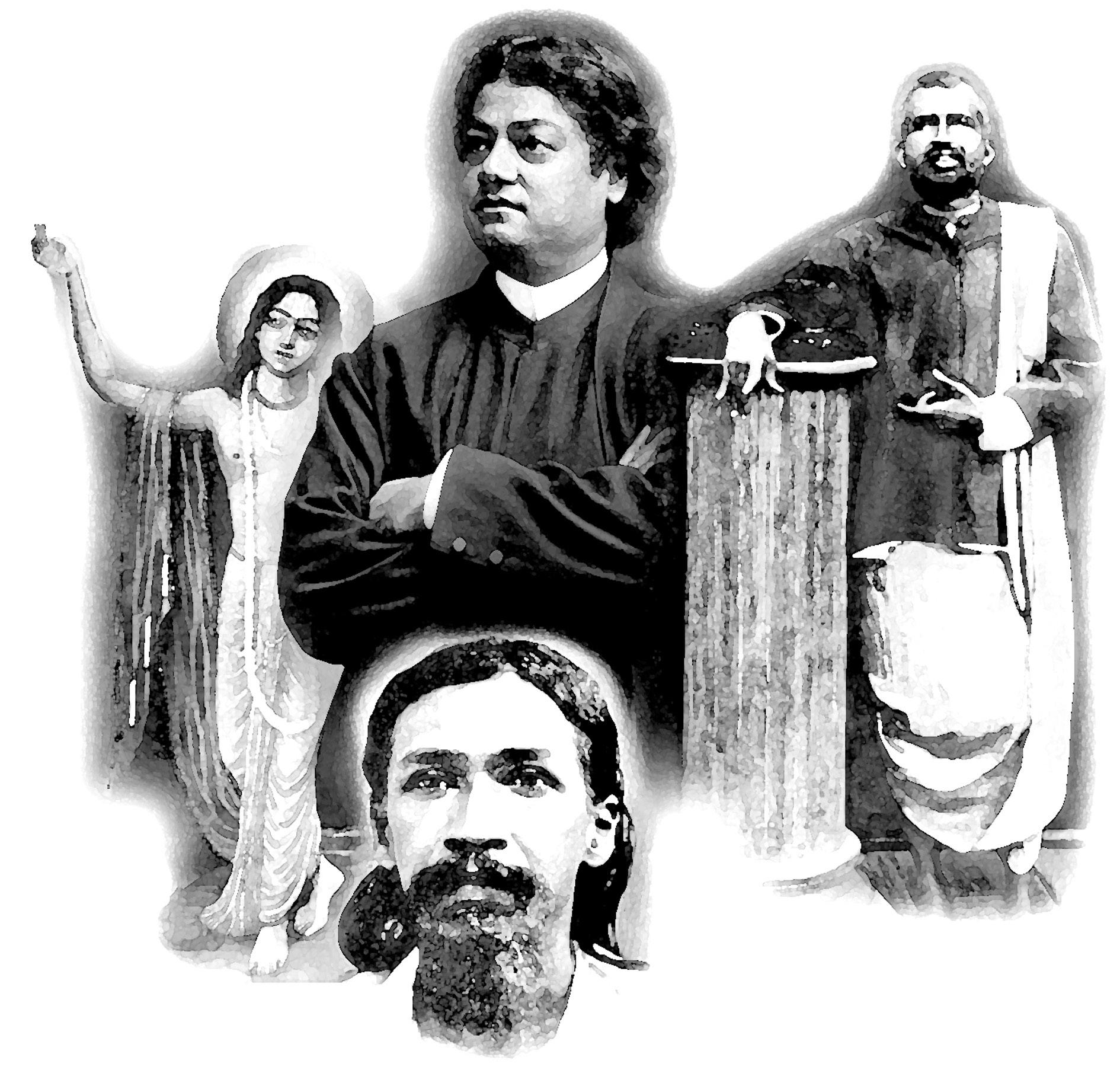
Apoint comes in life when one looks beyond one’s material success to find the true purpose of living. It is at this point that one begins the search
for spirituality beyond the traditional religious customs, rituals and beliefs. There are spiritual books that can provide some of the answers. But one needs a genuine self-realized spiritual master to quench one’s spiritual thirst.
There are many genuine lineages of spiritual masters
Debasis Ghosh, New Jersey
in India, whose members can assist one in their spiritual quest. These masters or Gurus may not always don the garb of a swami or behave like a holy man. They may be difficult to find. But they do exist for sincere and determined seekers who can look beyond the fake swamis who have a lot of disciples but precious little to offer. Let us examine some of the great lineages of spiritual masters that originated in Bengal.
We can start with Sri Chaitanya Mahaprabhu (14861534). He was born in 1486 in Nabadwip in West Bengal. Sri Chaitanya taught love for Lord Krishna. Gaudiya Vaishnavism followers consider him an incarnation of Lord Krishna himself. Sri Chaitanya’s path of devotion towards Lord Krishna was spread across Bengal and other parts of India by him and his disciple Nimai. Sri Chaitanya’s spiritual ideals were spread across the world by ISKCON, an organization founded by another son of Bengal, Swami A.C. Bhaktivedanta. Details about Chaitanya Mahaprabhu’s sadhana or spiritual practice can be found in the famous book Bibarta Bilas (The Delight of Religious Medicants).
Lokenath Baba (17301890) is another famous Bengali saint who lived for 160 years and is believed to have walked barefoot over the Himalayas to China and Siberia. He was born as Lokenath Ghoshal in Chakla village in Bengal. He is known to have reached the Nirvikalpa Samadhi, the breathless/ desireless state of bliss that
ancient Yogis and Sages used to strive for. His followers came from various parts of India. Lokenath Baba predicted the date of his death and entered into his Mahasamadhi (intentional withdrawal from life through Yogic process) in front of hundreds of his followers. Lokenath Baba had said to his devotees “Whenever you are in danger, whether in war, forest, ocean or jungle, remember Me. I shall save you.” His followers claim to this date they are being saved from many dangers by praying to him.
Another Bengali saint who is quite well known to American and Europeans but unknown to a majority of Indians is Shyama Charan Lahiri (1828 - 1895) best known as Lahiri Mahasaya. He was a disciple of the immortal Himalayan Yogi Mahavatar Babaji. He was also popularly known as Yogiraj and Kashi Baba. Though he was a householder, he attained the final state of Nirvikalpa Samadhi. He kept himself hidden and secretive and was known only to his followers who practiced Kriya Yoga. But the secret about him became known to the world one day when the famous saint Trailanga Swami came up and hugged Lahiri Mahasaya in front of others. When Trailanga Swami’s followers were surprised by the swami’s behaviour with a mere householder, Trailanga Swami explained to them that for his spiritual attainment he had to renounce even his loincloth. But Lahiri Mahasaya has attained the same sitting at home. Lahiri
Mahasaya became known in the West through Paramahansa Yogananda (Mukunda Lal Ghosh - 1893 -1952) who came to the United States in 1920. Yogananda introduced Babaji and Lahiri Mahasaya’s Kriya Yoga to millions of Westerners through his classic book, Autobiography of a Yogi. He was invited to the White houseby President Calvin Coolidge. Lahiri Mahasaya’s chief disciple, Panchanon Bhattacharya, distributed Lahiri Mahasaya’s writings through Arya Mission of Kolkata. Sri Ramakrishna Paramahamsa (1836 -1886) is well known both in India and abroad. Sri Ramakrishna was born in a Brahmin Vaishnava family in rural Bengal as Gadadhar Chattopadhyay. His spiritual attainment and ability to explain deep spiritual topics with simple words endeared him to many commoners, intellectuals, professionals and even British rulers of India. According to the classic book Lilaprasanga by his direct disciple Swami Saradananda, he spent twelve years in spiritual practice and reached the pinnacle of spiritual success using multiple religious paths. This led Sri Ramakrishna to conclude “Joto math toto path,” which essentially means all religious paths lead to the same God. His last Guru or teacher was Tota Puri. Under Tota Puri’s guidance he reached the highest spiritual state of Nirvikalpa Samadhi. His chief disciple Swami Vivekananda spread his message throughout the world.
Swami Vivekananda (1863 -1902)was born as Narendra Nath Datta. He introduced Indian philosophies of Vedanta and Yoga to the Western world. He brought Hinduism to the status of a major world religion during the late 19th century. He was also a major force in the revival of Hinduism in India that gave rise to the feeling of pride and nationalism among Indian masses. Swami Vivekananda founded the global organization called the Ramakrishna Mission and also the Ramakrishna Math. Swamiji was known for his inspiring speeches about unity in diversity among world religions. His speeches in the United States, England and Europe changed the views of Westerners about India being only a land of snake charmers, elephants and magicians. His famous speech introducing Hinduism at the Parliament of the World’s Religions in Chicago in 1893 began with the words “Sisters and Brothers of America ...” This garnered tremendous applause among the Americans, and from an unknown penniless Indian monk he became overnight a sought-after spiritual speaker!
Swami Vivekananda’s birthday is celebrated as National Youth Day in India.
Another Bengali saint is Sri Ram Thakur (1860 - 1949). His followers believe that he is a Savior who came to uplift the ordinary people to a higher level of spiritual enlightenment. He was born as Ram Chandra Chakraborty. His magnetic personality attracted a large
number of followers, many of whom were non-Hindus and lower caste Hindus. He advised his disciples to focus on spiritual practices for self realization rather than on renunciation of the world to become a swami. According to the book “Sri Sri Thakurer Sange”, Sri Ram Thakur had predicted World War II. The book states that he exclaimed on an evening in 1938, “The stars that rose during the Kurukshetra War were rising again. Millions of people will lose their lives.” A few months later World War II erupted. Similarly he had predicted the attack on Hiroshima. On the morning of 6 August 1945 Ram Thakur had exclaimed ‘‘… What destruction!” A few hours later, the United States dropped the atomic bomb on the city of Hiroshima in Japan. Ram Thakur’s Mahasamadhi was on the auspicious day of Akshaya Tritiya.
The patriot saint Sri Aurobindo (1872 - 1950) was born in a well-to-do family as Aurobindo Ghosh. Sri Aurobindo went to school in England and later studied at King’s College in Cambridge. When he returned to India, he worked in the Indian Civil Service but became involved with freedom struggle against the exploitative British colonial rule. He was jailed. It was during his time in the jail that he began having mystical spiritual experiences. After he was released due to lack of evidence, he moved to the French controlled territory of Pondicherry in South India.
There his life was transformed by his spiritual practices. After self realization, he taught a method of Yogic practice known as integral yoga. He believed that spiritual realization went beyond the liberation of the human soul. It even transformed the human nature by enabling a divine life on earth. He founded an ashramin Pondicherry known as Sri Aurobindo Ashram. He left behind two spiritual classics that are treasured by spiritual seekers in both East and West: The Life Divine and Synthesis of Yoga.
Swami Pranabananda (18961941)is best known as the founder of Bharat Sevashram Sangha. He was born on the auspicious day of Maghi Purnima in undivided Bengal as Binod Bhuiyan. From childhood he felt that all human beings are the children of God and are created equal. After years of spiritual practice, he attained self realization on the auspicious day of Maghi Purnima in 1916. In 1917, he founded the Bharat Sevashram Sangha to serve humanity. He was internally ascetical and did not need the swami attire to prove his purity. But for the sake of continuity of Bharat Sevashram through dedicated souls, he took his sanyasin vows and became known as Swami Pranabananda in 1924. He worked tirelessly till his death in 1941. Today Bharat Sevashram continues to serve human beings across the world irrespective of religion, caste, creed or gender in the areas of disaster relief, health care, education, uplift of tribals,
and spiritual harmony. There are also little known facts about Bengali saints that have largely remained secret. For example, Mahatma Gandhi took KriyaYoga initiation from Paramahamsa Yogananda (Mukunda Lal Ghosh) of ‘Autobiography of a Yogi’ fame. The Bengali revolutionary poet Kazi Nazrul was a disciple of Baradacharan Majumdar, who wrote the famous book “Path Harabar Path o Dadoshbani.” Rabindranath Tagore was a close friend of Kriya Yogi Bhupendranath Sanyal, a disciple of Lahiri Mahasaya. Sanyal Mahasaya’s spiritual explanation of Gita is treasured by those who want scientific
explanation of the Yogic science. Few people know Lahiri Mahasaya’s disciple Pandit Panchanon Bhattacharya,whose books Jogot O Ami and Dharma O Pujadi Mimangsa let one go beyond the rituals and superstitions to discover the real spiritual treasures bequeathed by the ancient Indian sages.
There are many other spiritual masters from Bengal such as Ananda Moyi Ma. As this article is a simple introduction to a few spiritual masters of Bengal, all saints of Bengal could not be covered. West Bengal also has many places of pilgrimage described in ancient scriptures. Ten of the fifty one Shakti peeths are in West Bengal and
another four are in East Bengal. Did you know Sage Vashistha (one of seven great Rishis of India) performed his sadhana with Tara mantra at Tarapith in West Bengal?
Indian scriptures tell us that when the disciple is ready his Guru would appear. A sincere seeker of Truth will ultimately find a true path. The search and path taken by an individual is his or her very own. As Sri Ramakrishna said, different paths lead to One God. It all begins with a sincere search within.
“One who looks outside dreams; who looks inside awakens” – Carl Jung
Psychopath Gargi Bhattacharya, Australia
Sumeru Sinha gets up much before the sun showers its first light on earth. He starts his day with a steaming hot cup of coffee. Thereafter goes for a walk after finishing the daily chores.
A park is located at a little distance from his home. Some huge trees play ring-a-ring of roses and holi at the same time by spreading flowers of bright yellow and red color all across. A tar road passes through the park. Flower gardens are spread everywhere around. They are sparkling with the first light from rising sun. People of all ages throng this park. Some exercise, some walk and yet others just spend time lazing around.
Sumeru is well known in these circles and has an awe inspiring personality. His pictures are strewn across the newspapers almost every day. His name alone sends shivers in the spine of big mafias

and goons. He is a tough cop. Maybe, a super cop!
People are amazed at his honesty, integrity and hard work and more so because it is so unusual in today’s environs. His wife, Sahana is a school teacher. Sumeru was also a teacher at the time of their marriage. Later he cleared IPS to join the police force. Now Sahana urges him to take premature retirement. 26/11 has left an indelible mark on her. Sumeru assures her, “Has fear ever helped anyone? And moreover, I am not in the Anti Terrorist Squad (ATS)! I am a simple Assistant Commissioner of Police (ACP)!”
Nowadays, he is in Dhangaon to handle a strange case. Dhangaon is a suburb and is only a little away from sea. Once upon a time, it was a French colony and hence has a lot of houses abandoned by the French. Huge and ancient. Some have been transformed into hotels, some into a hospital while others are left alone. Roads are wide, avenue like. There are a lot of bicycles all around. A lot of the cyclists are white, their forefathers having hailed from faraway France. AIDS infection has almost become an epidemic here. Doctors have almost given up hope. Dhangaon lacks a good big hospital; only a missionary hospital exists. The reason for the AIDS epidemic is still unknown. The ACP is in Dhangaon to investigate.
India does not have much scope of reduction of crimes due to corruption in the police force. They are not used to following rules and regulations. A classic
case of savior turning attacker! Any protests are subdued by encounter! Even for colleagues. But, the police force is still functioning due to some officers with high integrity.
Sumeru is definitely one of them. He doesn’t think twice about being present at a site where his presence could make a difference. He does not even allow his position to become a deterrent. He loves playing with his AK-47. He considers himself obligated to clearing corruption from society. He believes in encounter killings of criminals who love playing with the system to avoid getting punished. But, he is very careful in using his discretion. Otherwise, he might have to face Human Rights Organizations. He believes that Human Rights Commissions are biased since they fail to voice concerns when the brutes kill innocent people. Kill more terrorists in encounters. He believes that terrorists do not deserve mercy. Sumeru is considered very harsh even by his friends.
Once he was informed about rape of ethnic women by some rich youths. They go to private colleges only with the moneypower of their parents instead of their own brainpower. Their money is used to run the colleges and hence they secure excellent marks in exams. They then use their influence to exploit hapless young girls. Sumeru put them behind bars immediately. Admirers say that they have been converted to honest little kids after a night’s treatment from Sumeru. It is as if the
tough cops from Bollywood movies have been incarnated in practice.
Any event can be popularized – or maybe shunned! – by the media. The number of news channels today has enabled easy spreading of news all across. So, the most mundane to most bizarre news gets flashed, sometimes even fabricated ones. Some people wonder about cyber-space, “Is it always possible to say everything in a face-to-face meeting that you would be able to write? Look at the language of their writings. They can destroy a person through their writing just because of anger against that person. They forget all ethics of journalism and other codes of ethics.” And this is how the news of the AIDS at Dhangaon spread like wildfire. The only news which did not spread was the arrival of ACP himself for the investigation. It is 12 a.m. now. Sumeru takes a large puff of his expensive cigar while walking the moonlit path. A paddy field on one side makes the air perfumed with its smell. The other side of the road is a long line of French cottages. In the partly moonlit road, he could see a silhouette walking at a fast pace, then disappear. A little later he heard a squeal of pain from one of the cottages... maybe it was an attack on someone. Sumeru continued to walk but could not see anything. He had heard people squealing like this on the last three consecutive days. On this fourth day, he was able to clasp the hands of the
attacker. He had a syringe in his hand which proved to have an AIDS-infected needle. But, he was weirdly short, which made it almost impossible to track him in the moonlight. He was a dwarf – a dwarf criminal. He could not loosen Sumeru’s grip. He did not have much option but to give himself up. Sumeru decided to interrogate him in his own quarters. The dwarf criminal happened to be a psychopath. His mother had died immediately after his birth. Father had decided to remarry. Hardly anything new about this part of the story. Days and years passed, but Ayan Choudhury’s height did not increase. He did not get enough schooling because everywhere he was teased due to his height. He would break down when people used humiliating words like midget and pygmy for him. He could not even complete his schooling. He would repeatedly fail to clear year-end exams. All students got new books and dresses and went to new class every year, but not Ayan. Neither did his books change nor his dress! On top of all this, he would get mistreated by his step-mother. One day he could not take it anymore and left home. But the ruthless world did not fail to decorate him with heaps of insults. He started cleaning vessels at a small restaurant. The owner would not even feed him properly, leave alone providing salary! If he ever asked for food, the owner would retort, “You are a midget. Midgets do not need any food! Does your body ever grow like
ours?” If he asked for money, the owner would counter, “If you have so much greed for money, go work for a circus! That is the only place for you, you little scoundrel!”
He was gradually getting more and more frustrated with life. One day he ran away from the restaurant to get enrolled in a circus. But, good days did not last for long. The circus owner started molesting him, being gay. This drove him away from the circus too. He became a vagabond, scavenging on the food remains in waste bins, and sometimes stealing food for living. He would often blame his height for all his problems. What did he do to deserve this treatment from his own species? Just because he is a little short? He never ever experienced love. He liked Tatyana at the circus. But, she guffawed at hearing this, “Hey midget, your desire seems to be boundless! Hello everyone! Look at this guy! This Tatyana who is desired by the millions, is now being desired by this midget! Scoundrel!” She left the scene cursing him. His colleagues at the circus started ridiculing him even more for his short height.
He was pained no end by this. If only he could show his feelings to Tatyana! Tatyana, was a Russian, skin like molten gold and looks of a fairy! Just because of his height, he had to forgo his desire for Tatyana! He started wondering whether scientists could make false legs to increase his height! Something like stilts which could be permanently fitted on
to him to increase his height! He failed to understand why they never invented such a thing!
Sumeru changed the subject by offering tea.
Ayan beamed and said, “Yes, Sir!”
Sir seemed like a good fellow even though he was a cop. No one ever showered so much kindness on him! No one offered him food ever! He was offered cakes and biscuits with tea. He resumed his story after the short break.
Sumeru enquired in his deep and kind voice, “When and how did you start this sordid crime?”
“Recently!”
“Why?”
“I went to a residence in search of a job advertised in a newspaper. Lonely and wealthy woman. Her husband earned well but was always on tour. My job was to provide carnal pleasure to her. Would spend the afternoon with her. I would also get well fed. That woman was infected with AIDS. She transmitted it to me. This transformed my frustration into extreme anger looking for a way to vent it. I decided to mete out the same treatment to all that I would face. That made me discover this novel way of infecting people with AIDS. I decided to get a syringe and infect one individual every night with my infected blood. This was the only time in my life when my height really helped me. It was difficult to spot me due to my height. Maybe nobody thought that a midget could do this. That has now
made me a psychopath for the society. But, what is my fault, Sir? Do your rule books provide no way of living for dwarfs? Where is the rule book when society and their rulers exploit us? Maybe rules are only made for normal people, and not for us midgets! When I have taken the law in my own hands due to various forms of torture in my life, then it is not acceptable to the law! You are being sent to investigate. But, when I was crying and wailing due to my tortures, then nobody even sympathized, leave aside taking it seriously! What remains in the life of a person who is ridiculed right from his childhood?”
Ayan Choudhury started wailing after narrating this part of the story.
Even tough cop Sumeru’s
eyes became misty after hearing Ayan’s narration. He used his handkerchief to wipe of the corners of his eyes. Rough and tough cop, who encounters all infamous criminals, felt dwarfed in front of this story. One line seems apt for this situation, which he used to mention to his students while being a teacher, ‘Art for art’s sake’, which in this case could be turned into ‘Crime for crime’s sake’!
Sumeru took Ayan to a remote village in Rajasthan called Jhinjhar. That is a village of the dwarfs – community for the dwarfs! Everyone in the village is a dwarf. They do handicraft and agriculture to earn their living. The government also sends them some aid. Some Christian missionaries also function there. Ayan will
now spend rest of his life here, with them. Maybe, he will find another Tatyana here. In spite of his deadly infection of AIDS, he will be able to spend the rest of his life in peace and happiness. But, what happens to Sumeru? He cannot close this case since there is a lot of hype around this case in the media. Therefore, like a lot of other cases, he will find someone else to go behind bars in this case. At least, another hardcore criminal will get punished for this cause. Ayan never asked for the moon in his life. He only wanted a few earthly flowers. Let him pick a few of them at the fag end of his life. Let someone who has been corrupting the system of justice get punished! Let Ayan be a normal human being if not Vaman Avatar of Vishnu!
Vishal Khurana opened his eyes unwillingly when he heard the twang on his phone. “Who is messaging me so late?” He thought. His friends knew that the only time he switched off his phone was when he was in an important business meeting or travelling. He glanced at his bedside clock. It was three in the morning.
The message read: “Sorry to wake you up this early. Are you in New York? If you are, please call me. I am at the NY Presbyterian Hospital with Megha. Remember Megha Chatterjee?” His best friend, Arnab, had sent him the message. Vishal suddenly sat up. “He is with whom?” He read the message again. Megha.
He had not seen Megha in the last ten years. He had thought of her now and then but had never tried to contact her. After she had requested him to break all ties with her, he had promised not to disturb her ever.
Vishal rubbed out sleep from his tired eyes and called Arnab’s cell. “What happened? Is Megha sick?” “Yes, she fell down and

Illinois
Bittersweet Memories
Sreya Sarkar
hurt her head badly. She lost a lot of blood. We need to find a universal donor blood type. I know you are O positive and so am I. I thought I should call you as a back up, just in case.”
He felt afraid for Megha instantly. “How serious is it?” After a pause he heard “It’s quite serious. Come if you can – please!”
Vishal dressed in a hurry and brought out his car as fast as he could from the covered parking space he paid oodles for. His 12th floor apartment in the heart of Manhattan had cost him an insane amount of money. But then he had lots of it to spare as well. He had jumped through the right hoops at the right times and managed his career well till date.

Vishal was a second generation Punjabi born and brought up in Kolkata. His father had moved to Kolkata’s Bhawanipore area before he was born. Of course, back then the city was called Calcutta. Sturdy business acumen ran in his blood. His father was rather disappointed when he decided to take up Economics as his major in college instead of enrolling for B. Com. “What do you expect to do with your life after studying Economics?” He had asked his son. In those days Vishal was an idealist and had chosen his major based on a brief glimpse of the subject in high school. Vishal had smiled and replied, “Papa, our country’s economists and politicians totally messed up the five-year plans and are now going the same route with the liberalization process. They need a genius like me to set things right…” His father did not wait for him to finish his speech. “What a waste of money…” he had walked away, grumbling. Vishal met Megha within a week of joining St. Xavier’s College. Megha was not his classmate. Arnab was. Arnab and Vishal had become friends instantly. Megha was Arnab’s neighbour and had also joined as a first year student. She was majoring in English literature. Arnab had introduced the two.
Vishal still remembered Megha in a sky blue sari for the fresher’s welcome party. She was the only girl in the room, wearing a flower in her hair. But it was Megha’s dazzling smile that stole Vishal’s heart away.
Vishal and Megha were so unlike each other. Megha was modest, thoughtful, dignified, and reserved. Vishal was outgoing, brash, proud, and basically a bully. How the two ever fell in love was beyond Arnab’s and many others’ imaginations.
Throughout college and for some years after, Vishal and Megha were inseparable. And then their dissimilar personalities started speaking up. They initially started arguing about little things, and then they were arguing about bigger issues like the kind of future they envisioned for themselves. By then, Vishal had finished his MBA and moved out of Kolkata for a lucrative job in Bombay, now called Mumbai. Also by that time Vishal had waved goodbye to his idealistic dream of becoming an Economist and offering his country help to buttress its economy. Megha had just finished her Master’s and taken up a job in a newspaper in Kolkata.
Distance and miscommunication started causing further complications. Megha’s mother had started asking her about her plans of settling down. When Megha asked Vishal about their future, Vishal was not really ready to settle down and start a family. He had not even told her about the offer he had got from the multinational company he was working as a consultant to. He simply could not refuse when they offered him an opportunity in New York City. It would pay him several times what he made in Bombay. It would take him at least another year and half to
settle himself in New York and bring Megha with him. Vishal never discussed these details with Megha and somehow assumed that she would be willing to go along with his plans always.
Vishal was rather careless back then. He let go of Megha too easily. The moment he got to know that Megha did not wish to accompany him to NYC, he had got angry with her and behaved like a fool. Fuelled by his ambition, he had thought of Megha as a deterrent to his big plans. Maybe all she needed was his reassurance and time to think. But his arrogance had not allowed her that. Megha had also said hurtful things to him that he could not easily stomach. She had called him greedy, insensitive and cold. The last time they talked Megha had been very emotional, and admitted that she never meant all those things she called him. She wanted to try once again because she loved him so much. But Vishal has already decided otherwise.
He had always felt vulnerable in front of Megha. Her simplicity and gentleness made his swagger seem foolish. But instead of perceiving his feeling for Megha as his strength Vishal had thought of it as his weakness. Yet deep in his heart he loved her without realizing or understanding it well.
Megha was asleep with all sorts of intravenous tubes attached to her arms as Vishal talked to Arnab at the hospital. Arnab had not been in constant touch with him the last couple
of months, as in the past. Arnab was wired quite differently from Vishal. He was more laid back and could include socializing and work smoothly in his schedule. As a result, he had more friends than Vishal; yet the two were close and had always kept in touch. Lately he had got very busy with his NYU faculty job, and was also constantly travelling. To where and to do what, Vishal had no idea.
Arnab filled him in with all the necessary details. Megha had the accident while moving out of her small apartment in Manhattan into a bigger one in Queens. She was working for a fashion magazine now, and had undergone a nasty divorce two years ago.
Megha’s condition stabilized after twenty-four hours. She was declared out of danger by the doctor in three days but had to be under good care for at least two weeks. Though Megha had some good friends in the city, Arnab convinced her to stay with him for those two weeks since his apartment was close to the hospital.
Vishal had visited Megha everyday when she was in the hospital and every other day when she moved to Arnab’s apartment. When Megha opened her eyes to find Vishal next to her hospital bed she looked alarmed. And then she smiled her dazzling smile and Vishal froze. He could not move or think or even breathe. As if in a trance, he put his arms around Megha, and all those years without her just melted away like that. Tears rolled out of Megha’s eyes, and
she started talking. Questions poured out one after the other, but Vishal could not answer them because he could not understand anything.
He had returned home and cried like he never thought he could. How could he think of his life without Megha? Now he understood why he had never felt the urge to get married and settle down permanently. Of all the women he met after Megha, no one could hold his attention for more than a few months. His parents had given up hope of seeing him settled by now. Even after so many years all he could feel for Megha was love – unconditional and unbridled love. He told himself that he should talk to Arnab as soon as possible about his feelings and seek his help in winning Megha back.
Gradually Megha healed. Arnab and Megha were not only one-time neighbours in Kolkata but also very close friends ever since college days. Vishal could sense a level of comfort between them, something that he could not feel with anyone other than himself. When had he isolated himself like this, he wondered.
Bittersweet memories flooded back to Vishal each day. The first day Vishal had taken Megha home in Kolkata, his mother had muttered nonstop about how futile it is to expect a Punjabi bahu (daughter-inlaw) from a son who is almost Bengali. In spite of all the cultural differences his mother had grown fond of Megha and had told her son what a big fool he was to let her go
so easily, years later. She was never convinced that Vishal had a good enough reason to end their relationship like that. He smiled when he recalled how he had tried to wear Bengali style dhuti for Megha’s sister’s wedding and had fallen hard on his rear side while walking up the stairs. Instead of helping him up, Megha had sat down next to him, laughed loudly and whispered into his ears, “You are so cute…”
Vishal could not concentrate in his work at office. He would rush back to Arnab’s house in the evenings with pizza and beer. He even helped Arnab clean up his place one day so that Megha could be more comfortable and he could spend some extra time with them.
Megha talked about her life after Vishal left for New York. She had worked at the Telegraph for a year. Her parents had chosen a groom for her and she had married him without questioning them. She had moved to the U.S. with her exspouse seven years ago. They were in New Jersey and Megha had often wondered what Vishal was doing. Several times she wanted to call him. She had taken his cell number from Arnab. Yet, she had not called him. She had a rocky marriage, and after joining Fashionista Magazine Megha had primarily concentrated on her work – as that was all she had to keep herself sane.
Arnab would join them later around dinner time and toss out hilarious stories from college days. Vishal teased him about
his secret crush in college, he never told anyone about. Even after guzzling four bottles of beer, Arnab would not tell them the name of the girl he liked back then, in spite of Vishal’s continuous cajoling.
Vishal had tried to talk to Arnab privately about Megha but could not. For the first time he was not sure if his best friend would support him. Arnab knew how badly Vishal had hurt her ten years ago. He was so angry with Vishal when Megha had told him how it had finally ended between them.
One Saturday when the two weeks were almost over, Vishal decided to tell Megha about his feelings for her. He had told her he was sorry for what he had done several times now, and she said she had forgiven him years ago. Megha was looking happy and bright just the way she did when they were dating. These were all positive signs. He thought Megha might need some convincing, but this time he was ready to wait for her for as long as she needed.
Arnab was supposed to be out somewhere so Vishal was surprised and also a bit disappointed when he found Arnab sitting on the couch next to Megha that Saturday. He sat down on the other couch and looked at them. Arnab cleared his throat and said, “We have something to tell you, Vishal.” Both of them looked serious. “We are in love with each other and are thinking about getting married.” It took Vishal a few seconds to realize what was going on. He cursed himself for
not reading the signs correctly. Of course he should have seen this coming.
Arnab had distanced himself from Vishal for the last few months and had been very secretive about his whereabouts. Now he knew why he had insisted that Megha should move to his place. Now he also understood who Arnab might have had a crush on, in his college days. Knowing how persistent Arnab was about relationships Vishal could well understand why he had never given up hope. Megha
never tried to forget Vishal, and that is the reason why she finally could. She had moved on in her life. And she had chosen the better man, he realized bitterly. Vishal never had the ability to understand anybody but himself, and that had not changed one bit. Otherwise he would have known about this and not been surprised at all. Vishal kept looking at them for a few more seconds and then he smiled. “Congratulations, you two!” He looked at Arnab
and said, “You totally deserve Megha.” He looked at Megha and said, “Good choice, finally!” Megha’s and Arnab’s nervous faces softened and they both grinned at him. Arnab told Megha, “See, I told you – Vishal will not mind one bit. He is a practical man.” Megha kept staring at Vishal and did not say anything.
While returning home in the cab, Vishal could hear his mother’s words ring in his ears loudly – “You are such a fool to let her go so easily…”

The Fringe Festival
Subhodev Das, New Jersey
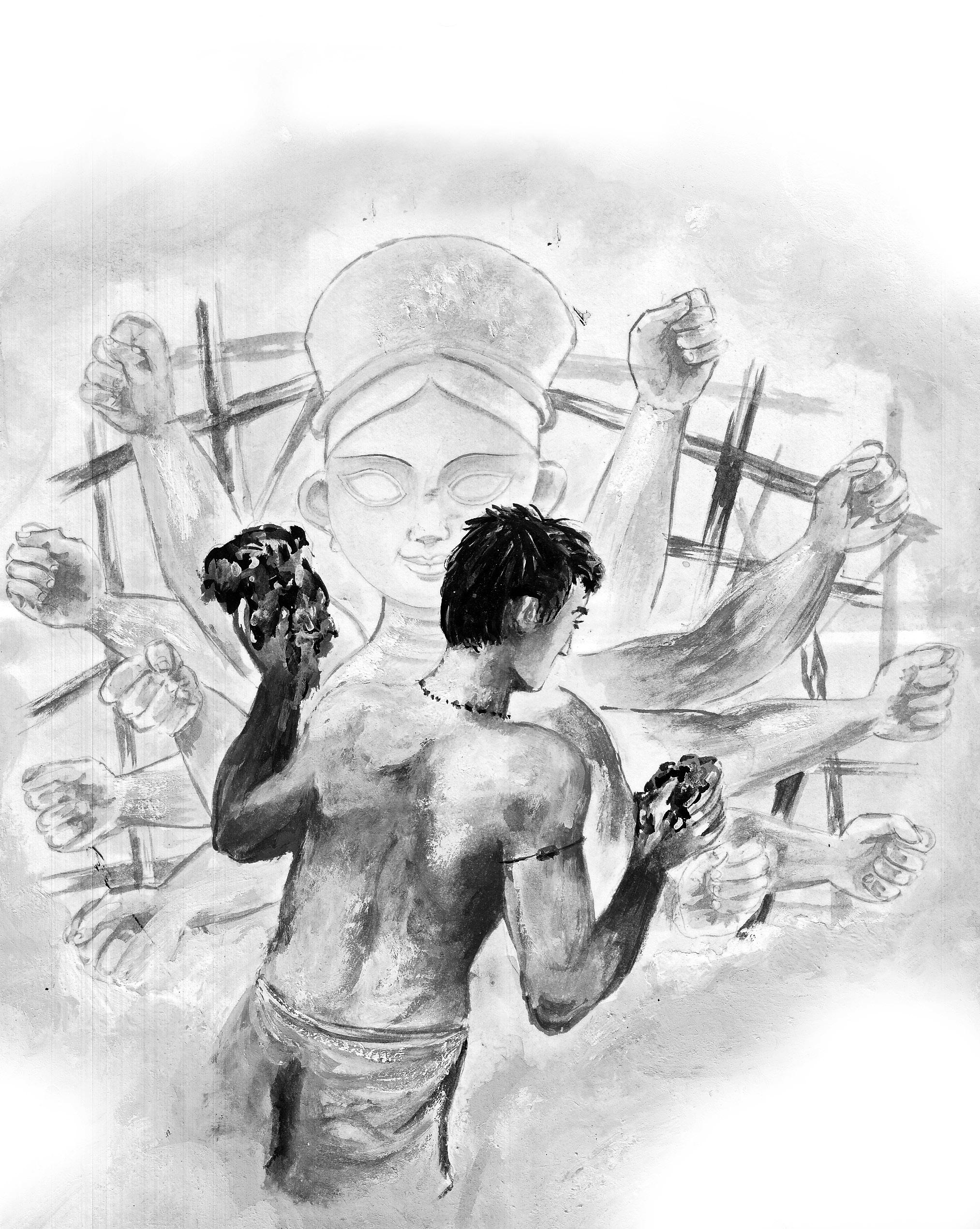
Durga was startled in her sleep. It was only a few hours since her last babu (client) had left, and she dragged her overworked twenty two-year old body back to the bed, this time only to descend into her
dreams. She had been busy the whole day helping the kids of her Sonagachi (Calcutta’s biggest red light area) neighbourhood to decorate rickety raths (wooden chariots). Mamoni, her best friend Putul’s five-year old
daughter, was most demanding of her favorite mashi (aunt). It was Rath Yatra (the festival of chariots). Durga had an artistic knack that she would like to put to use, particularly on such occasions.
Most of the days weren’t as welcoming as this one. They were dreary.
Durga opened the window shutters slightly and peered outside. The eastern sky had started to light up. In the disappearing darkness, she saw two human figures trying to scoop something off the courtyard. She was about to sound an alarm. Suddenly it dawned upon her that the day was Rath Yatra, hence the occasion of kathamo pujo (structure worship).This was the day when the patuas (idol makers) of Kumartuli (Calcutta’s hub of idol making) began erecting the bamboo structures for Durga Puja (the festival of worshipping goddess Durga) idols.
Long before it became politically incorrect to call sex workers by any other name, it was considered inauspicious to worship goddess Durga without seeking out the blessings of ganika (courtesans), even if they were otherwise stigmatized and ostracized by the society. Thus originated the littleknown, age-old custom of collecting a handful of ganika mrittika (courtesan soil) from the nishiddho pallis (forbidden quarters) of Calcutta, where sex workers lived, and adding it to the clay mixture, which went into the making of the Durga idol.
Durga smiled and closed the shutters. As she retreated to her bed, she remembered this day from the previous years. Pandit Taralochon Bhattacharya, whose family was in priesthood for four generations, would stop
at Sonagachi after taking a holy dip in the Ganga. He would beg Durga and the other girls to gift the punya maati (sacred soil) as an act of blessing.
Initially the girls obliged, but over time they started objecting to the practice, calling it a sham. Lately, Durga would see the priest collecting the soil himself. He would chant mantras from the scriptures during the rituals and would position his fingers in a yogic mudra while scooping up the soil.
The trespassers in her courtyard must be accomplices of the patuas, concluded Durga. She heard that on few occasions these folks had offered cash to bribe the sex workers. One incident was even funnier. A patua was caught sneaking into one of the brothels to collect the soil while impersonating as a babu. Apparently, the patuas could not do away with the ganika mrittika.
Taralochon purohit (priest) had explained the practice in the following way: “Ma Durga will be displeased if those who worship her do not take your blessings.”
A belligerent Durga replied, “You can’t make goddesses out of us once a year and then call us whores for the rest of the year. We have some respect, don’t treat us like criminals. We’re not here out of choice. Poverty has forced us into this. Let society do something for us, and then we’ll willingly give you the soil.” She had a reason to be hostile.
Durga was born in the Sunderbans delta region of
West Bengal. Her father was a fisherman, eking out a meager living to feed a family of ten. However, he ensured that all of his eight children attended school. Durga was known in her village as the girl with the golden voice.
Growing up, her songs were about the earth, the sky, and her village. Then, one day, she met a man who was visiting her family and felt attracted to him. He was nearly twice her age and was working in faraway places. She would listen to his tales of travels to big cities with rapt attention for hours. She was impressed by everything about him—his bicycle, his radio, his clothes. Her songs began to change into expressions of her love for him.
When she became a teenager, the man told her that he would marry her, and that he would make her a famous singer one day. It was not uncommon for girls of her age to be married. Many of her friends were, already. There was little incentive for families to keep their daughters in school. The older a girl got, the more her family would have to pay for her dowry.
One early morning, Durga slipped out her village with her beau and boarded a bus. It was dark when they arrived in Calcutta. She heard so many stories about the place. However, the sheer size of the city and its din and bustle completely overwhelmed this quaint village girl. Her heart was pounding – terrified of being caught, but thrilled at the
prospect of settling down with the man she loved.
He introduced her to a middle-aged woman and told her that he wanted to keep her safe with his aunt until her parents stopped looking for them. He would return for her in a few days. She was reluctant to see him go, but trusted his decision.
That night, in the moonlight, she saw girls in short skirts and red lipstick lining up on the street. When a man approached one of them, the girl led him into their house. The next morning, Durga asked the aunt about these girls. She spoke to her in a hollow voice devoid of emotion. Her man had sold her to this lady, and that she would have to work off her debt by joining those girls each night.
To ‘break’ her in, Durga was raped several times a night for nearly a month before the madam started selling her to men for money. “You’re a flower that will be plucked over and again,” smirked the woman. Soon, she was entertaining ten to twelve babus a night. ***
Mahamaya Devi and her fellow ashram dwellers, about fifty of them, were meeting Bindeshwari Pathak in their Vrindavan hermitage. Ms. Pathak was the founder of Sulabh India, an organization that cared for the widows in Vrindavan and Varanasi. A month ago, the group had expressed a desire to visit Calcutta during the Durga Puja.
These widows, all of whom were natives of West
Bengal, arrived in Vrindavan at different stages of life, over the past several decades. Like Mahamaya, who was nearing eighty years of age, they all had been rejected by the society. However, this meeting was in a different spirit. Ms. Pathak was there to let these hapless souls know that her organization agreed to fulfil their wish; these women would be flown to Calcutta to join the Durga Puja festivities. That news suddenly brought a rush of emotions in Mahamaya. When was the last time she partook in such fanfare? That would be nearly six decades ago! She had a husband then.
Mahamaya grew up in a small village in Comilla, Bangladesh. Her family, living off a small plot of land, could barely put her through primary school. It was more important for her brothers to pursue further education. So, she spent time developing skills in needlework and handicrafts. Her work was appreciated in her village, where Hindus and Muslims coexisted peacefully. That was before the partition of India. Then the Noakhali riots of 1946 happened.
She vividly remembered that day of ‘Kojagari Lakshmi Puja’(autumnal worship of goddess Laxmi). She and her sisters were busy preparing for the events of that night. It was late in the afternoon. They had just finished decorating the courtyard, when her elder brother arrived home and announced that the Muslims of the village were assembling at the local mosque. He had
overheard that the Muslim community was under attack from the Hindus and Sikhs in the neighbouring Noakhali district. What was unleashed next was a living hell!
As darkness fell, bands of Muslim men went from house to house looking for Hindus. They had cut off of the village path leading to the main road. Mahamaya’s house abutted a large tank. They were left with no option to escape. Instead, the family decided to fortify the house. The men piled up every available piece of furniture against the front door and stood guard, while the women retreated to rear of the house.
Several houses were already aflame. The cry of “Allah Ho Akbar” (God is great) mingled with desperate pleas of help filled the air. Mahamaya’s house came under attack not long after that. At the sound of the crashing of the furniture pile, she and her younger brother and sister slipped through a window and sought refuge in the cowshed. The bloodshot moon veiled in the rising smoke beamed upon an unknown group of assailants pouncing upon her elder sister like a pack of wolves.
The first rays of a new day brought even greater misery for the family. The father’s body was recovered from the field adjacent to the house. Mahamaya’s elder sister was found in the pond; she had drowned herself. Her elder brother was missing. The village school headmaster, Mokhtar Ahmad, offered shelter to the family. His daughter, Reshma, was a close friend of Mahamaya.
A week later, the family decided to move to Dhaka to live with her maternal uncle. Then, on an auspicious day, Mahamaya got married. She joined her husband on a long train ride to Calcutta.
Mahamaya’s new family was living in a refugee colony on the eastern edge of the city. Among their neighbours, were several people who had fled the Noakhali riots. Her husband held a floor job at a jute mill. She wholeheartedly embraced her role as a housewife lest the memories of that fateful night came back to haunt her.
Over the next several years, the neighbourhood saw a huge influx of refugees driven by the partition of the Indian subcontinent. Mahamaya’s family also grew. She gave birth to a beautiful daughter, whom they named Menaka. The colony dwellers gradually began to pick up their lives – lives they had left behind on the other side of the political divide. Eventually, they would have their own Durga Puja celebrations. Mahamaya would miss her village on such occasions. She had not seen her family ever since she got married. Little did she know that her life was about to take an unexpected turn that would pale her past tragedy.
Around the time Menaka turned five, the jute mill had a new owner. The incoming management,in a bid to improve profit margin, decided to lay off a portion of the staff. Mahamaya’s husband got the axe. The affected employees staged protests in front of the mill. The police, arriving to restore order,
fired on the protestors. That led to several fatalities, including Mahamaya’s husband. Suddenly, the world she had slowly built around her came tumbling down. Her husband was the primary wage earner of the large refugee family. With her primary education and limited handicraft skills, she could not even come close to feeding herself and her daughter. Her husband’s family would no longer support her. She gave up Menaka for adoption and set off for Vrindavan to spend the rest of her life as a lonely widow. Settling in an unknown place with women of her background proved to be challenging for Mahamaya. They were given a stipend of five rupees, which would be used to buy food and fuel. Soon life fell into despair, and continued thus unabated for several decades. Finally, the Supreme Court intervened and asked Sulabh International to act as the Good Samaritan. The stipend received a generous boost, and the women became eligible for health care. Now, hearing from Ms. Pathak about the trip, Mahamaya began to cry in delight, a feeling she had not experienced in a very long time.
Durga had reason to smile. This year, the Sonagachi Ganika Samiti (the organization of sex workers of Sonagachi) had pushed hard to organize its own Durga Puja. It had approached the Burtollapolice to celebrate the Pujaat the crossing of Abinash Kabiraj Mistri Lane and Masjidbari Road. The police denied permission to put up a
pandal at the requested location quoting traffic obstruction. So, the Samiti petitioned the Calcutta High Court, which thundered in their favor and asked the Commissioner of Police to show cause. The news came that the court had ruled in favor of the sex workers.
Ostracized from Durga Puja pandals, the sex workers of Sonagachi had for the first time broken the shackles of social prejudice to organize their own puja. They had been barred from performing anjali (offering) and taking part in other rituals at the barwari (communal) celebrations. Even their children would be shooed away from these places. Now, under the court directive, they would be erecting a small pandal at Nilmoni Mitra Street, not far from Sonagachi. The decision to observe the puja with all its rituals–preparations, cooking, pushpanjali (flower offering), sindurkhela (vermillion fest) –was greeted heartily by all the members. The puja committee drew up a budget of two hundred thousand rupees. Around seven thousand sex workers agreed to contribute twenty rupees each, and even got their babus to pitch in.
Durga got into high gear. She was in-charge of the cultural activities. The children were organized into a group, named Komalgandha (the sweetsmelling ones), which would be performing in the cultural programs. One of the Samiti staff, who was a Brahmin, consented to conducting the puja. They hired two dhakis
(drummers). The patuas agreed to build a six-foot Durga idol at a nominal cost. ***
Mahamaya was bewildered upon stepping inside the aircraft. The formalities involved to reach that point had overwhelmed the group of widows, all of whom would be flying for the first time. An elegantly dressed lady helped Mahamaya to buckle into her seat. She learned that they were the air hostesses. Then the plane took off. As it climbed, Mahamaya could see that she was reaching for the clouds – the clouds she had seen hanging high above her village, the clouds bearing rain, the clouds reflecting the golden rays of the setting sun – and the earth that she was all too familiar with was disappearing fast. About an hour later, the group reached Calcutta.
Once on the ground, the ladies were whisked away to a welcoming function organized by a youth group. The visitors were serenaded and greeted to the beating of the traditional dhaak (drum). There were additional felicitations at several Puja pandals in the following days. At few of those locations, the widows were asked to light the inaugural lamps. One pandal even had a replica of the famous Sri Krishna temple of Vrindavan.
Mahamaya was in a trance having received so much of attention in such a short time. That was in stark contrast to her solitary life at the ashram over all these decades. The social norms call for isolation of
widows; even their shadows are to be avoided. Yet, in the midst of this new-found attention, her eyes would search for the life she had left behind in this megalopolis decades ago, one that was centred on her Menaka.
On the night of “Ashtami” (the second of the fourday festival), the group was visiting various locations of North Calcutta under special arrangements for hassle-free pandal hopping. Mahamaya and her companions had finished the Rabindra Kanan pandal and were proceeding towards their pick up location on Jatindra Mohan Avenue. Their next stop would be the Bagbazar Pally Puja.
As they crossed Nilmoni Mitra Street, Mahamaya heard a little girl’s voice over the microphone. She was attempting to sing Kabiguru Rabindranath’s song in a halting tone. Mahamaya left her group and wandered in the direction of the sound. There, on a raised platform, stood the little girl. Shew as about five-year old, clad in a saree that plentifully covered her small structure. Mahamaya stood among the puja revelers, mesmerized at the sight. The girl was her Menaka, or so she thought. The child was rendering the same song that Mahamaya had Menaka singing at their last Durga Puja together. Mahamaya could not remember how long she stood transfixed. She regained her senses at the call of didima (grandma). A pretty young woman was holding her near the edge of the dais. She wanted
to know whether Mahamaya would like to sit down. Instead, Mahamaya asked for water. All that walking had made her thirsty.
The young woman, offering a glass of water, introduced herself as Durga and explained how she had prepared Mamoni and the other kids to put up a memorable show. That was her moment to cherish. “Forus to organize this puja is a way of empowering ourselves and ensuring that we enjoy equal rights as other citizens,” quipped Durga. Mahamaya wanted to know if she could meet Mamoni. Durga beckoned Mahamaya to follow her. The two went into the pandal where they found Mamoni in the arms of her mother. She had a fistful of candies from puja offerings that she was eagerly consuming. Her blabbering about the stage performance fell silent at the sight of an unknown person walking towards them with her mashi. Durga introduced the visitor to Putul as Mahamaya stood next to the girl, clinging to her mom, and peered into her apprehensive face. She extended her hand and gently stroked Mamoni’s hair. Her craggy face lit up with a smile; the little girl buried hers in her mother’s shoulder. There, under the observant gaze of goddess Durga, stood the fringe members of the society. Suddenly, the Sarbojanin Durgotsav (Durga Puja Festival for All) felt a lot more inclusive. Someone announced outside, “Mahamaya Devi, please come to the stage. Members of your party are looking for you.”
Dowry
Debashis Roy Chowdhury, Massachusetts
Dilip
racked his brain, though quick thinking in a crisis was not particularly his strong point. And now that he was in a complete mess, he could hardly see a way out. How would he face his family? What would he tell his sister? No one could deny that his intentions were good. But that rogue, that cunning, sweet-talking Mohan, who was supposedly his friend,had vanished into thin air. The big lock on the front door of Mohan’s house stared at him, like a sinister skull with a sneer of ridicule. It was hard to imagine that only a few days back, everything seemed so hopeful!

It was well past the usual lunch hour. The sun was a raging ball of fire. Putul was waiting eagerly for her elder brother to show up for lunch. She was hungry and the waiting made it even more painful. Things were not easy for her. She had to get up at dawn and take charge of the household. There was no dearth of tasks to attend to. The goats had to be taken out of their pen for grazing. The chickens were to be fed. Water had to be fetched
from the nearby tube-well. Fortunately nowadays it was only half a mile away, having been newly set up by the village panchayat (council) before the last election. The kitchen floor had to be mopped. Plates and utensils from last night’s dinner needed to be cleaned. The stove had to be filled with kerosene, to be readied for the first round of tea of the day. She had to get her younger brother and sister ready for school. Her hands were full right from the time she opened her eyes at dawn.

run the household fell on Putul’s shoulders. She had to think of everything, plan every detail. Her elder brother was well meaning but not one who could manage things on his own.
Putul was finding it hard to wait for lunch. With every passing moment, her empty stomach was protesting. Where was her brother gone without any notice? ***
Putul had lost her father when she was only ten. Her mother was the anchor around which the family still managed to survive. Their possessions amounted to five acres of land, three goats and half-a-dozen chickens. They had a roof above their head. They could barely get by.
Since her mother’s death two years back, life had become tougher for Putul. She dropped out of high school. Otherwise who would look after the family? Her elder brother needed her help to manage the land. The younger brother took up apart-time job after school in a tea-shop. The younger sister was still too young; she lent her hand in household chores in the evening. But the overall responsibility to
Now a days Miyan Abdul Rashid found it difficult to get up from the kneeling position on the prayer mat spread on the floor. It was noon; he had just finished his prayer in the drawing room. The effort to get up left him panting. He had always been a heavy-set man and had put on even more weight in the past few years. The day was hot and humid. The ceiling fan overhead was no match for the afternoon sun and was fighting a losing battle. It was time for lunch.
The lunch felt heavy. The wretched cook had put too much ghee (processed butter) in the roti (bread). He badly needed antacid tablets; above all his mind was not at peace. It had been only a year since his historic win at the panchayat election. The new Green Party had catapulted him to success and appointed him the head of the village panchayat. His prestige and power had grown. He had converted the ancestral home to a large two-storey house fitted with ceiling fan in every room. He had a generator to compensate for the frequent power cuts in the village. His
wife no longer complained of alack of gold jewelry; she looked ever so content with a smile on her rounded face. His elder son ran a construction company for local government funded projects. His nephew owned a bicycle shop in the centre of the market. Thanks to democracy, he had no financial worries. His main worry was his younger son, who spent most of his time in the marketplace with his friends doing nothing worthwhile.
But for all his material success, there was a price to be paid. His earlier simple lifestyle and peace of mind were gone. Every day brought in new worries. Anything that went wrong in the village would eventually end up on his plate, not the least of which was the problems created by the rowdy cadres of the Green Party. He had no one else to turn to and trust. The other council members were good for nothing, and would gladly stab him in the back. Abdul Miyan kept them under check but would not share his burden with them. He was a man who preferred to control his own destiny.
The day was getting hotter. His stomach felt uneasy. Abdul Miyan sighed as he mounted his personal rickshaw to head to the panchayat office. He hated to see the long queue of petitioners lining outside the panchayat office in the early afternoon. Alas, he had yet another long day ahead!
***
Dilip stood impatiently behind two dozen odd petitioners
of all ages and disposition in the open courtyard of the panchayat office. The sun was merciless. Thankfully, the shade from the pipal tree provided some relief. It was a motley crowd of old men, middle-aged women with children, widows and good-fornothing village bums. Abdul Miyan’s personal assistant and body guard, Kallu, was managing the crowd and was finding it hard to keep them in a single line.
Hunger made the wait worse; Dilip had not touched any food after his cup of tea in the morning. Putul must be upset by now and wondering where he was. But he had to first meet Abdul Miyan and seek his advice on the situation. He could think of no one better to turn to, given the crisis.
The queue seemed to be stuck. The real problem for the delay was,of course, Abdul Miyan himself. He had to personally understand and attend to every petition himself! He had to control everything! With age, his mental faculties had become even slower and it took him a long time to take even a simple decision. Most petitioners were perhaps coming to see him for the third or fourth time even for a routine matter. Who knew when Dilip’s turn would come?
Montu softly tapped the round, rusty handle of the door. At this time of the day, only Putul would be at home. He could steal a word with her in private before heading back to work. Not that work was very
pressing. During the afternoon hours, the grocery store was usually empty. But his father was a strict disciplinarian and would not miss any opportunity to take him to task if he was late by even a few minutes. He had a brisk walk of fifteen minutes to the market to reach their shop. His father was not in a good mood these days. The business was not doing well, they were in debt. The competition became stiff when a large retail shop from the district town opened a local branch. Montu needed to do something to help his distressed father. But what could he do?
The door opened promptly, however the face behind it looked distressed.
“Oh! It’s you!”
“Why, are you expecting someone else? What’s the matter, what’s wrong?”
“Everything is wrong. Dada (elder brother) has not come home for lunch; I have no idea where he is. When you knocked, I thought, finally he has returned. I have a lot of work to catch up on. I am hungry, I am tired ─ I need a break.”
“Putul, please do not cry! I know, Dilip can be so irresponsible sometimes, where he is gone now! But have patience, it is only a matter of a few months. Once we get married, you do not have to work so hard. You do not have to care for the entire household all by yourself.”
Putul kept quiet. Finally a ghost of a smile appeared in her face. After all, she had a future to look forward to.
***
Only a few months had passed since the day Putul had confided to Dilip that she and Montu would like to get married. But it seemed to her like a long time in the past, though she could still remember every bit of their conversation. As she broke the news, Dilip kept quiet for a while, as if he needed time to understand what it really meant. Finally he said,
“This is terrific news!”
Putul felt somewhat relieved. Then she told about the dowry that Montu’s father expected. Given that Montu was the eldest and only son of the family and he had two younger sisters to be married, his father needed the safety net. Dilip tried to be reassuring.
“Give me some time, we’ll manage something.”
Montu came from a good family; his father owned a grocery store at the market. Dilip could not have hoped for a better match for his sister. After all, Putul deserved a good marriage and he was determined to give her just that.
“But how will we manage three thousand rupees as dowry?”
Putul could hardly suppress her anxiety.
“How much have we saved from past two years’ harvest?”
“A paltry sum of three fifty rupees”.
“Hmm... let me see what I can do.”
Putul was not too hopeful, she knew her brother’s resources were rather limited.
***
“How much money do you need for the dowry and marriage?”
Mohan had asked Dilip casually as if it was a simple matter of plucking cash from a tree. They were sipping tea in a tea stall in the market. Dilip had laid bare the entire situation to his boyhood friend.
“At a minimum,five thousand rupees for dowry and marriage together. I don’t know what to do.”
“Can you manage five hundred rupees?”
“How will that help?”
Mohan leaned forward over the wooden table and whispered in a low voice, as if ready to perform a conjuror’s trick.
“Give me five hundred rupees now and in a year’s time, I’ll give you back five thousand!”
“What? How’s that even possible?”
“Do not shout, you idiot! Let’s go home. I’ll explain you the scheme.”
That night, after their younger brother and sister had gone to bed, Dilip took Putul to a side. The bright streaks of moonlight filtered through the open window. The kerosene lamp cast a forlorn shadow on the far wall. Dilip explained the scheme as best as he had understood.
“Chit fund? Never heard of such a thing. Besides, I do not trust that fellow, Mohan at all.”
“Come on, Mohan is a friend, he will not betray me. He is an authorized agent for the fund and gets a commission. You know, the fund is backed by the Green Party leaders, including
the Chief Minister. Several shop-owners in the market have invested in it. I have crosschecked with a couple of them. They are receiving monthly installments; believe me, it’s all above board!”
Still it took a lot of convincing before Putul finally agreed to part with their meager savings.
“I have only three fifty rupees to spare. Where will we get the rest?”
“I have thought about it too. We have to sell one of the goats to raise the rest of the money.”
The youngest sister cried for hours the following evening when the baby goat was found missing, and she later learnt that it now belonged to a neighbour. Putul consoled her by giving her a full glass of milk with two spoons of sugar.
The queue was not moving at all. Dilip sensed something was wrong. A group of people accompanied by party workers entered the panchayat office. They looked agitated and tense. Kallu was not allowing anyone else to get in. The door was closed from inside. He was telling people to come the following day. The crowd was not however budging. Everyone sensed something unusual was going on.
The shadow of the pipal tree was elongated by now. A cool breeze was blowing. Dilip had no choice but wait. His sister’s marriage and her entire life were at stake. He needed to see Abdul Miyan urgently. Then an idea struck him. Latif could help. He rushed towards the market place
where Latif usually loitered around.
Abdul Miyan finished the last prayer of the day. It was rather late and by now, he was exhausted. The day had been rather a trying one. Personally, he had lost a lot of money. More importantly, the village would get bad publicity. He shuddered to think, what the headline would be in tomorrow’s newspapers. He had received several urgent phone calls from the party headquarters. But what could he do? Were not the party leaders ultimately responsible? Did they not know what was going on? How could have he prevented the tragedy? However there was a silver lining. Several TV news channels had recorded his interview. He would be in tomorrow’s news all over the state, and possibly nationally.
There was a soft knock on the door. Abdul Miyan was not in a mood to be disturbed.
His younger son, Latif, came in hesitatingly and behind him was his friend, Dilip. Latif was a fool! Why did he have to bring along Dilip at this hour?
“Abba-jaan, Dilip needs to see you urgently. He is waiting for the whole day. He is in a fix.”
Abdul Miyan had one look at Dilip and understood something was seriously wrong. DIlip’s eyes were red, his hair was matted with dust, he did not seem to have eaten the whole day. Abdul Miyan had enough trouble for a day and he did not want this idiot to do something rash. He had better calm him down.
“Take a seat, Dilip. What’s
the matter?”
“I have lost everything. That Mohan is a cheat! And I just heard that he is found dead!”
Abdul Miyan sighed. Poor Mohan, everyone held him responsible!
“Calm down now and don’t blame Mohan or your own self. Here are the facts. The chit fund where many people like you have put their life-savings has gone bankrupt. Mohan was only an agent. Unfortunately everybody blamed him and was looking for his blood. What could he have done? He was absconding for last several days. Today his mutilated body was found on the railway tracks. Possibly, he committed suicide in desperation, that’s what the police think. Who knows? Maybe he was killed by some angry folks.”
“Oh my God! Now, how will I get my money back? Mohan was the agent ─ I only knew him, and I do not know whom to go to now.”
“You are not alone in this, Dilip. I have personally lost a fortune. The problem is that the chit fund has gone bust. Many agents like Mohan are missing or have committed suicide. This is not a local issue, it’s a state emergency, it’s a nation-wide disaster!” Abdul Miyan repeated his favourite line from the TV interview.
“My sister’s marriage is fixed and this was the money we were saving for the marriage. How will I get her married now? All our savings are gone.” Dilip was in tears.
Abdul Miyan felt sorry for
the chap. Poor fellow, he had no clue how the world outside the village really worked.
“Don’t lose hope. The Chief Minister is setting up a relief fund. In a day or two, I’ll have more details. Most likely, you have to go to the city to register your case. Some relief will surely come our way. I am meeting the Green Party’s district committee tomorrow. You are not alone in this.”
For a fleeting instant, Dilip found the words soothing. It was good to know that the CM was taking it up but did the leaders really care for poor villagers like him? The doubts lingered in his mind and he could not help but feel miserable. Abdul Miyan pressed on.
“By the way, the CM has announced that the government would collect money for the relief fund by raising tax on tobacco products. I’ll need your help to distribute some pamphlets. In coming weeks and months, people have to smoke more, chew more tobacco to help this cause. We need to spread the awareness. Come, see me tomorrow at panchayat office. Young men like you have to join hands and make it happen.”
***
Dilip was returning home in the gathering darkness. He had not eaten the entire day. Putul must be very worried. But there was a glimmer of hope;the CM was there to help. People would simply have to smoke more, and he would get his money back. It was a clever scheme. He would help Abdul Miyan and
the Party in spreading the word. If needed, he would not hesitate to join the Party. He would do anything and everything to get his sister married. Granted, he did not really understand how taxes and big economy worked. But he had often heard the party leaders say,India was shining and poor villagers like him had a bright future. Everything would be alright soon!
Dilip was hurrying back. This part of the village was deserted at this hour. The narrow, winding path with trees and shrubs closing in, was a shortcut that few would take after nightfall. An owl hooted from a tree. Something brushed against his face. He felt a sharp sting and stopped abruptly. It was a crooked branch lowering itself
halfway across the path, hardly visible in the dying light of the day. A gust of wind rustled the leaves of a nearby banana plant, as if someone was whispering. Did it sound like Mohan crying for help? How could it be?
Mohan was dead, gone forever. And then, for the first time, it dawned on him that he would never see his childhood friend, Mohan, again. All throughout the day, his mind was preoccupied with the thought of recovering the money for his sister’s dowry. Now a darker reality shook him up. Putul and he were still alive, they could rebuild their lives once more.
Poor Mohan, he would not get a second chance. Mohan had paid the ultimate price for something beyond his control. Mohan had
no intention of cheating anyone, he could not even fully grasp what he was dealing with. Deep inside, Dilip felta pain and a sense of helplessness in the face of injustice in a cruel world.
The owl hooted again. The wind continued whispering something with urgency. Dilip felt a cold shiver. He turned around. Slowly, ever so slowly, the banana plant took the shape of a torso! Mohan’s headless body was swaying in the wind and beckoning him with a sheaf of green notes! At that moment, surrounded by the blackness of night, a nameless fear gripped him. Dilip started running for his life before the darkness around him could come alive to gobble him up!
Gangotri – the place to be for a nice quiet time. Amrit was here once many years ago with a couple of friends on a tour of “Char Dhams”. The Char Dhams of the Himalayas are Kedarnath, Badrinath, Gangotri and Yamunotri. People come here from all over India for pilgrimage tours. But there are others who come here just to see the magnificence of the Himalayas, to feel the attraction that makes hundreds of thousands of pilgrims flock here year after year. According to more rigid definition by Hindu religious scholars, the real Char Dhams are Badrinath, Dwarka, Jagannath Puri and Rameswaram. But by deft and skillful advertisements and promotions, the Garhwal Tourism Board has been able to persuade men and women of all ages to come to see the Char Dhams of the Himalayas. Amrit and his friends came here to enjoy the beauty of the Himalayas, and to get some adventure by hiking up to some of the more remote areas of the char dhams, like the actual source of Gangotri and at Yamunotri, and to climb up to Kedarnath Temple. Amrit fell in love with Gangotri because the residence area was protected from the pilgrimage crowd by big tall trees around that provided a nice and calm atmosphere to meditate. This time Amrit has come here alone. He is at a juncture of his life where he has to make some critical decisions about his future. He quit his
Penance
Guru Chakravarty, New Jersey
regular engineering work in the U.S. many years ago. He has been a full-fledged writer since he left engineering for his livelihood. He found out about his writing capability somewhat accidentally through a friend, Avik, a news correspondent of an English newspaper who
got him a news writer’s job on a trial basis. He not only successfully passed that test, he found out that he had real ability in writing. That was the beginning of his success. Pretty soon, he turned to writing books of socio-political nature that were acclaimed in writing
circles. Now, he commands hefty advances from publishers for his writing projects. Amrit has to do some soul searching. Yes, he is a successful writer, gets a lot of accolades and honors, even called to give lectures in colleges and elsewhere. But
he does not have anyone to share the good times with. He is all alone in his life. His only relationship with a woman ended a long time ago, without any children. He has had no contact with her for twenty years or so. He visits India frequently, partly to keep in
touch with the Indian writing circle, and partly to get time off from his schedule. This time, he wants to think about what lies ahead in his future. In this trip, he came to Delhi to attend an Indo-US writers’ conference. There, he had to give a lecture about how to succeed in the writing business in a foreign land. After finishing his work at the conference, he thought of relaxing for a few days before flying back to the U.S. Among many places that came to mind, he decided on Gangotri. He asked the concierge to make reservation at the Garhwal Tourism Inn at Gangotri and asked for a car with a driver. The driver would leave him there and return with the car. Upon Amrit’s call, he would go back there to bring him back. Amrit got in here this afternoon. He found a lonely table on the terrace of the hotel, and sat down with a cup of tea. No alcoholic liquor is served here, and that is one reason Amrit liked this place. Amrit is a teetotaller, having given up alcoholic drinks many years ago, under duress. Now, as he immersed himself into his writing career, he found that his mind stayed fresher and clearer without alcohol, so why bother with it? As he was sipping tea, he tried purposely to keep his mind clear from all writing related issues so that he could only think of his future plans besides writing. The thing that he wanted to concentrate on is –would he like to live alone like this, or would he be better off with someone to share his
life with? Soon, his mind was completely engulfed with the thought of Shukla, his separated wife of twenty years. Could he still go back to her? How could he do that after he left her so mercilessly, without any fault of hers. He hadn’t keep any contact with her for so long, and didn’t even know if she still existed. She might already have a new life, with a new husband and family. No, that wouldn’t work. That door was closed forever.
How did his life take such a turn?
It all started with their attempt to have their first child. Amrit and Shukla were settled down in a small town in New Jersey, near many of their Indian friends. Amrit had a good job. Shukla had a medical degree from Kolkata, so naturally, her mind was set to get into the medical profession. Amrit had no problem with that – in fact, he encouraged her, knowing that this would be mentally satisfying to her, and that it would be a big financial boost for the family. So, she started to look into the requirements for the USMLE, and prepare for it. In the meanwhile, they planned to start a family before Shukla got tied down for the long haul of the medical profession. But, in spite of trying for about a year, there was no pregnancy. The gynaecologist advised that about ten percent of reproductive-age couples in the United States encounter difficulty getting pregnant. About thirty percent of cases are due to fertility problems in the man, thirty percent to fertility problems
in the woman. So, he wanted to check out both of them, ovulation or egg problems for Shukla and sperm production of Amrit. If there happened to be a problem, the doctor convinced them that there were means to correct them, and in many cases, the couple would get children of their own. This was not an easy decision to make because if they found a problem with one of them, it could be a devastating blow to that person. But the alternate was not having any children, and that would be quite unacceptable. So they both took the tests, thinking that if one had a problem it could be corrected. Well, Amrit came out as the loser. The results showed he had a deficiency in sperm production. That was indeed a devastating blow. No matter how much he had prepared himself to be strong to accept such a result, it was very difficult. He was the one, responsible all along, for Shukla not being able to conceive.
The doctor suggested a series of medications and procedures for Amrit. He went along for a little while, but his heart was not in it. He blamed himself for all this. Any consoling words from Shukla would come across as unbearably toxic. Shukla would say, so what if we didn’t have any children? We are here for each other, and that’s enough for me. But Amrit was beyond consolation. He could not accept a life without children of his own. That was the start of the break up.
Life became pretty dreary very soon. Amrit took up
drinking. After coming back from work, he would just pour himself a drink, go to a little corner in the family room and turn on the TV. Shukla would try to engage him in mundane discussions, but that would not pass. She had something else to do – prepare for her medical career. She seriously took up studying, and with good results in both parts of USMLE, secured a residency in the University Hospital. Now, it was a completely lonely life style for each of them. Shukla had a very busy schedule with irregular work hours. They would meet only occasionally. Love, affection, feelings – all vaporized in short order. ***
Shukla would immerse herself into her professional work. She would still take care of housework, cooking and cleaning. She always made sure there was enough cooked food in the refrigerator, even though Amrit wouldn’t touch much of it. She would keep the house clean. Beyond that, she would put her nose on the grindstone of medicine to become good at her profession. She met a resident, from India, working in the same batch with her at the hospital. His name was Kumar. He also came with an MBBS degree from India, and obtained residency in this hospital. They both were in the Infectious Disease program. By the nature of their work, they spent a lot of time together, during rounds, training with the senior doctor, and lunch breaks.
Kumar saw this young lady, looking depressed, an unsmiling face – and took it upon himself to engage her in conversation. Although Shukla was not in a mood to make any friends, she could not avoid responding to him. Kumar would slowly crack her hard outer shell in jocular manner.
He would say, “If I were the CEO of the hospital, I would make a special rule of conduct.”
“What would that be?”
“Patient care is a serious job, therefore, no doctor is allowed to smile. ”
That would put a smile on her face.
One day, at a luncheon lecture class, Kumar saw that Shukla was not eating her sandwich.
When he asked why, Shukla said, “I have adopted many habits and etiquettes of this country, but this I won’t.”
“What is that?”
“Eating a cold sandwich.”
“Well, when we get out, I will buy you a hot dinner today.”
“Sorry Kumar, I must get back home. Amrit would be waiting.”
“Oh yes, I forgot.”
Shukla knew that she and Amrit hadn’t sat down at a dinner table for a while. But she wouldn’t indulge in such things as having dinner with another man in a restaurant. She just wouldn’t do it.
***
When Amrit got a DUI ticket for the second time, he got a mandatory loss of driving privilege for six months and
a mandatory attendance of alcohol remediation class. It was a jolt in his life. He somehow managed to get to work every day through the kindness of a colleague, but it became too much of an embarrassment in the alcoholics’ class of “spill your guts” discussions. He realized that he must make a drastic change of his lifestyle. There was still time to put up a fight against alcoholism, and turn his life around. He still had to complete the alcoholism class to satisfy the legal requirements, but he truly came out a different man. He was determined to make a new life that was successful and respectable.
First, he decided to make a change of accommodation. It did not make sense to stay in the same home with Shukla any more. Amrit was glad that Shukla was a strong-willed woman with enough mental strength to be on her own and not depend on him.
One evening, Amrit faced Shukla, “I want to move out of this house. It has become a suffocating atmosphere for both of us. I must make a drastic change in my life. I don’t know
Whether I will be successful or not, but I don’t want to keep you tied up like this.”
Shukla was alarmed, “Where would you go? What would you do? No, please don’t leave me.”
“I have to go somewhere, this much I know. I can not stay with you. I am not sure what I will do, where I will be. But I have to make a clean break and
see if I can stay alcohol free.”
“When will you be back? Would you keep in touch?”
“I don’t know if and when I will be back. However, I will be in touch, once I figure out what I want to do for the rest of my life.”
Amrit moved to an apartment in New York city. He quit his job. Everybody knew about his drinking problem and marital problem at the workplace, so that was the first action he had to take to break off from the past. He took about six months of living expenses from the bank. He bought enough time to decide on his next endeavour in life. He thought of his friend Avik who worked for a newspaper in the city. One day, he decided to call him to check if they would offer him any low paying job as a news writer.
A few days later, Avik called back, “I talked with the boss. He will see you tomorrow for fifteen minutes. Come at lunchtime. And bring something to show that you can write.”
“Thank you Avik. I will see you tomorrow.”
Amrit smiled to himself. Yes, that’s one thing that he can do well. From his school days, he was a good writer, received many accolades and won essay competitions. He sat down to write something on alcoholism – how to beat it with sheer will power. The Chief Editor of the paper read just a few lines of the beginning, and the ending of the article.
Then he said, “OK, you have a job here. But remember, this type of job is temporary at
best. And you must start at the bottom, at our lowest rate. Avik will let you know your first assignment.”
“Thank you sir, thank you so much. I will do my best.”
Amrit worked his heart out on the job. He spent all of his extra time working on improving his writing skills. He had no urge for alcohol anymore. He had found his passion. In six months, Amrit proved himself to be a solid reporter and a good writer. He got a promotion to become a special correspondent on important socio-economic events. Avik even encouraged him to start thinking of writing books. Amrit picked up on that. He found what he wanted to do for the rest of his life – write.
openly. Kumar’s efforts were always limited to cheer her up, make her smile once a while, and talk about non-medical issues.
When Shukla went to work the following day, her deep sorrow was not unnoticeable to Kumar. When they were free during lunch, Kumar asked her if she wanted to talk about it. Shukla almost broke into tears, but she was able to control herself. It was not the time or place to bring up deeply emotional discussions. Kumar didn’t press. He simply said that he would listen whenever she wanted to talk about it.
The whole afternoon, Shukla kept thinking that she had to talk to Kumar. It was becoming unbearable to carry on like this.
“No, he didn’t. I don’t think he wants to keep in contact with me anymore.”
Kumar touched her gently. He said, “You know that I would do anything for you. I love you, but I could never say that before. I would be glad to share my life with you.”
Shukla gave no reply. She liked Kumar but she had never given any thought of living with him.
She just kept sobbing. Silence again.
Kumar finally said, “Do you really mean that you could live without a child in the family?”
“Yes, of course. I could accept that as God’s directive.”
When Amrit moved out, Shukla kept crying. How could life become such a terrible mess? She could not remember any of her friends who were childless, and even more importantly, separated from their husbands. How would she handle meeting community friends? Amrit and Shukla did not attend much of the social parties, because of lack of time, and lately, because of Amrit’s total disregard of anything outside of his mental condition. The only person she wouldn’t be able to avoid talking to was Kumar. If there were one person in the world in whom she could confide, it would be Kumar. He clearly knew of the childless marriage, and suspected marital problems, but they never talked about it
At the end of work, Shukla told Kumar to come with her. Once at home, Shukla burst into crying hysterically.
Kumar gently asked:
“Where is Amrit?”
“He left me.”
“Why? What did he say?”
“He wants to live separately.”
“What really happened?”
“You know that he was very distraught about being responsible for not having a child. He never recovered from the shock. So, he took up drinking. We lived like strangers in this house. Now, he decided to move out. I tried my best to tell him that it’s OK to not have a child. But he won’t listen.”
There was a silence for a long time.
Then Kumar asked, “What are your plans now? Did he say where is he going?”
“I just want to tell you something about me. I don’t know if this is the right time, but this is a critical moment to talk about it. As I said, I love you with all my heart. I would do anything to have you as my lifelong partner. But I have a physiological problem. I won’t be able to produce a child either.”
Shukla sat up, wide-eyed, “What? Why?”
“I have a sexual dysfunction problem. I would do anything, anything at all, to have you. We can have a great life together. You said that being childless is acceptable in life. We will practice medicine together, travel as we please, share all good things in this world. It will be wonderful.”
Shukla shook her head in disbelief. If there was a slight chance in her mind of accepting Kumar as a life partner, this shocking admission by him
wiped that thought out.
Gathering herself up from this sudden turn of situation, she said slowly, “Kumar, please go home. I cannot absorb so many big shocks in my life within a span of few days.”
After Kumar left, Shukla determined the course of action in her life. For some time, she had been looking for an outlet for her expertise to serve people. She had received many invitations from charitable organizations based in the U.S. which provide voluntary medical service in rural India. She already chose one, Ramkrishna Seva Niketan in one of the poorest areas in the Uttarakhand area. She left
for India the next day. She just wrote a little note to her mother in India, explaining her separated life from Amrit, and where she would be. She also instructed her not to write to her or visit her, ever, unless it was an extreme emergency.
Amrit made up his mind, finally. After thinking and thinking, he said to himself that he would make an attempt to find Shukla. He made a tremendous error in leaving her, thinking of himself only, not caring about dreamy hopes of a young married woman, before it could blossom. It was a serious
failure in his duties as a husband and as a human being for which one must do the penance.
Once decided, he quickly went into action. He called for a taxi to come pick him up the next day. Arriving back at Delhi, he started making phone calls and sending messages. He started with an enquiry at Shukla’s hospital in the U.S. It was quite some time before he could find out about her whereabouts, through her mother. She warned him that this ashram would not entertain phone calls or visits. It was all right for Amrit. He must go there himself.
He called the concierge for the taxi service
The Peanut Seller
Debu Majumdar, Idaho
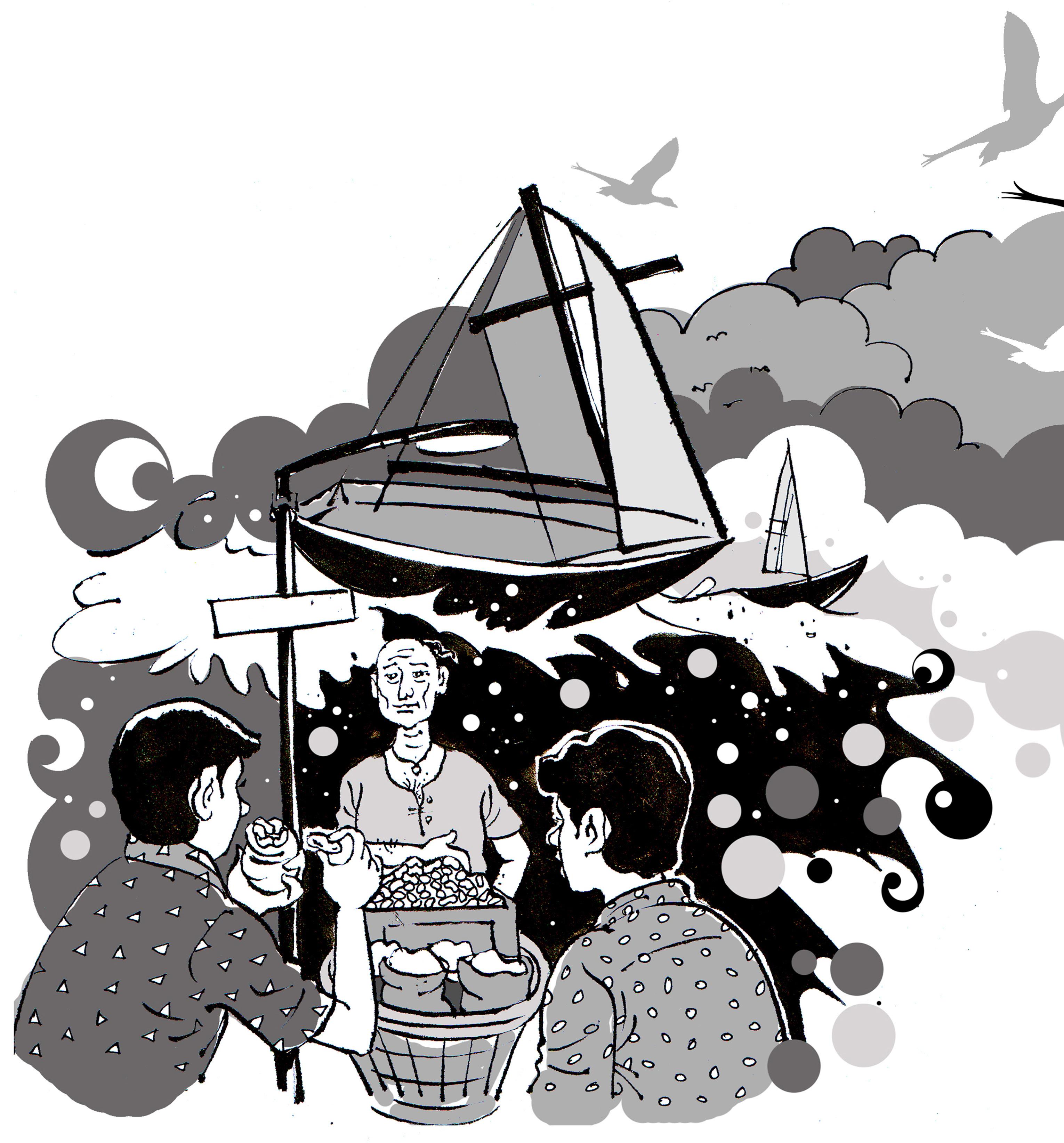
I took Beaver Dam Road for my evening walk and came to Great South Bay. There were many boats today on the water under a clear evening sky. The sailboats created a wonderful collage of color against

the blue expanse of the bay. A small boat drew my attention. An elderly man was sailing alone. It was a small sloop but its two sails were unusually striking: one thin triangular royal blue, and the other a large cranberry sail, fat and swollen by the wind. In the dwindling summer sunlight, the cranberry sail appeared exceptionally bright. Staring at the lone sailor, the memory of a peanut seller floated into my mind. Like the cranberry boatman, the peanut seller was a unique man in my
neighbourhood in Calcutta. The vendor sat with his basket under the lamppost at the corner of the small park near our house, where we sat with friends and chatted, eating peanuts bought from him. His face was round to match his stout body, smooth, and tanned shiny dark from staying in the sun. He had crew cut hair and his tiki (a lock of hair at the back of his head, two to three inches long) always stood out.
It had been years and two continents since I had thought of the vendor. Strange, how suddenly old things came to my mind now! The peanut seller’s name was Jawaharlal, the same name as the first Prime Minister of India, but everyone called him Jahore – diamond. It wasn’t meant to be sarcastic because he was a small vendor; it was simply a short name.
The peanut seller had the best peanuts in town and the chutney he gave with the peanuts was wonderful. It was green, salty, sour, and hot and went very well with the peanuts. The green color came from the long, sour fruit tetul that looked like fat green beans. I had not had that special chutney for 40 years, yet I could remember the taste as if I had eaten it yesterday.
One time I had asked the peanut seller how he prepared the chutney, but he had simply laughed. “You don’t need to learn this,” he said and blinked his eyes. “When you finish college, you’ll have a good job; you can always buy it from me.”
Every evening my three close friends, Ramesh, Bikash, and Samir, and I bought peanuts
from him and lingered there to chat with him. That was a part of the ritual of buying peanuts. The conversations were often teasing and bantering, but they were always jovial. Sometimes we discussed local incidents and the news. Then we sat down on the grass in the park and shared the peanuts. There we talked about everything – from sports to our aspirations in life. But we did not continue our conversation with Jahore. He was a peanut seller, and he registered on our minds only for a thin slice of time.
The man with the cranberry sail was standing at the tiller; he had shifted the direction of his boat and was moving away from the shore. His sail glowed in the waning tendrils of the sunlight.
The face of Jahore sitting under the lamppost floated back to me. When we went home in late evening, Jahore still sat quietly in his place, the evening light from the lamp now illuminating him and his basket.
The peanut seller once asked us why anyone would want to study politics, history, and such subjects. “The good jobs are in science and engineering, aren’t they?” He asked, gazing father-like upon us, his teenage customers.
“Of course,” Ramesh said in a serious tone. “India needs engineers. We must develop and build industries if we want to prosper. We can’t keep on buying finished products from other countries.”
“Wouldn’t it be fun to sell goods back to England?” Samir posed with a sparkle in his eyes.
“Yeah,” Bikash supported him. “Someday we ought to get back all they took from us.”
Then we walked away with our peanuts, forgetting what Jahore had asked. We had a cordial relationship with Jahore, but I never wondered why Jahore asked such questions and what difference the answers made to him.
Sometimes the peanut seller asked us what we studied at school and we told him a little. It was just to make a conversation. The vendor could not read or write, but he was intelligent and knew what to say to keep the conversation lively. One time we had an unexpected comment from Jahore. We had been talking about how hard it was to choose the right profession and how distressing the quest was.
“What are you complaining about?” Jahore interrupted the discussion. “You go to school and will have good jobs someday. I never had an option. I’m too poor to do anything but sell peanuts.”
I didn’t know how to respond to Jahore’s lamentation. I simply stared at his dark body with tight half-shirt and short dhuti raised up to his knees. He had worn the same clothes, so it seemed, every day. I kept on looking at him, noticing that he had no watch. His hands were bare except for a single, copper ring on one finger.
“What do you want?” Bikash asked him haughtily. Jahore raised his head without saying a word, and Samir went on, “True, you earn less, but your needs are also less. Your children start
earning as soon as they become ten, and you live fine.”
Jahore looked down at his basket. “I guess,” he mumbled, “it’s our fate. Born poor and die poor.”
“Look,” Samir told him, “you don’t know our problems, the pressures and the stress we have. You’re happy with a simple life.”
“Let’s go,” Ramesh said to end the bickering conversation.
“He has no idea of our life,” Bikash said and walked toward the park.
I had followed them, but the condescending tone and words of the conversation did not leave me for some time.
I stood on the shore. Soon the sun dropped low on the horizon. The bay was calm. Several boats returned to the shore and the few remaining boats glided through the placid water. As I gazed over the water, another thought about Jahore pressed in. We were sitting on the grass after the high school final examination, discussing which college to go to or what to study. Ramesh abruptly asked, “Any of you have any idea what Jahore makes?”
Each, in turn, shrugged. But we agreed with certainty he barely made enough to live. Even if he were lucky with many customers, he might barely make five rupees a day (the equivalent of a dollar).
“Who roasts the peanuts for you?” Ramesh asked him the next day.
“Why? I must to do it myself,” he told us.
“And the chutney?”
“I buy the ingredients and make it myself. I work late into the night, readying for the next day.” He stared at us for a few seconds. “A good night is five hours of sleep for me.”
One day he was not at the lamppost. The spot looked so empty without him. For the first time we realized how little we knew of him. Almost nothing! We didn’t know his last name, where he lived, or if his family lived with him. He was a peanut seller and we bought peanuts from him; that was all. There was a class barrier; we lived in our world and he in his. In spite of all the friendly conversations, our relationship ended as soon as we walked away with our peanuts.
“I wonder, does he think of sending his children to school?” Ramesh asked as we waited under the lamppost.
“He probably lives in a bustee,” Samir said. “They don’t go to school.”
“His son will probably follow his profession,” Bikash said confidently.
“I’d like to know how he lives,” I murmured.
We decided to follow him one night and see where he lived. We knew if we asked him directly, Jahore would simply say, “I live beyond the train station,” and leave it at that. Then we couldn’t press him more. When one knew someone lived in the bustee, in the lowest possible living condition, one didn’t ask for his address.
The next few days, sitting in the park and munching roasted peanuts with green chutney, we
planned our strategy, thrilling at the prospect of uncovering a secret of Jahore’s life. When we went to buy peanuts, we furtively glanced at him with surreptitious glee. Our excitement grew as the day of our planned expedition approached.
We knew we had to follow him from a distance because by the time Jahore went home, the crowds would be thin and he could easily spot us. We walked beyond the train station, about a mile from our neighbourhood. Then Jahore turned off the main road into a narrow lane, between two shacks. The path was winding; people had built shacks along the road wherever they found some space. It was a ghetto. Soon we lost him. The area was deserted; one or two who went by looked like rickshaw drivers, people very low on the socioeconomic ladder. We grew uneasy. We couldn’t bring ourselves to ask anyone where the peanut seller lived. How would we describe him? We didn’t know his last name. Then we became a little scared. Someone might ask what we were doing in the neighbourhood. We quickly left the place. The enormity of the difference of our status in life dawned on us. We hurried home silently, as if there was nothing to talk about.
The bay appeared vast and I felt somewhat detached. Water lapped against the shore rhythmically, soothing my ears. I took several deep breaths of the salty air. Then my thoughts drifted to the year we went to college. It was the turning
point that changed our lives. We didn’t have free time any more. We still bought peanuts from the same peanut seller, but we had so much to talk about our new experiences, we didn’t have time to talk with Jahore. We discussed our classes and our teachers while buying peanuts. Jahore listened to us silently.
During that time Jahore took longer to give us peanuts and the green chutney. But we didn’t notice his slow delivery because we were so busy in our new world. Our manner was not new to Jahore. For many years, he had seen boys growing up and going to colleges. They, like their older brothers before them, got busy in their own world and moved away. Jahore’s destiny was to slowly and surely fade away from their lives.
One day Jahore said, surprising us, “I wish I had the chance to go to school.”
“Really?” Bikash exclaimed with interest.
“What would you have studied?” Ramesh quickly followed.
“Engineering.”
“What kind of engineering?” I asked.
“Engineering,” he repeated, shrugging his shoulders.
“What’s the difference?”
“But you’ve not even gone to high school!” Samir told him.
“How could I?” He lamented. “I have worked since I was ten.” His voice faded to silence.
No one followed Jahore’s comment any further. “Did you read about the construction of the new stadium in today’s paper?” Bikash asked Ramesh.
“Oh, yes,” Samir answered, “it’ll be the biggest soccer field in India. We can then see world matches in Calcutta.”
We walked away toward the park. I heard something and turned back and saw Jahore was watching us as we entered into the park.
How the years had passed by! Our conversations with Jahore were only memories. I remembered my last encounter with him. How could I have forgotten it? One night I heard a knock at the front door. I opened the door and was startled to find Jahore standing there with his basket balanced on his head, his normal posture as he travelled from place to place.
“If you have a minute,” Jahore mumbled and then hesitated. “I don’t know whom to ask this, so I came to you.” He looked down at the floor for a second and finally blurted out, “I want my son to go to school and have a job, not become a peanut seller like me.” His voice was firm.
“Your son?”
“Yes. I want him to have a college education. What does he have to do to become an engineer?”
I was very surprised. “He will have to study for a long time,” I said, staring at the ragged figure before me.
Jahore nodded, saying nothing. His eyes pleaded with me.
“First let your son complete elementary school. If he does well enough, you need to send him to high school. Then ask him to get a job at a factory.
He could become a technician. That will be a lot like being an engineer.”
“If he excels in high school, can he go to college?”
“Yes, yes,” I told him to pacify him. “But it will cost you money. More, I’m afraid, than you earn.”
“Thank you.” Jahore turned, and walked away. There was enthusiasm in his gait that I had never noticed before.
‘Who will then sell peanuts to us?’ I thought after Jahore left, and laughed at my own humor.
Years later, after immigrating to America and settling on a job, I went home to Calcutta for a visit. I went to Ramesh’s house for tea. We had been talking about the progress I made in the U.S., when Ramesh suddenly asked, “Do you remember Jahore?”
“Our peanut seller?”
“Yeah,” Ramesh told me ruefully.
“What happened?” I asked him.
“He is not there anymore.”
“Sorry to hear it,” I replied, nibbling on a cream biscuit. But I wasn’t really very sorry. I had just arrived in India for a short visit, so the affairs of the peanut seller were not high on my list of priorities.
“Remember the time when we tried to follow him and find out where he lived?” Ramesh asked me.
“Yes, I remember.”
“I have seen his house.”
That perked me up. “Really? You followed him alone?”
“Yes and no,” Ramesh said.
“A few years after we graduated from college and you had already gone to America, one evening when no one was around, Jahore asked me if I could help him. I thought he wanted money. Then it occurred to me that for all the years we had known him, he had never asked us for anything. He was doing good business because many people had moved into our neighbourhood, but he looked old and thin; his tiki had turned all white. I told him I’d try to help him.
“He told me he wanted help to fill up a form. It was for his son. ‘Let me see,’ I said. But Jahore did not have the form with him. He kept it locked in a trunk in his hut. ‘Could you please come home with me?’ He asked me.
“I thought,” Ramesh told me, “I’d have to come back at night when Jahore finished his work, but he started to pack up his basket and then stood up. ‘We’ll go now,’ he said. ‘What about your sales today?’ I asked him. ‘This is more important,’ he said.”
“Completing a form for his son?” I asked Ramesh. I thought about the shy, thin boy Jahore once brought with him. I remembered that the boy fidgeted nervously around us. I also remembered we did not bother to inquire who the boy was.
“Yes. Let me tell you what happened,” Ramesh told me. “We went back to the same area where we followed him once –those narrow lanes beyond the train station. His hut was small, but clean and well kept. I saw a
big round oven in the courtyard in front of his room, where I guessed he roasted the peanuts. He brought out the paper his son had sent him. It was a financial assistance form from an engineering school.
‘“Your son is in engineering school?’ I asked Jahore, flabbergasted. I stared at him in disbelief. ‘He is a good boy,’ Jahore said bashfully, ‘I didn’t want him to sit under a lamppost like me and see the world pass by.’ I looked at Jahore and realized why he had become so thin. He had been starving himself to save money for his son.
“I filled out the form and told him where to sign. He would go to the post office in the morning to imprint his thumb for the signature.
‘“I am sure your son will get the money,’ I had told Jahore. How could he not? Jahore earned only $40 a month, but I wrote down $25 to make the application look even better.”
Ramesh paused for a moment and looked out the window. He turned to me and said, “As I was leaving, Jahore asked me to wait for a minute. He brought a bag from his room and handed it to me. ‘These are the best quality peanuts; I roasted them yesterday.’ I didn’t want to take the peanuts from a poor man for simply helping him fill out a form, but Jahore insisted, ‘please take this little gift from me. It’ll make me happy.’ I saw his face was glowing with joy. I knew it came from his heart. So I accepted the peanuts and left. There was a large portion
of green chutney in the bag too, which I discovered later.”
Ramesh then took out a newspaper clipping from the drawer of his desk and handed it to me. The fold mark had almost torn the old paper. I could barely read what it said:
A peanut seller, named Jawaharlal, died yesterday at the Medical College Hospital. He arrived alone, hallucinating, with an advanced case of pneumonia. His family lives in a village 120 miles away from Calcutta and was not aware of his condition. He gave an envelope containing money, Rs.
531, to the doctor, pleading, ‘Please send this to my son in Patna Engineering College, money for his last semester.’ At first the doctor did not believe his words, but when the peanut seller was near death, he contacted the College and found his story to be true. The son arrived at the hospital, but by then the peanut seller had died. It dawned on me that I had never understood the depth of the peanut seller’s queries, but it was too late then; I simply stared at Ramesh.
The sun went below the horizon, spreading its crimson
rays over the sky. This was the time Jahore used to sit quietly under the lamppost, and the electric light would suddenly come on and shine on him and his basket of peanuts. I visualized his round face with a large forehead, crew cut hair and the tiki. The image became so clear it seemed life-like. I shifted my gaze at the expanse of the bay. Most of the boats had returned to the shore. Only the cranberry boat loomed in the horizon, and I couldn’t make out the elderly man anymore.

Little Ruby was sitting by the window on her little red rocking chair. She was the lookout for the bus that would take everyone to the picnic. Soon the bus rumbled up and Ruby shouted out, “The bus is here, the bus is here!” Almost falling off her chair. There was a flurry of activity as people rushed out, some with boxes and baskets full of items required for the picnic.
It was the day of the Roy family picnic. Uncle Jim had started the tradition of the family picnic. Uncle Jim had four brothers and four sisters. It was a large prolific family except for Uncle Jim and his wife Aunt Dolly, who didn’t have any kids of their own, and Uncle Lal, who had never married and was known for his eccentric ways.
The Picnic
Sanghamitra Chowdhury, Massachusetts
The Roy family household was in a frenzy of preparation for the annual picnic. The whole household was bustling with activity; there was the readymade food to take, and the long list of all the items required for the food that would be prepared during the picnic.
The picnic was organized every winter at Dimlee Lake. The park around Dimlee Lake was an ideal picnic spot – it had a children’s play area with slides, swings and a merry go round that the older children could give the younger kids a ride on, grassy areas, and a sandy shore by the lake. Family gatherings of an extended family with cousins included were always noisy and chaotic. They were an immense amount of fun
for all the kids, who made the most of the grown-ups being either too busy or completely engrossed in catching up with others. The family picnic was the crowning event of every year.
As always,Uncle Jim, Aunt Dolly, two other couples and Bahadur set off in their car with all the others piling into a bus rented for the day. Bahadur was one of the reasons the family picnic was always a success. This was a holiday for all the family members. To make sure that everyone had a relaxing time, Bahadur, the chef in Uncle Jim’s college cafeteria, accompanied them. Bahadur was a stocky, solemn man; a superb cook who could singlehandedly feed an army. When something exceptional tickled his sense of humor, his face split into loud guffaws that would trigger off laughter all around. There had never been a Roy family picnic where Bahadur’s spell of laughter had not added to the gaiety of the occasion.
Uncle Jim and his helpers,
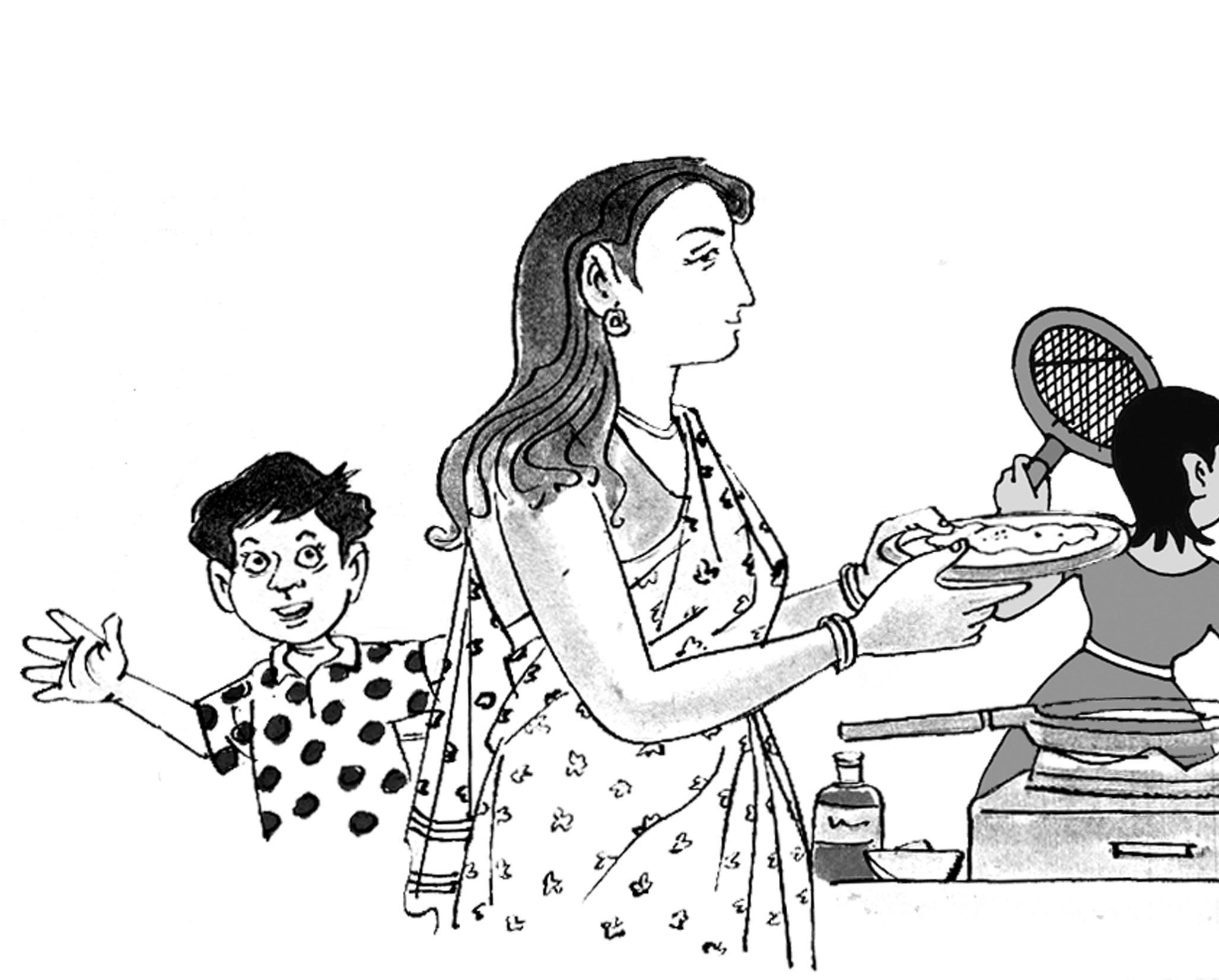
who had arrived in the car, would set up chairs, durries with cushions, and tables, and unpack the snacks. The women would organize the raw foodstuff that would be cooked. Bahadur would look through the items, mentally making sure that all that he had asked for had indeed been purchased. Once he did that, all the women were instantly banished. He and he alone was “monarch of all he surveyed”. The only person who dared venture into his domain was Aunt Dolly, whom he respected and had a soft spot for. His first duty was to make coffee for all the grown-ups and fry the vegetable
chops he had prepared the night before.
A lot of planning went into the event. Letters were written, phone calls to various relatives were made. Uncle Jim did the bulk of the planning, with Aunt Dolly efficiently handling some tasks herself and delegating others to family members who could be completely relied upon. There were some strictly vegetarian family members, whose food had to be cooked before the non-vegetarian food was cooked. Some had dietary restrictions. Aunt Dolly kept a meticulous list of the requirements, dietary and otherwise,
of all the people who attended the picnic. The menu was a simple one. Vegetable chops with coffee were served when everyone arrived. The children got bright yellow pineappleflavored drinks instead of coffee. They were also allowed a small amount of coffee which made them feel very grown up. Snacks were always kept in plenty; the adults and the children kept on munching between their activities and sitting around, catching up with relatives they hadn’t met for a long time. Being in the open air in good company sharpened
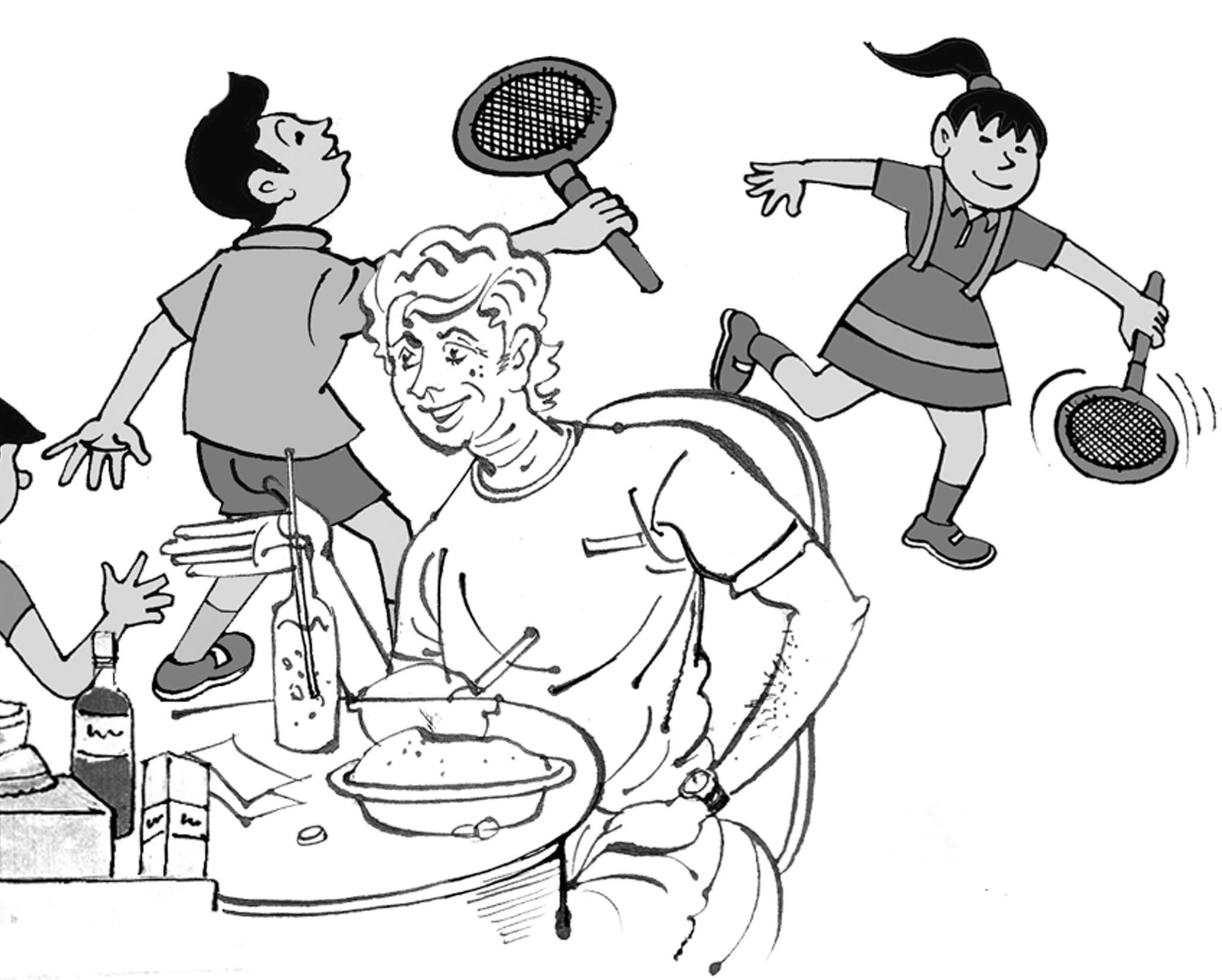
everyone’s appetite. At twelve thirty lunch was served – fried rice, yellow lentils cooked with coconut and raisins, fried eggplants, mutton curry, paneer for the vegetarians, and sweet chutney, a must for a special Bengali meal. Sweets followed. After the lunch was a period of blissful torpor, when some people napped and others went and sat by the lake. Even the children usually quietened down after what they thought was the best meal of the year.
Sheila Roy, the wife of one Uncle Jim’s nephews and the one who could be relied on the most, was in charge of the kitchen while the food and snacks were packed. She had been unable to go for the picnic since four-yearold Ruby had been born. Ruby was her youngest – a quiet, shy child with shining eyes. Ruby had been a sickly baby who fell ill at regular intervals. She was still a sickly child, very different from the other kids in the family, who were a boisterous lot. All her energy seemed to shine through her luminous eyes. Ruby and her mother had missed all the vacations the last few years, mainly because Ruby was not well enough to take a long train ride and stay in a new place with unfamiliar doctors. There was also no happier child than Ruby, who bore her frail health with remarkable patience and fortitude. It was her greatest wish to go on this picnic. Unfortunately this year she was sick again and watched patiently from the red rocking chair by the window. Her mother had allowed her to come downstairs to the kitchen to watch the
others leave in the bus. She was wrapped up in a shawl and sat on the red rocking chair. Bobby was Ruby’s cousin, a quieter child than the rest of the lot. He was four years older than Ruby, and Ruby’s favorite. He played gently with her and consciously matched her pace, without getting impatient. Her parents and her cousin Bobby filled her world.
Soon everyone had left, and Ruby waved bye till the bus was out of sight. Her mother picked her up and hid her tears. She knew how much Ruby had wanted to go on the picnic. Ruby sensed her mother’s tears and wiped them away. Ruby had started talking very early and was articulate beyond her years by two. She consoled her mother, “We’ll go next year, Ma, I promise,” and kissed her. She loved having her mother’s uninterrupted time, a very rare occurrence in this household. ***
A year passed and it was the time for the picnic again. “Be careful of the food on the table. No, don’t TOUCH the lemonade now. I can see you, Bubs.” Sheila Roy yelled at the jumble of kids swarming at full speed into the dining room.
There had been weeks of planning, writing letters, and making phone calls. Getting the whole clan together on the same day was no mean feat of coordination. “Bobby, please can you come downstairs?” Yelled Sheila from the foot of the stairs. As Bobby ran downstairs, Sheila signaled towards the little red rocking chair that was Ruby’s spot. Bobby was
the only one whom she could trust to take care of Ruby when they all left for the picnic. This family picnic was the event of Ruby’s short life. Bobby nodded and sat on the ground beside the rocking chair.
“The bus is here.” “Ooh, look it’s bright yellow”. “I bag the seat in front”. “No, my turn, you took it last year.” There was pandemonium, pushing and yelling among the kids who had been waiting outside the house to spot the bus. Some of the grown-ups were no less excited, grabbing newspapers from the dining table. Everyone piled on. Bobby took care of Ruby. Another kid, Montu, came and careened onto the seat that Bobby was sitting on, “Move over, how come you got a window seat?” He said while concentrating on pulling his sister Ira’s hair. Bobby opened his mouth to respond but thought better of it. After all, Ruby took up very little space, and pointing out that Ruby had the window seat was not desirable. Ruby thanked him with a smile that lit up her beautiful eyes. Finally Uncle Lal hopped on armed with a pile of old newspapers. This prompted questions from all quarters about the need for the newspapers. This served Uncle Lal’s purpose perfectly as piquing other people’s interest, and not responding was one of his favorite pastimes. He grumbled loudly about how unhelpful everyone was in not helping with his self-imposed load. This brought forth another volley of protests and questions as the bus started. “Why do you need all the newspapers?” “We
won’t help till you tell us why you are carrying all that.” One very young voice piped up, “Granddad Lal, will you show us some magic with the papers?”
The bus trip was slightly less than an hour. Thankfully, the kids, who were at each other’s throats were told off by the tall, turbaned Punjabi driver, and subsided into silent shoves. The kids who had been at the receiving end of the pushing and shoving, thumbed back “Serve you right. He’ll make you disappear next time you push and shout.” The bus drove through small towns, almost villages, honking at the intersections. The roads were lined with hawkers and pedestrians. The bus wove through traffic and honked to cross the commercial buses which stopped at regular intervals at bus stops or anywhere that a passenger flagged a stop. Everyone heaved a sigh of relief when their bus left the main highway and turned into a leafy lane. They looked eagerly for the familiar signs –the banyan tree which looked like the elephant god Ganesha from one angle. Then came the “Burnt Tree” grove, the famed clump of coconut trees, where lightning had apparently struck eight times in ten years. It was a miracle that there were still trees crowned with green leafy tops. There was the village lore that anyone who worshipped in that grove on the Bengali New Year’s day with a pure heart for an unfulfilled wish would find a green coconut at the foot of one of the trees the next morning. According to local superstition, eating the flesh of
that coconut made a wish come true within a year. The bus then passed the typical village tea stall with “Banku’s cha” written in an ornate Bengali font on a small board next to it. This was where the adults bought tea in earthenware pots on the way back, and each of the children got to choose a cookie from the jars, containing cookies of various shapes and colors that they never saw in any other stores.
As the bus neared Mandarpur, the women started speculating, “What do you think Amal will have painted this year?” Most village huts that they passed had clean courtyards. “Amal’s hut,” as they referred to it, was special because every year there was a different picture painted on one wall. Over the years, it had boasted pictures of green forests or peacocks flaunting their fantails, or an elephant, even almost impressionistic paintings of sunsets and landscapes. Once it had been a creeper with exotic purple flowers. The painted creeper merged into the pumpkin creeper ablaze with yellow flowers on the roof of the hut, giving it a surreal look. Uncle Jim had commented on the resemblance between those and the purple monkshood flowers of the Amazon rainforest. Intrigued by the unusual paintings on that hut, Uncle Jim had inquired and found out that they were painted by a boy named Amal. Amal belonged to a conventional village family,in which painting was not considered a useful way to spend one’s time. Uncle Jim had intervened and was helping the boy finish his high school
and study art afterwards. This time the picture showed a group of people standing against the background of Dimlee Lake, almost like the Roy family portrait that was taken every year at the picnic. The strangest part was a beautiful blue flower that was growing between a child and a lady in the first row. Everyone craned their heads to look at the picture as the driver slowed down to allow everyone a look.
The winding road passed through sleepy hamlets for a few more miles. Once the trees gave way to long stretches of catkins, everyone sensed that the first glimpse of Dimlee Lake was close, and the chattering stopped as they tried to spot the lake as it glimmered through the catkins dancing and flirting with the wind. As the bus turned the corner to enter the roughly graveled Jubilee Park parking lot, the kids were up trying to race each other to the door. The driver stopped the bus and said in stentorian tones, “I won’t park the bus till all you kids… all of you are back in your seats.” The last “all of you” was directed towards Uncle Lal who was always in a rush to get off a bus, even if it meant not waiting for it to stop completely. This had the desired effect, and all the parents sighed happily as the kids darted back to their seats. Uncle Lal also sat down promptly at this reprimand and the adults suppressed their smiles. Once everyone had got off the bus with all their belongings, the bus drove off and parked in the shade of a tree. It was a glorious winter
day, sunny, crisp, yet not too cold. There was a profusion of color everywhere. The flower beds were beautifully kept with dahlias as big as plates, and chrysanthemums, bordered with perky zinnias of every possible color. Some other patches seemed to be more of wildflowers growing around rocks, untended and wildly magnificent in their unkempt loveliness. The grassy meadow sloped down to the sandy shores of the lake. The wind whipped the waters of the lake into small waves. The water mirrored the brilliant blue of the cloudless sky. On the far end of the lake rose the rolling forested hills. In one corner where the lake curved mysteriously out of sight, the trees of the forest had come down to keep a secret tryst with the blue water.
The women busied themselves with setting up the raw material for lunch. The snacks were put in bowls and covered with weighted cheesecloth. The morning coffee was ready as were the vegetable chops and onion pakoras, fritters made with chopped onions and chickpea batter. Everyone enjoyed their morning snack and gradually settled down. Some sat down with their favorite cousins and relatives and discussed weddings, engagements, illnesses. Conversations were scattered with exclamations of “Oh really”, “You don’t say!” Some others enjoyed loud political discussions. Strident voices rang forth on politics, lamented the state of the country and its leaders while others listened amused,
waiting for the sparks that would inevitably fly. The more athletic ones busied themselves with putting up badminton net a little further off. This involved calling the bus driver, “Singh ji, singhji, eedharaana”. “How do you know his name?” “Didn’t you see his turban, they are all Singhs”, came the reply with the absolute Bengali confidence of generalizing facts. As someone tried to explain to “Singh-ji” in atrocious Hindi that they were having trouble getting the pole into the ground, Singhji intervened and asked in the most fluent Bengali what they wanted done. At that everyone stopped to congratulate him on his Bengali. He responded courteously that he was born and had grown up in Bengal, so knowing Bengali was hardly an accomplishment.
The children quickly formed into groups to play robbers and thieves and loud cries of joy filled the air. After a while Bobby came away from the game. He joined Ruby and her mother, sitting quietly by the lake on a flat stone. It was wonderfully peaceful. The wind ruffled the lake, and the tops of the catkins on the far shore of the lake. Some of the children waded ankle deep into the lake and squealed at the coldness of the water. There was a commotion and Uncle Lal came to the lakeside, followed by some of the kids carrying bundles of newspapers. He and his helpers started spreading the newspapers on the sandy beach. The newspapers would fly away prompting shouts and the kids would run after them to get
them back. Finally he had the kids stand on the newspapers while he sat in the middle doing his yoga breathing exercises and chanting. The kids, who had expected something more dramatic, started shifting around impatiently. When one of the newspapers flew up and stuck to the side of Uncle Lal’s head, much to the amusement of the kids, he started yelling at the lack of respect that the younger generation had for elders. As soon as he realized that this just added to the mirth of the kids, who knew this diatribe was a part of his daily routine, he stopped. He then carefully lay down on the papers and told the kids to cover him with a layer of newspapers, leaving his face uncovered. “Hold the newspapers so they don’t fly off.” After the newspapers were arranged to his satisfaction, he told them to put sand on the newspapers and cover his body. This was the clarion call for all the kids to scoop sand all over the recumbent Uncle Lal. By now, the other grown-ups had arrived. Aunt Nancy, Uncle Lal’s sister, a straight shooter who always spoke her mind said, “Lal, you have grown old but still don’t have any sense. What on earth are you doing?” “Doing, doing…” Uncle Lal was almost apoplectic, “This is called earth therapy, you would know if you kept up with the latest naturopathy trends.”
Aunt Nancy said, “Don’t come complaining to me when your arthritis plays up again. They do this in hot sand, not on a winter day. No sense, not an iota of sense,” she shook her head as
she walked away.
Bahadur had started cooking lunch after breakfast was over. The smell of the food being cooked wafted over the grounds; kids and grown-ups came back to savor the aroma. The enticing fragrance made everyone hungry and the kids were impatient. Ira was sent to ask how long before lunch would be served. “Granny Dolly, when will we eat lunch?” Lisped little Ira, safe that neither Granny Dolly nor Bahadur would scold her. Granny Dolly sat down on one knee and asked Ira, “Are you hungry, Ira?” knowing full well who had sent her. “I’m not hungry, are you hungry?”
Ira innocently relayed back to her older cousins who were hiding behind a hedge of purple flowers. As the boys started to run away when Bahadur looked at them, Granny Dolly called, “Come here. You have to help. Go and call everyone and tell them lunch will be ready in fifteen minutes. Get into a line by that table.” The boys all ran off jumping and whooping with joy. “And no pushing in line,” she called after them. Very soon a line had formed with everyone waiting with paper plates, spoons and napkins. The food was arranged on one of the picnic trestle tables and some of the women of the family served the food.
The lunch was delicious, for a while there was complete silence. After everyone was replete with food, all of them relaxed and enjoyed a quiet time when some of the family members sang favorite songs and the others joined in the chorus. Uncle Jim insisted on
this musical interlude as a ploy to get the whole family together in a circle. This always succeeded in raising the familial feelings in all of them and everyone was introspective for some time after that.
Bobby and his AuntSheila were sitting on the outer edge of the circle with Ruby. Ruby looked up at her mother and Bobby and rose, beckoning them with a glance. They walked towards the lake. Some of the adults commented on how quiet Bobby was this year.
“Poor Sheila, sometimes I can’t bear to look at her. The last year has been very hard for her.”
“She and Bobby have become very close.”
Bobby and Ruby’s mother knew the time had come. Ruby took them to the lake and looked at them and gave them her brightest smile. She touched their hands and walked away toward the edge where the catkin grove started. She did not look back; her little figure seemed to shimmer and almost blend into the sunlight. As she reached the edge of the catkin patch, she looked back and waved. There was a little flash of lightning where she had stood a moment ago. Some of the children who had been idling by the lake later asked about the strange flash of lightning which had appeared on the ground when there was no cloud in the sky. Bobby and Sheila wrapped their arms round each other and sat motionless on the stone where they had sat in the morning. When Aunt Dolly came to call them for the family picture, she found them sitting still by the lake. She was more perceptive than the others
and realized something had happened that only Bobby and Sheila had been a part of.
The family picture was taken by Bahadur who had been taught how to use the camera set up on a tripod. Soon everyone had gathered in a grassy clearing and stood in one of the rows depending on their height. Bobby and AuntSheila stood next to each other; they still seemed far away from the flurry of the picture taking. It was time to pack up and go home. Everyone gathered up the belongings and trooped into the bus. As the bus passed by the catkins lining the road, Sheila seemed to be searching for something she knew would never come back. Back at home, while the others helped in unpacking and putting away of all the picnic goods, Sheila slipped away. She looked at the little red rocking chair, it was empty. Bobby followed his aunt. Seeing the empty red chair made them realize that, although they were the only ones who had been able to see little Ruby after she had died six months ago, they would never see her again. She carried Ruby’s chair upstairs to her closet. Aunt Dolly came over and said, “I know it’s been a hard year since Ruby left us,” and hugged them tight.
Uncle Jim and Aunt Dolly brought copies of the family picture three evenings after the picnic. Everyone was always excited to see all the pictures taken during the picnic, and especially the group picture. Everyone oohed and aahed over the pictures – the unusual bright blue flower on a spindly stalk between Bobby and Sheila Roy was hardly noticed.
Tuli had a Dream Mizan Rahman, Ontario
there.
Everyone in the family has been notified wherever in the world he or she may be.
The eldest maternal uncle in Detroit has sent his blessings.
Uncle Sultan in LosAngeles has said: “Congratulations! Great news!” Uncle Qurban has sent word from Montreal thanking Allah for

It’s final.
Tuli’s marriage has been all arranged. The boy is the son of the older brother-in-law of the youngest sister-in-law of her aunt in Bradford. Good boy. Good pedigree. Family is widely known over the entire region. Owns a lot of property. Even the District Magistrate bows in respect to the boy’s father, who
went on the holy pilgrimage. Not once but twice. They built a mosque on the premises of the family home, which had a cement floor and corrugated tin roof and walls. You wouldn’t find a better family than at the in-laws’ place – you would have to be born with the luck of a princess to get to marry a son
her good fortune. All the elders back home in Bangladesh have sent their blessings and warm wishes. Tuli’s father is happy, as is her mother. Everybody knows about Tuli’s marriage. Except Tuli herself!
Her parents have made a calculated decision that the news need not be given to Tuli just yet. Her exams are near. It’s
the final exam in her 11th grade. Poor girl is staying up late at night to prepare for it. Let her. It will only disrupt her mind if you raise the issue at this time. After all, she isn’t quite adult yet – will be seven-teen in two months. Still now she behaves like a child sometimes. Fights with her younger brothers. Sulks over birthday presents that didn’t meet her expectations. Can’t go to sleep without her teddy bear in her hands. Her mother tries now and then to take it away after she closes her eyes. But she wakes up immediately and asks for her teddy. So you see how difficult it will be to give her the news of her marriage right now.
Unfortunately she is far from being an underage child-like girl in her physical size. On the contrary. Quite a stout fullgrown young lady, as a matter of fact. Both in height and width. Puffy cheeks and overgrown breasts. No one will say she is only 16! Looks more like a 20or 21-year old. In body size, at least, she has taken after her mother’s side. Apparently her maternal grandmother was quite a robust lady also, towering over her grandfather by about a foot. In girth as well she exceeds him. It is more out of concern for her unusual size that her parents are so anxious to find a suitable boy as soon as possible. Or else, they fear, no one might come forward to take her as a bride. One can’t ignore the reality that not too many eligible young Muslim men are here in this foreign land who would want to marry this not-too-attractive daughter of theirs.
Tuli. Quite a pretty name. Not her official name, though. Her official, or real name,is Shaukat Ara Khatun. The nickname ‘Tuli’ was chosen by her youngest aunt (on her father’s side), who had once been a college student. One could surmise that the choice of Tuli had a college flavor. The aunt had a secret hobby – to paint portraits and landscapes with paint and brush. Behind the curtain, of course,where nobody was looking. In their house it was forbidden to draw any picture, or to sing, or listen to any radio or gramophone music – an ultraconservative Muslim family. So she would wait till everybody went to bed to light her dim kerosene lamp and get her paint-and-brush kit, to start doing the thing she loved so much. In the morning, before daybreak, she would try to hide her work in a wooden chest.
When Tuli was born she pleaded with her brother to let her choose a name for her newborn niece. Her choice of ‘Tuli’ was unacceptable to everyone in the family – her parents and grandparents alike. Because it had a ‘Hindu’ sound. It wasn’t Islamic. But Tuli’s father had a very soft corner for his little sister since she was a baby –always protecting her from their parents’ wrath and punishment. He was well aware of his sister’s weakness for a little painting, but shielded it from others as a shared secret between the little sister and a much older brother. He pleaded on her behalf to hold off her marriage till she got into an art collegebut to
no avail. His pleading and her loud protestations didn’t do any good – theinevitable couldn’t be stopped. In those days girls from respectable Muslim families wouldn’t think of going to an art school. That was absolutely out of question. All the loving brother could do was to give her a lot of gold jewelry at the wedding. It was just about the time of Independence. He didn’t actively participate in the war, but he had implicit sympathy for the freedom fighters – even though the family was leaning on the side of Pakistan. This was the same man, Tuli’s father, who was anything but the liberal man he had been before. Yet he didn’t object much to the suggestion of his little sister – a Hindu-sounding name, notwithstanding. Nicknames really didn’t matter, right? Real names are the only real thing. Tuli likes her name a lot. It is easy. It is simple. And it is sad. It has the tears of her aunt, her broken dreams. The name is modern. Her nickname is about the only ‘modern’ thing in her life. She can’t play volleyball or basketball in the school grounds like her friends do, can’t go to the movies on weekends with her friends like the other girls do, can’t even listen to the pop music like the others of her age do. These are strictly forbidden things for her. Her father doesn’t even like her picture in the school yearbook. She started wearing the baggy shalwar-kamij and hijabsince she was ten. Her friends in school would make fun of her. They would ask,mockingly: did
you lose your hair, Tuli? She hates the hijab. Especially in the heat of summer. But she had no choice – no hijab, no school. They threatened to send her ‘home’ (meaning Bangladesh, of course) if she continued to balk at wearing the hijab. So she continues wearing the garment she hates. The only thing she hates more is being sent back ‘home’, which for her would be an exile.
Tuli is not a very goodlooking girl. She is darkskinned. She is bulky if not fat. She is big. But none of these matter to the groom’s parents. They didn’t come with the marriage proposal because of her looks, but in spite of her looks. Her passport is far more important than what she looks like. The passport has the seal oft he United States of America, and that is all that matters. She can board a plane in New York and fly to Bangladesh anytime she wants, and come back to New York anytime she pleases. Her real face is her passport – her most important quality. No other quality is needed for marriage with that precious son of the older brother-in-law of the youngest sister-in-law of her aunt at Bradford,because this would mean freedom for him too to fly to New York whenever he pleases, and fly back whenever he wants. Tuli’s passport would mean his passport. Girls like Tuli didn’t need any other qualities –they are born as suitable girls. Rumor has it that the groom’s family had completed a land transfer deal with Tuli’s father for a considerable chunk of
property in Uttora. They also agreed to hand over the keys of a fashionable new home in Sylhet once the wedding was over. Quite a handsome deal in lieu of a not-too-good-looking 16-year old girl,wouldn’t you say?
So they had decided to keep the news from her till the very end. All they told her was that they were going to go for a family vacation to Sylhet once her exams were over. For as long as two months, maybe more. Tuli loves going ‘home’ for a visit. Especially to be with her mother’s folks. Her maternal grandfather and her aunts and uncles simply dote over her. That is about the only place on earth where she can really be herself, let her emotions fly free, and enjoy all the freedoms she craves for. The rules there are not half as stringent as they are in her home in New York. At her grandpa’s house she is allowed to climb a berry tree to pick as many berries as she wants, horse around with her cousins, male or female,play Ludo or carrom till midnight if she pleases. The grandpa is a pretty religious man, but doesn’t like imposing his faith on others. He dislikes the coercion and excesses. He goes to the mosques to listen to the sermons, but will not invite the Mullahs home to do any preaching. Pretty modern and surprisingly tolerant for an elderly man in a conservative society. Tuli used to swim in a family pond even a couple of years ago. Played with the cousins in the water. Her mamabari was the only place
where she could be a child again. That’s why she got excited when she heard about going home after the exams.
This time, though, it was going to be different. Her father had already decided that her visits to his in-laws’ place aren’t going to be allowed anymore. It’s not just that she is going to be married away soon, but he never really liked the ways of their lax living. It wasn’t the right environment for children to grow up, he thought. Too liberal for his liking. Tuli isn’t a little girl anymore. Going to be seventeen in a couple of months. More importantly, going to be married soon. God willing, her wedding is set for July 10. That is firm – everybody knows that. Except Tuli, of course.
If the word goes out that the bride still goes for a dip in outdoor waters then all hell will break loose. The wedding will be cancelled, and along with it will go the land deal at Uttora and the new home in Sylhet. If she wants to go after her marriage with her husband’s permission, well, that’s not going to be his business anymore, will it? However, the decision not to visit his in-laws’ place has also been kept from Tuli for the time being, and for her own good. So the poor girl keeps fantasizing about all the things she would do at her grandpa’s house this time. Tuli is a dreamer. A habitual dreamer. She loves to let her imagination fly like a kite in the sky. All kinds of crazy ideas she keeps weaving in her mind. She dreams of riding a bicycle to the Central Park with her friends for
a Michael Jackson concert. She dreams of going for a sleep-over at the house of her Colombian friend in school. The two of them have become best friends over the years. The friend had asked her over so many times. We shall spend the whole night talking and talking. Next day we’ll sleep till 12 noon. Then my mother will come to wake us up with atray full of homemade Colombian pancakes and freshly brewed coffee. We’ll have a lot of fun. No doubt about it – a lot of fun. How could she tell her friend what an impossible dream it was?
She dreams she would go to a Sunday afternoon movie with the Panamanian boy in her class. Poor boy had pleaded with her so many times. Yes, she would love to go to a movie now and then, eat popcorn with hot butter on, like all the other boys and girls in this country do. But Tuli doesn’t belong in this country, she only lives here. How could she explain that to Rozario? Shelikes the chap very much. They are not just in the same class, but also in the same Chemistry lab. Their desks are side by side. They help each other doing their lab work. If Tuli drops a test tube accidentally on the floor he will rush to pick up the pieces and clean the floor for her. He will give her a flower and a birthday card on her birthday. The boys in the class will whistle at them, the girls will wink meaningfully. Tuli blushes furiously. Gets angry at Rozario. There was no need to bring the flower in clear view of everybody in the class.
It’s only a birthday, right? You didn’t have to be so brazenly open, did you? She gets pretty rough on the poor kid. Yet, she takes the flower in her hand and puts away in her locker –as if it was the most precious thing anyone ever gave her. She knows she can’t possibly take it home – she wouldn’t dare, unless she cooked up a phony tale. The homes he lives in is not where she can take a flower given by a loving boy on her birthday. So she lies in her bed closing her eyes dreaming away the wistful night. Dreams her crazy dreams. With Rozario in her thoughts.
Tuli’s dream is to be a doctor. Or a top researcher in animal studies – or perhaps Microbiology. She is the top student in her Biology class. She scored almost full marks in her term tests. And 96% in Chemistry. Her Biology teacher thinks she should aim at going to Harvard or Princeton for her college education. You should go to a big school if you want to have a big career. The teacher has full confidence in Tuli’s ability to do well enough to earn a scholarship in one of the top schools in the US. Tuli herself would like to pursue a research career in some area of Biology. Genetic Biology is one area that she finds most attractive. She keeps up with modern literature on genetics as much as she can. Her dream is to work under a Nobel Prize-winning Biologist. Her Biology teacher has told her that with hardwork she can achieve anything she wants. What is just a dream today will
become a reality tomorrow. What the Biology teacher wouldn’t know, however, is that there is another reality, a very stark reality, in the home of an orthodox Bangladeshi family, be it in Bangladesh or in the US. She wouldn’t know that there are things in life that are much more difficult to surmount than win a Nobel Prize for her 16-year old top student. She wouldn’t know that the poor girl would be married away on July 10 to the son of the older brother-in-law of the youngest sister-in-law of Tuli’s aunt who lives in Bradford. She would have no way of knowing that the news of the imminent marriage is yet to be broken to the brideto-be girl who she thought could win big scholarships at big schools in the country. Nobody thought it was necessary. Tuli’s opinions? Or consent? That would be quite irrelevant. Girls’ consent is not an essential thing in where Tuli’s family comes from. Before the wedding her father’s consent is her consent. After the wedding it will be her husband’s consent that will be deemed as her consent. If, God forbid, her husband dies before she does, then her son’s consent will be hers, too. So let the girl dream away as much as she wants. That’s all she has as her own. That’s all she owns.
And that young man on the other side of the globe, that boy has a dream too. His dream, however, is going to come true. Why can a man’s dream not come true until a girl’s dream gets shattered?
At the Church with the President of the United States
Benoy R. Samanta, Caifornia
Thirty-eight years ago, on a Sunday morning in September of 1976, I had the rare privilege of attending a church service with the then President of the United States, Gerald Ford, and the first lady Betty Ford. Of course, I had no business to be inside the church with the President and the first lady, and neither did I plan on doing such a daring thing. It all happened rather accidentally. How do I remember the month and the year so precisely after so many years? Recently, I found an old box containing many old slides that also included the pictures I took of the President and brought me back to the memories of that particular day.
I was driving alone along the 16th Street on my way to the fisherman’s wharf on the bank of Potomac River, to buy some fresh fish. It was a quiet Sunday morning with very little traffic and only a few passers-by around the area near the White House. As I was driving by the St. John’s Episcopal Church located at 16th and H Street, I noticed a small group of news reporters and cameramen gathered in front of the church. I had a sneaking suspicion that perhaps the President would
soon arrive at the church and the news reporters were there to cover him. I couldn’t let this opportunity go to see the President of the United States in person. I had my Minolta camera with me. I hurriedly parked my car on the street right across the church, picked up my camera and joined the group of two dozen or so cameramen and reporters. It was a different time. There were a few plain-clothed security folks, but no one bothered to ask me any questions or check my identification. Only one security man came close to me and looked me up from head to toe and then walked away. I asked an elderly cameraman whether they were waiting for the President to arrive. He confirmed and asked me if I wanted to take pictures of the President.
“Stay by my side,” he said, “And let me take a look at your camera.”
The man seemed genuinely nice. He took my camera and set the aperture correctly for the proper light exposure. Standing amongst the reporters and the cameramen, I waited excitedly for the President to arrive. Slowly and steadily, a crowd started growing in front of the
church and across the street. It didn’t occur to me at that moment why so many reporters gathered to cover the President on his way to a private prayer service on a Sunday morning. But soon afterwards, I found out. Not too long ago, a scandal started growing involving his Secretary of Agriculture, Earl Butz. Earl Butz served as Secretary of Agriculture under both Presidents Richard Nixon and Gerald Ford. His policies favored large-scale corporate farming and an end to New Deal programs, but he is best remembered for a series of verbal gaffes that eventually cost him his job as the Secretary of Agriculture. On a commercial flight to Los Angeles, California, following the Republican National Convention in Kansas City, Missouri in August 1976, Secretary Butz made a highly offensive racist remark in front of entertainer Pat Boone and former White House counsel John Dean (under the Nixon administration), when Boone asked him why the party of Lincoln was not able to attract more blacks. His remarks were so obscene and insulting to blacks that it jolted the whole Ford campaign for reelection.
The reporters were there to ask the President whether he was going to ask Secretary Butz to resign.
Soon, a tan colored Lincoln Continental arrived in front of the church with the President and the first lady. It was a short ride from the White House All on a sudden there were more secret service agents who surrounded the President’s car as the President and the first lady emerged from the back seat. The St. John’s Episcopal Church Rector Dr. John Harper and another church official greeted the President and the first lady at the curb side and escorted them inside the church. A few reporters shouted questions at the President whether or not he was going to ask Secretary Butz to resign. The President paid no attention to any questions as he was ushered inside the church. I saw the President up close and was able to take as many pictures as I could during this brief period. My purpose to see the President in person was served and I had no business to be there anymore. It was time for me to leave. It was then that the elderly cameraman turned to me and asked, “Aren’t you going to come in?”
“Will I be permitted to?” I asked.
“We are all going in,” he said.
I had nothing important to do. The fisherman’s wharf could wait for a while for me. This was going to be a unique experience for me, I thought. I followed the horde of reporters inside the church and took a seat
with them at the back. While inside the church, I tried to spot the President to see where he was seated. I expected him to be at the front row, but he was not. He was seated in a pew a few rows behind the front. Later on, I found a short history behind the President’s seat inside the church.
St. John’s Episcopal Church is a historic Episcopal church located near Lafayette Square and the White House. Beginning with James Madison, every US President has been an
renumbered the seat to Pew 54 and this pew has remained reserved for the President’s use when in attendance. Although the “President’s Pew” is open for the use by any US President who wishes to worship at the church, during weddings and other events the President usually sits in the front pew as a matter of protocol. In 1966, St John’s Church was placed on the National Register of Historic Places by the US Department of Interior.
The service ended and a
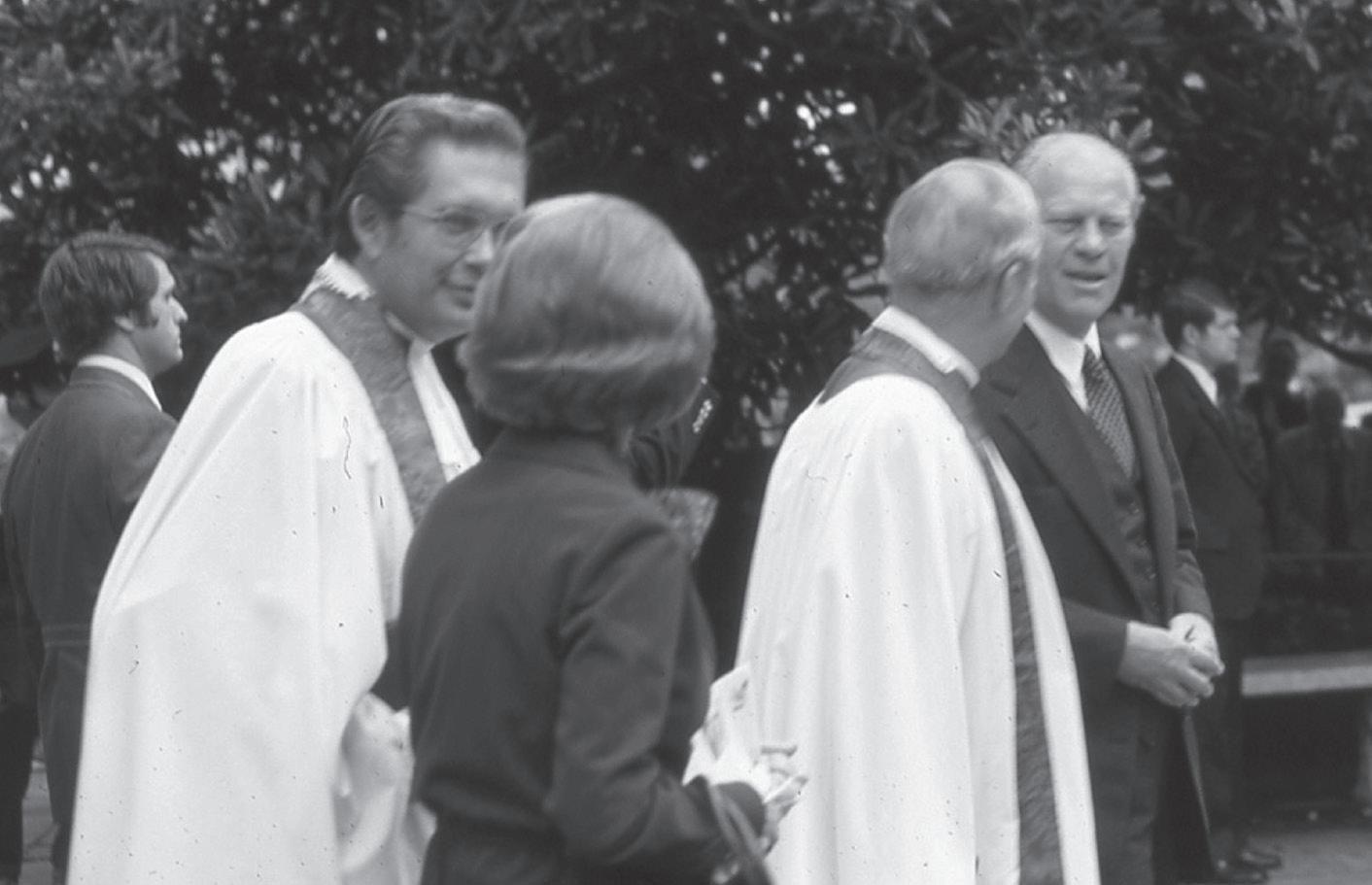
occasional attendee, giving this church its nickname, “Church of the Presidents.” President James Madison established this tradition of a “President’s Pew,” selecting Pew 2B for his private use in 1816. During a renovation in 1843, the pews were renumbered and the President’s Pew became Pew 58. President John Tyler asked that Pew 58 be assigned to him and paid for its use in perpetuity by Presidents of the United States. Additional renovation in 1883
basket was passed around to collect contributions. The reporters knew when to come out of the church and take their respective positions outside. I followed them and took the same place outside to take more pictures. Soon the President and the first lady emerged and once again, reporters threw the same questions at him. As expected, he did not answer any questions and slowly walked to the waiting car, while conversing with the church officials. It was quite
noticeable to see the kind of secret service protection given to the President as he and the first lady entered the car.
We are used to seeing Presidents and other dignitaries on televisions, newspapers and magazines and we hold an image of them in our minds. However, in person, they look different. President Ford looked different from all others surrounding him. Perhaps the prestige and the power of the office made him look so different. He stood out in the crowd. He looked highly dignified and distinguished. In other words, he looked like a President.
Thirty-eight years ago, I enjoyed the thrill of entering the church with the President of the United States. Looking back, I wonder if I would do it again, if I had a similar opportunity. I sure would not. It wouldn’t be the right thing to do. Now I believe that this is a private moment for the Presidents and their families and they need to worship in peace without being on display, or being the centre of attraction.
The challenge of not only being a part of a church community but also praying in peace has long been a problem for Presidents, according to historian Carl Sferrazza Anthony. “McKinley hated having people staring at him while he read Psalms, sang hymns, put money in the collection plate or took communion,” he writes in
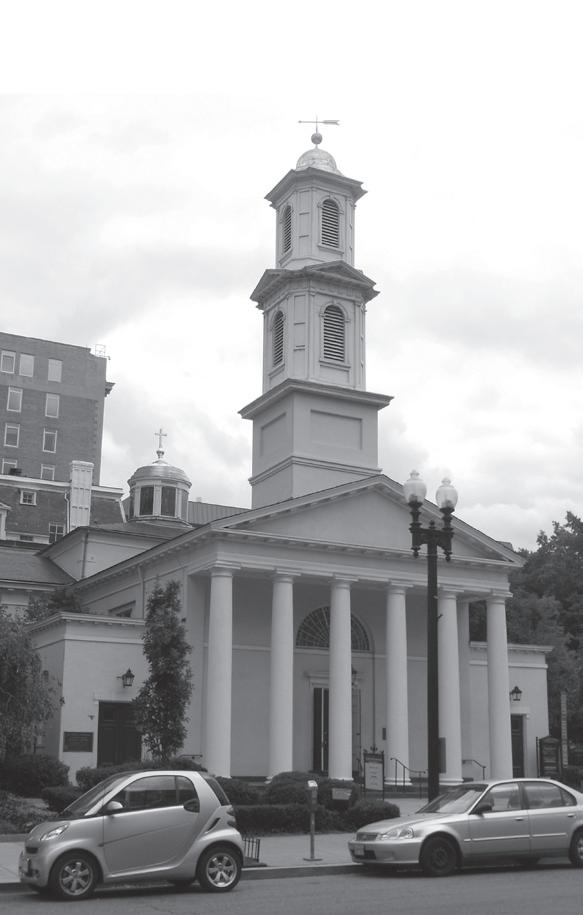
America’s First Families, “By the 1920s, getting a presidential family in and out of the church was a production. Secret Service agents had to cordon off a clear path from the curb to the church entrance before the Coolidges arrived….[and] they were swiftly escorted to their third row pew at the St. John’s Episcopal Church.”
On the weekend before his inauguration, President Obama attended services at the 19th street Baptist Church. The President was reportedly taken aback by the circus stirred up by his visit to the 19th Street Baptist in January. Lines started forming three hours before the morning service, and many longtime members were literally left out in the cold as the church filled with outsiders eager to see the new President. Even at St. John’s, where the President celebrated Easter, worshipers couldn’t help themselves from snapping photos of him on their camera phones as they walked down the aisle past him to take communion. Later, President Obama decided to follow in
President George W. Bush’s footsteps and make his primary place of worship Evergreen Chapel, the nondenominational church at Camp David.
Camp David is usually a weekend country retreat of the President of the United States and is located in wooded hills about 62 miles northnorthwest of Washington DC in the Catoctin Mountain Park area in Thurmont, Maryland. It is officially known as Naval Support Facility Thurmont and is technically a military installation. The problems with sightseers and onlookers eager to see the first families are not faced at the Chapel, which attracts a congregation of 50 to 70 people on most Sundays. Each week, regardless of whether the President is onsite, Evergreen Chapel holds nondenominational Christian services open to nearly 400 military personnel and staff, as well as their families.
Coming back to President Ford and his Agricultural Secretary, Earl Butz resigned his cabinet post on October 4, 1976 and returned to West Lafayette, Indiana, and was named dean emeritus of Purdue University School of Agriculture. On Nov 5, President Ford would lose his bid for reelection to the then Georgia Governor, Jimmy Carter, who would become the 39th President of the United States.
Reference:
The Obamas Find a Church Home- Away from Home – Amy Sullivan (http://www.firstladies.org/documents/art_church.pdf)

The Wait
Amitabha Bagchi, New Jersey
The young doctor looked at me through thick, horn-rimmed glasses. “Shastrimoshai,” he said matter-of-factly, “I have to send you for a chest x-ray.”
For a moment the Earth moved under my feet. The chair I was sitting on had a mind to topple over. The bare electric bulb that hung from a cord, feebly illuminating the room while casting deep shadows all around, seemed for an instant to swing. My vision narrowed into a tapering and ever-darkening
cone; at the end of it was a darkcomplexioned, oily face that was uttering absolute gibberish to me.
I recovered and stared blankly at the young man with a thin, neatly-trimmed moustache and a prematurely receding hairline. He was offering me plenty of reassurances: It was only a routine diagnostic test; I had very little to fear; he doubted if there was anything seriously wrong with me; he just wanted to be sure.
I staggered out of the office into the wintry dusk. So that was it! I had tuberculosis! I suddenly felt resentful of Rani. Did she have to do that – nagging me to come to the new doctor in town for a check-up? Sure she was worried; I would grant that. She was worried about my persistent cough, especially after the daily bath. But look at where that landed me. Pretty soon the verdict would be given. I was headed for the sanatorium! Outside, an unseasonable
rain had wetted and compacted the dirt on the unpaved road. That was some relief. The few street lights in this backwater town glowed dimly under an overcast sky. As I walked past the peepal tree, the darkness around the trunk under the outstretched limbs looked positively ghoulish. It was there that in the previous year, a young woman was exorcised in broad daylight. What a spectacle that was! The ojha (shaman) kept on cursing and mercilessly thrashing the ghost who had settled on her, but it was the woman’s body that took the beating and broke out in prominent welts. In the end, the evil spirit (speaking through the woman in an altered masculine voice) begged for mercy and offered to release her. “Show me the proof,” the shaman barked.“Grab the sandal in your mouth and crawl on your belly to the trunk of the peepal.”The ghost obliged as the woman did the bidding and then fainted. The spectators expressed their approval with applauses of delight.
A lump formed in my throat as my thoughts turned to my grandson, Tapan. I would have to keep him at arm’s length from now on, not get too close, so that the child does not get infected. What a terrible situation! What a pity!
***
The little town where I was living had a college, where I taught Sanskrit, but no x-ray facility. For my diagnostic test, I would have to go to the main district town – less than an hour away by train. My doctor had
taken care of the appointment and other necessary arrangements.
The day of the chest x-ray began inauspiciously. While brushing in the morning, I cleared my throat, spat out the sputum, and saw that it was streaked in red. Must be blood, I thought with horror. A sense of doom enveloped me. Slowly, pensively, I tugged at the rope of the pulley to draw water from the well. I rinsed my mouth, filled a pail with water for bath, and carried it upstairs to the open verandah, passing by Rani’s kingdom of kitchen. She was boiling milk for payesh (rice pudding).
“I found blood in my cough,” I started hesitantly. “I was clearing my throat while brushing.”
This time Rani was indifferent, or at any rate feigned indifference. “Must be your bleeding gum. Or maybe it came from your snuff-stuffed nose. Was the color red or reddish brown?”
I did not answer and carried the pail of bath water to the verandah and left it in the sun to soak in its rays. I needed to cover the top with a mesh to protect the water from blowing dirt and flying insects. As I got into my room for a gamcha (thin, gauzy, cotton towel), Tapan was in a corner near the window, his face buried in a picture book. How I longed to stroke and caress him! But I thought better of it and did not get near the lad.
Concentrating on my lectures in college was a challenge. This was true even in the Honors class. I normally
enjoyed teaching NaishadhaCharita,and especially liked to embarrass the girls with lusty descriptions of the well-formed female anatomy, expounding on the application of sandalwood paste on breasts as a way of combating the summer heat. It was great fun to look at their flushed faces and also glance furtively at their upper torsos. Today, however, my mind was elsewhere -- preoccupied with gloomy thoughts of things to come.
After classes I made a beeline for the train station. The English professor was there, declaiming on rhetoric and prosody to a group of students as he dug into some sweets at a sweetmeat shop. He owned property at the main district town and was a daily commuter. His surprise at seeing me was evident.
“What brings you to my town, Shastrimoshai? Anything special?” His voice had a mocking tinge, or so I thought. I invented a cock-and-bull story about going to see the newborn grandchild of a third cousin. It was not time yet to make others privy to my fears.
On the train, as I ignored the English professor blabbing away next to me, flitting images of Tapati filled my mind. Tapati, our neighbor’s daughter and my childhood playmate, someone I hadn’t thought of in ages but whose memory now came rushing back like a roaring waterfall. Tapati the little girl, thin as a reed, watching us boys play cricket as a spectator, cheerleader and ball-retriever. Tapati the schoolgirl, her hair
oiled, parted and braided in two long pony-tails, clutching her books to school. A pubescent Tapati, ready to flower into a woman, in an unaccustomed sari, with luminous eyes and a dazzling smile. Somewhere along the way, she had moved from the periphery to the center of my consciousness. And would have remained there forever, I daresay, if only TB hadn’t intervened.
First it was her younger brother who came down with it. No one knew how he got it. He was sickly to begin with anyway, and rather unsurprisingly did not survive, but he passed on the dread disease to her elder sister and caregiver. Then the pattern, sad to say, kept repeating itself: contract disease, infect caregiver, succumb to illness. The elder sister was followed by the mother and then the elder brother – the last one a healthy stripling and a sportsman. Pretty soon, what was left of the family was Tapati and her aging father.
The devastation of the family took a toll on Tapati. She grew physically gaunt and emotionally withdrawn. But her struggle as she dealt with the ravages of the disease increased her attractiveness to me. I approached my mother with the proposal to marry her.
“Are you mad?” She was firm in her denial. “There was phthisis in the family! Whoever caught it died. Think of the health of the offspring if you married her!” My father was equally and unrelentingly opposed. That was the age of the obedient Indian son – or, at
any rate, the Indian son who did not wish to invite disinheritance. I observed meekly as Tapati’s family moved away, and she eventually went to be a teacher at a Ramakrishna Mission school for girls.
All this had happened decades ago, but they seemed like yesterday as the driver pedaled his cycle-rickshaw to take me to the x-ray clinic. The affair there was routine, if a bit uncomfortable; I had to stretch and contort my body so that the machine would have a clearer look at my chest. When he was satisfied, the technician gave me the instruction to come back in three days. The film would have been developed by then, and the radiologist would be in town to look at the frame and pass judgment on my condition.
***
On the day before my return trip to the district town, Bhola made a surprise visit and turned me into a nervous wreck.
“Dropped by to have some tea,” said Bhola with pleasant nonchalance. “I was passing through, to go back to Desh and see Ma.” Bhola was Rani’s distant cousin from her ancestral village. He was a bright and ambitious kid. He had finished college, joined the police force and risen to the rank of sergeant. It was good to see his well-built frame in police uniform with a revolver in a holster by his waist.
Or used to be, to be more precise, before tragedy struck.
One of his siblings contracted tuberculosis. Pretty soon, others in the family followed. Looking
after and providing care for such patients was always a risky business, with the caregivers constantly exposed to infection. Finally it was Bhola’s turn to catch the disease. Fortunately for him, antibiotics had been invented by this time. His position and modest funds helped land him in the new sanatorium in Jadavpur. After about a year and a half, he was pronounced completely cured and discharged.
Medical discharge and societal acceptance are two different things, however, and need not always jive. To make matters worse, the disease (or its treatment) had affected Bhola’s vocal cord so that he could now speak only in a whisper. He had to retire from his police job and depended on pension and private tutoring to survive.
“How are things with you, Taracharan-da?” Bhola began amiably. His company was nice, but I had to be careful. Not get too close to him, to avoid breathing directly from the air he exhaled. I tried to smile and be appropriately hospitable as I searched for the special cupand saucer we kept in the house to serve him tea. Rani was delighted to see someone from her home village and asked him to stay for lunch. We had to make sure that plates and cups and glasses would be marked, cleaned and quarantined for the future.
In the evening, I took Tapan for maybe one last stroll together on the banks of the Ganges. By now, I was resigned to my fate. We walked on sand
to the water’s edge. I gently put my arms around the boy, tousled his hair and sprinkled some holy water on his head. Was it the last time I would caress him thus? Was it the last winter vacation he would be permitted to come spend with his grandparents? It was a struggle to get over the numbing depression as we slowly walked back home. It hadn’t rained in two days, and the caked mud of a few days earlier had turned into ankledeep dust.
When the fateful day finally arrived, I tried to maintain an outward calm as I grappled with my inner turmoil. It was worse than waiting in line to find out the result of my high school matriculation exam – from the fine print of newspaper pages pasted on the school wall. I had
no classes to teach that day, so I went to the station early to avoid facing the English professor. On my way there, I made a mental note of the brass dining plates, bowls and cups that would have to be separated and earmarked for me to use from now on.
At the district town, the cycle-rickshaw driver was unusually slow, or so it seemed, as he navigated crowded streets and alleyways lined with halffinished earthen images of Goddess Saraswati. At last the x-ray clinic came into view. The waiting area was filled with anxiousfolks crammed on long benches; to me they all seemed to have the emaciated look, sunken cheeks and blood-shot eyes of advanced TB patients. I wondered how I looked. There was a small mirror on a wall, but
its face was terribly grimy and gave very little reflection. Eventually, it was my turn to get inside the small office. The technician let me in and asked me to sit sown. Across the desk was a middle-aged man, the radiologist,with a thick crop of white hair. He fiddled with the envelope that the technician handed him, took out the large x-ray plates and examined them carefully against the light from the window. I looked at his furrowed brow and narrowed eyes and tried to divine the way the verdict would go.
Finally his face relaxed. “Wonderful news! The chest is very clear. You, sir, have nothing to fear.”
Once again I nearly fainted – this time from unalloyed relief.
A Mystery in Mental Chemistry Fariza Hasan, Massachusetts
It is not happening
The necessary components are all in
But crystallization I see none
I check my virtual petri dish
No sign of a crystal, or even a precipitate
Once more, I review the ingredients
They all are present, in the right order
Don’t recall any such delay
In my previous experiments
What is missing, I try to figure out
A perfect blend of materials is what I see
What else is needed to crystallize it?
I wonder, is a catalyst missing?
Carefully, I check again
Bright autumn sun, clear blue sky, gently flowing river
Flocks of geese frolicking in water
Pairs of black birds spreading their wings
In the open space above the river
A seagull basking in the sun on the shore
I look again, and I ask
Did an inhibitor get in the mix?
My search goes on, till I find the clue
To my surprise, I detect the retardant
It is my inability to envision the solitary seagull
To be just as joyful as the others in groups
My feeling is preventing the crystallization
Of the beautiful components into a poem
Darkness Descends On Angkor
Bakul Banerjee, Illinois
At this crowded table, let me sit by you in your yellow shirt with Angkor Wat logo, checkered scarf of woven cotton wrapped around your thin neck.
Cooked food stalls supply boiled eggs, rice, chicken soups. You are busy eating casting oblique eyes to tough waitresses tracking food supplies, arguing with changes.
Let me sit by you, as the white plastic chair wobbles under me. Brown sugar palm thatch on the roof of the stalls takes on a pearlescent patina as you settle bills.
Against orange hues of the sun setting beyond Bakhong hill, ocher robed monks complete ritual circles around towering temples, under the curled smiles of heads of Bayon giants
In past reincarnations perhaps, I was a child playing with puppies under these tables. Perhaps I was a mother, ancient, fighting against the urge to wipe sweat from your forehead.
Not a single electric light in the plaza, open shops stay empty but cooks cart away aluminum pots’n pans. I follow you, my guide in this holy place, to meet tour groups coming down the hill, cameras filled with magical light.
The Boogieman of Cambodia
Bakul Banerjee, Illinois
“It is important for me that the new generation of Cambodians and Cambodian Americans become active and tell the world what happened to them and their families ... I want them never to forget the faces of their relatives and friends who were killed during that time. The dead are crying out for justice.” -- Dith Pran 1
Boogieman wears many skins a charismatic one to deceive, others to cover purposeful sins
He knows fancy tongues for false promises to weave Boogieman wears many skins
Only a few can see his real skins, layers soaked in blood and marrows, always to cover his atrocious sins
When the reign of terror begins his tongue spews out poison arrows Boogieman wears many skins
When we see his malignant grins and join together to grieve too late to undo his heinous sins
Can we decipher his fancy tongues? Can we rip through his covers for sins? Even wise citizens fail to notice as he never wears Boogiemen skins.
1. Pran, Dith, a survivor of Cambodian genocide – Introductory note in his compilation “Children of Cambodia’s Killing Fields: Memoirs by Survivors”. See http://www.reuters.com/article/2008/03/30/idUSN30335287
My Very Own Island
Vishnupriya, New Jersey
On a warm May morning, Lounging in my favorite deck chair in the patio, The sunlight informs me of a warm new presence, A presence like the hearty glow of a winter fireplace, While the snow piles up on my driveway. My backyard is my very own island Of quiet and peace.
With my steaming cup of Earl Grey and a coconut macaroon, I watch the geese floating languidly in the pond, While my neighbor patiently waits with his fishing line
To take his first catch of the day.
A newly arrived snow-white swan from the far south, With her princess grace, Eyes him cautiously and then swoops down
To enjoy her fishy breakfast. The green canopy all around me Cushions the trees now after their winter bareness.
I take heart in the thought: “All’s right with the world”! * Buck up, I say to myself, Brace yourself to face the blows and Dare!!
* Browning, Robert. “Pippa’s Song”. Poetry Foundation, n.d. Web. 18 May 2014.
Everlasting
Ira Ganguly, New Jersey
Four thousand years ago
It was said in Vedanta Life has no end Cycle runs eternal. I have no knowledge
I just live from day to day Country to country. Once I was in India Was it I I wonder.
Am I wandering through eternity?
May be
Always may be
Lack of knowledge is my limitation
Universe is vast
Knowledge is enormous
Unfathomable in the universe
I can only open my mind
And let the light in
To fire the torch
And enlighten
The endless possibilities of life
Friend
Ira Ganguly, New Jersey
Day after day
Faces we come across
Pass us by like a flowing river
Only a few stand amongst thousands. Between the time and space, Country and city, Heaven and earth, Why only a few?
Growing up in the Opposite corner of the Earth, Coming across
Ten thousand miles of land and sea, We met Like many others. Why then
While others are passing by We stood, and said hello?
Did we know each other before?
In another time, Another life?
May be
May be we will be there
For each other again, Another time or space We are Friends forever.
Reminiscing
Chitra Mondal, New Jersey
Shelly remembers…
That blustery winter morning, it was the first snowfall of the winter
How strangely beautiful it was
The naked trees were rustling, the snow drifting against the windows and begging to come in
The houses were draped in white, the lawns and roads were covered with heavy white blankets
The snow was endless and it silenced the outside world
There was no sky no earth no humans no cars
It was dreadfully quiet but strangely beautiful…
Shelly remembers…
Her little Emma, stood before the window with a look of amusement
Wearing her beautiful blue dress, her favorite color, curly hair on her face
Her curious eyes looking out the window and soaking in the beauty of winter
Little Emma was observing every detail of winter
Her mind was wandering from one wonder to the other
Little Emma called-
“Mom, look at the white smokes from the chimneys. They are making clouds and are all going up together. But where are they going? Where is the sky today? Where did they go?”
Shelly remembers, she replied…
“Little Emma, we cannot see it anymore because they went far away to the other side of the world. And sky is taking a long nap today.”
Little Emma said “I want to go there someday!”
Shelly quietly hugged her little Emma and whispered “Keep on imagining my love and explore life… only the sky will be your limit. You are very special!”
Shelly whispers again today, on a blustery winter morning…
Her throat tightens, her heart aches, strange feelings move up and down inside
She whispers with tears-
“You are there my child. Keep on exploring my love. You are very special.”
Today, the snow is endless and there is no sky no earth no humans and no cars
It is deadening, mournfully beautiful and paralyzing
Shelly feels ethereal loneliness
But she realizes she hasn’t lost the feelings of wonder like little Emma
Her love for Emma is so deep, so soft, so white and so pure like wintry snow…
Three Poems Basab Dasgupta, California
Poem 1
Everyday my eyes caress you; you stay so nice, fresh and new. Once again I know you are the one I search. The cold and dark that I felt your golden spark made it melt like rain and snow cleared by the sun in March. All I made are yours tomorrow call it a trade for all your sorrow; I am sold to the plan on how to tend your prime. You can sing the song of spring; I ran to bring the diamond ring. Come hold my hand from now to the end of time.
Poem 2
I flew to the sky to match the blue of your eye It did not come close; I dream to drink in sips the pink of your lips I don’t need any rose. Your milky white skin feels silky like satin I would love just to hold; I did crave for a year to feel the wave in your hair and get lost in all that gold. I could be running for a mile to see that stunning smile shedding two rows of pearl; My hope begin to soar you’d be opening the door and let me call you “My girl”.
Poem 3
Champagne flows so pure, damn pain knows no cure. Only her face in my head, on lonely surface of my bed. Game played to take mate shame, it led to checkmate. Life flips in aftermath as pipe drips in master bath. Demon searching me to taunt keep on lurching free to haunt. Darkness makes it fate: a mark says “Exit Gate”.
Light of Hopes
By Rakhee Guha, New Jersey
(English
adaptation by Sushmita Dutta)
Silent night, watertight clock ticking, beating light I want to write... yes, I want to write, but write what?
Can’t those whispering, slurring heart’s content remain in heart, for now? Un-spoken, un-heard?
=¥– !l’þz y!¤Å
!lhßì¸þ îûy•þ– Ö™% ‰!’þüîû !þ†þ!þ†þ xyGëûy
‡%î !¡‡öì•þ ¥zöìFSé †þöìîû– †þ# !¡!‡ xyÚ
!löìîû ôöìlîû †þíy– ôöìlöì•þ¥z íy†þ ly
xyöì†þ !¡‡î ë•þ #îöìlîû èþyîlyÐ
†þ•þ xy¢y †þöìîû ~öì¤!Sél% ~ ö˜öì¢
#îöìlîû öôy’þüþy ö†þyíy ‰%öìîû öˆ¡ ~ö줖
xy– ö˜¥ î’þü ¢_« ¡yö숖 öël •þyöì¤îû ö˜öì¢
†þ•þ öë ¢!_«– †þ•þ¥z ¤y¥¤ †þ# ¥öìëû öˆ¡ ö¢öì£ìÐ
•þy¥zöì•þy xy ôyöì†þ ’þy!†þ– ôyöìˆy ö¢yöìly xyôyîû †þíyÐ
˜yGöìˆy ¢!_«– ˜yG ¤yôíÅÄ– ö•þyôyîû ‹þîûöì” †þ!îû ôyíy
~†þ!˜l öèþyîûöìî¡y ’þzöì‘þ öël ö˜!‡
¢îû#îûþy ¥y¡†þy ¥öìëûöìSé– ¤¥öì ‹þ¡!Sé– ~!†þÚ
•þî% !†þS%é öþ›öìëû!Sé #îöìl– ëy þ›y¥z!l xyöìˆ
öèþyöìîûîû ¤)öìëÅy˜ëû– xy†þyöì¢ †þ# ö¢yèþy yöìˆ
xyîû þ›)!”Åôyîû ‹„þyöì˜îû xyöì¡yÐ ôöìl †þ•þ ¡yöìˆ èþy¡
¢îûöì•þîû îy•þyöì¤ ö˜y¡y †þy¢ æ%þ¡=!¡–
²Ì†,þ!•þ ¥y!¤ëûy ö˜ëû– ö‹þyöì‡ •þyöìîû •%þ!¡Ð
¤ôëû !Sé¡ ly ~ ˜,¢Ä ö˜‡yîû
xyöìëûîû öôyöì¥ ô_ ¥öìëû– †þyöì †þ˜y†þyîûÐ
xy xy!ô ¢yhsý– xyôyîû !‹þ_ x!•þ !ßiîû
#îlþy öël ~†þ ¢y!hsýîû l#’þüÐ
What’s the rush? I said, calm down, see the frown on life’s face coated with dust from the past, so, I have to write. Yes, I will have to write. Touch life, write on un-read worries, fears apprehensions, tears. Touch life, so close that I can feel it. Write on it. Tear it apart. Life. Listen, I had come to this land of untouched places nameless faces Unknown feelings and consigned hopes. Life. You took your turn for reasons unknown and, my body became stiff. As if, my flesh and bones had hardened in fear to caution that I had lost my strength in vain. Lord! Have mercy! Please. Give back my strength Touch me. Caress me. Your touch is the only touch xy¢yîû xyöì¡y
Divine. Makes me breathe feel that I am living.
Have mercy. Lord, have mercy. Please.
And then, one morning, I woke-up feeling light, easy and lively. As if something attained that was un-attained...
The rising sun dawning moonlit stars glowing autumn winds blowing grass flowers dancing.... My God, I never glanced outside my window to be so close to life, and now, look at me, I am calm I am cheered, life is zestful, life is peaceful like a nest. My loving nest, at last.

òòôyóöì†þóó îûy‡# =¥– !l’þz y!¤Å
xyîyîû ö¤¥z !lhßì¸þ îûy•þ
xy Ö™% öl¥z ‰!’þüîû !þ†äþ!þ†äþ xyGëûy
xyG ‡%î !¡‡öì•þ ¥zöìFSé †þöìîû–
xy !¡!‡ xyôyîû ߺˆ#Åëû ôyóîû •þöìîû–
öîûy îûyöì•þ ‰%ô öèþöì. ëyëû–
l#öì‹þ xy!¤ †þ!îû cîûy–¤)ëÅ G‘þyîû xyöìˆ öëyˆîÄyëûyô xyîû
²Ìy”yëûyô †þîûy–
~‡l xyöìSé Ö™% èþîû¤y ÷˜î¢!_«–
ö˜öì‡y òôyó– ôöìl íyöì†þ öël xþ¡ èþ!_«–öîûy ¤†þyöì¡ ’þzöì‘þ ¤)ëÅöì˜îöì†þ •þy¥z î!¡–
ò¤)ëÅöì˜îó ö•þyôyîû ö•þy xöìl†þ ö•þ–˜yG ly xyôyëû ö•þyôyîû öíöì†þ !†þS%éþy ¥öì•þ þ›y!îû öël î#îû ¥l%ôyl
¤öìD xyöìSé ëyîû ö¡–~ #îöìlîû ö†þyl ö˜y£ì †þ!îûî îy
†þy•þîû ¥¥z þ›îû˜%/ö쇖
ôyl%£ìöì†þ öël ö²Ìô !˜öì•þ þ›y!îû ¤˜y íy!†þ ¥y!¤ô%öì‡Ð
To Mother
By Rakhee Guha, New Jersey
(English adaptation by Sushmita Dutta)
The night is silent again. Unconquerable. Sealed silence, monotonous, ticking of the clock is stifled. Time has come to a halt.
It’s time again, holding to arms, urging me to write. I do feel like writing, and tonight, it’s for you, my mother.
My lost mother, I wake-up every night in an urgency for yoga before the sun rises. Yoga, my only strength I can regain, I think.
And, now, it is you, mother, your strength courage and faith that you instilled in me, I relay that to the Sun and, beg for some light.
I bend down on my knees, and, I swear that I will never incur any sin, I swear, I will retain within wounds and hurts, and I will dispense just love. Unconditional love with an eternal smile.
Mother, please, take me into your womb again. Give me strength.
Youth Corner
The Final Straw
Mahashweta Gayen, New Jersey (Age 15)
Hewas tall, broadshouldered, muscular. He walked with downcast eyes and slouched shoulders, an uneven gait similar to that of a charging bull. His face was imprinted with a permanent scowl along with bushy, charcoalcolored eyebrows. They were complemented by a pointed nose and gray eyes as calamitous as the churning sea. Neglect had torn his timeworn sneakers and sullied his ragged t-shirts. He had black and blue bruises on his back and a jagged scar on his jaw, outcomes of his father’s violent rages. He was a bully who picked fights with kids and teachers, an outcast who flunked his classes and skipped school. Percy was 17 years old, yet he had the weight of the world on his threadbare shoulders. One particular afternoon, Percy reached home at 3:00, tossed his flimsy backpack
on the floor, and reflected on the day’s events. He had earned a solid 57 on his math test and had beaten Mark Ugliano to a pulp – but Mark was asking for it. He had criticized Percy’s 6-year-old brother, Alvin, for being dumb. It’s not that Alvin couldn’t talk – he simply chose not to in public. As for
his math test, Percy found it a miracle that he knew over half the information. He rummaged around in his backpack and pulled out his suspension note, his heart sinking as he realized how disappointed his mother would be.
“Percy! Is that you?”
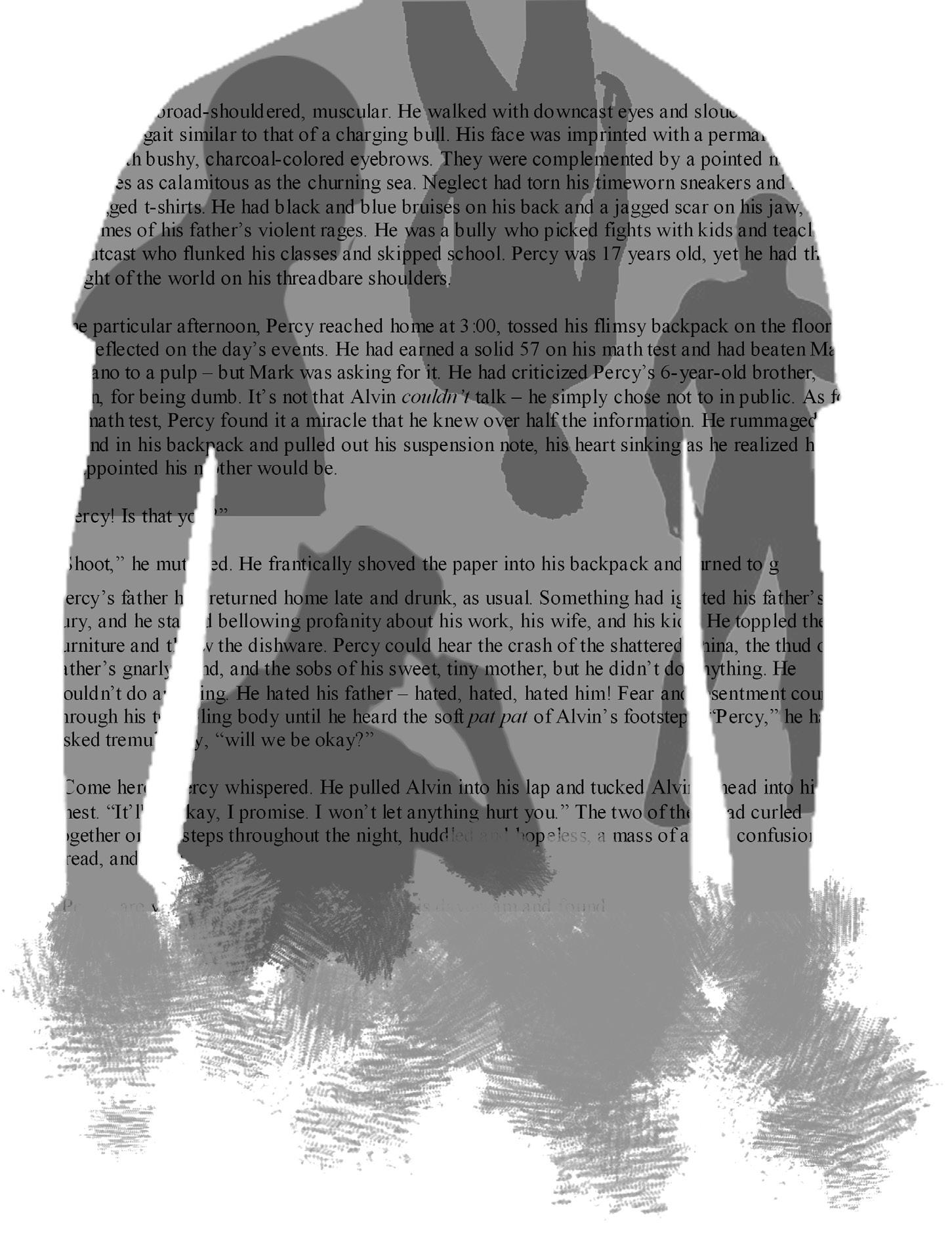
“Shoot,” he muttered. He frantically shoved the paper into his backpack and turned to greet his mother. “Hi ma,” he murmured, kissing her on the cheek. She looked exhausted. She was always exhausted. Percy’s mom worked two jobs to provide for her sons and to serve her husband’s alcoholic needs. As Percy surveyed her face, the cut by her right temple caused him to wince and flash back to the previous night. Percy’s father had returned home late and drunk, as usual. Something had ignited his father’s fury, and he started bellowing profanity about his work, his
wife, and his kids. He toppled the furniture and threw the dishware. Percy could hear the crash of the shattered china, the thud of father’s gnarly hand, and the sobs of his sweet, tiny mother, but he didn’t do anything. He couldn’t do anything. He hated his father –hated, hated, hated him! Fear and resentment coursed through his trembling body until he heard the soft pat pat of Alvin’s footsteps. “Percy,” he had asked tremulously, “will we be okay?”
“Come here,” Percy whispered. He pulled Alvin into his lap and tucked Alvin’s head into his chest. “It’ll be okay, I promise. I won’t let anything hurt you.” The two of them had curled together on the steps throughout the night, huddled and hopeless, a mass of anger, confusion, dread, and tears.
“Percy, are you okay?” He snapped out of his daydream and found himself looking at his mother’s frowning, fatigued face.
“Yeah, I’m fine,” he responded, ducking under her outstretched hand. He wondered what she would do if she knew how he was flunking. How he was always getting into trouble. How he tried to hide everything from her and Alvin so he could be strong for them, something Percy’s father was never able to do.
“Okay, well, I’m going to the grocery store. Look after Alvin. Dad should be home soon, so make sure dinner’s ready before he gets here, alright?”
“Mhm,” Percy shrugged her off.
As soon as his mom left, Percy checked to see that Alvin was in his room before he fell into a fitful sleep. It was hours before he was awakened by the sound of the front door opening. “It must be mom,” he thought groggily, rubbing his sleepy eyelids. Then he heard the heavy thud of footsteps and snapped out of his stupor. “No wait! It’s dad too! Dinner!” Percy bounded out of bed and rushed downstairs, where he saw his father chugging a can of beer. Nothing kindled Percy’s flames of fury more than his father wasting their precious money on his alcohol obsession. “DIANE!” Father yelled, “Where’s dinner?” Mom glanced over at Percy, who nervously shook his head. She stepped back slowly, hands raised defensively, and began, “Now Alec–”
“DON’T tell me you forgot AGAIN? I work and commute 12 hours a day and you can’t even serve dinner on time? AGH!” Percy’s father advanced towards his mom, hand raised as if to strike, face contorted with rage.
“NO!” Percy shrieked. His immense contempt for his father burst inside him, his flames of fury pelted helter-skelter inside his brain, leapt up on the cavern walls of his mind and cast a harsh, crimson light over his conscience. “DON’T TOUCH HER!” He screamed, and before his father could reach mom, Percy charged into his gut with full force. He pummelled his father’s face, broke his nose, and head butted his ribs, while
hot angry blood poured over his raw hands as he kicked and screamed, kicked and screamed. His father retaliated by placing a well-aimed blow on his ear, sending him flying into the oven, causing pots and pans to scatter the room.
“YOU LITTLE SCUM! YOU THINK YOU CAN HURT ME? TAKE THIS! –AND THAT!” Father kicked Percy in the gut over and over and over again. Percy was coughing up warm, sweet blood, tears were streaming down his broken face, but he valiantly rose up and lurched toward his drunken father. His mother’s shrieks and brother’s cries were constantly ringing in the background, but he ignored them, grabbed a beer bottle, and smashed it against his father’s head, momentarily disorienting him. He vehemently shoved his father through the back door and watched him stagger back and collapse in the darkness.
“You leave this house,” Percy deliriously declared, blood dribbling down his chin. “You leave this house, and you never return. We don’t need you. We don’t want you. Go!” He watched as his father, the coward that he was, stared at Percy in numb shock and then hobbled down the street into oblivion. Percy turned back to his family, whose faces were consumed with astonishment, terror, and slight relief. He looked straight at Alvin. “I told you I would protect you,” he murmured, and collapsed into his mother’s outstretched arms.
The Higgs Boson
Aniketh Guha Sarkar, New Jersey (Age 14)
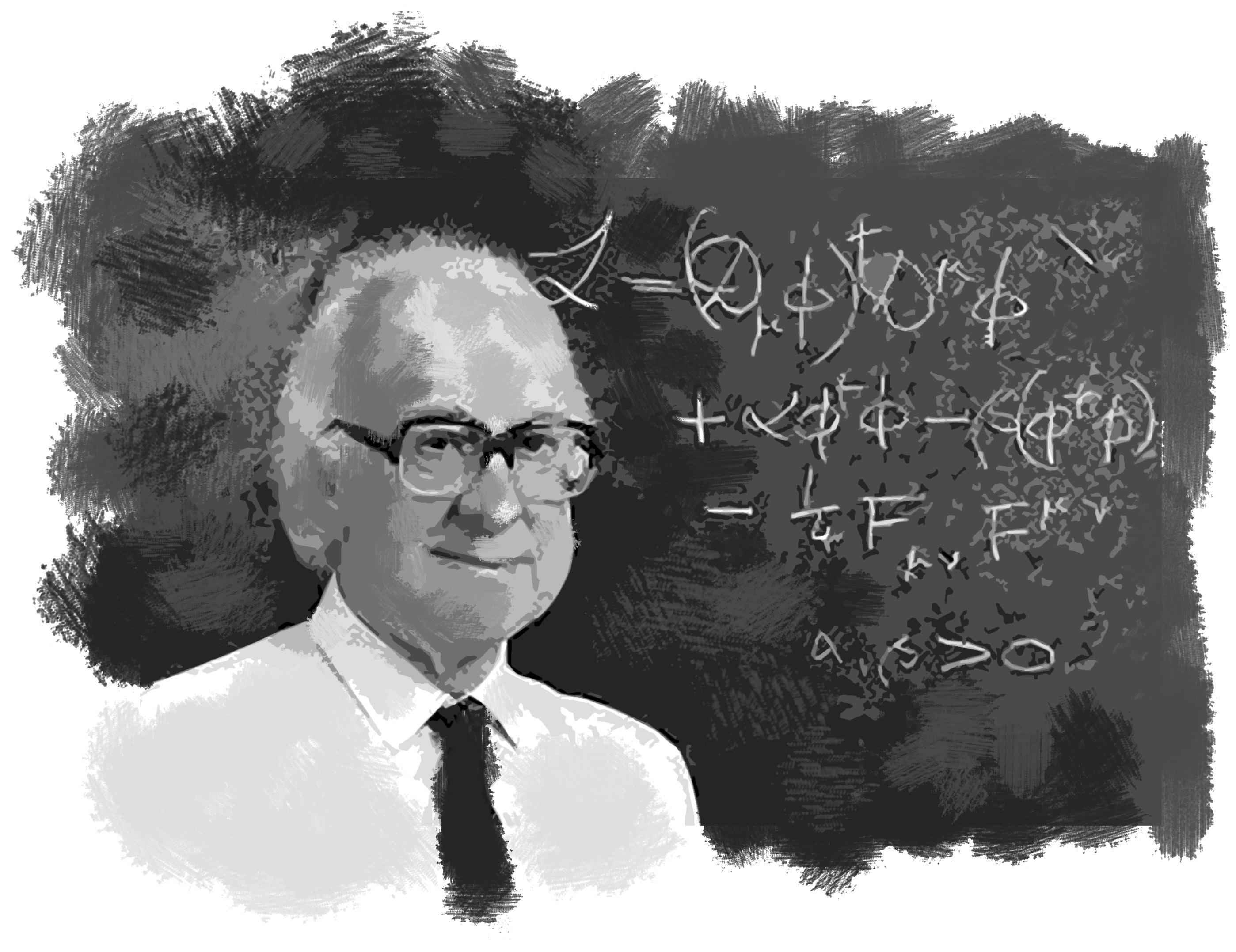
In 1964, 35-year-old Peter Higgs wrote a paper containing his theory on why there were certain anomalies in the masses of many elementary and composite particles. He sent
his paper to “Physics Letters”, a physics journal, to get published; but it was rejected, with the editors of the journal deeming it “of no obvious relevance to physics”. At a moment like
that, the last thing that would have come to Higgs’s mind was that his paper contained one of the most monumental theories (and later, discoveries) of all time. In the universe,
there are four fundamental forces: electromagnetism, the strong force, the weak force (those are their actual names), and gravity. A theoretical physicist, Higgs had a problem with the weak force. The weak force is expressed through two particles, the W and Z bosons. He calculated that those bosons should have a very small mass, and subsequently a very large range of effect. However, only the reverse was true: all experimental studies of the W and Z bosons showed that they were very massive (relative to other particles), but had a very short range. From that revelation came the main part of his theory. Higgs theorized that when the universe was created, no particles had mass. However, very soon after their creation, those particles started interacting with a field that gave them mass. Later, this field would be called the Higgs field. That was the basic context of what he first sent to “Physics Letters”. However, he added another paragraph, explaining a particle that could be brought forth from this field, to prove that his theory was correct. This was the final bit necessary to get his paper published, now by “Physical Review Letters”.
After garnering much attention, a particle accelerator called the Large Hadron Collider (as of this writing, the LHC is the largest machine on Earth, is the world’s most powerful particle accelerator, contains the world’s largest man-made vacuum, and uses the most power of any
machine on Earth) was built, for the primary function of discovering or disproving the existence of the Higgs boson. Why is this so important? The Standard Model, the elementary particles’ analog to the periodic table of elements, is widely regarded as the most accurate representations and explanation for all of the elementary particles (particles which are not known to be made up of any other particles) that are currently known to exist. However, there were some missing pieces and contradictions which composed some of the great mysteries of physics, such as the mass anomalies of the W and Z bosons. Many of these questions could be solved if the Higgs boson, and subsequently the Higgs field, were discovered. If the Higgs boson were discovered, the Standard Model would be cemented in history as, for now, the guide for all things subatomic. From that, many other conclusions and new theories could be derived, most notably supersymmetry, the true nature of dark matter and energy, and even if there are multiple types of Higgs bosons. In the real world, however, there would be almost no immediate benefits. However, many important discoveries take decades to come to fruition in terms of benefits to society. For example, it took many years before quantum mechanics, deemed originally as just a curious laboratory experiment, came to dominate much of modern technology, such as cell
phones, computers, lasers, and MRI scanners.
On March 14, 2013, the LHC powered up for another day of smashing particles together. The 27 kilometer long circular tunnel’s detectors and magnets stood at the ready, prepared to guide the colliding particles to their destination, and track what happens in those precious few millionths or billionths of a second before almost all the debris from the collision decay. The magnets started their work, guiding 2 protons in opposite directions to collide with each other. The speed of the particles accelerated to 99.999999% of the speed of light (A millionth of a percent slower than light. In other words, light travels at about 300,000 kilometers per second. The particles in the LHC travel at 3 meters slower per second, or about 299,997 kilometers per second.) Then the protons collided. As experimental physicists analyzed the data, they saw a strange particle. It was 126 GeV/c2 (a measure of mass and energy), had positive parity, no spin, electric charge, or color charge. These were the exact specifications of the Higgs boson. On June 24, 2013 a conference was held in Geneva to confirm and explain this information, where Peter Higgs gave a speech. Even though his initial paper was rejected by “Physics Letters”, Higgs got the last laugh, for the very place where he announced the discovery of the Higgs boson was the exact place where his idea was first rejected.
The Standard Model
Aniketh Guha Sarkar, New Jersey (Age 14)
ThePeriodic Table organizes and categorizes all of the chemical elements, which are substances made up of only one type of atoms. For example, the oxygen we breathe is an element because it is made of only oxygen atoms. Water is not an element, because it is made of two hydrogen atoms and one oxygen atom bonded together. However, the Periodic Table only classifies substances down to the atomic level. Atoms themselves are made of even smaller particles; those particles are made of even more particles, and so on. Once
you reach a group of particles that cannot be divided further, they are called elementary particles. To classify elementary particles, the Standard Model was created. Practically, the Standard Model has t functions. First, it identifies and classifies all of the known elementary particles. Second, it relates them to one another in ways that can help in the discovery of new theories. For example, the classification of elementary particles into either fermions or bosons gave rise to the super symmetric particle theory. On the other hand, the Standard
Model is generally known to be incomplete. The five main missing parts/explanations of the Standard Model are gravity, dark matter, dark energy, the fluctuating masses of neutrinos, and the imbalance in the amount of matter and antimatter in the universe. Each of these missing parts is so complex that they will have to be discussed in a separate article.
To understand the specifics of the Standard Model, we must first go over its structure. On the most general scale, it is divided into fermions, which have mass and make up most of what we see
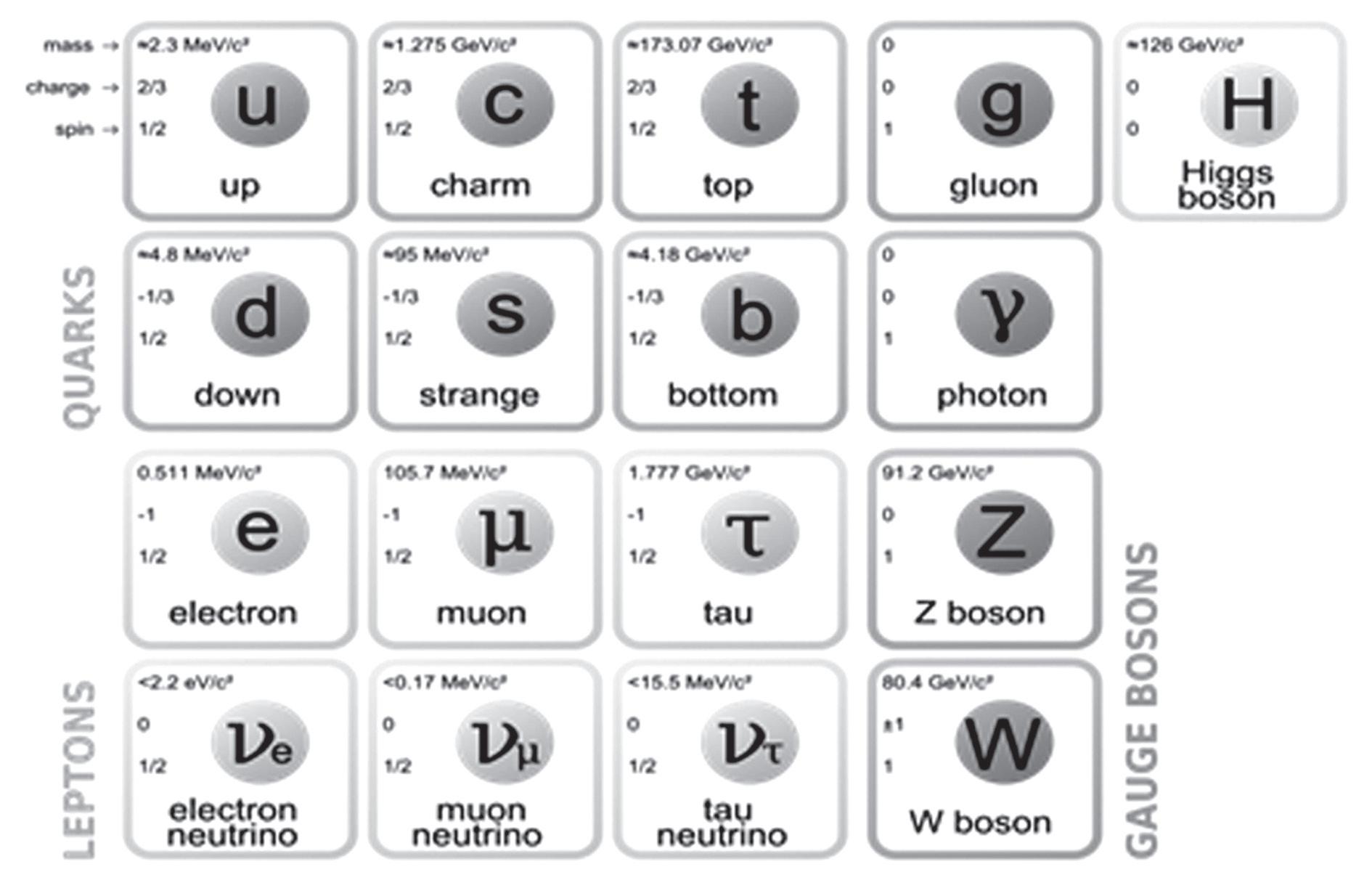
around us; gauge bosons, which carry the four fundamental forces; and the Higgs boson, which imbues all fermions with mass. The fermions are further divided into two categories: the quarks and the leptons. Quarks make up most normal matter by “binding” into groups of 2 or 3. They are divided yet again into 3 generations. The first generation contains the up and down quarks, the 2nd generation has the strange and charm quarks, and the 3rd generation is made of the top and bottom quarks. These different varieties of quarks are called flavors. The leptons are also divided into 3 generations. Each generation is made of a charged particle and a neutral particle. The neutral particle is named by taking the name of the charged particle and putting the word “neutrino” after it. The 1st generation is the electron (which is the basis of all chemistry) and the electron neutrino. The 2nd gen. is the muon and the muon neutrino. Finally, the 3rd gen. is the tau and tau neutrino. Next, we move on to the gauge bosons, which each carries a fundamental force. The four fundamental forces are the electromagnetic force, the strong force, the weak force, and gravity. In the
nucleus of an atom, protons and neutrons are clustered together, which seems counter intuitive because protons have positive charge, so they should repel each other. The reason this does not happen is because when protons and neutrons are both clustered together, the strong force kicks in and creates a very powerful overriding attractive force between the protons.
Most people know the electromagnetic force, which makes objects of opposite charges pull together and objects of like charges repel one another. The weak force is, obviously, very weak. It also has a short range. However, it is extremely important, as it causes nuclear decay and fusion. It also can do some very interesting things. For example, it can change the flavor (mentioned above) of a quark. This can lead to a neutron decaying into a proton, an electron, and an electron antineutrino, which is the antimatter form of the electron neutrino. Finally, gravity is an attraction between any two objects with mass. It is directly proportional to mass, and inversely proportional to the square of distance. It is the most well-known of the fundamental forces, but the
least scientifically understood. The gluon is the force carrier of the strong force. The W and Z bosons are the carriers of the weak force. The photon carries the electromagnetic force. The theorized carrier of the gravitational force would be called the graviton. However, it has not been discovered yet, so gravity is still not represented in the Standard Model. This is one of the main reasons it is considered incomplete. Finally, there is the most mysterious particle of them all, the Higgs boson. It is so unique that is in a class of its own, separate from the fermions and the gauge bosons. This particle is the carrier of the Higgs field, which is this all-pervading presence throughout the universe that gives mass to certain particles. For example, it would give mass to a top quark, but not a photon. The reason for this is not currently known, and even though the Higgs boson has been discovered, there is still more research going into it to discover more of its properties and the reasons behind it. In all, we have gone over the structure of the Standard Model and general summaries of each of its constituent particles. Below is a chart that summarizes it all.
At the Edge of the Ocean
Chaya Tong, California (Age 10)
At the edge of the ocean I stand
Wind touching the air
Sky moving ocean
Sun meeting sea
Sand warms my feet
Different colors everywhere
Many shells to pick up The ocean meets me I am prepared I am ready.
Chaya Tong (Age 10)
California
The air in the room is full of ideas But I can’t grab one. Sometimes trying to catch an idea is Like trying to catch a ball That freezes high up in mid-air, You jump once, twice, three times Before you give up. Sometimes ideas are scared to come out. Sometimes you just have to think.
Mine was hiding in a corner. Now I grabbed it.
The Burning Candle
Rupkatha Majumdar
West Bengal (Age 10)
The candle that burned, Now that it has turned, Into a small little spark, Which cannot bring light to dark.
It had burnt till the end, Till the colors started to blend, The flame became tiny, But it was still shiny.
Once it had burnt bright, And on that night, People lost homes and land, No one gave them a single helping hand.
One day, the lives were all lost, There was no light ----- only fog and frost. It burnt brightly for our dears, Who overcame all the fears.
It had burnt bright and tall, It had sparked for all, Who gave their hands To their own motherlands.
The candle still burns today, When everybody say, “She cried ------ He died” On that day too------ our mother wailed and cried.
Freedom Does Not Have Any Limits
Rupkatha Majumdar, Kolkata (Age 10)
Sail away from the safe harbor, Catch the trade winds in your sail, Explore, dream, discover, Know that you will never fail.
Learn to love, Learn to hate, Learn to fly, Learn to struggle through fate.
There are no limits, There is always a chance, Fly freely like a bird, Do everything ----- speak, sing or dance.
Always try to win, But also learn to fail, Or else when the sea is rough, You cannot control the strong gale!
Complete all the dares, Overcome your greatest fear, But when you lose, You will not shed a single tear.
There is entrance but no exit, There are simply no ends, But something you must remember, There are a thousand turns and bends.
Freedom has no limits, Freedom does not end, Freedom is the most important thing, It is life’s best friend.
Missing You
Koeli Raychaudhuri, New Jersey (Age 18)
I’m robbed of you when I need you the most, An essential element to my life, It’s often the lack of you that I boast, When really your absence just brings me strife.
Late at night, when my work’s keeping me up, When time to think seems far between and few, I find comfort in coffee in a cup, But not enough to stop my dreams of you.
As the sun rises, so does my suff’ring, It has been another day with you gone, My life is a blur as you I’m missing, The critical factor for which I long.
And so I sit here while once more I weep, I’m crying for you, my dear, darling sleep.
The Flowers Are All Dying
Rupkatha Majumdar, Kolkata
(Age 10)
The flowers are all dying, Mother nature is crying.
The children who were born on her lap, Are now fallen in the greatest trap.
They are slowly dying one by one, Neither they get rain nor the rays of the sun. Their colors are turning to black and grey, They no more stay happy and gay.
Their leaves have turned pale, They are being taken to shops for sale.
The lilies have tears,
The roses are facing their greatest fears!
The poppies cry all day long, They no more sing a beautiful song.
The lotuses are struggling in poisonous water,
The dahlias can’t grow as the earth is getting hotter and hotter.
There is no rain,
To kill the pain.
Mother Nature’s greatest fear, Is now right here!
The colors of the flowers are no more bright, Because there is only darkness and no light.
Oh Lord! Help the mother who’s struggling in pain,
Oh good God! Bring her the sun and rain.
Bring storms to the ocean and raise the waves, Bring out the dead from all the graves.
Let the humans suffer from pain, Neither give them the sun nor the rain.
One day, let all the humans die, Just because they had made Mother Nature cry.