How Data Analytics Jobs are growing opportunities in India
Datastandsasthefoundationalbasisfordecision-makingacrossdifferentfields.Theamountof datathatisproducedeveryminuterequiresskilledprocessingforitstransformationinto valuableinformationfordecision-making,andwiththis,theprofessionofdataanalyststakesa centralstageinmanagingthebusiness.
Datastandsasthefoundationalbasisfordecision-makingacrossdifferentfields.Theamountof datathatisproducedeveryminuterequiresskilledprocessingforitstransformationinto valuableinformationfordecision-making,andwiththis,theprofessionofdataanalyststakesa centralstageinmanagingthebusiness.
Throughtheuseofadvanced data analytics,variousindustriesreceivevaluableinformationto helpthemimprovetheirorganizationandtransformtheirapproachtobusiness.Thisgrowing areaofstudyisnotonlyrevolutionizingindustriesbutalsocreatingnumerousemployment openingsforyoungtalents.
Tableofcontent
Importanceofdataanalyst
Evolvingroleofadataanalyst
Industrygrowth
Careerasadataanalyst
Conclusion
FAQ’s
Importance of Data Analyst
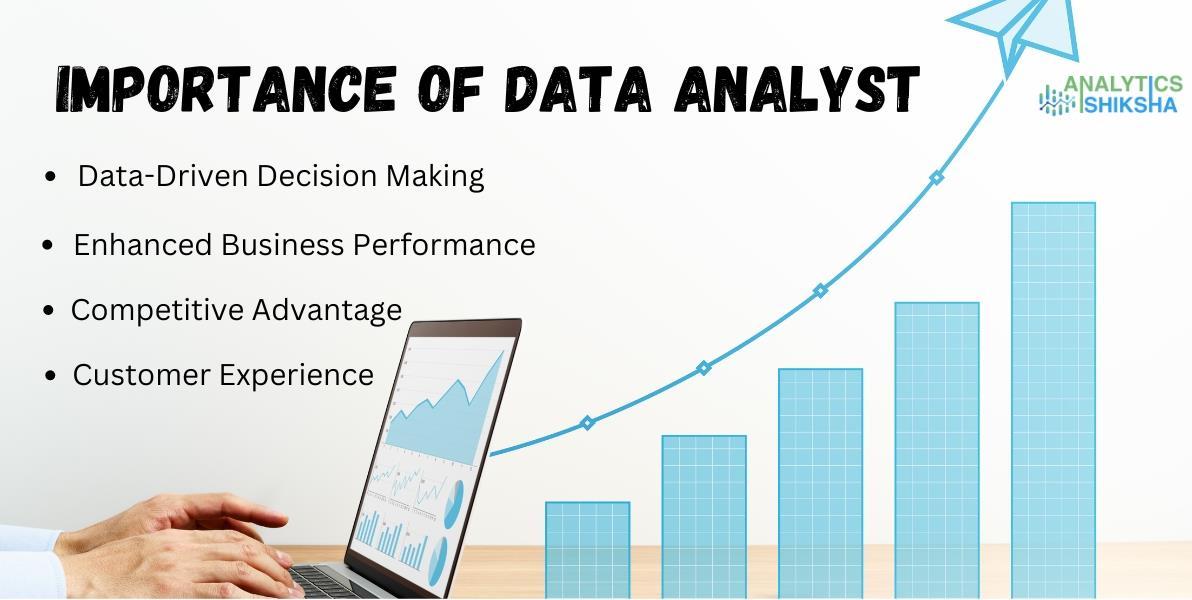
Itisimpossibletoemphasizehowsignificanttheroleofadataanalysthasbecomeinthe modernbusinessandtechnologicalworld.Theroleofthedataanalystisparamountto determineimportantinsightsfromrawdatasoastoenhancedecisionmakingandplanning withintheorganization.Herearesomekeyreasonswhydataanalystsarevital:
Data-Driven Decision Making
Informed Decisions: Dataanalyticsallowdecisionstobemadeonrealfactsinsteadofrelying onassumptionsormakingguesses.
Risk Reduction: Accordingtotheanalyses,theremaybecertainrisksthatcanbeprevented beforetheydevelopintoamajorissueaffectingtheorganization.
Enhanced Business Performance
Identify Trends: Dataanalystshavethepotentialtodetectpatternsthatareratherhiddenand cannotbeseenbyhumaneyes.
Optimize Operations: Byevaluatingoperationaldata,analystscanidentifystrategiesfor increasingefficiencyandoutput.
Increase Profitability: Analyzingtheinsightsfromdatamayrevealsomewaystosavemoney anddefinethepotentialsourcesofincome.
Competitive Advantage:
Market Analysis: Beingawareofthecurrentmarkettrendsaswellastheneedsofthe consumersiscrucialinbusinesscompetition.
Personalized Marketing: Analyticsallowsforthecreationofspecificmarketingstrategies thatintendtoreachandinfluencecertaincustomersegments/categoriesandtheiractivities.
Innovation: Successful data analysis canprovidevaluableinformationthatcanhelpin productdifferentiationandcustomization.
Customer Experience:
Improved Services: Customerfeedbackandtheirbehaviorshouldalsobereviewed,which willfurtheraidinimprovingproductsandservices.
Customer Retention: Customersatisfactionandloyaltyareadirectresultofunderstanding whatisimportanttocustomers.
Evolving role of a data analyst
Inthelastfewdecades,theroleofdataanalysthaschangeddrasticallyandhasgonefrom beinganancillaryfunctiontoapivotalfunctioninanyorganization.Thisismainlybecauseof theexponentialgrowthintheamountofdatabeinggeneratedandthesophisticationofthe analyticalsystems.Today,dataanalystsdonotonlyhandlefigures;theyarebusinessenablers whousedataasthekeytounlockingbusinesspotential.Here’sadeeperlookathowthe rolehasevolved:
Historical Context
Initially,dataanalystswereshownsimplyasclerksordataprocessorswhocollected,purified, andaggregateddatatoprovideforhigherrankingdecisionmakers.Theyweremostlyconfined toworkingwithincertaindepartmentsoftheorganizationandhadlittlecontroloverthe businessstrategies.
Transition to Strategic Enablers
Whendatabecameacriticalcomponentofthebusiness,theroleofanalystsevolved.They beganto:
1. Connect the data insights across departments
Theroleofdataanalystsinitiallybecamemorediverseasitengagedinmultipledepartments, contributingtothedevelopmentofmarketinginitiatives,operationaladvancements,and financialmodeling.
2. Employ Advanced Analytical Tools
Withadvancementsinsoftwareandcomputationaltechnologies,analystsnowuse sophisticatedtoolsfordatavisualizationandmodeling,suchasTableau, Power BI,and SQL databases,tocreatemorecomplexandpredictiveanalytics.
3. Influence Decision-Making
Whileanalystsarenotstrategicplannersthemselvestheyareinvolvedinstrategicplanning meetingsastheyhelptobackupstrategicbusinessdecisionswithrelevantdataandhelpin
predictingfuturetrendsinthebusinessenvironment.
4. Optimize Data-Driven Strategies
Unlikesimpledatareporting,analystsenhancedataacquisitiontechniquesandqualityofthe collecteddata,affectingdatausageacrosstheorganization.
Recent and Future Trends Affecting the Role

The ongoing evolution of the data analyst role is influenced by several key trends:
1. Big data and the availability of data in general
Theincreaseindataproductionthroughthedigitalplatformindicatesthatanalystsmustdeal withdiversedata;therefore,theabilitytointegrateandmanagedataisimportant.
2. Machine Learning and Artificial Intelligence Integration
Organizationsdemandtheanalyststohaveabasictointermediateunderstandingofmachine learningtechniquesinordertoprovidemoreautomatedandbetterperforminganalytics solutions.
3. Risks and Security of Data
ItisalsocrucialtorememberthatnewlawspertainingtodataprivacysuchasGDPRandCCPA canlimittheoptionsavailabletotheanalystwhenhandlingthedata.
4. Real-Time Analytics
Datahasbecomemoredynamicandtheneedforprocessingthedatainrealtimehasledto analystsinstallingsystemsthatcanstreamandprocessdataintherealtime.
5. Data Literacy
Sincedatahasacriticalroleinmanagingbusinesses,analystsareresponsibleforimprovingthe dataliteracyofindividualsandgroupswithintheorganization.
Industry Growth
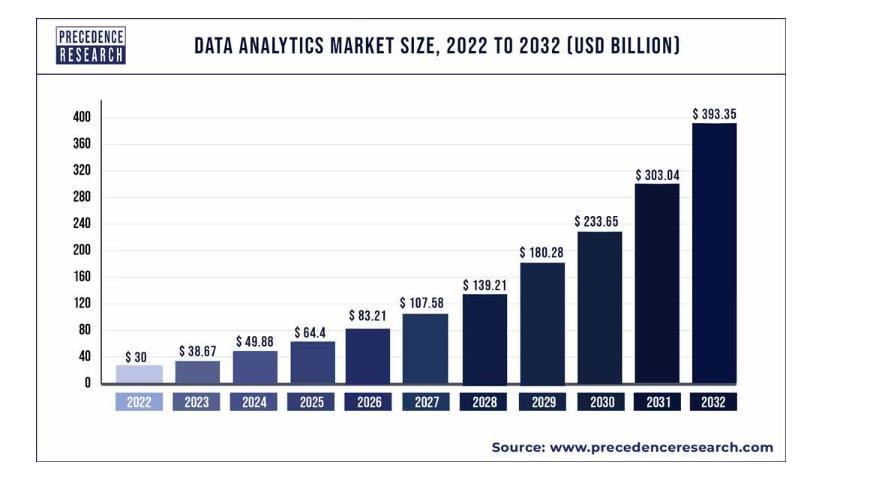
Source:precedenceresearch
Theindustryof data analytics hasbeensteadilygrowingwithintherecentyearssince businesseshavebecomemoredigitalandthereismuchmoredataintheworldalongwiththe constantdevelopmentoftechnologies.Withtherisingawarenessofthesignificanceofdataand analyticsacrossallindustries,theneedforanalyticsservicesandprofessionalshasincreased tremendously.Let’stakealookatthekeydriversandtrendsthatimpactthisindustry.
Key Drivers of Growth
1.
Digital Data Explosion
Thedigitalworldisgrowingataveryfastpaceandwillcontinuetogrowinthecomingyears. Astheusageoftheinternetcontinuestorise,socialmediaplatforms,andIoTdevices,thedata produceddailyisenormous.Itisevidentthatbusinessestodayrequireawell-developeddata analyticsfunctiontonavigatethisever-expandingdataenvironment.
2. Advancements in Technology
Thetechnologicalgrowthhasfacilitatedtheimprovementofcomputingplatforms,algorithms, andmachinelearning,whichhasincreasedtheperformanceofdataprocessingdramatically.AI
andpredictiveanalyticsareamongthetoolsusedindataanalysis,whichhavebecomemore availablecomparedtothepast.
3. Competitive Advantage
Today’smarketisverycompetitive,thus,dataanalyticsserveasthestrongsuitformany businesses.Theuseofdataanalyticsbringsbetterstrategicinsightsofthemarket,customer behavior,andorganizationalinefficiencieswhichhelpinmakingbetterdecisions.
Everybusinessrequiresdataanalyticsbecauseitinvolvesreal-timeprocessingand managementofbigdatacoupledwithimproveddecision-makingcapabilities.Secondly,big dataandbusinessanalyticsprimarilyaimstoenablebusinessestounderstandtheircustomers andmarketshenceimprovingmarketing.Thesequalitiesareexpectedtoincreasethe acceptancebymanycompaniesacrossdifferentindustries,thusdrivingthegrowthofthebig datamarket.
Anumberofnewbusinessopportunitiesareexpectedtoemergefromrecentdevelopmentsin thefieldofbigdatasuchassocialmediaanalysisandtextanalysis.Moreover,socialmediahas becomethekeysourcetargetingvariousformsofadvertisingcampaigns,productpromotion andeventsascomparedtoconventionaladvertising.
Current Trends
1. Emerging Need for More Data Science Specialists
Thereisahighemergingdemandforpeoplewhoworkwithdatasuchasdatascientists,data analysts,anddataengineers.AccordingtotheU.S.BureauofLaborStatistics,thedata scientistsandanalyst’semploymentwillincreaseby28%by2026.
2. Cloud-Based Analytics
Cloudcomputinghasgreatlyimpacteddataanalyticsbyprovidingelasticityinresourcesand robustanalyticaltools,allwithouthavingtoinvestfullyininfrastructure.
3. Democratization of Data
Therearemoreandmoretoolsandplatformswhichmakeiteasiertoanalyzedifferent informationforthosewhodon'thaveastrongbackgroundinadvancedIT.This democratizationhasbeenleadingtomoreemployeesgaininginsightstomakesmartdecisions withthedataavailabletothem.
Career as a Data Analyst
Choosingacareerindataanalystmeansoptingforaversatile,challenging,andrewardingjob wherepeoplecanlearn,develop,andmakeadifferenceinawidevarietyoffields.Here’s whatyouneedtoknowaboutstartingandadvancinginacareerasadataanalyst:Here’s
whatyouneedtoknowaboutstartingandadvancinginacareerasadataanalyst:
Educational Background:

EducationalBackgroundfordataanalyst jobs,itistypicaltohaveabachelor’sdegreein statistics,mathematics,computerscience,orinformationtechnology,economics,oranyfield thathighlightsanalyticsasacorecompetency.However,thespecificeducationalrequirements canvarybasedontheindustryandthecomplexityofthedataanalysisinvolved.
Further Education and Specializations:
Master’s Degree: Amaster’sdegreeindatascience,analytics,orarelatedfieldmay helpimproveyourcredentialsandmayberequiredformoreseniorroles.
Certifications: Certificationshelptoaddsomevaluetoyourresumeandproveyour proficiencyinthegiventools,technologiesormethods.SAS,MicrosoftExcel,orprogramming languagessuchasPythonandRcertificatesfromaccreditedinstitutionsispreferred.
Essential Skills
Technical Skills: Knowledgeofstatisticalsoftwareandcomputercodinglanguages(for instanceSql,Python,r)isessential.Knowledgeofdatavisualizationtoolsaswellasdatabase managementisalsocrucial.
Analytical Skills: DataAnalystisprimarilyresponsibleforanalyzingsophisticateddataand makingsenseoutofit.
Communication Skills: Clearlycommunicatetheirfindingstonon-technicaldecision-makers throughreports,presentations,andvisualization.
Attention to Detail: Itisimportanttopayhighattentiontotheaccuracyofdataanalysis,as evenonemistakemayleadtoincorrectresults.
Industries and Opportunities
Thereisademandfordataanalystsacrossallindustriessuchasthebankingindustry,the healthindustry,thetechnologyindustry,retailindustry,e-commerceindustry,andthe government.
Career Path and Progression
Workingfromjuniordataanalysts,apersoncanbepromotedtohigherranks.Aftergaining adequateexperienceandeducation,dataanalystscanpossiblymoveuptothestatusofdata scientist,dataanalyticsmanagerorchiefdataofficer.
Conclusion:
Dataanalyticsoccupiesaveryprominentplaceintoday’sbusinesses,beinganintegraltool tosolvevariousproblemsanddataanalystsarenolongerjustdataadministratorsor processorsbutakeystrategicassetforbusinesses.Thereisincreasingdemandforskilled professionalsthatcansupporttheindustrygrowth,duetocontinuousincreaseindata generationandtechnologydevelopment.
Dataanalyticsasaprofessionisexcitingandofferswaystoworkinsectorslikebanking, healthcare,retailandtechnology.Whentrainedandexperienced,onemaygrowtobecomea datascientist,adataanalyticsmanager,orchiefdataofficer.
Dataanalyticsprovidesampleemploymentopportunitiesandenablesorganizationstosurvive inthemarket.Thus,forthosewhoareexcitedaboutworkingwithdata,thisfieldoffersahighly rewardingandsignificantcareer.