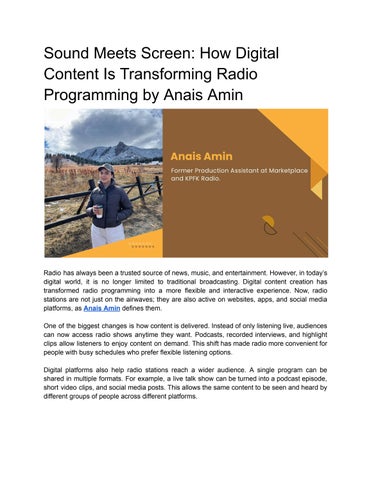
Sound Meets Screen: How Digital Content Is Transforming Radio Programming by Anais Amin

Radio has always been a trusted source of news, music, and entertainment. However, in today’s digital world, it is no longer limited to traditional broadcasting Digital content creation has transformed radio programming into a more flexible and interactive experience Now, radio stations are not just on the airwaves; they are also active on websites, apps, and social media platforms, as Anais Amin defines them
One of the biggest changes is how content is delivered Instead of only listening live, audiences can now access radio shows anytime they want Podcasts, recorded interviews, and highlight clips allow listeners to enjoy content on demand. This shift has made radio more convenient for people with busy schedules who prefer flexible listening options
Digital platforms also help radio stations reach a wider audience. A single program can be shared in multiple formats For example, a live talk show can be turned into a podcast episode, short video clips, and social media posts This allows the same content to be seen and heard by different groups of people across different platforms.
Another important benefit is audience interaction Social media has made it easier for listeners to connect with radio hosts. They can comment on posts, join live chats, and share feedback instantly This interaction helps build a stronger relationship between broadcasters and their audience. It also gives radio stations useful insights into what their listeners enjoy most.
Digital content creation also improves creativity in radio programming Hosts are no longer limited to audio only. They can use visuals, behind-the-scenes videos, and live streaming to make their content more engaging This variety keeps audiences interested and encourages them to follow the station across multiple platforms
In addition, digital tools help radio stations understand audience behavior Analytics show which programs are most popular and what topics attract the most attention This information allows stations to improve their content and make better programming decisions.
Branding is another key advantage. A strong digital presence helps radio stations stay visible and competitive in a crowded media environment It also creates new opportunities for advertising, sponsorships, and partnerships, which support long-term growth
Overall, digital content creation has completely changed how radio programming works It has made radio more accessible, interactive, and creative By combining traditional broadcasting with digital tools, radio continues to evolve and stay relevant in the modern media landscape.