IPT PetAID
* See your vet first for proper diagnostic guidance
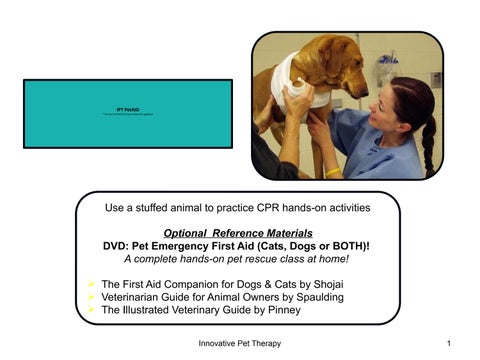
Use a stuffed animal to practice CPR hands-on activities Optional Reference Materials DVD: Pet Emergency First Aid (Cats, Dogs or BOTH)! A complete hands-on pet rescue class at home! The First Aid Companion for Dogs & Cats by Shojai Veterinarian Guide for Animal Owners by Spaulding The Illustrated Veterinary Guide by Pinney Innovative Pet Therapy
1
SA: Pet Norms Research each of these and create a safe plan around your own pets. What IPT techniques will you use to notice your own pet’s norms? Vitals: That which are essential to life… Temperature Skin and Gum Color: Capillary Refill De-hydration Heart Rate / Pulse Rate Respiratory Rate Responsiveness
Innovative Pet Therapy
2
Pets Should Move, Eat, Poop & Love…
Innovative Pet Therapy
3
SA: P.I.C Your Rescue
List next five animal rescue steps for each case study below, in the order of rescue actions. Step five is a veterinarian consultation. Give a general explanation of your activities. EXAMPLE: Animal begins to cough. A high-pitched noise begins to come from its throat and it begins to run around. Only if the animal cannot clear airway by itself, you would assist this animal by: 1. Ask for help, if available, for safety 2. Assist animal into a smaller area 3. Begin quick efficient chest thrusts in a standing position 4. Continue until airway is clear 5. Monitor breathing, vitals, and follow up with vet as indicated. Animal unknown to you is laying in the middle of the street on a hot summer day. The animal APPEARS to be unconscious. Your rescue steps would be _________. The animal is lethargic and not eating. Next it displays heavy panting and inability to walk. Your plan of action is _________. You are hiking with your pet. It is summer and you will be far from safe rescue means. You take your first aid kit containing _________, with a reason for needing each item.
Innovative Pet Therapy
4
SA: P.I.C Your Rescue
List next five animal rescue steps for each case study below, in the order of rescue actions. Step five is a veterinarian consultation. Give a general explanation of your activities. You and your pet are preparing for bed. Your pet begins to shake uncontrollably, falls to the floor, and then becomes very quiet and still. You would _________. An animal is lying in a pool of blood, unable to walk. Although movement is slow, you are aware that the animal is conscious. To help this animal you would _________. You and your pet take a winter walk. The temperature is not too cold, but there is snow on the ground. Following the two mile snow walk, your pet begins to limp and attempts paw licking. What do you do next? You have just returned home with new plants. Your pet seems uninterested. Returning home from work you notice the plants are knocked to the ground. Your pet is vomiting, and obviously in distress. The next phase of action is _________.
Innovative Pet Therapy
5
SA: Create Your First Aid Kit List with a reason for each item.
Classes in this area are ALWAYS fun and IMPORTANT! Stuffed animals are always willing to guide the learning path. Innovative Pet Therapy
6
SA: What to do?
True or False or complete the sentence…
Command an animal to sit if you need to medically help them. Breathing & compression rate for your pet is: Begin CPR even if you do not have an airway. Hold animals as hard as you can to restrain. Human medicine should be given to animals if your vet is not available. Normal temperature range for your pet is: If an animal is poisoned, pet care is more important than poison identification. Muzzle animals even if they are vomiting. Most animal accidents are not preventable. ABCD means: If an animal is clearly choking on its own, continue chest thrusts. Shock does not usually occur.
Innovative Pet Therapy
7
SA: What to do?
True or False or complete the sentence…
Use a tight band to tie off bleeding body parts. If you suspect a spinal injury throw the animal over your shoulder and get to the vet. If an animal is unconscious and has a pulse, continue CPR. All animals can handle all kinds of temperature ranges. Explain the different types of fractures. Explain the types of burns that may occur. A seizure is not a big deal, and an animal will feel fine afterwards. Most animals know what is poisonous and won’t eat it. Suck out snake, insect, or bug venom from animal wounds. Pet teeth are teeth and should be brushed. Checking capillary refill is of little use. Make the animal vomit immediately after ingesting poison. Name ten hiking animal first aid kit items.
Innovative Pet Therapy
8
SA: Animal Ailments Find 2 animal diseases that affect these body parts. Discuss what you will observe, contagion concerns, and AMCP precautions. How can the AMCP help without diagnosing? Always add to this information. General: age, genetics, activity level, nutrition, emotions, cancer, thyroid, osteoporosis… Skin: fungus, infection, trauma, internal or nutritional, stress, outside elements such as sunburn, dehydration, cleanliness, thyroid… Mouth: gum-tooth disease, trauma, elderly, teething, gingivitis, soft food diet… Eyes: visually impaired, trauma, clogged tear duct, allergies, cataracts, pink eye… Ears: infection, sensitivity, surrounding muscular tension, docked vs. non-docked, cauliflower, mites… Back: bone or muscular pain, age, activity level, positional support, age, walking, equipment (harness is the most physically appropriate), prolapsed disc… Legs/Feet: lame? (very broad term), nail or hoof length, pad health, trauma, fractures, declawed, arthritis… Tail: fractured, docked, positional, hind tension… Stomach: bloat, weak muscles (affects back comfort), intestinal torsion… Joints: dysplasia, nutritional, trauma… Internal: diabetes, parasites… Special Needs: trauma, genetics, age, nutritional, medical needs, paraplegic, visual, hearing, memory, trauma, seizure, cardiac care… Attitude: spayed, neutered… Innovative Pet Therapy
9
PET PEACE of MIND
Innovative Pet Therapy
10