IPT PetAID
* See your vet first for proper diagnostic guidance
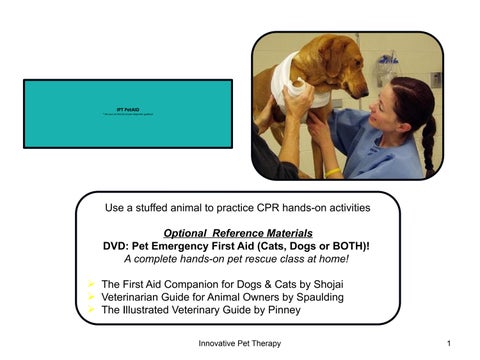
Use a stuffed animal to practice CPR hands-on activities Optional Reference Materials DVD: Pet Emergency First Aid (Cats, Dogs or BOTH)! A complete hands-on pet rescue class at home! The First Aid Companion for Dogs & Cats by Shojai Veterinarian Guide for Animal Owners by Spaulding The Illustrated Veterinary Guide by Pinney Innovative Pet Therapy
1
Shock
SA: Share a definition of each emergency below.
Seizure
Bleeding
Burn
Snake Bites
Fracture
Near Drowning
Poisoning Cold Injuries
Spine Precaution s
Electrical Head Injury
Heatstroke
Innovative Pet Therapy
Insect Sting
2
Cardiopulmonary Resuscitation CPR
Innovative Pet Therapy
3
Respiration
Dogs breath 10-30 per minute Cats breath 10-40 per minute
Breathin g
Breathing Changes… Temperature Age Exercise Breed Anxiety Pain Observe Bilateral rib and chest motion Depth Sound
Count while your pet is resting to get used to their healthy breathing patterns
Innovative Pet Therapy
4
This usually happens FIRST with animals. Position the head with a somewhat straight airway.
Ventilation Respiration - Breathing
Pull tongue out past lips and make sure nothing is in the airway. Pull tongue away from the teeth and hold the snout closed Remember, a firm touch is needed as you MUST seal the airway closed so YOUR air oxygen percentage will be used efficiently. Large dogs: Blow into nose with mouth tightly closed, Cats and small dogs: Blow into nose AND mouth. Blow just enough to move your pets’ sides.
15 - 20 breathes a minute
Don’t over blow or Gastric Distention will be the result. Do NOT push on the belly to remove air or vomit, as aspiration may result.
Innovative Pet Therapy
5
Pulse Check Heart Rate Expansion and contraction of an artery, caused by the heart pumping blood through the body. Feel or Listen to the heart beat and count for 15 seconds then multiply x 4. Use your two central fingers for pulse sensations. A light touch is all that is needed. Find pulse during IPT Health Check Up. NO heart beat = No breathing.
Carotid
Heart Beat : Stethoscope
Femoral
Radial
Innovative Pet Therapy
6
Heart Rate
HR is the number of heart beats occurring within a specified length of time. Pumps oxygenated blood to the rest of the body. Feel or Listen to the heart beat and count for 15 seconds. then multiply x 4. Include pets level of consciousness. Regular vs. skipping beats Rapid or Bounding Slow beats WITH pet’s respiratory signs Is your pet Dehydrated Low Blood Pressure Nervous Small breed Picture: Spurgeon’s Color Atlas Large Animal Anatomy The Essentials by McCracken
Innovative Pet Therapy
7
Animal Rescue Flow Does animal respond? Safety response: scene, muzzle? A=Airway Is Pet Breathing? YES: Monitor & transport to vet. NO: Open airway. Look at chest. Listen and feel for breathing sounds. Keep head away from animal’s mouth during check. B=Breathing Establish airway. Tilt head GENTLY, pull tongue over teeth, hold snout closed. Two breaths into nose; watch chest rise. Muzzle Precautions: seizures, vomiting
CPR Cardio Pulmonary Resuscitation C=Circulation Pulse check: femoral artery or use stethoscope. Capillary refill: gums or under eyes (2-second check). YES: Monitor breathing and vitals. Transport to vet. NO: Begin chest compressions. D=Delicates Mechanism of injury or distress. Signs of trauma. Immobilize. Monitor breathing. and vitals. Transport to vet.
Innovative Pet Therapy
8
Body Type Compression Approaches Taco: Cat, VERY small dog: Hold pet in hand while other hand squeezes both sides simultaneously. Remember you need to be positioned for efficient airway management as well. Narrow: Greyhound, Golden Setter: Lay on the right side for rib press. Barrel Chested: Rottweiler, Bull Dog: May lay on back for compressions. 80 – 100 compressions per minute for small to medium size pets.
Innovative Pet Therapy
9
Considerations & Precautions Correct Yourself & Continue CPR! Right Side compression position for decreased organ injury risk??
Compressions
Spinal precautions maintained? Xyphoid Process precautions. Broken ribs. Arterial bleeding.
Xyphoid Precautions: Do Not break this off!
Innovative Pet Therapy
10