A Theatre for a Thief
“I
recognise in thieves, traitors and murderers, in the ruthless and the cunning, a deep beauty – a sunken beauty.”
Jean Genet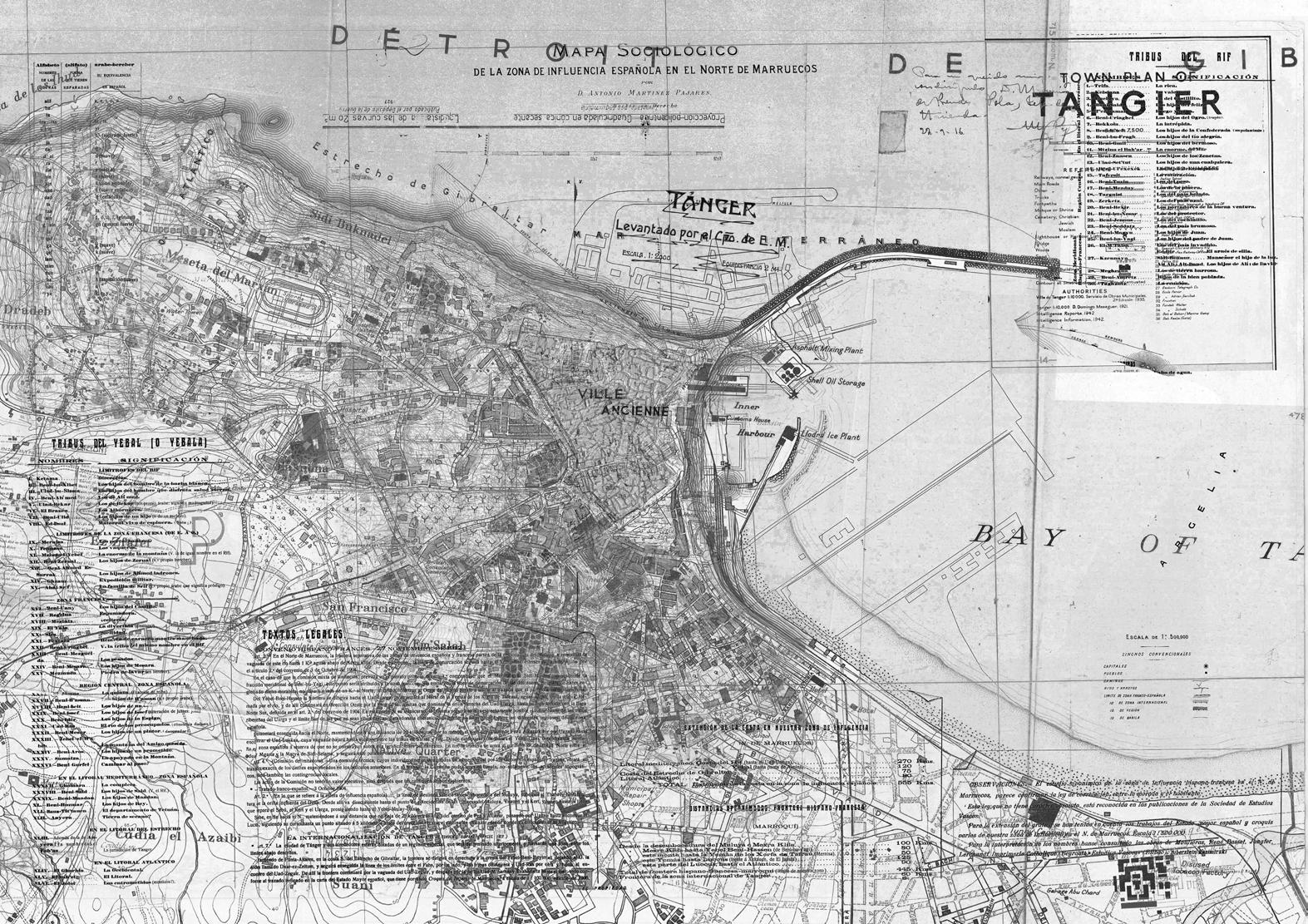
Act One • [Un]Framing the Thief
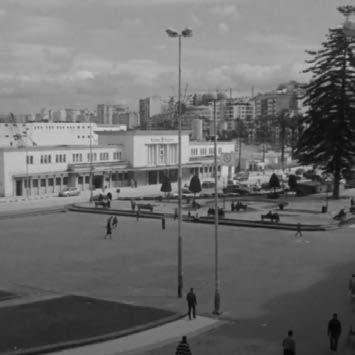
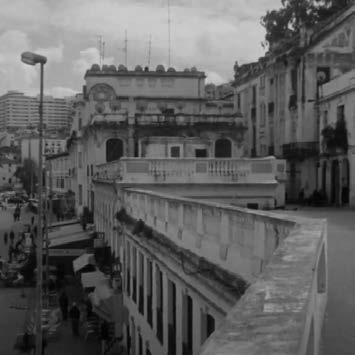
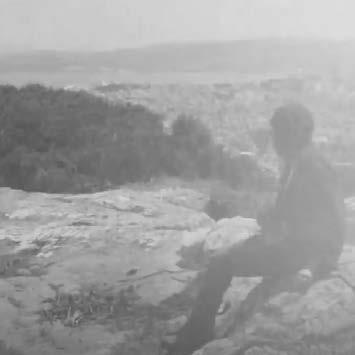
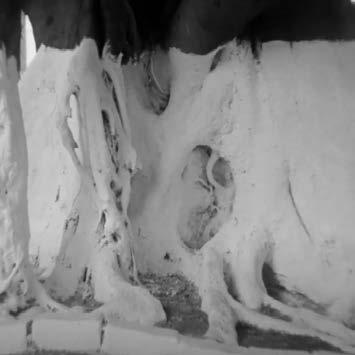
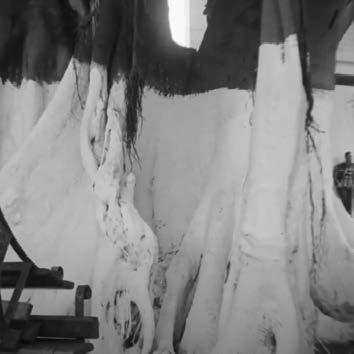
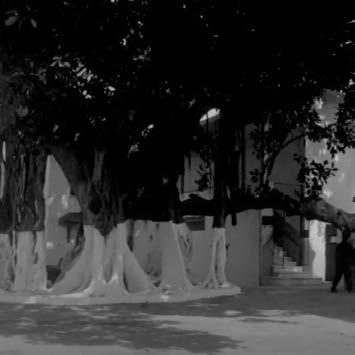
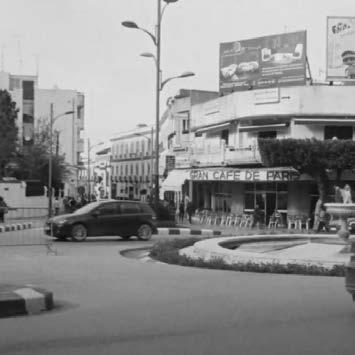
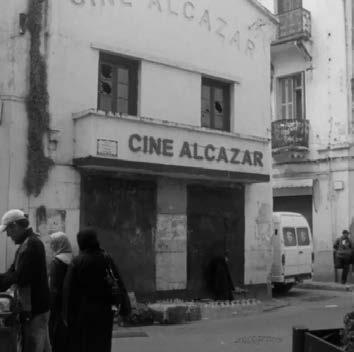
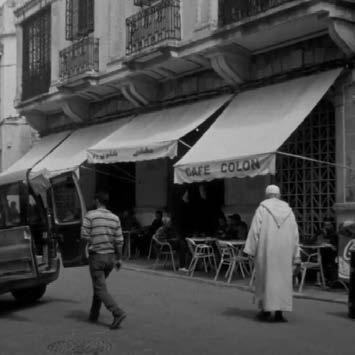
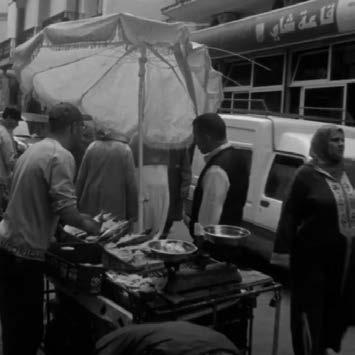
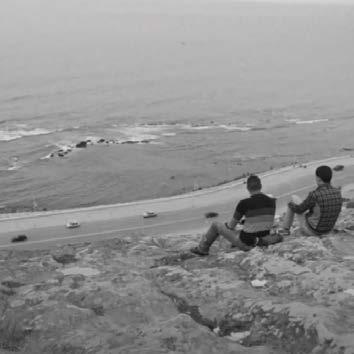
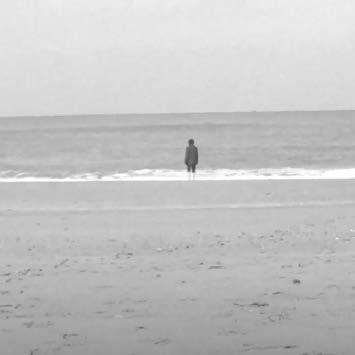
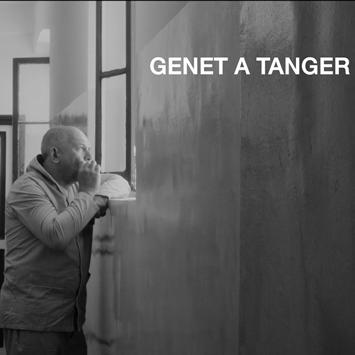
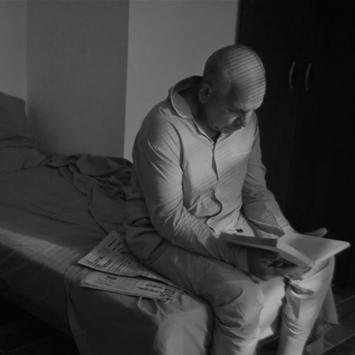
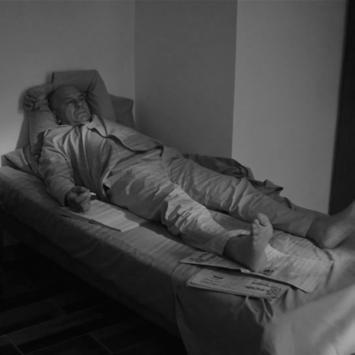
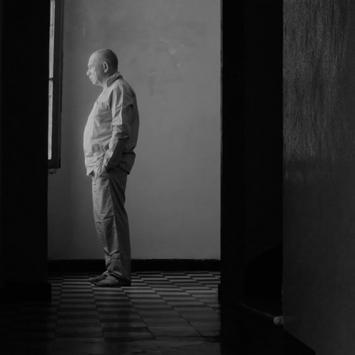
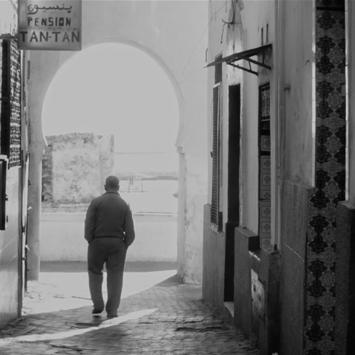
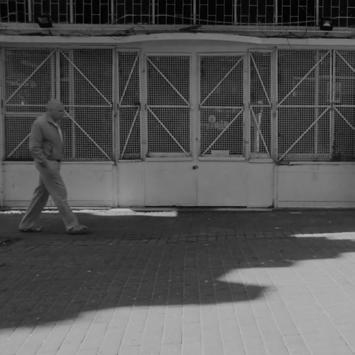
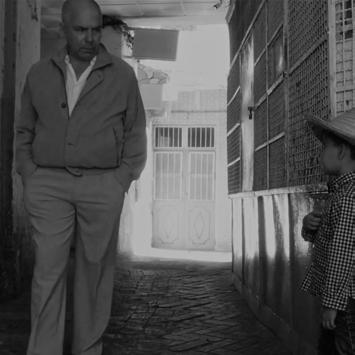
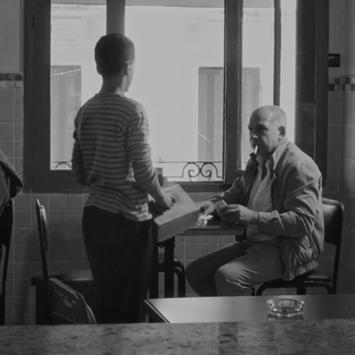
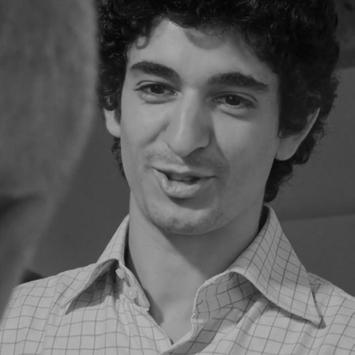
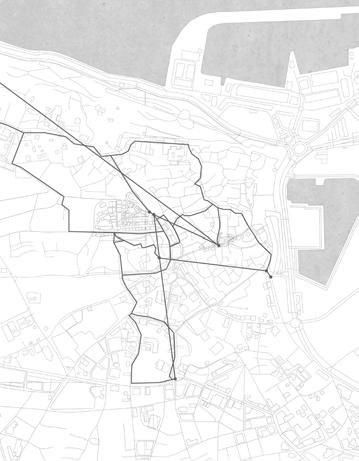
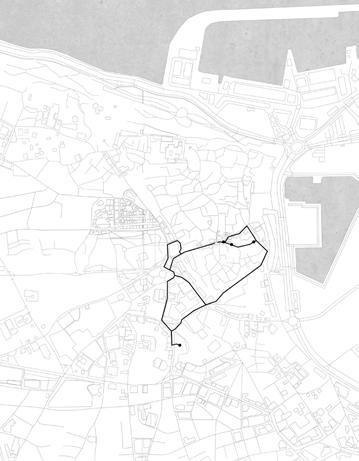
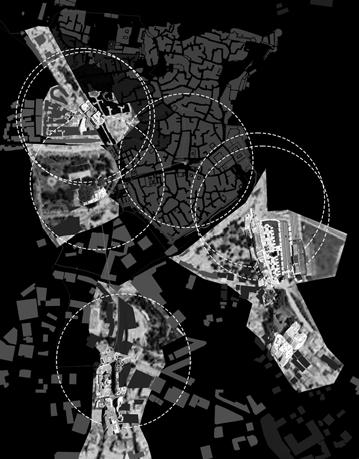
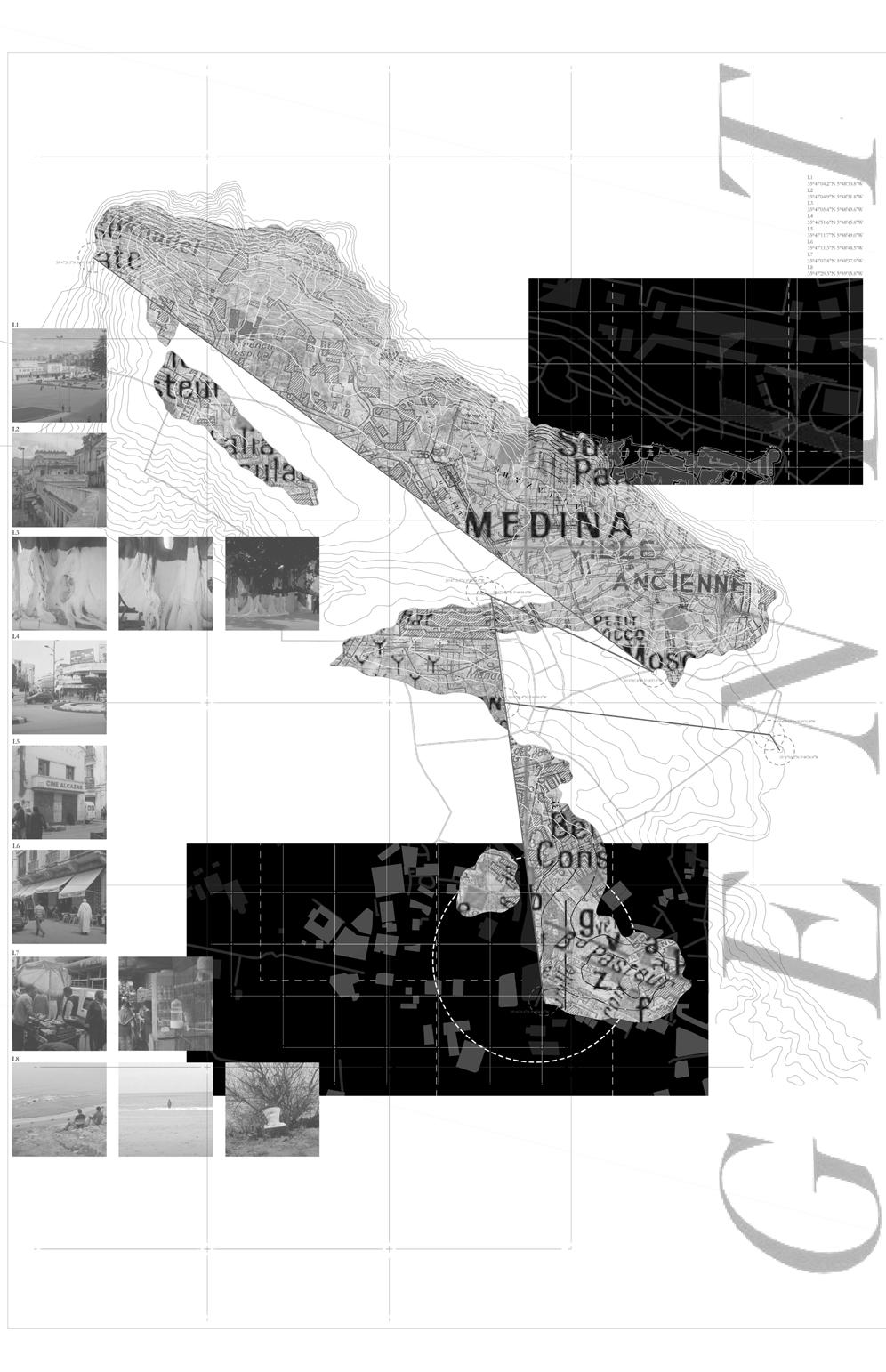
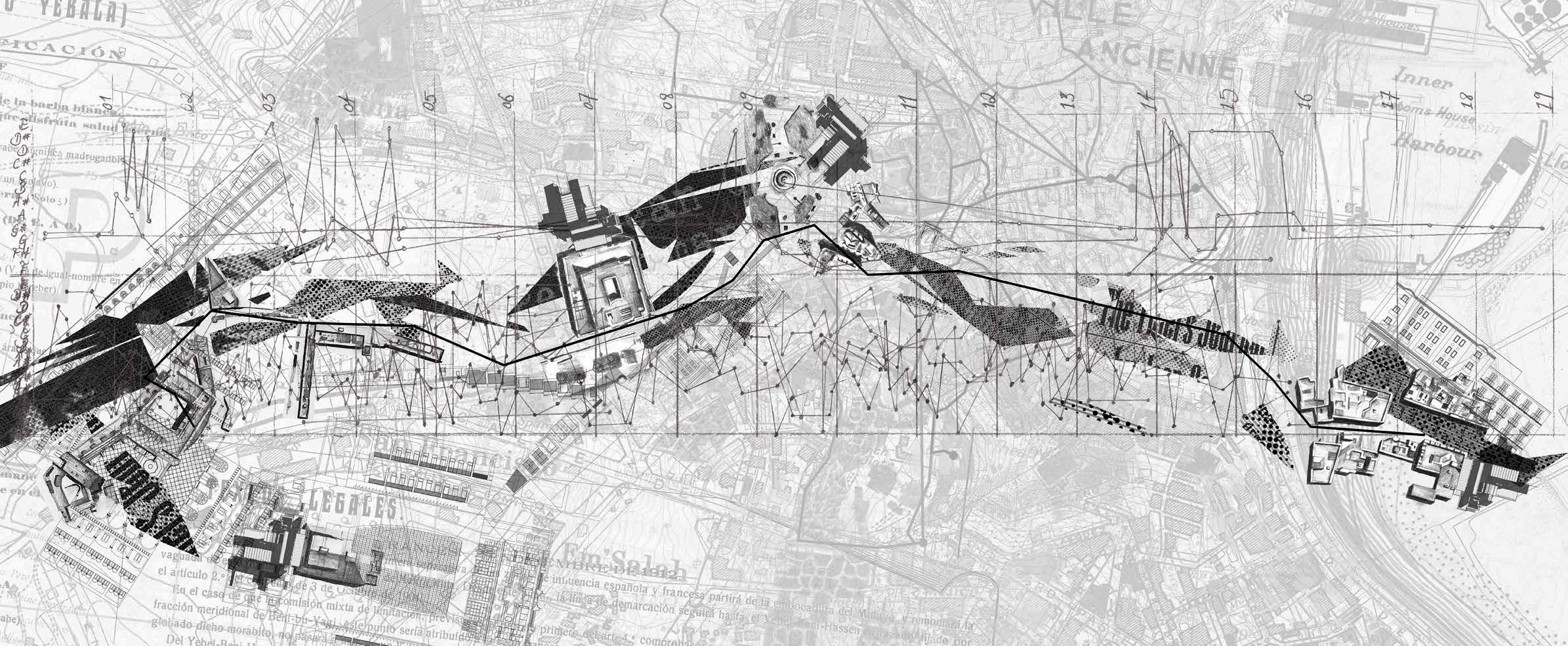
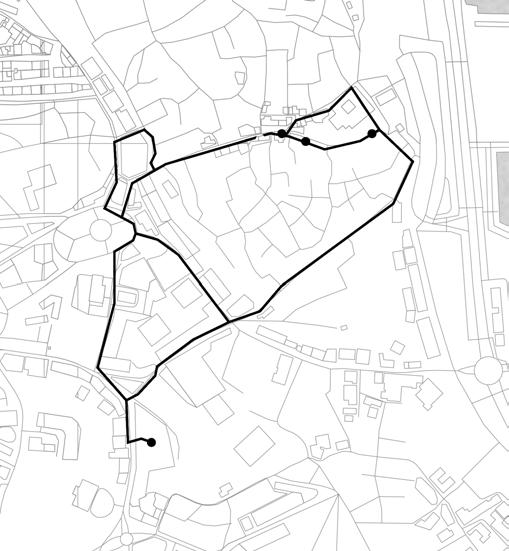
A city of wayfarers and wanderers, Tangier is a site of constant flux. Jean Genet, a French novelist, playwright and criminal, was drawn here during the 1960s and 70s, shortly after Morocco gained independence in 1956. Closely following in the footsteps of Beat Generation writers, he lived an elusive existence without a permanent residence. Through the lens of cinematography, Act One of this thesis commences with studies of Genet’s Tangier in American artist Patti Smith’s film ‘Three Stones for Jean Genet’ and French director Guillaume de Sardes’ ‘Genet a Tanger’ . These serve to suggest and frame Genet’s experience of the city; the routes he traversed and the landscapes he observed. Such studies inform the concept of this strategy- a series of installations that respond to Genet’s close encounters with these routes and landscapes, and how his writing and other media may be understood in their contexts. The Thief’s Journal , Genet’s novelised autobiography, serves as the chief material for this understanding, within which he evocatively describes conditions that pertain to the human, the physical and the conceptual.
•
“If I am accused of using such theatrical props as funfares, prisons, flowers, sacrilegious picking, stations, frontiers, opium sailors, harbours, urinals, funerals, cheap hotel rooms, of creating mediocre melodramas and consuming poetry with cheap local colour, what can I answer? I have said that I love outlaws who have no other beauty than that of their bodies. The aforementioned props are steeped in the violence of men, in their brutality.”
[The Thief’s Journal, p.g. 238]
•
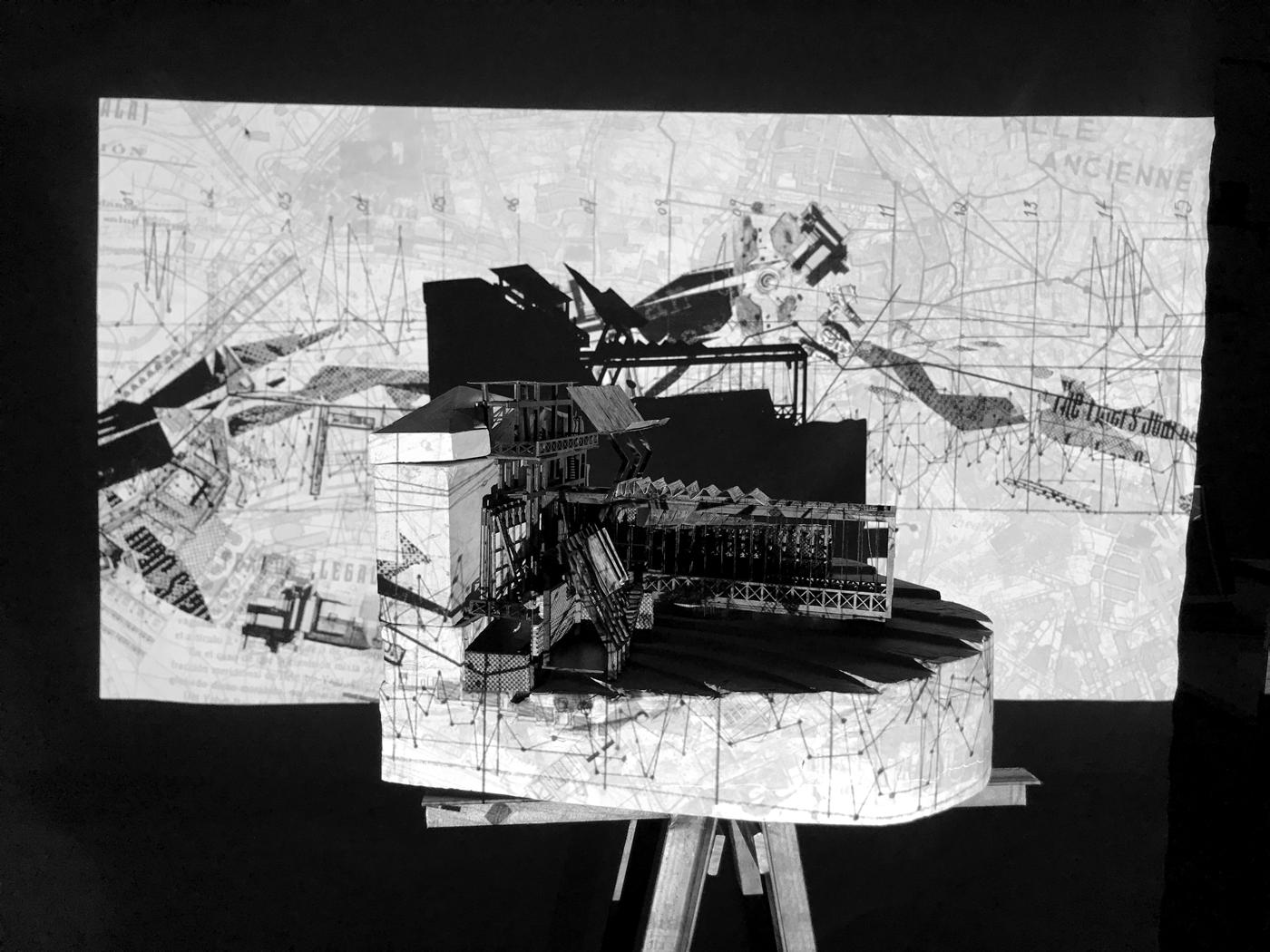
This thesis intends to propose a series of ‘theatrical props’ that draw on both the conceptual and spatial conditions that Genet describes.
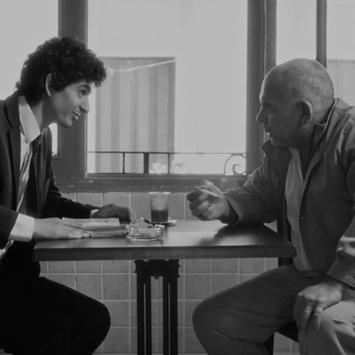
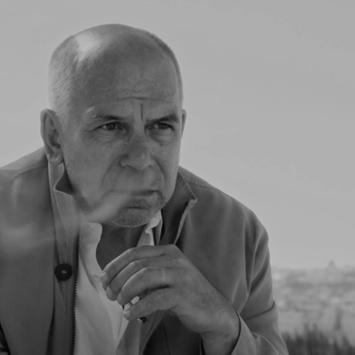
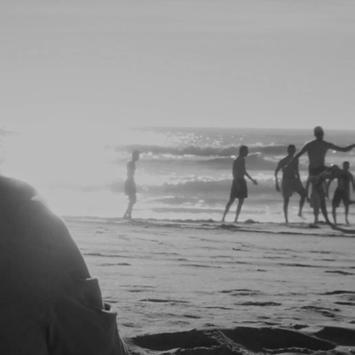
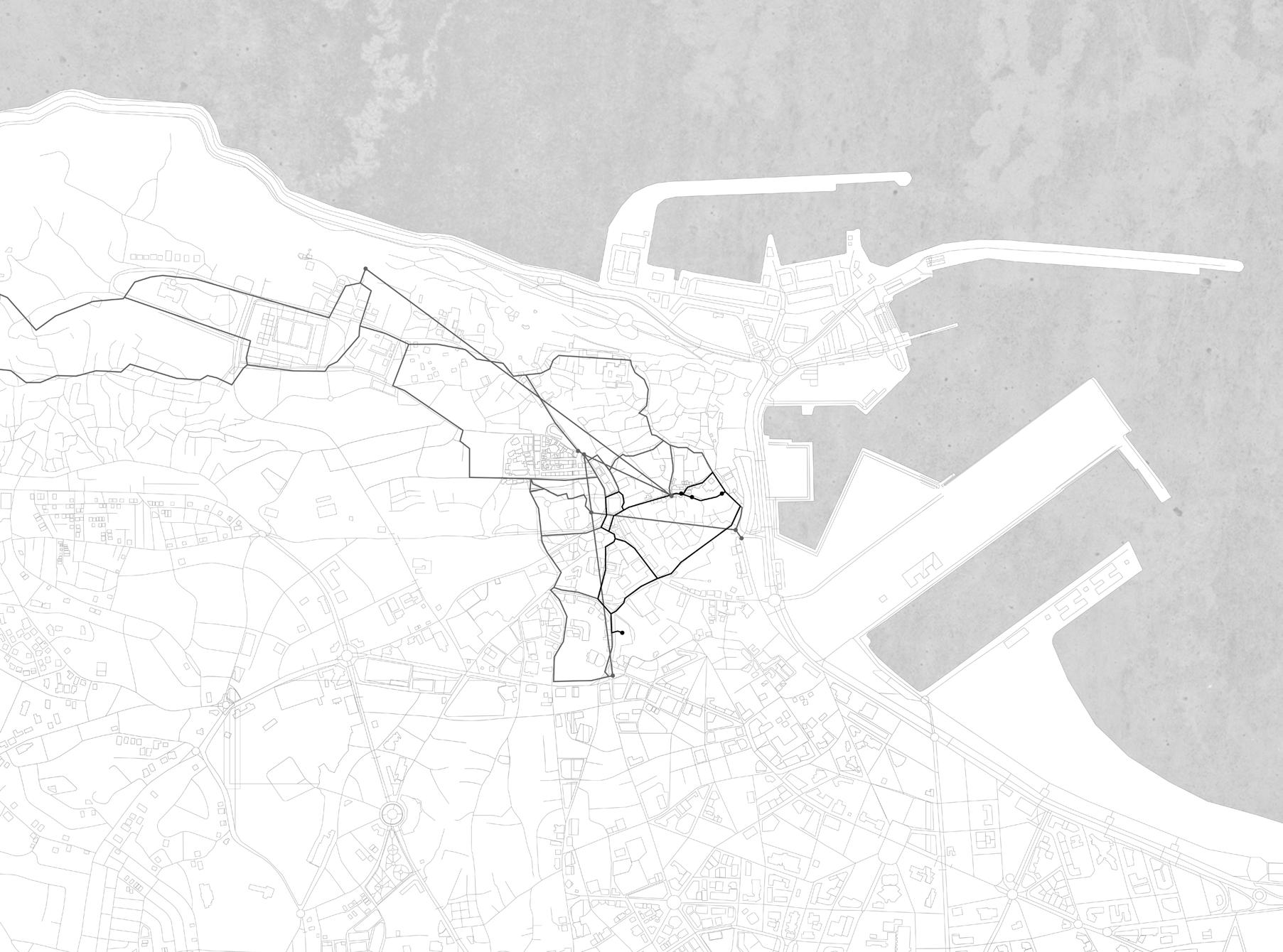
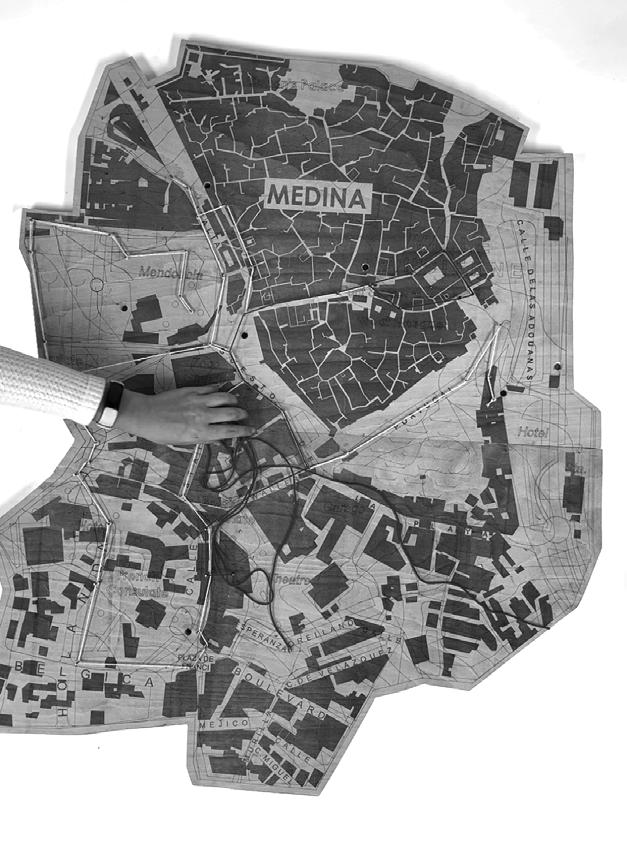
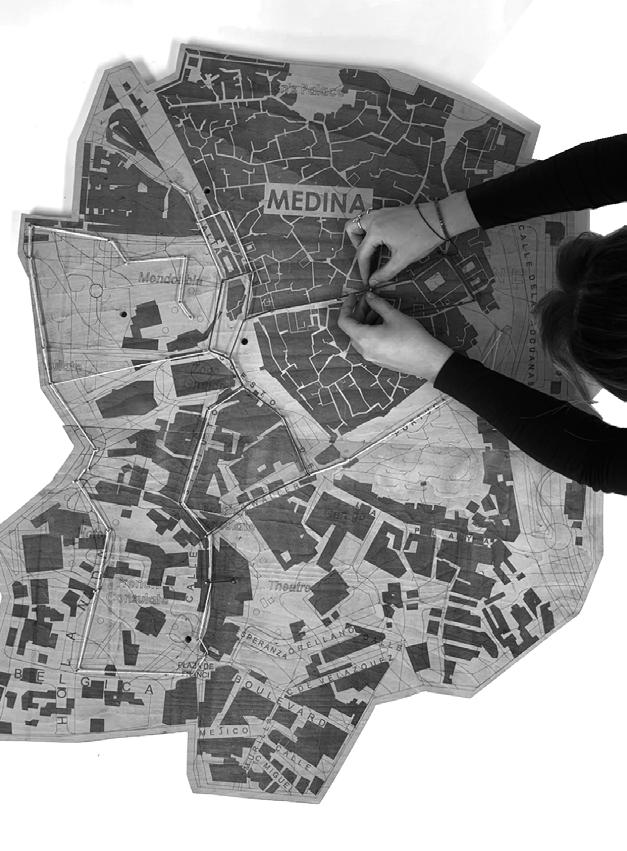
Threading the Routes
Stills from footage showing the marking of the film routes [originally modelled
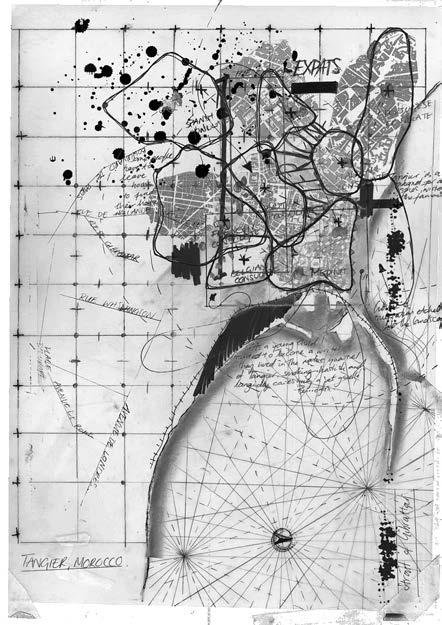
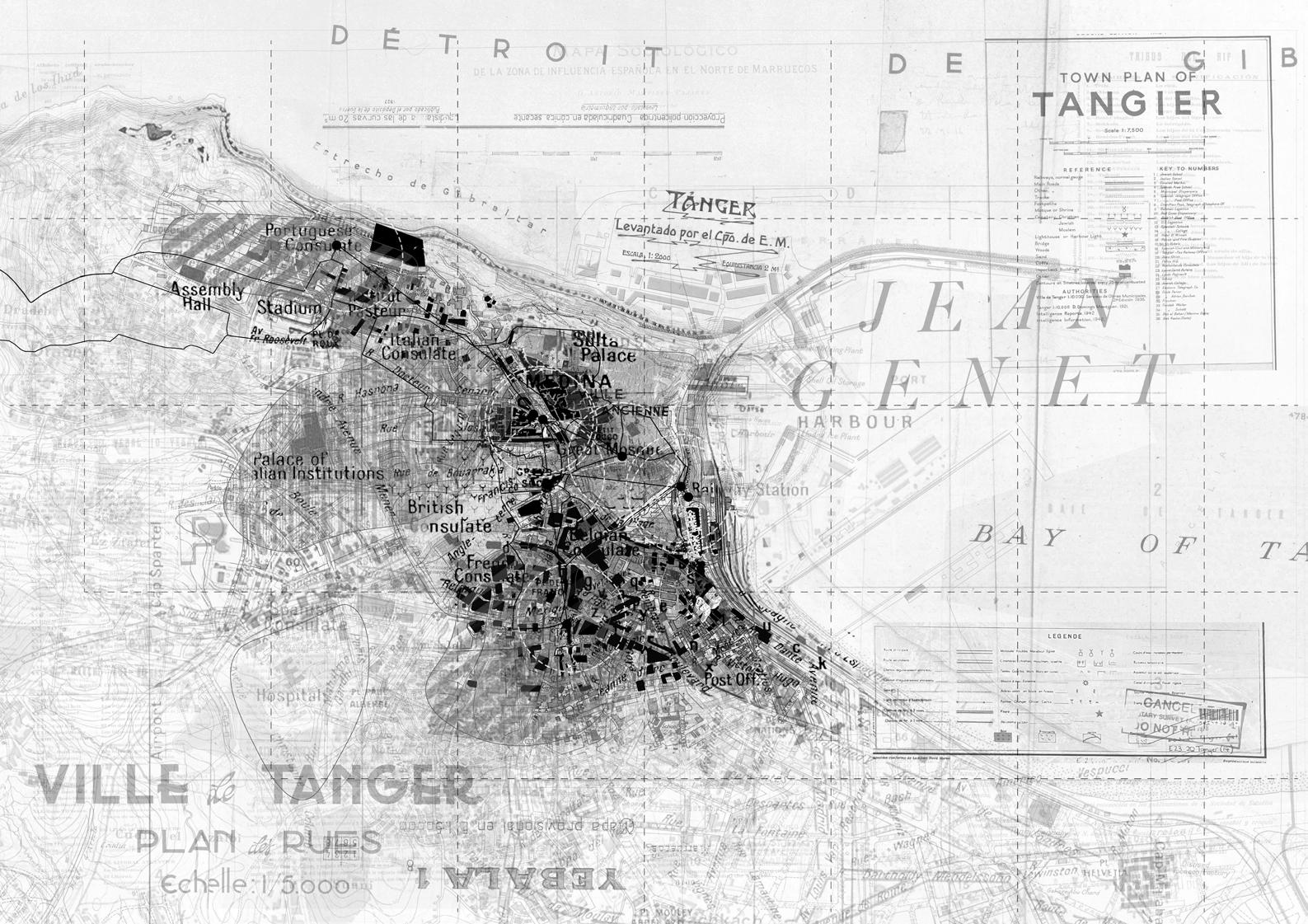
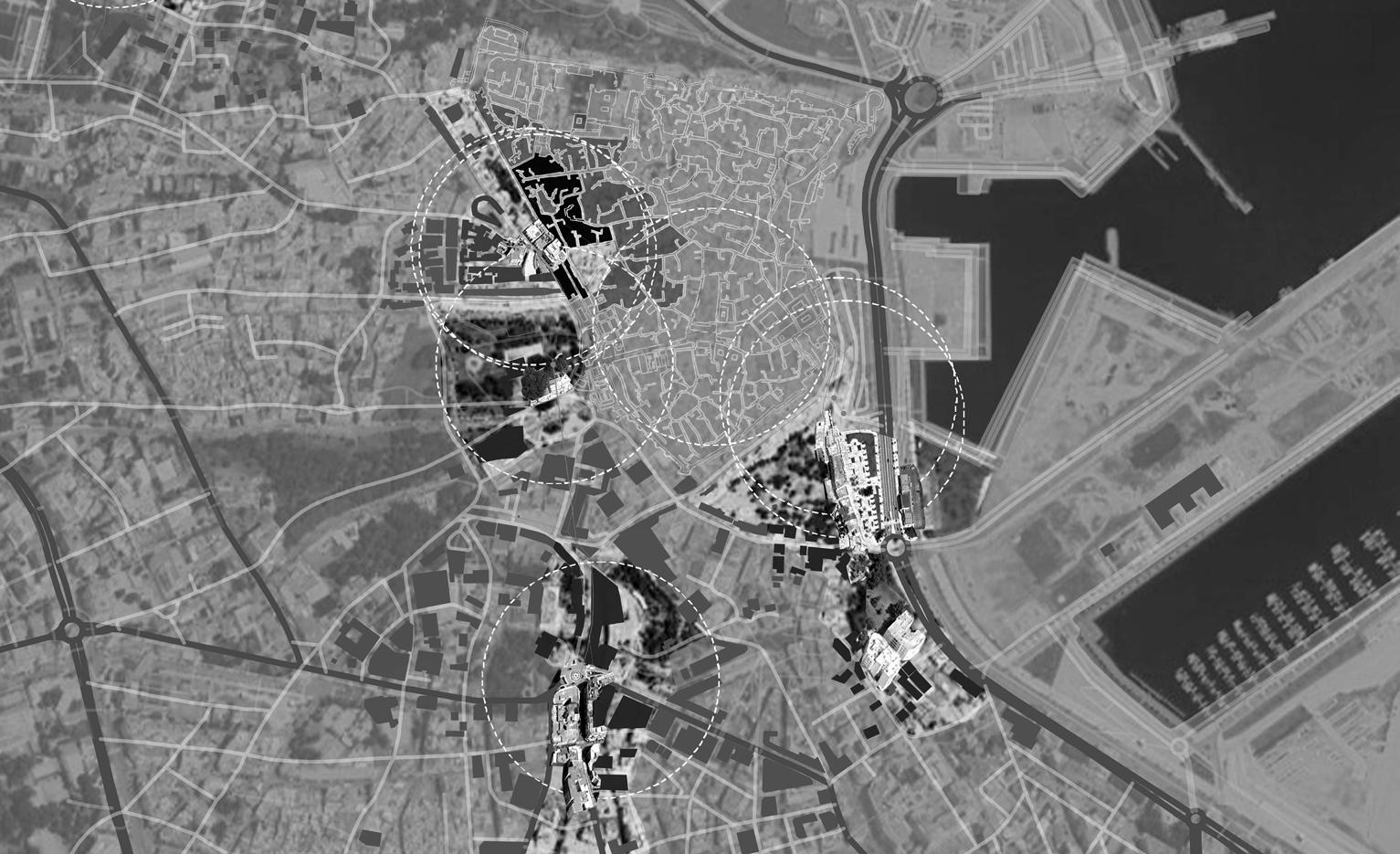
Composing the Cartograph
Field drawing comprising map, film routes and fragments [originally drawn at] 1 : 5000
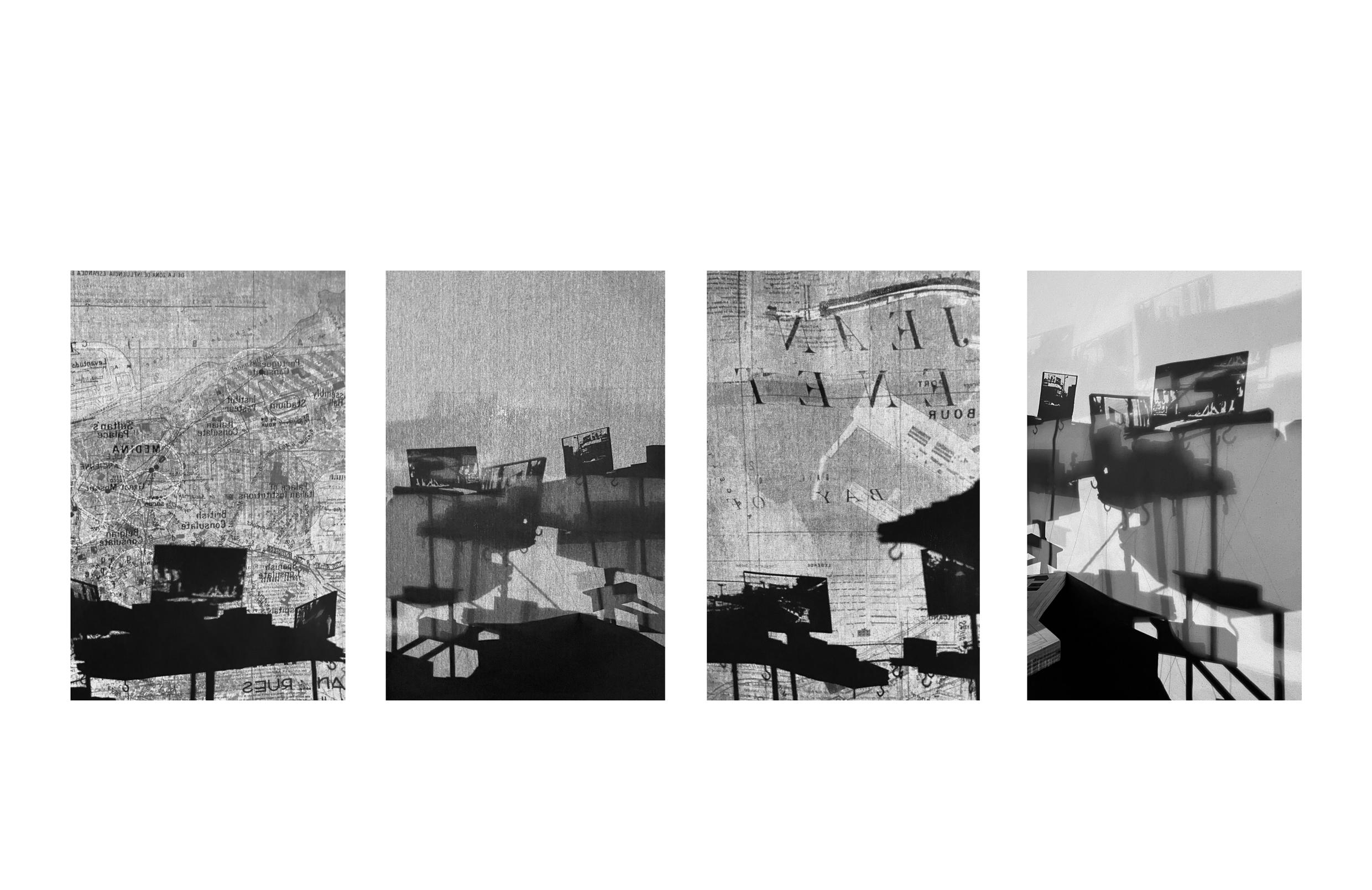
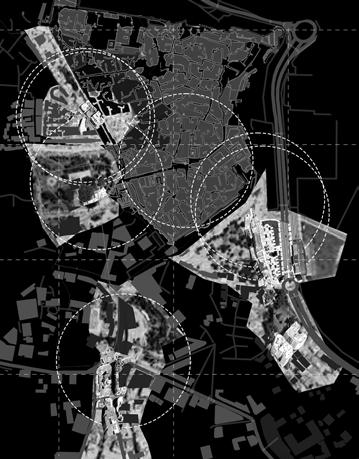
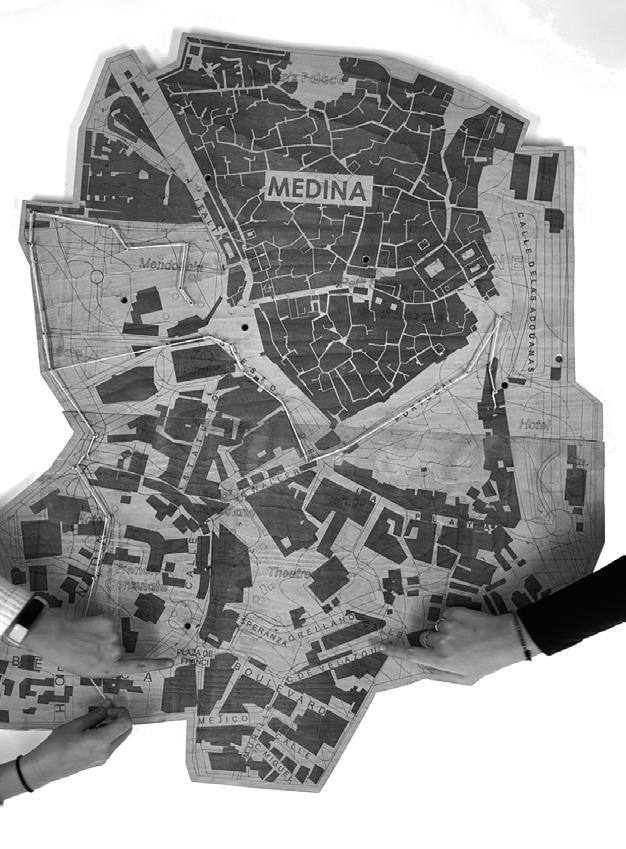
Constructing the Frames [1]
Vistas of city model comprised of fragments and frames from Three Stones for
[originally modelled at] 1 : 1000 [base map] and 1 : 500 [fragments]
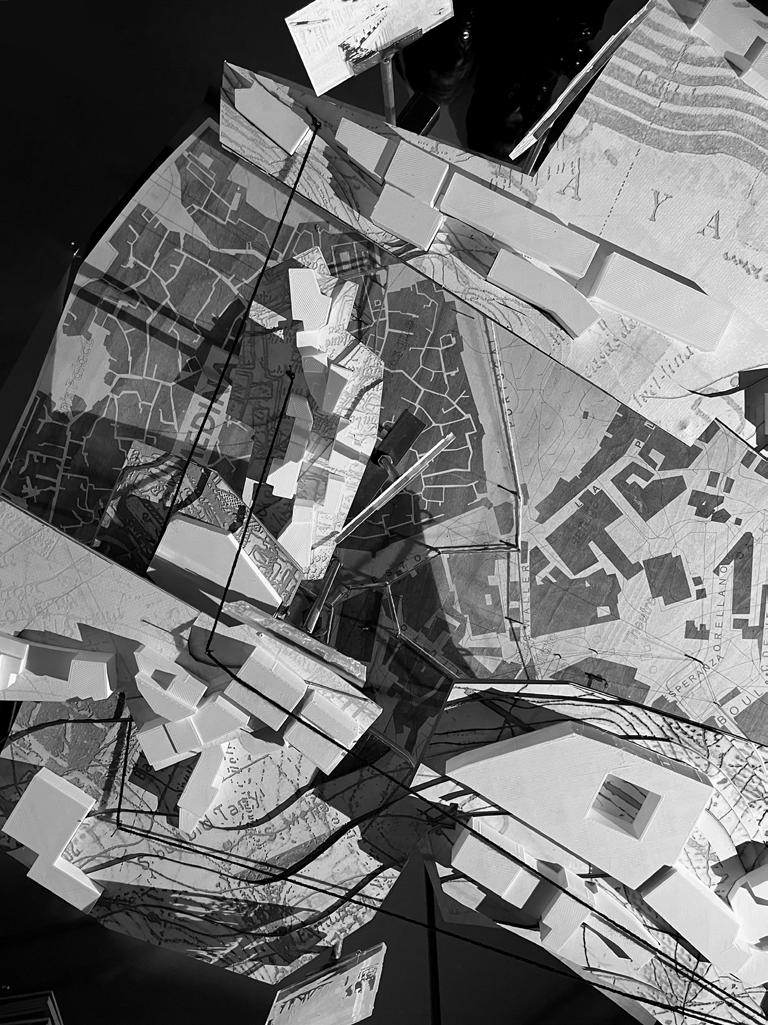
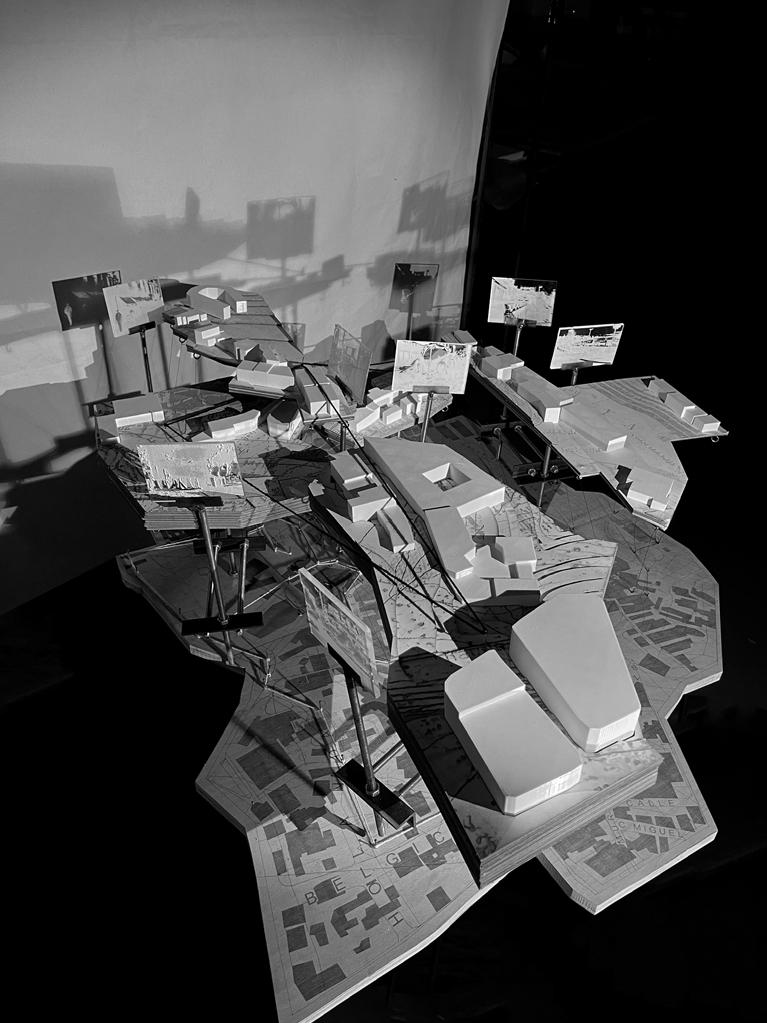
Constructing the Frames [2]
Views of city model comprised of base map, fragments and frames [originally modelled at] 1 : 1000 [base map] and 1 : 500 [fragments]
“The convict’s outfit is pink-and-white striped. Though it was in my heart’s bidding that I chose the universe wherein I delight, I have at least the power of finding in it the many meanings I wish to find: there is a close relationship between flowers and convicts. The fragility and delicacy of the former are of the same nature as the brutal insensitivity of the latter. 1
1 My excitement is the oscillation from one to the other.”
[The Thief’s Journal, p.g. 7]
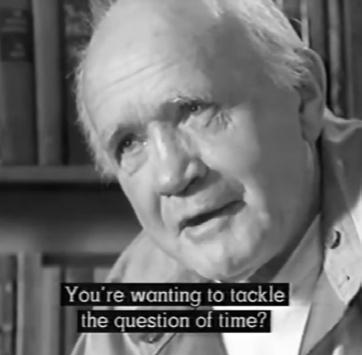
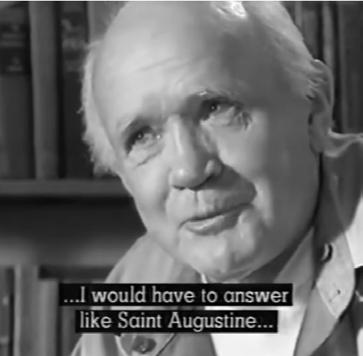
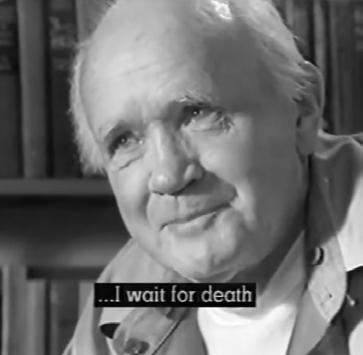
Conditions of duality are observed by Genet in The Thief’s Journal, where he ponders the natures of fragility, delicacy, brutal insensitivity and violence. His excitement embodied as an oscillation relates to sound, movement and repetition, and serves the conceptual framework for the strategy. Drawing exercises expose moments of sound and silence as positive and negative space, providing opportunities for intervention.

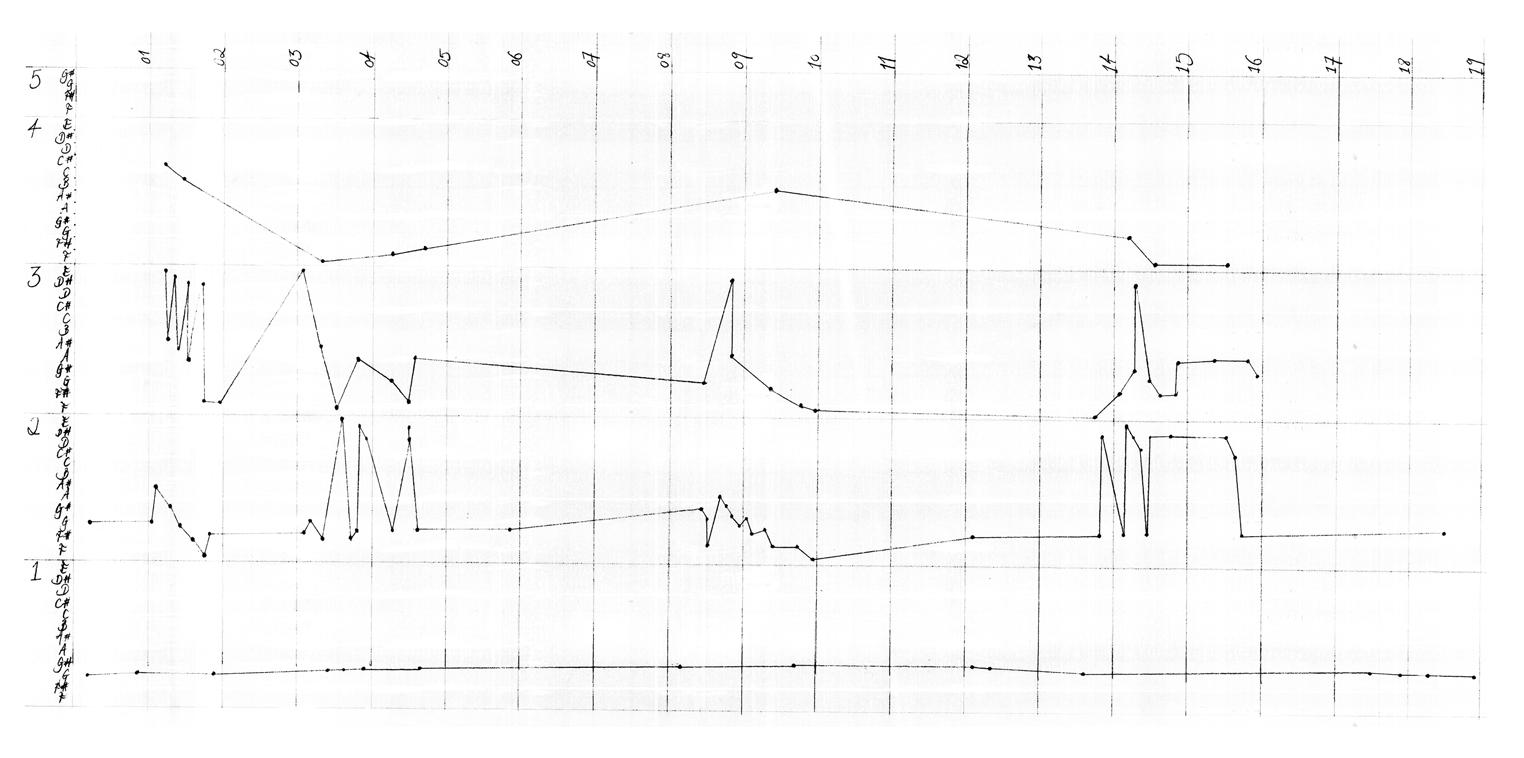
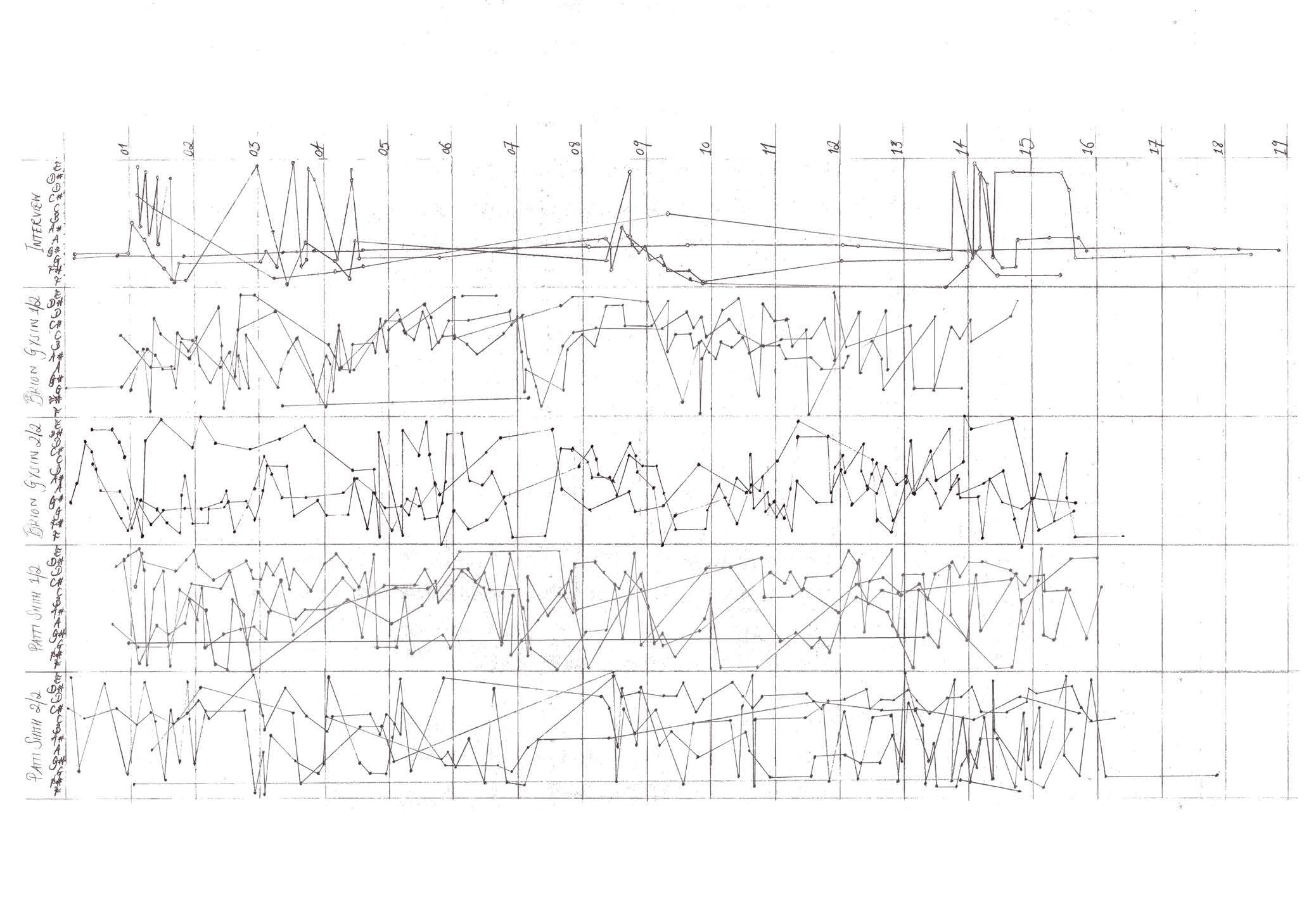
Drawing the Sounds of the Scenes [4]
Representation of overlaid sounds from collected aforementioned audio/films drawn in the style of

Strategising the Theatrical Props
Representation of city-wide strategy inspired by route in Genet a Tanger through key sites
Rue
Rue
Place du 9 Avril 1947 [e] Grand Socco
Rue
Rue
[originally drawn on 700x1700mm at] 1 : 500

Act Two
[Back]Staging the Thief
“I give the name violence to a boldness lying idle and hankering for danger.”
[The Thief’s Journal, p.g. 11]
•
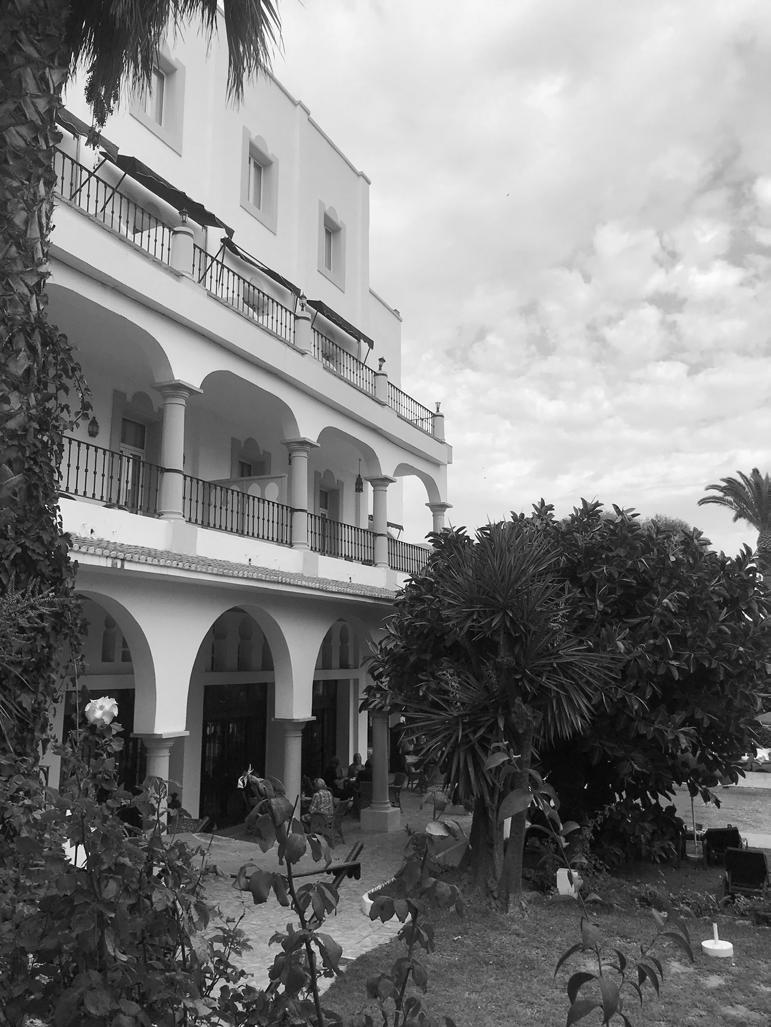
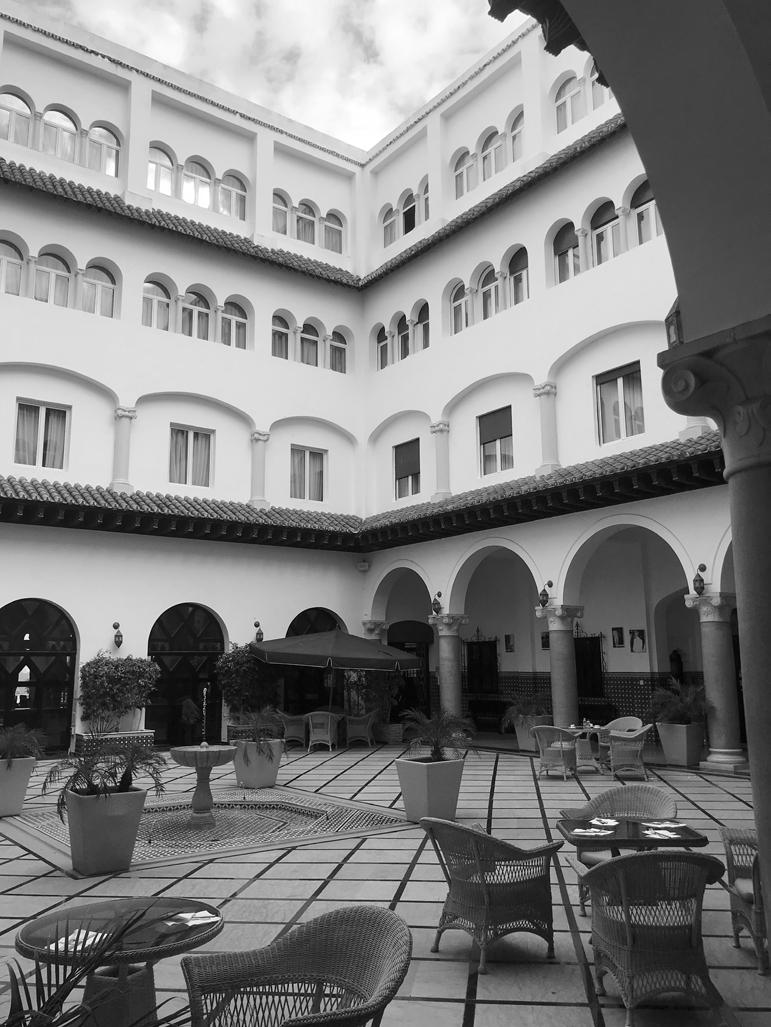
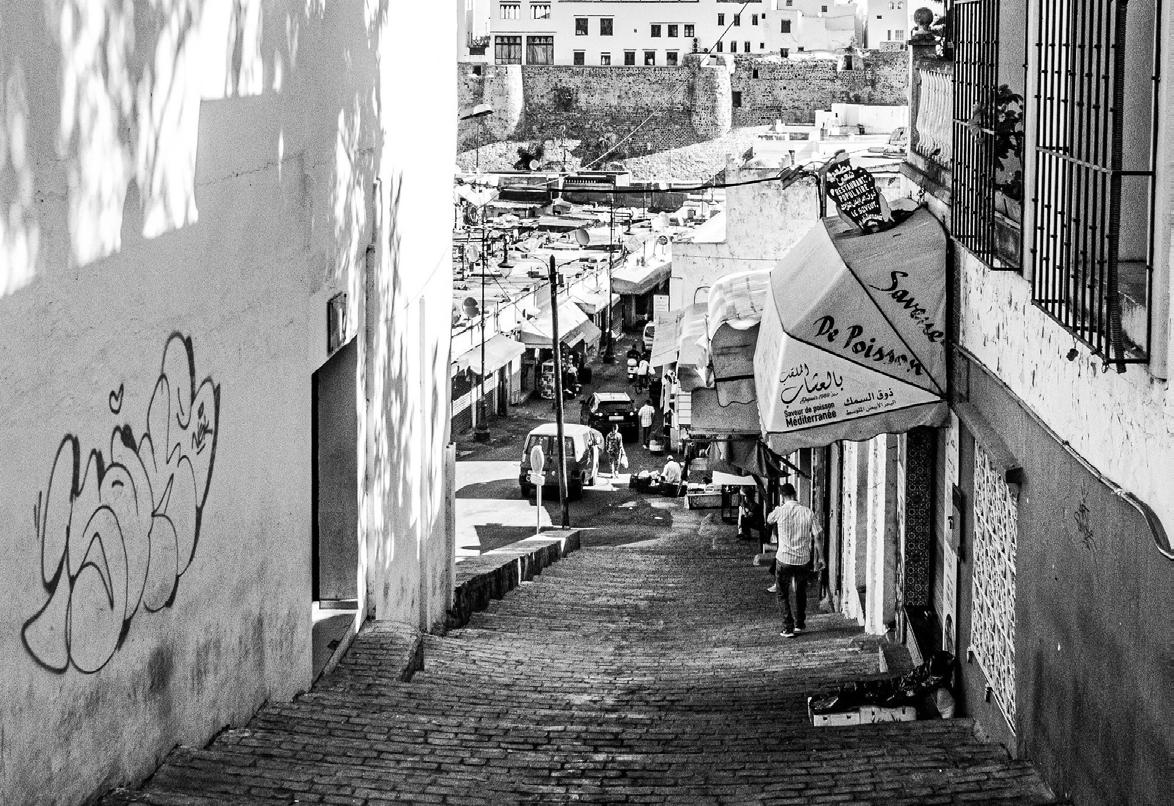
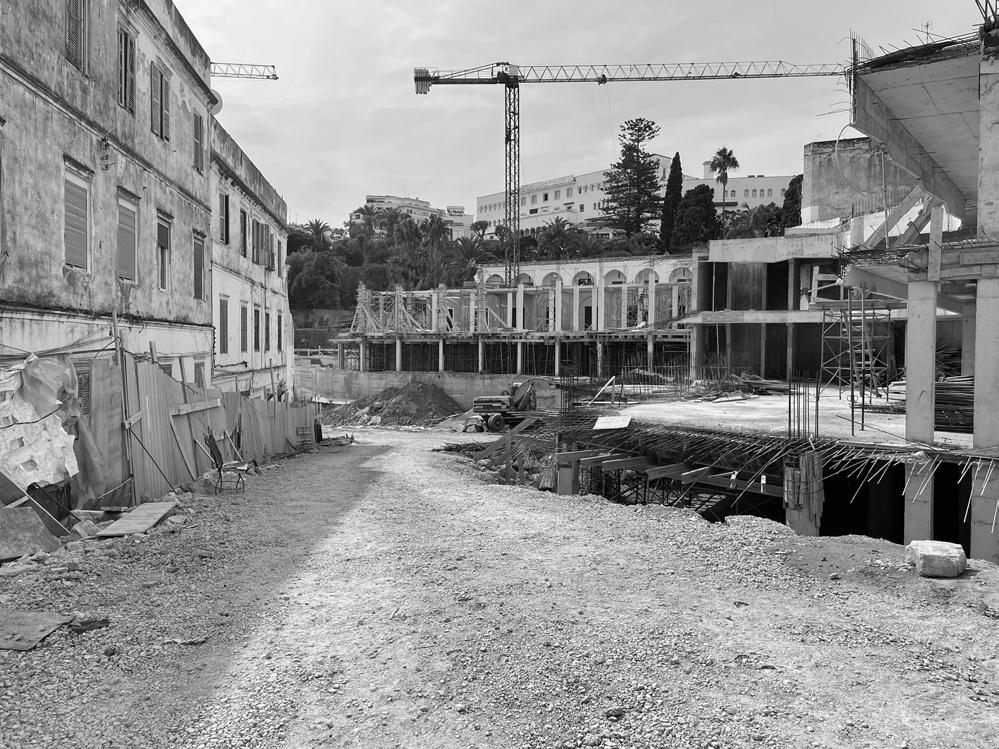
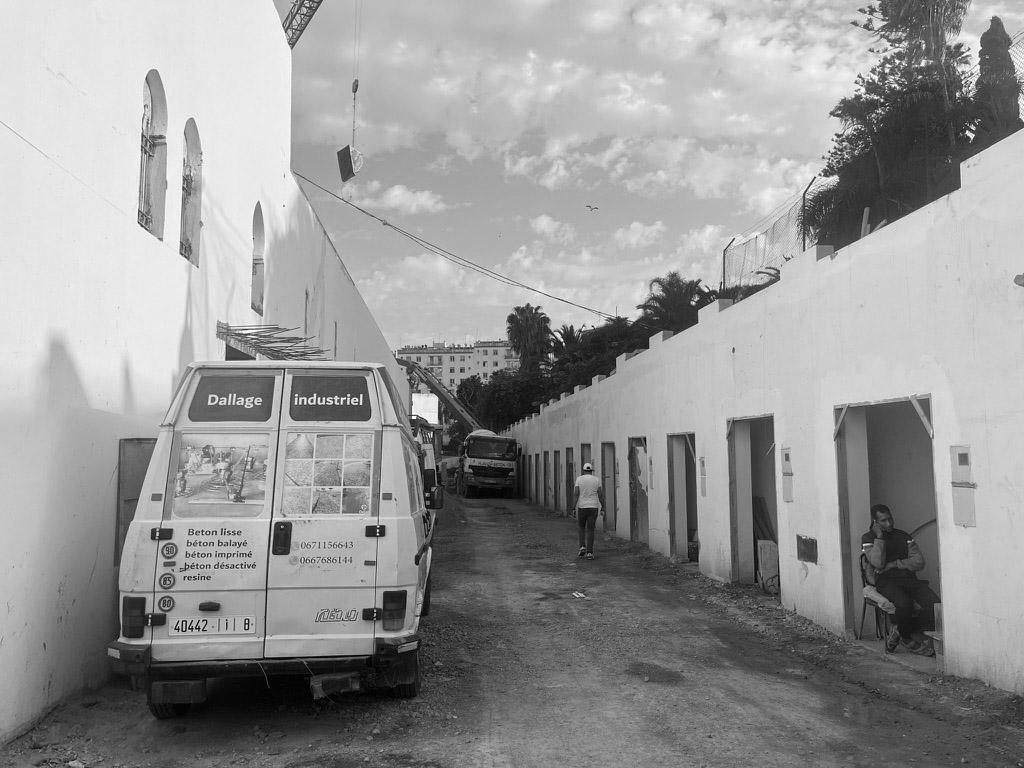
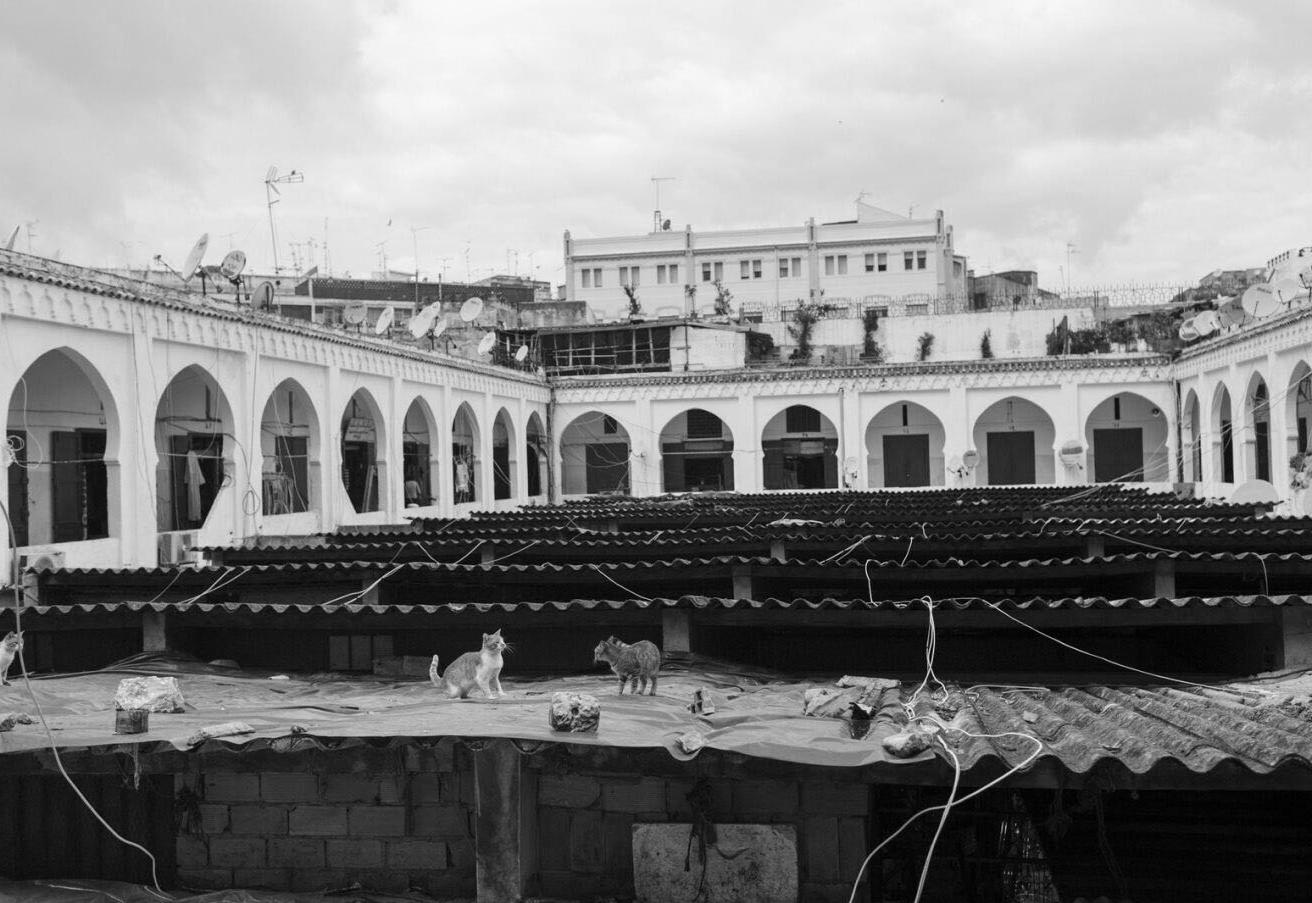
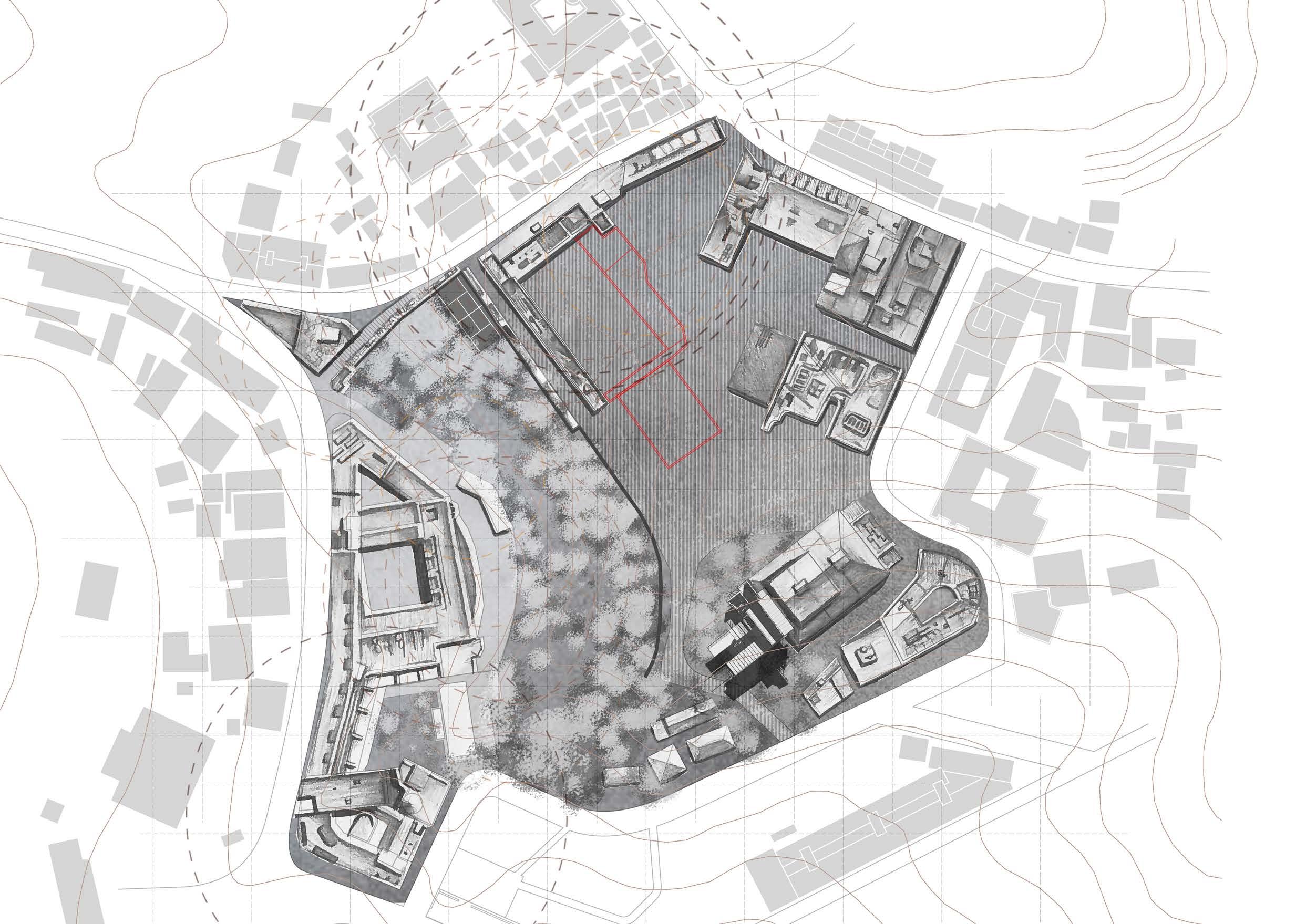
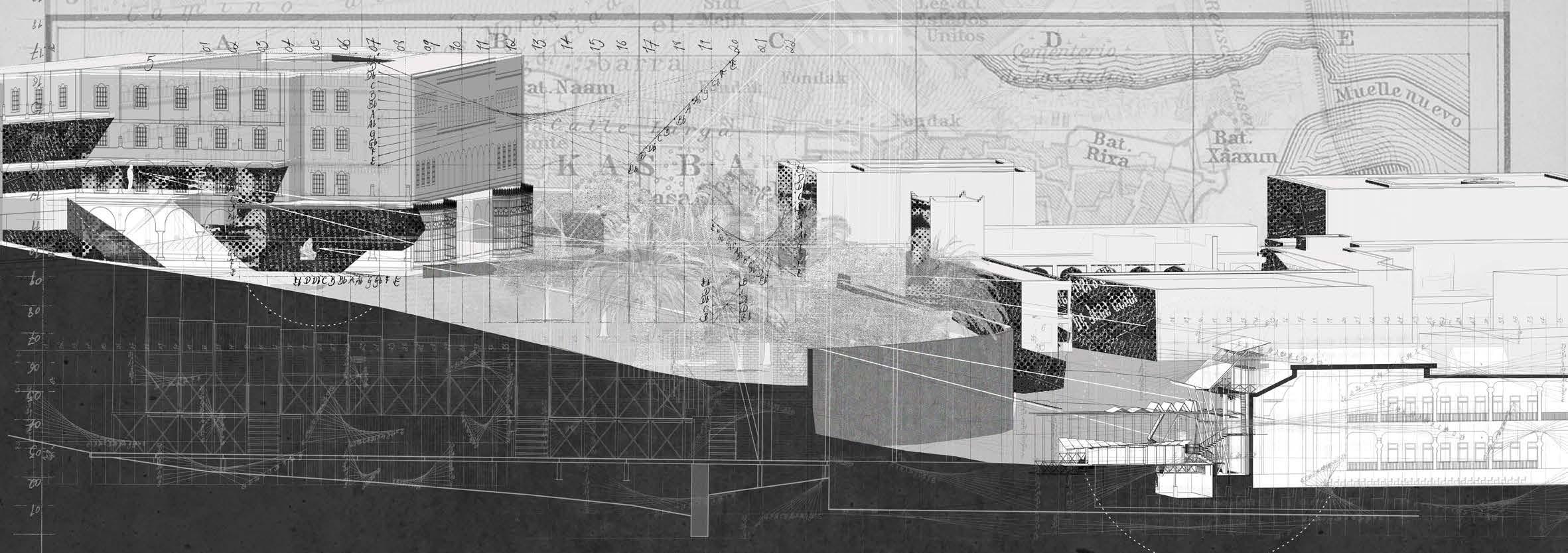
Act Two oversees the first installation of the strategy- the backstage . Located in the foothills of Genet’s most heavily frequented ground, the site presents a dichotomy of conditions. El Minzah Hotel, the upper-class establishment in which he curiously resided, sits intimidatingly above what is locally referred to as the Marche des Pauvres [trans. ‘Poor People’s Market], which houses the famous weaver’s workshop Fondouk Chejra. An unequivocal collision of social conditions is observed, intensified by the ongoing demolition of the market to make way for new public space designed to attract foreign tourism. While El Minzah Hotel and its affluent clientele remain untouched, the materials and inhabitants of Marche des Pauvres are discarded.
•
“Betrayal may be a handsome, elegant gesture, compounded of nervous force and grace. I definitely reject the notion of a nobili ty which favours a harmonious form and ignores a more hidden, almost invisible beauty, a beauty which would have to be revealed elsewhere than in objectionable acts and things.”
[The Thief’s Journal, p.g. 216]
•
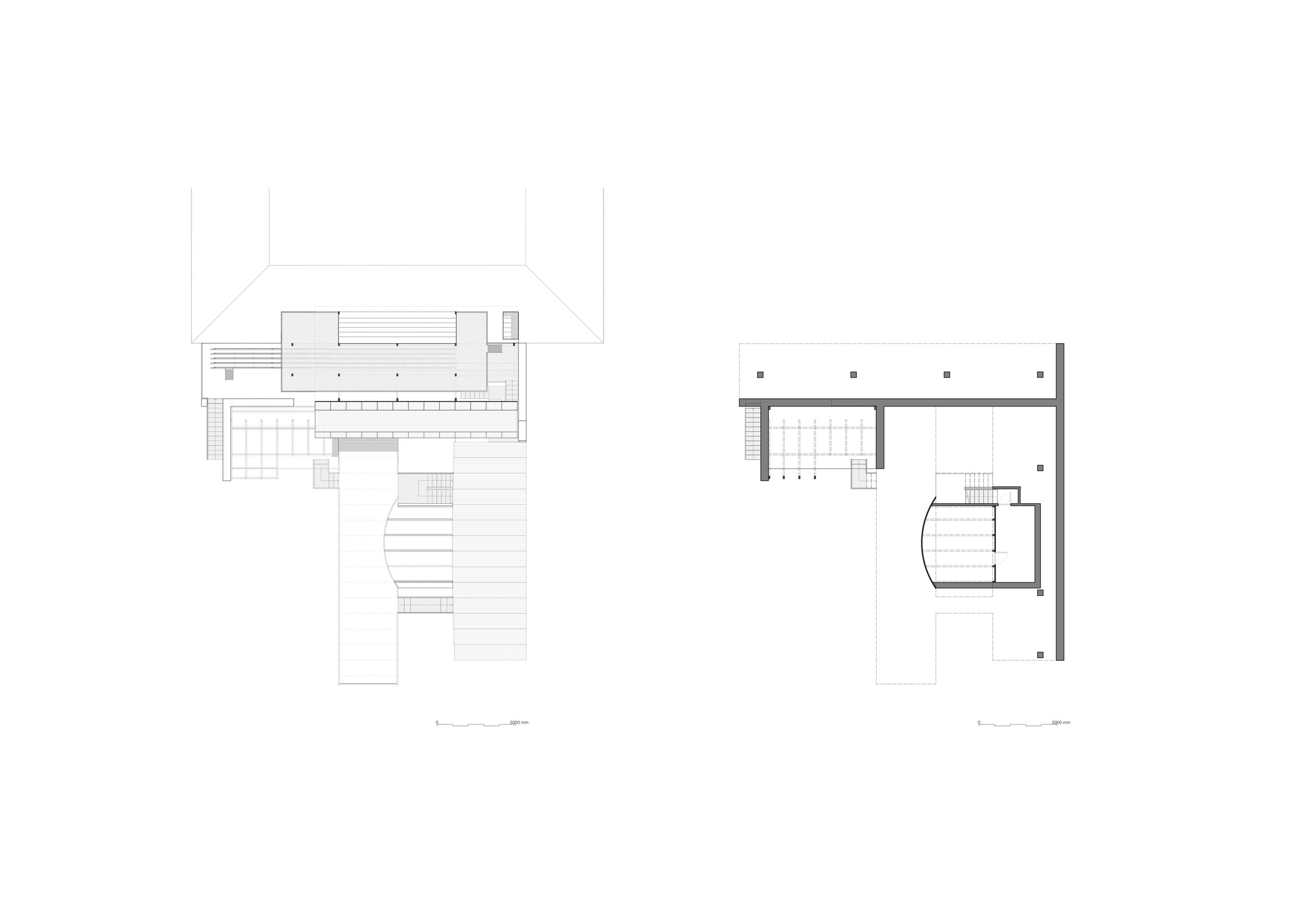
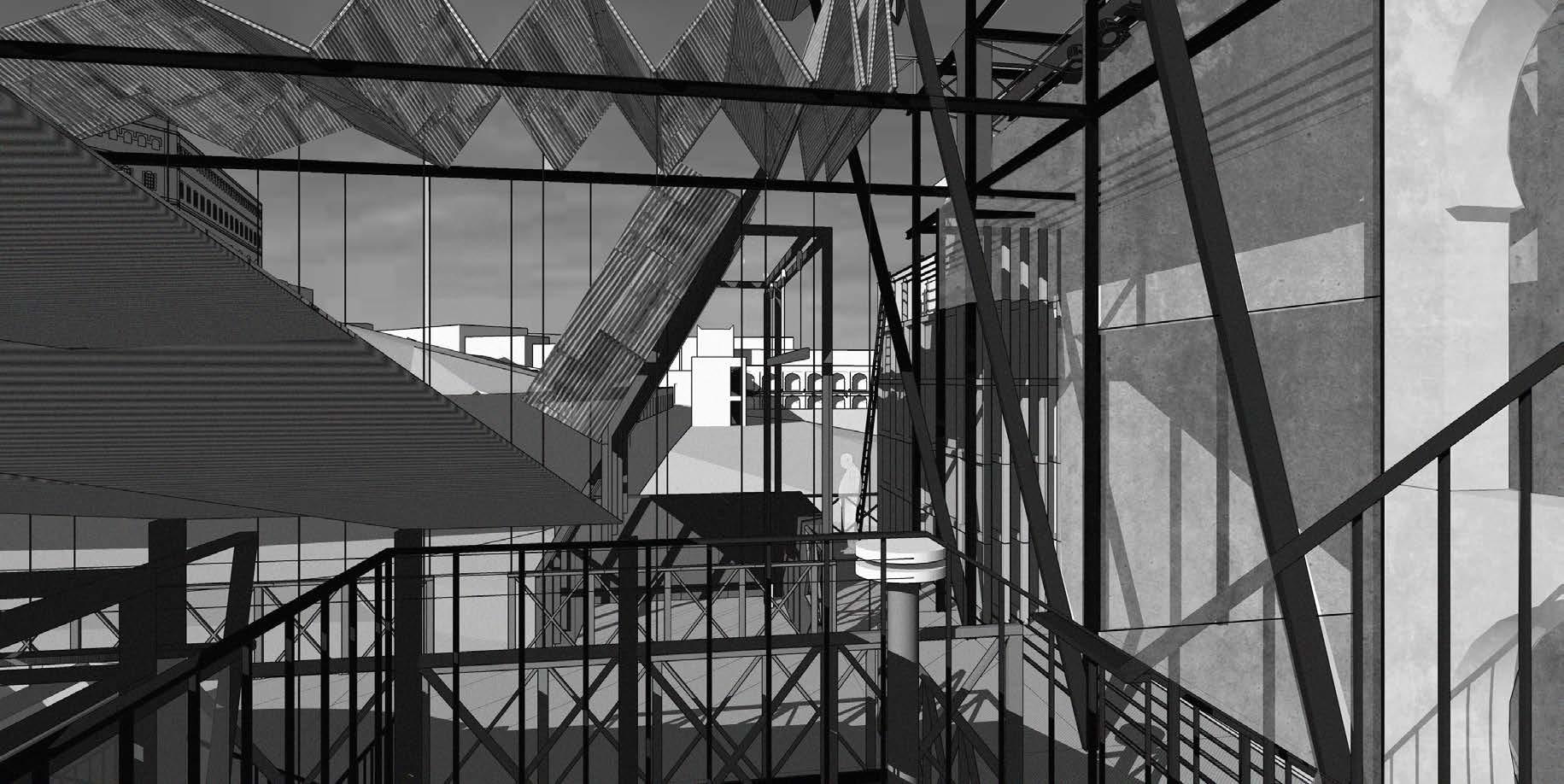
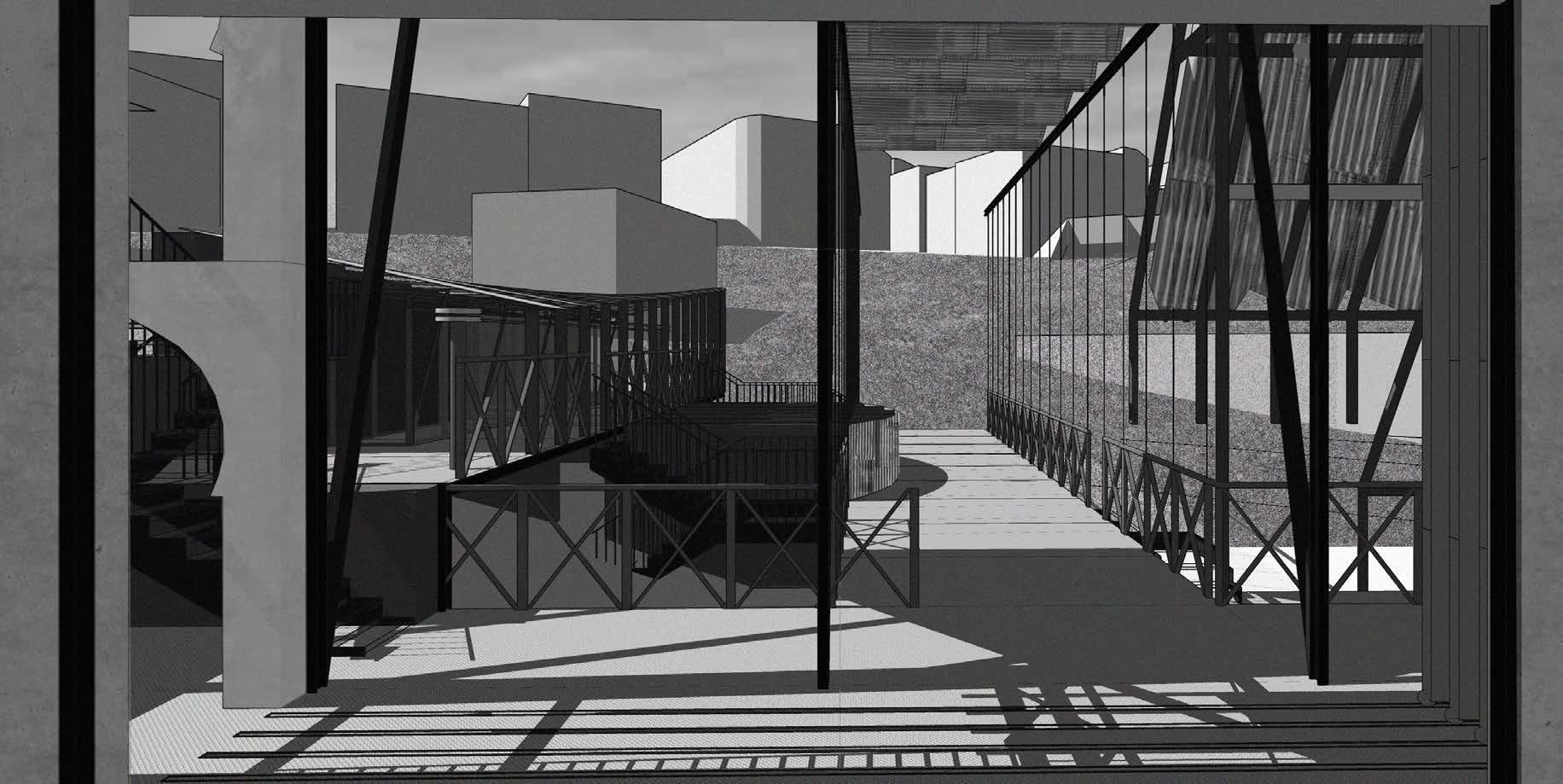
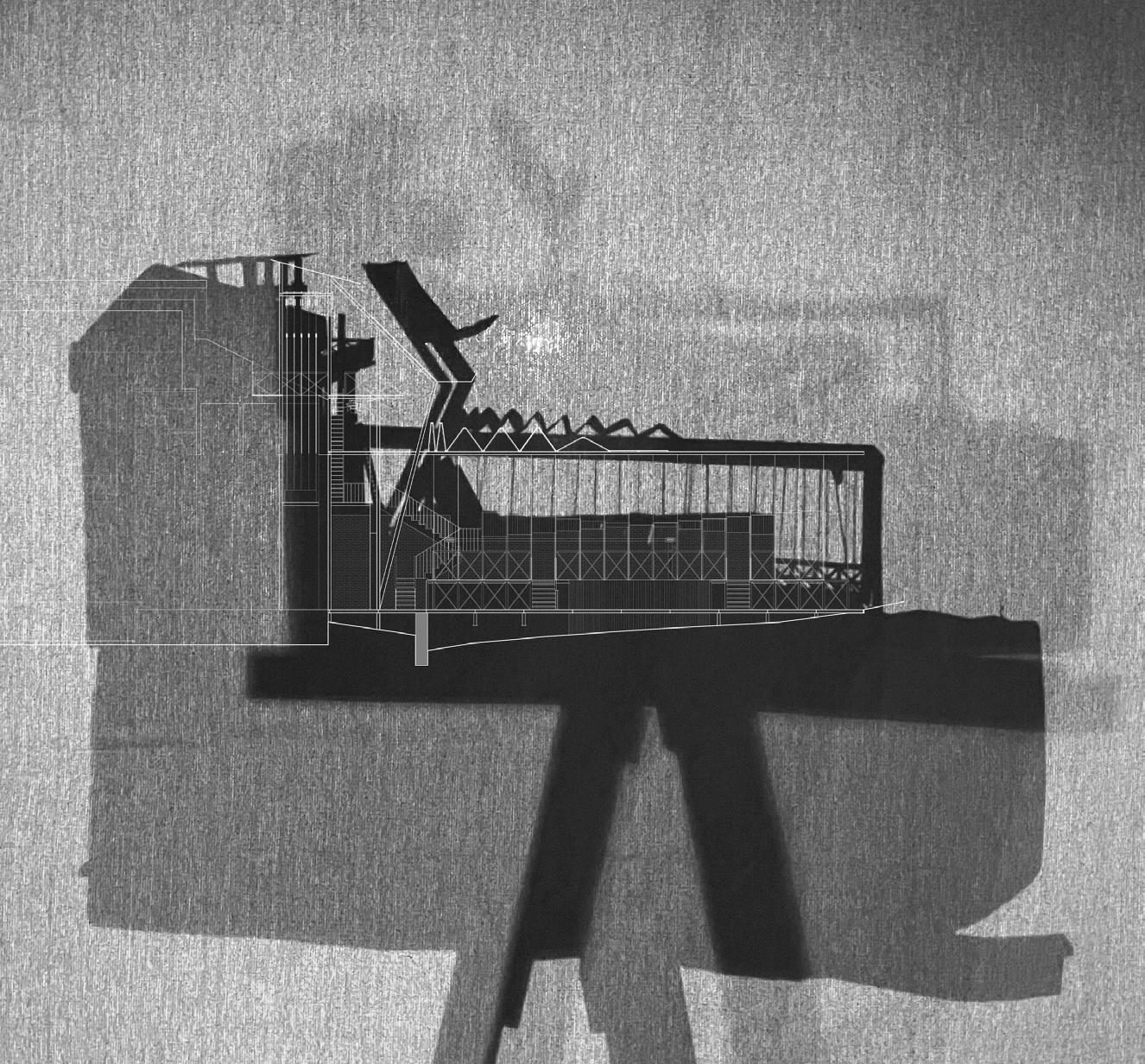
Following the violent deconstruction of the market, the thesis intends to draw on the ‘invisible beauty’ that may be revealed through the reconstruction of materials. Adjacent to the demolition site lies the derelict Gran Teatro Cervantes, once the largest and most successful theatre in North Africa. Its beauty compromised by a state of disrepair, the proposal attempts to breathe life back into the building by creating a new backstage from the discarded materials from the Marche des Pauvres. While serving the hypothetically rehabilitated theatre, the backstage also operates as an animated performance for Genet himself, who observes from the imposing El Minzah Hotel.

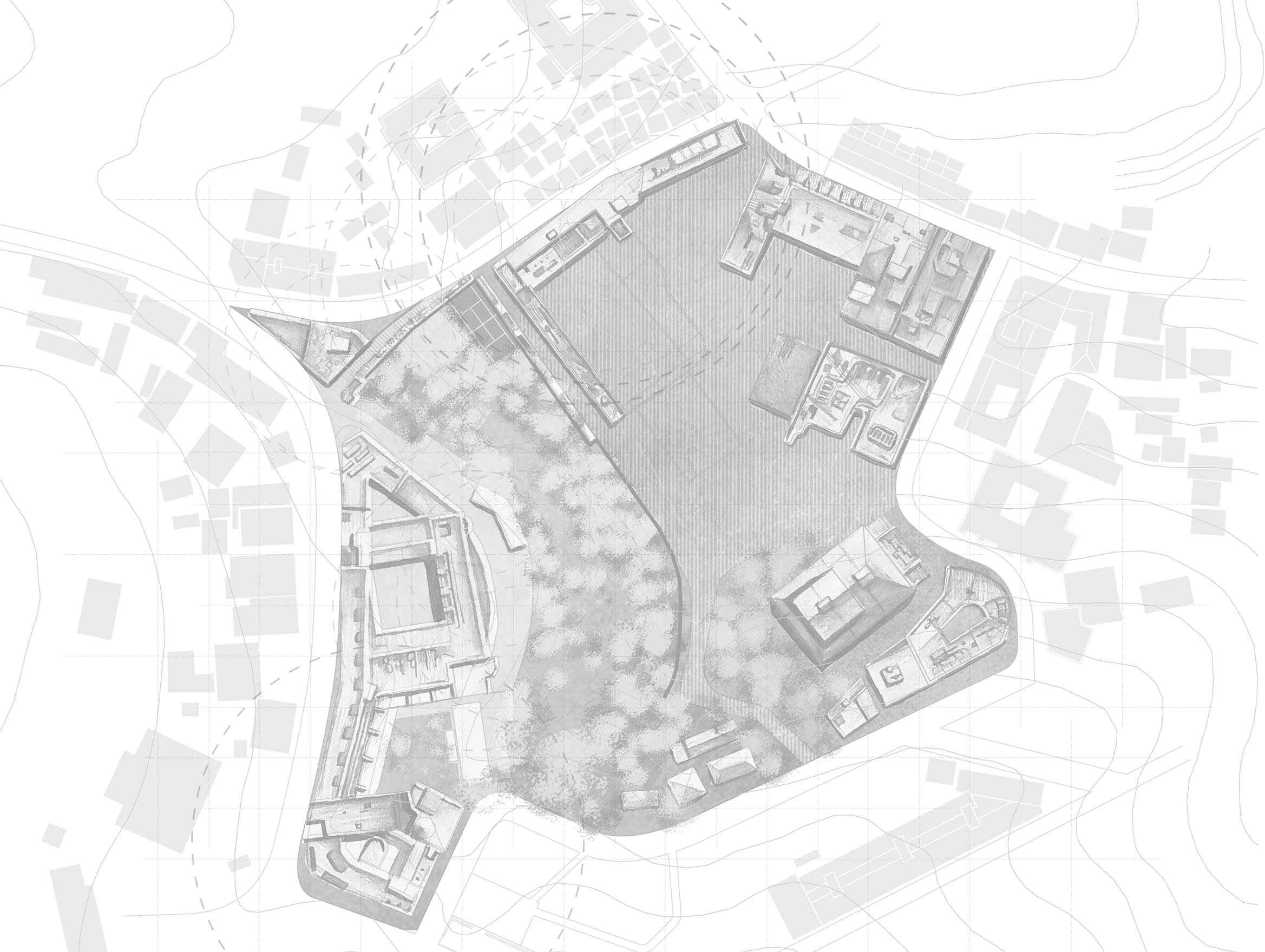
Sounding Out the Site
Site plan showing demolition outline and locations where sound bites were gleaned:
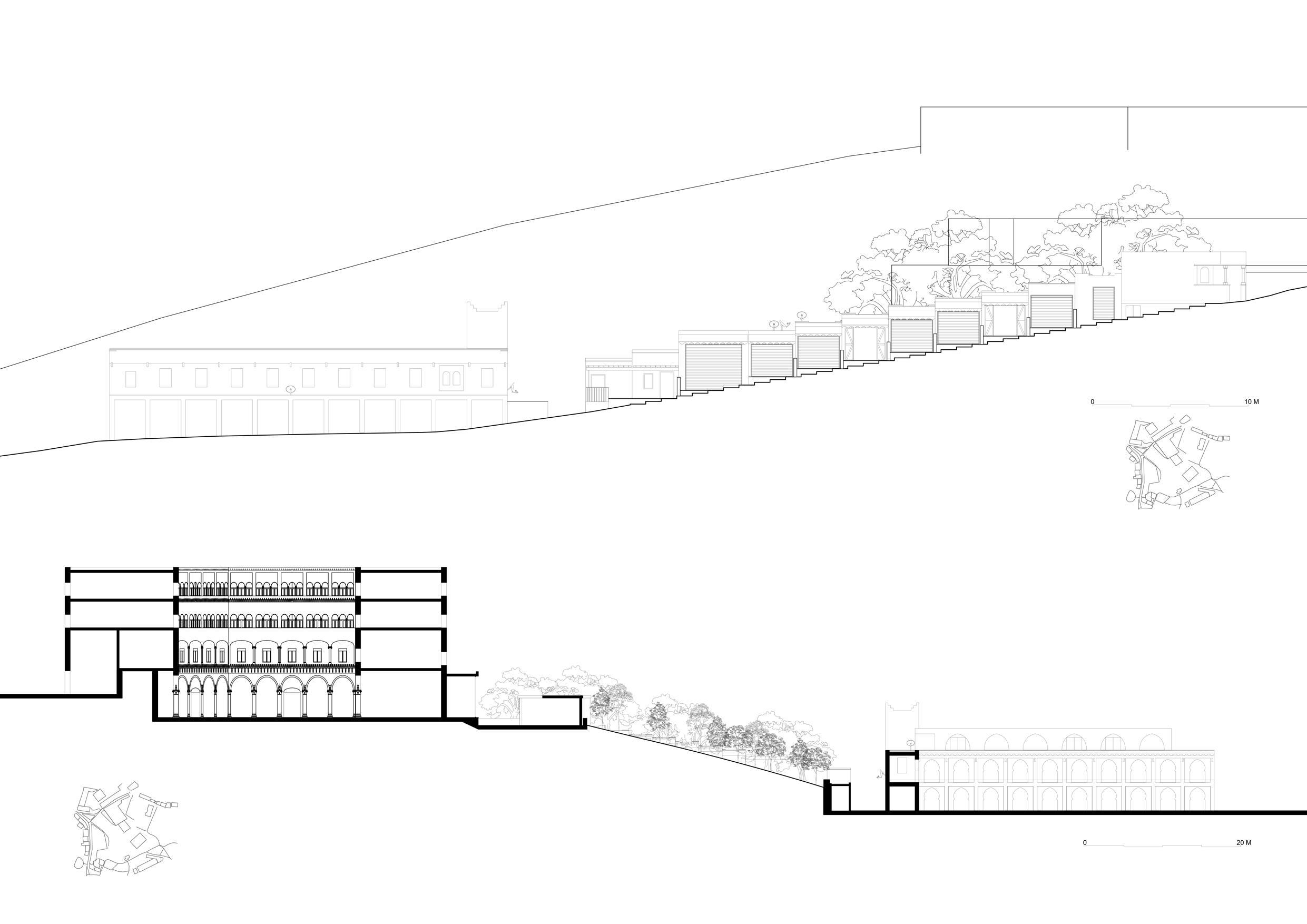

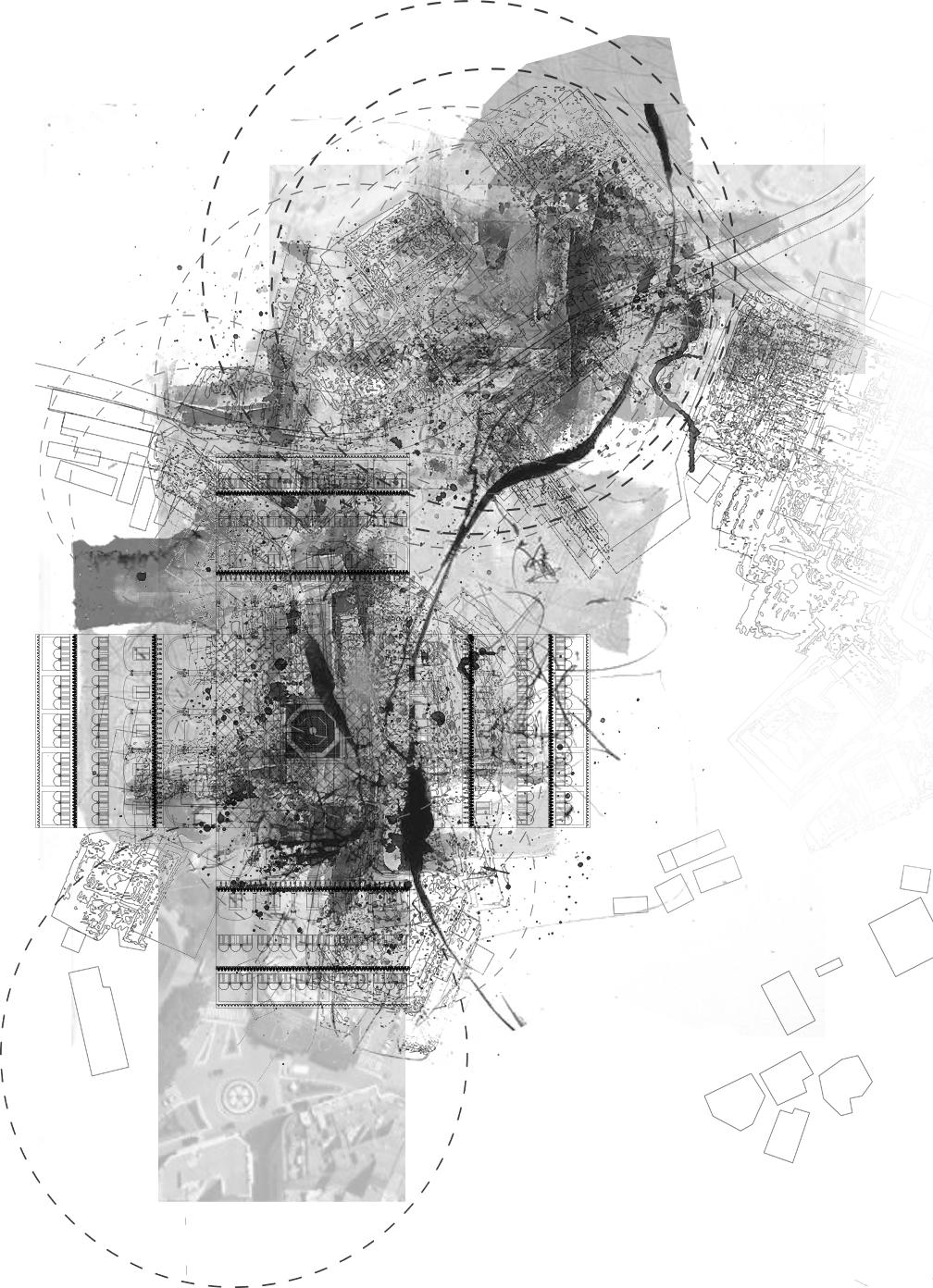
Representation of activity distribution and density in El Minzah Hotel,
des
and street markets [originally drawn at] 1 :
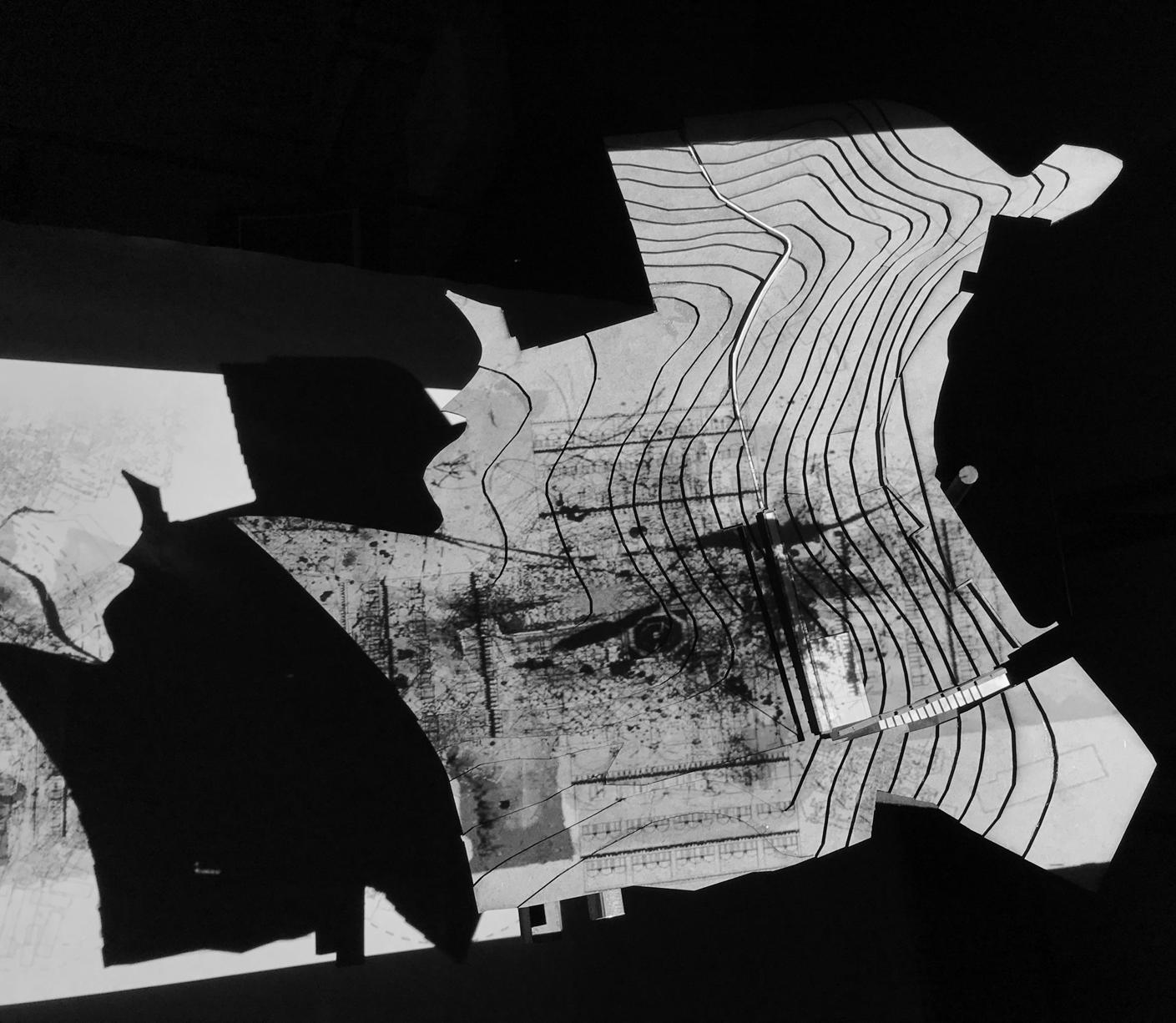
Activating the Site
Activity map projected onto physical site model [originally modelled at]
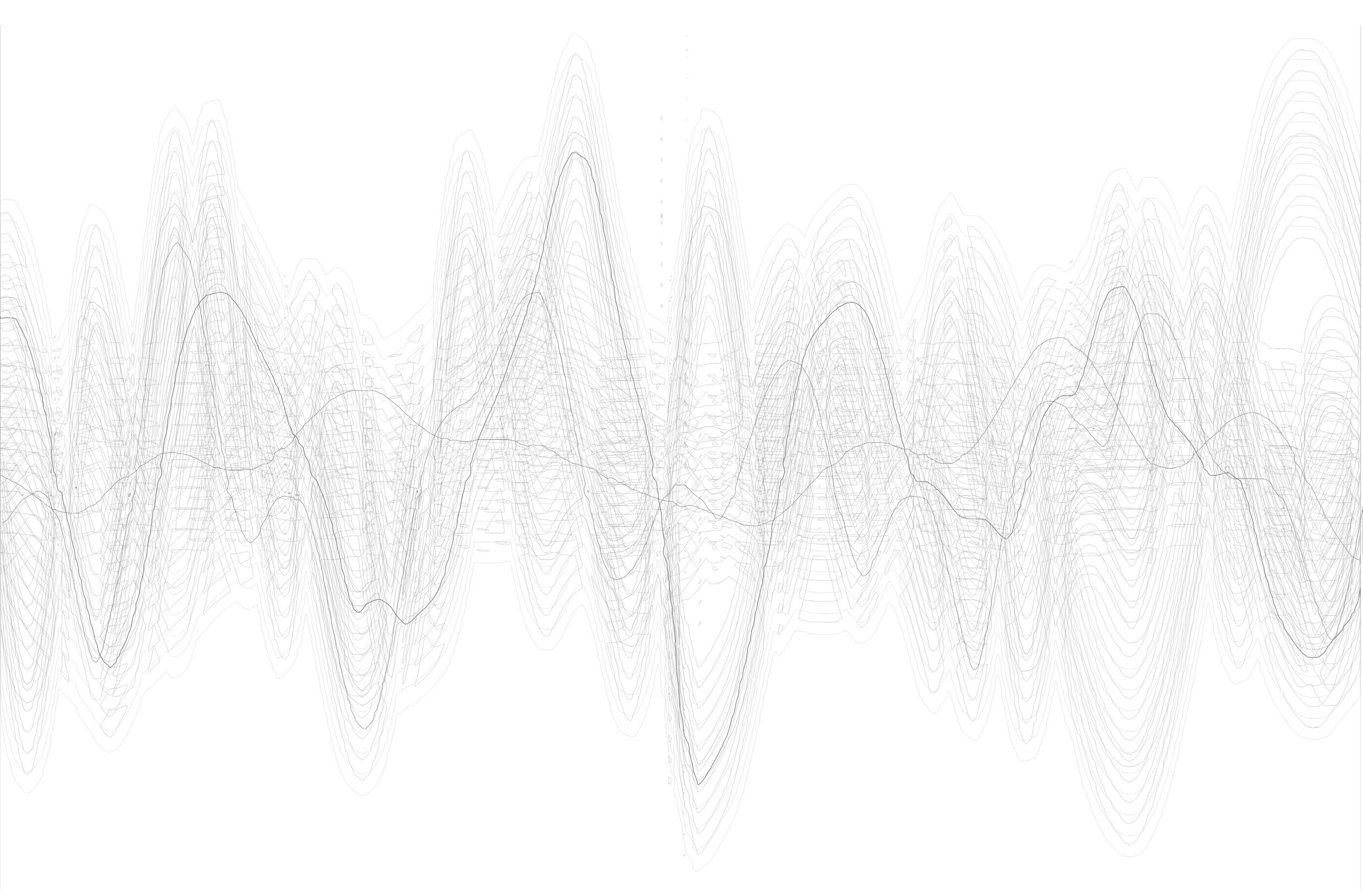
Extracting the Oscillation
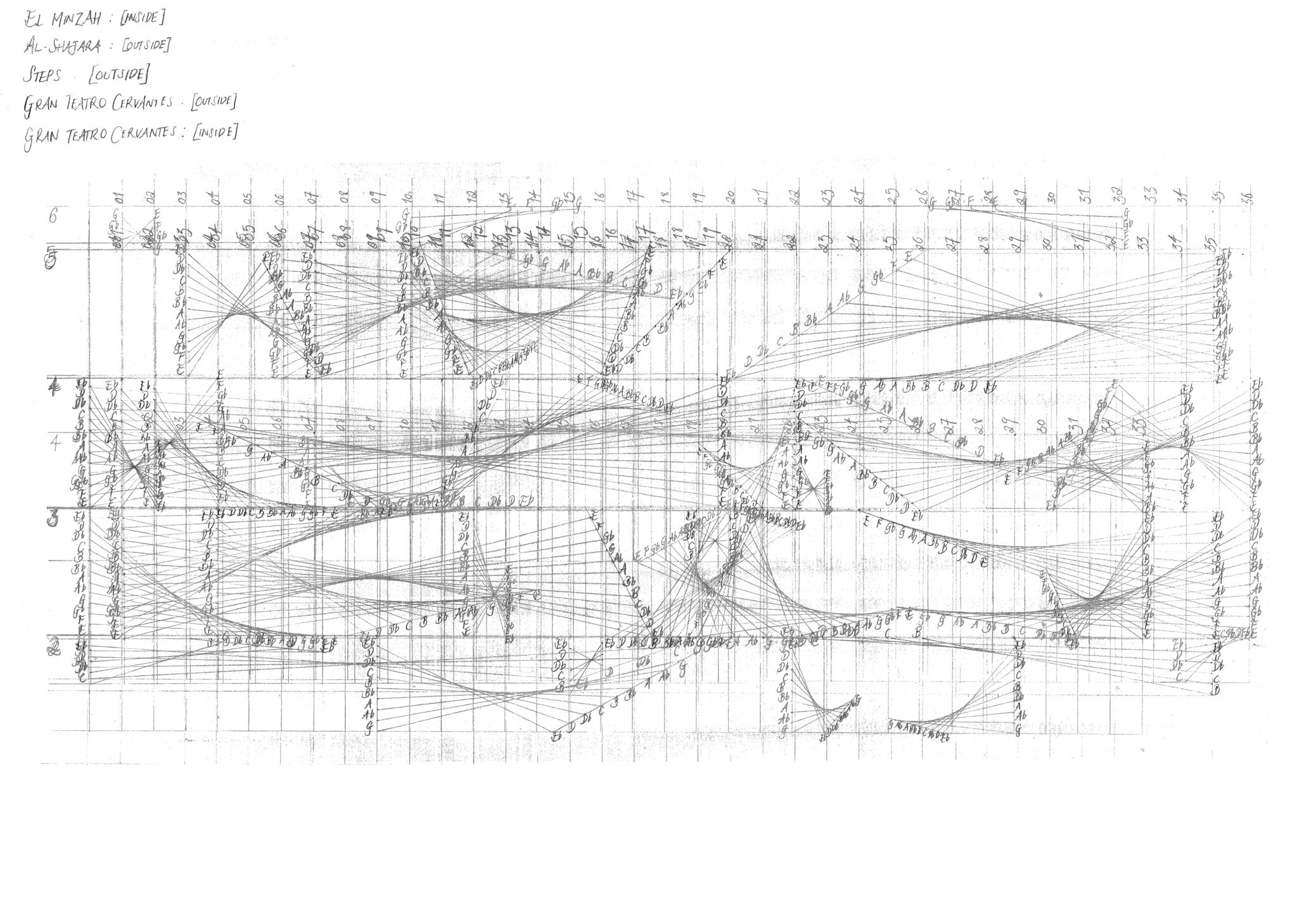
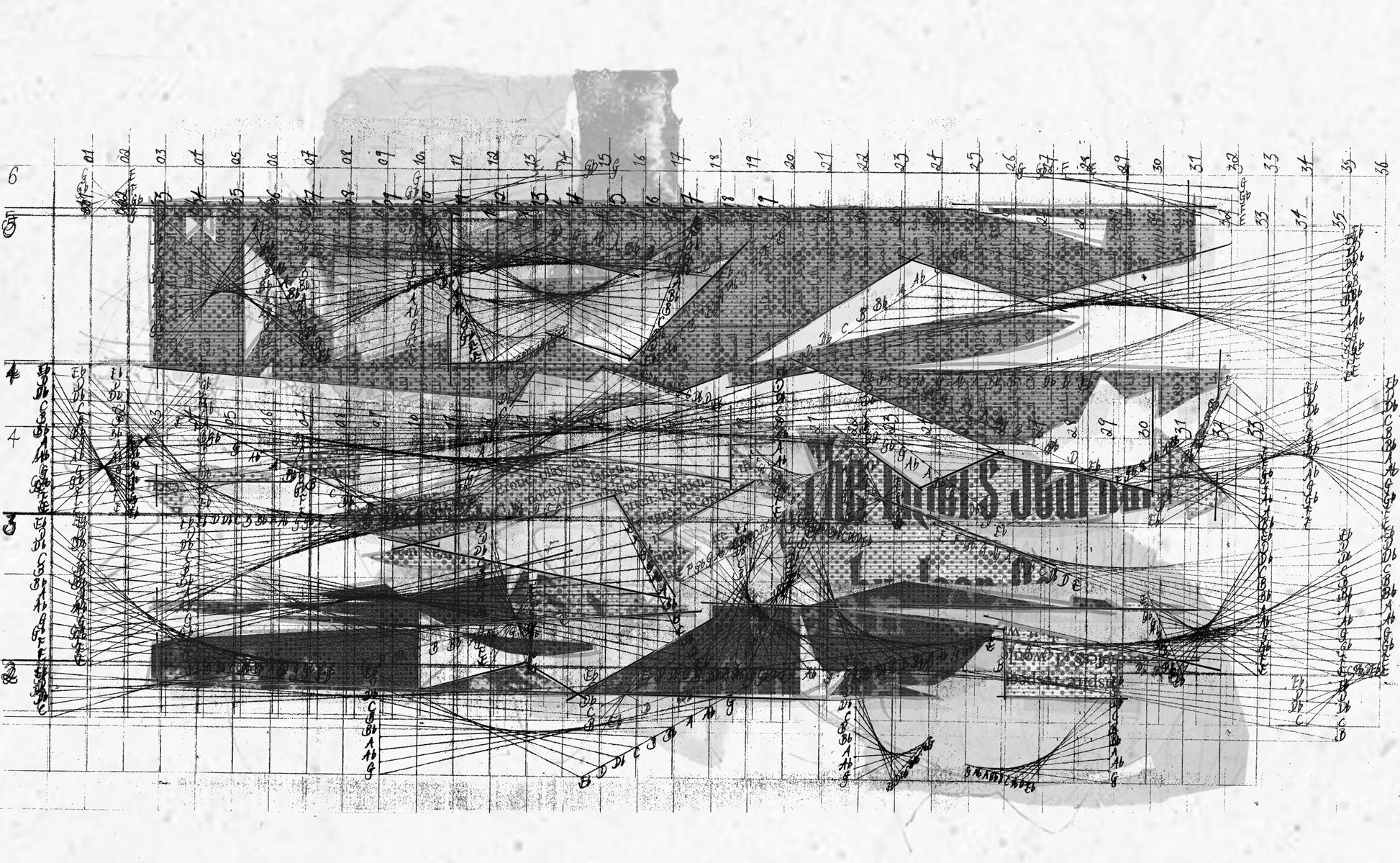
Representation of overlaid oscillations gleaned from sound bites from site
Extracting the Demolition
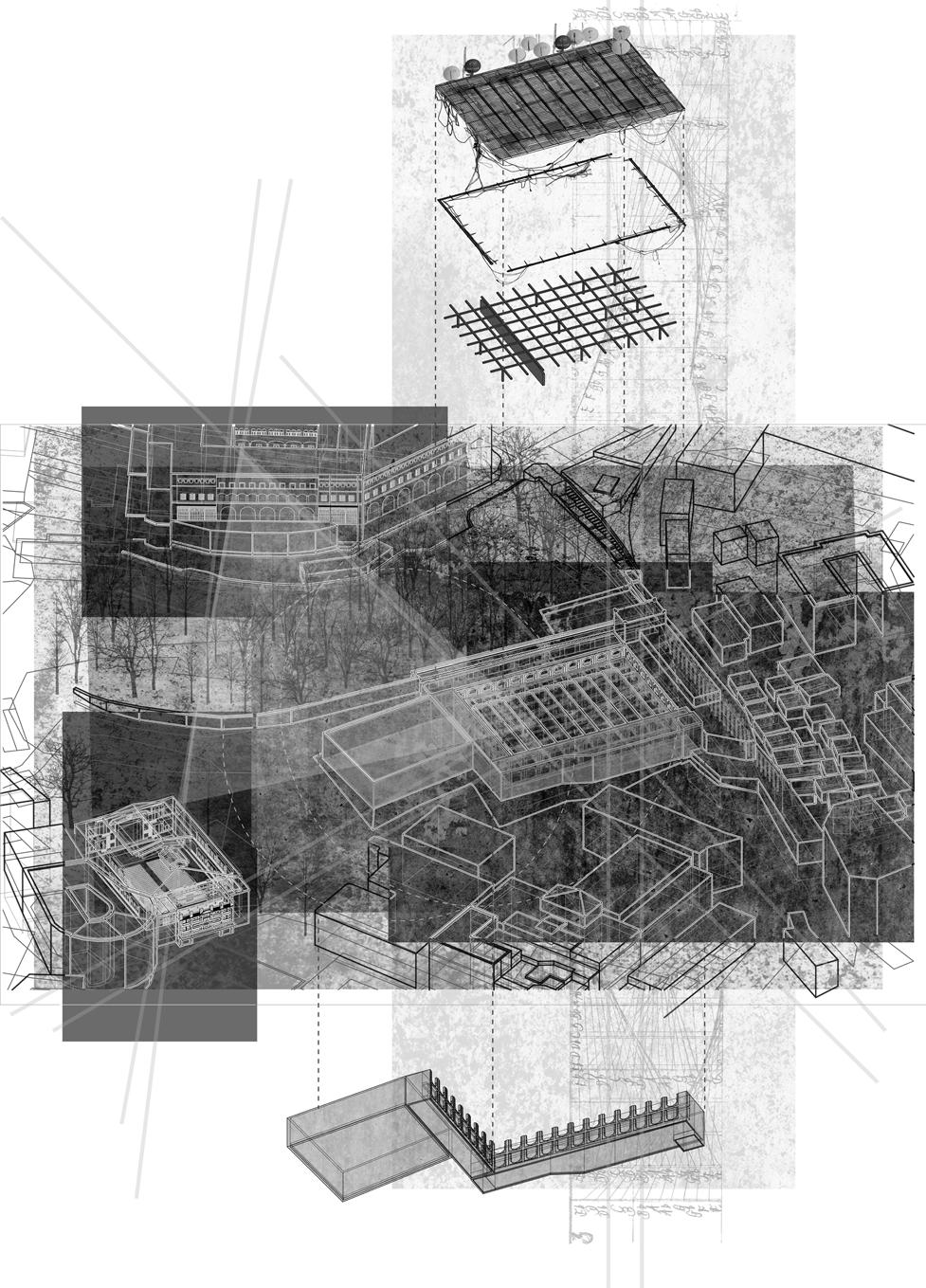
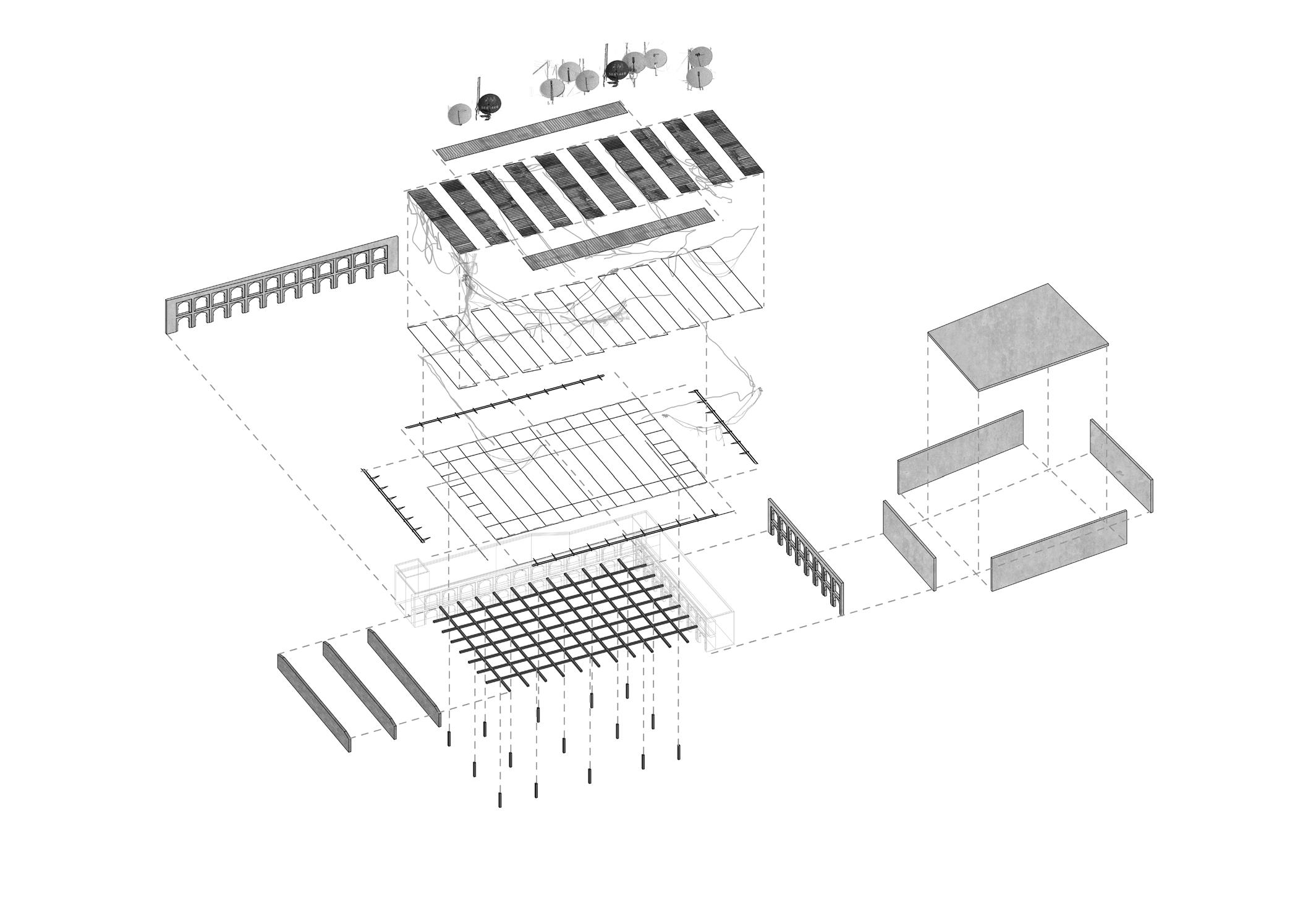
Exploded axonometric representation of demolition site and removed materials
drawn
Extracting the Demolition [2]
Exploded axonometric drawing showing demolition materials
[a] parabolic microphones and wires used to amplify sound, most likely installed for the Muslim call to prayer
[b] corrugated steel panels
[c] steel structural framing
[d] concrete walls and floors
[e] concrete arcade
[f] brick walls
[originally drawn at] 1 : 200
Performing on the Site
Proposed site plan indicating backstage [d] and demolition
[a] El Minzah Hotel [b] Marche des Pauvres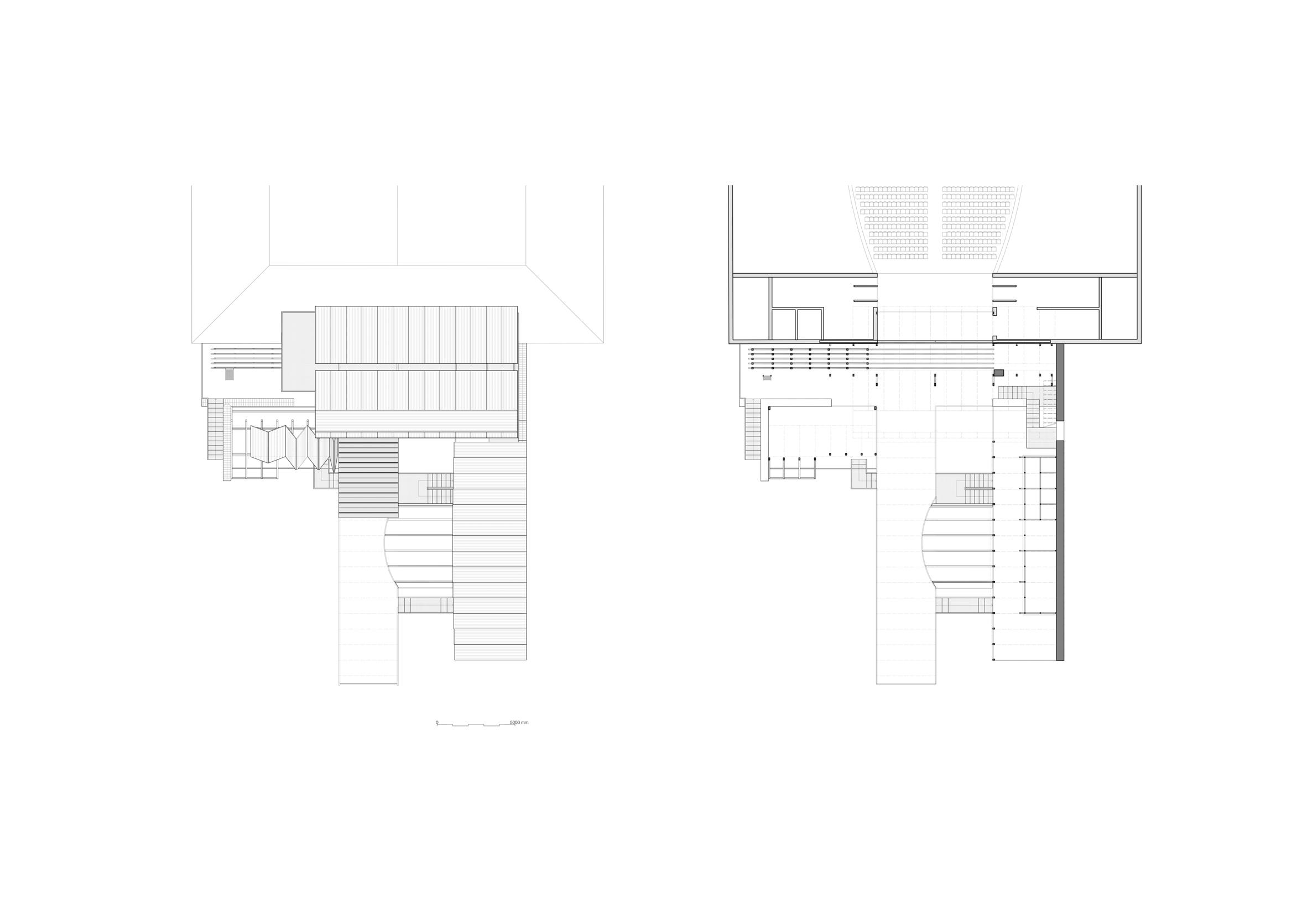
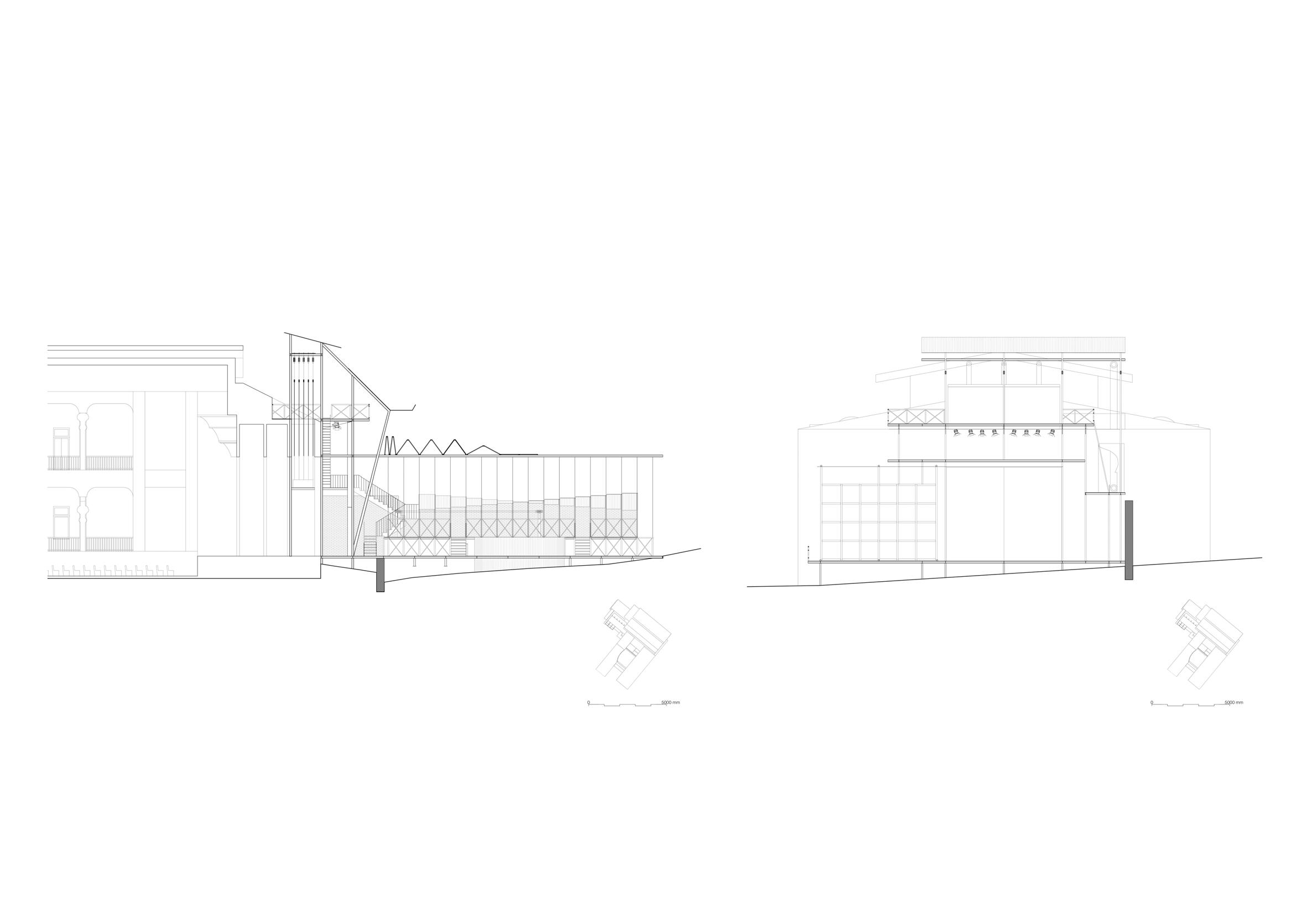

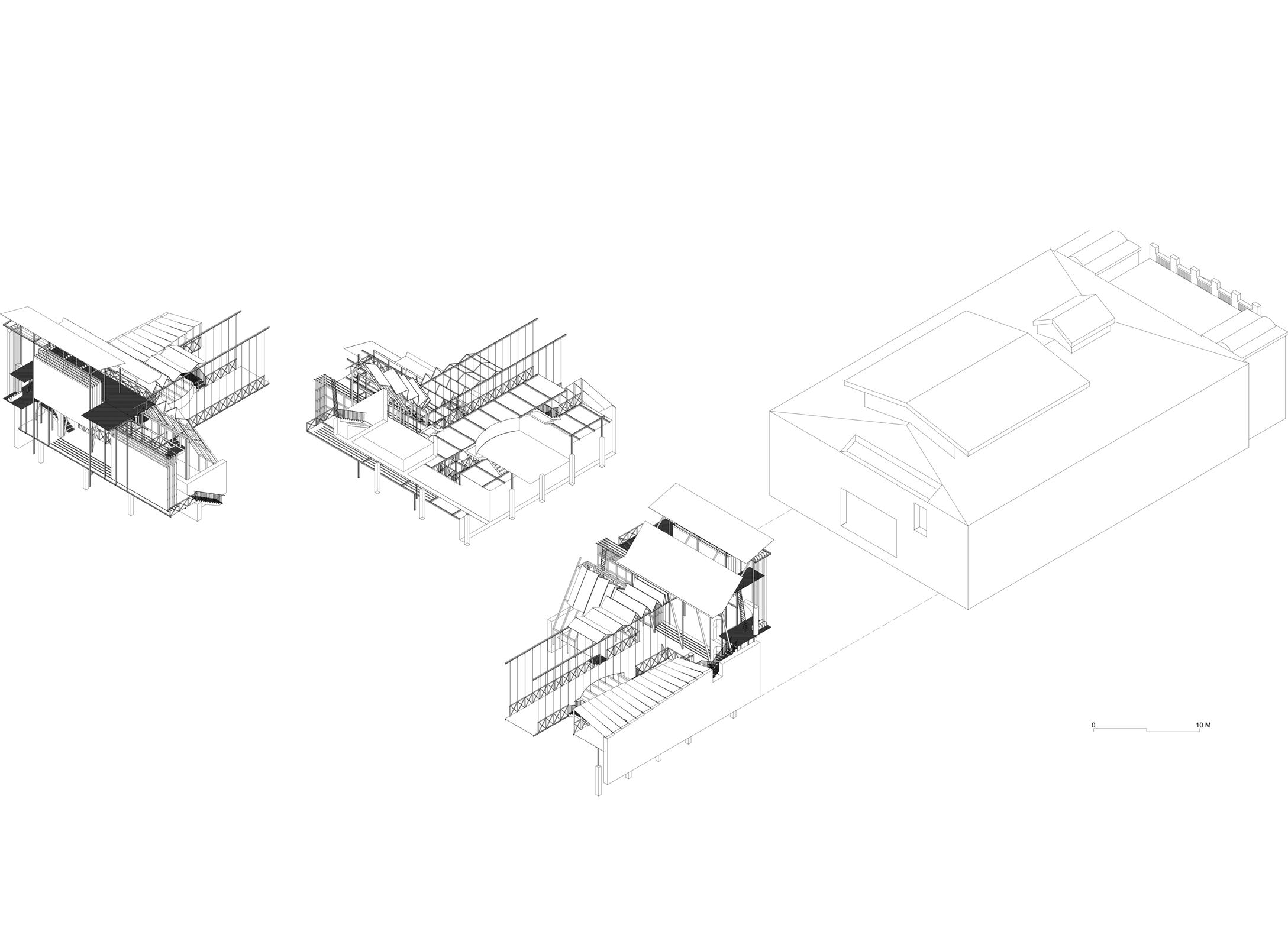
Framing the Backstage
Axonometric drawings of proposal in isolation
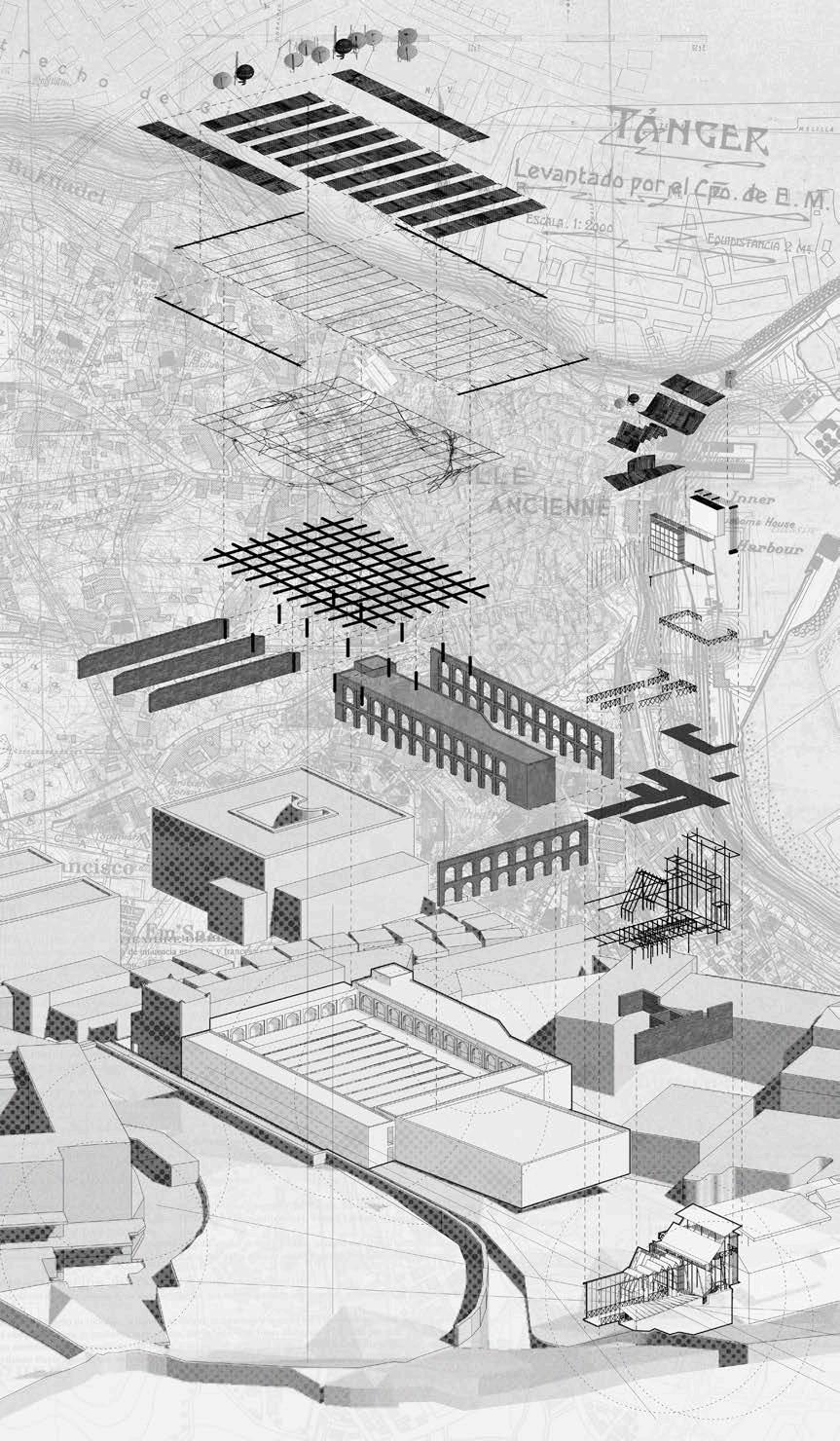
Gathering the Discarded
Exploded axonometric drawing
Exploded axonometric drawing of backstage using extracted
[originally drawn on 1200x700mm at] 1 : 200
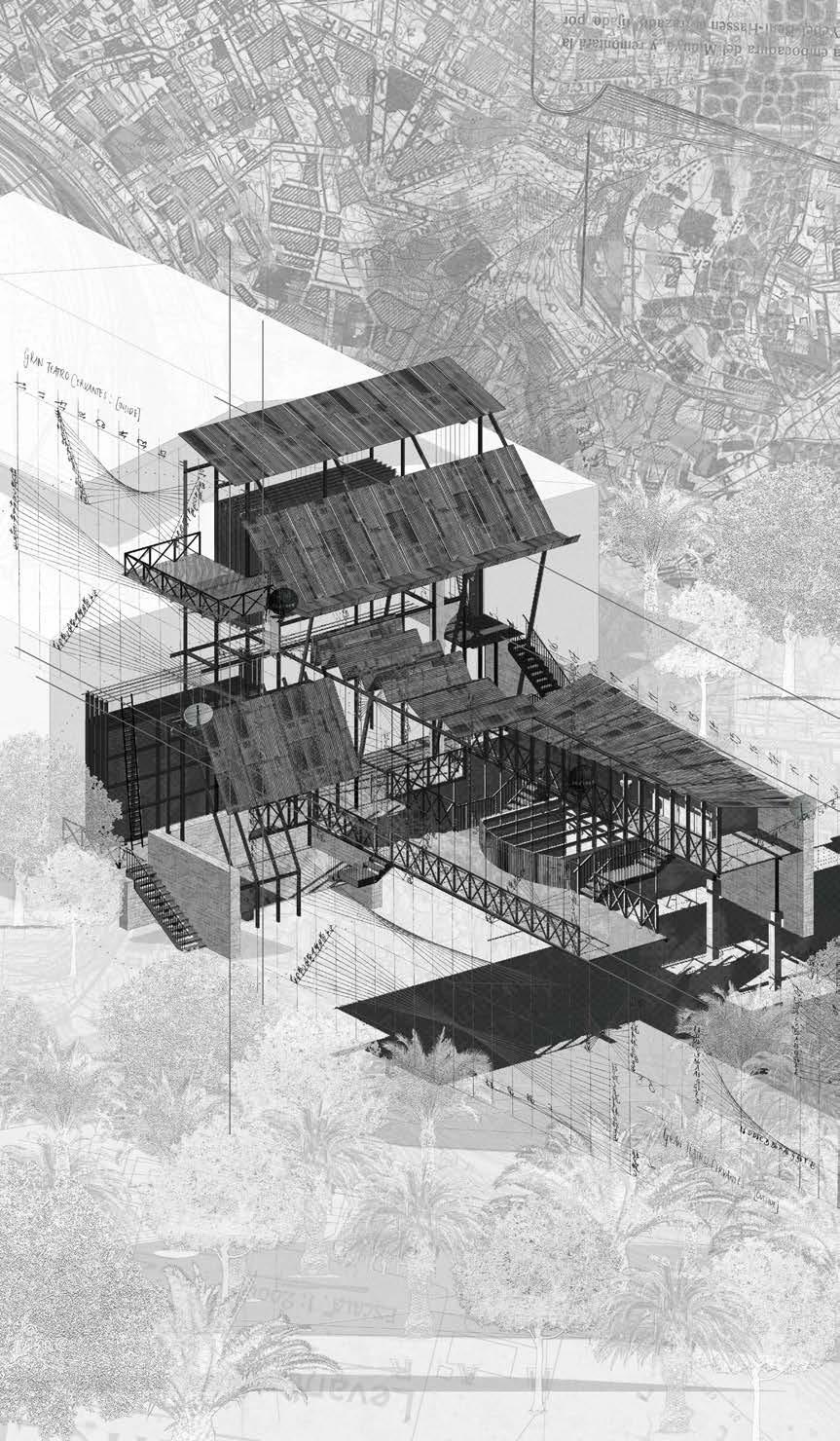
Animating the Backstage
Backstage as viewed by Genet on the terrace of El Minzah Hotel parabolic microphones, used to amplify sounds in key areas of the backstage, are oriented towards Genet [originally drawn on 1200x700mm at] 1 : 50
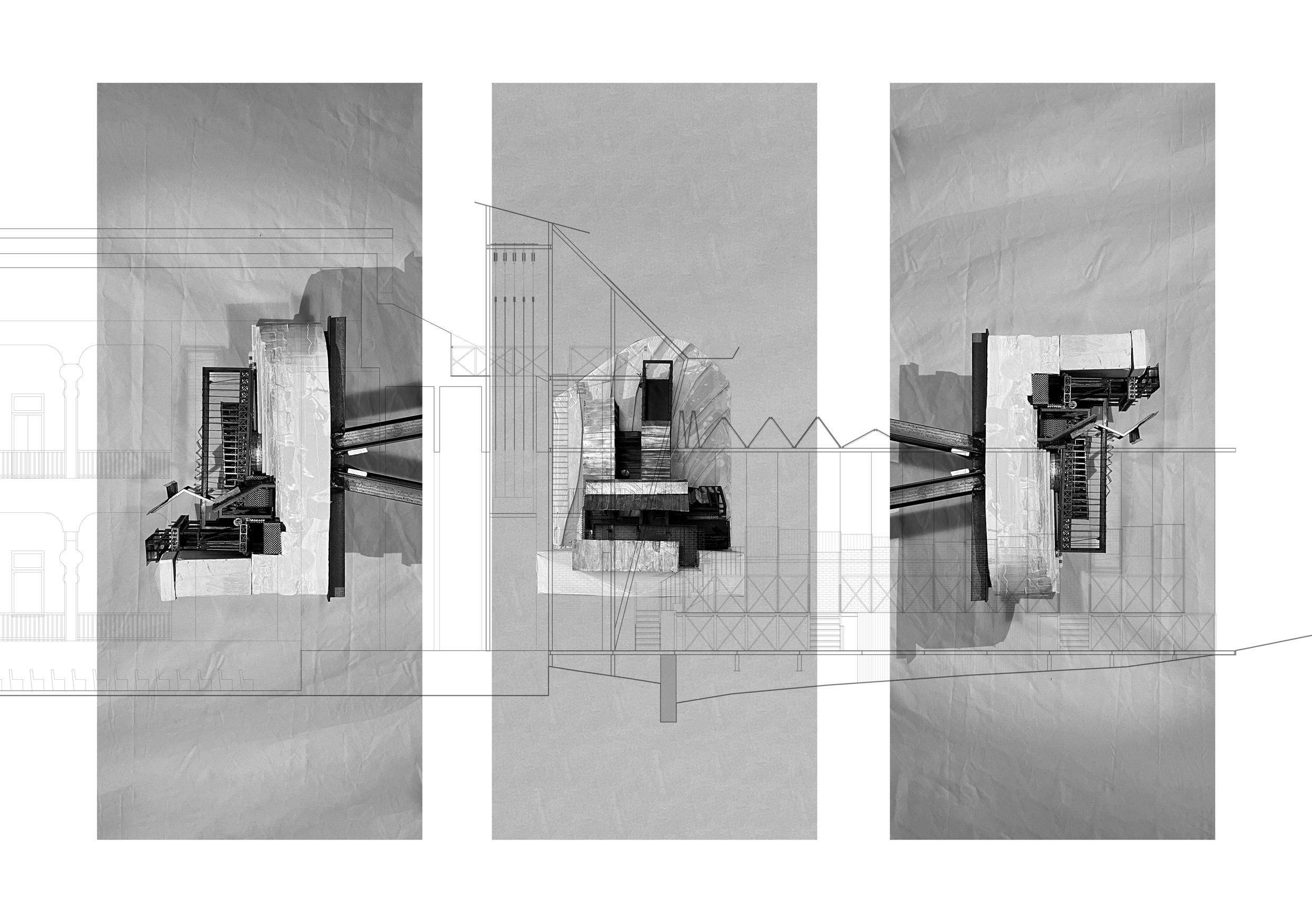
Modelling the Backstage [2]
Elevation and plan views of model
[originally modelled at] 1 : 100
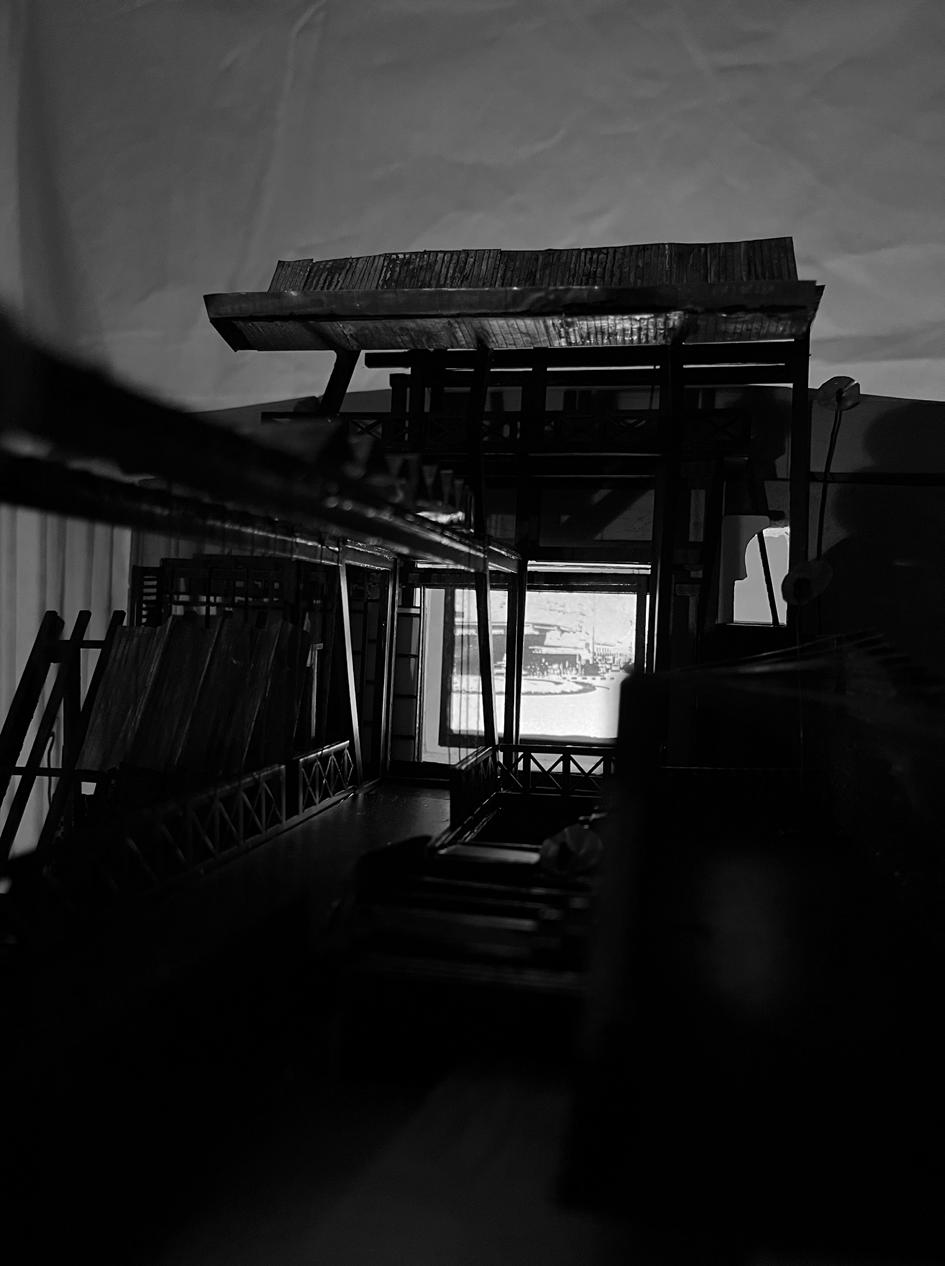
Modelling the Backstage [3]
Perspective view through backstage and lit backdrop
[originally modelled