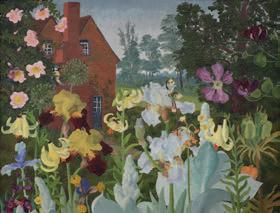
Family lawyers have noticed the trend of older couples in a long marriage to separate, now often referred to as ‘silver splitters’. Read about the possible reasons for this.
8 Salads
Salads can be hearty, nutritious and full of character. Here are four tempting recipes to inspire you to nourish your body.
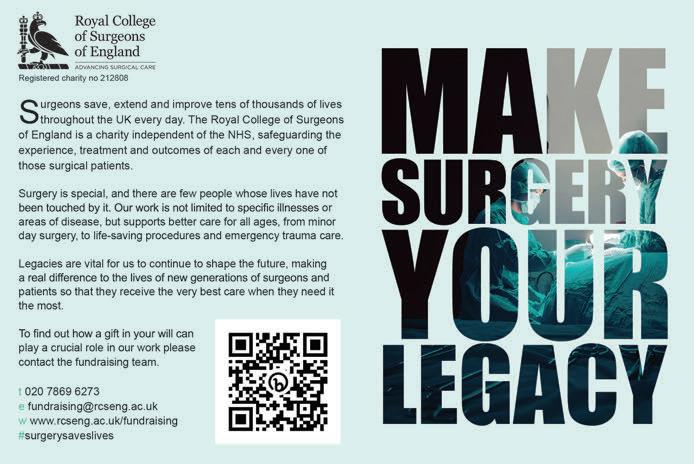
11The importance of legacies to charities
Leaving a legacy to a charity of your choice in your Will means you will be making a significant contribution to its vital work for future generations.
15 Update
Handyman services – help with small jobs around the house; Rising number of Legionella cases; Heart health, Britain’s biggest men’s health concern online.
17 Orkney
Orkney’s incredible scenery, abundant wildlife and mind-boggling wealth of historical sites makes it an ideal place to visit.
21 What’s on Events on around the UK.
26 Top container design tips
Guidelines to help you to achieve the best results, either by combining separate plants in their own pots, or bringing together a range in large containers.
29 Around the Kitchen Garden
Tips on how to get the best from your fruit and vegetables.
30 Making a scene
Published by:-
Amra Media Solutions Ltd
Marash House
2/5 Brook Street
Tring
Herts
HP23 5ED
•Tel: 01442 891608
•Email: info@amramedia.co.uk
•www.retirement-today.co.uk
•Layout: Karen Wightman
All rights reserved. No part of this publication may be reproduced without the prior permission of the publisher. The opinions expressed in this magazine are not necessarily those of the publisher. Although every care is taken to ensure the accuracy of the information and the advertisements contained within the magazine, the publishers cannot accept any liability.
Retirement Today would be pleased to receive your articles and photographs for possible publication. Although all reasonable care will be taken the magazine can assume no responsibility and contributors are advised to retain a copy.
There are many decisions to be made when remodelling a home from top to bottom, but Lizzie McGraw knew instinctively where to start on Liza and Michael’s Californian dream house.
32 Retirement should create more freedom, not less
Many of the limitations people put down to ageing are often more reversible than they realise.
35 Park Home living
A unique and appealing lifestyle that many more people are turning to.
40 Charity News
Important news within the world of charity.
If you would like to receive FREE digital copies of Retirement Today magazine, please email the code ‘Free Digital RT’ to: info@amramedia.co.uk
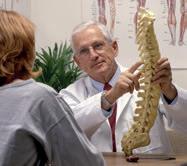
Ffinances. Pensions which they had expected to both live on will have to be divided which will have an impact on their standard of living on retirement. Other assets will also need to be divided with the priority being the housing needs of both.
The contents of the family home will have to be shared which will be difficult with emotional attachments to perhaps the home and contents. To minimise costs and reduce conflict the couple should use family mediation. A family mediator will help them to gather the information and ensure that the discussions focus on the future and avoid looking backwards at what went wrong in the relationship and blame. All assets that both have in joint or sole names will be considered as matrimonial unless inherited or personal damage awards which have been kept completely separate from the matrimonial assets. Future earnings and needs will also be considered.
When choosing a lawyer they should make sure they are at least a member of ‘Resolution’ their professional body. ‘Resolution’ members follow a Code of Practice to resolve issues in a constructive way.
Emotional impact
Both will go through a grieving process moving between denial, anger, bargaining, depression and acceptance. Although one may have been thinking about separation for many months it is still painful when looking back and remembering the relationship when it was working.
By Sarah Lamb
amily Lawyers have noticed the trend of older couples in a long marriage to separate, now often referred to as ‘silver splitters’. There has been a 75% increase over the past 20 years despite a reduction in divorces (Office for National Statistics). There are a number of possible reasons for this.
Longer life expectancy
Couples are looking at many years of retirement and realise that they may manage to live together now because they are working full time but do not find it attractive when their partner retires and will be at home 24 hours per day.
Quality of life
This is important to people now more than ever. Individuals want to ensure that they enjoy their remaining years. The couple may have had shared interests at the beginning of their relationship but now find they have little in common. They may have developed in different ways during the many years of their relationship. There may or may not be a new partner. Often they have a different view of what retirement will look like. One may wish to travel taking the view they should do as much as
possible while they can and the other wishing to stay at home. One taking the view that they enjoy life with an active social life whereas the other just wants to sit at home watching TV.
Children are now adults
Often what kept a couple together was the welfare of their children and once the children leave home their only common interest is gone. This does not mean that there will not be an impact on adult children who often expect their parents to stay together forever so the news has to be sensitively given ideally by both parents together. The couple need to be able to attend without friction family events such as weddings, graduations etc.
Reduced stigma
There is also less stigma attached to divorce. In the past it would be considered as failure whereas now it is seen as independence.
Division of assets
With divorce later in life, there is often considerable assets and possibly still income from employment. Both are often working full time and on similar incomes giving more financial independence.
The couple need to seek legal advice about divorce and separating the
A survey from 2005 suggests that women are more likely to feel relieved, liberated and happy after a split. Whereas men are devastated, confused and betrayed.
Both should consider counselling to provide them with emotional support when thinking about separation, and also during the separation process.
Wills
Both will have to prepare new Wills following divorce and also ensure that they check the beneficiaries on their insurance policies and pension and change if they do not want their former spouse to inherit.
Tax advice
Both will need tax advice on distribution of assets and also their tax position for the future.
At LSL Family Law we promote the use of Noncourt Dispute Resolution seeking solutions and minimising costs as much as possible.
The travel landscape is changing – some of which means easier travelling experiences and some of which complicates things. You can’t prepare for every eventuality, but the more organised you are, the more likely it is you are one step ahead of the unexpected.
Document basics
Your basic travel pack should contain your passport, GHIC card, any unexpired visas, travel insurance, left-over currency, travel currency cards, vaccination record and international driving licence.
Keeping everything in one place allows for easier trip preparation or literally taking off on the same day. If you have stored this information in the cloud, bring paper copies along too, as a reliable internet connection isn’t always guaranteed.
Start early
Being able to take advantage of early bird travel discounts is a wonderful reward for having planned your trip well in advance. As a retiree, you may have more flexibility around travel dates and times, as well as access to agerelated discounts for greater savings. (I was most excited to utilise my Senior Rail Travel card in the UK, as I can travel in style with a large discount.)
Bookings
Arranging flights and accommodation online yourself may feel easier, but don’t discount the services of thirdparty bookers. If things go wrong, you may value having someone on the ground to help you. Specialist travel agents who arrange historic, artistic or wellbeing themed breaks, for example, often know ‘best-kept secrets’. Make your connection arrangements in advance, especially for multi-destination trips. I once travelled through five countries in as many days. Knowing my connections had been meticulously pre-arranged allowed me to concentrate on the many immigration and visa demands.
Travel insurance
If your insurance policy is a perk of another organisation, such as your bank account, you may need to declare any medical conditions. Cruises, skiing or golfing holidays usually require additional cover. Also, be aware that war or natural disasters are common exclusions. When the airspace was closed over Dubai recently, I was grateful
Plan now, relax later: smart summer travel tips for retirees
Professional organiser Sammy Ryan explains how planning for ‘just in case’ affords you greater travel freedom
that I had a contingency pot in my travel fund to cover an extended stay and my rescheduled flights home. If things do go wrong, keep all receipts. You never know what might or might not be covered, but at least you have all the evidence.
Prescription medications Embassy web pages and Gov.uk are useful resources for checking that you are allowed to take your medication to the country you are travelling to or through. Bring a GP letter, confirming the prescription and quantity, as well as a week’s worth of extra medications – just in case.
Packing
Mix and match light layers so you can adapt to cooler evenings. The Sudoku Packing Method is particularly popular for maximum versatility. Full-sized toiletries are rarely needed. Decant a small amount or pack shampoo bars and makeup in solid form for easier transportation. Photograph the contents of any bags or suitcases inside and out for identifying purposes, and to support insurance claims if luggage gets lost.
Technology
Apps for tickets, street maps, transportation, guides and even suitcase trackers make travelling abroad much easier. Download essentials, such as tickets, in advance and save everything to the cloud. If you lose your phone, you can log in on a computer and access the
relevant information. Some countries offer you apps to get through border control faster – a great advantage. RFID blocking cards or wallets can help guard against unauthorised wireless scanning of your payment cards, particularly in airports.
Safety
Pre-booking a door-to-door airport car is wise if you’re travelling late at night.There comes a time in life when comfort and safety take precedence. Upgrades and stress-free transport are worth factoring into your budget. As a solo traveller, there are many safety and social benefits to experiencing a shared adventure with a new group of people. When I was grounded in India, for example, we became a mutual support network. Having started out as strangers, we discovered we lived locally to one another and continue to meet up and reminisce about our brilliant trip.
One of the many advantages of retirement is the freedom to pursue our travel dreams. Thoughtful preparation in advance helps mitigate against obstacles, while helping us to feel present and joyful in the wonderful moments to come.
Salads
Salads can be hearty, nutritious and full of character. Here are four tempting recipes to inspire you to nourish your body with every vibrant forkful.
char-grilled halloumi, courgette and mint salad
Pomegranate molasses, a popular ingredient in Middle Eastern cooking, lends a tangy, sweet-sour flavour to the dressing for this main meal salad. It also makes a useful base for a marinade and goes particularly well with bean, poultry, meat and vegetable dishes.
125 g rocket leaves
600 g canned chickpeas, drained and rinsed
1 small red onion, sliced
1 courgette, coarsely grated
400 g halloumi, patted dry and sliced seeds from 1⁄2 pomegranate
4 tablespoons freshly chopped mint leaves
POMEGRANATE MOLASSES DRESSING
4 tablespoons extra virgin olive oil, plus extra for brushing
2 tablespoons pomegranate molasses
1 teaspoon freshly squeezed lemon juice
1⁄2 teaspoon caster sugar
sea salt and freshly ground black pepper
Serves 4
Mix together all the ingredients for the dressing and season with salt and pepper.
Divide the rocket, chickpeas, red onion and courgette between 4 serving plates. Spoon enough of the dressing over the salad to lightly coat it and toss gently until everything is combined.
Heat a large, ridged griddle pan over a high heat.
Brush the halloumi slices with a little extra olive oil. Reduce the heat a little and griddle the halloumi for 2 minutes on each side or until slightly blackened in places and softened. Serve the halloumi on top of the salad, garnished with the pomegranate seeds and mint.
POMEGRANATE
With its jewel-like fruit, pomegranate seeds add vibrance and a touch of sweetness to winter salads.
roast chicken salad with gremolata and polenta croutons
Although gremolata – the classic Italian mix of lemon, parsley and garlic –is most often used as a condiment or relish, with the addition of a fruity extra virgin olive oil, it makes a bright, fresh, flavour-packed dressing for a simple chicken salad.
2 tablespoons olive oil
300 g ready-cooked polenta, sliced and cut into croutons
140 g mixed soft salad leaves, including red leaves
300 g cooked roast chicken, shredded into long pieces
2 small avocados, peeled, halved, stoned and sliced
6 baby courgettes, sliced into ribbons
50 g walnut pieces, toasted
GREMOLATA DRESSING
5 tablespoons extra virgin olive oil
finely grated zest and freshly squeezed juice of 1 lemon
1 garlic clove, crushed
4 tablespoons finely chopped flat leaf parsley
sea salt and freshly ground black pepper
Serves 4
Heat 2 tablespoons oil in a large, non-stick frying pan over a medium-high heat and fry the croutons for 10 minutes, turning occasionally, until crisp all over. Put the croutons on paper towels to remove any excess oil.
Meanwhile, mix together all the ingredients for the gremolata dressing and season to taste.
Arrange the salad leaves on a serving plate and top with the chicken, avocados and courgettes. Spoon enough of the dressing over to lightly coat and toss gently, then sprinkle over the walnuts.
POLENTA
You could use a block of ready-made polenta to make the croutons for this recipe, but instant polenta or cornmeal takes a mere 5–10 minutes to make and has a superior flavour and texture. Follow instructions on the pack, then spread out evenly on a greased baking sheet, about 1cm/1⁄2 inch thick, and leave to set – this doesn’t take long. Cut into croutons and you’re ready to go.
chickpea and spiced cauliflower salad with tamarind dressing
Cauliflower takes on a new lease of life when marinated in spices and roasted until just tender. Here, it is served on top of an Indian-inspired chickpea, tomato and potato salad with a tangy tamarind and yogurt dressing.
3 tablespoons cold-pressed rapeseed oil or light olive oil
2 teaspoons ground turmeric
2 tablespoons tikka curry paste
freshly squeezed juice of 1⁄2 lime
1 cauliflower, cut into florets, stalks trimmed
400 g new potatoes, halved
400 g canned chickpeas, drained and rinsed
1 small red onion, diced
4 tomatoes, seeded and diced
2 large handfuls of freshly chopped coriander leaves
sea salt and freshly ground black pepper
TAMARIND DRESSING
3 tablespoons tamarind paste
2.5cm/1 inch piece fresh root ginger, peeled and diced freshly squeezed juice of 1⁄2 lime
6 tablespoons natural yogurt
Serves 4
Preheat the oven to 200°C (400°F) Gas 6.
Mix together the oil, turmeric, curry paste and lime juice in a shallow bowl, then season. Add the cauliflower and turn to coat in the paste. Transfer to a roasting pan and roast for 10–15 minutes, depending on the size of the florets, turning once, until tender.
Meanwhile, cook the potatoes in a pan of boiling water for 12–15 minutes, until tender. Drain and leave until cool enough to handle, then peel off the skins and cut into cubes.
Mix together all the ingredients for the dressing, and season with salt and pepper.
Put the potatoes in a serving bowl with the chickpeas, onion, tomatoes and half the coriander. Spoon the dressing over and mix gently until combined. Top with the roasted cauliflower and the remaining coriander.
TAMARIND
In its natural state, tamarind fruit looks like a long brown pod, inside of which is a sticky, tangy, seedy pulp. It’s more commonly sold as a paste or in a block – with or without seeds – and adds a sweet-sour note to dishes.
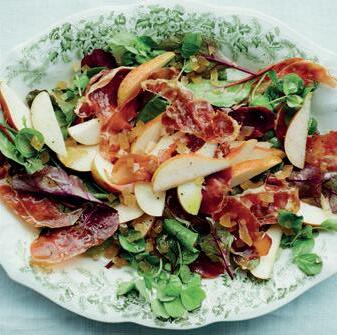
Parma ham, pear and stem ginger salad
The combination of salty, crisp Italian air-dried ham with sweet, soft pear and a zing from the stem ginger makes this quite a sophisticated salad, perfect for a special occasion or appetizer.
8 slices Parma ham
2 balls stem ginger, diced, plus 1 tablespoon syrup from the jar
125 g mixed baby leaf herb salad
50 g pea shoots
2 pears, halved, cored and cut into long wedges
DRESSING
4 tablespoons extra virgin olive oil, preferably a fruity flavoured one 2 tablespoons freshly squeezed lemon juice
sea salt and freshly ground black pepper
Serves 4
Place the slices of Parma ham in a dry, non-stick frying pan and cook over a medium heat for 3–4 minutes, turning once, until just crisp. Remove from the pan, drain on paper towels, and lightly brush the top of each slice while still warm with the ginger syrup.
Meanwhile, mix together all the ingredients for the dressing and season with salt and pepper.
Put the salad leaves and pea shoots on a serving plate and top with the pears and stem ginger. Spoon as much of the dressing over as needed, then toss gently until lightly coated. Arrange the slices of Parma ham on top and serve immediately.
PEARS
For the best flavour, make sure the pears are at the peak of ripeness. You don’t want them to be hard and flavourless, or so ripe that they turn to mush when sliced.
Recipes from Salads, by Nicola Graimes, published by Ryland Peters & Small (£14.99).
Your legacy can help support the Royal Navy family for generations to come
Your legacy can help support the Royal Navy family for generations to come
Your legacy can help support the Royal Navy family for generations to come
Royal Navy & Royal Marines Charity is the principal charity of the Royal Navy. We are committed, ready and by the side of Royal Navy, Royal Marines and Royal Fleet Auxiliary personnel and their families –past, present and future.
Royal Navy & Royal Marines Charity is the principal charity of the Royal Navy. We are committed, ready and by the side of Royal Navy, Royal Marines and Royal Fleet Auxiliary personnel and their families –past, present and future.
Royal Navy & Royal Marines Charity is the principal charity of the Royal Navy. We are committed, ready and by the side of Royal Navy, Royal Marines and Royal Fleet Auxiliary personnel and their families –past, present and future.
Royal Navy & Royal Marines Charity is the principal charity of the Royal Navy. We are committed, ready and by the side of Royal Navy, Royal Marines and Royal Fleet Auxiliary personnel and their families –past, present and future.
Whether big or small, a gift in your Will can make a lasting difference.
Whether big or small, a gift in your Will can make a lasting difference.
Whether big or small, a gift in your Will can make a lasting difference.
Whether big or small, a gift in your Will can make a lasting difference.
In 2025 we awarded over 1,000 grants worth £5.72 million, reaching nearly , beneficiaries, this included over £800,000 investment in mental health and wellbeing projects
In 2025 we awarded over 1,000 grants worth £5.72 million, reaching nearly , beneficiaries, this included over £800,000 investment in mental health and wellbeing projects
In 2025 we awarded over 1,000 grants worth £5.72 million, reaching nearly , beneficiaries, this included over £800,000 investment in mental health and wellbeing projects
In 2025 we awarded over 1,000 grants worth £5.72 million, reaching nearly , beneficiaries, this included over £800,000 investment in mental health and wellbeing projects
Leaving a gift in your Will to RNRMC is free and easy. To find out more visit:
A legacy of kindness
Leaving a gift in your Will to RNRMC is free and easy. To find out more visit:
Leaving a gift in your Will to RNRMC is free and easy. To find out more visit: rnrmc.org.uk/legacy
rnrmc.org.uk/legacy
rnrmc.org.uk/legacy
Leaving a gift in your Will to RNRMC is free and easy. To find out more visit: rnrmc.org.uk/legacy
SThe importance of legacies to charities
ometimes there are things you must do which you know are important, but are often pushed to the back of your mind and there they stay. Making a Will is a great example of this. We all know it’s something we should be looking at doing, but all too often it’s left until later in life or not at all.
The simple fact is that only by making a Will can you guarantee your family and friends, charities and people that are important in your life receive the exact bequest you want them to receive and ensure your estate, money and possessions reach the right people in the right proportion. You can choose who you would like to appoint as executor(s) and reduce or even eliminate inheritance tax. Most importantly it avoids financial squabbles within the family, and dealing with the estate of someone who died without a Will is much more complicated and costly.
When making a Will, once family and friends are taken care of, consider who else you want to help.
You may decide to give a legacy to a favourite charity that you have been connected with or have supported during your lifetime.Very often people decide not to leave a legacy to charity in case their children feel cheated of inheritance. However, one of the first steps you can take to giving yourself permission to donate to charity in your Will is to talk to your family about your plans for your death, including leaving a donation, and you may find that many people are proud of their parents planning to leave a gift to charity once their loved ones have been looked after.
One thing to remember is that it’s very important to be specific and accurate with details of your chosen charity, as some have similar names and you need to avoid mistaken identity. The name, address and charity number should be correct otherwise the donation could be invalid. As a safeguard just in case the charity you have nominated is not in existence when the Will is read, it’s always good to have an alternative one mentioned in case you need a backup.
Leaving a legacy to a charity of your choice in your Will means you will be making a significant contribution to its vital work for future generations, not to mention the footprint you will leave. Over the year, gifts in Wills have helped charities fund their vital work, such as helping vulnerable people, protecting wildlife and domestic animals, and help funding medical research, to name just a few worthwhile causes. Charities are often working under extreme financial pressures. Some get no government grant, and many depend on donations and legacies to provide a big part of their income. So legacies still remain perhaps the most important way you can help support your favourite charities. No matter how small, it can still make a big difference long-term. The legacy you write in your Will today, will not be available to the charity for many years to come, but will provide a much needed source of income in future years.
If you have certain feelings about how
the money should be spent, you can specify that it is for a particular use. However, it doesn’t have to be money – charities have been left legacies of anything from houses, a car, antique ornaments to investments in shares. It has been government policy for years to encourage charitable giving. Gifts made by Will are exempt from inheritance tax. In addition, where more than 10% of the value of the estate is dedicated to charity, the rate of the whole estate is reduced.
If you don’t currently have a Will, then seek out a solicitor who can help you in the process of making one. In fact, your chosen charity may be able to provide you with a solicitor, sometimes at no cost or for a donation. If you already have a solicitor, then he/she can help you update your Will to include a charitable legacy.
Many people in the UK support charities in their lifetime and often say they would happily leave a gift in their Will, but sadly this is not the case and only a small percentage actually do. Remember that leaving a legacy in your Will does not affect your day to day finances, allowing you to pledge support to a charity you care about without having to change how you spend or save during your lifetime.
Let charitable work live on –leave a legacy.
CASE STUDY
CASE STUDY
Remembering Tom
RAF Veteran Tom Wells took part in a photoshoot and short film for the Fund in 2022 at the RAF Museum in London. Tom kindly shared with us that he had left a gift in his Will to the Fund as he wanted to motivate others to consider doing the same.
Tom served in the RAF during his National Service and always said that his three closest friends were those he met during his time in the Royal Air Force, as part of the RAF Family. Sadly, in 2024, Tom passed away. His legacy gift was gratefully received by the Fund and will help serving and former RAF personnel. Gifts like Tom’s help us to provide lifelong practical, emotional and financial support for anyone in the RAF Family and ensure that they will be helped in their hour of need.
So, thank you Tom.
To find out how your future gift could make a difference to the RAF Family, like Tom’s, visit rafbf.org.uk/heart
Protecting animals for generations
For 35 years, with the help of our supporters, Naturewatch Foundation has campaigned to improve animal welfare and create a kinder world for animals. Real change takes time, and much of what we hope to achieve in the future will only be possible because supporters choose to remember us in their Wills. These gifts help us plan ahead and remain a strong, steady voice for animals.
Protecting wildlife in the UK
Change Lives
In the UK, we work with police, government departments and charities to protect wildlife and help ensure those who harm animals are held accountable. Through our ‘Target Crime Not Wildlife’ campaign, we have also brought smaller wildlife rescue organisations together, helping the sector speak with a stronger voice and drive change.
Driving change for animal welfare
in to imagined the brain injury, and excess transferred to received Royal with lives and the differinjuriesbefore his Royal Navy
We continue to push for greater transparency around animal testing in the UK, holding the government to account and calling for clearer public reporting. We also campaign to end low-welfare pet breeding and support small rescue organisations through our Pet Rescue Grant.
CASE STUDY
Improving animal welfare worldwide
Internationally, we have supported animal welfare in Ukraine since 2013 and now work across Eastern Europe. We are also proud to coordinate World Animal Day, bringing people together globally to raise awareness and improve animal welfare standards.
Leave a lasting gift for animals
By leaving a gift in your Will, you can help Naturewatch Foundation protect animals for generations to come and ensure our vision of a kinder world for animals continues to grow. www.naturewatch.org/leave-a-legacy
"This journey has taught me the importance of resilience," he says. "The real challenge has been the mental side of recovery. It's about finding strength within yourself to keep going, even when everything feels impossible or you're having a rubbish day. I'm determined to keep pushing myself, both physically and mentally, to prove that no matter how tough life gets, we can always stay focused, move forward and keep pushing through."
A gift in your Will can change lives
When Sam Furniss, a member of the Royal Navy stepped in to prevent an assault on a woman, he could never have imagined the impact it would have on his own life.
“This journey has taught me the importance of resilience,” he says.
Sam’s story is a powerful reminder that recovery is not a journey anyone should face alone.
The violent incident left Sam with a severe traumatic brain injury, consisting of multiple skull fractures and brain bleeds and excess air within the cranial cavity.
It also highlights the lasting impact of charitable support for serving personnel and veterans when they need it most.
With recovery the immediate priority, Sam was transferred to Royal Navy Recovery Centre (RNRC) Hasler, where he received specialist rehabilitation and support.
The centre, supported by funding from Royal Navy & Royal Marines Charity (RNRMC), provides serving personnel with specialist medical care, physiotherapy, mental health support and expert guidance to help them rebuild their lives and regain confidence.
During his time at Hasler, Sam experienced first-hand the difference RNRMC makes to those recovering from severe injuries - whether physical, mental, or both.
By leaving a gift in your Will, you can help ensure vital support for serving Royal Navy and Royal Marines personnel, veterans and their families remains for generations to come.
He had also previously benefited from RNRMC’s support before his injury, receiving financial assistance to represent the Royal Navy in basketball.
“The real challenge has been the mental side of recovery. It’s about finding strength within yourself to keep going, even when everything feels impossible or you’re having a rubbish day. I’m determined to keep pushing myself, both physically and mentally, to prove that no matter how tough life gets, we can always stay focused, move forward and keep pushing through.” Sam’s story is a powerful reminder that recovery is not a journey anyone should face alone. It also highlights the lasting impact of charitable support for serving personnel and veterans when they need
By leaving a gift in your Will, you can help ensure vital support for serving Royal Navy and Royal Marines personnel, veterans and their families remains for generations to come. Every gift in every Will, no matter how small or large, will have a lasting
During rehabilitation, he became even more aware of the charity’s impact on those facing life-changing challenges.
Despite the difficulties, Sam remained determined to move forward.
Every gift in every Will, no matter how small or large, will have a lasting impact.
Your legacy can help more people like Sam receive specialist recovery support when they need it most.
www.rnrmc.org.uk
Be Part Of the Heart
As
For over 100 years, those who serve in the Royal Air Force have been ready to protect us and those we cherish. But who will protect them and their families in their hour of need?
You can be part of the heart of the RAF Family, with a gift in your Will. Your gift will give the RAF and its people the support they need, when they need it. You could help provide confidential counselling to to mobility aids, as well as support for injuries, illness and bereavement.
Leave a Lasting Legacy
Imagine losing your entire pension and savings overnight
This is what happened to thousands of innocent people in Zimbabwe, creating a national emergency. It is now worse than ever and thousands of destitute pensioners rely on ZANE to survive.
Leaving a gift to ZANE in your will can help transform the lives of some of the most vulnerable and impoverished people in Zimbabwe, who live with no effective healthcare or social services.
Gifts in wills enable ZANE to continue its lifesaving work.
ZANE is a former Telegraph Overseas Charity of the Year
Please email
to request a wills information booklet or scan the QR code to download a
ZANE is a brilliant charity working in the failed state of Zimbabwe, caring for the old and lonely, providing medical treatment and supporting communities. You can choose where your money goes.
Dame Prue Leith DBE DL Cookery writer and restaurateur
UPDATE
Many older and disabled people struggle with small jobs around the home – a loose handrail, a stiff lock, a draught under the door, or a smoke alarm needing a new battery. Left undone, these can affect safety and independence. What many people don’t know is that free or heavily subsidised handyperson services exist across the UK to help with exactly these tasks.
Angela Gifford from Able Community Care gives useful information about help around the house which many people may not be aware of
Handyperson Services: help with small jobs around the home
vetted and carry ID. Find your local service at www.careandrepairscotland.co.uk or call 0141 221 9879
What is a Personal Health Budget?
Angela Gifford CEO
My company, Able Community Care began providing Live-in Care support in 1980 and today we can provide our services throughout mainland UK and the offshore Islands, such as Jersey and as we did recently, in the Western Isles.
In England Services can help with small repairs, grab rails, door and window locks, fitting smoke alarms, and energy efficiency checks. Your first port of call is your local council. You can also contact your local Age UK, call the Age UK Advice Line on 0800 678 1602 (8am–7pm every day), or visit www.foundations.uk.com to find your nearest service.
In Wales Wales has excellent coverage through Care & Repair Cymru, with agencies covering every part of the country. Services include a free ‘Healthy Homes Check’, a dedicated handyperson service, and help with safety, warmth and accessibility. Generally available to homeowners and private tenants. Find your local agency at www.careandrepair.org.uk
A Personal Health Budget is a source of NHS funding to pay for healthcare support, which is not widely known.
My company, Able Community Care began providing support in 1980 and today we can provide our services mainland UK and the offshore Islands, such as Jersey recently, in the Western Isles.
A Personal Health Budget is based upon a personalized, care, support plan which sets out a person’s health and wellbeing needs, the outcomes they wish to achieve and, if the eligibility criteria is reached, then NHS funding towards the cost of supporting this plan is given.
• Live-in care enables older people and people with a disability to remain living in their own home rather than moving into a residential care setting.
In Northern Ireland There is no single national network, but help is available locally. Contact Age NI (www.ageni.org) as your first step – they can advise on what is available near you, or point you to your local Health and Social Care Trust.
• Live-in care enables older people and people with remain living in their own home rather than moving residential care setting.
Both adults and children with complex healthcare support needs can apply for this NHS funding, and for full details of the criteria, search ‘NHS who can have a personal health budget’ for the full details.
• Live-in Care offers helps with domestic tasks, assistance with personal care and especially important in the Autumn and Winter seasons, companionship.
In Scotland Care and Repair services are available in 28 council areas. If you are aged 65 or over, or living with a disability, you only pay for materials – there is no charge for time or travel. All handypeople are
Heart health now Britain’s biggest men’s health concern
online, new data suggests
Men are nearly five times more likely to seek advice about heart health than low testosterone, according to new data from Healthwords.ai
Analysis of anonymised conversations on the Healthwords.ai platform between May 2025 and May 2026 found that cardiovascular health and blood pressure accounted for almost one-third (30%) of all leading men’s health searches, making it the single biggest concern among male users.
The findings challenge common perceptions about men’s health priorities. While topics such as testosterone levels, muscle building and sexual performance often dominate public discussion. Healthwords.ai data suggests men are increasingly focused on understanding their cardiovascular risk, blood pressure and overall heart health. Heart health concerns generated almost twice the level of interest seen for testicular health and nearly five times as many searches as low testosterone.
The data highlights a willingness among men to seek information about symptoms and conditions that may traditionally have gone undiscussed, particularly around cardiovascular disease, cancer concerns and intimate health.
Personal Health Budgets can be given to people who require healthcare support in their home or in a care home.
• Live-in Care offers helps with domestic tasks, personal care and especially important in the seasons, companionship.
Small jobs matter. These services exist so no one has to go without someone to help them.
If you would like to know more about our Live-in Care Schemes, give us a call on 01603 764567.
If you would like to know more about our Live-in Care call on 01603 764567.
Able Community Care has provided live-in care support across the UK since 1980. www.ablecommunitycare.com
In each geographical area there is an Integrated Care Board, which you can contact and they will give guidance on how to apply for this funding. Recently, I rang on behalf of a lady who has complex care needs and was advised to contact her GP or Community Nursing Team who would apply on her behalf.
Questions we are often asked are about the cost, the availability, the professional status of the care workers and what happens if there is an emergency situation after our office is closed.
Our information brochure gives further information and our website at www.ablecommunitycare.com has an application form you can complete.
Questions we are often asked are about the cost, the professional status of the care workers and what happens emergency situation after our office is closed.
Health conditions such as dementia, Parkinson’s Disease, stroke support, may be eligible for this funding, and a call to the organisations which represent these health conditions such as the Alzheimer’s Association, Parkinson’s Disease Association and the Stroke Association, and other representative health support charities, will be helpful to you.
For a brochure email to: info@ablecommunitycare.com
Able Community Care, based in Norfolk but available everywhere.
Angela Gi ord – Able Community Care –
Rising numbers of Legionella cases: how holidaymakers can protect themselves in summer
A nationwide, live-in, care provider since 1980
More and more people are becoming infected with Legionella whilst travelling. The bacteria are usually transmitted via inhaled water droplets, for example when showering or in whirlpools. Thomas Beutel, head of a DIN working group on water treatment and a specialist in disinfection systems at Lutz-Jesco, explains how holidaymakers can protect themselves.
LET THE SHOWER RUN IN A HOTEL ROOM
For more information, visit Healthwords.ai
Our information brochure gives further information www.ablecommunitycare.com has an application form
For a brochure email to: info@ablecommunitycare.com
Able Community Care, based in Norfolk but available
If a hotel room, apartment or holiday home has not been used for some time, for example after the winter break, water may have been standing in the pipes for a long time. This provides ideal conditions for Legionella bacteria to grow. When someone then steps into the shower, they inhale the bacteria via tiny water droplets, which enter the lungs. Run all taps and the shower for two to three minutes upon arrival to flush stagnant water from the pipework.
Most buildings have separate pipes for hot and cold water. For this reason, both the hot and cold taps should be run separately. “Holidaymakers should also make sure to leave the bathroom during this time”, says Thomas Beutel. “Doing so minimises the risk of inhaling aerosols that could contain Legionella.”
TAKE CARE WITH WHIRLPOOLS, JACUZZIS AND HOT TUBS
Legionella bacteria thrive in warm water if it is not properly disinfected. At the same time, the water jets and bubbles create tiny airborne droplets that bathers can inhale. “That is why the risk of Legionella is higher there than in normal swimming pools”, says Thomas Beutel. “Anyone who notices cloudy water, unpleasant odours or obvious hygiene issues should refrain from using them.”
According to Thomas Beutel, anyone who takes these points into account is generally on the safe side. The likelihood of becoming infected via other sources is low. “Air conditioning systems in hotel rooms, for example, are not a typical source of infection. They cool and circulate air, but do not spray water containing Legionella,” says Beutel. Human-to-human transmission also plays virtually no role.
Angela Gifford CEO
toOrkney and Shetland
Your holiday in the beautiful Northern Isles begins as you set sail with NorthLink Ferries.
The comfortable and reliable service offers sailings from Aberdeen to Lerwick, Shetland, with regular calls into Orkney’s capital of Kirkwall.
Shetland
Alternatively travel from Caithness to Orkney’s port of Stromness. This 90 minute journey on MV Hamnavoe is the only sailing to Orkney which passes the iconic sea stack, the Old Man of Hoy.
Orkney
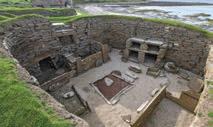
Skara Brae, Orkney – A settlement of houses which were occupied 5,000 years ago.
Mousa Broch, Shetland – One of the best-preserved Iron Age brochs, built 2,000 years ago.
Orkney
By Dave Flanagan
They don’t speak Gaelic in Orkney, but there are trees. Not many, it has to be said, but quite a few more than you may have been led to believe. It’s also a community that doesn’t really consider itself to be remote, isolated or particularly fragile.
If you’ve never visited Orkney before, then you could be forgiven for arriving off your ferry or flight – the transport links are great – with some misconceptions about the language you might hear, the supposedly windswept and barren nature of the landscape, or the local perspective on the islands’ place in the grand scheme of things. But it doesn’t take long for the reality of this remarkable (and surprisingly accessible) archipelago to sink in.
Aside from the breathtaking scenery – think lush, rolling farmland merged with jaw-dropping coastlines and spectacular, pristine beaches – there’s the sheer vibrancy of daily life here. This is an energetic, resourceful and creative community that somehow manages to embrace and capitalize on thousands of years of very visible history, without ever feeling as if it’s stuck in the past. Indeed, the islands are leading the charge with developments in renewable energy technology and are regarded as a global centre of excellence for wave and tidal power research.
In many respects, it’s that unique combination of the ancient and modern that defines Orkney. Life in the islands is about balance, with 22,000 or so enterprising islanders working
in harmony with an unspoiled environment – and all that unrivalled archaeology and history – to carve out a highly successful existence, across a wide variety of often groundbreaking sectors.
Excellence genuinely matters in Orkney, with the pursuit of quality a thread evident in many aspects of life here, from the agriculture to the food and drink, crafts, art, music and the booming tourism industry.
Approximately 70 islands and skerries make up Orkney, with around 20 of those inhabited (it varies from time to time). Most of the population lives on the largest island, helpfully called Mainland, though many of the inner and outer islands of Orkney also support thriving communities.
Orkney’s capital and main centre of population is the City and Royal Burgh of Kirkwall – graced with the iconic 12th century Norse cathedral of St Magnus. As testaments to Orkney’s former role as a seat of power in the Viking Empire go, there are none finer. The islands only became part of Scotland in the 15th century, and the Scandinavian influence remains strong to this day, both in place names and through modern cultural, educational and business links to Norway. Kirkwall boasts numerous independent shops, bars, restaurants and hotels, in addition to a historic town centre and the fascinating Orkney Museum.
Head west to the picturesque coastal town of Stromness to find a vibrant settlement of stone
piers and narrow streets, all built upon centuries of trade and adventure. It’s a place that’s never lost its maritime frontier town feel – it remains a proud seafaring community – but its traditional flagstone streets are lined with independent shops, superb galleries, a world-class museum and a great selection of places to eat and drink, in addition to a host of historic attractions.
But it’s Orkney’s much more distant past that truly sets it apart as a visitor destination. They have a saying in the islands that if you stick a spade in the ground, you’ll probably unearth an archaeological site. The thing is, they’re actually serious. Orkney has more ancient sites peppering its landscape than anywhere else in Western Europe and new discoveries are a regular occurrence.
The astonishingly well-preserved village of Skara Brae, on the Orkney mainland’s wild Atlantic coast, is pretty much unsurpassed and helps cement the theory that the islands were as significant to the Neolithic world as they were strategically important to those globe-trotting Norsemen. Skara Brae is part of the UNESCO World Heritage site, which also takes in the Ring of Brodgar and Standing Stones of Stenness monuments, and the ancient, chambered cairn of Maeshowe.
That key status remained throughout two world wars, with Orkney’s vast natural harbour of Scapa Flow providing an anchorage for the Royal Navy and acting as graveyard for the captured (and subsequently scuttled) German High Seas Fleet. The Flow, as it’s known locally, is also the last resting place of HMS Royal Oak,
Earl’s Palace, Birsay, Orkney
Marwick Head, Orkney
torpedoed with the loss of 833 lives in October 1939. An official war grave, it remains strictly off limits to divers, though a busy diving industry has developed locally around the scuttled High Seas Fleet. There’s also a superb wartime museum – the Scapa Flow Museum – situated at the former Lyness naval base on the island of Hoy, easily reached by regular ferries from Mainland.
It was the sinking of the Royal Oak that prompted Winston Churchill to order the building of a series of causeways – the Churchill Barriers –to block off the eastern approaches to Scapa Flow. The Barriers were built largely by Italian prisoners of war, who unwittingly created their own modern day tourist attraction with their remarkable transformation of a Nissen hut – now known as the Italian Chapel – into a place of worship and peace.
Given Orkney’s incredible scenery, abundant wildlife and mind-boggling wealth of historical sites, it’s no surprise to learn that tourism is a hugely important industry for the islanders. Orkney has long been the UK’s top cruise liner destination, with thousands of passengers disembarking here every year, yet it never feels overcrowded.
Many of Orkney’s visitors come to see the islands’ bird life – puffins remain a favourite – but you’ll encounter everything from gulls and guillemots, to kittiwakes, waders, hen harriers and white-tailed eagles (if you’re particularly lucky).
The islands are home to no less than 13 RSPB nature reserves, and large numbers of migratory birds pass through too, with some surprising arrivals making an appearance here over the years.
And the islands coasts are home to thousands of seals, with regular sightings of orca and other whales.
The food and drink’s also a big draw for visitors, though thankfully much of the islands’ best produce is available UK wide for the times you can’t make a shopping trip to the far north. In addition to the famed prime Orkney beef and lamb, there’s salmon, shellfish and the much sought after meat from the legendary seaweed fed sheep of North Ronaldsay. Add in the output from two internationally acclaimed breweries, two whisky distilleries, three gin producers (two of whom are now also moving into whisky), a rum maker and a winery, plus mouthwatering cheeses, oatcakes, fudge, ice cream and a multitude of other locally produced treats, and you have a foodie’s paradise.
The people of Orkney have always been practical, but with a real eye for the aesthetic. That could explain why the islands have the highest
concentration of craft jewellers in the UK.Whilst many of the manufacturers draw inspiration for their work from Orkney’s landscape and history, each is unique and the variety of jewellery on offer locally is dazzling. There’s a multitude of other creative goods available locally, with a unique Creative Trail linking the workshops of artisans producing everything from jewellery, textiles, pottery, art, photography and traditional Orkney chairs.
Orcadians also love the arts, with June’s St Magnus Festival the highlight of an incredibly diverse diary of annual cultural events. A popular folk festival also takes place in May and you can regularly hear jazz, blues and rock around Orkney too. In addition, there are festivals covering nature, science and storytelling to mention just a few.
Yesnaby, Orkney
Old Man of Hoy, Orkney
Stromness, Orkney
CATASTROPHES CAT RESCUE
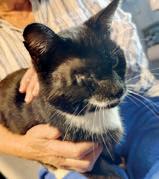
Catastrophes Cat Rescue provides a lifeline for cats in desperate need. The cats we take in have often been abandoned or badly treated. Some are simply strays who have lived on the streets and never had the chance of a caring home. With your support we can reach out to them and provide urgent veterinary care, food and warmth.
We actively support spaying and neutering as an essential part of responsible animal care.
Our unique sanctuary in the Sussex countryside gives cats that are difficult to home such as feral, nervous and elderly cats, a peaceful environment with all home comforts and the freedom of the country gardens that surround the sanctuary.
Please remember us in your will.
With your legacy we can provide homeless and unwanted cats with love and care and a bright future.
“Help us to be their someone”
Visitors welcome by appointment – Contact Liz Varney:
Your kindness today will help to save the lives of precious wildlife
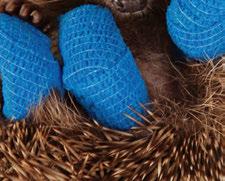
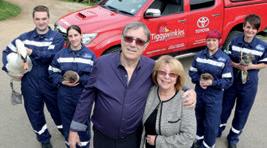
By leaving a legacy to Tiggywinkles in your Will, you’ll be giving future generations of sick, injured orphaned wildlife a second chance Animals like young hedgehog, rescued from the blades of a lawnmower, with three badly injured legs. Our specialist care saved this poor little hedgeho from suffering and he’s now facing a brighter futu
Hampton Court Palace unveils an enchanting new Christmas experience
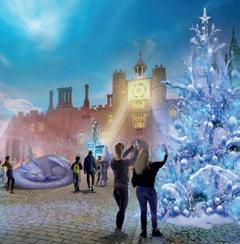
From 28 November to 3 January 2027, Hampton Court Palace transforms into an enchanted Winter Palace, inviting visitors of all ages into a magical world of myth, music and festive celebration with The Christmas Beast Ball
At its heart is the grand ball in the Cartoon Gallery, where guests can step into the festivities – dancing alongside fantastical creatures and enjoying live performances as the court comes to life. Drawn by Yuletide spirit, beasts of every kind – from towering dragons to playful mice –gather beneath glowing lanterns, while the charismatic Lord of Revels, Seymour Panther, orchestrates the merriment. Beyond the ballroom, the story unfolds throughout the palace, turning each room into a new chapter of this immersive experience.
Visitors can explore historic spaces transformed into a winter wonderland, adorned in rich jewel tones of gold, emerald and copper, with frosted Christmas trees and ribbon-woven garlands. Along the way are playful encounters with puppets, costumed performers, charming installations and storytelling moments – from the grandeur of the Great Hall, where gifts are presented before the Winter Court, to the bustling Wine Cellar, where woodland creatures busily work below.
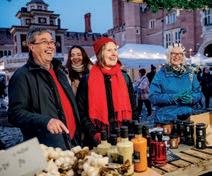
Outside, the gardens host the annual Festive Fayre (4–6 and 11–13 December), celebrating its 11th year with artisan food, drink and carefully curated gifts from independent retailers.
The Winter Palace: The Christmas Beast Ball is included with palace admission, with adjusted ticket pricing during the event period. Further details are available at www.hrp.org.uk
Vivienne Westwood: Rebel - StorytellerVisionary
Bowes Museum, Barnard Castle
Until 6 September
A multi-gallery exhibition honouring one of fashion’s most provocative and imaginative British designers, Vivienne Westwood (19412022). Spanning the early 1980s to 2000s, the show charts Westwood’s extraordinary journey following the rebellious energy of punk from her early partnership with Malcolm McLaren (1946–2010), to her reinvention of historical dress and couture in the 1980s and ’90s. Featuring many pieces from rarely seen private collections this exhibition offers an unprecedented glimpse into Westwood’s artistry, one that defied convention and challenged the fashion world. Uncover the making of Westwood’s work through mock-up calico toiles and digitally deconstructed garments, alongside complete ensembles that unfold chronologically, paired with historic objects from The Bowes Museum’s own collection. www.thebowesmuseum.org.uk
The Fan Museum
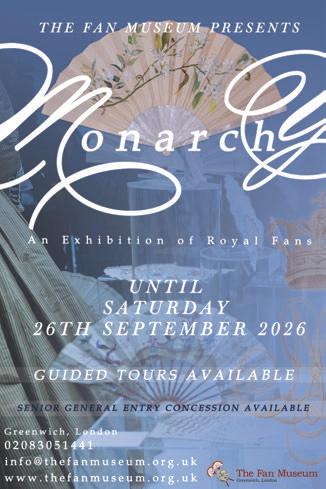
Monarchy: An Exhibition of Royal Fans
Until 26 September
The Fan Museum, nestled in the World Heritage Site of Greenwich, London, in a pair of beautifully restored Grade II Listed early Georgian period townhouses presents Monarchy: An Exhibition of Royal Fans, which opened in May and runs until Saturday 26th September 2026. This exhibition presents a remarkable display of fans, featuring both fans with royal provenance and fans that depict royalty.
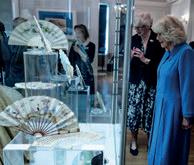
The Fan Museum is greatly honoured to have Her Majesty Queen Camilla as its Patron, who, with HRH The Duchess of Gloucester, visited The Fan Museum on Thursday 7th May 2026. HM The Queen dedicated two rooms of the Museum to Hélène Alexander, MBE, the Museum’s Founder and Director, and her family. The Alexander Room and the Adda Gallery are in recognition of Hélène Alexander’s major contribution to our nation’s cultural life.
Mrs Alexander has, for more than thirty years, served as The Fan Museum’s Director and has assembled one of the most comprehensive fan collections in the world.
HM The Queen is lending two fans from her personal collection, currently on display in the exhibition. These have been enhanced by loans from His Majesty the King/Royal Collection, The Worshipful Company of Fan Makers, and the loan of a special late 19th century dress from a private collection.
All of these items – and others in the exhibition – have been, or are, owned by members of British and European royal families. Alongside this wealth of royal ownership, the exhibition displays a wide selection of fans, from the 18th century to our own time, that depict royal figures, both British and European. Mainly these fans were made to celebrate royalty or to commemorate particular royal events. Some were unique objects, perhaps commissioned by somebody close to the subject in question, others were produced in quantity as souvenirs. This exhibition is a snapshot of the sorts of fans that royal ladies used as accessories to their costume, as well as giving a glimpse into the world of how others believed their monarchies should be portrayed. The Fan Museum is open to the public Tuesday – Saturday, 11:00am – 5:00pm (with last entrance at 4:30pm).
www.thefanmuseum.org.uk
Queen’s visit to Fan Museum, May 2026Niki Gorick Photography-31
If you are interested in the history of Ancient Egypt, then this exhibition is just for you. The myths surroundings Pharaoh Tutankhamun have fascinated people around the world for over 100 years. Now you can travel back to Ancient Egypt to see it brought to life like never before, with a cutting-edge 90-minute journey back in time. Explore a society hidden in mystery, where grand temples and gods of the pyramid land appear before your eyes. With a 360o video mapping, a seated VR journey, and a free roaming Metaverse, plus artefacts from Cairo, and more, this exhibition promises an enlightening and educational adventure of Pharaoh Tutankhamun’s world. www.nec.co.uk www.tutankhamunexperience.com
Benton End: A Paradise of Pollen and Paint
The Garden Museum, London Until 20 September
This summer, the Garden Museum will take visitors back in time to a radical art school in 1950s Suffolk.
Explore the artistic and horticultural influence of Benton End, the Suffolk home, garden and art school led by artist plantsman Sir Cedric Morris (1889–1982) and his life partner, artist Arthur Lett-Haines (known as Lett) (1896–1978).
Focusing on the post World War II period, the exhibition will bring to life the atmosphere and creative community of the art school in its heyday through an immersive reconstruction of the rooms at Benton End, and the work of six figures, namely: Morris and Lett; artists Lucian Freud and Joan cookery, writer Elizabeth David and gardener Beth Chatto.
The exhibition explores Benton End’s impact on a generation of artists and gardeners, positioning it as a living, evolving space of artistic expression. Paintings and drawings made by artists studying at Benton End, alongside photographs, correspondence, personal belongings and objects from the school will tell the story of a place where art, life and teaching came together. www.gardenmuseum.org.uk
“Transformed my uncomfortable mattress into a super comfy and supportive one. Best sleep I’ve had in years!” Abigail
“Absolute life-changer. Wish I had bought one sooner!” Angus
HOW 3D SPACER FABRIC COMPARES TO MEMORY FOAM
Alderney: the Channel Island you’ll lose your heart to
Pure Beauty Pure Escapism
CHANNEL ISLANDS
Alderney: the Channel Island you’ll lose your heart to
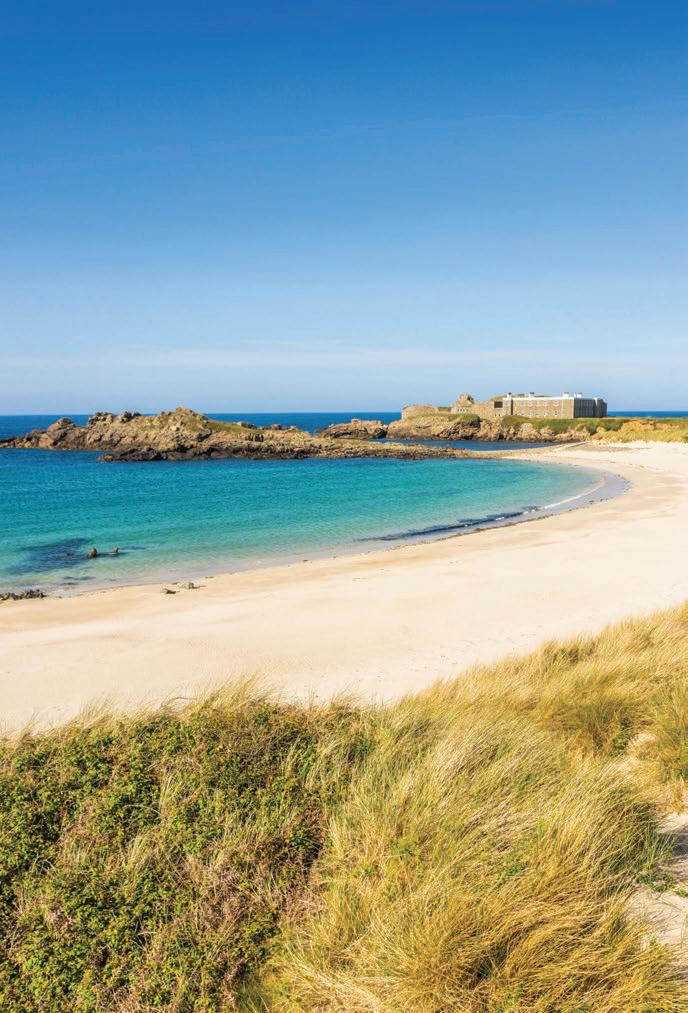
Alderney feels like a best-kept secretone of those rare places that quietly captures your heart. Just eight miles off the coast of France, this small Channel Island offers something increasingly hard to find: space, calm, and a true sense of escape. With no crowds, queues, or traffic, it has earned its reputation as a hidden gem.
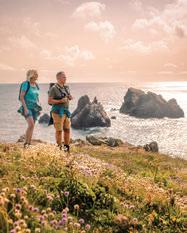
At just one and a half miles wide and three and a half miles long, Alderney offers surprising variety. The coast is never far away, with dramatic cliffs, sweeping sandy beaches, and sheltered bays inviting exploration. Around 40 miles of footpaths cross the island, making it perfect for walking and cycling. Days unfold easily: a morning on cliff paths, an afternoon swimming or rock-pooling, and an evening watching the sun set over the sea.
Nature lies at the heart of Alderney’s appeal. The island is internationally recognised for its wildlife, especially its seabird colonies. Rocky outcrops host thousands of gannets and puffins, while dolphins and grey seals are often seen offshore. It’s a haven for birdwatchers, photographers, and anyone who enjoys the natural world.
Despite its peaceful atmosphere, Alderney is rich in history. Evidence of the past stretches from Neolithic burial sites to Roman remains overlooking the sea. Its strategic position has left a legacy of fortifications, including Victorian forts and World War II bunkers, all of which are free to explore. Together, they offer a fascinating glimpse into the island’s layered past.
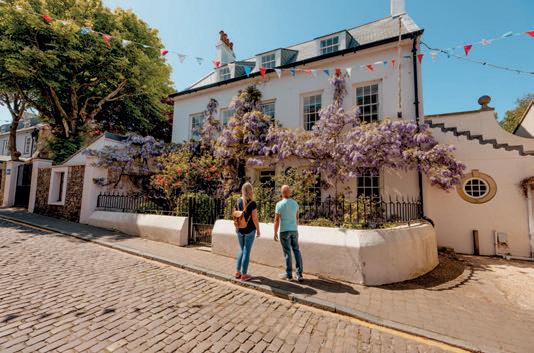
At the centre of island life is St Anne, a charming town of cobbled streets, independent shops, and welcoming cafés. It’s the perfect place to pause, enjoy a leisurely meal, and soak up the friendly atmosphere. Dining is relaxed, with a focus on fresh local produce, particularly seafood, served in cosy pubs and restaurants.
For those seeking activity, there’s plenty to do. Kayaking, hiking, and cycling come naturally, while sea
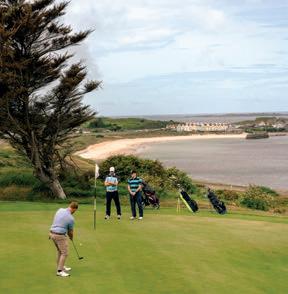
swimming is a highlight thanks to the clean, clear waters. There’s also a scenic nine-hole golf course, tennis courts, and even a padel court.
As night falls, Alderney reveals another of its special qualities: truly dark skies. With little light pollution, stargazing is exceptional, and on clear nights the Milky Way stretches vividly overhead. You might even spot one of the island’s distinctive blonde hedgehogs along the way.
A lively events calendar adds to the island’s charm, from the famous Alderney Week to music, wildlife, and food festivals throughout the year. Accommodation ranges from boutique hotels and guesthouses to self-catering cottages, glamping by the beach, and even stays in historic forts. Whether for a weekend or longer, Alderney offers a rare blend of tranquillity, natural beauty, and understated charm - a place where life slows down and visitors leave feeling they’ve discovered something truly special.
Plan your island escape: visitalderney.com
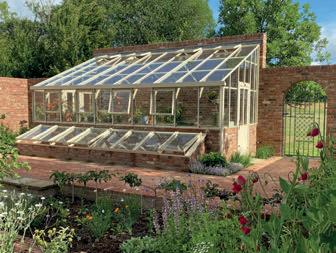
A second generation family rm with over 30 years experience, every one of our greenhouses is individually designed and hand-made in high quality aluminium. Visit our website or contact us for further information.
t is tempting to combine perennials and shrubs with annuals in larger containers, but the success of the grouping depends very much on the extent of the perennial or shrub’s root system. The easiest option is to play it safe and keep long-lived plants in large, separate pots, which can remain in the same place year after year. This permanent element will provide long-term structure and foliage interest, and you can then add to the display with annuals in smaller containers, which can be moved around as their level of interest increases or decreases. A good approach for beginners is to experiment with some cheap or fast-growing shrubs and perennials and build up experience of what succeeds best in a pot.
Bulbs combine more easily with other long-term plants, as many are in growth in spring before the majority of perennials and shrubs; small daffodils, crocuses and snowdrops are the most reliable for year-on-year performance.
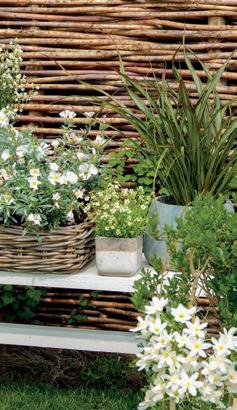
The following guidelines will help you to achieve the best results, either by combining separate plants in their own pots, or bringing together a range in large containers.
Tallest at the back, shortest at the front
This is a basic principle for traditional border plantings and a good starting point for containers too. In small spaces, it is a sensible approach, and ensures that all plants can be seen, and the shorter forms hide the sometimes less attractive lower stems of taller ones. Where there is no ‘front’ or ‘back’, then ‘tallest in the middle’ applies.
Rely on mass
Plants fall easily into one of three basic categories: tall and upright, medium-sized mass, and small and spreading. If most of the plants you use fall into the middle category, they will give your container combinations weight and a good physical presence, and you will always have something to look at, even when the plants are not in flower.
There are certain plants that draw attention to themselves, most notably those with height, dramatic or large leaves, or far-flung but airy stems. These are essential for drama and interest but are easily overdone. If placed close together, they can physically get in each other’s way too, so check that their stems and leaves have sufficient space.
Pack them in
Seasonal plantings, such as annuals, look best if they are exuberant and fulsome, and, besides, you probably want to use them to maximise their impact. Closely-packed annuals in containers will need regular watering and feeding, but they will grow amicably together and produce flowers all summer if the faded blooms are removed.
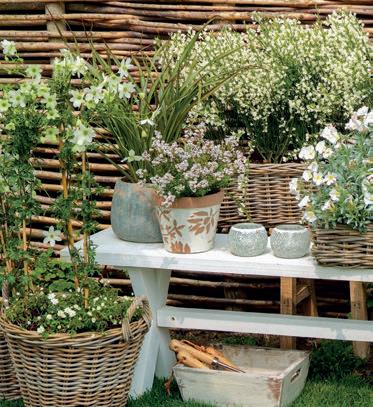
Functional, even downright ugly plastic containers can always be hidden inside others, such as these rustic wicker baskets and ceramic pots. Design by Ton Vissers/ Gardens of Appeltern.
Less is more
Some people like the ‘sweetbox’ approach, combining lots of colours and plant varieties, but paring down the number of shapes, shades and species creates a more sophisticated look, ideal for a contemporary display. Extend this elegance to the containers, too, and choose those with simple graphic shapes made from good quality materials. Remember the little ones
Small spreading plants are always useful for filling gaps and creating interest right down to the bottom or edge of your container display. Just remember that some plants, including alpines and succulents shown here, also need full sun, so pot them up separately and ensure they are not overshadowed by the larger specimens in your scheme.
Container care
Containers can provide a colourful addition to your small garden, but remember that plants in pots need constant care. As they are not in contact with the soil, their roots cannot extend outwards and reach down to draw on the moisture reserves in the ground. Instead, they are totally dependent on rainfall and on you for their water supplies. Likewise, nutrient levels can quickly become depleted in pots, and containerised plants will need feeding regularly.
Plants in pots are also far more vulnerable to temperature extremes: in winter the compost will freeze more quickly and more thoroughly
than the soil in the ground, and it will also heat up and dry out rapidly during the summer months. But despite the disadvantages, there are many benefits to growing plants in containers from a horticultural point of view. Here are a few reasons to give it a go:
• Plants can be moved around to suit their needs. Spring flowering shadelovers can be given the pride of place when they are performing and then shuffled off into a quiet spot during the warm summer months, while tall pots filled with compact summer annuals can be inserted into the middle of a border to fill seasonal gaps.
• Tender, even sub-tropical, plants can be placed outside for the summer, where they are more likely to stay healthy and pest free. They can then be enjoyed as part of the garden design, before being moved back indoors for winter.
• Different soil conditions can be provided for, allowing plant combinations that would be impossible in the garden. For example, you can place pots of limelovers, such as Dianthus (pinks) alongside lime-haters, such as Skimmia and Rhododendron species, or bog plants next to dry habitat species.
is grown here as a container plant. A large shrub for acid soils, it will only be happy in a pot for a short while and will then need a permanent home.
Extract from New Small Garden , by Noel Kingsbury. Published by Frances Lincoln. Photography by Maayke de Ridder.
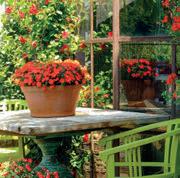
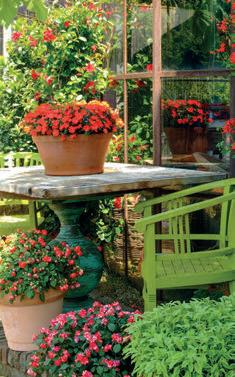
Buzzy Lizzies – hybrids of Impatiens –have long been popular as summer container plants, particularly for shady areas of the garden. Design by De Limieten.
Pieris japonica ‘Katsura’
Grow Better. Learn From Experience.
Britain’s specialist on-line nursery for heritage vegetable seeds, heirloom varieties, fruit trees and edible plants.
Whether you grow in a kitchen garden, a productive vegetable patch or a cherished orchard, Pennard Plants has spent more than 25 years helping gardeners grow exceptional fruit, vegetables and herbs.
Knowledge passed from grower to grower.
Use code RETIRE10 for 10% off workshops and online
One-Day Pruning Workshop
10.00 am – 4.00 pm | £190.00
Join Chris for an Apple & Pear Tree Pruning Workshop, where decades of practical experience are shared in a relaxed, welcoming setting.
A seated lunch and afternoon tea are included, and we can recommend local accommodation if needed.
Tue 1 September | Mon 28 September Tue 29 September | Fri 16 October Sat 17 October
Kitchen Garden Open Days
10.00 am – 4.00 pm | FREE
Join us for our open days, where you can explore the gardens, browse heritage seeds and edible plants, and chat with our gardeners.
Fri 17 July | Sun 2 August Thurs 24 September | Fri 9 October
The relationship between pets and their people is truly special. That’s why Blue Cross has been there for pets in need for over 125 years. Nursing animals back to health, finding new homes, and supporting pet-loving people through hard times.
More than half of the pets helped by Blue Cross have been saved thanks to gifts in Wills.
But pets in need are completely reliant on support from people like you. Will you leave a lasting legacy with a gift in your Will?
If you believe in a world where all pets can enjoy a healthy, happy life, then please consider leaving a gift in your Will.
By August, the kitchen garden is usually at its most generous. Tomatoes are ripening by the day, beans seem to appear almost as quickly as you can pick them, courgettes are testing the generosity of neighbours, and the first apples and pears are beginning to colour. This is the reward for all those colder days spent sowing seed, planting and weeding. It’s the season to enjoy what you’ve grown.
One thing I’ve learnt over the years is that these are the months to enjoy the garden, not spend every waking hour working in it. Keep harvesting little and often, sit outside with a cup of tea, and take a moment to appreciate just how much your garden is giving you. That said, these summer months are good to keep your eyes open.
Always watch out, even early in the summer for tomato blight and remove any affected leaves as soon as seen. If blight reaches your potatoes, cut the foliage back promptly and take it well away from where it has been growing. Catching it early usually saves the crop.
If you have horsetail (often called mare’s tail) growing in your garden, don’t always see it as a nuisance. Rich in natural silica, it has long been used by gardeners to make a traditional plant tea. Spray preventatively or definitely at first sign of blight over tomatoes and potatoes. Make sure to coat both the upper and underside of the leaves. It is widely believed to help strengthen foliage and improve the plant’s natural resilience before blight becomes established. To make the tea, chop the stems into short lengths, cover them with water and simmer gently for around 30 minutes. Leave the mixture to cool for 24 hours, then strain and dilute at roughly one part tea to five parts water before spraying. It’s a simple, traditional remedy that I’ve used time and time again.
Not much to sow at this time of year, perhaps a few salads, but if you have room for one more crop, I’d recommend a short row of Paris Market carrots. They’re a wonderful little kitchen garden surprise. Instead of long roots, they produce small, round carrots that are wonderfully sweet and cope particularly well with stony soils where longer carrots often struggle. Just remember to keep the seedbed consistently moist while the seed is germinating. They crop in as little as eight weeks. You can grow them in a pot too.
If these summer months turn dry, or we experience further heatwaves, don’t forget your fruit trees. Young trees need a thorough soak every now and then. A deep watering is far more beneficial than frequent light sprinkling. It encourages roots to grow deeper into the soil, rather than remaining close to the surface, helping trees establish. It’s also the time when next year’s flower buds are forming, so keeping trees in good condition now helps lay the foundations for next year’s harvest.
Around the Kitchen Garden
with Chris Smith
Summer in the Kitchen Garden
If you grow plums, cherries, peaches or other stone fruits, complete all pruning by August before the trees start to go dormant. Apples and pears can be pruned at any time. Keep on top of the vigorous summer growth allowing the tree to put more energy into ripening this year’s fruit and next year’s buds. Leave your structural pruning for the colder months when you have less to do.
Walking around the garden at this time of year I check what is doing well. Which tomato has the best flavour? Which beans cropped longest? Which potato coped best with the weather?
Take a few photographs while everything is looking its best, along with the variety label. Better still, scribble an entry in your gardening diary. It’s remarkable how easy it is to forget these things later. You’ll thank yourself when you’re deciding what to grow next spring.
Although the kitchen garden is still bountiful, September is the month to start thinking about ordering in garlic, autumn onion sets and overwintering broad beans, for sowing in October. Every season teaches us something. The pleasure of gardening is that we’re always learning, no matter how many years we’ve been growing. So, enjoy these weeks of abundance, harvest generously, and while you’re doing so, leave a little time to look ahead.
Before you put the kettle on...
• Harvest little and often.
• Enjoy the garden and keep an eye on crops.
• Check tomatoes and potatoes for signs of blight.
• Water young fruit trees if the weather is dry.
• Photograph your best crops and their variety labels for future reference.
RHS Master Grower and RHS Gold Medal winner Chris
has spent more than five decades growing fruit and vegetables. Co-owner of Pennard Plants for 25 years, he shares a lifetime of practical growing knowledge.
Smith
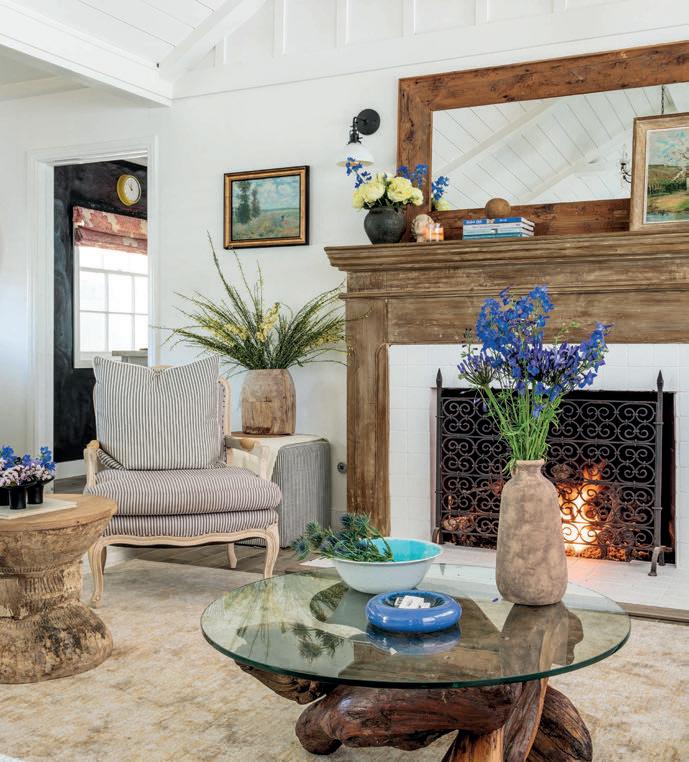
The living room is defined by the union of new, vintage and artisanal. “The home doesn’t have a specific decor style” Lizzie explains. It embodies the Prices’ preference for incorporating modern, antique and handcrafted pieces to create an interior that is not only current and timeless but also demonstrates a global flair. These qualities are represented here by the juxtaposition of a vintage bergère with a sculptural coffee table.
Making a scene
In most cases, before a renovation begins, it takes time for a designer and their clients to become acquainted. However, due to the long-established connection between Lizzie McGraw of Tumbleweed & Dandelion – a Californian design firm with clients from coast to coast – and Liza and Michael Price, this step had already been taken many years ago, when the couple discovered Lizzie’s talents and tapped into her contagious energy.
“The Prices were among my first clients back in 1997, when they lived in Westchester, New York,” Lizzie recalls. “At that time, they were remodelling their first home, which, because of their loyal patronage over the years we have dubbed Tumbleweed North.” Both Michael and Liza are in the film industry and eventually needed to find a house in California, within easy commuting distance of their work. They found just the right one in Westwood Hills, an area famous for its many homes designed by iconic figures such as Paul R.Williams, Rudolph Schindler and Allen Siple.
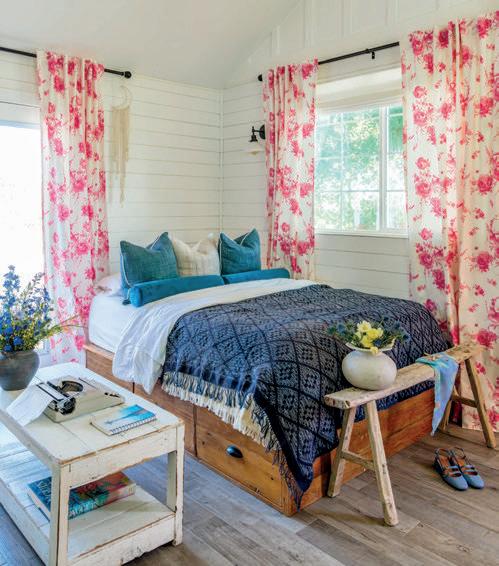
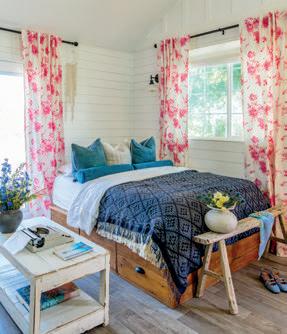
The guesthouse bedroom radiates a bucolic atmosphere thanks to its cheerful palette and inviting textures. The curtains’ pinkish-red pattern of blooming roses on creamy linen stirs up romantic notions, while blue-and-white bed linen offers touchable textiles. A simple table and rustic bench add to the laid-back comfort of this delightful retreat.
This unique Los Angeles neighbourhood has retained its historic past, architectural appeal and picturesque characteristics since it was originally developed in 1929. It is a true urban oasis, close to cultural attractions including the Hammer Museum and Geffen Playhouse, along with a profusion of art galleries, boutiques and eateries. And this 1950s three-bedroom home, tucked behind a picket fence on a tree-lined street, proved to be the answer to the couple’s California dream.
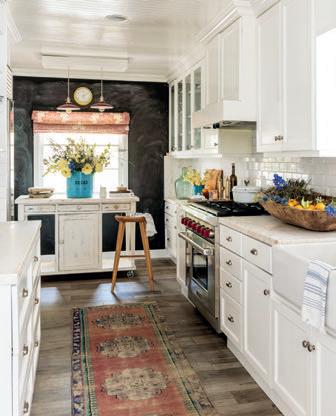
Firmly rooted in its serene setting, the 2,300-square-foot home had already seen several redesigns over the years since the Prices moved in, all accomplished by Lizzie. Now the time had come for a complete overhaul, guided by the desire to emphasize the flow between the interior and the lush garden. The Prices were keen to bring a fresh, contemporary farmhouse twist to the decoration, which at the time was fairly traditional. “I was sure Lizzie would know exactly how to interpret my aesthetic of the moment,” Liza says. “Though the home had good bones and featured an inviting open plan, it was in need of a healthy reboot,” Lizzie recalls. “It’s a smaller cottage, so you can’t really redo just one room. We started by doing a big edit and then updated each of the spaces. It’s much easier to focus on one at a time.”
There are many decisions to be made when remodelling a home from top to bottom, but Lizzie knew instinctively
where to start. She set to work as the mastermind of the project: raising the ceilings, building a guesthouse addition and creating an exceptional elevated terrace outfitted with all creature comforts.
The colour blue appears in all its many tones and patterns, and new and vintage pieces are surrounded by lush vegetation and mature trees that seamlessly connect interior spaces with the outdoors. “The devil really is in the detail,” says Lizzie, who is quick to praise the contractor who achieved the structural changes. “Kelin Castro of American Valley Builders Co. was a very collaborative leader, and the key to our success.”
As for the new decor, the idea was to create a layered interior, not only from the point of view of soft furnishings but also with repurposed pieces. Lizzie describes her vision of “a spacious and uplifting contemporary home with vintage undertones, organic materials and flourishes of blues”. Designed with comfort and conviviality in mind, the living room exemplifies this concept thanks to the winning combination of generous seating, statement lighting and curated furnishings.
The space strikes a harmonious chord between relaxed family living and more formal entertaining.
The soft neutral palette has been brought to life by subtle layers of texture – the linen-look sofa, neutral rug and assortment of patterned throw pillows in rich blues and muted browns. Lizzie has married
A wooden bread bowl has an organic presence in the galleystyle kitchen, which is big on charm and functionality. Lizzie refinished the island to give it a weathered patina. It now serves various purposes as a breakfast spot, an additional prep station and a staging area for dinner parties. The back wall was transformed using chalkboard paint and is used for grocery lists, reminders and other messages. The Turkish runner and farmhouse sink convey a sense of vintage flair.
timeless forms and styles with modern function, comfort and cohesion. “We embraced traditional designs that nod to vintage style, like the English sofa with dog-friendly rugs, and added colour in nooks for warmth.” Except for the dining table, all the furniture here is new to the space. “This house has a history for me as well as the Prices, who raised their daughter here,” Lizzie continues. “I feel like the current decoration is what the home has wanted to be for a while.
It is a little bit French and a lot Californian. It’s a liveable style – everything has a place and there isn’t too much of anything.”
When asked what the best part of working with the couple was, Lizzie says at once, “A design meeting with Liza and Michael includes wine and snacks! Over the years, we have built much more than a designer/client relationship – we have become lifelong friends. We have even been featured in magazines and now in a book together. How fun is that? But seriously, the best part is that Liza and Michael have given me a great gift in allowing me to shepherd their design journey.”
This antique English pine dining table was the only piece salvaged from the home’s previous decor. The chairs were chosen for their woven texture and honey tone. In lieu of artwork, a large wicker wall basket adds another tactile layer.
By Phil Evans, author of Build to Last After 50 and a Chartered Physiotherapist
Every year around this time, I start hearing the same conversations in the clinic. Someone has a walking holiday booked but isn’t sure they’ll manage the distance. Someone else wants to spend more time in the garden, but their knees aren’t cooperating. A grandparent wants to keep up with energetic grandchildren during the school holidays but no longer feels as confident physically as they once did. What’s interesting is that the conversation is rarely about pain. It’s usually about freedom.
People want a body that allows them to enjoy retirement rather than limit it. They want to say yes to days out, holidays, gardening, golf, long walks and spontaneous adventures without worrying whether their body will let
them down. And that’s why I think summer is such an important time of year.
The longer days and better weather tend to shine a light on things winter can hide. When we’re spending more time indoors, it’s easy not to notice that we’ve become a little weaker, a little stiffer or a little less active than we used to be. Summer changes that. Suddenly, there are places to go, people to see, and things we want to do.
The good news is that many of the limitations people put down to ageing are often more reversible than they realise.
One of the biggest myths I encounter is the idea that aches, stiffness and loss of confidence are simply an unavoidable part of getting older. Certainly, our bodies change as we age. From around the age of forty, we naturally begin to lose muscle mass and strength through a process called sarcopenia. Most people don’t notice it happening because the changes are gradual. The stairs become a little harder. Carrying shopping takes more effort. Recovery isn’t quite as quick as it once was.
That’s because it happens slowly; many people assume it’s simply age catching up with them.
But muscle isn’t just about lifting
weights or looking toned. It’s your body’s support system. Strong muscles help support your joints, maintain balance and make everyday activities feel easier.When that support system weakens, confidence often starts to disappear as well. The encouraging news is that the body remains remarkably adaptable.
I remember seeing a gentleman in his late sixties last summer who came to see me because he had a holiday booked in Italy. He wasn’t worried about the flight or the hotel. He was worried about the walking. Over the previous few years, he had gradually become less active and lost confidence in what his body could do.The idea of spending hours on his feet sightseeing felt daunting.
We didn’t do anything revolutionary. We focused on walking a little more, strengthening his legs and gradually rebuilding his confidence. A few months later, he came back from the trip having walked further than he had in years.
That’s one of the reasons I love what I do. People are often capable of far more than they think.
So where should you start?
After twenty years of helping people stay active and independent, I’ve found three things make the biggest difference.
The first is walking.
Walking is one of the best forms of exercise available. It benefits your heart, lungs, mood and overall health while helping you stay connected to the things you enjoy. But walking comes with an important caveat. Walking alone isn’t enough.
One of the biggest mistakes I see is people focusing entirely on step counts while ignoring strength. I often think of walking and strength like a car and its engine. Walking is the journey. Strength is what powers it.
You can walk every day and still struggle to get out of a low chair, climb a flight of stairs or catch yourself if you trip on a kerb. That’s because walking builds stamina, but strength builds capacity.
You need both.
That doesn’t mean you should stop walking. Quite the opposite. Use the summer as an excuse to walk more. Explore a local park, visit a garden centre or take the longer route home. If you’re walking through a park, along a trail or over uneven ground, even better. Those small changes in terrain challenge your balance and coordination in ways a flat pavement can’t.
The second thing that matters is strength.
If I could prescribe just one exercise for most people over fifty, it would probably be the sit-to-stand. It sounds simple because it is simple, but it’s also one of the most useful movements we perform every day.
Getting out of a chair requires strength through the hips, thighs and core. Those same muscles help us climb stairs, get off the floor and maintain independence as we get older.
Try this. Sit towards the front of a sturdy chair with your feet flat on the floor. Lean slightly forwards and stand up using your legs. Then slowly lower yourself back down under control.
Aim for ten repetitions.
If that feels comfortable, repeat for a second or third set. It may not look impressive, but I’ve seen this simple exercise make a remarkable difference to people’s confidence and mobility.
The third piece of the puzzle is balance.
Most people don’t think about balance until they lose confidence in it. The problem is that balance works a lot like strength. If you don’t challenge it, it gradually declines.
For many people, loss of balance isn’t just about the fear of falling. It’s about what that fear causes them to stop doing. They become more cautious, avoid unfamiliar places and gradually start limiting activities they once enjoyed. Before long, their world becomes a little smaller.
That’s why I encourage people to work on balance before they feel they need to.
A simple place to start is standing on one leg while holding onto a kitchen worktop, garden chair or fence for support. Aim for up to thirty seconds on each side. If needed, keep a finger lightly touching the support. If it becomes easy, try letting go completely.
Like strength, balance is something you can improve at any age.
One of the biggest lessons I’ve learned after two decades as a physiotherapist is that people are capable of far more than they think. Most success stories don’t begin with somebody feeling confident and motivated. They begin with somebody who isn’t sure things can improve at all.
Then they start taking small steps in the right direction. They move a little more. They get a little stronger. They begin trusting their body again. And gradually their world starts getting bigger rather than smaller.
That’s why I believe retirement should create more freedom, not less. The goal isn’t perfect joints or painfree movement every day. The goal is having a body that’s capable of saying yes when opportunities arise. The holiday you’ve been looking forward to. The day out with family. The chance to explore somewhere new without worrying whether your body will cope.
Summer is a brilliant time to start. Use the momentum that comes with it. Start smaller than you think you need to. Build gradually and stay consistent.
You might be surprised by what your body is still capable of.
ABOUT THE AUTHOR
Phil Evans (Phil the Physio) is the author of Build to Last After 50 and a Chartered Physiotherapist with over twenty years’ experience helping people over fifty move better, get stronger, and stay independent.
He began his career in elite sport, working with professional and Olympic athletes, before specialising in helping people stay active and confident – without relying on painkillers.
Seeing how many people over fifty were being told simply to live with pain, often with no clear plan beyond medication, he founded Urban Body, which combines evidence-based physiotherapy with advanced rehab to help people take control of their health.
elp upportpeoplewithchronicpainwith a legacygiftinyourwillormakeadonation today.
hronic Pain effects people of all walks of life, of the population suffer from chronic pain.
Garstons Park is the headquarters of JJ Cooper Park Estates that specialises in park home living. A family run business with over 40 years experience.
Although a family run business, we employ a large number of staff to ensure the parks run smoothly and the welfare needs of the residents are met in a friendly and professional manner.
The parks are for those 45 years of age and over, and therefore the majority of residents are retired or semi-retired. Location is everything,.
CASE STUDY
Homelands Park
Homelands Park in Shropshire is an over 50s fully residential park home village, located in the sought-after rural location of Chorley, near Bridgnorth.
One pet welcome. Show home available to purchase, plots for you to choose your model or design your dream home, or pre-loved homes with stunning views,
Try before you buy – stay in our luxury holiday lodge, fully refunded if you purchase a home – live the rural dream!
A like-minded community is paramount to one’s well-being where you are respected and assured. With friendly neighbours, and park owners living adjacent to the site, help and support is nearby.
Family owned for over 60 years by a farming family. Fishing pool adjacent to grounds and a designated allotment area. Walking and golfing are popular. Some residents volunteer at the local animal rescue in all capacities.Various classes include exercise, arts and crafting activities, fishing and golfing groups. Bingo and film nights take place in the village hall and cream teas in the Chapel grounds.
The Duck Inn, in Chorley offers a warm welcome. In the neighbouring village of Stottesdon is the local reputable doctor’s surgery, and Church – a place of Christian worship for over 1,000 years. The market towns of Bridgnorth, Bewdley, Shrewsbury, Much Wenlock and Ludlow are a short drive away with a variety of unique shops and places to eat out.
A family operated business for more than 40 years!
We operate eight residential park homes set in beautiful areas of the south of England, three within easy reach of London.We take great pride in maintaining and developing our properties to the highest standard. We offer single and double homes to cater for a variety of lifestyles as we understand that everyone’s needs are unique. Parks have immaculate, well-kept garden areas and many have leisure facilities on site, such as fishing, walks and golf, as well as being conveniently situated within walking distance of local amenities. We can supply park homes and leisure lodge homes from any manufacturer. We have an inventory of stock homes from any of the leading manufacturers available immediately, or alternatively you can place an order for a home of your choice.
www.jjcooperandsons.com Tel: 0118 942 8782
The Mobile Home Act 1983 gives security of tenure, and all new homes have a 10-year manufacturer’s warranty. Property part-exchange is also available.
Homelands Park Ltd, High Green Chorley, Near Bridgnorth, Shropshire WV16 6GB Tel: 01746 718145 Email: info@homelandschorley.co.uk www.homelandschorley.co.uk
Residential Park Homes • Over 50s • One Pet Welcome
If you are approaching retirement or contemplating semi-retirement, then maybe you are thinking of moving and starting to consider the various options available.
Having more free time at your disposal once you have retired, you will find your living space will suddenly assume a greater part of your daily life. The great thing about retirement is that is gives you the chance to branch out into a different lifestyle, move away to a different place and start a new adventure.
When moving to any type of property, your decision making will be partly down to personal preference, while other factors such as your financial circumstances, lifestyle, health and age, will ultimately play a part in the outcome. It may not be an option you have thought about, but Park Home living is something well worth considering. Ideas of a park home can be very much misconstrued and if you assume a park home is a small step up from a static caravan then you really need to think again, as today they are less like a caravan and more like a luxury bungalow style property, which have become increasingly popular as a lifestyle choice for retires.
Park Home living
A unique and appealing lifestyle that many more people are turning to
social environment can make it easier to share interests and make friends with other residents, while at the same time maintaining your privacy.
Park homes are single-storey structures, which can be built to requirement. This makes park home living ideal for those who find staircases challenging.
Usually fully furnished to high specifications, with low maintenance, most offer a wide range of layouts and designs, with good quality furnishings, and carpets. They are well insulated, with double or triple glazing and central heating, making them very energy efficient and eco-friendly, and they also fall within the lowest council tax band. In fact, everything you need for a comfortable, relaxed, luxury lifestyle. So for those who are looking for an affordable and low-maintenance place to live, park homes make the ideal choice, with many designed exclusively for the retired or semi-retired.
Due to age restrictions (usually 50+) living in a park home often means living amongst like-minded people of a similar age looking for peace and quiet in their retirement, but are still active. There can be a strong sense of community spirit, which is further encouraged through social events and communal facilities like clubs and gardens, giving a shared sense of security and support among residents. The
As we grow older, it becomes increasingly important to find a place to live where we feel safe and comfortable, and many parks have gated secure entry systems, giving you peace of mind.
One of the great things when you retire is that it frees you up from the daily routine of commuting and gives you the opportunity of possibly moving to a new area and having a complete change of location.
Maybe you have family or friends in a certain part of the country that you would like to move near to, or perhaps there is somewhere you have visited on holiday which has appealed to you and would be your ideal retirement location. Residential park homes are very often situated in the most idyllic, beautiful areas up and down the country, so whether you are looking to move by the coast, in the countryside, or near to a town, the choice is yours.
Another reason they are so popular is their price, which compares favourably with the more expensive traditional homes. Choosing a park home can free up capital, giving you the chance
to travel and live life to the full in retirement.
However, it is important to mention that although you buy the home, you won’t actually own the land if it’s on a park, so you will need to pay a monthly ground rent, which varies from park to park.
Park homes fall into two categories, either residential park homes on parks with an all year round licence which allows you to reside there full time, or leisure homes which are intended to be used as holiday homes and most can be rented out when you are not using it, giving you a source of revenue. It’s important to make sure that the park of your choice has the type of licence to cover the use of your home as you require.
Although there is no legal requirement to use a solicitor when buying a park home, we strongly recommend doing so. Like any other ‘bricks and mortar’ property, buying a park home is a major commitment, and just as you won’t dream of purchasing bricks and mortar without a solicitor, the same should be said when purchasing a park home.
If you are looking to purchase a park home, find a solicitor that has expertise in park home law to guide you through the purchase and who will be aware of any pitfalls that may occur, so any potential issues can be picked up and quickly sorted.
There are numerous companies specialising in park living, and opposite are some examples of what is available throughout the UK.
After
your family and friends, will you consider us?
Family comes first, and having a Will in place provides invaluable peace of mind for you and your family.
Many ABF supporters feel an enormous sense of pride in leaving a lasting legacy for those who have served their country.
We are the Army’s national charity. Since 1944 we have been here to support soldiers, former soldiers and their families in times of need.
With no government funding, we rely on the gifts we receive from Wills to support more than a third of our work.
Scan here for further information on our free Will-making services
armybenevolentfund.org/gifts-in-wills
Alternatively please contact Emma Hamilton, Gifts in Wills Manager, on 020 7901 8909 or ehamilton@armybenevolentfund.org
Army Benevolent Fund is a registered charity in England and Wales (1146420) and Scotland (SC039189) and registered as a company limited by guarantee in England and Wales (07974609).
“Many
ex-Army
personnel are down on their luck for a host of reasons. The most important aspect of the ABF’s work is taking care of them.”
Having worked in the legal profession for over 40 years, Harry Clark has prepared a lot of Wills during his career. “I must have drafted thousands that included charitable gifts. So I soon learned that this was a popular thing to do,” he said.
A former Army reservist and a lifelong supporter of various charities, Harry has generously chosen to leave a gift in his own Will to the Army Benevolent Fund (ABF), as a percentage of his estate. “I was only in the Army Reserve for two years, but they changed my life. I’m so proud to be associated with the Army family and I want to help make a difference in their lives. ”
Although Harry was born in Edinburgh, his roots are international
His grandfather had served in the First World War and was part of the Indian Army regiment during World War II. “My father was born in India, but my family settled in Edinburgh following India’s independence and partition, ” said Harry. “This was down to my paternal grandmother, who was Scottish. ”
Harry’s mother is German.
“Essentially, she was a refugee after the Second World War and she met my father when he was on holiday in Germany. They agreed that she would come to Britain and work as an au-pair, and then they got married.”
Harry was very grateful to have the
opportunity to live abroad, which was due to his father’s itinerant role as an English teacher for the British Council.
“My formative years were spent in Ethiopia at an international school, where I mixed with children from lots of different backgrounds. I was also very proud to have met Ethiopia’s then-Emperor, Haile Selassie. ”
“Later, I was sent back to Edinburgh and attended a very good school – although it was a boarding school with no parental guidance, so the atmosphere was quite feral at times. But I would go and see my grandmother at weekends and she instilled a sense of direction, teaching me right from wrong as I grew up. Without her, I wouldn’t be the person I am today.”
After leaving school, Harry worked for the Foreign Office in London, then qualified as a solicitor. He moved back to Edinburgh in 1981 and still resides there today. “I like to travel, and I’ve been fortunate enough to visit places like Nepal and South Africa to see how other people live, ” he said. “But for me, Edinburgh is home. ”
During his time in the Army Reserve, Harry was befriended by a training Major for the Argyll and Sutherland Highlanders
“He told me I was just the sort of chap that they’d like to have as a platoon commander. I was so pleased and proud to be asked and we kept in touch during my officer training. I was due to go to
Sandhurst for more training, but unfortunately my busy law firm just couldn’t let me go and that was the end of that. That training Major was a really lovely guy and I felt I let him down. It’s something I’ve carried with me ever since. These days I’ll do anything not to let people down, and I think that’s also why I’m such a big supporter of the Armed Forces. ”
“I think adjusting from the Army into civilian life can be hard, particularly for soldiers without technical or professional qualifications. It’s not easy for everyone, so welfare support from charities like the ABF is vital. ”
Harry firmly believes in the collective power of charitable donations and gifts. “When you think of donors as a whole it’s amazing, because you have that powerful combination of people who can afford to give a lot, and those with more modest means.
It all adds up, so I’ve chosen to leave a share of my estate to the ABF. I’m doing that rather than leaving a fixed amount, because the value of a fixed amount will erode over time. After you have taken care of your loved ones, leaving a share of your estate means charities will receive a greater benefit than they might have otherwise. ”
Harry concludes, “Ultimately, I would like the Army family to know that I am there for them, as they have been for me. It gives me great satisfaction to know that I will contribute to their wellbeing when they leave service. ”
Your family first –The Army family second.
OUR PLEDGE TO YOU
Your Will is personal and confidential to you. Your privacy is always respected. Your loved ones are the priority and always come first.
We will value and care for any gift making sure it is used to help those in most need. You are free to change your wishes at any time.
Pledging a gift in your Will allows us to look ahead and plan to respond to the future welfare needs of soldiers and their families.
To confirm your pledge, please call our Gifts in Wills Manager, Emma Hamilton, on 0207 7901 8909 or email: ehamilton@armybenevolentfund.org
PROFESSIONAL MUSIC PROGRAMME FOR CASUAL MUSICIANS
Always Dreamed of Joining a Band?
He’d been meaning to join a band since 1973
After thirty years with a guitar propped in the corner, one man finally played with other people. It took a Monday evening in Camden to remind him why he started.
David had owned the same acoustic guitar since 1973. It had moved house with him four times and outlasted every resolution he’d made to do something with it. He was not, he would tell you, a beginner. He just hadn’t got around to the rest of it yet. He is not unusual. Across Britain, there are hundreds of thousands of competent musicians, people who can hold a chord, keep a rhythm, read a room, who play entirely alone. Not because they lack ability, but because the logistics of finding bandmates get in the way before you’ve even started. You cannot post a notice in a music shop and hope for the best. You have no shared friends with compatible taste and a free Tuesday. Life got in the way at precisely the moment it was supposed to get interesting.
“I got quite bored of just playing at home by myself. I wanted to play with other musicians. And it’s quite a struggle to find them, arrange a time to meet, arrange a time to practice.” – David, BetheBand member BetheBand was built for exactly this impasse. The London programme matches musicians into small bands of four or five, grouped by skill and taste, not by whoever happened to reply to an advert. Bands meet for 8 weekly 2-hour rehearsal sessions at professional studios in Central London. At the end of the term, the band plays a live show. A real stage, a real audience, family and friends in the room.
Monday nights, non-negotiable
What struck David most was not the quality of the studios or the professionalism of the band directors, though both, he concedes, were rather better than expected. It was the Monday nights themselves. “I was genuinely looking forward to every Monday” he says. “It was a great opportunity to play with other like-minded musicians.” For someone who had spent three decades playing alone at home, that matters.
The process begins with a Meet & Greet: a relaxed, one-toone conversation with one of BetheBand’s professional band directors about your playing, your taste, and what you actually want from the experience. Nobody is placed into a group and told to get on with it. It is organised
by adults, for adults, with the assumption that your time has value.
Each band builds its own set-list from members’ song suggestions, with a dedicated band director guiding them through the full 8 weeks. Most bands roll over into the next term, and the one after that. The music is almost beside the point by then. They have become, in the way that shared endeavour tends to produce, friends.
The show
At the end of the term, the band takes the stage at an iconic London venue. Family and friends are welcome. The more the merrier.
“Getting over the fear of performing in front of an audience, that’s a major thing. There’s only one way to do that. It’s just to go through. I’m glad I did” says Paul, who is in his sixth term with BetheBand
David agrees, though he puts it more simply: “Excellent. Amazing. Better than expected. Good fun, genuine fun.”
BetheBand is £429 for an 8-week term, which covers everything: 8 weekly rehearsals with a professional band director at a Central London studio, all equipment, and the final live show. Nothing else to organise. You bring the instrument. BetheBand handles the rest.
Charity NEWS
A gift in your Will has the power to change pets’ lives, long into the future
Blue Cross is here to protect vulnerable pets, speak out for them, help those who care for them without judgement, and show the world how to treat pets with dignity and compassion. From rehoming centres to care for homeless pets to low-cost veterinary hospitals and clinics to help when they’re sick or injured, Blue Cross is there for the UK’s most vulnerable pets. Pets like Amber. Amber was found wondering the streets, starving and heavily pregnant. Her and her puppies’ lives were in danger and it was a race against the clock to deliver them safely. Amber delivered eight puppies, but as she was so poorly, weak and stressed, our team had to give the puppies supplementary hand-feeds every three hours from the outset. Once the litter was past those risky first few weeks, they started to thrive and develop their own personalities. Then the focus shifted to the socialisation process, so that the puppies would grow into happy and confident pets despite being raised away from a normal home. With Amber in better health and puppies Theodore, Cider, Dougal, Kasper, Winnie, Holly, Sasha and Bailey all thriving, they headed off to happy, loving homes.
Blue Cross relies on the generosity of kind pet lovers to keep its doors open to pets in desperate need. Every donation can change or even save a life, and gifts in Wills have an especially powerful impact – more than 50% of Blue Cross’s income comes from those who generously leave a gift in their Will. This means four of Amber’s eight puppies were helped thanks to these special gifts.
Long after you’re gone, your love for animals can live on. Gifts in Wills are vital in helping Blue Cross continue to give sick, injured and homeless pets the love they deserve. A gift of any size will be so gratefully received and put to the best possible use – caring for the dogs, cats, small pets and horses.
To find out more about leaving a gift in your Will, contact our team by emailing legacy@bluecross.org.uk , call us on 0300 777 1945 or visit bluecross.org.uk/gifts-in-wills
Bransby Horses – Rescue and Welfare
At just seven months old, Olive had already endured a lifetime of suffering.
In October 2025, this young filly was found abandoned on a roadside in County Durham with a devastating wound to her withers – so deep it shocked even experienced veterinary professionals.
Emergency surgery was needed to remove bone fragments, followed by weeks of intensive, painstaking care. Daily dressing changes, specialist wound management and constant monitoring became her lifeline. Even for seasoned staff, Olive’s injuries were among the worst they had ever seen. Her recovery was far from certain.
When Olive arrived at Bransby Horses, her journey was only just beginning. Healing a wound of this severity is not quick or simple, it takes months of expert care, patience and dedication. Teams worked tirelessly to adapt her treatment, manage her pain and give her the best possible chance of recovery. Slowly, against the odds, Olive began to heal. The cost of her initial treatment alone was almost £3,000 – and that does not include the many months of ongoing care, feeding, rehabilitation and
specialist attention she continues to receive. Today, Olive is unrecognisable from that frightened, injured youngster. Her playful personality shines through, and she now enjoys a safe, happy life – something she may never have known without intervention. Her story is just one of many.
At Bransby Horses, three in four equines they rescue are helped thanks to gifts in Wills. Legacies are not simply donations – they are lifelines. They fund urgent veterinary treatment, long-term rehabilitation and the safe environments these animals desperately need.
By leaving a gift in your Will, you can help ensure that horses like Olive are given a second chance – transforming suffering into hope, and pain into a future worth living. www.bransbyhorses.co.uk
Providing a lifeline for cats in desperate need
Catastrophes Cat Rescue have been very busy taking on some very challenging cases.
Ted was one of the cases in question. The call for help was desperate from a lady who had been feeding him as a stray. The cat then appeared with a terrible eye injury and in severe pain. The lady managed to get him to a vet. They were then advised that Ted was “up on the operating table” and they were going to put him to sleep as the cat would need an eye removed and was deemed to be a feral and would need aftercare to avoid infection. He needed saving! Catastrophes’ response was needed immediately and they said YES.
The next surprise was after taking him in for post op care they could see and feel a lump on his cheek. On closer examination they found a .177 air gun pellet lodged in his cheek! Needless to say this was probably the reason he had lost his eye. The pellet worked its way out. They are delighted to say that Ted has made an excellent recovery and is not feral and has blossomed with love and care. He is a lucky boy to have survived such a cruel attack. If you look closely at the attached picture of Ted you will see where the pellet came out of the cheek. Where intensive care, recovery and convalescence is vital for many of the cats, they are aiming to have a purpose built facility at their sanctuary.
For cats in need, Catastrophes Cat Rescue aims to be ‘their someone’ and with the wonderful help of supporters of their rescue work, they will do their very best to give the cats in their care the chance of a bright future. www.catastrophescats.org
Life saving work in Zimbabwe
ZANE: Zimbabwe A National Emergency is a UK registered charity working to help the most destitute, vulnerable and impoverished people in Zimbabwe.
The situation in Zimbabwe remains extremely challenging; the emergency is far from over. Life in Zimbabwe for the aged and ill is a brutal battle for survival. High inflation, mass unemployment, power cuts, water shortages and famine form the backdrop to everyday life, and the impact on the frail and vulnerable is catastrophic.
ZANE is the largest supplier of financial aid to elderly people in Zimbabwe, supporting 2,100 impoverished pensioners whose life savings and pensions disappeared in the economic collapse and subsequent hyper-inflation. These pensioners include former farmers whose farms were seized during the controversial land reform programme. ZANE helps many retired professionals – teachers, accountants, engineers – people who saved hard all their lives and planned for a comfortable retirement, only to lose everything overnight. ZANE also assists over 400 war veterans and their widows who served the British Crown and were promised an entirely different retirement. Instead, they are dependent on charity to survive. ZANE distributes grants to cover care home fees, rent, food and medical costs.
ZANE funds the provision of food to 26 care homes in Zimbabwe benefiting more than 800 pensioners. In addition, it provides food parcels to over 200 destitute pensioners living in their own homes.
ZANE also funds a clubfoot correction programme for children living in high density areas in extreme poverty. The lives of over 6,800 children have been transformed to date.
ZANE funds an education programme in a high-density suburb in Harare, running six popup classrooms for destitute children who would otherwise not receive an education, and funds a girl’s hygiene programme in a rural community in Victoria Falls.
Please consider donating today so ZANE can continue its lifesaving work in Zimbabwe.
A donation of £20 pays for a month’s supply of diabetes medication for one pensioner. £32 will provide a food parcel for a destitute pensioner. £80 pays for a cataract operation for one pensioner.
www.zane.uk.com
A lasting gift for the future
Throughout your life, there will be many milestones, like finding a partner or buying a home. You will always want to make sure that friends and family are looked after, and making a Will is a way of ensuring your wishes are carried forward. Once these plans are in place, you may also wish to consider leaving a gift to a charity. For Ray, this was not just a decision, but a deeply personal reflection on his life. Ray has been part of the Epilepsy Society community since 2013, after attending one of our conferences as a guest. For the first time, he felt truly seen and understood as someone living with epilepsy, something that had been missing for much of his early life. Growing up in the 1950s and early 1960s, when awareness of epilepsy was limited, Ray often felt isolated. Diagnosed as a young child, he was sent away to boarding school at the age of five and rarely spoke about his condition for decades. At that time, there were few treatment options and significant stigma.
When Ray recently visited the Epilepsy Society, he was overwhelmed by what he saw. Witnessing how far research, care and understanding have come was incredibly moving and reassured him that the gift he is leaving in his Will can help future generations. Reflecting on his journey, Ray shared: “The world has come a long way since my epilepsy first started. I didn’t talk about having epilepsy until I was in my 40s. Now, the Epilepsy Society is bringing epilepsy out of the shadows. That is why I am leaving a gift. I have seen the difference you make. It means so much.” Ray’s story is a powerful reminder of how far we have come since our society was formed over 130 years ago, and what is still possible. His legacy will help transform lives for years to come.
If you are interested in learning more, please feel free to contact our friendly team in confidence for a free, no obligation discussion at legacies@epilepsysociety.org.uk or call 0300 102 0029 Together we can create a better future for people living with epilepsy.
A lifeline for Britain’s wildlife
For everyone at Tiggywinkles Wildlife Hospital, the summer months are always the busiest and most demanding time of the year. As the countryside comes alive with young wildlife, thousands of injured and vulnerable animals arrive needing urgent help. Over the summer alone, around 6,000 casualties will be admitted to the wildlife hospital, contributing to nearly 14,000 patients cared for by the end of the year.
The charity’s dedicated rescuers work tirelessly, responding to emergencies at all hours of the day and night. One call may involve rescuing an owl trapped down a chimney, while the next could see a fox carefully freed from a football net or a frightened deer disentangled from fencing wire. Alongside these rescues, compassionate members of the public bring in a steady stream of small birds and mammals requiring immediate treatment and care. Behind the scenes, Tiggywinkles’ reception team handles around 70,000 calls every year, offering reassurance and advice to concerned animal lovers. Meanwhile, the veterinary nursing team provides round-theclock care for every patient, ensuring each animal has the best possible chance of recovery before being returned safely to the wild.
Like many charities, Tiggywinkles is facing rising costs, from energy bills to essential medical supplies. Donations are therefore more important than ever, and the charity remains deeply grateful for every contribution received. Legacy gifts are especially vital, helping to secure the future of the hospital and allowing it to continue providing advanced veterinary treatment free of charge to British wildlife. This year also marks ten years since the sad passing of founder Les Stocker. His compassion and pioneering vision created something truly extraordinary and transformed wildlife care in Britain. Everyone at Tiggywinkles believes he would be immensely proud of the legacy that continues today. www.sttiggywinkles.org.uk
Tiggywinkles’ founder, Les Stocker, with his wife Sue and the rescue team
Investing in the future of medical research
For the team at Replacing Animal Research, summer brings much more than just warmer, longer days. Thanks to the enduring kindness of their supporters, this season marks a special milestone as they officially announce their 2026 Summer Studentship scheme winners. This year, they are supporting three bright, young scientists at the forefront of human-relevant medical research.
Their charity is supporting pioneering projects across the UK, providing early-career researchers with vital hands-on experience in advanced, animal-free methods.
At Cardiff Metropolitan University, MPhil student Andreea Scorupschi is using her grant to improve a 3D-printed human wound model. Chronic wounds affect millions of people and heavily burden the NHS. Andreea is adjusting calcium levels in cell culture to grow human skin cells that more accurately mimic real patient wounds, creating a reliable system to study healing without using animals.
Meanwhile, at De Montfort University, final-year student Eleanor Makin is developing a precision physiological simulator. Trauma research often relies on severe bleeding experiments on live pigs, which involves significant suffering. Eleanor’s low-cost, laboratory-based platform uses a smart pump system to recreate realistic human blood pressure and pulsing flow, allowing new dressings to be tested safely and humanely.
Finally, at London South Bank University, Ali Abid Fazil is studying multiple myeloma, a bone marrow cancer affecting over 33,000 people in the UK. Traditional research uses thousands of mice, which often fails to replicate human immune responses. Ali is building 2D and 3D models using human cells to study how the bone marrow environment drives treatment resistance.
While their students are based all over the UK and studying a variety of health conditions, they all share one vital thing in common: belief in a better future, for animals and humans. As Ali perfectly notes, “Replacing animal research is not just about removing animals from experiments; it is about developing better science.”
Every student they support represents a shift toward a more reliable, human-centred scientific community. They are incredibly grateful to their community for making these opportunities possible; without your kindness, none of their work would be possible. www.replacinganimalresearch.org.uk
The gift of friendship
For a unique and thoughtful gift, why not sponsor a Redwings Adoption Star horse or donkey for a friend or loved one, or even yourself?
Standing at an impressive 16.3 hands high, stunning Adoption Star Shire cross Fox is a true gentle giant who loves to bend his head over the fence for a cuddle with his visitors.
While Fox now enjoys a peaceful life in his paddock at the charity’s Caldecott Visitor Centre, in Norfolk, his future was not always so certain. This handsome gent arrived at Redwings in 2010 as part of a large group of horses when he was just a few months old.
Fox has a condition which means he experiences stiffness in his legs so his chances of finding a new home to suit his needs were slim. However, he now has a permanent home at the Sanctuary under the watchful eye of Redwings’ vet team.
From just £2 per month, you can sponsor Fox for yourself or a loved one and ensure he and his four-legged friends continue to enjoy happy and healthy lives at Redwings.
What’s included in your adoption?
• Your Adoption Star’s photo and rescue story
• A certificate of adoption
• A bookmark featuring your Adoption Star
• A factsheet all about your chosen animal
• Three postal updates a year from your new friend, including one at Christmas
• Quarterly email updates with photos from your Adoption Star
• An invitation to their birthday party – yes, really!
Adopting a horse, pony or donkey at Redwings is a fantastic way to support Redwings and make a new friend in the process, and it costs from as little as £3 a month.
To sponsor a Redwings Adoption Star, call 01508 505246 or visit: www.redwings.org.uk/adoption today.
Thousands of people have already recovered their compensation and £millions more could be due. It’s possible that you too could be owed.
Coming home from hospital? We can help.
Coming home from hospital? We can help.
Leaving hospital is a big moment but for many people, the first few days and weeks at home can feel daunting. Whether it's getting around safely, managing daily tasks, or simply regaining confidence, that transition period matters enormously.
Coming home from hospital? We can help.
Coming home from hospital? We can help.
Coming home from hospital? We can help.
Leaving hospital is a big moment but for many people, the first few days and weeks at home can feel daunting. Whether it's getting around safely, managing daily tasks, or simply regaining confidence, that transition period matters enormously.
Able Community Care, since 1980, has provided professional live-in carers, who move into your home from the moment you're discharged giving you the right support, when you need it most. Our carers are experienced, compassionate professionals. They're not just there to help with practical tasks they're there to encourage your independence and help you rediscover what you can do for yourself.
Leaving hospital is a big moment but for many people, the first few days and weeks at home can feel daunting. Whether it's getting around safely, managing daily tasks, or simply regaining confidence, that transition period matters enormously.
Leaving hospital is a big moment but for many people, the first few days and weeks at home can feel daunting. Whether it's getting around safely, managing daily tasks, or simply regaining confidence, that transition period matters enormously.
Leaving hospital is a big moment —but for many people, the first few days and weeks at home can feel daunting. Whether it's getting around safely, managing daily tasks, or simply regaining confidence, that transition period matters enormously.
Able Community Care, since 1980, has provided professional live-in carers, who move into your home from the moment you're discharged giving you the right support, when you need it most. Our carers are experienced, compassionate professionals. They're not just there to help with practical tasks they're there to encourage your independence and help you rediscover what you can do for yourself.
What our nationwide Home from Hospital service includes:
• A dedicated carer who lives in your home throughout your recovery
• Assistance with personal care, meals, medication reminders and mobility
Able Community Care, since 1980, has providedprofessional live-in carers, who move into your home from the moment you're discharged —giving you the right support, when you need it most. Our carers are experienced, compassionate professionals. They're not just there to help with practical tasks —they're there to encourage your independence and help you rediscover what you can do for yourself.
Able Community Care, since 1980, has provided professional live-in carers, who move into your home from the moment you're discharged giving you the right support, when you need it most. Our carers are experienced, compassionate professionals. They're not just there to help with practical tasks they're there to encourage your independence and help you rediscover what you can do for yourself.
What our nationwide Home from Hospital service includes:
• Encouragement and gentle support to build your independence back up
Able Community Care, since 1980, has provided professional live-in carers, who move into your home from the moment you're discharged giving you the right support, when you need it most. Our carers are experienced, compassionate professionals. They're not just there to help with practical tasks they're there to encourage your independence and help you rediscover what you can do for yourself.
What our nationwide Home from Hospital service includes:
What our nationwide Home from Hospital service includes:
• Regular updates and reassurance for family members
What our nationwide Home from Hospital service includes:
• A dedicated carer who lives in your home throughout your recovery
• A dedicated carer who lives in your home throughout your recovery
• A dedicated carer who lives in your home throughout your recovery
• Flexible arrangements short-term or longer, depending on your needs
• Assistance with personal care, meals, medication reminders and mobility
• A dedicated carer who lives in your home throughout your recovery
• Assistance with personal care, meals, medication reminders and mobility
• Assistancewith personal care, meals, medication reminders and mobility
• Encouragement and gentle support to build your independence back up
We believe going home should feel like a step forward, not a worry. Our service is designed to make sure it does. If you'd like to find out more or speak to us about your own situation or that of a loved one, we'd be very glad to hear from you. There's no obligation, and we're happy to answer any questions you would like to ask ���� 01603 764567 ✉ info@ablecommunitycare.com ���� www.ablecommunitycare.com
• Encouragement and gentle support to build your independence back up
• Assistance with personal care, meals, medication reminders and mobility
• Encouragement and gentle support to build your independence back up
• Regular updates and reassurance for family members
• Regular updates and reassurance for family members
• Encouragement and gentle support to build your independence back up
• Regular updates and reassurance for family members
• Flexible arrangements short-term or longer, depending on your needs
• Flexible arrangements —short-term or longer, depending on your needs
• Flexible arrangements short-term or longer, depending on your needs
• Regular updates and reassurance for family members
|Able Community Care, The Old Parish Rooms, Trowse, Norwich. NR14 8TZ
• Flexible arrangements short-term or longer, depending on your needs
We believe going home should feel like a step forward, not a worry. Our service is designed to make sure it does. If you'd like to find out more or speak to us about your own situation or that of a loved one, we'd be very glad to hear from you. There's no obligation, and we're happy to answer any questions you would like to ask.
We believe going home should feel like a step forward, not a worry. Our service is designed to make sure it does.If you'd like to find out more orspeak to us about your own situation or that of a loved one, we'd be very glad to hear from you. There's no obligation, and we're happy to answer any questionsyou would like to ask.
We believe going home should feel like a step forward, not a worry. Our service is designed to make sure it does. If you'd like to find out more or speak to us about your own situation or that of a loved one, we'd be very glad to hear from you. There's no obligation, and we're happy to answer any questions you would like to ask
|Able Community Care, The Old Parish Rooms, Trowse, Norwich. NR14 8TZ
|Able Community Care, The Old Parish Rooms, Trowse, Norwich. NR14 8TZ
We believe going home should feel like a step forward, not a worry. Our service is designed to make sure it does. If you'd like to find out more or speak to us about your own situation or that of a loved one, we'd be very glad to hear from you. There's no obligation, and we're happy to answer any questions you would like to ask. ���� 01603 764567 ✉ info@ablecommunitycare.com ���� www.ablecommunitycare.com
|Able Community Care, The Old Parish Rooms, Trowse, Norwich. NR14 8TZ