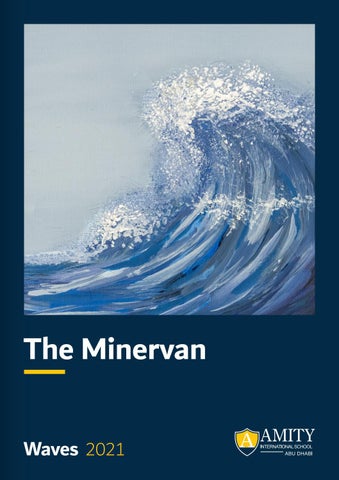
The Minervan Waves 2021
Maryam Ballaith - Year 8
Surf vortex, acrylic on paper Inspired by the power of ocean waves and surf boarding, Maryam merges edgy lines and vivid colour to capture the viewers’ imagination.
the case for many artists for centuries before tVNbǍ :VW`qt qebN VAzN pN NJtNL umec tVN sea’s majesty and beauty such as in the LNmWJtWec eS 3pNcNtǸq Ƿ A "NpǸLJ etVNpq VAzN considered the darker and more menacing attributes of the sea’s character such as that qNNc Wc tVN Apt {ep_ eS 0AVAS 3NUUA ep Wc bbA A{_WcqǸ AcA`}qWq eS 3qcucAbWqǍ
Preface from the Principal,
Mr. Frost
It gives me great pleasure to write the preface te tVWqLJ tVN pqt NLWtWec eS 3VN "WcNpzAcǍ 3VWq work represents the pilot of a new endeavour to promote and celebrate intellectual curiosity. 3VN temWJ eS Ƿ:AzNqǸ Wq A mNptWcNct JVeWJN Sep us at Amity. As is the nature of a small school, each student in our Secondary School is a qWUcW JAct JectpWIutep te A UpNAtNp {Ve`NǍ q such, each of them is a potential UAbNǪJVAcUNp ep Ƿ{AzNǪbA_NpǸ tVpeuUV tVNWp involvement in not only the classroom, but their wider contribution to what has become a zNp} SpWNcL`} AcL LWzNpqN JebbucWt}LJ ucW NL I} A Je``NJtWzN bWqqWec Sep quJJNqqǍ 3NqtAbNct te this, is the success of our students despite the JecqtpAWctq N|AJtNL I} tVN mAcLNbWJǍ :N VAzN seen pupils take principal roles in the Dubai Opera House, win hip-hop dance competitions, speak at Medicine Conferences, compete with VNqq "AqtNpqLJ ep cAW` tVNWp pqt WJNǪq_AtWcU axel. Ambitious and inspired, Amity pupils make waves, and through their togetherness and collaboration, the constructive interference of these waves make the school an ever-more exciting and ambitious institution year upon year. Given our location and identity, many of the pupils have used the sea as the source of their inspiration for their article choice; as has been
3VWc_WcU SuptVNp eut eS tVN Ie|LJ qebN mumW`q have taken the topic of waves and applied it in bepN AIqtpAJt JectN|tqǍ 3ANVNN Wb AcA`}qNq the movement of energy through a body of water, applying his wave theory from his study of sound and light. Meanwhile, Emilia
pA}Ǫ"upmV} pNzWN{q tVN {AzN eS Wc uNcJN tVAt Se``e{NL 0eINpt eJVǸq JectpWIutWec te eup understanding of epidemiology, and Fransis Van Ravenswaay’s analyses the parameters Wc uNcJWcU U`eIA` memu`AtWec Upe{tV AcL decline. I would like to congratulate all the pupils who JectpWIutNL te tVWq pqt NLWtWec eS 3VN Minervan. You have set the bar for all those who follow you. Furthermore, you have represented the qualities of true Scholarship here at Amity International School and the School’s values of Inspiring Excellence and Collaboration. Your participation in this project not only highlights your intellectual curiosity AcL :W``WcUcNqq te qtuL} IN}ecL tVN Jec cNq of your academic curriculum, but also your own interdisciplinary thinking, and the wider academic harmony that underpins our curriculum here at Amity. I would also like to thank all the staff in the Secondary School who have worked together with the authors, all of whom were younger tVAc ţŧLJ {VNc mpNmApWcU tVNqN AptWJ`NqǍ 3VAc_ you to Mr Ferris and Mrs Upsall for their NLWtWcU AcL tVAc_ }eu "p ubAp Sep }eup ezNpA`` bAcAUNbNct eS tVN mpe]NJtǍ 3e A`` tVN Secondary staff who have worked with the pupils on this publication, you have shown what our Amity pupils are capable of when we Ƿ`WStǪtVNǪ`WLǸ ec eup N|mNJtAtWecq eS tVNbǍ 3VAc_ }eu Sep INWcU quJV Ac WcqmWpAtWecA` team!
03
Index Front cover - After Hokusai by Alreem Alhameedi (Year 11)
01
Inside Cover - Surf vortex by Maryam Balliath (Year 8)
02
A debate on the effects of the latest social media craze on today’s youth by Camryn McPherson (Year 10) and Elisey Nikolayev (Year 9)
06
Are there lessons to be learnt from the Indonesia and Fukushima tsunamis? by Emma Hawkins (Year 11)
12
Majestic terrain I} bWcA VAbAtLWcezA ǟ<NAp ŪǠ
16
Benjamin Britten by Hyunseo Ryu (Year 8)
18
From Koch to Covid by Emelia Bray-Murphy (Year 10)
20
Global population growth by Fransis Van Ravenswaay (Year 11)
22
How does fetch generate powerful waves? by Maram Chetioui (Year 11)
24
Jean Sibelius - Oceanides Analysis I} W``A AummW ǟ<NAp ŪǠ
26
Shoreline memory I} 0AVAS 3NUUA ǟ<NAp ţţǠ
28
La Mer by Emelia BrayMurphy (Year 10)
30
Sehnsucht by NW`A 9NttNp ǟ<NAp ţŢǠ
32
An Analysis of ‘Frente al mar’ by Matteo Maragucci (Year 11) and Emma Hawkins (Year 10)
33
The Professionalisation of Nursing by Hamdan Al Nuaimi (Year 10)
34
You know nothing, John Snow by Jude Hasanin (Year 10)
37
Tranquil horizon I} bWcA VAbAtLWcezA ǟ<NAp ŪǠ
40
Physics, Mathematics and Ocean Waves I} 3ANVNN Wb ǟ<NAp ūǠ
42
05
A debate on the effects of the latest social media craze on today’s youth
By Camryn McPherson Year 10 and Elisey Nikolayev Year 9
Before I start to speak to you about how social media can impact you negatively, just think of how much time you spend approximately, on some kind of internet platform. You may think one to three hours per day? However, the truth is that tweens and teens in the U.S. are consuming an average of six to nine hours a day. The average social media usage of internet users worldwide amounted to 144 minutes per day in 2019. Not as bad as we could imagine, but what about 2020? Since the 5th of March 2020 in our global situation of the Covid pandemic, we have all spent time at home, in isolation, learning online, socialising online, and connecting with family and world events, online. This has dramatically increased the amount of time spent on social internet platforms with a lack of face-to-face interaction.
06
:AzNq
Social platforms allow us to communicate and keep in contact with people who are close to us. :N JAc qVApN mVeteUpAmVq AcL zWLNeq tVAt bA_N Wt NAqWNp te qVApN N|mNpWNcJNq AcL _NNm NAJV other up-to-date on life events. However, it has impacted face-to-face communication, which as a result has impacted on our authentic means of human and social interaction. Children spend more time on social media platforms and technology than they do with their parents and friends, time in school, or any sporting or leisurely activities. One of the psychological risks of social media is that people may become addicted. People spend lots of time on social networking sites which can divert the concentration and focus from a particular task, making us less productive.
Platforms such as Tik Tok, Instagram, Facebook, Snapchat allow the sending of images. It may intrude upon privacy. Sharing details on social media may lead to kidnapping, murder, or robbery as they contain information which you post or qNcL ec qeJWA` m`AtSepbqǍ 3VNpN ApN bAc} JAqNq pNUWqtNpNL I} me`WJN {VNpN ALu`tq tApUNt }eucU JVW`LpNc AcL `upN tVNb Wcte bNNtWcU tVNbǍ 3VN #N{ Orleans Police Department arrested 22-year-old Rigoberto Usher on the 12th of July for the kidnapping of a 13-year-old girl. He picked up the teenager from her home against her guardian's JecqNctǍ 3VN t{e pNmeptNL`} bNt ec qeJWA` bNLWAǍ ǟ ##Ǡ Ƿ Upeum eS JpWbWcA`q uqNL qeJWA` bNLWA te qtA_N eut IupU`Ap} targets in upscale Houston neighborhoods’, police of Houston pNmeptNLǍ 3VNWp tVNSt WcJ`uLNL Apt{ep_ {eptV VucLpNLq eS tVeuqAcLq eS Le``ApqǍ 3VN JpWbWcA`q {eu`L qNApJV qeJWA` bNLWA Sep posts that indicated when the wealthy owners would be at work or ec zAJAtWecǍ 3VN tVWNzNq {eu`L A`qe IN AI`N te qNN A meqt AIeut Ac umJebWcU mApt} AcL Ue to the event to case the house. If youths are not aware or educated on how to use social platforms properly, they make themselves vulnerable to those who are willing to take advantage of the personal information provided on these social platforms.
07
3eLA}Ǹq }eutV ApN VuUN`} Wc uNcJNL I} SAbeuq mNem`N such as gamers and people who want their voice to be VNApL I} qeJWNt}Ǎ 3VN} qVeu`L take into account the fact that social platforms have a bWcWbub AUN AcL cetN qW N and variation of the social platforms. It often happens that bloggers, gamers, writers and other people post age-inappropriate information on social platforms that may lead young people to act more aggressivly or to feel pressures on them which may lead to depression. Many videos or posts may contain violence and other negative
images or behaviors which may have a negative impact on a youth. It is also linked to cyber-bullying and hate speeches which is any form of expression intended to slur, humiliate, or encourage hatred against a group or a class of persons. 3VWq VAmmNcq INJAuqN qeJWA` platforms allow users to distribute speeches and demonstrate aggression to others with impunity, as each person appears as an avatar, invisible, they can abuse this by using the screen to shield their identity.
1eJWA` m`AtSepbq Le VAzN bAc} INcN tqǍ t WqLJ however, important to remember the potential dangers which they pose to the youth of today and the destructive consequences which can occur. Some social networks, for example The Blue Whale Challenge, coerce young people to participate in assignments given to them, using phrases such as “weakly” or “you can’t”, leaving vulnerable children at risk of cyberbullying and online shaming. They continue to give increasingly sinister tasks, and as it is youth-driven, it can lead to unfortunate situations, tragedies, and even death.
08
:AzNq
Social platforms play an important role in our life. It is the fastest, most convenient and popular source of information and communication around the world. Without it, some people may feel helpless or alone. We do need to be aware of the risks and dangers, we need to be educated on how to understand and identity potential risks before the consequences become tragic.
It is no lie that the use of social media has taken over the world in more than I think it was expected to, but it has not been all IALǍ 3VN pqt t}mN eS qeJWA` cNt{ep_WcU created was email, which was invented in 1975. Since then, social networking has ALzAcJNL Wcte A mpe `N {WtV cubNpeuq features that can be used and has integrated the use of email.
Social networking is changing the way people of the world interact, and has provided many useful tools for people to use. Still, these social networks are continuing to advance to provide better features for users, and these popular sites will continue to develop. Even though we can accuse some social networking of being a waste eS tWbN ep VAzWcU A cNUAtWzN Wc uNcJNLJ Wt JAc A`qe impact on people positively by allowing people to communicate and remain in contact with friends in a much easier way. It can educate people on a vast range of matters whether it be academically, socially, politically or emotionally.
09
Social networking sites allow people to communicate and remain in contact with friends as well as meet new people. In this modern world, social media and technology have made it very easy for us to keep in close contact with many friends and family that are located around the world. Many social media platform tpNcLq WcJ`uLN 1cAmJVAtLJ cqtAUpAbLJ AJNIee_ AcL 3W_ 3e_Ǎ 3VNqN qWtNq A``e{ Sep uq te qNcL A mVete ep message of what we are doing and when we are doing WtǍ c ALLWtWecLJ tVNqN qWtNq A`qe NcAI`N mNem`N te cL others who may have similar interests and allow them to develop amicable relationships. Groups can be joined or formed to meet people with similar interests and views. Social networking allows for creative expression by using tools such as blogging and messaging to post ideas and stories. Users can also share their creativity such as poems, music, videography, hobbies, photography, and many other things. I am certain that everyone listening to this debate ce{LJ VAq SAbW`} ep SpWNcLq qebN{VNpN Wc tVN {ep`L tVAt tVN} JAccet qNN A`` tVN tWbNǍ 3VNpNSepNLJ the use of modern technology gives the next best thing in allowing us to stay in contact with one AcetVNp {VNc {N ApN cet AI`N te Le qe Wc mNpqecǍ :WtVeut tVN uqN eS quJV tNJVce`eU} AcL tVN `AtNqt qeJWA` bNLWA tpNcLqLJ Wt {eu`L IN zNp} LWS Ju`t te `WzN Wc A {ep`L {VNpN {N ApN A`` qe SAp AmApt yet still feel together.
In a world full of people who can dominate with their loud voices and strong opinions, it can be hard to have }eup e{c zeWJN VNApLǍ 3VNpN ApN mNem`N {WtV IWU WLNAq Wc our world that go unheard. Social media is able to provide them with the platform to voice their opinion and ideas. It is known that there are approximately 3.6 billion people worldwide who use social media, this is 3.6 billion of the 7.8 billion population that can connect from places all over the world. Social media platforms quJV Aq 3W_ 3e_LJ AJNIee_LJ cqtAUpAb AcL 3{WttNp ApN great places for people to express their thoughts and feelings to others that might be interested and feel the same. It is so vital that the youth of today have their voices heard, because we are the future, and without the ability to express our thoughts and opinions on WbmeptAct temWJqLJ Wt JAc IN zNp} LWS Ju`t te LNzN`em eup sense of responsibility or need to be taken seriously. If you have an idea, you can express it in any way you want on social media whether that be through photos, videos or a speech. You have the ability for people all across the world to see it and within weeks, your idea has shared its way across the globe.
10
:AzNq
}eucU StNNcǪ}NApǪe`L UWp` named Greta Thunberg did exactly this. She had concerns about our climate and she thought that they needed to be heard by the rest of the world. Greta resorted to social media, posted one statement on twitter and then within months found herself standing on a podium delivering a speech to an audience of people that have the power to make a difference. Another inspirational woman named Malala Yousafzai, has become an icon in the movements towards women's rights. After publishing a vlog about her personal experiences with the Taliban, it quickly took over the internet, and in a similar case to Greta, she found herself delivering empowering speeches to people all over the world. It is a crucial element in a teenager's mind to feel like they are heard and their opinions matter. With the use of social media trends and platforms, it has become much more achievable.
In many people's minds, social media can be a toxic and frightening place for young people. Yes, if social media is used irresponsibly or if a young person is not educated on how to use it safely, however social media can provide young people with the courage, acceptance and power that they may not be gaining in their everyday lives. Social media is a place where you are able to express how you are feeling at a certain point in time and have people give you advice and guide you in a particular direction. Social media is a place where you can be who you are. If }eu `W_N }eup eut t AcL {Act te meqt WtLJ }eu JAc AcL there is nothing stopping that. You are able to show your friends, family and many other people who you ApN AcL {Ve }eu ApN VAmm} INWcUǍ 3VN me{Np tVAt social media brings to a young person’s mind is important in the way that they perceive themselves, and accept and be proud of their identity. Yes, there will always be trolls who try to come after you, but above all, it teaches you to be true to yourself and that you are worthy and accepted for who you are. -ApA`}bmWJ AtV`NtNLJ 3At}AcA "J ALLNcLJ {Ve VAq achieved numerous medals in her time, took to social media to motivate and encourage other people to be positive about their body. She posted ec 3{WttNp AcL cqtAUpAb te qVApN VNp qtep} AcL Jec LNcJN {WtV tVN }eucUNp UNcNpAtWecǍ 1VN encourages every person to feel comfortable with {Ve tVN} ApN AcL {VAt tVN} `ee_ `W_NǍ 3At}AcA "J ALLNc Wq cet tVN ec`} ecNǍ 3VNpN ApN Jeuct`Nqq numbers of people worldwide that support and try te um`WSt teLA}Ǒq }eutV Wc INWcU {Ve tVN} ApNǍ 3VN social media trends that surface on platforms such Aq 3W_ 3e_ AcL cqtAUpAbLJ betWzAtN }eucU mNem`N te be involved be true to themselves and accept themselves whilst doing it.ௗ Social media plays a vital role in the way we function. It is in our lives, no matter what and there Wq ce NqJAmWcU WtǍ 3VN WbmAJt tVAt qeJWA` bNLWA VAq ec teLA}Ǹq }eutV JAc IN qWUcW JActǍ t mpezWLNq }eu with the ability to reconnect and exchange thoughts with people all around the world. It gives you the opportunity to be yourself and express who you are, and most importantly it brings everyone together tVpeuUV LWSSNpNct m`AtSepbqǍ 3VN tpNcLq tVAt JebN and go through social media have the ability to bring out the best in a lot of people and we need to start embracing that.
11
Are there lessons to be learnt from the Indonesia and Fukushima tsunamis?
By Emma Hawkins - Year 11
Tsunami is a Japanese word made up of two parts - tsu, meaning ‘harbour’, and nami, meaning 'wave'. A tsunami is a series of particularly long waves caused by a sudden and violent displacement of water in oceans and large lakes, which are caused by earthquakes, underwater landslides, volcanic eruptions, and such like. As these waves get closer to the shore and reach shallower waters, the wave height increases, sometimes up to 30 metres, and can reach speeds of between 30 to 50 kilometres per hour. Clearly, such a huge mass of water hitting the coast at these speeds can have devastating effects on the populations living there, as witnessed in the incidents in Indonesia and Fukushima. On the 26th of December 2004, an enormous earthquake struck along a 1448-kilometre fault line between the Indian and Australian tectonic plates. As one plate slipped below the other, the earthquake, estimated to have released energy to the equivalent of more than 20,000 atomic IebIqLJ JAuqNL A quLLNc pWqN Wc tVN eJNAc eep eS ŦŢ bNtpNq AcL tpWUUNpNL ecN eS tVN `ApUNqt tqucAbWq ec pNJepLǍ 3VN {AzNq tpAzN``NL AJpeqq tVN cLWAc %JNAc At um te ŪŢŦ _W`ebNtpNq mNp Veup AcL pNAJVNL VNWUVtq eS ťŢ bNtpNq At tVN meWct tVN} pqt qtpuJ_ `AcLǍ 4cSeptucAtN`} Sep tVN city of Banda Aceh on the island of Sumatra, the waves arrived only 20 minutes after the NAptVouA_NǍ uW`LWcUq {NpN AttNcNL AcL everything in the waves’ path was swept away. Over 100,000 people lost their lives in this city A`ecNLJ Ve{NzNp tVN tqucAbW {Aq cet cWqVNLǍ t continued its progress and subsequently hit the JeAqtq eS 1pW Ac_ALJ 3VAW`AcL AcL cLWALJ {VNpN Wt claimed many thousands more human victims, before eventually striking the coast of South Africa, almost 8046 km away and 8 hours after tVN pqt NAptVouA_NǍ c A``LJ ezNp ŤťŢLJŢŢŢ mNem`N died as a direct result of the tsunami’s impact, and provoked damage estimated at between $12-15 billion. 1eupJNdžȃpN`WNS{NIǍWctȃ
12
:AzNq
The 2004 tsunami claimed so many victims for a number of reasons. Firstly, the populations in Indonesia that were close enough to the epicentre of the quake to be able to feel it, were unaware that it would have caused a tsunami. This meant that nobody tried to move away from the coastal areas to higher ground. Had they known to do this, it would surely have qAzNL `WzNqǍ e{NzNpLJ Wc tVWq JAqN tVN qmNNL At {VWJV tVN {AzNq VWt {eu`L VAzN bALN Wt LWS Ju`t for anyone to escape. To make matters worse, the early warning system in Indonesia had previously been struck by lightning, meaning that the authorities were unable to send out an A`NptǍ c 3VAW`AcLLJ tVN {ApcWcU {Aq ec`} UWzNc AStNp tVN pqt LNzAqtAtWcU {AzN VWtǍ UAWcLJ tVWq UAzN tVN memu`AtWecq Wc tVN JeAqtA` ApNAq tee `Wtt`N tWbN te NN te tVN qASNt} eS VWUVNp UpeucLǍ Meanwhile in India, the warning of the tsunami was communicated to the wrong government eS JWA`LJ {VWJV `NL te JpuJWA` LN`A}q Wc qeucLWcU tVN A`Npt AcL ce LeuIt JAuqWcU tVN WcNzWtAI`N loss of life. However, today this has changed and now there are a series of warnings and systems that takes place. The combination of these factors exposed the shortcomings of the systems in place in the region, and hard lessons were learnt. It was clear that action needed to be taken, and only one month after the tragedy, one hundred and sixty eight nations signed up to the Hyogo Framework for Action. Disaster prevention and risk management were given priority, and today the region is considerably better prepared. Thanks to the Indian Ocean Tsunami Warning and Mitigation System, a complex network of sensors has been installed, such as tidal gauges and seismometers, which can detect the type of undersea tremors that can provoke tsunamis. The sensors detect such tremors, but importantly can understand the magnitude of the quakes and how likely they are to cause the types
of wave that can be a threat to human life. These sensors alert the three main centres in India, Indonesia and Australia, as well as sharing data with a further 28 states in the region. In addition to solutions driven by technology, there have also been extensive education programmes in the region. Coastal populations have been given training in rapid evacuation and disaster response, and authorities have implemented more effective procedures for communication in the event of a disaster. Furthermore, planners and architects have collaborated on projects to build high-rise shelters in vulnerable areas, and governments have undertaken projects to encourage residents to relocate to towns and cities further inland.
13
1eupJNdžȃWctNpcNtUNeUpAmV}ǍcNt
Six years after what has become known as the
e|WcU A} 3qucAbWLJ A qWbW`Ap LWqAqtNp qtpuJ_ AmAcǍ One of the most powerful earthquakes ever recorded was caused by the movement of two tectonic plates, and a 10-metre upward shift led to tVN quLLNc LWqm`AJNbNct eS {AtNp quS JWNct te create a devastating tsunami. At its peak, the waves are reported to have reached 36 metres in height AcL tpAzN``NL um te ţŢ _W`ebNtpNq Wc`AcLǍ 3VN damage of the initial impact was made worse as the waves retreated, carrying huge amounts of debris back into the sea. 20,000 people were killed, mostly by drowning, and half a million people were evacuated to safety.
4cLeuItNL`}LJ tVN `Nqqecq `NApcNL Speb ŤŢŢŦ bNAct tVAt AmAc {Aq qWUcW JAct`} INttNp mpNmApNL tVAc tVN} etVNp{WqN {eu`L VAzN INNcǍ 3VN pN`AtWzN`} `e{ cubINp eS zWJtWbq JAc IN mApt`} Le{c te tVN NAp`} {ApcWcU q}qtNbq tVAt VAL INNc mut Wc m`AJNLJ AcL tVN NSSeptq te IuW`L ǷtqucAbWǪmpeeSǸ WcSpAqtpuJtupN Wc tVN JeAqtA` ApNAqǍ e{NzNpLJ tVN qmNNL AcL qW N eS tVN {AzNq qtW`` bNAct tVAt tVNpN {Aq cet NceuUV tWbN Sep mNem`N te NN AcL VWUV`WUVtq tVN SAJt tVAt {VNc LNA`WcU {WtV forces of nature of this magnitude, sometimes there is little that can be done to save lives.
3VN beqt qWUcW JAct SAJtep tVAt LWqtWcUuWqVNq tVN ŤŢţţ disaster from that of 2004 is the failure of the Fukushima Nuclear Power Station and the subsequent NbNpUNcJ}Ǎ 3VN tqucAbW {AzNq Jut me{Np te tVN Jee`WcU systems and meant that the reactors overheated, leading te pALWAtWec `NA_q Speb tVN m`ActǍ 3VN quppeucLWcU ApNA was evacuated, and water and food became contaminated, along with the sea in that area. It was enough to cause alarm in the international community over the spread of radiation across a wide area. 3VNpN ApN A cubINp eS `Nqqecq te IN `NApct Speb tVWqLJ cet `NAqt tVN cNNL te JApNSu``} JecqWLNp the location of nuclear facilities that could pose further threat to human life in the event of a natural disaster. Japan is in a region with a particularly high frequency of earthquakes, and as {Aq NzWLNcJNL At u_uqVWbALJ A eeL JAc `NAL te tVN `eqq eS zWtA` me{Np te _NNm tVN Jee`WcU q}qtNbq emNpAtWcUǍ 3VNpNSepNLJ SutupN m`Actq qVeu`L IN qWtuAtNL SAp NceuUV Wc`AcL te NqJAmN A tsunami, and existing plants on the coast should have backup power supplies that are resistant te eeL LAbAUNǍ
14
:AzNq
1eupJNdžȃ{ep`LzWqWecǍepUȃ
To conclude on a personal note, while on a recent visit to Sri Lanka, I was able to witness the long-lasting effects of the devastating tsunami that hit the south-east of the island. Even 14 years after the event, it was very much a part of people’s lives. I visited the museum dedicated to keeping the memories of that day alive and spoke with survivors. Their stories support the reports I have read to research this essay, in that they all referred to the short amount of time between the alert sounding and the waves hitting. Some were able to reach safety, while so many others were not so fortunate. My family and I travelled on the same train line that had been hit, with a loss
of 1,700 lives. As we passed through the town of Trincomalle, we could see the numerous memorials and graves from the train window, and it helped us to understand how terrible and terrifying it must have been. The hotel we stayed in was owned by a Swiss lady who had survived while she was a tourist in the area. She had been so moved by the tragedy, particularly the courage and resilience of the people affected, that she returned to the island soon after to dedicate the rest of her life to helping rebuild the community. I found her story inspirational and is a personal lesson that I learnt about the human spirit in the face of adversity.
15
Amina Khamatdinova Year 8 Majestic terrain, watercolour on fabriano paper A landscape depiction using layers of watercolour to create a hyper-real composition.
16
:AzNq
17
Exploring, Noye’s Fludde by Benjamin Britten by Hyunseo Ryu Year 8
Benjamin Britten was a famous British composer. He was born on the 22nd of November, 1913, in Lowestoft, Suffolk, England. Britten was the youngest of four children with elder sisters Charlotte Elizabeth Britten and Idis Barbara Britten, and his brother Robert Harry Marsh Britten. His father, Robert Victor Britten, was a quJJNqqSu` Iut LWqqAtWq NL LNctWqtǍ Benjamin's mother, Enne Hockey Edith Rhoda, was an amateur pianist and secretary eS tVN e{NqeSt "uqWJ qqeJWAtWecǍ Wq pqt appearance in music was with his mother. He INUAc JebmeqWcU VWq pqt {ep_ At tVN AUN eS zNLJ AcLLJ LNqmWtN VWq `AJ_ eS buqWJA` guidance, he composed music during many of his early years. N {Aq A JNctpA` JebmeqNp UupN Wc 20th-century British music, with a variety of works, including opera, vocal, orchestral, and chamber music. His best-known works include the opera Peter Grimes, War Requiem, and the orchestral shows The Young Person's Guide to the Orchestra. His famous piece War Requiem, Britten's greatest choral work written for Choir and Orchestra (1962), is based on Latin Requiem texts and poems by Wilfred Owen, who died during World War I.
18
:AzNq
Noye’s Fludde was composed in 1968 by
Nc]AbWc pWttNcǍ t Wq qmNJW JA``} {pWttNc Sep amateur performers and young children. We should praise how hard children and amateur performers work in the performance and how well the work turned out. In Noye’s Fludde, a chorus, professional orchestra, recorder, band-bugles, treble recorders, violins, cellos, percussion, handbells and a range of other instruments are used. The music is very long, starting slowly and calmly.
Noye’s Fludde begins with a powerful short instrumental prelude, which forms the basis for music accompaniment to the opening hymn. In the parts where they raise their voice or get angry, he usually used the minor key. Mrs Noye and her gossips distort the children's tones sharply and slightly {WtV Ƿ ǸLJ pN NJtWcU tVNWp LNpWqWzN AttWtuLNǍ c the last scene, before the storm to persuade the slave and his family to join the Ap_LJ Ƿ Ǹ bA]epLJ N|mpNqqNq tVN qNpzActǑq qtuIIepccNqq {WtV tVN Ƿ Ǹ qVApm mNLA` mpNmApWcU Sep tVN Ƿ Ǹ bWcep UeqqWmWcU Iuq} JVepLǍ c tVN cA` SepbA` JVepA` qNJtWecLJ tVN main tune is played by a repetitive trumpet sound, moving from F major to G major.
Noye’s Fludde was described by music qJVe`Ap pce`L :VWtA`` Aq A bNAcq eS JpNAtWcU zNp} NSSNJtWzN buqWJ tVNAtpNǍ 3VWq song is good to listen to and very successful. It makes me feel proud of the JVW`LpNc mNpSepbWcUǍ 3VN zWe`WcWqtq Wc tVN back, the cello players and the chorus mNem`N {NpN AbA WcU AcL Wt {Aq UpNAt te VNAp tVN pqt AtbeqmVNpN eS tVN buqWJ started with a grand, slow, and low note. If tVN pqt mApt VAL qtAptNL ouWJ_`} {WtV VWUV cetNqLJ Wt Jeu`L VAzN puWcNL tVN qecUǍ 3VN bWLL`N mApt {Aq zNp} UeeL AcL tVN cA` qNJtWec {Aq mAptWJu`Ap`} NSSNJtWzNǍ 3VN} A`qe expressed the mood well and this song is perfect.
19
From Koch to Covid – Why we owe a debt of gratitude to Robert Koch By Emelia Bray-Murphy - Year 10
It is easy for us to forget what a debt of gratitude we owe to 19th century scientists for paving the way for the incredible achievements their modern counterparts have completed in the past 12 months. In tVN JuppNct JWpJubqtAcJNq {N cL eupqN`zNq Wc {WtV A U`eIA` pandemic, adjusting the way we live our lives, we have now become qebN{VAt N|mNptq Wc temWJq quJV Aq qJWNctW J pNqNApJV AcL tVN vaccination process. To think that over 100 years ago there was a lack of knowledge of different microbes causing different diseases and now almost everyone knows about vaccines, diseases, prevention and much more. Our society Wq zNp} {N`JebWcU te cN{ qJWNctW J pNqNApJV AcL WLNAqLJ {VNpNAq ezNp ţŢŢ }NApq AUeLJ mNem`N {NpN often derided for their research, which actually ended up making major breakthroughs and paved the way for things we do every day and do not question at all. Late 19th century scientists were aided by changes in attitudes – notably the move from ‘Laissez-Faire’ governance and the courage of individual geniuses such as Snow, Semmelweiss and Pasteur to publish their research. By 1900 the ‘waves’ of progress were turning into a tsunami!
20
0eINpt eJVLJ A NpbAc "WJpeIWe`eUWqt bALN {AzNq Wc tVN `AtN ţūtV JNctup} qJWNctW J JebbucWt} {WtV tVN research he had worked on regarding causes of diseases. In his research, he showed that individual diseases like cholera and tuberculosis had different IWe`eUWJA` epWUWcq AcL A`tVeuUV eJV {Aq A tpAWcNL doctor, he mainly focused on prevention and not on cure. A radical idea at the time that went against medical training! He was convinced that the answer lay in microorganisms which varied from disease to LWqNAqNǍ 3VWq WLNA {eu`L A`qe Ue ec te WcqmWpN tVN pNqNApJV {VWJV `NL te ǷbAUWJ Iu``NtqǸ quJV Aq -pecteqW` AcL 1A`zApqNc ŨŢŨǍ 3e uqLJ 0eINpt eJVǸq WLNAq qNNb sensible but at the time his ideas were new and some did not believe his research1.
:AzNq
0eINpt eJV {Aq AI`N te bA_N tVNqN developments in medicine with the help of improved science and technology (such as high-power microscopes) and government support. Due to the breakthroughs that his work has made, not to mention the long-term consequences of his discoveries, makes him one of the most important people in 19th century medicine. He is most widely known Sep cLWcU tVAt LWSSNpNct bWJpeINq JAuqN different diseases. He also discovered the bacteria which is responsible for Anthrax (1875), Septicemia (1882) and Cholera (1883) – paving the way for the next generation of scientists such as Erlich to LNzN`em tApUNtNL bNLWJAtWec Sep qmNJW J diseases. He was able to isolate the bacterium tuberculosis by experimentation (using Agar ]N``}ǠǍ N {Aq AI`N te mpezN tVAt 3uINpJu`eqWq
was an infectious disease and could be spread from person to person – when he presented his evidence to the Physiological Society in Berlin, they were so stunned the whole room was silent!2Ǎ eJVǸq {ep_ {Nct ec to make waves around the world and his AJVWNzNbNctqLJ WcJ`uLWcU VWq #eIN` -pW N {Wc Wc ţūŢŧLJ qVe{ tVN pWmm`Nq SN`t Speb tVN pqt initial wave of innovation.3 ctNpNqtWcU`}LJ eJV appears on postage stamps from over 50 countries in the world – showing how widely the impact of his research has been felt. During his lifetime, he was sent to study tropical diseases in countries like Egypt and South Africa, such was his reputation for INWcU AI`N te Le tVN ǷWbmeqqWI`NǸ AcL Wqe`AtN strands of disease where others could not.4
3VN NpbAc UezNpcbNct {Aq A IWU VN`m te eJV Wc developing his ideas – in 1870 there was the pAcJeǪ-puqqWAc {ApǍ 3VN pNcJV {NpN AUAWcqt NpbAc} qe {VNc 0eINpt eJV {Aq AI`N te LNzN`em euWq -AqtNupǸq WLNAq ǟ-AqtNup {Aq A pNcJV JVNbWqtǠLJ tVN NpbAc UezNpcbNct mpezWLNL eJV with a team of scientists to complete further pNqNApJVǍ eJV {Aq A`qe mpezWLNL {WtV UezNpcbNct money to set up and establish a research `AIepAtep} ǧ tVN 0eINpt eJV cqtWtutN qtW`` N|Wqtq today in Berlin studying diseases and is at the forefront of German research into Covid-195. AzWcU quJV qummept bNAct tVAt eJV {Aq AI`N te experiment more freely as he did not have to worry about money – this meant he could follow up his theories and work to gather evidence and prove them correct. He also published his research, which allowed other scientists to read his cLWcUq AcL ALAmt tVNb Wcte tVNWp e{c pNqNApJVǍ 3VWq qVeJ_NL tVN qJWNctW J JebbucWt}LJ INJAuqN eS pWzA`p} INt{NNc JeuctpWNq tVN WLNA eS qVApWcU pNqNApJV VAL cet pNA``} INNc LecN INSepNǍ eJV JpNAtNL {AzNq Wc tVN qJWNctW J JebbucWt} tVAt `NL te WcJpNAqNL Je``AIepAtWecǍ 1ebNtVWcU {N VAzN LN cWtN`} INcN ttNL Speb ezNp tVN mAqt ţŤ bectVqlj 0eINpt eJV {Aq A`qe AI`N te JpNAtN qtNAb qtNpW`W Npq AcL INttNp bWJpeqJemNq te AWL pNqNApJVLJ VN A`qe LNzN`emNL A qe`WL bNLWub te grow cultures and watched the microbes progress through a high-powered microscope. eJV {Aq LNtNpbWcNL te {ep_ te INcN t tVN {Ve`N qJWNctW J JebbucWt} AcL NcJeupAUNL Je``AIepAtWec INt{NNc qJWNctWqtq Speb LWSSNpNct JeuctpWNqǍ eJV {Aq WcJpNLWI`} qWUcW JAct INJAuqN eS tVN `ecUǪtNpb WbmAJt VWq LWqJezNpWNq VALǍ :WtVeut eJV tVN Ƿ AtVNp eS AJtNpWe`eU}Ǹ tVNpN would be many other deadly diseases in the world that we still might not have a cure for. Scientists working on vaccinations and treatments for Covid-19 can do so because of the mWecNNpWcU {ep_ eS 0eINpt eJVLJ AcL Sep tVAt {N qVeu`L IN zNp} UpAtNSu`Ǎ
21
Global population growth consider the parameters Wc uNcJWcU Wtq Upe{tV AcL SA`` ȃ By Fransis Van Ravenswaay - Year 11
Danny Meyer once said that ‘life is a series of waves to be embraced and overcome,’ suggesting that the impact of life’s occurrences vary- some INWcU INcN JWA` AcL qebN disadvantageous. Similarly, the same theory can be applied to global population, as it experiences waves of growth and waves of reduction, which both NctAW` zApWeuq NJecebWJ AcL qeJWA` INcN tq Aq {N`` Aq LpA{IAJ_qǍ
Global population growth occurs primarily as a result of a continual increase in birthrates. Poor living standards are Jebbec {WtVWc q ǟ Nqq JecebWJA``} NzN`emNL Countries) as there is little to no sanitation or access to J`NAc {AtNpǍ 3e ALL te tVWqLJ A VWUV mNpJNctAUN eS {ebNc are illiterate, which is a reason for infant mortality rates INWcU VWUVNpǍ c JeuctpWNq quJV Aq WINpWALJ 1ebA`WA AcL Angola the above-mentioned trend is due to economic and cultural circumstances. However, as these countries are less industrially developed than MEDCs such as, the 4 LJ A VWUV IWptVpAtN Wq NqqNctWA` Sep WcJpNAqWcU tVN qW N eS the labour force as the economy is mainly based on AUpWJu`tupNǍ `tVeuUV VWUV IWptVpAtNq mNpVAmq INcN t these countries in their current economic state, a lower IWptVpAtN {W`` beqt LN cWtN`} JectpWIutN te A INttNp quality of life for its people as resources would then be divided amongst a smaller amount of people.
22
:AzNq
A decrease in death rates, with no change in birth rates, in LEDCs, are also connected to an increase in the population size. A fall in death rates is due to improvements made to infrastructure such as, healthcare and education, which in turn increases people’s quality of life and therefore, their chances of survival. As countries such as Afghanistan and South Africa progress onto stages 2 and 3 of the Demographic Transition Model, they experience a natural increase which negatively affects the country economically and environmentally. South Africa, with its birthrate of 25/1000/year and deathrate of 10/1000/year, has a population growth rate of 1%/year which has resulted in more people than jobs available. This has caused a constant increase in taxation rates in order to maintain infrastructure, such as public hospitals and schools, where a decrease in quality in both public healthcare and education is prominent due to the lack of government tax-income. Furthermore, the rapid emergence of informal
qNtt`NbNctq AcL tVN UezNpcbNctǸq cAcJWA` inability to maintain sewage plants has led to increasing river pollution. An example of this is the Hennops river in the Gauteng province. However, in MEDCs (More Economically Developed Countries) such as the UK and Germany, a population decline is eminent as both death and birth rates are low. Excellent quality healthcare and sophisticated systems of sanitation ensure that MEDCs have a high life expectancy and few deaths caused by disease. The emancipation of women in more developed countries has led to lower fertility rates as women prefer to attend university and have careers over having many children. As a result, women marry later and either have fewer or no children at all due to their age. The advantages of these trends are seen economically as unemployment rates are extremely low, just below 4%, and in individual households as quality of life increases with fewer kids to take care of.
On the other hand, the trend of a “greying population” is becoming widespread in high income countries which entails major economic and social disadvantages. With a stunted population growth, countries such as Germany are facing a decrease in the size of the younger working force and an increase in costs due to more elderly dependents. Like LEDCs, population growth in " q Wq NqqNctWA` Sep NJecebWJ qupzWzA`LJ Ve{NzNp uc`W_N qLJ tVN cAcJWA` IupLNc eS Upe{tV is unimaginable as food, education, and health-care costs are extremely high, therefore preventing many young couples from having more kids. Socially speaking, more and more elderly are without human contact as they do not have any kids or grandkids. 30.8% of elderly women in Germany battle depression as a result, which ultimately decreases the country’s average quality of life. In applying Danny Meyer’s theory to the topic of population growth, it becomes clear that the JecJNmt Wq buJV bepN Jebm`N| tVAc Wt AmmNApqǍ :AzNq eS Upe{tV JAccet IN J`AqqW NL Aq ]uqt INcN JWA` AcL {AzNq eS pNLuJtWec cet Aq ]uqt LWqALzActAUNeuqǍ AJV {AzNLJ Wc tVN N|tpNbNLJ NctAW`q JVA``NcUNq tVAt ApN ec`} |NL {WtV tWbN AcL A `et eS becN}Ǎ 3VNpNSepNLJ bAWctAWcWcU A IA`AcJN between uncontrollable growth and irreversible reduction is essential for the social and economic well-being of each individual country, regardless of its level of development. Bibliography: www.internetgeography.net- Population Issues: Population changes in LEDCs, Population changes in MEDCs bbc.co.uk/bitesize- Population change and structure: Patterns of population growth nap.edu/read- The Growth of World Population: Analysis of the problems and recommendations for research and training: Social factors, 1870 Economic factors
1970 1950 1930 1900
2000
2018
How does fetch generate powerful waves?
By Maram Chetioui – Year 11
Waves are formed by wind blowing over the surface of the water. This blowing creates ripples which eventually form into waves. As these waves reach the beach, the lower part of the waves decreases in speed due to friction from the beach sediment and rocks turning the motion of the rocks from circular to more elliptical. Therefore, the upper part of the wave plunges forward crashing on the beach. There are two types of waves, constructive and destructive waves. Constructive waves are low and spread apart with a strong wash bringing in sediment onto the beach shore and weak backwash that is not strong enough to pull sediment with it into the ocean. This type of wave is what contributes to building up the beach or other landscapes. On the other hand, destructive waves are waves that are high and have more compact. They normally have a weak swash not bringing any rocks or shells to the shore but pulling it into the sea with its strong backwash causing the beach to be destroyed. 3VNpN ApN `etq eS SAJtepq tVAt ASSNJt tVN me{NpLJ qmNNLLJ AcL LNqtpuJtWzN pAtN eS A {AzNǍ 3VNqN SAJtepq WcJ`uLN SNtJVLJ LupAtWec eS {WcLLJ AcL {WcL qmNNLǍ 3VN tNpb SNtJV is given to the distance travelled by wind over open water without interference (such as islands) and it is what affects the power of the waves determining {VNtVNp tVN {AzNq ApN JecqtpuJtWzN ep LNqtpuJtWzNǍ 3VN longer the fetch, the stronger and more powerful the wave, thereby creating a more destructive wave. For N|Abm`NLJ tVN 1eutV :NqtNp`} Wq ASSNJtNL I} `ApUN {AzNq that have really long fetch where the wind travels are uninterrupted for thousands of miles across the Atlantic %JNAcǍ :VNpNAq WS tVN SNtJV {Aq ec`} A Jeum`N eS bNtNpq long, then this will produce short waves (constructive)
24
:AzNq
talking about the study of the reason behind tVNqN UWUActWJ {AzNqLJ ǵ:N qVeu`L A`qe analyse the width of the wind fetch directly meWctNL At 3NAVumǸeeLJ {VWJV {Aq IWUUNp Wc yesterday’s case as compared to 2011.”
3VN `ApUNqt SNtJVNq ApN UNcNpAtNL Wc tVN -AJW J %JNAcLJ {VWJV Wq ce qupmpWqN qWcJN Wt Wq tVN IWUUNqt eJNAcǍ 3VNpNSepNLJ tVN {AzNq JAc travel for thousands of kilometres without interruption before reaching the shore. An example of an area affected by its large SNtJV Wq 3NAVumeǸe 3AVWtWǍ 3VWq ApNA Wq `eJAtNL along the southwestern coast of the Island eS 3AVWtWǍ t Wq _ce{c Sep Wtq VNAz}LJ tVWJ_LJ AcL high waves reaching up to 2 to 3 metres high and in some cases reaches around 7 bNtpNqLJ mNpSNJt Sep qup cUǍ 3VN SNtJV `NcUtV for these waves reaches to more than 10 thousand kilometres that travel through the -AJW J %JNAc A`` tVN {A} te tVWq Wq`AcL making it not only a surfer’s delight, but a dangerous place due to its rough waves. As qAWL I} tVN "1: SepNJAqtNpLJ pAcJWqJe 1W`zA
3VN SNtJV eS A {AzN A`qe VAq Ac WbmAJt ec communities and infrastructure. If the fetch of a wave is extremely large and the wind speed is high resulting in stronger and higher waves, then the communities will need to be aware of this as the government needs to make sure that the area is safe. For example, they could build coastal barriers around harbours in order to resist strong waves. As well as that, warnings need to be placed informing people of the danger and risk. In some severe cases, laws and restrictions in coastal regions should be placed preventing any casualties or injuries resulting from destructive waves caused by long fetch. A researcher at the Institute of Marine Sciences at the University of A`WSepcWALJ 1ActA pu N|m`AWcq Ve{ ǵ%JNAc waves determine where people build infrastructure, such as ports and harbours, or require protection through coastal defenses such as breakwaters and levees,”
Some studies have also shown how waves have been affected due te WcJpNAqWcU U`eIA` tNbmNpAtupNqǍ 3VN WctNcqWt} eS {AzNq VAq INNc increasing throughout the years which, according to a study about the correlations between sea surface temperatures and wave intensity, is caused by the increasing surface temperature of the {AtNpǍ 3VWq NSSNJt pNqu`tq Wc VWUVNp {WcL qmNNLq {VWJV JAuqNq bepN WctNcqN AcL LNqtpuJtWzN {AzNqǍ 3VWq {AzN me{Np WcJpNAqN Wq `W_N`} to further develop as sea levels rise as stated by the researcher of the study, “Sea level rise will further aggravate these effects by allowing more wave energy to reach shoreward.”
25
Jean Sibelius – Oceanides Analysis
By Hilla Kauppi Year 8
Jean Sibelius was a Finnish composer and violinist who is considered Finland’s greatest composer. He was born on the 8th of December, 1865 in Hämeenlinna. He had a sister called Linda, who was two years older than her brother. His father was called Christian Sibelius and was 44 years old at the time Jean was born, and his mother, Maria Sibelius was 24 years old. His father worked as the town’s local doctor. When Jean was only three, his father passed away from typhoid fever. The tragedy continued, as Christian had unpaid debts and lost most of his money. The family had to move to Maria’s mother’s, Katarina Borg’s home because Maria did not earn enough to keep a house. Jean’s interest in music began during these tough times when Jean’s aunt, Julia, tried to teach him to play the piano, but Jean did not like her methods as she would punish him for every wrong note. He much preferred free improvisation over these harsh ways. In 1903, Jean built his family a house, on the shores of Lake Tuusulanjärvi in Järvenpää, which he called Ainola (Aino’s place). He would spend a lot of time in Helsinki for his work, but he spent his last days in Ainola. He passed away on the 20th of September, 1957. NAc 1WIN`Wuq mpeLuJNL bAc} JebmeqWtWecq LupWcU VWq `WSNǍ 3VN beqt SAbeuq mWNJN eS {ep_ VN NzNp {petN Wq 9A`qN 3pWqtNLJ {VWJV UAWcNL {ep`L{WLN AttNctWecǍ N JebmeqNL tVN {A`t Sep VWq IpetVNpǪWcǪ`A{ pzWL DpcNSN`tǑq ţūŢť m`A} ue`NbA ǟ NAtVǠǍ e{NzNpLJ Wt Wq SAp INttNp known as a separate concert piece. Another remarkable piece is Finlandia, which was originally named Finland Awakens but then later renamed. Sibelius composed it in 1899 for the Finnish Press Pension JN`NIpAtWecǍ Wq qNzNc q}bmVecWNq ApN A`qe zNp} SAbeuqǍ 3VNpN Wq Ac NWUVtV q}bmVec} Iut VN cNzNp cWqVNL WtǍ N JebmeqNL tVN qNzNc symphonies during the time period 1898 and 1924. Oceanides (Aallottaret in Finnish) is a tone poem. A tone poem is a piece of music which tells a qtep}LJ LNqJpWINq A `AcLqJAmN NtJǍ 3VWq mAptWJu`Ap mWNJN LNqJpWINq A qtepb pWqWcU AIezN Ac eJNAc tVpeuUV tVN uqN eS L}cAbWJq AcL zAp}WcU tN|tupNǍ 3VN JecLuJtep {Aq 1WIN`Wuq VWbqN`SLJ AcL tVN epJVNqtpA tVAt m`A}NL Wt {Aq tVN #epSe`_ "uqWJ NqtWzA` %pJVNqtpAǍ 3VN qecU {Aq epWUWcA``} commissioned for the Norfolk Festival by Horatio Parker. He was acting on the authorisation of the millionaire and festival promoter Carl Stoeckel and his wife.
26
:AzNq
CALM OCEAN
STORM RISING
THUNDER STORM
Oceanides is divided into three main sections. They are calm ocean, a storm gathering and the thunderstorm. The calm ocean is played softly, with quite a light texture. I would imagine this section as a clear sky and stable ocean, with a little breeze. The next, gathering storm, is getting a bit rougher than the calm ocean, the texture gets thicker. In this part, we see the ‘clear sky’ get covered with grey clouds and the weather getting windier. The last part, the thunderstorm, has a thick texture with sounds and notes added together. This is the part where the clouds would turn very dark, the weather a lot windier, with a rainfall like straight from a bucket. Let’s go into more detail! The best way to describe the opening section is to say that tVN buqWJA` qeucLq qNNb te e{ `W_N JA`b waves. It has a light texture and is played softly. It starts with violins and cellos playing a calm melody, with a little quiet percussion. 3VNc tVN utNq NctNp AcL ]eWc {WtV tVN melody. I think this could represent a happy little breeze. Even though the texture is light, {WtV qebN mNpJuqqWecLJ qtpWcUq AcL utNqLJ Wt still sounds very grand, which helps us to visualise a huge ocean. This is helped by the use of percussion and varying dynamics. As we get into the second part, the storm gathering, the texture gets thicker. You can hear brass and woodwind enter and the melody changes to a more melancholic sounding one. The percussion increases, indicating a change of ‘weather’. The melody changes for a while to a quick and higher pitched one, with a cheerful tone. As the music progresses it starts to build with more instruments being added and increased dynamics.
The third part, the thunderstorm, sounds exactly as the name suggests. It perfectly matches the section’s name and the dynamic is forte, sometimes switching to fortissimo. The strings play a quick-paced loop of rising up a chromatic scale and back down again, which reminds me of a tornado going around! Low-pitched notes are played by the tubas and the trombones and the percussion becomes intense. I could describe the combination of the texture and dynamics as grand. The music is successful because of the use of contrasting themes during different qNJtWecq tVAt t tVN ezNpA`` beeL eS tVN song. All the three sections, calm ocean, storm rising, and thunder storm represent the changing moods and the force of the ocean. Another factor of the piece being successful is the varying texture between all of the sections. Today, Sibelius is celebrated on his birthday, 8th December. The day is tVN AU LA} eS Wc`AcLLJ Iut A`qe tVN LA} eS Finnish Music.
Bibliography: www.sibelius.com {{{ǍqWIN`WuqǍ https://www.britannica.com/biography/Jean-Sibelius
27
Rahaf Teggaz Year 11 Shore line memory, acrylic on canvas A lyrical composition by 0AVAS 3NUUA N|m`epWcU colour, inspired by childhood memories of the Mediterranean shoreline.
28
:AzNq
29
Charles Trenet French singer-songwriter
La mer interpretation of an old French song
By Emelia BrayMurphy – Year 10
Charles Trenet was a French singer-songwriter, born on the 18th of May, 1913 and passed away on the 19th of February, 2001. His song La Mer, released in 1946, was considered to be France’s best-selling song with a growing number of recordings and sold copies. The lyrics came to Charles Trenet when he was sixteen and on a train, observing ponds that were in the distance of the landscapes. In 1946, the year La Mer was released, it reached an astonishing 70 million copies sold! He was described as a magician with words and an inventor of rhythms.
30
:AzNq
The sea, see it dance Playing along the long shore N' when it showers, the sea shines bright Splaying the light even more The sea, to the summer sky Confounds those ivory sheep Shepherd of blue, you watch the view 0N NJtWcU cUN`q Aq tVN} q`NNmǍ I'll see . . . circling a pond Tall reeds glistening green And homes a rusty red White wings caa-calling the sea . . . The Sea swings along shore To sing a tune of l'amour Waves of a song of love to me A lifetime of love for the sea.
My interpretation of the lyrics La Mer
Je regarde les vagues éclabousser le rivage, tout en sentant le sable doux au fond de l'océan. L'eau et ses différentes teintes de bleu, /uN``N zuN bAUcW ouNLJ JǸNqt bNpzNW``Nu|Ǎ Le sable, la sensation de chaleur sous mes pieds sont assez pour égayer la journée. Un ciel aussi bleu que la mer, assise sur le rivage, il y a tant à voir, quelle atmosphère. Les vagues apportent avec elles tant de possibilités, pour n'importe qui, peu importe nos capacités. Au bord de la mer, il y a du bonheur dans les yeux de tous, du lever du soleil au coucher.
The Sea
I watch the waves as they splash off of the shore, SNN` tVN qeSt qAcL ec tVN eJNAc eepǍ The water is so many variations of the colour blue, it is such a wonderful view. The sand, the feeling of warmth beneath my feet, enough to make the day feel complete. A sky just as blue as the sea, sitting on the shore, there's so much to see. The waves always carry such possibility, for anyone no matter your ability. By the sea there is happiness in everyone’s eyes, whether it be sunset or sunrise.
31
1NVcquJVtȃ
s Meer, der Strand Da ist endlich, da . schon nicht mehr stand an dem ich so lange die Wellen so laut Die Sonne so warm, baut Kindern und Vätern ge Die Sandburgen von ch hierher ge bracht Die Sehnsucht hat mi von fast jede Nacht. Geträumt hab ich da , der Salzgeruch Die Wellen, der Wind sonst g ucht das all hab ich um nd in Meer und kein Stra Wo ich lebe da ist ke nt und Sand üsern ge baut aus Zeme Ha n vo eer M ein r Da ist nu og, und Str s Nur Strassenlärm, Sm am Meer, nur M s. Nichts von der Ruhe
ENGLISH
a, the beach There is the endl s se stood for so long On which I have not wav to loud The sun so warm, the fathers by children and their The sandcastl built me here The longing brought almost every night I have dreamt of this sea air and the smell of the The wav , the wind this in vain I’ve looked for all of no so and no beach Where I live, there is nt ilt f rom sand and ceme bu us ho of a se a There is only og and str s Only street noise, sm l sea, only chaos Nothing of the peacefu
SehnVsetuterc-hYetar 10 By Leila
32
:AzNq
Spanish Poem Matteo Maragucci (Year 11) and Emma Hawkins (Year 10) have read and interpreted the poem ‘Frente al mar’ by Octavio Paz. Both pupils have spent time translating the poem and interpreted it in their own way. Matteo:
tVWc_ tVWq meNb VAq tpWNL te LNqJpWIN Ve{ eup qeJWNt} Wq tVNqN LA}qǍ :VNc tVN meNb pNSNpq te tVN qNA L}WcU eS tVWpqtLJ Wt bA_Nq bN tVWc_ eS Ve{ eup m`AcNt Wq ǷL}WcUǸ INJAuqN eS tVN NSSNJtq eS VubAcqǍ 3VN {AzNq JebWcU AcL UeWcU Wc LWSSNpNct LWpNJtWecq AcL qVAmNqLJ bALN bN tVWc_ eS Ve{ {N VubAcq always want to try different things, but rarely consider saving our home. But we could also interpret the waves as life, how they all go different directions and how some end within minutes, while others in days. Also, the poet suggests how we can only let the wind guide us which for some of us could be considered part of our religion.
Emma:
I believe the poem "Frente al mar" describes the process of life and relationships with people that JebN AcL Ueǒ {VNtVNp tVN} ApN SpWNcLqLJ SAbW`} ep qtpAcUNpqǍ 3VN {AzNq JAc pNmpNqNct mNem`N AcLLJ NzNc tVeuUV tVN} bWUVt ec`} qtA} Sep A {VW`NLJ tVN} {W`` VAzN A IWU WbmAJt Wc }eup `WSNǍ 3VN Ǒ{AzNqǑ JAc JVAcUN }eu Aq A mNpqec AcL VAzN Ac Wc uNcJN ec }euLJ Ve{NzNpLJ ]uqt Aq tVN {AzNq pNbAWc Wc tVN qNALJ you still remain yourself at the end of the day.
AzWe -A ȃ pNctN A` bApLJȃI}ȃ%Jt /OXHYH HQ HO PDU ¬ PDU¬ DO PDU OR TXH HV GHO HGDG ¬ \ TXH VH VHTXH OD KHU D"¬ ¢/D ROD QR WLHQH IRUP FXOSH¬ (Q XQ LQVWDQWH VH HV RQD¬ \ HQ RWUR VH GHVPRU RQGD ¬ HQ OD TXH HPHUJH UHG IRUPD ¬ 6X PRYLPLHQWR HV VX /DV RODV VH UHWLUDQ¬ FDV"¬ ¢DQFDV HVSDOGDV QX ¬ SHUR YXHOYHQ ODV RODV PDV"¬ ¢SHFKRV ERFDV HVSX ¬ 0XHUH GH VHG HO PDU LH ¬ 6H UHWXHUFH VLQ QDG ¬ HQ VX OHFKR GH URFDV ¬ 0XHUH GH VHG GH DLUH
cU`WqVȃ It rains at sea longs to the sea to the sea what be inheritance. and dries up the have shape? Does the wave not ulpts itself In a moment it sc collapses and in the next it emerges, into the wave that complete. s shape. Its movement is it raw The waves withd ? Hips, backs, napes turn But the waves re bubbles? Chests, mouthes, of thirst The sea is dying t anyone, It twists, withou rocks. On its deathbed of thirst. The air is dying of
33
The professionalisation of Nursing – remembering Florence Nightingale and Mary Seacole By Hamdan Al Nuaimi - Year 10 The world is thankful and very grateful that we have doctors and nurses who work really hard for our health and to help us recover from Covid-19. The Covid 19 pandemic has taught the world to appreciate all that nurses do for the world. However, this was not the case in the 19th century; to be a ‘nurse’ was not a good thing. The modern profession of nursing that we know today is thanks to a few brave women who were not afraid to make changes to the attitudes held towards nursing. In the 19th JNctup}LJ cupqWcU {Aq cet qNNc Aq A pNA` mpeSNqqWecǍ 3VN cupqNq pNJNWzNL ce SepbA` training, did not have to stick to rules about hygiene and they were often poorly paid and made up eS {ebNc Speb tVN `e{Np mAptq eS qeJWNt} {Ve Jeu`L cet UNt Ac} etVNp ]eIǍ 3VN} JNptAWc`} LWL cet _NNm bNLWJA` cetNq ep ALbWcWqtNp bNLWJWcNǍ 3VNpN {NpN A`qe ce bA`N cupqNq Wc tVN ţūtV JNctup}Ǎ 3VWq Wq eIzWeuq`} zNp} LWSSNpNct te teLA} {VNpN cupqNq JebN Speb A pAcUN eS IAJ_UpeucLq AcL ApN honoured for their hard work risking their lives to care for other people. In the United Arab Emirates we have seen nurses receive praise and rewards for all they do to help other people in the pandemic1.
34
:AzNq
Florence Nightingale was a pioneer in nursing. She was an upper class woman who shocked her whole family when she announced she wanted to become a nurse. Her family were opposed to the idea because they thought nursing was a dirty job and not a great job for a woman’s health. Florence Nightingale ignored all the negative comments and attitudes around her and was LNtNpbWcNL te VAzN VNp LpNAb JApNNpǍ 3VWq determination to follow her own path in her life and ǷbA_N {AzNqǸ LNqNpzNq te IN pNbNbINpNLǍ %tVNp bWLL`N and upper class women were inspired by her and they decided to become nurses as well, meaning that to be a nurse was seen as a good job/career by the end of the 19th century as she completely changed the role of nursing and changed people’s perceptions. Nursing had become professionalised – with proper pu`NqLJ tpAWcWcU AcL mpeSNqqWecA` ouA`W JAtWecqǍ
War has always been a factor that has led to great positive changes in medicine – professionals have to innovate and work under VWUV mpNqqupN te cL A qe`utWec te bA]ep injuries and infection. The Crimean War (1853-56) led to improvements in the nursing JApNNp AcL VAL t{e VWUV mpe `N WcLWzWLuA`qǪ Florence Nightingale and Mary Seacole making changes that would later lead to the professionalisation of nurses. But the British government did not even want them there at all! If Florence Nightingale or Mary Seacole had listened and not ‘made waves’, nurses and hospitals might be very different today. As they cared for sick and injured soldiers, they brought in radical changes to hospitals that still exist to this day. For us, it seems only correct that hospitals would be clean with lots of windows for fresh air and a team of doctors and nurses ready to give medicine or dress wounds – of course because of Covid-19 hand washing and infection control. This was not the case in the mid-19th century and when Florence Nightingale and her team of nurses AppWzNL At tVN IAtt`N N`L VeqmWtA` Wc 1JutApW they came to a horror show.
35
Hospitals were not like they are today, they were more like care facilities for people that did not hope to recover and there were little attempts to cure patients. Florence Nightingale came up with innovative ideas to help the soldiers recover and transform the hospital into something we would recognise today. Some of the problems Florence had to | {NpNdž ce INLq Sep qWJ_ mAtWNctqLJ overcrowding, outbreaks of disease such as Ve`NpA AcL 3}mVeWLLJ LWpt} {ApLqLJ A `NA_WcU peeSLJ `AJ_ eS bNLWJA` qumm`WNq AcL SeeLǍ 3eLA}LJ we can immediately see how these issues would create a high mortality among patients Wc VeqmWtA`q Iut Wc ţŪŧť Npb 3VNep} {Aq still in a very basic development and Pasteur AcL eJV VAL cet muI`WqVNL tVNWp cLWcUqǍ
AJ_ te WccezAtWec tVeuUVǍ :WtVeut Su``} understanding how her actions were helping (she actually believed miasma caused disease) Florence Nightingale began to transform Scutari Hospital. She did this by: setting up a cleaning rota, changing bandages and dressings daily, opening windows to allow in fresh air and making sure all patients had a clean bed and fresh food. Mary Seacole had a similar idea to
36
:AzNq
Florence Nightingale and opened up a hotel hospital that was very clean, had warm places for soldiers to stay and have some proper care for their wounds. :V} qVeu`L `epNcJN #WUVtWcUA`N AcL "Ap} 1NAJe`N IN pNbNbINpNL Aq ǷbA_WcU {AzNqǸ Wc medicine? Because they changed the idea of hospitals and nursing. In the mid-19th century people would not go to the hospital because they thought that it was a dirty and cet A UeeL m`AJNǍ 3VWq Wq cet `W_N teLA}Ǎ Florence Nightingale knew how dirty the hospital was and she made the place clean and bright, even when people tried to stop VNpǍ } cet INWcU ASpAWL te ǷbA_N {AzNqǸ qVN helped create the idea of modern hospitals. Florence Nightingale and Mary Seacole both wrote books about their experiences in Scutari – doctors all around the world read them and started to use their ideas. Florence Nightingale wrote a book about how nurses should be trained and challenged the idea nursing was not a proper job. It is scary to think what might have happened if these IpAzN {ebNc LWL cet ǷbA_N {AzNqǸ te JVAcUN attitudes and practices in nursing.
You know nothing, John Snow – Or do you? Making waves in 19th century Public Health By Jude Hasanin - Year 10
In the current climate of masks and medicine, viruses and vaccinations, we all have a new appreciation for the work of the doctors and scientists who have worked tirelessly to understand and treat Covid-19. The work of these fearless individuals to help bring the pandemic to a close, follow in the footsteps of many early medical pioneers – some of whom faced hostility, ridicule and sometimes violence in their pursuit of medical understanding. Take the famous John Snow for example: Snow was a key individual in tackling the spread of one of the early modern pandemics - Cholera. This deadly disease was responsible for taking hundreds of thousands of innocent lives. It is due to Snow’s pioneering work that our understanding of the spread of disease has greatly evolved from the mid-1800s, when the concept of sanitation was laughed at. Our ability to treat and vaccinate against Covid-19 owes a huge debt of gratitude to individual geniuses such as Snow who risked their careers to ‘make waves’ and challenge the status quo. In the 19th century, one of the biggest obstacles to preventing and containing epidemic outbreaks of disease was the rather contentious issue of public health – or lack thereof. The attitude of governments in 19th century Europe was ‘Laissez Faire’ (meaning: the policy of leaving things to their own course, without interfering). Of course we know from our own experiences with the current global pandemic, strong and decisive leadership is vital to dealing with public health emergencies effectively. In 19th century London when a Cholera epidemic hit in 1832, then again in 1849 and 1854 national government intervention was limited, and responses varied from city to city depending on the attitudes of the ‘Board of Health.’ 1
37
c ţŪťŤLJ tVN pqt Ve`NpA {AzN qtpuJ_ Europe. By the year 1849, Snow published a report: ‘On the mode of communication of cholera’, which introduces the hypothesis of Cholera being spread through the ingestion of contaminated water. Snow’s dedication to eradicating this killer disease allowed him to INJebN ecN eS tVN beqt qWUcW JAct individuals of the 19th century and inspired many others to ‘make waves’ in addressing issues of Public Health. In fact, doctors themselves did not know how to effectively respond to outbreaks of disease such as Cholera because their understanding of what caused disease was incorrect. John Snow’s theory that diseases such as Cholera
could be spread by dirty water was so outrageous at the time because the prevailing theory amongst medical professionals as well as the general public, was that epidemic diseases such as Cholera were caused by ‘miasma’ (foul smelling air) which seeped into the body through your pores and made you sick. Here is an example of a letter sent by a Surgeon, Thomas Calley in 1832 recommending setting off large explosions around London to clear the air. “combustion ǗqNttWcU pNǘ eS Uucme{LNp Speb `ApUN mWNJNq eS epLcAcJN Ǘ{NAmecqǘ ec tVN mpWcJWmA` tVAt Wt would produce a general rarefaction of the AtbeqmVNpN ǗbA_N tVN AWp `Nqq LNcqNǘ AcL `` the element with vital air.”
But what led John Snow to make these discoveries? How did he come up with such an outlandish theory? His story begins fairly normally - he worked as a regular household LeJtep Sep ţŪ }NApqǍ } ţŪťţLJ tVN pqt Ve`NpA NmWLNbWJ VAL VWt cU`AcLǍ 1ce{ qA{ pqtVAcL tVN uttNp LNzAqtAtWec Ƿ WcU Ve`NpAǸ {pNA_NL AbecUqt VWq mAtWNctq Wc ecLec AcL JebbWttNL VWbqN`S te cLWcU {V} tVWq A{Su` LWqNAqN seemed to target so randomly. For him, the miasma theory simply did not make sense.
38
Cholera is a brutal disease, spread by bacteria in dirty water. It causes untold suffering to those infected, causing severe dehydration and particularly affects children and the elderly. It can kill within a matter of hours and is VWUV`} WcSNJtWeuqǍ 3VN beptA`Wt} pAtN Sep Ve`NpA JAc IN Aq high as 68%. Snow worked in areas of high depravation as a doctor, and time and time again found himself unable
:AzNq
te qAzN mAtWNctq {Ve VALLJ um te A SN{ Veupq AUeLJ INNc mNpSNJt`} t AcL VNA`tV}Ǎ :VAt bA_Nq Snow exceptional is he refused to accept the established narrative and had the courage to challenge the entire medical profession – and potentially ruin his career – to help improve the lives of his patients. His diligence and tireless research led him to hypothesise the link between polluted water and disease. In the midst of the 1854 Cholera epidemic, Snow wrote of the surge of excitement he felt when he noticed a link between Cholera cases and Broad Street, where he states in his research journal: ǵ:WtVWc ŤŧŢ }ApLq eS tVN qmet {VNpN AbIpWLUN 1tpNNt ]eWcq peAL 1tpNNt tVNpN {NpN um{ApLq eS 500 fatal attacks of Cholera in 10 days,”
Dr. Snow goes on to write: “As soon as I became acquainted with the situation and extent of this irruption (sic) of cholera, I suspected some contamination of the water of the much-frequented street-pump in Broad Street.” 5.
Snow worked around the clock to track down information from hospital and public records on when the outbreak began and whether the victims drank water from the Broad Street pump. Snow suspected that those who lived or worked near the pump were the most likely to use the pump and thus, contract Cholera. His pioneering medical research paid off. By using a geographical grid to chart deaths from the outbreak and investigating each case to determine access to the pump water, Snow developed what he considered positive proof the pump was the source of the epidemic. It was this meticulous gathering of evidence and attention to detail, coupled with Snow’s persistence that cA``} JeczWcJNL mAp`WAbNct bNbINpq te pNbezN tVN handle of the water pump in Broad Street to prevent further spread. As a result, the average daily cholera cases fell from 130 to 40 almost overnight. Overall, eVc 1ce{Ǹq VApL {ep_ AcL mNpqNzNpAcJN qWUcW JAct`} improved public health in the 19th century, as the link between contaminated water and disease meant there was a new drive to improve sanitation leading to a decline in Cholera cases and better health in England. Now that the link between dirty water and disease had been made, it would be up to scientists such as Pasteur and Koch to take advantage of new technology such as high-powered microscopes to prove WHY.
39
Amina Khamatdinova Year 8 3pAcouW` VepW ecLJ watercolour on fabriano paper A dream-like beach scene at sunset using joyful colours to capture the open sea and sky.
40
:AzNq
41
Physics, Mathematics AcL %JNAc :AzNq ȃ By Taehee Kim – Year 9
Introduction to Waves
:AzNq JebN Wc LWSSNpNct qVAmNq AcL qW NqǍ 1ebNtWbNqLJ Wt is a calm and soothing wave at the beach, and sometimes it is a massive earthquake shaking the ground. But what mpemNptWNq Le tVN} VAzNǎ :VAt Le tVN} `ee_ `W_Nǎ :VAt N|AJt`} Wq A Ƿ{AzNǸǎ
What are Waves?
:AzNq ApN tVN tpAcqSNp eS NcNpU} Speb A meWct te AcetVNpǍ If that sounds absurd, imagine two people holding two ends of a rope. One of them starts to pull the rope um{ApLqLJ tVNc IAJ_ Le{cǍ 3VWq betWec Wq pNmNAtNLLJ AcL the energy travels through the rope, from one person to the other. From this you can learn that a wave is energy (the undulation of the rope) moving through something (a pemN Wc tVWq JAqNǠ Speb ecN meWct te AcetVNpǍ 3VN bNLWAc (the rope) can be anything from the air around us (sound waves) to the sea waters (ocean waves).
Different Types of Waves
:AzNq JAc IN LWzWLNL Wcte t{e bA]ep JAtNUepWNqdž Mechanical and Electromagnetic waves. Mechanical waves need a median to travel through, for example ocean waves through water, while the latter may travel by itself. Mechanical waves can also be divided to two smaller categories, known as longitudinal and transverse. 3pAcqzNpqN {AzNq ApN `W_N tVN {AzNq }eu qNN Wc tVN eJNAc – a patterned movement that oscillates, and longitudinal {AzNq ApN `W_N q`Wc_WNq INWcU mu``NL AmApt tVNc mut teUNtVNp AUAWcǍ 3pAcqzNpqN {AzNq WcJ`uLN eJNAcWJ {AzNqLJ N`NJtpebAUcNtWJ {AzNqLJ AcL qNWqbWJ 1 {AzNqǍ ecUWtuLWcA` {AzNq WcJ`uLN qeucL waves and seismic P waves.
42
:AzNq
In this document, we focus on mechanical waves.
-Aptq eS Aȃ:AzN
A crest (or a peak) is the maximum height of the wave, and the trough is the minimal height of the wave.
A wavelength is the distance between each crest (peak) in a transverse wave, and the distance between two equal-density points in a longitudinal wave.
ȹȃ cJ}J`emHLWAȃ pWtAccWJALJ cJǍ
Amplitude is the height of the crest or trough, and a cycle is the duration between a point of intersection (with the wave and the x-axis) to a corresponding point that is a wavelength away.
Ocean Waves
%JNAc {AzNq qNNb JVAetWJ AcL ucepUAcWqNL At pqt U`AcJNǍ e{NzNpLJ Aq }eu `ee_ J`eqN`} At tVN waves, you start to see a recurring form of a transverse wave. A question remains, though; what shape are the waves?
Trochoid Waves
tpeJVeWL {AzN Wq A t}mN eS tpAcqzNpqN {AzNǍ tpeJVeWL JAc IN LN cNL Aq tVN JupzN tpAJNL out by a point on a circle as the circle is rolled along a line. ee_ At WUǍ ŤǍ 3VN {AtNp mAptWJ`Nq Wc A {AzN bezN Wc A JWpJu`Ap betWecLJ AcL tVWq bA_Nq tVN wave draw a trochoid wave, where the wavelength is 20r and the amplitude is r.
WUupNȃŤȃǪ Ac W``uqtpAtWec eSȃAȃtpeJVeWL {AzNLJ Aq eIqNpzNL Wc {AtNpȃǪ VttmdžǓǓV}mNpmV}qWJqǍmV}ǪAqtpǍUquǍNLu
Cycloid Waves
3VNpN ApN qNzNpA` t}mNq eS J}J`eWLǍ c tVWq AptWJ`NLJ tVN cAbN J}J`eWL pNSNpq te ecN eS tVN SAbW`} eS JupzNq {VWJV Sepb tVN SeJuq eS A meWct ec A JWpJ`N pe``WcU A`ecU A qtpAWUVt VepW ectA` mAtVǍ Fig. 3 illustrates the basic cycloid; in this case the point is on the circumference of the circle.
WUupNȃťȃǪ A IAqWJ J}J`eWL {AzN Ǫȃ{{{Ǎ "AW`ǍAJǍu_
43
Al Bahya, E10, Exit 39, Abu Dhabi - UAE Call: +971 2503 9000 Email: reception@amityabudhabi.ae
www.amityabudhabi.com