Where the photos are blurry but the memories are clear!
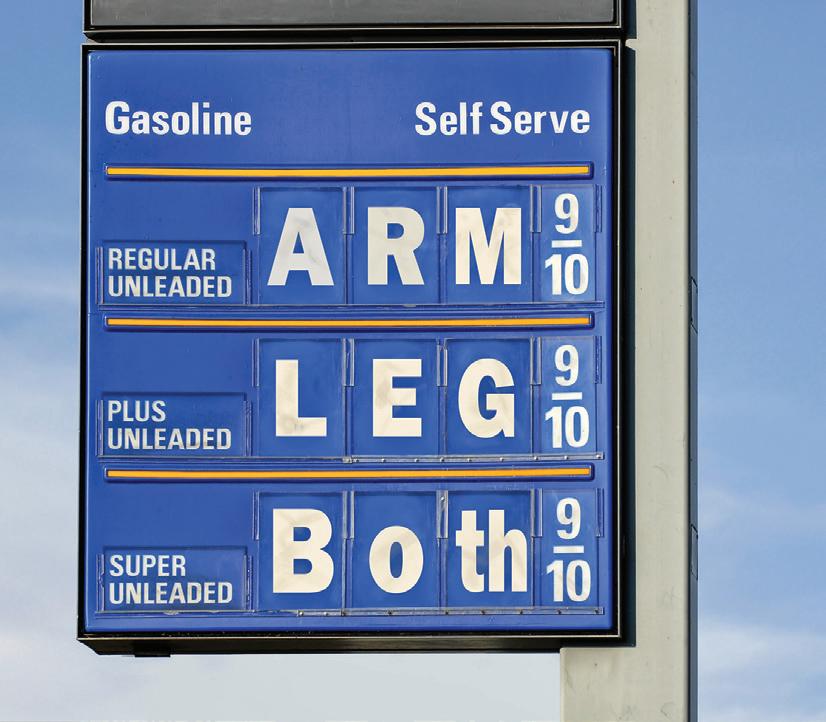
16 ETHANOL: NO QUICK FIX FOR HIGH-PRICED FUEL
Despite promises from the White House, there has been no relief at the pump
24 MALCOLM’S MOMENTS
Malcolm Smith learns to race — and crash, big-time
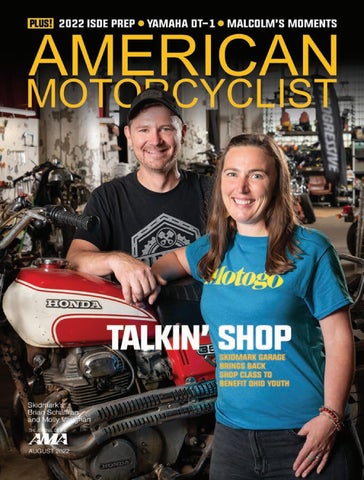
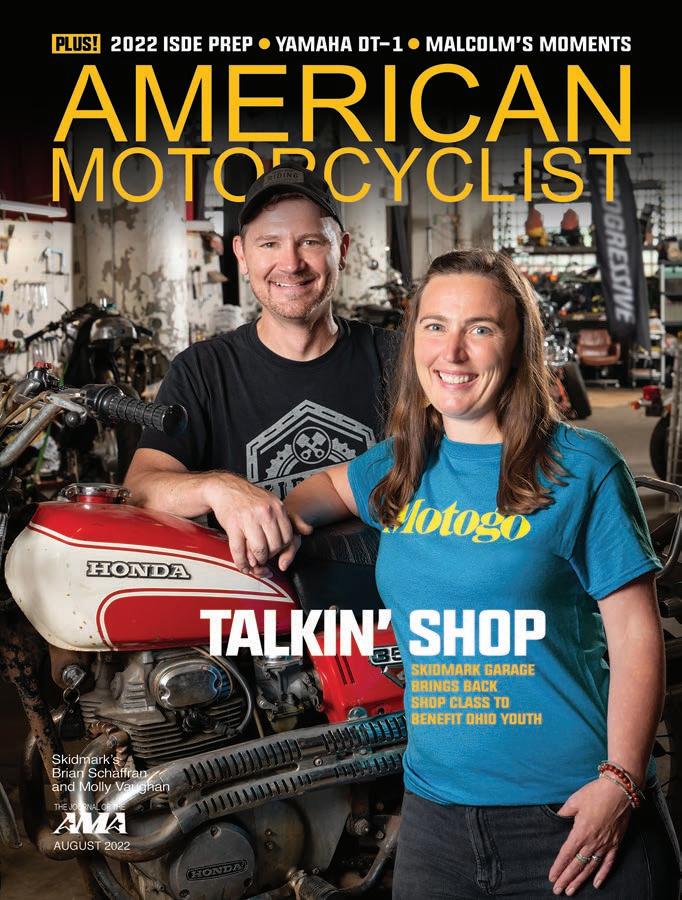
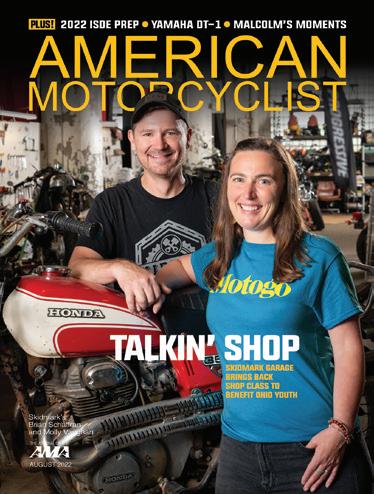
26 COVER STORY: TALKIN’ SHOP
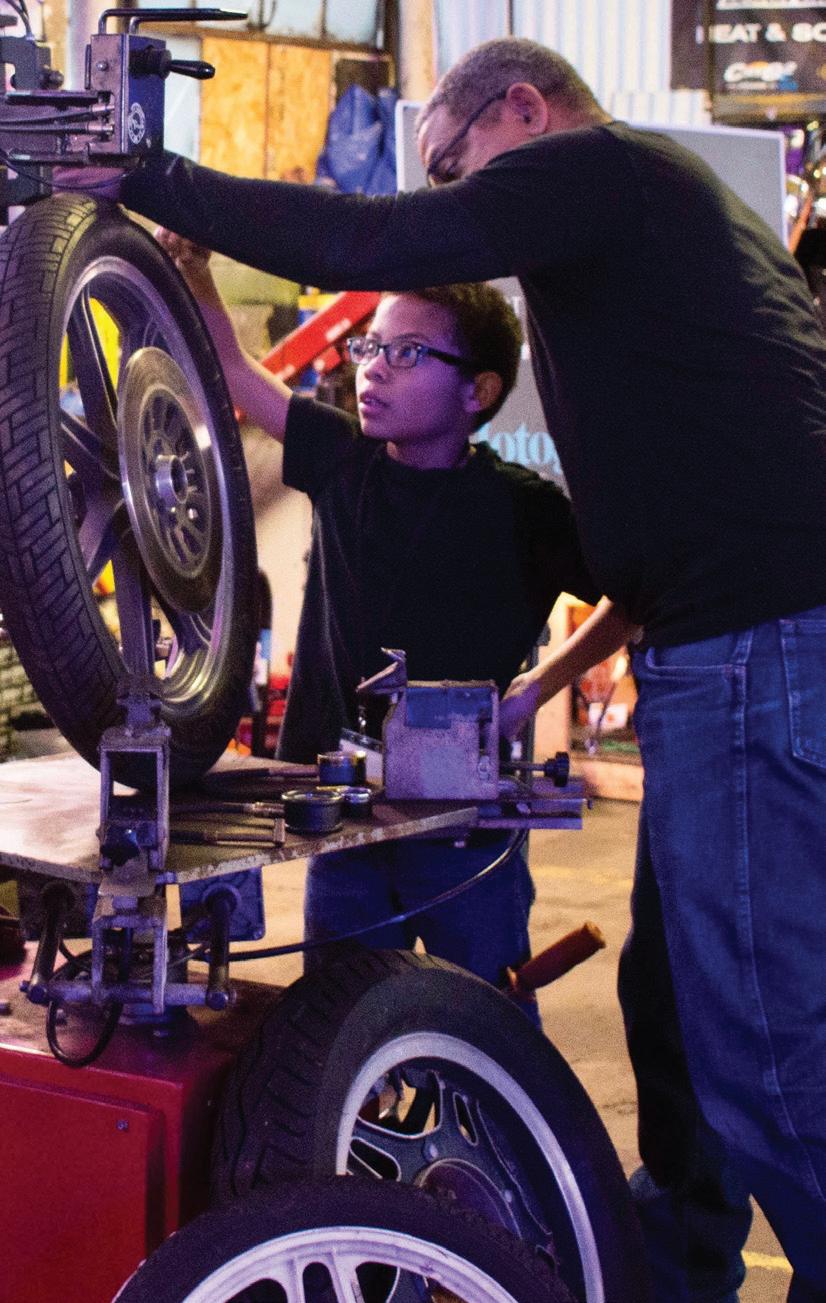
Skidmark Garage’s Motogo program is bringing back shop class to benefit Cleveland’s youth
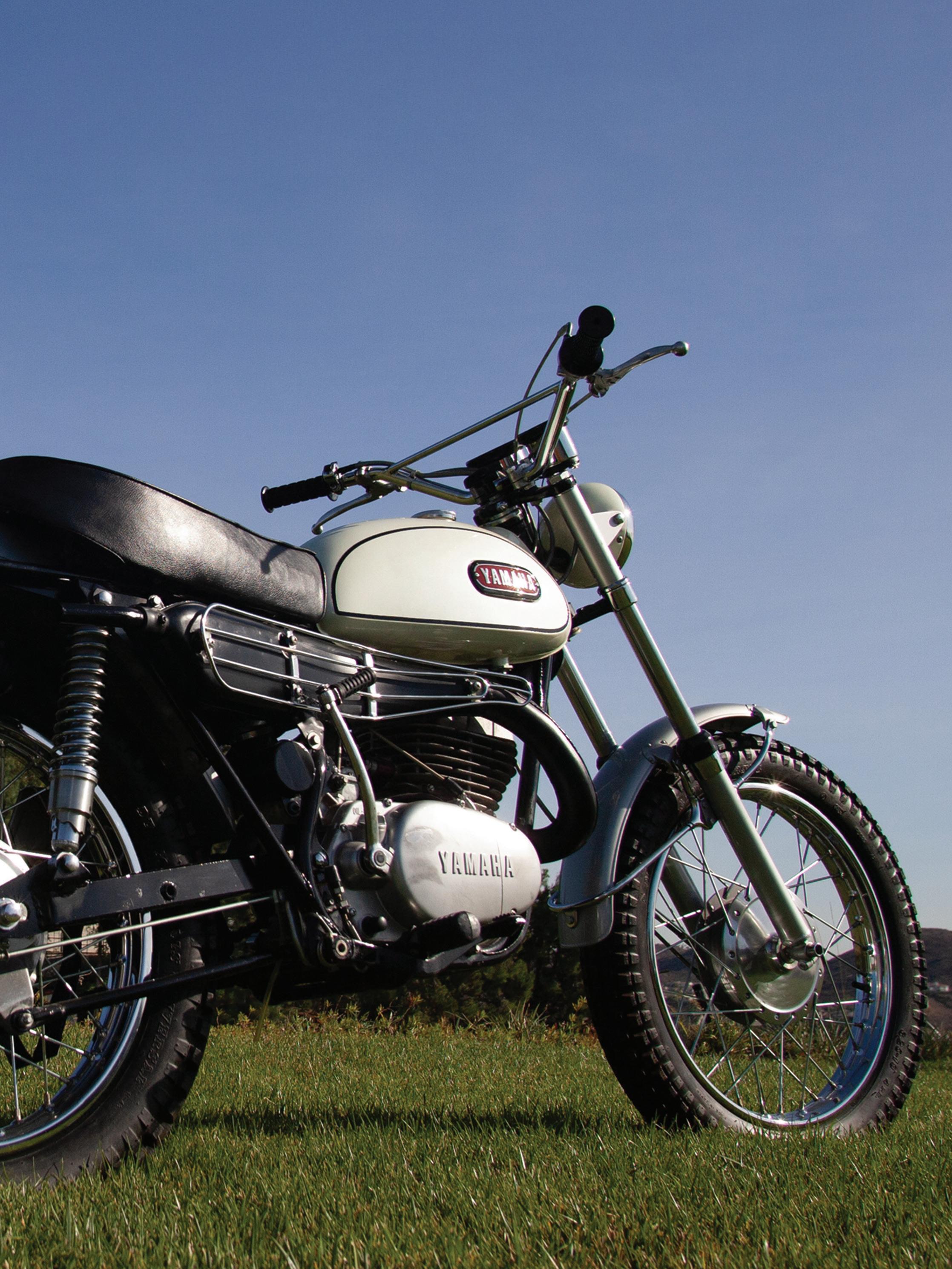
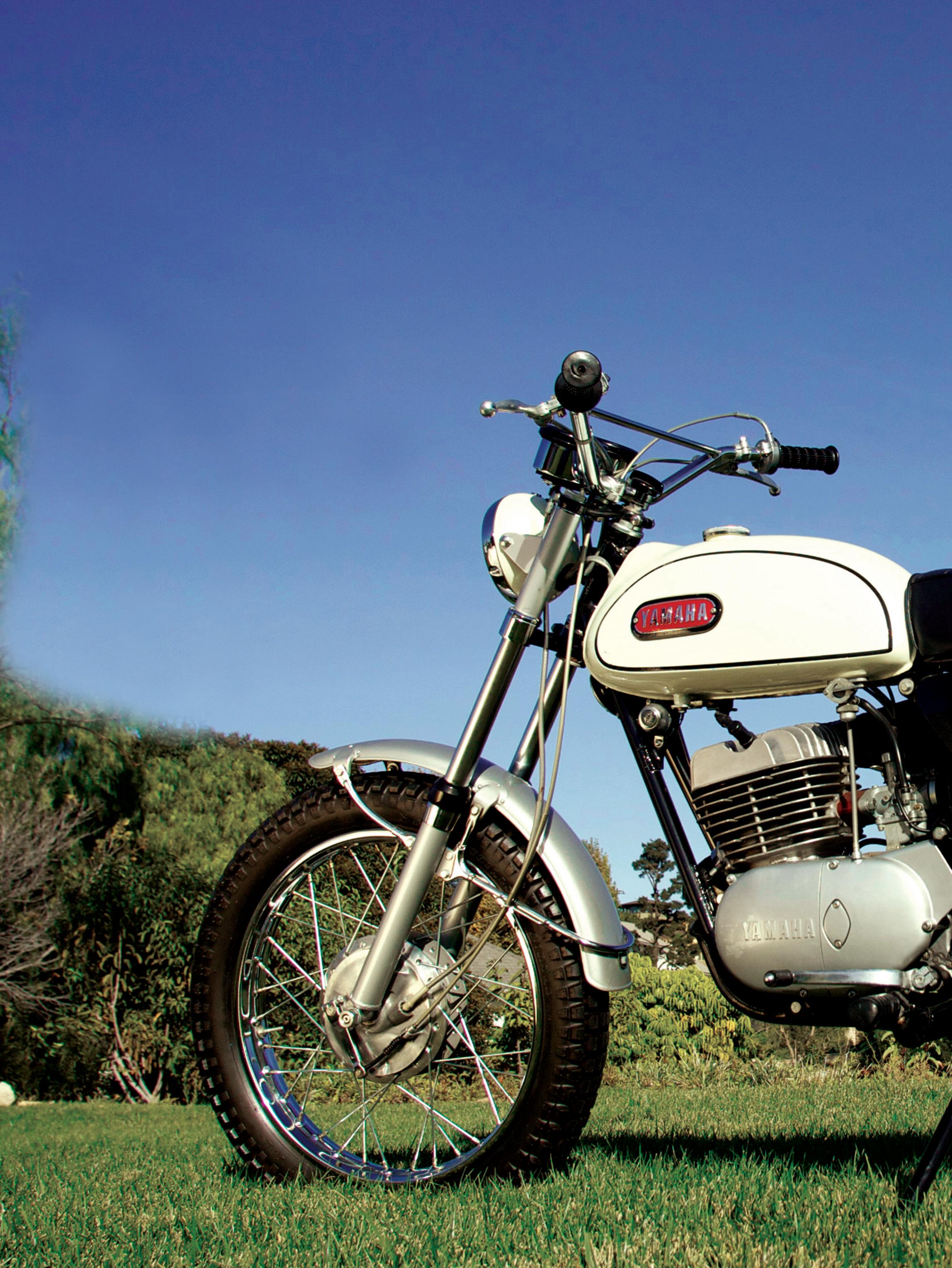
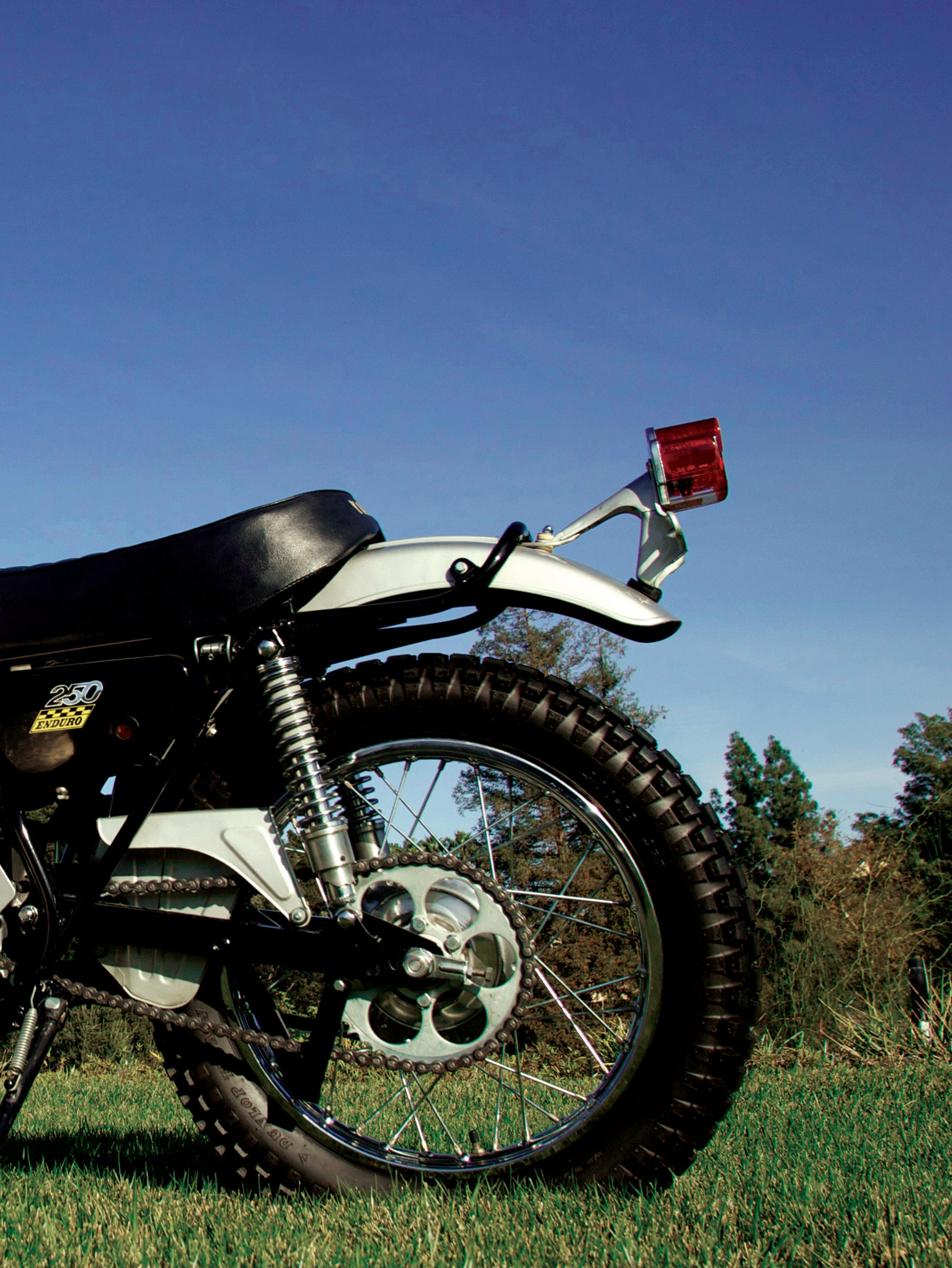
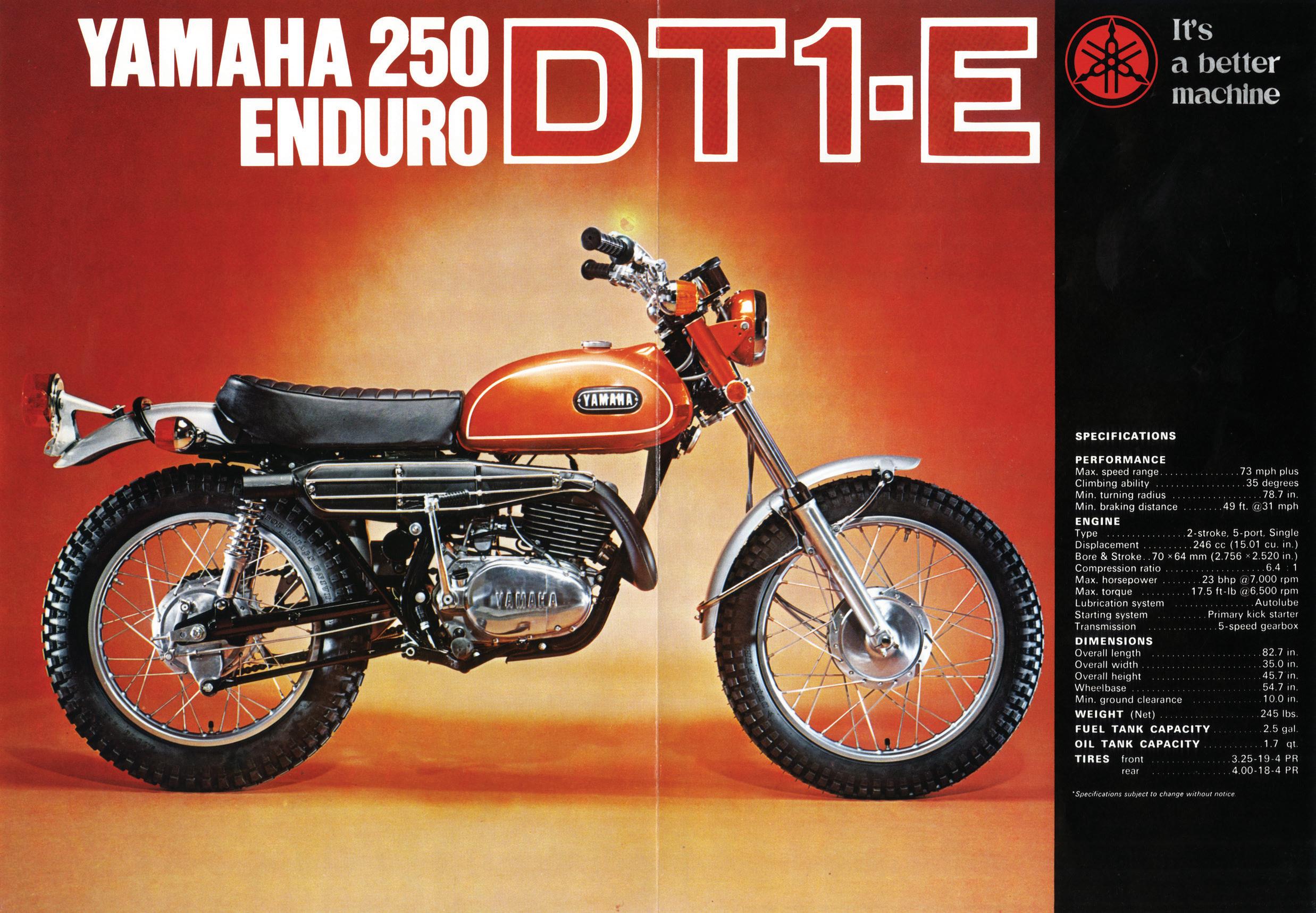
36 YAMAHA DT-1
A dual-purpose bike that just might be Japan Inc.’s most influential motorcycle ever
48 ISDE PREP
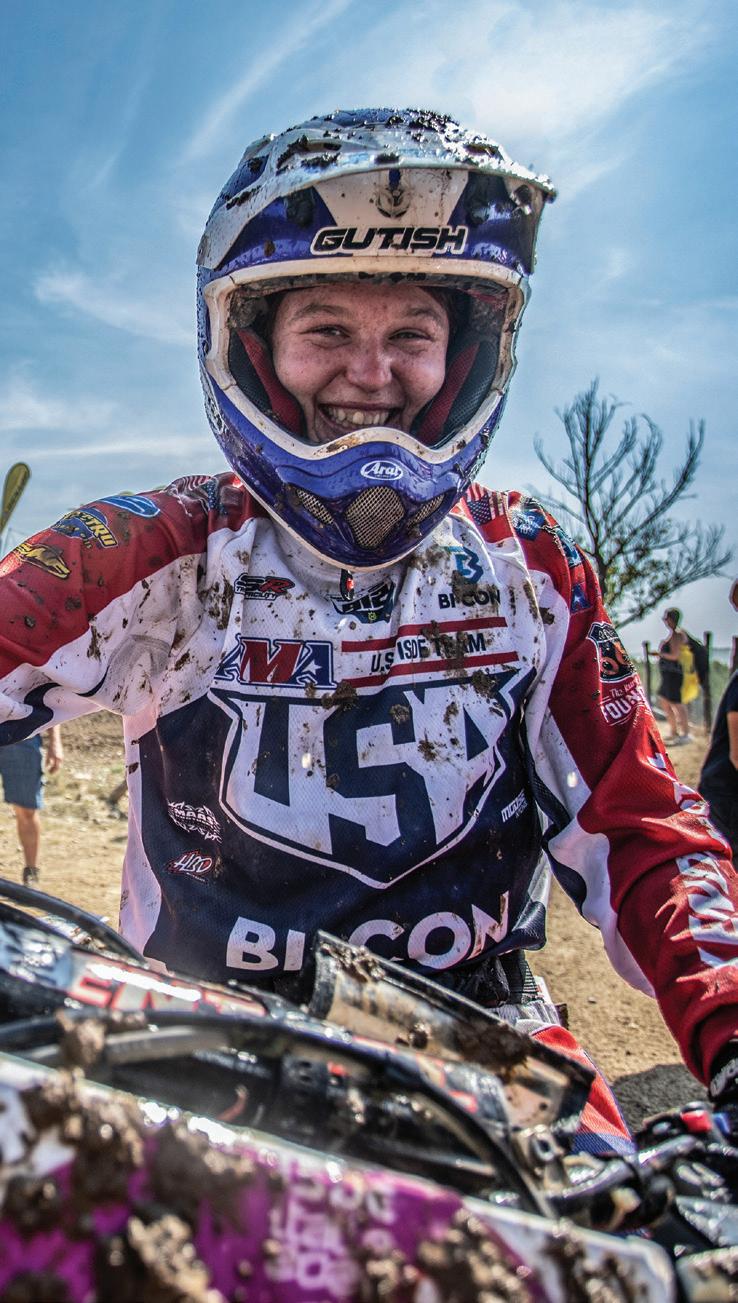
ISDE champ Rachel Gutish on complex, behind-the-scenes ISDE logistics
62 AMA GARAGE
Tips, tweaks, fixes and facts: The motorcycle ownership experience, explained
66 LAST PAGE
Japan Inc.’s first factory custom motorcycle
ON THE COVER:
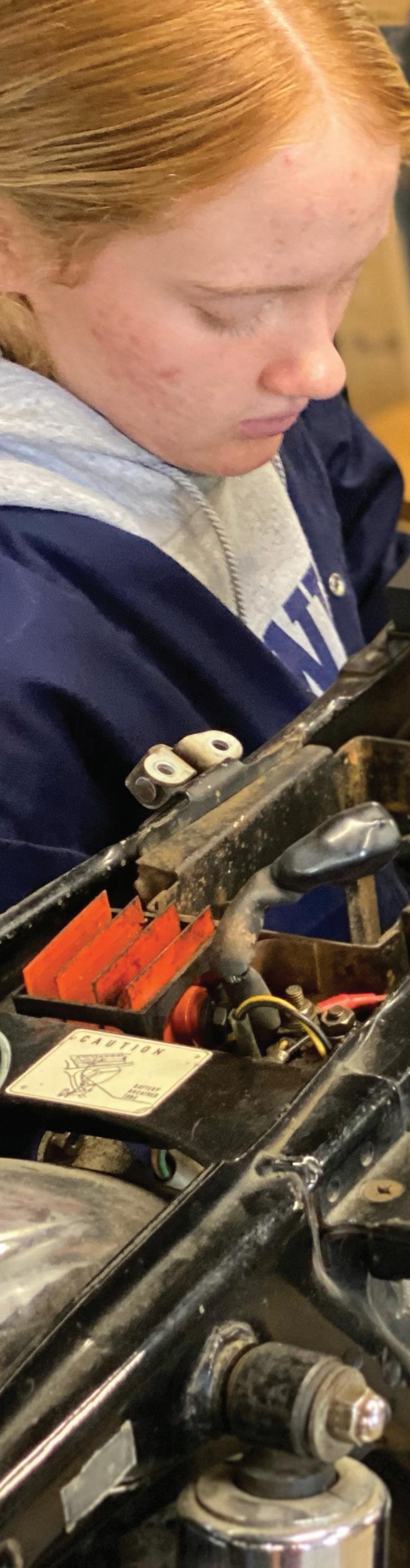
Shop class, once a valuable and popular staple of American education, is mostly gone, but that has not stopped Brian Schaffran and Molly Vaughan of Cleveland, Ohio’s Skidmark Garage from creating and nurturing the idea — with a two-wheeled twist — among Cleveland-area youth. Photo by Cleveland’s own Gary Yasaki.
COMMUNICATIONS AND EDITORIAL
Mitch Boehm Editorial Director
Todd Westover Creative Director
Joy Burgess Managing Editor
Kali Kotoski Editor-at-Large
Keaton Maisano Communications Associate
Eliza Mertz Digital Content Manager
Chad Fulton Graphic Designer
Alice Sexton Graphic Designer submissions@ama-cycle.org
Michael Kula Business Development Manager (949) 466-7833, mkula@ama-cycle.org
Tiffany Cipoletti Government Relations Manager, On-Highway
Peter Stockus Government Relations Manager, Off-Highway
Erin Reda Grassroots Coordinator
MARKETING AND MEMBER SERVICES
Amanda Donchess Director of Membership Marketing and Services
Lauren Kropf Marketing and Advertising Coordinator
Tiffany Pound Member Services Manager
Joe Bromley Program Development Manager
Pam Albright Member Fulfillment Coordinator
Bob Davis Program Volunteer Specialist
Stephanie McCormick Member Services Representative
Vickie Park Member Services Representative
Charles Moore Member Services Representative
Kelly Anders Member Services Representative
Carol Vaughan Member Fulfillment Representative
Sarah Lockhart Member Services Representative
Taylor Fluck Member Services Representative
Robin Walker Member Services Representative
John Bricker Mailroom Manager
INFORMATION TECHNOLOGY DEPARTMENT
Shaun Holloway Director of Information Technology
Joey Brown Application Developer
Ed Madden System Support Specialist
Rob Baughman Operations Specialist
American Motorcyclist magazine (ISSN 0277-9358) is published monthly (12 issues) by the American Motorcyclist Association, 13515 Yarmouth Drive, Pickerington, OH 43147. Copyright by the American Motorcyclist Association/American Motorcyclist 2021. Printed in USA. Subscription rate: Magazine subscription fee of $19.95 covered in membership dues.
Postmaster: Mail form 3579 to 13515 Yarmouth Drive, Pickerington, OH 43147. Periodical postage paid at Pickerington, Ohio, and at additional mailing offices.
These days I hear a lot about folks who start riding, or pick it up again after a long layoff, and proceed to very quickly scare themselves silly (or worse) — and quit. It’s happened for 120 years, I’m sure, but it’s clearly not a positive, especially when it comes to younger riders who are, after all, the future.
I’ve been riding forever, so motorcycling’s dark-side is pretty much already baked into my psyche and doesn’t really resonate much. Still, I can see how it happens — ’cuz it happened to me. Not in motorcycling, because by the time I got into riding
PERSPECTIVES FEAR OF FLYING
BY MITCH BOEHM
practice flight from the desert in a rented Cessna 172 when I had a bit of a moment.
I’d planned to do a few touchand-gos (where you land and then take off again without stopping) when I reached the airport, and got clearance from the tower, and as I did the third and final one I spied a big C130 cargo plane on final approach for the larger 16 Right runway, which ran parallel to the airstrip I was using. I asked the tower if I could extend my downwind leg (opposite the direction of landing) to let the 130’s powerful wingtip vortices (swirling tornadoes of air coming off each wingtip) dissipate
“...one thing I know for sure is that riding on the dirt before you swing a leg over a street bike — as I did — pays dividends galore down the road.”
street bikes in college I had already spent a whole decade riding off road and racing motocross, but in, of all things, aviation.
When I first joined the staff of Motorcyclist magazine in 1985, editors Art Friedman and Jeff Karr were pilots. Both owned light aircraft (Art a Cessna 210, Jeff a Mooney M20) and both flew a lot — to bike intros, shows, and races. I went all over the western U.S. with those guys, and used to call Art and his Cessna “Air Friedman” for good reason.
I eventually decided that I, too, wanted to fly, so I cobbled together a grand or so (not easy with my piddly salary) and started taking lessons at Van Nuys Airport in LA’s San Fernando Valley. One day several months later with 50 or 60 hours under my belt (and 35 or so of them solo) I was returning from an hour-long solo
and drift out of my path before I turned base and final.
I extended my downwind leg about a mile or so, but it wasn’t enough, because as I was gliding calmly toward a typically bumpy Mitch landing on final approach, the Cessna suddenly went 30 or so degrees right and nose down, the C130’s vortices having grabbed the lightweight little Cessna and twisted it like a kite. At that point I was only 500 or 600 feet off the ground — a situation called “low and slow” — so it was not a good position to be in.
Some student pilots would have panicked and pulled back on the yoke, which likely would have stalled the wing and caused an almost certain spin and nosedive into the ground. But recalling my instructor’s constant “airspeed is your friend” refrain, I pushed the yoke forward,
aiming the nose even more toward the ground and allowing the plane to gain airspeed and, with help from a full-throttle application, pulled out of the dive, did a go-around and landed a couple of minutes later with nauseating adrenaline flooding my system. I flew a little after that, but not much, and soon drifted away from the whole general aviation thing. I’d learned a lot about aviation, weather and navigation; I’d soloed; and I’d enjoyed the process of doing something really challenging. But I’d spooked myself, and the idea of being that most dangerous of pilots — the “weekend warrior” — bothered me, as I knew I’d be a danger to myself and possibly others if I continued.
Riding motorcycles is not like flying (unless you really screw up), but in terms of fear, the “dark side” quotient and its effect on ridership retention, there are definitely plenty of similarities, especially for newbies and re-entry riders.
What to do? It’s a complicated question with myriad possible answers, but one thing I know for sure is that riding on the dirt before you swing a leg over a street bike — as I did — pays dividends galore down the road. Whether it’s getting kids on bikes early (from Strider and STACYC bikes to minibikes) or introducing newbie (or re-entry) adults to off-road riding, the whole dirt riding thing — which packs years’ worth of two-wheeled vehicledynamics experience into just a couple of months — can only help. And that’s a good thing. More on this in this issue’s Garage section.
Mitch Boehm is the editorial director of the AMA
YOUR BOSS’S RETIREMENT PARTY
2022 MEMBER
MONTHLY DRAWINGS
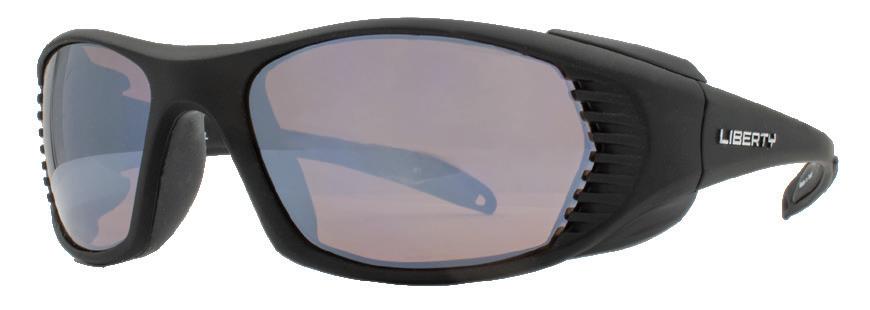
• Liberty Sport Eyewear
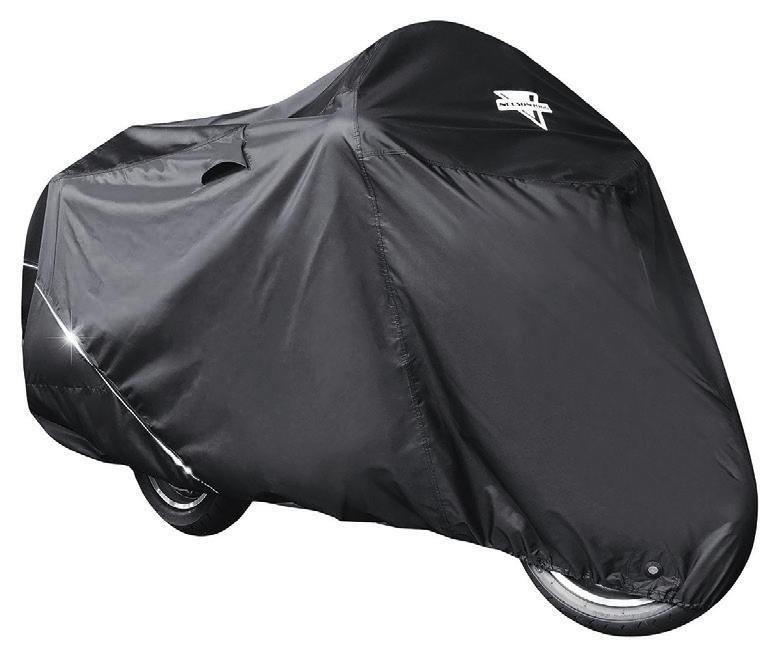
• Nelson Rigg Choice: Cover, Luggage
• Mimi & Moto Children’s Books
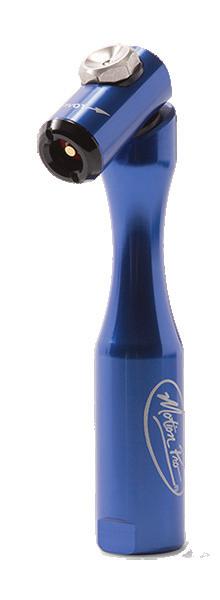
• Motion Pro: Pro Fill Airchuck
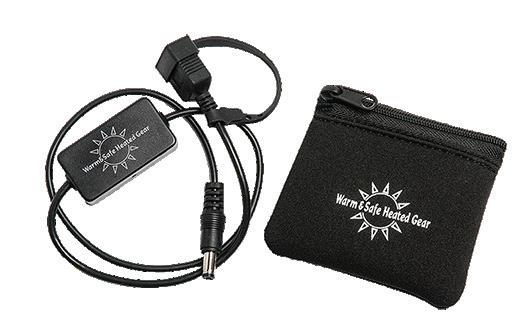
• Warm & Safe 12V USB Adapter
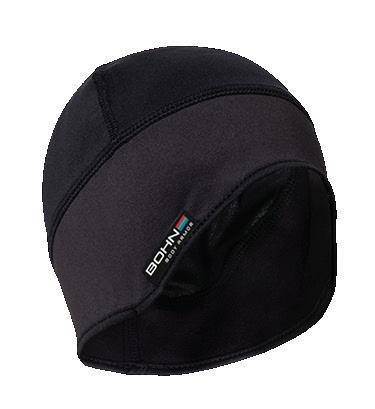
• Bohn Armor Skull Cap
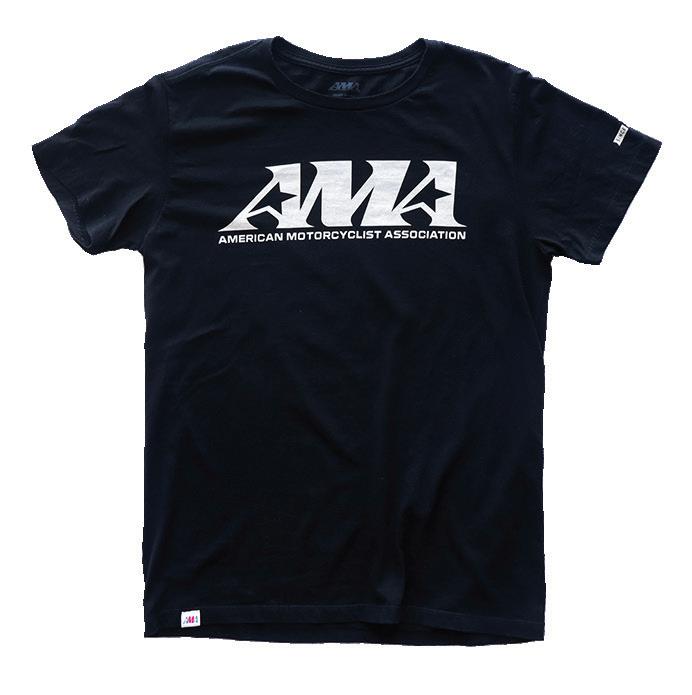
• AMA T-Shirt
QUARTERLY DRAWINGS
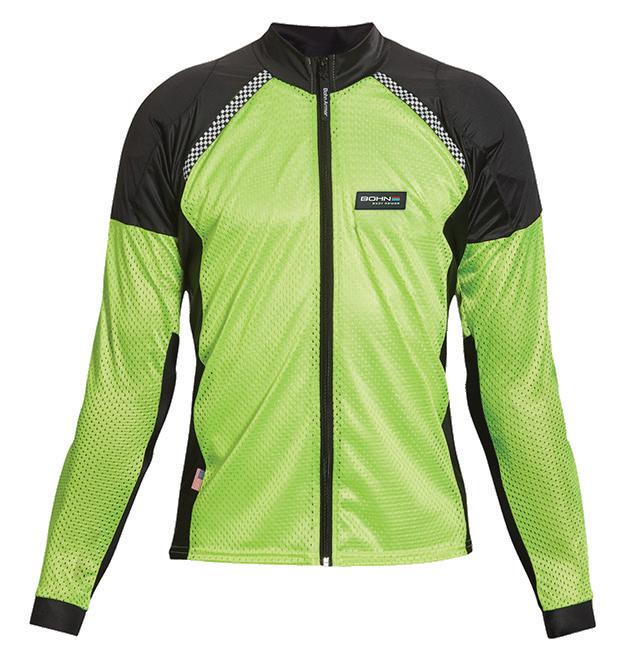
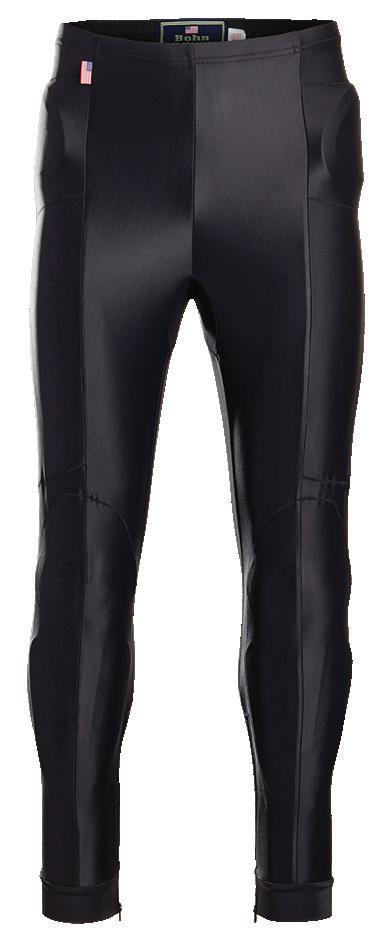
• Bohn Armor Pant & Shirt Set
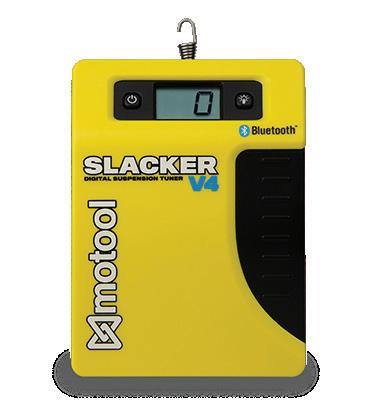
• Motool Slacker & Street Kit
Members who join or renew their AMA membership from Jan. 1, 2022, through Dec. 31, 2022 are automatically entered to win one of these awesome motorcycling prizes!
SWEEPSTAKES
The 1960s and ’70s were an amazing time for motorcycling, and a wondrous period in which to learn to ride — as so many of us did on the dirt- and minibikes of the day. Looking around at local off-road events and organized rides, I know I’m not the only one who feels that way. Seems we all got bitten by the same bug all those years ago; a bunch of 50- and 60-plus-year-olds that won’t stop riding despite the inevitable effects of aging.
Maybe it was because we grew up without video games and consumer electronics, or because “connectivity” was defined by the distance that could be reached by a CB radio (“breaker, breaker, good buddy…”), but learning to ride back then burned a passion into my brain that has lasted all my life.
My story started like a lot of others, I’m sure, when a childhood friend got a brand-new 1972 Honda Z50A Mini Trail for his 10th birthday. Summer days and the question “What do you want to do today?” came to a screeching halt the moment he let me take the Mini Trail for my first ride.
After that ride I started an all-out campaign to acquire a minibike of my own, covering my bedroom walls with dirt bike brochures, posters, magazine pages and whatever else I could find. My parents couldn’t walk into my room without being assaulted by Honda SL70s and SL100s, Yamaha Mini Enduros, and the soonto-be-released GT80 (I so wanted one!), Hodaka Super Rats and more. They weren’t falling for it, so if my words and pictures could not sway them, surely my new full-face helmet, purchased out of the JC Whitney catalog, would. I was certain my
TIME MACHINES
BY FRANK LENNOX MEGAPHONE
parents would recognize how responsible I was to have saved so hard for the purchase of safety equipment, though I didn’t even own a motorcycle.
Honda’s CT70… an epic mini if ever there was one.
But even after months of trying, I was getting nowhere. I remember my mother, frustrated with my persistence, saying “You’ll never own a motorcycle as long as you live under our roof.” There was finality to the words and tone that shook my will. I remember fighting back tears when my older sister, who’d overheard the conversation, whispered “Don’t give up. Keep talking about bikes, keep getting the magazines, keep riding your friend’s bikes.” She rode horses and had competed in 4H events for as long as I remembered, but I never knew exactly how she convinced my parents to let her get her first horse. Apparently, she had been through a similar struggle and offered the advice that had paid off for her.
With newfound conviction, I continued. It must have been obvious to my parents that the day I turned 18 I would buy a motorcycle and, if need be, live on the street. One day my father told me that a co-worker’s son was selling a motorcycle. Would I like to take a look at it?
Are you kidding me!? I asked him a million questions on the drive there, but it was obvious my father had no idea what we were going to see. It could have been that shiny new Yamaha 80 or a ratted-out Rupp with a 3.5-hp Briggs & Stratton, but one thing was for sure: I was going to tell him it was perfect and that I had to have it!
The owner lifted the garage door and in a dark corner I spied a basket-case Honda CT70 lying on its side. What I couldn’t see is that this machine would turn out to be so much greater than the sum of its parts. And there were a lot of parts! I waited an excruciating month for a local fix-it guy to finally get it assembled and running.
Ahhh, yes! It was summer, I was 12 and I had my own dirt bike! I was free to go anywhere the bike could take me, and if my parents knew where I went and what I did with that bike, they would have chained it to a tree. And that’s a lot of the reason all of us old-timers defy our aging bodies and continue to ride in the dirt…and why swinging a leg over a dirt bike — no matter how old you are — brings back the excitement and wonder of our youth. Back in a time when we were trying to understand our place in the world, those dirt- and minibikes helped take us there. And still do.
Frank Lennox is an AMA Member.
BACKFIRES
MORE CARLSBAD
Thanks for the Sacred Ground piece in the June edition. I was 17 that summer and barely managing to complete U.S. Marine Corps Infantry Training at nearby Camp Pendleton, Calif. The school reluctantly gave us weekend passes, and when I noticed a poster on base advertising the 1980 USGP, I couldn’t believe my eyes. I’d raced motocross growing up in Boise, Idaho, and managed to talk a fellow Marine into going there with me that hot summer day in June. We took a city bus from the base and hiked from the main road alongside more people in one place than I had ever seen. I will never forget how smooth those gritty men riding 500cc machines flew past us. Today, while trying to catch my breath and wipe the sweat off after a practice moto at our local track here in Arizona, I heard guys complaining about the track…not prepped good enough or watered properly. I didn’t say a word, and quietly remembered those ironmen on the gas at the USGP flying up the Carlsbad Freeway.
Jim Crowell USMC (Ret.)
AMA #781952
Thanks for the letter, Jim, and more importantly, thank you for your service! —Ed.
Each issue keeps getting better! American Motorcyclist is my favorite magazine, and the Carlsbad issue is the best yet. I’ve been taking it easy, on the mend from open heart surgery, and AM helped me get through a few of those challenging days. Thanks for all you do!
Al Banta
CHECK YOUR SIX
Good article (Checking Your Six, June 2022), but there is now another piece of technology that greatly adds to rear-end safety. For some time a particular company has sold a helmet-mounted brake light, though it requires being wired into your bike’s electrical system. There is now one called Brake Free (brakefreetech. com) that’s totally self-contained, requires no wiring, easily attaches and detaches from the back of your helmet, has a choice of changeable modes, and uses a built-in rechargeable battery that’s good for all day. Not sure on the science, but according to the literature it uses onboard sensors to activate when braking, decelerating and downshifting, and uses a different flash pattern when emergency braking. I’ve ridden a couple thousand miles with it and the difference was immediately noticeable. Most cage drivers won’t even stop close to me at stop lights. Total price (including tax & shipping) is $169.99. Not cheap, but excellent quality and, more importantly, it works.
Mike Watts
The Checking Your Six article was accurate and well-written but it did not go far enough. So here are some additional suggestions taught to me many years ago by the then head of the Oklahoma Highway Patrol Motorcycle Unit, Bob:
1. Every time you prepare to stop, think about what you can do in that particular situation to keep from being hit from behind.
2. As you prepare to stop, transition from using both brakes and only use the footbrake, keeping your right hand ready on the throttle
LETTER OF THE MONTH
SACRED GROUND
Liked the Carlsbad piece, as it was also the home of the Four Stroke MX Nationals. This is me on my customframed XL350 Honda. It was a boredand-stroked (to 450cc) XL engine in an Elsinore frame with the engine cradle cut out. C&J in Santa Ana built a new cradle, Long Beach Honda stroked the crank, Powroll supplied the piston, and Q&E Engineering in Anaheim did the bore job. Ran laid-down FOX shocks, too. Even with the upgraded shocks Carlsbad was a handful, and I spent more time in the air than gaining traction to the ground. The bike ran well and maybe I was ahead of my time with the all-Honda chassis and 4-stroke power in an MX bike! It was heavy, but once it hooked up, watch out. That’s the late, great Mike Bell in the background in the red striped shirt and his dad, Bill Bell, standing next to him.
Ron Farkas, Charter Life member
Letters to the editor are the opinions of the AMA members who write them. Inclusion here does not imply they reflect the positions of the AMA, its staff or board. Agree? Disagree? Let us know. Send letters to submissions@ama-cycle.org or mail to American Motorcyclist Association, 13515 Yarmouth Drive, Pickerington, OH 43147. Letters may be edited for clarity and brevity.
(and your eyes on your mirrors) to pull away if necessary.
3. Position the bike with an “escape route,” either between cars or off the road in the event you detect someone who’s not going to stop.
4. As you come to a stop, only put your left foot on the pavement so you can keep your footbrake on and the brake light lit.
5. Keep the bike in first gear with the clutch in and continue watching your mirrors.
6. Listen for telltale sounds that may indicate someone behind you has lost control or is braking very hard and may not stop in time. You may have to turn down your infotainment system and avoid listening to your own exhaust pipes.
If someone appears to be unable to stop in time to avoid a rear-end collision, you have already planned your escape route, you are already in gear and you have your hand on the throttle…so you may save a couple of seconds, which may be enough. Bob’s final advice to new riders is to look at how professional motor officers approach a stoplight. They will not put down both feet and sit in neutral. There is a reason.
Bill Faris
All good info, Bill. Thanks for adding to the discussion. —Ed
EVEN
MORE PERIL
Great issue, as always, especially Michael Sayre’s
sobering article, Partially Automated Peril. I’ve been riding on-road since 1956, when I got my license, and I have never been so nervous about traffic as I am now, 66 years later. Six levels of automation in vehicles (cars and trucks)? Absurd! There should be none! The driver should always been in total charge. I am all in favor of devices that can make the drive safer, like automatic braking systems in case the driver dumbs out. But as an old-fashioned guy I believe that human beings should be better drivers than any electronic gadgets. Especially when it comes to pedestrians and motorcyclists.
Clement Salvadori AMA #77415
Agree! You go, Clem! —Ed.
BACK IN THE DAY
Where the photos are blurry but the memories are clear!
ello from Lexington, Ohio!
HHere’s a shot of me at Ohio International Raceway (Ravenna, Ohio) in 1975. This is a very rare race on my 1974 Kawasaki KX125, where I am in front of very fast local pro Jerry Sales! Those were the days, and all the tracks many of us raced weekly. I worked and rode out of Twin Falls Sportcycles in Munroe Falls, owned and operated by Dallas York and Harry Williams (die-hard Husky guys). The dealership sold Husky, Penton and Kawasaki, and sponsored a bunch of racers over the years, including Gary Semics. Here’s a team shot, circa 1974 (Dallas is the 4th guy from left). Dallas asked me to join the team in April ’73 after a first-place finish at Meadowview Trails on my new Penton 175 Jackpiner (proud day for a squid racing a converted Kaw F7 enduro!).
—Mark Bentley
I was almost surely at some of those same races, Mark. And yes, Jerry Sales was fast! Thanks for the snaps! —Ed.
I was 13 years old when I shot this glamour photo of my older sister posing on my Yamaha 1973 MX125 modified by Matt Johnson with a down pipe! Carburetor and Webco head, with moved up shocks. My first race ever was in Cabo San Lucas, Mexico, an oval with a jump on the back straight. I finished 2nd place to a YZ100.
—Matt Johnson
My 1973 Honda CL350 bought brand new just out of high school. I rode that bike everywhere and had a blast! Traded it in for a 1975 CB750.
—Jeff Anderson
Early 1970s on my cherished Yamaha MX250 (soon to be replaced by a 250 Elsinore). You can see that I managed to dent the front rim. This was a field near my house in Lake Worth, Fla., which was soon to be surrendered to the ever-growing march of suburbia.
—Eric Diehl
At 12 years old, me riding the family 1951 Cushman Highlander. At 16, I traded it in on a 1964 Honda 150 Dream. Eleven motorcycles later and still riding at 74. Currently I’m on a 2018 Goldwing with over 40,000 miles on the clock. I am riding this wave all the way...
—Larry Stough
Me on my first bike — a 1982 Honda XR200 — in upstate New York. Saved up for a year with holiday, birthday and allowance money to buy my first bike at 13 years old.
—Vincent Bonavita
In 1949 my dad and I bought twin Indian Warriors, and used them to explore the wilds of Montana, South Dakota and Wyoming. The Warrior was my first of many motorcycles, and I’m still riding 73 years later.
Although my dad went through a scooter phase (Lambretta/Vespa) he wasn’t too keen on me riding. But I found a non-running, pre-unit Triumph TR6 that had supposedly been crashed and convinced him to let me store it in our basement. He figured with no mechanical experience I wasn’t going to get it running (he was right), but I was able to customize it in the style popular in the 1960s — Bates saddle and headlamp, megaphone mufflers, peanut tank, etc. Rattle-canned it blue and found a local guy to get it running. Nearly 60 years later I’m still riding, though, like dad, a scooter could be in my future.
—Joel Parks Full circle, Joel. It happens! —Ed.
—Randy Wagner
My first mini in 1961, bought from my uncle in Long Beach, and this pic was taken at our house in San Jose, Calif. I’m 75 now, have loved two wheels ever since, and am still riding a couple times a week. Moved to New Mexico, near Colorado, for retirement near great mountains with my wife and our three track-ready streetbikes. Thanks to American Motorcyclist and the AMA.
—Don Collier
up to speed
News, notes, insight and more from the motorcycling universe
Ethanol: No Quick Fix for High-Priced Fuel
For nearly 20 years ethanol-laced fuel has promised to lower prices, but has yet to deliver
BY KALI KOTOSKI
igh gasoline prices are part and parcel of the surging levels of inflation in the U.S. that have reached fortyyear highs this summer — and an economic factor most acutely felt by anyone that owns a vehicle, regardless of whether it has two, four or 18 wheels. Because of the high prices consumers are rethinking their travel plans, a bitter pill to swallow after years of pandemic-related hesitation, and one that hits motorcyclists directly.
HTangible relief at the pump has been non-existent with various strategies — from releasing oil from the strategic national reserve (there to help during real emergencies) to wrestling with OPEC to offset the drought of Russian energy caused by sanctions after Ukraine was invaded.
While energy markets and oil and gas are highly complex subjects, one thing becoming certain is that President Biden’s emergency waiver for the U.S. Environmental Protection Agency to allow summertime sales of E15 is not having the promised effect of lower prices for consumers — and for several reasons.
“E15 can save a family 10 cents per gallon of gas on average,” former White House press secretary Jen Psaki said in late April when the emergency waiver was announced, “and many stores sell E15 at an even greater discount, and today’s waiver will allow families to pay that lower price for months to come.”
While Psaki claimed E15 offered savings at the pump, the Department of Energy’s own statistics debunk that statement, stating that ethanol contains about one-third less energy than gasoline. Putting E15 in your vehicle might save a few cents initially (especially if corn prices had remained low, which they haven’t), but it’ll result in 4 to 5 percent fewer miles per gallon compared to 100 percent gasoline — which cancels the savings.
Unlike the Trump-era EPA waiver of 2018, which allowed for year-round sales of E15 and was eventually decided by the courts as violating the Clean Air Act after it was challenged by the AMA and its allies, the Biden EPA emergency waiver regarding E15 — which gets renewed every 20 days (and has been extended three
up to speed
times as of this writing) and is not a year-around blanket policy as the Trump waiver was — has little legal recourse, and is likely to stand.
E15 — a gasoline/ethanol mix of 85 percent/15 percent — is typically barred from summertime sales by the EPA over concerns of increased pollution and smog when temperatures are warm.
The AMA has long opposed E15 sales, primarily because the estimated 22 million motorcycles and ATVs in use in this country are not certified by the U.S. Environmental Protection Agency to use fuel containing more than 10 percent ethanol by volume. E15 is in fact illegal to use in motorcycles, boat engines, lawn mowers, chain saws and other outdoor power equipment products.
Additionally, the AMA remains highly concerned of potential misfuelling, especially as pump
labeling standards are extremely lacking in warning motorcyclists about the danger the fuel can pose to motorcycles, especially for carbureted bikes.
Still, as many analysts warned, adding more ethanol to gasoline this summer has had no noticeable effect on fuel prices, and according to E15 opponents, the practice is has likely exacerbated high food costs — and added to inflation — due to the transportation factor.
Since Congress enlarged the Renewable Fuel Standard to accommodate biofuels in the late 2000s, corn prices have risen by 30 percent, and prices of other crops increased by 20 percent, according to a report published earlier this year in the Proceedings of the National Academy of Sciences.
Since 2014, corn commodity prices had remained stable, averaging $4 per bushel. But since mid-2020 they
have more than doubled to over $8, the second highest price seen in the last 59 years. The last time prices were this high was during the Great Recession of the late 2000s according to available economic data. And because of the war in Ukraine, global food supplies have been upended, leading speculators to suggest that prices will continue to soar.
Oil refineries have also lamented the fact that by being forced to blend in ethanol, especially when corn prices are
high, the costs to refine increases, which trickles down to consumers in addition to making small refinery operations more cost prohibitive.
Yet, the House of Representatives in June passed an omnibus appropriations bill aimed at combatting the astronomical rise in fuel prices by expanding the availability of higher-ethanol fuel blends.
The Lower Food and Fuel Costs Act would remove summertime limits on E15 sales, making it so the EPA must no longer enforce the restriction, while setting aside $200 million to expand biofuel infrastructure and equipment. While the bill would have to clear the Senate, where previous attempts to allow summertime sales have failed, it could garner more bipartisan support given the feeling that the government “must act” to lower prices.
Governors from Iowa, Nebraska, Illinois, Kansas, Minnesota, North
THE AMA REMAINS HIGHLY CONCERNED OF POTENTIAL MISFUELLING, ESPECIALLY AS PUMP LABELING STANDARDS ARE EXTREMELY LACKING IN WARNING MOTORCYCLISTS ABOUT THE DANGER THE FUEL CAN POSE
Dakota, South Dakota, Ohio and Wisconsin have said they would welcome year-round E15 sales. This is despite growing scientific evidence, previously reported by the AMA, that biofuels and the land use strategies they need to produce them are more damaging to the environment than burning gasoline.
At the same time, the Biden administration is weighing the possibility of invoking the Defense Production Act to force U.S. energy producers and refineries to refine more and pump more to effectively lower prices, a move analysts predict would have little short-term benefit with U.S. refining capacity already
TO MOTORCYCLES
running on average at 96 percent. Instead, they argue that cutting the red tape to allow for refinery upgrades and reopening shuttered refineries would have a greater impact more quickly.
With America facing soaring fuel prices and a complex energy and inflation conundrum, it is unlikely that prices will come down anytime soon, and it is dubious to think ethanol is part of the solution. And if you find yourself debating what sort of fuel to put in your tank, remember that the so-called “cheap” gas can damage your motorcycle’s carburetor and lead to costly repairs.
THE RIGHT TOOLS
JEFF KARDAS
of the ODOT curriculum were hitting
Representative James Hoops introduced legislation to satisfy those concerns that requires any training provider to pay an initial $400 fee that will be deposited into the state motorcycle safety and education fund. Beyond that initial registration fee, the new provider would also be required to pay a $50 fee per instructor along with $175 fee every two years. All these fees will be deposited into the state motorcycle safety and education fund and strictly allocated to increase the state’s motorcycle safety efforts.
ith Kansas Governor Laura Kelly signing Senate Bill 313 into law, an AV Advisory Committee will now be established in order to influence autonomous vehicle adoption as the law permits operations of driverless-capable vehicles under certain circumstances.
The committee will consist of 29 members and notably secures a seat for a representative of ABATE of Kansas. The AMA applauds ABATE of Kansas for engaging with legislators to ensure that motorcyclists have appropriate representation on this newly created committee.
The bill requires the AV Advisory Committee to report activities and any recommendations regarding the use or the regulation of autonomous vehicles in the state on or before July 1, 2023, and each subsequent July 1 until 2027.
The AMA encourages more motorcyclists to engage with their state agencies and legislators to ensure motorcyclists are represented in any transportation committee or advisory board that concerns road safety.
FirstRides Strives for Lasting Impact Riding ROUNDUP
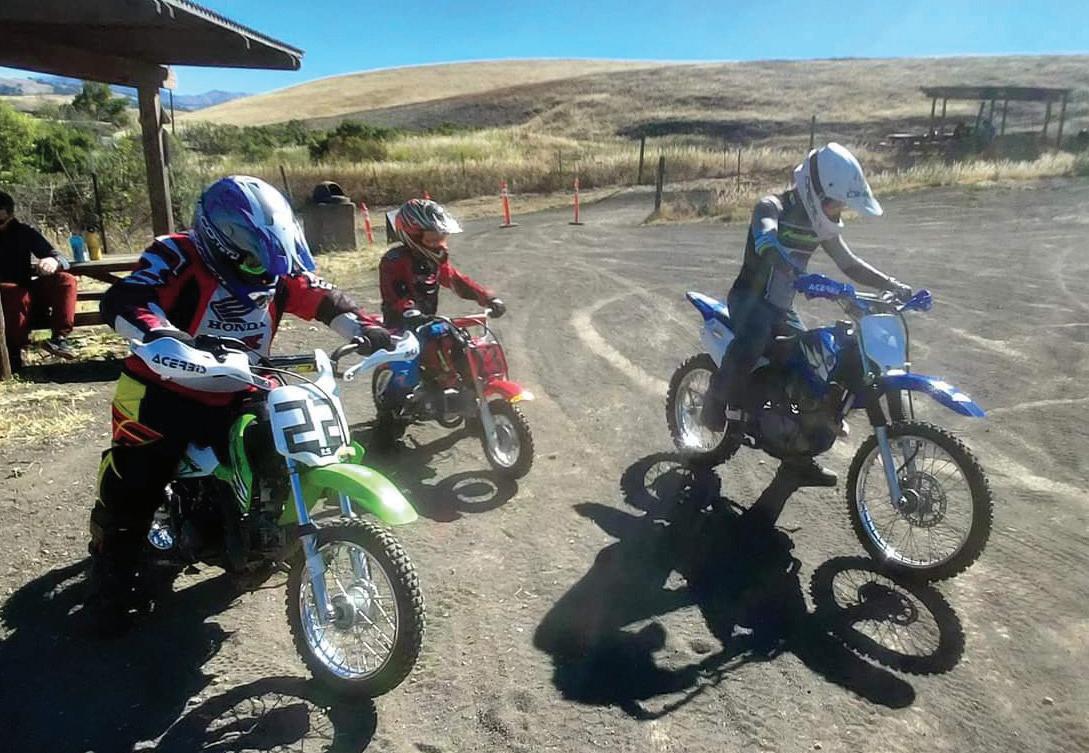
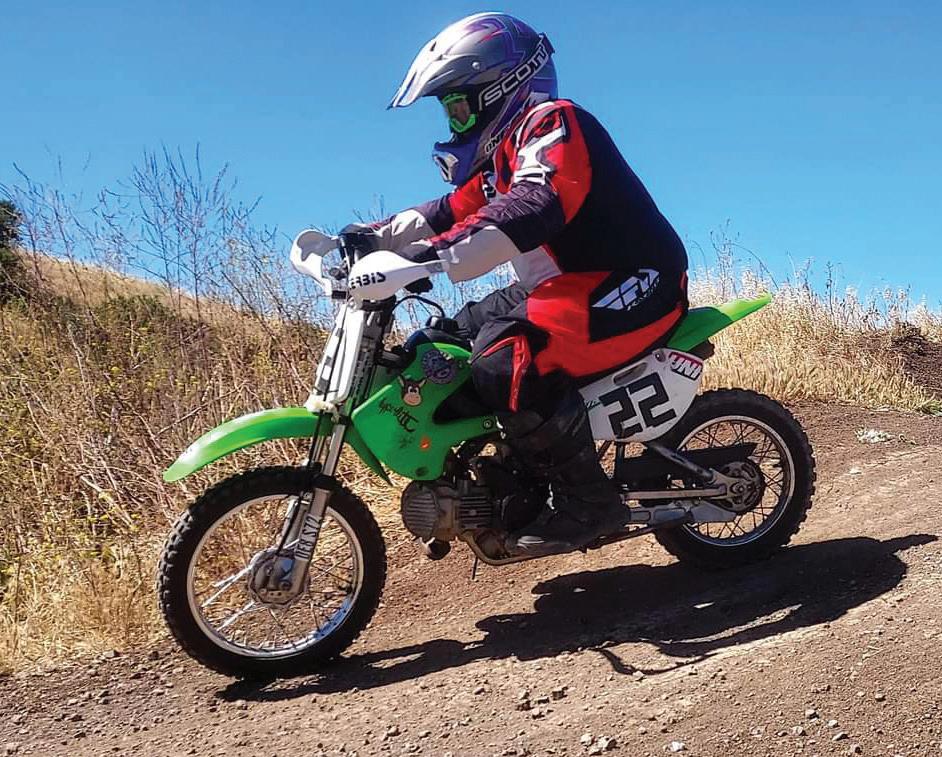
ith the future of motorcycling in the hands of youth, FirstRides is working to make sure that future is a bright one.
FirstRides is a 501(c)(4) social welfare organization and AMA-chartered service promoter that teaches kids to safely ride a dirt bike while removing the financial barriers that often get in the way. Providing gear and bikes to go along with the free instruction, FirstRides strives to increase the number of safe motorcyclists in the world by making the motorcycling community friendly, inviting and informative.
“What we’re trying to do is make it
so you don’t have to know someone to learn motorcycling,” said Clay Murphy, the president of FirstRides. “[We] really try to eliminate all the boundaries. We do all this free, and we want to do it so that any kid anywhere in the area can just kind of pick it up.”
Murphy said FirstRides has been made possible thanks to the generosity of motorcycle clubs and volunteers in the San Francisco Bay Area.
FirstRides will have its second class of the year Aug. 6, and its final one of 2022 on Nov. 5. Those interested can apply or donate at FirstRides.org.
—Keaton
Maisano
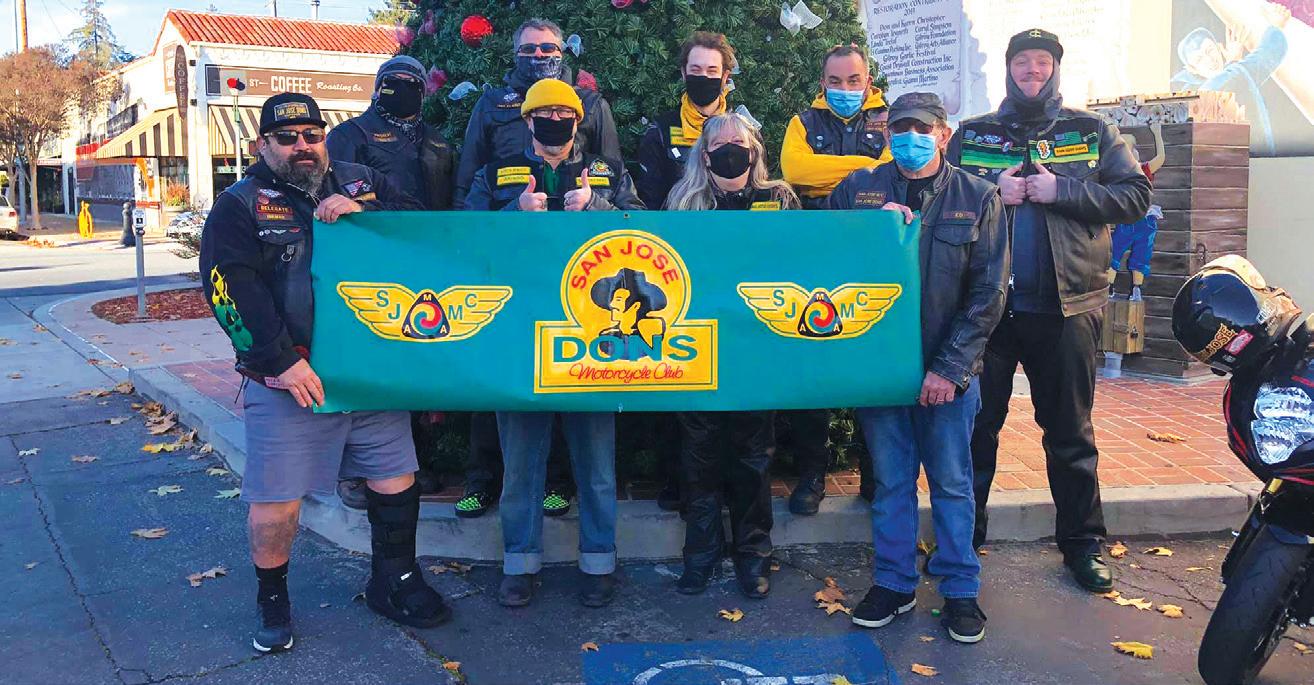
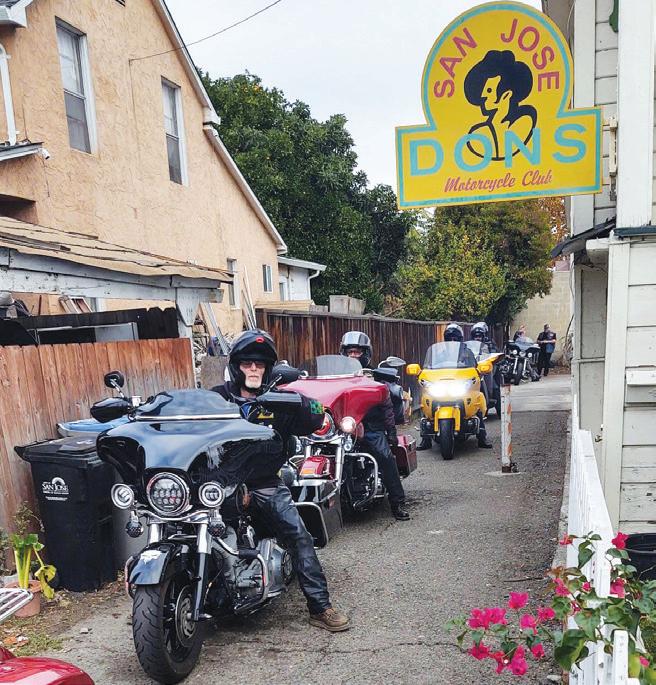
San Jose Dons Motorcycle Club Hits 90 Years
he San Jose Dons Motorcycle Club has a fascinating history — a history its current members are proud to build on.
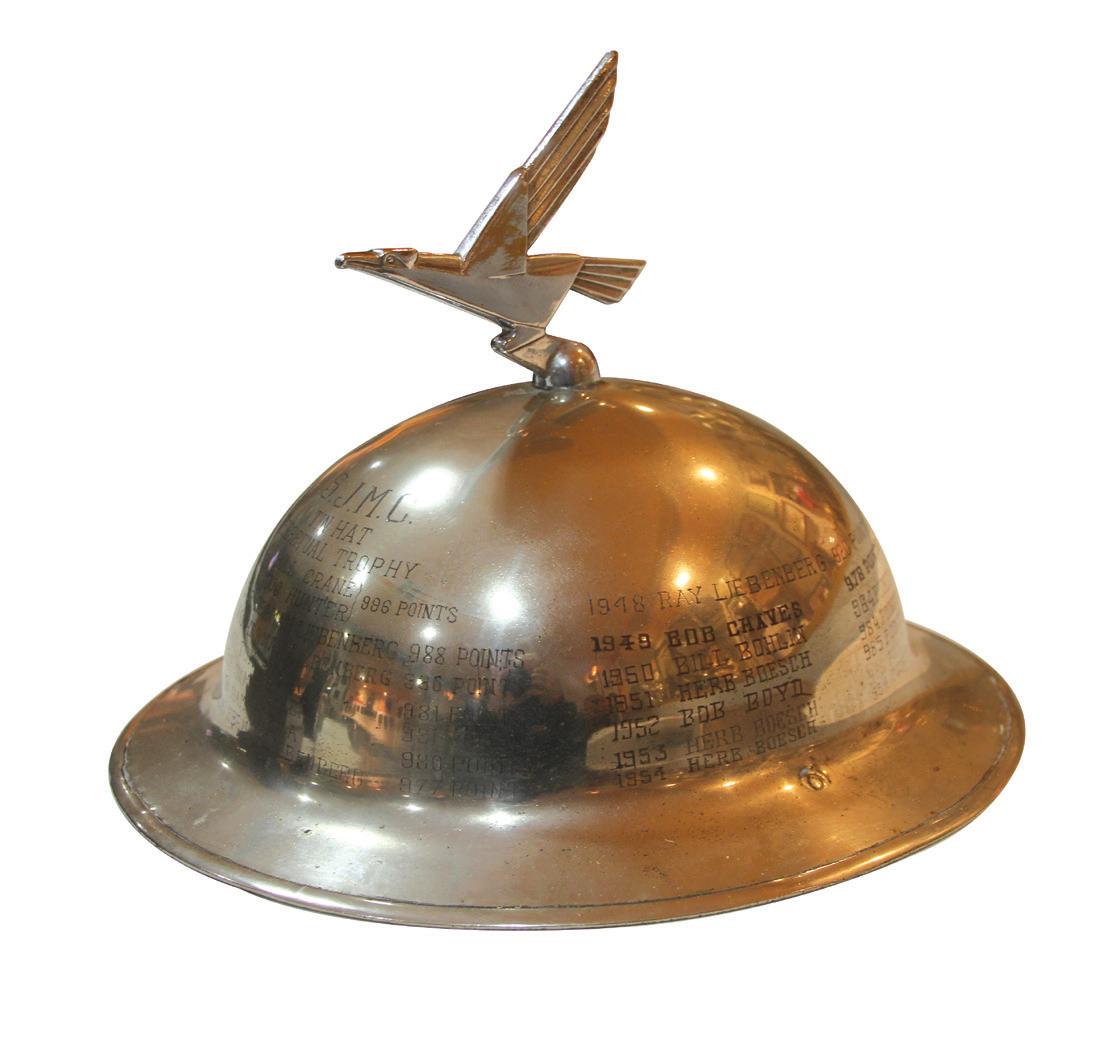
Officially forming as a club in 1932 when the members met at AMA Motorcycle Hall of Famer Tom Sifton’s motorcycle dealership, the Dons have been chartered by the AMA since 1939.
The club’s history is not only long but decorated with 10 Grand National champions and several AMA Motorcycle Hall of Famers, including Sifton, Joe Leonard and Larry Headrick.
“The coolest part for me is that I’m a part of that pedigree now,” said Justin Kirsch, the club’s historian. “I’m a part of Tom Sifton and I’m a part of Joe Leonard. I think anybody who lives in this area, or wherever they live in the United States, those clubs have that history. And I think for kids now, if you want to be part of something, be part of something cool.”
With around 20 members that regularly participate today, the club meets twice a month. They hold a monthly Putt Night along with a handful of annual events that keep involvement exciting.
—Keaton Maisano
Racing ROUNDUP
WHAT’S WHAT IN THE WORLD OF AMA RACING COMPETITION
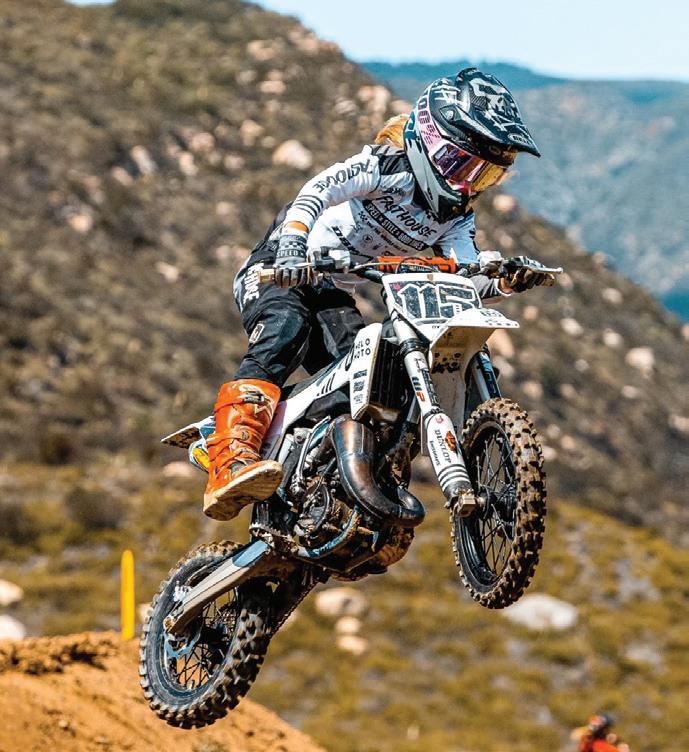
Braxtyn Mes
B RACER SPOTLIGHT
raxtyn Mes, an 11-year-old motocross rider from Southern California, has his sights set high when it comes to his racing future. And with his family’s full support, he won’t have to make the moto journey alone.
Son of Brian and Christel Mes, who both ride, Braxtyn got a Strider bike at age 1 and has been riding ever since. Five years later when he was 6 years old, his motocross journey kicked into high gear at a Mammoth Motocross and AMA Amateur Motocross Championship qualifier dual weekend in Southern California.
“He qualified in both and won all of the motos,” Brian Mes said. “From then on he’s been stuck. He loves it, wakes up thinking about moto…about 12 years ago, moto became our adventure.”
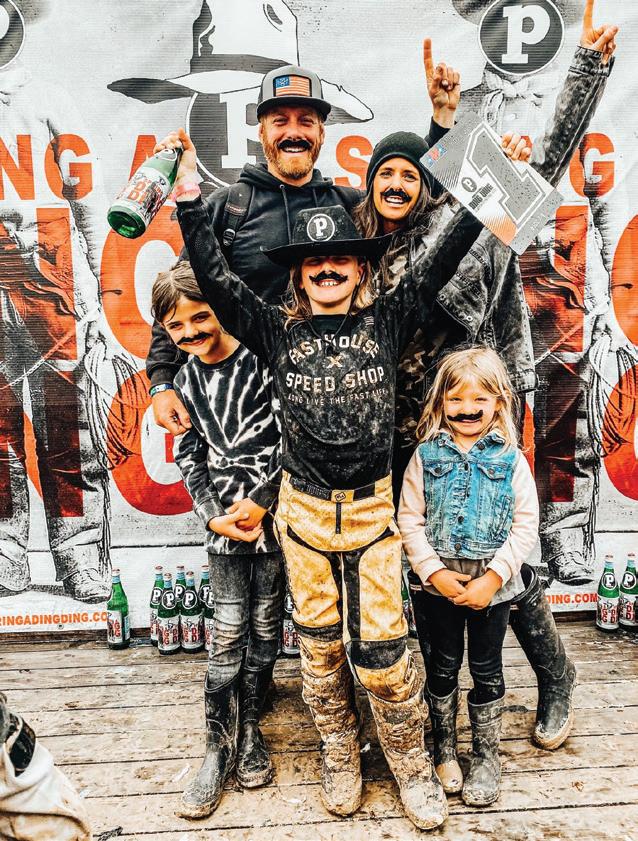
With Braxtyn continuing in the sport and his younger sisters Mercer and Chyler catching moto fever, the Mes family has journeyed across the country several times.
In the family’s inaugural trip to the AMA Amateur National Motocross Championship at Loretta Lynn’s ranch, Braxtyn was taken out at the start of the race but managed to work his way up from 41st to finish in eighth place — a moment he acknowledged as one of his proudest accomplishments. His best finish there came in 2021 when he finished third in the 65cc (7-9) class.
His parents noted that Braxtyn is still young and figuring out what it takes to be successful in the sport. After a successful 2021 season, he’s working his way back to his previously successful form.
“He’s learning that nothing comes easy, right? He’s only 11,” Christel said. “He started to believe in what we have been telling him that workouts, good nutrition, riding hard and practicing like you really want to race is the key to all of it.”
While working to prepare better off the track, Braxtyn has set a goal on the track to consistently finish in the top 3 at races — a goal that will serve as a steppingstone to his larger aspirations.
“When I get older,” Braxtyn mentioned, “I really just want to be able to become a professional motocross and [AMA] Supercross racer and go do really good there.”
—Keaton Maisano
...got their start more than 100 years ago at places like Weirs Beach near Laconia, N.H., and Harley-Davidson Motor Co. in Milwaukee, Wis.
AMA Gypsy Tours have always been about riding and sharing the camaraderie of two wheels with like-minded enthusiasts at great destinations.
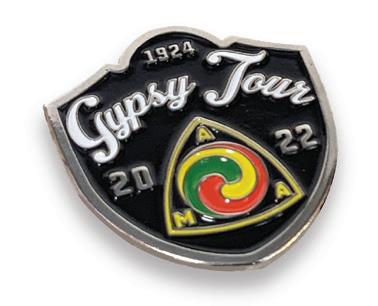
And that continues with the 2022 Gypsy Tour schedule, where riders can meet, share experiences and even grab their collectible AMA National Gypsy Tour pin dated with the year.
The Americade Rally
JUNE 7-11
Laconia Motorcycle Week
June 11-19
Thunder in the Valley
June 23-26
AMA Vintage Motorcycle Days
July 22-24
Four Corners Motorcycle Rally Sept. 2-4
www.americanmotorcyclist.com/gypsytour
malcolm’s moments
PART SIX
FIRST RACES, AND THEN
…
Learning to go fast and enjoying it, right up until I got hurt
BY MALCOLM SMITH
The head mechanic at Mott’s Cycle (see Malcolm’s Moments in the June issue) was George French, who also built engines for local expert Jack Thurman, who rode for our shop. I began to watch what Frenchie was doing to those engines, and the idea of racing began to take hold.
I was 16 and riding a lot by this time, mostly on fire roads in the mountains, and Frenchie and I came up with a plan: I’d ride Thurman’s Matchless in novice scrambles at nearby Console Springs, and Thurman would ride the expert class. In my first race I was pretty fast except for the first turn, a big uphill left-hander. I’d let off there and guys would pass me. Frenchie said I needed to go full speed there, and when I did I was much faster.
I remember trying to pass a guy named Henry Arras — still a friend of mine — in a downhill corner; he was a brute, and when he looked back and saw me coming, he slammed the door and took out my front wheel. I went end-over-end, and they had to haul me off. There’s an unwritten rule among racers: “When
Of course, like vinyl records, turntables, Polaroid cameras and print magazines, fun and/or useful things pushed aside by technology or “new thinking” have a way of sneaking back into the mix, which is something Brian Schaffran and Molly Vaughan of Cleveland’s Skidmark Garage know a little something about.
The husband-and-wife duo are five years into a program they call Motogo, a nonprofit 501(c)(3) that serves as the educational wing of their Skidmark Garage — a community garage where members pay a fee to have access to tools, equipment and a workshop bay — that is designed to teach both middle school and high school stu-
remix of an old classic. “We are essentially bringing shop class back,” he said. “It used to exist in all the schools until recently, except instead of working on lawnmowers and birdhouses, we are doing motorcycles, so that’s the hook.”
Vaughan, who serves as the Executive Director of Motogo, agrees, and said there’s beauty in watching kids work on themselves while they work on a motorcycle.
“One nice thing about [the CB350] is how accessible the engine is,” she said, “and how visible. We are trying to get the kids to be authentic, and a motorcycle like this isn’t hiding who it is. What you see is what you
dents how to solve problems through working on motorcycles.
Working with more than a dozen schools in the Cleveland area and built on the pillars of working with your hands, self-confidence, authenticity, equity and community, Motogo offers schoolkids the chance to rebuild 1970s Honda CB350 engines in one program and the entire motorcycle in another with the objective of sparking a newfound confidence in each student.
Schaffran said it’s really just a
get. There are no secret parts hiding under chunks of plastic, so it’s kind of a metaphor for the kids, like you’re working on your insides that are visible to the outside.”
Schaffran, who was Motogo’s first coach, notices firsthand how daunting the freedom to have access to an entire engine or motorcycle can be to students. “They’re like that stereotypical deer in the headlights,” Schaffran said. “They’re afraid of breaking something, or of being embarrassed because they’re guessing wrong, or
“We’re essentially bringing shop class back, It used to exist in all the schools until recently, except instead of doing lawnmowers and birdhouses, we’re doing motorcycles, so that’s the hook.”
BRIAN SCHAFFRAN
they’re holding the tool wrong.”
Even a simple task like removing the seat leads to indecisiveness.
Schaffran said he lets the students “suffer for a couple of minutes” before he steps in to help. “And that’s the first victory,” he said, “figuring that out. When they get that seat off, it’s like they won the lottery.”
Schaffran said even the small bit of confidence and momentum built from getting the seat off enables them to complete the next task more efficiently. And while the process can be upsetting, Schaffran and Vaughan have designed it to build confidence, not destroy it.
“Our mission is really to redefine failure,” Vaughan said. “People often think failure is a steppingstone to success, but we’re trying to teach that sometimes failure is the success.”
Elise Kavalchek is one student given the freedom to fail within the Motogo program and benefited from it. The 17-year-old senior has been through the Motogo program twice — once with the CB350 engine rebuild and again with the whole-bike rebuild.
Kavalchek even purchased her own CB350 to work on at Skidmark Garage. She elected to take the engine rebuild program as part of her school’s Immersion Week because it aligned with her interest in becoming a mechanical engineer.
“It wasn’t just about learning how to work on engines,” she said. “It was also problem-solving, because they’re not new engines and there
will be problems with them. I learned a whole lot about problem solving through this experience.”
Each Motogo program ends with Kickstart Day, an opportunity for the students to kickstart a motorcycle and see the culmination of what they have been working on throughout the class.
“You can see how your work goes into the entire motorcycle,” Kavalchek said. “And it’s pretty cool to see a whole motorcycle when we were just working
on a small part of it.”
Nowadays, Schaffran sees plenty of kids like Elise kickstart their first motorcycle, but there was a time when he wasn’t familiar with motorcycles in the least. He first rode a motorcycle — a Honda Rebel — in the 1990s while living in Los Angeles. But he didn’t buy one for himself until 2002 — a 1978 Honda CB750 he saw on the side of the road while attending Cleveland State University. “I just pulled over, missed my class and bought it right there on the spot,” Schaffran said.
Schaffran’s time in LA also contributed to his idea of opening a community garage when a garage owner, Jose Gomora (of Gomora Automotive), graciously provided tools and instruction so he could repair his Volkswagen bus. “Gomora putting his trust in me not only pushed me to go back to school and finish my degree,
but also gave me the idea for the community garage.”
He began a decade-long career as a high school history and math teacher working at the Cleveland School of the Arts and St. Martin de Porres High School, where he met Vaughan. And it was at St. Martin during a week-long nontraditional teaching program in 2010 that Schaffran taught his first group of kids how to work on a motorcycle.
Schaffran and 12 students set out to rebuild three Honda CB750s, and while the effort ended badly with parts scattered everywhere and none of the bikes running, he learned a lesson that he’d be teaching to students less than a decade later as part of the Motogo program: sometimes failure is the success.
“It didn’t matter that we didn’t get them running,” Schaffran said. “They just were pumped as hell that they got their hands dirty and took apart those motorcycles, and I slowly realized it wasn’t a failure. I just had the wrong expectations.”
Inspired by seeing his students enjoy working on motorcycles, and from the community garage idea that was born in his mind in the 1990s, Schaffran left teaching in 2013 to pursue his dream — a dream that culminated in Skidmark Garage in 2015.
The garage operates under a membership format where members can pay a fee — annually, monthly or by the hour — to have access to tools, equipment and a workshop bay. Members also have access to the garage’s lounge area, which hosts various events such as graduation parties and weddings.
The community, do-it-yourself format is not unique for garages, but it is rare. Schaffran said he created a network of around 40 similar garages throughout the world to share ideas. “Everyone operated slightly differently,” Schaffran said, “which was great. We all learned from each other.”
While that number dwindled to around 10 due to the impacts of COVID-19, Skidmark Garage re-
mained strong. Schaffran credited the generosity of both members and nonmembers who pitched in to keep the garage afloat through the pandemic.
“People just came out of the woodwork,” Schaffran said. “Even people that aren’t members, kids I was friends with in my childhood that don’t live anywhere near Ohio reached out and were like, ‘What’s your rent? I’m gonna pay it for you this month.’ And that just got us through.”
Schaffran noted that Progressive Insurance also played a role when it jumped on as a sponsor after noticing Skidmark Garage’s welcoming culture — a culture largely pioneered by Vaughan. “There’s a hashtag on both of our businesses that says, ‘All are welcome who welcome all,’” she said. “Welcoming all is tricky sometimes, but it does feel as though carburetors bring people together.”
The welcoming environment is apparent in the diverse membership base. Schaffran expressed his gratitude to Vaughan for altering his original vision of making Skidmark Garage a “man cave.” “I’m forever thankful that she pushed me in that
other direction because it’s way more fun down at Skidmark,” Schaffran said. “People that are very different from each other are coming together over a motorcycle, and whatever differences they may physically see, are all looked past.”
The emphasis on inclusion and
diversity does not stop with Skidmark Garage, as Motogo is built on the same value of proper representation, especially in the program’s board and staff of coaches. With diverse representation in leadership positions, Vaughan feels the program better resonates with classes that are themselves very diverse.
“If coach Emmy [Osicka] can ride a motorcycle to class,” Vaughan says about girls learning from a female instructor, “I think that it makes you think about even more than the thing in front of you…it really opens the world of possibilities.”
To emphasize the welcoming feel Motogo aims to have, instructors are referred to as coaches. “We prefer to be called coaches so that we differentiate ourselves from teachers,” Schaffran said. “I don’t want our class to feel like a class. I don’t want them to associate it with sitting at a desk, so I try to make it feel as unlike school as possible.”
Motogo’s handful of coaches worked with more than a dozen schools — ranging from all-girl private schools to public schools in underprivileged areas — in Cleveland during the spring semester, with many more schools on a waiting list as the demand has outgrown the supply of instructors.
“People that are very different from each other are coming together over a motorcycle, and whatever differences they may physically see, are all looked past.”
BRIAN SCHAFFRAN
In addition to increasing the number of coaches — which has been handled with care to maintain the high level of instruction the current group possesses — Skidmark Garage and Motogo got new digs at the end of 2021 to better host both businesses. In the new building, Skidmark Garage finds its home on a 12,000-square-foot first floor of an old warehouse, and Motogo has a dedicated 5,000-square-foot space on the third floor.
With both Skidmark Garage and Motogo on healthy trajectories, it could be easy to dream of expansion outside the Cleveland area, but Schaffran and Vaughan are committed to focusing on the here and now.
Still, when it comes to dreaming big, Schaffran acknowledged that the perfect outcome of the Motogo program is one where Motogo is no longer needed.
“It’s weird to think that we will know that Motogo is successful if we go
out of business,” Schaffran said, “because [once] every school realizes the importance of shop class, and they bring it back themselves, they won’t need us anymore. And in a way, that’s kind of the goal…to have shop class back everywhere and kids really into taking it.”
For many students of Skidmark Garage’s Motogo program, working on motorcycles is not — and may never be — a part of daily life. But that does not mean motorcycles haven’t impacted their lives. AMA
wild, unhinged and transformative is without question, but the eighth year of that crazy decade was especially trippy. You had the bloodiest year ever in Vietnam, political asassinations, the release of the Beatles White Album, the ascendancy of Richard Nixon, police beatings in Chicago, NASA on the brink, hippies, drugs and growing disillusionment with the so-called Summer of Love, and a whole lot more.
Fortunately, the late ’60s — and 1968 in particular — brought a lot of good motorcycling stuff to balance some of that cultural and political angst. Honda’s “You Meet The Nicest People” campaign had done its job,
introducing millions of baby boomers to a friendlier sort of motorcycling, and by ’68 the pickings were pretty good. You had the announcement of the CB750 and H1 for ’69, the introduction of Honda’s Z50 Mini Trail and, in the spring (and considerably more quietly), the release of a newgeneration Yamaha dual-purpose bike — the DT-1.
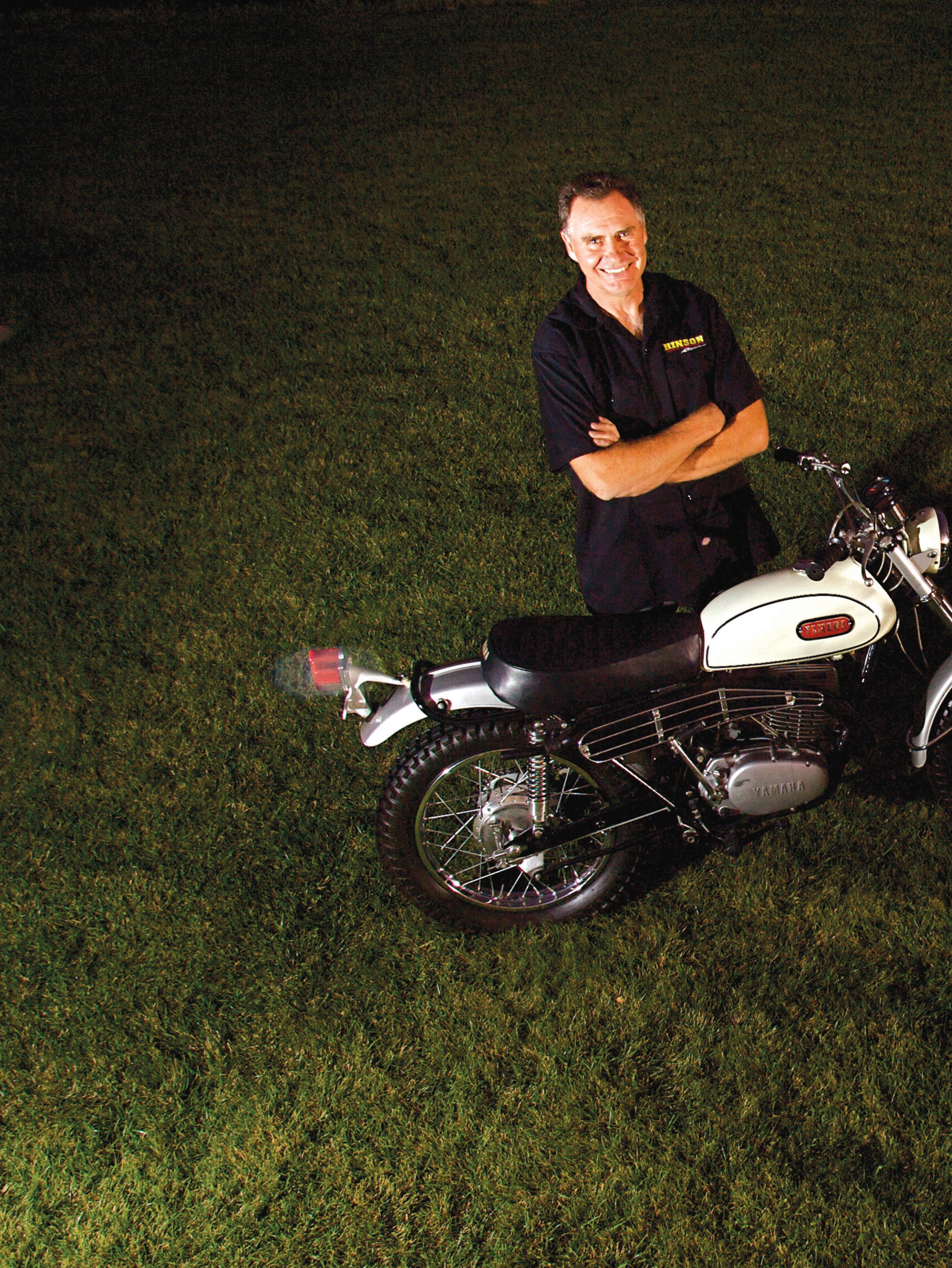
“I remember seeing the DT-1 at the Anaheim show that year,” said the late Tom White, a longtime industry veteran, racer, collector and AMA Motorcycle Hall of Famer, “and I’ll never forget it. It
was beautiful and looked like it could do anything. I could see myself riding it, and all the things I could do on it.”
Karma was with White because the teenager soon found himself riding a brand-new, pearl white DT-1 along California’s coast highway. “I couldn’t believe it,” White told me back in 2010 as we checked out his personal DT-1 in his Early Years of Motocross Museum. “There I was, riding along, drinking it all in, and a guy pulls next to me at a stoplight and says, ‘What the heck is that?!’ I was in heaven.”
Heaven — it’s a perfect descriptor for the entire DT-1 experience — for owners, Yamaha
dealers, Yamaha itself and, in many ways, the entire industry.
“Looking back on it,” says longtime Yamaha product-planning guru Ed Burke, who was involved with the DT-1’s development as well as bikes such as the legendary 650 Special and V-Max, “it was one of the best examples of a company bringing a model to market in an almost perfect way. Yamaha did a great job with the DT-1; it had great two-stroke technology to tap into, and great research to guide it, with Japan trusting the U.S. product planners during development. And what engineers came up with was nothing short of a blockbuster bike, one that did everything well — just
as the product-planners had scripted it. Enthusiasts loved it. Racers loved it. The aftermarket — which grew substantially because of this motorcycle — loved it. And dealers loved it.”
Yamaha loved it, too, because it was soon selling nearly 50,000 of the things per year.
Fifty-thousand units per year for a single model. That number seems crazy in this day and age, when a model that sells 5,000 units is considered a success. But it illustrates perfectly how explosive the motorcycle market was in the late 1960s and early 1970s,
when baby boomers were coming of age and discovering the joys of two-wheeled transport thanks in large part to the value, reliability and performance of Japanese motorcycles.
“I was a junior in high school in ’68,” says longtime industry veteran Ken Boyko, who’s owned several DT-1s, “and I remember seeing a white DT-1 when they came out. I just stood there sputtering… It was the coolest thing I’d ever seen. To get a 250 would be the ultimate — like riding a Triumph. I rode my bicycle to the shop almost every day, looking,
drooling… What a cool motorcycle!”
Motorcycling’s explosive growth in that era resulted from many factors, but none were more influential than the perfect storm of demographics — the baby boom generation — and the availability of reliable, inexpensive and fun motorcycles from Japan.
“Boomers began turning 16 in about 1961,” says Burke, “and millions followed over the next 15 years.” Some were gearheads and adventure-seekers, folks predestined to dive into motorcycling. Many, however, were mainstreamers, people who needed a bit of a nudge — one provided by good marketing (Honda’s “You Meet The Nicest People” campaign, for instance),
“Boomers began turning 16 in about 1961, and millions followed over the next 15 years.” Some were gearheads and adventure-seekers, folks predestined to dive into motorcycling.
ED BURKE
various bits of pop culture (Bruce Brown’s On Any Sunday is a perfect example) and the increasing number of motorcycles on America’s streets and trails.
“Japanese offerings in the U.S. in the early and mid-’60s were primarily smaller bikes,” Burke added. “Yamaha had plenty…small twostroke streetbikes and some mediumsized ones like the Catalina and Big Bear scrambler. These — and offerings from the other Japanese makers — quickly carved out a reputation for being fun, inexpensive and reliable, and they quickly brought motorcycling to a wider audience.”
By the late 1960s that wider audience was ready; ready for larger, more advanced motorcycles (which it’d get via the CB750 and H1 in ’69) and also for more dirt-worthy machines than the street-oriented twin- and single-cylinder “scramblers” being offered. Harder-core
“The DT-1 reinvented the dual-purpose category, which until then had been filled with glorified streetbikes tarted up with ‘semi-off-road’ styling.”
RICK DOUGHTY
enthusiasts were all over the off-road machines from the Europeans — Husqvarna, Maico, Bultaco, OSSA, CZ, etc. — but mainstreamers wanted (and needed) something less expensive, more reliable and easier to get parts for.
Enter the DT-1, which went on sale in March of 1968 and surely helped fuel the huge sales spike seen from
’68 to the all-time peak sales year of 1973. “Folks began being a little more performance-oriented at the time,” says Burke, “and the DT-1 hit them where they live. It was a decent streetbike, and a pretty good off-road bike and racer, too, so it gave them a lot of options. It was fast and good looking, and it didn’t cost much — about $750 or so back then.”
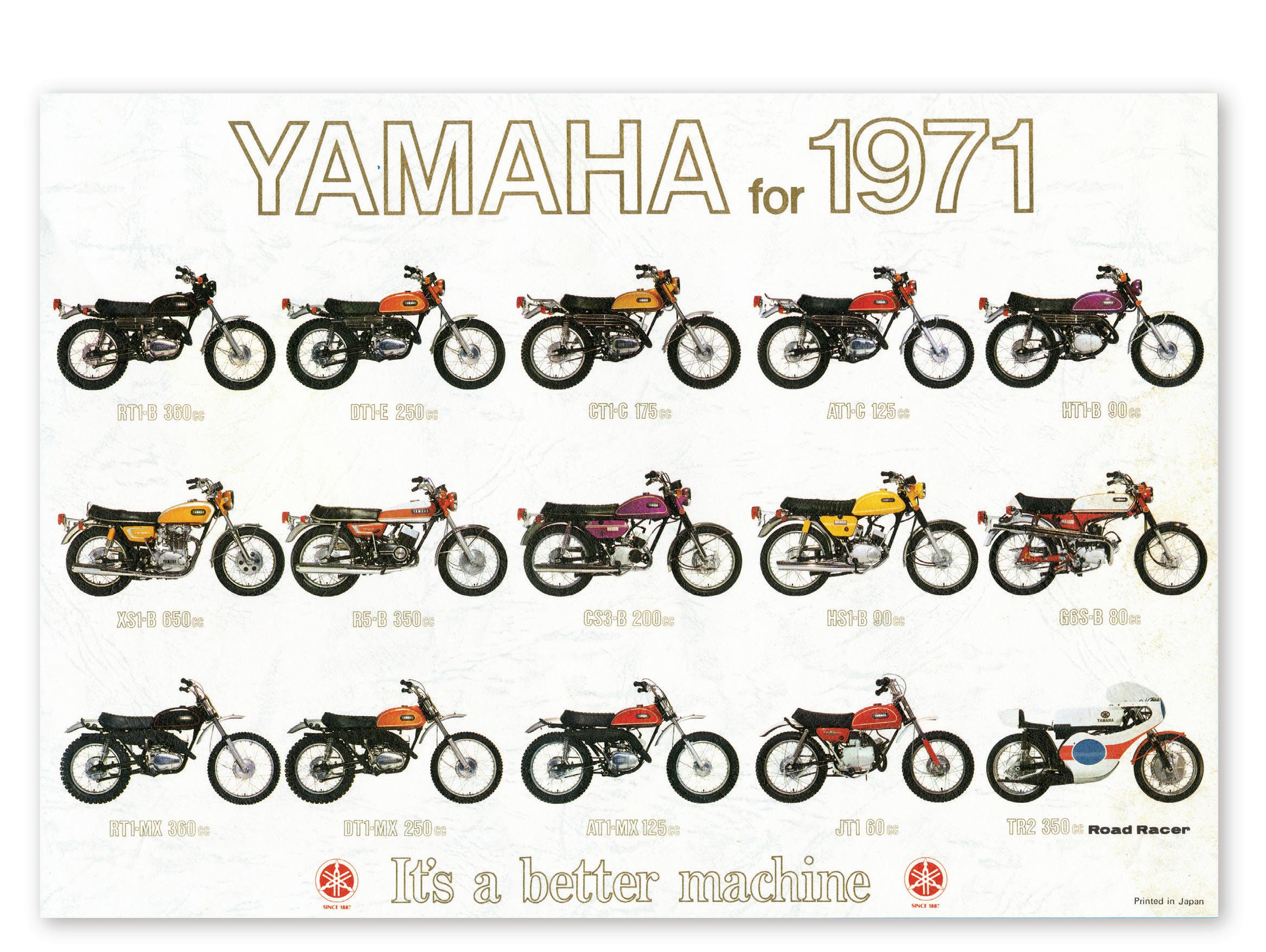
The thing sold like gangbusters immediately, and by 1971 Yamaha had expanded the line to include a 90 (HT-1), 125 (AT-1), 175 (CT-1) and 360 (RT-1), and there were off-road/ MX variants, too, including a 60cc version called the JT-1 Mini Enduro. Yamaha sold a bazillion of the things. “Looking back,” added Burke, “the DT-1 just might be Yamaha’s most important motorcycle ever.”
Again, the DT-1 fits the bill pretty well. By being a handsome jackof-all-trades, the DT-1 helped spread motorcycling to the masses,
enthusiasts and newbies alike. It did more than make Yamaha a household name; it raised an entire industry by singlehandedly creating the serious dual-purpose niche, a category in which all the Japanese companies would eventually find massive success.
“The DT-1 reinvented the dualpurpose category,” says longtime vintage restorer and enthusiast Rick Doughty, “which until then had been filled with glorified streetbikes tarted up with ‘semi-off-road’ styling. Yamaha built a functional dualpurpose bike that would become the foundation for many a great racebike, not the least of which was the ground-breaking YZ250.”
Yamaha in the early 1960s was a company on the move. After kickstarting motorcycle production in
Japan in 1953 with its 125cc YA-1, the company began selling bikes in the U.S. in 1958, first under the Cooper Motors umbrella and, two years later, through its own dealers. Yamaha’s two-stroke bikes got better every year, with hot rods such as the
and racing gaining in popularity — that Yamaha began work on the DT-1. The idea came from off-road enthusiasts working for Yamaha at the time — desert riders, racers, dealers and all-around dirtbike enthusiasts.
“Yamaha felt that market could be huge, The bike had to be good enough on the street, but really good off-road.”
’63 250cc Ascot Scrambler and the company’s trick Autolube system of ’65 buttressing Yamaha’s brand and reputation.
It was under these conditions — rapidly increasing sales for Japanese bikes (including the popular “scramblers”) and off-road riding
ED BURKE
“The thinking,” says Burke, “was to make the bike simple, durable and competent — a true do-it-all machine. We knew what would work. We had great research, and very good people in sales, engineering, research, product planning, testing, and some very savvy dealers, too.”
Yamaha did tons of off-road testing and actual racing in the U.S. on prototype and pre-production DT-1s before actual production began, and it paid off. The bike was no pure motocrosser or enduro bike as delivered, but it was a good foundation for all of those things, which led to its do-itall reputation.
Jack Hoel, son of AMA Hall of Famer J.C. “Pappy” Hoel of Sturgis fame (Hoel Sr. basically started the famous Sturgis Rally) and a Yamaha product-planner, was one. “Pappy owned the Indian/Yamaha dealer in Sturgis at the time,” says ex-Yamaha man Tom Berkley. “Yamaha built road bikes and was dabbling in styling changes to make them look like offroad models, as some of the other manufacturers were doing. They were called “scramblers,” and Jack helped convince the factory to rethink the direction. His inspiration came from the true enduro bikes from Montesa and Bultaco and the like, and some of the desert bikes his friend and Yamaha colleague Dave Holeman was riding.” Hoel hit the nail on the head with a serious dual-purpose concept… and the rest, as they say,
is history.
“Guys like Hoel, Tom Clark, Terry Tiernan, Sam Corona and others were key,” says Burke. “They were all enthusiasts… racers, riders and fans. I wish I could take credit for the bike, but I wasn’t involved nearly as much as these guys.”
The key was the emerging dualpurpose market, which wasn’t overly large at the time, but which showed promise. “Yamaha felt that market could be huge,” Burke says. “The bike had to be good enough on the street, but really good off-road. It had to be reliable, and have the potential for even more power, which is where our GYT (Genuine Yamaha Tuning) kits came in. Our engineers were really savvy with two-stroke technology. We felt that if we could get the combination of streetability, off-road
performance and ballsy looks just right, we’d do well. The bike had to blend the power and excitement the European off-road bikes had going for them in a reliable package with a low purchase price.”
The team began by doing plenty of market research to get a feel for what was selling, what designs resonated with the public, and where the buyers of all those “little” Japanese bikes were likely to go as their motorcycling tastes matured. The team also bought and tested competitive machinery, including most of the successful dirtoriented Euro bikes.
“We did most of the testing and development here,” says Burke. “Yamaha Japan was smart to trust the guys on the U.S. side. Watching the process from my east-coast sales manager position, I was impressed,
and being pretty dirt-oriented, I was happy to be involved.”
Yamaha followed a fairly standard development process with the DT-1. Sketches came first to determine an overall look, while engineers and testers began working on dynamic chassis prototypes, which were wholly unattractive but hugely important, as they determined things such as frame geometry, engine placement and other vital specs.
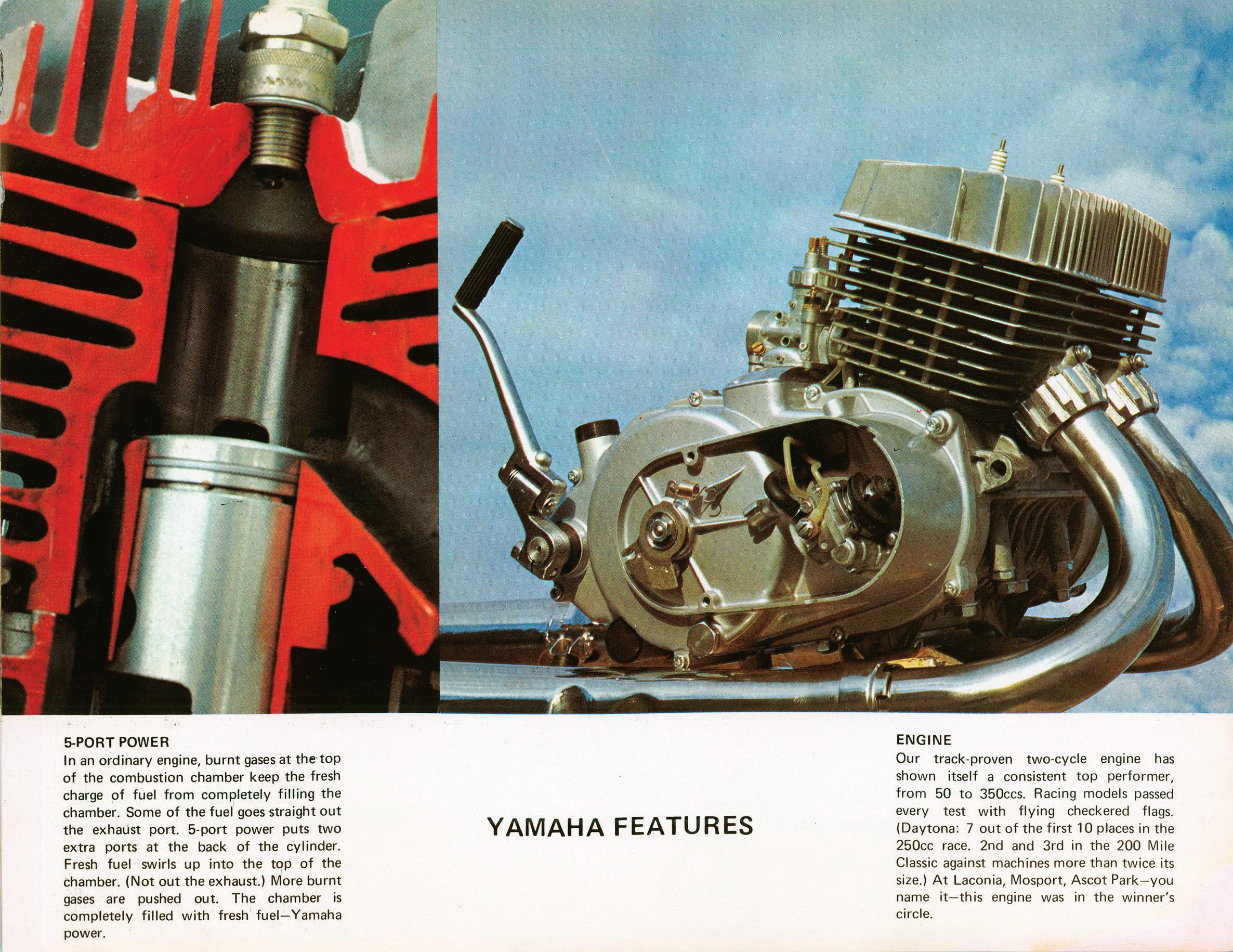
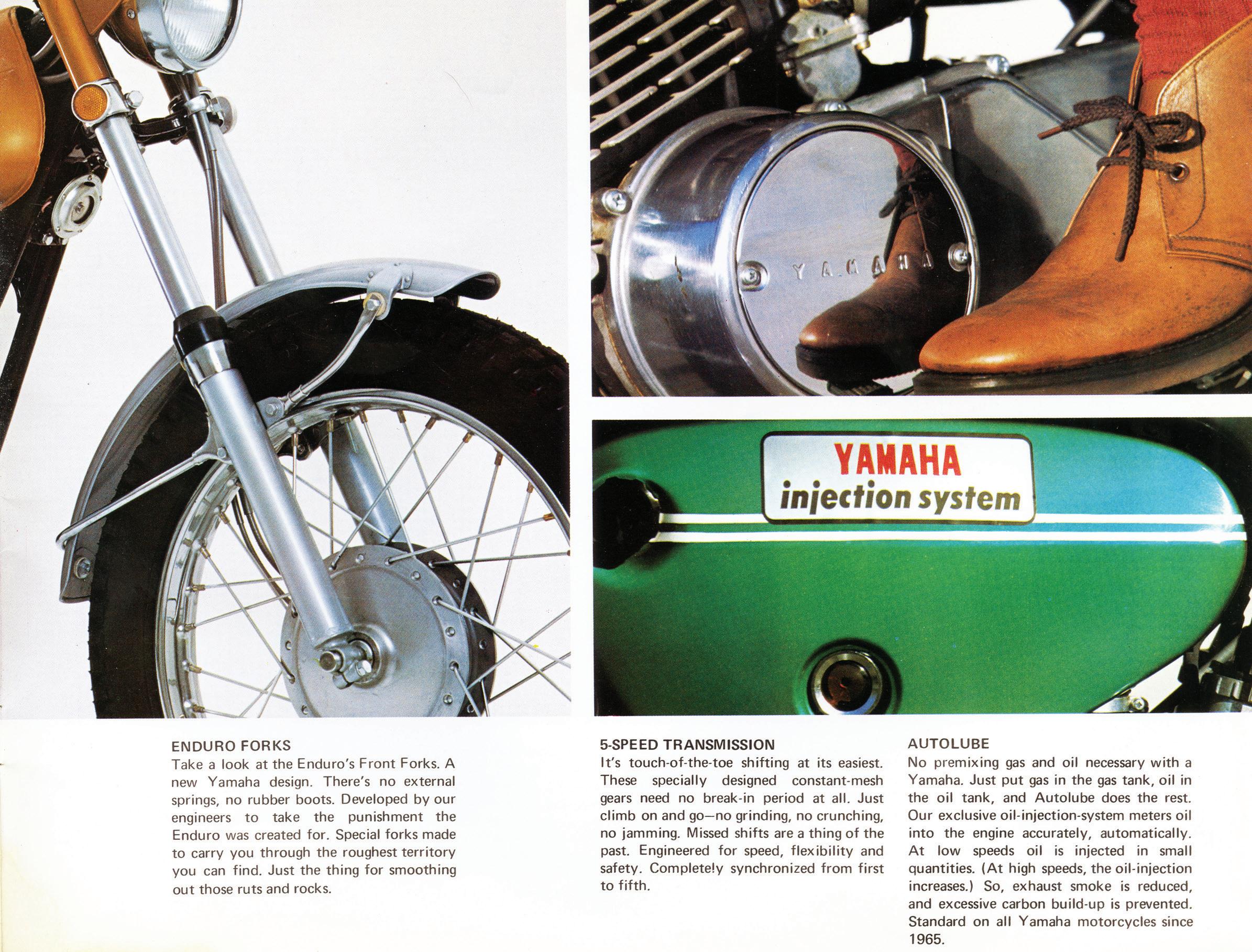
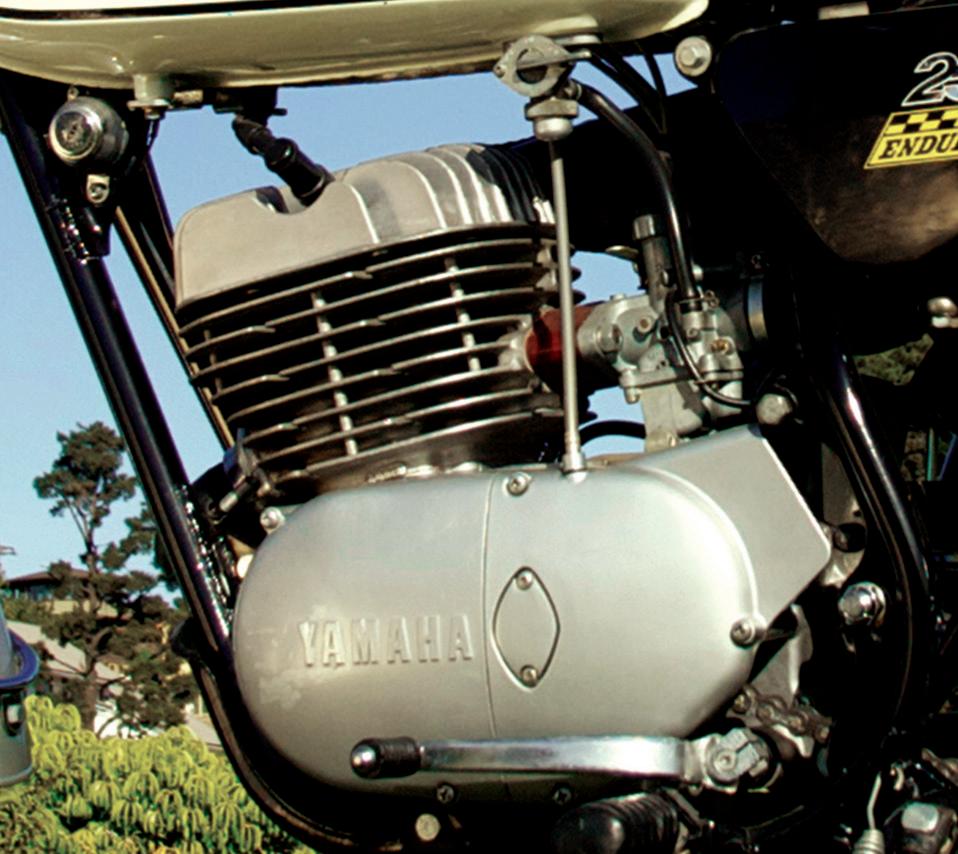
Meanwhile, another team developed a piston-port 246cc twostroke single incorporating Yamaha’s then-new Autolube oil-injection system, making premix a thing of the past. Engineers concentrated on blessing the engine with a friendly demeanor and plenty of power spread over a wide range. Prototype engines were run on dynos, tested in early prototype chassis, and slowly but surely engineers got what they wanted: decent horsepower (roughly 23 at the crank), broad power and, most importantly, hammer-like reliability.
As prototypes inched closer to production-spec in 1967, Yamaha began doing substantial testing in the U.S. in a number of environments, from woods to desert to on-road. Much of the testing was handled by Yamaha testers and productdevelopment folks, but a portion was also done by dealers and racers in the SoCal area.
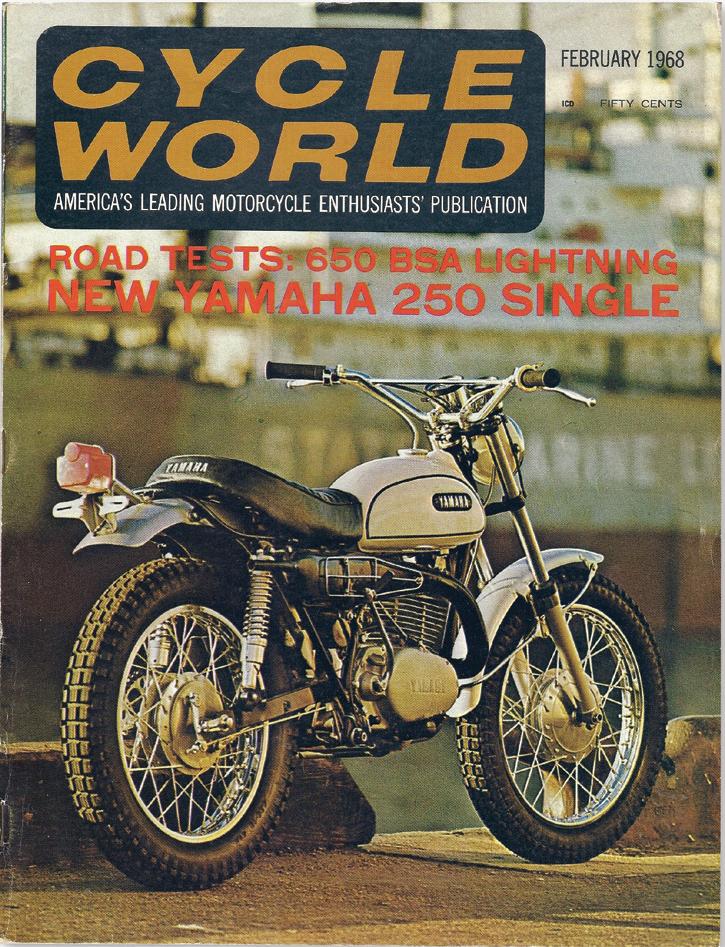
The DT-1’s debut at Yamaha’s dealer meetings in late 1967 created a huge stir, dealers signing up for as many bikes as they could get and enthusiast magazines spreading the word. “The DT-1 handles infinitely better than the usual hybrid streetscrambler,” wrote Cycle in its May 1968 issue. “Considering the number of genuine motorcycle enthusiasts at Yamaha International in Los Angeles, it was inevitable the finished product should be right on target – and it certainly is.”
Cycle Guide went even further in its June 1968 issue, predicting “nothing but success for the DT-1
enduro. Yamaha has hit on the right combination of street and dirt machine, and in fact are building their whole ’68 sales program on the dualnature motorcycle.”
In short order, dealers were selling ’em by the handful, the bike appealing to dirt-oriented enthusiasts as well as to a newer, less-grizzled group who’d gotten hooked by the two-wheeled bug during the ’60s and who were after a simpler form of excitement than the racers and hardcore types lived on.
“The DT-1 blew mainstream motorcycling wide open’,” says Jack Seaver, longtime enthusiast, racer and Yamaha dealership employee during the early 1970s. “It created
big buzz and appealed to a wide range of riders, from veterans to mainstreamers. The latter group wanted the bike’s perceived off-road clout even though most never even took the thing off the pavement.”
But many did, as off-road racing was literally exploding all over the country, from the east coast woods to the western deserts. “It was crazy in the late ’60s on the racing front,” says Burke.” If you were in Ohio, for instance, you could do several enduros per weekend.”
“The first real racing with the DT-1,” says Berkley, “was in the desert by Ken Johnson and Norm McDonald of K&N Yamaha in Riverside. Dick Allen, a dealer in Newhall, Calif.,
also put one on the desert right away. Ken and Norm came to Yamaha HQ one Monday with the [DT-1’s] paper air filter, which was clogged by dirt. They’d done well until their engine choked for a lack of air and ended up inventing the original oiled foam/ screen/washable K&N filter [and subsequently selling their bike shop to AMA Hall of Fame Legend Malcolm Smith! —Ed.].”
“The DT-1 was lightweight, powerful and handled like a dirtbike you could ride on the street,” says Doughty. “It wasn’t as target-specific as the euromotocross or enduro machines, but certainly good enough to enthuse a huge number of veteran and first-time riders to take the plunge. That helped
“We did most of the testing and development here, Yamaha Japan was smart to trust the guys on the U.S. side.”
ED BURKE
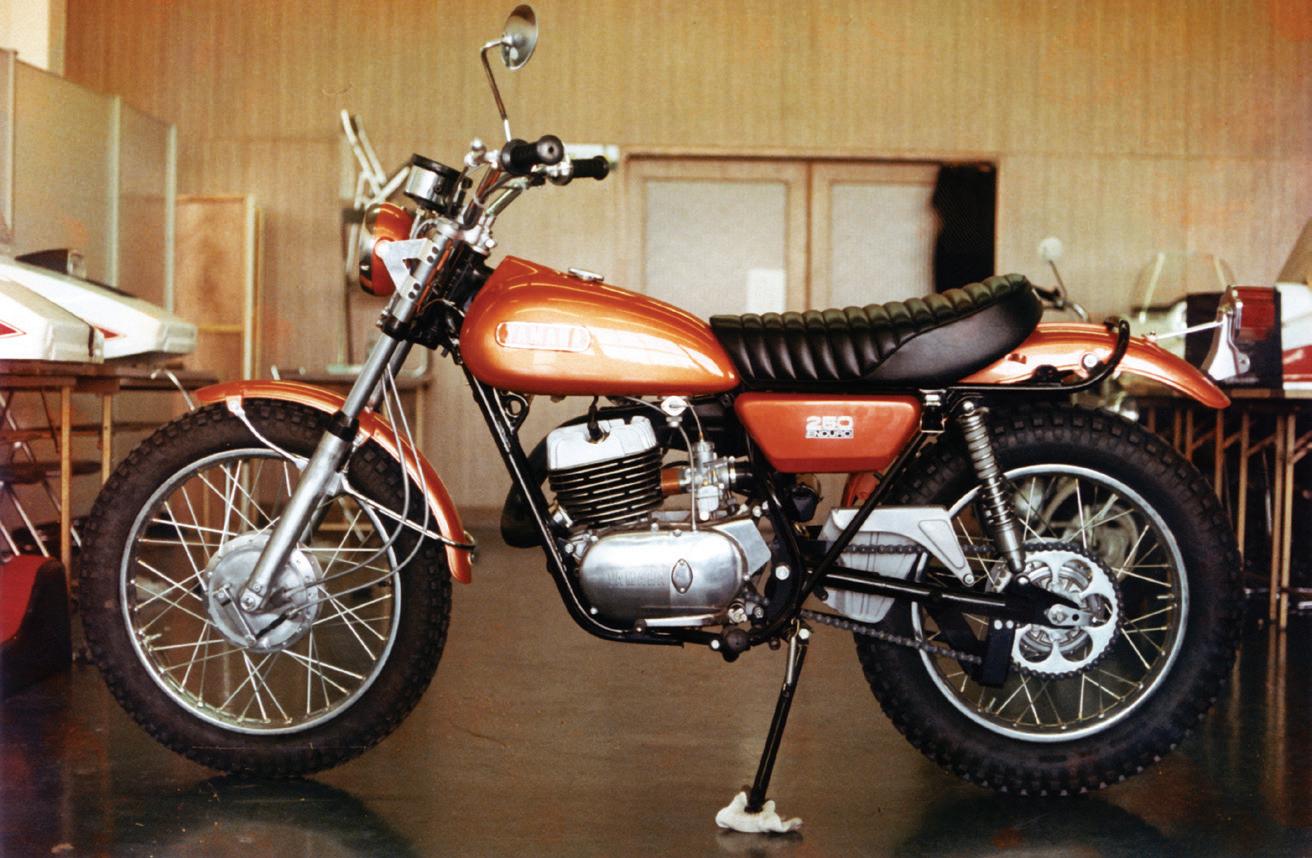
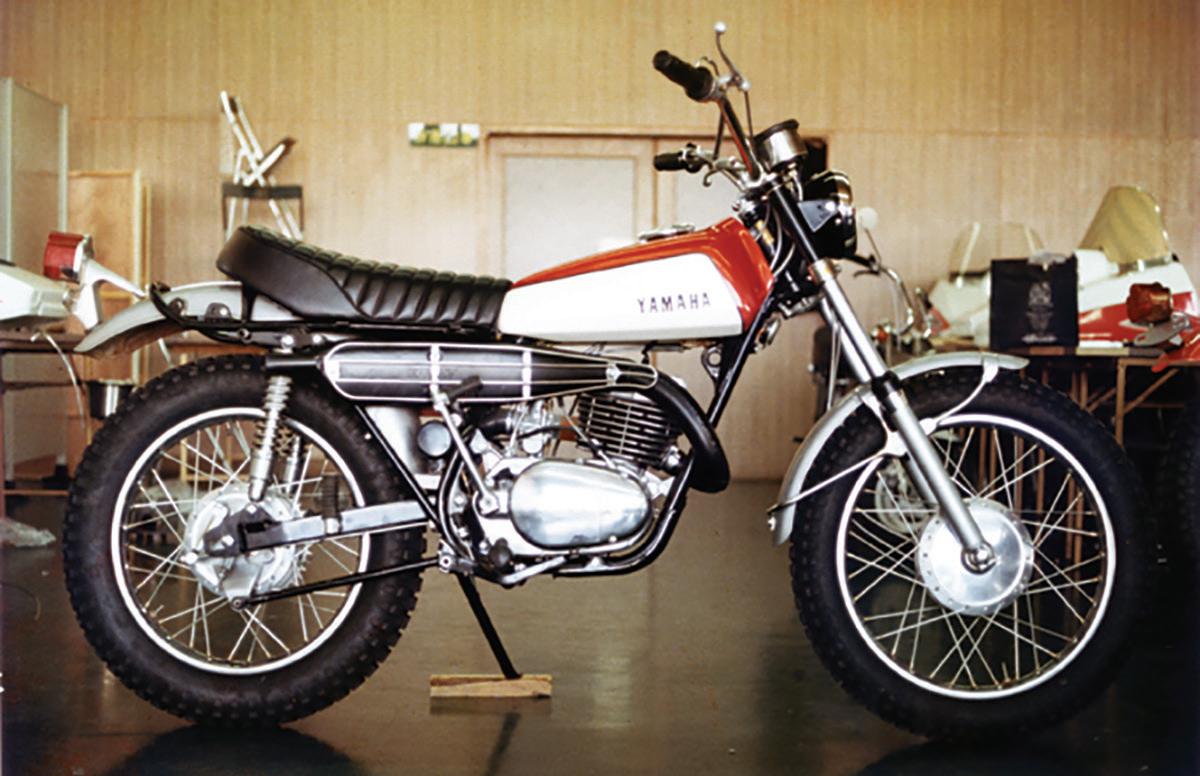
Left: Early (below) and later (above) styling prototypes in Yamaha Japan’s R&D studio in early 1967. The early proto has several wooden or plastic parts, while the later version is closer to actual production-spec.
create an equally huge aftermarket for parts to modify the DT-1 into a motocrosser, dirt tracker, TT bike or desert racer.”
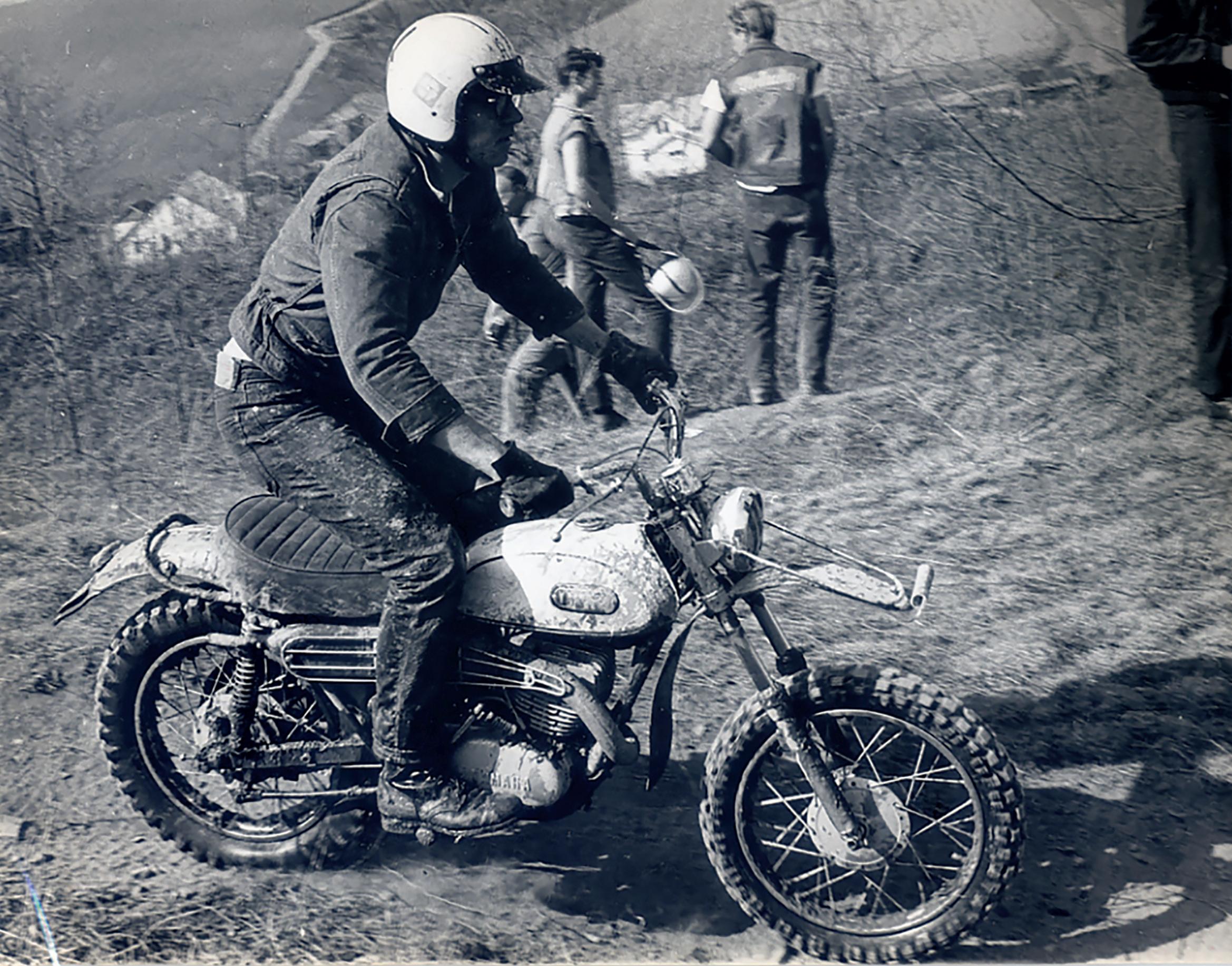
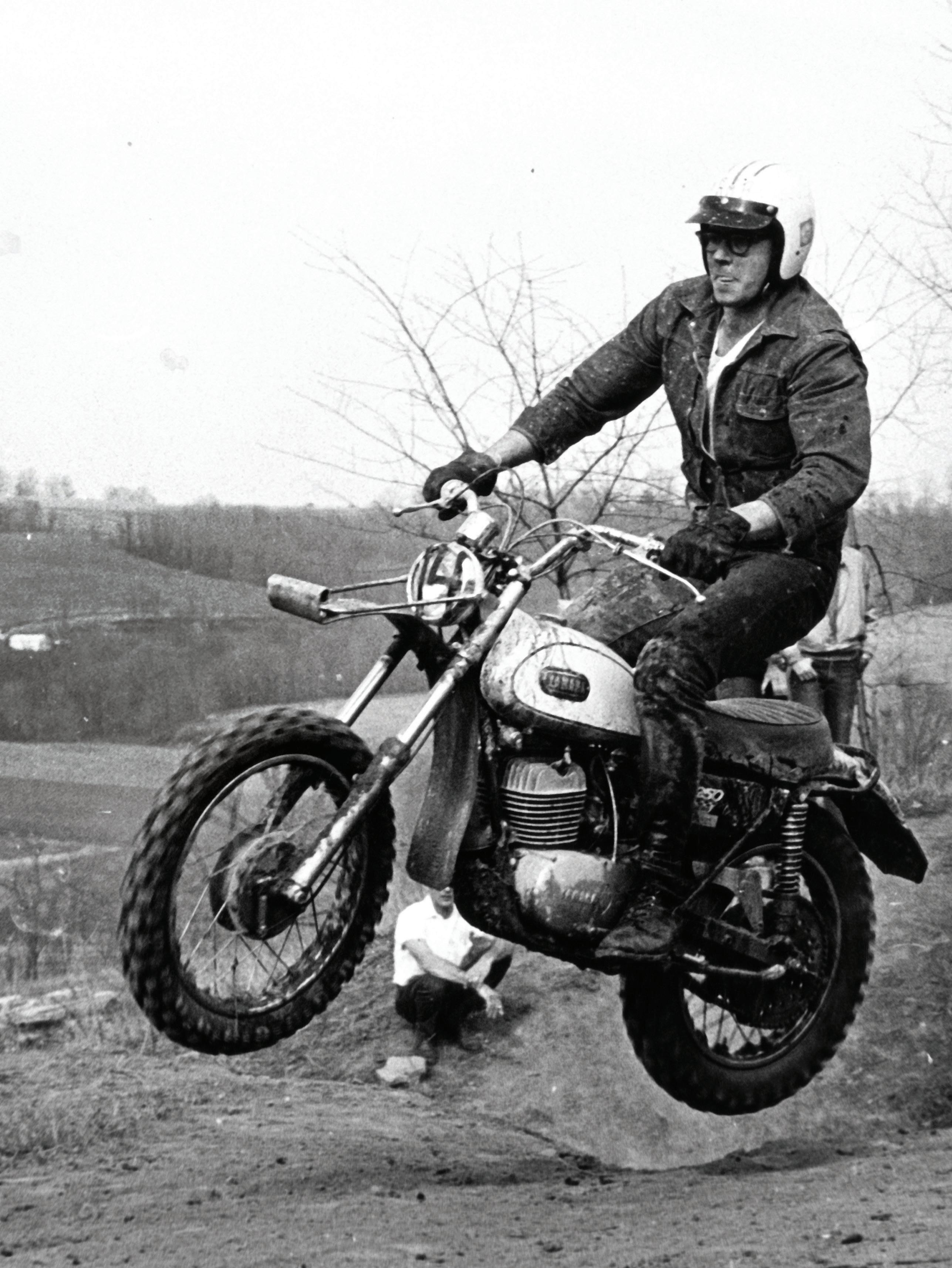
“I wasn’t involved in the DT-1’s development,” says Gary Jones, multi-time national motocross champion. “But once my dad got his hands on one, we got pretty excited. In the desert, on the dirt tracks, we rode ’em and raced ’em right away; they had potential right out of the box. Of course, we started modifying stuff right away — pipes, porting, frames, carburetors, etc. We started to get serious about motocross in ’69. We ended up making big changes: lowering the engine, modifying the motor even more, changing suspension, etc. We sold kits for these mods, as you couldn’t buy this stuff back in the day. There was no FMF or Pro Circuit back then — just some smaller companies that would get bigger in a hurry. We won championships in ’71 and ’72, and I guess we were at the forefront of the aftermarket wave we see today.”
Retail sales from ’68 on were insane. Dealers were riding a wave of enthusiasm and excitement fueled by the combination of baby-boomer numbers and the ever-increasing numbers of inexpensive and hugely functional motorcycles… and the DT-1 in many ways led the charge. “Some dealers were selling a thousand DT-1s per year,” says Burke. “Amazing.”
What’s doubly amazing is the effect the DT-1 had on the industry as a whole. Within a few years Yamaha offered an entire line of dual-purpose bikes, from 60cc to 360cc. The other Japanese manufacturers followed suit, and soon the streets, trails and tracks of America were full of the things, buzzing around and putting huge smiles on the faces of their owners. It’s no stretch to say that these early dual-purpose bikes opened the floodgates to the industry’s phenomenal growth in the early 1970s by appealing to more mainstream riders, and introducing
many thousands of relative newbies to the sport.
All of which means it’s pretty tough to overestimate the significance of the DT-1. Its technology, timing, performance and rideability were spot-on. And I’d find out how true all this was when Cobra USA’s Ken Boyko offered me a chance to ride one of his DT-1s. Boyko, his son Dustin, Cobra special project manager and fellow vintage expert Denny Berg and I took two of Boyko’s DT-1s and a pair of his 360cc RT-1s on a 20-mile lunch run along Pacific Coast Highway on a sunny Friday afternoon and had a serious blast.
The orange, ’70-spec DT-1 I rode was light, peppy, reasonably comfortable and possessed the sort of dirtbike-
with-lights mentality I always imagined these bikes would have. The burbling 2-stroke exhaust note, the smoky take-offs, the pop-pop-pop while decelerating for stoplights and the visceral, chunky feel of the controls and shifter put me solidly back in time. I was only eight years old in 1970, but after that ride I have a pretty good feel for what thousands upon thousands of motorcyclists experienced during the DT1’s reign.
“The Yamaha DT-1 was not the world’s first dual-purpose bike,” says ex-Cycle World Editor David Edwards. “But do you remember the Bultaco El Montadero or the Montesa Scorpion? You do not. And if you recall the BSA 441 Victor (a.k.a. “Victim”) at all, it’s probably because one of the bastards kicked back and broke your ol’ man’s ankle.
“Nope, what the DT-1 was, was the world’s first practical, affordable, viable dual-purpose bike. The fact its Autolube system meant you never again had to mix two-stroke oil with the gas (“Hello, Spain...?”) was just a bonus. The DT-1 spawned imitators by the dozens, and within a few years 60% of new-bike sales in the U.S. were dual-purpose. It also gave birth to the off-road aftermarket industry that’s still with us today, as vendors created suspension kits, expansion chambers, hop-up parts, etc.
“So, the world’s first dual-purpose bike? No. The most important dual-purpose bike? No doubt.”
And considering the wide-ranging and deep impact the DT-1 had on motorcycling in general, it might just be the most influential, too. AMA
“The Yamaha DT-1 was not the world’s first dual-purpose bike, But do you remember the Bultaco El Montadero or the Montesa Scorpion? You do not.”
DAVID EDWARDS
From DT-1 to YZ250 in just four short years. The Jones brothers — Gary (left) and the late Dwayne — pose with the late Tom White’s DT-1 and YZ250, a pair of bikes the brothers will always be associated with.
T H E BACKSTORY
BY RACHEL GUTISH
Well, good news…I got the call!
(And if you’re not sure what that means, check out my column in the June 2022 issue.)
The Trophy Team riders have been selected, the Club Team qualifiers are over, and barring any last-minute injuries we know who will have the honor of representing Team USA in France this fall at the 96th ISDE.
As I write this in early June, I’m finally back
PHOTOS BY MARY RINELL
From initial build (far left) at KTM/GASGAS HQ to tire-changing practice (below) and everything in between, preparing for IDSE competition is exciting — yet allencompassing.
Wars (and races) are won through logistics
BACKSTORY
on the bike and just beginning my ISDE prep — although at this point most of it is paperwork related. I recently sent a build sheet to Marshall Stewart, my KTM Group ISDE mechanic (more on this later) and have been coordinating with all my sponsors to get product sent to him.
Our Trophy Team manager Antti Kallonen recently emailed us our rider information, so there have been pages upon pages of data about the race to digest. I’ve also been trying to get my fundraising situation sorted; Trophy riders
don’t have nearly as many expenses as the Club riders, but there are still quite a few things that aren’t covered…suspension for the race bike, travel for my support person, etc.
As far as on-bike prep goes, our Trophy Rider team camp is tentatively scheduled for July 8-12. Until then, most of my riding preparation will be simply getting back into the swing of racing. My first race back was the Mason Dixon GNCC, and now I’m racing almost every week until the event.
The last bit of prep work for me is the dreaded M-word — maintenance. Riders must
A rare glimpse inside the 30,000-pound Club container that is used to ship the Club riders’ bikes, team awnings, kitchen supplies, bike stands, tools and more.
do nearly all bike maintenance during the event, and I am notoriously slow, clumsy and panicky when it comes to this. Tire changes are especially hard for me, so to make things easier on myself this year I recently got my hands on a Rabaconda tire changer and have been practicing my tire changes regularly.
The Club riders are even busier than I am. They have also received their rider packets and information, and since they build their own bikes and come up with their own plans for our week of preparation in France before the event, they need to read their PDFs even more closely than I do.
All that information had to come from somewhere, which brings us to Mike Jolly, the AMA’s point man for all things ISDE (aside from organizing the qualifiers) and our FIM Jury Delegate. The FIM Jury meetings are a nightly event
at the ISDE, where participating countries discuss (and sometimes haggle over) how the day went, what the time schedule will be going forward, possible adjustments to the following day’s schedule, and any rule infractions or penalties for riders, teams or countries.
Here at home, Jolly still has plenty of work to do. The Jury does not have formal meetings during the year, but flurries of emails are sent back and
forth between the FIM, promoters, the host country and the participants. The AMA must make hotel and meal accommodations for the team, submit rider entries and documentation to the FIM, and pass all relevant information about the event to the riders — and the bulk of that work falls on him.
Moving back to the Club riders, most will have already started their fundraising. None of their expenses are covered, and according to a friend of mine who’s on the Club team, it looks like the cost of this year’s event will be about $26,000 per Club rider. The bulk of that price tag comes from the cost of hotel arrangements and shipping the AMA/Club container, which is shared equally amongst all riders.
But there’s also the cost of a racebike for Club riders, who typically either rent a bike or buy a new one (as
sending a used bike is a sketchy proposition), and you can’t just send your regular race bike since it’ll be gone several months. Then there are expensive airline tickets and all sorts of miscellaneous expenses.
Note to readers and industry: If you have a local rider competing, please consider donating to the cause! Many Club riders sell t-shirts or do fundraising events, so contact them directly to find out how you can help.
The KTM Group puts on fundraisers and solicits donations from sponsors to cover these base shipping and hotel costs for each of the Trophy Team members. Major Trophy Team sponsors last year included Bonanza Plumbing, Bi-Con, Trail Jesters, Maas Brothers, Motion Pro, Spectro, FMF and the Kurt Caselli foundation. KTM Group ships a separate container for
the Trophy Team and chase bikes, which gives both Trophy and Club riders a little more space.
Last, and this highlights yet again how much KTM Group supports our ISDE efforts, any of the company’s affiliated riders — KTM, Husqvarna or GasGas — who make the Trophy Team are provided with a top-of-the-
line factory race machine and mechanic for the event. I just completed my build sheet, which is a combined list of modifications from stock (flywheel weight, etc.), aftermarket parts (gotta have my Seat Concepts seat cover) and rider preferences (I like my handlebar rotated back a bit from neutral), and the mechanics at KTM Group have started on my bike build. Aside from the build sheet, all I really have to do is supply suspension and non-OEM parts from my other sponsors.
This brings us to the last bit of ISDE prep work that’s happening right now: preparing the Club container. Calling it a “Club” container is a bit of a misnomer, though, because while its primary function is to ship the Club riders’ bikes to the event, this 30,000-pound cargo behemoth does way more than that. All the team awnings, kitchen supplies, bike stands
Left to right: Mandi Mastin, Rachel Gutish and Brook Hodges Dorsey who all competed at the 2013 ISDE in Sardinia, Italy.
“Note
to readers and industry: If you have a local rider competing, please consider donating to the cause! Many Club riders sell t-shirts or do fundraising events, so contact them directly to find out how you can help.”
RACHEL GUTISH
and most of the tools are sent over in this container. It also serves as a workspace for the support staff during the event, with drop-down worktables and storage shelves.
The container crew of Eric and Lida Fredette, AMA Motorcycle Hall of Famer Jeff Fredette, Jay Hall, Mandi and Randy Mastin, and Dave Chamberlain are currently prepping the AMA/Club container; it’s a yearround job that never ends. Right now they’re in full clean-and-refurbish mode, as well as doing inventory on nonperishable food, oil, lubricants, shop towels and the hundred other necessities that make everyone’s lives better during race week.
Come early July, when all the Club bikes arrive at the Mastin property, the crew will reconvene and load the bikes and fresh supplies. The container will be pulled onto a flatbed, sent to an East Coast port city, placed on a large container ship bound for France, and will arrive (hopefully) a week before the
race. Eight weeks after the event the container will return home to Whitehouse, Ohio, where the bikes will be unloaded, shipped back to the riders, and the container will be cleaned and sealed for the winter. When springtime rolls around, the entire process will repeat itself.
As far as ISDE supporters go, the container crew is the real deal. Jay and Dave together have over 35 years of ISDE experience; “Mr. ISDE” Jeff Fredette competed in the event 34 times before transitioning to a support role; Mandi Mastin is a former Women’s World Trophy winner, and her father Randy was an ISDE rider, as well. Even more remarkable, these are totally unpaid, volunteer positions.
Out of curiosity, I asked Dave why he and Mandi do so much on the container side of things. Knowing Dave, I expected a smart-ass response, but got a genuine one: “I don’t know [laughs]…Love of the sport, I guess. It’s not the traveling, because we’re mostly going to the same places now. It’s not the money because there is none! The core group of us have so much combined knowledge that would be lost if we stopped. So we won’t give it up until we know that the container and ISDE effort is safe.”
And that’s good news, too. AMA
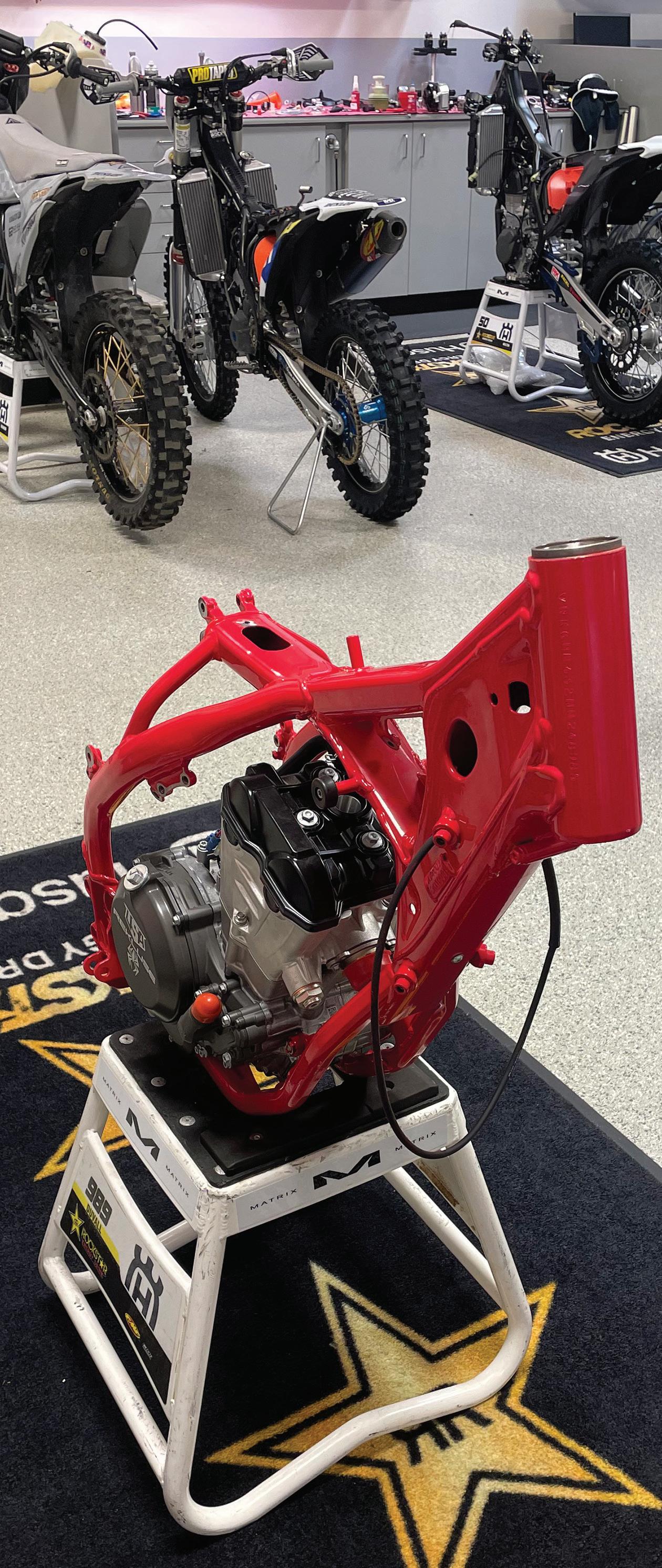
KTM Group supports affiliated riders who make the Trophy Team, providing them with a factory race machine. Pictured is Rachel’s nearly completed 2023 GASGAS EX 350F build.
2023 KTM 500 EXC-F
2023 KTM 500 EXC-F
2023 KTM 500 EXC-F
UNMATCHED
CONQUER THE MOST EXTREME TERRAIN
Think of the 2023 KTM 500 EXC-F as a sledgehammer. Hard-hitting, effective, and utterly devastating. But, thanks to a nimble chassis and its even more compact high-tech engine, this large-displacement power machine is surprisingly light and rideable. As a result, this 510 cc SOHC single-cylinder powerhouse has an incredible power-to-weight ratio and provides nothing less than the most dynamic and exciting option for offroad riding, dual-sport riding, or rally events.
Photo: Francesc Montero
MAKE IT YOURS
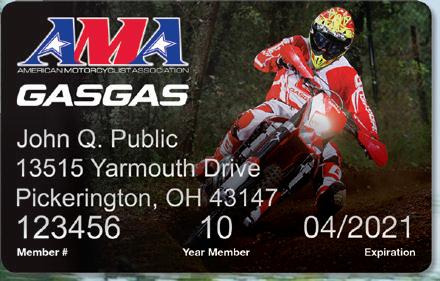
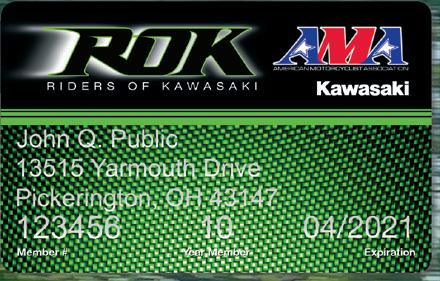
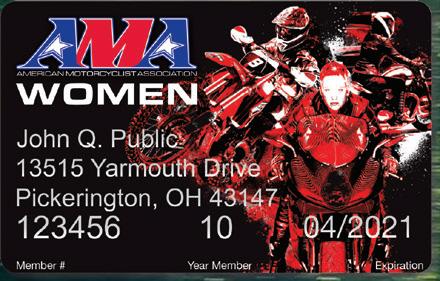
The AMA offers a variety of card types and designs for members. In addition to our standard card, we offer a number of themed cards that identify you as belonging to a specific group or speak to your passion as a motorcyclist.
Call (800) AMA-JOIN (262-
DEALS AND DISCOUNTS
THE ESSENTIALS
Lodging
Save 15% at participating Choice Hotels Properties.
Up to 10% off at Motel 6. Use code: M64AMA
20% discount off available rates, call (800) REDROOF and use the code VP+ 503343. To make reservations online use code: VP+ 503343 in the field labeled “VP+/ID#”
ADVMoto
20% discount. Use code AMADV20
AMA Motorcycle Hall Of Fame Free admission to the AMA Motorcycle Hall of Fame in Pickerington, Ohio.
AMA Supercross Tickets
10% discount on tickets at supercrosslive.com Use code 5AMASX
Anthony’s Leatherworks 10% discount. Use code AMADISCOUNT
Blendzall
AMA members can save 20% at blendzall.com. Use code AMA20 at checkout.
Bohn Body Armor
10% AMA Member Exclusive Discount. Visit bohnarmor. com and use code AMA18 at checkout.
Butler Maps
AMA members receive a 20% discount at butlermaps.com. Use code AMAMEMBER
Cardo Systems
20% discount online with valid AMA membership card.
Colorado Motorcycle Adventures 10% discount with valid AMA membership card.
The Dirt Bike Academy 10% exclusive discount on instruction. Learn more at thedirtbikeacademy.com
Dowco Powersports 20% discount. Use code AMA20
AMA Roadside Assistance Roadside assistance coverage for eligible members.
Car Rentals
Up to 25% off at any Avis or Budget. Avis Code: D388100 Budget Code: Z942000
AMA Gear Find patches, pins, T-shirts, hats and more.
Edelweiss
AMA members save on standard bike tour. Use code 21AMA-EBT03 at checkout.
Evans Cooling System
25% discount on Evans Coolants and Prep Fluid. Use code AMAFUN at evanscoolant.com.
EVS Sports 10% discount and free shipping on all orders. Use code AMAEVS20
Haynes
Save an additional 15% on all Haynes & Clymer print and online repair manuals. Use code AMA15
Heli Bars
Use code AMAM2020 for a 10% AMA Member Exclusive Discount at helibars.com.
Helite Moto AMA members get 15% off every order at helitemoto.com. Use code HELITEAMA
International Motorcycle Shows
Save on advanced adult oneday general admission. Use code AMA20
Legacy Track Dayz 15% discount on Legacy Track Dayz events. Use code AMARideLTD
Liberty Sport Eyewear 30% discount on all “motorcycle collection” frames. Discount code AMA30.
MAD Maps
Save 15%. Use code AMA15
Watch this space for updates about your valuable benefits as an AMA member.
Motorcycle
Motorcycle Shippers
Medjet
Air medical transport and travel security protection – visit Medjet.com/AMACycle or call 1.800.527.7478, referring to American Motorcyclist Association.Annual rates are reduced by 20% and start at $235.
MotoAmerica 20% off 2-day and 3-day passes at select MotoAmerica events. Use discount code AMA20
Motool AMA members can save 10% at motool.co. Use code AMAVIP at checkout.
MX Boot Repair 10% discount. Use code AMADISCOUNT
MX Mounts 10% off on our mounts Use AMADiscount at checkout
MYLAPS 20% discount off MSRP or current sales price on weborders or orders coordinated by the AMA. Use code AMA-789HJK
Nelson Rigg 20% AMA Member Exclusive Discount on all products! Use promo code AMA-NR20
Risk Racing 15% off products at riskracing.com. Use code AMA15
Rlink
Rlink offers AMA Members 25% off industry leading GPS Security Systems. Use code ama2020rl
Quin Design Helmets 10% off crash detection, SOS beacon, Bluetooth communication & more with your new intelligent helmet.
Rockwell Time
Save 20% on select products. Rockwelltime. com. Use code AMA20 Spot LLC
service credit on SPOT Gen3, SPOT Trace or SPOT X device
STKR Concepts 15% off products at stkrconcepts.com. Use code AMA15
Street Skills 10% discount on online courses at StreetSkills.net. Use code AMACCOC.
Third Eye Design $25 discount on inView, a wireless brake and signal light. Use code AMA at thirdeyedesigninc.com
US Chrome $30 discount on cylinder plating and dealer pricing on Wiseco, Wossner, ProX and Vertex piston kits.
Warm & Safe 20% discount. Use code AMA
EagleRider For Club EagleRider AMA members receive 2 free rental credits
Matrix Concepts AMA members receive a 25% discount on most products for shop, garage & track necessities at matrixracingproducts.com Use code AMA25
Rider Magazine AMA member exclusive discount: $19.99 for 2 years (24 issues) + 2 extra free issues.
ARIZONA
COMING EVENTS
Be sure to check the event website or call the organizer for the latest information, including postponements or cancellations.
ILLINOIS
Dual Sport: Aug. 6-7. Flagstaff. Mountain Madness National Dual Sport, Coconino Trail Riders, 602-391-8107, info@ coconinotrailriders.org, http://www.coconinotrailriders.org.
CALIFORNIA
Speedway: Aug. 3. City of Industry. 2022 AMA Speedway Motorcycle Racing, Industry Hills Expo Center DBA: Industry Racing, 626-330-0324, kelly@industryracing.com, industryracing.com.
Speedway: Aug. 5. Auburn. Fast Fridays Speedway, 530-878-7223, fastfriday@aol.com, fastfridays.com.
Flat Track - TT: Aug. 6. Lodi. D36 Championship Dirt Track, Lodi Motorcycle Club, 209-368-7182, lodimcemail@gmail. com, www.lodicyclebowl.com.
Motocross: Aug. 7. Palmdale. SoCal MX Summer Series Round 7, 805-231-8344, socalmxseries@gmail.com, www.socalmxseries.com.
Speedway: Aug. 13. City of Industry. 2022 AMA Speedway Motorcycle Racing, Industry Hills Expo Center DBA: Industry Racing, 626-330-0324, kelly@industryracing.com, industryracing.com.
Motocross: Aug. 14. San Bernardino. SoCal MX Summer Series Round 8, 805-231-8344, socalmxseries@gmail.com, www.socalmxseries.com.
Speedway: Aug. 17. City of Industry. 2022 AMA Speedway Motorcycle Racing, Industry Hills Expo Center DBA: Industry Racing, 626-330-0324, kelly@industryracing.com, industryracing.com.
Speedway: Aug. 19. Auburn. Fast Fridays Speedway, 530878-7223, fastfriday@aol.com, fastfridays.com. Flat Track - ST: Aug. 19. Lodi. D36 Championship Dirt Track, Lodi Motorcycle Club, 209-368-7182, lodimcemail@gmail. com, www.lodicyclebowl.com.
Adventure Ride: Aug. 20-21. Oakhurst. 11th Annual Membership Drive Adventure Tour, Stewards of the Sierra National Forest, 831-801-1111, info@sotsnf.org, www.sotsnf.org
Dual Sport: Aug. 20-21. Oakhurst. 11th Annual Membership Drive Dual Sport Tour, 11th Annual Membership Drive Adventure Tour, Stewards of the Sierra National Forest, 831-801-1111, info@sotsnf.org, www.sotsnf.org
Speedway: Aug.24. City of Industry. 2022 AMA Speedway Motorcycle Racing. Industry Hills Expo Center DBA: Industry Racing, 626-330-0324, kelly@industryracing.com, industryracing.com.
Speedway: Aug. 27. Auburn. Fast Fridays Speedway, 530-878-7223, fastfriday@aol.com, fastfridays.com. COLORADO
Trail Ride: Aug. 7. Ottawa. Egg Hunt, Variety Riders Motorcycle Club Inc., 815-434-3669, varietyriders@yahoo.com, varietyriders.com.
Motocross: Aug. 14. Casey. Fly Racing Showdown Series, Lincoln Trail Motosports, 217-932-2041, lincolntrailmotosports@gmail.com, www.lincolntrailmotosports.com.
Flat Track – TT: Aug. 20. Belleville. BET KnobbyTT, Belleville Enduro Team Inc., 618-277-3478, bellevilleenduroteam@ gmail.com, bellevilleenduroteam.com.
Motocross: Aug. 20. Mendota. Megacross Shootout Series, Moto Pro Inc., 815-539-9021, wardy@mtco.com, www.megacross.com.
Hillclimb: Aug. 21. Oregon. Illinois State Championship, Rock River Riders Club, 815-914-1915, www.rrrmc.org.
Motocross: Aug. 28. Byron. Nuclear Sunset Power Series, Motosports Enterprises LTD., 815-299-6116, motobyron@ mac.com, www.motobyron.com.
Observed Trials: Aug. 28. Ottawa. Variety Riders Motorcycle Club Inc., 815-434-3669, varietyriders@yahoo.com, varietyriders.com.
INDIANA
Motocross: Aug. 6. Akron. Reads Racing Unlimited Inc., 574-893-1649, reads1@myfrontiermail.com, www.readsracing.com.
Dual Sport: Aug. 7. Matthews. Dual Sport, Muddobbers MC Inc., 765-998-2236, dougspence43@yahoo.com, muddobbersmc.org.
Enduro: Aug. 20. Roselawn. Summer Bummer Enduro, Hill & Gully Enduro Riders, 847-826-8537, dryan@inttb.com. Motocross: Aug. 20-21. Pierceton. Reads Racing Unlimited Inc., 574-893-1649, reads1@myfrontiermail.com, www.readsracing.com.
Hare Scrambles/Cross Country: Aug. 21. Columbus. Stoney Lonesome MC RD 5, info@stoneylonesomemc.com, stoneylonesomemc.com.
Hillclimb: Aug. 28. Middlebury. Annual Spring Hill Climb, Goshen Iron Horsemen, 574-825-3399, jdcole15@yahoo. com, https://www.facebook.com/goshenironhorsemen. Motocross: Aug. 28. Crawfordsville. Ironman Pro National Weekend - Amateur Day/AMA Indiana State Championship, MX Sports, Inc., 304-284-0101, info@mxsports.com, www.mxsports.com.
IOWA
Observed Trials: Aug.6-7. Manchester. AMA D16/D17 Manchester Trials, CMJ Raceway LLC., 608-220-6853, cmjmx1@yahoo.com, cmjraceway.com. Trail Ride: Aug. 27. Shell Rock. Family Fun Ride, New Hartford Racing Association, Inc., 319-885-6469, newhartfordracing@gmail.com, newhartfordracing.com. Motocross: Aug. 28. Shell Rock. New Hartford Racing MX, New Hartford Racing Association, Inc., 319-885-6469, newhartfordracing@gmail.com, www.newhartfordracing.com.
MARYLAND
Flat Track - ST: Aug. 6. Timonium. Timonium Short Track Series, Baltimore County Trail Riders Assoc., 443-619-0104, brett@bctra.com, www.bctra.com.
Flat Track - ST: Aug. 13. Timonium Short Track Series, Baltimore County Trail Riders Assoc., 443-619-0104, brett@bctra.com, www.bctra.com.
MICHIGAN
Motocross: Aug. 6. Newaygo. Big Air Motocross, 2316525225, bigairbigfun@gmail.com, bigairmotocross.com. Motocross: Aug. 7. Newaygo. Big Air Motocross, 2316525225, bigairbigfun@gmail.com, www.bigairmotocross.com.
Road Race: Aug. 12-14. Brainerd. Central Roadracing Association, 612-332-4070, info@cra-mn.com, www.cra-mn.com.
Enduro: Aug. 13-14. Akeley. Paul Bunyan Forest Riders, 763-269-1822, jcjjack@hotmail.com.
Observed Trials: Aug. 13. Detroit Lakes. Upper Midwest Trials Association, 651-261-5977, bobbywarner@gmail.com, umta.org.
Motocross: Aug. 14. Brookston. District 23 Motocross Series, Echo Valley Motopark, LLC., 218-391-8422, echovalleymotopark@gmail.com, www.echovalleymotocross.com.
Motocross: Aug. 14. Millville. Fly Racing Super Series, Hi-Winders, 507-753-2779, springcreekmxoffice@gmail.com, www.springcreekmx.com.
Observed Trials: Aug. 14. Detroit Lakes. Upper Midwest Trials Association, 651-261-5977, bob-bywarner@gmail.com, umta.org
Hill Climb: Aug. 28. New Ulm. Flying Dutchmen Cycle Club, 507-388-1671, flyingdutch-menmn.com, flyingdutchmenmotorcycleclub.com.
Motocross: Aug. 28. Little Falls. NorthStar Series/District 23 Motocross Series, MotoCity Race-way & Recreation, Inc., 218-894-2826, motocity-rnr@hotmail.com, www.motocityraceway.com.
MISSOURI
Off-Road/Trail Riding School: Aug. 1-4. Everton. Fuel MO Camp, Fuel Ministry, 417-323-2227, brett@possumhollowmx.com, possumhollowmx.com.
MONTANA
Motocross: Aug. 13-14. Helena. AMA Montana State Championship, Last Chance Riders Association, 406-4654725, admin@lastchancemx.com, www.lastchancemx.com.
NEW HAMPSHIRE
Roadracing: Aug. 13-14. Canaan. United States Classic Racing Association, 413-498-4433, raceuscra@yahoo.com, www.race-uscra.com.
Adventure Ride: Aug. 16-21. Haverhill. DirtDaze, Americade, 518-798-0858, christian@americade.com, www.dirtdazerally.com.
NEW JERSEY
Motocross: Aug. 20. Englishtown. Raceway Park Motocross - Saturday Night Lites Series, Raceway Park, 732-446-7800, rtrevelise@racewaypark.com, www.etownraceway.com.
Motocross: Aug. 21. Englishtown. AMA New Jersey State Championship, Raceway Park, 732-446-7800, rtrevelise@ racewaypark.com, www.etownraceway.com.
Motocross: Aug. 13. Donalds. Carolina Elite Series, The Shoals MX, 864-230-5074, stewardbaylor514@gmail.com. Motocross: Aug. 28. Donalds. Carolina Elite Series, The Shoals MX, 864-230-5074, stewardbaylor514@gmail.com.
SOUTH DAKOTA
Hare Scrambles/Cross Country: Aug. 6. Vale. Hooligan Hare Scramble, Out Friday LLC., 605-499-8170, info.flatoutfriday@gmail.com, flatoutfriday.com. Road Ride/Run: Aug. 7. Bear Butte. Medicine Wheel Ride, 808-276-7709, medicinewheelride@gmail.com, medicinewheelride.org.
Flat Track - ST: Aug. 8-9. Sturgis. Hooligan Finals, Flat Out Friday LLC., 605-347-6022, jpgmc36@gmail.com, jpg.clubexpress.com.
Supermoto: Aug. 10. Sturgis. AMA Supermoto National Championship, DRT Racing, 909-714-7470,info@ drtracinginc.com, www.amasupermotonational.com.
TENNESSEE
Motocross: Aug. 1-6. Hurricane Mills. Monster Energy AMA Amateur National Motocross Championship, MX Sports, Inc., 304-284-0084, info@mxsports.com, www.mxsports.com.
Motocross: Aug. 13-14. Hurricane Mills. AMA ATV Motocross National Championship Series, Racer Productions, Inc., 304-284-0084, info@atvmotocross.com, www.atvmotocross.com.
Motocross: Aug. 14. Altamont. Southern All Stars Series, Fast Farms MX Park, 931-409-4453, fastfarmsmx@yahoo. com, www.facebook.com/fastfarmspark.
UTAH
Dual Sport: Aug. 23-25. Heber. The Legend’s Ride, Speed and Sport Adventures, 909-376-9090, kenfaught24@gmail. com, speedandsportadventures.com.
Speed Trials: Aug. 28- Sept. 1. Tooele. Bonneville Motorcycle Speed Trials, Land Speed, Deliciate Promotions LLC., info@bonnevillemst.com, bonnevillemst.com.
VIRGINIA
Motocross: Aug. 28. Wytheville. Thor Mega Series, Victory Sports Inc., 423-323-5497, jane@victory-sports.com, www.victory-sports.com.
WEST VIRGINIA
Road Race: Aug. 13-14. Summit Point. ASRA Team Challenge/CCS, American Sportbike Racing Association, 817-246-1127, info@asraracing.com, www.asraracing.com. Motocross: Aug. 27. Hedgesville. Masters MX Series, Tomahawk MX, LLC., 304-582-8185, tomahawkmotocross@ gmail.com, www.tomahawkmx.com.
WISCONSIN
Motocross: Aug. 7. Hillpoint. Sugar Maple MX GP, Sugar Maple MX Park LLC., 608-425-8643, sugarmaplemxpark@gmail.com, www.sugarmaplemx.com. Motocross: Aug. 13. Lake Mills. Twilight Series, Aztalan Cycle Club Inc., www.aztalanmx.com. Supermoto: Aug. 13-14. Shawano. AMA Supermoto National Championship, DRT Racing, 909-714-7470, info@drtracinginc.com, www.amasupermotonational.com. Motocross: Aug. 14. Lake Mills. Aztalan Cycle Club Motocross, Aztalan Cycle Club Inc., 414-265-1582, aztalancycle@gmail.com, www.aztalanmx.com.
Best 15 US Roads Challenge. Jan.15 - Nov. 30. Southern California Motorcycling Association, 330-857-8131, best15us@sc-ma.com, sc-ma.com California Adventure Series. Jan.15 - Nov. 30. Southern California Motorcycling Association, 330-857-8131, adventures@sc-ma.com, sc-ma.com Motorcycle Grand Tour of Texas. March 1-Nov. 15. MC Grand Tour of Texas, LLC, 210-777-1434, davidcanada@mcgttx.com, www.mcgttx.com Tour of Honor. April 1- Nov. 30. Tour of Honor, 208-7400899, admin@tourofhonor.com, tourofhonor.com. Hoka Hey Motorcycle Challenge. June 23-July 22. Medicine Show LLC. (605) 890-0386, beth.durham@ hokaheychallenge.com, hokaheychallenge.com
MARKETPLACE
AMA Trademarks
The following represents active, registered trademarks, trademarks and service marks of American Motorcyclist Association, Inc. (AMA). Usage of any AMA trademark or registered trademark without our permission is prohibited. Please contact jholter@ama-cycle.org for more information or assistance.
(800) AMA-JOIN® • AMA Dragbike® • AMA Endurocross®
AMA Motorhead® • AMA Pro Grand National Championship® • AMA Pro Racing® • AMA Race Center™ • AMA Racer® • AMA
Racing® • AMA Racing Land Speed Grand Championships® • AMA Supermoto® • AMA Supercross® AMA SX Lites® • AMA U.S. ISDE Team™ • AMA U.S. Jr. Motocross Team™ • AMA U.S. Motocross Team™ Amateur National Motocross Championships®
• American Motorcyclist Association® Arenacross® • ATV Hare Scrambles National Championship Series® • ATV Motocross National Championship Series® • Flat Track Grand Championships™ • Grand National Enduro Championship® • Gypsy Tour® Hare & Hound National Championship Series® • Hare Scrambles Championship Series® • Hare Scrambles National Championship Series® • Kids Just Want To Ride® • Motorcycle Hall of Fame® • Motorcycle Hall of Fame Museum® • Motorcyclist of the Year® • Motostars®
• National Adventure Riding Series® • National Dual-Sport Series® National Enduro Championship Series® • Protect Your Right to Ride® • Protecting Your Right to Ride® • Ride Straight® • Rights. Riding. Racing.® • Road Race Grand Championships® • Vintage Grand Championships® • Vintage Motorcycle Days® • Vote Like A Motorcyclist®
Garage
Tips,Tweaks, Fixes and Facts: The two-wheeled ownership experience, explained
Go Ahead, Get Dirty!
Riding off road is not only huge fun, it’s guaranteed to make you a better street rider
BY MITCH BOEHM
Alot of motorcyclists know this (and I mention it in my column in the front of this issue), but it bears repeating, especially for newer or returning riders: Riding off road, even when doing something as simple as figureeights in your back yard, is always a huge boon to your on-road riding skills.
Why? Because when you ride on dirt, grass or mud you’re forced to deal with a concept called lessthen-ideal traction, which forces you — teaches you, really — to deal with vehicle dynamics, braking, throttle control and steering inputs that come in handy in an overall riding-skills sense and are quite often different than those required on asphalt. You’ll get used to losing traction
(sliding) and regaining it, reading terrain, adjusting your body position, executing more precise throttle and braking applications, and much more. And if you fall off, the results of getting it wrong on dirt or grass at slower speeds are 98 percent of the time easier on your precious bod than having it happen on asphalt and at higher speeds.
One of the most talented riders I know is Gary LaPlante, an extrials champion, industry expert and instructor who’s been teaching folks to ride (primarily on the dirt for a whole bunch of reasons) since his early motorcycling days.
A decade ago LaPlante wrote a book called How To Ride OffRoad Motorcycles (available via Motorbooks or on Amazon) that’s
packed with great info and basics for beginners and veterans alike. He knows well the benefits off-road riding can have on your street-riding skills, and many of the points you’re about to read come from his vast experience.
First off, off-road motorcycles are simply the best two-wheeled vehicles to learn on. They’re lighter, easy to control and more confidenceinspiring than often much-heavier streetbikes, and because they’re more responsive and give immediate feedback, riding them teaches you a lot — and absolutely speeds up your learning process.
Secondly, dirt (or grass) is a far better medium on which to ride those motorcycles. This is obvious, given the hardness and pain factors
off-road motorcycles are simply the best twowheeled vehicles to learn on. They’re lighter, easy to control and more confidence-inspiring than often much-heavier streetbikes.
of dirt vs. asphalt or cement, but it goes quite a bit deeper than that. Yes, off-road environments offer less traction than their harder cousins, and at first that sounds like a problem — and can be if you try to do too much, too soon. Been there, done that.
But it’s actually a benefit, as riding on dirt, grass, mud and sketchytraction surfaces (gravel, anyone?), while plenty iffy at times, quickly teaches riders the finer points of throttle control, braking, steering, body position, terrain reading and balance — all the things that add up to more competent overall riding and the sorts of skills that pay enjoyment
and dark-side dividends out on the mean streets.
You’re probably gonna fall down. Deal with it. When it happens, and it almost surely will, you’ve got a couple of things (hopefully) going for you. One, you’ll be falling on a softer surface than asphalt, and while some off-road surfaces are pretty unforgiving, most (especially grass or weedy areas) are kinder and gentler. You’ll also (hopefully) be geared up properly, with helmet, gloves, boots, jeans and jacket (or a thick longsleeve shirt) at a minimum. Plus, since dirt bikes are sorta designed for crashing, you can explore your limits without worrying about dropping your street bike and spending a bazillion bucks to fix it.
Finally, the focus thing. Street
riding involves a multitude of distractions, including trucks, cars, pedestrians, traffic lights, left-turners, oil slicks and more. You’ve got none of this off road, and while the dirt can offer its own challenges, you’ll be mostly free to focus on the actual riding
What you want, really, is for the riding part to become natural and almost second nature. And once that happens, or begins to happen, you’ll be able to spend the majority of your mental energy during a street ride on traffic, oil spots, cornering speeds and all the other things that can lead to the dark side. And that will help keep you safe.
Basically, look at off-road riding as your own personal testing laboratory for enhanced riding skills. And have fun getting dirty!
TESTED AM
Alps Gear, A Year Later
Great riding gear is truly a wonderful thing, and this stuff fits the bill
For last year’s inaugural Alps Challenge Tour with the Edelweiss folks I secured a new set of gear that included one of HarleyDavidson/RevIt!’s new Passage jackets (I rode a Pan America, after all), a pair of Aerostich’s Darien Gore-Tex pants, Sidi’s waterproof Canyon boot, and up top a Shoei Neotec II modular lid.
The stuff performed flawlessly in Europe in rain, shine and cold weather, so I continued to wear it on my Utah-based ZRX1200R sojourns — and found every piece as good as I’d experienced in the Alps. (BTW, there’s still time to sign up for one of
our two epic Alps Challenge Tours in late August and early September. Just contact Edelweiss Bike Travel for details.)
The H-D/RevIt! Passage jacket is clearly the standout of the group and is easily the most advanced and capable motorcycle jacket I’ve ever worn — and I’ve worn plenty over the last 40-plus years. It’s a heavy piece, and damn expensive, too, retailing for $895 (though online deals can be had), but for most riders it’s potentially the last jacket they’ll ever buy.
In a nutshell, the textile-based Passage is comfortable, waterproof, abrasion-resistant, offers tons of
CE-approved armor in all the right places (including a removable back protector), warm in cold weather and cool in hotter climes thanks to substantial venting. There are a bazillion pockets, the snaps and clasps are heavy-duty, the thing is handsomely styled, and I just can’t imagine what else the RevIt! and H-D folks could have added to make it better. If there’s a more do-everything jacket out there, I don’t know of it. I feel pretty much the same about the Shoei Neotech II modular helmet, which is well-built, comfortable, wellvented, and offers an easyto-use flip-up mechanism and non-Dring chin-strap clasp — which I used to despise but now prefer. (Sometimes being overly old-school has its downsides.)
The unlined (and armored) Aerostich Darien pants and Sidi Canyon boots — both waterproof — are similarly stellar for all sorts of conditions, and I can’t recommend them enough. It was cold (near-freezing) and wet at times during the last couple of days of our Alps trek, but I headed out each morning with no worries about keeping warm or dry — and that’s a pretty good feeling when you’re 5,000 miles from home.
Hope to see some of you in the French Alps later this summer! —Mitch Boehm
Wind & Throttle Sherrie Leggings
Protection, breathability and comfort in a wide range of ladies’ sizes
L ast month I talked a little about my quest for great women’s gear (that actually fits) — and I recently found a piece that’s quickly turned into a fav. Thanks to some guidance from Jennifer Williams at Wind & Throttle, I added a pair of Sherrie Leggings to my closet.
I’m vertically challenged, so finding riding pants that aren’t too long has been tough, but these come in three lengths: petite, regular and long. It’s petite for me, and finally I’m not rolling up my pantlegs.
I live in Florida, and it’s
been hot and humid lately, so it’s been tough finding gear that offers decent protection without roasting me alive. And while the abrasion-resistant outer layer is thick and tough enough to protect you from a slide, the breathable, moisture-wicking mesh lining definitely helps in the heat.
Don’t be fooled by the term “leggings,” as they also come with CE-approved Level 2 knee and hip protection, with high-impact areas reinforced with 260GSM Dupont Kevlar. At first I was surprised how heavy they were, but having hit the ground a couple
times, I’m willing to accept the weight for the added protection.
Beyond all the techy stuff, the material has some stretch, so they’re
NEW
for CRF 1 100A Standard
comfortable and move with you easily as you’re riding. And it’s that comfort factor that’ll keep me coming back to these leggings.
Joy Burgess
N20072
N20071
N20070
LAST PAGE
Japan Inc.’s First Custom
Part hot rod and part custom, Kawasaki’s 1976 KZ900 LTD kickstarted a powerful trend
Given the impact of the “Japanese cruiser” on motorcycling over the last 46 years, and the sheer number of models sold in that time (easily hundreds of thousands), you might wonder which machine got Asia’s factory-custom ball rolling in the first place.
Yamaha’s Specials come to mind, the first of which was the ubiquitous 650 Special of 1978 — an everyman sort of motorcycle if there ever was one.
But no. The first Japanese cruiser, the one that kicked open the floodgates for all the Specials, Viragos, Eliminators, Shadows, Spectres, Maxims, V-Maxs, Vulcans, Magnas and Intruders to come, was the Kawasaki KZ900 LTD of 1976.
The LTD was in many ways the brainchild of the late Wayne Moulton, director of technical ops at Kawasaki in the early 1970s.
“When Kawasaki introduced the
Z-1 in ’73,” Moulton told American Motorcyclist in 1985, “everyone wanted one. In ’74 and ’75 it was basically unchanged, [and] at a Kawasaki distributor meeting we started discussing ways to extend the life of the Z-1. You just can’t keep repainting a bike and calling it a new model.”
Question was, what sort of Z-1 variant would best expand the Z-1 brand and market? Should it be sportier, or something a little more American — something more hot-rod and custom flavored? Dealer input, especially from the East coast and Midwest, strongly favored the latter.
“American customizers had been rearranging motorcycles to suit themselves for a long time,” Moulton said, “but wouldn’t be caught dead with a Japanese bike. So we wanted to build a Japanese motorcycle that American riders could identify with.”
And boy did they identify. The LTD, with its mix of custom (pullback
bar, scooped saddle, teardrop tank, megaphone exhaust, fat 16-inch rear wheel, etc.) and hot rod (triple discs, Boge shocks, Morris Mag wheels, etc.) elements, was an immediate hit.
But for whatever reason, Kawasaki couldn’t (or wouldn’t) build enough to satisfy demand — which left the door open for Yamaha. “We couldn’t keep up with demand,” said Moulton. “We created the thing, but Yamaha jumped way ahead of us.”
That initial wave of factory customs was hugely significant, too. It not only helped keep the industry afloat during the early ’80s (when boomers took family and career breaks before opening their wallets generously in the 1990s and beyond), but fostered serious demand for the entire factory-cruiser genre — which grew to be enormous, along with a huge aftermarket to support it.
And to think this is where it all started. Let the good times roll, baby!