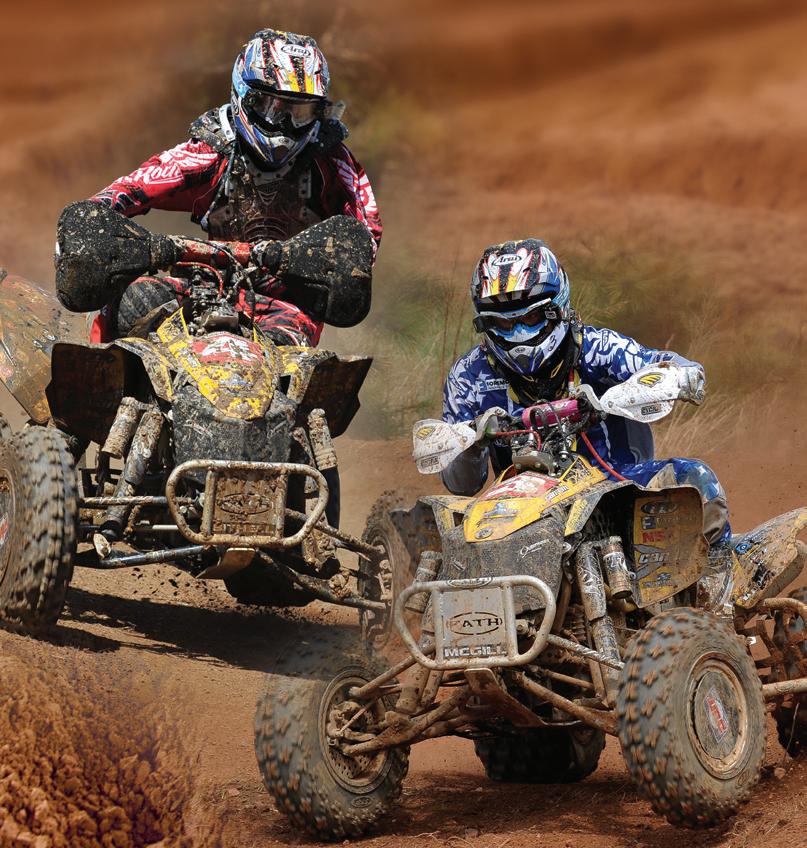
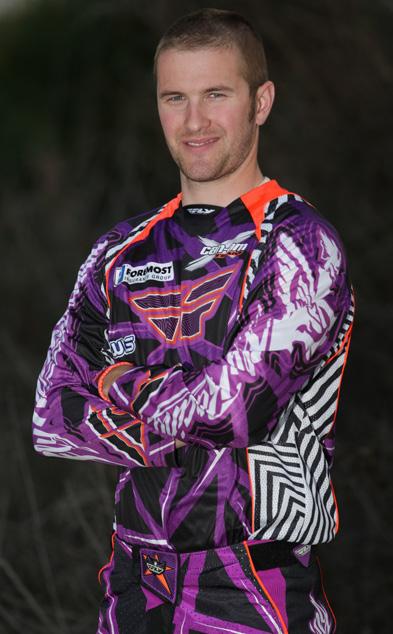
ADAM MCGILL AND CHRIS BITHELL: TWO GLADIATORS IN THE GRAND NATIONAL CROSS COUNTRY SERIES PAGE 10
The All-Terrain Vehicle Association (ATVA) protects ATVers’ right to ride. It also serves as a source of authoritative information about where and how to ride, products and events. The ATVA is part of the American Motorcyclist Association (AMA), the world’s most powerful voice for motorcyclists. ATVA Enthusiast membership is $29 a year. A Competition membership is $39 a year. For more information call toll free (866) 288-2564 or check us out online at ATVAonline.com.
THE ATVA NEWS TEAM
Bill Kresnak
Editor
Jen Muecke
Senior Designer
Jeffrey Guciardo Production Coordinator
ATVA News is published bimonthly by the All-Terrain Vehicle Association, 13515 Yarmouth Dr., Pickerington, OH 43147. Copyright by the ATVA. Printed in USA. No responsibility is assumed for loss or damage to unsolicited materials. Send story ideas and high-resolution photos to editor@ATVAonline.com. You may see them in ATVA News. Be sure to include your name and phone number.
FEATURES
DEPARTMENTS
SNAPSHOT
California’s Johnson Valley Under The Gun
Nick Haris, AMA/ATVA Western states representative
One of California’s riding meccas—the Johnson Valley Off-Highway Vehicle (OHV) Recreation Area near San Bernardino—could be lost unless off-highway riders act now.
The ATVA and the American Motorcyclist Association (AMA) are encouraging riders to submit comments regarding the Marine Corps Air Ground Combat Center proposed base expansion. This proposed enlargement of the facility could restrict your ability to access the Johnson Valley Off-Highway Vehicle Recreation Area.
The Marine Corps has released a draft environmental impact statement (DEIS) that analyzes potential environmental impacts associated with the proposed base expansion. The ATVA and AMA have been working with a number of concerned groups on this issue, and previously submitted comments to officials concerning the DEIS.
Based on our review, the “no action” alternative is simply the only acceptable option. That would mean that Johnson Valley would remain open for responsible OHV recreation.
The public has enjoyed the vast expanses of Johnson Valley for the past 50 years. The
189,000-acre area is the largest remaining area of public land open to recreation in the western United States, and current estimates are that 800,000 to a million visitors enjoy recreation throughout the area each year. Those activities include traditional family camping and OHV recreating, organized motorcycle and 4x4 competitions, hiking and wildlife viewing, gem and mineral collecting, rocketry, and land sailing. In addition, the open landscape has made the area popular with the film industry.
Johnson Valley presents an unparalleled landscape for the OHV enthusiast. It boasts steep red mountains, rolling hills, open valleys, dry lakebeds and sandy washes. Elevations range from 2,300 feet at Melville Dry Lake to 4,600 feet at Hartwell Hills.
this type of recreation has fallen dramatically.
No other designated “open” area in the California desert, or, indeed, the entire United States, provides such a variety of recreational opportunities to the general public.
According to the California State OffHighway Motor Vehicle Recreation Division (OHMVR), between 1980 and 2007 the number of registered OHVs statewide has increased by 370 percent. However, since
In fact, recent U.S. Forest Service and federal Bureau of Land Management (BLM) user surveys show an ever-increasing demand for these types of motorized recreational activities and areas.
Johnson Valley is one of the most important areas left for serving this growing demand for both in-state and out-of-state visitors.
It’s important for anyone concerned with keeping Johnson Valley open for public recreation to comment on the DEIS by the comment deadline of May 26.
Act now to protect the future of off-highway recreation at Johnson Valley
As of press time, the Marine Corps hadn’t provided an email address for submitting official comments. Therefore, your comments must either be submitted through the official comments website at https://extranet.tecinc. com/29Palms_DEIS/, or printed out and mailed by the official deadline of May 26:
Naval Facilities Engineering Command, Southwest ATTN: 29Palms EIS Project Manager 1220 Pacific Highway San Diego, CA 92132-5190
The most effective comment is an original one that tells your story. Because the economic impacts to the surrounding communities and the tegion’s economy are substantial. riders are asked to share their specific experiences and personal stories in their letter. Examples would include statements about the frequency of your visits to the area, the amount of money you typically spend per visit and other economic-related information.
Another important point would be a statement about how this loss of a riding area would force you and your family to frequent other recreation areas. The impact of displaced recreationists on other
recreation areas is significant and will result in increased pressure on other BLM and state land throughout southern California and the surrounding states.
The following is a suggested format for your letter, but it’s only meant to be a guide.
I’m writing for two purposes: (1) to register my objection to the Twenty-nine Palms Training Land Acquisition Project, and (2) to notify you that the DEIS for the project is defective with respect to its analysis of project-related impacts on the local economy, impacts for which no meaningful mitigation has been offered.
From my perspective, the only alternative I can support is the “No Action” alternative. Only the “No Action” alternative would allow continued public recreation in Johnson Valley at its current levels and also avoid economic impacts and disruptions to the surrounding communities.
My family recreates in the Johnson Valley OHV area (enter number) times a year. Our favorite places to visit in Johnson Valley are (name of specific location), where we engage in such activities as (___) and (____) .
When preparing for a trip, we spend (enter dollar amount) on fuel, groceries, and other supplies in our local area. Then, we spend an additional (enter dollar amount) in the Johnson Valley/Lucerne Valley/Victorville area while
ON TRACK
we are recreating. Over the years, we have patronized the following businesses (names of business), among others, in the Johnson Valley/ Lucerne Valley/Victorville Area.
If Johnson Valley, or any part of it, were to be closed due to the expansion of the Twentynine Palms Marine Corps Air-Ground Combat Center, there would be no reason for my family to travel to this part of the desert. Therefore, we would no longer spend money in Johnson Valley, Lucerne Valley, Victorville, or the other small communities that currently serve the recreating public near the proposed project site.
As written, the DEIS provides an inadequate and incomplete analysis of the project’s potential impacts on the local economy. The analysis is based on unproven assumptions that contradict both common sense and my own experiences as a frequent and long-standing visitor to Johnson Valley. To suggest that the proposed project, including the “Preferred Alternative,” would result in anything other than the significant disruptions of the local economy is misleading and speculative in nature.
This part of the DEIS, among others, must be completely revised and until such action is taken I can only support the “No Action” alternative.
Thank you for taking the time to consider my comments on this important matter.
More than 70 Lawmakers Now Support Kids Just Want To Ride Legislation
Measure Would End De Facto Ban On Kids’ ATVs
Legislation that would exempt kids’ ATVs and dirtbikes from the “lead law” that effectively bans them at the end of the year is gaining momentum on Capitol Hill.
There are now more than 70 co-sponsors to H.R. 412: The Kids Just Want to Ride Act, which was introduced by Rep. Denny Rehberg (R-Mont.) The bill seeks to exempt kids’ offhighway vehicles (OHVs) from the Consumer Product Safety Improvement Act (CPSIA) of 2008, known as the lead law.
That law bans the making, importing, distributing or selling of any product intended for children 12 and under that contains more than a specified amount of lead in any accessible part. It also requires all children’s products undergo periodic testing by independent laboratories approved by the Consumer Product Safety Commission (CPSC). The CPSC has delayed enforcing key portions of the law until after the end of the year.
Unless the CPSIA is changed by then, the sale of child-sized ATVs and dirtbikes will effectively be banned.
“As a motorcycling enthusiast myself for many years, I fully respect the importance of improving the safety of kids who
ride off-highway motorcycles and ATVs,” says Rep. Reid Ribble (R-Wis.), one of the bill’s latest co-sponsors. “But this is just another example of regulations creating the exact opposite effect of their original intent.
“This law actually makes kids less safe by eliminating appropriately sized off-highway motorcycles and ATVs, and forces young riders onto larger and more powerful machines not designed for them,” he says. “I’m proud to support the Kids Just Want to Ride Act and know that it will keep youth-sized motorcycles and ATVs available for safe and responsible use as they are intended.”
Rob Dingman, AMA president and CEO, thanked lawmakers for their bipartisan backing of the bill. He noted that it is important to get as many co-sponsors as possible to increase the bill’s chances of passage.
Dingman urged all concerned riders and parents to contact their federal lawmakers to ask for support. The easiest way to contact lawmakers is through the Rights section of the ATVA website at ATVAonline.com.
The Consumer Product Safety Improvement Act (CPSIA) of 2008 bans the making, importing, distributing or selling of any product intended for children 12 and under that contains more than a specified amount of lead in any accessible part.
Created to address the problem of children’s toys being imported from overseas that contained unsafe amounts of lead, the law has ensnared kids’ ATVs and dirtbikes because they have accessible components that contain lead.
U.S. Rep. Denny Rehberg (R-Mont.) has since introduced a bill to fix that oversight. The Kids Just Want to Ride Act would exempt kids’ off-highway vehicles (OHVs) from the CPSIA.
ATVA News recently spoke with Rehberg about this issue.
ATVA News: Why did you introduce the Kids Just Want to Ride Act?
U.S. Rep. Denny Rehberg: Like much of the country, most of Montana’s 147,000 square miles aren’t accessible by roads. That’s why off-road vehicles—ATVs, motorcycles, snowmobiles—are such an important part of our American culture. And like any culture, it’s important for parents to be able to share it with their children. That’s how culture is passed down from generation to generation.
I introduced the Kids Just Want to Ride Act for a very simple reason: Inexcusable bureaucratic bungling is undermining our heritage while putting kids at risk by forcing them to ride adult-sized ATVs and destroying jobs by taking safer youth-size models off the floor. When the Consumer Product Safety Improvement Act [CPSIA] was passed in 2008, nobody intended it to give the Consumer Product Safety Commission [CPSC] the ability to overreach and include youth-sized motorcycles, ATVs and snowmobiles in the prohibition of lead in “children’s products.”
It’s certainly important to keep kids safe from toys that contain harmful
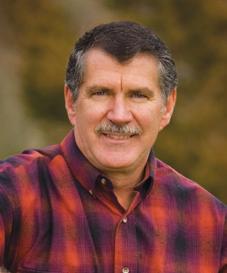
U.S. Rep. Denny Rehberg, Author Of The Kids Just Want To Ride Act
levels of lead, but the fact is that kids simply can’t access the few parts of these vehicles that might have lead components.
That’s why I immediately started working with impacted groups like the AMA [the American Motorcyclist Association, the ATVA’s parent organization] and Montanans who make a living selling these products, and riders who were upset about this new development and how it would affect their ability to access youth products. Congress never intended for these products to be impacted by the law, and we need to exempt them so that kids have access to appropriately sized youth vehicles and businesses aren’t further negatively affected.
AN: Why hasn’t the problem already been fixed? In other words, why is it so difficult to get legislation approved to exempt kid’s off-highway vehicles from the lead law?
DR: This is the second Congress in which I have introduced the Kids Just Want to Ride Act to exempt youth-model motorcycles, ATVs and snowmobiles from the “lead ban” provision of the CPSIA. This is a common-sense proposal that protects kids and helps the economy, so you’d think it would pass without controversy. Unfortunately, it shouldn’t be surprising that common sense isn’t always enough in Congress.
There are special interest groups in Washington, D.C., who think that all off-road vehicles should be banned because they think of them as harmful to the environment. Some groups think that kids shouldn’t even be allowed to ride ATVs at all. If an obscure lead rule gives them a way to achieve their goal of getting kids off motorcycles, ATVs and snowmobiles, so be it. This is what we’re up against in Congress.
This year, we have different leadership in the House. The anti-ATV groups no longer run the critical House Energy and
Commerce Committee, so I’m hopeful that we’ll finally be able to get the Kids Just Want to Ride Act fair consideration and that this problem gets permanently fixed. My goal is for H.R. 412 to be passed by the Energy and Commerce Committee and then sent to the House floor as soon as possible.
AN: What can parents and riders do to help get your bill passed?
DR: We’ve got to get the word out. If you haven’t done so already, call your member of Congress to see if he or she has signed on as a co-sponsor to H.R. 412. We have over 50 co-sponsors representing both sides of the aisle and from all over the country. If your member hasn’t yet signed on, go to the AMA’s website [AmericanMotorcyclist.com] to send them an “Action Alert” letter that can be sent through the website directly to your member of Congress.
Follow that e-mail up with a phone call to their office, and talk to your friends and family who are interested in this issue and encourage them to do the same. And when you’re done, send a Letter to the Editor of your local paper. Join the fight on Facebook and other social media. If we make enough noise, they can’t ignore us.
It’s our job as members of Congress to listen to our constituents, and it’s extremely important that we hear from folks who are passionate about kids having access to safer, appropriately sized products.
AN: Is there anything else you would like to add?
DR: Thank you to the AMA and its members for the support that they have shown the Kids Just Want to Ride Act. I am proud to work with the AMA community to ensure that kids have access to safer products and that industry jobs are retained. Let’s continue to build support for H.R. 412 so that we can pass the bill and have a permanent solution to this issue once and for all.
New Legislation Would Close 165,000 Acres In Colorado
U.S. Rep. Jared Polis Pushes ‘Hidden Gems’ Agenda
Last year, organizers of the Hidden Gems Wilderness Campaign gave U.S. Rep. Jared Polis (D-Colo.) a proposal to inappropriately designate 244,000 acres of public land in Colorado as Wilderness, hoping he would introduce legislation in Congress.
He did. But the legislation went nowhere.
Now, Polis is at it again.
On May 3, Polis introduced a bill to set aside some 165,000 acres as Wilderness— which would ban off-highway riding, bicycling, and most other forms of nonpedestrian recreation — and as special management areas that the Polis bill states must prohibit off-highway vehicles (OHVs).
Areas that would be affected by the bill, which is called the Eagle and Summit County Wilderness Preservation Act, include Red Table Mountain, Pisgah Mountain, Castle Peak, Tenmile and Hoosier Ridge.
Even though Polis is trying to distance
himself from the highly controversial Hidden Gems Campaign, this latest offering is a continuation of the Hidden Gems effort to ultimately lock up 379,000 acres of public land, including areas that have existing trails and other improvements that don’t meet the federal definition of Wilderness areas established by the Wilderness Act of 1964.
“The ATVA supports appropriate Wilderness designations that meet the criteria established by Congress in 1964, but anti-access advocates have continually abused the legislative process over the years in an effort to ban responsible OHV recreation on public land,” says Nick Haris, AMA/ATVA Western states representative.
“Land managers completed inventories of all the federal public land many years ago to determine what land Congress should consider for restrictive Wilderness designations,” Haris says. “What amazes me is that anti-public-land-access groups somehow keep finding new areas they
believe are pristine and should be designated as Wilderness.
“That’s impossible. What didn’t qualify for a Wilderness designation before can’t qualify now, years later,” he says.
Haris asks concerned ATV riders, motorcyclists and others to contact their federal lawmakers to let them know that riding opportunities on public land are very important for family recreation.
The quickest way to contact your lawmakers is to call them. You can find contact information for your elected officials by going to ATVAonline.com > Rights > Issues & Legislation. Enter your zip code in the “Find Your Officials” box. You can also get up-to-the-minute information on threats to motorcycling by subscribing to the AMA’s Action E-list at AmericanMotorcyclist.com > Rights > Resources > Action Alerts.
The Polis bill is just one of many efforts in Congress to try to end responsible offhighway riding on public land.
Restrictive Wild Lands Policy On Hold
But Battle Continues For Next Year
The funding measure that keeps the federal government operating through Sept. 30 includes language that bars the U.S. Interior Department from using any money to carry out the controversial Wild Lands land-use policy.
The Fiscal Year 2011 Continuing Resolution—which was approved by Congress and signed into law by President Obama on April 15— specifically states that no federal money “may be used to implement, administer, or enforce Secretarial Order No. 3310 issued by the Secretary of the Interior on Dec. 22, 2010.”
“This is a major victory for responsible off-highway vehicle (OHV) riders and others concerned about appropriate access to public land,” says Rick Podisaka, AMA Washington representative.
“But we can’t let up. Anti-access groups will continue pushing for implementation of the Wild Lands policy for the next federal fiscal year, which begins Oct. 1,” he says.
Secretarial Order 3310 created the Wild Lands land-use policy. The policy essentially allows federal Bureau of Land Management (BLM) bureaucrats to manage public land as if it had received a Wilderness designation from Congress, but without requiring congressional approval.
This new policy, if implemented, is widely expected to restrict or eliminate responsible OHV use in the affected areas.
Ask The ATV Safety Institute: Forest Riding
YOU ASK: I will be riding at a local national forest for the first time soon. Is there anything I need to know before I go?
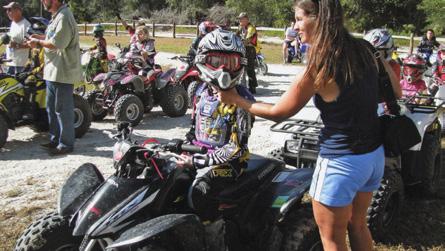
The ASI Responds: If you haven’t had a chance to take the ATV RiderCourse, we highly recommend that you do so before you embark on your trip. The class will help increase your safety awareness and skills, introduce strategies to identify and manage risks, emphasize environmental responsibility and help you enjoy your ride to the fullest.
Plan ahead, especially for a multiday ride. Contact the forest where you will be riding and get a copy of the “Motor Vehicle Use Map.” This map will show you where the trails are and which are open to ATVs. Many forests will have these maps available for download on their website.
Good planning, following the recommended maintenance schedule of your ATV, traveling in the company of others and practicing safe riding habits should eliminate most challenges.
Before you ride, you should ensure that
the ATV is in proper riding condition, gather all of the gear you’ll need for the ride— including your helmet and other protective gear, a survival kit (suitable for the location you are riding in), first-aid kit and the ATV’s tool kit—and leave an itinerary to let people know your route and date of return.
Suggested items to bring along include:
- Cell phone
- Tow rope
- Flashlight
- GPS unit
- Space blanket
- Food
- Water
- Signal flares
- Extra gasoline (in an approved container)
During the ride, have a map of the area that you will be riding, know the rules and regulations and remember to TREAD Lightly! (www.treadlightly.org) to ensure future use of the trails.
After the ride, clean your vehicle. By cleaning your ATV, you will get a chance
to inspect it for problems that may arise in the future (e.g., a missing bolt or loose hose clamp). Cleaning will also wash away invasive plant spores/seeds that can contaminate your local riding area.
Finally, enjoy the ride! You have gone through steps that will help mitigate problems that you may encounter on the new trail.
Also, bring a camera to capture the memorable moments you will have riding ATVs.
To enroll in an ATV RiderCourse near you, visit ATVSafety.org or call (800) 887-2887.
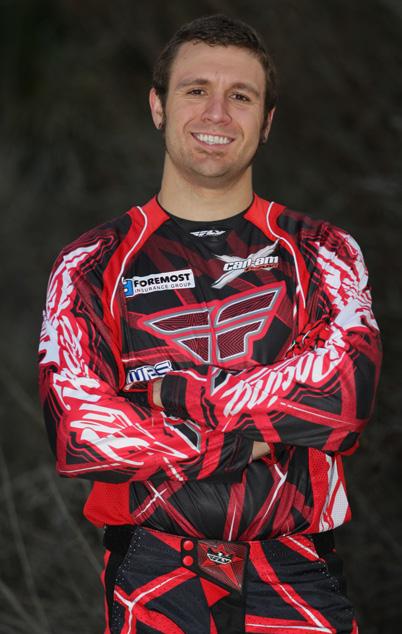
Hard Chargers: Adam McGill And Chris Bithell
Two Gladiators In The Grand National Cross Country Series
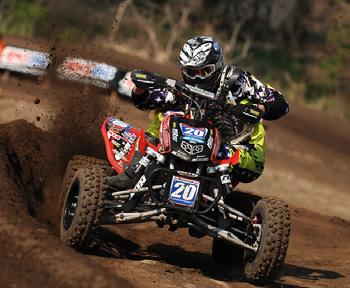
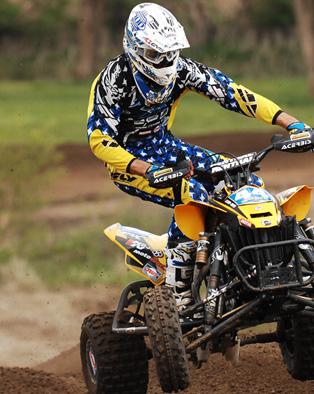
Warnert Racing/Can-Am DS 450 rider Adam McGill made a hard charge on the fifth and final lap to take the afternoon overall and the XC1 Pro class win in the Can-Am Grand National Cross Country Series in Morgantown, N.C., March 26-27.
The Steele Creek GNCC course was rough by the end of the day, but that didn’t prevent him from making his move to get around teammate Chris Bithell who took second overall.
This was McGill’s first win on the Can-Am DS 450, and the first afternoon overall for the machine in 2011.
By mid-May, McGill was in second for the GNCC title and Bithell was in third.
Cross-country racing is one of the most physically demanding sports in the world, forcing riders to tackle varied terrain involving hills, woods, mud, dirt, rocks and motocross sections. And they do that for two or three hours, making the grueling GNCCs a test of survival and speed.
At the halfway point in the 2011 series, the Warnert Racing/Can-Am
team of Adam McGill and Chris Bithell are in the thick of the fight to be this year’s GNCC champion. We caught up with them to find out a little bit about the season, their racing careers, and what they do when they’re not on the race course.
ATVA News: How is the season going for you? Who is your toughest competition?
Adam McGill: It is going really well this year. The Can-Am DS 450 is working great and I’ve had a few breaks go my way. Loretta’s getting canceled was a bit tough, though. I was really feeling strong in the lead-up to that race.
Toughest in my opinion? Chris Borich or Chris Bithell. Those guys want to win bad!
TAKING BACK
by Bill Kresnak photos by Jeff Kardas
Lawmakers And The ATVA Want To Return 43 Million Acres Of Public Land To The Public
In December, federal officials gave themselves the power to close public land without public debate. Now, members of Congress, with the support of the ATVA and American Motorcyclist Association (AMA), are responding with an effort to put more land into the public arena.
Call them the forgotten lands—vast tracts of federal public land that have been off-limits for most activities for years, if not decades.
There are almost 43 million acres of them. And despite the fact that the agencies managing them say they should be open, they’re not.
That’s because they were once considered for a highly restrictive form of federal protection called “Wilderness.” And, though they were subsequently deemed as not meeting the strict criteria for a Wilderness designation, they were never released back to the public the way authorities recommended they should.
Federal lawmakers, led by U.S. Rep. Kevin McCarthy (R-Calif.), are now targeting these lands, working to get them open. But their effort highlights what’s wrong with how land agencies and anti-access forces in Congress view the modern Wilderness program.
These days, far from protecting pristine lands, the Wilderness program has been co-opted by opponents of responsible offhighway vehicle (OHV) recreation.
“The Wilderness Act of 1964 made it
clear that approved acreage must meet very strict criteria to qualify for a Wilderness designation—and the AMA supports appropriate Wilderness designations that meet that criteria,” says AMA President and CEO Rob Dingman. “The problem is that anti-access advocates have been abusing the Wilderness process in order to ban responsible OHV recreation on public land.”
Remembering Forgotten Lands
Since 1964, Congress has designated approximately 107 million acres of public land as Wilderness. That’s an area bigger than the entire state of California.
Now, though, it’s the lands that were considered for the Wilderness designation by land managers, but later rejected, that are at the center of a heated new debate over how and where Americans should be allowed to use public lands, including enjoying motorized recreation.
The federal Bureau of Land Management (BLM) controls almost 7 million acres of these forgotten lands, and the U.S. Forest Service (USFS) manages more than 36 million acres of them.
This is land that the BLM and USFS, beginning in the 1970s, evaluated to determine whether Congress should designate the land as Wilderness, which is one of the most restrictive forms of public land management. Once Congress designates an area as Wilderness, nearly all forms of nonpedestrian recreation are illegal.
How restrictive is a Wilderness designation?
The Wilderness Act of 1964 specifically states that “there shall be no temporary road, no use of motor vehicles, motorized equipment or motorboats, no landing of aircraft, no other form of mechanical transport, and no structure or installation within any such area.”
In short, it completely eliminates traditional uses like ATV, motorcycle and bicycle riding.
The Wilderness Act of 1964 made it clear that approved acreage must meet very strict criteria to qualify for a Wilderness designation, notes Rick Podliska, AMA Washington representative.
The law states that the land must be “an area where the earth and its community of life are untrammeled by man” and that it “generally appears to have been affected primarily by the forces of nature, with the imprint of man’s work substantially unnoticeable.”
“The problem is that much of this land has been reviewed, and fell short of the standard for Wilderness designation—and yet has never been released back to the public,”
Podliska says. “That should have happened long ago.”
De Facto
Wilderness
Today, the BLM manages roughly 545 Wilderness Study Areas (WSAs), which are areas evaluated by the agency for possible Wilderness designations. Those WSAs encompass more than 12 million acres, primarily in the West.
After careful review, the BLM determined that 6.7 million acres of the 12 million shouldn’t be designated as Wilderness.
But all 12 million acres remain managed as if they have Wilderness land-use designations until Congress actually designates them as Wilderness or “releases” the land to be evaluated for other uses.
The Forest Service also has inventoried its land, and has some 52 million acres of what it calls Inventoried Roadless Areas (IRAs), which are much like WSAs. The Forest Service believes that 36 million acres of that land isn’t suitable for a Wilderness designation.
Even so, the entire 52 million acres is essentially managed under very strict landuse restrictions.
The bottom line adds up to almost 43 million acres of federal public land that have been closed to most uses for many years, even though they shouldn’t be.
That’s because various laws and directives require them to be managed strictly.
Opening Up Closed Lands
U.S. Rep. McCarthy and other lawmakers want to free up those 43 million acres so that they can be evaluated for various uses. Those uses could include responsible off-highway recreation.
In April, McCarthy—along with Rep. Rob Bishop (R-Utah), chairman of the House Subcommittee on National Parks, Forests and Public Lands; and Rep. Steve Pearce (R-N.M.), chairman of the Congressional Western Caucus— planned to introduce the Wilderness and Roadless Area Release Act of 2011.
The bill would remove the use restrictions on the 6.7 million acres of BLM land and 36 million acres of Forest Service land that the agencies have determined don’t qualify for a Wilderness designation. That action would allow land managers to determine new uses, if any, for the land.
The measure also would bar the BLM and the Forest Service from using other means to manage the land as if it had received a Wilderness designation, such as the U.S. Interior Department’s recently announced “Wild Lands” policy.
“As strong supporters of multiple-use principles for our public lands, we should release public lands from restrictive management practices that are unnecessary,” McCarthy told his colleagues. “This bill also would preserve and strengthen the robust local land management planning process
“The problem is that much of this land has been reviewed, and fell short of the standard for Wilderness designation—and yet has never been released back to the public,” Moreland says. “That should have happened long ago.”
by returning emphasis to local stakeholders and local communities who know best how to manage their public lands, rather than bureaucrats here in Washington.”
Rick Podliska, thanked McCarthy, Bishop and Pearce for moving forward with the bill.
“This legislation is long overdue,” Podliska says. “For years, anti-access groups have used WSAs and other tactics to inappropriately keep responsible riders off public land that is well-suited for motorized recreation. The time to change that is now.”
Wild Lands Policy Targeted
McCarthy, Bishop and Pearce made a point of specifying in their bill that the Interior Department’s (DOI) new Wild Lands policy can’t be applied to the almost 43 million acres of public land that would be released.
The language is a reflection of the controversy that has been sparked on Capitol Hill over the new DOI policy that could close millions of acres of public land to responsible motorized recreation.
On Dec. 22, Interior Secretary Ken Salazar signed Secretarial Order 3310, creating the Wild Lands land-use designation that essentially allows BLM officials to manage public land as if it had received the very restrictive Wilderness land-use designation from Congress, but without requiring congressional approval.
The new policy was sharply criticized on March 1 during a U.S. House Committee on Natural Resources hearing on “The Impact of the Administration’s Wild Lands Order on Jobs and Economic Growth.”
At that hearing, Idaho Gov. C.L. “Butch” Otter argued that the Interior Department “has circumvented the sovereignty of states and the will of the public.” Utah Gov. Gary Herbert maintained that “by bureaucratic fiat, one branch of government has overstepped and overreached and has devalued the rights of the states and the citizens.”
And Dennis Smith, a commissioner in Jackson County, Ore., said the Wild Lands policy “should be reversed in its entirety.”
AMA Aggressively Seeking Wild Lands Answers Efforts Include Meetings With Government Officials
The AMA Government Relations Department has doggedly pursued answers related to the new Wild Lands policy, while voicing its opposition to the policy.
AMA Government Relations Department staff in Washington, D.C., have met twice with officials of the federal Bureau of Land Management (BLM) to get answers and express concerns. They have also written numerous letters to officials and lawmakers.
In a letter dated Jan. 11 to U.S. Interior Secretary Ken Salazar, the AMA asked several questions including: What is the definition of “Wild Lands” as opposed to “Wilderness” and “Wilderness Study Area,” whether the BLM will work with local officials and user groups to preserve established uses such as responsible off-highway recreation, and what land is being considered for Wild Lands.
In a letter dated March 1 to the U.S. House Natural Resources Committee, The AMA wrote that he hopes the committee will include the public in deliberations over new public land uses.
The AMA has also joined forces with others to get answers.
In a letter dated March 16 to BLM Director Robert Abbey, a coalition of influential groups representing the interests of millions of off-highway vehicle (OHV) riders asked numerous questions related to the Wild Lands policy and stressed that there is strong grass-roots opposition to the policy.
Coalition members include the AMA, ATVA, the Trails Preservation Alliance, the Colorado Off Highway Vehicle Coalition, the Utah Shared Access Alliance, AMA District 36 (Northern California, Northwestern Nevada), AMA District 37 Off-Road Division (Southern California) and the California OffRoad Vehicle Association.
But BLM Director Robert Abbey defended the Wild Lands policy, testifying that it “restores balance to the BLM’s multipleuse management of the public lands in accordance with applicable law.”
Courts have ruled that the BLM inventory of public land must include “inventory of wilderness values and that BLM must consider those values in its land-use planning,” Abbey said.
At the heart of the controversy is whether federal bureaucrats or the people’s representatives in Congress, as well as local elected officials and the public, will decide the uses to be allowed on public land.
Devastating Effects
Many fear the Wild Lands policy will allow bureaucrats to create de facto Wilderness in areas that aren’t eligible to be managed that way. The policy is widely expected to restrict or eliminate responsible OHV use.
At the March 1 hearing, Otter testified that the new Wild Lands policy places a higher priority on protection of “wilderness characteristics” than on multiple uses of land.
The drastic change in public policy for public land “was done without public input,” he testified.
“Tourism and motorized recreation are important industries in Idaho,” Otter testified. “Cross country, off-highway vehicle travel is not allowed in WSAs and, most assuredly, will not be allowed in Wild Lands.
“Due to repeated closures of roads and trails on federal lands, experience tells us that existing trails will be closed and no new trails for OHV travel will be authorized in LWCs [lands with wilderness characteristics] and areas designated ‘Wild Lands,’” he said.
“The impact to motorized recreation in southern Idaho will be dramatic and, in turn, will impact Idaho’s economy,” he said.
Herbert noted that Secretarial Order 3310 “has undone years of collaborative and costly work between county officials, environmental organizations, natural resource industries, citizens and our local Bureau of Land Management offices as they have worked together to craft BLM resource management plans.”
He added: “This action usurps the authority of Congress, and for the first time ever, creates a favored category [wilderness characteristics] for multiple-use management, creates new levels of centralized bureaucratic review, contains vague, inconsistent and overly broad definitions of Wild Lands, and lacks clarity as to what is wilderness and what is subject to multiple use and development.”
Smith said his county and surrounding counties in Oregon have unemployment rates of 15 percent to 20 percent, and the Wild Lands policy could be devastating for them.
“Secretarial Order 3310 promises to make an intolerable situation even worse by locking
Act Now To Protect Your Right To Ride Oppose the Wild Lands Policy
All concerned riders should contact their federal lawmakers immediately and ask them to oppose the Wild Lands policy because it usurps congressional authority over public land-use designations, says Jessica Irving, AMA grassroots coordinator.
Besides asking their federal lawmakers to oppose the Wild Lands policy, riders should ask them to support the Wilderness and Roadless Area Release Act, she says.
The easiest way to contact your lawmaker is through the ATVA website: ATVAonline.com > Rights > Issues & Legislation.
There, you can find the names of the members of your congressional delegation as well as their addresses and telephone numbers, and you can let them know how you feel.
You can also send a pre-written letter from there.
Plus, you can sign up for the AMA Government Relations Department’s Action E-list to be notified by email when your support is needed to make a difference on important issues.
The AMA has a supply of “Stop the Land Grab” stickers that are a great way to show your opposition to unwarranted efforts by anti-access groups to restrict access to public land without saying a word.
STOP GRAB LAND THE
To request a sticker, note your ATVA or AMA number and send a self-addressed, stamped envelope to:
up even more BLM land, creating de facto Wilderness areas without congressional action or oversight, and without the support of local communities that will be adversely impacted,” he said.
Following the hearing, Podliska noted the Wild Lands policy usurps congressional authority over public land-use designations.
“With the new Wild Lands policy, antiaccess advocates and the administration are now seeking an end-run around Congress that could have far-reaching negative implications for the 245 million acres of public land managed by the BLM,” he said.
Fighting Back With Lawsuits
While members of Congress are grilling federal officials about the broad scope of the Wild Lands policy and taking testimony from state officials about the dire impacts, local officials are in court.
In a lawsuit filed on March 22 in U.S. District Court in Utah, Uintah County and the Utah Association of Counties charge that the Wild Lands policy will improperly create Wilderness areas in Utah.
Among other things, the complaint says
that the Wild Lands policy is in conflict with the BLM’s multiple-use mandate to manage public land for a variety of uses.
Meanwhile, Utah Chief Deputy Attorney General John Swallow confirmed for the Salt Lake Tribune newspaper that the state was planning to file a lawsuit of its own challenging the Wild Lands policy.
So from Washington, D.C., to Uintah County, the policy is creating controversy.
Wild Lands Policy Hits Major Snag
The funding measure that keeps the federal government operating through Sept. 30— which was approved by Congress and signed into law by President Obama in mid-April— includes language that bars the Interior Department from using any money to carry out the Wild Lands policy.
The Fiscal Year 2011 Continuing Resolution specifically states that no federal money “may be used to implement, administer, or enforce Secretarial Order No. 3310 issued by the Secretary of the Interior on Dec. 22, 2010.”
This is a major victory for OHV riders but the fight will continue for the next fiscal year.•
Chad Wienen Leading AMA ATV Motocross National Championship Series
John Natalie Just Four Points Back
Only four points separated points leader Chad Wienen from second-place holder John Natalie following round five of the AMA ATV Motocross National Championship Series presented by DWT on May 7.
The battle of the stars of the ATV MX series took place at Sunset Ridge MX Park in Walnut, Ill.
Nearly halfway through the season, the veteran riders were beginning to stake their territory while several rookie riders showed flashes of brilliance.
Although Wienen lined up at his home track, any advantages were pushed aside as Sunset Ridge debuted a new starting structure.
Joel Hetrick of Makson Construction/JB Racing/Maximum RPM/Hetrick Racing had no problem adjusting to the change as he shot out of the hydraulic-powered gates to capture the SSi Decals Holeshot Award.
But it didn’t take long for Wienen to put the move on Hetrick as the duo went sideby-side over the finish line jump on lap two.
Motoworks Can-Am’s John Natalie spent the first half of moto one chasing Hetrick and his Honda, who rode a tenacious race—even pulling away from the veteran rider at times. Natalie finally made his move about halfway through the race, turning his sights to Can-Am teammate Wienen out front.
The most intense racing action took place in the battle for fifth between Ballance Racing’s Thomas Brown, SSI Decals/Motoworks/JB Racing/Fox Shox’s Chase Snapp and Walsh Race Craft/Fox Shox/Maxxis/FMF’s Jeremy Lawson.
Brown got off to a bad start but hammered his way through the pack and put the pressure on Lawson, who was all
over Snapp for the fifth spot. Snapp, Lawson and Brown were in freight train formation heading into the corner—Brown railed the outside while Snapp tucked inside and Lawson followed.
Brown swept around Lawson first, and then went to work on Snapp, eventually slipping inside on the downhill corner. Snapp returned the favor the next time around, making contact with Brown and finishing out the race in fifth behind Baldwin Motorsports/JB Racing/PEP’s Josh Upperman.
Brown held off Lawson for sixth and the rookie claimed his first-ever Pro podium behind the Motoworks Can-Am duo of Wienen and Natalie.
“You had to be really patient out there, the track was only turning a couple fast lines and you really had to pick them right,” Wienen said. “I had to be really safe on the lines I picked and I just all of the sudden turned [on] the light switch and hit it.”
Hetrick was on fire aboard his Honda machine, grabbing yet another SSi Decals Holeshot Award in moto two with fellow Honda rider Upperman close behind.
The Can-Am duo of Wienen and Natalie tucked in behind the Honda riders and immediately began picking away. Wienen railed the outside line to steal second from Upperman and it wasn’t long before Natalie followed suit.
The fans cheered home-state rider Wienen hard as he pushed his way past Hetrick for the lead and never looked back. Hetrick lost steam midway through the moto, falling victim to another Can-Am rider for the second position.
“I got a couple blisters on my hands and had real bad arm pump for a while, I couldn’t even push the gas through the turn
but that eventually went away and I just cleared my head and calmed down after that,” Hetrick said.
Natalie heightened his pace near the end of the moto, turning lap times nearly two seconds faster than the leader. With two laps to go, Natalie put himself within striking distance of his teammate until his bike started smoking.
Natalie lost his momentum as his bike slowly deteriorated, making it as far as the corner before the finish line before it shut off. He pieced together a sixth place overall despite his moto two breakdown.
“It stinks what happened to John out there but I’ll take it,” Upperman said. “That’s all I’m asking, is to be in the top three.”
After battling to the end in moto one, Chase Snapp and Thomas Brown found themselves paired up once again in moto two—this time Brown controlling the fate. Snapp, Lawson and Joe Byrd were close behind but through the rough track conditions couldn’t make the move around Brown.
Upperman took home a comfortable third after Natalie dropped out and Brown finished with fourth to take the fourth
Chad Wienen
John Upperman
John Natalie
Photos Mike RothEvent Pix
overall with Snapp going 5-5 for fifth.
Wienen now holds a four-point lead over Natalie in the championship standings heading into round six. Upperman, who has been consistent all season, holds the third position over Lawson and rookie Snapp bumps out Joe Byrd for the fifth spot.
The AMA ATV Motocross Championship Series heads to Steel City MX in Delmont, Pa., May 21 and 22, with Pro class racing starting at 1 p.m. Saturday, supported by 37 amateur classes throughout Saturday and Sunday.
AMA Pro ATV Results - Sunset Ridge MX Park May 7
1. Chad Wienen
2. Joel Hetrick
3. Josh Upperman
4. Thomas Brown
5. Chase Snapp
6. John Natalie
7. Jeremy Lawson
8. Joe Byrd
9. Nick DeNoble
10. Adam Clark
AMA ATV Motocross Championship Pro Point Standings
1. Chad Wienen (221) 2. John Natalie (217) 3. Josh Upperman (189) 4. Jeremy Lawson (172) 5. Chase Snapp (140) 6. Joe Byrd (137) 7. Nick DeNoble (134) 8. Joel Hetrick (122) 9. Travis Moore (117) 10. Thomas Brown (115)
AMA ATV Motocross Championship 2011 Schedule
May 21-22: Delmont, Pa.
June 4-5: Millville, Minn.
July 2-3: Millfield, Ohio
July 16-17: New Berlin, N.Y.
July 30-31: Buchanan, Mich.
Aug. 13-14: Hurricane Mills, Tenn.
Battle Royale In Can-Am Grand National Cross Country Series
Chris Borich, Adam McGill and Chris Bithell Duking It Out
Chris Borich, points leader in the Can-Am Grand National Cross Country Championship (GNCC) Series, is beginning to settle into a groove out front this season.
But Warnert Racing Can-Am riders Adam McGill and Chris Bithell have been challenging the Rockstar Makita Suzuki rider every weekend so far.
Borich typically hangs back for the first hour or so and then turns it on full throttle in the final laps to secure the win almost every time. However, heading to the freshly designed course in Gosport, Ind., May 14-15, may give McGill and Bithell the tools they need to hold Borich off in the end.
The trio, as well as the other competitors in the GNCC series, had to sit out the Parts Unlimited Loretta Lynn’s GNCC April 30May 1 because of bad weather.
As a result of extreme rains, the GNCC course and parking area were under water
at Loretta’s. After talks with local public safety officials, Racer Productions had to postpone the event for the safety and well being of all riders, fans and families.
“Last evening’s rain was harder and longer than I have ever witnessed at Loretta Lynn’s,” said Trail Boss Jeff Russell, a veteran of three decades of racing and organizing events at Loretta Lynn’s.
Can-Am GNCC Series 2011 Schedule
May 14-15: Gosport, Ind.
May 28-29: Patton, Pa.
June 25-26: Snowshoe, W.Va.
July 9-10: Millfield, Ohio
Sept. 10-11: New Berlin, N.Y.
Sept. 24-25: TBA
Oct. 8-9: St. Clairsville, Ohio
Oct. 22-23: Crawfordsville, Ind.
Michael Coburn Wins Season Opener of AMA Racing ATV Extreme Dirt Track National Championship Series
Sparks Racing’s Michael Coburn, the defending Pro series champion, picked up right where he left off the 2010 season by taking both the Pro and Pro-Am wins at the 2011 season opener of the 2011 AMA Racing ATV Extreme Dirt Track National Championship Series on April 30.
This was the first time in the series history that the Kinston Fairgrounds in Kinston, N.C., has hosted the AMA Racing ATV Extreme Dirt Track series. Despite heavy rains the week before, track conditions were good and everyone was pleased with the attendance.
“They did a really good job of promoting this race and there was a good turnout of both spectators and racers,” said Harold Goodman, who has made a full-time return to the series for 2011.
There were more than 240 racers signed up for the Saturday night event, which made for an exciting evening of racing.
In the Pro main event, Michael Coburn grabbed the holeshot and led from start to finish—taking his first Pro win of the season.
“I got a great start. My Hoosier tires hooked up great and I was able to keep pulling away while everyone else was battling behind me. I’m really happy to take the first win. It gives me a lot of motivation for the rest of the season,” Coburn said.
Brian Ace, who took third in his heat race, charged hard and rode well as he was able to hold off Kristopher Bures and Brad Riley battling for the third spot. But the pair locked wheels, which gave Ace some breathing room at the finish to claim the second spot on the podium.
Can-Am’s Chuckie Creech overcame a
second row start to claim the final spot on the podium.
“I had a mechanical issue in the Pro heat race and I had last gate pick, so I was on the second row. I decided to take an option lane that no one else was using in other heats and it worked. I was able to get up into fifth right away,” said Creech, who also took advantage of the collision between Riley and Bures to move up another two spot to claim a thirdplace finish with the DS 450.
Veteran racer Goodman made his full-time return to the series and did well, but started from the second row after suffering a setback in his heat race.
Goodman followed Creech into the option lane off the start and moved into sixth place. Goodman was also able to take advantage of the Bures-Riley incident and moved into fourth place, where he would finish.
“I’m really happy to be returning to the EDT series. It’s a great series with great people,” Goodman said.
2011 AMA Racing ATV
Extreme Dirt Track National Championship Series Schedule
May 14: Muskogee, Okla., Thunderbird Speedway
June 11: Sikeston, Mo., Sikeston Race Park
July 9: Danville, Va., Birch Creek Motorsports
July 23-24: Ashtabula, Ohio, Pine Lake
Aug. 6: Franklin, Pa., Tri-City Speedway
Aug. 20: Sioux Falls, S.D., Sioux Valley Cycle Club
Sept. 3: Goldsboro, N.C., Busco Beach
MARKETPLACE
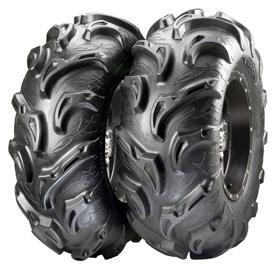
ITP Unveils Mayhem Tires
ITP calls Mayhem “the new bad boy in ITP’s proven ATV/UTV tire line.” The company says the Mayhem is its most aggressive mud/trail tire ever. The Mayhem features a deep-lug tread design to handle the nastiest mud holes while still making short work of harder trail surfaces. Trail comfort and handling are further enhanced by the Mayhem’s lightweight carcass construction. The company says that exceptional acceleration and braking characteristics as well as balanced cornering qualities make the Mayhem a capable, confident all-around performer. The ITP Mayhem is available in 26x9-12 and 26x1112 sizes.
MSRP: 26x9-12 $130.65, 26x11-12, $144.62
Info: ITPTires.com
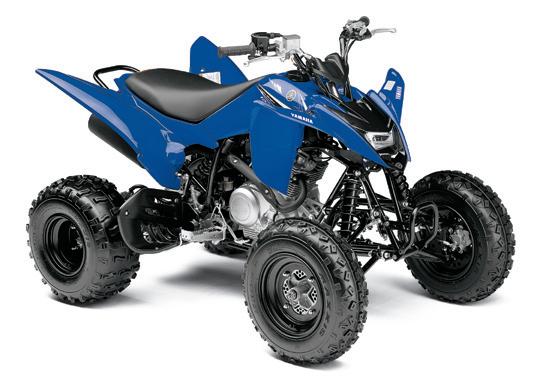
Yamaha Unleashes All-new Raptor 125
Yamaha has unveiled its all-new Raptor 125 for the entry-level and/or step-up sport ATV market. Yamaha says this is the first 125-class sport ATV from a major ATV manufacturer. The company calls the Raptor 125 a true sport machine with a 124cc, two-valve, single-overhead cam engine, five-speed manual transmission, electric start, hydraulic disk brakes and five-way preload adjustable suspension. The new 125 has the same suspension components and handling characteristics of the Raptor 250.
MSRP: $3,399
Info: Yamaha-Motor.com
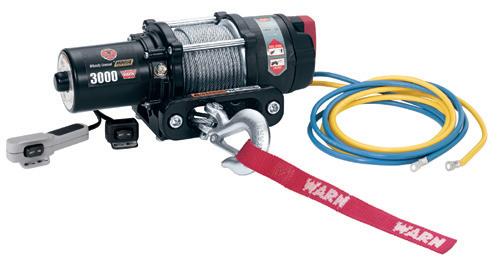
NRA By Moose Utility Division Announces New Winch
NRA by Moose Utility Division has announced its improved 3000 Pound Winch which features a .9 horsepower motor, 50 feet of 3/16-inch wire rope, 6 gauge wiring and a larger, centered drum. The company says the winch boasts 3,000 pounds of power to pull even the heaviest ATVs out of poor situations, a more ergonomically designed clutch engagement control, dynamic braking, three-stage planetary gear train and a minirocker handlebar control.