Contact the Editorial Team at: submissions@ama-cycle.org
Michael Kula Business Development Manager (949) 466-7833, mkula@ama-cycle.org
Alex Boehm Associate Sales Representative (614) 729-7949, aboehm@ama-cycle.org
All trademarks used herein (unless otherwise noted) are owned by the AMA and may only be used with the express, written permission of the AMA.
American Motorcyclist is the monthly publication of the American Motorcyclist Association, which represents motorcyclists nationwide. For information on AMA membership benefits, call (800) AMA-JOIN or visit AmericanMotorcyclist.com. Manuscripts, photos, drawings and other editorial contributions must be accompanied by return postage. No responsibility is assumed for loss or damage to unsolicited material.
Makenzi Martin Membership Event and Program Manager
Lauren Kropf Marketing and Communications Specialist
Bob Davis Program Volunteer Specialist
Jack Emerson Corporate Communications Specialist
MEMBER SERVICES
Amanda Donchess Director of Membership
Lynette Cox Membership Manager
Tiffany Pound Member Services Manager
Pam Albright Member Fulfillment Coordinator
Carolyn Vaughan Member Fulfillment Representative
Stephanie McCormick Member Services Representative
Vickie Park Member Services Representative
Charles Moore Member Services Representative
Kelly Anders Member Services Representative
Sarah Lockhart Member Services Representative
Sieara Thomas Member Services Representative
John Bricker Mailroom Manager
INFORMATION TECHNOLOGY DEPARTMENT
Shaun Holloway Director of Information Technology
Jarrod Gilliland Application Developer
Ed Madden Systems and Database Analyst
Rob Baughman Support Technician
American Motorcyclist magazine (ISSN 0277-9358) is published monthly (12 issues) by the American Motorcyclist Association, 13515 Yarmouth Drive, Pickerington, OH 43147. Copyright by the American Motorcyclist Association/American Motorcyclist 2021. Printed in USA. Subscription rate: Magazine subscription fee of $39.95 covered in membership dues.
Postmaster: Mail form 3579 to 13515 Yarmouth Drive, Pickerington, OH 43147. Periodical postage paid at Pickerington, Ohio, and at additional mailing offices.
• Mimi & Moto Children’s Books
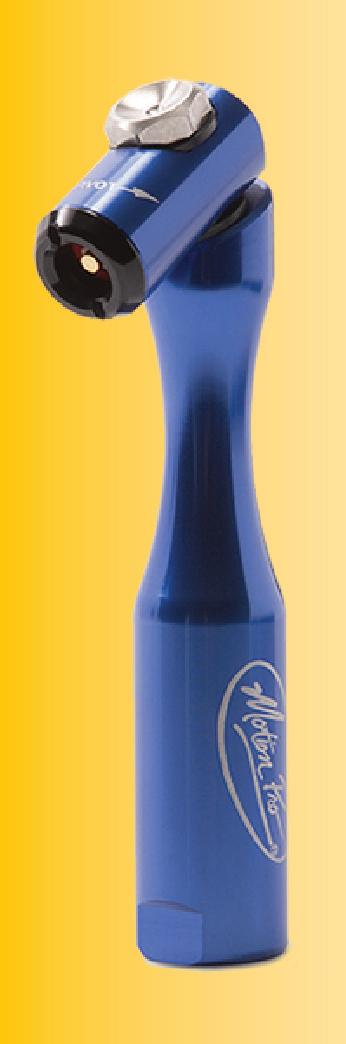
• Motion Pro: Pro Fill Airchuck
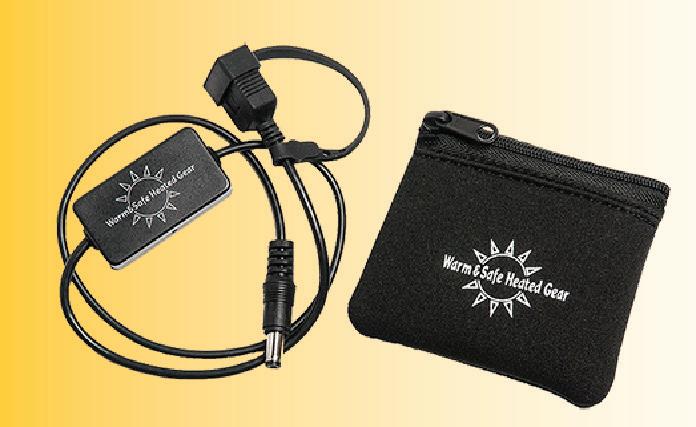
• Warm & Safe 12V USB Adapter
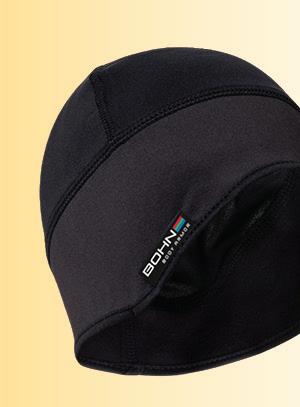
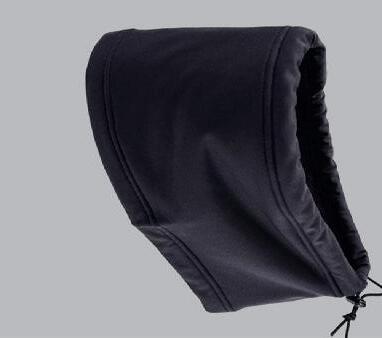
• Bohn Armor Skull Cap
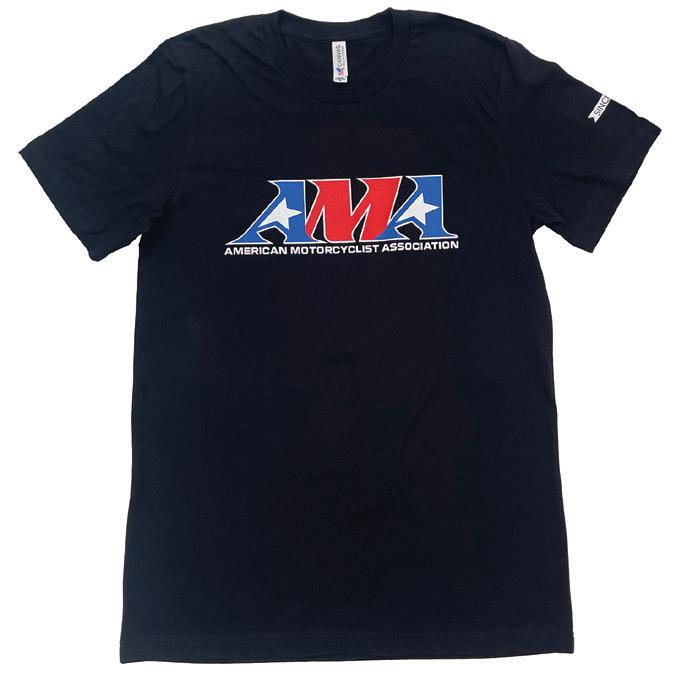
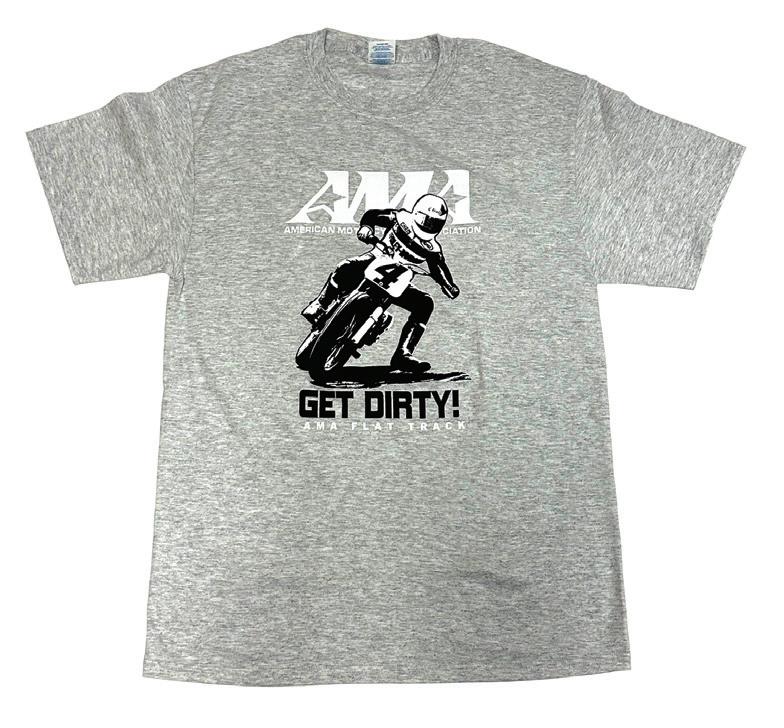
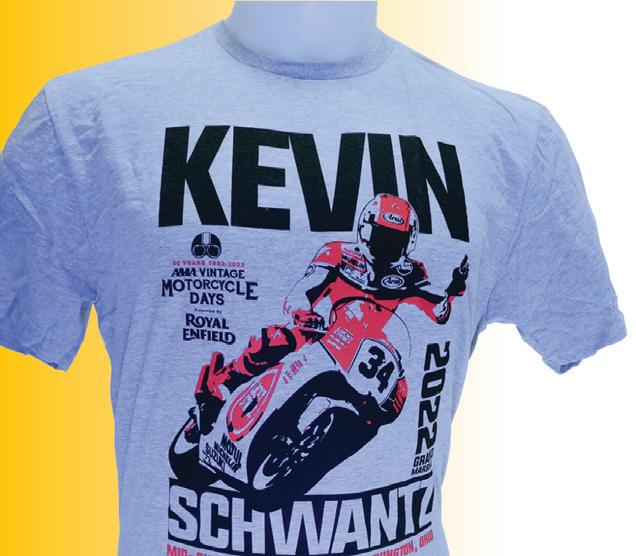
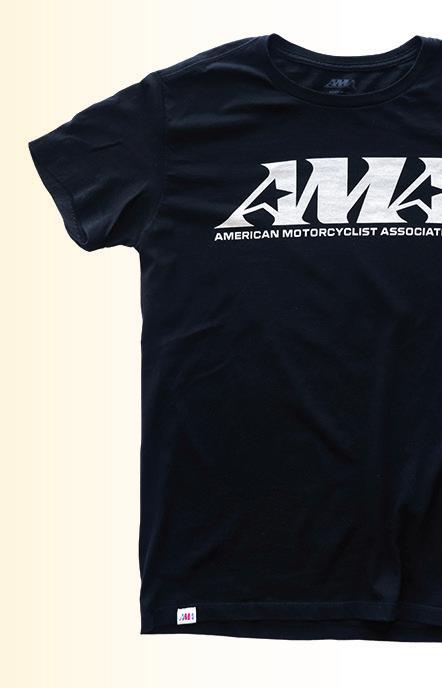
• AMA T-Shirt
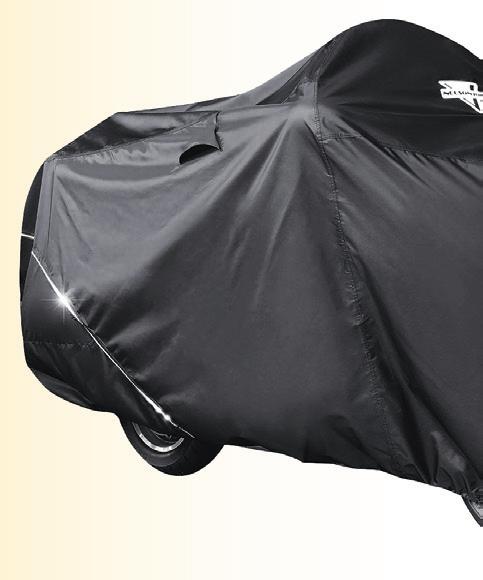
• nelson-rigG cover
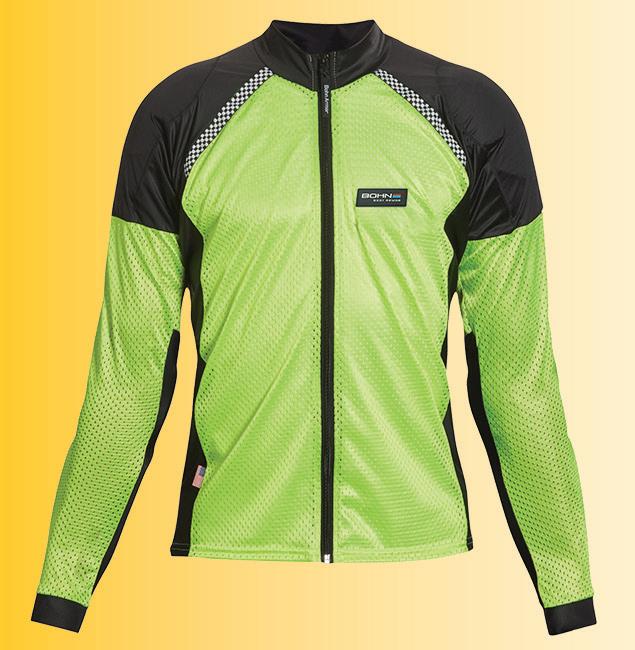
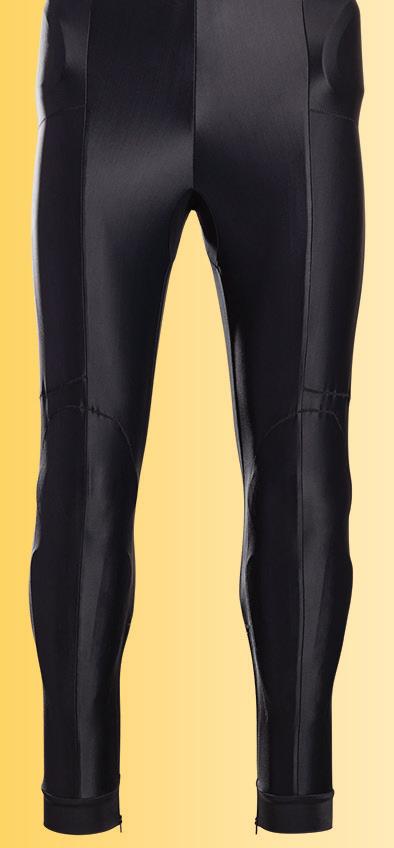
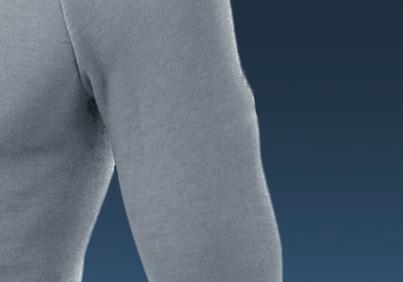
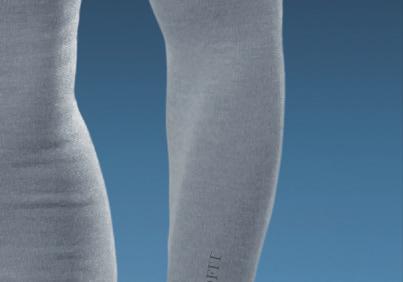
• Bohn Armor Pant & Shirt Set
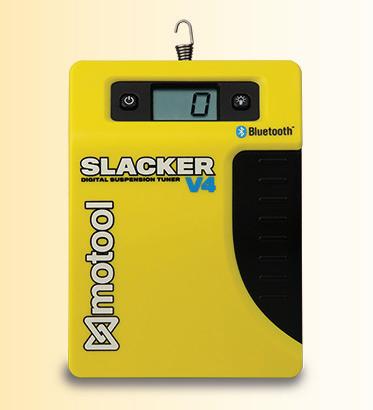
• Motool Slacker & Street Kit
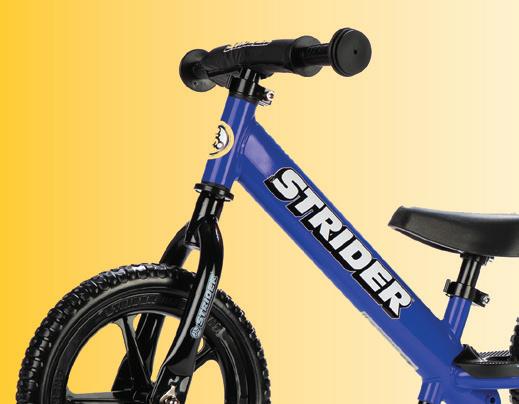
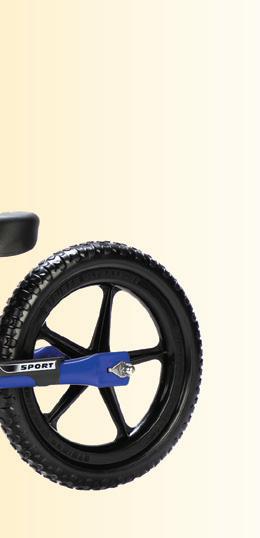
• Strider Bikes strider sport
Members who join or renew their AMA membership from Jan. 1, 2023, through Dec. 31, 2023 are automatically entered to win one of these awesome motorcycling prizes!
Seems like I’m having a lot of “rediscovery” moments these days. It’s stuff I already know, but seeing or hearing it after I haven’t in a while is usually pretty satisfying.
Not sure if it’s a first sign of senility or, as I joke to colleagues and friends, that my brain is in need of a serious RAM upgrade. (“Hey, did that new chip for Mitch show up? We need to implant that puppy asap!”)
It happened recently in a musical sense, as I’d gotten into a serious Eva Cassidy mode over the last couple of months (her story and voice are amazing), but when I chanced on a Rickie Lee Jones CD in my library (Pirates, her second release), I was reminded again why RLJ has been a fave since she debuted back in 1979.
It occurred again a couple weeks ago at dinner in Livigno, Italy, during the first of three week-long AMA Alps Challenge tours I was taking part in with Edelweiss Bike Travel during the entire month of August. Our group was chatting about the tour five days in when Josee B. from Ohio (wife of Joe B., also from Ohio) said something that seemed to resonate pretty strongly.
“I feel like I’m gonna come away from this tour with some new friends,” she said with a good bit of earnestness, and by the nods of agreement I saw around the table it was pretty obvious she wasn’t alone in the thought.
Having done more than a dozen of these tours over the years, I knew exactly what she meant, but having it tossed onto the table like just-from-theoven pizza — along with the fact we were in Italy — gave it some serious “rediscovery” flavor.
When you boil it all down, Josee’s sentiment is really what guided tours like these (or impromptu rides or treks
PERSPECTIVES THE HUMAN THING
BY MITCH BOEHM
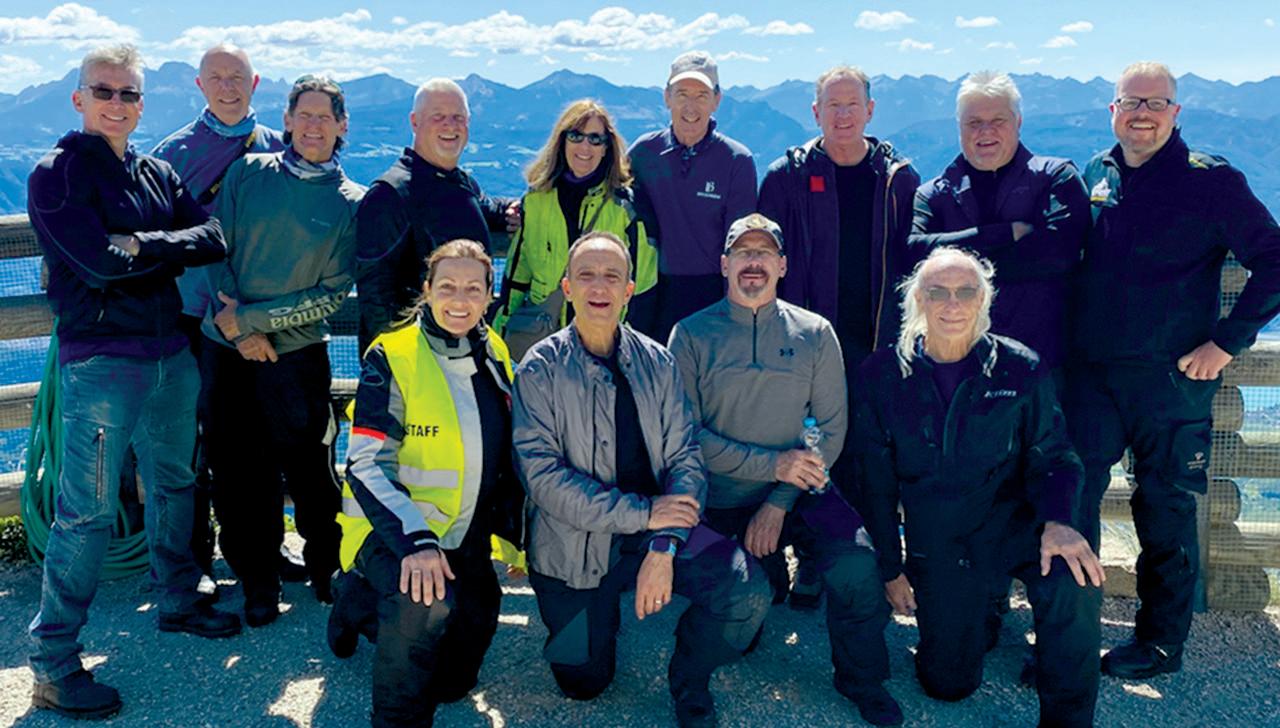
Part of our Alps Challenge I group gathered on the spectacular Hotel Panegal terrace overlooking beautiful Bolzano, Italy. That’s Josee in yellow up front, with hubby Joe directly behind her, and 31tour Charlie to her left on the end. A great group, and a great tour. Look for a feature story soon.
with your friends) are all about. Yeah, the roads and sights and history and grandeur of the Alpine region are spectacular, and to some they’re the best on earth (though don’t tell that to AM contributor Aaron Frank… see this month’s cover story).
But wherever you’re touring, be it Asia or Europe or South America or Australia or the good ol’ U.S., the human element and the camaraderie that’s developed on motorcycle adventures with friends and strangers alike is almost always what makes them extra special — and why some folks just can’t get enough.
A great example was 70-something Charlie G., who did all three Alps Challenge tours in August and racked up Edelweiss treks 29, 30 and 31 in the process. Charlie is retired, a hoot to ride with, and seems happy as a clam spending his kid’s inheritance.
Near Bolzano, Italy, a couple days earlier as we saddled up after a particularly good coffee stop, I caught the eye of Bruce B. who was riding with his wife Susan on their first Euro
tour. “This is just terrible,” he said with a sarcastic grin. “I can’t wait to get back to work!” We both laughed, but that’s the reaction folks have on these tours, and why the groups I rode with enjoyed each other’s company so much.
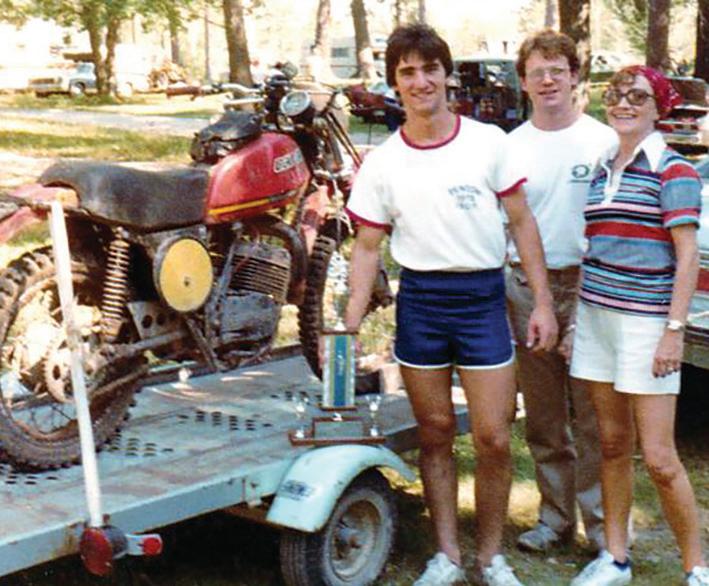
Being with motorcycle people for nearly three weeks reminded me of some of the ones in my life. I will never forget, for instance, the ride me and a few college buddies took to Laguna Seca back in ’84 to watch Spencer, Roberts and Mamola. Or my motocross season in ’83 with my mom, when we traveled and camped with a couple of local families week in and week out. Or the many rides I’ve taken with industry colleagues over the decades. Good times, and a lot of good people.
As we all know, the human element of motorcycling is wonderfully satisfying, even if you have to be reminded of it on occasion.
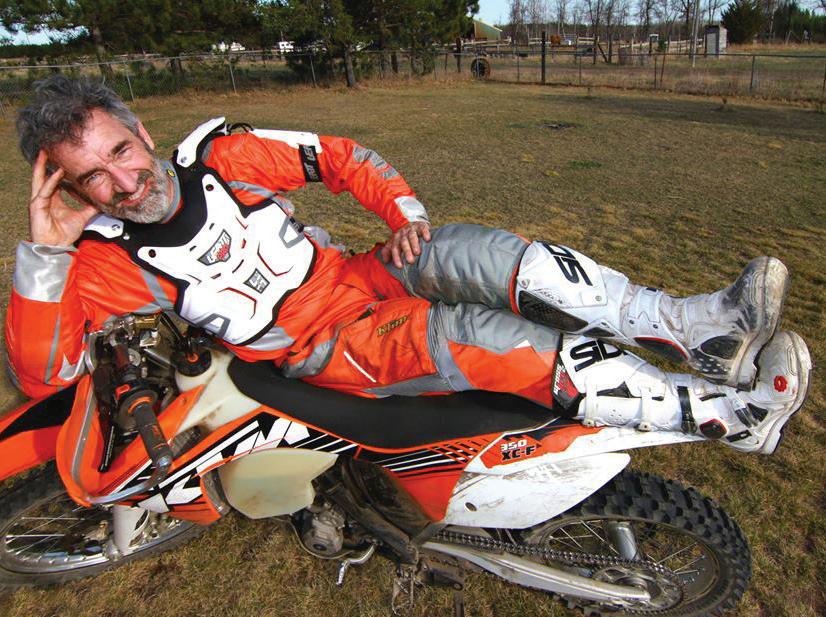
Mitch Boehm is the Editorial Director of the AMA and a long-time member.
Japanese baselayer brand Zero t has created a range of game-changing products to keep you toasty warm and ensure that plummeting temperatures won’t stop you getting out on the road or track this winter. Designed by a passionate team of innovators and baselayer specialists, the Zero t Heatrub Ultimate is the most technically advanced baselayer on the planet and completely di erent to any other product you’ve ever worn before.
WHAT MAKES IT SO GOOD?
1. It’s ve times warmer than a standard baselayer
That is quite a claim, but it’s a fact. Tested at the iconic Boken Institute in Osaka, the Heatrub Ultimate baselayer recorded a Heat Retention Rating of 0.78; a standard baselayer would have a rating of between 0.1 to 0.14. And for reference, a jumper would typically have a rating of 0.3. The Ultimate performs best in a temperature range of 14° thru 50° Fahrenheit – so even in the coldest of conditions and most biting of winds, you’ll still be nicely heated.
2. Instant warmth the moment you put it on
A standard baselayer traps body heat between your skin and the material, so it takes a little time before you feel the bene ts. With Zero t, ve separate fabrics, along with a patented knitting process, create instant warmth as soon as you pull it on. And, because of the construction of the garment, this heat is retained for the duration of your time on the bike, making it an essential piece of kit this winter.
HEATRUB MOVE BASELAYERADAPTABLE WARMTH ON THE GO
The Ultimate baselayer is complemented by the Heatrub Move ($76), which is twice as warm as a standard baselayer and ideal for milder temperatures of between 23° thru 53° Fahrenheit. It features a 45% polypropylene construction on the inside of the baselayer and a hollow polyester shell that combine for ‘Adaptable Warmth’, keeping you cosy when you’re at a standstill yet regulating temperature and ensuring you don’t overheat as your ride progresses. The construction removes sweat from the skin and evaporates it o the surface of the baselayer quickly, so that nasty feeling of ‘cold sweat’ never materialises.
3. Heating from top to toe this winter
Innovative ‘Heat Threads’ positioned on the inside of the garment gently rub against your skin and are activated upon even the smallest of movements, creating positive warmth across your body. We also produce Heatrub Ultimate Leggings, Heatrub Ultimate Socks and a Heatrub Ultimate Neckwarmer, all of which are made from the same material and work in exactly the same way, so you can have top-to-toe warmth on even the longest of journeys with Zero t.
4. Ride free with fewer layers and greater warmth
The Ultimate is the ideal product for bikers who hate traditional tight baselayers. Over the years, you may well have ‘layered up’ in order to combat the e ects of cold weather. This is where we are changing the game. The Heatrub Ultimate is so good at keeping you warm, you won’t need multiple additional layers. And the unique fabric mix means it doesn’t need to rely on compression to keep you warm, making it super comfortable too.
Five times warmer than a standard baselayer
No need for multiple additional layers – a game-changer
Instant heat the moment you put it on
Unlike most high school students, I never thought much about owning a motorcycle. Most of Canada has long, cold winters when bikes aren’t of much use. When the Japanese motorcycle craze broke out, many of my high-school pals bought Honda 90s. I enjoyed being a passenger with them on dirt trails into the hills, but when winter rolled around my ’55 Chevy was the most popular vehicle in my group. It had a big back seat that could accommodate four lanky teenagers or, more importantly, one girlfriend.
MEGAPHONE FROM TORQUE TO T WIN
BY B. JAN MONTANA
Lonnie Manybears sold me a Honda CB350. That’s just what I needed to enjoy the mountains…or so I thought. In less than a week I ran into the Samurai Motorcycle Club at a Lethbridge bar. I parked a safe distance away from their intimidating Honda 750s and Kawasaki Z900s, but when they saw me carrying a helmet, they immediate-
Once I graduated from York University in Toronto, I immediately left Ontario and moved to southern Alberta. I was sick of the endless, wet, overcast, humid, winters and brief, overcast, bug-infested, summers — which were even more humid. The town of Lethbridge, Alberta, was famous in Canada for having the most hours of sunshine per year, and even though it could get very cold in winter, the sun somehow made it bearable.
As Montana’s Glacier National Park was only 90 minutes away, it wasn’t long before I was enjoying its incredible beauty in my car. That enjoyment could be spoiled, however, by a single, lumbering motorhome refusing to use the pull-outs. After several miles, a couple of motorcycles passed both by my car and the Winnebago as if Glacier’s twisty, narrow Logan Pass was a freeway. I knew what I had to do.
I rushed to the Honda dealer after work the next day, where owner
It had more torque than any motorcycle in our group. I rode it up the mountain in third gear like an automatic, without the need to shift. That advantage instantly made me one of the fastest riders in our group. It impressed them so much I couldn’t pay for any beers that evening in East Missoula, Mont.
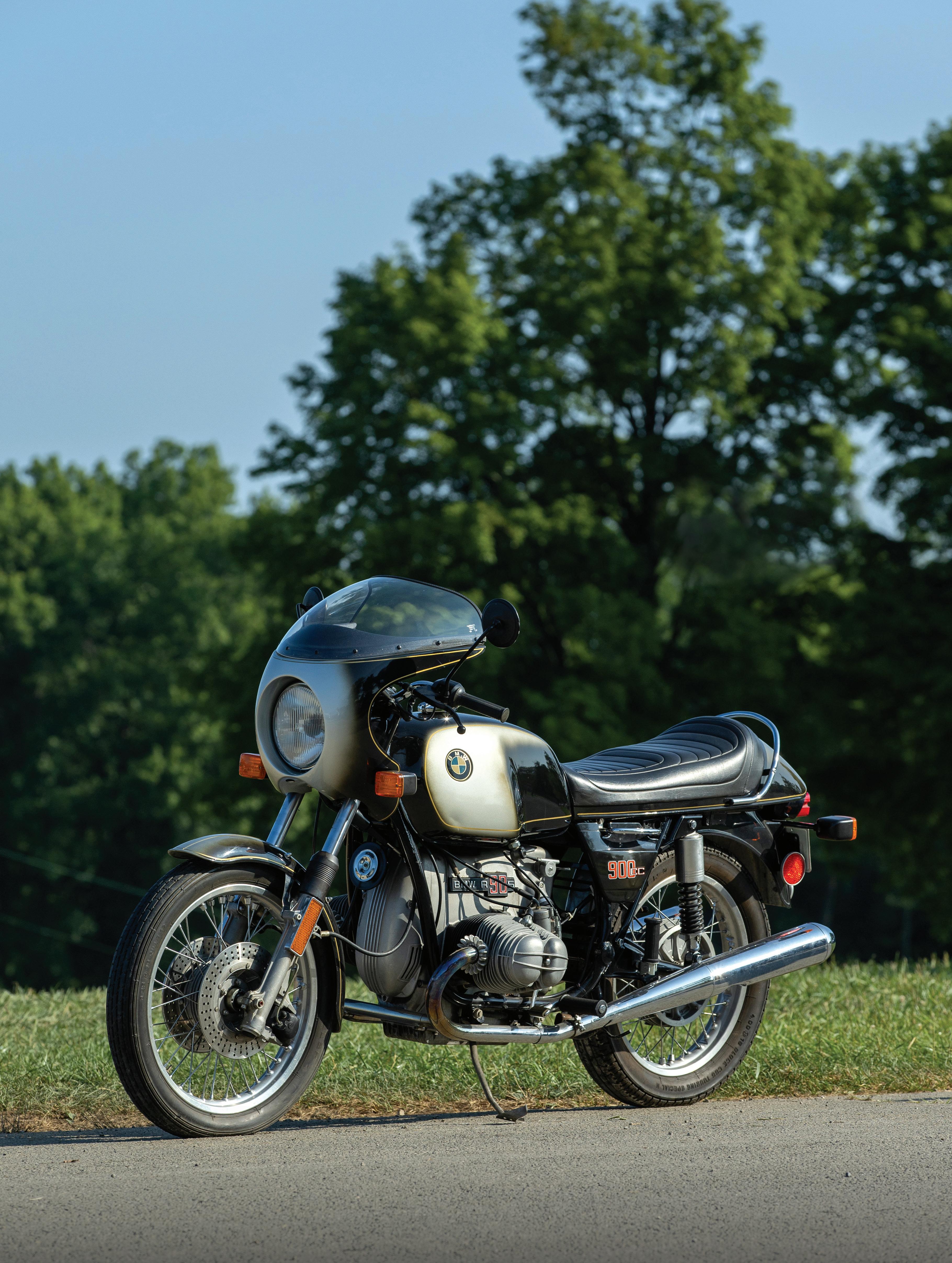
With its lower weight and low center of gravity, his Daytona Orange R90S seemed as nimble as a bicycle.
ly called me over to their table. I soon made a new group of friends. Motorcycles have a tendency to do that.
The following weekend we were off to Coeur D’Alene, Idaho, for a music festival. They rode hard, and I tried to keep up on my 350. By the time we got there, I’d burned nearly a quart of oil.
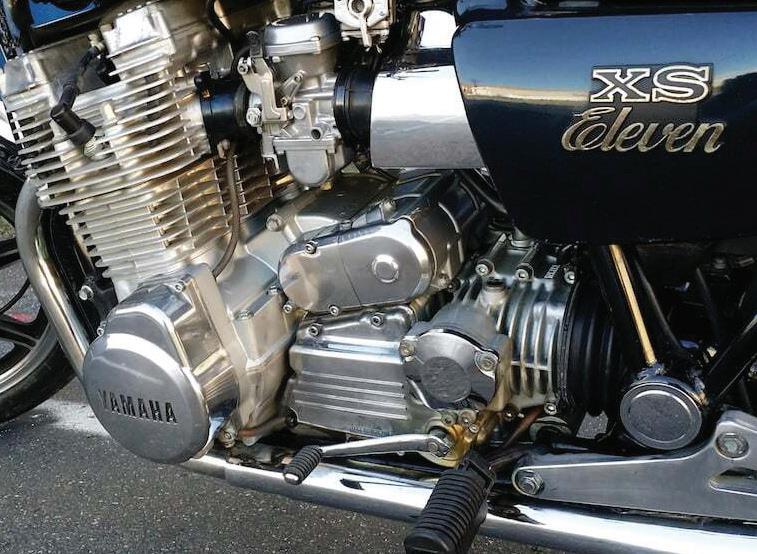
I explained the problem to Lonnie when I got back to Lethbridge, and he told me about a Yamaha XS1100 Special he’d just taken in trade on a Gold Wing. It was nearly brand new with only 2300 miles, a Windjammer fairing, and stock “police style” saddlebags. He made me a deal I couldn’t refuse, and the next weekend I was riding Glacier’s Lolo Pass with the Samurai on a new bike.
I rode that bike with Samurai for thousands of miles through Montana, Idaho, Washington and across the prairies annually to the Sturgis Motorcycle Rally. It was comfortable, totally reliable, and…did I say torquey? It could cruise at 85 mph on the highways, slow down to 30 for the towns, and roll up to 80 again — all in top gear.
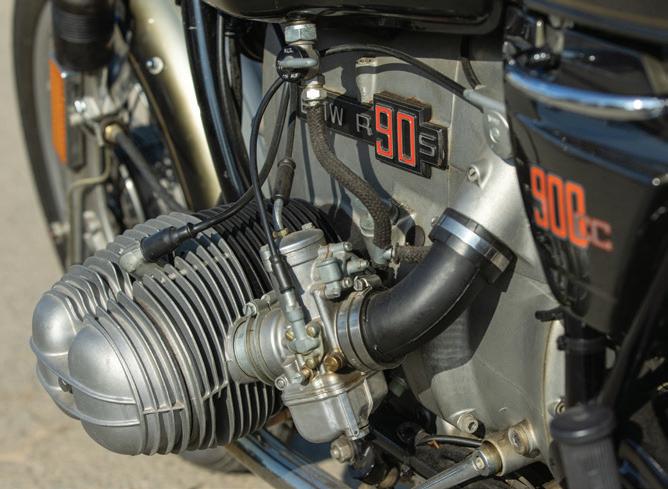
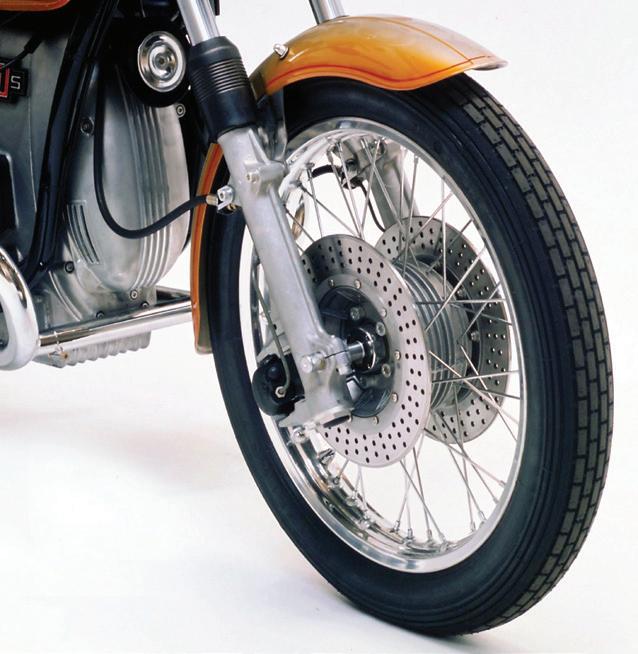
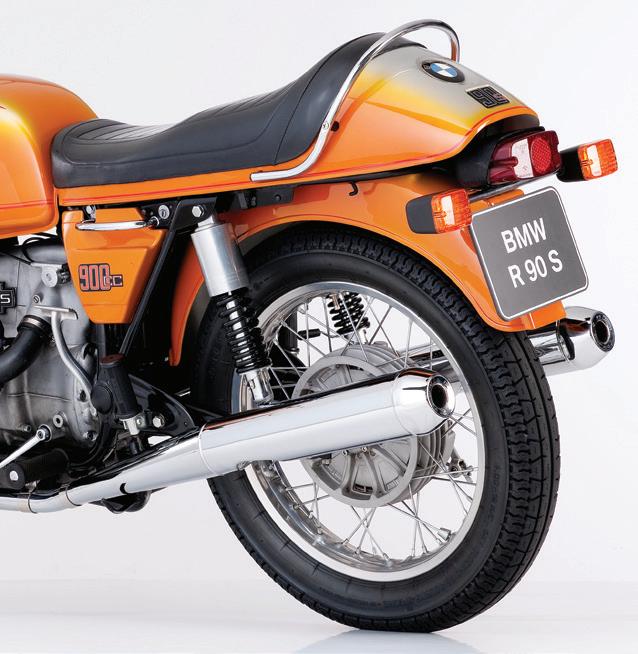
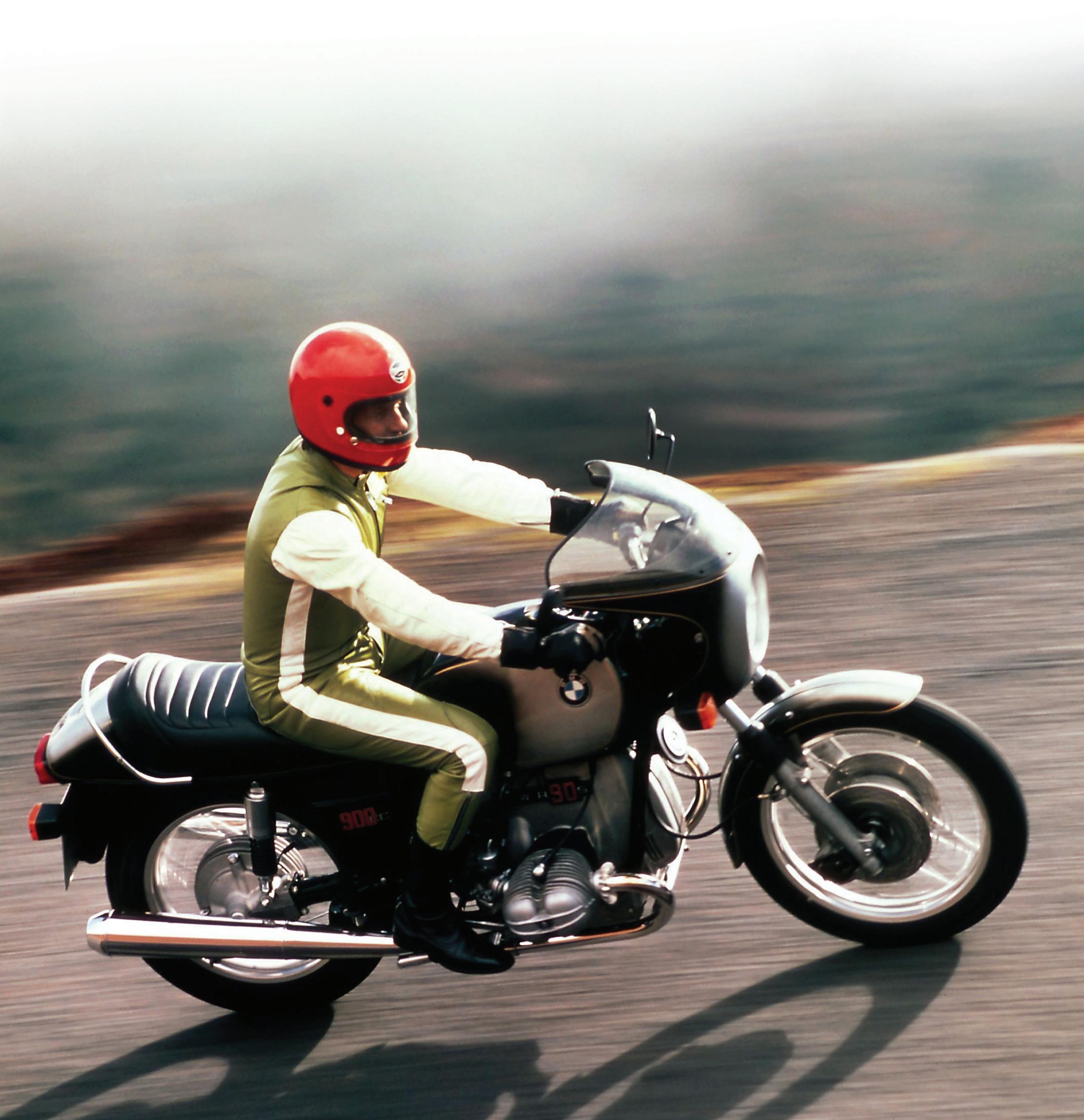
When I befriended the local BMW dealer, however, that Eleven’s days were numbered. He had to carry BMW motorcycles if he wanted the factory to lease him a car franchise, but I had absolutely no interest in those dinosaurs. That is, until we swapped bikes on the Logan Pass. With its lower weight and low center of gravity, his Daytona Orange R90S seemed as nimble as a bicycle. It didn’t have the Yamaha’s incredible torque, but there was no need to slow down much for corners, and engine braking took care of most of that. I’d never been able to ride a bike as fast with so little effort or drama. The next day, I owned one — and I’ve been riding airheads ever since. But I remember that XS1100 Special fondly.
B. Jan Montana is an AMA Member.
GO YOUR
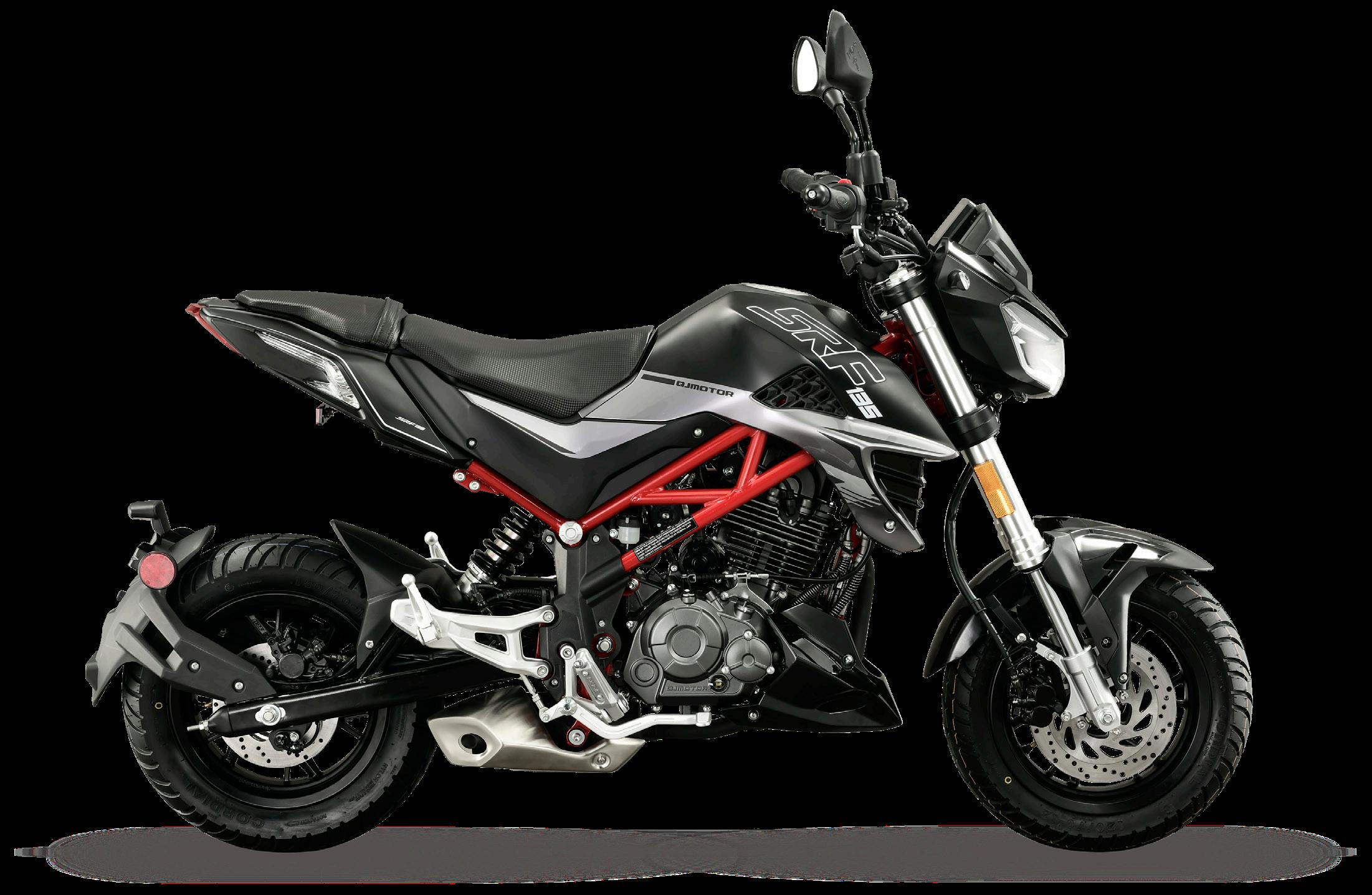
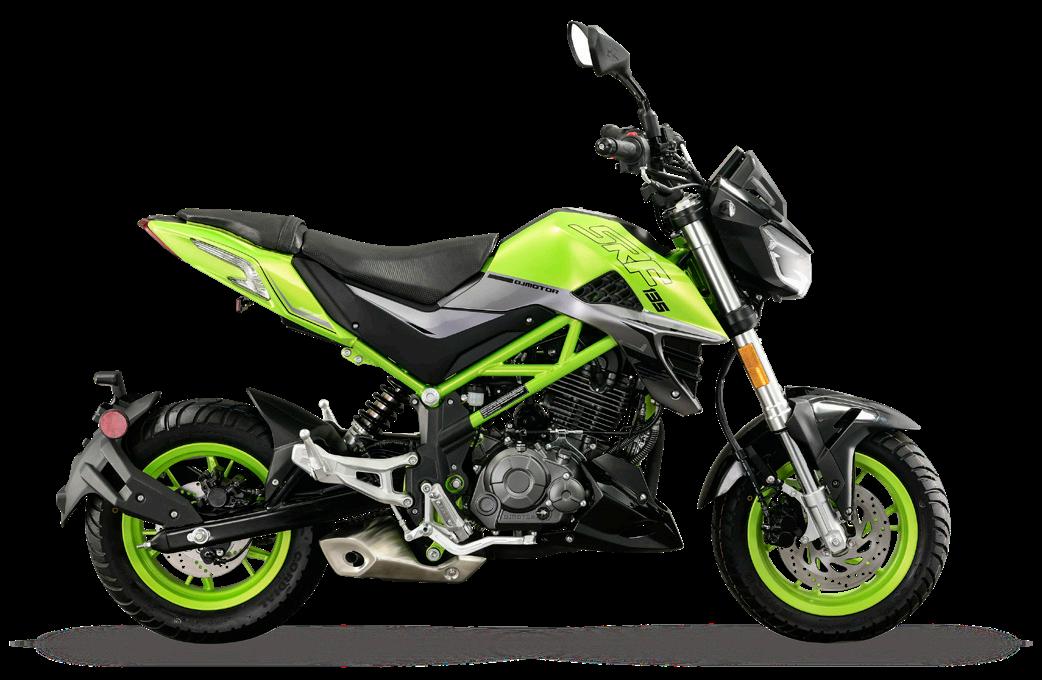
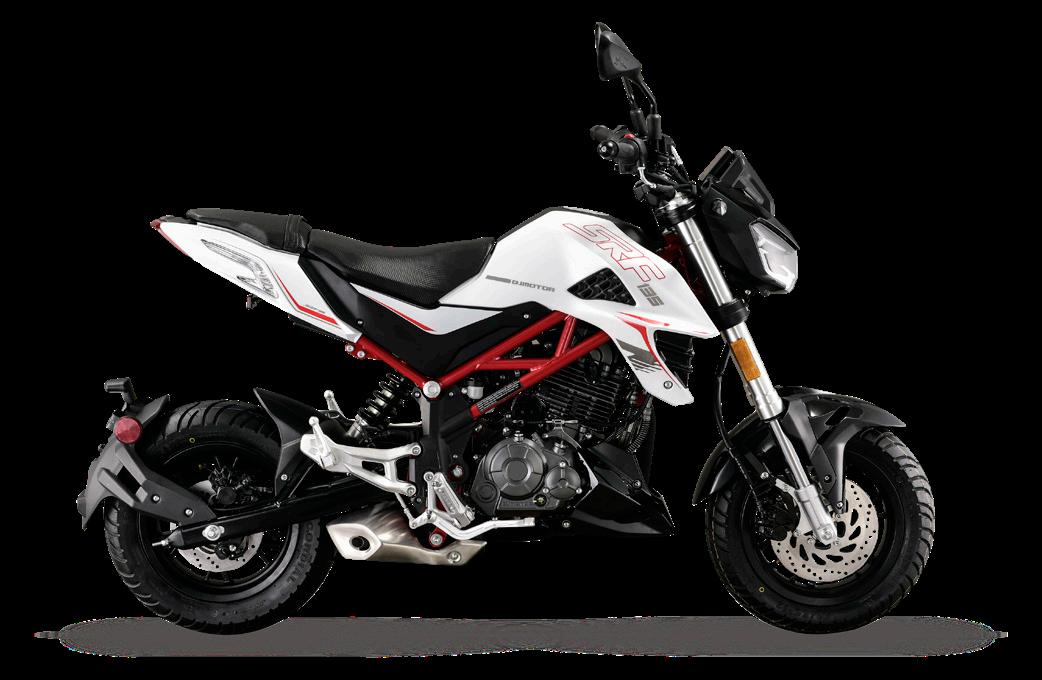
One ride on a SRF135 and you’ll experience what motorcycling is all about. It’s pure fun. Plain and simple. And in this world, that’s a refreshing feeling. The only question is, what color do you want?
BACKFIRES
AUSTRALIA, EDGE TO EDGE
I greatly enjoyed the Don’t Let The Old Man In piece about Rick Wheaton’s epic ride around Australia, and can sympathize about his confusion at the gas pump. In California, all gasoline nozzles are black and all diesel nozzles are green. In Italy, where I have been a part-time resident for more than two decades, gasoline nozzles are green and all diesel nozzles are black. Add in jet lag after the long trip, and you know where I am going with this. I quickly caught my mistake while refueling my Mercedes diesel van, and upon advice from the gas station owner, proceeded to drive my van on a mixture of 20% 95 octane gas and 80% diesel…and it actually drove better than normal, not that I will make a habit of it. I will pay better attention in the future!
John McCoy AMA life member Santa Cruz, Calif., & Como, Italy
Rick Wheaton’s adventure across Australia was a wonderful read. His photos reinforced the piece perfectly. Ages ago, I was in the company of Australian soldiers for several days while in the Vietnam War in the mid 1960s, and they used the term “Pommie” in a derogatory manner. Australians use a goodly amount of slang, as Rick discovered. For an 80-plusyear-old veteran traveler to realize he just topped off his big GS tank with diesel fuel must still confound him. Probably still wakes up at night asking himself “What was I thinking?!”
Brian Halton San Francisco, Calif.
GARAGE GEAR
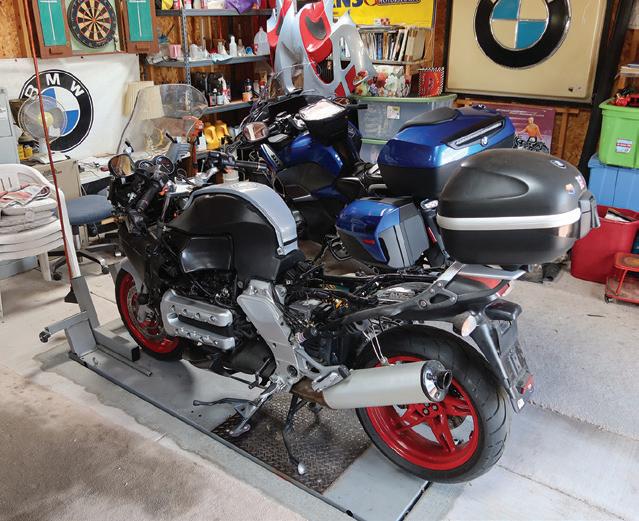
I’ve done my own maintenance, and some repairs, for a few years now. The best tool investment I’ve made is the Handy Lift I bought close
to 20 years ago. It makes routine maintenance so much easier. No crawling around on the floor and constantly having to get up and down. Saves a lot of wear and tear on the
knees and back. Here’s a photo of my lift. Note that I had it sunk into the concrete so getting on and off it is now a breeze. That’s Rotti our 2002 K1200RS on the lift, getting some
LETTER OF THE MONTH
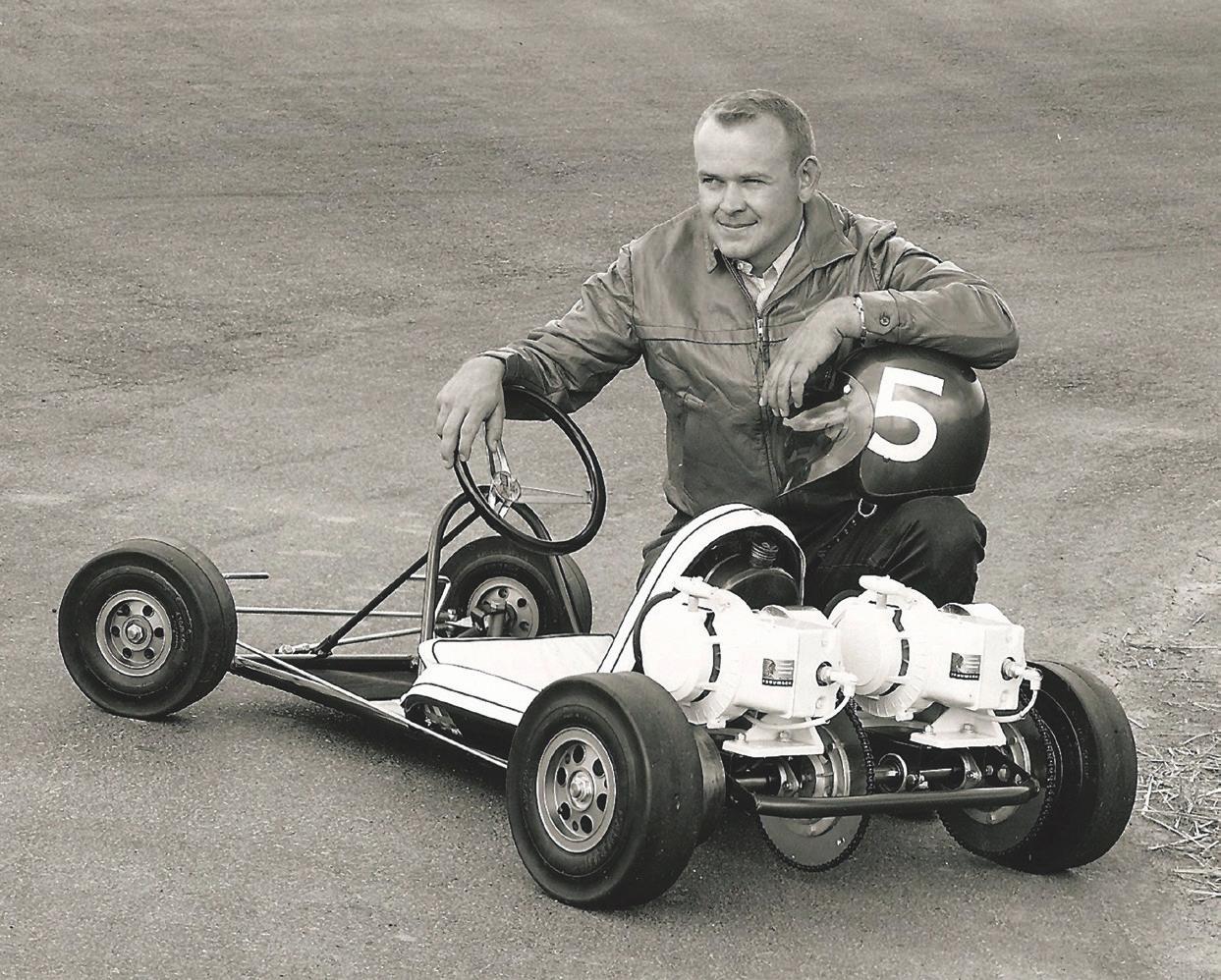
Not sure how many know this, but Mansfield, Ohio’s legendary Mickey Rupp passed away on Aug. 20. Growing up in Northeastern Ohio, not far from Wiseco Piston, my dad let me race karts on our Rupp’s Dart Kart, and we even raced behind the Rupp Factory in Mansfield at Dart Kart Speedway. I didn’t know Mickey qualified and finished at Indy [He finished 6th once. —Ed], but I did know he moved to Florida (he’s the other famous Mickey from Florida!) and got into the fishing tackle/outrigging business with his kids. Godspeed, Mickey... and thanks for all the neat toys. Ron Farkas Henderson, Nev.
Mickey Rupp is indeed a motorsports legend over and above the karts, minibikes and snowmobiles he designed and built over the years, and we’ve wondered for a long time why he’s not been nominated for inclusion in the AMA Motorcycle Hall of Fame. It’s an honor he richly deserves, and the nomination form is on our website, so…anyone out there willing? —Ed.
Letters to the editor are the opinions of the AMA members who write them. Inclusion here does not imply they reflect the positions of the AMA, its staff or board. Agree? Disagree? Let us know. Send letters to submissions@ama-cycle.org or mail to American Motorcyclist Association, 13515 Yarmouth Drive, Pickerington, OH 43147. Letters may be edited for clarity and brevity.
GOODBYE, MICKEY RUPP
TLC, and our 2023 R1250RT behind her. Ride (or is that wrench) safely...
Deryle & Wanda Mehrten
Sierra Vista, Ariz.
Great list of tools for a home mechanic. Must-have tools in my garage also include Torx drivers, as Torx heads are found all over my BMW and the hand controls of my Harley. For my chain-drive bikes I use a “Grunge Brush,” which is perfect for cleaning chains. Lastly, a multi-meter, soldering iron, shrink tubing, and an assortment of wire to meet my electrical needs.
Matt Braisted
Regarding tire-changing machines that don’t weigh a ton and don’t take a lot of space, check out Rabaconda’s offerings. Love mine, and tire changes are free for me at last.
Steve Cook
Montrose, Colo.
THE THREE-WHEEL WONDER
I had a front row (operating room view) seat to what’s described in the last few paragraphs of your ATC90 article. In 1980, I began my career as a reconstructive plastic surgeon in San Luis Obispo, with hospital privileges at Arroyo Grande Hospital adjacent to the dunes at Pismo Beach. Tens of thousands of vacationers came every weekend, many riding ATCs. Every weekend, I reconstructed those who had broken faces. There were other contributing factors. At the time there was no limit to the number of people on the dunes. There was no minimum age to operate an off-road vehicle. There was no regulation of being intoxicated. And I cannot say to what extent the lack of front wheel suspension contributed to riders “eating” the handlebars. I understand both risk and fun, being a member of the Iron Butt Association. But I’m glad ATVs (and then side-by-sides) replaced ATCs.
Ping Tsao MD, FACS
MORE MINI MOMENTS
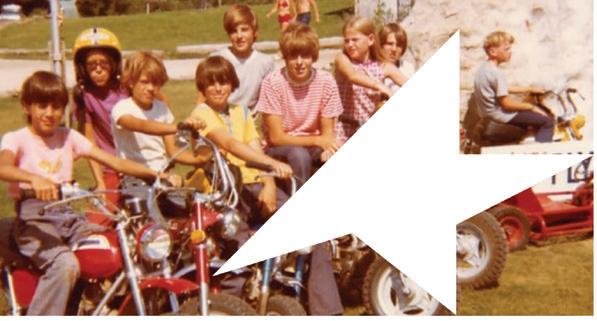
Thanks to the AMA for all you do for members! Anytime you feature a minibike I’m elated, and the August issue’s Last Page piece brought giant smiles and priceless memories of my intro to motorcycling. I was one of the lucky kids growing up at that
time. Born in �59 with a gear-head dad who raced a SCCA bug-eye Sprite, I was drooling over gobs of minis in the paddocks of those road races. My first was a Sears minibike, much like the “Puncher” you displayed. I rode that thing everywhere. We were fortunate enough to have a seminary with a couple hundred acres of woods and fields close by, and lots of us virtually lived back there. Sears, Cat, Colt and Bonanza were popular starters. By �71 I had a modified �69 Honda Z50 and friends had moved up to SL70s, XR75s and CT70 H models! My older brother got a Bonanza Mini Motocross with the Hodaka 100 engine. That thing was scary! I consider those to be some of the best times of my life. As time moved on we upgraded to larger bikes. I saved the required 50% of the $700 needed to buy a new �73 Suzuki TM100. My dad covered the other 50%. Many, many bikes have come and gone since then, but more often than not I’ll leave my big bikes in the garage while I take a ride around town on one of my CT70s, Z50, Ruckus or maybe even my old 5-hp minibike. I get the feeling you folks feel the same way, and please keep up the great work! David Butler AMA Life Member Webster Groves, Mo.
TBACK IN THE DAY
Where the photos are blurry but the memories are clear!
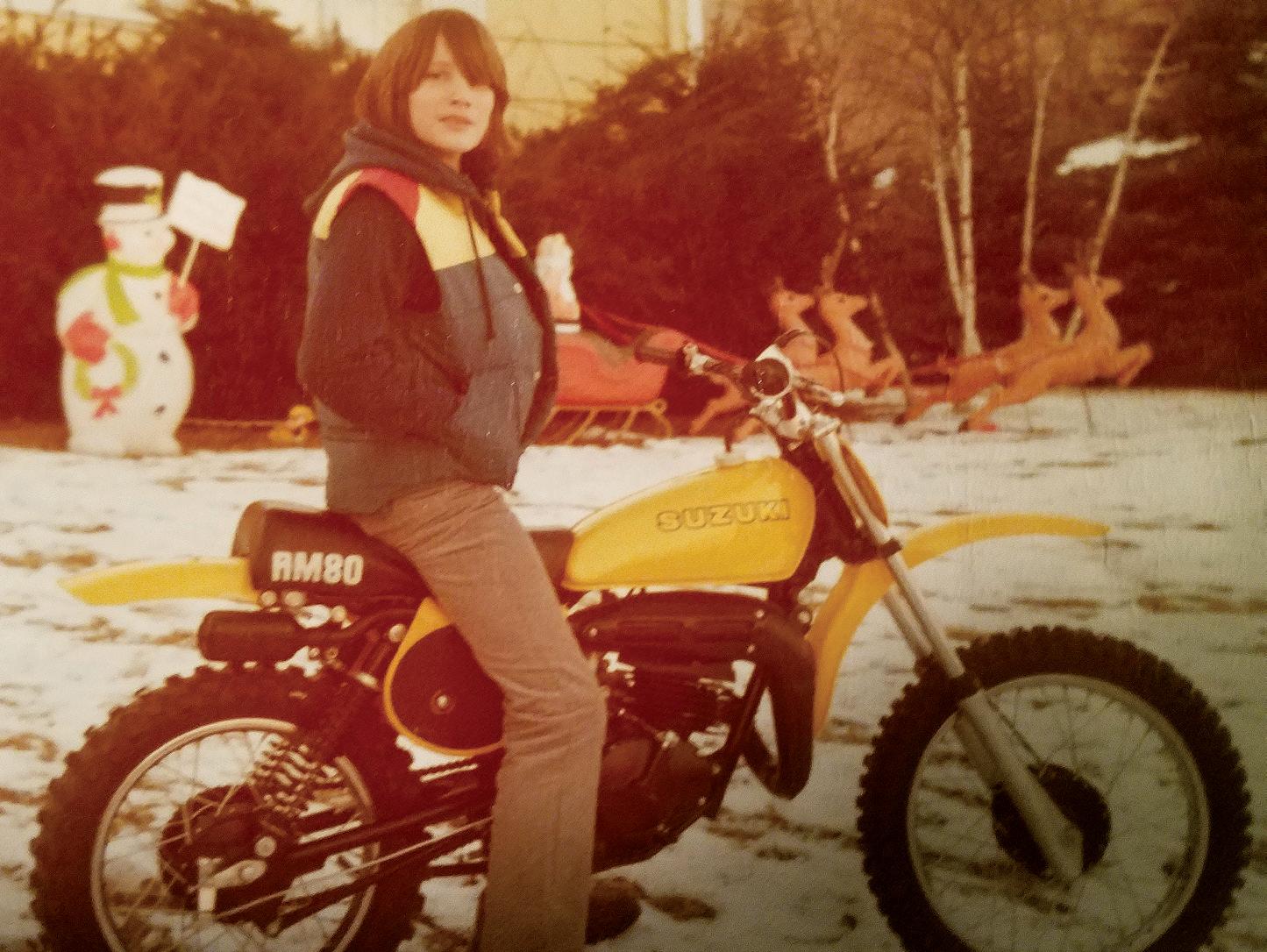
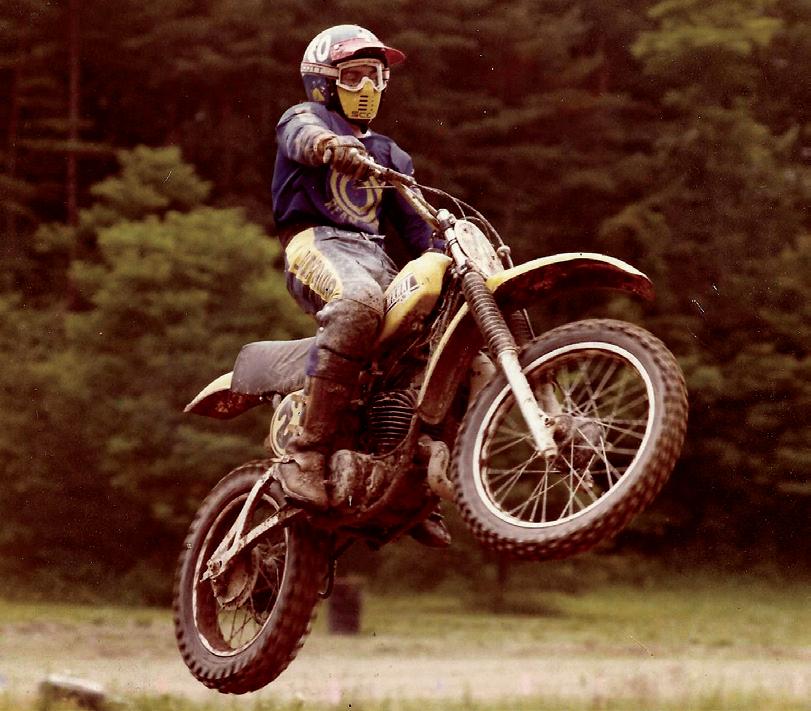
his photo was taken Christmas 1979 in Hackettstown, N.J. Santa delivered my first motorcycle, a brand-new 1978 Suzuki RM80. For some unknown reason, Santa delivered a leftover ’78 instead of the ’79 that was on my Christmas list. I quickly learned to appreciate the saying “don’t look a gift horse in the mouth,” as the bike was awesome. The RM was one of many I owned and later raced before enlisting in the U.S. Navy. Over the years I was able to rescue and restore the bikes I owned or dreamed of owning: ’78 Honda CR250, ’84 KTM125, ’81 Suzuki RM250, ’79 and ’82 Honda CBX. That RM was the beginning of a lifelong passion of riding and restoration to keep those phenomenal memories alive.
John Ford
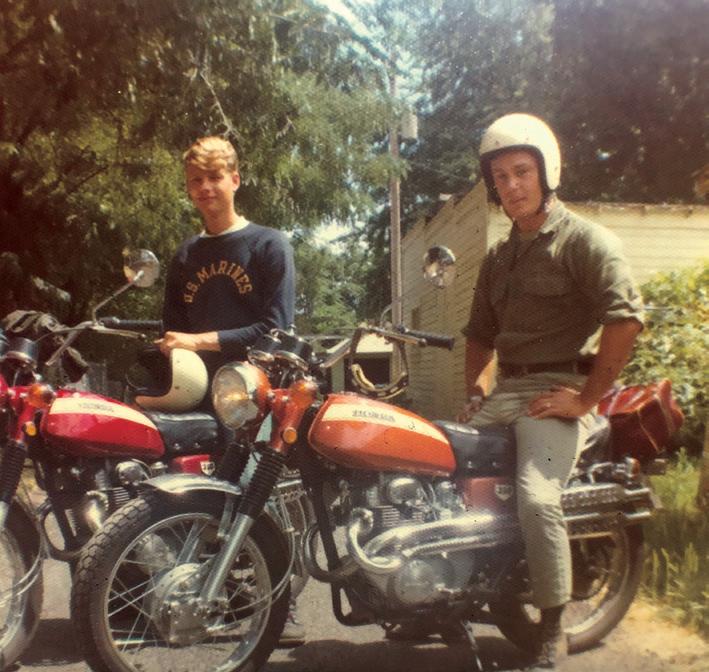
My brother and I saddled up on our 1970 Honda CL350s for our very first motorcycle road trip — from Portland, Oregon to Walla Walla, Washington — to visit our grandparents. It was approximately a 500-mile round trip, and we felt like real “Bronsons.” I am still riding more than ever with my wife Ronda on our 2018 Harley-Davidson Heritage. I’ve also been riding and racing dirt bikes for over 50 years, and still riding trails on a Beta 300. Dave Merklin
your Back in the Day photos and stories
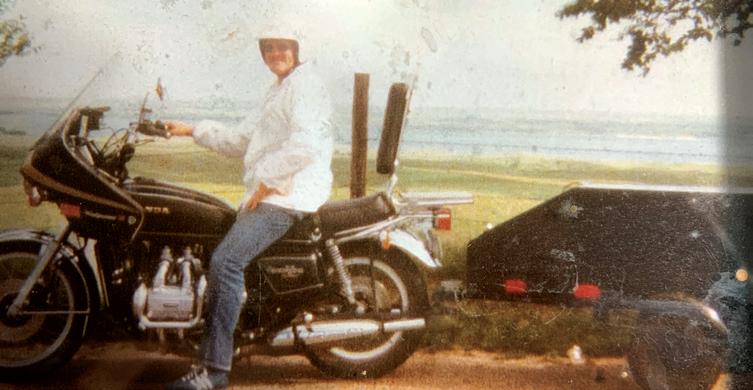
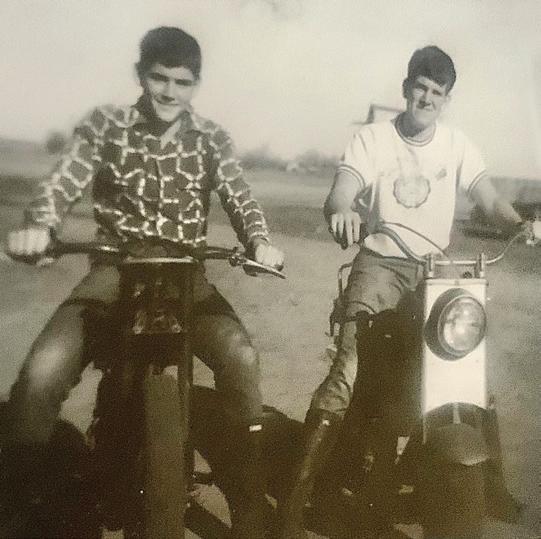
The first photo is of me on my 1977 Honda Gold Wing with the trailer I built. It was taken on my honeymoon in June of 1977 (my wife took the photo). The second photo is from 1969 and shows my brother Steve on a 1950(?) Harley-Davidson 125, and me on a Cushman Eagle — our first motorcycles. Based on the rubber boots, I’m guessing it was irrigation season on the farm. I currently ride a 2004 Honda ST1300. John T. Seberger
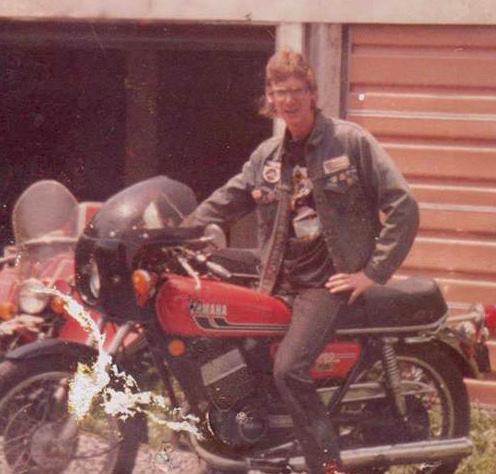
I was 19 years old when this picture was taken in 1986. I’m on my 1975 Yamaha RD350 just coming home from the motorcycle races at Pocono Raceway. Behind me is my 1973 Alsport (from Norwalk, Ohio) Tri-Sport street-legal three-wheeler. It had a 340cc Kohler snowmobile motor, and was quite the fun machine. If you look through my arm you can see the seat of my 1968 Kawasaki A-7 Avenger 350 — a two-stroker with rotary valve. Mark Bannister
4
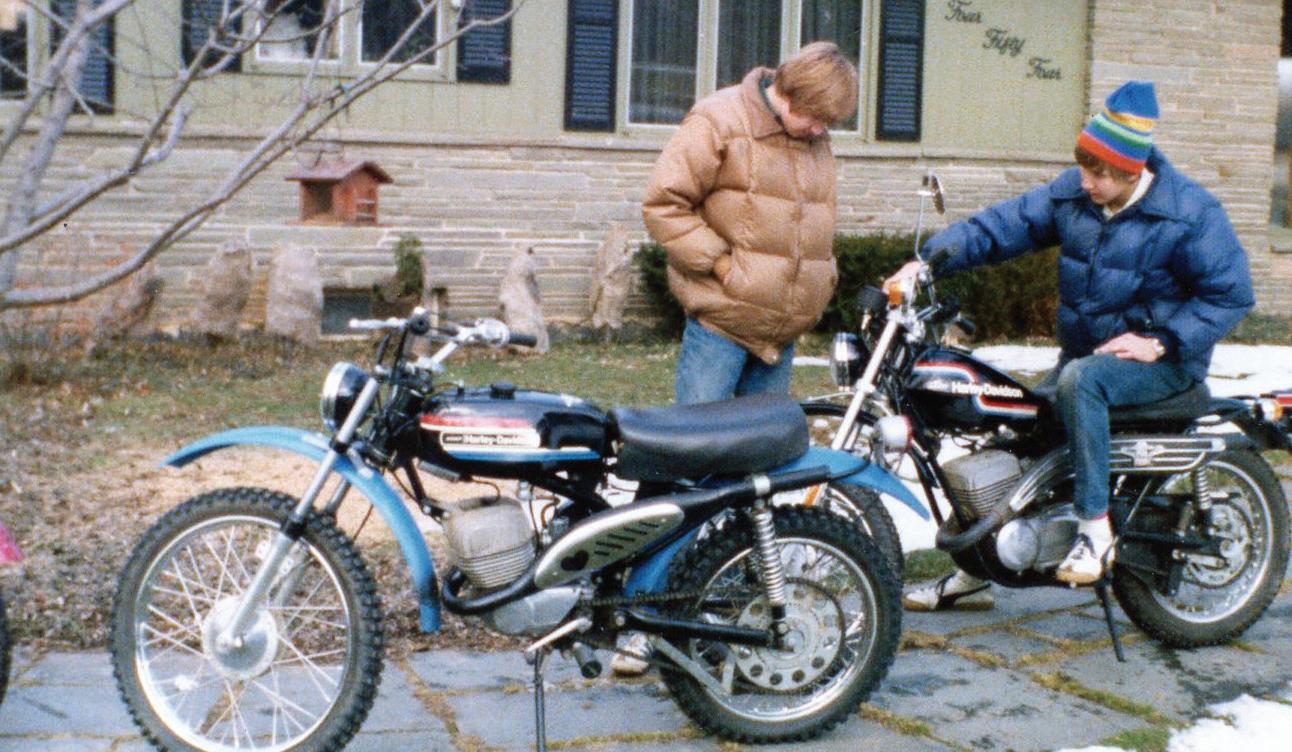
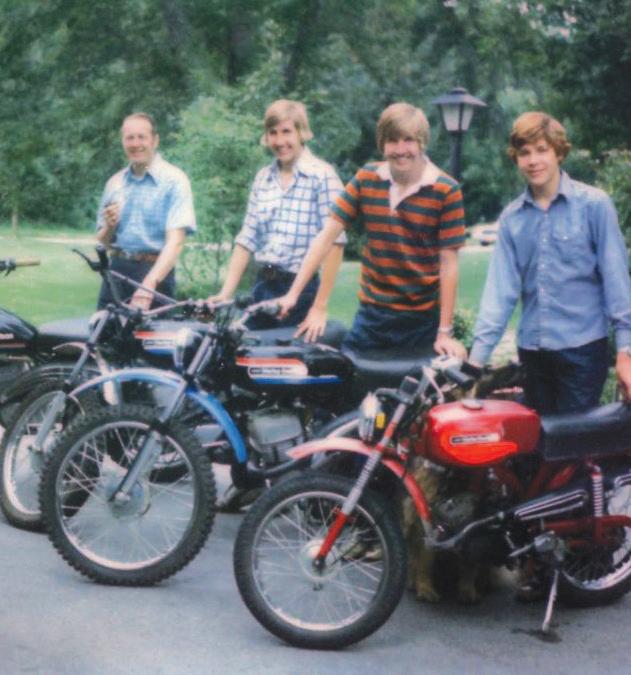
The first picture is my twin brother and me. He had a Harley-Davidson 100 trail bike he replaced the fenders on. Note the dual rear sprocket; one for low speed and one for higher speed, depending on how you were riding. The second photo includes my dad, my twin brother and my younger brother. We all rode off-road together. My Dad rode Indians and then Harleys back in his college days, and in his early career days. He was a Harley guy through and through.
David Werner
Your dad, a Harley guy? We had no idea, David! – Ed.
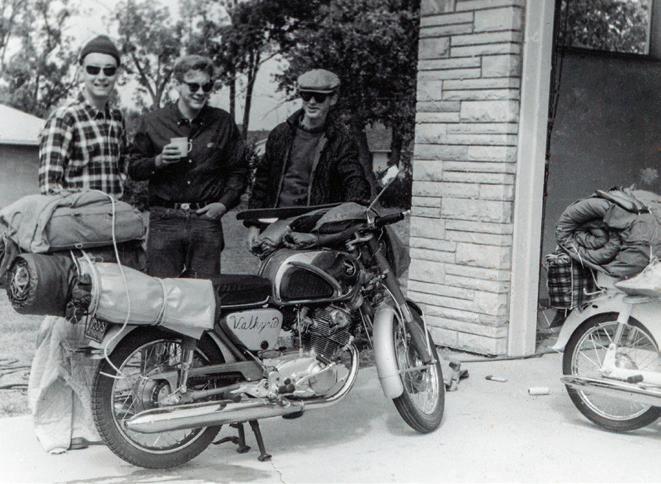
Here’s my 305cc Honda Super Hawk and Jim Kura’s 50cc Honda Cub, overloaded with sleeping bags, clothes and a makeshift tent for a trip from Columbus, Ohio, to Geneva on the Lake on the shore of Lake Erie during Labor Day weekend. Left to right: Bob Wickliff, me, and Jim (who supplied the photo).
Ernst Wehausen
First photo is me at 14 years old in 1972 on my first motorcycle…a 1966 Suzuki B100p (120cc), a strippeddown street bike with a unibody instead of tube frame. The second photo is me at 21 years old on my first MX bike — a new ’78 Yamaha YZ250. I raced motocross for about 15 seasons, and was even on the Boutwells’s Cycles race team out of Maryland. Doug Kurz
Our buddy Mike Pohl was a long time AMA District 23 enduro rider who passed away suddenly while trail riding in September of 2017. He was 56 years young. Mike grew up in northern Minnesota where he rode a Can-Am. In 1978 he raced his first enduro (pictured) and it was not just any local enduro but a National Enduro in Grand Rapids, Minn. He was a go big or go home type of guy! He loved to interact with people, and once you met him you had a good friend from then on. He loved to take photos of other riders; he would always ride on row 1 of any enduro. Then after riding, he would take his camera and head back into the woods to photograph all the riders finishing the race. He would then create a video for the off-road banquet. Mike loved to ride, so next time you are riding your bike, twist that throttle a little more and ride a little longer for our buddy Mike! “While Alive He Lived.” R.I.P. dear friend. we all miss you. Bob Maki
up to speed
News, notes, insight and more from the motorcycling universe
RTP RE-VAMPED
The federal Recreational Trails Program (RTP), in place since 1991, now enjoys an important waiver that eliminates a longstanding roadblock — good news for all off-road riders
BY KEATON MAISANO
More than three decades after its approval in 1991, the Recreational Trails Program (RTP) — a federal program that basically gives a portion of federal gas tax money to states, who then distribute it in the form of grants, often to local non-profits, to help fund trails programs — had a longstanding obstacle removed over the summer.
The Federal Highway Administration (FHWA) — which administers the RTP program — recently granted a Waiver to Buy America Requirements for De Minimis Costs and Small Grants, which allows projects below $500,000 in cost to waive the Buy America requirements for iron, steel, manufactured product, and construction materials.
Projects that exceed $500,000 have an allowable threshold for non-compliant products of either a million dollars or 5 percent of the total applicable costs for the project (whichever is
less). If the noncompliant products include iron, steel or manufactured products, however, the FHWA’s threshold amount of 0.1 percent of the total contract amount or $2,500 still applies.
In layman’s terms, the waiver, which went into effect Aug. 16, removes a hurdle that has hindered the development, expansion and maintenance of many trail projects over the years.
While the AMA supports buying American, the provision has been used as a surrogate issue to block the use of funds on motorized trail maintenance and development. These rules required the use of American-made products unless a cumbersome and time-consuming waiver was granted, often negatively impacting productivity, creating seasonal related challenges, and also additional difficulties for the applicants.
With this waiver in place, land managers and pro-trail entities now have much more flexibility when it comes
to trail development, upgrades and maintenance.
A little history: Giving birth to what is now known as the RTP, the Steve Symms National Recreation Trails Fund Act of 1991 was included into the federal highway bill and passed into law in November of 1991. The act was implemented to provide funds to the states to develop and maintain recreational trails and trail-related facilities for non-motorized and motorized enthusiasts.
Simply put, a percentage of gas tax paid by non-highway recreational users is infused back into the trails community in the form of available grants that go toward motorized and non-motorized recreational projects. For example, the RTP serves many of the following recreational trail users: off-highway motorcycling, hiking, bicycling, cross-country skiing, snowmobiling, horseback riding, all-terrain vehicle riding and four-wheel driving and others. By law, the funds are allocated at a rate of 30 percent motorized, 30 percent non-motorized
and 40 percent to mixed-use trails.
Projects funded include, but are not limited to, trailhead improvements (parking/bathrooms etc.), signage, trail maintenance, bridge construction, mapping, and the purchase of related materials and equipment.
In 1992, the Coalition for Recreational Trails (CRT) — a federation of national and regional trail-related organizations that works to build awareness of the RTP — was formed to ensure the program received adequate funding following the program’s inclusion in the Intermodal Surface Transportation Efficiency Act. Monies come from the Federal Highway Trust Fund, with the total amount representing less than a third of the motor fuel excise tax paid into the trust fund by non-highway users.
In the years that followed the program’s creation and initial success, the Transportation Equity Act of the 21st Century (1998) and the Safe, Accountable, Flexible, Efficient Transportation Equity Act: A Legacy for Users (2005), significantly increased funding to the program, which currently sits north of $80 million a year.
The RTP database — which stores the more than 25,000 RTP-funded projects nationwide — can be found by going to recreationaltrailsinfo.org.
That money — divvied up to the participating states — is available in the form of grants that are awarded to eligible applicants who work in partnership with land managers. This funding is a critical source for many states and the individual groups striving to work on trails.
25,000 RTP-funded projects nationwide, all of which are documented on the RTP database.
“For more than three decades the AMA and our partners at the CRT have supported this important program,” said AMA Government Relations Director Nick Haris. “The user-pay, user-ben-
Due to the program’s importance and impact, there have been recent legislative efforts to increase the funding to at least $250 million by way of HR 1864.
Due to the program’s importance and impact, there have been recent legislative efforts to increase the funding to at least $250 million by way of HR 1864. This proposed legislation would refund a much higher percentage of the eligible gas tax revenue, estimated to be more than $270 million per year. While this effort failed, it will be championed again in the next renewal period.
The RTP has been re-authorized multiple times, and there is a push to re-authorize the funding again soon.
Over the more than 30 years since its advent, there have been more than
efit model of the RTP provides critical funding for trail projects nationwide, and also provides much needed economic benefits to the communities surrounding many of the project areas.”
Annually, the CRT hands out awards to recognize outstanding trail projects funded by the RTP. In 2021, 13 trail projects received Tom Petri Recreational Trails Program Annual Achievement Awards. Visit https://www.americantrails.org/communications/ awards/crtAwards for the latest on the awards presentation and nominate your favorite eligible project!
Triumph Reveals 250F MXer...
Mostly
After a year’s worth of semi-reveals, we’re finally starting to get a clear picture
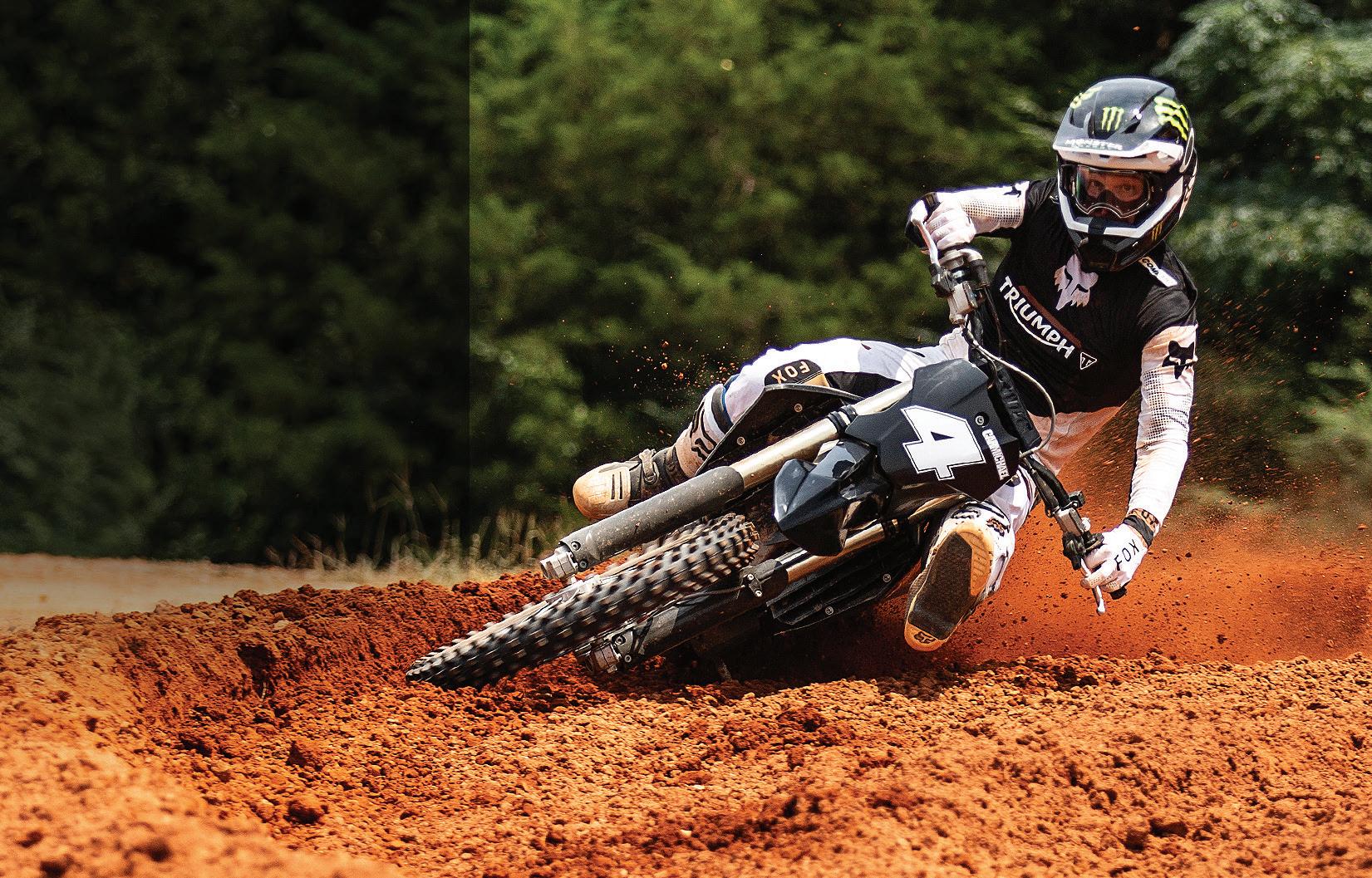
It took a while, but we’re finally getting a better look at Triumph’s new 250F motocrosser.
demonstrates.
AMA HOFer
Ricky Carmichael
Over the decades, most of the major motorcycle manufacturers have been pretty together on the concept of teasing a new model to the public before its official launch: They basically don’t do it. Mostly it’s because leaking a new model will slow sales of the model being replaced, and since these OEs
and we suspect the same will happen with the 450F it plans to release after the 250F’s debut early in 2024.
In a series of videos over the last several months that included development team members such as AMA Motorcycle Hall of Famers Ricky Carmichael and longtime MX team manager and R&D expert Dave Arnold, Triumph showed a little of the thinking
“It’s really balanced,” Carmichael said in the latest video, which showed he and top-level amateur racer Evan Ferry ripping around a perfectly groomed MX track on the new Triumphs.
compete in just about every category, that makes sense.
But Triumph doesn’t have that problem when it comes to the motocross market and its new MX bikes currently under development. Because it has no current motocross or off-road lineup, Triumph can tease all it wants and suffer no ill effects (just positive ones), and during 2022 and 2023, the British firm pushed that idea to the max with its new 250 —
and engineering behind its new 250F, which is scheduled to compete in the 2024 AMA Supercross season and the FIM 250cc World Championship series.
Specifics are thin at this point, but the new 250F follows current motocross orthodoxy pretty closely. Even without official specs, one can tell the engine is a fuel-injected and liquid-cooled DOHC single housed in an alloy frame that’s said to offer that ideal blend of stiffness and com-
pliance. Suspension at both ends seems pretty standard, and really, the only mystery now aside from official specifications is the bike’s bodywork and overall look — which was shown in brief snippets in the latest Carmichael-on-board riding video, which you can view at triumphmotorcyles.
com
“It’s really balanced,” Carmichael said in the latest video, which showed him and top-level amateur racer Evan Ferry ripping around a perfectly groomed MX track on the new Triumphs. “It’s very nimble. When you see a line, boom…you can do it.”
“They found something special with the frame,” Ferry added. “I don’t think I’ve ever felt something like that.”
You expect such statements from paid consultants. But given Triumph’s track record in competition, and the level of engineering and design prowess it has blended into its motorcycles, betting against these guys is probably not a good idea. And that’s no tease. —Mitch Boehm
Riding ROUNDUP up to speed
Meriden MC Hits Century Mark
The Connecticut club traces back to 1923
BY KEATON MAISANO
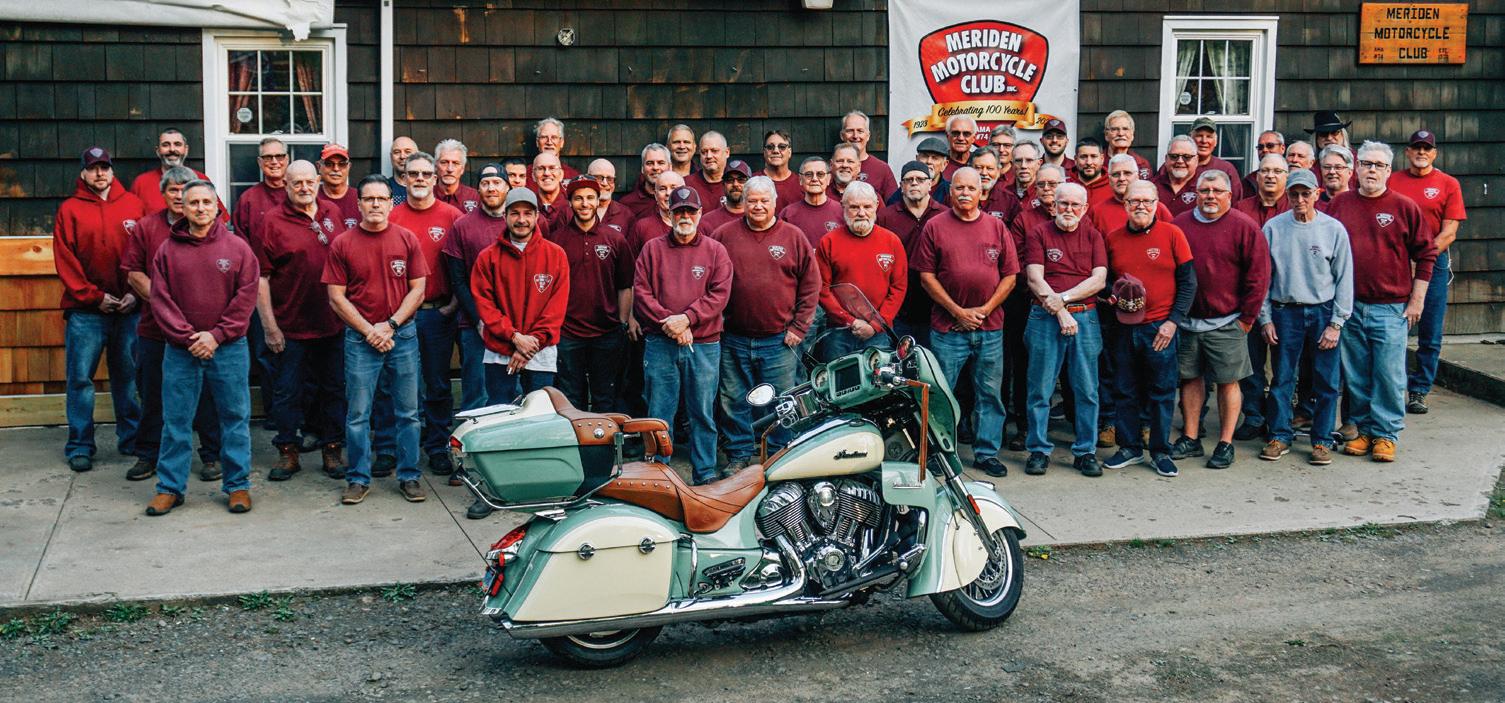
Six months prior to the inception of the American Motorcyclist Association in the spring of 1924, a motorcycle club in the city of Meriden, Conn., was taking its first steps on a century-long journey.
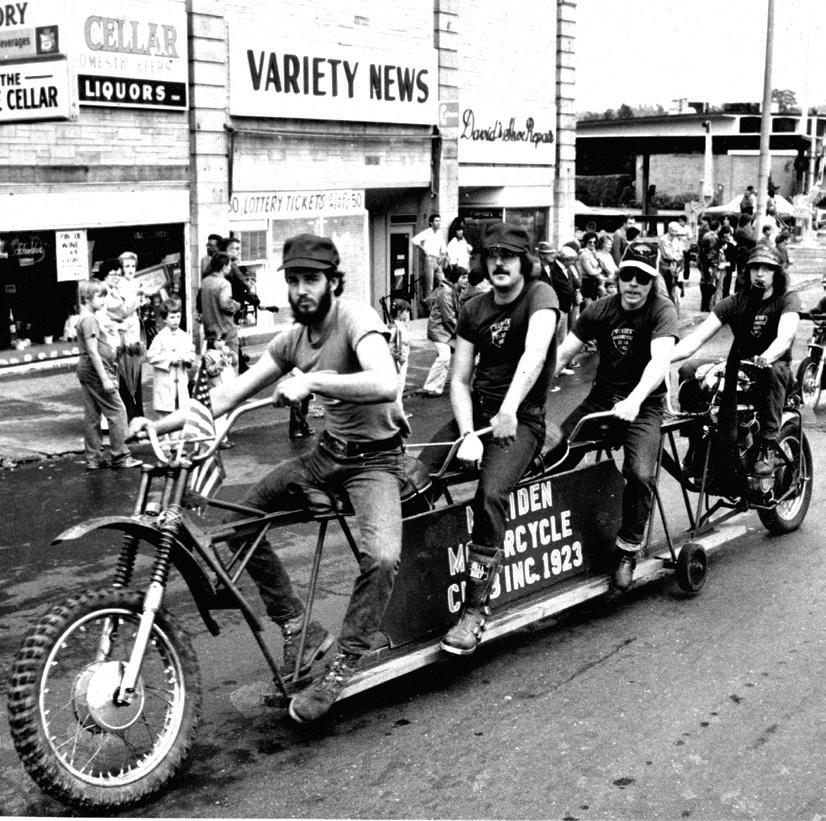
The Meriden Motorcycle Club — AMA charter No. 73 — held its first meeting Thursday, Nov. 15, 1923, and outside of WWII, pandemics and the occasional holiday, the group has been meeting every Thursday since.
Steve Nichols, the club’s unofficial historian and a member for around a quarter-century, said it is the consistency and diversity of the club that makes it special.
“We don’t do one specific thing in motorcycles,” Nichols said. “We have street riders, trials riders, enduro riders, scrambles, road racers, sidecar
enthusiasts, flat trackers, speedway racers, you name it. It’s very diverse. It’s not one brand, one type of motorcycling, just the love of motorcycling.”
With ties to many disciplines of racing throughout its history, Meriden MC wasted no time getting involved
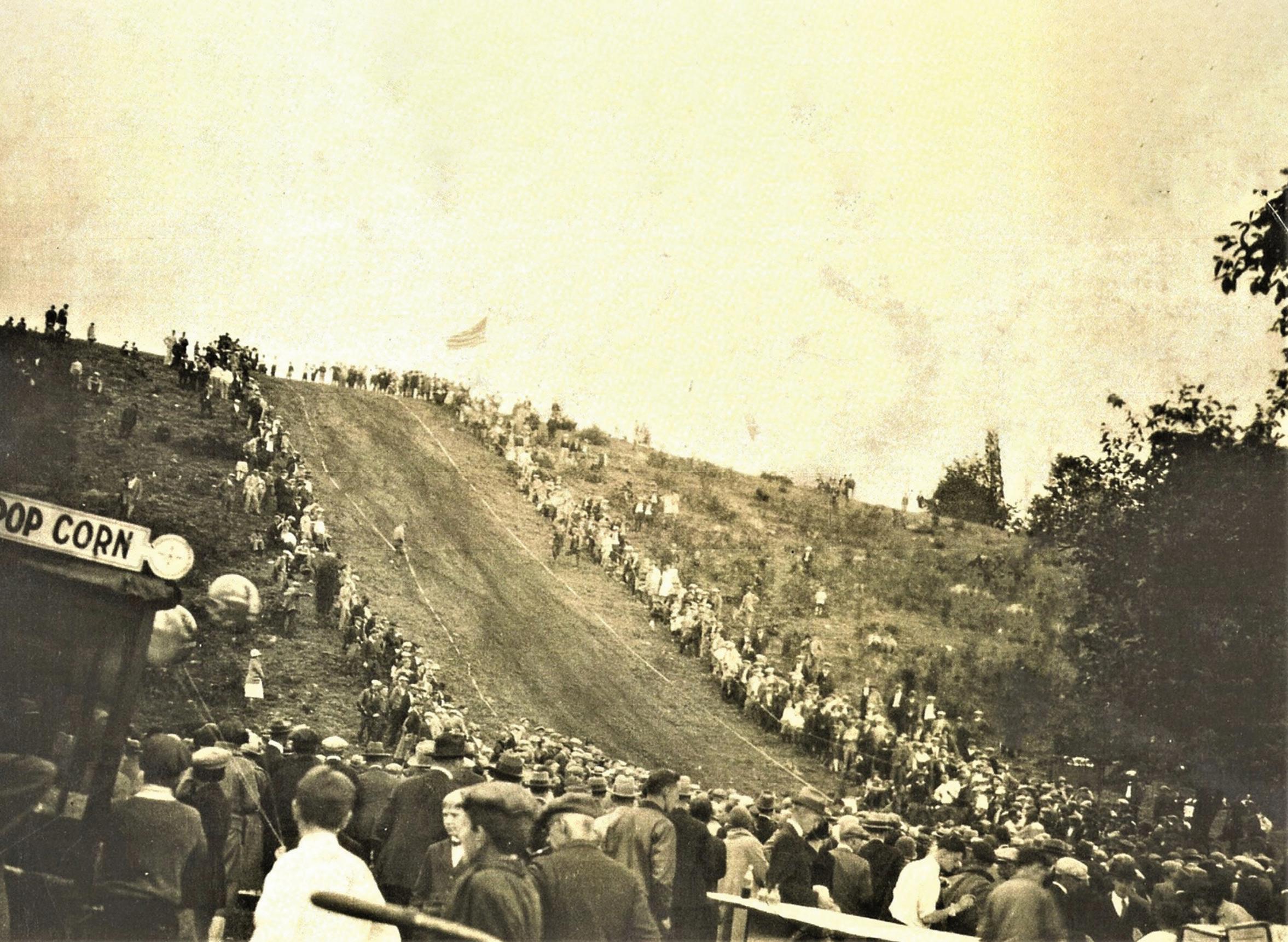
in the racing landscape. Just three days after its first meeting, the club held its first hill climb at Red Bridge in Meriden.
Hillclimb dominated the early part of the club’s racing history, but it has since shifted to enduros and trials.
Today, the club does two observed trials each year, a Thanksgiving poker run and a fundraiser for the John J. Nerden Regional Training Center — a local special-needs camp.
The fundraiser — which finds roots in the �60s — takes place at Meriden MC’s clubhouse in July. Appropriately named the Nerden 24, as it involves the running of a vintage motorcycle for 24 hours, the charity event is an annual tradition that points toward the club’s positive impact in the community.
“The club has been building things at the camp, repairing things and raising money for the camp since about 1965,” Nichols said. “It started with a community, wanting to be part of the community, and striving to change the stereotype that motorcyclists aren’t good for society.”
To celebrate its 100th anniversary, Meriden MC held a big banquet in September.
As for the future? Nichols said the club hopes to navigate any challenges to make it another 100 years.
“We’ve seen a lot of clubs come and go,” Nichols said. “We started before a lot of people and are still actively involved. We’ve had to change a little bit over the years, but not very much. The club is very close to what it was 100 years ago.”
up to speed
Racing Roundup
What’s what in the world of AMA amateur (and Pro) competition
Mees’ Magical Moment
Jared Mees completes Grand National Championship three-peat, ties Scott Parker’s title record
BY JACK EMERSON
Jared Mees has been an unstoppable force since joining Indian Motorcycle in the American Flat Track Grand National Championship series in 2017, and his reign over the league continued in 2023.
Despite falling behind up-and-comer Dallas Daniels of the Estenson
Yamaha camp for the first three-quarters of the season, Mees rallied to claim his third consecutive — and ninth overall — Grand National title, tying Mees with AMA Motorcycle Hall of Famer Scott Parker for the record. The Sebastian, Fla., native collected 14 consecutive podiums to close the season, while his nine total wins were the AFT’s most by a wide margin.
Rocky Mountain High
Rocky Mountain Riders Association hits record participation
BY KEATON MAISANO
In the shadow of the Rockies, one organization is greatly boosting participation in motocross racing.
Established in 2019 after two clubs merged, the Rocky Mountain Riders Association (RMRA) has more than 1,600 members that participate in races put on by promoters in Colorado (as well as one motocross race in Wyoming, and one supercross event in New Mexico). In addition to increasing participation in these races, the RMRA advertises each event and organizes the races into two AMA-plate series — a six-event motocross series and a four-event supercross series — that run from the early spring to fall.
“At the end of the year we have an AMA plate series winner in both our motocross and supercross series
that we put on,” said Amy Barnes, RMRA operations admin. “Having the AMA plate series has really drawn people from out of state,” Barnes continued. “We are getting a lot of out-of-state racers that just don’t come for one event in Colorado, but for all six that are part of that plate series.”
One of the highlights of the season was a one-day race event at Pawnee Cycle Park that saw 814 race entries. Despite the large number of racers, the RMRA used transponders for each race in 2023.
“With the technology we have, the livestreaming, the Board [of Directors] that’s committed to this club, and the amazing promoters that are putting these events on for us, it’s made us hit record numbers for this state,” Barnes said. To learn more about the RMRA, go to rmra.racing.
assembly that required some small adjustment by hand to make the bike more reliable for an event of long duration – such as an electrical wire that might rub and chafe. A slight rearranging of the wire in question solved the problem, and I passed that information along to the factory.
For the European-based ISDT events I’d always ride a factory-prepared machine brought to the race by the team — though I’d usually gone through it myself at the factory prior to the race. These bikes were smartly modified production bikes, not one-off factory specials.
For Dalton, however, I prepared my own bikes, and made a few key changes. I used a lightweight aluminum fuel tank, which saved five pounds, and swapped the hollow steel handlebar for a solid aluminum unit, which lacked a crossbar and flexed a little. I also added a leather tool bag, which fit nicely between the frame and airbox.
A lot of failures then were ignition-related, so I went through the bike’s Femsa ignition carefully, insulating it and re-soldering wiring and connections where necessary. I also built naugahyde shrouds around the airbox to keep water out during the always-common water crossings. Then I went through the engine carefully to be sure everything was right.
Organizers had held a qualifier in the Berkshire/ Dalton area several months before the event itself. They used different trails than they ended up using in September, but the terrain was basically the same, and by the time the qualifier ended we knew we’d be ready for the real thing in the fall.
In that qualifier, I remember having one of the best times ever on a motorcycle. Lars Larsson and I rode on the same minute, meaning we were basically with each other the whole time. It was very wet in places, with muddy areas and the creeks completely full. We rode fast and crazy, yelling and hollering at each other as we splashed and slid around the course, just having a fantastic time. As I look back, it was one of the most entertaining rides I’d ever been involved in, and that’s saying a lot given how much riding I’d done at that point. I still remember how beautiful that area was, and still is. If you go there now, as I have in recent years, it’s still beautiful. It hasn’t changed much at all in the 50 years since.
reaction of the communist-country Europeans when they stepped off the buses and got a close look at America. Many had never seen a supermarket or department store, and the stuff for sale there had their eyes bulging. The iron curtain riders had political ‘handlers’ that watched over things; they’d walk in front of the group, in the middle, and at the back, not wanting anyone to get any ideas about defecting, as some Olympic athletes had previously. These handlers knew America held plenty of incentive to escape the communist stranglehold, and were on their toes.
I learned that many of the communist riders were mail carriers back in their home countries. They’d ride motorcycles while on duty, Jawas and CZs and MZs, which meant they were riding all the time, and really getting to know their bikes. They trained all the time, and took the ISDT really seriously, as seriously as they’d take an Olympic sport. For them, the ISDT was the Olympics. Many of their bikes were special, too. Not just lightly modified production bikes like we rode, but full-on factory-built bikes, with lots of exotic metals used, and short-ratio, 7-, 8- and 10-speed gearboxes on some of the smaller-displacement bikes. They took the small-displacement classes very seriously, with little riders riding very trick motorcycles.
Left: The author, ripping past a Dalton-area home during the ’73 ISDT. Above: our Silver Vase-winning team of (left to right) Ron Bohn, Ed Schmidt, team manager Jack Lehto, yours truly and Dick Burleson. For the complete story of my wonderful and sometimes-crazy life, grab a copy of my 400-page autobiography at themalcolmbook.com.
Al Ames and his crew laid out a wonderfully challenging course, with water crossings, a mud bog, lots of rocks and even a section of public road with cars and trucks sharing the asphalt with us. I remember waiting at the end of the event for Dick Burleson to arrive at the final check, hoping he’d get in on time, and hoping we did well on the grass track special test, which would give us the Vase. He got in on time, and we did fine in the test, and the award was ours.
For the event itself, the AMA had chartered a 747 freighter to fly all the bikes over from Europe. The riders flew over a little later, and it was interesting to see the
Despite some ugly weather and a difficult and challenging course, it was a well-run and well-organized Six Days, and Ames and his crew deserve credit. The overall winner was a German on a 175cc Zundapp; he was a little guy but so fast, especially on the grass track, where he smoked everyone. I remember the party on the final night…we had a lot of fun. I also remember the beautiful book Husqvarna produced for us called Chasing the Silver Vase. I still have a copy, and every time I look through it I can clearly remember that fantastic achievement in our home country.
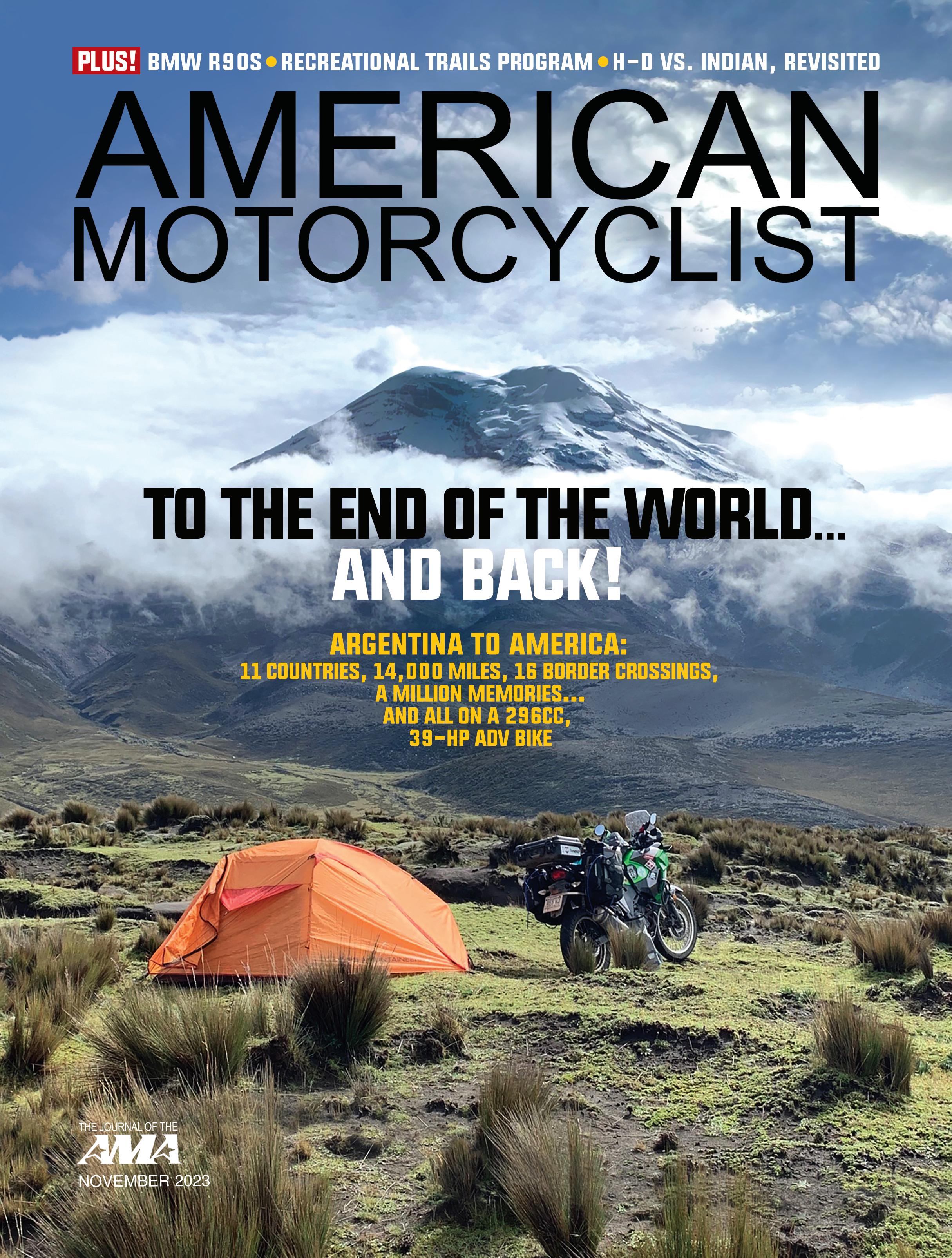
TO THE END OF THE WORLD...
WORDS & PHOTOS BY AARON FRANK
arma always catches up. During a past life, when I was an editor at Motorcyclist magazine, I wrote a sidebar praising what was then BMW’s smallest adventure bike, as part of a larger ADV comparison story. “Don’t be fooled by the ‘girlfriend bike’ reputation,” I wrote. “If I had to choose one bike to circle the globe, the G650GS would be it.”
KThis editorial position was mostly chosen to be contrarian — my fellow editors were universally obsessed with the super-sized R1200GS — but it also contained some truth. There’s good reason the majority of motorcycles sold in the over-crowded, under-paved developing world are small-displacement singles. There, the lighter, lower, easier-to-manage bike is the better bike 10 times out of 10.
AND BACK!
ARGENTINA TO AMERICA: 14 COUNTRIES, 14,000 MILES, 16 BORDER CROSSINGS, A MILLION MEMORIES… AND ALL ON A 296CC, 39-HP ADV BIKE
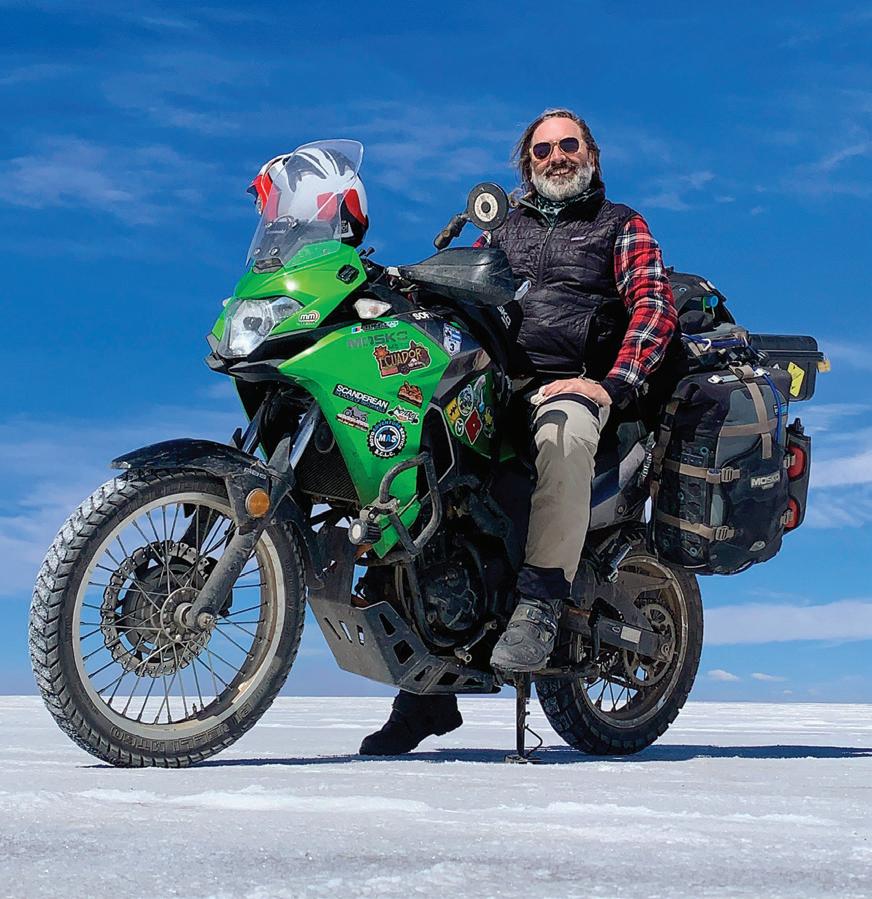
Still, I never imagined that 12 years later, when I actually had the opportunity to ride halfway around the world, that I would make the trip on a bike with less than half the displacement of that little BMW — especially not when I had a perfectly good R1200GS in my garage at home. But here I was standing in a parking garage in Asunción, Paraguay, eyeballing the road-weary 2017 Kawasaki Versys-X 300 — yes, 300cc! — that would be my ride for the next 14,000 miles. Time to eat my smart-a** words…
Ididn’t choose the Versys-X; it was actually my daughter’s choice. In fact, I didn’t even choose to do this trip, at least not in any intentional way. It was all my daughter’s doing. It all started in July 2022 at a farmer’s market in Bayfield, Wisconsin, where my then-22-year-old daughter Kiva met Bridget McCutchen, another 22-yearold moto adventurer who is on her way to setting the Guinness World Record for “the youngest person to
circumnavigate the globe by motorcycle.” Just one month later, Kiva — who had just completed her MSF course and earned her street license a few weeks earlier — was the proud owner of a used Versys-X 300 just like Bridget’s and riding west to San Diego, where she would meet Bridget and join her for the first leg of her round-the-world journey, to Ushuaia, Argentina.
Then I experienced a temporary “employment disruption.” I had always wanted to do the ride from America to Argentina — or vice versa. The bike was already down there, complete with camping gear, spares, tools, everything. A quick transfer of ownership, a one-way ticket to Paraguay, and soon I found myself in a concrete parking garage in Asunción with Kiva handing me the key…
Eight months and 24,000 miles later, Kiva and Bridget completed their wild and wandering journey to the end of the world. Guinness rules require Bridget to complete her ride on the same bike, so her Versys-X was shipped from Uruguay to Portugal; Kiva’s plan was to sell her bike in Argentina.
My introduction to Latin American combat traffic was abrupt. Before I even departed Asunción, I had both hit and been hit by cars; the former when I was lane-splitting a long line of buses (with Kiva on the back) and a car darted out in front of us; the latter when I was merging onto a narrow bridge and a garbage truck hooked my saddlebag and began dragging me along, the truck driver watching in the mirror and laughing the entire time. Once I escaped Asunción, however, the first leg to Buenos Aires was mostly uneventful — which was a good thing. Every day on an adventure like this starts as an anxiety attack if you let it. Where will I sleep tonight? How will I get there? Where will I get gas? Will I be safe? What if something goes wrong along
the way? Especially when you are traveling alone...
Fortunately, Argentina is an exceedingly easy country to travel in. The roads are excellent and well-paved, the gas stations are plentiful — state-subsidized YPF franchises even have full-service espresso bars! — and the people are ridiculously hospitable. This, coupled with the fact that the American dollar is extremely privileged in Argentina’s inflation-battered economy, making
nice hotels, great steaks and the world’s finest wines remarkably affordable, made Argentina an easy introduction to overlanding in South America.
I had long dreamed of visiting Tierra del Fuego, but winter weather conditions in the Southern Hemisphere meant Buenos Aires was as far south as I would go on this trip. At roughly the same latitude as Alaska, there is only a small weather window during January and February when conditions in Tierra del Fuego are favorable for motorcyclists, and by April I had missed that opening. Kiva and Bridget got the best weather at all points, traveling through Central America during the dry and relatively cool winter months and then riding the Andes during the summer. I was basically
doing their route backwards and in reverse, which meant that the weather would be against me at all points. But more about that later…
After a few fun days in cool and cosmopolitan Buenos Aires, I pointed the Versys west across the Argentinian pampa and toward the Andes mountains, setting a target for Valparaiso, the techni-color port city perched on the Chilean coast. I’ll never forget my first glimpse of the Andes, just outside of Mendoza,
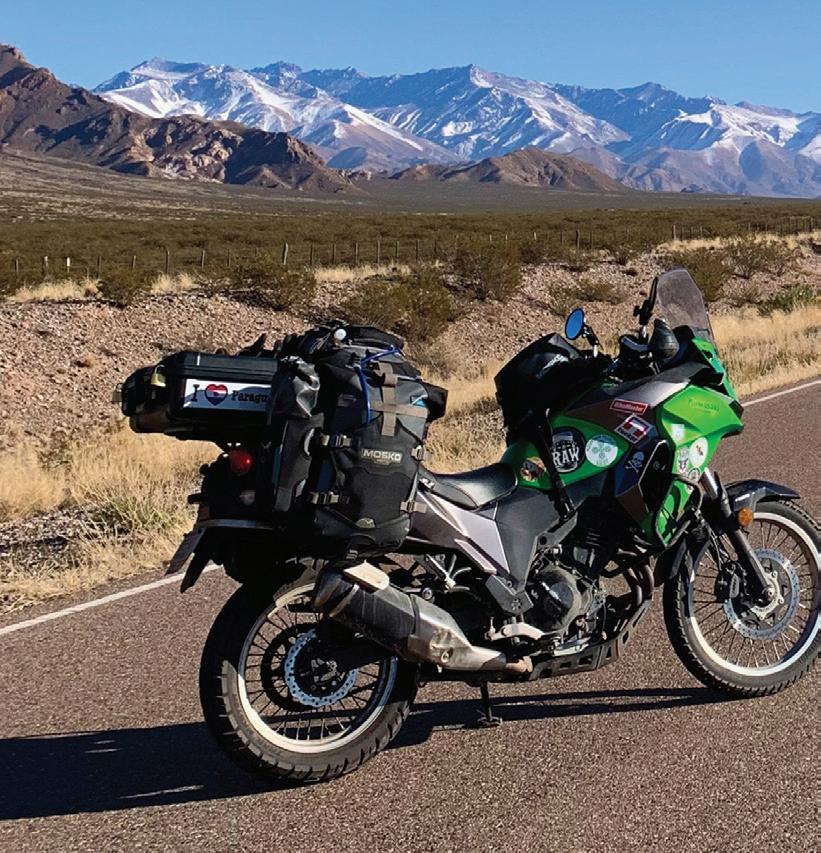
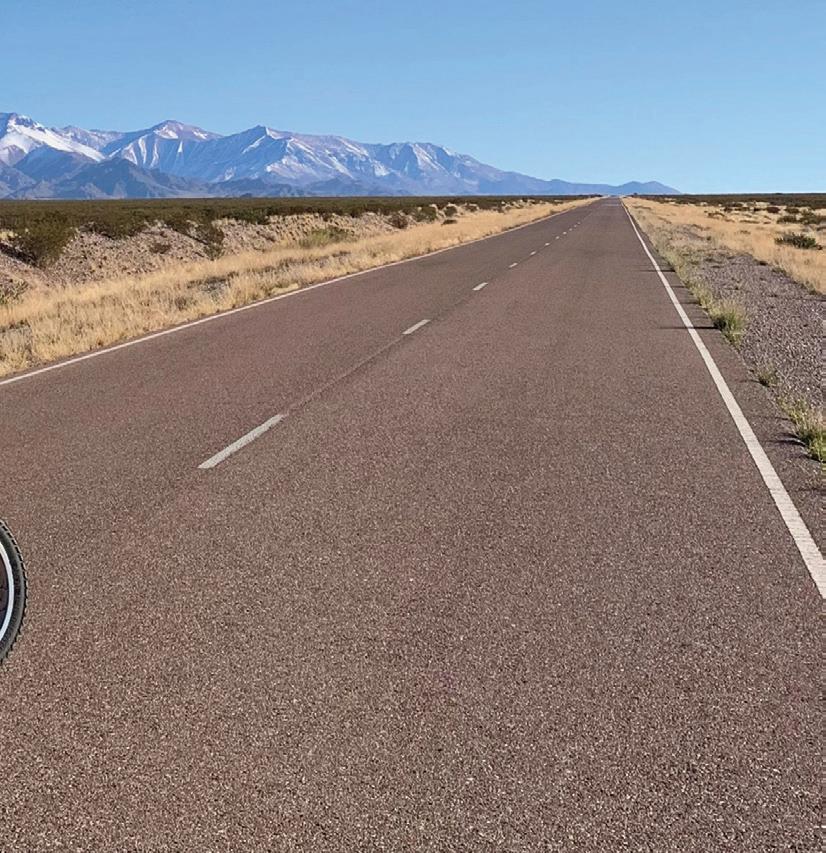
Looking for the end of that long white line in Argentina, with Mount Aconcagua looming in the background. Shortly after I took this photo the road turned to gravel—for 85 miles.
Argentina, dominated by 22,837foot Aconcagua — the highest mountain in both the Western and Southern hemispheres. The tallest peak in the American Rockies is Mt. Elbert at 14,431 feet; the average elevation in the Andes is over 13,000 feet and the dirt-switchback Cristo Redentor de los Andes pass, where I crossed from Argentina into Chile, is above 12,000 feet. There is no comparison. The Andes mountains are massive.
Those dizzying altitudes also have an unpredictable effect on the weather. The morning I left the hostel in Mendoza — where it was sunny and 80 degrees — another guest tried to tell me quite urgently that I should not travel to Chile that day. I couldn’t fully understand what she was trying to say, but she did repeat the word peligroso
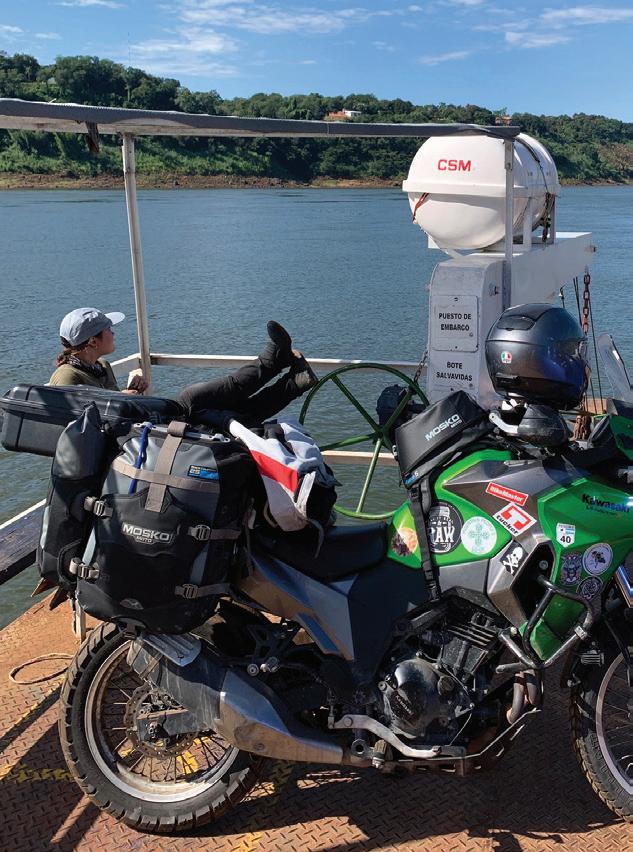
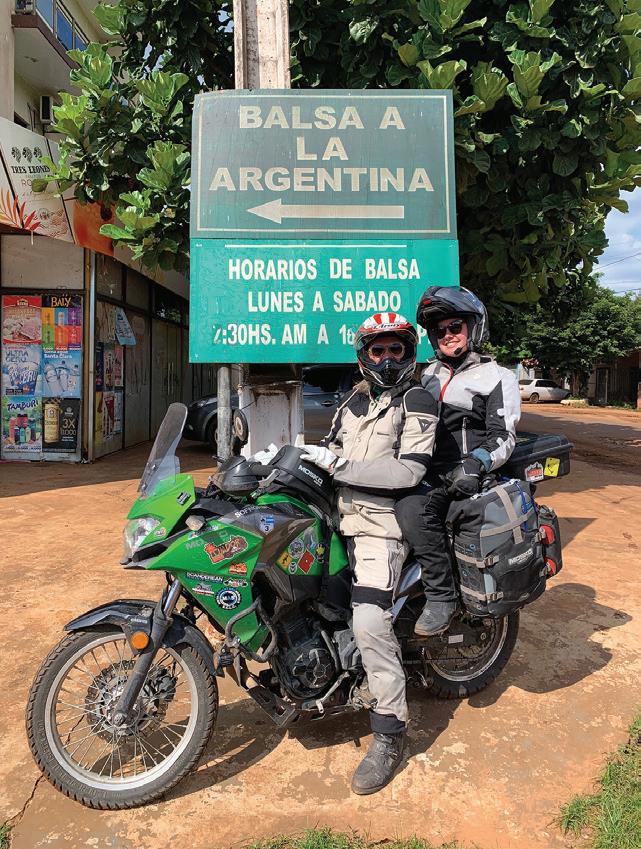
(Far left) Before we parted ways, Kiva and I made a quick 700-mile side trip to Iguazu Falls on the border between Paraguay and Argentina. That’s right, twoup touring on a 300cc ADV! Here we are boarding LA BALSA A LA ARGENTINA, the raft to Argentina.”
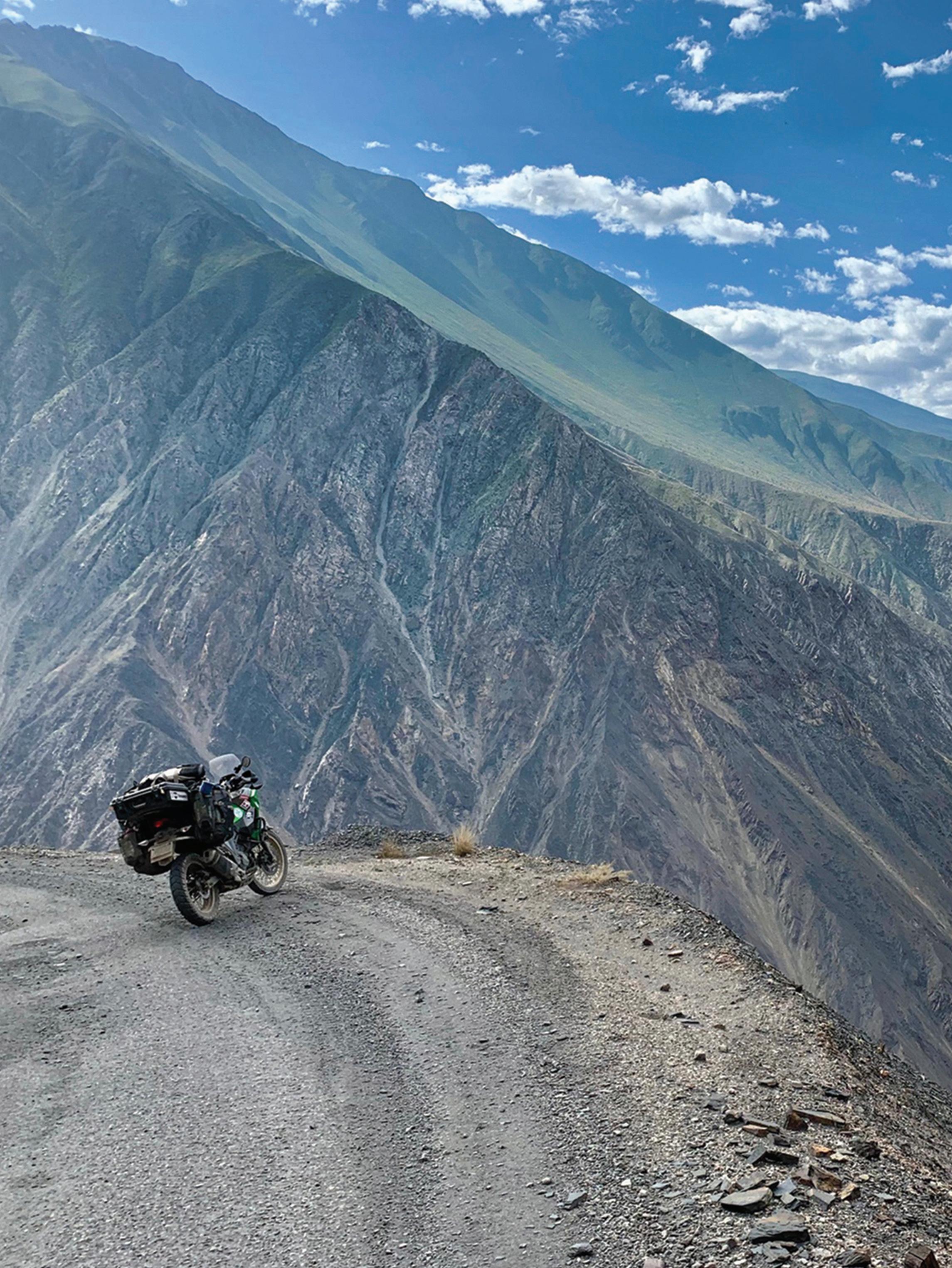
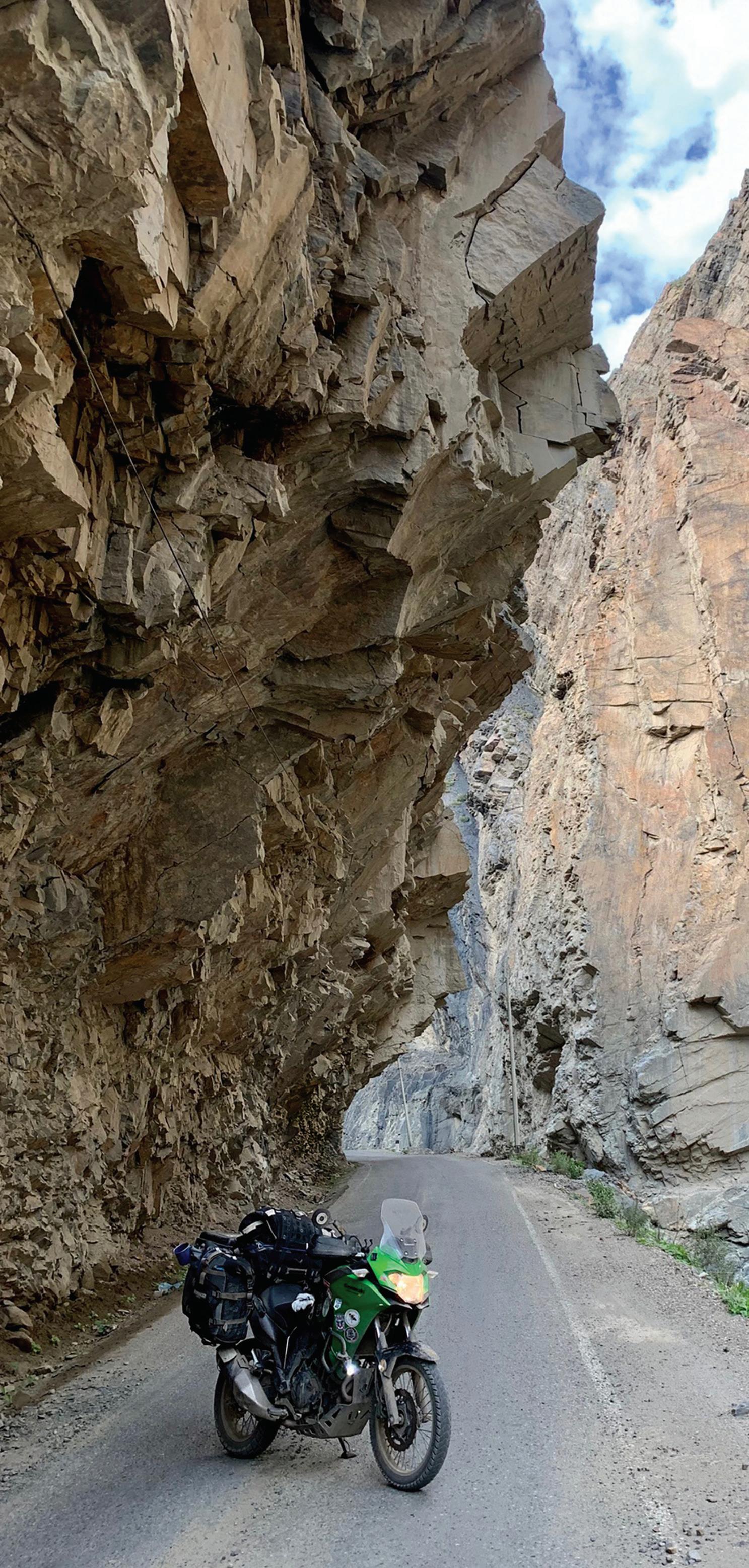
Descending the upper portion of Peru’s famous Cañón del Pato was one of the best rides of my life. Negotiating the lower portion, recently washed away by rainstorms, was one of the worst.
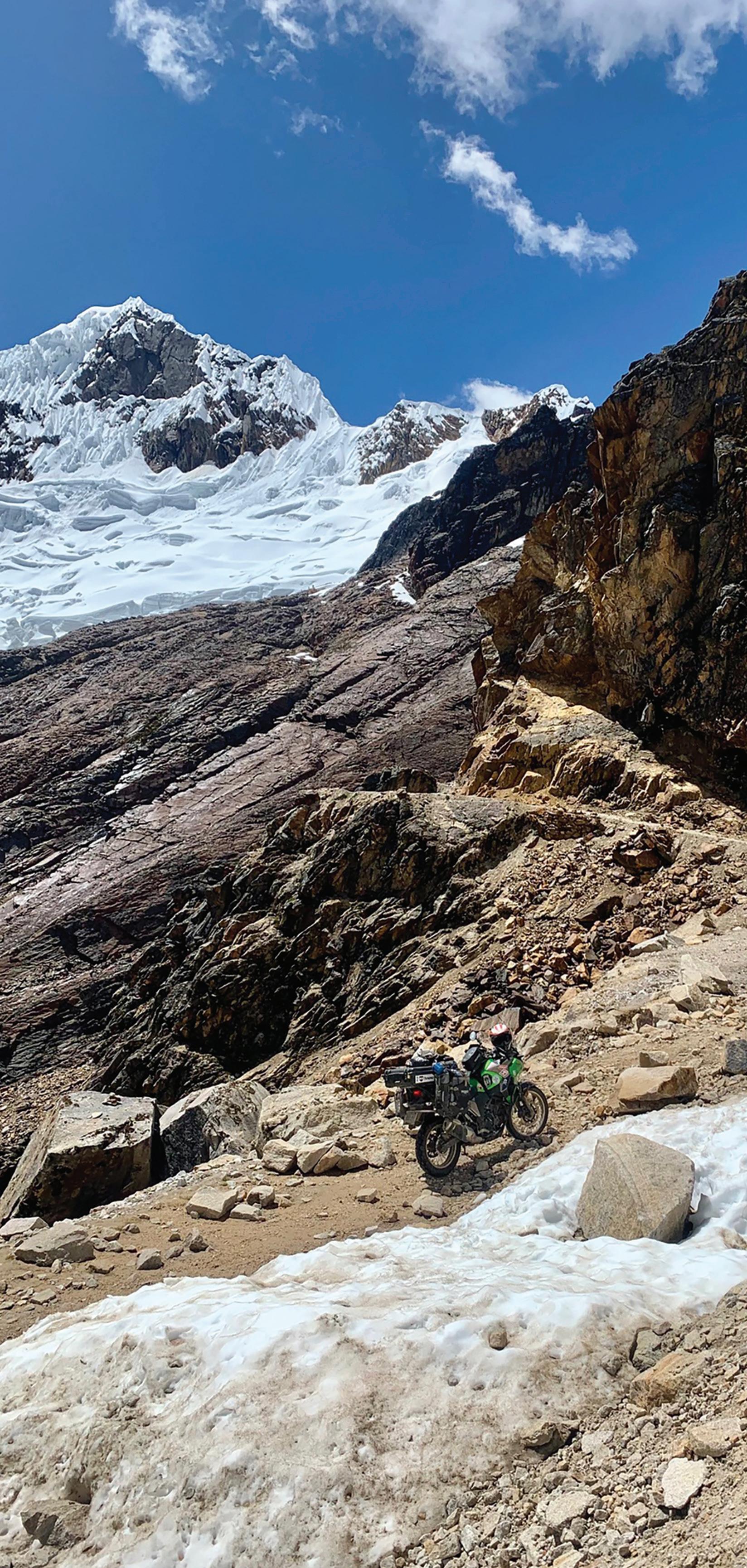
The Peruvian Andes was some of the best riding of the trip; endless mountain trails that led to fantastic wildcamping spots beside pristine alpine lakes.
(dangerous) quite a few times. I understood a few hours later when I approached a roadblock near the border and a military officer informed me they were preparing to close the pass in advance of an incoming storm. If I crossed into Chile, he said, I would not be able to return this way for at least five days. Message received.
After even more chatter on WhatsApp Overlander groups about closed passes in northern Chile — some that would be closed as long as three months — I abandoned my plans to ride across Chile’s Atacama Desert and instead crossed back into Argentina. I had no desire to be marooned in northern Chile, and besides, I had heard that Hwy. 9 north of Salta — through the famed Rainbow Mountains — was
spectacular. It was the right choice and it put me on a direct route to La Quiaca, reportedly one of the best and easiest places to cross the border into Bolivia.
Kiva warned me to expect challenges at the Bolivian border. Decades of CIA meddling in Bolivian affairs — including the execution of revolutionary leader Che Guevara in La Higuera in 1967 — have resulted in historic ambivalence toward Americans. Indeed, Bolivia was the
only country on my route where U.S. travelers require a visa, available at the border for the princely sum of $160 USD in cold, hard cash. Expecting the worst, I was pleased when I was granted entry without drama; the border agent even accepted my wrinkled US bills without argument. This set the tone for all my time in Bolivia — the least developed country I visited, and perhaps the most interesting. I spent my first night at Uyuni, a weatherbeaten railroad outpost
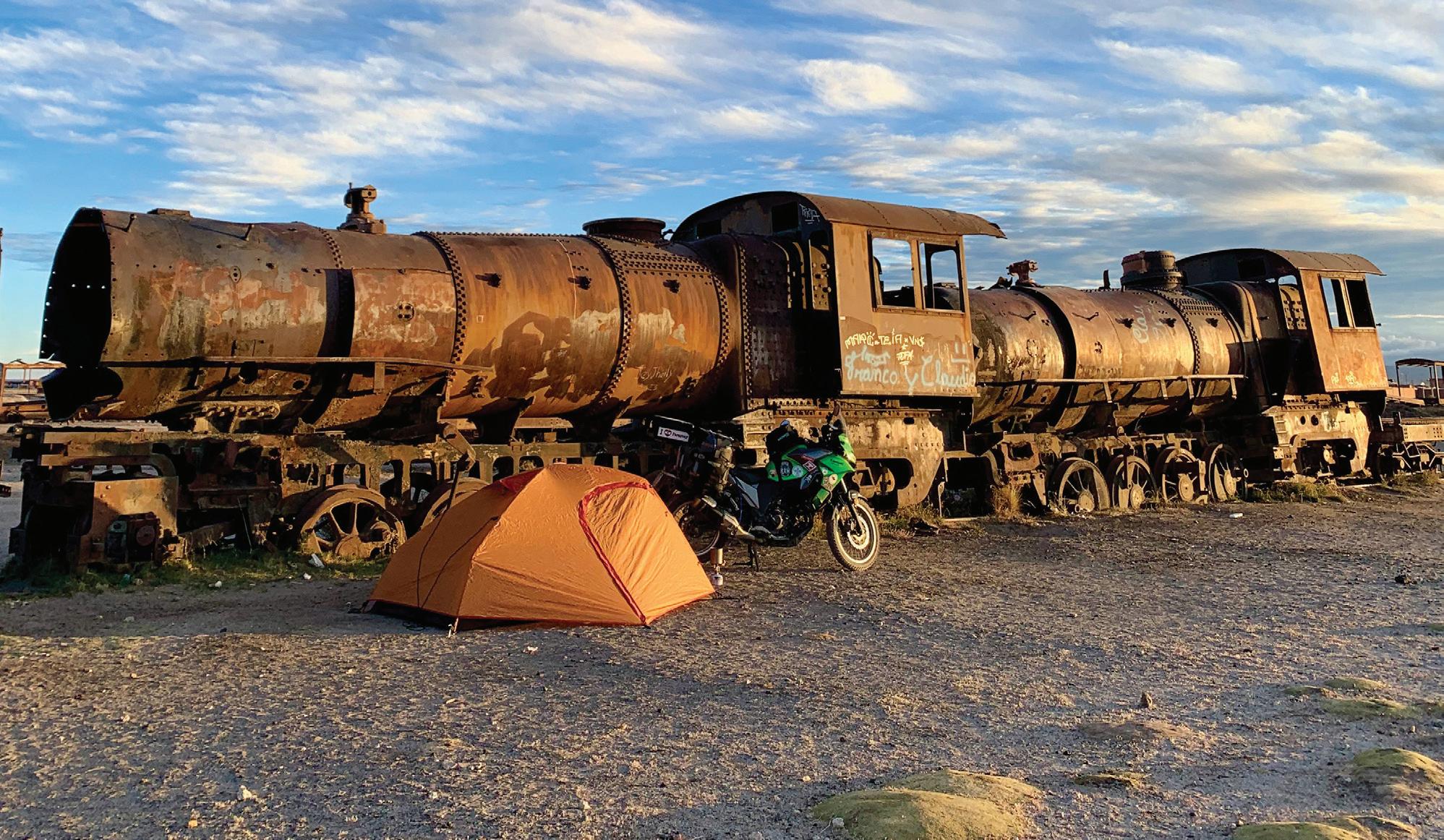
at the edge of Salar de Uyuni, the world’s largest salt flat. I wild camped that evening at Uyuni’s infamous “train cemetery,” a sprawling field on the edge of town filled with the rotting remains of dozens of locomotives that were abandoned almost 100 years ago, when the pipedream of turning the remote town into a bustling railway hub died.
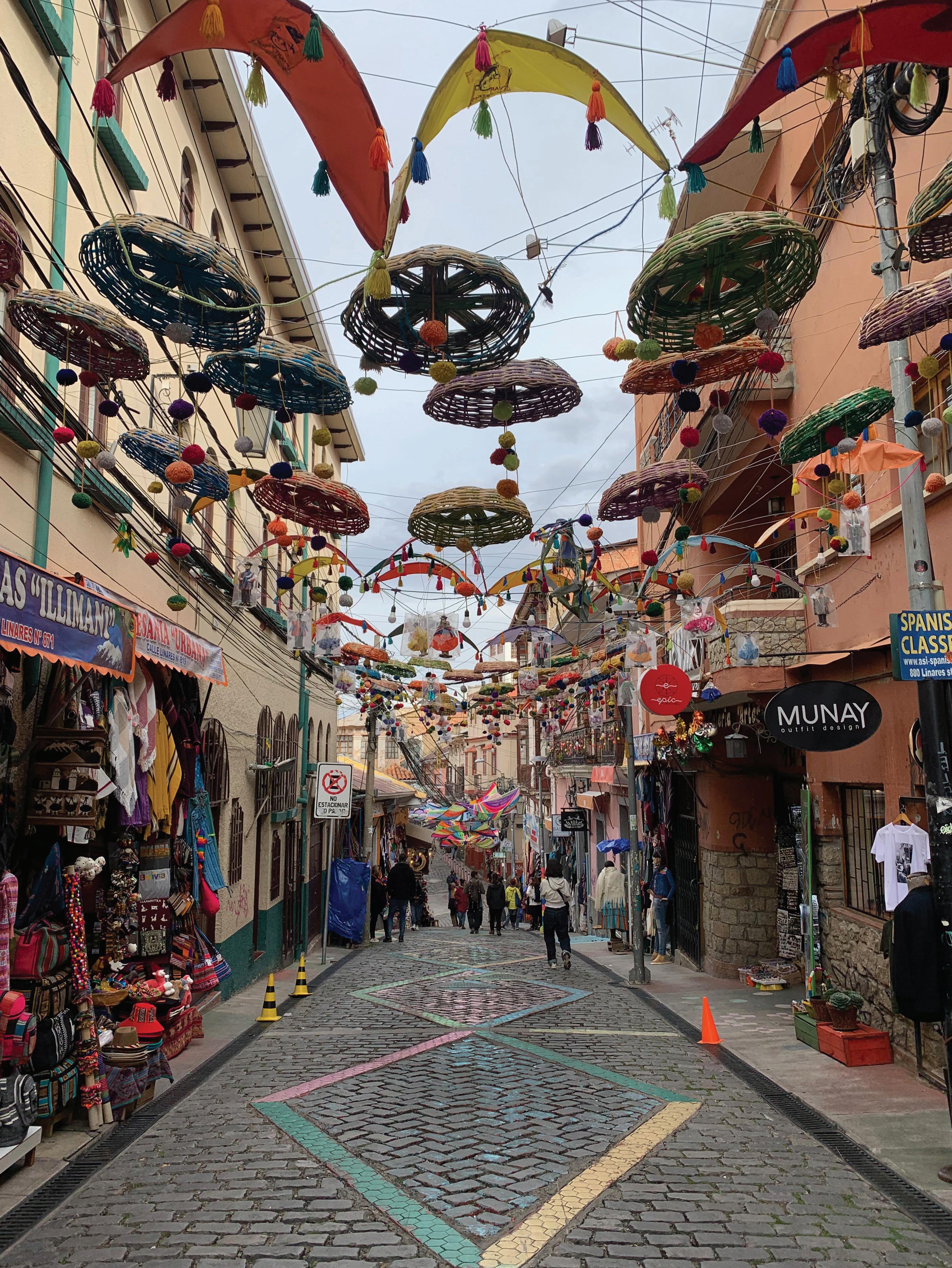
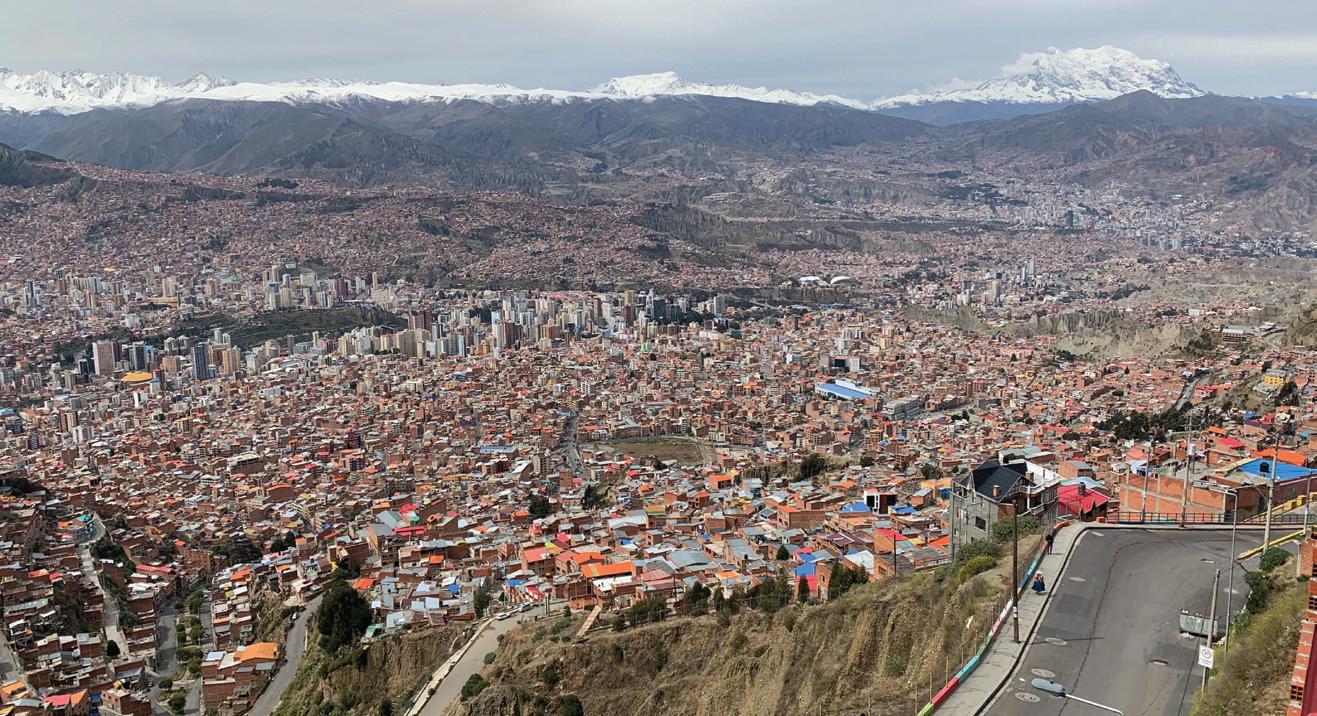
A few days later I made it to La Paz, the highest capital city in the world at 11,893 feet. Ringed by snowcapped mountains and crisscrossed with aerial cable cars, La Paz is also home to a worldfamous “witches’ market” crowded with brujas and curanderos who sell preserved starfish, mummified frogs, dried llama fetuses and other oddities meant to be fashioned into offerings to the spirits for luck or wealth. From La Paz it was a short ride to Lake Titicaca, the famous high-altitude lake on the Bolivia/Peru border. I originally planned to cross the border at Copacabana, but I was told that
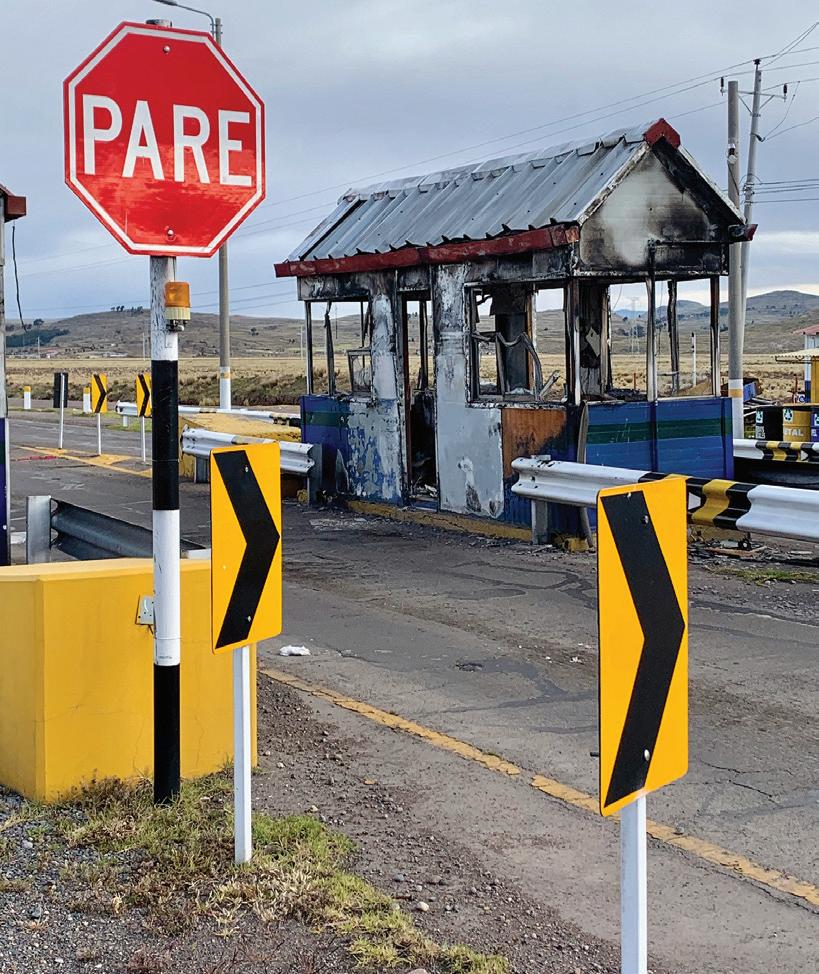
that border station on the Peruvian side was burned to the ground during recent political unrest, so I rerouted toward the busier southern crossing at Desaguadero.
The little Versys-X had been suffering the power-robbing effects of high altitude for days, and the plummeting fuel mileage showed this. Normally this wouldn’t be a problem — 40 mpg is still quite good, even against a normal 60 mpg average — but buying fuel in Bolivia is complicated. Bolivian gas is remarkably cheap because it is heavily government subsidized; gasoline is also a key component in both illegal mining operations and illicit drug manufacturing. For these reasons the sale of gasoline is highly regulated. Every driver in Bolivia carries a card that is scanned to log each fuel purchase. If you don’t have the card, some stations are equipped to sell you fuel at a higher, non-subsidized rate; but many are not. For the most part I had no trouble buying gas across Bolivia; I either paid the higher rate or feigned ignorance and found helpful station attendants willing to bend the rules.
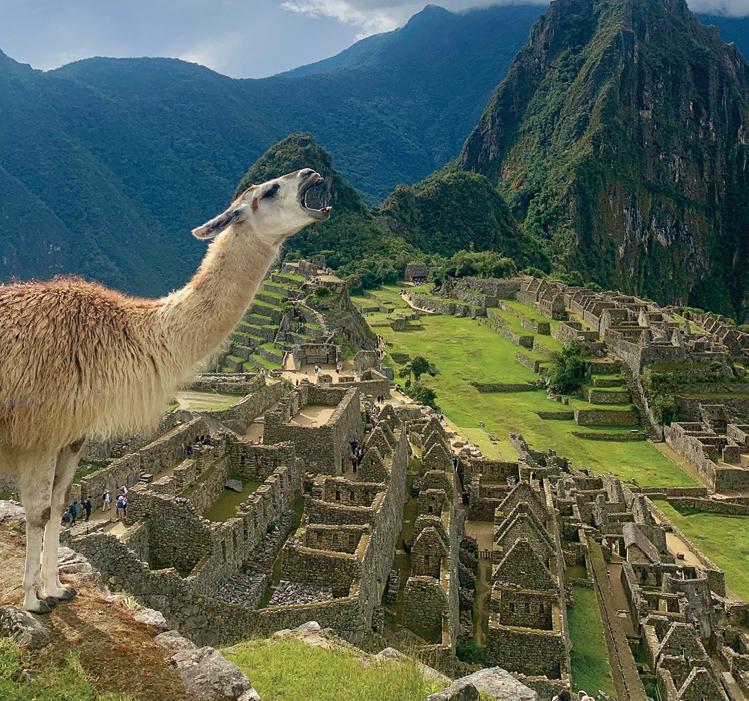
(Above) Wild camping at the infamous train cemetery just outside of Uyuni, Bolivia, an incredible place to explore on-foot. (Left) Every toll booth I passed in Peru—every single one— had been burned to the ground during recent political unrest. (Below, left) A bored llama at Machu Picchu, the Incan citadel in Southern Peru.
But not today.
As I approached the Peruvian border, where cross-border fuel smuggling is a major issue, I stopped at six stations in a row that all refused to sell me fuel. With Versys-X running on fumes, I was fortunately able to convince a local on a Honda CRF250L to fill his tank and then meet me around the corner and out of sight of the gas station security cameras, where we could siphon three gallons into the Versys-X tank. Crisis averted.
I eventually made my way into
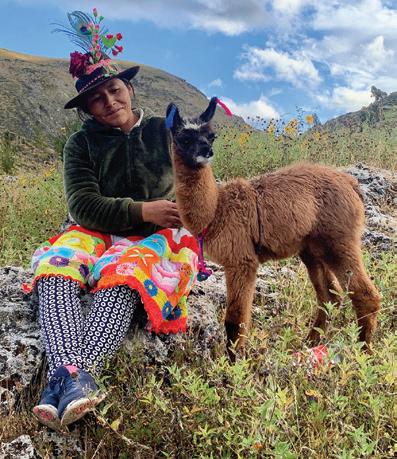
Peru — and even higher into the Andes mountains — where the alpine passes surrounding Cusco rival the beauty (and the toe-dragging challenge) of anything I’ve ridden in Switzerland or Austria. I made time for some typical tourist activities — a long train ride to visit the ancient Incan citadel of Machu Picchu, packed with German backpackers and Chinese package tourists, then on to the secret beauty of Aguas Turquesas, where my only company was a young lady named Lydia and her pet llama, Cleo.
There are so many elements I underestimated about this trip — beginning with how long it would take to get anywhere. Riding in America, I’ll regularly knock out 500-mile or even the occasional 1000-mile days; in the Peruvian Andes, I was consistently riding 8-10 hours a day and struggling to cover even 150 miles. The ride out of Ayacucho was one of the slowest, an endless one-lane gravel road
that wound thousands of feet up and down steep Andean ridges. After 8 exhausting hours I had covered just 125 miles — and only about 40 miles as-the-crow-flies. The 8 weeks I had planned for the 8,000 miles from Buenos Aires to Bogota was starting to seem overly ambitious.
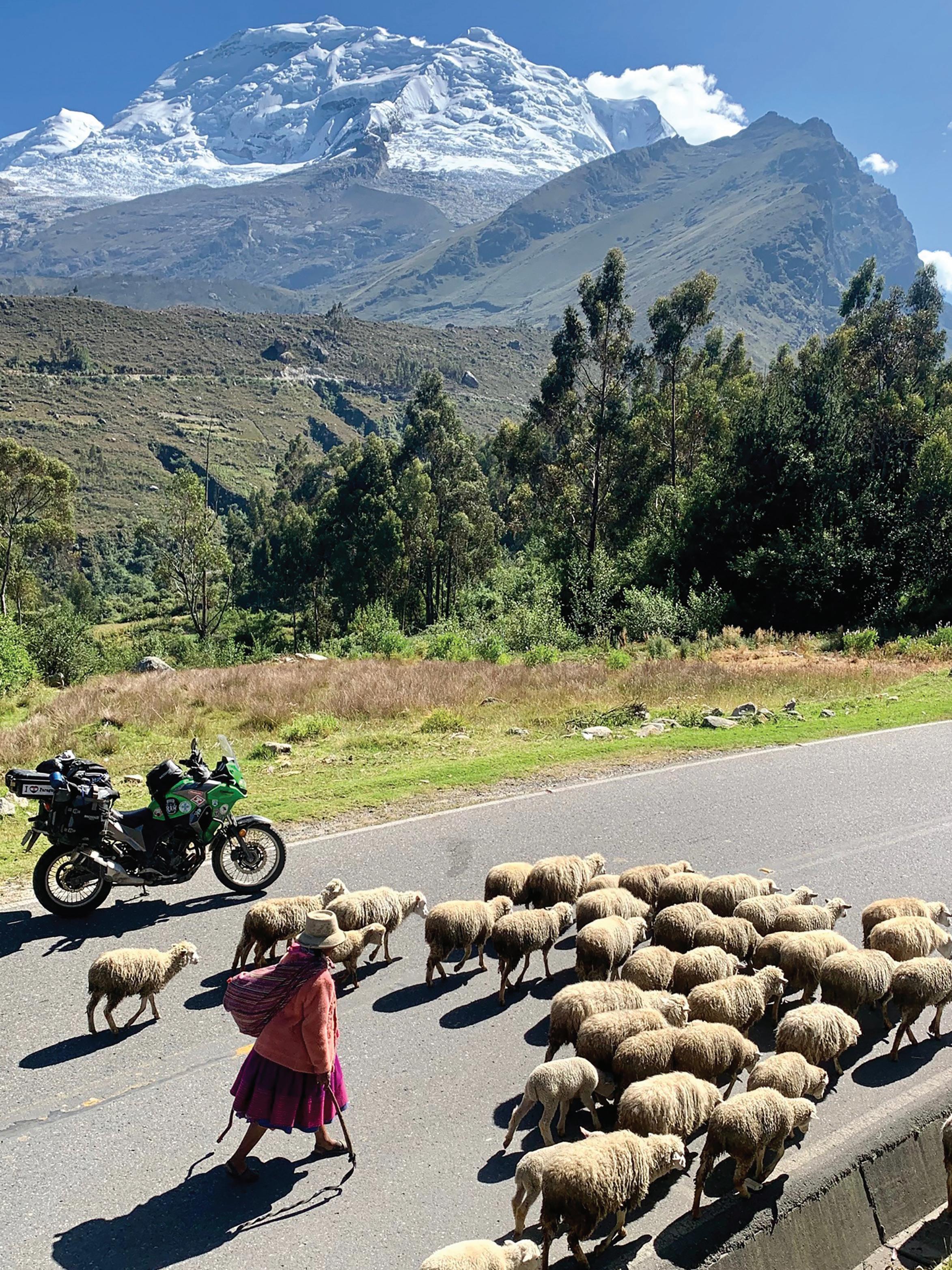
The Peruvian Andes was some of the best riding of the trip: endless mountain
trails that led to fantastic wild-camping spots beside pristine alpine lakes; barren high-desert double-tracks deserted save for the occasional Incan shepherd and her flock of
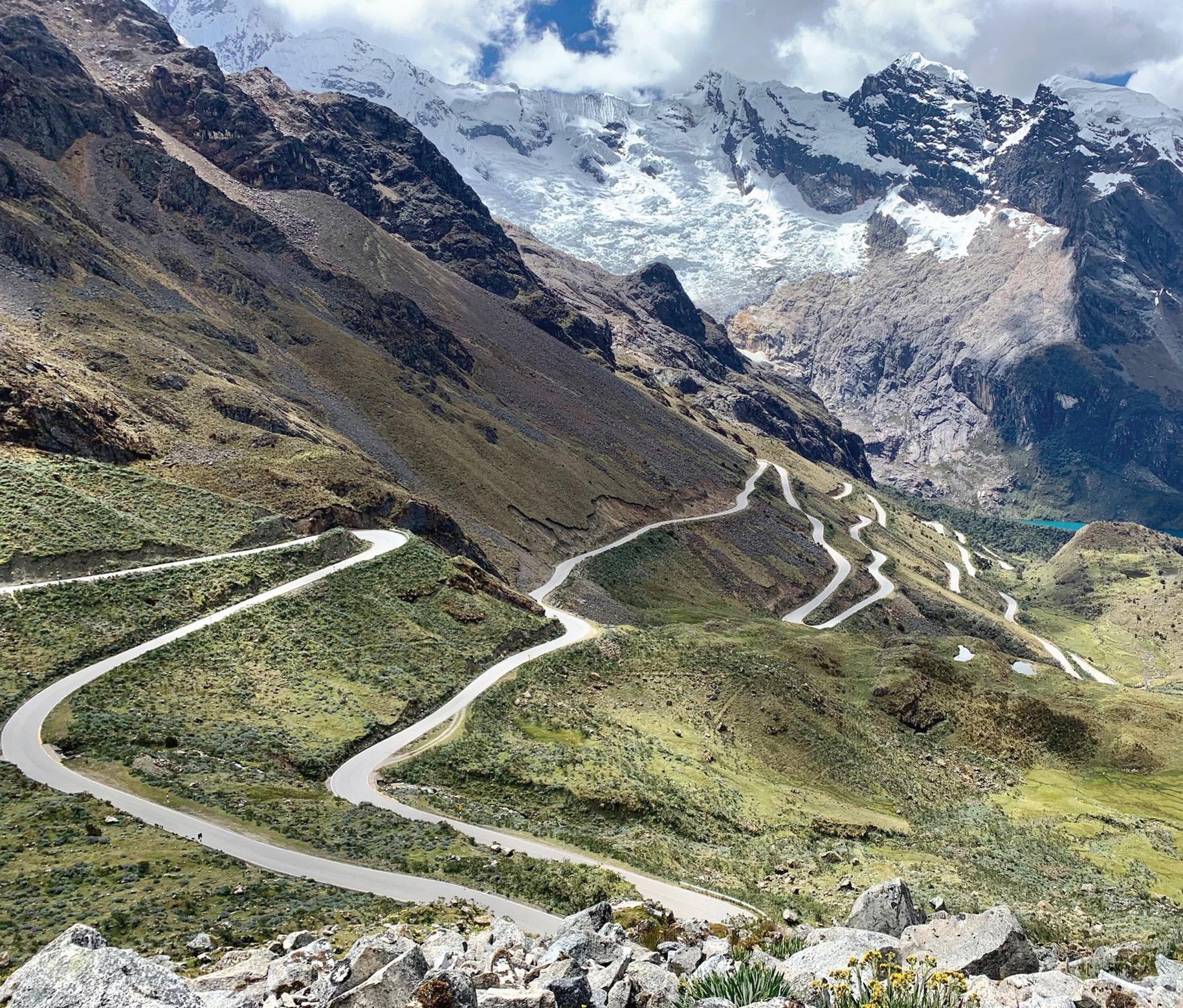
A typical road in the Peruvian Andes, this is Highway 107 through Parque Nacional Huascarán. The switchbacks — and the scenery, filled with dramatic, glaciercovered peaks and crystal-blue alpine lakes — rival anything you’d find in the Alps.
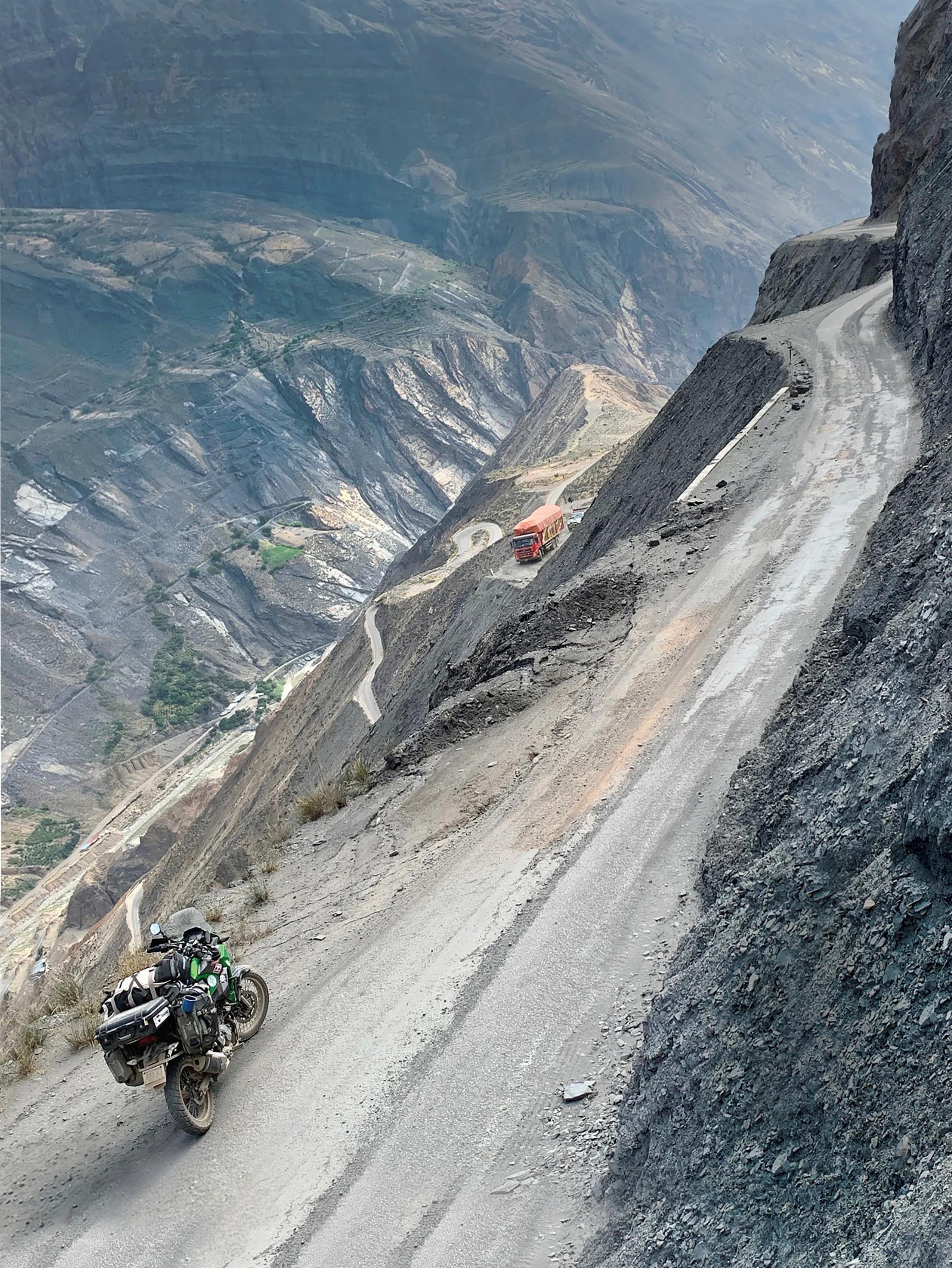
almost immediately devolve into a total hardship. Descending the upper portion of Hwy. 3N — Peru’s famously dramatic Cañón del Pato — was one of the most spectacular rides of my life. Negotiating the lower portion of the same highway, which had recently been washed out by rainstorms and was nearly 75 miles of bumpy workarounds and desviaciónes, where it seemed like I couldn’t even get out of second gear — was one of the worst. This happened so often that I began to almost dread good rides, because they almost always seemed to presage some of the worst.
To make up for lost time, I reluctantly exited the Andes near Chimbote and made my way down to the Panamerican Highway, the
sheep; dramatic switchback passes where the white-painted fog line occasionally fell away for many hundreds of feet down a sheer cliff. It was the best riding I had ever experienced — and the worst, too, often in the same day.
I was surprised at how quickly what started as the best day of riding could
truck-choked, litter-clogged artery that is the only “fast” road in all of South America. Two days of quickand-dirty riding on the Panamerican put me at the Ecuador border, where I met my first “Mikes” of the trip. What’s a Mike? According to Kiva and Bridget, a Mike is a man “of a certain age,” almost always with a
After 8 exhausting hours I had covered just 125 miles — and only about 40 miles as-the-crow-flies. The 8 weeks I had planned for the 8,000 miles from Buenos Aires to Bogota was starting to seem overly ambitious.
La Paz’s worldfamous “witches’ market” is crowded with brujas and curanderos who sell preserved starfish, mummified frogs, dried llama fetuses and other oddities meant for good luck.
gray beard, almost always wearing expensive (and matching) adventure gear, almost always riding a fully farkled BMW GS, and always eager to mansplain everything to a pair of 22-year-old women traveling overland by bike. Apparently, they’d met quite a few of these types.
Their description hit awfully close to home, so I did my best to moderate my own behavior— especially when I met younger travelers. These two guys, who were arguing loudly with the border guards in broken Spanish, clearly didn’t get the memo. For the next 15 minutes I barely uttered a word, just nodding as I listened to dueling monologues about how great their bikes were, how they picked the most spectacular roads, how they bargained for the best deals at every hotel, and basically how they were the best adventure riders to ever
point a motorcycle south. I don’t think they even asked my name. They certainly didn’t ask about my bike, my trip, or even if I had any ideas on how to work out the problems they were having with the border guards. If you’re going to travel, don’t be a Mike…
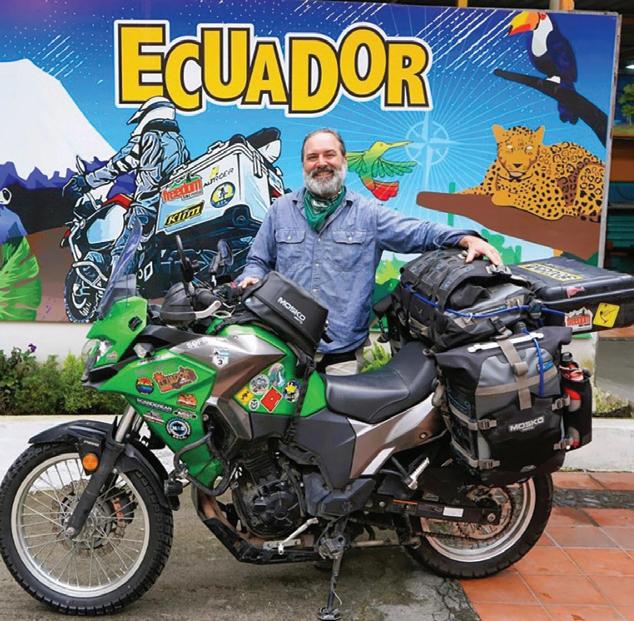
Entering Ecuador was a pleasant change from dusty and dirty Northern Peru. A comparatively peaceful and prosperous country, Ecuador offers great roads and infrastructure, safe
cities, and some of the most stunning riding in all of South America. I took a short break in the charming town of Cuenca — a UNESCO World Heritage Site situated 8,400 feet above sea level — then continued north for some of the best wild camping of my trip. The first stop was Chimborazo, a 20,500-foot inactive volcano that is Ecuador’s highest mountain, where I camped in a gorgeous alpine meadow high above the tree line, with only a few vicuñas
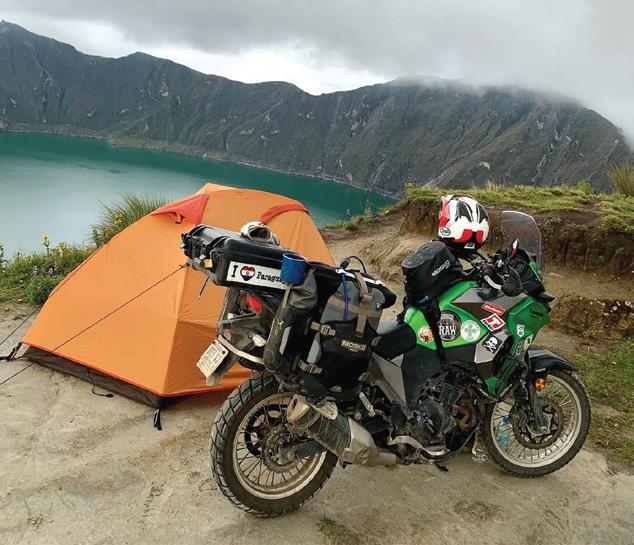
and some unusually curious owls for company. Everything was great until a succession of nasty thunderstorms threatened to flatten my tent at 3 a.m., but the view of the volcano out my tent door the next morning made up for the fear of being electrocuted in my sleeping bag.
The next stop was Quilotoa, a dramatic, two-mile-wide crater lake at 13,000 feet, where I was able to perch my tent at the very edge of a cliff hundreds of feet above the crystal-blue waters. From there it
was a short, three-hour ride into the capital city of Quito where I spent a few nights staying with my friends Court and Sylvain and catching up on some much-needed maintenance for the Versys-X. Court and Sylvain co-own Ecuador Freedom Bike Rental, a wellknown and well-respected adventure motorcycle touring company based in Quito. Not only do they have a fleet of over 50 rental bikes available for you to take on guided or self-guided tours from the Pacific Coast to the Andes to the Amazon, but they also have a full shop and a warehouse full of spare parts.
The little Versys-X hadn’t seen much more than basic maintenance in the now-35,000 miles it had traveled since leaving Wisconsin, so I spooned on new tires and new brake pads (both of which can be notoriously hard to find in South America), changed all the fluids, fixed a few broken pieces and, maybe most importantly, washed the bike for the first time in months! It felt like a new machine when I rolled out of Quito a few days later and made my way to the Colombian border.
Entering Colombia marked another dramatic transition. South America was different than what I expected; Argentina and Chile were more like Southern Europe than anywhere I had traveled in Central America, and even Ecuador felt more continental and less chaotic than I imagined. As soon as I arrived at the Colombia border, however, I was reminded without a doubt that I was in Latin America. The first clue was the noise: nearly every
gas station, convenience store and restaurant had a 10,000-watt sound system booming reggaeton music from the front door. The second clue was the paperwork. South American border crossings were unexpectedly calm and generally easy to navigate. Not so in Colombia, where I met a chaotic maze of unmarked buildings that stretched for blocks, crowded with shady fixers and byzantine documentation demands, too. It’s crazy and confusing and hugely stressful, and it took me almost three hours to satisfy all the requirements to enter Colombia — and the borders only got worse the further north I traveled.
I moved across Colombia quickly, as I had to deliver my motorcycle to the airport in Bogota by a certain date and I was rapidly running out of time. There is no overland route from South America to Central America — there are no roads through the Darien Gap, the 60-mile stretch of jungle that separates Colombia from Panama — and so the only way to connect the two continents is by boat, which is slow and sketchy, or by plane, which is fast, safe, and relatively expensive at a cost of
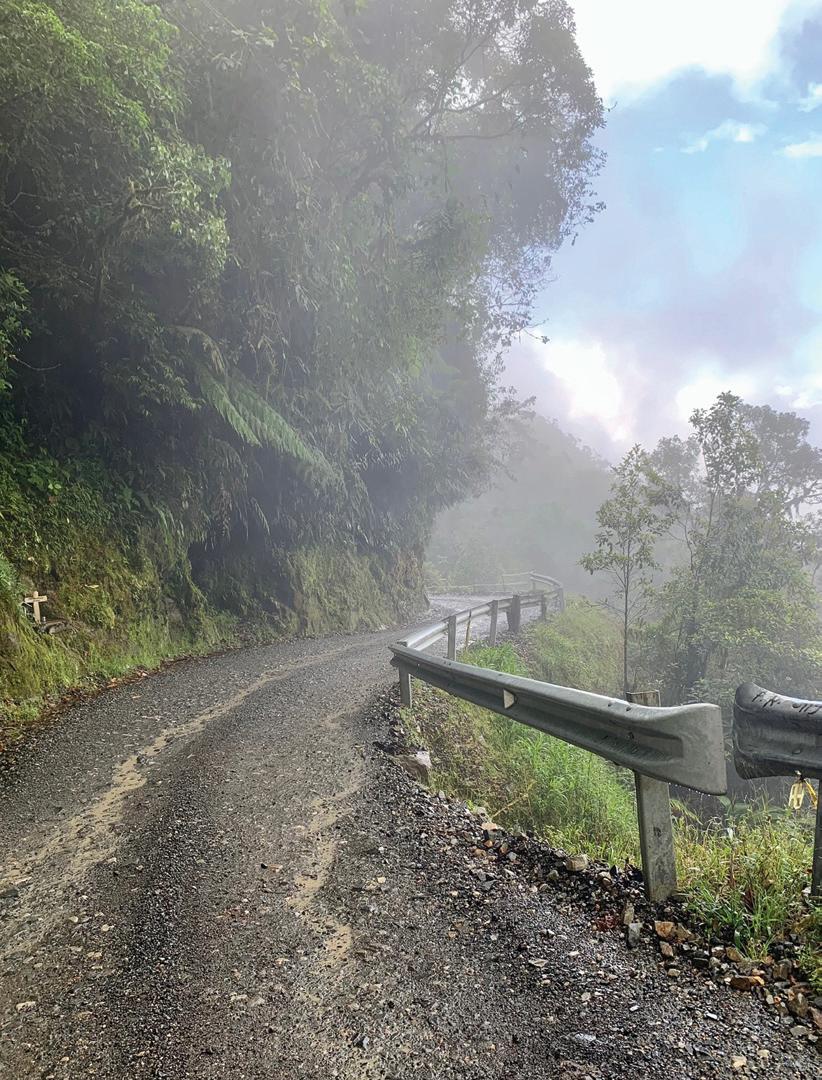
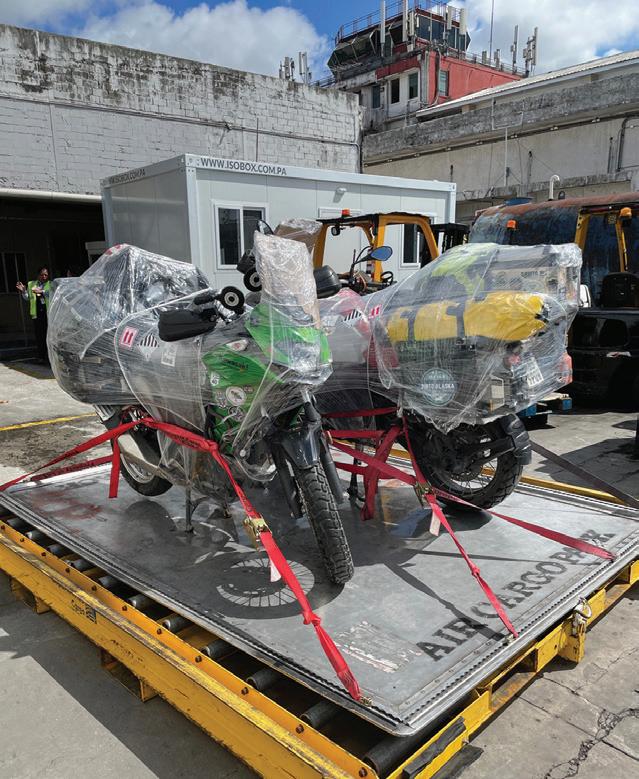
$1,200. I did, however, make time to ride Colombia’s infamous Trampolín del Diablo (Devil’s Trampoline), a 45mile stretch of road in the Putomayo region lined with sheer, 1,000-foot drops and said to be one of the world’s most dangerous roads. From there I spent a few days on the edge of the Amazon jungle near Mocoa, before beelining for Bogota and the CargoRider shipping terminal where I handed the Versys-X off to be shrink-wrapped for its short flight to Panama.
People always ask if I had any trouble on my trip, if I ever felt unsafe, if I was ever hassled or robbed. I can honestly say I had zero problems on my entire journey, excepting one single
car avatar move across the screen, when suddenly my phone was gone. At first I thought I dropped it, and looked down around my feet. Then I looked up and saw a motorcycle speeding away and realized the rider had swiped my phone right out of my hand, just like something from a movie!
incident in Bogota. I spent four days there and fell in love with the city full of lively residents who salsa dance until dawn, funky neighborhoods with the best graffiti in the world, and amazing food everywhere you turn. On my last day in Bogota I took a cable car up to the cathedral at Monserrate to enjoy the spectacular view looking down on the city from 10,000 feet. After sunset I walked to Bogota’s old town, the La Candelaria district, for dinner. After dinner I pulled out my phone to summon an Uber back to my AirBnB. I was standing curbside, watching the tiny
It took exactly 18 minutes to return to my AirBnB, where I opened my laptop and logged into the “Find My” app to locate my missing iPhone. When it didn’t appear immediately I clicked on the “Erase Phone” button, fearing the worst… These fears were realized as soon as I opened my email inbox and found numerous payment receipts from PayPal, Venmo, and Western Union, all made in the last 18 minutes, all originating in Bogota. Because my phone was open when he swiped it, the thief had access to all my financial apps. And because he had my phone in his hand, he likewise had access to all the two-factor authentication codes to approve the fraudulent payments. And because I did not have my phone and could not access my two-factor codes, I was helpless to secure my accounts.
I was able to lock my accounts via email. And I was able to buy a new phone the next day, but because it’s impossible to activate a phone number from my provider without being present in-store so that my identity could be visually verified, I was still unable to access my two-factor authentication codes and therefore unable to access any of my accounts. The only option was for me to fly back to the U.S. to reactivate my phone.
So, while the Versys-X waited patiently in Panama, I made an unplanned trip back home to Milwaukee. My trek was officially on pause — but I wasn’t done yet…
To Be Continued… AMA
Sometimes the white-painted fog line just fell away for many hundreds of feet down a sheer cliff. I was constantly surprised at how quickly what started as a great day of riding could almost immediately devolve into a total hardship.
(Opposite page, top left) A rare stretch of guardrail along Colombia’s infamous Trampolín del Diablo (Devil’s Trampoline), said to be one of the world’s most dangerous roads. (Opposite page, center) The Versys-X at the airport in Bogota, shrink-wrapped, loaded on a palette and ready for its flight across the Darien Gap. (This page) Not many roads are crazier than the 3N near Ancash, Peru. Think the driver of that orange truck is having fun?
THE
BY MITCH BOEHM PHOTOS: COURTESY OF BMW
hen you consider today’s worldwide motorcycling landscape, it’s pretty hard to imagine it without BMW motorcycles. From the K bikes and RSs and RTs to the new-generation twins and sportbikes and the omnipresent GSs (which are everywhere), BMW owns a foundational chunk of our sport…but it wasn’t always that way.
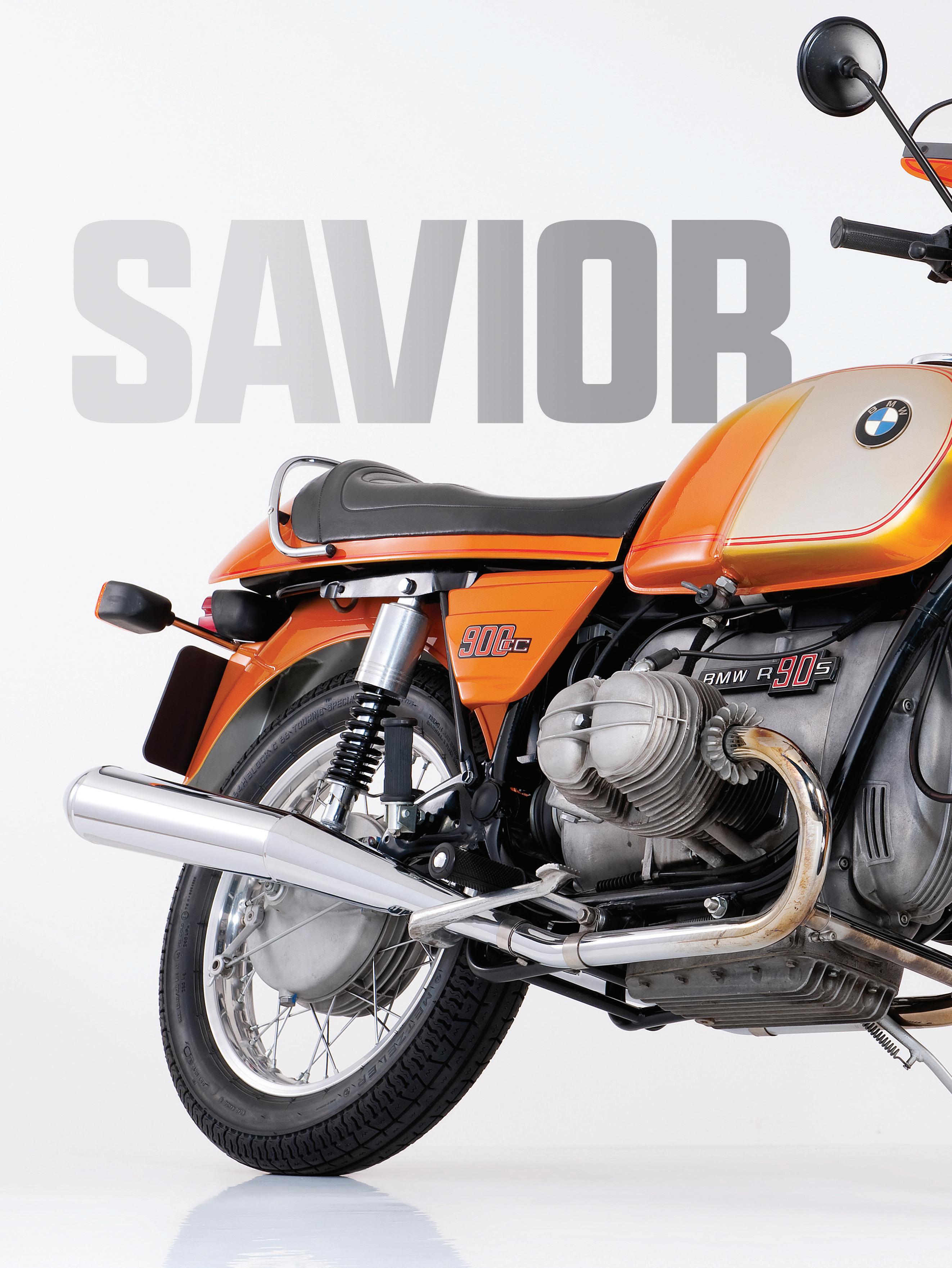
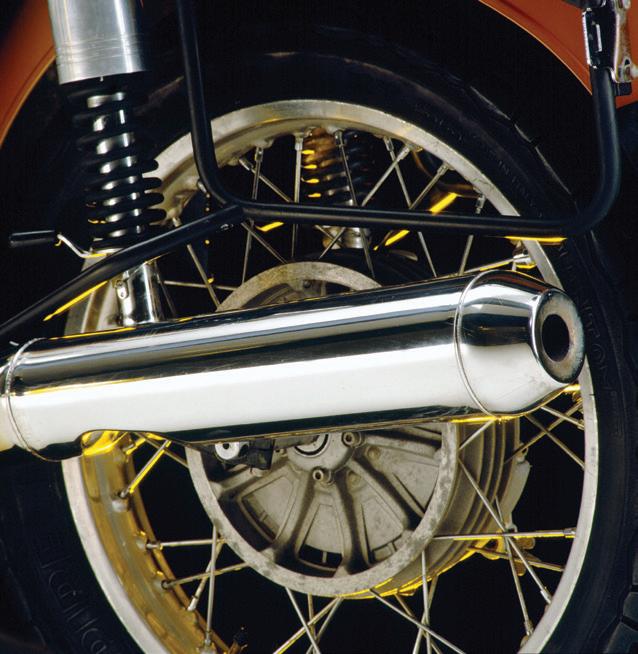
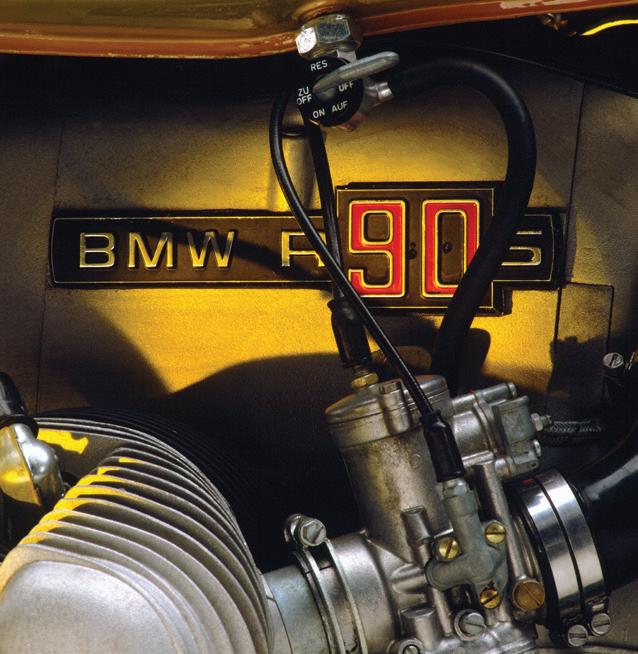
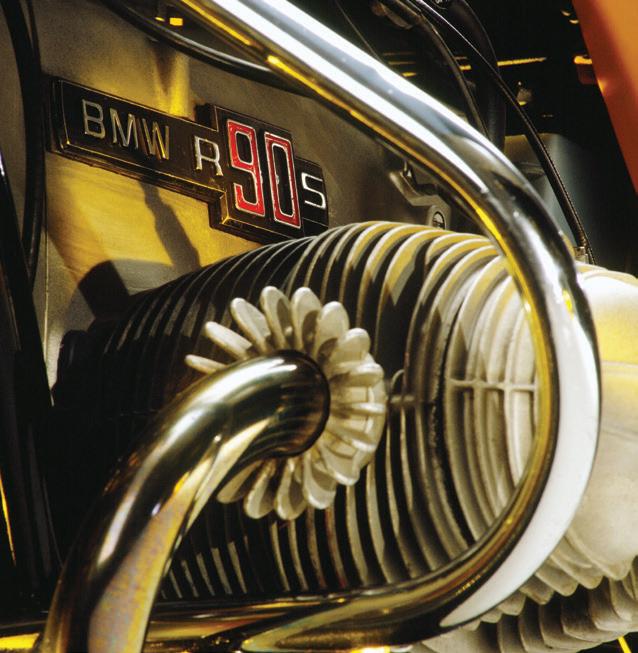
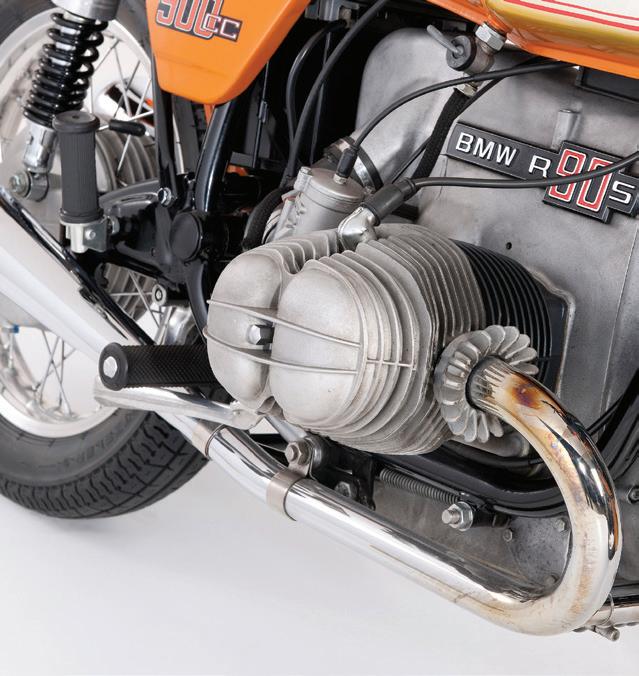
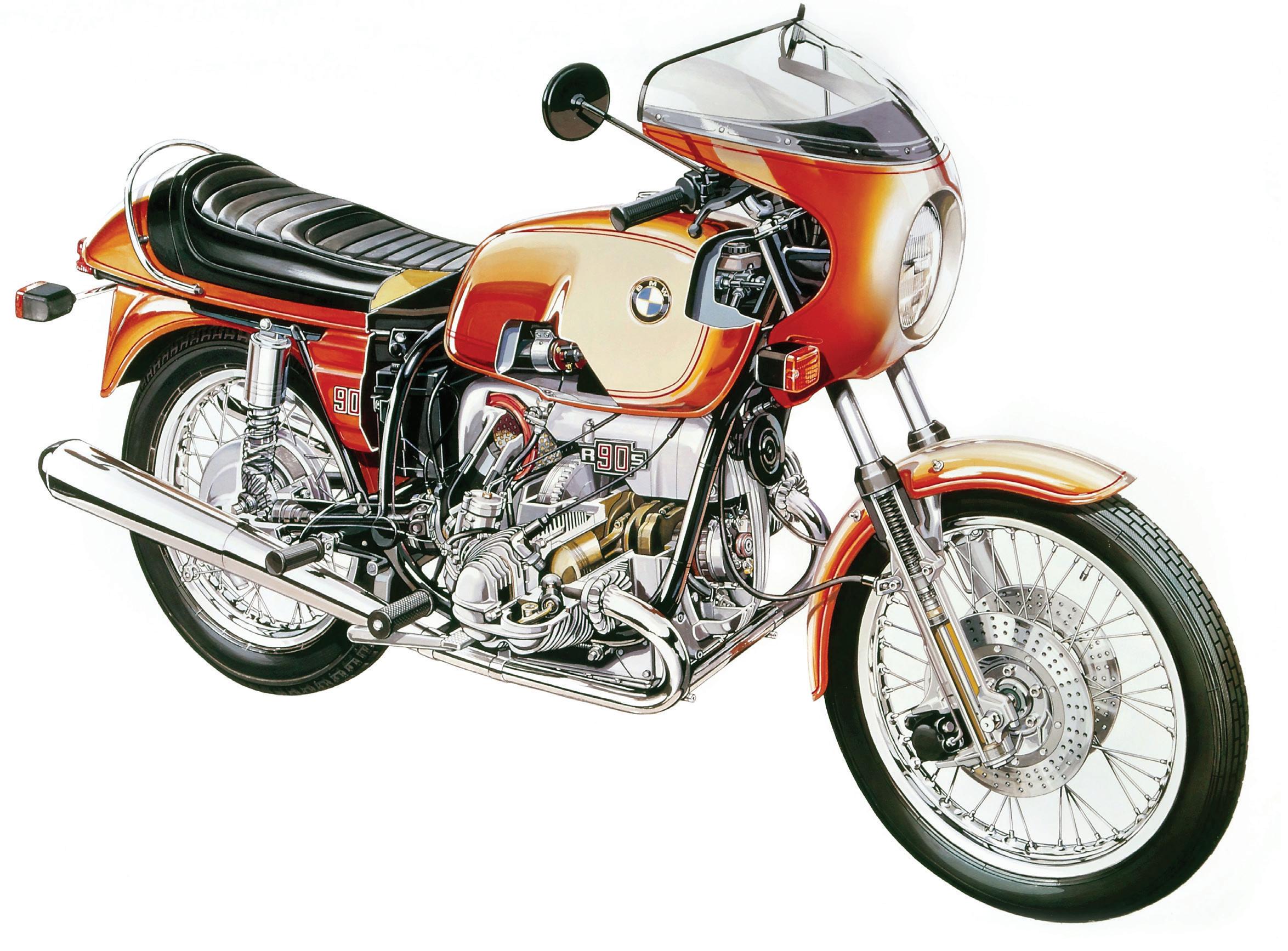
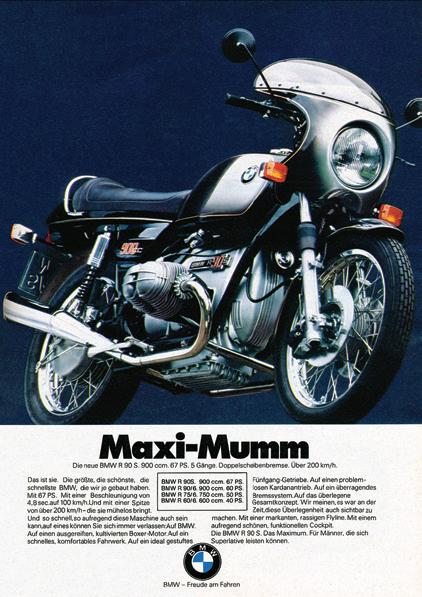
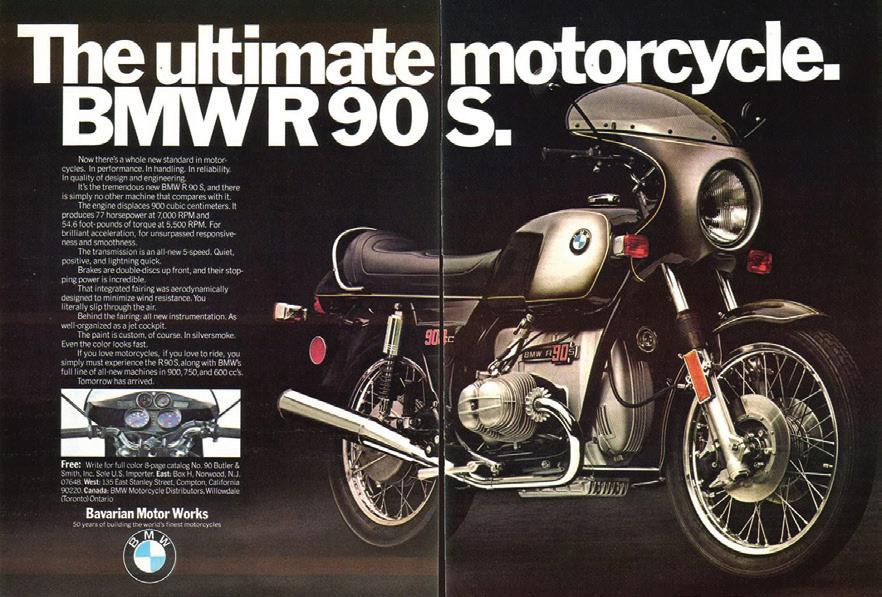
WThe R90S — the AMA’s primary Raffle Bike for 2023-’24 — is much more than the sportiest Boxer BMW had built to that point; it also saved the now-100-yearold motorcycle division from extinction
In fact, just over 50 years ago, BMW’s motorcycle division was on the cusp of going away for good, with many in upper-level management in Munich saying the costs and numbers did not justify keeping the Berlin factory humming.
“All the pressure from within the company regarding motorcycles at the time, and especially from the finance guys,” remembered legendary auto and motorcycle marketing genius Robert Lutz, “was to shut down the bike business. Many in upper management wanted to just kill it — or at least sell it.”
And as BMW’s newly appointed auto sales manager, Lutz — who worked at GM before his BMW tenure and would go on to become a marketing, sales and productplanning guru for the likes of Ford and Chrysler during his 60-plus year career — would be in position to know.
“When I joined BMW in ’72,” the exMarine pilot said, “the company was building about 200,000 cars annually, and only 10 to 12,000 motorcycles. Pretty insignificant volume, really. Our U.S. volume was declining, with most sales to police and federal agencies.
Retail was nearly nonexistent.”
“The Japanese had all the cool stuff: overhead cams, multi cylinders, disc brakes, advanced and sexy stuff. We just didn’t have it, and were treated as a bit of a joke by the magazines. They’d write, ‘BMWs…nice touring motorcycles for elderly people,’ and stuff like that. Not a reputation that boded well for the future.”
True story, as Japan Inc. had been flooding the market with affordable, fun and dependable motorcycles since the early 1960s, and had recently gone big with the likes of Honda’s CB750, with the
“We’d planned to build a few thousand, but they sold so well we began to run out of components. We had to quickly reorder things. We did not want to compromise on quality at all, and we sold every one we made.”
ROBERT LUTZ
903cc Z1 in the offing. BMW’s product line was also outdated and stodgy, and it didn’t help that there was a near-total vacuum in leadership.
“When I joined,” Lutz recalled, “literally no one was in charge of the motorcycle division. Part was controlled by sales, part by engineering, part by design, et cetera. The group was basically
leaderless and had very little in the way of resources. So I asked my boss if I could pull things together and give the division some leadership. I told him they were desperate for a direction, a plan. He said okay, but added this: ‘Just don’t ignore the job we hired you for!’ So I called everyone involved with motorcycles together and pretty quickly hammered out a plan, which everyone agreed
was the right one.”
Instead of competing against the Japanese with cylinders, horsepower and flash, BMW would go over their heads and build a fast, sleek, smooth, and sexy sporting motorcycle that evoked premium quality, style, and high-end panache — attributes Japanese motorcycles largely lacked at the time.
“We decided we’d send a signal to
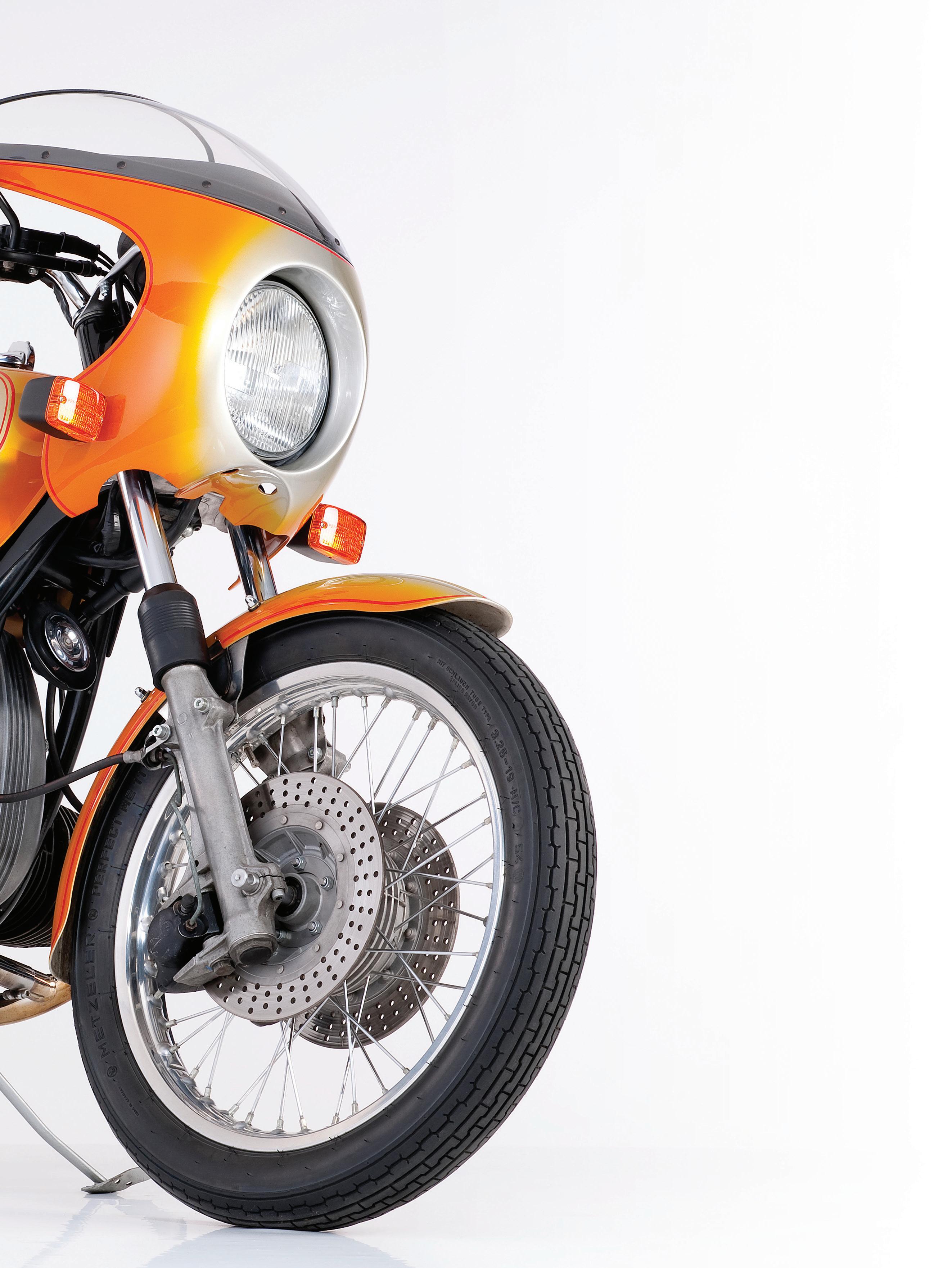
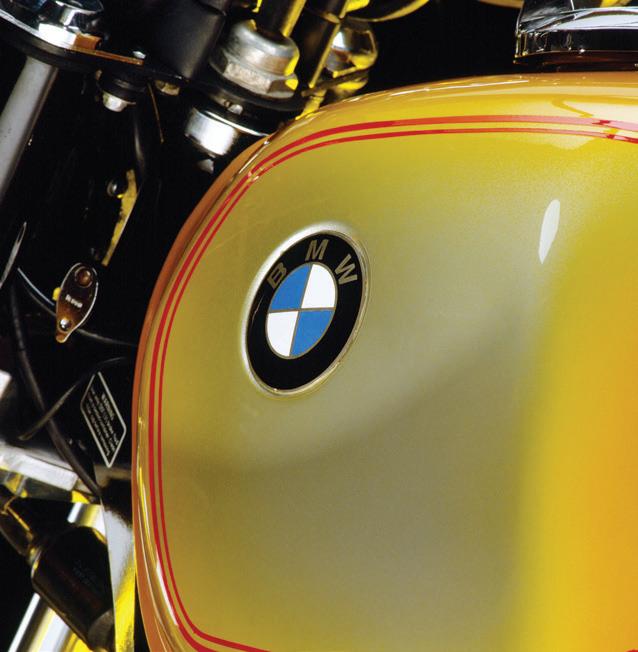
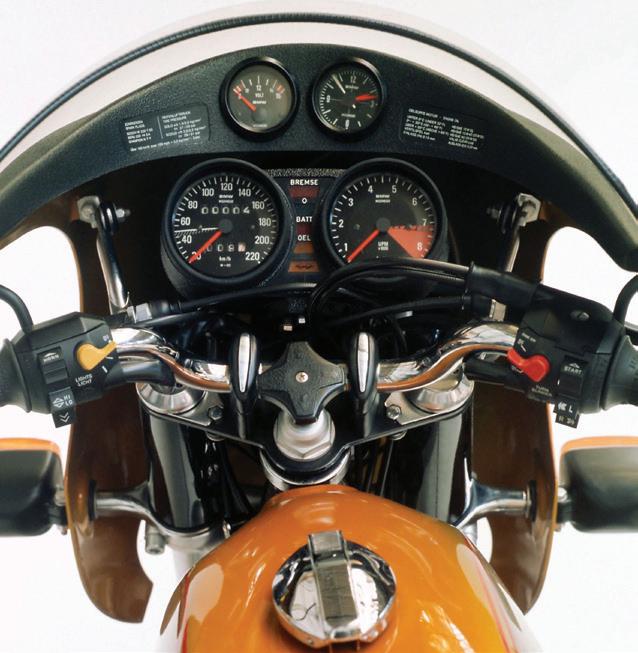
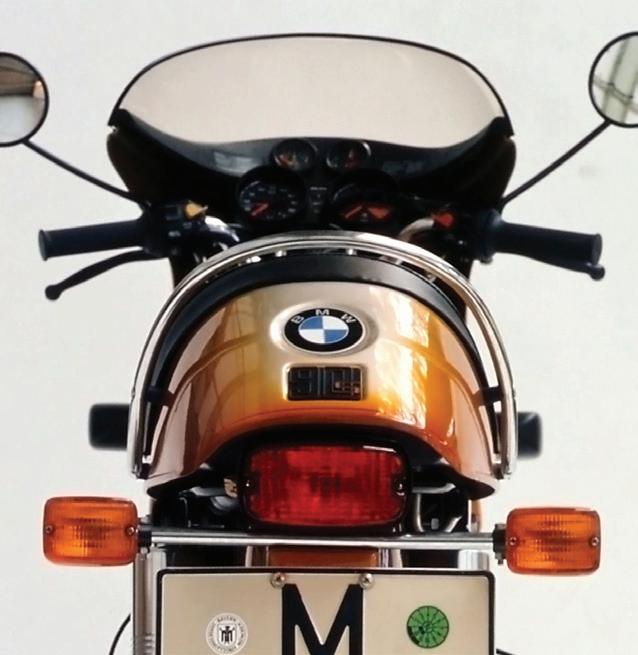
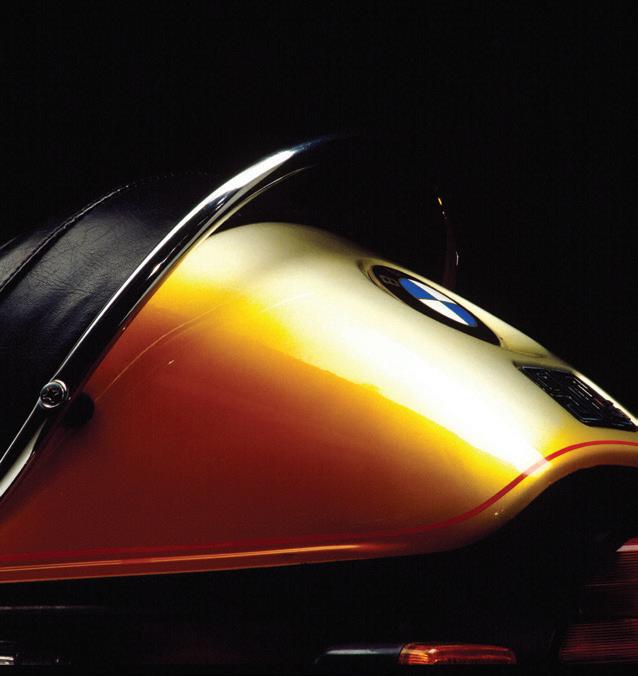
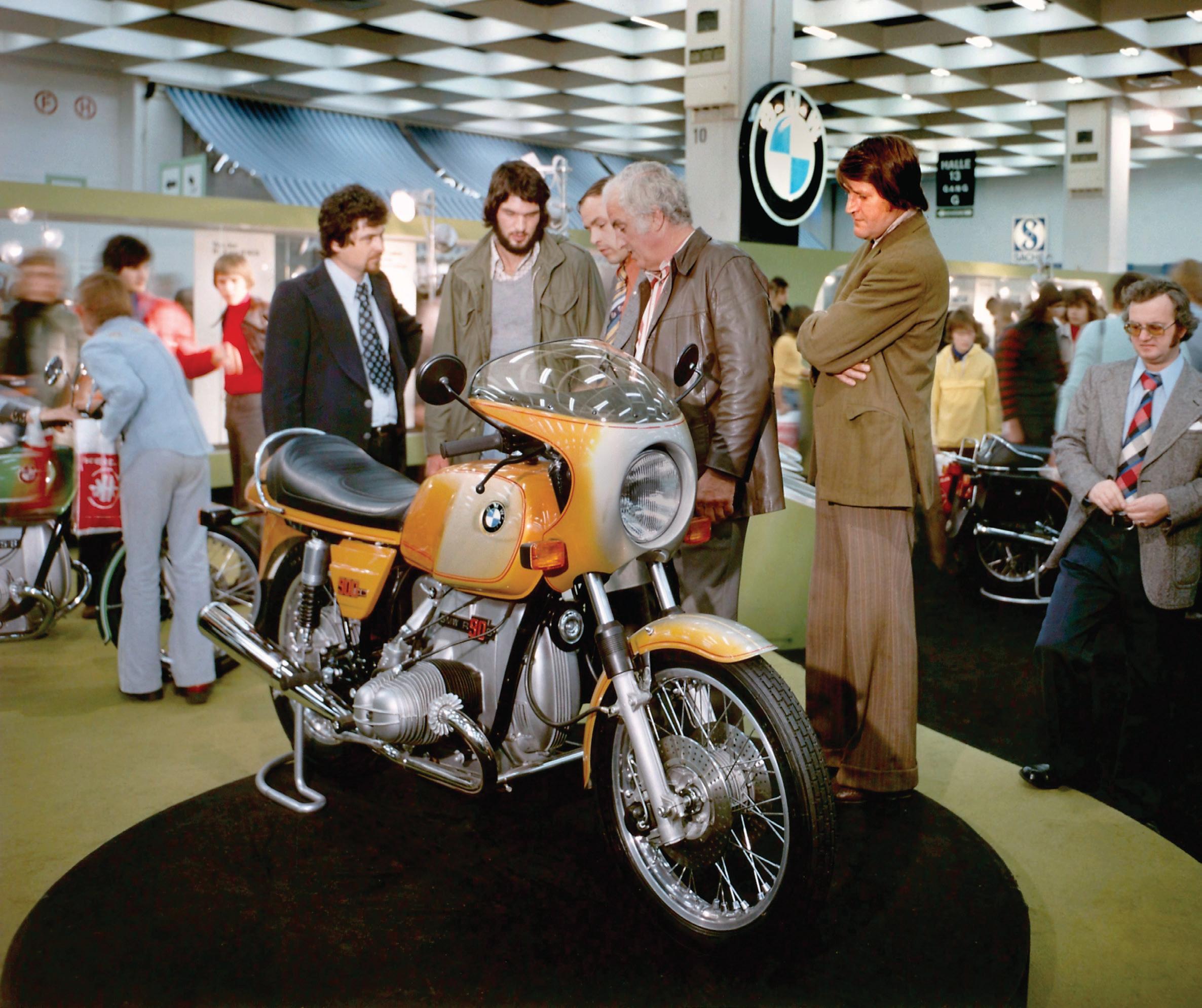
After Hans Muth’s black/ silver color debuted in 1973, BMW introduced the Daytona Orange scheme, which Muth called “Egg Yolk,” as he didn’t much like it. Here’s the orange R90S on display at the Cologne Show in late ’74.
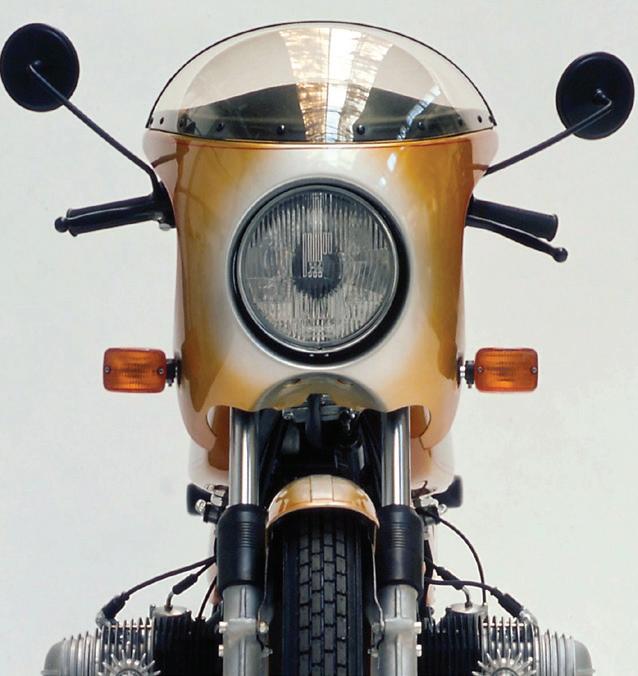
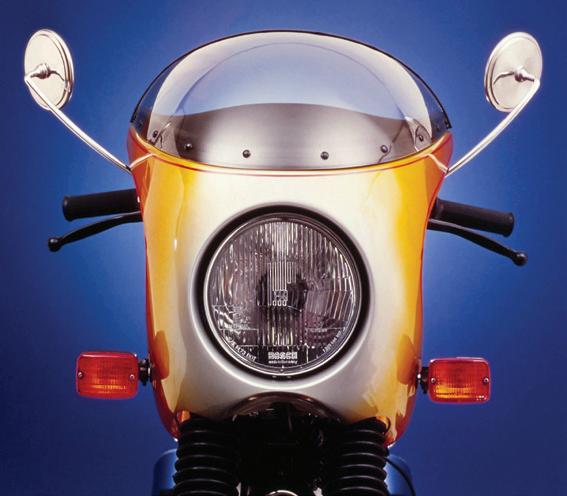
“what it needed most, I thought, was a face, like an automobile has a face. And that idea, along with the small racing fairings of the day, is where the idea for the cockpit fairing came from.”
HANS-ALBRECHT MUTH
the Japanese that we were back in the bike business with a high-priced, premium motorcycle that enthusiasts would really want,” Lutz said. “Right away we decided on a larger engine, and 900cc seemed right, as there were all sorts of 900cc kits on the market. It’d have disc brakes, a five-speed gearbox, and beautiful detailing everywhere.” Lutz is describing a substantial leap for BMW here…and remember, when this concept firmed up during early ’72, the Z1 had not yet been released. “It wasn’t easy to sell to upper management,” Lutz remembered. “Most thought we should shut down the motorcycle division entirely, as it wasn’t making any money. But
because we could use much of the R75/5’s foundation for the new bike we’d envisioned, the investment wouldn’t be huge. [The /5 debuted in 1969 and featured an entirely new, and quite good, engine and chassis.] So they agreed. We just needed to make it look right.”
Enter Hans-Albrecht Muth, a toolmaker-turned-auto-designer recently hired, like Lutz, at BMW for its auto-interior design department. Muth was also a motorcycle fan, and within two weeks of moving into the department found his way to the motorcycle offices — and the desk of Hans-Gunther von der Marwitz, who was as close
as there was to a motorcycle development manager at BMW.
“I knocked on his door, walked in, and got some gruff questions right away,” Muth shared. “‘Who are you? What do you want?’ he asked. ‘Who does motorcycling styling here?’ I asked back. ‘We do,’ he said. ‘Why do you ask?’ ‘Well, that’s why our motorcycles look the way they do!’ I said.”
Muth assumed Marwitz would be offended, and was surprised to be asked if he liked motorcycles, or rode them. When Muth replied in the affirmative, “[Marwitz] surprised me, saying, ‘Okay, you do it!’” Muth said. “It was amazing and so
German: chop, chop, right to the point. So I immediately got a second job, unofficial, of course, and in the coming months I had to hide my motorcycle work from my real boss whenever he would visit the studio.”
“A few days later,” Muth continued, “Marwitz asked me to see Lutz about the motorcycle designs we’d talked about. Lutz was moving into his new office and had already put a large poster of a beautiful racing motorcycle on his wall. He told me the company was already working
on a new generation of bikes and did I have an opinion how a premium, sporty German motorcycle should look. He pointed to the poster, looked back at me with a cigar in his mouth, and smiled. ‘Yes,’ I said. And with that I headed back to my studio. It wasn’t a long meeting.”
Muth developed three sketches, the primary one would become the R90S in 18 months’ time. “It was sporty and had a big tank,” Muth remembered, “and would carry two riders in comfort. As far as the overall
shape, I sketched it exactly as I envisioned a modern BMW should look, with a sporty tail in the spirit of the classic English racing bikes.”
“But what it needed most, I thought, was a face, like an automobile has a face. And that idea, along with the small racing fairings of the day, is where the idea for the cockpit fairing came from. Also, just as a fighter pilot needs a place to relax and concentrate on what’s coming, whether enemy or weather, the new bike needed a cockpit and
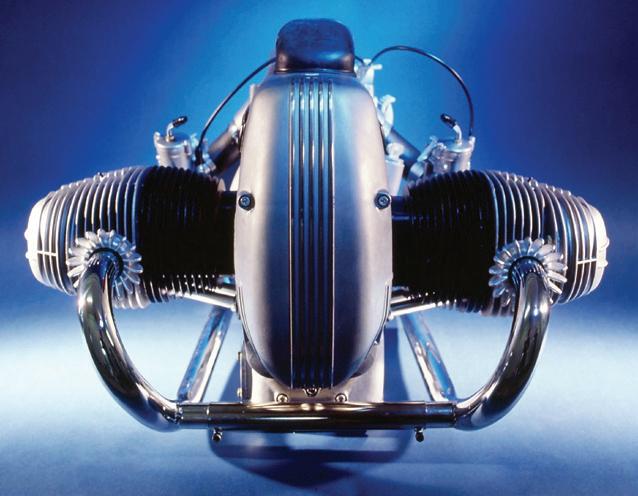
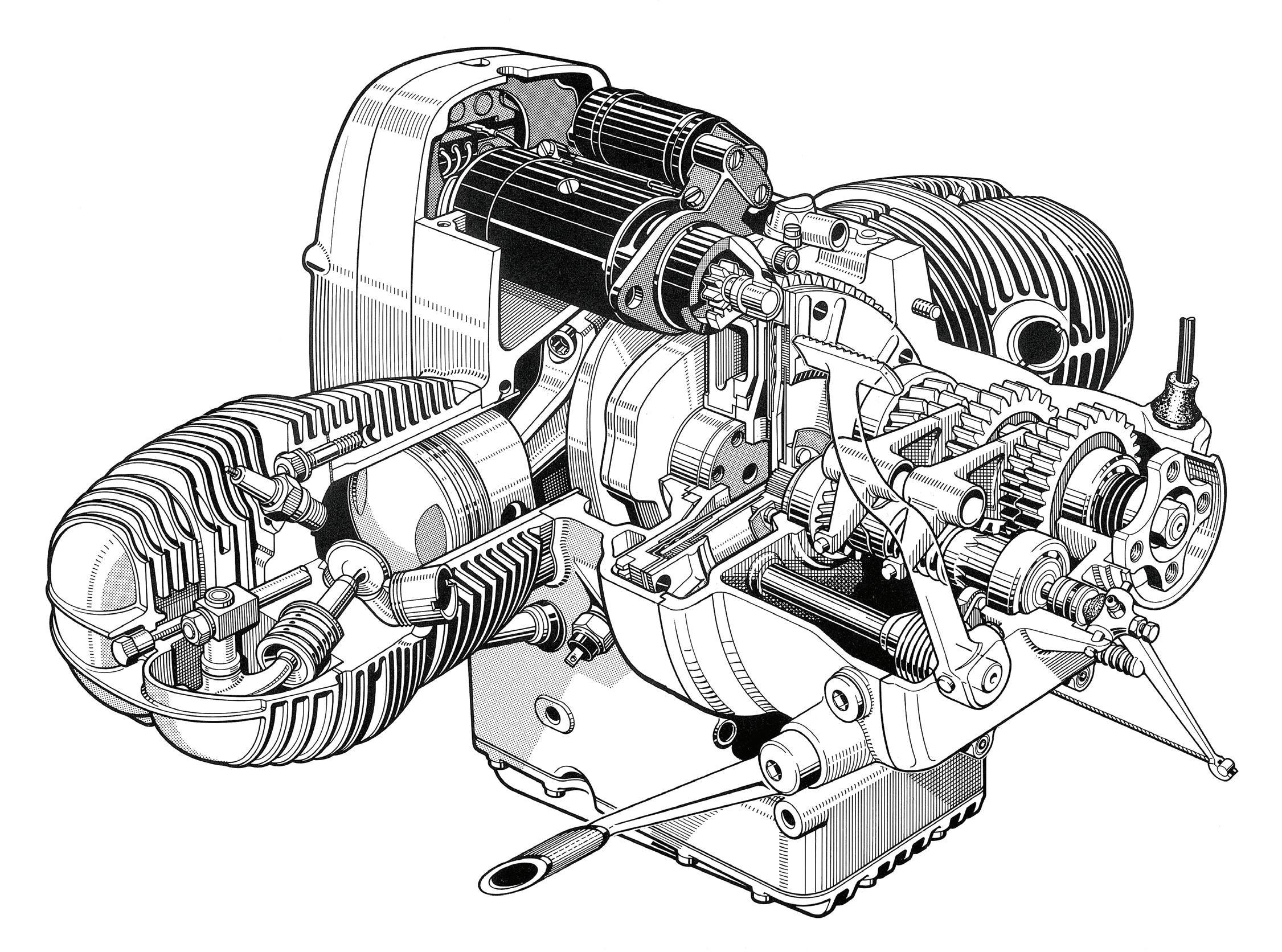
While the R90S’s air-cooled boxer twin was relatively old-school at the time, it competed successfully against the likes of Kawasaki’s DOHC 903cc Z1 four with smoothness and plenty of seamless low-end and mid-range power.
instrumentation tucked behind that wind-cutting fairing — gauges and such, and a clock too.”
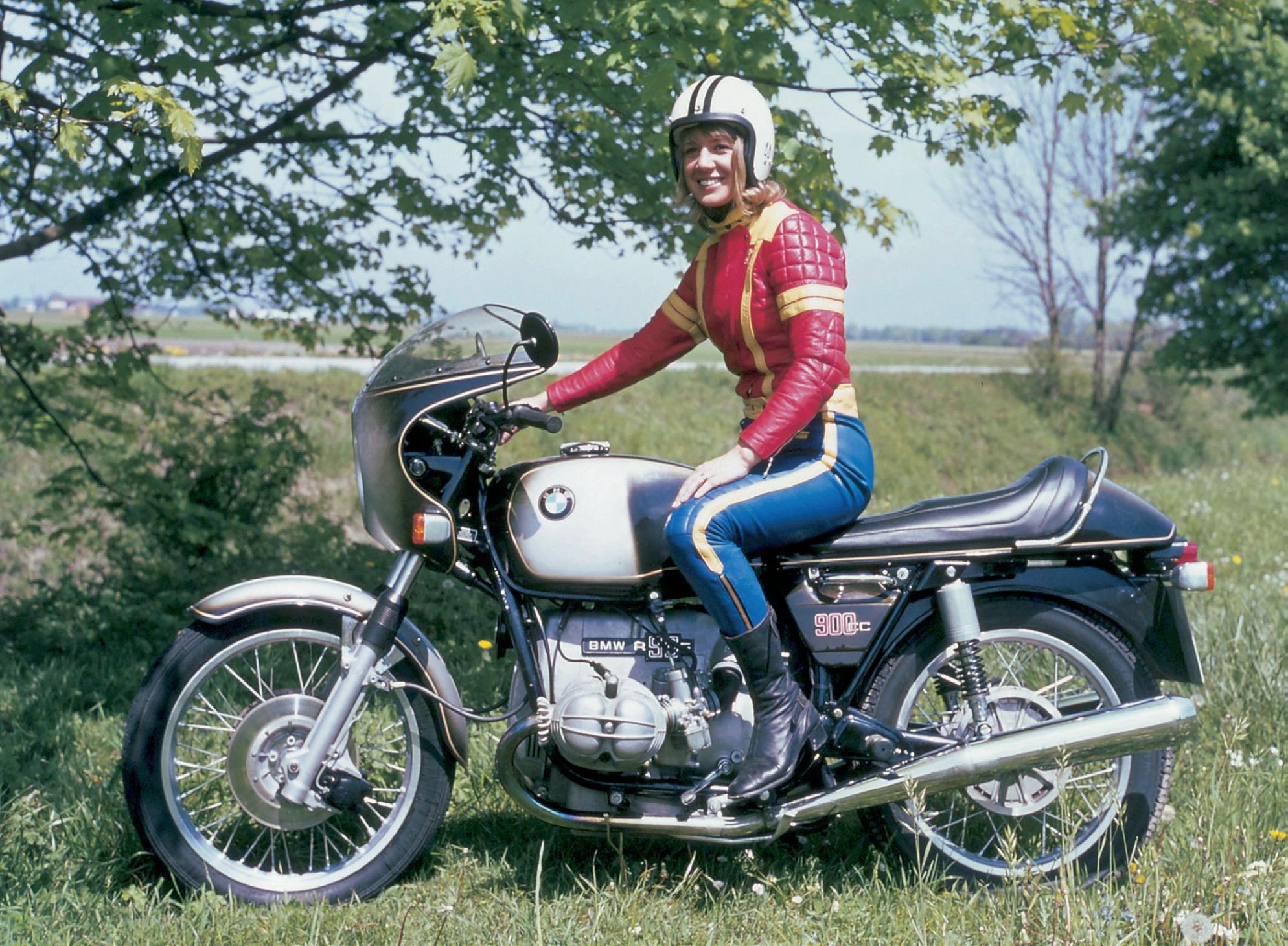
“The two-tone color scheme of the first R90S came easily to me,” Muth continued. “Black had been BMW’s only color until the R75/5 came along in ’69, but during S-model development I remembered a bicycle I’d painted when I was 13 or 14 back in Germany. It was black but had a silver section. And as I
thought about it, it was perfect. The black would recognize the past and BMW’s history, while the silver would represent the future, where BMW was headed. Melding them as we did was very difficult when it came time to paint the production bikes, and we had a lot of help from the very talented women we hired to do striping and such. But it was worth it, as the color ended up being very popular.”
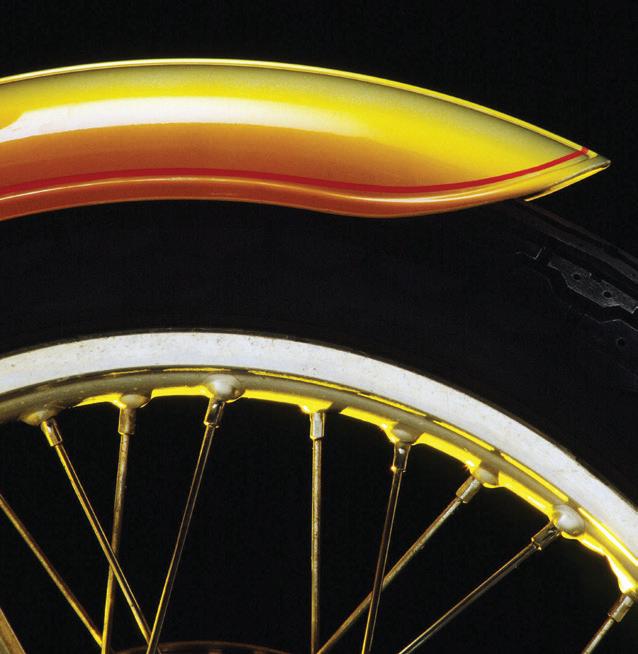
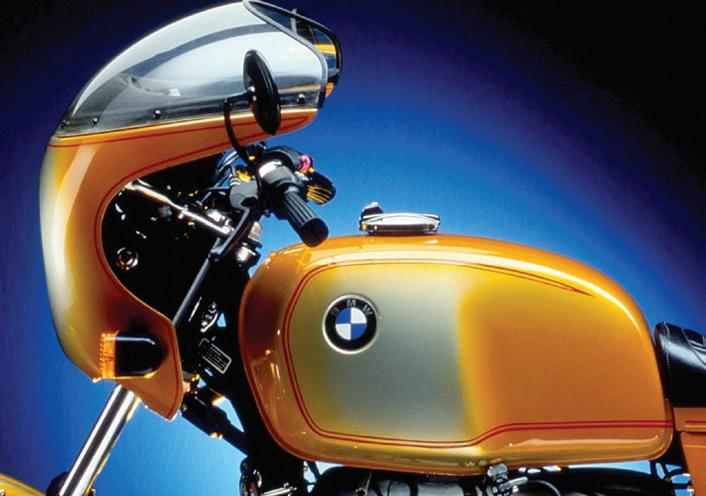
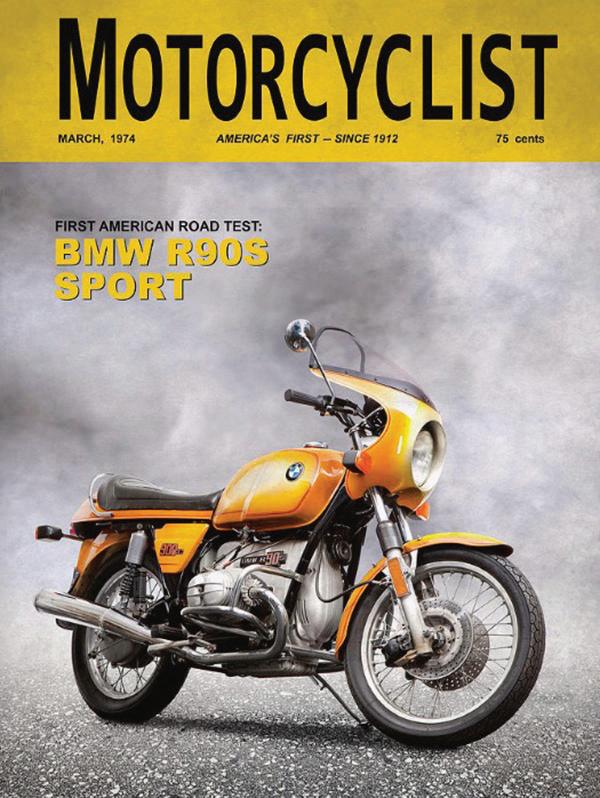
Muth did a second color months later after visiting Daytona and seeing the BMW racers do well there called Daytona Orange. “I called it Egg Yolk,” Lutz said. “And I didn’t like it. But both sold well, and both are iconic now.” Some enthusiasts today say, mostly in jest but not totally so, that Daytona Orange bikes are a tick faster than their silver siblings. Others disagree vehemently.
Lutz recalled the first public
“The Japanese had all the cool stuff: overhead cams, multi cylinders, disc brakes, advanced and sexy stuff. We just didn’t have it, and were treated as a bit of a joke by the magazines. They’d write, ‘BMWs...nice touring motorcycles for elderly people.’” ROBERT LUTZ
showing of the R90S at the Paris Auto Show in late ’73. “It was an absolute success,” he said. “It was beautiful. It was sexy. It made a statement. It was a 900. And it was expensive, too, but no one balked at the price. Internally, we loved it because margins were higher than on some of our sedans! We sold out immediately. It was attracting the customers we wanted, too: guys who’d dreamed of a BMW years ago, when they were younger, and who could now afford one. And professionals, too — CEOs, doctors,
lawyers, et cetera. It was amazing to see such a premium product take off so strongly.
“We’d planned to build a few thousand,” Lutz continued, “but they sold so well we began to run out of components. We had to quickly reorder things; we switched carburetor brands for a while and had to hire more painters for the difficult paint scheme. We did not want to compromise on quality at all, and we sold every one we made.”
Generally positive press from
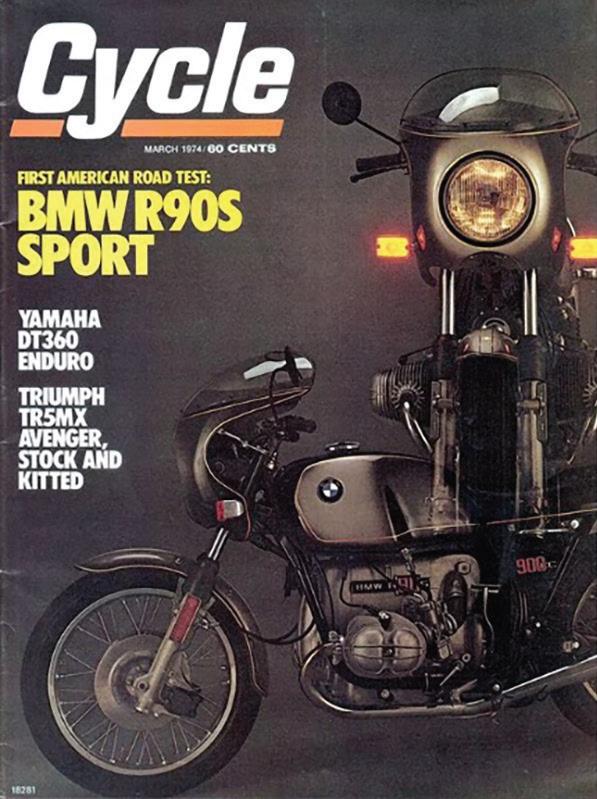
the magazines helped. In its March 1974 exclusive test, Cycle found the S-model smooth, quiet, reasonably fast, dead reliable, a solid stopper, and very, very comfortable. Editors questioned the $3,400 price tag, writing that the price “is hard to justify.” “The Kawasaki Z1,” Cycle continued, “able to do about 85 percent of what the R90S does best, and capable of some things better, is cheaper by a gaudy $1,435.” That amount was nearly half the 90S’ price tag!
Other magazines complained about a lack of cornering traction and some wallowy high-speed behavior, much of which was caused by low-grade tires and the fairing’s less-than-optimum aerodynamics (it allowed the front end to lift at speed). But in the end most editors were swayed. Cycle finished up this way: “In short, it’s a helluva motorcycle for too much money.”
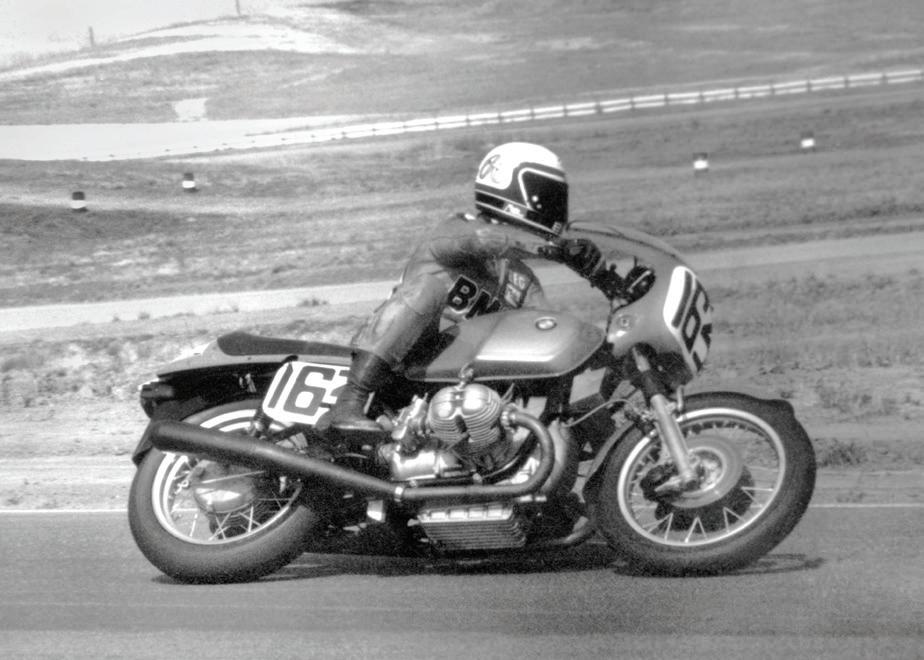
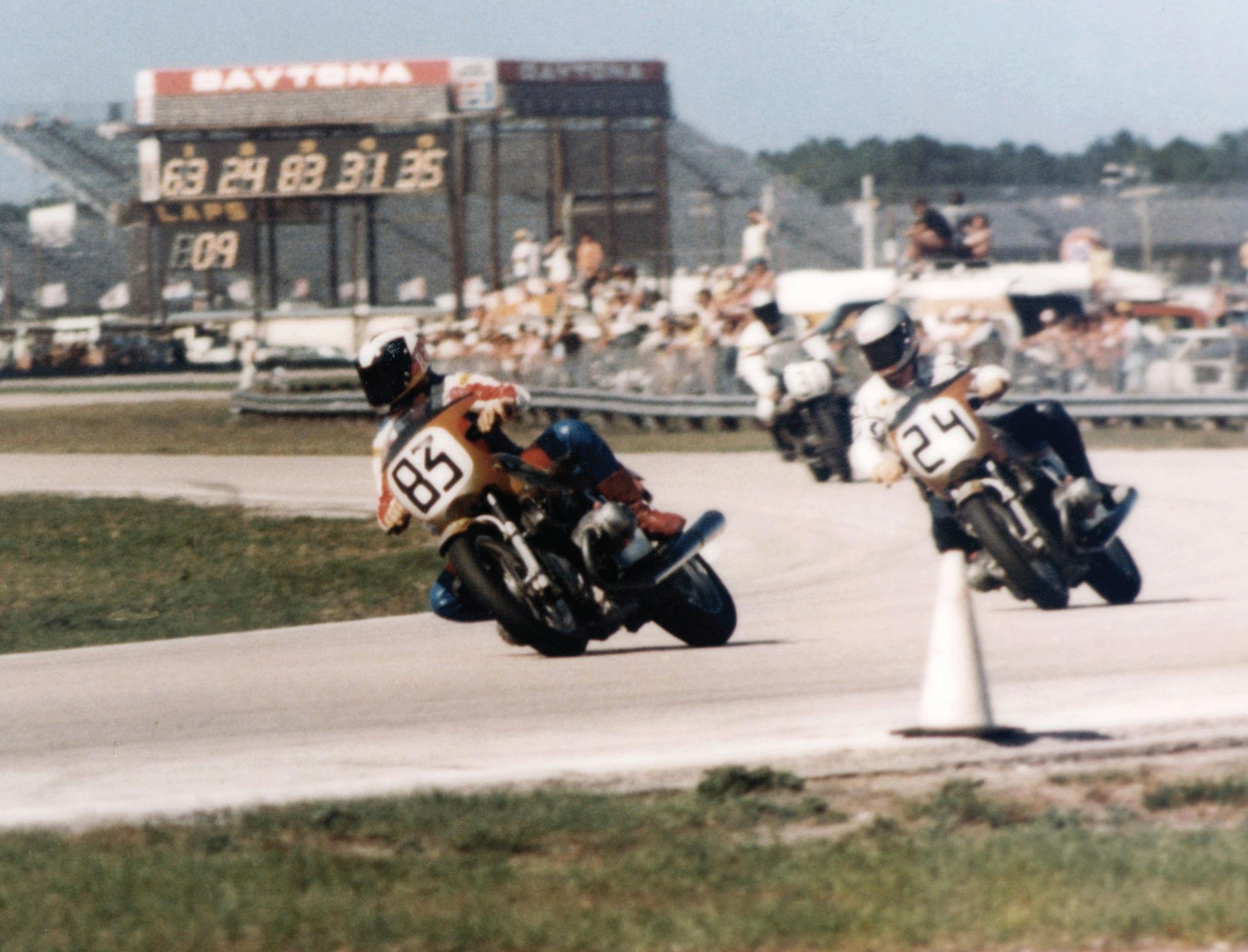
The R90S did surprisingly well in AMA Superbike racing, too, with Reg Pridmore winning the 1976 title aboard a Butler and Smith-prepped S-model tuned by Udo Gietl and master fabricator Todd Schuster. Steve McLaughlin and Gary Fisher also won Superbike races on B&S R90Ss, though these machines were nothing at all like the production machines, as they used Rob North
frames and tons of titanium inside the engine so they wouldn’t come apart at speed. “We blew up a lot of engines during development back in the day,” Gietl said.
The S holds up extremely well these days, and not just aesthetically, as many owners will tell you it’s one of the best-looking motorcycles ever built. Cycle World’s Peter Egan wrote eloquently about his S-model back in 2015.
“[It’s] the second one I’ve owned,” Egan wrote, “a very original, 43,000mile bike that runs as if it just came out of the showroom. It carves nicely on our winding back roads with a kind of elegant composure (the bike’s, not mine), and it’s one of the few older classic bikes I’ve owned that I would gladly jump on and ride from here in Wisconsin to our California
offices without a second thought. It’s by no means a modern sport-tourer in terms of braking, suspension, compliance, or chassis stiffness (time has marched on), and yet none of this seems to intrude on your enjoyment or serenity when riding. Accidentally ranging much farther from home than planned is a common hazard. It’s a bike that just wants to keep going. You might say the BMW’s secret was — and still is — a delicate balance, right on the hyphen between sport and touring.”
“A friend found [it] for sale in the San Francisco area,” Egan continued. “He knew I’d been on the hunt for another one and called last summer. ‘I found your bike,’ he said. The financial timing—as usual—was awkward, but a few choice email photos had me withdrawing yet
Almost surprisingly, the R90S made a helluva good AMA Superbike racer, especially when fettled by the Butler & Smith folks. Reg Pridmore (below, leading teammates Steve McLaughlin and the late Gary Fischer at Daytona) won the inaugural AMA Superbike title on one in 1976.
“Accidentally
ranging much farther from home than planned is a common hazard. It’s a bike that just wants to keep going. You might say the BMW’s secret was — and still
is — a delicate balance, right on the hyphen between sport and touring.”
PETER EGAN
another chunk of my retirement savings from the bank. Like those guys I knew in the ’70s, I had to have it. BMW and Hans Muth gave me no choice.”
Lutz probably best summed up the impact the R90S had on motorcycling: “To me, the R90S is arguably one of the most significant motorcycles ever made. It may be egotistical to say this, but I believe I am the founding father of the idea behind the R90S. The S made BMW motorcycles respectable again. Not only outside the company, with the magazines and with buyers, but
within the company, too. It proved to BMW it could compete and make money in the bike business, and the money the R90S made helped pave the way for future motorcycles, many of which are iconic themselves.”
“What followed the R90S was a willingness on the part of upper management to invest in the motorcycle business, and that allowed machines like the R100RS, the GSs, and the K- and R-series bikes to come later. Suddenly, after the S-model took off, there was a more adventuresome spirit within the company, more boldness. We see
that to this very day, and it all came from the R90S.” All true.
And there’s more. As BMW celebrates its 100th anniversary this year (1923-2023), and with owners and enthusiasts worldwide celebrating the R90S’s 50th anniversary (19732023), it’s no coincidence that the AMA’s primary Raffle Bike for 2023/’24 is a smoke grey, ’75-spec R90S, the very machine seen in these images. It’s $5 per ticket and $20 for five, with the lucky winner’s ticket to be pulled at VMD 2024. Feeling lucky? Get yours today at AmericanMotorcyclist.com/ raffle-bike. AMA
Let’s be honest. This little comparison came about because AMA Business Development Manager Michael Kula has a condo in Baja, and we needed a couple of cool motorcycles to get us there for a day or three to soak up some rays and langostino tacos.
Also because Kula can’t stop chewing my ear off about how great his ’09 Dyna Super Glide Custom is, and what a mistake Harley-Davidson made by discontinuing its dual-shock
Dyna platform and replacing it with the new Softail line a few years ago. And finally, what exactly is the state of the 100-plus-year conflict between these two companies, at least where sporty cruisers are concerned?
Indian made no bones when it introduced its new Sport Chief for 2023: This one’s aimed squarely at the Low Rider S, Indian said. (And it wouldn’t be a bad thing if its laydown twin Fox-shock suspension out back caught the attention of Harley
people pining for the Dyna.)
At that point there was no further need to think (which we prefer), so we asked Harley for the loan of a Low Rider S (S for Sport), and Indian for a Sport Chief to head down Mexico way. Southern border tensions being what they are, sadly, neither manufacturer wanted us to take their baby outside the U.S. That was a drag until we decided, how bad could it be to just ride borrowed motorcycles in our own backyard? We both live in Santa Ana, Calif., which has more great taquerias than you can shake a jalapeño at.
In search of American Sport-Cruiser Supremacy (and So Cal’s best taquieros) aboard Harley-Davidson’s Low Rider S and Indian’s Sport Chief
BY JOHN BURNS PHOTOS: BARRY HATHAWAY
BARE-KNUCKLED BRAWLERS
BARE-KNUCKLED BRAWLERS
AWAY WE GO, THEN
In fact, we didn’t have to ride long before we were glad we didn’t go to Baja, as these two are both pretty “sporty” in a uniquely American way. Both have mid-mount footpegs, and Kula was complaining about “not fitting” and having his “knees fouling his chin” before we left his driveway. He much prefers the forward-mount pegs on his old Dyna.
we didn’t have to ride long before we were glad we didn’t go to Baja, as these two are both pretty “sporty” in a uniquely American way.
In truth, neither of these is the American cruiser for anybody who’s much interested in comfort. Keeping seat heights low (Indian says 27 inches, H-D claims 28) while maintaining decent cornering clearance means that footpegs have to move higher. The shorter your legs, the less it’s a problem. But “sport” also means pulling your torso over the front tire a bit more for increased road feel and weight distribution, and that means both bikes enforce a less-than-ergonomicallycorrect bend at the lower back, and seating that still puts most of your weight on your rear end.
Two out of three testers (including 5’8” me) agreed the Harley gets the ergos better than the Indian, because its handlebar is an inch or so higher, its seat is cushier, but most of all because its single-shock rear suspension does a better job smoothing out the bumps.
The gorilla-armed Kula didn’t agree (shocker, that), but none of it really matters much since both companies (and the aftermarket) offer shorter and taller bar risers (along with different bars), as well as different seats to move you forward and back, and different pegs, too. Either bike, with not much
Funny, the Indian fits 6-feet tall Kula just about the same way the Harley — with its more compact rider triangle — fits 5’8” me. Which might explain why Kula finds the Indian more comfortable, and why I like the H-D.
time or effort (but maybe more than a few dollars), can be tailored to fit any hominid — so ergonomics probably shouldn’t be the deciding factor.
CAN YOU SPELL M-O-T-O-R?
Kula: With the Harley it’s all about that 117 cubic-inch Milwaukee-Eight big-block hairy-chested monster. The thing has perfect fueling, and the torque right off idle is impressive.
Once he’d finished complaining about ergos and gave the Harley’s 1917.2-cc V-twin a chance to speak, the Kula complaints mostly ended. Harley rates it at 125 pound-feet of torque at 3500 rpm and 103 hp at 4750 rpm. Compare that to the Twin Cam 96 in Kula’s old Dyna — maybe 80 lb-ft and 66 hp on a good day — and weep.
of 900 lbs., so motivating these lighter “sportbikes” — 679 lbs. for the Low Rider according to H-D, and 685 for the Indian, says Indian — means they’re happy to peel right out.
(For a quick check on what the rest of the world is up to sportbikewise, the 430-lb. KTM Duke 1290 manages to generate 180 hp and 103 lb-ft from its 1301 cc [79-inch] V-twin. Not that people interested in these two bikes care.)
Meanwhile, the Indian’s 116-inch Thunderstroke is right there, with a claimed torque output of 120 lb-ft, and probably about the same hp up top as the MilwaukeeEight 117. Both engines, just like most red-blooded American V-8s, are all about the torque. Both of these also power H-D’s and Indian’s biggest touring bikes, which weigh in excess
The Harley engine is the happiest of the two: Its fuel-injection mappers did a superior job connecting throttle movement to engine response, and we’re forced to agree with Kula about its perfect fueling and offidle response — except we would never use the word “perfect,” as we don’t want progress to cease and put ourselves out of a job.
Along with its more advanced info-display, which can give you turn-by-turn directions via Ride Command, the Indian engine gives you the choice of three ride modes: Standard, Sport, and Touring, but it doesn’t respond as well to the whip in any of them as the Harley. Sport
is a bit abrupt when cracking the throttle, Tour’s sort of unresponsive, and Standard manages to not be a happy medium. Once you’re on the gas accelerating, the Thunderstroke runs as hard as you’d expect. But most of the time riding on the street it’s a game of partial throttle with these big V-twins, and the Indian’s injection is just not as nicely calibrated and responsive in everyday low-rpm use.
But just as with the ergonomics, how many riders are gonna keep their bikes stock and not address these things? Not many. Harley and Indian’s parts departments are both standing by with things like Indian’s “Thunderstroke High Flow Air Intake with Calibration” ($550), that all online reviewers agree smooths things right out.
SHALL WE CRUISE?
This Harley’s a bit light on the high tech, but it does come with the most important thing — a one-button cruise control on the left switchgear. It’s a small thing, but having it at your left thumb just makes it easier to set than the Indian’s cc button on the right. Traditionalist tough guys may poopoo the cc button wherever it’s located (until they get a bike that has it), but it’s the thing that makes both bikes reasonably okay
long-distance cruisers. Being able to give both arms a break when you’re rumbling along at 80 mph is critical.
A couple days on either one confirms our pal Billy Bartel’s observation that you just use a different set of muscles on bikes like these, and those muscles need a little acclimation time. The sporty fairings remove a bit of wind pressure from your chest, but both are a little turbulent. Another thing you can refine and modify over time.
The Indian’s rumble is accompanied by quite a bit of vibration in the grips and pegs, centered right around 3000 rpm and 80 to 85 mph, which doesn’t really taper off until well over 100. The bike’s got the easy power and rocksteady stability to ride that fast all day, but your license might not hold out that long.
The Low Rider S, in highway-drone mode, is a quite pleasant place to be. Its big engine is rumbly smooth all through the powerband, and its cushier seat and aptly named Softail rear end do a better job on the open road, too.
SPORT MODE
Not going to Baja also freed up a day for us to ride up California Highway 39, one of our favorite test routes thanks to its great combination of slow and faster corners, very little traffic, and the promise of a nice Frito pie at the Crystal Lake Cafe up top.
Once the curvy road action commences, the Indian’s stiff new steel frame and sterner suspension assert themselves, giving it a smidge more road feel; 1.3 inches less trail (4.4 versus 5.7 inches) than the Low Rider lets the Chief roll side to side that much quicker, given both are rolling on 19-/16-inch wheel combinations. Both bikes are defined by stability rather than quick reflexes. You’d have to do something truly silly to veer off course.
Having 120 or more lb-ft of torque at around 3000 rpm at your disposal
The H-D’s lone instrument is in an easier place to see, which is a shame since the Indian’s has more features, including navigation. Indian’s fit-and-finish has come a long way in the last few years. Both bikes offer different handlebars and risers for a custom fit.
“I sit at a desk all day, so these two are a nice change of pace — a little grit in an increasingly sanitized world. And the Indian is just that much grittier.”
MICHAEL KULA
is pretty satisfying. It’s a hoot to whack these bikes’ throttles open in the mountains, where their length and weight also serve as natural traction control, and where the Indian’s dodgy low-rpm fuel mapping fades into the noise of its engine echoing off the rock walls.
The Low Rider is slightly softersprung than the Indian, but its inverted 43mm cartridge fork — with triple-rate springs — and single-shock rear suspension do an excellent job keeping the beast under control.
The Indian’s inverted KYB fork and Fox shocks out back are good, but not as good as the Harley, either
at absorbing bumps or maintaining front-to-rear balance.
It’s under braking where you feel the weight, so it’s a good thing both bikes get powerful and tactile triple-disc Brembo brakes that let you squeeze hard right into apexes; the mid-mount footpegs make the rear brake easily usable, too, and of course there’s ABS.
What it comes down to in the end, once the rubber’s warm, the cudgels are out and knees and elbows fully deployed, is that the Harley’s footpegs don’t drag quite as soon as the Indian’s, and that lets it close the gap to the Indian in the curvy road
competition. Even salty old track junkies will find a surprisingly good time on either bike, especially if they come up behind youngsters on new Ninja 400s and things.
FINAL WORDS
At the end of the day we made it out to Rosa’s Cantina in Trabuco Canyon — a place that could easily pass for a quaint taqueria down Mexico way (if a lot of wealthy gringos ate there every day) — and hashed things out over a repast of tacos, enchiladas, frijoles, etc…
There, Kula lobbied for the Indian, mentioning its fit and finish, quality
feel, rumbly (and fast) engine, slick and positive transmission, and overall look.
“I sit at a desk all day,” he said, “so these two are a nice change of pace — a little grit in an increasingly sanitized world. And the Indian is just that much grittier.”
As for me, I’ll take the Harley. Superior ergonomics for most people, a plusher ride and seat, and a feralbut-housebroken, smooth-running 117-cubic-inch Milwaukee-Eight are tough to argue with.
In the end, we discovered what we already knew: Even though the Harley is the nicer motorcycle, not everybody wants nice, and there’s really no accounting for other people’s tastes. In fairness, I do like the look of the Indian in its Ruby Smoke paint — but that’s a subjective thing.
Anyway, how much fun would it be if everybody always agreed? I guess we’ll never know. Peace and quiet and civility are sooo boring. Let’s all raise a Cadillac margarita to another 100 years of the Harley-Davidson vs. Indian conflict. AMA
/ 180/65 B16 Michelin Scorcher 31 Pirelli Night Dragon
2023 H-D LOW RIDER S 2023 INDIAN SPORT CHIEF
MAKE IT YOURS
The AMA offers a variety of card types and designs for members. In addition to our standard card, we offer a number of themed cards that identify you as belonging to a specific group or speak to your passion as a motorcyclist.
DEALS AND DISCOUNTS
Lodging
Save 15% at participating Choice Hotels Properties.
THE ESSENTIALS PRODUCT DISCOUNTS
Up to 10% off at Motel 6. Use code: M64AMA
20% discount off available rates, call (800) REDROOF and use the code VP+ 503343. To make reservations online use code: VP+ 503343 in the field labeled “VP+/ID#”
ADVMoto 20% discount. Use code AMADV20
AMA Motorcycle Hall Of Fame
Free admission to the AMA Motorcycle Hall of Fame in Pickerington, Ohio.
AMA Supercross Tickets
Save $5 on up to 8 tickets at supercrosslive.com Use code AMA23
Anthony’s Leatherworks 10% discount on repair order Use code AMADISCOUNT
Blendzall
AMA members can save 20% at blendzall.com. Use code AMA20 at checkout.
Bohn Body Armor 10% AMA Member Exclusive Discount. Visit bohnarmor. com and use code AMAD22 at checkout.
Bugslide
AMA members enjoy 15% off all BugSlide® cleaning products. Use code AMA2023
Butler Maps
AMA members receive a 20% discount at butlermaps.com. Use code AMAMEMBER
California Dual Sport Riders
Members save 50%. Use code AMA. Visit cdsr.us to learn more.
Cardo Systems
20% discount online with valid AMA membership card. Use code AMA20
Colorado Motorcycle Adventures
10% discount with valid AMA membership card.
The Dirt Bike Academy
exclusive discount on instruction. Learn more at thedirtbikeacademy.com Use code TDBAAMA10
Dowco Powersports
20% discount.Use code AMA20
AMA Roadside Assistance Roadside assistance coverage for eligible members.
Car Rentals
Up to 25% off at any Avis or Budget. Avis Code: D388100 Budget Code: Z942000
AMA Gear Find patches, pins, T-shirts, hats and more.
EagleRider
For Club EagleRider AMA members receive 2 free rental credits. Use code AMACLUBER
Edelweiss AMA members save on standard bike tour. Use code 21AMA-EBT03 at checkout.
Evans Cooling System 25% discount on Evans Coolants and Prep Fluid. Use code AMAFUN at evanscoolant.com.
EVS Sports 10% discount and free shipping on all orders. Use code AMAEVS20
Gryphon Moto
AMA members receive a 15% discount on Gryphon Moto orders at gryphonmoto.com. Use code AMA at checkout.
Haynes Save an additional 15% on all Haynes & Clymer print and online repair manuals. Use code AMA15
Heli Bars Use code AMAM2020 for a 10% AMA Member Exclusive Discount at helibars.com.
Helix Racing Products
AMA members save 20 on all products at helixracingproducts. com. Use code AMA20 at checkout.
Helite Moto
AMA members get 15% off every order at helitemoto.com. Use code HELITEAMA
HertzRide
AMA members save 10% on rentals in all locations globally at hertzride.com/us/ promo/American-motorcyclistassociation-1065 or use code AMA10
Legacy Track Dayz
15% discount on Legacy Track Dayz events. Use code AMARideLTD
Liberty Sport Eyewear
30% discount on all “motorcycle collection” frames. Discount code AMA30.
Motorcycle Shipping Call Federal Companies at (877) 518-7376 for at least $40 off
Motorcycle Shippers
Matrix Concepts AMA members receive a 25% discount on most products for shop, garage & track necessities at matrixracingproducts.com Use code AMA25
Medjet
Air medical transport and travel security protection – visit Medjet.com/AMACycle or call 1.800.527.7478, referring to American Motorcyclist Association. Annual rates reduced by 20% and start at $235.
MotoAmerica
20% off 2-day and 3-day passes at select MotoAmerica events. Use discount code AMA20
Motool
AMA members can save 10% at motool.co. Use code AMASAVE20 at checkout.
MX Boot Repair 10% discount. Use code AMADISCOUNT
Mounts
MYLAPS
20% discount off MSRP or current sales price on weborders or orders coordinated by the AMA. Use code AMA-789HJK
Nelson Rigg 20% AMA Member Exclusive Discount on all products! Use promo code AMA-NR20
The Quail MC Gathering AMA
Time
20% on select products. Rockwelltime. com. Use code AMA20
Third Eye Design 10% discount on inView, a wireless brake and signal light. Use code AMA at thirdeyedesigninc.com
NEW BIKE IN A CAN
ARIZONA
COMING EVENTS
Be sure to check the event website or call the organizer for the latest information, including postponements or cancellations.
Dual Sport: Nov. 4 - 5. Prescott Valley. Howlin’ at the Moon, Arizona Trail Riders, 602-6929382, the1phxman@gmail.com, www.arizonatrailriders.org
Supermoto: Nov. 4. Tucson. AMA Supermoto National Championship Series, DRT Racing, 909-714-7470, info@drtracinginc.com, amasupermotonational.com
Supermoto: Nov. 5. Tucson. AMA Supermoto National Championship Series, DRT Racing, 909-714-7470, info@drtracinginc.com, amasupermotonational.com
Dual Sport: Nov. 18. Patagonia. There Will Be Dust, Trail Riders of Southern Arizona, 520-235-6703, trailridersofsoaz@gmail.com, trsaz.org
Enduro: Nov. 12. Greenville. 78th Annual Peace Pipe Enduro, Treaty City Motorcycle Club Inc., 937-548-7197, suz4wheeler@yahoo. com, https://www.facebook.com/tc.mc.10/
SOUTH CAROLINA
Road Ride/Run: Nov. 5 - 6. Greenville. Drag up Specialties Up Country Run 2, Lemans Corp DBA: Drag Specialties, Parts Unlimited, Thor, 608-741-5350, ksommervold@parts-unltd.com
AMA EnduroCross National Championship Series endurocross.com
Round 1: Oct. 7. Everett, Wash.
Round 2: Oct. 21. Prescott, Ariz.
Round 3: Oct. 27. Idaho Falls, Idaho.
Round 4: Oct. 28. Idaho Falls, Idaho.
Round 5: Nov. 11. Redmond, Ore.
Round 6: Nov. 18. Reno, Nev.
REGIONAL CHAMPIONSHIPS
AMA West Hare Scrambles Championship, westharescramble.com
Round 8: Nov. 18-19. Wilseyville, Calif.
FEATURED EVENTS OR SERIES
AMA Florida Enduro Championship Series floridatrailriders.org
Nov. 19. Glen St. Mary, Fla.
Feb. 25. Richloam, Fla.
March 7. Favoretta, Fla.
June 9. Greensboro, Ga.
STATE CHAMPIONSHIPS
AMA Florida State Hare Scrambles Championship Series floridatrailriders.org
Nov. 11-12. Bartow, Fla.
Dec. 9-10. Punta Gorda, Fla.
Jan. 6-7. Brooksville, Fla.
Jan. 20 -21. Okeechobee, Fla.
Feb. 3-4. Indiantown, Fla.
Feb. 17-18. Ormond Beach, Fla.
March 16-17. Dade City, Fla.
Apr. 13-14. Punta Gorda, Fla.
COMING EVENTS marketplace
2023 AMA National Adventure Riding Series americanmotorcyclist.com/ national-adventure-riding
Nov. 24-25. LA – Barstow to Vegas. Palmdale, Calif. AMA District 37 Dual Sport. (626) 684-2336 labarstowvegas.com
2023 Beta AMA National Dual Sport Series americanmotorcyclist.com/ national-adventure-riding
Nov. 4-5. Howlin’ at the Moon. Prescott Valley, Ariz. Arizona Trail Riders. (602) 692-9382 arizonatrailriders.org
Nov. 4-5. Hammer Run. Port Elizabeth, N.J. TriCounty Sportsmen M.C. Inc. teamhammer.org
Nov. 24-25. LA – Barstow to Vegas. Palmdale, Calif. AMA District 37 Dual Sport. (626) 684-2336 labarstowvegas.com
AMA Trademarks
The following represents active, registered trademarks, trade-marks and service marks of American Motorcyclist Association, Inc. (AMA). Usage of any AMA trademark or registered trade- mark without our permission is prohibited. Please contact jholter@ama-cycle.org for more information or assistance, (800) AMA-JOIN®
• AMA Dragbike® • AMA Endurocross® • AMA Motorhead® • AMA Pro Grand National Championship® • AMA Pro Racing® • AMA Race Center™ • AMA Racer® • AMA Racing® • AMA Racing Land Speed Grand Championships® • AMA Supermoto® • AMA Supercross® AMA SX Lites® • AMA U.S. ISDE Team™
AMA U.S. Jr. Motocross Team™ • AMA U.S. Motocross Team™ • Amateur National Motocross Championships® • American Motorcyclist Association® Arenacross® • ATV Hare Scrambles National Championship Series® • ATV Motocross National Championship Series® • Flat Track Grand Championships™ • Grand National Enduro Championship® • Gypsy Tour® • Hare & Hound National Championship Series® • Hare Scrambles Championship Series® • Hare Scrambles National Championship Series® • Kids Just Want To Ride® • Motorcycle Hall of Fame® • Motorcycle Hall of Fame Museum® • Motorcyclist of the Year® • Motostars® • National Adventure Riding Series® • National Dual-Sport Series® • National Enduro Championship Series® • Protect Your Right to Ride® • Protecting Your Right to Ride® • Ride Straight® • Rights. Riding. Racing.® • Road Race Grand Championships® • Vintage Grand Championships® • Vintage Motorcycle Days® • Vote Like A Motorcyclist®
Tips,Tweaks, Fixes and Facts: The two-wheeled ownership experience, explained
Women often have a different relationship with the garage and tools than men; here are some toolbox basics from a longtime woman rider
TECH GARAGE
A ladies’ GUIDE TO GARAGE GEAR
Editor’s Note: On the heels of the Garage Gear That Works piece in our September 2023 issue, we got a note from longtime industry colleague and journalist Margie Siegal that offered up a slightly different take on the subjects of “tools” and “garage gear.”
Hey, Mitch: I noticed that you left out the service manual (because Real Men don’t ask for directions!), the shop rags, the multimeter and the mechanics’ hand cleaner…very important if you want to stay on the right side of your spouse. But more importantly, I’ve written up a tool primer from a female perspective, leaving out the Whitworth tools, the torque wrench (I got one for $12.95 from Harbor Freight!), and some special items I need for working on my Norton Commando (which I rode over 90 miles Saturday; runs great!). I thought it might be helpful; let me know what you think!
Well, thanks, Margie. We thought it was plenty helpful (for ladies and men alike). And awaaaay we go… —Mitch Boehm
WLawson and Rainey: the way they were
ell, the way they were as their careers began to heat up, that is, with a little AMA dirt tracking on the side. And that’s apropos, too, because dirt tracking is where these two AMA Motorcycle Hall of Famers got their starts, racing against one another as kids in the SoCal crucible of Trojan Speedway, Ascot Park and many other venues on minis and 125s, with the elder Lawson always a couple of years ahead.
“I raced him from Trojan to the 500cc World Championship,” Lawson told author Michael Scott for Scott’s biography Wayne Rainey: His Own Story. “He’d catch up just as I was ready to move onto the next stage.”
“Until there was nowhere left to hide?” Scott asked.
“Exactly,” Lawson replied.
Here they’re gridding for a Houston Astrodome start in ’81 with the late Steve Johnson, Rainey aboard a bike
built by Dennis Mahan of Kawasaki’s accessory division, and Lawson on a Johnson/Rob Muzzy special.
We mentioned this in our Quail Gathering story (August, 2023), but it bears repeating whenever these two gentleman are discussed: Between the two are seven 500cc world championships (four for Lawson, three for Rainey), four AMA Superbike titles, and three Daytona 200 victories.
—Mitch Boehm
Looking for a real chunk of motorcycle history, and one that benefits the AMA Motorcycle Hall of Fame? Well, this is it, and here’s your chance!
Back in 1972, BMW’s motorcycle division was at a critical crossroads, with some higher-ups advising to close things down. Luckily, Bob Lutz and Hans Muth joined forces to create the now-legendary BMW R90S, a premium, top-shelf motorcycle that could battle the likes of Honda’s CB750 and Kawasaki’s Z1, not in pure performance but in craftsmanship, comfort, and cachet.
Get your tickets — $5 per, or 5 for $20.
Don’t miss this!
Effortless control.
Housed inside a lightweight frame that offers nimble handling while ensuring high-speed stability, the incredibly versatile 2024 TX 300 features an all-new XACT Closed Cartridge spring fork to comfortably retain its place as the leading offroad 2-stroke machine on the market.