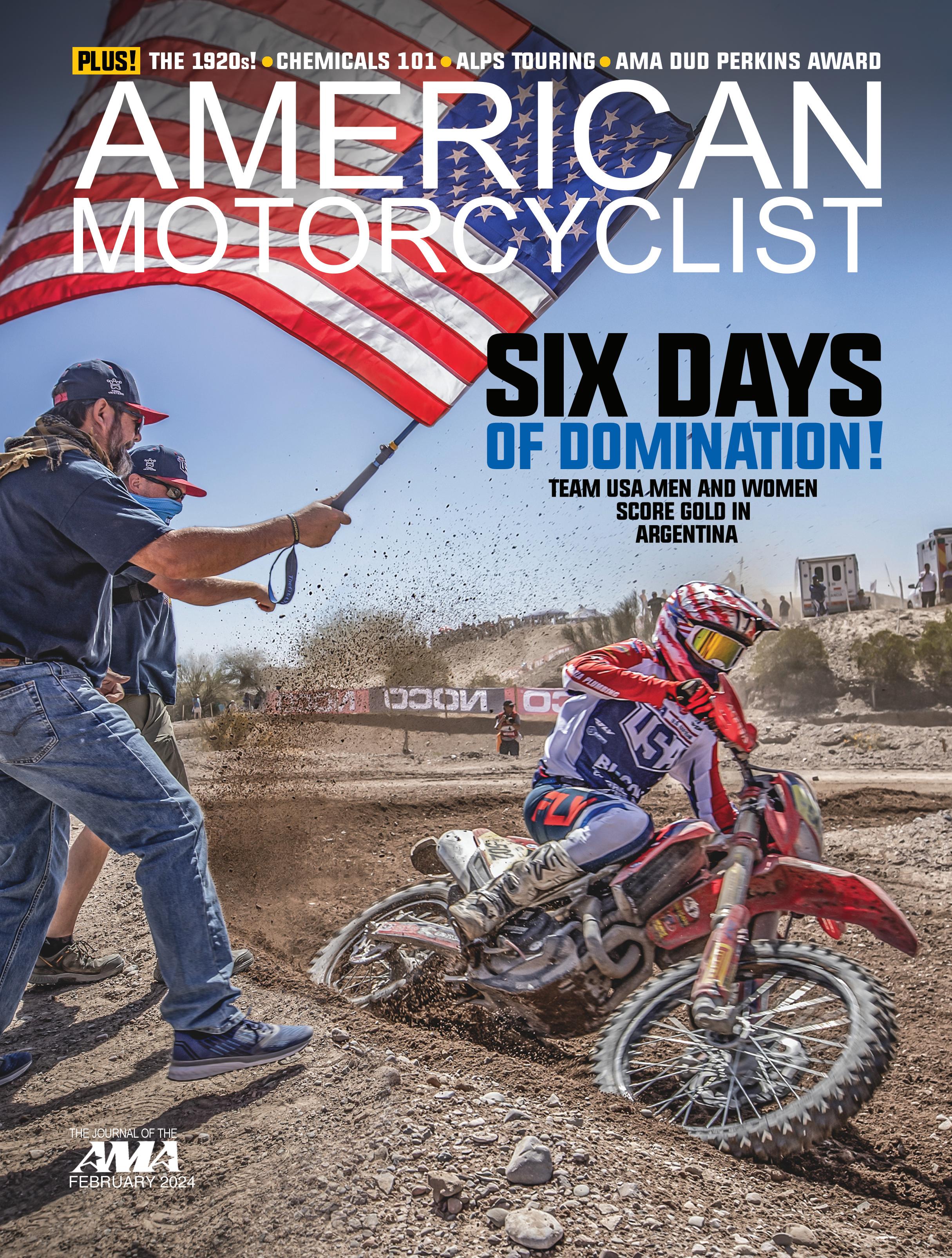
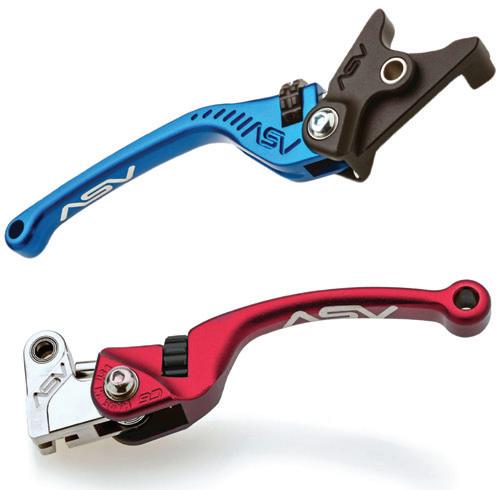
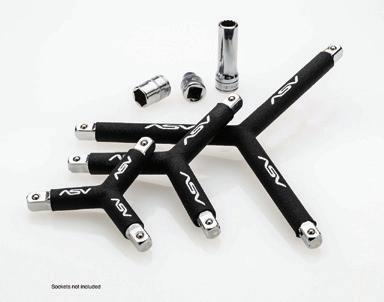
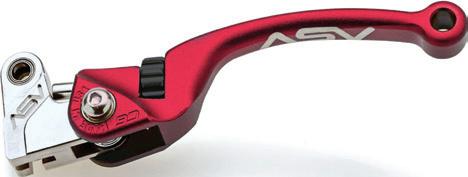
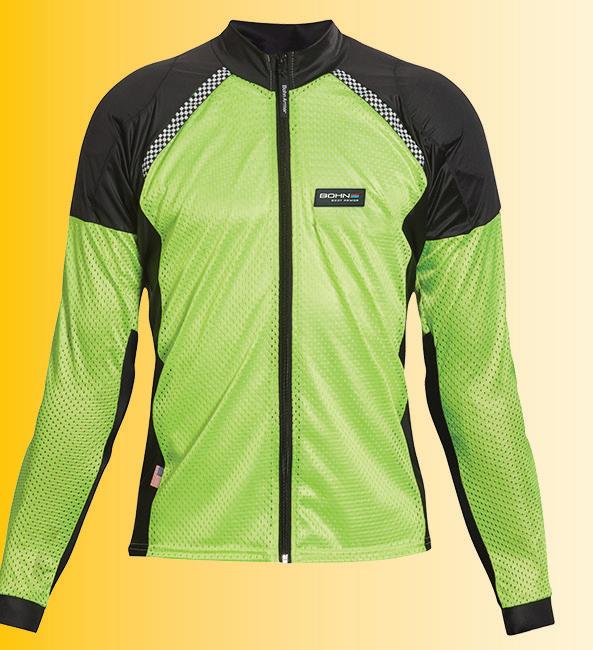
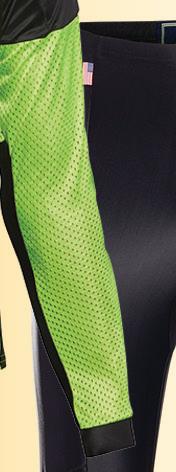
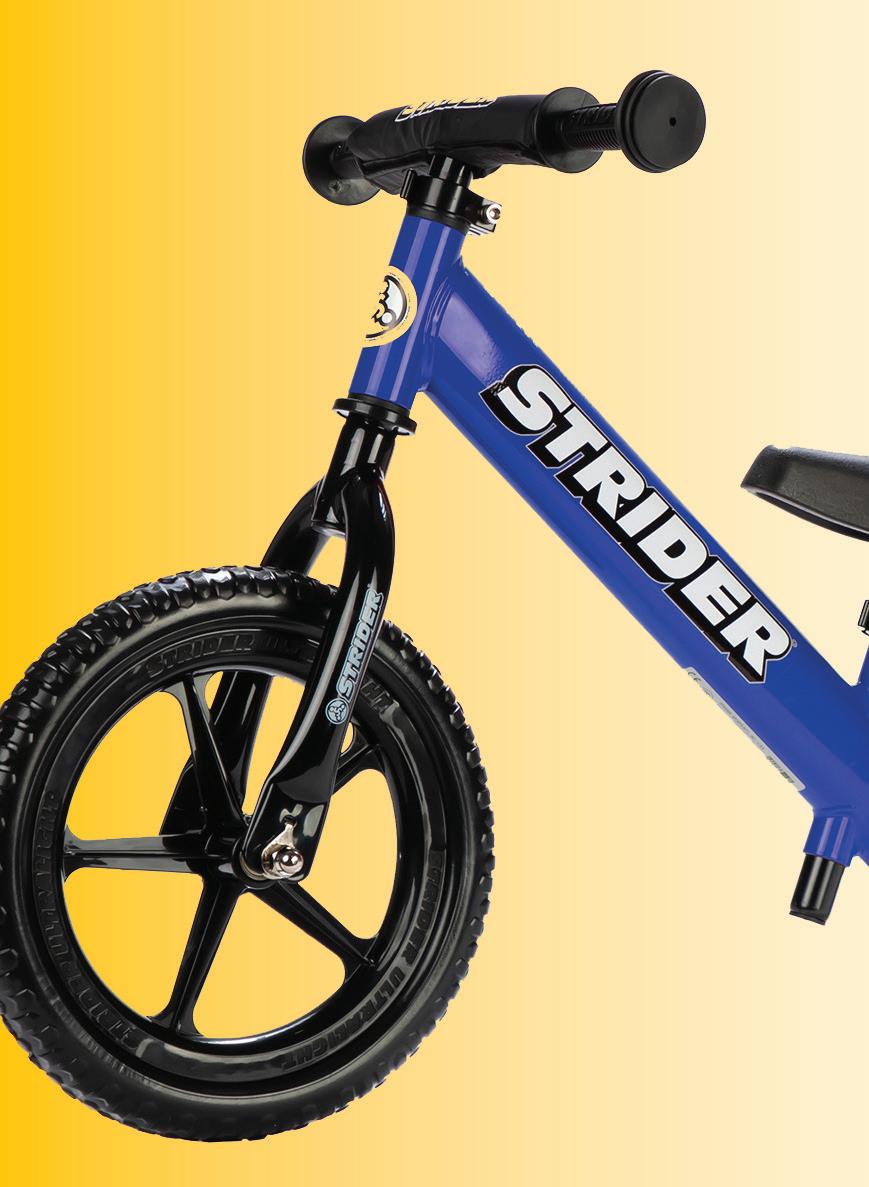
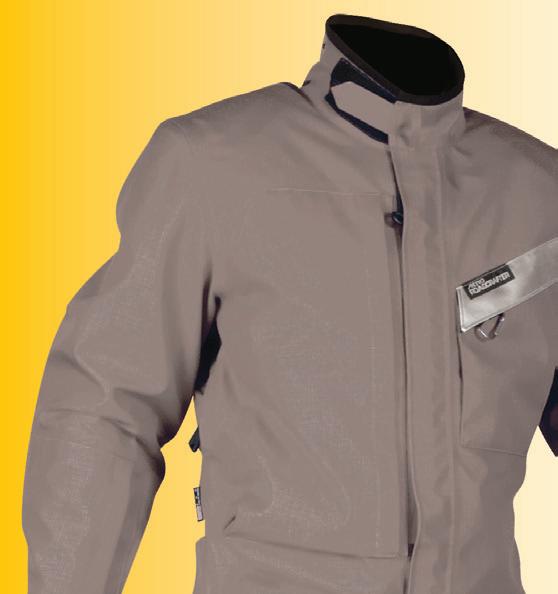
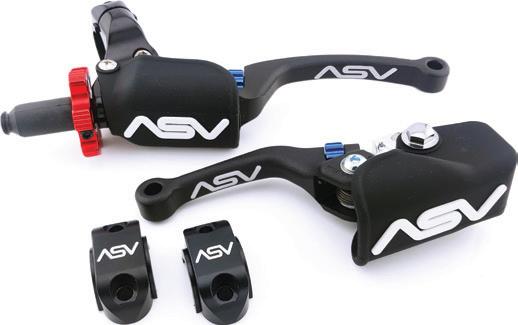
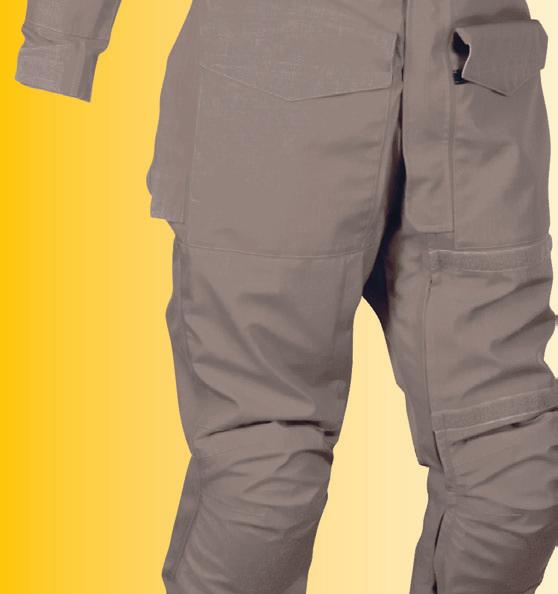
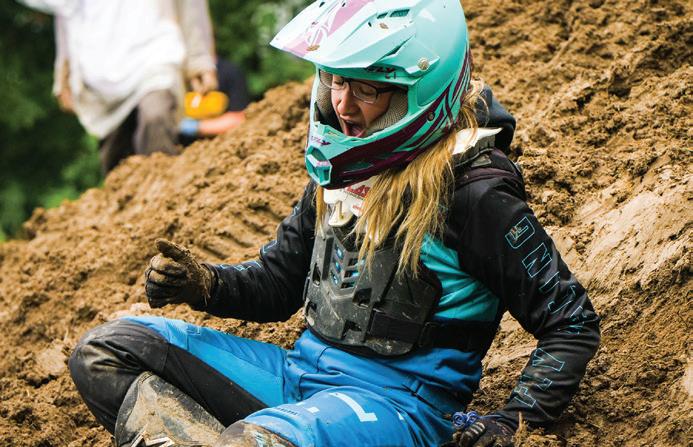
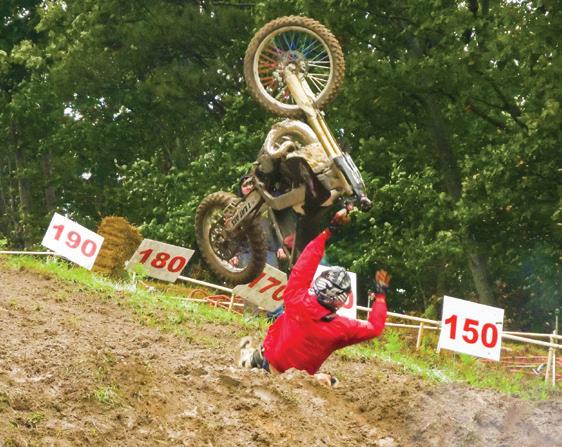
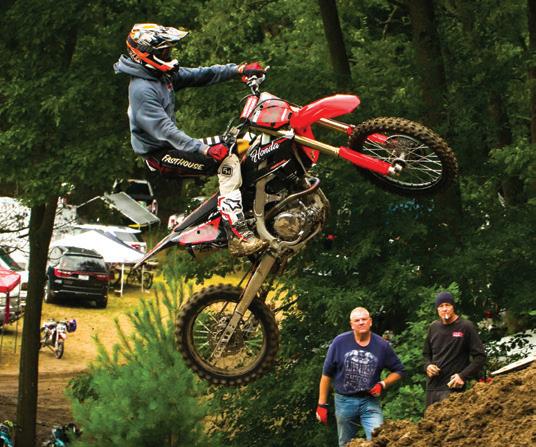
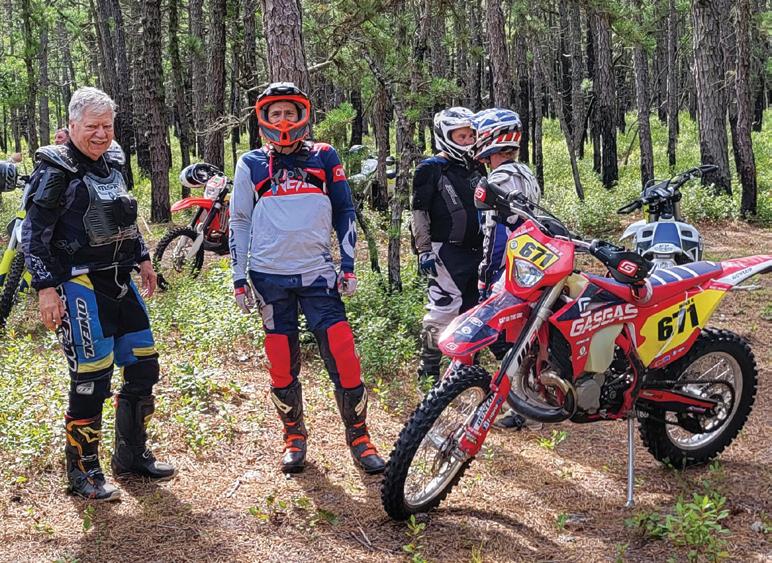
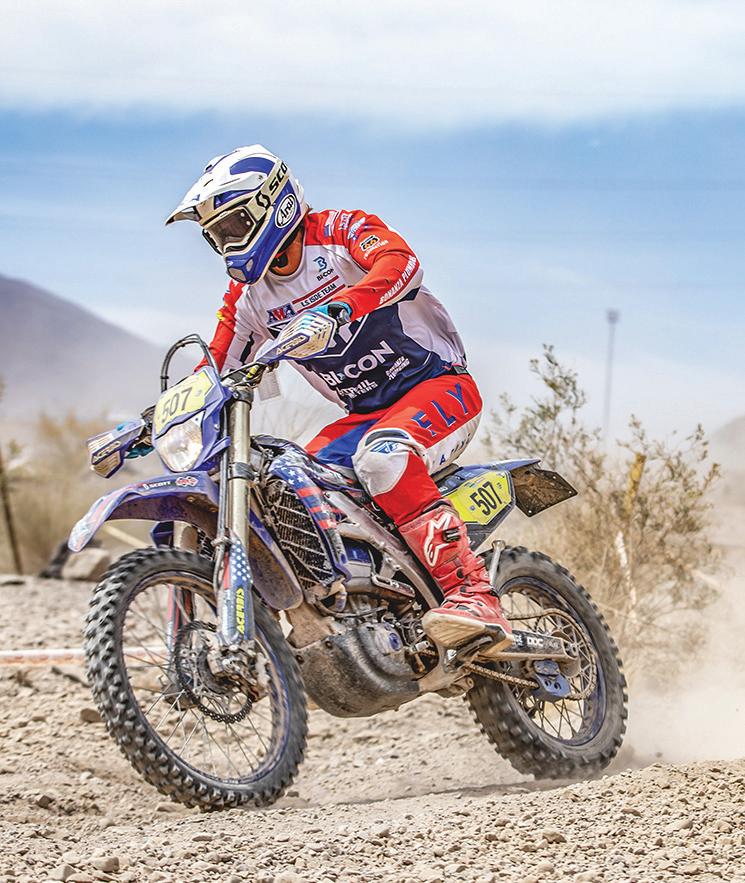
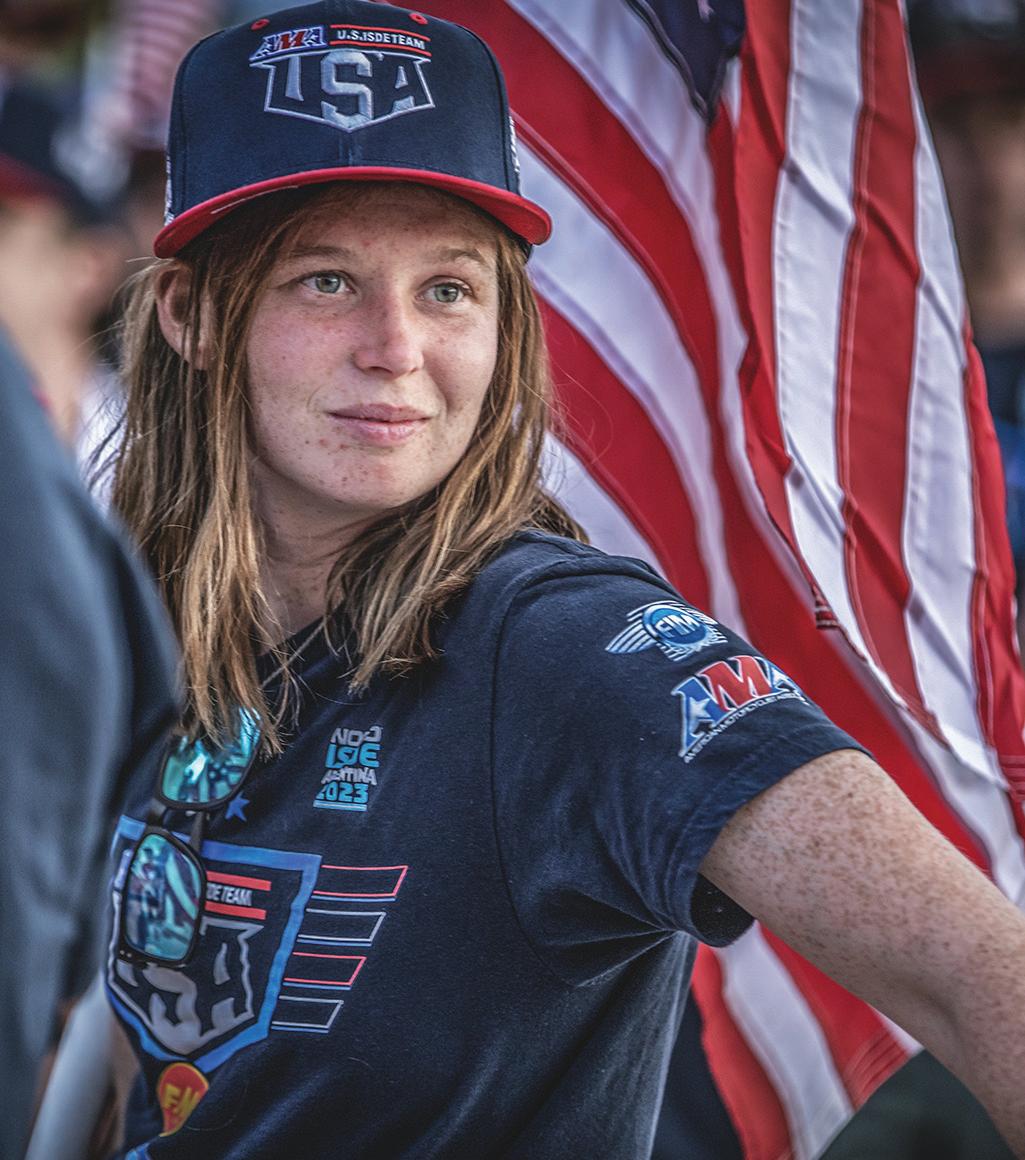
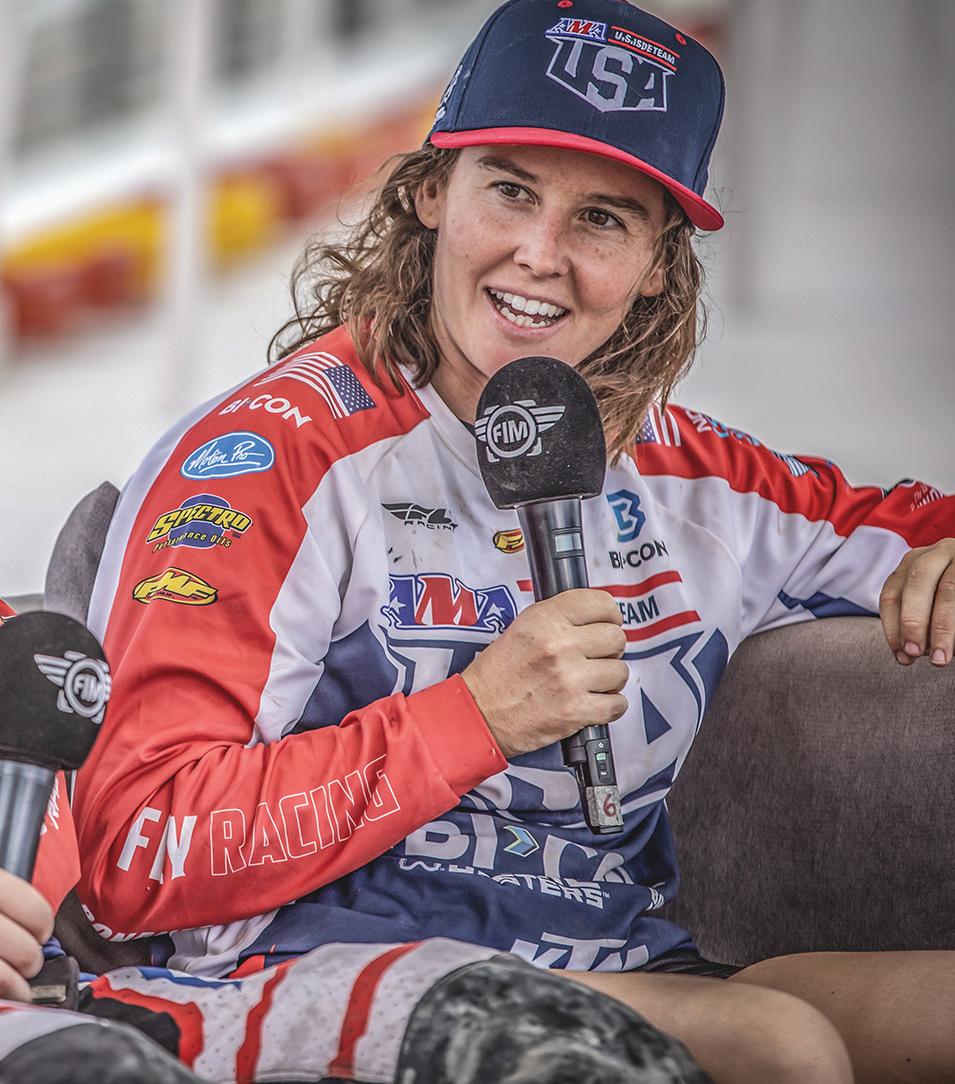
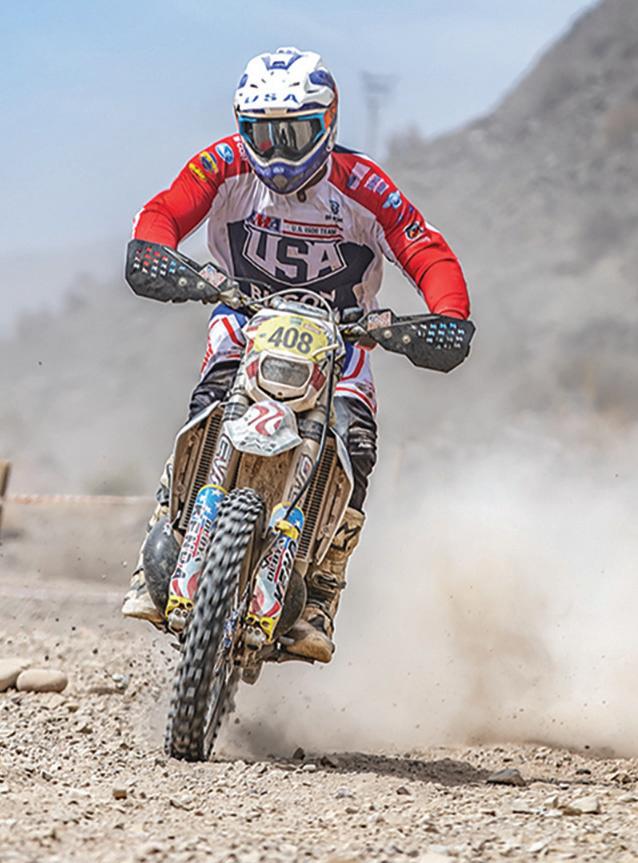
Members who join or renew their AMA membership from Jan. 1, 2024, through Dec. 31, 2024 are automatically entered to win one of these awesome motorcycling prizes!
MONTHLY DRAWINGS
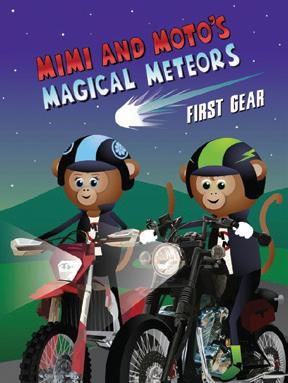
• Mimi & Moto Children’s Books
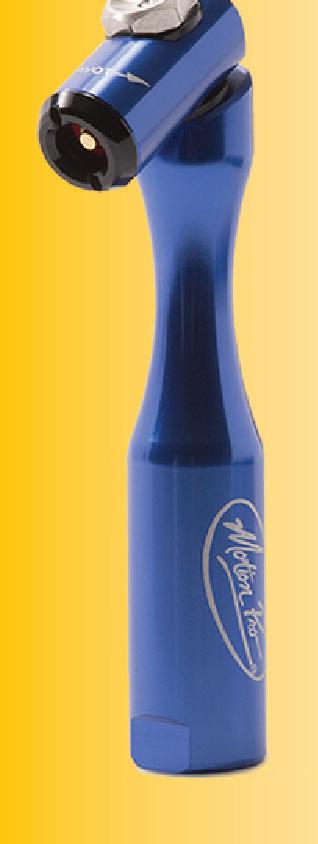
• MOTION PRO:PRO FILL AIRCHUCK
• Warm & Safe 12V USB Adapter
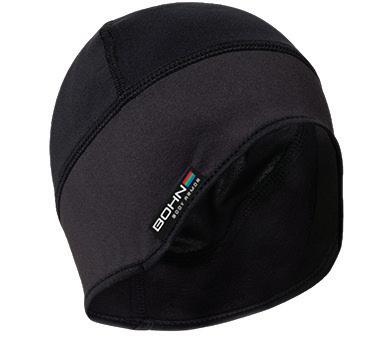
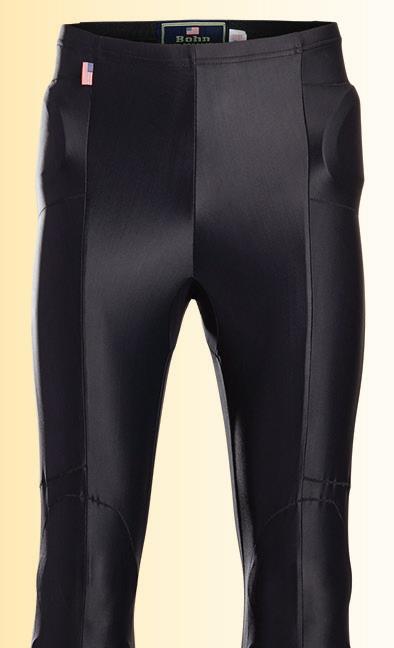
• Bohn Armor Skull Cap
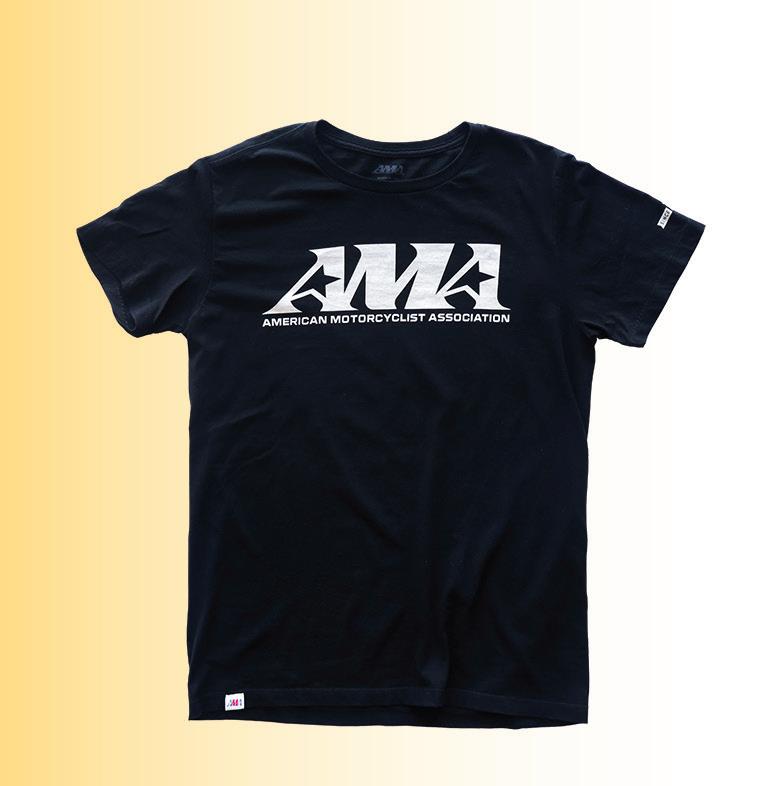
• AMA T-Shirt
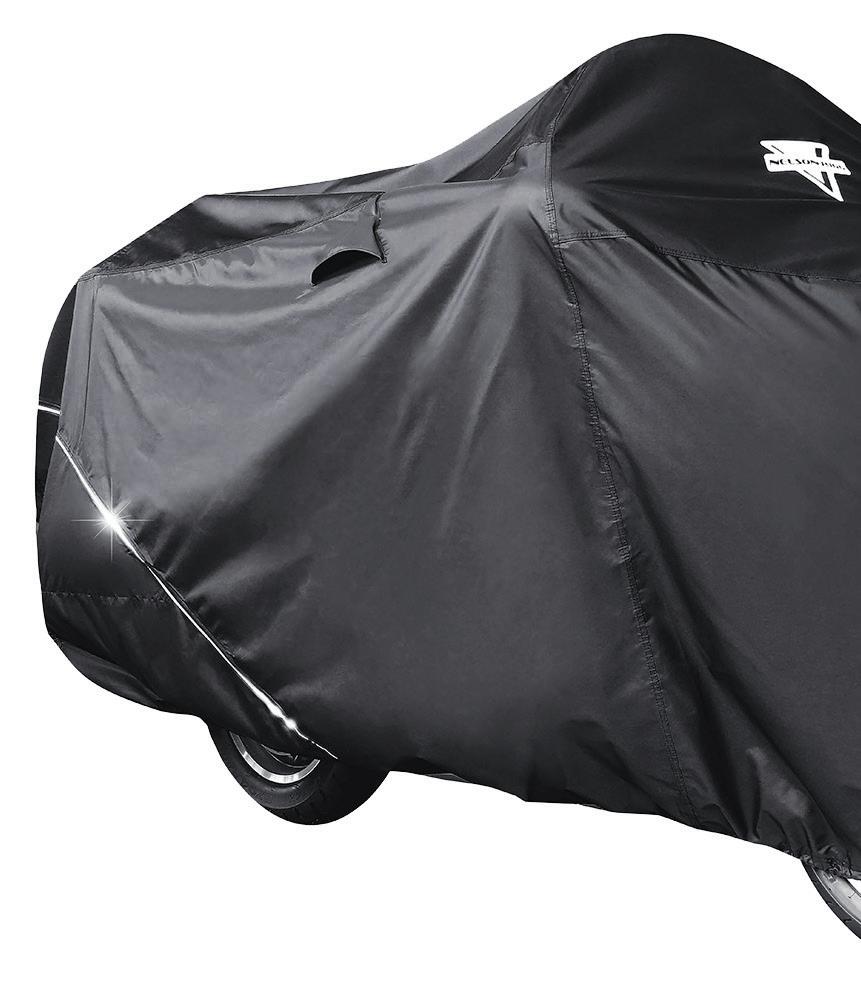
• nelson-rigG cover
• quinn Spitfire Helmet
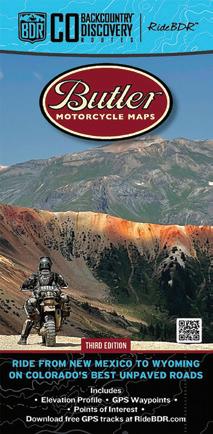
• Butler Motorcycle Maps
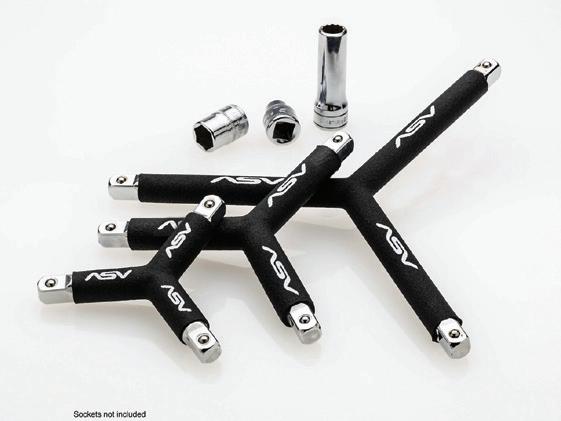
• ASV set of three y handle socket tools sockets not included
business Member
AMA business Member
THE AMA LEADS THE WAY TO PROMOTE AND PROTECT MOTORCYCLING — AND WITH OUR BUSINESS MEMBER PROGRAM, TO HELP YOUR BUSINESS THRIVE.
u Exposure in American Motorcyclist magazine
u Discounted ad rates
u Board position availability
u Consumer data from AMA member surveys
u Updates on Government Relations activities
u AMA reports from events and consumer activities
u AMA newsletters
u Magazine copies for company, dealership, etc.
u And more!
“For over half a century, Kawasaki has supported the AMA’s mission to promote, preserve and grow the motorcycle industry. As a supporting Business Member, Kawasaki works together with the AMA to help build a bright future for motorcyclists, including safety, legislation for rider rights and land use, promoting riding and racing, and supporting the heritage of the AMA Hall of Fame. Supporting the AMA is essential to preserving the positive growth of motorcycling and the powersports industry.”
—Eigo Konya, President & CEO Kawasaki Motors Corp., U.S.A.
Apply here https://form.jotform.com/amatech/business-member-app For more information contact Michael Kula at mkula@ama-cycle.org • (949) 466-7833 or Alex Boehm at aboehm@ama-cycle.org • (310) 662-1724
Unlike a lot of motorcyclists, I can’t remember ever really looking down my nose at scooters. For a long time, though, I didn’t comprehend why anybody would want one when they could tear around on a sport or dirtbike. But when I became a man I put away childish things. Not really away, but in the garage where they’re still easy to access. Really, it was becoming a homeowner more than a man that bit into my motorcycle time, which translates more to home maintenance man
Nary a day goes by when my 1963 hovel doesn’t need a new hunk of Pex pipe, electrical outlet, paint roller, sprinkler head, flapper valve, box of wine, optical cable, tri-tip roast, drain un-stopper, weird light bulb, etc. A lot of that stuff I already have in stock, somewhere, but I’ve learned it’s usually quicker — and, critically, way more fun when a scooter’s around — to jam to the hardware or big box store for a new one. I was ahead of the curve when it comes to just-in-time parts delivery.
This is precisely where the scooter comes in. I admit that running a threeto-five-mile errand isn’t as thrilling as spinning laps on the old R1, but then it doesn’t take anything like the investment in time and money, does it?
Where one has always been in short supply (money), now both increasingly are. And I guess it’s because I’m almost old, I really do get a kick out of just running round the ’hood on my scooter, barely ever breaking 60 mph.
Matter of fact, I usually pick out the establishments not closest to me, but the ones along the nicest routes. Now my life is more endurance race than sprint. Cruising the neighborhood lets me gauge my progress against the other codgers waging their own domestic wars against entropy — many of them
greatly exaggerated! HALF-A-’BUSA BURGMAN
BY JOHN BURNS
in my older part of town with a motorcycle or two and a classic car (which wasn’t classic when they bought it) peeking out of the garage.
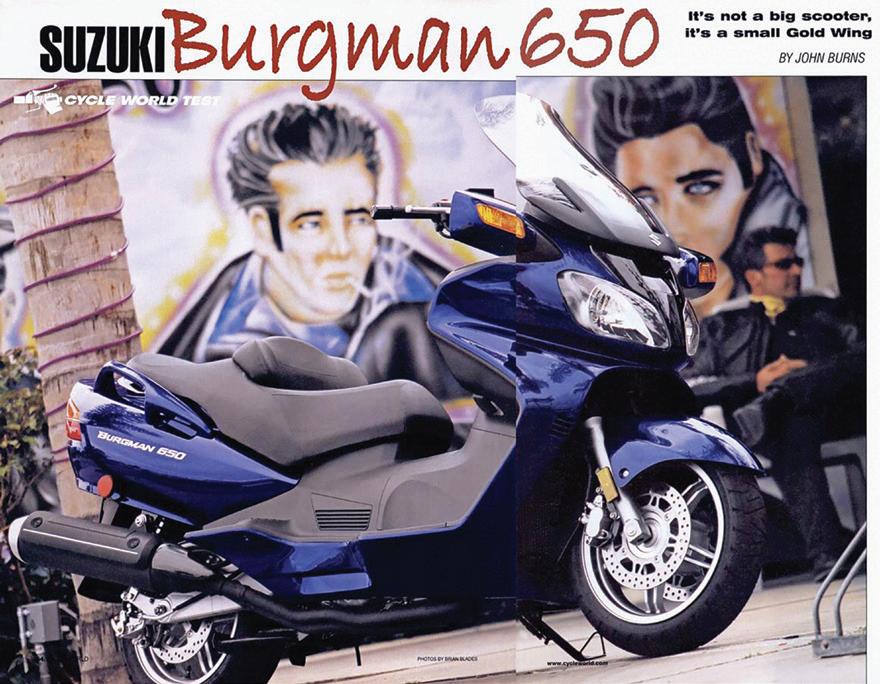
All I really wanted was something smallish like a Honda PCX150, but what I wound up buying was a suspiciously cheap yet well-preserved ’03 Suzuki Burgman 650, which is so far turning out to be the best of both worlds. Packing a 638cc parallel twin, the Burgie is halfway between big scooter and small Gold Wing, capable of 100 mph but content to cruise at 70. Or 30. And with a big trunk that’ll carry plenty of stuff underneath a big cushy seat for two.
in all kinds of weather. Granted, lots of Euros probably started scooting out of economic necessity, but for a lot of them, daily scooting has become a source of joy, just like it is for me.
In fact, when doing my research I found my own Cycle World road test of a blue ’03 just like the one I bought. Who knows? It might be the actual unit CW borrowed from Suzuki. In those pages, I was 20 years younger and going on about how convenient the Burgie was for transporting parts for the old boat I kept for a couple of years in Dana Point harbor before economic reality set in. I also noted that, at $7,699 (CPI calculator says that’s almost $13k today), I’d have to wait a while for a nice used one to come along: It took almost 20 years and the same CPI calculator says that I paid $1,273 in 2003 dollars…now that’s my kind of deal!
Ever since I rode my first one I’ve always wondered why more Americans don’t embrace the scooter for short hops, especially those in congested, temperate climes like SoCal or Miami. Every time I go to Europe it’s shocking how many people are scooting around
Did you know you can park your motorcycle free at lots of airports? It’s true. I once left a borrowed BMW at LAX for a week in a prime spot right by the terminal (with a few locks), and it was right there when I got back. I was going to park the Burgie in the same spot when I did the Alps Challenge in August, but there was a hurricane in SoCal the day I flew out, so I Ubered instead. Way less fun.
Here’s my last thought on this: If you know some poor city dweller who’s thinking of learning to ride but on the fence (usually because they’re scared of learning to shift gears), a medium-sized scooter is the perfect not-so-powerful shiftless entry vehicle.
Come on, baby. Don’t fear the scooter. Why not hit the early bird special at Finney’s as soon as I staunch this dripping hose bib? Seen the Teflon tape lately?
John Burns is an AMA member and irreverent commentator on all things motorcycling
The author with 2003 Burgie from the original Cycle World road test.
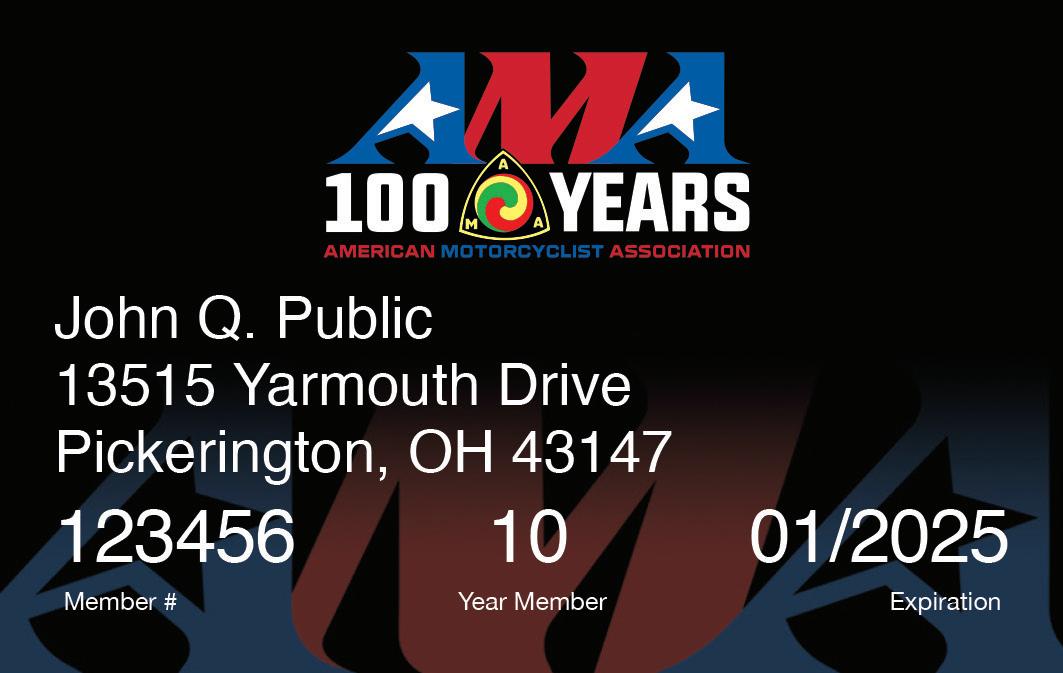
100-YEAR MEMBERSHIP PACKAGE
.1 Year AMA membership*
.100-year membership card
.Embroidered anniversary patch
.Anniversary decal
.Limited edition 100-Year Anniversary pin
.Limited edition 100-Year Anniversary t-shirt
.Discount AMA Motorcycle Hall of Fame
Induction ceremony tickets
100-YEAR LIFE MEMBER PLUS PACKAGE
.1 Year of Life Member Plus Enrollment*
.100-Year Life Member Plus membership card
.Limited edition Life Member 100-Year Anniversary t-shirt
.Embroidered anniversary patch Anniversary decal
.Limited edition 100-Year Anniversary pin
.Discount AMA Motorcycle Hall of Fame
.Induction ceremony tickets
BACKFIRES
ISDT OOPSIE!
I took the opportunity to catch up on some AMA magazine reading while on a recent business trip. The first issue I read was August 2023, which in the Malcolm’s Moments piece Malcolm wrote about meeting fellow Hall of Famer Dave Mungenast for the first time. Ironically, I was on the same flight as Ray Mungenast, Dave’s son, and we had a good laugh after we landed, discussing Malcolm’s jacket story about Dave. On my return flight I read the November 2023 edition, and while enjoying Malcolm’s recollections of racing in the 1973 ISDT, I noticed a slight error in the photo caption of the Silver Vase team on page 25. It states, “left to right, Ron Bohn,” and then “Ed Schmidt.” Actually, it’s Ed Schmidt and then Ron Bohn. I was fortunate to get to know Ed and his sons during research for my book Discovering Six Days. If it wasn’t for Ed, the bike that influenced the book would have never existed. Unfortunately, Ed Schmidt passed back in December 2022.
Keith Geisner
Thanks, Keith, for the correction. [Malcolm! How did we miss that?!] BTW, Geisner’s Discovering Six Days book can be had on Amazon. – Ed.
INTERCEPTOR!
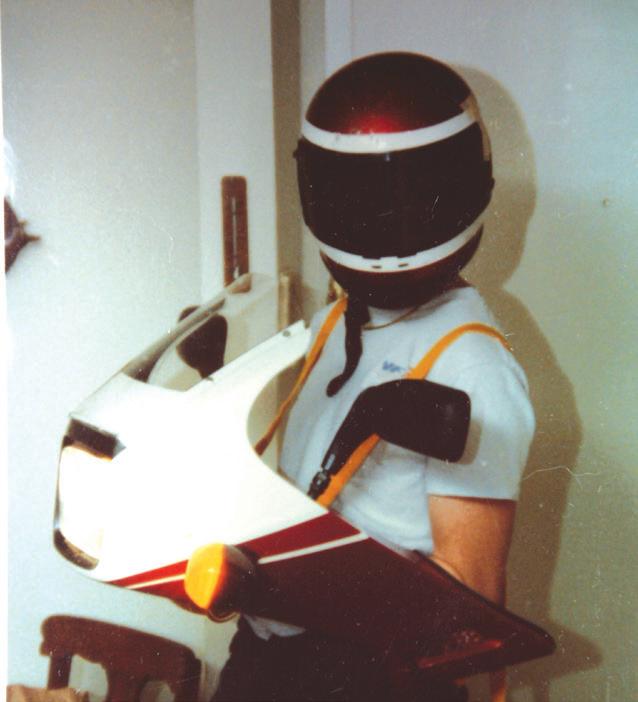
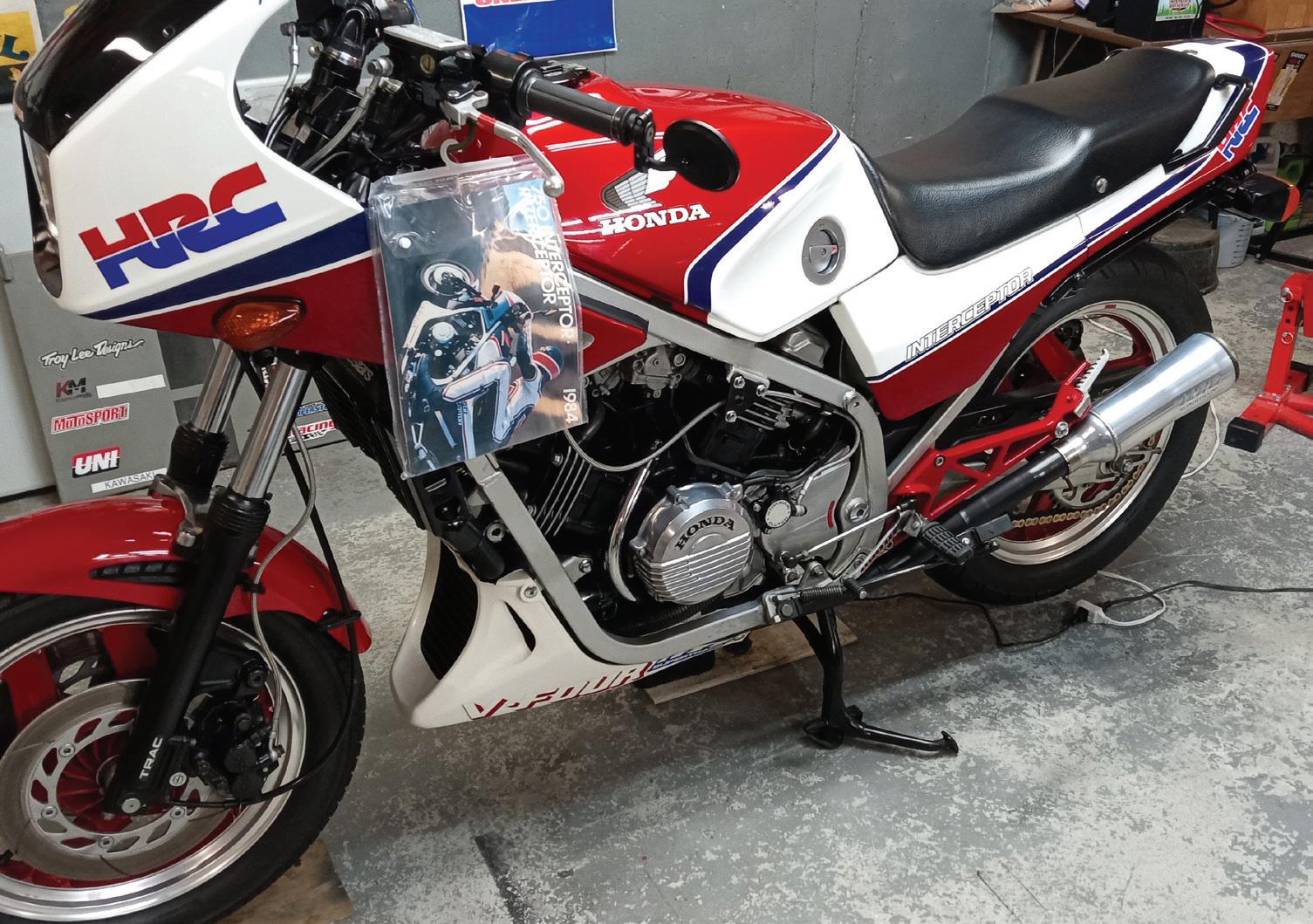
Your Honda Interceptor article in the December issue made me flash back to a Halloween party I attended in 1986. I was 18 years old and working as a parts kid at Honda of San Mateo in the San Francisco Bay Area. I’d just sold my ’84 Honda Nighthawk S to buy the new ’86 VFR750F. It was Halloween night and I came up with a last-minute costume idea for a party. I found an old V45 Interceptor fairing in the rafters, added mirrors, turn-signals and a headlight, wired it all up to a little Honda Spree battery, and then grabbed some tie-downs for
shoulder straps…and slipped it onto my shoulders. I showed up at the party and rang the doorbell, and when the door opened everyone got blasted by a 100-watt halogen high-beam! The rest of the party is still a blur… Donny Schmidt Reno, Nev.
For you and for them, we’d imagine! – Ed.
LETTER OF THE MONTH
J
GOOD-BYE, SUPER HUNKY
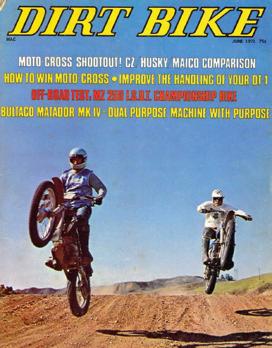
ust heard about the passing of Rick Sieman, aka “Super Hunky.” Very sad. Man, the 1970s were halcyon days for me — and for many others, I would imagine. Dirt Bike was the first magazine I ever had a subscription to. I felt a real connection to the magazine, and not only because its offices were in Encino, and I lived in the San Fernando Valley. The magazine did a lot of testing at Indian Dunes or in the local deserts, where I actually rode, so that was another connection. Rick’s articles were often hilarious, but they also had plenty of practical or useful information. He also did so much to fight the wholesale
land closures being pushed by environmental groups at the time. Rick and the “Phantom Duck” (his friend Louis McKey) were the first that I remember fighting the closures, as well as supporting the Barstow to Vegas event. It’s fitting that, this past Saturday, I made my first visit to Jawbone Canyon in over 12 years for a trail ride of 80 miles, and man, I was thrashed by the end of the day. Who knows? If not for Rick and others, I may not have been able to ride this area. R.I.P. Rick Sieman. Bruce Bluemm
All true, Bruce. Thanks for taking the time to remember a giant in our industry. – Ed.
Letters to the editor are the opinions of the AMA members who write them. Inclusion here does not imply they reflect the positions of the AMA, its staff or board. Agree? Disagree? Let us know. Send letters to submissions@ama-cycle.org or mail to American Motorcyclist Association,13515 Yarmouth Drive, Pickerington, OH 43147. Letters may be edited for clarity and brevity.
Loved the article on what I think was the bike that changed everything in our sport. It was ground-up the most radically changed bike of the day. I’m 74, and still have my beloved VF700 Interceptor that I purchased new in 1984. Great article, folks!
Jim Mendoza Berkley, Mass.
Enjoyed the Interceptor piece in the November issue. It captured wonderfully a lot of the technical, moto-cultural and performance craziness of that era…good and bad. I’d like to quibble a bit with one element of the story. The gentleman from Yamaha said something to the effect that the Honda/ Yamaha clash at the time “wasn’t personal,” but industry lore has it differently. A buddy who worked at Honda told me some prankster at Yamaha sent Honda’s advertising and public relations department a photo of Yamaha’s motocross team flipping the bird, along with an inscription below that said something like, “Sorry for your market-share loss!” Probably good-natured ribbing, but it does highlight how competitive things were back then.
R.G. San Diego
I worked at two separate Yamaha dealerships during college in the early 1980s, and the only element of the Honda/Yamaha “war” I noticed were
the crates and crates of non-current motorcycles stacked to the ceiling due to all the over-production. But once I joined the industry in ’85 I heard plenty of “insider” stories, and yes, things got pretty heated. Luckily, it’s all great history at this point! – Ed.
ERROR? OR PROPHECY?
In the Backfires section of the Jan uary 2024 issue there are two letters that reference future issues of the magazine: October and November of 2024. Do these two letter writers know something we don’t about what’s coming down the pike, or did you folks double-typo yourselves during the editing process? Inquiring minds want to know! Kidding aside, the issue is an astounding mix of history, adventure touring and current — and interesting — events. Thanks for keeping the “traditional magazine experience” you write about so often alive and well.
Marc Johnson Ravenna, Ohio
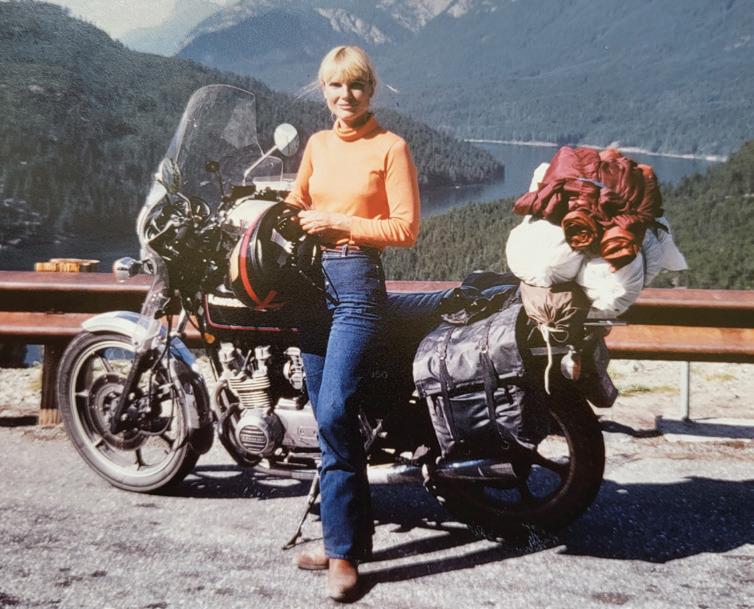
5This is my then girlfriend (now wife) beside my 1980 Kawasaki KZ550 somewhere in British Columbia, Canada. We were riding from Southern California to Northern B.C. and camping most of the way. Nowadays, a 550cc bike would hardly be considered a touring bike for a solo rider, much less two-up with camping gear, but we were gone for three weeks and over 5,000 miles. The bike was two years old when we made the ride, and I kept it for another 20 years and a total of 126,000 miles.
Gerry Urban
I had a Kawasaki GPz550 with that same basic engine, and it was, as you report, totally bulletproof. Reminds me of the legendary MOMBA story, actually… – Ed.
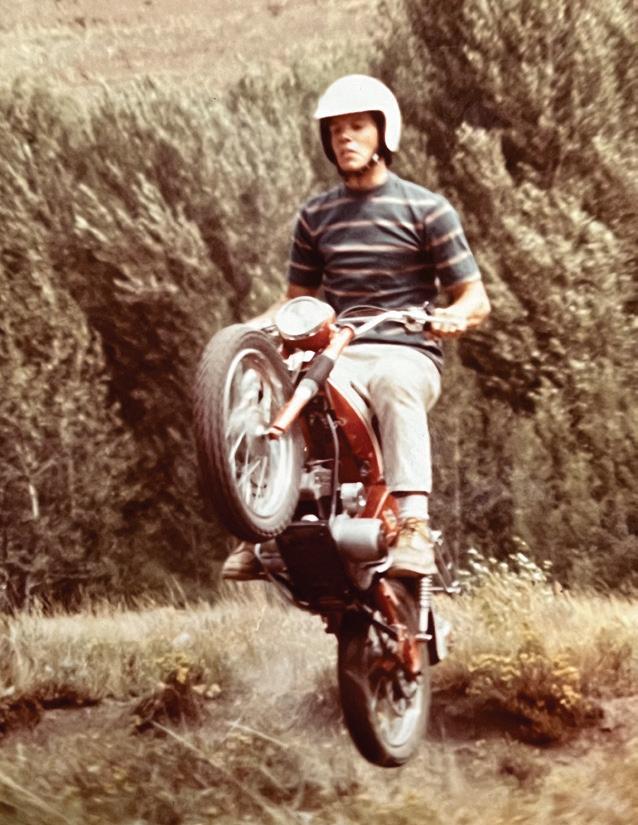
4The photo from 1971 shows me at 16 years old on a 1968 Yamaha 100 trail bike. My dad bought two of these, thinking that we’d do some summer trail riding at our family cabin near Sun Valley, Idaho. There were lots of dirt roads and mountain trails to ride (this was before designated motorized trails were even a concept, so you could ride almost anywhere). I rode every day, though my dad got bored and quit. My brother and I built a small motocross track on our five-acre lot, incorporating a big hole built by the previous owner for a house he never constructed. The photo is me jumping out of this pit from a dead stop from the bottom. We knew how bad the suspension was on those bikes, but didn’t care. We just thrashed them around and they were amazingly rugged. I’ve continued to ride dirt bikes ever since, and now have a Kawasaki KLR650 and a brand new KTM 450.
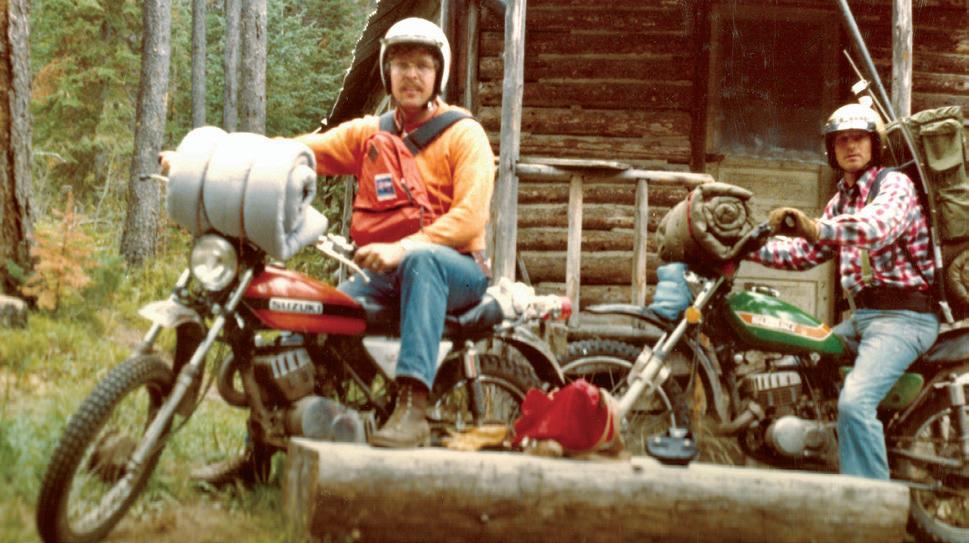
5The first photo is of myself (left) and brother-in-law Gene in 1979 during what became known as the first Annual Bikes, Beer and Backpacks (BBB) family campout and dirt bike ride. The photo was taken by my son Greg, who rode behind me on my late1960s Suzuki TS185 down several miles of single-track where we’d spend the night in a long-ago-abandoned riverside miner’s cabin. The area was
Rob Insinger
3
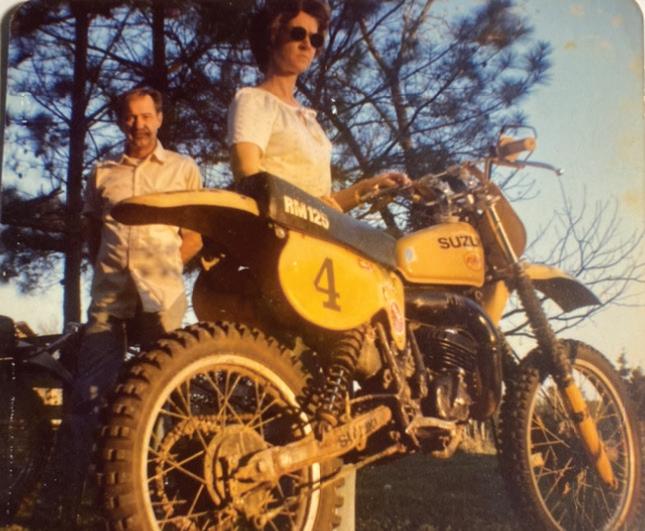
Pictured are my mom and dad standing with my 1977 Suzuki RM125, which we bought from a shop in Greenville, Miss. I rode the wheels off this motorcycle, and would stay up late at night in my little shed cleaning and adjusting things, and just looking at how beautiful it was. I still believe the 1977 Suzuki RM125B is one of the best motorcycles ever built.
Jim Neill
subsequently locked up as part of the North Fork John Day Wilderness in northeast Oregon, and the historic cabins there were burned down by the U.S. Forest Service. The cabin is now accessible only as a memory.
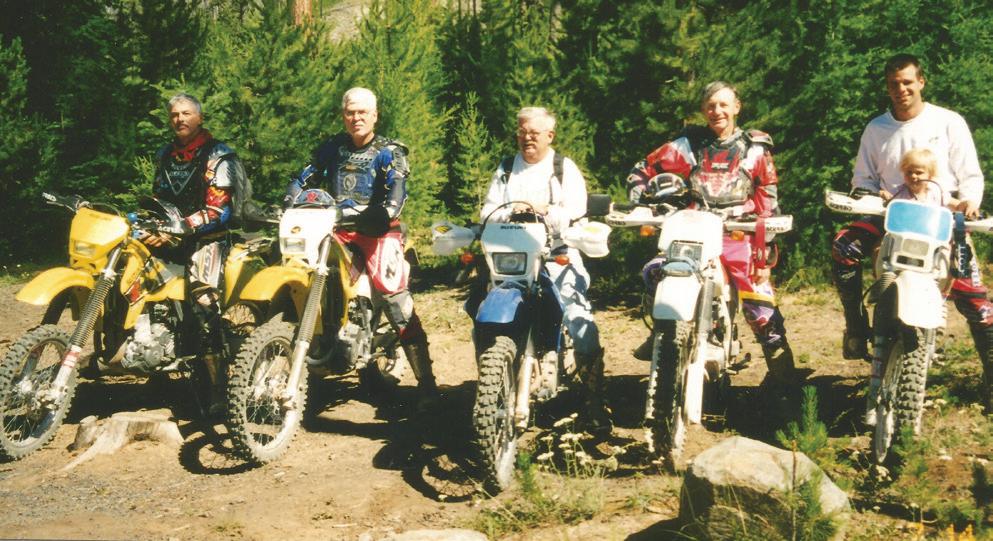
Our family and friends will be camping and riding in a nearby designated OHV area again this summer during our 45th Annual BBB. We have chronicled many great stories from these
rides, including a marriage proposal, floating Ding Dong wrappers over large campfires, a meadow conception, more beer, Snipe hunts, a few 50-mile runs to the emergency room, and more. Second photo is our group lined up to take off on a ride during the 25th Annual BBB.
Gary Hermann
Can we come along next year? – Ed
MISSION FOODS AMA FLAT TRACK GRAND CHAMPIONSHIP
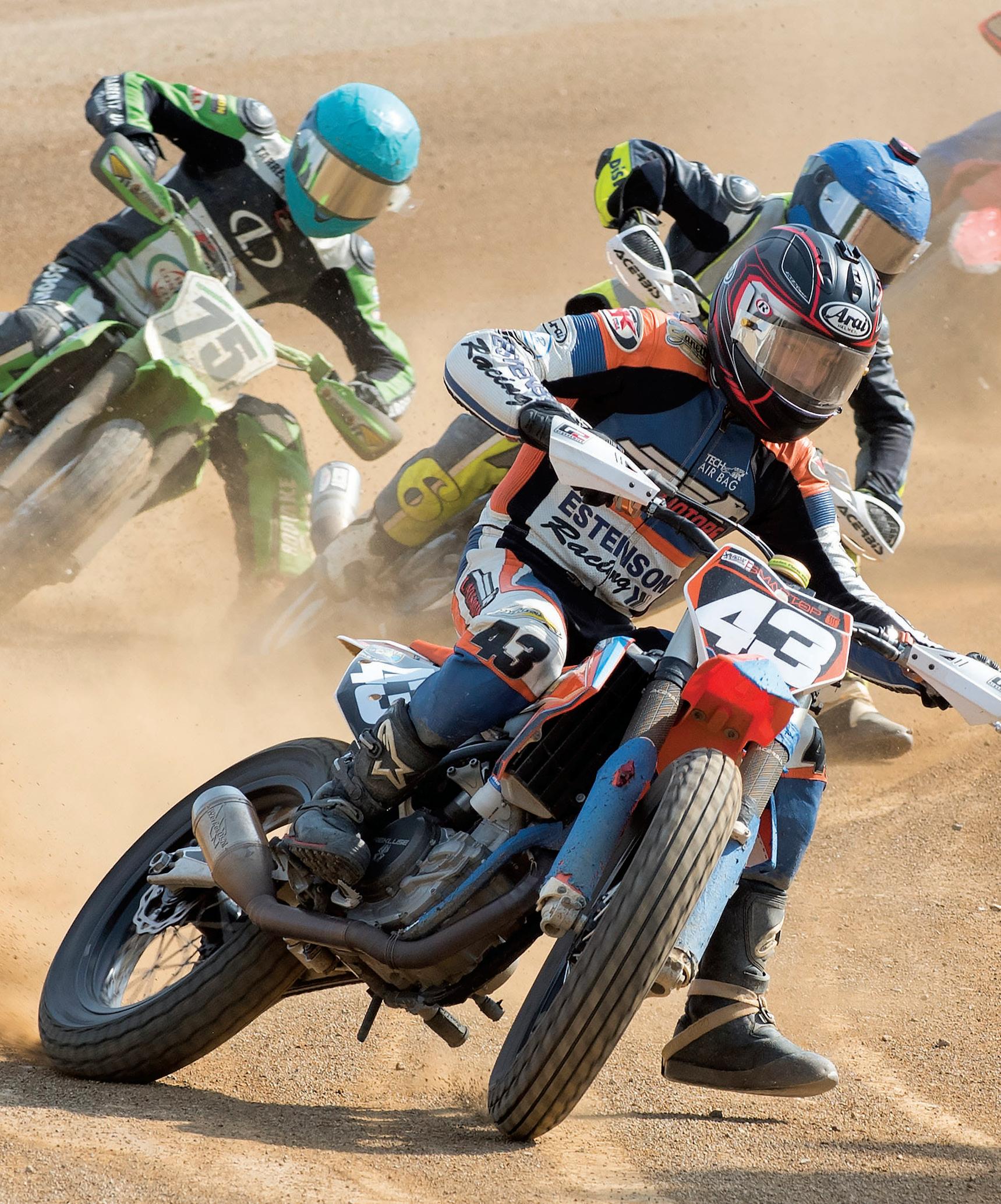
T he off-road fun heats up in June as the Mission Foods AMA Flat Track Grand Championship will run June 30–July 6 at the Du Quoin State Fairgrounds in Du Quoin, Ill.
The Mission Foods AMA Flat Track Grand Championship is the only race in the country where racers can earn an AMA National No. 1 plate in amateur flat track racing. The event includes four disciplines of flat track racing: Mile, Half-Mile, Short Track and TT.
The AMA will also award several special honors during the weeklong event, most notably the Nicky Hayden AMA Flat Track Horizon Award — which recognizes the amateur racer that shows the most promise to excel as a professional. The Bill Werner AMA Fast Brain Award will also be granted to the racer that shows ability both on the track and in the classroom.
The Vet/Senior Racer of the Year and the Youth Racer of the Year will also be presented during the event.
For more information, visit AmericanMotorcyclist.com/events-4/ama-flat-trackgrand-championship.
AMA HALL OF FAME DAYS
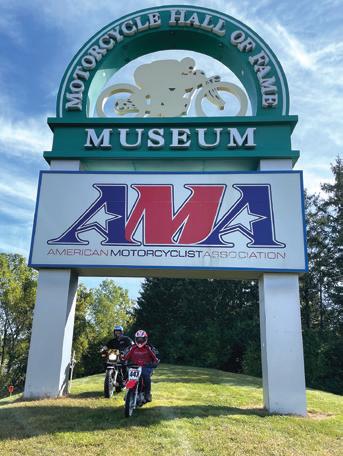
After a successful inaugural event in 2023, AMA Hall of Fame Days will return in 2024 and is set to run Oct. 10–13 on the AMA Campus in Pickerington, Ohio.
The four-day event will be headlined by the AMA Motorcycle Hall of Fame Induction Ceremony on Oct. 10 at the nearby Violet Township Event Center in Pickerington, Ohio, where the AMA will welcome the Hall of Fame Class of 2024 — which will be announced at a later date.
Immediately following the Induction Ceremony, there will be an evening cocktail reception held at the AMA Motorcycle Hall of Fame Museum. The weekend event will also contain a museum open house, bike night, recreational adventure ride and AMA commission and member meetings.
For further information, stay tuned to AmericanMotorcyclist.com and the AMA’s social media channels.
Events Can’t-Miss 2024
AMA AMATEUR NATIONAL MOTOCROSS CHAMPIONSHIP
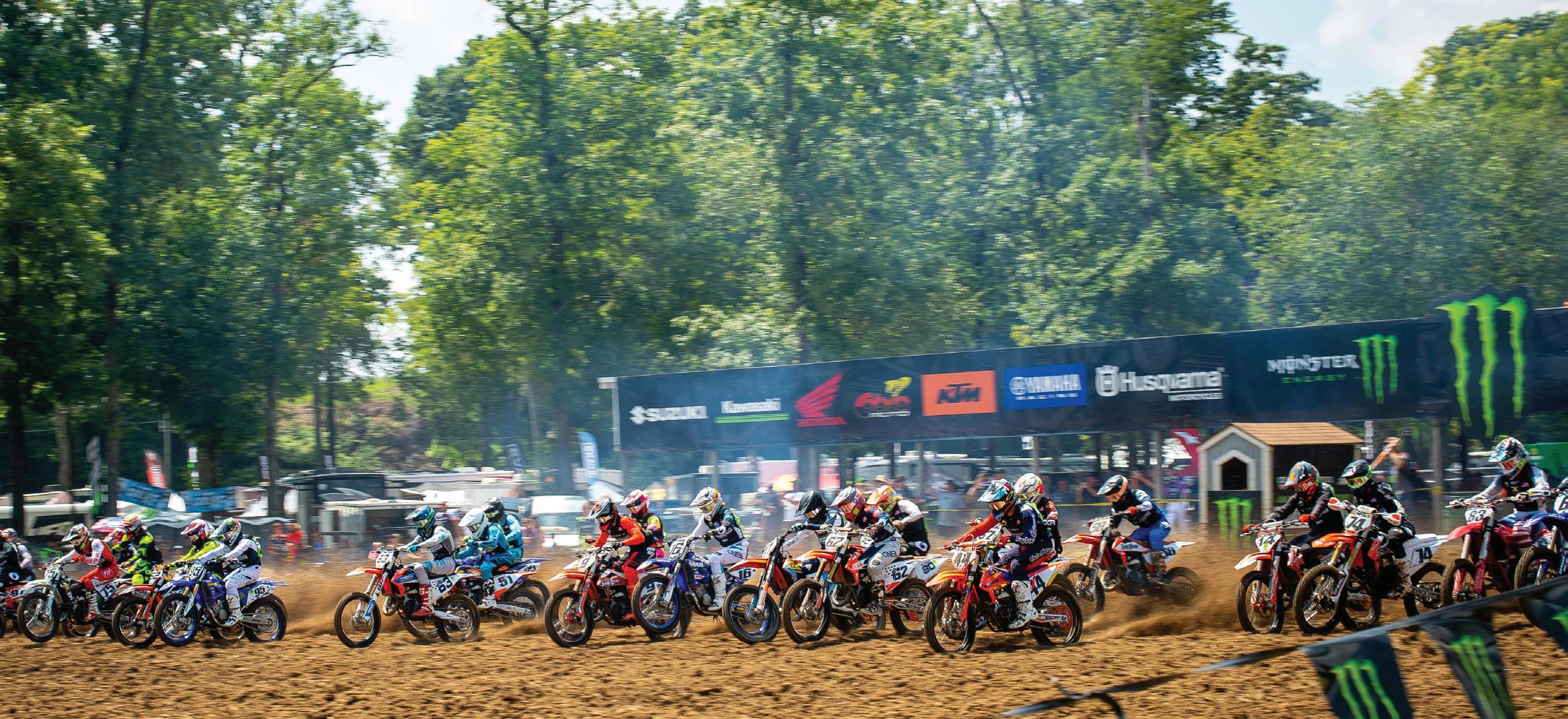
he AMA will also crown national champions in motocross, with the AMA Amateur National Motocross Championship at Loretta Lynn’s Ranch in Hurricane Mills, Tenn. set to
run July 29–Aug. 3.
Since its inception in 1982, the AMA Amateur National Motocross Championship has hosted some of the greatest legends in motocross, with names such
as AMA Motorcycle Hall of Famers Ricky Carmichael, James Stewart, Ryan Dungey and Travis Pastrana competing in the renowned event.
As the largest amateur motocross event in the
TAKE A KID DIRT BIKING MONTH
world, riders will compete for AMA National No. 1 plates in many classes and receive the opportunity to make names for themselves on a national scale.
For more information, visit mxsports.com.
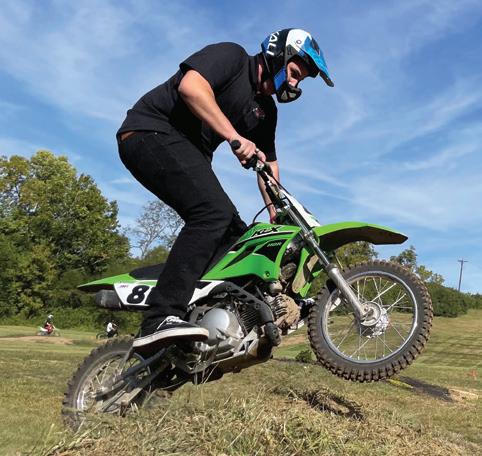
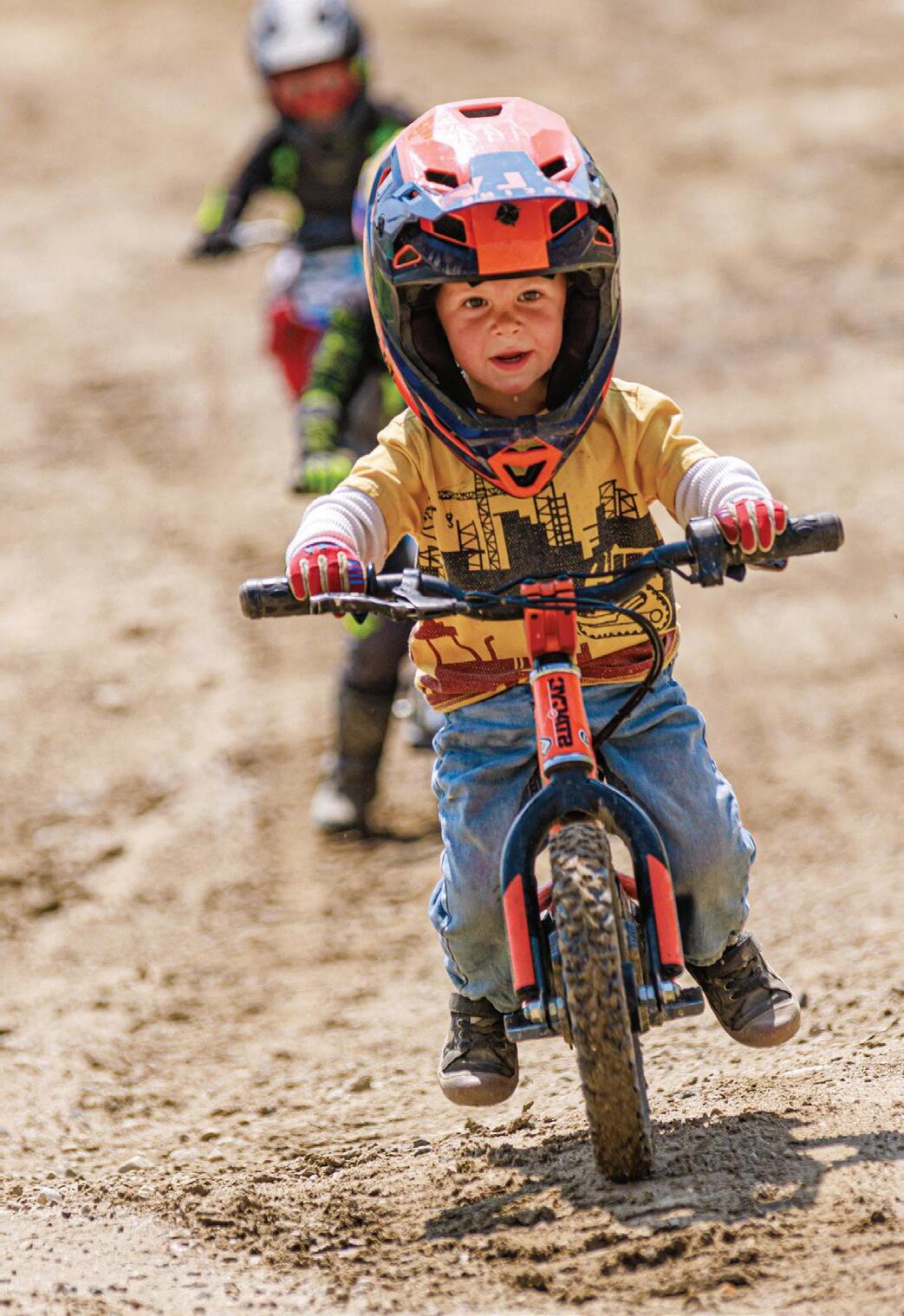
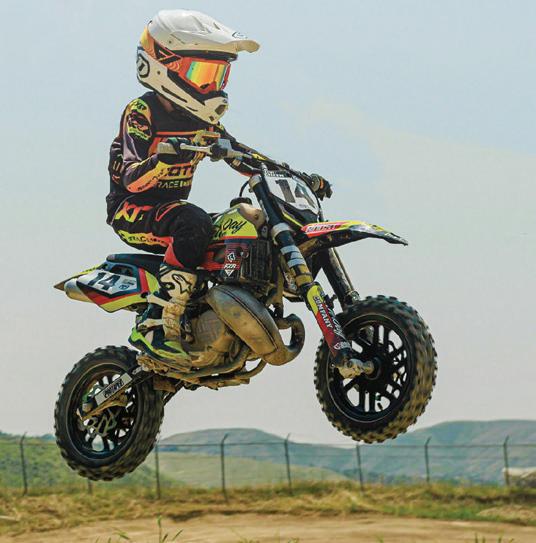
ou know the saying: April showers bring May flowers. But the flowers will not be the only things blooming in May, as the month will also serve as Take a Kid Dirt Biking Month, which seeks to create a lifelong appreciation for riding by getting America’s youth aboard two wheels.
Take a Kid Dirt Biking Month will include special contests and prizes, and will provide the opportunity for parents and kids to submit their riding photos and videos with the opportunity to be featured on the AMA’s social media channels, AmericanMotorcyclist.com and American Motorcyclist magazine.
Organizers of May events will also have the opportunity to receive special packages — containing support materials, packets to hand out to the kids involved and the chance for kids to win prizes.
For further information, contact AMA Director of Marketing & Communications Joy Burgess at jburgess@ama-cycle.org and stay tuned to AmericanMotorcyclist.com for additional details.
HILLCLIMB GRAND CHAMPIONSHIP
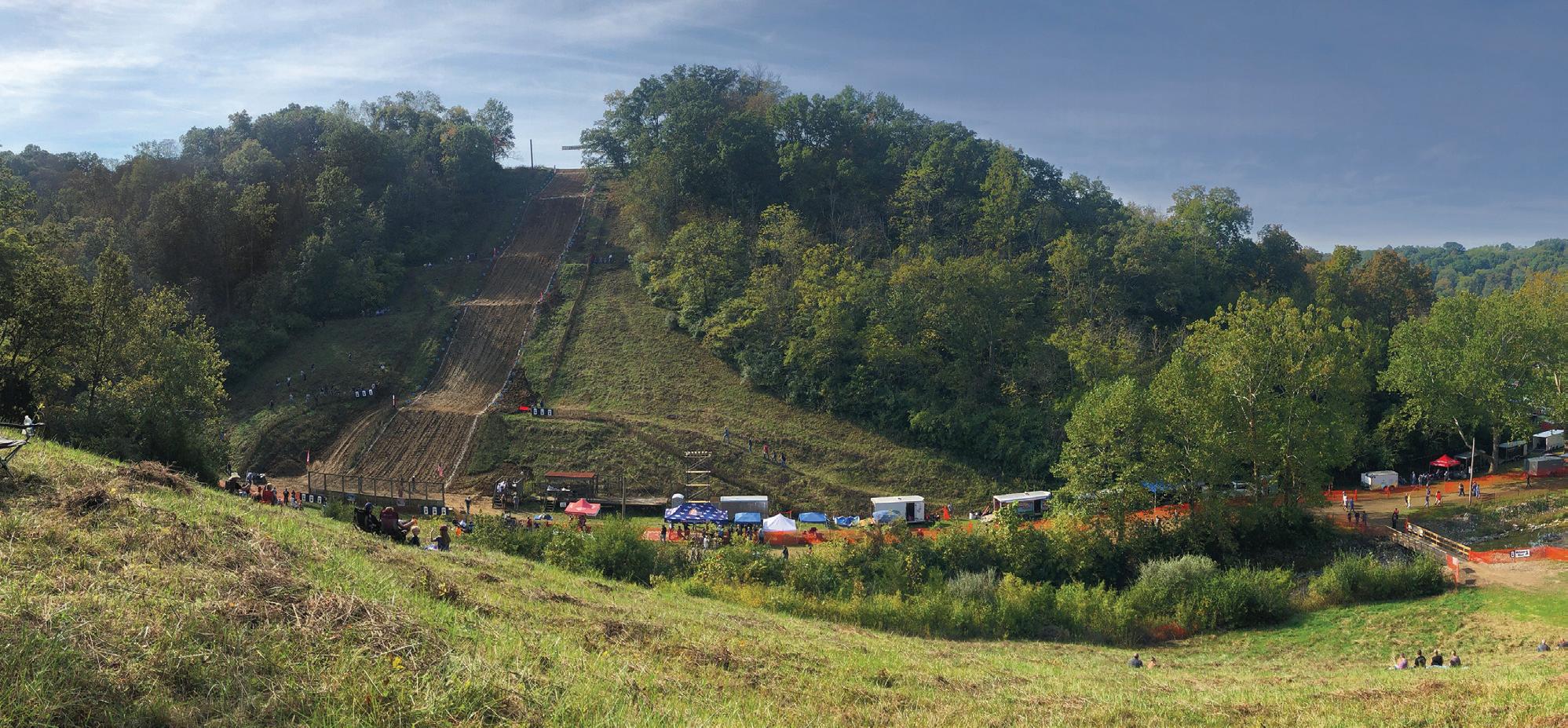
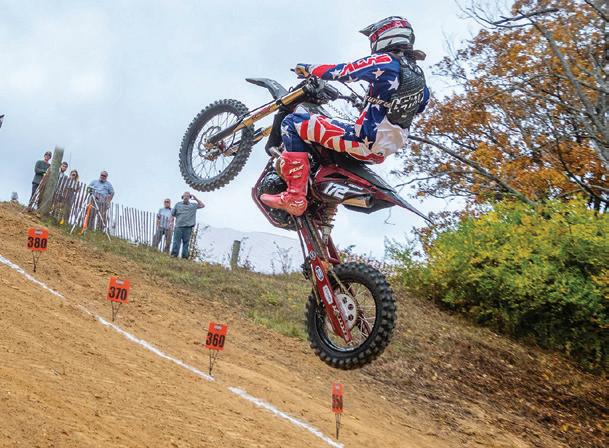
The nation’s best amateur hillclimbers will descend on Red Wing, Minn., on Aug. 2–4 for the 2024 AMA Hillclimb Grand Championship.
Hosted by the Indianhead Motorcycle Club, amateur riders will get the opportunity to compete for AMA National No. 1 plates and several special awards, including AMA Hillclimb Racer of the Year, AMA Vet/Senior Hillclimb Racer of the Year, AMA
ATV Hillclimb Racer of the Year, and AMA Youth Hillclimb Racer of the Year.
Alongside the special awards, the fastest competitor in a run-off race — comprised of the riders with the 10 fastest times during the weekend — will be crowned King of the Hill on the final day of competition.
More information can be found at AmericanMotorcyclist. com/hillclimb/
up to speed RiGHTS ROUNDUP
PART ONE
100 Years OF Historic AMA Rights Wins
BY JOY BURGESS
Throughout the past 100 years, even long before a Legislative or Government Relations department was created, the AMA fought for the rights of motorcyclists.
In 1929, for instance, E.C. Smith — who served as the Executive Secretary of the AMA from 1928 to 1958 — said the AMA would “combat every form of adverse legislation that we can, consistent with our membership.”
As we look back at the AMA’s history in American Motorcyclist, we also want to remind you — our members — of some of the historic legislative wins through the past century that have been critical to preserving your right to enjoy the freedom of riding.
CREATION OF THE AMA LEGISLATIVE DEPT
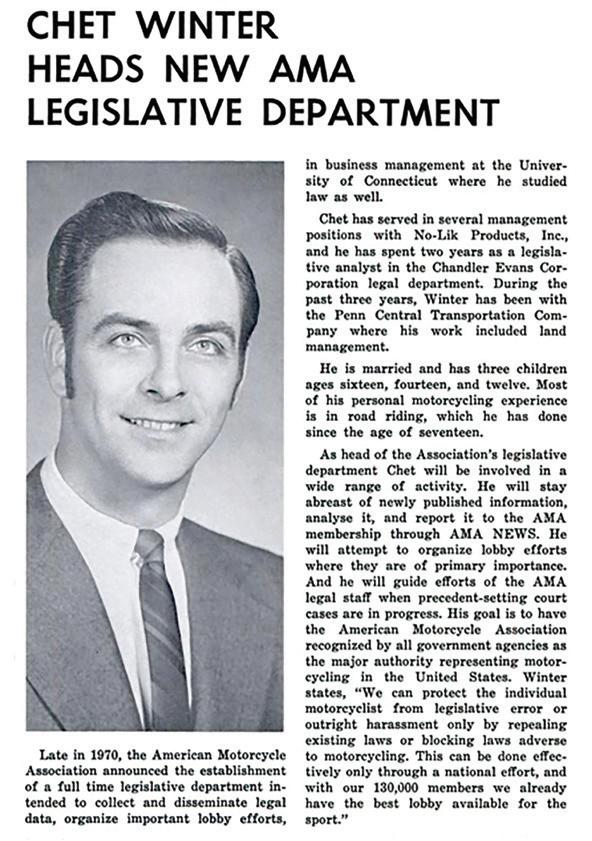
While the AMA was already fighting the good fight for its members, taking actions like beating possible motorcycle registration fee doubling in Iowa in 1949, a Legislative Department was officially established in 1971.
Chet Winter was hired to lead that department as Legislative Director, stating in the April 1971 issue of AMA News, “We can protect the individual motorcyclist from legislative error or outright harassment only by repealing existing laws or blocking laws adverse to motorcycling. This can be done effectively only through a national effort, and with our 130,000 members we already have the best lobby available for the sport.”
Within the first couple years after forming the depart-
ment, the AMA created a public service announcement campaign to increase motorist awareness of motorcyclists on the road, resulting in approximately 100 million views. The department also initiated a highway use study to use the results to combat public road closures in the future; took on its first major land management project, which led to the established of the Turkey Bay Off Road Vehicle (ORV) Recreation Area on the Kentucky-Tennessee border; and fought to exclude motorcycles from federal no-fault legislation, to list just a few successes.
AMA FIGHTS ATTEMPTS TO ELIMINATE ORV USE ON PUBLIC LANDS
In 1977, a Council on Environmental Quality draft of a possible Executive Order from then-President Jimmy Carter that was leaked to the AMA, resulted in what AMA News called “one of the most intense political action campaigns in the history of organized motorcycling.”
According to Rob Rasor, the associate director of the AMA Legislative Department at the time, “the CEQ version [of the Executive Order] would have forced land use agency heads to close any land area if ORV-related environmental questions were raised, regardless of whether those questions had any basis in fact.”
When the AMA got wind of the draft, they reacted quickly, sending an alert mailing out to every AMA member warning them of potential land closures. Within
a few days, 80,000 letters and telegrams flooded the offices of officials in D.C., resulting in that language being dropped shortly after the AMA learned of the plan.
Ultimately, the Executive Order later issued by Carter did seem to reflect the protests of the AMA and its members. The new wording required that action taken must allow for public comment, and according to Rasor, “The AMA’s Washington attorneys advise that this [new language] should preclude land closure in reaction to false charges or frivolous lawsuits.”
Despite this significant win, the AMA Legislative De-
partment continued to review legal implications of the new order and vowed to investigate any closures that occurred in the future. And AMA Executive Director Barrie Best, after thanking members for their overwhelming support, reminded them, “You can bet we’re going to keep a close eye on the CEQ.”
Stay tuned in the coming months as we continue to highlight some of the AMA’s best historic rights wins over the past 100 years. And don’t forget that you can make a difference! Sign up for action alerts from the AMA at AmericanMotorcyclist.com/action-center/
up to speed Racing ROUNDUP
Rock Solid
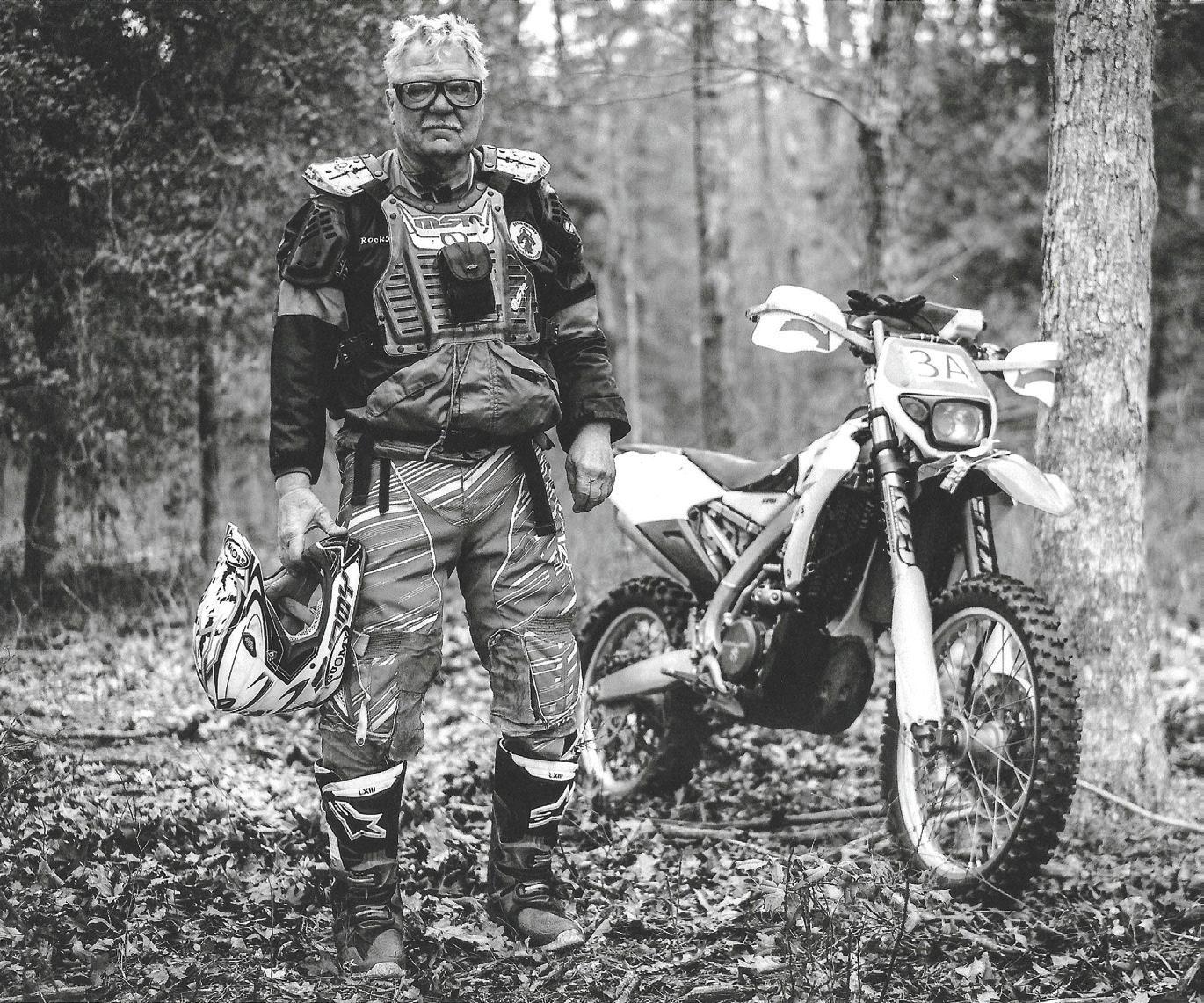
77-year-old Rocco Spano has solidified himself as an integral part of the New Jersey enduro community
BY KEATON MAISANO
Over the years, certain names have become synonymous with motorcycling: Carmichael, Coombs, DeCoster and Davidson to name a few.
For a pocket of riders in New Jersey, another name has become a staple of the riding lifestyle many there enjoy: Rocky.
Rocco “Rocky” Spano, although not an AMA Motorcycle Hall of Famer, has certainly left an indelible mark on those in and around the AMA-chartered Ocean County Competition Riders (OCCR) — a New Jersey enduro club belonging to the East Coast Enduro Association (ECEA). The 77-year-old has been a member of the club for four decades, and despite increased age and health problems, he remains a selfless, knowledgeable presence.
“I’m in the ECEA Hall of Fame,” he says with a smile, “which had nothing to do with my riding ability; it’s just that everybody knows who I am! I try to engage people, and am really more of a diplomat, because I try to bring people into the sport and show them how to do things the right way.”
Given Spano’s many years of experience and countless interactions with others, OCCR club member Mike Kuriawa believes Spano’s impact is hard to measure.
“How many people has this guy impacted? How many people has this guy spoken with about small things and just helped in some way?” Kuriawa wondered. “He’s not a well-known racer. He’s not a wellknown anything, but the reality is that he’s somebody that’s entrenched in something that’s kinda a niche sport and he’s the type of guy that shines when it comes to welcoming people and being accommodating. One of the biggest things is, he basically wants everybody to have a good time.”
Spano started riding off-road motorcycles around 20 years of
age, and his racing career began years later in his mid-30s. Racing in approximately 400 enduros over the years, and helping put on many others, Spano has had a life filled with off-road riding.
“If you ask me about a particular enduro, I can’t remember except that I had fun,” Spano said. “The main reason I go out — I’ve ridden all the trails — is to take the guys out. And they have so much fun and it makes you feel good at the end of the day.”
Spano has become the unofficial patriarch of the OCCR, and one way he showcases his welcoming nature is at the club’s weekly Sunday rides.
“I’ve taken out as many as 25 guys for a ride because I’ve laid out 17 enduros in our forest,” Spano said. “I know where to go and everybody knows who I am.”
It was at one of these weekly Sunday rides that current club member David Bye first met Spano, who welcomed Bye with open arms.
“Being that I had such a nice experience, I continued to go when I could every Sunday,” Bye said. “He was always there no matter what, barring weather or health issues, of course.”
Even with serious health issues, Spano has remained focused on others. After a heart problem prevented Spano from leading a
Upper left: Rocco Spano pictured a few years back after the Sandy Lane Enduro. Photo by Elon Paz. Above: Spano (left) standing next to Mike Kuriawa during a Sunday ride in 2022.
Sunday ride, he unexpectedly showed up in his truck and helped guide the group of riders to the entrances of different trailheads so they could still have a good time.
“That’s the type of thing that he would do, because nobody else would do it,” Kuriawa said. “Not only is it incredible that he would do it for the guys, but that he could be in his car and lead people around so they could still enjoy a day of riding without him because he was down and out and couldn’t be on a bike himself.”
Spano’s relentless efforts to make sure OCCR members and nonmembers feel included and have a good time is simply explained by his love for motorcycling.
“This is my passion. Everybody has a passion, and I enjoy riding so much,” Spano said. “It’s all about having fun. I tell everybody, ‘You don’t go out there to see how fast you can go. It’s about just going out there to enjoy yourself.’ I like including people. It’s the way I am.”
Spano’s passion bled into legislative work around 2009, when the state of New Jersey allowed riders to only use plow lines — patches of forest plowed out for controlled burns — in the state forest.
New Jersey’s Department of Environmental Protection approached Spano and others with the task of mapping trails, with the end goal of getting an updated menu of the trails.
“I did 115 miles of the 160 that we did,” Spano said. “Just last year, they gave us a menu of trails in my state forest, so I’m responsible for that.”
While Spano is still focused on riding when he can and being a positive influence on other riders and motorcycling, the idea of him one day not being a part of the group is hard to imagine.
“Rocky is a little bit of the glue,” Kuriawa said. “It’s hard to comprehend him not being around because he’s been around for so long. But I’m sure that when he’s gone, or if he stops doing it at some point, he’s going to be sorely missed.”
BY JACK EMERSON PHOTOS: THOMAS FAMILY ARCHIVES
t’s impossible to tell the history of off-road riding in Kentucky without mentioning the contributions of the late Jesse Thomas.
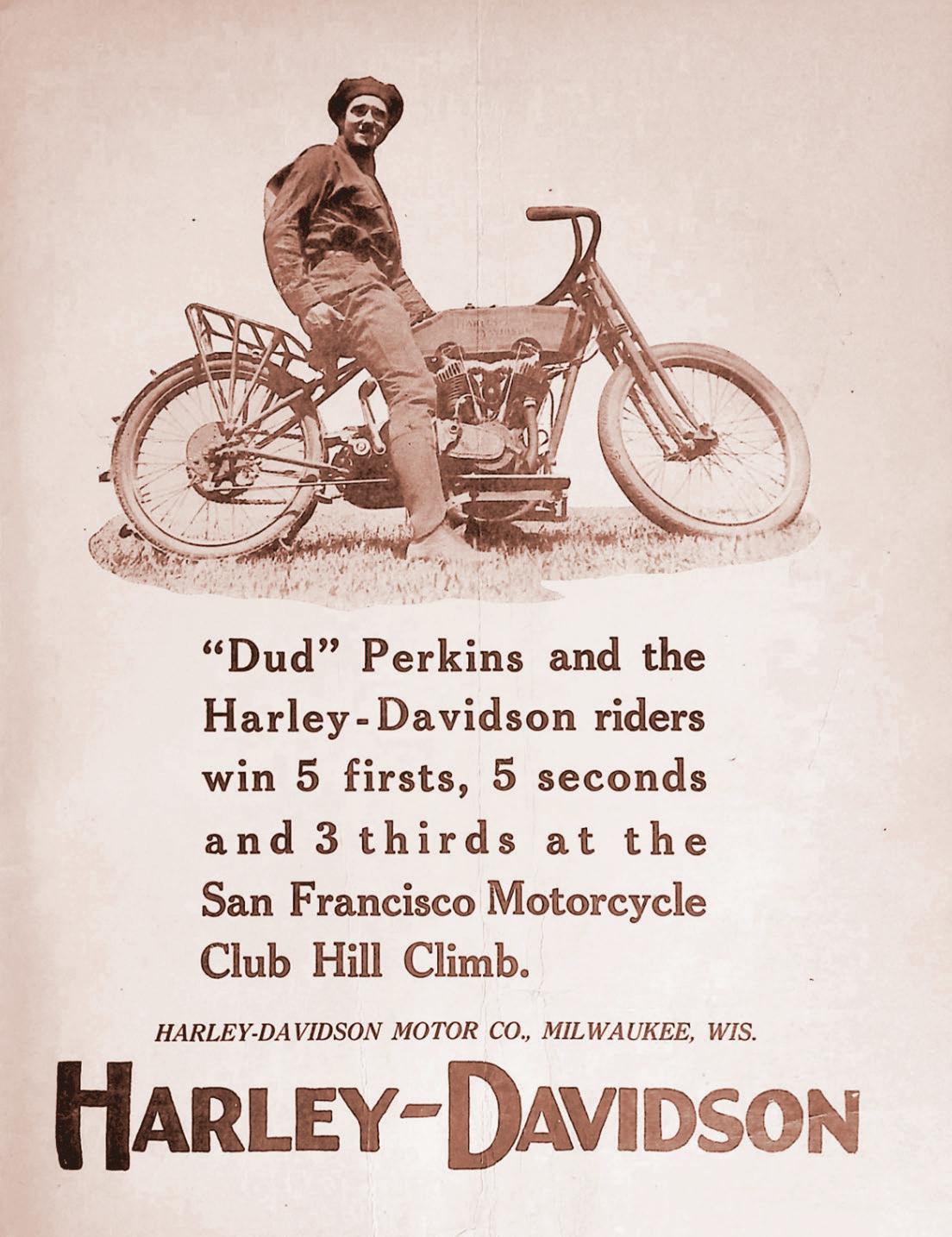
IThomas, a lifelong motorcyclist and off-road riding advocate, helped forge the modern off-road riding scene in his home state, while also serving several years as a member on the AMA Congress. Thomas’ lasting devotion to expanding the sport, and his years of service to the AMA, made it clear that he was worthy of earning the 2023 AMA Dud Perkins
DUD PERKINS LIFETIME ACHIEVEMENT AWARD
JESSE THOMAS
Lifetime Achievement Award — which acknowledges the highest level of service to the AMA in any area of activity.
“He did a lot of really good work and impacted a lot of families,” Thomas’ grandson, Chase, said. “It’s really cool that [the AMA] went back and honored him because he did a lot for riding in this area.”
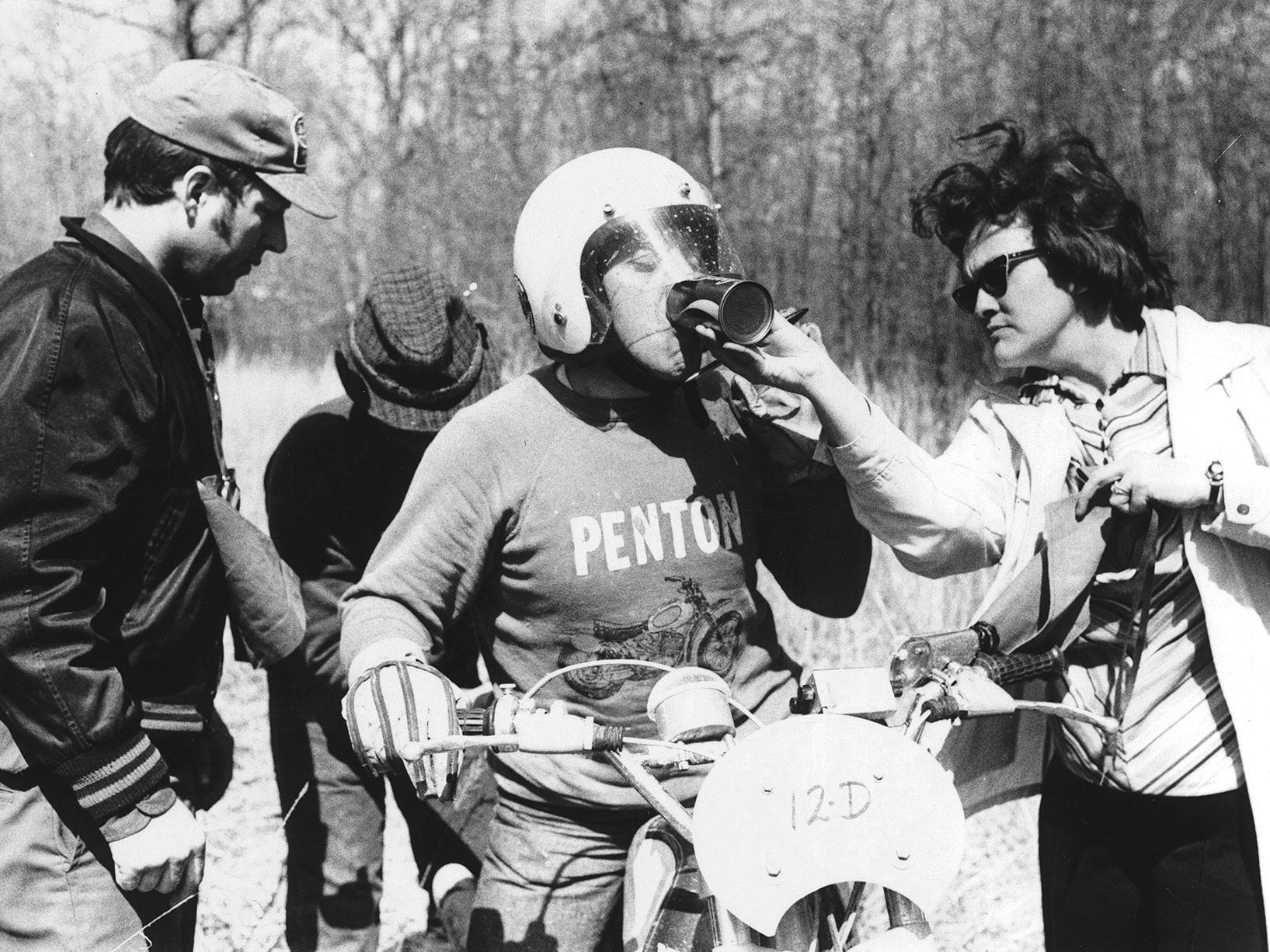
Thomas’ love affair with riding began at a young age, and soon became a lifestyle for the young Kentuckian, who began racing motorcycles during the late 1950s. From there, Thomas developed a network of riders through his local motorcycle club — which he affectionately named Good Guys Motorcycle Club (GGMC).
As the GGMC evolved, so did Thomas, who established the West Kentucky Trail Riders AMA club in 1970. As the founder of that club, Thomas was a revolutionary force for off-road racing in the area, promoting numerous AMA National Enduros and Hare Scrambles.
“My dad was always an innovator,” Thomas’ son, Bob, said. “He just did things that were kind of ahead of his time — maybe not in the rest of the country, but in this area. He was kind of ahead of the curve on a lot of things.”
In the wake of his success with West Kentucky Trail Riders, Thomas founded the KT Riders club in 1987 and was able to take off-road recreational riding in the Mid-South to new heights with the club.
As the founding member of the KT Riders, Thomas established the LBL 200 — which remains one of the longest-running AMA Dual Sport series events in the country. However, it took significant leg work
to make that event become a reality, with Thomas using his extensive networking skills to preserve the right to ride in the Land Between the Lakes National Recreation Area in Kentucky.
“He had a way of getting access to things that no one else could get access to,” Chase Thomas said. “LBL is a highly restricted, walking and bicycle only [area] with no motor vehicles, and somehow, he talked them into ‘Hey, yeah, you can put 250 dirt bikes on that trail for a whole weekend.’ A lot of the stuff he did, he was able to put his politician hat on well enough to get things moving that ordinarily wouldn’t have happened.”
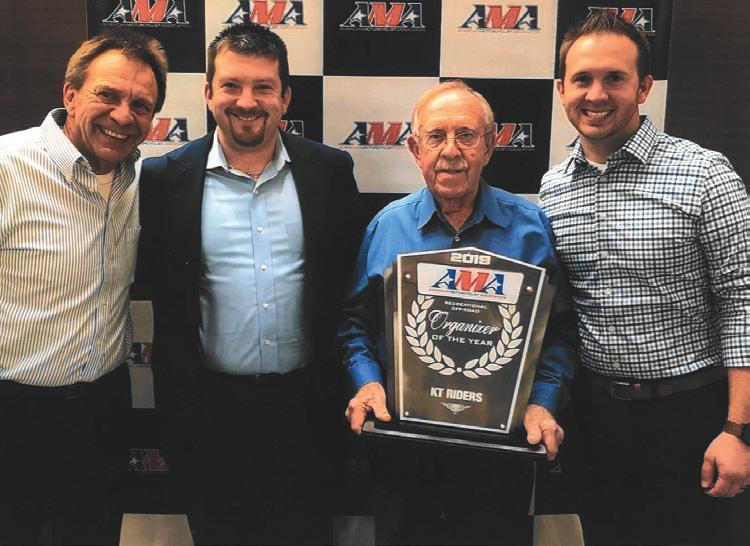
For his efforts as a promoter, and his impact regarding the growth of offroad riding in Kentucky through the LBL 200, Thomas received the AMA Recreational Riding Organizer of the Year Award in 2019.
Thomas was also a fixture in his community, owning a successful motorcycle dealership in Cadiz, Ky., and serving on the boards for
THOMAS
the Trigg County Hospital and Trigg County Recreation Center. Thomas was also a member of the Tennessee Valley Advisory Board and the U.S. Forest Service Advisory Board.
Although Thomas passed away on Sept. 29, 2023, at the age of 88, his legacy is preserved through his son, Bob, and grandsons, Chase and Dustin, who will continue to operate the annual LBL 200 under the name Thomas Brothers Promotions.
“It was just the untiring amount of work he put into LBL, that’s where he was put to rest. He loved it and he just loved that area,” Bob Thomas said. “It leaves big shoes for me and both my sons to fill.”
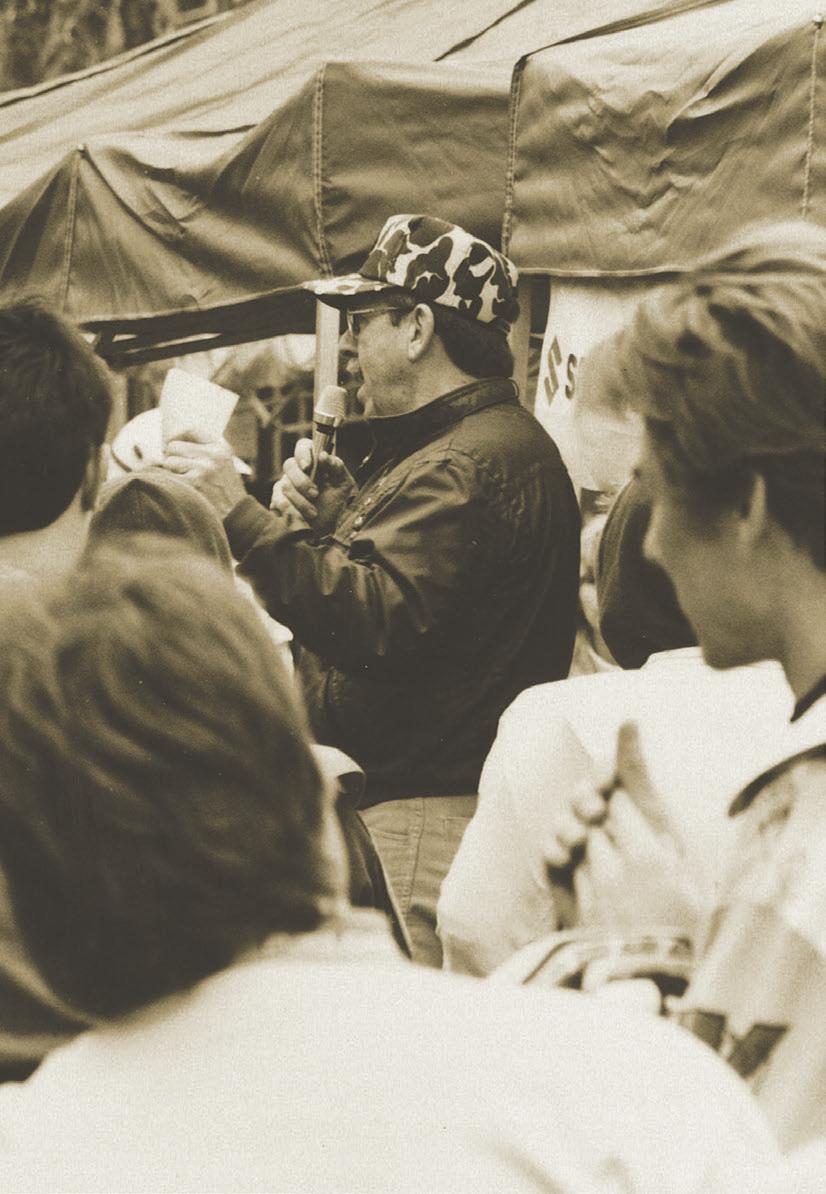
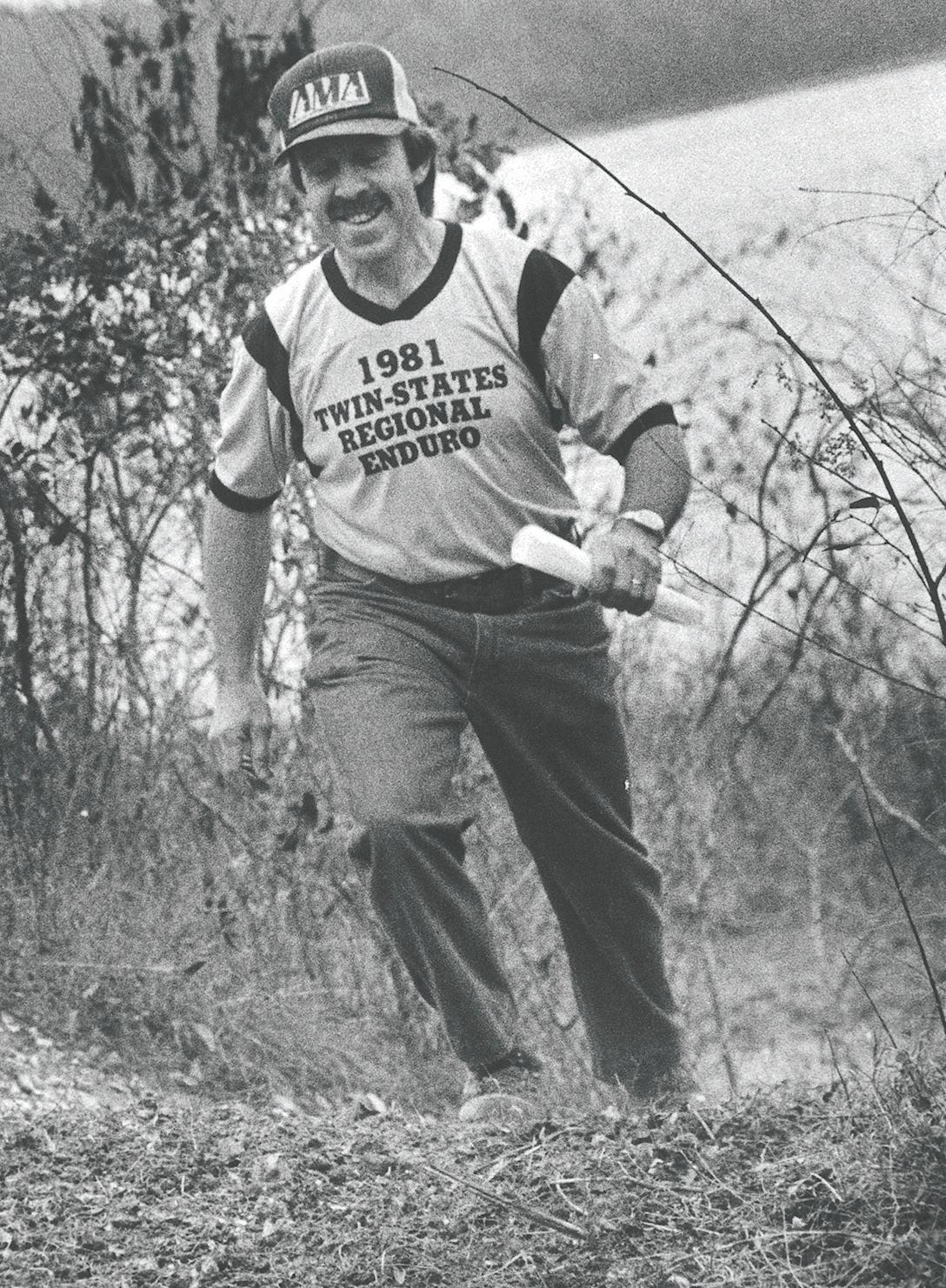
Middle photo above: The late Jesse Thomas holding the 2019 AMA Organizer of the Year award. His legacy is preserved through his son, Bobby, (far left) and grandsons Chase (far right) and Dustin (second from left).
BY JOY BURGESS PHOTOS: MARY RINELL/MJSMOTOPHOTOS
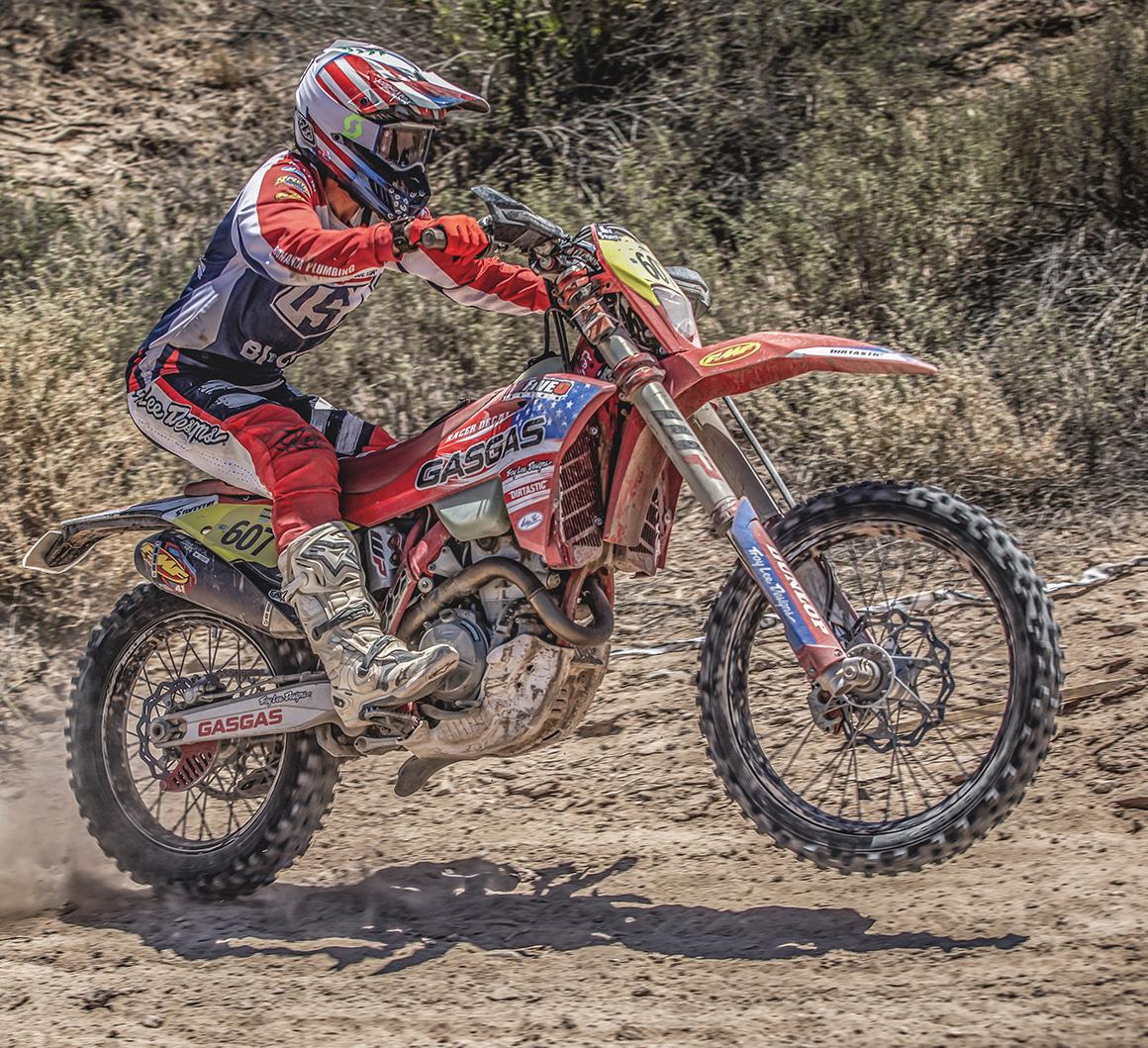
By all accounts, the 2023 FIM International Six Days Enduro (ISDE) held in San Juan, Argentina, back in November went down as arguably one of the most challenging of all time.
From
heatstroke
to crashes
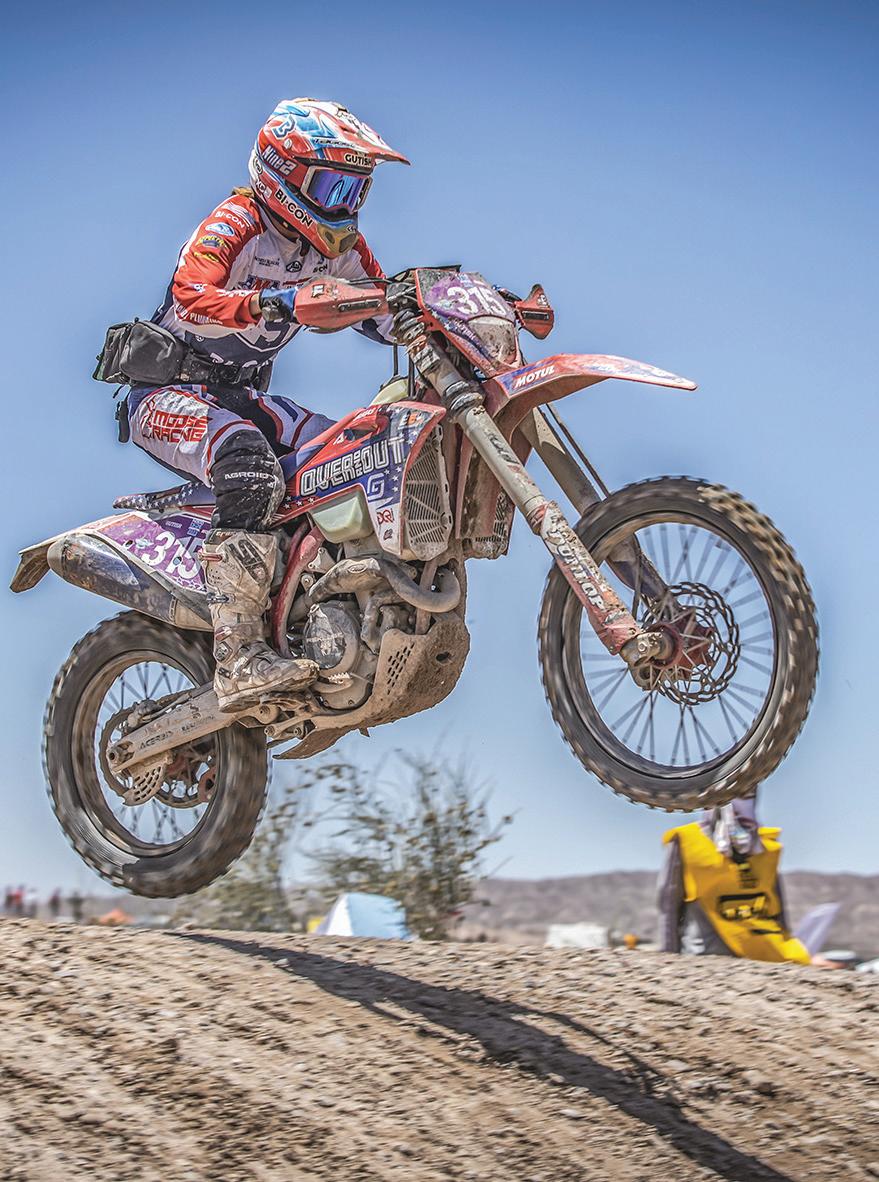
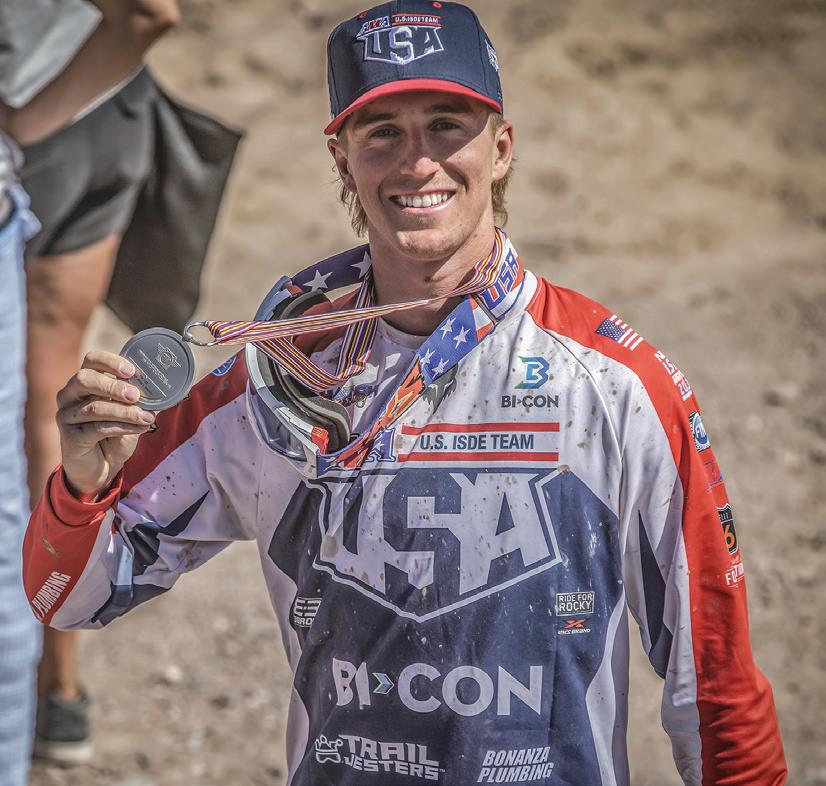
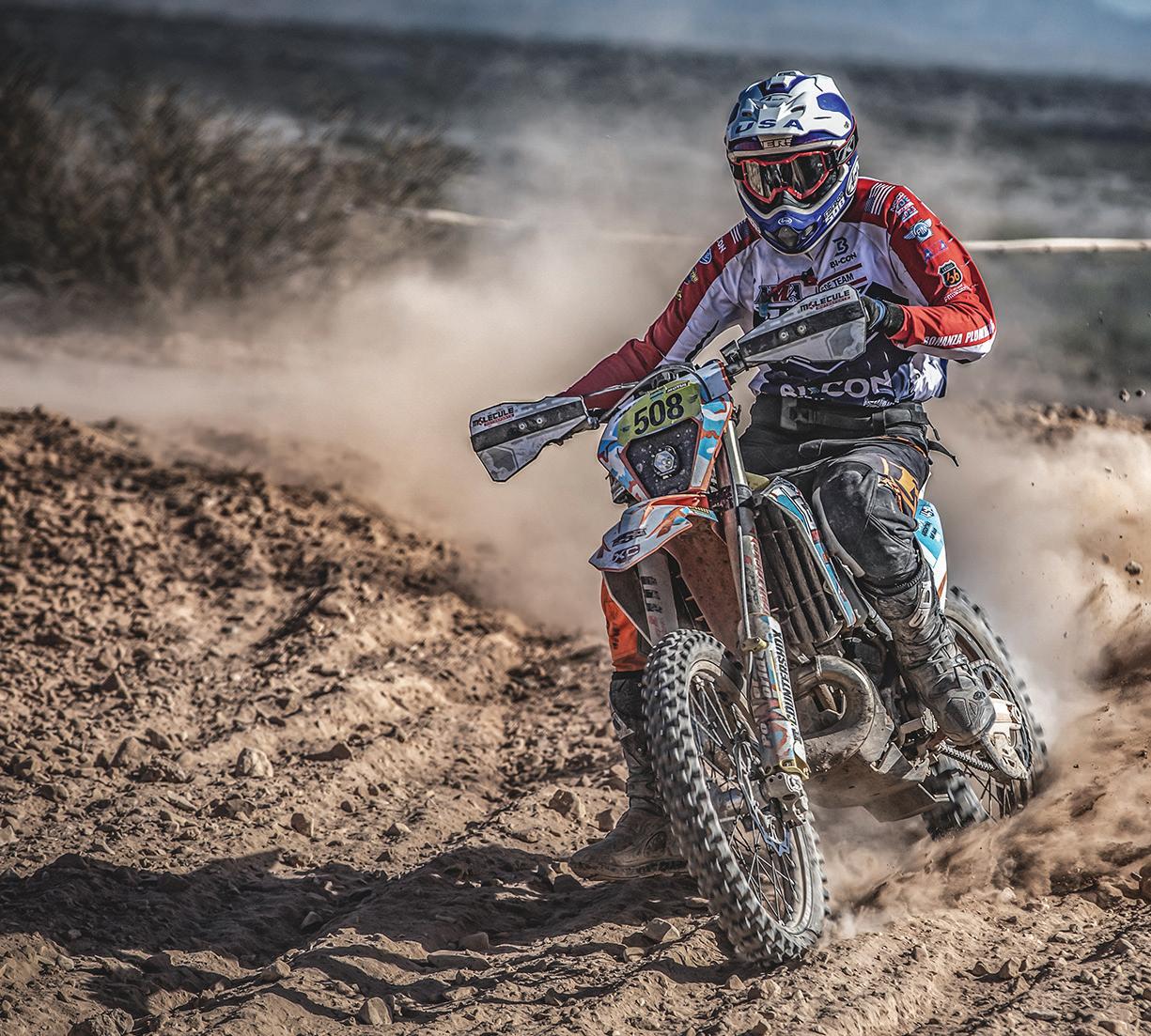
to broken bones, the U.S. ISDE teams persevered to dominate the 97th ISDE
Want some factoids? Nearly a third of the women competing on Women’s World Trophy (WWT) teams didn’t finish. The U.S. WWT team was the only women’s team that finished intact…though all three of the U.S. women riders were injured by the end of the Six Days. And seven of the 12 World Trophy teams lost riders.
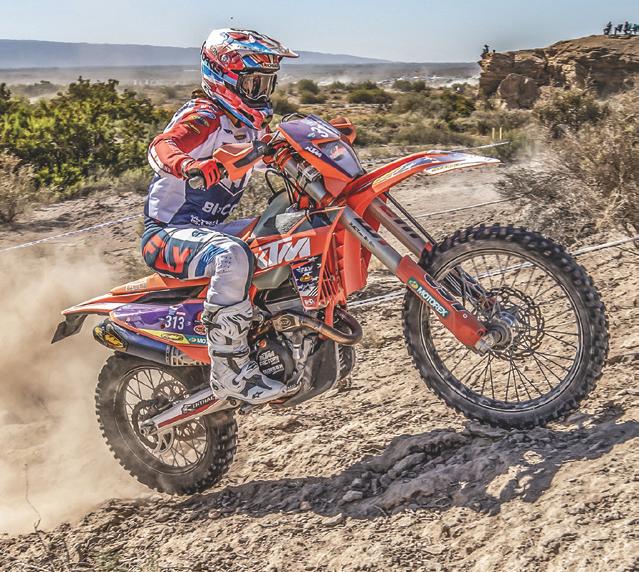
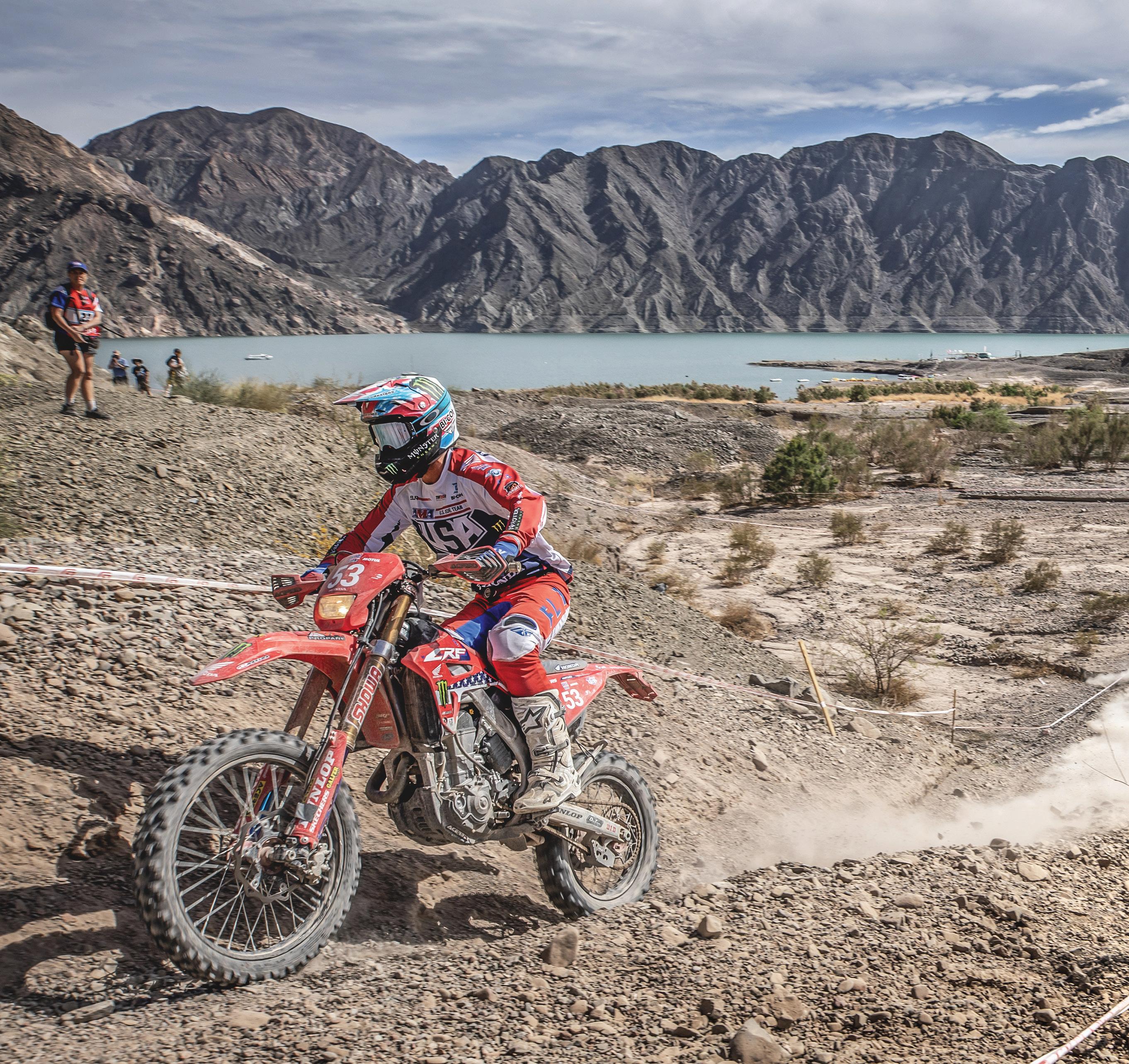
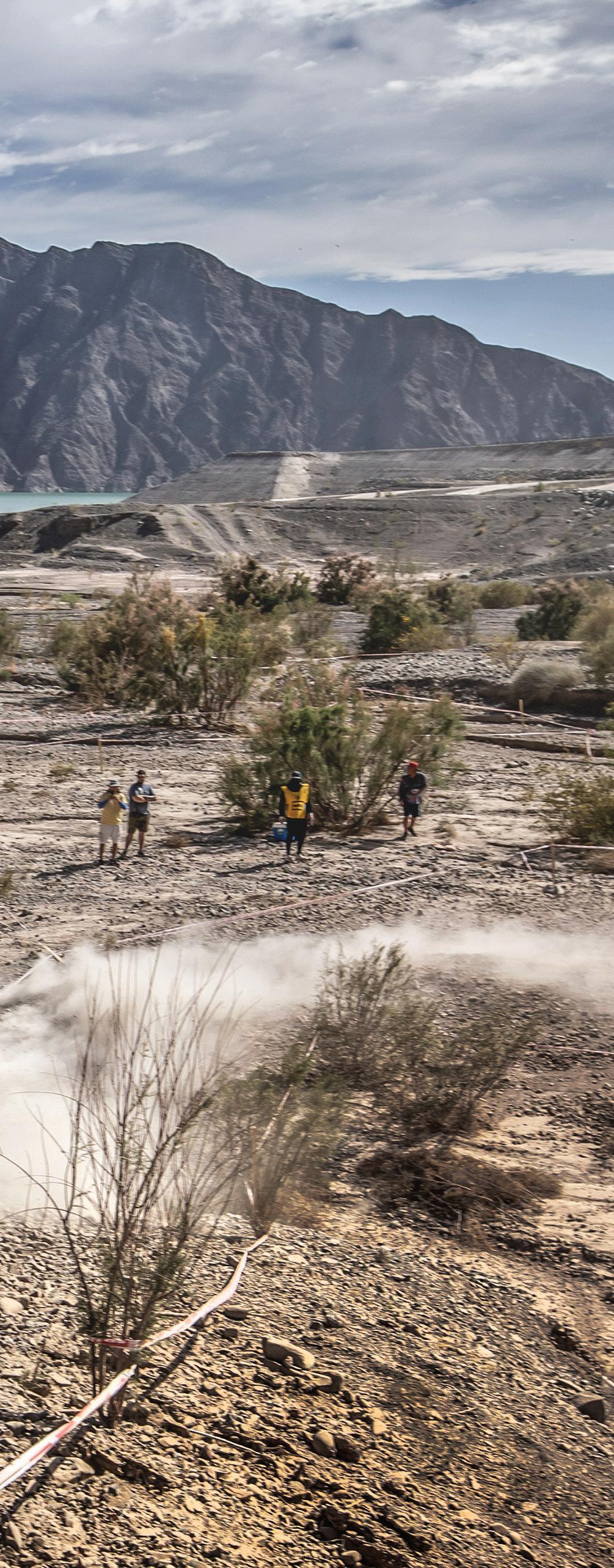
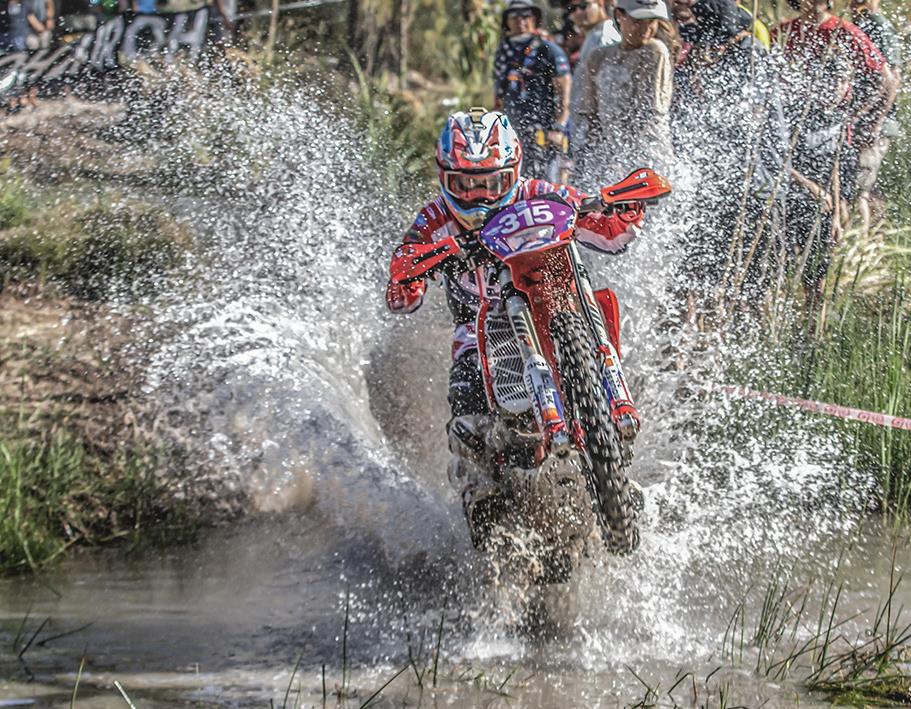
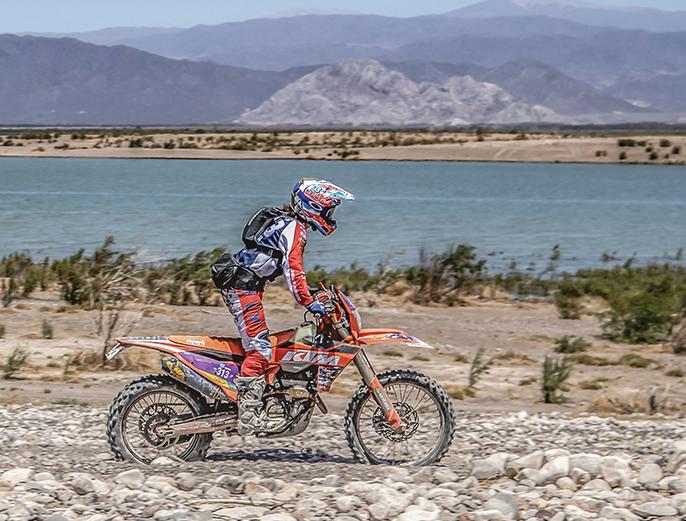
Most know how grueling ISDE competition can be, but for the uninitiated, ISDE includes six days of “tests” designed to test the limits of rider and machine. Between those tests are “transfers” that involve riding through many different types of terrain — steep hills, streams, craggy mountain trails, urban streets, forests or deserts.
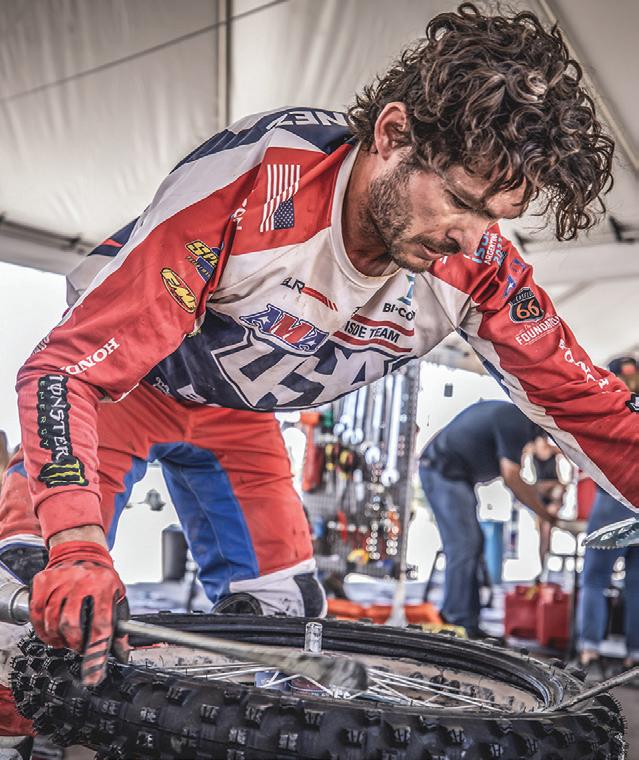
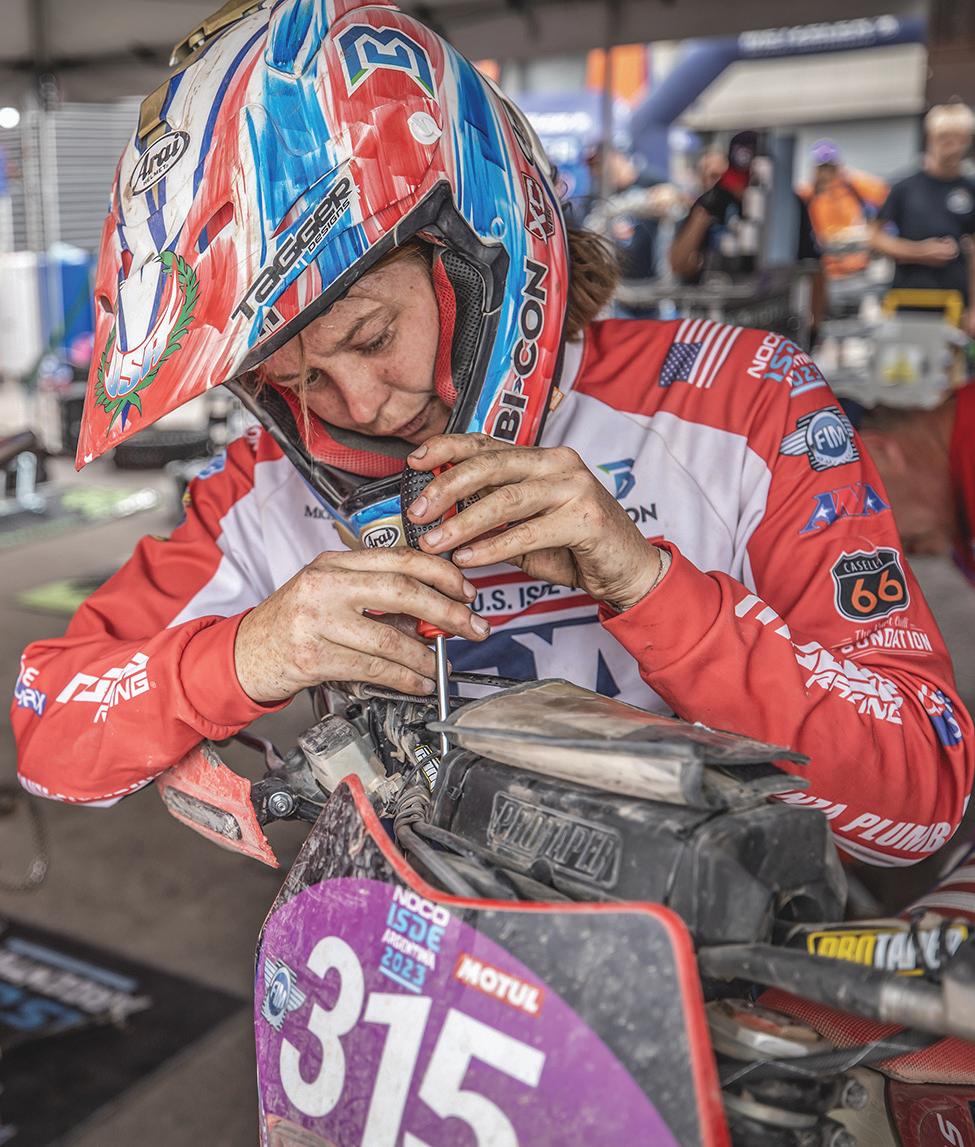
Riders spend about eight hours per day on their bikes, often riding more than 1,000 miles over the six days of competition. And beyond the tests and transfers, they must also handle the mechanical repairs on their bikes.
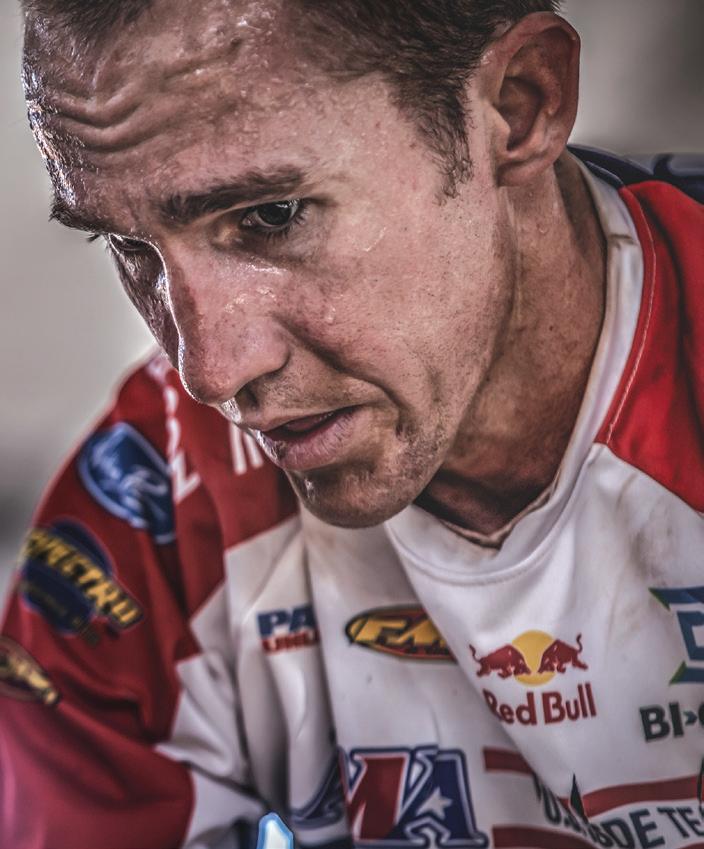
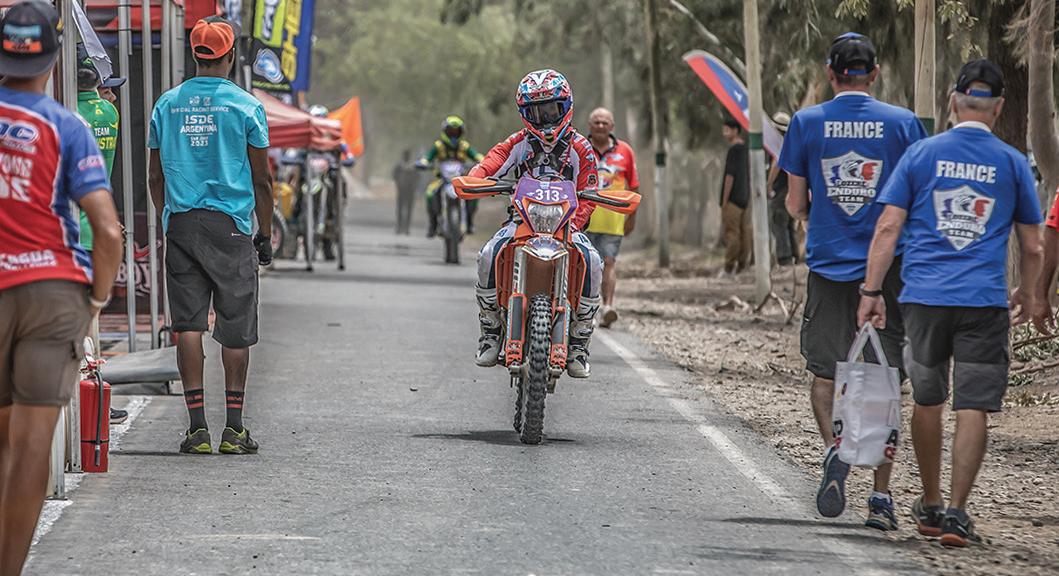
ISDE is never easy, but the scorching Argentinian sun that had temperatures topping 110 degrees on the first couple days added extra physical and mental challenges. Heatstroke quickly narrowed the field, leading to multiple withdrawals on Day 1, and local hospitals filled with overheated, dehydrated riders that night.
Glory Grit &
THE ISDE COURSE
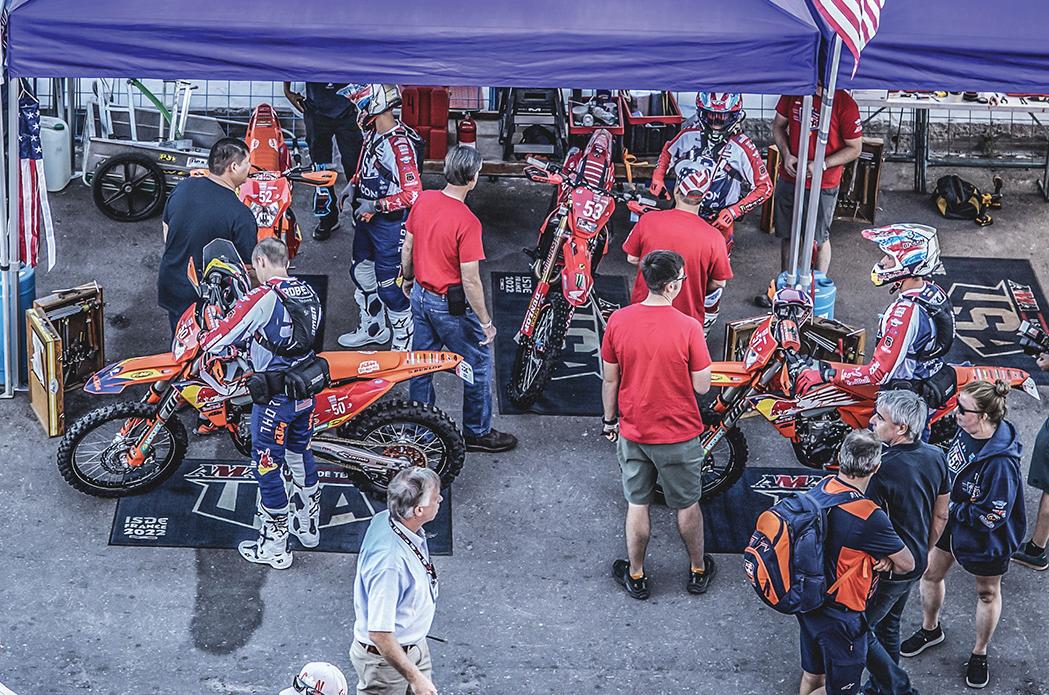
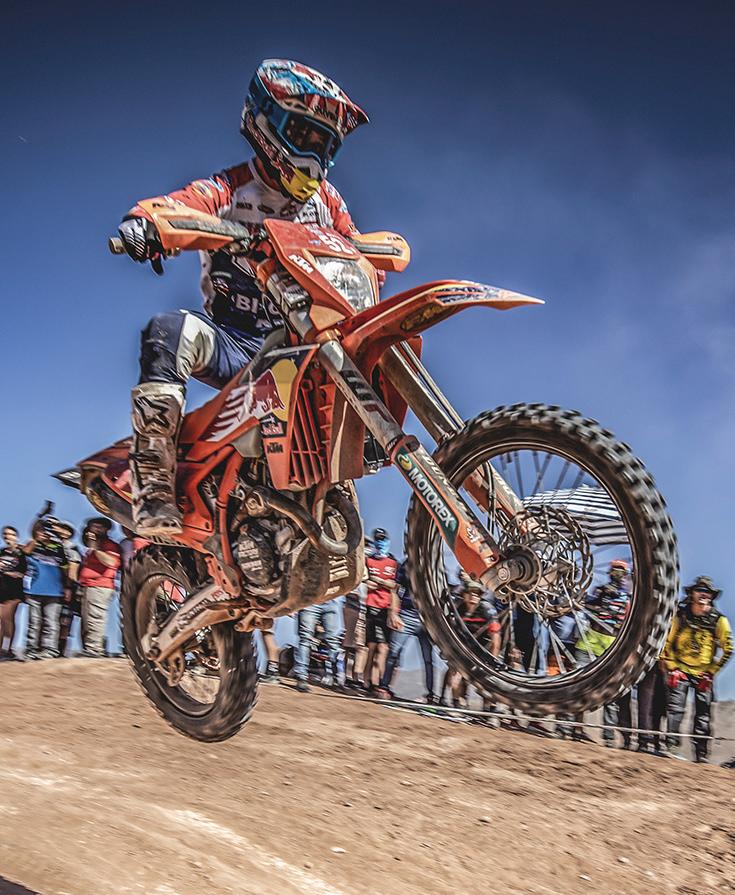
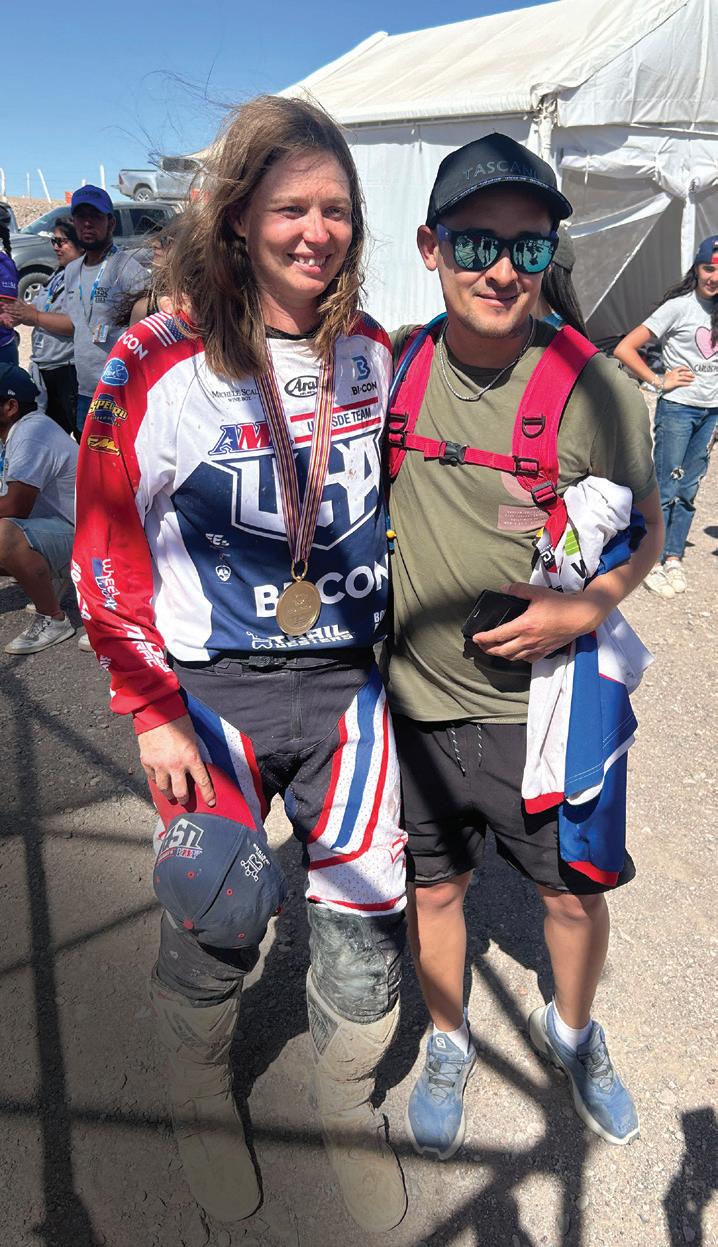
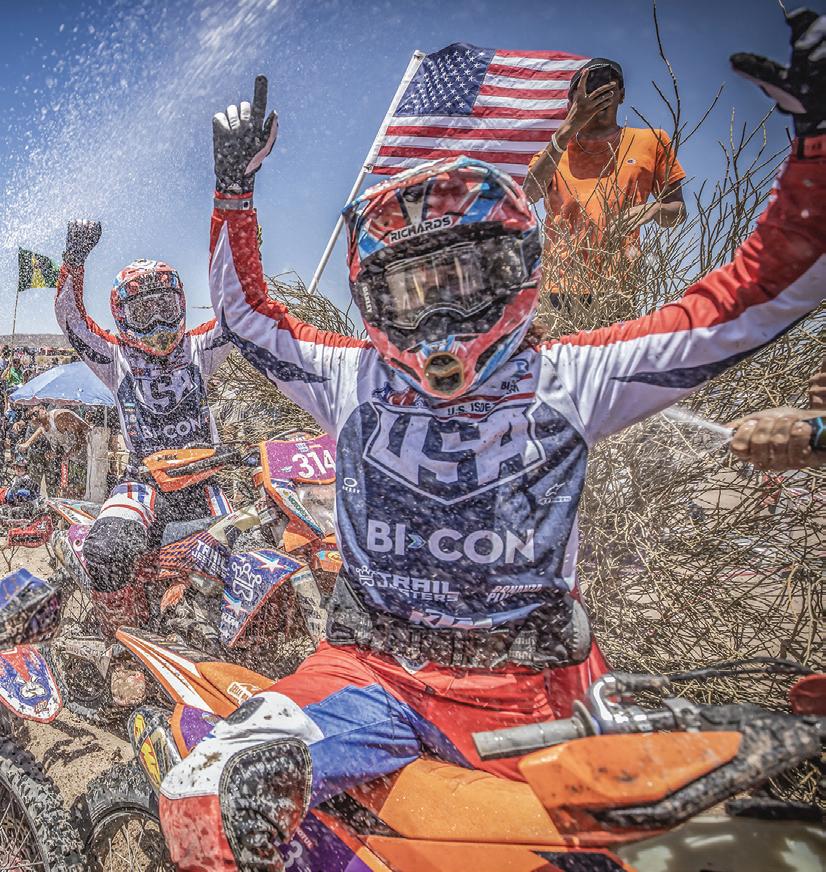
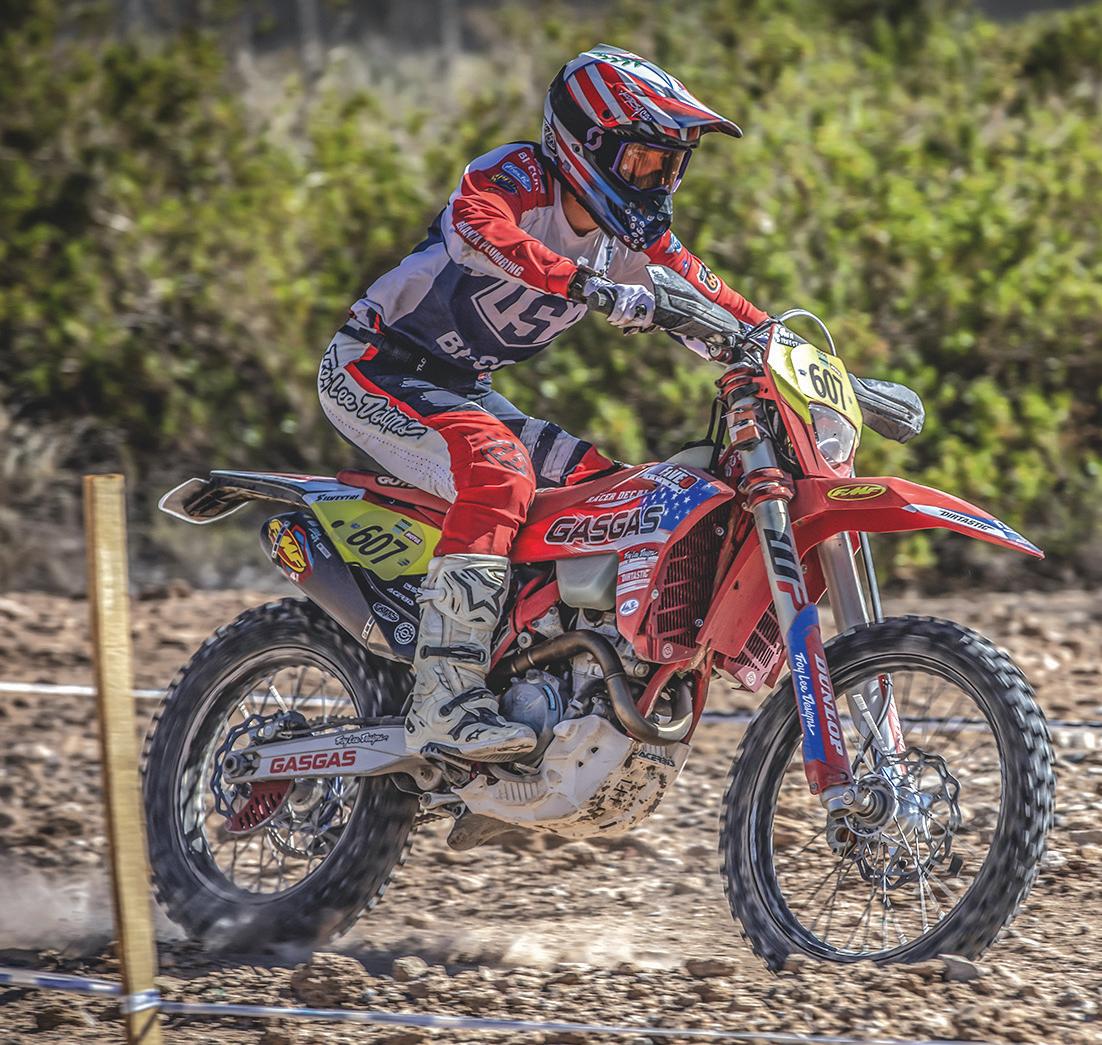
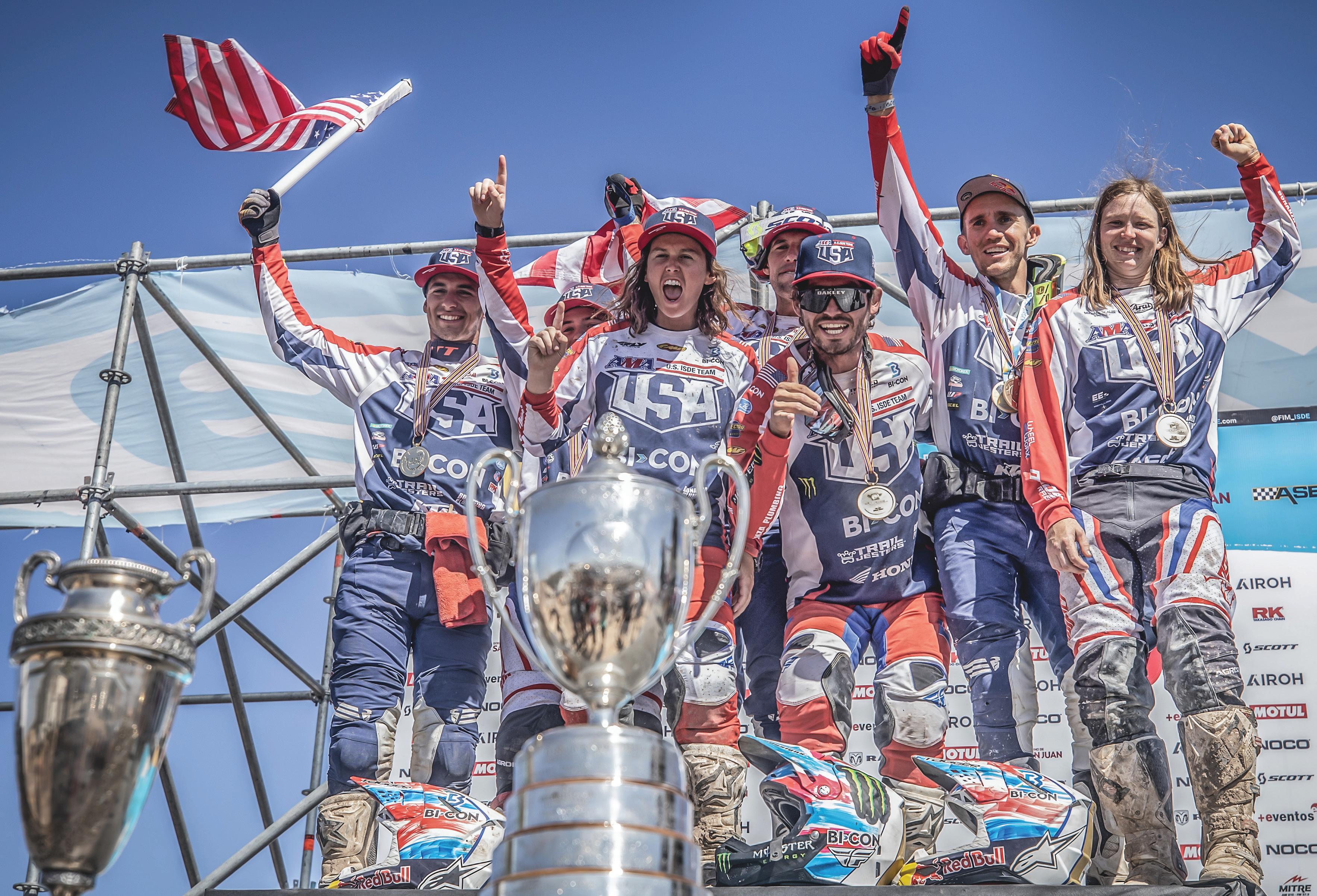
Team USA’s grit helped them achieve an amazing level of ISDE domination this year, with the World Trophy and Women’s World Trophy Teams winning gold, the Junior Trophy Team taking silver, and U.S. Club Teams Team XC Gear and GTBN taking first and second place, respectively.
The teams faced plenty of adversity and attrition on their way to victory, but that only made the triumph sweeter.
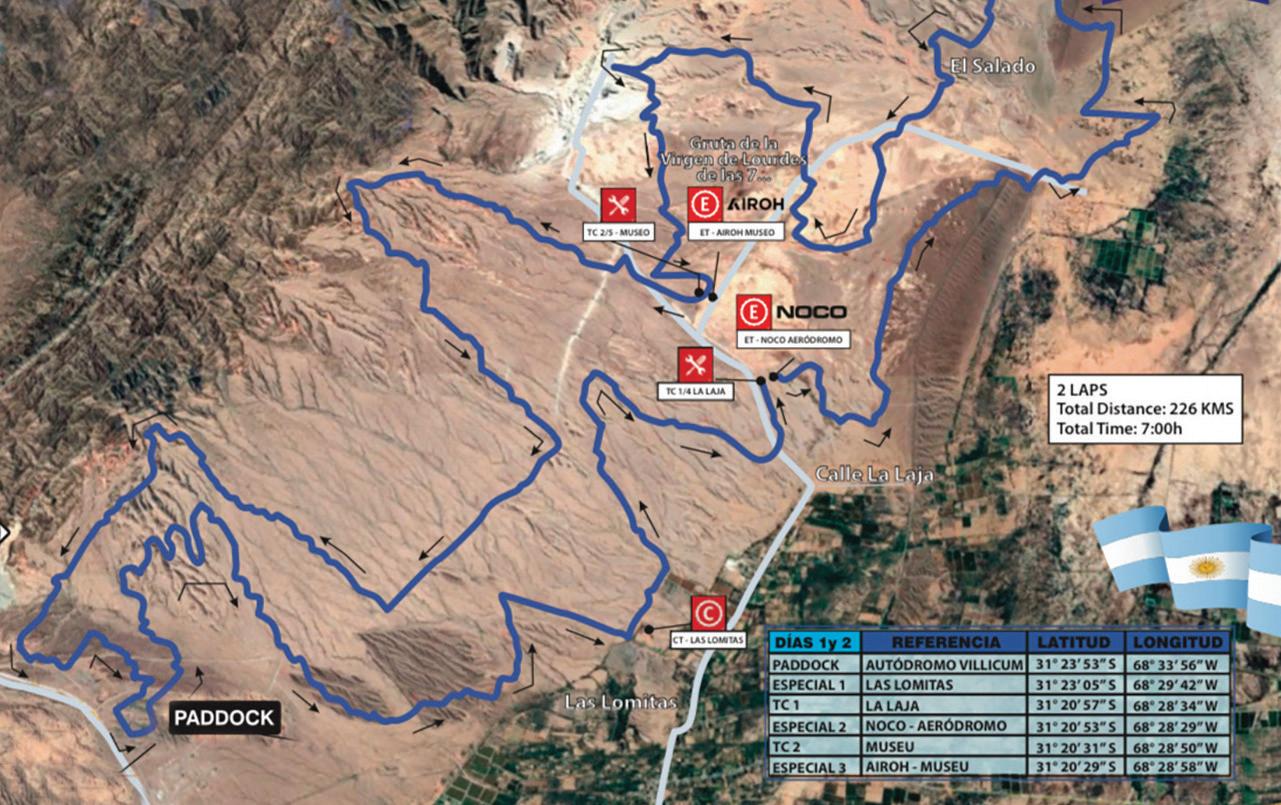
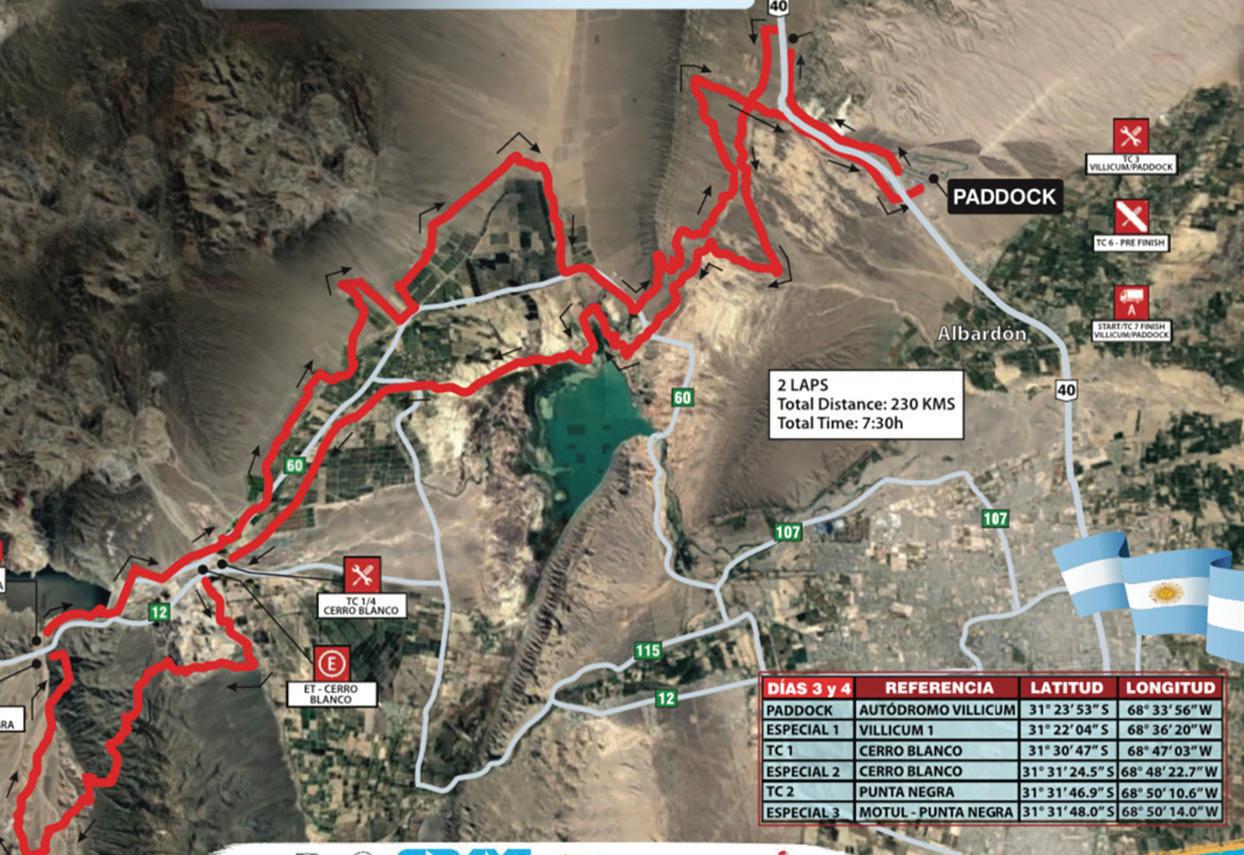
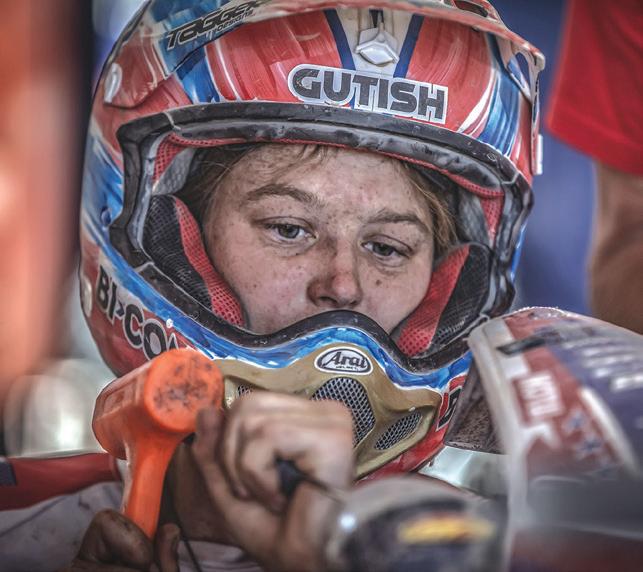
To truly understand the feats accomplished by the U.S. ISDE teams, you must first wrap your head around the ISDE course. According to U.S. Women’s Trophy Team rider — and American Motorcyclist contributor — Rachel Gutish, this year’s ISDE went with a shorter course format than previous years that had riders doing two laps a day on a smaller loop as opposed to doing one big loop.
That comes with both advantages and disadvantages. It’s easier for workers, fewer staff members are needed, riders have fewer tests to preview, and there’s less time spent riding blind trail on transfers.
On the negative side, riding the loop twice a day means that it gets much rougher with double the traffic, increasing the physicality for riders.
“There were three distinct loops,” Rachel told American Motorcyclist. “The first was used on Days 1 and 2, the second for Days 3 and 4, and the third on Day 5. Day 6 was a short transfer — mostly access roads and gravel washes — out to the track where they held the final moto.”
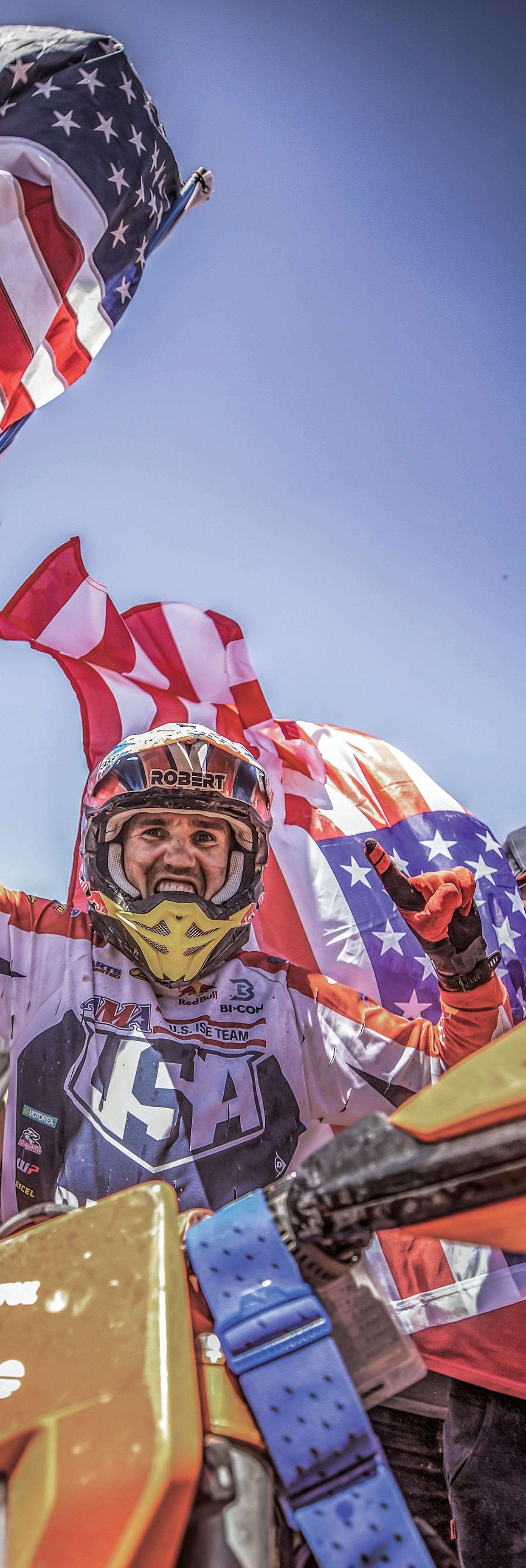
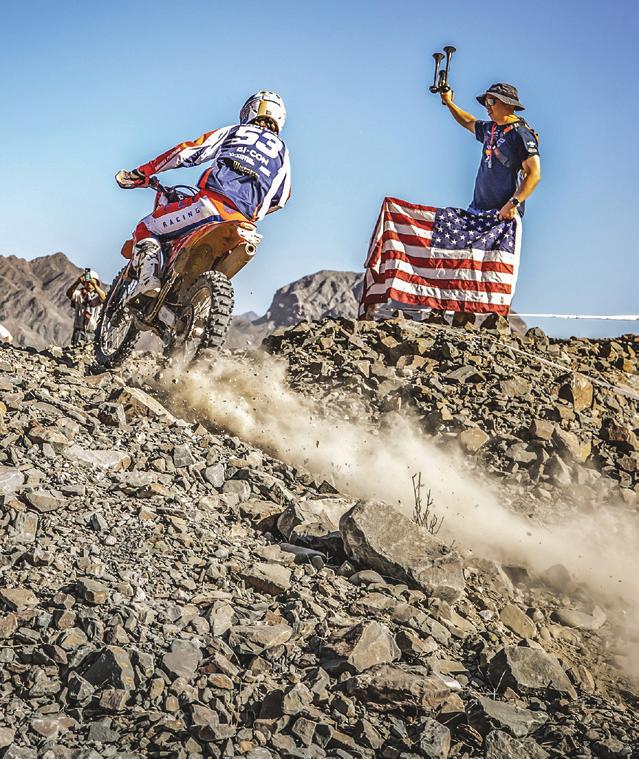
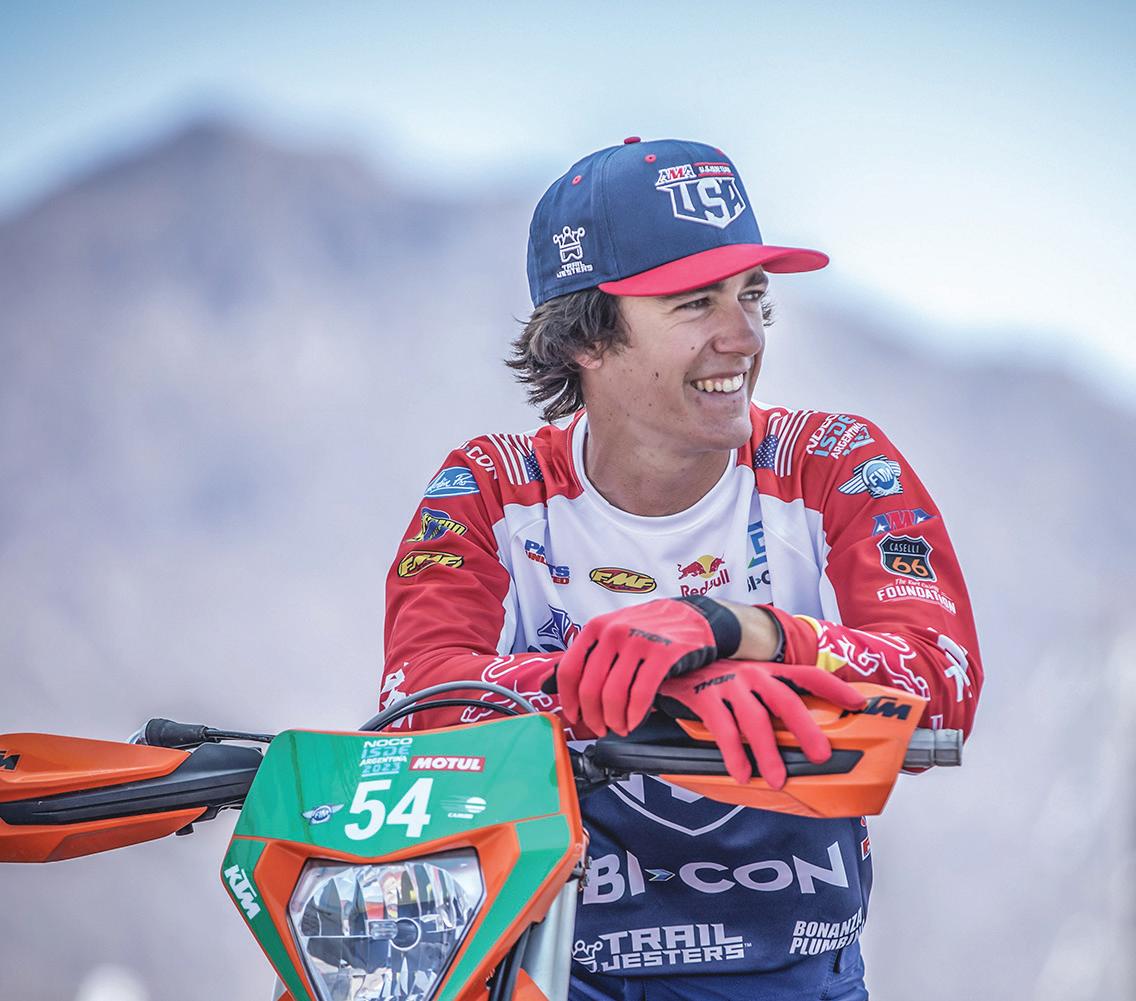
Below: U.S. Trophy Team rider Taylor Robert waves Old Glory after capturing the win for Team USA. Taylor announced his retirement from pro racing right before this year’s ISDE, and the team’s victory was an epic way to end his professional racing career.
Rachel added that Loop 1 wasn’t terribly technical, but it was rough and physically demanding with a few treacherous areas up on mountain ridges.
“While the total mileage for Day 1 wasn’t especially long for an ISDE,” she said, “at only about 140 miles, it was mostly trail, with very little asphalt or access road. That meant there were few opportunities to rest, and that, combined with excessive heat, made for such a tough first day that the promoters shortened the second day by over half an hour, and replaced two long trail sections with gravel roads.”
Loop 2 was exceptionally technical, including a 15-mile section that ran up over a mountain through rockslides, up a few rock faces with large chunks of square-edged rock everywhere, and all that was followed by another 15 miles or so of dry riverbed scattered with a few silty hills.
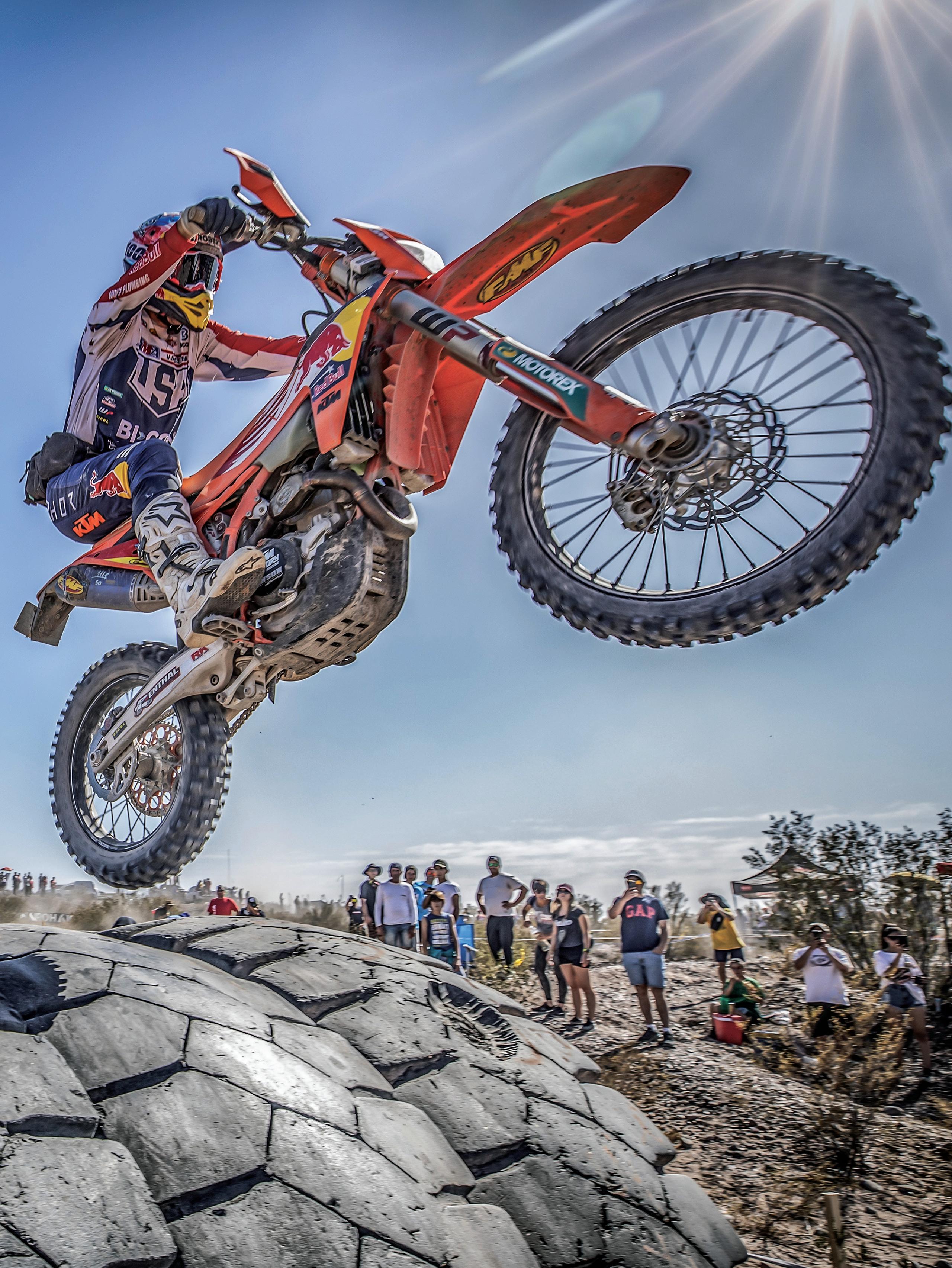
sections of fossilized coral to massive, wide-open hillclimbs to silty hills to riverbeds to canyons. Test 9 even had EnduroCross-style obstacles and tire jumps thrown in for good measure.
U.S. WORLD TROPHY TEAM
The FIM World Trophy Team category hails as the most
makes the 2023 win in Argentina only the third for the American team, which was made up of Taylor Robert, Dante Oliveira, Johnny Girroir and Cole Martinez. And that means Robert has competed on the team for all three of the U.S. wins.
“Back in 2010, I competed for the first time at ISDE on the U.S. Junior Trophy Team,” Taylor told American Motorcyclist. “[Hall of Famer] Kurt Caselli helped select me for the team that year, and it honestly changed my life. I fell in love with this style of racing, and it lit a fire inside me that made me want to be an ISDE World Champion. I even changed my riding style after studying the dominant French riders that year.”
The final loop, only run on Day 5, Rachel called “a fairly easy day,” though it did have a technical section where water exits a dam, with slippery rocks and a short waterfall to ride up.
Over the Six Days, there were nine tests — ridden multiple times for a total of 30 scores — with the goal being to go as fast as you can, to get the best times. The tests took place in a variety of conditions, from deep gravel washes to flat plains to huge
prestigious in Six Days competition, and while many Americans have competed successfully at the ISDE (which was named the International Six Days Trial, or ISDT, until 1980) including AMA Motorcycle Hall of Famers like Malcolm Smith, Jeff Fredette, Kurt Caselli and others — the U.S. World Trophy Team never won until 2016 in Spain.
The second win for the U.S. World Trophy Team came in 2019, which
“Over the next couple years,” he continued, “I learned more about the event and trained a lot with Kurt. He always told me his goal was to get Team USA to the point where we could not only win, but be a threat every year.”
“The last time I ever spoke with Kurt was at the 2013 ISDE in Sardinia after the race. We talked about what it would take to get our team to the next level. Unfortunately, Kurt passed away a few weeks later, but I told myself I would make him proud.”
Just three years later in 2016, Kurt’s dream became a reality, and Taylor — along with Kailub Russell, Thad DuVall and Layne Michael helped make it happen.
“I fell in love with this style of racing, and it lit a fire inside me that made me want to be an ISDE World Champion. I even changed my riding style after studying the dominant French riders that year.” TAYLOR ROBERT
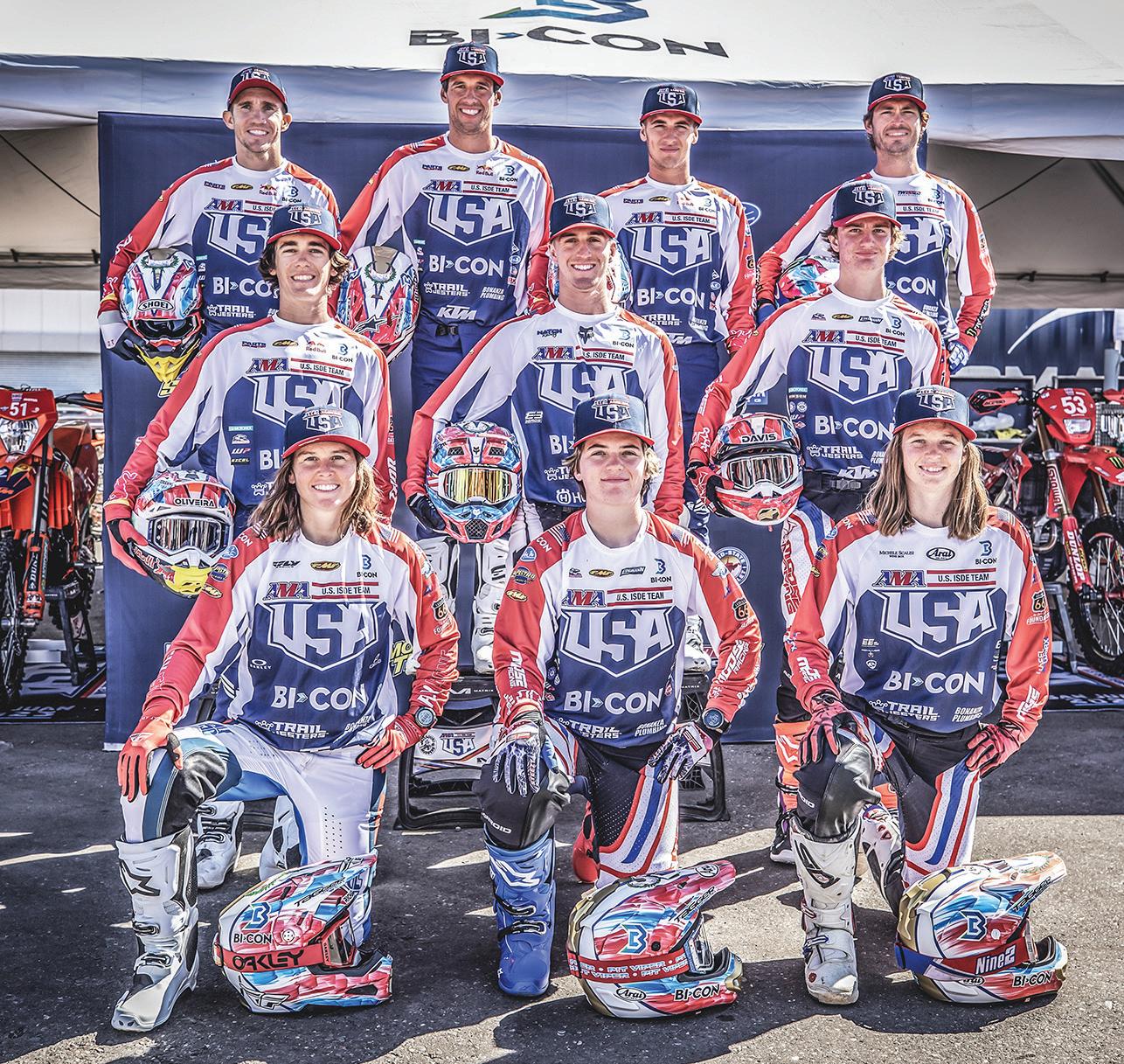
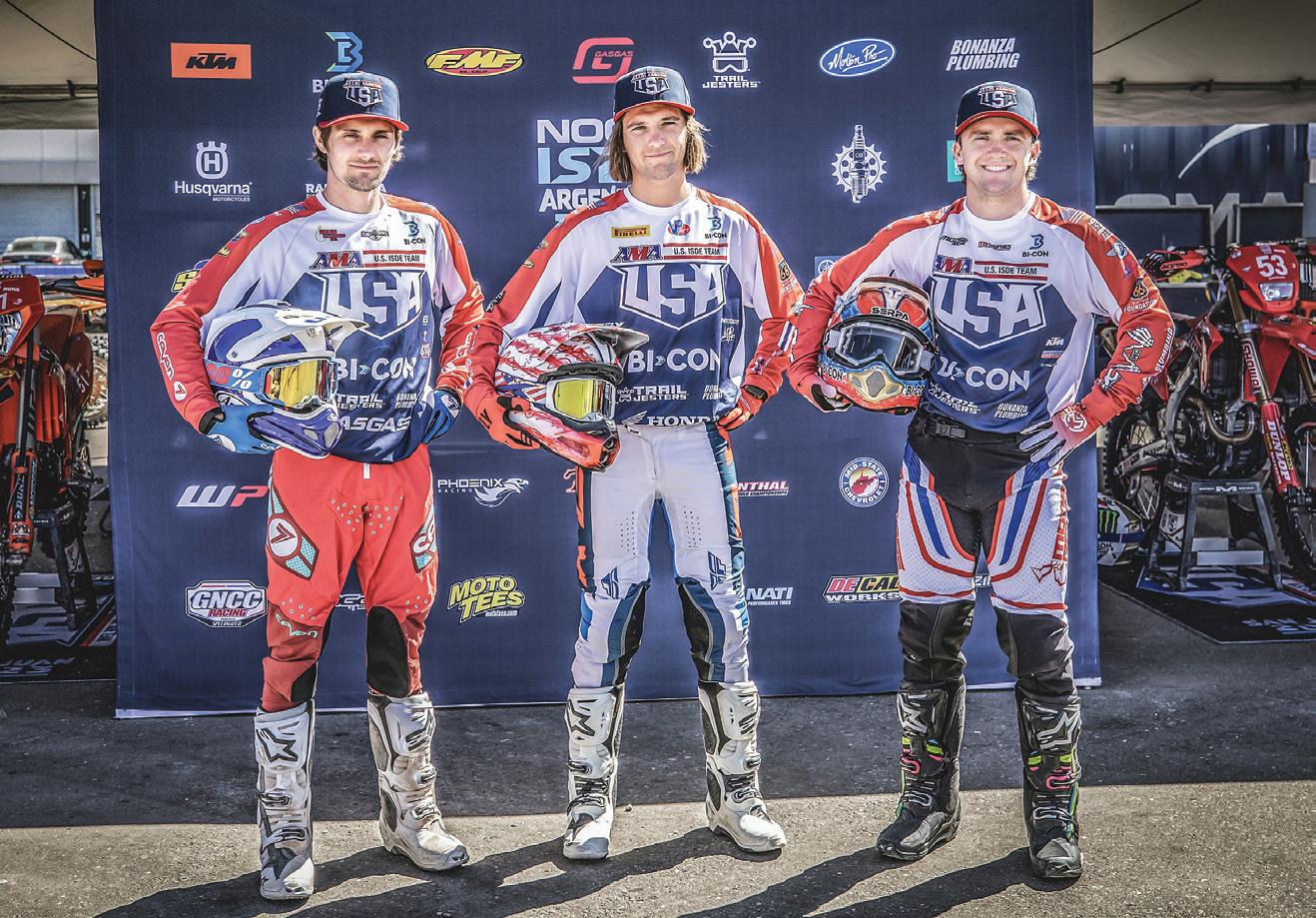
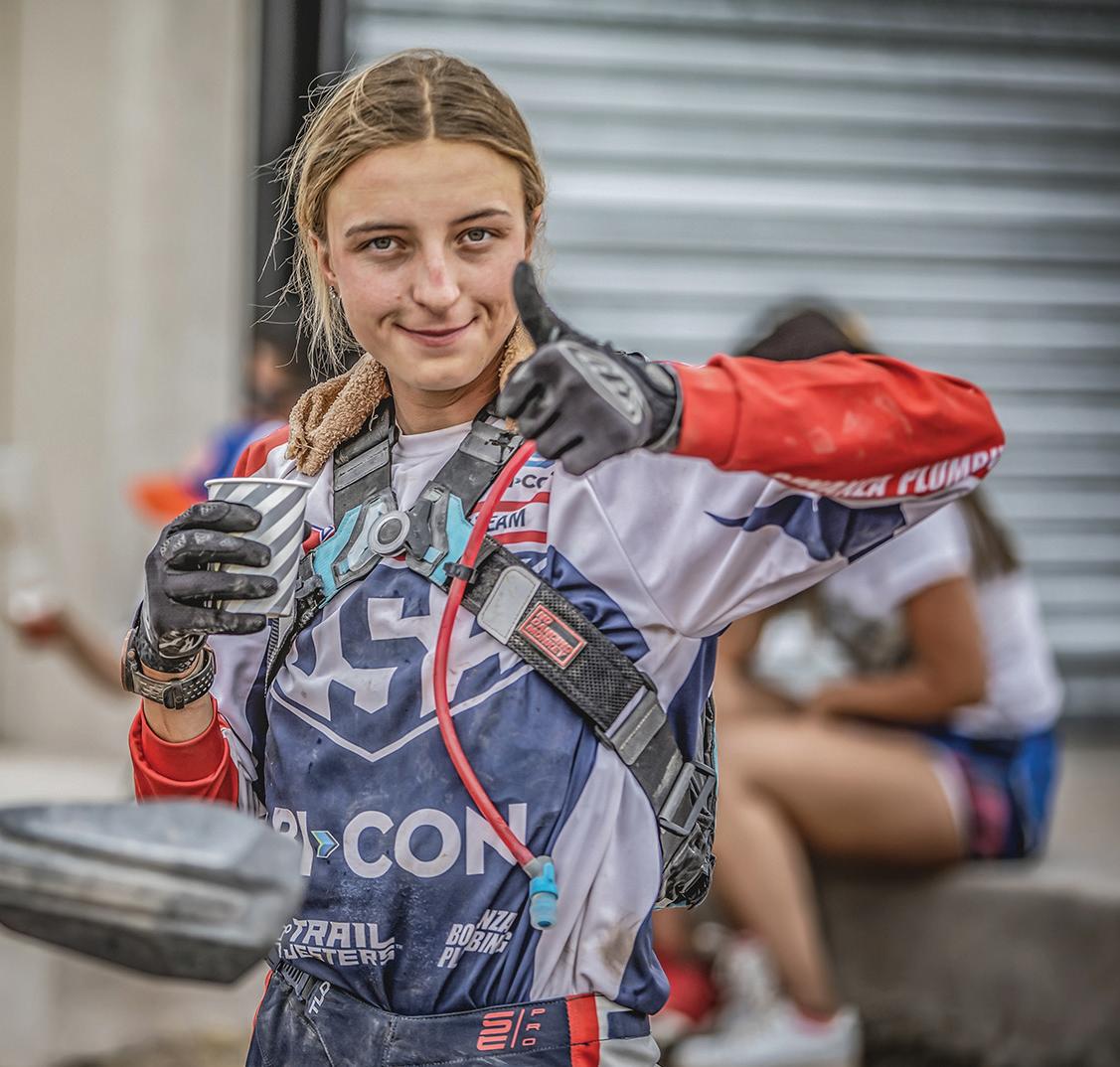
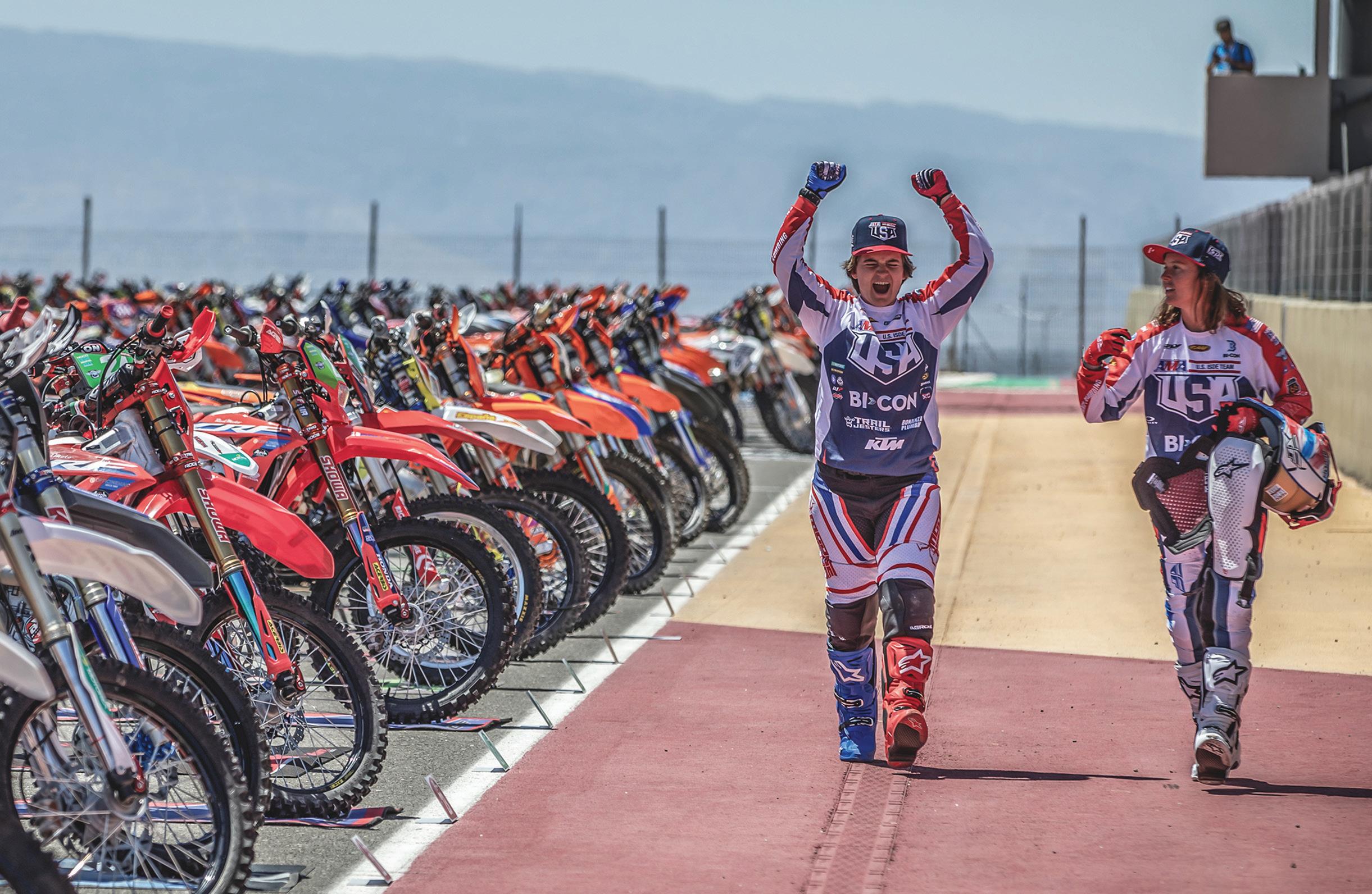
The three U.S. Trophy teams. Back row: The U.S Trophy Team, left to right, Taylor Robert, Johnny Girroir, Dante Oliveira and Cole Martinez. Middle row: The U.S. Junior Trophy Team, left to right, Mateo Oliveira, Kai Aiello and Grant Davis. Front row: The U.S. Women’s Trophy Team, left to right Brandy Richards, Korie Steede and Rachel Gutish.
“We won our first ever ISDE Championship in 91 years of the event,” Taylor remembered. “I wish Kurt [would have been there] to experience that with us, but at the very least I’m proud to continue his legacy. Now 10 years after Kurt’s passing, we are three-time champions, and I know he is looking down on us with that contagious smile of his.”
Of course, the third U.S. World Trophy Team win wasn’t any easier than the rest.
After Day 1, Dante Oliveira told the AMA’s photographer Mary Rinell, “It was a long day out there with brutal transfers. The tests were good, but the transfers were demanding, and it’s so rocky in the transfers that you can’t sit down or rest or anything. It’s hot and dusty, so you’ve gotta hydrate and just try to keep it on two wheels.”
The extreme heat of the race was one of the biggest obstacles for the four-man team, but luckily they were all pretty used to it.
“The first two days were brutally hot,” Taylor said, “but we had not only the fastest team, but the most fit, as well. And all the guys on our team are used to riding and racing in extreme heat. The only difference is that back in the States none of us do races that require us to be on the bikes for eight hours a day. At the end of those first two days, after changing tires and putting the bikes in impound for the night, I remember we couldn’t get out of our gear fast enough!”
Being fast, fit and used to racing in extreme heat paid off, as the team had a good lead on Day 1, extending it on Day 2 as other riders dropped quickly in the tough conditions. Dante noted how great it was that the team was able to put in the work early in the week, giving them a nice gap, “so we [didn’t] have to stress those final two days.”
By the end of Day 6, the U.S. Trophy Team finished approximately 17 minutes ahead of Team France to take the win.
“I knew going into the race that we had an amazing team,” Taylor said. “This win was incredible because it was the best team camaraderie we have ever had.”
But in some ways the win was bittersweet. Taylor announced his
The blue loop (above) was ridden by the riders twice per day on Days 1 and 2 of ISDE, while the red loop (below) was ridden on Days 3 and 4. Riding these loops multiple times led to far rougher courses, increasing the physicality for riders.
JAMES MCGEE: THE RIDING DOC
BY JOY BURGESS
Riding in extreme conditions eight hours a day for six days straight involves physical punishment most people can’t even imagine. Exhaustion is a constant, and then there are the injuries, from dehydration and lacerations to sprains and fractures, and more. This is why Dr. James McGee is an essential — and beloved — part of the U.S. ISDE Team.
Doc McGee, who’s currently an Emergency Room physician by trade, takes his vacation from working in the ER to go to ISDE. The AMA pays for his airfare and hotel, but everything else is on him. “This is my 14th year,” he told us, “and I’ll keep doing this as long as they need me.”
While being an ER doctor ensures Doc McGee is well prepared to deal with all sorts of injuries, his riding experience plays a huge part in his effectiveness.
“I used to race Pro-Am motocross in the 1980s and ’90s,” McGee said. “I went to med school in the mid ’90s, and then started riding and racing again. I met the Coombs family and became the doctor for the AMA Amateur National Motocross Championship at Loretta Lynn’s in 2006. In 2009, someone mentioned that the ISDE team could use a doctor, so I went to Portugal in 2009.”
So he knows the sport inside and out. But it’s his actual bike-riding mobility during Six Days that makes him truly unique and vital to the competition. “I have a backpack with a bunch of equipment,” he said, “and my navigator and I ride out to meet riders at the next checkpoints, waiting on them to arrive.”
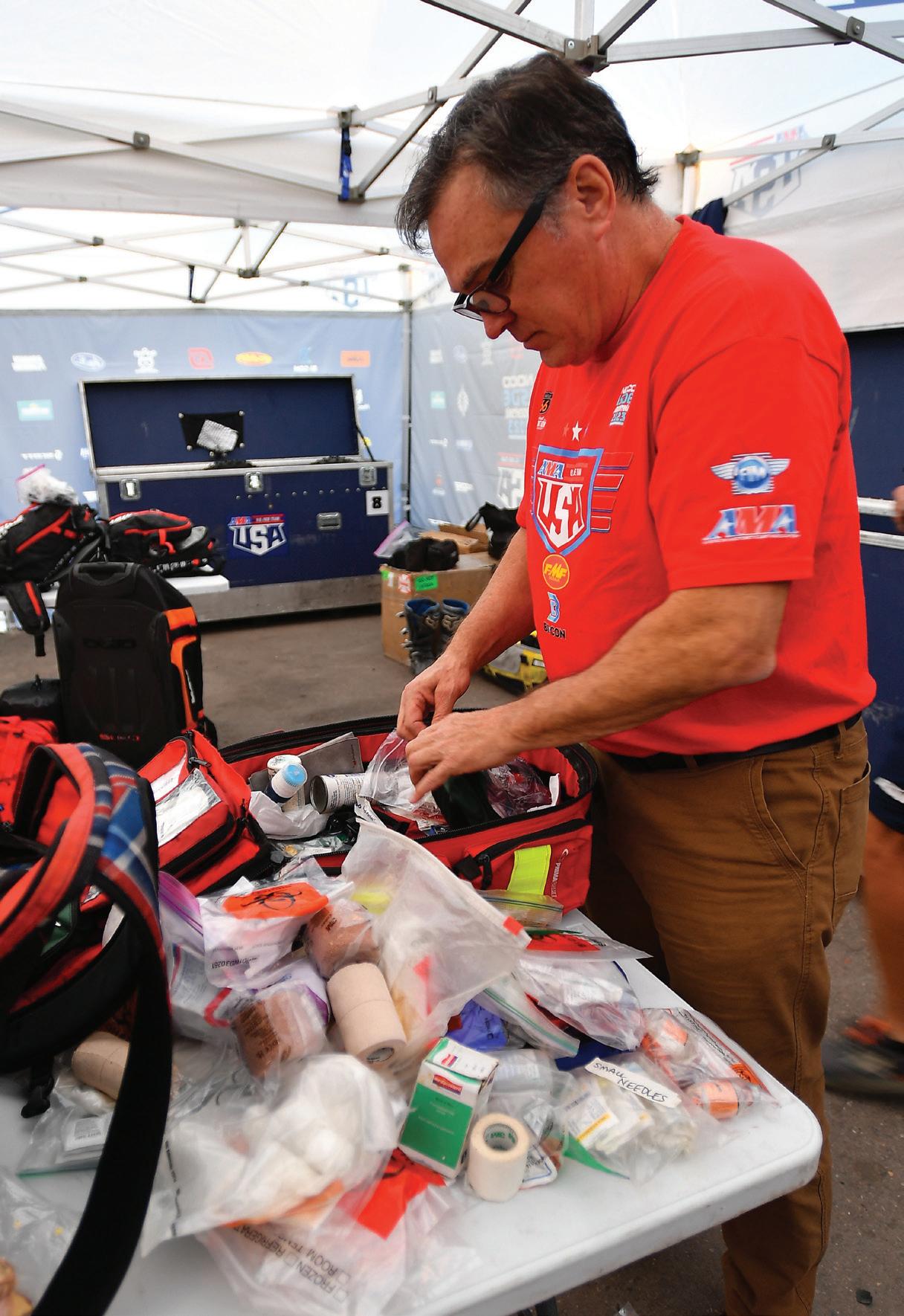
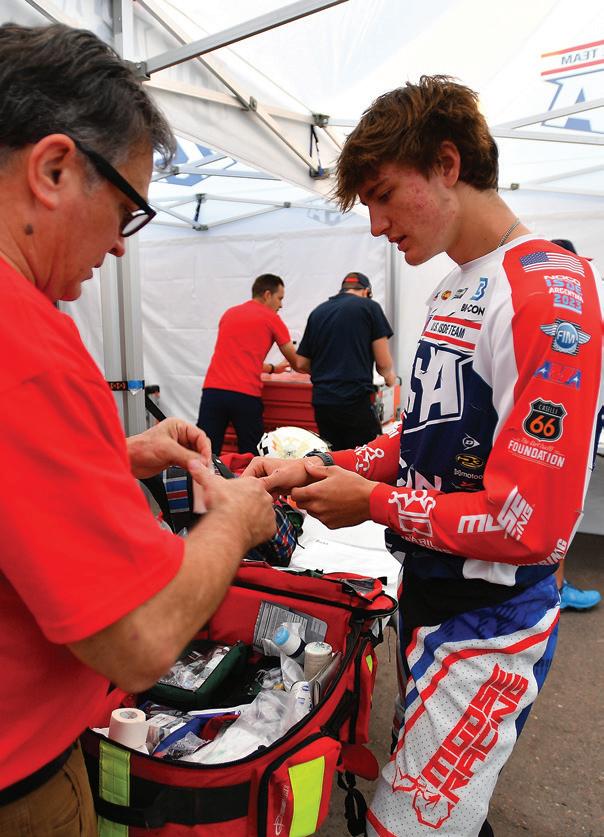
Inside that backpack he carries things like numbing meds, staples, tapes, bandages, supplies for cleaning wounds, and anything he might need to get them through the day. “Then,” he added, “at the end of the day when riders are back in the paddock, we do the real stuff like suturing if it’s needed.”
We asked the Doc what types of injuries he typically
Dr. James “Doc” McGee packs all kinds of medical supplies to treat the U.S. ISDE teams, such as staples, numbing meds, bandages, cleaning supplies and more.
treats during an ISDE. “It depends on where it’s at,” he replied. “This year in Argentina you had a lot of extremity stuff. Injuries to shoulders and elbows. Thorns in people. But the biggest problem this year was the heat, so plenty of riders were dehydrated.” Other common injuries include road rash, tendinitis, common sprains and strains, lacerations, and even fractures now and then.
“Anything you can injure while riding a dirt bike tends to happen more at ISDE,” McGee explained. “Riders are on the bikes for so long every day, so little mistakes start to happen, or they get tired and fall. Every morning we’re taping up something — ankles, shoulders, etc. — to get them through the day.”
McGee finds it amazing how they get through it. “Overall,” he said, “Team USA works because of all the volunteers. Many people just pay attention to the Trophy Team, but there are 32 riders, and they all bring family and friends, and the teams couldn’t win if it wasn’t for all the volunteers.”
“The riders kept me really busy this year in Argentina,” he continued, “but I feel good that I helped the teams win multiple golds and a silver!”
MARK KARIYA
“The
mental game is a huge part of the competition, You [deal with] major highs and massive lows from test to test, so just learning to keep a level head was a challenge for me, too, at some points.”
MATEO OLIVEIRA
retirement from professional racing right before ISDE began, and he told us that winning his very last ISDE — his last race as a pro — “made for a very surreal experience.”
“Winning aside,” Taylor said, “my favorite moments have always been the week leading up to the race. Driving around with the team for a week sharing stories, laughs, and just having a good time with my buddies. That’s what it’s all about!”
U.S. JUNIOR TROPHY TEAM
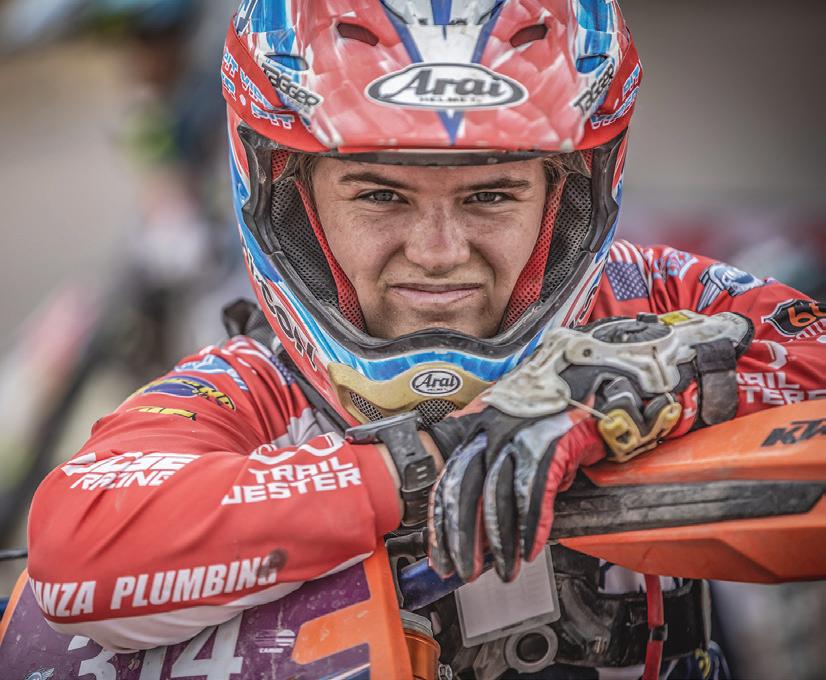
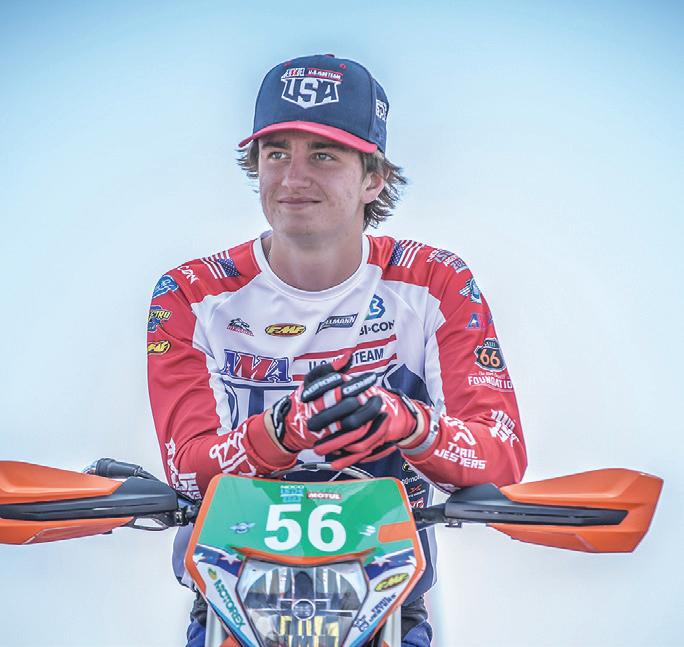
The U.S. Junior Trophy Team, made up of Mateo Oliveira (Dante’s brother), Kai Aiello and Grant Davis, faced its own challenges during Six Days, especially with two members of the team competing at ISDE for the first time.
“This year,” said Mateo Oliveira, who was competing on the team for his second time, “with two rookies on the team our main challenges were just managing the Six Days with all the walking the week
leading up, then the racing, and trying to stay healthy physically and mentally.”
The mental game is a huge part of the competition, Mateo told us, adding that, “You [deal with] major highs and massive lows from test to test, so just learning to keep a level head was a challenge for me, too, at some points.”
For rookie team member Grant Davis, it was all about just trying to survive ISDE after coming into Argentina recovering from a badly broken foot.
“At the beginning of August,” Grant told us, “I slid out in a turn and ended up breaking all the bones in the top of the left foot and most of the toes on that foot. I had surgery and made it back on the bike less than a month before ISDE.”
That it was the left foot made it even tougher for Grant, especially when it came to shifting or dealing with left-hand turns.
“It was hard on faster tests when I
had to shift a lot,” he said. “I’d have to use my heel, and my foot was so swollen it wasn’t letting my ankle function much. I had to be cautious on left handers, and motocross hurt really bad doing the jumps and landing hard.”
“At the end of each day,” Grant continued, “my foot would swell up and be black and blue, and near the end of the Six Days it was so swollen I could hardly get my boot on.”
But quitting wasn’t an option. “I didn’t want to quit,” he added. “I wanted to keep going through the pain for my team and our sponsors. They sent us out to do well, and I knew I had to keep going. I wanted to win!”
As a rookie, Grant also learned some important lessons he plans to take with him next year.
“Being my first year, I knew this was going to be hard,” Grant recalled. “But I learned I have to push harder in the tests next time around. It’s tough to go
“I highly underestimated what the temperature out there would do to me for seven-plus hours. It took everything inside me — mentally and physically — to finish. ”
KORIE STEEDE
slower on the transfers, which are pretty hard, and then go all out as fast as you can on the tests. I’m used to riding threehour GNCCs where you stand up and pace yourself, not going all out for the full three hours, and you have to go all out at ISDE. Next year I’m gonna have that dialed!”
In the end, the U.S. Junior Trophy Team took second place, finishing just six minutes behind France.
“I was pretty happy with second place,” Grant said, “though I’d much
rather have won. But next year we’ll get that done.”
While winning silver felt great, Mateo noted that one of the most memorable moments for him was just being a part of Team USA for Taylor Robert’s last race.
“For my brother Dante and I,” Mateo told us, “[Taylor] has always been the guy to beat…the guy to chase. In a way, he helped get us to the point where we are today. Being a part of the team with Taylor Robert
Club Team XC Gear Victory!
BY JOY BURGESS
.S. Club Team XC Gear took first place among the club teams, and Josh Toth won the club overall. We caught up with Josh for his perspective on the hard-fought win.
American Motorcyclist: How challenging was this ISDE in Argentina?
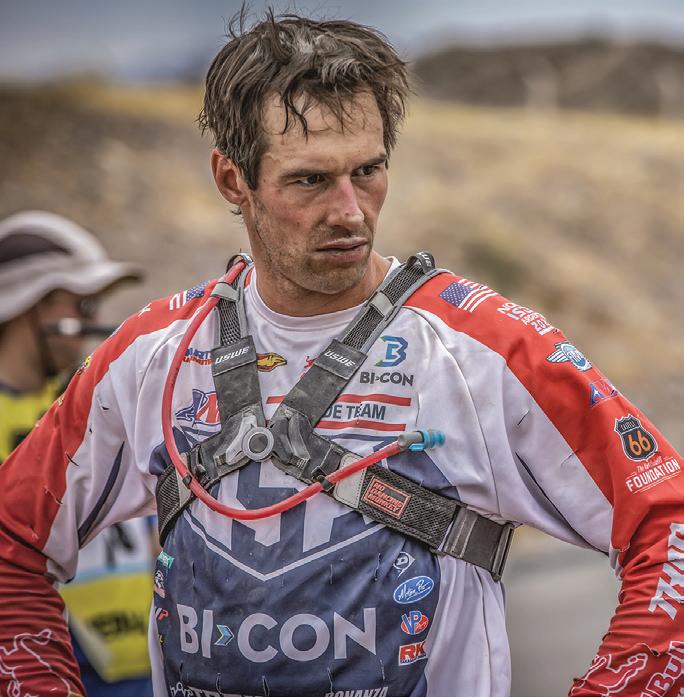
Josh Toth: It was the most difficult one I’ve competed in. The course was brutal with little time for rest through the day. Combined with the high temperatures, it was tough to get through the first days.
AM: What was the “secret sauce” that led to the win?
JT: Not much of a secret sauce [laughs]. It just took determination and some grit. I knew it would be challenging to finish the week. I’m proud of my teammates for putting in solid rides and surviving the week so we could stand on the top step together!
AM: You overalled in the Club Division. That’s a huge accomplishment!
JT: I’m proud I came away with the club overall. Personally, I’m prouder of knowing what I went through physically and mentally Day 1 and bouncing back to put in some good overall days.
AM: What happened Day 1?
JT: I was on the verge of not surviving that day. But after a trip to the hospital, five bags of IV fluids and a night of sleep, I was able to ease back into Day 2 and then hit it hard Day 3.
AM: After that great finish, do you plan to compete next year?
JT: Of course! This was my seventh ISDE, and I want to keep that number growing. I’ll be preparing for the ISDE by doing some rounds of the AMA U.S. Sprint Enduros and even an EnduroGP round this year. I’m investing in improving myself at this style of racing so I can get an overall result I’m proud of in 2025.
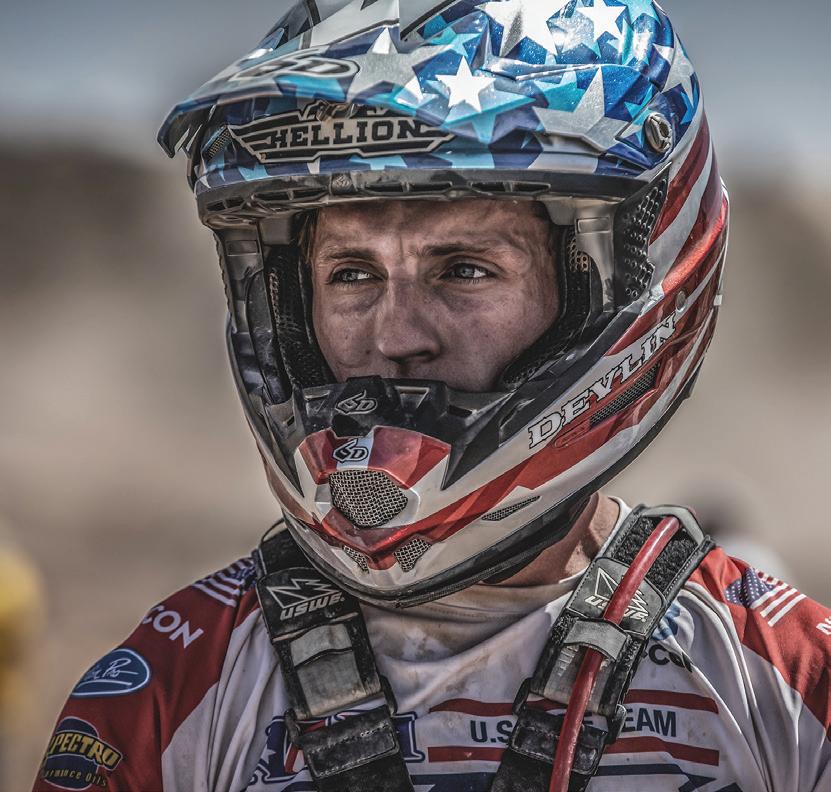
U.S. Club Team XC Gear. Left to right, Josh Toth, Ryan Surratt and Austin Serpa.
leading us will undoubtedly be a highlight for many years to come!”
U.S. WOMEN’S TROPHY TEAM
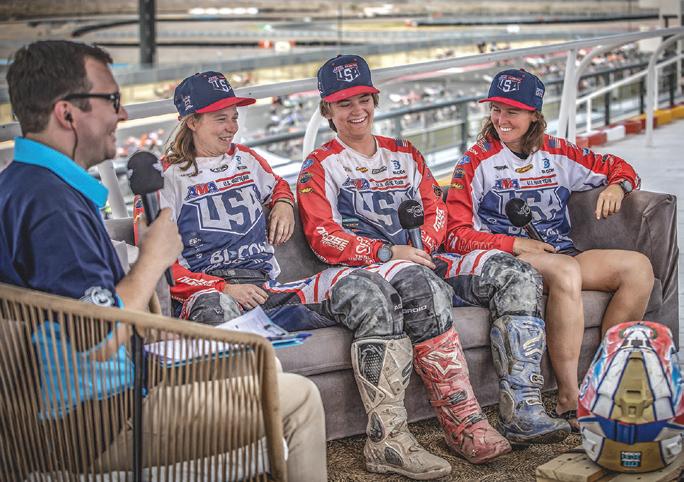
Perhaps it’s no surprise that the U.S. Women’s Trophy Team — which included Brandy Richards, Rachel Gutish and Korie Steede — had the most dramatic week in Argentina.
After taking the third win for the U.S. women in 2021, the 2022 ISDE ended in heartbreak for the team when Brandy Richards was seriously injured and unable to continue.
“The plan this year going in is just to finish,” Brandy told AMA photographer Mary Rinnell on Day 1. “Coming into [ISDE] I honestly didn’t know where I was at physically, and just how my legs would be trail riding for that long [Brandy had broken her femur, dislocated her hip and separated her shoulder in a high speed crash back in February 2023 —Ed.]. So my goals are just to finish, be consistent, and stay off the ground.”
Like everyone else, Days 1 and 2 were extremely difficult, with the 100-plus-degree temperatures.
“Riding through the desert,” Rachel Gutish told us, “I understood why the Argentinian flag features the sun. It felt as though the sun was glaring down at us, trying to drive the foreign intruders out of its homeland.”
Korie Steede had an especially rough time dealing with the heat, coming into ISDE fighting a virus.
“I’d been fighting a virus for about two weeks before we got there,” Korie said, “and Day 1 my body took a huge hit. I highly underestimated what the temperature out there would do to me while dealing with gnarly terrain for seven-plus hours. It took everything inside me — mentally and physically — to finish. The amount of fluids I consumed that night was absolutely insane. Luckily, I was able to revive myself enough to push every day after that.”
Korie was recovering from the heat, but by the end of Day 2, the U.S. Women’s World Trophy Team had a nice 5-minute lead over
A TALE OF TWO ISDEs
BY RACHEL GUTISH
Nine years ago, Argentina hosted the ISDE, and in a lot of ways I dreaded going back in 2023.
From the dust and silt to the endless miles of whoops under the blinding glare of the sun, the 2014 ISDE felt like riding on a hostile alien planet, and my scores reflected that. The corruption didn’t help any, as Team USA had to pay a “fee” to get its bikes before the start.
Worst of all were the DNFs. On Day 3, the transfer trail took us through miles of deep silt, which has the consistency of talcum powder. At one point I stopped to help a crashed rider find her bike, as it had vanished into the stuff like a marble dropped into a pile of flour. That night, impound was a ghost town. It sucks to DNF due to circumstances beyond your control, yet it’s utterly preventable by promoters.
There were so many stranded riders that year that organizers were unprepared to retrieve them all. Many were out in the desert until after dark. Me, I got lucky. A kind Argentinian spectator and his friend towed me back to the paddock behind their tiny car, using an improvised rope made from lawn-chair straps. On the way in I realized I might be getting kidnapped, but they took young Rachel right back to the paddock. I thanked them profusely and gave them my Team USA jersey — the only thing I had to offer them.
Despite the obstacles, Team USA’s World Trophy Team took second in 2014, and the Juniors took the win. The Women’s Trophy Team, on the other hand, came home last, as two of our three didn’t finish. So when I heard we were coming back again, I laughed, assuming it was a joke…and then cursed, realizing it was not.
All of which made Argentina 2023 a pleasant surprise. When I returned, I remembered the food, the views, the people, all the good things I had forgotten. I’m a better rider now, too, able to cope with less-familiar terrain. Having been through the customs process once, Team USA was more prepared (though other countries and some manufacturers still had issues). Best of all, the promoters had learned from the first time around. They kept the silt
to a minimum, so 2023 wasn’t a bike-eater.
That’s not to say it was all smooth sailing. It was a true ISDE, with difficult transfers up through the mountains. The first two days were well over 100 degrees, and quite a few riders suffered heatstroke. DNFs were largely failures of the body or spirit rather than the bike, and there were fewer than in 2014.
Rachel Gutish at the 2023 ISDE with the kind Argentinian spectator who’d saved her life nine years ago…and he still has her Team USA jersey!
In a complete reversal, we were the last intact women’s team and took the win, despite the heat stroke, injuries and bike issues — Argentina still didn’t give it to us easy! From a personal standpoint, I rode the best I ever have, taking home my first two test wins. Our boys were even more successful than in 2014. The Trophy Team won, Juniors finished second, and our Club teams took the top two spots…a success by any measure!
“The moment I’ll remember most from this ISDE, was when I found out Brandy broke her collarbone. The whole thing just felt ridiculous!”
RACHEL GUTISH
Still, my favorite moment had nothing to do with the accolades. While waiting in the pits for our final moto, a man walked up to me. He spoke no English, and at first I didn’t recognize him. Then he held up my 2014 jersey, which he’d kept for nine years! I bear-hugged him, and with tears in my eyes took him to meet my parents so they could finally thank him for taking care of me all those years ago. Even though we’ve never exchanged a word, it was a joyous reunion.
ISDE is always a paradox — the best of times and the worst of times, all at the same time. I celebrated. I suffered. Riding 240 miles of hell with a freshly separated shoulder was pure, 100-proof suffering.
Was it worth it? Yes! I’m glad I got to come back for a rematch. But would I return a third time? Ask me in another nine years…
Australia. But on Day 3, tragedy struck…Rachel crashed, wrecking the front end of her bike, breaking ribs and separating her shoulder.
“The only time I doubted our ability to win was at the end of Day 3 right after I got hurt,” she said. “I didn’t know if I’d be able to ride fast enough in the tests to keep our heads above water.”
“I thanked my unlucky stars that it was me, though,” Rachel added. “I knew it needed to be me. It couldn’t be Brandy. We needed her insanely fast test times to compensate for my decreased speed. Looking at the transfers, I knew my technical ability would make me better suited to survive them riding injured than Korie. So even though I was suffering, even though I was hurt, I was grateful it was me.”
But then came Day 4, and while the team was able to keep it mostly quiet, Brandy Richards crashed and broke her collarbone.
“The moment I’ll remember most from this ISDE,” Rachel said, “was when I found out Brandy broke her collarbone. The whole thing just felt ridiculous! We’d had bike issues, possible heatstroke, nasty transfers, close calls, Korie was barely recovered from a bad wrist and dealing with a pinched nerve, I’d separated my shoulder and had broken ribs, and now you’re telling me Brandy broke her collarbone?”
With so many things going wrong and all three women fighting their own physical battles, the mental challenge was huge.
“I’d say the biggest challenge I faced was being able to talk myself through every day out there,” Korie said. “Being on your dirtbike in the desert for the most part alone in your own mind can be very intense.”
“I’m almost positive we didn’t have one day where everything went smooth,” Korie continued, “so once we got to Day 6 and saw that checkered flag, the emotions were out of this world.”
“we didn’t have one day where everything went smooth, so once we got to Day 6 and saw that checkered flag, the emotions were out of this world.”
KORIE STEEDE
“There we were in the container helping each other get our jerseys off because we couldn’t do it alone,” she added. “I still believed that we could win, but at that point it was hard not to just laugh at the absurdity. Then it suddenly occurred to me that if we did win the trophy, there was a very good chance we wouldn’t be able to even hold it up, since half our team couldn’t lift an arm above shoulder height… and then I really did start laughing.”
After the tired, beatup threesome made their way to the top step of the podium, Brandy commented, “It’s been quite the week. All week the focus was on keeping our bikes and bodies going. We raced hard, but always focused on finishing with all three riders together. I’m super proud of what we achieved this week and will remember this ISDE for a long time to come.”
Korie still can’t get over the team dynamic that helped the three through hell for the win.
“Our team dynamic is so special,” Korie said. “The amount of grit and heart that we share is unmatched! These girls went through absolute hell for the gold medal, and I couldn’t be any prouder.”
In the end, the U.S. Women’s World Trophy team was the last team standing — barely — beating secondplace Australia by nearly 7 hours for the fourth win for U.S. women.
But this win was special…
“Argentina threw everything it had at us,” Rachel said, “and we still pushed through. We were bruised, we were battered, we were completely exhausted…but we were the champions!” AMA
a bit worse for wear — celebrate their wins.
Right: Korie Steede and Brandy Richards leave impound after a long day. Below: The U.S. Trophy and Women’s Trophy Teams — though
BY SUZY MOODY
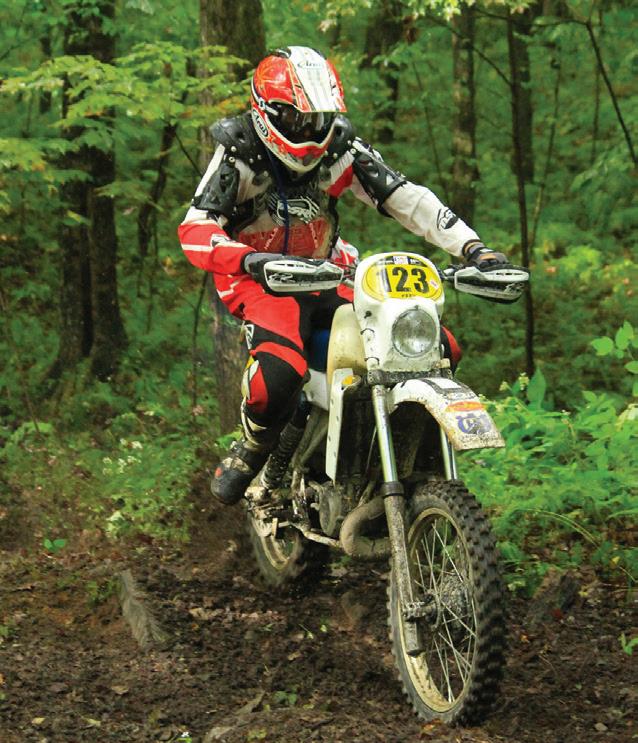
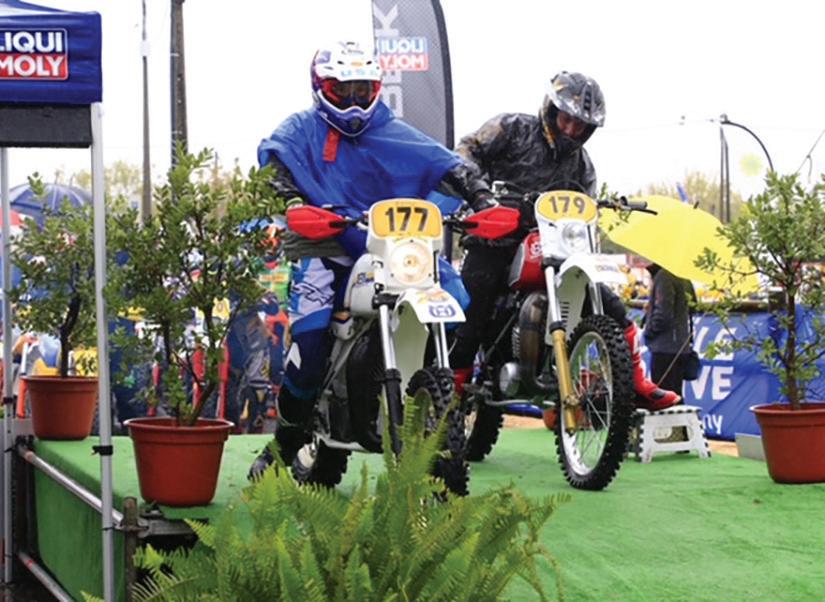
n 2016, the FIM added a vintage element to the annual international ISDE competition so that enduro veterans could once again compete in an ISDE-style event… but on the vintage bikes (1983 or older) they competed on early in their careers.
IThe likes of multi-time ISDE winners and World Enduro champs Enrico Tortoli, Giorgio Grasso, Tullio Pellegrinelli and others are still quite competitive, and the idea of representing their countries in a world-class event remains plenty attractive.
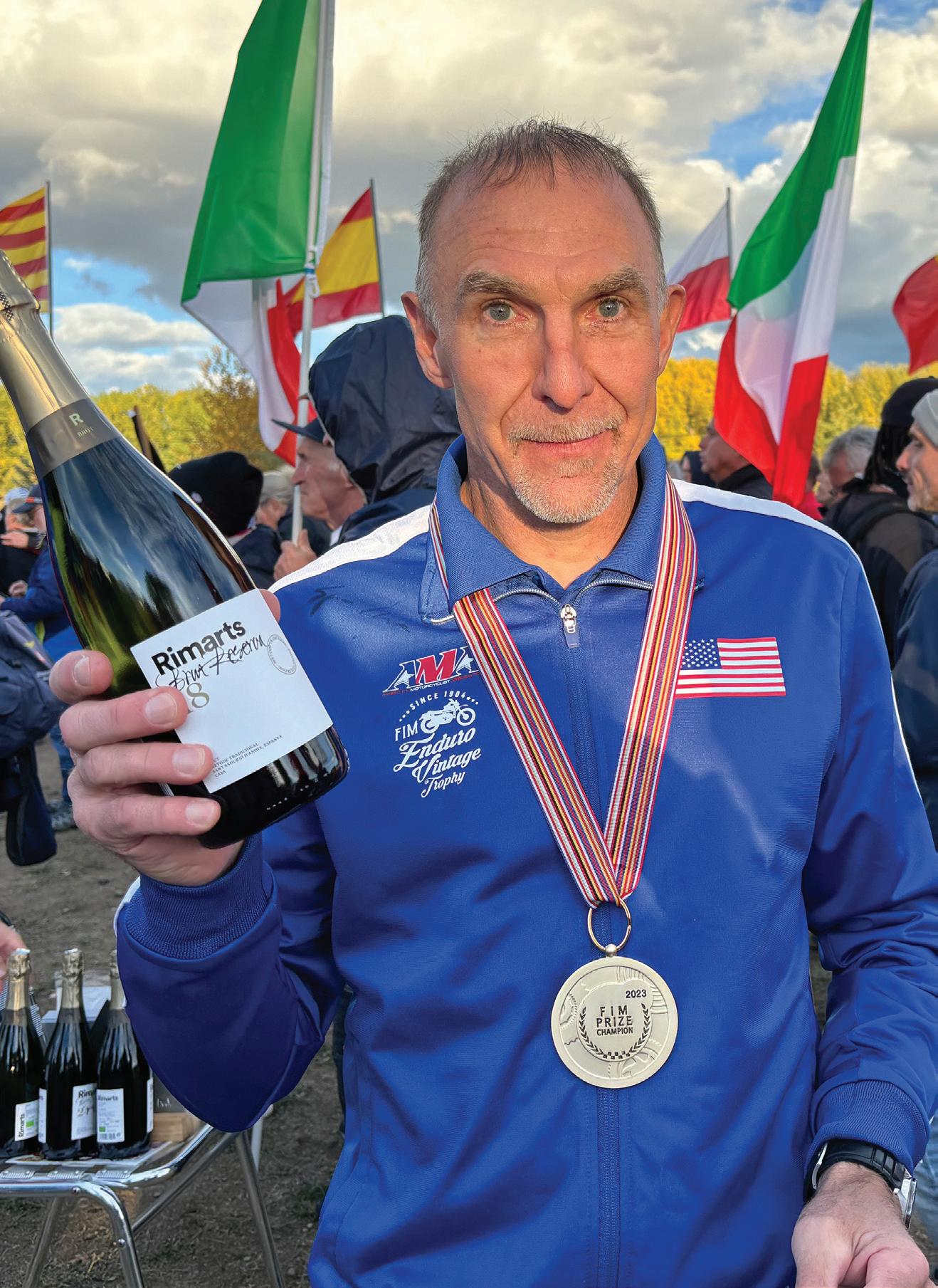
ISDT/E competition would be a great pathway into a different type of international competition. As the lone U.S. rider in 2016 (in Spain) and 2022 (in Portugal), he took the overall victory.
LED BY ISDT VET FRED HOESS, THE U.S. TEAM SHINES AT THE 2023
FIM ENDURO VINTAGE TROPHY EVENT IN PUIGCERDA, SPAIN
The 2023 event – held last October – took place in Puigcerda, Spain, the same region as the 1985 ISDE. Nestled in a quaint ski town on the border with France, it was a picturesque location with beautiful Alpine geography and perfect weather.
Also for 2023, the U.S. fielded its first-ever FIM Vintage team, Hoess being the only rider to compete in
VICTORY VINTAGE
The rules are much like today’s ISDE, with Trophy and Silver Vase teams along with individuals and club teams. But instead of riding for six days, the Vintage Trophy is a fourday endeavor, and to compete on a Trophy Team you must be 50 years old or older.
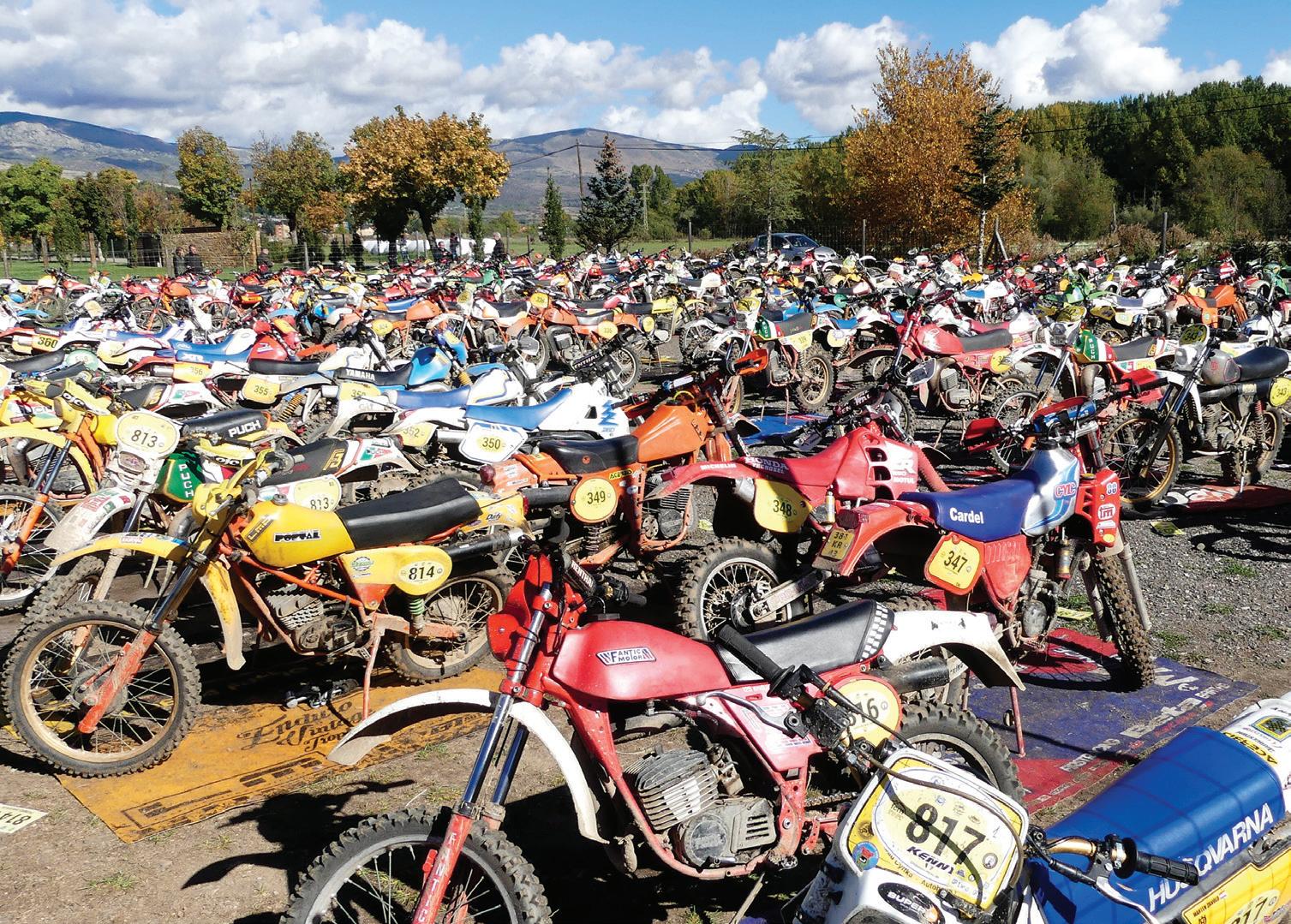
To make it even more interesting, each team must be represented by at least one bike 1975 or older, and the teams consist of only three riders. Keep in mind that these are all twinshock, air-cooled bikes with drum brakes.
Fred Hoess, a 28-time ISDE veteran with (now) 21 gold medals, had been involved with the U.S. Vintage series for some time, and figured participation in the FIM
spot, with France and Germany filling out the top three.
The U.S. Team was very popular during the week, and had many riders and crew from other teams come congratulate our team. The Italian team even came over for a fun jersey swap. The U.S. crew made a bunch of new friends, and met up with some old ones, too. Closing ceremonies were a site to behold, with plenty of camaraderie, kindness and a true
previous years. Mike Sheetz from Oregon stepped up to ride the “A” category bike aboard a 1975 Can Am 250 TNT. Lendon Smith from Idaho – and co-owner of Seat Concepts – rode a 1982 Husqvarna WR430, while Hoess would be on a 1983 Husky WR250.
The U.S. Team and its support crew did a stellar job of learning the area, navigating to the tests, and servicing its riders out of rental cars. And when all was said and done, the U.S. Trophy Team grabbed fourth place, with Hoess again overalling the event and winning the C2 Class. Sheetz earned seventh in the challenging A3 class, while Smith placed 11th in the very competitive C3 division. Italy took the top team
appreciation for all the competitors and their crews.
Everyone involved in the effort was hugely proud of our team and crew. Coming from across the pond, the team had to overcome an enormous amount of logistics, roadblocks and barriers. But they perservered, and represented our country admirably.
“I raced my first ISDE in this area,” Hoess said afterward. “My dad was with me, and I have very fond memories of the region. I even remember some of the creek crossings, old buildings and ridgelines!”
Sheetz, who’d wanted to ride this event since 2016, described the experience as surreal. “It was a real dream come true for me as I was
cranking up my trusty Can Am on top of the starting ramp,” he said afterward.
Smith, having attended and competed in many U.S. and international events, said it was the most effort he has ever seen put into an event by the organizers. “It was amazing how friendly and helpful the other countries’ riders and support crew were,” he said. “Even if we couldn’t speak the same language, we understood each other perfectly.”
The 2024 Vintage Trophy event will be held in Camerino, Italy, the 50th anniversary of the ISDT staged there in 1974, on Sept. 4-7, 2024. For more information, see the group’s Facebook page at 2024 US Vintage Trophy Team – Camerino, Italy. AMA
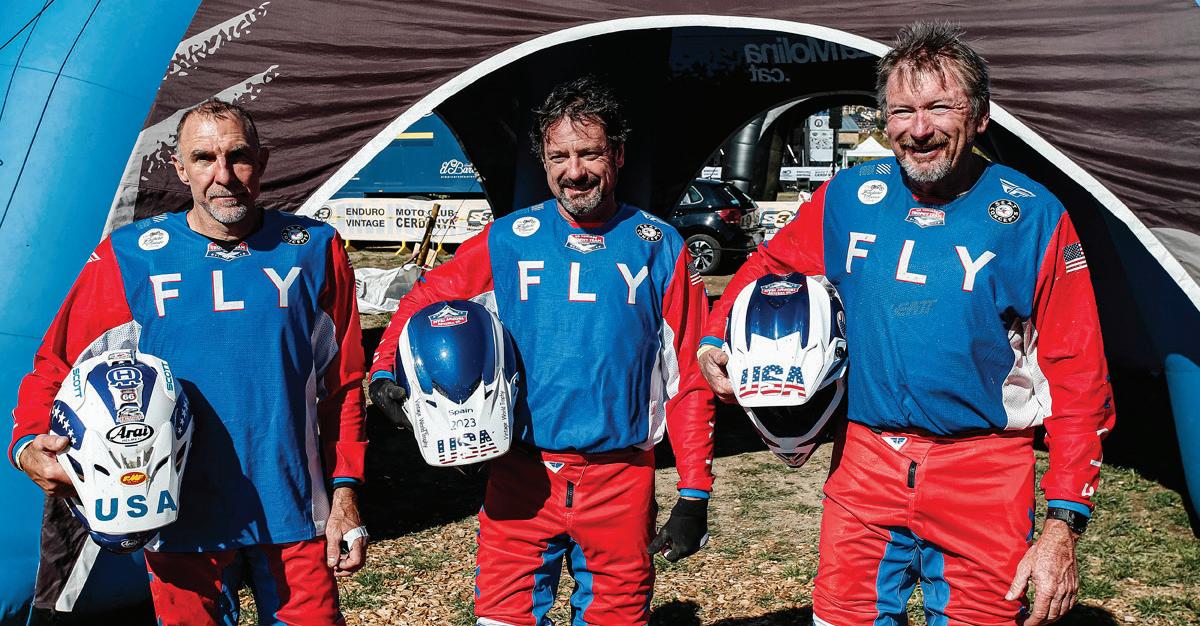
Left: Team USA’s (left to right) Hoess, Sheetz and Smith. Above & below: Hoess in action at the Dalton ISDT anniversary reunion, and at the Enduro Vintage Trophy. Right: Hoess with the bubbly, and bikes in impound. A lovely sight!
BY KEATON MAISANO AND JOHN BURNS PHOTOS: AMA ARCHIVE
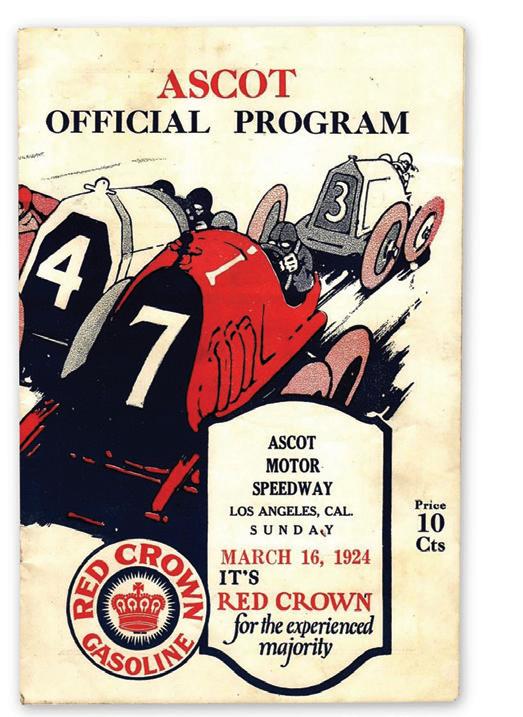
Motorcycling has had its boom years, the ’60s/early ’70s and ’90s/2000s being the most recent…but also during the late ’40s/1950s, largely a result of the end of hostilities in Europe and the Pacific.
That wartime’s-end scenario also played out in the late teens and into the 1920s, which aren’t called the “roaring ‘20s” for nothing. Also called “The Jazz Age” and, in Europe, the “Golden ’20s,” the decade of the 1920s was as crazy, creative and turbulent as any, with all sorts of post-war happenings aside from astronomical –for the time – growth of the motorcycle industry.
You had prohibition (which put a damper on things, at least for a while), the 19th Amendment (giving women the right to vote), the opening of the Panama Canal (which shrunk the globe and turned sleepy Los Angeles into a major transportation hub and future megalopolis), Charles Lindbergh’s first Atlantic crossing in 1927, The Jazz Singer (the first talkie) that same year, and a more economically positive – and just-plain-positive – populace, many of whom wanted to move
It all must’ve been a lot to take in. Say, how can I inject that sort of swashbuckling action and adventure into my own life? We’ve got just the thing, kid: Nothing says motion like a motorcycle.
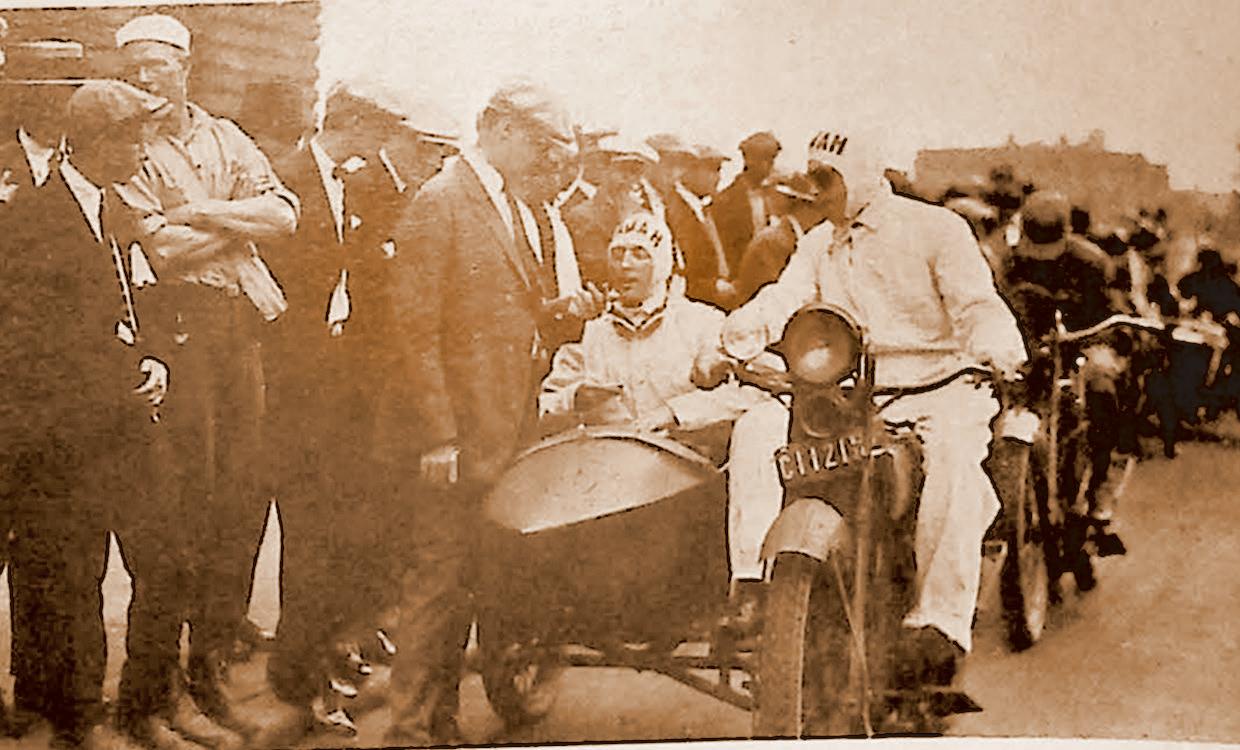
You really did have to want it in those days. Every ride was an adventure ride in the 1920s, when most roads were still unpaved. But none of it deterred folks from riding, or even racing. You had social events, club gatherings and Gypsy Tours for the former, and dirt tracks and board tracks and motordromes for the latter, with all of it focused on fun, cameraderie and adventure.
Bracketed by WWI and the Great Depression, the 1920s were a decade-long motorcycling – and nationwide – celebration
For Americans on the cusp of the 1920s, America was on the rise, and the future was about to be very bright indeed…right up until it wasn’t. Following the great stock market crash of October, 1929, the Dow Jones took until 1954 to recover its losses. But let’s live it up while we can, eh? The ’30s are a story for next month.
The Death of Motordrome
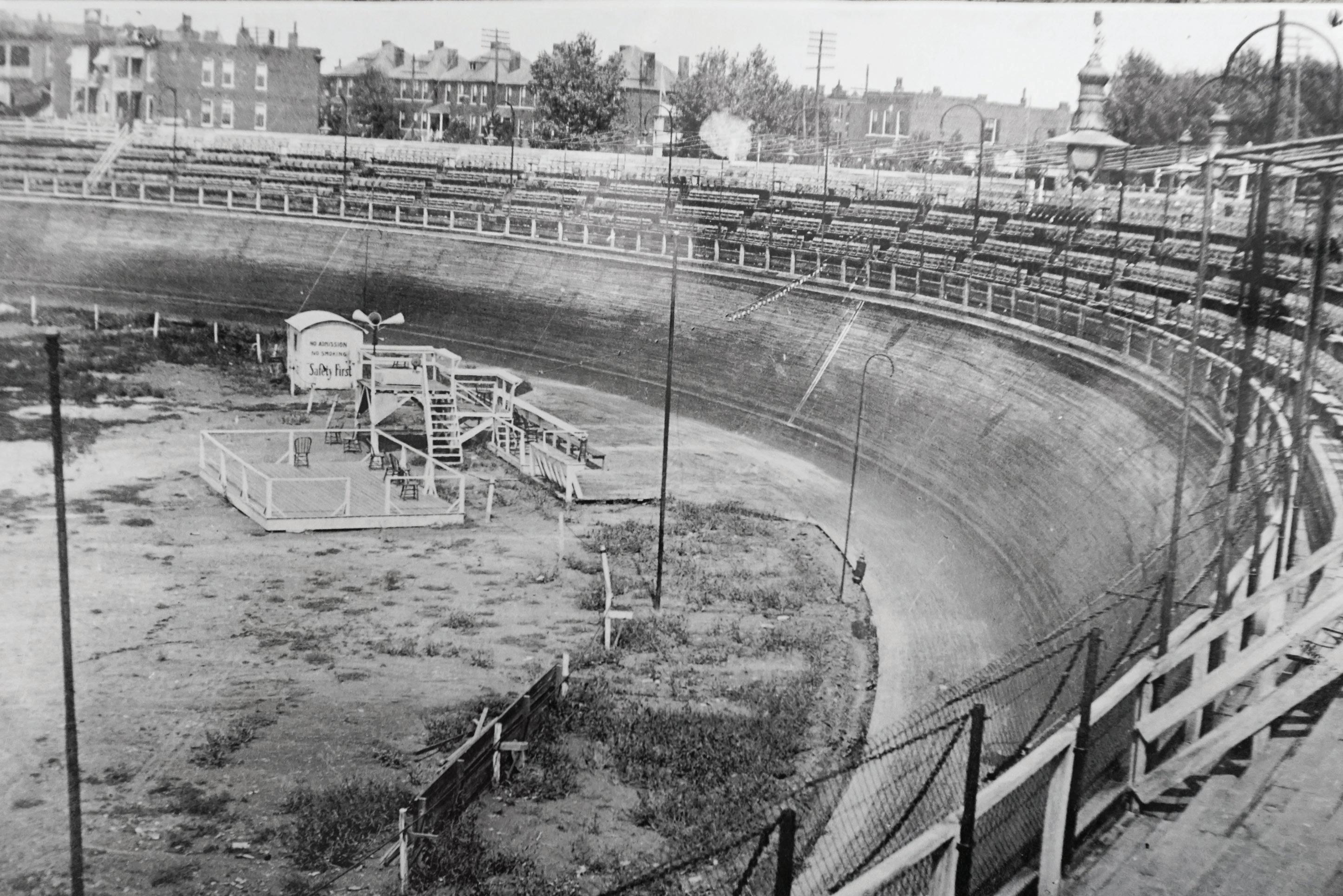
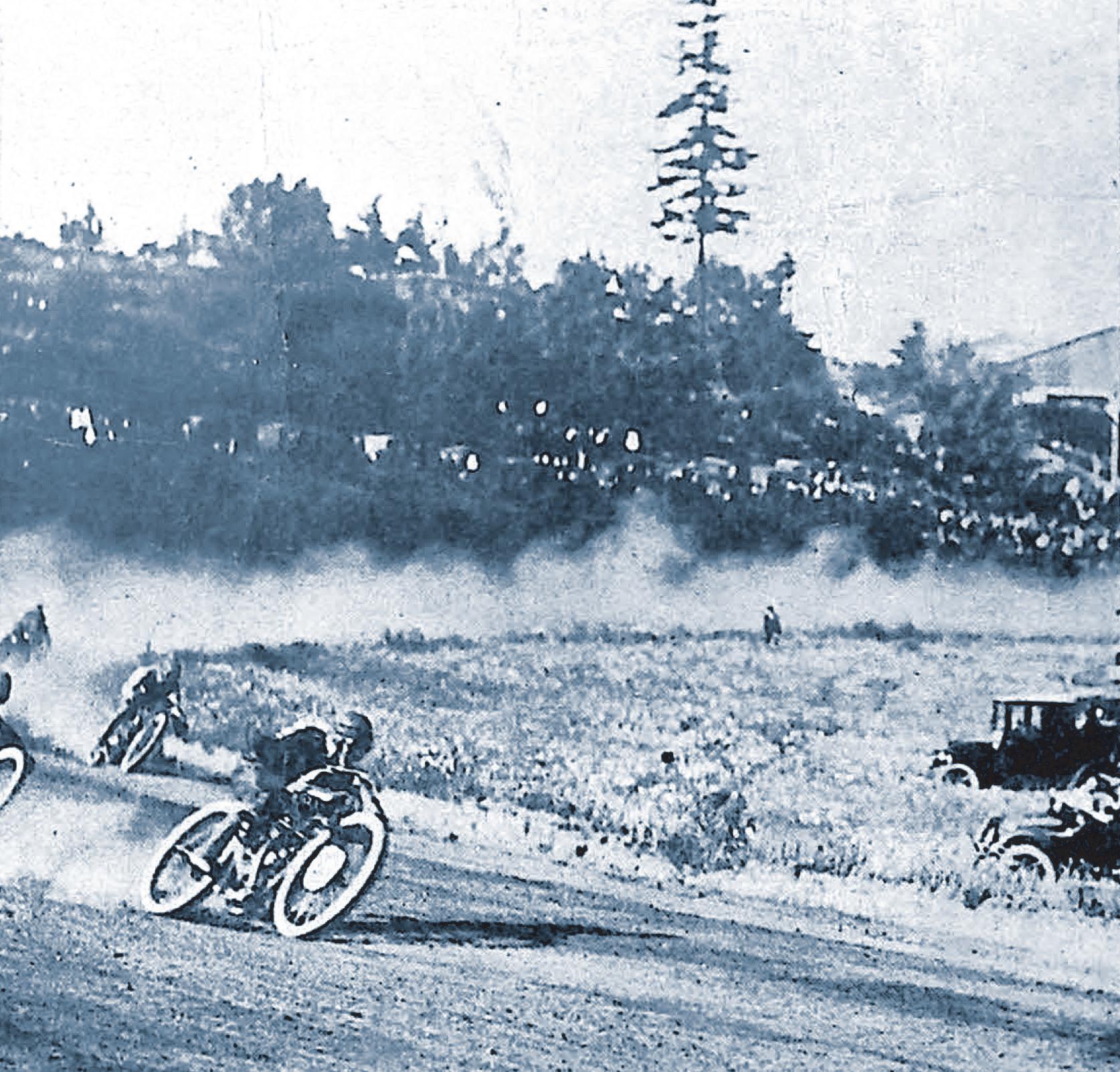
In the ’Teens, racing around banked wooden tracks was all the rage. You could sit in the stands and see the whole lap! As it turned out, 400-pound motorcycles hurtling around small tracks at 90 mph nearly within arms’ reach of packed grandstands wasn’t all that safe. After a few fatal accidents involving racers and spectators (and foot-long wooden splinters), the M&ATA no longer sanctioned motordrome racing after 1919. Which led to…
Boardtrack racing!
Beverly Hills Speedway might be the most famous of the big boardtracks that were built after WWI. BHS hosted its first automobile race in 1919, and its first motorcycle event the following year. Located on 400 acres where the Beverly Wilshire Hotel now sits, the 37-degree banked 1.25-mile track was 50 feet wide and constructed of 40,000 board-feet of Oregon pine. At least 24 boardtracks were reportedly built around the country, and the sport was not without its problems. When the great Otto Walker’s front tire blew out in 1915 in Chicago, a magazine reported “there was scarcely an inch of his body that was not filled with splinters.”
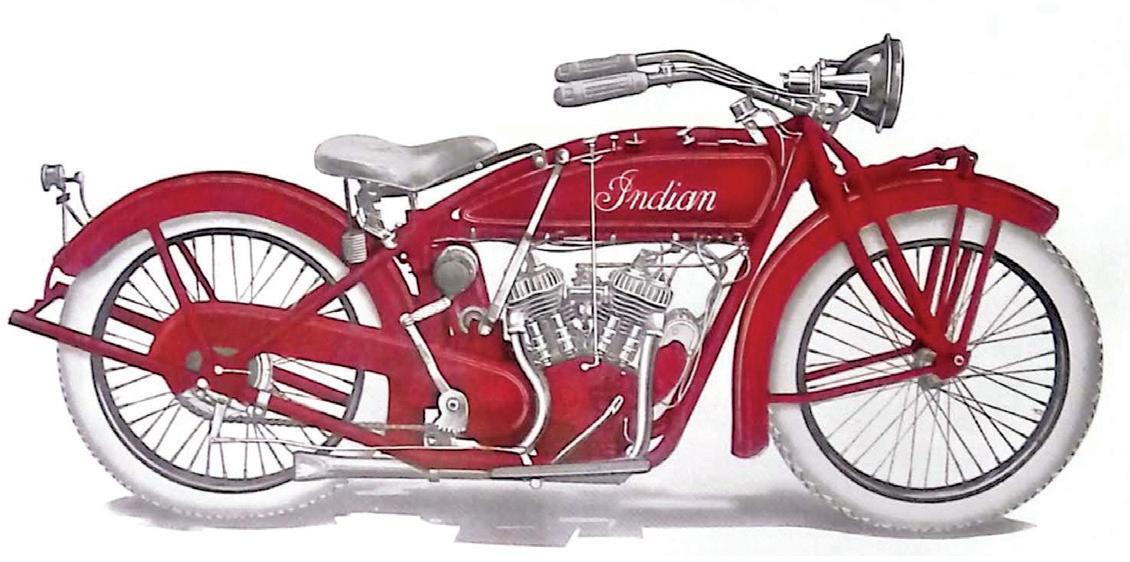
1920 Indian Scout
The original Scout’s 37-inch (606cc) sidevalve V-twin had its transmission bolted to the engine casing, allowing a geared primary drive instead of the usual problematic chain. Irish immigrant/ engineer/racer Charles Franklin’s new bike used a short double-cradle steel frame and had a claimed weight of just 370 pounds –making it light and agile. In 1927, the engine grew to 745 cc (45 ci), and in 1928, we even got a front brake! The Scout was a huge success.
The Harley-Indian Wars
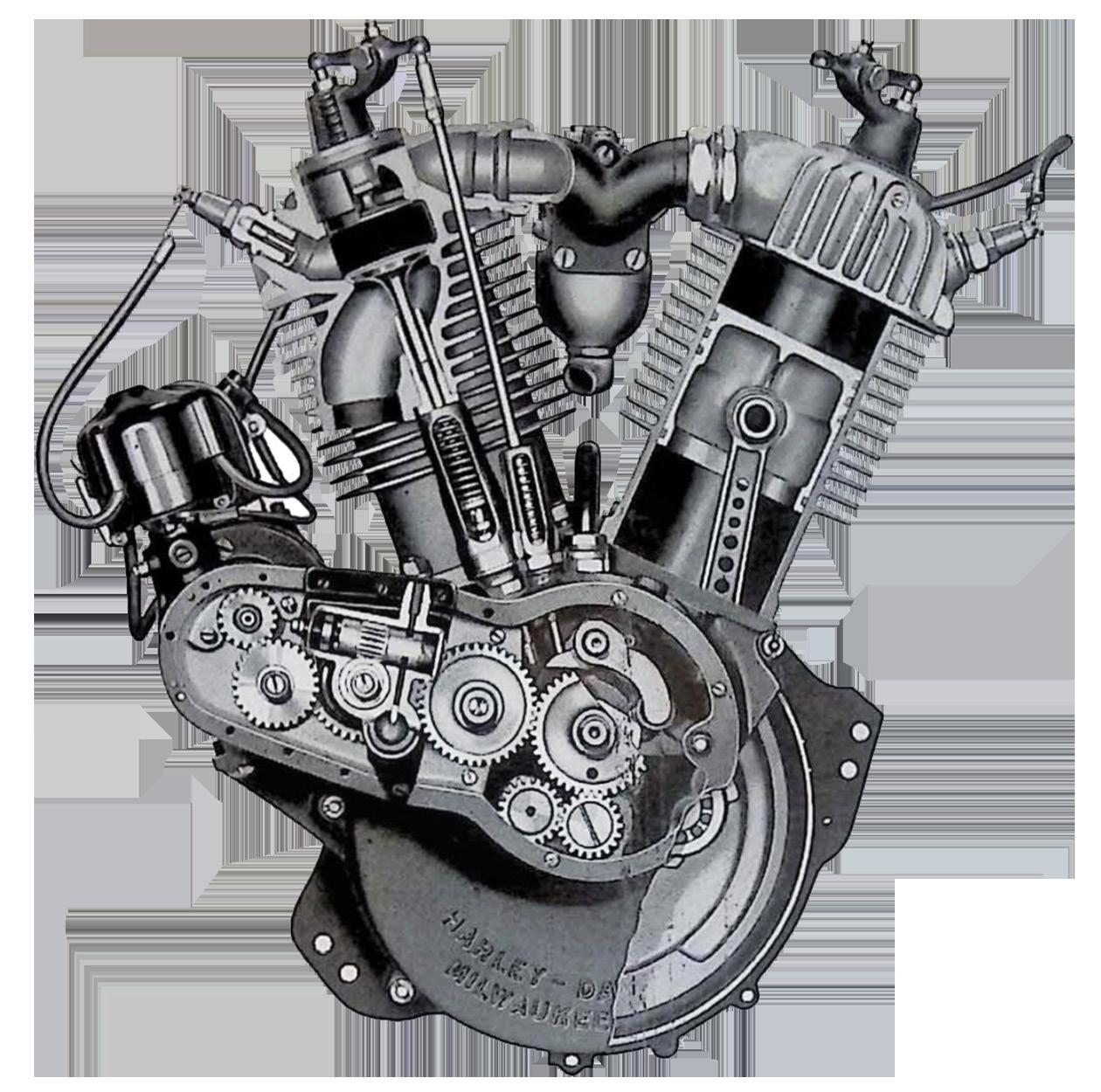
These preceded the ’20s by more than a decade, but poured the foundation on which we still stand. The V-twin had already been around for a while, but when Indian (the Hendee Motocycle Company, actually) produced its first one in 1906, and Harley released its new F-head V-twin in 1909, the battle was truly joined in what once was, and maybe still is – depending on who you ask – one of the most famous brand rivalries in capitalism.
ST LOUIS MOTORDROME
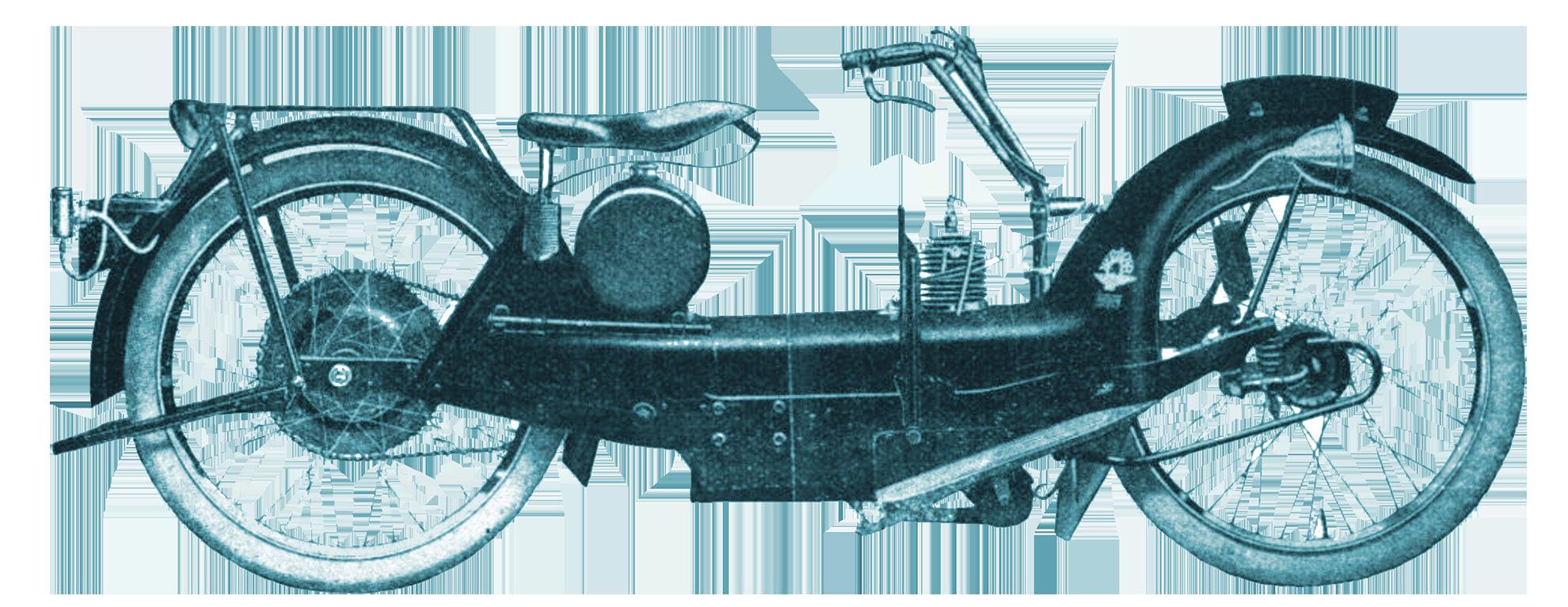
1921 Neracar
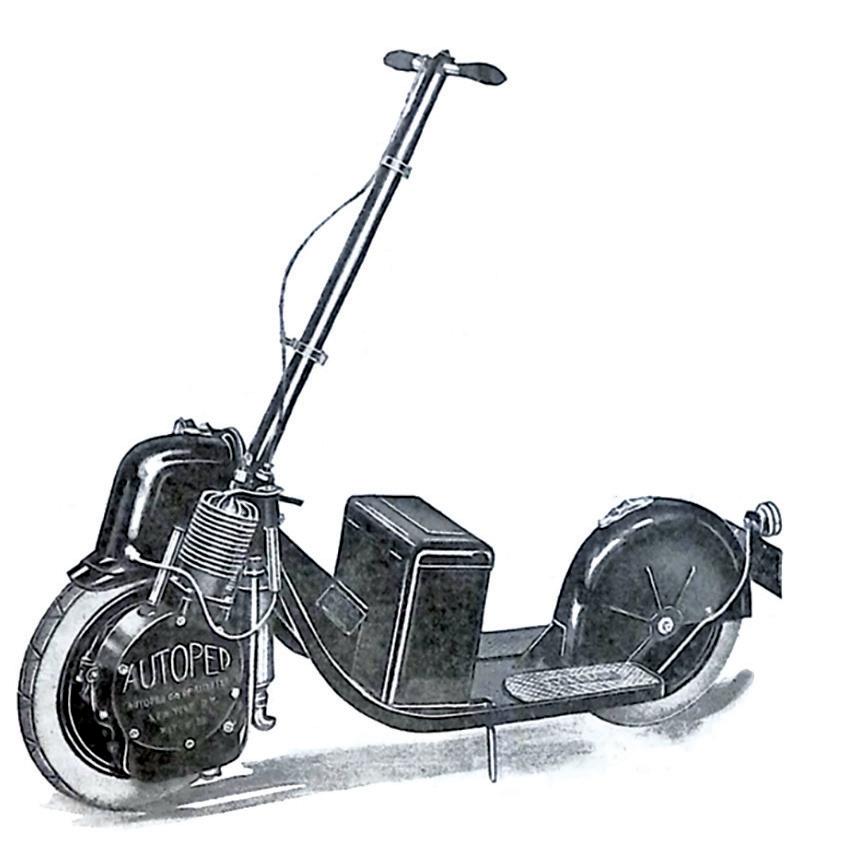
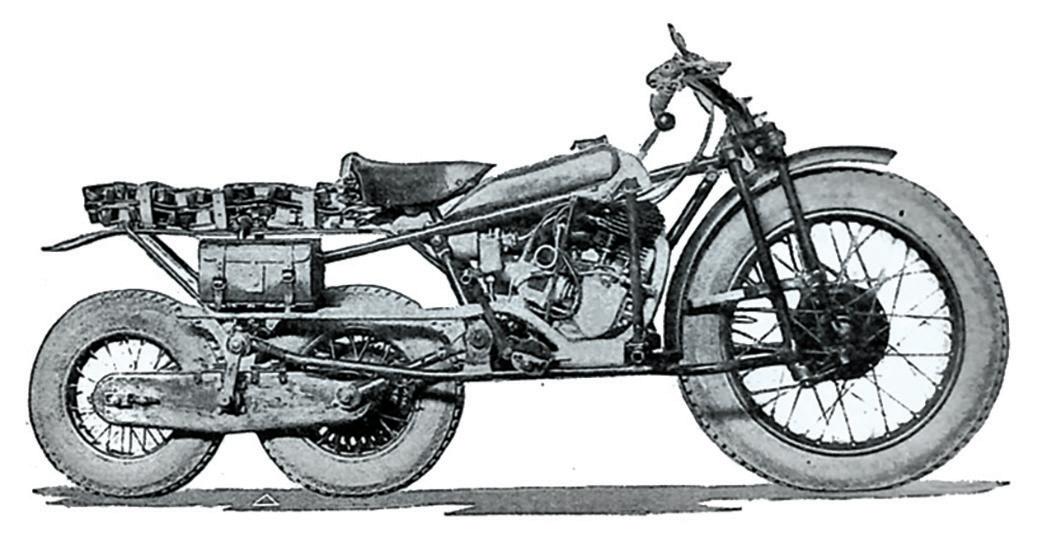
Carl A. Neracher began manufacturing these first in the UK, and then in Syracuse, N.Y., in 1922. Its funky box-frame construction reportedly gave it a low center of gravity and hub-center steering (later to reappear in the Bimota Tesi) gave great, easy handling. The frame also partially contained the 221cc two-stroke single, which gave the Neracar a top speed of 35 mph and a claimed 85 mpg. It almost looks like the first scooter…hints of Burgman…
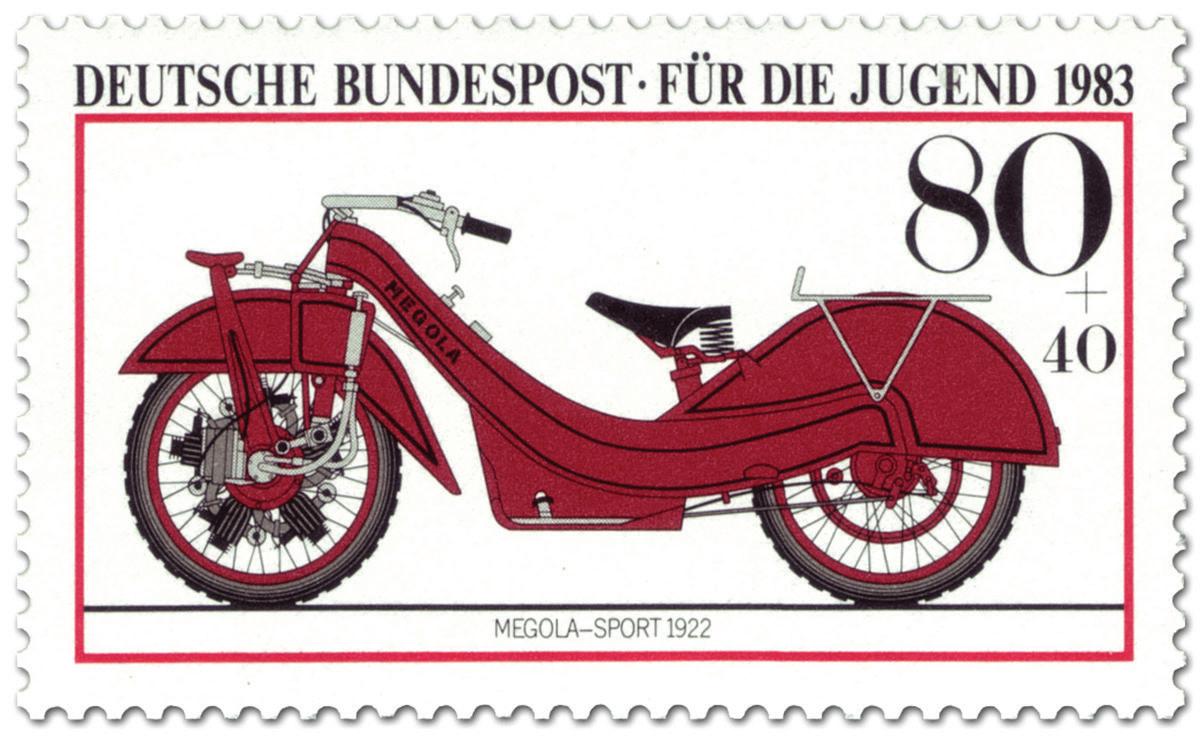
1922 Megola Sport
File this one under directions we probably won’t be going; the Megola mounted its 5-cylinder, 640cc radial engine inside the front wheel. That engine spun merrily along at 3600 rpm, turning the front wheel 600 times per minute at 60 mph. With no clutch or gearbox, best not to stop. Some 2,000 were produced, until Germany’s chaotic post-WWI hyper-inflation ended production about 1926.
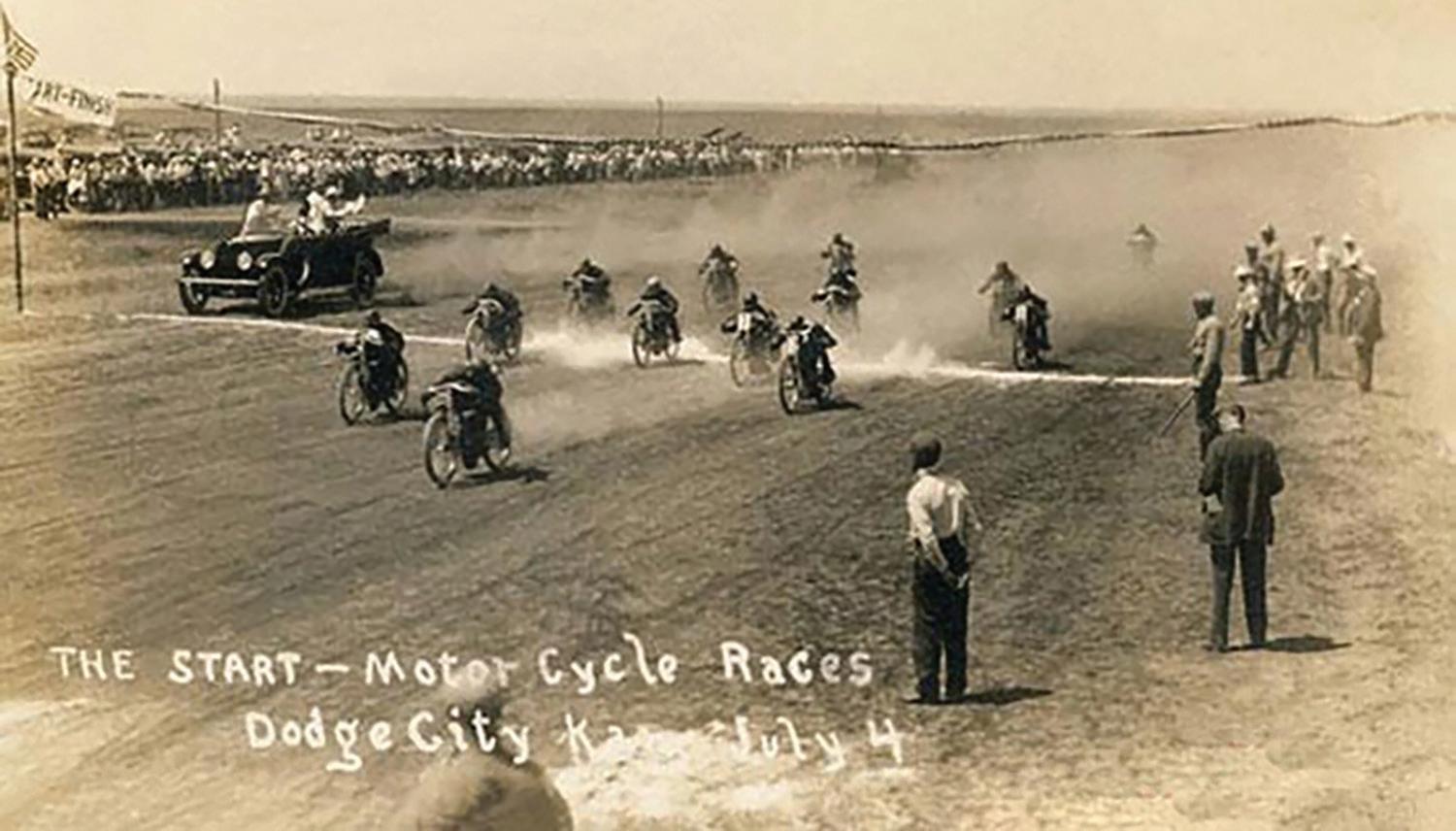
1914-1921 Dodge City International
The Chicago Motorcycle Club had put on the first Classic National Championship race around the streets of Elgin, Ill., in 1913 – “Classic,” because it was inspired by the Isle of Man Classic TT. It drew 11,000 spectators, but the costs for crowd control around the 8.5-mile course, among other issues, made it a losing proposition money-wise. For 1914 the sanctioning FAM contacted the Kansas Short Grass Club, and a deal was struck to replace the Elgin Classic with a 300-mile endurance race on a 2-mile dirt oval just north of Dodge City. The 1914 International Dodge City 300 drew 36 riders from the U.S., UK, Canada and France. By 1920, after taking a few years off for the war, the Dodge City 300 was the biggest motorcycle race in the country.
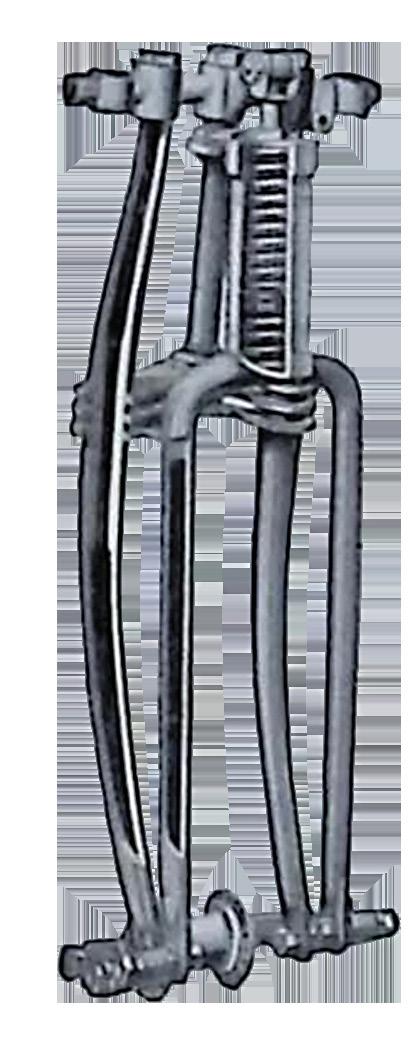
GIRDER FORK SUSPENSION
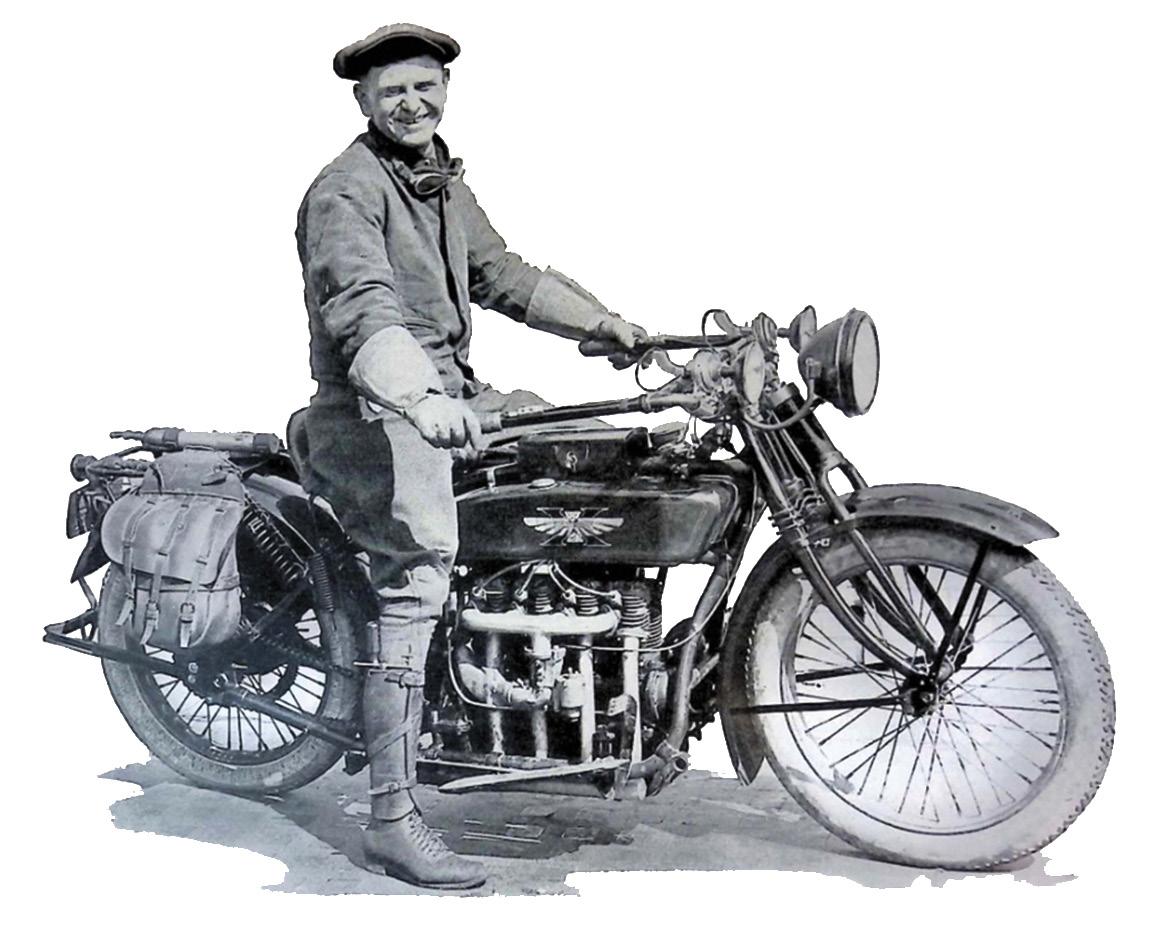
“Ever try to push a wheelbarrow over a curbstone?” asks Henderson in its 1921 ad for its new fork design. “Hard work, isn’t it? But reversing the operation and pulling the wheel over the same curb is surprisingly easy. That’s exactly the principle behind Henderson (and Excelsior’s) new front suspension!” The new fork will also withstand stresses and strains that crumple other forks, natch. Between that and Excelsior/ Henderson’s 3.5-inch tires (most of the competition are 3-inch), you get real riding comfort and great mileage.
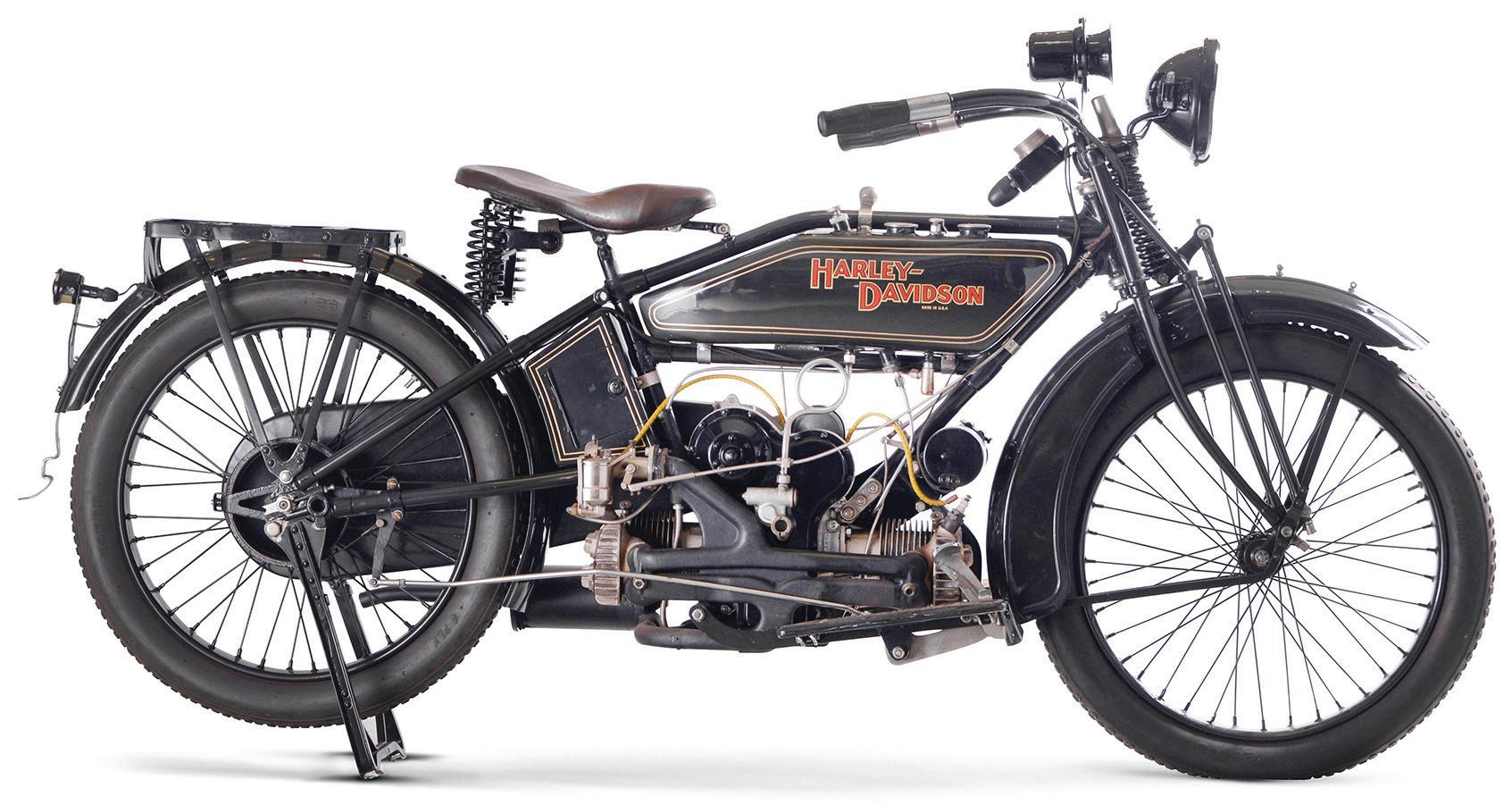
1922 HARLEY-DAVIDSON SPORT TWIN
Who knew the Harley-Davidson factory built an opposed twin a year before BMW? We’re guessing no one. It was really four years earlier, since the 36 cubic-inch (584cc) Sport Twin was launched in 1919 as a more gentlemanly, economical alternative to Harley’s bigger V-Twins. The opposed twin’s cylinders ran fore/aft rather than transversely, as on the BMW, and generated about six horsepower. The 1920 Sport Twin reportedly introduced electric lighting (vs. acetylene), along with a fully enclosed drive chain for leg safety and cleanliness. Harley-Davidson employee Hap Scherer rode a Model W Sport Twin from Canada to Mexico in record time, which H-D used in various promotions.
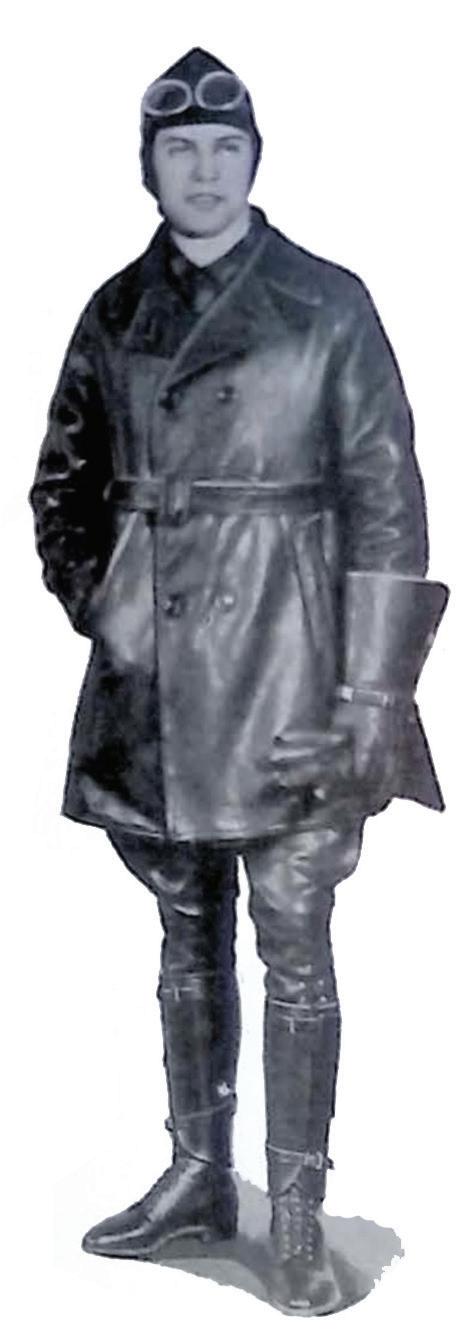
MOTORCYCLE GEAR
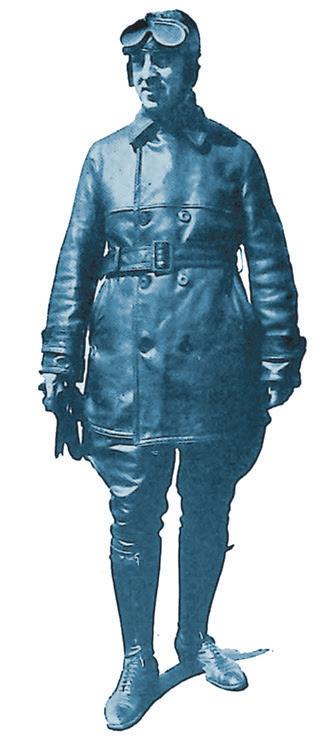
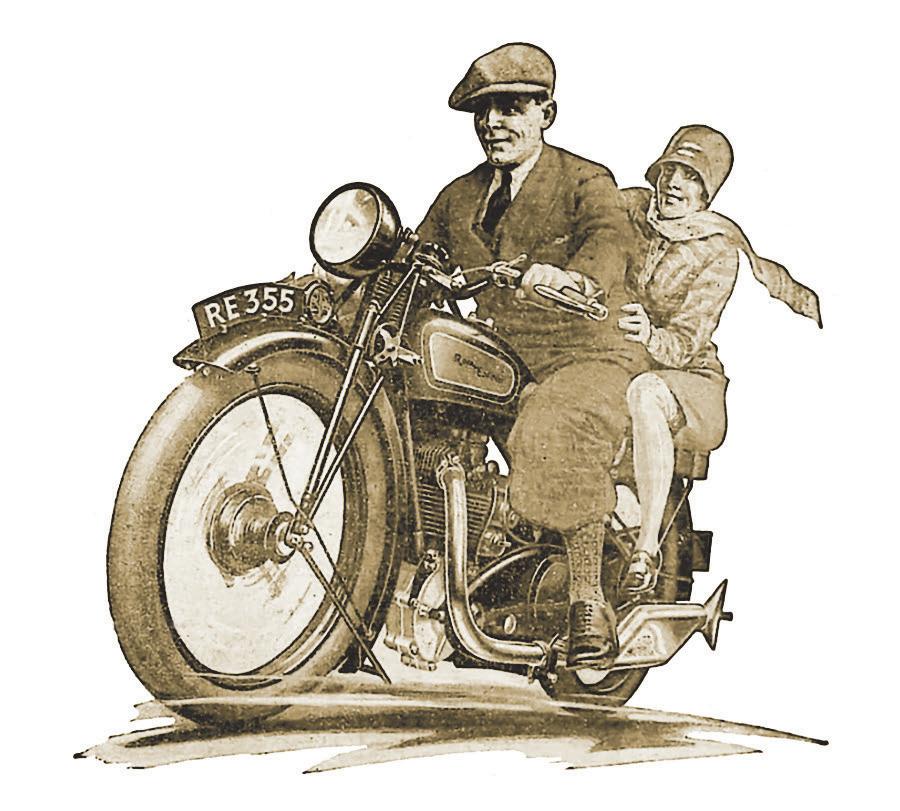
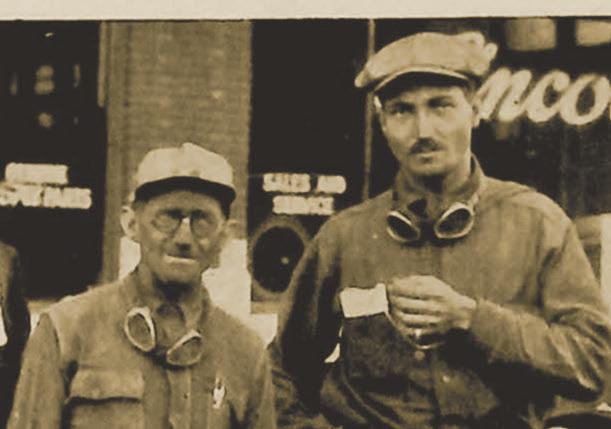
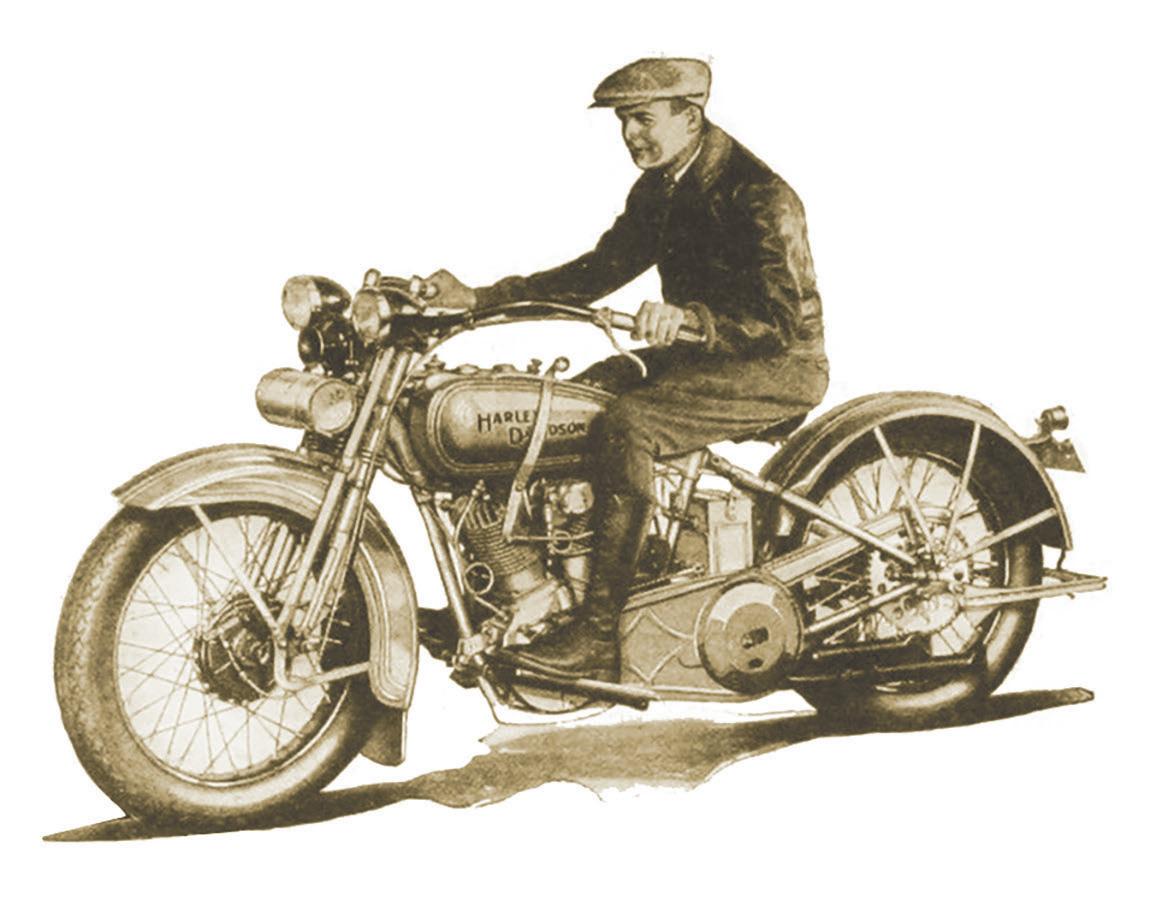
In its earliest days, motorcycling was a sport of well-heeled gentlemen (and some ladies), who turned themselves out in tweed suits, flat caps and equestrian boots. As speeds increased, the need for protection slowly became evident, and some, but not all, began wearing leather helmets and protective goggles. By the late ’20s, some progressed from woolen sweaters to leather.
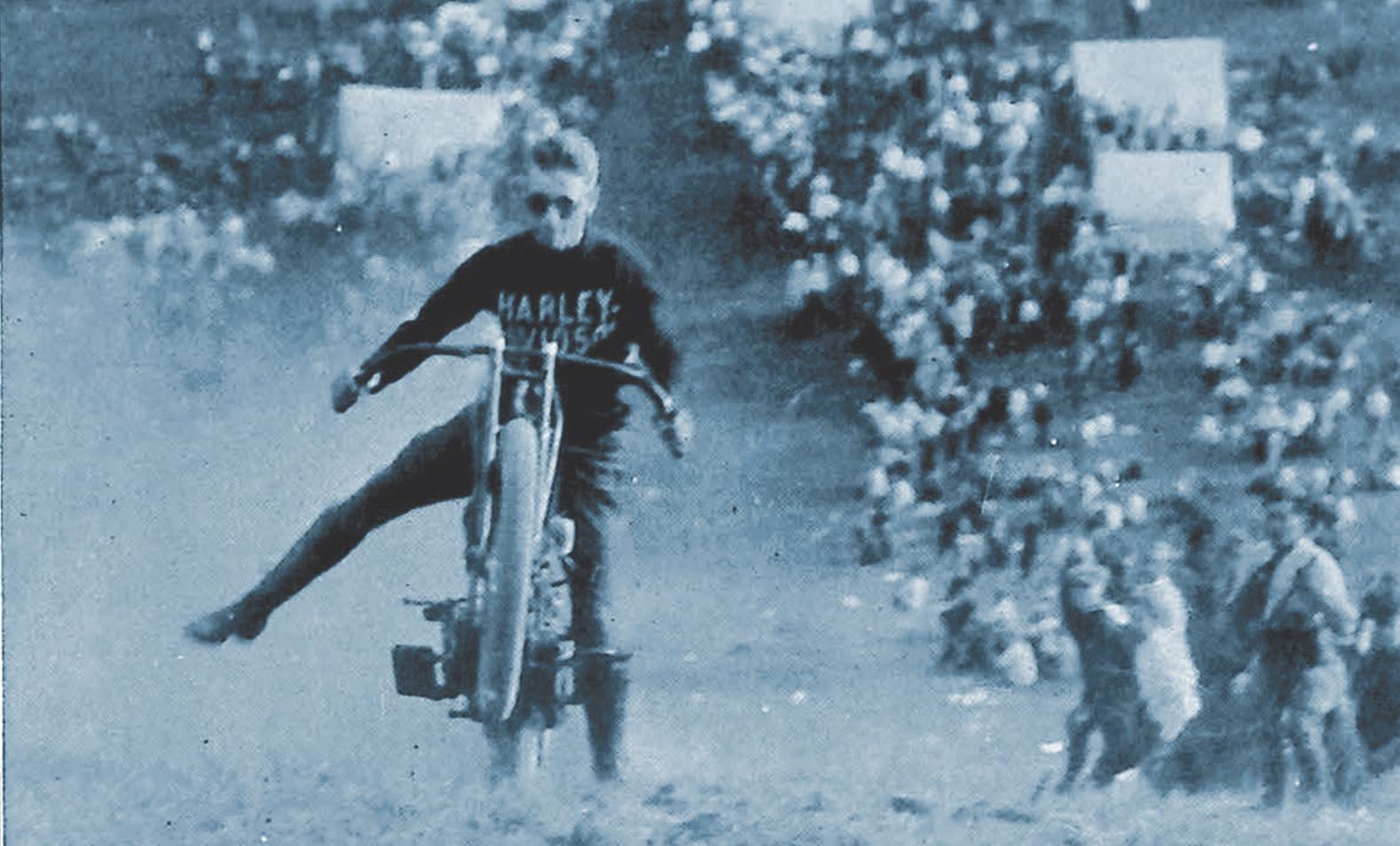
HILLCLIMBING: A HIT WITH THE MASSES
Harley-Davidson factory racer John Grove “going over the top” in 1924. Board tracks were too expensive for promoters to maintain, not to mention dangerous. By the mid-’20s, the Big Three — Indian, Harley and Excelsior — were in search of more economical ways to get their products in front of the masses. Think of hillclimb as early Supercross, then. In writes of a hillclimb in Pittsburgh, Pa.: “About halfway up this hill there is quite a bump, and those having a fast machine sure have built up some speed at the point where you hit it. Last season one of the jumps I made was measured and found to be just over 60 feet…I might describe this sensation as a feeling like an airplane had suddenly let out an anchor and pulled me up, then cut the rope suddenly.”
TIRE TECHNOLOGY
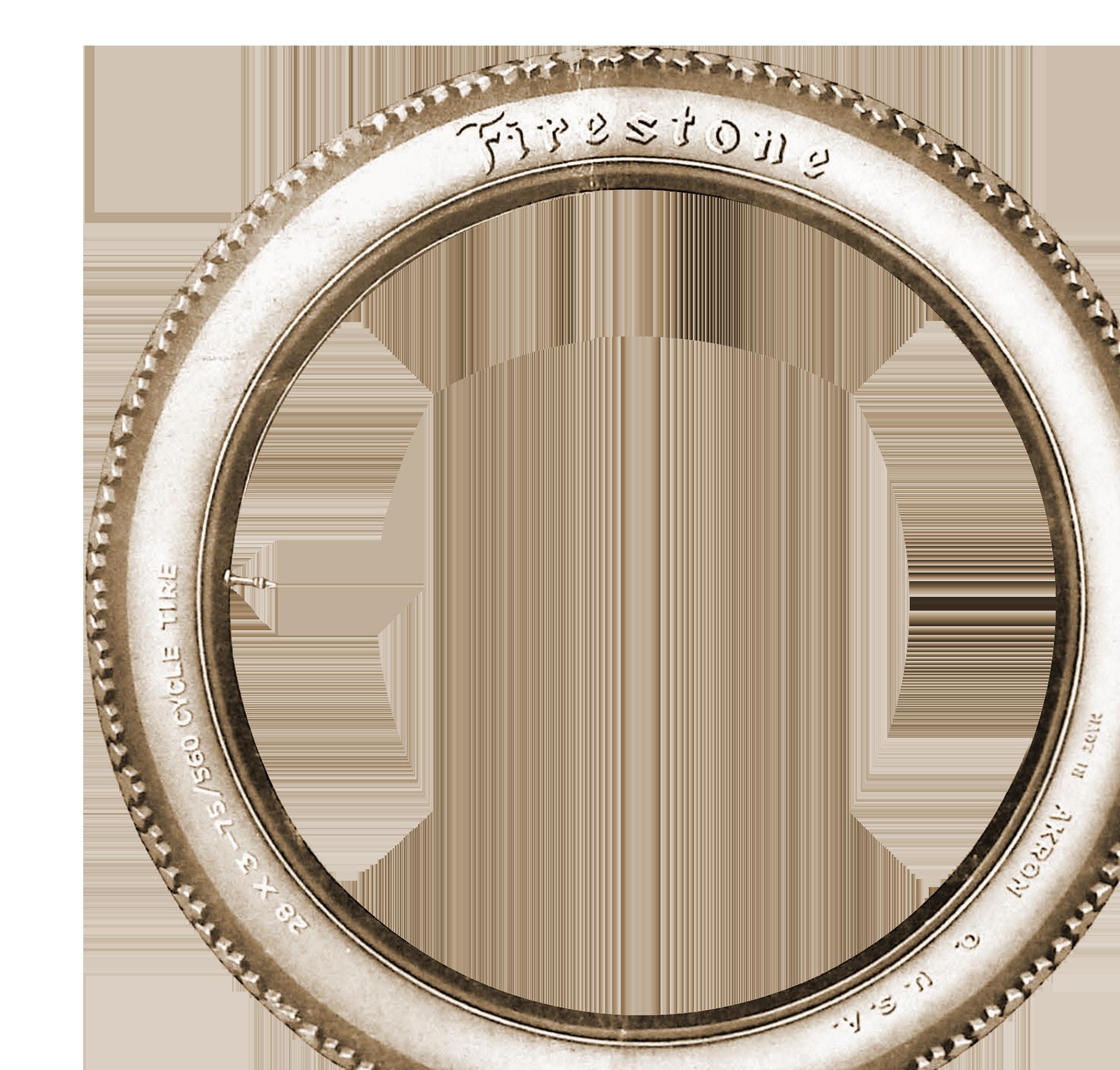
Tire sizes were all over the map, as you’d expect, leaning toward taller sizes no doubt in search of stability on dirt roads and race tracks. Your Brough Superior and Scott Flying Squirrel ran 19-inch tires front and rear, your BMW R32 and Excelsior Super X ran 26-inchers (!), and Harley’s Model D used a 26/23-inch combo. By the end of the ’20s, old-school “clincher” tires phased out in favor of the wire-bead tires and drop-center rims we still ride on today.
ENGINE TECH
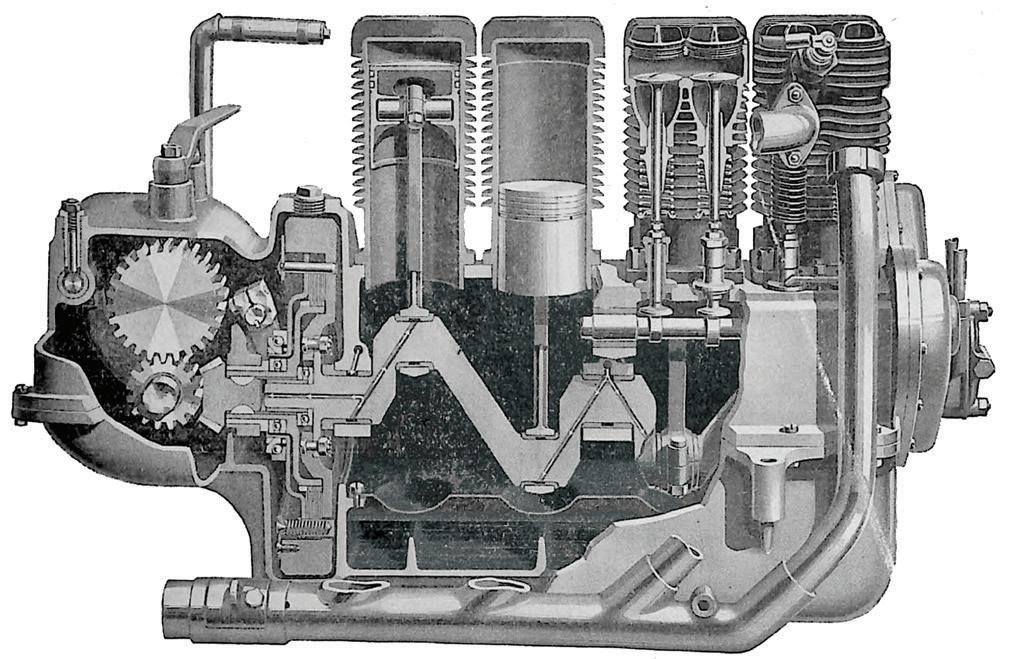
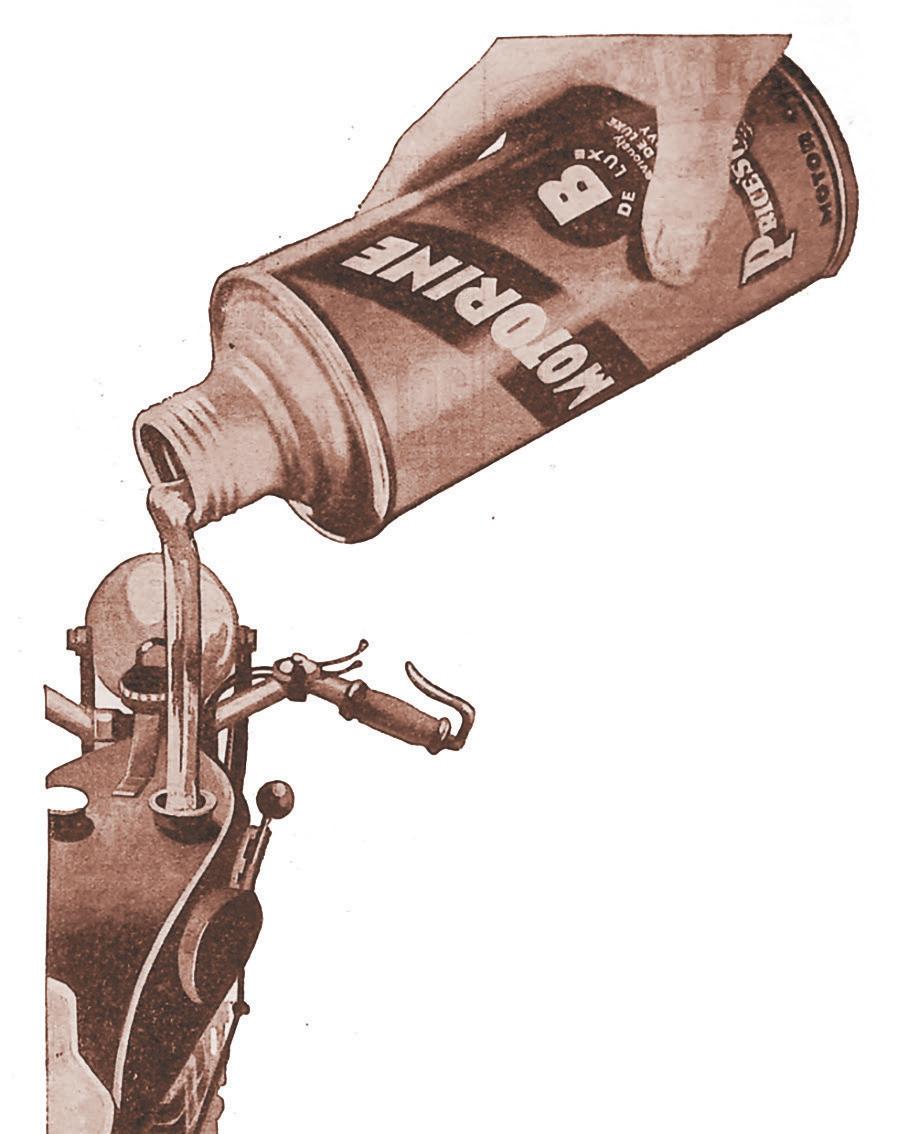
“To sustain life in the human engine, the blood must be maintained in constant circulation, and nature does not drip or splash the blood around to the parts that need it,” says an Excelsior ad. “There is but one method of positively insuring that the oil will reach the bearings — copying nature’s pressure-feed circulation system!” Henderson’s Four was the only engine with it in 1921. That’s why, “THE HENDERSON WILL STAND UP AND KEEP IT UP!”
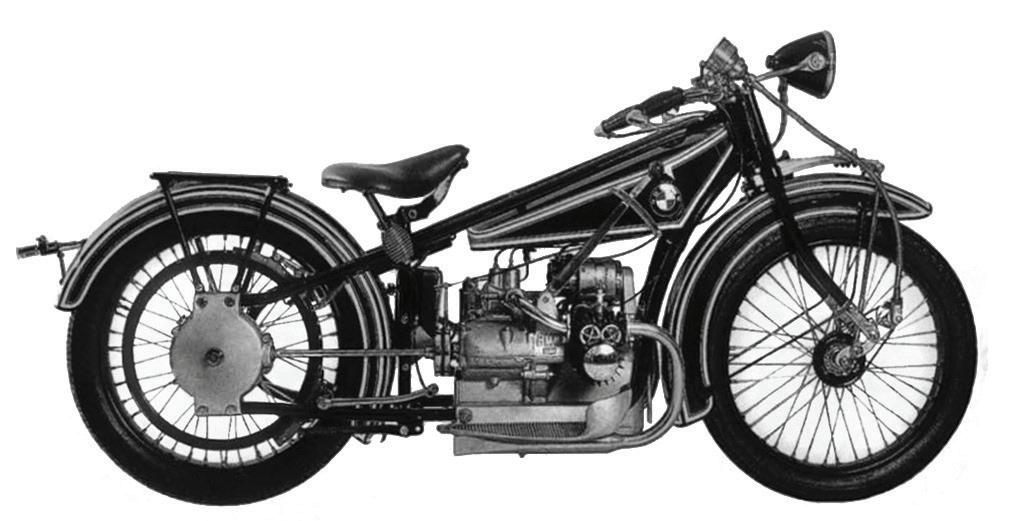
1923 BMW R32
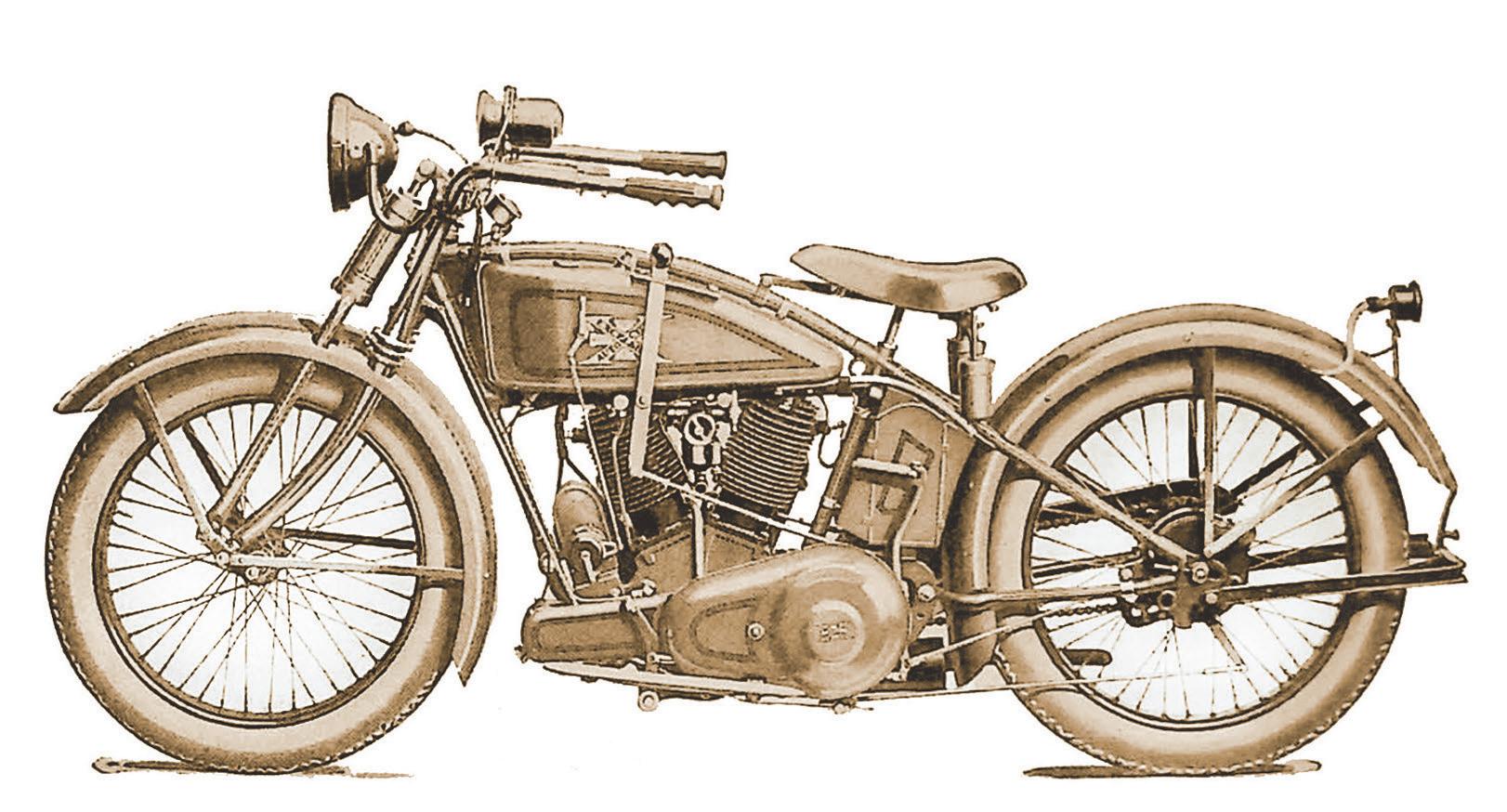
1924 Excelsior Super X
America’s first 45-cubic inch V-twin happened when Arthur Constantine, Assistant Chief Engineer at H-D, drew up plans for a mid-sized V-Twin to compete against the Indian Scout. “When he presented the unauthorized project to Walter Davidson, he was reprimanded for wasting the company’s time,” Pioneers of American Motorcycle Racing says. Constantine promptly quit and
At its WWI peak, BMW employed over 3,500 people and built stateof-the-art aircraft engines. After the war, it turned to engineering whatever would keep the lights on, since the Treaty of Versailles banned it from making airplanes. Its first motorcycle, the 1920 Flink, was not a success. In 1922 Max Friz designed the 494cc flattwin, with three-speed gearbox and shaft drive. It was the talk of the 1923 Paris Motorcycle Salon, a huge hit, and the first of the BMW “boxers” we still ride and love.
offered his services and his project to Excelsior, Ignaz Schwinn’s Chicago motorcycle company, and the Excelsior Super X appeared in 1925. Not long after, 45 cubic inches became the premier class in dirt-track racing, where the Super X proved very competitive against the Indians and Harleys of the day. Sales were reportedly not bad at all either, thanks to the Excelsior’s superior fit and finish. But Schwinn was badly spooked by 1929 events on Wall Street, and in 1931 pulled the plug on Excelsior and Henderson – which he’d also acquired. What might’ve been.
1921 EXELSIOR FOUR CYLINDER
1924 HARLEYDAVIDSON TWIN
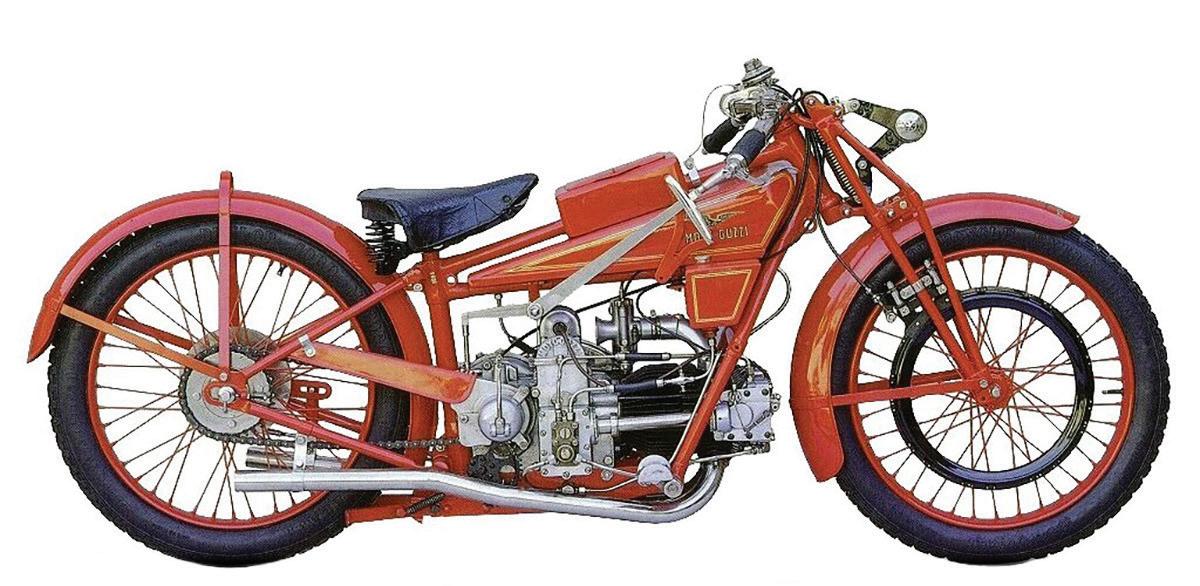
1924 Moto Guzzi C4V
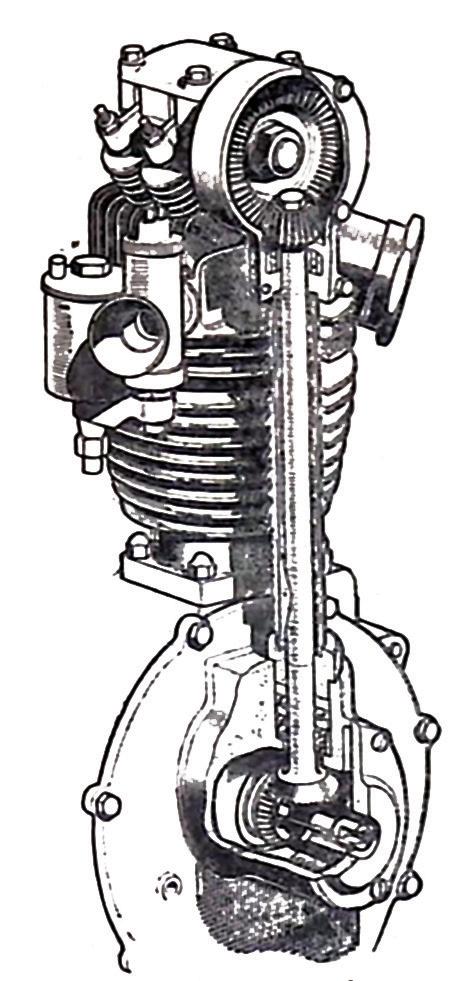
Meanwhile in Italy, a pair of bored WWI pilots and their driver/mechanic dreamed up their idea of the perfect motorcycle. Having a shipping magnate for one of their fathers had them off to a nice start, and their first motorcycle appeared in 1920. By 1924, they’d come up with the C4V racer. With an overhead cam and four valves, its 498cc single was good for 22 hp and 93 mph, which made it the first successful Italian motorcycle in 500cc racing. Sporting the same external flywheel and original oversquare dimensions, that same basic horizontal single remained in production until 1976 in the form of the Falcone.
AMA Gypsy Tours
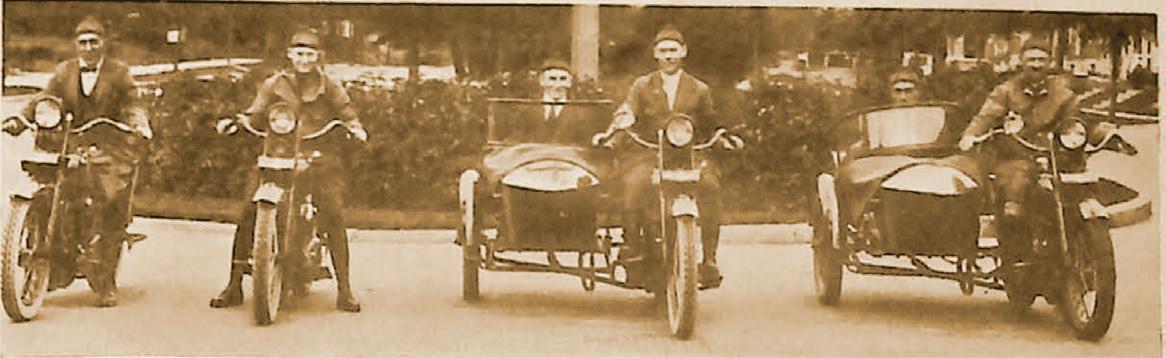
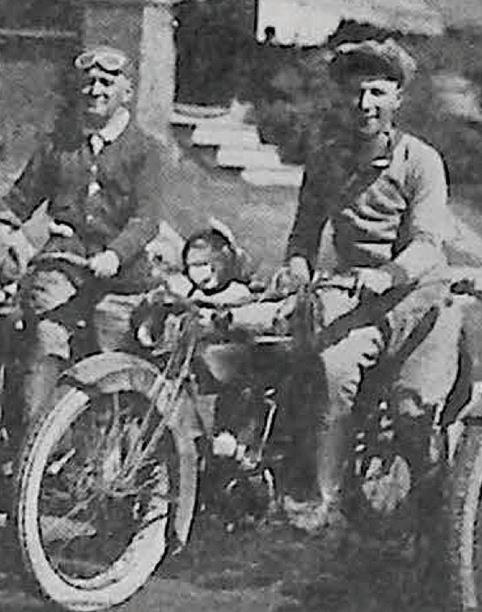
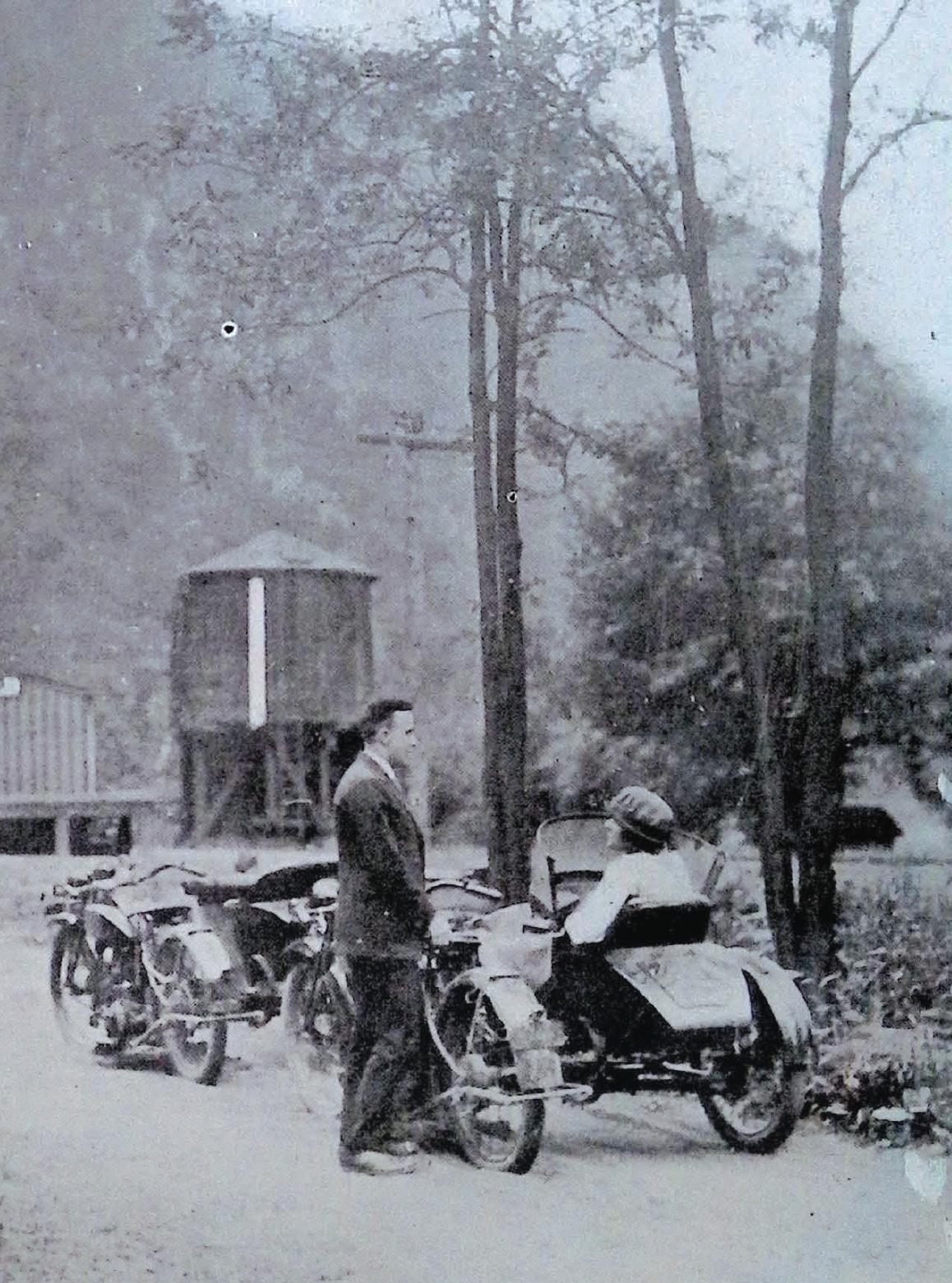
With roots reaching back to 1913 and an official designation given by the M&ATA in 1920, Gypsy Tours burst onto the scene before the AMA was born. The AMA took control of the Gypsy Tours in 1924, and AMA membership became a requirement for participation in the events. Thousands of motorcyclists joined the AMA as a result, with many doing so at the Gypsy Tour events.
The AMA is Established
Initially a racing registration element of the Motorcycle & Allied Trades Association, the American Motorcycle Association morphed into more of a rider-focused arm during the middle and late 1920s, supporting members, organizing events such as the already-established Gypsy Tours, and fighting bad legislation. Membership jumped substantially over the decade, and continued into the 1930s despite the Great Depression.
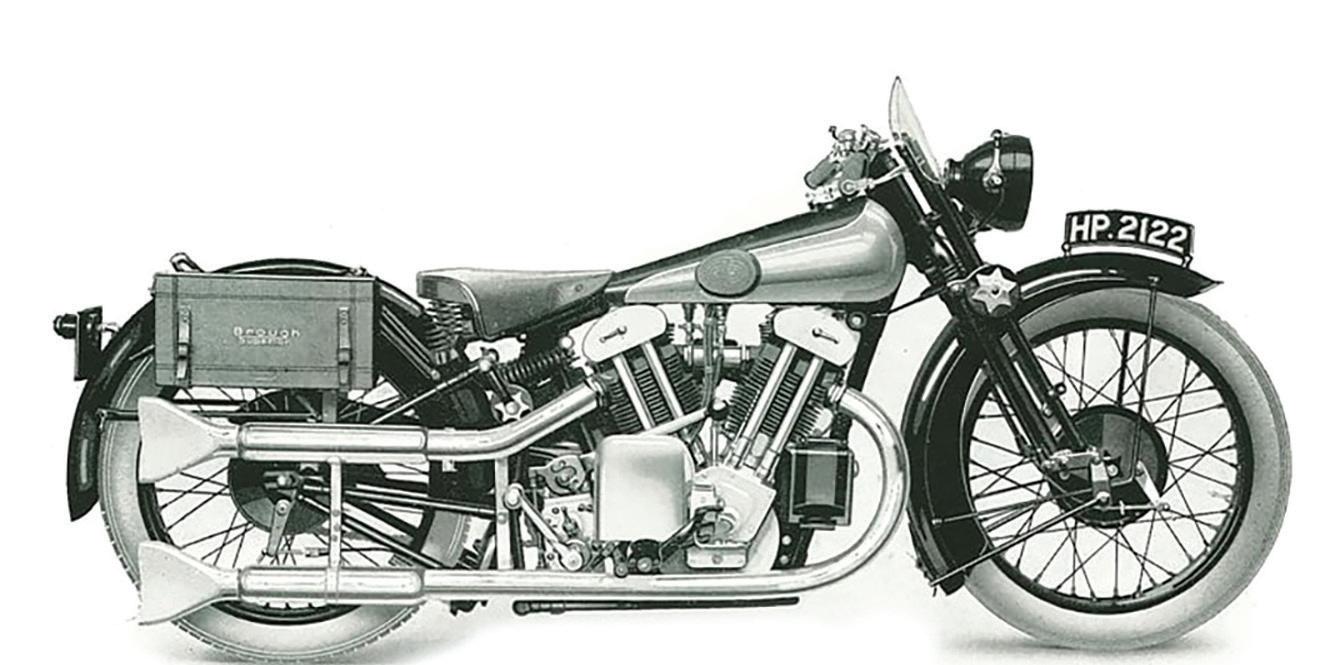
1925 Brough Superior SS100
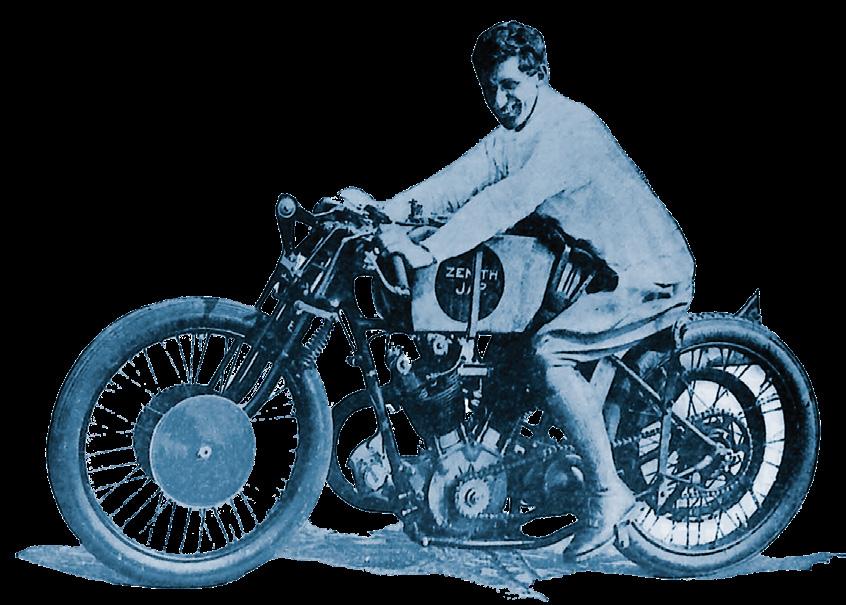
With its 1000cc overheadvalve JAP (J.A. Prestwich) V-twin, this one was tested and guaranteed to go over 100 mph in the quarter-mile, but the overall package was really the thing. Legend has it that after George Brough had been quoted referring to his bikes as “the Rolls-Royce of motorcycles” to a reporter, a Rolls-Royce executive visited the Nottingham factory to complain. After seeing the Brough operation and its products in action, though, he gave his blessing for the R-R comparison. George Brough didn’t want to make the most motorcycles, he just wanted to make the best. Production ceased at the end of WWII, and word is there are 71 SS100s still in existence.
American Six Days Trial
On the heels of the aforementioned Dodge City 300, the AMA also took on the challenge of hosting the first American National Six-Days Trial. Inspired by the International Six Days Trial — then gaining popularity in Europe — the six-day-long endurance race spanned from New York City to Columbus, Ohio, and back, and saw 47 of 49 participants complete the race. With the high number of finishers, critics and advocates for the European Six-Days competition declared the American Trial as “too easy.”
1923 THREE FLAG TITLE
Wells Bennett (below), madman. In 1922, Bennett established a 24-hour distance record that remained unbroken for 15 years – 1,562.54 miles in 24 hours on a Henderson Four, on a board track in Tacoma, Wash. Later that year, he set the transcontinental record from Los Angeles to New York in 6 days, 16 hours and 13 minutes. In August 1923, he took the Three-Flags Run title by riding from the Canadian border near Blaine, Wash., to Tijuana, Mexico,
The Neracar team took first place in the Lightweight division and the Team trophy. H-D’s factory effort included two solos and two sidecars (top). A sidecar, apparently, is a good thing to have when you hit a rough section and/or mud. John R. Yake (center) won the private-owner sidecar class and had the best overall score. J.R. Bruce, identified as “the short one,” held the distinction of being the oldest contestant.
Scott Flying Squirrel
Alfred Angus Scott had been toying with two-strokes as early as 1898, experienced TT success in 1912, and it all came to fruition in 1926, unfortunately four years after his death. The Flying Squirrel was decades ahead of its time, with a 596cc liquid-cooled, oil-injected, parallel-twin, two-stroke in a rigid, triangulated steel tube frame with a telescopic fork. Quiet, smooth, light (325 pounds) and powerful, it even had a kick starter – no more bumping! Though dogged by money problems and ownership changes, various Squirrels continued to be built for 25 years.
AUTOPED: THE SCOOTER IS BORN
In the nothing-new-under-the-sun category, the first mass-produced motorized scooter in the U.S. was basically a child’s toy with an engine mounted over the front wheel. A battery-operated version appeared later, after the Everready Battery Company bought Autoped. All sorts of people were attracted to the Autoped for all kinds of urban mobility reasons, including the New York Postal Service. Juvenile delinquents, reports Smithsonian magazine, saw their own window of opportunity, repurposing Autopeds as getaway vehicles. And California businesses had purchased 50 machines by 1917 so they could be rented out at beach resorts.
Breakaway Promoters!
The AMA organized its first race meet in Toledo, Ohio, from July 24-26, 1924. Months later, the AMA faced its first challenge when the owner of the old Ascot racetrack in Southern California announced he would hold an event without an AMA sanction.
Warning against “outlaw” events such as the one out in California, Motorcycle and Bicycle Illustrated magazine wrote, “It won’t be long before they discover that without the approval and backing of the controlling body, things will not go very well. The riders will find that with no one to back them up when they have a just grievance against the promoter, that they will be at the mercy of track management. The promoters will discover that the best riders will have nothing to do with them and that maintaining discipline among a bunch of independents who neither owe allegiance to nor are backed up by a controlling body is not as simple as it might seem. No sport has ever amounted to anything without a strong controlling body, loyally supported by its membership.”
Ascot’s owner ultimately decided to pledge his loyalty to the AMA and commit to a unified approach to growing the sport of motorcycling. Within its first full year of sanctioning competition in 1925, the AMA awarded 14 national championships and held 56 race meets, the most popular of which involved the discipline of hillclimb.
1927: The Last Ford Model T
The first one, in 1909, sold for $825. By 1922, Henry Ford and the economy of scale had the price for a Runabout down to $319. We’re going to go out on a limb and speculate the Model T did more than anything to make motorcycles more a hobby in the U.S., and less a form of transportation. How many wouldbe motorcycle buyers, when confronted with the price tag of their dream machine, involuntarily spat out, I could have a car for that! Plenty of people did. Their loss… (Harley’s “economical” Model D, new for 1929, had a list price of $290.)
O.E.C. BLACKBURNE THREE-WHEELER
They did things differently at the Osborne Engineering Co. in Gosport, England. One early motorcycle used a steering wheel instead of a handlebar. This three-wheeler appeared in 1928 as a prototype submitted to the War Office for testing, for use over rough terrain (complete with a caterpillar track carried on the rear fender for “use on boggy ground”). “The performance over shingle and broken ground,” wrote MotorCycling in a 1928 test, “was truly amazing, and the machine should have commercial possibilities in the Colonies.” Later, OEC would produce a twowheeled car.
1927
AMA Hires E.C. Smith
OIL AND LUBRICATION
Motorcycles were tough on oil, but not for very long, as many still used total-loss oiling systems to mark their territory. The first automotive oil filter, the Purolator, showed up in 1922, but oil filters didn’t make it into widespread use until the 1950s, and your guess is as good as ours as to the first one on a motorcycle.
Smith, a former referee for the Federation of American Motorcyclists and the M&ATA, was hired as a full-time secretary in October 1928, beginning a 30-year run in the role. Then-President Jim Wright hired Smith with the orders to move the AMA offices from Chicago to Columbus, Ohio. With 14 years of exposure to competition in his role as a referee, Smith had confidence the racing side of motorcycling was in a healthy spot, so he sought to grow club activity and improve the public’s perception of motorcycling. To accomplish these tasks, Smith packed up a movie projector and traveled throughout the country to show a film made by Firestone and Goodyear tire companies.
Smith (on the left) stepped into his role when membership sat at 4,200 people and 62 AMA-chartered clubs, and over the next decade – during the Great Depression, mind you – he saw membership quadruple, and the number of AMA-chartered clubs climb above a thousand.
NEW SPEED RECORD
Top speed was a big deal in the 1920s, and Zenith held the motorcycle world speed record on two occasions — the first FIM record of 124.55 mph (200.44 km/h) set in 1928 by Owen M. Baldwin at Autodrome de Linas-Montlhéry in Arpajon, France. That’s fast! By 1937, Ernst Henne went 173 mph (279.503 km/h) on his streamlined supercharged BMW, “the Egg.”
1928
E.C. SMITH
OVERHEAD CAM TECH
This three-valve OHC Cyclone engine, built by Joerns Motor Manufacturing Company of St. Paul, Minn., powered early Cyclone board track racers and dirt trackers. Both fast and furious, that bevel-drive shaft to the overhead cam was costly and complicated to produce, and lack of a pressurized lubrication system up to that OHC also did the Cyclone no favors in the longer races common at the time. This engine evolved into a 61-cubic-inch V-twin, of which maybe six are left, making the Cyclone among the rarest of vintage motorcycles.
1929 Harley-Davidson Model D
Harley’s first 45-cubic-inch model was a direct result of needing a bike to battle the 1928 Indian Scout 101 and Excelsior Super X in the popular middleweight 750cc class. The side-valve V-twin originally produced 15 hp, with a three-speed hand shifter and chain final drive; higher spec versions up to 20 hp were available via increased compression ratios. At just $290, the Model D set H-D up well to weather the Great Depression (whether anybody had seen it coming or not), and the cheap-to-produce, easy-to-service and hard-tokill flathead soldiered on in various forms until 1973.
Racing Legends!
The mid-1920s saw AMA Motorcycle Hall of Famer Oscar Lenz become the first rider to top the Lansing hill in Lansing, Mich. Lenz went on to organize the famous Jack Pine Enduro. Out West, a young “Daring” Dudley Perkins was dominating the hillclimb scene as part of another chapter in his AMA Hall of Fame career. Replacing track racing as the most popular, hillclimb had become a staple of AMA competition in the ’20s. In 1925, the Peoria Motorcycle Club held its first hillclimb, and that same year a boy named Jules Horky began his job as delivery boy for the U.S. Mail. Horky, who was gifted a four-cylinder motorcycle from his father to help deliver the mail, went on to work for the AMA for nearly three decades, helping guide the AMA’s competition efforts.
AMA Motorcycle Hall of Famer Joe Petrali won his first dirt track title in 1925, and followed the accomplishment up with a hillclimb championship in 1928. He added several more championships through the early 1930s. AMA
FRENCH THE
Riding the French Alps with Edelweiss BIKE TRAVEL. somebody’s gotta do it, right?
BY JOHN BURNS PHOTOS BY THE AUTHOR AND EDELWEISS
It’s all about the planning, really, a thing I’ve never been so hot at. As the old saying goes, failing to plan is planning to fail. Luckily for people like me, there’s always sheer dumb luck and the kindness of strangers. Even a blind squirrel finds an occasional nut, and when Editor
CONNECTION
Boehm threw out his back halfway through tours No. 1 and 2 of this year’s AMA Alps Challenge Tour series (he was gonna do all three, but…), he tagged yours truly to step in and take his place on Challenge No. 3. Funny, because I was just whining the other day about being the world’s only “motojournalist” never to have been on an Edelweiss Tour. They’ve been putting them on since Werner Wachter quit his day job to launch the first one in 1980. Today, Edelweiss operates tours all over the world, and not just on motorcycles.
Apparently, there are a lot of non-planners like me who can appreciate showing up at a foreign airport (Nice, France, in my case) and having a great motorcycle ride taken care of from there. Actually, I had to get myself to the Hotel Les Messugues, from which the group would blast off the next morning, and return to seven days later.
“Taxi!” There are no Lyfts in France.
Markus (in the van every other day, and at left), has been leading Edelweiss tours for decades and knows where all the bones are buried. Jamie E. Thomas Ritt is Tour Supervisor and not a bad photographer at all who shot nearly all these pics. Your luggage, thanks to the van, magically appears in your room every night.
No officials are manning the border, and no sign of anybody trying to sneak elephants across to conquer Rome. Why did we ever fight anyway?
For those keeping score, there were three week-long legs of this year’s AMA Alps Challenge. The first one started from Munich, Germany, in early August along with Mitch and my new best friend Charlie from Miami. I don’t ride as much as I used to, and I was a little concerned that seven days in a row blasting around the Alps on a not-slow BMW S1000XR might overtax my systems. Not to worry, said Charlie, who’s 10 years older than I and was about to embark on his 22nd day in a row with barely a break: “You’ll be having so much fun you won’t know you’re tired.”
Also along for the ride: an actual French chef, from France, now cooking at his own restaurant in Chevy Chase, Md.; Steele the pilot and his wife Terri from Dallas, and buddies Brian and Larry from Walnut Creek, Calif., and Bend, Ore. Tour regulars Phil and Rick from Tennessee — part of the “Tennessee Trio” from the original tour in 2021 — were scheduled to attend, but Phil passed away unexpectedly earlier in 2023 and Rick figured he’d pass this one up. That’s sad and sobering, but also why you should do a thing like this now if you’ve been thinking about it. I don’t know about all the Edelweiss tours, but my group’s not getting any younger.
NO FURTHER ADO…
At 7:30 a.m. it’s breakfast time; every hotel in France has the same croissants, chocolate croissants, prosciutto, salami, espresso maker – which is not a complaint. At 8:30 we drag our bags to the chase van, get a briefing on the day’s ride, and by 9 we’re rolling. Guess who’s spoiled from being a motorcycle journalist all these years? I am. I’ve been on a bunch of new-bike launches all over Europe (never for seven days, though), and it occurred to me a long time ago that the best part of traveling by motorcycle is that you go to places the average tourist will never see, small towns off the beaten track. Motorcyclists seek out the roads tour buses fear to tread. On your own, you might find a few of them, but you won’t be able to seamlessly link them together in the most efficient manner over seven days the way Edelweiss’s guides are able to do. Folding maps
it occurred to me a long time ago that the best part of traveling by motorcycle is that you go to places the average tourist will never see, small towns off the beaten track.
are fine, GPS is great (most of the time), but there’s really no substitute for being able to just ride and leave the navigating to a guy like Markus, who’s been riding these roads for decades. (He still needs to consult his GPS now and then.) Eugen, who alternates days with Markus leading the ride and driving the chase van, is new, but he never gets lost either.
SPEAKING OF NEVER GETTING LOST…
Charlie made his fortune in the bread crumb business, then made Edelweiss tours and riding schools his thing after he retired. Back home in Miami, where it’s hot, flat and dangerous, he admits he doesn’t even bother to keep a motorcycle anymore. The hardest thing to explain to people about his Alps addiction, he says, is how it’s possible to only cover 120 miles in a full day of riding. I wouldn’t have believed it either, but it’s true. Some of these roads are impossibly winding and narrow — though generally not that bumpy, at least. Maybe that’s because the Tour de France is such a big deal. Everybody in France owns a bicycle, and about half the populace is pedaling theirs up an Alp on any given day. Between mentally commiserating with the bicyclists burning all those calories and eating healthy-ish for nine days, I lost a few pounds.
LET’S GO TO ITALY
Day 1 has us hopping over a few passes, including the Col de la Lombarde into Italy. If I had to navigate, I’d probably be able to do a better job reporting on where we rode. As she stands, the whole thing wound up being a seven-day blur. Mostly I remember trying to keep up with Markus and Eugen’s Tenere 700 on my BMW S1000XR, first on a skinny, twisty road through primeval forest, then higher and higher above the tree line, where you miss the trees because they block your view
NATURAL HIGH
Day 2 sees us climb a bunch more passes on our way to Briancon, the highest city in France at 4,350 feet. Not all that high, really, but on the way there we summit Col Agnel, third-highest pass in the Alps at 9,016 feet, and the highest border crossing in Europe. No officials are manning the border, and no sign of anybody trying to sneak elephants across to conquer Rome. Why did we ever fight anyway? Who can remember?
Luckily, Briancon is home of the La Tourmente brewery. Alain the chef translates what it means to have a big torment. It’s universal. Tonight, we have none, but wash away the pain anyway with a lovely group dinner.
Everybody in California on a bicycle is wearing a tortured grimace; everybody in France, including the grandmothers, is mostly happily beaming. Charlie from Miami, right, will have been on 33 Edelweiss tours by the time you read this, and is the only human to do all three legs of the AMA Alps Challenge.
of how far you’d fall if you went over the side. At one tight hairpin, only one, there was Armco barrier; I didn’t even want to look at what that drop must’ve been. It all had me feeling a little vertiginous. Marmots crossing the road snapped me out of it.
But we made it past the old military fortifications up there, and down the other side into Italy and the Hotel Ristorante Pizzeria Le Lanterne in Beguda. It was hot that day, and we finally cheers-ed cold local beers, but only after the barman/owner explained the pros and cons of drinking five or six of them in various languages while we visibly dehydrated. Hey, said Alain the chef, Italy’s the home of slow food.
THE WISDOM OF CHARLIE
The pizza was fantastic. Charlie was worried the rooms would be hot if there’s no AC, and in my room (where my big Ogio bag had preceded me) there was none, but by dark it had cooled off nicely. Throwing open the doors to my balcony allowed me to snore freely and keep the bugs at bay. (In fact, I observed one dead mosquito on one fairing the whole trip; the Alps seem to be insect-free.) Of the seven hotels, the Pizzeria Lanterne was the only one with a bidet. After my last (and only) trip to Japan, I bit the bullet and outfitted both my home bathrooms with cheap bolt-on units. How ironic to be hygienically deprived in France, of all places…sometimes one must just soldier on.
It’s a crapshoot, says Charlie (who’s done 31 Edelweiss tours over the last 10 years, and has two more lined up later this year, one of them to New Zealand) as far as what kind of group you wind up riding with. Some are more fun than others, he says, but none are ever not good. “I mean, we’re all motorcycle people.” Our group winds up being only seven (and three guides, four if you count Thomas’ lovely and hard-riding wife Simone), but after the first couple of days we’re all beginning to adjust to each others’ peccadilloes. Except mine, as I don’t have any.
By Day 3 I realize fatigue isn’t going to be a problem, thanks to my BMW’s 150-horsepower engine and the fact that we never ride more than 1.5 hours before stopping for a nice double espresso. I’d missed the pre-ride orientation where the no passing rule was laid down (I thought everybody was just being super-polite), and after being upbraided for that, I’d now settled into my fourth place in the pecking order, having fun nipping
Everybody in France owns a bicycle, and about half the populace is pedaling theirs up an Alp on any given day.
In this part of France, it’s all Thomas the Tank Engine meets Hansel and Gretel, red-geranium window boxes and stopping to fill your water bottle at mountain springs instead of 7-Eleven.
Was I in this town? I don’t remember. I couldn’t possibly forget the Lacets de Montvernier, Rte 77b, which dropped us into Saint Jeanne de Maurienne. Thank God this road is only one way, I was thinking, just as I rounded another hairpin and came nose to grill with an oncoming pickup. Happy 39th, Terri!
at the heels of Charlie’s R1250GS as he nipped at the heels of Steele and Terri’s R1250RT, who nipped at the guide’s Tenere 700. It was actually a pretty quick pace, but not so quick as to miss the essence of motorcycle touring through Europe. In this part of France, it’s all Thomas the Tank Engine meets Hansel and Gretel, red-geranium window boxes and stopping to fill your water bottle at mountain springs instead of 7-Eleven. If you wanted to, you could at any time split off from the group and find your own way to the next hotel. Boehm says he does it occasionally, but on our tour, nobody did.
Once upon a time you might’ve wanted to stop and say hello to the woman tending her cliff-side garden, or the gentlemen killing the day beside the fountain. Now you just want to glimpse at their lives, wave, and keep sucking in more time and space. Let’s keep the cradle rocking while we can. There’s some kind of festival in one town we ride through, where the quad ski lift rises right up from the middle of things. Everybody’s camped out; nobody minds the occasional shower.
A LITTLE RAIN MUST FALL
It had been hot, in the low 90s degrees Fahrenheit, but on Day 4 there’s a hint of rain in the air, which becomes a deluge for a short while. For fair-weather California bikers like me, that’s always exciting. Will your gear be up to the task? Yes! My Spidi H20-Out jacket and Tourmaster pants keep me dry, and that’s a good thing, because when I stand up on the pegs to stretch, the cold water caught between the sleeves of my jacket’s outer shell and waterproof liner runs down into my gloves. It’s icy cold. No worries, though; my BMW has heated grips and handguards.
Most days there’s a leisurely lunch stop, but today the chase van brings us a picnic to eat alongside the beautiful blue Lac du Mont Cenis, 6,476 feet up. That night we sleep in the Black Diamond Ski Lodge in La Battaillette, which is as nice and modernly rustic as it sounds. Entrecote for everybody! And vin rouge for a few of us.
For a while we ride along the edge of a big lake on a smooth, fast road that passes through colonnaded tunnels I think I remember from a James Bond movie…or maybe a Lexus commercial. There’s a big waterfall that plunges over one section of it into the lake. We ride through the mist. After lunch, we ride up and over Col de l’Iseran, which is the highest paved pass in Europe.
We were going to do another pass, but the weather was turning blustery and we voted to get to Saint Jean-deMaurienne a bit earlier instead — mostly because Alain
I have 25 years’ worth of anti-fog products and replacement visors in the garage; did it occur to me to outfit my Shoei for a seven-day Alps adventure? It did not.
the Chef had told us about the Museo Opinel there, where they’ve been making great knives for a century or two. It was hot and parched again by the time we pulled into the Hotel St. George parking lot, and Eugen, whose day it was to drive the chase van, met us with a cooler of iced beer and drinks. I’m beginning to like Eugen very much. I picked up a beautiful chef’s knife and two camping
knives for the kids, and ducked into the local bar, Le Soft, on the way back to the hotel to observe the natives. I’m sure the French have their problems, too, but they don’t wear them so close to the surface. An older gentleman is having a glass of wine at a table; his wife collects him on her way home with a baguette poking out of her grocery bag. Au revoir, monsieur, and bon appetit.
This is the part where I say “we all became the best of friends and are exchanging Christmas cards.” Not really, but it is kind of amazing how different people from “all walks of life” (ok, that’s not really true either) or at least a few geezers with a little disposable income and not much else in common, except motorcycles, really can become a tight-knit little band of brothers (and two sisters) in just a few days riding together. Cheers, mes amis!
Learn more about AMA Alps Challenge Tours by visiting edelweissbike.com
Speaking of planning, I have 25 years’ worth of anti-fog products and replacement visors in the garage; did it occur to me to outfit my Shoei for a seven-day Alps adventure? It did not. On Day 5, the rain is like being water-boarded for a while as we ride one of France’s famous roads carved into the side of the mountain. Larry the civil engineer had observed the night before that at least all the cliffs are stable — which would explain today’s many large rocks in the road with water pouring past them. Really, it was no problem to defog by just opening my shield and using the Shoei’s drop-down visor and the bike’s windscreen to block the drops, as we were crawling along pretty slowly. The clouds we were riding through parted once to reveal
a tiny village thousands of feet straight down in a lush valley, like looking out of an airplane. Yikes, better to concentrate on the taillight ahead of me…at least there’s a low stone wall between me and oblivion on the left, even if it is only five feet away. Eventually we drained, along with millions of gallons of silty runoff, into yet another quaint cafe for another double espresso. Riding in conditions like that does reinforce group cohesion, and also makes you appreciate your ABS and traction control.
By now I’m even beginning to like the long lunches in the little French restaurants that you definitely wouldn’t find on your own. Homemade pork ravioli, San Pellegrino and idle motorcycle chatter. By now, strangers have become new friends. If you wanted to travel on your own or with a pre-existing group of friends, Edelweiss also offers selfguided tours.
By the end of seven days riding, consuming long, delicious dinners with great people, and sleeping like a pampered baby in a different crib every night, I was with Charlie: I could’ve just kept going another couple of weeks if they’d let me. It is what it is.
Maybe Mitch will throw his back out again next year? No! Perish the thought! AMA
...AND SAVE MONEY! THE ESSENTIALS PRODUCT DISCOUNTS
Take advantage of discounts from our quality partners and save loads of money – and pay for your AMA membership – in just a few keystrokes! From gear, event tickets and rentals to accessories, hotels and performance parts, it really is that simple.
15% at participating Choice Hotels Properties.
to 10% off at Motel 6. Use code: M64AMA 20% discount off available rates, call (800) REDROOF and use the code VP+ 503343. To make reservations online use code: VP+ 503343 in the field labeled “VP+/ID#”
ADVMoto 20% discount. Use code AMADV20
AMA Motorcycle Hall Of Fame
Free admission to the AMA Motorcycle Hall of Fame in Pickerington, Ohio.
AMA Supercross Tickets
Save $5 on up to 8 tickets at supercrosslive.com Use code 4AMA5
Anthony’s Leatherworks 10% discount on repair order Use code AMADISCOUNT
Blendzall
AMA members can save 20% at blendzall.com. Use code AMA20 at checkout.
Bohn Body Armor
10% AMA Member Exclusive Discount. Visit bohnarmor. com and use code AMAD22 at checkout.
Bugslide
AMA members enjoy 15% off all BugSlide® cleaning products. Use code AMA2023
Butler Maps
AMA members receive a 20% discount at butlermaps.com. Use code AMAMEMBER
California Dual Sport Riders
Members save 50%. Use code AMA. Visit cdsr.us to learn more.
EagleRider
For Club EagleRider AMA members receive 2 free rental credits. Use code AMACLUBER
Edelweiss AMA members save on standard bike tour. Use code 21AMA-EBT03 at checkout.
Evans Cooling System
25% discount on Evans Coolants and Prep Fluid. Use code AMAFUN at evanscoolant.com.
EVS Sports 10% discount and free shipping on all orders. Use code AMAEVS20
Gryphon Moto
AMA members receive a 15% discount on Gryphon Moto orders at gryphonmoto.com. Use code AMA at checkout.
an additional 15% on all Haynes & Clymer print and online repair manuals. Use code AMA15
Heli Bars Use code AMAM2020 for a 10% AMA Member Exclusive Discount at helibars.com.
Helix Racing Products
Cardo Systems
20% discount online with valid AMA membership card. Use code AMA20
Colorado Motorcycle Adventures
10% discount with valid AMA membership card.
AMA members save 20 on all products at helixracingproducts. com. Use code AMA20 at checkout.
Helite Moto
AMA members get 15% off every order at helitemoto.com. Use code HELITEAMA
HertzRide
AMA members save 10% on rentals in all locations globally at hertzride.com/us/ promo/American-motorcyclistassociation-1065 or use code AMA10
Legacy Track Dayz
15% discount on Legacy Track Dayz events. Use code AMARideLTD
MAD Maps Save 15%. Use code AMA15
Matrix Concepts AMA members receive a 25% discount on most products for shop, garage & track necessities at matrixracingproducts.com Use code AMA25
Medjet
Air medical transport and travel security protection – visit Medjet.com/AMACycle or call 1.800.527.7478, referring to American Motorcyclist Association. Annual rates reduced by 20% and start at $235.
MotoAmerica
20% off 2-day and 3-day passes at select MotoAmerica events. Use discount code AMA20
Motool
AMA members can save 10% at motool.co. Use code AMASAVE20 at checkout.
MX Boot Repair 10% discount. Use code AMADISCOUNT
at checkout
MYLAPS
20% discount off MSRP or current sales price on weborders or orders coordinated by the AMA. Use code AMA-789HJK
Nationwide Pet Insurance
members save on pet
Nelson Rigg 20% AMA Member Exclusive Discount on all products! Use promo code AMA-NR20
off industry leading
Concepts
off products at stkrconcepts.com. Use code AMA15
Security Systems. Use code ama2020rl The Dirt Bike Academy 10% exclusive discount on instruction. Learn more at thedirtbikeacademy.com Use code TDBAAMA10 Street Skills
Dowco Powersports
20% discount.Use code AMA20
Liberty Sport Eyewear 30% discount on all “motorcycle collection” frames. Discount code AMA30.
discount on online courses at StreetSkills.net. Use code AMACCOC.
Third Eye Design 10% discount on inView, a wireless brake and signal light. Use code AMA at thirdeyedesigninc.com
AMA ARIZONA
SANCTIONED COMING EVENTS
Be sure to check the event website or call the organizer for the latest information, including postponements or cancellations.
Grand Prix Feb. 2 - 4. Taft. Dirt Diggers MC, BIG 6, NGPC, Taft Grand Prix, Southern California Dirt Diggers, 661-378-0222, ondarildo@sbcglobal.net, www. dirtdiggersmc.com
Enduro Feb. 10. Red Mountain. PROSPECTORS GOLD RUSH SPRINT ENDURO, Prospectors MC, 562-307-4633, kghintz@yahoo.com, prospectorsmc. com
Motocross Feb. 17 - 18. San Bernardino. Mini Monsters, CMXRS, 909-880-3090, lori@glenhelen.com, https://www.swapmotolive.com/
Hare Scrambles/Cross Country Feb. 17 - 18. Paicines. Picacho Creek Hare Scrambles, Salinas Ramblers M/C, 408-612-6440, srmc@salinasramblers. org, salinasramblers.org
Road Ride/Run Feb. 24. Clayton. BMW NorCal February Campout, BMW Motorcycle Club of Northern California, 408-464-8094, delf.hedde@gmail.com, https://bmwnorcal.org/sys/website/?pageId=7741 Off-Road/Trail Riding School Feb. 24. San Jose. FirstRides Kids Beginner Class, First Rides, 408-2265223, parkinfo@prk.sccgov.org, https://parks.sccgov. org/santa-clara-county-parks/metcalf-motorcyclecounty-park
AMA FLORIDA
Hare Scrambles/Cross Country Feb. 3 - 4. Indiantown. Florida Trail Riders, Treasure Coast Trail Riders, Inc., 772-801-9777, lluisabx@hotmail.com, www. FloridaTrailRiders.org
Dual Sport Feb. 4. Wedgefield. Manchester Dual Sport Ride, Sumter Enduro Riders Motorcycle Association, 803-491-6061, JAycock62@yahoo.com, www.serma. club
11. Known bondholders, mortgages, and other security holders owning or holding 1 percent or more of total amount of bonds, mortgages, or other securities: None
12. Tax status: Has not changed during preceding 12 months
13. Publication name: American Motorcyclist
14. Issue date for circulation data below: Sept. 01, 2023
15. Extent and nature of circulation:
and
AMA NATIONAL RECREATIONAL
2024 AMA National Adventure Riding Series americanmotorcyclist.com/ national-adventure-riding
April 12-14. Perry Mountain Tower Run Adventure Ride. Plantersville, Ala. Perry Mtn MC. (334) 327-5086. perrymountainmotorcycleclub.com
May 18-19. Show Me 500. Bixby, Mo. Midwest Trail Riders Assn. (314) 409-6936. ridemtra.com
June 1-2. Durty Dabbers Great Adventure Ride. Lock Haven, Pa. Durty Dabbers. (570) 748-9456. durtydabbers.com
June 8-9. Ride For Research. Wabeno, Wis. Wisconsin Dual Sport Riders. (920) 350-2030. widualsportriders.org
June 8-9. MVTR Adventure Bike Ride for Cystic Fibrosis. Belmont, N.H. Merrimack Valley Trail Riders. (603) 235-1087.
June 22-23. Big Bear Run 2024. Big Bear Lake, Ca. Big Bear Trail Riders. (818) 391-3031. www.bigbeartrailriders. com
Sep. 28-29. Big Woods 200. Wabeno, Wis. Wisconsin Dual Sport Riders. (920) 350-2030. widualsportriders.org
Oct. 5-6. Shenandoah 500. Mount Solon, Va. Washington Area Trail Riders. (619) 244-9630. watr.us
Oct. 26-27. Scenic Dual Sport Ride. Morgan Hill, Calif. P&D Promotions. (408)249-4336.
Nov. 2-3. Howlin at the Moon. Payson, Ariz. Arizona Trail Riders. (602) 692-9382. arizonatrailriders.com
AMA Trademarks
The following represents active, registered trademarks, trade-marks and service marks of American Motorcyclist Association, Inc. (AMA). Usage of any AMA trademark or registered trade- mark without our permission is prohibited. Please contact jholter@ama-cycle.org for more information or assistance, (800) AMA-JOIN®
• AMA Dragbike® • AMA Endurocross® • AMA Motorhead® • AMA Pro Grand National Championship® • AMA Pro Racing® • AMA Race Center™ • AMA Racer® • AMA Racing® • AMA Racing Land Speed Grand Championships® • AMA Supermoto® • AMA Supercross® AMA SX Lites® • AMA U.S. ISDE Team™ • AMA U.S. Jr. Motocross Team™ • AMA U.S. Motocross Team™ • Amateur National Motocross Championships® • American Motorcyclist Association® Arenacross® • ATV Hare Scrambles National Championship Series® • ATV Motocross National Championship Series® • Flat Track Grand Championships™ • Grand National Enduro Championship® • Gypsy Tour® • Hare & Hound National Championship Series® • Hare Scrambles Championship Series® • Hare Scrambles National Championship Series® • Kids Just Want To Ride® • Motorcycle Hall of Fame® • Motorcycle Hall of Fame Museum® • Motorcyclist of the Year® • Motostars® • National Adventure Riding Series® • National Dual-Sport Series®
• National Enduro Championship Series® • Protect Your Right to Ride® • Protecting Your Right to Ride® • Ride Straight® • Rights. Riding. Racing.® • Road Race Grand Championships® • Vintage Grand Championships® • Vintage Motorcycle Days® • Vote Like A Motorcyclist®
Garage
Tips,Tweaks, Fixes and Facts: The two-wheeled ownership experience, explained
TECH PART ONE LUBE
CHEMICALS 101
Many of our bikes will be dry and parched after sleeping all winter. Here’s what to feed them.
BY JOHN BURNS
t’s become common knowledge what not to bring up at the dinner table: politics, religion…and motorcycle oils. And with the spring riding season fast approaching, a wide range of slippery stuff is bound to come into play in some fashion pretty quickly.
We’re not going to play favorites here (not much, anyway), but we are going to advise you to pick the oil and chemical brand you like and follow your owner’s manual, as the OE engineers are pretty sharp and know what works best with their stuff.
OIL’S OIL, RIGHT?
Remember, the brand of engine oil you use is less important than the kind of oil. Again, your owner’s manual is key. Most motorcycles’ engine/transmission units share the same oil, and because of that most of them want you to not use any oil labeled “energy conserving,” which are so slick your clutch might not clutch. If you do use passenger car oil in your motorcycle, the experts say ones rated JASO MA2 will get along best with a wet clutch, although some bikes specify a minimum rating of MA.
There are companies, including our AMA-supporting friends at Maxima Racing Oils, who engineer premium oils for specific motorcycle applications. There are also break-in oils, ATV oils, SxS oils, all manner of 2-stroke oils for motorcycles, watercraft, snowmobiles, etc. Might as well use the right tool for the job.
And Conventional oil vs. Synthetics? The experts tell us synthetics outperform mineral/conventional types in all performance aspects, including extreme heat and cold, wear reduction, and maintaining viscosity
CHAIN WAX OR LUBE?
Some riders can’t sleep (or ride) until they’ve slathered their chain with lube; others trust their O-rings to extend their lube intervals. Every modern O-ring chain has a lifetime supply of lube sealed inside those O-rings, and the main reason for lube is to keep the rubbery rings pliant and happy so
as to keep that lube in there. Also, to soften contact between rollers and sprockets, and lastly to keep the chain from rusting and looking gnarly, which is more important to some than others (though rust inside the links can tear up the O-rings).
You’ll have to decide between chain lube and chain wax. Our man at Maxima says its Chain Wax works best for dry conditions, while its Chain Guard lube offers the best water resistance for wet/muddy days…though it might run “a bit messy” in dry/ dusty conditions. Maxima recommends Chain Wax for sportbikes, and either wax or lube for off-road/motocross based on conditions.
CHAIN CLEANER
Sometimes, but not always, you need to clean that chain before you lube it, and God forbid you should use anything that’s going to harm those O-rings. Plenty of people use WD-40 and kerosene as chain cleaners with no problems, but both RK and D.I.D recommend against doing so. If it’s us, we’re using dedicated O-ring-safe chain cleaner. It’s widely available; you can even find Maxima Chain CleanUp at Walmart.
GEAR OIL
sion-free via its Water Displacement property — and there are plenty of similar products from many competitors. But WD-40 is not for loosening rusty bolts; for that you want WD-40 Specialist Penetrant Some products claim to serve both functions, like Maxima’s Multi-Purpose Penetrant Lube (MPPL). Many of them also claim to be effective as cylinder foggers for long storage periods. Kroil gets high marks from the gallery.
FILTER OIL
PJ-1 and others make lubes specifically for your cables; just don’t try to lube them without the special clamp tool that directs the lube into the cable instead of into your retinas.
If your motorcycle doesn’t have a drive-chain or belt, then you’ll need to change the oil in its differential at specified intervals to keep that 90-degree transfer of shaft-drive power peaceful. Just like inside your engine, synthetic varieties of gear oil are going to provide better shear protection, and may allow non-nervous types to stretch those intervals.
PENETRATING LUBES
WD-40 is the granddaddy here, which plenty of people spray all over their bikes’ metal parts to keep them clean and corro-
“All you need is air, fuel, and spark,” the old adage goes, and to get enough air you need to clean that filter. Use one of the spray-on cleaners, or soak the thing in a tub like the one Twin Air makes. Once it’s dry remember to oil that filter with the right air filter oil according to instructions. For bikes using K&N-style fabric/foam filters, we know they only work right when clean and treated with the right oil, don’t we? K&N recommends its own brand, while Maxima FAB-1 also gets it done.
GREASY STUFF
SHOCK OIL/FORK FLUID
It’s not subject to quite as much abuse as the oil in your engine, but all that squeezing in and out through those small orifices while suspension internals churn and gradually wear away does contaminate your suspension juice over time. Longer travel and bigger hits speed up the process, as our off-road friends have long known. Luckily, there are plenty of sources for all kinds of fork and shock oils, including Maxima, in all kinds of weights.
We’ll cover the other half of the Chemicals 101 story — brake fluid, fuel stabilizers, parts cleaners, etc. — next month.
No garage can operate without a tub of grease. Might as well go for the good stuff with lithium, since when used correctly (i.e., sparingly) it’ll last a long time.
CABLE LUBE
It’s never much fun to jump on a bike and have stictiony, dry lever action greet your hands due to a lack of lube. Motion Pro,
behind the scenes
WThe Connie Continuity
AMA employee Connie Fleming has been a staple at the AMA for four decades
BY KEATON MAISANO
hen Connie Fleming accepted a job at the AMA in October 1980, it appeared to be just an early pitstop on her career journey. But four decades later she’s still here, having served in many important roles over the years and along the way becoming an integral part of the AMA’s mission to promote the motorcycling lifestyle.
Applying for the job because the AMA’s HQ was in her hometown of Westerville, Ohio, and because her roommate worked there, then-Connie Cole was interviewed by Hugh Fleming, a man she would marry less than a decade later. The pair have been married for more than 36 years as of publication. Early on, Fleming worked as a statistician/secretary for the Member Activities department. The job required some elbow grease, as the technology of today was lacking in the ’80s. “We weren’t digital at all,” Fleming said, “so you had
to code the cards and do referee reports all by hand. We did have electric typewriters, though.”
She transitioned to the pro racing side of the AMA in 1984, and ended up racking up tons of air miles traveling to Six Days events, FIM Congress meetings and other international events. In all, she traveled to 13 different countries. “I didn’t think I’d be here 40 years,” Fleming said. “The jobs and
the experiences I’ve had throughout the years. You can’t go do what I’ve done at any place.”
Fleming has held a handful of key jobs at the AMA, moving from Racing to AMA events and back for her current roles as AMA Supercross/FIM coordinator and administrative assistant to Director of Racing Mike Pelletier.
“Connie’s knowledge and experience are invaluable,” Pelletier said. “Over the last 40 years she has been a key to the success of the AMA. Her attitude and personality are contagious. Her unwavering support of our AMA members is unmatched.”
Regardless of her role — or multiple roles depending on what’s needed — Fleming has become an important cog in the AMA machine. “It does feel really good, but it’s also terrifying for the day I’m going to retire,” Fleming said. “I’m trying to leave a path for the next person.”
In the twilight of her working career Fleming continues to show why she has endeared herself to coworkers. From her hard work in her role to her flawless cubicle-decorating skills throughout the year, Fleming brings an accountability and zest for life that permeates the AMA office. Despite all she has given to the AMA, her fellow employees and motorcycling, she remains selfless and focused on leaving the AMA better than she found it.
“That’s why I’m still here,” Fleming said. “I’ve had options over the past 10 years to not be here, and both times I said, ‘I’m not done at the AMA yet. I have more to accomplish.’”
Fleming is eyeing August 2026 as a target for her retirement, completing what would be just shy of 46 years of service to motorcyclists.
“Connie’s knowledge of the AMA is impeccable,” said AMA Deputy Director of Racing Mike Burkeen. “Hopefully she’ll change her mind and stick around for a few more years! If not, it definitely won’t be the same.”
What will make retiring a bit more bearable? For Fleming, it’s the bright future of the AMA. “Right now, with the people we have in place, I’m confident about where the AMA is,” Fleming said.
Connie Fleming (fifth from right) posing with members of the AMA Racing Department in the mid 1990s. The photo was taken outside the AMA’s old office in Westerville, Ohio.
Feeling lucky? Looking to win a true two-wheeled legend? This special-edition, 1997-spec KTM 200 Jackpiner raffle bike — built to celebrate the 30th anniversary of the first Penton motorcycles sold back in the late 1960s and named after the Penton 175 that used the first full-sized engine KTM built — will absolutely do the trick. Only 133 were built, and to make the package even more special, each is numbered and has a John Penton-signed sticker on the front fender. Get your tickets — $5 per, or 5 for $20.