BUY LOW, SELL HIGH
It’s Harder To Do Than To Say
By Grant Parsons
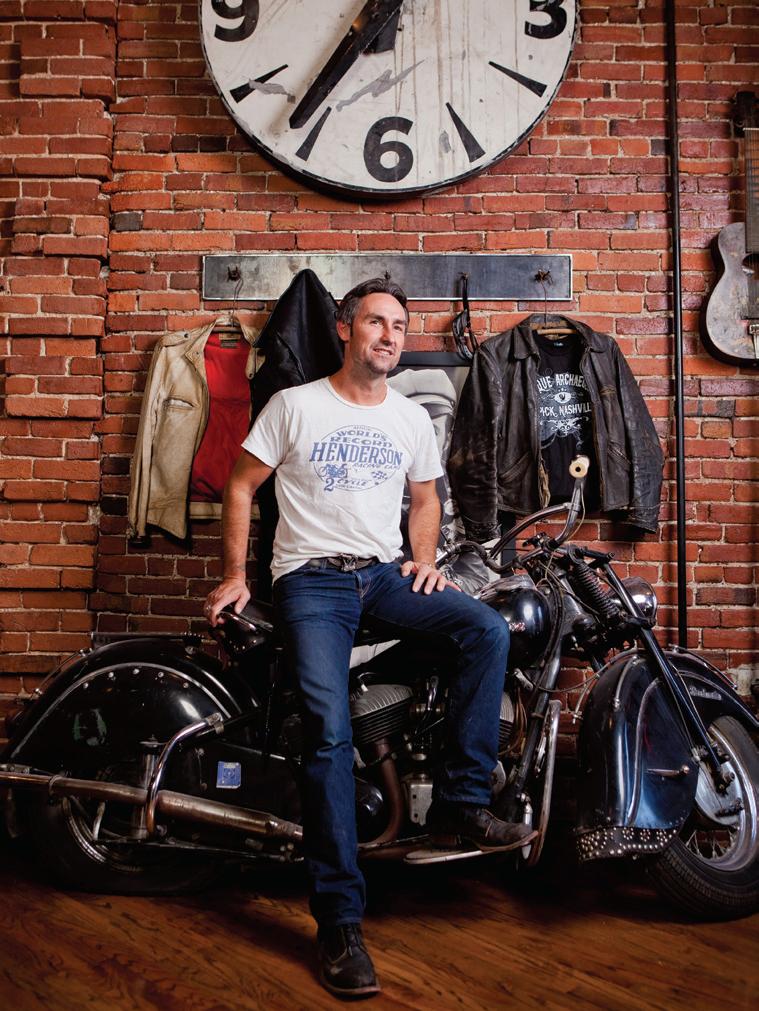
I’m sitting in Mike Wolfe’s Nashville, Tenn., shop, talking to a guy whose obvious energy, knowledge and belief in his ideas has turned a love of old motorcycles and other “junk” into a successful business, a TV show and what appears to be a ton of fun (see story on page 32).
And I can’t help thinking that in one crucial way, Mike is a freakin’ genius. It’s not because he’s savvy enough to find cool old stuff that others can’t. Nor because he spent four years pitching a TV show that was repeatedly turned down until the History Channel bit and “American Pickers” became a breakout hit.
Nope. It’s because he regularly does something that I am repeatedly incapable of doing: buying low and selling high. It sounds so simple. And believe me, I’ve been over the theory a million times. I just can’t put it into practice, especially when it comes to motorcycles. Thinking about it, there are two simple reasons.
First, there’s the emotional attachment. Every bike I’ve ever bought has been, at least when I purchased it, the greatest thing in the world. There’s nothing like a pending new-to-me-bike high to obscure my sense of reason and make me empty my wallet.
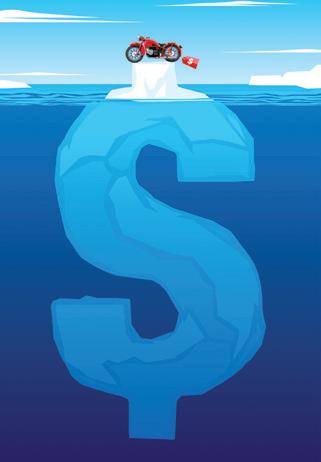
Second, though I know in my head that it’s true, I always forget when I buy something that the purchase price is just the down payment.
Because of this, I tend to see motorcycles, particularly used bikes, as starting points. The ’70 Lambretta SX 250 with the jacked-up title? A great looker with a checkered past that I could erase with the liberal application of money. The ’72 Honda CL350 with no swingarm bushings, dodgy electrics and a broken triple clamp? Love at first sight, though I’m still buying parts.
The Honda Reflex? Man, that was a cool playbike, once I spent a few hundred to (needlessly) trick it out. The ratted-out Aprilia Climber trials bike with the nearly-broken swingarm that snapped when I sat on it before I could even ride it for real?
Well, OK, maybe that one was a mistake. But it didn’t stop me from spending another $800 on the last remaining Climber swingarm parts in the country—along with a spiffy new Sawzall to do things I’ve managed to repress—in an entirely successful effort to go upside-down on the thing before taking it out of the garage.
Even the new bikes I’ve bought over the years—the Seca II, the Triumph Sprint, the KLR650, the CBR600F4i—I’ve foolishly hung onto until they’re deep in the part of their value curve that resembles a luge run. I just can’t bear to part with them until they’re long past their sell-by dates.
Mike doesn’t work that way. Though it should be obvious by now, he’s smarter than me. He’s either flipped his bikes quickly to make a buck, or he’s kept them in the condition in which they were found—rusty-but-cool art objects that will appreciate in value. The man’s got discipline.
Me, not so much.
I don’t think I’ve ever done the math before buying. I’ll look at something that inspires either pity or lust, and get it. I don’t add up all the expensive parts it’ll take to make it resemble the bike I want it to be. I’m pretty certain that’s because if I did, I’d never actually buy the bike in the first place.
And then I’d miss out on all the fun.
Because it is fun. And that’s kind of the point when it comes to motorcycles.
If you ride, you know: Motorcycles are right-brain things. Very few people buy motorcycles because they make good sense (although they actually do, if you consider things like miles per gallon, drain on environmental resources, efficient use of traffic and parking space, and fun-per-mile).
We buy motorcycles because they move us emotionally. They push our buttons. For me, at least, motorcycles are emotional purchases, starting points for adventure, tickets to ride. Journeys that are more important than destinations.
That’s not to say that my way is the only way, of course. I’ll continue to admire people like Mike Wolfe—and several friends who routinely manage to make money trading up on used motorcycles.
Buying high and selling low may not be the best system, but I’m resigned to the fact that it is, indeed, my system.
And I’m oddly comfortable with that.
The only issue? Well, as I write this, we’re less than 48 hours away from AMA Vintage Motorcycle Days—and North America’s largest motorcycle swap meet that goes with it. For someone like me, acres and acres of used bikes and parts is a gloriously, and wonderfully, dangerous place.
I can’t wait.
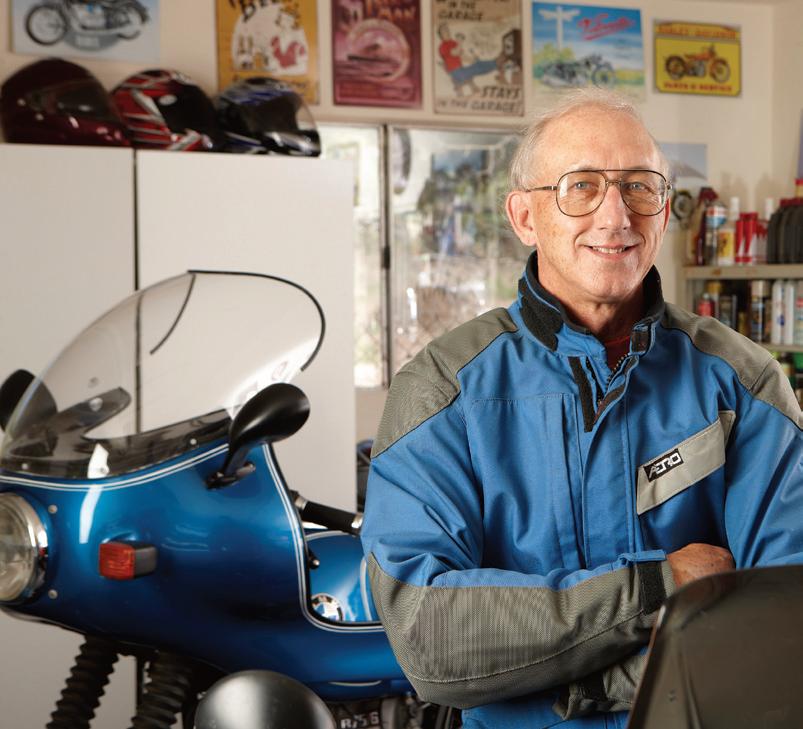
Grant Parsons is the AMA’s director of communications. Look for a full report on all that makes AMA Vintage Motorcycle Days great in the next issue.
MOST BIKERS ARE ALSO SOMETHING ELSE. GOOD THING WE COVER ALL KINDS.
Nobody insures more bikes than Progressive. So nobody knows bikers, or what they need, better. Ready to ride with America’s #1 motorcycle insurer? Visit progressive.com, call 1-800-PROGRESSIVE or a local agent today.
SUN DAY DRIVING
The best days are on your bike. That’s why Foremost® offers you competitive rates and options bikers want, such as Towing & Roadside Assistance with Trip Interruption coverage. Go to Foremost.com to learn more and find an agent near you. Or, call 1-800-237-2060 and mention Customer Priority Number M131, for a no-obligation quote.
Foremost. For You .
Mike Wolfe May Be The Star of History Channel’s “American Pickers,” But He Remains True To His Motorcycle Roots
Story by Grant Parsons
Photos by Whitney Carlson
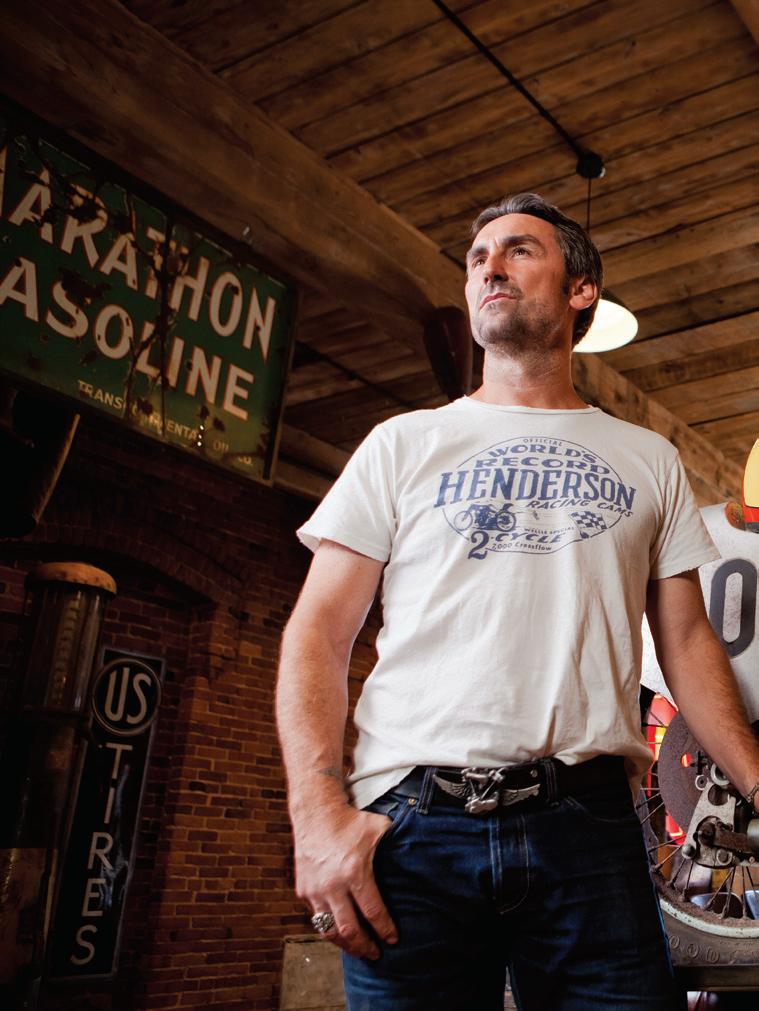
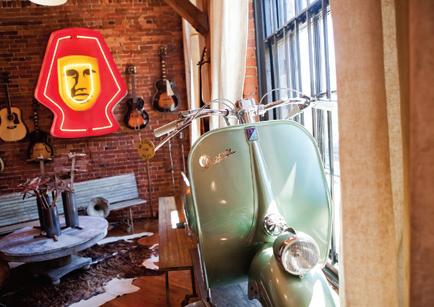
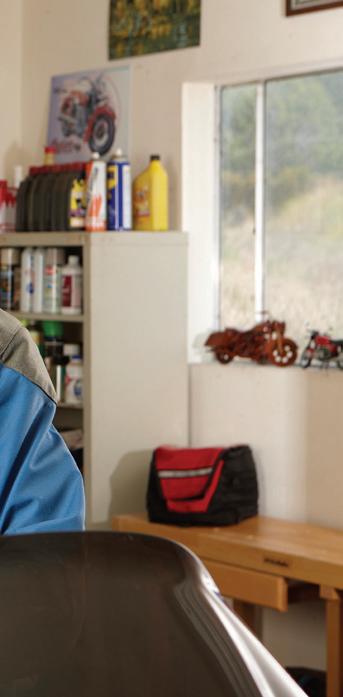
ike Wolfe walks through the door of the new shop he’s outfitting in an aging Nashville, Tenn., brick warehouse, and he instantly fills the room. He’s a high-energy guy, talking quickly and confidently, conferring with his staff, talking to a contractor who’s tracing a gas line through a hole in the floor and giving a quick look at the old bikes, clothes, curios, signs and other cool junk that have been arranged in the space.
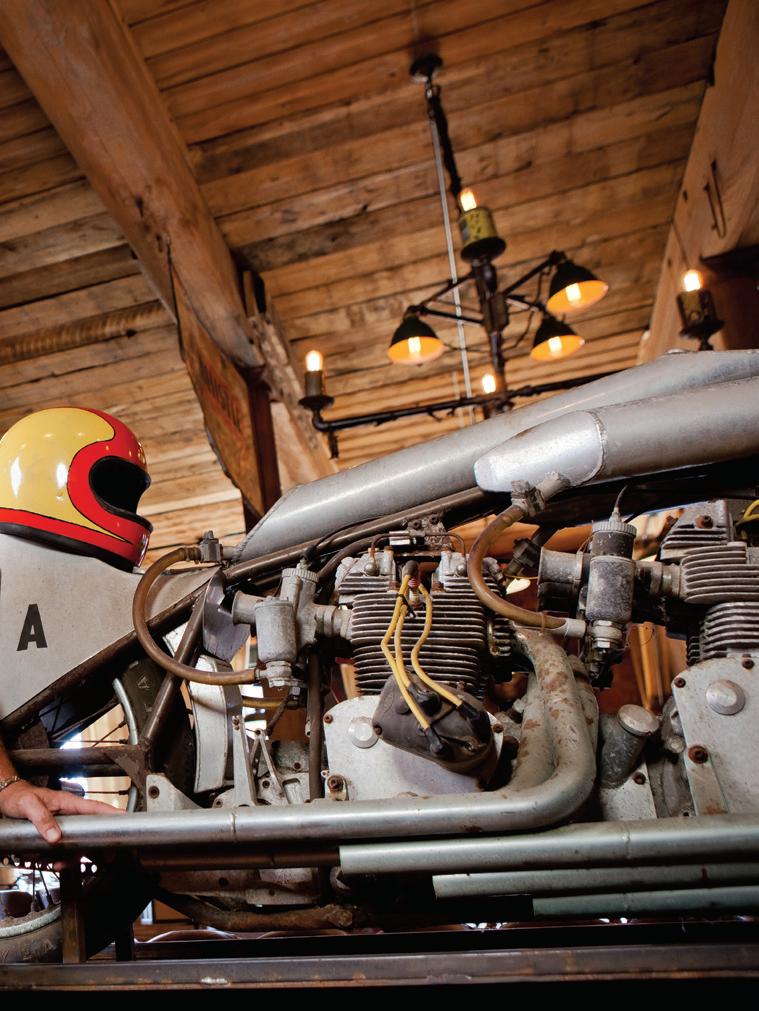
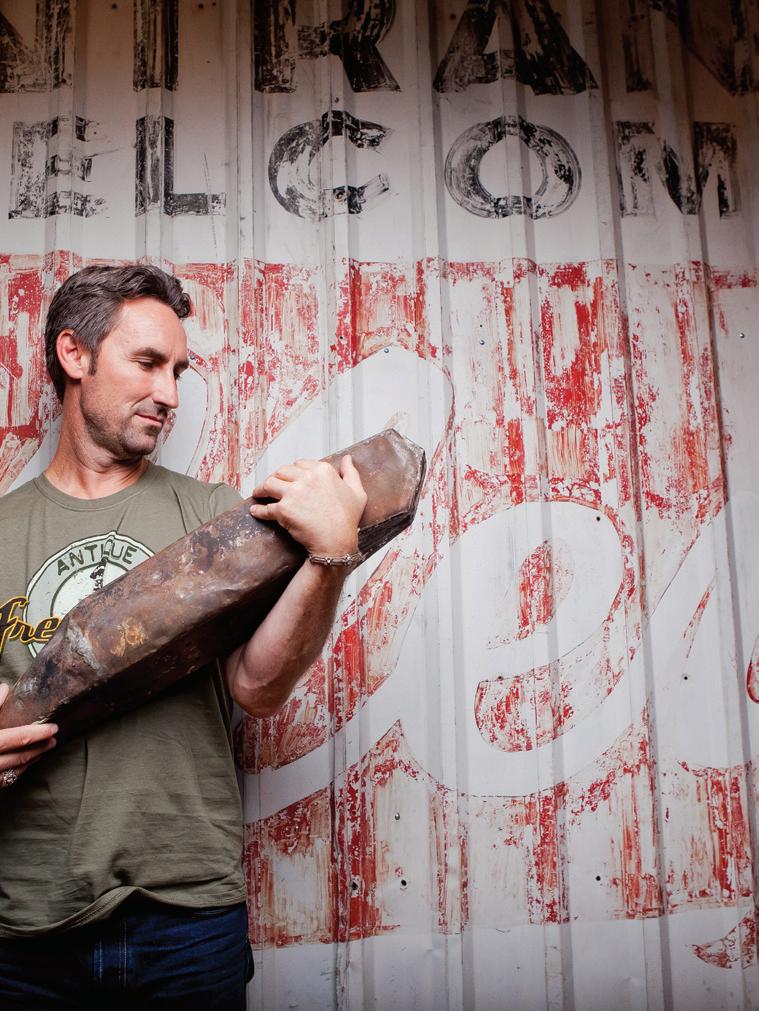
In no time, talk turns to the motorcycles in the curio store—an Indian Chief in running condition, a land-speed racing rig that’s a beautiful, albeit rusty, piece of art, a Thor motor hanging on the wall—and some old AMA racing trophies. Every one has a story, and every one was pulled out of an improbable location while Wolfe scoured the country for his company, Antique Archeology. He puts visitors at ease instantly, and one can see how Wolfe could use his skill for finding old stuff—including more than a few motorcycles— and not only turn it into ready cash and a thriving business, but also a breakout TV show on the History Channel, “American Pickers.”
“ got so many tickets during high school that I didn’t bother taking driver’s ed because I couldn’t get a license.”
“When it comes down to it,” he says, “I owe a lot of the success I’ve had to motorcycles.”
It was motorcycles that helped fuel his early quest to become a “picker”— someone who finds, buys and resells old stuff. And it was picking motorcycles throughout the Midwest and eventually beyond that helped fund what first became a business, and then an empire.
Like many motorcyclists, Mike Wolfe fell in love with motorcycles after first getting involved with bicycles. Even at the age of 4, he says, he was dragging home old bicycles he’d find in the trash, hoping to fix them up.
The motorcycle bug also hit early.
“I got my first motorcycle when I was 13. It was a Kawasaki 100—a beat-up little thing. I traded a guy a pair of stereo speakers for it,” Wolfe says. “I rode that anywhere and everywhere. I thought I was ruling the world. Where I grew up, you could traverse the entire area in alleys, and when I was in the alleys, I could see in garages, and in the trash, and that’s when I started getting serious about picking.”
Typically, he was always focused on trading up, and later wound up with a Can-Am 250. But the motorcycle lifestyle did have its drawbacks— especially for a kid too young to have a license to ride.
“I got so many tickets during high school that I didn’t bother taking driver’s ed because I couldn’t get a license. The
police wouldn’t even chase me. They’d just go to my house later. They’d see me buzzing around town and knew I had to come home sometime.”
It was only after he graduated high school and got a one-way bus ticket to Colorado to live with his aunt that he got his license—and his first streetbike, an old Kawasaki 500 triple.
Through those early years, Wolfe says he started collecting and selling vintage bicycles. The pedal-bikes planted the seed for his interest in vintage motorcycles.
“Someone told me that they had old bicycles at the Antique Motorcycle Club meet in Davenport, Iowa, so I went,” he says. “Once I saw all the old bikes with motors, I was hooked!”
He shifted his focus to finding old motorcycles, often putting up fliers in towns and taking out ads looking for bikes. When collectors of other stuff heard what he was doing, they asked him to search for non-motorcycling items. “I was like, ‘Yeah, that’ll pay for my bikes!’”
“That’s when I realized I could make a living doing this, and do it nationwide.”
Wolfe gravitated to early models.
“I like the pre-1915 American stuff,” he says. “After that, the manufacturing and the production of a lot of those companies became huge. But the early days with Reading-Standard and Yale and Merkel
and all the others, it was so beautiful and amazing. The more I learned about motorcycles, the more I was hooked. I learned that a lot of guys who started in bicycles—Maldwyn Jones, Glenn Curtiss and those guys—came to motorcycles from the cycling industry.”
The allure of old bikes, he says, is that they’re relics from an age that will never come again.
“Back in the day, the first time you’d see someone riding a bicycle down the street—it had to be like a moon landing: ‘What is that?’” Wolfe says. “Then five years later to see one with a motor? It would have blown your mind.”
His interest in motorcycles coincided with a lucky break that helped him create his business.
“It was motorcycles that got Antique Archeology started,” he says. “When the Antique Motorcycle Museum came to Anamosa, I worked with (Motorcycle Hall of Famer) John Parham to help him find motorcycles. I started finding stuff and picking the Midwest, and then I started going to the East Coast for him. While I was there looking for motorcycles, I’d ask people, ‘Do you have any extra speedos? Do you have any extra jackets or trophies or helmets? Any literature?’
“I found John about 10 amazing bikes, and that’s what took Antique Archeology to what it is now—him going, ‘OK, here’s $30,000. Go get me that bike,’” Wolfe says. “That’s when I realized I could make a living doing this, and do it nationwide.”
Wolfe sold the bicycle shop he had built up, bought a van and hit the road, sometimes for months at a time, searching out anything of value in barns, garages, old stores or wherever he could find it. As a picker, he’s been fortunate when it comes to motorcycles. He’s picked a Crawford, a Pope and an Imperial that is the only one of its type that’s ever been found.
Along the way, several dozen motorcycles wound up staying in his personal collection, including Indians, Harley-Davidsons, Excelsiors, and many others. His latest project is having the rest of a 1908 humpback-tank Indian rebuilt around the tail section and rear triangle he recently found.
How does he decide what to keep and what to sell?
“That was extremely difficult before the show because that’s how I make a living, buying and selling,” he says. “Obviously, we get paid to do the show now, so I can keep a few things back. But when I started, I had to make a living. The only Imperial I ever found, I had to sell. The Merkels, when I found them, I had to sell ’em. The ’38 Indian Four I found, I had to sell.”
These days, though, there are a few bikes he doesn’t plan to part with.
“Right now, I’ve got my ’13 Harley that I pulled out of a garage in upstate New York. I’ll never sell that,” he says. “I’ll never sell that ’13 Indian I pulled out of a barn in Kansas. My ’34 Harley, I’ll never sell. Those are cool bikes.”
“I guess maybe I messed up on that Vincent motor, but did I really? I had the thing for about an hour.”
Through the years of buying and reselling, Wolfe says he’s seen a lot of changes. And despite the recent economic dip, he continues to see a strong market in old bikes. The only difference is a lot of the big money is coming from Europe.
“The prices of things have really gone up,” he says. “I just bid on a Knucklehead in Iowa that was sitting for 30 years. I bid it up to $35,000, and I still didn’t get it—it went for $42,000. And that was for a bike that needed a lot of mechanicals.
“Even last year, there’s no way it would have brought $42,000, but it went to Australia,” he says. “Everything I put on eBay, all the Indians I was finding, they were all going to Germany.”
Even parts of bikes are drawing top dollar these days, he notes. Motors, for example, used to not be worth much outside of a frame. Now, companies are making new complete chassis for old motorcycles, driving the motor market higher.
Still, even with the higher prices, you can make a misstep when it comes to buying and selling old bikes.
“One time, I bought a 1912 Flying Merkel chassis, all original, with original paint, for $25,000, but it didn’t have a motor,” Wolfe says. “I had a line on a motor, and I felt for sure when the guy with the motor saw I had the chassis, he’d sell me the motor. But he never would. I wound up selling [the chassis] for $27,000 after driving all the way across the country for it. At the time, for me to sit on $25K for a couple months was heavy. I’m a small businessman. It’s a bit different now with the show, but back then, that was tough.”
Any other regrets?
“Not too much, really,” he says. “I found a Vincent motor once, and I sold it to a guy for $12,000, and made $2,000 on it. Then I found out he sold it for $25,000 to a guy in Switzerland. So I guess maybe I messed up, but did I really? I had the thing for about an hour. So, no, that wasn’t bad.”
“When you’re not actually doing it, you’re dreaming about it.”
Wolfe says he still lives for the hunt, but things have changed for him, too, over the years.
“The longer you collect, and the more you acquire, and the more you’re around it, the harder it is to find anything that gets your juices flowing,” he says. “With motorcycles, I’ve been collecting them for 30 years, so do I get excited when I see a 1912 Harley-Davidson? Well, yeah, with original paint, maybe. But you go to a meet, and you see a line of them, perfectly restored.”
What keeps him searching, he says, are a few bikes that remain “Holy Grails.”
“I’m still looking for two motorcycles. One, there was a company in Genesee, Ill., called Hornaker Manufacturing. They made the Torpedo. There’s only one that’s been found, and it’s in a New York collection,” he says. “Then there’s the Blackhawk. They were made in Rock Island, Ill., and no one’s ever found one. There’s got to be one out there.”
For now, Wolfe is pretty happy with things. He’s got the successful TV show. He’s opening his new shop in Nashville. He’s got some new projects he’s working on, including a few books, a revamped website and a “Kid Pickers” TV project he’s pitching. But perhaps most importantly, he notes, is that the fire still burns when it comes to hitting the road and searching out stuff to buy and sell.
“When you’re not actually doing it, you’re dreaming about it,” he says. “Some places you walk into, and it feels like you’ve been there before—the way it looks, the way it smells, the way the guy looks. I bought a ’39 Knucklehead in a barn in Ohio, and it was like I had done the whole thing before I even got there.
“Things like that will keep me on the road forever.” •
“
IKE’S ADVICE FOR COLLECTORS
There’s good stuff out there, even in the lower price ranges
It’s like anything. You’re not going to get into the heavy-hitter stuff to start off. You trade up.”
Becoming a motorcycle collector doesn’t have to break the bank. “American Pickers” star Mike Wolfe offers advice for the rest of us.
Don’t be scared off: “I think a lot of guys get into it, and then get out. The prices are high, and it kind of sucks. A lot of young guys out there would love to get into it, but they can’t touch it for the prices. Even a good Triumph, they’re going for 15 grand now.”
Instead, start small: “Start at the grassroots and start talking to people to find bikes. If you don’t have a lot of money, start trading up. It’s like anything. You’re not going to get into the heavy-hitter stuff to start off. You trade up. Buy the Honda 360 for $100 and get it running and sell it for $400. That’s how I started. I didn’t start buying the $25,000 Indian Chief. I started with rusty Triumphs and Kawasaki 750s. I was finding them for $200 and selling them for $800.”
Formulate a plan: “Right now, the Japanese stuff is hot—the first 900cc, the first 500cc, the first 750cc may cost a lot, but something like a ‘74 750? There’s a whole scene of taking old Yamahas and bikes like that and making them into bobbers, or getting an old Triumph 500 motor and making a bobber. That’s how you can get into it for $5,000 to $9,000. Even old Shovelheads aren’t crazy money yet. You can still get a good one for $10,000 to $12,000. That’s not too bad.”
Set the right price: “With the Internet, everybody can be well-versed in a second. If you want to see what it’s worth, Google it on your phone.”
Connect with buyers: “That’s the beauty of it all. Now there’s the web. When I first started doing this, you’d have to use Walneck’s Cycle Trader. That was the only way. To sell my Harley to start my bike shop, I had to take a Polaroid of the bike, send it to Buzz Walneck, wait a month for him to put it in the paper, and some guy from Bancock called. I thought it was a friend messing with me. ‘I want to buy it!’
“So I give him my address, and a few days later a DHL guy shows up with a cardboard tube with wooden plugs on the end, and inside was $10,000 in cash. An hour later, the guy called and asked if I got the money, and a semi showed up at my house to pick up the bike.
“Now, it’s so much easier. I got a rusty BSA recently. I think I gave $800 for it. I took a picture of it and put it on Craigslist, and by the time I got home, I had sold it for $1,500. That’s how easy it is now.”
audio massage
TRACKS INCLUDE:
“Freedom V-Twin engine starting up”
“Freedom V-Twin engine on the road”
“Freedom V-Twin engine around a corner”
“Random sounds from a local diner”
and we’ll even throw in a second Magic Weather Manipulator designed especially for outdoor weddings, barbecues, and concerts with cool bands.
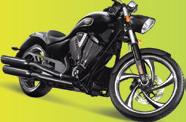
Everything’s better on a bike. A gift that’s sure to bring smiles, our new calendar brings together the love for the road with the love of pets. See household pets on a variety of different bikes as they purr along the highway, with their paw on the throttle.
Other calendars in the series include “Clowns on Bikes,” “Sock Puppets: Born to Ride” and “Garden Gnomes on Two Wheels.” www.catbikefever.com This device allows you to create the perfect riding day, no matter what the forecast holds. USING PATENT-PROTECTED NO RAIN EVER TECHNOLOGY, you simply strap this machine to your bike and guarantee a great riding environment by changing the cloud patterns above you as you ride.
“Freedom V-Twin engine starting up again”