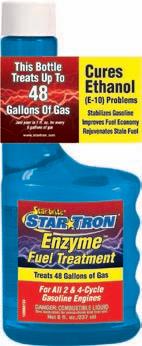
Ethanol 101 What you nEEd to KnoW about E10/Ethanol FuEl 4 Main problEMs
With E10 / Ethanol FuEl
Problem 1: Debris in Fuel
Gums rapidly form in the fuel tank and fuel delivery systems as ethanol fuels age. However, ethanol is also a powerful solvent that will strip away and disperse this build up back into the fuel as large, performance-robbing particles. This leads to clogged filters, injectors and carburetors.
Problem 4: ethanol causes lost PoWer, PerFormance anD DecreaseD Fuel economy
Ethanol fuel does not produce as much energy as traditional fuel. This results in inefficient combustion, decreased performance, reduced throttle response and poor fuel economy.
Star tron® Solution: star tron®’s enzymes break down debris into sub-micron sized particles that can be easily burned during the combustion process, restoring full performance.
Problem 2: excessive Water in the Fuel anD Phase seParation
Ethanol attracts moisture from the atmosphere, forming an ethanol/water solution mixed in the gasoline. E-10 fuel will naturally hold .5% water in suspension, but when water levels exceed this threshold, or when the fuel cools significantly, the water/ethanol mix drops out of suspension. This is phase separation. Excessive water in the fuel tank causes engines to run rough, stall, and can lead to internal damage to engine components. Ethanol provides a significant amount of the fuel’s octane, so when the ethanol/water solution separates and drops to the bottom of the tank, the remaining fuel is left without enough octane to properly operate the engine. Additionally, the ethanol/water solution can become partially combustible, which can lead to engine damage.
Star tron® Solution: star tron®’s enzyme formula reduces interfacial surface tension between fuel and water. the molecular cluster size is greatly reduced, allowing more water to be dispersed throughout the fuel. these sub-micron sized droplets are safely eliminated as the engine operates. star tron® treated fuel helps prevent phase separation by allowing more water to be burned off than with untreated fuel, drying out the tank and preventing water buildup.
Problem 3: ethanol Fuels break DoWn Quickly
Over a short period of time ethanol fuel begins to break down. As ethanol and other components evaporate, the fuel loses octane and becomes “stale.” This causes hard starts, pinging and engine knock, which robs your engine of power and can cause damage.
Star tron® Solution: star tron® is a powerful fuel stabilizer which helps prevent fuel breakdown for up to two years. this results in easier starts and prevents pinging and knocking. star tron® improves octane levels of sub-standard, non-spec or old fuel and in many cases can rejuvenate stale fuel, restoring it to serviceable condition.
Star tron® Solution: star tron’s® enzyme formula helps to break apart large clusters of fuel molecules, creating more surface area. this allows additional oxygen to react during combustion, which results in a more complete burn of the fuel, improved fuel economy, engine power, throttle response and reduced toxic emissions. star tron® removes carbon deposits, keeping your engine clean and operating at peak performance.
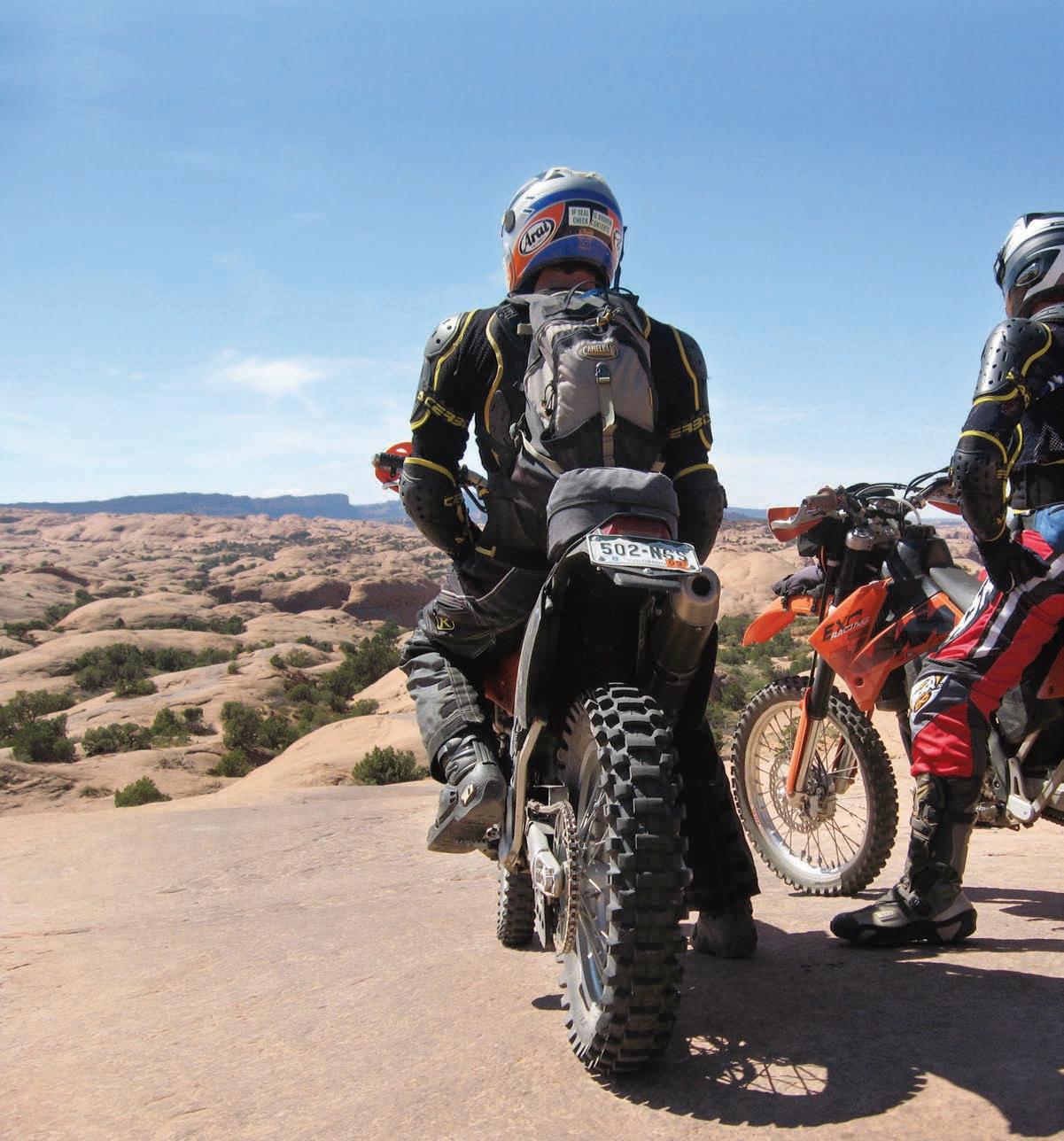
Star Tron® is a unique, multifunctional fuel additive that addresses all ethanol issues. Star Tron® has been solving fuel problems for boaters across the US since 2003. It will improve the performance of: boats, cars, trucks, motorcycles, snowmobiles, ATVs, PWCs, generators, lawn & garden equipment and all other gas-powered engines. Star Tron® is safe for use in all 2 and 4-cycle engines under all conditions, even in ethanol fuels. Star Tron® is an ideal all-season, all-purpose additive, and does all this at one of the lowest costs of any fuel additive.
Be careful of what additive you use – many contain alcohol. Adding more alcohol to ethanol fuels can lead to engine problems. Read the MSDS of any fuel additive before using it with ethanol fuel. Star Tron® does not contain any alcohol and is 100% safe for use in all ethanol blends.
Star Tron® is easy to use, effective and cannot be overdosed.
Today’s Fuels Demand New Additive Technology
To learn the entire Star Tron® story and to find the nearest retailer, log onto www.startron.com or call (800) 327-8583
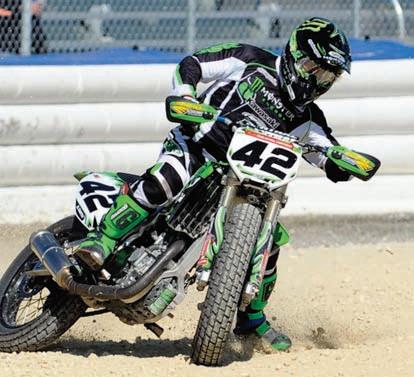
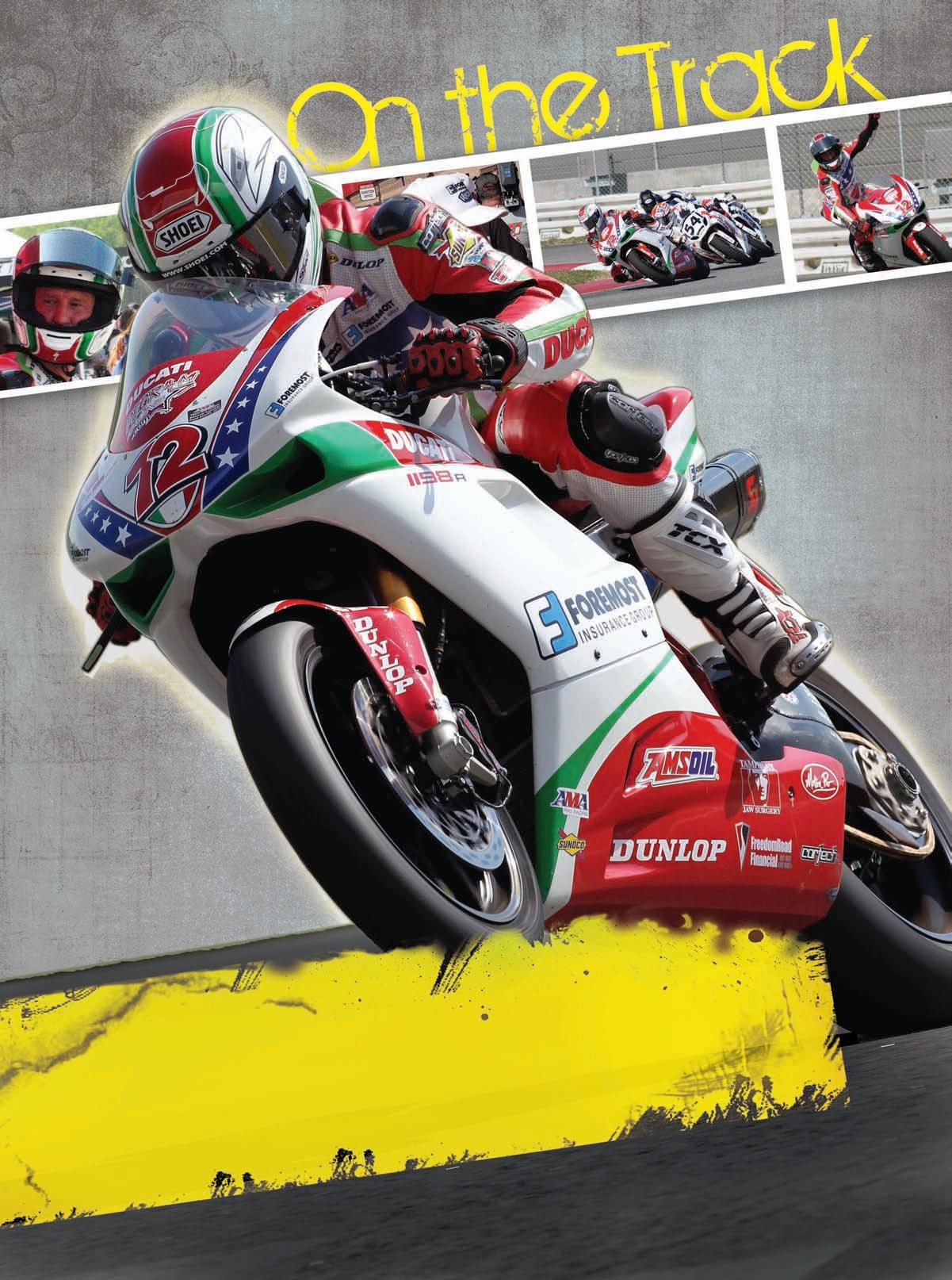
2009 AMA Daytona SportBike Champion
DANNY ESLICK
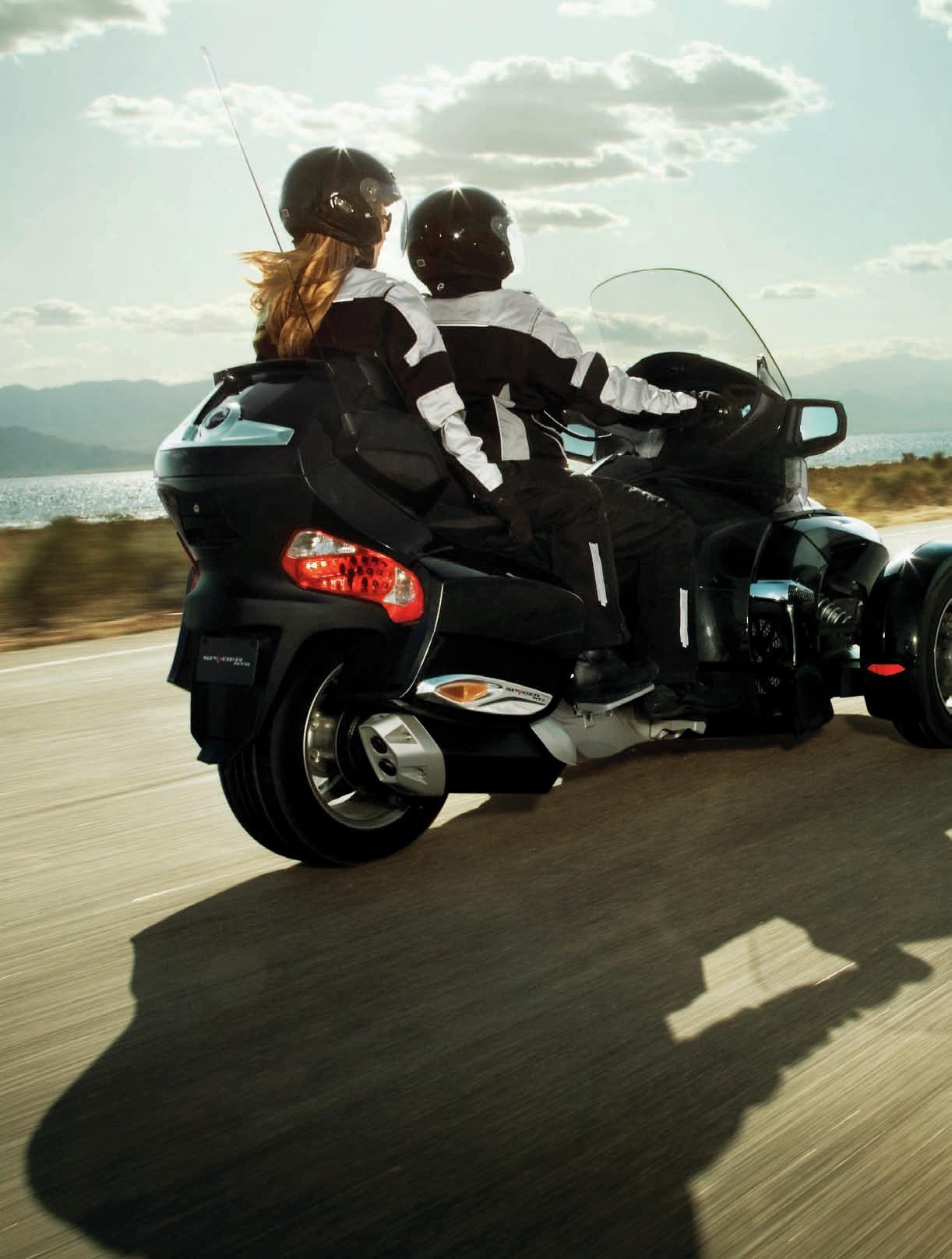
IT woulD havE bEEn RaTED ToP vEhIclE In ITS caTEgoRY. If IT haD a caTEgoRY. The Can-Am® Spyder ® roadster – it’s riding reinvented. Featuring a Y-shaped design that ensures you’ll never blend into traffic. An advanced Vehicle Stability System. An optional semi-automatic 5-speed transmission with reverse. And a powerful Rotax® V-Twin engine. Learn what thousands of Can-Am Spyder riders already know at can-am.brp.com.
Ready to be a VIP?
Make a big entrance at IJSBA World Finals in October. Arrive at Lake Havasu in a private jet. Then enjoy VIP access to all the parties and pleasures of a great jet ski racing weekend. Best of all, McGraw picks up the tab. You’re in, right? Enter to win a deluxe Havasu experience.
media companies and consultants.
“The CPSIA has effectively banned the sale of age-appropriate youth ATVs and motorcycles because of the lead content of certain components,” Vitrano testified. “As a result of its broad reach, the Act has inadvertently crippled an industry unrelated to the toy manufacturers that were the intended target of the lead provision.
“In addition, the resulting ban has resulted in unsafe situations for youth off-highway enthusiasts,” he said.
That’s because with no small kids’ machines available, children who still want to ride risk climbing aboard full-sized machines that may be too big for them to safely handle.
Vitrano noted that the CPSC recognized that risk to children, so it issued a stay of enforcement of lead-content limits until May 2011. But, he said, that hasn’t resulted in children being able to get appropriately sized machines.
“Due to the risks of selling under the stay, many manufacturers and dealers are no longer selling youth-model off-highway vehicles (OHVs) and there is now a limited availability of these products for consumers,” Vitrano testified. “Half of the major ATV manufacturers are no longer selling youth models, despite the stay.”
Vitrano argued that relief is needed because the lead content in metal parts of ATVs and motorcycles poses no risk to kids, and the CPSIA puts kids in more danger because it forces them to consider larger machines since only a limited number of youth-size machines are now available. Vitrano also noted that the CPSIA is unnecessarily hurting the economy and jobs.
“(The) MIC estimates that a complete ban on youth-model vehicles would result in about $1 billion in lost economic value in the retail marketplace every year,” he said.
PROPOSED LAW NEEDS CLARIFICATION
Officials representing the motorcycle and ATV industry, and the AMA and ATVA, which represent riders, are optimistic now that lawmakers are considering the issue as the clock ticks down to May 2011. Some say the CPSEA and a committee report accompanying the measure should fix the problems with the CPSIA. But others caution that the proposed law is still too ambiguous and believe the legislation’s language needs to be strengthened.
Ed Moreland, AMA senior vice president for government relations, praises lawmakers for tackling the issue. But he argues that the CPSEA proposal needs to be further refined to avoid future conflicts.
“With the enormity of the economic hardship caused to families that recreate, and the industry, enthusiasts remain concerned that the current language of the CPSEA does not effectively address the issues that exist, and may create additional barriers to industry and true market relief,” Moreland said in written testimony.
Specifically, Moreland believes there are
Path To Disaster
Concerns about certain children’s toys containing dangerous amounts of lead ultimately produced a federal law that effectively bans the sale of kids’ motorcycles and all-terrain vehicles (ATVs). Here’s how we got to where we are today.
Sources: U.S. House Subcommittee on Commerce, Trade and Consumer Protection; AMA
2006
A 4-year-old Minneapolis boy dies of lead poisoning after swallowing a charm given away with athletic shoes. The Centers for Disease Control and Prevention recommends restricting or eliminating non-essential uses of lead in consumer products.
2007
The U.S. House Subcommittee on Commerce, Trade and Consumer Protection holds hearings on the safety of children’s products following numerous recalls of children’s toys due to unsafe lead levels. On Nov. 1, Subcommittee Chairman Bobby Rush (D-Ill.) and others introduce H.R. 4040—the Consumer Product Safety Modernization Act of 2007, which later becomes the Consumer Product Safety Improvement Act (CPSIA) of 2008.
Aug. 14, 2008 President George Bush signs H.R. 4040 into law effective Feb. 10, 2009. The law calls for a ban on the making, importing, distributing or selling of any product intended for children 12 and under that contains more than 600 parts per million of lead in any accessible part. Manufacturers and others must have their products tested at government-approved labs to certify they comply with the law.
March 17, 2009 U.S. Rep. Denny Rehberg (R-Mont.) introduces H.R. 1587 to amend the CPSIA to exempt kids’ dirtbikes and ATVs. U.S. Sen. Jon Testor (D-Mont.) introduces S. 608 to exempt machines meant for kids 7 and older.
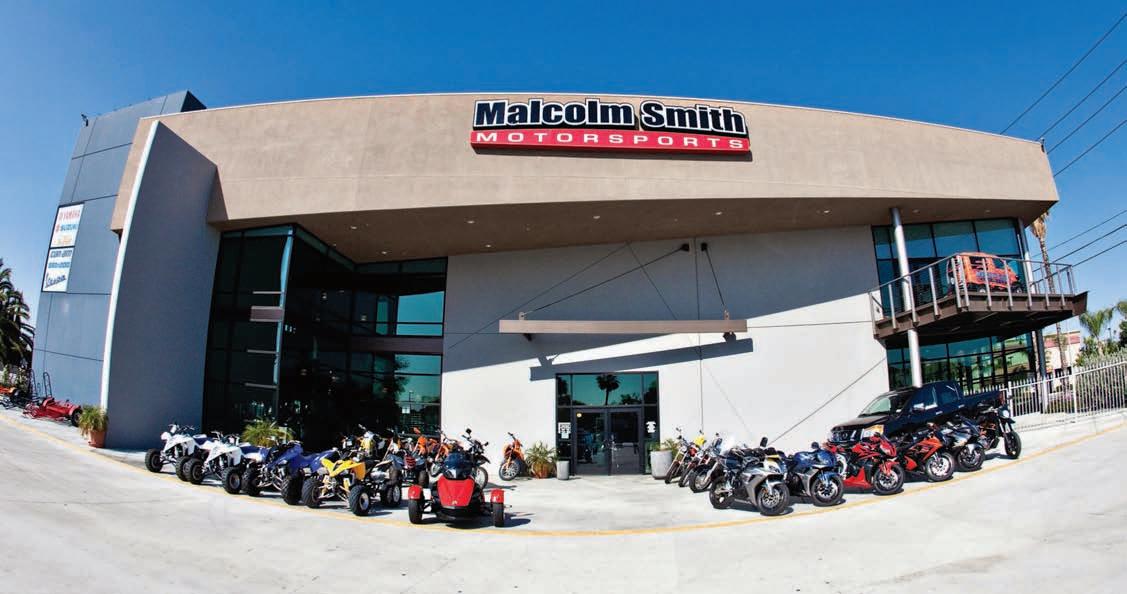
March 19, 2009 In an act of defiance, AMA Motorcycle Hall of Famer Malcolm Smith sells two 65cc motorcycles and a youth ATV at a rally he organizes at his dealership despite the ban.
May 1, 2009 The CPSC delays enforcement of the CPSIA until May 1, 2011.
March 2008 The Senate passes an amended version of H.R. 4040. The measure is later massaged by House and Senate conferees and then approved by Congress.
Feb. 5, 2009 The Consumer Product Safety Commission (CPSC) rejects a request by the National Association of Manufacturers’ CPSC Coalition to delay the law.
Feb. 10, 2009 The CPSIA takes effect.
April 1, 2009 Chase Yentzer, then 6, says at a Washington, D.C., rally in support of overturning the ban on the sale of youth dirtbikes and ATVs: “I ride dirtbikes with my family. I race dirtbikes. Please give me my dirtbike back. I promise not to eat it.”
April 3, 2009 AMA President Rob Dingman, AMA Government Relations head Ed Moreland, plus MX Sports and Cobra officials meet with federal officials and lawmakers to ask for relief.
April 17, 2009 The CPSC rejects a request for an exclusion for kids’ machines.
July 7, 2009 U.S. Rep. Denny Rehberg (R-Mont.) attaches an amendment to the Consolidated Appropriations Act that would bar the CPSC from using funds to enforce the CPSIA as it relates to kids’ dirtbikes and ATVs. It’s later removed. Aug. 14, 2009 Under the CPSIA, the threshold of allowable lead in children’s toys drops to 300 parts per million. It will drop to 100 parts after Aug. 14, 2011.
Dec. 2009 The CPSC delays the law’s lead-testing requirements until Feb. 10, 2011.
Jan. 15, 2010 In a report to Congress, the CPSC says it can’t exempt kids’ dirtbikes and ATVs from the CPSIA unless the law is changed and asks for flexibility.
April 29, 2010 The U.S. House Subcommittee on Commerce, Trade and Consumer Protection holds a hearing on the proposed Consumer Product Safety Enhancement Act (CPSEA) of 2010 meant to address the unintended consequences of the CPSIA.
too many areas in the proposed law that remain unclear, or too many phrases that are undefined, which could later cause problems.
The proposed law stipulates a three-part test to delineate the criteria that must be met for a product to be exempt from the CPSIA’s lead limits: (1) accessible lead is required in the manufacture of a product because it is not practicable or technologically feasible to remove it, (2) the lead-containing part is not likely to be mouthed or ingested, and (3) there is no measureable adverse impact on public health.
In believing that the proposed law needs to be fine-tuned, Moreland notes, for example, that the phrase “not practicable” is not defined in the actual legislation, which effectively means that no one would be able to prove that it is “not practicable” to make a part with less lead.
Cobra’s Hilbert says that, in theory, the CPSEA “offers an avenue for the Consumer Product Safety Commission to grant exceptions for products that can be proven not to pose any lead poisoning risk to kids.
“But the problem is that the three-part ‘test’ that products are forced to go through is difficult, if not impossible, to pass, and, furthermore, the third and final test opens up the floodgates for any overzealous regulator to permanently ban a product for any reason,” Hilbert says.
Hilbert notes that the CPSC, under the third part of the test, may reject an exception to the law if a product has a “measureable effect on public health.” He believes this clause is too broad and may be interpreted to mean any measureable effect—not one solely based on lead.
“For example, baseball bats and roller skates have measurable negative effects on public health, but not in the context of the CPSIA,” Hilbert says. “This clause should be reworded such that the commission must stay within the context of the CPSIA when making decisions regarding the granting of an exception.”
The proposal also contains language onerous to small businesses, he says.
The proposal states that the commission may base its decision solely on the materials presented by the party seeking the exception.
“This clause is absolutely unfair to companies that don’t have massive legal and scientific research budgets and, furthermore, does nothing to further the safety of children,” he says.
Finally, Hilbert notes that the definition of “Small Batch Manufacturer” apparently is based on craft production of toys or clothes “but does not serve well for most other small companies including bicycle, powersports, medical device and sporting goods manufacturers” and should be redefined.
Vitrano and the MIC support the CPSEA, particularly the section that would create an exception to the lead-content requirements of the CPSIA if the lead serves a functional purpose, such as with batteries and certain metal parts on motorcycles and ATVs.
“But the problem is that the three-part ‘test’ that products are forced to go through is difficult, if not impossible, to pass, and, furthermore, the third and final test opens up the floodgates for any overzealous regulator to permanently ban a product for any reason.” Sean Hilbert, Cobra Moto
But he also would like to see the proposed law clarified.
“We already have submitted evidence to CPSC sufficient to obtain exclusions for youth ATVs and motorcycles under the proposed language of the CPSEA,” Vitrano testified. “Ultimately, however, it is the CPSC that will interpret that language to determine whether or not to grant an exclusion for the metal parts of ATVs and motorcycles.
“That is why the industry is strongly urging the committee to provide as much clarity as possible in developing a legislative solution so that the CPSC is left with no doubt about Congress’ intent to ensure the continued availability of youth-model motorized recreational vehicles,” he said.
“Throughout our discussions, we have encouraged the committee to include statutory language to provide the CPSC with explicit guidance,” he continued in his testimony. “Although the committee has not included this language in the proposed amendment, we do support the inclusion of report language accompanying this Act that defines the words ‘practicable’ and ‘no measureable adverse effect.’”
The AMA’s Moreland agrees, however noting that the law provides greater protection with those terms spelled out in the bill itself.
“The outstanding issue is that ‘report language,’ which is guidance intended for regulators, is not legally binding, which leaves greater opportunity for misinterpretation,” Moreland says. “All things being equal, it’s better for those terms to be made clear within the language of the bill itself.”
U.S. Rep. Denny Rehberg (R-Mont.) told the committee in written testimony: “I am concerned that as the bill stands now, the exception provisions are too broadly written and will only lead to increased confusion about congressional intent.
“I firmly believe that the CPSEA’s exclusion provisions need to specifically include an exclusion for youth-model motorcycles and ATVs,” he said. “I ask the committee to include the language of my legislation, H.R. 1587, that would exempt youth-model motorcycles and ATVs from the lead-content limits in any final version of the Consumer Product Safety Enhancement Act.”
CPSC CommiSSionerS SPlit on the meaSure
Inez Tenenbaum, chairwoman of the CPSC, likes the three-part test.
“Much of the debate over lead limits in the CPSIA has focused on the issue of whether there is a ‘safe level of lead’ for children’s products,” she testified. “Lead is a toxic substance. The scientific and pediatric
communities have thoroughly studied this issue, and are near[ly] unanimous in their opinion that there is no known safe level of lead.”
Even so, she said she has learned during her tenure on the CPSC that there are cases where lead must be used in a product, and the CPSC doesn’t have the flexibility under the CPSIA to grant exemptions to the leadlimit requirements for those products.
Therefore, she said she supports the three-part test.
“If it is required, then the [three-part test] allows the [CPSC] to take a common-sense, health-protective approach to granting an exception. If it is not required, then it should not be present in children’s products at levels higher than the limits [in the CPSIA],” she said.
Two other commissioners on the fivemember CPSC, however, have concerns.
CPSC Commissioner Nancy Nord, who is the CPSC’s former acting chairwoman, believes the CPSEA’s three-part test has serious problems, including the lack of a definition for the phrase “not practicable.”
CPSC Commissioner Anne Northup stated in written testimony: “I believe the bill before you falls short of resolving the problems...”
She agrees with Nord that the three-prong test could be eliminated if lawmakers just stick with the requirement that the product “will have no measureable adverse effect on public health or safety.”
She also suggests other changes to the proposed law that would give the CPSC the flexibility it needs to grant exemptions to the lead-content limits of the CPSIA without endangering children.
What’S next
Lawmakers are expected to act quickly on this proposal. At presstime, it was unknown whether they will fine-tune the language, or even hold another public hearing.
The AMA is urging all motorcyclists to contact their federal lawmakers and encourage them to establish an exclusion for youth-model OHVs and clear up the potentially confusing language in the bill.
Ask your legislators to consider H.R. 1587, which will exempt youth-model bikes and ATVs from the lead limits in the CPSIA.
You’ll find information on your federal lawmakers by going to Rights > Issues and Legislation at AmericanMotorcyclist.com, and entering your zip code on the right side.
You can immediately send an online prewritten letter by selecting the “Take Action” option and entering your information. In the “Issue Area,” select “Commerce.”
For the latest information on this issue, visit AmericanMotorcyclist.com.•