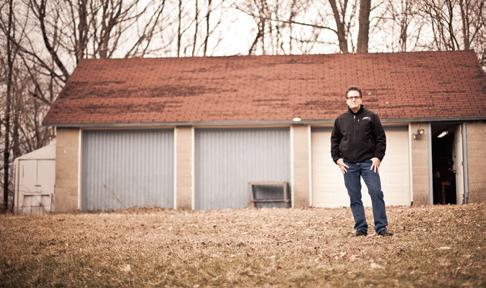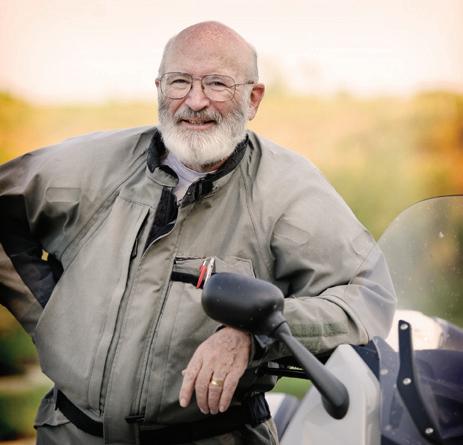









Cover Erik Buell is redefining the American sportbike—again. His story continues on page 36.
Photo by Kevin Netz.
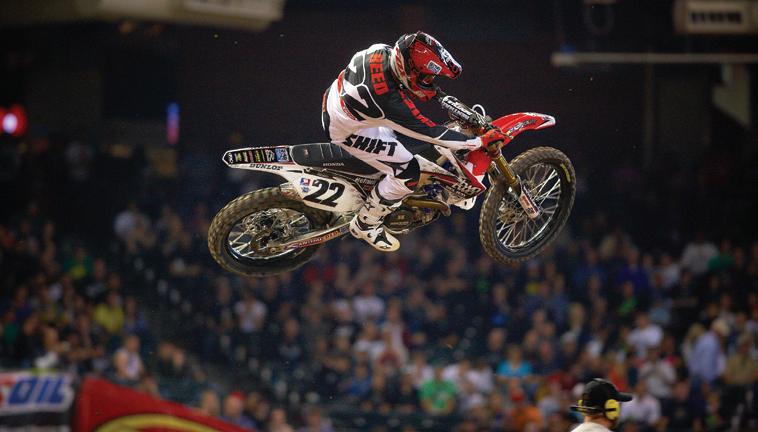
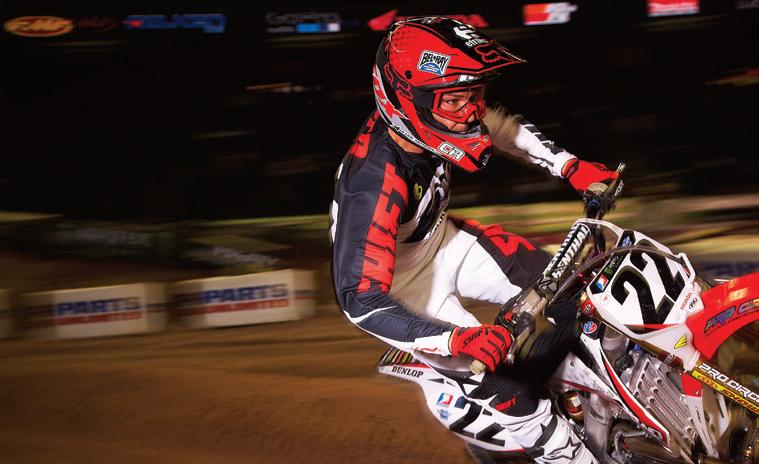
Navigation Photo Chad Reed is racing without a factory ride in 2011—and he’s still winning. Read about how his privateer effort came together starting on page 28. Photo by Jeff Kardas.
American Motorcyclist magazine (ISSN 0277-9358) is published monthly by the American Motorcyclist Association, 13515 Yarmouth Dr., Pickerington, OH 43147. Copyright by the American Motorcyclist Association/American Motorcyclist 2011. Printed in USA. Subscription rate: Magazine subscription fee of $10 covered in membership dues; $15 a year for non-members.
Postmaster: Mail form 3579 to 13515 Yarmouth Dr., Pickerington, OH 43147. Periodical postage paid at Pickerington, Ohio, and at additional mailing offices.
June 2011
Volume 65, Number 6
Published by the American Motorcyclist Association 13515 Yarmouth Dr. Pickerington, OH 43147 (800) AMA-JOIN (262-5646) AmericanMotorcyclist.com
10. LETTERS
You write, we read.
12. ROB DINGMAN
AMA Members have spoken.
14. RIGHTS
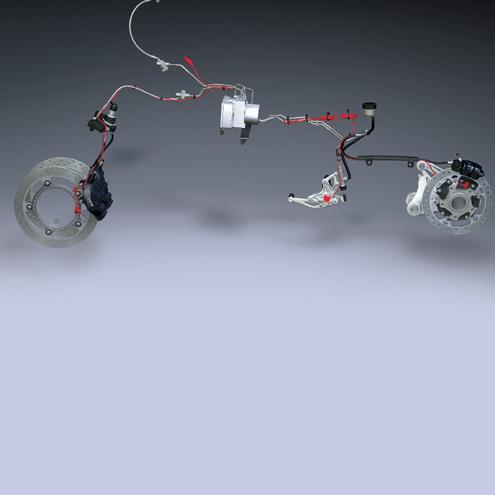
AMA Family Capitol Hill Climb, and anti-lock brakes for streetbikes.
22. RIDING
Mark your calendars: AMA Vintage Motorcycle Days is July 22-24.
28. RACING
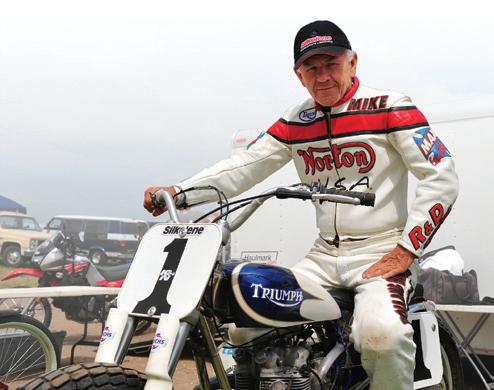
Privateer Chad Reed, vintage racer Mike Anderson and supporting the ISDE team.
32. HALL OF FAME
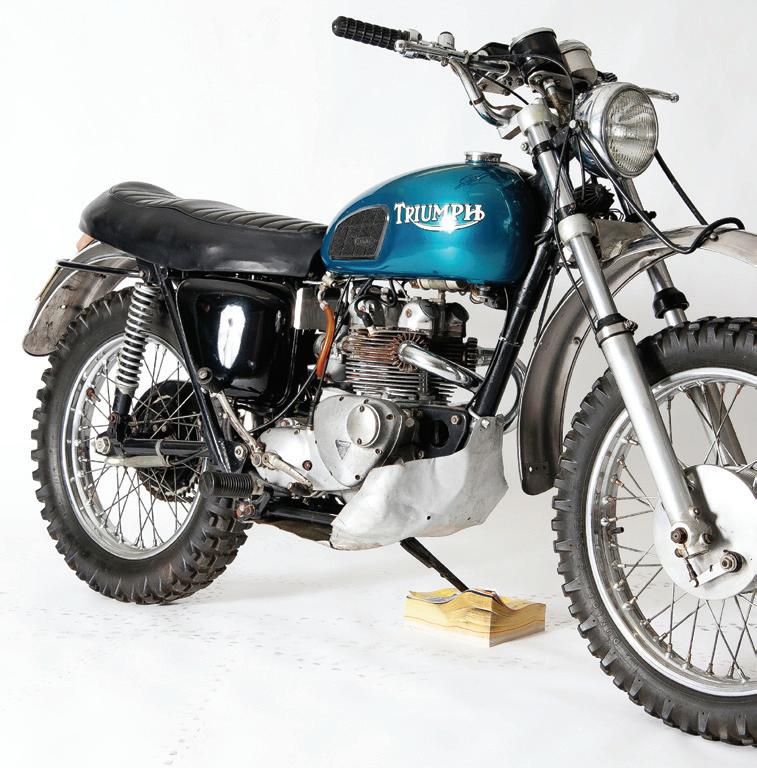
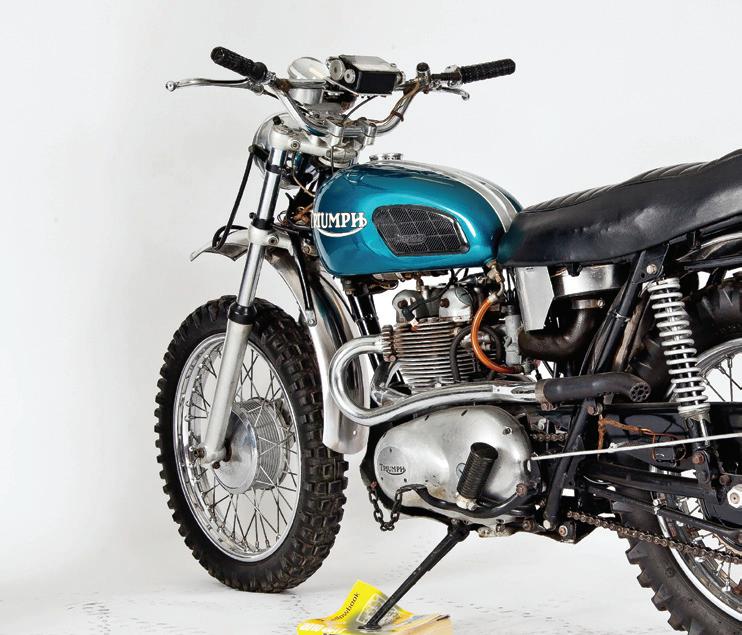
Two-time AMA Executive Secretary Linton Kuchler, and enduro legend Bill Baird’s 1968 Triumph.
36. ERIK BUELL’S SECOND ACT
America’s innovative sportbike genius is hard at work doing what he does best.
42. TAKING BACK PUBLIC LANDS
Lawmakers and the AMA want to return 43 million acres to the public.
45. GO RIDE
What to do, where to go.
54. TIM MARSHBURN
Heading West.
You put your heart and soul into your bike. At BikeBandit.com, we make sure your investment pays off, whether you’re ordering OEM parts to keep it in perfect condition or gear and accessories to make your riding experience just a little sweeter. So log on to BikeBandit.com and find out why 70,000 customers a day trust us to provide superior selection, quality, and service.


“Perfect
* Actual review from resellerratings.com
By Rob Dingman
Few issues have generated the kind of response we have seen to the designation of California Gov. Arnold Schwarzenegger as the 2010 AMA Motorcyclist of the Year (MOTY). Rest assured that we are listening to you and your concerns as members more than ever before. I, myself, have been critical of the AMA over the years for its inability to recognize its mistakes, own up to them and reverse course if necessary. I confess to you that I now believe this designation to have been a mistake. I take responsibility and apologize to you for it.
Perhaps, the only thing we accomplished, as I read in one blog posting, was to heighten awareness of a new law signed by the former governor requiring all California-registered motorcycles and exhaust systems built in 2013 and later to display a federal Environmental Protection Agency label somewhere on the exhaust itself, certifying that the exhaust meets the federal sound standards. Frankly, drawing attention to this issue was our intention with the MOTY designation. The California law sets this nation down the wrong path to reducing excessive motorcycle sound because it is discriminatory and will do little to solve the problem. Unfortunately, too often other states look to California and replicate their overly restrictive laws.
Some who have written or called the AMA about this issue got the impression that the AMA was in favor of this new law and was pleased with the actor-turned politician for signing it. Quite the contrary—make no mistake, the MOTY was given in this case for a very negative reason. The AMA opposed SB 435 and continues to oppose this ill-advised approach.
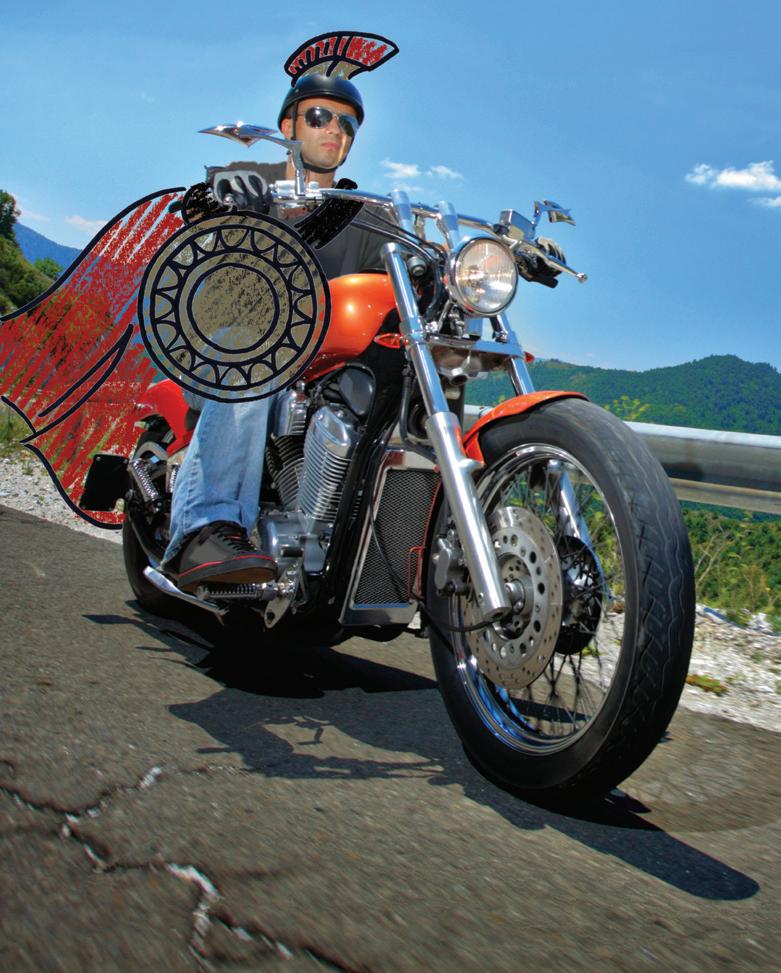
Much of the confusion likely stems from the cover photo depicting a smiling former governor astride a heavyweight cruiser, leaving the impression that he had cooperated with the story and consented to a photo shoot with the AMA. In fact, the photo was a stock photo purchased by the AMA. Understandably, some people didn’t even bother to read the story based on the cover photo. The photo on the cover should have conveyed our dissatisfaction with the actions of its subject.
The intended negativity of the distinction was further blunted by our efforts to provide editorial balance. Early on in his tenure as governor, Schwarzenegger did do some positive things for the off-highway riding community, but the MOTY recognition was for something negative he had done in the previous year and not for his overall body of work. The adverse actions of the former governor in the waning months of his administration arguably overshadowed anything positive he may have previously done for motorcyclists. This too should have been more clearly communicated.
Some of the comments we have received suggest that the MOTY story came off as smug and communicated a “we told you so” attitude. This was not at all the intention. What we hoped to convey was that this approach to addressing excessive sound was the kind of “wrong answer” we have been concerned about. For years, the AMA has encouraged the self-regulation of sound,
and since 2009 we have endorsed and promoted the adoption of the SAE J2825 sound measurement standard as a practical and economical solution. Unfortunately, California’s EPA-labeling law will do little to solve the problem.
Although Gov. Schwarzenegger was not my first choice, a persuasive argument was made that he met the criteria due to the far-reaching negative impact his action would have on motorcycling for years to come. The criteria established when the MOTY was created in the January 2009 issue of this magazine was that the designation would go to the person who has had the most profound impact on motorcycling, positive or negative, in the previous 12 months. Despite this criteria, some have complained that the “honor” of 2010 AMA Motorcyclist of the Year was wasted.
The MOTY was created as a “distinction” rather than an “honor.” Many of you, however, have told us that the MOTY should be an honor bestowed upon someone for positive reasons. Given the reaction to the 2010 choice, I agree with you. In fact, in February the AMA Board of Directors adopted a policy that awards and key designations such as AMA Motorcyclist of the Year be given for positive reasons. Going forward that will be the case.
The American Motorcyclist Association is your organization. It is my responsibility to ensure that the Association is reflective of our membership and responsive to your input. I recognize this mistake and take responsibility for it. In an effort to be responsive to your input, we are changing the MOTY designation to always be an honor for its recipient. This decision is another demonstration that the AMA is becoming more responsive to your concerns, and I encourage you to continue sending us your thoughts and opinions on what the AMA can do to best serve our members.
Rob Dingman is president and CEO of the AMA.
MOST BIKERS ARE ALSO SOMETHING ELSE. GOOD THING WE COVER ALL KINDS.
And we don’t just cover you, we cover you in some of the best ways possible. That’s why we’re the #1 motorcycle insurer. Ready to ride with the best? Visit progressive.com, call 1-800-PROGRESSIVE or a local agent today.











As A Racer, Buell Knows: When You Crash, Get Up and Get Back In The Race
Out of a small shop in Wisconsin, America’s most innovative sportbike genius is hard at work doing what he always excelled at—re-inventing. Only this time he’s focused not just on bikes, but his company, and himself.
In October 2009, a lot of people counted Erik Buell out.
When the Buell Motorcycle brand was shuttered by owner Harley-Davidson 18 months ago, it would have been easy enough for Buell—a member of the Motorcycle Hall of Fame, a former member of the AMA Board and perhaps modern motorcycling’s most maverick manufacturer—to ride off into the sunset.
But that’s not how Buell thinks. As a longtime roadracer, he notes that the instinct when you crash is never to stay down.
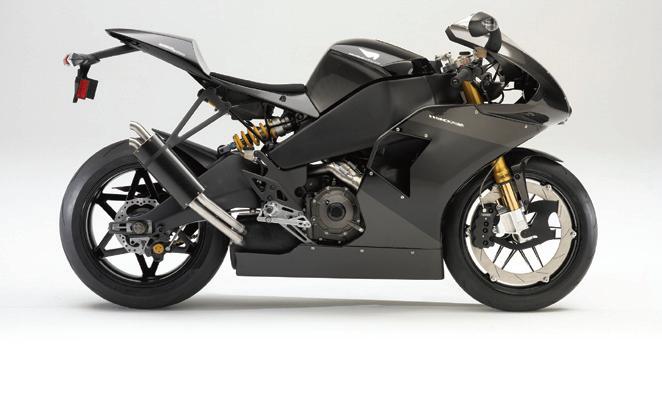
“It was the motivation to get up, and quickly,” he says of his lightning-fast launch of Erik Buell Racing (EBR) and his new company’s new bike, the exclusive 1190RS. “The first thing you do is run over to the bike and see if you can grab the clutch before the engine stalls, and get back up and start racing again. That’s what it was for me. I wanted to get back to it, and put some people back to work.”
And that’s exactly what he’s done, creating from a clean computer screen a new company and an all-new motorcycle—the 1190RS—that shares almost no parts with its predecessors.

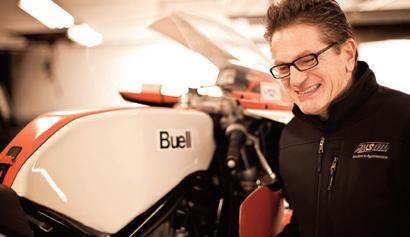
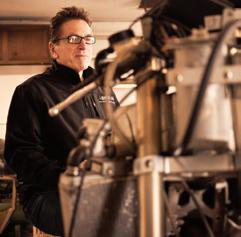
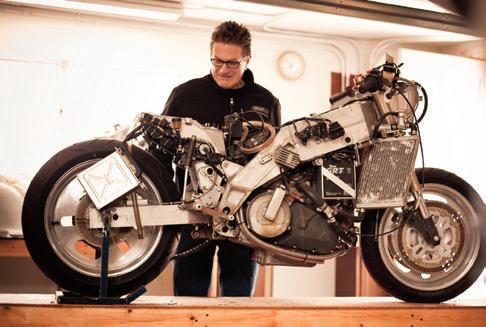
Erik Buell Racing’s first bike is not cheap. Starting at $40,000, it’s an unashamedly high-end motorcycle. But Buell is quick to put it in perspective.
“The price may be kind of high—it’s lessexpensive than the high-end Ducatis, but it’s still a lot for a bike,” he says, allowing a smile before continuing. “It’s the price of a Town & Country Chrysler minivan, so you can pick which one you want. I know which one I’m picking.”
Besides, he notes, it’s just the first step of many more to come. In one sense, the 1190RS is merely the latest move from a man who has re-imagined the modern American sportbike.
Buell is psyched about his latest creation. But as he told a sold-out crowd at the Motorcycle Hall of Fame Breakfast at Daytona during an interview with motojournalist Laurel Allen, he has even grander ideas in mind for the future.
“I have a 200-year-plan, he says. “The plan has changed a little, but I’m still thinking way out there in time.”
“
I couldn’t ride a motocross bike, but I
could ride the roadrace bike. So I went to a race and got third.”
For Erik Buell, the idea of innovation started early.
Growing up on a farm with the usual assortment of aging and older equipment, it was natural to start working with tools at a young age.
“On a farm, you’re always fixing stuff— you’re always modifying things, changing them around. I probably had a welder in my hand when I was about 10 years old,” Buell says. “I got used to that and thinking it was perfectly normal to change things.”
From the start, though, it was sportbikes that fired him up.
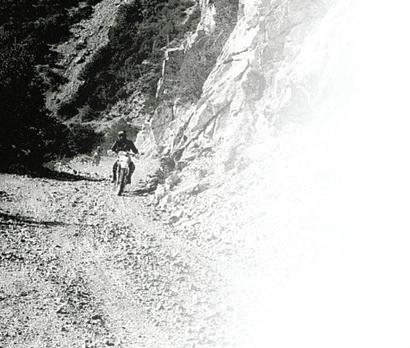
“When I was 15, I bought a Harley chopper, disassembled, and put it together,” he says. “I rode it for a while, but I lived in western Pennsylvania where the roads are twisty. Someone beat me down a back road on a Triumph Sprint, and it was suddenly, ‘OK, I need a sportbike.’ I never looked back from that.”
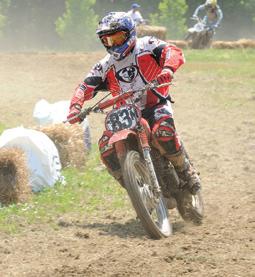
Gravitating to power and handling, Buell bought a Velocette Thruxton, the sportbike of its day, and spent hours on the winding roads of Pennsylvania. Then he saw the movie “On Any Sunday.” The images of Hall of Famers Malcolm Smith and Steve McQueen riding and racing were too much, and he soon started motocross racing.
Injuring his leg in a crash may have curtailed his MX riding, but it didn’t slow his desire to race.
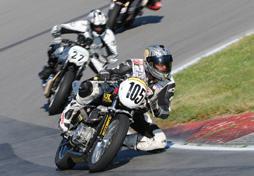
“With my leg hurt, I started helping a friend who was roadracing. That was fun, and when he decided to quit, I bought his bike from him,” Buell says. “I couldn’t ride a motocross bike, but I could ride the roadrace bike. So I went to a race and got third, and said, ‘OK, I guess I can do that.’”
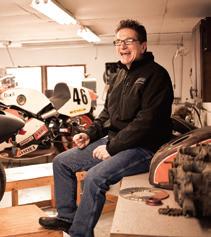
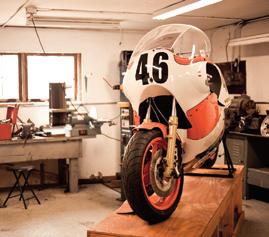
With no motorcycle riders or racers in his family, Buell was on his own. But he worked himself up to trying to qualify to compete on motorcycling’s biggest stage—the Daytona 200. He remembers showing up to try to work his way through 80-bike heat races on a 250 Yamaha in an attempt to make the main event. Unfortunately, another injury derailed his plans. This time, though, he used the recovery time to reflect.
“It was when I was healing that I decided that I was either going to quit or try really hard,” Buell says. “I went back to racing and got my Superbike license, and then my Formula 750 license. I was the fastest qualifying rookie in 1978, and was running in the top 10 when the bike broke.”
He remembers some good times, such as sitting on the provisional pole position for the AMA National at Sears Point Raceway in California in 1978—only to see the race rained out. Despite being the fastest racer in practice, he never got to run the race.
There were a few laughs along the way, too.
“There was one time in Daytona in my rookie year that I was dicing in the top group with [Hall of Famer] Gary Scott,” he says. “The riders we were with were fast, and we were passing a lot of people. When [Hall of Famer] Kenny Roberts came by me, I thought something must have happened in the pits, and he was back out passing me.
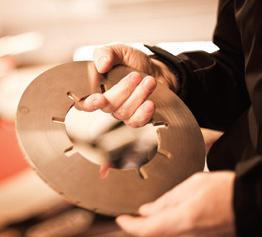

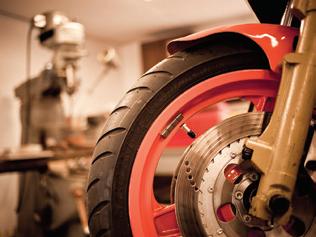
“Then I came around on the banking and looked at the leaderboard, and he was leading! I was like, ‘Oh, I was just lapped!’ Talk about going from high to low in a second!”
“In America, if we’re anything, we’re pioneering. We try things differently.”
It was about this time that Buell—armed with an engineering degree and working at Harley-Davidson—started building American sportbikes. Typically, he didn’t take a conventional route. In the early 1990s, he decided to build his bikes around the HarleyDavidson Sportster engine. That decision, he
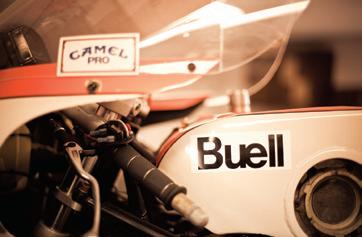
says, was the start of the innovative thinking that came to be a hallmark of the Buell line.
“I’ve got a lot of things to thank HarleyDavidson for, and one of them is that when I wanted to build a sportbike with a Harley motor, I had to go outside of the box with the design,” he says. “That motor in a sportbike was just a strange combination. It was something no one had done before. There were a lot of problems I had to solve. It was, ‘This doesn’t package well, and it shakes like crazy. If I make the bike light, it will shake it apart, so what do you do?’”
The upside, though, was the charisma of the motor itself: “It was such a great engine, and it sounds so good, and it led to things like putting the shock underneath the engine, and all those crazy things—and they worked.
“At that point, it was, ‘Wow, maybe I could
do this!’”
It was also the beginning of a philosophy. Buell was unashamedly making massproduction U.S.-built performance streetbikes. That, too, was something that had never been done.
“There is something to an ‘American sportbike,’ and I think it boils down to being creative,” he says. “In America, if we’re anything, we’re pioneering. We try things differently. To me, not every piece of this bike has to be made in America. The ‘America’ part is a mix of different things—innovative thinking, a willingness to do something differently. That’s the spirit of an American sportbike, to me.”
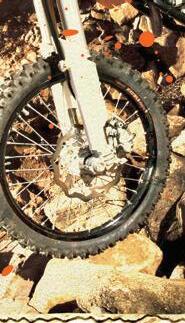
That willingness to try different paths led to things such as the underslung shock absorber on the bike and the perimeter brake
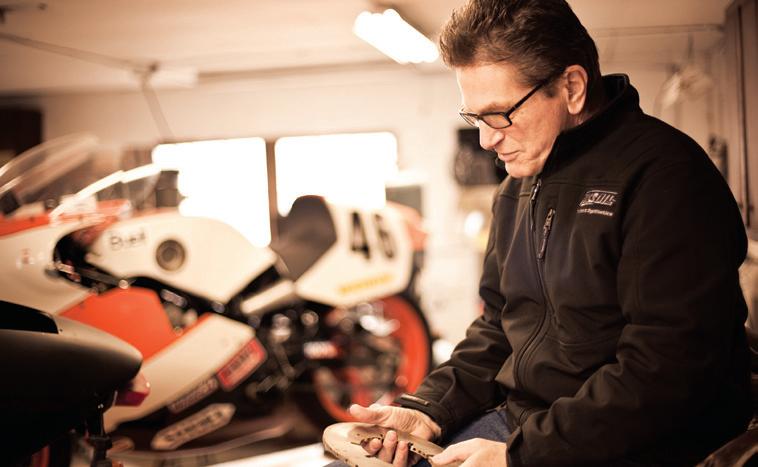
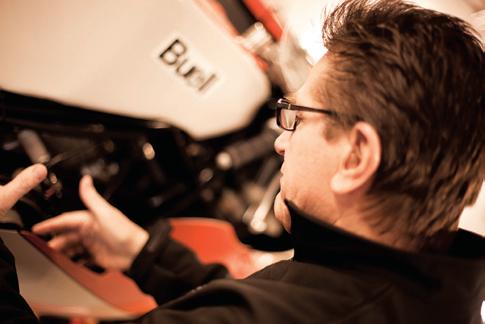
on the front wheel, which was lighter than the current industry-standard dual discs. Combined with the rough-edged, charismatic Harley motor, the result was a sportbike that rode and looked like no other.
His efforts built up a loyal fan following, and a fair bit of critical success for his go-their-own-way bikes. Perhaps more importantly, by the time Harley-Davidson bought a stake in the Buell Motorcycle Company in 2003 and production expanded, Buell was building up a team of free-thinking designers who thought the same way he did.
“We used to call it Erik Buell’s home for wayward racers,” he laughs. “We had a lot of racers and ex-racers working for us. And it wasn’t just racers—it was national champions, whether from snowmobiling or cars or whatever. Racers are just goodspirited. Racers are OK with a challenge.”
The “Buell Way” coalesced around the growing team of engineers.
“As more people got on board, they really started to feel this was an American thing, and we were bringing young people who thought more broadly, and we started to get there really easily,” he notes. “People would come to me with a new design, and it was like, ‘Whoa, that’s really cool!’ It was contagious.”
The fast-moving team of engineers added more innovation in mid-2000 model Buells by using the bike’s frame as the fuel tank and the rear swingarm as the oil reservoir. Plenty of refinements were also made to every part of the design that helped move the machines forward.
By 2007, Buell was announcing a new machine, the 1125CR, built around a nonHarley-Davidson Austrian-built Rotax motor. With the new powerplant, Buell fielded a race team that ultimately culminated in an AMA Pro Racing National Championship in the Sportbike class in 2009 for the race-only
1125RR, ridden by Danny Eslick.
The race effort, Buell notes, was a great reward for years of refinement to the motorcycles that bore his name. But it was anything but a foregone conclusion.
“We didn’t expect to win the championship that year at all, since we went out of [the season-opener at] Daytona with negative points,” he says. “Danny was penalized for passing under a yellow. But we learned a lot. More than anything, it reminded me how key everyone on a race team is, and it all has to gel. Fundamentally, the bikes ran well, but we had pre-tested the heck out of them.
“The race effort taught us a lot. People who are on race teams solve problems more quickly and with less stress and more fun. Those are the ones you want to have leading your organization.”
“People have one thing in mind about the split, but it was gentler and had more common sense than people may have thought.”
Only 36 days after winning the title, Buell’s world was turned upside-down. Harley-Davidson was struggling with the economic downturn, and the Buell brand would be shuttered. It was a tough blow to Buell and the company he worked to build, in addition to the company’s engineers and manufacturing workers.
Buell himself weighed in with a video hosted on the company website.
“I will always be proud of America’s little sportbike company that took on the world, and with brilliant innovations, produced some of the best-handling motorcycles of all time,” an obviously emotional Buell said at
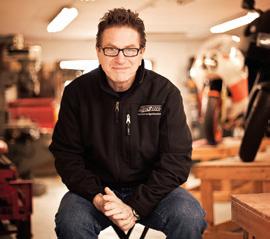
the time. “We’ve proven that a small group of passionate and inspired people can compete against industry giants.”
These days, with 18 months of perspective, Buell remains thankful for his partnership with Harley-Davidson.
“I have a lot of gratitude,” he says. “I had a great run. I learned a lot from them. I had a chance to make a lot of really cool bikes, and I’m just glad I had that opportunity. They ended it for really important business reasons, but that doesn’t change the fact that we got a lot done. We had different customers, and I have to give them respect for trying something new, or having me try a bit to go in a different direction.”
Ultimately, he says, the decision made sense.
“People have one thing in mind about the split, but it was gentler and had more common sense than people may have thought,” he explains. “Motorcycling is an emotional sport, and people are emotional about motorcycling. The fact is, we went through some very hard times here with an economic recession, and I think that compounded it so that people thought, ‘Oh, this is terrible.’ But it just had to happen. There always has been this difference between sportbikes and cruisers. For me, I was very emotional initially, but my emotion was realizing that a whole lot of people were going to lose their jobs.”
The breakup also paved the way for Buell’s second act—the founding of Erik Buell Racing. His plan from the start was simple: Buell wanted to be back in the bike-building business.
“It still came back to the fact that I wanted to make American motorcycles,” Buell says. “Back when I was riding, we had [Hall of Famers] Kenny Roberts and Freddie Spencer and Randy Mamola—all these worldchampion-level guys from America—but we had never done a bike here. I know we can do it, and I know the desire is here.
“I knew it would be hard, but I know a lot more than I did before,” Buell says. “I learned from Harley. We made 140,000 motorcycles. People ask if it’s as hard or harder to start now, and it’s not.”
“The majority of the people in the world really are good human beings.”
At first, it was just Erik Buell and a plan.
“Then I called a few people, and people were helping me on the side,” he says. “The first thing we did was start making race parts for the Buells that were out there, which Harley-Davidson helped me do. It was important for all the customers and everyone. We needed to keep the spirit up. The company may not be making bikes, but the bikes are cool, and there are still enthusiasts out there enjoying them.”
Then came the harder part: Building an all-new motorcycle for sale. By February of this year, the prototype bike was complete and shown to prospective sellers at the Indianapolis Dealer Show. At presstime, production was to begin in late April on the first-ever EBR 1190RS.
Buell is clearly pumped when he talks about the new bike.
“I’m really proud of the team that put this together,” he says. “This is a little team of workers and suppliers working crazy, crazy hours. It’s new from front to back and there are almost no common parts from what we did before. That’s a huge task.”
Key to the comeback, he says, is the network of parts suppliers who agreed to help out.
“We’d call them up and say, ‘We’re going to build 100 bikes the first year,’ and these were people who were selling us parts for 12,000 bikes the year before,” Buell says. “A few said ‘No,’ but almost all of them said, ‘Yes, absolutely. We’ll help you.’ And you know it’s not a big money-making proposition for any one of them.
“That makes you say, ‘Wow—it’s a good world.’ The majority of the people in the world really are good human beings.”
The 1190RS was designed from the outset to be a high-end motorcycle.
“There are only going to be 100 of these, and being able to put the highest-end things on it that we can is really cool,” Buell says. “To work on it and wonder how it’s going to turn out is really cool. We can project most of this stuff on Computer-Aided Design machines, but as it takes shape, it’s like, ‘I want one.’ Then it’s like, ‘I must have one.’ And then it’s, ‘Wow! I gotta have one!’”
There is a plan behind the early cost-noobject design, however. Buell says the idea is to use the bikes as design statements to find out what is possible, then look for ways to find nearly the same level of performance at a lower price. If you don’t take the first step, he says, you can’t take the second step.
“In the end, none of that really stopped us.”
These days, Buell and his crew are focused on bringing the machine to market by lining up dealers and preparing production. But he’s still looking at this rebirth as the first step on a long road. Characteristically, he’s thinking big.
“I think there’s a viable niche for a motorcycle like this, to some extent—but I want to be back in the mainstream motorcycle manufacturing area,” he says.
“I like to see people on motorcycles. I think there should be more motorcycles in the world. I really, really believe that on an intense level.
“The first 100 bikes will be a celebration that we’re back. And the people who get them will get something really special,” he says. “But I’ve also been a young guy without lots of money, and I want to be able to build bikes for those people, but have them be great motorcycles. In the end, if we can make some new motorcycles and bring some people into the mix who help grow the industry, that’s great.”
So far, he says, there have been no regrets. And talking to him, you get the feeling that there never will be.
“In the end, I love what I’m doing,” he says. “I love the people I’m around. I love the life I’m having—the good parts and the bad parts. You have to embrace both. To walk away from the bad parts is to walk away from the good parts, too. When the business was almost gone before Harley bought into it years ago, that was tough. The shutting down of the business was tough. In the end, none of that really stopped us.
“It definitely set us back a few days, but that didn’t stop us.”•