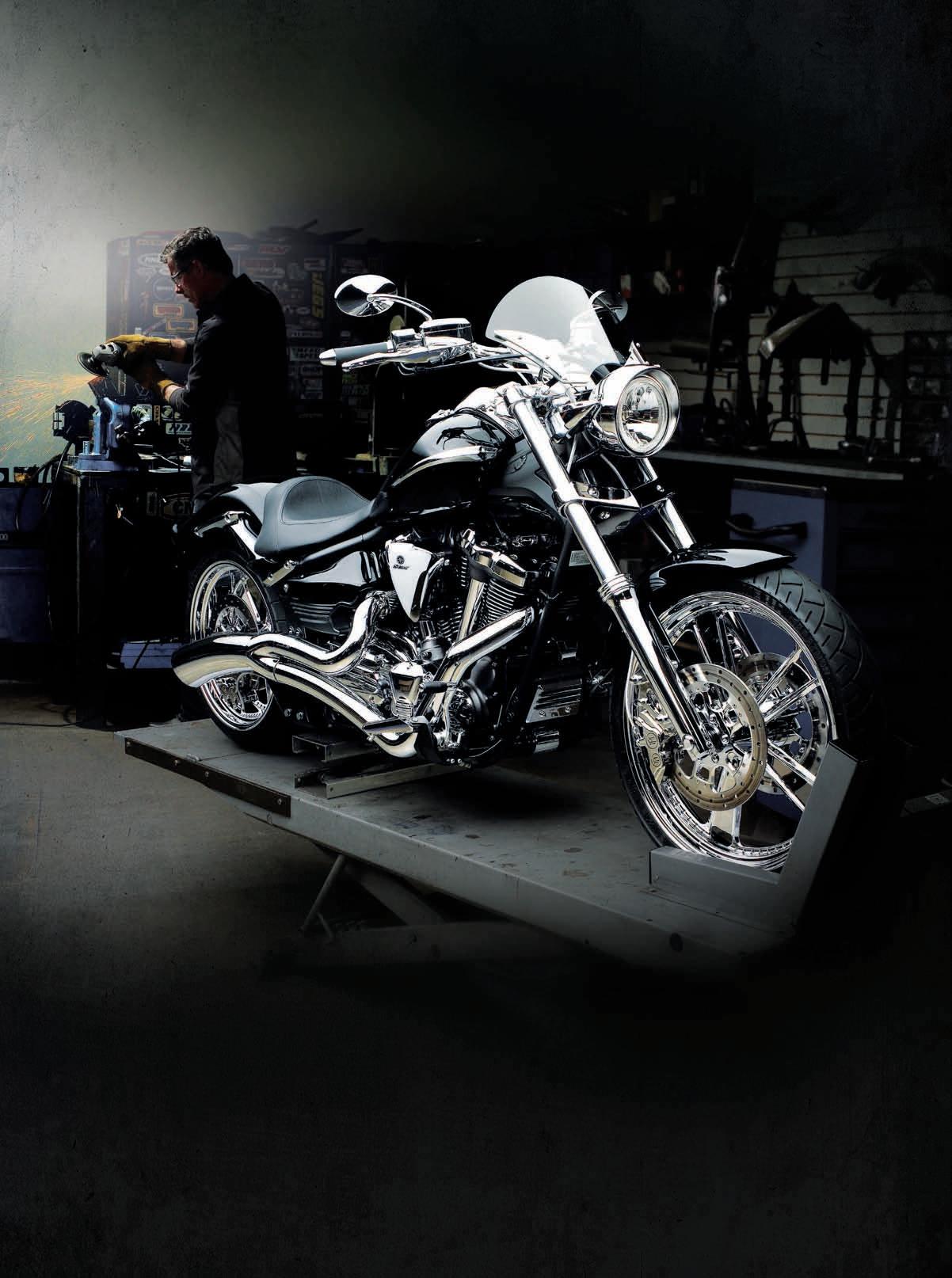
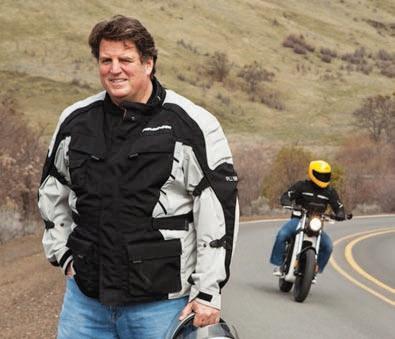
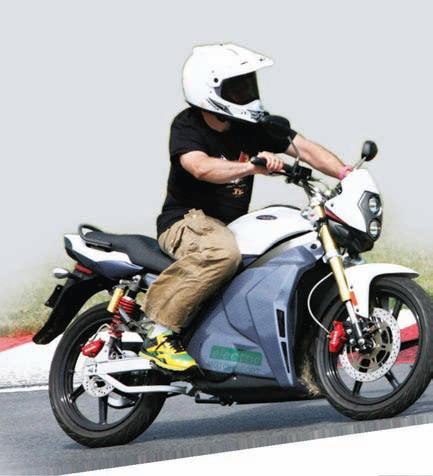
Cover Mission Motors CEO Jit Bhattacharya, photographed by Brad Wenner Navigation Photo by Daniel Melguizo Moreno of New York City.
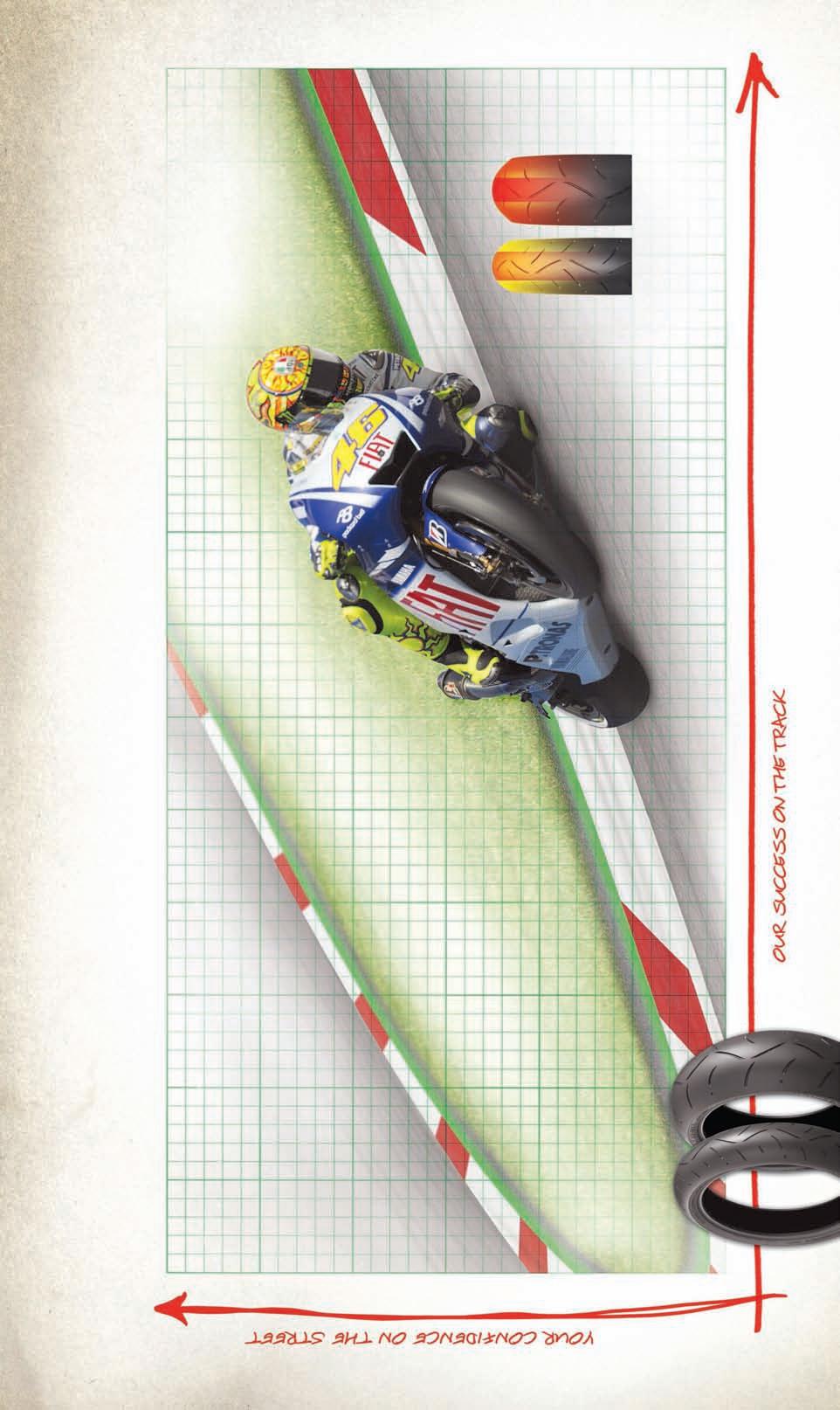
The BT-003RS from Bridgestone is designed with 3LC + Ultraction* (dual compound) to achieve the best possible grip on streets and tracks.
* Sizes for mid-size cycles utilize 3LC and 5LC without Ultraction Compound.
With every MotoGP race victory, we learn more about tires and how they perform on and off the race track. That’s good for racing and it’s even better for you.
Ride on Bridgestones. And start setting your own records.
Snapshots
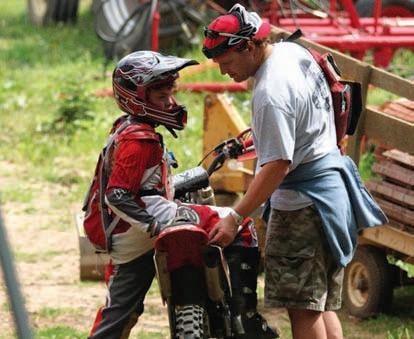
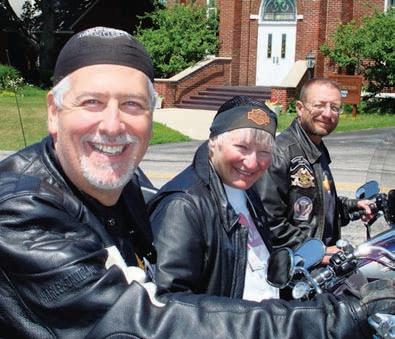
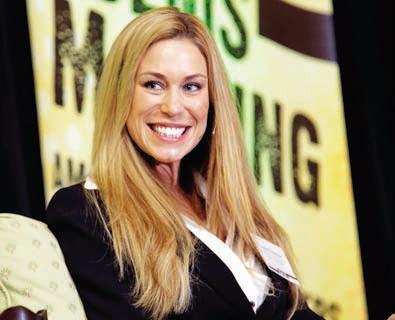
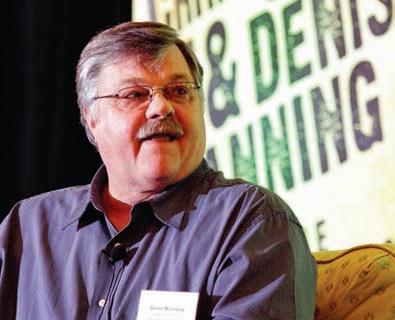
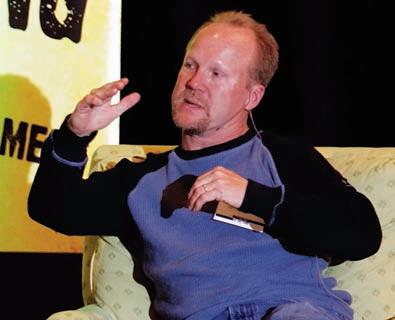
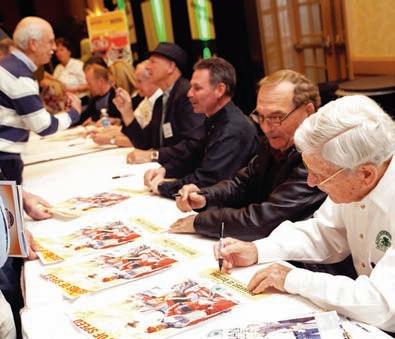
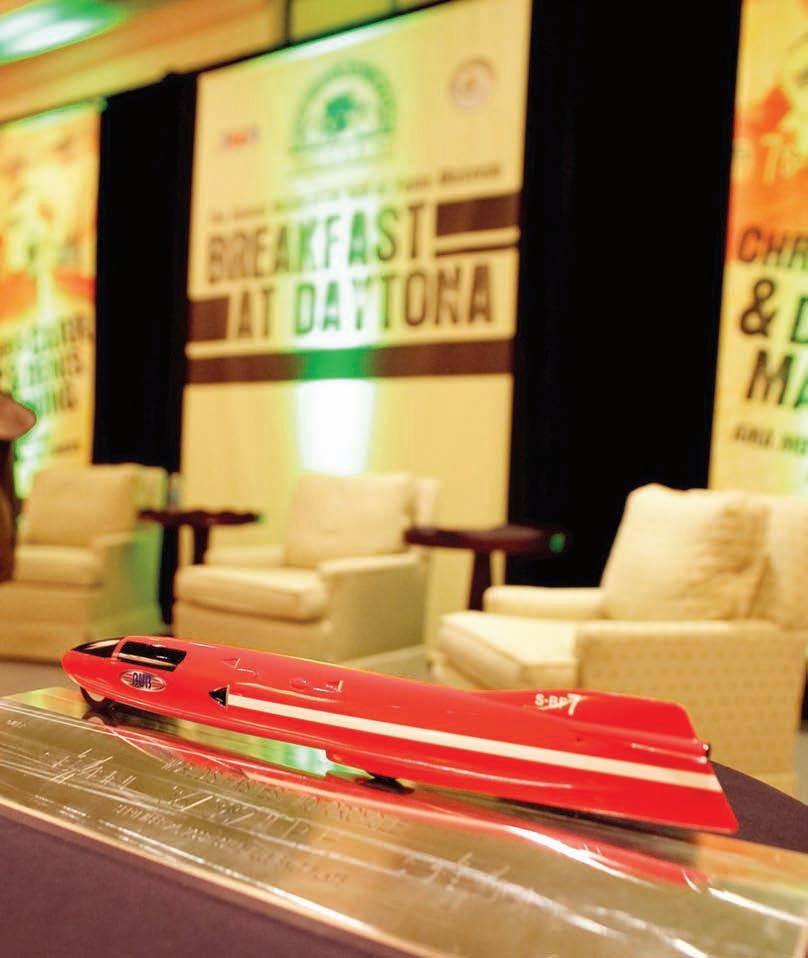
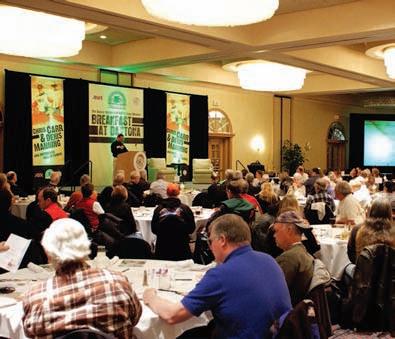
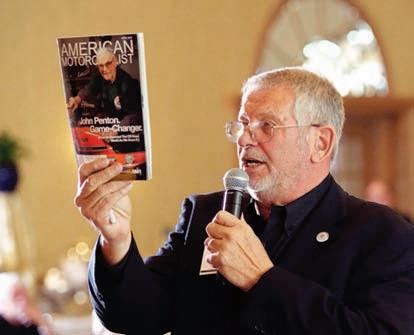
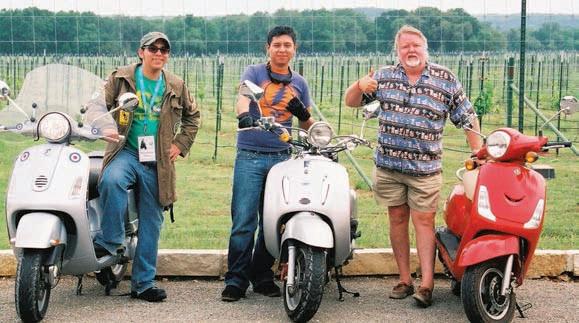
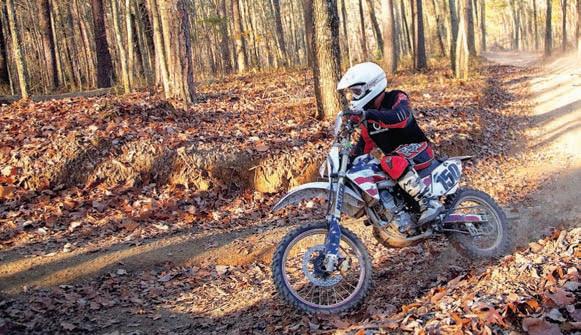
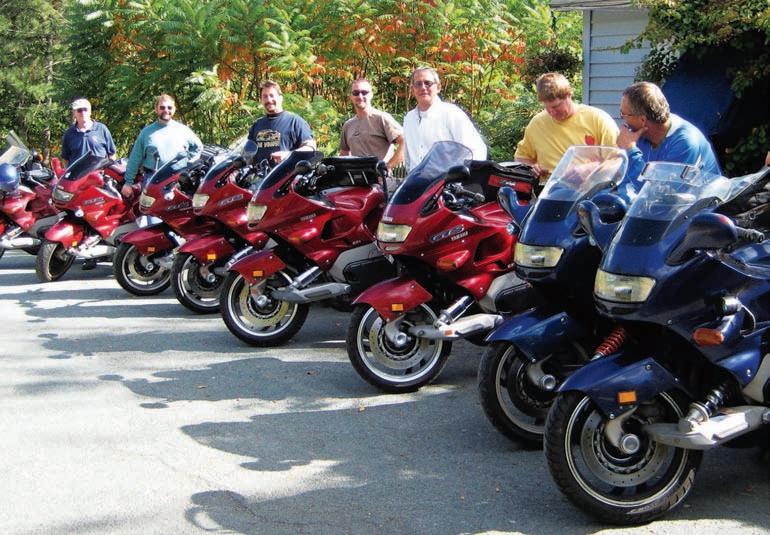
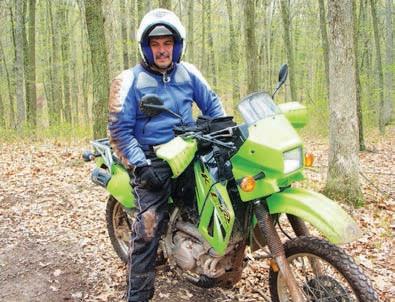
1) Wolfgang Neuwirth and his son, Hunter, after Hunter finished second at an Aztalan Cycle Club (Lake Mills, Wis.) hare scrambles.—Dave Hollub of Sauk City, Wis. 2) Submitted by Rob Pasqual of Goose Creek, S.C. 3) Alex, Helen and Dennis taking a break while riding in Michigan. 4-10) The 22nd Annual AMA Motorcycle Hall of Fame Museum Breakfast at Daytona, held March 5, proved to be one of the most exciting ever. Leslie Porterfield (4), who holds multiple motorcycle land speed records, interviewed the world’s fastest motorcyclists—streamliner builder Denis Manning (5) and rider Chris Carr (6), who are both members of the AMA Motorcycle Hall of Fame. Manning and Carr talked about the challenge and excitement of setting the absolute motorcycle land speed record of 367.382 mph through the measured mile at the Bonneville Salt Flats in Utah last year. Manning even donated a one-of-a-kind replica of his recordsetting streamliner that will be auctioned off to benefit the Hall of Fame later this year (7). AMA Board Chairman Stan Simpson (10) surprised Hall of Famer John Penton with advance copies of the April American Motorcyclist, featuring Penton on the cover. Photos by Brian Pepper, Digital Imaging Direct.
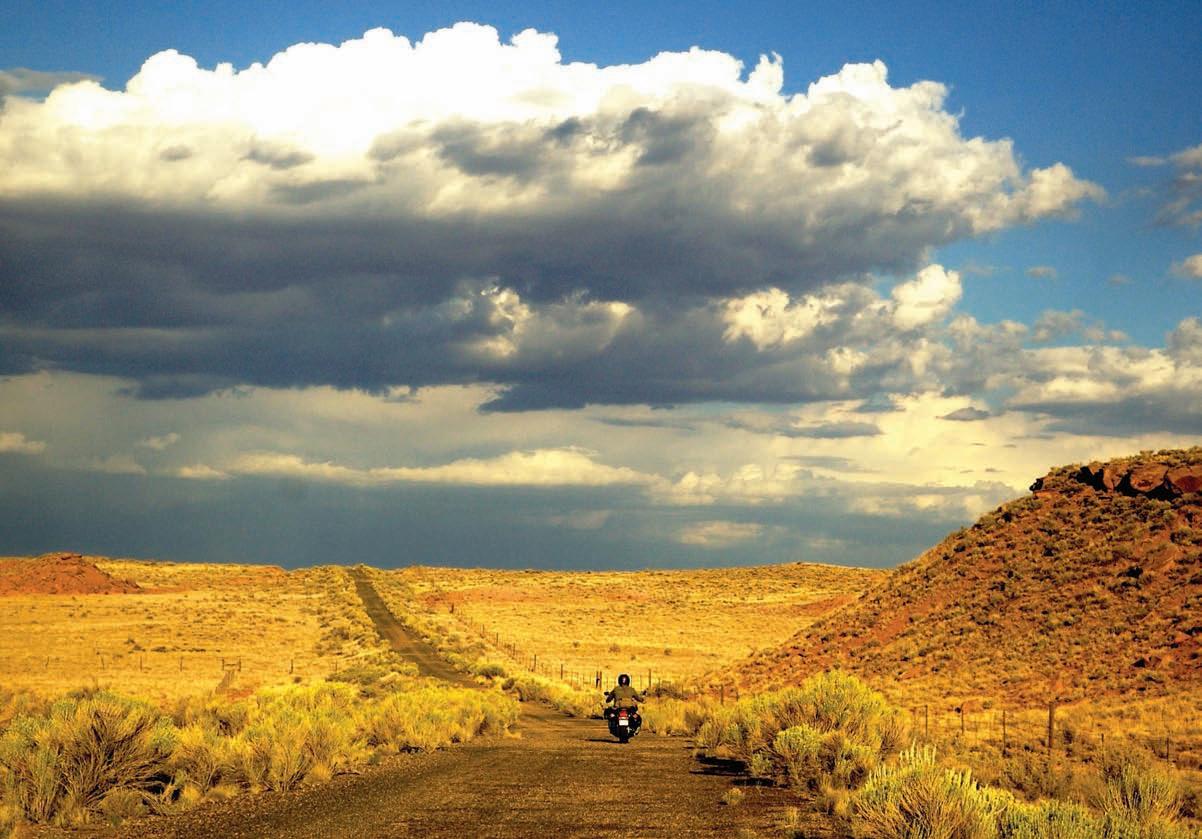
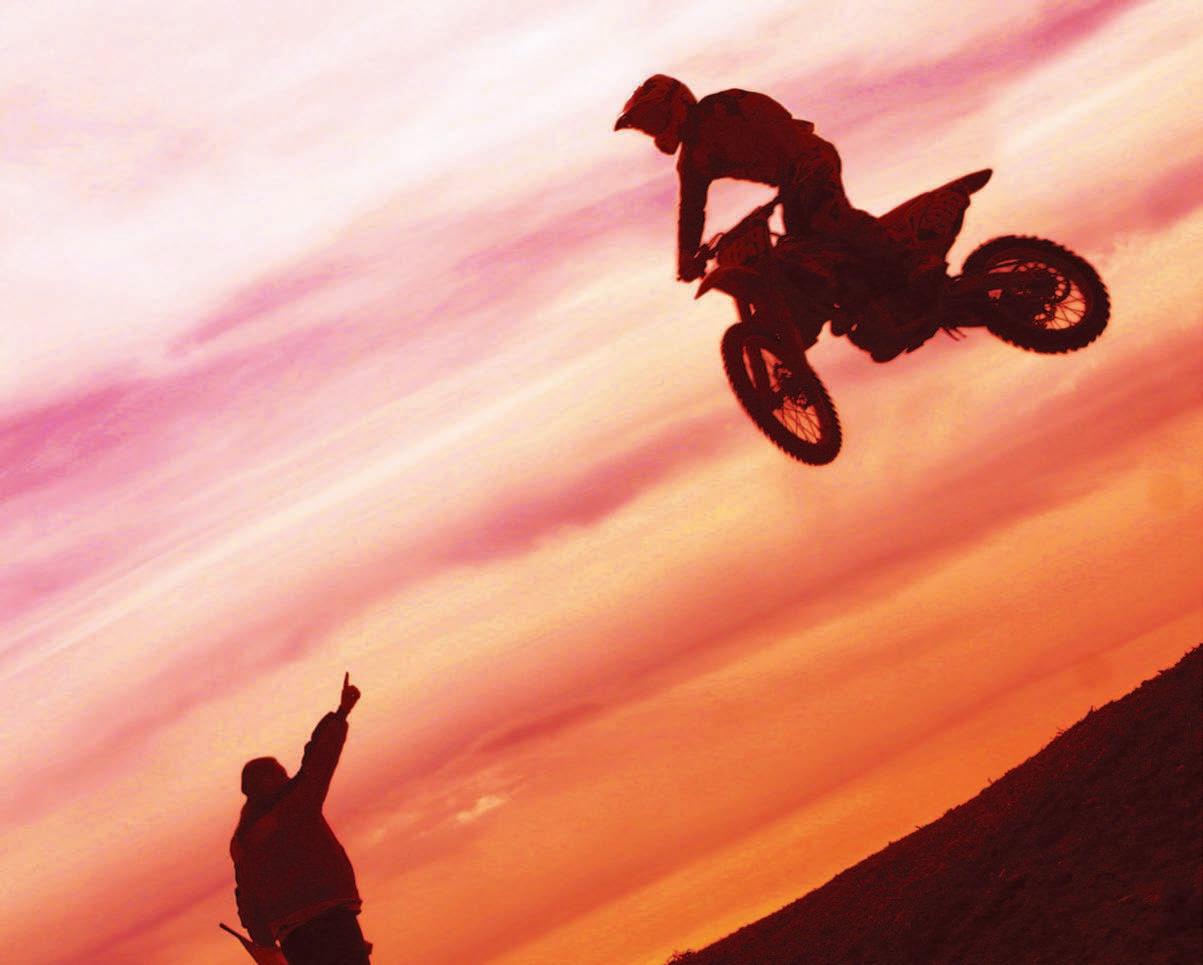
Congratulations, Nina. You’re the winner this month! This sunset snapshot was taken by Nina
of Livermore, Colo.
Slothower
Got an image that represents what’s cool about motorcycling? Send your high-resolution photos, name and mailing address to submissions@ama-cycle.org. We’ll pick one standout photo next month and send the photographer a prize pack of AMA gear. Editors decisions are final. No purchase necessary.
There’s more where these came from! We get way more cool photos than we can publish here, and now you’ll find them all online, searchable and divided by category. Just visit AmericanMotorcyclist.com and click on the “Gallery” link on the left.
James Holter, Associate Editor Bill Kresnak, Government Affairs Editor Mark Lapid, Creative Director Nora McDonald, Production Coordinator Jen Muecke, Designer
advErtising
Bob Buchanan, Advertising Manager (310) 505-3241, bbuchanan@ama-cycle.org
Ray Monroe, Advertising Manager (815) 885-4445, rmonroe@ama-cycle.org
aMa Board of dirEctors
Contact any member of the AMA Board of Directors at www.AmericanMotorcyclist. com/whatis/trustees.asp
Brad WEnnEr, Photographer If you’re looking for impressive images that balance light as well as their subjects, Brad is your guy—and he’s our go-to guy in the San Francisco area, where he shot this month’s cover and the rest of the crew at Mission Motors. BradWenner.com.
JosEPh raMos, Photographer Joseph, who shot Craig Bramscher for our electric bike feature this month, says he loves shooting new people, getting to live vicariously through their experiences and capturing a great image of them. For fun he gets on his bike (right now a Suzuki V-Strom) and takes off, shoots strangers in new places and listens to their stories. You’ll find him online at BeyondImages.com.
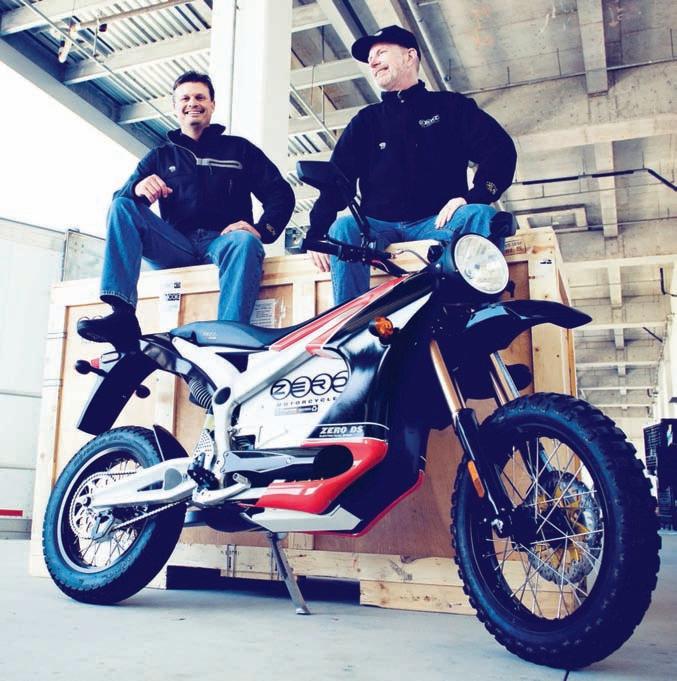
toni clEMEns, Photographer Living and working in Daytona Beach, Fla., Toni gets plenty of motorcycle immersion therapy. She also shoots a pretty good picture, as she did with the crew from Zero Motorcycles. ToniClemensPhotography.com.
MarK laPid, creative director Some ideas just die. For Mark, at least, others simmer forever, only to be restoked by a cataclysmic event—like someone donating a potential vintage-racing project CB160 to the AMA Motorcycle Hall of Fame, where it’s headed for eBay soon.
charles goman, Winder, Ga.
Michael lock, Cupertino, Calif.
Maggie Mcnally, Albany, N.Y.
scott Miller, Milwaukee, Wis.
art More, Surprise, Ariz.
Jim viverito, Chicago, Ill.
JEn MUEcKE, designer This year, Jen is looking to make up for lost ground in the street-riding category, after many summers spent focusing on the racetrack. She’s off to a slow start, though, after missing the Frozen Snot Ride.
grant Parsons, Managing Editor As is typical for Grant, he’s reminded that fuel stabilizer actually needed to be poured into the gas tank about four months ago to be effective today. At least the KLR always runs, though.
nora Mcdonald, Production coordinator The latest plan? A ride on the CB360 to Hillbilly Hot Dogs in Lesage, W.Va. She says: “Glad I have AMA Roadside Assistance!”
Bill KrEsnaK, government affairs Editor It’s spring, and Krez’s thoughts turn to an AMA KTM National DualSport Trail Riding Series event in May. Training starts now.
JaMEs holtEr, associate Editor James won the bikewinterizing lottery, for sure. He walked out to the garage, held down the starter button on his un-winterized HarleyDavidson, and the motor just caught. Dirtbikes next.
other contributors include: Mitch Boehm, Curt Comer, Jeff Kardas, Shan Moore, Ed Moreland, Open Image Studio, Brian Pepper, and David Smith.
JUST RIDE THE DAMN THING.
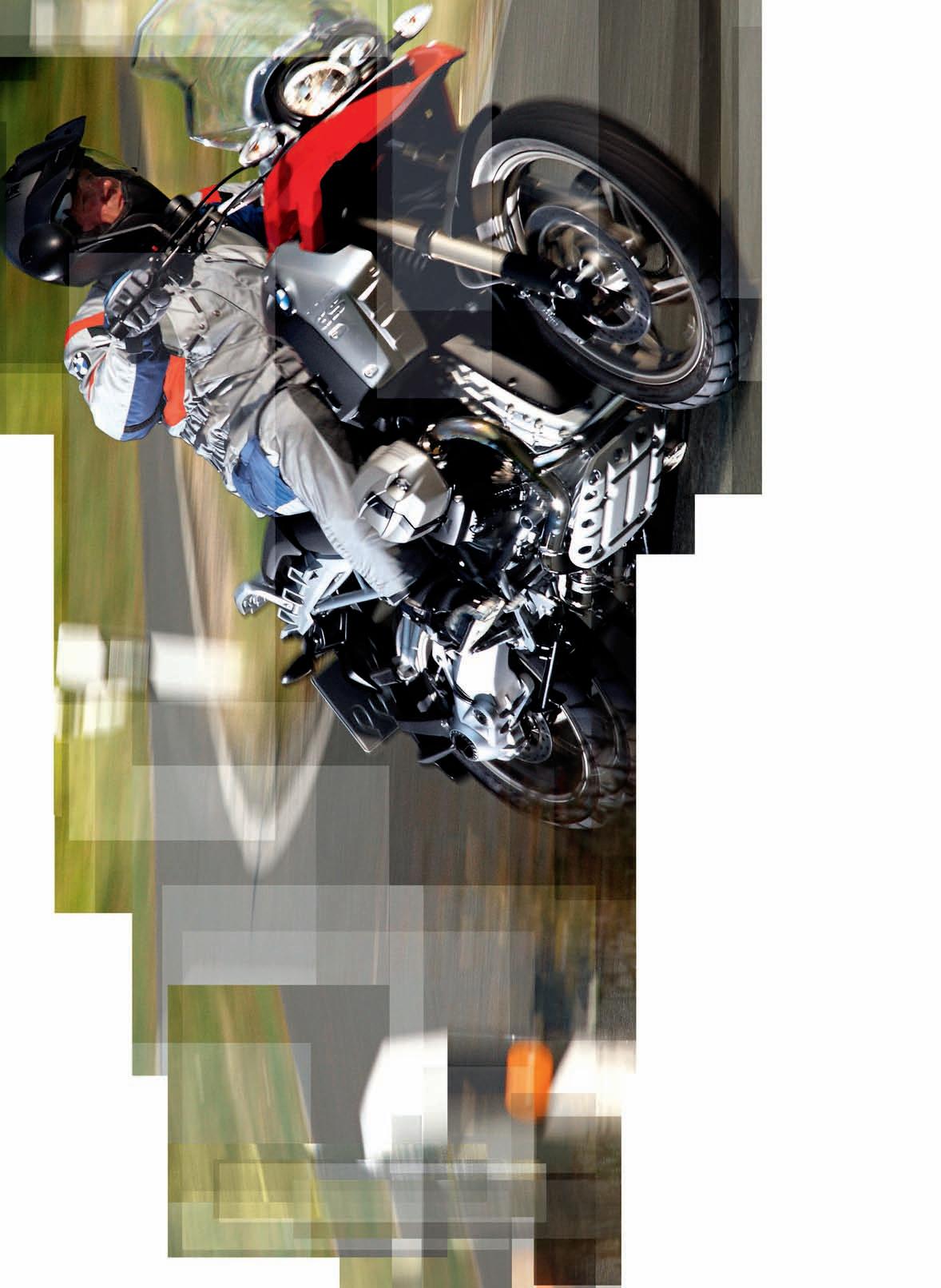
It’s really tough to describe how exhilarating this bike is to ride, even though it’s frequently been called the “Swiss army knife of motorcycles”. The new 2010 R 1200 GS sports radial valves and double overhead camshafts derived from BMW’s race-winning HP2 Sport, redesigned pistons and a new exhaust system. On paper, this adds up to 110hp and 88 ft-lb of torque. But in the saddle, it’s a revelation: you experience responsiveness, acceleration, torque and even a growling engine sound that is much stronger right up to red line in every gear. Don’t take our word for it: just ride the damn thing and see for yourself.
the R 1200 GS at your local BMW dealer now and experience instant addiction. Ride the web at www.xplorgs.com
Viewpoint
Tell Us What You Think
New Online Surveys Will Help
The AMA Set Priorities
By Ed Moreland
You’ve heard us say it before: Your voice counts.
That’s true when it comes to convincing legislators to preserve off-highway riding areas. It’s true when it comes to blocking cities and towns when they’re unfairly cracking down on motorcycles.
And it’s even true a little closer to home, here at the AMA, when we make plans to work with AMA members and others to fight bad laws and anti-motorcycling forces that lay siege to our lifestyle.
That’s why every other year, we undertake comprehensive surveys of AMA members’ priorities on our government relations activities, for both street and dirt riders. In the past, we’ve done these surveys the oldfashioned paper-and-pencil way, with two pages of this magazine devoted to forms you filled out and mailed in.
This year, we’re making the process less expensive and more efficient, with two online surveys that allow you to immediately make your feelings known on the issues. You can find the surveys in the Members Area of AmericanMotorcyclist.com.
From our perspective, it’s important for you to take a moment to fill out one or both surveys because they help us better understand your priorities. At the AMA, we pride ourselves on putting our members, and their concerns, first. As we protect the motorcycling lifestyle in the halls of government, we never forget that we’re working for you.
Lately, we’ve been very vocal about the myriad threats to motorcycling. There are more now than we’ve ever seen at one time. And there are no easy choices when it comes to deciding how best to combat them. The more we know about your concerns, the better we can address them. Your input helps us set our agenda for the future, both on local and state issues as well as nationally and beyond. The surveys also help us gauge the changing priorities of AMA members over time.
These surveys have provided tremendously valuable information that has guided us on several major initiatives.
You told us, for example, that America’s public lands must include areas where off-highway vehicle recreation is allowed and managed. As a result, we’ve gone toe-to-toe with anti-access forces in Congress and federal agencies to protect your right to ride responsibly on the public lands that our taxes support.
Another example: You said that motorcycle exhaust sound has become an increasingly divisive issue in communities where MX, dirtbike and street riders want to
enjoy the freedom to ride. That’s powered us to support reasonable and objective sound standards developed by the Society of Automotive Engineers (SAE) as part of a larger plan to combat excessive sound from all sources.
You told us that we need to better understand the causes of motorcycle crashes, and work to prevent them. As a result, we advocated for and secured federal money for the first crash causation study to be done in more than three decades.
Then there’s health-care discrimination. We fought for, and won, inclusion of language prohibiting insurers from denying health care claims resulting from a motorcycle crash. After an administrative revision allowed such discrimination to continue, we’ve taken the battle back to Congress as it debates comprehensive health care reform. These examples illustrate how important your direction is to us. When we walk into the offices of decision-makers and speak for hundreds of thousands of AMA members, we know you’re behind us. That carries real weight.
The bottom line: Your voice counts. Please fill out the survey today at the Members Area of AmericanMotorcyclist.com and tell us what’s on your mind.
Ed Moreland is the AMA’s vice president for government relations.
Photo Erin Lassahn Photography
AMERICAN MOTORCYCLIST ASSOCIATION
JULY 9-11, 2010
MID-OHIO SPORTS CAR COURSE
LEXINGTON, OHIO
FEATURING: National championship competition
AMA Motorcycle Hall of Fame
Sitting On The Sidelines Is Not An Option
Last year, 2 million acres were lost to inappropriate federal wilderness designations, and there are many more millions of acres – and thousands of trails – proposed. Every week we learn of motocross tracks under threat of closure. Cities large and small target street motorcyclists with unfair sound ordinances and laws, while allowing other loud noise emitters to remain unchecked. Street riding is also under attack from safetycrats who point to increasing motorcycle crashes and fatalities on our highways. Are you ready for mandated OE-exhausts, inflatable riding suits, airbags and roll cages? Impossible, you say? All it takes is a stroke of the pen.
If you’re an AMA member, you’re already part of the solution. But there are not nearly enough of us. Each of us has to recruit more members for the AMA army. Now is the time to join forces and stand shoulder-to-shoulder on the front lines.
TAKING THE ‘PUBLIC’ OUT OF PUBLIC LAND?
Members Of The AMA And Others Have Been Successful In Thwarting Off-Highway-Riding Lockouts By Congress. Now, Anti-Access Forces Are Shifting Gears.
By Bill Kresnak
There’s a whirlwind of activity going on right now in Washington, D.C., with angry lawmakers giving an earful to federal administration officials, making phone calls and frantically drafting new legislation—all over controlling millions of acres of public land.
The sudden frenzy was sparked by a couple of revelations:
• First, that President Obama’s administration is looking at designating as much as 13 million acres in 11 western states as National Monument land, bypassing Congress in the land-use decision-making process; and,
• Second, that a key U.S. representative is circulating a letter he wants to send to the head of the U.S. Forest Service asking that certain public land be managed, without public debate, as if Congress had already designated it as federally protected Wilderness—banning off-highway riding, mountain biking and other responsible recreational activities.
The moves follow a successful sleight-of-hand effort by a powerful
U.S. senator, Majority Leader Harry Reid (D-Nev.), to shut off meaningful public debate on a proposal to designate 2.1 million acres nationwide as Wilderness. He did that by gutting an unrelated bill and inserting the Wilderness language. Through a little-used parliamentary procedure, the bill quickly earned congressional approval and was signed into law.
These actions signal a major shift in the approach being taken by anti-access interests and the elected officials who cater to them to try to lock up public land. In recent years, they’ve been content to simply introduce legislation that would carve out thousands of acres of public land for special land-use designations that would bar a variety of recreational activities, including off-highway riding, and then let the legislation wind its way through Congress.
But AMA members and members of other recreational organizations have successfully countered anti-access efforts and worked together to urge their federal lawmakers to keep public land open, stalling the anti-access proposals. Seeing that they were now
Photo Pat Bonish Photography
facing organized resistance, those who want to close off public land now want to shut out public debate altogether by trying to accomplish their goals administratively or through political tricks.
“Thanks to AMA members and others, we’ve identified those who are using unscrupulous tactics to keep responsible offhighway riders off public land, and they know it,” says Ed Moreland, AMA vice president for government relations. “Now, they are using political hijinks to keep the public from having a voice in the disposition of public land.
“Something that anti-access forces choose to ignore is that there are other ways to protect land than just simply locking it away from the public,” he adds. “The agencies that control the land already have mechanisms in place to protect it, and there are other land-use designations, such as National Forest or National Refuge, that are much more applicable than Wilderness designations.”
BYPASSING PUBLIC DEBATE IN CONGRESS
Federal lawmakers, AMA members and others are in an uproar over the recent revelation that the Obama administration is considering unilaterally designating up to 13 million acres as National Monuments, which would give the federal Bureau of Land Management (BLM) the power to decide— without public debate—whether to allow off-highway riding, mountain biking and other recreational activities on that land.
According to Interior Department internal documents publicized by the AMA and others, the Obama administration is looking at naming the National Monuments under the Antiquities Act of 1906. The land under consideration is in Alaska, Arizona, California, Colorado, Montana, Nevada, New Mexico, Oregon, Utah, Washington and Wyoming.
The Antiquities Act of 1906 was originally passed to protect Native American artifacts such as pottery from being taken from small tracts of federal land in the West. National Monument designations are supposed to be confined to very small areas of land under the law.
But presidents haven’t interpreted the law that way in their exercise of executive power.
President Bill Clinton created an uproar in 1996 when he designated 2,600 square miles in southern Utah as the Grand StaircaseEscalante National Monument just weeks after administration officials told state leaders the president had no plans to do so.
And though it didn’t effect motorcycle access, President George Bush used the Antiquities Act to circumvent Congress and set the future use of thousands of square miles of the Pacific Ocean without public debate. With the mere stroke of a pen in 2006, he designated 140,000 square miles of ocean and 10 islands and coral atolls in the northwestern Hawaiian islands as a U.S. National Monument, now called the Papahanaumokuakea Marine National Monument.
PRESIDENT’S PROPOSAL
TARGETS VARIED LAND
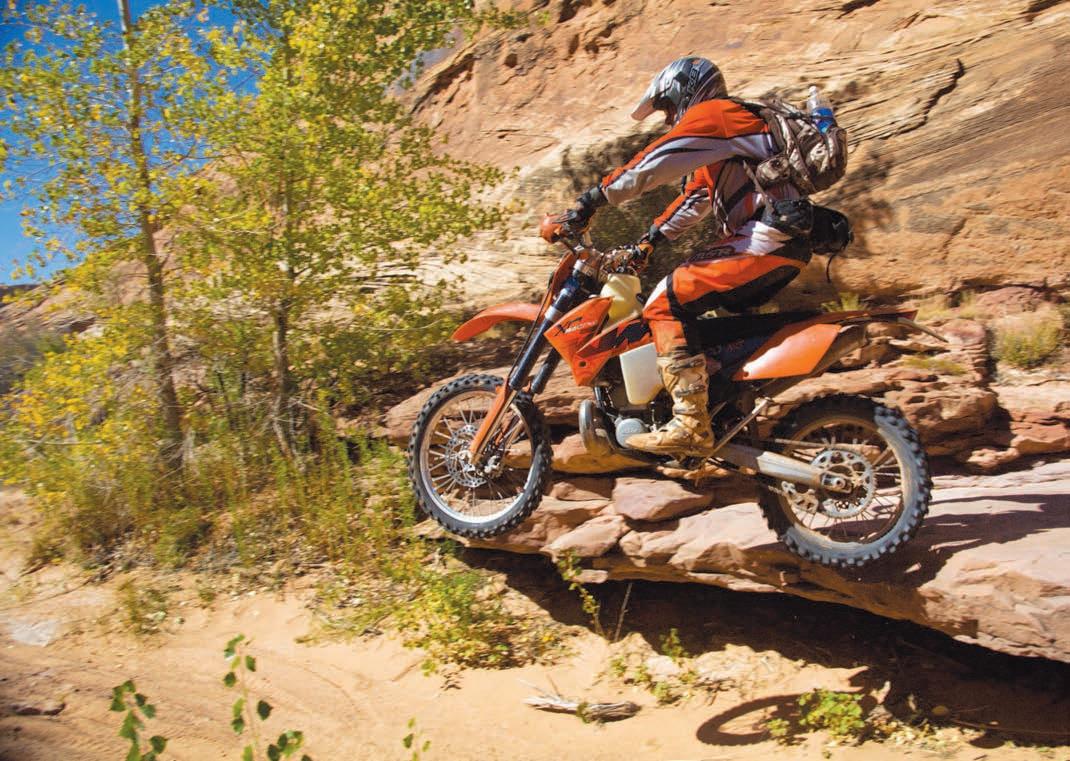
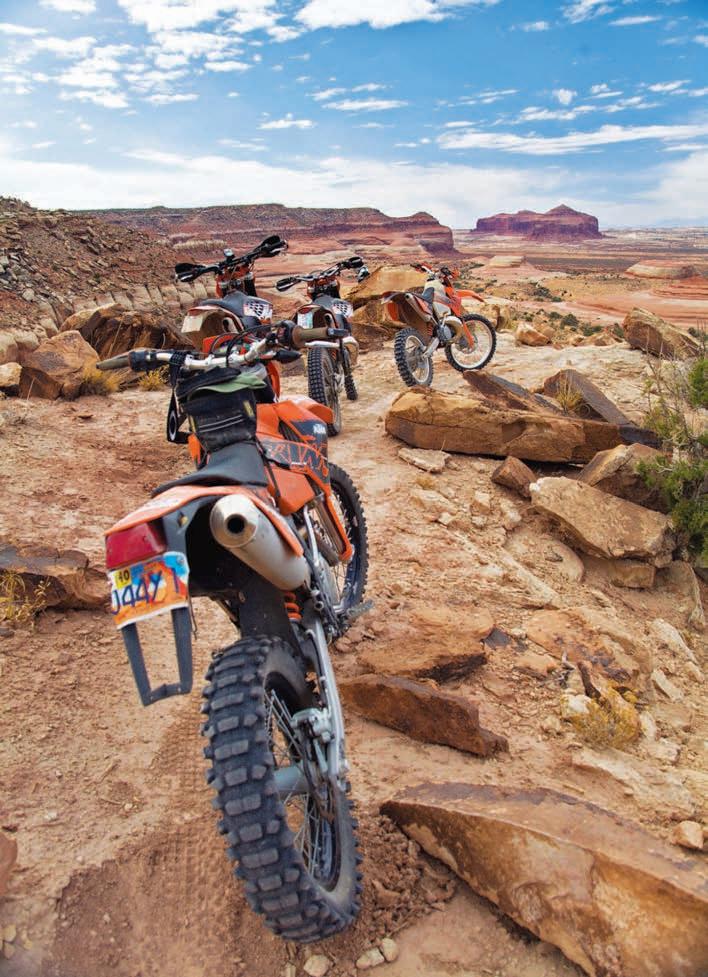
The 13 million acres eyed by the Obama administration involve a wide variety of land in Western states, including the San Rafael Swell in Utah and Owyhee Desert in Nevada and Oregon, where there is off-highway riding, and Montana’s Northern Prairie, where there is ranching and farming.
The Interior Department internal documents also discuss spending some $50 million in taxpayer money over 10 years to add thousands of acres to the BLM land inventory at a time when the bureau doesn’t have enough money to properly manage the land it already controls. The land being
after learning that at least two Utah areas—the San Rafael Swell and Cedar Mesa—are targeted for National Monument designations.
“The Obama administration continues to put the needs of environmentalists who want to keep the public away from public lands above the needs and desires of Utahns,” Bennett says. “While I appreciate assurances from the secretary of the interior to our governor that the administration would not move forward without input, I do feel it is essential, given past history, to introduce this legislation and ensure Utahns will have a role in determining how federal lands are managed in our state.”
“I WILL MOVE HEAVEN AND EARTH TO MAKE SURE THAT THE FEDERAL GOVERNMENT DOES NOT MAKE TWO MONUMENT DESIGNATIONS.”
Utah
U.S.
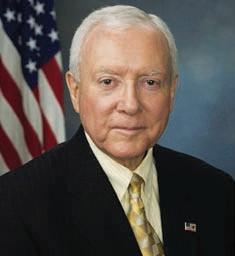
Sen. Orrin Hatch
eyed for acquisition is in Nevada, Oregon, California, Wyoming and Utah.
“It’s clear there are forces at work who want to take steps to lock up this land without going through the process of public debate in Congress, or getting input from the residents and elected officials of the affected states,” Moreland says. “The fact that the future use of 13 million acres could be decided with the stroke of a pen is appalling.
“Because anti-access forces are now faced with organized and coordinated prorecreation opposition, as well as the public outcry and congressional outrage expressed over the attempt to designate red rock areas in Utah as Wilderness, for example, they seem to have changed course and are now trying to ban off-highway riding through administrative land-use designations without any public debate. In short, they are losing the argument in public so they have decided to limit the public’s input,” Moreland says.
“THESE LANDS DON’T BELONG TO THE GOVERNMENT, THEY BELONG TO THE PUBLIC”—U.S. SEN. ORRIN HATCH
Angry bipartisan reaction to the Interior Department discussions on naming new National Monuments was swift, with Utah’s U.S. senators among the angriest.
U.S. Sen. Bob Bennett (R-Utah) immediately introduced legislation, cosponsored by U.S. Sen. Orrin Hatch (R-Utah), to bar any president from designating any Utah land as National Monument without earning congressional approval. In 1950, Congress passed a law barring the designation of National Monuments in Wyoming unless approved by Congress. Bennett says he introduced his legislation
Hatch, who has represented the people of Utah in Congress for more than 30 years, says:
“Regardless of how you feel about Clinton’s Grand Staircase-Escalante Monument (unilaterally designated in Utah in 1996), most Utahns take issue with the colossal abuse of government power in its designation.”
In fact, Hatch is so upset about the idea of designating National Monuments in Utah without consulting with Utahns that he called the White House on Feb. 19.
He spoke to White House Chief of Staff Rahm Emanuel, pressing the White House to reconsider. According to Hatch, Emanuel told him that he would discuss the issue with Interior Secretary Ken Salazar and that the administration would give him an answer.
“I will move heaven and earth to make sure that the federal government does not make two monument designations in Utah, and that’s the message I delivered to White House Chief of Staff Rahm Emanuel today,” Hatch said.
“I made it very clear to him that if the administration goes down this road, it will meet absolute outrage and opposition from across the state and from me representing Utah in the United States Senate,” he added.
“I’m glad he’s going to discuss this with Secretary Salazar,” he said, “but, make no mistake, I will continue to do everything in my power to make sure these two designations never take place.
“Based on past experience, any claim that these plans are just preliminary offers the people of Utah very little comfort,” Hatch said. “These lands don’t belong to the government, they belong to the public. But the very consideration of these designations demonstrates that Washington wants to dictate to us how our lands will be managed.”
Orrin Hatch
OUTRAGE IS BIPARTISAN
U.S. Reps. Doc Hastings (R-Wash.), Rob Bishop (R-Utah) and Jim Matheson (D-Utah) also decried the move to lock up public land.
Even powerful Senate Majority Leader Reid sent a strong signal that he doesn’t want any National Monuments unilaterally designated in his home state of Nevada. Reid did this even though last year he employed a rarely used parliamentary procedure to steamroll a proposal through Congress to designate more than 2 million acres as Wilderness in various states.
Hastings, the ranking member of the U.S. House Natural Resources Committee, agrees that the Interior Department is bowing to pressure from anti-access groups.
“There are special interest groups whose sole purpose is to lock up land without any consideration given to the importance of wholesome outside family recreation,” Hastings says. “While they are entitled to that view, it’s deeply troubling that the president’s administration is seemingly eager to help turn that view into reality by unilaterally imposing new monument designations without the consent of the people and communities who will be directly impacted.”
Bishop, chairman of the Congressional Western Caucus, notes that people from around the world visit the West for its numerous recreational opportunities.
“Unfortunately, the current administration seems intent upon locking up much of the public lands throughout the West from recreational use, as witnessed in the documents that recently surfaced from the Department of Interior outlining new areas for potential National Monument designations,” Bishop says. “I commend the American Motorcyclist Association for its continued advocacy on behalf of not only motorcycle enthusiasts but all outdoor recreators, who are an important component of the West’s tourism industry.”
Adding his voice to the chorus of upset lawmakers, Matheson says: “Given the lingering frustration felt by many Utahns
THE LOCAL VIEW
“I commend the American Motorcyclist Association for its continued advocacy on behalf of not only motorcycle enthusiasts but all outdoor recreators.” Utah U.S. Rep. Rob Bishop
following the 1996 ‘stroke of the pen’ monument designation (of the Clinton administration’s 1.9 million-acre Grand Staircase-Escalante Monument), it is totally inappropriate for this federal agency to even have preliminary discussions without involving the stakeholders on the ground.”
He also notes that congressional passage of the Washington County Growth and Conservation Act, which was put together with the input of various stakeholders and was signed into law last year, proves that contentious public land issues are best resolved using a collaborative approach.
Matheson wrote to Salazar expressing concerns about the National Monument proposal, asking him to reconsider the issue. Reid also told Salazar that there is no need to name National Monuments unilaterally to protect land.
“Working as a team, we (the Nevada congressional delegation) have protected millions of acres of wild lands while freeing up other areas that are essential for development and for expanding the economic foundations of our communities,” Reid says. “I have explained this history to my friend, Ken Salazar, the secretary of the interior, and he appreciates the consensus building that Nevadans have done in recent years.
“When this kind of process is in place and working well, there is no need for the president to use the Antiquities Act,” Reid says. “Anyone who is concerned about recent references to a ‘Heart of the Great Basin’ monument or a similar designation of Nevada’s Owyhee country can rest at ease. Nevada has a proven public process for working on its own land issues and I will
Utah Riders React To Potential Changes
Neil Motter of Wellsville, Utah, and Joshua Campbell of Logan, Utah, are just two of the many responsible riders who enjoy riding on public land. And they both are upset at efforts to close even more riding areas.
“The San Rafael Swell has some areas of majestic beauty that do need to be saved, and I believe those areas are already offlimits to vehicular activity,” Motter says. “But the greater area we call ‘The Swell’ is a vast openness of rolling desert, trails, dirt roads and open camping areas.”
Motter and others have been riding in those areas for years, and they believe it makes more sense to actively manage them
to allow responsible riding—not close them off completely. Like others, they fear that designating the area a National Monument would be too far-reaching, and potentially close off recreational riding.
“Many, actually most, and I might say ‘all’ of us who ride in Utah find it baffling and unfair how far-away Washington, D.C., can take our land and keep us from it without talking to anyone that uses it,” he says.
Notes Campbell: “The Swell has beautiful scenery and unique trails that are very well maintained by the Sage Riders Club and others. Most of us do our best to protect our right to ride by staying on designated
make sure that this process is respected.”
The Salt Lake (Utah) Tribune reported that Salazar told Utah Gov. Gary Herbert that he wouldn’t move ahead any time soon on National Monument designations in Utah. Interior Department spokeswoman Kendra Barkoff told the newspaper that the documents at the center of the controversy were simply the result of a “brainstorming session” at the department.
Moreland is heartened that lawmakers are taking aim at the plan to avoid public debate.
“It remains incumbent upon the government to responsibly protect our lands for the people, not from the people,” says Moreland. “And that means proposals for land-use designations must be fairly debated. This proposal is not only an end-run around Congress, but also around the communities and individuals who would be directly impacted by this type of administrative maneuver.
“We are pleased to hear that there is bipartisan, bi-cameral support for an open dialogue on the long-contentious issue of public-land designations,” Moreland says. “We hope that this issue will serve as a catalyst for bringing together both sides of the debate to work out any differences and preserve opportunities for responsible recreation on America’s public land for all Americans.”
KEY LAWMAKER TARGETING OFF-ROAD RIDING
In the halls of Congress, there is another effort under way to thwart public debate on the use of public land, and U.S. Rep. Raul Grijalva (D-Ariz.), chairman of the House
routes, but when it’s all designated off-limits, especially by some politician who has never been there” it could mean riders will sell their bikes.
“Hopefully it won’t come to this,” he says.
Joshua Campbell
Natural Resources Subcommittee on National Parks, Forests and Public Lands, makes no secret that he wants to shut down responsible off-highway riding with his administrative sleight of hand.
Because of opposition from members of the AMA and other groups, Grijalva has been thwarted in efforts to pass legislation out of his committee that would inappropriately designate more than 3 million acres of public land as federally protected Wilderness, which would stop off-road riding, mountain biking and other activities.
So Grijalva wants to take the issue out of the public spotlight by instructing government bureaucrats to manage land as Wilderness even though the land hasn’t earned that designation with the approval of the people’s representatives in Congress.
“The agency is currently undertaking an important nationwide effort to designate routes of travel for motorized vehicles,” Grivalja says in a letter to U.S. Forest Service Chief Tom Tidwell that he is circulating among colleagues for signatures. “The scope of this effort underscores the need to apply consistent guidance in managing agencyrecommended Wilderness lands.
“We ask that you take immediate steps to preserve the congressional prerogative to designate Wilderness by issuing national guidance on the management of agencyrecommended Wilderness,” the letter says. “This guidance should prohibit the authorization of activities, such as use of motorized vehicles, that adversely affect the Wilderness qualities of the recommended areas to a significant degree.”
In other words, rather than completing plans that would designate routes for off-road riding, Grivalja wants Forest Service land managed as defacto Wilderness until he can figure out how to get it designated officially, by any means necessary.
MORE TROUBLE AFOOT IN CONGRESS
Grivalja’s latest effort, Moreland says, shows just how effective AMA members and others are in Congress when public testimony and reasoned debate are allowed. So it’s clear that the anti-access forces have decided that the only way they will get their way is by banning off-highway riding and other recreational activities administratively.
“All Americans have a right to enjoy the beauty of our public lands, including the young, elderly, handicapped and others who may only be able to share in the wonder of the environment by using an off-highway vehicle,” Moreland says. “Wilderness designations close off these areas to those Americans, so such a strict land-use designation must be reserved for land that truly meets the strict criteria spelled out in the Wilderness Act that allows for the designations.
“And to ensure the land considered for Wilderness designation truly meets the criteria, open, public debate must be allowed,” he says.
Moreland notes that anti-access forces are
more than willing to cut off public debate. Last year, AMA members, along with other off-highway vehicle riders, played a big role in killing S. 22: The Omnibus Public Land Management Act, which would designate more than 2 million acres as Wilderness. The complex bill was 1,300 pages long, and was a combination of 170 separate bills.
When that effort failed, proponents took a new tact and succeeded.
Senate Majority (Democratic) Leader Harry Reid of Nevada gutted a two-page bill, H.R. 146, called “The Revolutionary War and War of 1812 Battlefield Acquisition Grant Program,” inserted the language from the 1,300-page Omnibus Public Land bill, and got it passed through a rarely used parliamentary procedure. (The move was detailed in the June 2009 issue of American Motorcyclist.)
Moreland fears such a tactic may be used again soon. “The proposals in Congress to inappropriately designate land as Wilderness simply don’t stand up to public scrutiny,” Moreland says.
“So the simple answer for those who want to put an end to off-highway riding is to avoid any scrutiny,” he says.
WHAT YOU CAN DO
Contact your federal lawmakers today. Tell them you believe in an open, democratic process that provides for public scrutiny and debate. Ask them to oppose administration efforts to designate areas as National Monuments without congressional input.
Also ask them to ensure that all proposals dealing with land-use issues, particularly proposals for designating public land as Wilderness, allow for public input and be publicly debated in Congress.
You can find contact information for your elected officials at AmericanMotorcyclist.com > Rights > Issues & Legislation, then enter your zip code in the “Find Your Officials” box. Additionally, a pre-written e-mail is available for you to send to your federal elected officials immediately by simply following the “Take Action” option and entering your information on the web.