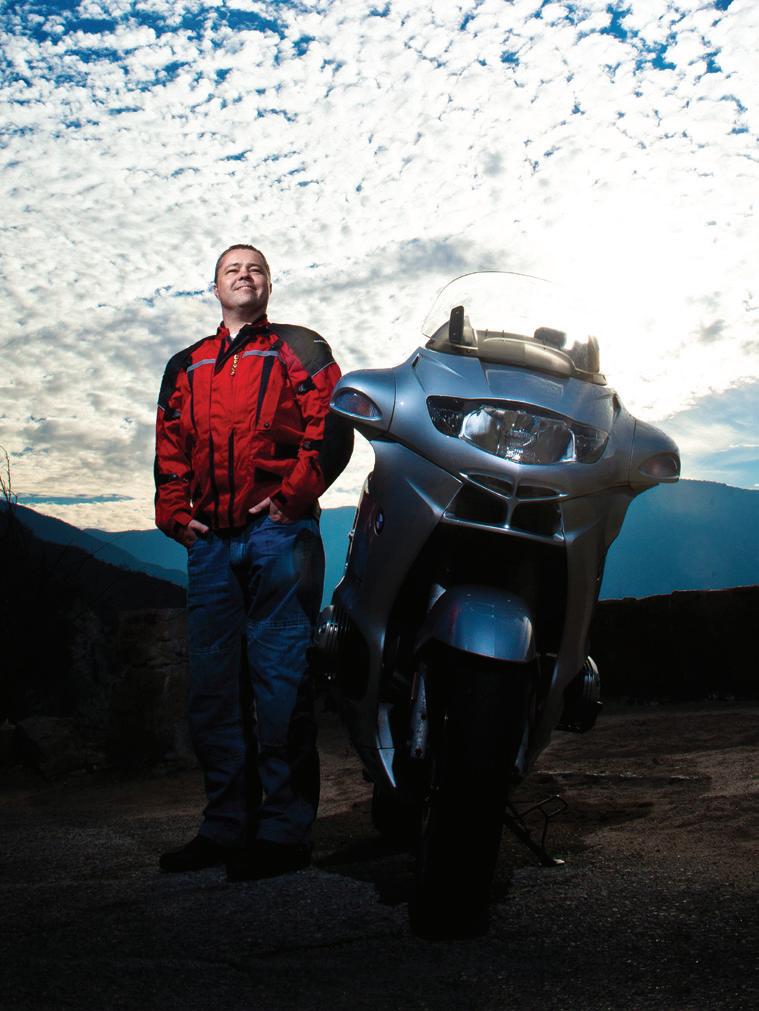
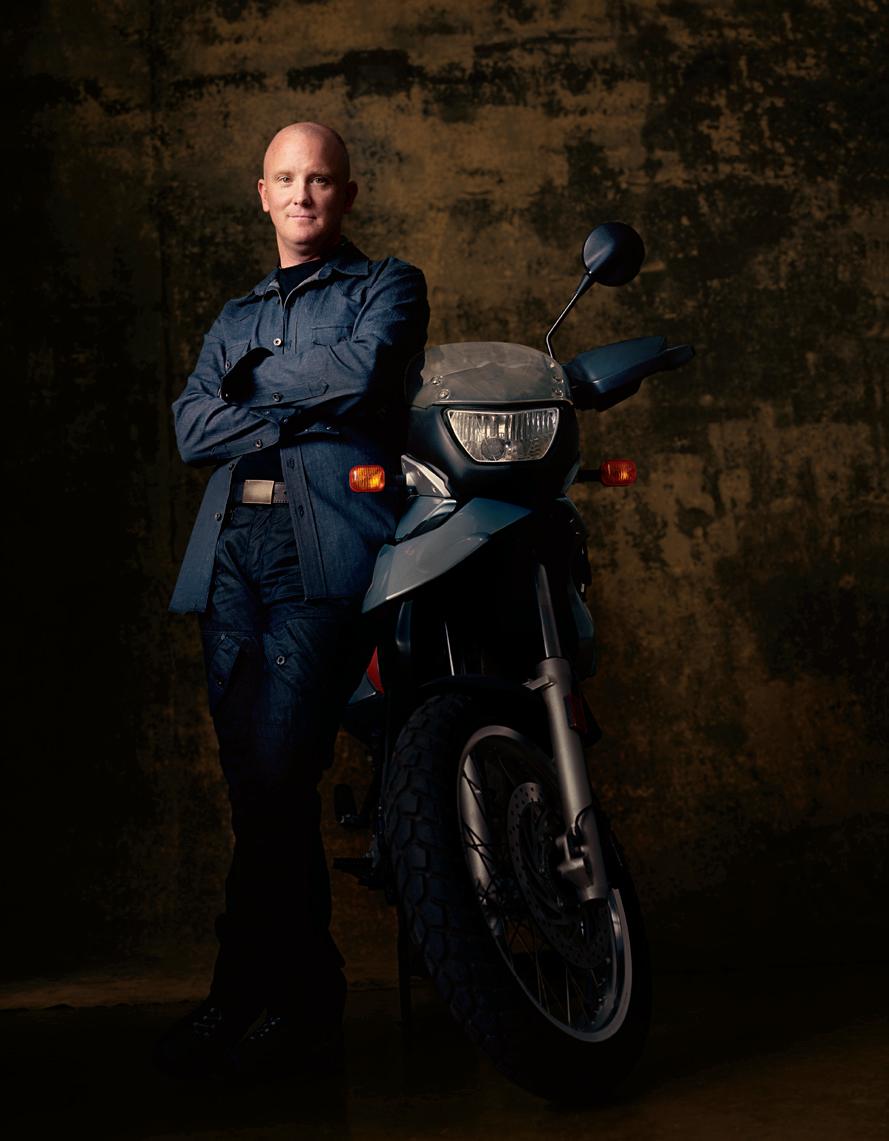
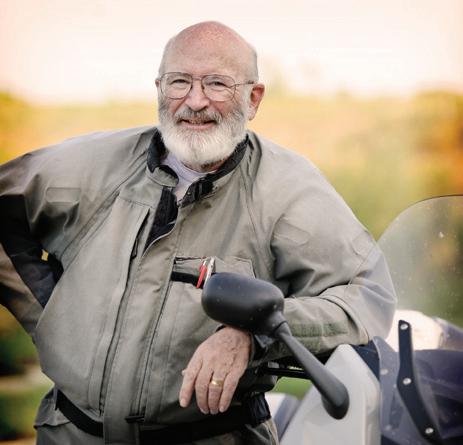
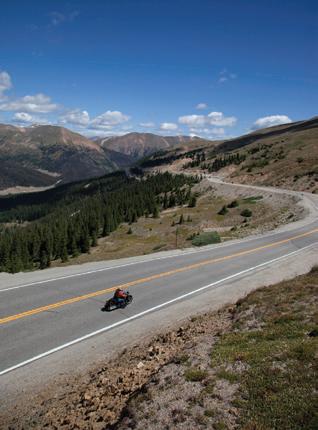
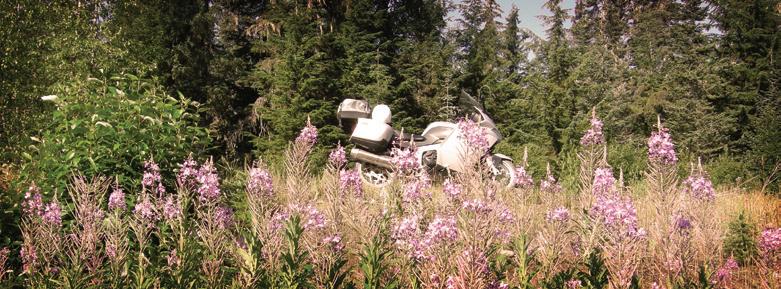
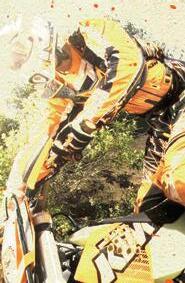
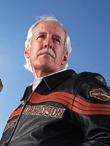
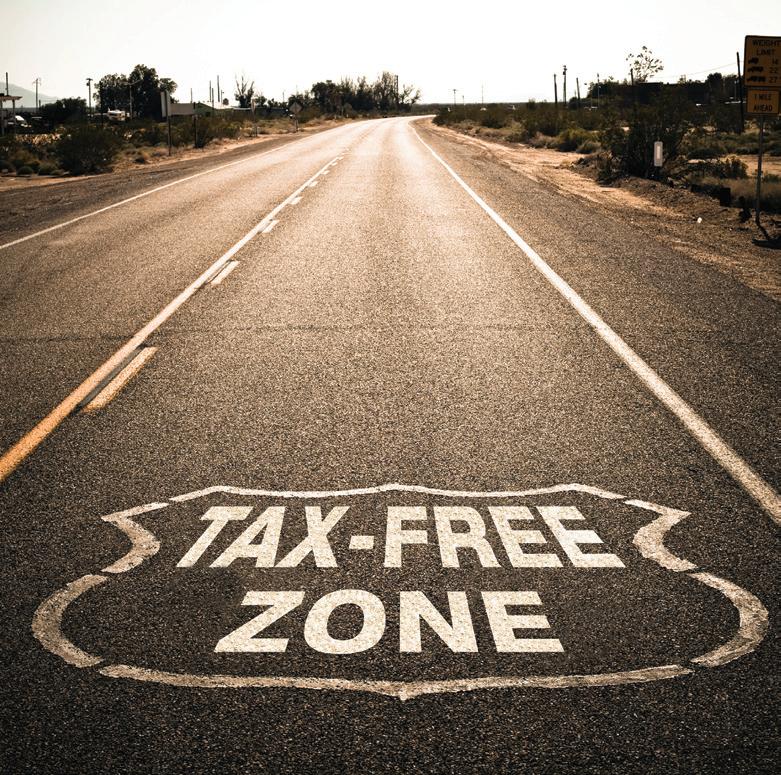
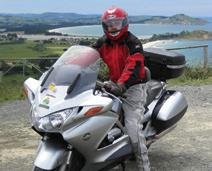
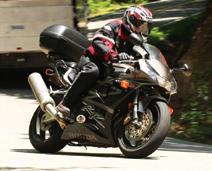
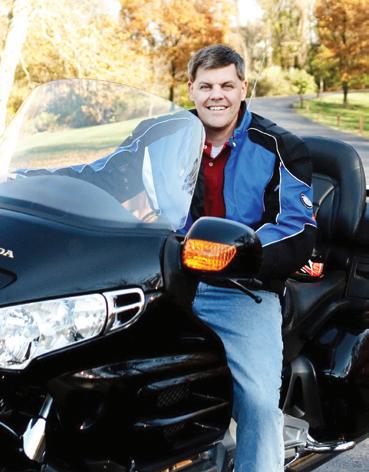
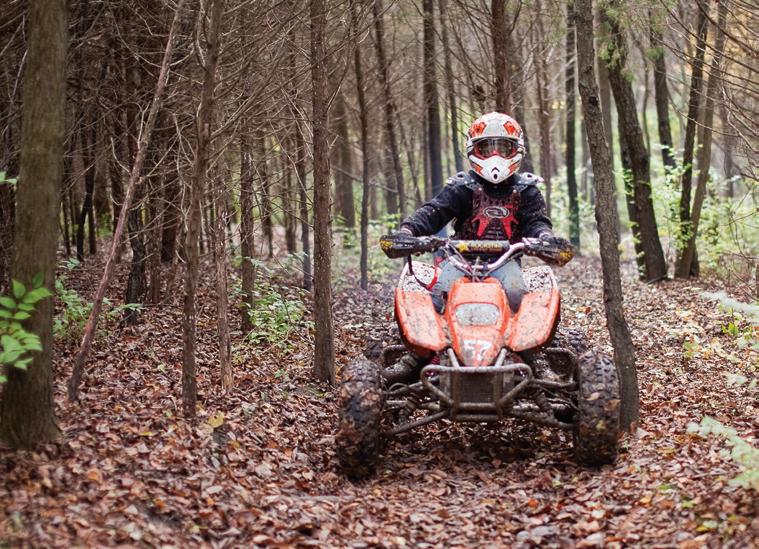
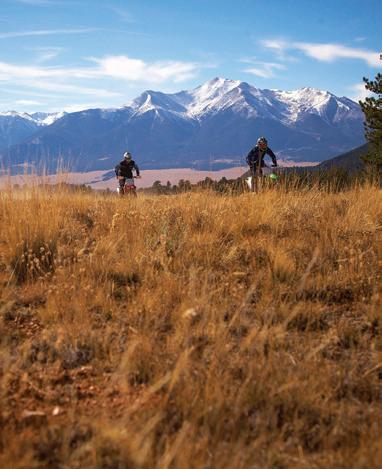
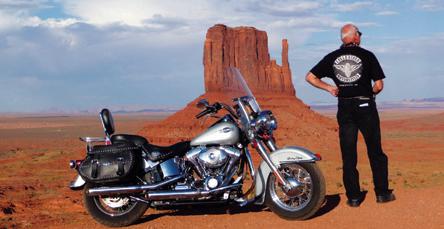
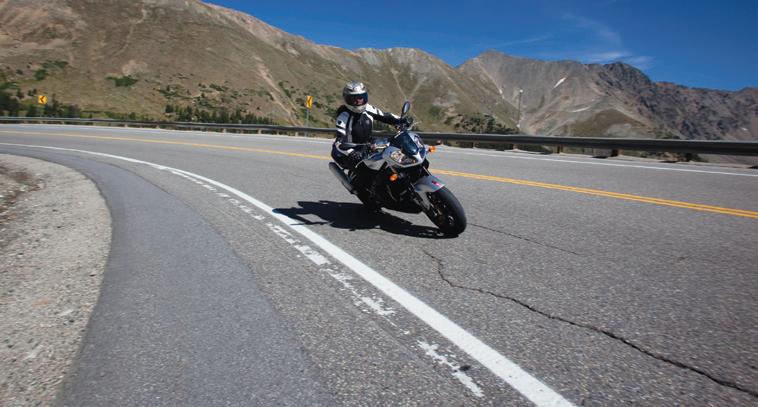
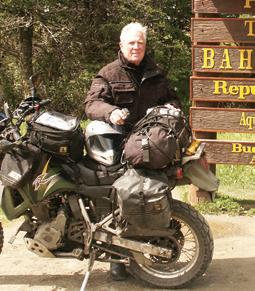
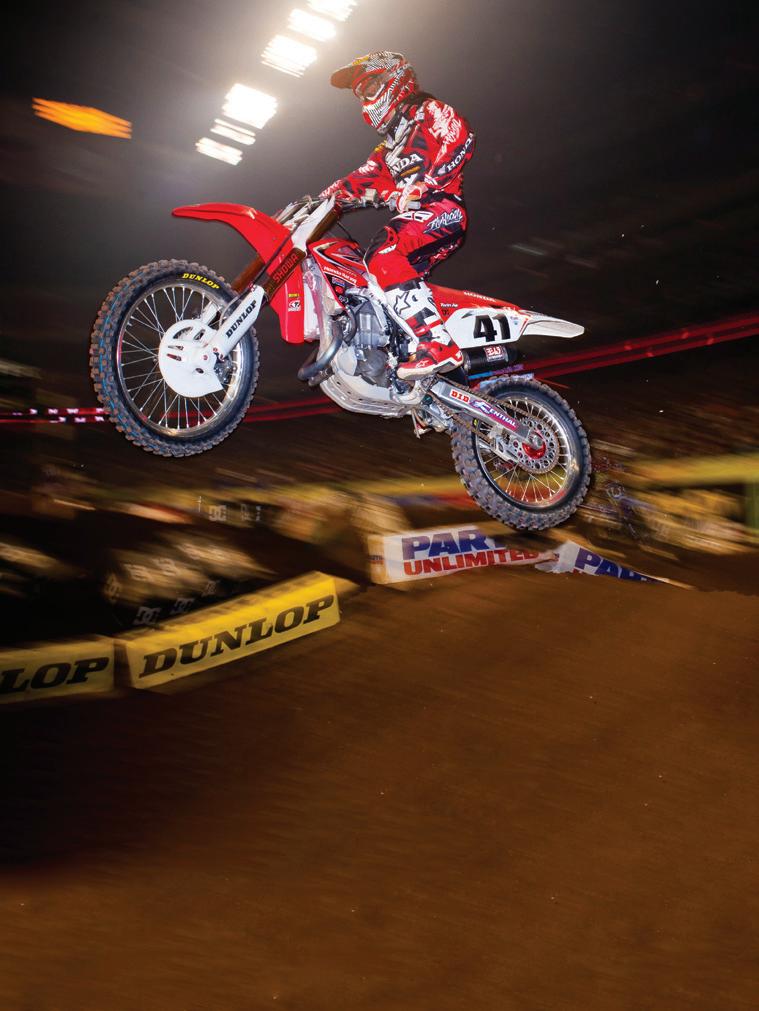
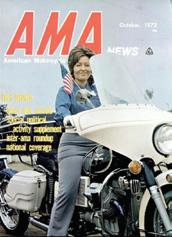
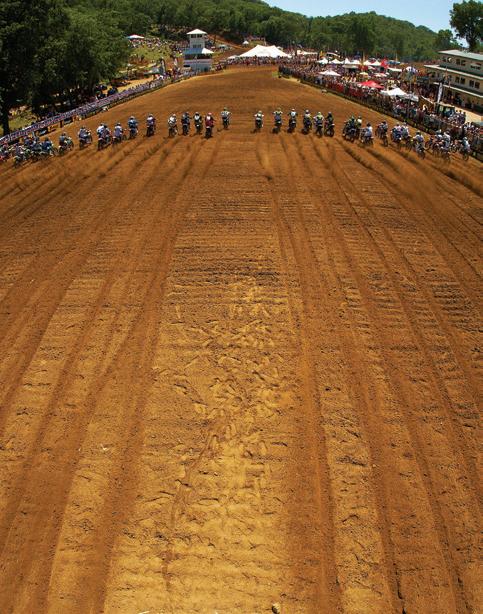
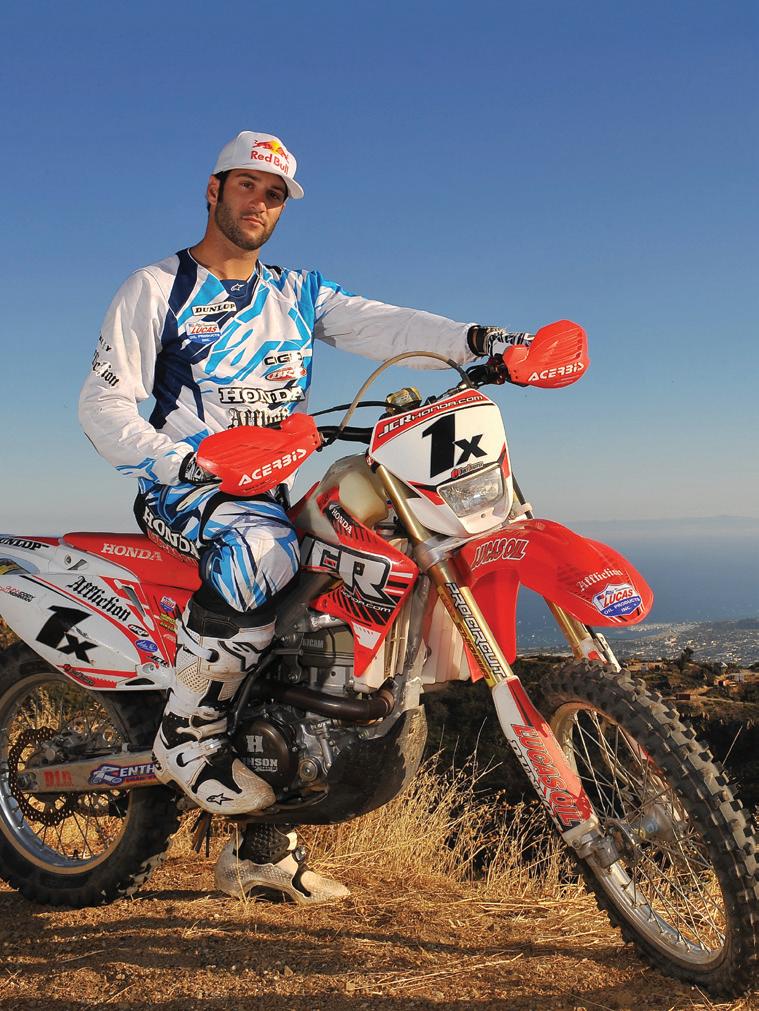
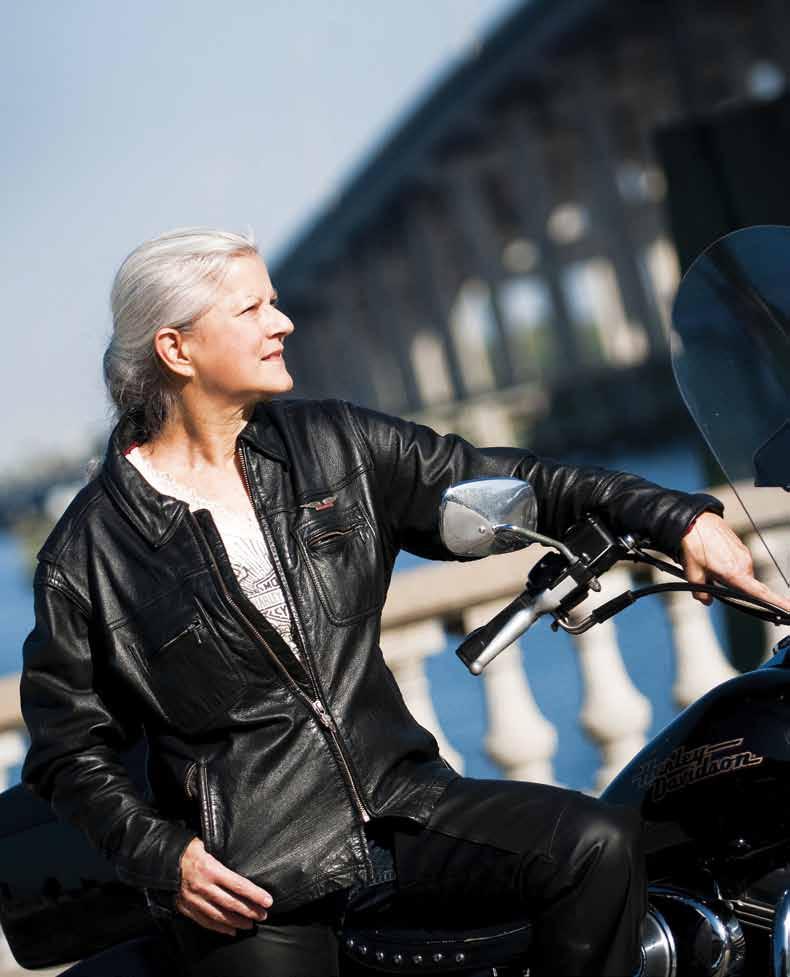
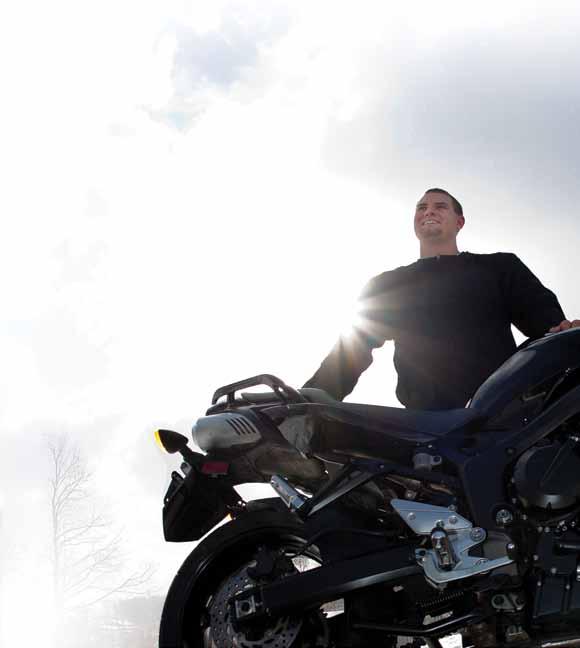
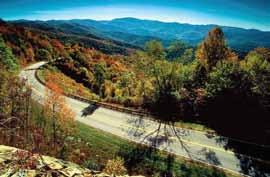
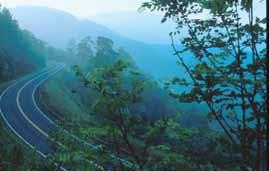
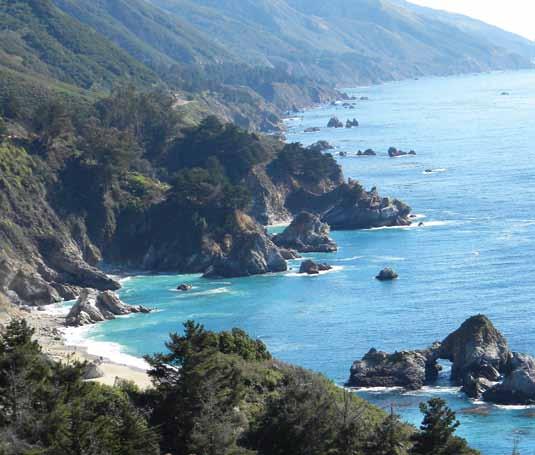
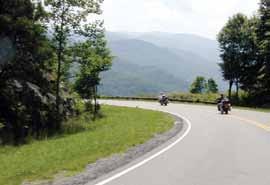
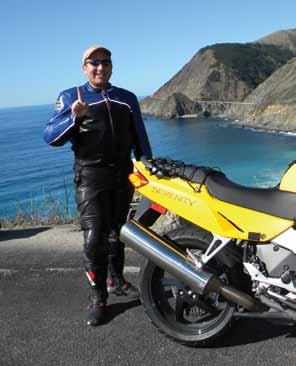
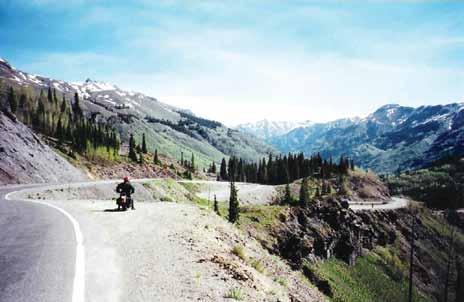
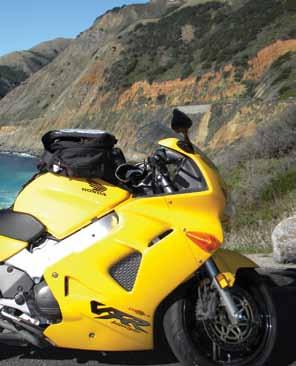
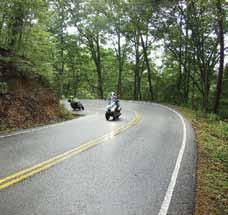
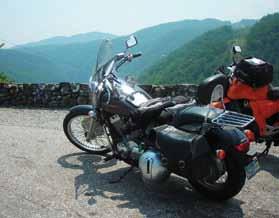
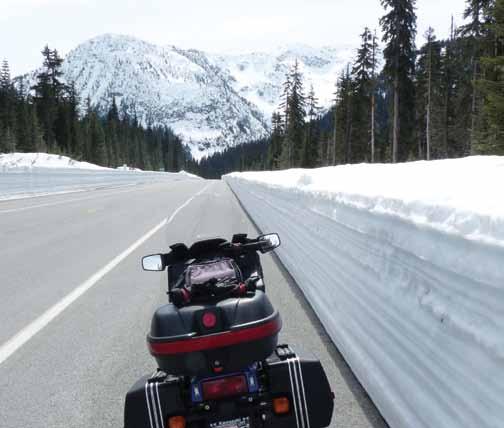
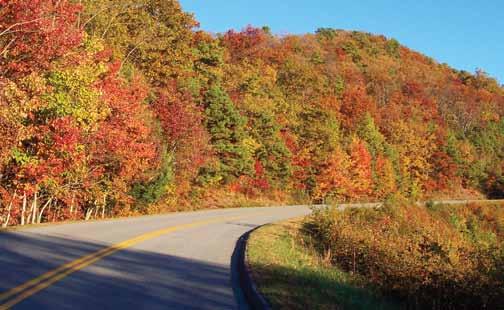
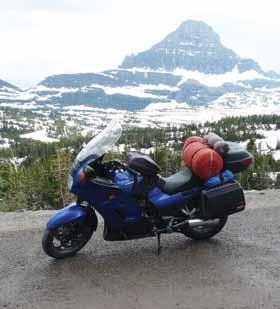
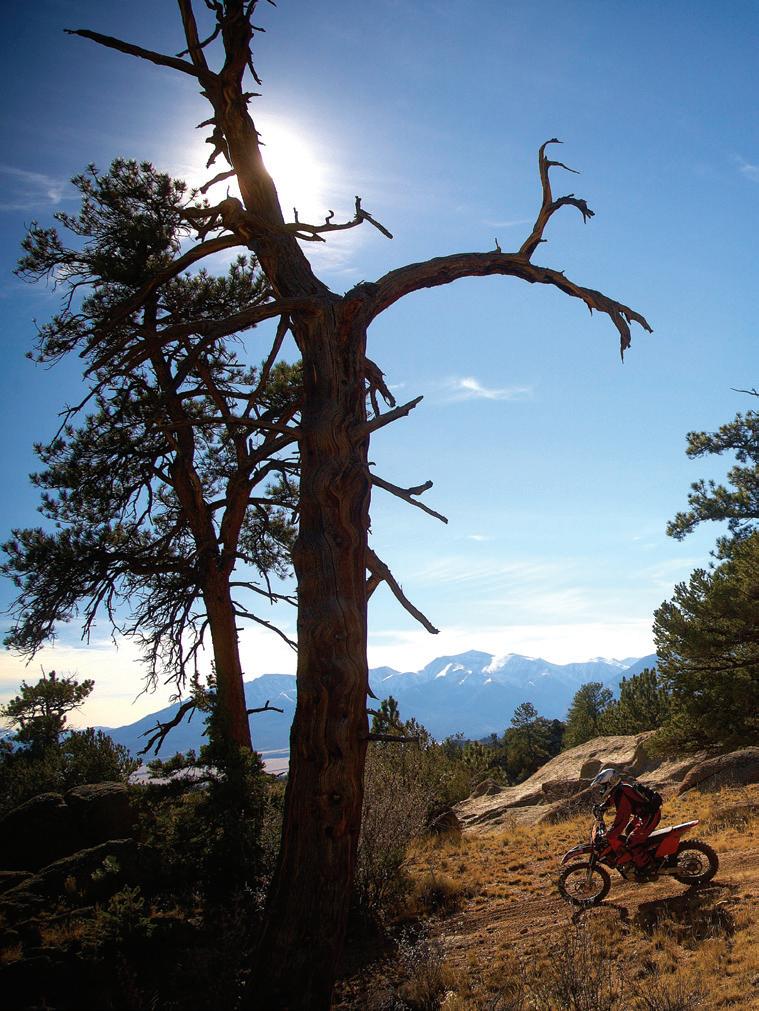
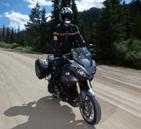
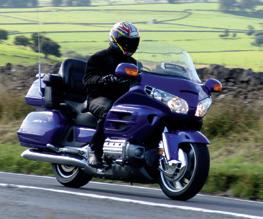
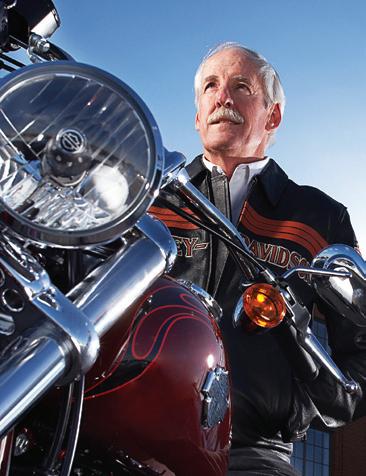
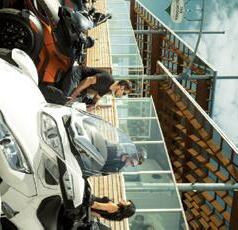
Cover Chris Phillips is just one of the many AMA members who shared favorite roads with us. Check out the top 15 on page 30. Photo by Conrad Lim.
Navigation Photo
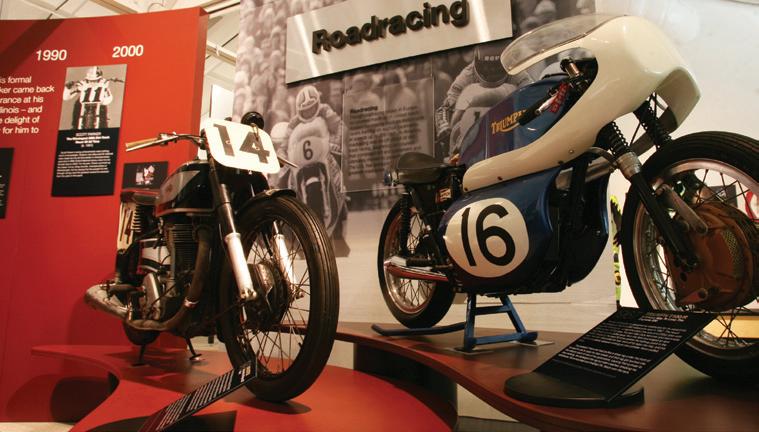
Capture the excitement of motorcycling past and present at the Motorcycle Hall of Fame on the campus of the AMA headquarters in Pickerington, Ohio. Plan your trip now.
American Motorcyclist magazine (ISSN 0277-9358) is published monthly by the American Motorcyclist Association, 13515 Yarmouth Dr., Pickerington, OH 43147. Copyright by the American Motorcyclist Association/American Motorcyclist 2011. Printed in USA. Subscription rate: Magazine subscription fee of $10 covered in membership dues; $15 a year for non-members.
Postmaster: Mail form 3579 to 13515 Yarmouth Dr., Pickerington, OH 43147. Periodical postage paid at Pickerington, Ohio, and at additional mailing offices.
April 2011
Volume 65, Number 4
Published by the American Motorcyclist Association 13515 Yarmouth Dr. Pickerington, OH 43147 (800) AMA-JOIN (262-5646) AmericanMotorcyclist.com
10. LETTERS
You write, we read.
12. ROB DINGMAN
Engaging our AMA Life Members.
14. RIGHTS
The latest and best hope to save kids’ dirtbikes and ATVs.
18. RIDING
Get Out and Ride! and AMA Member-Tested.
24. RACING
Supercross shakeup, pro roadracer Josh Hayes looking to repeat and MX tickets.
27. HALL OF FAME
Hall of Famer Melbourne “Mike” Wilson and the bike from “On Any Sunday.”
30. THE BEST 15 ROADS IN AMERICA
AMA members pick their favorites, and the winner may surprise you.
CONRAD LIM, Photographer Conrad’s camera-side demeanor is among the best in the business. This month, he headed out to Angeles Crest Highway to shoot AMA Member Chris Philips for this issue’s best roads feature. See more at C-LimPhotography.com.
BOB ALTHOFF, Contributor There are plenty of good motorcycle dealers out there, but Bob Althoff is one of the exceptional ones. Bob runs A.D. Farrows in Columbus, Ohio. It’s one of the oldest Harley-Davidson dealers around. Bob also is a die-hard supporter of your right to ride. Check out his Guest Column in this issue to find out how.
JEFF KARDAS, Contributor Jeff is a long-time contributor to American Motorcyclist. These days, he helps us out with AMA Supercross and motocross photos and feeds the series’ official site, AMASupercross.com. He even chimes in once a week with a breakdown of race action. Check it out!
GRANT PARSONS, Director of Communications Long winter? Stale fuel? Sea Foam. ’Nuff said.
JAMES HOLTER, Managing Editor The problem with the winter months isn’t the cold, the snow or the closure of riding areas. It’s the lack of daylight and, for those of us with kids, winter sports schedules. Now with the sun hanging around a few minutes longer each day and his kids’ wrestling schedules winding down, James is focusing in on a new season. Let’s ride!
AMA BOARD OF DIRECTORS
Contact any member of the AMA Board of Directors at www.AmericanMotorcyclist. com/about/board
Perry King, Assistant Secretary Northern California
John Ulrich, Executive Committee Member Lake Elsinore, Calif.
Dwight Conant, Kearsarge, N.H.
Charles Goman, Winder, Ga.
Maggie McNally, Albany, N.Y.
Scott Miller, Milwaukee, Wis.
Art More, Surprise, Ariz.
Jim Viverito, Chicago, Ill.
AMA PRESIDENT AND CEO
Rob Dingman, Pickerington, Ohio
Government
Creative Director You know, Mark. I used to be somebody. The track was my canvas, a PE175 my brush. I painted the landscape with roost and sung the sweet sounds of two-stroke combustion. Fans loved me. Mark shifted his gaze to the horizon, paused, then demanded. Tell me again about the time you held off Rick Johnson. Krez firmed his posture. Here, in this field. I approached the last turn, felt him closing. His moto just started, so he was fresh. Mine had just ended, so I was spent. I dug deep, aimed for the track exit and prayed...
NORA BERARDI, Production Coordinator There was a time when Nora woke from the seasonal slumber with visions of long walks in the park, mountain hikes and Sound of Music-like performances in idyllic pastures. No more. Now, April means leather, twisty roads and highway pegs. It’s gritty and hot, a determined trek to the horizon. She’s traded her Julie Andrews’ voice for the snarling, raspy exhaust note of her CB360. And she’s never going back.
JEN MUECKE, Designer <winter>Sell old bikes. Buy new bikes. Get in shape. Sign up. Plan to hit some new racetracks.</winter><spring>Get new leathers. Prep bikes. Spend money.</spring><summer>Race!</summer>
Other contributors include: Grogan Studios, Mark Kariya, the Motorcycle Safety Foundation, Open Image Studio, Christopher Perry, David Smith/RaceDayPix.com, The Susquehanna Photographic
BILL KRESNAK,
Affairs Editor, MARK LAPID,
JH BA CL
BK & ML
“Whether you’re looking for an OEM part or an after-market solution, we can get it to you faster than anyone.”
– Bandit, Director of Rapid Retrieval
When you order from BikeBandit.com, you don’t pay any sales tax ... ever.
With more than 8 million parts and accessories, no one else can match our selection. Plus, we deliver right to your door, so you don’t have to drive all over town. And we provide online schematics for every part, with support staff who know your bike.
So saving a little on taxes just means you get even more ride for your buck. We think you deserve it.
MEMBER LETTERS
Send your letters (and a high-resolution photo) to submissions@ama-cycle.org; or mail to 13515 Yarmouth Drive, Pickerington, OH 43147.
LETTER OF THE MONTH GETTING INVOLVED
I guess it takes a person who isn’t used to what we take for granted to open our eyes.
March 2011 Guest Column writer Mark Terashita would ride 50 miles on asphalt to enjoy just 10 miles of gravel when he lived in Japan.
If we don’t join hands with each other through the AMA and contact our lawmakers, we may share the same fate when lands here are closed with the different land grabs under the various Wilderness acts.
On a related note, children under 12 years old will lose the ability to purchase an age-appropriate motorcycle if the CPSIA law takes effect this year.
The AMA makes it easy to contact these folks in power through the postcards enclosed in the March issue of the American Motorcyclist and the AMA website. I, for one, have used both options—even though I don’t ride off-road nor have any children. That doesn’t matter to me, what does matter are knee-jerk, overreaching laws that are illconceived.
Ted Pasche Argyle, Texas
MORE TOURING STORIES, PLEASE
Just read the story by Jeff Boguski in the January issue (“The Long Way Home”). Great story with some great pictures. I would love to be able to take that kind of time to explore this great nation. Keep those kinds of stories coming.
Mike Fitzgerald Bethany, Ill.
Will do, Mike. We’ve got some good plans in store for road riders this year in
American Motorcyclist, starting with the cover story of this issue!
THANKS FOR THE MEMORY
Imagine my surprise when I started reading the March 2011 issue of American Motorcyclist, and the first thing I see on page 4 is me, standing at Dick Klamfoth’s Daytona 200 Memorial.
I am the fellow in the white T-shirt in the upper left corner of the photo. How do I know? The 138-k on the hat, and the red Indian motorcycle on the shirt. My ’48 Indian was used as a model by artist Eric Hermann when he did the artwork and printing of the shirts for the AMA and MBNA credit-card promotion introduced at Daytona in 1994. The 138-k was my competition number in 1953, when I raced out of [Motorcycle Hall of Famers] Mike and Margaret Wilson’s shop in Cedar Rapids, Iowa.
The photo was taken during Bike Week 2008. Thanks for the memory.
Bob Kimm Phoenix, Ariz.
I RIDE. I WAVE.
This summer, my wife and I took our Honda ST1300 to a state park in eastern Kentucky over the Fourth of July holiday. One evening after completing a day’s ride, I was futzing around the bike when a Harley rider rumbled into the parking space next to me. He was a big, burly guy all leathered up with no riding protection other than his thin, stylish leather. I did notice he had taken time to put tassels on most every horizontal surface on his bike. He had them on the handlebars, the seat, and even on the floorboards. It might not be my style, but to each his own is my mantra. Every biker should be able to ride to his own drummer.
After he parked, turned off his bike, and walked up along side me, I said “Hello.” He stopped, turned to me, and sniffed, “I don’t like Jap bikes,” and turned to walk away…
All this is a lead-in to my basic question: Why do motorcyclists not hang together? Why don’t we at least show civility to each other? We’ve got localities closing streets to motorcyclists because we are supposedly too loud, yet they let any car without a muffler drive down the same streets. States are saying we can’t ride our bikes unless we have EPA-stamped mufflers, yet no four-wheeled cage has the same limitation. Huge swaths of land are being taken away from off-road motorcyclists with the stroke of a pen without following federal law, yet
motorcyclists are fractured by the different bikes they ride. Our federal government is even providing money to states to pull over motorcyclists for surprise inspections, but not cars.
Anyone ever heard of, “United we Stand. Divided we Fall?” Do you think if that was good enough for our Founding Fathers, that it might be a good enough motto for us?
When I ride down the road, I wave to anyone on two or three wheels—and I mean “anything.” A scooter, a farmer moving from one field to another. When I see a motorcyclist pulled over to the side of the road, I stop to see if they need help. Yes, even non-helmet-wearing Harley riders with tassels. Would you do the same for me? If you would accept help from me but not offer it, you need to ask yourself why. Do me a favor. When I wave, at least wave back. At a minimum, don’t tell me you don’t like Jap bikes.
Jeff Snook West Paducah, Ky.
PARKING PASS?
I just wanted to write to make you aware of a motorcycle-parking situation that is going on in San Francisco.
Around two to three years ago, it only cost a rider around $3 to park for 8-10 hours, which was great for anyone commuting to work in San Francisco. Last year, the rate was increased to $4-$5 for all day. As of last week, new solar-powered meters now charge $2 per hour.
I have noticed that the spaces for motorcyclists are barely getting used in our district. What type of recourse might riders have for this situation?
Paul Bosco Sausalito, Calif.
The AMA supports reduced parking prices for motorcycles for a variety of reasons, including their lesser impact on roads, the fact that they improve traffic flow
Jeff Snook
and are generally better for the environment and the commuting landscape than fourwheeled vehicles. In this case, when we looked into the matter, the parking authority had already lowered the price back down for motorcycles at those meters. Great to know that San Francisco sees the benefits of promoting motorcycle use in a commuting environment.
JUST THE FACTS
I would like to respond to Francis Gibson’s letter in the AMA magazine (March, condemning stunt riders on public roads).
I am disappointed with the statements in his letter, as they [are] simply factless and prejudiced comments typically made by cruiser bike riders against sportbike riders. While he is entitled to his opinion, the facts are simply not supportive of his statements.
I am further disappointed by the fact that the AMA actually printed his letter, as biased and inflammatory as it is, without any further editing or editorial comment against his clear bias against sport bikes, probably because he has a cruiser-bike. How can the AMA support a statement such as his, which calls for the outlawing of sport bikes, without any comment?
So, rather than alienate an entire segment of motorcycle riders, I would appreciate if Mr. Gibson and the AMA understood and explained the real cause
of accidents (lack of rider training) rather than blaming an entire type of motorcycle blindly. In other words, please look at the facts before passing judgment. As a trained, licensed, experienced, full-face helmeted, properly geared, and safe sportbike rider, I don’t appreciate the implication that I am dangerous because of the motorcycle I choose to ride, and I am sure other sportbike riders would feel the same.
I protest his statements that sportbikes should be outlawed for these and many other reasons, and I hope the AMA supports me in this matter.
Ashwin Purohit
Gloucester, Mass.
Mr. Gibson’s point—and one the AMA agrees with—is that riders pulling illegal stunts on public roads give us all a black eye. He didn’t call for a ban of all sportbikes, nor do we. We love all motorcycles, including sportbikes. He made the point, however, that when the actions of stunters and others bring down bans and bad laws on all motorcyclists, they, too, would be affected. And that’s very true.
NO. 49 AND COUNTING
I thought that you would be interested in the last of my many trips. This is August
2010. Alaska was No. 49 of the states that I have toured over the years. I travel solo with just my sleeping bag, tent and notebook.
I traveled from Akron, Ohio, to Skagway, via British Columbia and Yukon Territory. I then went south through Washington, Oregon, Idaho and Utah before turning east toward home. This trip encompassed 15 national parks over 31 days for a total of 11,308 miles.
I am 73 years old and very happy that I am in shape to handle the 800-pound bike plus camping gear.
Gerald J. (Jerry) Donnelly Akron, Ohio
Who votes for these people? — Jon Hejda, reacting to the news that Illinois state Rep. Mary Flowers reintroduced a bill to ban off-road riding for kids under the age of 16.
She needs to lose her job. It’s time that politicians and bureaucrats STOP presuming the moral or other authority to regulate the lives of others. — Eric Robinson, responding to same.
Motorcycling loses another legend. R.I.P. Nathan Woods. — Donald McNurlin, remembering 2010 ISDE Trophy team member Nathan Woods, who passed away in February.
More thanks to the AMA for making it easy to send an e-mail to our representatives in Congress on issues that concern us. — Michael Salek, replying to the news that the Kids Just Want to Ride Act that would exempt kids’ motorcycles and all-terrain vehicles from the lead law de-facto ban is gaining momentum.
Four days of vintage bikes and vintage racing—doesn’t get any better. Just wish I had a bigger rig so I could haul all my stuff. (Swap Meet) row O, spaces 9-11-13. Stop in. Hope to see you there. — John Langfelder, looking forward to AMA Vintage Motorcycle Days. On Facebook? Us, too! Like the fan page of the American Motorcyclist Association and you could leave comments like these: www.facebook.com/AmericanMotorcyclist
I want to see the inclusion of these two-wheeled machines in all types of riding and racing that we do. If people don’t like them, well that’s cool. I don’t particularly like loud four-strokes. But if they get to the point that people ride them and want a place to ride or race them, AMA should help be that place! Night hare scrambles races with electrics would be a possibility!— G.M. Ward, talking about the 2011 electric motorcycle line from Zero Motorcycles.
You guys keep protecting our rights so I can just concentrate on enjoying my ride. Thanks for the work you do. — Steve Cole, in response to the March 2011 issue of AMA News & Notes.
You can connect with fellow AMA members on Facebook. You can also always find more information at AmericanMotorcyclist.com.
Ashwin Purohit
FROM THE PRESIDENT
ENGAGING OUR AMA LIFE MEMBERS
Introducing Life Member Plus
By Rob Dingman
Over the years, the AMA has faced an “entitlement” challenge. In fact, in an August 1982 column in this publication, former AMA President Ed Youngblood compared the AMA’s challenge to that of Social Security. Mr. Youngblood explained in his column that the Life Member Program was created in the early years of the Association to allow full membership privileges for life to any member after 25 years of paid dues. At the time, such seniority was built through payment of dues that were $1 or $2 per year. He further explained that benefits to members were far less numerous at the time—there was no free monthly magazine, and no Government Relations Department. There certainly wasn’t a Roadside Assistance Program.
In the mid-1970s, the Association began sending the magazine to every member. Shortly after, the leadership of the Association began to recognize the cost of providing this benefit for free to life members as a potentially serious long-term financial liability. Mr. Youngblood’s column laid out a plan to discontinue the “earned” Life Member Program and offered an 18-month window for members to convert to “paid” Life Membership, for a fee that would be based on a sliding scale depending on length of membership.
Despite a sincere effort to explain the problem and address this challenge, strong opposition emerged. At a February 1983 meeting of the AMA Board of Trustees (now called Board of Directors), Mr. Youngblood proposed the retention of the “earned” Life Membership with the caveat that “earned” Life Members pay for the magazine. At some point during 1983, it appears that a decision was made not to require Life Members to pay for the magazine. Instead, they were asked to make a voluntary contribution, which only a small percentage actually made.
The result was that the Association now had two Life Member Programs, an “earned” and a “paid” program—and a continuing financial liability from the “earned” program. Exacerbating the problem was a Financial Accounting Standards Board rule requiring that a benefit producing a long-term financial liability be accounted for, and that funds be set aside to meet such a liability. In 1994, the Association commissioned an actuarial study to determine the extent of this financial liability. According to that study, the longterm cost of continuing to provide a magazine to Charter (earned) Life Members would grow to $4.5 million by 2020.
In a May 1995 column, Mr. Youngblood laid out the dilemma once more, this time requesting input from members as to the best way to address the situation. The documented response to this request was overwhelmingly positive, with nearly half of those who provided input suggesting that Charter Life Members be required to pay a fee to receive the magazine. Mr. Youngblood therefore announced in his November 1995 column that Charter Life Members would be required to pay a $10 annual subscription fee to continue to receive the magazine. While this solution averted a financial catastrophe, another serious problem soon emerged. With roughly only one-third of our Charter Life Members subscribing to the magazine, two-thirds do not receive monthly communication from the Association and have become disenfranchised. It is most unfortunate that our most committed and loyal members, those who have continuously supported the organization for at least 25
consecutive years, no longer feel a part of their Association. I want to stress that we have never stopped supporting our Life Members—and we never will. We fight against unfair laws and promote a positive image for motorcycling on behalf of all riders, including Life Members. Life Members also enjoy the other significant benefits of AMA membership, from money-saving discounts to racing privileges. We have even taken steps to ensure that Life Members can read this magazine online for free.
Now, we intend to re-engage our Life Members, and demonstrate the respect and appreciation they rightly deserve. To that end, we are announcing the Life Member Plus Program, which is exclusively available to AMA Life Members. Now, any Life Member will be able to receive both an annual subscription to the magazine, as well as AMA Roadside Assistance, for $29 per year. This price is substantially lower than what a regular member pays and does not require automatic renewal, which is required with other memberships that include AMA Roadside Assistance.
All current AMA Life Members will soon receive a new AMA Life Member Plus membership mailing. In order to receive the magazine and the AMA Roadside Assistance benefit, Life Members can simply call (800) AMA-JOIN (262-5646) to activate a Life Member Plus membership. “Paid” Life Members are also eligible for the program, allowing them to enjoy the benefits of AMA Roadside Assistance.
Of course, there is no obligation to participate in the AMA Life Member Plus program. The current AMA Life Member programs aren’t going away—they’re not even changing. Yet we hope Life Members will recognize the value that this new program represents, and once again feel an honored and respected part of the Association they spent so many years helping to build.
Rob Dingman is president and CEO of the American Motorcyclist Association.
Photo Open Image Studio
TRIP INTERRUPTION COVERAGE. One thing Charlie St. Clair, Executive Director of Laconia Motorcycle Week, knows is the road can be pretty rough if your bike breaks down. That’s why Progressive offers Roadside Assistance for only $10 a year and Trip Interruption Coverage, which helps pay for places to stay and living expenses due to mishaps, for only $5 more.* This way, anywhere you are in the country, you’re covered. Call 1-800- PROGRESSIVE or call an independent agent. has been riding to rallies since 1972. covers each trip, there and back.
RIGHTS
THE LATEST AND BEST HOPE TO SAVE KIDS’ DIRTBIKES AND ATVS Bill Would Exempt Kids’ Machines
A new bill in Congress offers the best hope to stop a de facto federal ban on kid-sized dirtbikes and all-terrain vehicles (ATVs).
And Ed Moreland, AMA senior vice president for government relations, is urging all concerned riders and parents to contact their federal lawmakers now to support the legislation.
It’s critical for lawmakers to cosponsor the bill to increase its chance of passage, Moreland says.
“Decision-makers listen to the voices of AMA members,” he says. “Now is the time for everyone who supports responsible motorized outdoor recreation for children to contact their lawmakers and ask them to cosponsor H.R. 412, the Kids Just Want to Ride Act. The future of motorcycling depends on it.”
Rep. Denny Rehberg (R-Mont.) introduced the “Kids Just Want to Ride Act” on Jan. 25 to exempt child-sized dirtbikes and ATVs from the Consumer Product Safety Improvement Act of 2008
From ‘Lead Law’
(CPSIA), commonly known as the lead law.
The CPSIA, which took effect Feb. 10, 2009, effectively banned the sale of small-displacement recreational vehicles intended for kids 12 years old and younger due to overly restrictive leadcontent standards. The law also requires expensive and time-consuming testing to prove products comply with the law.
But the Consumer Product Safety Commission (CPSC), which is responsible for implementing the law, has delayed enforcement of certain parts until the end of the year, which grants a reprieve for child-sized dirtbikes and ATVs.
“Time is running out,” Moreland says. “Lawmakers on both sides of the aisle have already signed on to cosponsor the bill, but we need more.”
Rep. Mike Ross (D-Ark.) is one of the dozens of lawmakers already supporting the bill.
“This small change to the law will help ensure youth-model motorcycles and ATVs are not pulled from [dealers’ floors]
Take Action
What’s Going On? Legislators are advocating for a new law that will exempt kids’ dirtbikes and ATVs from a law that will effectively ban them when an enforcement stay runs out on Dec. 31, 2011.
Key Legislation: The “Kids Just Want to Ride Act,” introduced by Rep. Denny Rehberg (R-Mont.).
What You Can Do About It: Contact your representative and tell them to support the law. Go to the AMA website at AmericanMotorcyclist.com > Rights > Issues and Legislation for directions to send an e-mail. Or you can call the U.S. Capitol Switchboard at (202) 225-3121 and ask for your representative by name.
and remain available to the parents of children who wish to ride appropriately sized vehicles designed just for them that already meet government safety guidelines,” Ross says.
Said Rep. Adam Kinzinger (R-Ill.), another cosponsor: “Banning children from using appropriate child-sized offhighway vehicles prevents kids from using the proper vehicles that were designed to keep them safe.”
To request a Kids Just Want to Ride decal, send a self-addressed stamped envelope to the address below. If you are an AMA member, please include your membership number.
American Motorcyclist Association Attn: Kids Ride 13515 Yarmouth Drive Pickerington, OH 43147-8214
KIDS UNDER ATTACK IN ILLINOIS Bill Would Ban Kids From Riding
Kids under the age of 16 would no longer be able to ride motorcycles or all-terrain vehicles (ATVs) in Illinois if state Rep. Mary Flowers (D-Chicago) has her way.
On Jan. 27, Flowers introduced H.B. 292 that would make it illegal for anyone under the age of 16 to operate a motorcycle or ATV. The bill was referred to the House Elementary and Secondary Education Committee for consideration.
In written testimony to the House Elementary and Secondary Education Committee dated Feb. 10, AMA Government Affairs Manager Royce Wood complained that the bill would “deny our members, and hundreds of thousands of other off-highway vehicle enthusiasts, the right to participate in their preferred family recreation.
“Families should be free to decide what to do in their spare time and parents must have discretion over the type of recreation in which their children participate,” he wrote.
AMA Grassroots Coordinator Jessica Irving says immediate action is needed to defeat the bill.
“We’ve alerted Illinois AMA members who have contacted their lawmakers and pointed out the many positive aspects of off-highway riding for kids,” Irving said. “I’m confident that the concerns of AMA members played a key role in killing the bill last year, and I hope that we will prevail again this year.”
Take Action
What’s Going On? Illinois state Rep. Mary Flowers wants to make it illegal for kids under 16 to ride dirtbikes and ATVs.
Key Legislation: Illinois H.B. 292. What You Can Do About It: Illinois
AMA members should contact their state representatives and tell them to oppose H.B. 292. A pre-written letter opposing the bill is available on the AMA website at AmericanMotorcyclist.com > Rights > Issues and Legislation > Issues.
MAKING A DIFFERENCE
The Arizona OHV Ambassador Program
Want another excuse to go riding—as well as help ensure there are more places to ride in the future? Join a volunteer Trail Patrol or Trail Ambassador program on public land.
One of the best programs in the nation is the Arizona Off-Highway Vehicle (OHV) Ambassador Program. Program organizers have formed a partnership that includes a variety of land-management agencies and volunteers.
“Pete Pfeifer, who is chairman of the Arizona State Parks Off-Highway Vehicle Advisory Board, and his people have done a great job with this program,” says Nick Haris, AMA western states representative. “Ambassadors encourage responsible riding, help maintain trails and help educate land-management officials about the needs of off-highway riders.”
A variety of government agencies are involved in the program besides the Arizona Off-Highway Vehicle Program, including the federal Bureau of Land Management, the U.S. Forest Service and the Arizona Game and Fish Department. Additional support comes from the Arizona Sheriff’s Department and Arizona State Land Department.
Off-highway riding organizations active in the effort are under an umbrella organization called the Arizona Motorcycle Riders Association, a nonprofit, volunteer association made up of eight clubs:
Arizona Trail Riders, the Coconino Trail Riders Association, the FAST’R Motorcycle Club, the Off-Camber Motorcycle Club, the Off-Road 86 Club, the Rock Stars Motorcycle Club, the Extreme Motorcycle Club and Trail Riders of Southern Arizona.
“OHV Ambassadors have the satisfaction of knowing that they’re making a positive impact on the future of OHV recreation,” Pfeifer says. “Additionally, they get opportunities to interact with federal and state land managers, law enforcement officers and state representatives.”
The program currently exists in the Lake Pleasant area, including the Boulders OHV area, Bradshaw Foothills and Table Mesa Road west of Interstate 17; the Cave Creek Ranger District/ North Scottsdale area and southwestern portions of the Tonto National Forest (Desert Vista); and the Florence Junction area, including the Desert Wells Multi-use Area and the BLM portion of the Middle Gila Canyons area.
“We’re going to be looking for riders, not racers,” Pfeifer says, “People who enjoy riding but also think on their feet, offer assistance, enjoy interacting with the public, and at the end of the day have that ‘Malcolm Smith smile.’”
Additional information can be found on the Arizona State Parks website at AZStateParks.com/OHV/ambassadors. html.
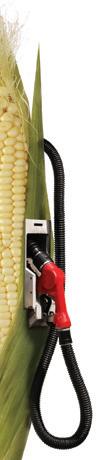
MORE ETHANOL IN GAS APPROVED FOR OLDER CARS AMA Concerned About Effect On Motorcycles
The federal Environmental Protection Agency has granted a waiver to allow the use of a gasoline blend of up to 15 percent ethanol in model year 2001 through 2006 passenger vehicles, including cars, SUVs and light pickups.
The decision, announced Jan. 21, follows another decision to allow the use of gas with up to 15 percent ethanol—also known as E15—in 2007 and newer passenger vehicles.
But the EPA hasn’t made that declaration for motorcycles, heavy-duty trucks or non-road engines “because current testing data does not support such a waiver.”
The federal agency also is developing requirements to ensure that E15 is properly labeled at the gas pump. The label will be designed to prevent refueling into vehicles, engines and equipment not currently approved for the higher ethanol blend.
Motorcycle manufacturers certify modern engines to run on fuels that have a 10 percent or less blend.
Imre Szauter, AMA government affairs manager, notes that the AMA supports the use of cleaner-burning fuels but is concerned that, if the allowable level of ethanol is raised, it could result in premature engine damage.
“Until studies show that a higher ethanol blend won’t damage motorcycle or all-terrain vehicle (ATV) engines, and won’t make motorcycles emit more nitrogen oxides than are allowed by the EPA, the AMA can’t support any proposal to allow a higher blend,” Szauter says.
PROTECT OFF-ROAD ACCESS
Forest Planning Rule Released
The U.S. Forest Service is seeking comments on a proposed planning rule for the national forests that has been in the works for more than a year.
“It’s vital that off-highway riders around the nation read the proposed rule and comment by the deadline to ensure that the voice of the motorized recreation community is heard,” says Royce Wood, AMA government affairs manager. “We certainly know that the groups and people who want to expel riders from public land will be giving the U.S. Forest Service an earful.”
The planning rule will guide the creation of land management plans in all national forests and grasslands in the national forest system for decades to come.
The comment deadline is May 16. For information on the new rule and to comment, go to FS.USDA.Gov/planningrule.
REPORT ROAD HAZARDS
Keep Roads Safe For Motorcyclists
The AMA has put together a valuable resource for street riders who spot a dangerous hazard on the road and believe it needs to be taken care of immediately.
The Government Relations Department has compiled web address and telephone numbers for state transportation departments in each state where riders can report road hazards.
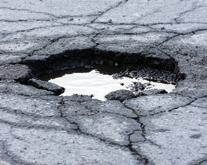
Those include potholes, shredded tires, dead animals, couches—anything that could pose a danger.
Alabama (334) 242-6356 Alaska Southeast Region, (907) 465-1784/1789; Northern Region: (907) 451-2205; Anchorage: (907) 338-1466; Kenai Peninsula: (907) 262-2199; Mat-Su: (907) 745-2159 Arizona (602) 712-7355 Arkansas (501) 569-2000 California www.dot.ca.gov/hq/maint/msrsubmit/ Colorado (800) 268-8092 Connecticut www. dotdata.ct.gov/contacts/contact.aspx Delaware (302) 760-2074 Florida fdot.pio@dot. state.fl.us Georgia CustomerService@dot.ga.gov Hawaii (808) 536-7852 (Honolulu: 768-7777) Idaho (208) 846-7610 Illinois (800) 452-4368 Indiana (866) 849-1368 Iowa (800) 525-5555 Kansas (785) 296-3881 Kentucky (800) 728-2448 Louisiana (877) 4523683 Maine www.maine.gov/mdot/comments/rp/index.htm Maryland (410) 865-1228 Massachusetts www.massdot.state.ma.us/main/MassDOTContactUs.aspx Michigan www.michigan.gov/mdot/ Minnesota www.dot.state.mn.us/metro/maintenance/potholes. html Mississippi (601) 359-7470 Missouri (573) 751-2551 Montana (406) 444.6200 Nebraska www.dor.state.ne.us/report-concern.html Nevada (775) 888-7000 New Hampshire (603) 271-2693 New Jersey www.state.nj.us/transportation/commuter/ potholeform.shtm New Mexico Deming, (575) 544-6530; Roswell, (575) 637-7201; Albuquerque, (505) 841-2700; Las Vegas (505) 454-3600; Santa Fe, (505) 827-9500; Milan, (505) 285.3200 New York (800) 768-4653 North Carolina (877) 368-4968 North Dakota (701) 328-2545 Ohio www.dot.state.oh.us/feedback/Pages/feedback.aspx#general Oklahoma (405) 231-4DOT Oregon (888) 275-6368 Pennsylvania www.dot.state.pa.us Rhode Island (401) 222-2450 South Carolina dbw.scdot.org/workrequest/ South Dakota (605) 773-3265 Tennessee Knoxville, (865) 594-2402; Chattanooga, (423) 510-1291; Nashville, (615) 350-4300; Jackson, (731) 935-0100 Texas (888) 885-8248 Utah Ogden, (801) 620-1600; Salt Lake City, (801) 975-4900; Orem, (801) 227-8000; Richfield, (435) 893-4799 Vermont (802) 828-2648 Virginia (800) 367-7623 Washington www.wsdot. wa.gov/Maintenance/Contacts/ContactUs.htm West Virginia www.wva.state.wv.us/wvdot/ RoadRepairRequest/Default.aspx Wisconsin Rhinelander, (888) 368-3478; Wisconsin Rapids, (800) 238-5575; Green Bay (800) 233-5022; Eau Claire, (800) 991-5285; Superior Office, (715) 392-7925; Waukesha, (262) 548-5903; LaCrosse, (888) 368-5463; Madison, (608) 246-3800 Wyoming Laramie, (307) 745-2100; Casper, (307) 473-3200; Rock Springs, (307) 352-3150; Basin, (307) 568-3400; Sheridan, (307) 674-2300
UPDATED TEST RESULTS
RIDING
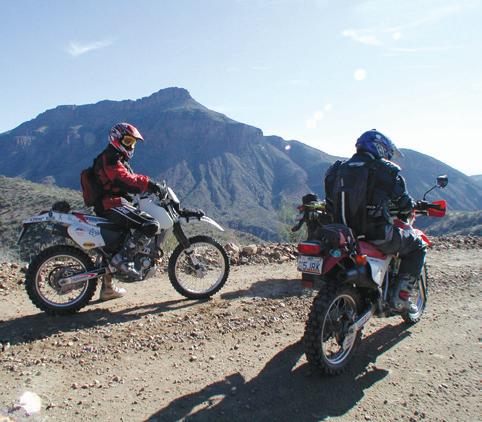
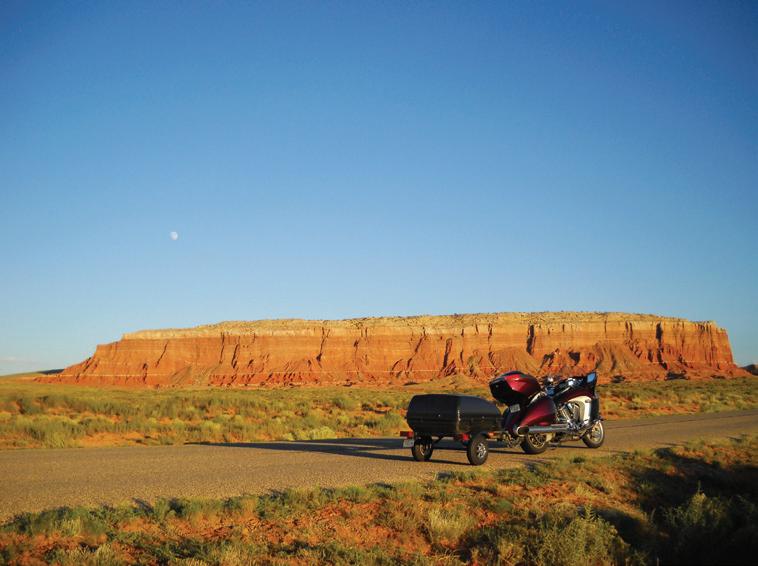
p “Taken in the desert in Utah... I think it turned out perfect.” — Aaron Kelly of Moravia, Iowa.
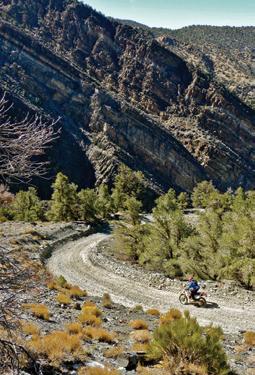
t Clockwise from left: “Taken during the Bishop Dual Sport event held the weekend of Oct. 8-10 by the Ventura County Motorcycle Club. These are on the way back from a visit to the Patriarch Grove of Bristlecone Pines.” — Fred Benz of San Francisco.
“This is Joe Warner on a recent trail ride in New Hampshire.” — Andrew Phillips
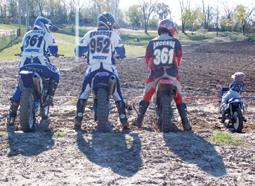
“We are at the track every weekend riding. Left to right: myself, 361; my oldest son, Mike, 952; my youngest son, Gregg, 361; and the spoiled grandson, Oliver, on his PW50. This photo was taken at the track we belong to, Aztalan Motorcycle Club in Aztalan, Wis.” — Tony Leccesi
Have a photograph you’d like to see in American Motorcyclist? Send it to submissions@ ama-cycle.org with “Snapshots” in the subject line.
RIDE AND WIN
Dual Sport And Adventure Ride Series Award Bikes
Dual-sport and adventure rides are some of the most fun you can have on two wheels. You get to ride fresh trails and some of the most remote backroads in the country, while someone else does all the hard work—the scouting and trail marking that can take months to do properly.
Each year two riders receive all of the above, plus way more than they bargained for: a shiny new bike!
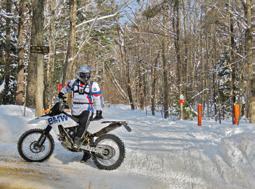
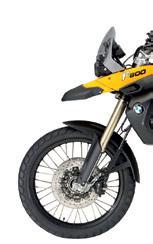
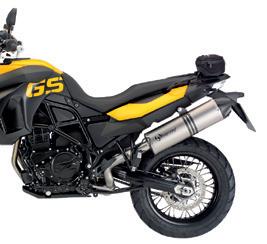
Chuck Aughinbaugh of Denver, Pa., was the lucky rider in the 2010 AMA BMW National Adventure Riding Series, bringing home a brand new BMW F 800 GS.
“I used to run enduros, did Blackwater, rode Iron Butt events,” says the 55-yearold Aughinbaugh. “I ride a lot of street and dirt, and this bike will allow me to put more miles under me that are not on bone-jarring trail or smooth asphalt, something in-between.”
AMA WELCOMES NEW ADVERTISING MANAGER Industry Vet Will Lead Expanded Sales Efforts
The AMA is pleased to announce the hiring of Steve Gotoski as AMA advertising manager.
A moto-industry veteran with experience at publications including Motorcyclist, Dirt Rider, Cycle News, as well as a previous position with the AMA as Western sales manager, Gotoski brings considerable talent to the AMA’s vibrant and growing slate of publications,
websites, events and other properties.
As AMA advertising manager, Gotoski oversees operations of the AMA sales department as well as represent the Western Region of the U.S.
“The AMA has a unique mix of advertising and marketing channels, and I can’t wait to educate the industry about our products,” Gotoski said.
To reach Steve, e-mail sgotoski@amacycle.org, or call (951) 204-1948.
Chuck Aughinbaugh
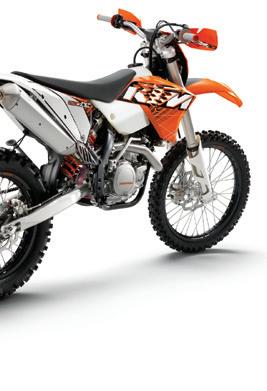
In the 2010 AMA KTM National Dual Sport Trail Riding Series, Rod Overstreet of Campbellsville, Ky., rode away on a new KTM 530 EXC.
“This dual-sport program that the AMA has is great,” Overstreet says. “Not only with this giveaway with the KTM, but the turnout is unreal and the rides are exciting. It’s a whole lot of fun and probably the most grassroots form of off-road that we have going now.”
For the full schedule of both series, go to AmericanMotorcyclist.com > Riding > Dirt > Events & Series.
Steve Gotoski
GET OUT AND RIDE!
AMA Designates April “Get Out And Ride! Month”
Allow us to make it official. April is Get Out and Ride! Month.
We know what you’re thinking. “Isn’t every month get out and ride month?”
Yes, certainly. But sometimes, particularly for the parts of the country that have spent a long winter under snow and ice, it’s helpful to focus on just how much fun motorcycling is.
That’s the idea behind the new designation for the fourth month of the year: To take a breath, reflect on all the cool stuff we can do on two wheels and then go out and do it.
To make this all easier to take in, we’ll celebrate a different slice of the motorcycling lifestyle each week.
One way to see this great country is from the seat of your own motorcycle. That’s why the first full week of April, April 4-10, will be “Get Out and Ride Your Way Week.” This week highlights everything from AMA Grand Tours (see right) to simply riding on your own (see “America’s Top 15 Motorcycling Roads” on page 30, or the AMA Trails Atlas at AmericanMotorcyclist.com).
The next week, April 11-17, will be “Get Out and Ride Together Week.” This week, we’ll showcase both the country’s iconic large rallies as well as smaller, local events. We’ll highlight everything from dual-sport rides to AMA National Conventions to Gypsy Tours.
April 18-24 will be “Get Out and Ride for a Cause Week.” This week, we’ll provide
info on how you can use your love of riding to help others, such as participating in fund-raising rides or toy runs.
Rider training will be the focus during April 25-30: “Get Out and Ride Smart Week.” We’ll share ideas about how you can improve your skills—and keep those skills sharp all riding season.
Each week, we’ll invite AMA members to share their experiences with photos, stories and even video, and run contests for cool stuff. We’ll update you all month about how you can join the fight to protect our riding rights and promote the motorcycling lifestyle.
So get that gear out, start checking your bike over, and look for more about AMA Get Out and Ride! Month at AmericanMotorcyclist.com and at Facebook.com/AmericanMotorcyclist.
Plan Ahead With AMA Great Roads/Trails Databases
The AMA Great Roads database and the AMA Trails Atlas include listings of routes suggested by AMA members. To access the databases, go to AmericanMotorcyclist.com > Membership > AMA Great Roads, or Riding > Dirt > Events & Series > Trails Atlas. If you’re not logged in, you will be prompted for your password.
AMA Grand Tours Top 10 List
AMA Grand Tours allow you to ride at your own pace to locations that are tied to a common theme.
For example, the AMA Right to Ride Grand Tour awards points for illustrating issues affecting motorcyclists’ rights. To highlight health insurance discrimination, you might submit a photo of you and your bike in front of a hospital. It runs April 1 through Nov. 30.
Other Grand Tours include the Travel the USA with KOA Grand Tour and the Team Strange Smoke Chasing Grand Tour. (See full Grand Tours schedule on page 47.)
Need more convincing? Here’s uber-tourer Jack Shoalmire’s top 10 reasons to do an AMA Grand Tour:
10. My significant other told me to go on an AMA Grand Tour and get out of her hair.
9. Another AMA Grand Tour pin for my collection.
8. To see new places.
7. To improve my knowledge of the United States.
6. To visit places I would never visit if not for the AMA Grand Tour.
5. To meet other people who share an interest in riding.
4. For the challenge of routing rides to capture tour locations.
3. Adding to my mirror full of memories.
2. I love the wind in my face.
1. I get to ride my way!
Photo Riding: Tom Bear
VERSATILITY FOR REAL-WORLD RIDING
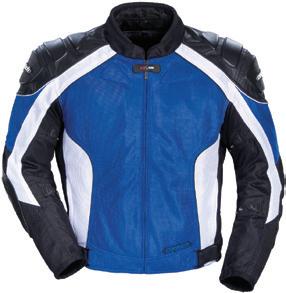
Cortech GX Air Series 2 Jacket
Mesh jackets are normally considered warm-weather gear. But this jacket has you covered in wet, warm or cold conditions.
MSRP: $159.99; Tourmaster.com
It’s difficult to find a jacket that can do it all. One that comes very close, however, is the Cortech GX Air Series 2.
This jacket isn’t the typical high-air-flow gear. Yes, it’s mostly mesh, but with a heavyduty “Aqua-Therm” two-stage liner.
MEMBER TESTED
Despite the name, the GX Air is a fairly heavy jacket. My size large jacket draped more like a light-touring jacket. The fit is snug but with extra room where you need it. It is adjustable, and the range of motion is good.—Jason Lisica, Pacifica, Calif.
In an 80-mile ride in 40-degree weather, the Cortech GX Air Series 2 performed much better than I expected. Also, the leather armor is supple and isn’t intrusive to freedom of movement.
The stitching, zippers, and materials are top shelf, and the shell is durable. The liner attachments are color-coded so you won’t get your sleeves twisted when you put the layers back in. The size runs a tad small. I normally wear a 2XL jacket and with this one, I think a 3XL would have fit better.
If given the chance, I would go with a larger cuff. Also, while the collar has a soft liner around the neck, it is too narrow and tends to rub. All in all, the Cortech GX Air Series 2 Jacket is a well-made, comfortable-to-wear, all-weather jacket.— Rich Haggan, Navarre, Fla.
I like the contemporary styling of this jacket, and the leather accents are a nice touch. The materials are high quality. The jacket has decent heft and is durable.
For me, the double liner could make it a potential all-season jacket. I say “could” because, unfortunately, the innermost quilted liner in my XXL jacket feels a size or two too small.
The jacket with the rain liner was warm at highway speeds in 45- to 50-degree weather. The “tail” of the jacket didn’t extend down far enough to cover the waist for sportbike riding. There are plenty of snaps, tabs and zippers for adjustability, although in my case I had trouble fitting gauntlet gloves over the bulky sleeves. If your body type fits this jacket, it’s a keeper due to its ability to tailor protection to the weather-at-hand.— Niguel Williams, Las Vegas, Nev.
Photo MSF: Grogan Studios
Jason Lisica
Rich Haggan
Niguel Williams
Ask the MSF
THE ART OF PRACTICING
You Ask: “Are there some basic guidelines for practicing key riding drills, or is there a particular MSF class you would recommend that would train me in the science of practicing?”
The MSF Responds: The idea of developing good motor skills is to make muscle movement automatic; that is, to perform without conscious thought. So, conscious practice done correctly, and repeatedly, will build muscle memory. It’s “perfect practice makes perfect,” so be sure you’re accurate with control responses before trying to make your actions more quickly.
The risks inherent to motorcycling can be managed well with study, training, practice and a safety-minded attitude. Study would include reading your bike’s owner’s manual and books on motorcycling techniques; training would be the safety classes that you’ve mentioned (consider taking one of MSF’s “Improving-the-Ride” RiderCourses
periodically); and practice covers activities from setting up drills in a parking lot to riding purposefully in low-traffic areas.
The second half of the MSF’s booklet “You and Your Motorcycle: Riding Tips” (which you print for free from MSF-USA. org) is a practice guide that describes basic drills that can be set up and performed in an empty parking lot.
To maximize muscle memory, expose yourself to a variety of situations. Alternate braking drills with weaving or swerving drills. Don’t spend too much time on one drill, unless you change some aspects of it. For example, if you’re weaving through cones, periodically change the distance between cones or the lateral offset. And don’t practice so long that you’re fighting fatigue—it’s better to break your practice into several short sessions. Your brain needs time to absorb new data and your muscles need a break, too.
Find more info about the Motorcycle Safety Foundation at MSF-USA.org.
RACING
SUPERCROSS SHAKEUP!
Trey Canard Breaks Out. Stewart Stumbles. Villopoto Stays Steady.
The 2011 season of AMA Supercross continued to be one of the least predictable in years, as the schedule moved east to Houston’s Reliant Stadium for the sixth race of the 17-round series.
A wild night in Texas shook up the points lead with American Honda’s Trey Canard, of Shawnee, Okla., taking his first career AMA Supercross class victory. Perhaps more significant to the title chase, however, San Manuel Yamaha’s James Stewart, the series leader heading into the
event, finished 15th, handing the points lead to Kawasaki’s Ryan Villopoto, who took third in Houston.
And it all went down just a few seconds into the 20-lap main event. As the 20 riders in the Supercross class converged on the first corner, chaos ensued, collecting Stewart and contender Chad Reed. GEICO Honda’s Kevin Windham emerged with the holeshot and led until he crashed on lap 10, giving Canard the lead.
Defending Supercross champion Ryan
Dungey closed in aboard his Rockstar/ Makita Suzuki, but Canard fended him off for the victory.
“I don’t know what to say,” Canard said. “It was an awesome race. I just tried to hang in there, because it was a tricky track. I made a mistake and Dungey gained a lot of time on me and from there I was just riding defensively.”
Dungey, who nearly passed Canard at the line, rebounded from his fifth-round DNF.
“[The championship] isn’t over until it’s over,” Dungey says. “There’s still a lot of racing left. We came up a little bit shy and I just have to look forward to next weekend.”
American Motorcyclist Archives
OCTOBER 1972
American Motocrossers Make Their Mark
Motocross began as a European phenomenon, and when it took off in America, transplanted European stars dominated. In the early 1970s, though, American riders started to make their mark.
In those days, the Inter-AMA series was the premier showcase for motocross talent. Competing in the series were world stars Motorcycle Hall of Famer Torsten Hallman,
HAYES LOOKING TO REPEAT
Yamaha Rider Quick At Pre-Season Tire Test
Delayed first by rain and then by damp conditions, teams chasing the AMA Pro Racing Superbike Championship finally got on track at the newly paved Daytona International Speedway for the Dunlop Tire Test, the first official open test session for the 2011 season.
Reigning Superbike Champion Josh Hayes put his Yamaha at the top of the timesheets in the AMA Pro National Guard SuperBike class, posting a time of 1:38.795/127.901 mph. Tommy Hayden and his Suzuki were right behind Hayes with a time of 1:39.074/127.542 mph. Hayden’s teammate Blake Young was third, Eric Bostrom on a Kawasaki was fourth, and Larry Pegram, racing a BMW this year, was fifth.
“The track is just so unbelievably smooth,” Hayes said after the test. “When you compare some of the data from previous years, it is so much smoother. It is different, but it doesn’t take long to get back into the groove. I’m looking forward to the race.”
The 2011 AMA Pro Superbike Championship gets started March 10-12 at Daytona International Speedway in Daytona Beach, Fla.
More info: AMAProRacing.com.
Arne Kring and Dave Bickers. U.S. riders included Hall of Famers Brad Lackey, Jimmy Weinert and Gary Jones.
After a back-and-forth series, Hallman had 450 series points and Jones had 430. A lot of ground could be made up in that last round, though, and that’s just what Jones did.
“It was an impressive and unprecedented win for Jones, but hopefully only a hint of things to come…the Americans just may have found the handle,” AMA News, later renamed American Motorcyclist, reported.
To read more about the history of American motocross, search for “American Motorcyclist” at Books.Google.com.
GET TICKETS FOR AMA PRO MOTOCROSS NOW
See The Best Riders And The Best Tracks In Person This Year
American motocross racing has a rich history. The best part? New chapters of that history will be written this summer when the 2011 AMA Pro Motocross Championship unfolds from May 21 through Sept. 10.
And if the excitement and unpredictability of the AMA Supercross series is any indication, the outdoor series will be one worth witnessing.
After the most successful rookie season in history, defending 450 Class Champion Ryan Dungey will lead his Rockstar/Makita Suzuki team against 2010 runner-up and new teammate Brett Metcalfe, as well as perennial front-runner Andrew Short, who finished third in last year’s championship, and
his new KTM. Additionally, fan favorite and three-time national champion Ryan Villopoto will make his long-awaited return to outdoor action.
With the graduation of defending champion Trey Canard into the premier class, the deeply talented and youthful 250 Class will crown a new title holder in 2011, while the stars of the Women’s Motocross Championship also make their return at eight of the 12 rounds of competition.
If you’re a racing fan, you owe it to yourself to see history being made in person. Tickets are on sale now at AlliSports.com, with special early bird promotions and discounts for those who buy their tickets in advance.
Photo
Jeff Kardas
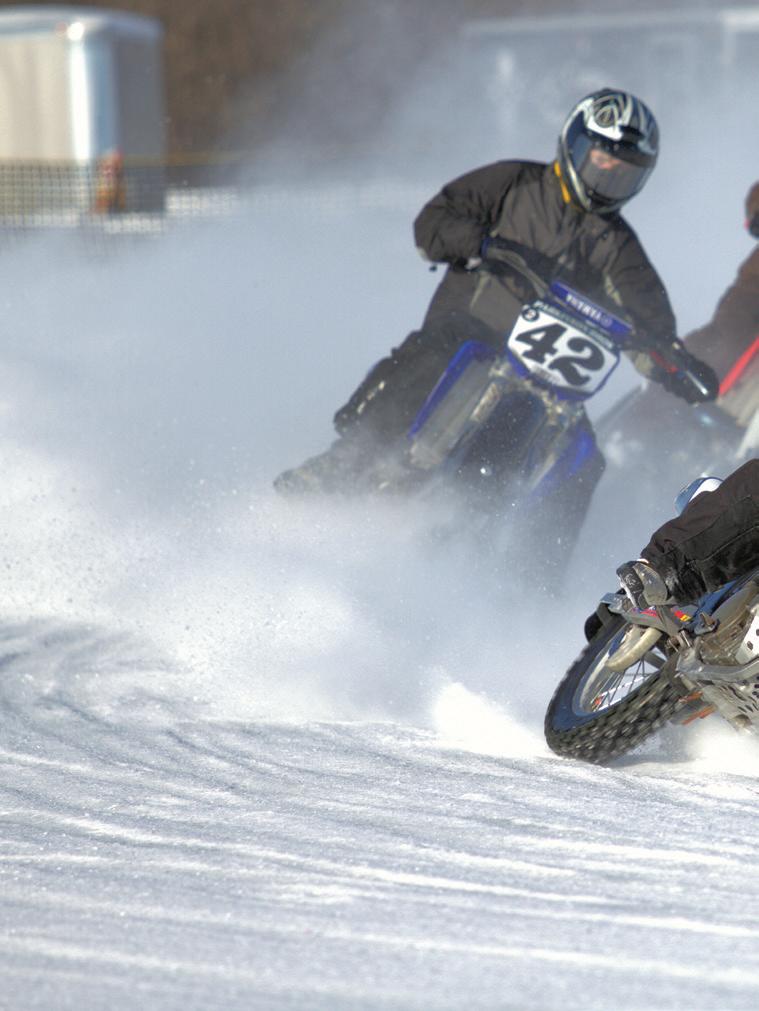
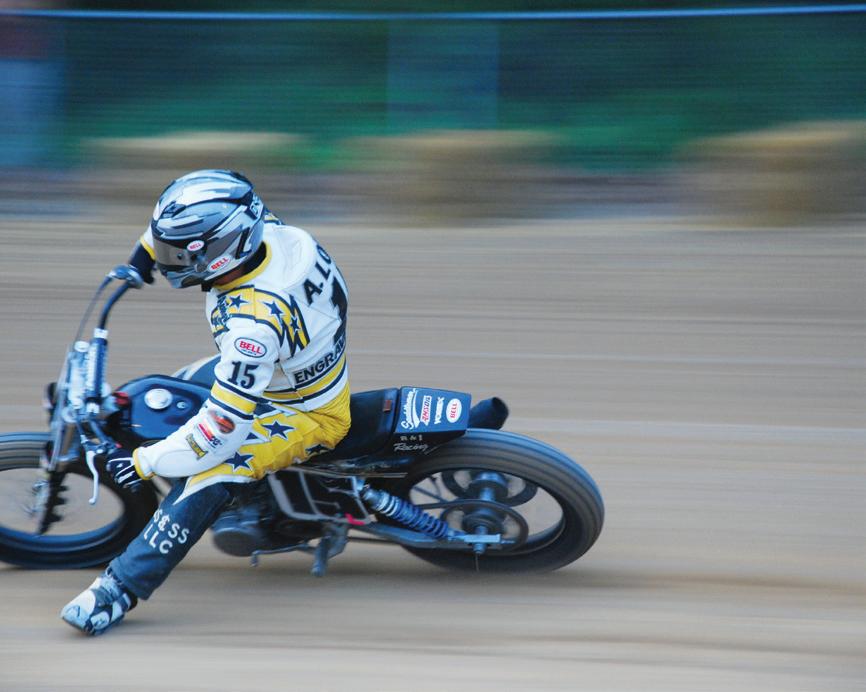
Ice In Their Veins 2011’s first champions awarded at the Ice Race Grand Championships
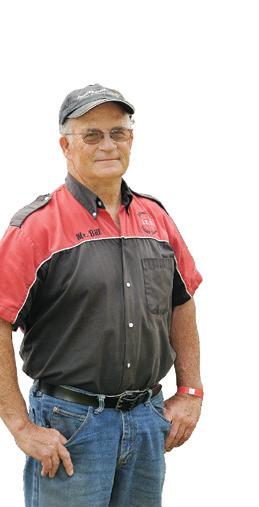
Bill Markham Teaching kids to ride trials is his calling in life
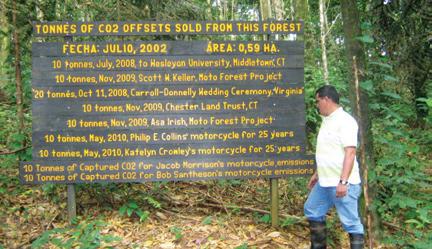
Saving The Planet? Scott Keller and Reforest The Tropics bring green to motocross
Photo by Milan G.
AMA RACING STAFF
Joe Bromley Director
Kevin Crowther Director of Supercross and Pro Racing Relations
Bill Cumbow Director of Organizer and Racing Member Services
Kip Bigelow Motocross/Arenacross Manager
Ken Saillant Track Racing Manager
Chuck Weir Off-Road Manager
Jane Caston Supercross/Motocross Coordinator
Tamra Jones, Off-Road/Track Racing Coordinator
Kim Johnson Motocross/Arenacross Coordinator
Lana Cox Administrative Assistant
AMA Racing (614) 856-1900, AMARacing.com
AMARacing@ama-cycle.org 13515 Yarmouth Dr. Pickerington, OH 43147
ADVERTISING
Steve Gotoski (Western States) Advertising Director (951) 566-5068 sgotoski@ama-cycle.org
Ray Monroe (Eastern States) Advertising Manager (815) 885-4445 rmonroe@ama-cycle.org
AMARacer@ama-cycle.org 13515 Yarmouth Dr. Pickerington, OH 43147 AmericanMotorcyclist.com
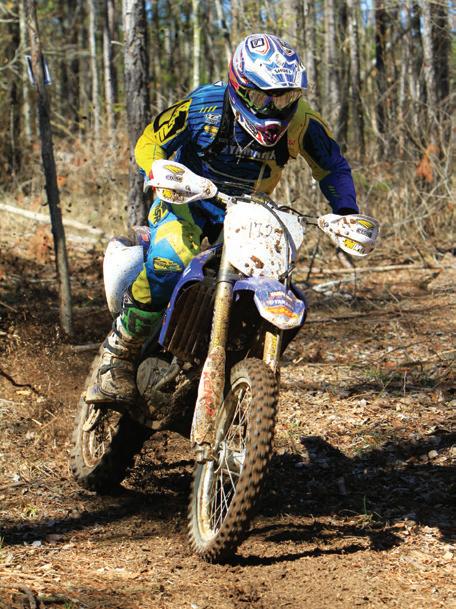
Cover Photo by Mark Kariya Insets (L-R) by Corey Mays, ITSTrials.com, ReforestTheTropics.org
Expanding Our Outreach From AMA Racing For AMA Racers
Approximately a year and a half ago, the AMA launched a new publication for our members who compete. AMA Racer was printed in small numbers and provided online. Its primary purpose was to offer up information about AMA Racing Grand Championship events. It was printed more or less quarterly, and designed to come out according to the competition schedule.
While the publication served that purpose and helped improve awareness of those events, it did not have the distribution it needed to reach all our racers.
To expand our reach, we are pleased to announce that AMA Racer is now bound into select copies of American Motorcyclist during the racing season. That means, if you are reading this, you have been identified as a member interested or involved in racing.
In practice, the concept is a win-win approach. The AMA saves money by sending AMA Racer to racers only, and the members interested in competition information get it. We are able to take advantage of the economies of scale that come from printing the magazine, and we are able to cover much of those reduced costs by selling advertising that appears exclusively in this section.
Those are the logistics. Now, what can you expect from AMA Racer? Here’s a quick list.
First of all, we will shine the spotlight on our members who race. Too often, amateur racing gets pushed to the sidelines. While we understand that fans of the sport have a major interest in their AMA Pro Racing heroes, we also recognize the hard work, dedication and talent that it takes to rise to the challenge in AMA-sanctioned amateur competition.
In addition, AMA Racer is your direct link to those in charge of implementing the competition rules written by AMA Congress, the elected rulemaking body for AMA-sanctioned competition. We’ll include information on major rule changes and better explain those that need more background.
Also, AMA Racer is about the past, present and future of AMA-sanctioned amateur racing. It’s for the racers, about the racers and in support of the sport that racers love. As part of the AMA’s mission to protect and promote motorcycling, we seek to improve and promote amateur motorcycle competition.
Association pay dividends for both the AMA and our racers. We intend to add to these relationships in 2011 and beyond.
Vintage racing may be all about the past, but it’s also a big part of our future. The AMA has been at the forefront of the rise in vintage racing with both the AMA Racing Vintage Grand Championships, which take place during AMA Vintage Motorcycle Days, and the AMA Racing Vintage Dirt Track National Championship Series. Look for more growth in AMA-sanctioned vintage competition going forward.
AMA Racing and AMA Organizer Services are working more closely to reach out to both our clubs and promoters. The AMA is first and foremost a rider’s association, and our goal in our organizational relationships is to put your interests first. By helping our clubs and promoters better understand our rulebook and appeal process, we can improve the races for everyone. Along these lines, we also intend to have referee training in place by the fall of 2011.
This is just the start. Look for more improvements of the AMA Racing program going forward. But just as the AMA needs all of us, as members, to step up and fight for the cause, we need your to help improve the sport. Why do you love to race? What would make racing better for you? How can we work together to elevate amateur racing in America? Let us know at submissions@ ama-cycle.org and you could see your ideas in future issues of this publication.
Joe Bromley AMA Racing Director
Along those lines, we already have a lot of initiatives that we are working on for 2011. For example, excessive sound is a big one on our plate. AMA staff will be on hand at several national events educating riders on this important issue.
Partnership is another area where we will expand. Relationships such as those we enjoy with the Enduro Promotions Group, MX Sports and the National Hare & Hound
Snapshot
Kyle Johnson Heats Up The Ice
Jace Kessler Goes Three-For-Three In Youth Ranks
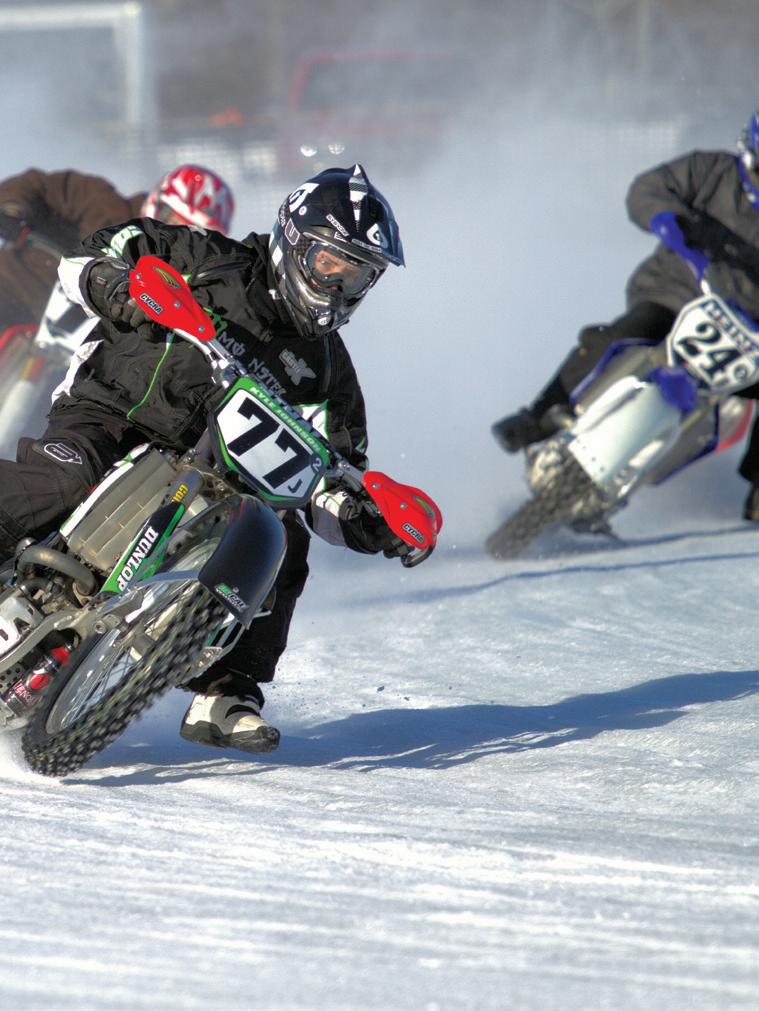
It took him three years, but when Kyle Johnson, 16, of Twin Lake, Mich., finally got a straight-up shot at the AMA Racing Ice Race Grand Championships, he made it count.
“My first trip to the nationals was two years ago, and I fell down in my heat race [and didn’t qualify for the main],” says Johnson. “Last year, we were rained out.”
This year? Johnson won the 251cc500cc DTX and 450cc Modified classes and was named the AMA Racing Ice Racer of the Year, an award presented to the most outstanding amateur racer at the AMA Racing Ice Race Grand Championships Jan. 22-23 in Birch Run, Mich.
Johnson says the event was a real test. He kept his composure, though, and put his Kawasaki at the front of the pack for the two big main event wins.
“In the DTX class, I got the holeshot and then just checked out,” he says. “In the 450 Mod class, I came off the line
second, ran probably two laps second, and then one of the kids slipped up and I got underneath him and didn’t see anyone after that.”
Racing is a family affair for Johnson.
“I enjoy just going out and riding,” he says. “Our whole family rides. My dad rides. He hasn’t been racing, though, with me and my little sister racing. My sister, Kaley, is 13. She got seventh in the 250 B class and fifth in the 85 DTX class. We’ll be back next year for sure.”
Another standout rider at the 2011 AMA Racing Ice Race Grand Championships was AMA Racing Youth Ice Racer of the Year Jace Kessler. Jace pulled a sweep at the event, winning the 50cc DTX Senior (7-8) class, the 65cc DTX (7-11) class and the 65cc Modified (7-11) class. Kessler, who just turned 9, is from Eagle, Mich.
“It was great,” Kessler says. “In my last class, I had a tight battle. I got the holeshot. I knew I could hold him off. I just protected my inside (line).”
Kessler is also an experienced motocross racer. He has qualified for the AMA Amateur National Motocross Championships twice, most recently last year in the 50cc Senior class, where he got seventh.
Kessler says he adapted well to ice racing.
“This one guy, Matt Chick, told us about this ice racing, and my dad set up some tires, and we rode on the ice at my house, and I liked it,” he says.
Photo Corey Mays
Pit Board
Remembering Lone Star Motocross
When Howerton, Stackable And Wise Ruled Texas
By Ron Pocher
Despite its national-caliber appeal, motocross is a regional phenomenon. Homegrown stars can grow bigger than life on the local stage.
Those who grew up in Texas when Motorcycle Hall of Famers Kent Howerton and Steve Wise, as well as Steve Stackable, were coming of age know what I’m talking about.
In those days, the AMA Grand National Dirt Track Series always began in Houston, in January, with the Astrodome TT and short-track doubleheader. At that time, my dad’s shop was supporting Howerton. The biggest motorcycle show in Texas always occurred that same weekend in the Dome’s Exhibit Hall. On the Sunday following the ’74 races, we rolled both a new 400cc and the all-new 250cc Mag right out of the Husqvarna display booth, out of the exhibit hall and into
my dad’s truck. Thus began Howerton’s support ride with the Swedish brand.
And just before the final round in New Orleans, he received a true factory bike and posted his first national victory.
Not just one, but two flat tires may have cost Howerton both the 250cc and 500cc crowns in ’75. Kent did win the 500cc championship for Husqvarna in ’76. The “Rhinestone Cowboy” went on to claim 250cc National Championships in ’80 and ’81 riding for Suzuki.
Stackable came even closer to winning that ’75 500cc crown when he was one of six riders (including Howerton) who went into the final round, the now-famous “Battle of New Orleans,” with a mathematical chance of winning the championship.
“Short Stack” was the fastest rider on the track that day and had charged all the way to second in the first moto when
his front wheel suddenly decided that it didn’t need all those spokes.
Stackable handily won the second moto, but when the points were tallied, it was determined that if he had just fallen to fifth in moto one, the title would have been his.
Stackable did win the ’75 500cc AMA Supercross Championship, but that would be his only title in a career that saw many series podium finishes.
Wise has stood on the podium at AMA Motocross, Supercross, road racing and dirt-track Nationals. He reached the top step in those first three disciplines and looked to have the ’82 Astrodome TT all but won when a late race mechanical issue dropped him to third.
The best race I ever saw, in person, took place in the Astrodome. The year’s really not important but my guess would be 1975. Some may call me a bit partial and others may denounce it as “just a heat race,” but Howerton and Stackable were slugging it out.
I don’t know how many times they swapped for the lead and, to be honest, I can’t even recall who won. All I really know is it was two Lone Star State champs putting it all on the line for the win. For a Texan motocross fan, it was perfect.
Clockwise Steve Wise, Kent Howerton, Steve Stackable
Jeff Gibson Races Full Circle
AMA Arenacross Star Keeps Going By Jim Kimball
Throughout his career, Ohio’s Jeff Gibson has raced AMA Arenacross, Supercross and Motocross. He has competed in Canada and Europe. He has raced nearly every major brand, including the experimental Cannondale some years ago. In 2009, Gibson won the AMA Arenacross title. After a disappointing 2010, he’s now back and winning. We caught up with “Gibby” at his home race in Dayton, Ohio.
AMA Racer: Jeff, you’ve been racing for over 22 years now, so coming back to Arenacross is returning to your roots.
Jeff Gibson: I started racing right about the time that I turned 5, and have been doing it ever since. I’m 28 now, so I definitely have been at it for a long time. And you are right, my first pro race was in Arenacross. I had moved to the A class when I was 15, right after the Mini O’s back in 1997. I think it was at that first race as an A class rider when I got hurt, and the very next race I did was an AMA National Arenacross in Niagara Falls— way back when. I was so out of shape at that first Arenacross that I barely lasted through the heat races, let alone the main event.
AMA Racer: You’ve competed in AMA Motocross and AMA Supercross, too, like when you raced that experimental Cannondale in AMA Motocross.
JG: Yes, that was really something new and very different back then! I think that I was only 18 at the time that I took that deal, and it was really the chance of a lifetime. As many people may remember, we did have some difficulties with the bike, but I definitely look back at it as a good thing. It was certainly an interesting start to my career in professional motocross.
AMA Racer: Then came Supercross on privateer Yamahas. In fact, didn’t you race both 250 and 450 classes on the same night?
JG: Yeah, that was back in 2002. One of my buddies and I did the East Coast Supercross Series pitted out of our box van. He ended up getting hurt, and then was my mechanic for the rest of the series. I ended up eighth overall in the East Coast Lites series, with my best finish a fourth. That was when you could ride both classes, and I also made both main events five times in a row. Of all the racing that I have done, that series also stands out in my memory as being a very good year in terms of success and fun.
AMA Racer: How many more years will we see you racing?
JG: I feel pretty good right now, and I believe that I have at least another five years of competitive racing in me. I truly learn more and more every year. With the way that the industry and economy is right now, rides are getting tougher and tougher to come by, but I’m going to do my best to continue doing what I love, which is racing.
Old Motorcycles Go Fast
AMA Racing Vintage Dirt Track National Championship Series Kicks Off During Bike Week
Dirt track roots run deep in the history of American motorcycle racing. The AMA Racing Vintage Dirt Track National Championship Series celebrates that heritage like nothing else.
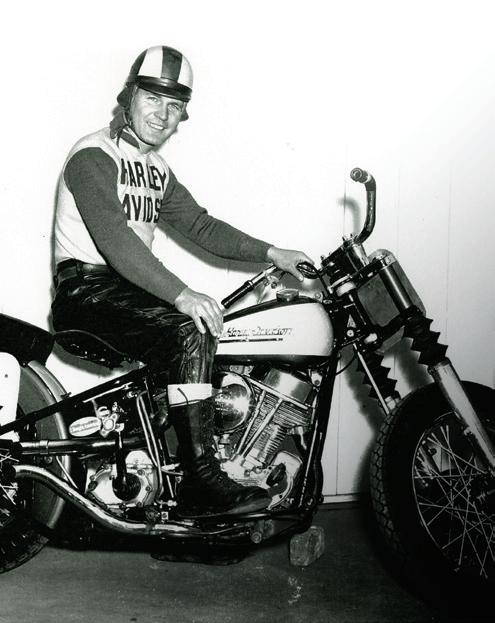
“The history of the AMA’s involvement in the sport dates to the original factory Class A racing in the 1920s and really took off during the Class C production-based format that continues today,” says AMA Director of Racing Joe Bromley.
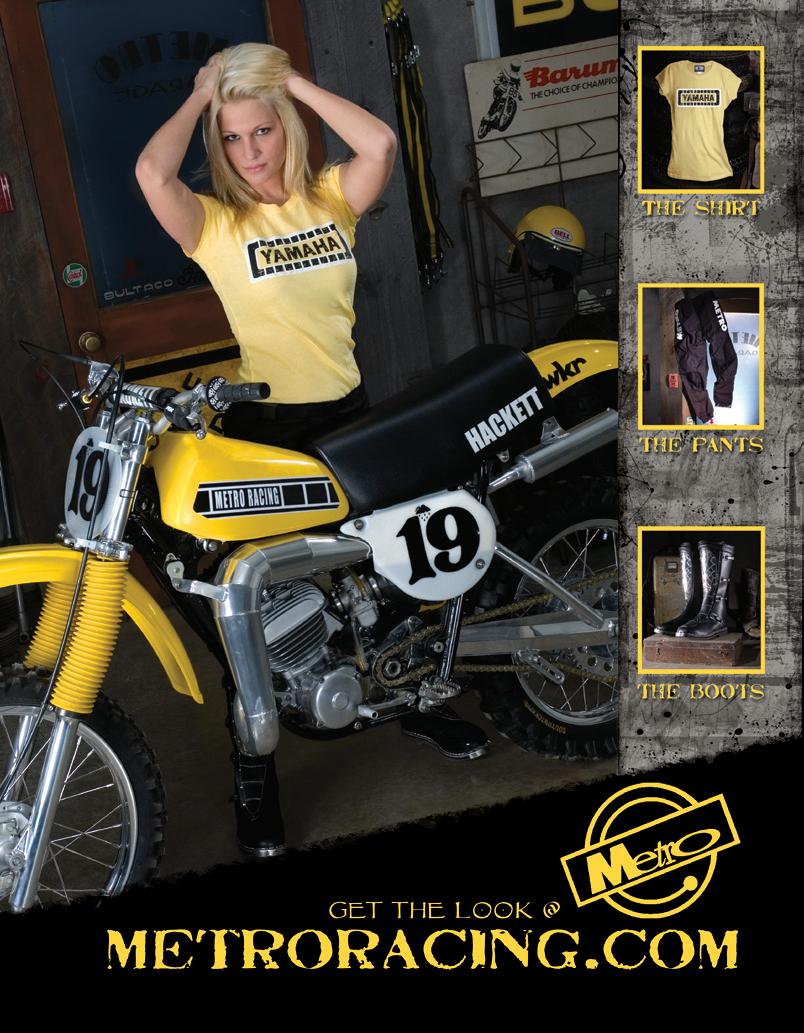
Vintage racing expert Don Miller, owner of MetroRacing.com, is the technical adviser of the AMA Racing Vintage Dirt Track National Championship Series. Miller said that his goal is to field motorcycles that capture the nostalgia of the past amid the excitement of a modern meet.
“Year two as the AMA vintage dirt track technical adviser is on its way, and I couldn’t be more excited,” Miller said. “The series fared well its first year and can only gain speed. Attendees and enthusiasts gave us some good feedback, and the rules were adjusted so every one can come out and race with us.”
Series info is at AMARacing.com > National Championship Series > AMA Racing Vintage Dirt Track National Championship Series.
Two Questions With… Scott Keller
Motocross bikes are powered by carbon-based fuels. Therefore, they emit pollution. Well, yes and no. Yes, they emit pollution but not all of that pollution results in a net increase in carbon emissions.
Thanks to Reforest the Tropics,
several motocrossers and off-road racers are balancing their emissions by financially supporting tropical forests. The trees funded by the racers’ support more than offset the carbon emitted by their bikes and haulers.
We caught up with Scott Keller, a team owner working with Reforest the Tropics, to find out how this works.
AMA Racer: So, Scott, what’s the idea behind Reforest the Tropics?
Scott Keller: We sign 25-year contracts with farmers, and then we go in and plant on their pastures. The trees sequester enough CO2 to offset the carbon emissions of the team. One gallon of gas emits 20 pounds of C02, and one hectare forest will sequester the CO2 emissions of 56,240 gallons of fuel. There’s a lot of math behind it, but bottom line is a $250 donation will cover the motorcycle for the next 25 years.
AMA Racer: Why bring this to MX?
SK: Off-highway motorcyclists have an undeserved reputation. People don’t keep things in perspective. For example, how many forests did U.S. Rt. 95 from Maine to Florida take out? Nevertheless, motorcycles get attacked for singletrack trail that is barely visible after the offseason. Motorcycles, for the most part, do a lot less harm than a highway, especially when you consider stuff like anti-freeze and other fluid runoff.
A vision of mine is to turn the racetracks in America to tree factories. You go racing and another forest gets planted—literally. Everyone can feel good about something like that.
More information can be found at ReforestTheTropics.org.
TEACHING KIDS TO RIDE RIGHT
Bill Markham Uses Trials To Introduce Kids To The Sport
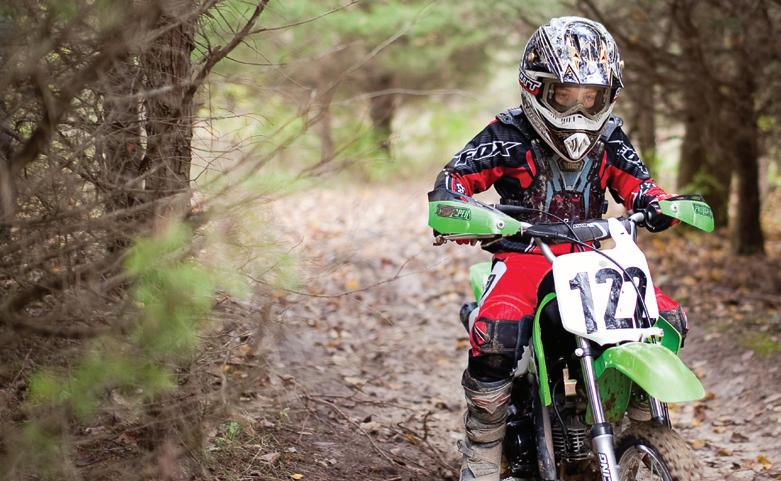
We all know that off-road riding offers benefits above and beyond the simple fun of blasting off on two wheels. Young riders learn responsibility, control and respect.
As an off-highway dirtbike and allterrain vehicle (ATV) instructor focusing on kids, Bill Markham, who runs ITS Motorcycle Training in Howard, Colo., is one trainer leading the charge.
Markham says that one benefit of learning to ride early is practical. Early riders make better drivers, he says.
“Our children are smart enough and physically able to do activities such as learning to ride motorcycles and ATVs off-road,” Markham says. “If they learn while they are young, they will be safer riders as they grow.”
Markham argues that given similar levels of driver’s education training, a 16 year old with years of motorcycle or ATV riding will be a better driver than one who was just introduced to operating a motor vehicle six months earlier.
“Controlling an off-road vehicle provides excellent experience to be able to react when needing to brake, adjust speed, and control a vehicle,” he says. “It
Off-Road Roundup
Hare And Hound, Hare Scrambles
Kurt Caselli Dominates At Ridgecrest: KTM/FMF Factory Team rider
Kurt Caselli crossed the finish line 8 minutes ahead of second-place finisher
David Pearson at the second round of the AMA Racing Kenda National Hare and Hound Championship Series Feb. 13 in Ridgecrest, Calif.
After flubbing the start and getting off the line several seconds late, Caselli raced through the dust and roost to edge into second. A minor spill by leader Kendall Norman gave Caselli the lead for good.
“It feels really good to get a win here after an unlucky result at the first round,” Caselli said after the race.
Duvall Wins East Coast Opener: Thad Duvall battled with Steward Baylor, Brad Bakken and three-time AMA National Enduro Champ Russell Bobbitt at the opening round of the AMA Racing East Region Hare Scrambles Series Feb. 13 in Elko, Ga.
Baylor got out front early, then each contender put in a strong charge until after the second gas stop when Duvall started to pull away. The finishing order was Duvall, Baylor and Bobbitt.
RIDE
HARD.
GO FAST. REPEAT.
Everything You Need To Know To Race A National Enduro
Events in the AMA Racing Rekluse National Enduro Championship Series, presented by Moose Racing (see calendar on page 45), are more accessible than ever these days. Thanks to rule changes implemented a few years ago, you now can compete without a street-legal bike or expensive time-keeping equipment.
Nationals now use what is called a “start-control” format. In short, there are no penalties for arriving early to a check. If you do arrive early, indicated by a minute board placed near the start of the next section, you simply wait until it’s your turn to go.
Easy, right? Well, yes and no.
While the format has changed—making a National more about raw speed than the mental gymnastics and guess work involved in calculating average speeds and predicting check
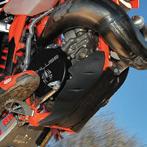
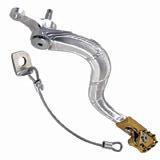
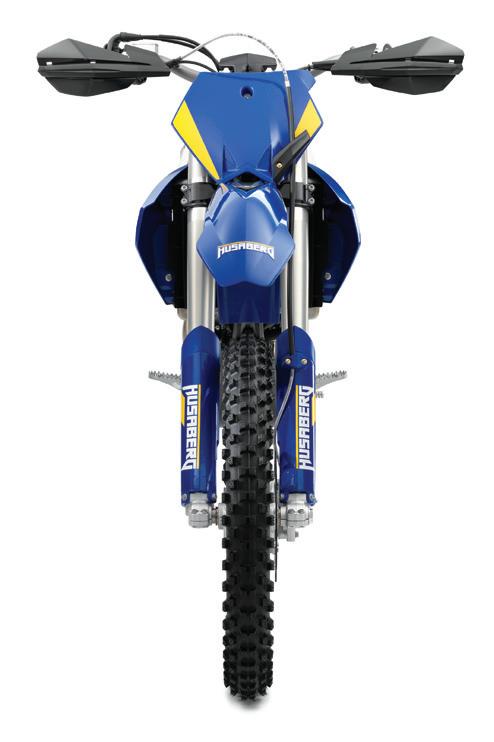
HANDGUARDS. If you show up for a National Enduro, or any enduro, without handguards, you are asking for busted knuckles. The same goes for a skid plate, radiator guards and a brake saver.
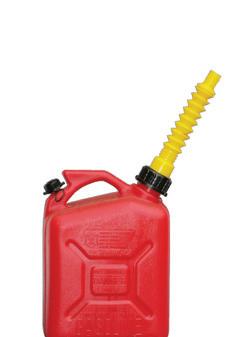
A PLAN FOR FUEL. will need to fuel up on the trail. However, the right answer for each event will vary. Maybe it’s a large-capacity tank. Maybe it’s an extra fuel tank (tagged with your name) on a courtesy gas hauler. Or, maybe you’ll need a friend to deliver some fuel to a gas stop for you. The bottom line is while enduro racers are enormously helpful and someone is bound to bail you out, you should try to show up prepared on race day.
placement—the terrain is just as tough. Enduros often run more than 85 or more ground miles and include some of the most challenging trails you’ll find.
So, while you can follow the National circuit without a license plate or a pace computer, there are a number of modifications you’ll need to consider before you get to sign up.
For more information on the AMA Racing Rekluse National Enduro Championship Series, presented by Moose Racing, see NationalEnduro.com.
A QUIET BIKE. Sound tests are performed at all National Enduros. You’ll need to come in at less than 94 decibels at 4,500 rpm for a 450cc four-stroke. Along those lines, you need a spark-arrested exhaust which is mandatory for all National Enduros.
A ROUTE SHEET HOLDER, A WATCH AND AN ODOMETER. While you don’t need to keep time, it is helpful to know how far you are into a given section.
WATER. OK, maybe a 5-gallon jug is overkill, but a personal hydration system can be a lifesaver. Literally.
DESERT ACE
Now, he’s mastering a different kind of sand – the kind found in the AMA Racing Kenda Hare and Hound National Championship.
Story and
Photos
by Mark Kariya
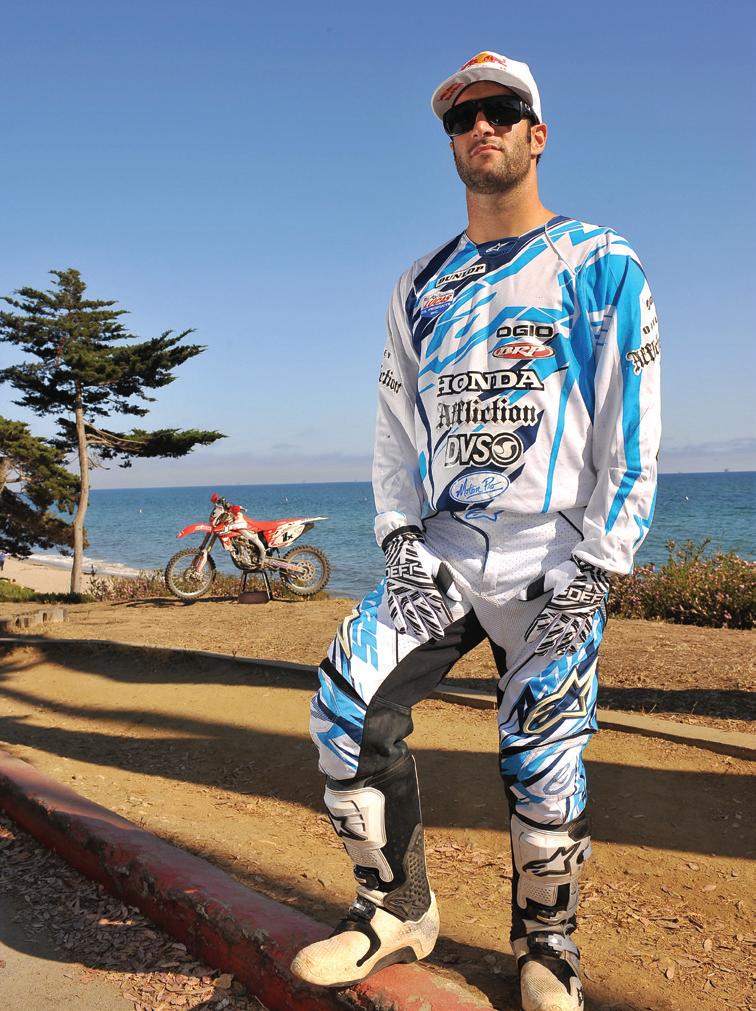
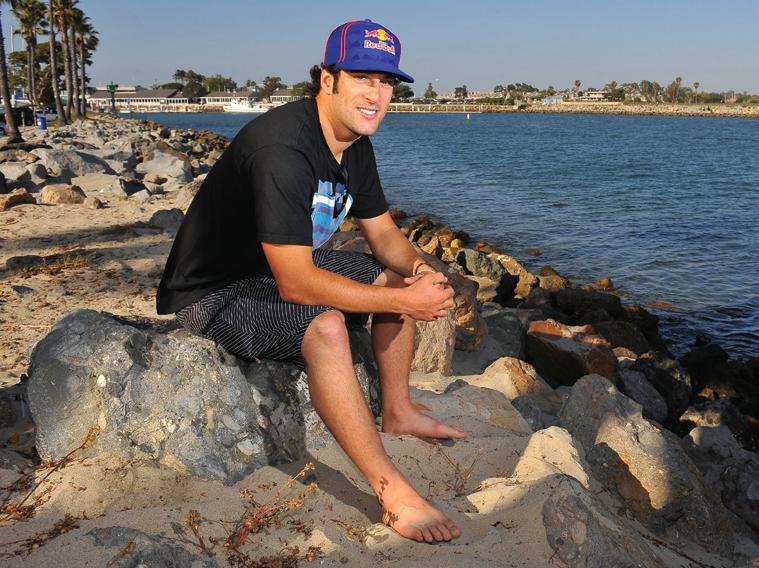
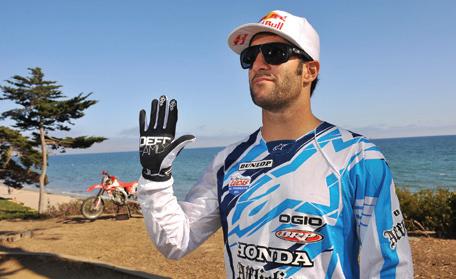
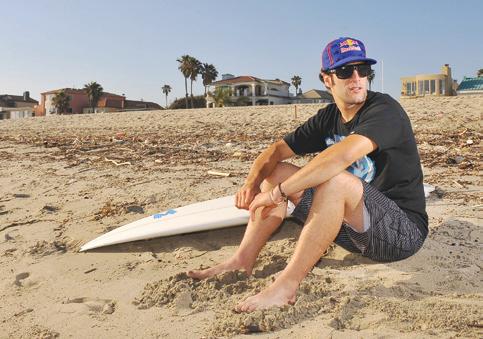
Whenyou grow up next to the Pacific Ocean, you spend a lot of time on the beach, and that is exactly what Kendall Norman did. He was born, raised and still lives in Santa Barbara, a quiet college town on California’s central coast. It’s probably most famous for being a second home to Hollywood heavyweights like Christopher Lloyd, Rob Lowe, Oprah, George Lucas and, yes, even a few surfers, like three-time world champion Tommy Curren and up-and-comer Bobby Martinez.
Now, Santa Barbara can add the reigning AMA Racing National Hare and Hound Champion to its rolls. Norman, who races for JCR Honda, took the 2010 title with five wins in the nine-round series, beating desert-racing vet David Kamo 234 championship points to 176.
Despite his abilities on a dirtbike, the 26-year-old Norman spent most of his youth near the water.
“I’ve surfed since I was in junior high,” Norman remembers. “But I’ve been going to the beach and skim boarding and Boogie boarding my whole life.”
As he got older, however, Norman often accompanied his father, Morris, into the desert to camp and ride dirtbikes. Morris raced quite a bit, mostly at AMA District 37 (Southern California) enduros and desert events, but also at International Six Days Enduro (ISDE) qualifiers as well as at the ISDE itself. He ultimately passed that passion onto his son.
UP TO SPEED
School, motocross and BMX got in the way of Norman’s early off-road career, but by the time he graduated from high school, he was firmly focused on desert racing. He quickly attracted the attention of American Honda’s Bruce Ogilvie (who was posthumously inducted into the Motorcycle Hall of Fame in 2010) and desert racing legend Johnny Campbell.
“Bruce Ogilvie has been a big influence on my life just because I was just a
little kid when I was introduced to the program and he signed me in,” Norman says. “I really looked at him like a god, almost. ‘Man, this guy’s larger than life!’ I had nothing but the most respect for him and kept my mouth shut when he talked.
“After my dad, [Ogilvie] was definitely a big influence in my life, as well as Johnny Campbell, because he was there from the beginning, too, when I started riding for Honda. The two of them gave me a lot of insight and a lot of wisdom
into what I’m doing.”
Indeed, Campbell and Ogilvie each offered Norman a slightly different perspective that resulted in a unique approach to the racing craft. It made him a smarter competitor, not just a faster one.
That success didn’t happen overnight, however, and Norman credits several others for their contributions.
“[Fellow racer] Quinn Cody has been the older brother I’ve never had,” Norman says. “He’s always there to lead me in the right direction and wants nothing but the best for me, too... And I’ve always got to thank my brother and mom for always being there, they’ve always been a big part of my life.”
NATIONAL CALIBER
It all gelled in 2010 when Norman competed for the first time in three different desert racing series—AMA District 37 events, the AMA Racing Kenda National Hare and Hound Championship Series and SCORE Desert Series—and won all three. What most outsiders don’t know, however, is that
Norman did not originally have the Nationals on his radar. It wasn’t until his first event, where he discovered he could run the pace of the country’s best desert racers, that Norman committed.
“Nationals were kind of off the radar as far as the team goes, but I went to the first round and after that I decided, ‘I’m going to race this series,’” Norman says. “I wasn’t contracted to do it, I didn’t have bonuses to do it, I didn’t have expenses to do it. After about three rounds into it, [JCR Honda] started helping me out more.
“I never expected my year to be as good as it was, but I did set a goal to do what I did. It feels really good to meet my goals,” he adds.
Norman says that a number of changes to his program contributed to his success in 2010.
“In the past, I’ve overtrained,” he says. “[You can] ride so much and travel so much and do so much practicing that you get burned out by the time the races come along.”
Now, Norman says he mixes up his program by doing more surfing and other activities to take his mind off riding and racing. For him, keeping his mind fresh for racing is just as important as keeping his body physically prepared.
“When you show up for a race and maybe you’re a little burned out and you’re not really feeling it, there’s nothing worse than that,” he says. “I do give myself that time to be prepared for the races, to get my training in and all my preparation with my gear, and organizing everything as far as what I need to do well.”
You can, of course, turn too far away from racing and training. That may have been somewhat evident in Norman’s slow start in 2010.
“January and February were tough for me because I was out of shape from the off-season,” he says. “After the [Baja] 1000 in 2009, I really didn’t ride that much and didn’t really focus on riding
“January and February were tough for me because I was out of shape from the off-season.”
at all. Especially after the 1000, you’re pretty burned out on riding.”
After getting back into the swing of things, Norman came out to the first race in the series, the Desert M/C’s event in Lucerne, Calif., and rode well, finishing fourth behind top riders Kurt Caselli, David Kamo and Destry Abbott.
“I was sick the week leading up to it and hadn’t been riding at all, so I got super tired, but all in all I had a lot of fun,” he says. “I really did have a good time. Even though I didn’t win, I was super-motivated to go out and do the best I could and start training hard and start getting some results.”
A training accident slowed Norman’s progress, but he recovered—after finishing what was a then-disappointing fifth in the second round—to come back and win two straight races.
Norman’s first win came at an uncharacteristically flooded event outside of El Centro, Calif. Norman says the race rated as one of his most difficult.
“After racing 33 times [in 2010], I’ve had so many different experiences and different things going on and just different situations—every race is completely different,” he says. “One that really stands out in my mind is the El
Centro mud race, which is one of my most memorable races.”
Of course, Norman’s performance—it was his first overall win of the series— also has something to do with the race sticking out in his mind.
“I’ve been racing for a lot of years now and got a lot of seconds, got a lot of thirds, and been in the lead quite a bit but never actually won a race,” Norman says.
So, when he got an early lead, Norman says he definitely felt the pressure to remain there.
“To get the holeshot in that race and then have the conditions as bad as they were—and not really have the best of luck down there in the past—I was like, ‘Man, this is going to be tough! This is going to be hard. They’re coming for me!’”
Norman adds that the longer he held the lead, the more his confidence crept in, and he stayed mentally focused on winning the race.
“In the past, I’ve overtrained. [You can] ride so much and travel so much and do so much practicing that you get burned out by the time the races come along.”
“I was really confident for some reason, and I just handled it well,” he says. “Even though I got lost a lot in the second loop, I was riding really well that day. It was a difficult day and a difficult race, and with the conditions as bad as they were, I wasn’t even sure if I was going to be able to finish. It was a tough one. But there were a lot of tough races. Every race is tough in its own way.”
RACING THERAPY
Norman’s 2010 season is even more remarkable considering he raced with the weight of personal tragedy on his mind. Despite losing two people close to him that year, he still found the strength to finish as an AMA Racing National Champion.
“With the passing of my aunt and then the passing of my good friend Rick Gill, it’s really tough to overcome that stuff, but it is life and they would want me out there doing what I love and having a good time,” he says.
For Norman, competition turned to
therapy and helped him cope.
“Riding is like an outlet of who I am and it is my way of expressing myself,” he says. “I just feel so free, and nothing else really matters when I’m riding.”
Norman says that one of the things he can count on is it’s always better on his bike.
“I love to ride,” he says. “I love riding all terrain. Some good trail riding back in the mountains [east of Santa Barbara] with perfect, wet conditions with about two inches of fresh grass on the trail, with one or two of my buddies, is probably the best scenario for a good day of riding—and it would have to be all day.
“That, to me, is the most fun, but I also like getting creative in the hills and finding different jumps,” he adds. “Catching air has always been fun. It’s been a thrill of mine ever since I was a little kid. I love doing that. Then also it’s speed, too. Some fast fire road action is super-fun to me also.”
Although California has a reputation as a motorcycling haven, the sheer size of the state means that doesn’t hold true for all locales. Norman has to drive three hours from his Santa Barbara home to get to the prime public riding areas in the desert that best mimic the courses where he races. For him, however, it’s worth it.
“It’s all I know because I’ve lived here my whole life and the drive’s always been the same,” he says. “It could be worse, but I think the pace of life and the quality of life here is really good. I don’t have too many distractions here and I’ve got a really good place to train and a really good trainer. My teammate Quinn [Cody], who’s been my friend forever, we train together, ride together and do a lot together.”
For Norman, it’s the perfect formula.
“It’s a really good situation here for me,” he says. “I’ve wanted to move quite a few times, like go to Temecula or whatnot to get closer to the riding. But you know what? That may not work for me. What I’m doing here is working. There are some really good tracks we have [around here], like Castillo Ranch and Zaca [MX], and there are some private [off-road] riding areas too that we’ve got.”
NEXT?
Norman says it will be tough to top his 2010.
“I’m really stoked with how things went,” he says. “Definitely, I want to try to defend my titles, first and foremost. My AMA National Hare and Hound title, I want to defend that. Then, for sure, Baja. Baja’s the biggest thing that we have going. Our program is a Baja program, so we have to be successful in Baja.”
Keeping things fresh, however, is important to Norman. It’s one aspect of his racing career that he’s always been able to rely on.
“Life always throws you curve balls,” he says. “Hopefully, I’ll get some new opportunities to venture off and do some other different types of racing like maybe Dakar. That’s something that’s on my radar and something that I want to do.”
Norman’s interest in Dakar is spurred by the Dakar 2011 ride that his teammate Quinn secured from Honda Europe.
“In five years, I still want to be successful in Baja, for sure,” Norman says. “And then, on top of that,
“I just feel so free, and nothing else really matters when I’m riding.”
possibly be racing Dakar full-time. Dakar’s something I want to do, and it’s something that’s a long-term goal of mine to go over there and do that and see how it is. I’ve done the Baja 1000, which is considered the gnarliest one-day off-road race, the most grueling point-to-point all-out race there is. But there’s also Dakar, which is the gnarliest multiple-day stage race, so I definitely want to give that a shot and see how it compares to Baja.”
Does Norman ever wish he were something other than a professional off-road motorcycle racer—maybe a pro surfer? Even now, he finds it difficult to see how far he’s come.
“When I was little, I never really looked at it like ‘I want to be a professional motorcycle racer.’ As a kid, I didn’t really know you could do that,” he says. “I knew those guys were really good at it and I just did it because I had fun at it and loved doing it. Even when I started riding for Honda [in 2004], I didn’t consider myself a professional, per se. I just loved to ride and tried to do the best I could at it and just have fun with it.”
Don’t sit on the sidelines. Engage in the fight for your freedoms. Go online to AmericanMotorcyclist.com > Rights > Issues and Legislation. Pick an issue that threatens your motorcycling rights. Take action by writing your representative. The AMA makes it easy to fight for, and protect, your freedoms.
While you’re online—continuing to help us fight for your freedom to ride—please renew your AMA membership. Visit AmericanMotorcyclist.com or call (800) AMA-JOIN to renew your AMA membership today.
Hall of Famer
MELBOURNE ‘MIKE’ WILSON
From his days as an expert dirt tracker to his role as a dealer and sponsor of notable racers, Melbourne “Mike” J. Wilson has made motorcycling a major part of his life. Today, Mike, along with his wife, Margaret (herself inducted into the Hall of Fame in 2004), continues to serve as a tireless ambassador of the sport and proponent for preserving the history and heritage of motorcycling.
Born in 1920 in Rice Lake, Wis., Wilson started racing as a novice in 1939, but his racing career was put aside when he was called to active duty, serving as a fighter pilot during World War II.
In 1950, Mike and Margaret opened Wilson’s Motorcycle Sales, a HarleyDavidson and, later, a Honda dealership in Cedar Rapids, Iowa.
Mike competed as an expert-licensed dirt-track racer, winning the Iowa TT State
Dirt-Tracker And Businessman
Championship in 1956. He was the last racer to enter the Peoria (Ill.) TT aboard a 74-cubic-inch Harley-Davidson in 1958.
While running the motorcycle dealership, Mike and Margaret were active supporters of a number of local and national motorcycling associations. They founded the Corn State Riders Motorcycle Club, and have been active supporters of the AMA and Motor Maids of America.
After 25 years of running Wilson’s Motorcycle Sales, Mike and Margaret turned even more of their attention to promoting and preserving the heritage of motorcycling. Mike and Margaret both serve on the Board of Directors of the Motorcycle Hall of Fame, and are among the Hall of Fame’s principal benefactors. They commissioned the beautiful bronze sculpture “Glory Days” that graces the Hall of Fame’s display area and inspired the Hall of Fame’s official logo.
They have toured extensively over the years. In 1996, the Wilsons rode through 48 states and 10 Canadian provinces, with Mike on his Honda Gold Wing and Margaret on her Harley.
Mike Wilson was inducted into the Motorcycle Hall of Fame in 2006.
HALL OF FAME BOARD MEMBER PROFILE
Art More
Born: Mankato, Minn., Feb. 11, 1940.
First motorcycle ride: I was 43 in 1973 and rode a 1981 DT Yamaha in the Arizona desert.
Motorcycling experience: I rode with my family for a few years and then started riding family enduros in 1975. After becoming the district enduro steward in 1985, I started racing desert events. I also raced the AMA Racing National Hare and Hound Championship Series, Old Timers Motocross series and several Baja 1000s.
Why I ride: I ride and race because I enjoy the feel of the bike in the various terrains and the competitive aspect of being chased or chasing someone.
Current bike: KTM 450 EXC. I can trail ride, dual sport and race this bike.
Best bike ever: It’s always the one I’m racing now. Except for my BMW 95 GSPD Classic that I ride on the street and some off-road. It is just plain fun.
AMA Member since: 1977.
Why I’m an American Motorcycle Heritage Foundation (AMHF) Board member: I’m one of three AMA Board members on the AMHF Board. It’s important we recognize the important people who have advanced motorcycling.
The AMHF raises funds for the Hall of Fame. Learn more, and find out how you can contribute, at MotorcycleMuseum.org.
From The Pacific Coast Highway And The Dragon To The Cherohala Skyway And The Lolo Pass, AMA Members Share Their Favorite Roads
When it comes to the best places in the country to ride motorcycles, no group of riders is more knowledgeable than the members of the American Motorcyclist Association.
Nobody puts in more miles, samples more asphalt or rides more roads. So when American Motorcyclist magazine wanted to find the best roads in the country, we knew exactly where to turn: AMA members.
Using our newly redesigned website at AmericanMotorcyclist.com, we asked AMA members to nominate their favorite roads. Then we created a master list and asked you to vote for the best. Nearly 100 roads made the ballot, and we offer up the results of the voting with the top 15 roads, as chosen by AMA members.
Some of these may be familiar. Some you’ve likely never heard of. But in the end, they all have one thing in common: They’re the best roads in the country, as chosen by you.
15|Washington Route 129 and Oregon Route 3, Clarkston, Wash., to Enterprise, Ore.
Why it’s great: Running north from Enterprise, Ore., to Clarkston, Wash., in the eastern parts of those states, Route 129 strings together switchbacks, part of the Snake River, plateaus and views of the Wallowa and Blue Mountains. A stop for a sandwich at Bogann’s Store, right where the route crosses the Grande Ronde River, is practically required.
“Curves and elevation changes are out of this world, great vantage points, minimal traffic and good road surface. Just the best ride ever.”— Charlie Leininger
Our take: Even better, on the north end, it hooks up with the Columbia River Gorge, and the roads along it—even the interstate highway stretches—offer up views that look like amazing murals.
14|Ohio Route 170, Calcutta to Poland
Why it’s great: We know what you’re thinking, but you’re wrong. While much of Ohio is flat, a good portion of it includes Appalachian foothills. And Route 170, in the northeastern part of the state, is right in the thick of them.
Running through two counties next to the Pennsylvania border, Route 170 offers up plenty of twisties, a few switchbacks and an intense ride you didn’t
think you could find in the Midwest—all between two international-sounding cities.
Comments: “Clean road. Consists of mostly sweepers and a few hairpins. The only downside is that it gets crowded during the early spring for some reason. This road gives you a Tail of the Dragon feel.”—Bill Berger
“Awesome curves, but be careful. If the yellow road sign says 15, try 15.”—Susan Newman
Our take: Ohio 170 is a super-great road, made even better by a number of incredible rides nearby, including Ohio Route 164, from Lisbon to Leesville, that can be as technical and twisty as any in the country.
11. Natchez Trace Parkway
Submitted by Bettena Jones, photo by Sebrie Images
14. Ohio Rt. 170 Submitted by Bill Berger, photo by Christopher Perry
you don’t know what you’re missing. Lassen Peak is pretty incredible.”—Jeff York
“It’s 140 miles of twisty bliss between Fortuna and Red Bluff.”—Chris Daniels
Our take: Northern California is one of the greatest places to ride a motorcycle anywhere on the planet. Remote little towns, laid-back attitude, and, in the case of the heart of California Route 36, windswept volcanic landscapes are the norm. The feel is more like Oregon than Southern California. It’s hard to believe you’re only a short ride from big cities like Sacramento and San Francisco.
7|Cherohala Skyway, North Carolina and Tennessee
infamous Deal’s Gap, the lower section of the Blue Ridge Parkway, numerous other extraordinary roads and the area’s general hospitality towards motorcyclists, this road becomes my favorite road in my favorite riding playground.”—Rick Scott
“This road has it all. Beautiful vistas, great sweeping curves, outstanding elevation changes, and no side roads. It is the perfect motorcycle road!”—Rodney Bryant
curves. If you don’t like it one way, you can come back the other way and see what you missed. From St. Mary’s Lake to Lake McDonald. It’s just a nice cruise.”—Neal Emrick
Our take: With ridiculous amounts of snow that have taken out pretty much every protective road barrier along the route, this is one scenic road that demands every bit of your attention—and makes it a true must-ride.
Why it’s great: If Colorado Route 550 is known as the Million Dollar Highway, the Cherohala Skyway could be considered the 100 Million Dollar Highway, given how much it cost to build. This 43-mile route runs from Tellico Plains, Tenn., to Robbinsville, N.C. Vistas, overlooks, switchbacks and scenic pullouts abound along its 4,000 feet of elevation gain to its high point more than a mile up.
Comments: “Fantastic views, good pavement, decent speed limit. The curves are not as tight as they are on nearby U.S. 129, so it’s a more relaxing ride. Nice and cool in the summer.”—Troy Jackson
“This is a well-kept mountain road that winds up to almost 5,400 feet with unbeatable views. This alone makes it one of my favorite motorcycling roads, but when combined with its close proximity to the
“This mile-high ride provides incredible views of unspoiled Tennessee wilderness with wonderful sweeping curves and is pleasant break from the heat in the summertime.”— Ellen Flanagan
Our take: Follow the advice above and combine the Cherohala Skyway with nearby U.S. 129 (Road No. 3 on this list) and you can do a 150-mile day that rivals anything east of the Mississippi. Be sure to stop and get some boiled peanuts or apple cider (depending on what time of year you’re riding) at one of the many roadside stands.
6
|Going to the Sun Road, Glacier National Park, Montana
Why it’s great: Built in 1932 as the only road through the heart of Glacier National Park in Montana, the Going to the Sun Road stretches for 53 miles and crosses the Continental Divide at Logan Pass. Another road that’s almost always closed in winter, the asphalt over the 6,646-foot Logan Pass can see more than 80 feet of snow in the colder months. But from June through December, it’s one of the best ride’s you’ll find.
Comments: “Exceptional beauty and grandeur.”—Thomas Culbertson
“First of all, it is breathtaking, then the
5|California Highway 1, Pacific Coast Highway
Why it’s great: We’re pretty sure there’s a law somewhere that says you can’t do a “Best Road” list without including the Pacific Coast Highway, and this 655-mile road should be a must-do for every motorcyclist
5. California Hwy 1 Submitted by Marck Aguilar
7. Cherohala Skyway Submitted by Rodney Bryant
7. Cherohala Skyway
7. Cherohala Skyway
in the country. Stretching from Dana Point in Orange County to near Leggett in Mendocino County, the road offers achingly beautiful views of the Pacific Ocean, dramatic, cliffhugging curves and throwback small towns, especially in Northern California.
Comments: “Hundreds of miles of gorgeous coastal scenery, curves that seem to go on endlessly followed by brief straight portions, and unforgettable small towns. Even the urban portions are amazing.”—Mark Janes
“Twisty, curvy, edge-of-the-landmass road, well paved, with periodic hill slides. Gorgeous view of the great Pacific Ocean.”—Marck Aguliar
“Beautiful sweeping curves, unbelievable scenery. Beautiful ocean views, blended with mountains. Basically, the area from Santa
Barbara to San Francisco is amazing.”—Don Porter
Our take: If you can only ride one road in California, this is the one. From the urban sprawl of the Los Angeles area to the laidback cool of Big Sur, across the Golden Gate Bridge and north to areas so remote you’d swear they shouldn’t exist in California, it’s worth the ride. Be prepared for any kind of weather, including cold and fog, even in the height of summer. It really is a different place.
4|Highway 550, from Ouray to Durango, Colo.
Why it’s great: They don’t call the heart of this stretch of U.S. 550 “The Million Dollar Highway” for nothing. Though so named for the precious metals that poured out of the region during its mining heyday, the moniker could just as easily describe the views. Sprinkled with sheer drop-offs, hairpin turns, a general lack of guardrails and a healthy dose of RV traffic, it makes for a challenging and rewarding ride.
Comments: “Wow! Waterfalls, rivers, hairpin turns, over and through 12,000-foot mountains, gorges and valleys. We started this ride in sunshine in Ouray, then got into rain, and, as the road reached the high altitudes, snow! At one point, my wife, as passenger, was reaching around to wipe my
faceshield so I could see. At Silverton, we ran to the ski shop to buy dry socks and better rain/snow gear.”—Terry Adreon
Our take: There are a dozen or so routes in Colorado that are amazing. This stretch is the best of the lot.
3|U.S. 129—“The Tail of the Dragon”—on the North Carolina-Tennessee border
Why it’s great: Probably the best-known curvy road in the East, U.S. 129 may run for more than 580 miles through four states, but for curve addicts, only the stretch that runs from one side of the Tennessee-North Carolina border to the other really matters. There are a claimed 318 curves in 11 miles on that stretch, and several businesses have cropped up in the area that cater specifically to the thousands of motorcyclists who make pilgrimages to the road.
Comments: “The speed limit may only be 35 mph, but with curves this tight, that’s all you really need to go.”—Bill Rawls
“The overlook at the top offers a great view of the Calderwood Lake on one side, and about a hundred motorcyclists at any given time parked on the other.”—Susan Ragus “Really, if you have to ask…”—Chuck Rowland
Our take: The Dragon really has grown
5. California Hwy 1
4. Colorado Hwy 550
Submitted by Terry Adreon
3. U.S. 129
Submitted by Ellen Flanagan
3. U.S. 129
Submitted by Doug Hagemann
from a locals-only hangout 10 or 15 years ago to one of the country’s premier motorcycling meccas. It can be a little crazy on weekends, and that’s part of the attraction for a lot of people. For the rest, it’s awesome on a Tuesday or Wednesday.
2|Blue Ridge Parkway, North Carolina
Why it’s great: No list of motorcycling roads is complete without this one, which connects to Skyline Drive in Virginia and runs for 570-plus miles of steep Eastern mountains, switchbacks, high valleys, quaint towns and controlled-access bliss. From its southern start at the Great Smoky Mountains National Park to its end near Virginia’s northern border, the road is one of the best— and longest—asphalt experiences available, with tons of local history thrown in. The Skyline Drive portion in Virginia has a 35-mph speed limit, and a daily use fee.
Comments: “Great scenery, long sweeping curves, and hundreds of uninterrupted miles with few intersections!”— Ahmet Akaydin
“It’s 469 miles of road heaven!”—Anthony Verno
“Miles of curvy road without a single stop sign or a traffic light.”—Susan Wilson
“As long as you are riding outside the peak summer season (a.k.a., RV ramble season), this road is quiet, remote in many spots, and offers some rowdy twists, even at the posted speed limits.”—Ken Bailey
“No commercial traffic, not much local traffic, beautiful scenery, sweeping curves, camping locations and lodges along the route.”—Troy Wehrle
“This is the motorcycling road in America due to its curves and scenery!”—Greg Wyland
Our take: The Blue Ridge Parkway is the most visited spot in the National Park system, and it can sometimes show it. It’s best enjoyed during the week while school is in session, when you can often ride all
morning and see only a handful of cars. Southern hospitality—and the occasional tourist-trap kind of stop—rule. Don’t miss the run up Mount Mitchell, the highest point east of the Mississippi.
1|Beartooth Highway, Montana and Wyoming
Why it’s great: This stretch of U.S. Highway 212 between Red Lodge and Cooke City, Mont., zigzags across the Montana-Wyoming border through a series of steep switchbacks, rising from about 5,000 feet to 10,947 feet at Beartooth Pass. It’s so high that it’s often closed in winter due to snow, but in the summer months offers the best motorcycling in the country.
Comments: “One of the most scenic rides in the United States, the route features breathtaking views of the Absaroka and
Beartooth Mountains, and open, high alpine plateaus dotted with countless glacial lakes, forested valleys, waterfalls and wildlife. The Beartooth All-American Road provides easy access to Yellowstone National Park at its northeast entrance. Pass elevation is 10,947 feet!”—Les Hedquist
“Great curves, spectacular scenery. Cooke City and Red Lodge are great western towns with their own flavor.”—Jeff Clark
“Awesome corners and low traffic, beautiful scenery and new pavement on a large portion of the Beartooth Pass make this ride better than ever!”—Darrell Riley
Our thoughts: Frankly, we thought that a few of the more well-known roads lower on this list would have taken the top spot, but that’s the beauty of asking for your opinions. Hats off to voters for making the Beartooth Highway the AMA 2011 No. 1 motorcycling road in America!
1. Beartooth Hwy Submitted by Jack Crossen
1. Beartooth Hwy
2. Blue Ridge Parkway photo by Pete terHorst
OFF-HIGHWAY RIDING UNDER FIRE NEW TACTICS TARGET
The AMA has been fighting for motorcyclists’ rights for half a century, and when it comes to anti-access forces and their efforts to close off land to motorcycles, we thought we had seen it all.
Behind-the-scenes, backroom deals with powerful legislators. Orchestrated news conferences. Political sleightof-hand. All of it aimed at shutting us out.
Interesting thing, though: When anti-access groups are forced to play by the rules—such as when they get their bills introduced in Congress to ban motorcycles and all-terrain vehicles (ATVs) from public land—they almost always lose.
That’s because their proposals don’t stand up to public scrutiny and debate.
Alarmingly, though, opponents of responsible off-highway
riding have added a new tactic to their arsenal: Throwing the rulebook out the window.
The latest attempts involve bypassing the people’s representatives in Congress entirely, so that there is absolutely no public debate. No debate means their plans don’t get scrutinized, and—they hope—don’t get derailed.
“This new tactic is particularly disturbing.” notes AMA President and CEO Rob Dingman. “The clear aim of antiaccess groups is to take land using autocratic administrative rulings—the same land these groups have repeatedly been unable to secure through the legislative process when the light of public scrutiny is shined on their schemes.
“This is a trend that must be stopped,” he stresses.
Off-highway riders are under attack. Opponents of responsible motorized recreation have stepped up their efforts to bar riders from all public land. And their new offensive marks a disturbing shift in tactics. The time to fight back is now.
Words by Bill Kresnak
A look at recent moves by anti-access forces, though, shows they’re moving on a fast timeline with a plan to shut you out of even more land:
• On Dec. 22, Interior Secretary Ken Salazar signed Secretarial Order 3310 creating a new land-use designation called “Wild Lands” that essentially allows officials to manage public land as if it had received a “Wilderness” land-use designation from Congress, but without requiring congressional approval. Motorized recreation is banned on Wilderness land.
• Leaked federal Bureau of Land Management (BLM) documents indicate the agency supports having the president unilaterally designate millions of acres as National Monuments, which could bar off-highway riding in those areas. Again, no congressional approval is needed.
• The Obama administration announced a “Great Outdoors” initiative that calls for following a “conservation” agenda for America’s public land—but they have not yet released any details.
• On Feb. 10, the U.S. Forest Service unveiled its proposed Forest Planning Rule to guide land managers in the 155 national forests nationwide. The proposed rule, among other things, lets managers decide what use should be allowed on the public land, and calls for “adaptive land management planning in the face of climate change and other stressors.”
• Anti-access forces continue to use the courts to try to shut down riding areas and trails.
• Opponents of off-highway riding haven’t given up their efforts to have Congress pass bills to bar off-highway vehicles (OHVs) from public land.
“It’s the perfect storm,” says AMA Senior Vice President for Government Relations Ed Moreland. “From Wild Lands to National Monuments to Forest Service land-management and travel-management plans, off-highway motorized recreationists must get involved to ensure that riding opportunities remain now and in the future.”
Wild Lands Policy Wildly Opposed
Immediately following Salazar’s announcement of the new Wild Lands policy, federal lawmakers, state legislators, and various governors labeled the proposal a “land grab” of epic proportions and a “blatant attempt” to usurp congressional authority.
And off-highway riders turned out in force at a public hearing in an effort to stop the land grab.
“The Interior Department is now able to suddenly create Wild Lands, which are effectively Wilderness, with no congressional approval whatsoever,” says Moreland, who immediately sent a letter to Salazar asking him to explain to AMA members whether the new Wild Lands land-use designation will block traditional routes of travel for offhighway riding.
Salazar’s Secretarial Order 3310, which created the new land-use designation called Wild Lands, essentially allows officials in the federal Bureau of Land Management (BLM) to manage public land as if it had received a “Wilderness” land-use designation from Congress, but without requiring congressional approval.
A Wilderness designation is one of the strictest forms of public land management. Once Congress designates an area as Wilderness, nearly all forms of nonpedestrian recreation are illegal.
Off-highway riders sporting “Stop the Land Grab” stickers produced by the AMA and distributed by the Utah Shared Access Alliance (USA-ALL) turned out in droves for a meeting of Utah’s Governor’s Council on Balanced Resources that featured BLM Director Bob Abbey trying to explain the new policy.
Governors who have come out against the Wild Lands policy include Wyoming’s Matthew Mead, Idaho’s C.L. “Butch” Otter and Utah’s Gary Herbert.
“This letter is to advise you that I firmly oppose Secretarial Order 3310, which was released just before the Christmas holiday and while many gubernatorial offices, like mine, were in a state of transition,” Mead wrote to Salazar on Jan. 17. “Though you will seek feedback from state BLM offices
prior to issuing final agency guidance, the opportunity for public input on the policy itself was never afforded.”
Mead went on to say that the people of Wyoming “want and deserve” a say in landmanagement policies that affect them.
Otter, meanwhile, called on Salazar to immediately withdraw the order.
“Without any state or public input, the Interior Department has circumvented the sovereignty of states and the will of the public by shifting from the normal planning processes of the Federal Lands Policy and Management Act (FLPMA) to one that places significant and sweeping authority in the hands of unelected federal bureaucrats,” Otter said in a letter to Salazar.
Congress Weighs In On Wild Lands
Reaction to Salazar’s order has had farreaching implications. Some members of Congress are threatening to revoke funding of the Bureau of Land Management over the issue since it controls about 264 million acres of public land nationwide, primarily in western states.
Under Salazar’s order, BLM officials will look at the land they manage and decide which land should be labeled “Lands With Wilderness Characteristics.” Once those decisions are made, the officials will go through a public land-use planning process before designating land as “Wild Lands.”
In a letter dated Jan. 28, Rep. Rob Bishop (R-Utah), the outgoing chairman of the Congressional Western Caucus, Sen. John Barrasso (R-Wyo.), chairman of the Senate Western Caucus, and 47 other House members and eight other senators asked Salazar to rescind the order.
“I am increasingly concerned by Secretary Salazar’s and the current administration’s ongoing efforts to circumvent Congress when it comes to creating new public lands policies,” Bishop said. “The DOI’s [Department of Interior’s] unilateral decisions regarding the management of our public lands and resources are detrimental to communities and businesses throughout the West.
“Their lack of regard for the impact this will
Photos by Jeff Kardas
have on local economies is unacceptable,” he continued. “It is time that they start taking into consideration the people that will be hurt by their decisions to operate in a vacuum, starting with the withdrawal of Secretarial Order 3310.”
Leaked Documents Reveal Land-Closing Agenda
Internal BLM documents that surfaced last year showed the agency has been talking about changing land-use designations on millions of acres of public land—a devastating blow to motorcyclists that could close between 35 and 140 million acres to responsible off-highway riding.
“The documents indicated that government officials may have a finely detailed plan to exclude Americans from accessing public lands despite the agency’s assertion that these documents are simply the result of ‘brainstorming sessions,’” Moreland says.
The internal memo states that some 130 million to 140 million acres—an area roughly the size of Colorado and Wyoming combined—are under consideration for special land-use designations that could further restrict off-highway riding. This is about half of the 264 million acres of public land managed by the BLM.
The document also states that about 35 million acres of the land the BLM manages “should be considered for a new and/or heightened conservation designation.”
The memo spells out a proposed plan for public land-use designations that could ban OHV riding by supporting certain congressional land-use designation proposals and having the president pull an end-run around Congress by unilaterally naming areas as national monuments “should the legislative process not prove fruitful.”
The memo suggests the agency use its internal land-use planning process to accomplish the bureau’s goals for managing “conservation values” when other efforts fail.
“This memo doesn’t read like a draft document,” Moreland says. “It reads like a playbook for shutting the public out of landuse decisions.”
America’s Great Outdoors Initiative
Even though the Obama administration announced its America’s Great Outdoors initiative on April 16, 2010, to date there have been no details released, Moreland says.
“The administration launched the initiative by simply saying that the overall goals were to ‘support innovative community-level efforts to conserve outdoor spaces and to reconnect Americans to the outdoors,” Moreland says. “Is this the beginning of a new push for the president to unilaterally designate national monuments around the nation that could shut out OHV recreation? At this point, we simply don’t know.”
What we do know, he says, is that the president directed the secretaries of the interior and of agriculture, the administrator of the Environmental Protection Agency and the chair of the Council on Environmental Quality to lead the initiative.
Battle Lines Are Drawn
“Opponents of responsible motorized recreation are getting very aggressive these days and are using every trick in the book to try to destroy our sport and lifestyle,” Moreland says. “It’s very important that every rider get involved, from writing to federal lawmakers pointing out the positive aspects of motorized recreation to attending Forest Service meetings where management plans are discussed.
“ We need to ensure the positive face of motorized recreation is seen,” he says.
THE AMA SUPPORTS WILDERNESS, AND LAND ACCESS
The AMA wholeheartedly supports appropriate Wilderness—as defined by the federal Wilderness Act of 1964—and backs the designation of land that meets that strict criteria, with congressional oversight and with broad public support.
The Wilderness Act states that to earn a Wilderness designation the land must be “an area where the earth and its community of life are untrammeled by man,” and that “generally appears to have been affected primarily by the forces of nature, with the imprint of man’s work substantially unnoticeable.”
“Pristine land should be protected,” says Ed Moreland, AMA senior vice president for government relations. “Public land that meets the strict criteria of the Wilderness Act deserves to be protected not only currently, but for future generations as well.
“But we have to be careful to protect the land for future generations and not from future generations,” Moreland says. “The way to do that is to use the designation process prudently.”
Moreland believes that public land that can’t meet the strict
Help Stop Bans by Making Your Voice Heard
There are lawmakers on both sides of the aisle who are on both sides of the issue when it comes to banning off-highway vehicles (OHVs) from public land.
All riders need to let their federal lawmakers know that they enjoy motorized recreation and want a full public debate, with citizen input, before OHVs can ever be exlcuded from public land, especially through a Wilderness land-use designation.
To act, you can contact your federal lawmakers by going to AmericanMotorcyclist.com> Rights> Issues & Legislation. There, you can find the names of the members of your congressional delegation as well as their addresses and telephone numbers, and you can let them know how you feel.
You can also send a pre-written letter from there.
Individuals can also sign up for the AMA Government Relations Department’s Action E-list to be notified by e-mail when their support is needed to make a difference on important issues, including at town hall meetings in their areas.
The AMA has a supply of “Stop the Land Grab” stickers that are a great way to show your opposition to unwarranted efforts by anti-access groups to restrict access to public land without ever saying a word.
To request a sticker, note your AMA number and send your request to:
American Motorcyclist Association Attn: STLG 13515 Yarmouth Drive Pickerington, OH 43147-8214
requirements of the Wilderness Act should be governed by another equally forceful federal law—the Multiple Use-Sustained Yield Act of 1960.
“That law encourages a wide variety of activities, provided that they take place in harmony with natural resource values,” he says.
The AMA supports responsible use of OHVs on public land that doesn’t meet the strict requirements to qualify as Wilderness. The AMA believes this access should be administered by professional land managers to meet the needs of participants, protect the land and promote responsible use.
“An important point for everyone to remember is that off-highway riders are environmentalists as well. We enjoy the outdoors, outdoor recreation, and care deeply for the land,” he says.
“We believe that reasoned, active management of public land is the best way to protect the land, and the best way for all Americans to be able to enjoy this treasured resource,” Moreland says.
6 1 3 5 1 1 2 7 1 4
1The battle for AMA Supercross supremacy continues this month with James Stewart, Ryan Villopoto, Ryan Dungey and the other AMA Supercross stars banging handlebars April 2 in Arlington, Texas; April 9 in St. Louis; April 16 in Seattle; and April 30 in Salt Lake City. Check out the full schedule on page 44.
2Join up with a bunch of your riding pals and head off to prison as part of the three-day Yuma Prison Run rally set for April 15-17 at the Yuma County Fairgrounds in Arizona. Hosted by the Norwalk Motorcycle Club, this event features various games, including the ever-popular Weenie Bite, an exhibition by the famed Victor McLaglen Motor Corps precision riding team, and, of course, a ride to the historic Yuma Territorial Prison that opened its cells on July 1, 1876. Info: YumaPrisonRun.org.
3The
action is fast and furious in the AMA Rekluse National Enduro Championship Series this year. Will Charlie Mullins repeat as champion? Or will Cory Buttrick, Russell Bobbitt, Michael Lafferty or another talented rider take the crown? Catch the action April 3 in Kalgary, Texas, and April 17 in West Point, Tenn. For the full schedule, see page 45.
4The Cen-Tex Road Riders Association is hosting its annual Spring Fling Road Run April 22-24 in Crawford, Texas. Info: Cen-TexRoadRiders.com.
5Enjoy a good mix of fire service roads and twisty rural blacktop that begins in east Tennessee and goes into western North Carolina as part of the Slate Creek Adventure Ride, set for April 16-17 in Bybee, Tenn. The event kicks off the AMA National Adventure Riding Series. For the full schedule, see page 47.
6Catch the supermen and superwomen of the AMA/NATC MotoTrials National Championship Series in action April 30 in Blackwell, Texas, as they ride their motorcycles over seemingly impassable terrain, including vertical climbs, boulder gardens and massive logs. Check out the schedule on page 46.
7The AMA Racing West Hare Scrambles Series is in full swing, with the next events set for April 2-3 in Lake Port, Calif., and April 16-17 in Shasta Lake, Calif. See the schedule starting on page 45.
COMING UP
It’s not too early to start planning riding routes to attend AMA Vintage Motorcycle Days this July 22-24 at the Mid-Ohio Sports Car Course in Lexington, Ohio. Get together with 45,000 of your newest friends for a rockin’ good time. More information is available at AMAVintageMotorcycleDays.com.
APR 16 (S): NEWAYGO: 2 DAY EVENT: BIG AIR MOTOCROSS, MATT POWERS; 7 AM; 1262 SPRING DRIVE; (231) 652-5225; BIGAIRMOTOCROSS.COM
APR 17 (S,Y): MIDLAND: POLKA DOTS M/C, TOM WOODS; 760 W BROOKS RD/8 MI N OF M46 OR 5 MI S OF M20; (989) 832-8284; POLKADOTSMC.NET
APR 24 (S,Y): MILLINGTON: BULLDOG RIDERS M/C, DOUG EVANS; 7 AM; 9113 BELSAY RD/I-75 BIRCH RUN RD/E TO BELSEY RD; (248) 284-5570; BULLDOGMX. COM
APR 30 (S,Y): BLOOMINGDALE: QUALIFIER; DUTCH SPORT PARK, DREK AKIN; 6:30 AM; 13566 CR 665/5 MI N OF GLENDALE (M43) ON CR665; (269) 683-4418; DUTCHSPORTPARKMX.COM
MINNESOTA
OBSERVED TRIALS
APR 17 (S,Y): THEILMAN: UPPER MIDWEST TRIALS ASSO, RYAN SCHMIDT; 9 AM; COUNTY RD 4 SOUTH TO WHIPPOORWILL CAMPGROUND; (507) 351-8879; UMTA.ORG
MOTOCROSS
APR 10 (S,Y): MAZEPPA: HURRICANE HILLS MX PARK I, JEFF GRAY; 6:30 AM; 43560 232ND AVE/6 MI E OF ZUMBROTA ON CR10 TO 232ND AVE; (507) 843-5154; HURRICANEHILLS.COM
APR 17 (S,Y): BROOK PARK: BERM BENDERS RACEWAY, KURT CASWELL; 6:30 AM; 2393 SHERWOOD ST/HWY 23E 8 MI TO SHERWOOD ST CR 68N; (320) 679-2582; BERMBENDERS.COM
APR 16 (S,Y): APR 17 (M,Y): PRENTISS: QUALIFIER; GOLDEN PINE RACEWAY, RANDY RECTOR; 6 AM; 103 GOLDEN PINE RD; (601) 506-8669; GOLDENPINERACEWAY.COM
MISSOURI
MOTOCROSS
APR 16 (S,T,Y): APR 17 (S,T,Y): KIRKSVILLE: QUALIFIER; THUNDER RIDGE MX PARK LLC, JOHN MALLOY; 6 AM; 26820 HWY 11 E/1/2 MI E OF TOWN ON N SIDE OF ROAD; (660) 626-5138; THUNDERRIDGE-MXPARK. COM
NEW JERSEY
ADVENTURE RIDE
APR 16 (R): HAMILTON: 2 DAY EVENT: CROSS COUNTRY CYCLE, INC., BRIAN; (732) 635-0094; CROSSCOUNTRYCYCLE.NET
POST OFFICE/SR 146 SE OF ZANESVILLE; (614) 2041438; ZANESVILLETRAILRIDERS.COM
HARE SCRAMBLES
APR 3 (S): ATHENS: ATHENS MOTORCYCLE CLUB,
RICHARD A CARSEY; 7 AM; 13426 DUTCH CREEK RD/ RT 550 TURN RIGHT ON DUTCHCREEK 1.6 MILES; (740) 592-6480; ATHENSMOTORCYCLECLUB.COM
APR 17 (S,T,Y): LOGAN: HOCKING VALLEY MOTORCYCLE, KEVIN M FLEAHMAN; 8 AM; 13121 JAKE TOM RD/US RT 33 EX SR 328/FOLLOW ARROWS; (740) 385-7695; HOCKINGVALLEYMC.COM
GRAND PRIX
APR 2 (S,T,Y): LITTLE HOCKING: WILDWOOD LAKE RACEWAY, BRENT WINDLAND; 8 AM; 2392 WILDWOOD LAKE RD/SR50/7 TO SR555 TO WELCH RD TO WILDWOOD LAKE; (740) 331-5163; WILDWOODLAKERACEWAY.COM
Sept. 24-25: Buck Meadows, Calif.: Yosemite Dual Sport Adventure, Family Off Road Adventures, Lawrence Borge; (209) 649-3633; FamilyOffRoadAdventures.com
April 1 - Nov. 30: AMA Right to Ride Grand Tour, AMA, Dave Hembroff, (614) 856-1900 ext. 1202, AmericanMotorcyclist.com/Roadride/Touring.com
April 1 - Nov. 30: Travel the USA with KOA, Midnight Riders MC, (765) 566-3807, Midnight-Riders-MC.com
GUEST COLUMN
JOINING THE FIGHT
An Open Letter To American Powersports Dealers By
Last month in these pages AMA President and CEO Rob Dingman laid out the origins of the AMA and its historically strong reliance on manufacturers, distributors and aftermarket companies. Rob went on to share his new perspective on those important partnerships as the AMA inexorably evolves into a more broad-based, memberfocused organization. He appealed to the industry to set aside any differences from its past and to close ranks in supporting the AMA’s efforts to protect motorcycling.
While Rob did not say it, I think he was also talking to those of us in the U.S. who call ourselves dealers. It is time for all of us to step up our support of the AMA. After all, our stake in the outcome of all of the issues that confront our business couldn’t be higher!
As dealers, we know that we live where the tire hits the pavement. We, and the customers we serve, may be far removed from Washington, D.C., (or even our state capitals) but the issues surrounding noise, access, lead content, etc., are very real to us. These issues are literally matters of life and death for our dealerships.
Being a dealer in Columbus, Ohio, has offered me a front-row seat over the years as I have watched the AMA go about its business. I have seen the phenomenal exhibits mounted by the Motorcycle Hall of Fame Museum. I have been in attendance as my boyhood idols have been inducted into the Hall of Fame. I have been at times educated, inspired and awed by things that happen at the AMA. And like many of you, I have seen some things that disappointed, even angered, me. But I have always been proud to carry an AMA Life Member card. For no matter what I might have taken issue with, I knew that the AMA was there to protect, document, preserve and enhance something I dearly love—motorcycling.
As a dealer, my mission is to sell. I say that proudly, as I know that nothing happens until someone sells something. Fortunately, I sell a lifestyle full of fun and friendship. I sell a ticket to the greatest community on Earth. So it’s an easy sale (notwithstanding the current potato famine!). But unless I sell, there is no need for anyone to engineer or design our products, or to build or market or transport or account for our products. I am fortunate to be able to sell professionally and consider the work we do to be noble.
There are enormous economic pressures confronting dealers. There are 499 fewer of us this year than last year (down from 5,927 to 5,428, according to the Motorcycle Industry Council). Despite those pressures, we come to work every day to grow and support the motorcycle community. Implicit in that is an imperative. We, as dealers, simply must recognize the vital role the AMA plays in support of our community. Each of us must have a membership card we proudly carry. Our best sales skills need to be employed in telling the AMA story—to our staffs and to our customers. We have the power to see to
Bob Althoff
it that the AMA joins the ranks of the most effective and powerful advocacy organizations in the U.S.
If ever there was a time when we need to circle the wagons to defend our community from those who would threaten it, that time is now! And so I ask my fellow dealers for their best efforts to make a difference. Join the AMA and take part in the new AMA Dealer Incentive Program. Tell those you influence why the AMA is important and deserving of their support.
Dealers have seen their role in our industry grow. It has grown due to the size of our investments, the creativity we have exhibited, and our passion for the lifestyle we champion. Now it is time for us to exhibit our strength in defense of the very thing that sustains us. The AMA needs our help. They need the financial resources we can provide.
As we support the AMA, we should hold the organization accountable. But the “chicken-or-egg” arguments must stop. It is time to lead. I have every confidence that if we harness our collective best efforts, we can make all the difference. What a better way to ensure that motorcycling remains strong for generations to come!
Bob Althoff owns three Harley-Davidson dealerships in Ohio. For more on the AMA Dealer Incentive Program, e-mail dealershipservices@ama-cycle.org.