Access Granted: Chris Horgan Keeps Trails Open
Teaching Kids The Love Of Riding















Photo

Access Granted: Chris Horgan Keeps Trails Open
Teaching Kids The Love Of Riding
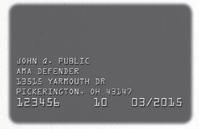
Watch this space for updates about your valuable benefi ts as an AMA member.
Your one-stop online source for all your motocross, Arenacross and ATV Motocross results from AMA-sanctioned events. Search by event, date, and even your name! http://results.americanmotorcyclist.com
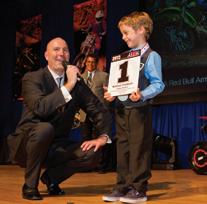
Only AMA members chase national No. 1 plates.
You’ll find everything you need—from races to rules to advice, at AmericanMotorcyclist. com > Racing. And as an AMA Competition Member, you’ll receive the competition edition of American Motorcyclist magazine.
Available at no extra charge if you choose to automatically renew your AMA membership.
• Coverage for bikes, cars, pickups, motorhomes and trailers (excluding utility trailers) registered to you, your spouse, and dependent children under the age of 24, living at home or away at college.
• Coverage in all 50 states and Canada.
• Towing up to 35 miles, with all dispatch and hook-up fees.
• Flat tire, lockout, battery and minormechanical assistance.
• Emergency fuel, oil, water, fluid delivery.
• No exclusions for older motorcycles.
• Toll-free assistance available 24/7/365.
• AMA Roadside Assistance pays first. No need to pay and wait for reimbursement.


American Motorcyclist
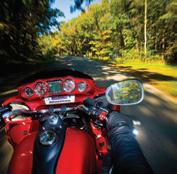
Each month, you receive the best magazine covering the motorcycle lifestyle with two versions to choose from: street or dirt.

AMA Roadside Assistance
The Best Deal In Towing Get peace of mind with AMA Roadside Assistance, which covers all your vehicles, as well as those of your family members living with you. Best of all, you can get this coverage at no additional charge. For details, call (800) 262-5646.
Save At Choice
Hotels, Motel 6, Red Roof Inn

At Choice hotels, save15 percent off the best available rates at participating Comfort Inn, Comfort Suites, Quality Inn, Sleep Inn, Clarion, MainStay Suites, Suburban Extended Stay, Rodeway Inn and Econo Lodge hotels. Use the Member Discount code #00947556.
Special discounts at Motel 6 are also available up to 10 percent off. Use the Member Discount code CP540176.
Plus, get a 20 percent discount off available rates at Red Roof Inn. For discounts, call (800) RED-ROOF and use the code VP+ 503343. You can also make reservations online at www.redroof.com. Just enter the code VP+ 503343 in the field labeled “VP+/ID#” when making reservations. The discount will be automatically applied.
Motorcycle Rentals
Arrive And Ride
EagleRider offers a 15 percent discount on Harley-Davidson, Honda, BMW and Polaris rentals and tours. Call (888) 900-9901 or book at AmericanMotorcyclist.com/Membership/EagleRider. aspx, using discount code AMA014.
Motorcycle Shipping
Ride Where You Want
In the United States, call Federal Companies, an agent for Specialized Transportation, Inc., at (877) 518-7376 for at least $60 off standard rates. For international shipments, call Motorcycle Express at (800) 245-8726. To get your discount, be sure to have your AMA number handy. Motorcycle Express also offers temporary international insurance.
Save Money When You Drive
Get up to 25 percent off prevailing rates at any Avis or Budget car rental agency. For Avis, enter discount code: D388100. For Budget, enter code: Z942000.
AMA Gear
Buy AMA Stuff Online
Find unique patches, pins, posters, T-shirts and books at AmericanMotorcyclist.com and at the AMA Motorcycle Hall of Fame in Pickerington, Ohio. Details at MotorcycleMuseum.org.


ActionStation/Bohn Body Armor
Save 10 percent on complete product line—plus bonus. Go to www.actionstation.com/ama/ and use coupon code AMAB4U at checkout. AMA Members also receive exclusive discounted pricing on the Bohn Bodyguard System at www.bohn-armorpants.com/ama/.

AIMExpo
Go to AIMExpoUSA.com and enter code AMA2013 to save on tickets.


AMA Motorcycle Hall Of Fame
Save $5 on admission to the AMA Motorcycle Hall of Fame at AMA headquarters in Pickerington, Ohio.
powered by
AMA/Sprocketlist
Online Classifieds
AMA members can place free ads in the AMA member classifieds at AMA.Sprocketlist.com or AmericanMotorcyclist.com > Shop > Classifieds.

AMA Supercross And AMA Arenacross Tickets
Save on advanced tickets; AMA members can get $5 off when they buy tickets online at Supercrossonline.com and use password AMA14. AMA members can get $5 off when they buy tickets online at Arenacross.com and use password AMA5OFF. Certain restrictions apply, call (800) 262-5646 for details.
BikeBandit.com
Get 10 percent off your order at BikeBandit.com by entering your AMA number at checkout.
Biker Rain Chaps
Save 25 percent. Visit www. bikerrainchaps.com/ama/ and use the code AMA-0214-VDAY at checkout to receive your discount.

Bill’s Sport Motor RV Parts & Accessories
Bill’s Sport Motor Offers up to 20 percent off to AMA Members. Order your RV Parts & Accessories catalog at www. BillsSportMotor.com or call Bill’s Sport Motor at (518) 487-9569 to order a catalog, or place an order and receive your discount.

ColorRite
25 years of quality OEM matched paint. Enter code AMA2014 at ColorRite.com to save 15%.

GiFOR USA/GOLDfren
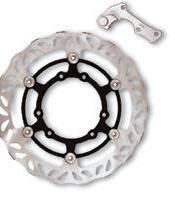
Save 15 percent on brake pads and 10 percent on brake discs at giforusa.com.
Heat Demon
AMA members receive 10% off all products. Visit www. heatdemon.com/AMA and use the code AMAheat14 at checkout to receive your discount.
International Motorcycle Shows
AMA members save on advanced adult one-day general admission. The promo code is “NAAMA1410” when you buy your tickets online from www. motorcycleshows.com.
LifeLock Identity Theft Protection
Get 30 free days and 10 percent off. Use promo code AMACYCLE at LifeLock.com or by calling (800) 543-3562.
MAD Maps
The best routes made easy. Save 20 percent. Use promo code AMATHXU at MADmaps.com.
Powertye Tie-Downs
Save 10 percent. Enter code TYES4AMA at checkout from www.powertye.com/ama.

Rider Magazine
Members pay only $19.99 for 2 years (24 issues) + 2 extra FREE issues. Visit the Members Only section on AmericanMotorcyclist.com for the discount link.
RoadRUNNER Motorcycle Touring & Travel magazine
RoadRUNNER Motorcycle Touring & Travel magazine offers a 20 percent subscription discount to AMA members. RoadRUNNER is the touring expert of North America, providing info on the best places to ride. AMA discount code is CRIAMA at www. roadrunner.travel/promo/ama.
Sam’s Club
AMA members save $10 or $25 on Sam’s Club membership with a special members-only coupon. Visit the Members Only section on AmericanMotorcyclist.com to download the coupon.
Schampa Cold-Weather Gear
Save 15 percent. Enter SCHAMA during checkout at Schampa.com.

Navigation Photo
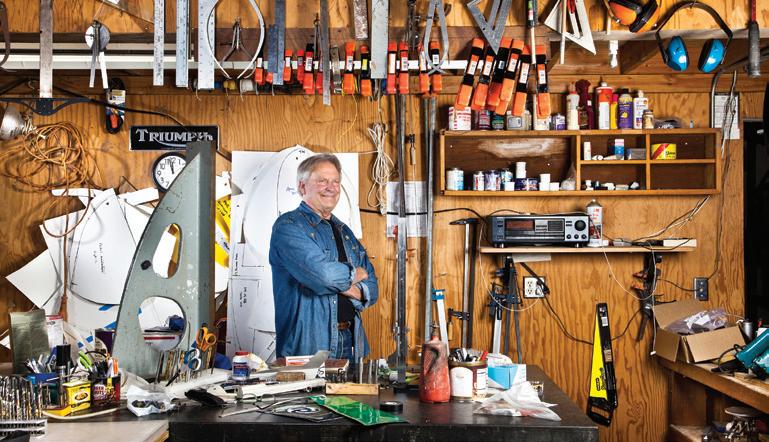
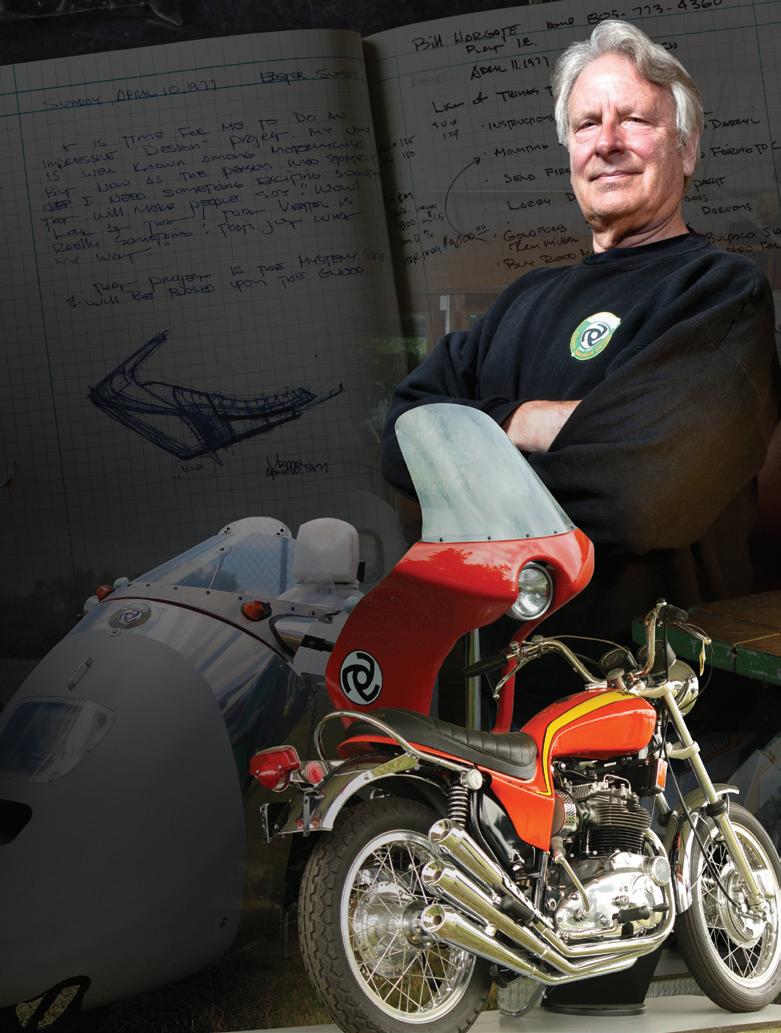
AMA Motorcycle Hall of Famer Craig Vetter is a man of many talents—and motorcycling experiences. You can hear about them from the man himself at this year’s Breakfast at Daytona, a fundraising event for the AMA Motorcycle Hall of Fame. Ticket information is on page 17 and at www.motorcyclemuseum.org.
by Brad Wenner
You write, we read.
10.
Champions among us.
Update on the Johnson Valley compromise, military motorcycle-related deaths decline, Chicago alderman wants crackdown on motorcycle noise, and more.
American Motorcyclist magazine (ISSN 0277-9358) is published monthly by the American Motorcyclist Association, 13515 Yarmouth Dr., Pickerington, OH 43147. Copyright by the American Motorcyclist Association/American Motorcyclist 2013. Printed in USA. Subscription rate: Magazine subscription fee of $19.95 covered in membership dues.
Postmaster: Mail form 3579 to 13515 Yarmouth Dr., Pickerington, OH 43147. Periodical postage paid at Pickerington, Ohio, and at additional mailing offices.
March 2014
Volume 68, Number 3
Published by the American Motorcyclist Association 13515 Yarmouth Dr. Pickerington, OH 43147 (800) AMA-JOIN (262-5646) www.americanmotorcyclist.com
The latest news, rides, interviews and more from the world of motorcycling.
A 1962 Yamaha Ascot Scrambler, Hall of Famer Randy Mamola and “Foo Rider.”
A single father in Southern Ohio wanted a riding buddy for his daughter. So, he bought a bike. Then another. Then another. Before long, he had spread the love of riding throughout his local community.
42.
What to do, where to go.
50.
Forty rides in forty years.

















COMMUNICATIONS
American Motorcyclist 13515 Yarmouth Drive Pickerington, OH 43147 (614) 856-1900 submissions@ama-cycle.org
Grant Parsons, Director of Communications
James Holter, Managing Editor
Jim Witters, Government Affairs Editor
Mark Lapid, Creative Director
Jeff Guciardo, Production Manager/Designer
Halley Miller, Graphic Designer
Kaitlyn Sesco, Marketing/Communications Specialist
Steve Gotoski, Advertising Director (Western States) (951) 566-5068, sgotoski@ama-cycle.org
Zach Stevens, National Sales Manager (626) 298-3854, zstevens@ama-cycle.org
All trademarks used herein (unless otherwise noted) are owned by the AMA and may only be used with the express, written permission of the AMA.
American Motorcyclist is the monthly publication of the American Motorcyclist Association, which represents motorcyclists nationwide. For information on AMA membership benefits, call (800) AMA-JOIN or visit AmericanMotorcyclist.com. Manuscripts, photos, drawings and other editorial contributions must be accompanied by return postage. No responsibility is assumed for loss or damage to unsolicited material. Copyright© American Motorcyclist Association, 2014.
EXECUTIVE
Rob Dingman, President/CEO
Rhonda Hixon, Administrative Asst./Litigation Manager
Bruce Moffat, Chief Financial Officer
Sen. Wayne Allard, Vice President, Government Relations
Bob Chaddock, Vice President, Administration
Jeff Massey, Vice President, Operations
Jim Williams, Vice President, Industry Relations & Business Member Programs
Rob Rasor, Director of International Affairs
ACCOUNTING
Dawn Becker, Accounting Manager
Melanie Hise, HR Assistant/Payroll Coordinator
Ed Madden, System Support Specialist
Peg Tuvell, Member Fulfillment Specialist
ADMINISTRATIVE SERVICES
Sean Maher, Director
AMHF/MOTORCYCLE HALL OF FAME
Jordan Brannan, Museum Admissions and Collections Assistant
Connie Fleming, Manager of Events and AMHF Operations
Beth Owen, Receptionist/Donor Relations Specialist
Paula Schremser, Program Specialist
Katy Wood, Collections Manager
AMA RACING/ORGANIZER SERVICES
Kip Bigelow, Amateur MX Manager
Joe Bromley, District Relations Manager
Jacki Burris, Organizer Services Coordinator
Jane Caston, Racing Coordinator
Lana Cox, Administrative Assistant
Kevin Crowther, Director SX & Pro Racing Relations
Bill Cumbow, Director of Special Projects
Sandi Dunphy, Road Riding Coordinator
Dave Hembroff, Road Riding Manager
AMA BOARD OF DIRECTORS
Contact any member of the AMA Board of Directors at AmericanMotorcyclist.com/ about/board
Maggie McNally, Chair Albany, N.Y.
Russ Brenan, Vice Chair Irvine, Calif.
Ken Ford, Assistant Treasurer Bartow, Fla.
Perry King, Executive Committee Member Northern California
John Ulrich, Executive Committee Member
Lake Elsinore, Calif.
Sean Hilbert, Hillsdale, Mich.
Scott Miller, Milwaukee, Wis.
Art More, Sun City West, Ariz.
Stan Simpson, Cibolo, Texas
Jim Viverito, Chicago, Ill. (800) AMA-JOIN (262-5646) AmericanMotorcyclist.com
AMA RACING/ORGANIZER SERVICES (continued)
Alex Hunter, MX Operational Coordinator
Tamra Jones, Racing Coordinator
D’Andra Myers, Organizer Services Coordinator
Ken Saillant, Track Racing Manager
Cherie Schlatter, Organizer Services Manager
Serena Van Dyke, Organizer Services Coordinator
Chuck Weir, Off Road Racing Manager
Conrad Young, Timing & Scoring Manager
DISTRIBUTION/FACILITIES SERVICES
John Bricker, Mailroom Manager
Heida Drake, Copy Center Operator
Bill Frasch, Mailroom Clerk
GOVERNMENT RELATIONS
Marie Esselstein, Government Affairs Assistant
Danielle Fowles, Grassroots Coordinator
Nick Haris, Western States Representative
Sean Hutson, Legislative Assistant
Sharon Long, Legislative Coordinator
Rick Podliska, Deputy Director
Steve Salisbury, Government Affairs Manager - Off-Highway
Imre Szauter, Government Affairs Manager - On-Highway
INFORMATION TECHNOLOGY
Rob Baughman, Network Administrator
John Boker, Developer
Dave Coleman, Network Architect
Amy Hyman, Senior Programmer/Analyst
Bill Miller, Enterprise Architect
MEMBER SERVICES/DATA ENTRY
Lori Cavucci, Member Services Representative
Deb D’Andrea, Member Services Representative
Linda Hembroff, Member Services Representative
Darcel Higgins, Member Services Manager
Kimberly Jude, Member Services Representative
Tiffany Pound, Member Services Representative
Jessica Robinson, Member Services Representative
Angela Warren, Member Services Representative









John Van Stry’s letter in the January issue concerning his reluctance to use his tax dollars for electric vehicle subsidies is a common opinion today.
Send your letters (and a high-resolution photo) to submissions@ama-cycle.org; or mail to 13515 Yarmouth Drive, Pickerington, OH 43147.

Subsidies are a subject worth examining, but to make sense of it we would have to include why the government today heavily subsidizes milk, ethanol and oil, bread, hamburger, on and on, even to our election funding and its tax write offs.
As for the electric motorcycle, I am a potential customer because I cannot operate a clutch lever for very long any more. Blame that on 30 years of squeezing the clutch lever on an iron barrel Sportster.
William Miller Portland, Ore.
I just read with delight the January Letter of the Month about headlights on motorcycles (“Enlightened Perspective”). I want to applaud you for printing such life-saving information.
I am currently the city engineer for the City of Omaha in charge of all transportation-related activities and have been a traffic engineer for the last 25 years. After reading the thousands of accident reports I’ve had to review in my career, I can attest that part of the reason people so often “don’t see us” is because of that single headlight.
Did you know that Union Pacific Railroad uses three headlights on their trains because they noticed a measurable difference in crossing crashes when one of their engines was equipped with multiple headlights? Think about that: On a vehicle as large as a locomotive, additional headlights have reduced the frequency of accidents at crossings. Think how it could help us out.
Very simply, the expanding of the headlight pattern from one to two or three as vehicles get closer tells the observer at what rate it is approaching. As drivers, we are creatures of habit and simply can’t tell with a quick glance how far away a vehicle with one point of light is.
I am also a Motorcycle Safety Foundation instructor, own four motorcycles and ride three of them on the street. I have multiple headlights on all three. With the advent of modern LED lights, [it’s] easy to put aftermarket running lights almost anywhere on the bike. They are small, bright and don’t use enough additional electricity to have to worry about modifying our charging systems. There is simply
no reason not to do it. I have some mounted up on my handguards on my motard and streetfighter. They look fantastic and make the bike appear so much larger in dim light conditions. I always have them on.
Let’s spread the news and make the streets safer for us!
On another note, my busy life had me fall behind on my reading and I recently noticed that my monthly AMA magazines had piled up for the last nine months. It was frustrating getting up to speed, as the current events I was reading from nine months back were already acted on, so I had missed my opportunity to get involved. So, I read four magazines a week for the last two to three weeks and now want to know if you can print the magazine weekly as I’m more hooked than ever. I have never been more proud to be an AMA Life Member. Thanks for all you do!
Todd Pfitzer Life Member
Omaha, Neb.
VISION QUEST
I really enjoyed reading “Riding Into
Sunlight” in the “Ask the MSF” column in the January 2014 issue. I have a solution to that problem, taught to me by a wonderful racer/buddy named Chip Mead (sadly, he’s gone now, but not forgotten).
Chip once said to me, about a problem I was having driving in the 1989 IMSA Daytona 24 Hour race at night: “Forget about what you can’t see, and concentrate on what you can.” Even though the track was lit for night, the apexes in the infield were gone as far as I could tell, and at 120 miles an hour, that was a problem. When I went out next time in practice, I searched for what I could see, which was the outside of the track. I turned when it turned and—voila!—an apex.
Since then I have used his brilliant advice whenever I lose the vision I want to have. In sudden sunlight, it turns out there’s still lots of visual information, just not what you might choose. Just the calm that comes from knowing you will find something else to focus on let’s you relax and let in what you can see. Actually, that advice has become the mantra of my life, on a motorcycle or off. In every way in life, I “forget about what I can’t see, and concentrate on what I can.” I will be forever grateful to Chip for his wisdom.
Perry King AMA Board Member
TRAINING MATTERS
I am a new member of the AMA and really enjoy your articles and features in American Motorcyclist magazine. I have been riding for over 30 years. I don’t know why it took me so long to join the AMA, but I am glad I finally did. I really liked the Guest Column in your February 2014 issue by Justin Pennella. He makes many great points about all kinds of training and how important it is. I am also a Motorcycle Safety Foundation instructor and can relate to the satisfaction he feels when he sees his students gain skills and make progress. We need instructors like him who enjoy helping students learn better riding skills.
The other article in the same magazine, “Ask the MSF: Riding With ABS” was interesting also. I felt like they omitted one very important step while braking hard with ABS. The article does state that the rider “may feel a pulsation through the lever/pedal as the pressure relief valves cycle on and off.” What they didn’t add is that it is important to keep the pressure on the lever and pedal if you feel this pulsation. Many people who are not familiar with ABS may think something is wrong and release the lever or pedal. I

have witnessed people doing this in their vehicles not knowing that they should stay on the brakes until the vehicle stops.
Patricia (Patti) Blaskovic Cleveland, Ohio
Cost of freedom
I am responding to an article printed in the Nov. 22 issue of The Economist magazine concerning the cost to taxpayers of treating and rehabilitating head trauma cases resulting from helmetless motorcycle accidents. It is the elephant in the room. Distilled down to its essence, I believe the government entities at all levels from village to federal will allow us all to
fit mufflers to our machines. I can live with that. How about the rest of you?
Peter Van Deusen Life Member Cobleskill, N.Y.
taCkling sound
I just read your recent article on sound regulations (February 2014) and the possible future changes.
One thing that struck me was a lack of real world policy. When the rubber meets the road, how will these regulations get enforced? With a tape measure and a protractor at the side of the road? Your tachometer or mine?
Two simple solutions:
• Laboratory test results by the manufacturers in a controlled environment should be required by the EPA for certification. Without certification, the product is not legal for use on the street. Certification results in a conformance label or stamp readily legible for law enforcement. I believe this is currently the EPA policy.
Cruise down the open scenic highways of Daytona Beach and meet up with thousands of riders in the birthplace of speed for Bike Week 2014. Be here for 10 days of non-stop entertainment including:
• Live music
• Races, bike shows and displays
• Food, great scenic rides and plenty more So, come play a little harder at the World’s Largest Motorcycle Event® Seize the day. Better yet...


7 - 16, 2014
enforced to include a dbA rating at a given distance—a sliding scale for distance to dbA. Radar and Lidar can be modified to take a sound reading. The speed detection equipment is already calculating distance. Give the public a standard sound rating at a given distance. The courts will be happy because, like the speed reading, there is little room for discussion.
A lone rider on a given stretch of road is either in sound and speed compliance or he is not. If speed is the issue, he may be subject to additional penalty for sound and vice-versa. No sound compliance label? Same deal. No questions...
Fran Yetso Sunnyvale, Calif.
Thanks for the note, Fran. Unfortunately, many outcomes from the sound roundtable were not grounded in fairness or objectivity, despite objections from the AMA and our partners. We will continue to monitor legislative developments and advocate strongly for motorcyclists’



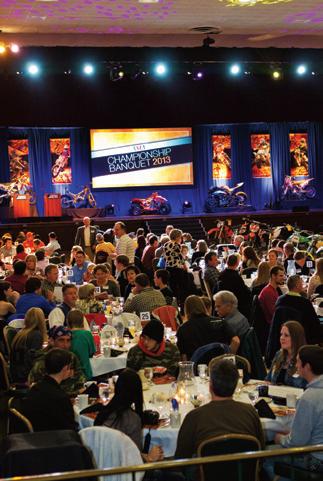
As this issue was being put to bed, we had the honor of welcoming many of America’s most successful amateur racers to the 2013 AMA Championship Banquet. The annual gala event is where we celebrate the seasons of those who excelled in AMA-sanctioned motorcycle and all-terrain vehicle competition the previous year. On Jan. 18, riders from all disciplines sanctioned by the AMA came to Columbus, Ohio, to receive their AMA national No. 1 plates and championship medals.
The AMA Championship Banquet is more than a celebration of speed, endurance and skill. The best competitors stand at the top of the podium because they posses both superior athletic ability as well as humility, dedication and desire to be the best.
This is what makes participating in AMA racing events so signifi cant. The AMA represents the gold standard of amateur motorcycle competition in America. Racing in an AMAsanctioned event means the rules are fair, the rules are the same no matter where you go, you compete with others who are at your skill level, you have opportunities to advance, and every eff ort is made to ensure a safe racing environment.
Of course, this wasn’t built overnight. Our current racers, and the hundreds of thousands of AMA racers who came before them, are the reason that AMA amateur racing has achieved the status it enjoys today. Since 1924, racers of all backgrounds and skill levels have competed in AMA-sanctioned events and have contributed to the collective wisdom that has shaped our sport.
One way those contributions manifest themselves is in AMA Congress. AMA Congress is the elected body that writes the rules in the AMA Amateur Competition Rulebook. They ensure that the rules put in place are consistent, fair and logical across all disciplines.
Another powerful quality of AMA-sanctioned competition was also on full display at the AMA Championship Banquet. The event isn’t just about competitive success. It’s also a celebration of family, good sportsmanship, mutual respect and responsibility.
It’s that last characteristic, responsibility, that is growing ever more important in our sport. We have seen over the decades, and we continue to see today, that if we aren’t responsible, then we fi nd our favorite pastime at risk. In fact, if the AMA did not exist—or have the enduring support of many of our members—I truly doubt motorcycle racing in America would be possible.
The importance of that responsibility is refl ected right there in our slogan: Rights, Riding and Racing.
Of these three, Rights is the most important thing that we do. If we do not fi ght for our right to ride and race motorcycles, that freedom will go away. There are many people and organizations that want to shut down your local racetrack. They want to stop
you and your family from riding on trails in our national forests. Some even want to stop you from riding on your own property.
Some people don’t understand that our sport is a family sport—that it is made up of moms, dads, brothers and sisters enjoying clean, safe fun. Others just think they know what’s best for you and want to tell you what you can and cannot do. Others argue that motorcycles and all-terrain vehicles damage the environment.
Of course, we know that responsibly ridden off -highway vehicles cause no measurable environmental damage and represent a legitimate and viable way to enjoy, explore and travel across our public lands.
This is why one of the best ways we can protect our sport is to always ride and race responsibly, as well as encourage others to do the same.
Our champions would not be where they are—accepting their AMA No. 1 plates in front of hundreds of their peers—if they did not carry themselves responsibly. They do that every time they prepare themselves and their bike for practice or competition. They do that by respecting and following the rules in the AMA Amateur Competition Rulebook.
Even when they are not racing, true champions approach motorcycling in the same way. They are responsible when they ride recreationally, as well as when they are off a bike. The more non-motorcyclists we can win over, the more of them will be on our side when those who hate motorcycles try to take our freedoms away.
As an AMA member, you never ride or race alone. There are hundreds of thousands of AMA members who have your back. They love riding as much as you do. They are committed to improving the sport for today, and saving it for the enjoyment of future generations. Along with all of them, you protect your freedom to ride and race simply by being an AMA member.
Thank you for your support.
Rob Dingman is the president and CEO of the AMA.

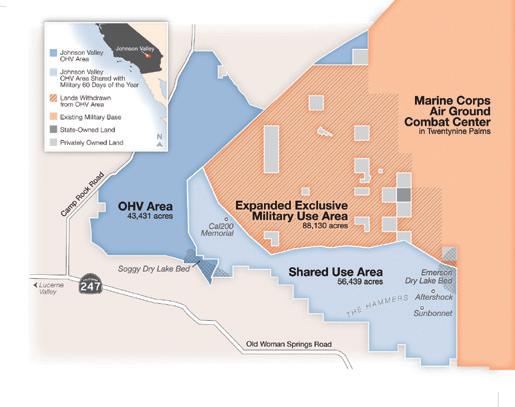
While military encroachment will restrict off-highway vehicle access to a portion of the Johnson Valley OHV Recreation Area, a significant section has been saved for OHV use, thanks to language included in the National Defense Authorization Act for Fiscal Year 2014 that President Obama signed into law on Dec. 26.
Although land was transferred to the military to meet the training requirements of the U.S. Marine Corps, roughly 100,000 acres were saved for OHV recreation and, in a significant move, the OHV area was defined by federal law in a way that protects it from any further incursion.
U.S. Rep. Paul Cook (R-Calif.), a retired USMC colonel, introduced the amendment that protects the interests of the OHV community in Johnson Valley. Cook’s amendment accomplishes three goals: It ensures the safety of the residents in the Johnson Valley area, which is just east of the San Bernardino Mountains near Los Angeles; it provides an adequate training area for the military personnel stationed at the Marine Corps Air Ground Combat Center in Twentynine Palms; it codifies permanent OHV access to tens of thousands of acres.


The victory for OHV riders is significant not only because it preserves off-highway riding in the most popular areas but also because of the difficulty in getting federal lawmakers to deny military requests in this post-9/11 era.
Initial proposals from the military would
New Study Pegs Enthusiast
Spending At $990 Million
Motorized recreational enthusiasts spent $990 million related to motorized recreation in Colorado during the 2012-13 riding season, according to a report done by The Louis Berger Group of Denver.
The group, which has expertise in economic development, submitted the report to the Trails Preservation Alliance of Colorado Springs, Colo., a group dedicated to preserving motorized, singletrack trail riding.
Wayne Allard, AMA vice president for government relations who is also a former U.S. senator and U.S. representative from Colorado, says the report shows the value
have restricted OHV access to just 30,000 acres. The Cook amendment preserves access to 100,000 acres. Included in the amendment that protects riding is the entire “Hammers” area, both the front and back side. Spooners, Aftershock, Sunbonnet, the Riffle Monument, and the Cal200 Memorial (The Rockpile) are also located within the preserved OHV area.
The majority of the Fry Mountains and full access to Soggy Dry Lake Bed are also guaranteed for OHV use, as well as access to Emerson Dry Lake Bed.
The Johnson Valley OHV Recreation Area will continue to be controlled by the
of motorized recreation in Colorado and serves as an example to other areas.
“Colorado offers just one example of the great economic benefits of responsible motorized recreation,” Allard says. “The Hatfield-McCoy Trails in West Virginia are another great example of motorized recreation boosting the local economy.”
In the report, The Louis Berger Group states that almost 150,000 resident households likely participated in some sort of motorized recreation in the 201213 season in Colorado. Another 36,000 non-residents traveled to Colorado to participate in motorized recreation.
“During 2012-13, Louis Berger estimated that motorized recreational enthusiasts spent more than $602 million while taking trips using their motorized vehicle for recreational purposes,” the report says. “On a household basis, residents spent on average $109 to
U.S. Bureau of Land Management. Initial proposals gave the Marines control over a shared-use portion of the area, with live fire allowed. Now, Marine use of that shared-used area is limited to 60 days of military training a year, and dud-producing ordinance will be prohibited.
“Without the Cook amendment, there was a very real possibility of further restrictions on access due to a future Wilderness designation or federal renewable energy project, together with the likelihood that the BLM would change their land-use management plan to restrict or eliminate OHV access use,” says Wayne Allard, AMA vice president for government relations.
“It was the strong leadership and exceptional ability of Rep. Cook to work with the Natural Resources Committee SOURCE:
$137 per day trip and $441 to $679 per overnight trip.”
Amounts for non-residential households were even higher, amounting to $131 to $197 per day trip and $926 to $1,660 per overnight trip. More than 90 percent of these expenditures were during the summer OHV recreational season.
The report notes that households also spent money on new vehicles, maintenance, repairs, accessories, storage and miscellaneous items associated with their vehicles.
“Louis Berger estimated that motorized recreational enthusiasts spent more than $387.6 million annually on various items to support and enhance their experiences in Colorado, including $133 million in new vehicle purchases,” the report says.
and Armed Services Committees in the U.S. House and Senate that protected the popular off-highway area in Johnson Valley,” Allard says.
Of even greater significance is that the Johnson Valley Off-Highway Vehicle Recreation Area is the first federal landuse designation for off-highway use and becomes a precedent for future motorized recreation.
The AMA joined with the California Motorized Recreation Council, a non-profit represented in Washington, D.C., by The Livingston Group, to work with Cook to develop the amendment that preserves access to the Johnson Valley OHV riding area.
CMRC members and partners include the Off-Road Business Association, California Association of 4-Wheel Drive Clubs, California Off-Road Vehicle Association, American Sand Association, California-Nevada Snowmobile Association, AMA District 36 (Northern California, Northwestern Nevada), AMA District 37 Off-Road (Southern California), The Partnership for Johnson Valley and countless individuals and businesses. The Specialty Equipment Market Association, the Motorcycle Industry Council and Americans for Responsible Recreational Access also provided valuable support.
The U.S. Navy’s/Marine Corps’ original proposal to take over vast acreage in the Johnson Valley area, if left unchallenged, would have eliminated the majority of public access year round to the Johnson Valley OffHighway Vehicle Riding Area and resulted in the end of most major recreational and competition events in the area.
In addition, without intervention, local economies that depend on OHV and recreational tourism would have been devastated.

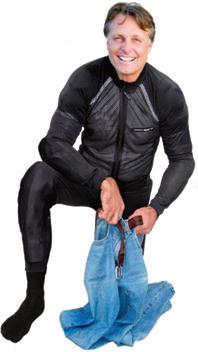
Th ere ’ s noth ing be er than cruising with the guys on the weekend. Been doing the same for years and it never gets old - there’s always something going on or a place to go. And this is how we ride, jeans and denim jacket - unless it’s winter anyway. But now we wear this Bohn gear underneath. Yes it’s underneath! You can’t see it, and we can’t feel it.
I just feel happier when I have some protection these days, though I’m sure we’re not going to have a spill.

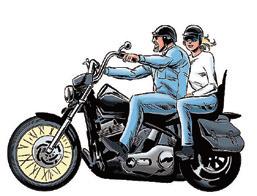





They com for them on, t great, and g knowing I have the protection under my jeans. Thanks so much.

Check it out - read their testimonials - that’s what I did. And they give you a 90 Day Trial too. Riding seems much more stressfull these days and with this gear we can Relax and Ride, with Peace of Mind!





...your product has made a believer out of me and the select few who ..saw my kamikaze ight through the air. I can only.imagine the numerous injuries that luckily avoided by wearing the armor.




...the road li ered with gravel...I walked away without a scratch, the bike was not so lucky. I just wanted to say thank you and let you know that your product saved me a lot of pain



The number of motorcycle-related fatalities is declining, but bike crashes continue to be a leading cause of death among service members, according to a new study.
In 2012, there were 184 motor vehiclerelated deaths among service members, according to the study published in the Medical Surveillance Monthly Report, a
A Marine practices hard braking during a Total Control Advanced Riding Clinic Dec. 12 at the Marine Corps Base Hawaii.
peer-reviewed journal on illnesses and injuries affecting service members from the Armed Forces Health Surveillance Center. Deaths in 2012 declined nearly 57.8 percent from a peak of 436 in 2004.
For the study period of Jan. 1, 1999 to Dec. 31, 2012, slightly more than 25 percent of all motor vehicle-related deaths were due to motorcycle accidents among active and reserve service members. As a result of a decline in non-motorcycle-related deaths, motorcycle-related deaths have become an increasingly higher proportion of all fatal motor vehicle accidents.
“The annual number of deaths related to motor vehicle accidents among members of the U.S. Armed Forces declined in 2012 to their lowest level during a 14-year surveillance period,” says Army Col. William Corr, deputy director of the AFHSC’s division of epidemiology and analysis. “However, during that period, deaths from motorcycle accidents have not diminished.”
The study included those who served as members of the active or reserve components of the U.S. Armed Forces at any time during the surveillance period.
For some time, the Department of Defense has required service members who intend to own a motorcycle to participate in motorcycle safety courses.



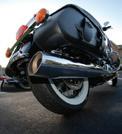
Chicago Alderman Brendan Reilly (42nd Ward) on Dec. 11 introduced a proposal to crack down on excessive motorcycle sound that could result in fines of up to $1,000.
“Unfortunately, [the] current Municipal Ordinance limits the Chicago Police Department’s efforts in enforcing the motorcycle noise regulations as it requires coordination and cooperation with the Illinois State Police to issue citations,” Alderman Reilly says. His proposed amendment would allow the Chicago Police Department to enforce the law with a simple visual inspection of the muffler. The amendment also would increase the fines for operating a motorcycle without a muffler from $100 to $1,000 per incident.







Anti-OHV Action May Be Taken Without Public Debate
In a letter to key members of Congress, the AMA late last year urged representatives to oppose any attempts by President Obama’s administration to unilaterally designate public land as national monuments without public debate.
“On Oct. 31, the U.S. Department of the Interior’s Secretary Sally Jewell spoke at the National Press Club and stated ‘there’s no question that if Congress doesn’t act, we will act,’ she said when asked if the president would use his authority under the Antiquities Act to designate national monuments,” wrote Wayne Allard, AMA vice president for government relations.
“This action will limit recreational opportunities on public lands and represents an overreach by the executive branch,” he wrote.
The letter was sent to Chairman Doc Hastings of the House Natural Resources Committee, Chairman Rob Bishop of the House Subcommittee on Public Lands and Environmental Protection, Ranking Member Lisa Murkowski of the Senate Committee on Energy and Natural Resources, and Ranking Member John Barrasso of the Senate Subcommittee on Public Lands and Forests.
The Antiquities Act of 1906 allows the president to declare national monuments.
The federal law was initially passed to protect Native American artifacts such as pottery from being taken from small tracts of federal land in the West.
But presidents haven’t interpreted the law to apply to small areas. President Clinton fueled uproar in 1996 when he
designated 1.9 million acres in southern Utah as the Grand Staircase-Escalante National Monument.
In 2006, President George Bush used the Antiquities Act to circumvent Congress and set aside 140,000 square miles of ocean and 10 islands and coral atolls in the northwestern Hawaiian Islands as a U.S. national monument.
National monuments don’t automatically ban off-highway vehicle use but a national monument designation makes it much easier to ban their use without input from the public.
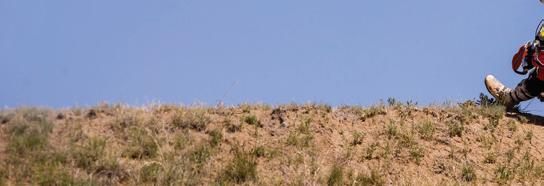



The U.S. Forest Service has opened the Springhill Motorcycle Trailhead at the Apalachicola National Forest. The forest, which is south of Tallahassee, spans 571,088 acres and features 111 miles of trails for off-highway vehicles. To get to the trailhead from Tallahassee, go south on Springhill Road from Capital Circle SW near the Tallahassee Regional Airport for about 3 miles. The trailhead entrance is on the right.
A federal judge has upheld regulations limiting off-highway vehicle use at the Tahoe National Forest. But lawyers representing recreational users have vowed to continue the effort to protect their riding rights on public lands. U.S. District Judge John Mendez denied a challenge brought by OHV recreationists against the travel management plan for the Tahoe National Forest, which is an 800,000-acre forest. The Pacific Legal Foundation had filed suit against the plan in July 2012, claiming it had illegally closed more than 800 miles of roads and trails enjoyed by the public for decades.
Gorham selectmen unanimously approved two motions that would open specific roads to all-terrain vehicle use year-round and a third motion to open all town roads during the Jericho ATV Festival Weekend on a trial basis. The votes were at a hearing in which a standing-roomonly crowd supported a proposal to allow ATVs to use the public roads in Gorham to access restaurants, motels and other businesses.
A new law allows motorcycle owners to mount their registration plates vertically if they pay an additional $20 fee and display special motorcycle registration plates featuring the identifying characters in a vertical alignment. The new law, created by House Bill 1060 originally introduced by Rep. Mark Keller (R-New Bloomfield), bill explicitly prohibits motorcycle registration plates with horizontal identifying characters from being mounted vertically.
Some 73 percent of motorcyclists in Michigan still wear helmets even though the state modified the motorcycle helmet law in 2012, according to a survey by the Wayne State University Transportation Group. The survey also indicates that sportbike riders are more likely to wear helmets. Women under 30 and over 60 are also more likely to wear helmets. To ride without a helmet in Michigan, a motorcyclist must be at least 21, have at least $20,000 in medical coverage and have a valid motorcycle license.
Montana has special motorcycle license plates called “Chrome For Kids” that raises funds for granting the wishes of critically ill children. The program began in 2008 and has raised more than $53,000. Thanks to the generosity of motorcyclists who chose to buy the Chrome For Kids plates, that money will go toward granting a wish for critically ill children in Montana. Charities receiving funds include the Montana Hope Project, Camp Make-a-Dream and MakeA-Wish Montana.
Virginia motorcyclists and others who use their vehicles only part of the year can now deactivate their license plates and cancel their insurance without turning in their plates, thanks to a new law that went into effect Jan. 1. Officials say citizens can deactivate and reactivate license plates online at www.dmvnow.com or by calling DMV at (804) 497-7100. To reactivate the plates, citizens must have no outstanding tax obligations on their motor vehicle, provide insurance information or pay the uninsured motor vehicle fee, and pay a $10 reactivation fee if the registration hasn’t expired.
Meanwhile, the Colonial Downs racetrack in New Kent County has apparently proven to be a good neighbor. The facility sparked a lot of opposition from area residents when it sought a conditional use permit to hold a motorcycle race last August. The permit was approved. When the track sought another permit for a race in August 2014, no one opposed it.

Whether it’s the Tanglewood Park in Forsyth County, N.C., parking near Jackson Square in New Orleans or at gated residential communities, AMA members alert the association about bike bans and wonder what to do about them.
Imre Szauter, AMA government affairs manager, says that while private property access is more difficult to secure, in the case of public property, such as Jackson Square or the French Quarter, more can be done to preserve riding freedoms.
“First, we can communicate our displeasure to the management,” he says.
“If a parking structure is involved, ask for an explanation of their policy. And send a carefully worded, written communication expressing your displeasure at having been treated unfairly.
“Second, don’t patronize the location,” he says. “As they say, money talks.”
Tips to try to end motorcycle bans at gated communities include:
• Find out exactly what form the rule takes, whether it’s a covenant, deed restriction, bylaw or regulation. Then find out specifically what it takes to change it.
• Educate fellow homeowners about the rule. Explain to them that it’s unfair to ban motorcycles. Tell them how far you have to push your legally licensed vehicle to get to the edge of your community so that you can go riding. Find out if other motorcyclists live in the community and will help with the effort.
• Work to alleviate any legitimate issues. If the bike ban was prompted by concerns about noise, propose a uniform vehicle sound rule to replace the motorcycle ban.
• Consider contacting the media to focus attention on the problem.
Community newspapers are often willing to publish stories, or at least letters to the editor, on such local issues. Send the letter to the editor of the community association newsletter as well.
• Run for the community association board and encourage other motorcyclists in the community to do the same. But don’t try to run as a one-issue candidate. Your neighbors have the right to know that you’re concerned about the greater wellbeing of the entire community.
• If you can’t make progress any other way, consider consulting a lawyer. In other cases, lawyers have been able to uncover legal precedents for striking down discriminatory rules. These precedents vary from state to state but they may give you some leverage in negotiating.

By Jim Kimball
Many things may come to your mind when you hear the name Carey Hart: privateer, Supermoto racer, freestyle motocross innovator, tattoo shop owner, husband of rock star Pink, parent, team owner. While the 38-year old has run his own AMA Supercross team for a few years, teaming up with Yoshimura Suzuki and AMA Motorcycle Hall of Famer Ricky Carmichael opens a new chapter in his career. We caught up with Hart at a publicity event in Mt. Pleasant, Mich., to talk about 2014.
AMERICAN MOTORCYCLIST: Carey, your career has taken many forms. Can you talk about the changes that have led you to become a team owner?
CAREY HART: Being a team owner is just something that I fell into. I feel that I had a pretty successful career with freestyle motocross, Supermoto and my Hart & Huntington tattoo shops, but I still needed to further evolve my passion for dirtbikes. I really got into Supercross as a way to promote my clothing business. So we got started in Supercross, and it just snowballed from there. We came into Supercross with a different mindset than many of the other teams. They all wanted to finish on the podium, but I wanted to win off the track. We created the pit party aspect of it, and it really got a lot of attention. Then it really just grew from there.
Has the involvement of the Yoshimura Factory Suzuki team taken it to another level?
Oh, for sure. At the beginning, we were definitely the black sheep of the pro teams. We had a dealership out of Florida helping us, but that was about it. We fought and clawed our way from the bottom of the sport. Ironically, that was why I quit racing Supercross back in 1999, because I wore baggy gear, and had tattoos and was frowned upon. Now here I am 15 years later and back in it.
We share everything with Yoshimura Suzuki, although this year we have taken a bit more initiative and have hired a lot of great people to work
with—and have become somewhat of a standalone team. Last year was definitely a rebirth for us, but not as bumpy as some people may have thought. We did what we always did. We set up shop with Yoshimura, tested bikes and went racing.
I’m sure it was a little bit of a nail biter for Yoshimura with us moving in, but now a year later we are working all together. We all have the same goal, which is to get Suzuki on the podium.
You have the same riders [Broc Tickle and Josh Hill] as last year, but there were rumors that you were going after several other elite riders.
There is no secret that we made an offer to Chad Reed. He was very serious about accepting the offer, too, but he wanted to maintain his own TwoTwo Motorsports team, which I can respect. There were a couple other guys that I’d like to leave nameless that we were very close to inking a deal with. It’s just that earlier in the season we did not have all our sponsors lined up, and I didn’t want to rush forward with anything, and not being able to back it up.
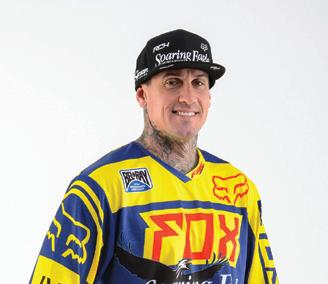
But getting back to our riders, Tickle and Hill, we feel really good about them. Both those guys can be easily consistent top-10 riders.
How is it to work with Ricky Carmichael, and how do you two share the team ownership responsibilities?
It’s amazing to work with Ricky. I’m trying to learn more of the technical

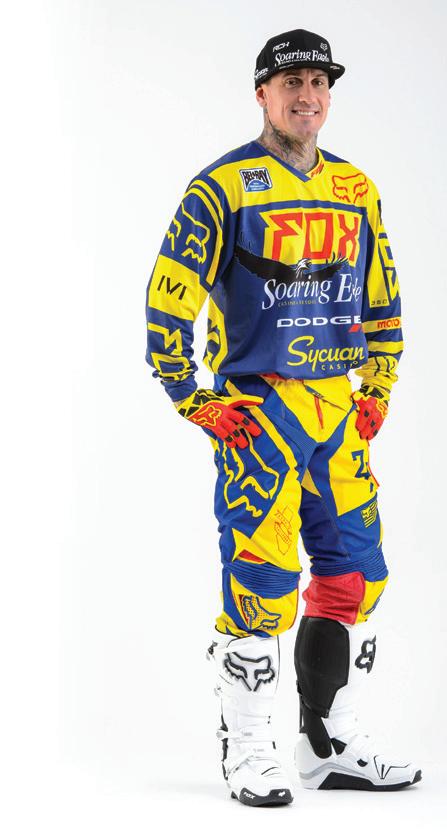
side, and he is trying to learn more of the sponsorship side. We both know what our strong points are, and we both lean on each other for advice and help. We are both extremely hands-on with the team. Neither of us is one of those guys who just slaps their name on something and says, “All right, we will see you at Anaheim 1.” Ricky has been especially hands-on with all the preseason testing and stuff.






Jim Witters Reporting On Rider Rights
The AMA welcomes a new staffer tasked with covering the issues that affect your freedom to ride and race motorcycles. New government affairs editor, Jim Witters, brings 30 years of journalism experience and a lifetime of motorcycle riding to the job.
Witters came to work in the AMA’s Pickerinton, Ohio, office on Jan. 6. He has a bachelor’s in Leadership and


Administration from the National Labor College in Silver Spring, Md.
As a journalist, Witters has covered motorcycle issues for the Daytona Beach News-Journal and served as its designated Bike Week and Biketoberfest reporter.
A longtime AMA member, Witters is a life member of Florida ABATE and is a past member of Pennsylvania ABATE and Delaware ABATE.
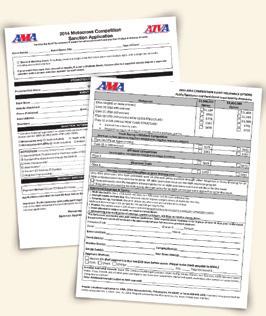
Download 2014 Sanctioning, Insurance Forms
If you haven’t submitted the paperwork for your 2014 AMA-sanctioned event, now is the time to do so. Clubs and promoters can access sanctioning and insurance forms on the AMA website at www.americanmotorcyclist.com > Clubs & Promoters > Resources & Forms.
The AMA has renewed with K&K Insurance as its preferred insurance provider. The insurance program features industry-leading event liability coverage options at great rates for AMA-chartered clubs and promoters.
- Remove, clean and reinstall multiple times.
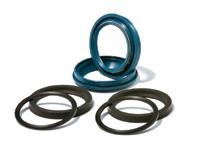
- Available in 16 sizes from 30mm to 52mm.
- Designed with a performance advanced material for smooth as silk feel.
- Will not suck air into forks.
- Cleaner oil.
“Planning well is the first step to success, and we’ve made it easy for clubs and promoters to get their sanction and insurance forms right off the AMA website,” says AMA Vice President of Operations Jeff Massey.
K&K Insurance offers high-quality base insurance coverage that meets all AMA-sanctioned event requirements, as well as an optional coverage plan that provides a higher level of coverage beyond the base level. Camping, setup and teardown coverages are included at no additional cost.
“The AMA is the premier motorcycling event sanctioning body because it provides organization, rules and logistical support that are unmatched,” says K&K Senior Vice President Matt Sackett. “K&K is proud to do our part to offer AMA organizers industry-leading coverage at great rates.”



















K&K Insurance has been recognized as a leading provider of sports, leisure and entertainment insurance products for 60 years. The company, headquartered in Fort Wayne, Ind., is one of the largest managing general underwriters in the United States. AMA-chartered clubs and promoters who need assistance with their paperwork for 2014 are encouraged to contact the association at (800) 262-5646. Ask for AMA Organizer Services.
New Weekend For Vintage Extravaganza: July 11-13
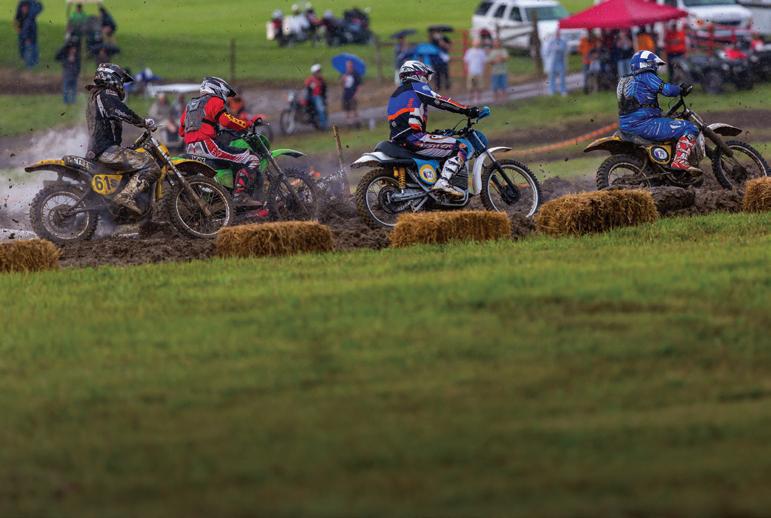
AMA Vintage Motorcycle Days, the country’s biggest celebration of vintage bikes and the people who love them, is moving up a weekend from the originally announced date. The new date is July 11-13.
AMA Vintage Motorcycle Days, held at Mid-Ohio Sports Car Course in
Lexington, Ohio, features bike shows, national championship vintage motorcycle racing, seminars by AMA Motorcycle Hall of Famers, the country’s biggest motorcycle swap meet, and more. The event is a fundraiser for the American Motorcycle Heritage Foundation, the 501(c)(3) whose job it is to raise money for the AMA Motorcycle Hall of Fame.
“Providing a date for AMA Vintage Motorcycle Days is never easy, given that it often can only be set after many other dominoes get lined up, including schedules for MotoGP racing in this country, World Superbike races here, and AMA Pro Racing events,” said
Jeff Massey, AMA vice president of operations. “Although it appeared the originally announced date was our only option, we worked with other groups to fi nd a new spot on the calendar for AMA Vintage Motorcycle Days that makes the most sense for the fans.”
The new date avoids a conflict with another vintage motorcycling event held in Wauseon, Ohio.
AMA members can purchase advance tickets to AMA Vintage Motorcycle Days at an exclusive discount. To purchase tickets, call (800) 262-5646.
For more information on the event, see www.amavintagemotorcycledays.com.








MSRP:




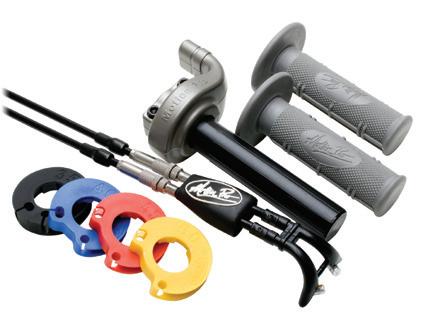
For decades, dirtbikes have come with different-rate throttles for different applications. Trail bikes would come with a longer-pull “enduro” throttle and motocross bikes would come quickopening throttles, some going from closed to wide open in just a quarter turn.
The rate of opening is determined by the size of the cam wheel, or the round, flat disk on the inner end of the throttle tube. The idea behind the Motion Pro Revolver throttle kit is straightforward: Perhaps the factory-installed cam doesn’t provide the best opening rate for you. The system allows riders to swap in smaller cams for slower throttle openings or larger cams for faster throttle openings.
When I received the Motion Pro Revolver throttle kit, I was a little concerned about installing it on my 2013 KTM 450XCF. My previous experience has been with carburetors, and I was still learning about the KTM’s fuel injection.
Simply put, my worries were unfounded. The installation was simple. I only had to remove the seat, radiator shrouds and tank, and that gave me complete access to route the cables to the fuel injection throttle body. In about 45 minutes I had the throttle kit installed and the bike running.
itself was more solid than the stock unit.
When I installed the largest cam, however, there was a big difference.
My previous bike was a 2009 YZ 450F, which had fairly aggressive power delivery. The stock XCF lacks a little power down low, so I was hoping the faster-opening cam would help with that. It did. Power came on much quicker, making the bike feel snappier. However, I did have to be much gentler with my throttle hand. It didn’t take much twisting to make things happen!
The kit comes with two additional cam wheels that fall in between the largest and smallest, giving you the ability to tune your bike according to your riding style or track conditions. Changing out the cams takes just a few minutes and all you need is an Allen wrench.
It’s also worth mentioning the grips that come with the kit. My hands blister easily. I typically run Renthal’s medium compound grips, which work well, but with this installation, I decided to run what came with the Revolver. Even a full day of riding didn’t result in one blister.
I recommend this kit. Not only does it offer performance tuning that riders of all levels can appreciate, but it’s well-built, easy to install and adjust and comes with some really sweet grips as a bonus.— Dean McNicol




Fine-tuning the cable tension is easy since the cables come with in-line adjusters, which is a great improvement over the stock cables. As the cables stretch over time, it will be nice to have that adjustability. And they look good too!


I started with the smallest diameter cam wheel, as it was closest to stock. I couldn’t detect a change in the throttle opening rate with this cam, as expected, but the overall feel of the throttle
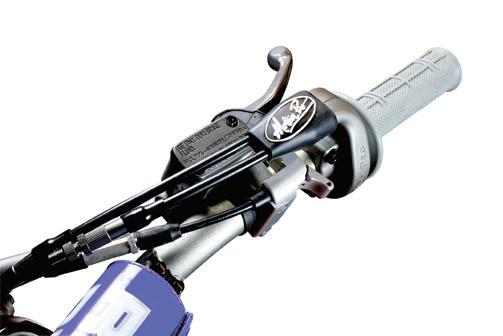
MSRP: $129.95-$149.95
Info: www.rkexcelamerica.com
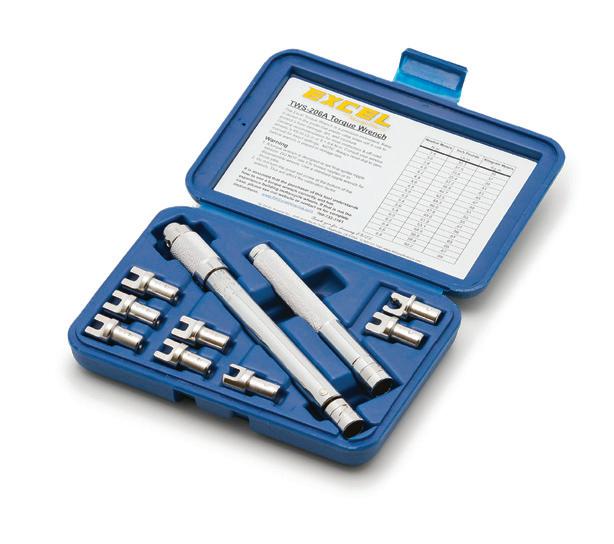
I have been using the Excel TWS-206 spoke torque wrench to build and service motorcycle wheels. It’s a high-quality kit that, in the right hands, can produce professional results. The tool comes well packaged in a compact plastic storage box. It includes not only the adjustable torque spoke wrench, but also a separate wrench to use while loosening spokes. This is helpful because the torque wrench itself should only be used for tightening to help maintain calibration. Also included as part of the set are eight of the most common size wrench heads, which fit a variety of spoke nipples. The kit does not include specific instructions regarding spoke torque, but rather some general guidelines that cover most common applications. Your owner’s manual will include the precise spoke torque recommendations for your bike.

I used this kit to help build and true several wheel sets, which were used in the last Baja 1000. Being able to accurately torque the spokes is a tremendous help in setting up the wheels. I have also used this wrench kit for regular maintenance and service on the wheels of multiple other bikes, both for on- and off-road use.

By Kelly Huffman
Spoke maintenance is often overlooked, yet very necessary on any motorcycle. It only takes a few minutes to check and adjust the spoke torque on a typical wheel. This helps prolong rim and tire life, and can prevent an accident caused by a broken spoke.
Overall, I am pleased with the build and function of the Excel spoke torque wrench. The tool is not inexpensive, but comes as part of a professionalgrade kit that is well designed. Any mechanic would be well served by adding it to their toolbox.— Kelly Huffman


We’ve all been there, wondering what a particular bike is worth, whether it’s already in our garage or is a prospective purchase in the AMA classifieds at ama.sprocketlist.com.
Now, the AMA Motorcycle Value Guide powered by Black Book lets you find out right from your smartphone.
The app is easy to use and is available for iOS and Android devices. It leverages the full power of the Black Book Motorcycle and Powersports Value Guide. You can find it in the iTunes App Store and Android Marketplace for $1.99.
The AMA Motorcycle Value Guide powered by Black Book includes comprehensive value information on

To download the AMA Motorcycle Value Guide powered by Black Book, search for it in the iTunes App Store or the Android Marketplace.
virtually all motorcycles, all-terrain vehicles, dirtbikes, scooters, personal watercraft, jet boats and snowmobiles produced since 1981. The guide, updated monthly, includes the current retail values, a condition-based trade-in value, as well as the original MSRP. Prices reported by the app are based on actual sales data reported to Black Book.








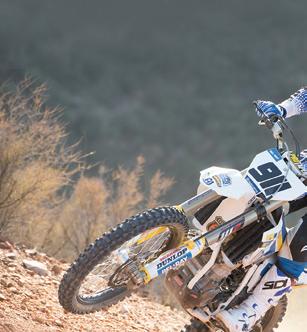
Less than one week into 2014, Husqvarna celebrated its first major North American victory since the brand forged a close partnership with KTM.
Jacob Argubright rode the all-new Husky FC 450 to the win at the AMA West Hare Scrambles Championship Series opener at Arizona Cycle Park in Buckeye, Ariz.


















Argubright opened up a near two-minute lead over the field by the time he reached the checkered flag on the grand prix-style course. He had also lapped all the way up to fifth place by the finish of the 2.5-hour race.
“I was pretty nervous for my first race with factory Husqvarna,” Argubright says. “The first couple laps didn’t go as I planned and then I finally loosened up. I feel like I really got used to my FC 450 in that race. It worked great all day.” Argubright also will contest the FMF/GPR AMA Hare & Hound National Championship Series for Husqvarna.
“I was pretty nervous for my first race with factory Husqvarna. The first couple laps didn’t go as I planned and then I finally loosened up. I feel like I really got used to my FC 450 in that race. It worked great all day.”


Racing Through The Past
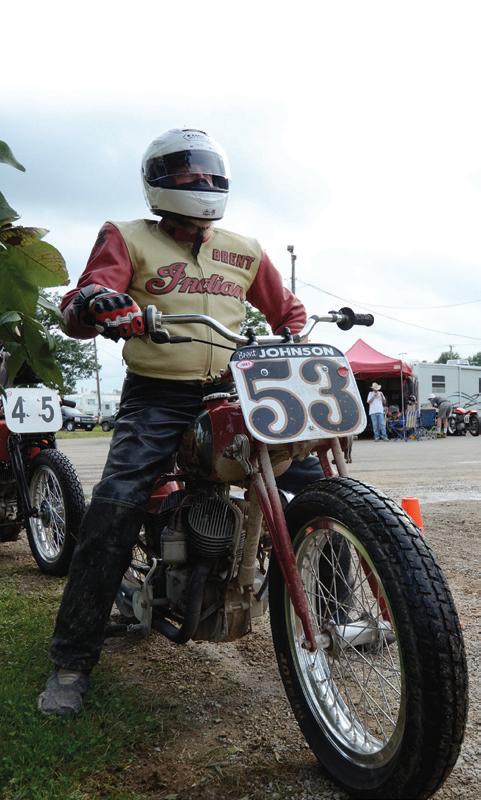
AMA dirt track racing is one of the country’s most storied motorsports, with a history dating to the early 20th century. Nowhere is that heritage more celebrated than on the flat ovals during AMA Vintage Dirt Track National Championship competition.
The 2014 AMA Vintage Dirt Track National Championship will begin March 8 in Savannah, Ga., when the first of 13 rounds gets underway.
“Motorcycle dirt-track racing is one of motorsports’ great historic disciplines, and the AMA is honored to support the vibrant community of vintage dirt trackers with national championship recognition,” says AMA Track Racing Manager Ken Saillant. “The AMA has a rich history in the sport, dating to the original factory Class-A racing in the 1920s and the Class-C production-based format that continues today. The motorcycles that helped write that history are amazing machines, and it’s thrilling to see many of them still on the track, competing for AMA national No. 1 plates.”
The AMA Vintage Dirt Track National Championship Series recognizes national champions in period-correct classes that reflect the rich history of AMA dirt-track competition.
The first three rounds of the 2014 AMA Vintage National Dirt Track Championship Series run in conjunction with the AMA-sanctioned amateur dirt-track program that has grown up around Daytona Bike Week.
Following Bike Week, the 13-round series travels through Illinois, North Carolina, New York, Ohio and Indiana before returning to New York for the Sept. 21 finale in Cuddebackville. Class rules and equipment regulations are available at www. americanmotorcyclist.com > National Championship Series > AMA Vintage Dirt Track National Championship Series. The full series schedule is on page 45.


























Brayton took the lead on the first lap, bringing Dungey and Barcia with him. Barcia was flying, and passed Dungey for second before tracking down Brayton. Barcia briefly took the lead, but Brayton aggressively, yet cleanly, moved back out front.

New blood has arrived in the premier class of AMA Supercross. KTM rider and 450SX class rookie Ken Roczen won the opening round in Anaheim, Calif., on Jan. 4. The following weekend in Phoenix, Ariz., JGR Yamaha’s Justin Brayton, whose best finish in 2013 was fifth, led most of the main event before finally succumbing to a relentless charge by defending AMA Supercross champion Ryan Villopoto, who rides for Monster Energy Kawasaki.
By now, the lead pack had tightened into a six-way battle involving Brayton, Dungey, Roczen, Barcia, Villopoto, and Stewart.











In Anaheim, in front of 45,050 fans, Roczen started just behind Villopoto, who claimed the holeshot, taking the lead when the Kawasaki rider crashed on the ninth lap.
Villopoto remounted in fifth, but not before TwoTwo Motorsports’ Chad Reed, Yoshimura Suzuki’s James Stewart and Red Bull KTM’s Ryan Dungey got between him and Roczen.
While many riders might have snapped under the pressure of having four past AMA Supercross champions threaten his lead, Roczen kept his cool. That proved critical on the 12th lap when Stewart, who had moved into second, crashed while attempting a pass for the lead through the whoops.
Roczen went on to win, followed by Dungey then Reed.
“This is insane,” said Roczen. “I got off to a good start and was holding on really tight. When there were four laps to go, I realized that I could win.”
Roczen crashed on Lap 7 while battling Barcia, while Villopoto was carving his way through the pack.
On Lap 13, Villopoto took the lead, but Brayton didn’t fade. The Yamaha rider made a final push on the last lap, but Villopoto held on for his first career AMA Supercross win in Phoenix. Dungey finished third.
“Justin was riding a hell of a race,” said Villopoto afterwards. “I have to give it to him, he made it tough.”
Brayton’s runner-up effort tied his career-best finish, which came in Toronto in 2012.
“This feels so good,” Brayton exclaimed. “The new Yamaha is unbelievable. We did our homework this year. It’s been a lot of hard work, but being up [on the podium] pays off. “






In Phoenix, Yoshimura Suzuki’s Jake Moss grabbed the holeshot with Brayton and Dungey in tow. Villopoto started in ninth.
Meanwhile, the AMA 250SX West Region Championship is featuring a budding rivalry between two-race winner Rockstar Energy Racing’s Jason Anderson and Lucas Oil Honda’s Cole Seely. Anderson won the first two main events of 2014 with a last-lap pass on Seely, who took second each time.










As the proud sponsor of the AMA Yamaha Super Ténéré National Adventure Touring Series, Yamaha is awarding one lucky member a new 2013 Super Ténéré! Riders participating in the series will also be automatically entered.













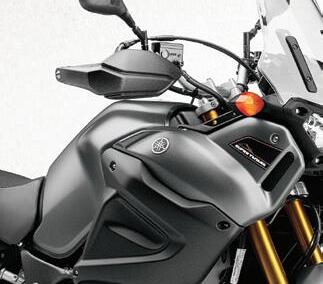






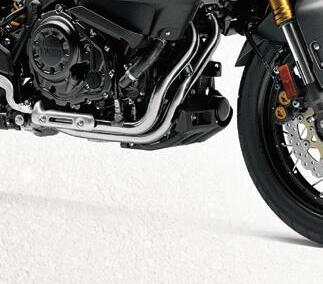





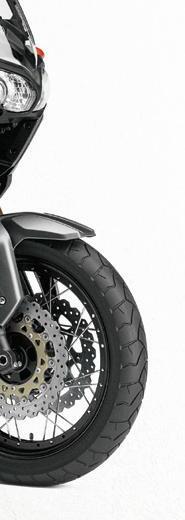
















High Adventure. No Hassle. The best routes, roads and twotrack, mapped by local experts. A great challenge with like-minded riders. A full weekend’s activities, with camping, campfires, food and prizes.
For more information visit AmericanMotorcyclist.com/Riding.
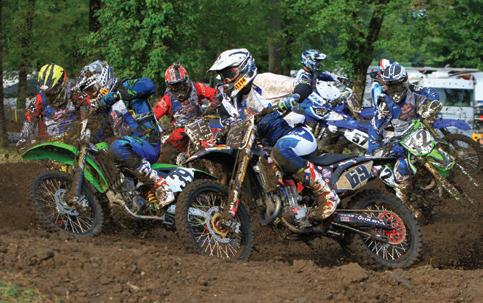
With a number of events at the country’s top tracks, the 2014 AMA Pro-Am Motocross schedule will provide a fitting proving ground for tomorrow’s pro motocross racers.
“Today’s top amateur motocrossers— and tomorrow’s best-qualified pros—can be found competing in AMA Pro-Am Motocross,” says AMA Motocross Manager Kip Bigelow. “The 2014 calendar is one of our most comprehensive ever, with more than 60 events at America’s best motocross tracks, giving these up-and-coming racers an opportunity to race for the points, purse money and contingency that will help them achieve their professional dreams.”
The 2014 AMA Pro-Am Motocross competition kicked off Dec. 29 with the Texas Winter Series. The season wraps up Nov. 30 in St. George, Utah, just after Florida’s Mini Olympics Nov. 23-29.
“The AMA Pro-Am racing schedule provides the quality events that are needed to determine a rider’s ability

and if they are ready to participate in the Lucas Oil Pro Motocross Championship,” says MX Sports Pro Racing Race Director Jeff Canfield.
AMA Pro-Am Motocross events are open to both professionally licensed and A-class amateur motocross racers. The events allow amateurs to gain experience on America’s top tracks and prepare for the fast pace and long motos featured at the pro level.
Pro-Am events feature two or three Pro-Am points-paying classes: 250 ProAm, 450 Pro-Am and Open Pro Sport. A rider must earn 75 Pro-Am points in one of the three Pro-Am classes to earn an AMA Pro Motocross endorsement on their professional competition license.
The 2014 AMA Pro-Am Motocross schedule is available on page 43. For more information, see www. americanmotorcyclist.com > Racing > AMA Pro-Am Motocross or email mxracing@ama-cycle.org.
Arrive, race, walk away—no air filters to clean, no bike to wash, no tires to change. If that sounds good to you, you might be interested in a new program offered by KR4 Performance, a new team chasing points in the AMA National Enduro Championship Series.
Participants in the program get full bike race prep, bike delivery to the race from the KR4 Performance facility, food on site, fuel support, on-site maintenance and a professional team atmosphere. The company offers both one-off and full-season programs.
In addition to the arrive-and-race program, KR4 will field two riders, Ian Blythe of Sedalia, Colo., who will contest the pro class on a KTM 350XCF and Jubal Brown who will race the Open A class on a Honda. Info: www.kr4performance.com
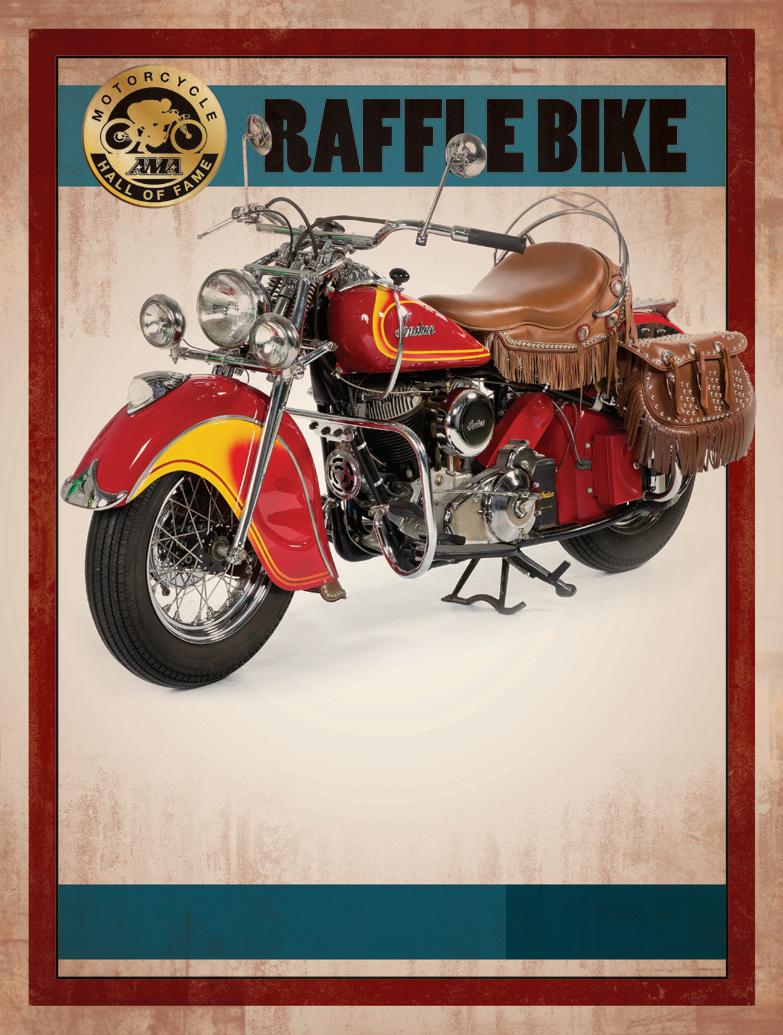
A Functional And Updated Norm McDonald Replica, Built To Race
the opportunity came to race in the revival, I just knew I had to do it.”
When the historic Catalina Grand Prix was revived in 2010, plenty of people scrambled to be part of an event that would once again bring motorcycle racing to the roads of Catalina Island, off the coast of Southern California.
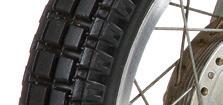
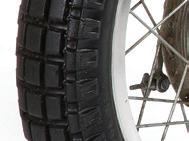
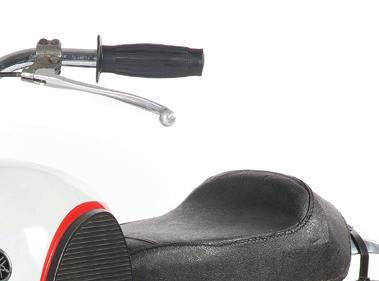
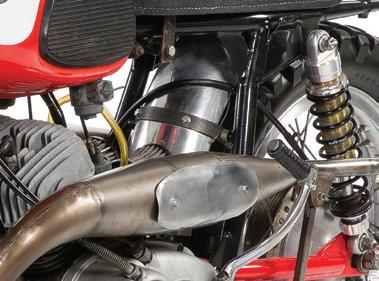
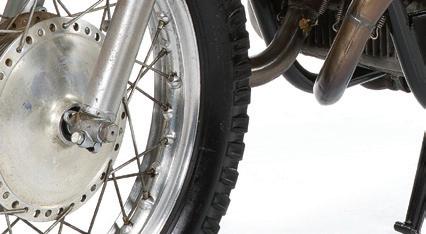
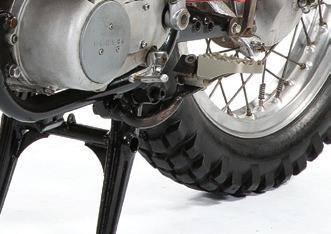
One of them was John Stein. Only problem was he didn’t have a bike worthy of the race. So he found a forlorn Yamaha YDS2, and with the help of friends rebuilt it in just 90 days, ultimately turning it into a replica of the type of scrambler racebike that AMA Motorcycle Hall of Famer Norm McDonald raced as an amateur at Ascot Raceway in Southern California.
“The original Catalina Grand Prix was legendary in California,” he says. “So when
The event was popular for eight years after WWII, from 1951-58, and the 2010 Red Bull Catalina Grand Prix was a modern version of the same, with classes for vintage and modern bikes.
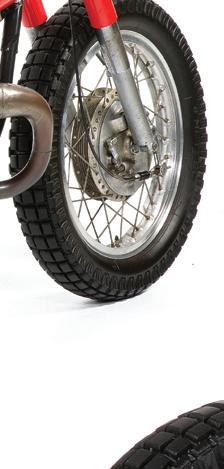
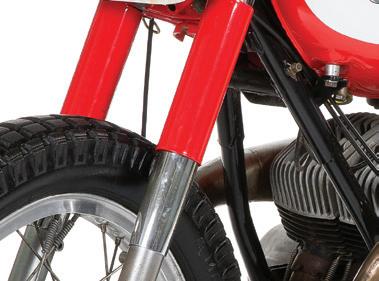
To transform the YDS2 into race-ready form, Stein had engine work and expansion chambers done by Scott Clough Racing, shock and fork work by Race Tech, and he added plenty of other new bits. Ultimately, the bike won the Premier Lightweight Expert class and finished with the 22nd fastest time out of 104 entries.
“I was astonished at how fast that bike
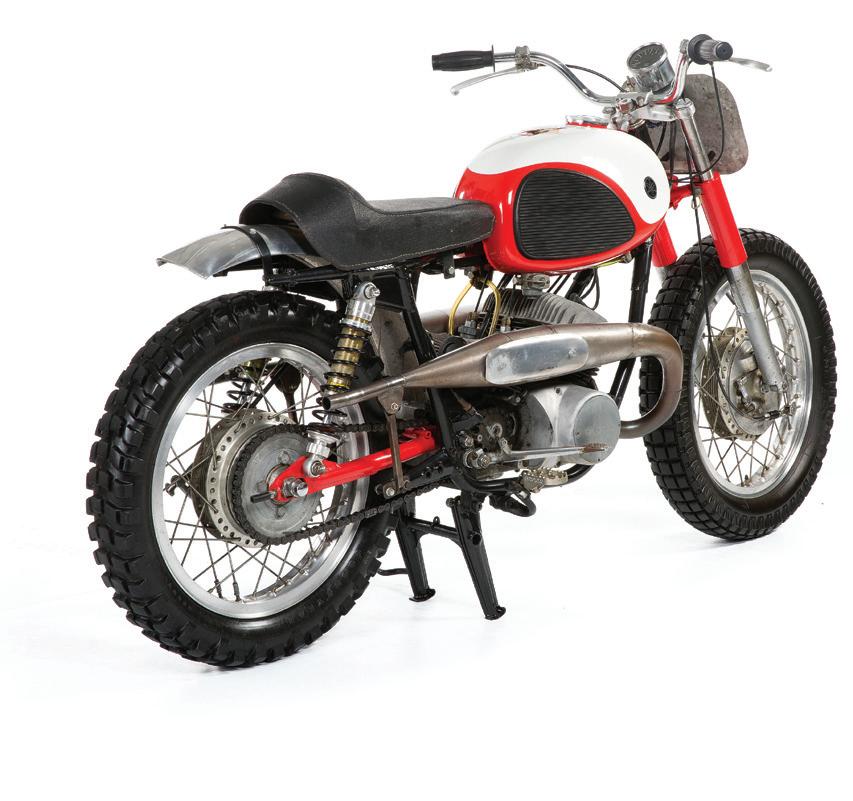
was during the race—it would nearly match the 650 Triumphs on the straights,” Stein says. “In a way, racing the Yamaha at Catalina was like witnessing the changing of the guard between British and Japanese technology that was just beginning to take place in 1962.”
The motorcycle’s adventures have appeared in articles in Motorcyclist magazine, Autoweek, Classic Bike and elsewhere. You can find on-board video footage from the Catalina race shot from this bike on YouTube. Search “Catalina Lightweight Expert 1962
Yamaha YDS2.”
Fitted with a period-style number plate bearing the 233 race number of AMA Motorcycle Hall of Famer Norm McDonald—a racer, engineer and motorcycle dealer who was the founding “N” of “K&N Racing”—the bike appeared onstage at the 2013 AMA Motorcycle Hall of Fame Induction Ceremony in Las Vegas to honor McDonald at his induction. The machine is now on display at the AMA Motorcycle Hall of Fame in Pickerington, Ohio.

The AMA Motorcycle Hall of Fame in Pickerington, Ohio, features the people and machines that have defined the sport, lifestyle and business of motorcycling in America. The Hall of Fame is a 501(c)3 non-profit corporation that receives support from the AMA and from the motorcycling community. For info and directions, visit www. motorcyclemuseum.org, or call (614) 856-2222.
Hall of Famer
Randy Mamola was widely regarded as one of the most exciting and charismatic Grand Prix motorcycle racers of his generation. Mamola was a consistent challenger for the 500cc world championship title throughout the 1980s and early 1990s. After winning the AMA 250 Grand Prix Championship in 1978, he went on to win 13 500cc Grands Prix and finished runner-up in the championship four times and ultimately ranked in the top 10 a remarkable 11 times during his 13-season world championship career.
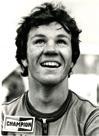
at Pocono and Laguna Seca en route to earning the AMA 250 Grand Prix Championship.
With Kenny Roberts exploding onto the world championship scene, Mamola was already being considered the next big thing to come out of America, and in 1979 he got an opportunity to go to the world championships racing a Bimota, and later Yamahas, in the 250cc class, and a privateer Suzuki in the 500cc class. He made an immediate splash in both classes, earning podium finishes and scoring fourth in the 250cc championships (first privateer) and eighth in the 500cc Road Racing World Championships, despite racing in only half of the 500cc GPs. Mamola was so impressive that he earned a factory ride with Herron-Texaco
Suzuki in 1980.
In July 1980, Mamola broke through to win his first 500cc World Championship Grand Prix race in Zolder, Belgium. It was also early in his career that Mamola became a favorite of the fans and his fellow riders. Mamola was one of the first GP riders to acknowledge the crowd on the cool-down lap of the race. He would throw gloves, boots and even his T-shirt into the crowd.
After racing, Mamola became a founder of Riders for Health, making him one of the leading philanthropists to come out of motorcycle racing.
Mamola was born in San Jose, California in 1959. At the age of 12, he learned to ride on a Hodaka Steens and was quickly racing. At 14, Mamola was sponsored by Yamaha, and he wore the yellow-andblack Yamaha racing leathers of his idol, Kenny Roberts. He raced flat track and began road racing. Mamola traveled to contest the New Zealand road racing series during the winter and won that country’s 125cc title. In America, he began winning AFM road races.
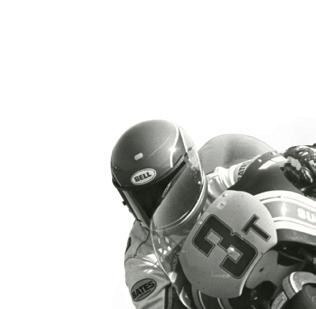
Mamola turned pro at 16 and by 1977, when he graduated from high school, he began competing in the AMA 250 Grand Prix Championship. He scored three podium finishes in his rookie season and finished runner up in the championship. In 1978, he returned and scored wins
“I would wave to the fans, give them applause back and things like that,” Mamola said. “Before long, I noticed the fans were making signs with my name and wearing my team’s colors. I know how great I felt when I stood as a young fan if a rider acknowledged me. I just wanted to give something back to them.”
After starting his GP career in 1979, Mamola continued to be competitive

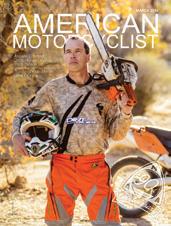
AMA members do it all—long-distance rides, offroad races, cruising main street, vintage dirt track... To better serve our broad membership base, American Motorcyclist magazine is now published in two versions. The dirt version includes more off-highway and racing content. The street version includes more articles for road riders.
To switch, call (800) 262-5646, ask for membership services and tell them which version you want. Want to read both versions? Call the above number to get both delivered to your home for just $10 more a year. Members can read both online at www.americanmotorcyclist.com/magazine for free.





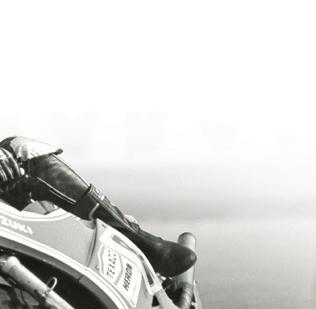
through the early 1990s. He earned a total of 57 podium finishes in three decades and was a championship contender nearly his entire career.
Mamola’s career hit its pinnacle in 1986 and 1987, when he rode for Roberts’ Lucky Strike Yamaha squad. During that period, he won four GPs, took a slew of podium fi nishes and fi nished third and second respectively in the 500cc World Championship. He then was hired by Cagiva to help launch that company’s entry into GP racing. He gave Cagiva its fi rst podium result in Belgium in 1988.
Mamola retired from racing in 1992. He felt an obligation to give back to society and began doing so from an early age. During his GP racing days, Mamola got involved in raising money for African relief, ultimately helping fund Riders For Health. Over the years, Mamola visited Africa and deepened his involvement in charity work. Mamola’s passion for this work led to several motorcycle manufacturers becoming involved. Riders for Health has raised millions for African relief.
Randy Mamola was inducted into the AMA Motorcycle Hall of Fame in 2000. He was not only one of the best riders of his era, but he remains one of the all-time fan favorites in the history of Motorcycle Grand Prix racing.

Fame
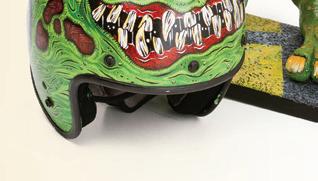
What it is: Artist Jeff Gaither invented the idea of a “Foo Rider” based on the WWII fighter pilot term “Foo Fighter,” which these days would be called a UFO. Gaither’s Foo Rider is conceived to take that idea and flip it. The helmeted creature is imagined to be a fanciful gremlin-chasher, traveling along with the motorcyclist, chasing away mechanical snafus and generally bringing good luck.
How it works: Though primarily a work of art that displays as a sculpture, the piece also employs a removable helmet that can be worn on a motorcycle journey. Removing the helmet reveals another eye underneath that is part of the base.
How it was made: Gaither started with a Bell 500, painted it with acrylics, built the base using a wire armature covered with foil and polymer clay.
See it: “Foo Rider” is currently on display at the AMA Motorcycle Hall of Fame as part of the exhibit “2 Wheels + Motor: an international Fine Arts Exhibition.”


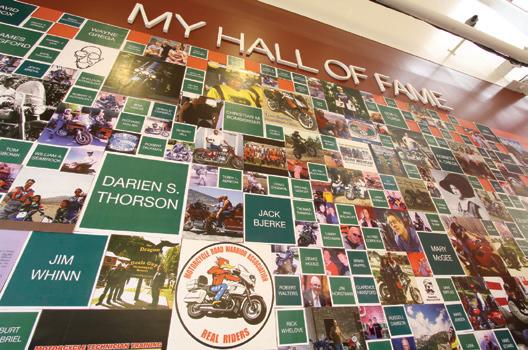
The AMA Motorcycle Hall of Fame is YOUR hall of fame—we couldn’t exist without the generous support of our donors. Now there’s a new way for you to show that support in a very visible way: My Hall of Fame. The idea is simple: A $20 charitable donation gets you a 3-inch-square space on the wall in the Hall of Fame entrance foyer that hangs during the campaign year. Want a bigger space? A 6-inch square is an $80 donation, and an 8-inch square is a $180 donation. You also get an official certificate noting that your picture is on display in the AMA Motorcycle Hall of Fame.
Hang your picture, your kid’s picture, your company logo, almost anything. It’s up to you! Get in the AMA Motorcycle Hall of Fame today!


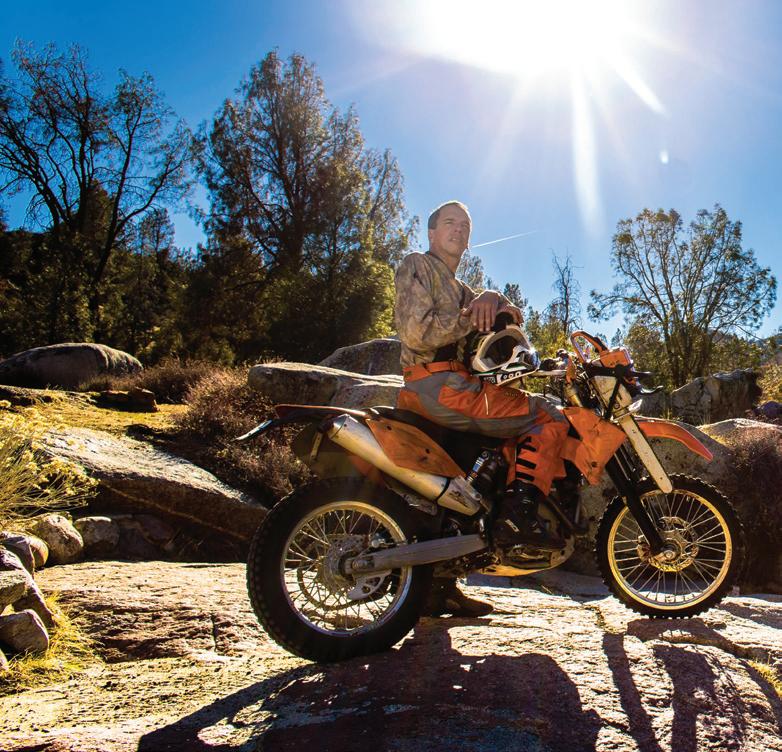
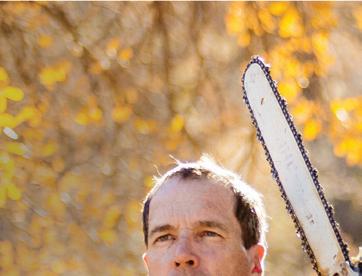
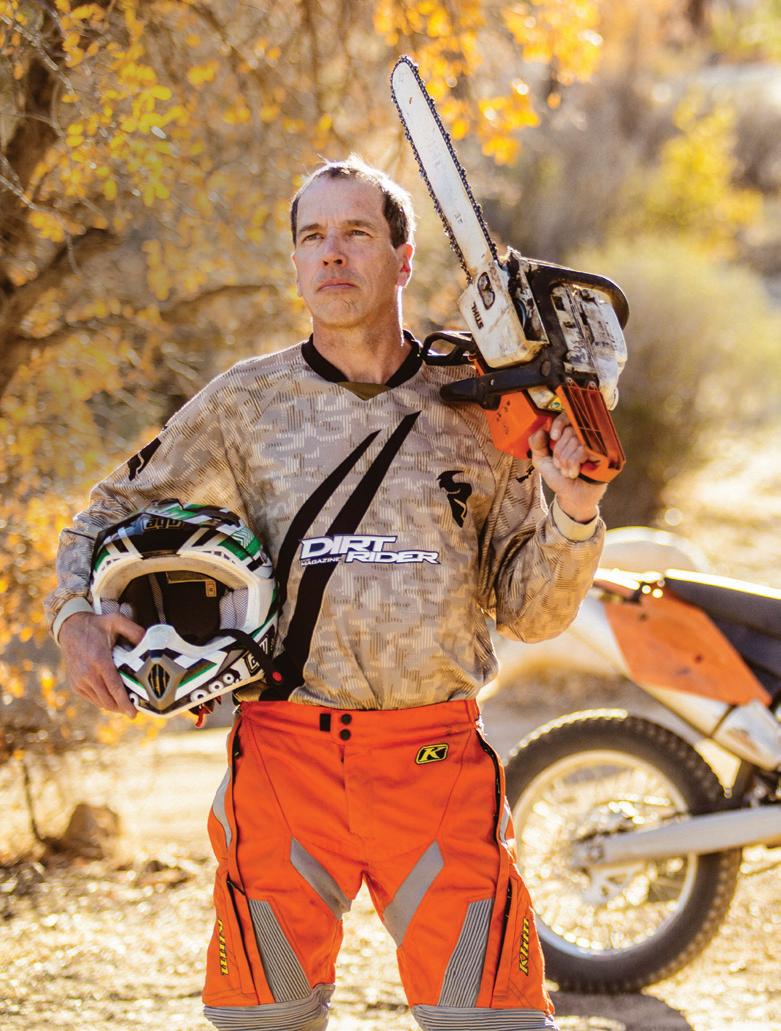
AMA member Chris Horgan is a former Sierra Club, Greenpeace and World Wildlife member who formed the Stewards of the Sequoia in California 2004 to promote responsible recreation and environmental stewardship. He says that Stewards of the Sequoia members enjoy all types of responsible outdoor recreation, including off-highway vehicle riding, horse riding, rock climbing, fishing and more. The organization encourages everyone to share the trails, believing that no one group of users has more right to enjoy public land and trails than another group. We caught up with Horgan to find out more about his life and his organization.
Americ A n m otorcyclist: How long have you been riding motorcycles?
cH ris Horg A n: As a kid I dreamed of riding in the woods, but with no offroading opportunities in New York City, I had to content myself by devouring every dirtbike magazine and book I could find.
My love of bikes drove me to take my street motorcycle test as soon as I turned 17, at which point I parked the 10-speed bike I used daily on the streets of New York City and replaced it with a used 1973 Yamaha RD350. While attending the Art of the Motorcycle collection at the Guggenheim
Museum it was surprising to find I had owned just about every bike in the collection from the ’70s and ’80s. I guess I should have kept them.
With no off-roading available, my desire to ride led me to road racing in the ’80s.
I was finally able to begin my dream of trail riding in the woods at the age of 35 after moving to Connecticut. Right now I ride the dirt almost exclusively and have a 2005 KTM 400EXC, which is a truly incredible trail bike. tell us a bit more about your experience with the outdoors.
I was born and raised in the Big Apple, but even though I was a city boy, I have always loved the outdoors. After retiring at the age of 40 from my custom audio installation business, my
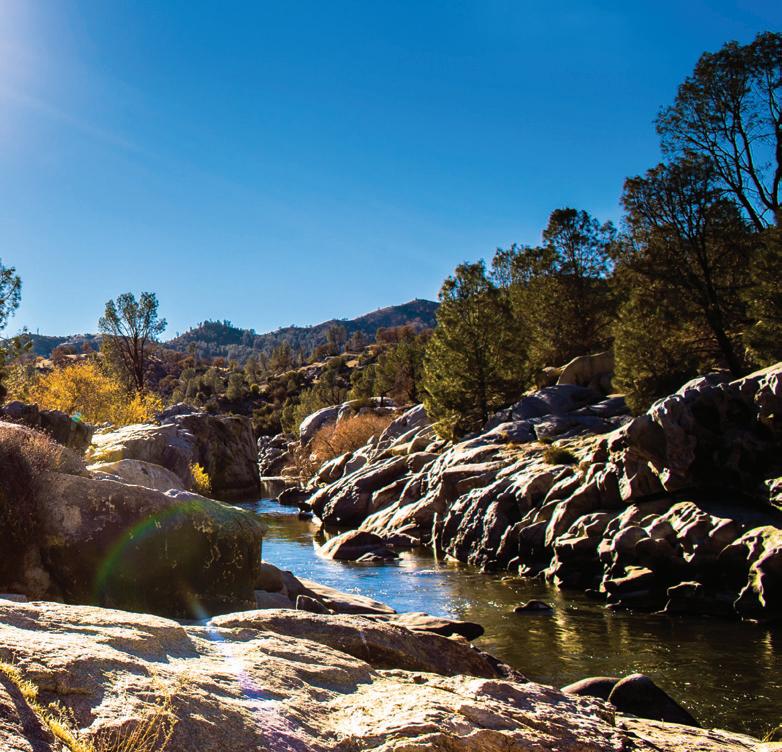
wife and I spent four years touring the western United States in an RV. We saw all the usual sights like the Grand Canyon, Yellowstone and Yosemite, but took our time and stopped at most every national forest and other public lands along the way. My daughter KiSea was born on Halloween while we were on the road and toured with us for three years. She visited more national monuments and scenic areas by the time she was 3 than many people do in a lifetime.
Picking up maps at each Forest Service ranger station allowed me to search out legal single-track trails to enjoy one of my great passions: dirtbike riding. I logged about 8,000 miles of trail each year during our travels including every state west of the Rockies.
When did you form Stewards of the Sequoia and why?
In 2004, after having toured the western United States [and settling temporarily in California], I was determined to do my part to stop the closure of public lands, especially motorized single-track trails. Brian Hawthorne of the BlueRibbon Coalition, perhaps sensing my passion, suggested I start a local grassroots group. Since I wanted to volunteer to maintain trails, I decided to encourage others to help too. So I started Stewards of the Sequoia and created our first Trail Appreciation Day. It was so unexpected when we quickly grew to be the largest on-the-ground volunteer organization in the Sequoia National Forest (in California).
Later that first year, while making a presentation about our trail work, a high-level Forest Service staffer asked me how I had gotten so many volunteers during what is traditionally the worst month of the year for volunteering. I guess my ignorance allowed me to think outside the box and not be discouraged by preconceived notions. It was clear we needed to start working proactively to keep trails open, rather than complaining after trails were closed. We needed to have a seat at the table during planning processes that would affect our trails, and so began the Stewards Trail Preservation Program.
What is Stewards of the Sequoia? What does the group do?
“In 2004 after having toured the western United States I was determined to step up and do my part to stop the closure of our public lands...”
The Stewards of the Sequoia mission is to “promote responsible recreation and environmental stewardship.” We are a multiple-use group representing all forms of recreation. Our philosophy is that by sharing our public lands there is more for everyone to enjoy. Dispersing use over larger trail systems that allow all forms of recreation will minimize the impacts, too, so it is better for the environment.
We maintain trails on public lands to help keep them open and are heavily involved in public lands planning processes.
What are some of the accomplishments of the group?
Stewards maintenance on trails since 2004 has included removing over 3,500 fallen trees, clearing 1,450 miles of overgrown brush, building 2,920 water bars to reduce erosion and planting over 500 trees to speed reforestation in burn areas for a total of almost 17,000 hours of volunteer work.
Another key aspect to Stewards work is advocacy in what we call our Trail Preservation Program. This includes submitting articles to local newspapers about the positive aspects of motorized recreation, educating legislators attending agency meetings for planning and, most importantly, reading and filing substantive comments on each agency proposal that affect our public lands.
We have been successful at preventing the closure of over 60 percent of the trails (at the Sequoia National Forest) while at the same time we have maintained trails so everyone can still enjoy them.
What are some of the projects the group is working on now?
Stewards are currently analyzing the Sequoia National Forest Plan revision to ensure that recreation is a priority for future forest projects over the next 15 -25 years.
Over the past three years we have been forest stakeholders in a process called the Sierra Cascades Dialogs, where we were able to stop a biased and incorrect science synthesis report from maligning motorized recreation. That report would have mistakenly provided a basis for closing trails in the future across the nation.
Last summer the Forest Service offered the public a mere 10-day comment period to review and analyze 1,646 miles of roads in the Sequoia National Forest to determine which should remain open in the future. It was quite a task for us to research so many roads and file a written proposal in such a short period of time with no advance notice. We had to drop just about everything.
CH: Right now Stewards of the Sequoia has roughly 2,800 members, out of which 260 have donated over the past year to help fund our efforts. We are kicking butt in every aspect of keeping trails open except one, and that is funding.
How is the group funded?
Other than a couple of small grants, Stewards is totally member funded. As with most organizations, the few do the work for the many and with too little funding. That is why it is so important for every person who enjoys motorized trails to donate to local grassroots pro-access groups in the areas they ride, as well as at least one state and one national group. They do more with one buck than the anti-access folks do with a hundred, but without support they cannot continue to fight successfully to keep your trails open. We are grateful that AMA District 37 [Southern California] Dualsport has sponsored Stewards for the past three years. Fundraisers by local clubs like the Bakersfield Trailblazers, Chaparrals Motorcycle Club and Southern Sierra Fat Tire Association, and local businesses like Cyclesmith’s, have helped Stewards make ends meet. Thanks so very much, guys and gals. You enable us to keep up the fight and keep winning.
Why does the group clear trees?
With more and more areas in the forest suffering from extreme fires, there can literally be hundreds of trees blocking the trail in just a single mile. Stewards just cleared over 1,100 trees from the trails this spring in a burn area, and hundreds more have fallen since, which we have worked with the Forest Service to clear as well.
Do you consider Stewards of the Sequoia to be an environmentalist group?
As people who enjoy the outdoors on a dirtbike or 4x4 or any other form of recreation, many of us care about the environment. We want healthy forests. Stewards was founded as a multipleuse stewardship organization to give a voice to the majority of people who want to see continued abundant access to their public lands and support active stewardship to keep those lands healthy. Stewards programs help increase people’s awareness of the benefits of treading lightly to reduce environmental impacts and keep trails enjoyable.
So, yes, we are environmentalists, but we prefer to call ourselves stewards.
What made you decide to get involved in fighting to keep trails open?
Having seen firsthand the closure of the Massachusetts state forests to off-road vehicles in the ’90s for no valid reason, I was aware of how easily access to our public lands can be restricted or even eliminated. Some of those state forests were reopened due to the efforts of local dirtbike clubs who maintained the trails. It became clear help was needed to prevent trail closures. I wanted to do something more than just my annual memberships to BlueRibbon and AMA.
Are you only concerned about motorized trails or for hiking, horse and other trails as well?
Many years ago I realized every form of recreation is, or would be, in the crosshairs of those who seek to close our public lands. While motorized recreation was targeted first, there have also been attempts to restrict both mountain bike and horseback access. We are far more powerful and effective when we work together to protect our access. Stewards have always advocated for, and maintained, multiple-use trails that are open to all forms of recreation. What heroes have influenced you over the years and why?
[AMA Motorcycle Hall of Famer] Clark Collins, founder of BlueRibbon Coalition, went riding with me many years ago in Idaho. As we stopped at the top of a cliff he told me of his work to save the trail system we were riding on, how he met with the governor of Idaho and was told his group—The BlueRibbon Coalition—was not significant and that the trails would be closed. Not one for taking “no” for an answer, Clark was able to keep the trail system open by working with the community.
That kind of can-do attitude and persistence is something I have always embodied in my work.
What are some of the biggest challenges facing offhighway riders today?
Apathy is our biggest enemy. We are the silent majority. We just want to be left alone. Most people are, understandably, busy with their family, jobs and recreation. Most people do not want to join an organization or donate. Most people do not have time and do not want to attend meetings or read 1,000-page documents and submit comment letters. Yet those are some of the most important things one can do to stop closures.
Fortunately, there are pro-access groups who can do that work on your behalf, but they need your support.
I recall during the early days of
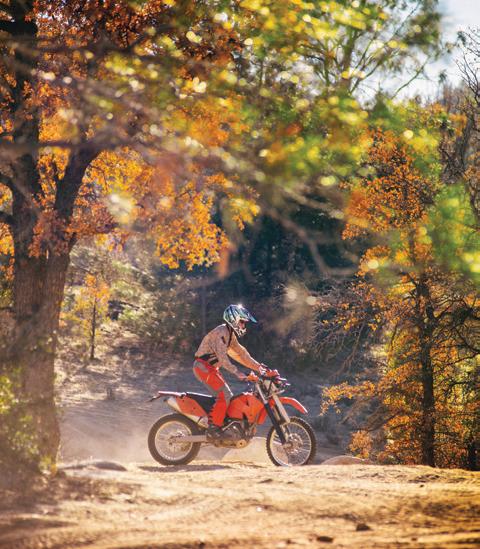
Stewards being told legislators would not listen unless my group donated $10,000. This seemed wrong to me, so over the years I continued to educate legislators about the need to keep more trails open and was rewarded with support on many trail-related issues even though we had not donated even $1 to any of them.
At one point my research revealed millions of acres of public lands had been studied 30 years ago and determined to be unsuitable for Wilderness designation, but they are just a mere pen stroke away from being designated as Wilderness today. This would prohibit all forms of use except hiking and horseback.
These are the lands where the majority of the public recreate mostly via motorized and mountain bike recreation. Local economies would be devastated and the majority of the public locked out of much of the remaining multipleuse lands in many areas. I contacted our local congressman to see if he was interested in doing something and he asked me to brief him. Much to his credit, [Rep. Kevin McCarthy (R-Calif.)] created a bill called the “Wilderness Study and Roadless Release Act” to release those lands back to multiple use as promised by the government 30 years ago.
Legislators want to work with us on off-road issues, but we have to take the time to tell them why it is important to us.
What can off-highway riders do to help protect existing trails and create new ones?
Join your local grassroots group, donate to help fund the fight and roll up your sleeves to help maintain trails. These three things will do the most to keep your trails open. It may surprise people to learn that doing those three things persistently over the years is also likely to set the stage for getting more trails.
What has been the most frustrating part for you in fighting to keep trails open?
Dealing with agencies who work at a bureaucratic, or seemingly glacial, pace can be extremely frustrating, where even the simplest thing like being allowed to volunteer can take years. The good news is that developing strong relationships with land managers, as grassroots groups like Stewards have done, will often speed up those processes.
What do you find rewarding in your efforts?
The most rewarding aspects of trail advocacy, to me, are riding the trails and seeing the work we have accomplished, such as eliminating rain ruts to improve sections of trails, or knowing the substantive comments we made have been effective to keep the trail open, or seeing the smile on riders’ faces as they enjoy a trail that would have been closed to them if not for our efforts.
What would someone be surprised to learn about you?
Back in the ’80s I used to be a Sierra Club, Greenpeace and World Wildlife member. Living in New York City at the time did not allow me to see the places these groups claimed were being harmed. I kept reading the magazines and alerts they would send me.
After a while I did my own research and found they were not always telling the truth about many environmental issues. Many of the problems that they claimed existed—such as damage due to motorized use of trails—were actually caused by water running down the trail and occur just as frequently on non-motorized trails. They were misrepresenting the information in order to try to pit user groups against each other.
How important are motorized trails for a local economy?
Motorized recreation has been one of the fastest growing forms of recreation for a while now. According to a study by the Outdoor Industry Association, off-roading contributes over $110 billion directly to local economies and people enjoying motorized recreation spend more than any other form of recreation. Motorized trails bring people into rural communities where they spend those dollars.
When timber harvests were severely reduced on public lands, the government told us tourism would replace logging. Many rural economies which once depended on logging now depend on tourism, a large part of which is motorized recreation.
Is there anything else you would like to add?
Multiple-use pro-access groups and motorized groups have gotten better and smarter at keeping your trails open, but they lack the funding needed to engage in the many battles. If each of us would donate the cost of a set of tires each year to our local, state and national groups we would have the money needed to take back our trails.
I encourage everyone to get involved to help make a difference.
By James Holter
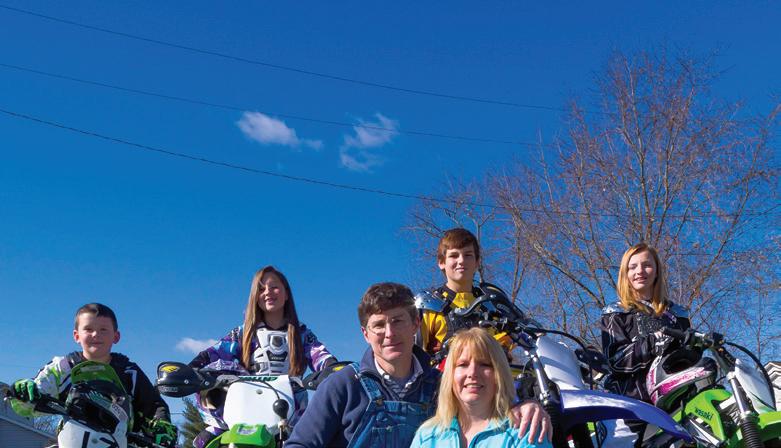

Five years ago, AMA member Neil Bouchillon bought what could have been the last kids’ bike sold by Huntington, W.Va.’s East End Cycle.
“It was Dec. 24. It was the last dirt bike sold out of that shop before they stopped because of the lead law,” he says.
The “lead law,” known formally as the Consumer Product Safety Improvement Act of 2008, was an overarching attempt by Congress to protect children from lead exposure. The broad measure ensnared youth off-highway vehicles. Sales of bikes for kids 12 and under were being banned because of the lead in parts like batteries, engine cases, control cables and footpegs. Understandably, an uproar ensued in the OHV community. Neil was a single father and a lifelong

dirt biker who dreamed of riding with his 7-year-old daughter, Grace. He didn’t want to miss out on that opportunity.
Thankfully, members like Neil responded to the call to action from the AMA and its partners, and the lead-law ban was defeated for kid-sized OHVs. Little did Neil know then, but over time he would become one of the greatest beneficiaries of that victory.
“Had I not bought that bike when I did, and had the AMA not done what they had
done to defeat the lead law, where would we be?” Neil asks.

The significance of the lead-law win for Neil is clear when you fast-forward five years. Grace’s Suzuki DR-Z has been joined by “at least” 14 other kids’ bikes. Neil has added bikes for his wife Susan (they married last fall) and her son Jesse Lewis, 10, as well as a number of additional dirt bikes that he uses to spread the love of motorcycling among the Bouchillon’s southern Ohio community of Proctorville.
“It started with just another dirt bike so Grace’s friend, GiGi, could ride with us,” says Neil, who works as an attorney in private practice in Huntington. “But as soon as I saw the self esteem that these

girls got from riding, I realized just how beneficial it could be.”
Susan says that GiGi (also known as Georgia Hankins) was pretty nervous when she first tried riding. For Susan, that apprehension was a familiar feeling.
“What was fun for me is I had never ridden either, so I learned to ride with these kids,” Susan says.
Everyone has gotten over the first-ride jitters pretty quickly, though. That’s when the fun really begins.
“A feeling of accomplishment sets in,” Susan says. “For the kids, and me too, it was a feeling like, ‘I can’t believe I’m actually doing this!’”
It wasn’t long before the Bouchillons started welcoming more young riders into the mix. They recruited a lot of new dirt bikers at Grace’s ballet class.
“The parents would bring the girls over to ride, and the neighborhood would come out and watch because it’s not common to see six or eight girls riding around with their pony tails sticking out under their helmets,” Neil says. “For some of the boys in the neighborhood, it was something to see because these are feminine girls. They are the ballet types, which I think actually complemented their ability to ride because of the coordination and flexibility they’ve developed.”
By this point, there was no turning back. Other kids, including friends of Jesse, joined the fun, learning to ride dirt bikes responsibly under the watchful eyes of Neil, Susan and the kids’ parents. Neil says that over the past five years they’ve probably taught “about 50” kids how to ride, and have taken several of them on day trips to nearby public riding areas.
“The first time that we ventured out of our yard and to some real trails was really exciting,” Susan says. “It was at Hanging Rock [part of the Wayne National Forest trail system] in Southern Ohio. We now go there pretty regularly, and it’s one of our favorite places to ride.”
Susan says that all of the kids, regardless of background, benefit from the emotional lift and self-confidence provided by riding dirt bikes.
“For these kids, to say, ‘I actually rode a dirt bike,’ is a big boost,” she says.
Susan says that the kids helped make a scrapbook for Neil to thank him for giving them the opportunity to learn to ride. One girl, Kelly, who Susan describes as “very academically smart,” wrote an especially touching letter that addressed how riding filled an athletic void that otherwise existed in her life.
“All the kids feel like they’re a part of the group when they’re here,” Susan says. “We don’t leave out anybody.”
Susan says that positive attitude is a
Continued on page 40
To be a dirt bike rider, you need, among other things, a dirt bike. These models represent different sizes of beginner-friendly options.
If your son or daughter shows the interest and skill for a more a more aggressive or specialized machine, competition-oriented minibikes are available from these manufacturers and others (such as Cobra in motocross, Sherco in trials and KTM in motocross and off-road).


Yamaha’s two-stroke PW50 has been starting motorcycling careers for more than three decades. It’s easy to ride, easy to work on, reliable as a claw hammer and offers the right performance for young riders. It has a throttle limiter, oil injection (no mixing fuel) one speed and an automatic clutch. It’s also relatively inexpensive, going for $1,440.*
Other models: KTM’s 50 Mini is comparable in size, but offers liquid cooling, disc brakes, updated suspension and a more contemporary design. Modern looks and performance come at a price, however. Its MSRP is $3,299.
Although it is no longer listed as a current model on Suzuki’s website, the JR50 is Suzuki’s answer to the PW50. Used ones are readily available.
*Prices are the most current model MSRP reported on the manufacturers’ websites at presstime. Additional destination, setup and registration charges may apply.
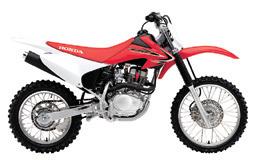

The size is larger, but the idea is the same. The $3,640 Honda CRF150F is intended to give larger riders a safe, predictable, reliable and capable off-roading experience. It has electric start and, like all of Honda’s off-highway bikes, meets California Air Resources Board and EPA off-road emissions standards. Note that a similarly named model, the CRF150R is a highperformance, closed-course motocross race bike and is not designed for a beginner.

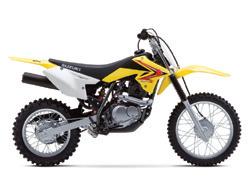

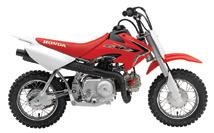


The $1,399 Honda CRF50F (and its various permutations) has been the go-to four-stroke beginner bike since 1968. It oozes fun, simplicity, and the broad power delivery of the proven four-stroke engine is versatile enough to put a smile on the faces of kids young and old. Equipped with a three-speed transmission, it has an automatic clutch, ideal for beginners. Other models: Although technically replaced by the CRF110 in 2013, the CRF70 is a slightly larger, slightly more powerful version of the CRF50.

Kawasaki’s $2,299 KLX110 owns the sweet spot of easy-to-ride and performance, with enough power to keep kids coming back for years. It’s also worth noting that while no selfrespecting parent would thrash their kid’s minibike around a motocross
Suzuki DR-Z125 ($3,099) offers smooth performance, a five-speed transmission, ground clearance to get over trail obstacles and a manual clutch. For $100 more, you get the DR-Z125L, which comes with a disc front brake and 2-inch larger diameter wheels in the front and rear.

Other models: Honda’s CRF80F, CRF100F and CRF125F; Yamaha’s TTR125 and TTR125L; and Kawasaki’s KLX140 and KLX140L all feature a manual clutch and similar styling.
track, this bike size is popular among the pit-bike racing crowd.

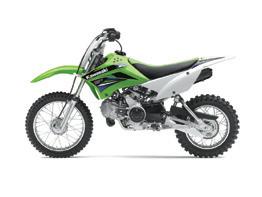

Other models: Honda’s CRF110F and Yamaha’s TTR110 are comparable to the KLX110 in many ways but brand and graphics. Pick your favorite color and ride.
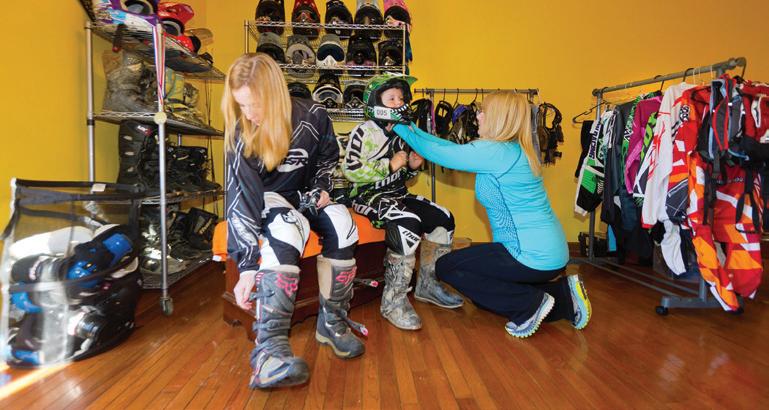
big part of the success of their loosely organized riding club, which the kids refer to as “the Bouchillon Mud Bugs.”
“It’s not about making these kids into the world’s best off-road racers,” she says. “It’s about realizing the positive benefits of accomplishment. We do have some who race hare scrambles, but we have some kids who are reluctant to go up hills or down hills. It’s about spending time with them to help them overcome their fears.”
Susan refers to their group as a “real social network” and is proud that it includes kids from all economic backgrounds and across social circles.
“Gunner [Short, 15], who rides with us, is on the local basketball team, and they are phenomenal players,” she says. “He rides with the younger kids and is so accepting of them and helpful regardless of whether they are athletes or not.”
Neil says that he’s inspired by memories of dirt bikes breaking social barriers among his friends when he was young.
“I started riding in 1973 on a Honda QA 50,” Neil says. “We’d go to the De Soto National Forest in Mississippi and ride. Everybody in the neighborhood had dirt bikes. We rode together. We ate together. We had fun get-togethers. But that died down. I don’t know if it was the price of gas or whatever, but everybody in our area just got out of doing it.”
Neil’s family remembers those good times on the trails fondly.
“Many years later, I was having dinner
with my dad and he said to me that the closest we ever were as a family was when we were riding dirt bikes together,” Neil says. “He recognized the importance of riding together, not just to our relationship, but in strengthening the community.”
Although Neil never quit riding himself (he currently has a KTM 200 XCW and competes in Southern Ohio hare scrambles), the benefits of recreational trail riding were just a memory until Grace and her friends started riding.
“The parents come over and watch, and in many ways it’s like it was when I was a kid,” Neil says. “The kids are outside and playing. They’re getting exercise. They’re making decisions. They’re having experiences. Then, one thing we always do whether we’re at our house or at a trail, is we sit down and eat together. All the other parents say that this is some of the best quality time they have with their kids, and these are parents who otherwise might not be involved in dirt biking.”
Neil admits that he can’t do it alone. In addition to Susan, who he calls their “lead social coordinator,” and the kids, who help wash the bikes and gear, his friends Tim Shephard, Greg Shephard and Ron Mallory help maintain the bikes. In addition to East End Cycle (“Susan and I got engaged in that shop,” Neil shares), Huntington’s Cycle Center and Lancaster Sport Cycle in Lancaster, Ohio, support Neil and Susan’s efforts to introduce new riders to the sport.
“Our neighbors Mr. and Mrs. Chapman are also very generous with their property,” Susan adds. “Mr. Chapman really enjoys sitting on his front porch and just watching the kids ride, and if we ever miss a
weekend, they call and ask when we’ll be riding again. They are wonderful people.”
Neil is an attorney. Susan is an insurance claims adjuster. They understand risk and take a careful approach to any riding that happens on their watch.
“Everybody understands where the dangers are,” Neil says. “We show them where to ride. Everybody rides in the same direction. There are ground rules. It’s obviously non-negotiable that everyone wears safety gear and that parents are involved. We don’t do double or triple jumps. There’s a time and a place for more aggressive riding, and it’s not in the backyard. It’s at the racetrack.”
In addition to safety, Neil says they teach the kids to respect the rights of others.
“We live in a neighborhood, so we’re very conscious about noise,” he says. “I have FMF Q2 silencers on all of the two strokes, and I keep the packing in the fourstroke exhausts fresh. We don’t ride during church hours, and we don’t ride late at night, and if I see that we’re creating too much dust, we quit riding for the evening.”
Both Neil and Susan feel that any risk concerns are properly managed and that the kids have just as much fun as they would in a less safe environment. The most important thing, Susan says, isn’t the risk of riding. It’s the benefits that come with it.
“I never had anything to do with dirt bike riding before I met Neil,” Susan says. “Now I can’t imagine living without it.”

Aug 2-3: Walden, Colo.: Moose Run Dual Sport Rally, Front Range Riders, Deborah Nielsen; none; www.frontrangeriders.com
Aug 10-11: Columbus, Ind.: Buffaloe 500 D/S Adventure Ride, Stoney Lonesome MC, Nathan Gaskill; (812) 343-9772; www.stoneylonesomemc.com
Aug 16-17: Tillamook, Ore.: Rat Dog Dual Sport, NW Tour & Trail, Tom Niemela; (503) 681-8881; www.blackdogdualsport.com
Sep 6-7: Golden Pond, Ky.: Land Between the Lakes 200, KT Riders, Jesse Thomas; (270) 522-3703; www.lbl200.com
Sep 27-28: Buck Meadows, Calif.: Yosemite Dual Sport , Family Off Road Adventures, Lawrence Borgens; (209) 649-3633; www.familyoff roadadventures.com
Sep 27-28: Wabeno, Wis.: Big Woods 200, Wisconsin Dual Sport Riders, John Newton; (920) 350-2030; www. widualsportriders.org
Oct 11-12: McArthur, Ohio: Baby Burr National Dual Sport, Enduro Riders Association, Steve Barber; (614) 5827821; www.enduroriders.com
Oct 26-27: Chatsworth, N.J.: Meteor Ride in the Pines, Meteor MC, Jeff Fitzpatrick; (609) 654-5015; www.meteormc.com
Nov 8-9: Prescott Valley, Ariz.: Howlin’ at the Moon, Arizona Trail Riders, Don Hood; (623) 826-1092; www.arizonatrailriders.org
Nov 1-2: Port Elizabeth, N.J.: Hammer Run, Tri-County Sportsmen, Eldin Polhaumas; (888) 274-4469 (856) 7852754; www.teamhammer.org
Nov 28-29: Palmdale, Calif.: LABarstow to Vegas, AMA D37 Dual Sport, Paul Flanders; (626) 446-7386; www.district37ama.org

AMA YAMAHA SUPER TÉNÉRÉ NATIONAL ADVENTURE RIDING SERIES
AMERICANMOTORCYCLIST.COM
Mar 15-16: Bartow, Fla.: CrossFlorida Adventure Ride, Dixie Dual Sport, Inc, Robert Frey; 727-919-8299; www.dixiedualsport.com
Mar 29-30: Tucson, Ariz.: 2 Sun Adventure, Tucson Dual Sport, LLC, Chris Dodds; 520-979-8398; www.tuscondualsport.com
Apr 26-27: Brooksville, Fla.: Devil’s


Creek DS/ADV Ride, Dixie Dual Sport, Inc, Robert Frey; 727-919-8299; www.dixiedualsport.com
May 3-4: Buck Meadows, Calif.: Yosemite Adventure Tour, Family Off Road Adventures, Lawrence Borgens; (209) 649-3633; www.familyoff roadadventures.com
May 17-18: McArthur, Ohio: Hanging Rock 200 , Buckeye Dual Sporters, Bill Kaeppner; (740) 380-3050; www.kaeppnerswoods.com
May 17-18: Tolland, Mass.: Berkshire Big Adventure, Berkshire, Ross Mauri; 845-729-1715; www.mudslinger.org
Jun 7-8: Mill Hall, Pa.: Durty Dabbers Great Adventure, Durty Dabbers, Nils Mantzoros; (570) 726-3343; www.durtydabbers.com
Jun 8: Atlanta, N.Y.: Thrills in the Hills, Wayne County MC Club, John Albanese; 315-946-3082; www. waynecountymc.com
Jun 14-15: Odell, Ore.: Black Dog Adventure Ride, NW Tour & Trail, Tom Niemela; (503) 681-8881; www.blackdogdualsport.com
Aug 10-11: Columbus, Ind.: Buffaloe 500 D/S Adventure Ride, Stoney Lonesome MC, Nathan Gaskill; (812) 343-9772; www.stoneylonesomemc.com
Sep 20-21: Logan, Ohio: Nutcracker
200, Buckeye Dual Sporters, Bill Kaeppner; (740) 380-3050; www.kaeppnerswoods.com
Nov 8-9: Prescott Valley, Ariz.: Howlin’ at the Moon, Arizona Trail Riders, Don Hood; (623) 826-1092; www.arizonatrailriders.org
Nov 1-2: Port Elizabeth, N.J.: Hammer Run, Tri-County Sportsmen, Eldin Polhaumas; (888) 274-4469 (856) 7852754; www.teamhammer.org
Nov 15-16: Hammonton, N.J.: Pine Barrens 500, Cross Country Cycles, Jack O’Connor; 732-714-8874; pinebarrens500.org
Nov 28-29: Palmdale, Calif.: LABarstow to Vegas, AMA D37 Dual Sport, Paul Flanders; (626) 446-7386; www.district37ama.org
AMA PREMIER TOURING SERIES AMERICANMOTORCYCLIST.COM
AMA SIGNATURE EVENTS AMERICANMOTORCYCLIST.COM
March of Dimes Bikers For Babies Rides: Nationwide: www.bikersforbabies.org
Rides For Kids Events: Nationwide: www.rideforkids.org


No matter what or how you ride, the AMA has a special card for you. Want one? Just let us know by renewing early, or telling us when you renew via our online signup form at AmericanMotorcyclist.com, or calling (800) AMA-JOIN (262-5646).