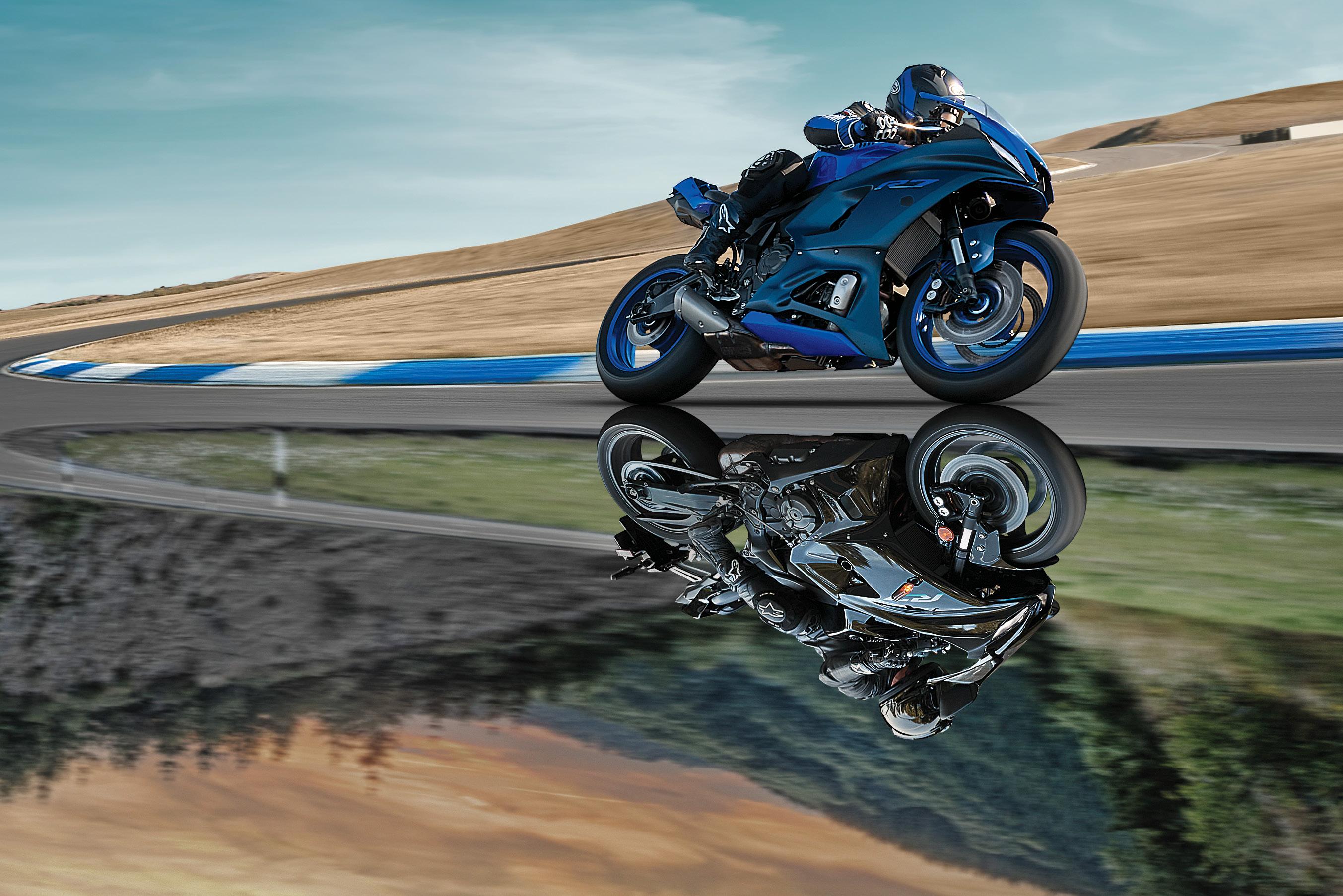
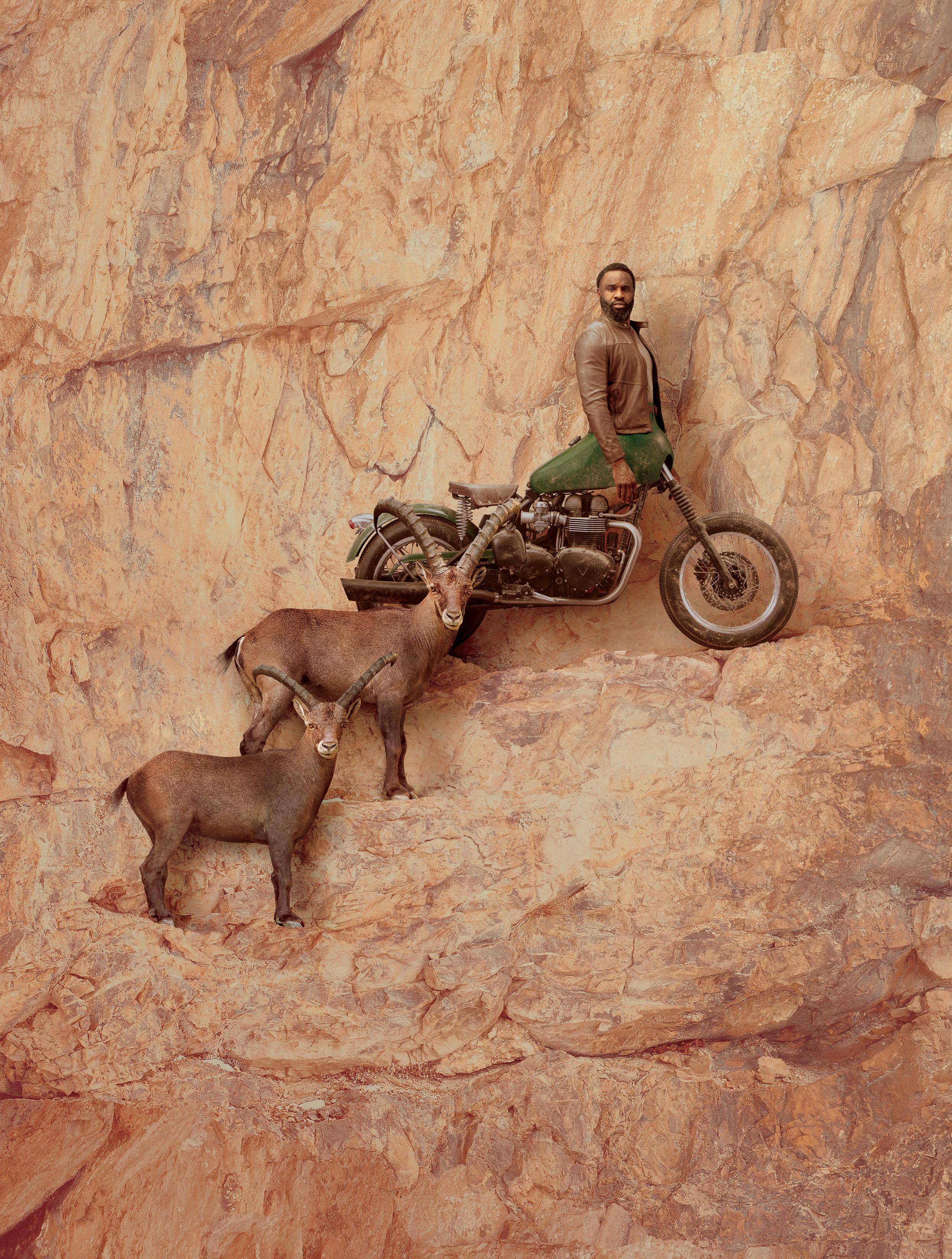
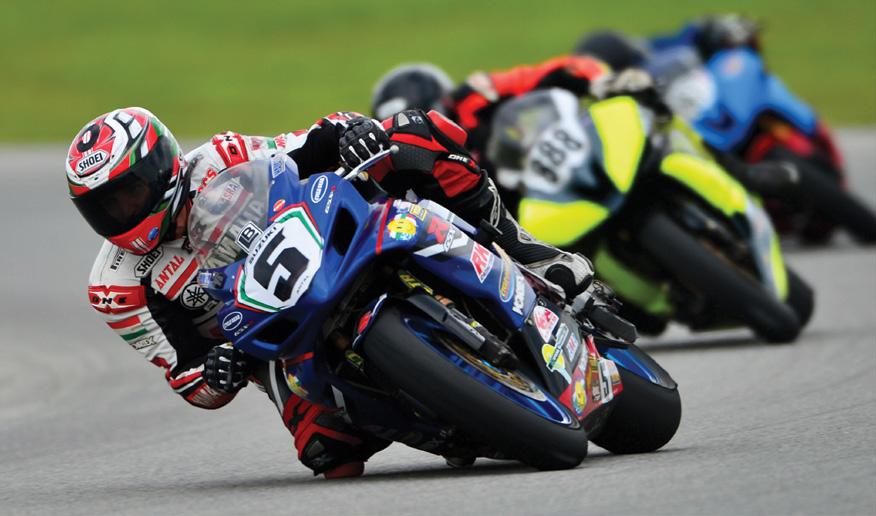
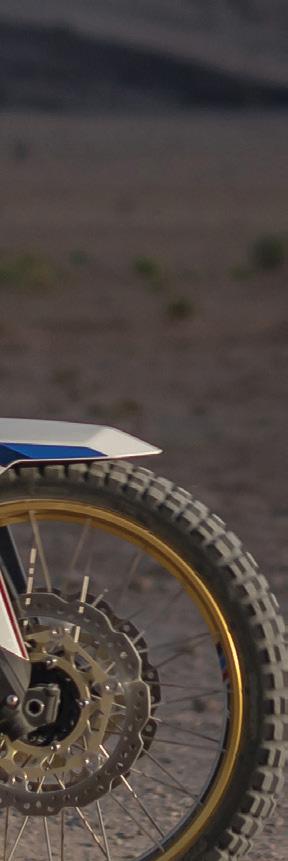
A new generation Supersport for the next generation of rider. The all-new YZF-R7 combines Yamaha’s legendary styling with an ultra-thin and lightweight chassis and an advanced CP2 engine that provides torquey performance on both the track and the street.
COMMUNICATIONS AND EDITORIAL
Mitch Boehm Editorial Director
Todd Westover Creative Director
Joy Burgess Managing Editor
Kali Kotoski Editor-at-Large
Keaton Maisano Communications Associate
Chad Fulton Graphic Designer submissions@ama-cycle.org
Steve Gotoski Director of Industry Relations and Business Memberships (951) 491-1910, sgotoski@ama-cycle.org
Danielle Smith Human Resources Manager/Assistant to COO
RACING AND ORGANIZER SERVICES
Mike Pelletier Director of Racing
Bill Cumbow Director of International Competition
Michael Burkeen Deputy Director of Racing
Erek Kudla Off-Road Racing Manager
Ken Saillant Track Racing Manager
Joe Bromley Program Development Manager
Alexandria Kovacs Program Manager
Connie Fleming Supercross/FIM Coordinator
Olivia Davis Racing Coordinator
Serena Van Dyke Recreational Riding Coordinator
OPERATIONS
Steve Austin Director of Operations
John Bricker Mailroom Manager
Rob Baughman Operations Specialist
ACCOUNTING
Karen Esposito Accounting Manager
AMA BOARD OF DIRECTORS
Contact any member of the AMA Board of Directors at americanmotorcyclist.com/ama-board-of-directors
Russ Ehnes Chair
Great Falls, Mont.
Gary Pontius Vice Chair
Westfield, Ind.
Byron Snider Assistant Treasurer
Newbury Park, Calif.
Jerry Abboud Executive Committee Member
Thornton, Colo.
Paul Vitrano Executive Committee Member
Medina, Minn.
Brad Baumert
Louisville, Ky.
Hub Brennan
E. Greenwich, R.I.
Christopher Cox
Florence, S.C.
Mark Hosbach Franklin, Tenn.
Robert Pearce Amherst, Ohio
Tom Umphress Jordan, Minn. Faisel Zaman Dallas, Texas
(800) AMA-JOIN (262-5646) (614) 856-1900
AmericanMotorcyclist.com
@AmericanMotorcyclist @ama_riding
GOVERNMENT RELATIONS
Michael Sayre Director of Government Relations
Nick Haris Western States Representative
Tiffany Cipoletti Government Relations Manager, On-Highway
Peter Stockus Government Relations Manager, Off-Highway
Erin Reda Grassroots Coordinator
MUSEUM
Daniel Clepper Collections Manager
Paula Schremser Program Specialist
Ricky Shultz Clerk
Alys Horne Clerk
MARKETING AND MEMBER SERVICES
Amanda Donchess Director of Membership Marketing and Services
Holly Bennett Membership Fulfillment Coordinator
Tiffany Pound Member Services Manager
Stephanie McCormick Member Services Representative
Vickie Park Member Services Representative
Charles Moore Member Services Representative
Claire McPherson Member Services Representative
Kelly Andres Member Services Representative
Reba Snodgrass Member Services Representative
Carol Vaughan Member Fulfillment Representative
IT DEPARTMENT
Shaun Holloway Director of IT
Ed Madden System Support Specialist
American Motorcyclist magazine (ISSN 0277-9358) is published monthly (12 issues) by the American Motorcyclist Association, 13515 Yarmouth Drive, Pickerington, OH 43147. Copyright by the American Motorcyclist Association/American Motorcyclist 2021. Printed in USA. Subscription rate: Magazine subscription fee of $19.95 covered in membership dues.
Postmaster: Mail form 3579 to 13515 Yarmouth Drive, Pickerington, OH 43147. Periodical postage paid at Pickerington, Ohio, and at additional mailing offices.
I
can picture the scene so clearly it’s almost spooky…
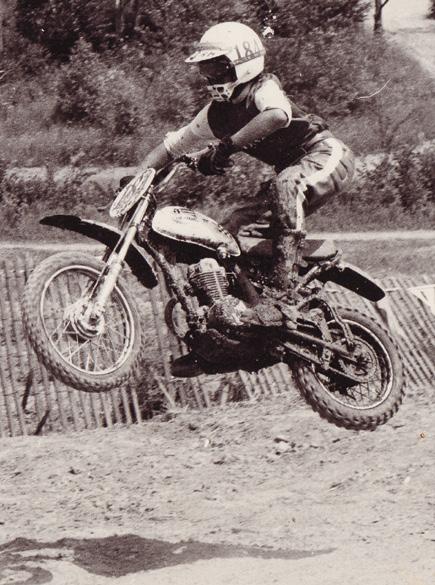
It’s me and my dad, driving home from Medina, Ohio’s Smith Road Raceway in the summer of 1975, with Elton John’s Philadelphia Freedom blasting over our Ford van’s stereo, my muddy, monoshockequipped XR75 tied down in back, and big-ass grins on both our faces.
That song topped the charts for most of ’75 and we heard it every weekend, almost always on our way to the races and, if we were lucky, on the way home, too. Freedom became our song for that first full year of motocross competition, and hearing it was especially sweet when a big trophy was tucked away behind us — as it was on this particular afternoon.
PERSPECTIVES The Wonder Years
BY MITCH BOEHM
of course, which highlights the efforts of many in America’s amateur ranks. Seeing photos of the younger riders and their families instantly transported me, time machine-like, to those wondrous years.
Those years — the mid and later 1970s— were magical ones for me, and probably for many of you,
even some local Pro Class money. I raced during college in the ’80s and later in So Cal during my days at Motorcyclist magazine, but none of it could be as awe-inspiring as those first four seasons.
Spectating was nearly as epic as competing, especially at those TransAMA and USGP events at the old
Neither of us said much during Sir Elton’s croon. We just drank it in, luxuriating in the successful efforts of the day and the entirely new world we’d discovered the previous fall when we visited a local motocross meet and watched the spectacle in total wonder. Little League baseball was a big deal for 11-year-old me at the time, and I’d go on to play in high school and college, but motorcycles — and motocross in particular — would quickly become a huge deal in my life, and eventually lead to an industry career that continues to this day.
The trigger for all this nostalgia? This issue’s amateur racing section,
too. That entire late-’60s/1970s period was magical for the sport of motocross, as well, with new technology exploding on the scene seemingly every year. From Suzuki’s first-gen TM250 of 1968 (see our feature on p. 48), to the CR250 Elsinore and YZ250 of ’73 and ’74, to the wildly-suspended RM125 of ’75 and the liquid-cooling, disc brakes and long-travel designs of the later ’70s and early ’80s, the period was nothing short of mind-blowing.
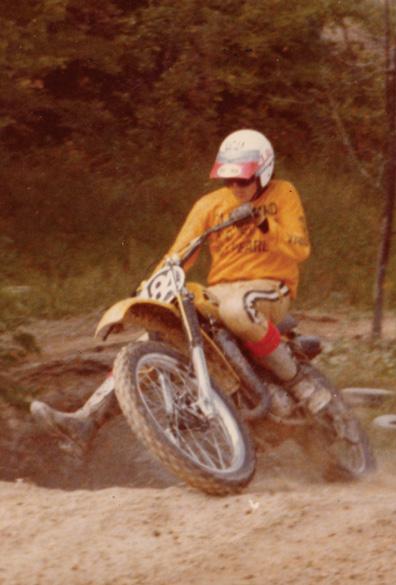
That initial year on the XR was followed by a string of largerdisplacement two-strokes, first a Yamaha YZ100C in ’76 (which we modified into a total hand grenade), then a YZ125D in ’77 (which we kept totally stock, and finished every race), and finally a ’78 YZ250E, which was a bit much for 15-year-old me, but a bike we won plenty of races on, and
Mid-Ohio Moto Park where I’d watch the Roger DeCosters, Marty Smiths and Bob Hannahs of the motocross world do battle.
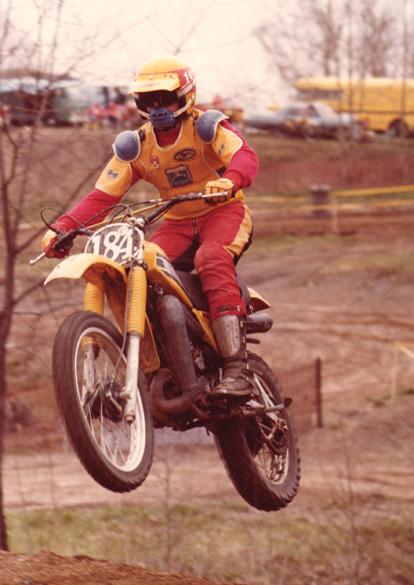
Back in late ’74 at one of my very first races at Ohio’s Amherst Meadowlarks track, my dad asked the folks there how to pick a race number. A club member suggested we use the last three digits of our AMA number, 184, and that’s what we did. I still use No. 184 (and have for decades), and since I’m now actually part of the AMA, it all seems sorta apropos, and full circle-like.
They were truly wonder years. I can picture them so clearly…it’s almost spooky.
Mitch Boehm is the Editorial Director of the AMA
2022 MEMBER
MONTHLY DRAWINGS
• Liberty Sport Eyewear
• Nelson Rigg Choice: Cover, Luggage
• Mimi & Moto Children’s Books
• Motion Pro: Pro Fill Airchuck
• Warm & Safe 12V USB Adapter
• Bohn Armor Skull Cap
• AMA T-Shirt
QUARTERLY DRAWINGS
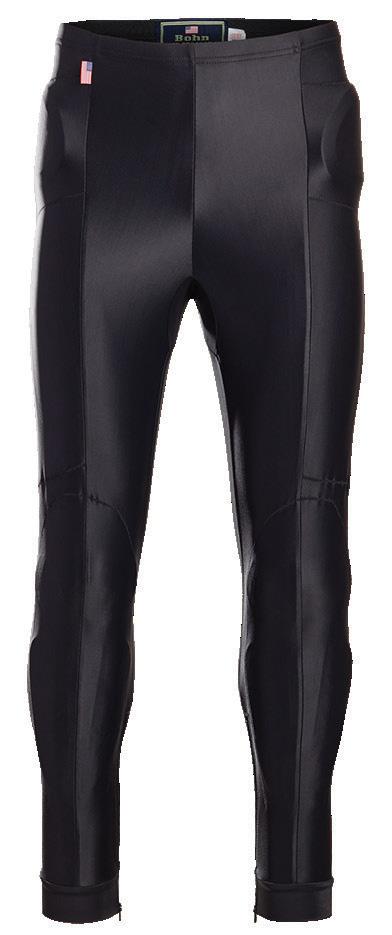
• Bohn Armor Pant & Shirt Set
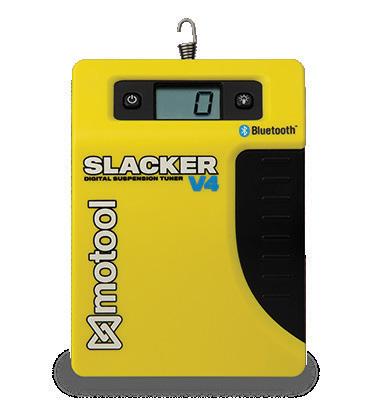
• Motool Slacker & Street Kit
Members who join or renew their AMA membership from Jan. 1, 2022, through Dec. 31, 2022 are automatically entered to win one of these awesome motorcycling prizes!
SWEEPSTAKES
One of the greatest things about my job is the opportunity I often get to recognize the great work and achievements of individuals who have done amazing things in the world of motorcycling.
We ran a story in last month’s issue about the U.S. Women’s International Six Days Enduro World Trophy Team and their victory in Italy at the 95th ISDE. The team was made up of Britney Gallegos, Brandy Richards and Rachel Gutish, and they beat their competition by more than 15 minutes. Congratulations to Britney, Brandy and Rachel for their incredible feat. Each of these talented riders deserves recognition for their amazing efforts.
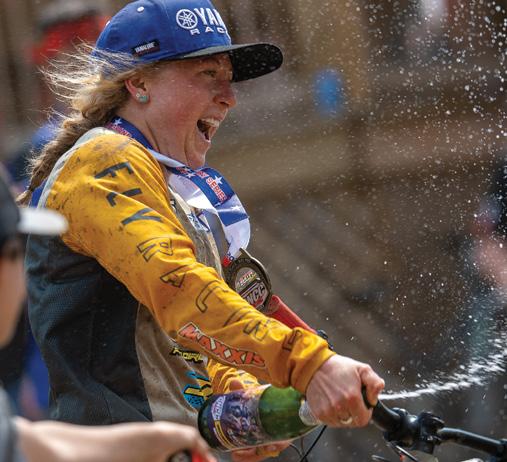
Brandy Richards, however, did something no ISDE competitor, man or woman, has ever done in the event’s 100-plus-year history — she won every single test in her class across the six days of the event! This is a monumental accomplishment that will be difficult for any rider to replicate, even in the next 100 years.
The AMA Motorcyclist of the Year award recognizes the profound impact an individual has had on motorcycling during the past year. It is impossible to overstate the significance of Brandy Richards’ achievement, and there can be no doubt that being the first person to accomplish something this impressive certainly made a profound impact on motorcycling in 2021. It is for this reason the AMA Board of Directors has named Brandy Richards the 2021 Motorcyclist of the Year (read more on p.30). Congratulations, Brandy! You earned this honor with your tremendous effort and impressive victory.
While on the subject of recognition
From the President and CEO MOTORCYCLIST OF THE YEAR AND MORE
BY ROB DINGMAN
for a job well done, there is a member of the AMA staff I would like to acknowledge for his efforts to help ensure a return to normalcy (or some semblance thereof) as the persistent effects of the global pandemic continue to wreak havoc on our sport.
Over the last two years, travel to and from the U.S. has been difficult, if not impossible. Navigating the frequently changing travel restrictions requires persistence and determination. With all the international riders that come to the U.S. to compete in AMA and Fédération Internationale de Motocyclisme-sanctioned events, as well as international series that typically have rounds in the U.S., these travel restrictions had a significant detrimental effect on motorcycle racing in this country. Since most of the restrictions emanated from the U.S. government, it fell to AMA’s Government Relations staff to find a way to keep racing in the face of the global pandemic. Specifically, it was AMA Director of Government Relations Michael Sayre who worked with U.S. Department of Homeland Security and U.S. Customs and Border Protection to find ways to help riders and promoters get themselves, their teams and their equipment into the country (see p.14).
Chief Sporting Officer Carlos Ezpeleta of MotoGP-promoter Dorna told me that bringing the MotoGP series to Austin, Texas, last fall would not have been possible without the assistance of AMA and Michael Sayre. There are countless other riders Mike assisted over the last couple of years that would not have been able to get here without his help. So thanks, Mike, for your efforts
to facilitate racing in the U.S.! Finally, I would like to personally pay tribute to an AMA Motorcycle Hall of Famer we recently lost. Two-time AMA Superbike Champion Wes Cooley, whose image graces our cover this month (covery story, p.20), passed away last October from complications of diabetes.
Wes had not really been engaged in the motorcycle community for many years after going on to a career in the medical community. A few years ago, Wes was the grand marshal at AMA Vintage Motorcycle Days. I will always remember how genuinely shocked he was that people still knew who he was and even wanted his autograph. He seemed to have no idea what a big impact he had had on people’s lives during his career and beyond. His humility despite his notable accomplishments makes him even more of an icon in my view. Rest in peace, Wes Cooley!
Rob Dingman is the President and CEO of the AMA, and a Charter Life Member
BRANDY RICHARDS
1975 in the AMA’s Hall Of Fame Retro Raf e!
Such a deal on such a classic motorcycle! Raffle tickets not only give you chances to win this restored, retro-classic Monza-blue Boxer, it benefits the AMA Motorcycle Hall of Fame and Museum – where motorcycle legends live! A winner will be drawn next July at AMA Vintage Motorcycle Days 2022 at Mid-Ohio Sports Car Course. Don’t miss your chance!
https://AmericanMotorcyclist.com/raffle-bike/ $5 per Ticket $20 for Five
GIVING CREDIT
BACKFIRES
The October issue rocked it like a Garcia guitar solo! I loved the VMD coverage and the David Aldana profile in the October issue, but I must point out two AMA Hall of Famers who went unrecognized in the page 58 photo. That’s Jim Rice #24 and Jody Nicholas on the Suzuki flanking Aldana in the 1970 Talladega winner’s circle.
Lindsay Brooke Plymouth, Mich.
Thanks, Lindsay! —Ed
“NAME’S SOLO. WHITNEY SOLO”
Fabulous article on a successful Iron Butt (Solo Thrash, November 2021). What an accomplishment! I have earned three Iron Butt awards, except they were all on a Honda Gold Wing. But 48 states in nine days, and on a Harley-Davidson Pan America 1250? Whitney Meza, I am unworthy to tie your boots.
Kevin B Parsons
I’ve put many thousands of miles on GLs, Kevin, and a couple thou on the Pan America, too, on a recent Alps
Tour (same issue), so I’d urge you to give the Pan Am a try. The thing is big-rig tourer comfortable and quite a bit more fun to ride (for me, anyway) when the road gets curvy. —Ed.
A SOLO THRASH OF MY OWN
Whitney Meza’s Solo Thrash piece reminded me of an endurance ride that was by necessity. In 1971 I was a United States Army soldier at Ft. Bliss in El Paso, Texas. A fellow soldier had taught me to ride on something like a 1970 Suzuki Scrambler. After that I had to get my own bike and soon I had a new 1971 gold Honda CB350 with 36 horsepower. I rode everywhere and loved it. Well, in November of ’71 I was advised I’d be given an earlyrelease in mid-December. I was like, “Wow, how will I get my motorcycle home to Chicago!” Of course, selling my beautiful bike never entered my mind. But remembering that my uncle Warren had ridden from Florida to Chicago in the winter empowered me to do the same. Very early on Thanksgiving morning I left Ft. Bliss wearing long underwear, two pairs of pants, two shirts and a jacket, combat boots with two pairs of socks, snowmobiling gloves and my Easy
LETTER OF THE MONTH
THEMES VS. VARIETY, PART II
Congratulations on winning the Grand National Championship of Restraint in your reply to Bruce D. in the November issue. He wrote: “Early Motocross? Meh,” (What the heck is Meh, anyway?), which raised my blood pressure, but when he took a swing at On Any Sunday, I lost it. (My wife shouted from the next room, “Are you okay?”) It is ironic that the very movie that inspired thousands to a life of motorcycles was/is a “variety” format, just like what he asks for from the Editor. How you didn’t swing back with that point showed Grand National Championship Restraint. I salute
Rider American flag helmet. Strapped to my sissy bar was my green duffel bag carrying my AMPEX portable tape player. And a spare chain…why, I still don’t know. Money totaled $23 for fuel ($0.36/gal. in ’71); but nothing for motels. Going up U.S. 54 to Santa Rosa, N.M., brought me to I-40 which, after many miles riding behind an 18-wheeler because of very dense fog, I took to Oklahoma City where I-44 became my home all the way to St. Louis. From there, it was a short jump via I-55 to Chicago. A meager distance of 1,475 miles in two days. As soon as I got home I had to reserve airline tickets so I could fly back to the base by Sunday. I’ll never forget that trip. And will never do it again on a 36-horse motorcycle!
Byron Morrison
A FIRM GRASP OF THE OBVIOUS?
I have to laugh every time I hear or read that BMW “created” the adventure market. If that’s true, what were the Yamaha Big Bear and XT500 and so many other ’60s/’70s dual sports from Britain and Japan? In 1979 I joined four friends on a gravel-road trek to Alaska;
the new format, as it’s taken me down motorcycle paths I don’t normally travel. My only suggestion to Bruce is to open his lens and explore. You can still have your focused passion while enjoying the breadth motorcycling has to give. Dare I say you might find a new “adventure” if you do — adventure being the focus of that issue? Keep up the great work. I love the new magazine!
Brian Hennessy, Life Member Plus, AMA #859773
Drive, Pickerington, OH 43147. Letters may be edited for clarity and brevity.
we converted our air head BMWs, doing what riders had been doing for years: raising the front fender and adding dirt tires and engine belly protection. The point is, the adventure market was created by riders, not manufacturers! Rewriting history serves no one; it just fogs the facts. Well, that and a way to create sales. Keep up the great work on American Motorcyclist!
Mark Ellison
Thanks, Mark. It seemed a little too obvious to actually write that older — and pre-’81 —motorcycles have been used for on- and off-road adventure riding for a hundred years or more, so we didn’t. So, no history rewriting here. But thanks for reminding us of the Big Bear and XT! —Ed.
FACTS VS. CHEAP SHOTS
As a lifetime motorcyclist and a Tesla owner I was disappointed that AMA mindlessly repeated out-ofcontext stats about Tesla provided by the clowns in the federal government. Tesla spends more on R&D per car than the next three auto makers combined and every week or two they release software updates to every one of their cars making them safer. Despite all this and not unlike motorcycles, Tesla’s are not immune from accidents or from people driving them like idiots. However, had you done even a moment of research, you would have reported that while tragic, Tesla’s 11 accidents with emergency vehicles represents a rounding error in the 45,000 emergency vehicle accidents during that same period. Stick to writing about motorcycles and stop taking cheap shots at one of America’s most innovative car companies just
because they refuse to bribe the media with advertising dollars. Matthew Jarvis
Matthew: Being a fan of Tesla automobiles and their technology does not exclude reporting on a newsworthy federal investigation into their safety features and concerns motorcyclists have for their safety on the road. While I am personally a big Tesla supporter, and the AMA Board Statement on the matter of autonomous-vehicle technology clearly welcomes the potential for the technology to make the roads safer for motorcyclists, reporting on the matter with unbiased facts (such as 11 known accidents involving Teslas utilizing the self-driving technology colliding with emergency vehicles, which killed one and injured 17) is the duty we reporters have. It is a danger, in any situation, to not question the safety of any technology that is being tested in the real world with real world consequences. As we have seen time and again, unfettered technological advancement without safeguards often leads to unintended consequences. —Kali K.
ALPS CHALLENGE TOUR
After reading Editor Boehm’s Alps Challenge piece in the November 2021 issue (several times, in fact) I signed up for the August 2022 tour with Edelweiss. John Denver had his “born again” experience in his 27th summer when he found Aspen, CO, and I had mine in my 57th summer on my first ride down the Alaska Highway to a Goldwing Rally in Montana, as I lived in Alaska at the time. I’ll never forget those feelings of freedom, and have been touring ever since. I’m really stoked about this tour, which will be my first in Europe. Ol’ John Denver had it right, so thanks, Mitch!
Dennis Bible, Blairsville, GA
Happy to help, Dennis! For those looking for an awesome experience
with us later this year in Europe, be sure to check out Edelweiss Bike Travel’s website. —Ed.
PAN AMERICA PINING
I’m writing about Editor Boehm’s experience with the HarleyDavidson Pan America, which he rode during the Alps Challenge Tour (November issue). I’ve read a lot of riding impressions on the Pan Am, but to have the bike show up in his Perspectives piece and in two of the main articles in the magazine says a lot of positive things. As a longtime Harley-Davidson rider, all this makes me very optimistic about what may be coming next from The Motor Company.
Stan
Smith; Cleveland, Ohio
IT’S CLEM! IT’S CLEM!
After reading the November issue of American Motorcyclist I decided November was a golden trifecta month for me. I've been riding for 56 years and have seen a lot of moto magazines disappear, so I was happy when Mitch Boehm joined the staff last winter, as he is one of my two all-time favorite motorcycle writers over the decades. So when I got the issue I went straight to his Perspectives column and then jumped ahead to his Alpine tour piece, which sent me tripping down memory lane as I was in Heidelberg, (West) Germany in the U.S. Army from 1972-1978 and did eight or nine runs back and forth over the Alps on three different bikes. Then I read the rest of the magazine and OMG! There's Clem Salvadori, my other all-time favorite scribe. Just when I thought I had reached nirvana, I opened the day’s other mail and there was my newly minted AMA Charter Life Member creds, thus completing my AMA perfect trifecta month. Keep up the good work on the wonderfully transformed magazine, and twist Clem’s arm for more articles.
Mike Bradbury AMA #368498
up to speed The Show Must Go On!
Amidst a global pandemic and harsh international travel restrictions, the AMA’s Government Relations Department helped countless athletes enter the U.S. to compete
BY KALI KOTOSKI
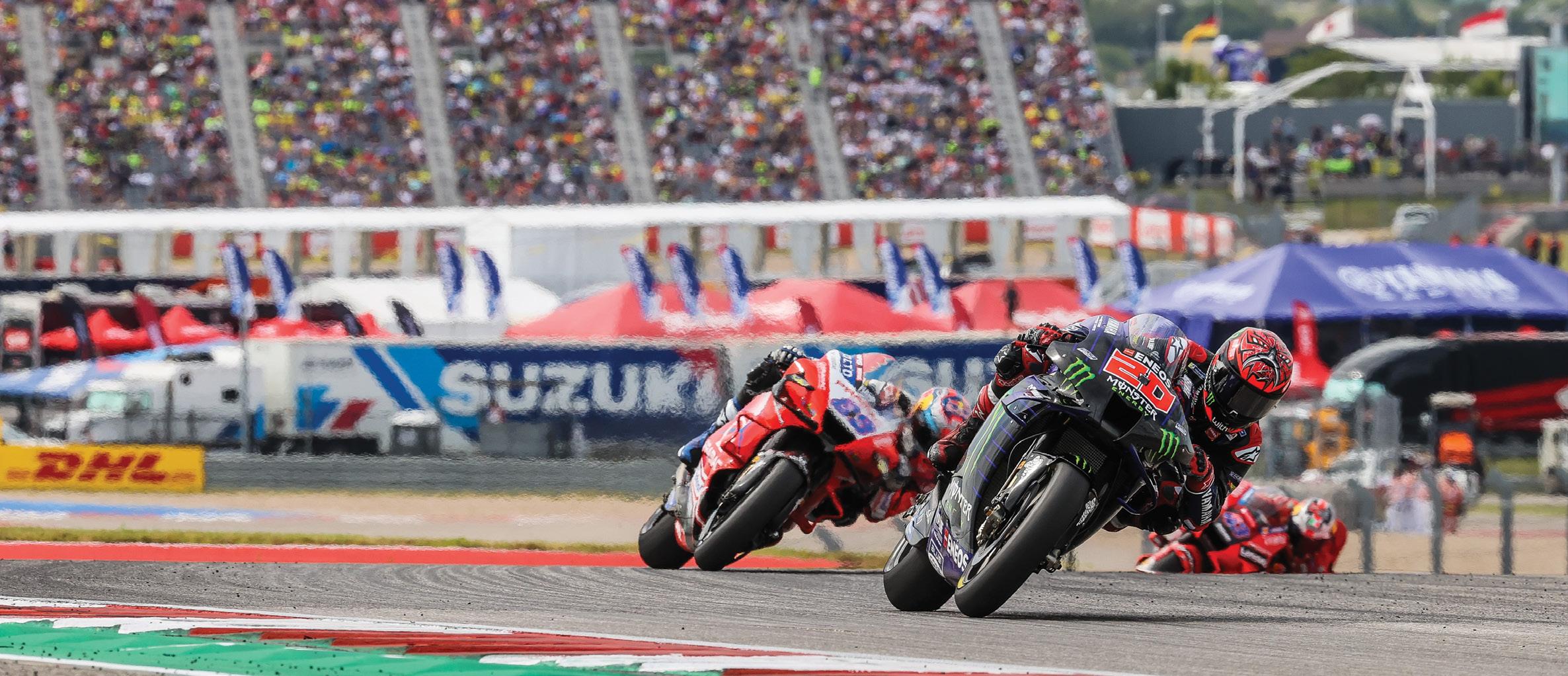
xpectations were high as the date of early October’s MotoGP race at the Circuit of the Americas race in Austin, Texas, approached in 2021. The race marked the first time the series would return to the U.S. since the COVID-19 pandemic shuttered the world and caused countries to wall off their borders with onerous travel, testing and quarantine restrictions. And it was only the second race not on European soil after series promoter Dorna successfully held a race in Qatar in March.
EWhile some global athletic competition was slowly returning to normal, with foreign-born athletes competing in the NBA, MLB and other bread-and-butter American sports, the COTA MotoGP event
was a huge test for the sport of professional motorcycle road racing, and one that proved that it is indeed possible to pull off a massive logistical event in unprecedented times.
“We had people telling us it was impossible to [have this race] and that we wouldn’t be able to get into the States,” said Dorna’s Chief Sporting Officer Carlos Ezpeleta. “It was really important to have the championship back in the USA, and it would have not been possible in any way if not for the AMA.”
By Ezpeleta’s count, the AMA’s Government Relations Department — spearheaded by Director Michael Sayre — helped 1,825 racers, mechanics, support staff, announcers and the entire paddock pass through
MICHAEL SAYRE
JEFF KARDAS
PETER STOCKUS
the U.S. Customs and Border Protection protocols with National Interest Exceptions (NIE) waivers — a category of travel documents used by athletes, humanitarian workers, government officials and public health professionals to bypass specific prohibitions on international travel while standard, Non-Immigrant Visa (NIV) services remained suspended.
“The COVID-19 travel ban prohibited travelers coming from the EU, UK, Brazil, China, Iran, South Africa and India from entering the United States,” said Sayre. “But with the NIE waiver, the MotoGP paddock was by far the largest group I assisted during the roughly two years of the travel ban. But it was not the first.”
When the travel ban was first instituted in the U.S. it came soon after the 2020 Monster Energy AMA Supercross event at Daytona, as COVID-19 fears started upending the globe. The ban pumped the brakes on the series and led to widespread uncertainty.
Spanish AMA Supercross rider Joan Cros was left with only one choice — return to Spain to see how things would eventually shake out.
“I had family and friends and the Spanish government telling me I had to return because at that point there was no telling how bad the pandemic would get,” Cros told American Motorcyclist. “But when they eventually announced that the final series championship race would happen in June [2020] in Salt Lake City, Utah, I knew I had to try to make it.”
And try he did, though Cros ultimately failed to get permission to enter the U.S. despite his story circulating on Spanish national news for weeks, receiving a signed letter by Utah Governor Gary Herbert granting permission, and spending countless days visiting the U.S. Embassy in Madrid and trying to get on a flight.
“For nine days I would go to the
airport with the proper paperwork, and every time I was denied. The U.S. Embassy wouldn’t even consider the letter from the governor,” he said, adding that it was a bureaucratic nightmare. One of the problems, Cros said, was that he was a privateer trying to navigate new travel rules alone.
In early 2020, the U.S. Department of Homeland Security didn’t have an exemption for professional athletes, but that soon changed with an order that allowed professional athletic organizations to coordinate with the DHS to allow athletes, team staff and league officials to enter the U.S. with an NIE waiver.
But this presented a major challenge for the AMA’s Government Relations Department. Although GRD staff was very familiar with departments in the Executive Branch and with agencies that impact motorcycling, such as the
then the Ranking Member of the Senate Committee on Homeland Security and Governmental Affairs. Through Senator Peters’ staff, Sayre connected with the U.S. Customs and Border Protection’s Coronavirus Coordination Cell, and work began immediately to ensure that motorcycle racing was included in the exception to the travel ban.
What Sayre had to do to get motorcycle competition accepted by federal authorities was manifold. He had to coordinate with promoters to establish a detailed COVID safety plan for events, with specific guidelines for international participants, and also produce a letter justifying the standing of a given race series as being critical to the national interest. This letter had to make clear that a given race series was the pinnacle of the discipline, could demonstrate the economic impact of its events, and
“We had people telling us we wouldn’t be able to get into the States. It was important to have [MotoGP] back in the USA, and it would have not been possible if not for the AMA.”
DORNA’S CARLOS EZPELETA
Departments of Transportation and Interior and the Environmental Protection Agency, Sayre and his team had not previously interacted with DHS or U.S. Customs and Border Protection — the agencies that oversaw that specific part of the COVID-19 travel ban. Plus, competitive motorcycle racing was not originally included as a sport accepted in the order.
“We had never really dealt with DHS or CBP before,” Sayre said, “and didn’t even know where to begin. We needed some assistance to connect the dots.”
Marshalling AMA allies on Capitol Hill, Sayre and his team reached out to the Co-Chair of the Senate Motorcycle Caucus, Senator Gary Peters of Michigan,
that international participation was vital to maintain the standing of the series.
With the help of promoters like Feld Entertainment and the AMA’s own Racing Department, Sayre and the AMA successfully got motorcycle racing accepted by Customs and Border Protection. But there were two caveats: One, only professionallevel events were allowed under NIE status, which left amateur racing in the lurch; and two, that Sayre had to be the singular point person for anyone trying to enter the U.S. to race motorcycles for the entirety of the travel ban under AMA-sanctioned racing and Fédération Internationale de Motocyclisme (FIM) events.
Spain’s Joan Cros was the first to receive an NIE waiver with the help
up to speed
of the AMA for the 2021 Monster Energy AMA Supercross season, an FIM World Championship.
“Michael [Sayre] assured me that the waiver would come, but there was still a lot of uncertainty with how 2020 went for me,” said Cros. “But when it did come in December of 2020 for the 2021 season, it was great! I also got a waiver for my mechanic and my wife to come over for a month. Really, I wouldn’t have had a chance to compete without the work of Michael.”
News of Sayre’s assistance soon made the rounds, and Cros admittedly helped fuel demand in the Government Relations Department by handing out Sayre’s contact to other international riders desperate for guidance.
Sayre’s efforts affected professional roadracing, as well. For Louis DeNaples III, Principle at Warhorse Powersports Group (which had just acquired Ducati New York and launched a new joint venture team with Ducati New York, North American Warhorse and HSBK Racing), Sayre’s help was invaluable as the group entered the 2021 MotoAmerica Superbike series for the first time.
“With it being our inaugural season on a Ducati Superbike,” DeNaples, said, “we knew we needed to find a world-class rider capable of taking
on the challenge of a new bike and a new program. So when we came across the French racer Loris Baz, it was absolutely critical to get him here for our efforts.”
But just getting Baz over on a NIE waiver was only a part of it. Almost as crucial was getting approximately 70 percent of Baz’s Italian support staff to the U.S., which included a crew chief, mechanics and an electrical engineer.
Despite assurances the team would receive NIE waivers, DeNaples knew that any hurdle could cripple the effort, so he had to invest in a second team if an NIE was not granted or if one of the team members tested positive for COVID-19. Luckily, there was no crisis and the team got to compete.
“From a team’s perspective, there is so much going into a race, and just getting somebody into the country is last thing that comes to mind,” DeNaples said. “Luckily, Michael and the AMA were heroes for us.”
After nearly two years of travel restrictions and the countless numbers of people helped by Sayre, not to mention many sleepless nights, late-night international calls and reams of meticulously compiled paperwork, the U.S. lifted all travel restrictions on November 8, 2021 for all fully-vaccinated travelers.
“This is extremely good news
for anyone from a country on the travel ban list who wants to race a motorcycle in the U.S. in 2022,” Sayre said. “Professional and amateur racers can expect the closest thing to a ‘normal’ race season in the U.S. we’ve had since the pandemic started.”
While the AMA stepped up to an unprecedented challenge and, under tight restrictions, ensured that competition could continue during two years of global upheaval, it also has positioned the organization to be well-armed to deal with any future events, explained Mike Pelletier, AMA’s Director of Racing.
“We have learned a lot through this and so have our athletes,” said Pelletier. “Now that we have proved we can do it, we know going forward that we can manage uncertainties. Our efforts also put the AMA in league with major sporting associations like the NBA and NFL.”
To stay up to date on the latest developments in the AMA’s Government Relations Department and the work it does across the board, subscribe to the AMA’s Action Alerts at AmericanMotorcyclist. com/subscribe-rights. For fully vaccinated international travelers, visit the U.S. Department of Homeland Security’s website at dhs.gov to learn about the new protocols.
BRIAN J NELSON
Dirt Track Legends in the Hall!
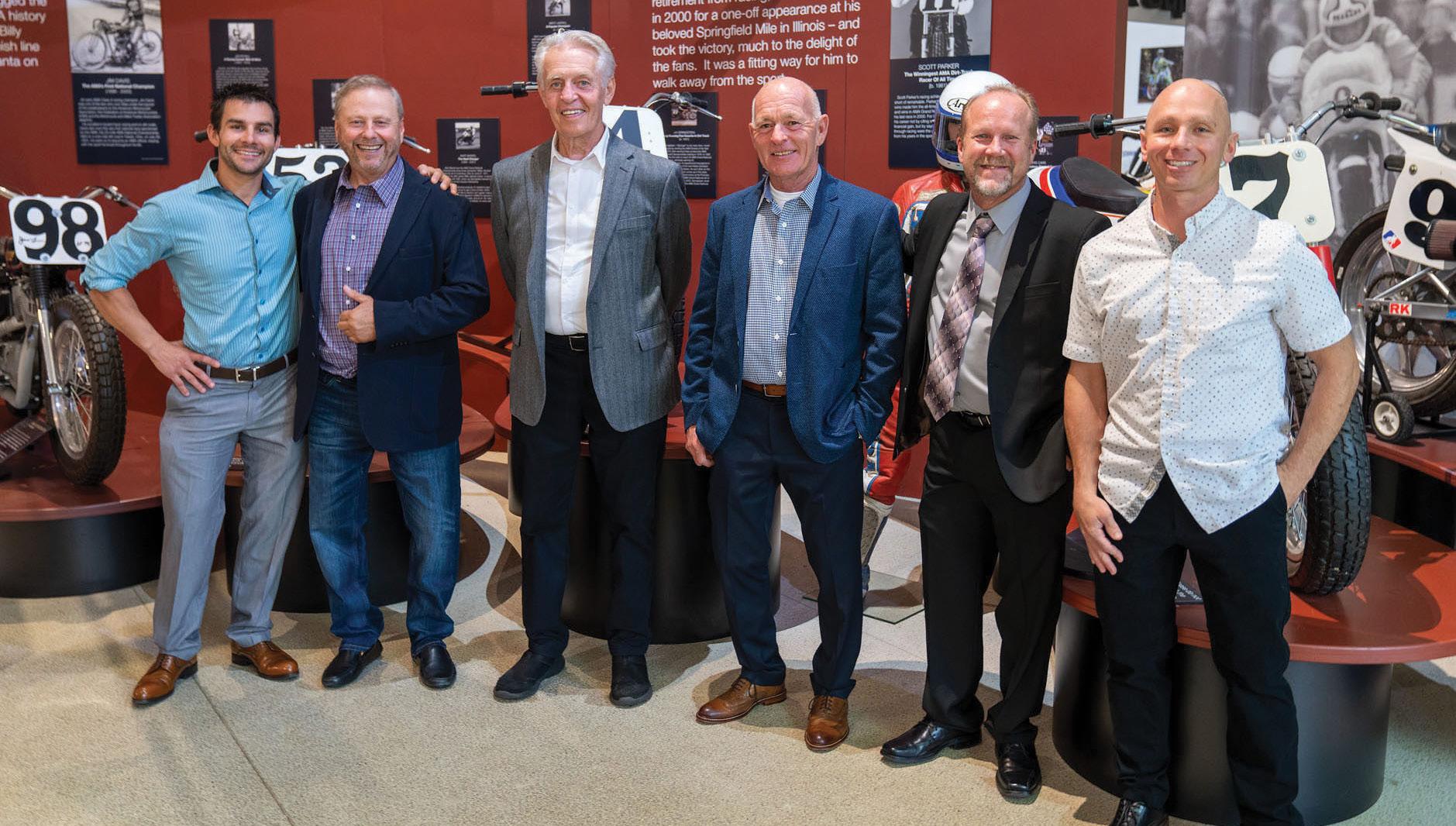
One of the highlights of the recent AMA Motorcycle Hall of Fame induction weekend at AMA Headquarters in mid-October (and there were many) was this gathering of dirt track Hall of Famers (and future Hall of Famers) at the Motorcycle Hall of Fame Museum.
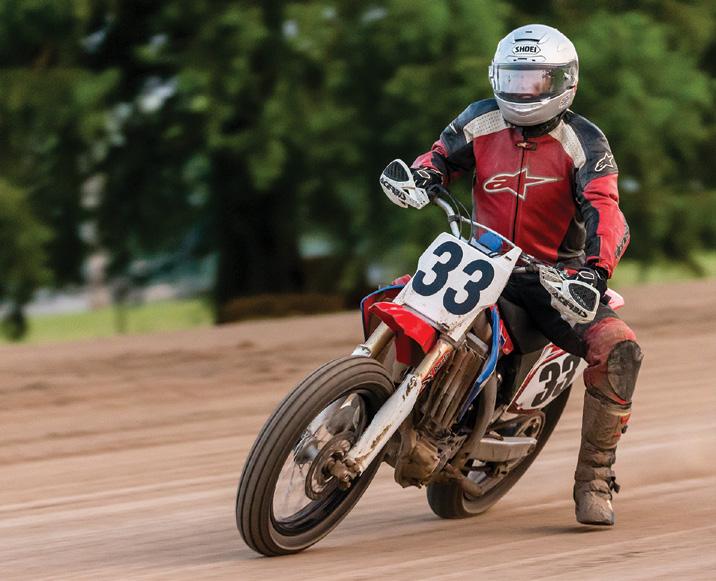
Left to right are multi-time Grand National Champion Jared Mees, Hall of Famers Kenny Tolbert, Bill Werner, Steve Morehead and Chris Carr, and Grand National Champ Bryan Smith.
These guys have known each other for years and spend a lot of time together at the track during the AFT season, but rarely do they gather informally like this — and for sure not dressed up and looking all snazzy! Chris Carr in a tie? Who’d have thunk it?
Getting them in one place that evening was like herding cats
BY MITCH BOEHM
(they were all bench racing and reminiscing like crazy among the assembled families, friends and fans), but the storytelling was pretty rich even though we couldn’t hear all of it. A truly legendary group, for sure, and a truly memorable evening.
Next year’s HOF Induction
weekend will have a few very interesting surprises, so keep that in mind as 2021 turns to 2022 and you begin planning your summer and fall activities. October in Ohio is a lovely time of year, for riding and celebrating our wonderful sport, and we’re sure you’ll enjoy what we’ve got in store.
GARY YASAKI
up to speed
PMC: 114 Years and Counting
BY KEATON MAISANO
he United States in May 1907 was a much different place than it is today. The country had only 45 states, women’s suffrage was still 13 years out, and gas hovered around 20 cents per gallon. That’s more than a century of growth and evolution, and the Pasadena Motorcycle Club (PMC) has been there to witness it all.
TAll of which makes the club’s recent upgrade in status to an AMA Historic Charter — 114 years after its formation on May 20, 1907 — all the more appropriate.
“There are MCs all around,” Todd Hodge, a PMC member since 2008, said. “The one thing we do that stands out is that we’ve been around since 1907.”
motorcycle club in Southern California and the third oldest in the United States. Only the Yonkers Motorcycle Club (1903) and the San Francisco Motorcycle Club (1904) have existed longer.
Entering the mix as the 14th chartered club by the American Motorcyclist Association, the PMC is the oldest
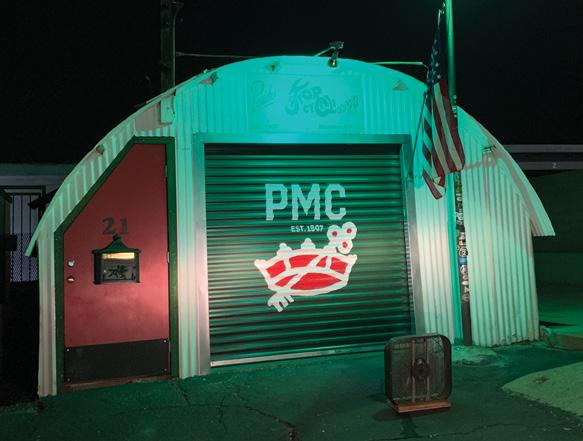
The club’s pride resides in its annual Greenhorn ride, which they’ve run since 1947. The PMC’s long history can also be found in its retro clubhouse — a World War II-era Quonset Hut the club has called home since 1948.
While the PMC leans on its history, Hodge said a focus on the future is vital for the club’s continued survival.
“[We want to] give the next generation of PMC members a better place than we have now,” Hodge said. “Literally, it’s about the longevity. We take the fact that we’ve been around for over 100 years very seriously, and we want to make sure we’re around for another 100 years.”
PHOTOS: PMC
on the radar
President Biden Signs $1 Trillion Infrastructure Bill
.S. President Joe Biden on Nov. 15 signed into law a roughly $1 trillion bipartisan infrastructure bill — the largest investment into the nation’s infrastructure in nearly a decade — after it narrowly passed through a divided congress.
Officially called the Infrastructure Investment and Jobs Act, the bill aims to improve the country’s economic competitiveness by rebuilding the nation’s crumbling infrastructure and creating jobs, which independent analysts from S&P Global claim could be as many as 1 million new jobs created over the next decade.
On roads and bridges, $110 billion will be spent on surface repairs, construction and funding for major projects. Under this portion, the bill also establishes the first-ever Safe Streets and Roads for All program to support projects to reduce traffic fatalities.
For motorcyclists, the bill reauthorizes the Recreational Trails Program that serves as a critical funding mechanism for motorized and non-motorized trails using a portion of the federal gas tax paid by off-highway vehicles. A previous House version of the bill included a significant increase in funding to better reflect the federal gas tax revenue derived from off-highway vehicles but the Senate opted to keep existing funding levels for the program.
The bill also reauthorizes the Motorcyclist Advisory Council for another six years. The MAC advises the U.S. Department of Transportation on infrastructure issues of concern to motorcyclists. The AMA chaired the most recent iteration of the MAC which was disbanded in late 2020 after submitting a set of recommendations to the Secretary of Transportation. This legislation increases the MAC’s membership to include more motorcyclist voices. It also requires more rounds of recommendations from the Council and responses from U.S. DOT in order to allow the MAC to delve deeper into the issues raised by previous iterations of the Council.
Road safety grants to states administered by the National Highway Traffic Safety Administration that include specific motorcyclist safety grants get an increase of more than 20 percent over the current funding authorization.
As spending rolls out, the AMA will be posting updates and reporting on its progress on advocating for spending that can directly benefit members.
BY MITCH BOEHM PHOTOS BY MARY GROTHE, GARY YASAKI
It is a sad but unavoidable truth that motorcycling is beginning to lose its legends from the 1960s and ’70s, as we’ve had to say goodbye to the likes of AMA Motorcycle Hall of Famers Dick Mann, Gene Romero, Joel Robert, Yvon DuHamel and too many others over the past few years. Losing two-time AMA Superbike
champ — and two-time Suzuka
8-Hour winner — Hall of Famer Wes Cooley in mid-October at just 65 years of age just adds to the pain, for families and fans alike. For that you can blame the effects of Type 1 diabetes, which hounded Wes most of his life.
What’s particularly depressing about Cooley’s passing, aside from his relative youth, is that he’d
been enjoying a bit of a resurgence of late, an emotional upswing in a life and racing career filled with a whole lot of ups and downs. As most know, Cooley rose to prominence in the mid 1970s in the fledgling AMA Superbike division, earning titles in ’79 and ’80 and becoming one of the top road racers in the world, a reputation that two victories at the prestigious Suzuka 8-hour helped buttress.
Wester Steven Cooley (1956-2021) was more than a two-time AMA Superbike champion and a helluva nice guy…he helped build the foundation of the AMA Superbike division.
Goodbye, Wes
And then it all came crashing down in a horrific crash at Sears Point in 1985 that nearly killed him. He rebounded enough to race again in the late ’80s and early ’90s, but it was really never the same and he ended up becoming a nurse, a job he thought about a lot during his youth and one he enjoyed and thrived at for 25-plus years until going into semiretirement in the mid 2010s.
And then something special happened on the motorcycling side of the Cooley ledger. In late 2015 he was invited by the AMA to be Grand Marshal of the 2016 AMA Vintage Motorcycle Days event at Mid-Ohio. He accepted and had a wonderful, inspiring time despite asking on several occasions before the event if anyone would even care. Having organized his participation at VMD
while doing some volunteer work for the AMA, I assured him they would, and the weekend — in which he was welcomed enthusiastically and joyously by large crowds of roadracing fans — proved the point.
From there, Cooley went on a string of Grand Marshal and guest appearances at large-scale retro and classic-bike events all over the world, from Barber Motorsports Park
in Alabama to Suzuka, Japan, for an 8-hour anniversary celebration, and then to Europe for a handful of classicevent appearances there.
There were some travel and logistical headaches for he and partner Melody, and he griped about that when we’d talk on the phone to catch up, but he seemed to genuinely love and appreciate rediscovering the motorcycle racing scene and his place in its history — and probably every bit as much as the fans loved seeing him back in the flesh. Cooley had literally disappeared from the two-wheel scene in the mid 1990s when he got into nursing, and fans were beside themselves when he began showing up. I can tell you that, at VMD in 2016, the excitement of having him there was palpable, and he loved it.
As most know, Superbike racing is America’s gift to the roadracing world, a series that morphed from Open Production club racing in the early and mid 1970s to become an AMA National series in 1976 and, eventually, co-dominant worldwide alongside the Grand Prix scene. And Wes Cooley, a young So Cal club racer with a father who ran one of the clubs there, was a formative presence and player in AMA Superbike from the very beginning.
Cooley’s first road race happened at Willow Springs on a Greeves Silverstone (“my mom was freaking out,” he told me), but he soon graduated to midsize production-class twins and, in 1974, a Yamaha TZ250, which taught him about cornering speed and narrow powerbands. He and his father bought a TZ750 soon thereafter, and it was during this period he hooked up with legendary “Pops” Yoshimura, who began using Cooley to test engine and chassis mods on the Kawasaki Z1s Yoshimura was building for this suddenly hot — and important to the OEs — Open Production class…which in ’76 would officially become the AMA Superbike division.
“Pops had Yvon [DuHamel] riding for them,” Wes told me, “but since [Yvon] was in Canada and Yoshimura had very little money, he ended up using me to test stuff at Willow and Riverside. At
“Pops had Yvon [DuHamel] riding for them,” Wes told me, “but since [Yvon] was in Canada and Yoshimura had very little money, he ended up using me to test stuff at Willow Springs and Riverside.”
Cooley on the Yoshimura-built Kawasaki Z1 in 1976, the first full year of official AMA Superbike competition. The bikes were fast, but flexy frames made them a handful to ride quickly — which is why slicks were not always fitted.
The back and forth between Cooley and Team Yoshimura might have worked, but the Z1 chassis wasn’t getting the message, especially with slicks fitted. No surprise, really, with engines making double the horsepower they did stock.
the time I didn’t think Pops spoke much English, but we could communicate pretty well about the bikes, and it worked out.”
The back and forth between Cooley and Team Yoshimura might have worked, but the Z1 chassis wasn’t getting the message, especially with slicks fitted. No surprise, really, with engines making double the horsepower they did stock, and chassis technology being what it was back in the mid ’70s.
Folks often assume AMA Superbike’s earliest days were filled with monster inline-four Japanese bikes headshaking and sliding around and lighting up their rear tires on corner exits, but the truth is a little different — and largely Euroflavored. That tire-smoking scenario would become pretty well established in ’79 and ’80, but the division’s first few years were largely dominated by BMWs, Ducatis and Moto Guzzis, which lacked the pure horsepower of the Japanese bikes but offered better high-speed stability and chassis performance.
To wit, six of the top-ten finishers in that first official season (1976) were on Euro bikes, with Reg Pridmore (BMW), Steve McLaughlin (BMW), Gary Fisher (BMW), Cook Neilson (Ducati) and Mike Baldwin (Moto Guzzi) filling the top five slots. In 1977 it was Pridmore’s title again, with Neilson second, Baldwin third, Ron Pierce’s BMW fourth and Kurt Liebman’s BMW fifth. Cooley was sixth on the Z1, with seven of the top 10 on Euro bikes.
Things began to morph a little in ’78, with only four of the top-10 slots taken by Euro bikes. Pridmore took the championship hat trick (but on a Kawasaki), with John Long (BMW), Paul Ritter (Ducati) and Harry Klinzmann (BMW) following. Cooley was fifth overall, but on a Suzuki for much of the season, as Yoshimura moved away from Kawasakis.
The move to Suzuki’s GS1000 platform would bode well for the team and Cooley in the coming years, with Cooley winning both the 1979 and 1980 AMA Superbike championships against the likes of World Champions and AMA
Hall of Famers Freddie Spencer and Eddie Lawson. Superbike racing had arrived, and in a few years would become the Big Show.
The next few seasons would see Cooley on Suzukis (the blueand-white GS1000S in ’81 and the Katana in ’82), GPz750-based
Kawasakis (1983), Suzukis again in 84, and Honda VF-based bikes in ’85. He’d finish third overall in ’81, fourth in ’82, seventh in ’83 and ninth in ’84. Not a great direction, and a frustrating few years for the ex-champ.
Cooley started 1985 off with a
bang, finishing second to Spencer at Daytona in a top-four Honda sweep, with Jeff Haney and Ron Haslam grabbing third and fourth. He got third at Willow Springs in round two, with then-mostly-unknown – and future World Champion and Hall of Famer — Kevin Schwantz taking his
first-ever AMA Superbike win, with reigning champ Fred Merkel second.
Things were looking good…right until tragedy struck in round three at Sears Point, Cooley going head-first into a retaining wall and breaking his neck, both femurs, five vertebrae, two fingers, and severely bruising his
lungs and kidneys. Cooley spent two weeks in a trauma center, underwent three separate operations and had four pounds of pins and steel plates placed in his legs and back. In the days after the crash, the question wasn’t “would Wes ever race again?” but “would he live?”
Somehow, and this goes directly to the level of mental and physical fortitude he had, Cooley was back racing just over two years later, this time in an endurance-racing setting for John Ulrich’s Team Hammer/ Team Suzuki squad at the WERA 24hour West event at Willow Springs
Cooley (34) up front, followed by Hall of Famers David Aldana (109), Mike Baldwin (43) and Freddie Spencer (hidden), as well as Roberto Pietri (88) and others.
— where he’d first cut his roadracing teeth nearly 20 years earlier. “I’m addicted,” he told LA Times journalist Shav Glick in 1987. “I guess that’s all I can say to explain it. When John Ulrich offered me that ride, I was so happy to know that someone still believes in me.”
He was fast and smooth and rode most of his sessions at night, and while the Vance & Hines team I was riding for ended up winning the event (we’d do so three years in a row), Cooley was impressive. I distinctly remember him passing me on the team’s GSX-R1100 around the outside in the middle of the night at about a buck-thirty in Willow’s notorious Turn 8, and to see it happen up close like that from the seat of the GSX-R750 I was riding was something I will never forget. Cooley continued to dabble in roadracing for a few years and was a lead instructor at Ulrich’s Team Suzuki roadracing school, but the pull of the medical profession eventually took over, and he went back to school and ended up working as a nurse in the surgical
unit of St. Luke’s Medical Center in Twin Falls, Idaho, for nearly 25 years until retiring…and then getting my call in late 2015 to be Grand Marshal at AMA Vintage Motorcycle Days.
Wes had a ball at VMD, and I cannot tell you — especially now, knowing he’s gone — how personally satisfying it was to host him that weekend in 2016, and sort of help jumpstart his re-emergence as a true motorcycling superstar over the next few years. For Wes, it was much more than simply the attention and adulation at those events that
made him smile…he truly enjoyed meeting and talking to the fans, and signing posters and photos and GS fuel tanks, and was so appreciative of the opportunity to reconnect with
the motorcycling community. I remember our Sunday night dinner at VMD like it was yesterday. “Guys,” he said earnestly to Brian O’Shea and me, “this has been an amazing weekend, for me and for Melody…Thank you so much for making it all happen!”
No…thank you, Wes Cooley. Godspeed, my friend. AMA
MOTORCYCLIST
BY JOY BURGESS
MARY RINELL
very year the AMA — its Board of Directors and staff — bestows a very special honor on an individual or group that’s had the most profound impact on the world of motorcycling over the past 12 months.
EAnd looking back over 2021, there was really only one choice: Brandy Richards and her superhuman effort in the 2021 ISDE in Italy, where she helped propel the U.S. Women’s Trophy Team to a spectacular victory.
Not only did Richards bring home the Women’s World Trophy with team members Rachel Gutish and Britney Gallegos, she did something no one — man or woman — had ever done in the ISDE’s 100-year-plus history…she won every single test in her class
“People unfamiliar with the ISDE may not realize the magnitude of what
[Brandy] did,” teammate Rachel Gutish told American Motorcyclist. “You have six ‘special tests’ per day for five days, minus three cancelled for unsafe conditions. Then one more — the final moto. That’s 28 tests! Each test is a miniature race within a race. They are short enough to be an all-out sprint – between 6-20 minutes long — with every rider competing at max capacity.
The potential for mistakes is high.
And don’t forget…these special tests take place in the larger context of a multi-day event covering hundreds of miles.”
Twenty-eight special tests, in addition to the grueling day-to-day mileage. Let that sink in for a moment.
“The concentration and consistency to win the event, much less to have a perfect race…” Gutish continued.
PHOTOS BY
OF THE YEAR
“What all this means is that she was unquestionably the most dominant female rider on the planet this year — quite possibly ever.”
“Brandy Richards accomplished something truly extraordinary in Italy this year,” said AMA Board of Directors Chairman Russ Ehnes. “Making ISDE history with her performance on the world stage deserved recognition — which is why we selected her as the AMA’s 2021 Motorcyclist of the Year. We’re extremely proud of her stellar example of American greatness and to have her as an AMA member.”
“I never even thought I’d be considered for [Motorcyclist of the Year],” Richards told American Motorcyclist, “even
after winning at ISDE. It’s so amazing that the AMA recognized me. Making history like that, even in the offroad world…it’s pretty cool. Looking back on what I did, it’s pretty insane, and I’m so shocked to be given this honor.”
“Being recognized for winning has been so cool to me,” she continued, “and it was awesome that our team was represented on the cover of [American Motorcyclist]! It’s been great to represent women, and inspiring women to race and ride motorcycles is probably the best part of it.”
Congrats, Brandy!
BRANDY RICHARDS
In 2021, the American Motorcyclist Association sanctioned over 1,600 races. And while it’s impossible to cover every single race and racer in our pages, we’ve tracked down some of the stand-out competitors who had some big accomplishments in the past year.
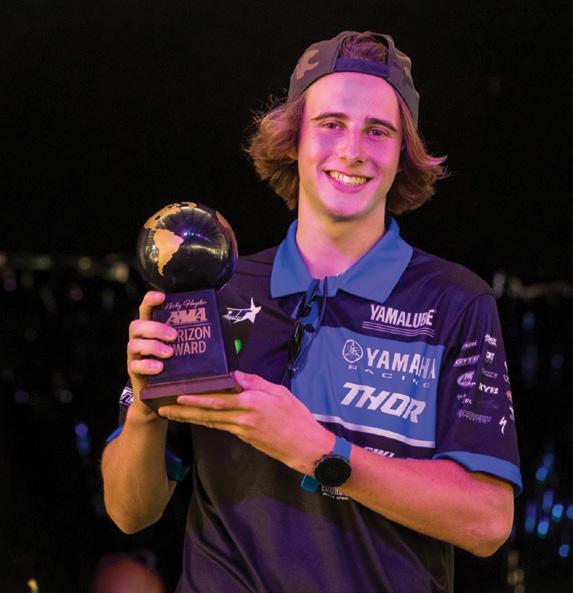
From the highly-coveted AMA Nicky Hayden Horizon Awards — the AMA’s most prestigious racing awards that go to promising, up-andcoming racers in motocross, roadracing and flat track, all while honoring the legacy and racing success of Nicky Hayden — to AMA Amateur Racer of the Year, Youth Racer of the Year, and Veteran/Senior Racer of the Year awards, and to championship winners, you’ll find a bit of everything in this section.
Racing Roundup
What’s exciting about talking to — and reading about — these racers is the inspiration they offer to us all. For those who’ve previously raced, these stories will likely take you back to your own glory days. And for those who’ve never raced, or who dream of turning some laps in anger on a motorcycle, well, you just might find the motivation you need to take the plunge in these pages.
With so many racers and just 16 pages, there are plenty of stories we just couldn’t tell or fully dig into here. So be sure to visit AmericanMotorcyclist.com regularly for more in-depth stories on AMA racing and racers.
—Joy Burgess
AMA championship and award winners from the amateur racing ranks
BY KEATON MAISANO
WHo rizon AwardS
hile none of the recipients of the 2021 Nicky Hayden Horizon Award were born when the “Kentucky Kid” made his transition from amateur competition to the professional ranks, the legacy the AMA Hall of Famer, MotoGP world champion and original Horizon Award winner (in 1997) left behind is still felt.
“Nicky Hayden’s racing success and legacy are honored through this award across the flat track, roadracing and motocross disciplines,” said AMA Director of Racing Mike Pelletier. “The Nicky Hayden AMA Horizon Award is one of the most prestigious honors a rider can receive.”
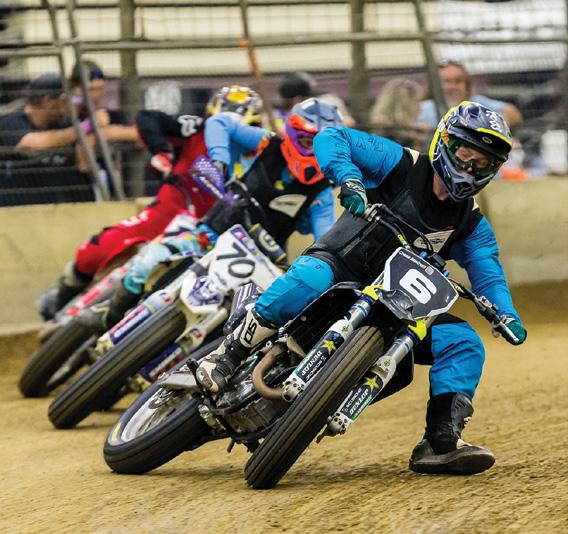
Chase Saathoff, winner of the Horizon Award in flat track, enjoyed an incredible 2021 season, holding the top spot in four AMA Flat Track Grand Championship classes: 450cc modified, 450cc production, 250cc open singles for 12 years and up, and open heavyweight.
“[Winning a Horizon Award] has been a goal of mine, probably since Dallas Daniels won it,” Saathoff told American Motorcyclist. “I’ve always looked up to him, so it was kinda on my bucket list!”
Being the first of his family to race, the 16-year-old balances racing and playing soccer — though he’s not letting the attention of winning the award weigh him down.
“I have pressure, but I’m going into the ’22 season trying to go out there and get results,” Saathoff said. Stepping up to the professional ranks, the Illinois native will ride a factory Honda with Turner Racing in 2022.
In amateur motocross, Levi Kitchen shined bright in 2021. Following his AMA Amateur Motocross Rider of the Year distinction in 2020, Kitchen claimed the Nicky Hayden AMA Motocross Horizon Award in 2021.
“Obviously, it means a ton to win
Saathoff, Kitchen and Medina grab Nicky Hayden AMA Horizon Awards
Levi Kitchen
“
“
BY JOY BURGESS
motocross I
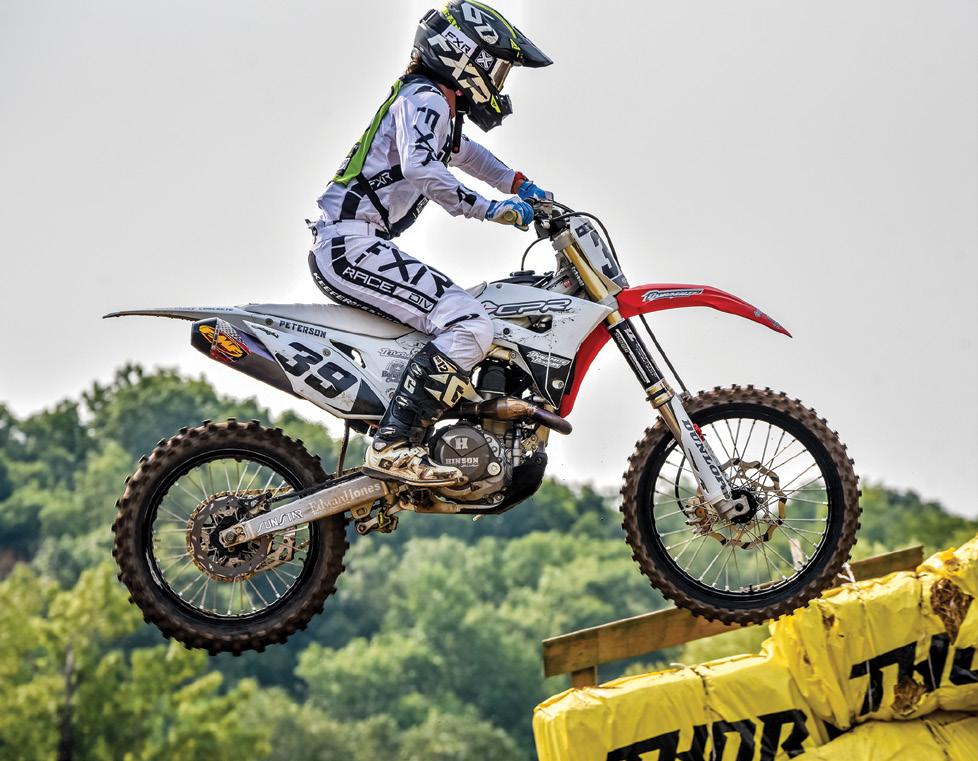
t’s a good addiction,” 2021 AMA Motocross Veteran/Senior Racer of the Year Broc Peterson told American Motorcyclist. “I’m 31 years old, and I’ve been racing motocross for 26 years. I’m pretty good at it, there’s no other sport like it, and it sure is fun when I do win.”
Peterson said that it was his goal to win this award, but he just didn’t think it was going to happen as he competed against a lot of other big names.
“When I won it was a shock,” he said, “and so exciting. I used to race Pro and made some Pro Nationals, but Loretta Lynn’s is just every little kid’s dream…even full-grown men’s dream. To win the Veteran award and a championship at Loretta Lynn’s, well, that’s hard to beat.”
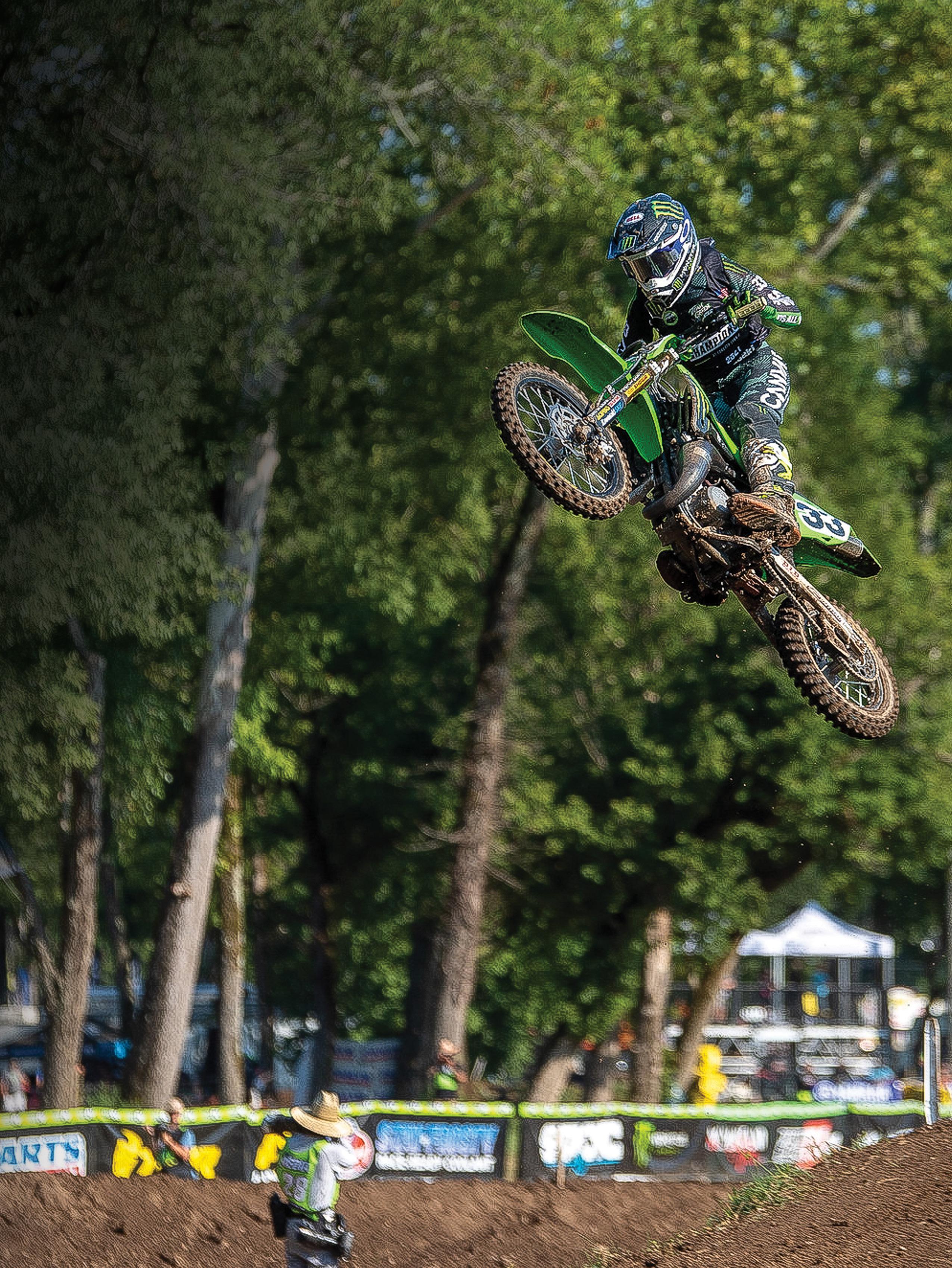
The Motocross Youth Racer of the Year award went to promising 13-year-old racer Drew Adams. Adams showed off his potential by winning double titles — all three motos in the 85cc (10-12) class and taking the overall win in the Mini Sr. 1 (12-14) class — aboard a KX85 for Monster EnergyR Kawasaki Team Green.
Nicholas Romano was named 2021 AMA Amateur Motocross Rider of the Year after winning three motos in the 250 B class.
Broc Peterson
Peterson, Romano and Adams win awards at the AMA Amateur National Motocross Championship
Drew Adams
Nicholas Romano
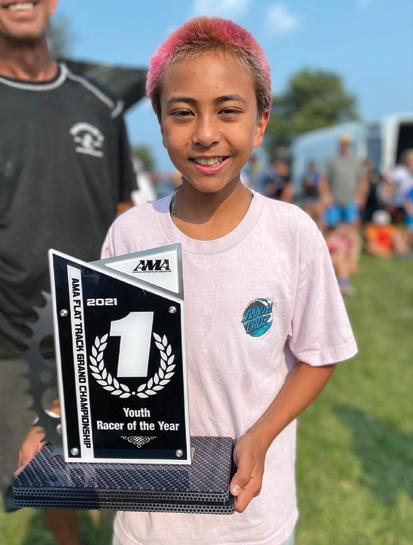
flat track
Tadman, Mayer and Harrington earn awards at 2021 AMA Flat Track Grand Championship
Austin Harrington
Dallas Mayer
BY JOY BURGESS
Kage Tadman
Flat track is a true American original, and with a history going back a century, it’s the root of all American motorcycle racing. Despite the sport’s unforgiving nature, it’s the thrill of going fast that keeps many racers coming back.
According to 13-year-old Kage Tadman, “I love the adrenaline of going fast and the excitement…but mostly, being able to get sideways.”
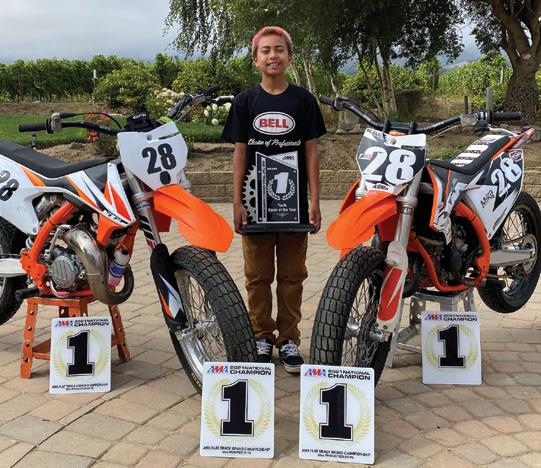
“When I was 4, my parents entered me in my first race,” Tadman told American Motorcyclist. “I got hooked, and never looked back.” Tadman was awarded the AMA Flat Track Youth Racer of the Year award at the 2021 AMA Flat Track Grand Championship.
“Winning it was unexpected but rewarding because I worked hard for it,” he said. “My plan for the future is to race AFT.”
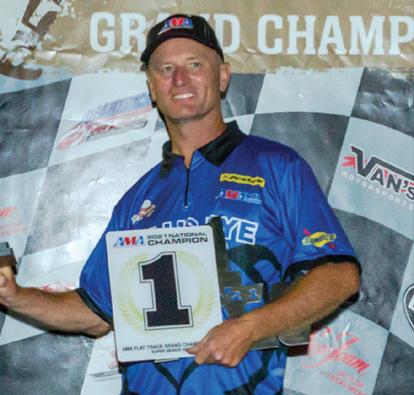
2021 Flat Track Veteran/Senior Racer of the Year Dallas Mayer had a different story to tell.
“I didn’t start racing regularly until my early 20s,” Mayer said. “[But] when I saw flat track, the guys were wearing leathers, a steel shoe and no front brake, it attracted me.”
“I’m fortunate when the Nationals come to Du Quoin,” he said. “I like the four-race format — short track, TT, mile, and half mile. It’s my sixth time winning it, and still so rewarding.”
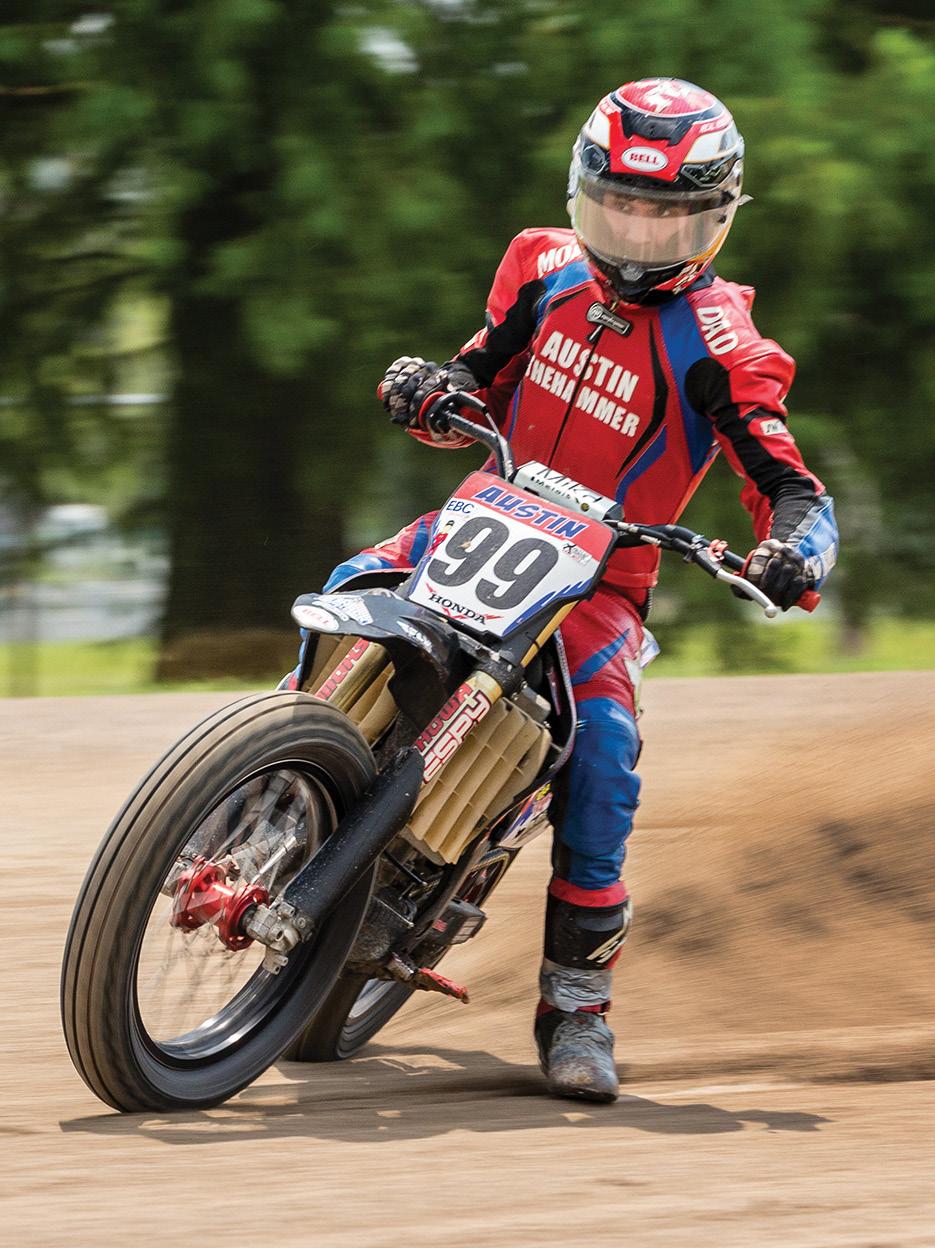
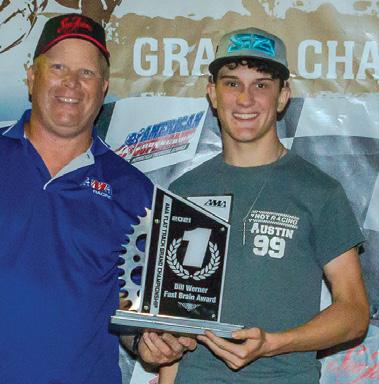
Austin “The Hammer” Harrington, who won the 2021 Fast Brain Award in flat track — an award that goes to racers who succeed on the track and show academic excellence — is 16 and has been racing over a decade.
Harrington had a strong 2021 season, and the hard work paid off. “I was excited to win it,” he said. “I put in a lot of work on the bikes, but just as much in school … I want to race American Flat Track; that’s what I work for.”
Hillclimb
Wood, Engnes and O’Neil reach the summit
BY KEATON MAISANO
Few disciplines have an opponent more daunting than a fellow racer. But for hillclimb racers, the battle against the hill is the main focus.
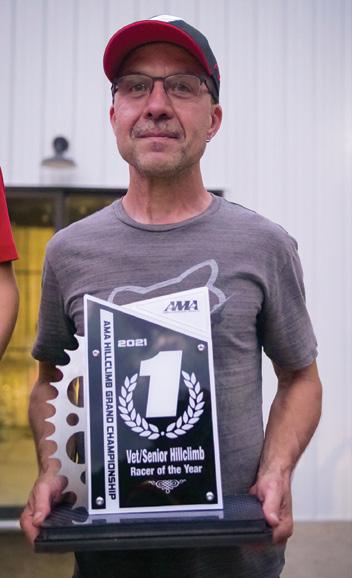
One of the sport’s seasoned veterans is Mike Wood, who was awarded AMA Hillclimb Grand Championship Veteran/Senior Racer of the Year for the fourth consecutive season.
“Consistency is a byproduct of doing it so long,” Wood told American Motorcyclist. “There are faster motorcycles and better riders, but doing it over and over — I’ve been riding the same motorcycle since 1996 — makes it second nature.”
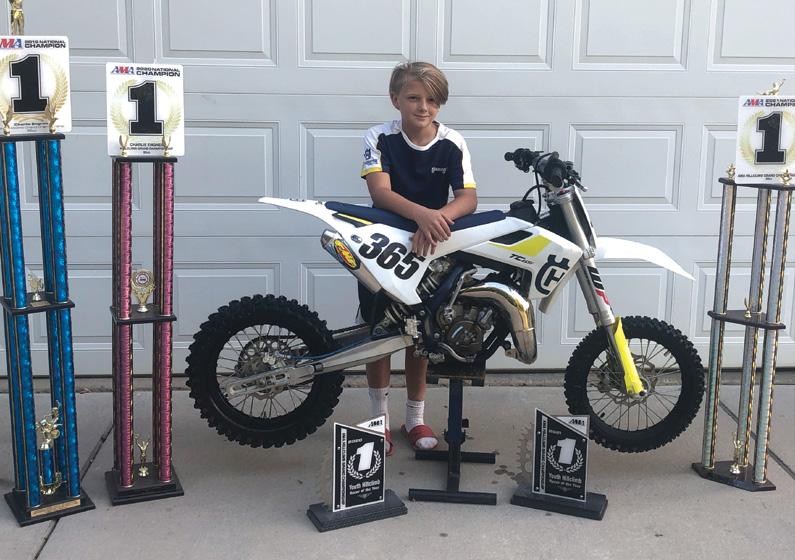
Wood enjoys watching the younger generation pick up the sport and excel, and few young riders have found as much success as 12-year-old Charlie Engnes.
Engnes claimed 2021 AMA HCGC Youth Racer of the Year — an award he’s claimed for two straight years since his brother’s win in 2019 — despite breaking his shoulder riding motocross. His participation in the Grand Championship was in jeopardy, but he was cleared two days before the event.
“I was proud to get at least one national championship,” he said, “as well as the Youth Rider of the Year award.” Claiming the title in the 65cc class, Charlie said his goal is to win a national championship in each class.
Bodee O’Neil continued the theme of multi-year dominance by being named the AMA HCGC Racer of the Year for the fourth time in five years. In 2021, the 17-year-old claimed a No. 1 plate in the Open class along with his first win in AMA Pro Hillclimb.
O’Neil said his consistency comes from riding multiple disciplines, and that having a forward-looking mindset is critical for success.
“Even if you’re not where you want to be, you always want to look to the next race,” O’Neil said. “I’ve learned that if you keep focusing on the same race you’re not really going to go anywhere.”
Charlie Engnes
PHOTOS: LUKE CIPALA
Mike Wood
Bodee O’Neil
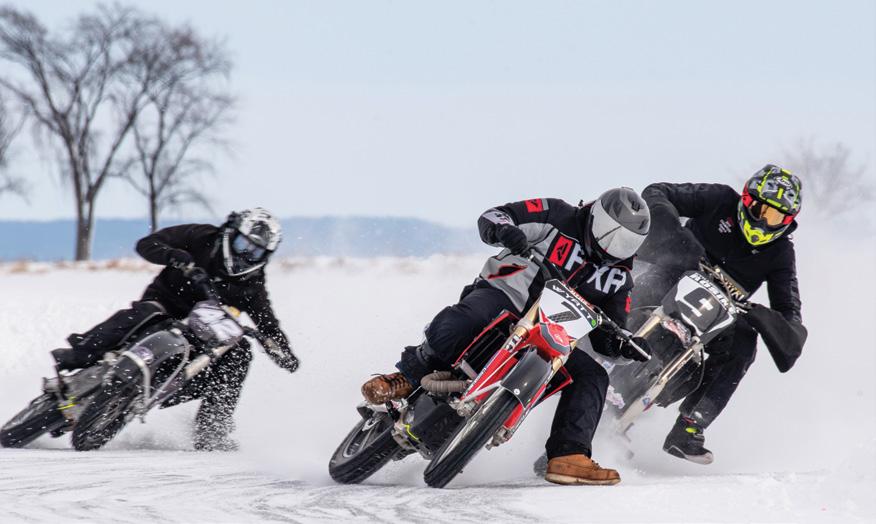
Ice Racing
Johnson and Bargeron tie for Amateur Racer of the Year, while Pickett and Bradish also claim awards
BY JOY BURGESS
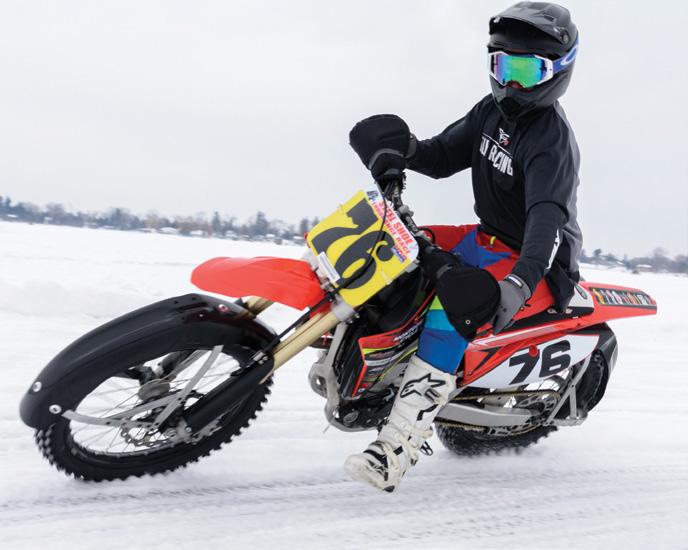
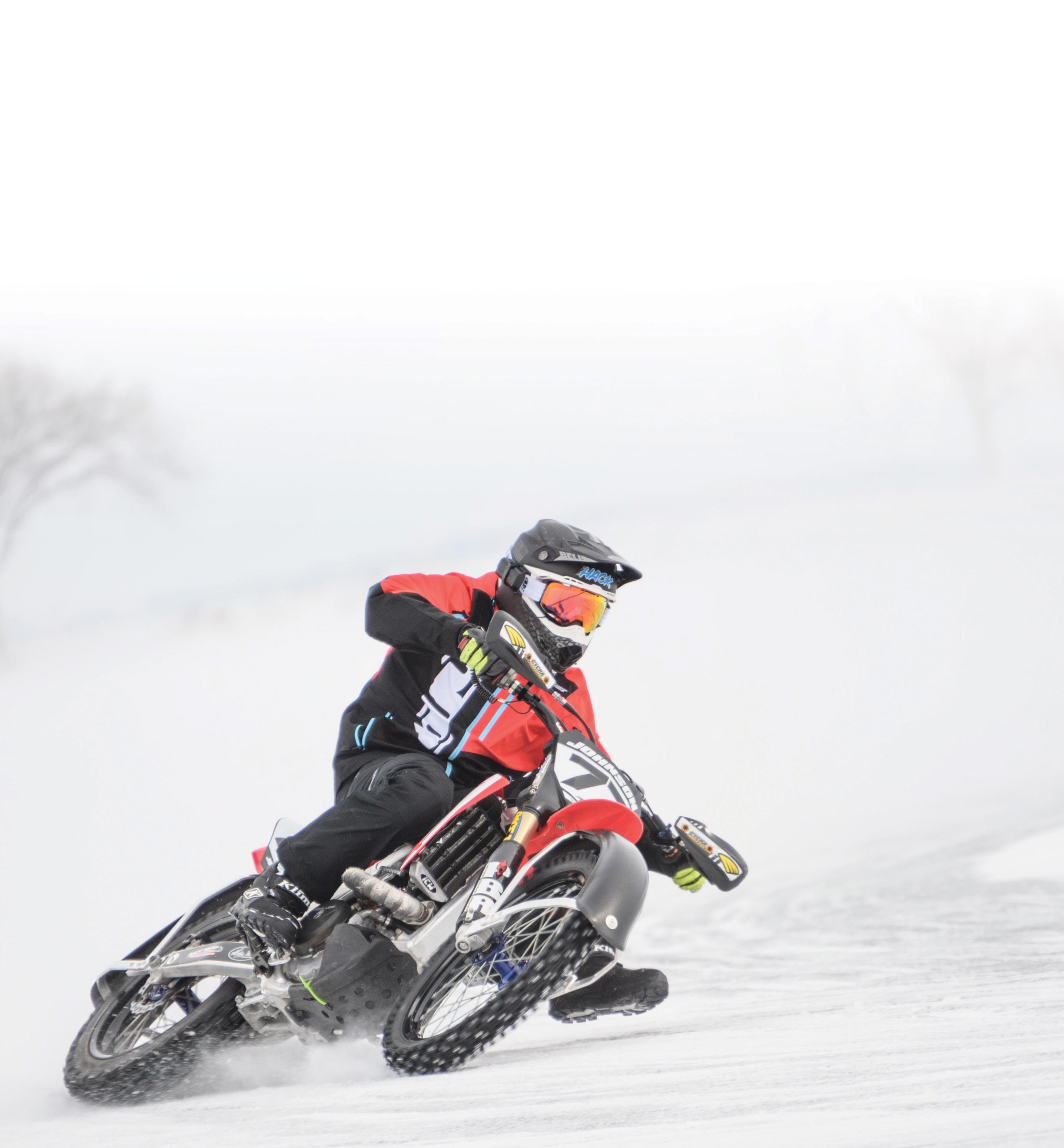
he 2021 AMA Ice Racer of the Year award is determined by the AMA with input from race promoters, referees and race results factored into the decision. And there aren’t often ties, according to AMA Track Racing Manager Ken Saillant. But sometimes you have two racers that just can’t be ignored.
T“Both Brady Bargeron and Kyle Johnson raced incredibly well at the championship this year,” Saillant said, “and were fierce competitors… Both racers are certainly deserving of the award, and they clearly proved it.”
“[Ice racing] isn’t what most people think,” Kyle Johnson told American Motorcyclist. “I’d compare it to riding on asphalt, and you have a ton of traction. It’s fun, the speeds are awesome, and most of the time when you fall it’s pretty forgiving because you just slide.”
Johnson wasn’t expecting to win an award for 2021…in fact, he wasn’t even planning to race. It was his sister Kayley Johnson — who also races — who convinced him to race in the championship.
“I said, ‘Okay, fine. I’ll go. But you realize you’ll have to race against me, right?’” he laughed.
“It was a surprise to win the award again,” he continued, noting that he’d won it twice before. “And definitely surprising to tie with Brady.”
Michigan native Blake Bradish was awarded 2021 AMA Youth Ice Racer of the Year. After pulling off victories in both the 65cc and 85cc class Championship races at the AMA Ice Race Grand Championship — put on by longtime AMA member and race promoter Ron Brefka’s iRon Enterprises, LLC. — it was obvious the young racer deserved the recognition.
Craig Pickett, who’s a legend in the world of ice racing, claimed the Veteran/Senior Ice Racer of the Year award.
Kyle Johnson
Brady Bargeron
Craig Pickett
Blake Bradish
Cross Country
Benjamin Kelley and Becca Sheets wrap up 2021 AMA GNCC Championships
BY JOY BURGESS
MA Grand National Cross Country (GNCC) racer — and 2021 WXC Class champ — Becca Sheets loves cross country racing because of the independence it gives her.
A“Spectators and crew can’t see an entire lap,” Sheets told American Motorcyclist, “and there are roots, rocks, hillclimbs, mud…just all of these obstacles that you have to get through for two hours. The variables make it challenging, but it’s so satisfying to overcome.”
With so many fast women in the WXC class this year, Sheets found it a challenge just to stay on top through the series, but she still claimed the championship.
“This is my third and final WXC championship,” Sheets said. “After 21 years racing dirtbikes and chasing GNCC titles for the last decade, I’ve decided to hang up my boots as a professional racer.”
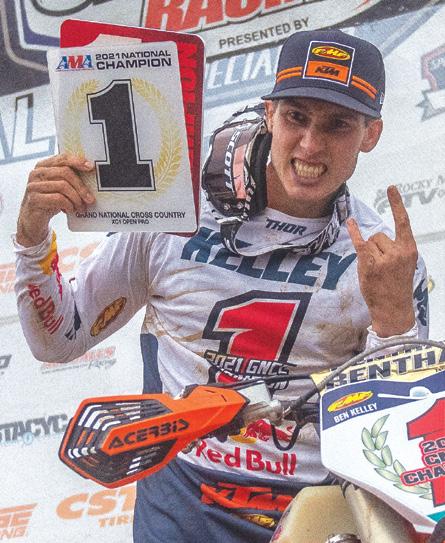
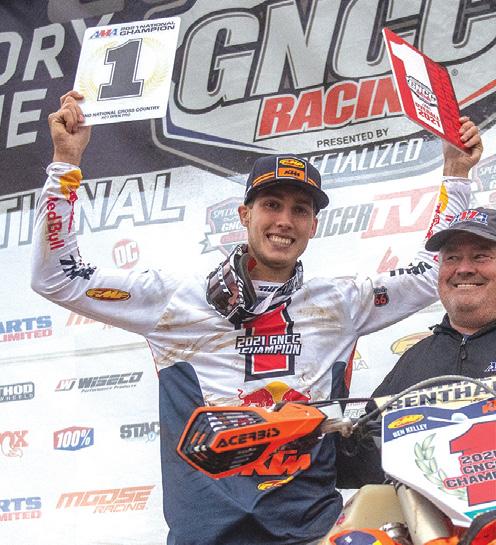
While Sheets is hanging it up, Benjamin Kelley — who won the GNCC XC1 Open Pro class — plans to defend his No. 1 plate in 2022 and, hopefully, go back to ISDE on the Trophy Team to try to win there.
“This was an up and down season,” Kelley said. “I had some nagging injuries. I had some good races, but some not-so-good ones due to crashing or not riding my best. I didn’t win that much, but I was super consistent, stayed tough, and got the job done in the end.”
“It felt good to win,” he continued. “More of a weight off my shoulders than anything. It’s something I never expected to do, especially in my first full season, and it’s a huge championship to win!”
Becca Sheets
PHOTOS: SHAN MOORE
Ben Kelley
Max Ruml
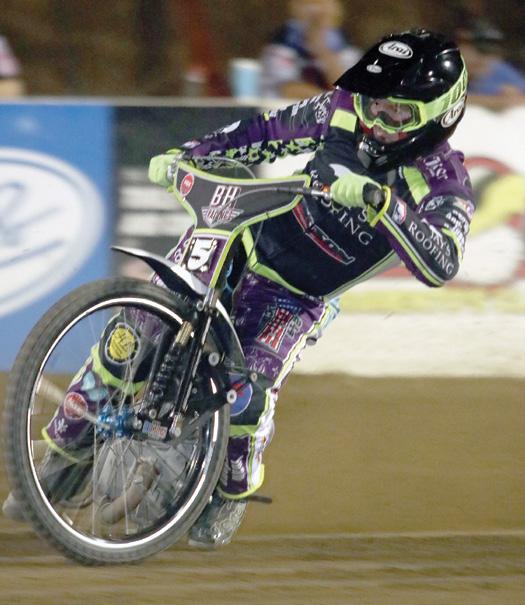
BY KEATON MAISANO
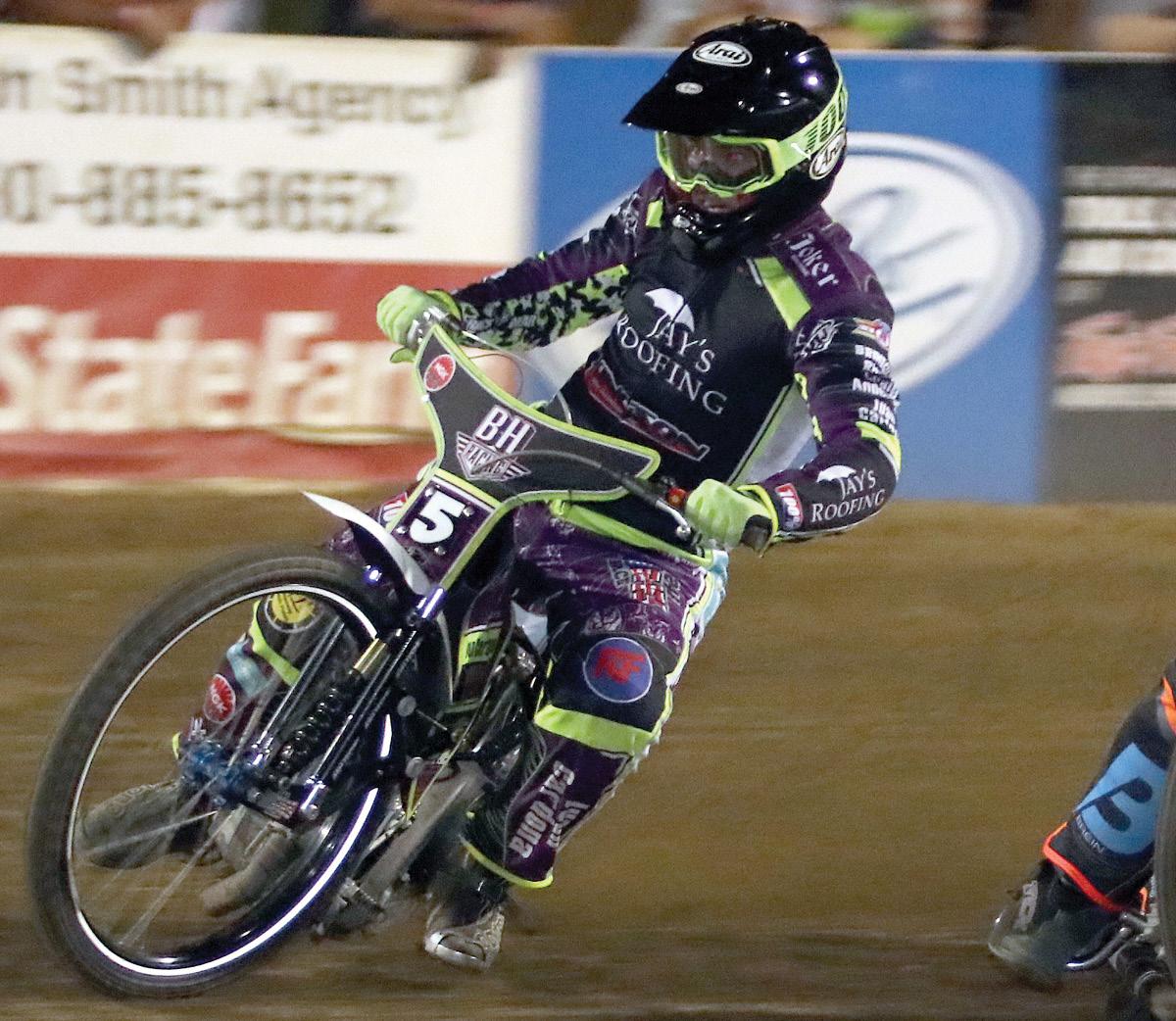
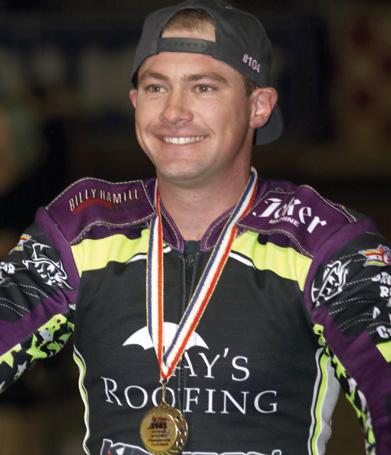
ax Ruml has had a single goal for the past eight years: win an AMA Speedway National Championship.
The 24-year-old professional speedway racer has accomplished a lot during a career ripping around short oval dirt tracks on lightweight, single-speed motorcycles. Yet despite the overall success, Ruml entered the 2021 season still searching for a title he’d come close to securing before.
“I was fired up and I was ready,” Ruml said. “I really wanted to do it this year and that’s what we did.”
Ruml, who went pro in 2013, found recent success racing with his brother, Dillon Ruml, in the AMA Best Pairs Speedway National Championship — which the brothers claimed in 2018 and 2019.
Still, Ruml struggled to fend off the competition in the AMA Speedway National Championship.
speedway
Ruml achieves long-awaited goal
After COVID-19 foiled a redemption opportunity in 2020, he started his most recent chase with a perfect run in the initial leg of the 2021 National Championship — setting himself up to clinch the title at Fast Fridays Motorcycle Speedway in Auburn, Calif.
The California native did just that, and the nearly decadelong pursuit proved worth the wait.
“It seemed like it was such a relief after earning something that I’d been wanting since I was 16,” Ruml said. “As soon as I [clinched], I was just screaming in my helmet.”
With this dream fulfilled, Ruml is interested in racing internationally in 2022, but his focus Stateside is on repeating and adding as many AMA titles to his resume as possible.
“I’ve won 321 Nationals.” Ruml said. “I’ve won two AMA [Speedway] Best Pairs National Championships. I’ve got national championships, but I didn’t have the national championship, so to finally have that, I’m blessed.”
Hare and Hound
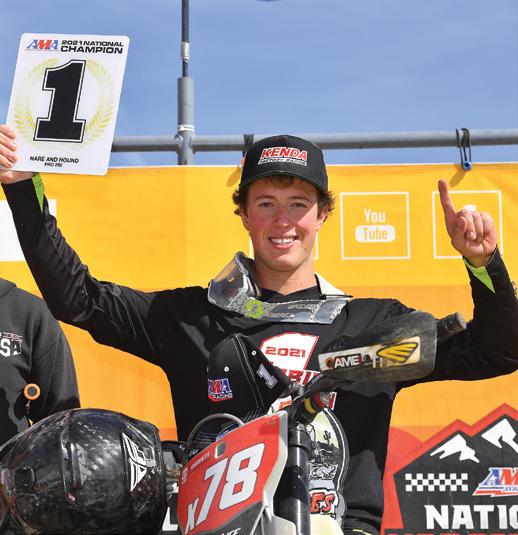
Gallegos, McPherson and Wasson win titles in the AMA Hare and Hound National Championship Series
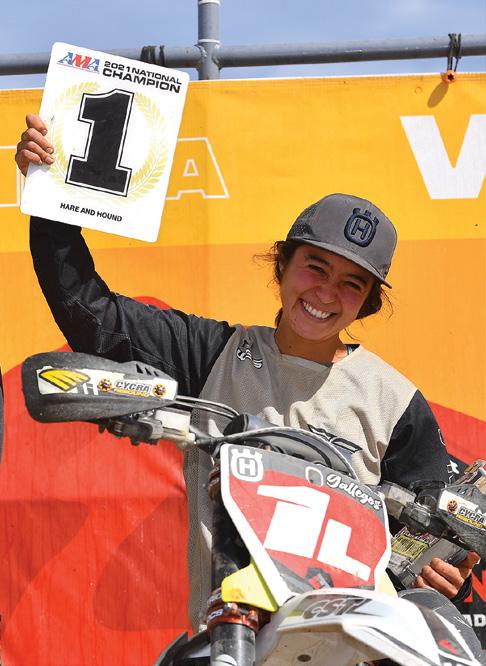
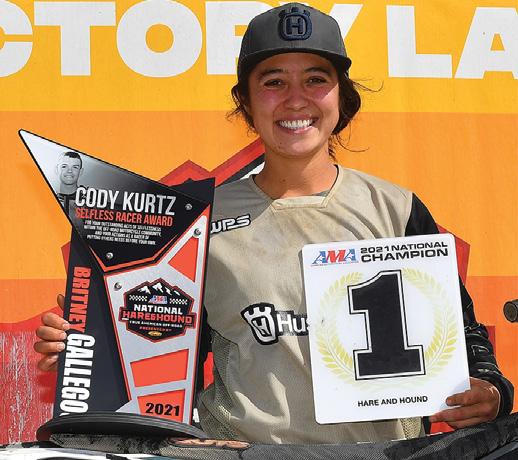
Britney Gallegos
BY JOY BURGESS
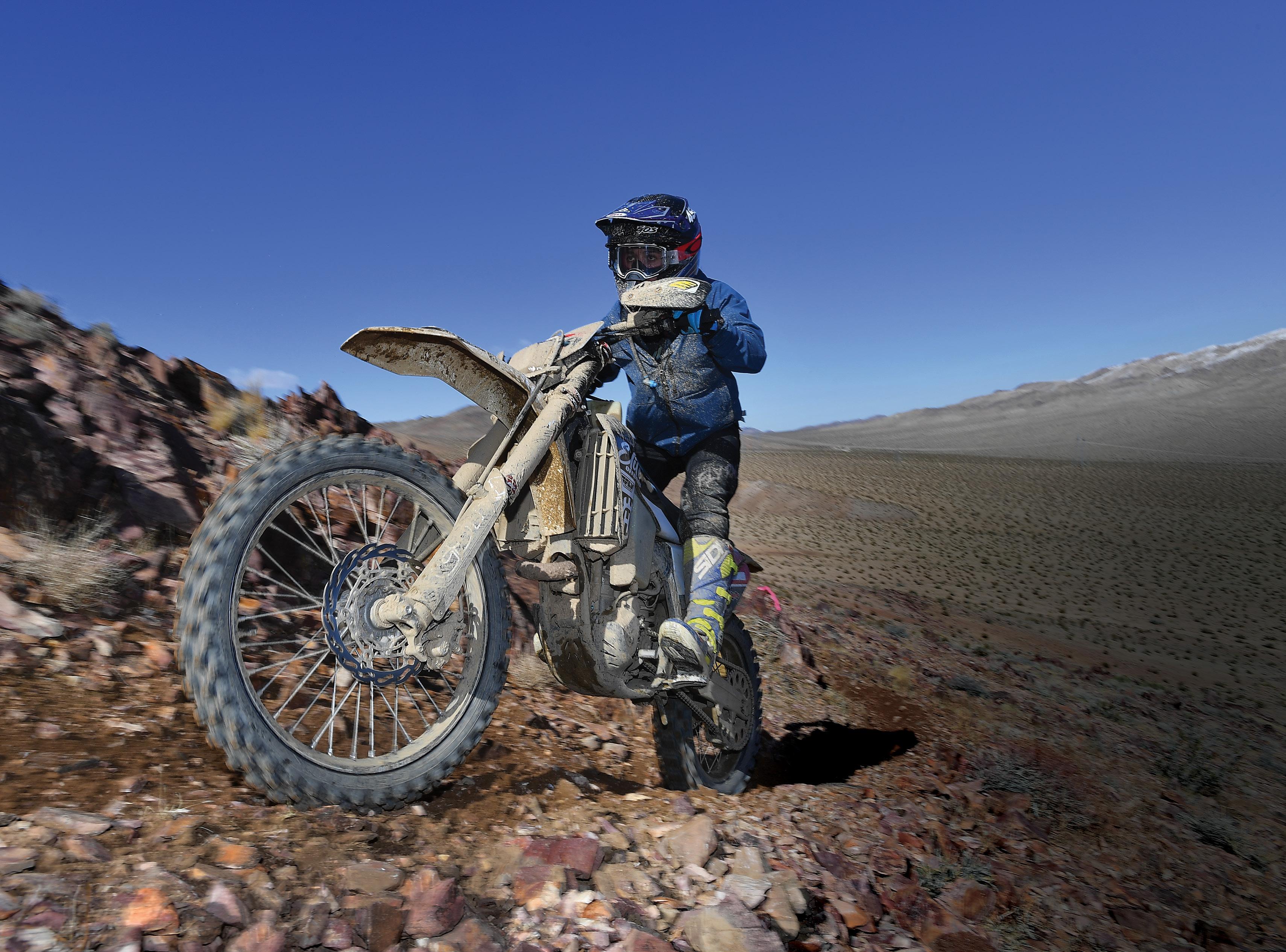
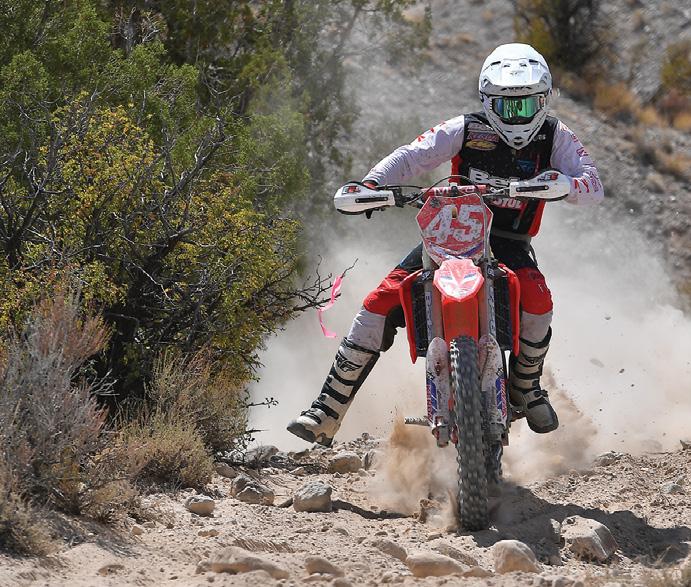
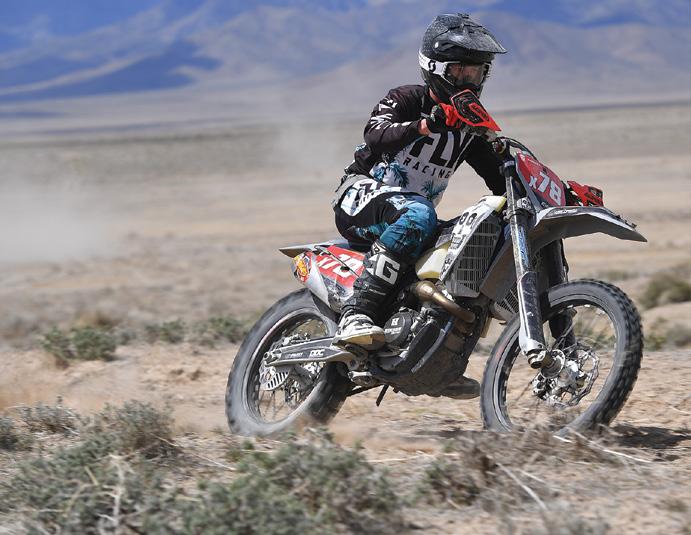
You have a bomb start [in Hare and Hound] — with everyone on the Pro line taking off at once,” Britney Gallegos told American Motorcyclist. “The first loop is usually about 40 miles, and it’s usually wide-open, single-track desert terrain at high speed. The second loop is Pro ADV loops…mountains, ADV rock, technical climbing. And the races usually last about three hours.”
It’s been a great year for Gallegos. Not only did she help the U.S. Women’s Trophy Team bring back an ISDE win for 2021, but she won the 2021 AMA Hare and Hound National Championship in the Women’s Pro class…again.
“It felt good to back up my win in 2020 with another,” she said. “I want to dominate the series forever, hold onto that No. 1, and prove I’m the most dominate female desert racer around.”
For Corbin McPherson, who won the championship in the Pro 250 class, there’s no feeling like racing Hare and Hound.
“Being able to go through desert on your motorcycle going 90 mph through cactus and sagebrush, not really knowing what’s in front of you — it’s an adrenaline rush unlike anything else,” McPherson said.
“I’ve been dreaming about winning this title for a long time now,” he continued. “You look forward to it your entire life, you work for it and dream about it, and once you finally achieve it… well, I guess it’s time to make a new goal.”
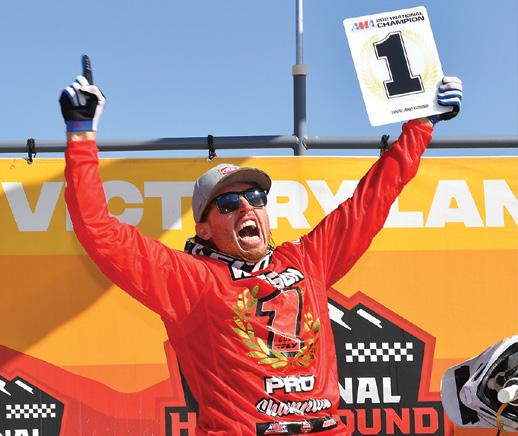
Joe Wasson won the Pro class this year, and for him it’s the challenge of Hare and Hound that keeps him coming back.
“To win the Overall Pro championship for the [AMA Hare and Hound National Championship Series],” he said, “is like all my childhood dreams coming to reality. It’s amazing!”
Corbin McPherson
PHOTOS: MARK KARIYA
Joe Wasson
MotoTrials
Fortner, Hoover and Smage take big AMA/NATC National MotoTrials Championship wins
BY JOY BURGESS
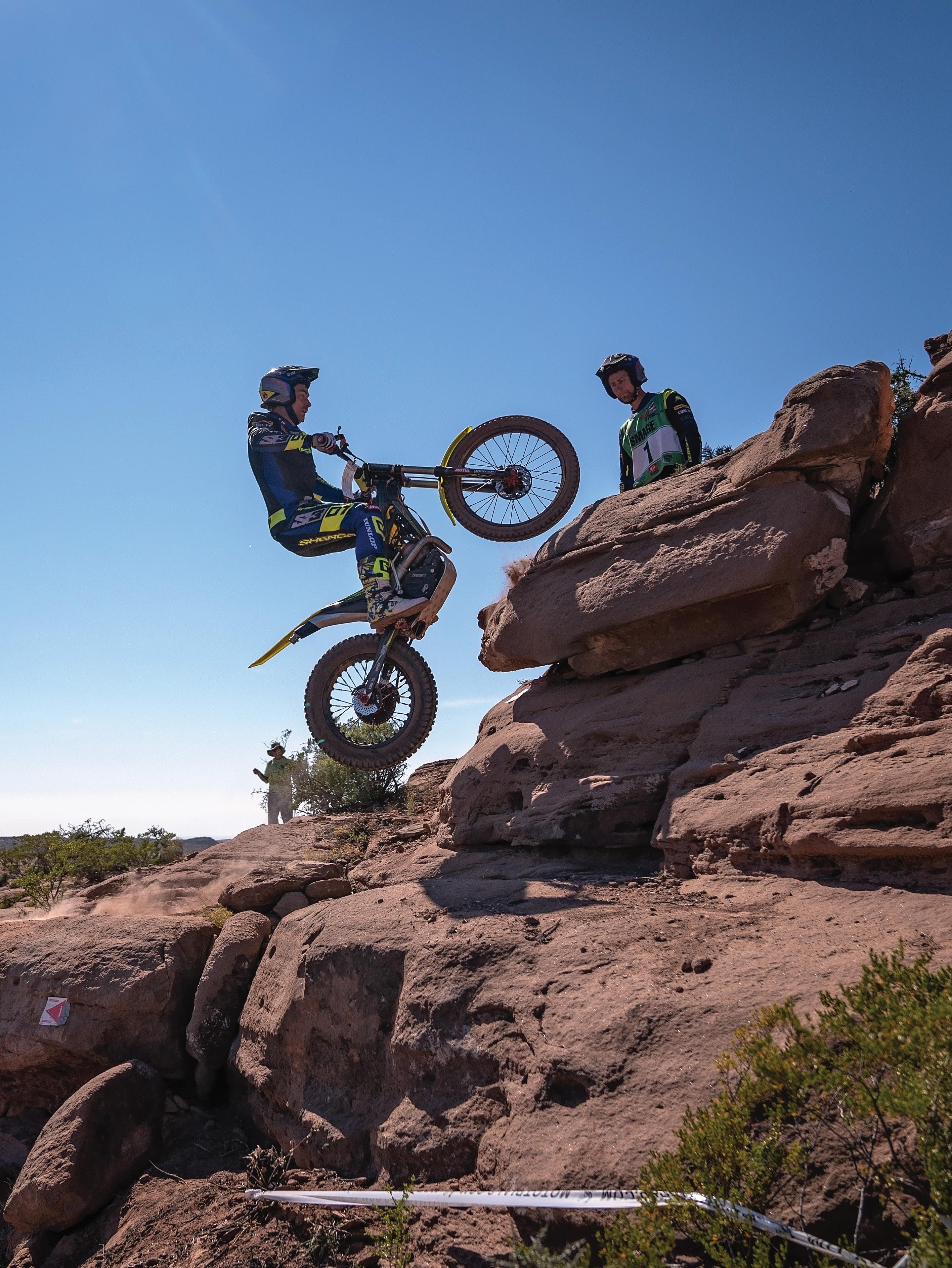
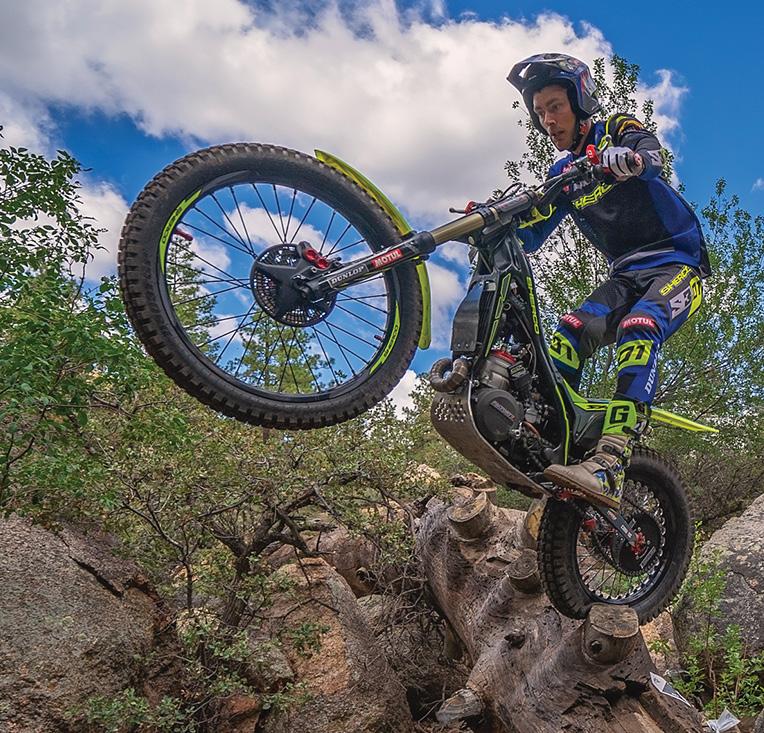
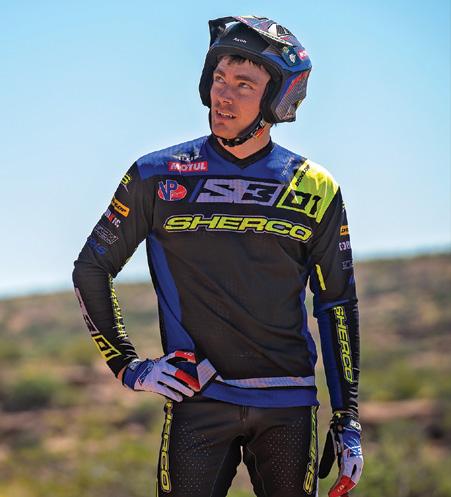
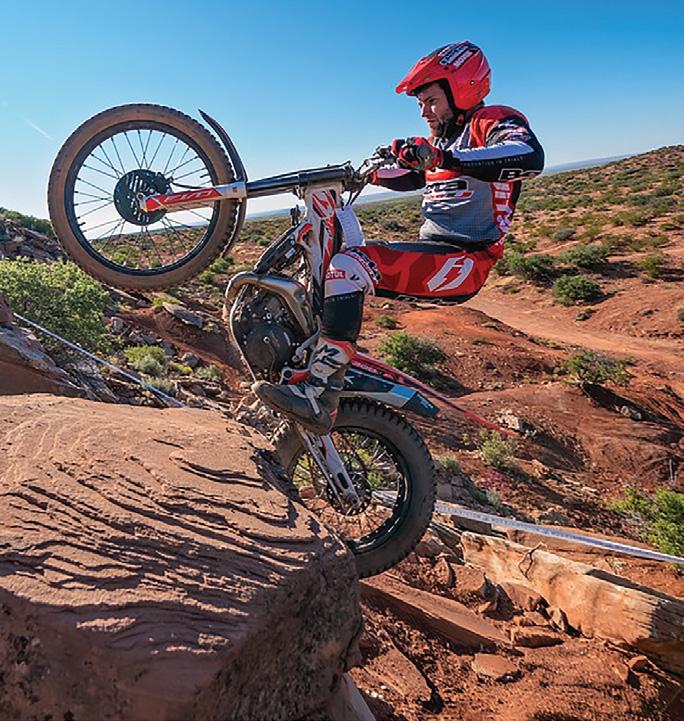
rials is basically the ultimate test of bike control, balance, and a rider’s skill controlling the bike,” Drew Fortner told American Motorcyclist. “It’s the ultimate test of rider skill.”
TWatching YouTube videos of trials competition fed Fortner’s desire to compete, and he’s chased the win in the AMA/NATC National MotoTrials Expert Class multiple times.
“There are really good riders in the Expert class,” he said, “and we were all neck and neck in every event. I was ecstatic to take the win, and it was satisfying to finally clinch this championship.”
And he’ll be back next year, hopefully in the Pro Class, which has been his childhood dream. “I’ll race and ride until I can’t walk anymore!” he exclaimed.
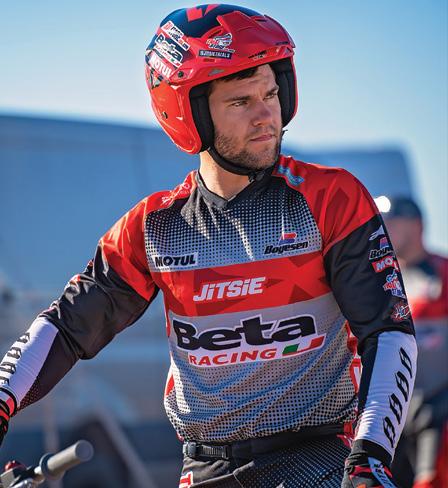
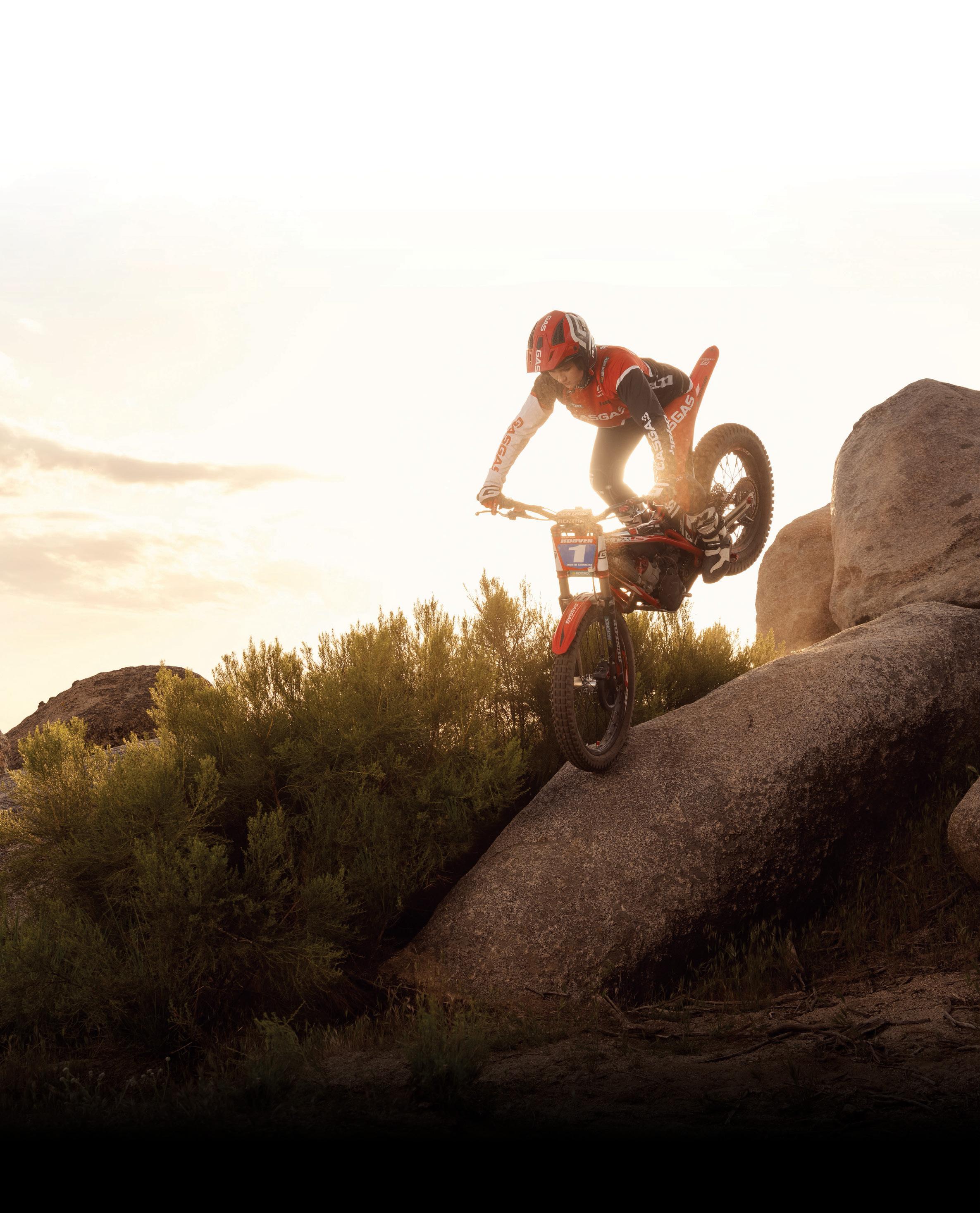
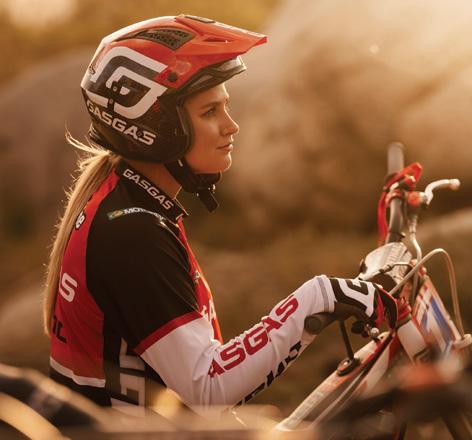
In the Women’s Pro Class, Madeleine Hoover — who’s been riding since age 4 — took the win, her love of the sport coming from her dad.
“My dad was a 10-time National Champion in his division,”
Hoover said, “and he shared his love of trials with me.
The trials community offered so much encouragement to young riders, which kept me coming back for more.”
“I had an undefeated season this year,” she continued, “for my fourth Women’s Pro National Championship. I’m grateful, and thanks to GASGAS USA for its continued support.”
Seeing top riders in the country competing in trials was what turned Pro rider Pat Smage, who won the Pro Class for 2021, onto the sport.
“Seeing how good the top riders were was all it took to make me want to compete and try to be one of them someday,” Smage said.
“This year was a special one,” he added. “To be able to stay consistent and hold off some rapidly improving young riders was a great accomplishment for me.”
Pat Smage
Madeleine Hoover
Drew Fortner
enduro
Baylor claims fifth AMA National Enduro Championship
BY KEATON MAISANO
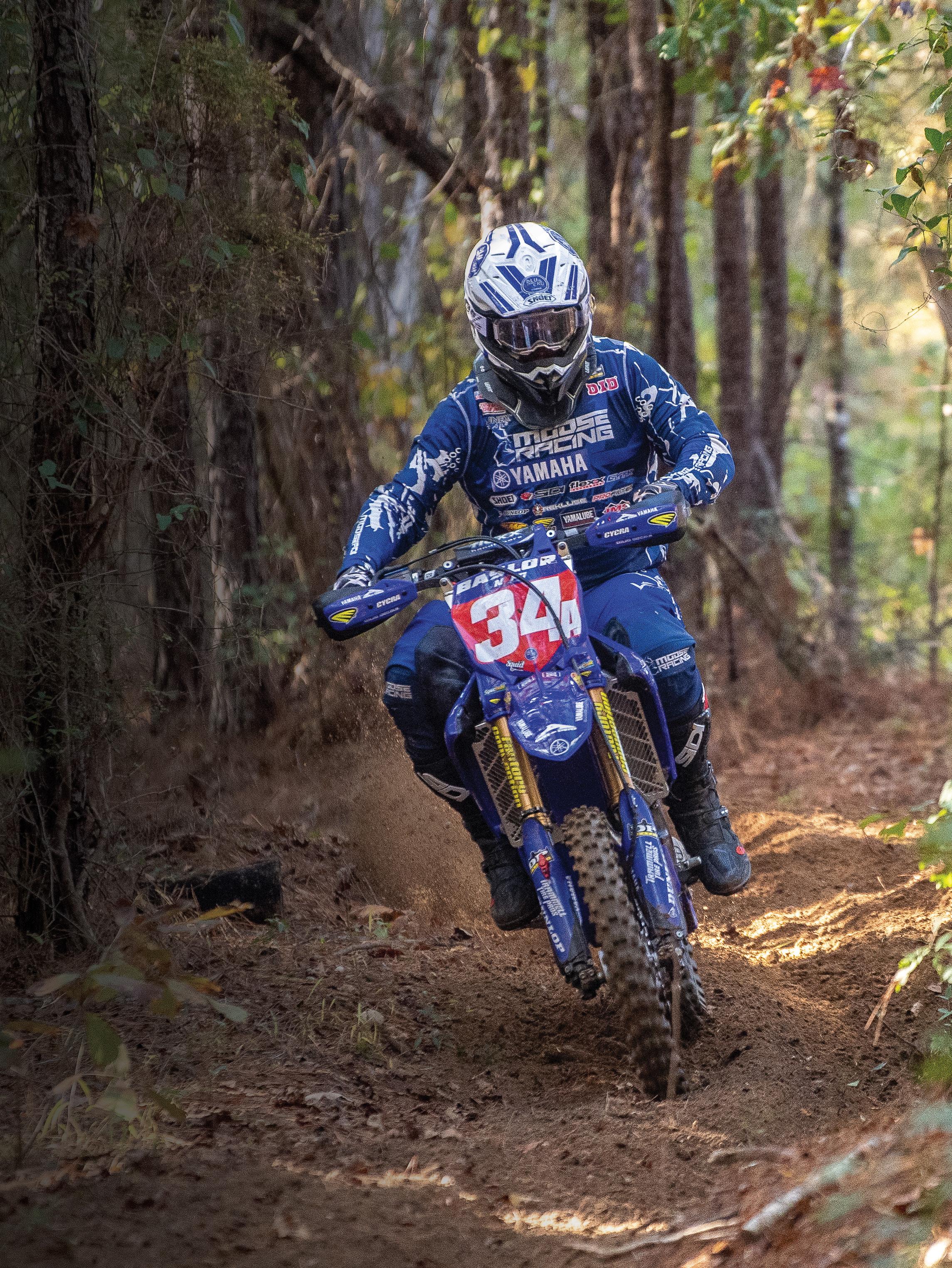
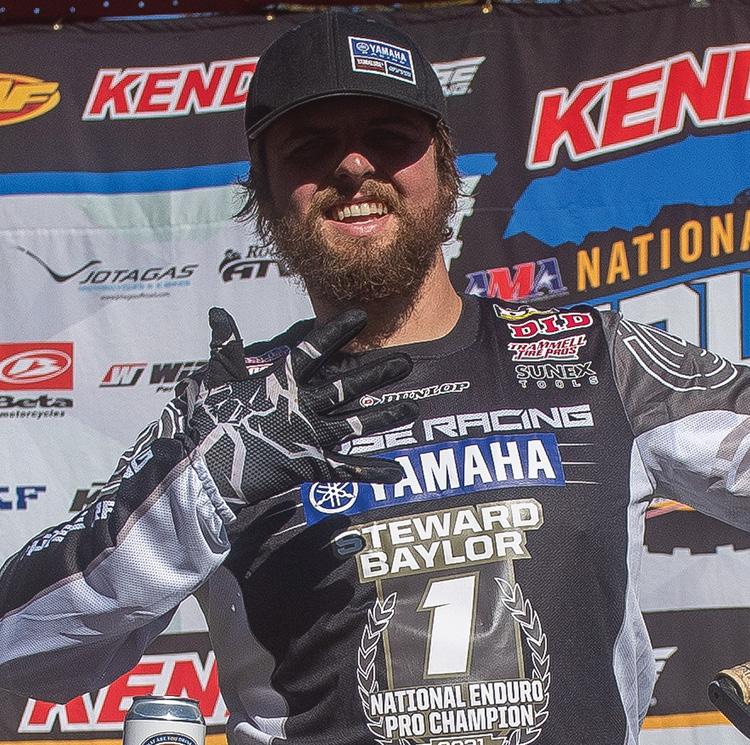
Steward Baylor Jr. modified his training and his mindset heading into the 2021 season.
While the changes made for a smoother experience, one thing remained unaltered: his knack for winning enduros —one of the oldest forms of motorcycle competition, which features challenging routes through desert and wooded terrain, and includes difficult “test” sections connected by roads, two-track trails or fire roads.
For the fifth time in his career, Baylor came out on top in the AMA National Enduro Championship Series —a rare feat, and one accomplished by few before him.
“Getting another one was cool, but also joining that list of greats put me right there with Russell Bobbitt, a rider I looked up to in my early career,” Baylor told American Motorcyclist
Outside of Bobbitt, 27-year-old Baylor joined Mike Lafferty and Hall of Famers Dick Burleson, Randy Hawkins and Bill Baird as the only riders to claim at least five AMA National Enduro Championships.
Despite a career that has positioned him among the greatest to ever ride enduro, there is still one goal that Baylor wants to achieve.
“I still want to focus on winning both [the GNCC and AMA National Enduro Championship] in one season next year,” Baylor said.“Only one other rider has ever done that. That would kind of be the icing on the cake, and that’s the big goal.”
Steward Baylor Jr
supermoto
BY KALI KOTOSKI
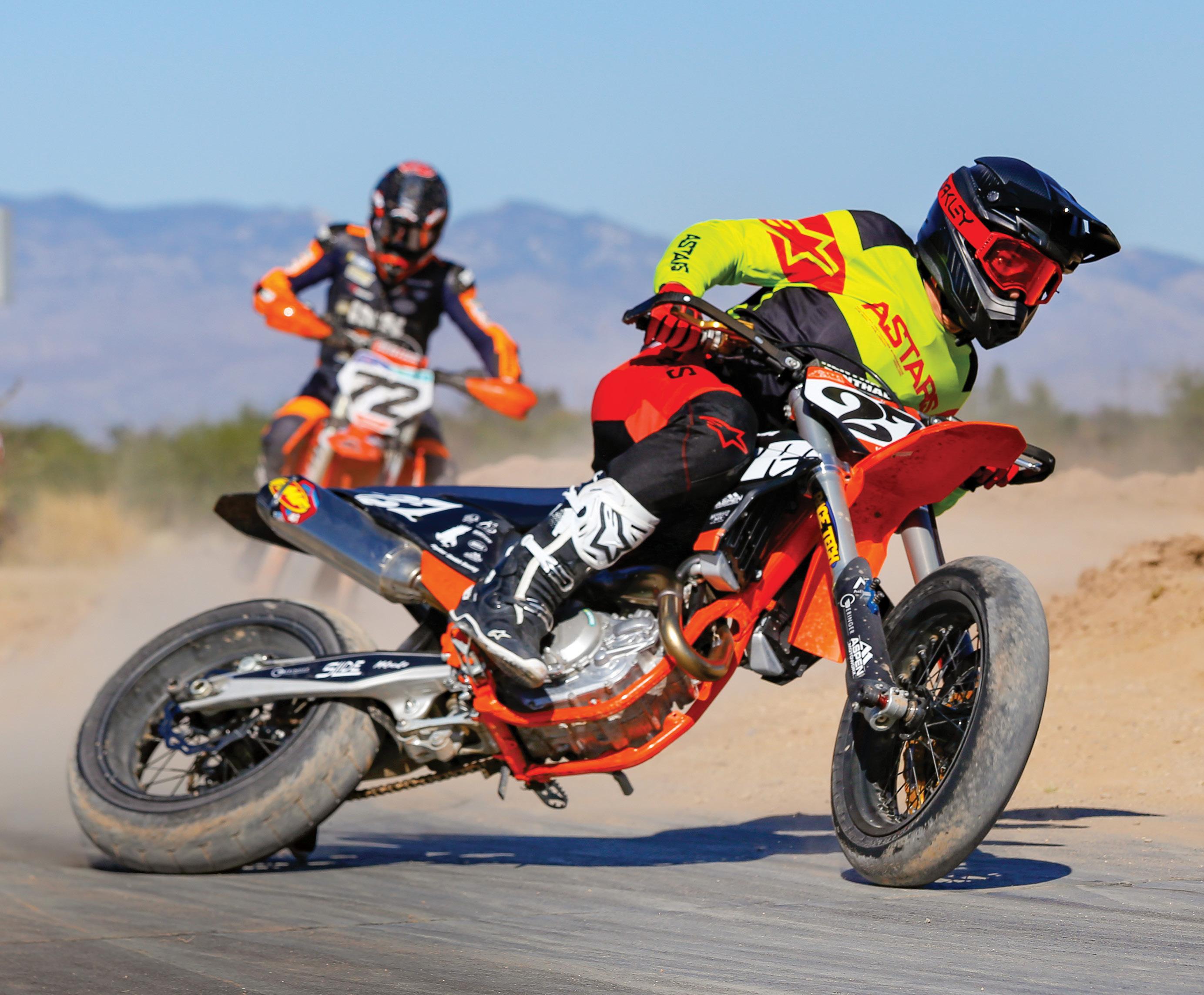
hen Dustin Hoffman from Temecula, Calif., captured the 2021 AMA Supermoto Championship in Tucson, Ariz., in early November, he secured a victory that has long eluded him — and even beat Lukas Hollbacher, an internationally-ranked Supermoto racer flown in last-minute to ride for KTM.
“Coming in I thought I had a pretty decent shot at winning,” Hoffman said, “but then came Lukas. My plan was just to make it hard on him.”
And hard on him he made it. After trailing Hollbacher in the first two rounds, Hoffman pulled away in the third, and in the fourth Hollbacher crashed, with Hoffman leading the entire 20-minute round to victory.
“Over the years I have thrown away so many races,” he said, “[but] this was perfect; the timing couldn’t be better to get [a win] back.”
As an on-again, off-again Supermoto racer, Hoffman
has seen the series ebb and flow since he first started competing in 2008. But what always brought him back to the sport was how it encapsulates nearly every racing discipline. In Supermoto, racers compete on the hardpacked dirt of flat track, the jumps of motocross and the asphalt of road racing.
“It is fun because you can be on the edge, like a foot away from somebody, and not be afraid that they are going to clear you out,” he said.
Hoffman said the win would not have been possible without the support of Joe Agley, RSR Supermoto that put together his KTM, and the suspension gurus at Race Tech, who’ve been supporting him throughout his career.
Representing the No. 1 plate, Hoffman plans to compete in the 2022 season and perhaps to get back to Europe to race, something he has not achieved in many years. AMA
Dustin Hoffman
Dustin Hoffman takes the 2021 AMA Supermoto Championship
Imagine, if you can, the amazing possibility of being able to walk into a dealership back in the day and actually buy a works-spec motocross bike. Not via the AMA’s then-controversial claiming rule, as privateer John Roeder did in early ’79 when he bought Marty Tripes’ $150,000 factory Honda RC250 at Hangtown for $3,500. But actually purchase one, off the showroom floor, and for reasonable money.
TM250 Suzuki Japan’s
“I find this motorcycle really interesting — its history, what it ended up becoming, the motocross success it led to for Suzuki, the later yellow TMs and RMs, all of it.”
—CHRIS CARTER
It’s hard to conjure such a thing. But back in early 1968 it actually happened, in select Suzuki shops around the country and the world. Suzuki, already on a path to world motocross domination in the 1970s with AMA Motorcycle Hall of Famers Roger DeCoster, the late Joel Robert, and others, built 110 examples of its 1967-spec works motocrosser and sold them as the TM250 during 1968 to mere mortals — and for less than $1,000.
That first TM — Japan’s very first real motocross bike — wasn’t as radical, specialized, expensive or valuable as Suzuki’s ultra-trick works bikes from the ’70s and ’80s. But it was a true, works-spec motorcycle, a rare thing indeed, and a window into the inner workings of a company on the cusp of an amazing championship run.
As the world’s premier collector of Suzuki’s firstgeneration TM250 (also known as the RH67), Motion Pro founder, gold medal ISDT winner and longtime AMA member Chris Carter knows the TM250 story pretty well.
“I lead a blessed life,” Carter told me some years back. “Making a living in the motorcycle industry…being able to ride, collect, restore and be around the machines — and the sport — I’ve loved since I was a kid? It’s amazing, really. And yeah,” he added, “I really enjoy those old Suzukis.”
Carter’s collection is larger and more esoteric than simply these unique grey and blue Suzukis, but you can tell he has a serious soft spot for the limited-edition TM model, of which only half of the 110 that were produced made it Stateside.
The TM250/RH67 production bike (right), flanking the pipey, less-functional and very rare RH68 factory racer.
Above: Chris Carter in his man cave.
“The first TM250 I ever saw,” Carter said, “was in a photo from an early Inter-AM, hanging in a dealership — Dam Cycles — that sponsored AMA Hall of Famer Brad Lackey. I was in high school at the time, and the image imprinted deeply. I thought they were so neat.”
Carter had been riding for a while by then, working his way from Schwinn Sting Rays to Bonanza minibikes and a friend’s twin-pipe Yamaha 100 Scrambler. “My buddy’s dad owned a 305 Scrambler,” he said, “and I rode it, too. I could barely touch the ground, but loved it. I kept riding it on their backyard go-kart track, eventually putting 460 miles on it there! Later, we rode all over the area hills and fire roads, all the way to the beach at Half Moon Bay.”
When he got his license at 15 and had a couple of crashes on the street, Carter went dirt-only, riding some trials on a borrowed Sherpa T and eventually buying — and racing — a Greeves 250. He raced scrambles and dirttrack, began working at a local shop (A&A Motors, which sponsored AMA Hall of Famer Kenny Roberts), and began hanging out with the Jones brothers and other motocross pioneers — including Lackey — while racing the support class at early Trans-AMA events.
“Suzuki wanted into motocross,” Carter told me. “They played with twins, then went to singles, as they were impressed with the CZ.”
ISDT competition followed aboard early Yamaha machinery, as did some success, including a gold medal in Austria in ’76 — “The highlight of my career,” Carter says. He continued to race, but slowly moved toward the business side, working at Rocky Cycle Distributing and eventually launching Motion Pro in ’84. “I’m living the dream,” he says now.
Carter bought his first first-edition TM nearly 30 years ago and hasn’t looked back. “It was missing its exhaust pipes,” Carter remembered, “but I found a pair and made it whole — a great story, by the way. I ended up selling it to my friend and Hall of Famer Tom White in So Cal when I found a larger cache of TM stuff — another great story — but it got me started, and I’ve collected, and kept, several since. I find this motorcycle really interesting — its history, what it ended up becoming, the motocross success it led to for Suzuki, the later yellow TMs and RMs, all of it.”
ROOTS
The genesis of the TM250/RH67 of 1968 can be traced to the mid 1960s and Suzuki’s tentative first steps from an on-road — and roadracing — success story to a fledgling off-road manufacturer. At the time, several ingredients were swirling in the motorcycling stew to
make this happen. First, lightweight and fast 2-stroke race bikes were beginning to supplant lumbering 4-strokes in European motocross competition, CZ and Husqvarna best exemplifying the breed.
Also, the Japanese makers were growing by leaps and bounds, especially in the U.S., but with streetbikes and some early twin-cylinder up-pipe scramblers, definitely not purpose-built off-road machines. Some buyers, hoping Japan would build more dirt-worthy machines at some point, settled for these scrambler models, and began riding them in the dirt. They were clearly lessthan-optimal, though for some enthusiasts their high pipes, semi-knobbies, above-average reliability, tons of value and a bit of room between the tires and fenders was better than nothing.
Like other Japanese manufacturers at the time, Suzuki watched all this very closely, and began to seriously consider a more
off-road direction. Its first steps were motocross-oriented prototypes, initially a twin-cylinder, T20-derived version in 1964 that proved cumbersome and ill-advised. A year later, Suzuki entered an actual European motocross meeting in Sweden with two bikes — an updated version of that first twin and a lighter and more purpose-built single. The twin was hopeless as a motocrosser, and the single, though lighter and more promising, quit running that day. Still, off-road seeds had been sown.
For 1966, Suzuki dropped the idea of twins altogether and debuted an all-new machine, the twin-pipe, purpose-built RH66, which formed what author Ray Ryan called “the embryo of [Suzuki’s] motocross lineage” in his fine book Motocross Racers: 30 Years of Legendary Dirt Bikes. The RH66 was designed with an eye toward CZ’s highly successful twin-port 236cc
Above: Suzuki’s TM250 engine (right) was in some ways a copy of CZ’s 250 and 360 twin-port engines, which proved fast, tractable and durable in GP competition in the 1960s. Far left: TM/RH progression, from the mid-’60s to the World Championship-winning RH70, with Hall of Famer Joel Robert in the saddle. It didn’t take Suzuki long to become the dominant player in 250cc Grand Prix competition.
more months, he’d turned that improved RH68 into the RH69, a motorcycle that would become, in the space of a year with Belgian Joel Robert aboard, the worldbeating RH70 — a 170-pound, championship-winning motocrosser without equal.
PRODUCTION-LINE MOTOCROSSER
Much like the CZ250 that formed a rough template for Suzuki engineers when they penned the RH66 (which morphed into the RH67), the silver and blue productionized TM250 that appeared in brochures, magazine ads and select Suzuki showrooms in early 1968 was a reasonably simple motorcycle. The heavily gusseted steel-tube frame was of conventional, single-downtube design, splitting into dual tubes just below the exhaust ports. Although the swingarm was of conventional tube steel as well, the frame’s vivid blue paint set the assembly apart visually from everything else on the market. Suspension was basic; chromed shocks out back
and a spindly fork up front that looked suspiciously like the one from Suzuki’s X6 Hustler streetbike. Drum brakes slowed conventionally sized wheels, while an alloy tank and fiberglass fenders — the rear integrating a pair of number plates — tried to keep weight under control.
The sandcast engine was basically identical to the works bike’s powerplant — a 249.7cc air-cooled two-stroke featuring long-stroke, undersquare dimensions, 8:1 compression, magneto ignition, a 26mm Mikuni carburetor and a crankshaft-mounted clutch assembly. Twin high-mount exhausts exited on either side of the engine and swept up and rearward, running just below the seat and finishing with a pair of roadracing-type stingers. The engine delivered a claimed 32 horsepower at 6,800 rpm through four speeds. Interestingly, the bike came with a nowstandard left-shift/right-brake setup, but a splined shift shaft exiting on either side of the engine and mirror-image brake controls allowed owners to swap sides if they liked. A spares kit including a cylinder, piston, rings, air-filter and a collection of countershaft sprockets and jets was also included in the $975 asking price.
“Suzuki wanted into motocross,” Carter told me. “They played with twins, then went to singles, as they were impressed with the CZ. The unique thing on it was the crank-mounted clutch, so that’s what they did. The high pipes were for ground clearance, but they also copied the airbox and other bits. Some of the parts were super-light, but others were heavy; not sure what their thinking was there. They were just learning about motocross bikes. [The TM] was a perfect example of early Japanese copies of other products — a little awkward, and hard to ride due to the wide dual pipes. Preston’s bike had its pipes trimmed a little so it was narrower. Much of the TM250 is beautiful; the alloy tank, some of the workmanship. But other stuff is cobby.”
If the U.S. motorcycle market cast any uncertainty toward Japan’s first-ever purpose-built motocrosser, it certainly didn’t show up in press reports. Cycle World wrote glowingly of the TM250 in its March 1968 issue, even hauling CZ ace Joel Robert to Saddleback Park to help staffers test the new TM. “Joel could hardly be kept off the Suzuki,” editors wrote. “It was like a completely different machine from the one he’d ridden in Europe,
Hall of Famer (inducted in 1999) and industry giant Preston Petty (8) on the RH68 Suzuki during an Inter-AM event at Saddleback Park in 1968. The bike was fast but peaky and hard to ride, though that didn’t stop Petty from keeping pace out of the gate with Torsten Hallman (1) and John DeSoto (154). Suzuki went back to a longer-stroke engine for 1969 in the RH69, and in 1970 Joel Robert and Sylvain Geboers finished 1-2 in the 250cc World Championship, launching an epic string of GP domination for Suzuki.
DONALD RAPP
Joel said [Robert had done some early testing on the RH65 –Ed.], and was a first-class motocrosser.”
“The TM250 is a pure racer,” continued CW, “not a playbike. Anyone who simply wishes to ride around in the desert should leave it well alone. It’s just not for the pleasure rider. This prestige machine will be sold at virtually cost price to serious competitors. Actually, so many things on the bike are hand built that it is difficult to see how Suzuki can make a profit…All things considered,” the staff added, “the TM250 is impressive as a really effective out-and-out race bike.”
Daytona 200 winner and AMA Hall of Famer Don Emde raced a few TMs back in the day and ended up holding onto his TM250/RH67 — and all the spares — through the years. He also kept his very rare and highly desirable RH68, only a few of which ever made it to the U.S. For Chris Carter, a friend of Emde’s and probably the most enthusiastic early RH collector in the world, this was an exceptional opportunity.
“When Don and I began talking about his RHs,” Carter said, “I came down to So Cal and went through everything he had. We ended up working out a deal, and from that cache I was able to put together two twin-port RH67s and, after several years of parts scrounging and careful restoration work, one single-port RH68. It’s an amazing bike. I’ve ridden one of my RH67s around, but the RH68 has never been started. Since that time, I’ve kept my eyes open for any and all RH stuff; I’ve bought and sold several, but keep a nice collection for myself.”
Several years ago, just after buying a very nice unrestored TM250 from a guy in Oregon, Carter discovered that a storage container on his property had been looted — and the TM was gone, along with a Maico and a friend’s CT70 Honda. “I looked everywhere, and for a long time,” he said. “Shows, swap meets, checking the papers and want ads….” Five years went by, until a buddy saw a Craigslist ad — with a clear photo — from a town 80 miles away. “That was almost surely the bike,” said Carter. “The guy selling it — turns out it was a kid
Motion Pro head honcho and AMA member Chris Carter (above right, holding a fender mold) has spent a lot of time, money and elbow grease over the years restoring his TM/ RH collection, sometimes having to replicate parts on his own — thus the fender mold. It’s paid off, as he has what’s probably the finest collection of TMs/RHs in the world.
— wanted $150, so he obviously didn’t know what he had. I called a buddy nearby, who staked out the house, and I called the police. Then I headed up there, arriving about the time the kid came home from school or work. I could see the bike in the garage. The police arrived, we verified the VIN to prove it was mine, and I got the bike back. Just in time, too,”
Carter added with a grin, “as a squirrel from So Cal — who’d done some questionable deals in LA with friends of mine — arrived just as I was rolling the bike into my van. Turns out he’d offered the kid $2500 for it, so our timing was really fortunate!”
One last story puts much of this TM250 business into perspective. “When I was looking for a set of pipes to finish that first TM250 I bought in the early 1990s,” Carter said, “a buddy of mine in Oregon was standing in a sign-up line at a local motocross. Just in front of him was Pete, a guy from Powroll, who was telling another guy a story about a Greeves he had just bought that somehow had some old TM250 stuff bolted to it — pipes and cylinders. My buddy asked him about it, and I ended up buying the stuff from Pete, all of which helped me finish that first TM250. Who knows if everything would’ve happened the way it had if my buddy hadn’t gone to that motocross event!
“I tell ya,” Carter added with a grin, “I really do lead a blessed life!”
Chris Carter wasn’t able or willing to buy an example of Suzuki’s for-sale works machine back in the day. But he’s certainly made up for it since.
“Those early TM/RH models are very special,” he said. “They’re time machines, really, a direct look into a very cool era in the sport of motocross.”
True words, indeed. AMA
of
were
cases when he acquired them, and that meant plenty of careful restoration and parts re-creating, such as this rear fender. But the results, as you can see, are sublime, and true time-capsule pieces of motocross history.
Some
Carter’s bikes
nearbasket
MAKE IT YOURS
The AMA offers a variety of card types and designs for members. In addition to our standard card, we offer a number of themed cards that identify you as belonging to a specific group or speak to your passion as a motorcyclist.
Call (800) AMA-JOIN (2625646) to request an affinity card at any time, at no additional cost.
DEALS AND DISCOUNTS
THE ESSENTIALS
Lodging
Save 15% at participating Choice Hotels Properties.
Up to 10% off at Motel 6. Use code: M64AMA
20% discount off available rates, call (800) REDROOF and use the code VP+ 503343. To make reservations online use code: VP+ 503343 in the field labeled “VP+/ID#”
PRODUCT DISCOUNTS
ADVMoto 20% discount. Use code AMADV20
AMA Motorcycle Hall Of Fame Free admission to the AMA Motorcycle Hall of Fame in Pickerington, Ohio.
AMA Supercross Tickets
10% discount on tickets at supercrosslive.com Use code 5AMASX
Anthony’s Leatherworks 10% discount. Use code AMADISCOUNT
Blendzall
AMA members can save 20% at blendzall.com. Use code AMA20 at checkout.
Bohn Body Armor
10% AMA Member Exclusive Discount. Visit bohnarmor. com and use code AMA18 at checkout.
Butler Maps
AMA members receive a 20% discount at butlermaps.com. Use code AMAMEMBER
Cardo Systems
20% discount online with valid AMA membership card.
Colorado Motorcycle Adventures 10% discount with valid AMA membership card.
The Dirt Bike Academy 10% exclusive discount on instruction. Learn more at thedirtbikeacademy.com
Dowco Powersports
20% discount. Use code AMA20
EagleRider For Club EagleRider AMA members receive 2 free rental credits
AMA Roadside Assistance Roadside assistance coverage for eligible members.
Car Rentals
Up to 25% off at any Avis or Budget. Avis Code: D388100 Budget Code: Z942000
AMA Gear Find patches, pins, T-shirts, hats and more.
Edelweiss
AMA members save on standard bike tour. Use code 21AMA-EBT03 at checkout.
Evans Cooling System
25% discount on Evans Coolants and Prep Fluid. Use code AMAFUN at evanscoolant.com.
EVS Sports 10% discount and free shipping on all orders. Use code AMAEVS20
Haynes Save an additional 15% on all Haynes & Clymer print and online repair manuals. Use code AMA15
Heli Bars
Use code AMAM2020 for a 10% AMA Member Exclusive Discount at helibars.com.
Helite Moto AMA members get 15% off every order at helitemoto.com. Use code HELITEAMA
International Motorcycle Shows
Save on advanced adult oneday general admission. Use code AMA20
Legacy Track Dayz 15% discount on Legacy Track Dayz events. Use code AMARideLTD
Liberty Sport Eyewear 30% discount on all “motorcycle collection” frames. Discount code AMA30.
MAD Maps
Save 15%. Use code AMA15
® Medjet
Air medical transport and travel security protection – visit Medjet.com/AMACycle or call 1.800.527.7478, referring to American Motorcyclist Association.Annual rates are reduced by 20% and start at $235.
MotoAmerica 20% off 2-day and 3-day passes at select MotoAmerica events. See AMA website for more detail.
Motool AMA members can save 10% at motool.co. Use code AMAVIP at checkout.
MX Boot Repair 10% discount. Use code AMADISCOUNT
MYLAPS 20% discount off MSRP or current sales price on weborders or orders coordinated by the AMA. Use code AMA-789HJK
Nelson Rigg 20% AMA Member Exclusive Discount on all products! Use promo code AMA-NR20
Third Eye Design $25 discount on inView, a wireless brake
Matrix Concepts AMA members receive a 25% discount on most products for shop, garage & track necessities at matrixracingproducts.com Use code AMA25
Design Helmets
CALIFORNIA
COMING EVENTS
Be sure to check the event website or call the organizer for the latest information, including postponements or cancellations.
Trail Ride: Jan 1. Pozo. CCMA New Year’s Day Ride. Central Coast Trail Riders Association. (805)-801-8829 pozoriders. com
Off-Road: Jan 15. Prairie City Grand Prix Competition Polka Dots Motorcycle Club (916)-606-5108 prairiecitygrandprix@ gmail.com
FLORIDA
Trail Ride: Jan 29. Bunnell Apollo Days Motorcycle Fun Ride . Apollo Motorcycle Club. 321-537-4770 apollomotorcycleclub.com
INDIANA
Road Ride/Run: Jan 1. Indianapolis. Hangover Rally MidWest Motorcycle Club (317)-900-6100 midwestmc.com
WISCONSIN
Dual Sport: Jan 1 New Years Day Ride Madison Motorcycle Club (608) 220-5564 madisonmotorcycleclub.org SUPERCROSS:
2022 Monster Energy AMA Supercross Supercrosslive.com
AMA National Gypsy Tour. americanmotorcyclist.com/ gypsytour
Laconia Motorcycle Week. June 11-19. Laconia, N.H.
AMA Vintage Motorcyle Days July 2224. Lexington O.H.
HALL OF FAME EVENTS AND EXHIBITS
AMA MOTORCYCLE
HALL OF FAME
COMING EVENTS
Be sure to
americanmotorcyclist.com/hall-of-fame
The AMA Motorcycle Hall of Fame, located on the AMA campus in Pickerington, Ohio, is open 9 a.m. to 5 p.m. seven days a week. Closed: Easter, Thanksgiving, Christmas Eve, Christmas Day and New Year’s Day.
Main Hall: Now featuring the 2021 Hall of Fame inductees, the main floor celebrates the heroes of the track, road, trails and halls of government who have elevated the sport, business and lifestyle of motorcycling to new heights.
Founder’s Hall: Honoring the Hall of Fame’s generous contributors.
The Birth of a Hurricane: How Hall of Famer Craig Vetter reimagined BSA for an American market.
On Any Sunday: On display downstairs are four legendary motorcycles that had a place in Bruce Brown’s epic 1971 moto-documentary,
which celebrates its 50th anniversary this year: Mert Lawwill’s Harley-Davidson KR750 dirt tracker; Malcolm Smith’s Husqvarna 400 Cross, which he rode in several movie scenes; the late Cal Rayborn’s Harley-Davidson
XRTT750 roadracer; and Frank Gillespie’s Yamaha 650 dirtracker, which he rode during that 1970 Grand National Championship season. Alongside the four bikes is a video monitor playing On Any Sunday over and over.
AMA Trademarks
MARKETPLACE
The following represents active, registered trademarks, trademarks and service marks of American Motorcyclist Association, Inc. (AMA). Usage of any AMA trademark or registered trademark without our permission is prohibited. Please contact jholter@ama-cycle.org for more information or assistance.
(800) AMA-JOIN® • AMA Dragbike® • AMA Endurocross®
AMA Motorhead® • AMA Pro Grand National Championship®
AMA Pro Racing® • AMA Race Center™ • AMA Racer®
AMA Racing® • AMA Racing Land Speed Grand Championships®
AMA Supermoto® • AMA Supercross® • AMA SX Lites®
AMA U.S. ISDE Team™ • AMA U.S. Jr. Motocross Team™ AMA U.S. Motocross Team™ • Amateur
National Motocross Championships® • American Motorcyclist Association® Arenacross® • ATV Hare Scrambles National Championship Series® • ATV Motocross National Championship Series® Flat Track Grand Championships™ • Grand National Enduro Championship® • Gypsy Tour® Hare & Hound National Championship Series® • Hare Scrambles Championship Series® Hare Scrambles National Championship Series® • Kids Just Want To Ride® • Motorcycle Hall of Fame® • Motorcycle Hall of Fame Museum® • Motorcyclist of the Year® • Motostars® • National Adventure Riding Series® • National Dual-Sport Series®
National Enduro Championship Series® • Protect Your Right to Ride® • Protecting Your Right to Ride® • Ride Straight® Rights. Riding. Racing.® • Road Race Grand Championships®
Vintage Grand Championships® • Vintage Motorcycle Days®
Vote Like A Motorcyclist®
FLASHBACK
A Honda Hills Resurrection
When old racetracks die, they’re usually gone forever. Central Ohio’s Honda Hills is out to break the trend.
BY MITCH BOEHM
ack in the mid 2000s, one of Ohio’s most legendary motocross facilities — Honda Hills — closed its gates for good. Or so everyone thought. Because on Nov. 6, 2021, Honda Hills reopened with an open practice day that brought more than 400 riders to sample the sacred soil that hosted so many memorable events during the ’70s, ’80s and ’90s. And according to new owner Tanner Wilson, it was just a taste of what’s to come in 2022.
The history here is rich. Conceived, developed and run by AMA Motorcycle Hall of Famer Dick Klamfoth from 1969 until he sold it roughly 20 years later, Honda Hills — located just 30 miles east of Columbus — hosted local, national and international motocross events during its 35-plus-year history. The biggies that put HH on the map? Those would be the Inter-AM and Trans-AMA events in the 1970s, races that brought the world’s best — Mikkola, DeCoster, Pomeroy, Karsmakers, Lackey and many others — to that sacred, formative soil. The local races there — including
Like a ghost ship lurking in the fog, Honda Hills’ legendary ‘DeCoster Bridge’ (main image and below left) remains intact, though just barely. The track (this image) during its 2021 renovation, and also hosting the 1974 Trans-AMA (below).
the night races under the lights — were every bit as special. This author can tell you firsthand that sitting at Klamfoth’s red, white and blue starting gate and looking up the hill toward Turn One with all those lights shining down was awe-inspiring, and almost like racing AMA Supercross. You could camp, play basketball and swim in Klamfoth’s pool while you were at it, too. Epic stuff.
“What we’re trying to do with Honda Hills,” new owner Tanner Wilson told me recently,” is recreate the magic of those legendary years, and offer both young and old racers and fans the experience the veteran
crowd remembers so well. We’re not only planning to get the old motocross track back into shape, but the short track on top of the hill, too. There’s also an amphitheater in the back section, and we’d like to have the ability to have concerts, as well. We’re thinking it’s going to be fun, and folks seem excited!”
You betcha we are. Stay tuned for more on Honda Hills’ resurrection in future issues, online at AmericanMotorcyclist.com, in the pages of RacerX Illustrated, and also on Honda Hills’ Facebook page. Thanks to RacerX for some killer photos!