The All-Terrain Vehicle Association (ATVA) protects ATVers’ right to ride. It also serves as a source of authoritative information about where and how to ride, products and events. The ATVA is part of the American Motorcyclist Association (AMA), the world’s most powerful voice for motorcyclists. ATVA Enthusiast membership is $49 a year. A Competition membership is $49 a year. For more information call toll free (866) 288-2564 or check us out online at ATVAonline.com.
THE ATVA NEWS TEAM
Bill
Kresnak Editor
Jeffrey Guciardo
Designer/Production Coordinator
ATVA News is published bimonthly by the All-Terrain Vehicle Association, 13515 Yarmouth Dr., Pickerington, OH 43147. Copyright by the ATVA. Printed in USA. No responsibility is assumed for loss or damage to unsolicited materials. Send story ideas and high-resolution photos to editor@ATVAonline.com. You may see them in ATVA News. Be sure to include your name and phone number.
FEATURE
DEPARTMENTS
Real Heroes
By Rob Dingman, American Motorcyclist Association president and CEO
I’ve never been more proud to be an AMA member than I was on May 26, 2011.
That’s when a couple hundred of the ATVA and AMA’s most active, vocal and engaged members converged on the Rayburn House Office Building in Washington, D.C., to drive home a simple message: Fix the “lead law” that denies the sale of ATVs and dirtbikes to youth riders.
To realize the impact that these ATVA and AMA members had, you have to understand what usually happens in the meeting rooms of that building. Typically, the rooms are filled with adults in dark suits and skirts, talking in subdued tones, working through a very mundane interplay that involves either reading or listening to scripted words designed to influence legislators on a particular issue.
Such meetings are important, and they help shape our laws, but they’re anything but “exciting.” They’re not engaging. They are, in a word, routine.
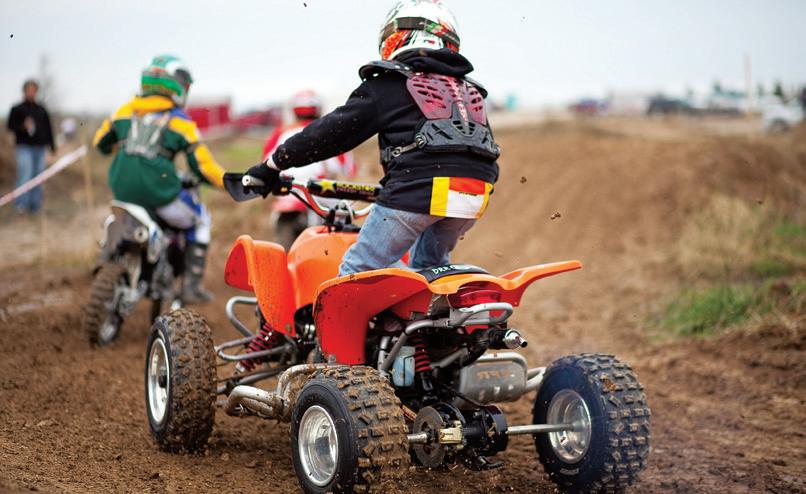
ATVA and AMA members turned that routine upside down on a hot Thursday during the AMA Family Capitol Hill Climb in Washington, D.C. The arrival of so many “regular” citizens, including a majority of kids—nearly all wearing colorful motocross gear—created an uplifting attitude, and a sense of energy.
More than anything else, they drove home the point that not fixing a bad law that threatened to end kids’ motorcycling would have a very real impact on a vibrant, fun and family friendly activity.
This was not business as usual in Washington.
It got attention. It got results. And it helped end three years of inaction by legislators to fix the law. Only 11 weeks after the AMA Family Capitol Hill Climb, Congress created, and the president signed, a law that removed the restriction on the sale of kids’ ATVs and dirtbikes.
That’s the power of grassroots activism.
The fact that regular people drove the process makes it the most powerful form of political engagement. The people who
filled that room weren’t paid lobbyists. They weren’t suits. They were real riders, real families and real ATVA and AMA members who were moved to act.
They fixed the law.
In doing so, they even earned an exemption in the law for specific products—ATVs and motorcycles—that no other group was able to achieve.
The AMA Motorcyclist of the Year designation recognizes the rider who had the most impact on the world of motorcycling in the previous 12 months. When it came time to select that individual, there was no question that the biggest issue facing ATV riders and motorcyclists in 2011 was the lead law. And its defeat represents the largest legislative victory for ATV riders and motorcyclists in more than a decade.
There were lots of groups, from the ATV and motorcycle manufacturing side to the race promotion side to other motorcycle activist organizations that helped bring about the change.
Everyone’s work was vital to our shared success.
But from my perspective, the ones who really turned the tide were the grassroots ATVA and AMA members and riders who wrote letters and emails, called and visited their congressmembers, and even turned the Rayburn building’s routine morning into something very special on that day in May.
So many ATVA and AMA members had a hand in the victory that it was tough to single out one as the AMA Motorcyclist of the Year.
In the end, the decision rested on two factors: The amount of work done by the individual chosen, and the fact that she was just a “regular” rider who was moved to join the fight not because her business was threatened or her livelihood was at stake, but because she saw an injustice and wanted to fix it.
Nancy Sabater, a Maryland rider who’s been around motorcycles, racetracks and trails since she was 15, is that person.
A motorcyclist whose fiancé raced
ON TRACK
at nearby tracks and rode with her in the woods for years, Sabater doesn’t have children herself, but realizes the importance of motorized recreation for kids. She saw how motorized recreation brings families together. She knew that motorsports helped kids grow in positive ways. And perhaps most importantly, she knew that if a generation of kids were denied ATVs and motorcycles, an entire way of life could be lost forever.
Sabater’s involvement went beyond just writing letters. She organized petition drives. She mobilized others. She visited with congressmembers to lobby them directly to change the law.
Of course, while Sabater may be the visible face of grassroots activism on the cover of ATVA News, it’s important to realize that every ATVA and AMA member who acted to defeat the lead law also shares this individual award.
Like many involved in the fight, Sabater is quick to note that a victory like this doesn’t happen solely from the actions of a single individual. It’s about all ATV riders and motorcyclists, ATVA and AMA members, and others in the ATV and motorcycle industry standing together.
In the end, that’s something we can all be proud of.
U.S. Interior Department Proposes More Wilderness
Riding Opportunities
Could Be Lost
Access to thousands, if not millions, of acres of public land in nine states could be lost to ATV riders and others under a massive land-use designation proposal submitted to Congress on Nov. 10.
The proposal, submitted by the U.S. Interior Department, is titled: “Preliminary Report on BLM Lands Deserving Protection as National Conservation Areas, Wilderness or Other Conservation Designation.”
The report identifies 18 areas in nine states that Interior Secretary Ken Salazar says should be managed as national conservation areas or Wilderness areas. Those states are California, Colorado, Idaho, Montana, Nevada, New Mexico, Oregon, Utah and Washington.
Wayne Allard, AMA vice president for government relations, says AMA staff members are still analyzing the proposal, “but initial indications are that the report identifies more areas that should be designated as Wilderness or National Conservation Areas than areas that promote responsible motorized recreation.
“The AMA and many other groups have battled Wilderness proposals in the past that didn’t meet the strict criteria for earning a Wilderness designation under federal law, and the U.S. Interior Department’s new plan may include a lot of acreage that simply isn’t appropriate for Wilderness designation,” Allard says.
The BLM manages more than 245 million acres of public land nationwide, primarily in 12 western states.
U.S. Rep. Rob Bishop (R-Utah), who is chairman of the House Natural Resources National Parks, Forests and Public Lands Subcommittee, stresses that BLM land-use decisions need to be made based on what the affected communities want.
“The long-term solutions for these lands in question will come from a locally driven process, not from dictates out of Washington,” Bishop says. “While we are considering lands for additional protections, the Interior Department
has to include as part of the discussion federal lands that are currently locked up that could, and should, be managed for multiple use or given back to the states altogether.
“That element appears to be missing from the report and Interior’s general dialogue,” he says.
A Wilderness designation is one of the strictest forms of public land management. Once Congress designates an area as Wilderness, nearly all forms of non-pedestrian recreation are prohibited. A National Conservation Area is another land-use designation bestowed by Congress to preserve land and may involve strict limits on motorized use.
The AMA supports appropriate Wilderness designations that meet the criteria established by Congress in 1964. But over the years, groups opposed to responsible off-highway vehicle recreation have been abusing the Wilderness designation process to ban motorcyclists, all-terrain vehicle riders and bicyclists from public land,
as well as to block access for the elderly, handicapped people and children who rely on motorized transportation to enjoy public land.
Salazar has indicated that he hopes this report is incorporated into an omnibus public lands bill similar to another public lands bill that passed Congress in 2009. That bill was the Omnibus Public Land Management Act of 2009, which was passed using rare parliamentary tactics that ultimately closed 2.1 million acres of public land.
“The actions taken by the administration, and the current Congress, could have a profound impact on the ability of responsible off-highway riders to enjoy their favorite outdoor view,” Allard says. “It’s important that all responsible riders stay informed about the Interior Department’s proposal and Wilderness bills in Congress and take action, when necessary, to help protect their right to ride.”
Updates on this issue can be found at ATVAonline.com.
Popular California Riding Area Under Attack
Oceano Dunes Could Face Fines For Dust
Despite protests from off-highway riders and state and local officials, a county air pollution board in California is pointing its finger at the Oceano Dunes State Vehicular Recreation Area (SVRA).
Members of the San Luis Obispo County Air Pollution Control District board voted 7-4, with one abstention, on Nov. 17 to require the state to cut down on the particulates blowing from the sand dunes or face fines of up to $1,000.
Oceano Dunes is located at Pismo Beach, halfway between San Francisco and Los Angeles, and is one of the most popular state parks in California. It features more than five miles of beach open for vehicle use and has sand dunes that are open to off-highway vehicles (OHVs).
Based on a recent study, the board claims that off-highway vehicles at Oceano Dunes are causing particulates to blow down to the community of Nipomo
Mesa, causing health problems.
The state and others, meanwhile, claim that the study is flawed. Offhighway riders contend the new rule to control particulates from the park is an attempt to close the dunes to OHVs.
The San Luis Obispo County Air Pollution Control District has come under attack for relying on fines and fees to pay employees.
CalCoastNews.com reports that the district has 21 workers and 19 of them earn more than $100,000 a year in salaries and benefits.
“I’ve been following the issue very closely, and I know that the California State Parks Department doesn’t want to do anything that would endanger the health and safety of anyone,” says Nick Haris, AMA Western states representative.
“I know they want to work with the
Training Required For Oregon Youth ATV Riders
New Law Effective Jan. 1
Oregon ATV riders under 16 are now required to get ATV safety training before riding on public land, under a law effective Jan. 1. Young riders must complete an online safety awareness course as well as a hands-on training class to get an ATV Safety Education Card. That card is needed to ride on public land in Oregon. For more information, go to OregonOHV.org.
district to take mitigating measures and ease the concerns of Nipomo Mesa residents,” he says.
“I also know that the state believes the air pollution board’s study is seriously flawed, and I wouldn’t be surprised if the state challenges the new rule in court,” Haris says.
Vermont Booting ATVs From Public Land
State Agency Will Repeal Rule That Allows ATVs
The Vermont Natural Resources Agency has decided that it will repeal a rule that allows ATVs on public land.
It’s unknown when the rule will be repealed. Officials said they are taking the step because they don’t have the resources to police the riders.
But agency officials say they will continue to work with the Vermont All-Terrain Vehicle Sportsman’s Association to try to provide limited use of state land.
New 23-Mile ATV Trail Opens In Maine
Trail Includes Access To Downtown Millinocket
Businesses in the town of Millinocket, Maine, population 5,000, hope to get a boost now that the 23mile Katahdin Region multiuse recreational trail and its access to downtown are open.
The 23-mile trail, which opened in October, connects to a statewide ATV trail system.
Trail organizers hope that the access will eventually include other parts of the town.
Walker Fowler Named AMA ATV Athlete Of The Year
Cheaha Trail Riders Earn Club Of The Year Honors
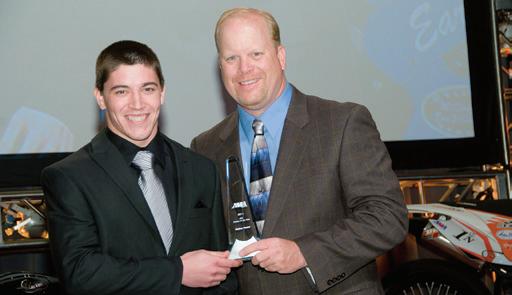
The American Motorcyclist Association (AMA) handed out several prestigious ATV-related honors at the AMA Visa Card from Capital One Racing Championship Banquet on Nov. 20 at the Red Rock Casino, Resort and Spa in Las Vegas, Nev. AMA Cross Country Series XC2 Pro-Am Champion Walker Fowler was named 2011 AMA ATV Athlete of the Year.
“It was just a crazy year for sure—a dream season,” Fowler said from the stage. “I don’t think I’ll ever be able to do it again. It’s every racer’s dream to be able to do something that no one else can.
“But there are a lot more goals in front of me that are the same thing, and that’s what keeps us racers going,” he said. “I just want to thank the AMA for giving us all these series to compete in and letting us go out and do what we do.”
The annual awards banquet celebrated racers’ championship seasons and presented a number of special awards that acknowledge the standout performances
of top competitors and others.
The Cheaha Trail Riders of Alabama earned AMA Club of the Year honors. The organization is an off-highway vehicle (OHV) advocacy group of volunteers that promotes the development of OHV trail systems throughout the United States and particularly in Alabama.
The group currently is hard at work on a 2,800-acre multiuse facility near Talledaga, Ala., that already boasts about 55 miles of ATV trails.
The group also promotes OHV safety, education, family recreation, riding responsibly, environmental conservation and volunteerism.
Racer Productions was named ATV Organizer of the Year for its Can-Am Grand National Cross Country Series.
Also, the AMA Racing Media Award was presented to Shan Moore for his stellar work as an off-road photographer and reporter. Moore is well known for his ATV racing coverage as well as coverage of
other competition.
The AMA welcomed a full house of champions and their families, friends and fans to the banquet. Stan Simpson, the chairman of the AMA’s Board of Directors, thanked all racers for their contribution to making racing the exciting sport it has become.
“On behalf of the board of directors of the American Motorcyclist Association, our AMA staff, and each and every AMA member, I congratulate all of you for your successful seasons,” Simpson said, addressing the crowd. “Your skill and determination have earned you a place among this elite group of champions and taken you to the top of amateur racing.”
Hundreds of top competitors, in disciplines ranging from land-speed racing to motocross to woods racing and everything in between, received their national championship trophies and No. 1 plates at the banquet.
Grants Given For Trail Work
Groups From Hawaii To New York Cash In
Five organizations nationwide recently received a total of $40,000 in grants through Yamaha Motor Corp., U.S.A.’s OHV Access Initiative for motorized trails.
They are:
• 808 MX ATV Association in Hilo, Hawaii.
• Forest County ATV Association in Laona, Wis.
• Long Island Recreational Trails Conservancy in Long Island, N.Y.
• North Country ATV Association in Greenville Center, N.Y.
• Shasta-Trinity National Forest in Redding, Calif.
Yamaha is actively seeking qualified projects at local, state and federal levels for funding in 2012.
Examples of appropriate projects for grants include, but are not limited to, trail development, restoration and maintenance; trail signage and map production; staging area construction, renovation and maintenance; and land stewardship, trail safety and education.
The OHV Access Initiative GRANT application form and guidelines are available at Yamaha-motor.com/ ohvaccess.
Walker Fowler (left) with the AMA’s Joe Bromley.
Yamaha Employees Roll Up Sleeves To Support Riding
Volunteers Work In California
National Forest
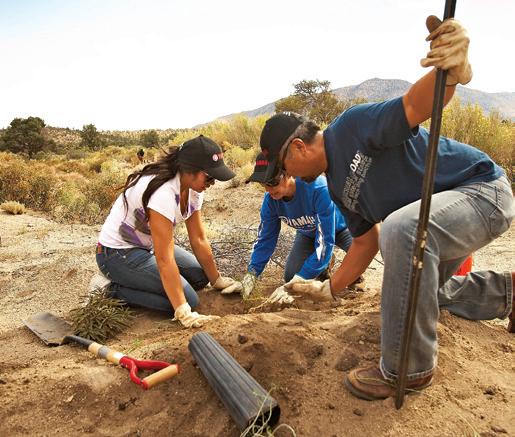
More than 60 Yamaha Motor Corp., U.S.A. employees, family members and friends convened in the San Bernardino National Forest in California in October to volunteer more than 200 work hours— and to kick off a long-term restoration project—at the popular Cactus Flats staging area near Big Bear Lake.
Volunteers reached some initial restoration goals through weeding, grubbing, seed collecting, planting native shrubs, watering and other important cleanup projects.
“It’s exciting to see so many Yamaha employees volunteer their weekend and get their hands dirty in support of our local mountains and OHV areas,” says Steve Nessl, Yamaha ATV and SxS group marketing manager, who participated in the volunteer project. “The San Bernardino National Forest Association has a model OHV program that garners thousands of volunteer hours every year.
“We’re happy to do our small part for our local trails, and we encourage OHV
enthusiasts across the country to continue to keep their riding areas safe and sustainable, as well as look to our OHV program for support,” he says.
The weekend’s activities were hosted by the Yamaha ATV/SxS Group, as part of Yamaha’s OHV Access Initiative, and in conjunction with the San Bernardino National Forest Association (SBNFA).
SBNFA staff have helped lead past Yamaha volunteer projects in the forest and many volunteers from its own OHV program have helped out as well.
Fox Racing Shox Offers Support
Deep Discounts Available to Amateur Racers
Fox Racing Shox has announced the return of its ATV Grassroots sponsorship program for 2012.
The grassroots race program is a great opportunity for amateur racers of all levels to receive huge discounts on Fox products for the 2012 race season.
Fox will accept applications for the 2012 season through March 15. Send your resumes to psgrassroots@foxracingshox. com and be sure to include basic information like contact info, racer results and your plans for the 2012 season.
Amateur riders who ride on Fox suspension systems will get trackside support, running the same technology
that has led riders like Chris Borich, John Natalie, Josh Frederick, Josh Creamer, Dustin Wimmer and more to several championships over the last few years.
The 2012 Fox grassroots team will have the option of upgrading their new Gen II Float X EVOLs to the Kashima-coated version that Fox factory-level riders have been testing for the past year with great success.
Fox’s Kashima-coated air sleeves and reservoirs reduce friction on the key surfaces of the shock absorber, resulting in a smoother action throughout the stroke of the shock.
Kashima-coated reservoirs are also
available to enhance the performance of the Podium X rear shock.
With the 2012 season, Fox brings more support by utilizing a few of its key dealers for the ordering process.
Fox announced that Brothers Motorsports in Minnesota, Dirt Works in Missouri, Janssen Motorsports in Wisconsin, Honda East in Ohio and Temecula Motorsports in California will be assisting them with orders for the coming season.
Ask The ATV Safety Institute:
Young Riders
YOU ASK: My 14-year-old son rides dirtbikes. We also have an ATV that I use for utility work, and he’s getting old enough to start helping out more. I know the ATV looks safer because it has four wheels, but it’s also much heavier and, in my opinion, more dangerous. I don’t just want to put him on it and send him off. What should I do to make sure he’s safe?
THE ASI RESPONDS: ATVs are categorized according to the minimum operator age, based on engine size or top speed (depending on when the ATV was manufactured).
The five categories are Y6+, Y10+, and Y12+ (Youth); T (Transition); and G & S (Adult). They all have corresponding age labels that indicate the rider should be age 6 or older, 10 or older, 12 or older, 14 or older, and 16 or older, respectively.
A 14 year old may ride an ATV labeled for minimum age 14 or younger, but should not be allowed to ride one labeled for minimum age 16 (the “Adult ATV” category).
Riders under 16 should be supervised by an adult whenever they ride an
ATV. Even though a 14 year old may be physically large enough to operate the controls of an Adult ATV, it may not be safe. Y and T category ATVs have features and performance that match the intended age of the rider.
The ASI offers an online course and a hands-on course. Enrollment and safety information can be found at ATVSafety. org.
With regard to the hazards of ATV operation, the vast majority of crashes and injuries involve the rider’s misuse of the ATV. ASI publishes these Golden Rules for safe ATV operation:
• Always wear a DOT-compliant helmet, goggles, long sleeves, long pants, over-the-ankle boots, and gloves.
• Never ride on paved roads except to cross when done safely and permitted by law—another vehicle could hit you. ATVs are designed to be operated off-highway.
• Never ride under the influence of alcohol or drugs.
• Never carry a passenger on a singlerider ATV, and no more than one passenger on an ATV specifically designed for two people.
• Ride an ATV that’s right for your age.
• Supervise riders younger than 16 and only let them ride appropriately sized models. ATVs are not toys.
• Ride only on designated trails and at a safe speed.
• Take a hands-on ATV RiderCourse and the free online E-Course. Visit ATVsafety.org or call (800) 887-2887.
Please supervise your son whenever he rides an ATV, and allow continued use only if he demonstrates the ability and judgment needed to operate the ATV safely.
The All-Terrain Vehicle Safety Institute develops rider training programs and promotes the safe and responsible use of ATVs. The ASI works to reduce crashes and injuries resulting from improper ATV use. Formed in 1988, the ASI is a not-for-profit division of the Specialty Vehicle Institute of America. For safety information or to enroll in the ATV RiderCourse nearest you, visit ATVsafety.org or call (800) 887-2887.
Youth
ATV riding in America almost died.
Federal legislation, signed into law in 2008, saddled allterrain vehicle (ATV) and motorcycle manufacturers with strict requirements that effectively outlawed selling dirtbikes and ATVs for kids age 12 and under.
But ATV riders and motorcyclists fought back. And won.
Thanks to those efforts, in late 2011 President Obama signed a law excluding ATVs and dirtbikes from the law. The victory was shared among all riders.
“The contributions to this victory from all corners of the ATV and motorcycling industry can’t be overstated,” says AMA President and CEO Rob Dingman. “But it was the individual ATV riders and motorcyclists, the core enthusiasts, fueled by passion alone, who kept this fight going and made all the difference.”
Nancy Sabater was a key soldier in that fight. A rider from Charlotte Hall, Md., Sabater says she was driven by her love for the sport, her belief in the benefits of youth riding and a desire that fairness be served.
“Children are the future of the sport, and the thought that we would have to put riding aside and not do these family things greatly concerned me,” she says. “We need kids to grow the sport...”
Dingman says that Sabater’s tireless efforts represent the hard work put in by all individual riders who fought this battle.
“No question, Nancy was joined by a large number of dedicated ATV riders, motorcyclists and their families,” Dingman says. “However, she is one of the AMA’s most-dedicated, most-driven and mostwell-intentioned members.
“A number of partners had a hand in our victory over this misguided law—the motorcycle industry, race promoters, parts distributors and others,” Dingman continues. “But it’s Nancy and those like her—the individual enthusiasts—who truly worked hard, gave our cause a face in the crowd and brought this victory home.
That’s why they were the most influential motorcyclists of 2011, and why AMA member and grassroots activist Nancy Sabater is the AMA Motorcyclist of the Year.”
They Did What?
The nightmare started in 2008 when Congress passed legislation that essentially outlawed the sale of kids’ ATVs and dirtbikes because of the potential lead content in certain components.
The Consumer Product Safety Improvement Act (CPSIA) was signed into law by then-President George Bush on Aug. 14, 2008, and went into effect on Feb. 10, 2009. The law was passed in the wake of reports that inexpensive imported children’s toys were testing high for lead content, which presents serious exposure risks for children.
However, the CPSIA was not well written, and it banned the making, importing, distributing or selling of any product intended for children 12 and under that contained more than a trace amount of lead in any accessible part.
The CPSIA, or “lead law” as it was commonly called, also required that all children’s products undergo expensive periodic testing by independent laboratories approved by the Consumer Product Safety Commission (CPSC), which was responsible for implementing the law.
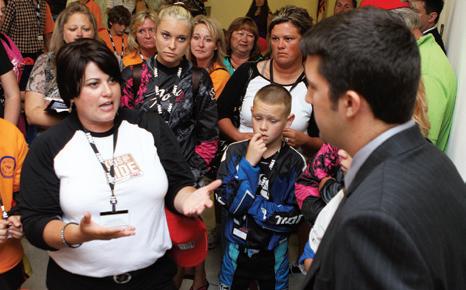
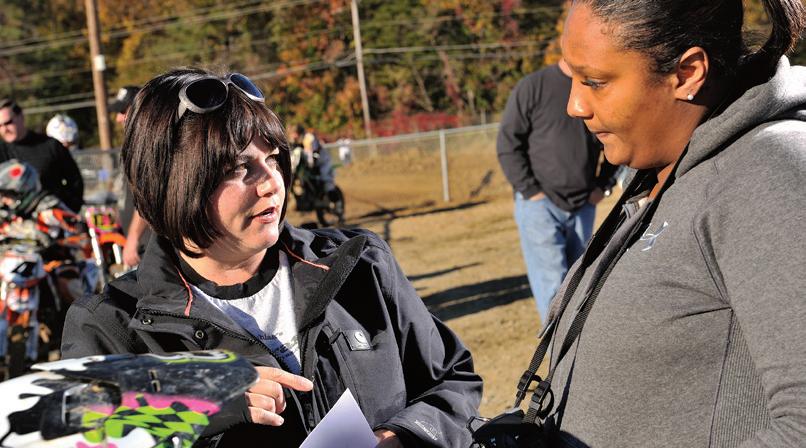
Nancy Sabater tells a legislative staffer how important it is to change the lead law during the AMA Family Capitol Hill Climb in Washington, D.C.
Your ATVA And AMA At Work
By Wayne Allard, AMA vice president for government relations
By Wayne Allard
As I am diving into the issues facing ATV riders and motorcyclists as the new AMA vice president for government relations, two facts are obvious.
First, 2011 was a remarkably successful public policy year for the ATVA and AMA, highlighted by Congress passing and the president signing legislation that included the “Kids Just Want to Ride” provisions, which exempted kids’ ATVs and dirtbikes from the lead law.
Second, ATV- and motorcycle-related laws and regulations won’t go away. The riding community faces attacks from your city, county, state and federal government, with old and new challenges facing the ATV community. The ATVA provides the forum that can carry the fight forward for ATV riders’ rights.
Overturning the lead law transformed
an ill-advised federal provision into an opportunity. It demonstrated that the riding community can come together under the ATVA’s and AMA’s leadership. This victory has created a blueprint for future successes, reminding ATV riders and motorcyclists that we can make a difference on issues that affect our daily lives, even in Washington, D.C.
The victory also showed that those not old enough to vote can influence policymakers. In this case, kids’ involvement created a lifetime of memories for them and their families.
A key future challenge consists of preserving available riding opportunities while well meaning but ill-advised policymakers try to take away our freedoms. This is true whether you race or ride off-highway.
It is an educational process that the ATVA and AMA are prepared to undertake, but your support and encouragement are needed. If you are reading this and are not a member, the ATVA’s public policy push is an important
reason to join.
If you are an ATVA member, look beyond your regular modest dues, sign up to receive Action Alerts by email on issues affecting you, remember to register to vote, get to know your elected officials on a personal basis, write letters to the editors, affiliate your business with the ATVA or AMA and support the American Motorcyclist Political Action Committee with a donation no matter how small. We need to support those who support us.
As a rancher, veterinarian and outdoor advocate, I have been an involved citizen, small businessman, and an official who has served at all levels of government, from a local health officer to a U.S. senator. You, too, have this opportunity, no matter who you are. You can make a difference!
Today, I am again a private citizen using my experience to make this a better place for ATV riders and motorcyclists, and I am proud to be a part of this respected organization.
The ATVA website—ATVAonline. com—provides a plethora of information that you can use, including how you can make a difference with policymakers. Your freedoms are unique to America, and the ATVA and AMA are here to help protect them.
The rest is up to you!
The lead law ensnared kids’ ATVs and dirtbikes because trace levels of lead can be found in parts such as brake calipers and battery terminals. It didn’t matter that those parts were either inaccessible or extremely unlikely to end up in kids’ mouths.
ATVs and dirtbikes weren’t alone in this mess. Other children’s products were also affected by the lead law, such as books, clothes, bicycles, telescopes and microscopes.
Complicating the situation was bureaucratic wrangling over jurisdictions, the right of the CPSC to rectify the matter and numerous delays and extensions that impacted some parts of the law, such as enforcement, but not others, such as testing.
That most recent delay for enforcing certain parts of the lead law was to run
out at the end of 2011. If not defeated, this would have been another nail in the coffin of youth riding, and possibly the decisive blow against a weary multitude of enthusiasts who had been fighting to defeat the law for three years.
Fighting The Fight
Nancy Sabater was not about to let the lead law stand.
She wrote to her congressman, held petition drives spoke to racers and families, created videos, set up Facebook pages and more in an effort to get kids’ ATVs and dirtbikes exempted from the lead law.
She is most proud of two of her initiatives.
First, she generated a significant amount of local interest in the AMA Family Capitol Hill Climb that was held on May 26, 2011. The AMA-organized event brought more than 200 activists from 20 states to Washington, D.C. The event was designed to raise awareness among lawmakers of the devastating consequences not fixing the lead law would have on families that enjoy motorized recreation.
“Working with other local enthusiasts, Nancy inspired several local riders and their kids to attend this event and show lawmakers how much this law needed
to be fixed,” says AMA Grassroots Coordinator Jessica Irving. “We could not have done what we did without her.”
Second, Sabater produced a number of videos of well-known racers and motocross industry personalities speaking out against the lead law, which she published on her YouTube channel,.
Sabater ultimately published 20 video interviews. She says that her experience taught her that every contribution counts.
“It’s easy to think that there are times that your vote or voice can’t do anything, and then some of us just do anything because of that,” Sabater says. “But I am a believer that we can be more powerful than we think we can be.”
Sabater coined a phrase to describe those who stood up against the lead law and, she says, are ready to swing into action at the next threat.
“As I got more involved, I saw the benefits of our efforts, no matter how small the contribution of time or energy—it was noticeable,” she says. “One day while talking to the AMA’s Jessica Irving about what all we were doing in Maryland and beyond, I came up with a phrase to refer to those of us across the country working hard to make a difference: moto-patriots.”
Sabater has used the phrase consistently since, both on her YouTube channel
(www.youtube.com/user/themotopatriot)
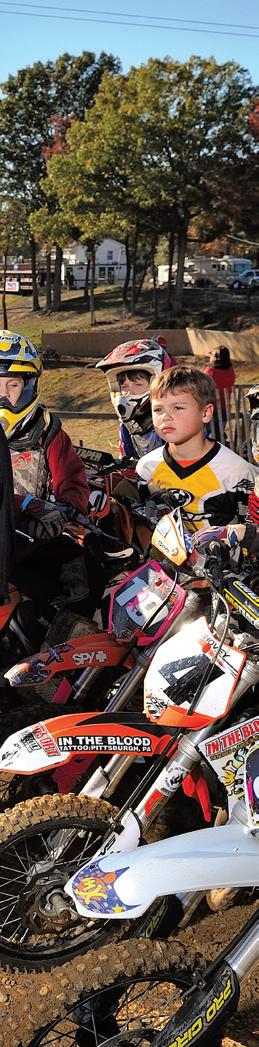
Nancy Sabater spent a lot of time at racetracks circulating petitions and talking with parents about changing the lead law.
and on a Facebook page (www.facebook.com/ themotopatriot).
The Fix
Thanks to the efforts of Sabater, ATVA and AMA members, race promoters and the industry, Congress got the message that the law must be fixed.
“The ATVA and AMA and their members participated in news events to focus media attention on the issue, lobbied on Capitol Hill, and organized campaigns to encourage riders and parents to contact their federal lawmakers to exempt kids’ OHVs from the CPSIA,” says AMA Vice President for Government Relations Wayne Allard. “Those riders and parents responded.”
As a result, every member of Congress, as well as members of the CPSC, got the message loud and clear that this issue must be addressed.
“Hundreds of thousands of parents, kids and club members joined us in this push to contact our elected representatives and turn the tide in our favor,” Irving says. “Without people like Nancy, not all federal legislators may have listened and joined our early supporters who helped make this happen—legislators like U.S. Rep. Denny Rehberg (R-Mont.), U.S. Sen. Amy Klobuchar (D-Minn.) and all the other lawmakers who backed an exemption from the beginning.”
After nearly three years of battle, the victory came quickly. Just 12 days after the U.S. House and Senate passed a bill to exempt kids’ ATVs and dirtbikes from the lead-content portion of the CPSIA, President Obama signed the bill—H.R. 2715—into law. That was on Aug. 12, 2011.
“Everyone involved deserves a lot of thanks not only for ensuring that kids can continue to ride today, but for ensuring that the sport and passion of ATV riding and motorcycling will continue to grow in the future as young riders become adult riders,” Dingman says.
Making A Difference
Activist Nancy Sabater offers several tips for making a difference in your local community.
1. Make sure you know your information. If you don’t, contact people who do.
2. Talk to the people who are directly affected and put in their hands the information and ammunition they need to act. You can’t be an army of one when you are trying to make a big difference. The more voices, the louder you are.
3. Utilize social media. It’s huge, and it will enable you to get your message across and reach so many people who you don’t even know.
4. Contact organizations that have a vested interest, like the ATVA. Tell them, ‘Here’s what I’m doing. What else can I do? Just tell me. Direct me.’ It all comes together when you work with the right people.
5. It’s everyone’s responsibility to contact his or her representative. You can’t do this for someone. It has to come from a constituent. Also, a face goes a long way. If I can deliver a letter in person, I will.
6. Write letters to the editor of your local paper. It will let more people in your community know what’s going on, but also your representatives will see that, because their staffs monitor the news.
7. Go to related events and talk about it. In the case of the lead law, that meant races. You may not be racing, but you know people who are and you know the issue.
WHERE TO RIDE
Millican Plateau OHV Trail System
Prineville, Oregon
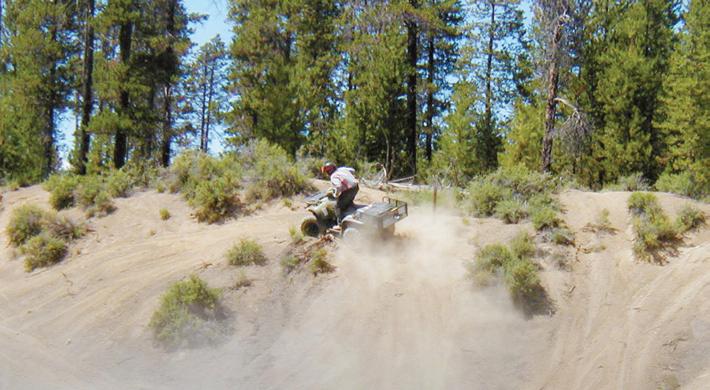
Most people don’t think of central Oregon as the place to go to get in some desert riding, but the Millican Plateau Off-Highway Vehicle Trail System offers a variety of desert riding experiences.
The trail system, which is near Prineville, has 111 miles of trails open to ATVs and motorcycles. Some 37 of those miles are also open to side-by-sides and jeeps.
Horse riders, mountain bikers and others also share the trails, so be sure to
respect the rights of other users.
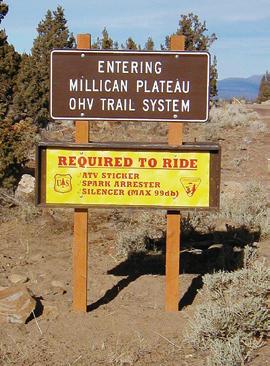
There is no fee to ride, but there are conditions. To ride, you will need a spark arrester, a valid OHV sticker, an engine muffled at or below 99 decibels at 20 inches, a valid drivers license (or ATV permit as appropriate) and a helmet for riders 18 years old or younger.
This riding area is managed and maintained by the Prineville District of the federal Bureau of Land Management (under a cooperative agreement with the U.S. Forest Service),the Oregon Department of Parks and Recreation ATV Funds, and support from user groups and volunteers.
The Millican Plateau is mostly sand with rock outcrops. The vegetation is a mix of sagebrush and juniper.
The riding area is open for riding year round. During the summer, the area is hot, dry and dusty. The best riding season is during the winter when there is good ground moisture. There are only a couple weeks during the late fall, winter and early spring when the trails can’t be ridden because of snow or frost.
There is no water available, so bring plenty. There are chemical toilets at the staging areas.
There are three staging areas: Four Corners, Alfalfa Curves and Corrals. All three have an information kiosk that provides maps and brochures abut the area. Each staging area also has picnic
tables, fire rings and port-a-potties.
There is no garbage collection, so plan to pack out your trash.
Access to the staging areas is immediately adjacent to a paved road, so road conditions are good for any type of vehicle.
The Four Corners staging area is large enough to accommodate groups, fifth wheels and motor homes. Camping is also allowed at any of the many dispersed sites.
To get to Four Corners from Bend, follow Highway 20 east about four miles and turn left on the Powell Butte Highway. Go about a half mile and turn right on Alfalfa Market Road. Once you have turned onto Alfalfa Market Road it is 16 miles to the Four Corners staging area.
To get to the Alfalfa Curves staging area from Bend, go east on Reservoir Road. The staging area is about two miles prior to the intersection of George Millikan Highway.
To get to the Corrals staging area, head to the Four Corners staging area. When you reach George Millikan Highway, turn left and head north for about one and a half miles. The staging area is on the right side and is posted with a sign on the highway.
For information on Oregon OHV laws, go to OregonOHV.org.
For information on the Millican Plateau OHV Riding Area, call Central Oregon OHV Operations at (541) 383-4000.
Plow Forward This Winter
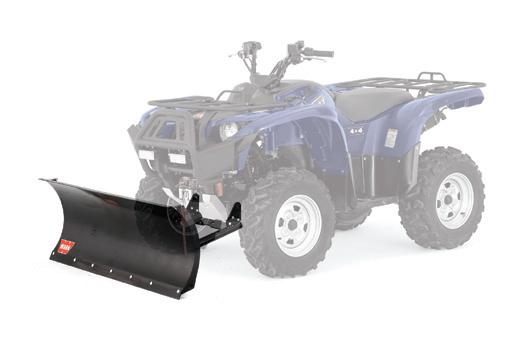
GoWarn.com offers a wide variety of snow plows to make winter work a lot easier, including the ProVantage ATV Center Mount Plow System with a 54-inch straight blade. This system features a mounting kit and a plow base/push tube assembly. The system requires a Warn Plow Lift or Warn XT15, 25 or 30 Winch for the bladeraising mechanism.
MSRP: $399.99
Info: GoWarn.com
Go Large On Your Polaris
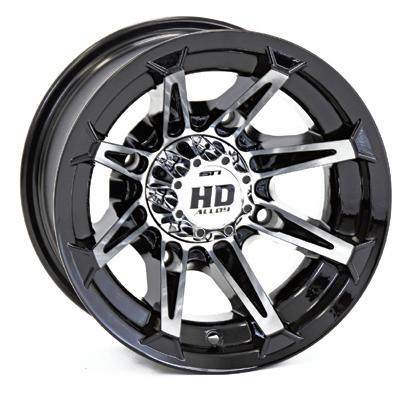
STI now offers the 12x7 HD2se wheel in a unique 2+5 offset, which addresses several tire and wheel issues for Polaris owners. The company says that no other aftermarket wheel is currently available in these dimensions. Polaris ATV riders have found that it’s difficult to use a front tire wider than 9 inches. A tire that’s 10 inches wide or more will cause clearance problems and rub the chassis on the inside. The STI HD2se 2+5 wheel allows the use of wider tires, often the desired setup for mud riders. A set of these wheels also widens the stance of by 6 inches over stock, adding lateral stability without the need for spacers.
MSRP:$79.95
Info: STITireandWheel.com
Silver Lining Trekking Socks
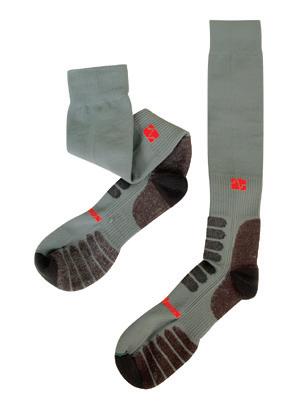
Every pair of riding boots can now literally have a silver lining with these technologically advanced socks. The unique dual-action Silver Drystat polypropylene yarn offers superior wicking and antibacterial properties. A soft, padded footbed provides exceptional cushioning, while the patented graduated compression design of the boot-cut uppers are designed to enhance ankle support, stimulate circulation, provide relief from cramps, alleviate swelling and make feet more happy and comfortable in any riding conditions. Made from Silver Drystat, Spandex and Lycra.
MSRP:$32
Info: Aerostich.com
CALENDAR
The following is a listing of events sanctioned by the ATVA. To find the events nearest you, locate your state and contact the promoter for complete details.
CALIFORNIA
ENDURO
JAN 21-22: LUCERNE VALLEY: 2-DAY EVENT, UNITED ENDURO ASSOCIATION, (714) 305-6767