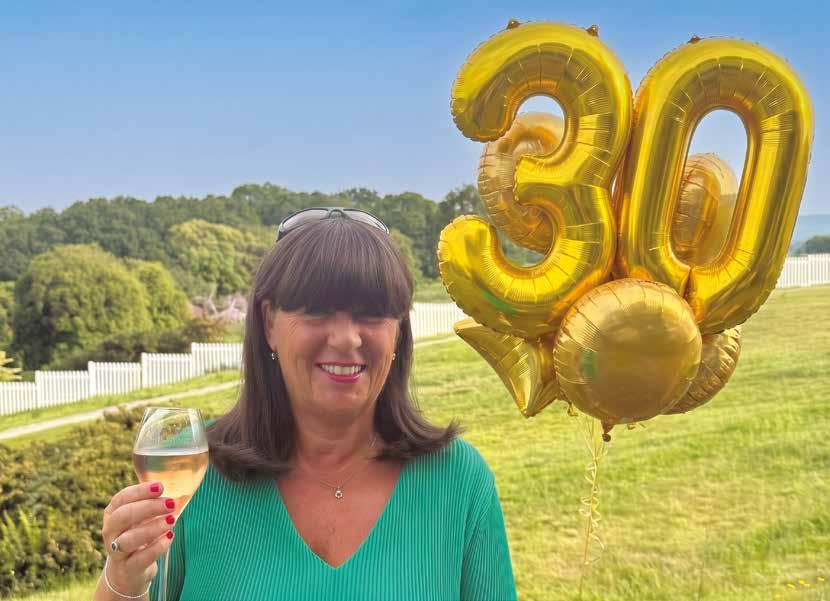
Celebrating Serving The American Community In The UK For 30 Years
WINNER: Best American Expat Support Media Platform 2025
WINNER: Excellence in Transatlantic Community Engagement 2025
FEATURES INCLUDE: American Expatriate Clubs’ News • Days Out With The Family • Eating Out Education • Hotel Review • Legal Matters • Security For Americans Take Five • Theatre • Travel • Wealth Management
ADVISORY PANEL
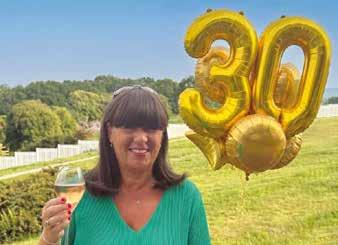
Celebrating 30 Years of Supporting Americans in the UK
A NOTE FROM THE PUBLISHER, HELEN ELLIOTT
Dear Reader,
I can not believe that 30 years ago I took on the publishing of American in Britain magazine, and am really not sure where that time has gone, but I can say I have enjoyed every minute of publishing this magazine, and organising the events that I run for Americans in Britain, and in turn, meeting so many of our lovely readers, and I hope to continue for another 30 years! That would make me almost 90, but as 80 is the new 60, and 60 the new 40, I am sure this is feasible!
I started publishing American in Britain in 1996, and swiftly followed this with events for Americans living here, a magazine for Global HR professionals who relocate expatriates around the world, our annual Expatriates’ Guide to Living in the UK, and a radio show, The American Hour, that I hosted with my late friend and business partner, Assunta Mondello.
I do have some fabulous memories of Assunta and I working together for 10 years hosting our radio show, and hosting events at The American Embassy when it was in Grosvenor Square. One time the catering company had been let go the morning of our event, which meant myself, Assunta, her brother and my Mum had to head to the M&S Food Hall on Oxford Street to buy canapes for over 200 people! We had an Indian restaurant once sponsor the food, and on departing the Embassy the cartons of food that hadn’t been eaten fell of the trolley, leaving curry all over their floor, and once we left the Embassy without letting them know, to then be phoned an hour later to ask where our whereabouts were as they couldn’t find us in the building! We didn’t make that mistake again!
I have been very lucky to have reviewed many fabulous hotels and restaurants in the UK, and overseas, throughout the last 30 years, that I hope you may also have enjoyed visiting, as well as enjoying some great days out for our Days Out With The Family reviews. But all is not always how it seems, and several times I have said that I hoped our readers appreciated the lengths I have gone to for editorial content that I think they would enjoy. For example, my friend Jackie and I were chased by a very agitated Canada Goose in Wales whilst doing a travel review, we managed to lose our Godson in a maze in Hever Castle, we have got soaked whilst reviewing a trip on the Thames, and having had few drinks I told a Michelin Star chef, how to cook bruschetta using M&S garlic bread!
A huge thanks goes to the contributors of American in Britain, who do so for the love of the magazine, and these include Abby Cronin who for many years wrote our Arts & Antiques features, and Judith Schrut who writes our Take Five articles. We have also worked with MASECO Private Wealth, Expat Legal, Russell Cooke, HR Block, Knight Frank, CAF American Donor Fund, and St John & St Elizabeth Hospital, to name but a few, who have provided informative articles for our readers, and my sincere thanks goes to all.
I also have to say a massive thank you to all our advertisers and sponsors, as without their support none of this would have been possible, as all our products and services are free of charge to Americans living in the UK, and with regards to our events, I must say a big thank you to Roland Sabates, Jonathan Gold and Joe Crome, who have hosted the majority of our seminars over the years with regards to tax, wealth management and philanthropy.
All in all, there are so many people to thank, especially our lovely typesetter Debbie, who actually produces this magazine, and has re-designed it at least twice over the years. A very special lady, who is a joy to work with.
On a personal note, thanks go to my parents for their support over the years. My Dad was very encouraging when I was considering taking on the magazine, and wrote our UK Sports features, as well as doing a lot of proof reading, whilst my Mum helped with selling and even the catering at one of the Embassy events. They have always been a great support, so many thanks to both. Also, a big thank you to many of my friends, who have helped out at the events, including Jackie, Jo, Fiona and Becky, and thank you Jackie, also for the help with our databases and proof reading. And finally, to my husband Ben, who now works with me and has done for six years, writing many of our reviews, and putting together our monthly email newsletters. Your support is also very much appreciated.
So, thank you to so many people, including our readers. It is an honour to support you whilst you are living in the UK, and I hope you continue to enjoy reading American in Britain magazine, and attending our events.
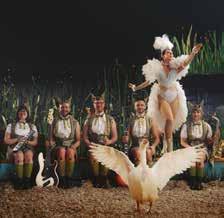
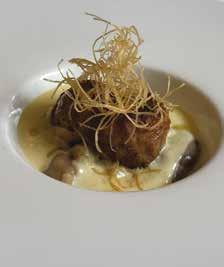
It is rare for me to be struggling for words about a restaurant and their food that I am lucky enough to review, but I find myself in that strange position with Restaurant Interlude and its attached hotel, where diners can stay after experiencing all the restaurant has to offer. This lack of words is not because it isn’t exceptional, because it is, and not because I can’t find the right words, it is because I don’t want to spoil your experience by giving away what you will encounter. A visit to a restaurant and your enjoyment of it, is based on not just the food, it is the overall offering, which includes the décor, the service and the theatre, and at Restaurant Interlude this is not just theatre, it is the West End!
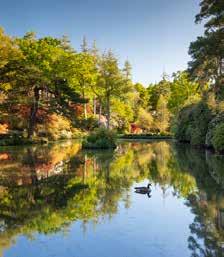
The restaurant is located near Horsham in the mansion house of the Leonardslee Estate, surrounded by 240 acres of Grade 1 listed gardens which provide many of the ingredients for the dishes, ensuring the ultimate freshness, and is a unique Michelin Starred and Michelin Green Starred experience with a menu that changes with the seasons. The restaurant has held a Michelin Star since 2019, and four AA rosettes since 2020, and it is beyond me that, although impressive, that it hasn’t received more accolades as it is that good.
The experts behind the magic are Executive Chef, Jean Delport, and Head Chef, Sam Heaven. Jean’s unique style blends British and French techniques with his South African heritage, and his love for foraging that creates a menu that leads the diner through the surrounding gardens. Sam’s precision and innovation provides a perfect foil, ensuring that every dish is immaculate and not only bursts with flavour, it is visually stunning.
Dining at Restaurant Interlude is less like booking a table, and more like stepping into a self-contained world. Hidden inside the sweeping grounds, the restaurant has built its reputation on a simple, but ambitious idea: tell the story of the estate through food. That narrative is woven into every dish, every pour, every quiet moment
between courses. By the time you leave, you feel as though you’ve eaten not just a meal, but a landscape.
The experience begins long before the first bite. The drive through the gardens sets the tone with imposing towering trees, still ponds, and the kind of hush that makes you feel away from it all. Inside, the dining room is impressive, with high ceilings whilst also retaining its intimacy, and is a strange mix of modern Scandinavian tables and chairs and the impressive old English decorations, with just enough theatre to signal that you’re in for something special. The staff greet you with the calm confidence of people who know they’re about to show you something extraordinary. Restaurant Interlude’s Tasting Menu is a procession (17 to be precise) of small, intricate, deeply considered dishes which leans heavily on foraging, fermentation, and hyperlocal sourcing, but never in a way that feels gimmicky. Instead, each course is presented by one of the chefs that have prepared it, and feels like a chapter in a story where the chefs are telling you about the land around you rather than just serving you a course.
Your experience will start either on the terrace overlooking the rolling Sussex countryside, or in the refurbished bar area, and you are advised to not be late, and that is clever as, as well as overzealous food critics writing too much about the food, your experience would also be spoilt if you are late and you receive a course after the other tables, as they try to time it so the whole restaurant receive the same dish around the same time, giving it the maximum impact.
Service at Restaurant Interlude is a masterclass in attentiveness without intrusion. Glasses are topped up with quiet precision. Questions are answered with enthusiasm rather than rehearsed lines. There’s a sense of genuine pride in their work - the kind that can’t be faked.
What sets Restaurant Interlude apart is its commitment to the countryside. The menu changes constantly, shaped by what the estate offers on any given day. That means no two visits are the same, and the unpredictability becomes part of the charm. You’re not just eating what the chefs want
to cook - you’re eating what the land has decided to give.
This is not a restaurant for those seeking a quick dinner. It’s a slow, immersive, almost meditative experience. The tasting menu stretches over several hours, but time moves differently here. Courses appear and disappear like scenes in a dream, and before you know it, you’re stepping back into the night, the gardens quiet around you, the flavours still echoing.
Restaurant Interlude is a restaurant with a point of view - bold, thoughtful, and unapologetically rooted in its environment. It’s the kind of place that lingers in your memory long after the final course. If you’re willing to surrender to its pace and its vision, you’ll be rewarded with a meal that feels both intimate and expansive, like being let in on a secret.
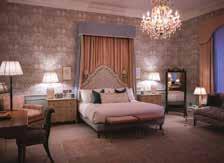
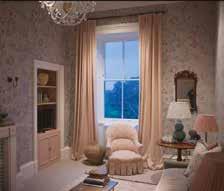
To make your experience even more special, after your meal you can book yourself a stay in one of the 10 mansion house rooms all leading off from the main gallery overlooking the domed atrium. They are all individually designed with an eclectic mix of quintessentially British design, with antique rubbing shoulders with more contemporary pieces of furniture. The jewel in the crown of the hotel is the Magnolia Suite which is situated at the back of the house boasting stunning views over the gardens. On entering the suite, you pass through the small lounge which leads into the impressive bedroom with a comfortable canopied bed, towering ceilings and large mirrors perfectly situated to allow you to get ready for dinner. Alongside the antiques are a flat screen TV and a Nespresso machine, giving a hint of technology, and a personal favourite of mine, fresh milk for the tea and coffee in the fridge.
The bathroom is equally impressive as along with a stand-alone stainless steel bath, double sinks and a large wet room shower, it even has its own chandelier (that is a first for me), and the luxury continues with the inclusion of Tyneham toiletries and soft, fluffy towels.
Everything about these rooms screams quality and an overnight stay here caps off an amazing night at Restaurant Interlude perfectly. www.restaurant-interlude.co.uk
I was only 16 when I first visited Peru, and although I can remember a number of the amazing sights that this wonderful country has to offer, including the awe-inspiring Machu Picchu and the mystical Nazca Lines, I was struggling to remember whether I enjoyed the quality of the cuisine that it had to offer, except that I am sure that I ate Guinea pig once as it is considered a delicacy dating back 5,000 years to the Inca civilization. So, it was with great anticipation of reliving my early years that I accepted an offer to visit Allyu near to Paddington, a Japanese and Peruvian fusion restaurant.
‘Allyu’ is a fundamental social and economic unit in Inca society providing security for its members, and once born into one of these allyu you remained a member for life, and its modern day reincarnation next to Paddington Canal will keep me a patron for life too, as it provides wonderful Peruvian food, which is a rich fusion of Spanish, African and Asian influences, alongside Japanese influences.
Paddington Canal forms part of the Grand Union Canal which was a significant contributor to the UK’s economic growth during the industrial revolution. Since its opening in 1801, it has seen many changes, and now instead of facilitating barges full of coal, it welcomes boats full of revellers and moored restaurants, and is the home of Allyu.
Allyu, is almost hidden below its sister bar above, and is an underground cavern
feeling much more atmospheric, boasting mixtures of brown and greens giving it an almost ‘Wicked’ feel, with the bar and cooking station at one end and at the other an eclectic large light bulb display.
You will be pleased to know, as was I, that Guinea pig or Cuy as it is known in Peru, is nowhere to be seen on the menu, but there is much to delight the diner. I like to appreciate every dish I get so always only order a few dishes at a time so I ensure I don’t get everything at the same time. Our first dish we selected was the Guacamole served with corn tortillas and prawn crackers (£8). This was exceptionally smooth and creamy and seasoned so well it burst with salt, lemon and chilli notes and is a must order, it was that good.
We then selected the Chicken Bao Buns (£9) which were a wonderful mixture of the sweet bao buns and the chilli on the crispy chicken, and the Dragon Rolls (the more Japanese influence), (£15), which was an explosion of flavours from the tempura prawn, unagi, spicy cream, bonito, unagi sauce and red tobiko.
Having enjoyed this we chose the Beef Tequenos (£8) which was succulent short rib encased in a pastry dough served with an ocopa sauce. The sweetness of the rib went perfectly with the fresh minty ocopa sauce, with its hints of Amarillo peppers, peanuts and cheese.
Our final selections before the mains were the Crab Taquitos (£9) and the Tuna Taquitos (£8) and the Beef Tataki (£16). The beef Tataki has gained popularity due to its unique preparation method which involves searing the outside of the beef whilst keeping the
inside mostly raw. This created a wonderful melt in your mouth texture and in the hands of the Allyu chefs produced a sophisticated dish which was enhanced by a ponzu salsa, garlic chips and crunchy spring onions.
The crab in the Taquitos was fresh and lightly seasoned to bring out that wonderful flavour that crab has, and tuna is wonderful wherever and whenever it is served, and when combined with the mild nutty flavour of sesame it positively glows.
Main dishes come in many forms here with Steaks, Lamb Chops and a number of Fish dishes all expertly cooked, but our eyes were on a few skewers accompanied by some sides, especially after all the wonderful dishes that had come before.
We selected the Lamb (£10), Chicken (£8) and Cabbage (£7) Skewers, along with Peruvian Chips (£5) and Chaufa Fried Rice (£6).
These skewers are substantial and the lamb and chicken were succulent and perfect with the fried rice and spicy fries, but surprisingly the cabbage skewer was the star! The hispi cabbage was slightly crunchy and was mixed with a béchamel and chipotle sauce making it almost lasagne-like and totally moreish.
Allyu is a welcome addition to the London scene, and although I didn’t remember Peruvian cuisine the first time round I will now, (and luckily there was no Guinea pig on the menu), as it takes the best from a number of well known cuisines and then when combined with the best dishes Japanese cuisine has to offer, makes a special fusion which will live long in the memory. www.allyu.co.uk
The Bear, Oxshott
Leatherhead Road, Leatherhead, Surrey, KT22 0JE
Telephone: 01372 842747
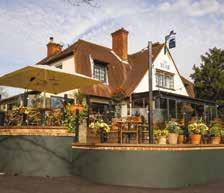
Nestled on the edge of the Surrey Hills, the village of Oxshott has long been associated with quiet affluence, grand homes hidden behind gates, and a semi-rural charm that feels a world away from central London despite being less than an hour from the capital. Surrounded by woodland, golf courses and bridleways, Oxshott strikes a balance between countryside tranquillity and commuter convenience. It is precisely the sort of setting where a traditional British pub can thrive, and few establishments embody that role better than The Bear.
Located on Leatherhead Road, The Bear has undergone extensive refurbishment in recent years, emerging as a stylish yet welcoming gastropub that combines contemporary comfort with classic British hospitality. The pub positions itself as a champion of seasonal British produce, with menus that change throughout the year, and an emphasis on locally sourced ingredients. The result is a venue that feels polished, without becoming pretentious.
From the moment you arrive, The Bear makes a strong first impression. The building retains the warmth and familiarity of a traditional country inn, while inside there is a modern finish, comfortable seating and an atmosphere that caters equally well to families, couples and groups of friends. During warmer months, the large refurbished terrace becomes a major attraction, offering one of the most pleasant outdoor dining spaces in the area, enabling the visitor to enjoy a drink or a bite to eat whilst watching the world go by, and the combination of greenery and fresh air creates a setting that encourages guests to linger over lunch or enjoy a leisurely evening meal.
The menu showcases contemporary British pub farye with a focus on seasonality. Starters are varied and thoughtfully prepared, ranging from lighter vegetable-based dishes to seafood and meat options. The FlashFried Salt and Pepper Squid (£9) is a popular opening choice, delivering crisp texture and a subtle kick from its accompanying watermelon chilli jam. Equally appealing is the Braised Lamb Shoulder and Parmesan Croquette (£10), which combines rich, slowcooked meat with a crunchy exterior and spicy harissa mayonnaise, but I opted for the intriguing Chicken & Bacon Caeser Bon Bons (£9), which combined the best bits of a Caesar salad (the sauce!) with fried crunchiness, a combination made in heaven. For diners seeking something lighter, the Honey Roasted Sweet Potato Salad with Burrata (£9), Roasted Beets and Pine Nuts, offers freshness, colour and vibrant flavours that celebrate summer produce.
Among the sharing dishes, The Bear Board is particularly impressive (£32). Designed for groups, it arrives loaded with Scotch Egg, Pork Belly Bites, Spicy Chicken Wings, Sausage Roll, Fries and various accompaniments. It is indulgent, generous and perfectly suited to sharing over drinks on the terrace. Seafood lovers may prefer the Dayboat Fish Platter, (£37) featuring mussels, smoked mackerel pâté, prawns and squid, providing a broad showcase of coastal flavours.
The main courses demonstrate where The Bear truly excels. Traditional pub classics are elevated through careful sourcing and presentation without losing their comforting appeal. The Cyder-Battered Haddock remains a benchmark dish, featuring crisp golden batter, triple-cooked chips, mushy peas and tartare sauce. It delivers everything diners expect from a quality British fish and chips experience.
Another standout is the Minted Welsh Lamb and Pea Pie (£23). Encased in buttery pastry and served with mashed potato and gravy, it is hearty, yet refined. The pie reflects the pub’s broader philosophy: familiar dishes prepared with attention to detail and quality ingredients. Despite the draw of these two, I opted for Jacob’s Ladder Short Rib (£29), with triple cooked chips and red cabbage slaw. It is so named from the way the ribs are arranged, resembling a ladder, and is known for its tenderness, and was so rich in flavour it demonstrated the kitchen’s ability to move beyond standard pub fayre.
The Bear Burger deserves special mention. Made with short rib and brisket beef, topped with cheese, pickles and burger sauce, it achieves the balance of richness and texture expected from a modern gastropub burger. Served alongside fries, it is a reliable crowd-pleaser that reflects the kitchen’s commitment to quality ingredients rather than gimmickry.
Vegetarian and vegan diners are not overlooked with a number of appetising dishes including Pea, Mint and Asparagus Risotto offering seasonal freshness and vibrant flavour, while dishes such as the Farmer’s Bowl and various vegetable-led starters provide genuine alternatives rather than afterthoughts. This inclusive approach broadens the pub’s appeal and reflects contemporary dining expectations.
No visit would be complete without considering the Sunday Roast, often regarded as the true measure of a British pub. The Bear places particular emphasis on its roast offering, highlighting locally sourced meats, crisp roast potatoes, Yorkshire puddings and seasonal vegetables, and is a strong reason to visit at weekends.
Desserts are a lovely mixture of British classics, which if you still have room, will delight. The Triple Chocolate Brownie, (£7),was my favourite, and when combined
with a creamy vanilla ice cream and chocolate sauce is an indulgent delight.
Service is generally friendly and professional, contributing significantly to the venue’s popularity. The pub enjoys strong customer ratings and a reputation as one of Oxshott’s principal social hubs. While experiences inevitably vary, the combination of attentive staff, attractive surroundings and consistent food quality helps explain why it continues to draw both locals and visitors.
Ultimately, The Bear succeeds because it understands its audience. Oxshott is a village that values quality, comfort and understated elegance, and The Bear mirrors those characteristics perfectly. Whether stopping for a pint after a countryside walk, enjoying a family Sunday lunch, or gathering with friends on the terrace during summer, guests will find a venue that combines the best elements of a traditional British pub with the standards of a modern gastropub.
In a county filled with excellent pubs, The Bear stands out not because it reinvents the formula, but because it executes it so well, with seasonal menus, high-quality ingredients, welcoming surroundings and a prime location in one of Surrey’s most desirable villages. www.thebearoxshott.co.uk
Pied à Terre
34 Charlotte Street, London W1T 2NH Telephone: 020 4600 7467
For a city that constantly reinvents itself, London can be surprisingly unforgiving to restaurants. Trends arrive and disappear with remarkable speed, celebrated chefs move on, and fashionable dining rooms often enjoy only a brief moment in the spotlight before being replaced by the next big thing. Against this backdrop, Pied à Terre on Charlotte Street stands as something of an institution. Founded in 1991, by David Moore, it remains one of London’s longest-standing MichelinStarred restaurants, and this achievement is not surprising having visited just recently, as although trends come and go, excellence endures.
Located in the heart of Fitzrovia, Pied à Terre occupies an elegant townhouse that feels understated rather than ostentatious. Unlike some Michelin-Starred establishments that can seem intimidating or overly theatrical, the restaurant strikes a balance between sophistication and comfort. The intimate dining rooms, one at the front and
one at the back, creates an atmosphere that encourages diners to relax and enjoy the experience rather than demanding attention through being overly attentive. There is a sense of confidence about the place, one that sets the agenda rather than following it, and the décor is an eclectic mix of colours which probably shouldn’t go together, but here it works and feels natural. Pied à Terre isn’t your average Michelin-Starred restaurant, as although it has the crisp white tablecloths and impeccable service, how many do you know that play the owners 1980’s mix? It feels comfortable in its own skin, as if it has excelled for over three decades by doing things its way.
Over the last three decades the underlying philosophy remains consistent: classical technique, exceptional ingredients, and creative presentation, all delivered with precision. The Michelin Guide describes the cooking as seasonal, colourful and harmonious, and that assessment feels almost understated.
Diners can select an à la carte menu with 2 courses at £95 or three courses for £120, but I would suggest one of the tasting menu options to get the full experience. There are a number of tasting menus on offer, and for its 35th Year Anniversary, Pied à Terre is offering a special menu that includes an Amuse Bouche, and a choice of starter and main for £35. Along with these two courses you are also able to add additional courses depending on how hungry you are. Each course is carefully considered, combining exceptional technical skill with an artistic flair for presentation, so dishes not only wow the taste buds, they also look spectacular, but there is no gimmick here, just a perfect balance of flavours and textures allowing the fresh seasonal British produce to shine.
Many restaurants offer vegetarian options as almost an add on to the meat and fish dishes, but here plant-based cooking is treated with the same seriousness that is traditionally reserved for said meat and fish, and the plant based tasting menu offers genuinely ambitious alternatives.
We started our meal with the Amuse Bouche which was a Confit Quail Egg served in a pure white egg shell, and consisted of an opulently smooth mousse covering a mixture of pork and caramelised onions at the bottom which when mixed mirrored a real egg colour, although tasting infinitely better!
Before we had our starters we were recommended a supplementary canapéthe Fish and Chips for myself, and a Green Symphony (the vegetarian option) for my wife, (both £10). Both were inventive, miniature and delicious, with the mushy pea donut the star! After this my wife continued with the vegetarian menu and I, the amusingly named Omnivore one.
My next course was the Seared Red Mullet, bisque, fennel and bottanga, and for my wife the Candy Beetroot. Red mullet
has a delicate, almost sweet flavour, and it is often compared to a shrimp or oyster flavour, so it’s perfectly cooked flesh went extremely well with the warming seafood bisque and mild licoricey flavour of the fennel. The candy beetroot was a visual delight with the sweet beetroot offset by the sharpness of the Granny Smith apple, all in a subtle blood orange sauce.
Before our mains we decided to share the Jerusalem Artichoke Velouté with Piedmont Hazelnuts (£12.50 supplement), and were delighted we did. The velouté was smooth with a velvety texture and was bursting with that nutty flavour artichokes are famed for, so each mouthful was like a caress on a spoon. The hazelnuts on top gave an enhancing textural crunch.
Our mains were an opulent Quail Ballotine with fricassee gem lettuce, and probably the standout dish of the night, the Grilled Maitake Mushroom. Quail has a wonderful flavour and in the hands of the chefs here was succulent and truly delicious, but the cookery on the Maitake Mushroom was so good it could almost turn me into a vegetarian! Maitake mushrooms are also delightfully known as ‘dancing mushrooms’ (said to be what the Japanese did to show their delight when they found them as they taste so good!), and are much prized for their rich flavour as well as their medicinal benefits, so our dish not only tasted fabulous it was also doing us good! Maitake mushrooms are earthy and have a firm meaty texture so are an excellent substitute for meat or fish, and when combined with a chestnut mousseline and a king oyster mushroom tartar created a stellar dish that will live long in the memory.
Desserts are equally special, and the palette cleansing Apple Sorbet and Vanilla Compote (£7.50) was tart and foamy, and wonderfully cold, topped off with a caramel tuille.
Service is exceptional and the waiters demonstrate a detailed knowledge of the menu, and support your experience through the tasting journey effortlessly, with warmth and attentiveness. Fine dining service can sometimes feel overly formal, yet Pied à Terre manages to make it approachable whilst still maintaining that precision expected of a Michelin-Starred restaurant.
Dining at Pied à Terre is not simply about eating an excellent meal, although you certainly do that, it is about enjoying an overall experience, and this is continually being reinvented to remain relevant in this rapidly changing world, whilst still being true to its traditions of simplicity and quality. Pied à Terre is elegant without being pretentious, inventive without being eccentric, and refined without sacrificing warmth, and rightly maintains its position in the upper echelons of London restaurants. www.pied-a-terre.co.uk
LEGAL MATTERS
Long Term Residence And Tails Of WoeWhat Every American In Britain Needs To Know About UK Inheritance Tax
UK Inheritance Tax (IHT)
The UK’s IHT rules changed dramatically on 6 April 2025 - the erstwhile ubiquitous (and rather nebulous) concept of domicile is no longer a connecting factor for IHT. Instead, an individual’s exposure to IHT now depends on whether they are ‘long-term resident’ (LTR) and on the ‘situs’ of their assets for IHT purposes. In short, with due respect to Benjamin Franklin, tax and death just got more certain.
Under the new rules, an individual is LTR if they have been UK resident for at least ten of the previous twenty UK tax years; otherwise, they are non-LTR.
Put simply, LTRs are charged to IHT on worldwide assets, whereas non-LTRs are only exposed to IHT on UK assets (and certain non-UK assets connected with UK residential and agricultural property)
In practice, this means US citizens, will need to clock up no more than nine years of UK residence to avoid exposure to worldwide IHT.
Tails Of Woe
An LTR will continue to be exposed to IHT for a number of years, even after ceasing UK residence. The length of the IHT ‘tail’ depends on how long the LTR was UK resident in the prior 20 tax years. If they were UK resident in all 20 years, the IHT tail is 10 tax years. However, the tail will be shorter for those who, prior to leaving the UK, were resident for fewer than 20 tax years. For example, US citizens who are UK resident for between 10 and 13 tax years will continue to be LTR for three tax years on ceasing UK residence. For each additional year of residence, up to the maximum ten-year period, the IHT tail increases by one tax year.
The practical impact of this IHT tail is that US citizens, returning to the US continue to be exposed to IHT in respect of non-UK assets during their tail period on death and in respect of lifetime transfers. For example, a transfer of US assets to a revocable trust by an US citizen in their IHT tail period can result in an upfront IHT charge of up to 25% of the value of the assets transferred.
Delta Blues: US Estate Tax And IHT Exemption Amounts
In stark contrast to the generous US estate tax exemption amount of around $15 million per person, IHT applies, broadly, to assets worth above a ‘nil rate band’ of £325,000, subject to the availability of reliefs or other exemptions. As a result, US citizens, even before they become LTR, can be exposed to a significant IHT charges in respect of their personally held and trust assets, in circumstances where there is no US estate tax at all.
could not be more different: as an LTR on death, IHT is charged at 40% on the value of his estate above £325,000, resulting in a IHT liability of around £5,000,000. To add insult to injury, John’s estate has no credit available to mitigate the IHT, as no US estate tax is due.
In stark contrast to the generous US estate tax exemption amount of around $15
million
per person, IHT applies, broadly, to assets worth above a ‘nil rate band’ of £325,000, subject to the
availability of reliefs or other exemptions
Planning Tools
Put simply, LTRs are charged to IHT on worldwide assets, whereas non-LTRs are only exposed to IHT on UK assets (and certain non-UK assets connected with UK residential and agricultural property).
To illustrate the point, take the fictional case of the estate of John L. Whooker: John was an unmarried US citizen, living in the UK for 11 consecutive years, when he died in 2026. With worldwide assets worth $12m, passing to his children, no US estate tax is charged on the basis that the value of his assets is below the 2026 US exemption amount. However, in the UK his exposure
Typical IHT mitigation strategies include using borrowing to depress the value of assets, life insurance and tax-efficient Wills to defer and align taxes on death. Careful Will drafting is essential to ensure that spousal exemptions remain available in both jurisdictions and deferrals operate effectively. Without alignment, estates may face taxation in both countries without adequate credit relief.
Although the general rule is that assets passing on death to a spouse are exempt from IHT, this assumes that the spouses have the same LTR status or the surviving spouse is an LTR. Where an LTR leaves assets to a US spouse who is non-LTR, the spouse exemption is limited to £325,000, although this can be increased, in certain circumstances.
IHT Treatment Of Trusts
The IHT treatment of trusts can create significant risks for Americans in the UK. Although trusts, such as revocable grantor trusts, are oftentimes commonplace US estate planning, they may be treated as substantive trusts for UK tax purposes, triggering unexpected IHT (and other UK tax) consequences.
For example, assets transferred to trusts can trigger an immediate IHT charge of up to 25%, where the US settlor is long-term resident (LTR) in the UK or contributes UK assets, and the value exceeds the £325,000 nil-rate band.
Further IHT charges can arise throughout the trust’s life if the settlor is LTR at key points; such as ten-year anniversary charges and exit charges on distributions, which can reach 6%. These charges are unique to the UK system and cannot be credited against US transfer taxes. A similar charge may also occur when the settlor ceases to be LTR. Perhaps worst of all, on death, a 40% IHT charge applies if the US settlor has retained a benefit in the trust (a broad concept capturing most grantor trusts), as the trust assets are treated as part of the estate. In some cases, trusts funded before 30 October 2024 with non-UK assets may be exempt. As a result, particular care and advice needs to be taken when considering restructuring such trusts. A 40% charge can also arise when certain ‘life interest’ trusts end. There is scope for double IHT charges in this context, and relief is often limited.
All Is Not Lost - Relief Under The Treaty
That said, remarkably generous relief from IHT for US citizens may be available under the US/UK estate tax treaty (the ‘Treaty’), particularly for US-domiciled individuals who are not UK nationals.
Subject to a detailed analysis of the impact of the treaty on a client’s particular circumstances, it may be possible in certain circumstances for a US citizen:
• Who is LTR, to limit their IHT exposure to UK real estate and business assets only;
• Moving back to the US, to shorten or eliminate their IHT tail in respect of certain assets (excluding UK real estate and business assets); or
• To shelter their non-UK assets from IHT long-term.
Nationality
As can be seen from the example above, nationality is important to determining whether the Treaty can offer IHT protection. In appropriate cases it may be sensible to reconsider applying for, or renouncing, British nationality if there is a need to rely on the Treaty. However, the generous reliefs available in the Treaty can be difficult to navigate and expert advice is needed, especially before making significant decisions such as acquiring a home in the UK or taking or renouncing UK nationality.
IHT Checklist: Questions every American in Britain should ask themselves in 2026 include:
1. Am I nearing or past my nine-year residence threshold and what is the IHT exposure impact?
2. Have I ever transferred assets to a
Matthew Radcliffe Partner
Direct: +44 (0)20 7440 4817
Matthew.Radcliffe@russell-cooke.co.uk
Matthew advises US-connected and internationally mobile clients, including families, trustees and family offices, on UK tax and estate planning. He takes an integrated approach that combines tax efficiency with clients’ wider objectives. His work covers succession planning, cross-border structuring, pre-immigration planning, and UK residence and domicile issues. He has particular expertise in US-UK matters, including trusts, estate tax exposure and the UK treatment of US entities, and regularly speaks on these topics. russell-cooke.co.uk usenquiries@russell-cooke.co.uk
revocable trust - if so, what is the UK tax treatment of that trust?
3. Am I likely to receive assets from a US trust any time soon?
4. Where are my movable assets situated and does that make sense from an IHT perspective, given my LTR status?
5. Have I got a Will which works for IHT purposes?
6. Am I planning on applying for UK nationality - if so, do I understand the impact for IHT under the US/UK estate tax treaty?
7. If I am still a US domiciliary or have been in the last three years, should I be transferring assets to trust to shelter them from IHT?
Our lawyers offer thoughtful, practical guidance to American expats and other US-connected individuals and families. Please get in contact to find out how we can help you.
Julie Man Partner
Direct +44 (0)20 8541 2040
Julie.Man@russell-cooke.co.uk
Julie advises high-net-worth individuals, families and business owners on UK and cross-border tax and estate planning. She is widely recognised for her client service and expertise in complex international trust and succession matters. Her practice covers wills, trusts, estate planning and administration, with a particular focus on business succession and domicile issues for internationally mobile clients. She regularly advises on multi-jurisdictional estates and works closely with clients and their advisers to deliver practical, tailored solutions aligned with their long-term objectives.
Queen’s Gate Dental Practice in South Kensington alongside RP
Advanced Dental Implant Centre, deliver comprehensive dental care ranging from family dentistry to advanced implant treatments, all within a supportive and professional environment.
• Oral Surgeon, and Dental Implant Specialist
• Prosthodontics
• Endodontist
• Orthodontics & Invisalign
• Emergency Dental Care
• Cosmetic Dentistry & Teeth Whitening
• Same day Cerac Crowns, and Inlays
• Facial Aesthetics
• Hygienist
Creating healthy, confident, natural-looking smiles for every patient.
WEALTH MANAGEMENT
IHT UK Pension Plan Considerations For US-UK Individuals
Over the last few years, a number of changes impacting inheritance tax planning in the UK have been announced and rolled out. Changes already in place have impacted the ability to establish excluded property trusts and exemptions available for agricultural and business property relief. And, from April 2027, UK pensions will come into the scope of UK IHT. First announced in the October 2024 Autumn Statement, this change will have a wider reaching application for Americans currently working in the UK and those who previously worked in the UK and maintain a UK pension.
Background
Along with excluded property trusts, UK pensions have long been one way for Americans in the UK to use as a tool to facilitate intergenerational wealth transfer and help equalise the large differential between the lower UK IHT thresholds and the more generous US lifetime gift and estate tax exemption of $15 million. However, from 6 April 2027, an individuals unused pension pot will be includable in an individual’s UK estate when they die.
The UK IHT nil rate band is £325k per individual with up to an additional £175k residence nil rate band available if you pass on your UK home to a direct descendent and your total net taxable estate is under £2 million with the residence nil rate band being tapered down to zero for net taxable estates in excess of £2.35 million. That net taxable estate figure never previously included pension assets which given this will no longer be the case, may result in more individuals losing access to the additional banding without an understanding of the changes.
Individuals are subject to UK IHT on their worldwide assets if they are considered longterm resident at death. Long-term resident generally means you have been resident in the UK for at least 10 of the last 20 years. If you are not long-term resident at your death, UK IHT will generally only apply to any UK situs assets. Most commonly, this may be things like real property and UK pension assets. This means that for Americans longterm resident in the UK, both their UK and non-UK pension assets will soon fall within the scope of UK IHT. And, Americans who are not considered long-term resident in the UK, but continue to hold sizable UK pension assets, may continue to have exposure to
UK IHT on their UK situs assets. For the purposes of pension assets, situs is defined by the location of the pension wrapper itself as opposed to the underlying assets held within the pension.
Before the changes were announced, many Americans in the UK who did not necessarily require their pension assets to meet their retirement needs could benefit from preserving tax deferred pension funds to pass their wealth onto their heirs choosing instead to drawdown taxable assets first. Given the impending changes, it is important to review and consider what this means for your broader financial plan and drawdown strategy in retirement.
Given the impending changes, it is important to review and consider what this means for your broader financial plan and drawdown strategy in retirement
Considerations And Planning Strategies For Your Pension
Below we outline a non-exhaustive list of some of the important things to think about as a result of the upcoming changes:
(1) Review Beneficiary Designations On Your Pensions
While under the current rules, it often makes sense under broader legacy planning to bypass your spouse being
named a beneficiary, the changes require many people to rethink this strategy. Under the new rules, transfers of pensions to a spouse or civil partner (who is long-term resident) will remain exempt from IHT which should be considered alongside ensuring one makes full use of the spousal exemptions available.
This will delay any eventual IHT assessment and allow the surviving spouse to determine how best to drawdown the inherited assets during their remaining lifetime and at death. For instance, if taxable investments inherited receive a step-up in basis at the death of the first spouse, these assets become more favourable for gifting, potentially allowing the pension assets to be distributed more tax efficiently.
Additionally, transfers of pensions to charity will be exempt as well. In the UK, if 10% or more of your net estate is left to charity, the tax rate on the taxable estate goes from 40% to 36%.
(2)
Coordinating Payment Of IHT Due
The executors or administrators of the estate will bear responsibility for ensuring any IHT is paid in relation to pension funds that remain at death. Any liability paid out of the pension itself will be limited to the IHT due on the pension asset itself.
Complexity can arise with any IHT payment due where the beneficiaries of the pension are different from the executor as this requires coordination, even more so where individuals hold a number of different pensions at death. This makes consolidation for many people something sensible to consider to lessen administration down the road.
As with broader IHT planning, considering the use of life insurance to help preserve the gross value of your estate and alleviate any liquidity restrictions can be a sensible strategy to review.
(3) Consider Impact Of Changes In The Context Of Your Age And Residency
The broader impact of your UK pensions coming within your UK taxable estate is dependent on the age at which you die.
Where the pension owner dies under age 75, the pension value will be subject to IHT at death, but the beneficiary will generally still have the opportunity to distribute income from the pension tax-free meaning there is usually only going to be one layer of tax payable.
However, if the pension owner dies age 75 or older, the pension value will be subject to IHT at death and the beneficiaries will be subject to income tax on the eventual distribution of pension assets. While a tax deduction would be on offer for any IHT paid, this will often still result in a material amount of the pension pot being used to pay either IHT or income taxes.
For individuals who are long-term resident at death both UK and non-UK pensions will now come into the scope of UK IHT. And, those individuals with sizable UK pensions who do not anticipate being long-term resident in the UK at death should likely look at a strategy that limits the balance of their pension to £325k or £650k depending on whether a spousal exemption is available.
It will be important to balance a distribution strategy to manage income tax exposure now versus potential income tax and IHT on beneficiaries. Where pension assets are not needed to support retirement spend, taking distributions during your lifetime may offer the ability to gift additional assets away and avoid being subject to IHT altogether.
(4)
Consider A Lifetime Gifting Strategies – PETs And Gifts Out Of Income
Where pension assets are determined to be assets in excess of what will be needed to sustain your retirement needs, it may make sense to take distributions earlier to reduce a potential future IHT charge.
Taking a distribution from the pension allows more flexibility in how the assets eventually get used. Whereas the US has a lifetime gift and estate exemption, the UK allows an unlimited amount of gifts during your lifetime and as long as you survive seven years post gift, then the amount gifted will fall outside of your estate. This is known as a potentially exempt transfer (PET). Utilising PETs during your lifetime can be a way to manage the differential between the US and UK thresholds. While PETs remain exposed to potential IHT for seven years, there are term insurance policies that span the PET period which could help manage any IHT risk that might arise from a PET gifting strategy.
Any gifts that are deemed to be made out of surplus income in excess to standards of living are also exempt from PET rules. In order for gifts to qualify the gift must represent a regular pattern of giving. An example might look like giving the annual exempt amount (currently $19,000) to each grandchild on their birthday annually if that represents surplus income. For individuals with surplus income streams that can be documented for record keeping purposes, it can be a very powerful tool to manage the value of your taxable estate over time.
One way individuals could look to create surplus income where you may not already have, is through the purchase of an annuity as it swaps some IHT exposed capital
for an income stream. Up until recently, considering the purchase of an annuity was dismissed due to the historically low interest rate environment. However, the upcoming changes alongside the higher interest rate environment makes the option one to consider in the right circumstances.
An effective way to utilise PETs or gifts out of income can be giving in a way that doesn’t count towards your US lifetime gift and estate exemption. The US allows an annual gifting exemption of $19,000 per non-spouse individual and an annual gifting exemption of $194,000 for non-US spouses. Additionally, gifts to pay educational expenses like private school or university tuition directly, or gifts to pay medical expenses directly are exempted from the gifting allowance. This can be a neat way to help fund grandchildren education directly if you are inclined to give that way.
Outside of gifts for education and medical expenses, gifts to adult children or grandchildren could be used towards funding annual pension contributions as they are more likely to be in the accumulation phase. This would allow the funds to achieve tax relief for the donee and be placed in a tax deferred or tax exempt wrapper like a UK SIPP, US Traditional IRA or a US Roth IRA depending on circumstances.
Conclusion
The upcoming changes to IHT on pensions is a fundamental shift in the way all UK individuals, including Americans living (or who lived) in the UK, should be looking at approaching their retirement and estate planning. Given that pensions will generally no longer be a way to pass on wealth free of tax in the UK, it is important to proactively consider your broader goals, long-term residency intentions, pension size and beneficiary strategy alongside the strategies available to optimise your overall asset base from a tax and estate administration standpoint. April 2027 will be here before we know it and it is important to start planning with your wealth manager and tax adviser early.
The Legal Stuff
• The information contained herein is subject to copyright with all rights reserved. The document may not be copied, forwarded or otherwise distributed, in whole or in part, to any other party without our written consent
• Nothing in this document constitutes investment, tax or any other type of advice and should not be construed as such
• MASECO is not a tax specialist and we recommend that anyone considering investing seeks their own tax advice
• The views expressed in this article do not necessarily reflect the views of MASECO as a whole or any part thereof
• This document is provided for information purposes only and is not intended to be
relied upon as a forecast, research or investment advice
• This document does not constitute a recommendation, offer or solicitation to buy or sell any products or to adopt an investment strategy.
Risk Warnings:
• All investments involve risk and may lose value. The value of your investment can go down depending upon market conditions and you may not get back the original amount invested
• Your capital is always at risk
• Fluctuation in currency exchange rates may cause the value of an investment and/or a portfolio to go up or down
• Alternative strategies involve higher risks than traditional investments, such as speculative investment techniques, which can magnify the potential for investment loss or gain
• Any impact from the actual or speculative tax changes contained in this document will depend on the individual circumstances of each client and may be subject to change in the future
• Information about potential tax benefits is based on our understanding of current tax law and practice and may be subject to change. The levels and bases of, and reliefs from, taxation is subject to change. The tax treatment depends on the individual circumstances of each individual and may be subject to change in the future
• Certain products which may be used within a portfolio in order to give exposure to particular investment strategies may not be regulated in the UK and therefore will not have the benefit of the protections afforded by the UK regulatory regime.
Performance:
• Past performance is not a reliable indicator of future results
• No assurance or guarantee can be given that any target return will be achieved
• Illustrations of potential risk or return are illustrative only and do not necessarily reflect possible actual maximum loss or gain.
MASECO LLP (trading as MASECO Private Wealth and MASECO Institutional) is established as a limited liability partnership under the laws of England and Wales (Companies House No. OC337650) and has its registered office at The Kodak Building, 11 Keeley Street, London, WC2B 4BA. For your protection and for training and monitoring purposes, calls are usually recorded.
MASECO LLP is authorised and regulated by the Financial Conduct Authority for the conduct of investment business in the UK and is registered with the US Securities and Exchange Commission as a Registered Investment Advisor.
WHY THE MOST SECURE HOUSEHOLDS THINK DIFFERENTLY
From wearable tech to household habits, today’s security risks are increasingly shaped by behaviour rather than physical intrusion. For internationally-mobile, highprofile families, true resilience now depends less on visible protection, and more on reducing predictability.
Introduction: Are You Making Yourself Vulnerable?
In 2018, French President Emmanuel Macron’s movements were indirectly exposed through publicly available fitness data. Security personnel responsible for protecting the President had uploaded running activity to Strava, the fitness-tracking app. Individually, the data appeared harmless. Collectively, it revealed hotel locations, movement patterns and travel schedules. In 2024, French newspaper Le Monde launched its own investigation into the Strava app. Journalists were able to track more than 18,000 profiles belonging to military personnel and veterans,
making it possible to map patterns of activity linked to the French armed forces and uncover sensitive information about soldiers and their locations. This breach of security via digital information has been replicated many times. Highly confidential movements of Donald Trump were captured with Strava’s fitness data, shortly after two assassination attempts on Trump. Joe Biden and American CIA bodyguards have also been located through the same means. The investigation demonstrated how easily seemingly routine digital behaviour can create unintended vulnerabilities - and how readily publicly available data can be used to expose sensitive information.
No perimeter had been breached, and no lock had failed. The vulnerability was behavioural.
This is increasingly how modern security failures occur.
Many affluent households still think about security physically: gates, alarms, cameras, drivers and guards. These measures remain important, but they can also create a false
sense of resilience. Today’s threat landscape extends far beyond visible protection.
AI-enabled surveillance, sophisticated cybercrime and commercially available tracking tools mean behavioural predictability has become one of the greatest modern vulnerabilities. Data trails, digital convenience expose families in ways many fail to recognise.
The 2026 Global Threat Report stated that “speed is now the defining characteristic of intrusion.” Information can now be gathered rapidly through social media, wearable devices, staff behaviour, travel patterns, and digital metadata. For internationallymobile American families living in London or moving between the UK, Europe and the US, this matters more than many realise.
Affluent households often operate across multiple jurisdictions, maintain high public visibility, travel frequently and rely heavily on interconnected domestic and digital ecosystems. In practice, this creates a far broader attack surface than traditional security thinking accounts for.
Modern protective security is therefore no longer simply about preventing physical intrusion. It is about reducing predictability.
Why Affluent Families Are Especially Exposed
High-net-worth and internationally-mobile families often underestimate how visible they appear to outsiders.
Executives relocating from New York, Miami or Los Angeles to London frequently perceive Britain as lower risk. The UK can feel quieter and less security-conscious than major American cities. However, perceived safety itself can make you vulnerable.
Common exposure points include:
• Children attending elite schools with highly networked communities
• Household staff and contractors moving between residences
• Frequent international travel
• Executive or founder-level public visibility
• Family offices coordinating cross-border movements
• Digital footprints created through apps, devices and social media.
Individually, these behaviours appear harmless. But collectively, they create patterns.
And patterns are exploitable.
Humans have long demonstrated that familiarity lowers perceived risk.
The danger is not always dramatic. Often, it begins quietly: information aggregation, targeted scams, social engineering or surveillance.
By the time something feels visibly wrong, exposure has usually existed for some time.
Seven Ways Families Create Vulnerability Without Realising It
1. Predictable routines
School runs, gym timings, commuting patterns and repeated weekly schedules create consistency that becomes easy to predict.
2. Digital Behaviour
Wearable technology, location services and app permissions continuously generate behavioural data. Many families unknowingly broadcast movement patterns through fitness apps and tagged locations.
3. Family Habits
Children posting online, visible household rhythms and relaxed domestic boundaries often reveal more than intended.
4. Real-Time Social Media
Posting holidays while travelling or sharing locations in real time creates unnecessary transparency.
5. Staff And Contractor Access
Domestic staff, chauffeurs, tutors and contractors can unintentionally create fragmented trust chains if security protocols are inconsistent.
6. Travel Predictability
Repeated airport routes, recurring travel habits and public itineraries create behavioural consistency across borders.
7. Overconfidence *Complacency
This is perhaps the most important vulnerability of all.
Behavioural research consistently shows people believe negative events are more likely to happen to others than themselves.
Wealth can unintentionally reinforce this bias. Visible security measures create reassurance, but reassurance is not the same as resilience.
What Truly Secure Households Do Differently
The most resilient households rarely look the most visibly protected.
Rather than relying on isolated measures, they build layered systems designed to reduce predictability, increase awareness and strengthen resilience across everyday life. This layered approach integrates:
• Behavioural awareness
• Residential security
• Executive protection
• Travel security
• Family protocols
• Digital hygiene and cyber awareness
• Intelligence-led risk assessment
• Integrated household planning. Importantly, these systems are designed to work quietly.
Effective modern security should feel seamless rather than performative. The objective is not to create fear or visibly militarise family life. It is to reduce unnecessary exposure while preserving normality.
This is where the distinction between the “threat loop” and the “protection loop” becomes important.
The threat loop operates through predictability: behaviour creates patterns, patterns create visibility and visibility creates opportunity.
The protection loop interrupts this process: awareness changes behaviour, behaviour reduces predictability and reduced predictability lowers exposure.
Households operating within the protection loop think proactively rather than reactively. They recognise that resilience is not a single product or security measure; it is an ecosystem of behaviours, protocols and integrated planning.
Increasingly, modern protective-security firms are moving towards precisely this model. They position protection as intelligence-led, adaptive and deeply integrated into a client’s lifestyle rather than isolated around visible deterrence alone.
Why Americans Living In Britain Should Think Differently About Security
Many Americans relocate to Britain expecting a lower-threat environment.
In some respects, that assumption feels reasonable. London can appear less overtly security-conscious than cities such as New York or Los Angeles. Private security culture in the UK is often quieter and more discreet.
But lower perceived threat does not necessarily mean lower exposure.
For internationally visible American families, London can create a unique combination of comfort and vulnerability. Familiar affluence exists alongside unfamiliar systems, cultural assumptions and reduced vigilance.
At the same time, many families unconsciously relax behavioural discipline because the environment feels safer.
That gap between perception and exposure is where modern vulnerability frequently emerges.
Many Americans relocate to Britain expecting a lower-threat environment. But lower perceived threat does not necessarily mean lower exposure
Modern Protection Beyond Physical Security
Most families do not reconsider security until after an uncomfortable moment: an intrusion, suspicious surveillance, reputational exposure or a targeted scam. By the time something feels visibly wrong, exposure has usually existed for some time.
Modern protective security therefore works best when approached proactively rather than reactively. That does not mean living fearfully. Nor does it require dramatic or intrusive measures.
You need a security firm that works with internationally-mobile families, executives
and high-profile households to identify their vulnerabilities quickly, and strengthen their physical and digital resilience. Through discreet, intelligence-led consultation and tailored security assessments, that provide a clear view of current exposure alongside practical recommendations designed around lifestyle, travel and operational realities.
To understand where your household or organisation may be exposed - and what steps can be taken to reduce that risk - contact Team Fusion to arrange an initial consultation.
George Jackson is Director of Strategic Relationships at Team Fusion, where he leads business development, client engagement and strategic partnerships. A former British Army Major, George brings extensive experience across defence, consultancy and commercial sectors, having advised senior stakeholders and led security operations in complex environments across Europe and the Middle East. He combines operational expertise with a strong commercial focus, helping organisations and individuals navigate evolving security challenges with discretion and strategic insight.
E: george.jackson@teamfusion.com
T: (+44) 07469403470
Team Fusion is a UK-based security and risk management consultancy delivering bespoke protection services for private clients, corporates and government organisations. Combining expertise across physical security, cyber, intelligence, medical and technical disciplines, Team Fusion provides integrated solutions tailored to complex and high-risk environments. Led by specialists with military, intelligence and commercial backgrounds, the company is known for its discreet, intelligence-led approach and operational excellence.
DAYS OUT WITH THE FAMILY
Leonardslee Gardens & Lakes
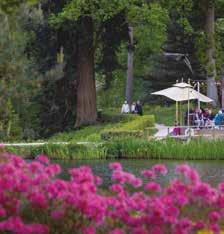
Leonardslee Gardens & Lakes is one of those rare places where landscape, history, and atmosphere come together so harmoniously that the experience feels almost cinematic. Set within a dramatic valley in West Sussex, near Horsham, the estate offers a blend of sweeping woodland, tranquil lakes, wildlife encounters, and curated attractions that make it far more than a simple garden walk. Whether you’re visiting for a peaceful solo wander or a family day out, Leonardslee Gardens & Lakes has a way of drawing you in and slowing the world down for a few hours.
The first thing that strikes you upon arrival is the sheer scale of the place, as it is set in 240 acres. The gardens stretch across a steep valley, with paths that wind down through towering trees, past carpets of seasonal colour, and eventually towards a chain of lakes that form the heart of the estate. The descent into the valley feels like entering a different world - cooler, quieter, and more immersive than the world you left behind in the car park. The landscape has a natural drama to it, but it’s softened by thoughtful planting and careful restoration work that has brought the gardens back to their former glory after falling into disrepair only 10 years ago.
Gardens And Seasonal Beauty
Leonardslee Gardens & Lakes is perhaps most famous for its rhododendrons, azaleas, and camellias, which explode into colour in late spring. During this period, the valley becomes a tapestry of pinks, purples, and reds, reflected beautifully in the still water of the lakes below. But the estate is far from a one-season wonder. Autumn brings a completely different palette - burnt oranges, deep golds, and crisp reflections that make the lakeside paths feel almost enchanted. Even winter has its charm, with mist rising from the water and the skeletal beauty of the trees creating a peaceful, contemplative atmosphere. Whatever the period there is a relaxing calm about the lakes which takes walkers to a slower and almost spiritual world.
The gardens are large enough that even on busy days you rarely feel crowded, and there is a sense of space and freedom, with multiple routes to explore depending on how energetic you’re feeling. Some paths are steep, especially on the way back up from the lakes to the house, but most are manageable for anyone with reasonable mobility.
The signage is clear, and the estate map makes it easy to plan a loop that suits your pace. For those who either can’t, or don’t want to walk so far there are also buggies, driven by volunteers, that take people down to the lakes from the House.
Wildlife And Unique Attractions
One of Leonardslee Gardens & Lakes most charming quirks is its population of freeroaming wallabies. Spotting them grazing near the lakes or hopping through the undergrowth adds a delightful, unexpected twist to the visit. Children in particular tend to be captivated by them, and they’ve become something of a signature feature of the estate.
Another highlight is the Dolls’ House Museum, a surprisingly intricate and atmospheric exhibition that recreates scenes of Victorian life in miniature. It is beautifully crafted, full of tiny details, and offers a welcome indoor diversion on colder days and for many visitors, it becomes an unexpected favourite.
The estate also includes other events and classes with one of the more popular being
the bee keeping classes where you can learn about this art dating back over 10,000 years.
Family-Friendly Features
Leonardslee Gardens & Lakes has become increasingly family-oriented in recent years, with the addition of a well-designed play area that blends naturally into the woodland setting. The space is large enough for children to burn off energy, and its location near the café makes it a convenient stop for parents. The estate’s wildlife, open spaces, and gentle trails make it a strong choice for families looking for a day out that balances exploration with relaxation.
Food is available at the Clocktower Café which offers cakes, pastries, sandwiches, and hot drinks, and has a lovely outside space in a courtyard to enjoy all it has to offer.
The estate is also dogfriendly, with dogs welcome on leads throughout the gardens, which makes it a popular destination for local dog walkers, and the wide paths and open spaces are well suited to a relaxed stroll with a four-legged companion.
Leonardslee Gardens & Lakes is a place that rewards slow exploration. Its beauty lies not just in its planting or its lakes, but in the way the landscape unfolds as you walk - views opening up unexpectedly, wildlife appearing quietly, and the sense of being enveloped by nature deepening with every step. It’s a garden with personality, history, and atmosphere, and it offers a genuinely restorative experience, and for many visitors, Leonardslee Gardens & Lakes becomes a place to return to throughout the year, as each season offers something new to appreciate.
If you’re looking for a garden that combines natural drama with peaceful beauty, and you don’t mind a few hills, Leonardslee Garedens & Lakes is one of the most rewarding destinations in the region.
Leonardslee Wine Tours
A few years ago, well quite a few years ago, I played one of the golf courses available to play at Mannings Heath, so imagine my surprise when just recently I revisited the same fairways I had expertly avoided before, but now they are covered in vines and not the manicured grass I was used to. In 2016, Penny Streeter took 9 holes of one of Mannings Heath’s Golf Courses and planted the first vines in her UK venture to produce award winning sparkling wines.
Penny and her family bring a wealth of experience of wine making from their successful venture at Benguela Cove Lagoon Wine Estate in South Africa, and all of this has gone into helping Leonarsdlee create some special English sparkling wines.
To experience the wine making process Leonardslee offer wine tours which start at the tasting room in the Mannings Heath
Golf Club House. From there you take your own golf buggies to the actual vines and experience where the grapes are grown, and immerse yourself in the craft of English sparkling wine.
The guide is knowledgeable and personable and actively encourages questions, whilst giving you lots of details of how the grapes are cultivated and turned into the finished article.
The estate itself is a visual delight. As you arrive, the landscape opens into sweeping rows of vines set against the backdrop of the South Downs. The setting feels curated yet natural, polished yet unpretentious. It’s the sort of place where you instinctively breathe a little deeper.
Having tasted your first wine in the vineyard (the selection varies between one of the award-winning South African wines) and understood the growing process, you return to the tasting room to experience the main course, namely the Leonardslee sparkling wines. There are three to choose from, two white and one rose, and as part of the tour you try each of them.
Each is presented with care, and each glass of wine is generous enough to allow for proper appreciation! Each glass is introduced with context: the blend, the method, the flavour profile, and the philosophy behind it. The wines are crisp, expressive, and confidently crafted, reflecting the growing reputation of English sparkling wine on the world stage.
What makes the Leonardslee Vineyard Tour stand out is its ability to appeal to a wide range of guests. Wine enthusiasts will appreciate the depth of knowledge and craftsmanship. Couples will find romance in the scenery, and the slow, indulgent pace. Groups celebrating special occasions will enjoy the tastings and the convivial atmosphere. Even those with only a passing interest in wine will find themselves drawn in by the beauty of the estate and the warmth of the staff.
In a region rich with vineyards, Leonardslee stands out for its combination of hospitality, landscape, and storytelling. It offers not just a tasting, but a thoughtfully curated journey through the world of English sparkling wine. Whether you’re a local looking for a refined day out, or a visitor seeking a quintessential Sussex experience, the Leonardslee Vineyard Tour is a destination that lingers in the memory long after the final glass is poured.
In the heart of the leafy Surrey countryside nestles the Foxhills Club & Resort, boasting not only a luxury spa, a fine dining restaurant and well-appointed rooms, but also a host of sports and activities to delight the whole family.
Foxhills, is a golf club and resort located in Ottershaw, Surrey, established in 1975, and was so named after Charles James Fox, the well-known 18th Century antislavery politician, on whose former estate it’s located. Ottershaw is to be found 20 miles to the west of London, and is only a few minutes from the M3 and M25, as well as Woking, which is reachable by fast trains from Waterloo. The hotel and resort is also well located to have a day out at Thorpe Park, Legoland Windsor, Chessington World of Adventures or the more sedate (but equally enjoyable) RHS Garden Wisley.
The feeling of elegance and grandeur starts when you drive through the impressive gates and through the manicured gardens,
the 9-hole golf course, and woodlands with tantalising glimpses of the Gothic styled Victorian Manor House where you check in for your stay.
Foxhills has 70 bedrooms dotted around the estate (although all are well located for all of the facilities) and they have all been recently renovated and are well furnished in relaxing olive greens. Our room was light and airy and had a lovely view overlooking the 9th green of Foxhill’s par 3 golf course, and boasted an ultra-comfortable king-sized bed topped with crisp cotton sheets, a large flat screen TV with all the channels and streaming services (although you have so much to do you are unlikely to need this many!), along with a comfy sofa. There are also tea and coffee making facilities and fresh milk and water in the fridge. The bathroom in our room was modern and luxurious with a large deep bath and a standalone shower with eco-friendly toiletries being the icing on the cake.
Foxhills has two of the best golf courses in the area (and there are some extremely good ones around the area!), as well as a fun par-3 course which is hard enough for proper golfers to enjoy (Paul Casey honed his short game on this course) and perfect for beginners/families. If you do want to play on either of the championship courses, the Bernard Hunt or Longcross Course, do book in advance as they get booked up very quickly, as they combine parkland and heathland styles and are immaculately presented having hosted PGA and Asian Tour events.
If golf isn’t your thing, then hotel guests can play tennis on the nine courts or go a little more modern and try padel or pickleball. I had never tried either, and although not a major fan of pickleball as the lighter ball used didn’t bounce as high as I wanted!, I really loved trying padel, as it is an eclectic mix of tennis, badminton and squash, and I will certainly play it again,
maybe next time hopefully knowing more about the rules!
If that wasn’t enough activities to keep you occupied, Foxhills keeps delivering, as it has 5 swimming pools (3 outdoor and 2 indoor ones) as well as over 200 weekly activity classes for guests to participate in, including arts and floristry, so something for everyone. One of these outdoor pools is for residents’ only, which was perfect for the lovely weather we had when we visited, and the indoor pool in the spa is adult only to provide a relaxing place for individuals and couples. The on-site spa is luxurious, and time here enables you to revitalise your body and mind when using its sauna, natural pool or the hot tub after participating in all the activities on offer.
As well as all the sports on offer, children also have a games room to enjoy pool, table football and also video games if the weather
isn’t playing ball, along with an adventure playground with zip lines and swings for older kids, and a junior playground with slides and pedal cars for the younger ones.
The food offerings at Foxhills are extensive, with both XIX and Flo’s, offering bisto-style food, frothy coffees and tantalising pastries, but it has recently just got so much better with the addition of Lomri, an Indian restaurant inspired by the spice ports of India. The dishes are well created and full of flavours, with rich curries and fragrant biryanis along with lightly charred tandoor dishes. One of the small plates you might overlook, but really mustn’t, is the Pani Poori, a well-known street food. Here you get a number of crispy hollow fried dough balls lightly filled with potatoes, and to this you add a little tamarind sauce and some mint water, creating a mouthful of joy as
the combination of flavours are intense. Our King Prawn Goan Curry was rich and creamy with a homely warmth, and we enjoyed mopping up the sauce with a crispy Laccha Parantha Roti and a fluffy Naan.
Before I visited, I thought of Foxhills as being a golf course with a few rooms, but having visited I have realised it is so much more. It does have wonderful golf courses and golfers really should play them, but the additional facilities, luxurious spa and a plethora of facilities to keep children occupied makes it a place where families can spend a wonderful break and will never be lost for something to do or somewhere to relax.
Welcome to La Villa Helene! A beautiful, serene and spacious 4 bedroom villa in Callao Salvaje, Tenerife.
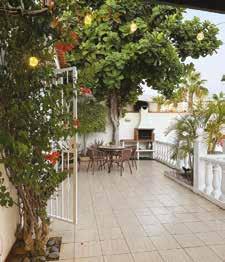
We invite you to relax and unwind on the huge sun terrace, set within vibrant tropical gardens and majestic palm trees, a truly calm and peaceful setting. Fancy a dip? At the centre of the outdoor space is a large private heated pool, perfect and large enough for those who love swimming or relaxing pool-side on a sun lounger. The terrace also benefits from being gated for extra child security. While in Tenerife, making the most of the outdoors and being able to dine outside is a priority. Here, you can enjoy alfresco dining under a shaded pergola with a purpose-built BBQ area - ideal for sunny evenings and spending quality time with your loved ones. Partial mountain views in the background will help you to indulge in the tranquillity.
The interior includes a spacious open plan living and dining area with patio doors leading out to the terrace. Kick back and chill on the comfortable corner suite sofa and watch your favourite TV shows including UK & US channels. Our kitchen is fully equipped including modern appliances ready for home cooked meals. The villa holds 4 bedrooms where guests can sink into comfort and a total of 4 bathrooms (3 en-suite) which equals a bathroom per bedroom.
LOCATION
Located in the popular resort of Callao Salvaje in the Costa Adeje area, on the south coast of Tenerife (only 25 km from Tenerife South airport). Callao Salvaje has everything to provide pleasure, relaxation and most importantly convenience with an excellent selection of amenities that is within walking distance. Also, not forgetting the reasonably priced accommodation and lots of sunshine which are more reasons tourists love Callao.
This accommodation is 100 meters from the centre of the resort, where you will find many restaurants, cafes, bars, supermarkets and the beach. There are some admirable restaurants to suit all tastes, plus some late night bars with entertainment and a beautiful man -made black sand beach that was completed in 2012. The resort holds a taxi rank and good transport links to anywhere on the island via several bus stops with regular service. Therefore, car hire is not required.
Callao Salvaje is a 10 minute drive or approximately 20 euros in a taxi to the busier areas such as Los Cristianos and Las Americas. The wonderful golf courses in Costa Adeje and in the Abama are also nearby.
Escape the hustle, soothe your senses and find peace at La Villa Helene. For further information, prices and availability, please email:
helen@theamericanhour.com
EDUCATION
The Brain That Builds Itself: What Neuroplasticity Really Means for How We Educate Children
There is a word that appears with increasing frequency in education circles, on podcasts, and in the marketing materials of schools: neuroplasticity. It tends to arrive with a kind of breathless optimism, such as the brain can change, therefore anything is possible. But the way the majority use it, it becomes wallpaper; flat and inactive. When you actually sit with what neuroplasticity means, when you understand what the science is saying and what it demands of educators, it becomes not a slogan but a responsibility, alive and active.
The core claim is this: the brain is not fixed at birth, nor at age five, nor at adolescence. It rewires itself in response to experience, forming new connections, pruning unused ones, strengthening pathways that are repeatedly activated. What children do, think, feel, and practise physically reshapes their neural architecture. That is not a metaphor. That is structural change in the organ that runs everything.
So, the question that should follow, and too rarely does, is this: what experiences are
we actually giving children in education? And are they the kind that build the brain we say we want?
At Notting Hill Prep in London, we have been sitting with that question for over a decade. NHP is the first independent preparatory school in England to hold Advanced Thinking School accreditation from the University of Exeter. That accreditation is not a badge on the wall. It represents a whole-school commitment to understanding and explicitly teaching how children learn matters as much as what they learn.
Our ethos is deliberately stated as a balance: academic rigour plus the joy of childhood. Those are not competing values. They are, as neuroplasticity research suggests, mutually reinforcing ones. A child who is curious, who feels safe enough to fail, who is encouraged to question and to think collaboratively, is a child whose brain is being asked to work in exactly the ways that build lasting capacity.
The neuroscience underpinning this has been building for years, and it aligns more neatly with progressive pedagogy than
many people expected. Work by researchers including Carol Dweck on growth mindset, and by cognitive scientists studying retrieval practice, interleaving, and spaced learning, consistently points in the same direction: the conditions that produce durable learning are conditions that involve productive difficulty, reflection, and agency.
At NHP, we have taken this seriously enough to conduct our own active research. Our current staff project, developed in collaboration with leading educationalist Guy Claxton, explores the embodied sciences, the growing body of evidence that learning is not a purely mental process. The body is not a vehicle for transporting the brain to the classroom. Movement, posture, gesture, and physical experience are part of how cognition works. When a child walks while thinking through a problem, or uses their hands while explaining an idea, they are not being distracted from learning. They are learning.
This research strand shapes not just what we investigate, but how we teach. Teachers at NHP regularly reflect on whether
their classrooms create the physical and cognitive conditions for genuine thinking; not just performance of understanding, but the real thing.
One of the frameworks central to our practice is Habits of Mind, based on the idea developed by Arthur Costa. We have 10 habits (dispositions), amongst them persisting and persevering, thinking flexibly, showing independence and applying past knowledge in new situations. The habits are the behaviours of effective thinkers. We use them explicitly with children from Reception age onwards. What makes Habits of Mind neurologically interesting is that they are, in the most literal sense, habits in the brain. Behaviours that are practised consistently become pathways that are reinforced. A child who is regularly invited to ask questions before being given answers is building a neural pattern of inquiry. A child who is taught to notice when they are making an impulsive decision, and to pause, is developing the prefrontal regulation that underlies good judgement throughout life.
This is why we resist the idea that character and academic achievement are separate ambitions. They are built from the same material, in the same organ, at the same time. When a five-year-old at NHP congratulates a classmate for persevering
with a difficult task, as they do, regularly and spontaneously; that child is demonstrating exactly the kind of internalised cognitive framework that neuroplasticity research predicts will serve them into adulthood.
Here is the uncomfortable truth that neuroplasticity research implies, but that no one in the education marketing business wants to say directly: the brain does not strengthen under ease, it strengthens under managed challenge.
Children who are protected from frustration, who are given answers before they have had a chance to wrestle with questions, who move through a curriculum designed to produce correct responses rather than genuine thinking; these children are not having their brains optimised. They are having them underleveraged.
This does not mean making education harsh or joyless. It means, that education at its best does not remove difficulty, it teaches children how to meet it. The goal is not to make things easy. The goal is to make children capable.
At NHP, we celebrate mistakes explicitly. We treat exams as opportunities rather than threats. We build in reflection as a structural component of lessons, not an afterthought. These are not soft extras. They are the precise conditions under which the plastic brain actually changes.
The neuroplasticity conversation has, to its credit, begun to shift school culture in important ways. Growth mindset language is now common in classrooms. Socialemotional learning has found a foothold in many schools. These are genuine gains.
But there is a gap between using the vocabulary and redesigning the conditions. A school can display posters and still run a curriculum that communicates to children that their worth is their grade. A school can talk about resilience while removing every experience that requires it.
What the evidence supports, and what years of practice at a place like NHP demonstrate is achievable, is a wholeschool model in which thinking is the culture, not the slogan. Where staff are actively researching their own practice. Where the body is understood as part of the learning instrument. Where children are not vessels to be filled but, as Plutarch put it and we have taken seriously ever since, fires to be kindled.
The brain that builds itself needs something worth building toward. Our job, as educators, is to make sure the experiences we offer are equal to that possibility.
By Arabella Chute, Head of Professional Development and Innovation at Notting Hill Prep School
The American Hour
Supporting American Expats moving to, and living in the UK
for The American Hour’s Monthly Email Newsletters and invitations to the American Finance & Networking Events for Americans Living in the UK.
If you don’t already receive these newsletters or invitations, please email helen@theamericanhour.com and put Newsletter Request in the subject.
Don’t miss out on news, advice and invitations to events that are free to attend.
TAKE FIVE Sizzling Summer Treats by Judith Schrut
Welcome to Summertime Britain! While our famously fickle weather can’t be guaranteed, you can absolutely count on long days, light nights and a breathtaking bonanza of music, outdoor events and other seasonal treats. So, pack your wellies, brollies, sun hats and picnic packs and join us for a peek at some of this summer’s best.
1. The Shows Must Go On
Outdoor shows are a long-cherished part of British summertime. Sure, the weather may not be great, but everything else is first class fabulous. And when did a little summer hail, horizontal sheets of rain or a few lightning bolts ever stop the Brits?
This summer, the extraordinary Giffords Circus tours the UK with a sparkling new show, “Waterfield”, celebrating the great British countryside as well as tried-andtrue circus traditions. Inspired by classic children’s stories and the rivers, hedgerows and wildlife of rural England, Waterfield brings a host of feathered and furred characters to life through comedy, juggling, high energy acrobatics and death-defying circus acts, all accompanied by Gifford’s brilliant and cheeky house band, the Grasshoppers. There are star turns from Gifford’s equine friends, Shire horse Maisy and adorable miniature Shetland pony Tinkerbell, plus showstopping favourite, Brian the Goose. If you’ve ever been to Giffords you’ll know it’s a guarantee of joy, sidesplitting laughter, jawdropping derring-do and generous sprinklings of magic. And if you’ve never been to Giffords, don’t miss out this year! Some of the best open air entertainment you’ll ever see takes place each year
at Regent’s Park Open Air Theatre Wondrously set amidst the lush undergrowth of London’s most beautiful Royal Park, the Theatre has been putting on award-winning alfresco entertainment for nearly 90 years. Many top actors began their professional careers on its stage, including Dame Judi Dench, Ralph Fiennes and Damien Lewis. The Theatre can be notoriously hard to find— only adding to its charms— so if you’re a first time visitor be sure to leave a little extra time for the search. You’ll know it’s worth the effort when you pass through those semi-hidden gates and enter a secret garden of delights, complete with rambling picnic lawn, dining on the covered terrace or pizza on the grass, plus the longest bar in London, glittering end to end with fairy lights.
Equally glittering is this summer’s programme. It includes a brand new production of Andrew Lloyd Webbers’ beloved musical Cats, the classic West African-Caribbean tale and magical treat for the whole family, Anansi the Spider, plus a variety of comedy, dance and music events.
The exuberant East London Shakespeare Festival invites you to bring a picnic and join in the fun as it tours parks and open spaces across London and Kent this summer with a colourful family-friendly production of Shakespeare’s Midsummer Night’s Dream There’s something for everyone at Cornwall’s spectacular cliffside-set Minack Theatre. This summer’s packed season includes Cole Porter’s musical Anything Goes, Mozart’s opera Marriage of Figaro, West Country super-swinging Big Band, Leskyn Kernow, and sensational folk fiddler Seth Lakeman. Minack also presents heartwarming
family favourites like Pinocchio, Good Night, Mr Tom and Journey to the Stars.
Last, but not least, for something new and truly unique, this July sees the grand opening of Kynren: The Storied Lands, the UK’s first live action history park. Kynren turns back time, recreating key moments from English history, myth and legend such as the Viking world and Victorian Imaginariums. A live action show, the Lost Feather, sees over 250 magnificent birds take to the skies in an aweinspiring story of flight and conservation.
Alongside the new day park will be Saturday evening performances of Kynren: An Epic Tale of England, a time-travelling spectacle of breathtaking stunts, thrilling battles, horsemanship, fireworks and dazzling special effects. What’s especially remarkable about Kynren is that it’s run by a not-for-profit charity, aimed at regenerating the local area. The 1000+ cast and crew who make up its evening show are all passionate, dedicated local volunteers. Add to that 150 live, well-looked after animals including horses, baby goats, motherdaughter donkeys and a gaggle of geese, and you’ve got the perfect recipe for a brilliant night out.
Further information:
Giffords Circus, touring until 27 September 2026, giffordscircus.com
Regents Park Open Air Theatre, London, June-September 2026, openairtheatre.com
Minack Theatre, Porthcurno, Cornwall, April-2 October 2026, minack.com
East London Shakespeare Festival, touring June-August 2026, elsf.uk
Kynren, Country Durham, 18 July-12 September 2026, kynren.com
The Gifford Circus Band, the Grasshoppers with lead singer Jenna Dearness-Dark, photo credit Still Moving Media
It’s back! The biggest international music festival on the planet makes a jubilant return in late July at a stunning new location. WOMAD, short for World of Music, Arts and Dance, brings together dozens of performing artists and thousands of world music fans to its open air site deep in the Wiltshire countryside.
Topping this year’s line-up are Oumou Sangaré, known as the queen of Malian music, the astonishing beats of Central America’s Garifuna Collective, and the full-throated banjos, guitars, fiddles and harmonies of Country Gongbang and its infectious South Korean-style Bluegrass.
Other hotly anticipated artists include Benin International Musical, a five-piece sensation from West Africa known for a voodoo-inspired sound powered by rock guitar. Sabine McCalla, brings vintage New Orleans sound seasoned with gospel, folk and country-blues and Lăutăresele araimanic— don’t worry if you can’t pronounce it— will carry you away with its dynamic Romanian, Romani and Turkish sounds. And we’re sure you’ve never seen an instrument like the massive embaire xylophone, collectively, mesmerisingly played by the eight talented musicians of Nakibembe Xylophone Troupe.
But WOMAD is much more than a chance to revel in a rousing feast of music from the four corners of the globe and hear the best music you’ve never heard before. It’s also a place for dancing and drumming the night away, acapella singing workshops in a Bedouin tent, soaking up wordly wonders at the World of Words and Hip Yak Poetry Shack and savouring music-inspired cooking at Taste the World Cookery Stage.
WOMAD’s a big place but you’re never far from the Global Market, where you can eat and drink your way around the globe as well as browse the tempting range of crafts, clothing, music paraphernalia and worthy causes on display. With free entry for under 4’s, a dedicated Kids Zone with hundreds of activities from dawn to dusk and a relaxed vibe, WOMAD is also an outstanding choice for families.
And when you’re in need of a break from the hullabaloo, relax in style at the Wandering Wild Spa, or slip into the World of Wellness, a cool, calming oasis among the trees where you can sample body and spirit delights such as laughter yoga, didgeridoo healing, gong baths, sound meditation and some yummy tea and cakes.
Further information:
WOMAD, 25-28 July 2026, womad.co.uk
3. Pride Of The Proms
They’re the world’s greatest festival of classical music and a treasured British institution since 1895. The BBC Henry Wood Promenade Concerts, affectionately known as the Proms, roll into town mid-July, filling London’s Royal Albert Hall and beyond with 86 concerts and eight weeks of sumptuous sound, ending with the legendary Last Night of the Proms
The Proms are a golden opportunity to savour a delicious feast of international orchestras, conductors, choirs and soloists as well as a vast variety of music.
This year’s Proms proudly present 20 world and UK premieres. There are performances by the musical great and good from around the world including renowned pianists Yuja Wang and Martha Argerich, as well as an abundance of homegrown talent like cellist Sheku Kanneh-Mason, percussionist Dame Evelyn Glennie, Tenebrae Choral Ensemble and the Unthanks. There’s a joyful brass band Prom featuring the Black Dyke Band, an evening of ‘Bond and Beyond’ and a very special late night Prom marking the 40th anniversary of Paul Simon’s Graceland , starring the fabulous Ladysmith Black Mambazo Band.
America’s music and musicians are always well-represented at the Proms. That’s especially true this year, with its seasonlong celebration of American music to mark 250 years since the signing of the US Declaration of Independence. The Proms will welcome top US conductors, soloists and orchestras like Marin Alsop, Angel Blue, Joyce DiDonato and the LA Philharmonic, conducted by the charismatic Gustavo Dudamel. There’s a Proms honouring the centenaries of jazz icons Miles Davis and John Coltrane, premiere of a major new work by Wynton Marsalis, specially commissioned by the BBC, and ‘Enchanted’, a glorious evening of music written by Alan
Menken (Aladdin, Beauty and the Beast, Little Mermaid) for Disney.
The Proms continue to expand their remit of sharing sounds with audiences around the UK. This year sees exciting Proms and workshops at Bristol Beacon, Gateshead’s Glasshouse International Centre for Music and Theatre Clywd in North Wales.
The Proms are affordably priced, with every Royal Albert Hall concert famously featuring ‘Promming’ tickets for £8, enough for 1,000 Prommers standing in the central Arena or the upstairs Gallery. All 86 Proms are broadcast live on BBC Radio 3 and online, with many also televised.
The Last Night of the Proms is a much loved, very British annual ritual, complete with traditional fancy dress, balloons and flag-waving singalongs to ‘Rule, Britannia!’ and ‘Land of Hope and Glory’ and Last Night tickets always sell out fast. But if you can’t get to the Last Night in person, you can still enjoy evening’s magic live on radio, laptop, smartphone or TV in the comfort of your own home, courtesy of the BBC.
Further information:
The Proms: BBC Henry Wood Promenade Concerts, 17 July-12 September 2026, bbc.co.uk/proms
4. Castles To Come Home To
Whether you’re newly settled in the UK or have been here since Queen Elizabeth II’s Coronation (that’s June 1953), you’ll likely know that visits to castles, historic houses and stately homes are a hugely popular national pastime. From perfectly restored fairytale fortresses to crumbling medieval wrecks where much is left to the imagination, these are attractions you definitely can’t get state-side.
Raby Castle in County Durham is one of the most impressive intact castles in England, built by the powerful Nevilles in the 14th century and home to the Vane family for nearly 400 years. Your visitor ticket to Raby covers adventures not just inside the splendid castle, but its surrounding Parkland and Deer Park, where red and fallow deer freely roam, Plotters’ Forest
WOMAD’s Charlie Gillett Stage exploding in sound and colour, courtesy BBC, photo credit Garry Jones
The Family Friendly World of WOMAD
The Baron’s Hall by Swallows and Damsons for Castle in Bloom at Raby Castle, Park and Gardens
Woodland Playground, and the magnificent castle gardens. Renowned garden designer Luciano Giubbilei has recently turned Raby’s gardens into an enticing outdoor adventure, filled with landscaped walkways, sculptured yew hedges, romantic walled gardens and a grass amphitheatre. Raby also reaches new heights this summer with Castle in Bloom, a vibrant programme of floral experiences and garden-inspired events celebrating the beauty of nature.
For another fine, imperial outing, pay a visit to Sussex’s Arundel Castle. Arundel Castle has lived 1000 years of history; more recently it’s been a popular location for film and television productions like Dr Who, Wonder Woman and The Madness of King George. Arundel’s International Medieval Jousting Tournament is an annual highlight and one of the most prestigious jousting events in the UK. Over six days in July, international jousters on horseback battle to be crowned Champion of Champions. As well as the thrill and excitement of the jousts, you can enjoy close encounters with medieval musicians, falconers, archers and fire eaters, plus a chance to try your luck at archery, axe throwing, warrior training, forging and period crafts. Arundel’s Knights’ Table is the place for a marvellous feast, real ale and medieval mayhem. Other summer events at Arundel include open air Shakespeare in the castle’s lush gardens and a History Festival in late August.
A particularly brilliant castle for families is Hever Castle in Kent. It’s over 700 years old and pure storybook. Hever is the ancient home of the Boleyn family and where King Henry VIII courted the second of his six ill-fated wives, Anne Boleyn. It has every enchantment you’d expect in a perfect palace: turrets and battlements, a double moat, knights in armour, weapons and instruments of torture on display, majestic gardens and a splashing water maze. Hever entry includes admission to its world-first current exhibition. Capturing a Queen: the Image of Anne Boleyn, brings together the largest ever gathering of Anne in portraits so you can explore one of history’s most debated faces.
Hever is also known for its onsite Festival Theatre, presenting a summer season of plays, music, movies, comedy and family entertainment. Other fair weather options include a lunch or afternoon tea at nearby Hever Castle Waterside Bar and Restaurant, a BYI picnic on the Two Sisters’ Lawn or a variety of peaceful woodland wanderings including Anne Boleyn’s Walk
And, to learn about more great Castle Days Out, be sure to re-visit American in Britain Magazine’s Spring 2026 issue!
Further information:
Raby Castle, Gardens and Deer Park, County Durham, raby.co.uk
Hever Castle and Gardens, open daily, hevercastle.co.uk
Festival Theatre at Hever Castle,
May-August 2026, thefestivaltheatre.org
Arundel Castle International Jousting Festival, 21-26 July 2026, arundelcastle.org
5. Anniversaries All Around
As Winston Churchill, a particularly famous British-American, once said, “the farther backward you can look, the farther forward you can see”. Summer’s the perfect time for a trip down memory lane, stopping to salute some British and American anniversaries and milestones.
First and foremost, we wish a Happy Centenary to two of the most beloved Brits of all time— Queen Elizabeth II and Winnie the Pooh. The Queen was born in London on 21 April 1926, while fictional character Pooh Bear first appeared in print the same year, inspired by a cuddly Teddy bear which author A.A. Milne bought at Harrods for his son, Christopher Robin. You and your family can enjoy Pooh’s special year via dozens of events planned around Ashdown Forest (aka the Hundred Acre Wood).
This year also marks the 100th birthday of the unforgettable Marilyn Monroe. The British Film Institute (BFI) salutes the star with a summerlong season of her films, while London’s National Portrait Gallery mounts a major photographic show in her honour.
Born just weeks before Marilyn, was American mega-jazz great Miles Davis. A few months later, his close collaborator and fellow giant of jazz, John Coltrane, came into the world. Both musical geniuses will be feted at US, UK and jazz festivals around the world, through historic music re-issues, special BBC radio broadcasts and at this summer’s BBC Proms (see above).
Still very much alive to celebrate their 100th years are biologist, natural historian and British national treasure extraordinaire, Sir David Attenborough, and Mel Brooks, legendary American filmmaker, comedian and writer (the Producers, Young Frankenstein, Blazing Saddles and more). Amongst celebs blowing out a significant number of candles on cakes this year are Benedict Cumberbatch, Reese Witherspoon
and Cillian Murphy (all 50). Meanwhile, it’s the big 80 for an astonishing group of superstars, including Dolly Parton, Cher, Sylvester Stallone, Joanna Lumley and Liza Minelli, as well as three current and former US Presidents, Donald Trump, Bill Clinton, and George W Bush
You’d need to be living on Mars or in the 17th century to have missed hearing about the US Semiquincentennial (that’s 250 years to most of us), happening throughout 2026 and in all 50 states, marking the signing of the Declaration of Independence and the original 13 colonies’ break up with the British Mothership.
On this side of the pond, the Southbank Centre celebrates the 75th anniversary of the Festival of Britain , with a year-long, nationwide cultural programme. In 1946, the Festival of Britain took place on a 27-acre bombed out London site on the south bank of the River Thames. Its aim was to lift national morale and send a message of hope, optimism and a brighter future after the devastation of World War II. That site is now home to top culture hubs like the Royal Festival Hall and the National Theatre.
It’s also 100 years since Britain launched the iconic red telephone box and 75 years since The Archers , the world’s longest running radio show and first soap opera, hit BBC radio airwaves in 1951. The first Zebra Crossing-- pedestrian road crossing in black and white stripes— also appeared 75 years ago. Why not celebrate the event by inviting a few friends to join you, Beatles style, to cross the world’s most famous Zebra Crossing? That’s Abbey Road of course, as seen on the album cover of the band’s 1969 Gold Record album of the same name.
This year also marks several milestones in the worlds of science and technology, important on both sides of the Atlantic. It’s the 50th anniversary of the founding of tech-giant Apple Computers and the 30th anniversary of Amazon. On March 10, 1876, Scots-born Alexander Graham Bell, who’d emigrated to Boston, Mass some years earlier, made the world’s first successful telephone call, summoning his assistant by saying: “Mr. Watson, come here, I want to see you”. Watson heard him perfectly through the wire, came running, and confirmed the transmission worked, although the first transatlantic call, from London to New York, had to wait for a further 50 years, ‘til 1926. Further information:
The Southbank Centre, southbankcentre.co.uk
America 250, america250.org
Marilyn Monroe, a Portrait, at the National Portrait Gallery, npg.org.uk
Winnie the Pooh at 100, ashdownforest.org/explore/winnie-the-pooh
Take Five is our regular feature bringing the best of British to Americans in Britain. We’d love to hear how you’re celebrating British summertime. Email Judith at judith0777@gmail.com.
Celebrated Centenarians 2026 Marilyn Monroe
THEATRE
Avenue Q
The Shaftesbury Theatre
Ever since I watched my teenage daughter perform a few of the songs from Avenue Q with her drama group, I have always wanted to see the whole show, and so when it was announced that the three-time Tony award winning show was returning to London I was first in the queue for tickets. This show is irreverent, mischievous, and in places very near to the knuckle, but it is a breath of fresh air in these troubled times. Think of it as a comedic Sesame Street for adults!
The show is novel as it tells the tale of finding your ‘purpose’, using a mixture of real-life actors and puppets (held by actors on stage), and tells the tale of Princeton moving into Avenue Q. There he meets all of the other residents, including Kate Monster, who dreams about opening a school for monsters, Rod and Nicky, two flat mates, one of whom is gay, but won’t admit it, Trekkie Monster, and television star Gary Coleman (he of different strokes and the catch phrase ‘What are you talking about Willis’), who has fallen on hard times and is now the superintendent on Avenue Q.
The original show has been updated for 2026 with sly updates about AI, streaming culture, and modern relationships, making it relevant for its new audience, and the jokes flow effortlessly as the show tells the story of the residents and their troubles and relationships whilst trying to find their ‘purpose’.
At the centre of the production are Noah Harrison and Emily Benjamin, who both give outstanding performances as Princeton and Rod, and Kate Monster and Lucy the Slut respectively. Noah captures Princeton’s naivety to perfection, and Emily moves effortlessly from the sweetness of Kate Monster to the sultriness of Lucy, and their skill at puppetry and singing, makes you almost forget that they are on stage and it is just the puppets.
Avenue Q has a multitude of catchy songs including ‘It sucks to be me’ and ‘For now’, with great tunes and amusing lyrics, as well as a few more punchy ones like ‘Everyone’s a little bit racist’ and ‘The Internet is for Porn’, which despite the controversial topics, they get away with - not offending the audience as it is sung very much tongue in cheek.
Despite my high expectations the show didn’t disappoint and I would highly recommend a visit to the Shaftsbury Theatre to experience this revamped show, as you will leave humming some of the tunes and smiling when remembering some of the more politically incorrect jokes.
www.shaftesburytheatre.com/events/avenueq/
Beetlejuice The Musical
The Prince Edward Theatre Who needs Paddington the Musical when we have Avenue Q, and now Beetlejuice!
Taking over The Prince Edward Theatre from MJ, Beetlejuice The Musical, Musical, The Musical (as it states on the marquee
and programme) is screamingly good fun, and will be scaring audiences for months to come with its blend of dark humour, monsters, costumes, brilliant makeup, songs, and an absolute brilliant cast. 40 years since its cinematic debut, and eight years since its debut on Broadway, this stage version has finally made its way to London’s West End!
If you haven’t seen the movie (or it’s 2024 sequel), a dead couple (Chelsea Halfpenny and David Hunter)haunt the new inhabitants of their former home and enlist the help of a ghost called Beetlejuice (a brilliant David Fynn who’s on stage for most of the show and owns it’s - bringing camp and lewd jokes throughout). Lydia (a brilliant Hannah Norbert) is an inhabitant in the house and sorely misses her dead mother, while her neglectful father (Alistair Harvey) is in the throes of a new relationship with Delia (Aimie Atkinson).
It’s a plot line that never gets boring because it’s full of memorable songs and is screamingly good fun, fun, fun.
Beetlejuice is based on the three-time Broadway sensation and the Tim Burton film classic, will raise the dead from their graves, and will provide a scaringly good time for the entire family! And as darkness descends into the West End, and as you leave the theatre, you’ll be looking in every direction for your safety and on the lookout for monsters.
www.beetlejuicemusical.co.uk
AMERICAN CLUBS’ NEWS
CAWC (Chiltern American Women’s Club)
CAWC (Chiltern American Women’s Club) is thriving in the Chilterns, bringing together over 100 warm, welcoming women from more than 20 nationalities for friendship, fun, and philanthropy. We meet monthly in the Gerrards Cross and Beaconsfield area for lively social gatherings featuring guest speakers, shopping with wonderful vendors, and plenty of time to connect. Beyond our General Meetings, members enjoy a fantastic range of activity groups including hiking, golf, tennis, yoga, book club, theatre outings, lunch bunch, Bunco, water colouring, stitch & chat, and moreplus fabulous annual highlights such as Royal Ascot, our famous May Tea Party, Christmas and Summer luncheons, and special day trips.
Giving back is at the heart of CAWC, and our much-loved annual Charity Christmas Bazaar returns on Sunday, 8 November 2026, at the Crowne Plaza, Gerrards Cross, raising funds this year
again for Scannappeal’s Mobile Breast Appeal, helping bring life-saving breast screening closer to women across South Buckinghamshire. Renowned locally for its wonderful vendors, handmade gift baskets, American bake sale, Texas Café, raffles and festive fun, the Bazaar is one of the highlights of the Chilterns social calendar. Whether you’re new to the area, an expat, or simply looking for friendship and community, CAWC welcomes women of all nationalities and backgrounds. Come and join in the fun - for membership information or to try a meeting or activity, contact: cawcmembershipuk@gmail.com. https://cawc.co.uk/ https://www.instagram.com/cawc_ international/ https://www.facebook.com/ CAWCInternational/?locale=en_GB
AWC London
AWC London continues to expand its membership and offer a variety of events, activities and volunteer opportunities.
Activities like weekly walks, Mexican train dominoes, theatre outings and pub meetups are all great ways to get to know fellow members. We also host several special events throughout the year and are currently planning an evening of food and fun for the 4th of July.
AWC London offers something for everyone and welcomes women of all nationalities, emphasising community bonds, community service and lasting connections.
If you are interested in joining, AWC London will host several informal information sessions for potential new members this June and July in central London. To attend, www.awclondon.org/join-us to register.
For general membership information, please email membership@awclondon.org or check out awclondon.org
We look forward to meeting you!
USEFUL CONTACTS
CHARITABLE GIVING
CAF AMERICAN DONOR FUND
10 St Bride Street, London, EC4A 4AD
Contact: Joe Crome, Senior Manager, CAF American Donor Fund
Telephone: +44 (0) 3000 123 150
(Telephone lines are open Monday to Friday, 9am to 5pm excluding UK bank holidays).
Email: cadf@cafonline.org
Website www.cafonline.org/cadf
With over 20 years’ experience, we are the smart, tax-effective way for dual UK and US taxpayers to achieve greater impact with their charitable giving.
The CAF American Donor Fund is a dual qualified Donor Advised Fund which can help you maximise the value of your gifts to charitable organisations. If you pay tax in the UK and the US, the CAF American Donor Fund enables you to claim eligible UK and US tax relief on your global giving, including adding 25% through UK Gift Aid where applicable.
We have a range of flexible products available, starting at one-off giving through to long-term invested funds. We accept donations of cash (any major currency); stocks and shares as well as non-cash gifts.
Whatever stage you’re at with your philanthropy journey, we can help. Our specialist team of Relationship Managers will be with you every step of the way to guide you quickly and efficiently throughout the management and administration of your giving, using our established and trusted service.
LEGAL
RUSSELL-COOKE LLP
8 Bedford Row London WC1R 4BX 2 Putney Hill, London, SW15 6AB Riverview House, 20 Old Bridge Street, Hampton Wick, Kingston upon Thames, KT1 4BU
Telephone: +44 (0)20 3826 7550
Email: USenquiries@russell-cooke.co.uk
Website: russell-cooke.co.uk
Russell-Cooke is a UK top 100, award-winning London law firm advising private individuals, businesses and charities with US-UK cross-border matters.
Whether you are relocating to the UK and need coordinated legal guidance on immigration, estate planning or trust arrangements across both jurisdictions; considering your residency, family or property issues; starting, investing in, or looking to acquire a business in the UK; overseeing international structures through a Family Office; expanding a US s501(c)(3) charity into the UK; or facing a dispute or investigation with transatlantic elements – our lawyers provide thoughtful, practical advice tailored to your circumstances.
With a trusted network of advisers in the United States, we work seamlessly across both
countries to deliver clear, joined-up support for American citizens, expatriates and organisations navigating UK legal requirements.
Harrison Swift is a specialist firm providing expert US and UK tax advisory and compliance services to private clients, with a particular focus on expatriates, high-networth individuals, and those with complex cross-border tax requirements.
The firm combines deep technical knowledge with a highly personalised service, offering tailored solutions for intricate tax matters that include US and UK income tax filings, cross-border investment taxation, trusts, partnerships, and voluntary disclosures for historical non-compliance.
With a boutique structure, Harrison Swift delivers direct guidance from dual-qualified advisors who bring Big Four experience and an entrepreneurial approach to every client engagement, ensuring clarity and confidence in navigating the complexities of transatlantic taxation.
USTAXFS
Staple Court, 11 Staple Inn, London, WC1Y 7QH
Telephone: +44 20 7357 8220
Contact: Joni Trulock
Email: j.trulock@ustaxfs.com
Website: ustaxfs.com
Twitter: @ustaxfs
We are the largest boutique tax accounting firm in the UK & Europe specializing in US and US/UK tax. Established over 35 years ago, we have offices in London, Zurich and Geneva with expertise in US tax advice, planning, and compliance for individuals, funds, trusts and corporations affected by the US tax system, wherever they may live or operate in the world.
WEALTH MANAGEMENT
LGT WEALTH MANAGEMENT US LIMITE 14, Cornhill, London, EC3V 3NR
Telephone: +44 20 3207 8000
Contact: Paul Nixon, CEO
Email: info-us@lgt.com
Website: www.lgtwm-us.com
LGT Wealth Management US is a specialist wealth manager dedicated to supporting US connected families both domestically and in the UK. We understand the unique challenges of managing wealth across two tax, legal and regulatory systems, and provide fully integrated
investment and planning solutions that are recognised on both sides of the Atlantic.
As part of LGT, one of the world’s leading private banks owned by the Princely Family of Liechtenstein for more than 90 years, we draw on a heritage of stability, responsibility and longterm thinking. These values guide everything we do - from building lasting partnerships founded on trust and transparency, to ensuring our clients’ wealth is managed in a way that is both resilient and forward-looking.
LGT US is authorised and regulated by the FCA in the UK and a Registered Investment Adviser with the SEC in the US. This unique position makes us one of a select group of firms with dual regulated status, enabling us to provide seamless cross border advice and peace of mind to our US connected families.
Authorised and regulated by the Financial Conduct Authority in the UK and is a Registered Investment Adviser with the US Securities & Exchange Commission (“SEC”).
MASECO LLP
The Kodak, 11 Keeley Street, London, WC2B 4BA
Telephone: +44 (0)20 7043 0455
Email: enquiries@masecopw.com
Website: www.masecoprivatewealth.com
MASECO Private Wealth gives peace of mind by providing expert guidance to US families on how to simplify their cross-border wealth management needs. We serve and care for Americans living at home or abroad through the planning and implementation of rational, practical and tax efficient wealth management strategies.
RATHBONES
30 Gresham Street, London, EC2V 7QN
Telephone: +44 (0) 330 390 9191
Website: www.rathbones.com/contact-us Navigating US tax laws and securities rules as an American in the UK is complex, but it doesn’t need to be. Rathbones delivers expert investment management and tax reporting tailored to your unique circumstances. We create portfolios that optimise tax efficiency and provide clear, accurate reports for both US and UK accountants, to help you stay compliant and confident. Protect your wealth with our dedicated support.
Rathbones does not provide tax advice.
To discuss advertising or annual print & digital promotional packages in American in Britain magazine and www.theamericanhour.com, please email Helen at helen@theamericanhour.com