
Visit us at frostbank.com or call (800) 51-FROST.

Visit us at frostbank.com or call (800) 51-FROST.
Premiere Edition
Dear Readers, Partners, and Community Supporters,
Welcome to the inaugural edition of the Austin Black Business Journal’s Health & Wellness Initiative magazine.
Since launching in 2018, Austin Black Business Journal & Community News Magazine has served as a trusted platform dedicated to presenting business and community news with a respectful, positive, and authentic voice. Our mission has always been clear: to inform, uplift, and amplify the voices, achievements, and experiences of Black Austin.
We take pride in creating meaningful, quality content for the community we serve. More importantly, we strive to provide influence and direction to our geographically dispersed Black community and consumers while remaining a consistent and trusted voice for Black Central Texas.
Today, that mission continues with an even greater purpose.
As we introduce our Health & Wellness Initiative, we recognize that health is not simply about medical care — it is about equity, access, education, opportunity, mental wellness, economic stability, and the overall well-being of our families and neighborhoods. This initiative was created to foster awareness, encourage healthier lifestyles, highlight disparities that impact our community, and celebrate the individuals and organizations working to create solutions.
We are seeking community partnerships. We are seeking constructive dialogue from key stakeholders. We are seeking a seat at the table and the ability to

help evoke change on a larger scale. Above all, we are here to help build up our community.
The Black Austin community includes everyone in Central Texas — including you.
Over the past eight years, our parent company, Made Media Group, a 501(c)(3) nonprofit organization, has worked diligently to bring engaging and often untold stories of excellence to the community. Together, we have trained youth in media and technology, created platforms for entrepreneurs, and hosted signature initiatives through Austin Black Business Journal including 40 Under 40 Business Professionals, Best of Black Austin, and programs designed to provide African American business owners with quality opportunities to market and grow their businesses.
In 2019, we proudly launched our first Literary Festival, cultivating literacy and celebrating literature by offering classes, mentorship, and visibility for Black authors and aspiring writers. We have profiled African American lawyers, doctors, innovators, and entrepreneurs. We created the Soul of Austin Culture Fest to celebrate authentic diverse cultures through food, music, and community connection. We’ve highlighted Top Blacks in Tech and honored Diversity Champions who continue advancing initiatives that create opportunities for all people.
We have also celebrated hundreds of professionals through Achievements in Black Austin, Volumes I and II — while helping raise support and educational resources for business owners who need it most.
This new Health & Wellness Initiative represents the next chapter in our commitment to empowering the community through information, advocacy, storytelling, and collaboration. Through this platform, we hope to inspire healthier conversations, stronger partnerships, and lasting change across Central Texas.
Thank you for your continued support of our publication, our mission, and our community efforts. Each of you should be proud of your accomplishments and know that our community is stronger because of your contributions. Thank you for sharing your gifts, talents, and leadership with Central Texas.
I pray that you see our value and our worth, and I look forward to working together to build an even better Central Texas for all.
With gratitude and purpose,
Anita C. Roberts Publisher
Austin Black Business Journal & Community News Magazine
To help support our mission, DONATE at https://www.amplifyatx.org/organizations/black-austin
Owned by Made Media Group, a 501(c)3 Nonprofit.
PUBLISHER & EDITOR-IN-CHIEF Anita C Roberts AMC Publishing, LLC
ABOUT US
Made Media Group is here to serve our community. We strive to inform, empower and transform the community with positive news and multi-media content. Austin BBJ & Community News is a FREE print & digital, community newspaper and business journal for the multicultural community we serve.
CONTACT US
5114 Balcones Woods Dr. Ste. 307-345 Austin, TX 78759 512-380-1611 www.blackbusinessjournal.com
PRESS RELEASES: press@blackbusinessjournal.com
SUBSCRIPTIONS: blackbusinessjournal.com/subscribe
ADVERTISE WITH US
For advertising inquiries, please contact us at: info@blackbusinessjournal.com
CONTRIBUTE TO OUR MAGAZINE
We welcome submissions by freelance writers and photographers. Email us at: editor@blackbusinessjournal.com
DONATE:
We are a community funded publication. Your donations are welcome and appreciated. To donate go to: blackbusinessjournal.com/donate
©2018 Austin Black Business Journal & Community News. All Rights Reserved. No reproduction of any portion of this issue is allowed without express permission form the publisher.


we navigate through 2026, the United States healthcare landscape is defined by a sobering paradox. While overall national life expectancy has rebounded to historic highs following the COVID-19 pandemic, these medical triumphs are not universally shared. A data-driven look at the state of Black health reveals that despite localized progress and heightened awareness, profound disparities remain deeply entrenched in the system. From the chronic illness burden to the devastating maternal health crisis—particularly acute in places like Texas— Black Americans continue to navigate a healthcare system where systemic inequities profoundly impact health outcomes.
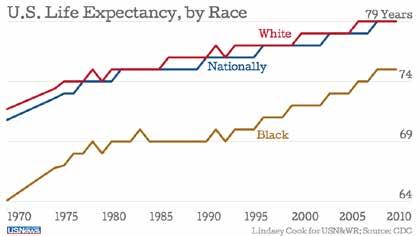
Recentdata released by the Centers for Disease Control and Prevention (CDC) illustrates a stark divide. As of the most recent finalized datasets, the average life expectancy for the total U.S. population sits at approximately 79.0 years. However, the life expectancy for Black Americans lags significantly at 74.0 years (77.6 years for females and 70.3 years for males).
While the gap narrowed slightly in the immediate post-pandemic recovery years, the Commonwealth Fund’s 2026 State Health Disparities Report emphasizes that Black people remain substantially more likely to die early from preventable causes than Asian American, Native Hawaiian, Pacific Islander, Hispanic, and white demographics across almost every state.
Check out the Life expectancy calculator Here


Chronic illnesses continue to disproportionately shorten and alter the lives of Black Americans. This is driven by an interplay of systemic barriers, ranging from unequal access to preventive care to the stress of enduring structural racism (often termed "weathering").

Cardiovascular Disease (CVD):
According to the American Heart Association’s recent statistical updates, nearly 60% of Black adults aged 20 and older live with some form of CVD, including coronary heart disease, heart failure, stroke, or hypertension. Black adults account for more than half of all heart failure hospitalizations among Americans under age 50.

The Cancer Mortality Paradox:
The 2025–2026 cancer statistics highlight a troubling disparity in cancer survivorship. Black men experience a 16% higher cancer mortality rate than white men, despite only a 4% higher incidence rate. Even more alarming, Black women face a 10% higher cancer mortality rate than white women, despite having a 9% lower incidence rate of the disease.
Diabetes:
Black Americans are disproportionately affected by diabetes, with adults being approximately 60% more likely to be diagnosed compared to white adults. They face higher rates of severe complications, including being 2.6 times more likely to develop endstage renal disease and up to 2.5 times more likely to suffer limb amputations.

• Prevalence: Roughly 12.1% to 13.4% of non-Hispanic Black adults have diabetes, compared to 6.9% of nonHispanic white adults.
• Mortality: Black Americans are 2.5 times more likely to die from diabetes-related causes compared to white Americans.
• Complications:
- Kidney Failure: Black Americans are 2.6 times more likely to experience end-stage renal disease.
- Amputations: Diabetes-related amputation rates are twice as high as those for white Americans.
- Vision Loss: Diabetic retinopathy rates are 46% higher in Black adults.
The high rate of diabetes in the Black community is driven by a combination of factors:
• Socioeconomic Factors: Barriers to nutritious food (food deserts), lower income, and limited access to healthcare.
• Environmental/Systemic Factors: Environmental stressors and racism affecting health.
• Health-related Factors: Higher rates of obesity and insulin resistance.
• Lifestyle Changes: Increasing physical activity and maintaining a healthy weight can significantly reduce risk.
• Early Screening: Regular check-ups are crucial to managing blood sugar levels and preventing complications.
• Culturally Sensitive Care: Utilizing diabetes educators and tailored management plans to improve outcomes.
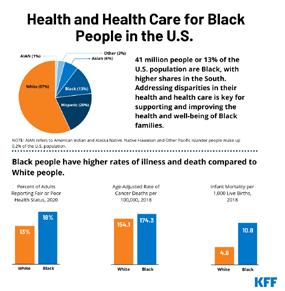
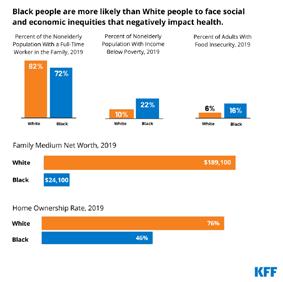

Nowhere is the health equity gap more visible—or more fatal—than in maternal health. Although the national maternal mortality rate saw a slight statistical dip down to 17.9 deaths per 100,000 live births in recent CDC tracking, the rate for Black women remains staggeringly high at 44.8 deaths per 100,000 live births. This is nearly three times the rate for white women. Crucially, education and income do not erase this risk. Black non-Hispanic women with a college degree still face a 60% higher risk of maternal death than white or Hispanic women who never finished high school.
The crisis is particularly severe in Texas:
• The Deadliest County: A recent comprehensive public health report revealed that Harris County (the Houston metro area) is the deadliest place in the U.S. for Black mothers to give birth, with a pregnancyrelated death rate of 83.4 per 100,000 live births.
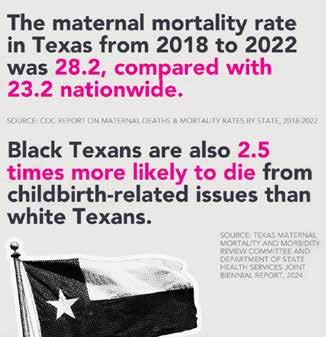
• Statewide Risk: Texas continues to battle maternal morbidity rates that have increased nearly 25% over the last five years. Black women in Texas are twice as likely to die from pregnancy-related causes as white women, and four times as likely as Hispanic women.
• Preventability: The tragedy of these statistics is amplified by the findings of the Texas Maternal Mortality and Morbidity Review Committee, which determined that 80% of these pregnancy-related deaths are preventable, stemming from issues like cardiovascular conditions, hemorrhage, and a lack of postpartum care.
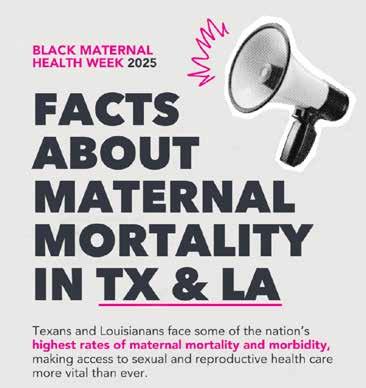
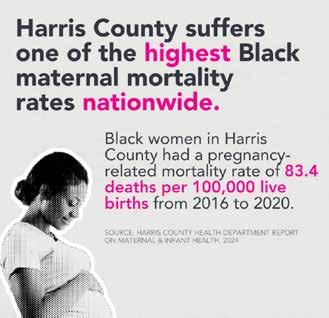
Based on a comprehensive report released by Harris County Public Health in early 2026, Harris County (the Houston metro area) has been identified as having the highest pregnancy-related death rate for Black women in the United States.
Here are the key findings of that report (analyzing data from 2016–2020):
• Maternal Mortality Rate: The pregnancy-related death rate for Black women in Harris County was 83.4 per 100,000 live births.
• Disparity: This rate is nearly double the national average for Black women (55.3 per 100,000) and more than four times higher than the rate for white women in the same area.
• Preventability: The report indicates that over 80 percent of these maternal deaths are preventable.
• Highest Risk Period: Many deaths occur in the year following birth, rather than during labor, highlighting a lack of postpartum support and care.
• Lack of Protection: High income or higher education did not protect Black mothers from this increased risk.

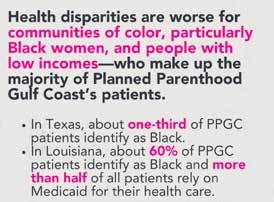
Health officials and investigators attribute this to several factors, including:
• Systemic Neglect: Poor communication between patients and providers and the failure to take symptoms seriously (e.g., dismissing complaints of pain).
• Health Disparities: Black women in Harris County showed higher rates of pre-pregnancy and gestational hypertension.
• Access to Care: Significant gaps in postpartum care and, for some, a lack of consistent insurance coverage. In response to these findings, the county and local organizations are implementing new initiatives, including expanded postpartum Medicaid coverage and increased access to prenatal care and navigation, according to a March 2026 report.
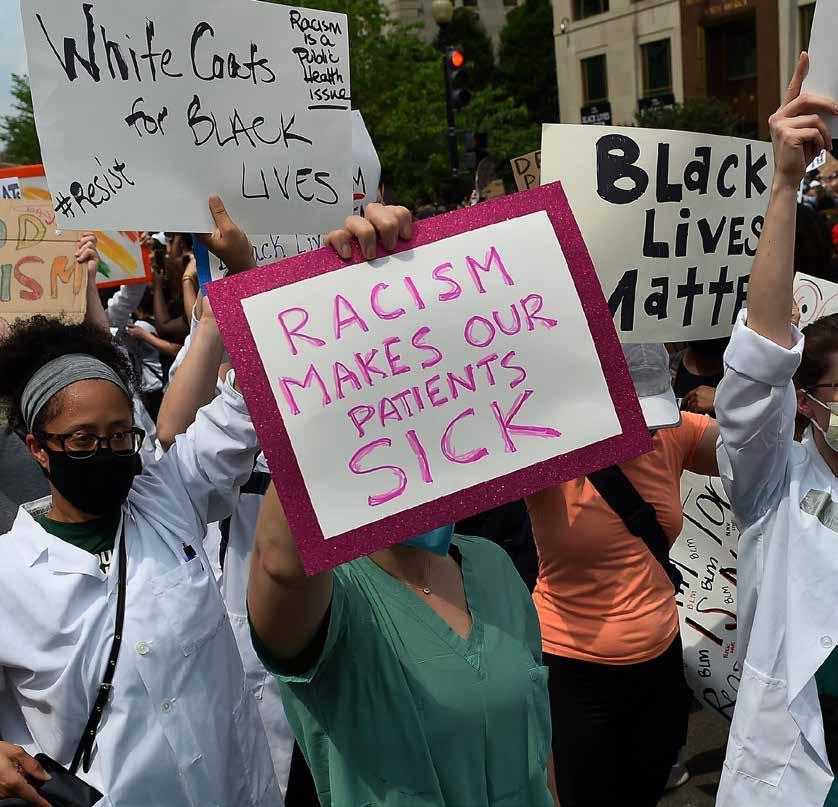
Systemic health disparities for African Americans are deeply rooted in historical and ongoing structural racism, manifesting as significantly higher rates of chronic illness, shorter life expectancies, and over 1.6 million excess deaths over two decades. Root causes include residential segregation, economic inequality, and unequal healthcare access, leading to higher exposure to environmental hazards, food insecurity, and chronic stress.
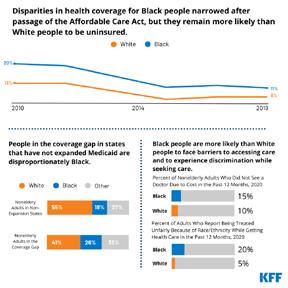
In Texas, the uninsured rate for Black residents sits at 17.5%, well above the national average of 10.9% for Black Americans. This lack of coverage creates immediate barriers to preventive medicine, forcing many to rely on emergency rooms for late-stage interventions.
Communities with the highest proportion of Black residents face four times the odds of hospital closures compared to areas with the fewest Black residents. This expanding "medical desert" phenomenon drastically limits access to urgent and continuous care.
The NAACP’s 2026 Health Report warns that recent policy environments, including proposed cuts to Medicaid— which finances roughly 65% of births for Black mothers— threaten to unravel the fragile progress made in postpartum coverage extensions over the last few years.

Anita C. Roberts
Your voice matters. Your health matters. Our community matters.
ABBJ is launching a new initiative focused on health, wellness, and the issues impacting Black communities across Central Texas—and we want you to be part of it.
We’re working to ensure trusted, culturally relevant health information reaches everyone— including those with limited digital access.
• Receive your free issue
• Share your input
• Get involved in upcoming events
Together, we can strengthen health awareness and access in our community.
ü Get a FREE monthly copy of our Health & Wellness Issue
ü Share your voice to help shape local coverage
ü Submit story ideas or become a contributor
ü Participate in community listening sessions & health events
ü Volunteer, partner, sponsor, or stay informed

Closing the Black health gap is not just a moral imperative; it is an economic one. Economic mobility research from McKinsey indicates that closing the Black maternal health gap alone could save over 3,100 lives by 2040 and add $24.4 billion in GDP to the U.S. economy over the lifetimes of women giving birth today.


To move the needle in 2026 and beyond, health experts and advocates are pushing a multi-pronged approach:
• Expanding Community-Based Care: Elevating traditional clinical settings by increasing "community models of care." In Central Texas, Black birth workers and doulas should step into the gaps and provide continuous advocacy and support during labor, delivery, and the vulnerable postpartum period.
• Policy Intervention: Prioritizing the expansion of Medicaid—specifically guaranteeing 12 months of postpartum coverage universally across all states— remains the top legislative priority for health equity advocates. Implementing anti-racist health policies, reducing racial bias in medical training, and expanding Medicaid to improve insurance coverage
• Addressing Institutional Bias: Major medical hubs should establish specific maternal health access committees and deploy rigorous implicit bias training to address the unequal treatment Black patients often receive when reporting pain or symptoms.
• Funding the Frontlines: Directing local and federal dollars toward home-support programs for at-risk families.
• Targeting Social Determinants of Health (SDOH): Tackling the root causes of poor health by improving neighborhood conditions, ensuring access to healthy food, and providing safe housing.
• Culturally Relevant Care & Education: Establishing wellness workshops, free clinics, and nutrition education tailored to Black communities to build trust and increase health literacy.
• Diversifying the Workforce: Strengthening pipelines for people of color in healthcare professions to ensure care teams reflect the communities they serve.
• Supporting Black-Led Organizations: Providing sustained funding for grassroots organizations that already possess the community knowledge to drive health equity.
In2026, the state of Black health is a reflection of America's broader struggle with equity. While the data is daunting, it is not an inevitability. Through targeted policy reforms, equitable funding, and the relentless advocacy of community health workers, there is a clear, actionable road ahead. Achieving health justice will require the healthcare system to move beyond merely acknowledging these disparities toward actively dismantling the systemic barriers that built them.

The future of Black health equity depends on moving from awareness to actionable, locally-driven interventions that treat racism as a public health issue. Success requires knitting together community, provider, and academic resources to create lasting change.

Theimportation of enslaved people from foreign countries was outlawed in 1808. This ban had profound economic implications, as it increased the value of the existing enslaved populations and spurred slave owners to focus on their reproductive viability, contributing to medical experimentation on enslaved women. For example, while renowned for his contributions to the field of obstetrics and gynecology, Dr. J Marion Sims developed new surgical techniques through medical experiments on enslaved women, including Anarcha, Lucy, and Betsey in Alabama from 1845 to 1849. Dr. Francois Marie Prevost honed his cesarean surgical procedure by practicing on at least 30 enslaved women in Haiti and Louisiana during the 1830s. Dr. Ephraim McDowell, considered the father of abdominal surgery, developed surgical treatments for ovarian cancer in the early 1800s, often on enslaved women. The experimental procedures were often conducted without anesthesia due to the inaccurate belief that Black people felt less pain than White people. This racial bias in pain perception persists in modern medicine, affecting the way medical students and residents view and treat pain among different racial groups. In recent years, there have been efforts to reevaluate the ethics of these physicians’ work and acknowledge the exploitation of enslaved women in the development of modern reproductive surgical procedures, especially in the context of the ongoing maternal health crisis.


MISSION
The Austin Black Business Journal (ABBJ) Health & Wellness Series is dedicated to improving health outcomes, amplifying Black voices in healthcare, and strengthening economic opportunity through culturally relevant media. We connect communities through culturally relevant media. We connect community
Your support directly impacts:
• Increased awareness of health disparities
• Visibility for Black-owned health & wellness businesses
• Community education and access to resources
• Economic growth within underserved communities. This is more than advertising—this is community investment
AUDIENCE
• 12 Monthly Issues (May 2026 – April 2027)
• Print + Digital Distribution
• Regional Reach: Austin & Central Texas
PUBLICATION DETAILS
• 12 Monthly Issues (May 2026 – April 2027)
• Print + Digital Distribution
ADVERTISING & SPONSORSHIP
Position your organization alongside content focused on wellness, awareness, prevention, and empowerment. Contact us at info@blackbusinessjournal.com for rates.
• Digital magazine inclusion
• Email marketing exposure
• Social media amplification
• Community event integration
• Cross-promotion with ABBJ platforms