We are pleased to introduce you to The Digest, a sampling of some of the best stories written every day by the dedicated journalists at the Deseret News, Deseret Magazine and Church News. Our hope is that you will make us your trusted news source each day at a time when there is confusion and contention in the nation.
The Deseret News brand stands for unimpeachable journalism centered on the issues most core to the human heart. While the Deseret News since its beginning in 1850 has evolved to meet the demands of its audience — reimagining print offerings, launching an acclaimed magazine and increasing the visibility and reach of its award-winning website — the publication remains committed to certain timeless ideals.
We stand for truth and light. We stand for faith and family. We stand for liberty and responsibility. We provide news and perspective, exploring society’s thorniest problems in search of solutions that will improve your life. That’s our commitment to our readers.
We invite you to discover what we can offer you:
Award-winning website
Our website, Deseret.com, is designed to be user-friendly and available on any device. Whether you’re at home on your computer
INTRODUCING 'THE DIGEST'
or on the go with your mobile phone, you can access our website for the latest news, analysis and commentary.
Mobile apps
Our apps for iOS and Android devices offer a seamless and convenient way to access the latest news, wherever you are. Choose what you want to read, save articles for later and receive push notifications for the breaking news you need to know.
Newsletters
Delivered straight to your inbox, our free email newsletters provide a curated selection of the most important stories of the day, as well as deeper dives into topics that matter to you. Choose from a variety of subjects and frequencies to tailor your news consumption to your needs.
Weekly print newspaper
For those who appreciate the tactile experience of a traditional newspaper, our weekly print edition offers a comprehensive roundup of the week’s most important stories and opinions, including the most comprehensive high school, college and professional sports offerings in the state.
Deseret Magazine
In 2020, we undertook an ambitious endeavor by launching a new magazine with in-depth journalism, unique voices and principled points of view. The reception to the magazine has far exceeded our expectations. You can read more from the magazine online at Deseret.com/magazine or subscribe to have it delivered to your home or office.
Church News
The Church News remains one of our most popular offerings for those who want to know the latest news from The Church of Jesus Christ of Latter-day Saints. It’s available online at TheChurchNews.com and via iOS and Android apps. A print version is included in the Friday edition of the Deseret News.
DESERET NEWS
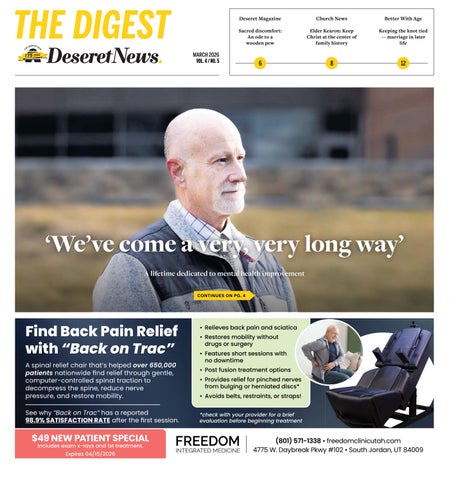
A lifetime dedicated to mental health improvement
Over a 42-year career, Utah State Hospital Superintendent Dallas Earnshaw has seen mental illness awareness and understanding skyrocket
By Lee Benson Deseret News
When Dallas Earnshaw was 17 years old, his grandpa, suffering from mental illness, died by suicide. At the funeral, someone walked up to Earnshaw and said, “How does it feel knowing your grandfather’s going to hell?”
That was in 1976.
“Back then, people were accused of being selfish or uncaring if they took their own life,” says Earnshaw. “It was actually against the law; when you did it you committed a crime — you committed suicide — and it was embarrassing and shameful to families. Nobody wanted to talk about it.”
He contrasts that to the present day.
“Now we realize suicide is often a very serious symptom of depression and mental illness,” he says. “Yes, there’s still stigma
attached to mental illness; people who are diagnosed still feel somewhat uncomfortable talking about their journey in life. But understanding and compassion have improved greatly. We’ve come a very, very long way.”
No one knows that better than he does.
Earnshaw is superintendent at the Utah State Hospital in Provo — the state’s preeminent mental health hospital. For the past 42 years, he has made it his life’s work to care for and advocate on behalf of those suffering from mental illnesses.
It was in 1983, just a few years after his grandfather’s death, that Earnshaw, quite by happenstance, discovered the field he would dedicate his career to.
Armed with a registered nursing degree from Weber State, he was working on his nurse practitioner degree at BYU and needed a part-time job to pay the tuition. He rented an apartment on 900 East in Provo, practically in the state hospital’s front yard. He walked up to the front entrance and applied for a job. They had one opening: the Saturday-Sunday shift, the one nobody else wanted. He took it. Made $8 an hour. He’s been there ever since.
“Coming here, working with patients, I fell in love with it,” he says. “I just really, truly loved working in such a caring field. I realized I didn’t want to do anything else.”
He started out as a staff nurse, then moved on to positions as a nursing supervisor, a program director, an assistant clinical director, and for the last 21 years, as superintendent.
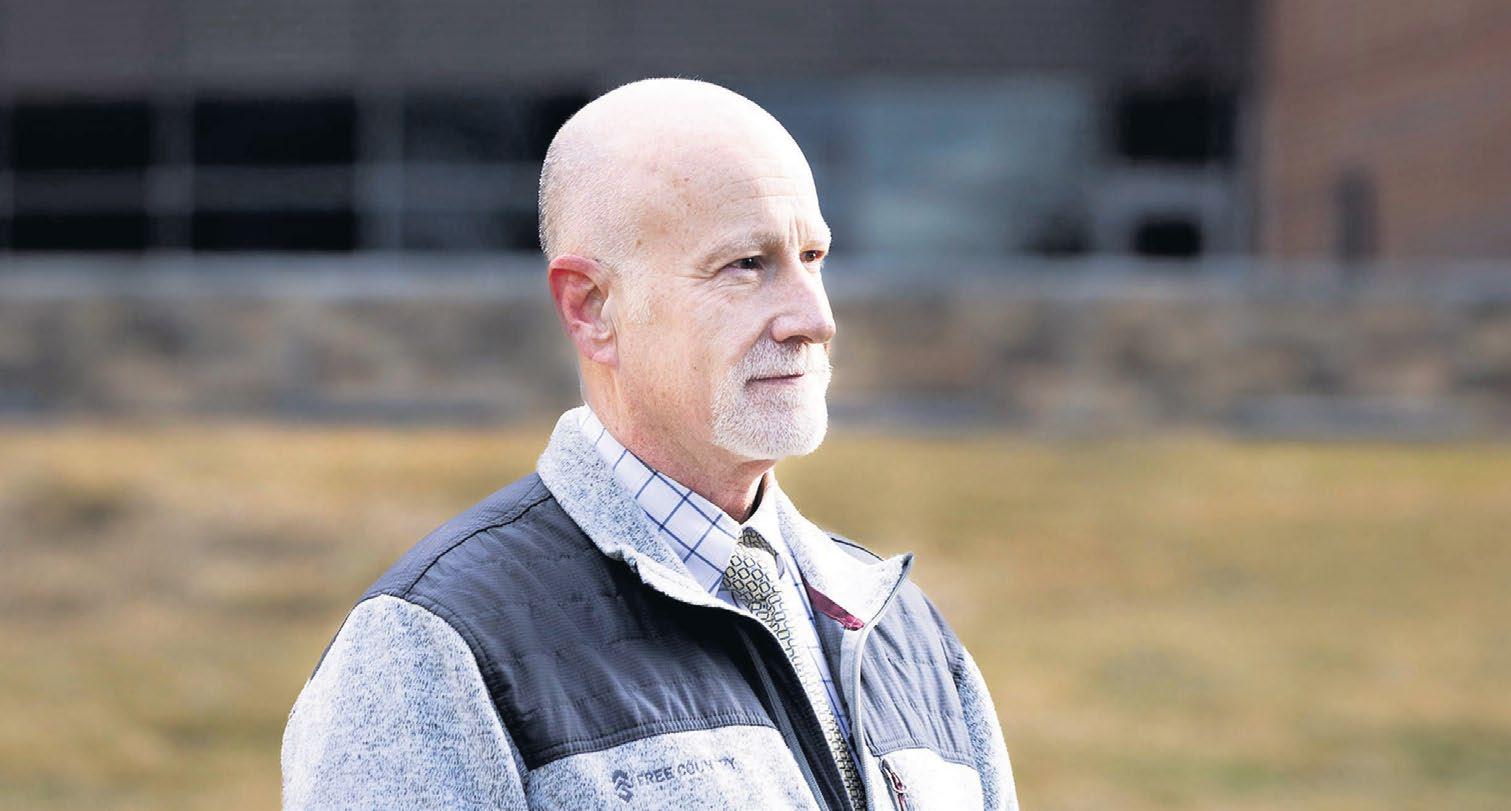
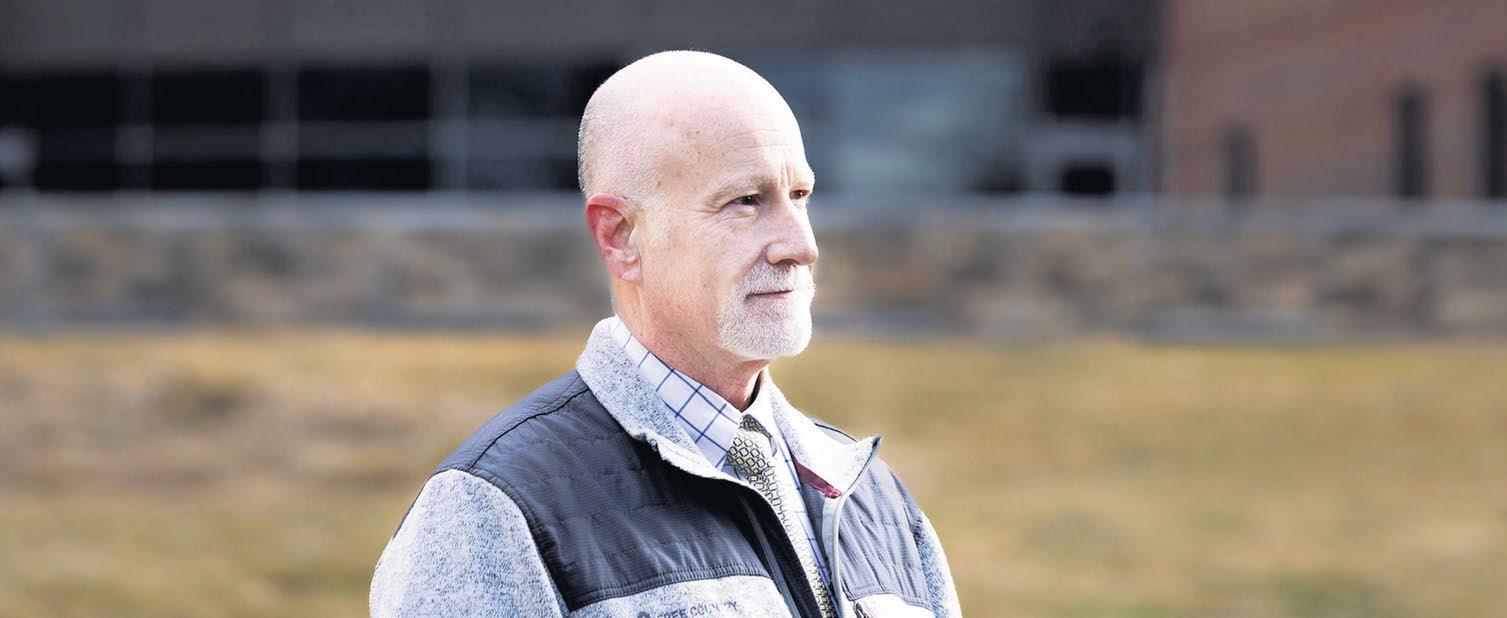
Laura Seitz, Deseret News
Dallas Earnshaw, superintendent of the Utah State Hospital, stands outside the pediatrics building on the hospital's campus in Provo on Feb. 17, 2026.
The changes he’s seen have been nothing short of transformational.
In 1983, he remembers a hospital that was filled with patients who had been there for 20 or 30 years and more. They weren’t being treated as much as they were being isolated.
“It was a different patient population,” says Earnshaw. “We were pretty much their family. We’d go on camping trips and river runs and horseback rides. There wasn’t a lot of programming in the communities at that time.”
Contrast that to 2026, when “those types of individuals that were here before are now getting treatment in the community. The people we see are much more acute, much more ill.”
And much better taken care of.
Advancements in treatment, programming and, especially, medications “have just been tremendous,” says Earnshaw, who points in particular to “a big explosion of information and research in the 1990s — what was called the decade of the brain.
“We know what it is now, and we’re willing to actually talk about what’s going on in our communities and individuals that are dealing with very severe mental illnesses. A lot of our homeless population are people with mental illness. We’ve got a lot of people in our correctional settings and jails that have mental illness that we need to move into more appropriate settings to receive treatment. We’re understanding the need more, and we’re not just reacting, we’re being proactive at deciding what our community really does need.”
At the 300-acre state hospital campus, where Earnshaw supervises more than 900 employees and nearly 400 patients, he notes that each one of those patients, without exception, is checked on every 15 minutes around the clock. The monitoring is unobtrusive, but consistent. No one is left alone and unobserved. The preservation of life is priority one.
“I’ve never known anybody with a serious mental illness that has not been suicidal at some point in time,” observes Earnshaw.
Does he think his grandfather, who was released from the psychiatric ward at an Ogden hospital 12 days before he died by suicide 50 years ago, would have lived on in today’s world?
“I think things would have been very different with my grandfather,” Earnshaw says diplomatically. “Back then, insurances didn’t cover much of inpatient costs and part of the reason he was discharged was because they didn’t have coverage. I know it took a long time for my mother to talk him into actually even seeing somebody for care, which may have been too late. I also think the family as a whole would have rallied around the situation, not being afraid to address it as they were back then.”
Viewed through today’s lens, “the important thing people would have seen,” Earnshaw stresses, “is that the outcome of his life was a result of his illness, not a result of his character.”
Mental illness wasn’t something Grandpa chose. No one would have said he was going to hell for that.
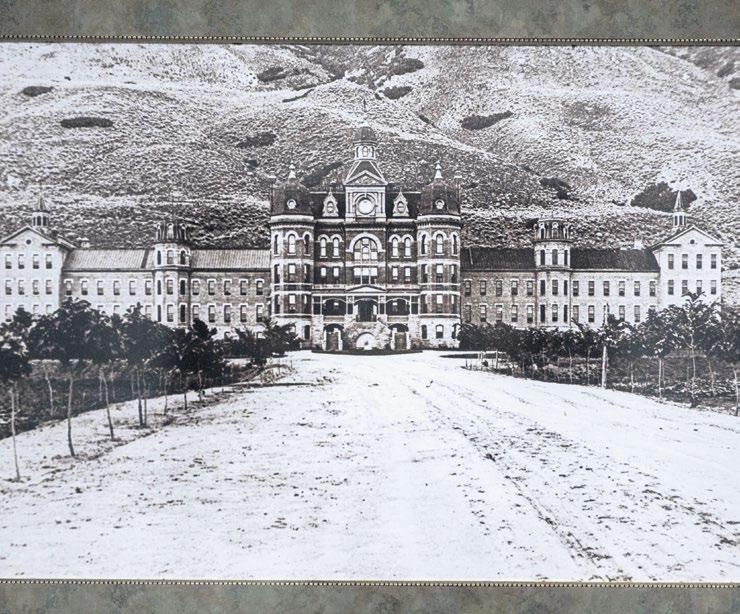
Laura Seitz, Deseret News
A historical photo of the Utah State Hospital is displayed at the hospital in Provo on Feb. 17, 2026. Utah State Hospital Superintendent Dallas Earnshaw has seen mental illness awareness and understanding skyrocket in his 42-year career.
By Ethan Bauer Deseret Magazine
Sacred discomfort
An ode to a wooden pew
J. Michael Ru
A pew can be a hard, unforgiving thing. I’ve been sitting here for a good hour and its wooden rigidity is taking a toll on my aching back. I rock side to side, angling to find some kind of cushion within my body, but the bench seems to resist my efforts. The service has ended, the candles are doused, and the priests walk past me toward the exit as a pipe organ plays Beethoven’s festive “Ode to Joy.” I know that standing up will bring me sweet relief, but I’m not quite ready for that. Instead, I lean harder into the polished oak. I haven’t been to Mass in years, not with any frequency, though it was a common practice at the Catholic schools I attended as a boy. I’m here now at the Cathedral of St. Jude the Apostle in St. Petersburg, Florida, to remedy that, for the benefit of my young family but also for myself. We live near the striking Spanish-style building, with beige brick and red tile roofing. The space inside feels familiar, yet also evokes a distant time. Sunlight filters through stained glass in an arching rotunda, falling across a large crucifix set above a rather plain white altar. I’m sitting on the far left, within the array of semicircular pews that wrap around a raised dais built out of black stone. The pews are shared. A middle-aged woman I’ve never met sits at the other end of my bench, too far for us to talk without shouting but close enough that we exchange waves following the Lord’s Prayer. She’s still here now, holding a hymnal and singing along with the organ. Looking around, I see dozens more like us, and it strikes me that we’re sharing not just benches but an experience. I dig a green hymnal from the wooden pocket on the pew in front of me and follow along on the page.
Pews come in different shapes and sizes, of course. Some are straight and long enough to hold three full-sized families without a break. Some are too small to share with a stranger. I’ve seen grids of padded benches that must feel like heaven by comparison. This pew is like none of those. I run my chewed-up fingernails across the surface and they crackle against the grain, the oak stained and finished to a glossy yellow. Pews haven’t changed much since they were first
introduced in the 14th century, but that’s not because they’re so comfy. A pew doesn’t give so much as it asks something of you.
Before pews, people used to stand at church, or sit on stone slabs with no back support. Maybe that’s why a pew still seems designed to require a certain effort, which helps you to sit up straight and pay attention. It keeps you in the moment, in touch with your thoughts and feelings. This one reminds me of where I am and why I’m here — unlike my couch, where I can lose myself for hours without thinking
much at all. Yes, the firm surface is mashing my poor coddled tailbone, born in this padded age, intolerant of even mild irritations. But I also find comfort in a seat that lifts me up without letting me sink into it.
With that realization, I stand up, stretch out my fatigue and return to a softer world.
This story appears in the January/February 2026 issue of Deseret Magazine. Learn more about how to subscribe.
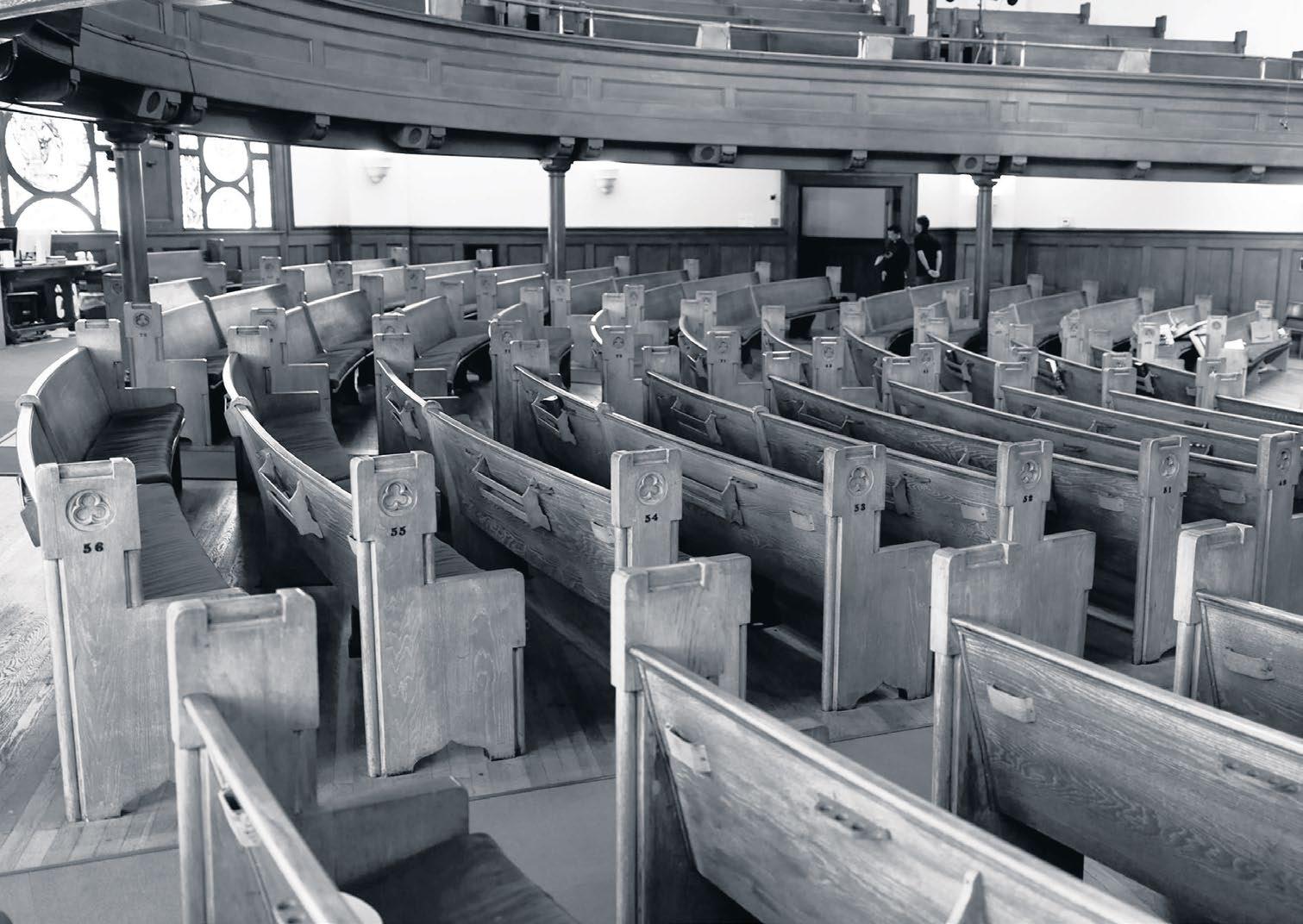
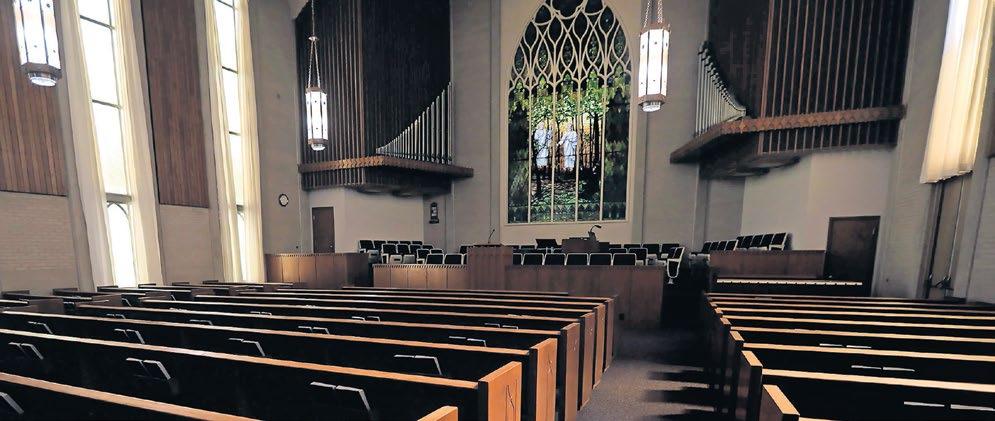
Kristin Murphy, Deseret News Chapel pews sit empty in The Church of Jesus Christ of Latter-day Saints’ Salt Lake Stake Center in Salt Lake City on May 19, 2020.
CHURCH
Keep Christ at the center of family history, Elder Patrick Kearon teaches
By Kaitlyn Bancroft Church News
The 2026 Temple and Family History Leadership Instruction is now available online
“The doctrine of The Church of Jesus Christ of Latter-day Saints centers on the family. Essential to our doctrine on the family is the temple. The ordinances received there enable us to return as eternal families to the presence of our Heavenly Father.”
President Dallin H. Oaks, President of The Church of Jesus Christ of Latter-day Saints, taught these truths during October 2025 general conference. And when Elder Patrick Kearon of the Quorum of the Twelve Apostles heard this, he remembered how it felt to learn for the f irst time that he is a son of God.
“I could not believe it. I just could not believe it,” he said. “I mean, it seems such a far-fetched idea, and I think that is the way [it seems] for many who hear it for the f irst time. But it is beautiful, and it is the foundation for everything we are going to talk about today.”
Elder Kearon shared his thoughts during the 2026 Temple and Family History Leadership Instruction, which is an annual, 30-minute recorded training for Latter-day Saints in stake and ward councils and others with callings supporting temple and family history efforts. It became available for on-demand streaming via Gospel Library (under Temple and Family History and then Leadership Instruction) and ChurchofJesusChrist.org on March 5.
Elder Kearon was joined in the meeting by Elder Mark A. Bragg, a General Authority Seventy. Elder Bragg is also the executive director of the Church’s Family History Department and chairman of FamilySearch International.
The 2026 Temple and Family History Leadership Instruction was shown during the 2026 RootsTech Conference.
RootsTech is a three-day global conference celebrating the family, hosted by FamilySearch International and sponsored by the Church and other leading genealogy organizations. It is held in person in Salt Lake City and online at RootsTech.org. RootsTech is the world’s largest genealogy event, featuring hundreds of classes, new technologies and keynote speakers.
This year’s notable speakers included Elder Ronald A. Rasband of the Quorum of the Twelve Apostles during Family Discovery Day; Steve Young, National Football League Hall of Fame quarterback and Super Bowl MVP; and Marlee Matlin, an Academy Award-winning actress and author.
Focus on the Savior
During the 2026 Temple and Family History Leadership Instruction, Elder Kearon and Elder Bragg watched and commented on three videos about various FamilySearch purposes and resources. (The videos are part of the instruction and the individual videos are listed below the instruction in Gospel Library and on ChurchofJesusChrist.org.)
From those videos they identif ied three key principles to help
Laura Seitz, Deseret News
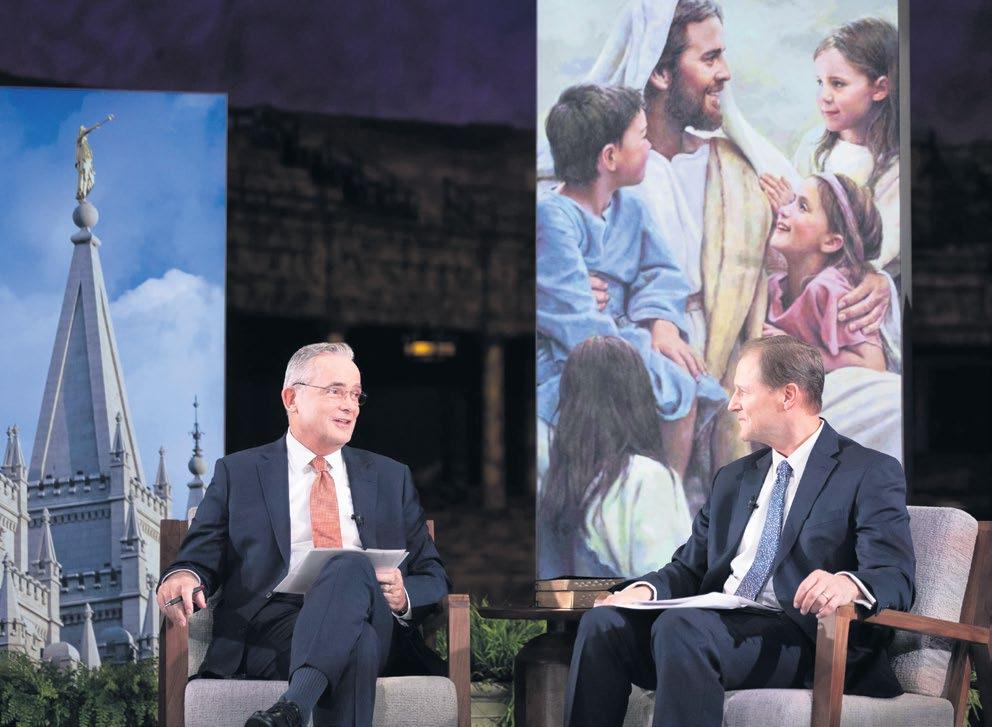
Elder Patrick Kearon of the Quorum of the Twelve Apostles, left, and Elder
Mark A. Bragg, a General Authority Seventy and the executive director of the Family History Department, right, film the 2026 Temple and Family History Leadership Instruction at the Salt Lake Tabernacle on Jan. 22, 2026.
people feel more connected to their ancestors:
1. Focus on the Savior.
2. Complete temple work for ancestors.
3. “Add what you know.”
“Look at these [videos] in stake and ward councils, family councils, and talk about what you feel and what you learn from the videos, just like we will do,” Elder Bragg said.
The f irst video, titled “Uniting Families for Eternity: Always Focus F irst on the Savior,” featured Church members sharing how family history and temple work bring them closer to Jesus Christ. Elder Kearon said the “f irst and foremost” thing he wants people to take away from this video is that the Savior is central to family history and temple work.
He referred to 2 Nephi 25:26, which reads: “And we talk of
Christ, we rejoice in Christ, we preach of Christ, we prophesy of Christ, and we write according to our prophecies, that our children may know to what source they may look for a remission of their sins.”
Elder Kearon continued that when it comes to family history work, people sometimes put a lot of focus on the “mechanical” aspect, such as research, rather than the “why” of it.
“I think a key invitation today is to put the Savior, to put Jesus Christ, in the middle of this,” Elder Kearon said. “To look to Him and to feel His love and the love of God as we embark on our next steps in this journey and beyond.”
Elder Bragg referred to a teaching from Elder Kearon in a leadership training, in which Elder Kearon spoke about Ephesians 1:10: “That in the dispensation of the fulness of times he might gather together in one all things in Christ, both which are in heaven, and which are on earth; even in him.”
“Is there a better description of the temple?” Elder Bragg said. “Things in heaven and things in earth — that is the connecting point. That is the knot that gets tied between the two. And everything does come together in one in Christ in the temple.”
Elder Kearon added that the power of godliness is found in temple covenants and ordinances, as taught in Doctrine and Covenants 84.
“I love to think of them as Him drawing us back, giving us these opportunities while we cannot see Him,” Elder Kearon said. “And we cannot see our Father in Heaven, we cannot see our Savior, but we have these presented to us — these options, like stepping stones, like opportunities, like a handhold to draw us back, and that is, I think, why it feels so beautiful.”
Complete temple work for ancestors
The second video, titled “Uniting Families for Eternity: Use Ordinances Ready,” featured Church members sharing their experiences of using Ordinances Ready, a tool on the FamilySearch
Family Tree app which searches a member’s family tree to f ind an ancestor who needs ordinance work to be completed. The member then selects an ordinance and brings the name to the temple. If a relative is not found, Ordinances Ready can provide a name from a member’s ward or stake.
“You have the conf idence to know that you are doing this sacred work for someone who you are connected to in some way, shape or form,” Elder Bragg said. “So it’s simple, it’s meaningful and it’s easy to do.”
He referred to one woman in the video who said she is the only member of the Church in her family — but the “beauty” of temple work means that she is not the only member. As she goes to the house of the Lord and completes ordinances for her ancestors, Elder Bragg said, she is increasing the number of deceased family members who can accept the gospel.
Additionally, as the Lord instructs His prophets, seers and revelators to build more temples throughout the world, “He is giving us the technology to make this work easier,” Elder Bragg said. Elder Kearon added that no one should ever feel alone in doing family history and temple work. “We are part of this great, eternal family,” he said.
‘Add what you know’
The third and f inal video, titled “Uniting Families for Eternity: Add What You Know,” featured Church members sharing ways they have added what they know about their ancestors to their FamilySearch family trees, from photos and stories to recipes and audio f iles.
Family Discovery Day address: “We become connected to our ancestors through knowledge of their lives. We bond with them as we understand the circumstances and personal values that shaped them. They are real people to whom we owe our existence in this world and whom we will meet again in the hereafter. We learn better who we are, where we come from, and are blessed with a clearer vision of where we are going. When individuals and families search out their ancestors’ inspiring actions and words, they will receive strength and direction for their own lives.”
Elder Kearon encouraged local Church leaders to experiment with family history resources, help others do the same, and to see for themselves why people are drawn to this work.
“Experience the light and joy that comes with it,” he said. “We are children of God, and He wants us safely all gathered home to Him with our families, with our friends, with our loved ones.”
A sacred connection
Elder Kearon closed the meeting by counseling local leaders to keep the Savior at the center of their efforts.
“Speak of Him. Think of Him,” Elder Kearon said. “Have Him at the middle of all of this. He has paved the way. He has taken away all of our sins, all of our pains, and He and our Heavenly Father want us to return after a good long life, safely and happily, and be joined with all of our ancestors.”
Elder Bragg testif ied that the power and authority to seal things on earth and in heaven exist. Those keys were restored through the Prophet Joseph Smith, he said, and are now held by a living prophet.
Elder Bragg said this practice helps individuals remember that they are not just taking names to the temple — they are taking people. Anything that opens the door to the spirit of Elijah “is worth that effort,” he said.
He also shared a quote from President Oaks’ 2018 RootsTech
“I testify to you that this is the work and the glory of our Savior,” Elder Bragg said. “He is involved in this great work. He cares about those on this side of the veil and on the other side of the veil. And this connection between us is sacred.”
BETTER WITH AGE
Who’s caring for aging America?
By Lois M. Collins Deseret News
So many caregivers, so little help as America grows old
Gay Johns and Linda Draper both live in Midvale, Utah, a few miles from each other, but they are strangers. And they both f it into the growing category of Americans who can call themselves caregivers as they assist an elderly relative.
America is aging and with that comes big ripple effects — including for older adults, the economy and the workforce. But perhaps no one feels the impact more than a family member tasked with caregiving for a parent, a spouse or another aging adult.
Pew Research Center has been studying “aging America,” releasing what will be a series of reports looking at various aspects of how the nation grows old, driven in part by the fact that as this decade ends, all baby boomers will off icially be senior citizens. The new caregiving report follows a previous deep dive into general attitudes about aging.
Kim Parker, director of social trends research at Pew, noted that much of the research in this demographic space doesn’t tease out who is receiving that care. The Pew survey pool included around 8,750 respondents polled in early September 2025. A breakout report homes in closely on the subset of 1,193 adults who consider themselves caregivers to an aging family member.
The survey found that 1 in 10 U.S. adults are caring for an aging parent, while 3% are caring for a spouse or partner. If, however, just those with a family member 65 or older are counted, it’s about 1 in 4 who claim some type of caregiving role, Parker said, calling the number “pretty signif icant.”
What kind of caregiving role? The most prevalent is helping with errands, housework and home repair. But a lot also manage their parents’ health care or f inances and a smaller, but still signif icant share say they’re actually doing hands-on, personal care, according to Parker.
F illing a range of needs
Johns’ dad, Bob Capson, is 94. Draper’s mother-in-law, Nancy, is 75. Johns and Linda and Randy Draper are powerful examples of the range of need caregivers meet and the activities that qualify as caregiving.
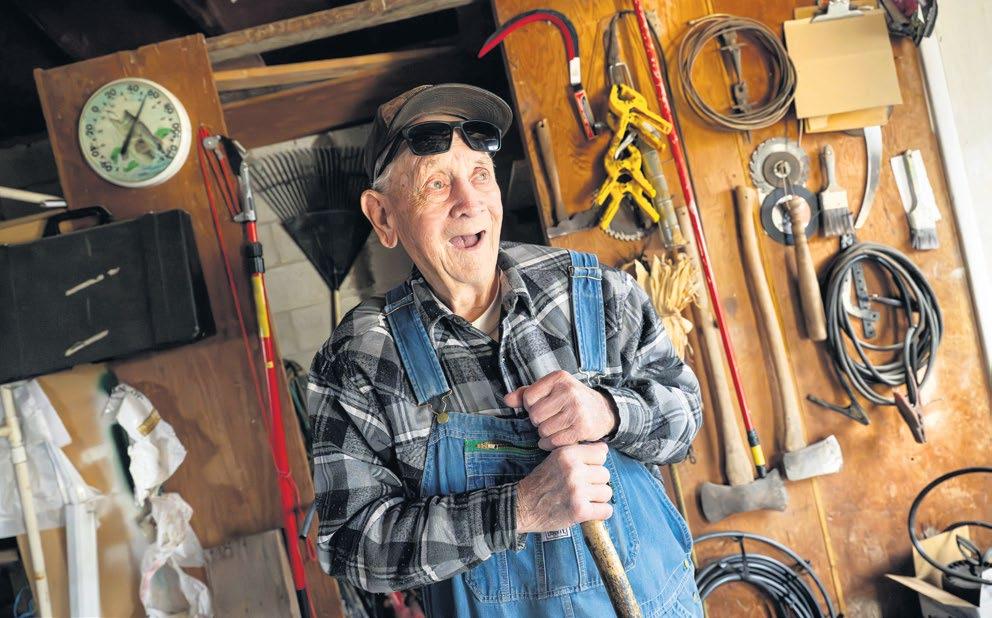
Capson, who’s affectionately known to neighbors as “Farmer Bob” because of his extensive garden and the many productive fruit trees he diligently tends, is for the most part pretty independent. Adamantly so, as a matter of fact, Johns said of her father. But she and one of her brothers each visit separately at least weekly to help with certain tasks, like getting on the roof if something needs done or lifting heavy items, though he doesn’t like that they need to do it for him. Johns makes his doctor appointments and other calls, because he doesn’t hear as well as he used to during phone calls.
But Capson still drives himself to the store and prepares his own meals, though dinner sometimes consists of opening a can of something and heating it up.
The Drapers moved Randy’s mom into a mother-in-law apartment downstairs at their home about a year ago. Because he is
now semi-retired and Linda works full time as a teacher, Randy assumes most of the caregiving duties for his mom.
Like Capson, Nancy Draper is widowed. And for many years, she lived on her own after her husband died. But she no longer cooks for herself. Her son does it. He also picks up her groceries or takes her to the store. Linda and Randy Draper do the needed driving now.
When she was growing up, Linda’s grandfather lived with her family; he had Alzheimer’s. And she helped care for her dad after school every day as a youth, too, after he was diagnosed with a brain tumor. So moving in an older relative didn’t feel strange to her at all. For her husband, it was a bit more of an adjustment but he has risen to the caregiving occasion.
The tasks that family members undertake for an older relative not only exist on a spectrum, but they tend to grow in scope with time, the survey found.
“Not surprisingly, the caregiving burden gets heavier as family members age to 75 or older,” said Parker.
Income disparities in caregiving roles
There’s some inconsistency in national f igures, though it’s likely a difference in def initions and metrics. A 2025 report from AARP and the National Alliance for Caregiving said 63 million Americans are family caregivers, with 59 million caring for an adult and 4 million caring for a child with a medical condition or disability.
Meanwhile, the Bureau of Labor Statistics estimates there are 38 million unpaid family caregivers helping adults age 65 and older. Regardless, those are all big numbers.
The AARP and National Alliance for Caregiving report found other challenges related to caregiving. For instance, as many as 23% of caregivers have reportedly taken on debt to care for a loved one.
And more than half (56%) of employed caregivers have said at some point they had to adjust their hours, arriving late, leaving early or taking time off. Nearly 1 in 5 have reduced their hours
Scott G Winterton, Deseret News
Bob Capson, known to neighbors as "Farmer Bob," who is 94, smiles as he talks inside his garage in Midvale on Friday, Feb. 27, 2026.
The estimated value of unpaid family caregiving labor is $600 billion. That includes all caregiving, not just for older adults.
The Pew survey found some groups tend to have more caregiving responsibility than others, as well. Women are more apt to be caregivers than men, though it’s not a very big gap.
There is, however, a “huge income gap” and lower-income family members are much more likely to take on caregiver roles than middle- and upper-income Americans, who may choose to hire help. The survey found 39% of lower-income adults with an older relative or partner are caregivers, compared with 23% of middle-income adults and 16% of upper-income adults.
The survey doesn’t explore why that is, but Parker said several possibilities come to mind. Other options may not be available to lower-income adults, who may have to cobble together a plan for a frail older relative. Pew research has also shown that “lower-income older adults have worse health outcomes, so there may be more people in need” of caregiving in that demographic, Parker said. “Or maybe there are cultural variables at play as well.”
Caregiving’s impact on relationships
Not all of the caregiving benef its accrue to the person being cared for.
In the survey f indings, the impact on
With bright and open amenity spaces and warm and spacious residences, Crescent Senior Living offers its residents all the comforts of home. We offer levels of care customized to you and your specific needs, so whether it’s helping with life’s daily activities, strengthening mobility, coordinating care with your physicians, or making sure you look your best for one of our events, you can count on us to be there. at work.
interactions stood out, Parker told Deseret News. Most who were caring for a parent regularly said that helping their parent with the various tasks has positively impacted their relationship with that parent.
At the same time, they said that overall, it’s had a more negative than positive effect on their own emotional well-being, physical health, f inancial situation and even their job and social life. Parker called it “striking” that 33% of those caring for a parent said it has negatively impacted their own physical health and 39% said the same about their emotional well-being.
Per Pew, 28% of women with an aging parent, spouse or partner consider themselves caregivers, compared to 23% of men.
As for caring for a spouse or partner, the numbers are smaller but the survey still found relationships were more positive than negative, while the impact on things like physical health and emotional well-being were more neutral than negative. “The negative impact came across more clearly in parent caregiving,” said Parker.
Parker found gender differences particularly interesting. “Women and men mostly agree there’s positive impact on the relationship with a parent. But women were ”much more likely than men to say it’s had a negative impact on their emotional well-being and physical health.” For men, emotional well-being actually “tilts positive,” while for women, 47% say caregiving has taken a toll.
Nor is it likely the difference is because
- WINNING SENIOR LIVING
Raise Your Expectations
women do more caregiving than men, Parker said. The gap between just isn’t very big. Nor is there a big difference in the types of caregiving tasks; women aren’t doing more dressing and bathing and providing personal care.
Women do report doing more managing prescriptions and appointments and similar tasks. But they also don’t do more f inances, errands or housework.
While the “why” isn’t clear, Parker said researchers speculated that women are harder on themselves in some ways that men are not and the f inding could reflect that. “It may just be a different orientation toward caregiving that men and women bring to the job,” she said.
Help for caregiver families
Are there policies that would help? There’s a side report that tackles what the public would think about certain policies designed to help caregivers.
“We asked about things like giving tax credits to help pay for caregiving, paying for short-term care for aging adults to give family members a break — such as adult day care — requiring employers to provide paid family medical leave or giving direct payments for help with caregiving,” Parker said.
Parker reported that, “not surprisingly, there was broad support for all those things.”
The most popular was tax credits, at 78% support, followed by respite care to give caregivers a break (71%), requiring bosses to provide
paid family leave (69%) and direct payments to help with caregiving costs (63%).
The support for those policies, she added, crossed party lines. “There is a gap, with Democrats being more likely to support these things, but a majority of the Republicans support all of those approaches at the federal level, which is pretty notable.” The support was not just from those who are caregivers, either, the researchers found, but from all adults.
The survey also found that most adults said if the time ever came that they had to have assistance, they’d still like to be at home, with some help. But they were largely skeptical that could happen. Less than 40% said they thought that would be feasible for them.
Higher-income people were more apt to say they’d be OK with going into an assisted living facility.
One of the challenges is families are providing care along with all their other tasks, including work and sometimes raising kids and various responsibilities, so they don’t always have as much time to offer as the older person would like.
Linda Draper thinks Nancy sometimes feels bored and she believes her mother-in-law is happiest around people closer to her own age. She gets that and said if her own time comes to need a caregiver, she hopes there are resources to put her in an assisted-living type community. “I would probably enjoy it because I’d be around a lot of people,” she added.
Silver linings: Keeping the knot tied — marriage in later life
By Norman Hill For the Deseret News
Challenges can continue in marriage in older years. But so can the growth, sweetness and love
My friend was perplexed. After 30 years of marriage and six children, his daughter discovered that her husband was cheating on her. Soon, they were divorced.
Infidelity is an increasingly common trend these days among both older men and women. According to data from the Institute for Family Studies, about 24% of married men in their 60s and 70s report having marital affairs — more than any other age demographic. While less frequent than their male counterparts, older women are also increasingly unfaithful, with about 16% of older women in their 50s and 60s engaging in extramarital affairs.
As my wife likes to say, once the children leave the house, couples need a reason to stay together or serious problems like this or divorce can arise.
“He was an extended family favorite,” my friend said of his sonin-law. “He was an engaged father, seemingly committed churchgoer, and successful in his career. We’re still not sure why he continued his affair even after he and our daughter went to counseling.”
As marriage partners move into their 60s, 70s and beyond, they face shifting circumstances related to health, finances, leisure time and family roles. Keeping the flame burning bright in older adulthood becomes an art of adaptation — balancing acceptance and effort, independence and interdependence, continuity and change.
“After kids are gone, then (couples) are more likely to say, ‘Well, I’ve basically done what I can and should for my children,’” says Brad Wilcox, sociology professor at the University of Virginia. ‘“And now it’s time for me to experience romance’ at age 58 or 65 or even 72. So that’s a big part of the dynamic that is playing out as well.” His data show couples who neglect investing time, energy and attention in their spouses in favor of their kids struggle to keep that spark alive in their marriage once children leave.
When an “empty nest” occurs, couples may need to reinvest in their relationship with each other. If their marriage is based on co-parenting rather than personal intimacy, they can feel disillusioned as a couple and experience “roommate syndrome.” Without new goals and revived emotional connections, they may find little reason to stay together.
Self-centered mindsets and misguided “romanticized” views of marriage can also lead couples to divorce, Wilcox says. In later life, older couples may also idealize these “golden years” as a period of endless travel, effortless compatibility and uncomplicated connections together.
The reality, of course, is that just like in earlier days, later-life romance isn’t like a Hallmark movie. Instead, it is more likely to be messy, tangled and demanding.
For many older couples, marriage in the later decades of life is both a culmination and a continuation — a relationship shaped by shared history, tested by challenges and enriched by deep companionship.
Michelle Budge, Deseret News
Yet these challenges do not diminish the potential for a fulfilling, resilient relationship. In many cases, they create opportunities for greater empathy, cooperation and emotional closeness.
While older adults often worry about health matters, research on how health challenges among older couples affects their marriages has some surprising results, says Jeremy Yorgason, a professor at BYU in the School of Family Life. In a recent interview I had with him, the scholar reported on data that shows caregiving by older adults, in particular among married men, can result in closer, more satisfying marital relationships rather than diminishing them.
“There is something about caring for a lifelong partner that is invigorating and can draw couples together,” Yorgason notes. This may require a different role definition and new tasks for older men,
but this new mindset and related activities can deepen emotional ties rather than unravel them.
Jay Leno, the former talk show host of “The Tonight Show,” recently made headlines by speaking out on his wife’s diminishing mental and physical health. “I like taking care of her,” Leno said. “I enjoy her company, and we have a good time. We have fun with it, and it is what it is.”
“The first 46 years (of marriage) were really great,” Leno continued. “It’s OK now. It’s not terrible. I’m not a woe-is-me person. I’m just lucky that I am able to take care of her.”
These changes can sometimes create frustration, fear or anxiety — not just for the individual experiencing them, but for the relationship as a whole. Successful older couples navigate these transitions
through patience and flexibility.
While good communication is always important, sometimes concepts like transparency and openness can be overstated or misunderstood. Dealing with differences can sometimes get better results by changing schedules, roles or even expectations rather than attempting to “talk them out.”
“When my husband retired, he wanted to help me in the kitchen,” said Jean Guttomson. “But he was just underfoot. Talking about it only made it worse. Instead, if I had a big dinner to prepare or a new recipe I wanted to try out, I would give him a long list of errands and then send him off. We were both happy doing something and we didn’t need to discuss it at all.”
As couples age, they tend to have sex less often. Hormones, health, priorities and other factors can contribute to this decline. Yet, surveys report that around two-thirds of adults 65 and older are still interested in physical intimacy. And those who are sexually active report a higher quality of life and overall sense of well being than those who are not.
Physical intimacy, of course, is more than the standard definition of lovemaking. Such intimacy includes cuddling, caressing, holding hands, kissing, hugging, spooning and the like. When accompanied by genuine expressions of affection, physical and emotional intimacy intersect and become more pleasurable and more fulfilling.
“Because I have sleep apnea, we don’t sleep in the same bed anymore,” Gerald Simmons told me. “But we frequently dance in the living room at night. We like touching each other, holding each other close, and enjoy the movement that goes along with it while dancing.”
While health-related websites like VeryWell note that our sex drive may change as we age, they also describe independent physical and mental health benefits that occur with physical intimacy. Rather than avoid sex, researchers encourage couples to address any underlying health conditions so that they can discover their ways to enhance their own physical and emotional intimacy.
Financial realities also reshape marriage dynamics in later life. Retirement, shifting income and rising medical costs can all impact retirement savings. For some, this means adjusting expectations — downsizing, simplifying daily expenses or redefining what “security” feels like.
Older couples who maintain strong marriages tend to treat financial planning as a joint venture. They talk openly about goals and needs. In some cases, they may even have separate banking accounts to promote independence and less “oversight” by their partner. Marjorie Hinckley, wife of former President Gordon B. Hinckley of The Church of Jesus Christ of Latter-day Saints, once famously joked that sometimes she even kept the ZCMI credit card bills to herself.
“I tend to spend more than my wife,” Gary Jewkes told me recently. “She is a minimalist and I like nice things and love to collect. Our differences on this issue created constant conflict so a couple of years ago, we funded a ‘mad money’ account for me. It’s been actually self-funded ever since by creating a fun and lucrative ‘buying and reselling side hustle’ to replenish the account,” he explained. “My wife doesn’t see it so she’s not anxious about how much I spend or what I spend it on. The account has actually grown over time along with my beautiful collections which has been a lot of fun and satisfaction as well as eliminating our ongoing conflict over spending. It feels like a win-win for all of us.”
Long-lasting marriages can help couples build on their shared history in navigating the future and reinforcing common coping skills. Couples in deeply committed relationships can find new ways to deal with health, family and personal problems if they are willing to be vulnerable with each other, trust in their ability to find solutions together and listen deeply to each others’ goals, interests and preferences.
Only two people who have spent a lifetime together can sit on a porch in comfortable silence while knowing exactly what the other is thinking without saying a word.
“ B ecause I have sleep apnea, we don’t sleep in the same bed anymore. But we frequently dance in the living room at night. We like touching each other, holding each other close, and enjoy the movement that goes along with it
GOT STEM CELLS?
Have you ever wondered how your body knows how to heal itself? Like when you get a cut, or when your joints are sore after a long day. That natural healing process - it starts with something called “Stem Cells.” Stem Cells are your body’s original repair crew.
They’re blank, flexible cells that can turn into whatever your body needs. Whether it’s muscle, cartilage, skin, or even nerve tissue.
But here’s the thing: As we get older, or deal with chronic pain or injury, our supply of healthy Stem Cells starts to Slow Down and Die Off. They also start Losing Cellular Communication with the body.
That’s where Regenerative Therapy comes in play. By placing a concentrated dose of Stem Cells or Exosomes right where the body needs them, we can help support Natural Healing, Reduce Inflammation, and in many cases Relieve Pain and Restore Movement. This can be done through targeted injections for Stem Cells or IV for Exosomes, which would allow the cells to travel throughout the body and search for the problem areas.
You no longer need to travel out of the country to experience the joy of Regenerative Stem Cell Therapy. Not only is it safe and natural, but it’s finally affordable to the average person.
Studies have shown amazing results using Stem Cells & Exosomes for:
• Pain Relief
• Anti-Aging Benefits
• Hair Regeneration
• Tissue Regeneration
• Improved Skin Appearance
• Energy & Vitality
• Faster Recovery
• Enhances Health & Wellness
• Reduces Chronic Inflammation
• Cartilage Repair
• Sexual Wellness
• Improves Mental Clarity
• Enhances Cell Communication
• Reduces Autoimmune Responses
If you’re dealing with pain or just want to feel and look more like your younger self again, talk to one of our medical professionals today at Utah Trim & Wellness Clinic. We’re here to help you understand your options and how Stem Cells & Exosomes can improve your Life Overall Wellness.
EVENTS
FESTIVALS
SUBARU WINTERFEST 2026
DATE: March 20 - 22
TIME: 9 a.m.-5 p.m.
LOCATION: Highway 210 Little Cottonwood Canyon - Snowbird A one-of-a-kind music and mountain lifestyle tour.
2026 ALTA SNOWFLAKE FESTIVAL
DATE: March 23 - 28
TIME: Varies
LOCATION: Highway 210 Little Cottonwood Canyon - Alta Celebrate winter in Alta!
BYU WINTERFEST
DATE: March 24
TIME: 7 p.m.
LOCATION: 2525 Taylorsville Blvd., Taylorsville BYU presents an evening of contemporary dance.
SPRING FESTIVAL - KIDS EASTER EGG HUNT
DATE: March 28
TIME: 8 a.m.-10 a.m.
LOCATION: 444 E. 400 South - Saratoga Springs See how many eggs the kids can find.
HOLI, FESTIVAL OF COLORS SPANISH FORK
DATE: March 28-29
TIME: Varies
LOCATION: 11 W. 8500 South - Spanish Fork Join thousands for the iconic color throw.
FIRST LOOK FILM FESTIVAL 2026
DATE: April 2 - 3
TIME: 6:30 p.m.
LOCATION: 1125 N. University Ave., Provo Don’t miss this exciting student film festival.
CONCERTS & LIVE MUSIC
10,000 MANIACS
DATE: March 20 - 22
TIME: 8 p.m.
LOCATION: 328 Main - Park City Alternative rock band is celebrating 45 years.
CANDLELIGHT: COLDPLAY & IMAGINE DRAGONS
DATE: March 28
TIME: 8:30 p.m.-9:45 p.m.
LOCATION: 555 S. Main - Salt Lake City Kublai Khan TX will also be performing.
LANY
DATE: March 28
TIME: 7:30 p.m.
LOCATION: 301 W. South Temple - Salt Lake City American pop rock band brings feel-good energy.
GENTRI'S KING OF KINGS AN EASTER CELEBRATION
DATE: March 30
Utah Jazz guard Keyonte George (3) dunks over Denver Nuggets guard Christian Braun (0) during the second half of the game at the Delta Center in Salt Lake City on Monday, March 2, 2026.
TIME: 7 p.m.
LOCATION: 800 W. University Parkway - Orem Gather this Easter for a meaning musical experience.
THEATER & COMEDY
JOHN MULANEY: MISTER WHATEVER
DATE: March 21
TIME: 7 p.m.
LOCATION: 131 Main - Salt Lake City
Four-time Emmy Award-winning comedian.
BILL BURR LIVE
DATE: March 23
TIME: 7:30 p.m.
LOCATION: 1395 Presidents Circle - Salt Lake City Stand-up comedian makes funny observations.
HADESTOWN
DATE: March 24-29
TIME: 7 p.m.
LOCATION: 131 Main - Salt Lake City
Hit Broadway musical makes a stop in Utah.
SPORTS
UTAH MAMMOTH VS. EDMONTON OILERS
DATE: March 24
TIME: 7:30 p.m.
LOCATION: Delta Center, Salt Lake City
Clayton Keller and the Mammoth take on the Oilers.
UTAH JAZZ VS. WASHINGTON WIZARDS
DATE: March 25
TIME: 7 p.m.
LOCATION: 301 W. South Temple - Salt Lake City
Be a part of the action as the Jazz face the Wizards.
REAL SALT LAKE VS. SPORTING KANSAS CITY
DATE: April 4
TIME: 2:30 p.m.
LOCATION: 9256 S. State - Sandy
RSL hosts Western Conference foe Sporting KC.
COMMUNITY & MARKETS
READING RAILROAD FUNDRAISER
DATE: March 23
TIME: 6:30 p.m.-8 p.m.
LOCATION: 450 S. 600 West - Heber City
Join us for a whimsical journey celebrating the joy of reading.
OGDEN'S FIRST FRIDAY ART STROLL
DATE: April 3
TIME: 6 p.m.–9 p.m.
LOCATION: 25th Street - Ogden
Exciting exhibit openings, artist receptions, and live music.
GEM FAIRE
DATE: April 3-5
TIME: Varies
LOCATION: 9575 S. State - Sandy
One of the largest gem, jewelry and bead shows in the U.S.